
The best front yard landscaping next to driveway ideas make the driveway feel connected to the house instead of looking like a plain strip of pavement. A successful layout combines the driveway material, edging, planting beds, lawn, walkway, and home exterior into one balanced view. It should also protect sightlines, allow car doors to open, and keep mature plants from spreading over the driving surface. Whether you have a narrow suburban lot, a sloped yard, or a wide circular drive, thoughtful landscaping can add color and structure without creating constant upkeep. Simple choices such as repeating shrubs, widening a bed near the entrance, or adding a defined border can make a noticeable difference. Explore these 20 front yard landscaping next to driveway ideas to find a complete look that suits your space.

1. Low-Maintenance Rock Landscaping Next to Driveway
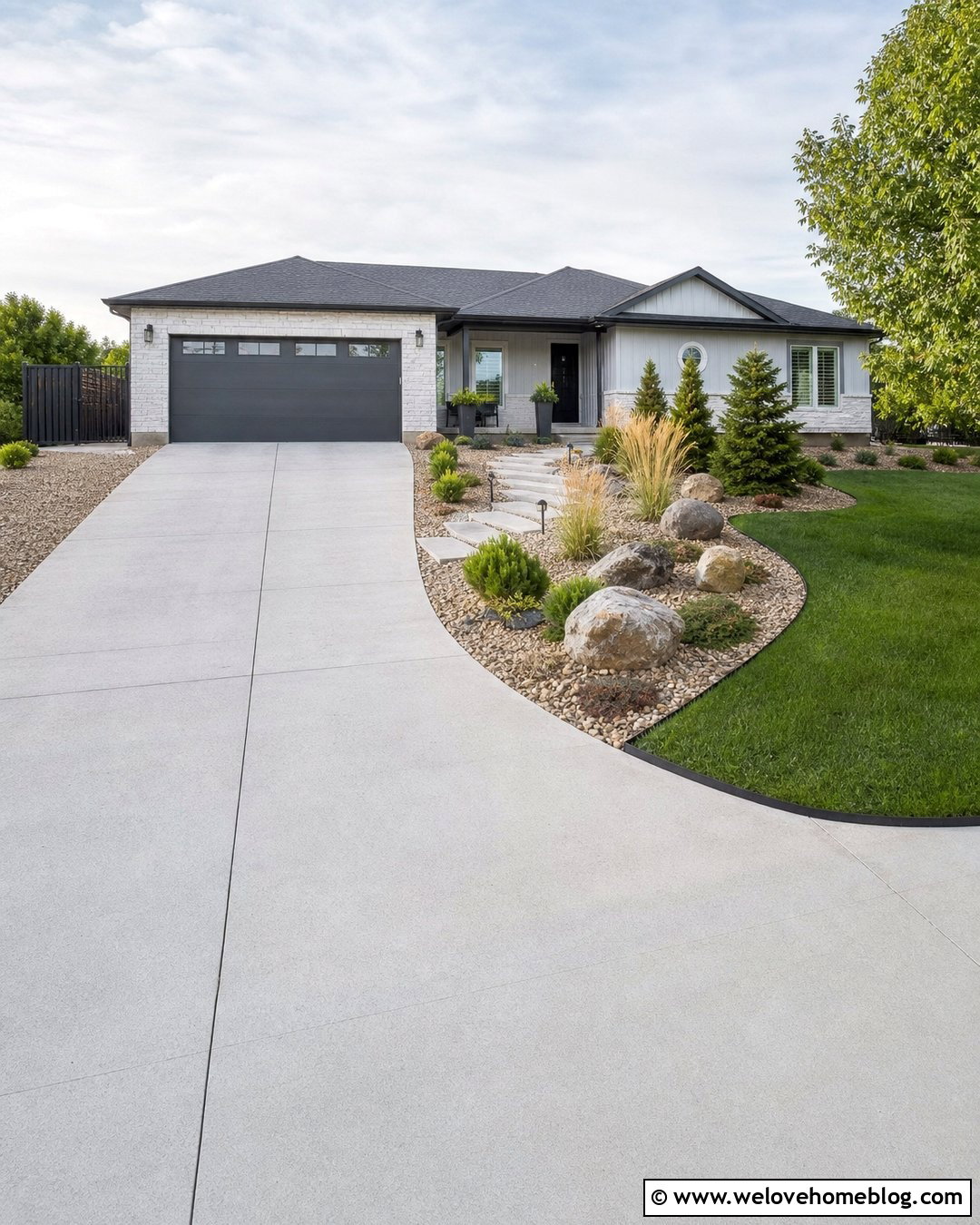
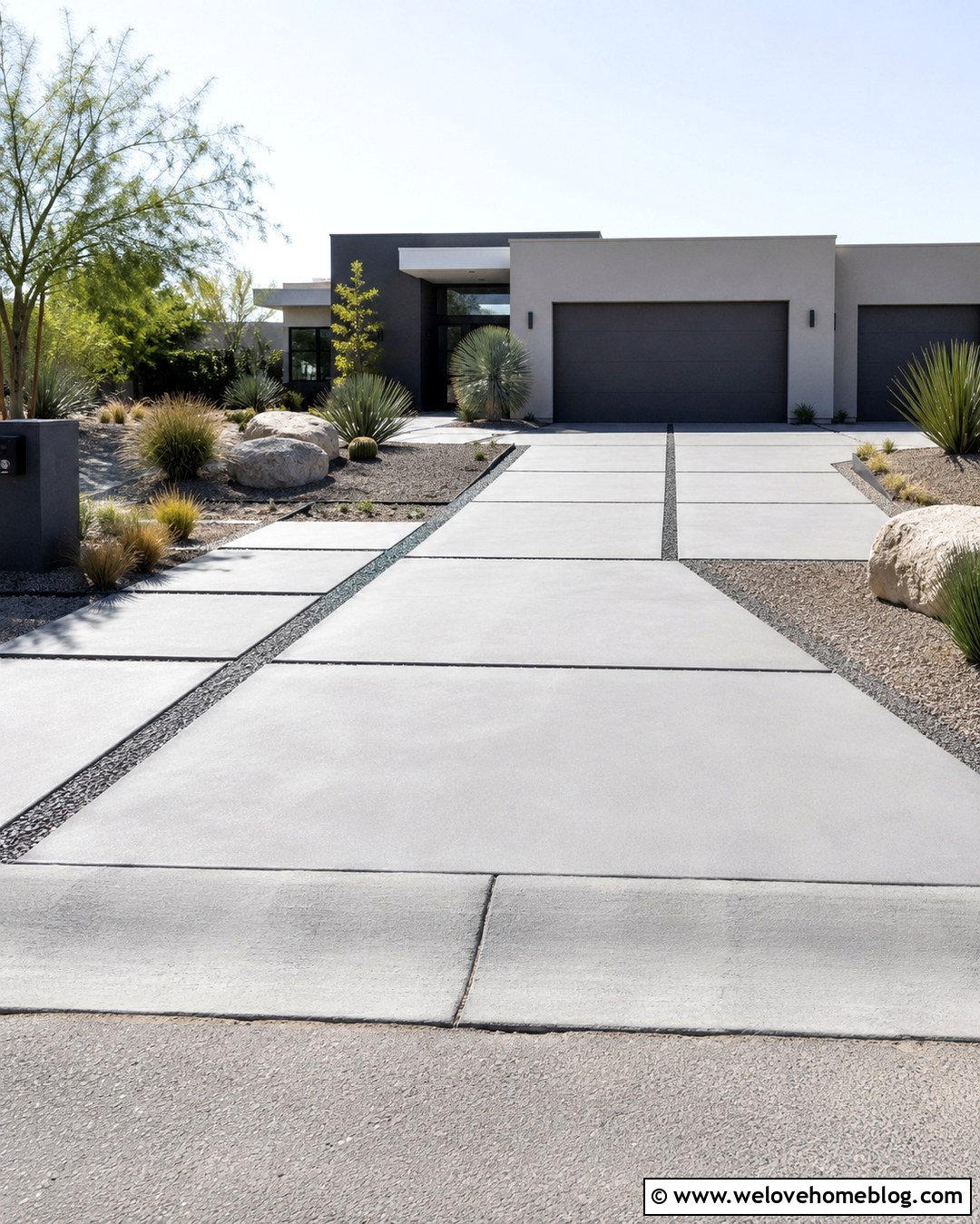
A rock-lined landscape works especially well beside a straight concrete driveway where clean edges are easy to see. Create a gently curved bed using steel edging, then cover the soil with tan river rock or crushed granite. Arrange compact evergreens, ornamental grasses, and a few drought-tolerant flowering plants in spaced groups rather than crowded rows. The open layout keeps the area tidy and reduces trimming near parked vehicles. Place larger decorative boulders closer to the lawn, where they will not interfere with doors or tires. A simple stepping-stone walkway can connect the driveway to the porch. Against a modern ranch or contemporary home, the combination of gray concrete, warm stone, and structured greenery creates an attractive, practical front yard with year-round curb appeal.
2. Curved Flower Bed Next to Driveway
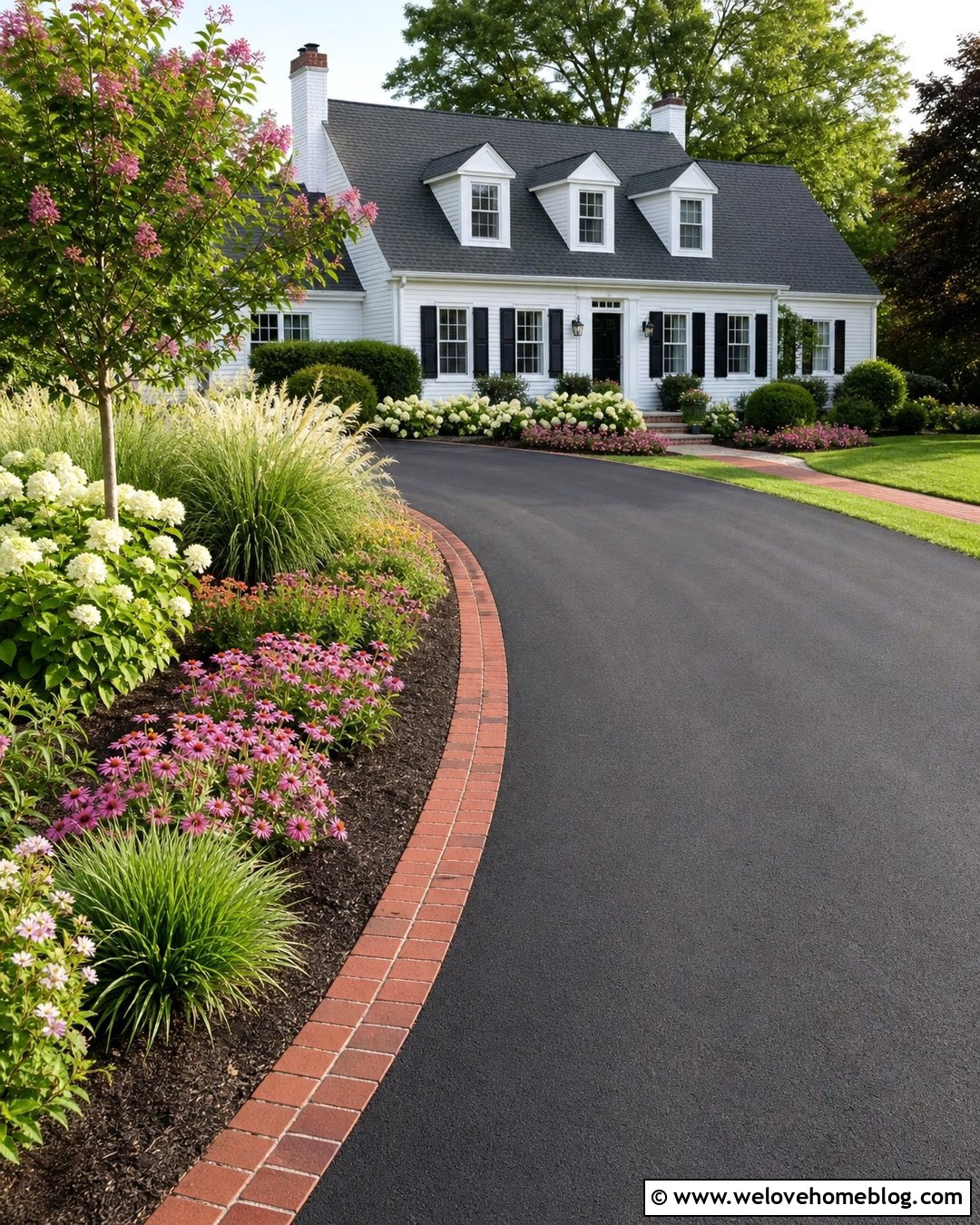
Soft curves can make a wide asphalt driveway feel less harsh and visually guide visitors toward the house. Cut a sweeping flower bed along one side, starting narrow at the street and gradually widening near the front walkway. Use a brick mowing strip to create a durable transition between the pavement, mulch, and lawn. Plant low annuals or perennials along the front edge, medium flowering shrubs in the center, and one small ornamental tree near the widest section. Repeating a limited color palette keeps the bed from appearing busy. Leave a clear setback where passengers normally exit vehicles. This complete design looks particularly welcoming beside a Cape Cod or colonial home because the curved planting bed balances the driveway’s dark surface with softer color, foliage, and movement.
3. Evergreen Shrub Border Along Driveway
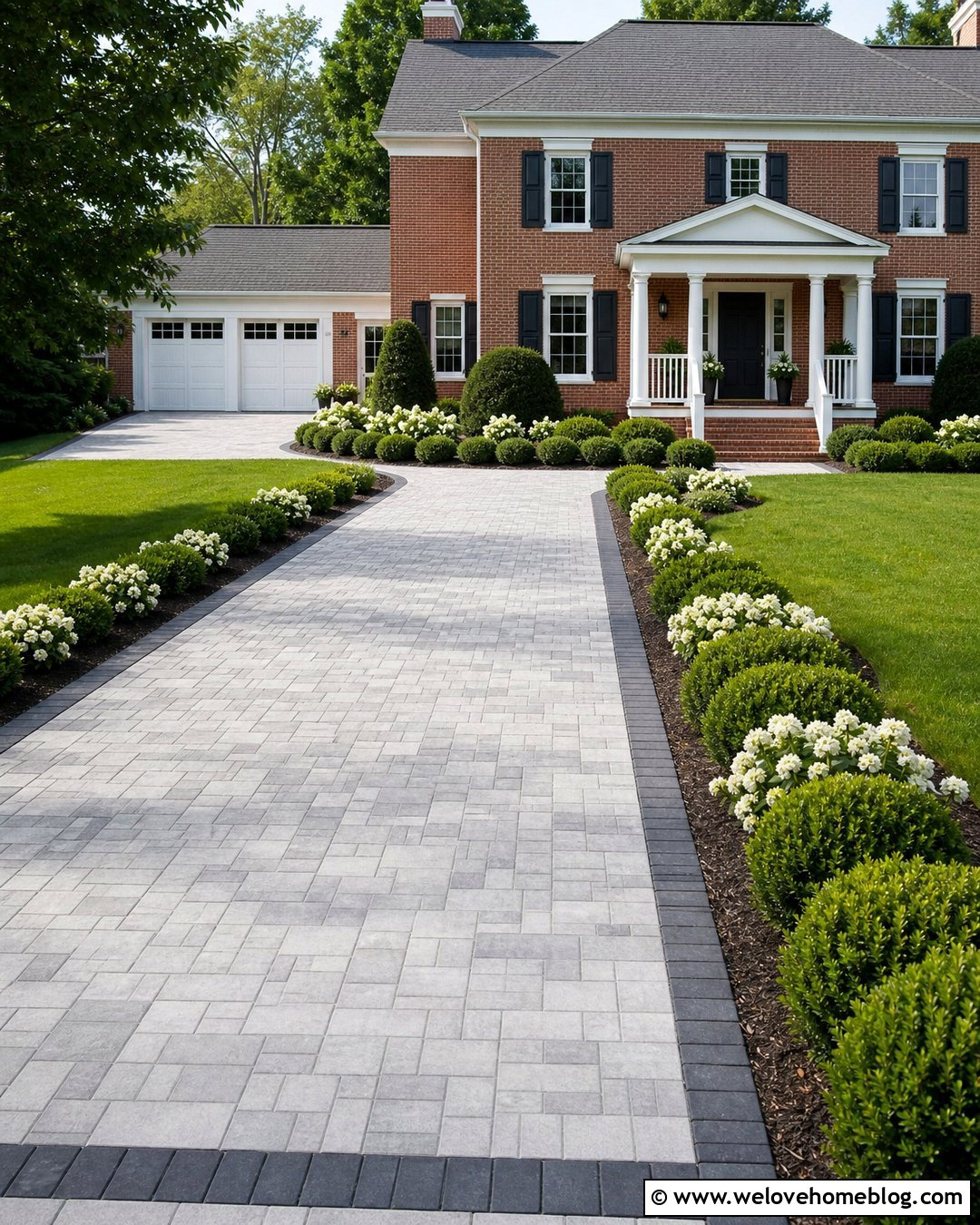
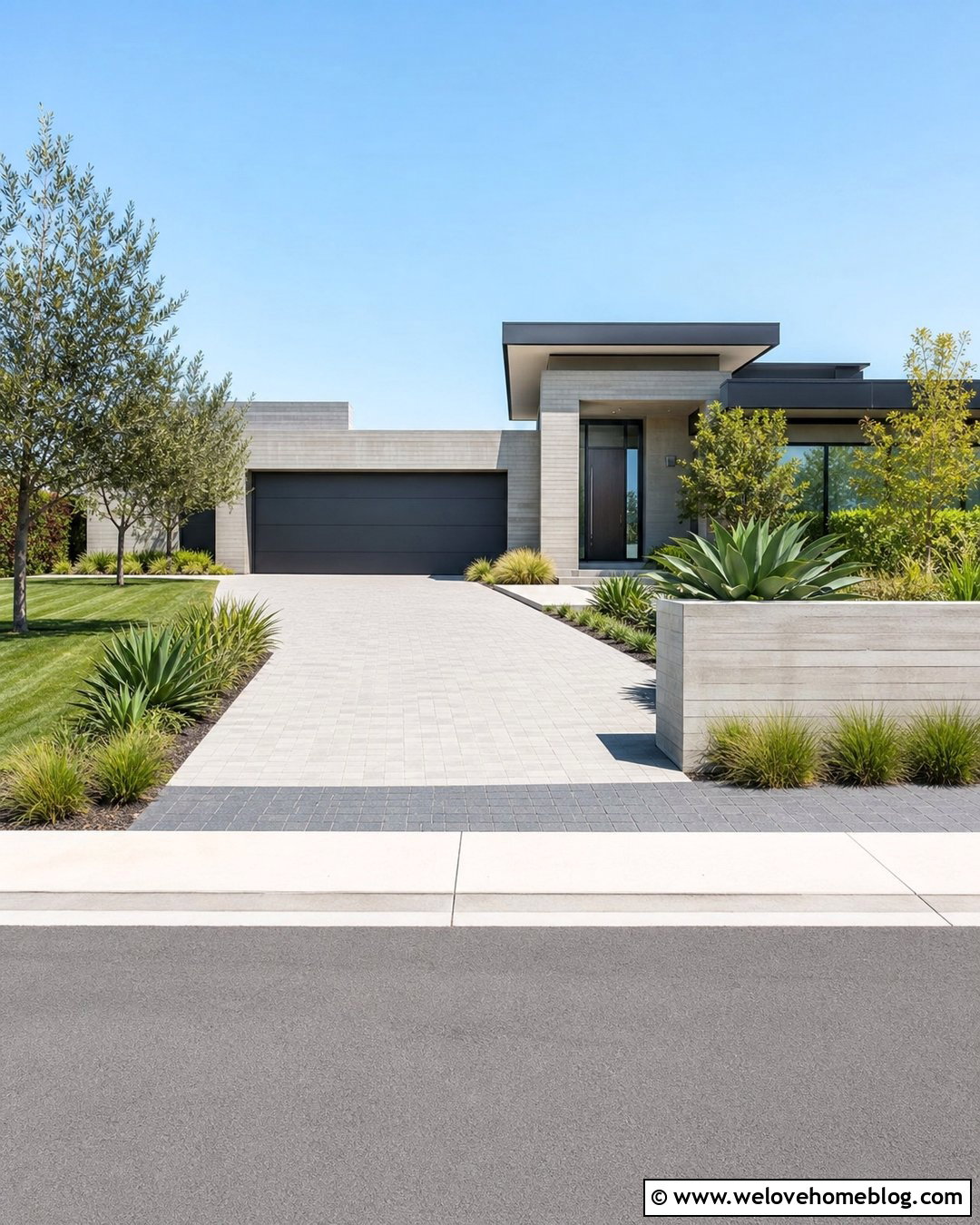
Would you like a driveway border that looks finished in every season? Pair a light-gray paver driveway with a continuous planting bed of compact evergreen shrubs. Choose varieties that remain naturally low and rounded so they do not require frequent shearing. Space them according to their mature width, then add small groups of white flowering perennials between them for seasonal contrast. A dark stone border can separate the pavers from the mulched bed while matching the home’s roof or shutters. Near the garage, transition from shrubs to lower ground cover so opening car doors remain unobstructed. This orderly arrangement complements traditional brick homes, Craftsman houses, and formal suburban landscapes. Repeating the same shrubs near the front steps will tie the driveway landscaping directly to the entrance.
4. Modern Grass Landscaping Next to Driveway
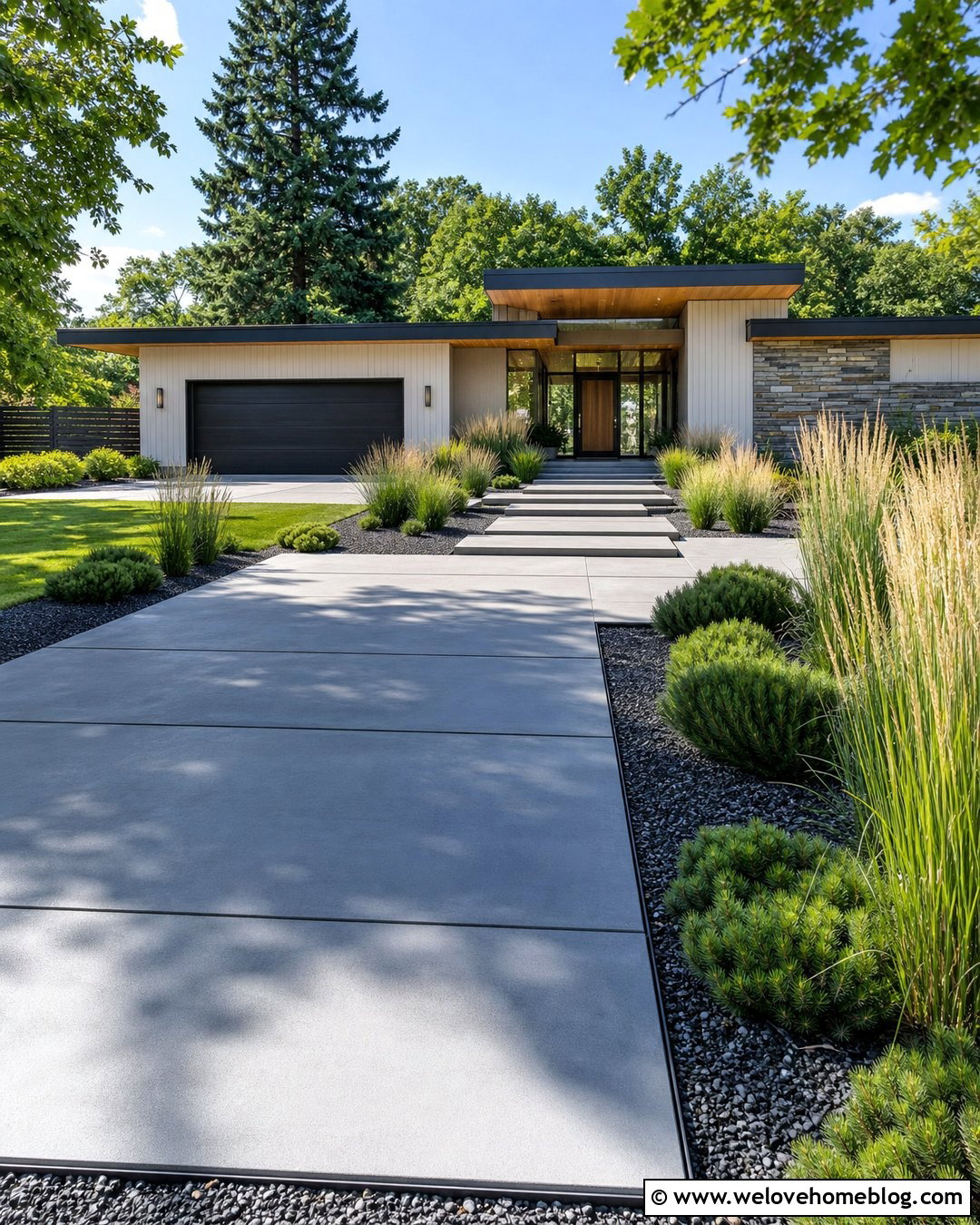
Tall textures and simple lines can transform a basic driveway without filling the yard with complicated plant combinations. Beside a poured concrete driveway, install a long rectangular bed edged with black metal. Fill it with dark gravel and evenly spaced clumps of feather reed grass, switchgrass, or another upright ornamental grass suited to the local climate. Add a few low evergreen mounds to maintain structure during colder months. Keep plants back from the driveway edge so arching blades do not brush vehicles. Large rectangular stepping stones can cross the bed and connect the driveway with a modern front walkway. This streamlined composition suits a mid-century or contemporary house, especially when the garage, house numbers, and planters repeat the same charcoal accents used in the edging and gravel.
5. Cottage Garden Beside Brick Driveway
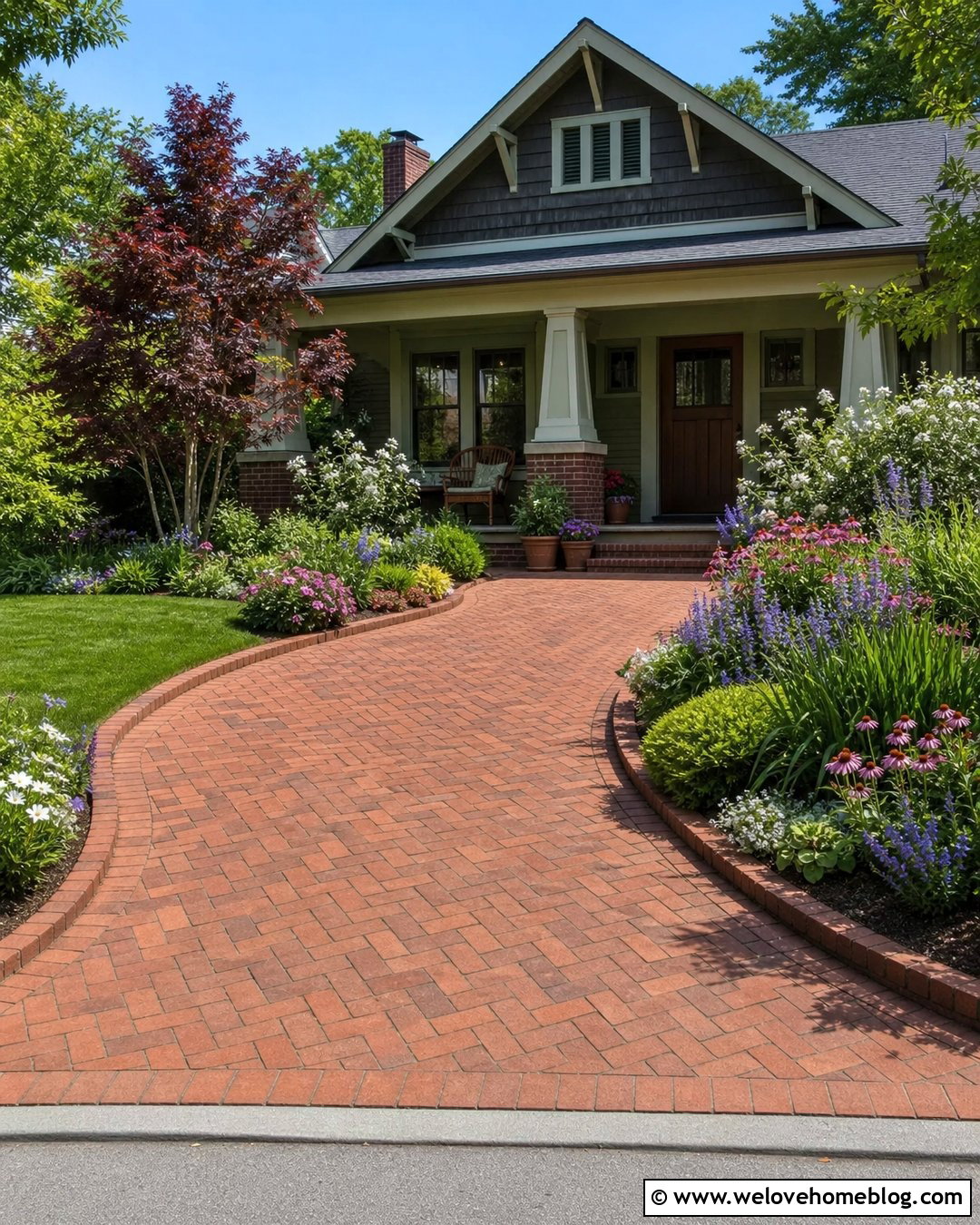
A warm brick driveway becomes even more inviting when surrounded by a relaxed cottage garden. Shape a deep planting bed along the driveway with a softly irregular edge, then repeat the brick as a narrow border to create visual continuity. Combine flowering shrubs, catmint, coneflowers, salvia, daisies, and compact ornamental grasses in layered groups. Lower plants should sit closest to the driveway, while taller flowers belong toward the lawn or fence. Allow some foliage to soften the border without spilling onto the driving area. A small flowering tree near the walkway can provide a focal point and help connect the garden to the porch. This colorful landscape pairs naturally with cottages, Craftsman homes, and traditional facades, creating a full, welcoming look that changes throughout the growing season.
6. Drought-Tolerant Landscaping Along Driveway
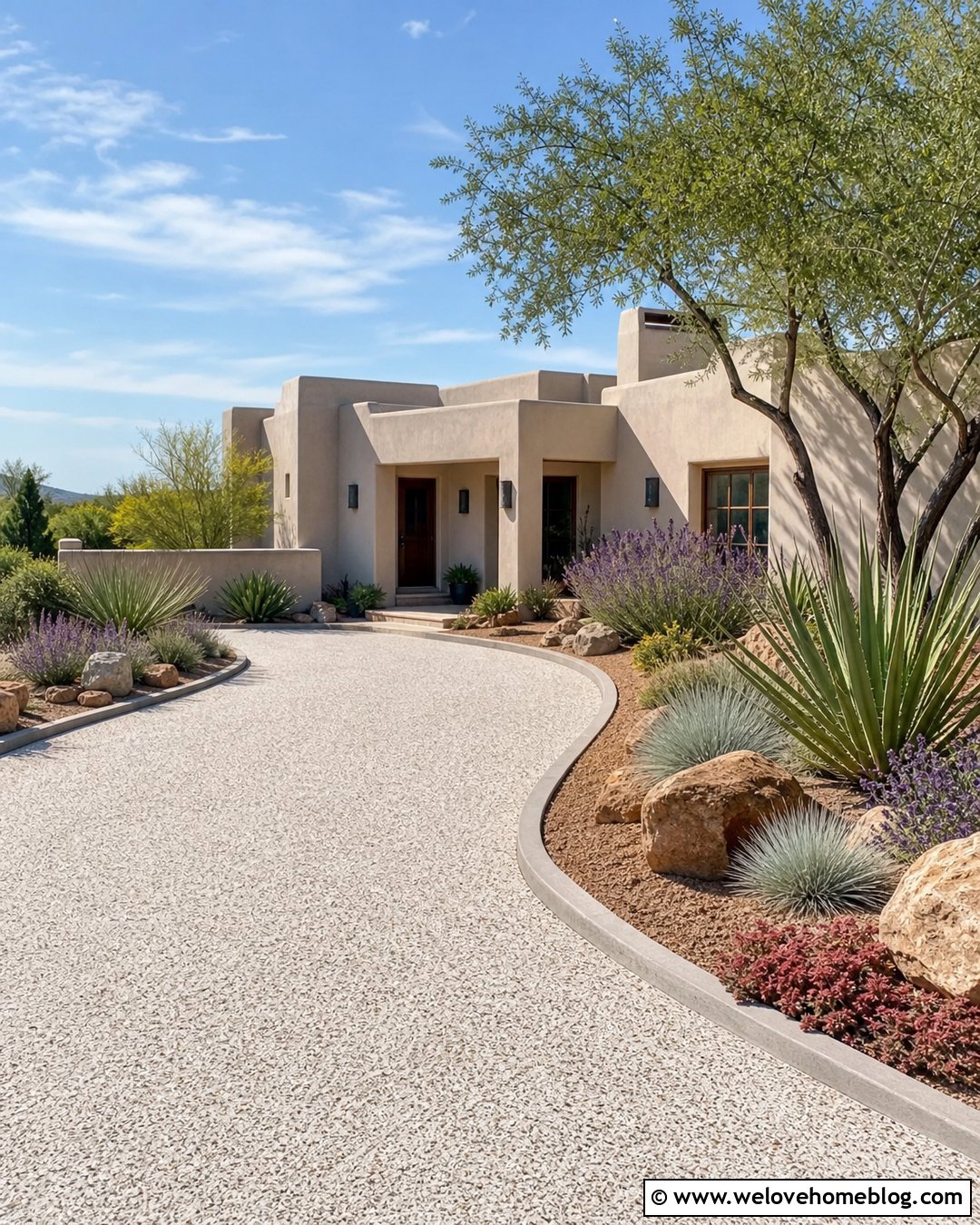
In a hot, sunny front yard, water-wise landscaping can frame the driveway while reducing the amount of thirsty lawn. Pair a pale exposed-aggregate driveway with wide beds of decomposed granite and natural stone. Use sculptural succulents where the climate permits, or select hardy alternatives such as yucca, agave-like perennials, lavender, sedum, and blue fescue. Arrange plants in uneven groups with open space between them, allowing each form to stand out. A row of low concrete curbing will stop loose material from washing onto the driveway. Add one multi-trunk ornamental tree farther from the pavement for filtered shade and vertical interest. Against a stucco, Southwestern, or modern home, the silver foliage and warm stone create a cohesive landscape that feels intentional rather than bare.
7. Small Front Yard Landscaping Next to Driveway
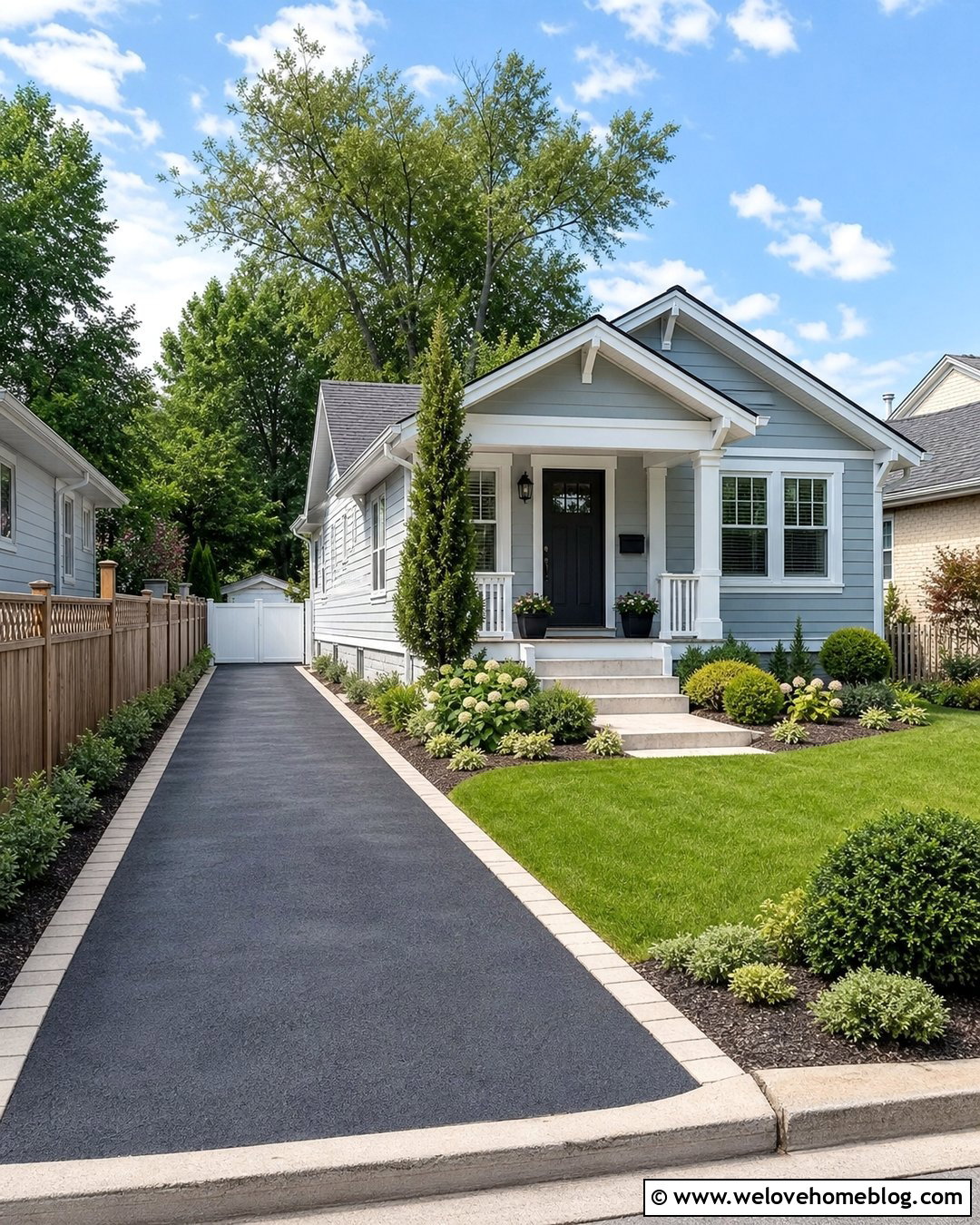
Limited space calls for careful layering rather than many unrelated plants. Next to a narrow asphalt driveway, install a slim planting bed bordered with light concrete pavers. Use low ground cover at the front, a short row of compact shrubs behind it, and one narrow ornamental tree near the house. This arrangement adds depth without making the driveway feel cramped. Connect the pavement to the front door with a clear paver walkway that uses the same border material. If the driveway runs close to a neighboring property, a short decorative fence can provide definition without closing in the yard. Keep the planting palette simple and repeat it around the porch. The matching edges, restrained greenery, and visible entrance help a small bungalow or ranch home look wider, tidier, and more welcoming.
8. Sloped Landscaping Beside Driveway
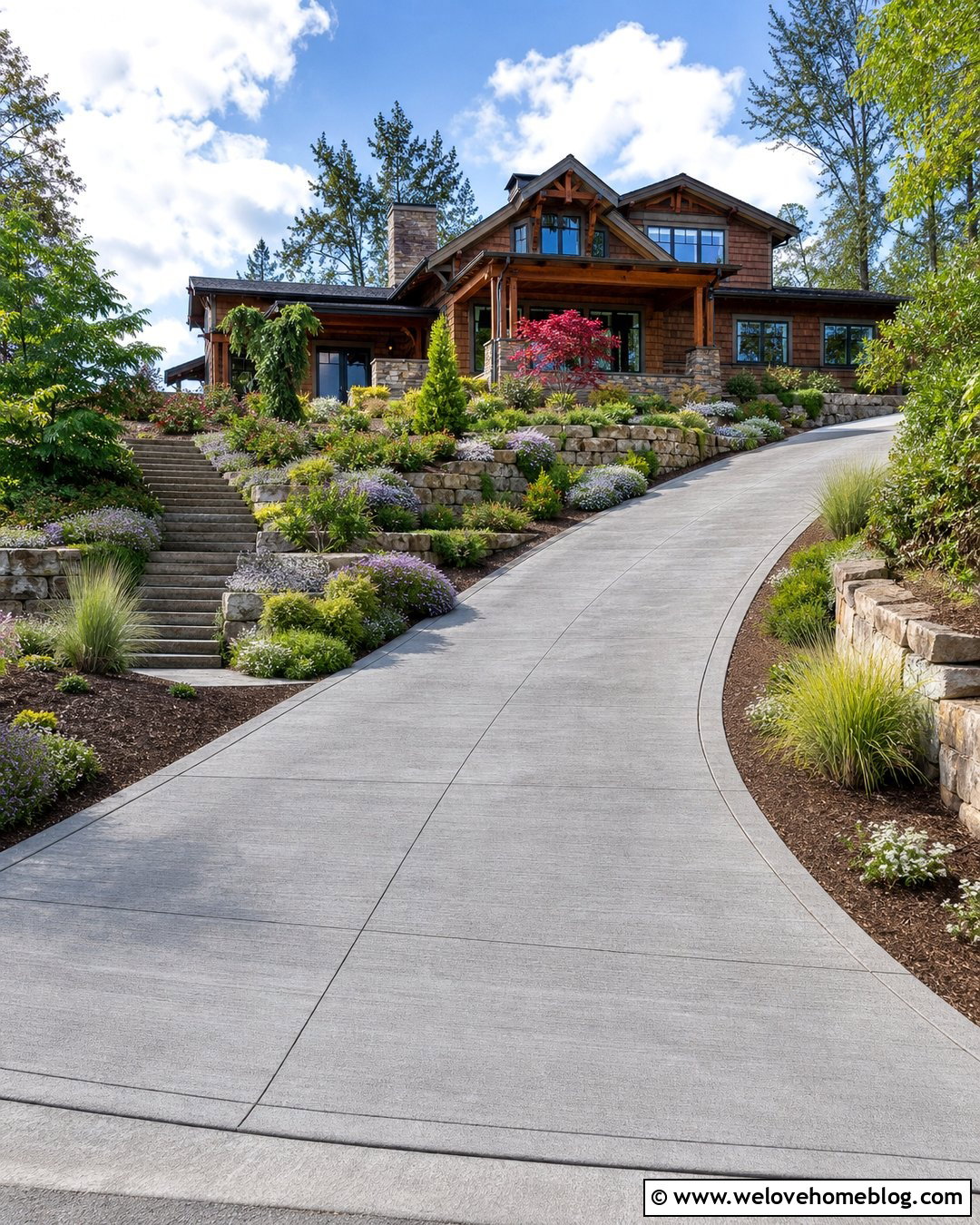
A sloped front yard needs landscaping that controls soil while visually balancing the driveway. Along a sloping concrete drive, build two or three low retaining walls instead of one tall structure. Use natural stone or textured concrete blocks that coordinate with the home’s foundation. Create level planting terraces behind the walls and fill them with spreading ground covers, compact shrubs, ornamental grasses, and cascading flowers. Keep the lowest wall far enough from the pavement to provide drainage and safe vehicle clearance. Stone steps can climb through the terraces and create a direct route from the driveway to the entrance. This layered design turns a difficult grade into a strong curb-appeal feature. It looks particularly natural beside hillside Craftsman, rustic contemporary, and split-level homes with visible stone details.
9. Shade Garden Next to Driveway
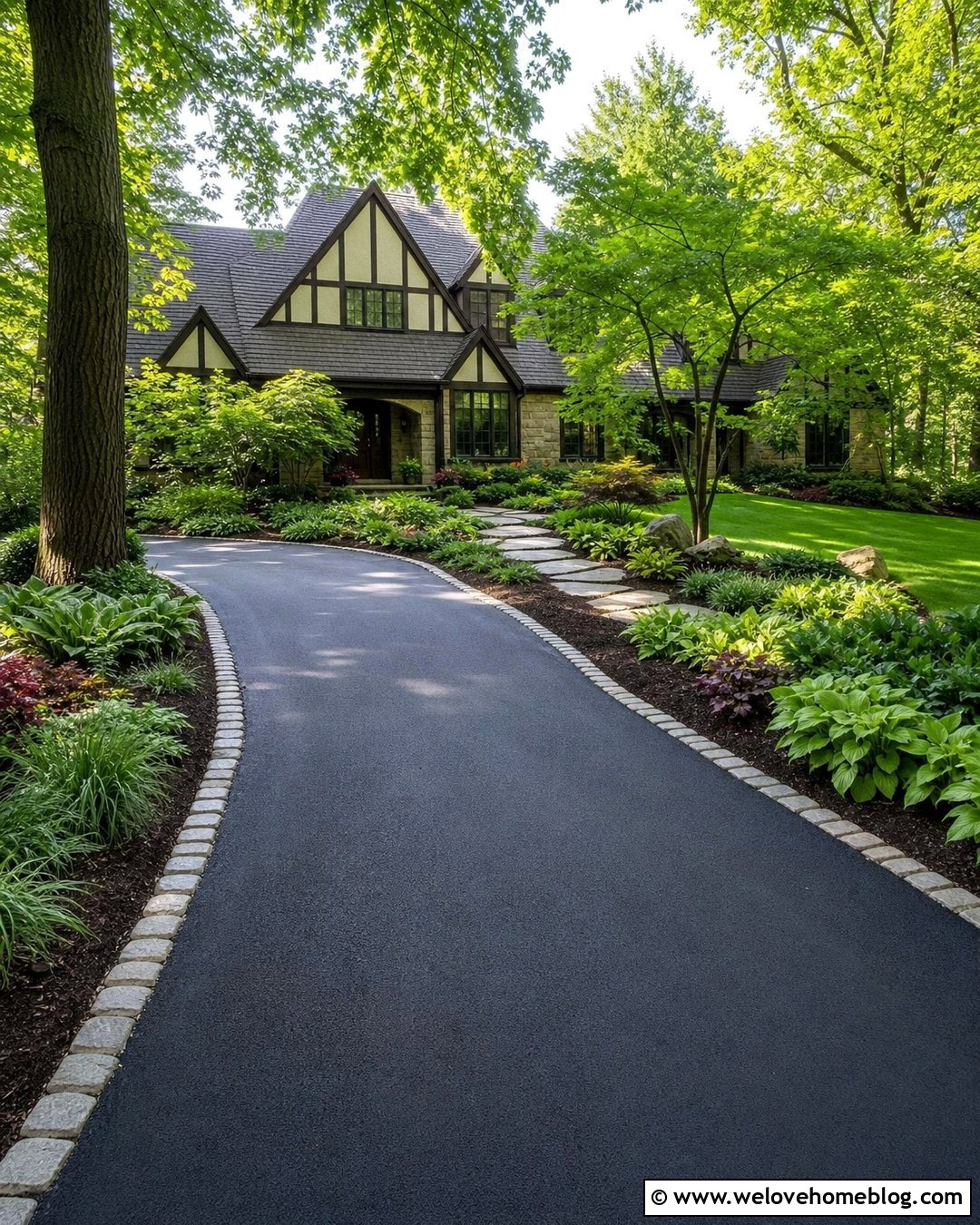
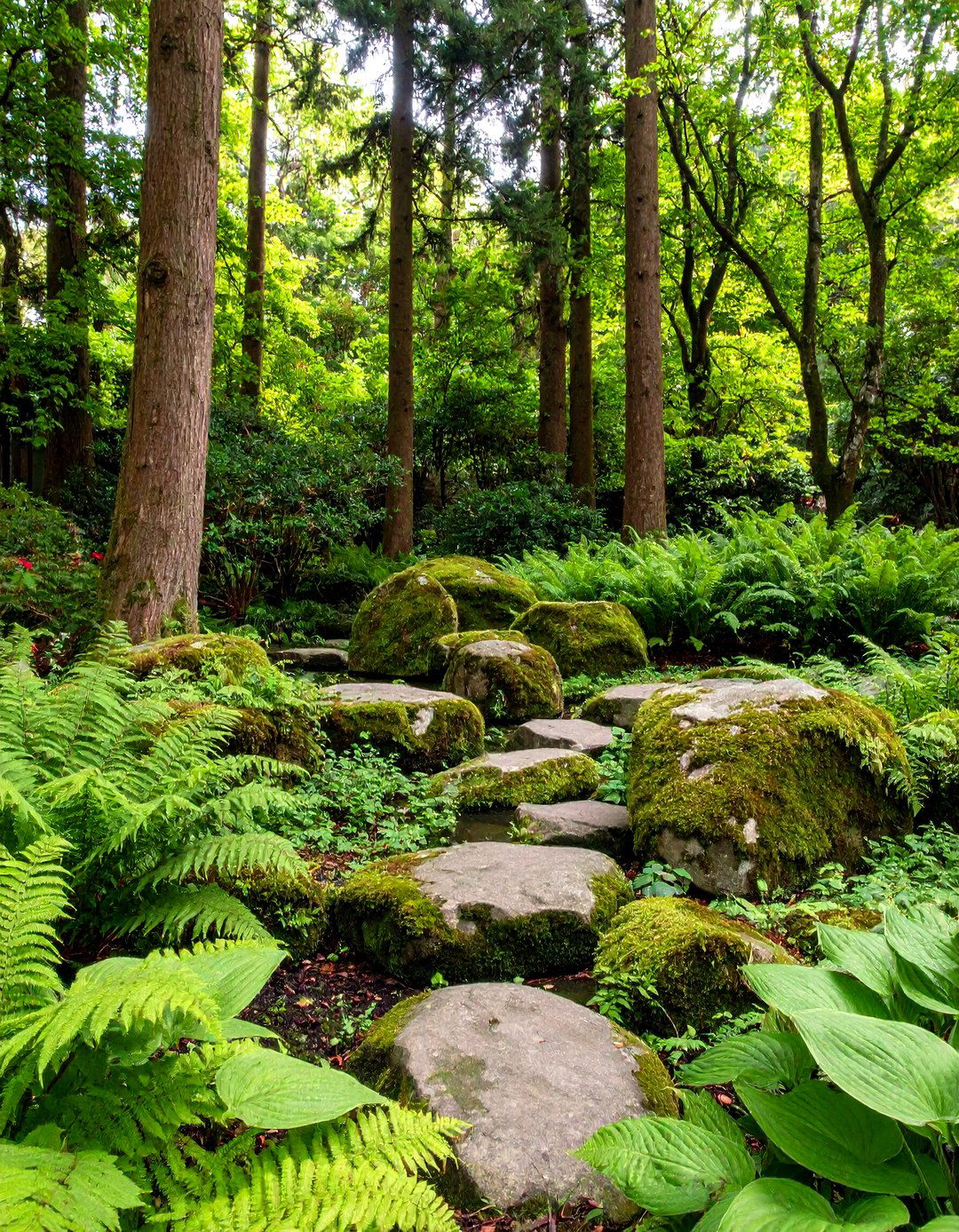
A driveway beneath mature trees can still have a colorful, complete landscape. Start with a curved gray gravel or asphalt driveway and define the shaded edge using cobblestones or weathered brick. Fill the adjoining bed with shade-tolerant plants such as ferns, hostas, coral bells, sedges, and compact flowering shrubs suited to your region. Layer low foliage close to the pavement and place larger shrubs farther back. Avoid piling mulch against tree trunks or disturbing major roots when preparing the bed. A woodland-style stepping-stone path can weave from the driveway toward the porch. Repeating the driveway’s cobblestone border around the front walkway keeps everything connected. This cool, leafy composition is a natural fit for traditional, Tudor, cottage, and wooded suburban homes.
10. Tree-Lined Front Yard Driveway
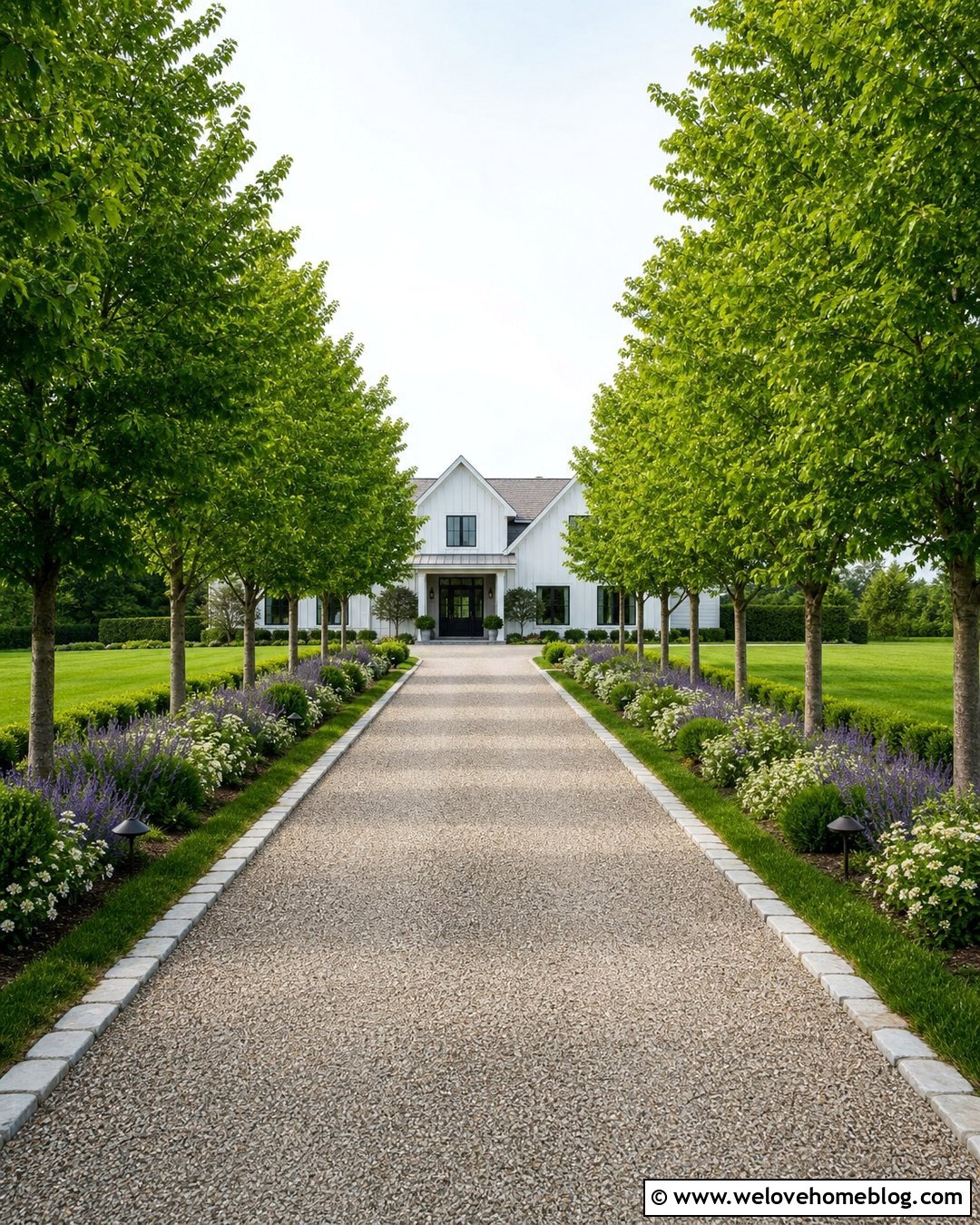
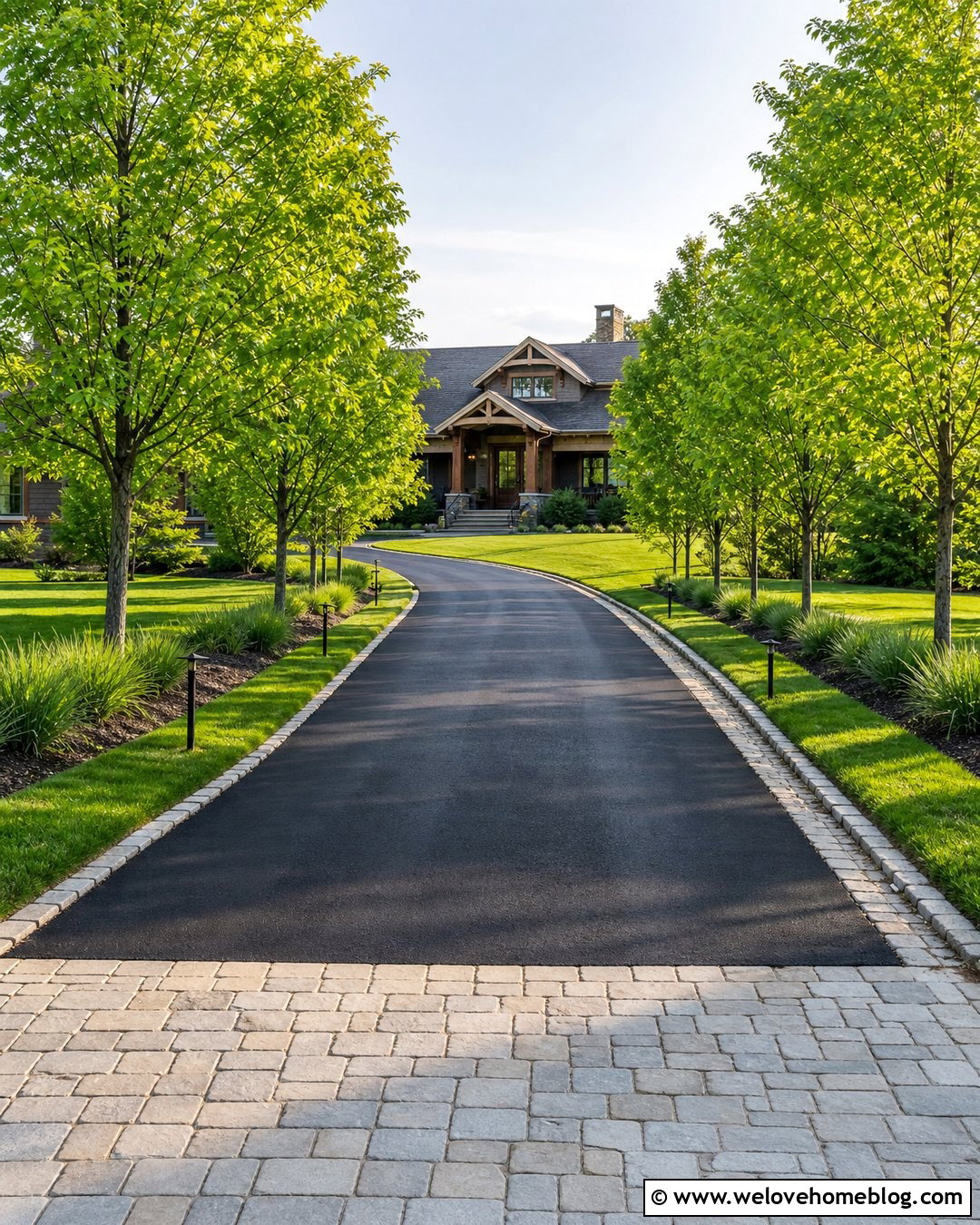
A row of trees can give a long driveway stronger scale and a clear sense of arrival. Pair a straight pea gravel driveway with sturdy cobblestone edging, then plant evenly spaced ornamental trees beyond a strip of lawn or low ground cover. Choose trees with upright growth, manageable roots, and canopies that will not block visibility. Beneath them, create repeating beds of low shrubs, bulbs, and perennial flowers. Matching plant groups on both sides can produce a formal look, while planting trees along only one side feels more relaxed. Low path lights between the trees improve definition without dominating the daytime view. This complete arrangement works beautifully with farmhouse, colonial, and country homes because the repeated trunks visually lead from the street to the architecture.
11. Mulch Bed Along Concrete Driveway
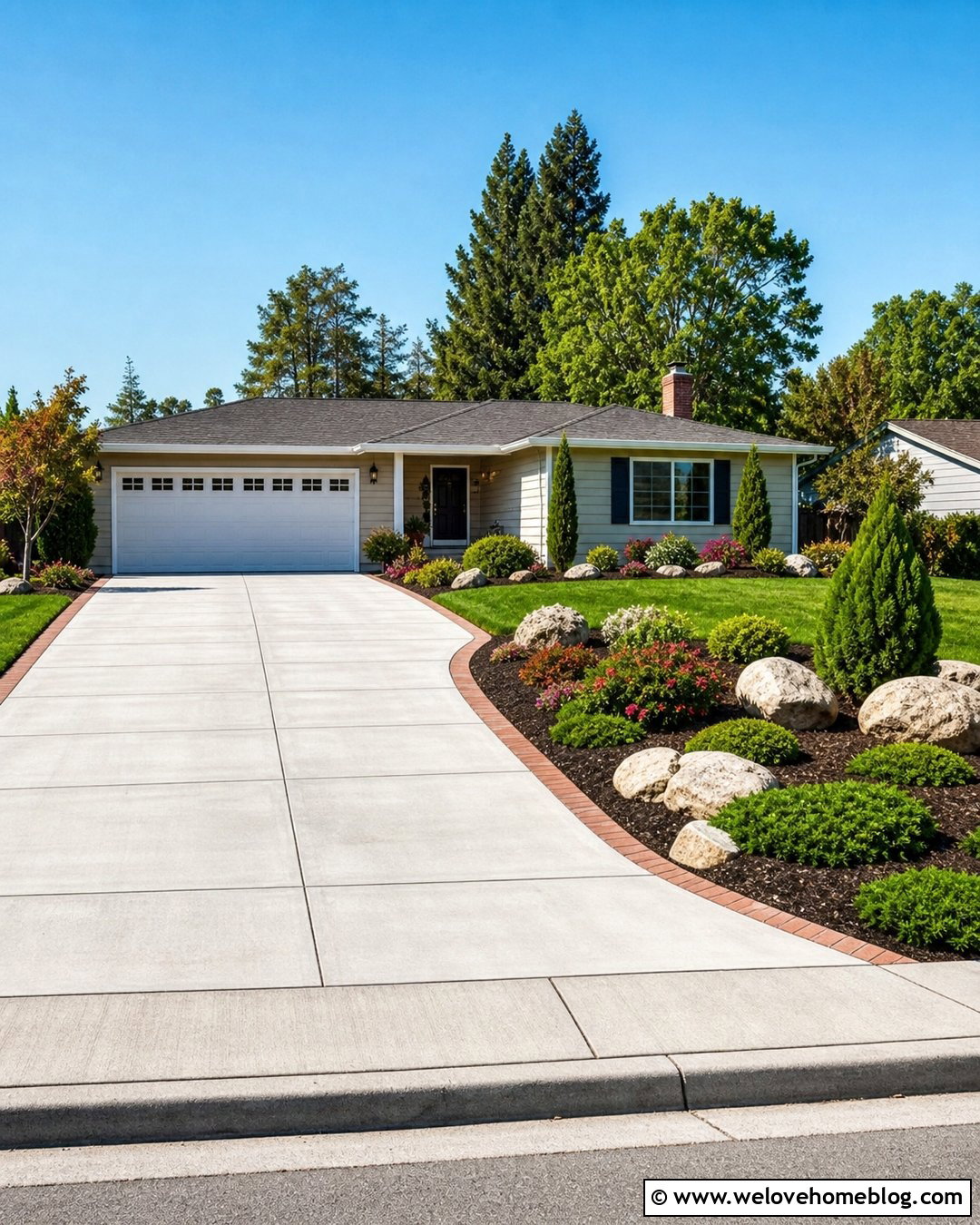
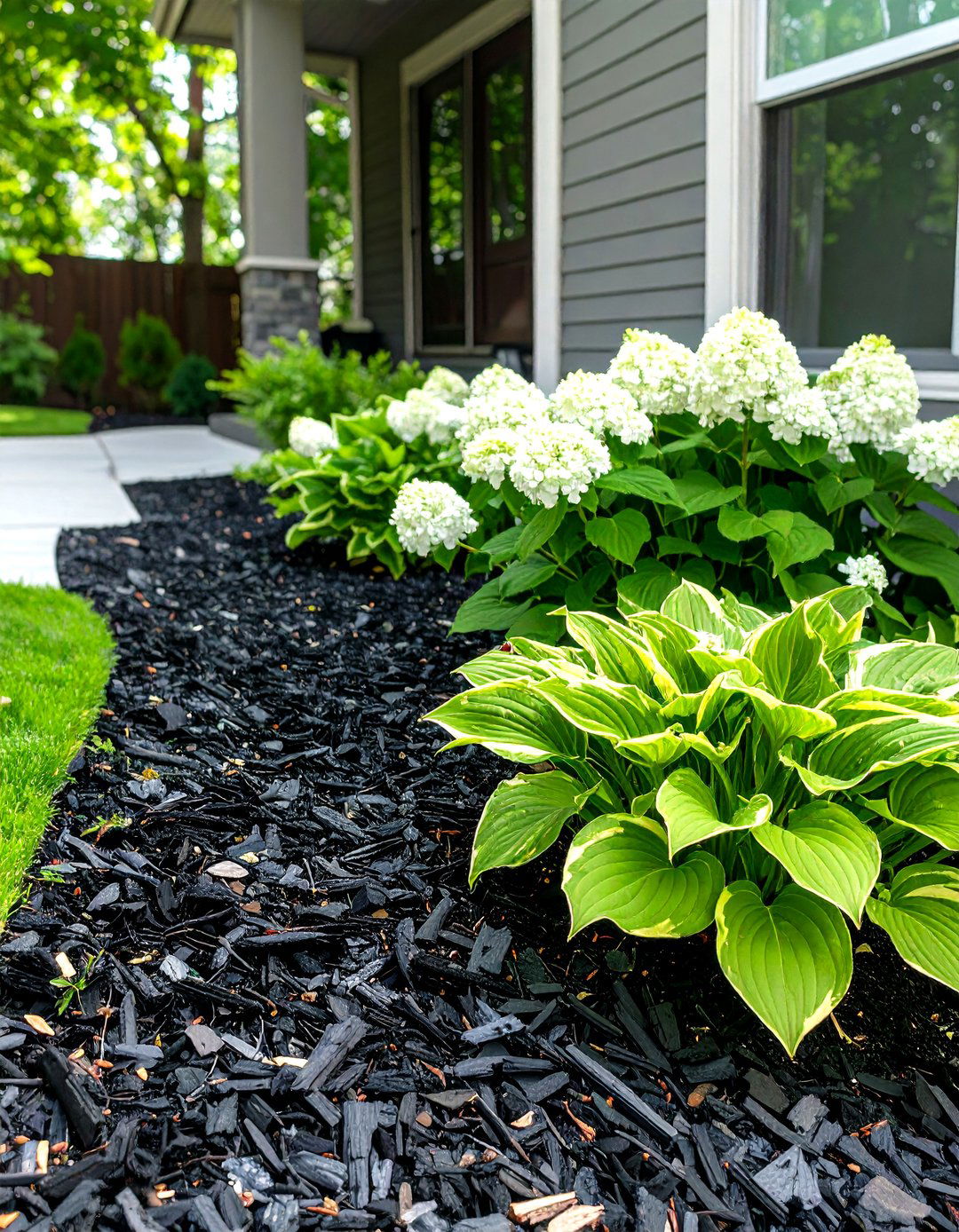
Fresh mulch provides one of the simplest ways to improve a plain concrete driveway. Create a broad, gently curving bed rather than a narrow strip that is difficult to plant. Define the edge with brick, stone, or a crisp trench, then add three layers of vegetation: ground cover near the pavement, flowering shrubs in the middle, and taller evergreens toward the house. Use shredded bark or another mulch appropriate for the plants and local conditions. Keep the mulch slightly below the driveway surface to prevent it from washing across the concrete. A few repeated boulders can add structure without raising maintenance. When the same mulch and plants continue into the foundation beds, the driveway, lawn, walkway, and house begin to read as one coordinated front yard.
12. Raised Stone Bed Next to Driveway
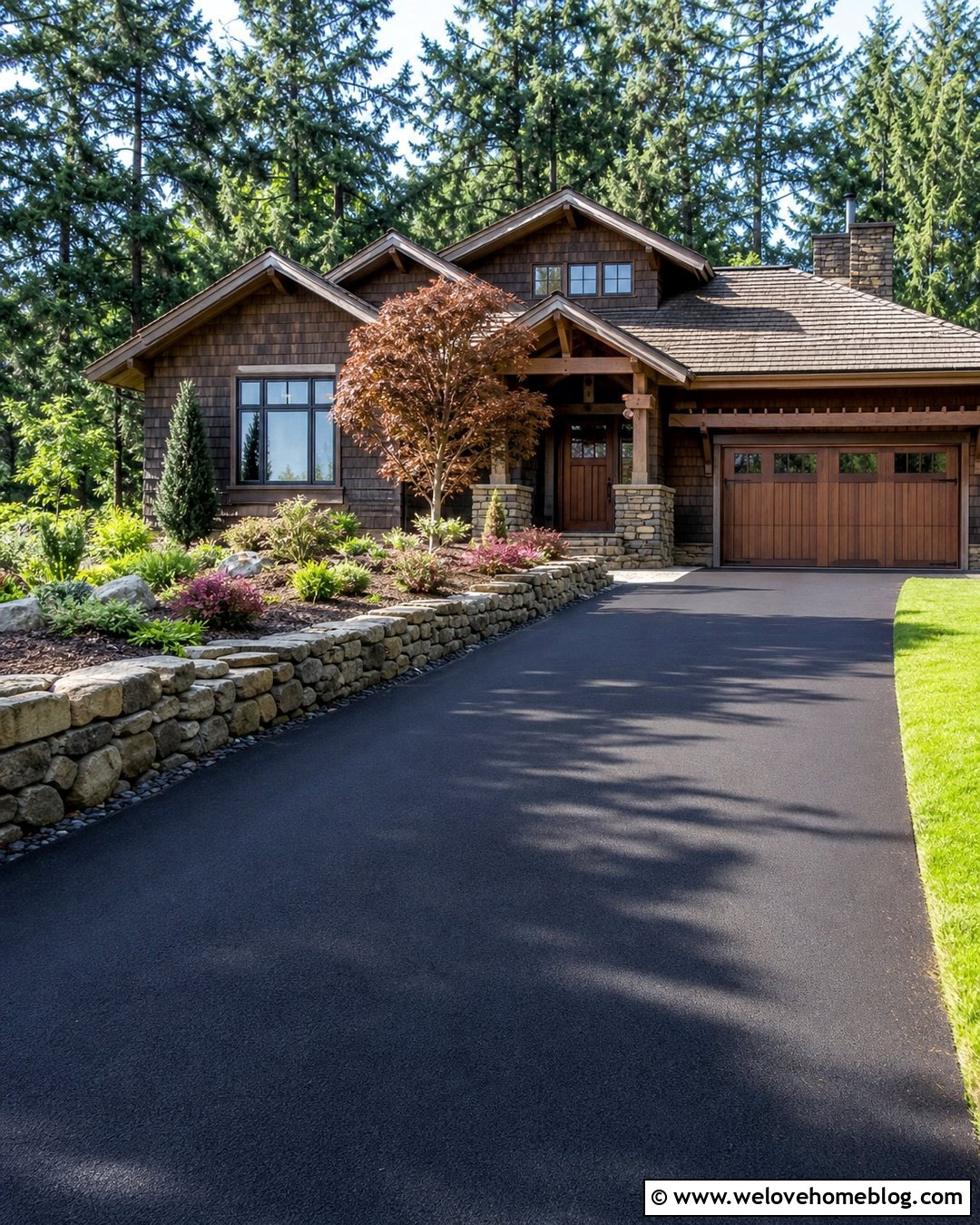
A raised planting bed can define a driveway while bringing flowers closer to eye level. Beside a dark asphalt surface, construct a low wall from natural fieldstone or tumbled concrete blocks. Keep the wall below typical car-door height and provide enough clearance for passengers. Fill the bed with well-draining soil, then combine trailing ground cover along the wall, compact flowering perennials in the center, and small evergreen shrubs toward the back. A wider section near the driveway entrance can hold an ornamental tree or address marker. Continue the wall material around the front steps or porch to connect the landscape with the house. This structured design suits traditional, rustic, and Craftsman properties, adding useful grade control and a polished transition between the driveway and lawn.
13. Rain Garden Beside Driveway
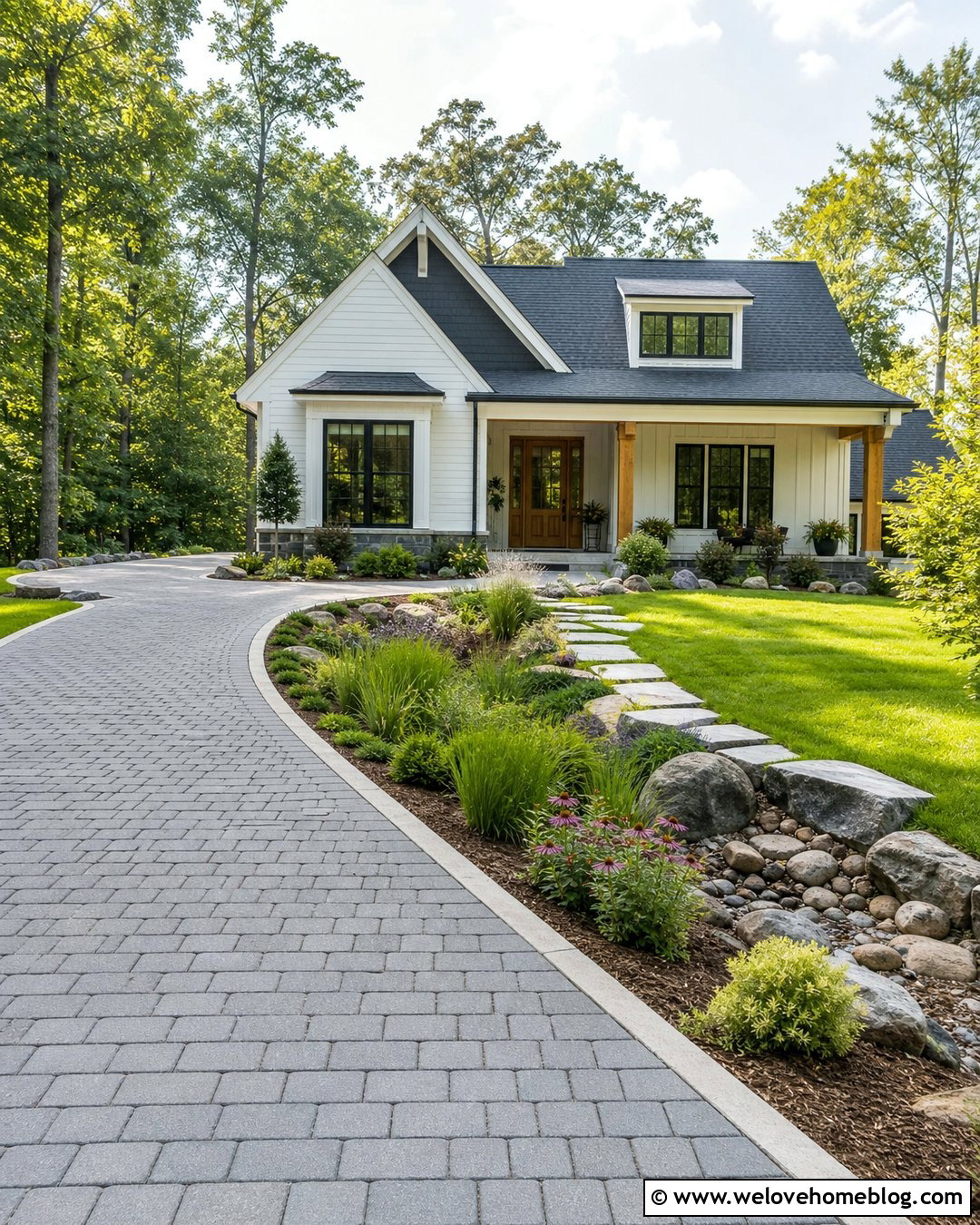
Where runoff collects beside the pavement, a rain garden can become an attractive part of the driveway landscape. Direct water from a permeable paver or concrete driveway into a shallow, gently sloped planting basin rather than allowing it to pool near the garage. Line the upper edge with stone and use moisture-tolerant native grasses, flowering perennials, and compact shrubs suitable for local conditions. The center should sit lower than the surrounding lawn, while the planting edges remain clearly defined. Include a safe overflow route away from the foundation. A small bridge-style walkway or flat stepping stones can connect the driveway to the front path. With thoughtful grading, this functional feature looks like an intentional garden beside a contemporary, cottage, or environmentally focused home.
14. Circular Driveway With Center Island Landscaping
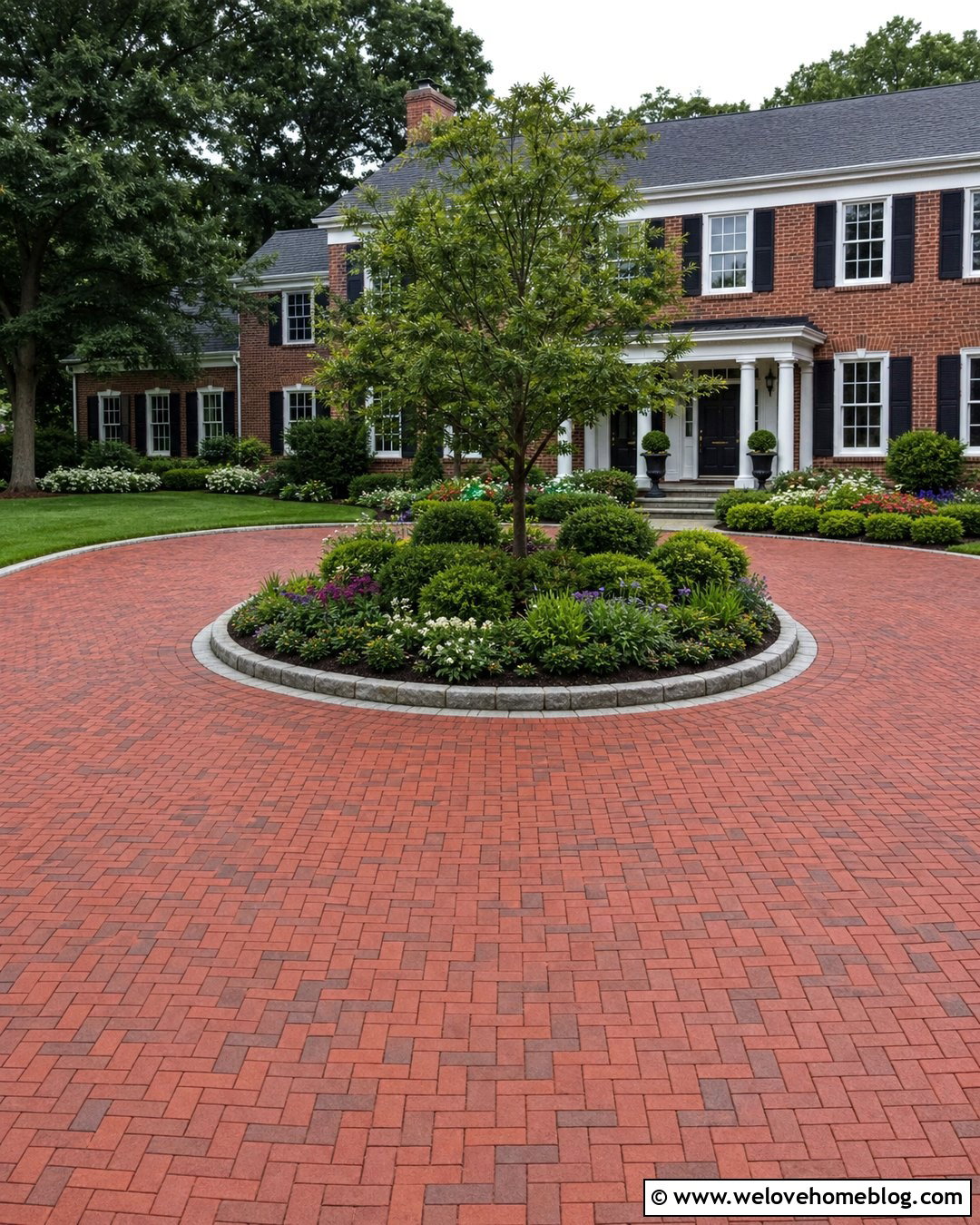
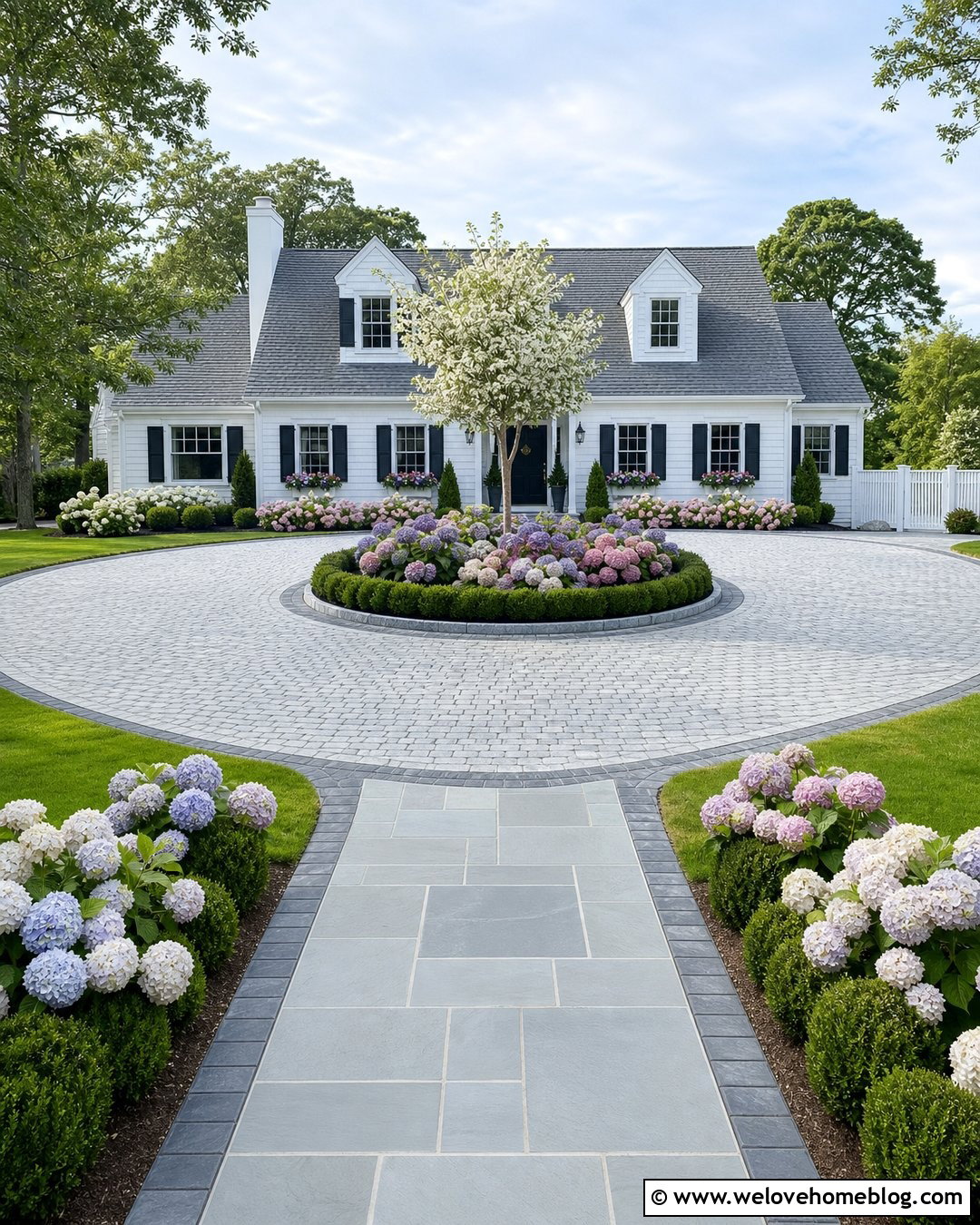
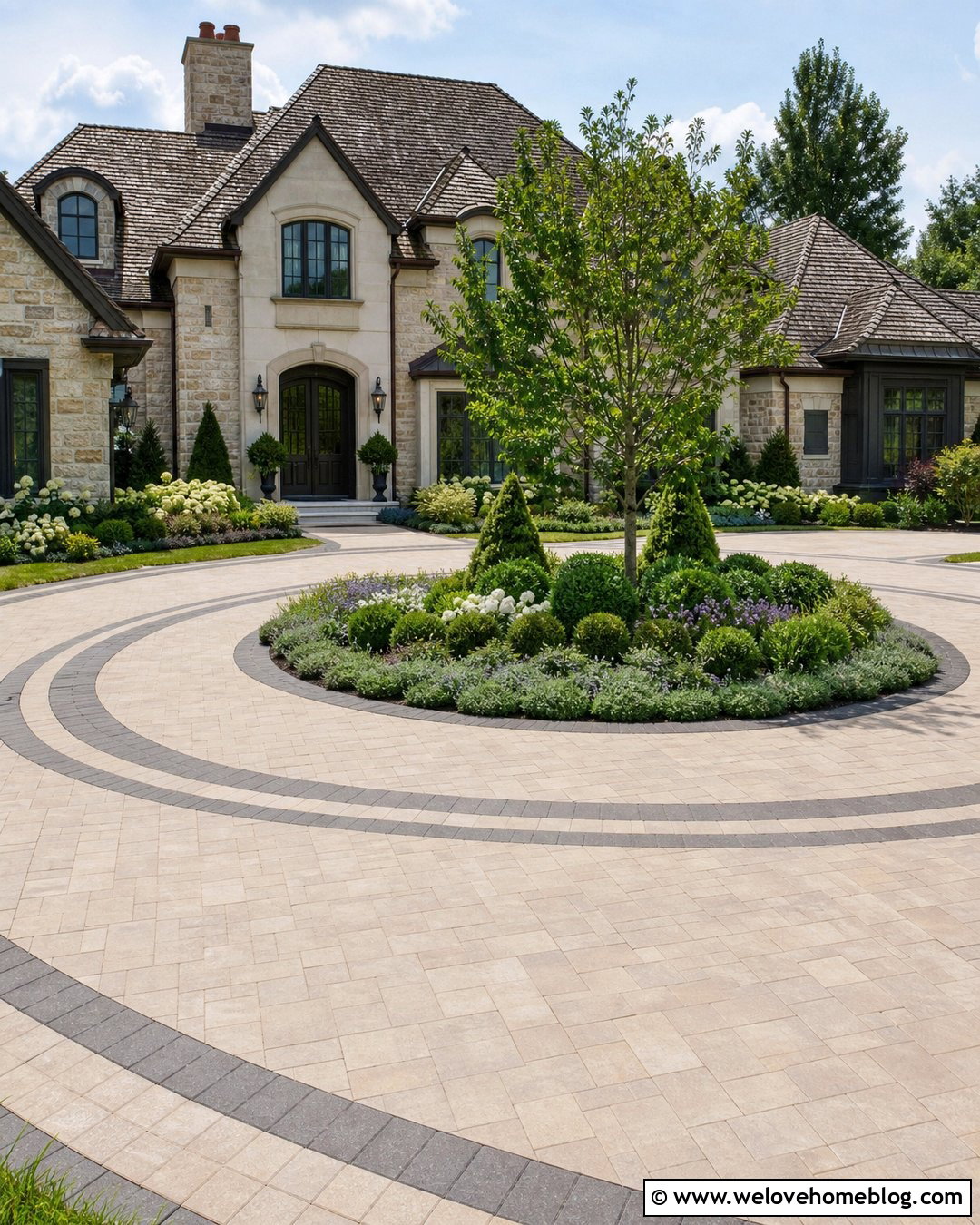
A landscaped center island prevents a circular driveway from feeling like an oversized expanse of pavement. Surround a circular brick-paver driveway with a low stone curb, then repeat that material around the island. Place one well-proportioned ornamental tree slightly off center and layer compact shrubs, flowering perennials, and low ground cover around it. Keep taller plants away from the driveway entrance so drivers can see approaching traffic and pedestrians. The outer edges can feature simpler lawn and foundation beds, allowing the island to remain the main focal point. Use the same plant colors near the front porch to create continuity. This balanced design complements colonial, Georgian, Mediterranean, and larger farmhouse homes, giving the front yard a formal appearance without relying on excessive decoration.
15. Privacy Hedge Along Front Yard Driveway
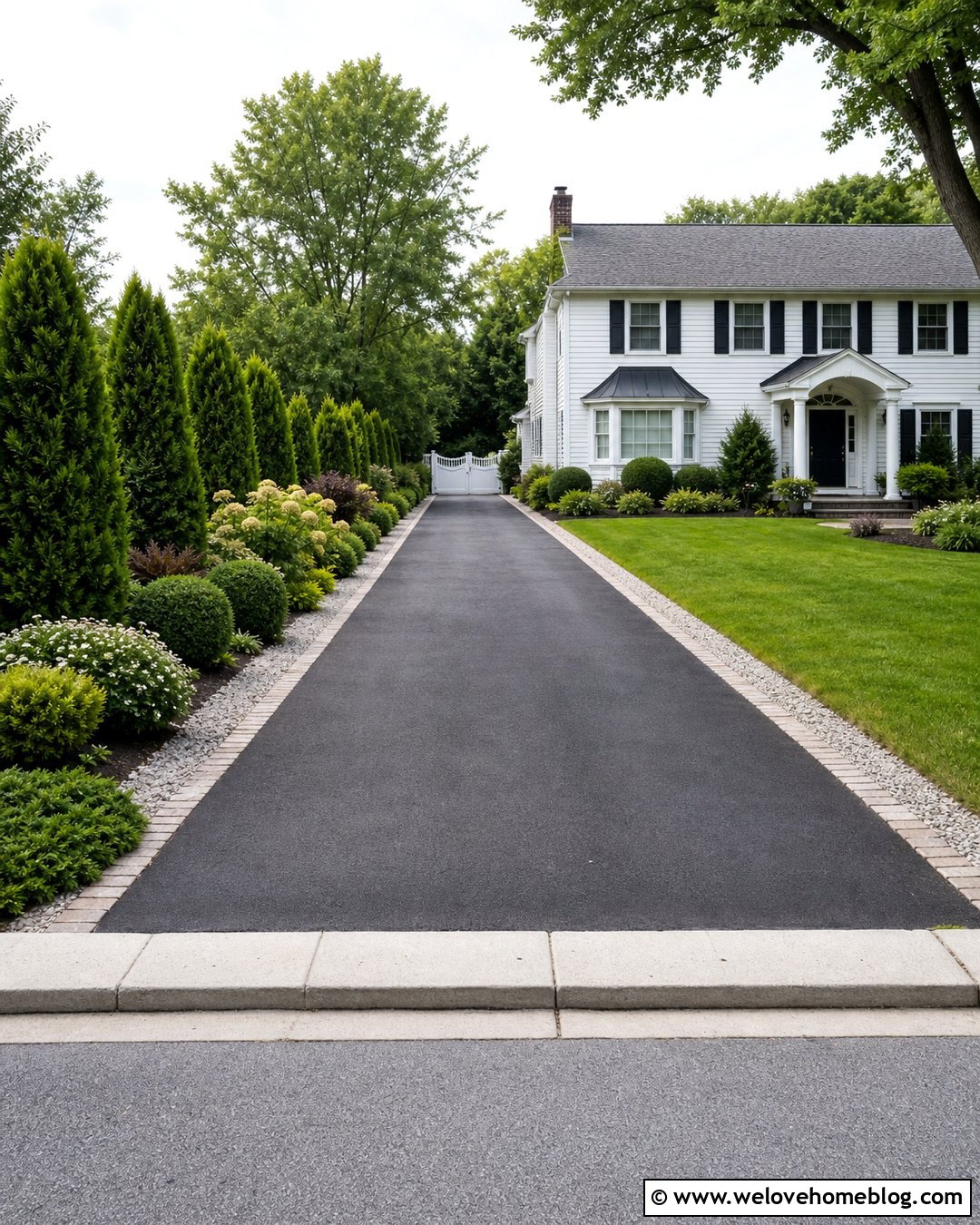
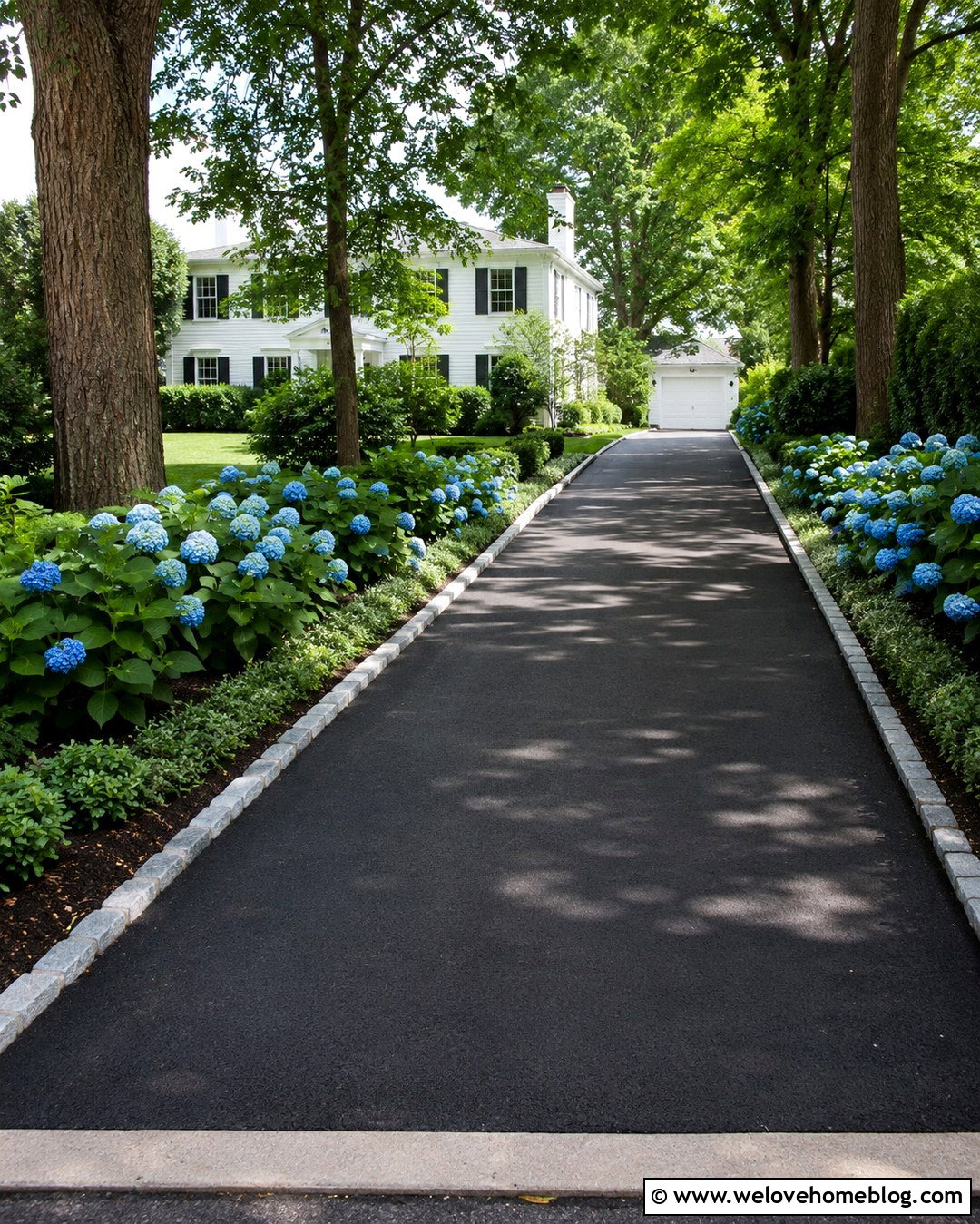
When a driveway sits close to a neighboring yard, a planted screen can provide privacy without making the entrance feel enclosed. Pair a black asphalt or concrete driveway with a deep side bed edged in brick or stone. Plant a staggered row of upright evergreen shrubs far enough from the pavement to accommodate their mature width. In front, add lower flowering shrubs and ground cover to soften the hedge’s solid appearance. Reduce the planting height near the street and walkway to preserve important sightlines. A narrow strip of decorative gravel between the bed and driveway can simplify maintenance and improve separation. This layered screening works well with suburban ranch, colonial, and two-story homes, turning an exposed property line into a green backdrop that supports the entire front yard design.
16. Walkway Landscaping Between Driveway and Front Door
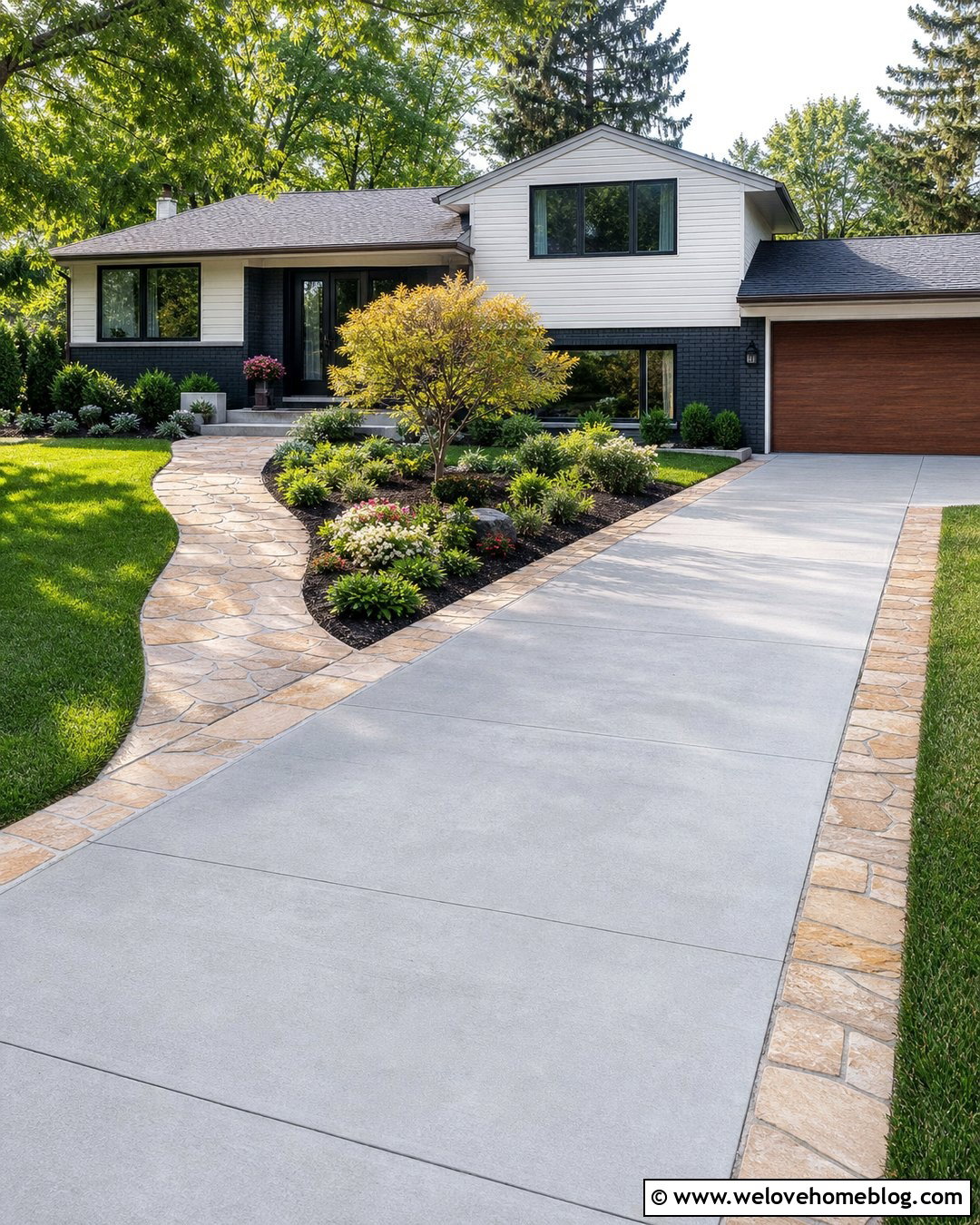
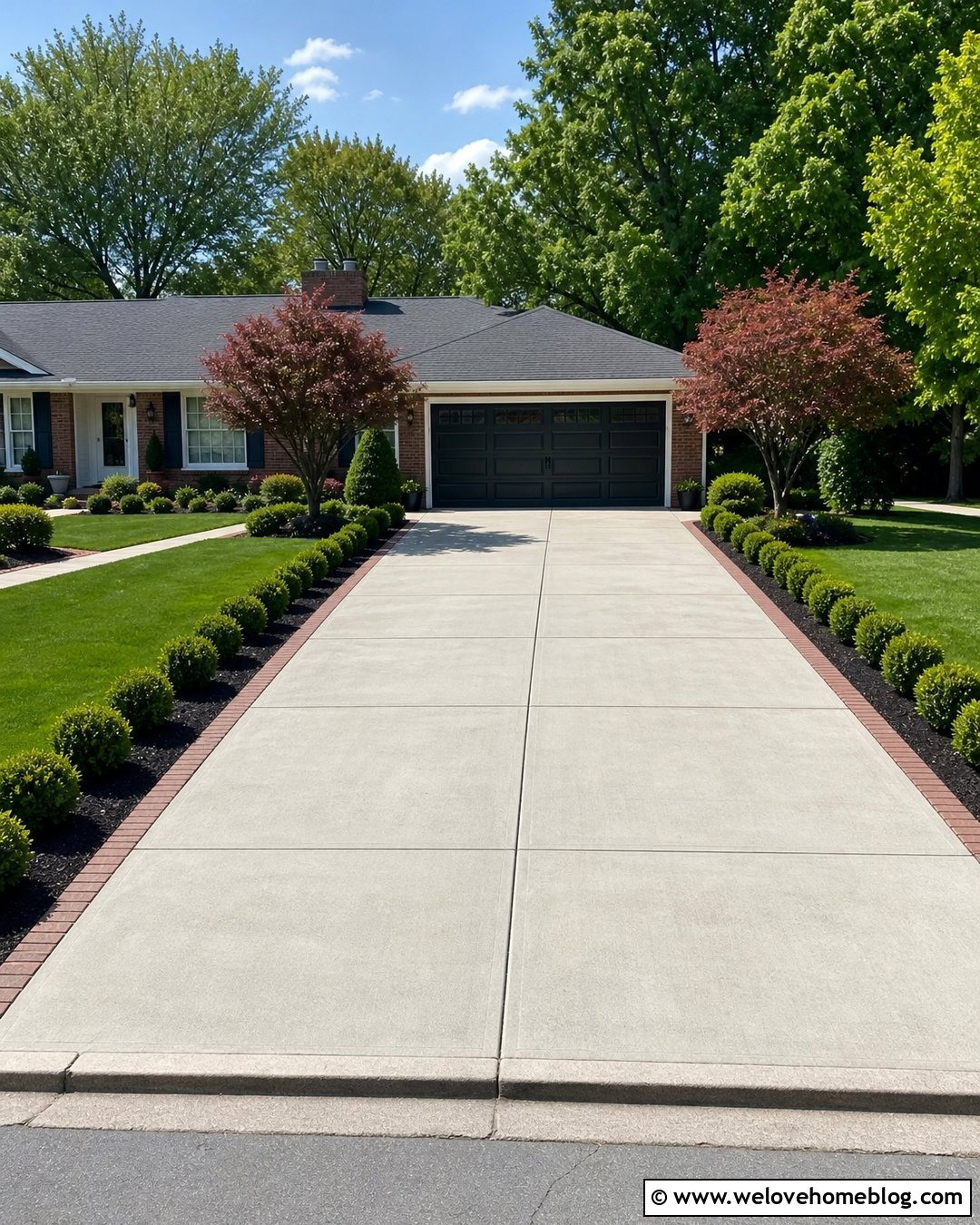
The connection between the driveway and front door should be obvious, comfortable, and visually attractive. Start with a straight gray concrete driveway and add a contrasting brick or flagstone walkway that branches toward the porch. Widen the planting bed where the two surfaces meet, creating a natural transition rather than a sharp, empty corner. Use low flowers and ground cover near the walkway, then layer compact shrubs and one small accent tree toward the lawn. Repeating the walkway material as a driveway border will make the separate surfaces feel related. Keep plants low around the junction so visitors can immediately recognize the route. This complete layout is useful for ranch, split-level, and side-entry homes where the front door might otherwise be difficult to locate.
17. Mailbox Garden Next to Driveway Entrance
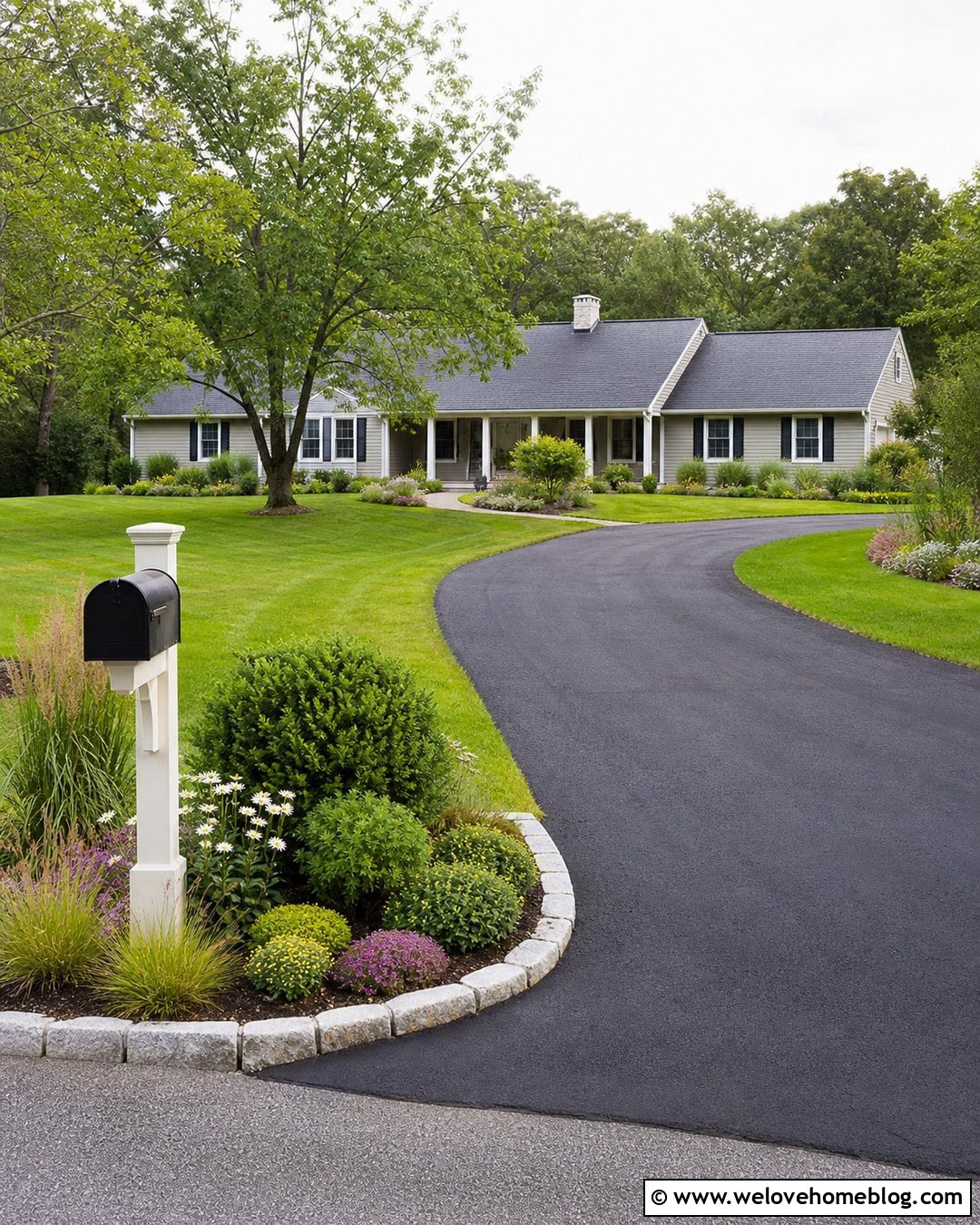
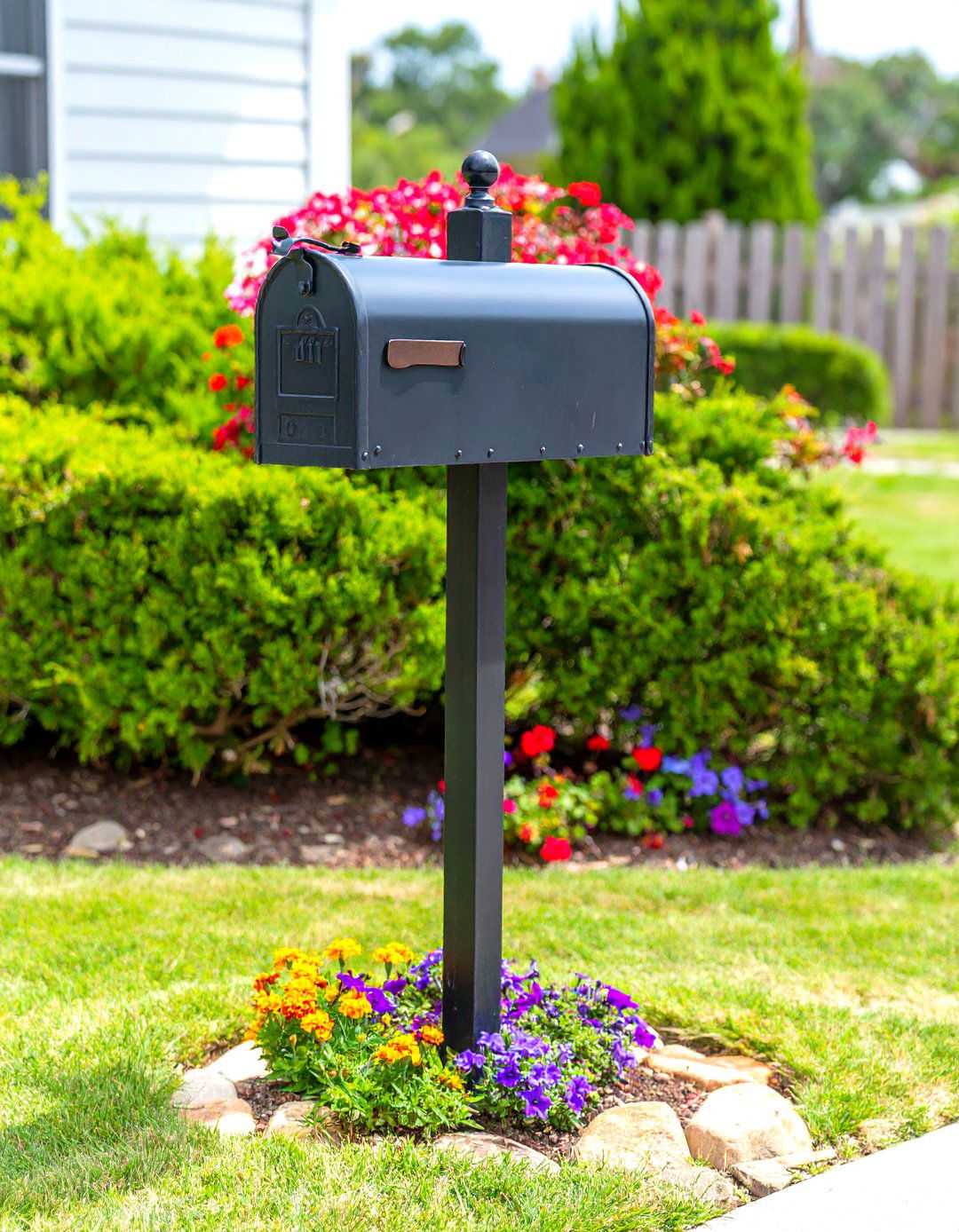
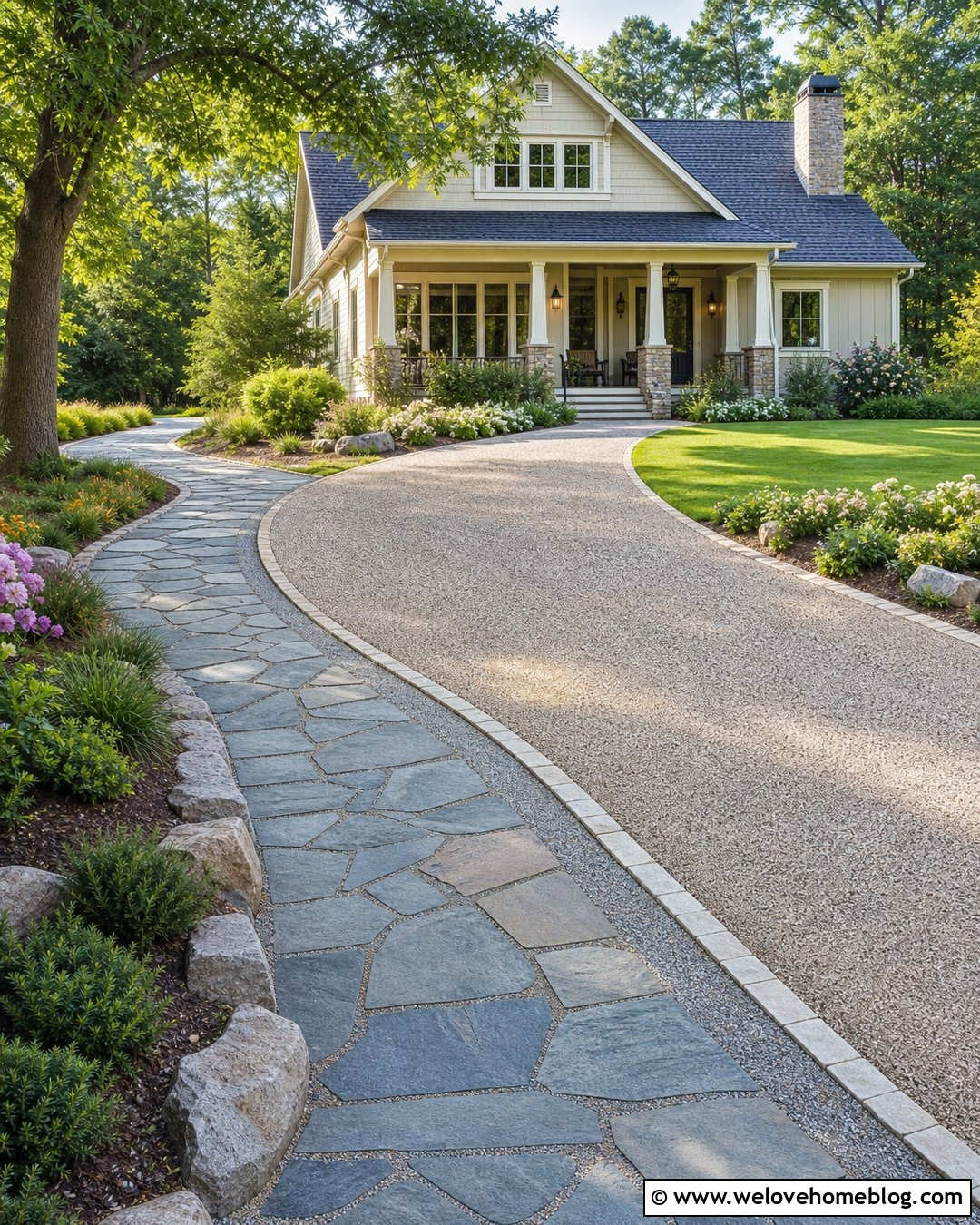
A mailbox bed can give the driveway entrance a finished appearance when it is designed as part of the larger landscape. Frame a gravel or asphalt drive with durable stone edging, then create a generous curved bed around the mailbox rather than a tiny planting circle. Choose low, salt-tolerant or heat-tolerant plants if the area faces road spray and reflected warmth. Ornamental grasses, spreading ground cover, seasonal flowers, and one compact shrub can provide texture without blocking the address or traffic view. Repeat two or three of these plants farther up the driveway and near the front walkway. A mailbox post that matches the home’s trim or porch columns strengthens the connection. The result feels coordinated from the curb all the way to the house.
18. Landscaped Driveway Entrance With Stone Pillars
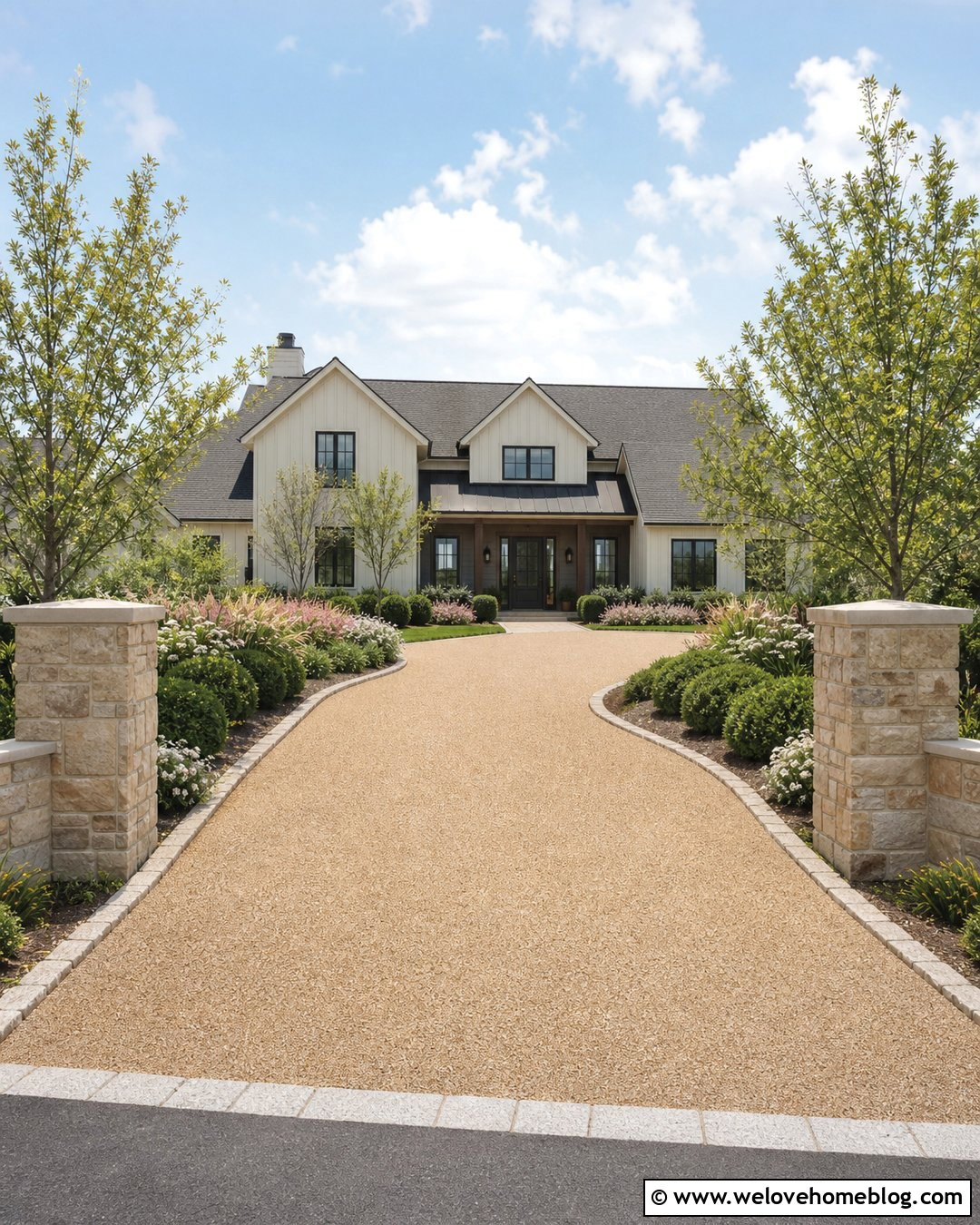
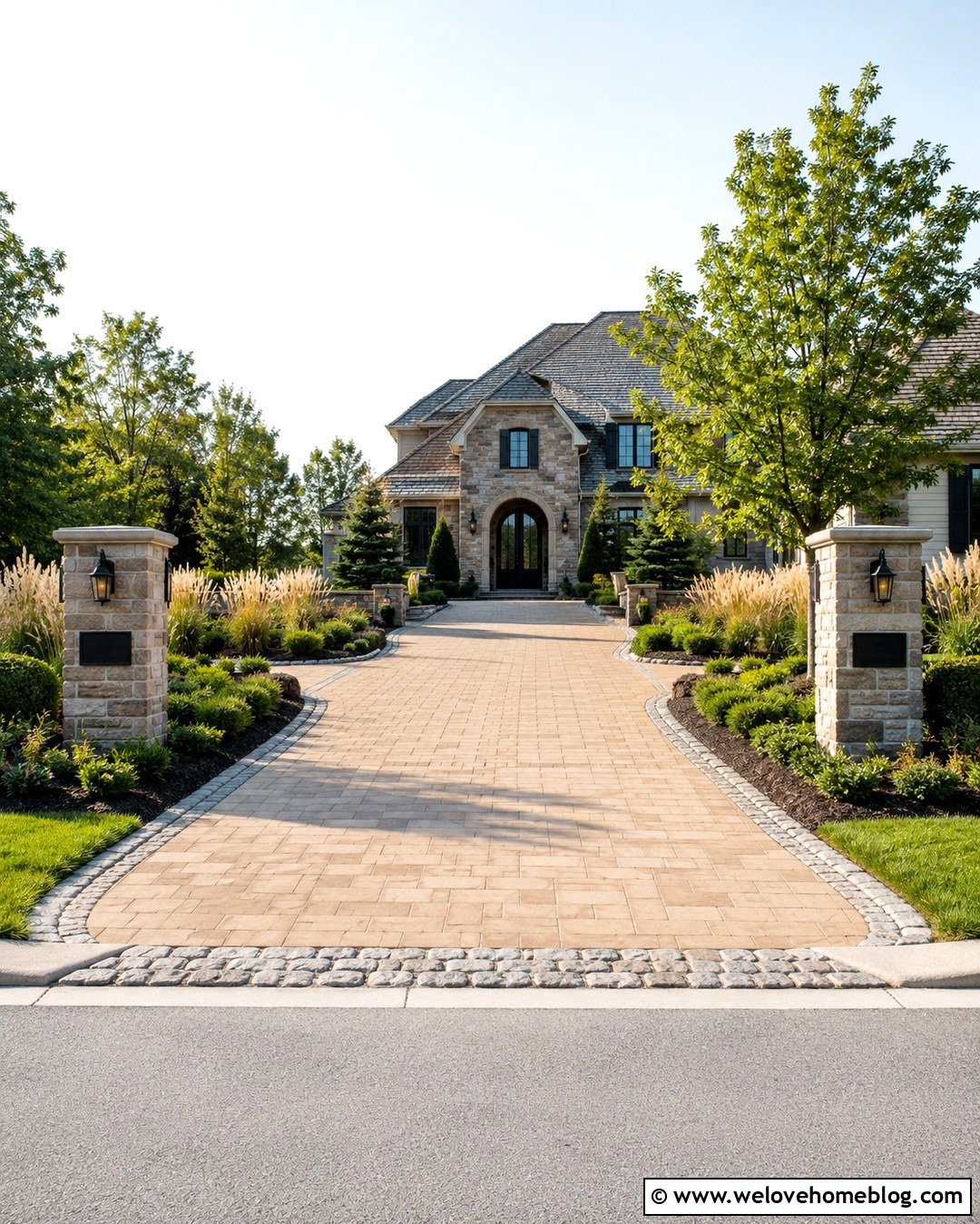
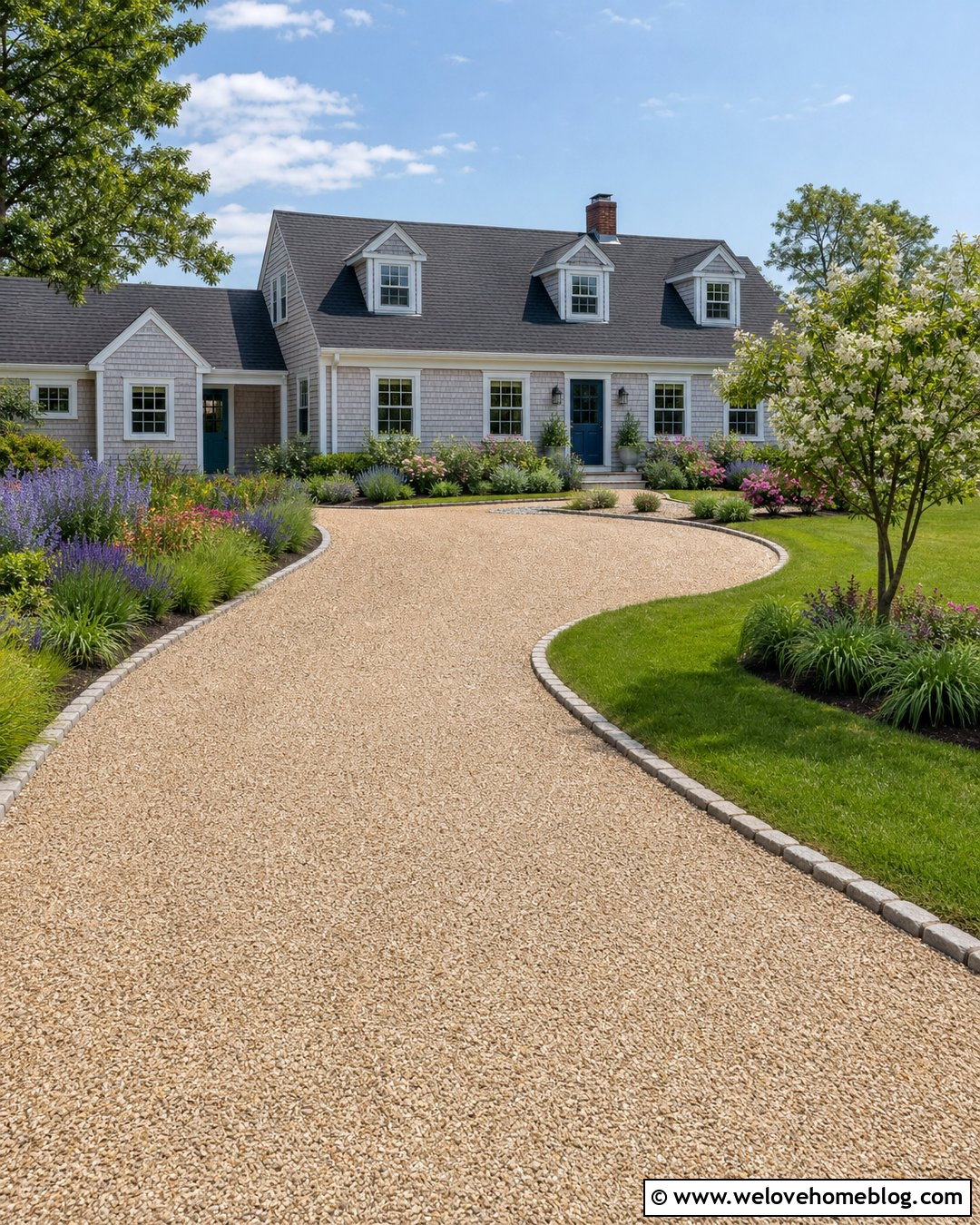
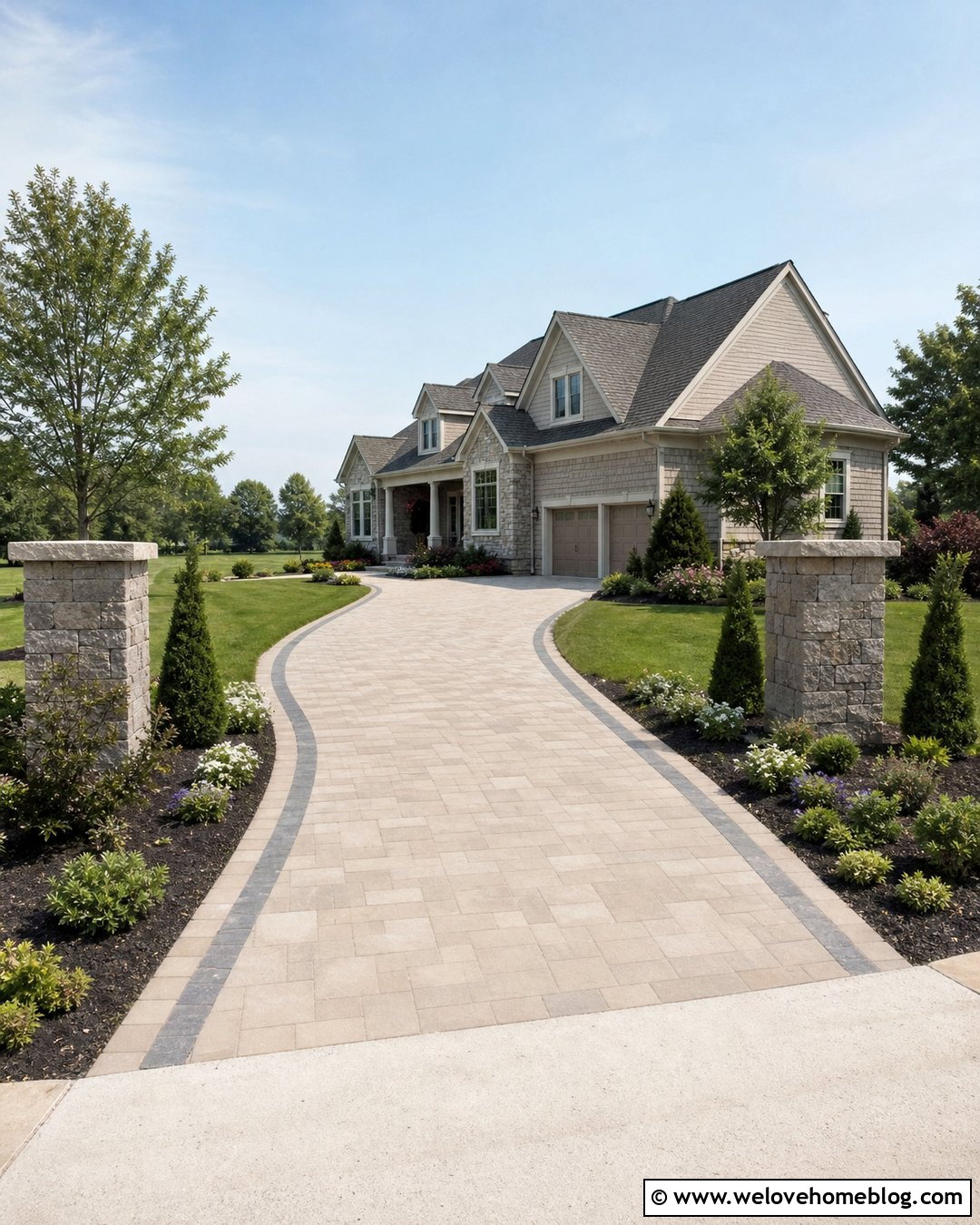
Stone pillars can anchor a driveway entrance, but surrounding plants are what help them belong in the yard. Pair a curved resin-bound gravel driveway with low stone walls or pillars that repeat masonry used on the house. Create planting beds outside the driving clearance zone and fill them with rounded evergreen shrubs, ornamental grasses, and drifts of flowering perennials. Keep the plants nearest the road low for visibility, then gradually increase their height toward the lawn. A pair of small trees set behind the pillars can provide balance without crowding the entrance. Continue the stone as driveway edging or a walkway border. This complete arrangement creates a defined arrival for farmhouse, Craftsman, traditional, or estate-inspired homes while preserving an open and approachable curb view.
19. Budget Front Yard Landscaping Along Driveway
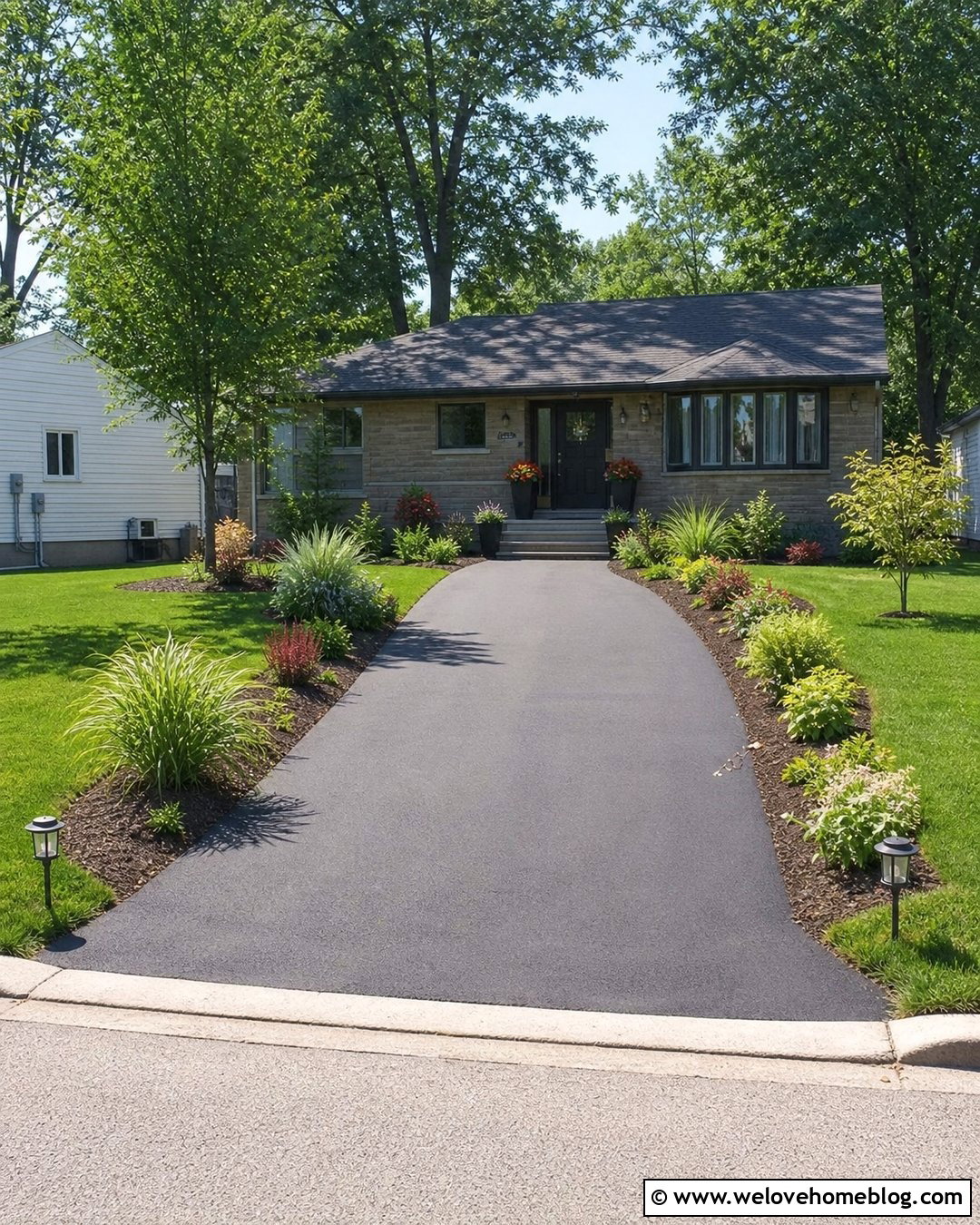
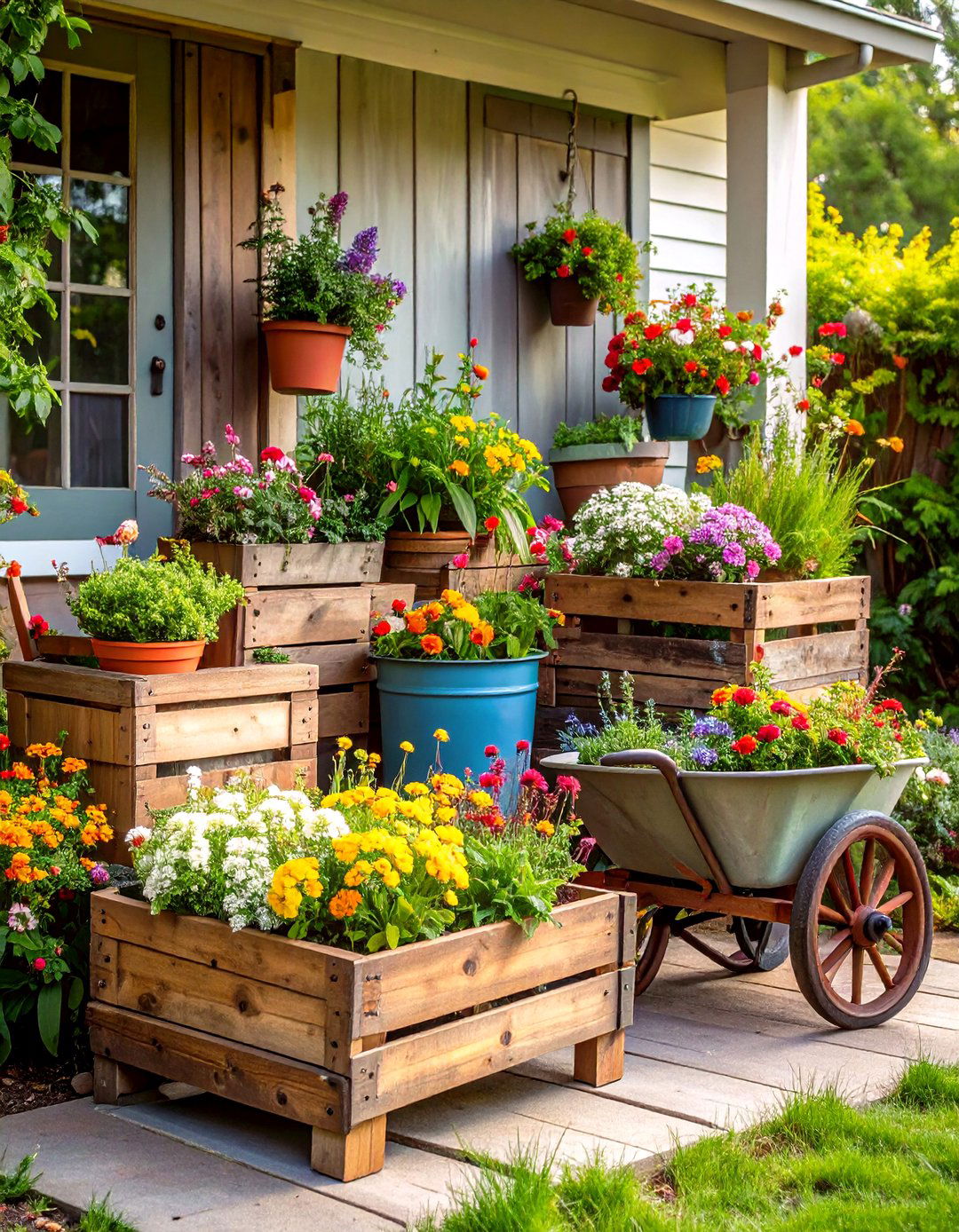
An attractive driveway border does not require expensive stonework or mature specimen plants. Begin with an existing asphalt driveway and cut one wide, flowing bed along the lawn edge. Use a clean spade-cut border or affordable landscape edging, then cover the soil with mulch. Divide inexpensive perennials, ornamental grasses, and ground covers into repeating groups rather than scattering individual plants. Small shrubs can be installed with enough room to reach their mature size, reducing the need to purchase large quantities. Add solar path lights only at the entrance and walkway junction for focused detail. Painting the mailbox or adding matching porch planters can reinforce the color scheme. This phased approach gives ranch, bungalow, and starter homes a cohesive landscape that can be expanded over time.


20. Four-Season Landscaping Next to Driveway
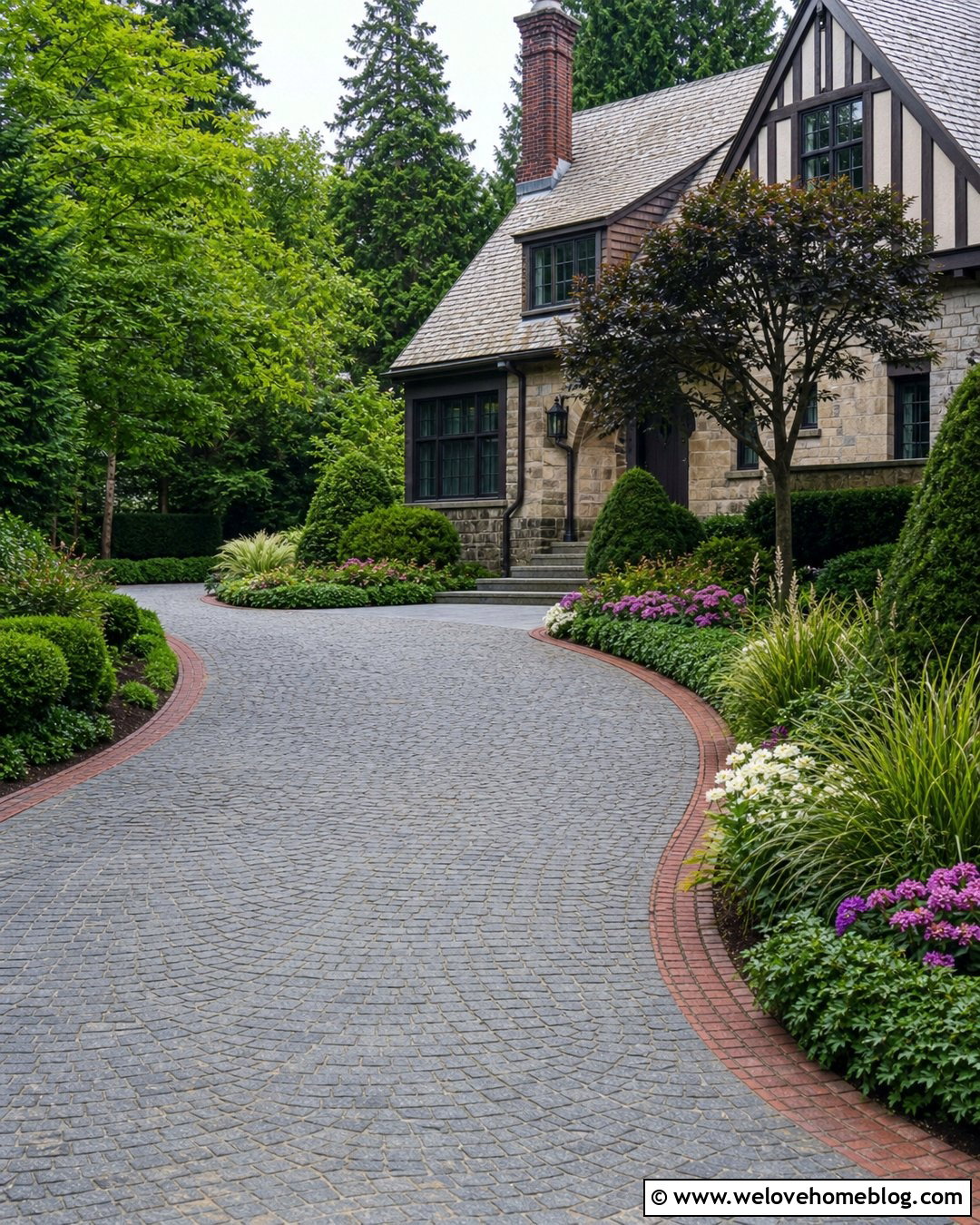
A four-season border keeps the driveway attractive even when flowers are not blooming. Pair a gently curved cobblestone driveway with a deep planting bed defined by a narrow brick ribbon. Begin with evergreen shrubs for permanent structure, then add a small tree with spring flowers, attractive bark, or colorful fall foliage. Layer summer perennials, ornamental grasses, and ground cover around those anchors. Seed heads and grasses can provide winter texture, while bulbs bring early color near the driveway edge. Repeat key plants on both sides of the front walkway so the composition leads naturally to the entrance. Against a traditional, Tudor, or Craftsman home, this balanced mix ensures the driveway landscaping remains structured, colorful, and connected to the architecture throughout the year.
Conclusion:
The most effective 20 front yard landscaping next to driveway ideas treat pavement, plants, borders, and walkways as parts of one complete design. Start by considering practical needs such as visibility, drainage, vehicle clearance, mature plant size, and the route to the front door. Then choose materials and planting shapes that complement the house. Wide curved beds can soften straight driveways, while repeated shrubs and matching borders create order. Small yards benefit from simple layers, and larger properties can support trees, islands, or formal entrances. Whether you prefer colorful cottage planting, modern grasses, native rain gardens, or low-maintenance rock beds, a coordinated plan will make the driveway feel more attractive, useful, and naturally connected to the front yard.

Related posts:

Leave a Reply