
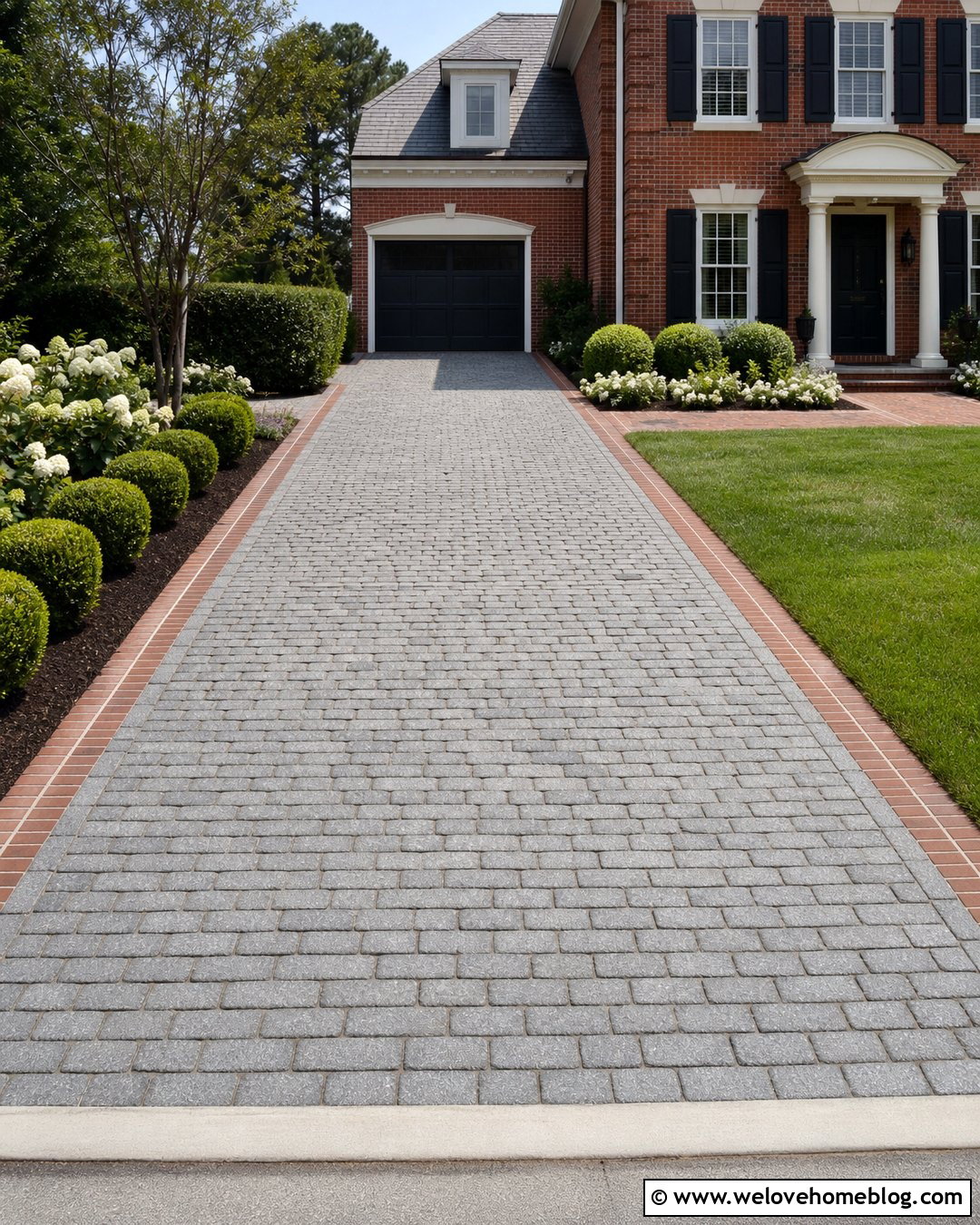
Tuscan driveway ideas bring the warmth and romance of the Italian countryside to a home’s entrance. The most convincing designs combine an earthy driveway surface with graceful curves, natural stone borders, Mediterranean plants, and architecture in sun-washed colors. Warm gravel, clay brick, cobblestone, travertine, and softly textured concrete all work beautifully when their tones complement the house. Olive trees, Italian cypress, lavender, rosemary, and terra-cotta planters complete the setting without making it feel overly decorated. Practical details still matter, including drainage, vehicle clearance, durable edging, and a stable foundation. Whether you have a compact suburban lot or a large villa-style property, the following 20 Tuscan driveway ideas offer complete looks that balance Old World character with everyday function. ()
1. Curved Cobblestone Tuscan Driveway
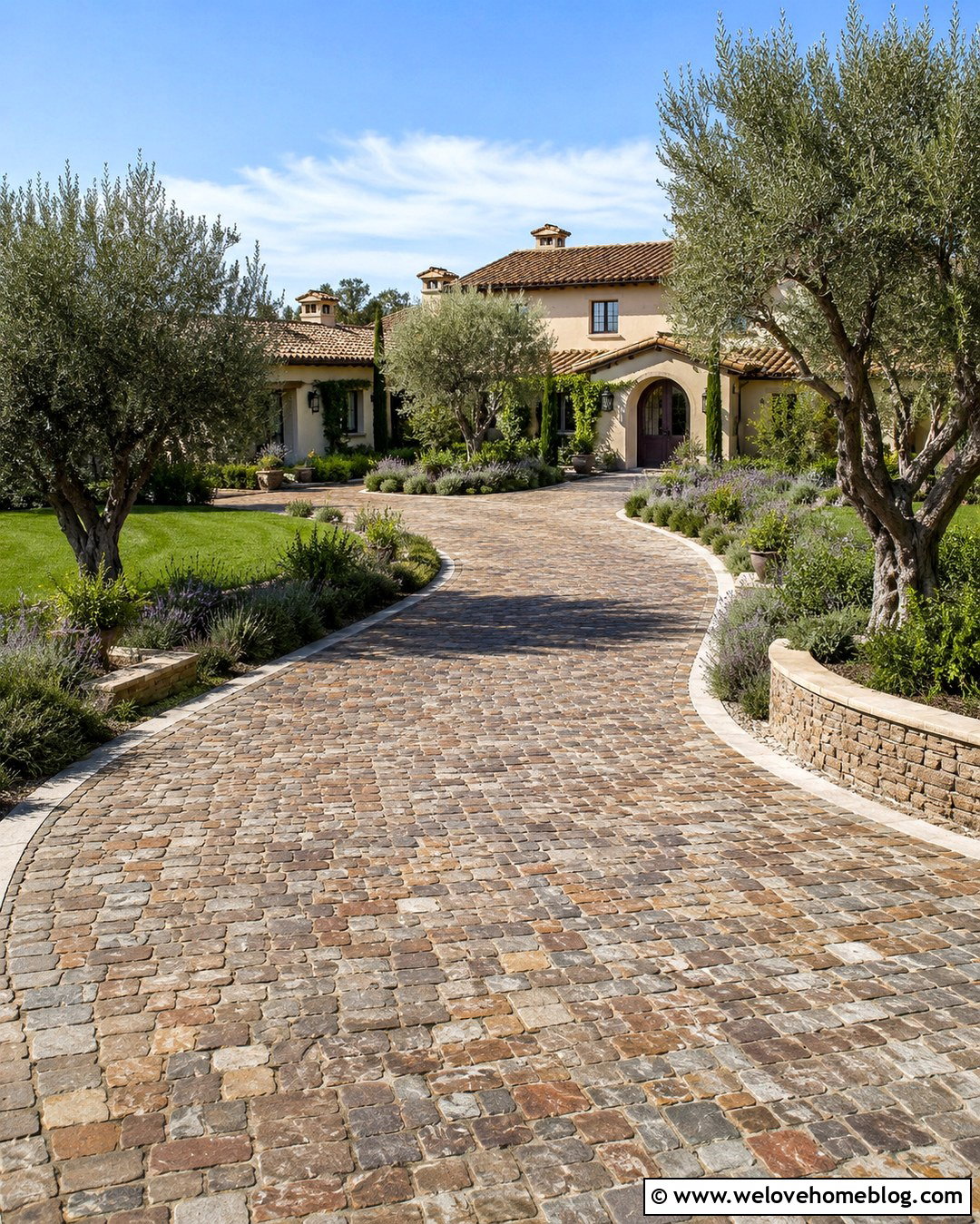
Weathered cobblestone gives a curved Tuscan driveway the character of an old European lane. Choose stones in warm gray, sand, rust, and muted brown rather than a single uniform color. A broad curve makes the approach feel relaxed while revealing the house gradually. Low limestone curbing keeps the stones contained and provides a clean transition into planting beds. Add silver-green olive trees near the entrance, then repeat lavender, rosemary, and soft ornamental grasses along the inside curve. A cream stucco villa with a clay tile roof will reinforce the warm palette. Because cobblestone can create a textured driving surface, use flatter, closely fitted stones along the main tire paths and reserve more irregular pieces for borders or decorative aprons.
2. Pea Gravel Tuscan Driveway With Cypress Trees
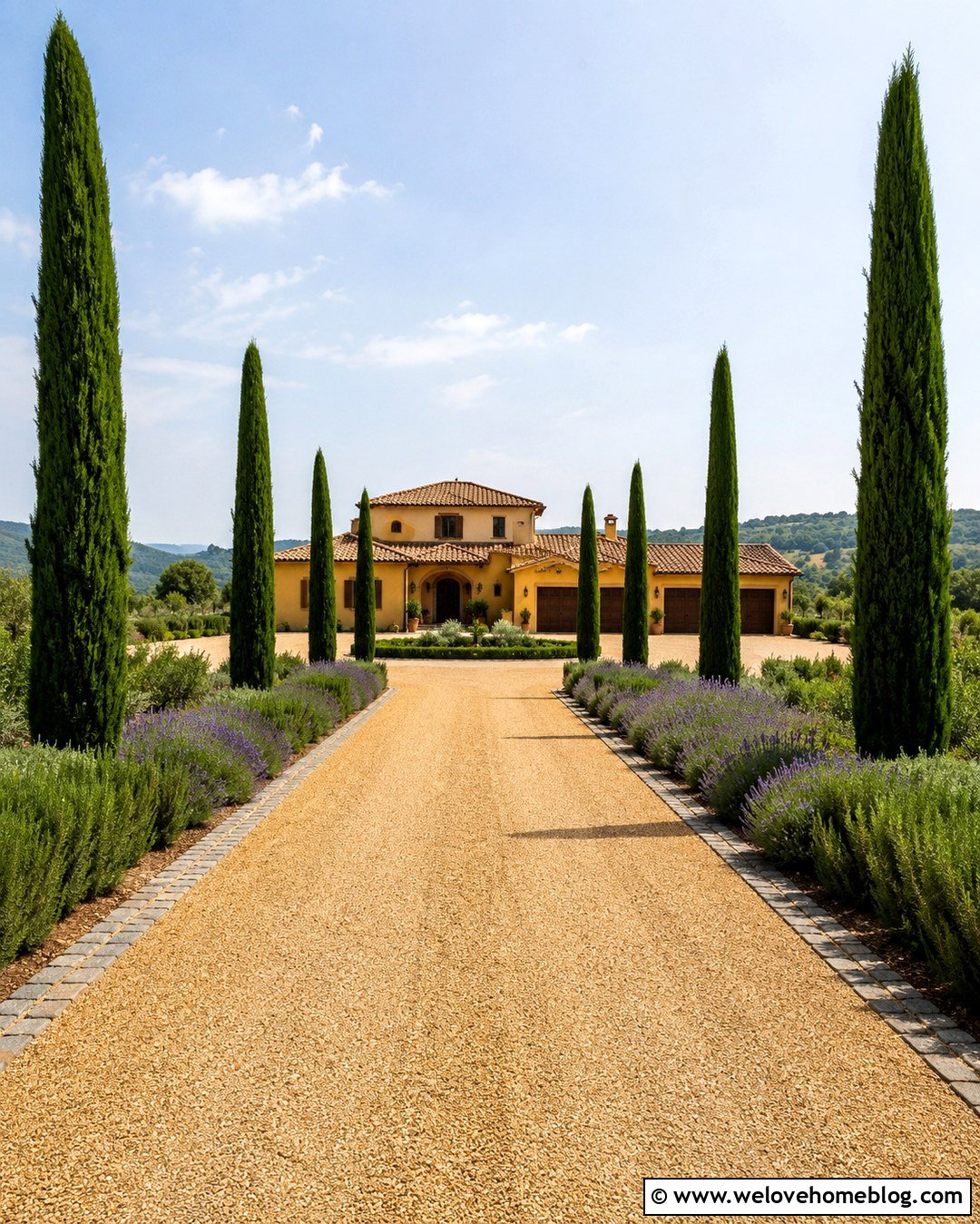
The quiet crunch of pea gravel can make an ordinary arrival feel like the approach to a countryside villa. Select golden tan or warm buff gravel and install it over a compacted, well-draining base. A straight layout framed by evenly spaced Italian cypress creates a strong sense of direction without requiring elaborate decoration. Use steel, brick, or flush cobblestone edging to stop loose stones from spreading into the lawn. Between the cypress trees, plant lavender and low-growing rosemary for color, fragrance, and a softer edge. Finish the approach with a wider gravel parking court near the house. This complete look works especially well with ocher stucco, dark wood garage doors, terra-cotta roof tiles, and simple black iron lanterns.
3. Herringbone Brick Tuscan Driveway
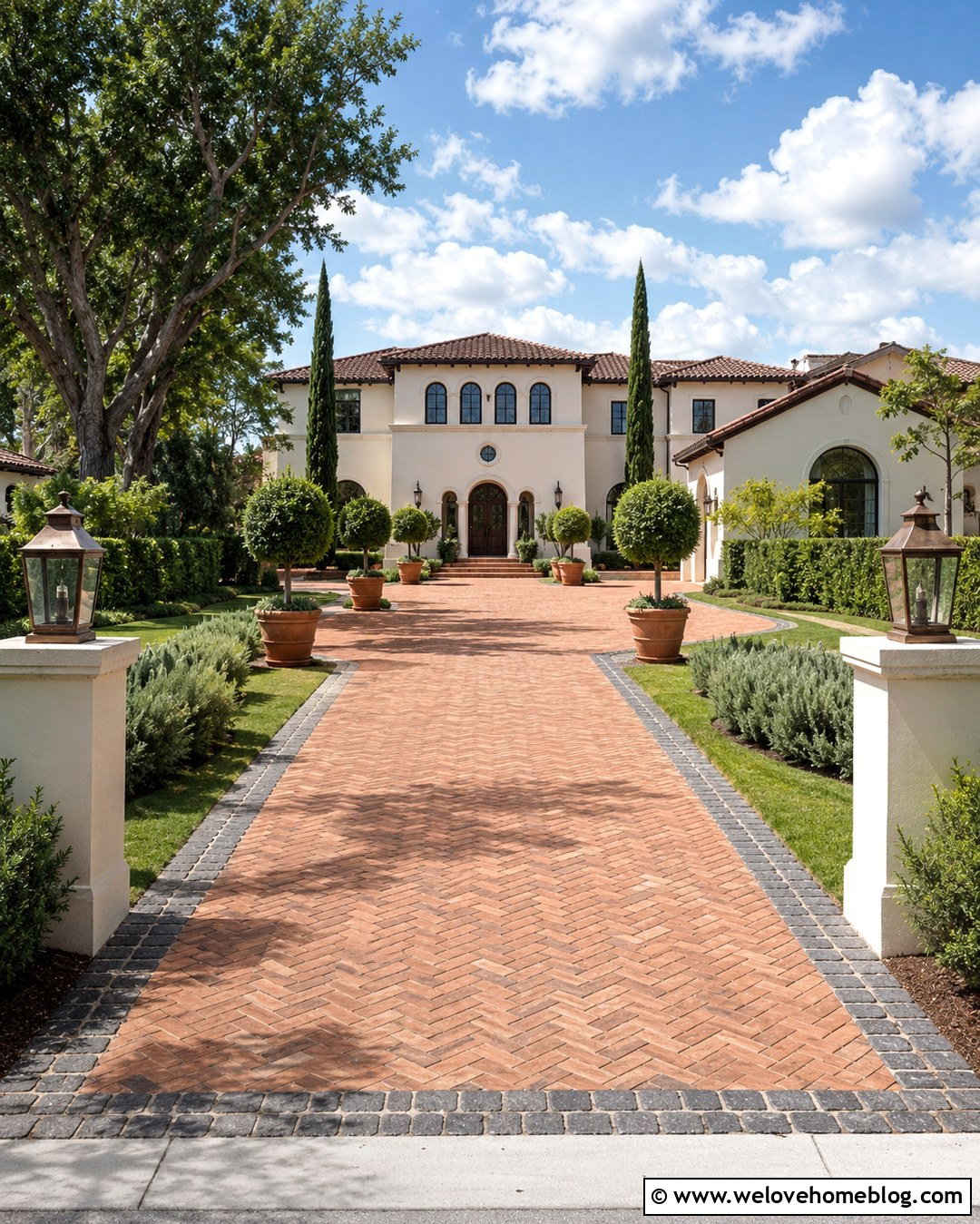
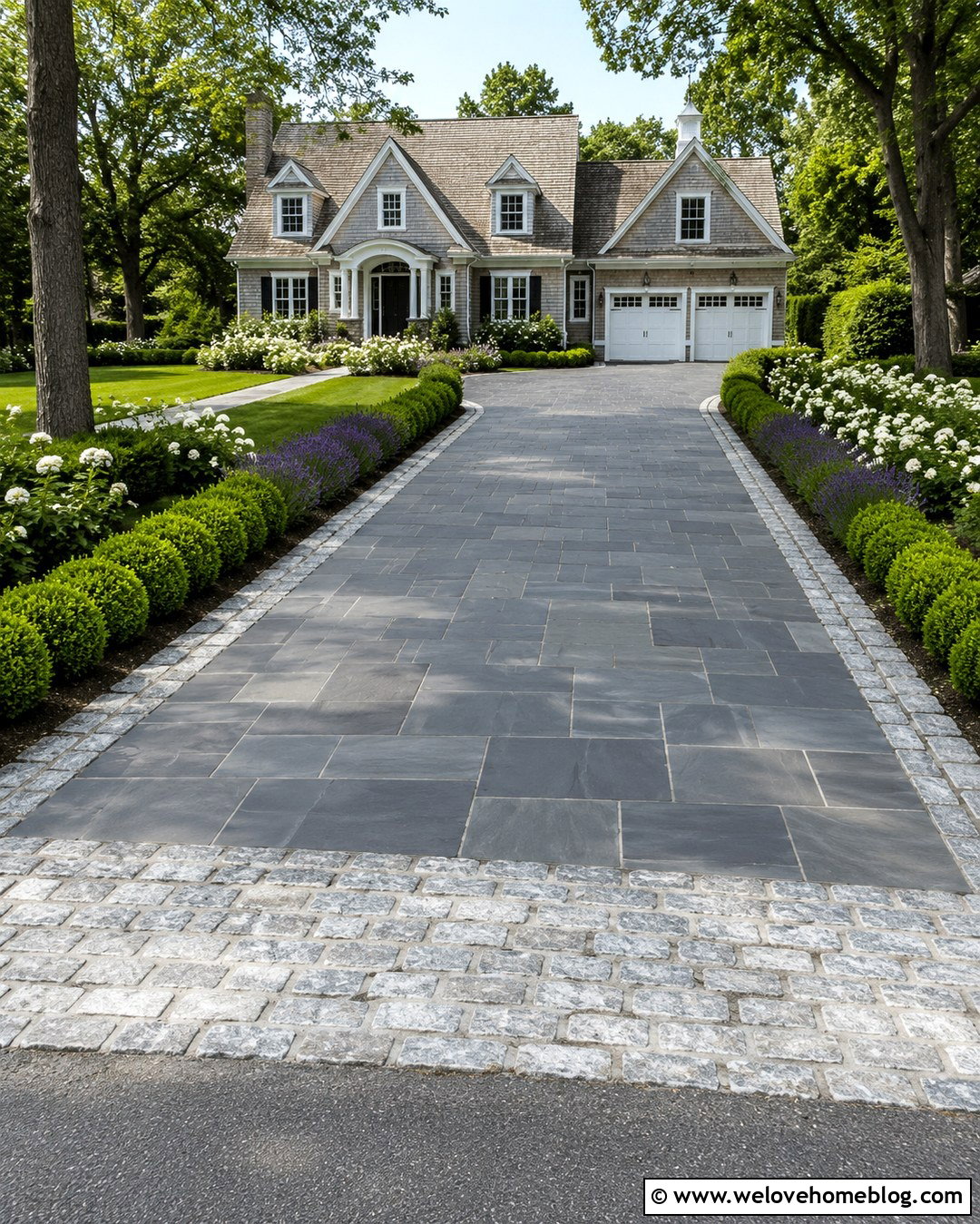
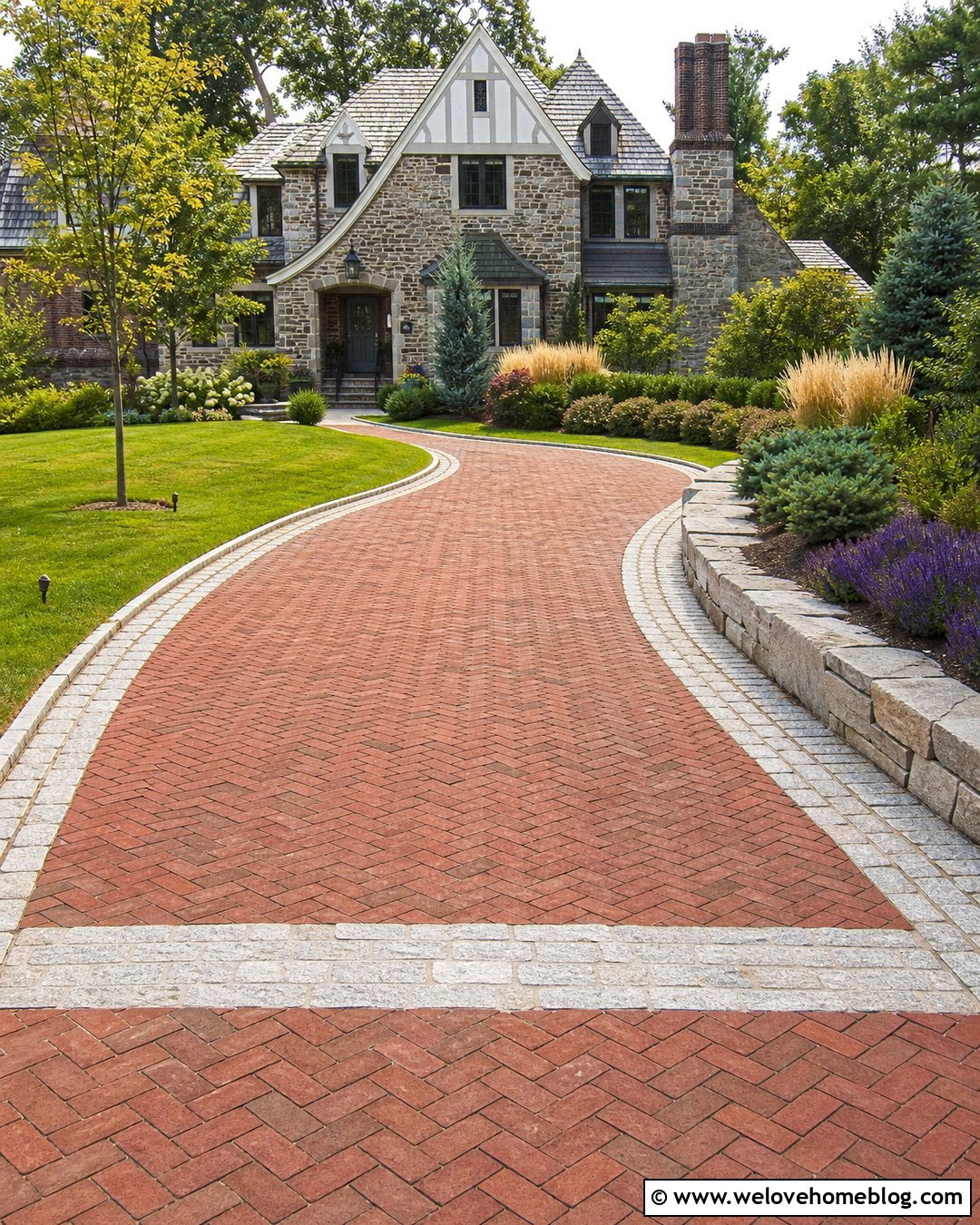
Clay brick pavers laid in a herringbone pattern add warmth and movement to a formal Tuscan driveway. Look for blended terra-cotta, burnt orange, and muted brown tones that appear naturally aged instead of bright red. A rectangular cobblestone border can frame the pattern and protect the outer pavers from shifting. Keep the driveway mostly straight, but soften its connection to the house with a gently flared parking area. Plant clipped bay trees in large terra-cotta pots near the garage and use rosemary hedges along the sides. Cream stucco walls and dark bronze fixtures help the brick colors stand out. Before installation, confirm that the selected pavers are rated for vehicle loads and appropriate for local weather and freeze-thaw conditions.
4. Decomposed Granite Tuscan Driveway
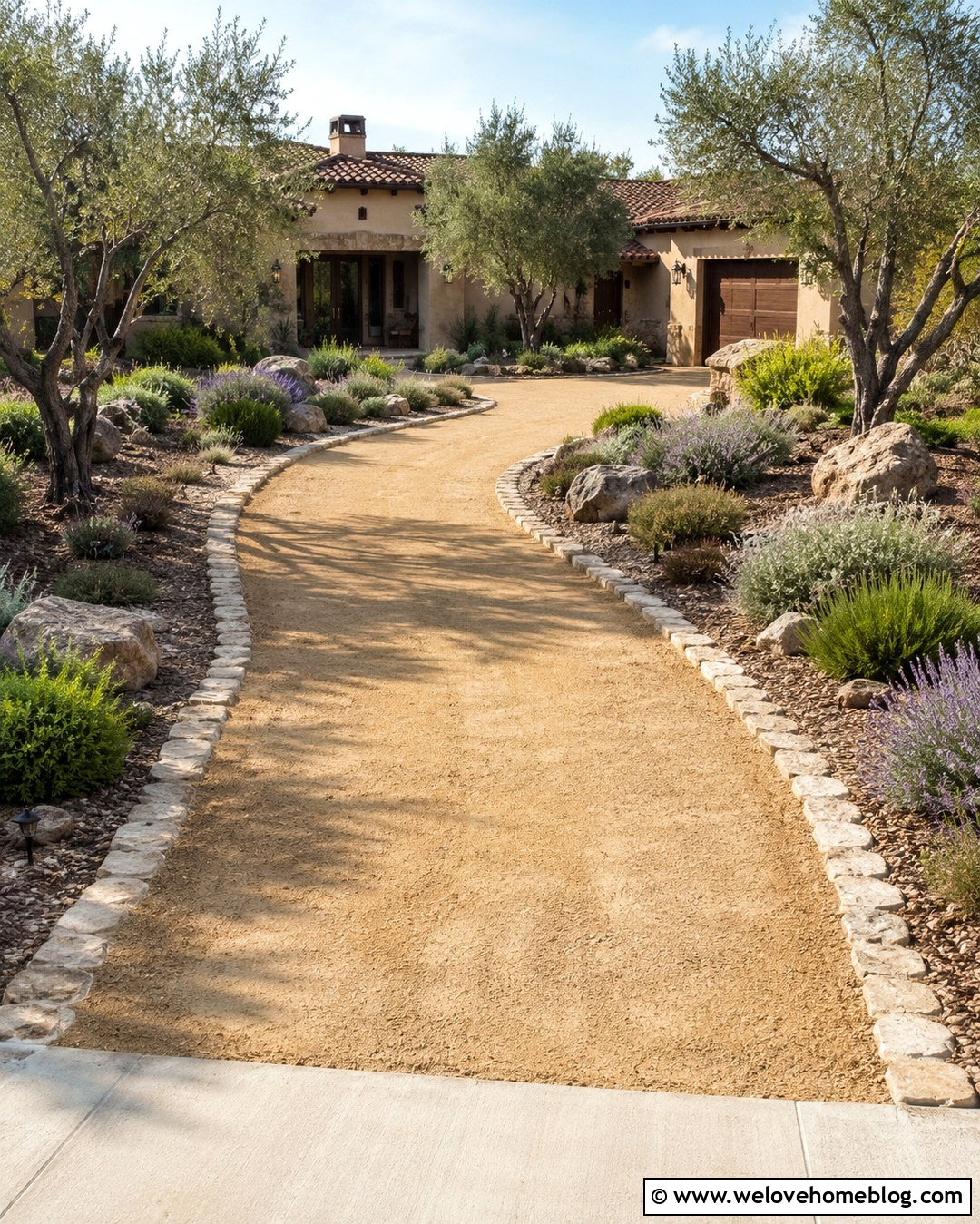
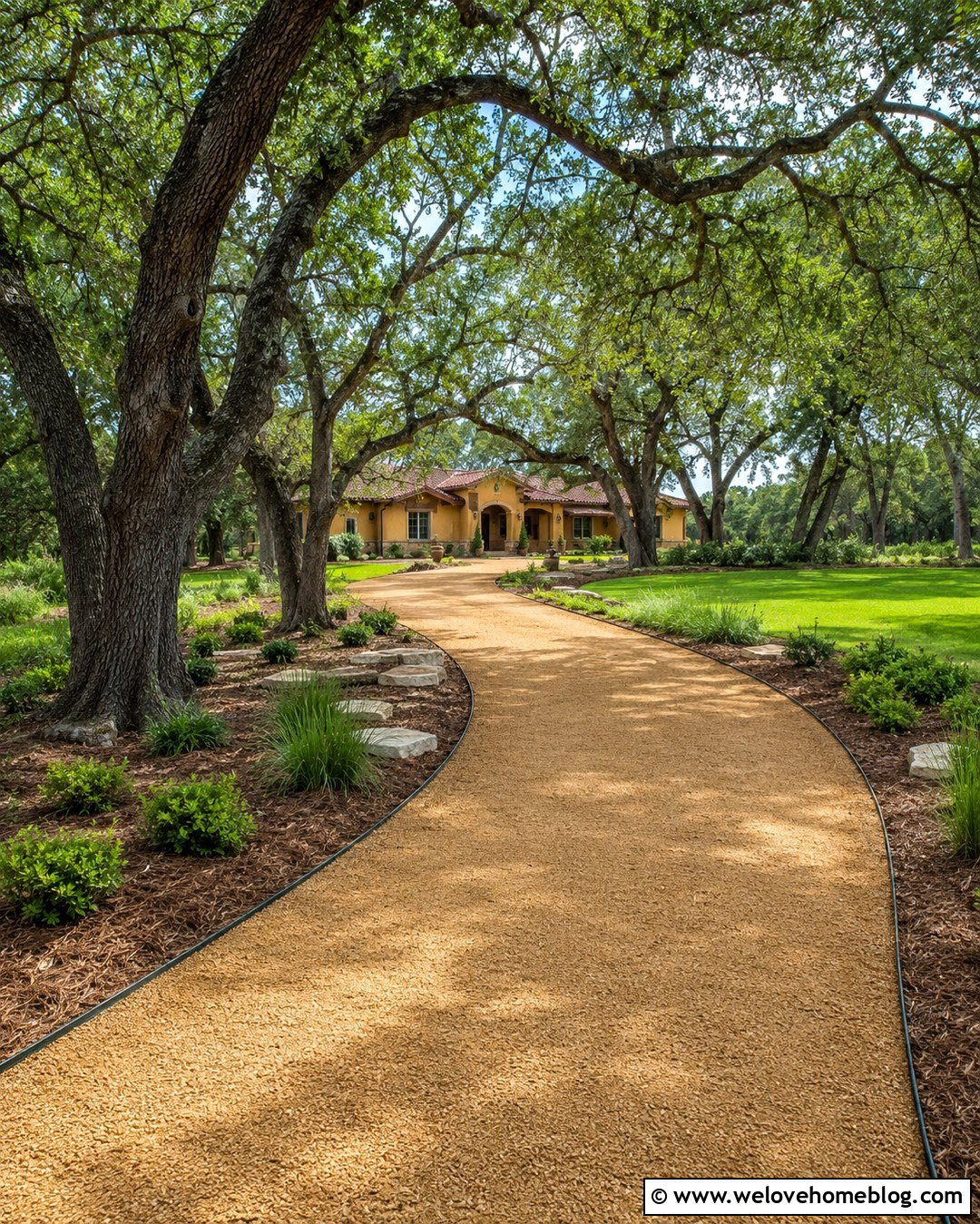
A compacted decomposed granite driveway creates an informal Tuscan look with a soft, earthy color. Gold, tan, and light brown aggregate feels especially natural beside stucco walls and stone-clad foundations. Design the driveway with a subtle curve and contain the material using chunky limestone blocks or weathered steel edging. A properly prepared base and stabilizing product can produce a firmer surface while preserving the appearance of loose stone. Frame the approach with gnarled olive trees, sage, lavender, and drought-tolerant grasses. Small boulders placed inside the planting beds can connect the landscaping to the driveway border. This design suits ranch homes and Mediterranean villas alike, particularly where a relaxed, water-conscious landscape is more appropriate than a perfectly manicured lawn. ()
5. Circular Travertine Tuscan Driveway
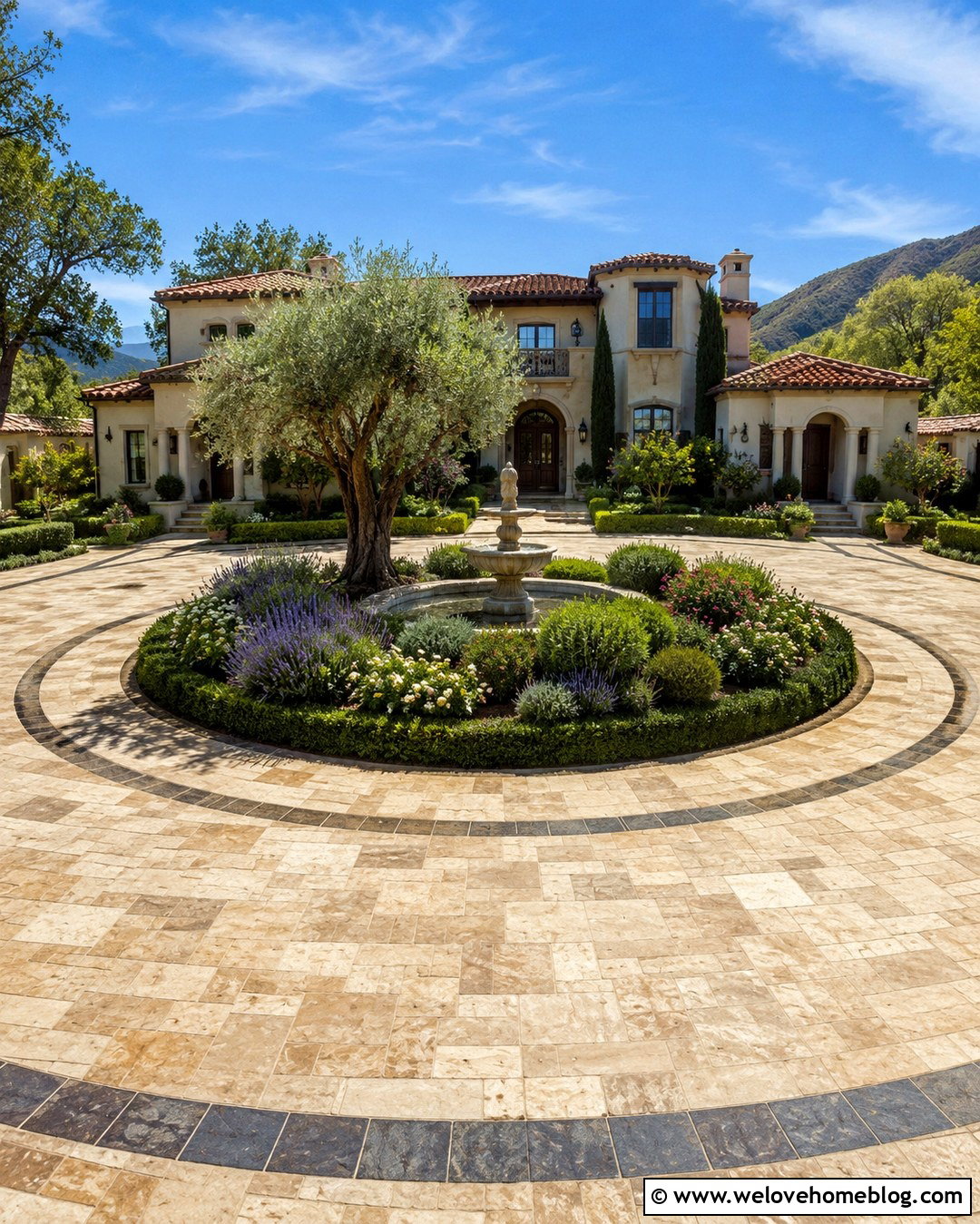
A circular travertine driveway can turn a large front yard into a polished villa entrance. Choose tumbled travertine pavers in cream, walnut, and light gold to create an aged surface with subtle color variation. Arrange them in a running bond or modular pattern and use darker stone bands to define the circle. At the center, create a landscaped island with a stone fountain, clipped herbs, and one sculptural olive tree. Keep the planting low enough to preserve visibility for drivers. Curved beds around the outside can hold lavender, roses, and evergreen shrubs. Travertine selection and finish are important because exterior surfaces must provide suitable traction. Ask a local installer about climate, sealing, drainage, and the best paver thickness for vehicle traffic.
6. Stamped Concrete Tuscan Driveway
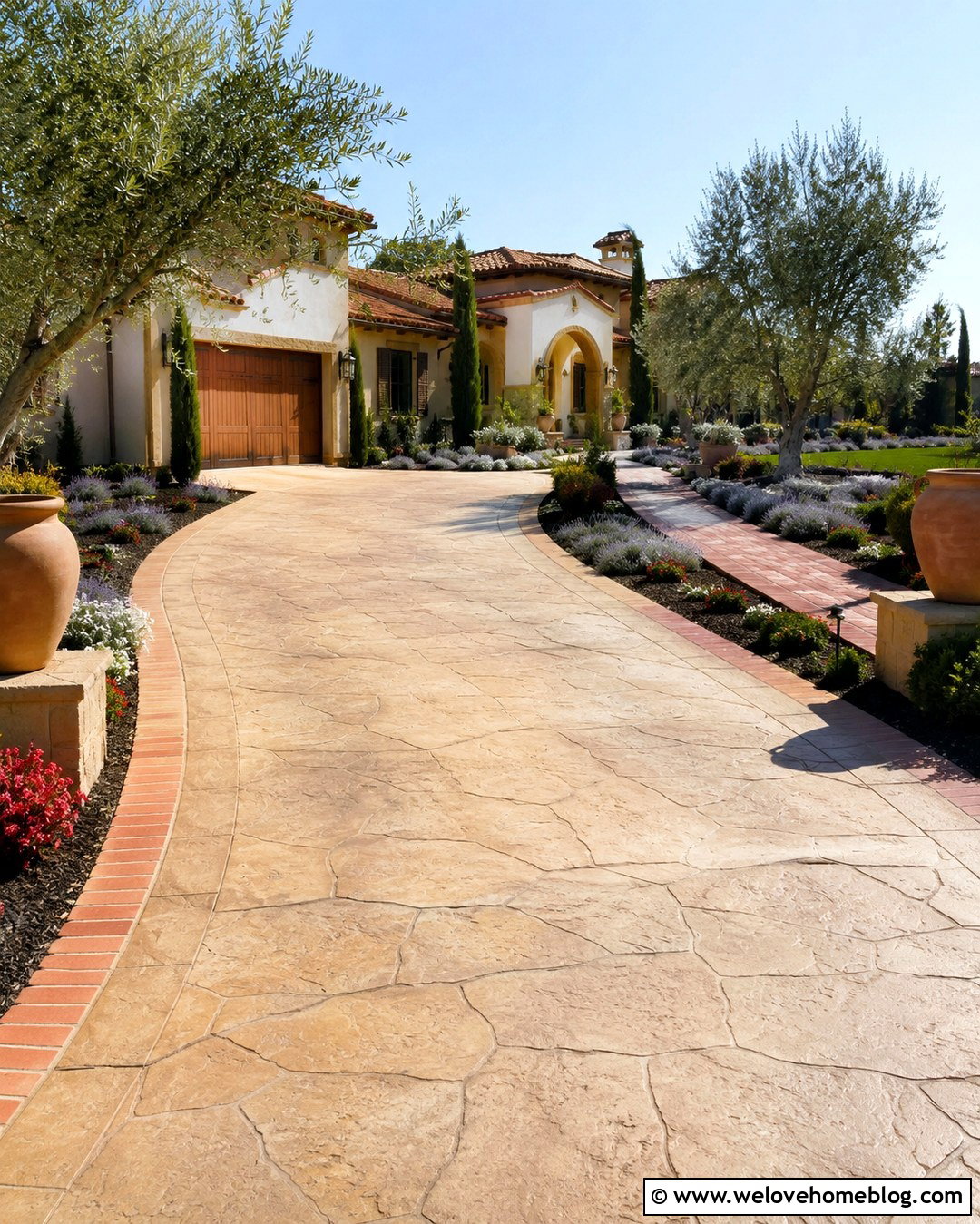
Stamped concrete offers the look of natural stone without using individual pieces across the entire driveway. For a Tuscan appearance, choose a random flagstone or European cobble pattern with a warm beige base and restrained brown shading. Avoid heavy color contrast, which can make the finish appear artificial. A curved driveway edged with real clay brick creates a convincing transition between the textured concrete and Mediterranean planting beds. Repeat the brick around a matching walkway to connect the driveway with the front door. Olive trees, dwarf cypress, lavender, and terra-cotta urns complete the composition. Decorative scoring can divide a wide surface into smaller sections. Proper joint placement, surface preparation, drainage, curing, and sealing will help the finished driveway remain attractive and functional.
7. Fan Pattern Brick Tuscan Driveway
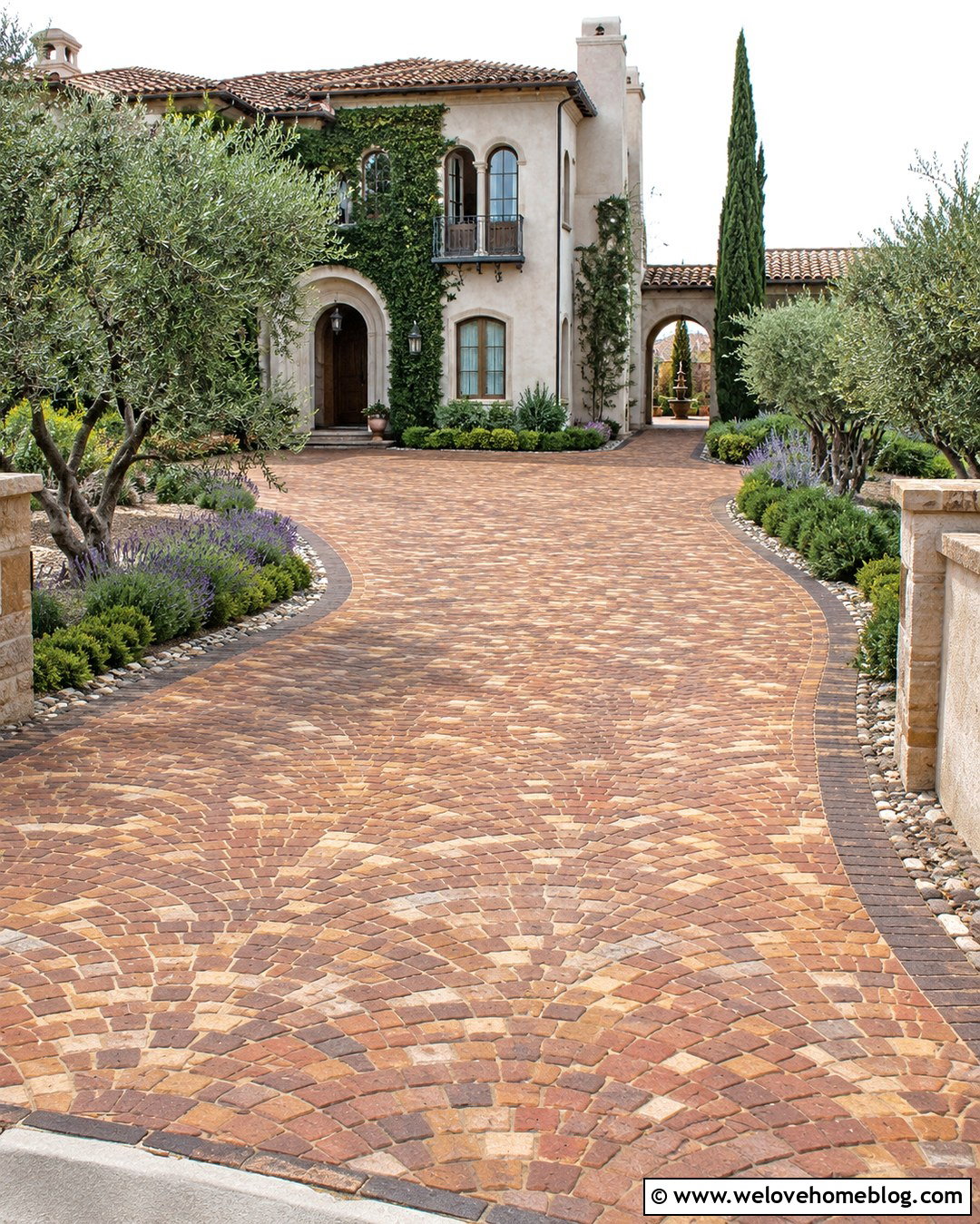
A fan pattern gives a brick Tuscan driveway a distinctive European influence while helping a broad motor court feel more detailed. Use tumbled clay pavers in blended sienna, tan, charcoal, and faded red. The radiating layout looks best when framed with a simple soldier-course border in one darker shade. Continue the pattern across a gently curved driveway and widen it near the garage for turning space. Along the perimeter, build shallow stone planting beds filled with olive trees, lavender, santolina, and rosemary. A matching brick walkway can branch toward an arched front entrance. Because patterned installations involve many cuts, careful planning is essential around curves, drains, and garage thresholds. The result should feel handcrafted but still orderly enough to complement a refined Tuscan villa.
8. Exposed Aggregate Tuscan Driveway
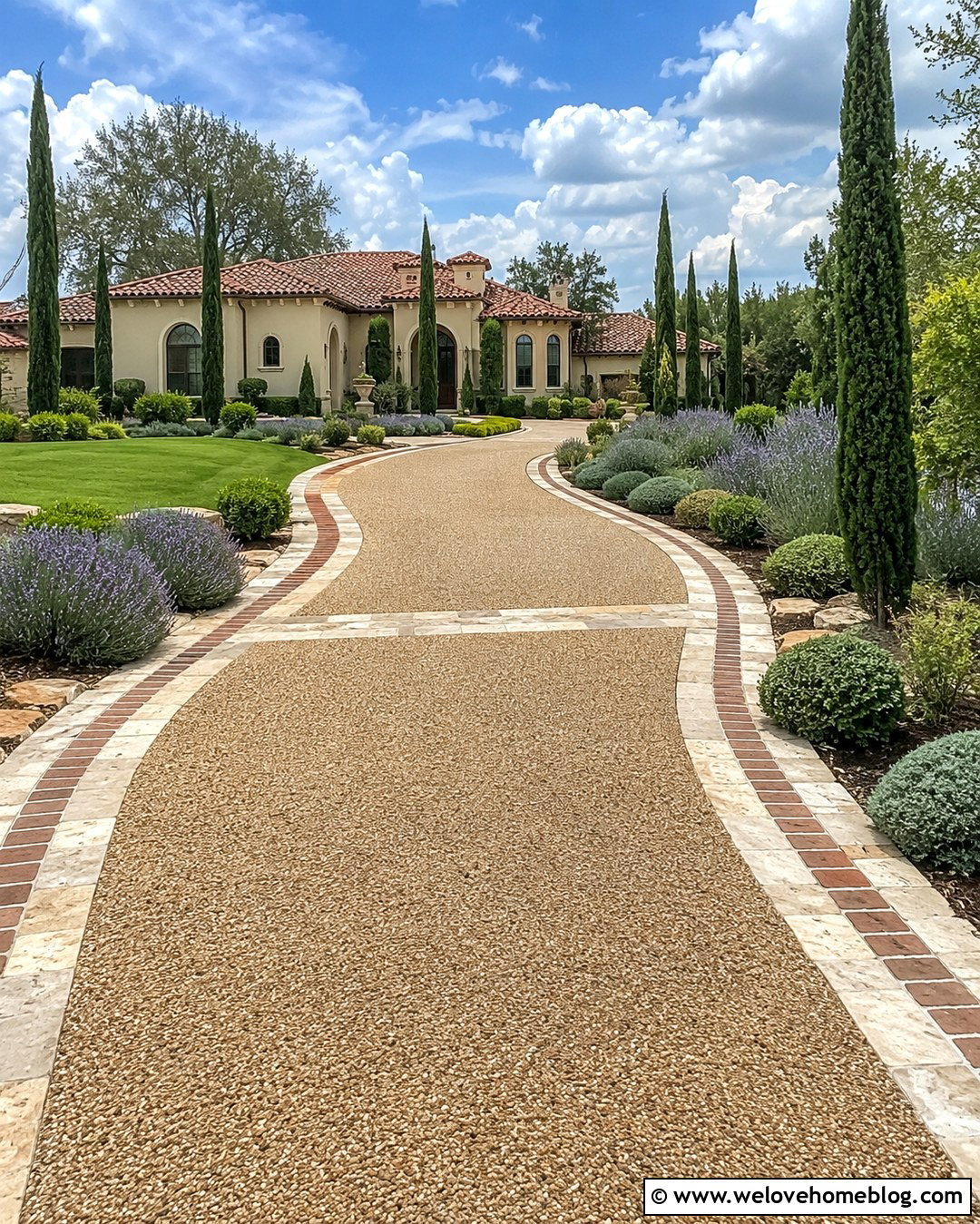
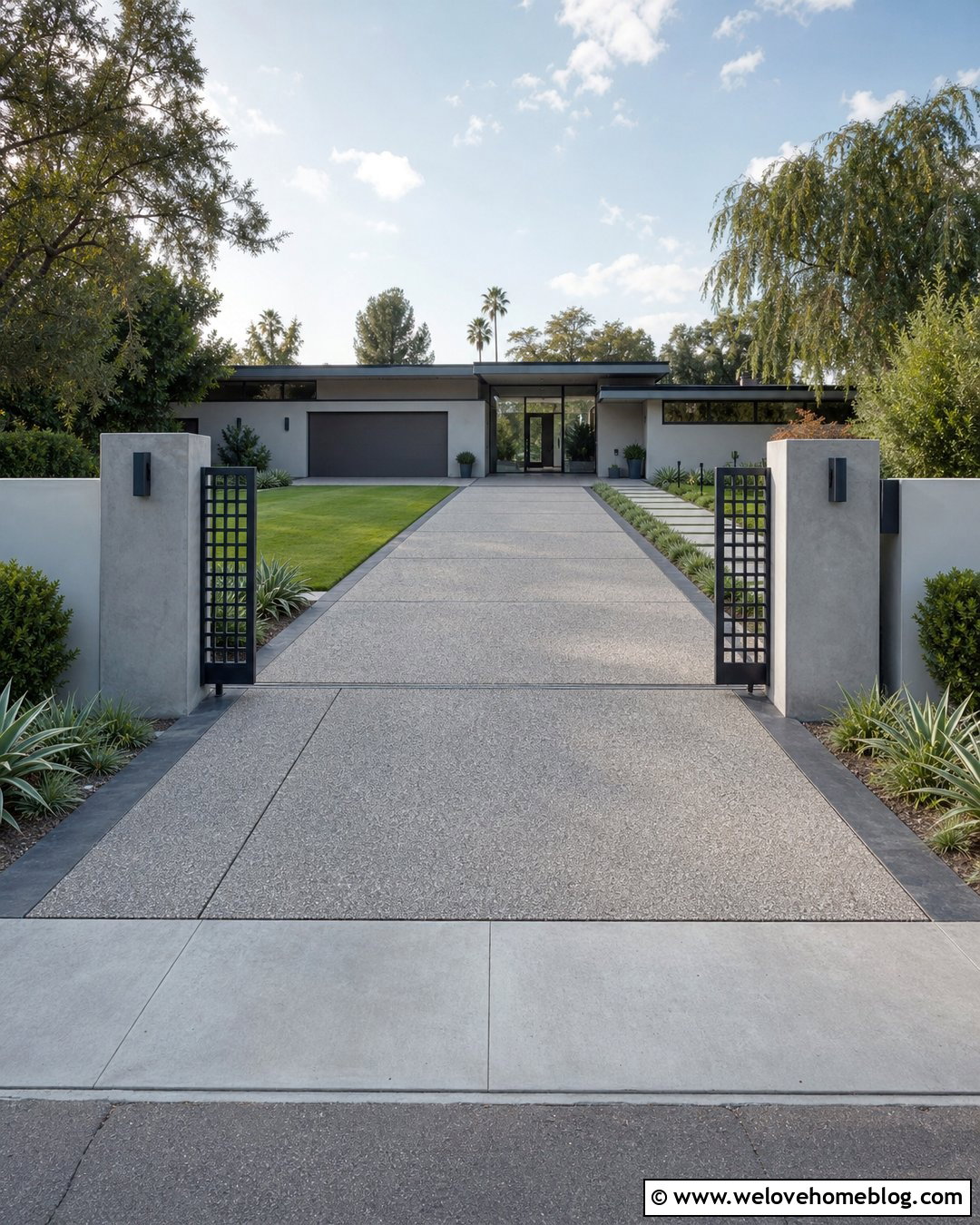
Exposed aggregate can create a practical Tuscan driveway when the stone mix carries warm, natural colors. Choose tan concrete containing cream, amber, brown, and muted gray pebbles. A broad S-curve will soften the appearance of the continuous surface and create space for layered planting beds. Add a double border made from clay brick and narrow limestone bands to introduce stronger Old World detail. Beside the driveway, combine upright cypress with rounded shrubs and loose drifts of lavender. A small flagstone walkway can cross one planting bed and lead toward the front entrance. Request a sample before choosing the aggregate because the exposed stone determines the final color and texture. A slip-resistant finish and carefully positioned drainage will make the surface more comfortable during wet weather.
9. Resin-Bound Gravel Tuscan Driveway
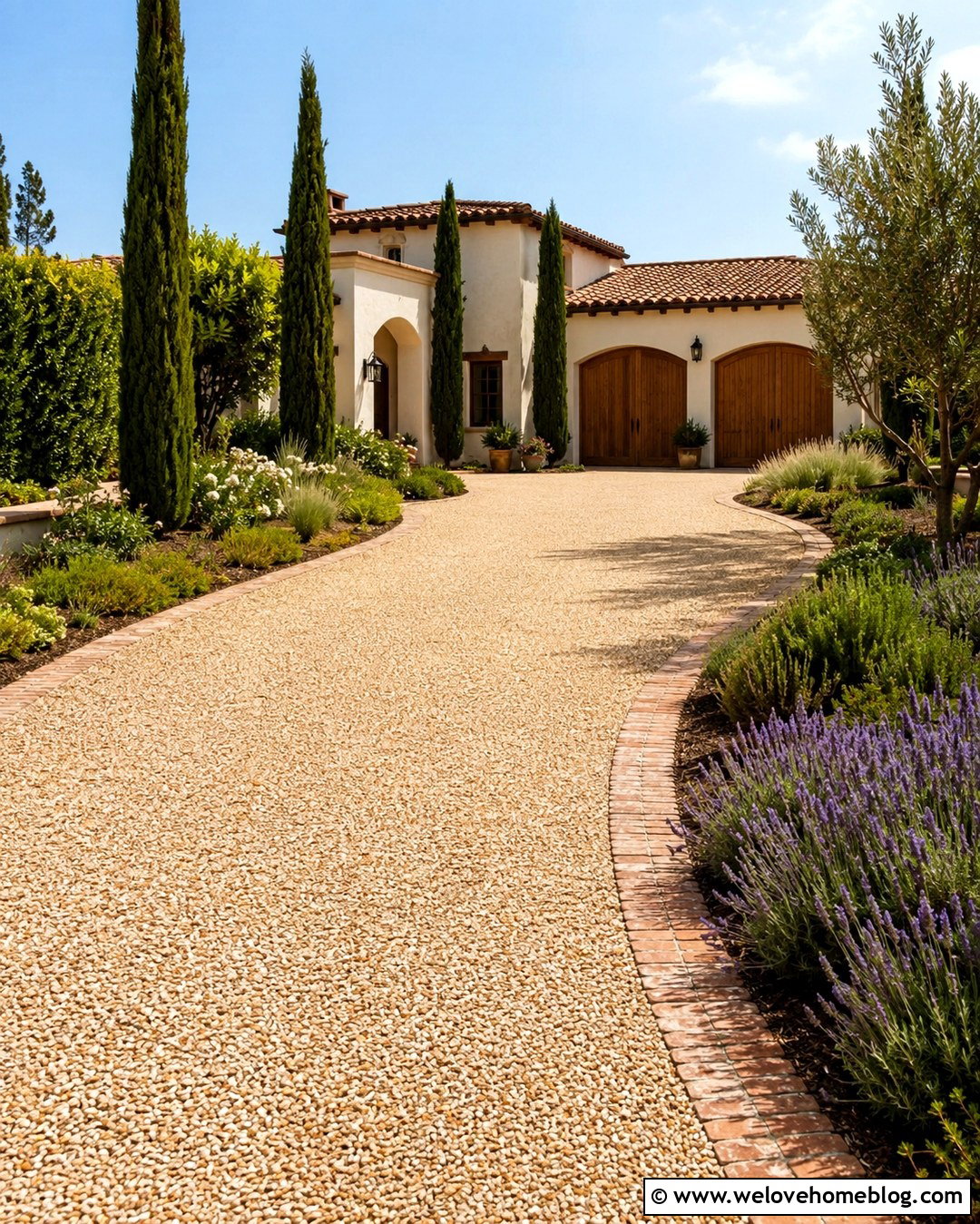
Golden resin-bound gravel provides the visual warmth of loose aggregate with a smoother, more contained finish. It is a useful choice for a neat Tuscan courtyard where scattered gravel would be inconvenient. Select a blend of honey, cream, and light brown stones, then outline the driveway with tumbled brick pavers. A curved approach leading into a compact parking court can make a medium-size property feel more spacious. Plant narrow cypress trees at key corners rather than lining every foot of the driveway. Fill the remaining beds with rosemary, sage, lavender, and ornamental grasses. The house should repeat the same warm palette through cream stucco, wood garage doors, and clay roofing. Installation requirements vary, so use a suitable base and experienced installer for the chosen system.
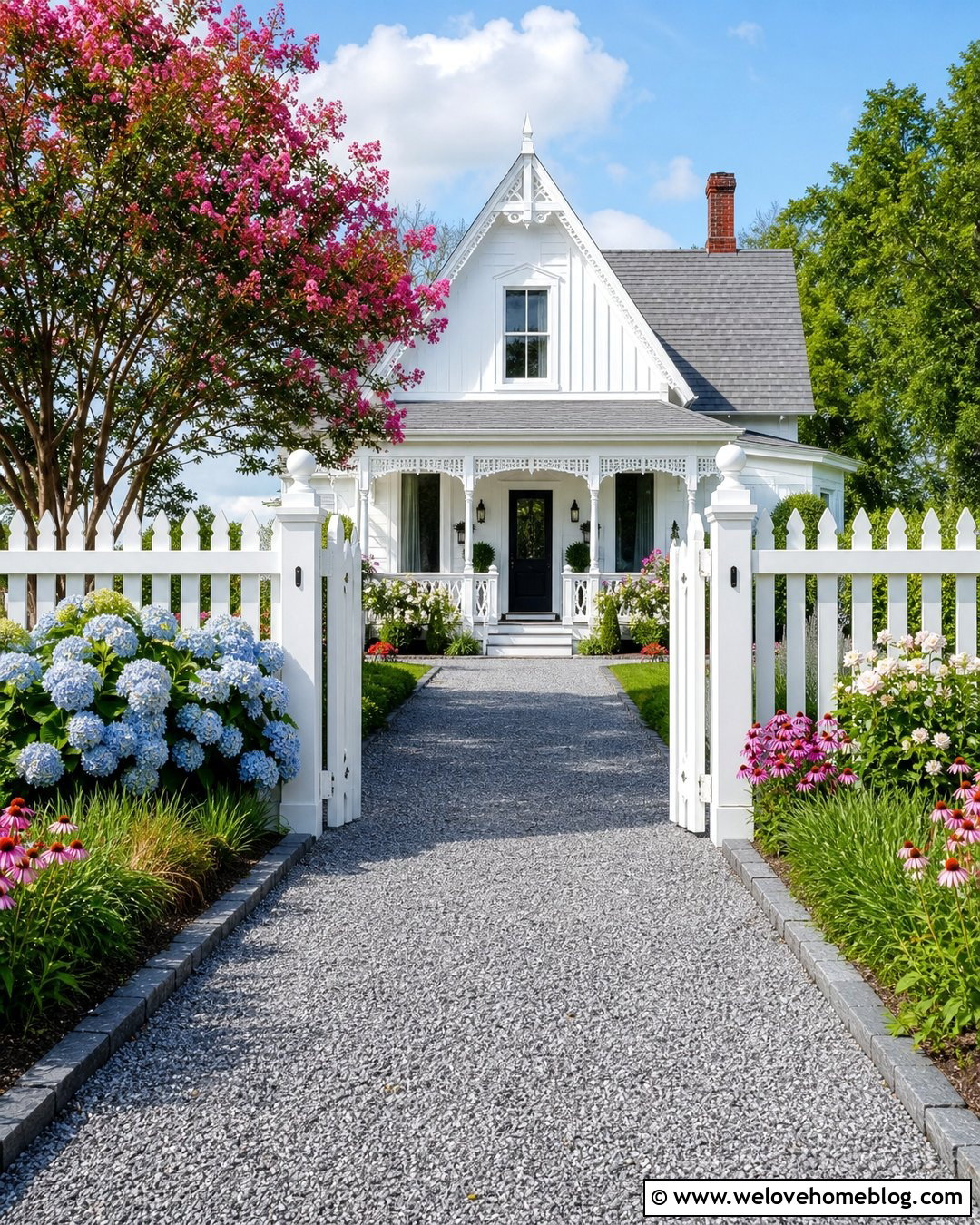
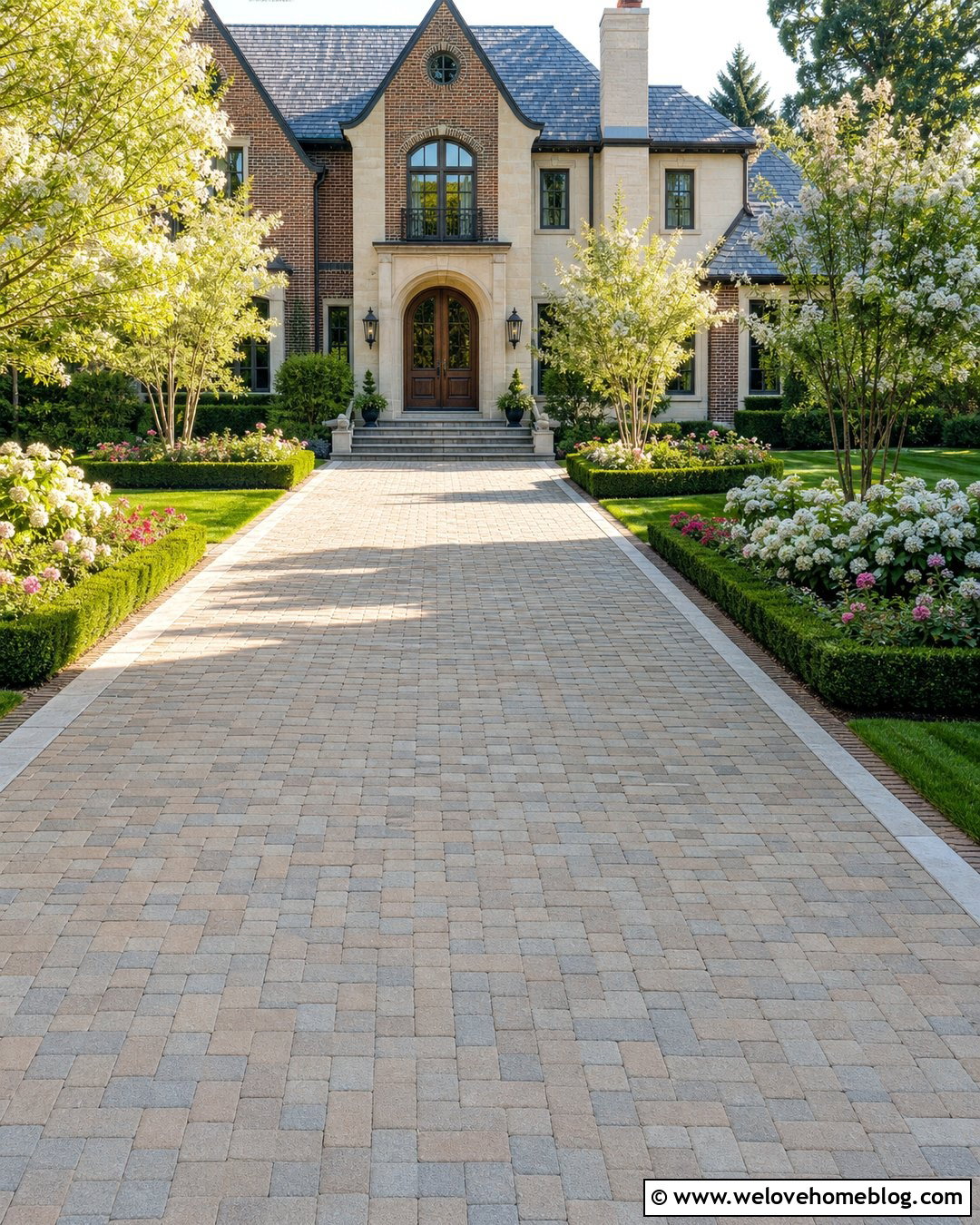
10. Asphalt Tuscan Driveway With Cobblestone Apron
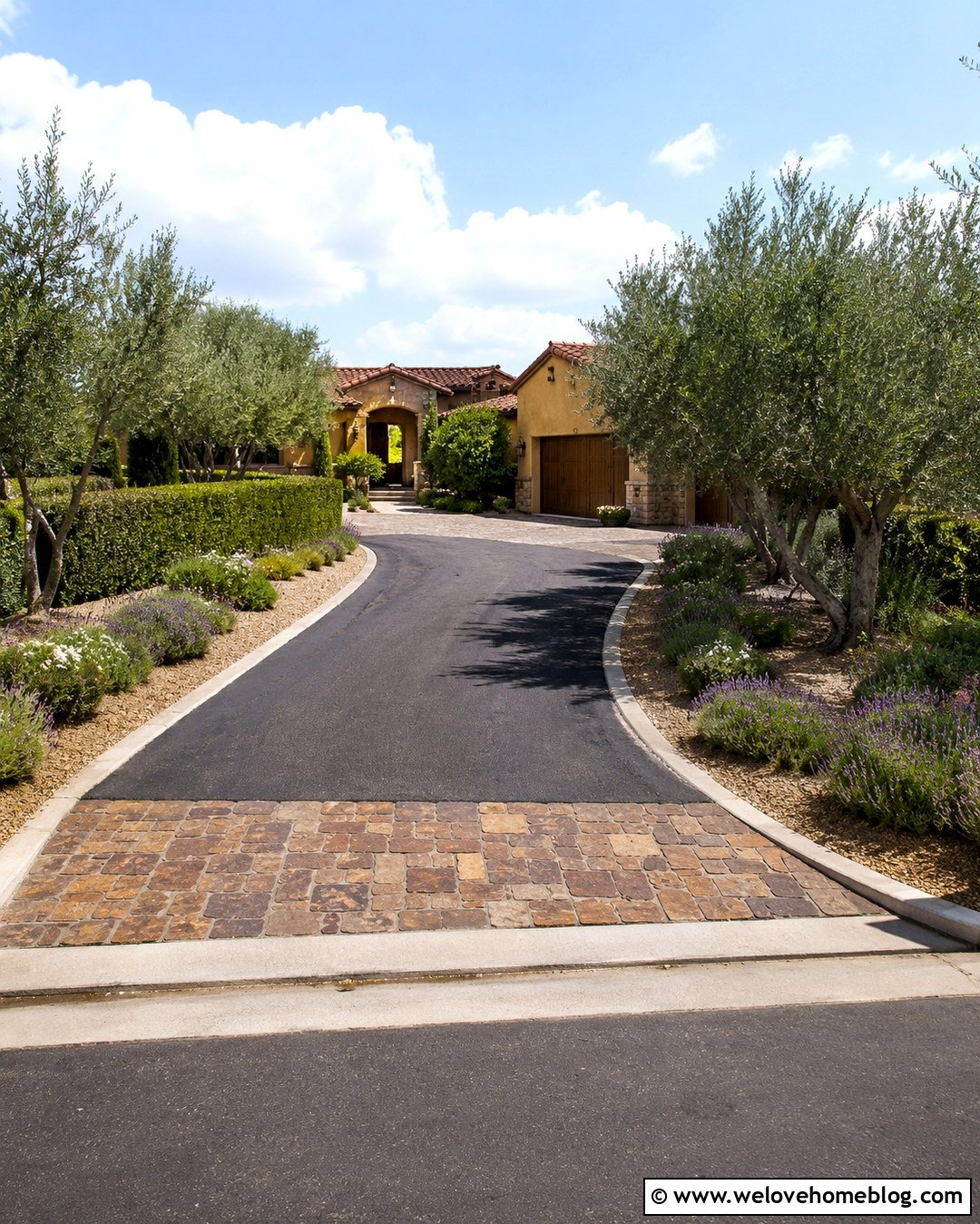
Black asphalt can still support a Tuscan look when it is balanced with warmer architectural details. Use the asphalt for the main driving area, then install a wide cobblestone apron at the street and another band near the garage. Stones in rust, brown, charcoal, and sand will soften the dark surface and make the transitions feel intentional. Give the driveway a gentle curve bordered by low limestone curbs. Along one side, create a loose olive grove with gravel mulch, lavender, and rosemary. On the other, use a clipped hedge to conceal utilities and define the lawn. This combination is especially practical for a long driveway where full stone paving may exceed the budget. The decorative entrance and borders provide character without covering the entire approach in premium materials.
11. Permeable Paver Tuscan Driveway
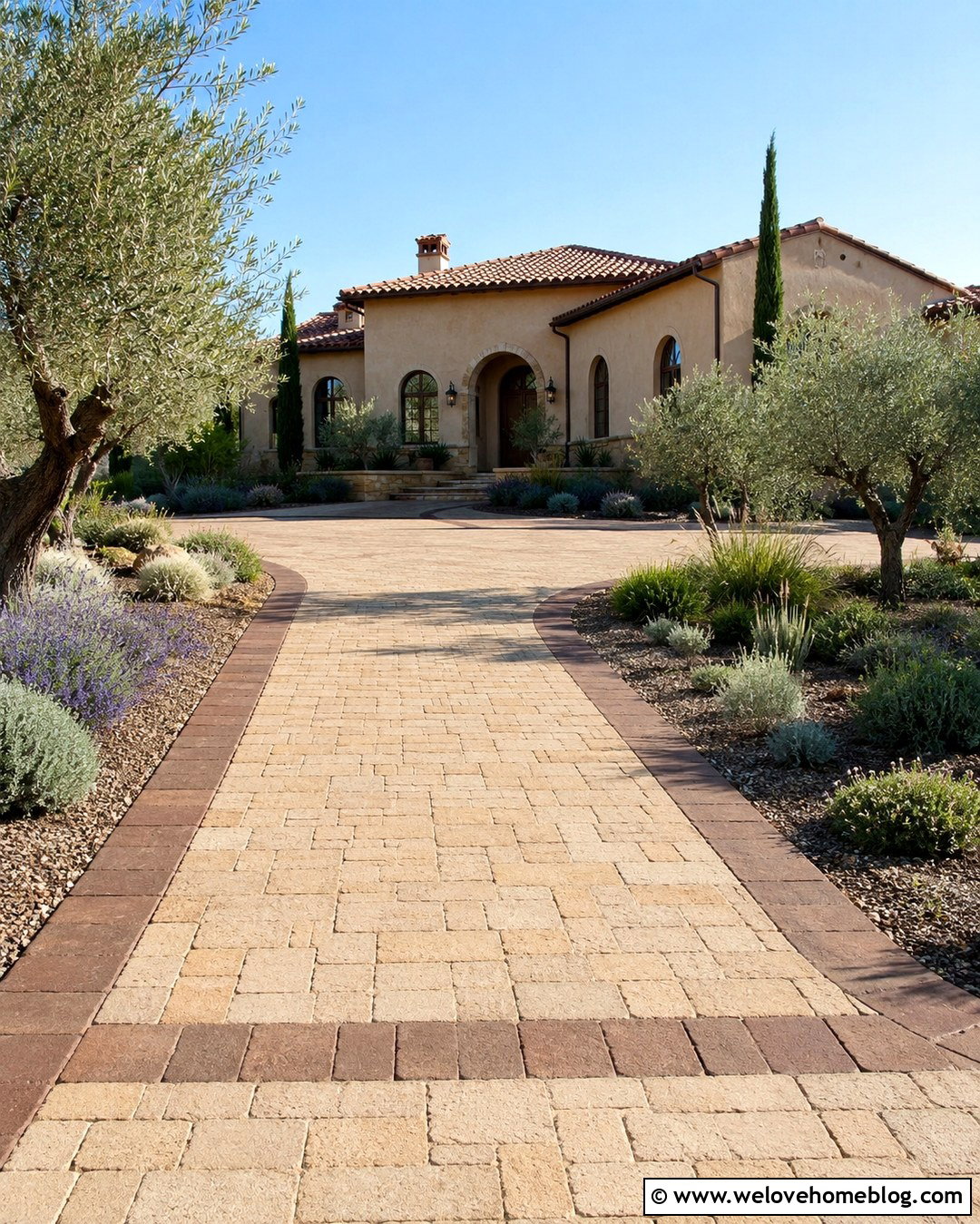
Permeable pavers can deliver Tuscan character while supporting a more drainage-conscious landscape plan. Select warm beige or weathered brown concrete pavers with slightly irregular edges. Install them in a simple running bond so the joints remain visually clear, then use darker clay pavers around the perimeter. A straight driveway with a small turning court keeps the surface organized and easy to navigate. Frame it with gravel-mulched beds containing olive trees, lavender, sage, and low ornamental grasses. Ground cover may be used selectively beside the driveway, but planting directly within permeable joints should match the paving system and maintenance plan. Coordinate the paver color with a tan stucco home, arched windows, and a clay tile roof. Proper base construction is essential for drainage and vehicle support. ()
12. Limestone Tuscan Motor Court
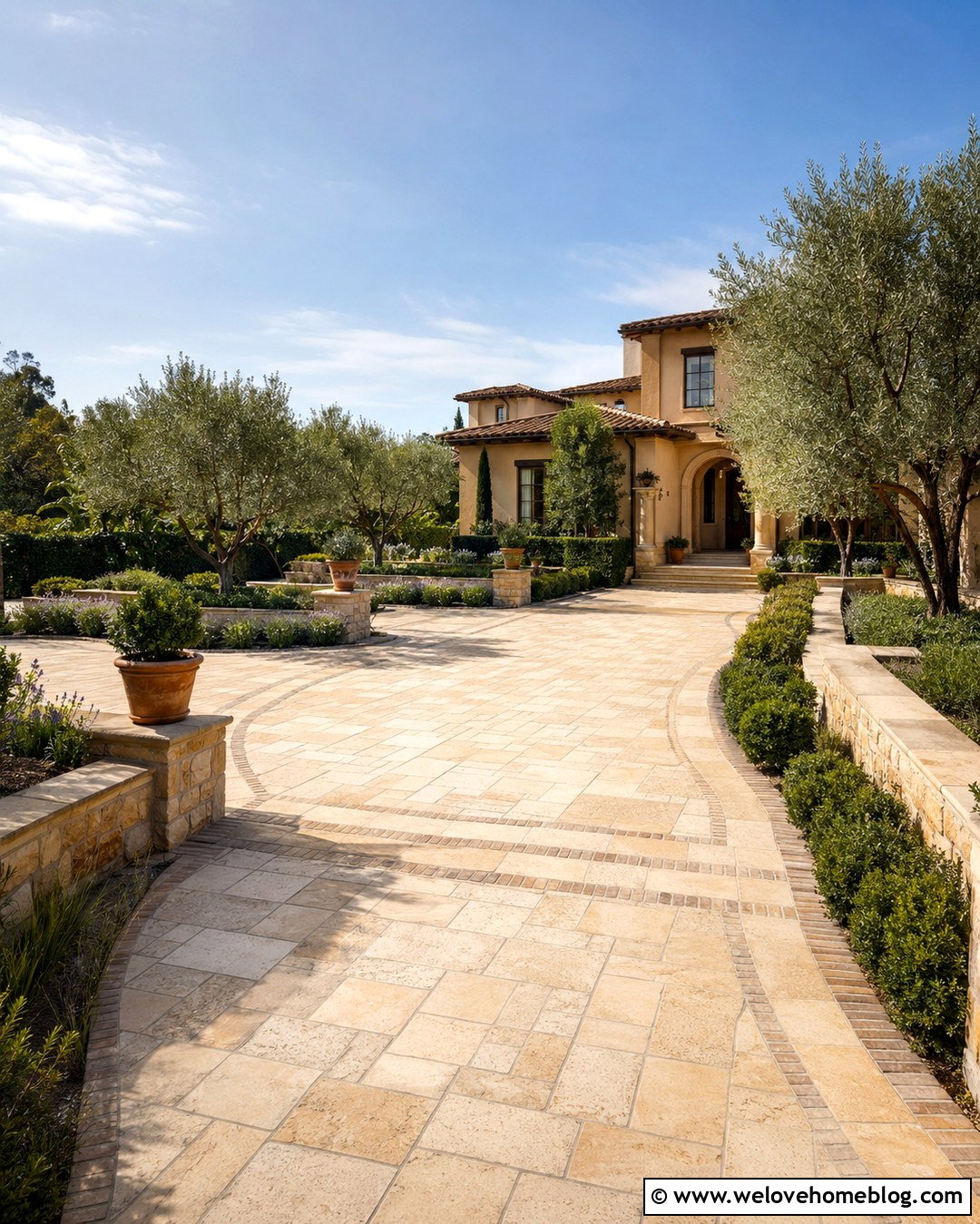
Warm limestone pavers create a calm, elegant motor court in front of a substantial Tuscan home. Choose large rectangular pieces in cream, buff, and pale gold, preferably with a lightly textured finish for exterior traction. Arrange them in a modular pattern and add narrow brick bands to break up the broad paved area. A gently flared entrance can lead into the rectangular court, leaving enough room for turning without making the front yard feel entirely paved. Place symmetrical terra-cotta planters beside the garage and build low stone walls around the outer beds. Olive trees, clipped bay, lavender, and evergreen shrubs provide structure. Include a separate walkway to the front door so guests can identify the pedestrian route immediately instead of crossing an undefined expanse of paving.
13. Gravel Ribbon Tuscan Driveway
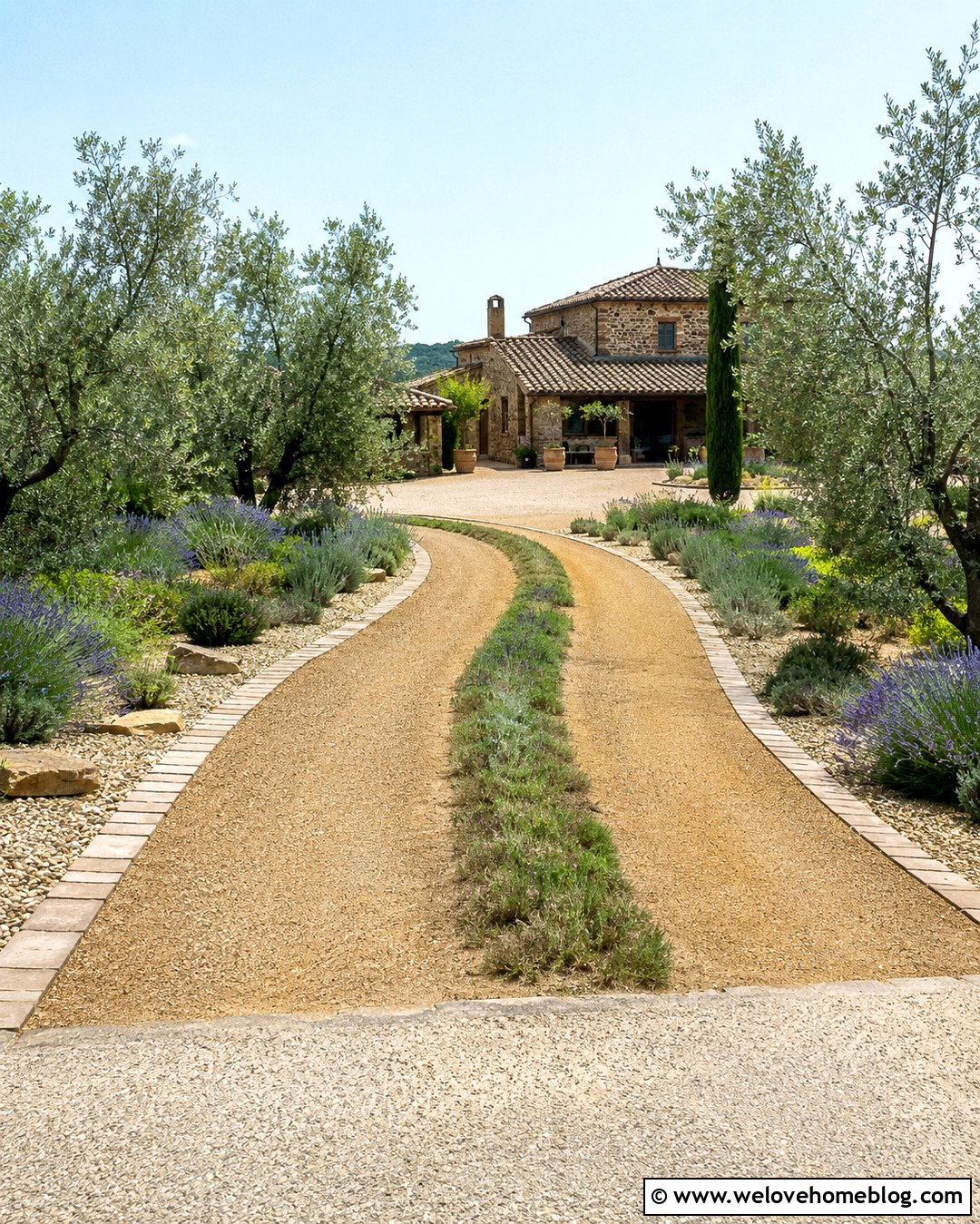
A gravel ribbon driveway reduces the visual weight of the surface while preserving two clear tire tracks. Build the tracks from compacted golden gravel and separate them with a low strip of durable grass or drought-tolerant ground cover suited to local conditions. Cobblestone edging along both outer sides helps keep the gravel contained. A long, gently curved layout looks especially appealing beside an informal Tuscan farmhouse. Space olive trees irregularly along the approach and fill the understory with lavender, thyme, rosemary, and gravel mulch. Near the house, transition into a full-width parking pad so vehicles can maneuver easily. Plan the center strip carefully around vehicle clearance, mowing, irrigation, and drainage. The design should appear pastoral, but its base and edges still need professional-level preparation for regular use. ()
14. Tumbled Paver Tuscan Courtyard Driveway
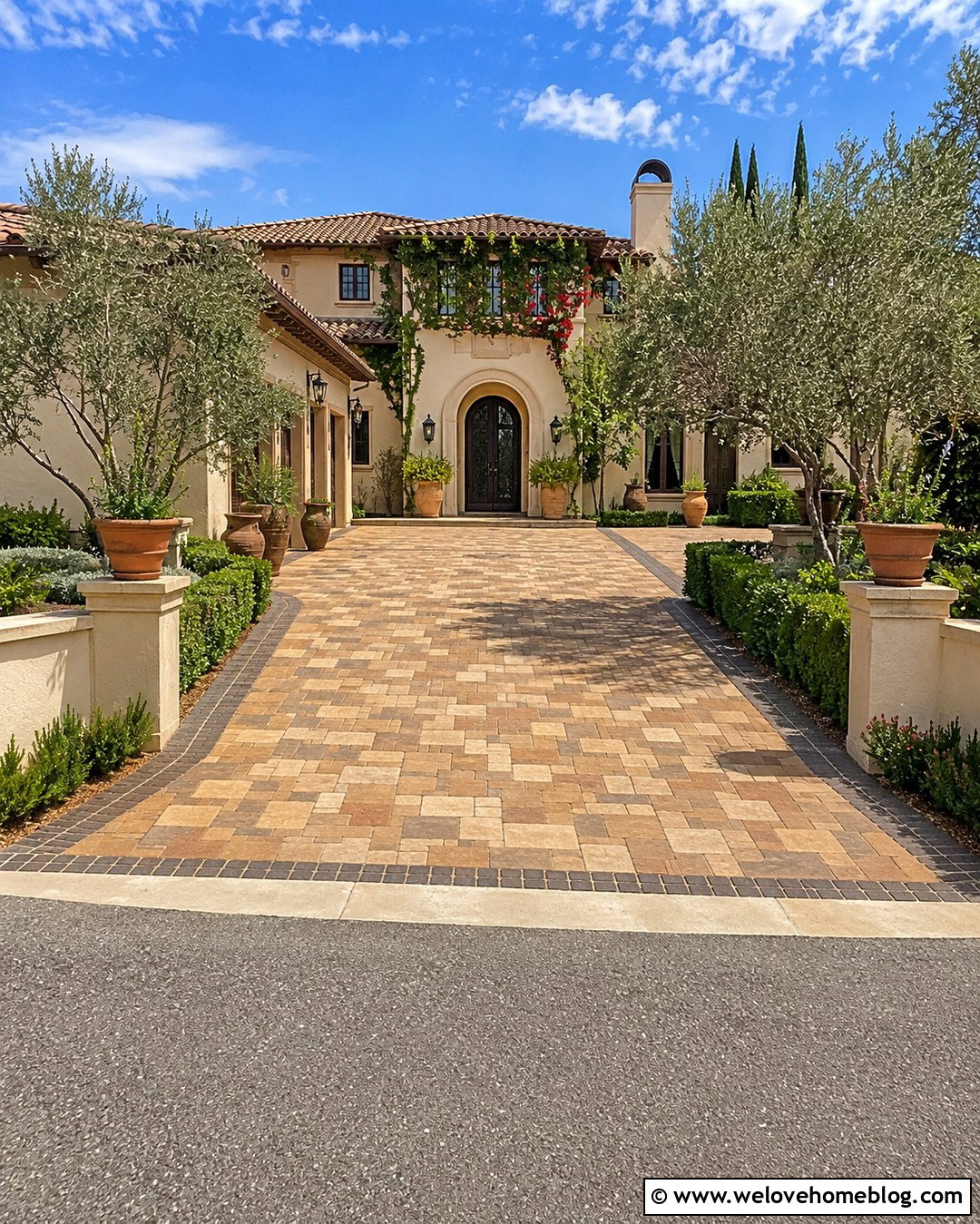
Tumbled concrete pavers can form a welcoming Tuscan courtyard without the cost or irregularity of reclaimed stone. Select a blended finish combining sandstone, beige, muted rust, and brown. Lay the pavers in a random ashlar pattern and frame the driveway with a darker double border. A short, wide approach works well when it opens into a rectangular courtyard in front of the garage. Build low stucco walls at the sides and cap them with natural limestone. Large terra-cotta pots, climbing vines, rosemary hedges, and a pair of olive trees will soften the hardscape. Use a contrasting paver band to identify the walkway leading to the front door. This visual cue keeps the expansive courtyard organized while repeating colors found in the roof, walls, and landscape.
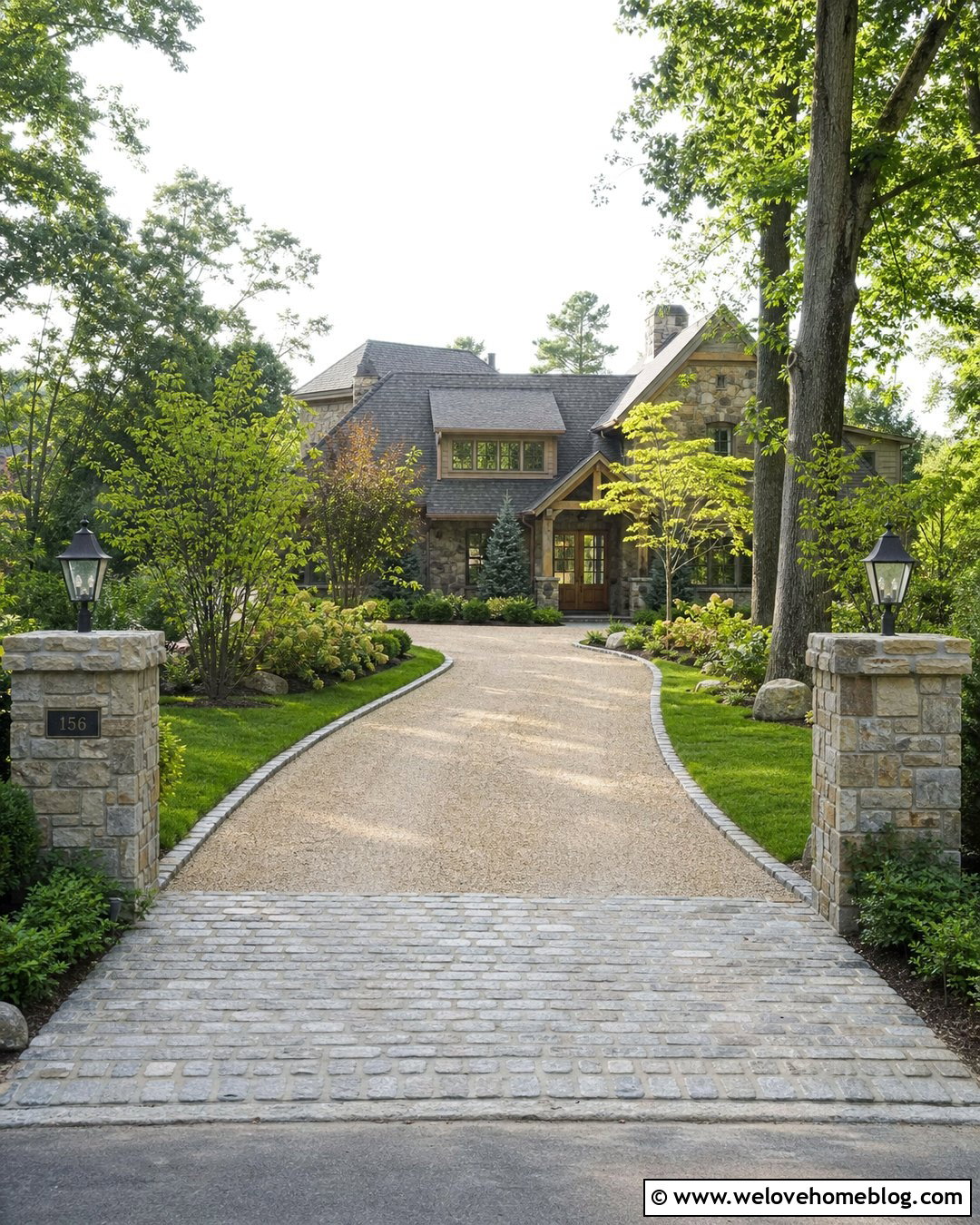
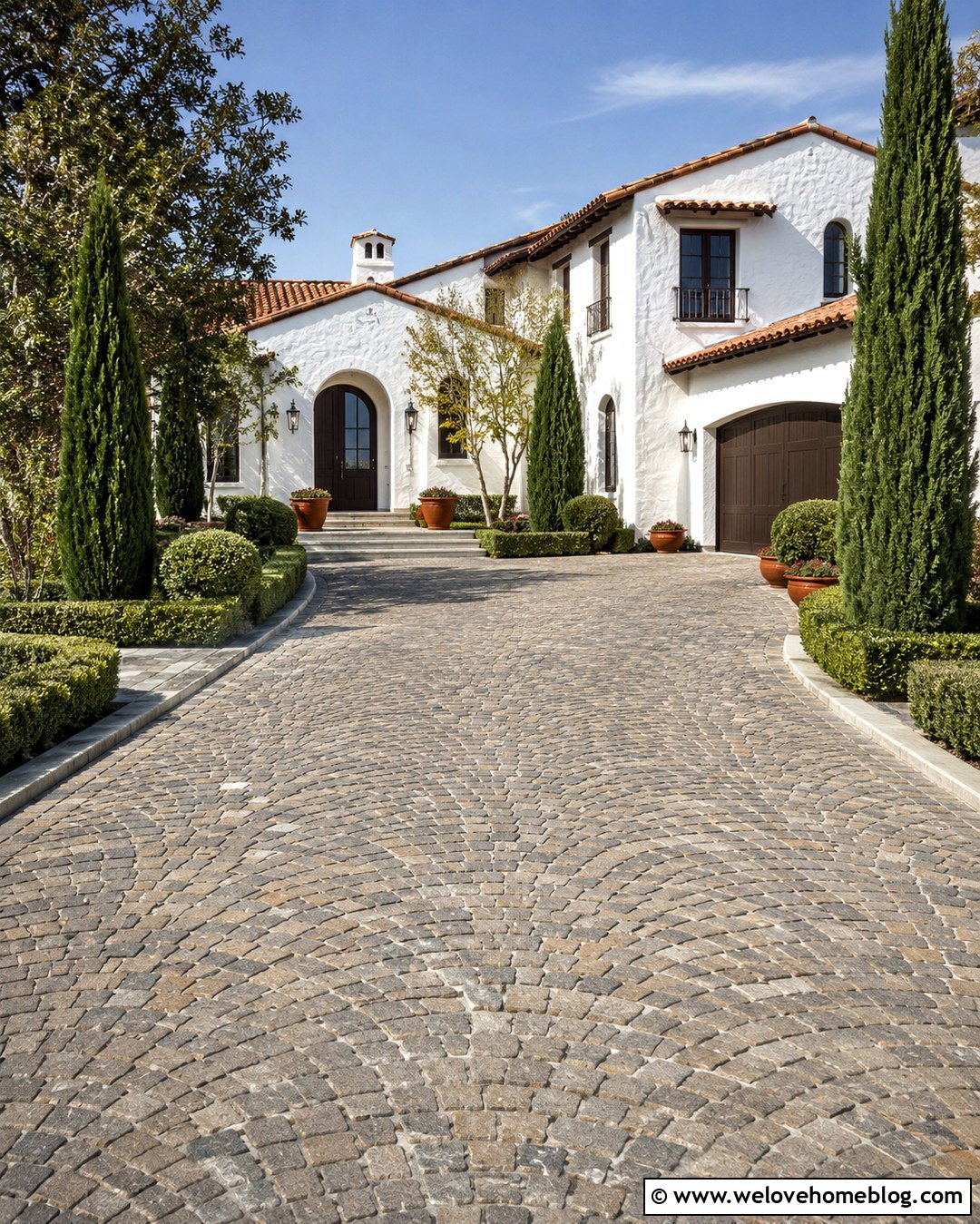
15. Flagstone And Gravel Tuscan Driveway
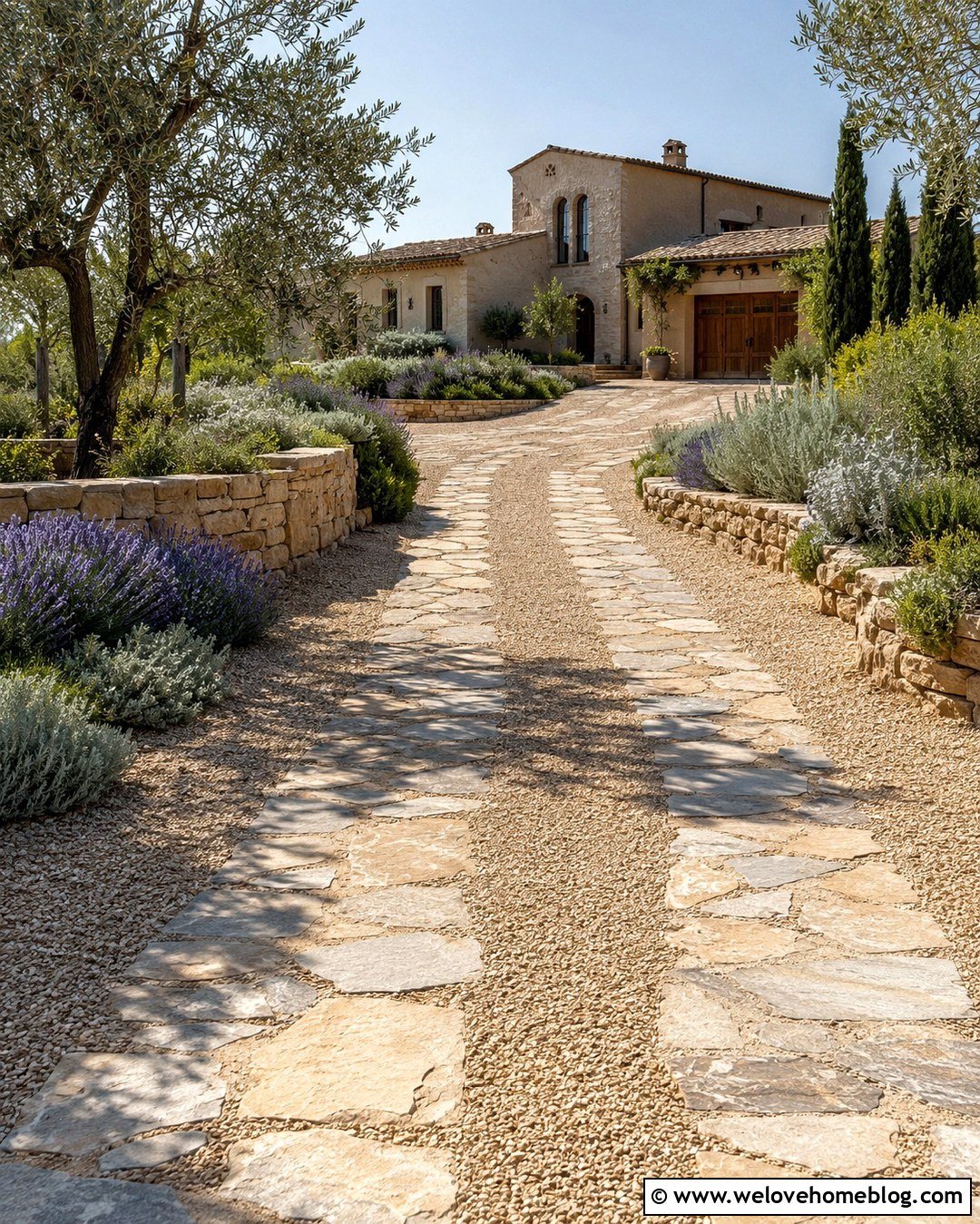
Irregular flagstone and golden gravel create a rustic Tuscan driveway that feels established rather than newly installed. Place large, flat sandstone pieces in the primary tire paths and use compacted gravel between and around them. The stones should be thick and stable enough for vehicle traffic, with joints designed to avoid rocking or displacement. A gently winding layout enhances the countryside effect. Border the driveway with low fieldstone walls that follow the curves and transition into raised planting beds near the house. Use olive trees, lavender, rosemary, and silvery foliage to complement the warm stone. At the garage, change to a more uniform flagstone parking pad for easier movement. This mixed-material design needs careful base preparation, but it can bring impressive texture to a rural or spacious property.
16. Narrow Tuscan Driveway With Stucco Walls
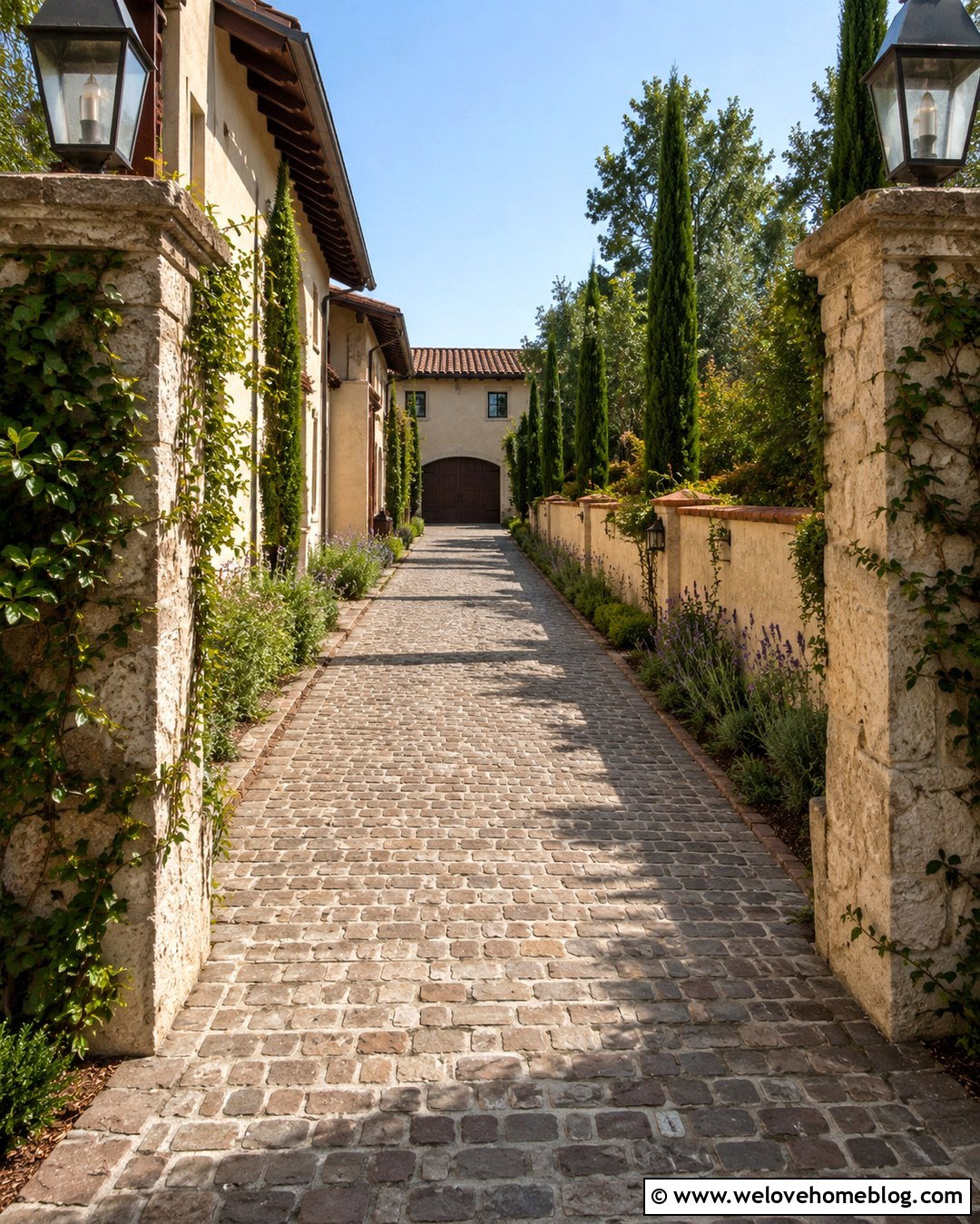
A narrow side driveway can feel intentional when low stucco walls and vertical planting create a defined passage. Use small cobblestone pavers in warm gray and brown, laid in rows that visually widen the space. Cap the cream stucco walls with clay brick or limestone to connect them with the house. Instead of adding wide planting beds, place slender Italian cypress at carefully selected openings and train vines over wall-mounted supports. Recessed planting pockets can hold lavender, rosemary, or compact grasses without interfering with mirrors and doors. A slightly flared entrance makes turning in easier and provides room for two stone pillars. Keep lanterns, gates, and house details in one dark metal finish. Precise measurements are critical so the completed design maintains comfortable vehicle and pedestrian clearance.
17. Sloped Tuscan Driveway With Stone Walls
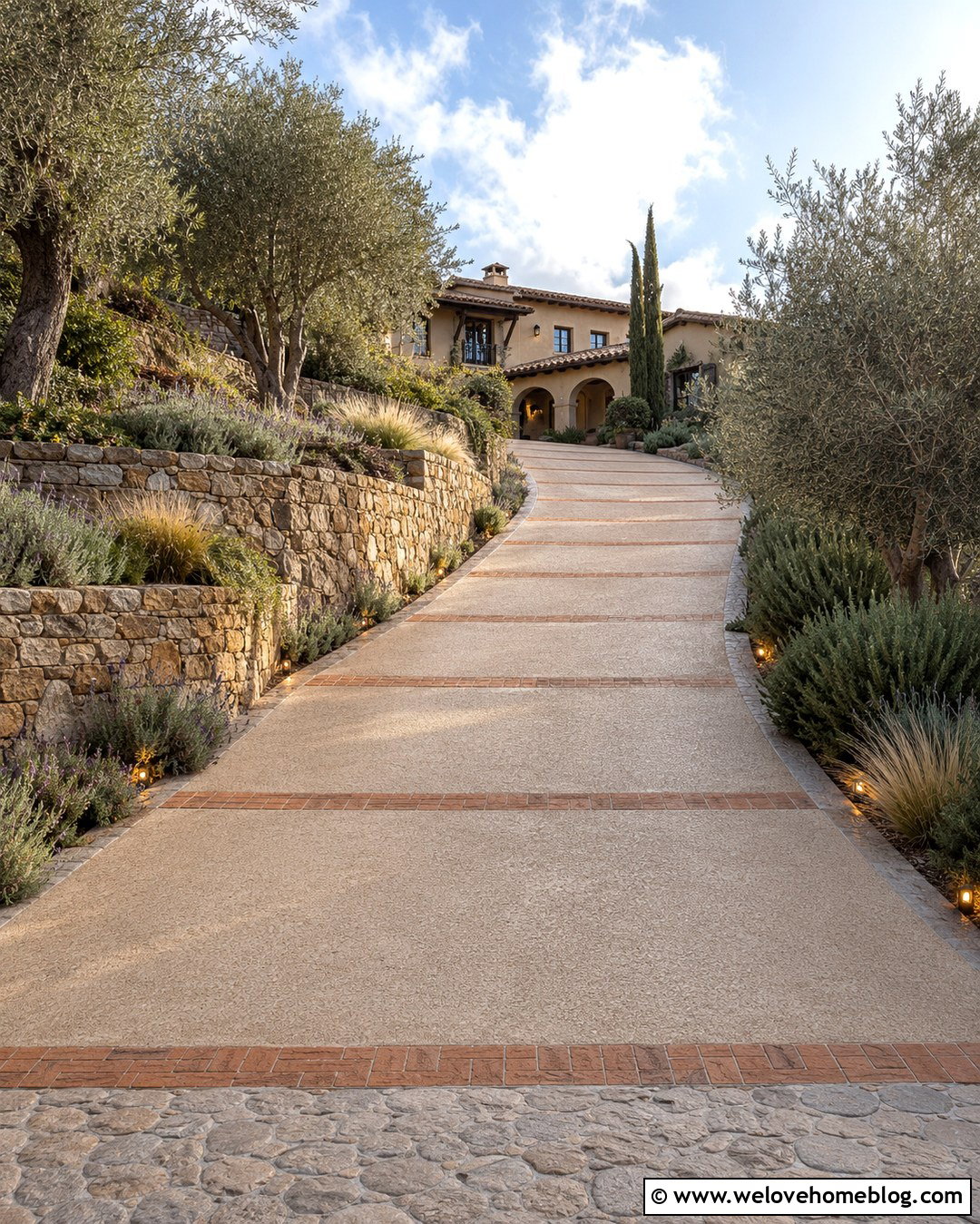
A sloped driveway benefits from strong terracing that feels integrated with the architecture. Finish the main surface with textured tan concrete and divide it with horizontal bands of tumbled brick pavers. These bands add visual rhythm while complementing the home’s clay roof. Along the higher edge, construct a warm fieldstone retaining wall that follows the incline. Create planting terraces above it with olive trees, trailing rosemary, lavender, and ornamental grasses. On the lower side, use a simpler cobblestone curb to preserve an open view. A broad curve can reduce the driveway’s harsh uphill appearance, but its slope, drainage, and turning geometry must be evaluated by qualified local professionals. Place low fixtures along the retaining wall where they can illuminate the edge without becoming obstacles during daily driving.
18. Gated Tuscan Driveway With Stone Pillars
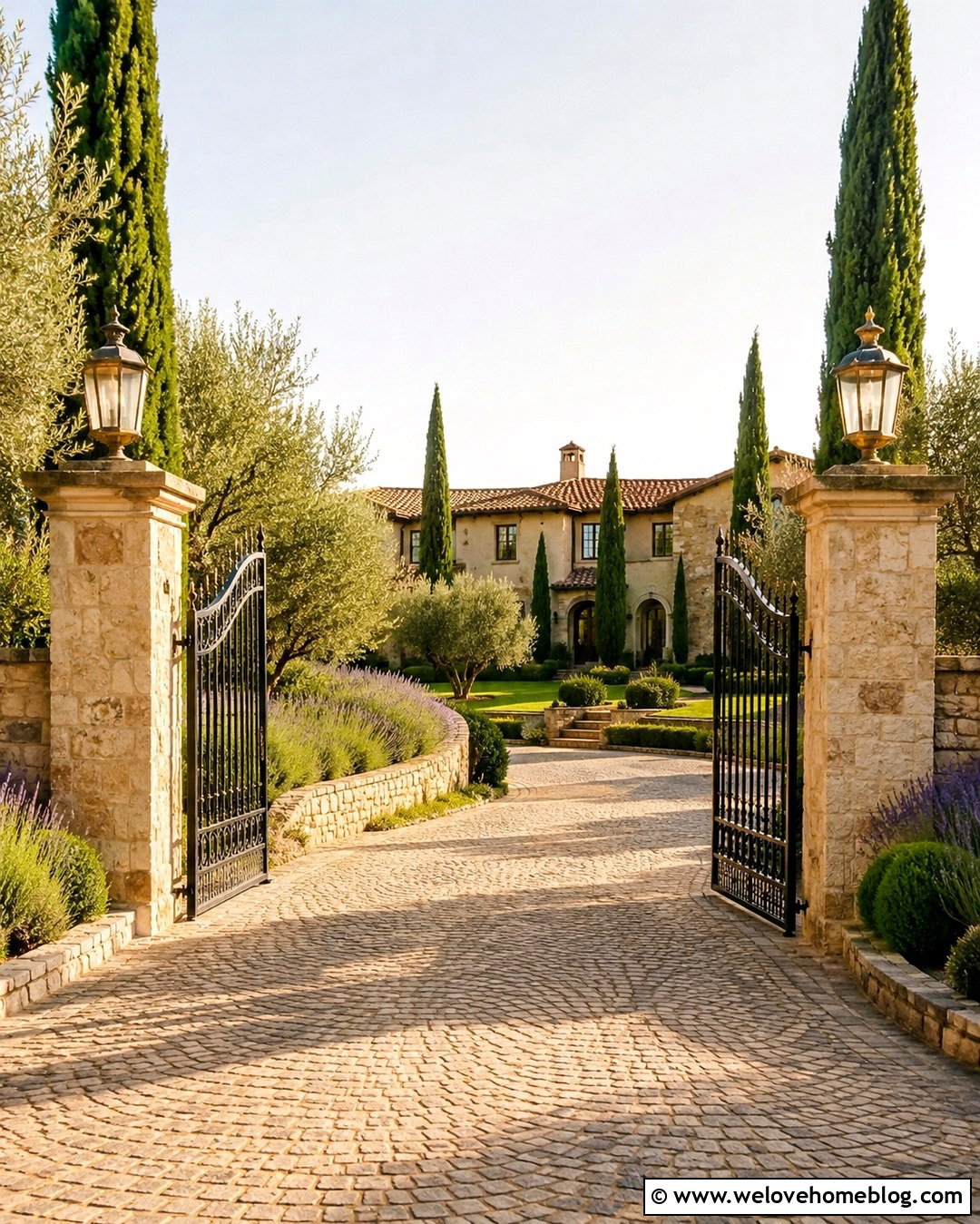
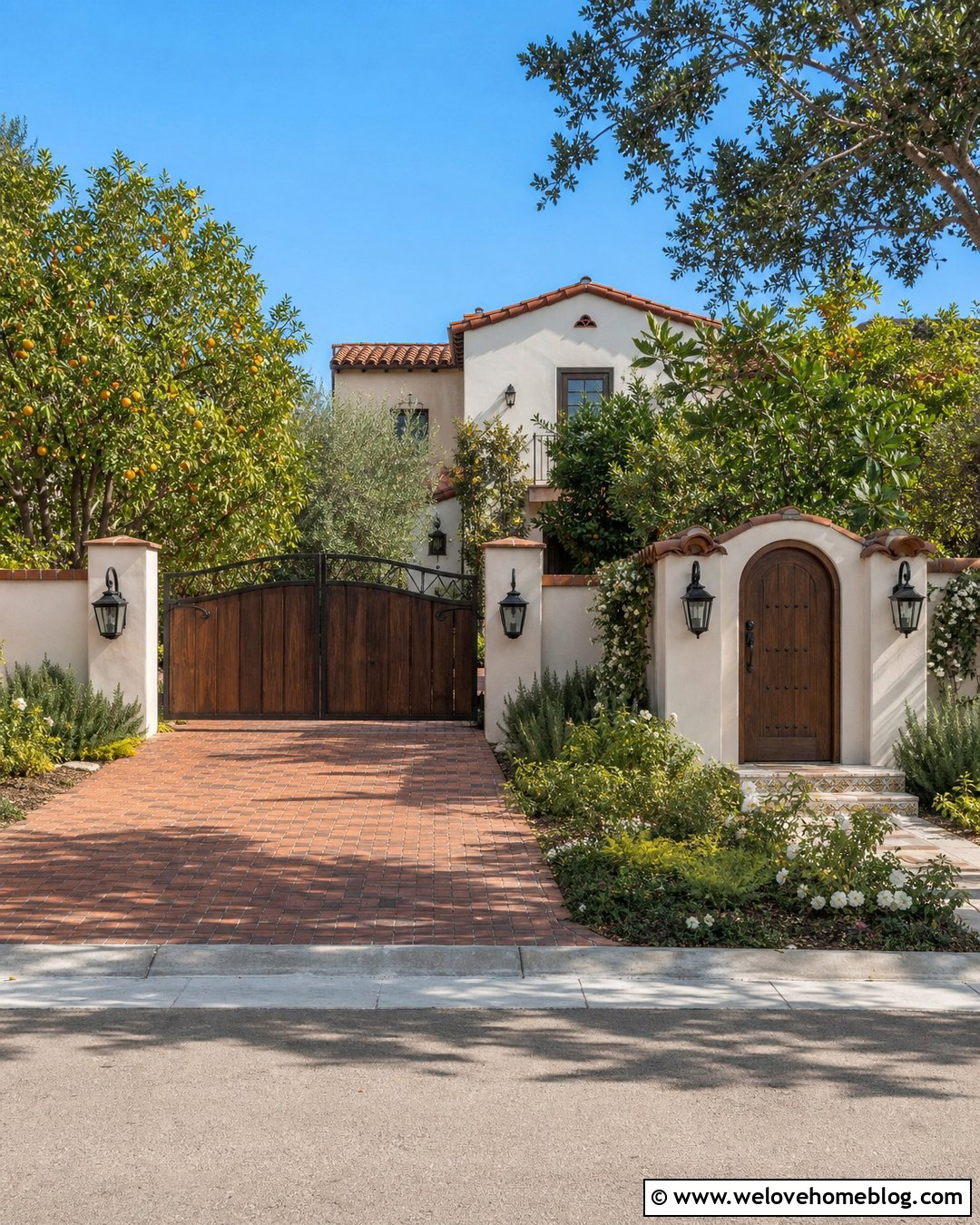
A gated entrance works best when the gate, pillars, driveway, and landscaping share the same scale and materials. Start with a curved driveway made from warm brown cobblestone, then frame the entrance with substantial limestone or fieldstone pillars. Choose a simple arched wrought iron gate with open detailing so the house remains partially visible. Low walls can extend from the pillars and curve gently into beds of lavender, rosemary, and silvery shrubs. Place two cypress trees behind the pillars to add height without crowding the road. Continue the cobblestone beyond the gate to make the entrance feel like part of the full driveway rather than a separate decoration. Allow adequate room for gate operation, vehicle stacking, deliveries, visibility, and safe access from the street.
19. Small Tuscan Driveway With Terra-Cotta Border
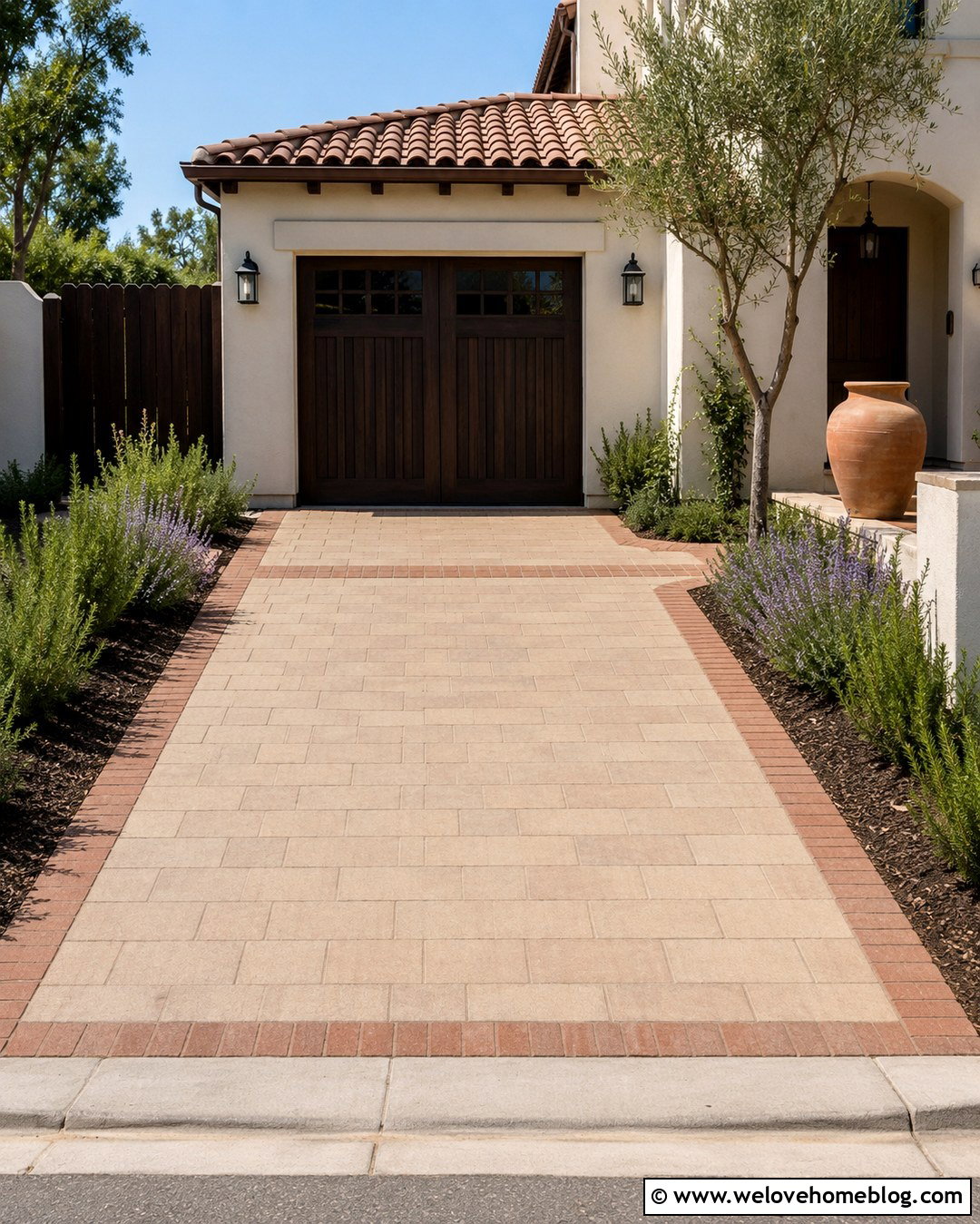
Limited space does not prevent a driveway from carrying strong Tuscan character. Cover a short, straight driveway with warm beige concrete pavers in a simple running bond. Add a narrow terra-cotta brick border to outline the surface without reducing usable width. At the garage, repeat the border as a horizontal band that visually separates the parking area from the building. Replace oversized planting beds with compact pockets containing upright rosemary, lavender, dwarf olive varieties, or climate-appropriate substitutes. One large terra-cotta urn near the walkway can provide a focal point without blocking vehicle doors. Keep the material palette restrained so the small frontage does not feel crowded. A cream stucco facade, dark wood garage door, and black iron lantern will complete the coordinated villa-inspired appearance.

20. Modern Tuscan Concrete Driveway
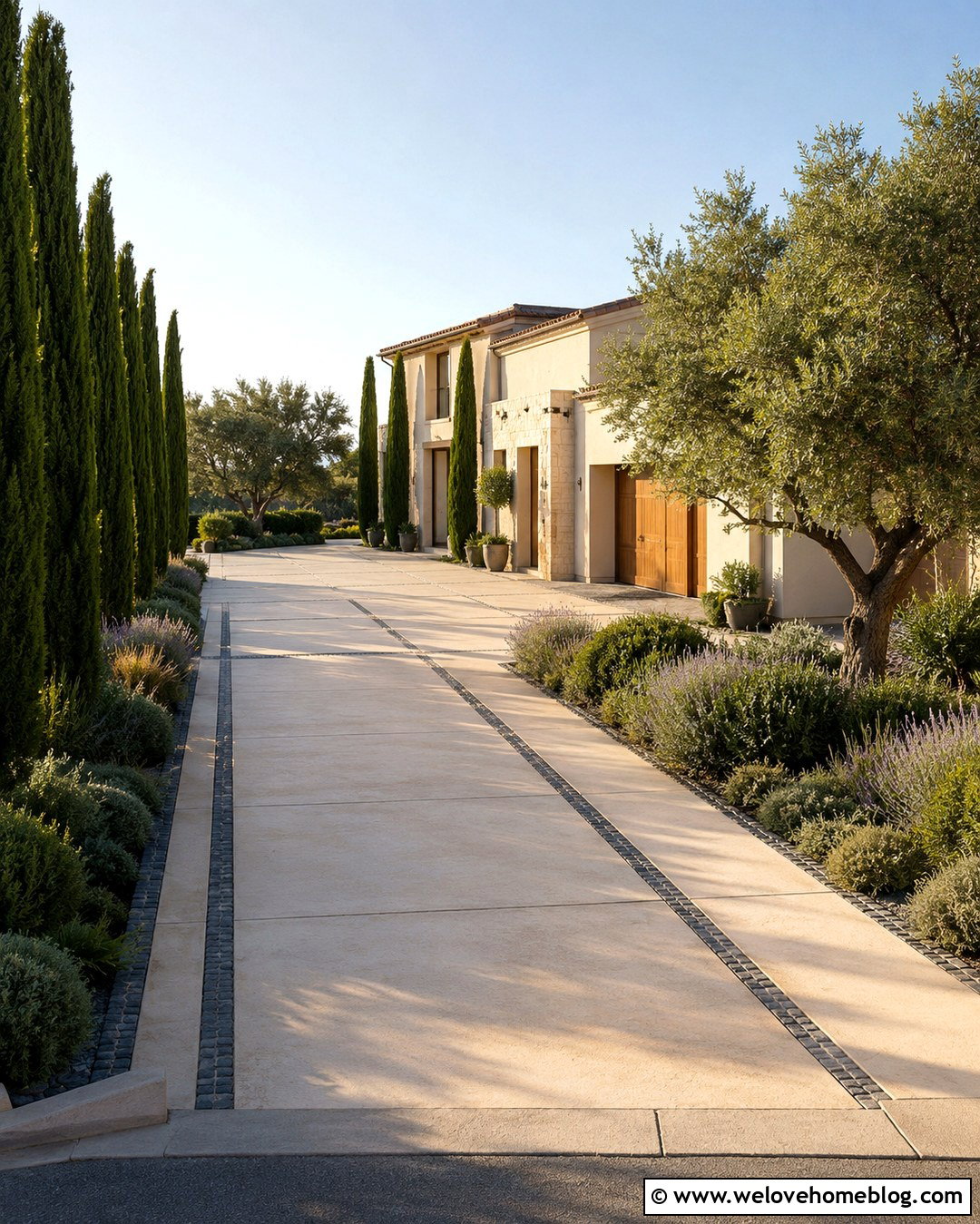
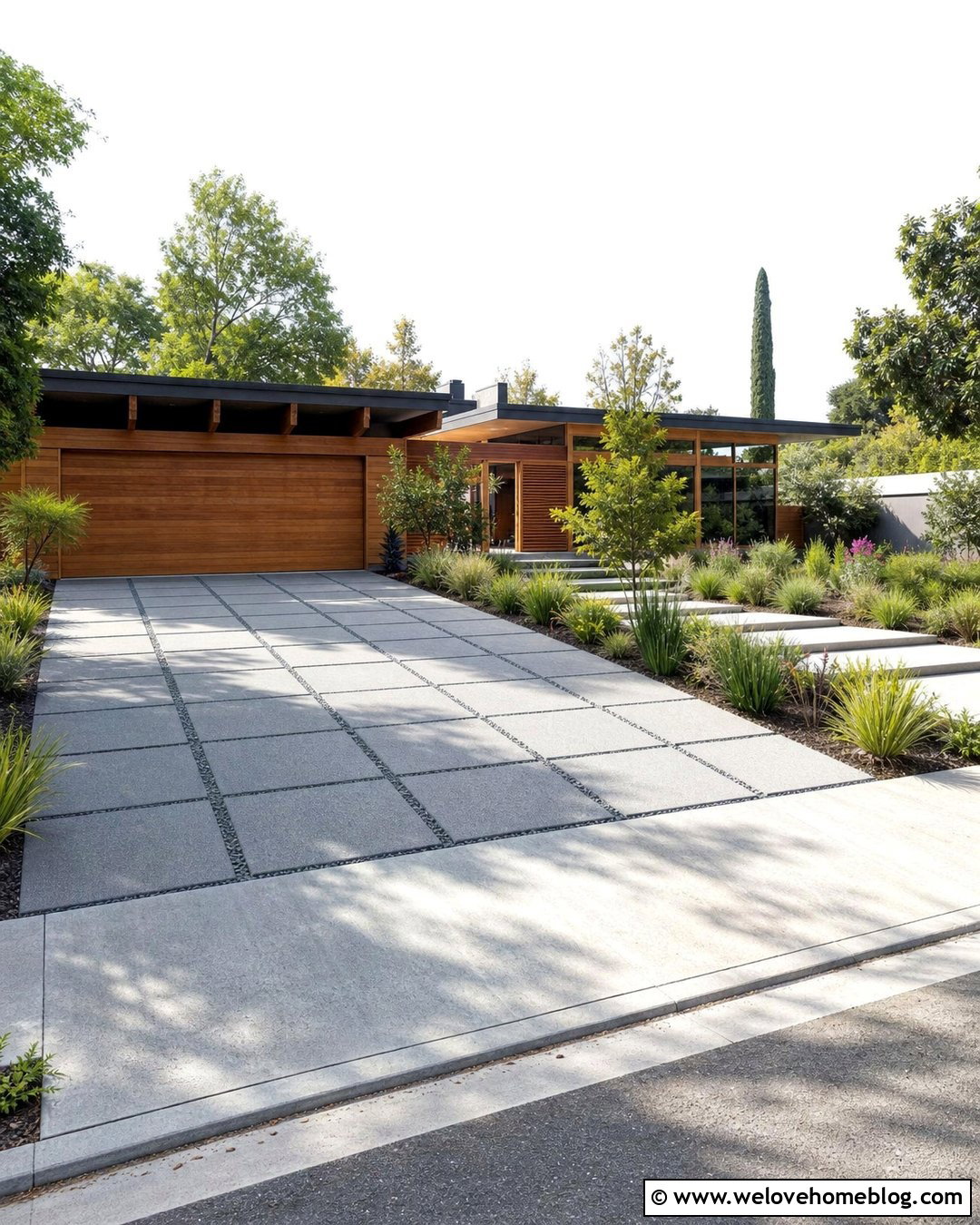
Modern Tuscan design combines clean geometry with the warm materials and planting associated with Mediterranean homes. Use large sand-colored poured concrete panels separated by narrow strips of dark cobblestone. A straight driveway with a rectangular parking court keeps the layout contemporary, while softened outer corners prevent it from feeling severe. Border one side with a structured row of Italian cypress and the other with informal drifts of lavender, rosemary, sage, and ornamental grasses. A single mature olive tree can anchor the walkway near the entrance. Choose a streamlined stucco home with restrained arches, natural wood doors, limestone accents, and a low clay tile roof. This complete look avoids excessive ornament while preserving the earthy colors, textural contrast, and welcoming landscape expected from Tuscan architecture.
Conclusion:
The best Tuscan driveway ideas treat the entire approach as one connected landscape rather than focusing only on paving. Warm stone, gravel, brick, or textured concrete should complement the house, while curved lines and substantial borders make the entrance feel established. Mediterranean planting adds color and softness, but it should never reduce visibility or usable driving space. Choose materials that suit your climate, maintenance preferences, drainage needs, and budget. Then repeat a limited palette across the driveway, walkway, walls, gates, and planters. Whether you prefer rustic gravel or a formal travertine motor court, thoughtful coordination will create a welcoming Tuscan entrance that feels practical, balanced, and naturally connected to the home.

Related posts:
Leave a Reply