
A neat border can make an affordable gravel drive look finished, protect nearby grass, and reduce the amount of loose stone that escapes into planting beds. These 25 Gravel Driveway Edging Cheap Ideas focus on complete driveway designs rather than isolated materials. Each option combines gravel color, driveway shape, practical edging, and simple landscaping for stronger curb appeal. Budget-friendly choices include treated lumber, salvaged brick, fieldstone, flexible metal, recycled concrete, and even carefully maintained living edges. The right solution depends on drainage, vehicle traffic, climate, and the materials available locally. Before installation, mark utility lines and prepare a compacted base so the border stays aligned. Use the following complete designs to explore 25 Gravel Driveway Edging Cheap Ideas.
1. Gravel Driveway Edging With Landscape Timbers
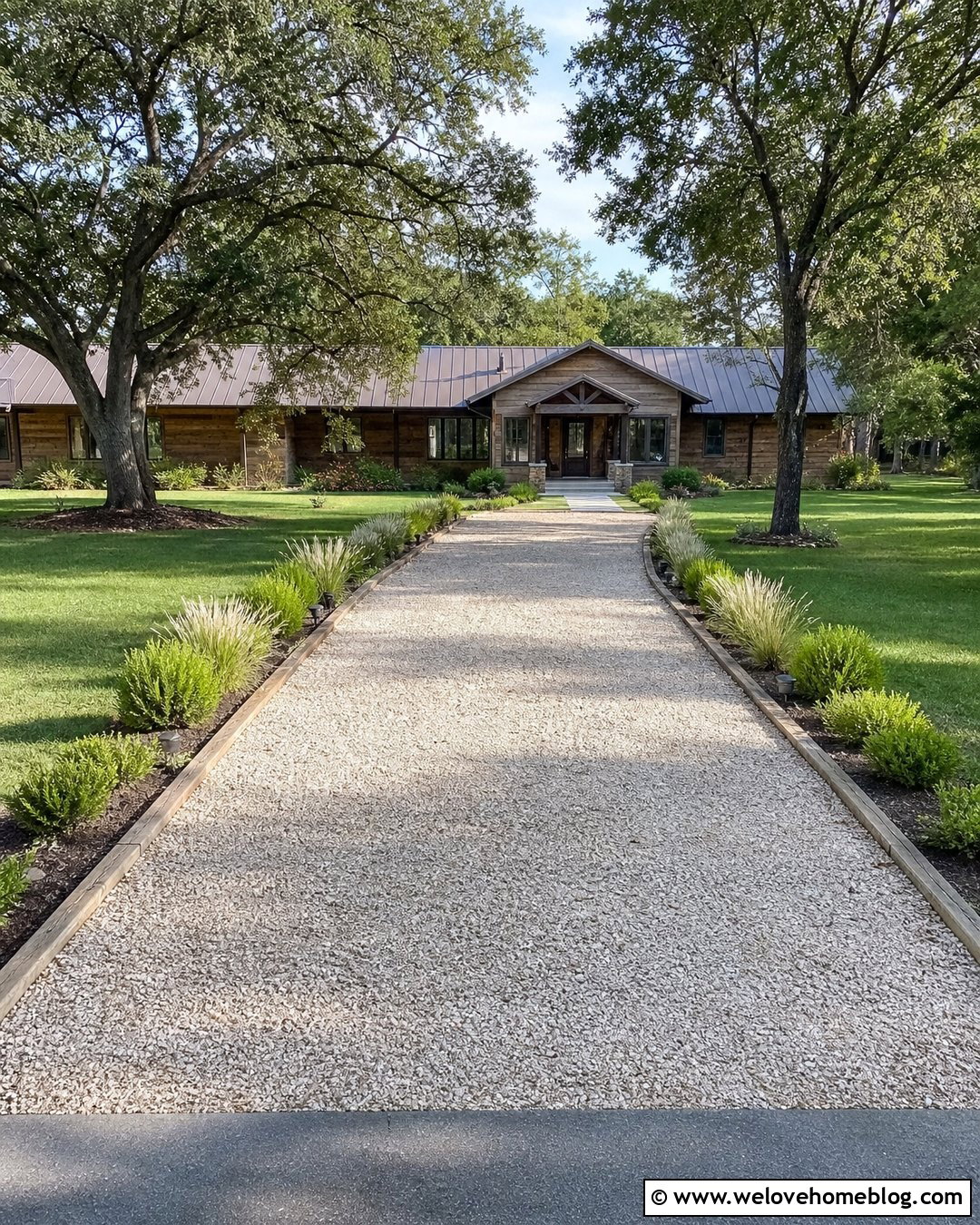
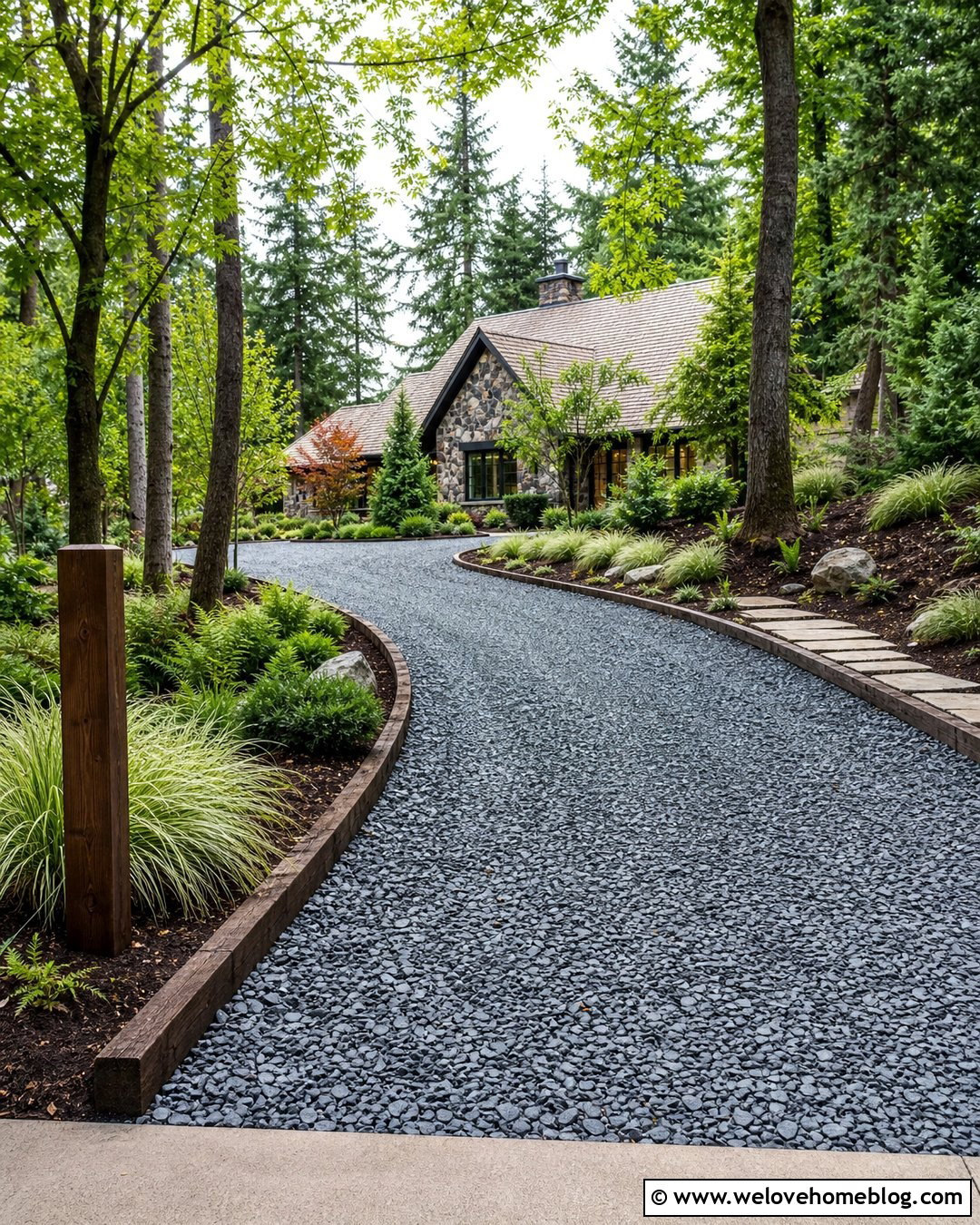
Landscape timbers create a strong, affordable border for a straight crushed-stone driveway leading to a ranch or country home. Their warm brown color works especially well with pale limestone or gray crusher run. Install the timbers in shallow trenches so their upper edges sit slightly above the finished gravel. Long exterior-rated screws, stakes, or rebar can help keep each piece aligned. Add a narrow planting bed outside the wood, using ornamental grasses and low evergreen shrubs that will not crowd passing vehicles. This complete look feels orderly without becoming overly formal. It is also practical for long driveways because the straight timber sections install quickly. Choose pressure-treated or naturally rot-resistant wood, and keep drainage openings clear where runoff crosses the border.
2. Gravel Driveway Edging With Pressure-Treated 2x4s
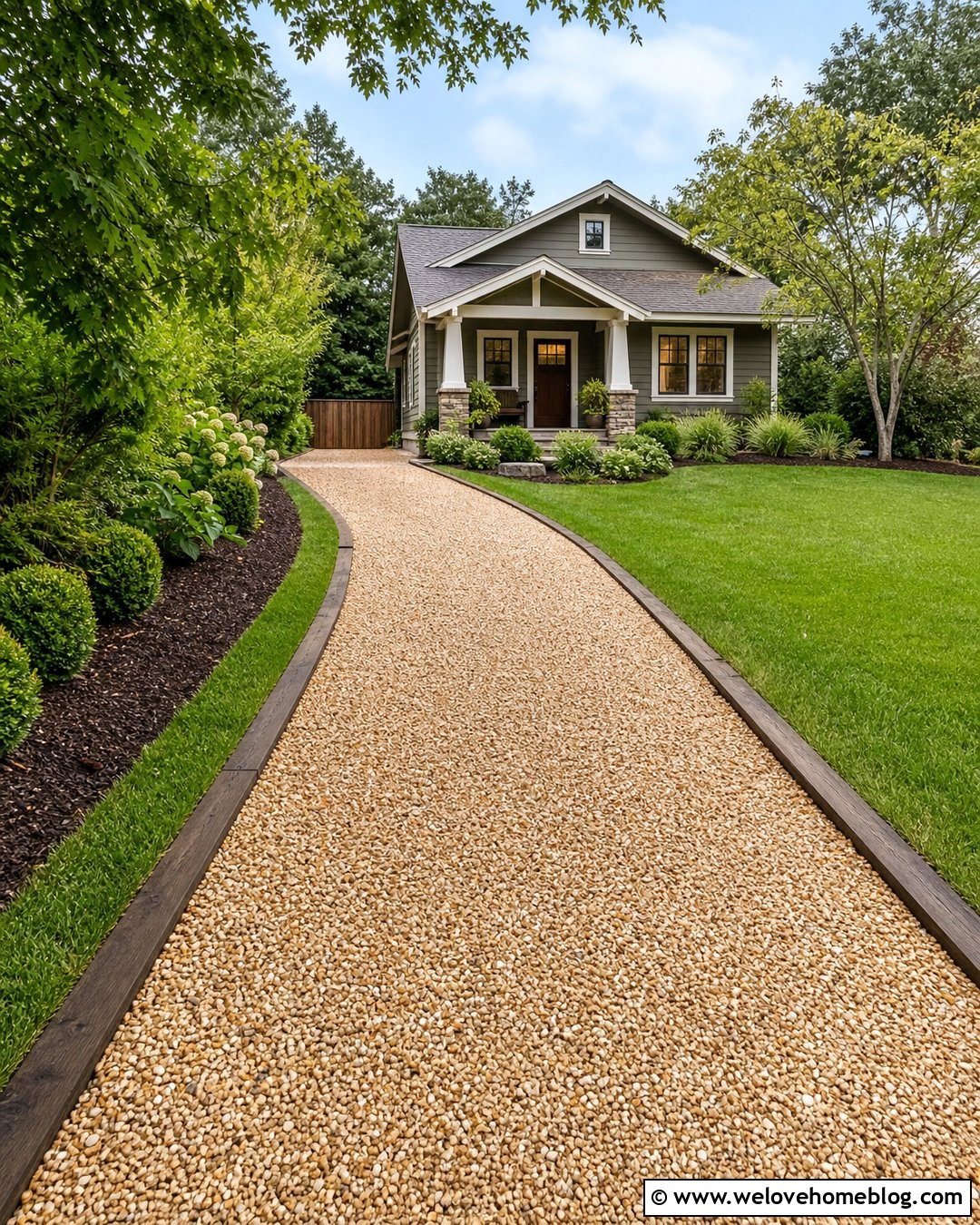
Pressure-treated 2x4 boards provide a slimmer alternative to bulky landscape timbers. Use them beside a compact pea gravel driveway where space is limited, such as a narrow approach to a bungalow or small Craftsman house. Set the boards vertically in shallow trenches and secure them with stakes placed outside the driving area. A dark brown exterior stain can make inexpensive lumber appear more polished while coordinating with porch posts, shutters, or fencing. On the lawn side, create a simple mowing strip or a thin bed filled with mulch and compact shrubs. This arrangement gives the entire driveway a crisp outline while preserving usable width. Avoid placing exposed fasteners near tires, and inspect the lumber periodically for movement, splitting, or moisture damage.
3. Gravel Driveway Edging With Reclaimed Brick
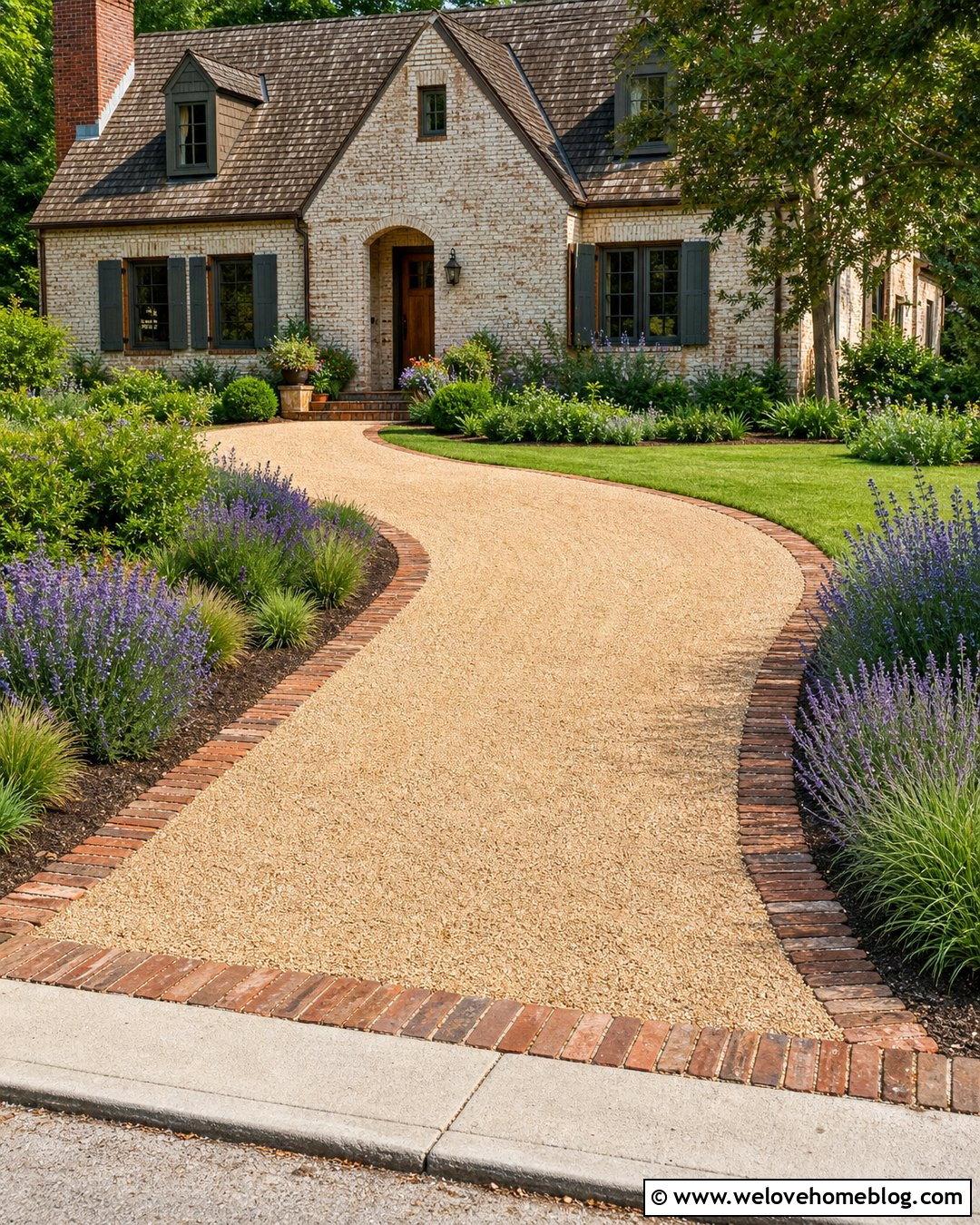
Weathered reclaimed bricks bring instant character to a curved tan gravel driveway approaching a traditional cottage. Look for leftover bricks from demolition projects, local resale listings, or building-material reuse centers. Lay them lengthwise in a compacted stone-dust bed to stretch the available supply across more linear feet. The soft red and brown tones form a noticeable boundary without making the driveway feel rigid. Repeat the brick near the front walkway or porch steps to visually connect the landscape. Informal beds of lavender, catmint, and dwarf grasses can soften the outside edge while keeping sightlines open. Sort the bricks before installation, rejecting badly cracked pieces. A well-compacted base and firm outer restraint will reduce shifting when tires occasionally touch the border.
4. Gravel Driveway Edging With Red Brick
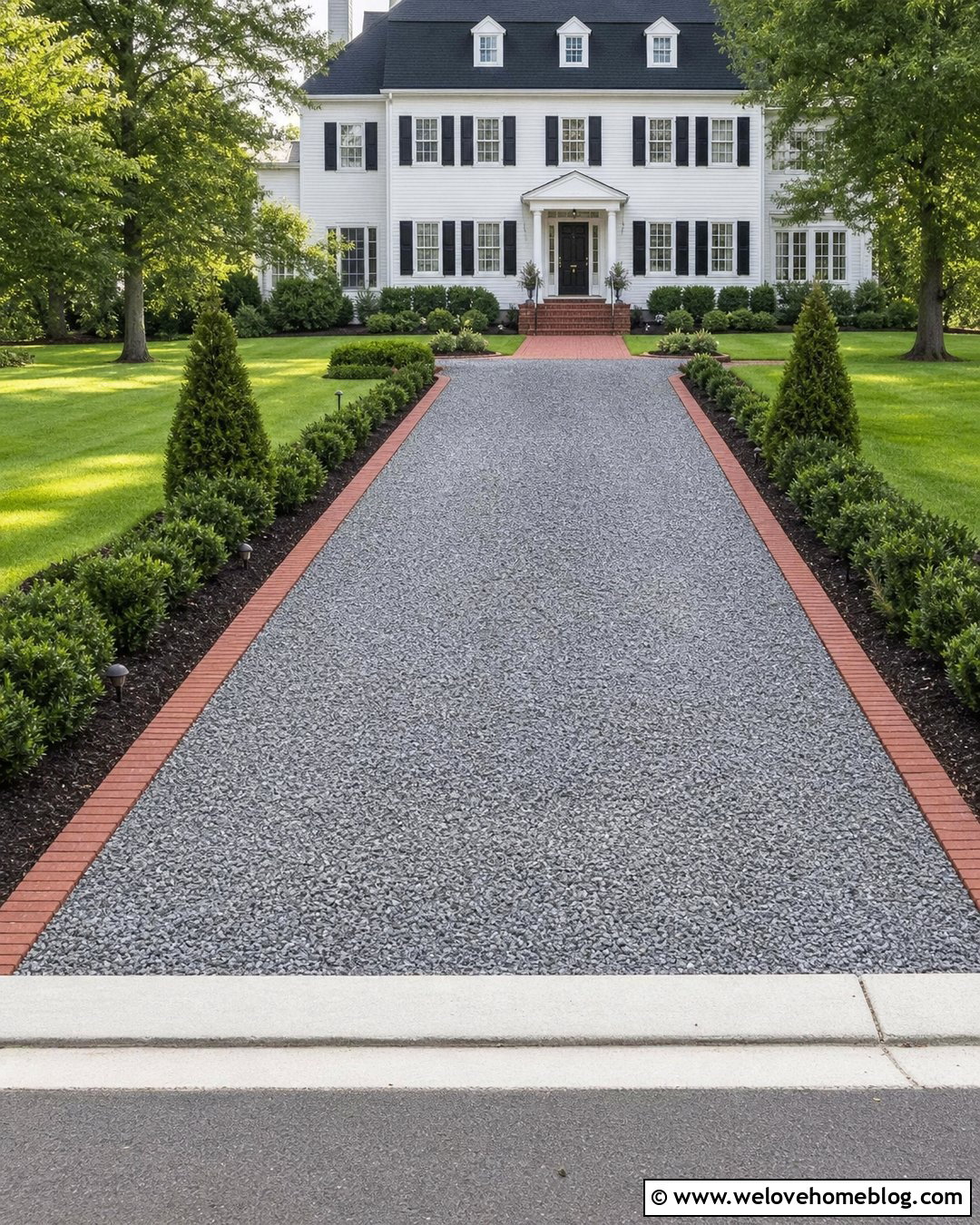
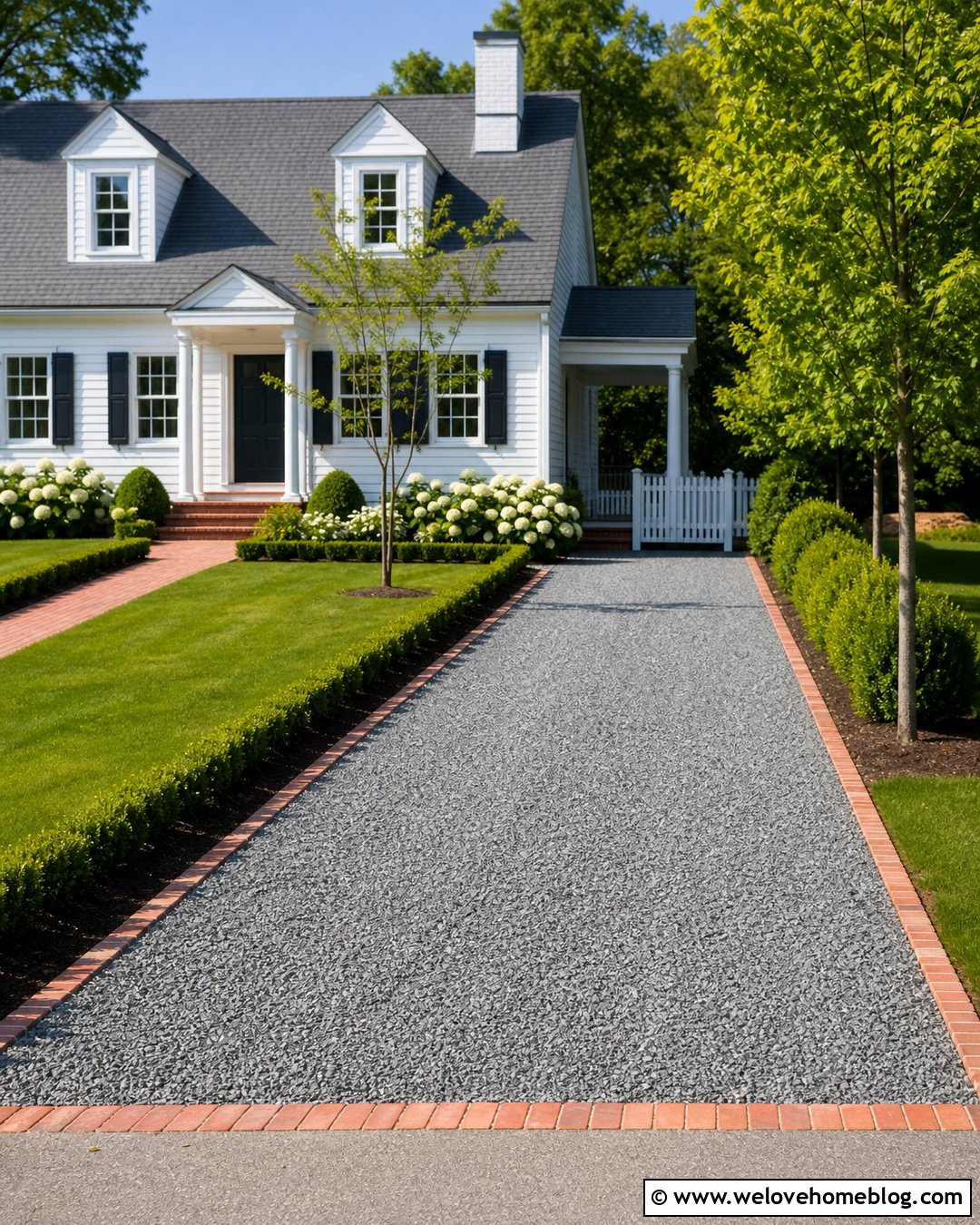
New or leftover red brick can frame a straight gray gravel driveway with a clean, traditional finish. A single soldier course, with bricks positioned side by side, creates a substantial edge without requiring multiple rows. This look complements Colonial houses, red brick facades, and white-painted homes with classic landscaping. Install the border over compacted aggregate and leveling sand, keeping it close to the gravel surface to reduce tripping and tire damage. Add symmetrical lawn panels and simple evergreen foundation beds for an orderly entrance. If the full driveway is too long for the budget, use brick around the apron and parking area, then continue with less expensive hidden edging. Repeating the same brick along the walkway makes the partial installation feel planned rather than unfinished.
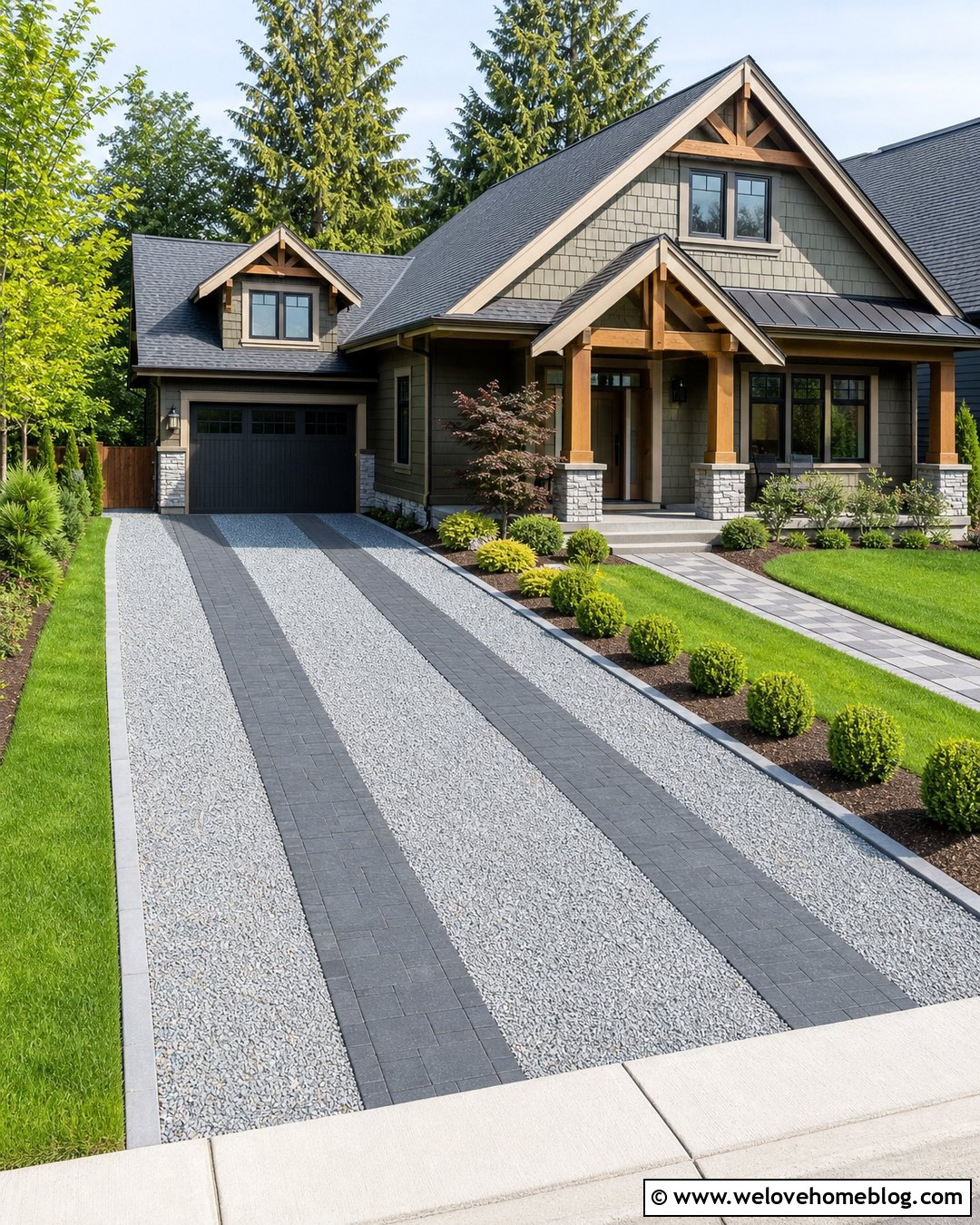
5. Gravel Driveway Edging With Concrete Pavers
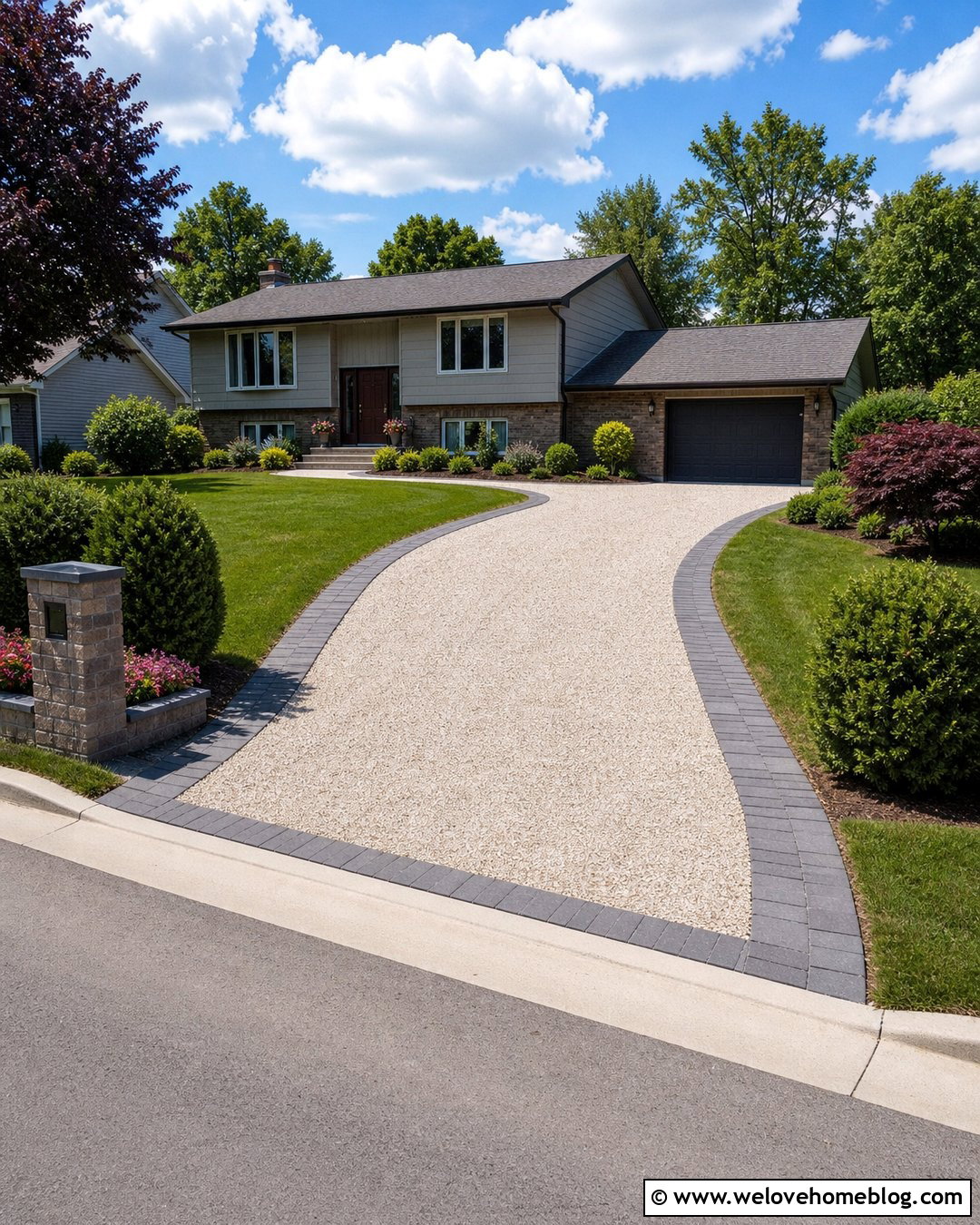
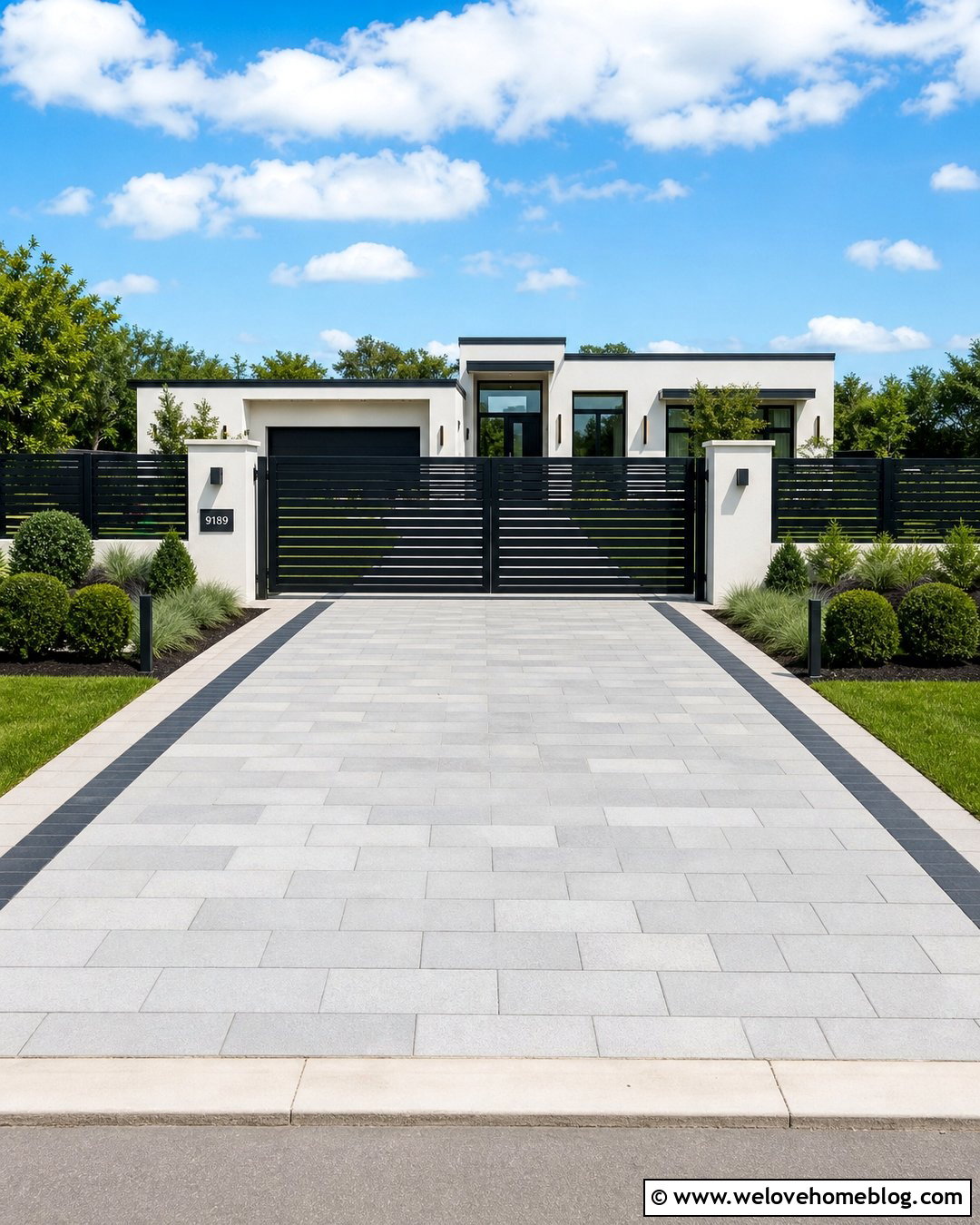
Basic concrete pavers give a light-colored gravel driveway a structured edge at a manageable cost. Choose rectangular units in charcoal, tan, or natural gray, then lay them as a single flat ribbon beside a gently curved drive. The broad surface creates a convenient transition between gravel and lawn, and it can provide room for a mower wheel. This complete design suits suburban homes, split-level houses, and simple contemporary facades. Prepare a stable base so the pavers do not settle independently, especially near the driveway entrance. Use the same units for a small walkway connection or mailbox pad. Finish the surrounding yard with clipped shrubs and an open lawn. Standard shapes are often less expensive and easier to replace than specialty decorative pavers.
6. Gravel Driveway Edging With Leftover Cobblestones
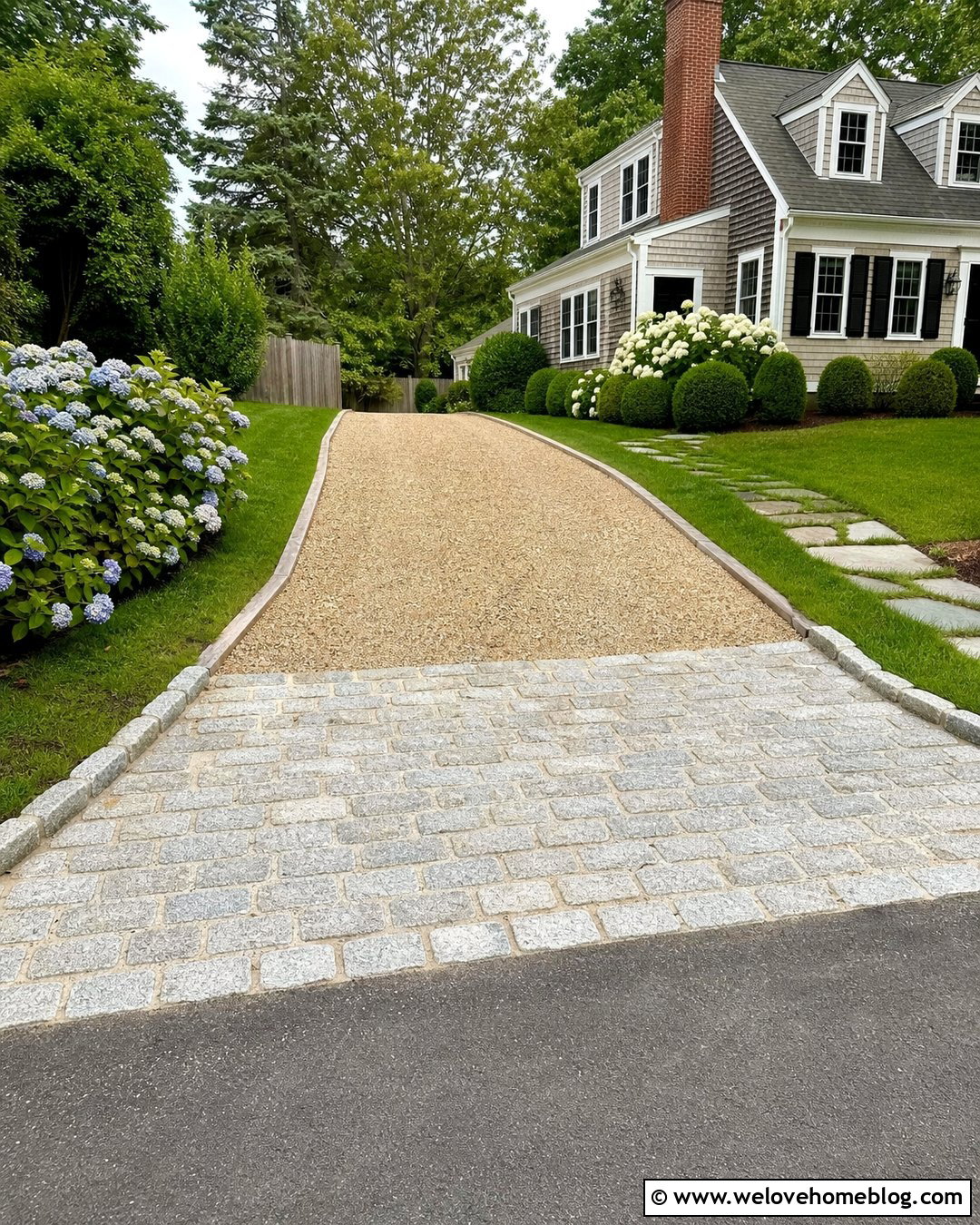
A limited supply of cobblestones can still transform the most visible portion of a gravel driveway. Place salvaged granite cobbles along the street-facing apron of a buff gravel drive, then change to affordable timber or metal edging farther toward the house. This hybrid approach concentrates the premium-looking material where it creates the strongest first impression. Irregular gray stones pair beautifully with a Cape Cod, Tudor, or older farmhouse facade. Set the cobbles on a compacted aggregate base, with enough support on the outside to resist spreading. Continue their natural texture through nearby foundation beds filled with boxwood, hydrangeas, and ground cover. Because cobblestones vary in size, dry-lay the entrance border first and adjust the pattern before completing the installation.
7. Gravel Driveway Edging With Fieldstone
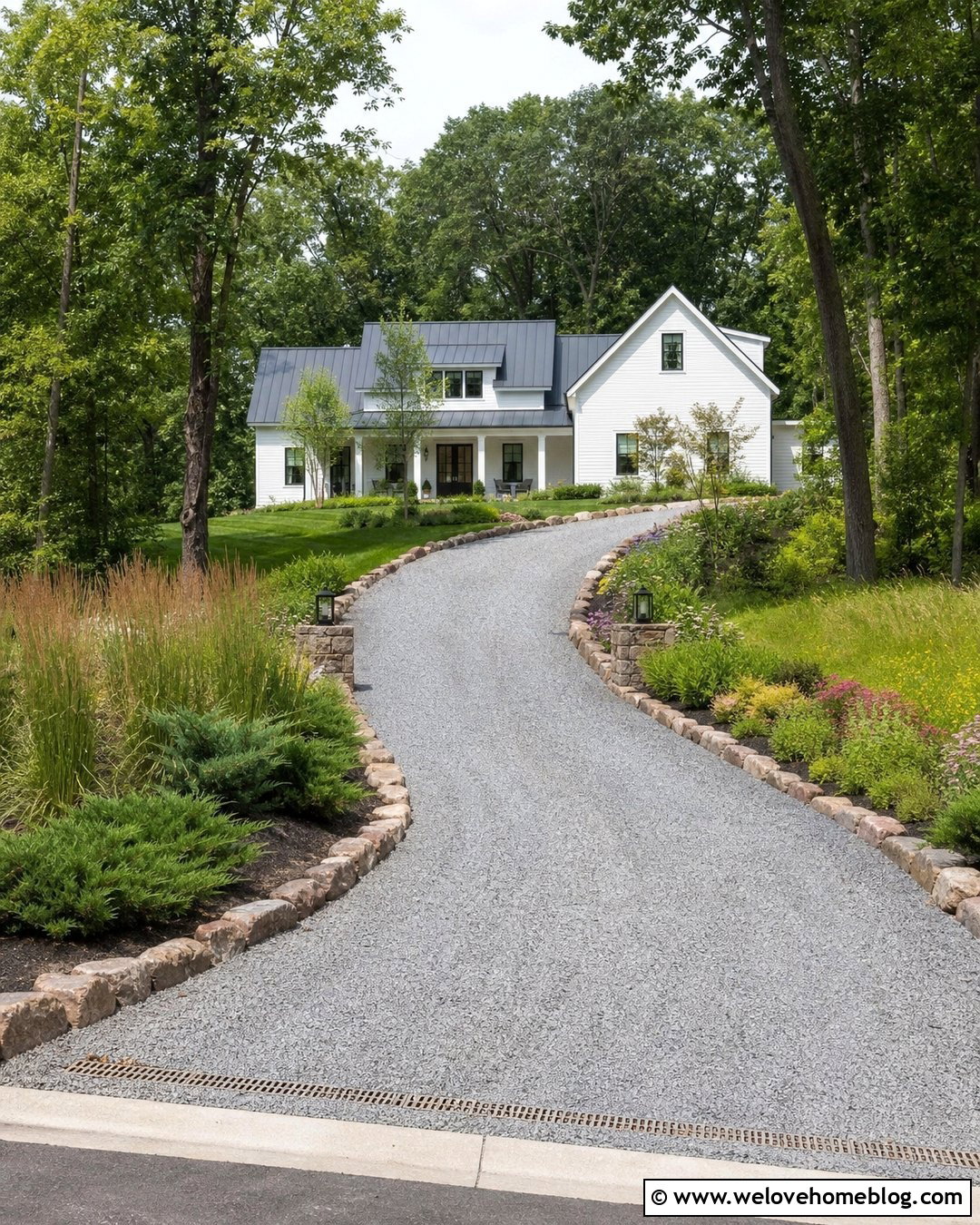
Locally collected or inexpensive fieldstone creates a relaxed border for a country gravel driveway. Select stones with similar thicknesses, even when their shapes and colors vary. Bury the lower portion of each stone beside a wide, curved driveway made from compacted gray gravel. The resulting low edge blends naturally with a wooded lot, rustic ranch, or modern farmhouse. Keep larger rocks near the entrance and parking area, where a more substantial boundary is useful. Smaller stones can define the quieter stretches closer to planting beds. Native grasses, low junipers, and flowering perennials will make the transition feel established. Avoid tall, loose stacks beside vehicle routes. A single stable row is safer, easier to maintain, and much less expensive than building a masonry wall.
8. Gravel Driveway Edging With River Rocks
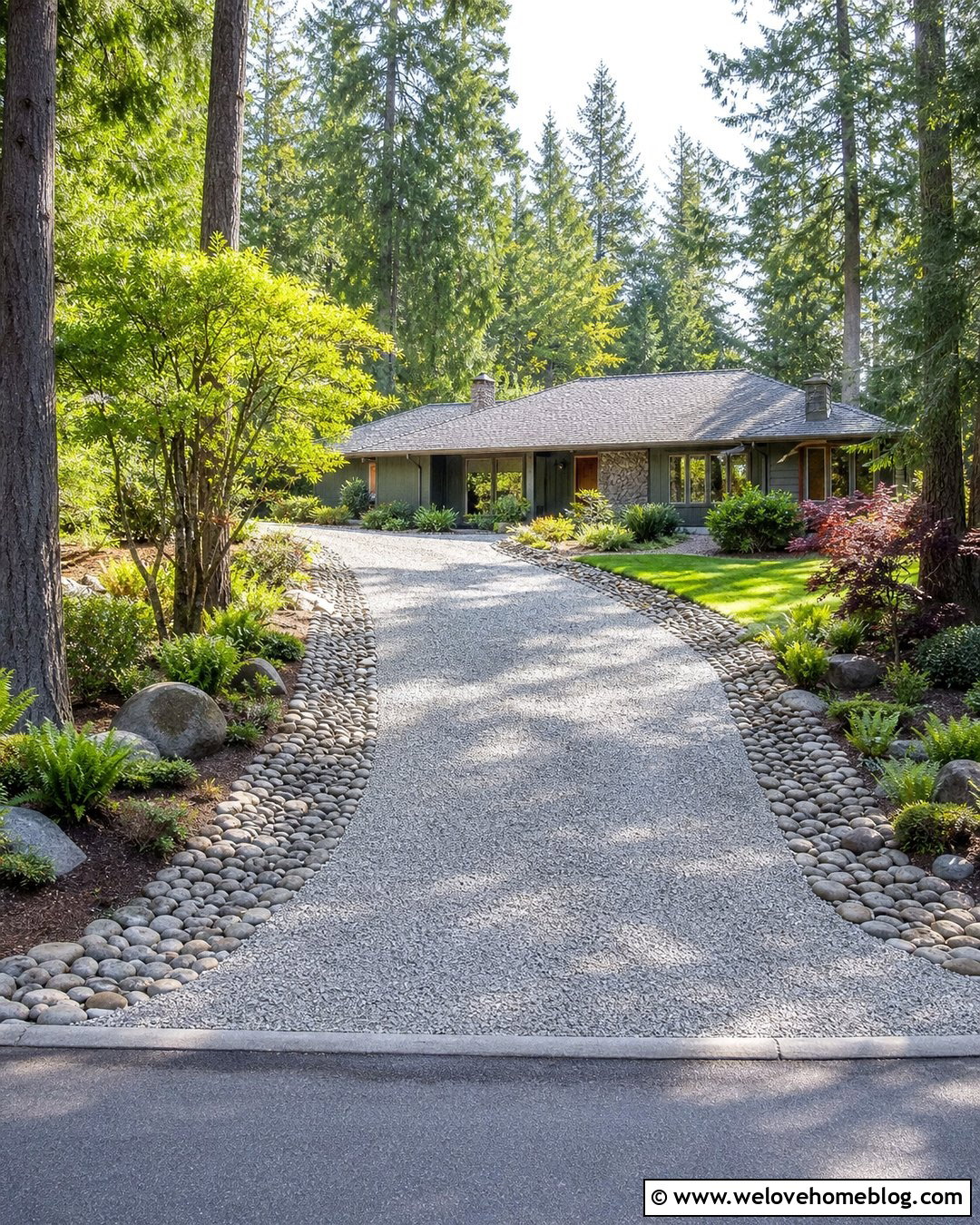
Rounded river rocks can form a decorative drainage border beside a pale crushed-gravel driveway. Instead of balancing individual stones directly against the driving surface, create a shallow trench and fill it with medium river rock in mixed gray and brown tones. Place a discreet rigid restraint between the two types of stone to stop them from blending. This design works well for a sloped driveway leading to a cabin, ranch home, or wooded suburban property. Direct runoff toward a safe outlet rather than allowing the trench to end near the foundation. Ferns, sedges, and moisture-tolerant shrubs can frame the outer edge in suitable climates. The contrasting textures make the driveway look landscaped, while locally sourced bulk stone may keep the project affordable.
9. Gravel Driveway Edging With Steel Strips
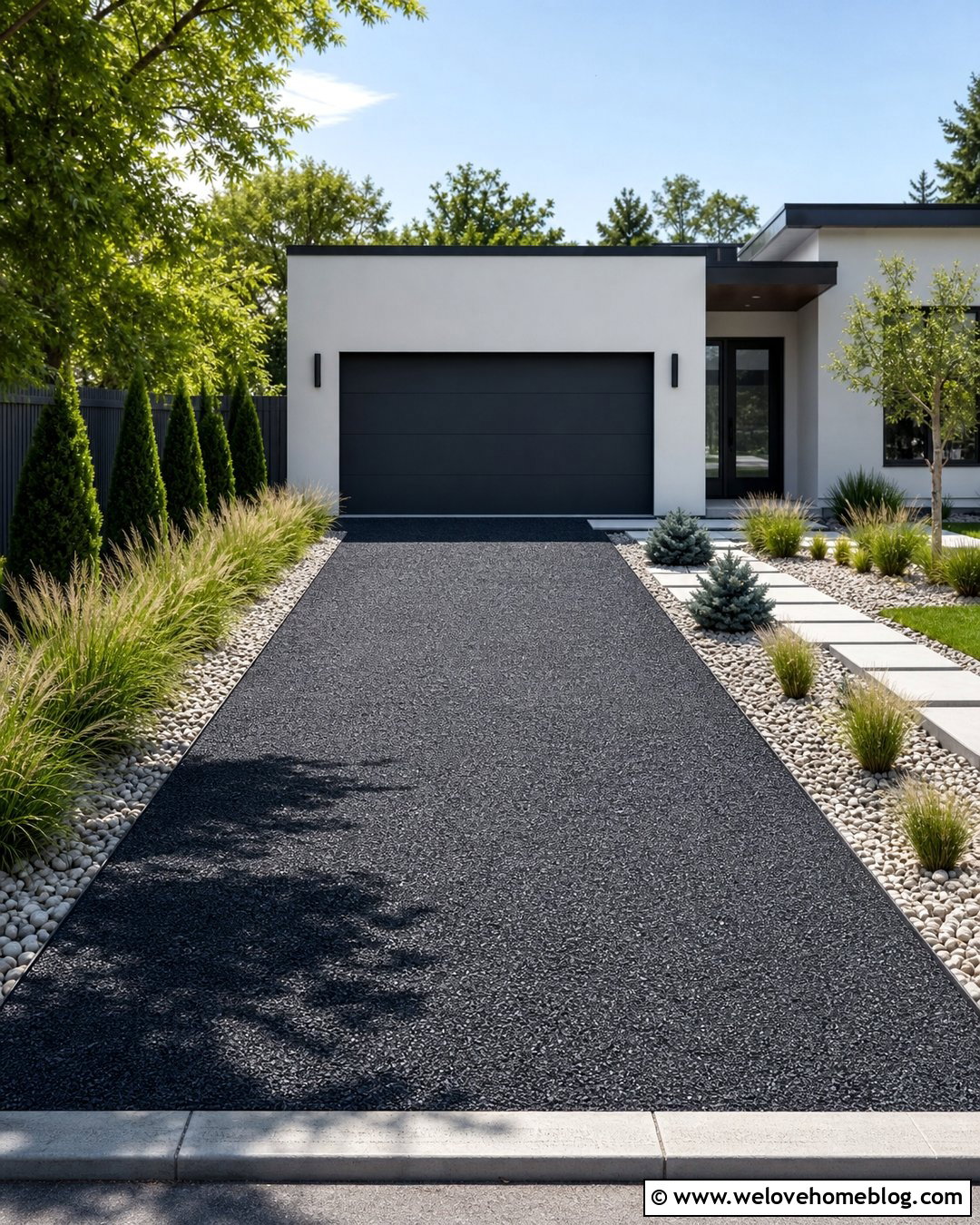
Thin steel edging creates an understated border that allows the gravel and house architecture to remain the main features. Pair dark steel strips with angular charcoal gravel on a straight driveway leading to a modern home. Install the edging deeply enough to remain stable, leaving only a small portion visible above the gravel. Secure it with the recommended stakes, placing connectors and sharp ends away from pedestrian areas. Linear beds of ornamental grasses, compact evergreens, and pale decorative rock can reinforce the modern layout. Steel is particularly helpful where the driveway includes subtle curves that would require many cuts in lumber or masonry. Use a suitable coated or weathering product for local conditions, and confirm that the selected edging is rated for the demands of a driveway boundary.

10. Gravel Driveway Edging With Aluminum Strips
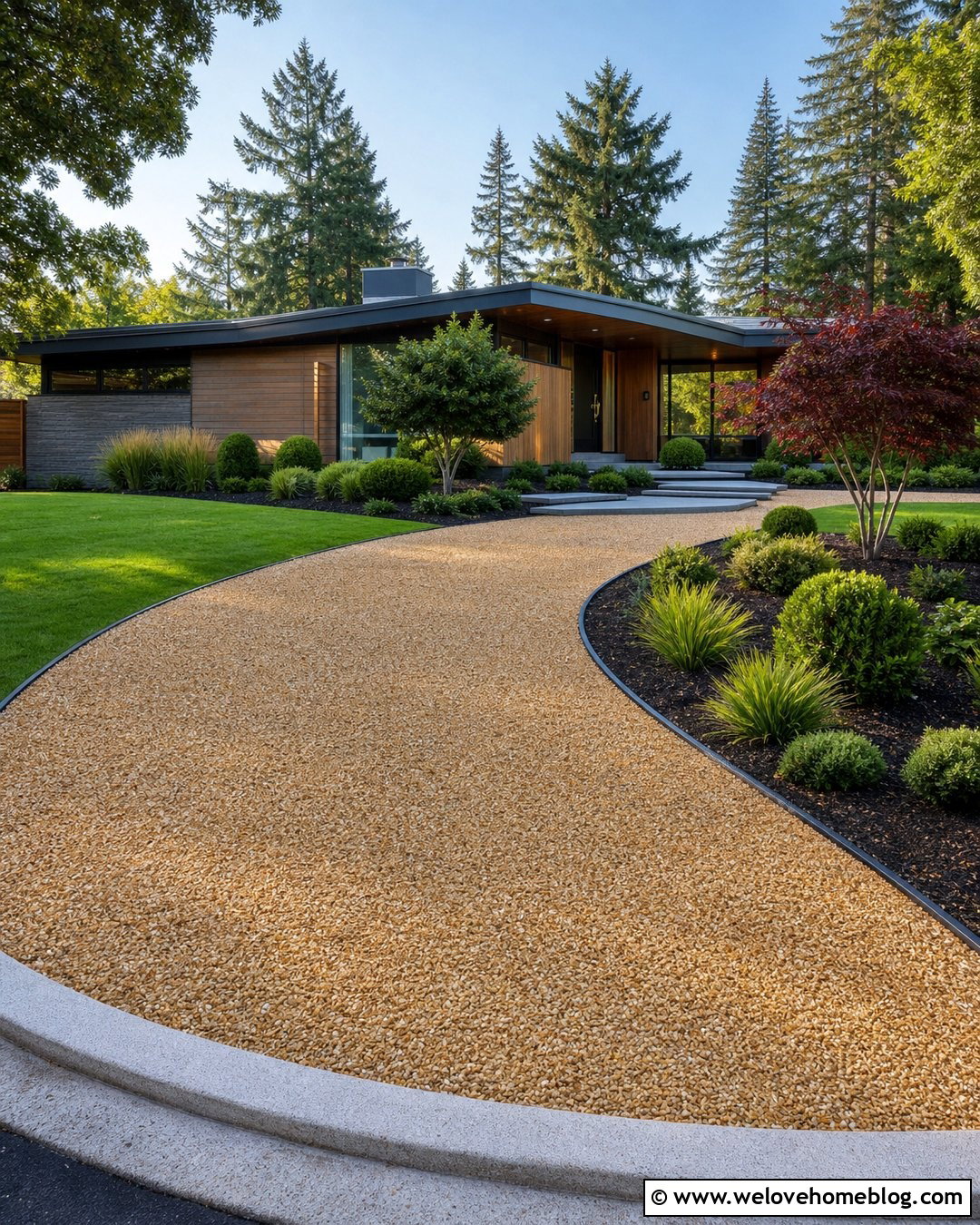
Aluminum landscape edging offers a clean line without the rusty appearance that some homeowners dislike. It works particularly well around a curved pea gravel driveway serving a midcentury or contemporary house. Choose a dark finish so the border visually disappears between the warm gravel and green lawn. Flexible sections can follow broad bends, but tight turns should remain smooth to avoid a wavy result. Secure the edging according to its product instructions and keep it outside normal tire paths. Complete the design with rounded planting beds containing low grasses, sculptural shrubs, and one small ornamental tree. Aluminum is lightweight enough for many DIY installations, reducing labor expenses. A carefully marked curve and evenly graded base will make this economical border appear much more refined.
11. Gravel Driveway Edging With Plastic Landscape Border
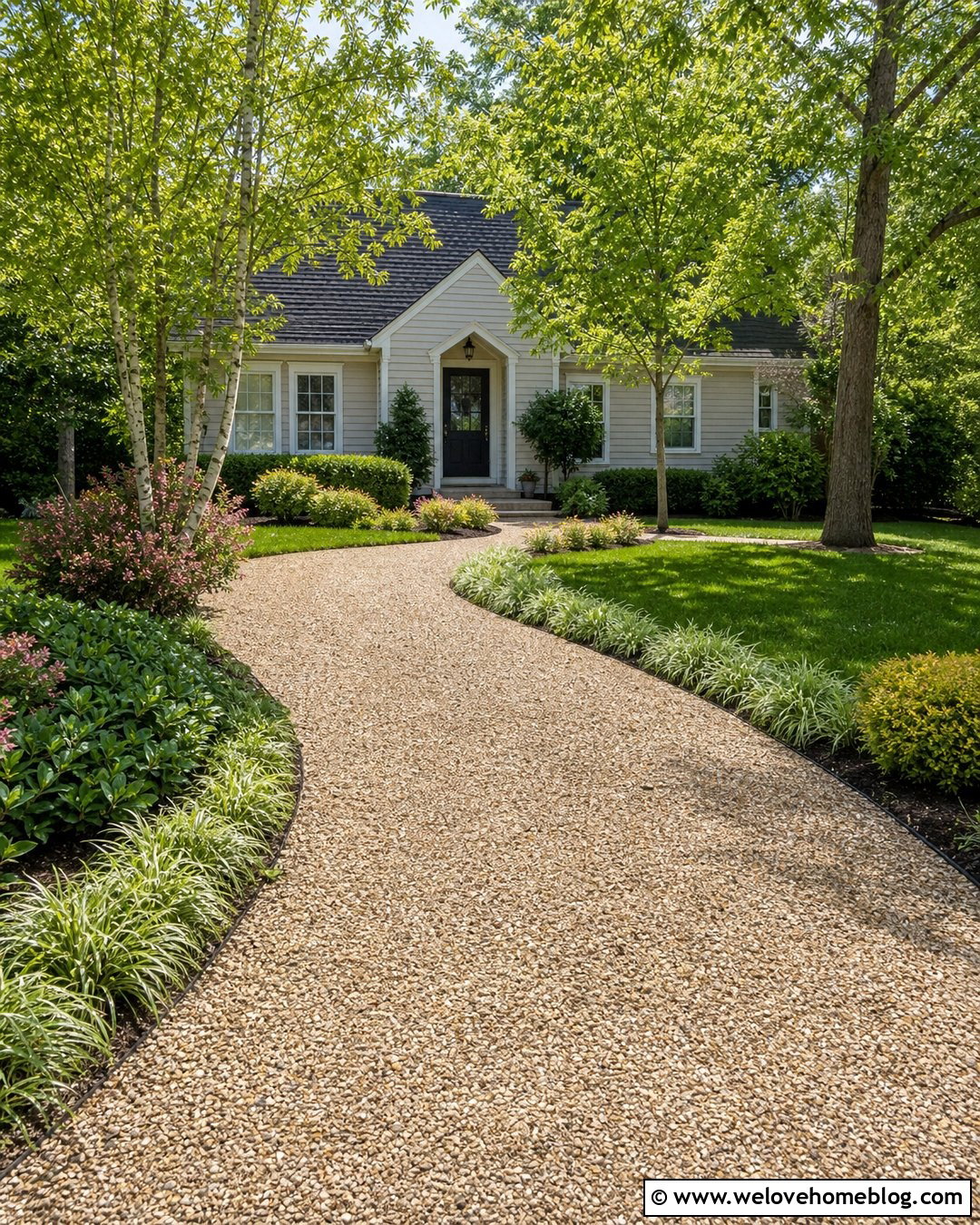
Heavy-duty plastic edging can provide an inexpensive, nearly hidden boundary for a lightly used residential gravel driveway. Pair black plastic restraint with tan pea gravel and a simple curved approach to a small suburban house. The edging should be installed low, with the rounded top barely visible above the finished surface. Use plenty of compatible stakes and avoid lightweight products designed only for soft garden mulch. A narrow planting bed outside the border can conceal the plastic while adding low sedges, dwarf spirea, or spreading ground cover. Keep plant growth trimmed back so drivers can see the driveway edge. This option is most suitable away from frequent tire contact. Proper soil preparation matters because poorly supported plastic may lift, bow, or become visible over time.
12. Gravel Driveway Edging With Recycled Rubber
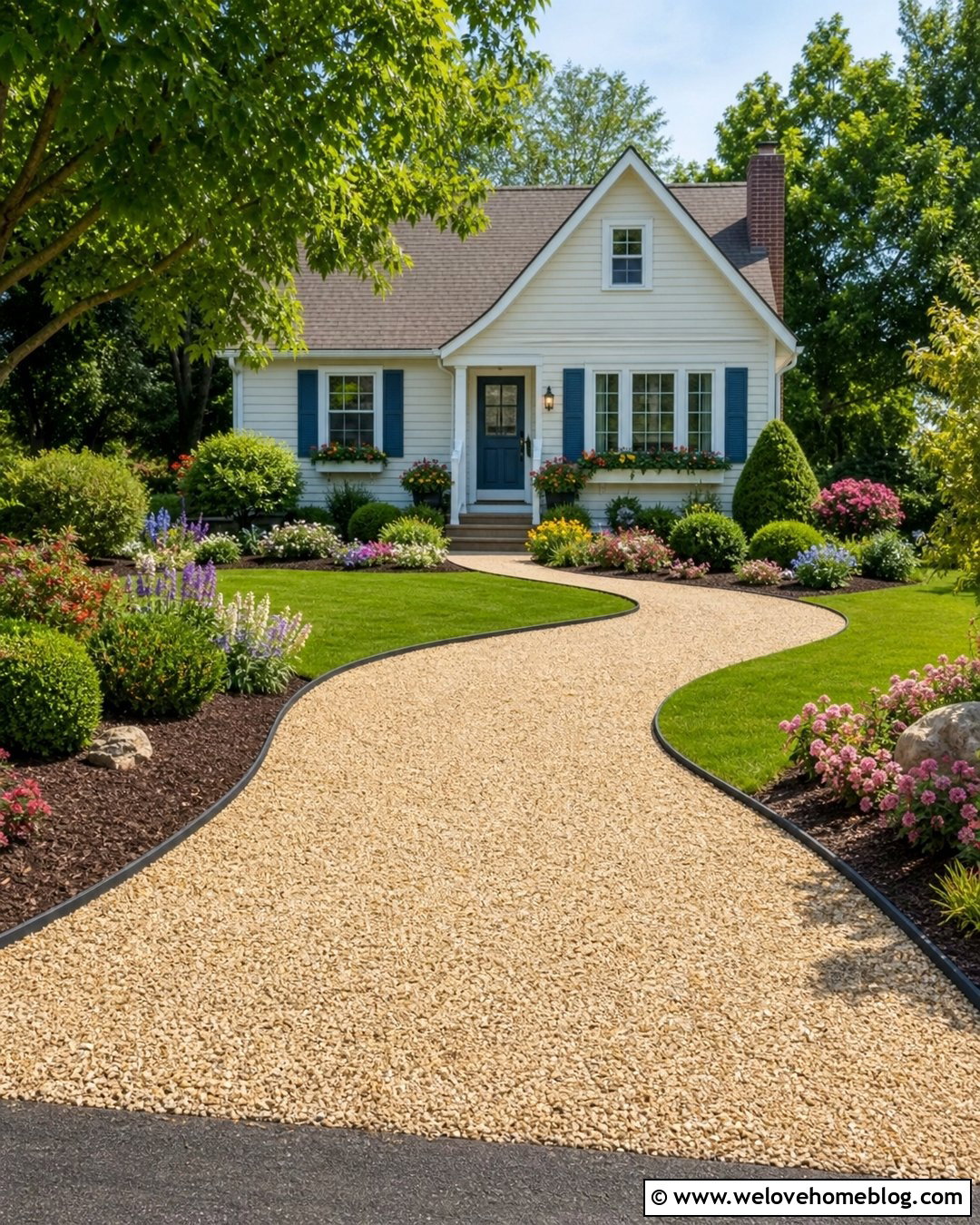
Flexible recycled-rubber edging creates a soft-looking boundary around a compact gravel driveway with sweeping curves. Its bendable form suits small cottage lots where rigid boards would require numerous cuts and joints. Use a dark rubber border beside warm golden gravel, then add mulch beds with flowering perennials and rounded shrubs. The dark edge recedes visually and helps separate loose stone from soil. Choose a sturdy product intended for outdoor landscape use rather than a thin decorative roll. Install the stakes on the planting side and keep the edging below areas where tires regularly turn. A matching curved walkway can make the entire front yard feel coordinated. Rubber edging is especially useful when easy handling and a straightforward DIY installation are more important than a formal masonry appearance.
13. Gravel Driveway Edging With Natural Logs
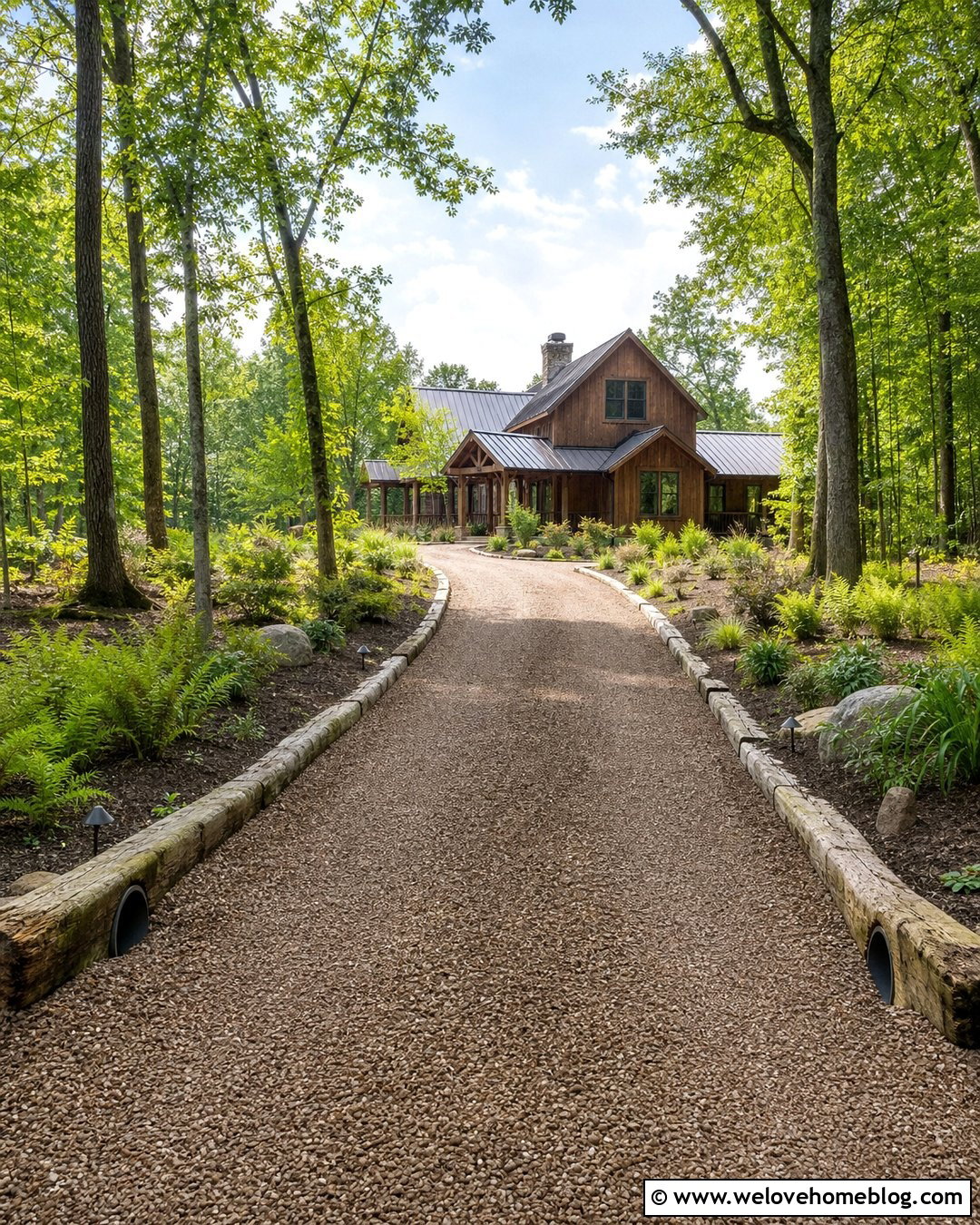
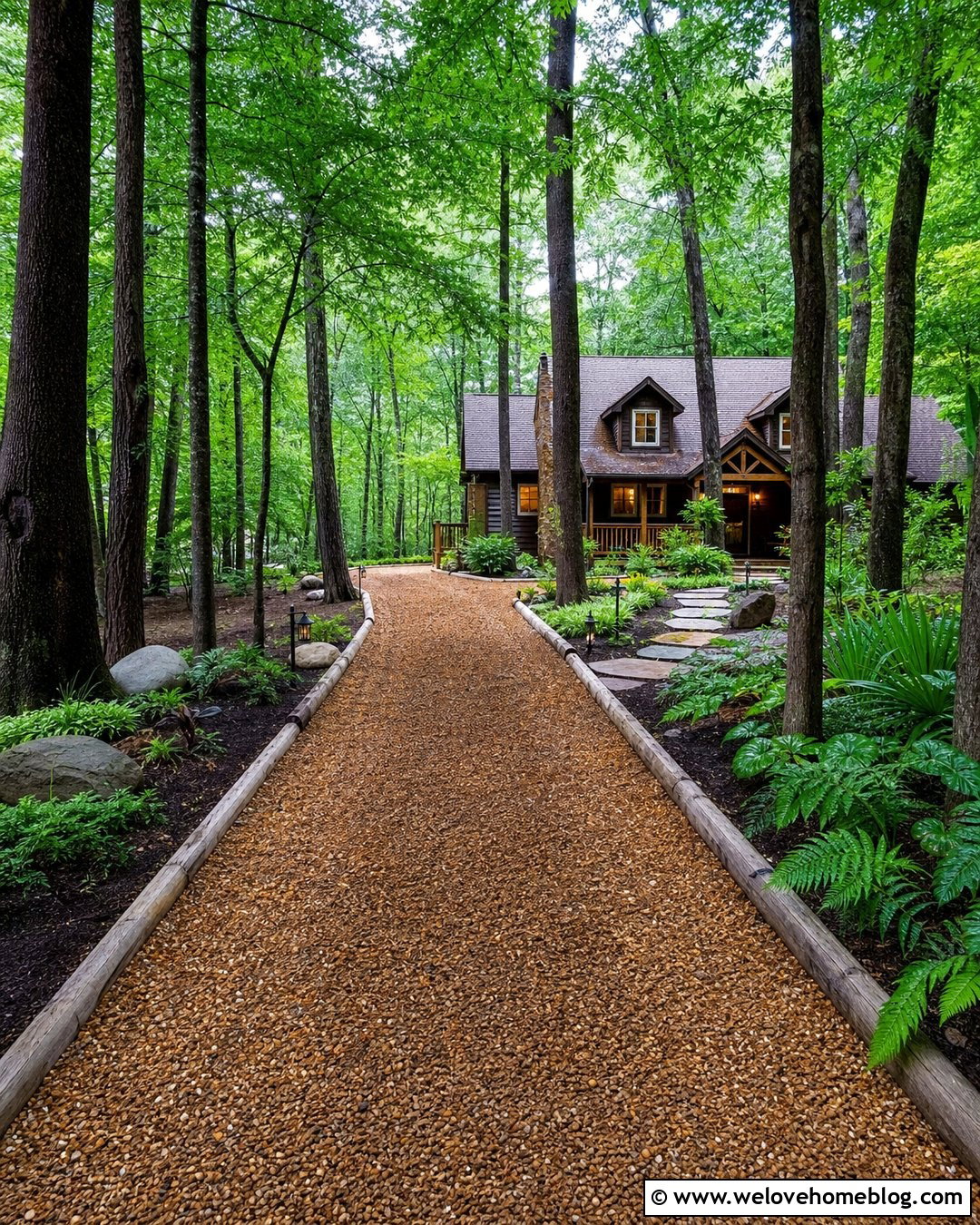
Straight, naturally fallen logs can edge a long rural driveway for very little cost when suitable wood is available on the property. Place similar-diameter logs along a compacted brown gravel surface approaching a cabin, barn-style home, or woodland farmhouse. Remove unstable branches and position the logs in shallow trenches so they cannot roll. Stakes driven on the outer side can provide additional support without becoming visible from the driveway. Ferns, native grasses, and informal shrubs will connect the rustic border to the surrounding landscape. Leave intentional openings where water needs to drain away. This design should look simple and natural rather than perfectly uniform. Expect untreated wood to decompose eventually, so use it where easy replacement is acceptable and inspect it for softness or movement.
14. Gravel Driveway Edging With Pallet Boards
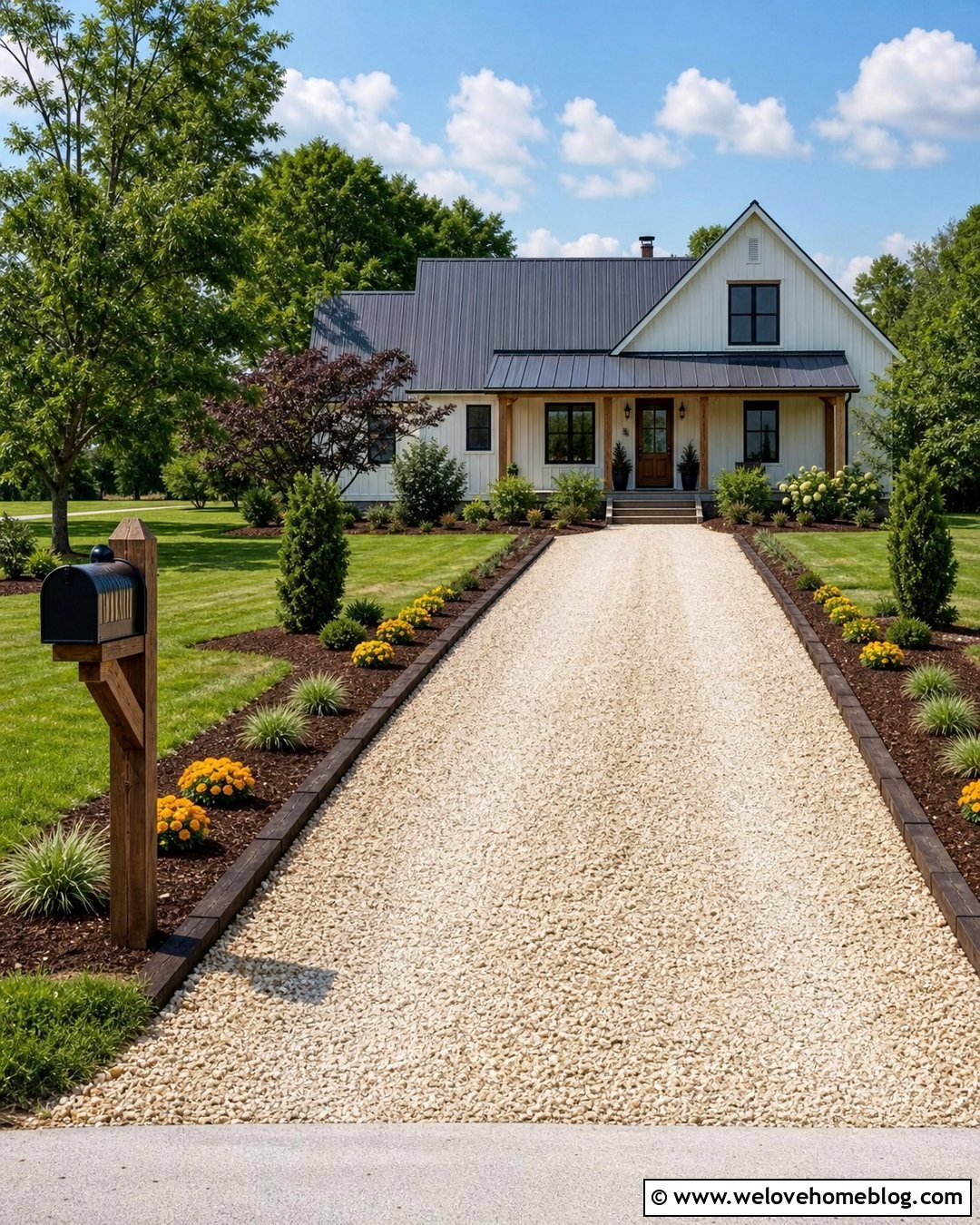
Sound pallet boards can be repurposed into low-cost edging for a lightly traveled gravel driveway, but careful selection is essential. Use only clean, identifiable wood that has not carried unknown chemicals or developed deep cracks. Cut the boards into consistent lengths, apply an exterior finish, and secure them beside a straight cream-gravel drive leading to a modest farmhouse. Keep the timber border outside tire-turning zones, where thin boards could be damaged. A narrow mulched bed with marigolds, dwarf grasses, and compact shrubs can hide stakes and soften the salvaged material. Repeat the wood tone in a simple mailbox post or walkway edge. This project is best viewed as replaceable DIY edging rather than a permanent structural border, making it suitable for extremely limited budgets.

15. Gravel Driveway Edging With Concrete Blocks
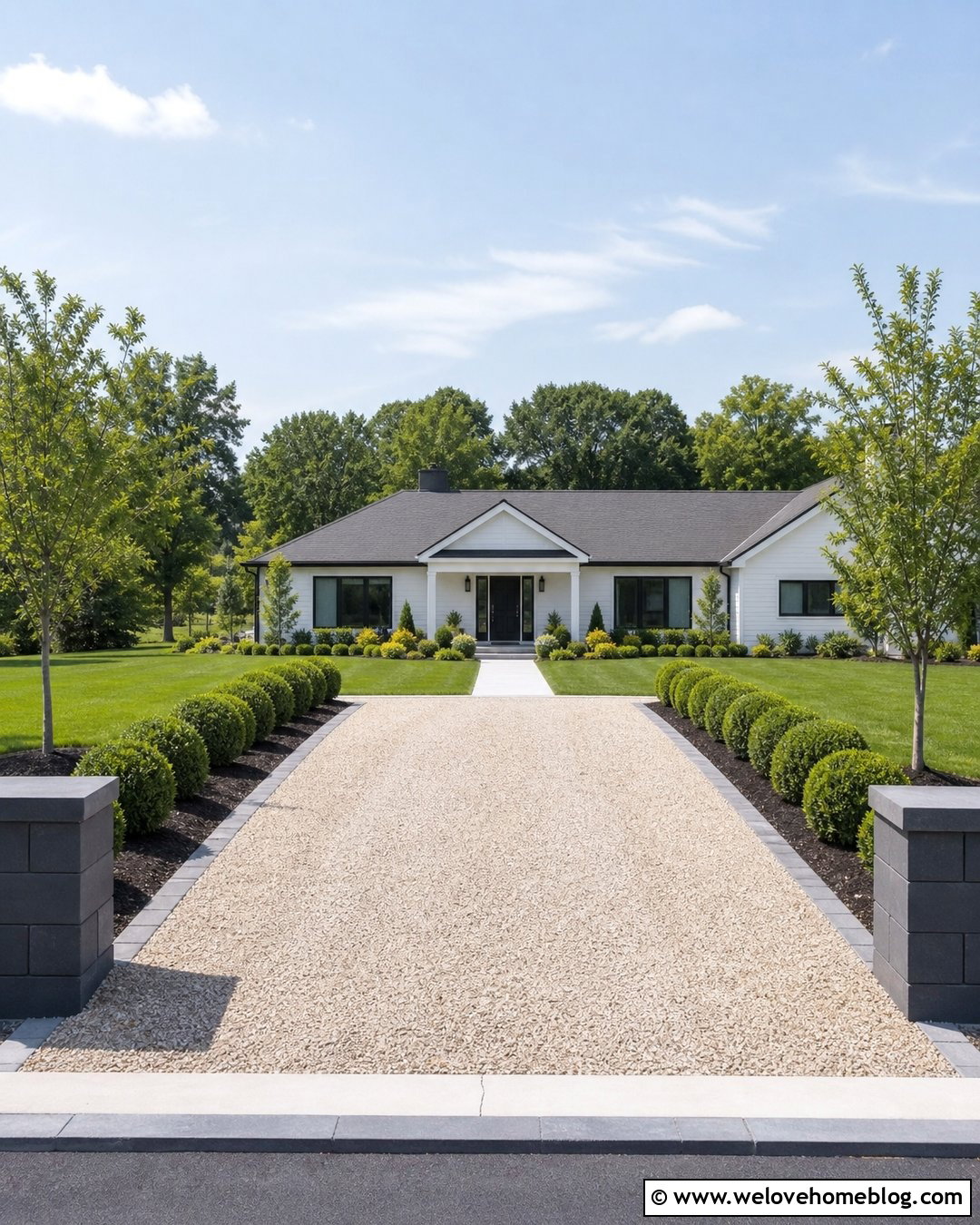
Standard concrete landscape blocks can create a durable edge around a broad gray gravel driveway. Select low rectangular blocks rather than tall wall units, and install them in one level row on a compacted base. Their simple form complements ranch houses, contemporary homes, and practical suburban landscapes. Charcoal blocks provide contrast with pale gravel, while natural gray blocks create a quieter transition. At the street, widen the block border slightly to emphasize the entrance and protect vulnerable corners. Continue with an open lawn, low evergreen beds, and a direct concrete walkway to the front door. Buying common block sizes or using surplus material can reduce costs. Keep the upper surfaces low and even so the border does not become an obstacle for car doors, pedestrians, or maintenance equipment.
16. Gravel Driveway Edging With Cinder Blocks
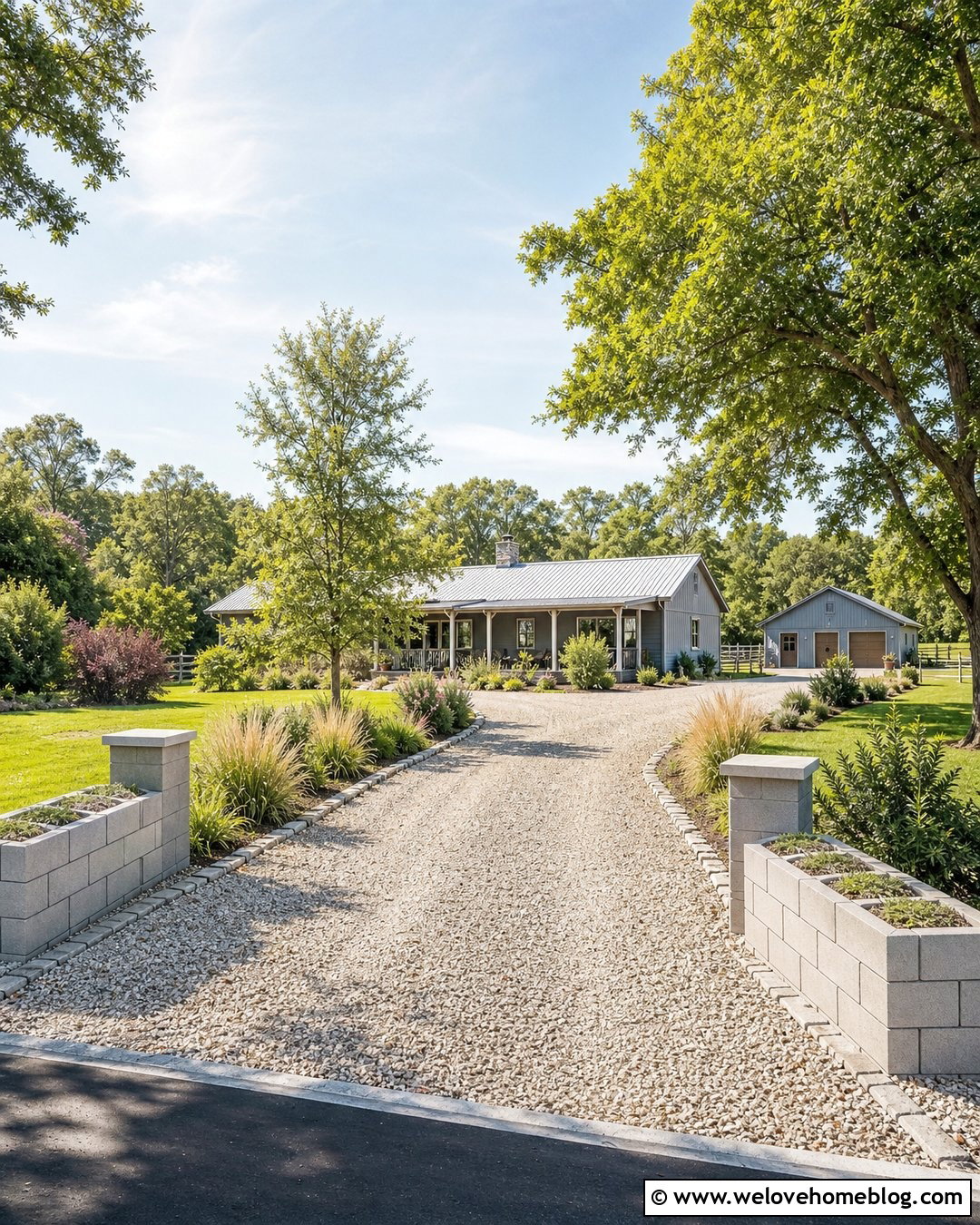
Cinder or concrete masonry blocks can become functional driveway edging when installed thoughtfully outside the main wheel path. Set a single row beside a wide crushed-limestone driveway serving a casual ranch or homestead. Turn the open cells upward along planting sections, then fill them with gravel or low, drought-tolerant ground cover. Near the entrance and parking area, use solid caps to create a tidier and more stable appearance. Partially bury the blocks so their scale does not overwhelm the driveway. Surrounding beds of ornamental grass, creeping thyme, and small shrubs can soften the industrial material. This approach works best where inexpensive or leftover blocks are readily available. Avoid using cracked units or building an unsupported raised edge that could shift when contacted by a vehicle.
17. Gravel Driveway Edging With A Concrete Curb
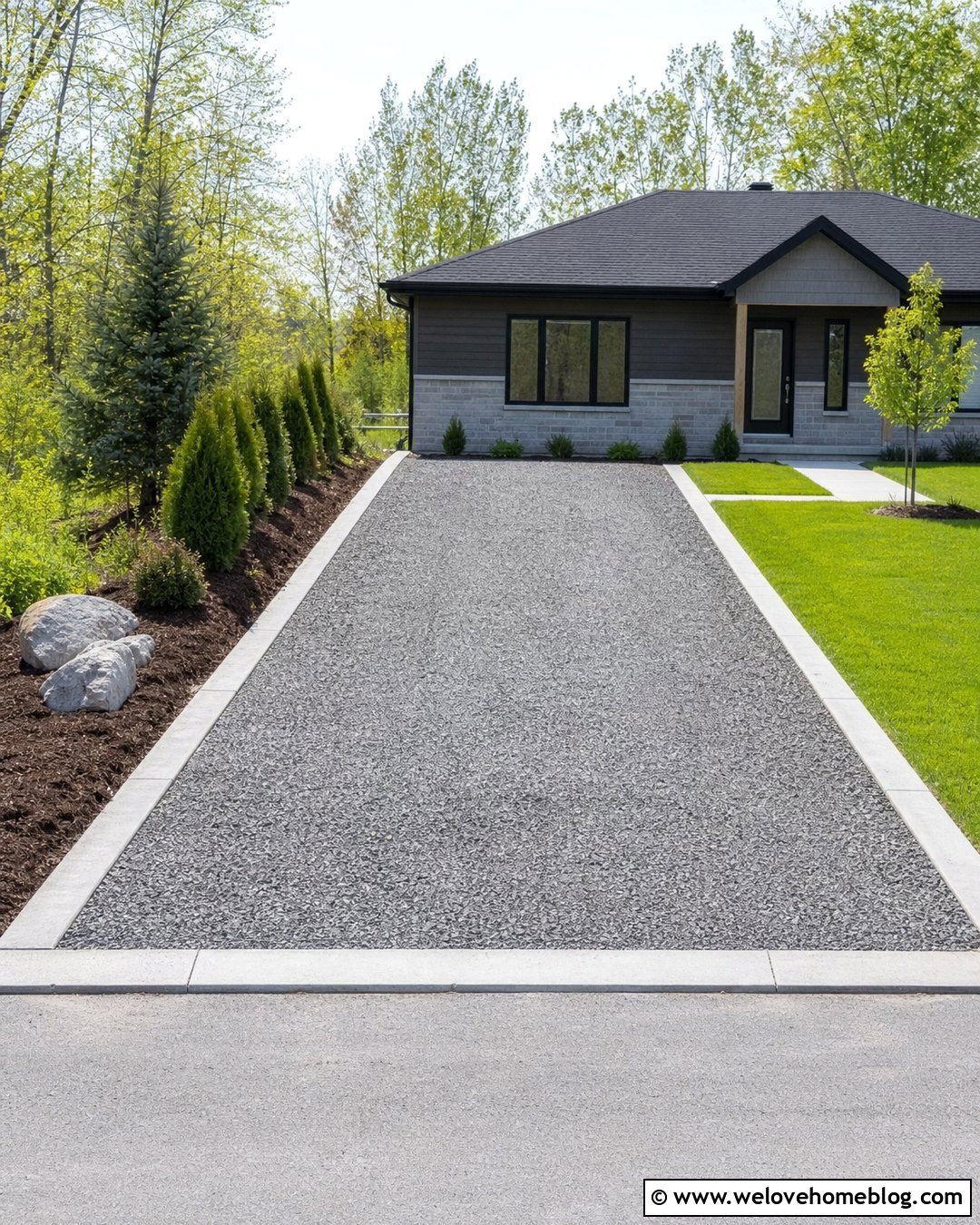
A narrow DIY concrete curb can deliver a permanent-looking edge without covering the entire driveway in concrete. Frame a shallow border along a straight crushed-granite driveway, then pour the curb in manageable sections. A natural gray finish suits a clean bungalow or contemporary ranch, while a lightly tinted finish can coordinate with warmer gravel. Keep the curb low and use control joints to organize the long run. The surrounding landscape can remain simple, with lawn on one side and a mulched shrub bed on the other. This border is less forgiving than flexible edging, so careful grading and formwork are important. Concrete may be economical when materials and tools are already available, but complicated curves or extensive preparation can make other DIY options more practical.
18. Gravel Driveway Edging With Contrasting Gravel
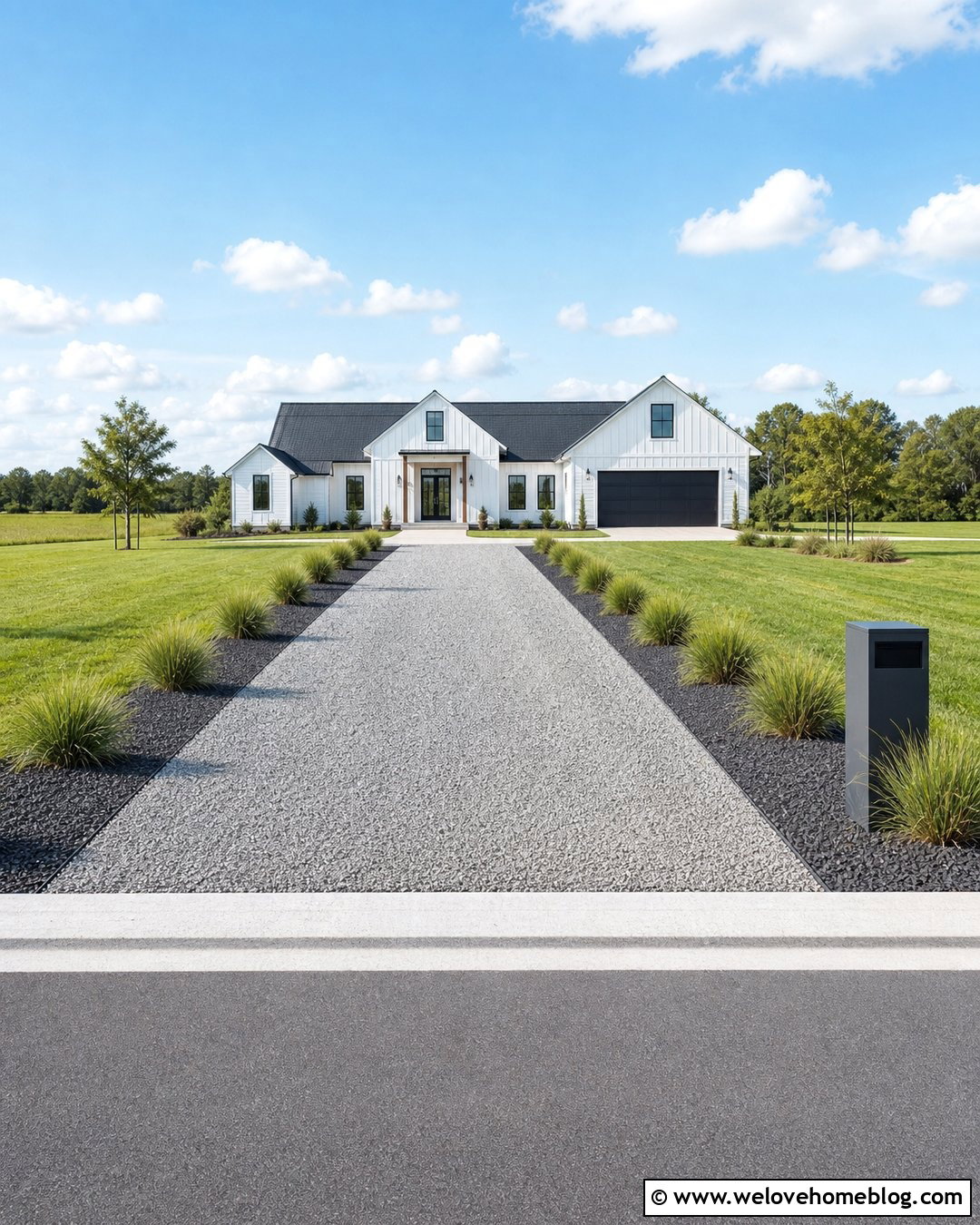
A contrasting gravel band can visually edge a driveway while keeping the entire design stone-based and affordable. Frame a light gray crushed-stone driveway with a narrow strip of dark charcoal gravel, using concealed edging between the colors. This combination looks especially sharp along a straight drive leading to a modern farmhouse or minimalist home. Compact both materials separately so the band remains defined and does not become a loose decorative strip. Outside the dark gravel, use open lawn or a low planting bed with evenly spaced grasses. Continue the charcoal stone around the mailbox or front walkway for visual consistency. This design is useful when small quantities of decorative gravel are available, because the premium material is concentrated in a narrow border rather than spread across the full driveway.
19. Gravel Driveway Edging With A Grass Strip
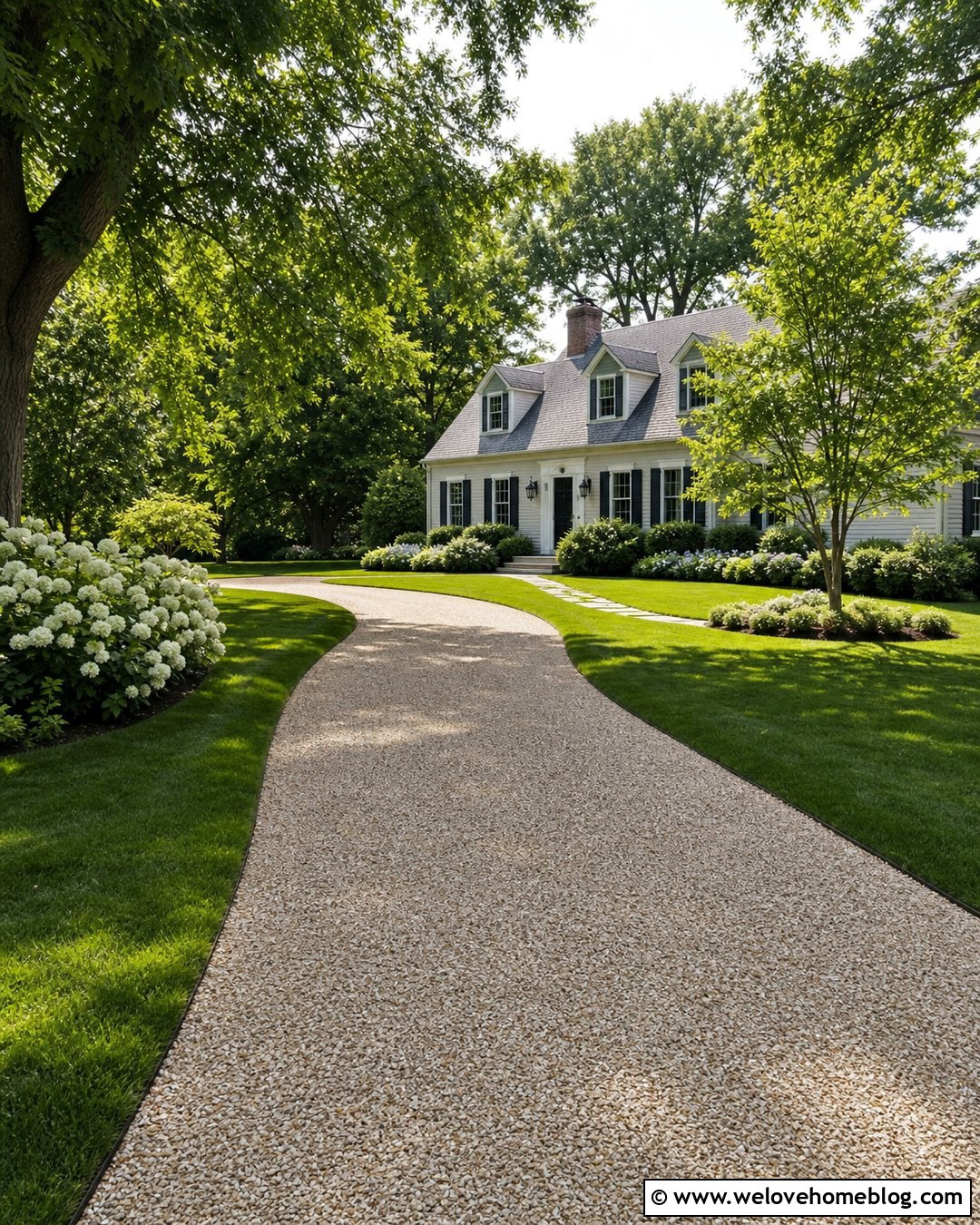
A clean grass strip can give a gravel driveway a soft, inexpensive edge when regular maintenance is realistic. Use compacted beige gravel for a gently curving driveway through a generous front lawn. Cut a deep, crisp line between the gravel and turf, then keep the grass slightly higher than the loose surface to discourage stones from spreading. A concealed restraint can add support in areas where the edge repeatedly fails. This relaxed design works beautifully with Cape Cod, cottage, and traditional suburban houses. Space small trees or flowering shrubs beyond the grass strip instead of crowding the driveway. The look depends on consistent trimming, occasional re-cutting, and prompt removal of scattered gravel before mowing. It is affordable upfront but requires more hands-on care than a rigid border.
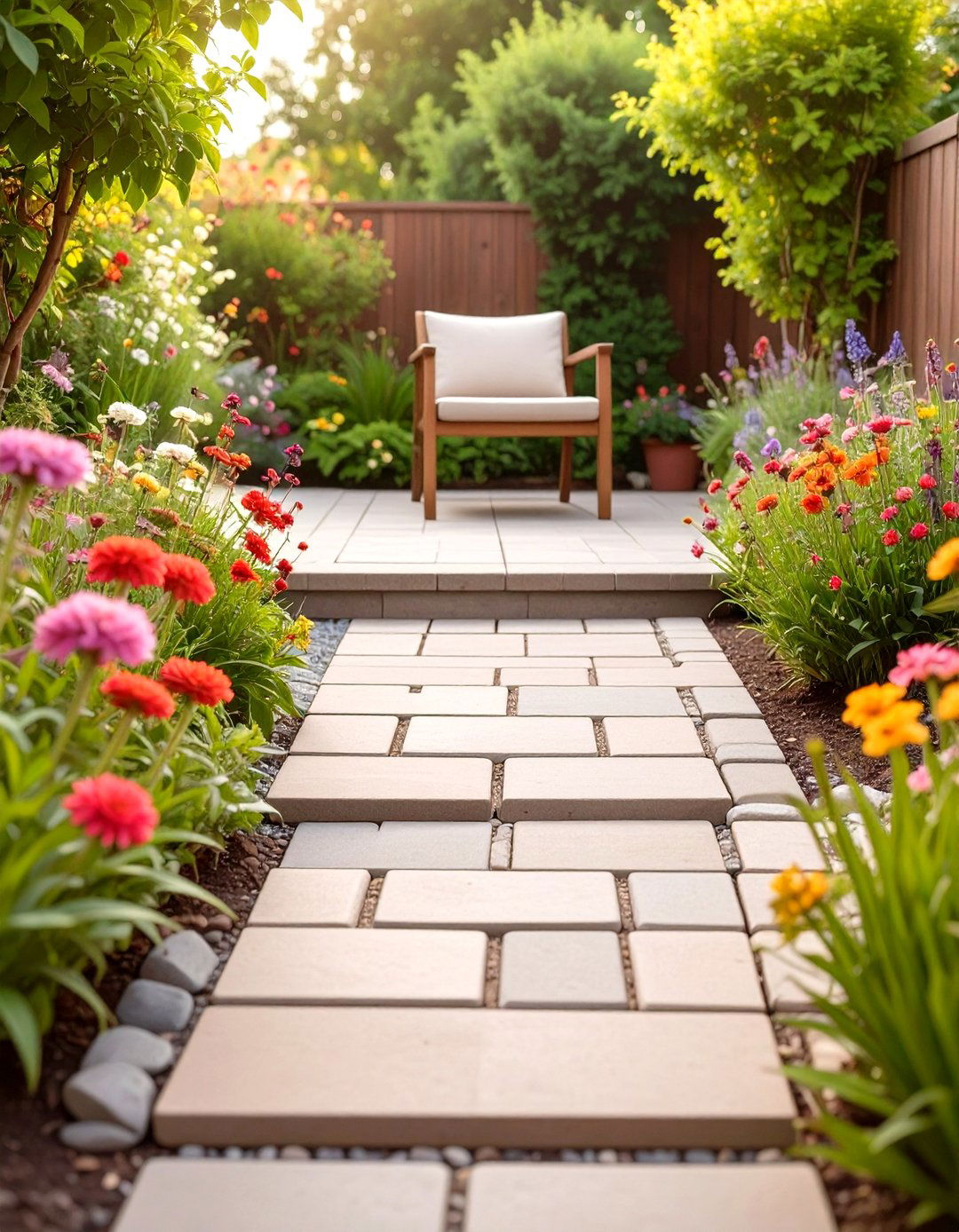
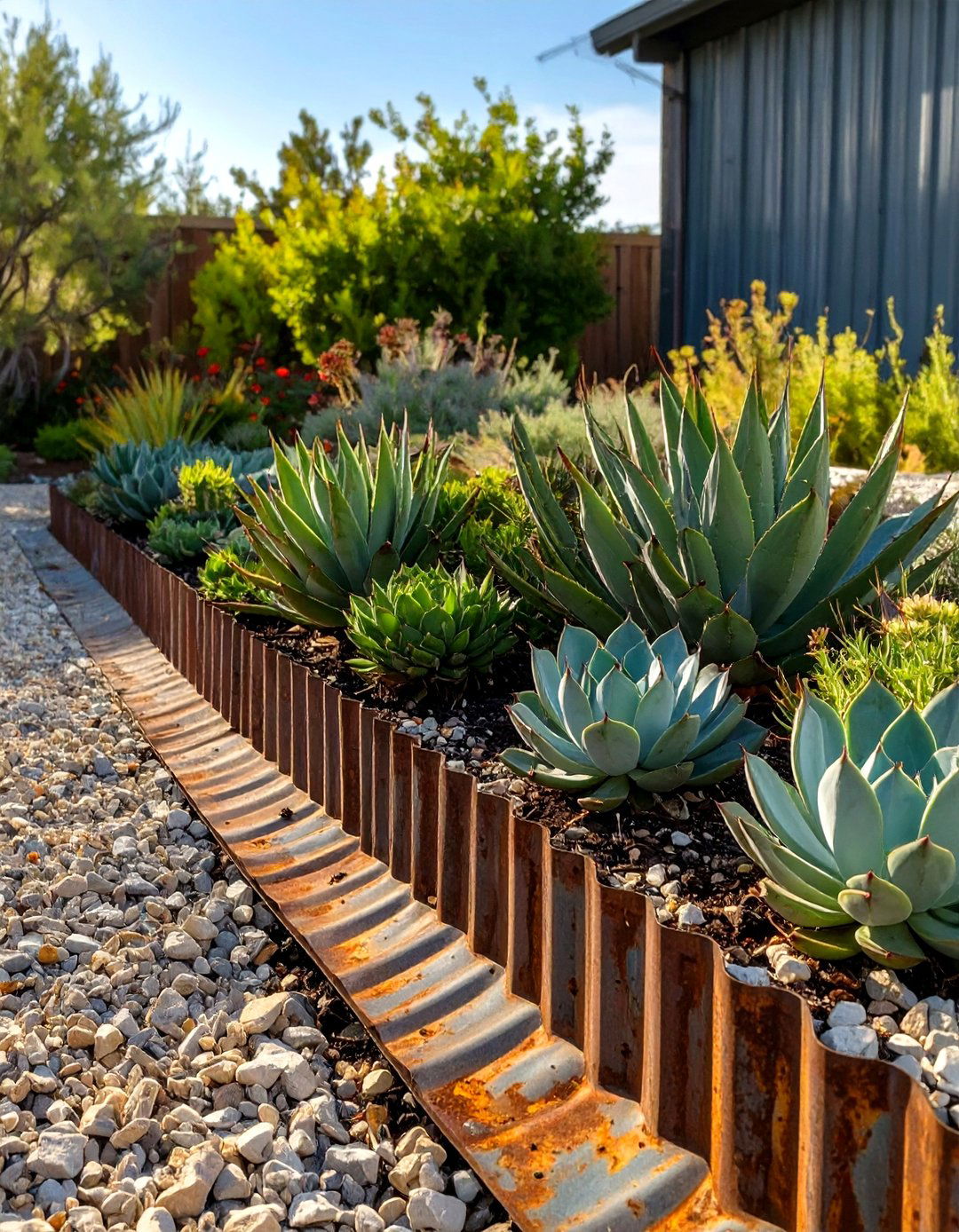
20. Gravel Driveway Edging With A Mulch Bed
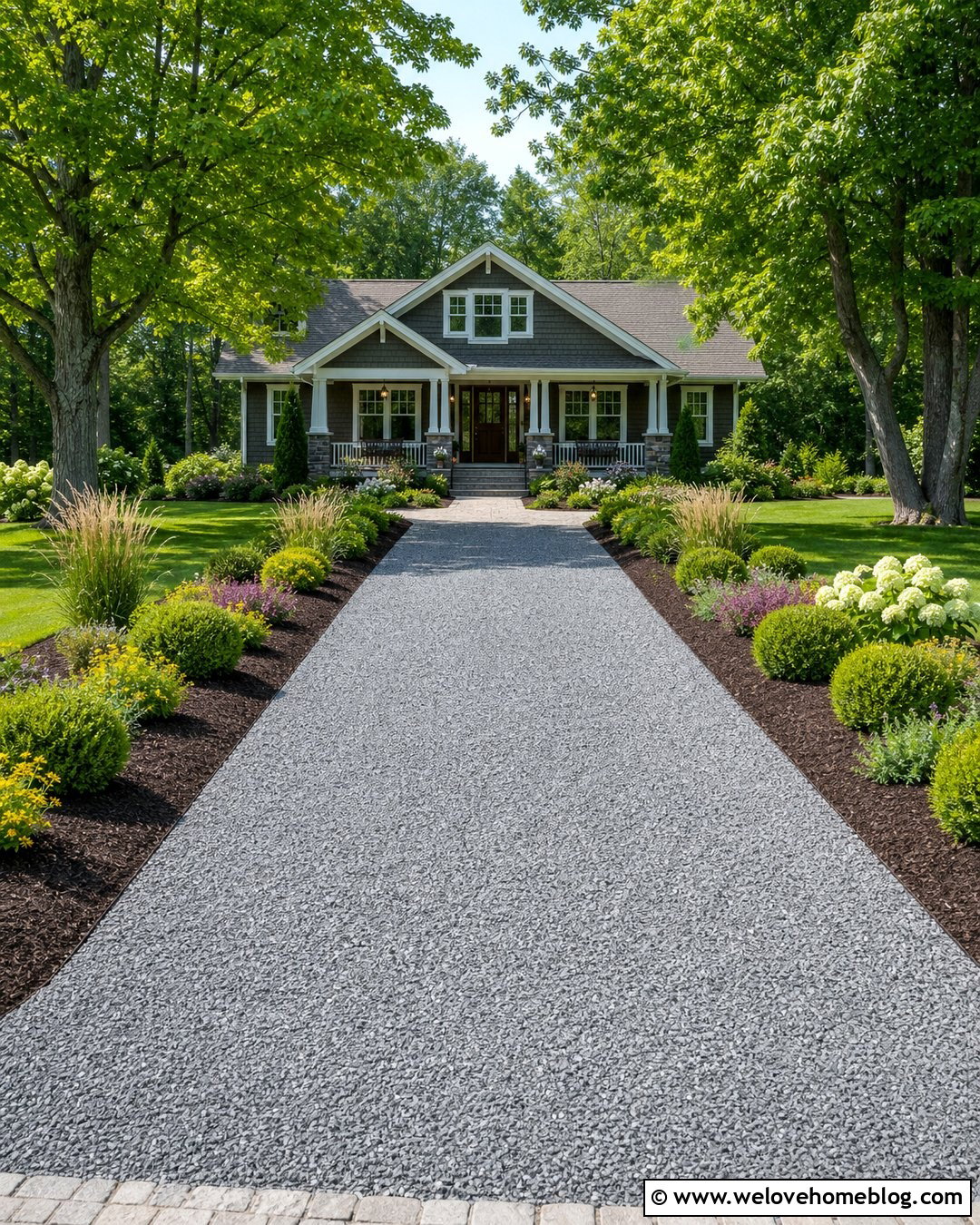
A mulched planting bed can disguise inexpensive edging while creating a complete landscaped driveway. Run a hidden plastic or metal restraint beside a straight gray gravel drive, then install a three-foot-wide mulch bed outside it. Use sweeping bed lines and repeat a limited selection of low shrubs, ornamental grasses, and flowering perennials. The combination suits Craftsman homes and suburban properties where the driveway borders an unattractive side yard. Choose brown mulch to warm the gray stone or dark mulch for stronger contrast. Keep plant foliage clear of mirrors and car doors, especially near parking spaces. The concealed restraint performs the containment work, while the planting bed creates visual depth. Buying mulch in bulk and dividing existing landscape plants can help control the project cost.
21. Gravel Driveway Edging With A Low Hedge
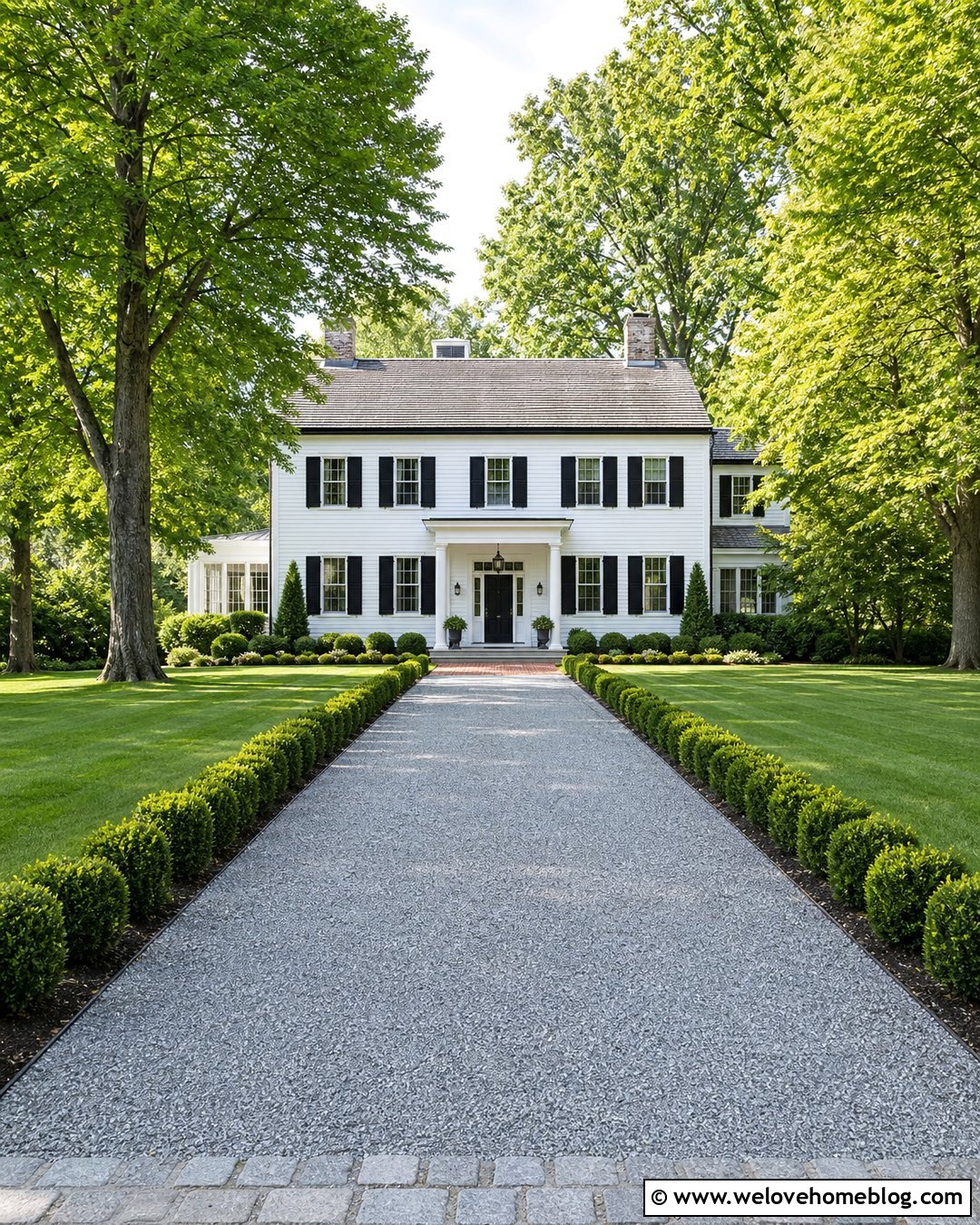
A low hedge paired with hidden edging can make an inexpensive gravel driveway appear formal and established. Use fine gray gravel on a straight approach to a Colonial or Georgian-inspired house. Install a discreet metal or plastic border first, then plant small boxwood alternatives or compact evergreen shrubs well beyond the expected mature width. This spacing keeps branches from scratching vehicles and leaves room for trimming. Repeat the hedge on both sides near the entrance, or use it only beside the main front-yard section to reduce plant costs. A simple lawn and symmetrical walkway complete the orderly design. The plants should enhance the border rather than contain the gravel by themselves. Selecting small nursery plants and allowing them to fill in gradually is usually more economical than buying mature specimens.
22. Gravel Driveway Edging With Brick And Timber
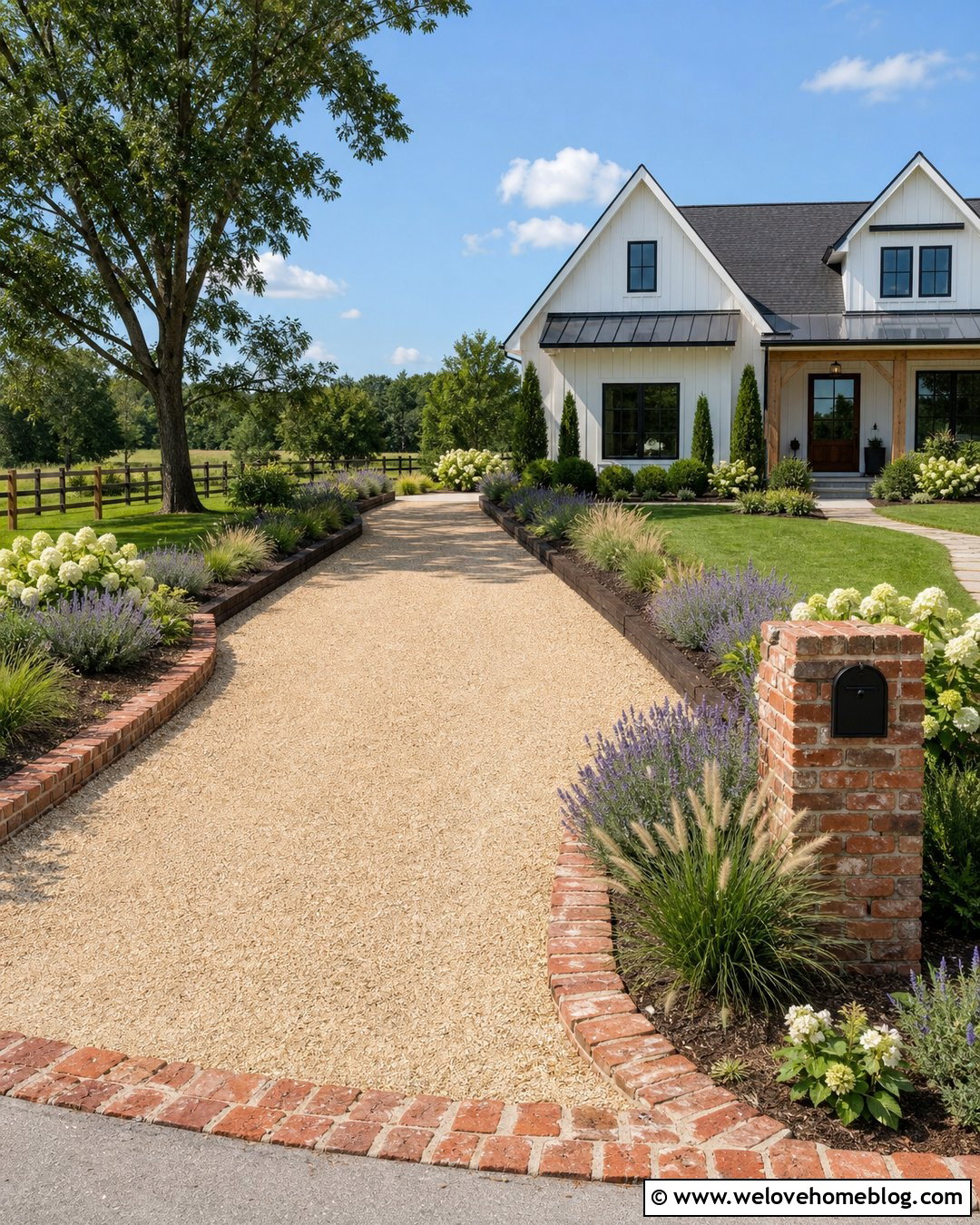
Combining brick and timber provides a polished entrance without the cost of masonry along an entire driveway. Edge the first section of a tan gravel drive with reclaimed red brick, especially around the street apron and mailbox. After the most visible area, transition to stained landscape timbers for the longer run toward a modern farmhouse. Align the upper surfaces and use a deliberate joint so the material change looks planned. Add lavender, dwarf grasses, or compact hydrangeas around the brick entrance, then simplify the landscaping beside the timber. This complete look directs attention to the front of the property while keeping the less visible sections economical. Use compatible base preparation under each material, and make sure the transition does not create a weak spot where gravel can escape.
23. Gravel Driveway Edging With Stone And Metal
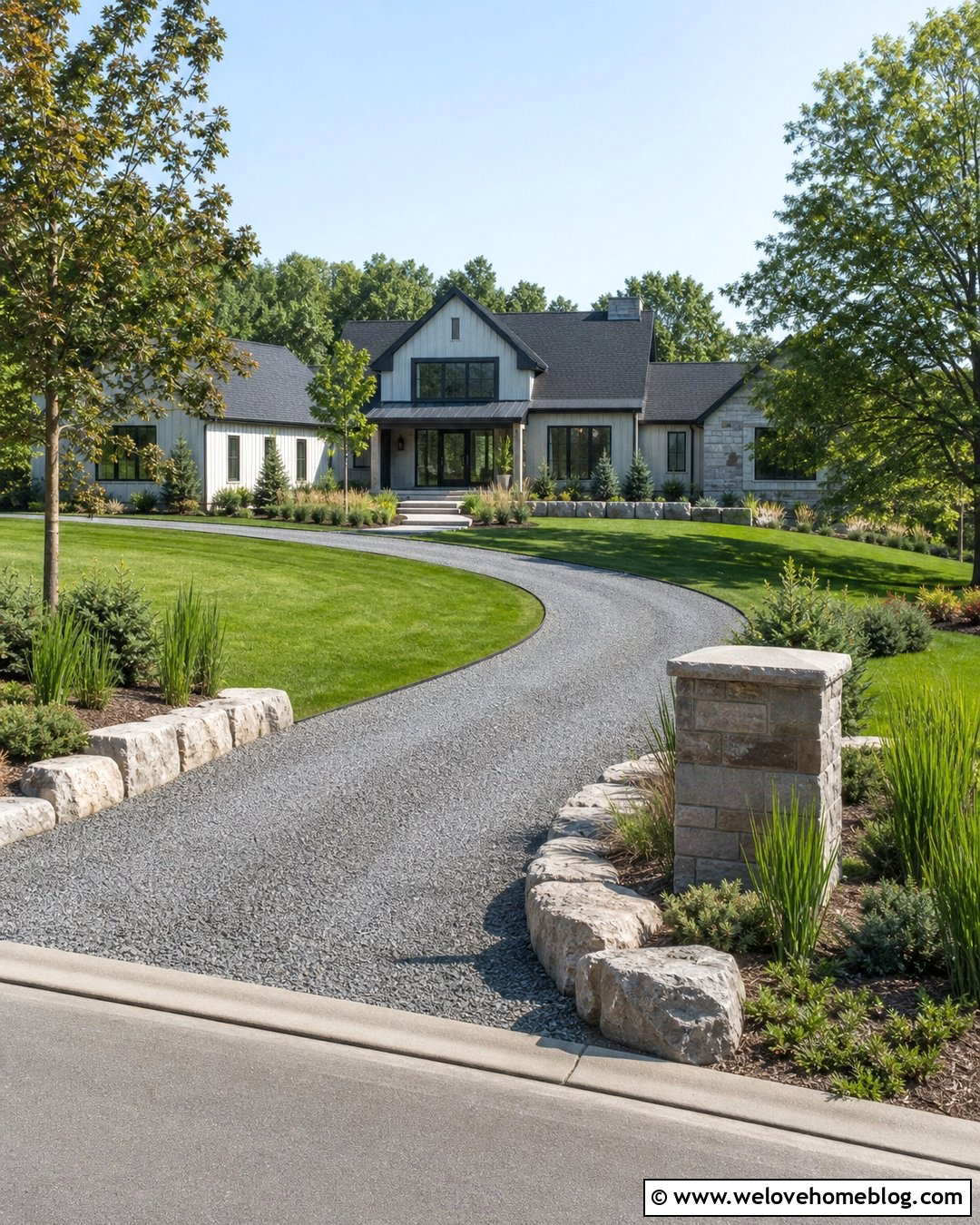
Natural stone at the entrance and slim metal edging along the remaining drive create another cost-conscious hybrid design. Place locally sourced fieldstone beside the first several feet of a curved gray gravel driveway leading to a contemporary country house. Continue the same curve with dark steel or aluminum edging that nearly disappears into the landscape. Use several matching stones around an address post or front planting bed to connect the two materials. The driveway can be framed with native grasses, low evergreens, and an open lawn, producing a relaxed but controlled appearance. This combination reserves heavier stone for corners most likely to receive visual attention. Check that the metal and stone align smoothly, without protruding ends or abrupt height changes that could catch tires or maintenance tools.
24. Gravel Driveway Edging With A Rock Drainage Swale
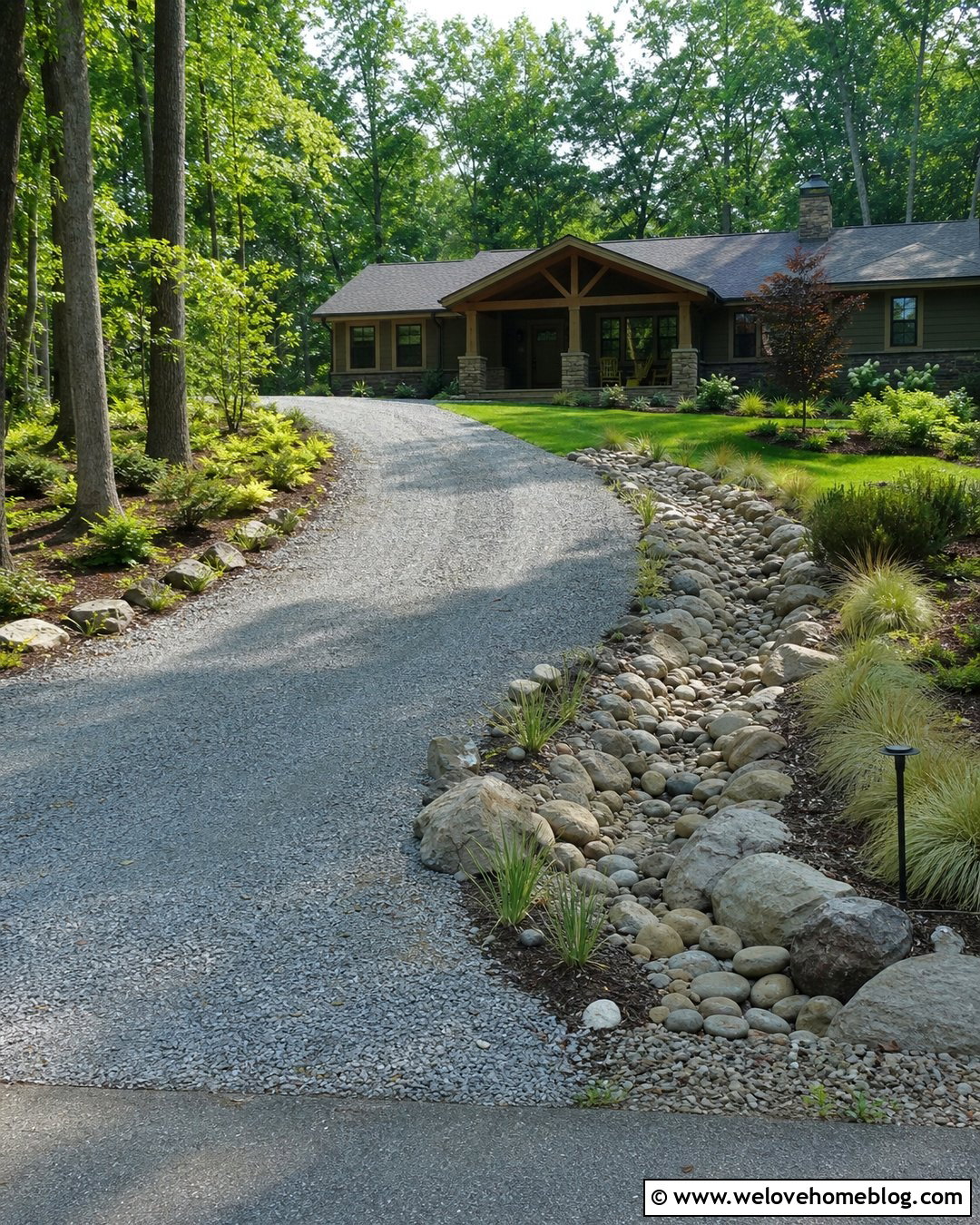
A rock-lined swale can edge a sloped gravel driveway while guiding runoff through the landscape. Use compacted crushed limestone for the driving surface and create a shallow channel along the downhill side. Line it with mixed river rock or angular drainage stone, separated from the driveway by a stable hidden restraint. The channel should follow a planned route toward a suitable discharge area rather than directing water toward a neighboring property or foundation. This natural design fits wooded ranch homes, cabins, and rustic Craftsman houses. Plant moisture-tolerant grasses and shrubs outside the swale, leaving the rock channel open for inspection and cleaning. Although simple in appearance, drainage performance depends on site conditions. Seek local professional guidance when erosion, steep grades, or significant runoff creates uncertainty.
25. Gravel Driveway Edging With Recycled Concrete
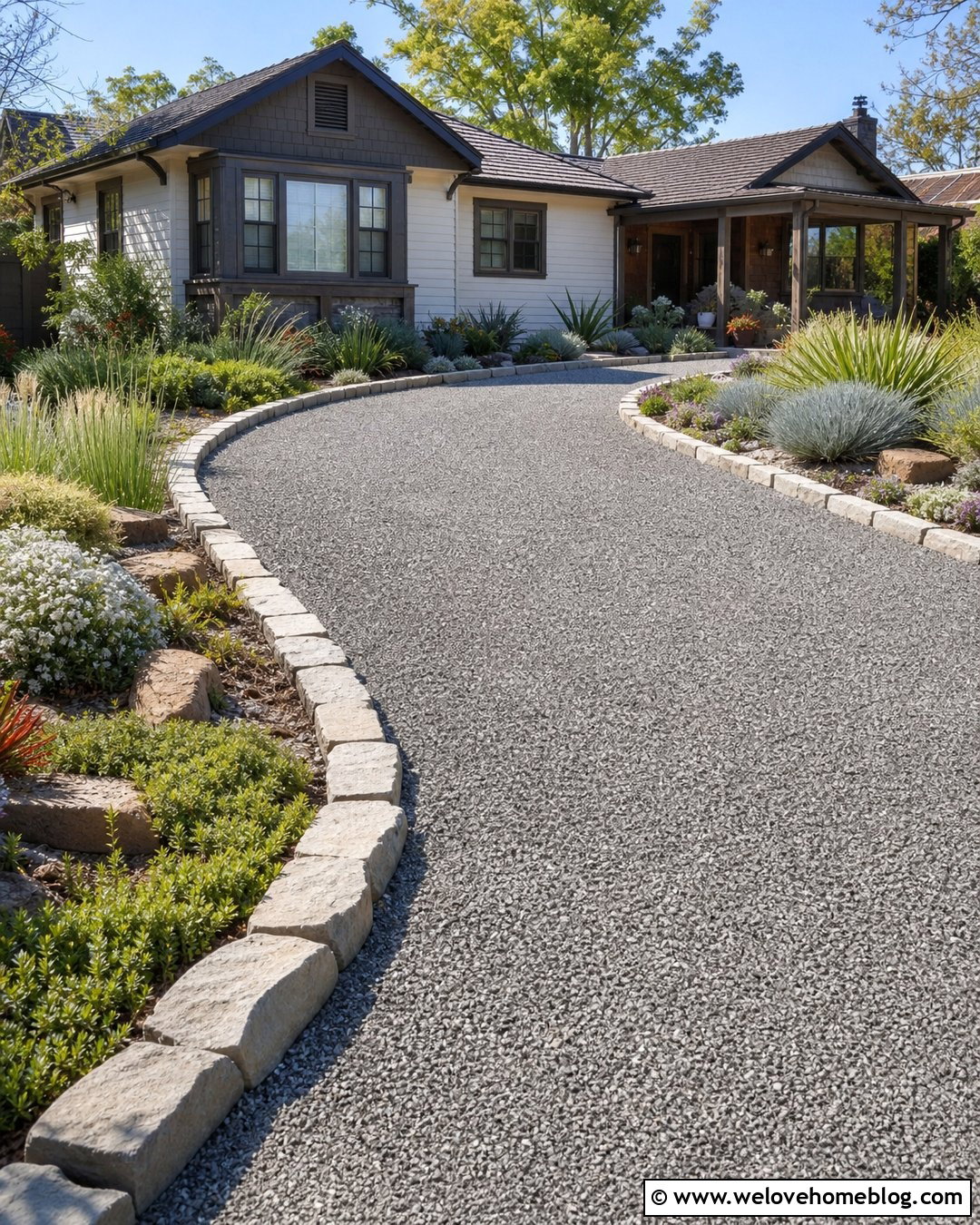
Broken concrete, sometimes called urbanite, can create a substantial gravel driveway border from material that might otherwise be discarded. Choose pieces with relatively flat faces and arrange them in a single low row beside a wide, curved driveway made from warm gray crushed gravel. Bury irregular lower edges in a compacted base so the finished border feels stable. This recycled look suits an eclectic bungalow, casual ranch, or drought-conscious landscape. Fill the outer beds with native grasses, flowering ground cover, and additional small stone for continuity. Avoid pieces with exposed reinforcing metal, sharp projections, or severe crumbling. Sorting by thickness before installation will make leveling easier. Use the largest, strongest sections near the entrance and smaller pieces along quieter stretches of the driveway.
Conclusion:
Cheap gravel driveway edging can look purposeful when the border, gravel, driveway layout, house, and landscaping are planned as one design. Timber and flexible edging are useful for quick installations, while reclaimed brick, fieldstone, and recycled concrete add character with reused materials. Hybrid borders can also reduce expenses by placing decorative stone or brick only near the entrance. Whatever material you choose, prepare a compacted foundation, allow safe drainage, and keep raised edges away from common tire paths. Consider maintenance as well as the initial price, since grass and untreated wood need more attention. With careful planning, these 25 Gravel Driveway Edging Cheap Ideas can create a cleaner, more attractive, and easier-to-manage entrance.

Related posts:


Leave a Reply