
A wooden deck railing adds both safety and style to your outdoor space, but it doesn't have to be a costly project. With a little creativity and some basic carpentry skills, you can build a beautiful and functional railing on a budget. These ideas focus on using affordable materials like standard lumber and simple designs to keep costs down without sacrificing aesthetics. From classic vertical balusters to more modern horizontal slats, there are numerous ways to create a cheap wood deck railing that enhances your home's appeal and provides a secure perimeter for your deck.
1. Simple Vertical Wood Balusters Deck Railing
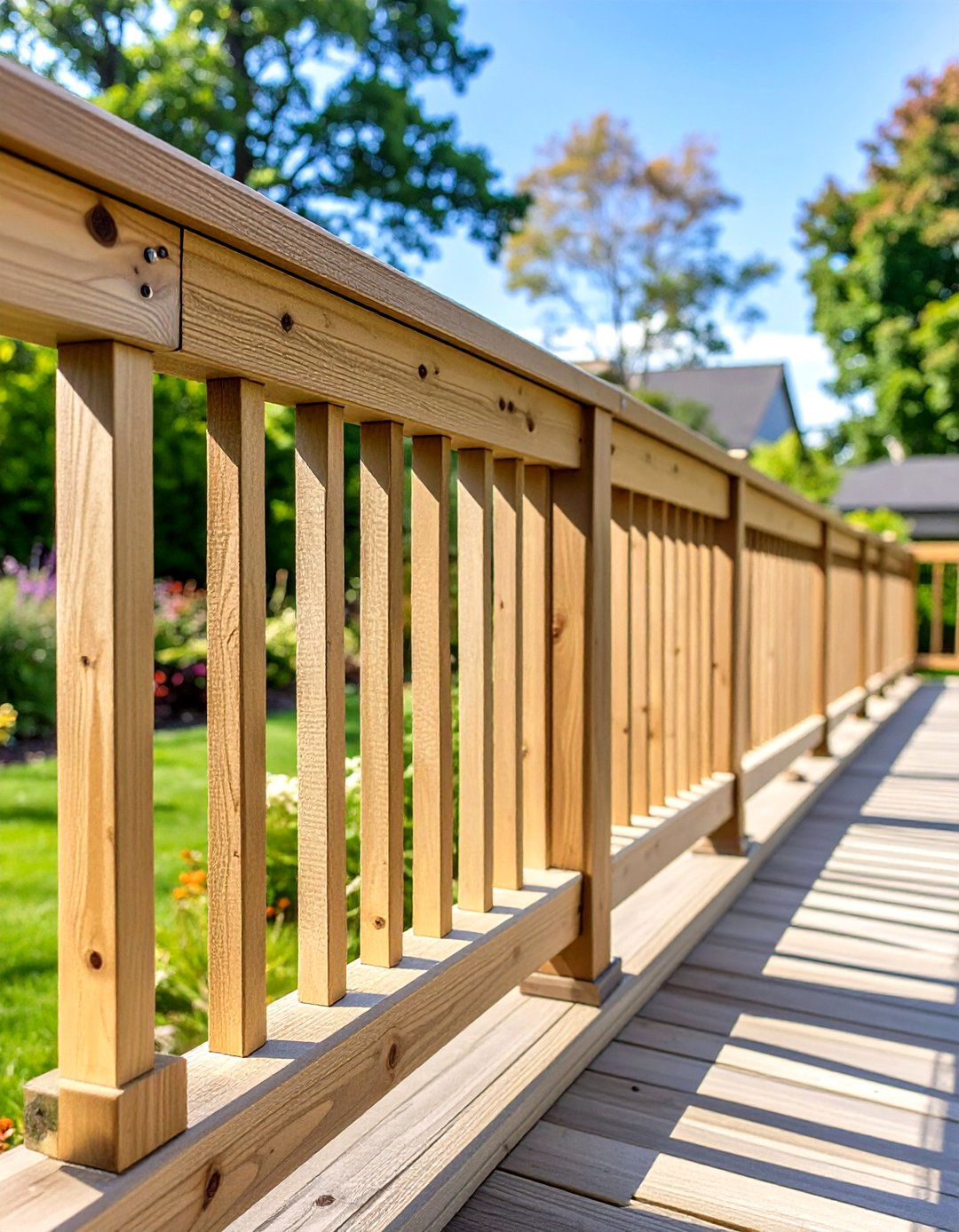
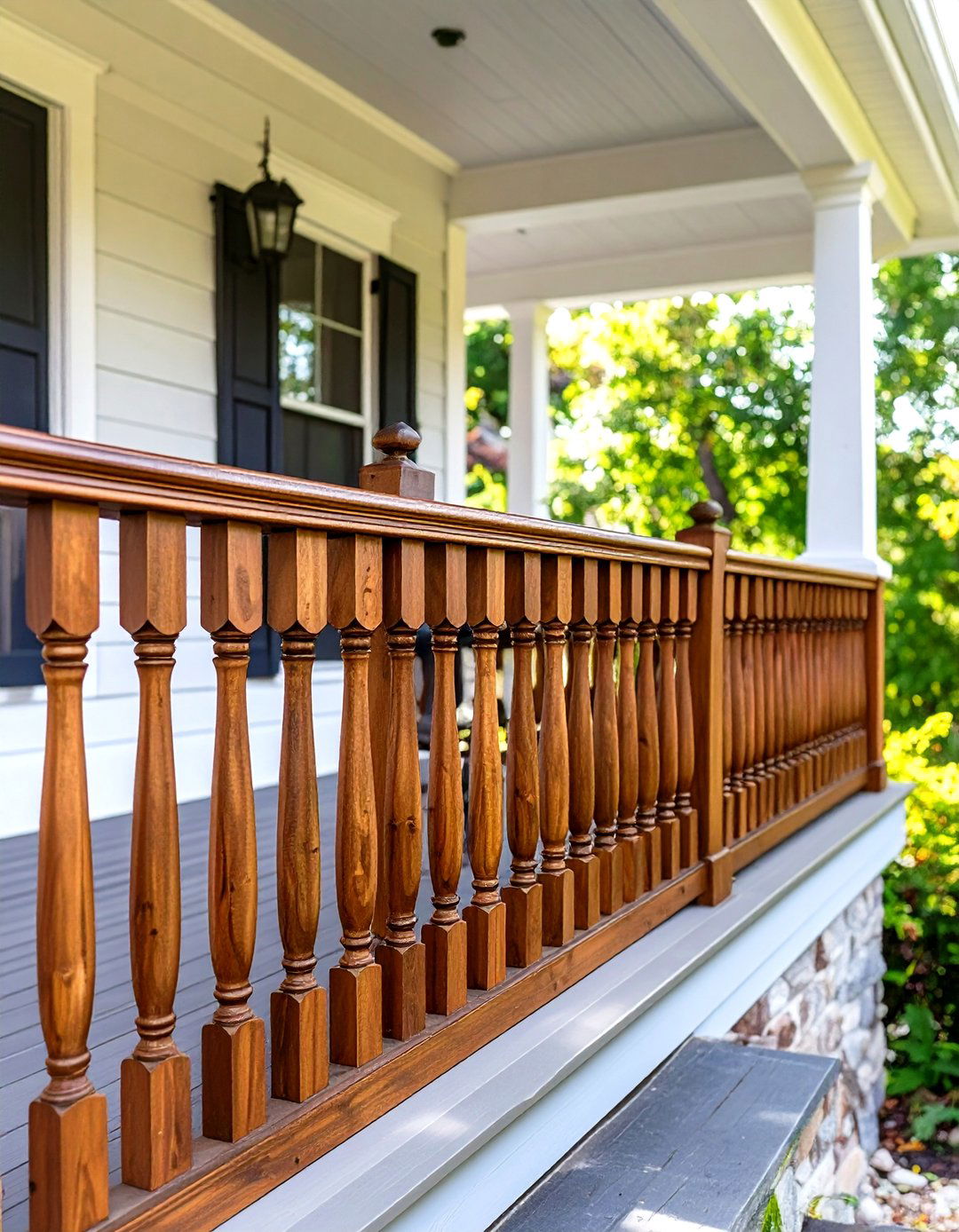
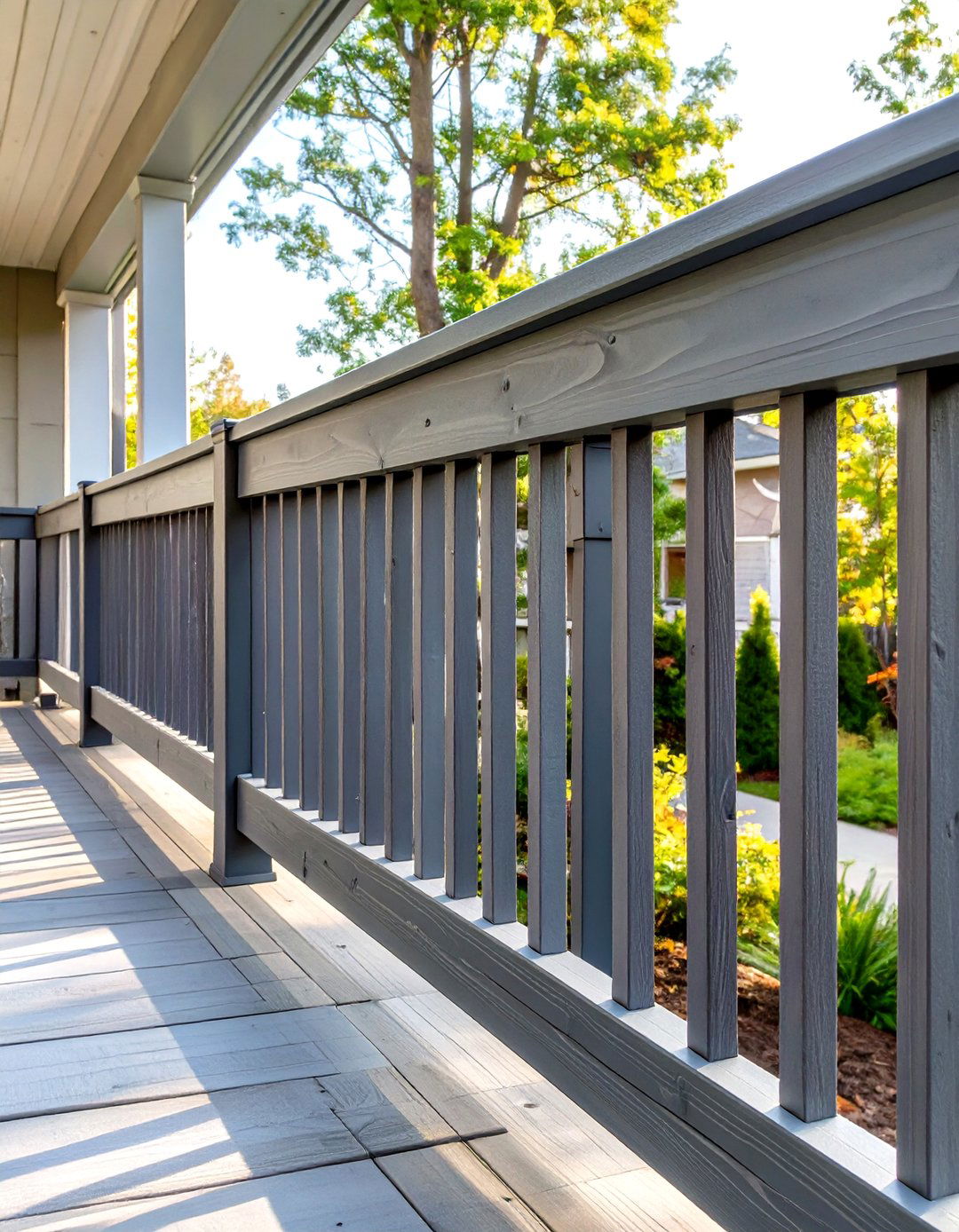
For a timeless and incredibly affordable option, a simple vertical wood baluster deck railing is a classic choice. Using standard pressure-treated 2x2 lumber for the balusters keeps material costs exceptionally low. This design involves attaching the balusters between the top and bottom rails, which are typically made from 2x4s. The straightforward installation process doesn't require complex cuts or specialized tools, making it an excellent project for DIY enthusiasts. You can leave the wood natural for a rustic look or apply a coat of paint or stain to match your home's exterior, offering customization without a high price tag.
2. Horizontal Wood Plank Deck Railing
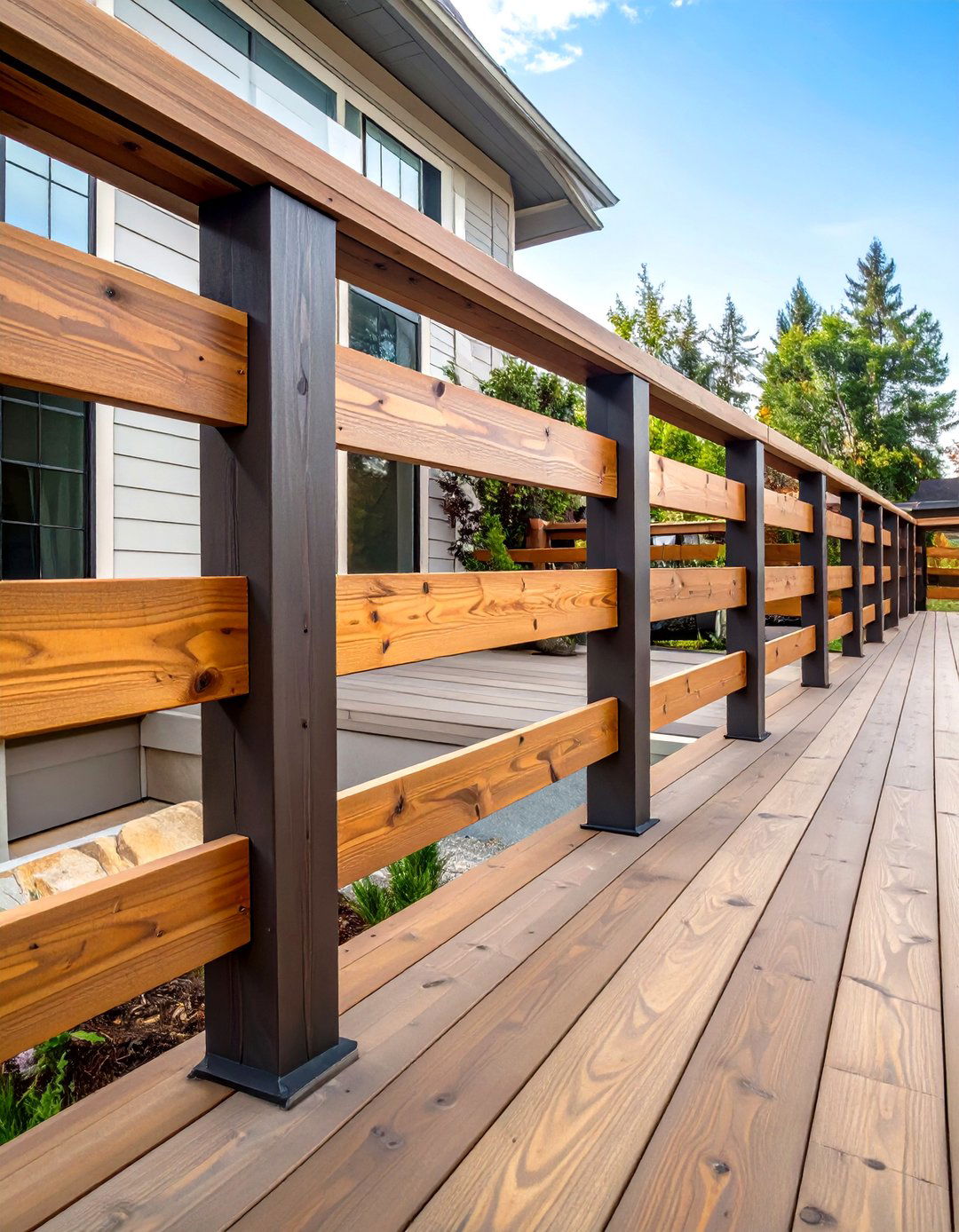
A horizontal wood plank deck railing offers a modern and sleek look for a minimal investment. This design uses affordable 1x6 or 1x4 cedar or pressure-treated pine boards installed horizontally between the support posts. The clean lines create a contemporary feel and can make your deck area appear larger and more open. To ensure safety and code compliance, it's crucial to space the planks correctly to prevent anyone from slipping through. This style is not only budget-friendly but also relatively quick to install, providing a significant visual upgrade with minimal effort and expense for your outdoor living space.
3. Hog Wire Panel Wood Deck Railing
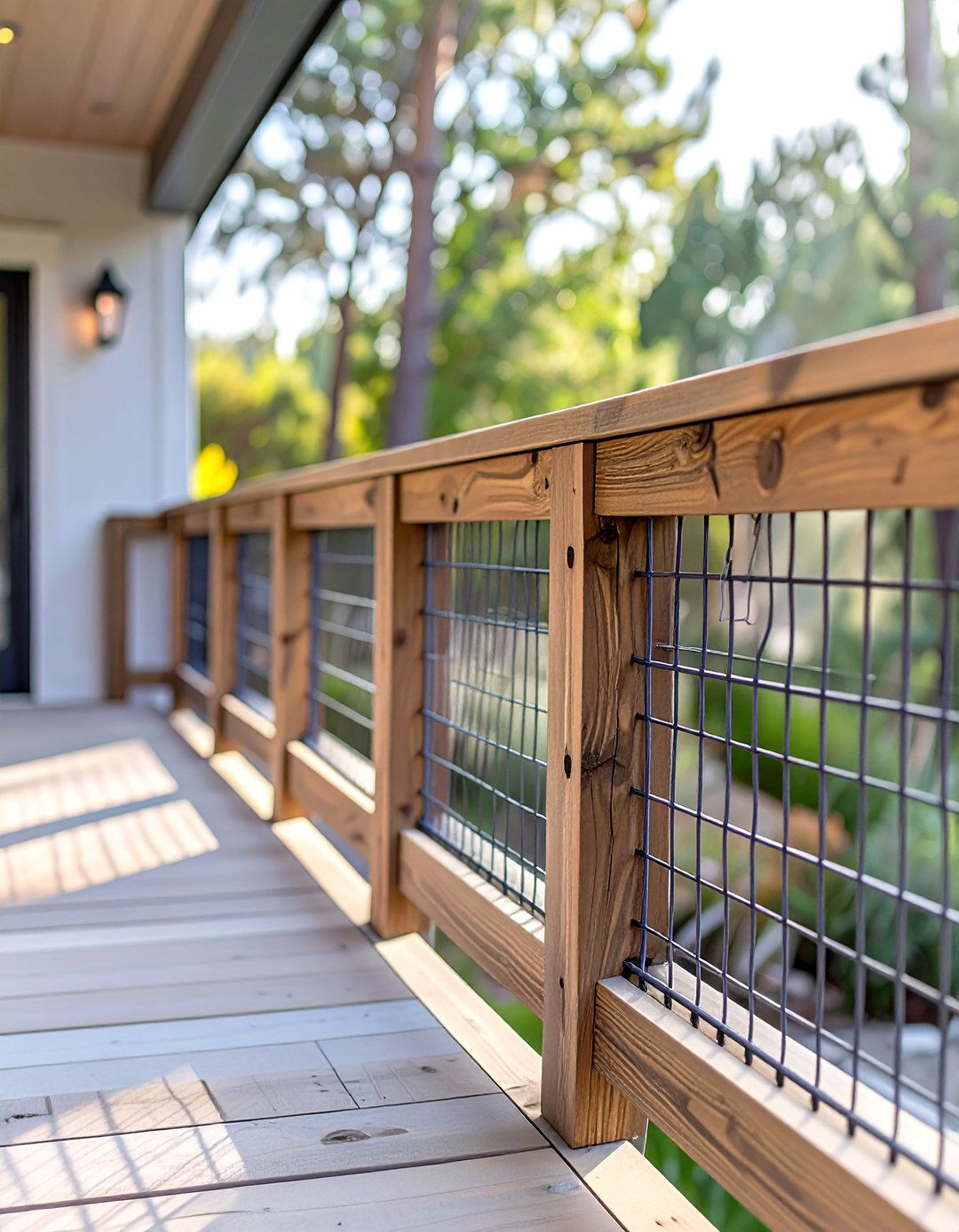
Combining wood with hog wire panels creates a rustic-industrial look that is both stylish and cost-effective. The frame is constructed from standard 2x4 lumber, while the infill consists of pre-made galvanized hog wire panels, which are significantly cheaper than individual balusters or glass panels. This approach allows for unobstructed views of your surroundings, making it perfect for decks overlooking a garden or scenic landscape. The installation involves building the wood frame and then stapling or sandwiching the wire panel within it. It’s a durable, low-maintenance solution that brings a unique texture and open feel to your deck design.
4. X-Pattern Wood Deck Railing
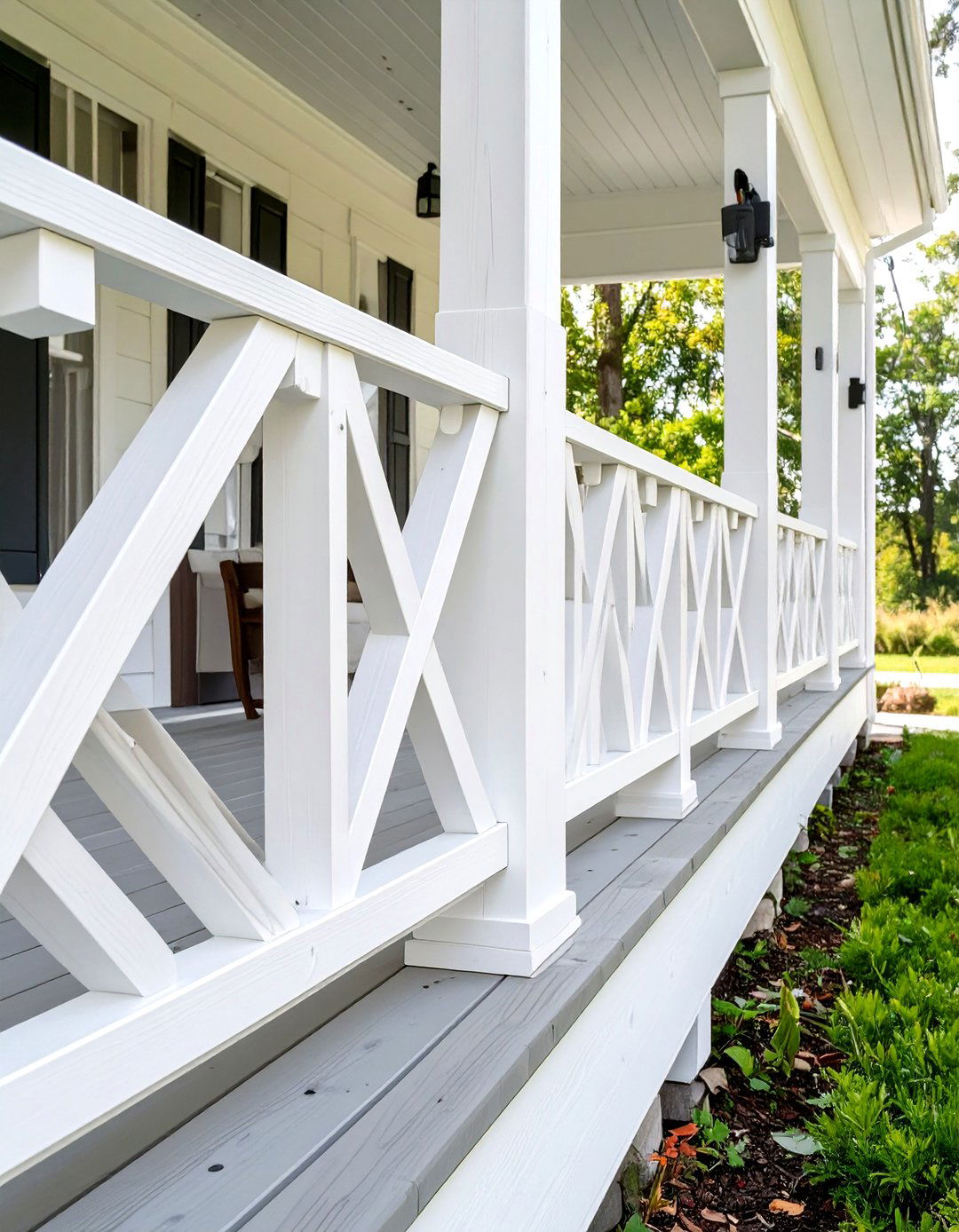
An X-pattern wood deck railing adds a touch of farmhouse charm and architectural interest without a hefty price tag. This design is built using inexpensive 2x4 or 1x4 lumber to create "X" shapes between the main posts and top and bottom rails. While it requires more angled cuts than a simple vertical design, the materials themselves remain very affordable. The crisscross pattern provides a sturdy and visually appealing barrier. You can paint it classic white for a clean, traditional look or stain it to highlight the wood's natural grain, making it a versatile and budget-conscious choice for any home.
5. Chippendale-Inspired Wood Deck Railing
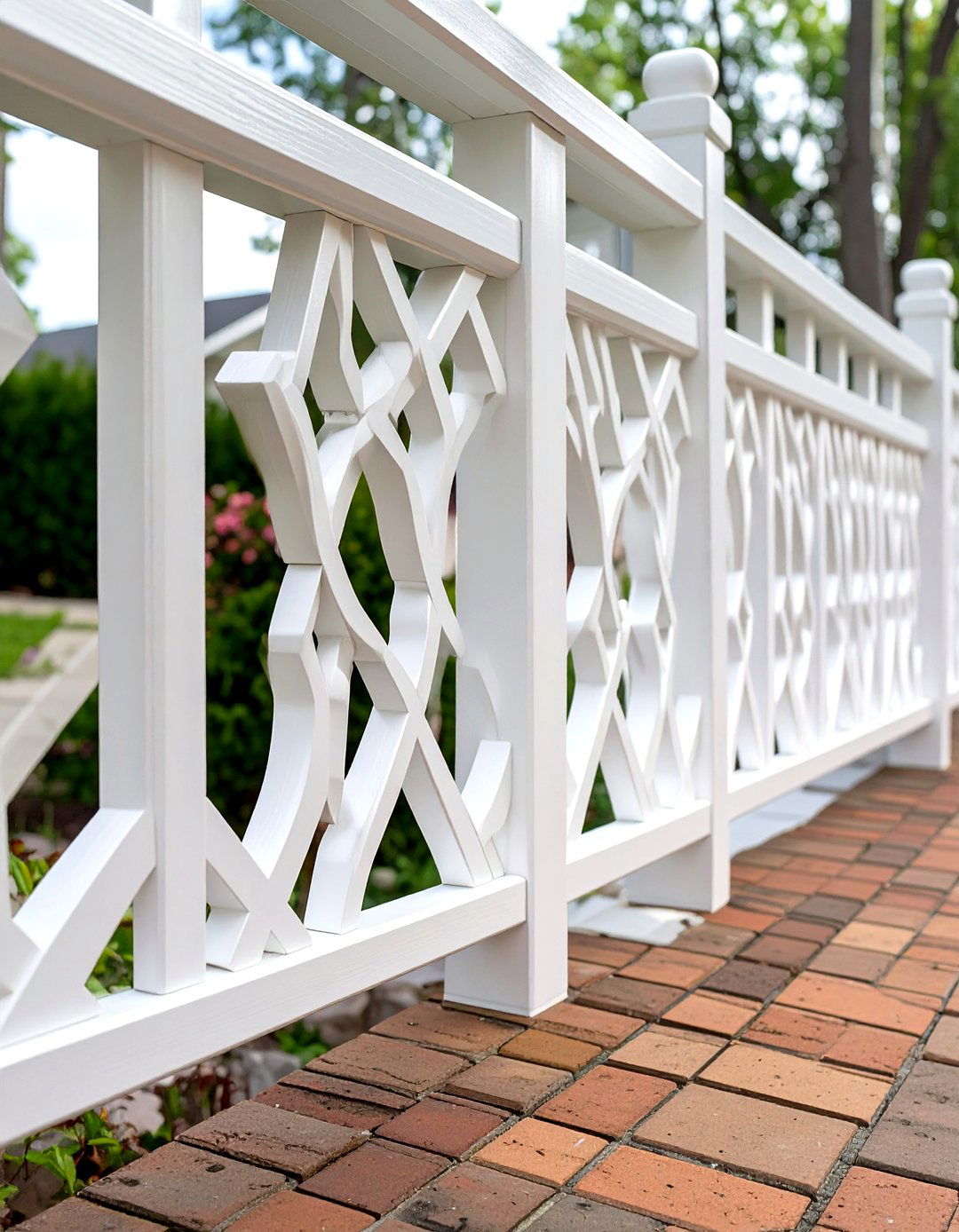
For a more ornate and decorative style on a budget, a Chippendale-inspired wood deck railing is an excellent option. This classic design features intricate geometric patterns, typically a combination of squares and diagonals, crafted from standard 1x2 or 2x2 lumber. Although the pattern looks complex, it can be assembled using basic joinery techniques. The key to keeping it affordable is using common, pressure-treated pine instead of more expensive hardwoods. This railing style brings a sophisticated, historic feel to your deck, proving that an elegant and detailed look can be achieved without overspending on materials or custom fabrication.
6. Wood and Conduit Pipe Deck Railing
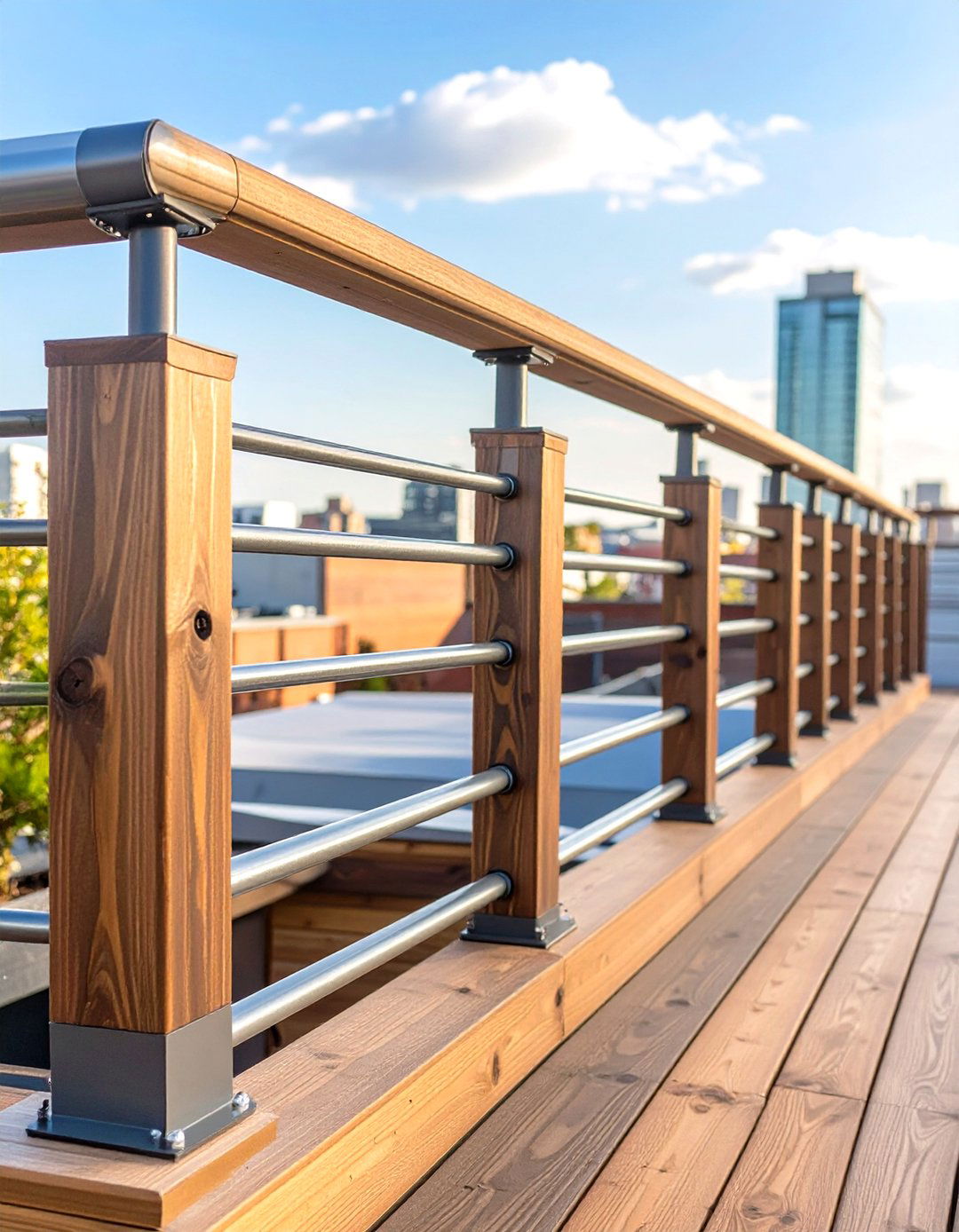
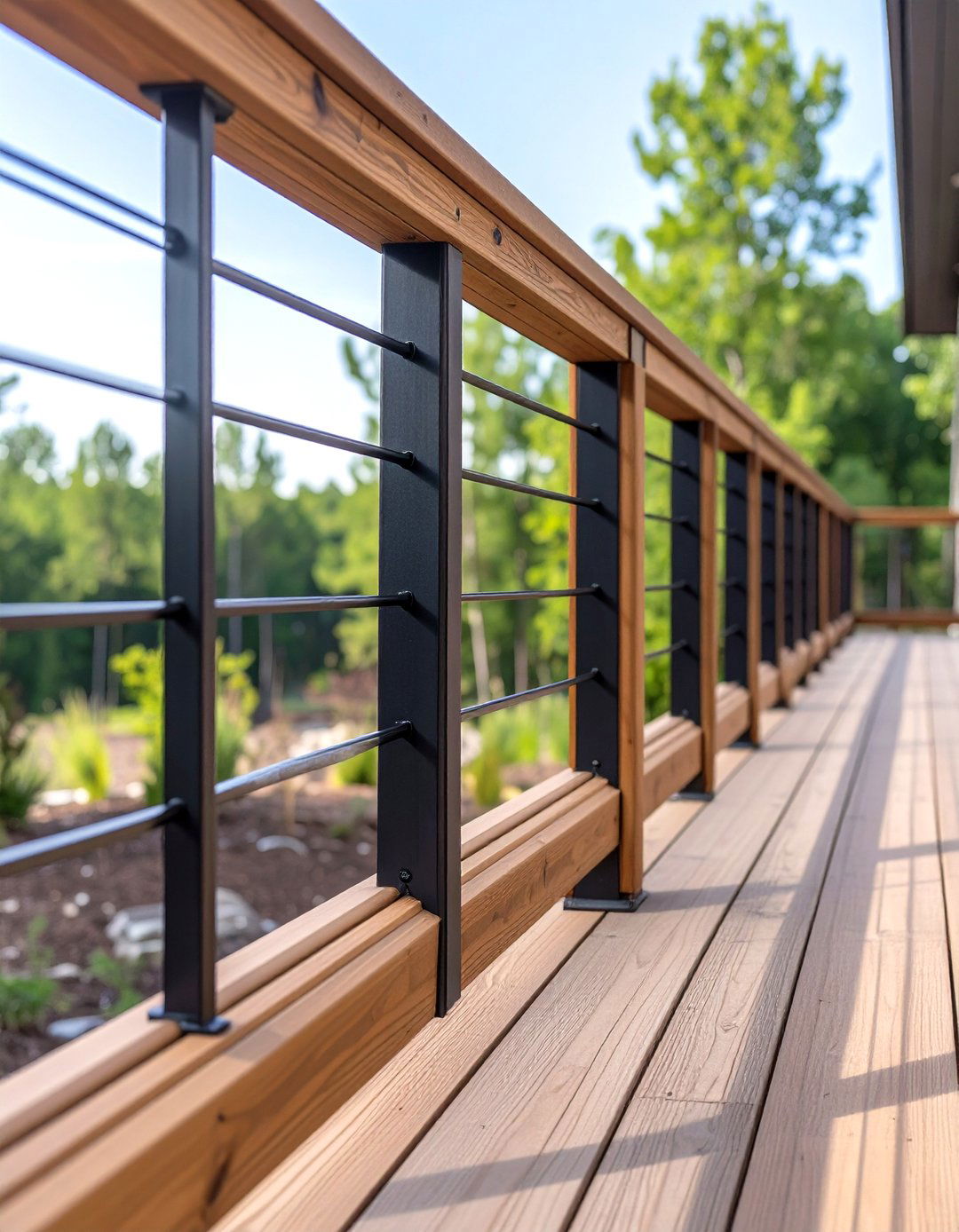
Mixing wood with metal conduit pipes is a creative way to build a modern and cheap deck railing. The main structure, including posts and top and bottom rails, is built from affordable lumber like pressure-treated pine. In place of traditional wood balusters, you run thin metal electrical conduit pipes horizontally through holes drilled in the wooden posts. The conduit is lightweight, inexpensive, and resistant to rust, offering a durable and low-maintenance infill. This combination of warm wood and cool metal creates a contemporary industrial aesthetic that is both unique and highly cost-effective for a stylish deck update.
7. Simple Top Cap Wood Deck Railing
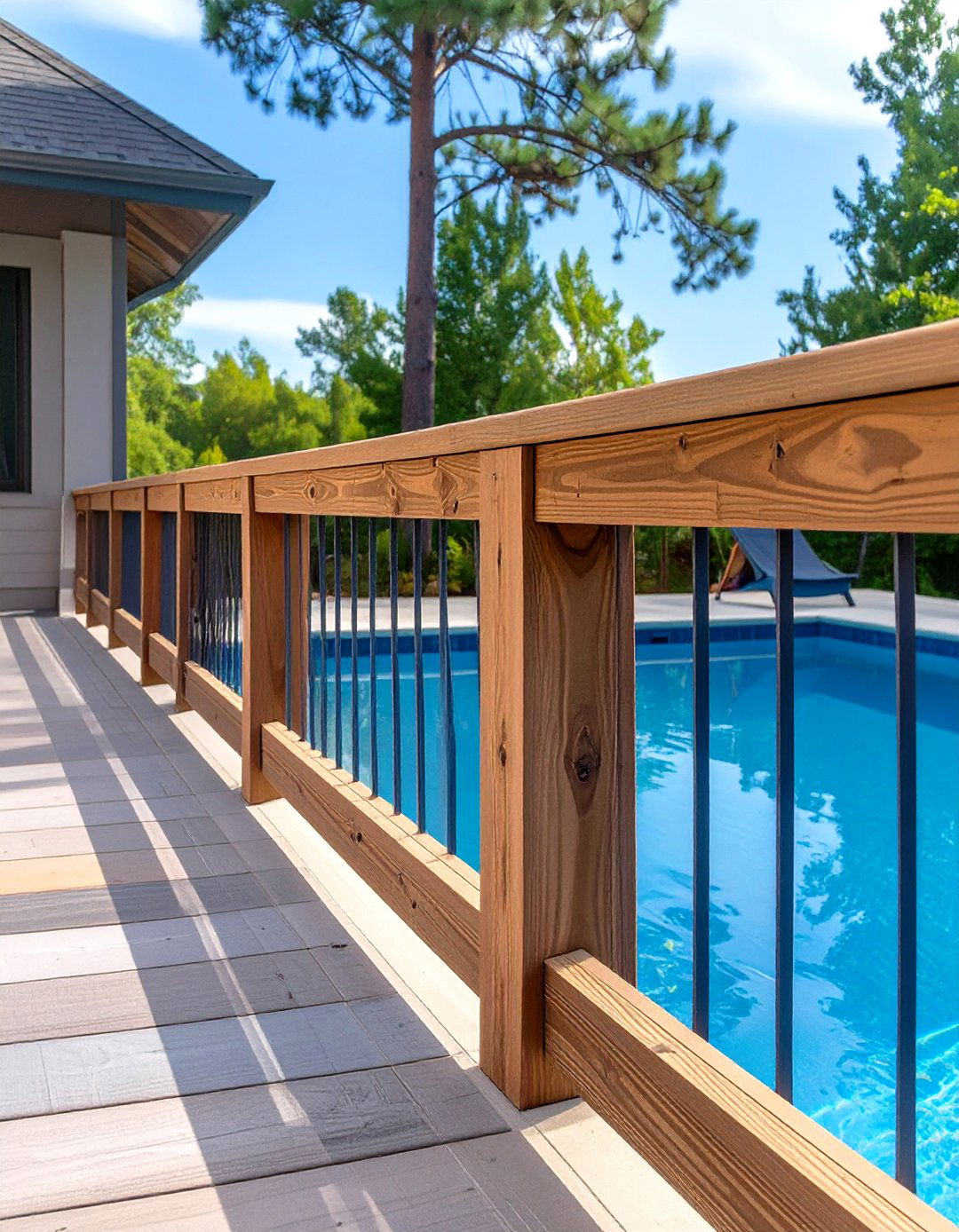
Adding a simple top cap to a basic wood deck railing can instantly make it look more finished and substantial without adding much cost. This design starts with a standard railing frame made from 2x4s and vertical 2x2 balusters. To elevate the look, a wider 2x6 or a decorative decking board is installed flat on top of the upper rail. This "cocktail rail" or "drink rail" provides a convenient surface for placing drinks or small plates, enhancing the functionality of your deck. The extra board adds minimal material cost but delivers a high-end, custom appearance.
8. Framed Wood Lattice Deck Railing
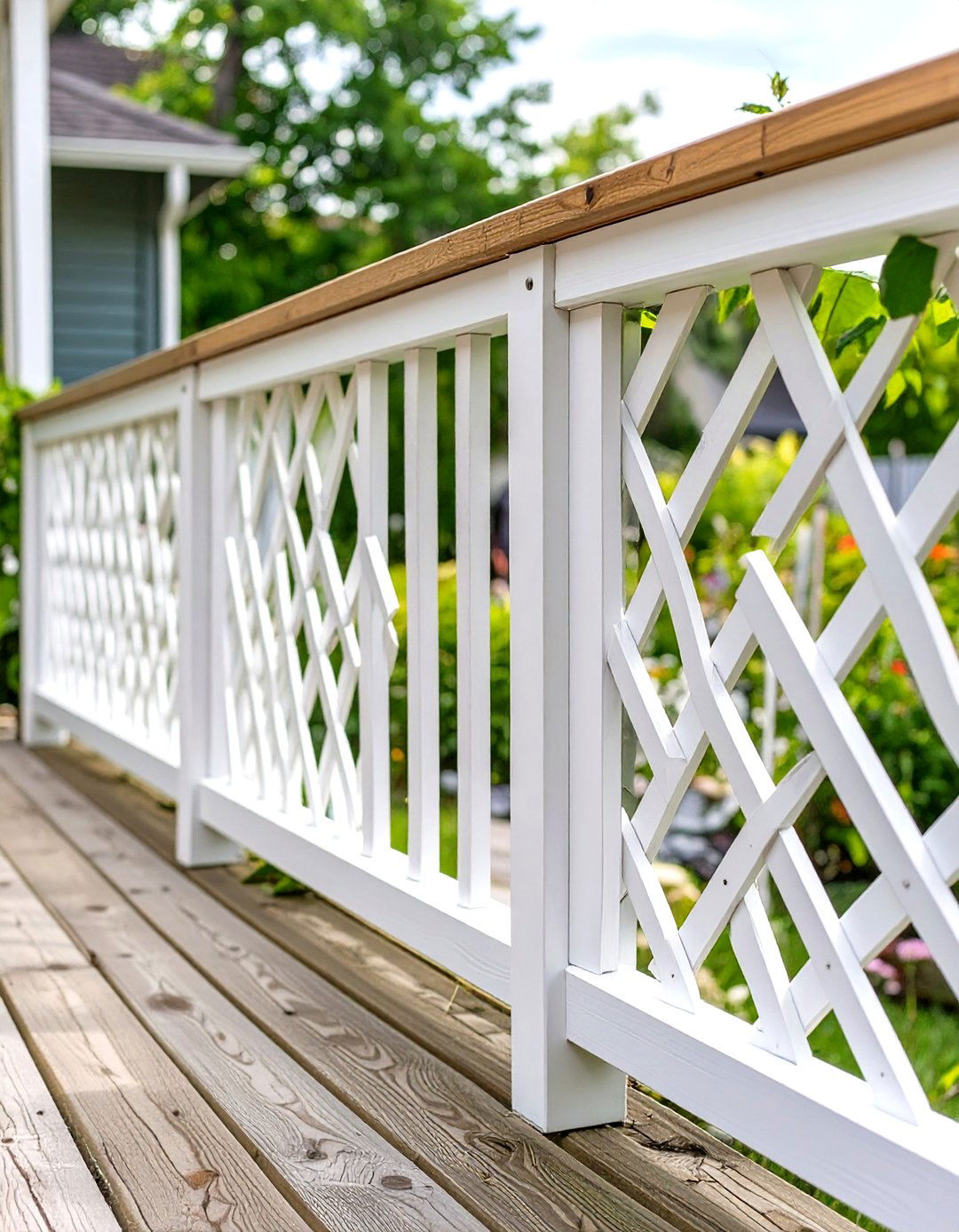
Using wood lattice panels as infill is a highly economical way to create a semi-private and decorative deck railing. The railing is constructed with a simple frame of 2x4 lumber posts and rails. Standard, pre-made wood lattice sheets, which are very inexpensive, are then cut to size and inserted into these frames. This design not only adds a charming, cottage-style aesthetic but also provides a bit of privacy without completely blocking airflow or light. For added durability, choose pressure-treated or cedar lattice and consider painting or staining it to match the rest of your deck structure.
9. Alternating Width Wood Baluster Deck Railing
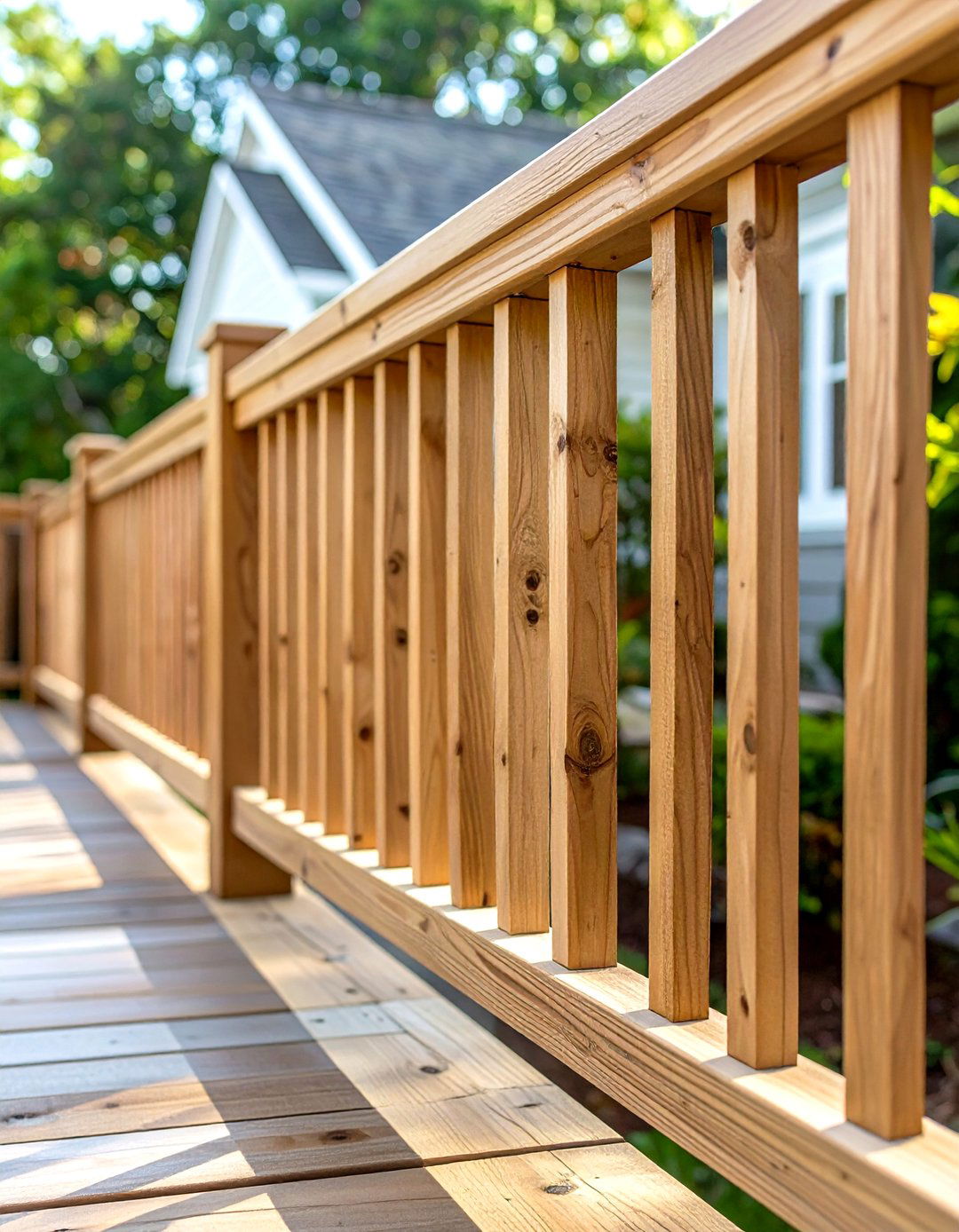
To create visual interest without increasing costs, consider an alternating width wood baluster deck railing. This design uses a mix of standard, low-cost lumber sizes, such as 1x2s and 1x4s, for the vertical balusters. By creating a pattern—for example, two narrow balusters followed by one wide one—you can achieve a custom, rhythmic look that appears more complex and expensive than it is. The material cost remains low as you are still using common, off-the-shelf wood boards. This simple variation on a traditional design adds a subtle but effective modern touch to your deck's perimeter.


10. Minimalist Single Top Rail Wood Deck Railing
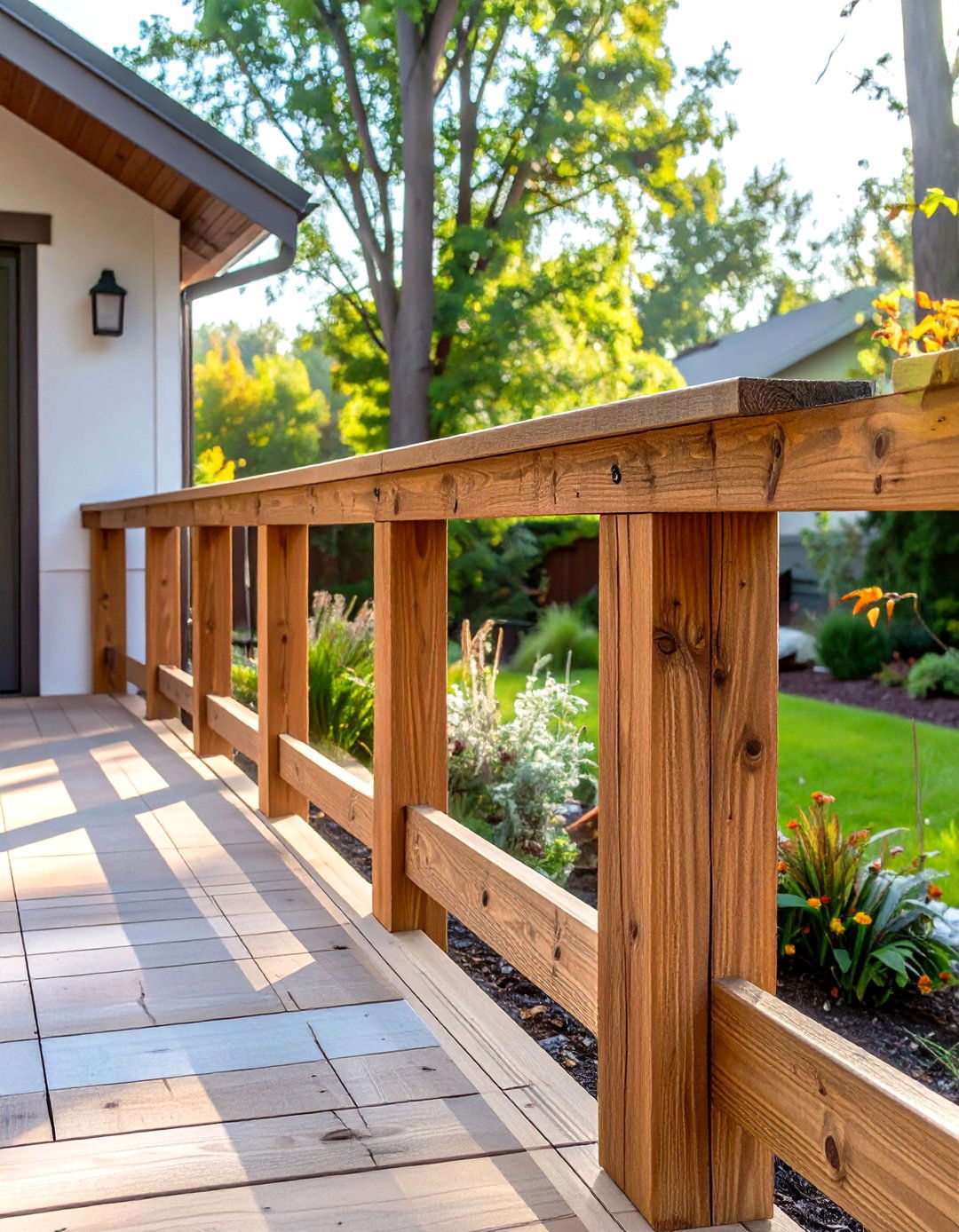
A minimalist single top rail wood deck railing is a sleek, modern, and incredibly cheap option, perfect for low-level decks where a full-height guardrail isn't required by code. This design often consists of sturdy 4x4 posts and a single 2x6 or 2x8 top rail, with no bottom rail or infill. It defines the edge of the deck without obstructing the view, creating a very open and airy feel. Since it uses significantly less lumber than traditional railings, the material costs are drastically reduced. This style works best for ground-level decks, providing a clean, architectural boundary.
11. Sunburst Pattern Wood Deck Railing
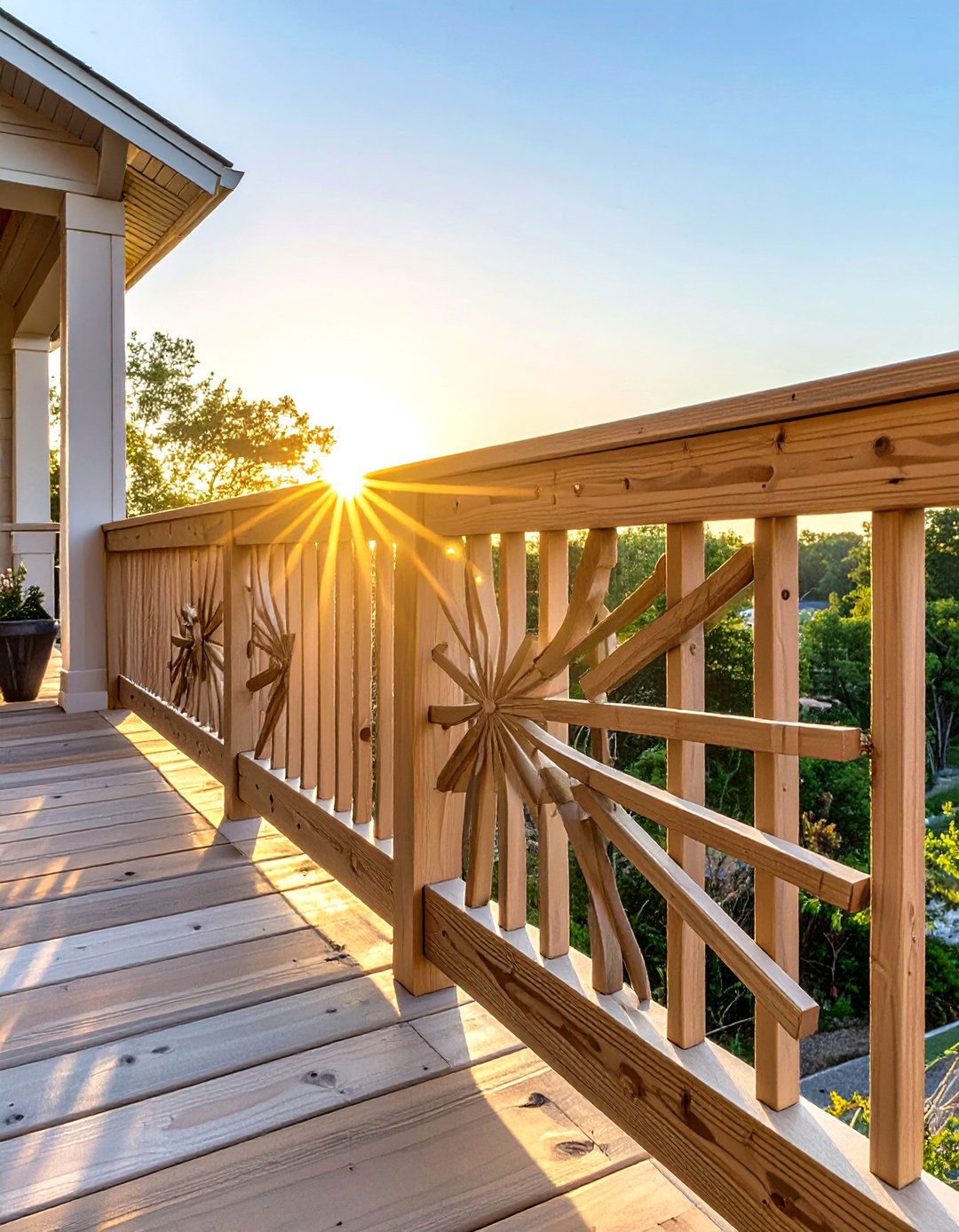
Introduce a stunning focal point to your deck with a sunburst pattern wood deck railing, which can be surprisingly affordable to create. This design features wood pieces radiating outward from a central point on each railing section, resembling a rising sun. You can use inexpensive 1x2 or 1x3 furring strips or ripped-down 2x4s to craft the "rays." While it involves more intricate cuts than simpler designs, the material usage is efficient. This artistic style is perfect for adding a unique, custom-built feel to your outdoor space, transforming a standard safety feature into a beautiful piece of craftsmanship.
12. Diagonal Wood Slat Deck Railing
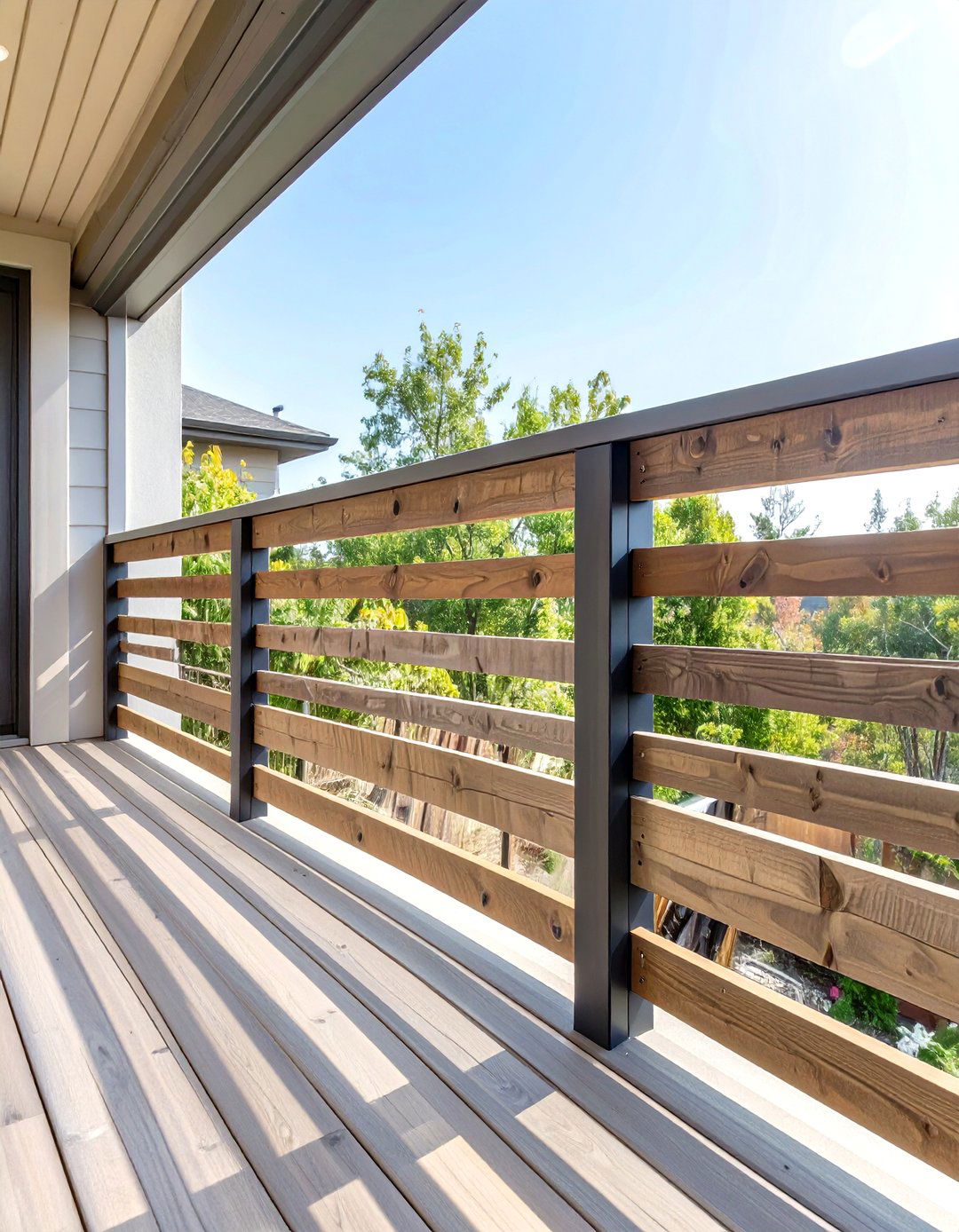
A diagonal wood slat deck railing offers a dynamic and modern alternative to standard vertical or horizontal designs. This style is constructed by running affordable 1x3 or 1x4 boards at a 45-degree angle between the top and bottom rails. The angled lines create a sense of movement and visual interest, making your deck stand out. The installation requires making consistent angled cuts at both ends of the slats, but the process is straightforward with a miter saw. This design is a great way to achieve a high-end, contemporary look using basic, low-cost lumber for a striking visual impact.
13. Reclaimed Pallet Wood Deck Railing
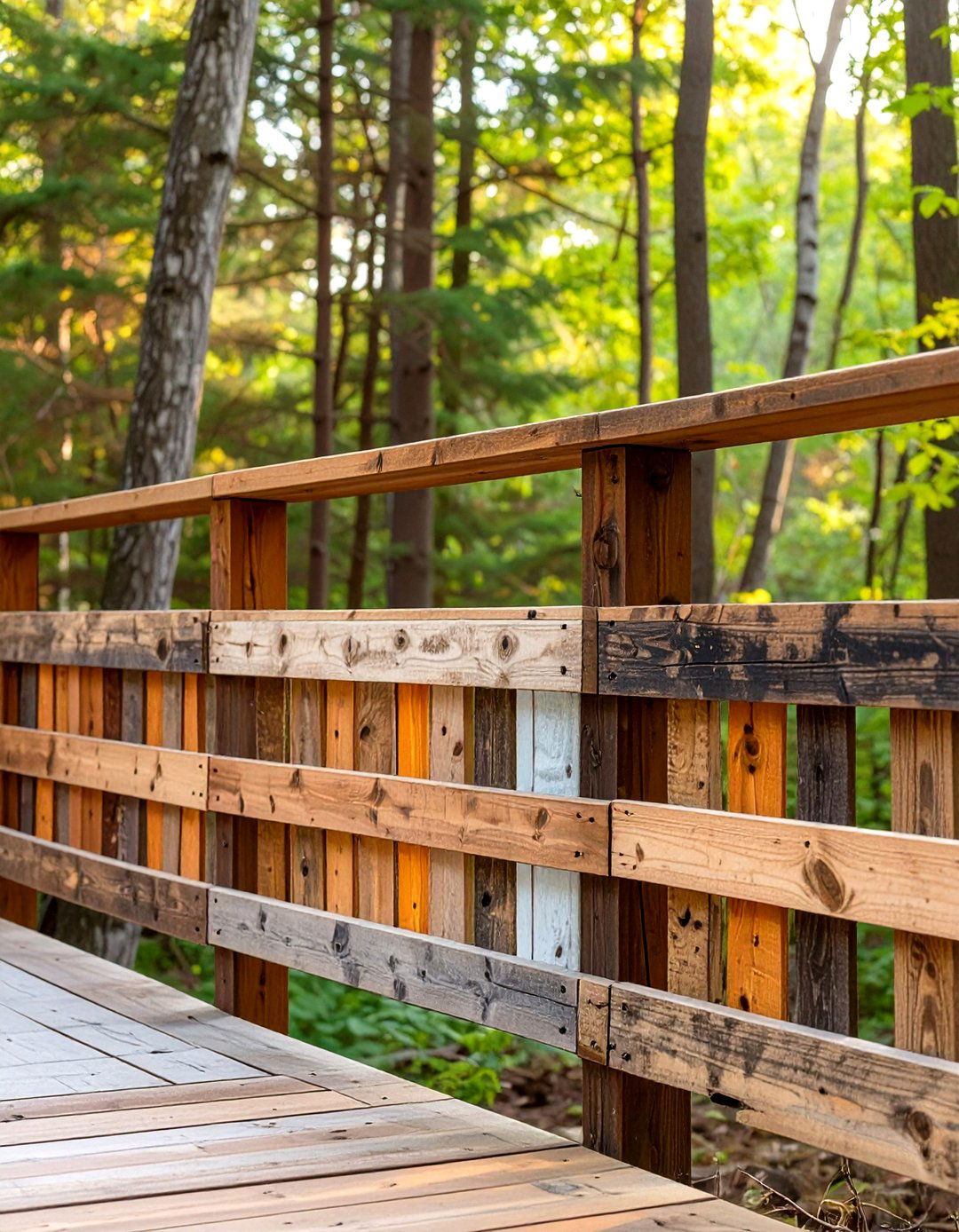
For an exceptionally cheap and rustic deck railing, consider using reclaimed pallet wood. Disassembled pallets provide a free or very low-cost source of lumber that is perfect for a deck with a weathered, farmhouse aesthetic. The pallet slats can be used as vertical balusters or horizontal planks. It's essential to select pallets that are heat-treated (marked with "HT") rather than chemically treated to ensure they are safe for use in a residential setting. While it requires more labor to dismantle and prepare the wood, the result is a unique, eco-friendly railing with unmatched character and minimal expense.
14. Plywood Cutout Panel Wood Deck Railing
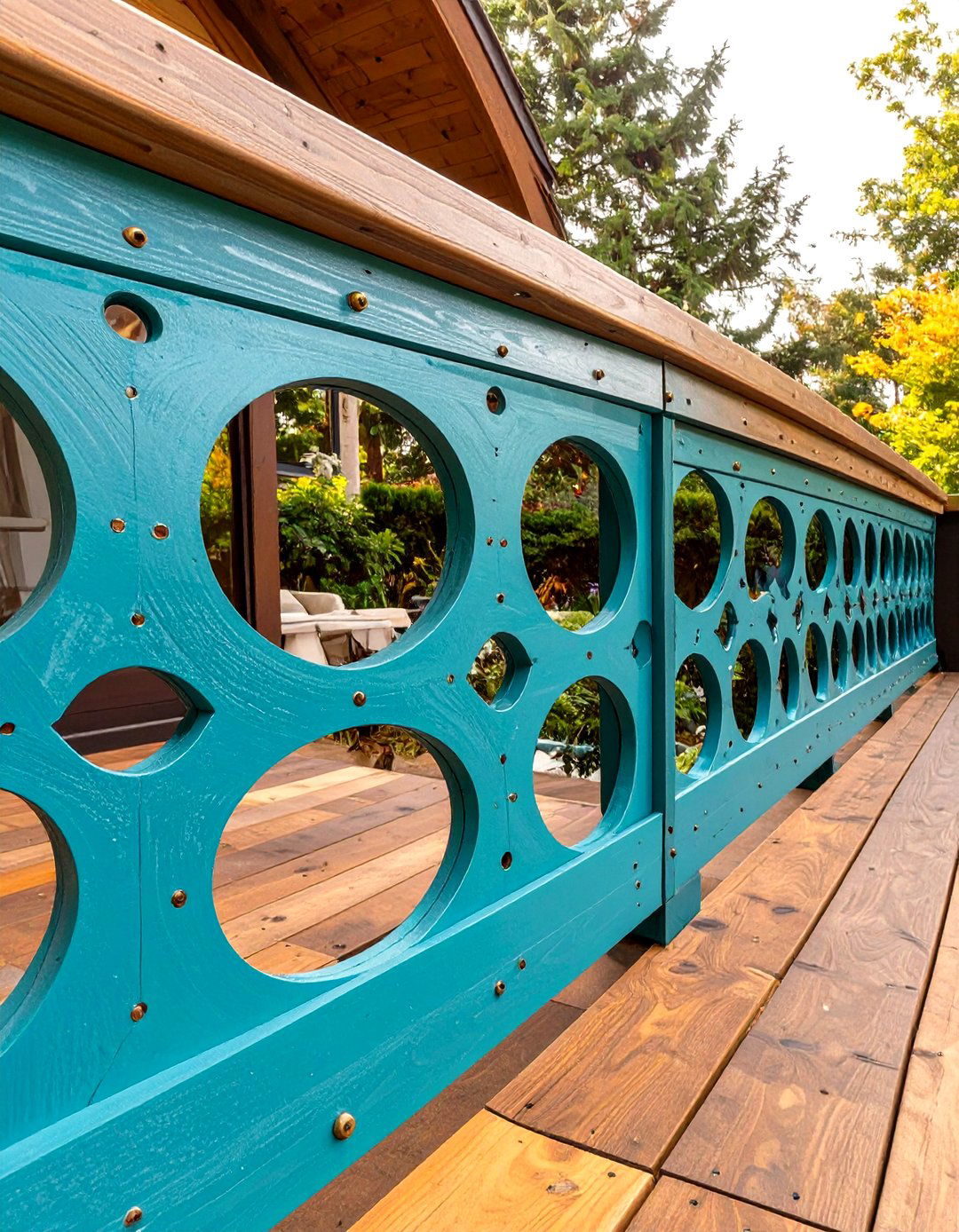
Get creative on a budget by designing a plywood cutout panel wood deck railing. This idea involves using exterior-grade plywood sheets as infill panels between wooden posts. You can use a jigsaw to cut out custom shapes or patterns—from simple circles and squares to more elaborate nature-inspired designs. The frame can be built from simple 2x4s, and the plywood itself is a cost-effective material. After cutting, be sure to thoroughly seal and paint the plywood, especially the cut edges, to protect it from the elements. This method allows for endless personalization and artistic expression.
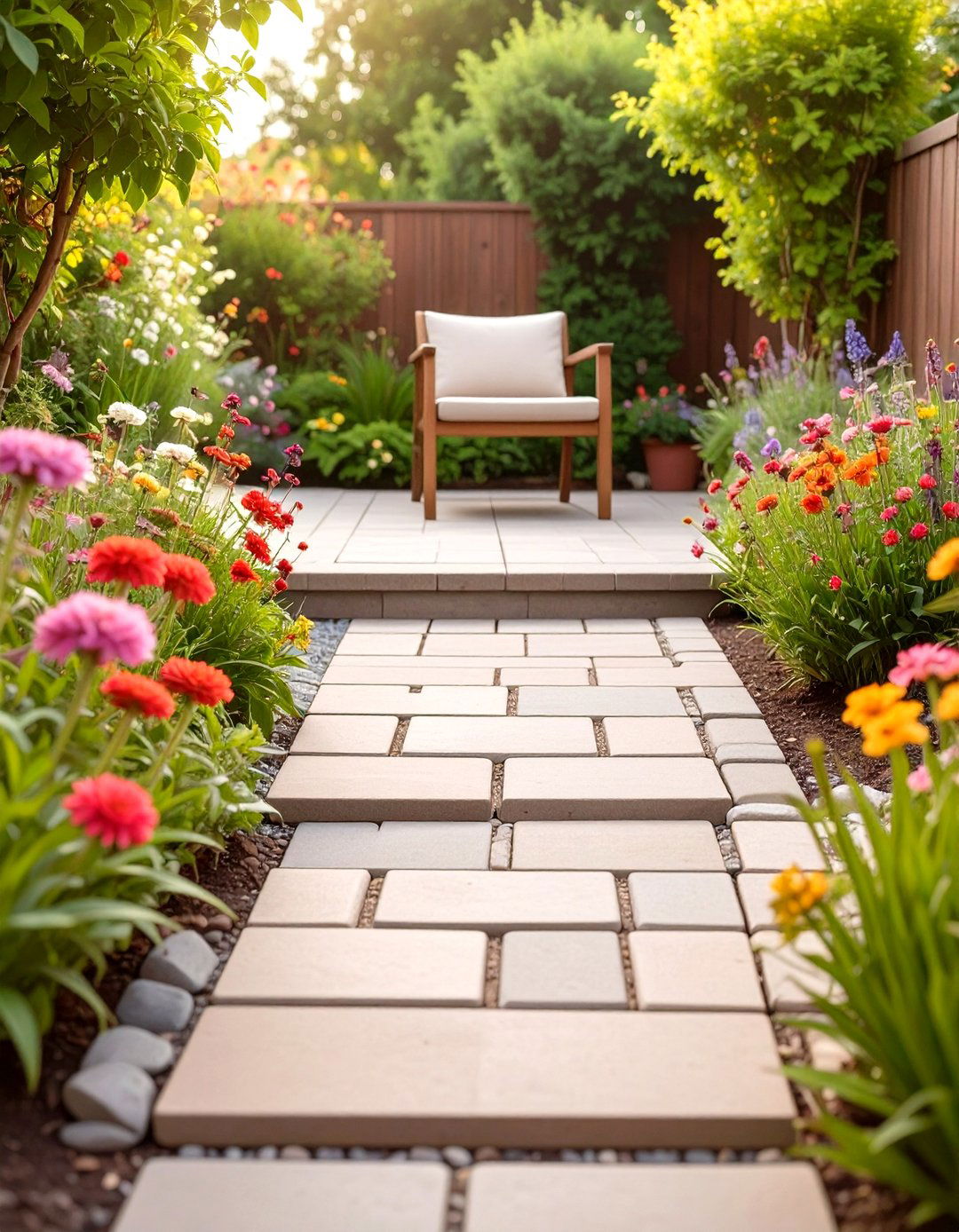
15. Natural Branch and Twig Wood Deck Railing
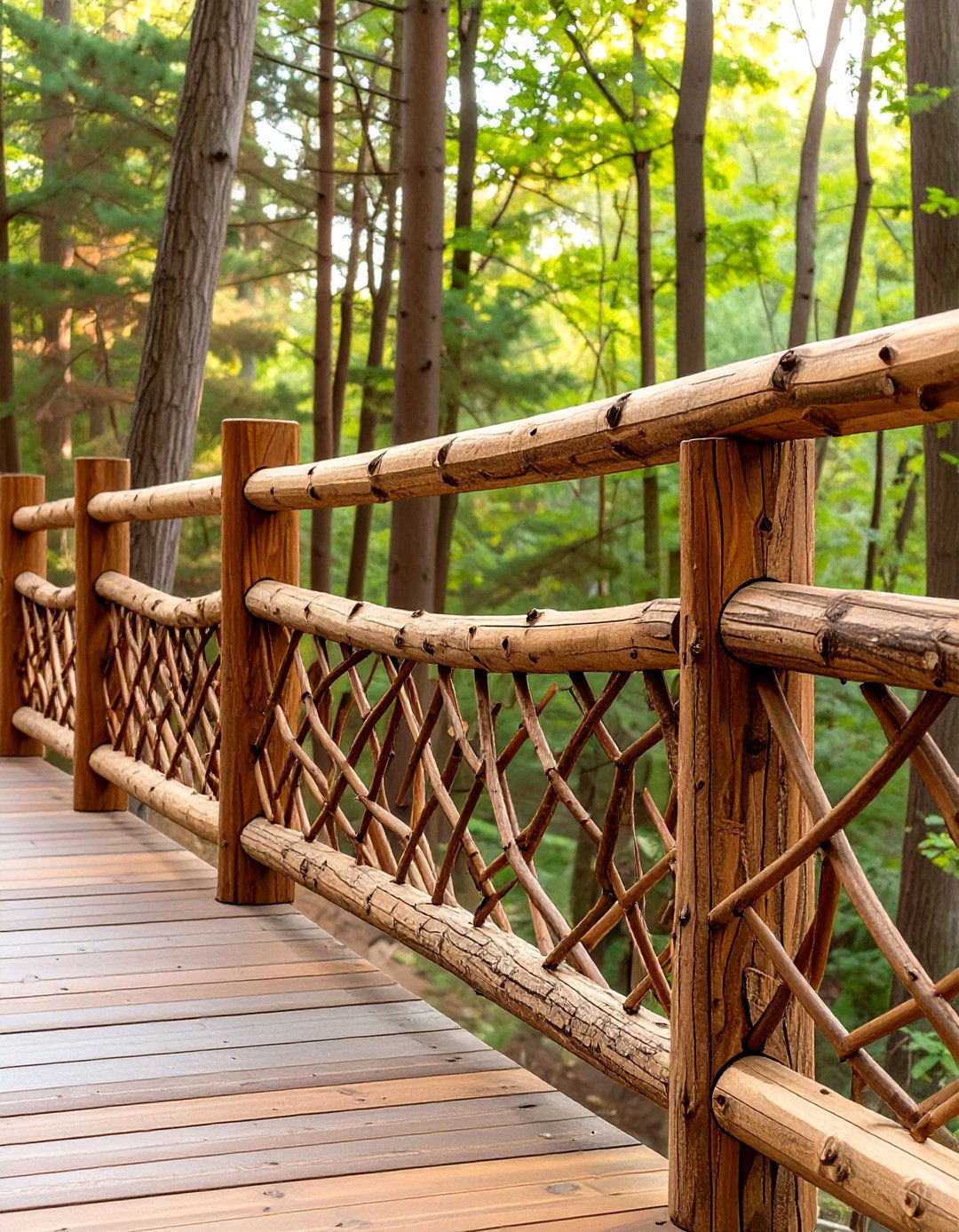
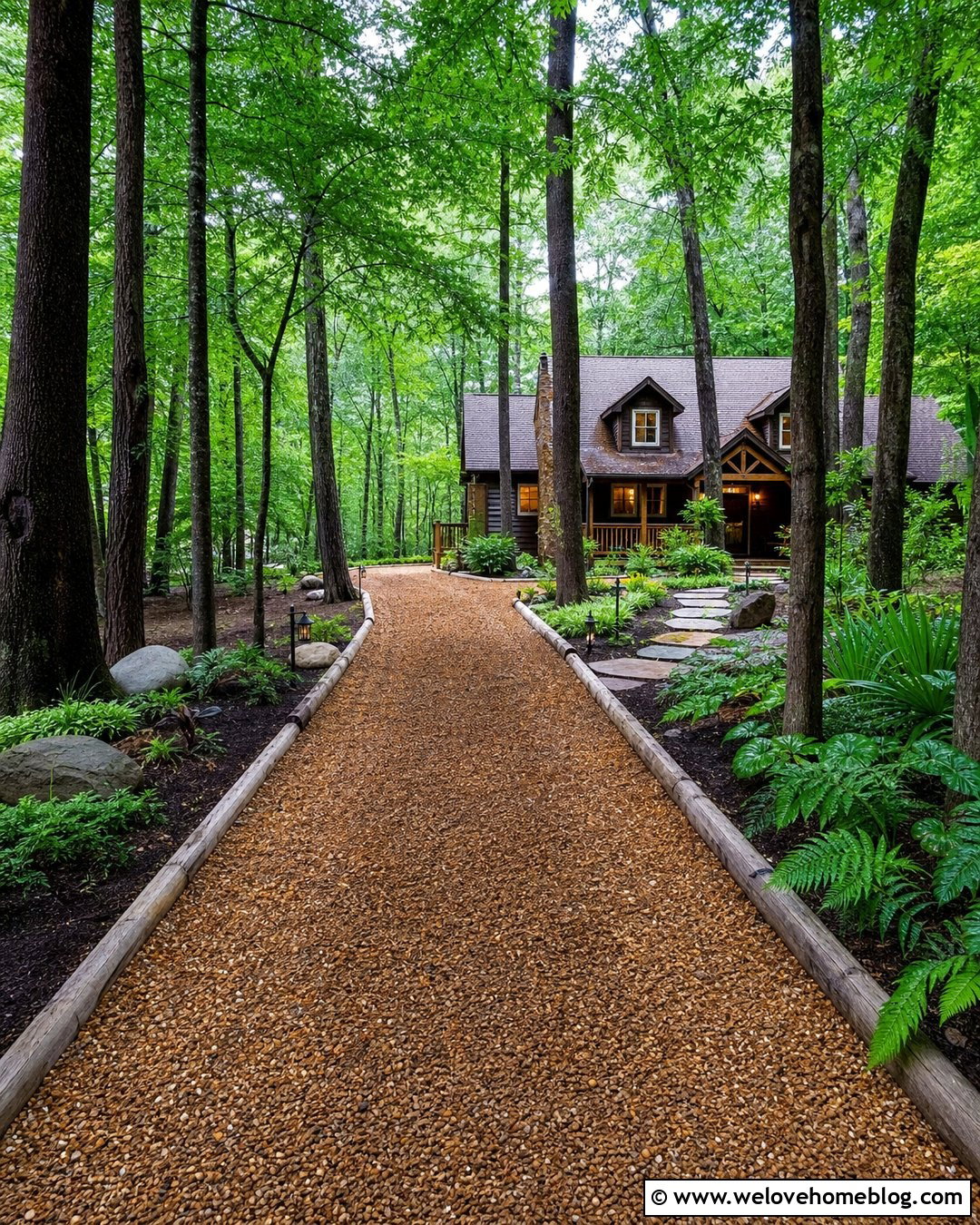
Embrace a truly rustic and organic look with a natural branch and twig wood deck railing. This incredibly cheap idea involves sourcing branches from your own property or surrounding wooded areas. Sturdy, thicker branches can be used for posts and rails, while a weave of smaller twigs and branches can form the infill. The key is to select durable wood species and ensure the structure is sound and securely fastened. This type of railing blends seamlessly with natural surroundings, making it an ideal choice for cabins, woodland homes, or any deck where a connection to nature is desired.
16. Painted Graphic Pattern Wood Deck Railing
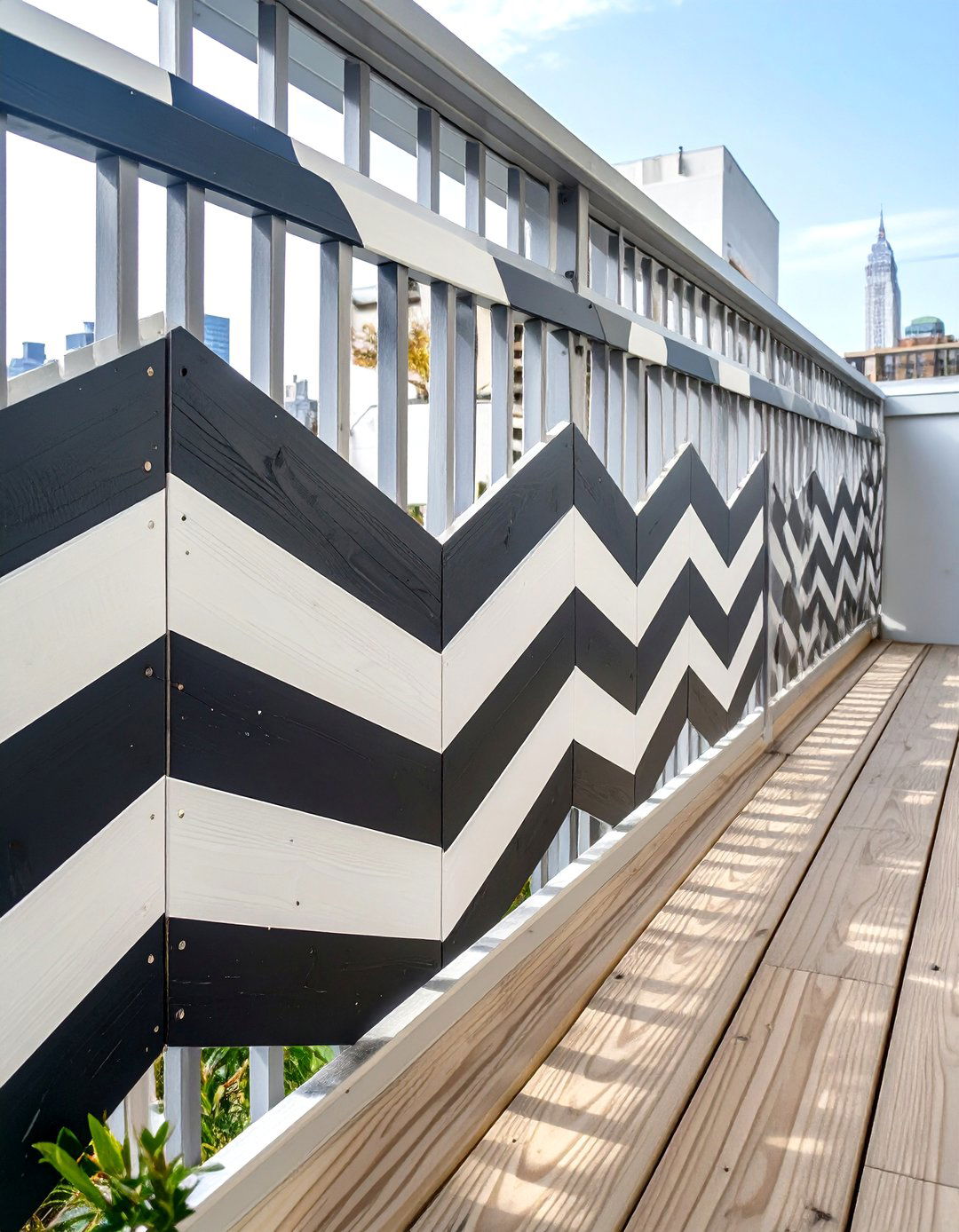
Transform a basic wood deck railing into a work of art with a painted graphic pattern. Start with a simple, inexpensive railing built from standard lumber, such as vertical 2x2 balusters. After priming, use painter's tape to mask off a geometric design—chevrons, stripes, or triangles—and paint the exposed areas in a bold, contrasting color. This project requires more time than money, using just a small amount of exterior paint to create a huge visual impact. It’s a fantastic way to inject personality and modern style into your outdoor space without changing the railing's structure.
17. Wood Frame with Rope Infill Deck Railing
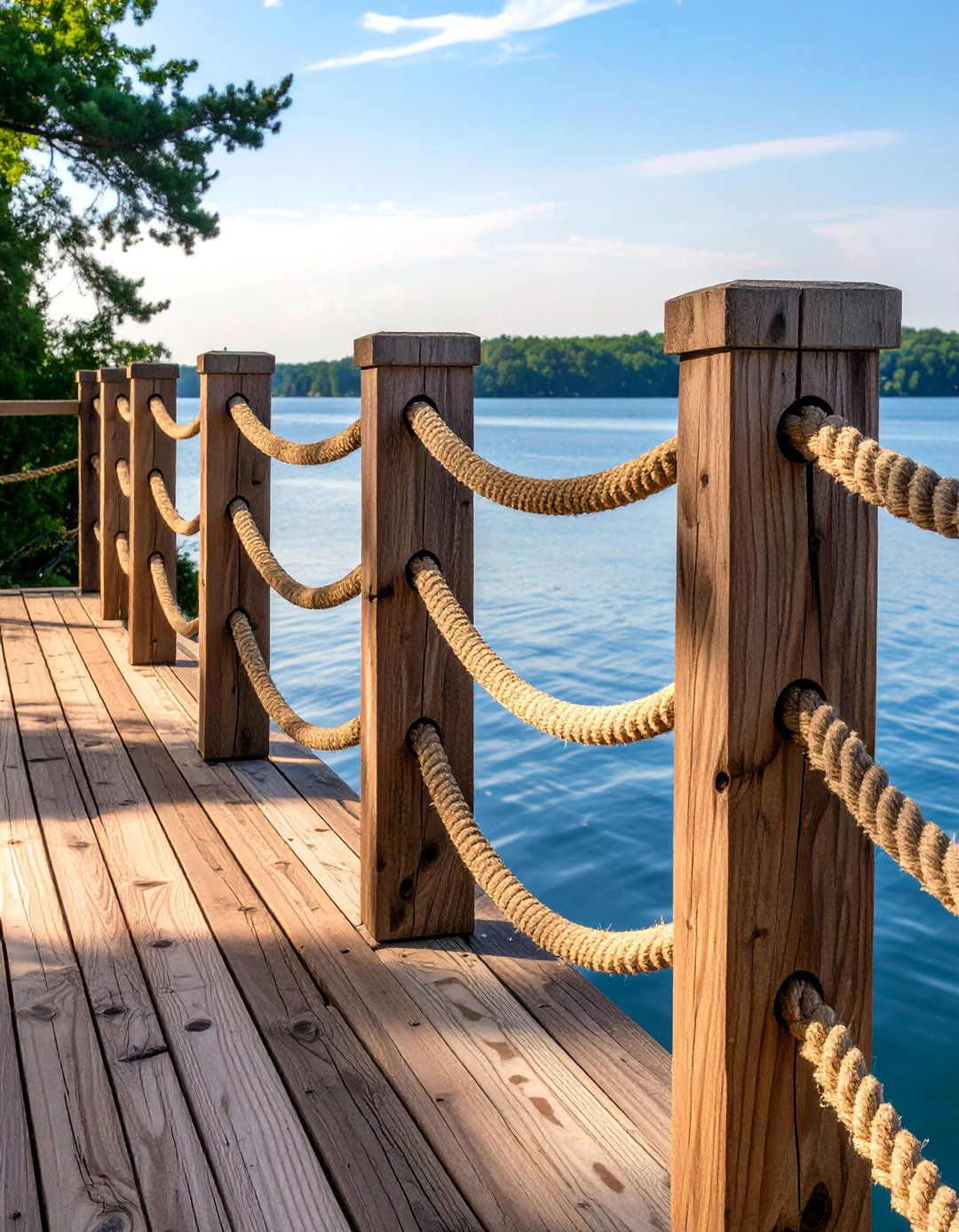
For a nautical or coastal vibe, a wood frame with rope infill deck railing is a charming and affordable choice. The structure is built using standard wood posts and a top rail. Instead of balusters, thick, durable rope is threaded through holes drilled in the posts or wrapped around them. Sisal or polypropylene rope are great low-cost, weather-resistant options. This design is perfect for homes near the water or for anyone wanting to create a relaxed, maritime atmosphere. It's a simple, quick, and inexpensive way to build a functional railing that is full of character.
18. Shadow Box Wood Deck Railing
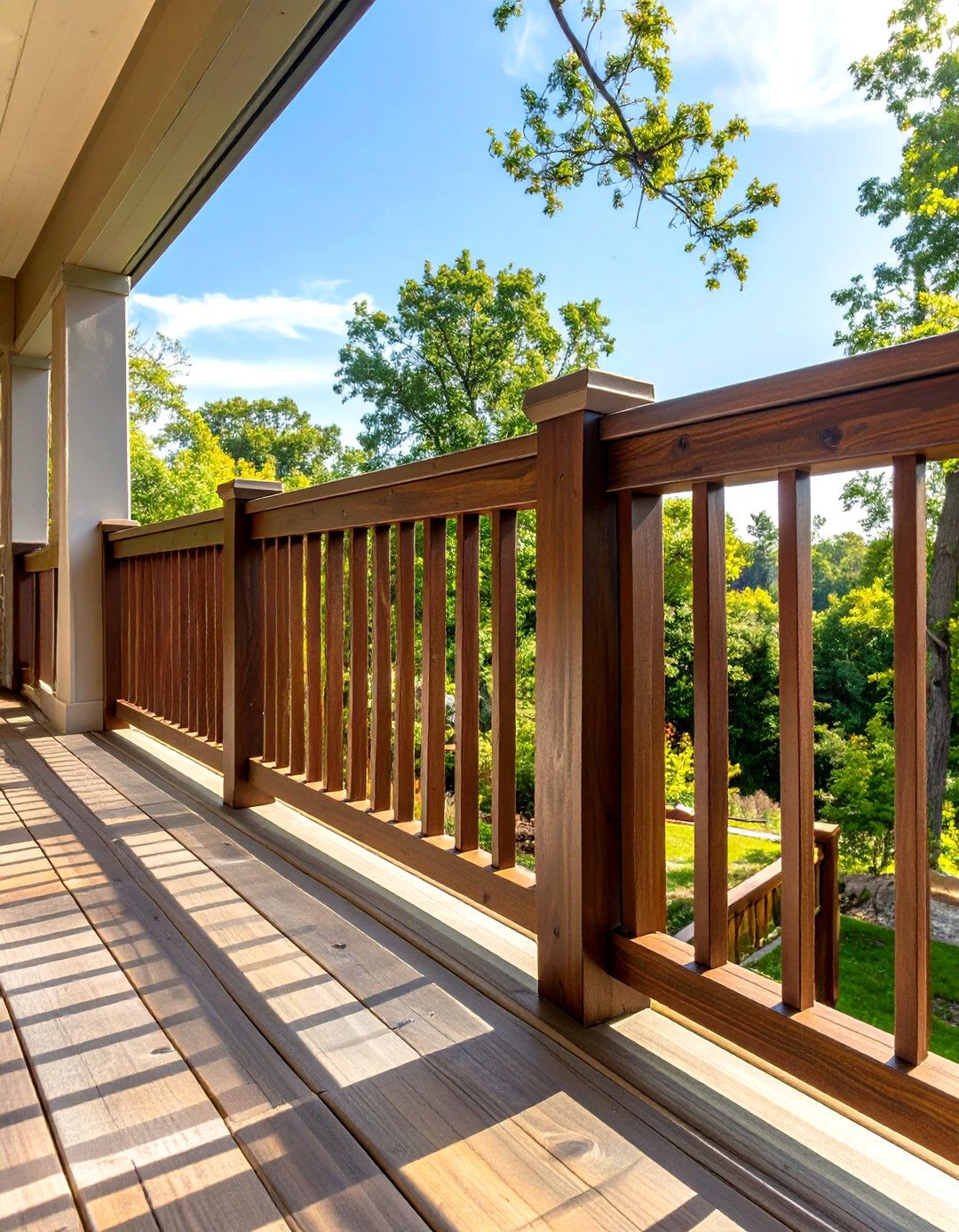
A shadow box wood deck railing creates depth and a clean, finished look from both sides. This design involves sandwiching vertical balusters between two sets of horizontal rails. Essentially, you have a row of balusters attached to one side of the posts and another row attached to the opposite side, slightly offset. This creates a "box" effect and ensures the railing looks just as good from outside the deck as it does from inside. Using standard 1x2s for the balusters and 2x4s for the rails keeps it budget-friendly while achieving a high-end, custom-built appearance.
19. Solid Wood Panel Deck Railing
For maximum privacy on a budget, a solid wood panel deck railing is an effective solution. This style uses inexpensive exterior-grade plywood sheets or tightly spaced vertical 1x6 fence pickets to create a solid barrier. The panels are attached to a sturdy frame of 4x4 posts and 2x4 rails. This design is ideal for urban or suburban homes where decks are close to neighbors, providing a visual screen and a sense of seclusion. Painting the panels to match your home's trim can create a cohesive and polished look, turning your deck into a private outdoor retreat.
20. Staggered Height Wood Baluster Deck Railing
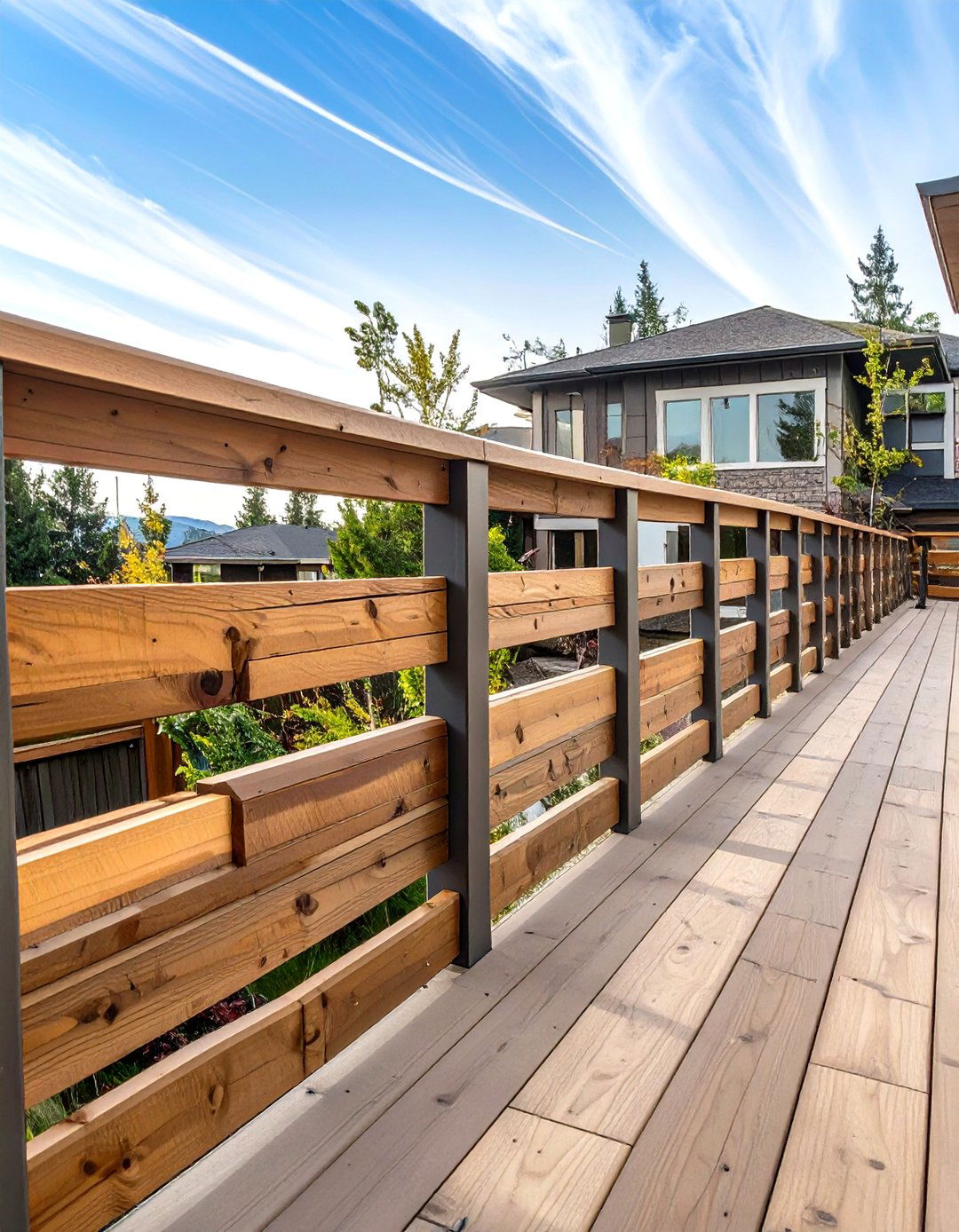
Add a playful, modern twist to a traditional design with a staggered height wood baluster deck railing. Instead of cutting all vertical balusters to the same length, you can trim them to varying heights to create an interesting, undulating pattern. This can be achieved with low-cost 2x2 or 1x3 boards. The top rail can follow the staggered pattern, or you can have the balusters extend past a straight top rail for a more unconventional look. This simple modification requires no extra material cost, yet it produces a unique, dynamic railing that breaks from the norm.
21. Integrated Wood Planter Box Deck Railing
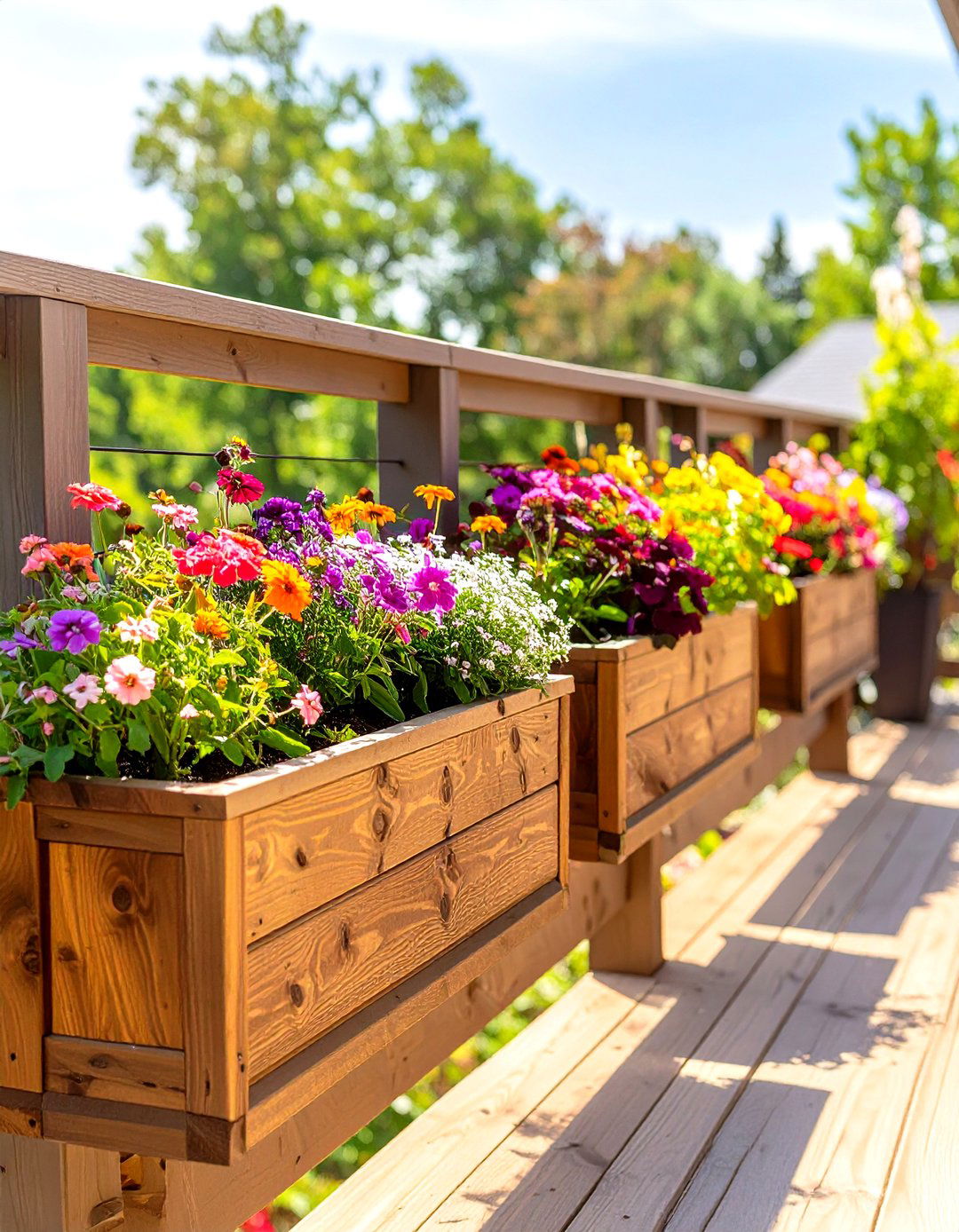
Combine form and function by building an integrated wood planter box deck railing. This clever design incorporates planter boxes into the railing structure itself, typically at the corners or along sections of the perimeter. The boxes can be constructed from the same affordable lumber used for the rest of the railing, such as pressure-treated pine or cedar. This not only provides a secure barrier but also offers dedicated space for growing flowers, herbs, or other plants. It’s a smart, space-saving solution that adds life, color, and a custom feature to your deck without a significant increase in cost.
22. Rustic Post and Beam Wood Deck Railing
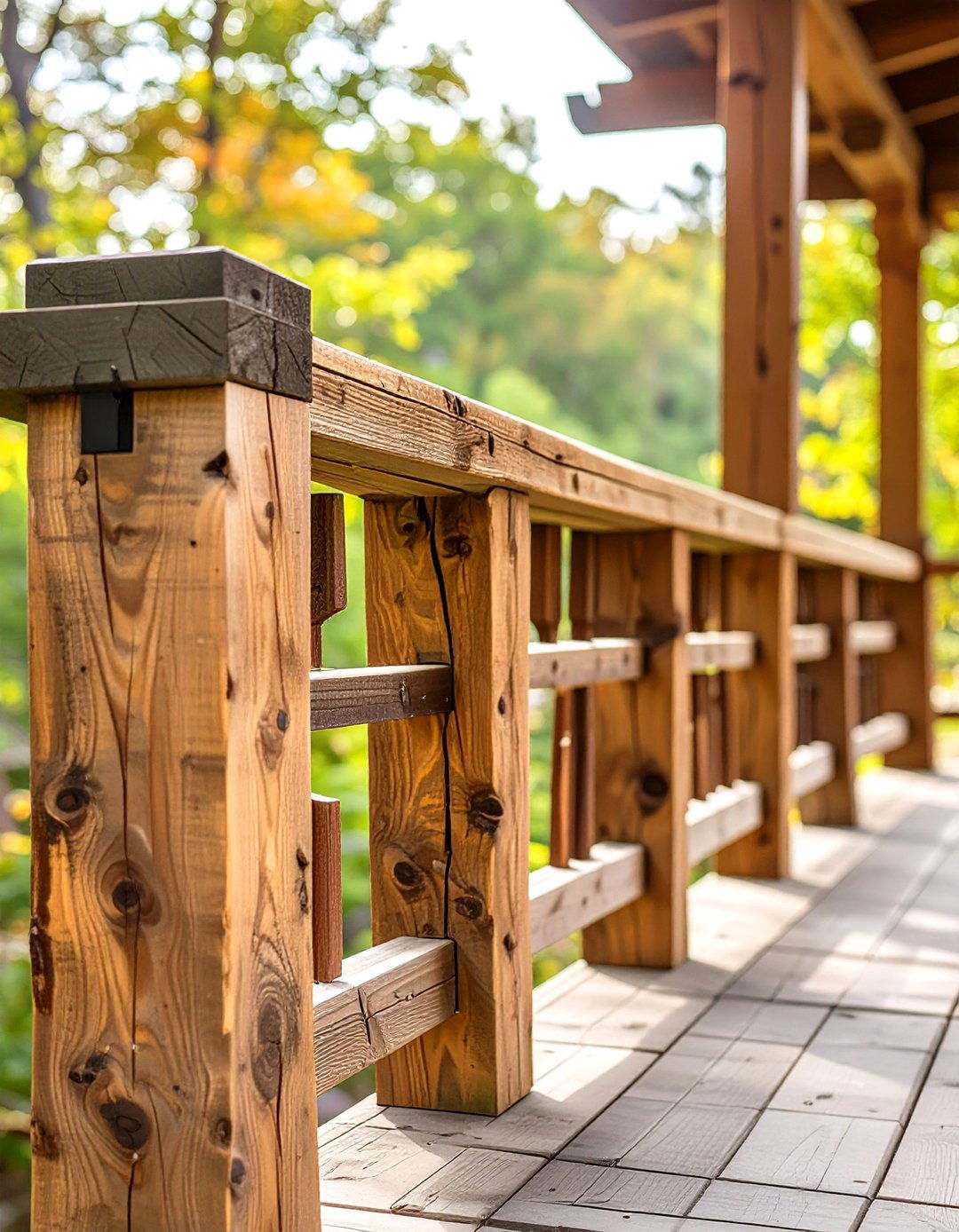
A rustic post and beam wood deck railing uses larger, rough-hewn timbers for a bold, substantial look. This style often features chunky 6x6 posts and thick 4x6 or larger top rails, with minimal or no infill. While the individual timbers are larger, you use fewer of them, which can keep costs manageable, especially if you can source locally milled or reclaimed wood. The joinery is often kept simple, with visible bolts and hardware that contribute to the rustic, handcrafted aesthetic. This design is perfect for log homes, cabins, or any setting where a strong, natural look is desired.
23. Vertical Cable with Wood Frame Deck Railing
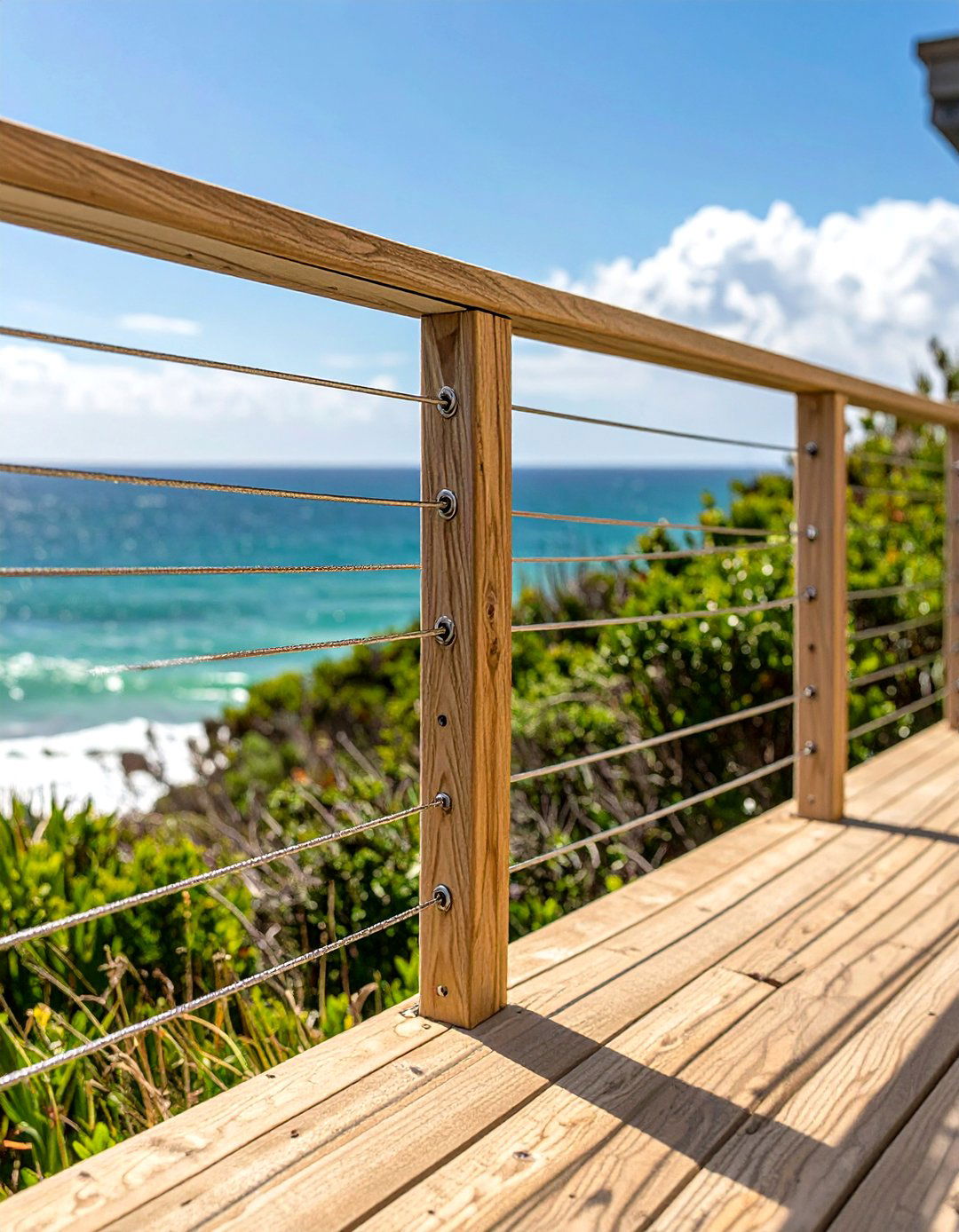
While cable railing systems can be expensive, a DIY vertical cable with a wood frame deck railing can be a more affordable alternative. By using a simple wood frame made of 2x4s and sourcing stainless steel cable and fittings online, you can reduce costs significantly. Installing the cables vertically instead of horizontally can sometimes be more compliant with local building codes and offers a unique, contemporary look. The thin cables provide an almost invisible barrier, preserving your view while ensuring safety. This project requires careful tensioning but results in a sleek, modern railing at a fraction of the typical cost.
24. Louvered Wood Panel Deck Railing
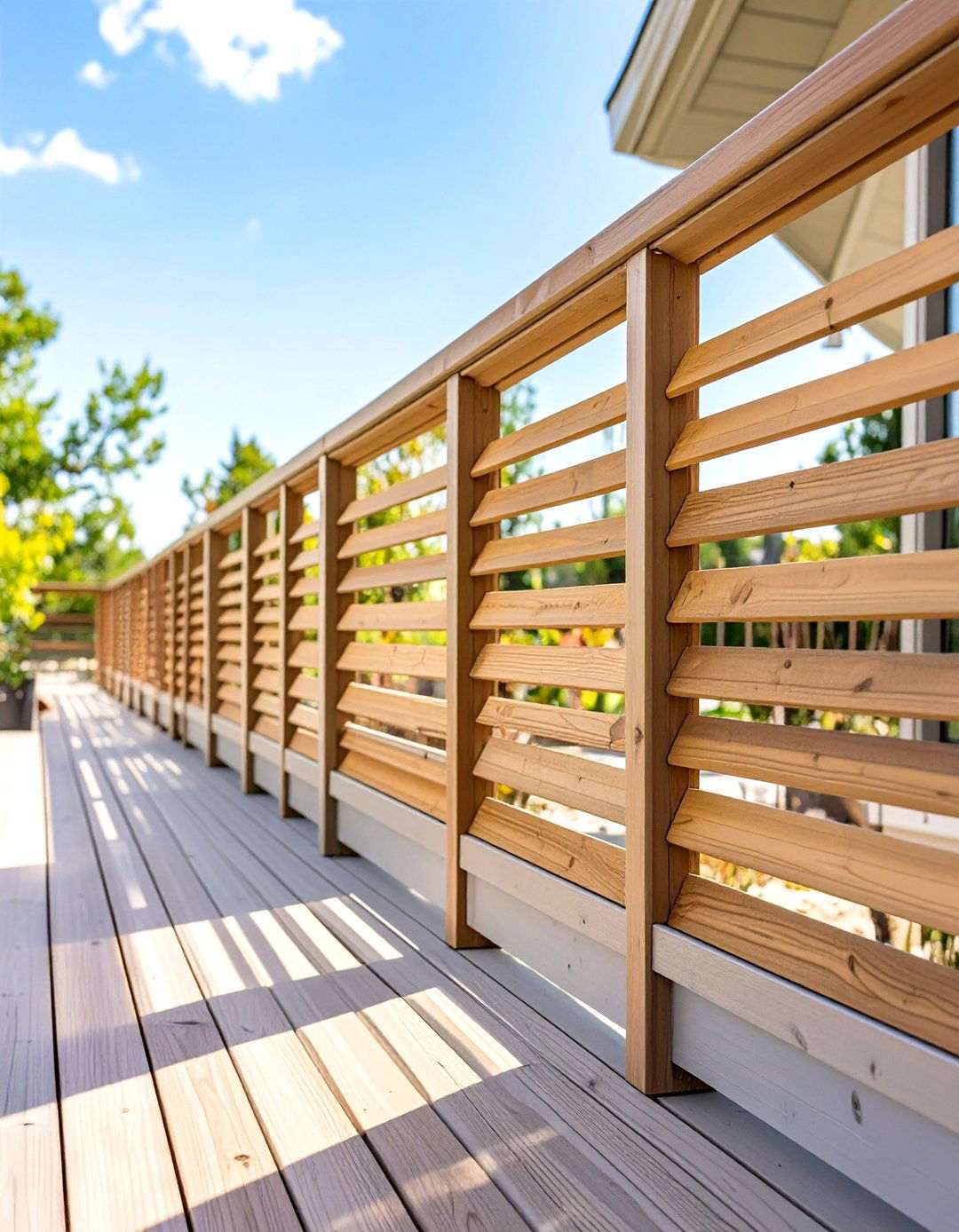
Create a functional and stylish railing with louvered wood panels. This design features angled slats, similar to window shutters, set within a wood frame. You can build the panels yourself using inexpensive 1x3 or 1x4 boards. The angled slats provide privacy and shade while still allowing for airflow, making your deck more comfortable on hot, sunny days. The louvered look adds a sophisticated, architectural element to your outdoor space. While it requires more precision cuts, the material costs remain low, offering a high-end feature that is surprisingly budget-friendly and practical for enhancing comfort.
25. Board and Batten Style Wood Deck Railing
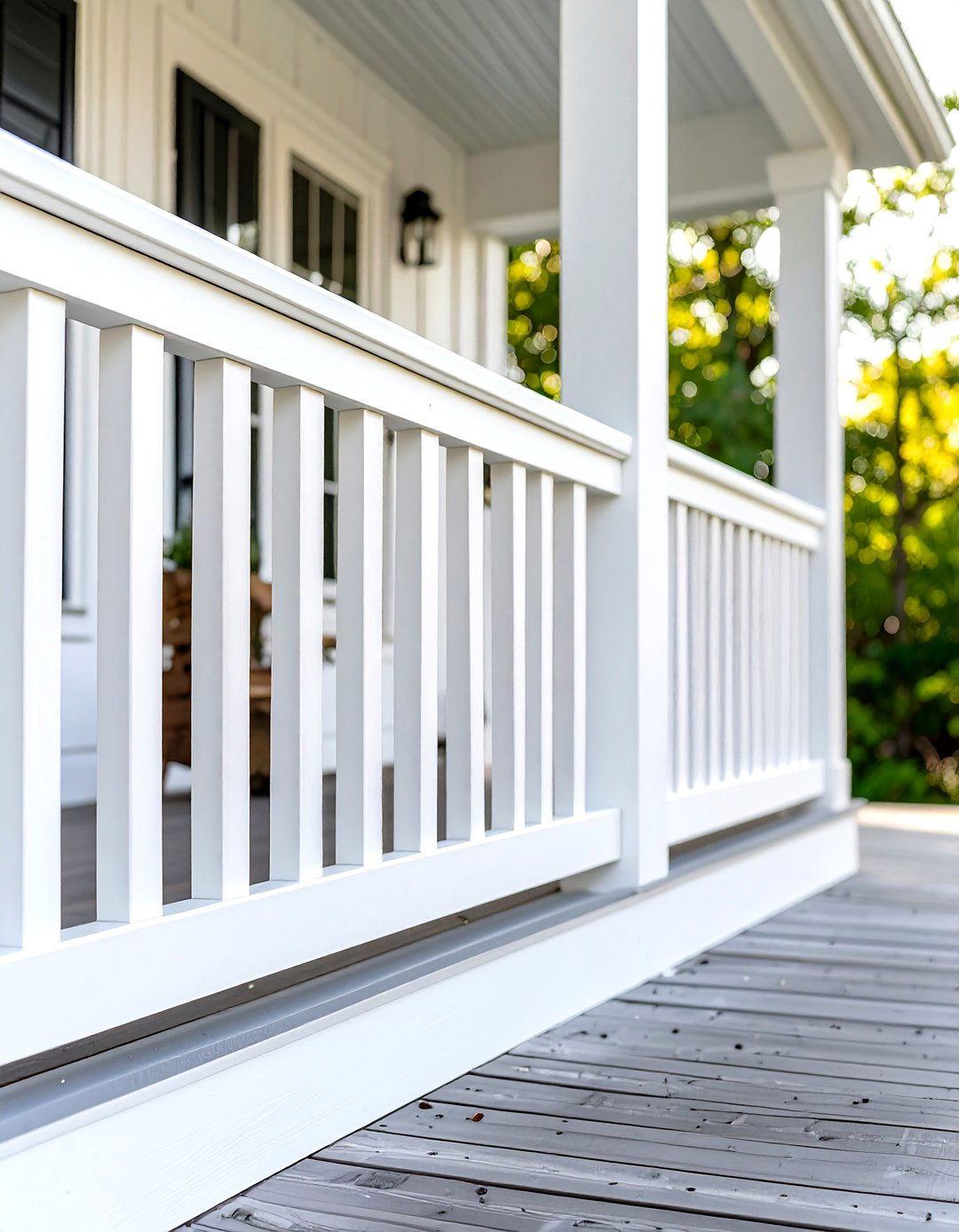
Borrowing from a classic siding style, a board and batten wood deck railing offers a clean, vertical look with a touch of texture. This design uses wide vertical boards (the boards) spaced slightly apart, with narrow strips of wood (the battens) covering the seams. For a railing, you can adapt this by using wide 1x6 or 1x8 boards as the main paneling, with 1x2s as the battens. This creates a semi-private, visually interesting barrier. Using standard pressure-treated lumber keeps it affordable, while the layered look adds a custom, farmhouse-inspired charm to your deck's perimeter.
26. Mountain Laurel Branch Deck Railing
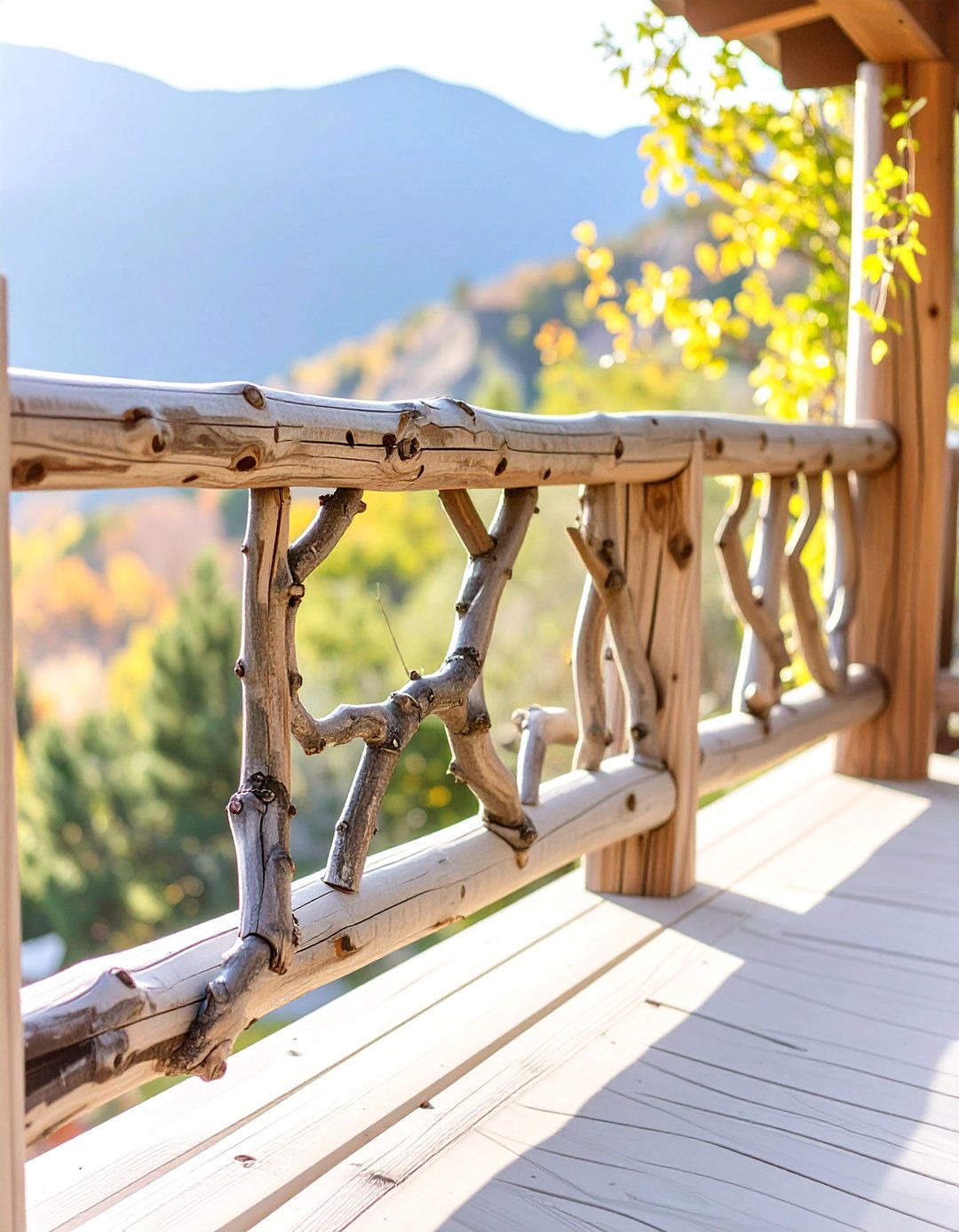
For a truly unique and naturalistic railing, using Mountain Laurel branches as balusters is an enchanting and low-cost option. The naturally twisted and gnarled branches of the Mountain Laurel create a beautiful, rustic infill that is one-of-a-kind. These branches are durable and weather-resistant. The frame can be built with simple wood posts and rails, and the branches are then fitted and secured in between. This style is particularly fitting for homes in woodland or mountain settings, as it seamlessly integrates the deck with its natural environment, creating a whimsical, organic-looking structure.
27. Simple Dowel Rod Wood Deck Railing
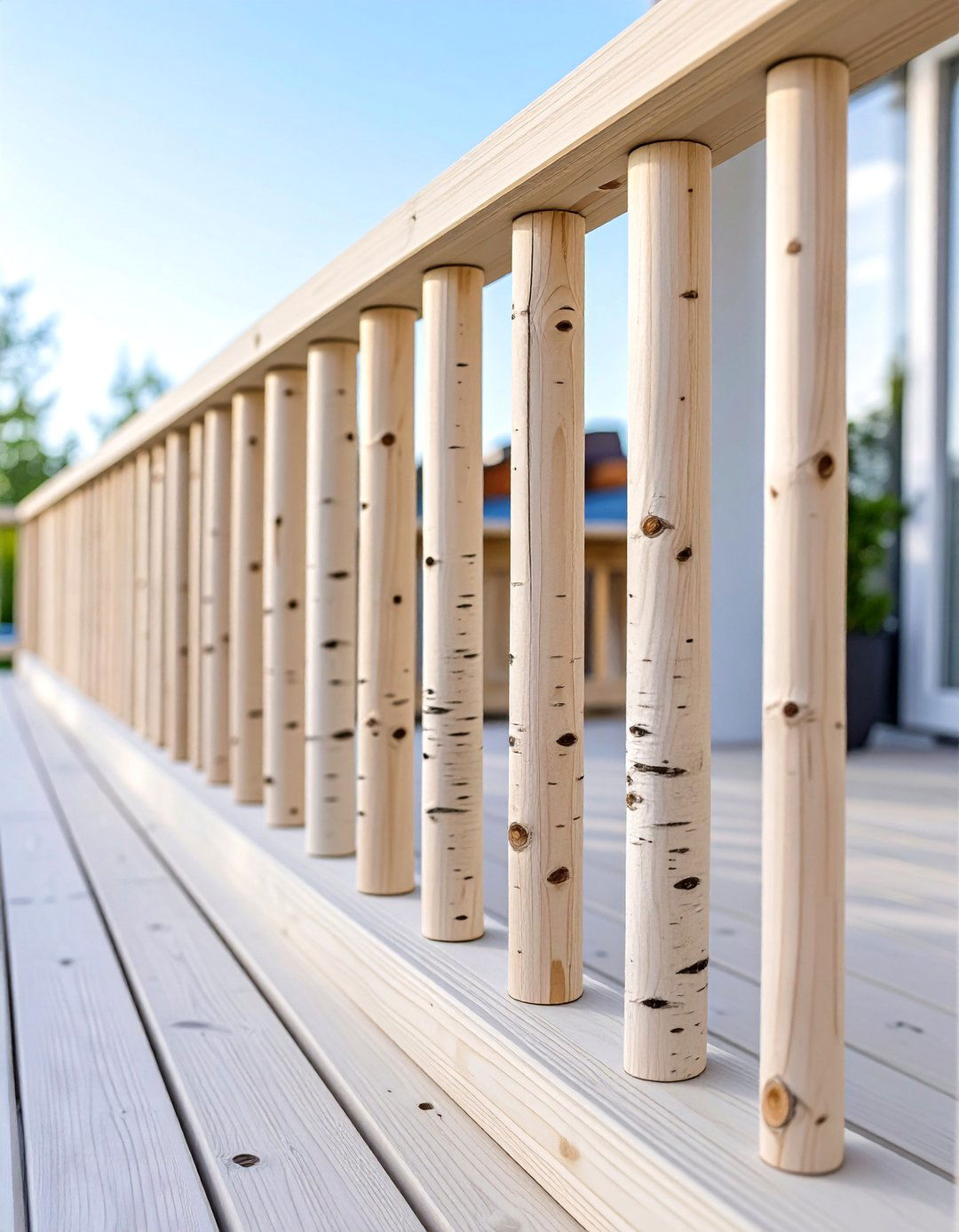
A simple dowel rod wood deck railing is a clean, minimalist, and very cheap option. Instead of using standard square balusters, this design uses thick wooden dowel rods, which are often less expensive. A frame is built from 2x4s for the top and bottom rails, and holes are drilled through both rails to insert the dowels vertically. This creates a look that is softer and more refined than traditional balusters. The rounded shape of the dowels lends a subtle Scandinavian or mid-century modern feel to the deck, achieving a stylish and light appearance on a minimal budget.
28. Two-Tone Stained Wood Deck Railing
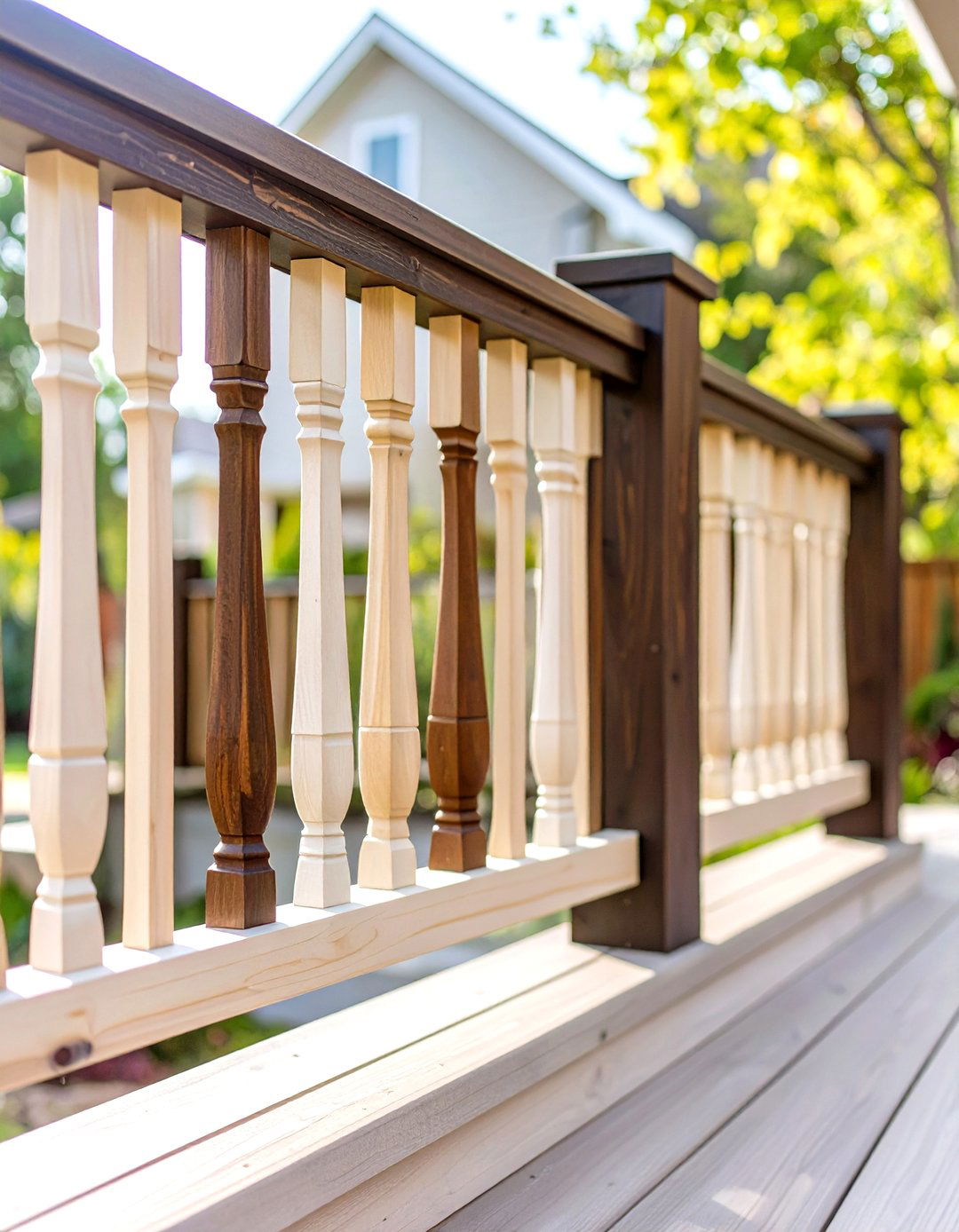
Elevate a simple wood deck railing design by using a two-tone stain finish. This technique involves staining different parts of the railing in two contrasting colors. For example, you could stain the top rail and posts a dark, rich color while using a lighter, more natural stain for the vertical balusters. This creates visual depth and highlights the architectural lines of the railing. The only additional cost is a second can of stain, making this a highly effective and budget-friendly way to give a standard, inexpensive railing a sophisticated, custom-designed look that complements your home's color scheme.
29. Corrugated Metal Panel Wood Deck Railing
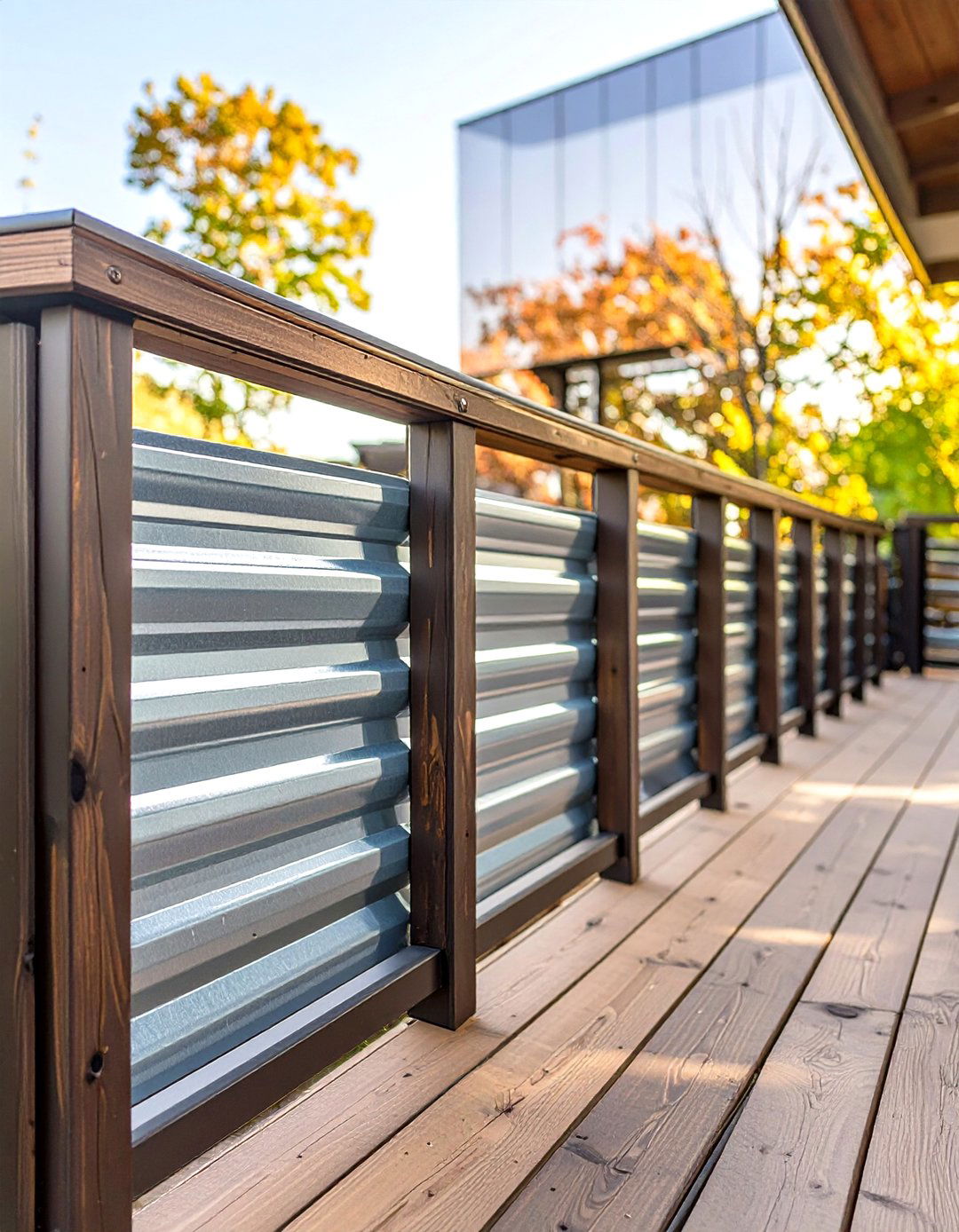
For an industrial or modern farmhouse aesthetic, consider a corrugated metal panel wood deck railing. This design uses a simple wood frame made from 2x4s or larger posts, with sheets of corrugated metal serving as the infill. The metal panels are inexpensive, durable, and provide complete privacy. They can be installed vertically or horizontally to create different visual effects. The combination of the rustic, textured wood frame and the sleek, industrial metal creates a striking contrast. This is a low-maintenance and cost-effective solution for a unique, privacy-focused deck railing.
30. Geometric Block Wood Deck Railing
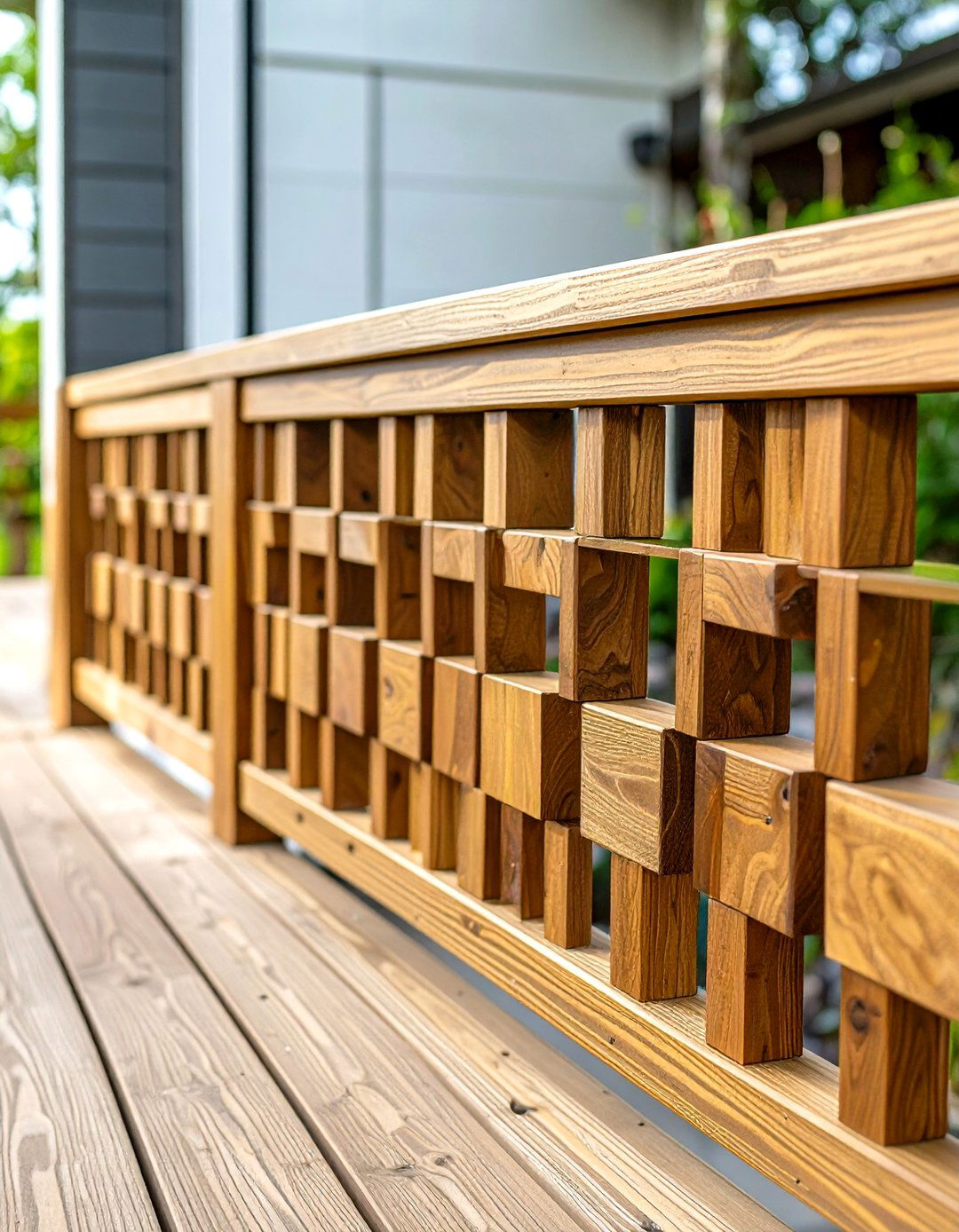
Create a bold, contemporary statement with a geometric block wood deck railing. This design is built by assembling small squares or rectangles from affordable 1x2 or 2x4 lumber and arranging them in a repeating pattern within the railing frame. You can create a grid-like structure or a more abstract, asymmetrical layout. While it involves more assembly than a simple baluster railing, the materials themselves are very cheap. The end result is a highly graphic and modern railing that functions as both a safety feature and a piece of outdoor art, showcasing a high-end look on a DIY budget.
Conclusion:
Ultimately, creating a safe and stylish wood deck railing does not require a large budget. By using affordable materials like standard lumber, reclaimed wood, or inexpensive hardware, you can achieve a wide range of designs. From simple vertical balusters and modern horizontal planks to creative patterns like the X-design or sunburst, the key is to match the style to your home and your skill level. These 30 ideas demonstrate that with a bit of planning and DIY spirit, you can build a beautiful, durable, and cheap wood deck railing that enhances your outdoor living space.

Related posts:




Leave a Reply