
A wood deck railing is more than just a safety feature; it's a critical design element that defines your outdoor living space's character and style. From classic vertical balusters to modern horizontal slats, the options are vast and can dramatically enhance your home's curb appeal. The right wood railing can frame a beautiful view, create a sense of privacy, or add architectural interest. Choosing the perfect design involves balancing aesthetics, functionality, and budget to create a deck that is both secure and stunning, seamlessly blending with your home's exterior and landscape for a cohesive and inviting look.
1. Horizontal Slat Wood Deck Railing
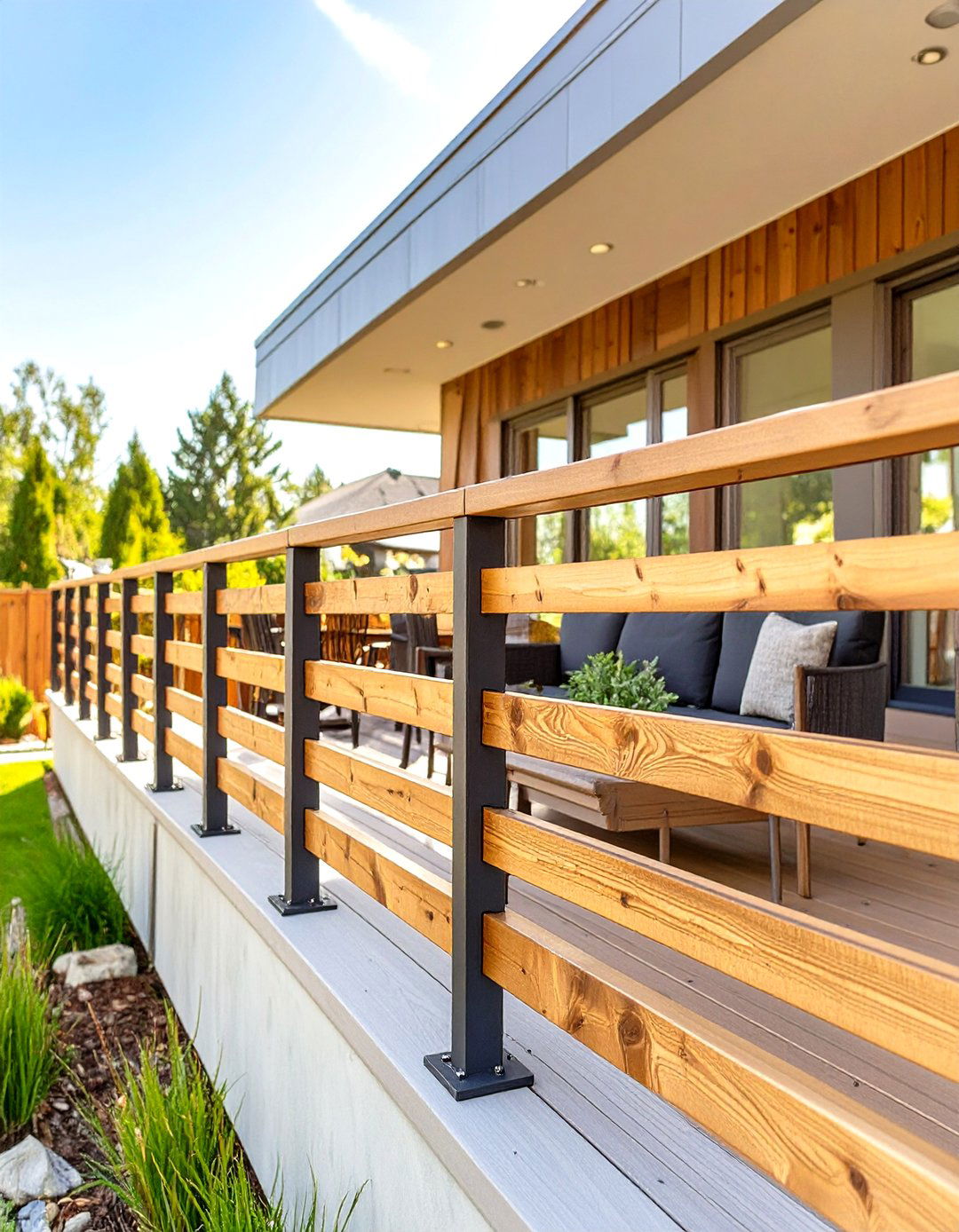
A horizontal slat wood deck railing offers a clean, contemporary look that has become increasingly popular. This design features wooden boards installed horizontally between the posts, creating long, unbroken lines that can make a space feel larger and more open. It’s particularly effective for decks with a scenic view, as the horizontal orientation draws the eye outward toward the landscape. For a modern aesthetic, you can use sleek, thin slats with minimal spacing, or for a more rustic feel, wider, rough-sawn boards can be used. This style is versatile and complements a wide range of architectural designs.
2. Classic Vertical Wood Baluster Railing
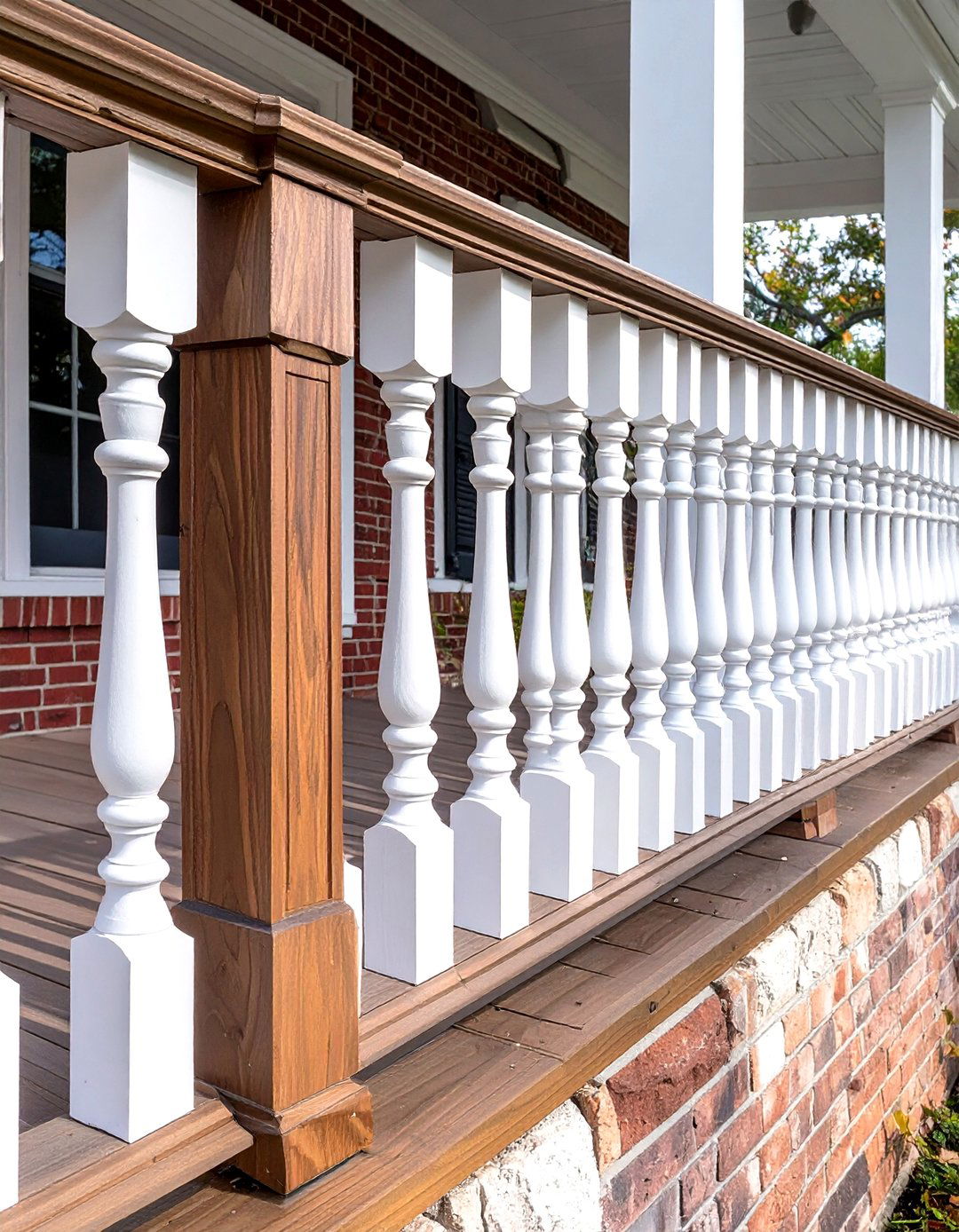
The classic vertical wood baluster railing remains a timeless and popular choice for its traditional charm and straightforward construction. This design consists of evenly spaced vertical spindles, or balusters, fitted between a top and bottom rail. It provides a secure and sturdy barrier that is safe for children and pets. You can customize the look by choosing different baluster styles, such as simple square-cut spindles, turned colonial-style balusters, or beveled-edge designs. Staining or painting the wood allows for further personalization, making it easy to match your home’s existing color scheme and create a cohesive outdoor aesthetic.
3. Wood Deck Railing with Black Metal Balusters
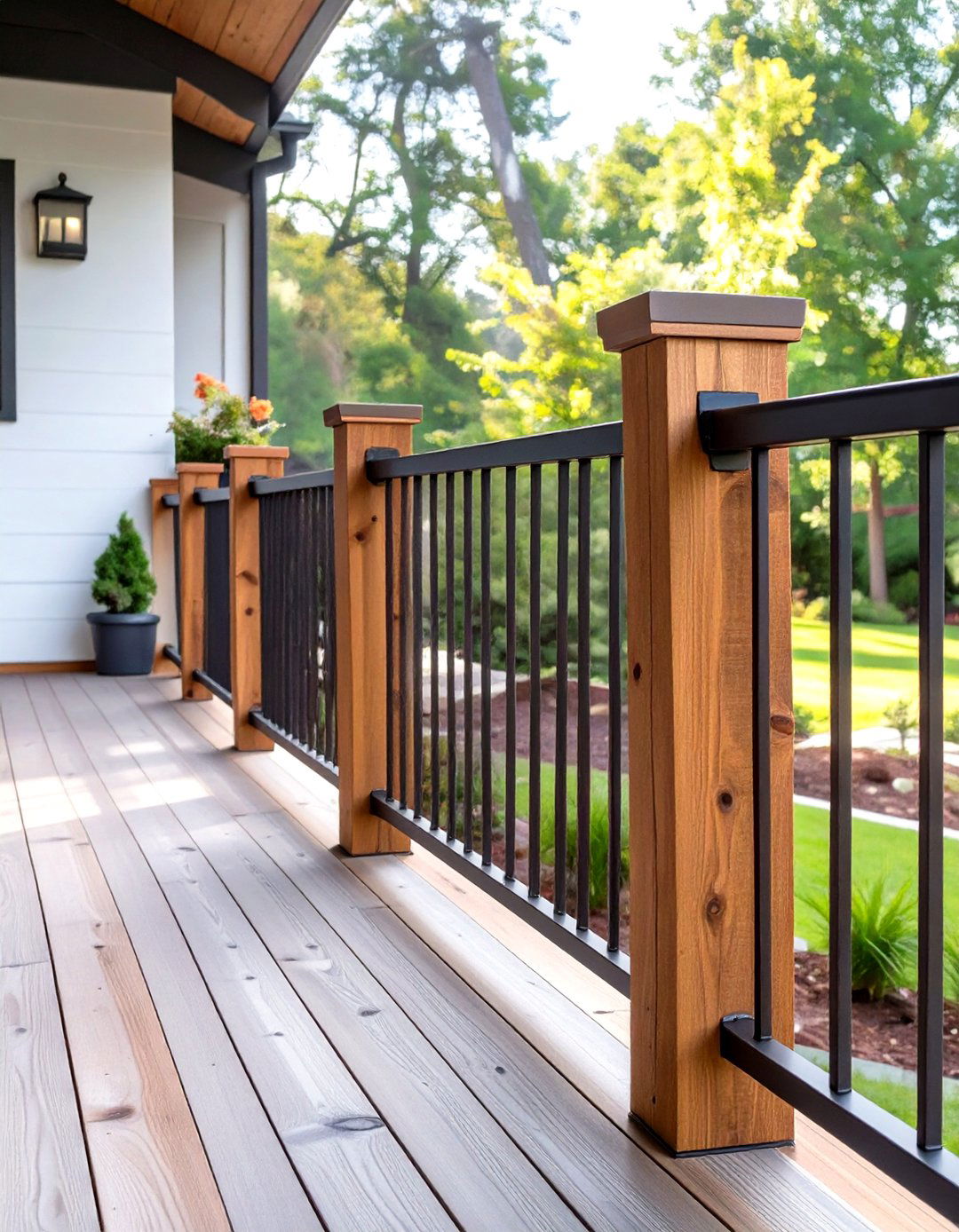
Combining a wood deck railing with black metal balusters creates a striking contrast that blends rustic warmth with modern industrial appeal. The wooden framework, including the top and bottom rails and posts, provides a natural, sturdy structure, while the slender black metal balusters offer a sleek, updated look. This hybrid design is visually less obstructive than an all-wood railing, helping to preserve views while ensuring safety. The metal balusters are also highly durable and require minimal maintenance. This popular style works well with various home exteriors, from contemporary farmhouses to modern suburban houses, adding a touch of sophisticated elegance.
4. Craftsman Style Wood Deck Railing
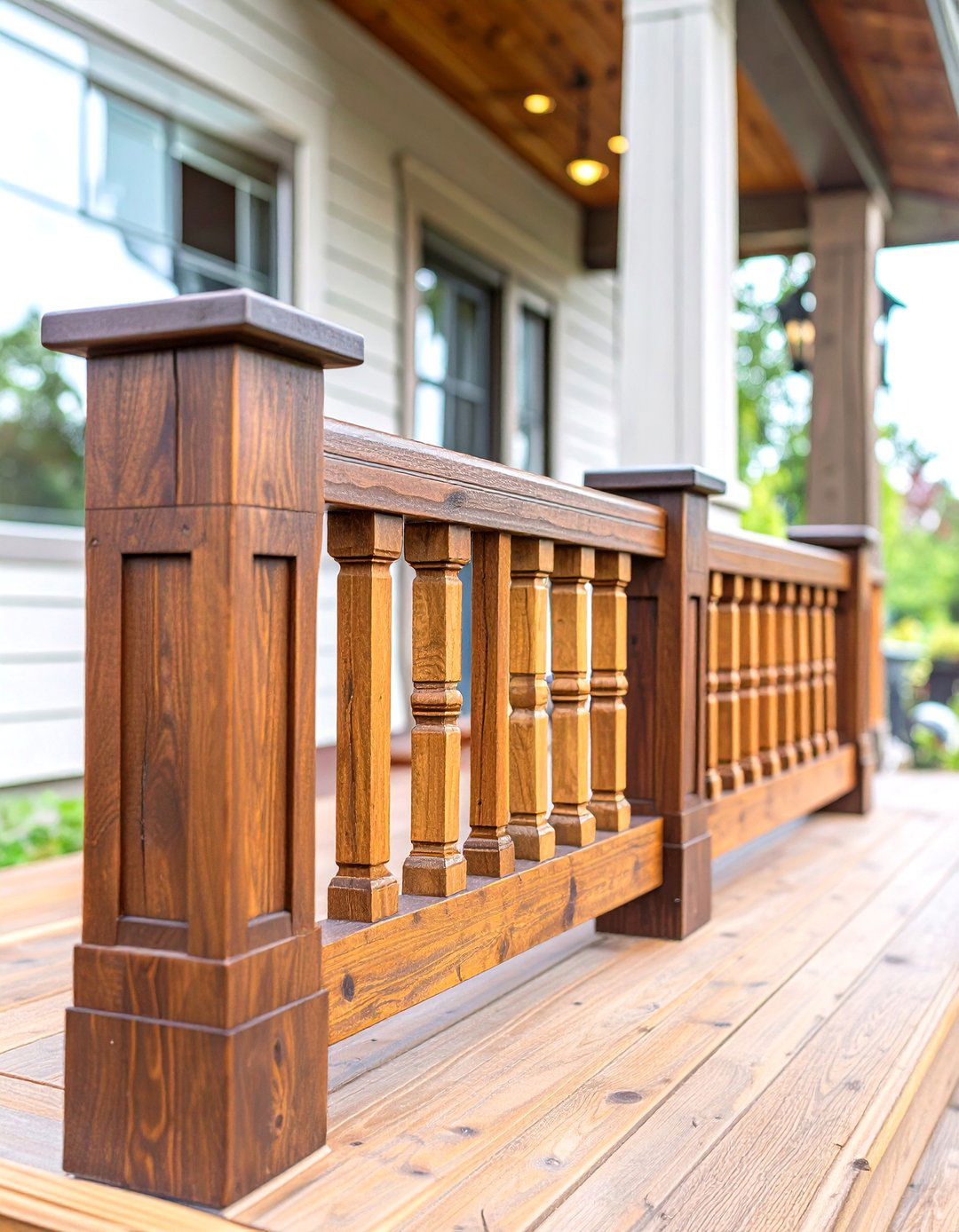
For a home with Arts and Crafts architecture, a Craftsman style wood deck railing is the perfect extension of its design principles. This style emphasizes sturdy, substantial construction with clean lines and handcrafted details. It typically features thick top rails, often flat to serve as a convenient "drink rail," and chunky posts. The balusters are usually simple and square, arranged in a clean, repeating pattern. Often, the design incorporates geometric patterns or groupings of balusters between larger sub-posts. The focus is on showcasing the natural beauty of the wood and the quality of the workmanship, creating a timeless and robust look.
5. Rustic Log Wood Deck Railing

A rustic log wood deck railing is an ideal choice for cabins, mountain homes, or any property aiming for a natural, woodsy aesthetic. This design utilizes whole or half logs for posts and rails, celebrating the raw, organic shapes and textures of the wood. The balusters are often made from smaller diameter logs or sturdy branches, creating an authentic and rugged appearance. The joinery, such as mortise and tenon, can be left exposed to highlight the craftsmanship. This style fully embraces nature, making your deck feel like a seamless extension of the surrounding wilderness and providing a strong, durable enclosure.
6. Wood and Cable Deck Railing
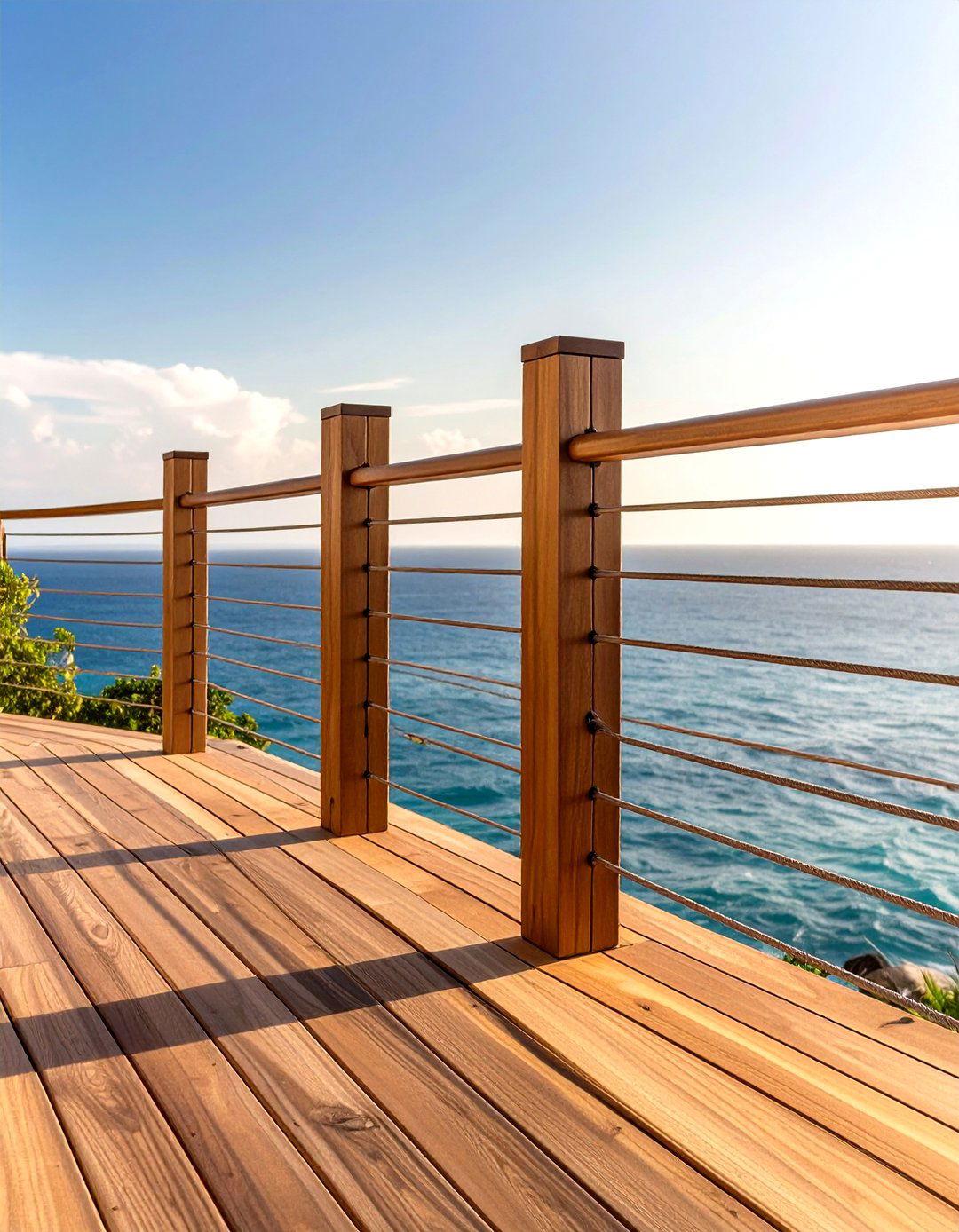
A wood and cable deck railing provides an exceptionally modern and minimalist look, perfect for maximizing views. This system uses sturdy wood posts and a top rail to create the frame, while thin, stainless steel cables are run horizontally in place of traditional balusters. The result is a nearly transparent barrier that offers security without obstructing the scenery, making it ideal for waterfront properties or homes with panoramic vistas. The warmth of the wood beautifully contrasts with the sleek, industrial feel of the steel cables, creating a sophisticated and contemporary design that is both durable and low-maintenance.
7. Chippendale Wood Deck Railing
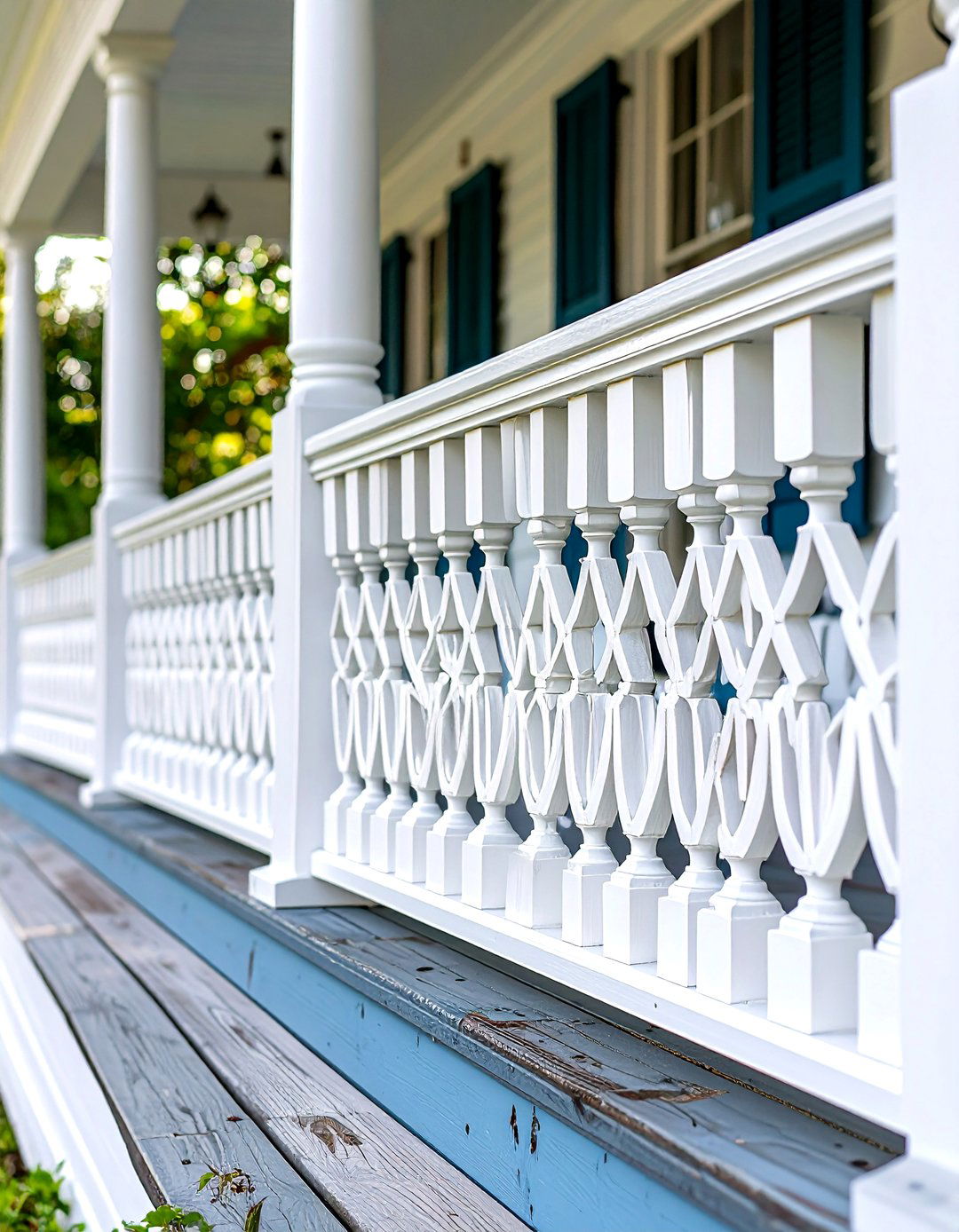
The Chippendale wood deck railing brings a touch of historic elegance and intricate detail to any outdoor space. Named after the 18th-century furniture designer Thomas Chippendale, this style is characterized by its distinctive geometric patterns, typically featuring interlocking fretwork in a Chinese-inspired lattice design. This ornate pattern is set within a standard rail frame, creating a visually captivating and decorative enclosure. While it appears complex, the patterns are often created from repeating modules. It’s a perfect choice for colonial, Georgian, or traditional homes, adding a sophisticated and timeless architectural element that stands out from more common railing styles.
8. Wood Deck Railing with a Drink Rail
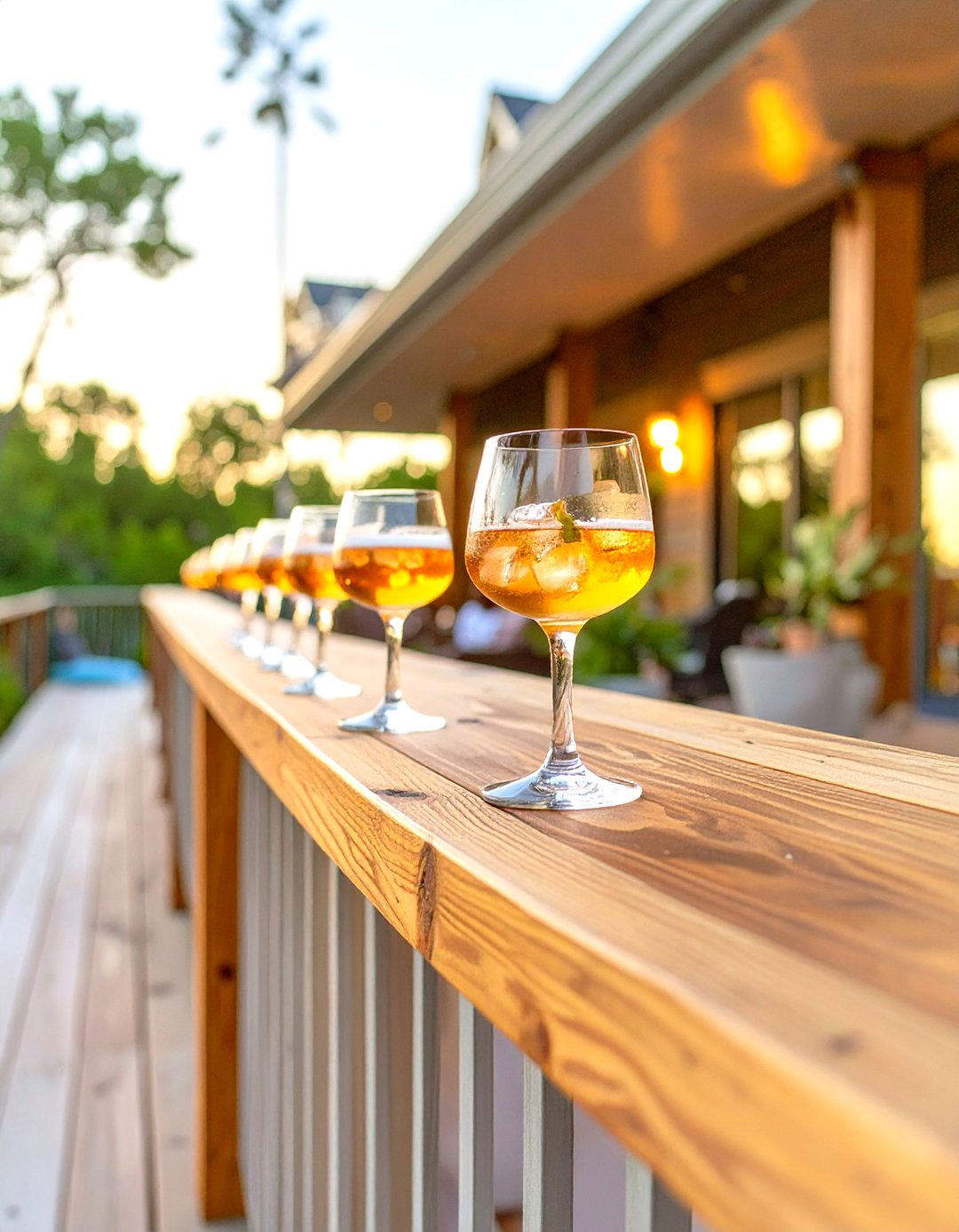
Incorporating a drink rail into your wood deck railing design is a brilliant way to blend form and function. This practical feature consists of a wide, flat top board, typically a 2x6, that runs along the top of the railing. It provides a convenient surface for guests to place their drinks, small plates, or even potted plants. This simple addition instantly makes your deck more user-friendly and perfect for entertaining. The drink rail can be installed on nearly any style of wood railing, from modern horizontal slats to classic vertical balusters, adding a finishing touch that enhances both usability and style.
9. Wood Lattice Panel Deck Railing
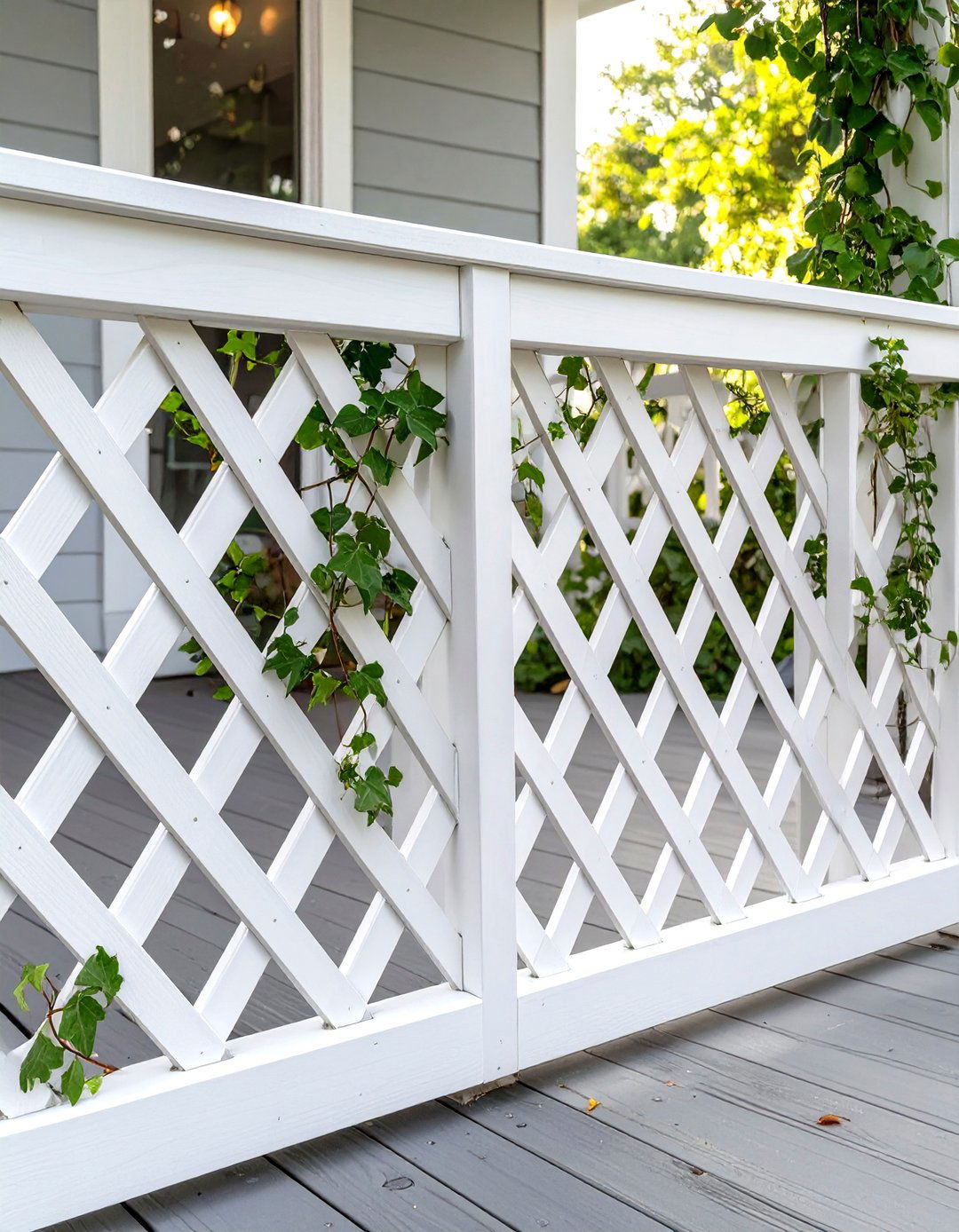
A wood lattice panel deck railing offers a charming, traditional look while also providing a significant amount of privacy. This design features pre-made or custom-built lattice sheets installed between the posts and rails. The crisscrossing pattern creates a semi-private screen that allows for airflow and light penetration while partially obscuring the view into and out of your deck. It’s an excellent choice for homes that are close to neighbors or for creating a secluded, cozy atmosphere. The lattice can be painted or stained to match the rest of the deck, and it provides a great structure for climbing plants and vines.
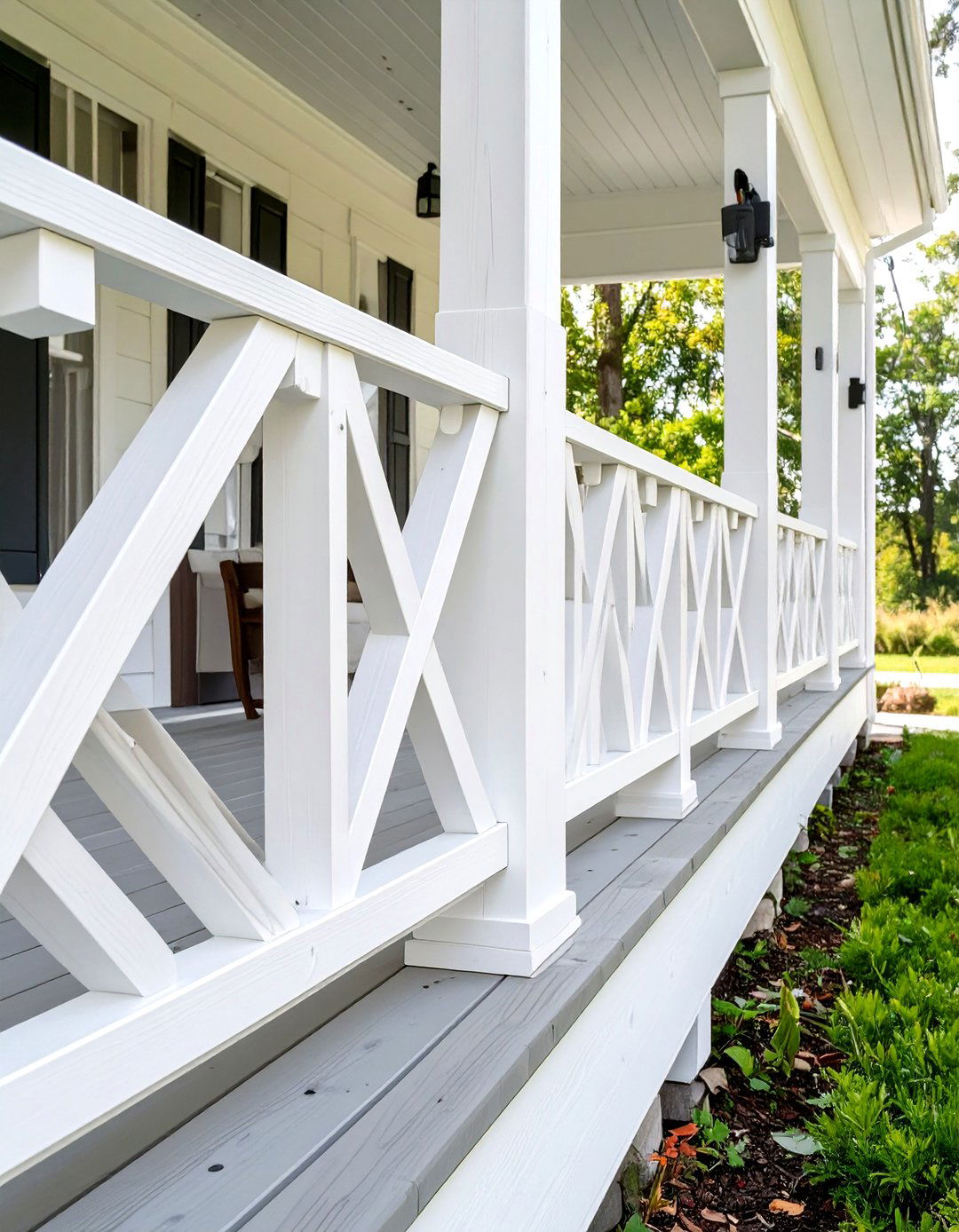


10. Sunburst Wood Deck Railing
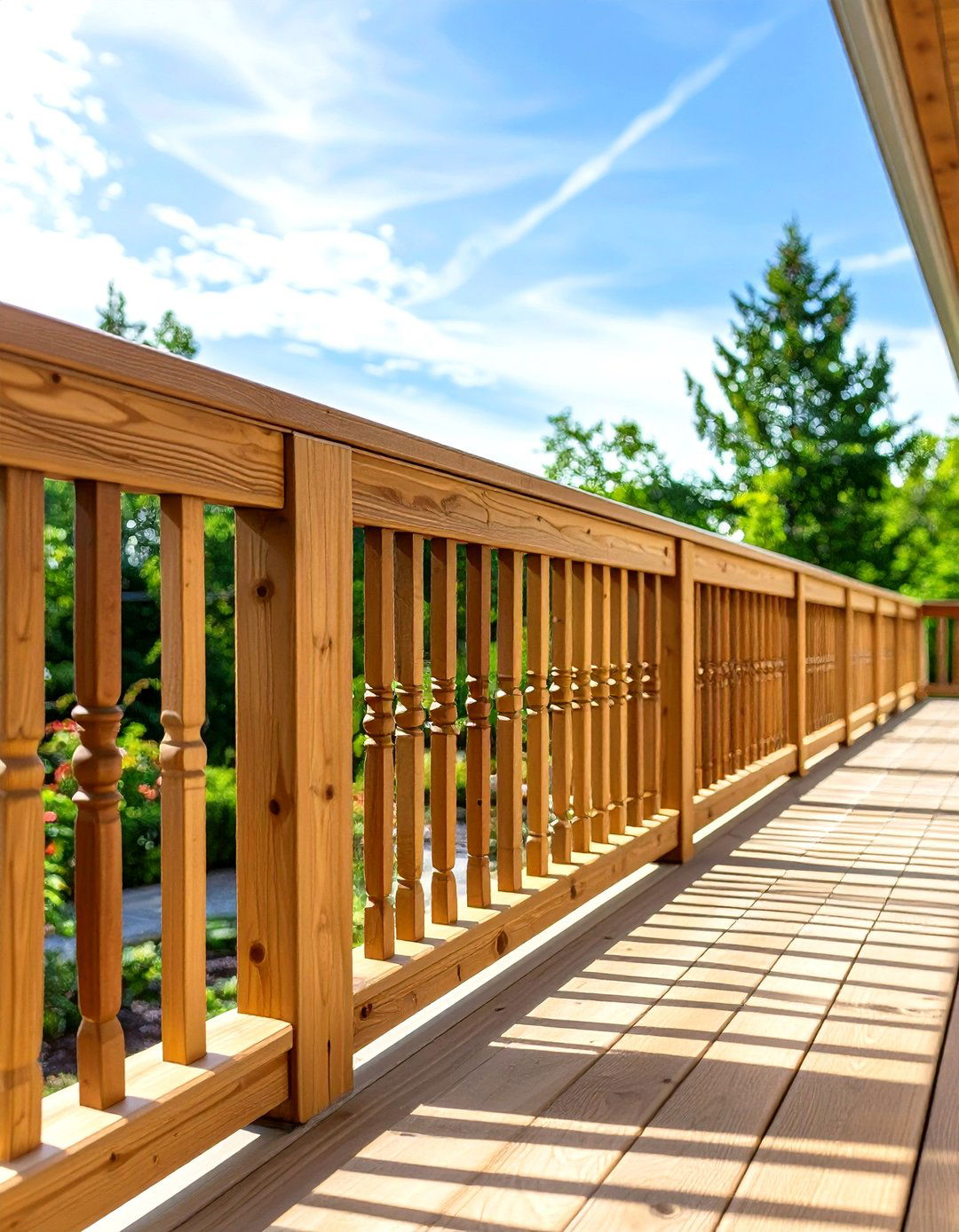
For a dramatic and eye-catching design, the sunburst wood deck railing is an exceptional choice. This artistic style features balusters that radiate outward from a central point on the bottom rail, creating a pattern that mimics the rays of a rising or setting sun. It works best as a focal point, often installed in a single, prominent section of the deck railing. The sunburst design transforms a functional safety feature into a stunning piece of outdoor art. It’s a fantastic way to add a unique, custom touch to your deck, and it pairs beautifully with homes that have a flair for the creative and unconventional.
11. Built-In Bench Wood Deck Railing
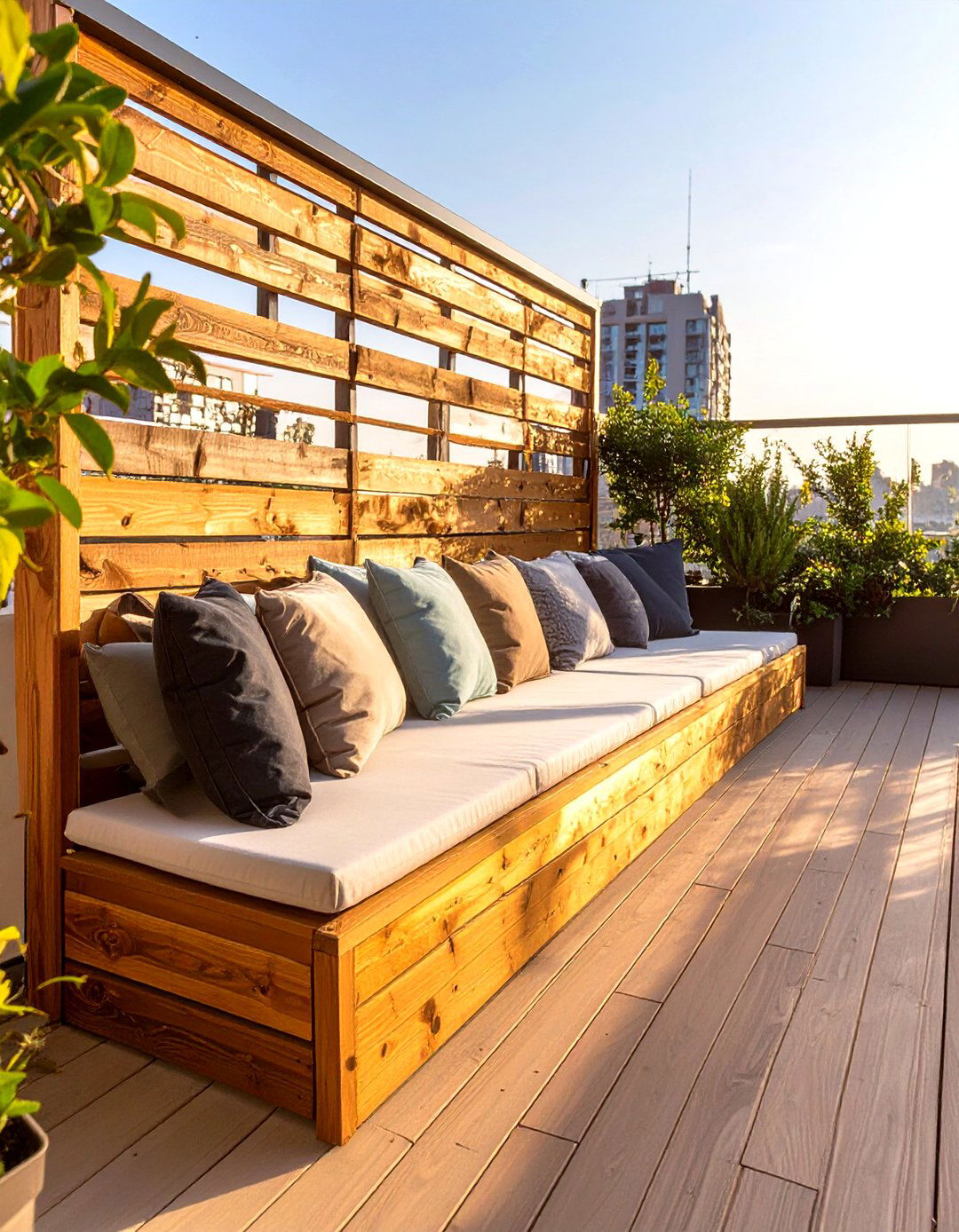
Integrating a built-in bench with your wood deck railing is a space-saving and highly functional design idea. This clever approach uses the railing as the backrest for a continuous wooden bench built along the perimeter of the deck. It maximizes seating without cluttering the floor space with standalone furniture, making it perfect for smaller decks or for creating dedicated conversation areas on larger ones. The design can be simple and rustic or more refined and modern, depending on the style of the bench and railing. It’s a practical solution that adds value, comfort, and a custom-built feel to your outdoor living area.
12. Hog Wire Panel Wood Deck Railing
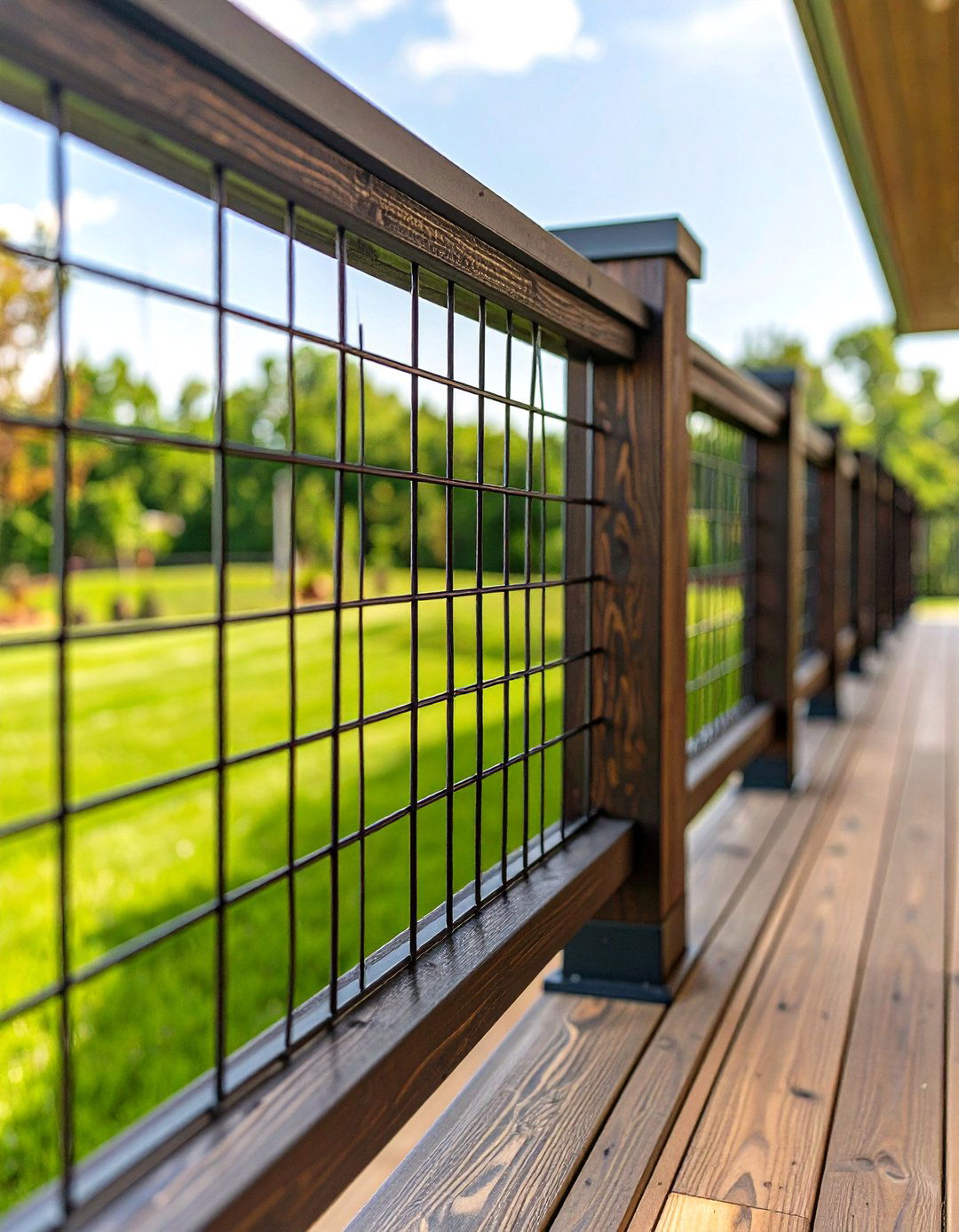
A hog wire panel wood deck railing offers a trendy, rustic-industrial look that is both affordable and durable. This design consists of a sturdy wood frame with sections of welded wire mesh, known as hog or cattle panels, inserted in place of traditional balusters. The grid pattern of the wire is visually light, preserving views while providing a secure barrier. It’s a great option for a modern farmhouse, rustic, or industrial aesthetic. The dark color of the wire mesh often recedes into the background, allowing the landscape beyond to take center stage, while the wood frame adds natural warmth and structure.
13. Reclaimed Wood Deck Railing
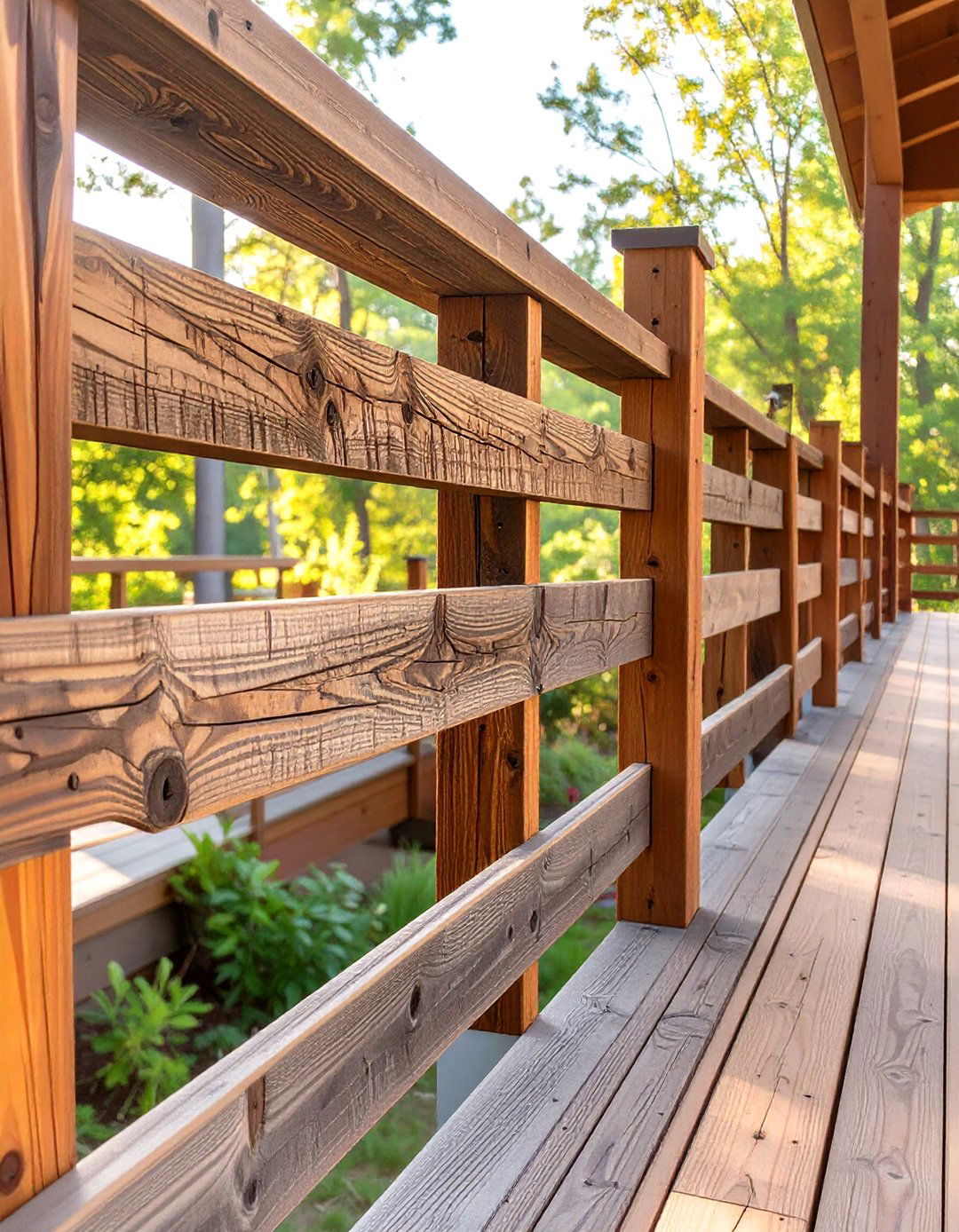
Using reclaimed wood for your deck railing is an eco-friendly choice that adds immense character and history to your outdoor space. Sourced from old barns, fences, or industrial buildings, reclaimed timber boasts a unique patina, rich colors, and weathered textures that new wood cannot replicate. Each knot, nail hole, and saw mark tells a story, creating a one-of-a-kind railing with a rustic and authentic feel. While it may require more effort to source and prepare, a reclaimed wood railing is a sustainable option that results in a beautifully aged and distinctive feature for your deck.
14. Diagonal Slat Wood Deck Railing
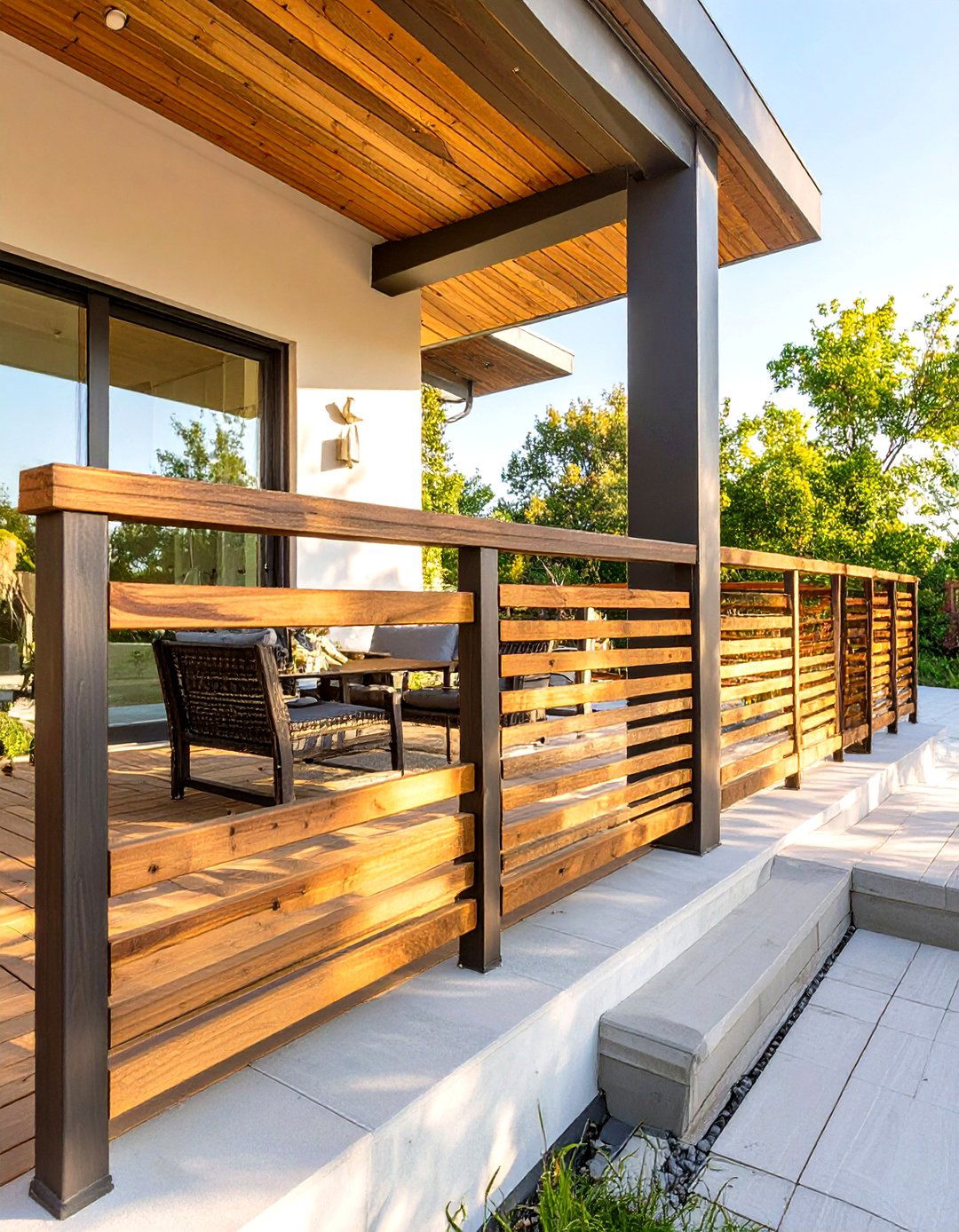
A diagonal slat wood deck railing provides a dynamic and modern twist on the popular horizontal slat design. Instead of running parallel to the deck, the wooden boards are installed at an angle, creating a sense of movement and visual interest. This design can be arranged in a consistent direction or alternated in a chevron or herringbone pattern for a more intricate and decorative effect. The angled lines draw the eye and add a unique architectural element that sets your deck apart. It’s a stylish choice that offers a contemporary feel while maintaining the warmth and natural beauty of wood.
15. Minimalist Wood Deck Railing
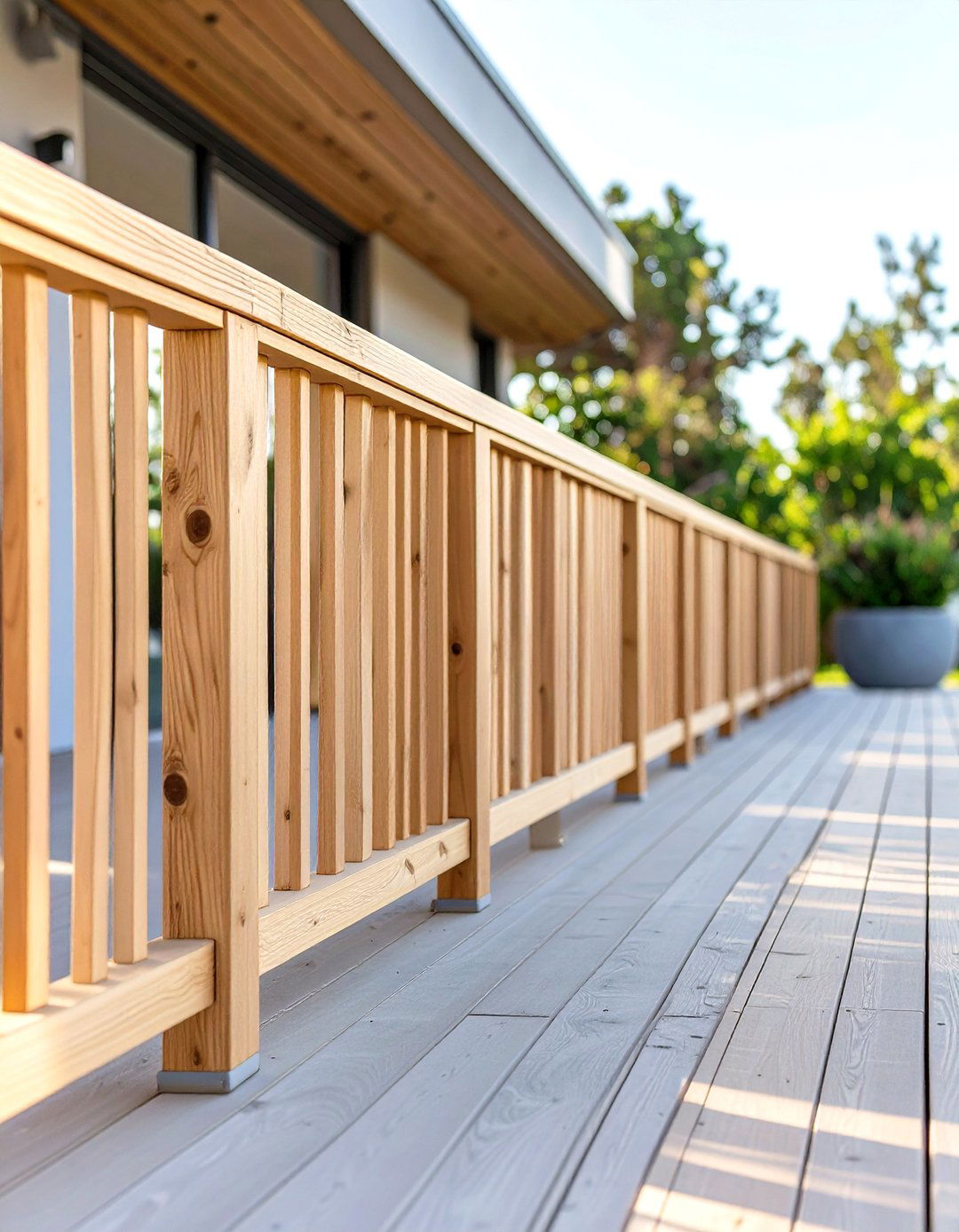
For those who prefer a clean and unobtrusive look, a minimalist wood deck railing is the perfect solution. This style focuses on simplicity, using slender wood components and clean lines to create a barrier that is functional yet visually subtle. The design often features thin, widely spaced balusters or very simple horizontal rails with slim posts. The goal is to provide safety without overwhelming the space or distracting from the view. Light-colored wood or a finish that matches the deck flooring can help the railing blend in seamlessly, reinforcing an open and uncluttered aesthetic that is both modern and serene.
16. Herringbone Pattern Wood Deck Railing
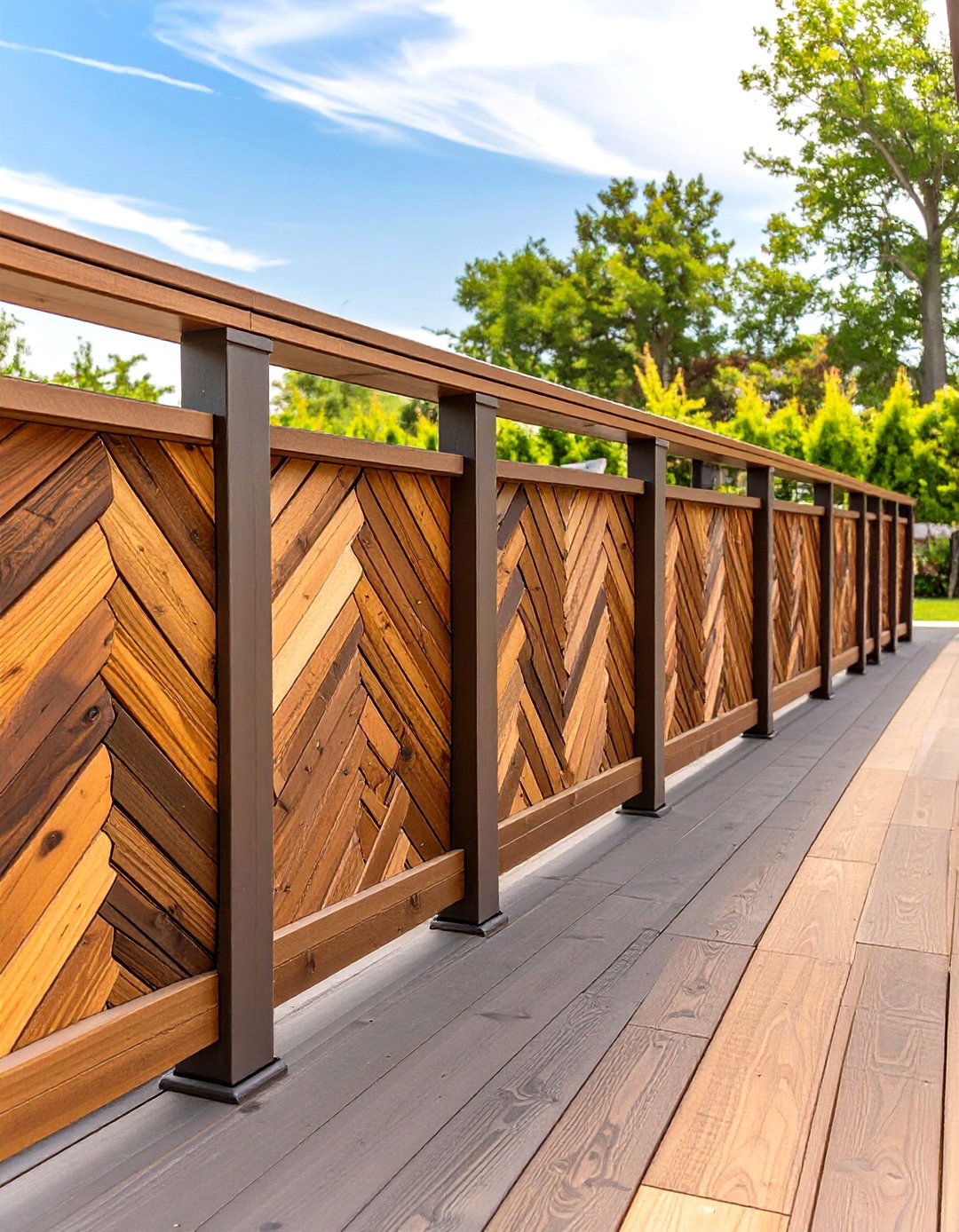
A herringbone pattern wood deck railing is a sophisticated and highly decorative option that turns your railing into a stunning focal point. This design involves arranging short wooden boards in a classic V-shaped, interlocking pattern between the posts. The result is a rich, textured look that adds a touch of elegance and custom craftsmanship to your deck. While the installation is more complex than a standard railing, the visual impact is undeniable. This style is perfect for homeowners looking to make a bold design statement and elevate their outdoor space with a timeless, high-end pattern that exudes luxury and detailed artistry.
17. Curved Wood Deck Railing
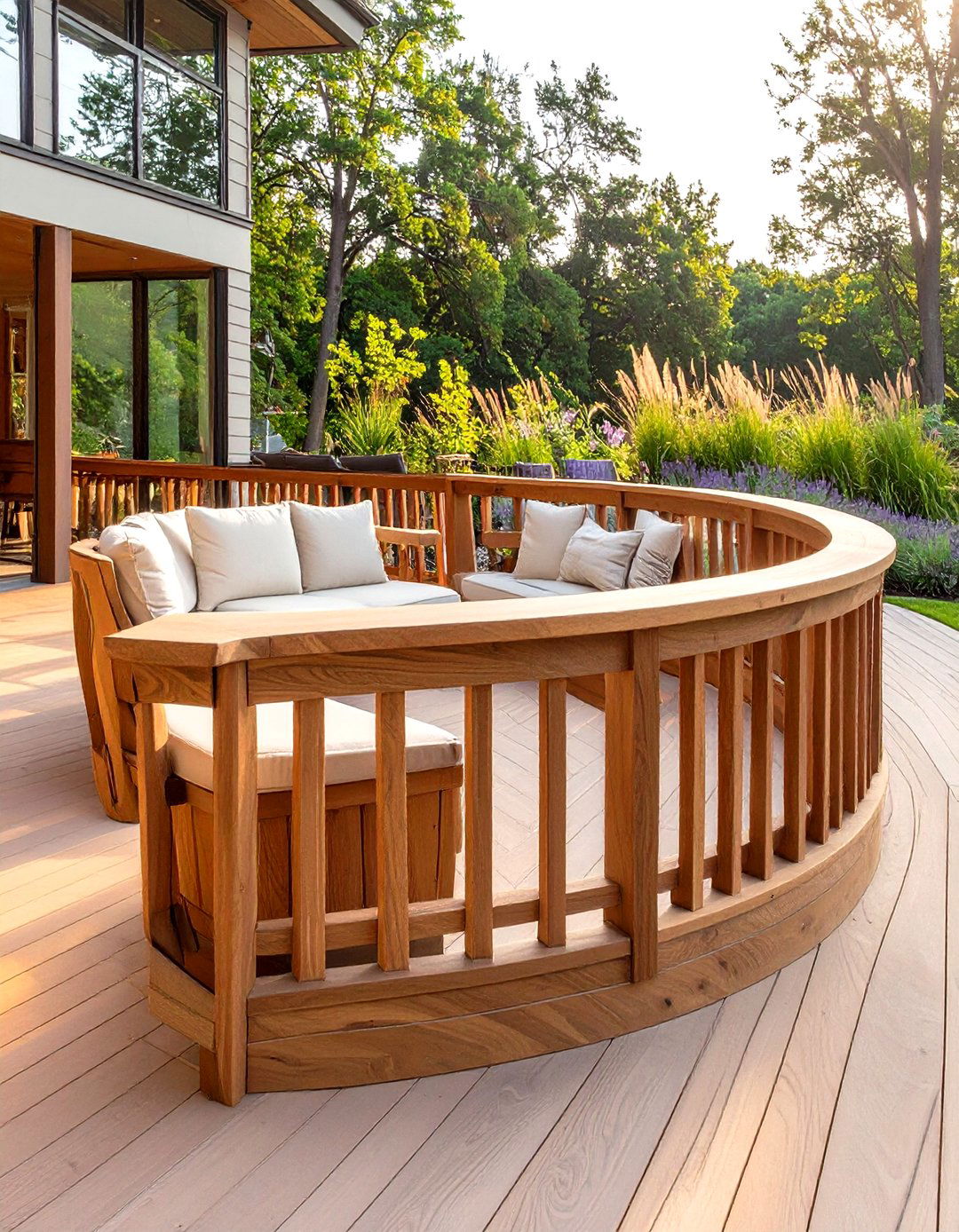
For decks that feature rounded or curved edges, a curved wood deck railing is essential for creating a fluid and harmonious design. Bending wood to follow the contours of the deck requires specialized techniques, such as steam bending or kerf cutting, resulting in a truly custom and high-end finish. The graceful sweep of a curved railing softens the deck’s geometry, creating an elegant and organic flow. This design avoids the abrupt angles of a standard railing on a curved deck, providing a seamless and sophisticated look that enhances the architectural beauty of the space and feels incredibly bespoke.
18. Wood and Glass Panel Deck Railing

Combining a wood frame with glass panel inserts offers a premium, high-end look that delivers unobstructed views with a touch of warmth. In this design, sturdy wood posts and rails provide the structural support, while large panels of tempered glass serve as the infill. This creates a safe and secure barrier that is completely transparent, making it the ultimate choice for decks overlooking stunning scenery like a coastline, lake, or mountain range. The wood adds a natural, classic element that prevents the design from feeling too stark or clinical, blending the modern appeal of glass with timeless organic material.
19. Asian-Inspired Wood Deck Railing
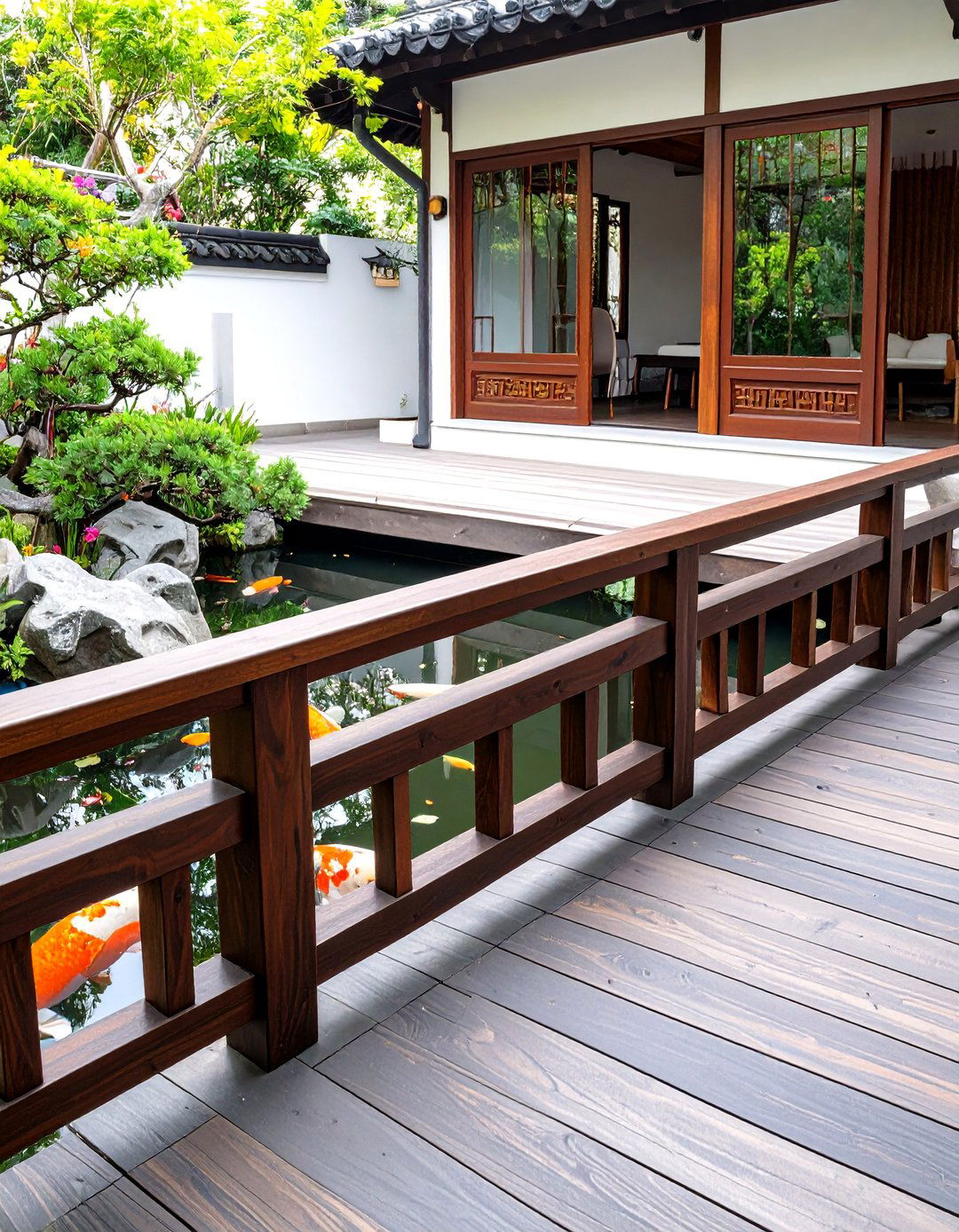
An Asian-inspired wood deck railing brings a sense of tranquility, balance, and natural simplicity to your outdoor space. This style often draws from Japanese or Chinese design principles, featuring clean lines, simple geometric patterns, and an emphasis on natural materials. Common elements include horizontal lines, lattice-work inspired by Shoji screens, or minimalist post and beam construction. The design often incorporates natural wood finishes that highlight the grain and texture of the material. This creates a serene and Zen-like atmosphere, making your deck a peaceful retreat that feels connected to nature and promotes a sense of calm and order.
20. Two-Tone Stained Wood Deck Railing
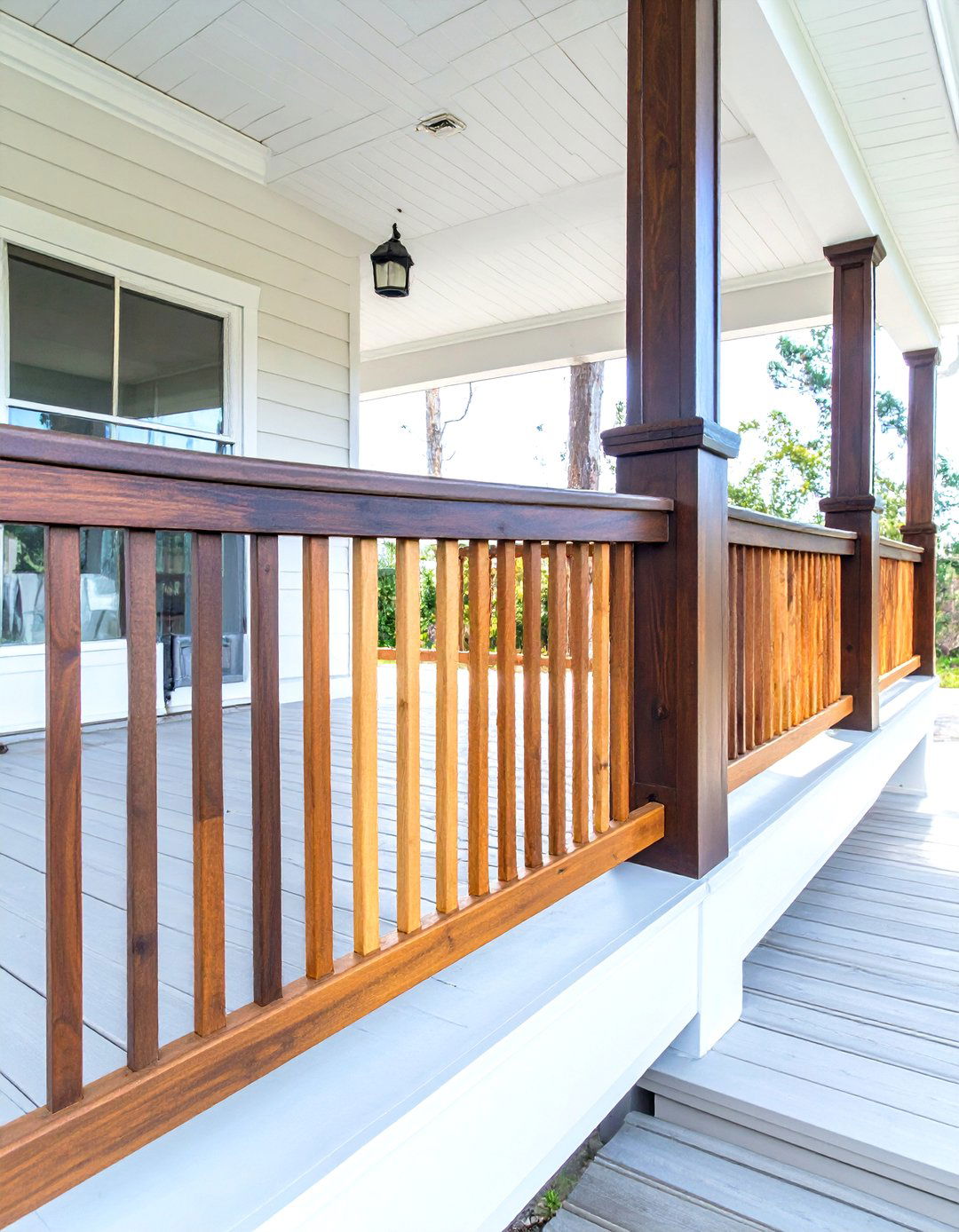
A two-tone stained wood deck railing is a simple yet highly effective way to add depth and visual interest to your deck’s design. This technique involves using two different stain colors to highlight various components of the railing. For instance, you could stain the top rail and posts a dark, rich color while treating the balusters or infill panels with a lighter, contrasting stain. This contrast defines the railing's structure and creates a custom, polished look without the complexity of intricate patterns. It’s a versatile approach that works with many railing styles, from classic to contemporary.
21. Painted Wood Deck Railing
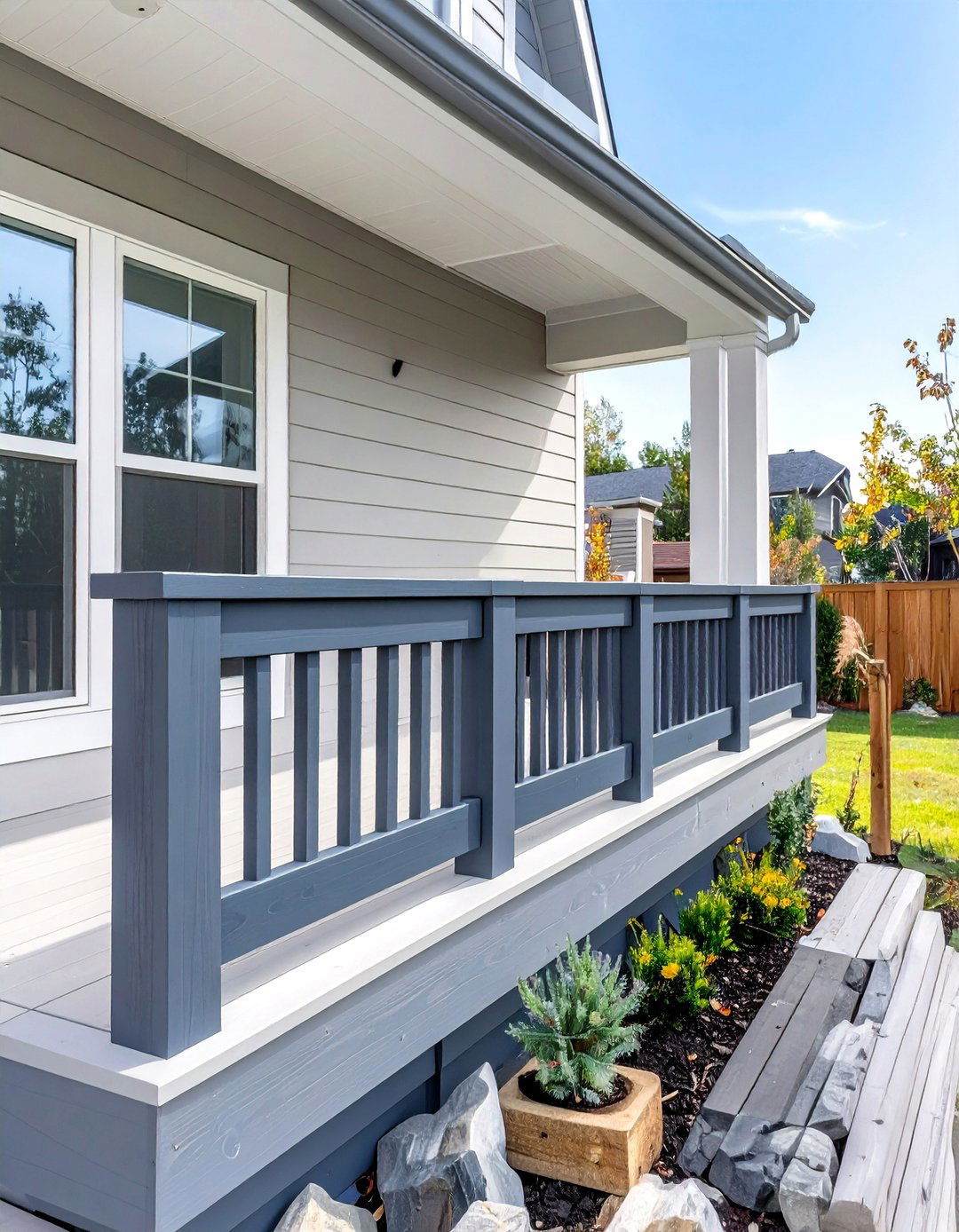
Painting your wood deck railing opens up a world of color possibilities and provides excellent protection against the elements. A classic white railing offers a crisp, clean look that complements traditional and coastal home styles, while a bold black or charcoal gray can create a dramatic, modern statement. Paint allows you to perfectly match your home’s trim or accent colors, ensuring a cohesive and integrated exterior design. While it requires more maintenance than stain, with periodic scraping and repainting, a painted finish delivers a polished, opaque look and allows for easy updates if you decide to change your color scheme.
22. Traditional Wood Spindle Railing
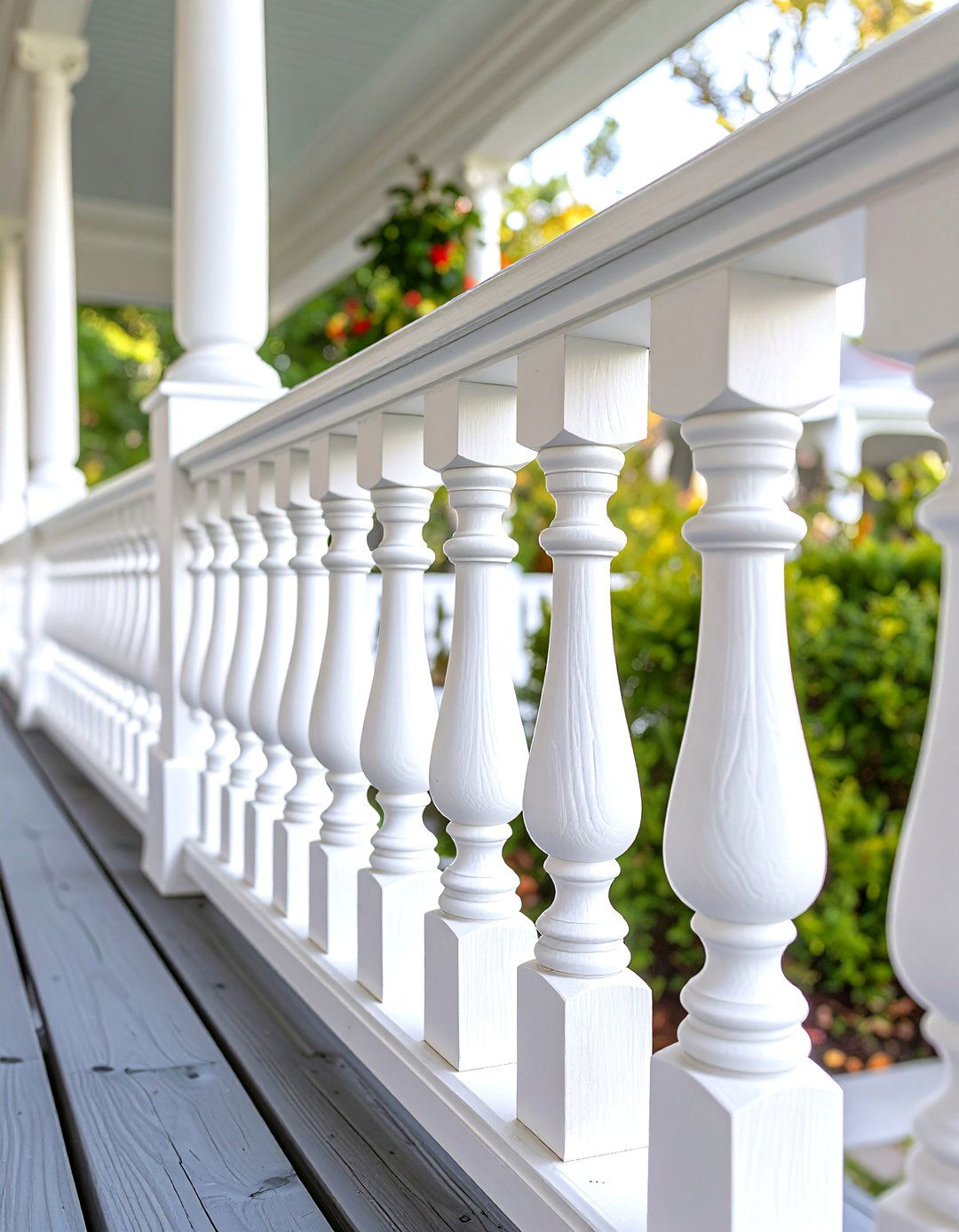
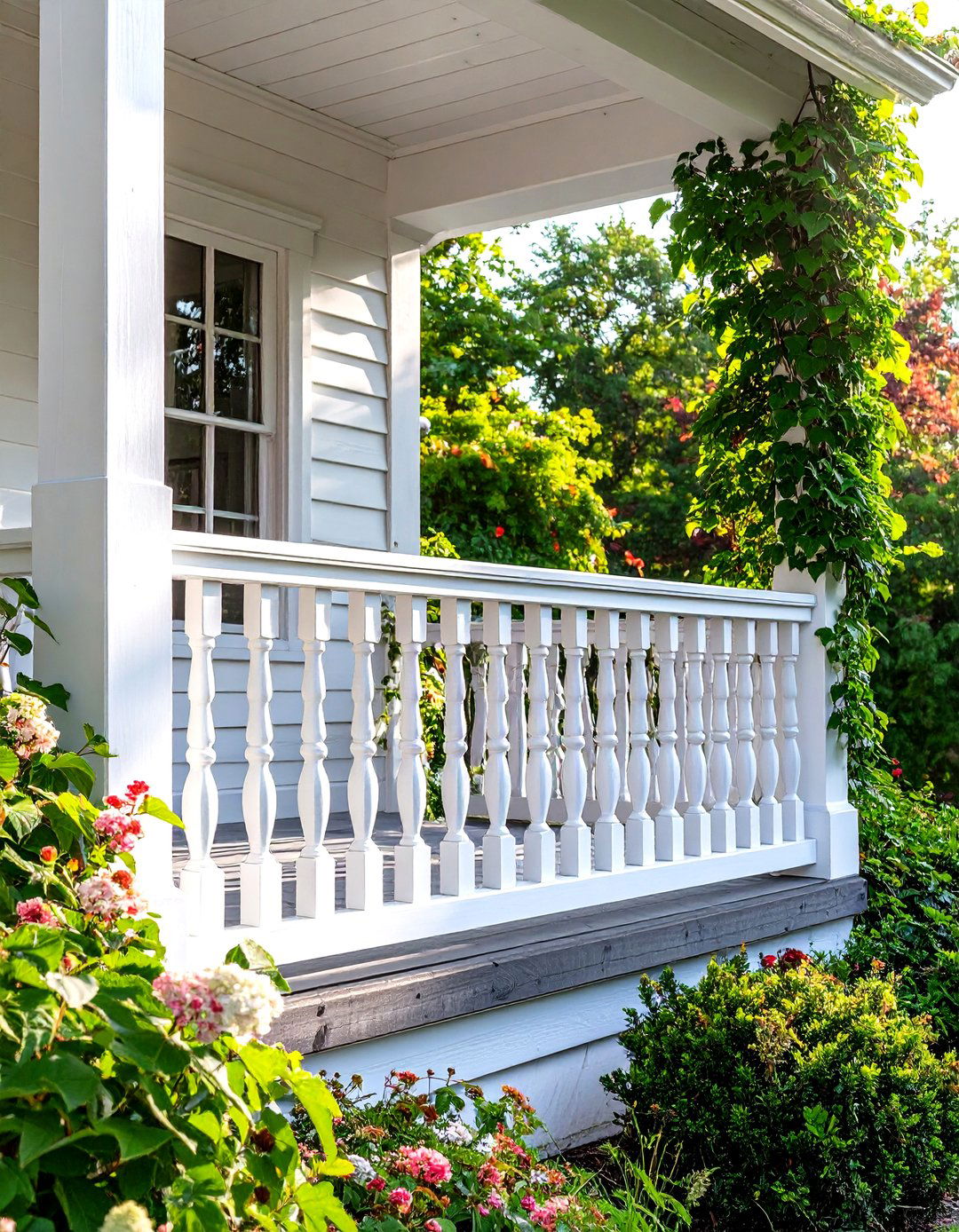
A traditional wood spindle railing evokes a sense of classic elegance and heritage, perfect for Victorian, Colonial, or other historic home styles. This design is characterized by its ornate, turned spindles, which are crafted on a lathe to create decorative profiles with curves, swells, and intricate details. These decorative elements add a layer of sophistication and craftsmanship that you won't find in simpler designs. Paired with a substantial top rail and decorative post caps, a spindle railing makes a strong architectural statement, celebrating timeless design and adding significant curb appeal and charm to your home's exterior.
23. Shadow Box Wood Deck Railing
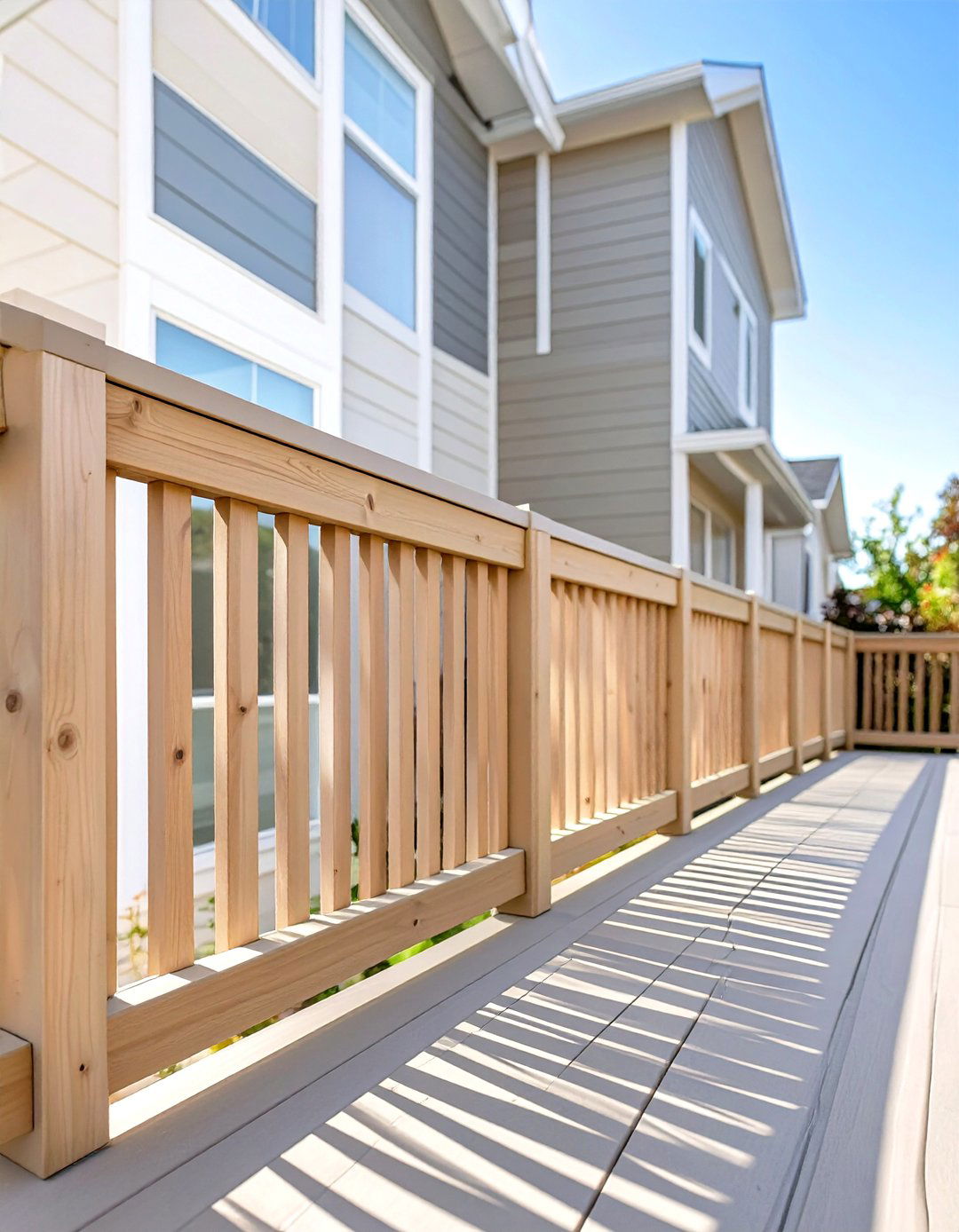
The shadow box wood deck railing creates a unique, three-dimensional effect and looks equally attractive from both sides. This design features two sets of balusters or slats, one attached to the inside of the rails and one to the outside, alternating their positions. This staggered arrangement creates depth and visual interest, and unlike a standard privacy fence, it allows for airflow and light to pass through while still providing a sense of enclosure. It's a "good neighbor" design because there is no "bad" side, making it an excellent choice for property lines or multi-level decks.
24. Wood Deck Railing with Integrated Lighting
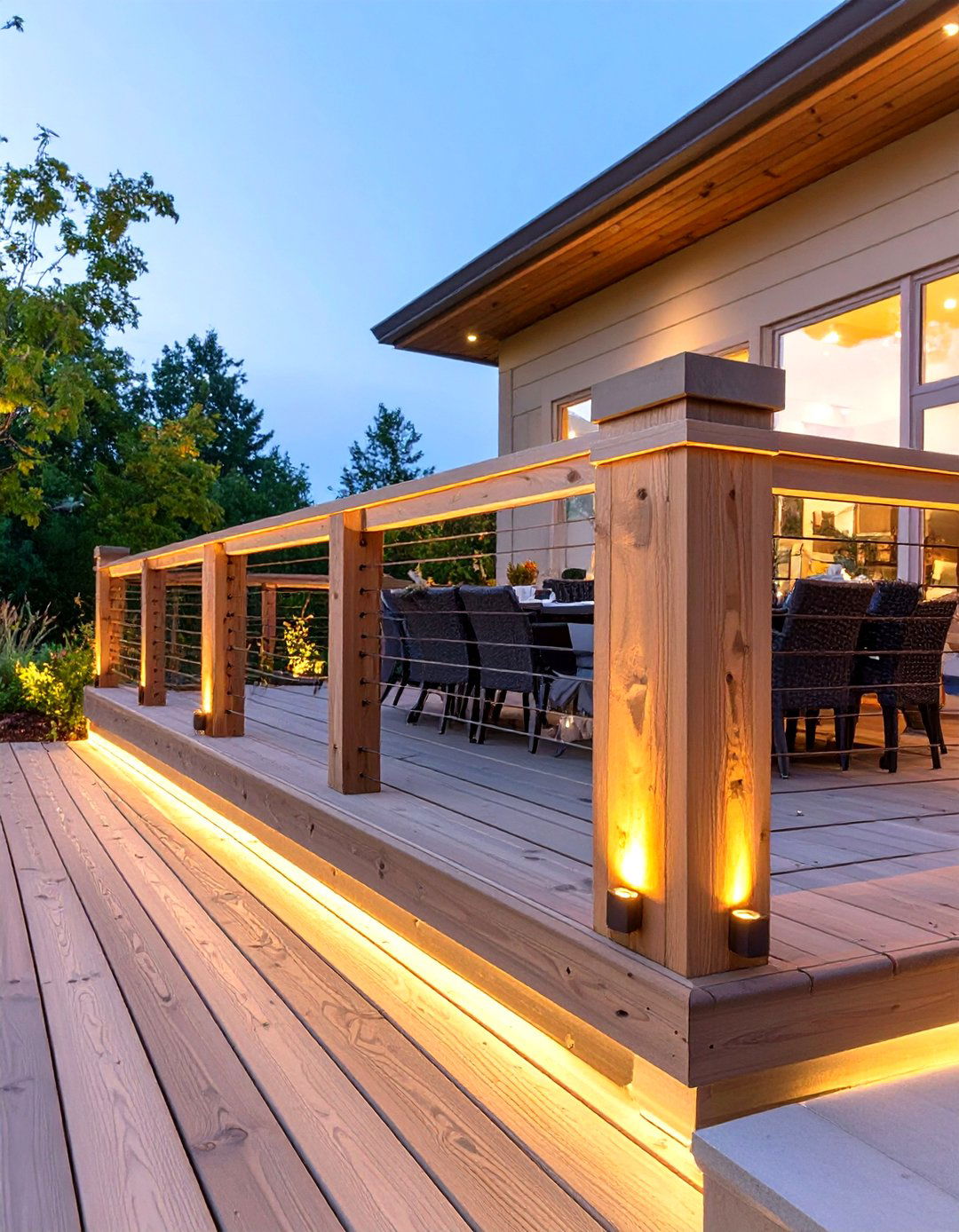
Incorporating lighting directly into your wood deck railing is a brilliant way to enhance both safety and ambiance. Low-voltage LED lights can be discreetly installed on post caps, under the top rail to cast a warm glow downwards, or on the sides of the posts themselves. This not only illuminates the deck perimeter for safe navigation at night but also creates a beautiful, inviting atmosphere perfect for evening entertaining. Integrated lighting adds a touch of modern luxury and ensures your deck remains a functional and enchanting space long after the sun goes down, highlighting its architectural features.
25. Chunky Wood Post and Rail Deck Railing
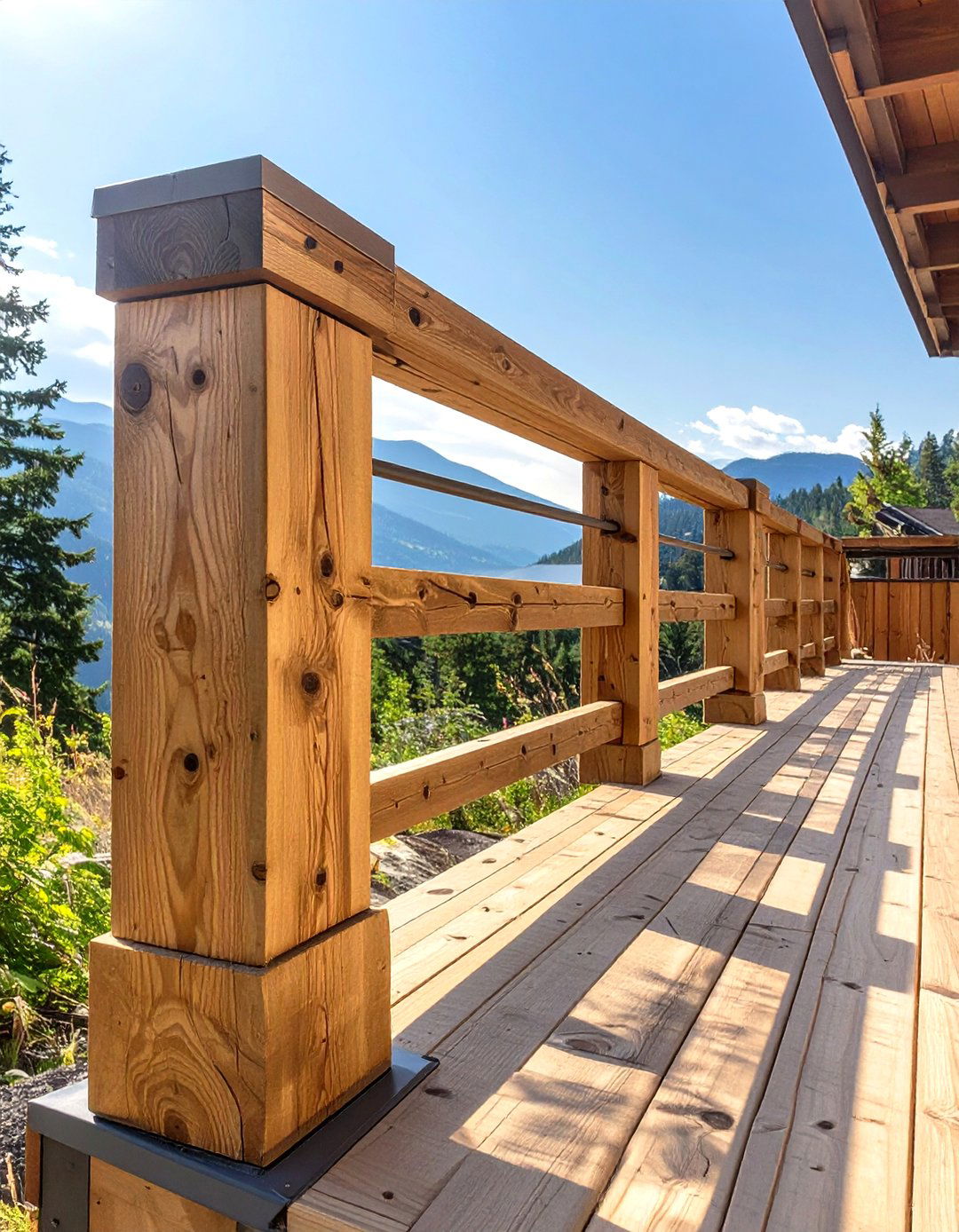
A chunky wood post and rail deck railing makes a bold and powerful statement, emphasizing strength and rustic simplicity. This style uses oversized timbers for both the vertical posts and the horizontal rails, often with minimal balusters or even none at all, depending on local building codes and safety requirements. The focus is on the substantial scale of the wood itself, creating a look that is both modern and rugged. This design is particularly well-suited for large decks, modern mountain homes, or any space where you want the railing to have a strong, grounding presence and a commanding architectural impact.
26. Mountain Style Wood Deck Railing
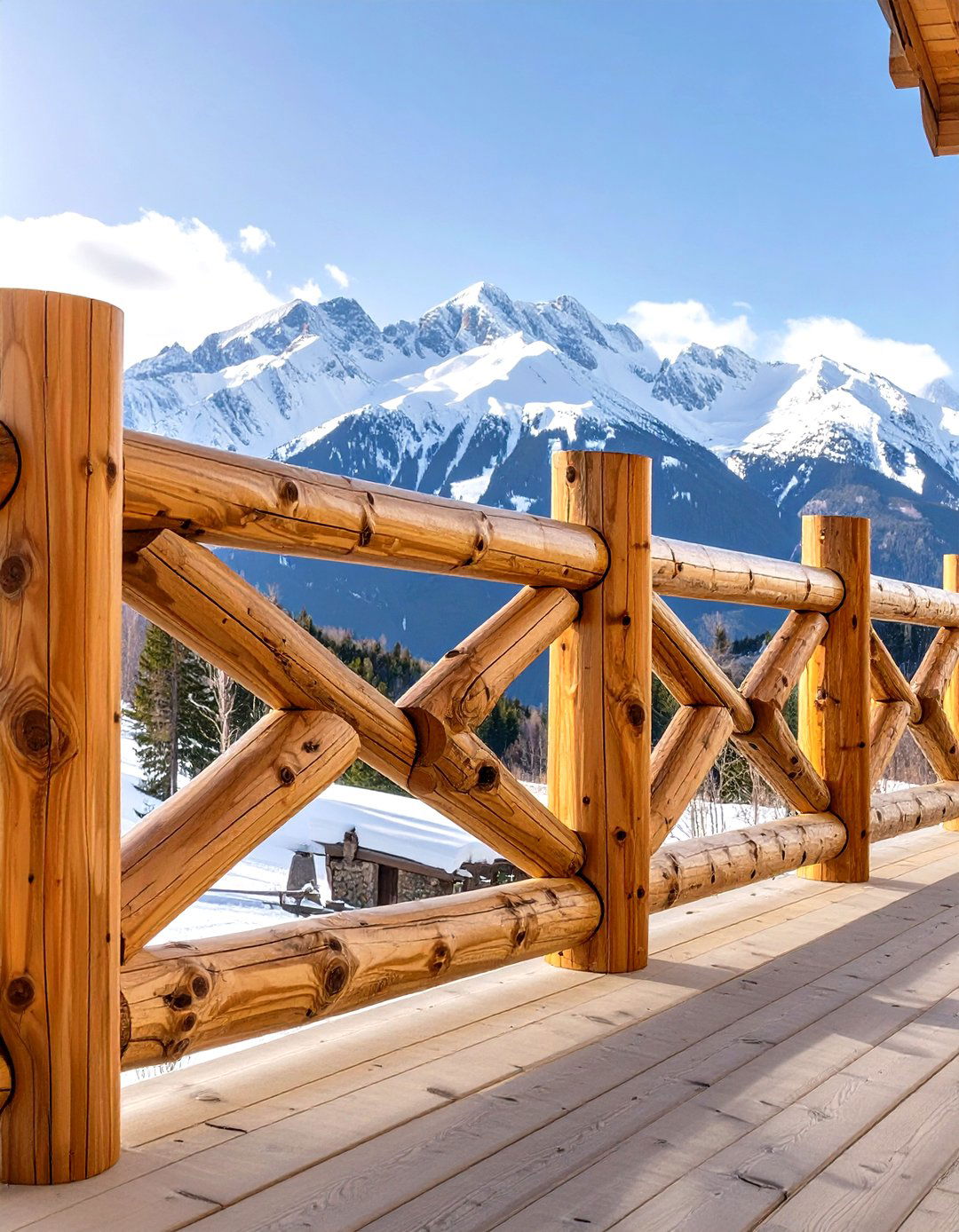
A mountain style wood deck railing captures the rugged beauty of alpine environments, often incorporating natural forms and materials. This design frequently features distinctive patterns like crossed balusters forming 'X' shapes between the posts, or intricate branch-like designs that mimic the look of trees. It typically uses heavy, substantial timbers to convey a sense of strength and durability, fit for a mountain lodge. The wood is often left with a natural or rustic stain to complement the surrounding landscape. This style is perfect for creating a cozy, cabin-in-the-woods feel, no matter where your home is located.
27. Wood and Pipe Deck Railing
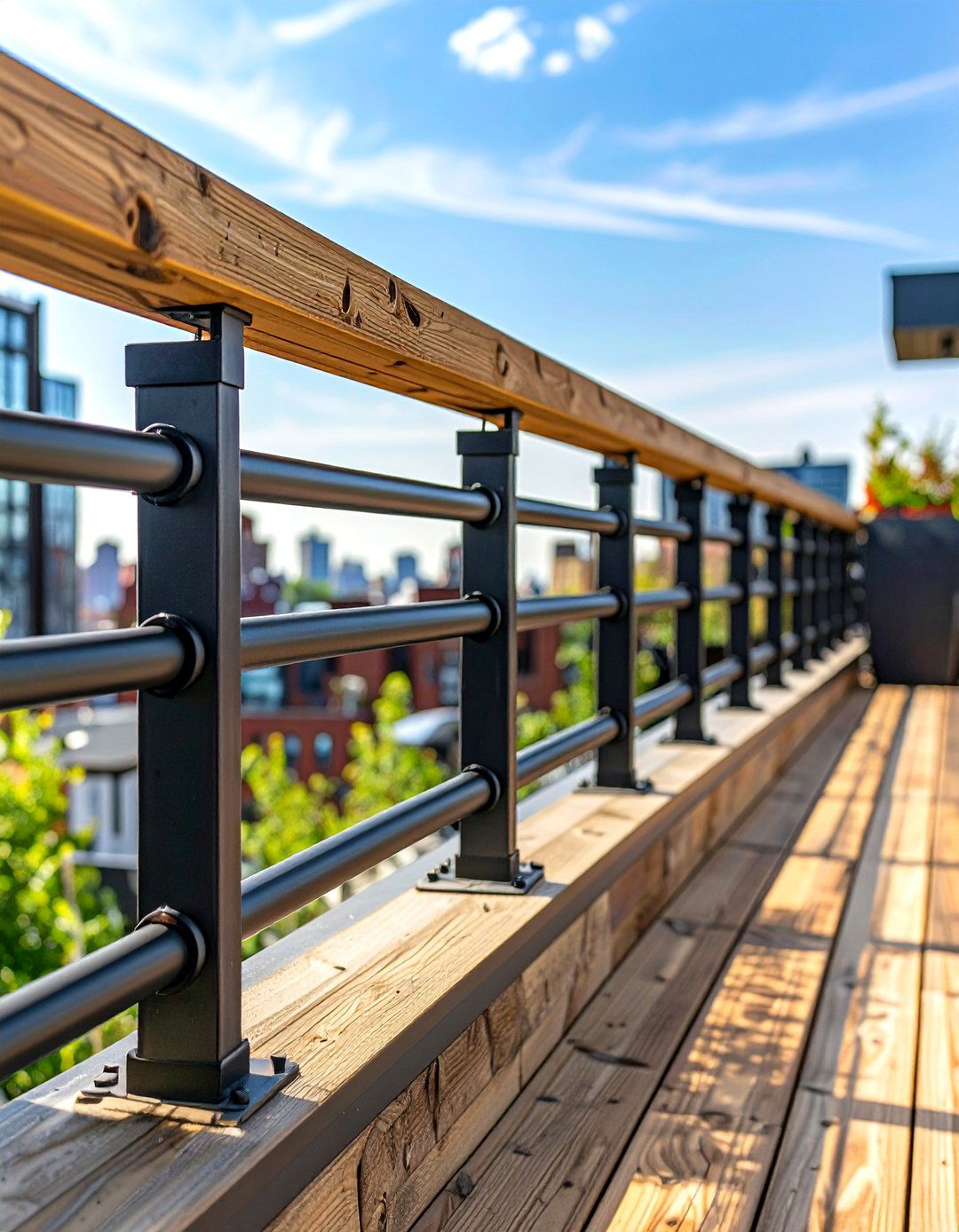
For an industrial-chic or modern farmhouse aesthetic, a wood and pipe deck railing offers a unique and stylish combination of materials. This design pairs the natural warmth of a wooden top rail and posts with the cool, utilitarian look of metal pipes, typically galvanized or black steel, used as horizontal balusters. The contrast between the refined wood and the raw metal creates a visually interesting and edgy look. It’s a durable, relatively simple-to-construct option that adds a touch of urban loft style to your outdoor space, blending rustic and industrial elements seamlessly.
28. Geometric Pattern Wood Deck Railing
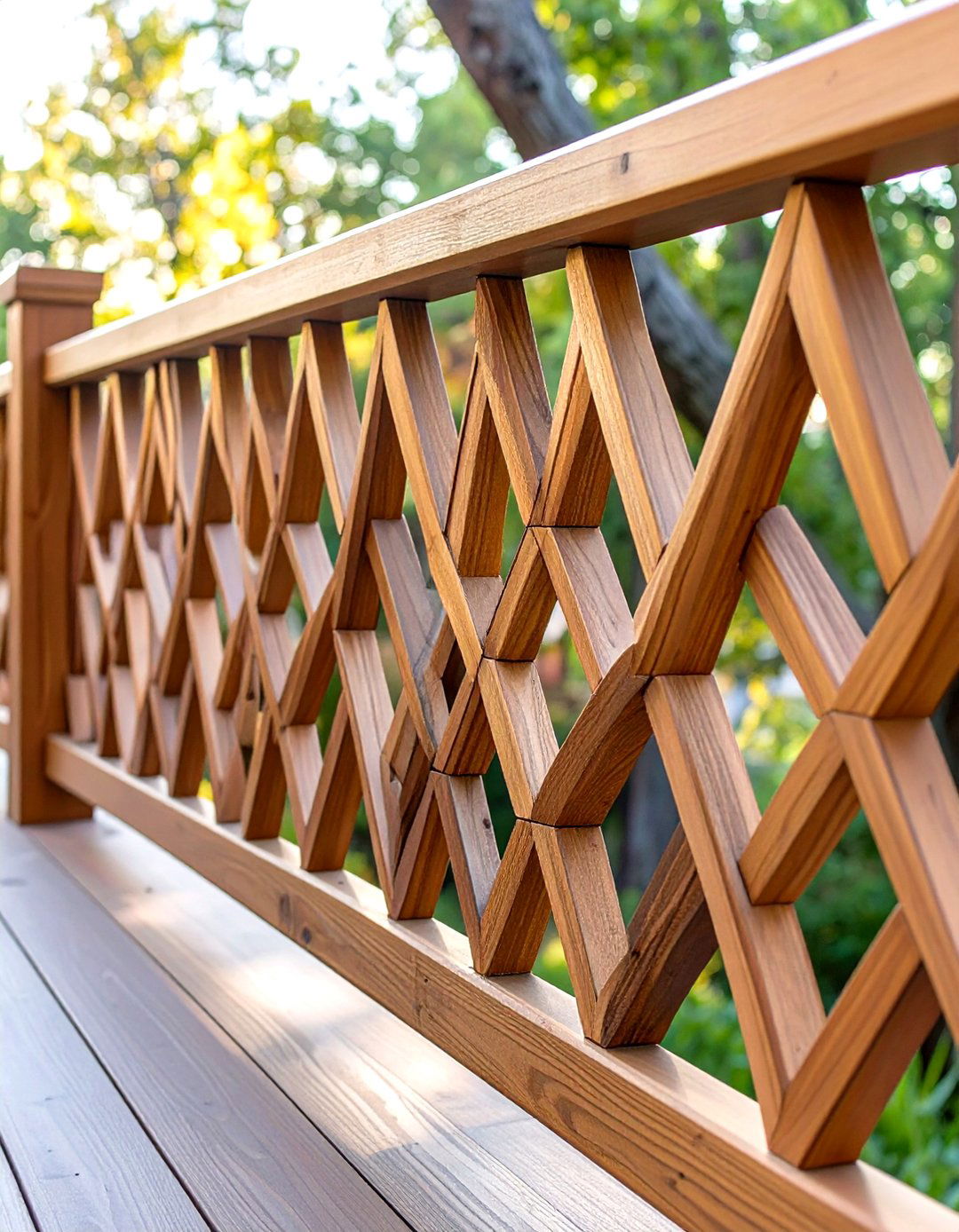
Moving beyond standard vertical or horizontal lines, a geometric pattern wood deck railing uses wood to create artistic shapes and repeating motifs. This could involve squares, diamonds, triangles, or a custom abstract design built within each railing section. This approach turns a safety requirement into a major design feature, showcasing creativity and craftsmanship. A geometric railing can be tailored to complement the architectural style of your home, whether it’s mid-century modern, contemporary, or eclectic. It’s a surefire way to create a one-of-a-kind deck that reflects your personal style and becomes a conversation piece for guests.
29. Framed Panel Wood Deck Railing
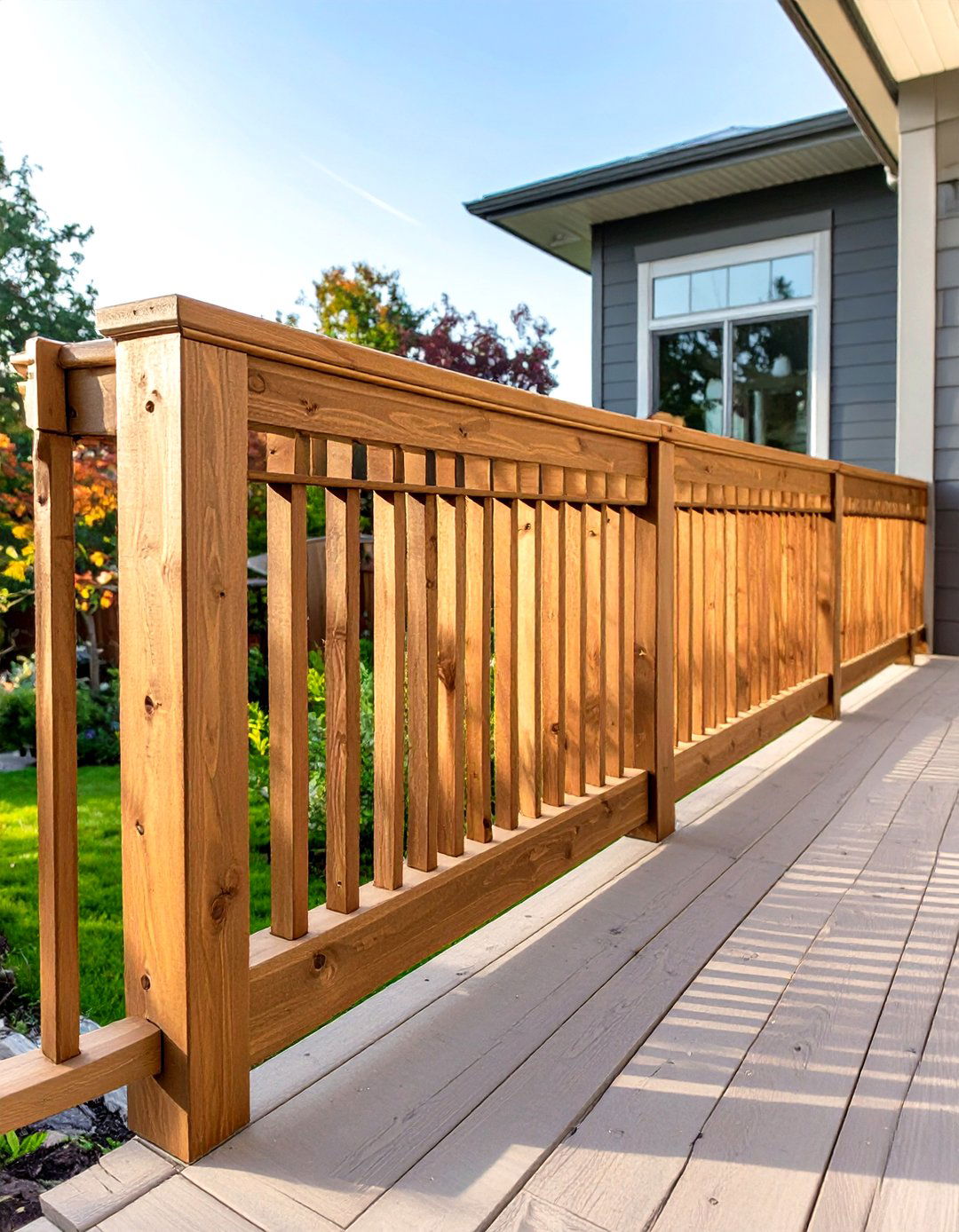
A framed panel wood deck railing provides a clean, finished, and contemporary look. In this design, each section of the railing between the posts is constructed as a distinct, self-contained panel. These panels can feature various infill styles, such as vertical balusters, horizontal slats, or even a solid wood panel for privacy. The frame around each section gives the railing a more deliberate and structured appearance, similar to custom cabinetry. This method can simplify installation and creates a polished, high-end aesthetic with clean lines and a strong sense of order and architectural intention.
30. Woven Wood Deck Railing
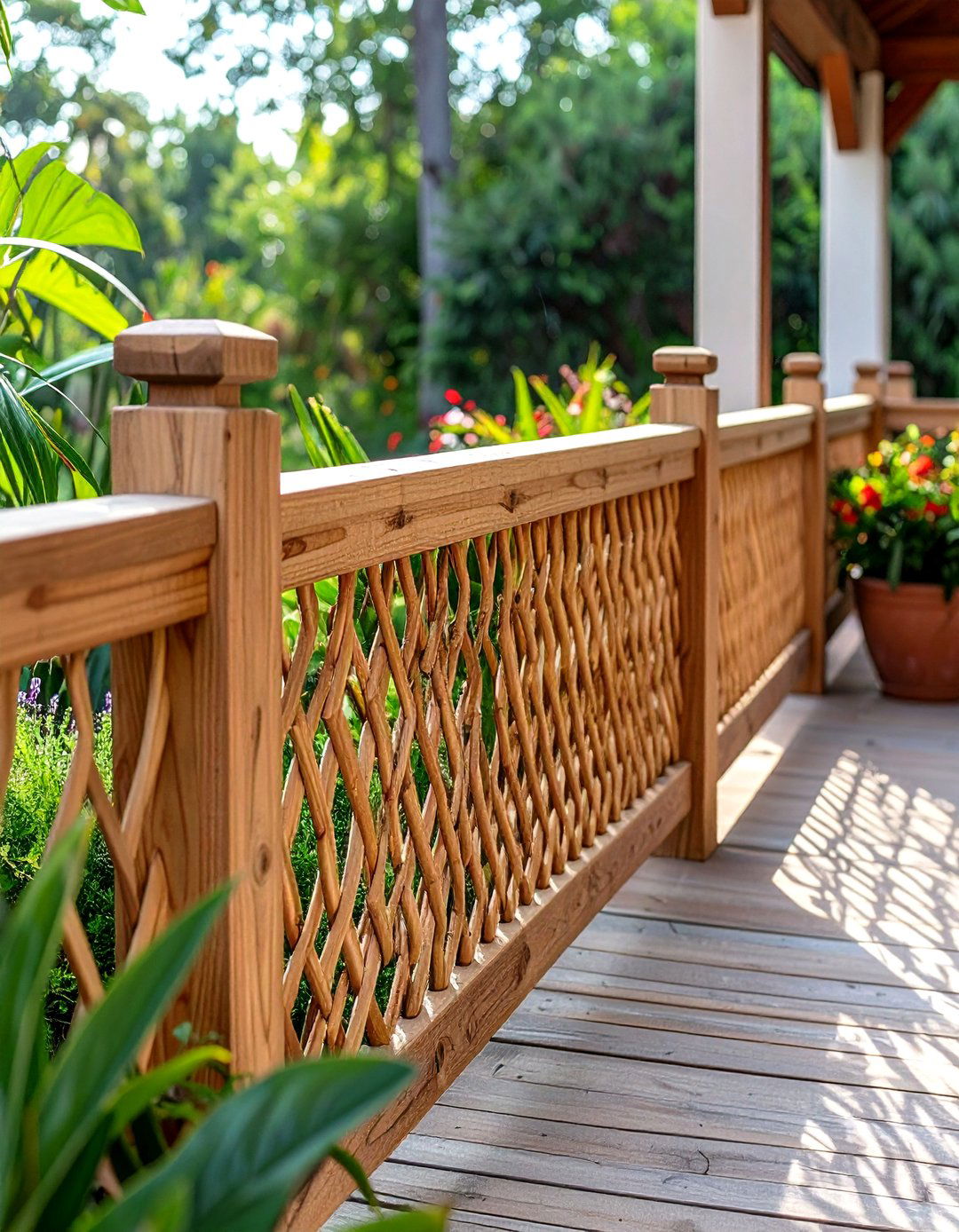
A woven wood deck railing offers a unique, textural design that adds a touch of natural, handcrafted artistry to your deck. This style is created by weaving thin, flexible wood strips horizontally through vertical wood dowels or posts, creating a pattern reminiscent of a basket. The resulting look is both organic and intricate, providing a semi-private screen that plays with light and shadow. It's a labor-intensive but visually rewarding option that brings a soft, rustic, and slightly bohemian feel to the space, creating a beautiful and distinctive enclosure that stands out from more conventional railing designs.
Conclusion:
Ultimately, selecting the right wood deck railing is a key decision that shapes the entire look and feel of your outdoor area. From the sleek lines of modern horizontal slats and cable systems to the timeless appeal of classic balusters and intricate Chippendale patterns, there are designs to suit every architectural style and personal taste. By considering elements like privacy, view preservation, and integrated features such as benches or lighting, you can transform your deck railing from a simple safety barrier into a defining feature that enhances both beauty and functionality.

Related posts:



Leave a Reply