
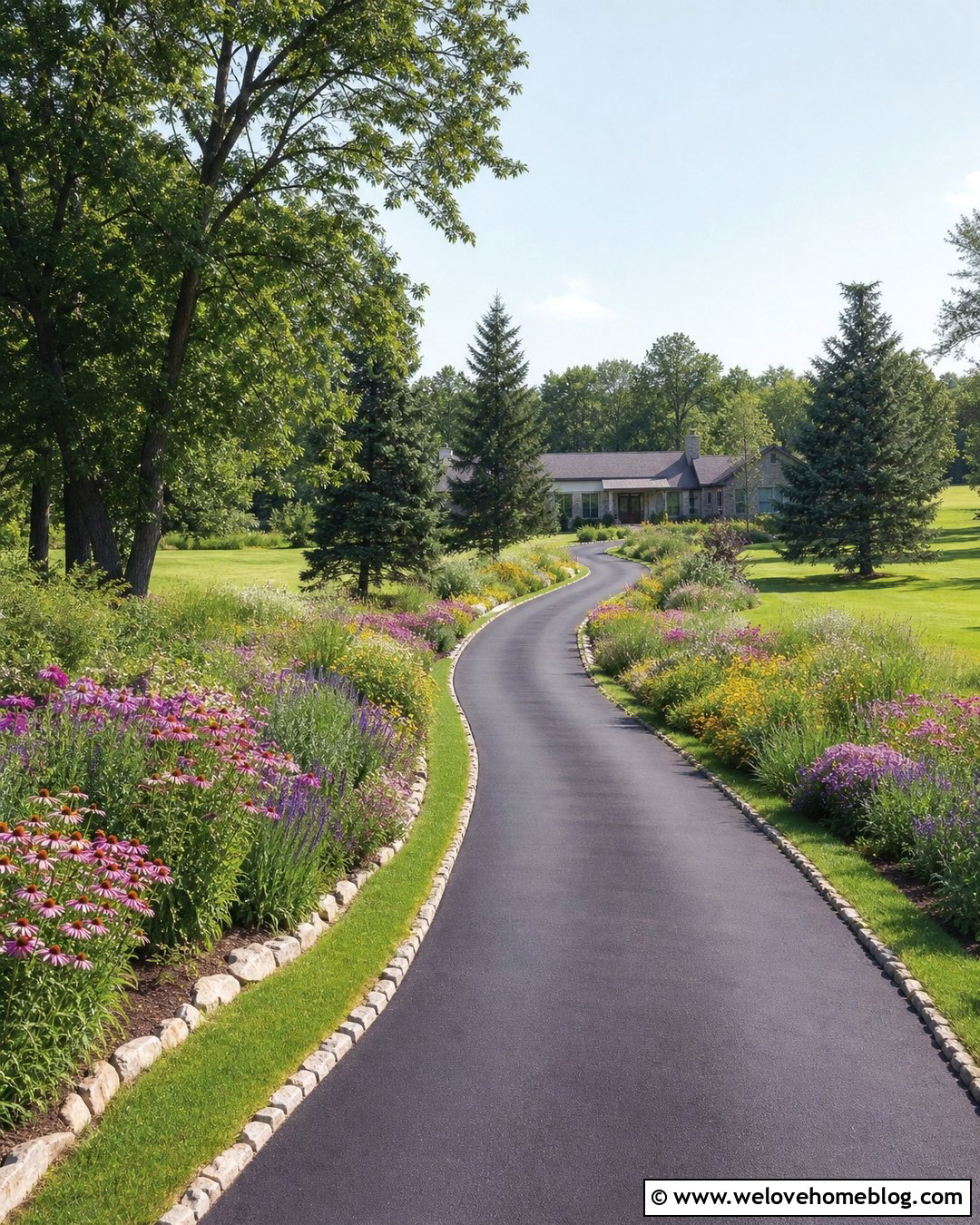
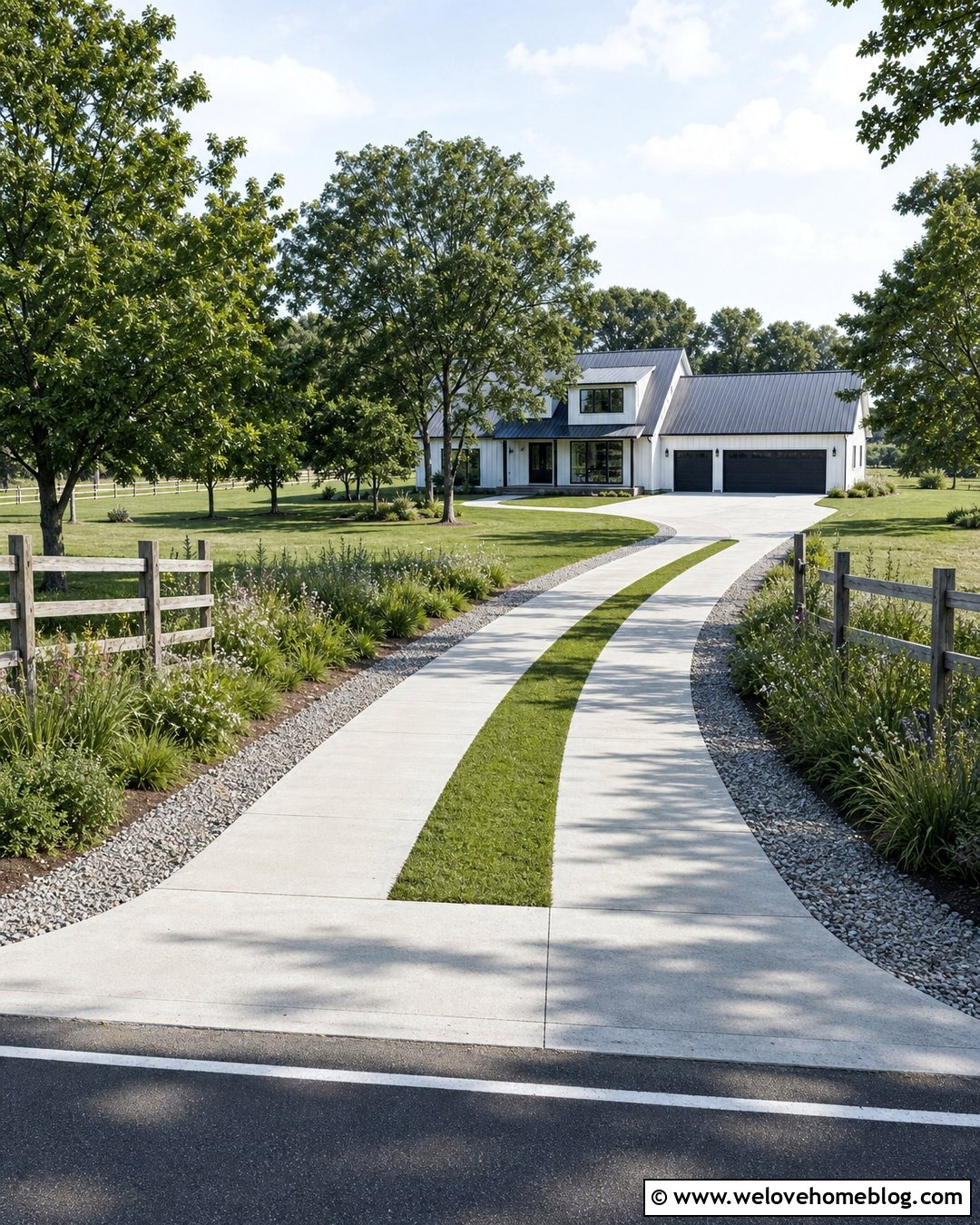
A well-planned route between the parking area and entry can make a home feel more welcoming, organized, and easy to navigate. These **20 Path From Driveway To Front Door Ideas** combine practical layouts with materials, borders, lighting, and landscaping that strengthen curb appeal. The best path should be easy to spot when guests arrive, comfortable to walk on, and visually connected to both the driveway and house. Straight routes create a formal look, while gentle curves soften the yard and work around existing trees or planting beds. Materials such as concrete, brick, flagstone, gravel, and pavers can also help define the entrance without competing with the driveway. Use these complete **20 Path From Driveway To Front Door Ideas** to find a design that suits your home, budget, and front-yard layout. ()

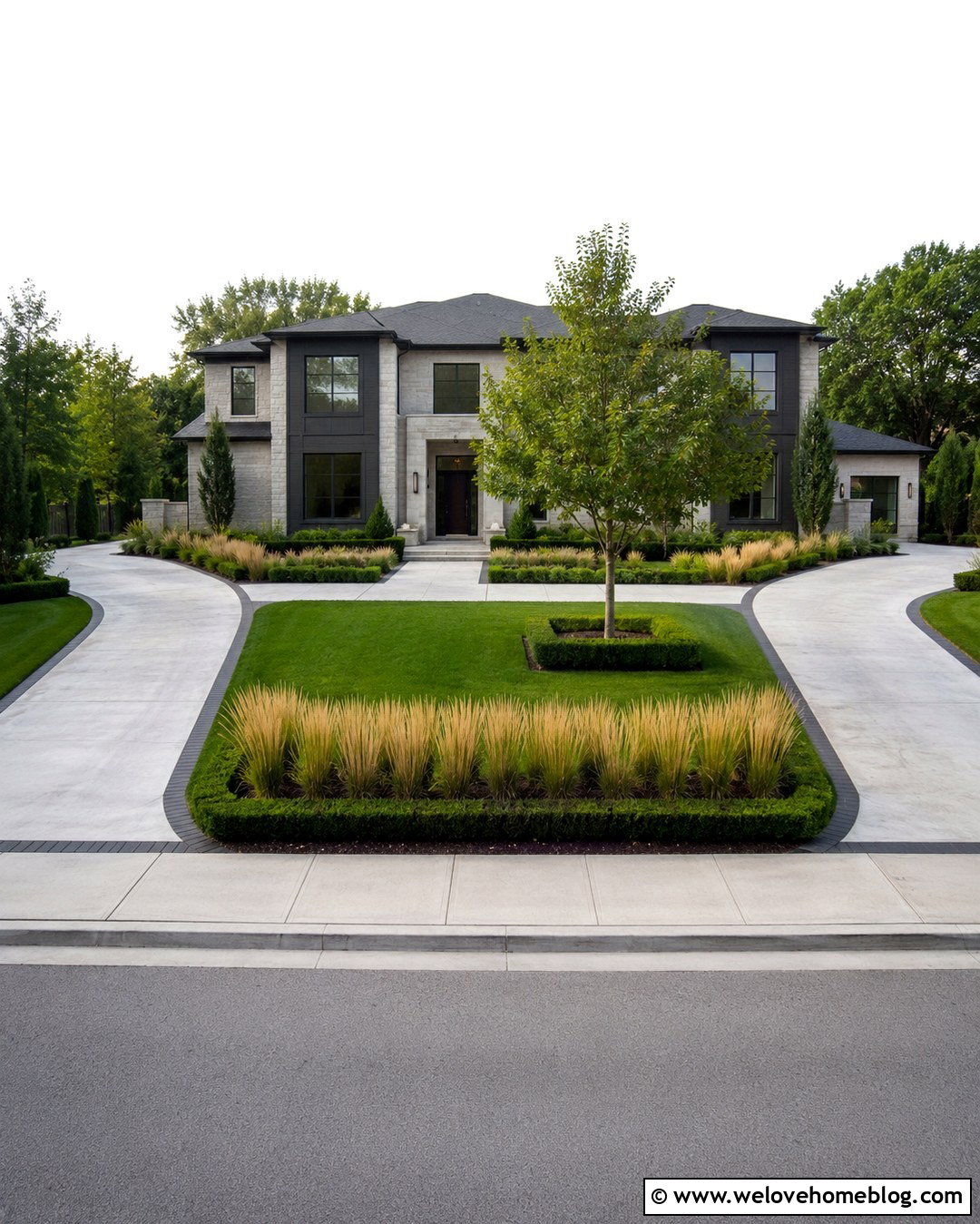
1. Straight Paver Path From Driveway To Front Door
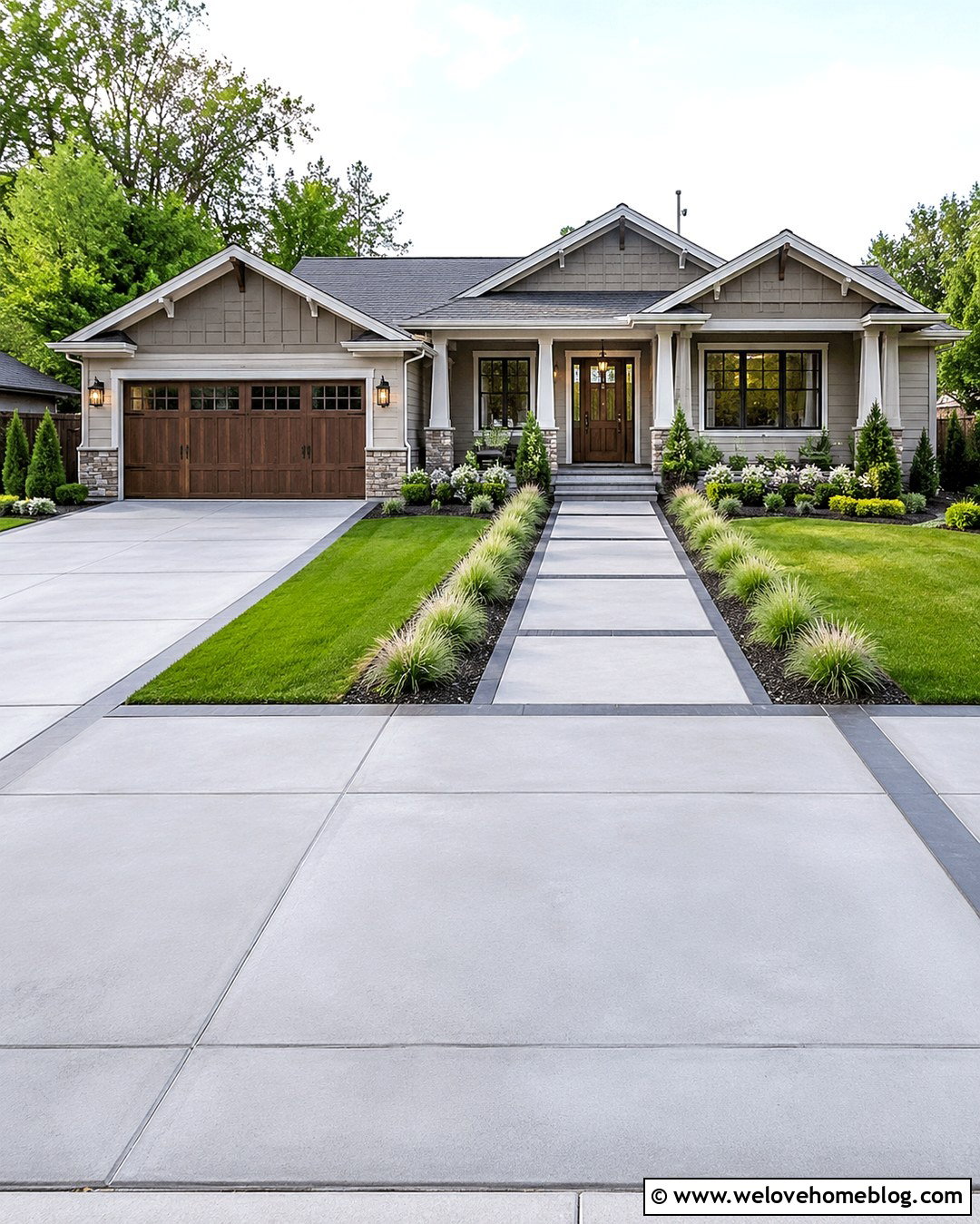
A straight paver path creates a clear, direct connection between the driveway and front door. It works especially well when the entrance faces the driveway or sits near the garage. Choose rectangular concrete pavers that coordinate with the driveway color without matching it exactly. A charcoal border can make pale gray pavers look more finished and easier to see. Keep the path wide enough to feel comfortable, then frame it with low ornamental grasses, compact shrubs, or neatly clipped ground cover. Repeating one plant along both sides creates a balanced look. Where the path meets the driveway, widen the opening slightly. This subtle landing gives visitors a natural place to step out of a vehicle before walking toward the house.
2. Curved Flagstone Path From Driveway To Front Door
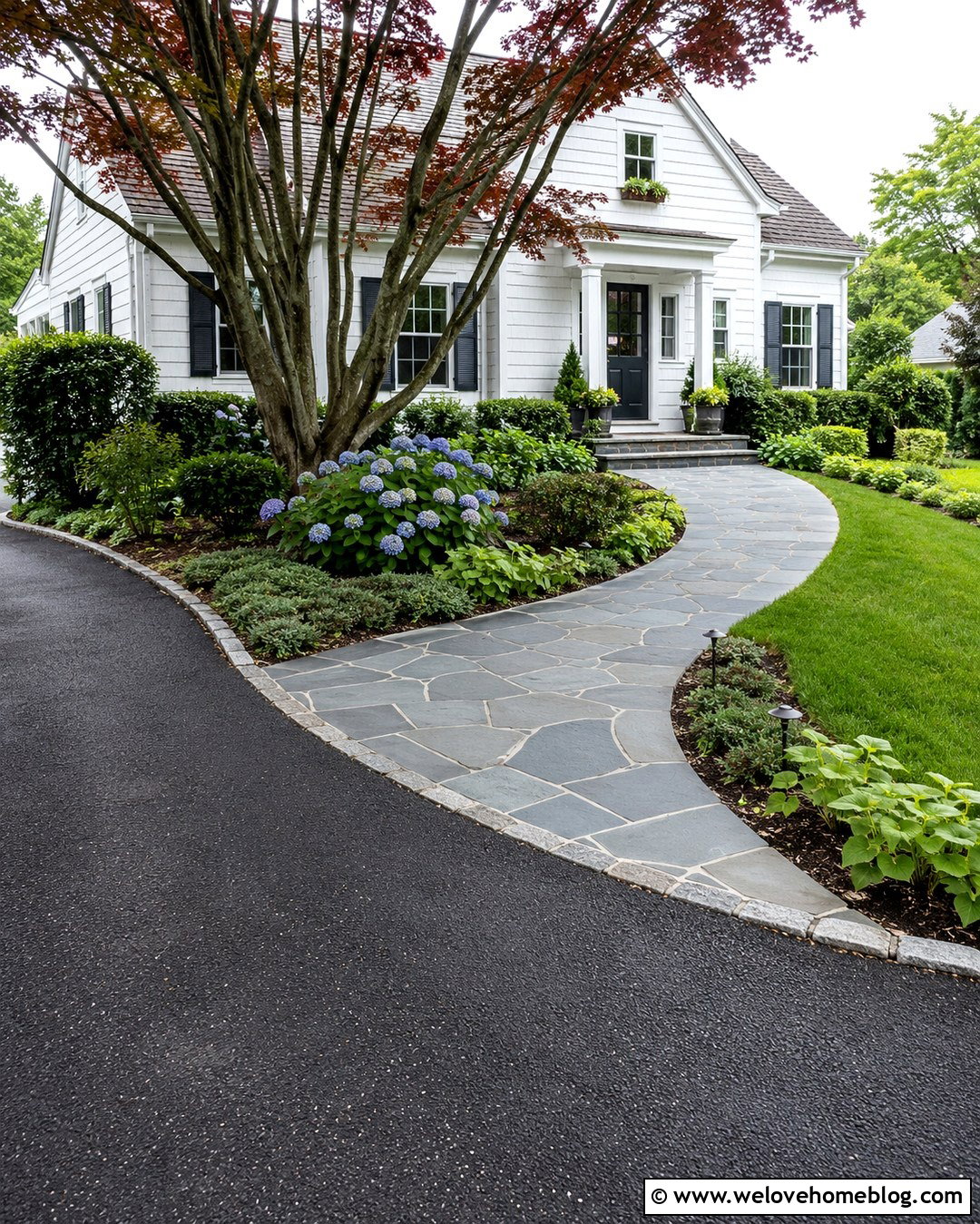
Soft curves can turn an ordinary front yard into a more relaxed and inviting entrance. A flagstone path that sweeps gently away from the driveway works beautifully around mature trees, rounded planting beds, or an off-center front door. Select broad, flat stones with tight joints to create a stable walking surface. Fill narrow gaps with stone dust or low-growing ground cover, depending on the amount of foot traffic. Natural stone edging can reinforce the curve while keeping soil and mulch away from the path. Use layered landscaping, with shorter plants near the stones and taller shrubs farther back. Avoid adding too many bends. One smooth curve should guide the eye naturally from the driveway to the porch without making the walk feel unnecessarily long.
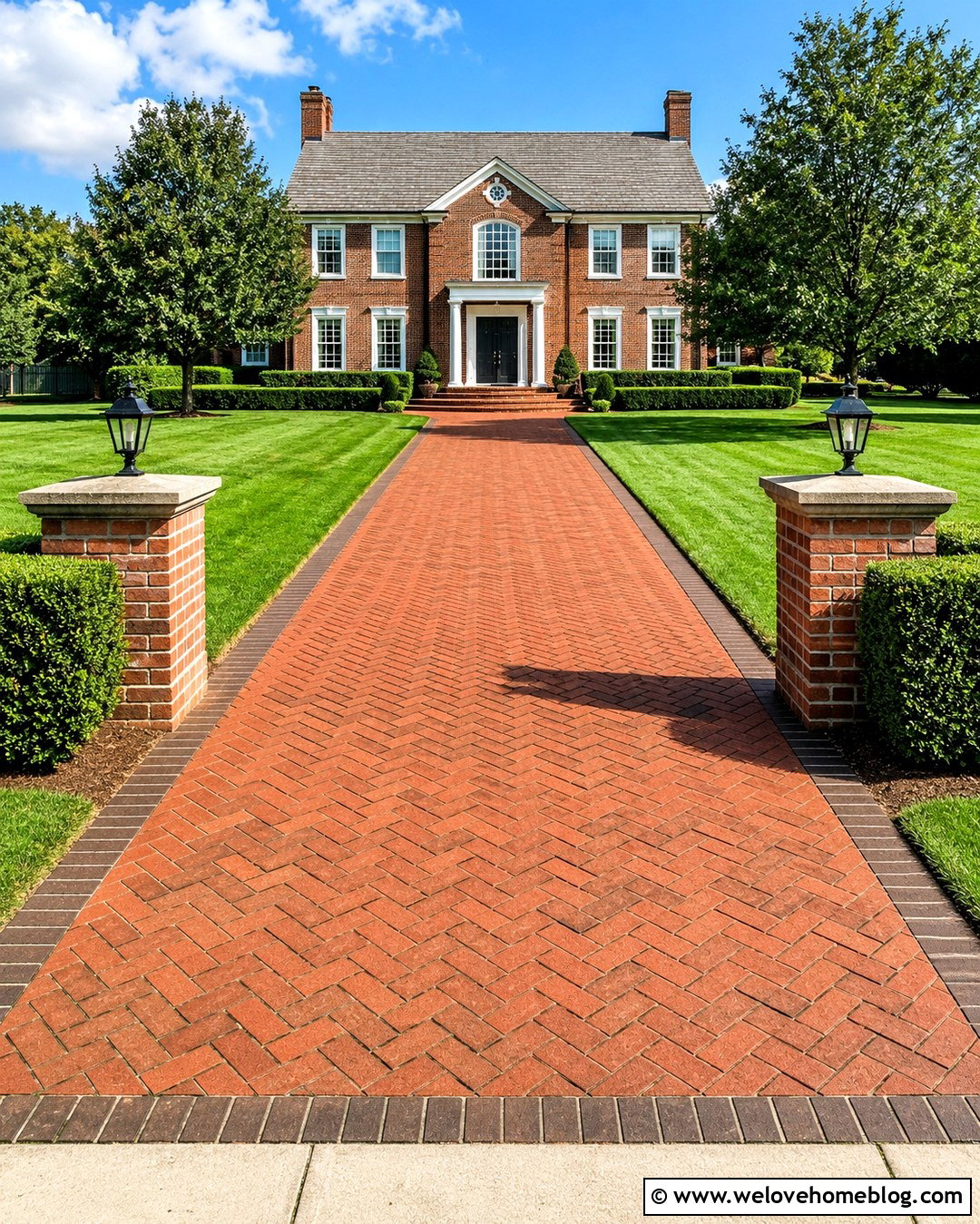
3. Brick Path From Driveway To Front Door
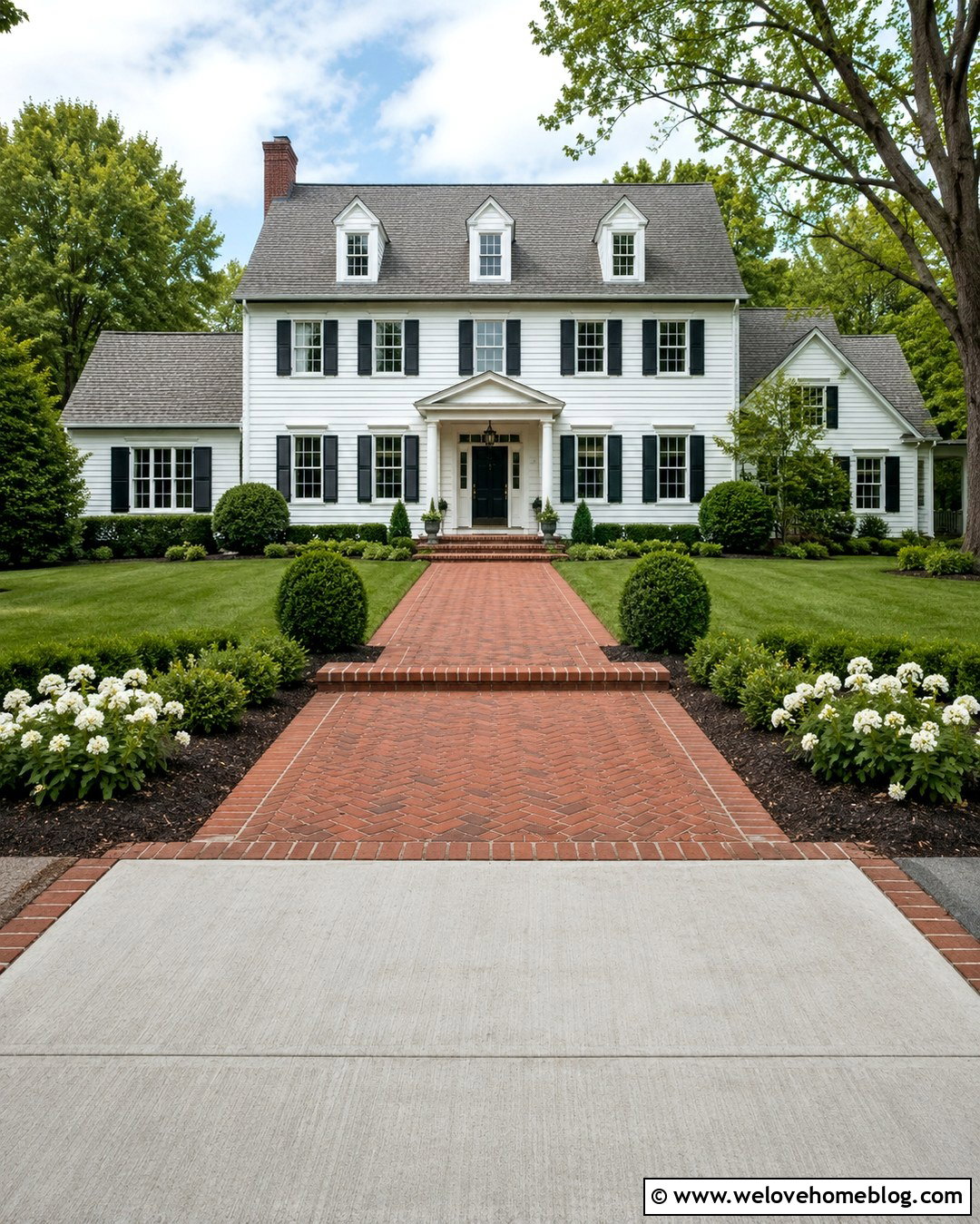
Warm red or brown brick creates a traditional path that pairs naturally with colonial, Cape Cod, cottage, and craftsman homes. A herringbone pattern adds visual movement and provides a strong contrast beside a plain concrete or black asphalt driveway. Define the sides with a soldier-course brick border so the walkway has a clean, tailored outline. Along the path, combine evergreen shrubs with seasonal flowers for color throughout the entrance area. A brick landing where the walkway meets the driveway helps the transition feel deliberate rather than added later. If the home already has brick details, choose a closely related tone instead of forcing an exact match. Slight color variation gives the route character while tying the driveway, porch steps, and facade together.
4. Stepping Stone Path From Driveway To Front Door
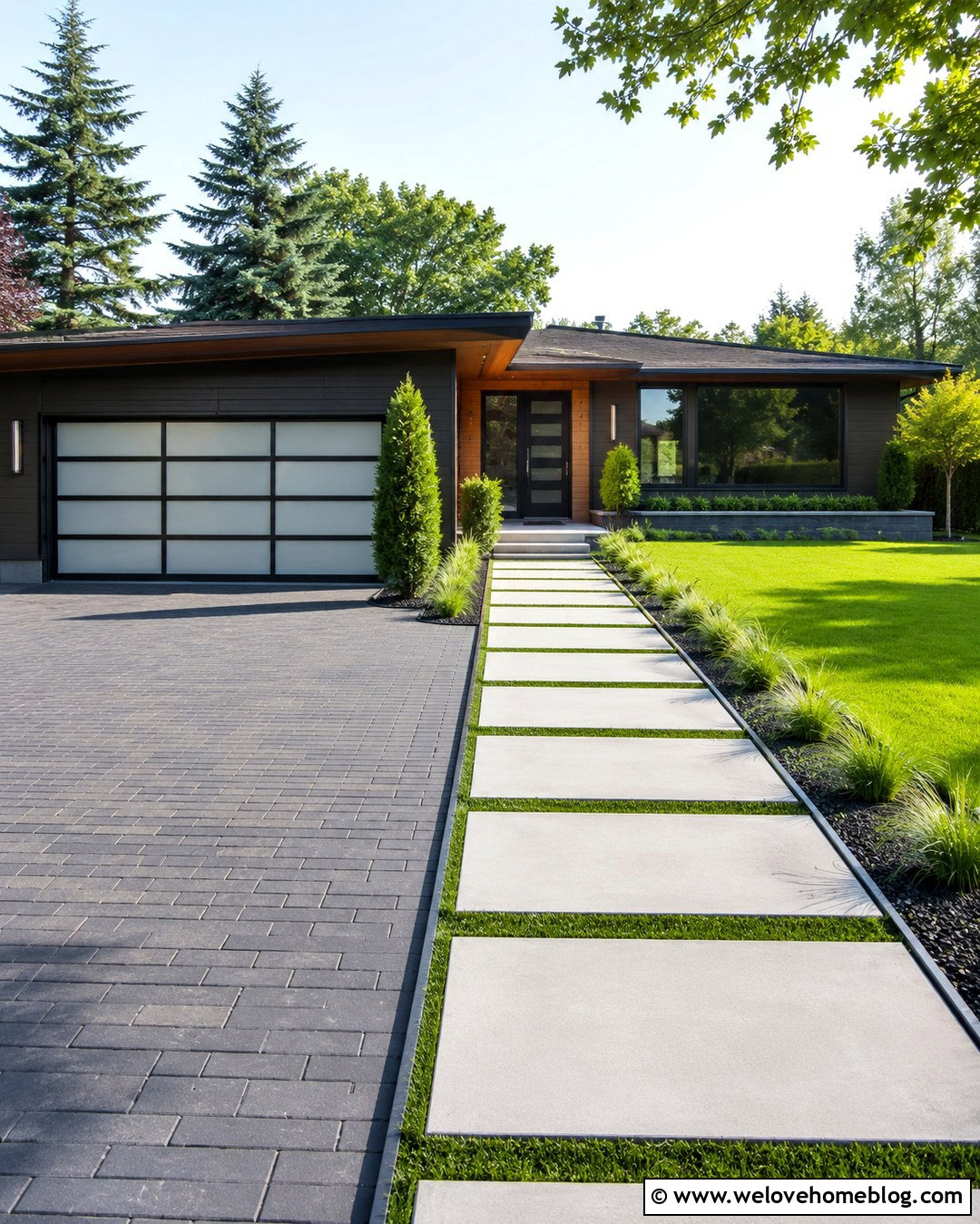
Large stepping stones offer a simple solution when you want the walkway to feel lighter than a continuous paved surface. Set square concrete slabs or natural stone pieces into lawn, gravel, or low ground cover. Keep the spacing comfortable and consistent so people do not need to shorten or stretch their stride. This layout suits short routes between a driveway and nearby porch, especially in compact front yards. Create a clear starting point with a small paved landing beside the driveway. Low metal edging can separate the path area from planting beds without becoming visually heavy. For a modern finish, use oversized rectangular slabs with narrow grass joints. For a cottage look, choose irregular flagstones surrounded by creeping thyme or another durable, low-growing plant.
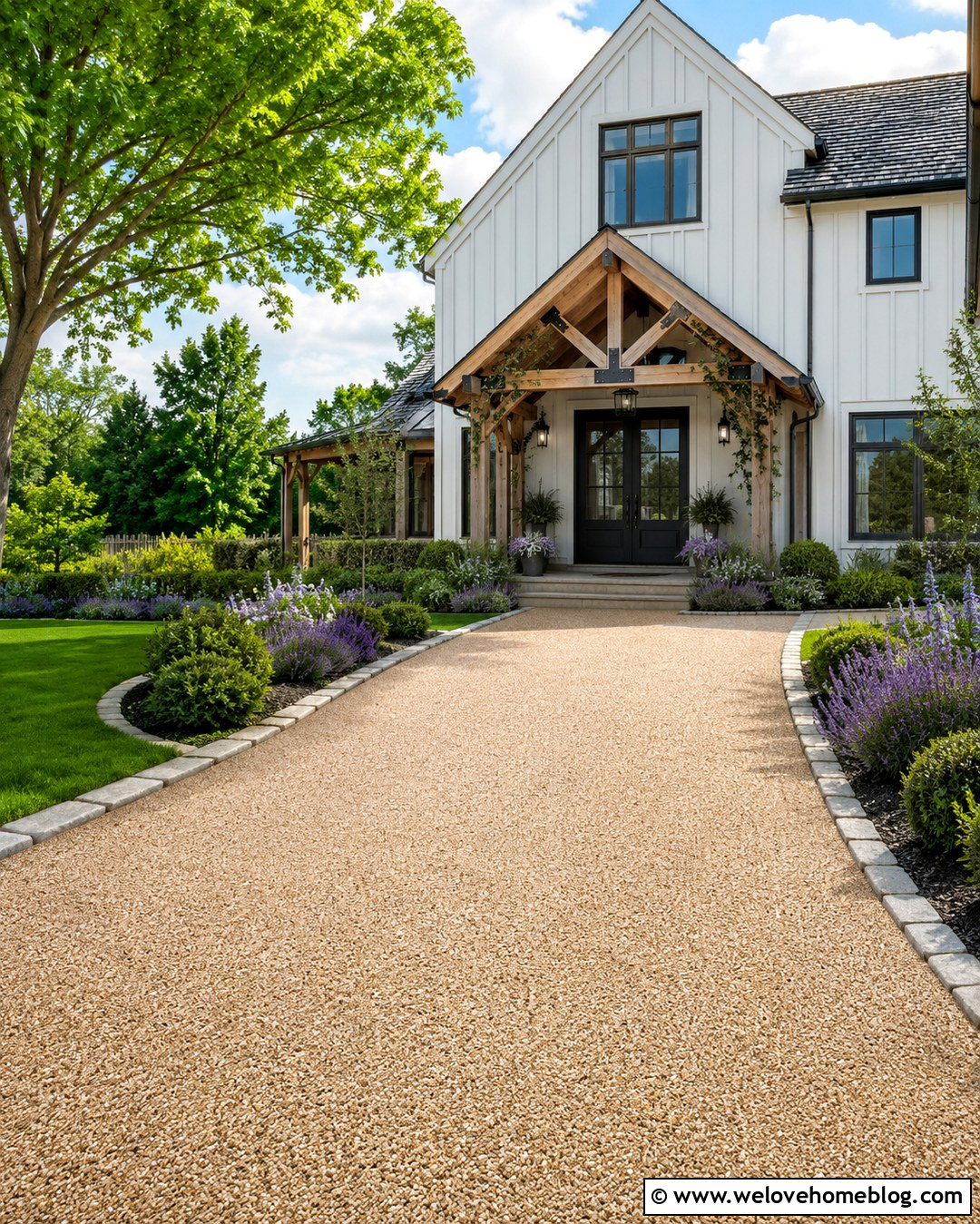
5. Gravel Path From Driveway To Front Door
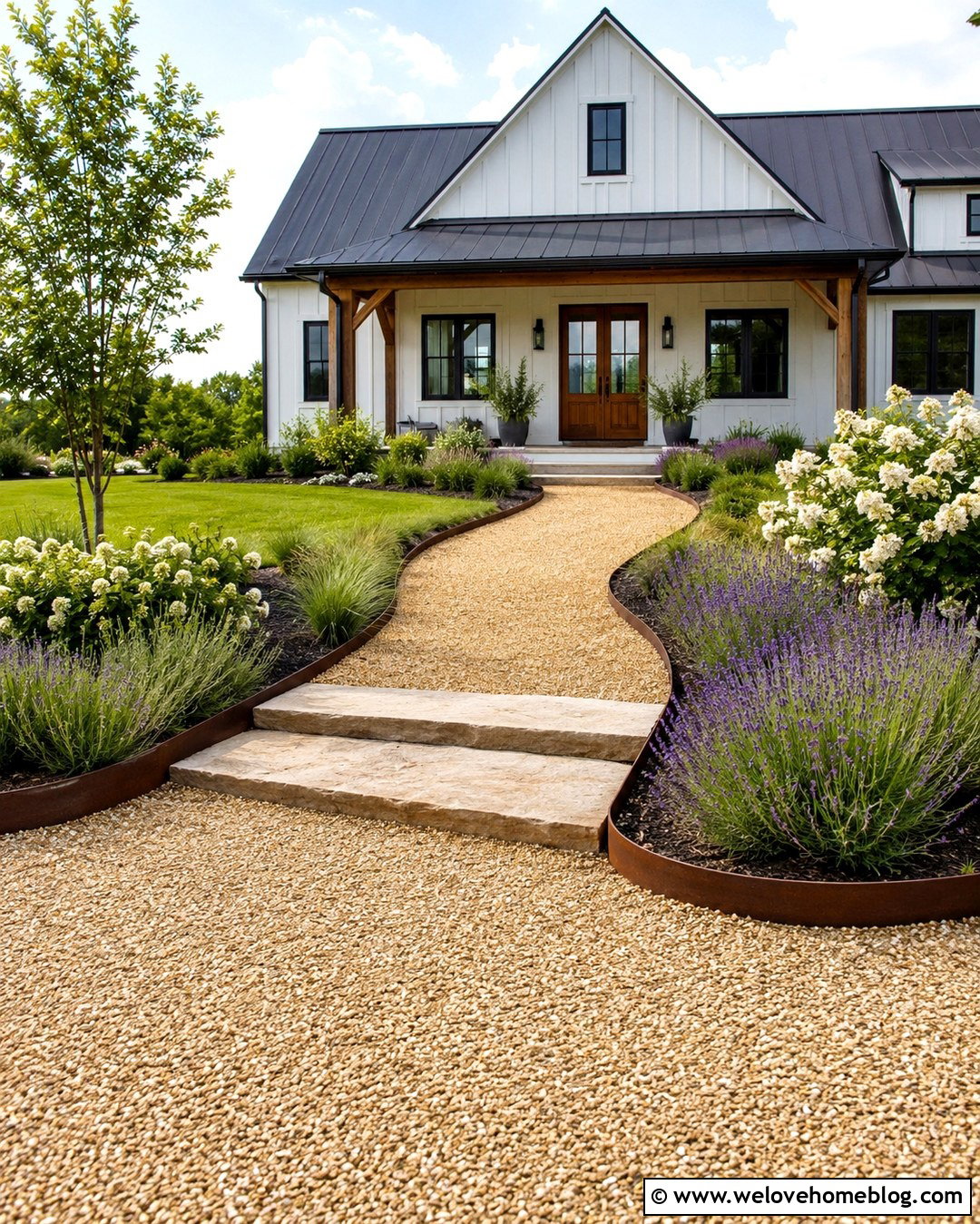
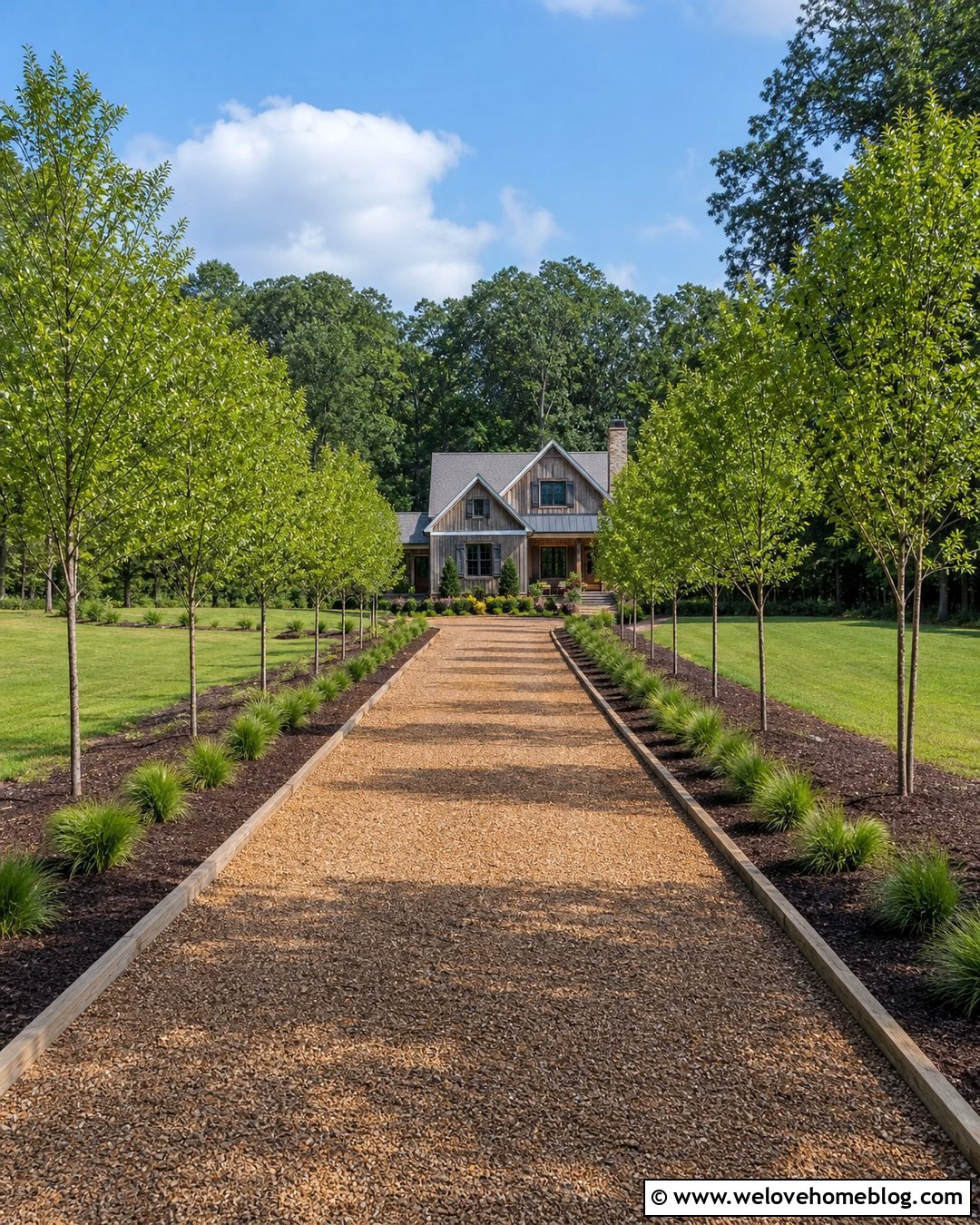
The soft texture of gravel can create an informal path that feels at home beside cottages, farmhouses, ranch homes, and natural landscapes. Use compacted crushed gravel rather than large, loose stones that may shift underfoot. Steel, brick, timber, or cobblestone edging will hold the material in place and give the route a defined shape. A few broad stepping slabs can provide a firmer walking line through the center. Connect the gravel path to a solid landing at the front steps so small stones are less likely to reach the porch. Curved planting beds filled with lavender, ornamental grasses, and evergreen shrubs can frame the route. Choose a gravel color that contrasts gently with the driveway while complementing the house exterior.
6. Concrete Path With Brick Border
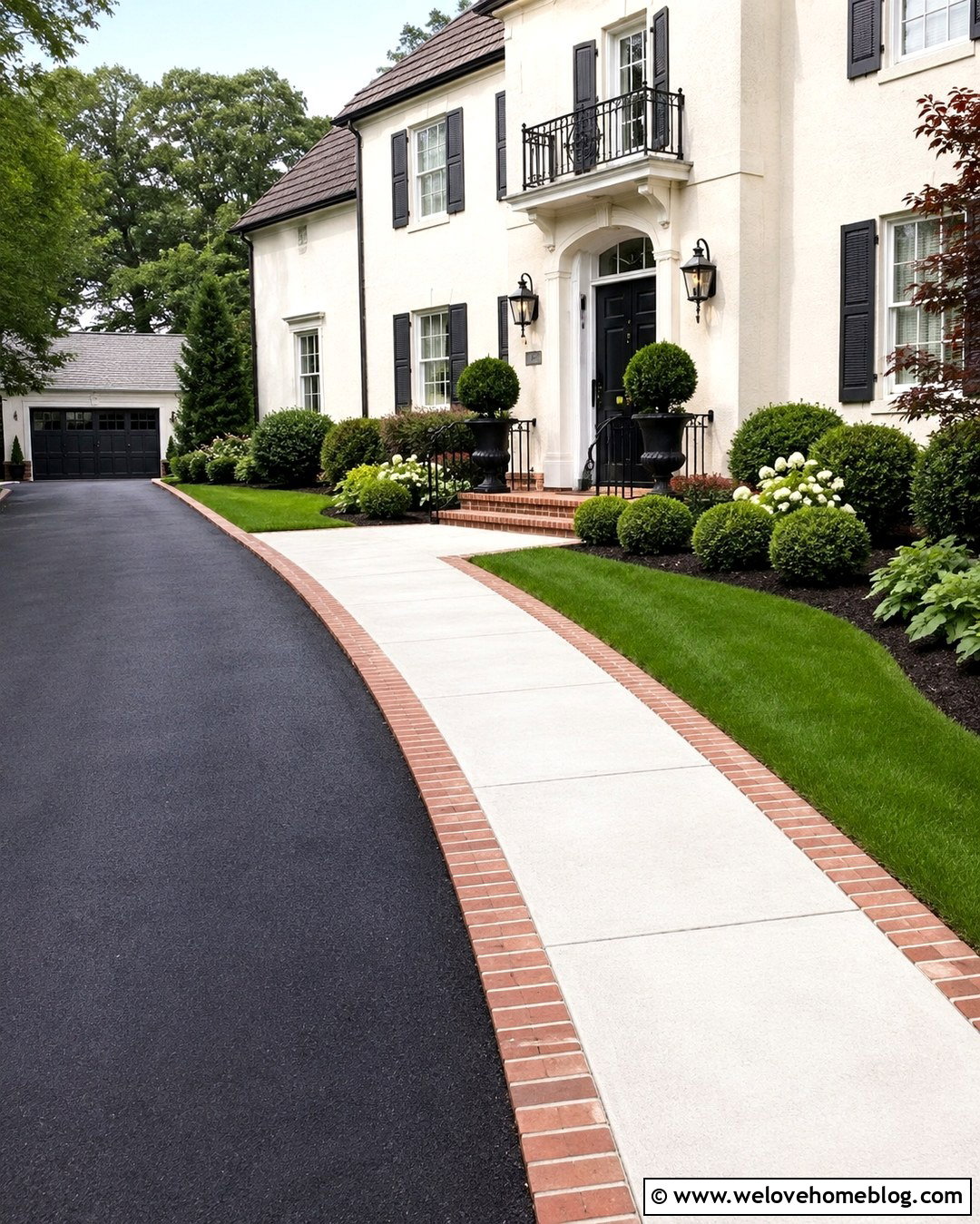
A poured concrete path becomes more distinctive when it is framed with a narrow brick border. This combination offers a smooth walking surface while introducing color and detail that can relate to the house facade. Run the path directly from the driveway for a formal entrance, or add a slight curve where space allows. Warm red brick complements cream, white, and traditional red-brick homes, while dark brown or charcoal brick works with contemporary exteriors. Continue the border around a wider landing near the porch to make the entire route feel connected. Simple lawn panels and tidy foundation shrubs will keep attention on the hardscape. Place the concrete and brick close to flush so the surface remains comfortable and visually clean.
7. Paver Path With Garden Beds
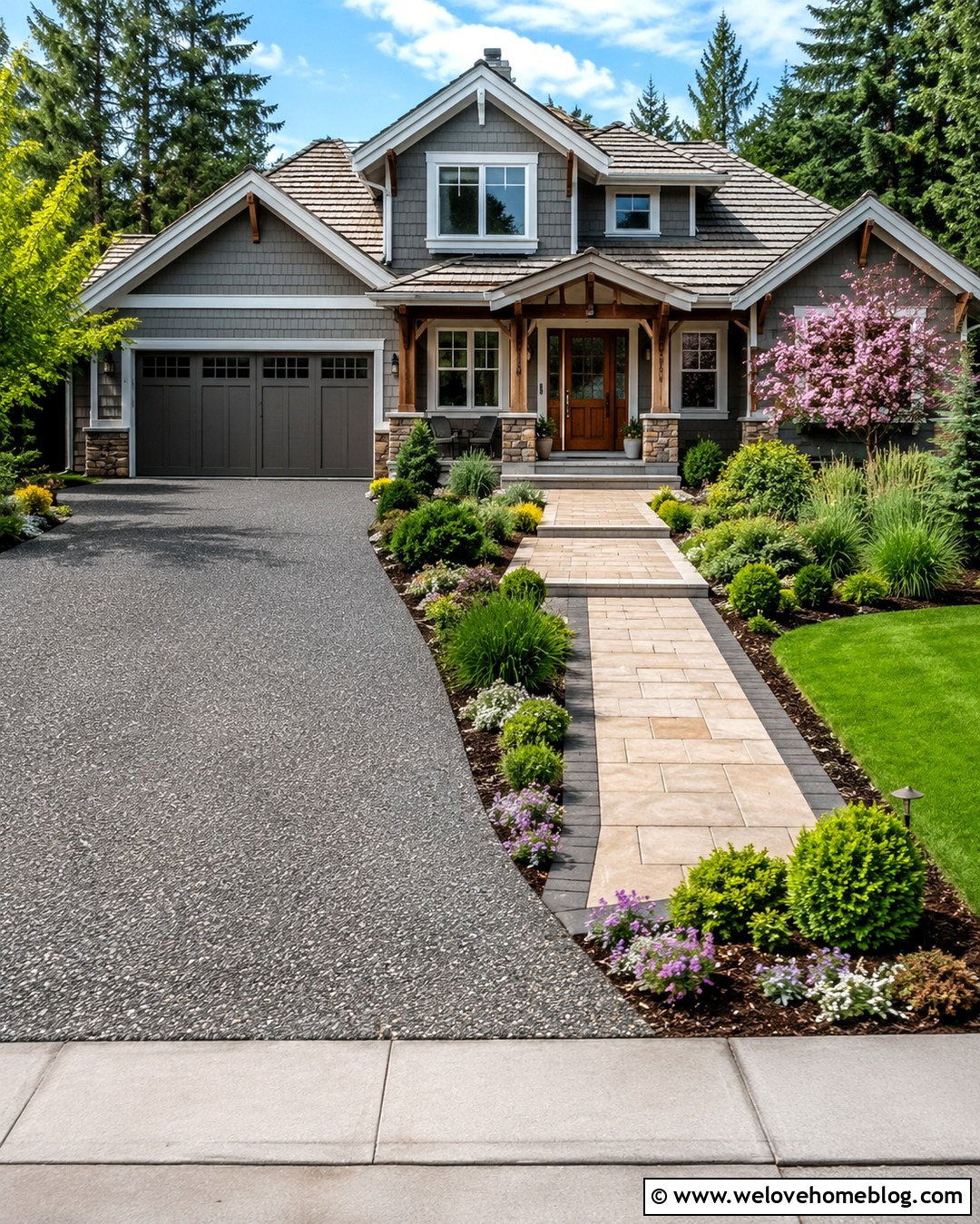
Could the route to your door also become the main feature of the front garden? A wide paver path bordered by layered planting beds creates a welcoming journey from the driveway to the entry. Start with smooth concrete or stone pavers in a color that relates to the driveway. Then arrange low flowers and ground cover near the walkway, medium shrubs behind them, and one or two taller accents closer to the house. Curved bed lines can soften a straight path without affecting its direct route. Use mulch or decorative stone to create a neat backdrop for the plants. Leave enough open space along the edges so mature foliage does not crowd the walking surface. Repeating plants makes the landscaping feel organized rather than busy.
8. Modern Concrete Slab Path
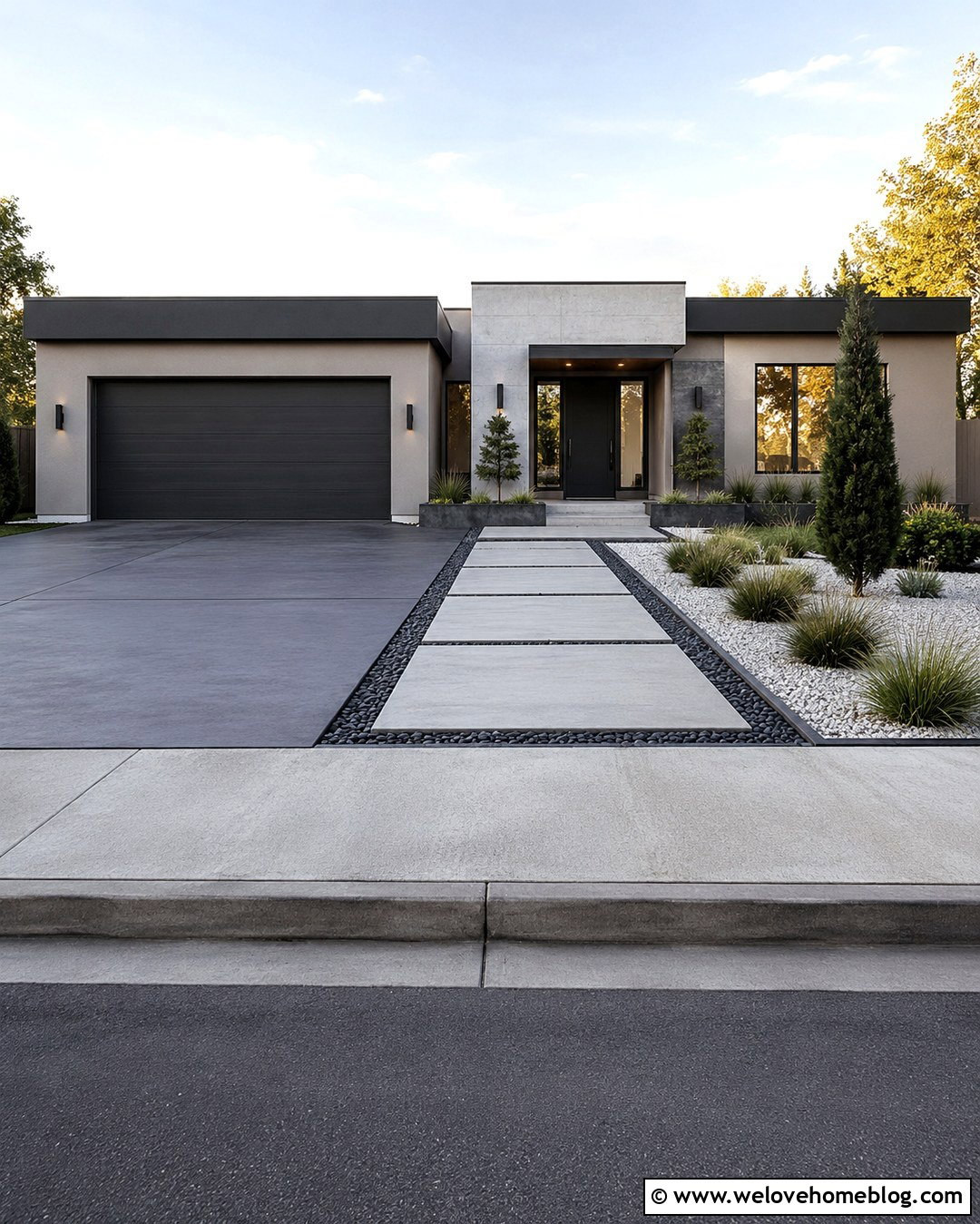
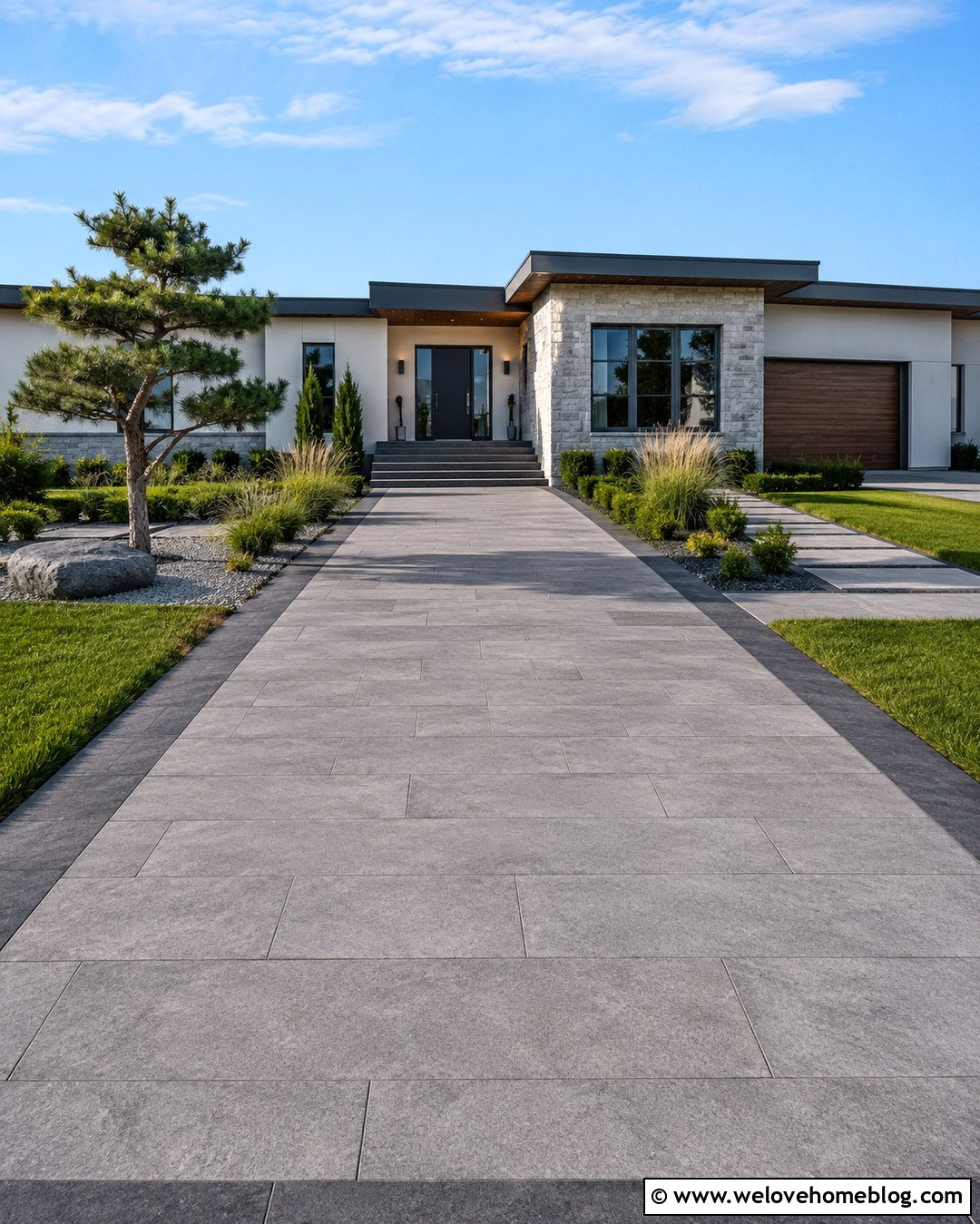
Oversized concrete slabs give the connection between driveway and front door a crisp, modern appearance. Choose smooth gray poured concrete panels with narrow gravel, grass, or black stone joints. A straight or gently offset arrangement works well with contemporary homes that feature simple rooflines and geometric architecture. Match the walkway’s direction to strong lines already visible on the house, such as porch columns, windows, or wall panels. Keep surrounding landscaping minimal by using sculptural grasses, compact evergreens, and broad areas of decorative gravel. A wide first slab beside the driveway can function as an arrival platform. Continue the same slab proportions toward the porch for visual rhythm. Clean edges and restrained planting allow the path’s scale, spacing, and geometry to become the focal point.
9. Bluestone Path From Driveway To Front Door
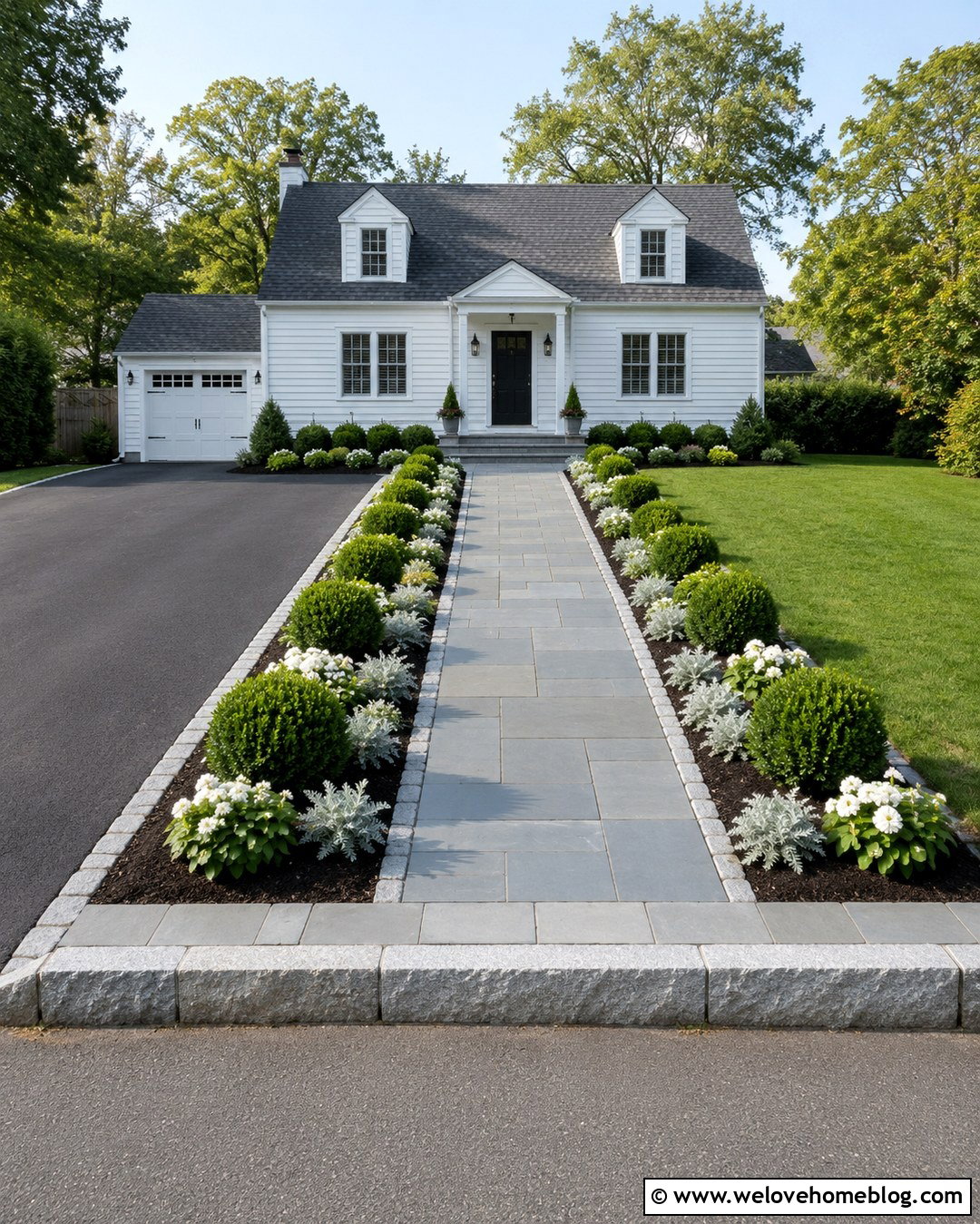
Bluestone brings subtle blue-gray color and natural variation to a polished front entrance. Rectangular stones laid in a running bond or random rectangular pattern work well beside asphalt, concrete, or gravel driveways. For a traditional look, use tight joints and a straight route leading directly toward the porch. A gently curved layout feels more relaxed and can follow the edge of a landscaped bed. Add a narrow cobblestone border if you want stronger definition between the path and surrounding lawn. White flowers, deep green shrubs, and silver foliage highlight the cool stone tones without overwhelming them. Carry the bluestone onto the porch landing or front steps when possible. Repeating the material at the destination makes the path look integrated with the architecture.
10. Cobblestone Path From Driveway To Front Door
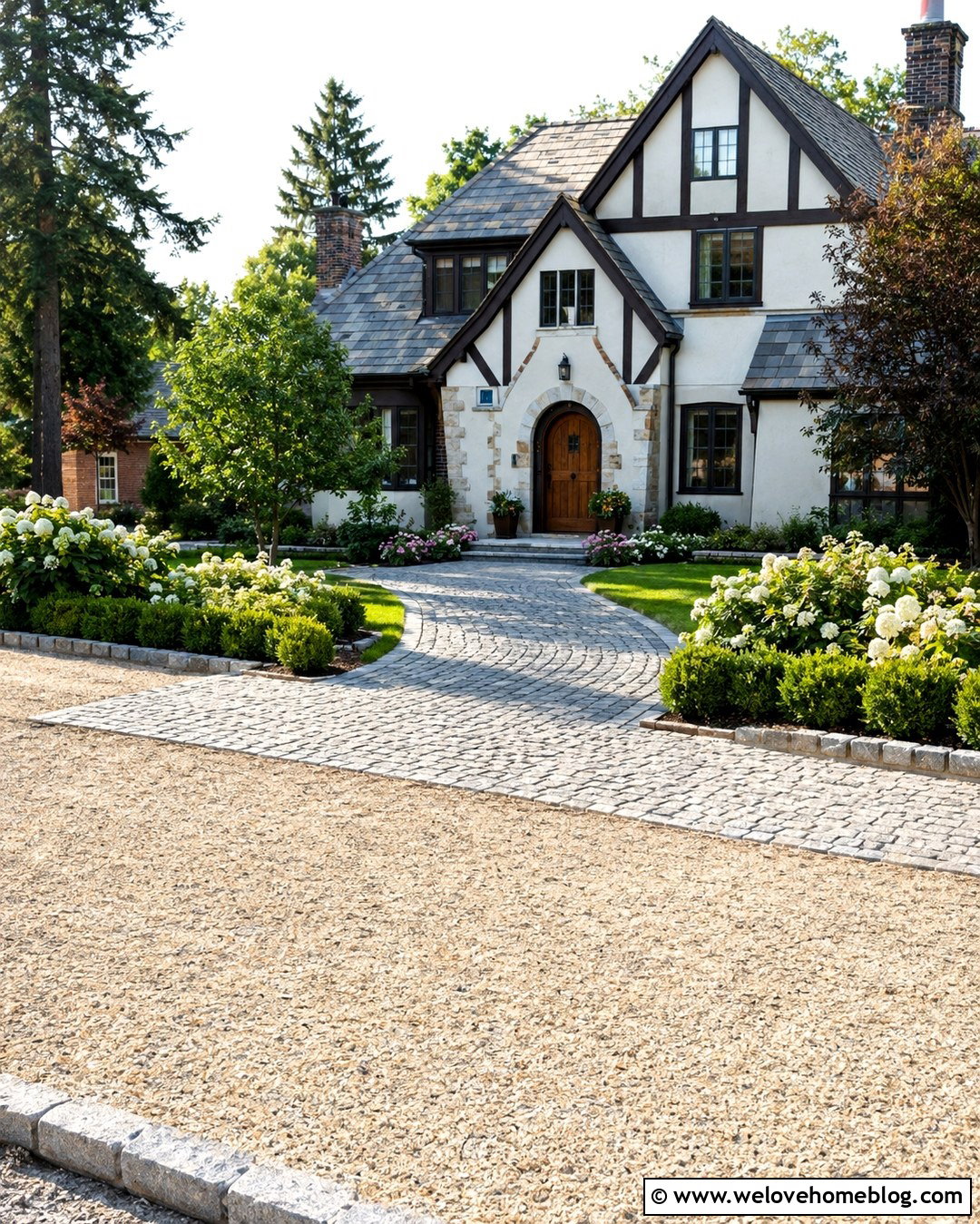
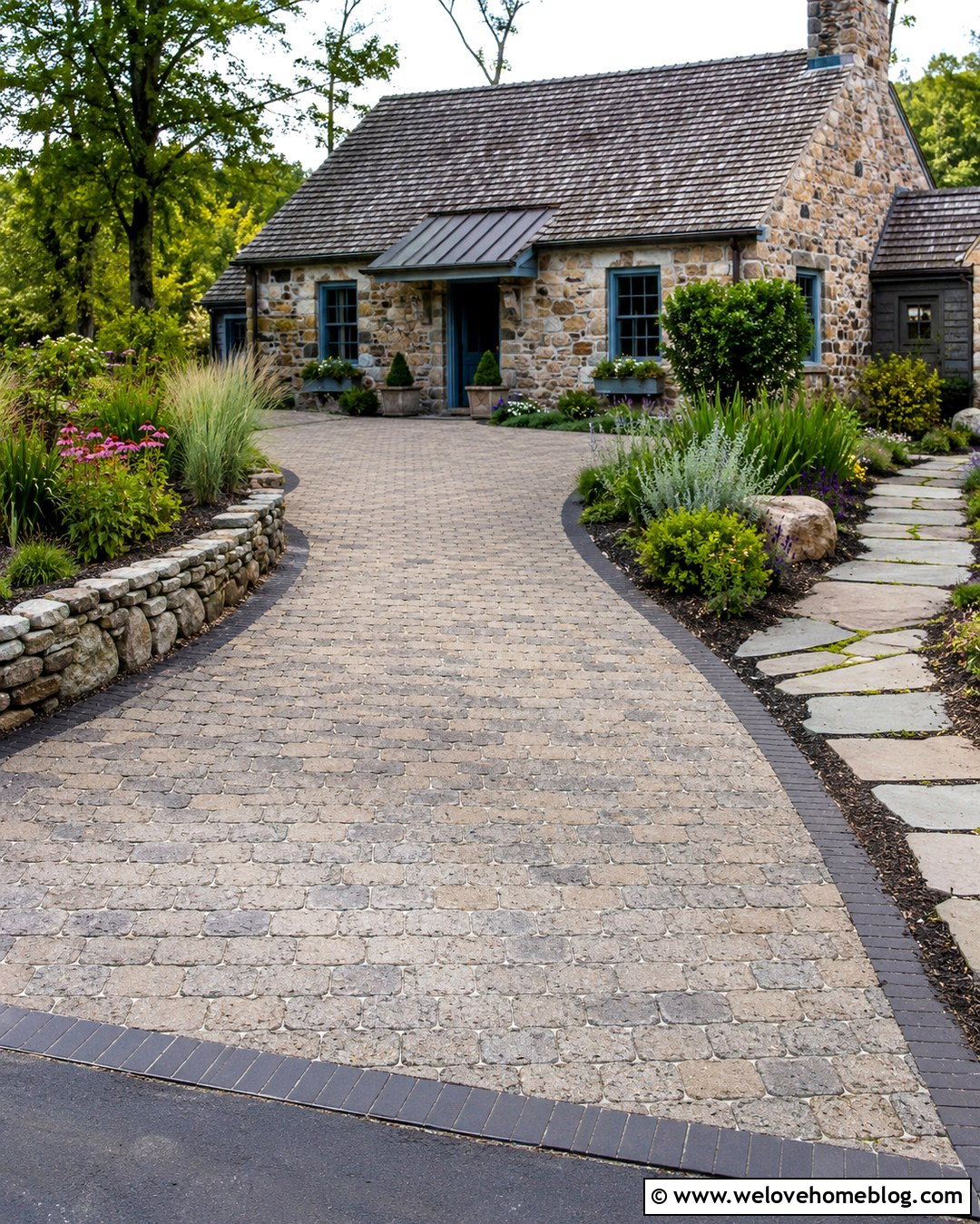
Rounded cobblestones create a rich, old-world approach suited to Tudor, European-inspired, colonial, and traditional homes. Because the material has noticeable texture, use stones with relatively even tops and carefully formed joints along the main walking route. A fan pattern can make a short path feel decorative, while straight rows create a quieter appearance. Pair the cobblestone path with a gravel or asphalt driveway so its pattern stands out clearly. Low boxwood borders, hydrangeas, and restrained flower beds provide a classic landscape frame. At the driveway connection, build a small cobblestone apron that visually announces the pedestrian entrance. Continue the stones into a generous porch landing. This repeated surface creates a cohesive route and gives the front door greater visual importance.
11. Path With Low Landscape Lighting
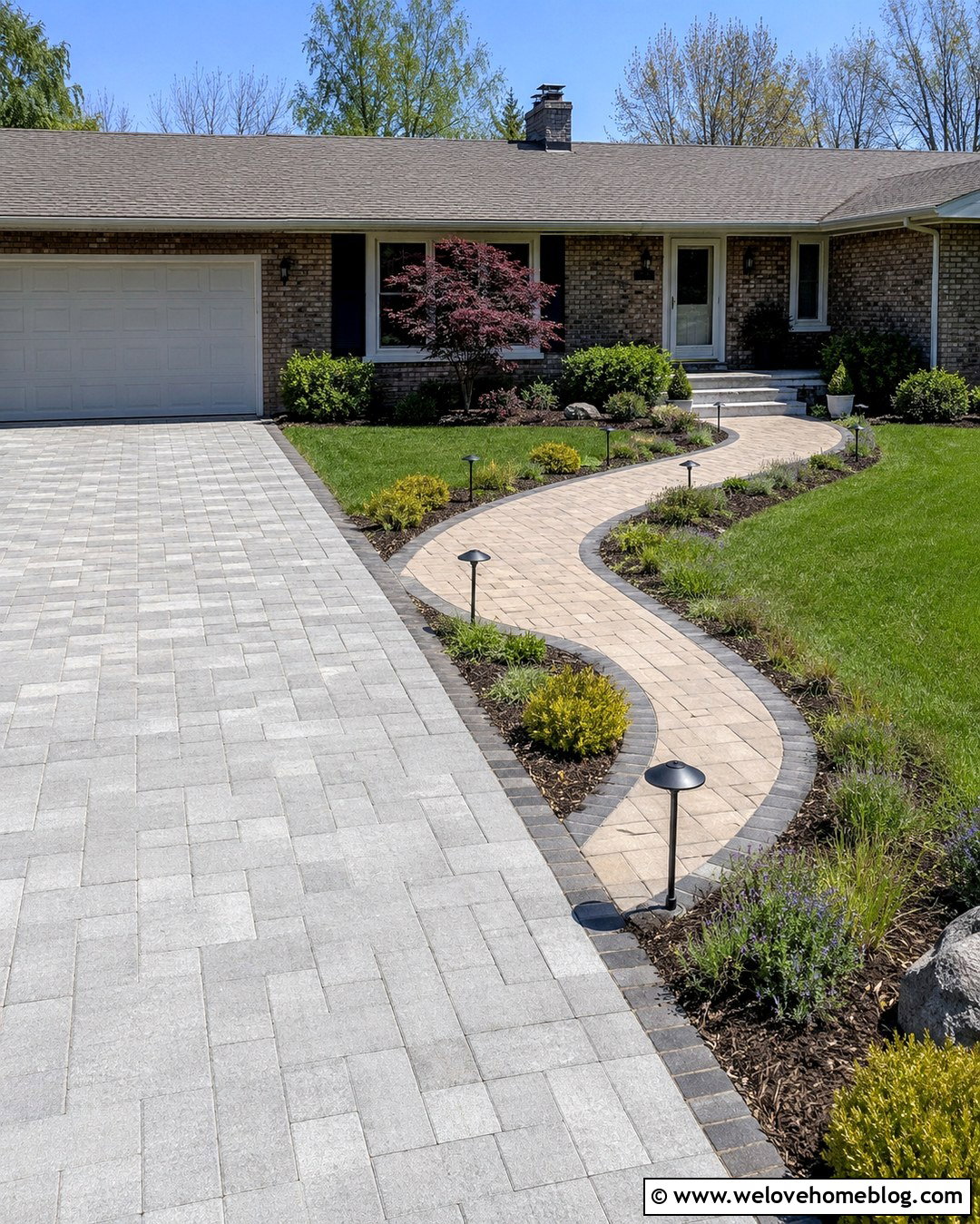
Path lighting should support the complete entrance design rather than look like a row of unrelated fixtures. Begin with a defined walkway made from concrete pavers, brick, or natural stone, then place low lights at key transitions. Useful locations include the driveway connection, a change in direction, steps, and the porch landing. Staggering the fixtures can feel softer than lining both sides in perfect pairs. During the day, dark bronze or matte black housings blend easily with mulch and foliage. Frame the route with compact shrubs and low ground cover so leaves do not block the light. The walkway should remain the main visual guide, with lighting acting as a supporting layer. Choose fixtures with a simple shape that complements the house exterior and entry hardware.
12. Path With a Wide Driveway Landing
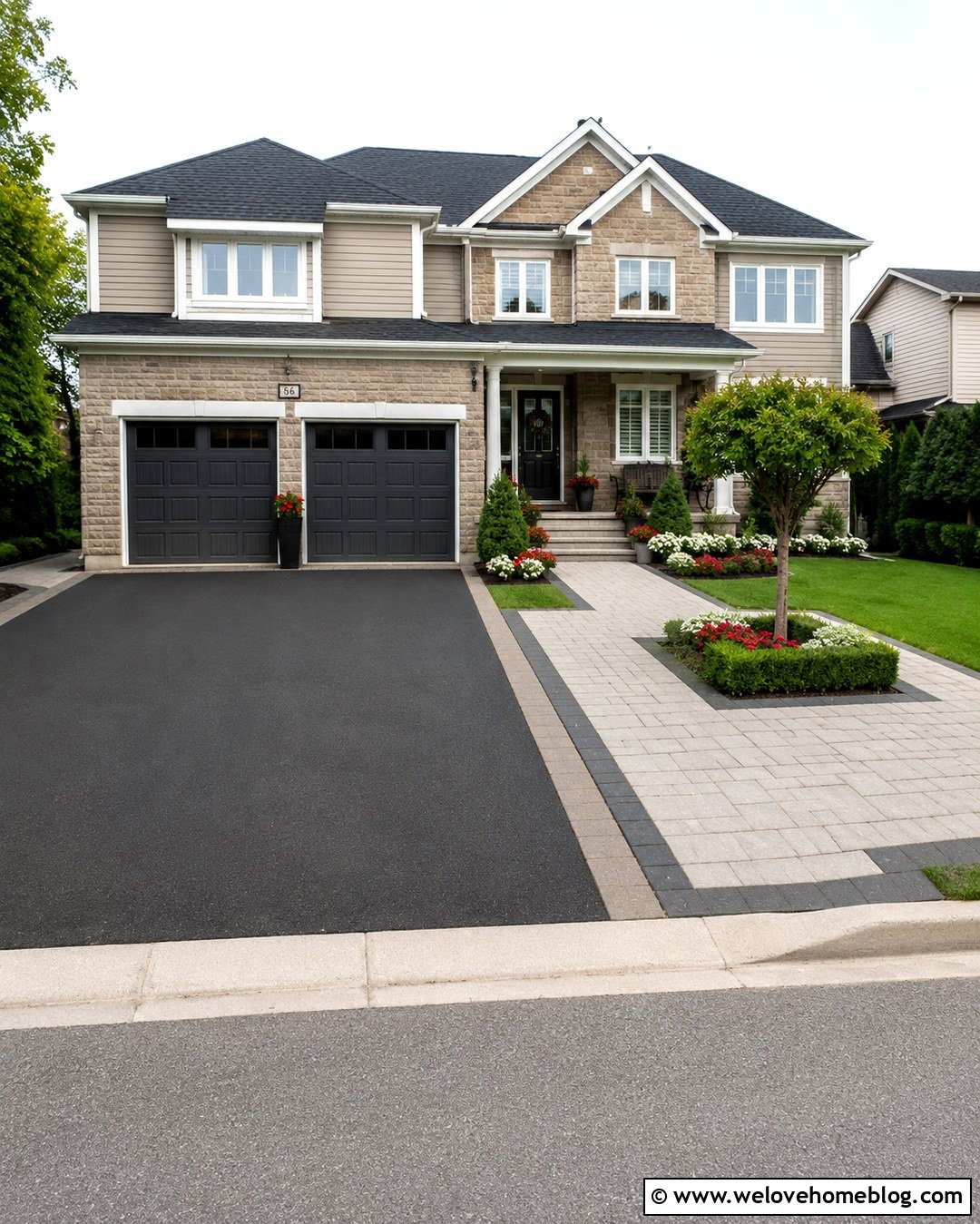
A generous landing makes the path easier to recognize and creates a comfortable transition from parked vehicles to the front entrance. Use contrasting pavers, brick, or textured concrete to form a rectangular or gently curved pad beside the driveway. From there, continue with a narrower path in the same material toward the porch. The landing can align with the usual passenger side of a parking space, helping visitors avoid walking behind vehicles or across wet grass. Frame the outer edge with a low planting bed, a small ornamental tree, or a decorative address marker. Keep the center open and uncluttered. Repeating the landing material around the porch steps will visually connect both ends of the route and make the path appear original to the overall landscape.
13. Path With a Small Entry Courtyard
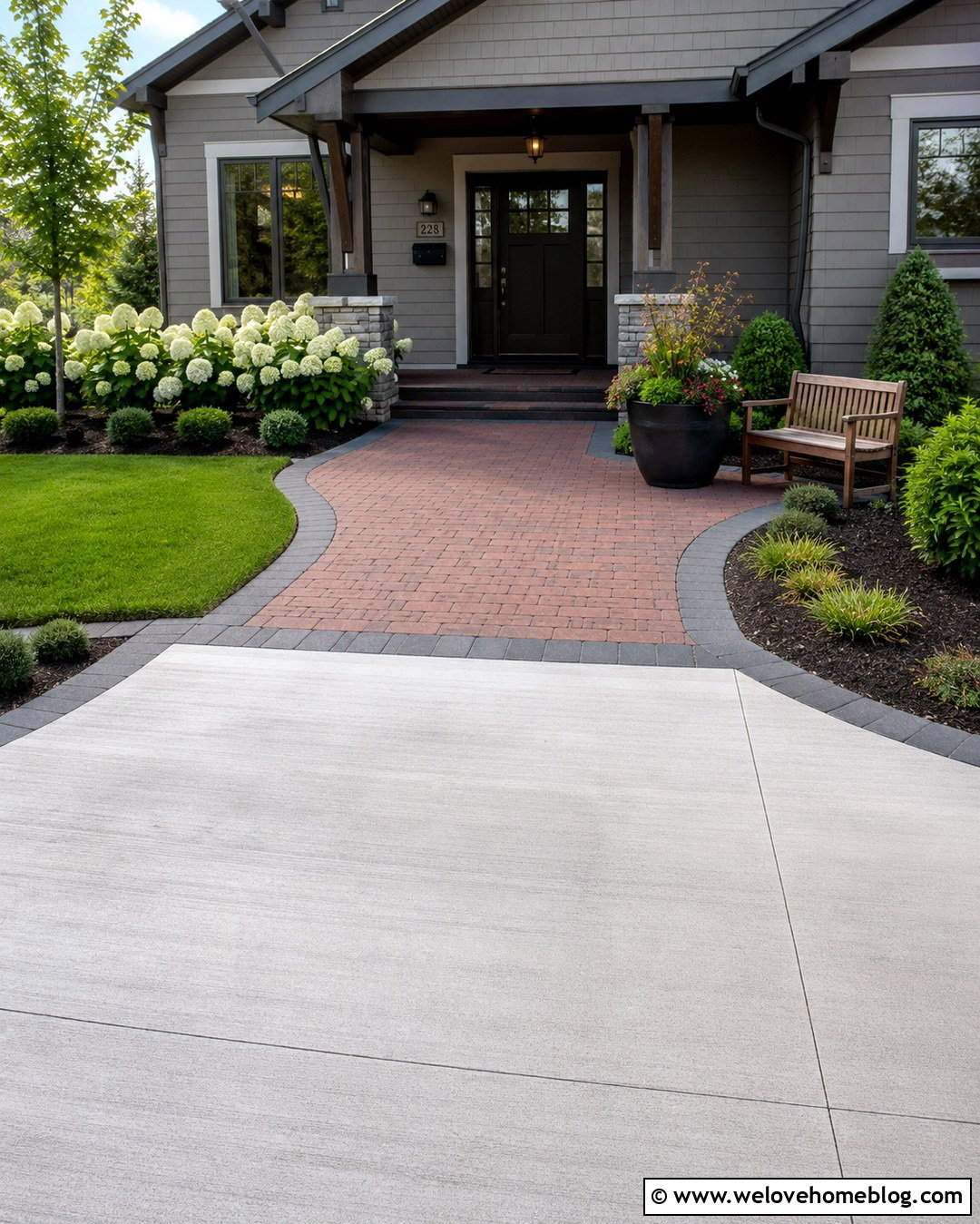
For a more substantial front approach, expand the walkway into a small courtyard before it reaches the porch. This layout works well when the front door is recessed, hidden from the driveway, or surrounded by a wide blank lawn. Begin with a paver or brick path, then widen it into a square or circular gathering space near the house. A large planter, small ornamental tree, or simple bench can anchor one edge without blocking movement. Use matching borders around the path and courtyard to maintain visual continuity. Planting beds can wrap around the open area and direct attention toward the door. Keep the main walking line clear and obvious. The courtyard should feel like a welcoming pause within the route, not an obstacle that visitors must navigate.
14. Path With Front Door Steps
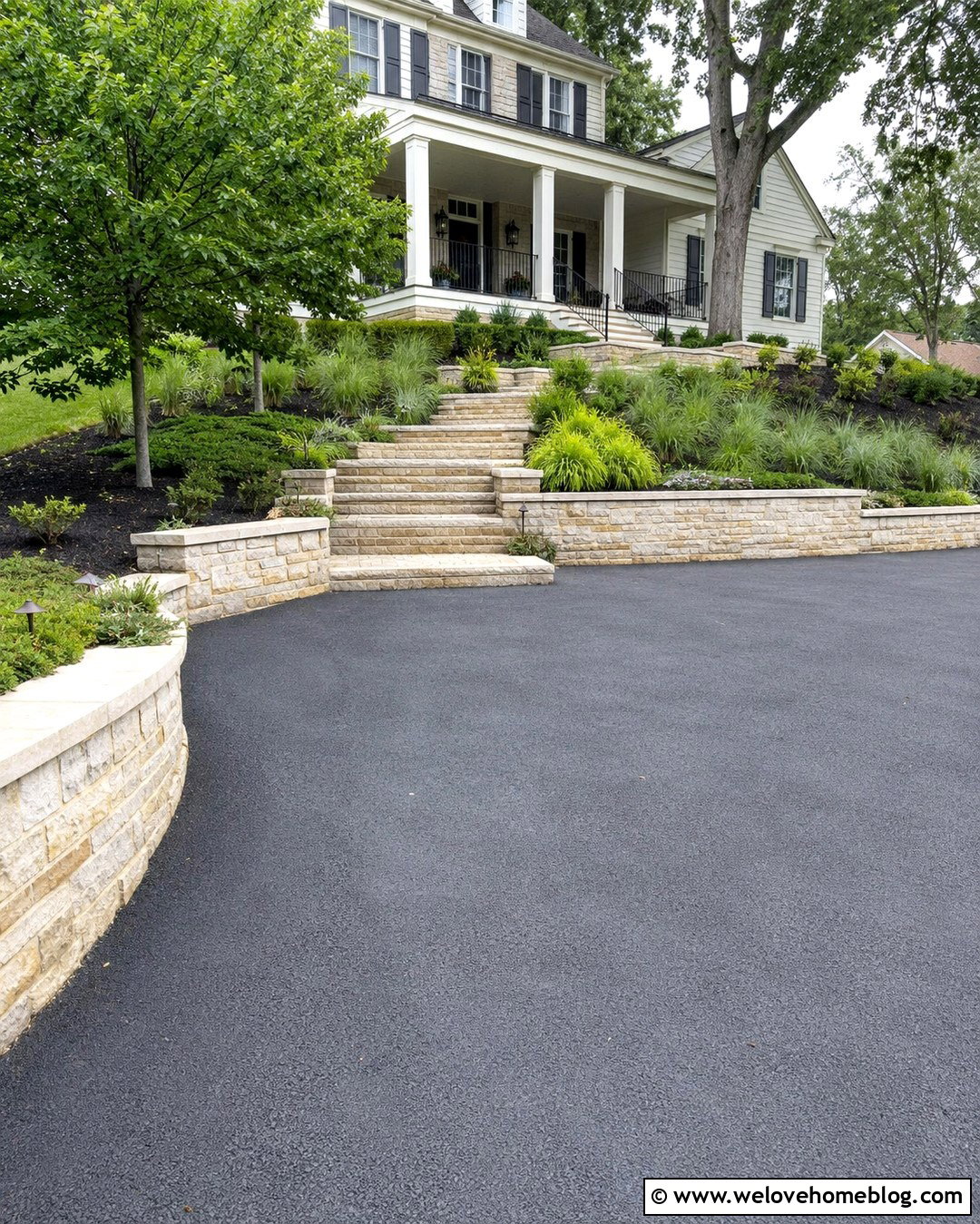
A sloped yard often needs a path and steps designed as one continuous approach. Use broad stone or concrete treads with shallow, consistent rises so the climb feels gradual. Landings can break up a longer slope and provide space for the walkway to change direction naturally. Match the step material to the path, or use a complementary border to connect the different surfaces. Low retaining walls can hold back soil while doubling as strong visual edges. Plant the slope with compact shrubs, ornamental grasses, and spreading ground cover that will not spill heavily onto the walking area. At the driveway, begin with a level landing before the first step. This creates a clear transition and makes the upward route toward the front door easier to understand.
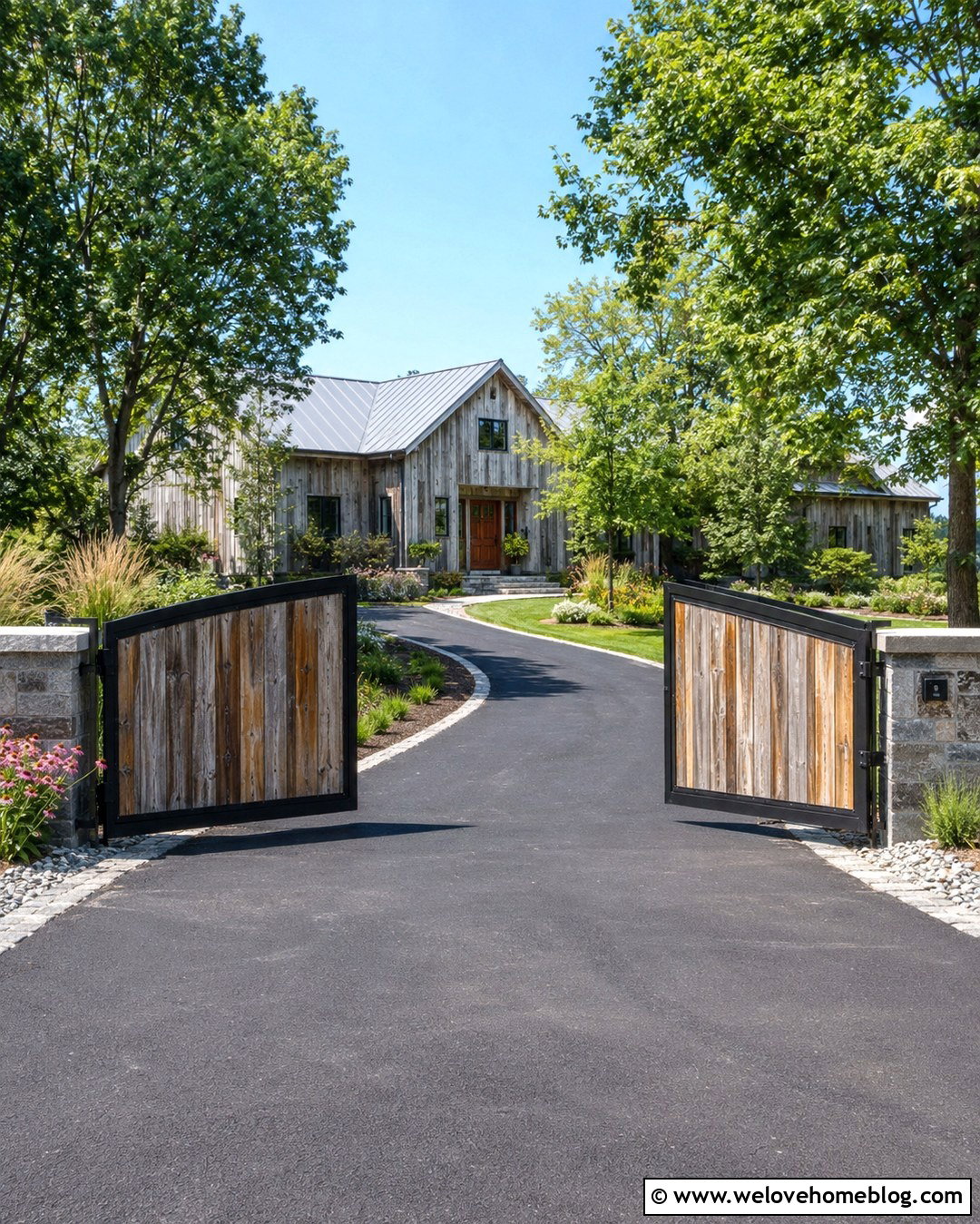

15. Permeable Paver Path
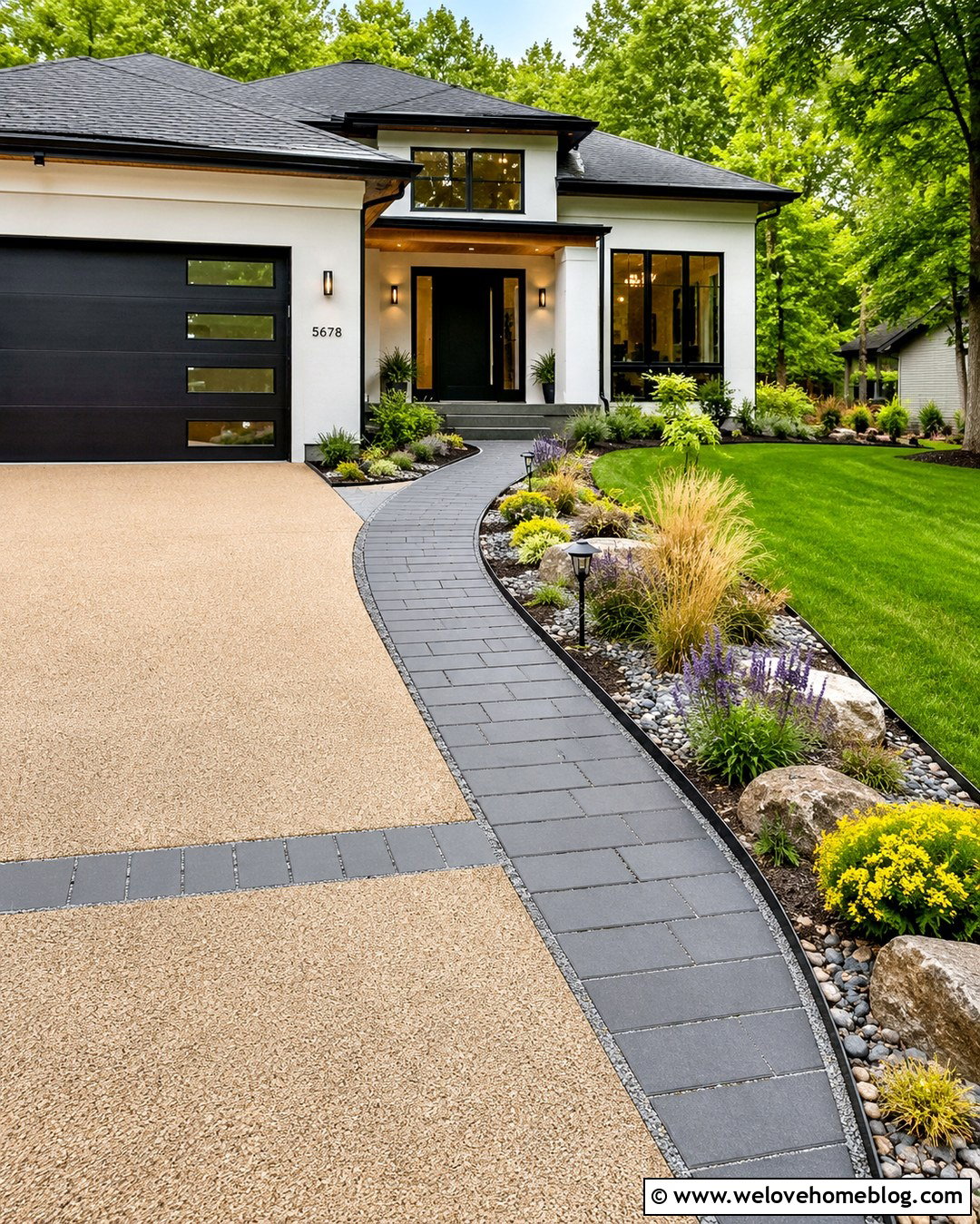
Permeable pavers can give the front walkway a structured appearance while allowing water to move through open joints. This surface pairs especially well with gravel driveways, rain gardens, and landscapes designed around drainage. Choose rectangular concrete pavers in warm gray, tan, or charcoal, then fill the joints with small aggregate suited to the paving system. A straight path looks crisp beside a modern house, while a gentle curve can connect a side driveway to an offset entry. Frame the route with moisture-tolerant plants where runoff naturally collects. Avoid placing loose mulch directly beside open joints because it can migrate onto the surface. A matching paver landing at the driveway and porch will make the entire path feel cohesive, deliberate, and visually balanced.
16. Path With Native Plant Borders
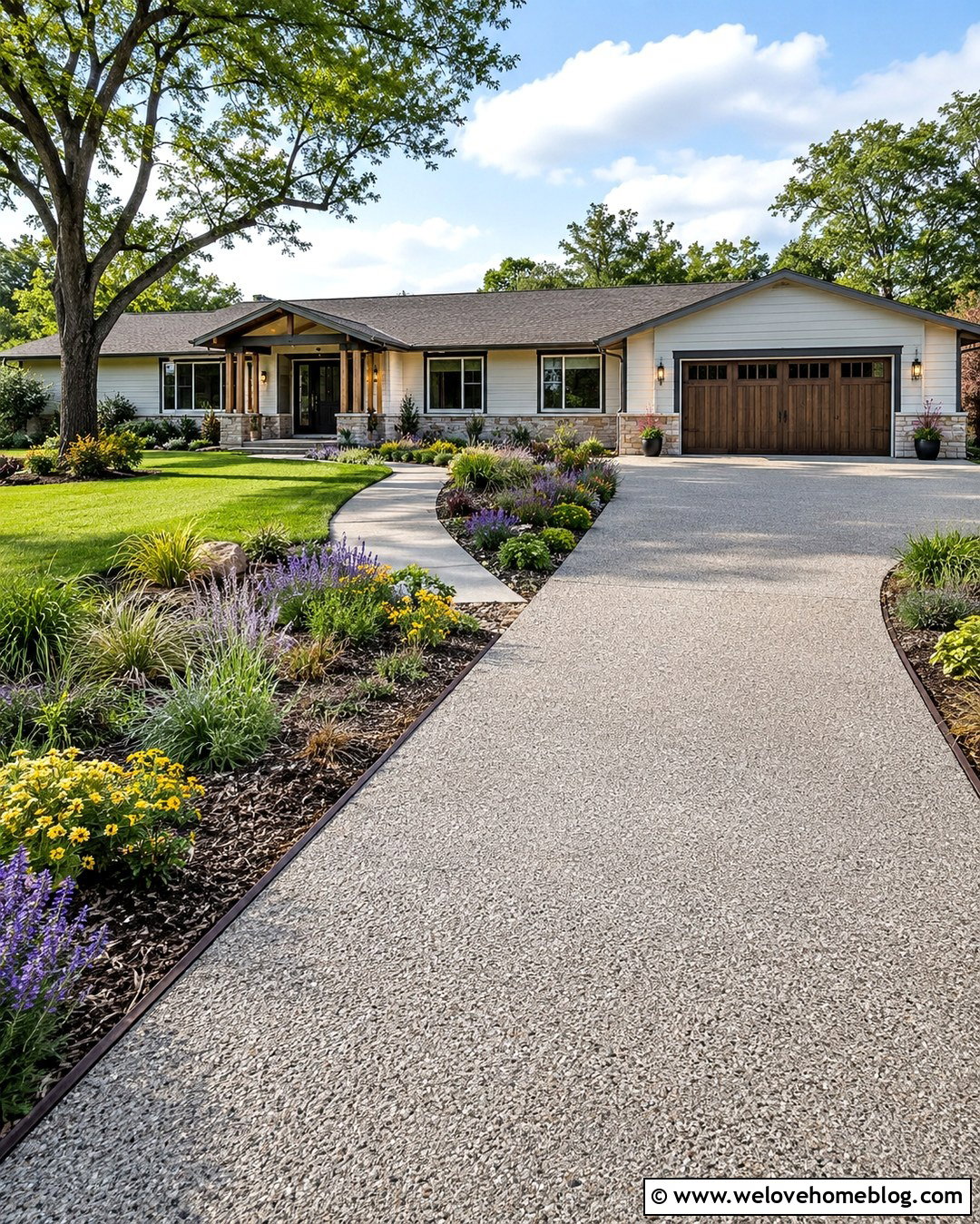
A path framed by native plants can create a softer transition between the driveway and front door. Start with an easy-to-walk surface such as textured concrete, clay brick, or closely set flagstone. Then select plants appropriate for the yard’s sunlight, moisture, and local growing conditions. Keep low flowers and grasses closest to the walkway, with taller perennials and shrubs farther into the beds. This layered arrangement preserves visibility while giving the entrance depth and seasonal interest. Repeat a limited group of plants instead of filling the border with unrelated varieties. Stone or metal edging can prevent soil from washing across the path. Near the driveway, open the planting slightly to reveal the walkway entrance and provide an uncluttered place for guests to step onto the route.
17. Path Across a Wide Front Lawn
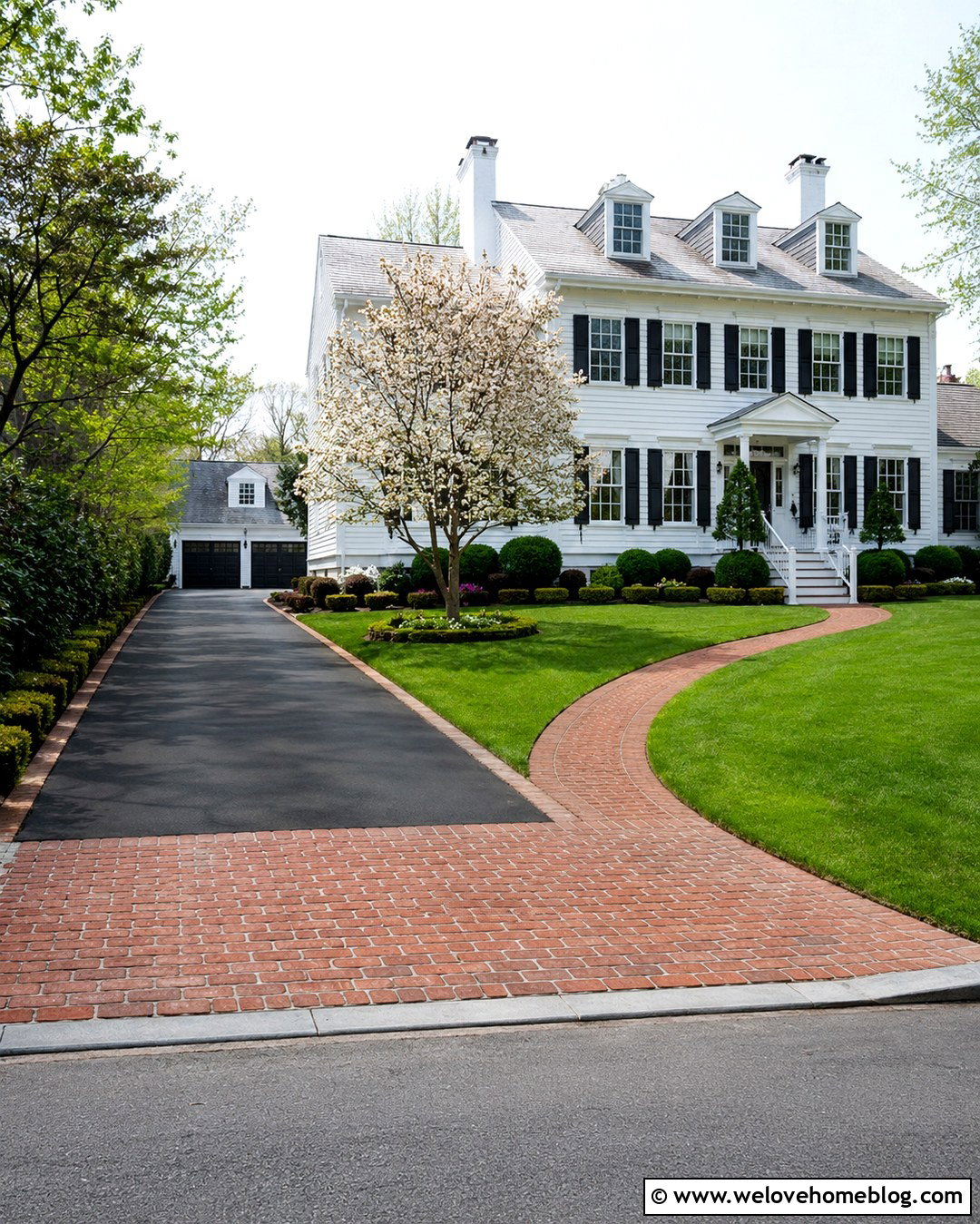
A path crossing a broad lawn should feel substantial enough to match the scale of the open space. Use a wide route of brick, pavers, or natural stone instead of a narrow strip that may appear undersized. A gentle curve can reduce the rigid look of a long approach, but the front door should remain visible from the driveway. Add one focal planting area along the curve, such as a small flowering tree surrounded by low shrubs. Repeating another planting bed near the porch will balance the composition. Maintain generous lawn borders on both sides so the walkway does not divide the yard awkwardly. A contrasting apron at the driveway entrance helps people immediately recognize the path and makes the long connection look intentional from the curb.
18. Path Through a Small Front Yard
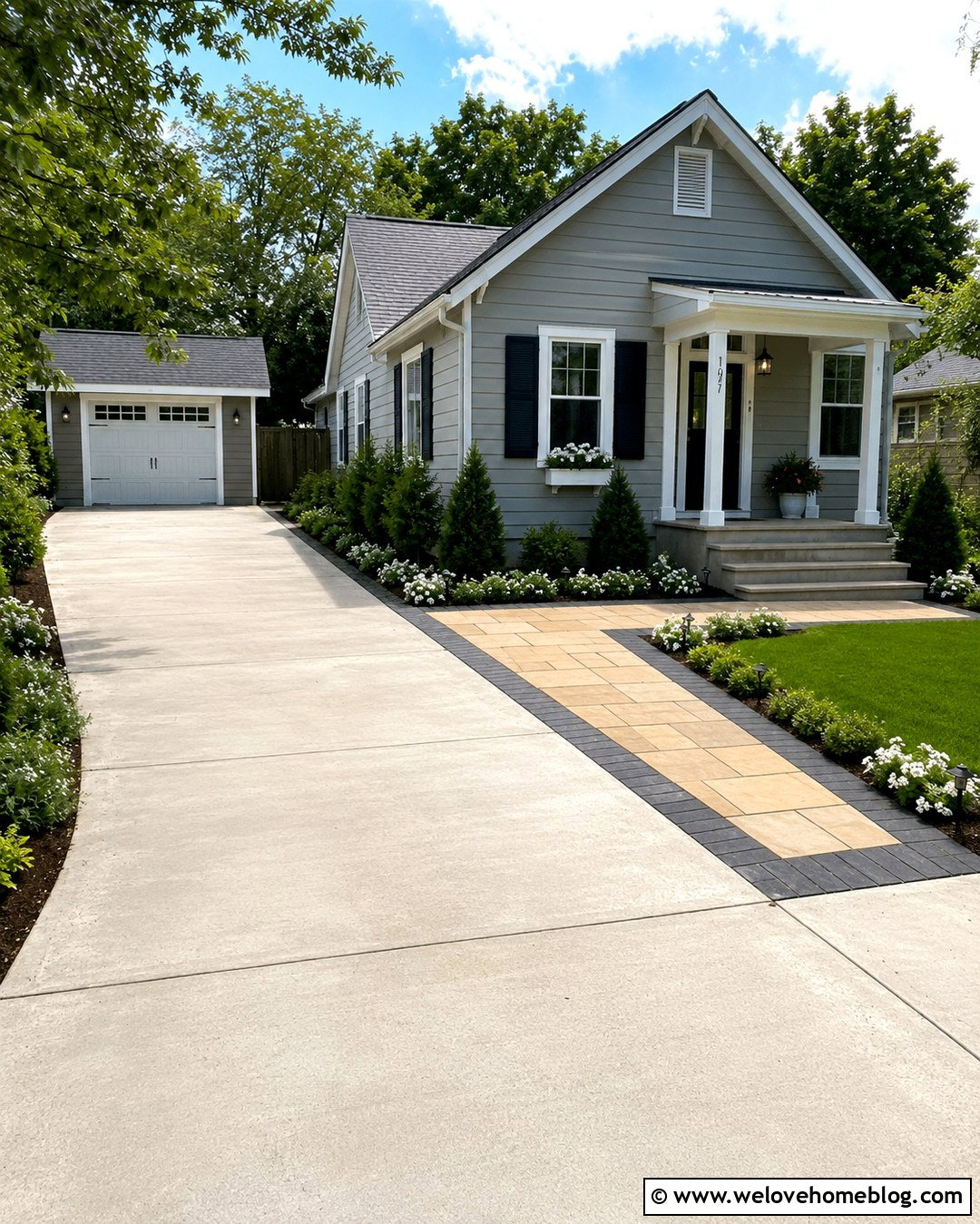
In a compact yard, a simple path can provide structure without making the landscape feel crowded. Use one clear route from the driveway to the door, preferably with a material that coordinates with the porch and house facade. Narrow-format brick, small concrete pavers, or smooth poured concrete can keep the scale appropriate. A slight diagonal may add interest and create more planting room than a rigid route along the house. Limit the border to low ground cover, a few compact shrubs, and one repeated flowering plant. Raised edges and oversized fixtures can consume valuable space, so keep details slim and restrained. Widen the path near the front steps to create a practical landing. This small change gives the entrance a more generous and finished appearance.
19. Path With a Driveway Paver Ribbon
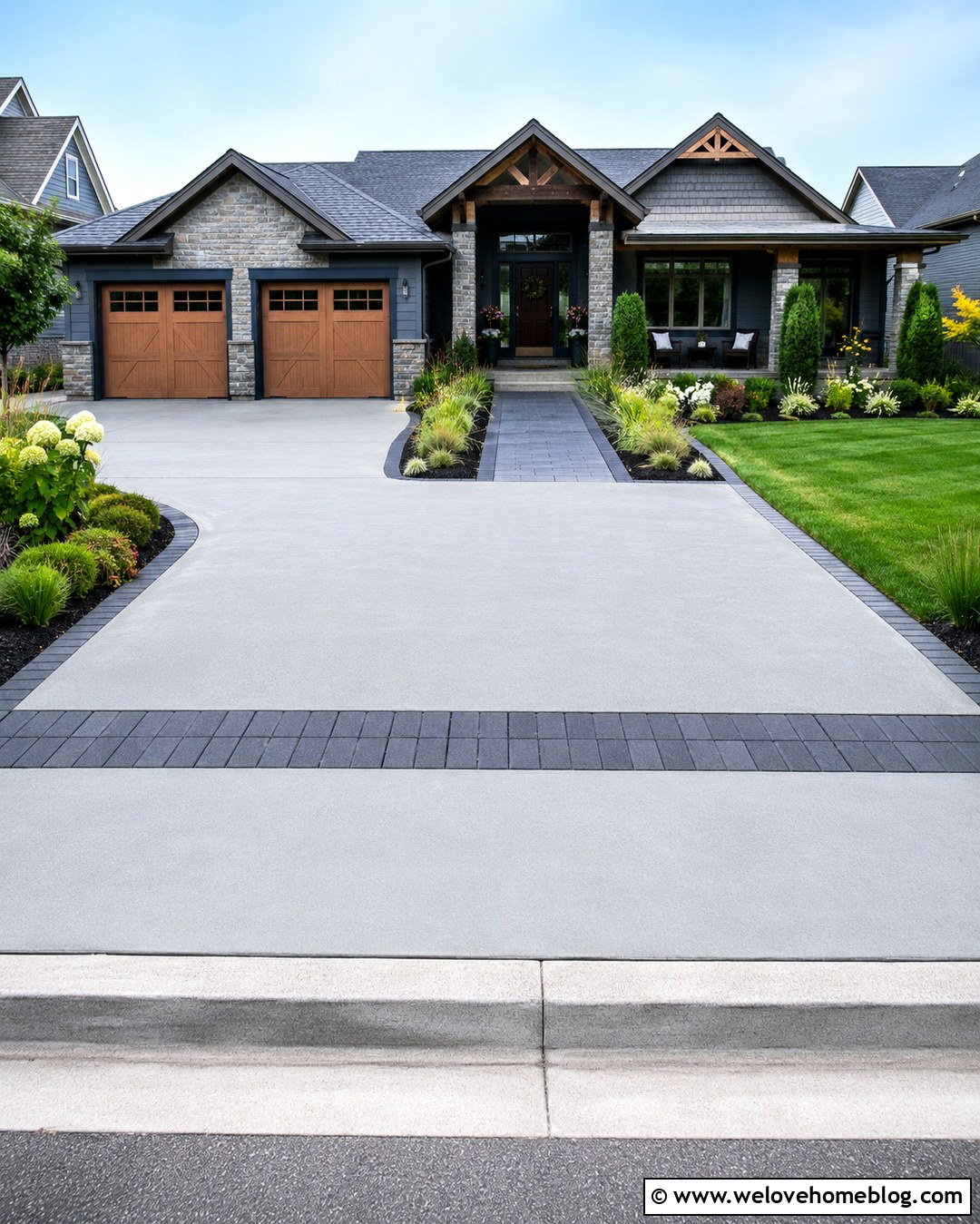
A paver ribbon can visually pull the pedestrian path into the driveway instead of allowing the two surfaces to meet abruptly. Begin with a brick, cobblestone, or concrete paver band that crosses or borders part of the driveway. Align that band with a matching walkway leading to the front door. The repeated material creates a clear visual cue for arriving guests, especially when the door is not directly visible from the parking area. Use a contrasting color that can be distinguished from the main driveway surface without looking disconnected from the house. Continue the ribbon around the path edges or porch landing for consistency. Nearby planting beds should reinforce the direction of travel, with low foliage near the driveway and slightly taller layers closer to the entrance.
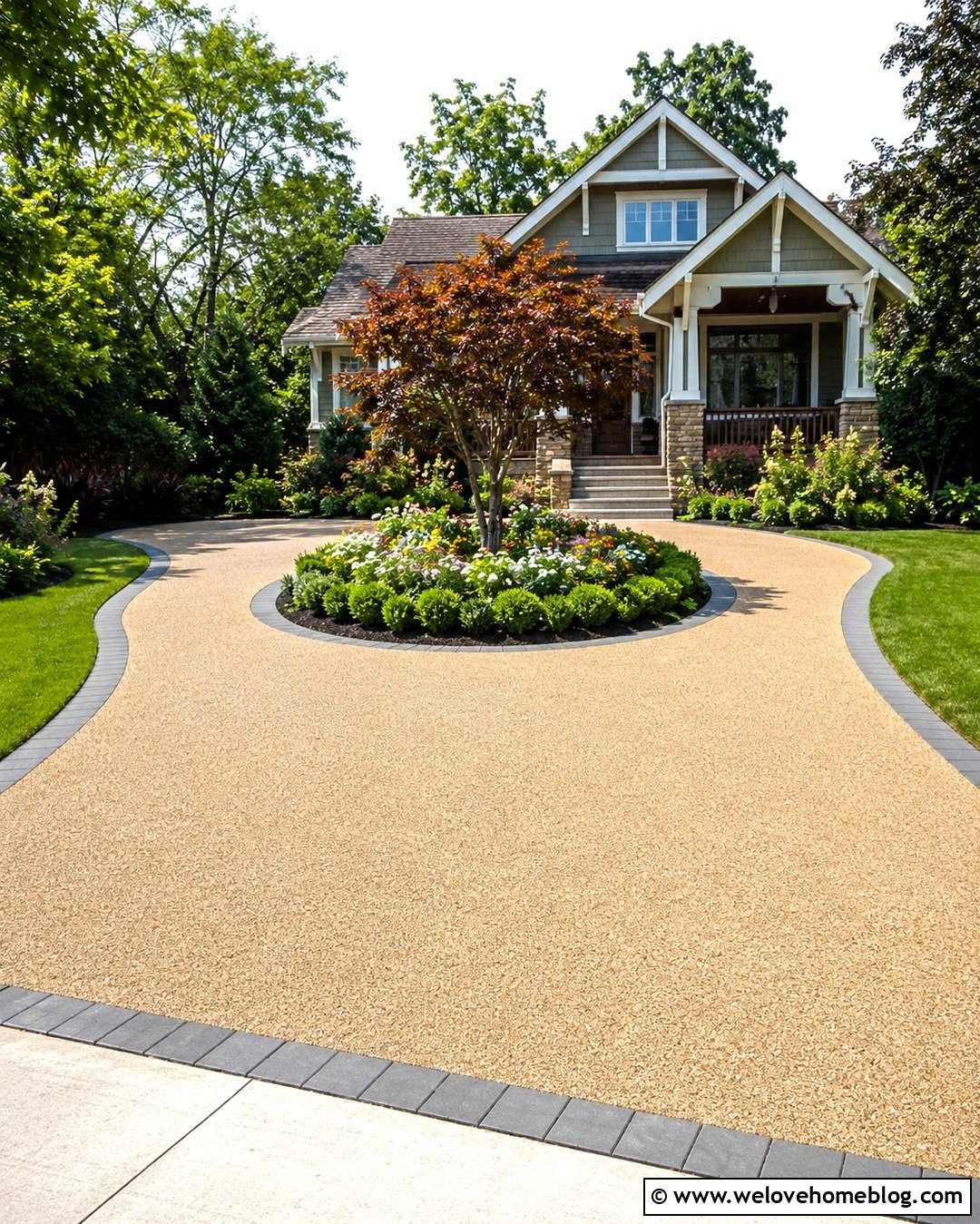
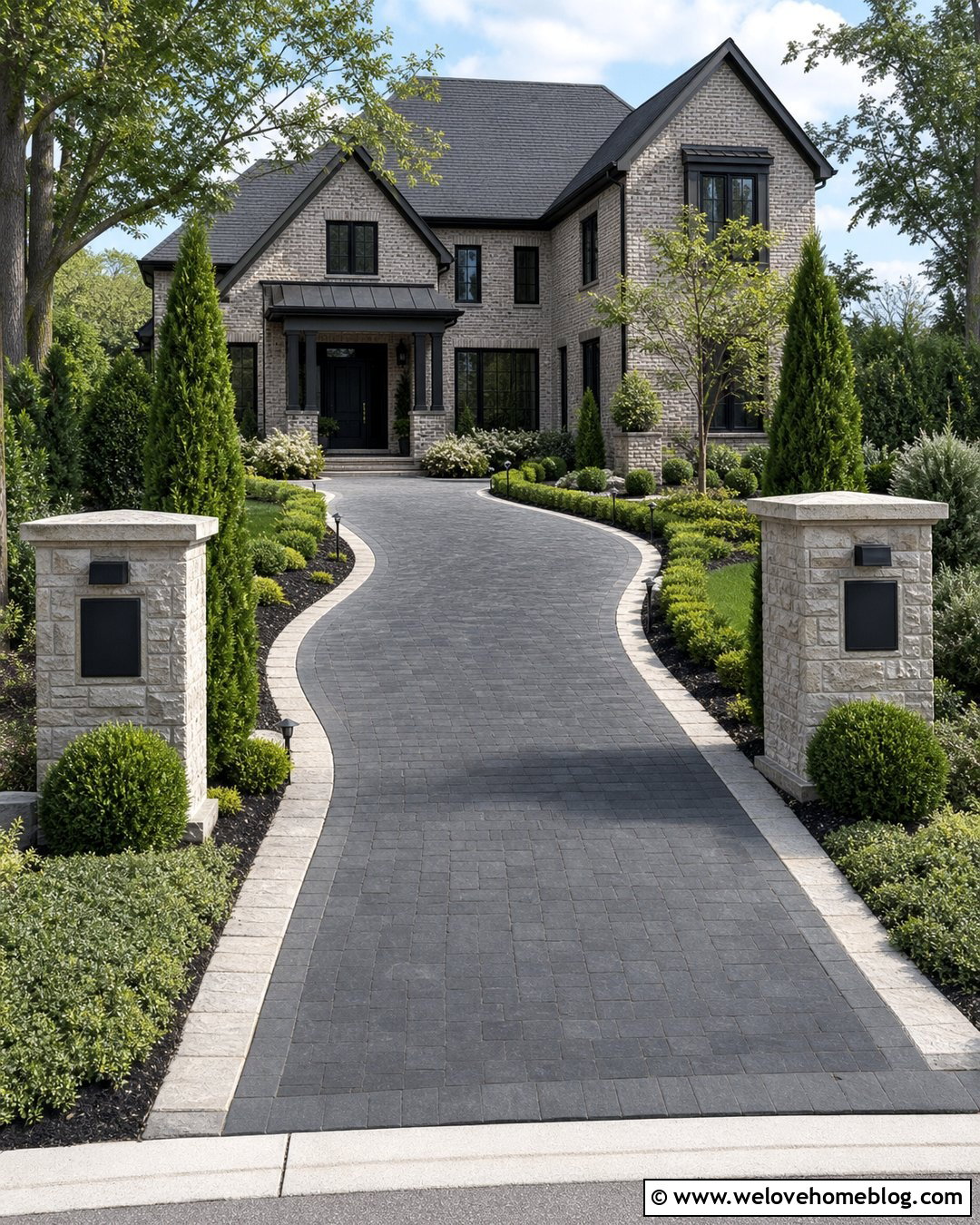
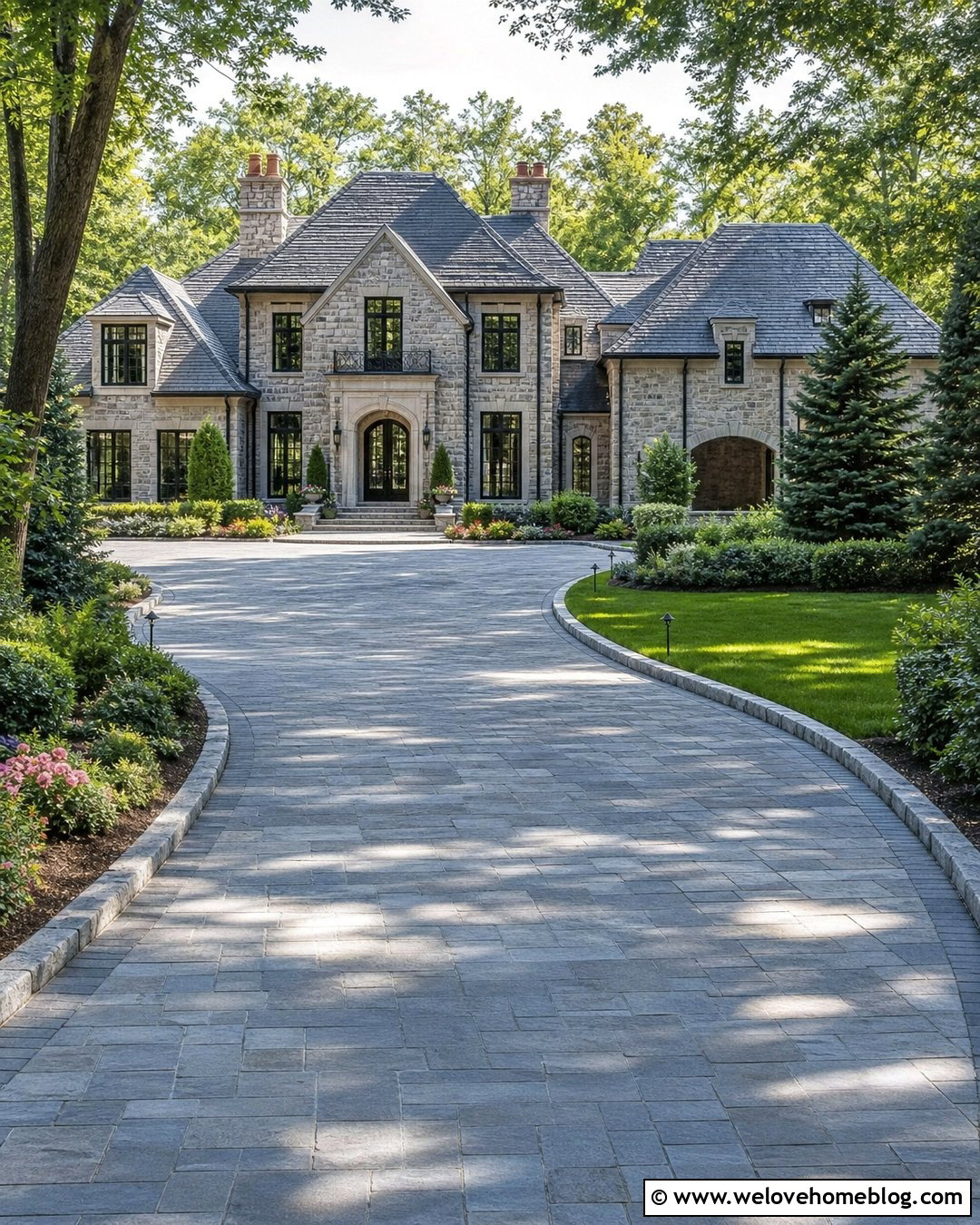

20. Path With an Address Sign And Entry Planting
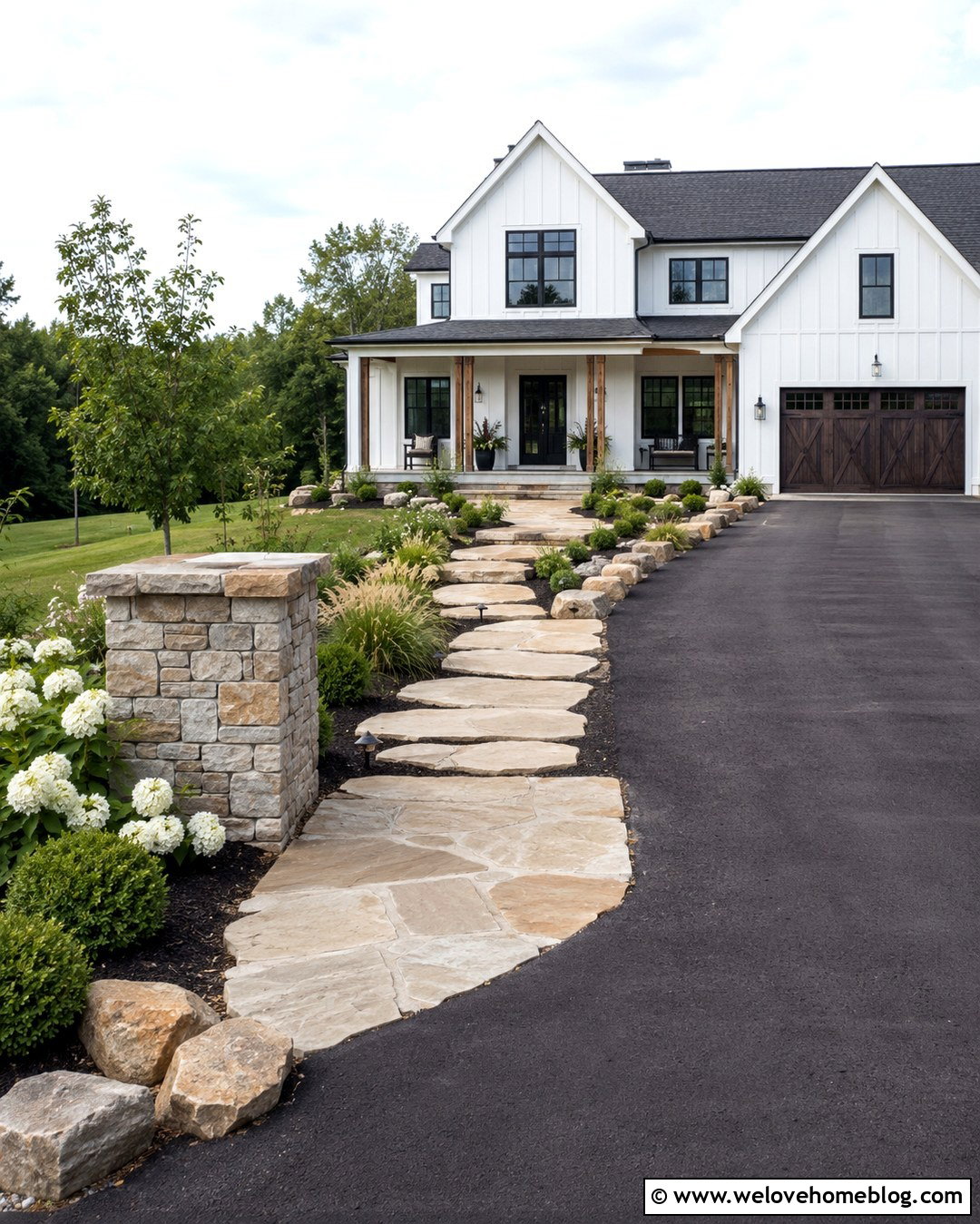
When the path begins at an unclear point along the driveway, an address sign and coordinated planting can mark the entrance. Place a low stone, brick, or wood marker beside a wide walkway landing rather than in the center of the route. Use the same material or color elsewhere on the house, path border, or porch to create a unified look. Behind the sign, arrange compact evergreen shrubs, ornamental grasses, and seasonal flowers in a layered bed. Keep plants low enough to preserve visibility from the street and driveway. The walkway might use concrete pavers, flagstone, or brick, depending on the home’s architecture. A clean edge around the planting bed will separate it from the driveway and help the complete arrival area remain tidy and easy to understand.
Conclusion:
The best walkway should do more than cover the ground between a parked vehicle and the porch. It should make the front door easy to find, provide a comfortable walking surface, and connect the driveway with the architecture and landscaping. Straight pavers suit formal homes, while curved flagstone and gravel routes create a softer approach. Brick borders, lighting, layered plants, broad landings, and entry markers can strengthen almost any layout. Before choosing a design, consider the yard’s size, slope, drainage, existing plants, and normal parking pattern. These **20 Path From Driveway To Front Door Ideas** offer practical starting points for creating a safer, clearer, and more attractive entrance that feels connected to the entire property.

Related posts:
Leave a Reply