
A well-planned driveway does more than provide parking. It frames the home, organizes the front yard, and creates a welcoming first impression from the street. The best 25 Front House Driveway Ideas combine a practical surface with a suitable layout, defined borders, clear drainage, and landscaping that complements the architecture. Current design guidance favors treating the driveway, walkway, planting beds, and home exterior as one connected composition rather than separate features. () Whether you have a narrow suburban lot, a spacious country property, or a sloped front yard, there is an attractive option that can fit your needs and budget. Use these 25 Front House Driveway Ideas to create a complete entrance that feels polished, useful, and appropriate for your home.

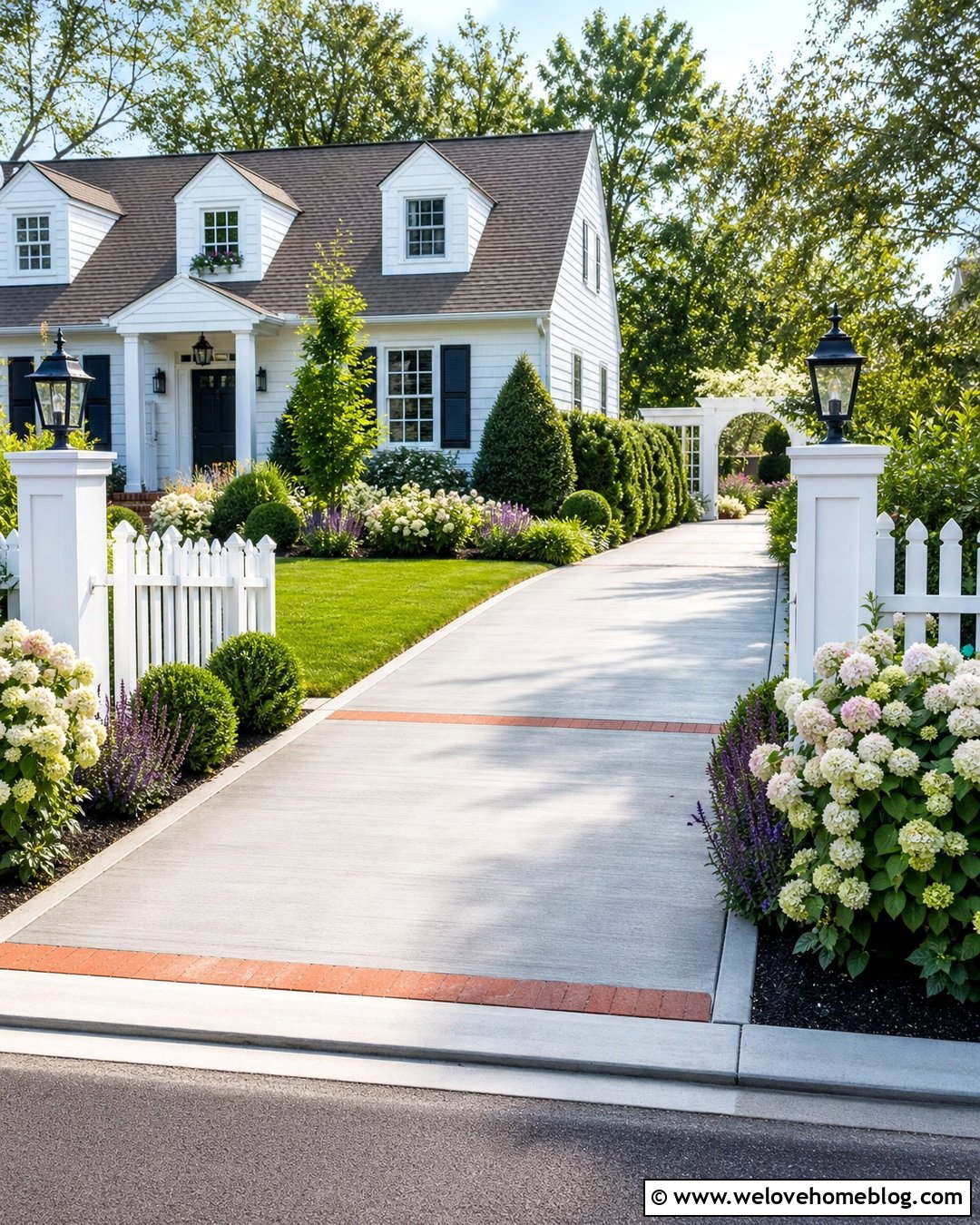
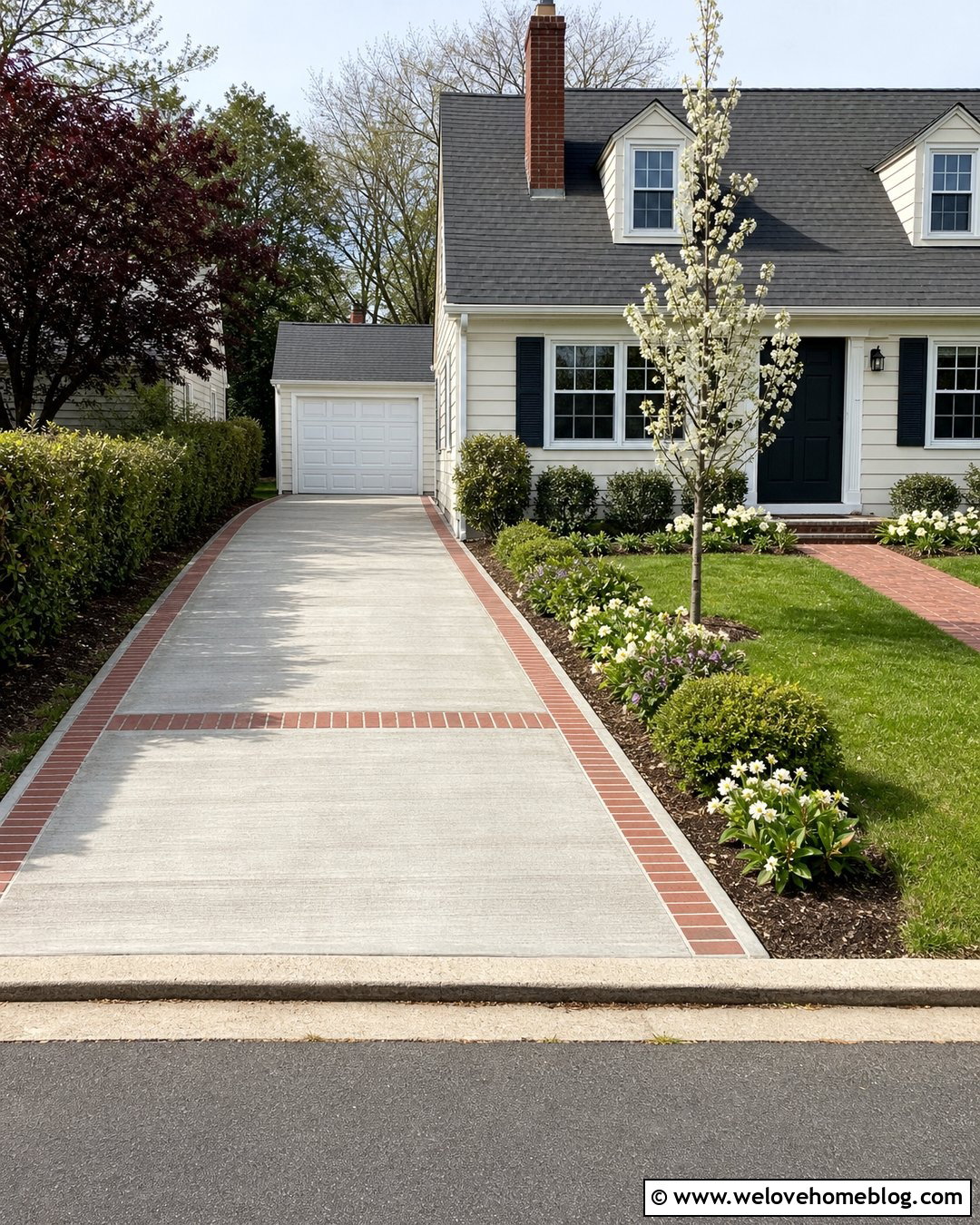
1. Straight Concrete Driveway With Brick Border
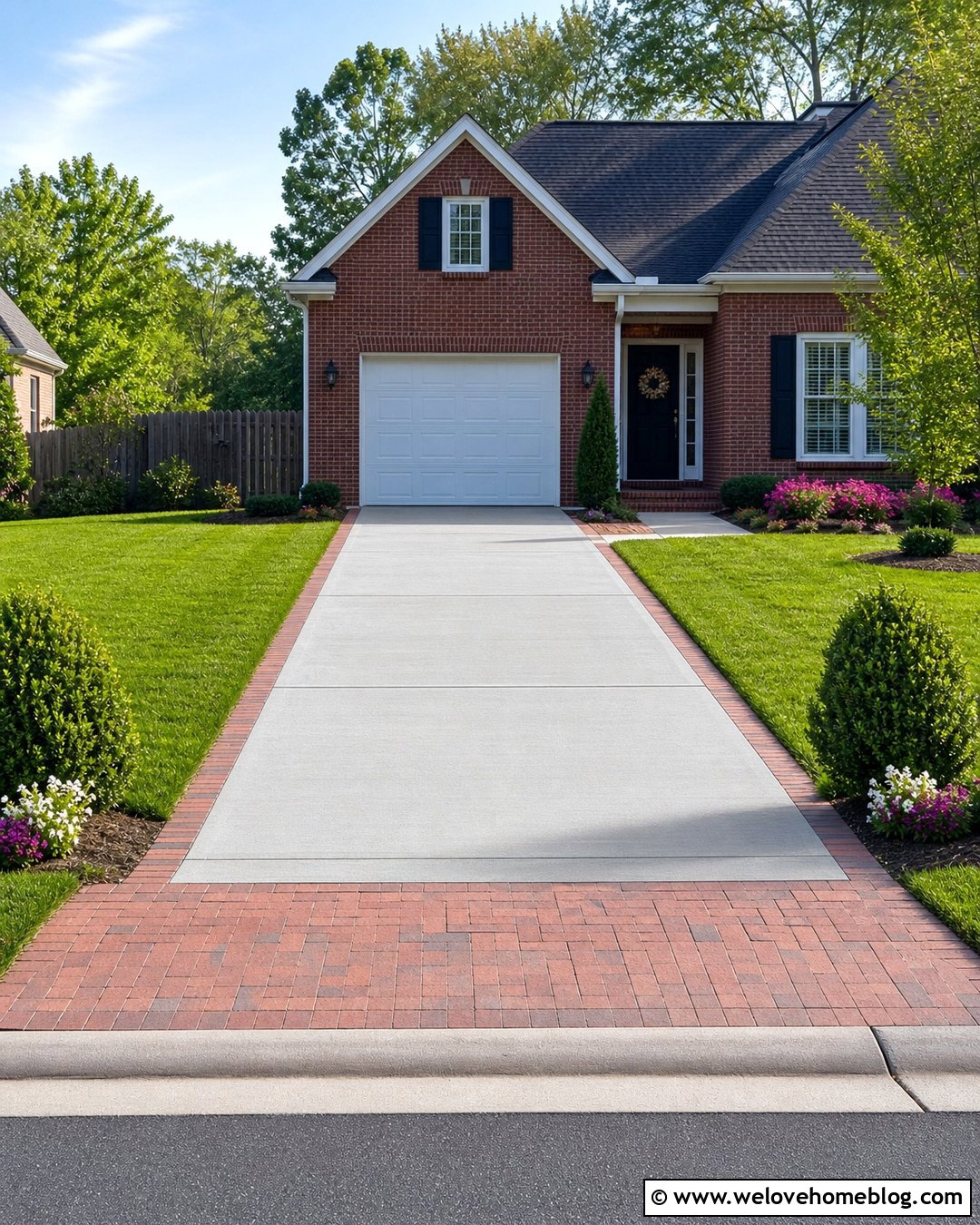
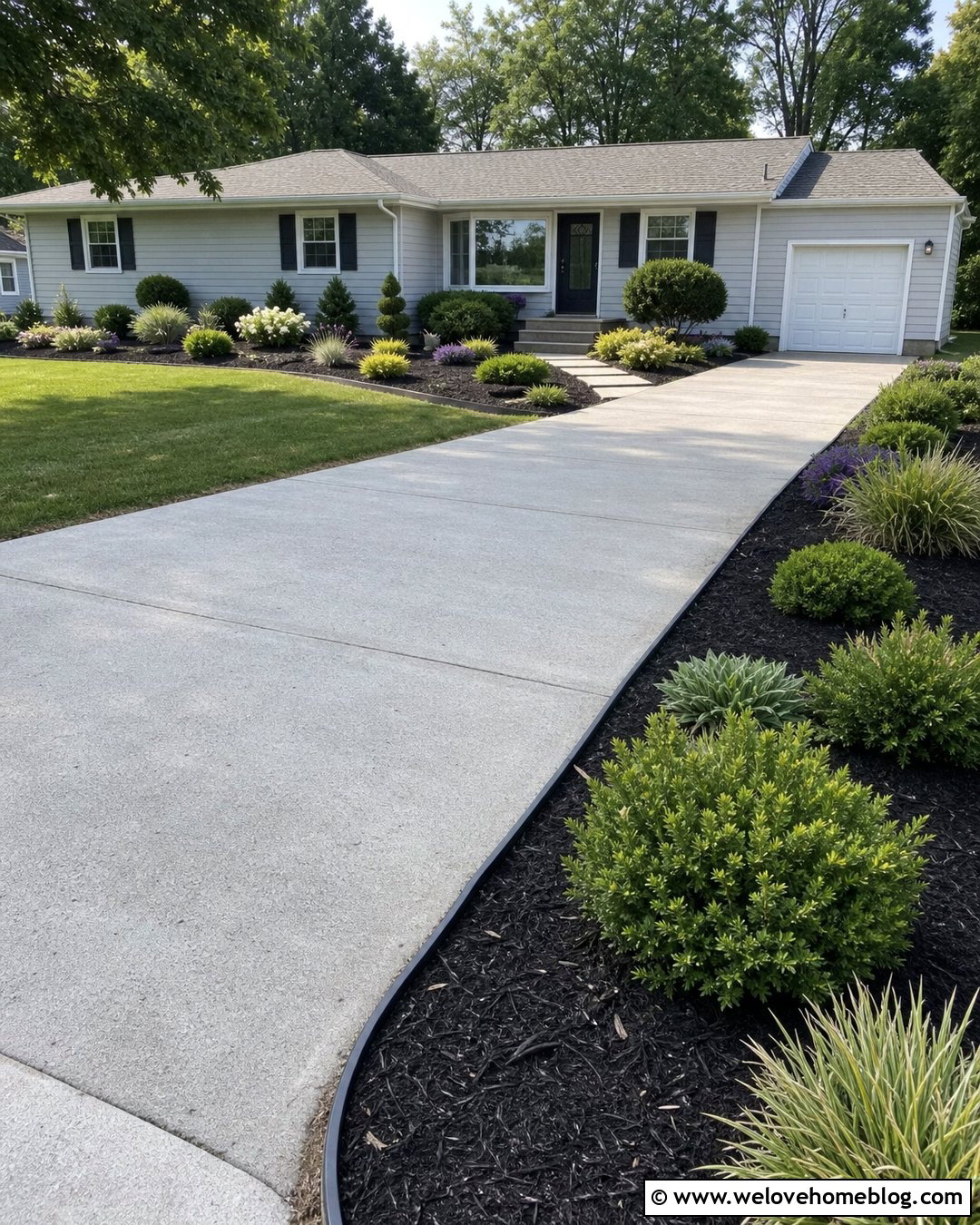
A straight poured concrete driveway creates a clean, practical approach for a traditional suburban home. Add a red or brown clay brick border to soften the plain surface and connect it with a brick facade, chimney, or front walkway. The border can run along both sides and continue across the driveway entrance for a finished appearance. Keep nearby planting beds simple with compact evergreen shrubs, ornamental grasses, and seasonal flowers. A narrow walkway branching toward the porch makes the front door easy to find without interrupting parking space. Choose a lightly broomed concrete finish for dependable traction and subtle texture. This complete layout works especially well in narrow front yards where a curved or circular driveway would consume too much lawn.
2. Curved Gravel Driveway With Stone Edging
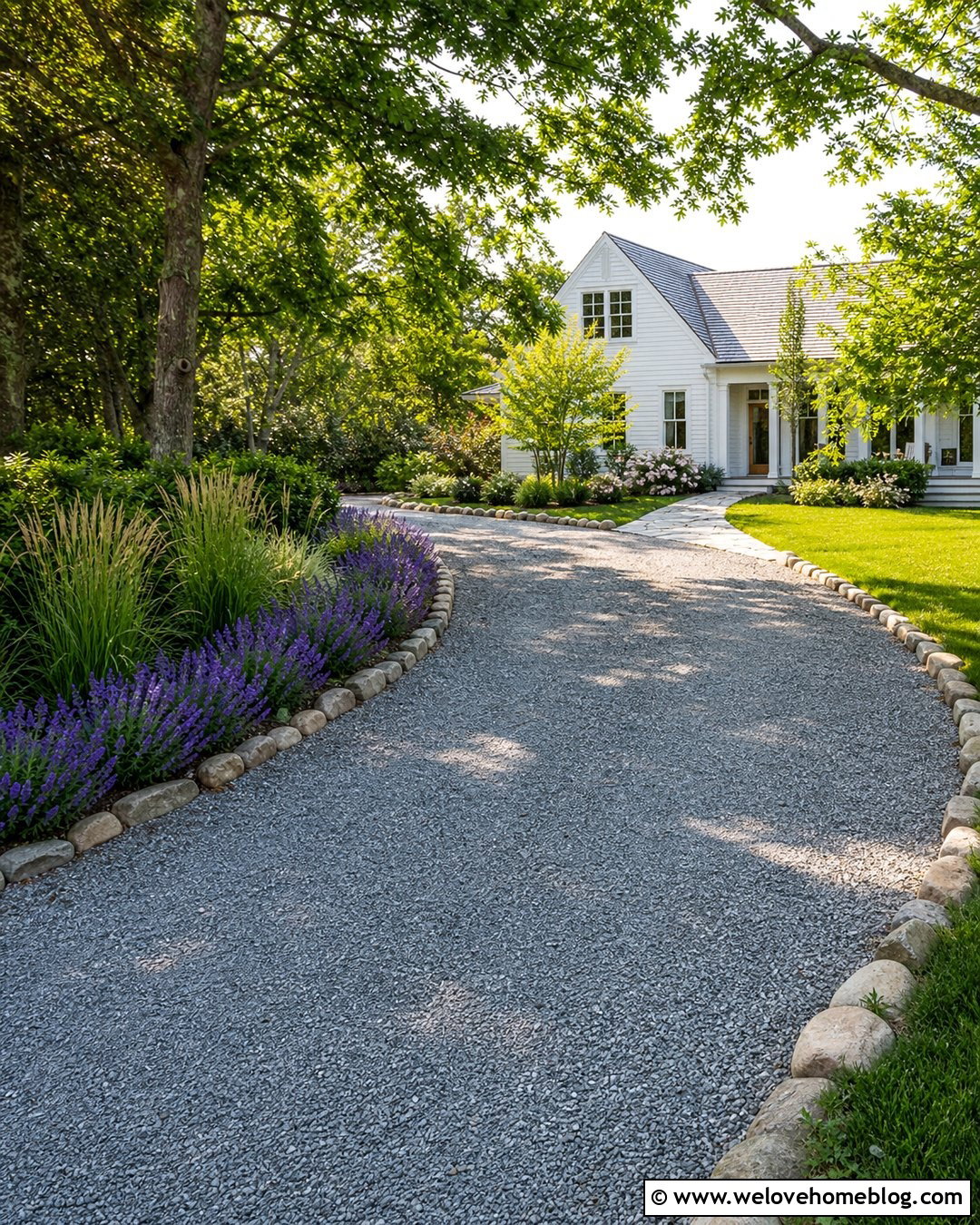
The gentle sweep of a curved gravel driveway can make an ordinary front yard feel wider and more welcoming. Use compacted gray crushed stone rather than loose decorative gravel alone, creating a firm surface that handles regular vehicle traffic. Natural fieldstone edging keeps the material contained while giving the entrance a relaxed country appearance. Place low planting beds inside the curve with lavender, catmint, ornamental grasses, or regionally suitable native plants. Taller shrubs near the house can visually connect the driveway to the facade. The curve should follow a clear destination, such as the garage, porch, or a specimen tree, instead of wandering unnecessarily. This driveway look complements cottages, farmhouses, ranch homes, and wooded properties with informal landscaping.
3. Modern Concrete Driveway With Grass Strips
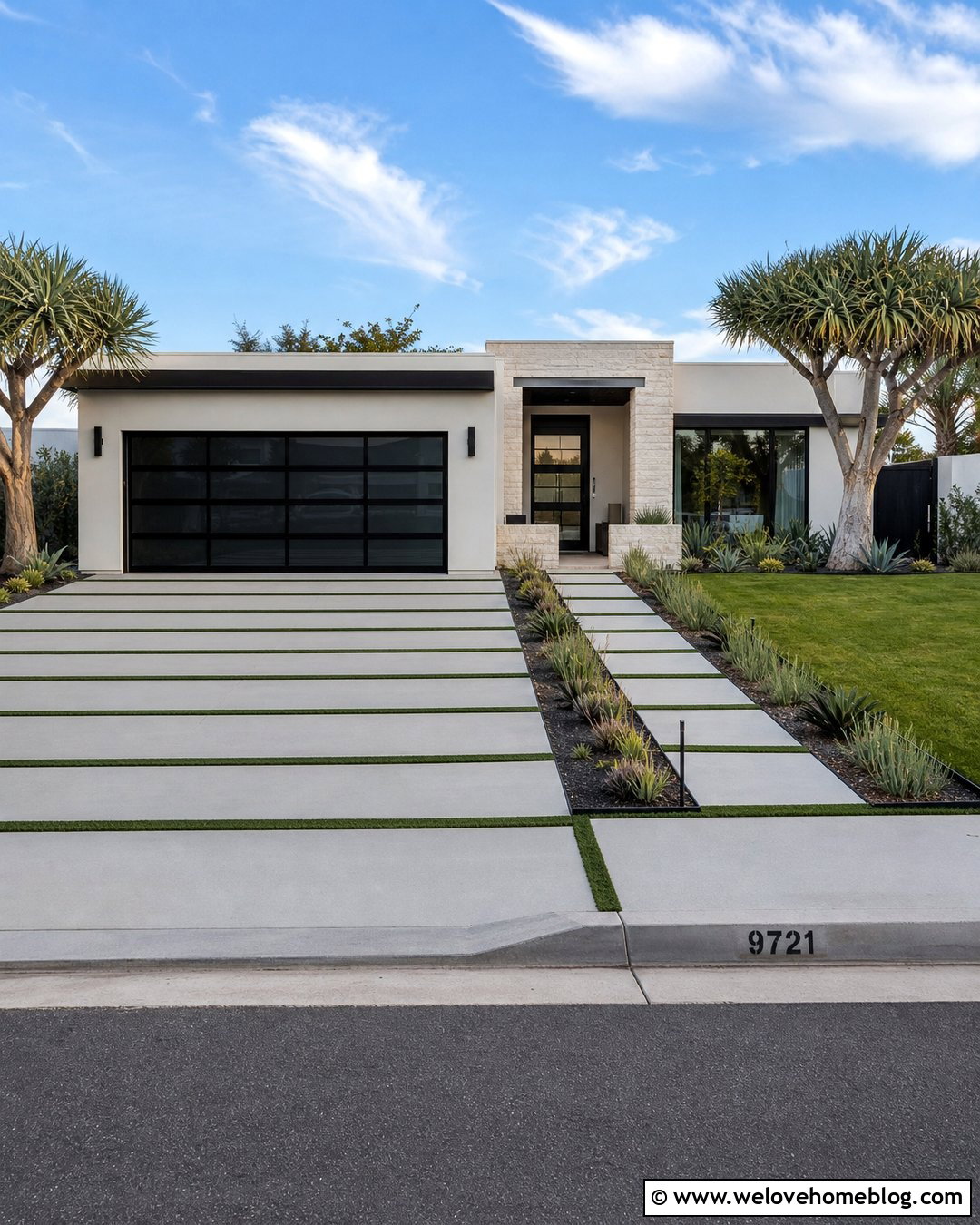
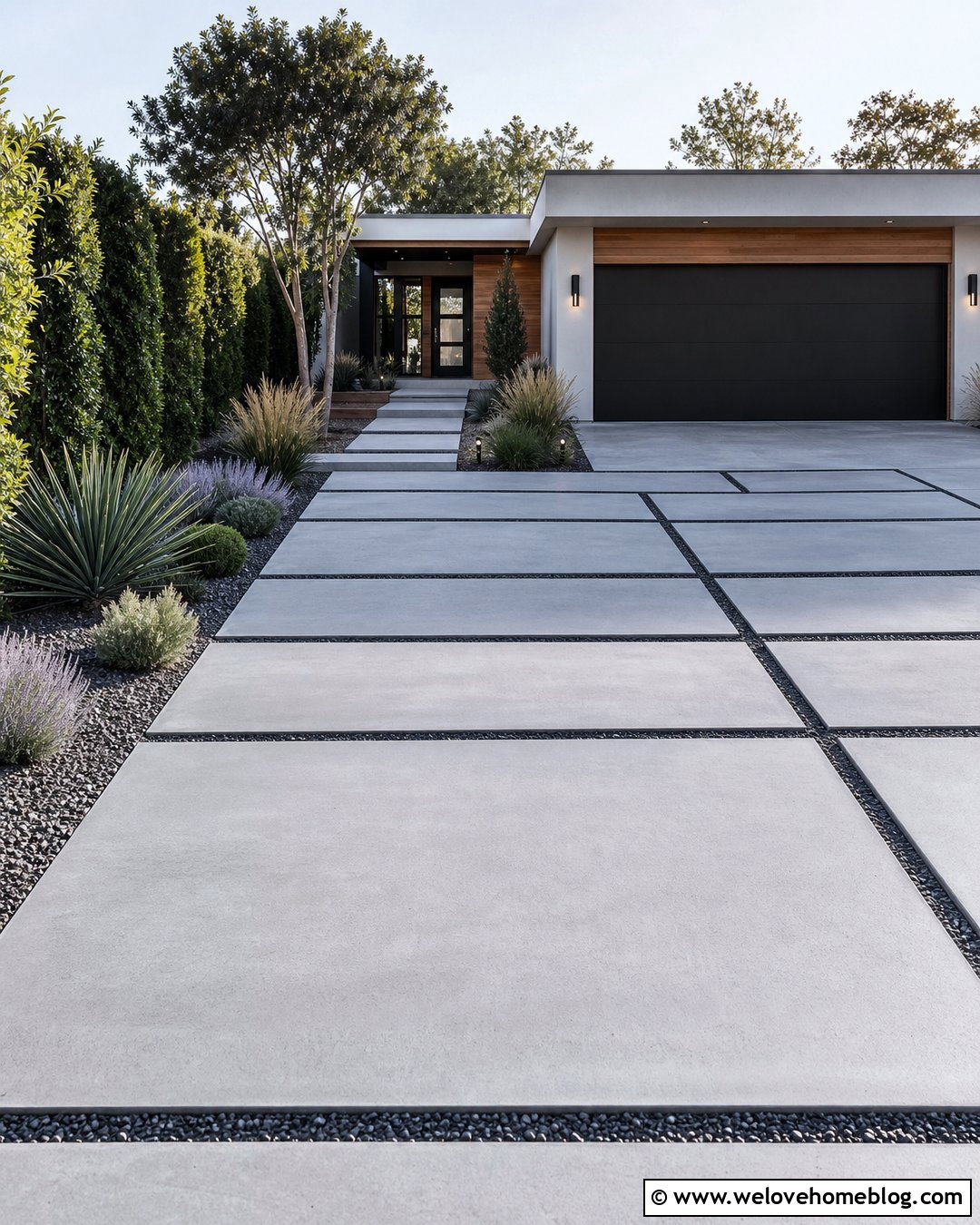
Large gray concrete slabs separated by narrow grass strips create a modern driveway without making the front yard feel completely paved. Use straight lines and evenly spaced joints to emphasize the home’s geometric architecture. The grass channels should sit nearly level with the concrete so tires and maintenance equipment can pass safely over the surface. In dry regions, low-growing ground cover or gravel strips may be easier to maintain than turf. Frame the driveway with rectangular planting beds containing ornamental grasses, compact evergreens, and one or two sculptural trees. A matching concrete walkway can lead directly to the entrance. This complete design suits modern and midcentury homes because the driveway, planting layout, and facade share the same simple horizontal lines.
4. Circular Paver Driveway With Center Garden
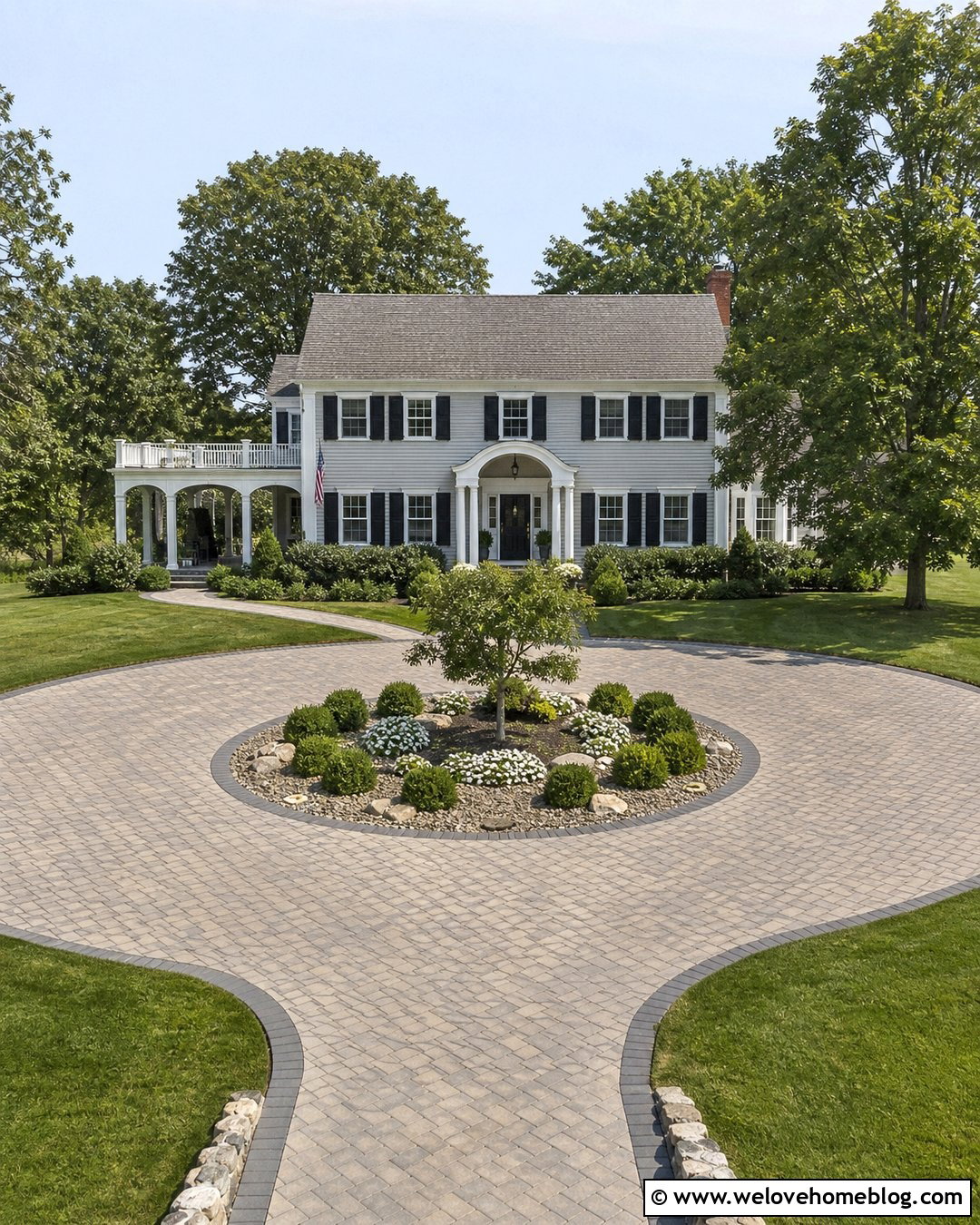
A circular paver driveway gives a large front yard a strong sense of arrival while allowing vehicles to enter and leave without backing toward the street. Choose concrete pavers in blended gray, beige, or charcoal tones that coordinate with the roof and exterior stone. Inside the circle, create a low center garden rather than an oversized feature that blocks views. A small ornamental tree surrounded by evergreen shrubs, flowers, and decorative gravel provides year-round structure. Use a contrasting paver soldier course around the driveway and center island to clarify the circular shape. The front walkway should connect naturally to the loop. This polished layout works beautifully with colonial, European-inspired, and substantial craftsman homes on wide residential lots.
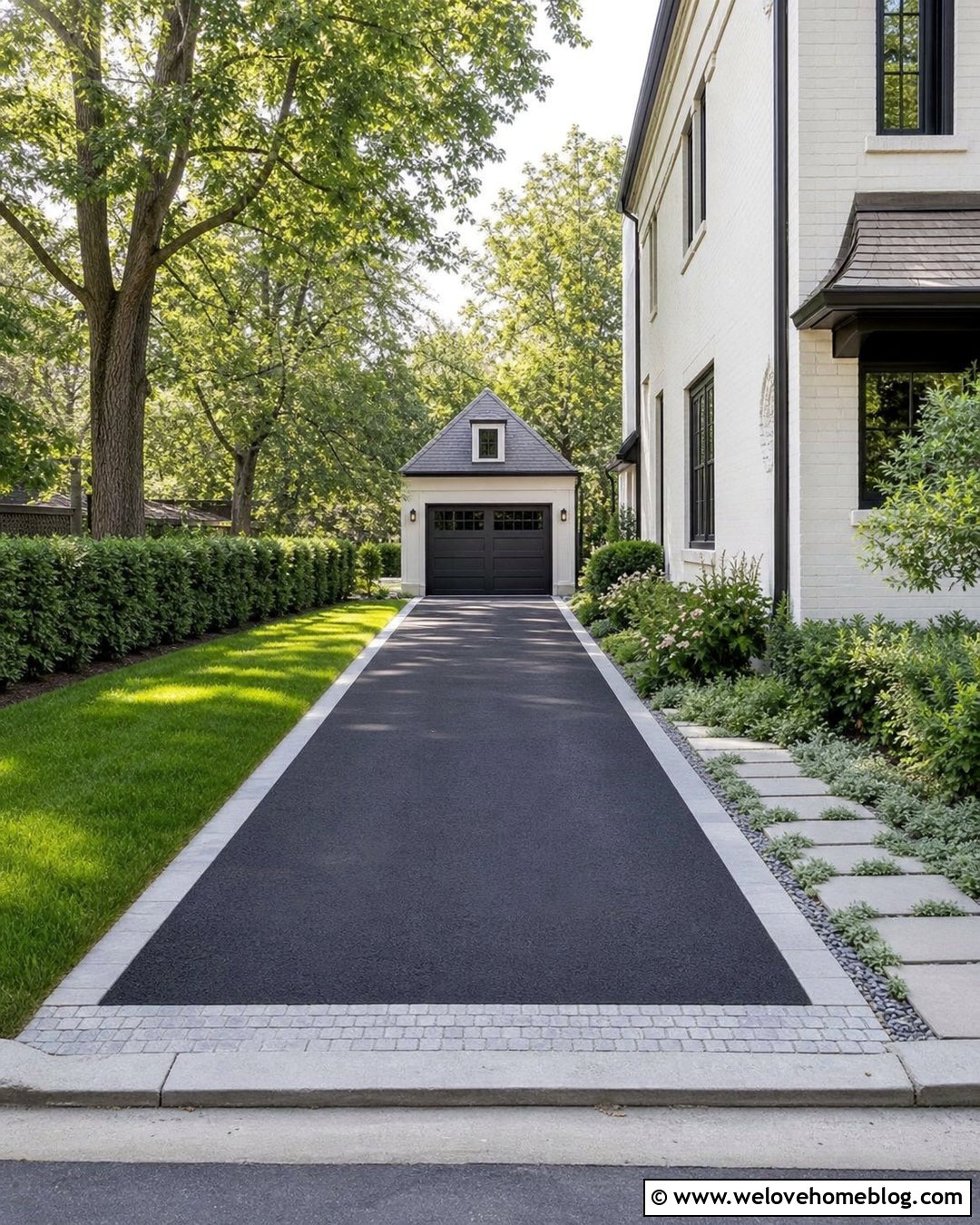
5. Black Asphalt Driveway With Cobblestone Apron
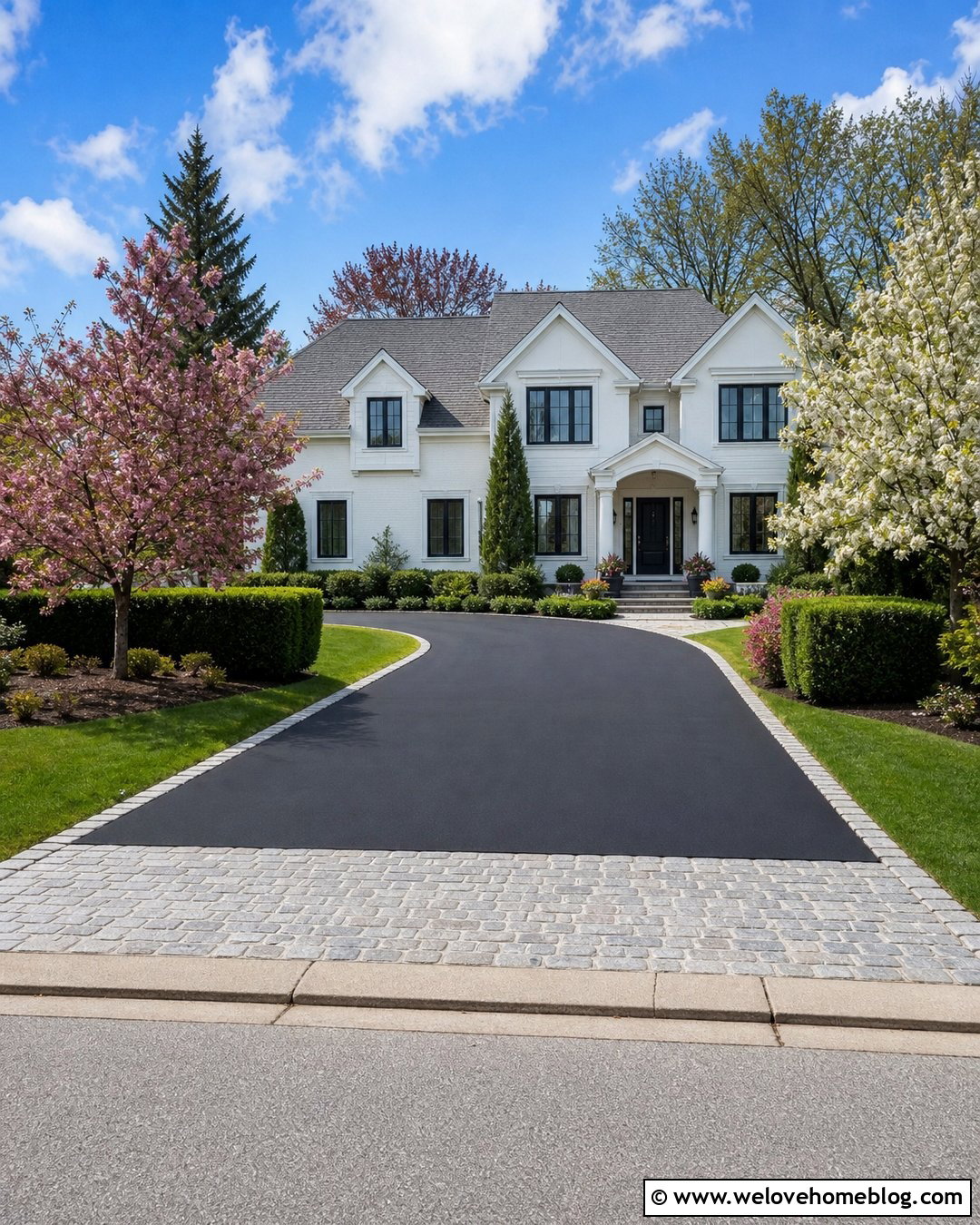
Fresh black asphalt creates a smooth, understated surface, while a cobblestone apron gives the street entrance more character. Install the cobblestones across the first section of the driveway where they can visually separate the private property from the road. Matching cobblestone edging along the asphalt provides continuity and helps protect vulnerable edges. The dark surface pairs especially well with white siding, red brick, gray stone, or black exterior details. Add clipped shrubs and small flowering trees along both sides, leaving enough open space for safe visibility when exiting. A stone walkway leading from the parking area to the porch completes the composition. This design offers an elegant way to upgrade a practical asphalt driveway without replacing the entire surface with premium masonry.
6. Herringbone Brick Driveway With Boxwood Borders
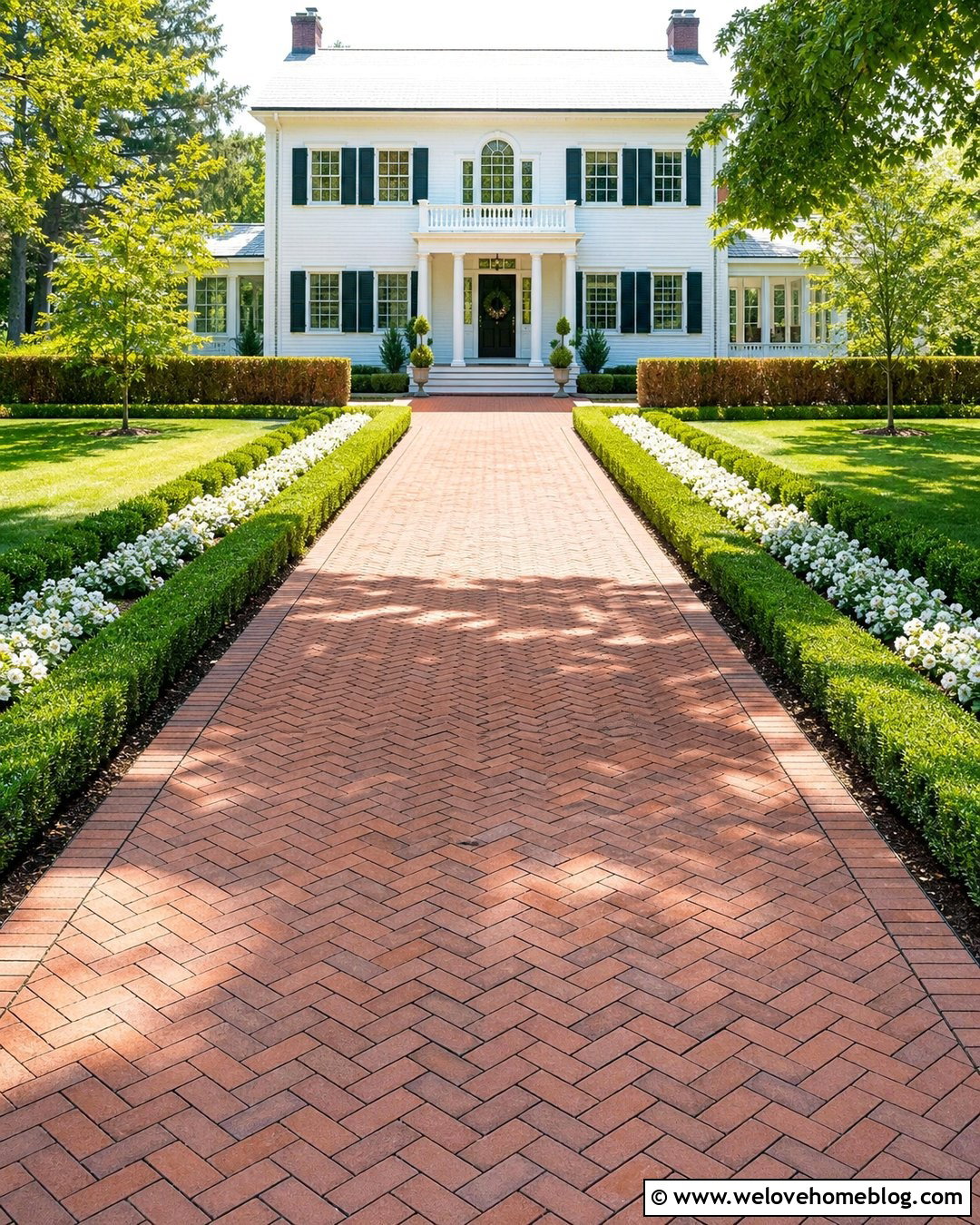
Warm clay brick pavers laid in a herringbone pattern create a detailed front driveway that feels established and inviting. The interlocking pattern provides visual movement, while a straight brick border keeps the edges neat. Pair the driveway with clipped boxwood or another locally suitable evergreen planted in low beds along both sides. White flowers, dark mulch, and a green lawn can keep the surrounding landscape restrained so it does not compete with the patterned surface. Continue the same brick into the front walkway or porch steps for a connected entrance. This complete look is particularly effective with colonial, Georgian, Tudor, and traditional brick homes. Select pavers manufactured for vehicle loads, and coordinate their undertones with the house instead of choosing brick color independently.
7. Pea Gravel Driveway With Timber Edging
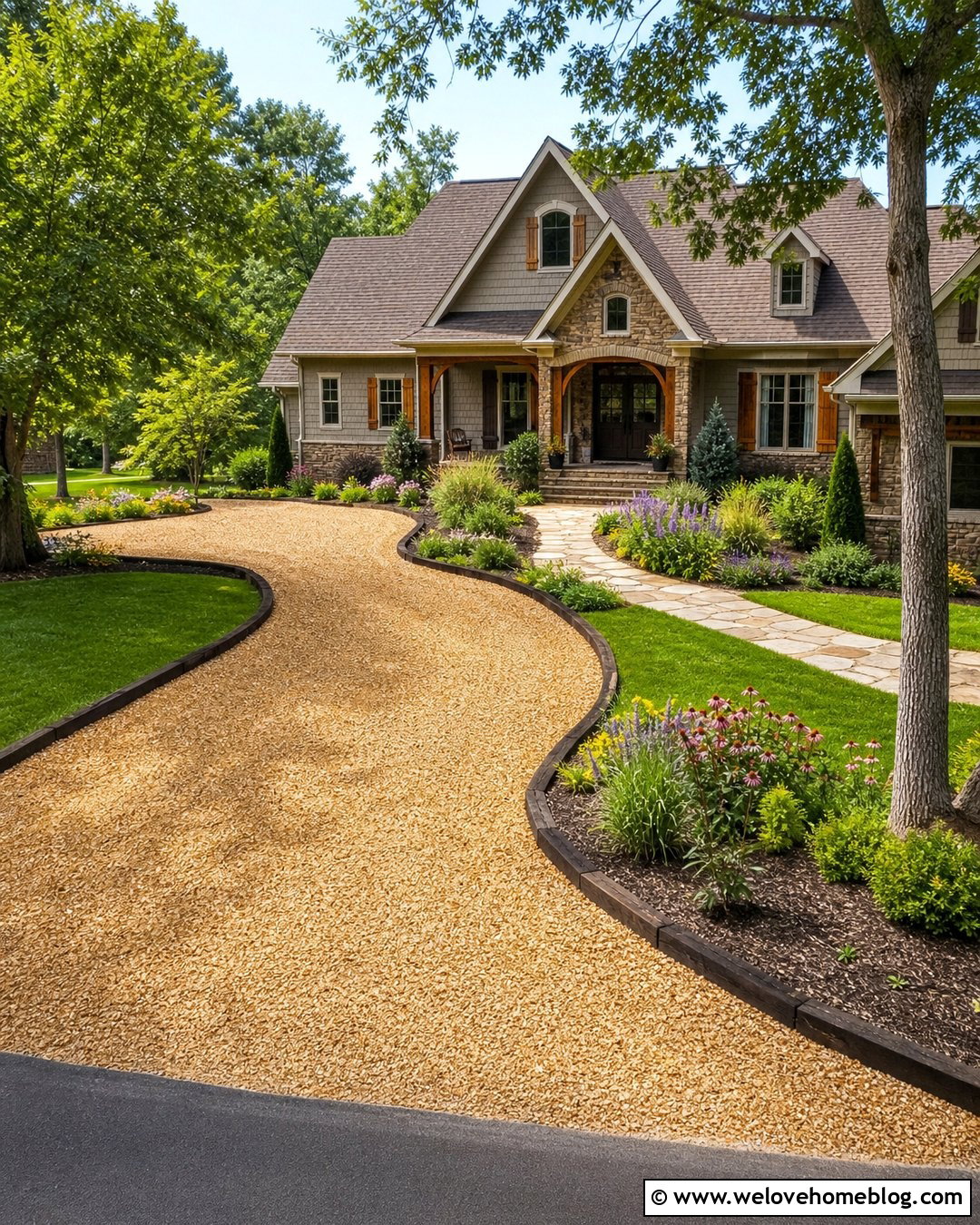
Pea gravel gives a front driveway a soft, natural texture, but it needs a stable foundation and strong containment to remain attractive. Frame a straight or gently curved layout with pressure-treated landscape timber, steel edging, or durable composite boards. Honey-brown gravel looks welcoming beside a cottage, rustic ranch, or modern farmhouse with warm wood accents. Plant loose borders of ornamental grasses, salvia, coneflowers, and low shrubs beyond the edging to blend the driveway into the yard. A solid paver or concrete walkway should provide a comfortable route to the front door. Consider using compacted crushed stone beneath the decorative pea gravel to improve stability. The result is an affordable, relaxed driveway that feels intentionally designed rather than unfinished.
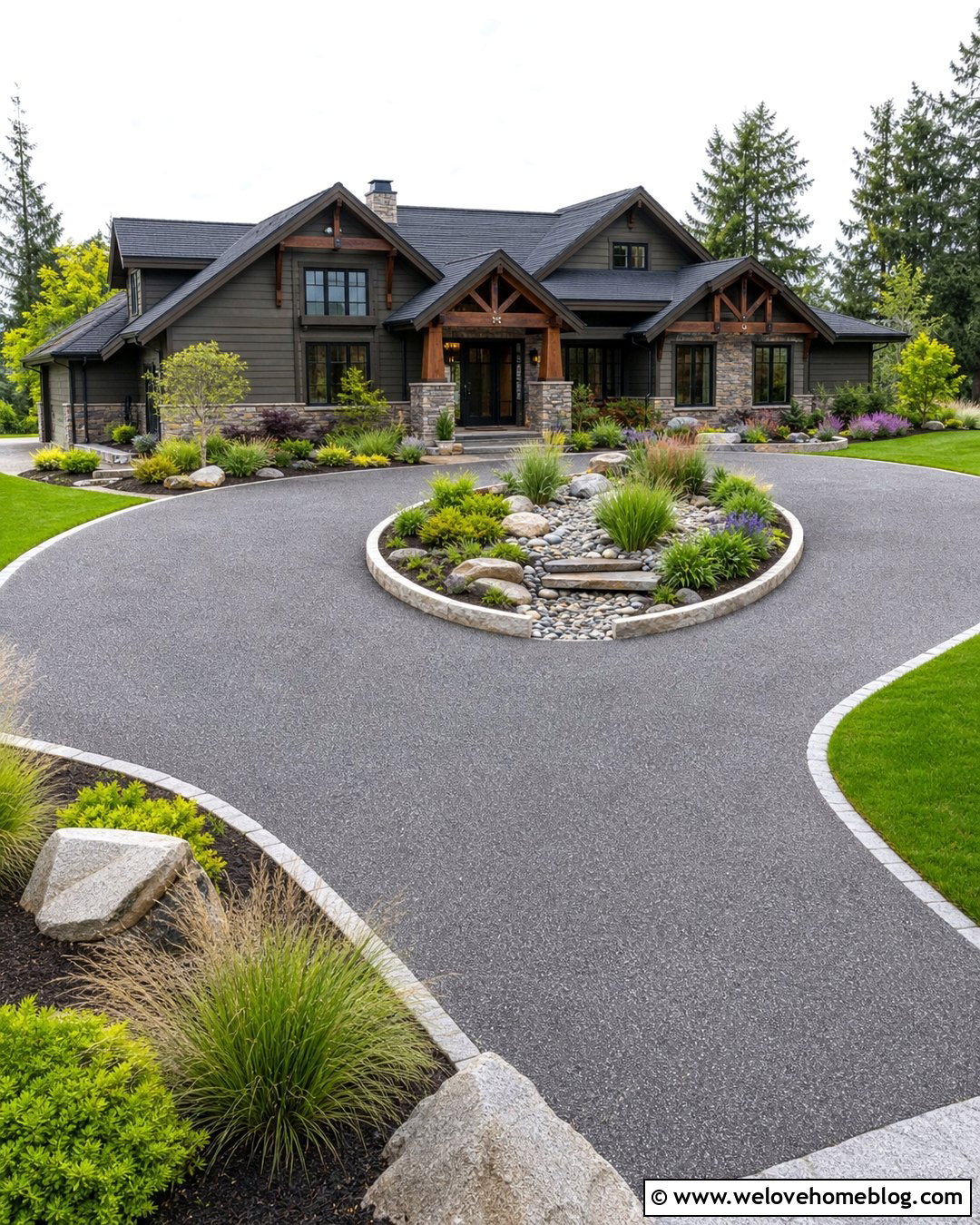
8. Exposed Aggregate Driveway With Stone Pillars
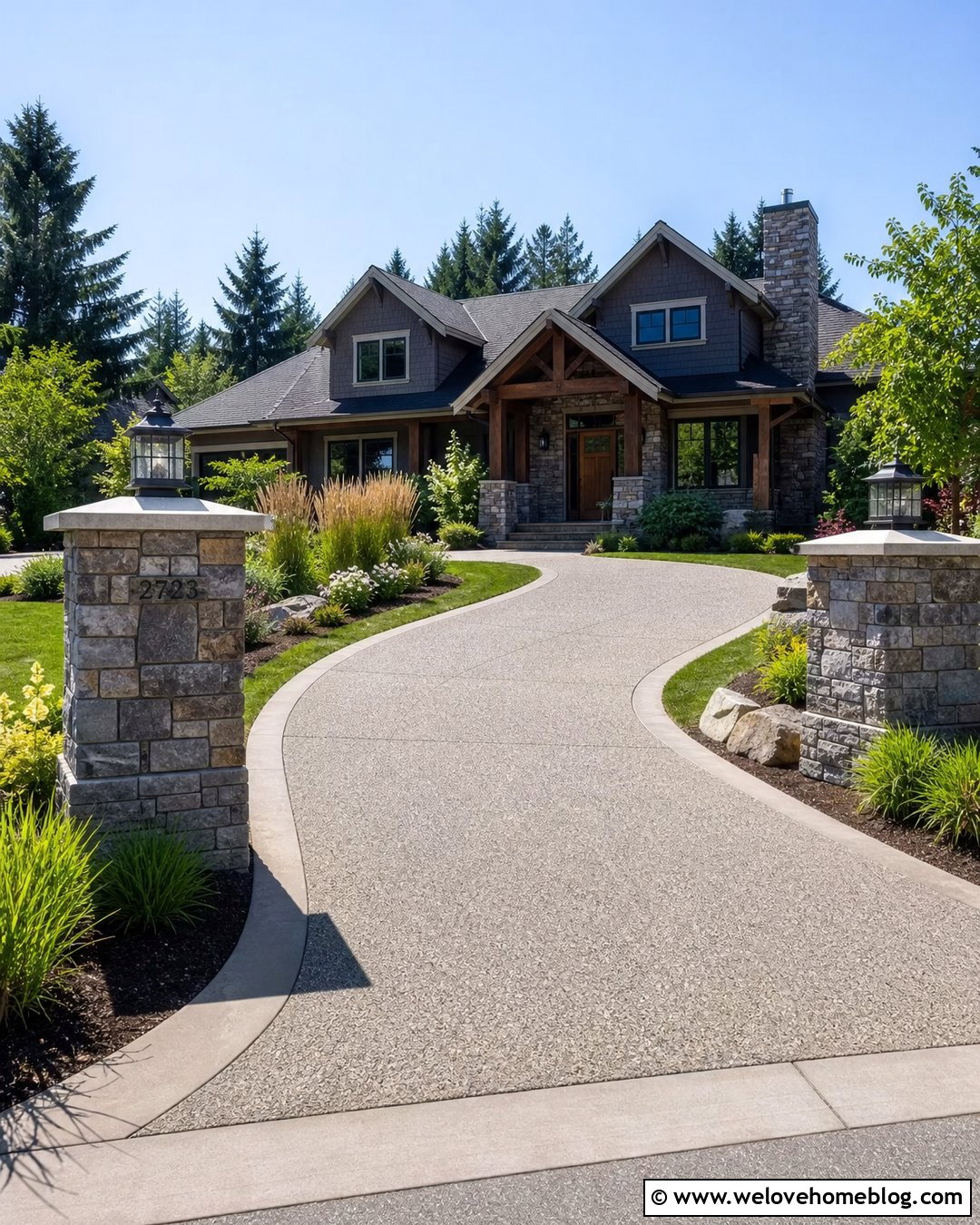
An exposed aggregate driveway combines the strength of concrete with a textured surface that displays decorative stone. Choose aggregate colors that repeat tones from the home’s masonry, siding, or roof. At the curb, install two proportionate natural stone pillars to define the entrance without overwhelming the yard. Low walls can extend briefly from the pillars before transitioning into layered beds of evergreen shrubs, flowering perennials, and ground cover. Keep the driveway layout broad and gently curved if the lot allows, giving the pillars enough space to feel balanced. A smooth concrete band around the aggregate can create a refined border and cleaner transition. This substantial design complements craftsman, mountain, ranch, and stone-front homes where natural materials already influence the exterior.
9. Concrete Paver Driveway With Geometric Pattern
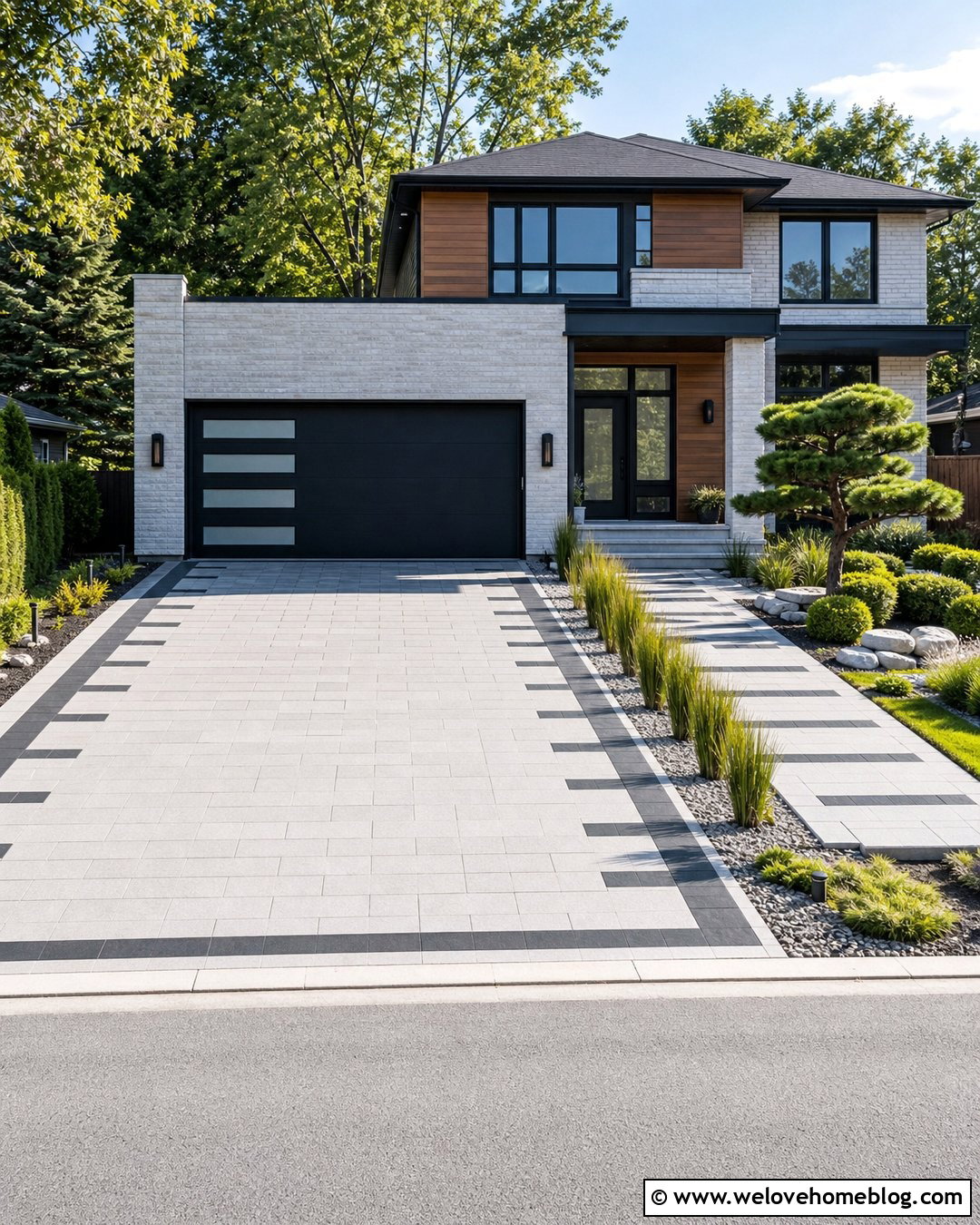
For a contemporary front entrance, combine large concrete pavers in two coordinated tones to form a restrained geometric pattern. Charcoal border pavers can outline a field of light gray rectangular units, making the driveway appear organized and visually connected to dark window frames or garage doors. Keep the layout straight and symmetrical, with a wide path extending from the driveway toward the front entrance. Linear planting beds filled with upright grasses, rounded evergreens, and decorative stone reinforce the modern composition. Avoid using too many colors or intricate motifs, which can make a large paved surface feel busy. This driveway design provides more texture than poured concrete while preserving the crisp appearance expected around modern, transitional, and updated midcentury homes.
10. Cobblestone Driveway With Cottage Landscaping
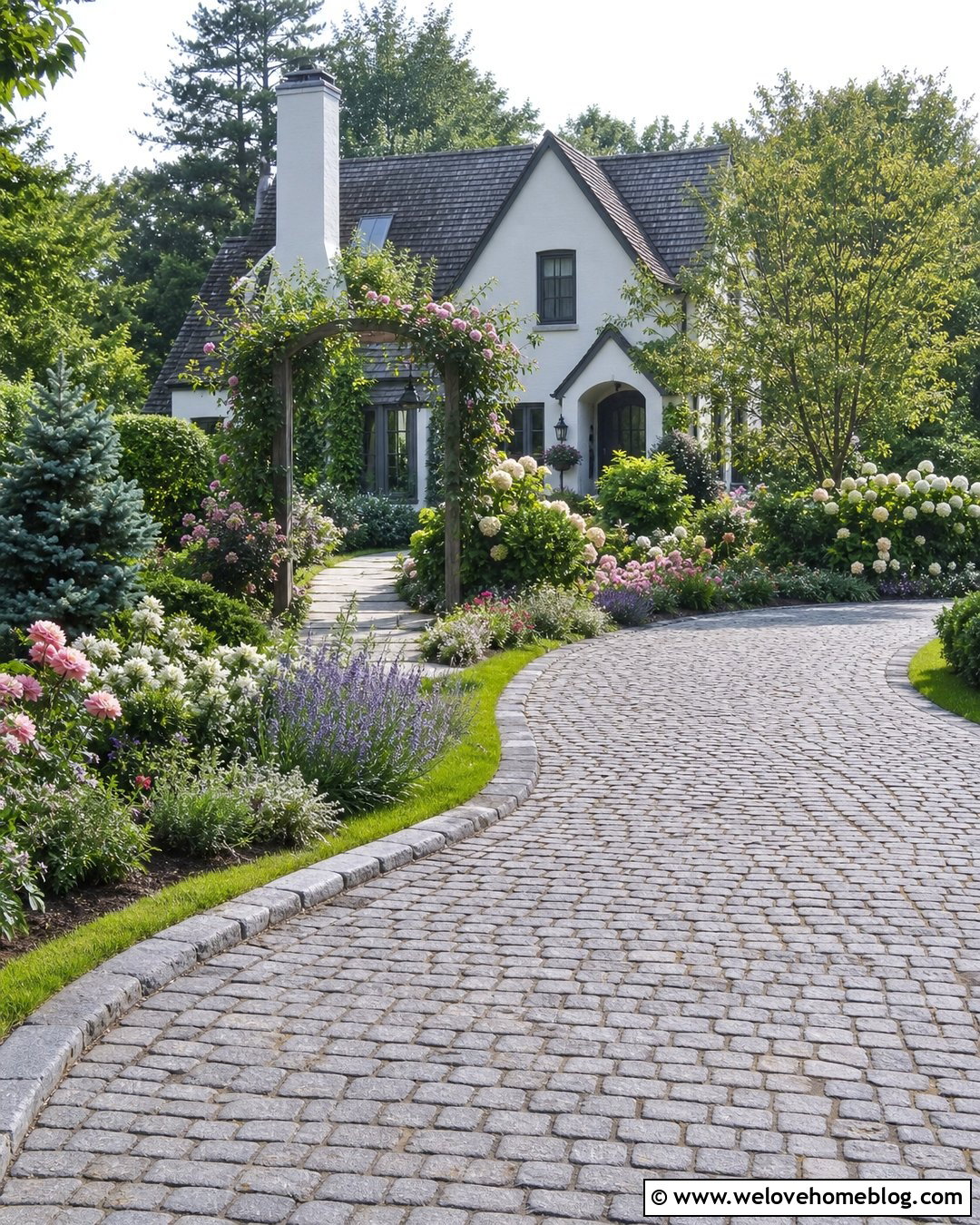
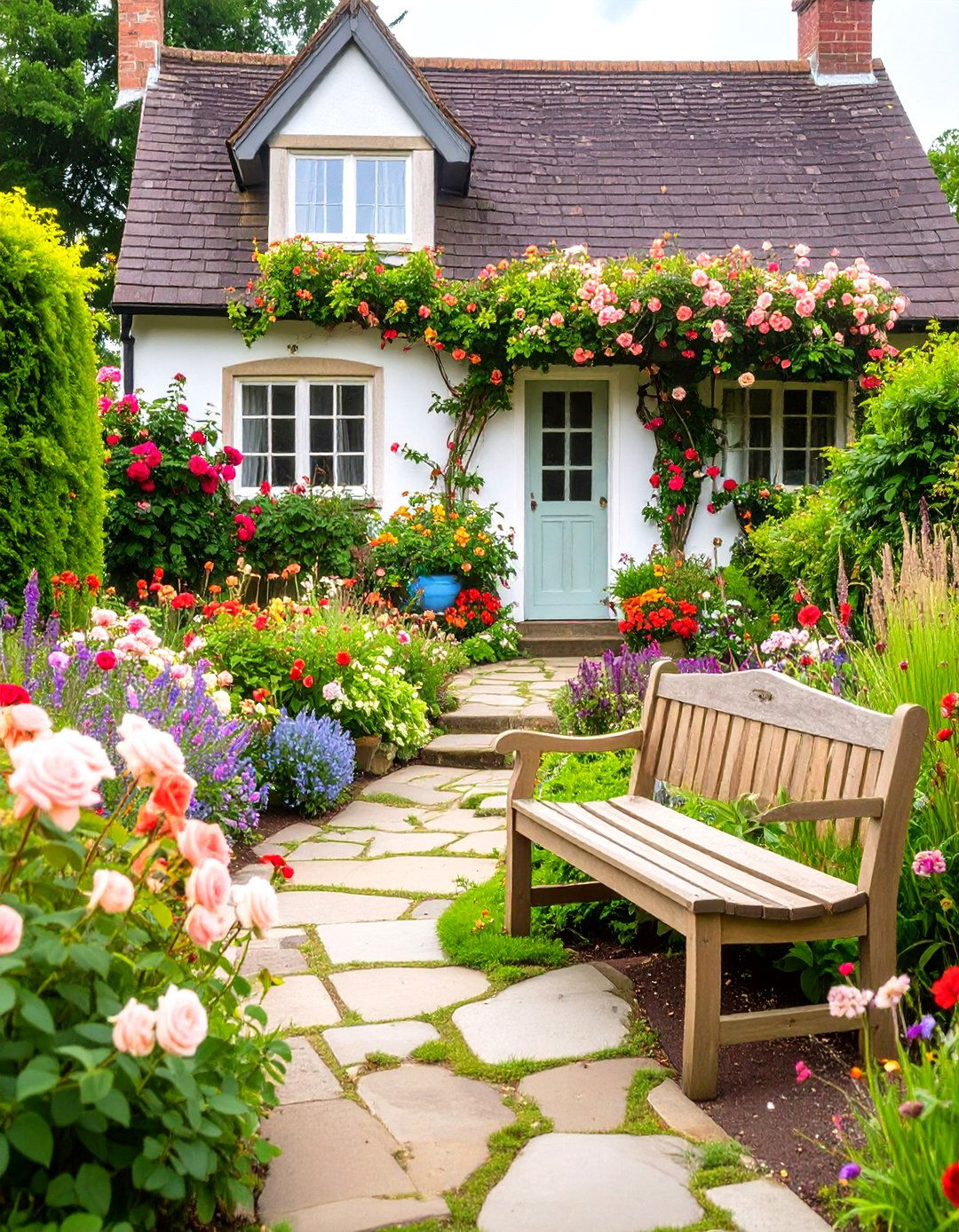
An aged-looking cobblestone driveway brings rich texture to a cottage-style home and makes the entire front approach feel settled into the landscape. Use gray or earth-toned cobbles in a gently curved layout, with slightly larger stones forming a strong outer border. Plant generous beds alongside the driveway with roses, hydrangeas, lavender, flowering perennials, and compact evergreen shrubs. Allow the beds to feel abundant, but keep plants away from vehicle doors and driver sightlines. A matching cobblestone or flagstone walkway can branch toward the porch beneath a simple garden arch. Because the surface already has substantial visual detail, use a limited planting color palette. The driveway, informal flowers, and cottage facade will then read as one coordinated and welcoming front garden.
11. Stamped Concrete Driveway With Curved Beds
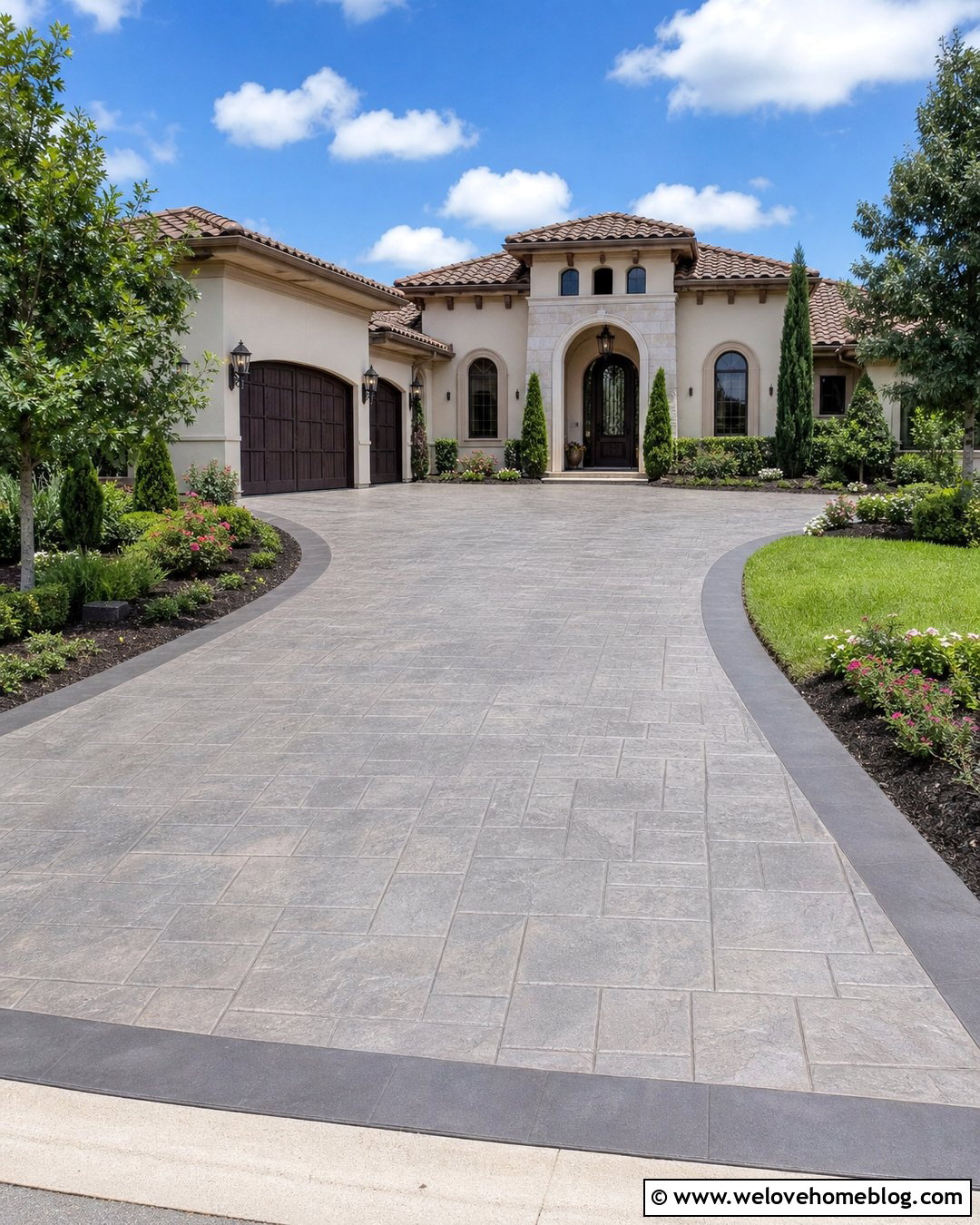
Stamped concrete can create the appearance of individual stone or slate while maintaining a continuous concrete surface. Choose a subtle ashlar slate pattern in warm gray or muted tan rather than an overly dramatic color mix. A gently flared driveway leading to the garage provides room at the curb and makes the entrance feel more generous. Follow both sides with curved planting beds that mirror the paving lines. Layer low ground cover at the front, flowering shrubs in the middle, and taller evergreens closer to the house. A smooth contrasting concrete border helps define the stamped field and simplifies maintenance near the lawn. This complete driveway look suits transitional, Mediterranean, and traditional homes where a plain slab might feel too stark.
12. Resin-Bound Driveway With Steel Edging
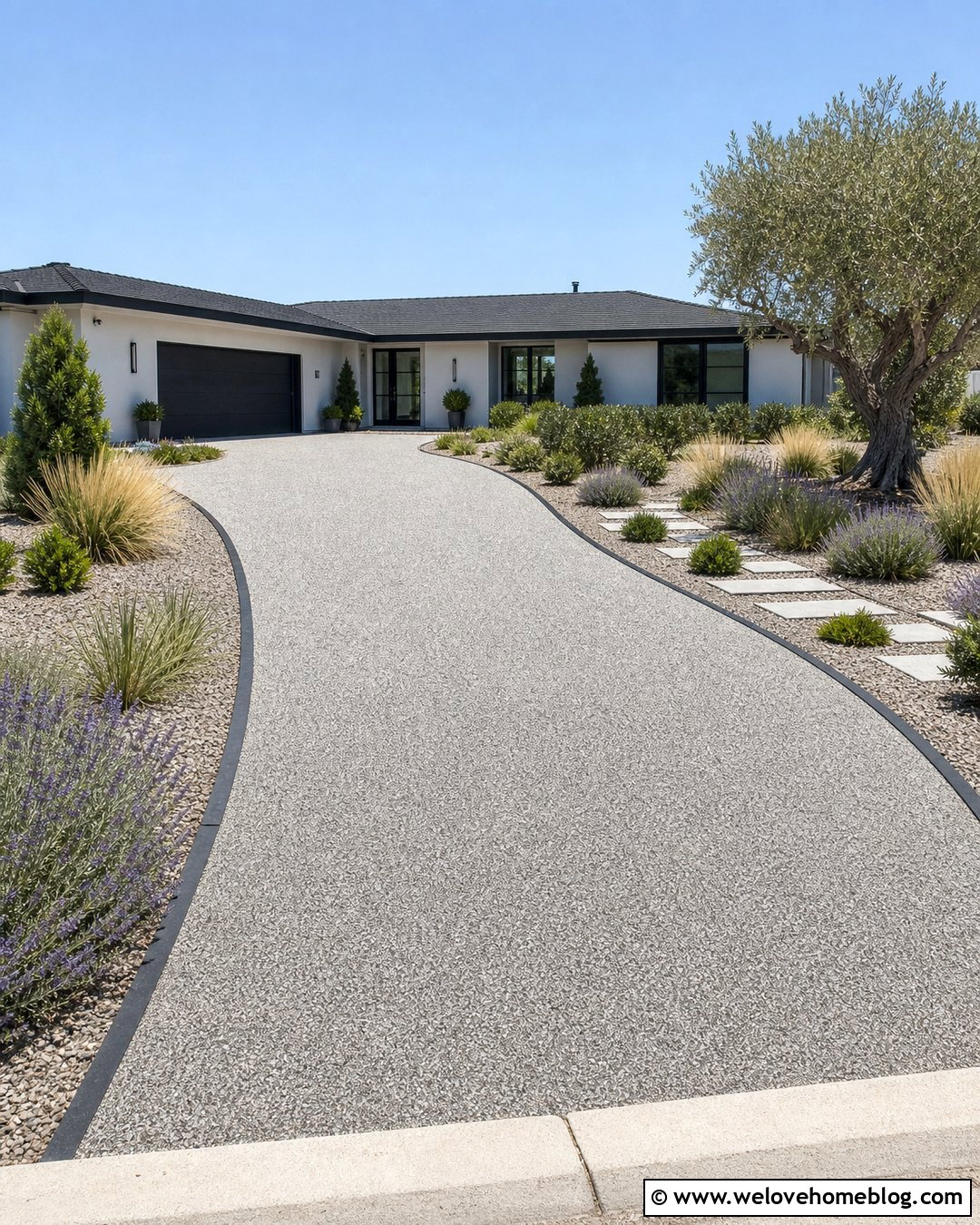
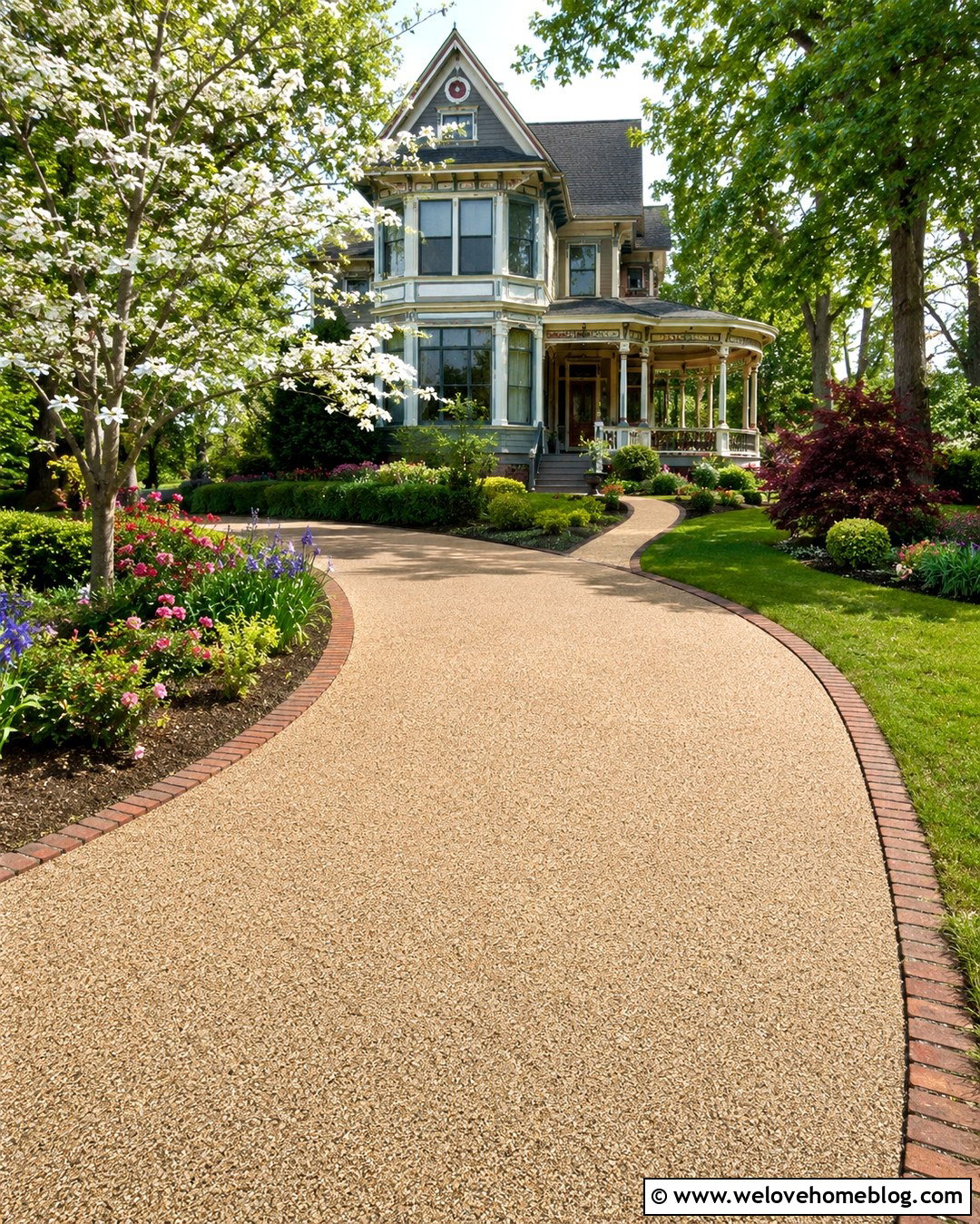
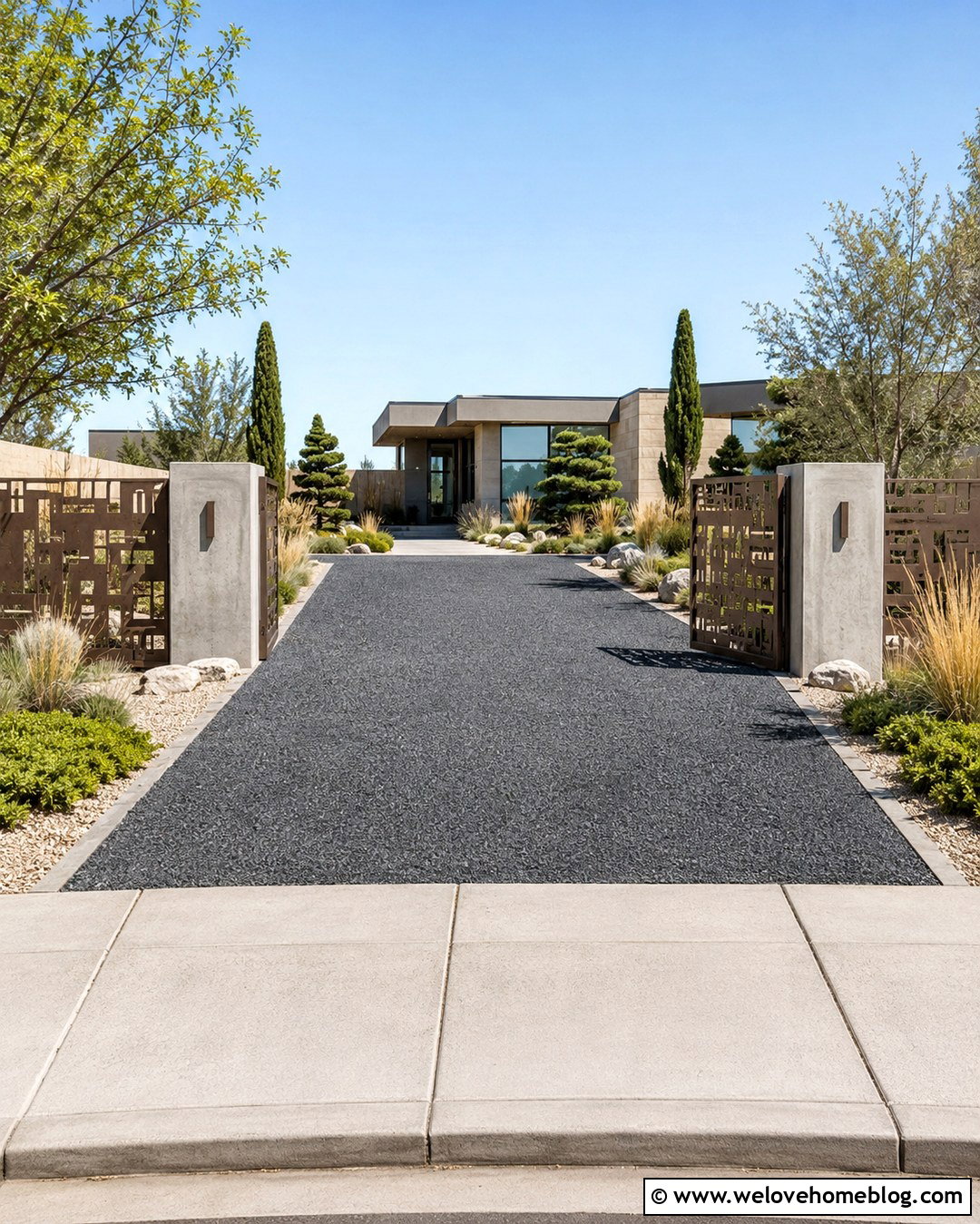
A resin-bound gravel driveway offers a smooth, visually consistent finish created from decorative aggregate held together with resin. Select a natural buff, silver-gray, or warm stone blend that complements the home’s exterior. Thin dark steel edging gives a straight or gently curved driveway a crisp outline without creating a heavy border. Surround it with drought-tolerant grasses, lavender, compact shrubs, and clean gravel mulch for an uncluttered landscape. Large stepping stones can form a separate pedestrian path to the entrance while preserving the driveway’s smooth appearance. The restrained palette works well beside modern, contemporary, and updated ranch houses. Careful base preparation and professional installation are important because the surface must support vehicles while allowing the overall entrance to remain even and polished.
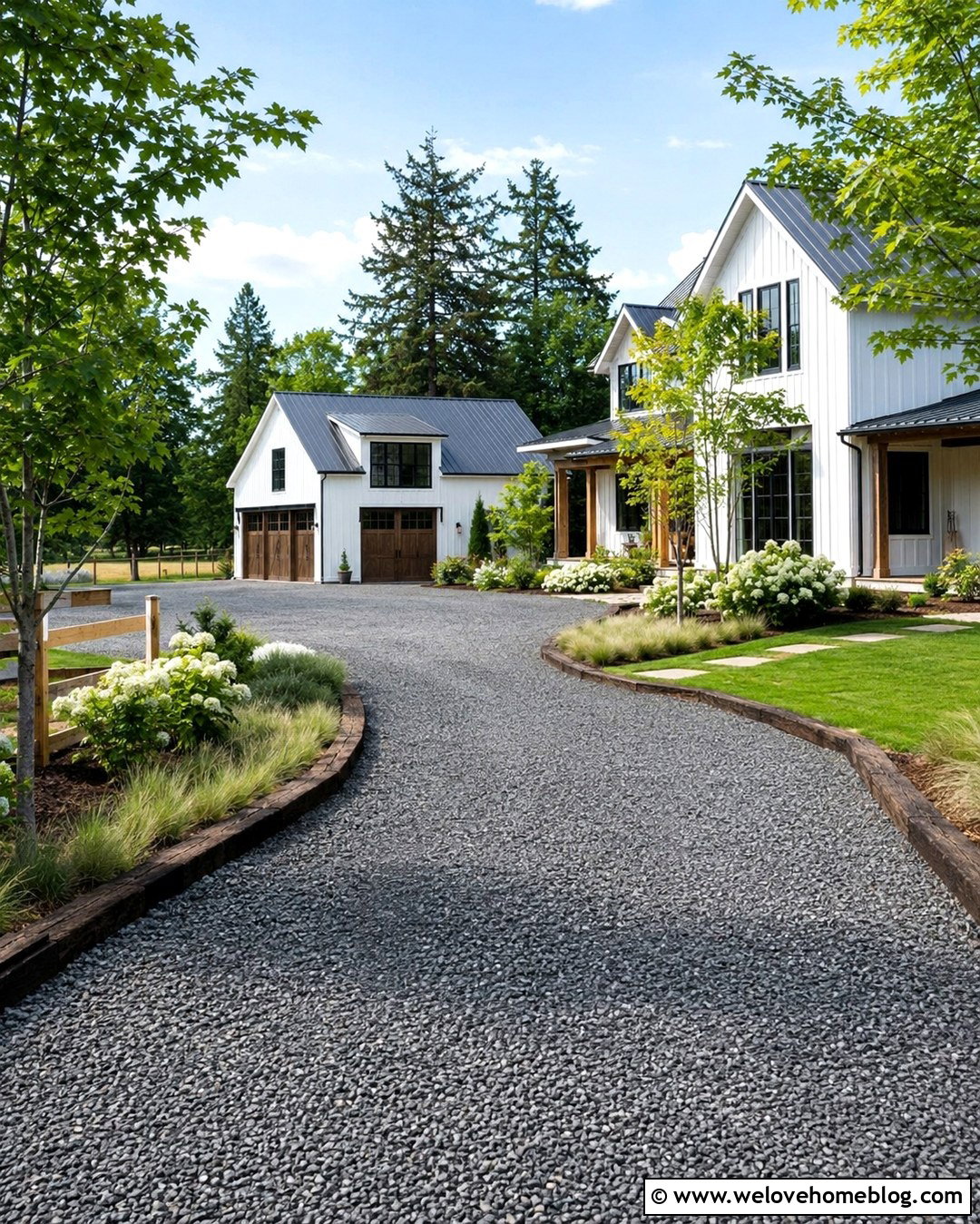
13. Farmhouse Gravel Driveway With Tree-Lined Entrance
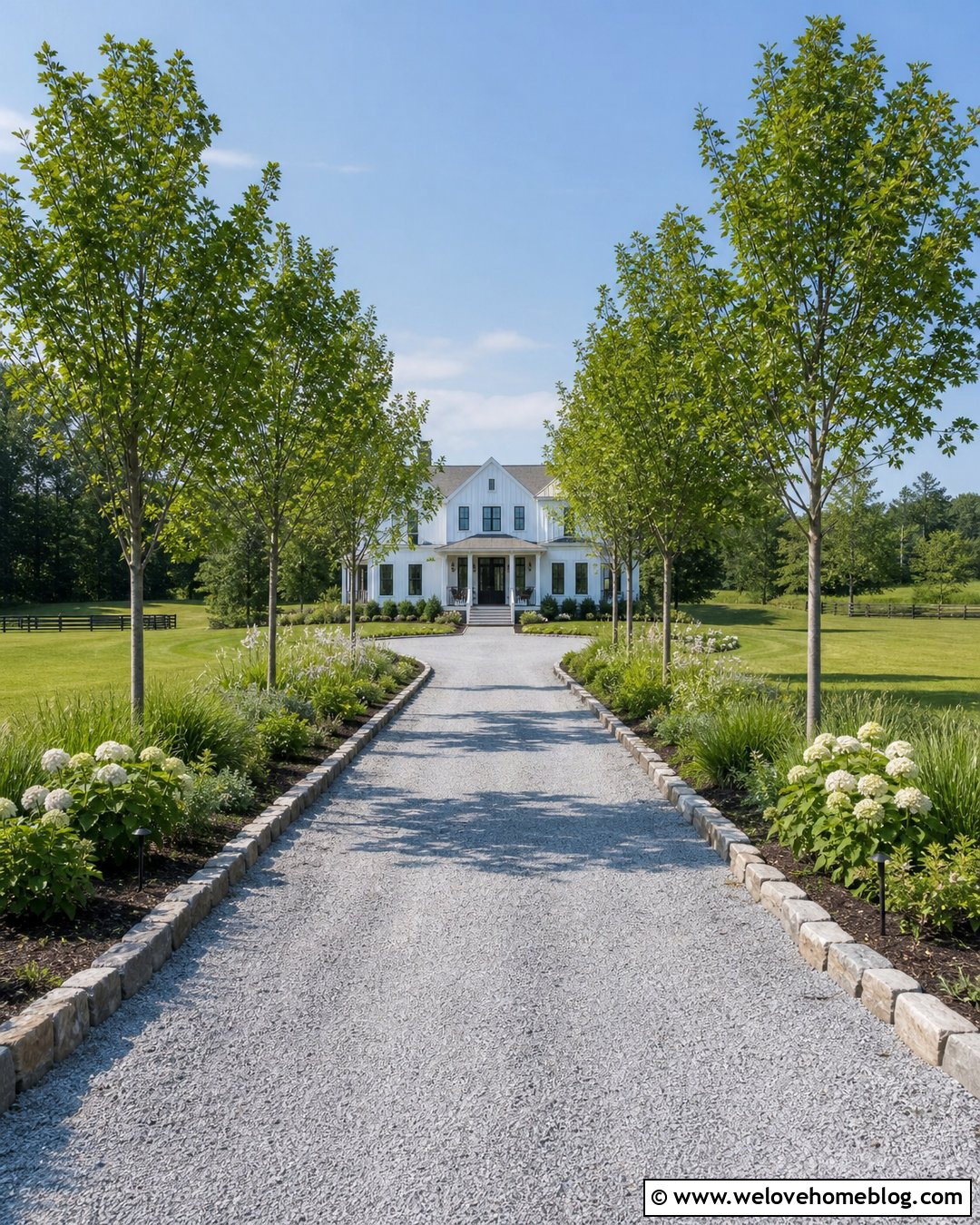
Imagine approaching a modern farmhouse along a wide gravel driveway framed by evenly spaced deciduous trees. Use compacted light gray crushed gravel with a gently curved or straight layout that points toward the house and detached garage. Natural stone edging can contain the gravel near lawns and planting beds without making the entrance feel overly formal. Underplant the trees with simple grass, low native ground cover, or seasonal bulbs for manageable upkeep. Near the home, transition into larger beds filled with hydrangeas, panicle grasses, and evergreen foundation shrubs. A broad stone walkway should clearly direct guests toward the porch. This driveway feels appropriate for a larger property because the surface, trees, and open lawn establish a calm rural approach without unnecessary decoration.
14. Small Front Driveway With Paver Parking Pad
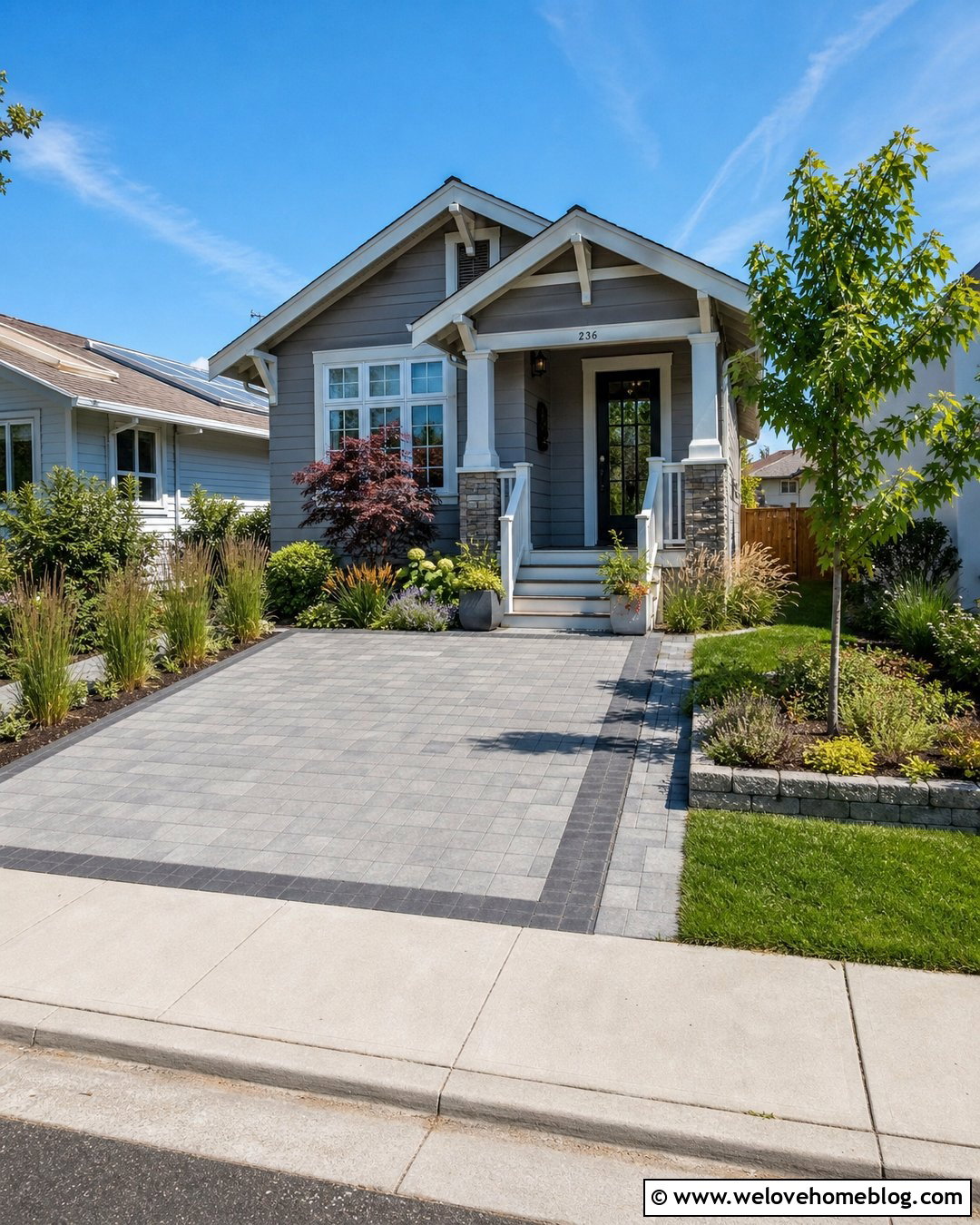
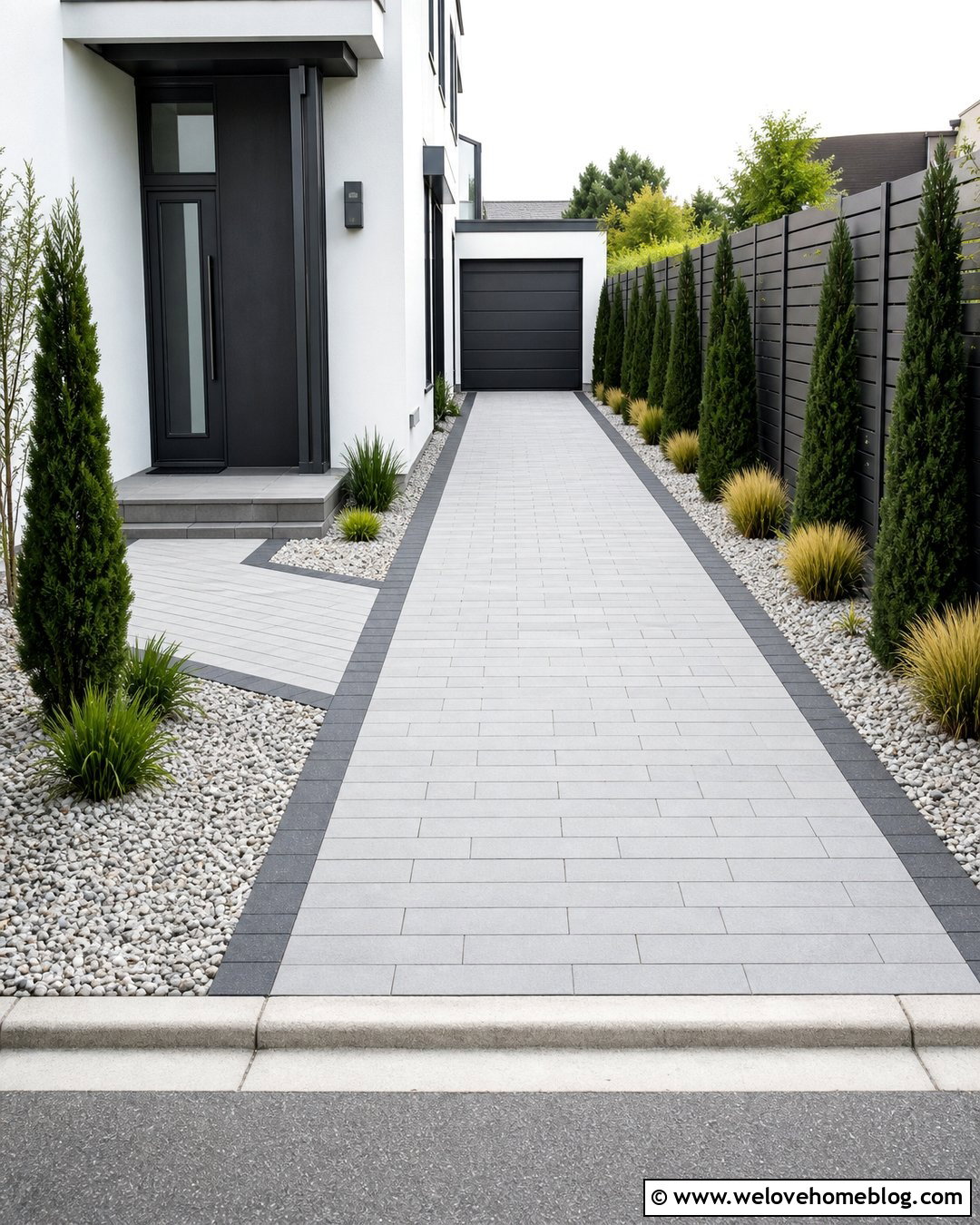
A compact front yard can still have a polished driveway when every square foot has a clear purpose. Build a rectangular parking pad from medium-gray concrete pavers, using a charcoal border to define its edges. Position a narrow walkway along one side so people can reach the front door without walking behind a parked vehicle. Slim planting beds with upright grasses, dwarf shrubs, and ground cover introduce greenery without reducing maneuvering space. If privacy is needed, add a small ornamental tree near the property boundary rather than a bulky hedge beside the driveway. Coordinate the pavers with the porch, steps, or foundation color. This space-efficient arrangement works for bungalows, townhomes, cottages, and narrow suburban lots where a decorative curve would be impractical.
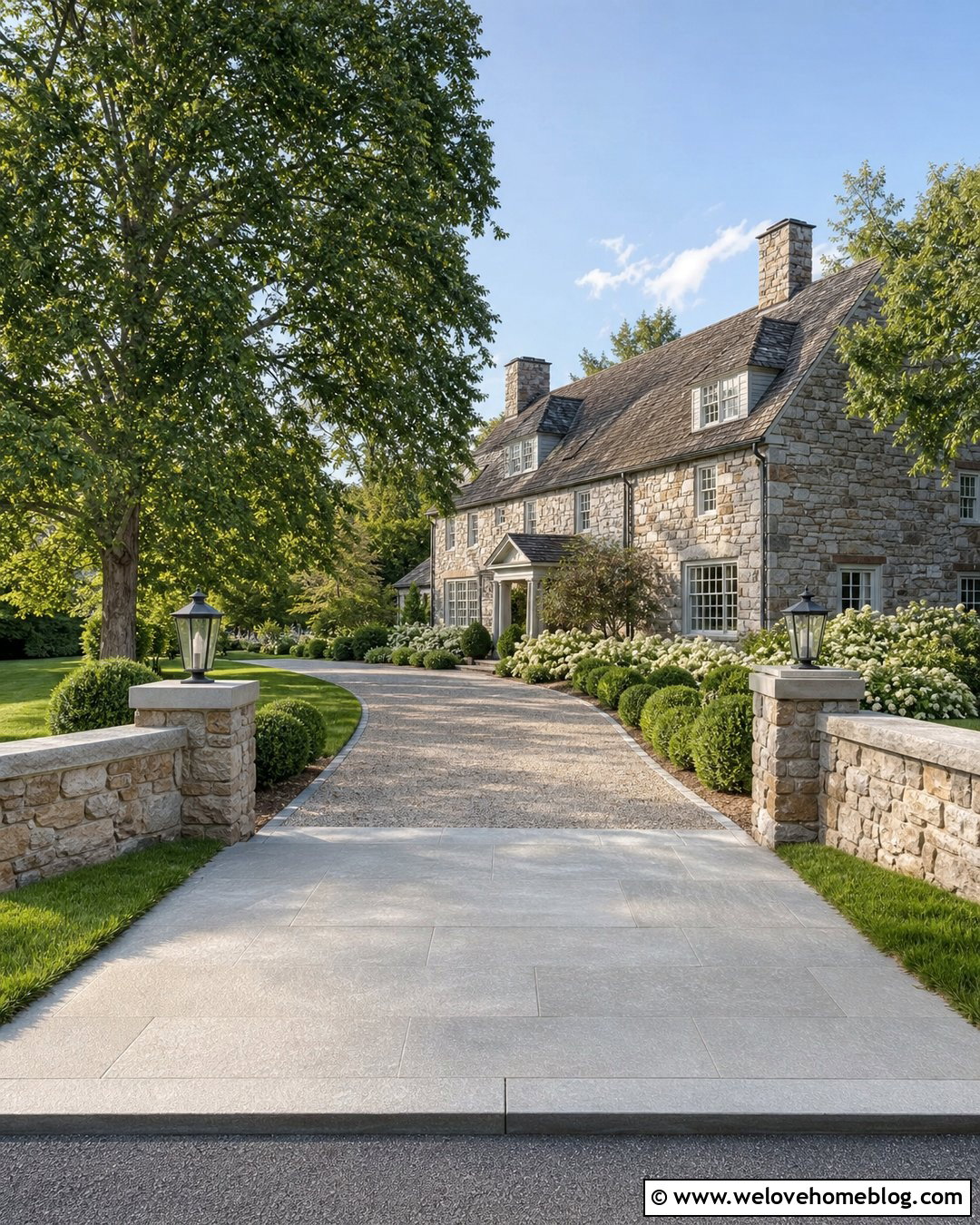
15. Wide Concrete Driveway With Paver Ribbons
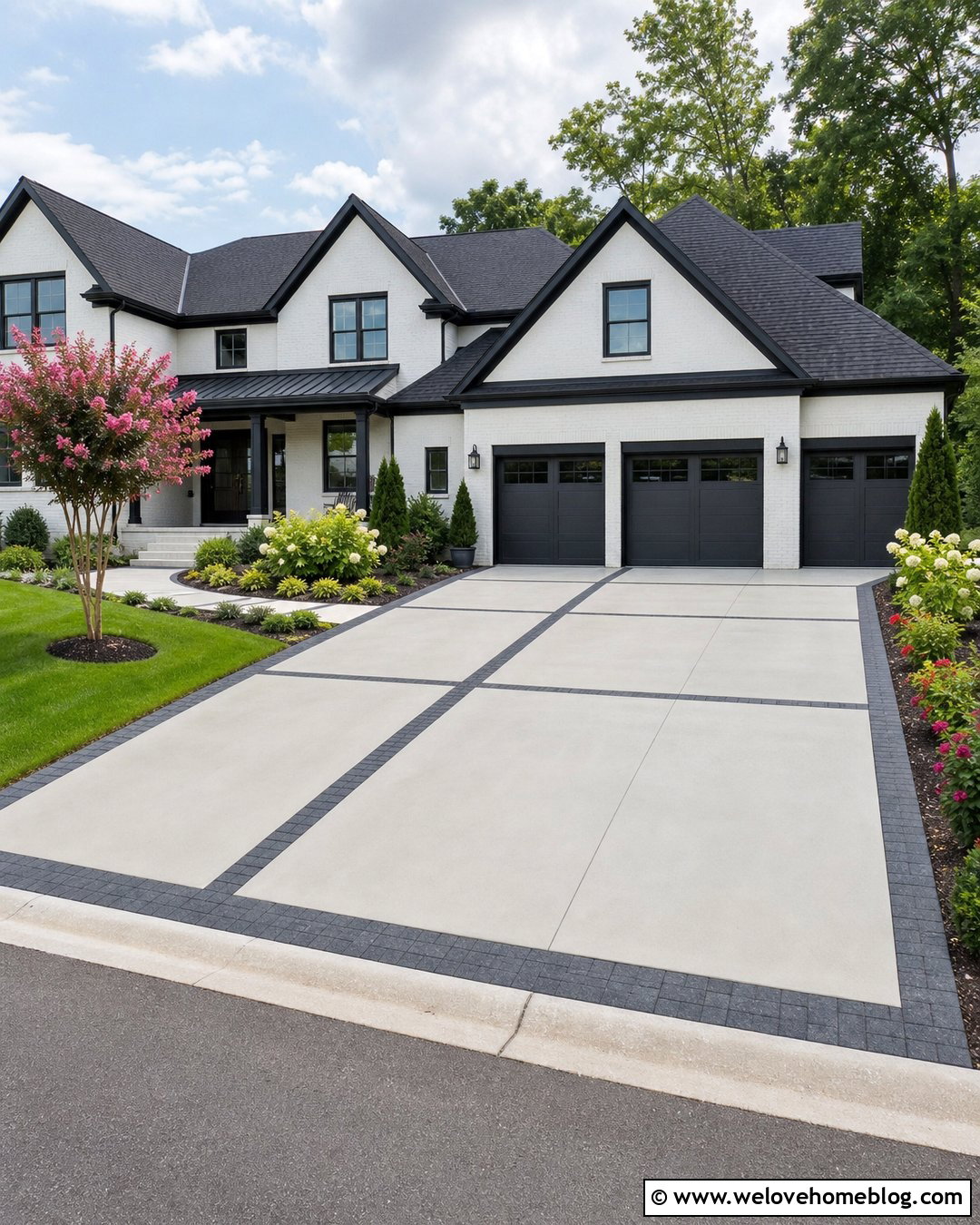
Breaking a wide concrete driveway into smaller visual sections can prevent it from dominating the front of the house. Pour light gray concrete panels and separate them with narrow ribbons of charcoal or red-brown pavers. Align the ribbons with garage door divisions, windows, or other architectural features for a purposeful result. Continue one ribbon toward the porch to establish a clear pedestrian route. Along the outer edges, use broad planting beds with layered shrubs and a small tree to balance the amount of hardscape. A low paver border between the driveway and lawn makes mowing easier and repeats the accent material. This design is especially useful for three-car garages, wide ranch homes, and properties needing several parking spaces without an uninterrupted expanse of concrete.
16. Sloped Driveway With Retaining Wall Landscaping
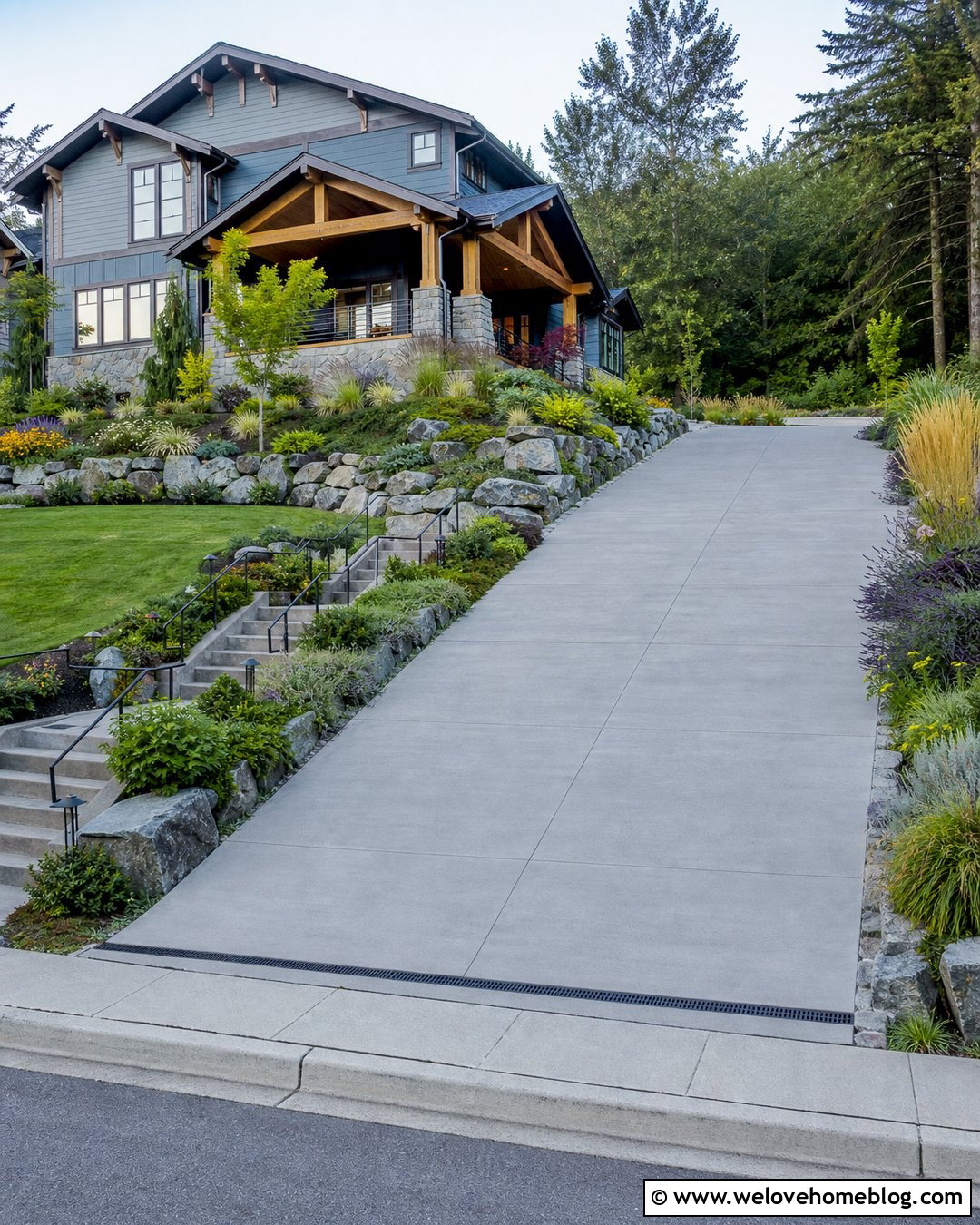
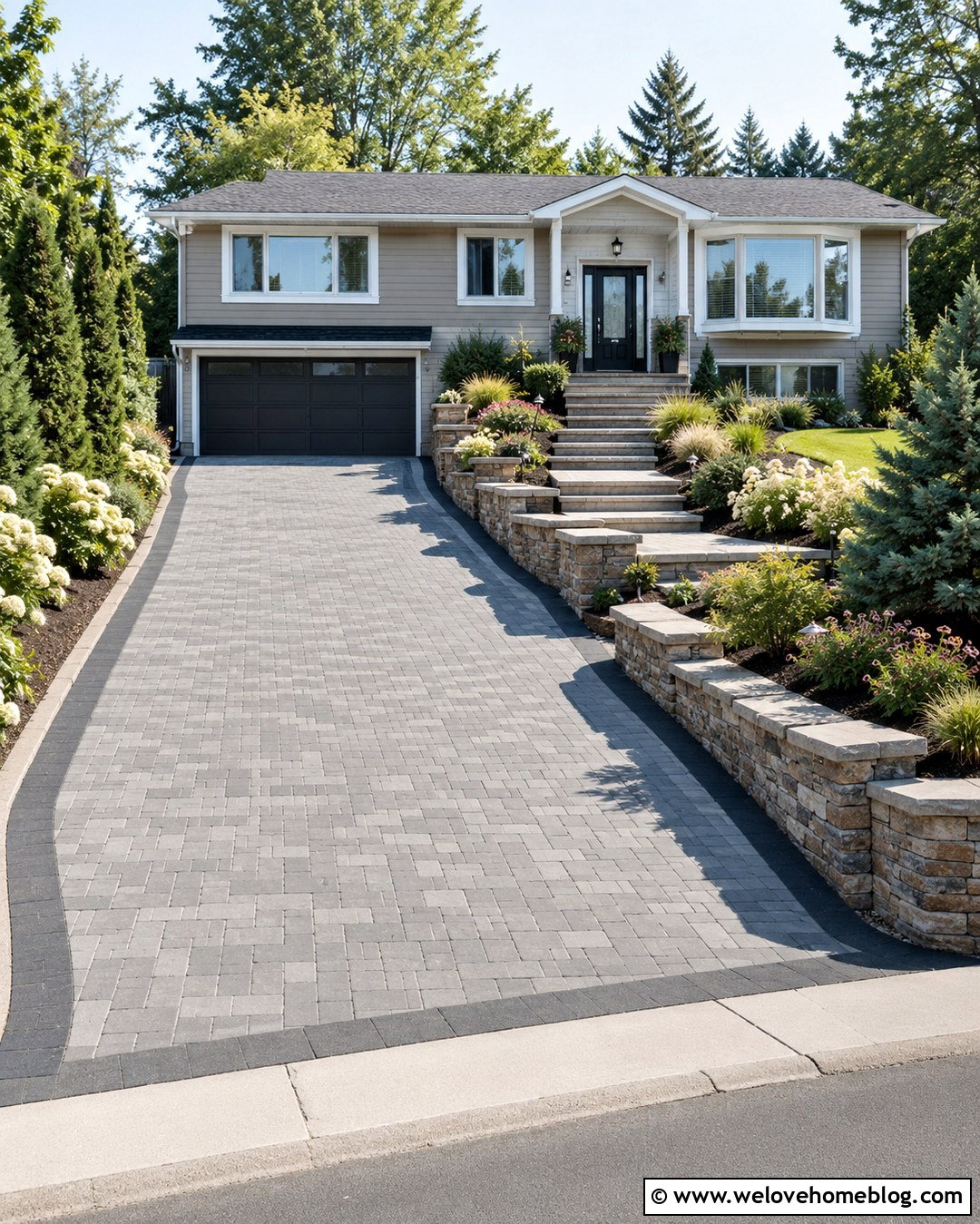
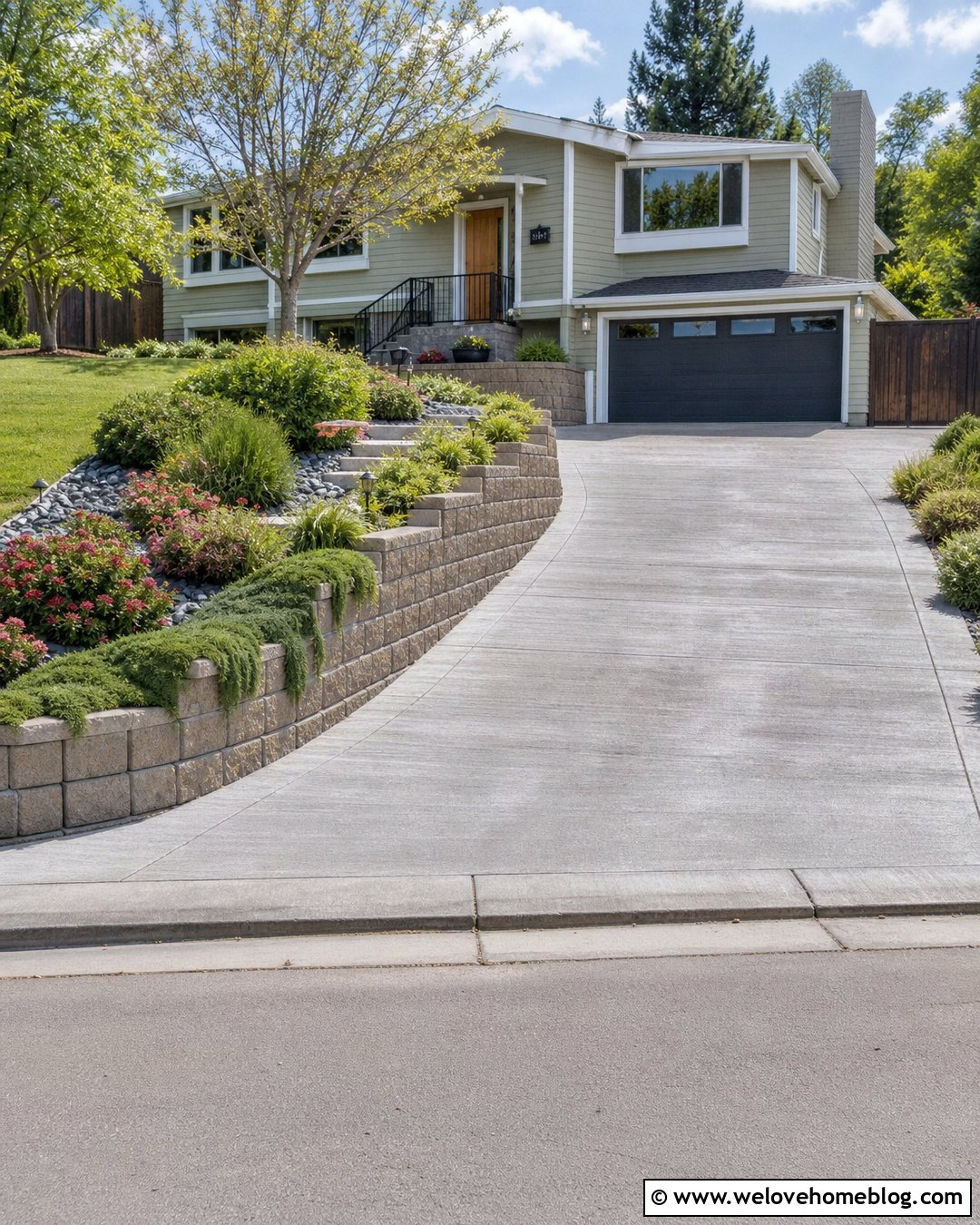
A sloped front yard needs a driveway design that manages elevation while still looking connected to the home. Use broom-finished concrete or textured concrete pavers for a straight approach, then support the higher side with a tiered natural stone retaining wall. Plant the terraces with spreading ground cover, compact shrubs, ornamental grasses, and small flowering perennials that will not obstruct visibility. On the lower side, a sturdy stone or paver border can separate the driveway from the lawn. Steps and a dedicated walkway should provide a safer pedestrian route to the front door. Drainage must be planned with the grading so water moves away from the house and does not collect across the driveway. ()
17. Ranch House Driveway With Desert Landscaping
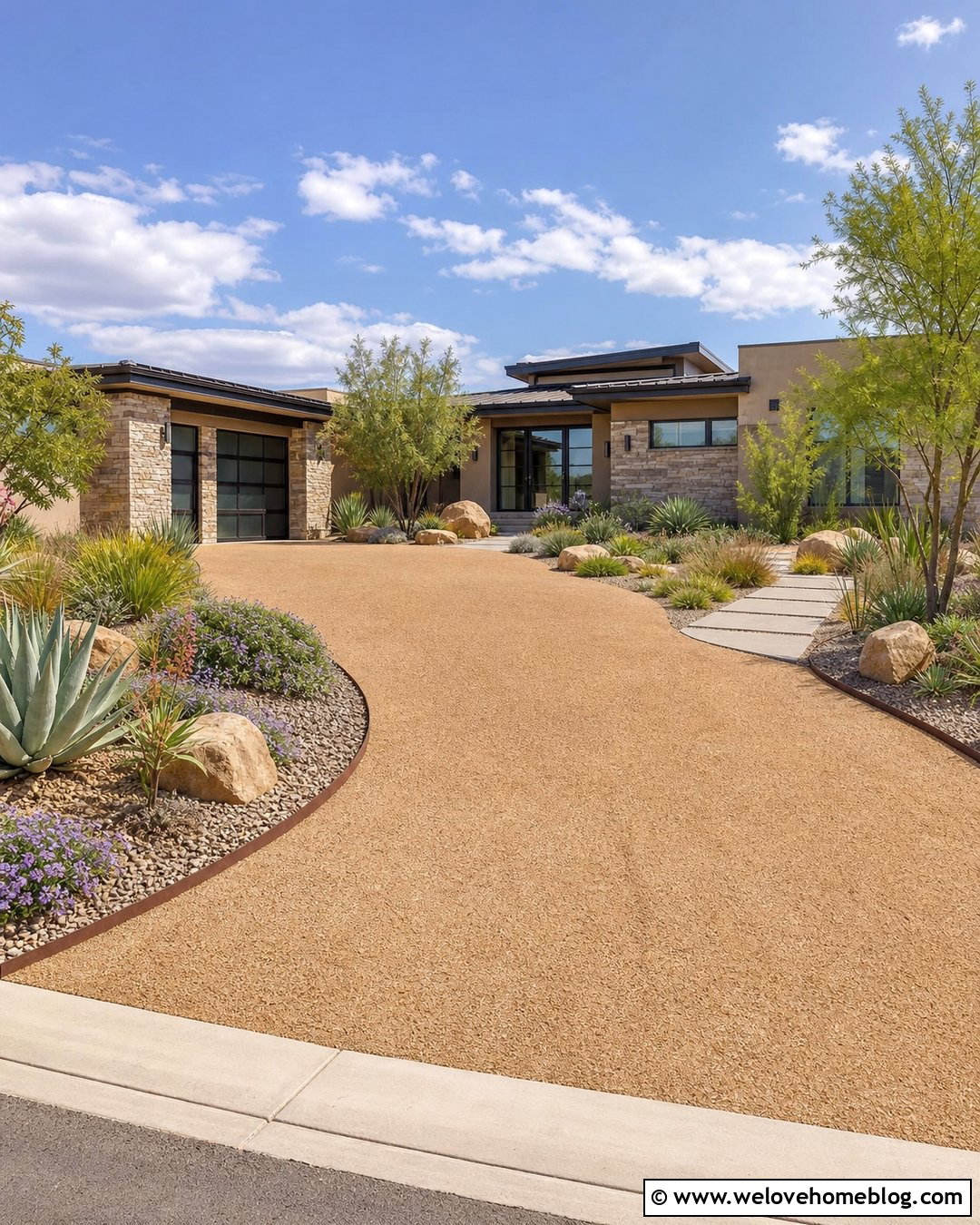
A warm-toned concrete or stabilized gravel driveway looks right at home beside a low-profile ranch house in a dry climate. Choose a broad, slightly curved layout that follows the horizontal architecture and creates an easy approach to the garage. Border the surface with weathered steel, natural stone, or a narrow band of contrasting gravel. Surrounding beds can feature agave, yucca, desert spoon, native grasses, and low flowering plants adapted to the region. Arrange the plants in open groups with gravel mulch between them instead of crowding the driveway. A concrete slab walkway should lead directly to the front entrance. This complete landscape reduces the need for expansive turf while using strong plant shapes to balance the driveway and long ranch facade.
18. Colonial Driveway With Symmetrical Landscaping
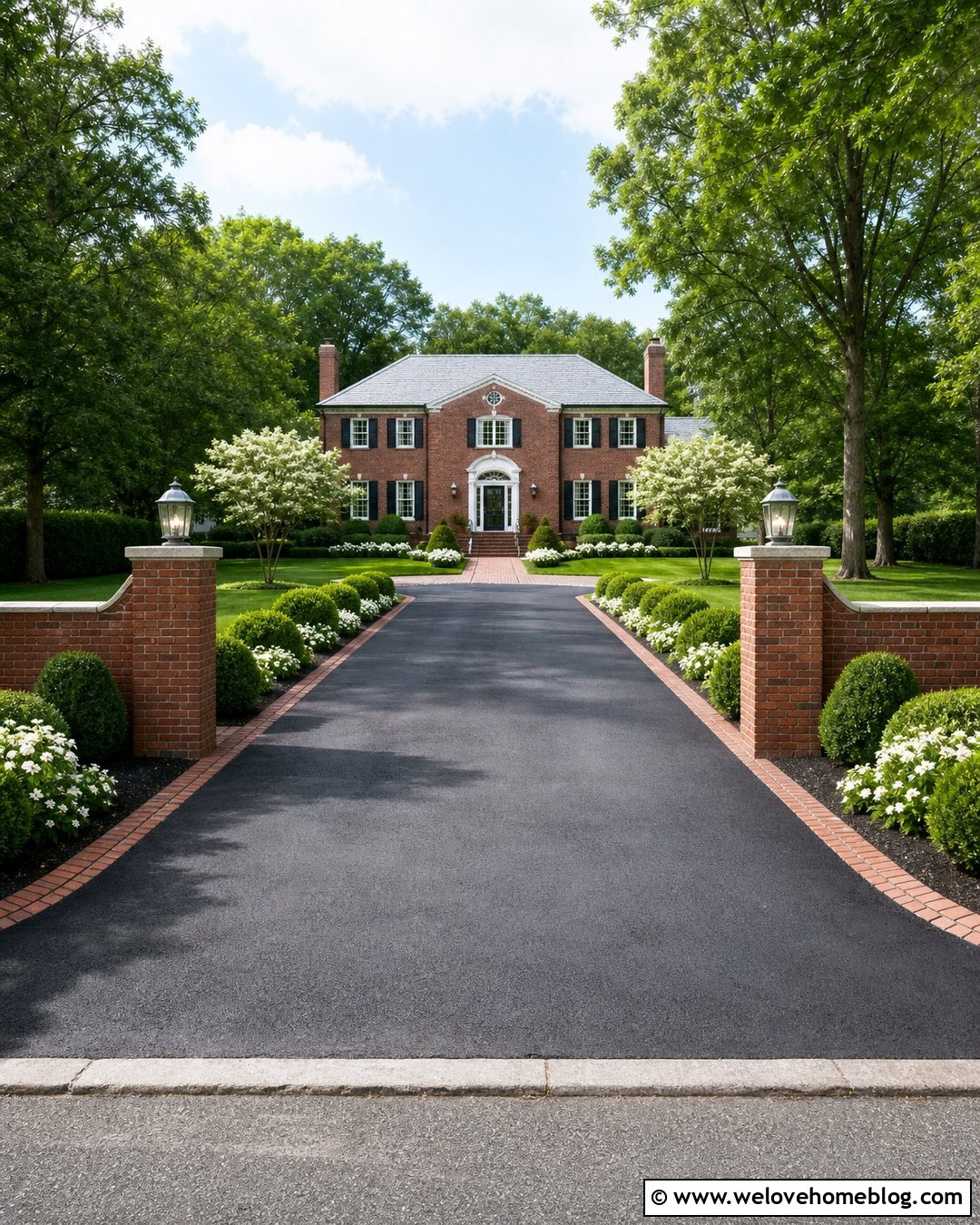
A straight driveway with balanced landscaping reinforces the orderly appearance of a colonial home. Use red-brown brick pavers, gray concrete pavers, or smooth asphalt with a brick border, depending on the project budget. Place matching planting beds on each side of the entrance, filled with clipped evergreen shrubs, white flowering plants, and small ornamental trees. Brick or stone pillars can mark the curb without requiring a gate. Near the house, align the walkway with the front door and repeat the same border material used along the driveway. Traditional lantern-style fixtures mounted on the pillars or facade complete the composition. Keep mature plant sizes in mind so the symmetry remains visible. The final entrance should feel formal and balanced without becoming crowded or difficult to maintain.
19. Modern Farmhouse Driveway With Black Accents
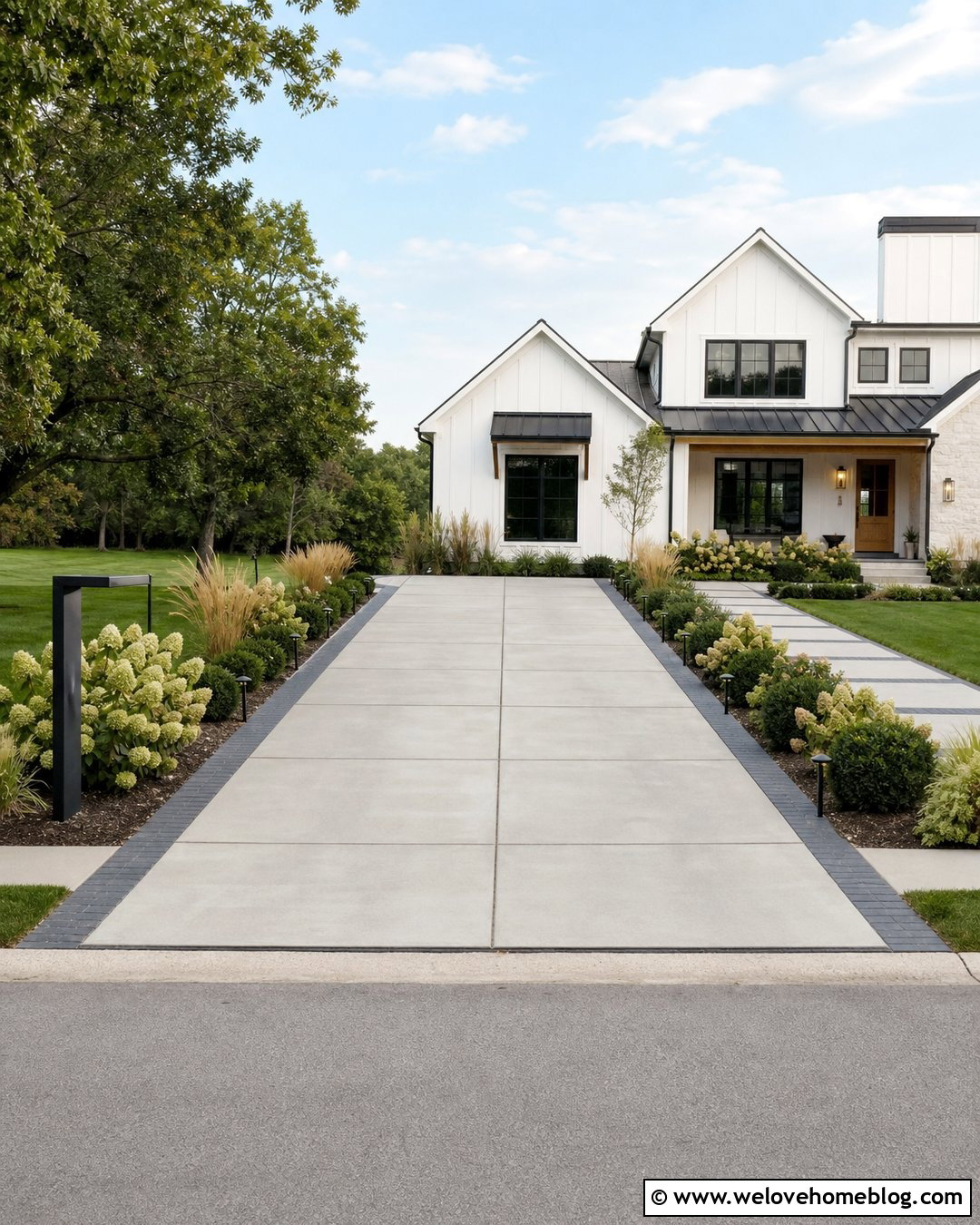
A modern farmhouse driveway looks cohesive when its paving repeats the home’s white, gray, wood, and black exterior palette. Start with light gray poured concrete in large rectangular panels, then add a charcoal paver border along both sides. A black steel address marker and matching low-profile lights can echo dark windows, roof details, and garage hardware. Frame the driveway with simple beds containing panicle hydrangeas, feather reed grass, and rounded evergreen shrubs. A straight concrete walkway leading to the porch keeps circulation obvious. For a wider property, gently flare the driveway near the garage while maintaining clean lines at the curb. The result feels fresh and contemporary, yet the soft planting and natural wood accents preserve the welcoming character associated with farmhouse architecture.
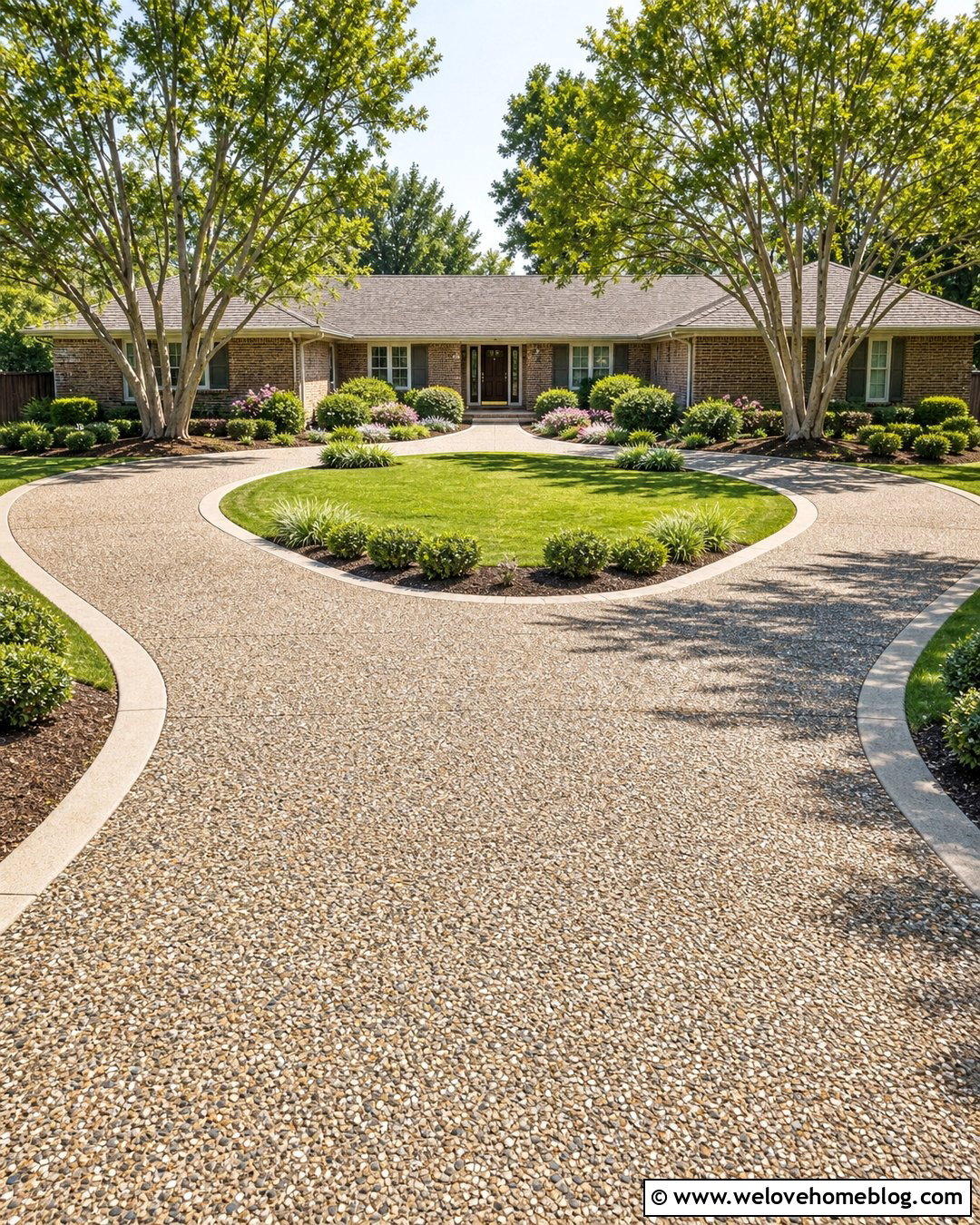
20. Craftsman Driveway With Natural Stone Border
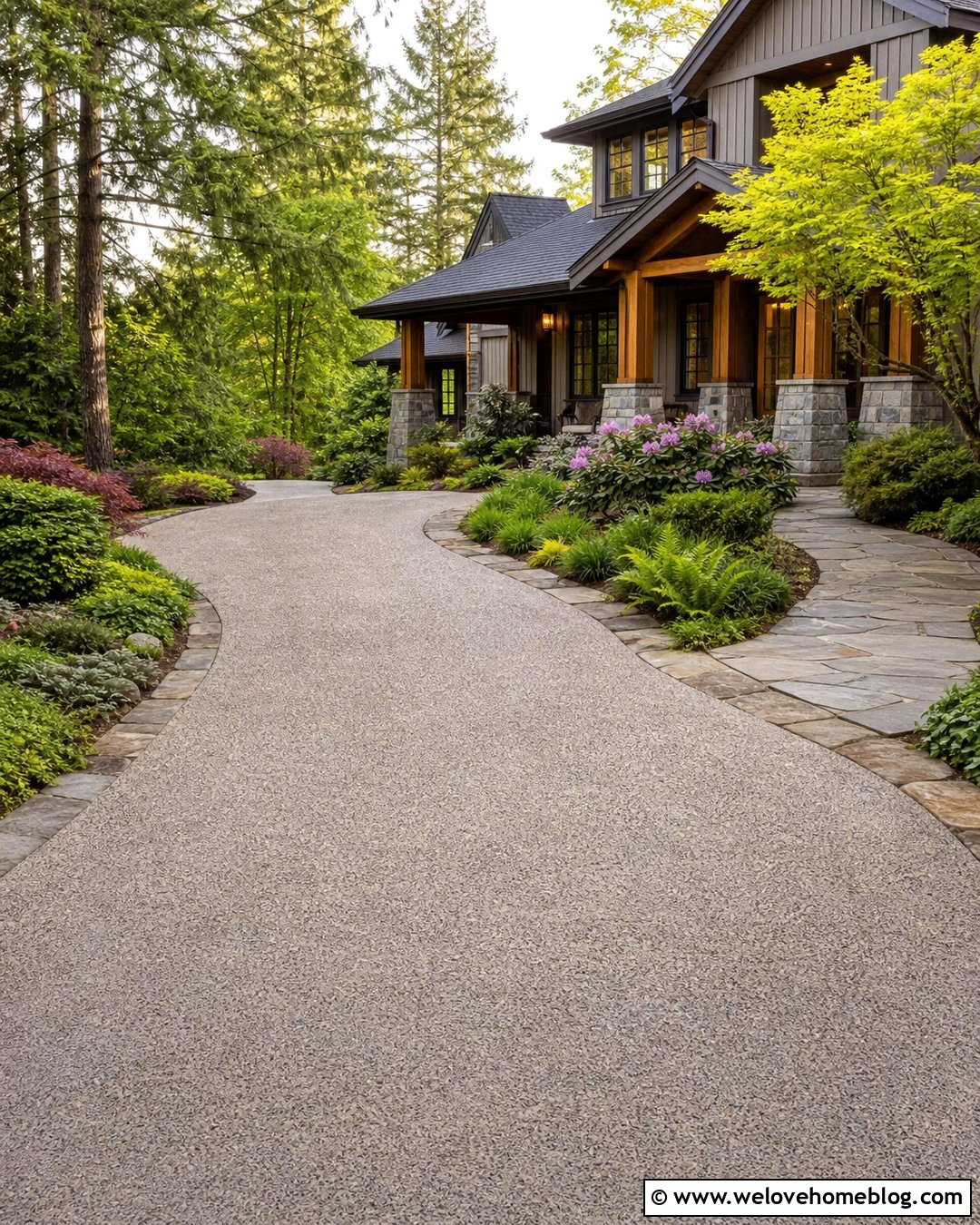
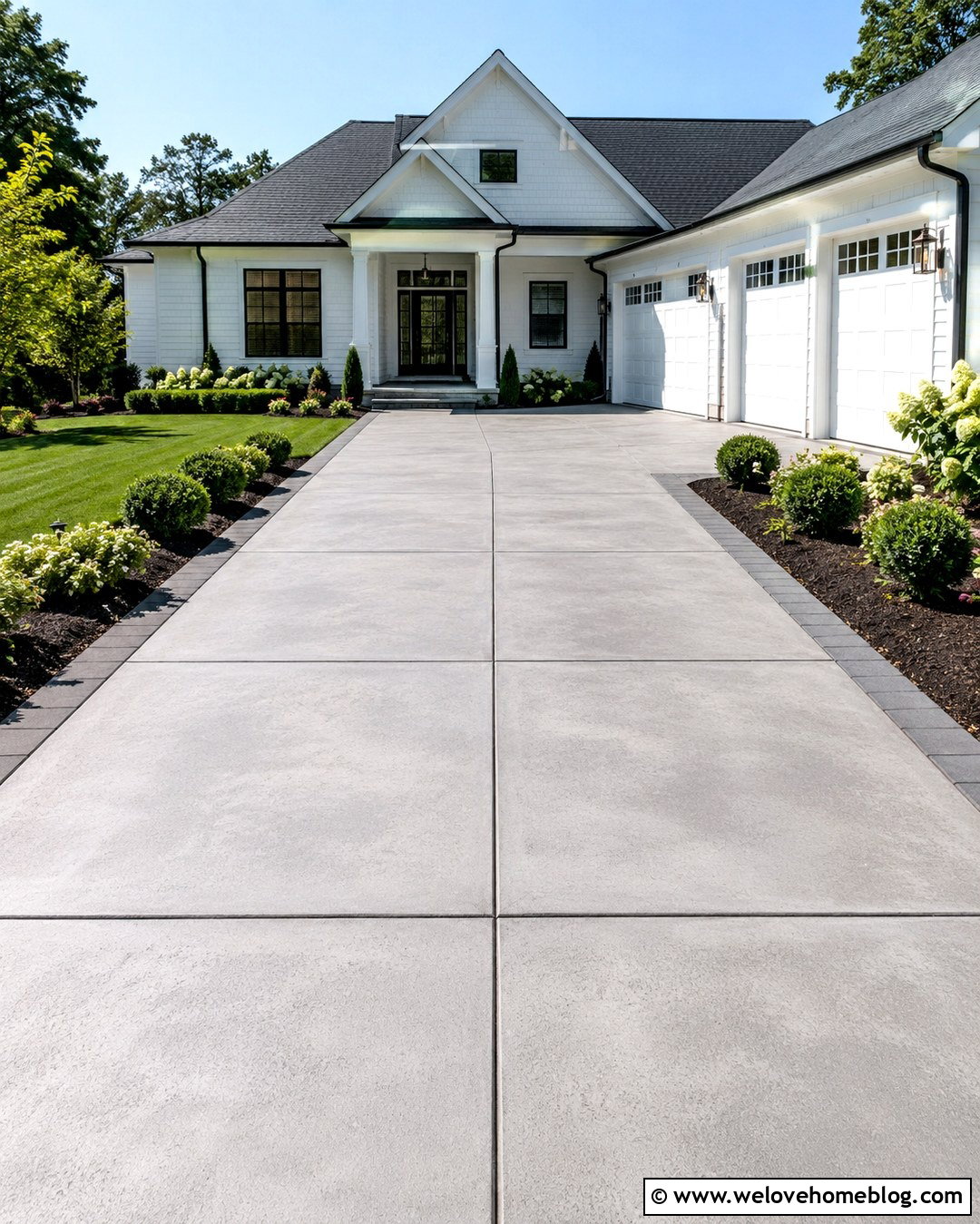
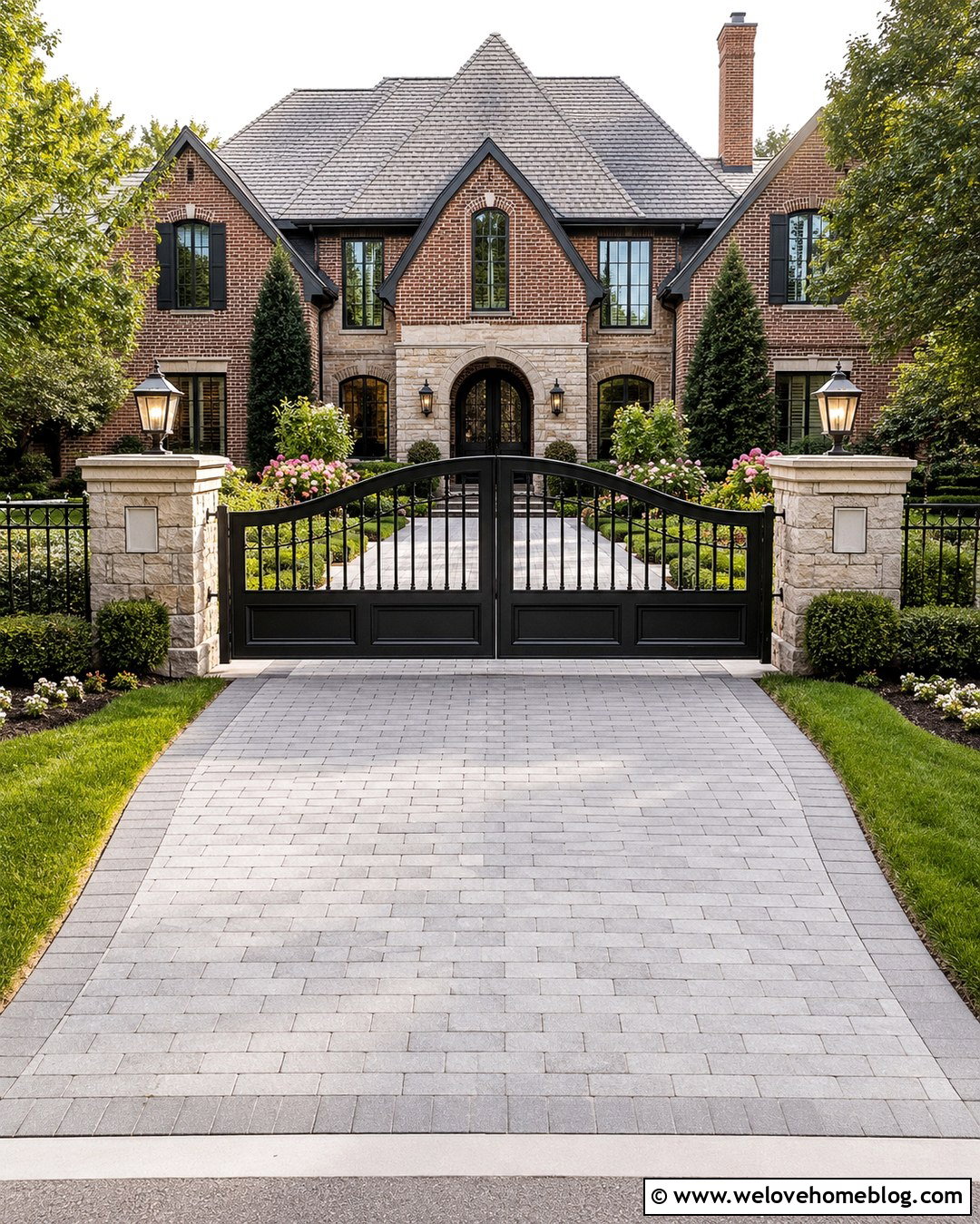
Craftsman homes benefit from driveway materials that emphasize texture, craftsmanship, and earthy colors. Install warm gray concrete pavers or exposed aggregate in a gently curved layout, then outline the surface with irregular natural stone. Continue the same stone into short entrance columns, porch bases, or walkway edging to connect the driveway with the architecture. Layer the surrounding beds with rhododendrons, ferns, ornamental grasses, and compact evergreens suited to local conditions. A broad flagstone walkway can branch from the driveway and lead toward the porch beneath a small ornamental tree. Avoid highly polished materials or stark color contrasts. Muted stone, substantial borders, and informal planting allow the driveway to feel like an extension of the craftsman house rather than a separate paved area.
21. Horseshoe Driveway With Landscaped Front Lawn
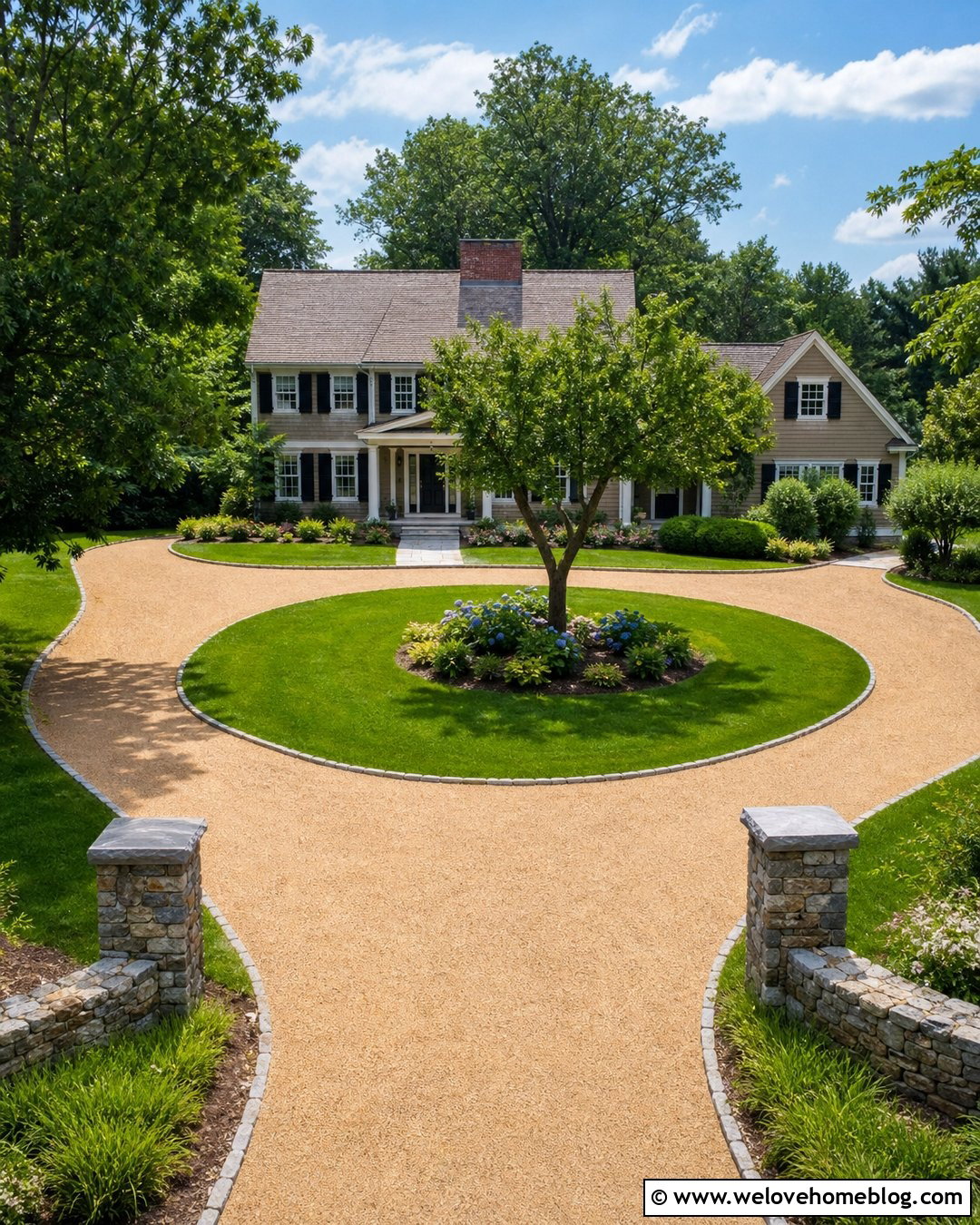
A horseshoe driveway creates two street connections and a convenient flow through a wide front yard. Surface the driveway with tan gravel, asphalt, concrete pavers, or exposed aggregate, selecting a finish that suits the home and expected maintenance. Use stone or brick edging to preserve the sweeping shape. The central lawn can hold a specimen shade tree surrounded by a generous circular planting bed, leaving the remaining area open and uncluttered. Add matching entrance pillars at both curb openings so drivers understand the route immediately. A short walkway should connect the inner curve to the front porch. This layout works well for large ranch, colonial, farmhouse, and estate-style homes where there is enough frontage to create safe, comfortably spaced entrances.
22. Permeable Paver Driveway With Rain Garden
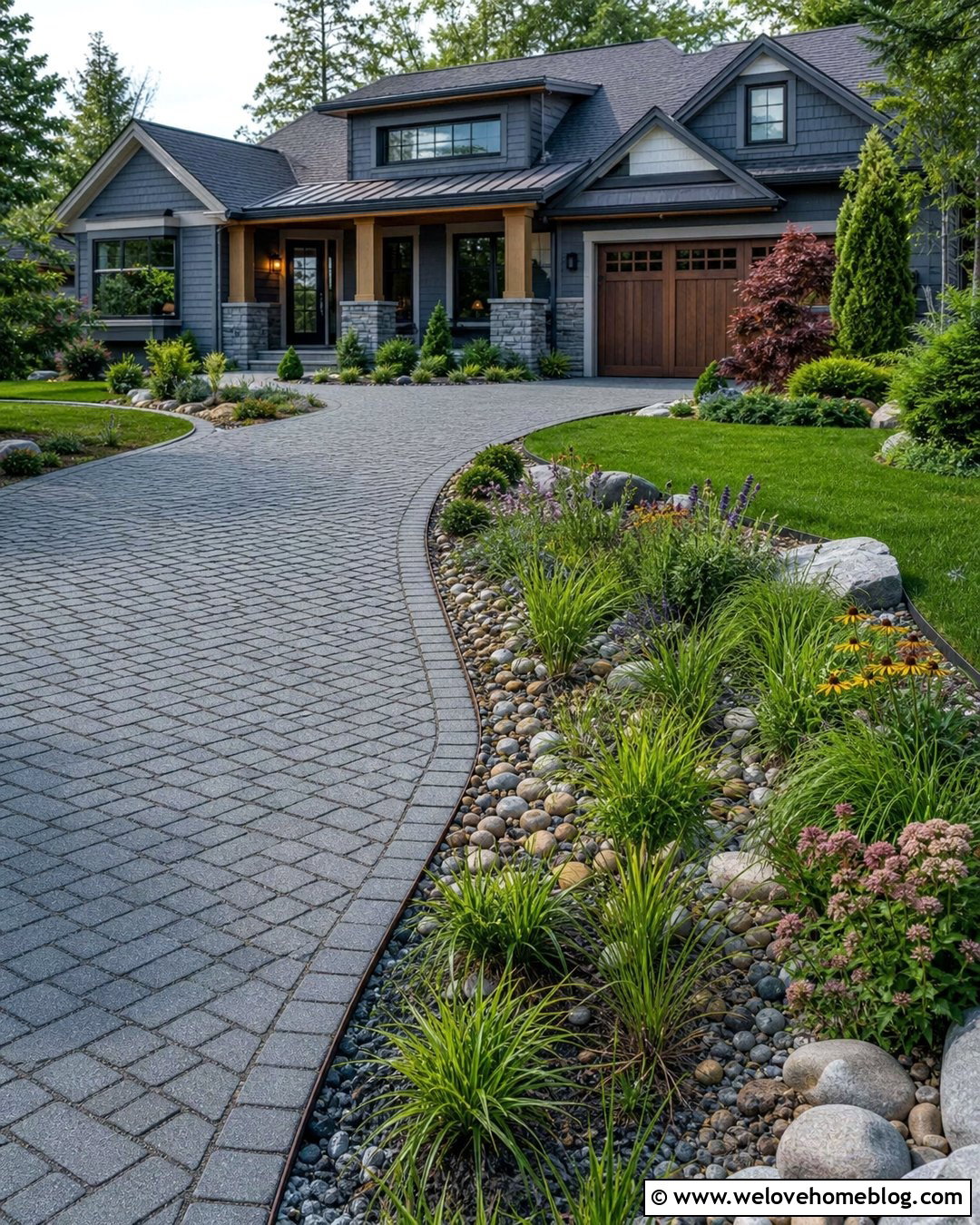
Permeable concrete pavers paired with a planted rain garden create a driveway that feels attractive and thoughtfully integrated with the site. Choose gray or tan pavers with gravel-filled joints, arranged in a straight or gently curved layout. Along the lower edge, shape a shallow landscaped basin with regionally appropriate grasses, sedges, flowering perennials, and decorative stones. A clean steel or concrete border can separate the driving surface from the planted area. Keep the rain garden away from vehicle doors and provide a solid walkway to the house. Match the paver colors to the home’s siding, roof, or masonry. This complete design is particularly suitable for contemporary and craftsman homes where practical water management can become an intentional part of the landscape.
23. Driveway With Wooden Gate And Stone Columns
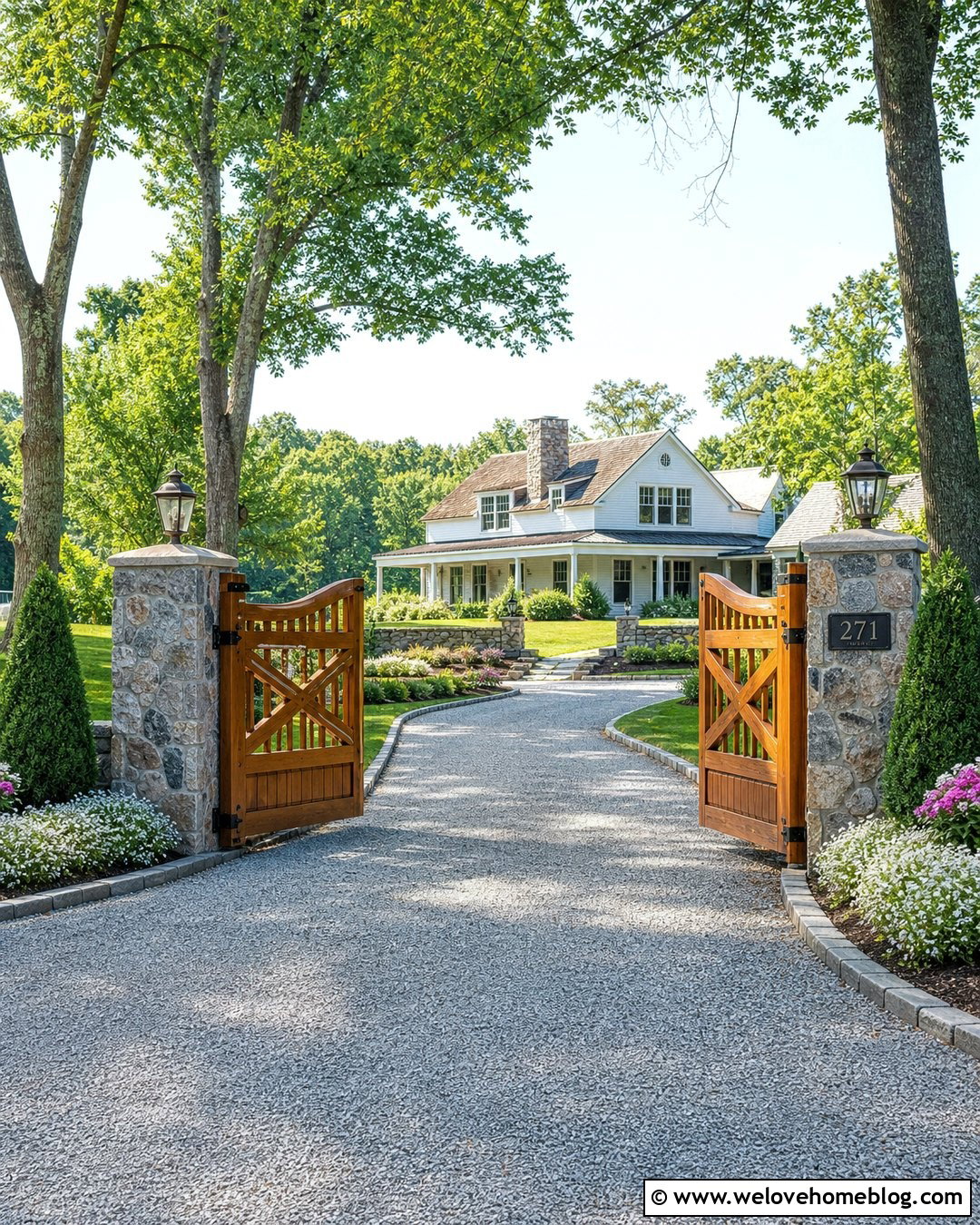
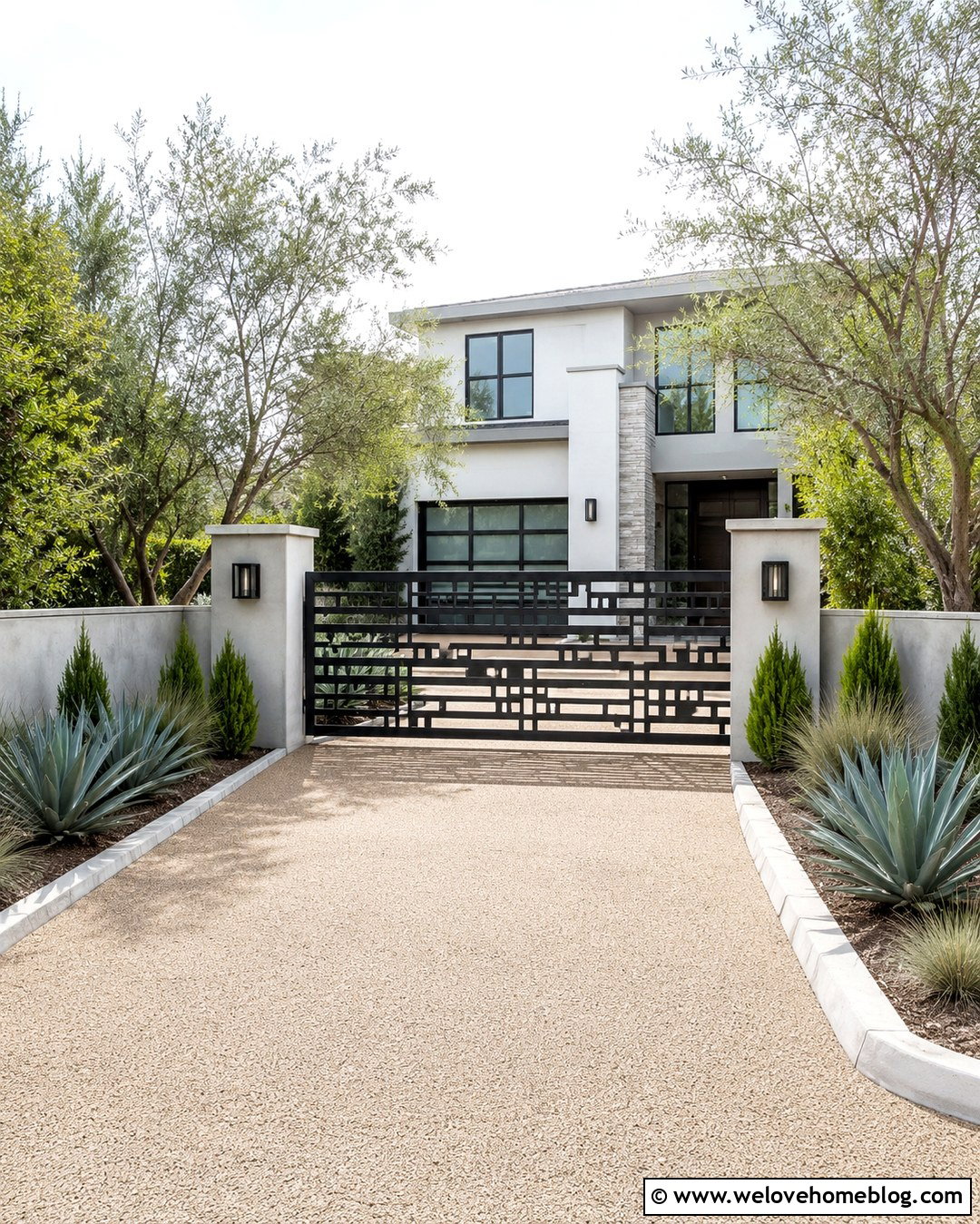
A driveway gate should appear connected to the house rather than added as an isolated feature. Use a warm-toned wood gate between substantial stone columns, paired with a compacted gravel, asphalt, or concrete paver driveway. A gently curved approach can provide comfortable space in front of the gate, while low planting beds soften the masonry without hiding it. Repeat the column stone in the house foundation, mailbox surround, or driveway edging whenever possible. Place taller trees farther back to frame the entrance and maintain clear street visibility. The gate design should be simple enough to suit the home’s architecture, whether farmhouse, craftsman, or country traditional. This coordinated entrance establishes privacy while giving the entire front yard a strong and welcoming focal point.
24. Driveway With Low-Voltage Border Lighting
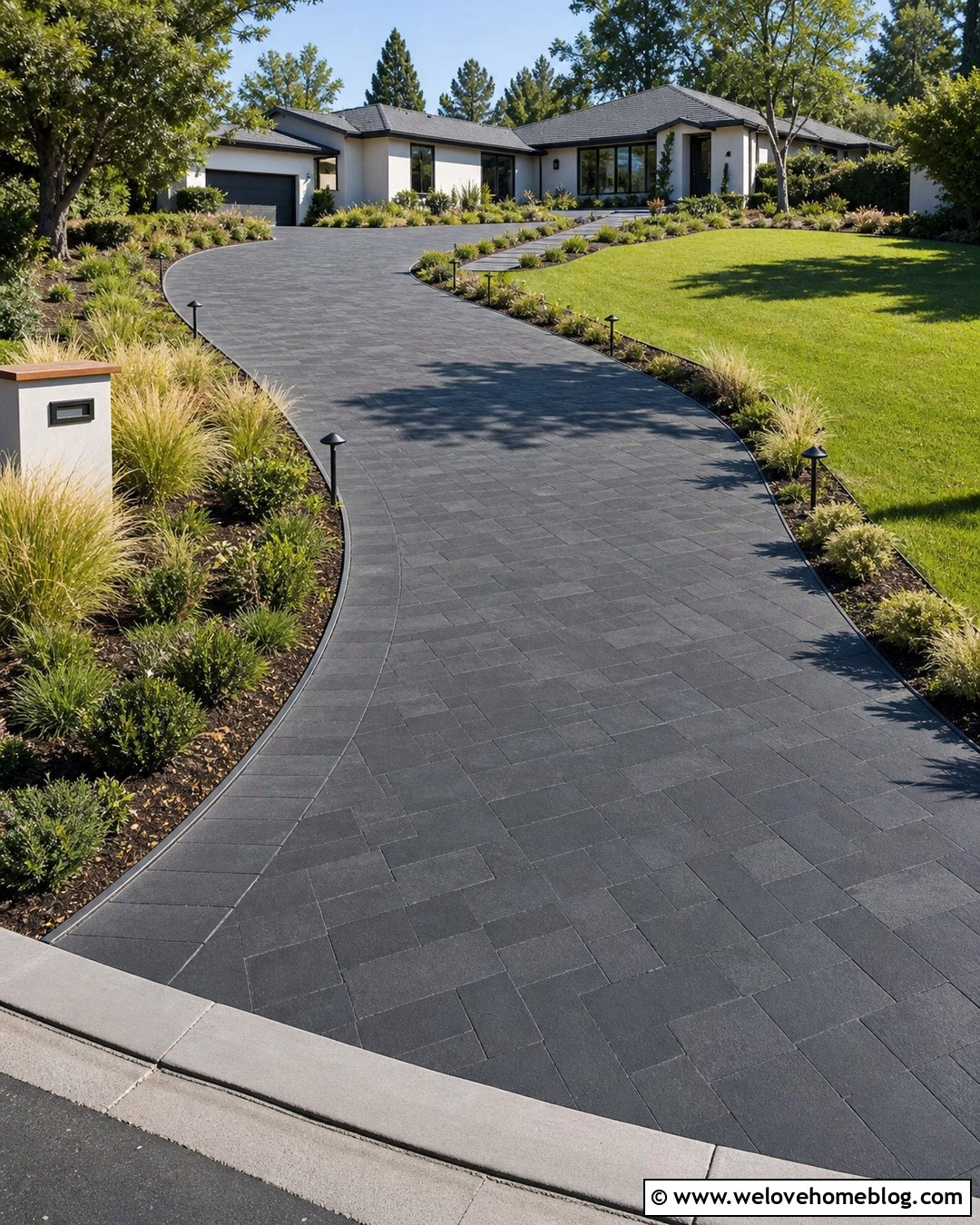
Thoughtful lighting can make a front driveway easier to understand after dark without turning it into an airport runway. Begin with a charcoal paver, gray concrete, or black asphalt surface and define its shape using widely spaced low-voltage fixtures. Position lights beside the driveway rather than inside the vehicle path, focusing on curves, grade changes, the walkway junction, and the entrance. During daylight, the fixtures should remain visually quiet among low shrubs, ornamental grasses, and ground cover. Add coordinated lighting near the address marker and porch for a clear sequence from street to door. Choose warm, controlled illumination directed downward, even though the daytime driveway design remains the visual priority. This complete approach suits nearly any house style and front yard size.
25. Mixed-Material Driveway With Landscaped Parking Court
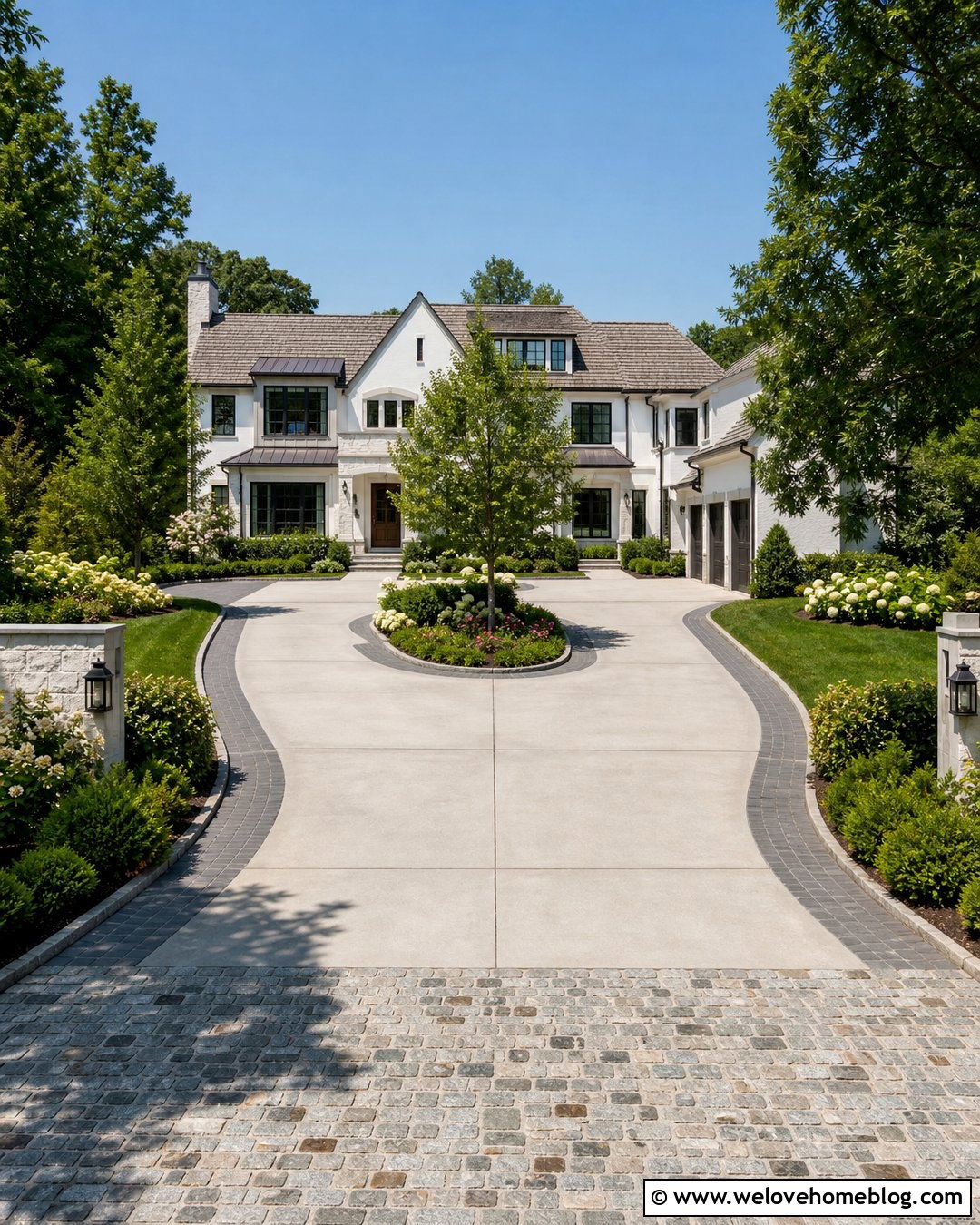
A mixed-material parking court can organize a large front driveway while avoiding a monotonous paved surface. Use smooth gray concrete for the main driving lanes, clay brick or charcoal pavers around the parking area, and a cobblestone band at the entrance. Keep the material palette limited to tones already present on the house. A circular or rectangular planting island can divide parking zones and hold a small tree, low shrubs, and seasonal flowers. Wide planting beds around the outer court help screen garage doors and soften the amount of hardscape. Connect the court to the porch with a clearly defined paver walkway. This flexible design works well for large families and frequent guests because it combines maneuvering space, organized parking, and strong front-yard curb appeal.
Conclusion:
The most successful driveway should look attractive from the curb while supporting everyday parking, walking, drainage, and maintenance needs. These 25 Front House Driveway Ideas show how concrete, gravel, asphalt, brick, pavers, cobblestone, and resin-bound surfaces can work with different layouts and architectural styles. Before selecting a design, consider the size of the front yard, local climate, vehicle space, material upkeep, and the safest route to the entrance. Use borders and landscaping to soften hard surfaces, but keep plants clear of sightlines and vehicle doors. Most importantly, repeat colors and materials from the house so the driveway feels connected to the property. A coordinated plan will create a more functional entrance and noticeably stronger curb appeal.

Related posts:
Leave a Reply