
Front garden driveway ideas should balance practical parking with the softness and color of a welcoming landscape. The strongest designs treat paving, planting, borders, walkways, and the home’s architecture as one connected composition. Instead of covering the entire yard with a single hard surface, consider leaving room for layered shrubs, flower beds, trees, permeable ground covers, or narrow grass strips. Current driveway design inspiration includes mixed materials, low-maintenance planting, clear paths to the front door, and greener layouts that reduce the visual weight of paving. () Whether you have a compact suburban lot or a broad country entrance, the following complete looks offer practical and attractive 25 front garden driveway ideas.
1. Gravel Front Garden Driveway With Lavender Borders
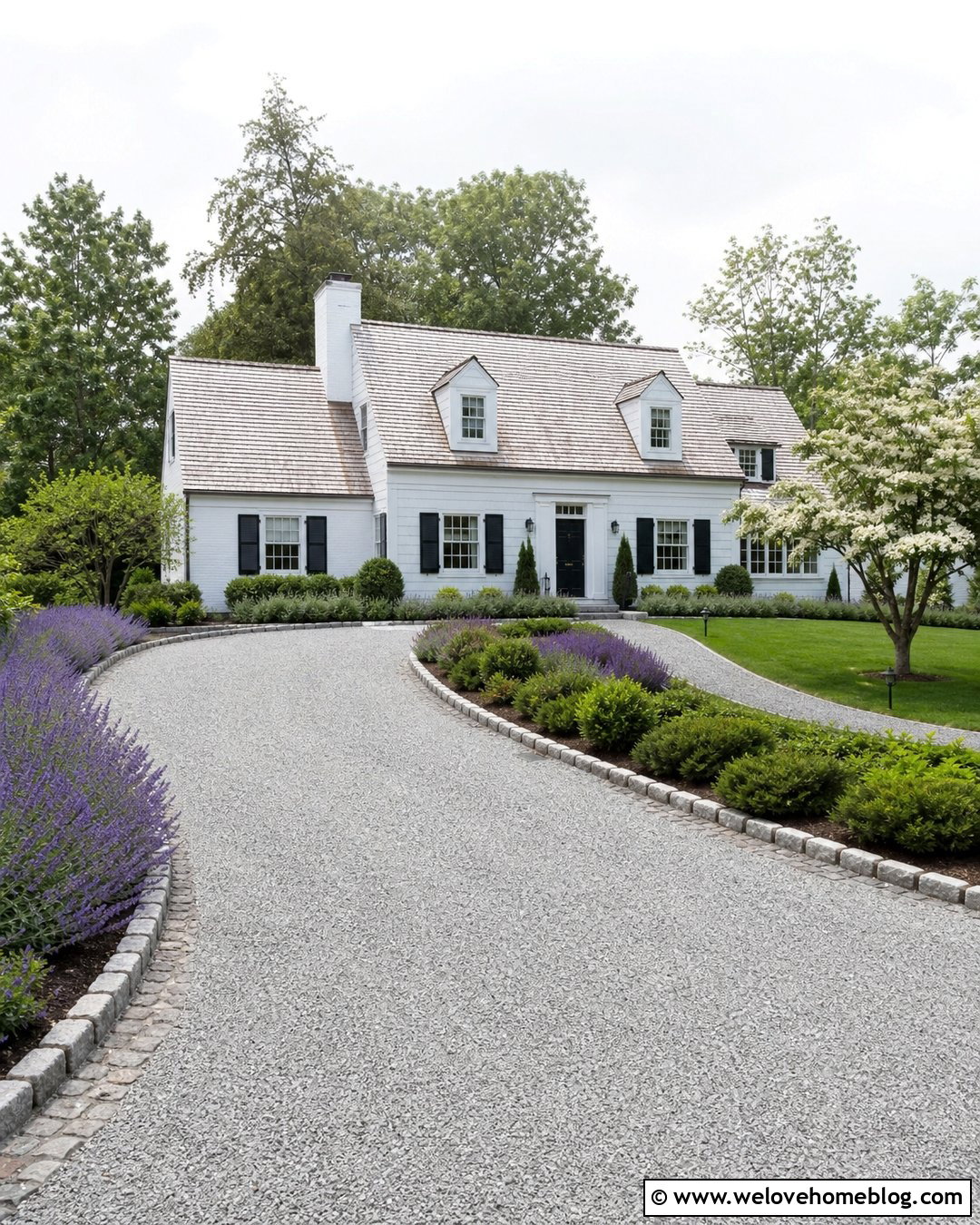
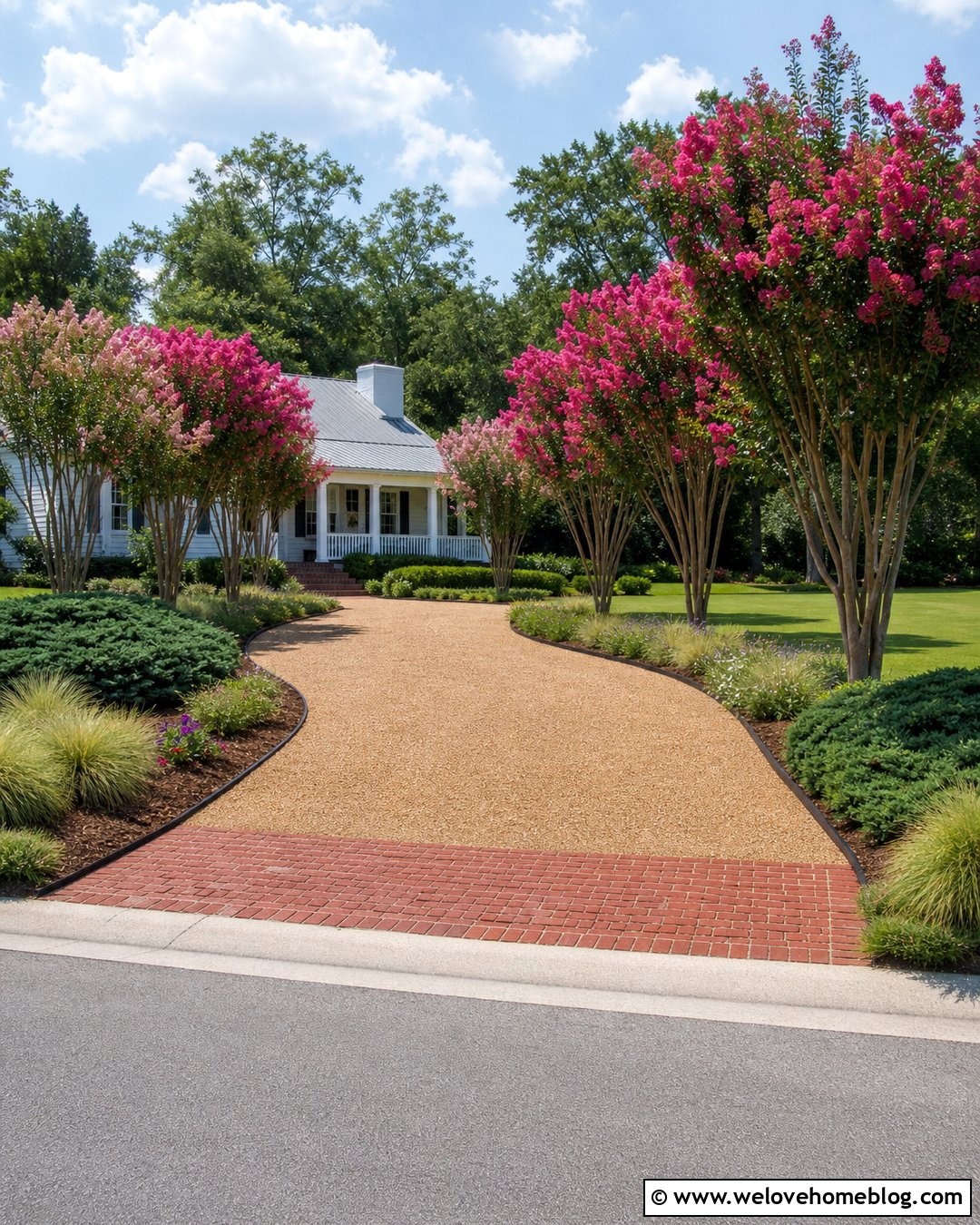
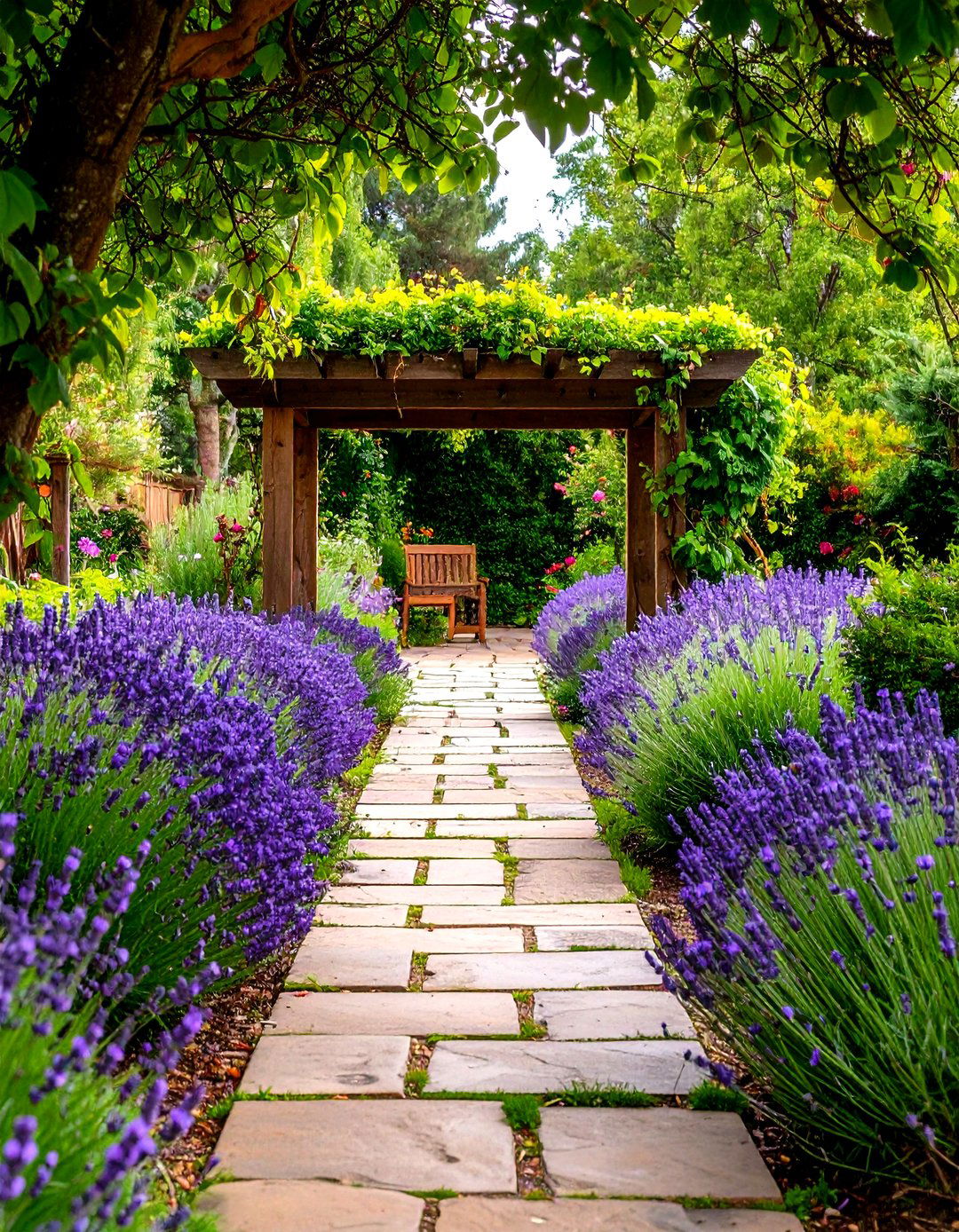
A pale gravel driveway bordered by lavender creates a relaxed entrance that fits cottages, Cape Cod homes, and modern farmhouses. Choose compacted angular gravel for the structural base, then finish it with a smaller decorative gravel that is comfortable underfoot. Steel, brick, or cobblestone edging will keep loose stones away from the planting beds and lawn. Arrange lavender in repeated groups rather than isolated plants, leaving enough clearance so mature stems do not brush parked vehicles. Add low evergreen shrubs near the house for winter structure and a matching gravel path toward the front door. The combination feels soft and colorful without sacrificing parking space. It also allows the driveway, garden, and walkway to share one consistent material palette.
2. Concrete Front Garden Driveway With Curved Flower Beds
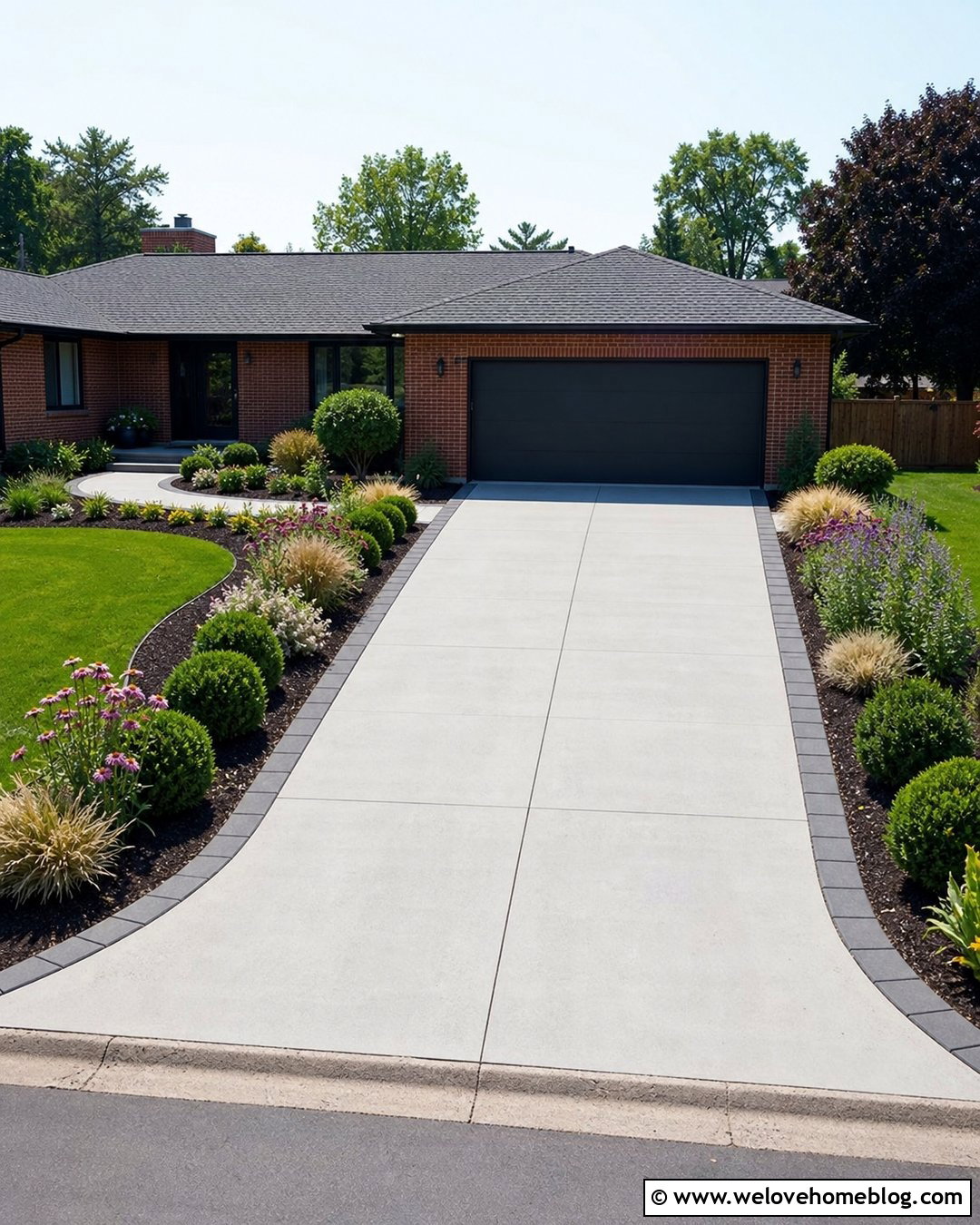
If a rectangular front yard feels overly rigid, curved flower beds can soften a straight poured-concrete driveway. Sweep the beds gently around the outer corners rather than creating several small, unrelated curves. A smooth gray concrete finish provides a quiet background for flowering perennials, ornamental grasses, and rounded evergreen shrubs. Use a dark brick or charcoal paver border to define the driveway and coordinate with exterior trim. On the house side, connect the parking area to the porch with a wide walkway that repeats the same border material. Keep plants low near the street for an open curb view, then gradually increase their height toward the home. This layered arrangement makes the entire front garden appear deeper, greener, and more intentionally designed.
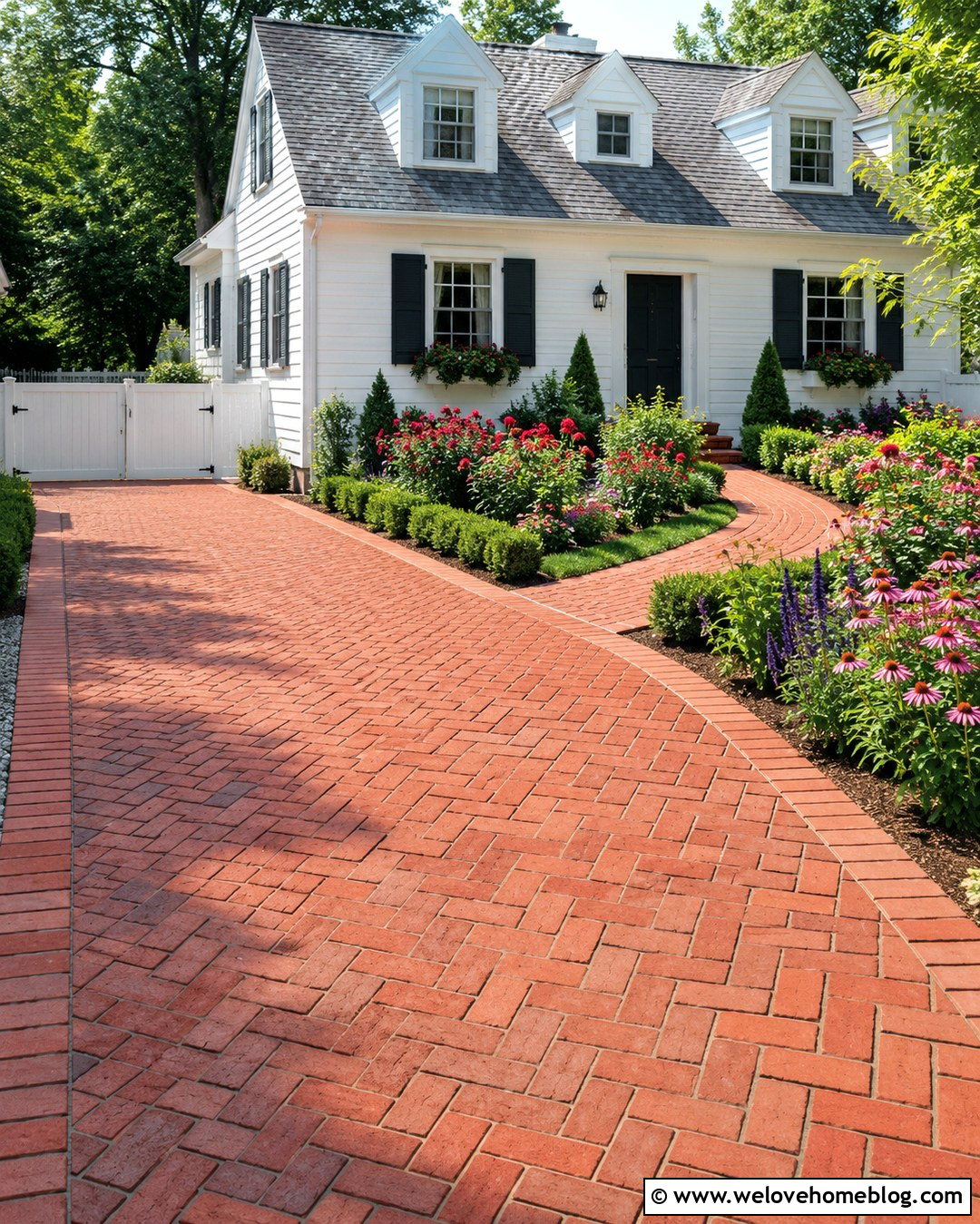
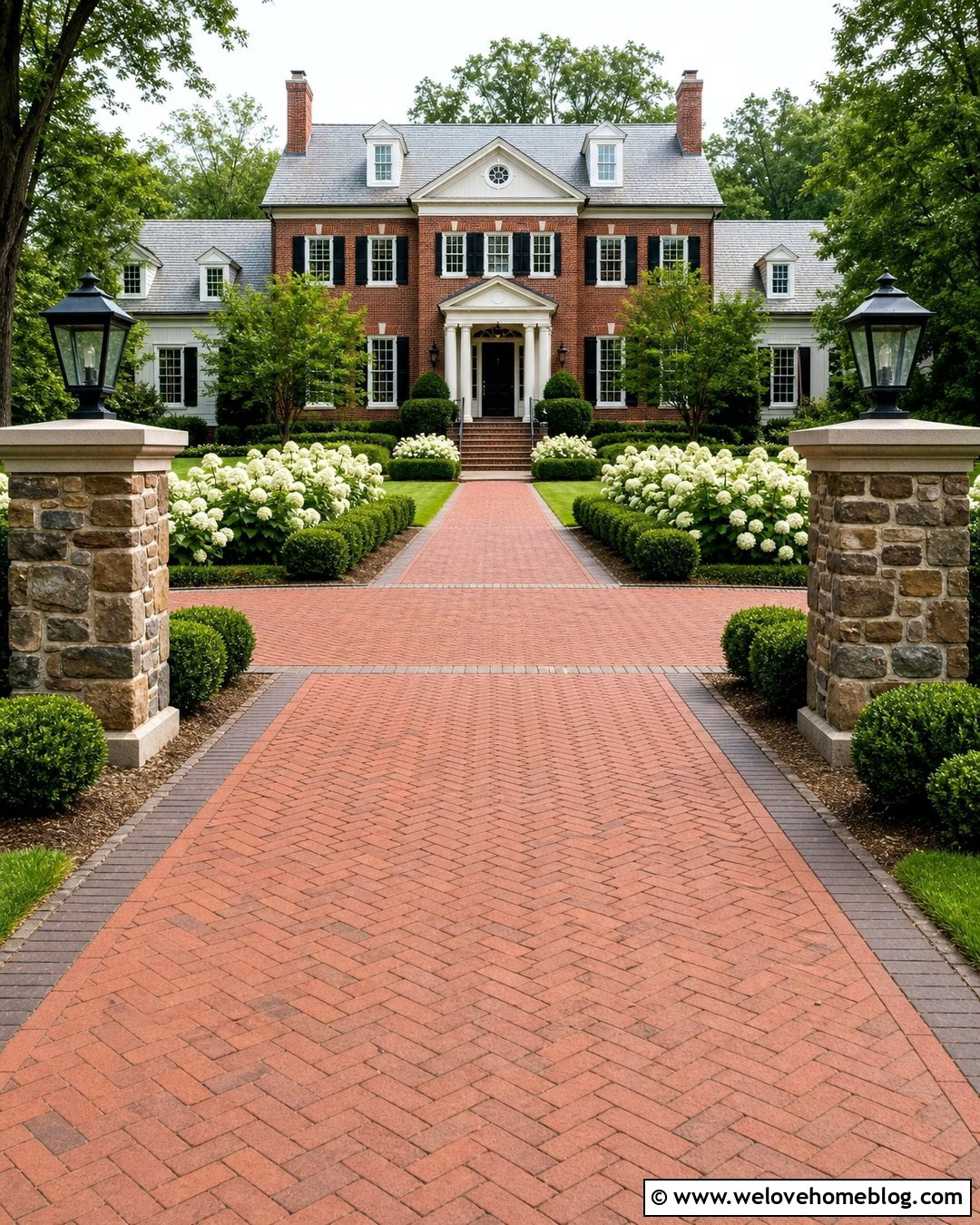
3. Brick Front Garden Driveway With Boxwood Planting
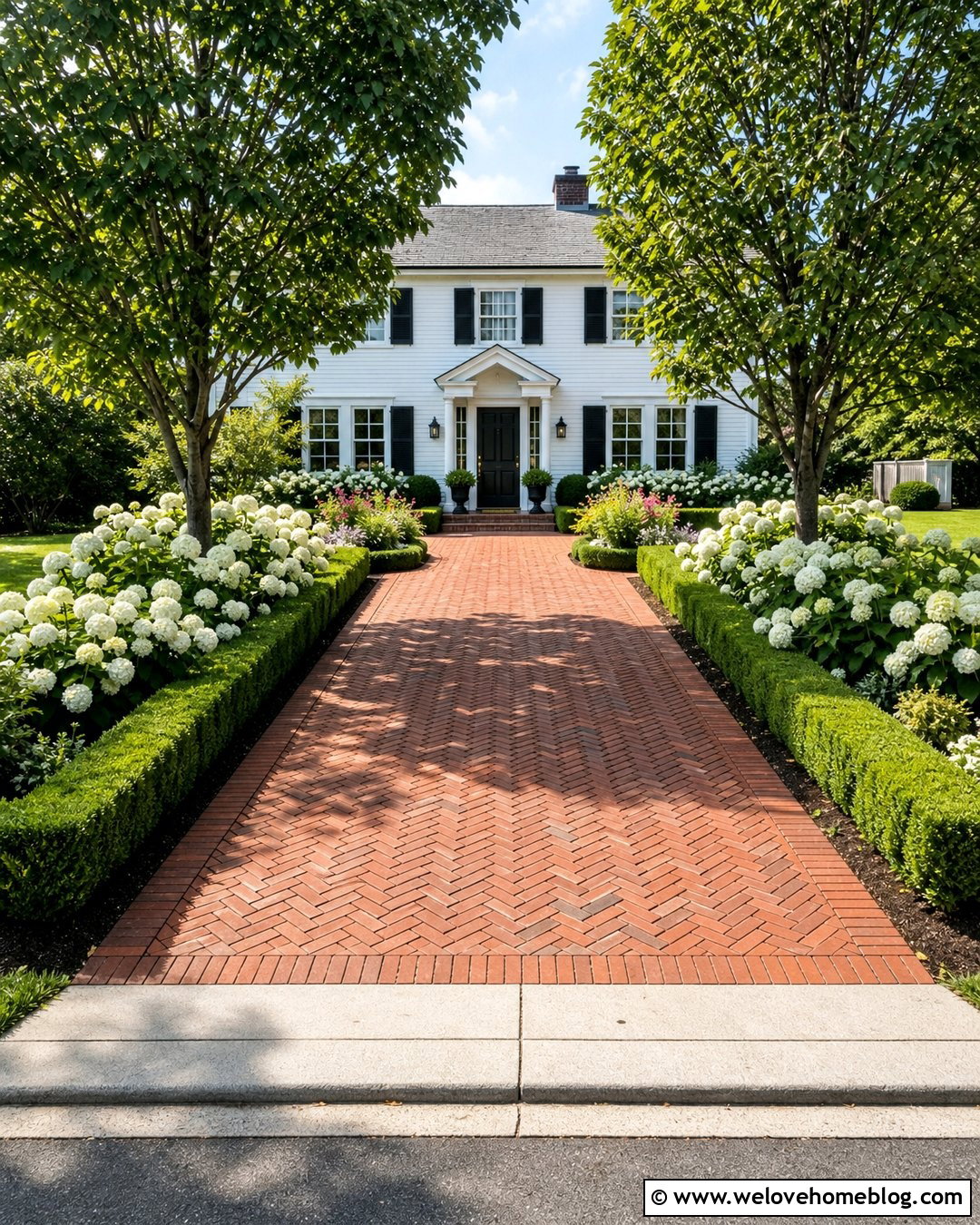
Clay brick pavers bring warmth and traditional character to a formal front garden. A herringbone pattern is especially effective because it gives the driveway visual movement while maintaining a tidy, structured appearance. Frame the paving with a soldier-course brick border in a slightly darker tone. Low boxwood hedges can outline planting beds on both sides, creating symmetry without hiding the house. Behind them, add white hydrangeas, seasonal flowers, and one small ornamental tree near each outer corner. A straight brick walkway should lead clearly from the driveway to the front steps. This complete look suits Colonial, Georgian, and traditional homes because the strong geometry complements balanced facades. The restrained planting also lets the rich brick color remain the main feature.
4. Modern Front Garden Driveway With Grass Strips
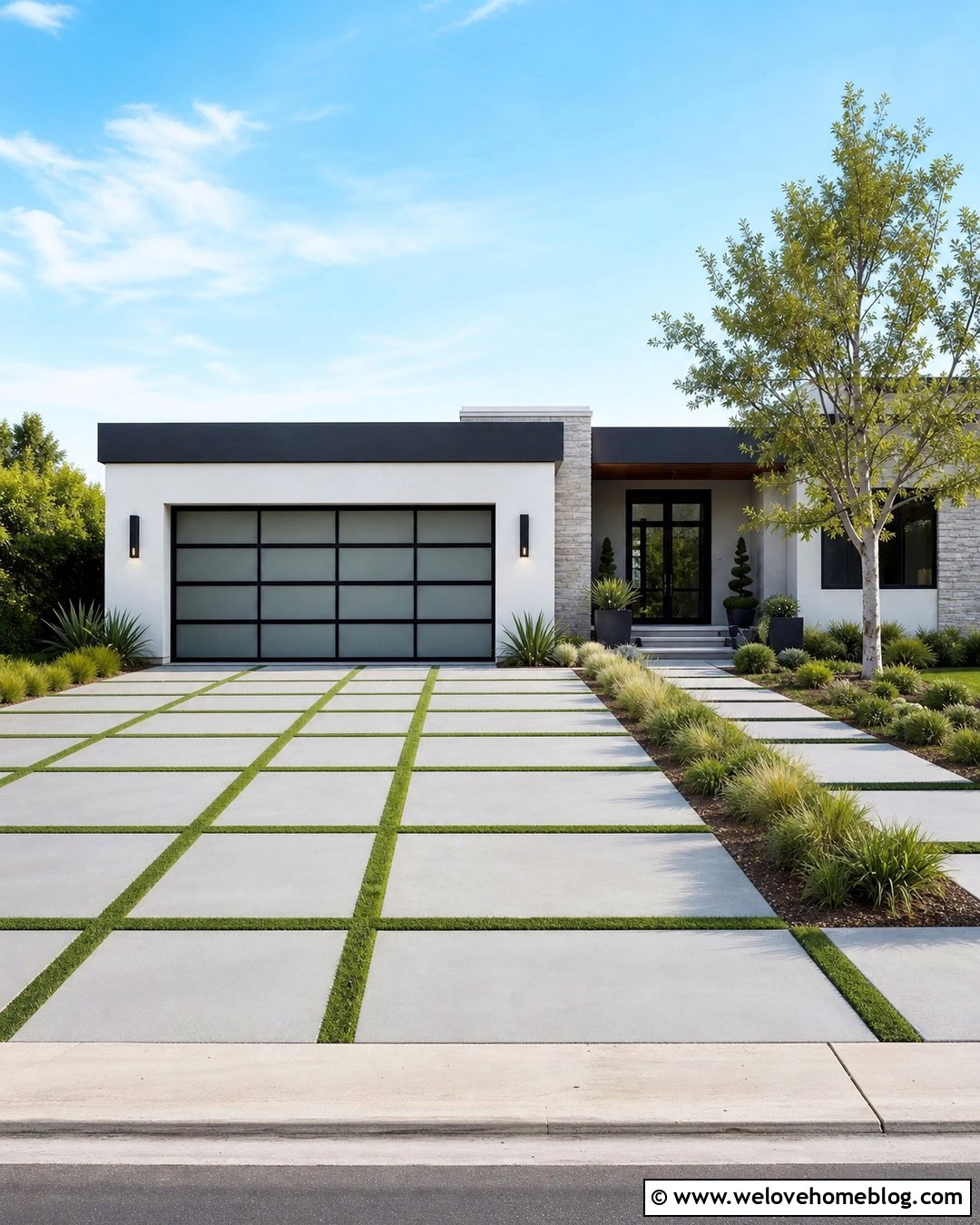
Large concrete pavers separated by narrow grass strips can make a paved front garden feel lighter and greener. Use rectangular gray pavers in a straight grid that aligns with the garage, walkway, and architectural lines of a modern home. Keep the joints consistent so the design looks intentional rather than fragmented. Where regular turf is difficult to maintain, use a durable low-growing ground cover suited to your climate and sunlight. Continue the grid into the pedestrian path for a unified entrance. Simple beds filled with ornamental grasses, compact shrubs, and one sculptural tree will reinforce the clean layout. Avoid filling every available space with different plants. Repeated shapes, limited materials, and generous open areas give this driveway its calm, contemporary curb appeal.
5. Small Front Garden Driveway With Raised Beds
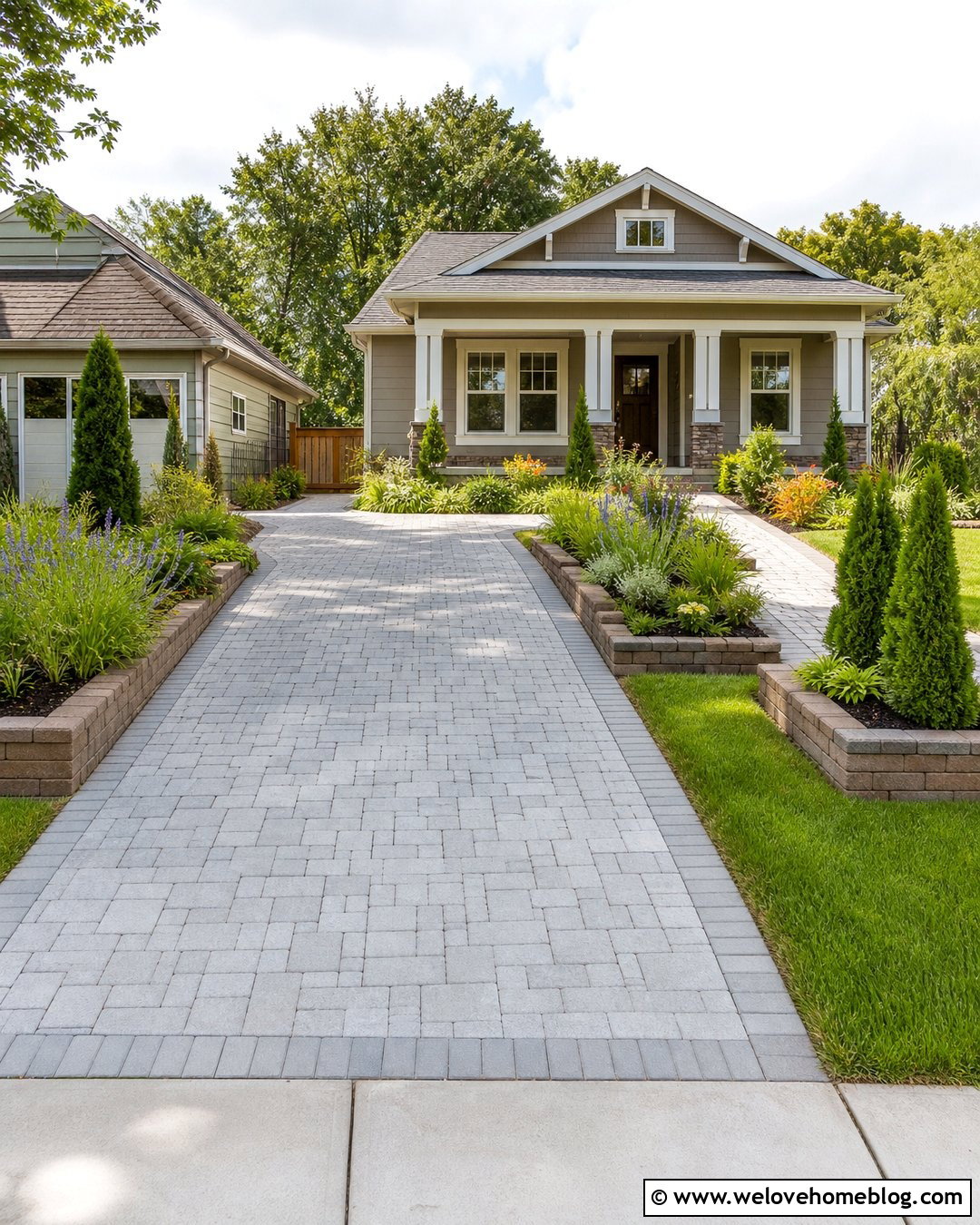
A compact front garden can still provide parking and meaningful planting when the edges are used efficiently. Install a straight driveway in permeable concrete pavers, keeping it only as wide as necessary for comfortable access. Add narrow raised beds along the house and one outer boundary, using brick or rendered masonry that complements the facade. Fill them with upright grasses, dwarf evergreens, and long-flowering perennials that stay clear of doors and mirrors. A contrasting paver strip can mark the walkway to the entrance without consuming additional space. Place the tallest plants near blank walls and keep the street end open for visibility. This layered design turns leftover strips into attractive garden areas while keeping the central parking surface simple, practical, and easy to navigate.
6. Circular Front Garden Driveway With Center Planting
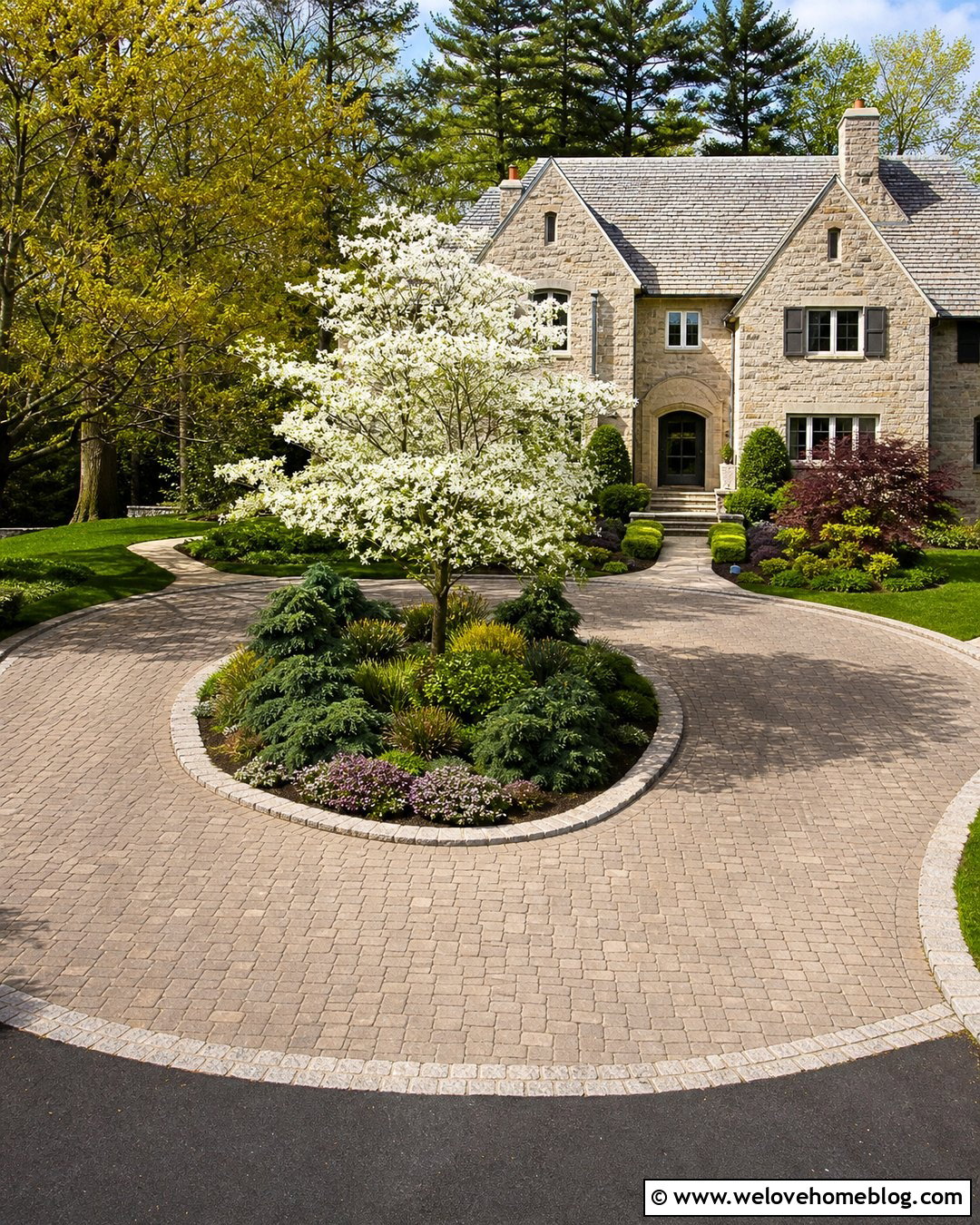
A circular driveway becomes much more inviting when its center is treated as a complete garden rather than an empty lawn. Use warm-toned concrete pavers or cobblestones to form a clear loop with generous turning space. In the center island, place one appropriately scaled flowering tree surrounded by evergreen shrubs, ornamental grasses, and seasonal ground cover. A low stone curb will protect the planting while following the driveway’s curve. Repeat selected plants near the house so the island feels connected to the wider landscape. The front walkway can branch naturally from the inner loop and lead directly to the porch. This arrangement works best in a broad yard where the circular shape can remain open, balanced, and comfortably proportioned around the home.
7. Resin-Bound Front Garden Driveway With Evergreen Borders
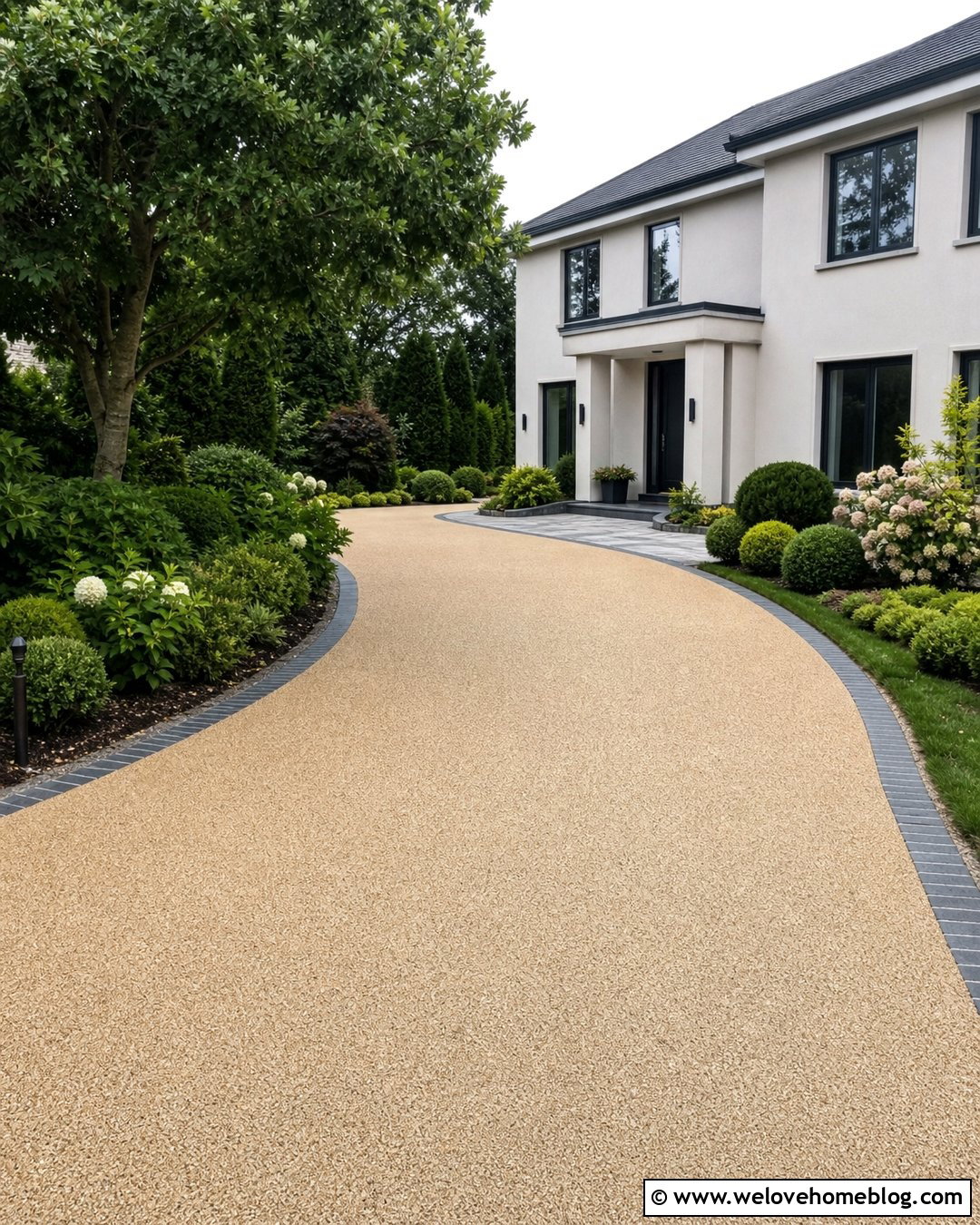
Resin-bound gravel offers a smooth, contemporary surface while retaining the textured appearance of small aggregate. Choose a warm beige or soft gray blend that complements the home’s masonry rather than competing with it. Define the driveway with dark granite setts, then create deep planting beds filled with compact evergreen shrubs. Rounded forms such as inkberry, dwarf holly, or clipped boxwood can provide year-round structure, while a few flowering perennials add seasonal color. A gentle curve near the street makes the entrance feel less severe and leaves space for a feature tree. Continue the granite border around the walkway and beds. With a restrained material palette and repeated greenery, the driveway appears polished, practical, and naturally integrated into the front garden.
8. Asphalt Front Garden Driveway With Stone Edging
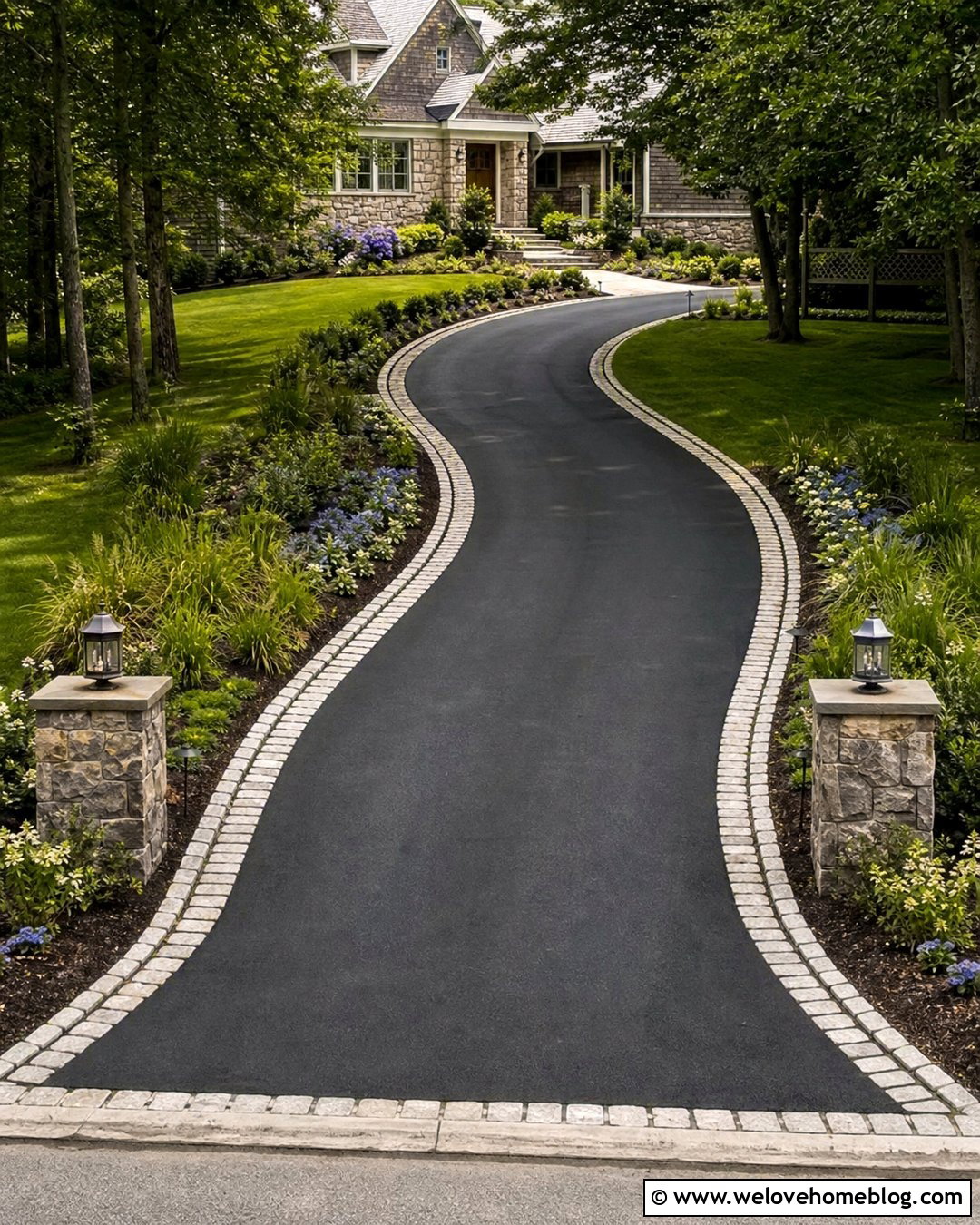
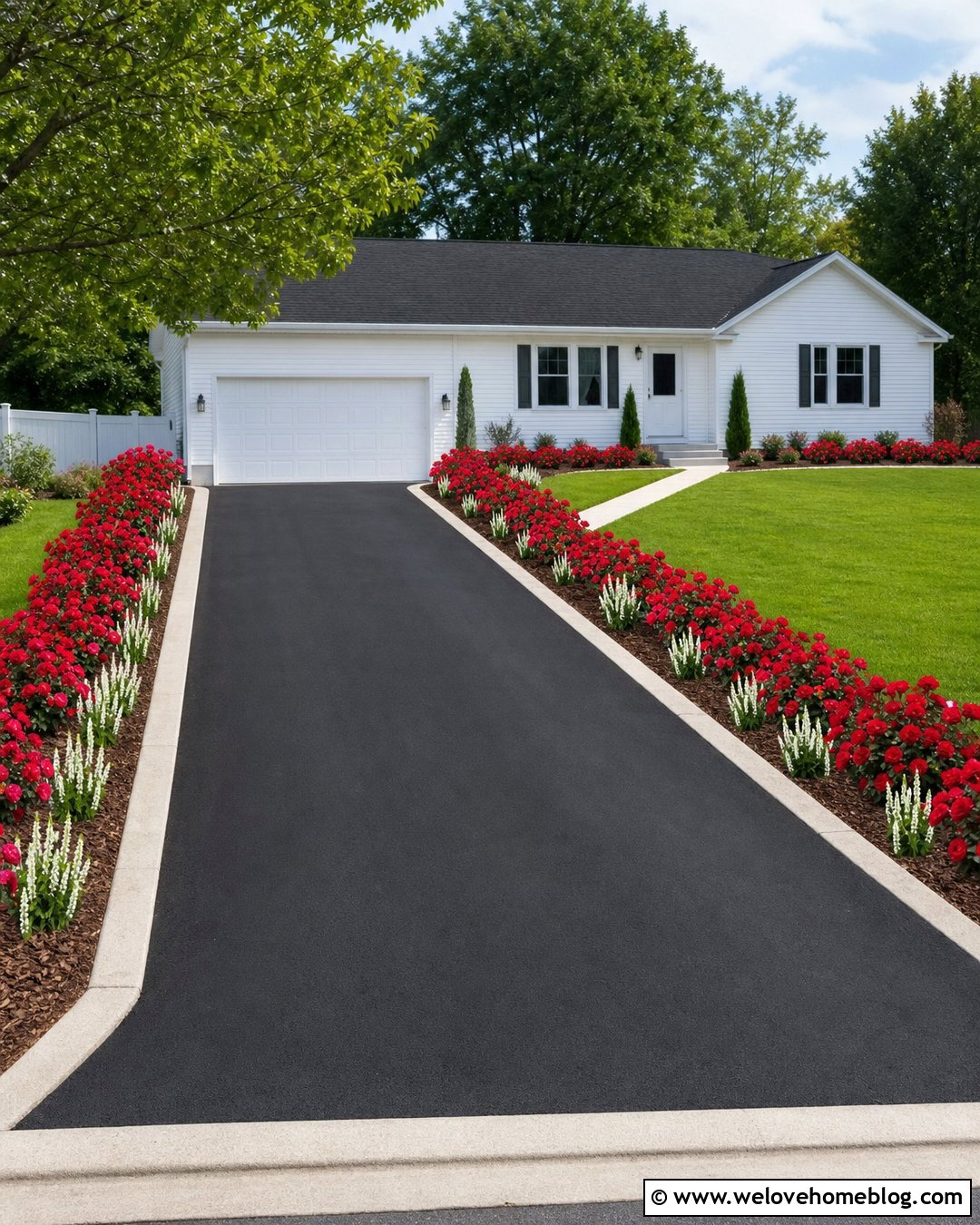
Black asphalt can look refined when it is framed by substantial borders and carefully planned landscaping. Add a double row of light granite cobbles or warm natural stone along both sides to create contrast and prevent the surface from visually blending into planting beds. Shape the driveway with a modest curve that reveals the house gradually. Plant sweeping groups of ornamental grasses, flowering shrubs, and low ground covers outside the edging, repeating each variety several times for continuity. Near the entrance, install two broad stone pillars or low walls that match the border. A coordinating stone walkway can link the driveway to the porch. These details transform a straightforward asphalt surface into a complete front garden design with strong lines and balanced curb appeal.
9. Cobblestone Front Garden Driveway With Cottage Planting
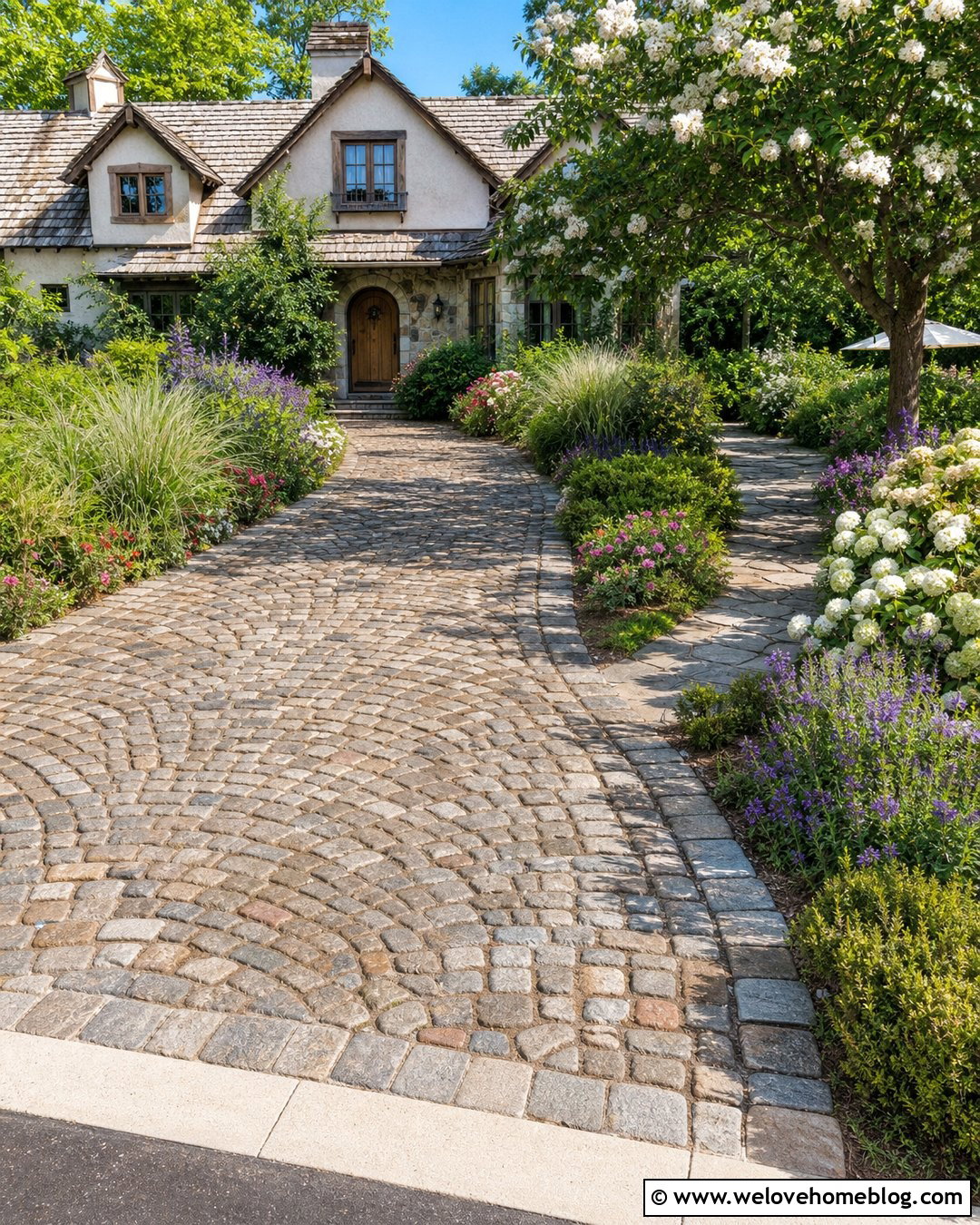
An aged cobblestone driveway surrounded by informal flowers creates a classic cottage entrance. Use reclaimed-looking gray and brown cobbles in a fan or running pattern, with a level installation that supports comfortable vehicle and pedestrian movement. Allow broad planting beds to follow the driveway’s edges, filling them with roses, catmint, salvia, hydrangeas, and soft ornamental grasses. Keep taller flowers farther from the driving surface and use spreading ground cover along the border. A matching cobblestone path can curve toward the front door through the garden. Include a small flowering tree on one side to balance the home without creating perfect symmetry. The textured paving and abundant planting should feel established, welcoming, and connected rather than overly manicured.


10. Front Garden Driveway With Drought-Tolerant Landscaping
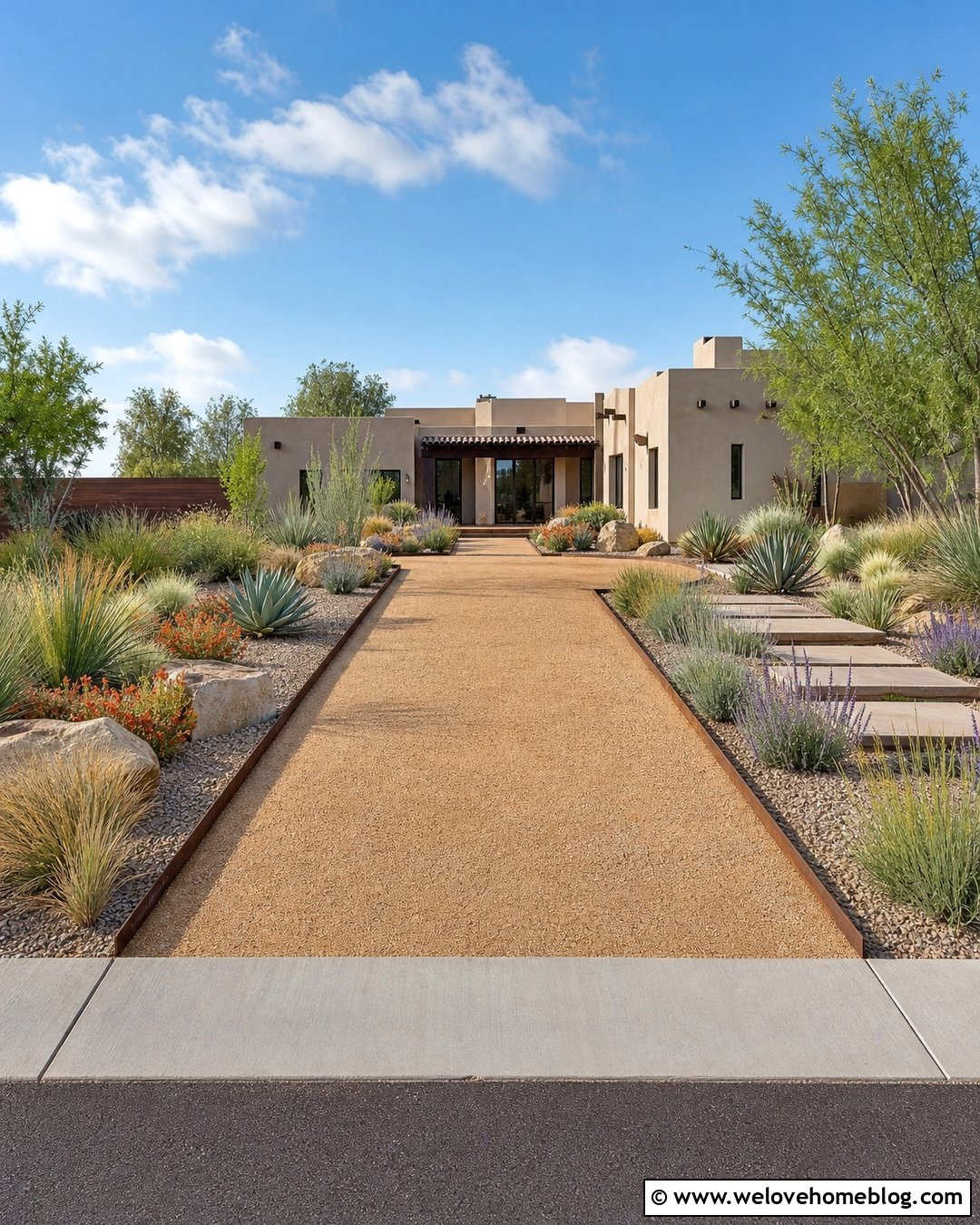
In a hot or dry climate, a decomposed-granite driveway can blend beautifully with water-wise front garden planting. Select a stabilized golden or rust-colored finish and contain it with weathered steel edging. Arrange boulders, gravel mulch, native grasses, agave, yucca, and flowering drought-tolerant perennials in broad, connected groups. Avoid scattering individual plants evenly across the yard, which can create a spotty appearance. Instead, leave deliberate areas of open gravel between larger planted masses. A stepping-stone walkway through the garden can provide a separate route to the front door. Position taller architectural plants away from visibility areas and vehicle doors. This complete design feels natural and modern while reducing the need for a traditional lawn around the driveway.
11. Paver Front Garden Driveway With Tree-Lined Entrance
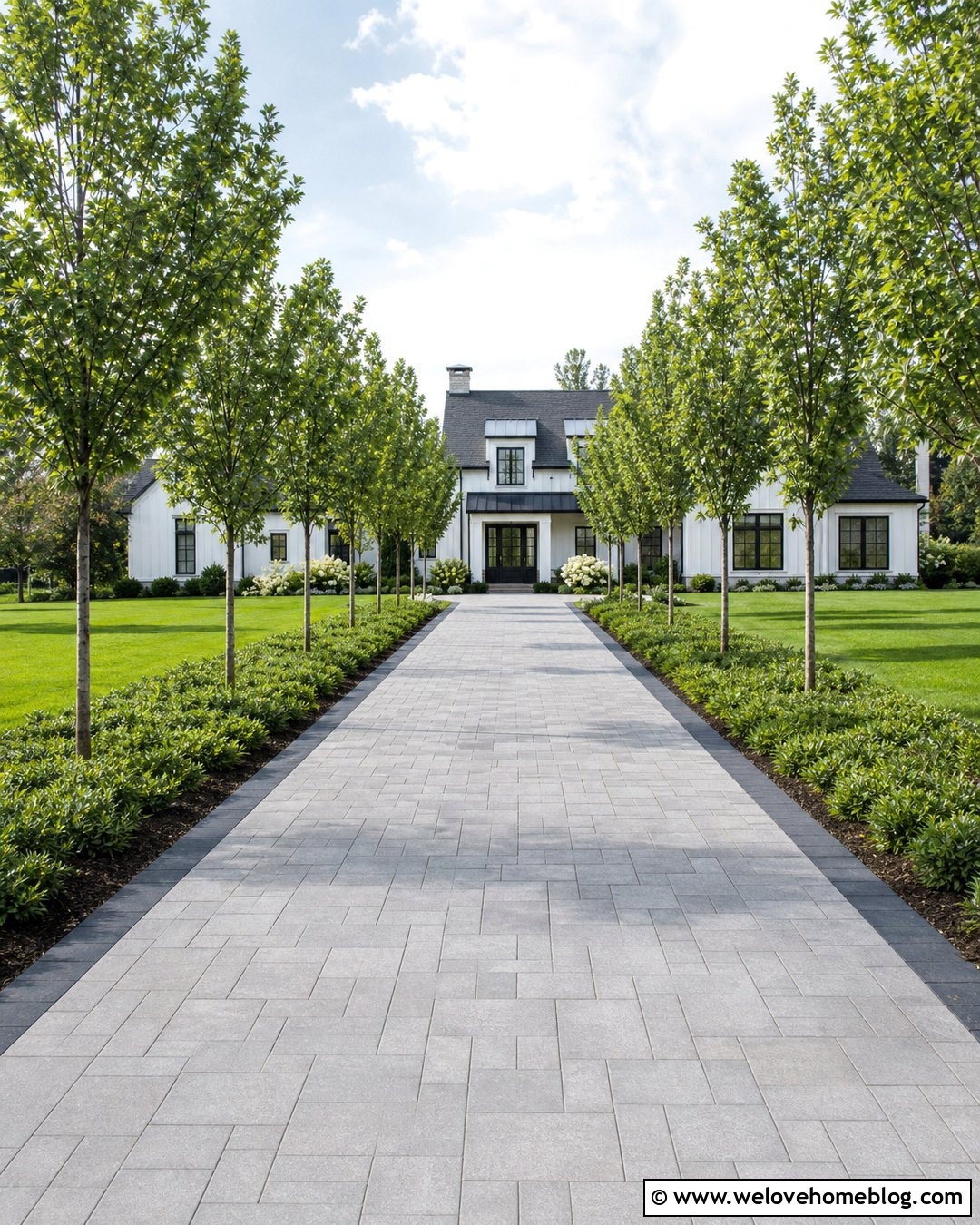
A tree-lined entrance can give a long paver driveway structure, shade, and a strong connection to the house. Choose medium-gray concrete pavers in a running-bond pattern and add a charcoal border that follows the full approach. Plant evenly spaced ornamental trees beyond the driveway edge, selecting a species with suitable mature dimensions and roots for the site. Underplant the trees with one repeated ground cover or low hedge to keep the design cohesive. Leave adequate clearance around the driveway entrance and any pedestrian crossing points. Near the house, widen the planting beds and introduce flowering shrubs that coordinate with the facade. The repeated tree canopies guide the eye toward the home, while the consistent paver border ties the long driveway into the surrounding garden.
12. Sloped Front Garden Driveway With Terraced Planting
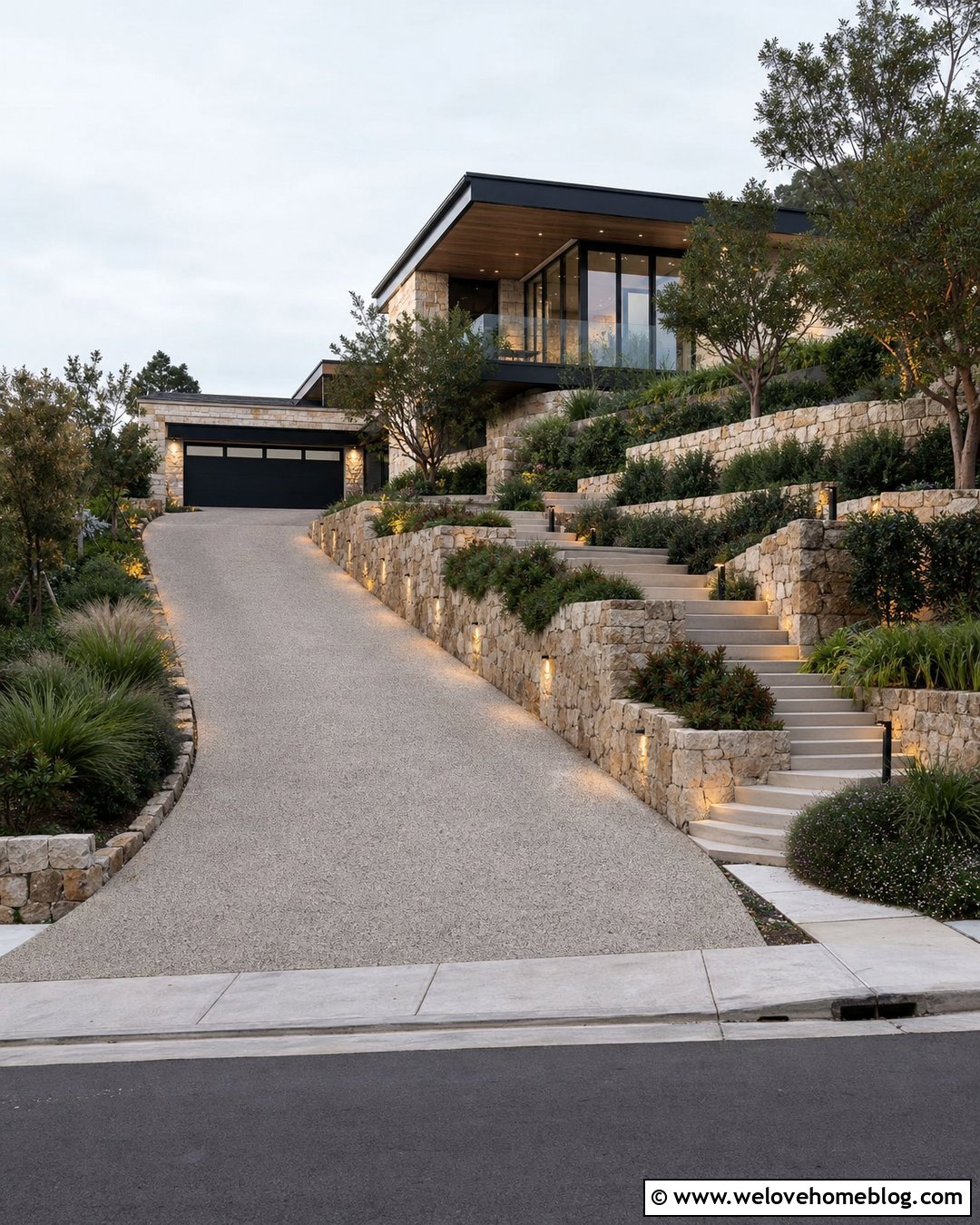
A sloped front yard benefits from terraced beds that make the driveway feel anchored within the landscape. Use textured exposed-aggregate concrete for reliable visual definition, then follow the grade with low retaining walls made from natural stone or concrete masonry. Create two or three generous planting levels instead of many narrow tiers. Ground-cover plants, compact shrubs, and ornamental grasses can soften the walls while keeping soil away from the driveway. Integrate wide steps into the pedestrian route so visitors do not need to walk along the vehicle surface. Low-profile lighting can be built into the retaining walls for a clean appearance. By repeating the same stone at the driveway border and front steps, the slope becomes a coordinated garden feature rather than a difficult leftover space.
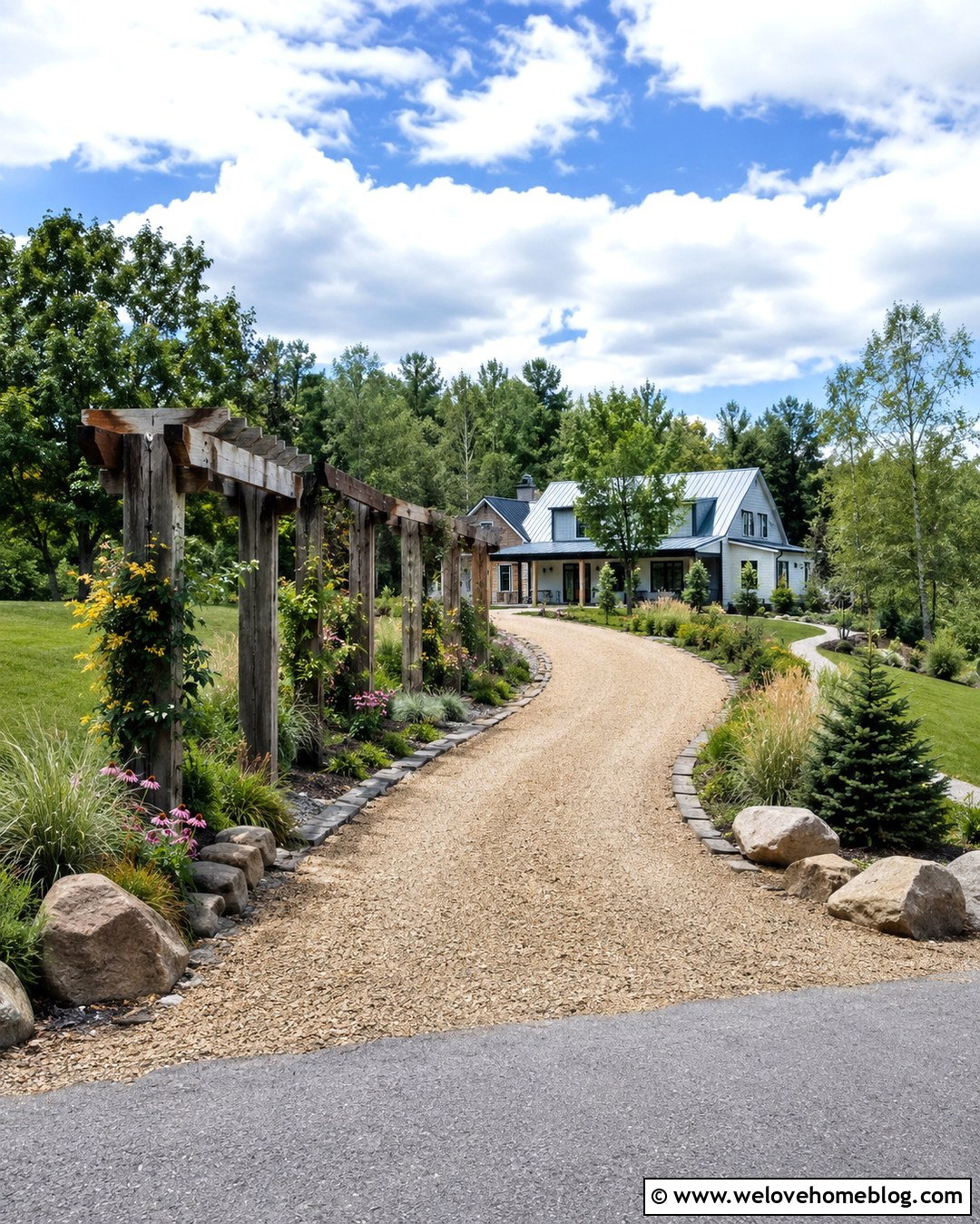
13. Farmhouse Front Garden Driveway With Timber Edging
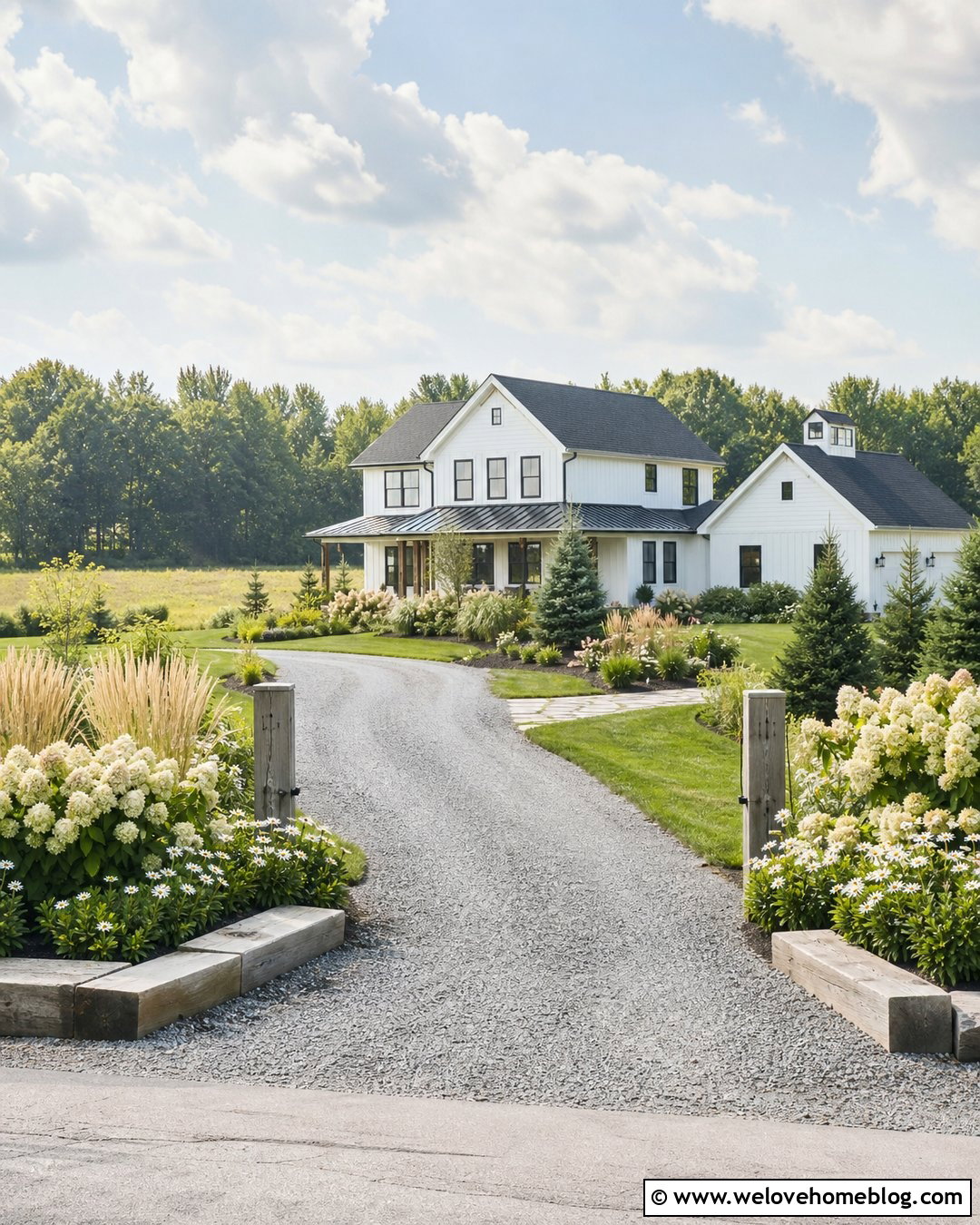
A farmhouse entrance feels natural with compacted gray gravel, timber edging, and broad areas of simple planting. Use heavy, properly secured landscape timbers to define the driveway and separate loose gravel from lawn or mulch. A gently curved layout will suit a rural-style home better than an overly formal geometric pattern. Plant groups of hydrangeas, panicle grasses, daisies, and compact evergreens near the house, then allow open lawn to frame the approach. At the roadside, simple timber posts and a discreet gate can establish the entrance without appearing imposing. Connect the driveway to the porch with large flagstones set in gravel. Repeating wood, gravel, and relaxed plant forms creates a practical front garden that feels welcoming, unpretentious, and appropriate to farmhouse architecture.
14. Front Garden Driveway With a Central Grass Strip
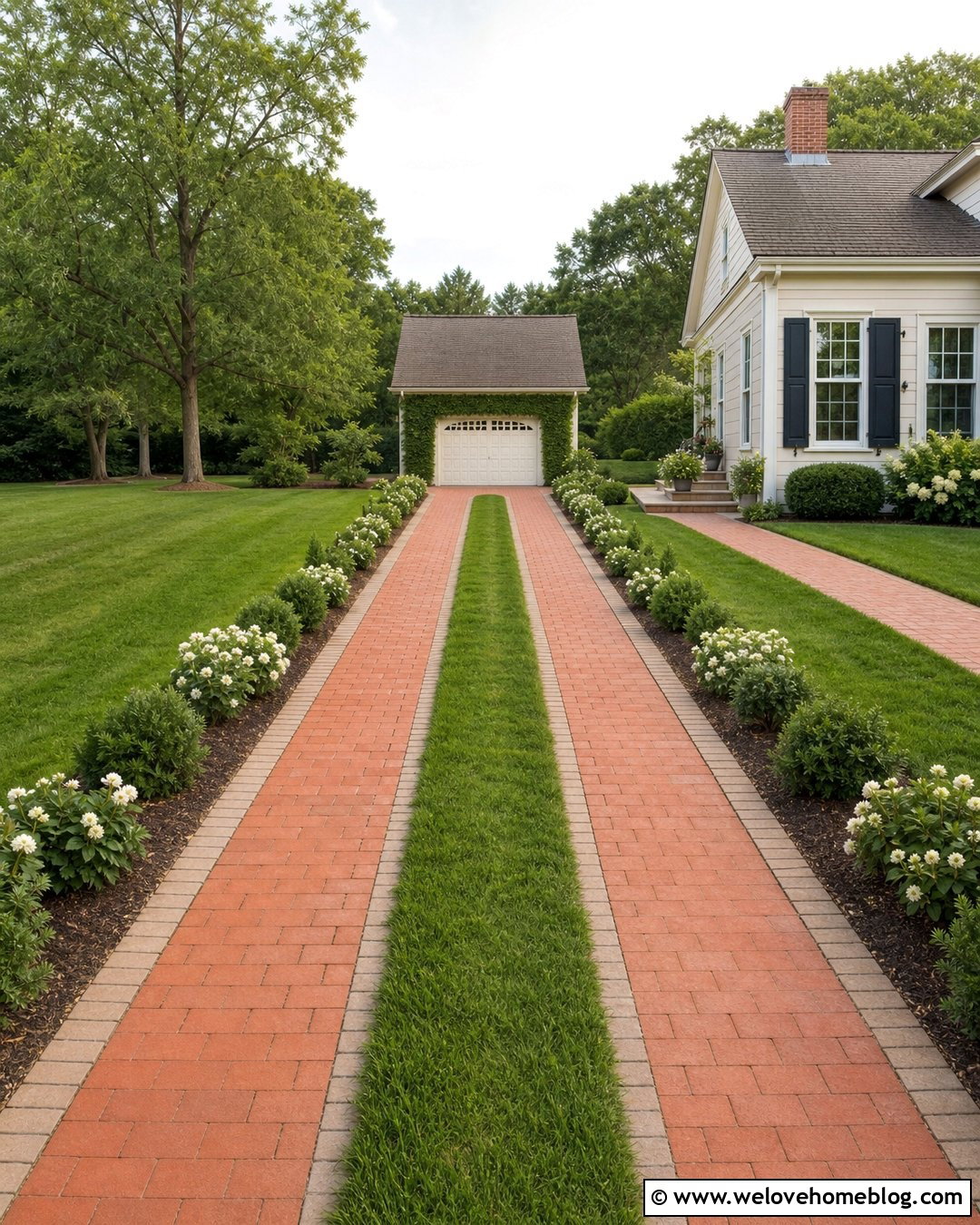
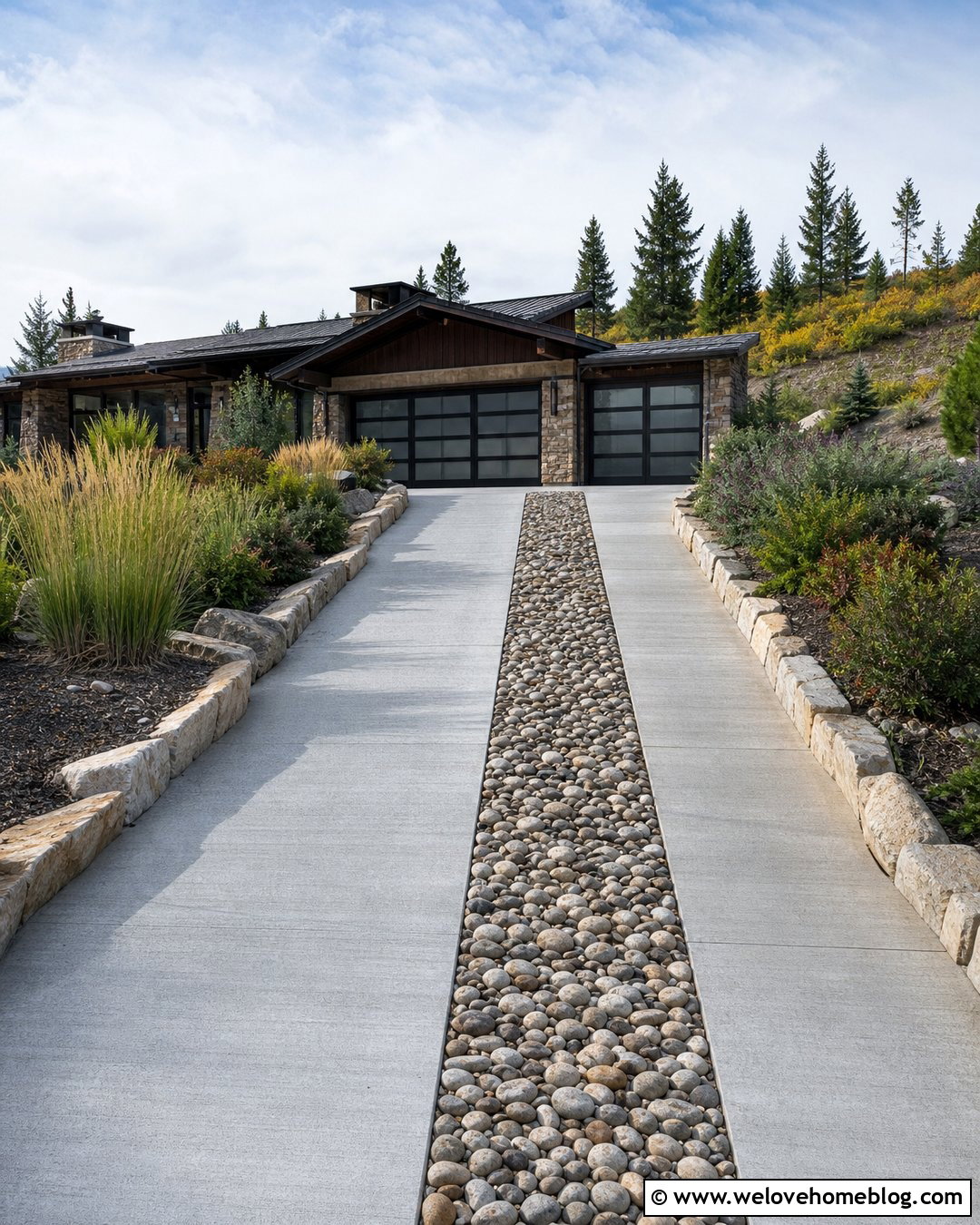
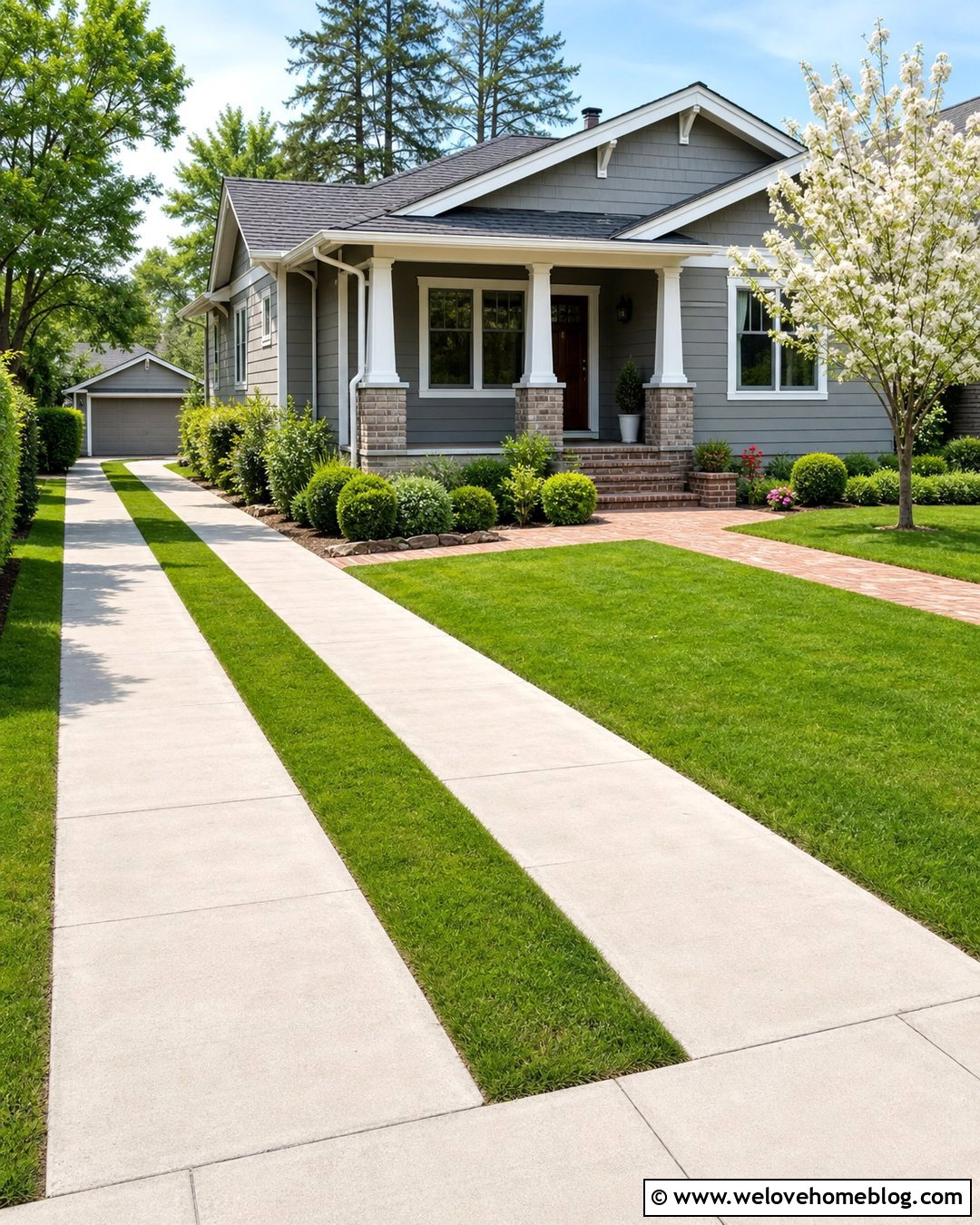
A ribbon driveway uses two paved wheel tracks with a planted strip through the center, reducing the visual dominance of hardscaping. Build the tracks from brick pavers, permeable concrete blocks, or poured concrete sized for regular vehicle use. Fill the middle with durable turf or a low ground cover that can tolerate occasional traffic and local growing conditions. Match the center strip to nearby lawn so the driveway appears woven into the front garden. Along the outer edges, install simple planting beds with low shrubs and repeated flowering plants. A separate paved walkway should lead directly to the front door. This approach works especially well for narrow driveways serving cottages or detached garages, where a full-width paved surface could overwhelm the available yard.

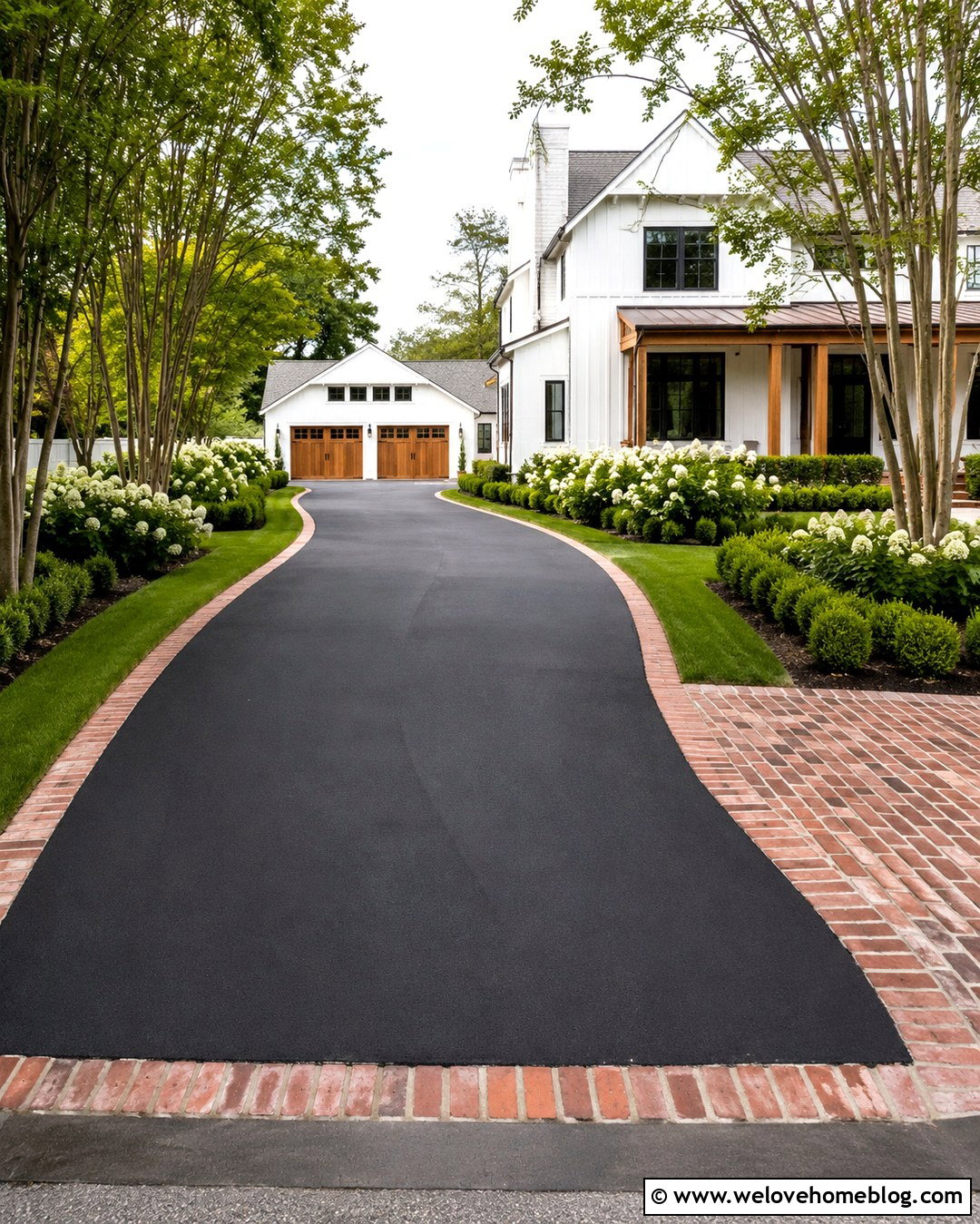
15. Front Garden Driveway With Hydrangea Borders
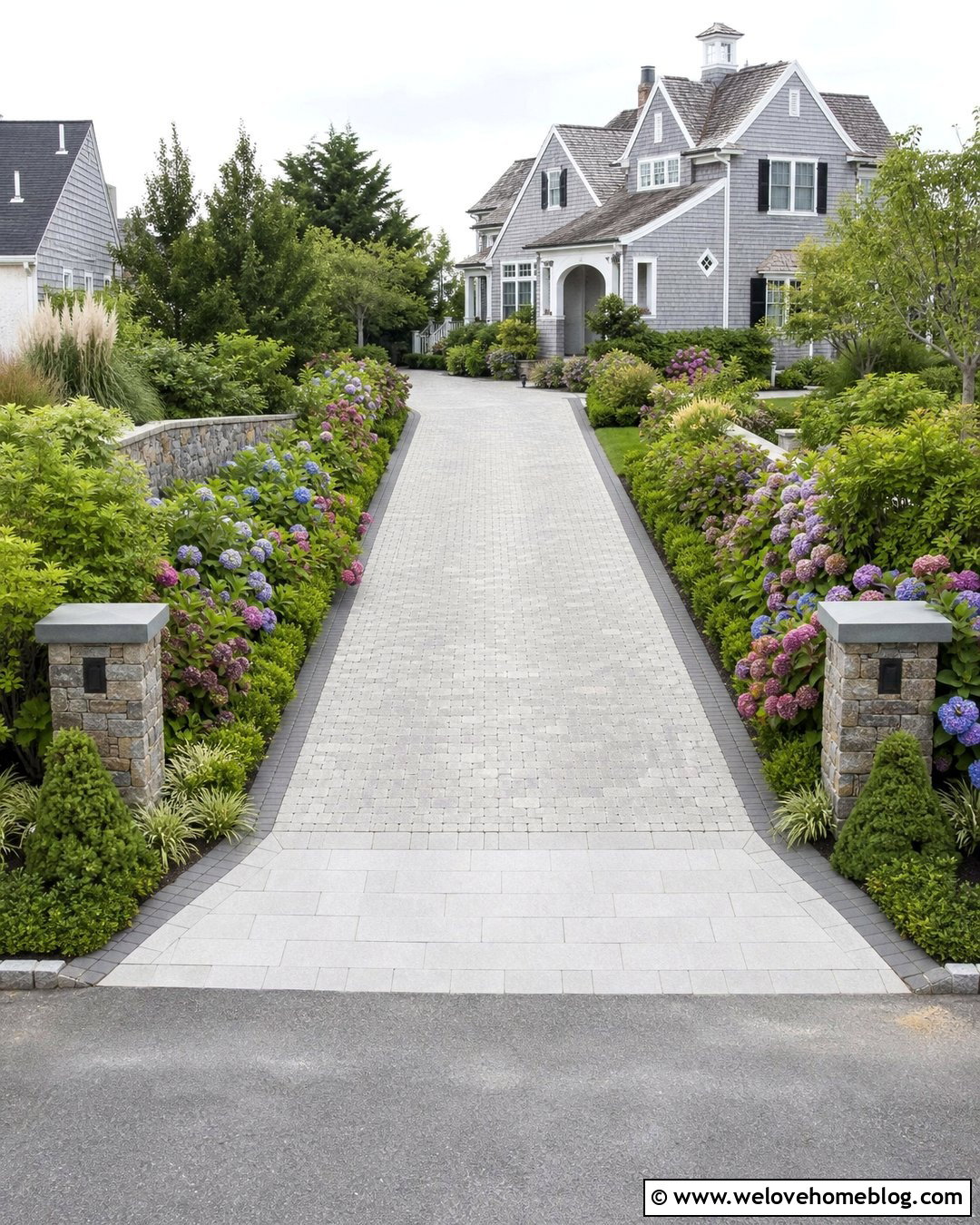
Hydrangeas can create a lush frame around a straight driveway when their mature size is considered from the beginning. Choose a light-gray concrete paver surface with a darker border to provide a clean foundation for the large flower clusters. Set the hydrangeas back behind low evergreen edging or a narrow strip of ground cover, leaving enough room for natural growth without obstructing vehicles. Repeat the same variety down each side for a formal appearance, or combine them with ferns and ornamental grasses for a softer woodland effect. Near the street, use shorter planting to preserve an open entrance. Carry the driveway pavers into a broad front walkway. The result feels full and colorful, yet the repeated plants and restrained paving keep the garden visually organized.
16. Front Garden Driveway With a Brick Border
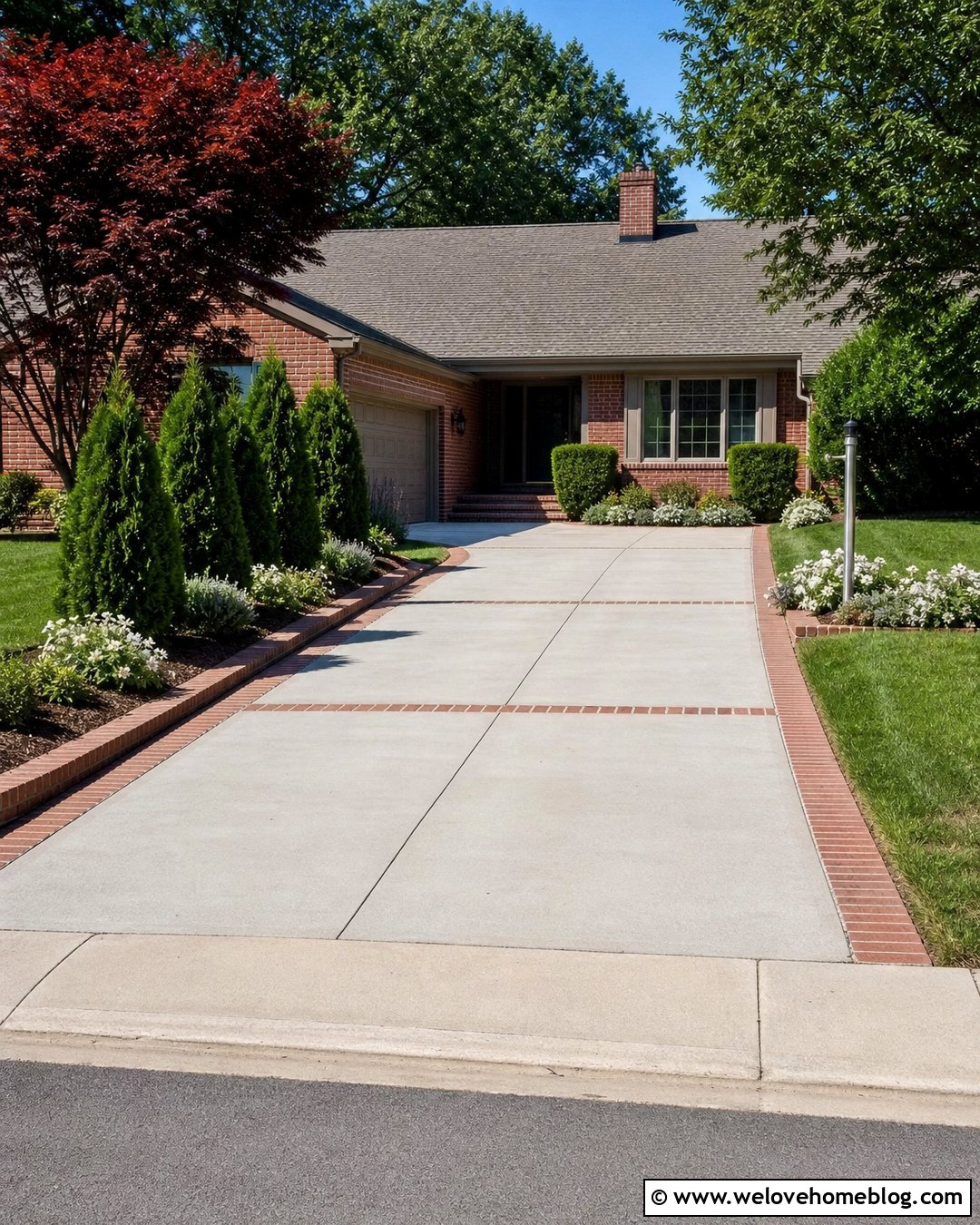
A brick border can give a plain poured-concrete driveway a more finished appearance without requiring a completely new surface. Choose clay bricks that relate to the house facade, chimney, or front steps. Install them as a continuous soldier course along the driveway, then repeat the brick around the walkway and nearby planting beds. The concrete can remain smooth and light gray, allowing the warmer border to stand out. Fill the adjacent garden with evergreen foundation shrubs, white flowering perennials, and a neatly shaped ornamental tree. If the driveway is wide, add one or two brick bands across the surface to break up the concrete visually. This coordinated treatment is particularly effective for ranch, Colonial, and craftsman homes with existing brick architectural details.
17. Curved Front Garden Driveway With Woodland Planting
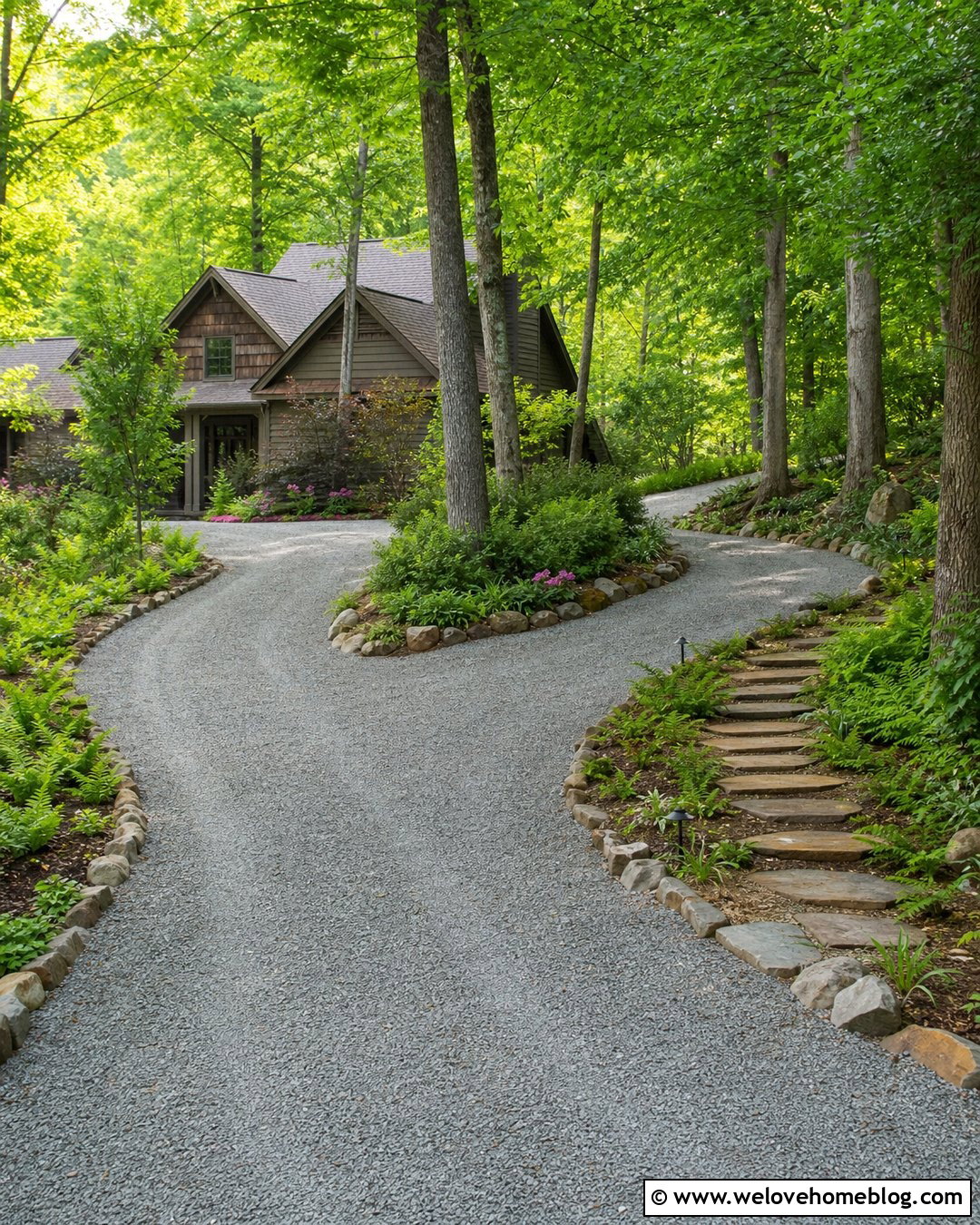
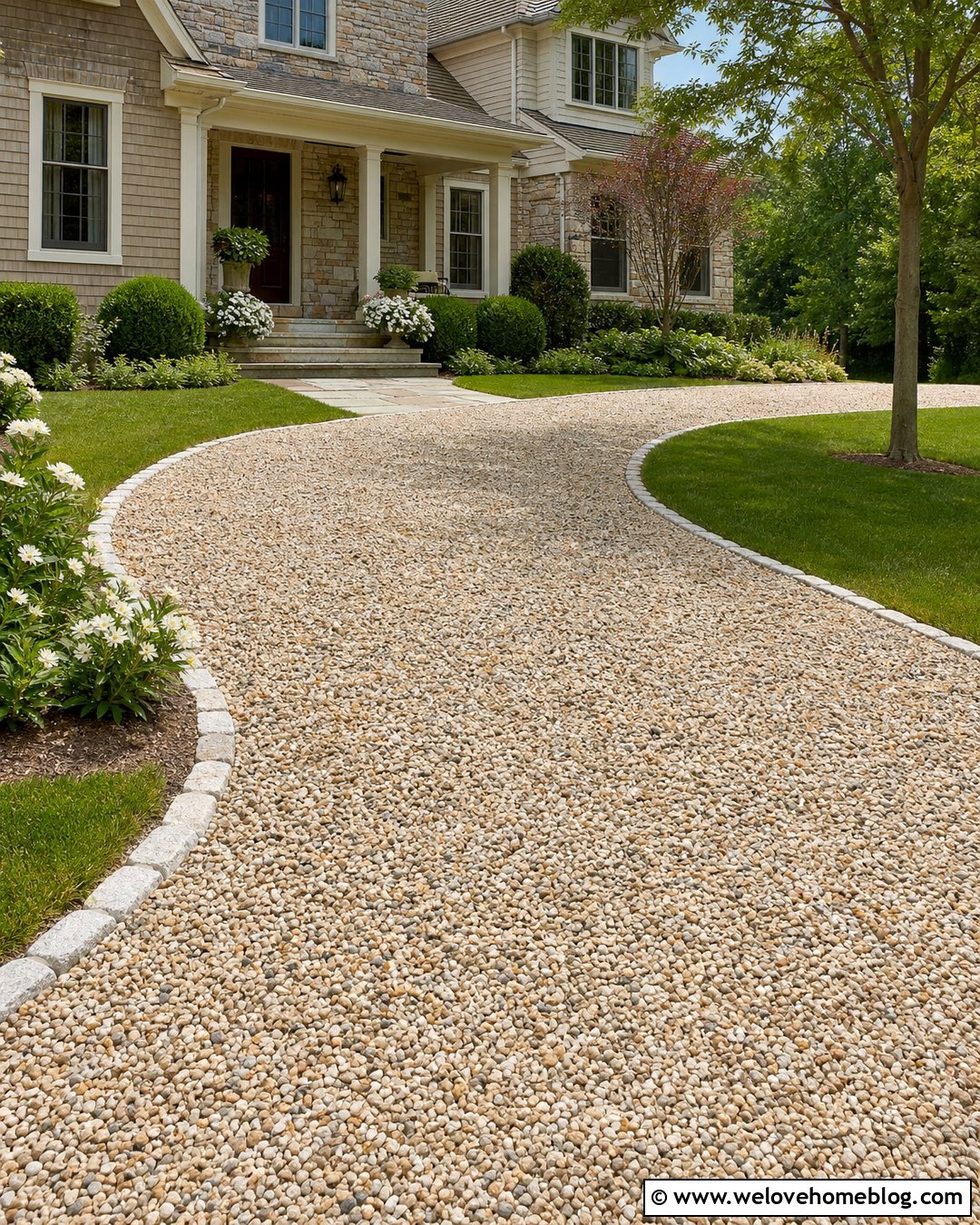
A curved driveway can preserve mature trees and create a more natural journey toward the house. Use fine gray gravel or permeable pavers in muted earth tones so the surface blends with a woodland setting. Shape the curve around a meaningful feature, such as a large tree or planted island, rather than bending it without purpose. Border the driveway with natural stone and layer the surrounding beds with ferns, woodland grasses, shade-tolerant shrubs, and spring bulbs. Keep plants low near the inner curve to maintain a clear view of approaching vehicles. A stepping-stone path can branch from the parking area and continue through the garden to the porch. This layout makes the existing landscape part of the entrance while retaining practical access and a readable route.
18. Front Garden Driveway With a Modern Address Sign
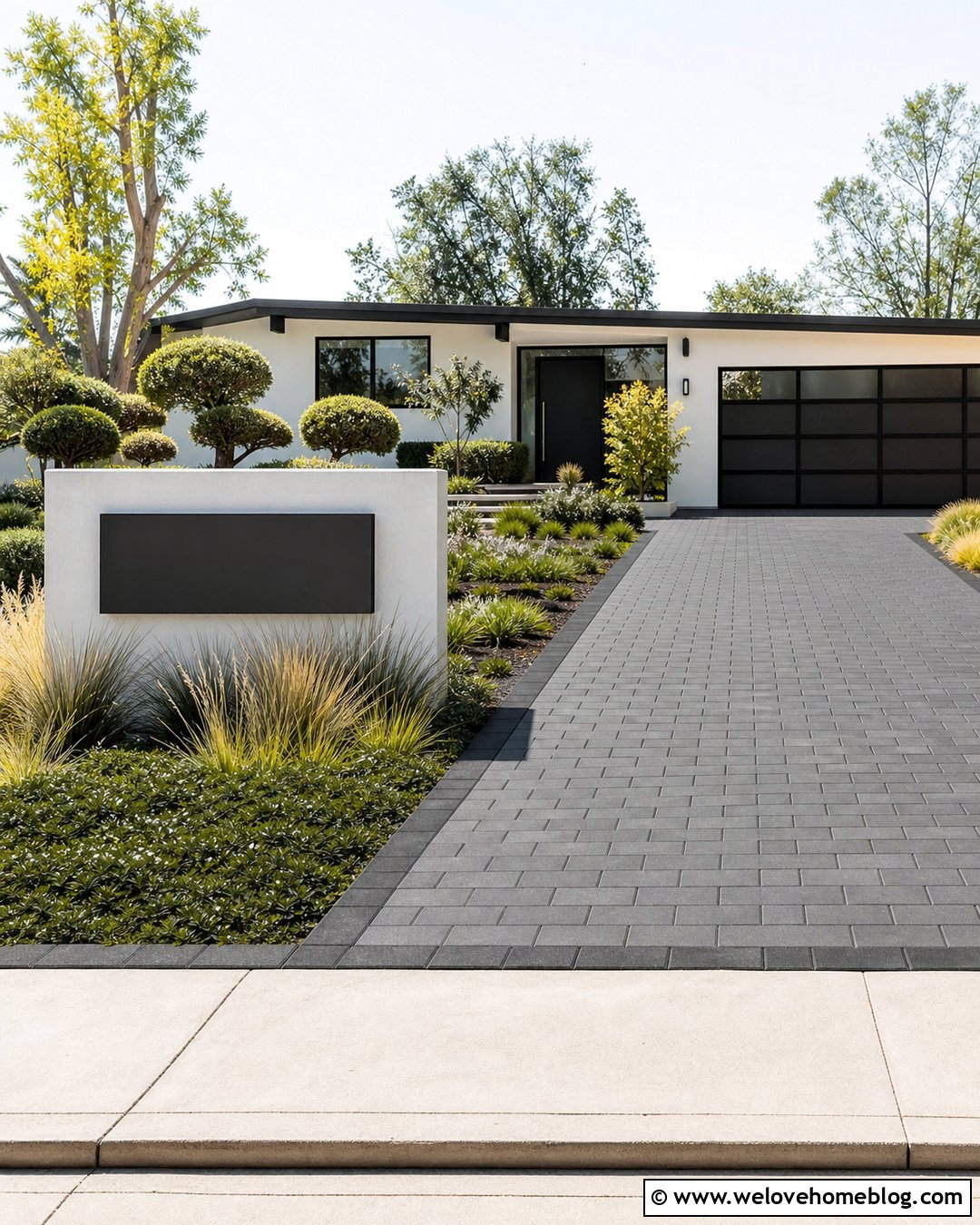
A modern address sign can become part of a larger entrance composition instead of standing alone beside the road. Pair a charcoal concrete paver driveway with a low rendered wall or weathered-steel panel positioned within a landscaped bed. Keep the sign clear of vehicle sightlines and surround it with low ornamental grasses, spreading ground covers, and a few sculptural shrubs. Repeat the sign’s dark finish in the driveway border, exterior light fixtures, and front-door hardware. A straight layout leading to a midcentury or contemporary house will reinforce the strong geometry. Add a broad walkway that crosses the planting bed and aligns with the entrance. The result creates a recognizable arrival point while keeping the entire front garden clean, connected, and visually balanced.
19. Front Garden Driveway With Stone Pillars
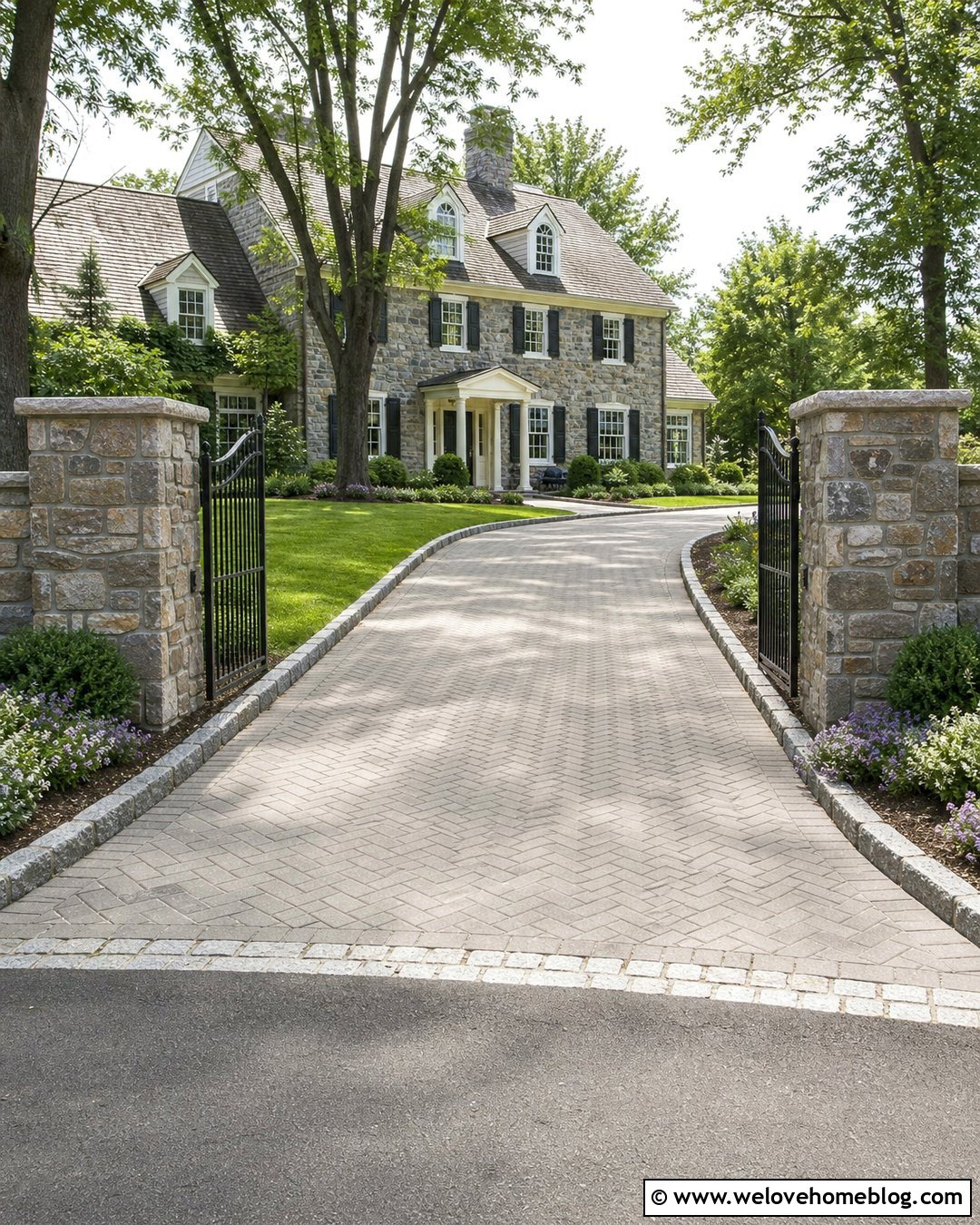
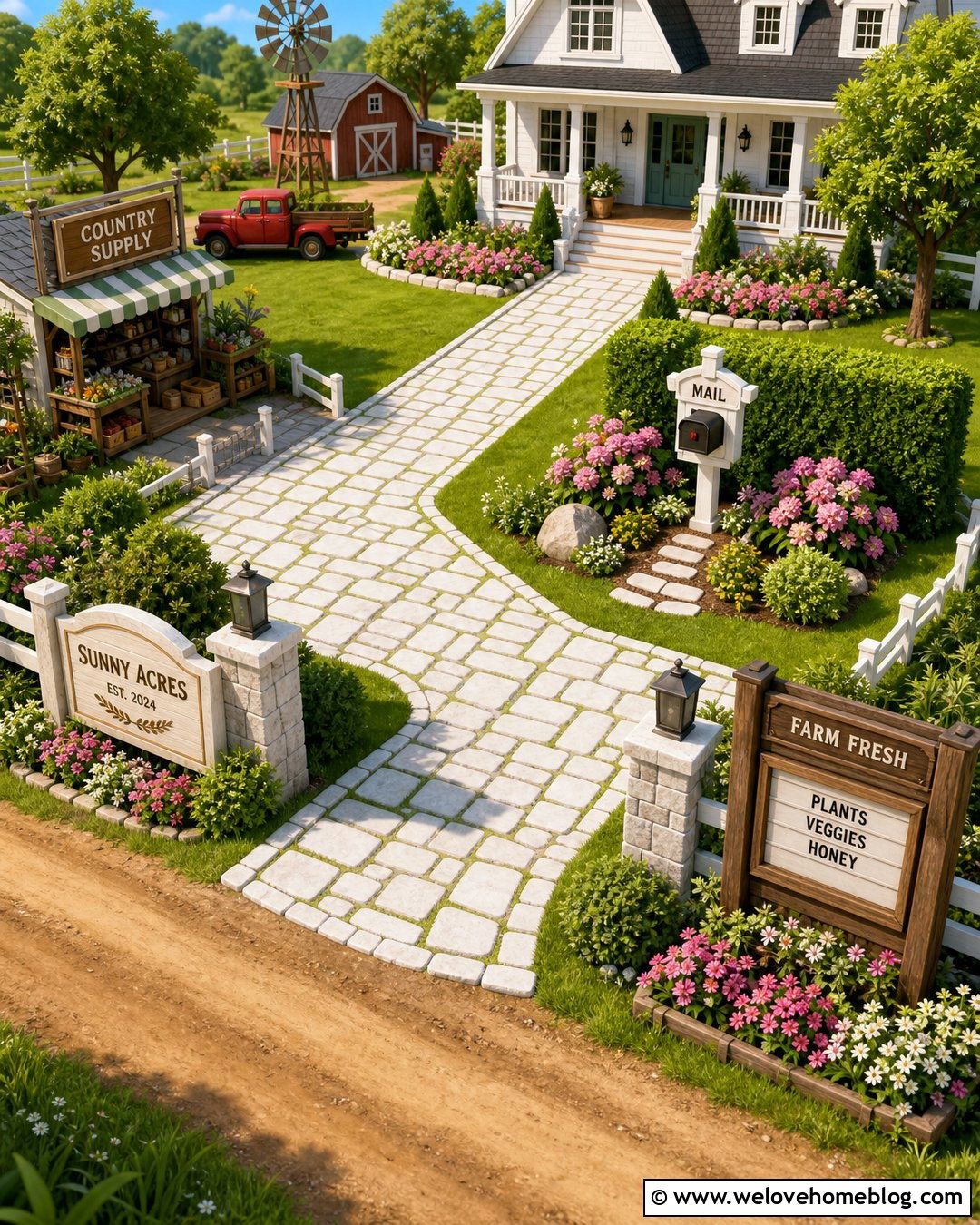
Stone pillars give the driveway entrance weight and definition, especially on a broad suburban or country property. Construct them from the same stone used on the home, retaining walls, or driveway border so they look original to the landscape. Pair the pillars with warm gray pavers arranged in a subtle herringbone pattern. Curved planting beds can wrap around the bases, using low evergreens and flowering ground covers that will not conceal the masonry. If gates are included, select a simple open design that preserves views toward the house. Continue the stone as low edging farther along the driveway and around the walkway. Balanced proportions are important: the pillars should mark the entrance clearly without overpowering the front garden or creating a fortress-like appearance.
20. Front Garden Driveway With Ornamental Grass Borders
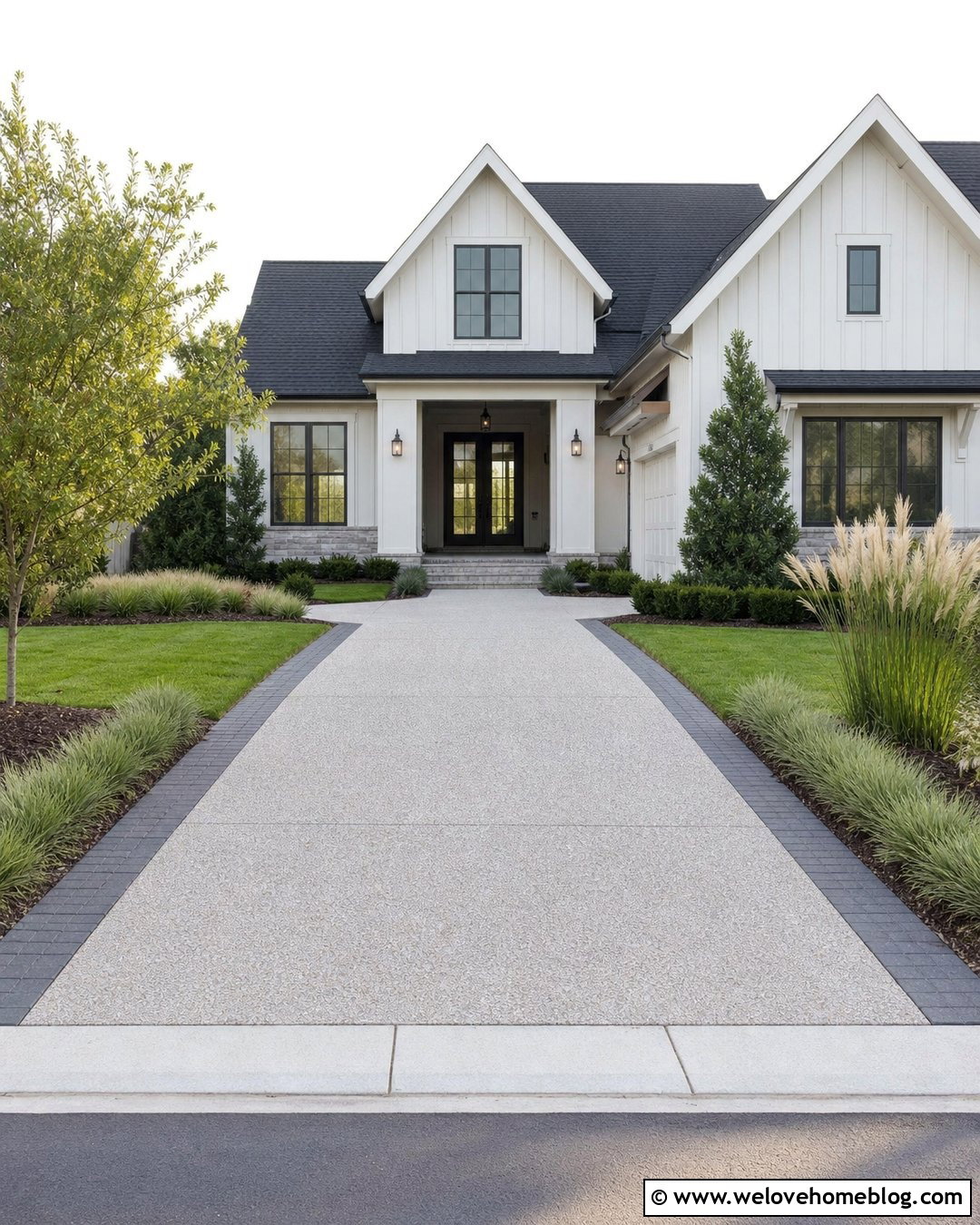
Ornamental grasses add movement and texture beside a driveway while maintaining a clean, modern appearance. Combine light exposed-aggregate concrete with narrow charcoal paver edging, then plant broad drifts of compact grasses along one or both sides. Mix two or three varieties with different heights instead of using many unrelated species. Low ground cover at the front edge can prevent the beds from looking bare around the grass bases. Add a few evergreen shrubs near the house to maintain structure outside the main growing season. A straight walkway should cut clearly through the planting toward the entrance. Keep taller grasses away from street corners and vehicle sightlines. The finished driveway feels soft and garden-focused, but the repeated planting still supports an orderly architectural layout.
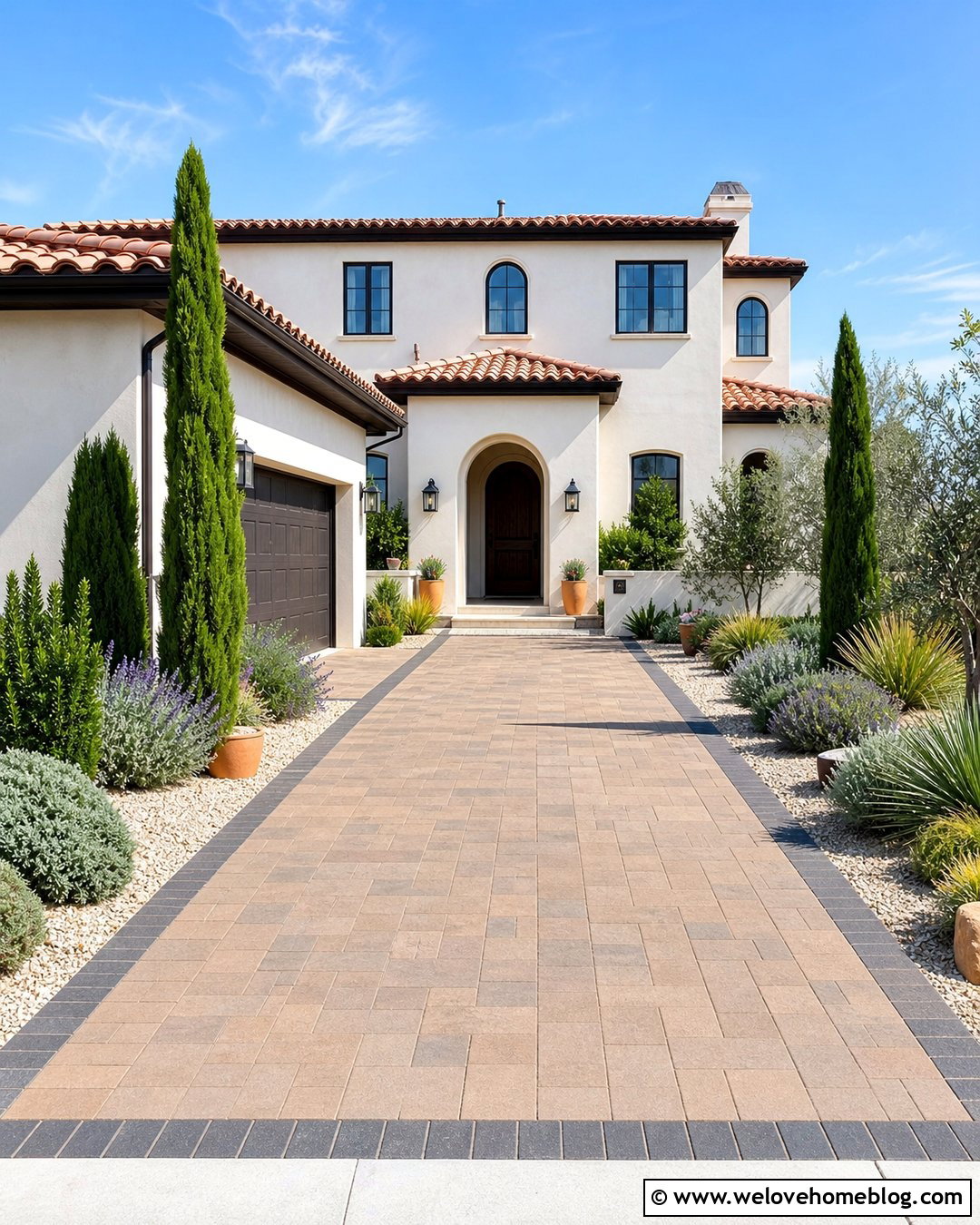
21. Front Garden Driveway With Permeable Pavers
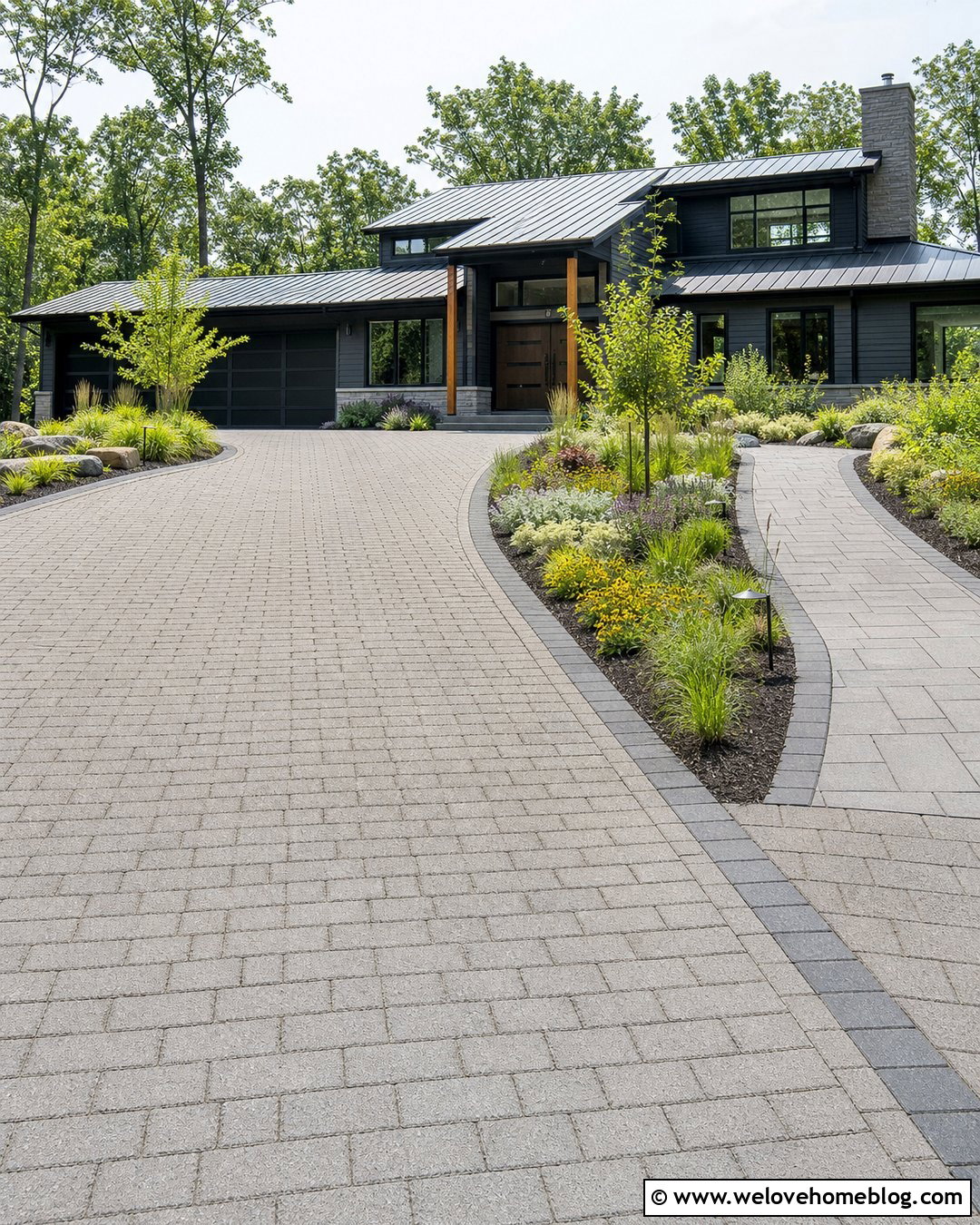
Permeable pavers can create an attractive driveway with visible joints that contribute to the overall pattern. Choose warm gray concrete blocks and fill the designed openings with small aggregate or suitable low ground cover. A straight or gently flared driveway will keep the layout simple, while a darker paver border provides crisp definition. Surround it with rain-garden-style planting, including ornamental grasses, flowering perennials, and compact shrubs selected for the site’s conditions. A shallow planted area beside the driveway can become an intentional landscape feature rather than an ordinary drainage strip. Repeat the same pavers in the walkway, but use a tighter joint pattern for comfortable foot traffic. The combined textures help the driveway feel integrated with the garden rather than separated from it.
22. Front Garden Driveway With White Flower Borders
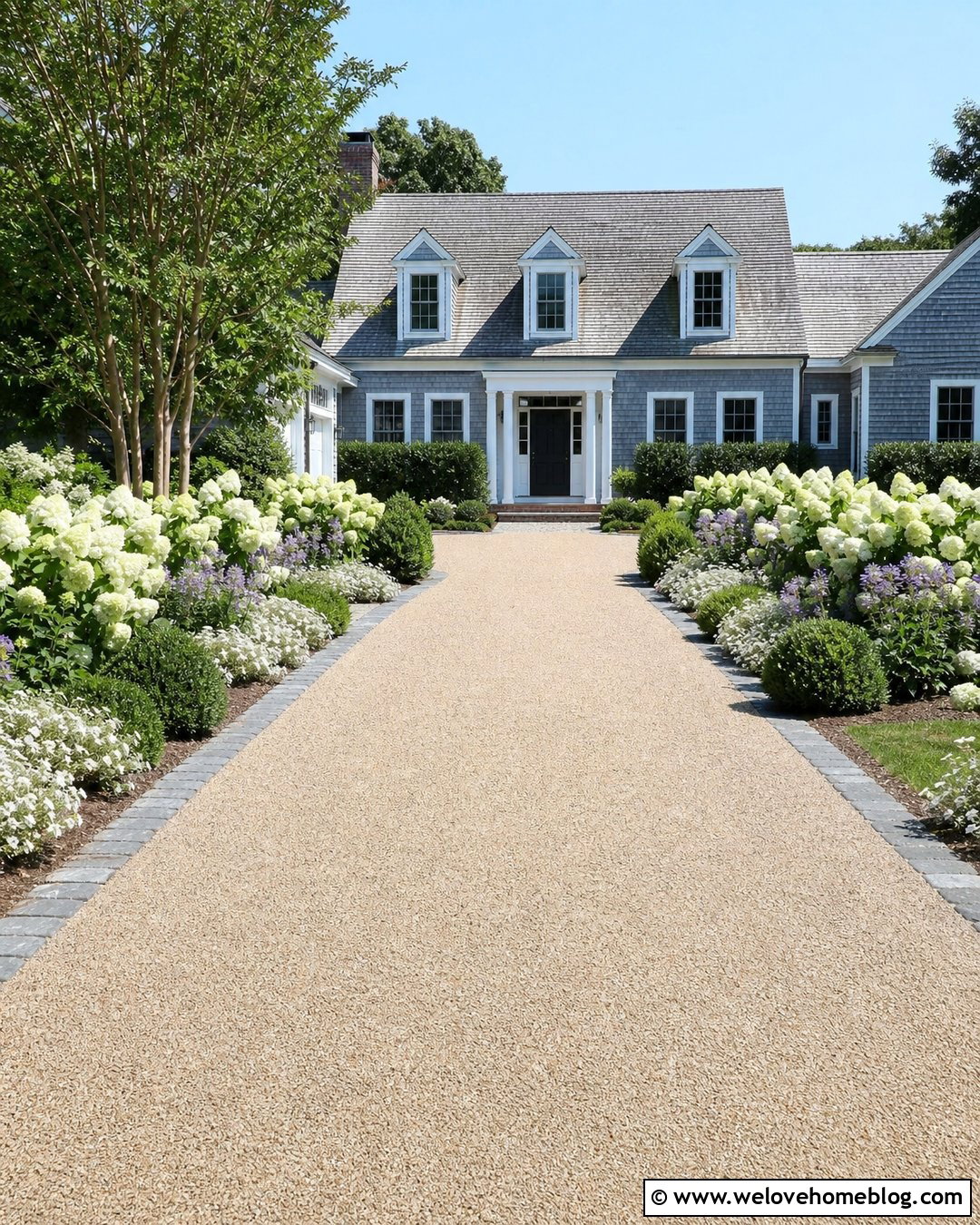
A limited palette of white flowers and green foliage creates a bright, composed entrance that works with nearly any house color. Begin with warm beige resin-bound gravel or pale concrete pavers, edged in medium-gray stone. Plant repeated groups of white hydrangeas, roses, salvia, or flowering ground covers, choosing varieties suited to the available light. Evergreen shrubs can provide a stable backdrop and prevent the beds from appearing empty between flowering periods. Use curved bed lines to soften a straight parking area, but keep the walkway broad and direct. A small multi-stem tree near the outer corner can add height without overwhelming the facade. The restrained colors make different plant forms feel connected, giving the front garden an elegant yet approachable appearance.
23. Front Garden Driveway With Mixed Paving
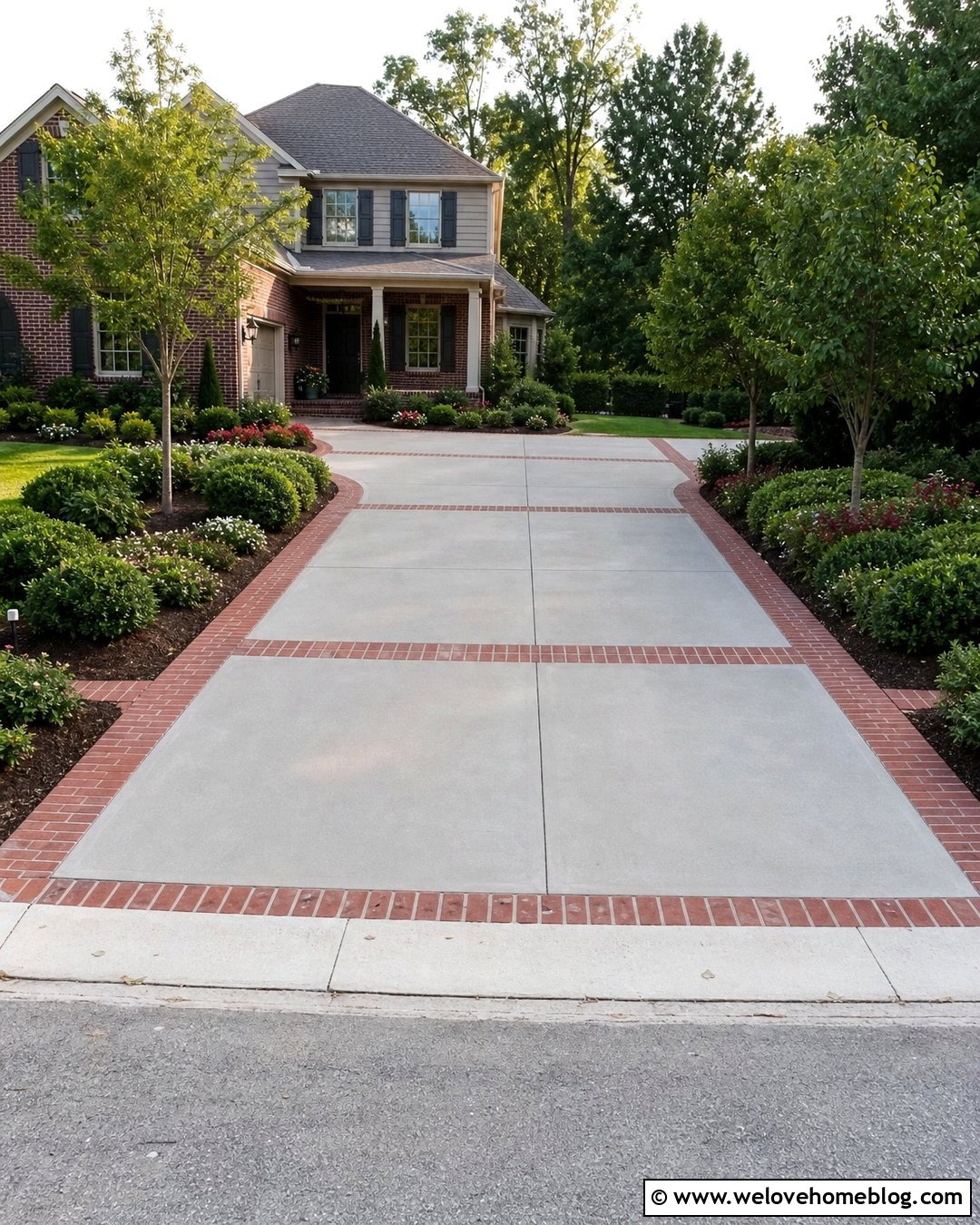
Mixed paving can divide a wide driveway into visually manageable areas while giving the front garden more character. Use smooth gray concrete for the main parking surface, then add clay brick bands at the entrance, along the edges, and between parking bays. The brick should coordinate with the house or front steps so the combination feels deliberate. Place curved planting beds at the outer corners to reduce the apparent width of the paving. Fill them with compact trees, layered shrubs, and low flowers that frame rather than hide the home. Continue one brick band toward the porch to create an obvious pedestrian route. Limiting the design to two hardscape materials and a consistent planting palette prevents a large driveway from becoming overly busy.
24. Front Garden Driveway With a Flowering Tree
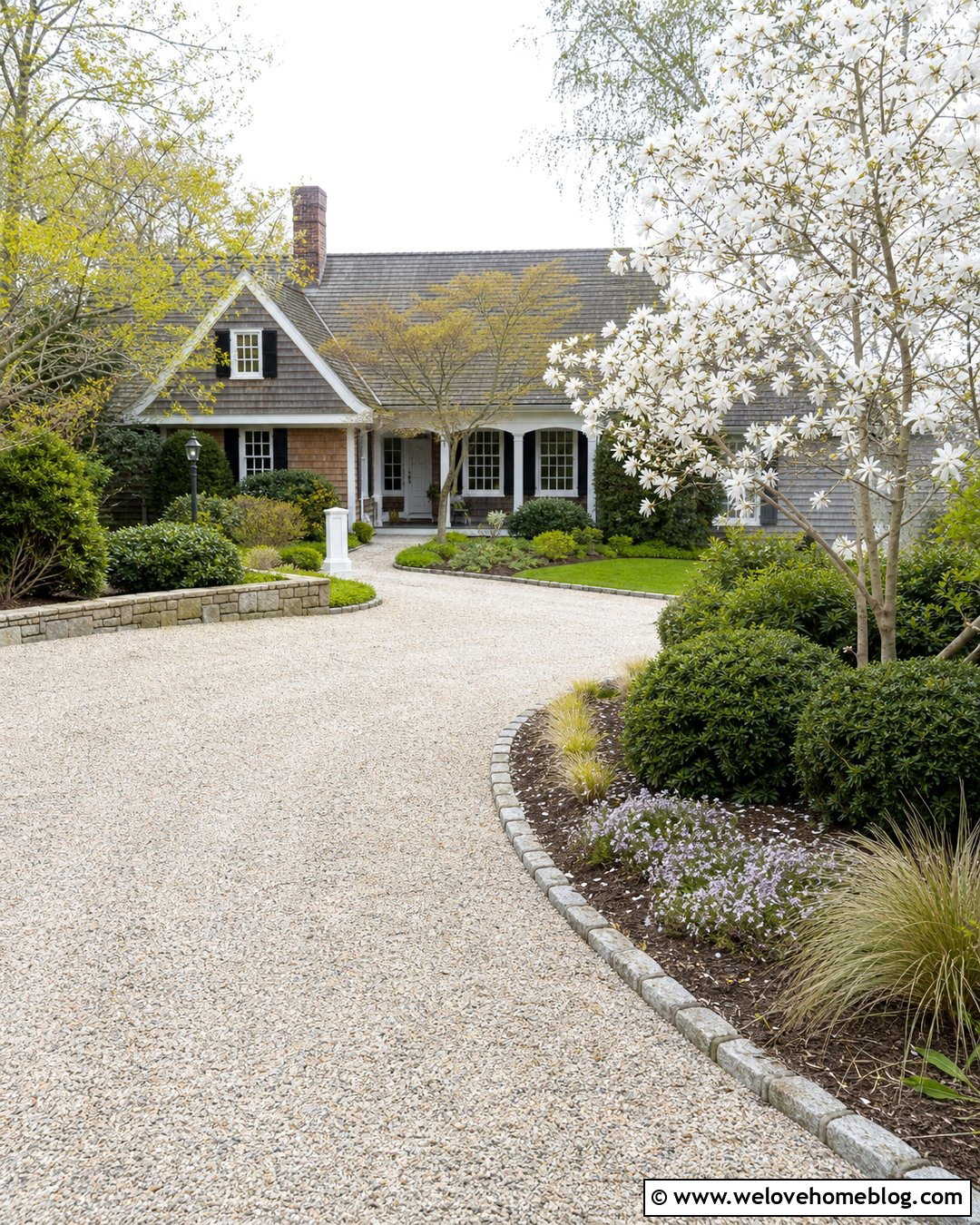
One flowering tree can anchor the entire driveway garden when it is positioned as part of a balanced layout. Pair a softly curved pea-gravel driveway with cobblestone edging and place the tree in a generous outer planting bed near the curve. Choose a species with a mature canopy appropriate for the available space, overhead clearance, and local conditions. Surround it with low evergreen shrubs, ornamental grasses, and flowering ground cover so the bed remains attractive at multiple levels. Repeat a few of these plants near the porch to connect the tree to the house. Keep the opposite side simpler with lawn or a low hedge. This asymmetrical arrangement creates a strong focal point without restricting parking, visibility, or the walkway to the front entrance.
25. Front Garden Driveway With Low-Maintenance Planting
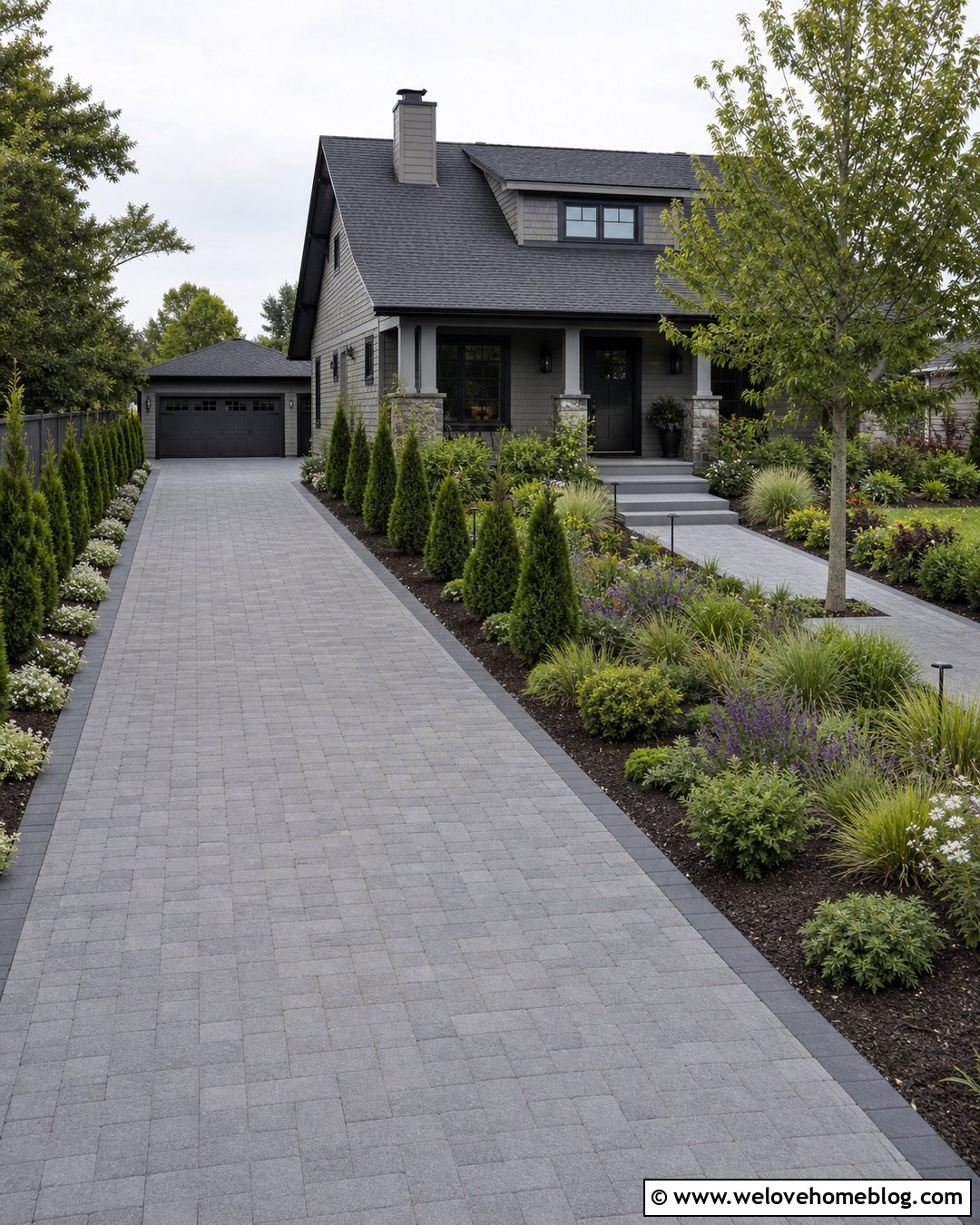
A low-maintenance driveway garden works best when the layout uses fewer plant varieties in larger, repeated groups. Install medium-gray concrete pavers in a straightforward running-bond pattern, framed by dark stone edging. Replace narrow lawn strips with mulch beds containing compact evergreens, drought-tolerant perennials, ornamental grasses, and durable ground covers suited to the property. Leave clear gaps around utility access, walkways, and vehicle doors. One small ornamental tree can provide height, while repeated rounded shrubs create structure across the front yard. Use a wide paved path to distinguish the front-door route from the parking area. This complete design remains visually rich without relying on complicated patterns or crowded seasonal displays, making routine trimming, cleanup, and surface maintenance more manageable.
Conclusion:
The best front garden driveway ideas make parking feel like a natural part of the landscape rather than the only purpose of the yard. Start by choosing a surface that suits the house, expected traffic, climate, and maintenance preferences. Then strengthen the design with clear edging, a safe walkway, repeated planting, and a focal point such as a tree, entrance wall, or planted island. Leave enough open space for doors, turning movements, visibility, and mature plant growth. Whether you prefer gravel and cottage flowers or modern pavers with ornamental grasses, consistency is more important than decoration. A focused palette of materials and plants will create a front garden driveway that feels attractive, practical, and connected.

Related posts:


Leave a Reply