
A compact driveway can do much more than provide a place to park. With the right surface, layout, edging, and landscaping, it can make a small front yard feel wider, cleaner, and more welcoming. The best designs avoid unnecessary materials and use every inch with purpose. Permeable paving, narrow planting beds, ribbon layouts, defined borders, and simple geometric patterns are especially useful when space is limited. Current compact-yard designs also favor restrained material palettes and vertical planting that adds greenery without crowding the parking area. () Whether your home is modern, traditional, cottage-inspired, or farmhouse-style, these practical **40 small driveway ideas** offer complete looks you can adapt to your property.

1. Small Concrete Driveway With Brick Edging
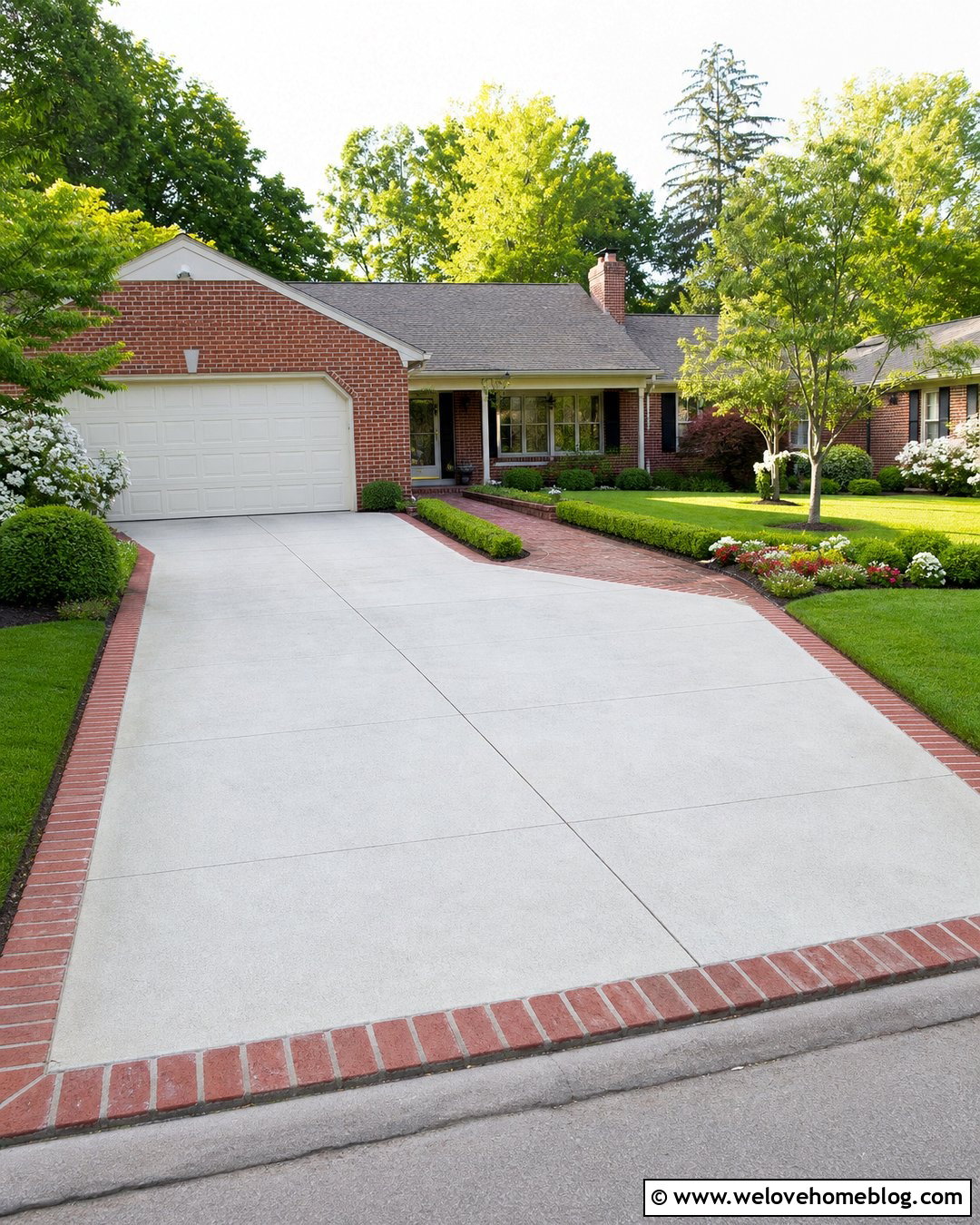
A narrow concrete driveway gains warmth and definition when it is framed with red or brown brick. Choose a light gray poured concrete surface to keep the compact area looking open. A single brick soldier course along each side creates a clean boundary without using valuable parking space. Continue the same brick around a slim planting bed near the porch so the entire frontage feels connected. Low boxwoods, dwarf ornamental grasses, or seasonal flowers will soften the hard surface without spilling into the driving area. This combination works particularly well with ranch, colonial, and Craftsman homes. Keep the driveway straight and uncluttered, and match the brick tone to the house facade, steps, or chimney.
2. Small Gravel Driveway With Stone Borders
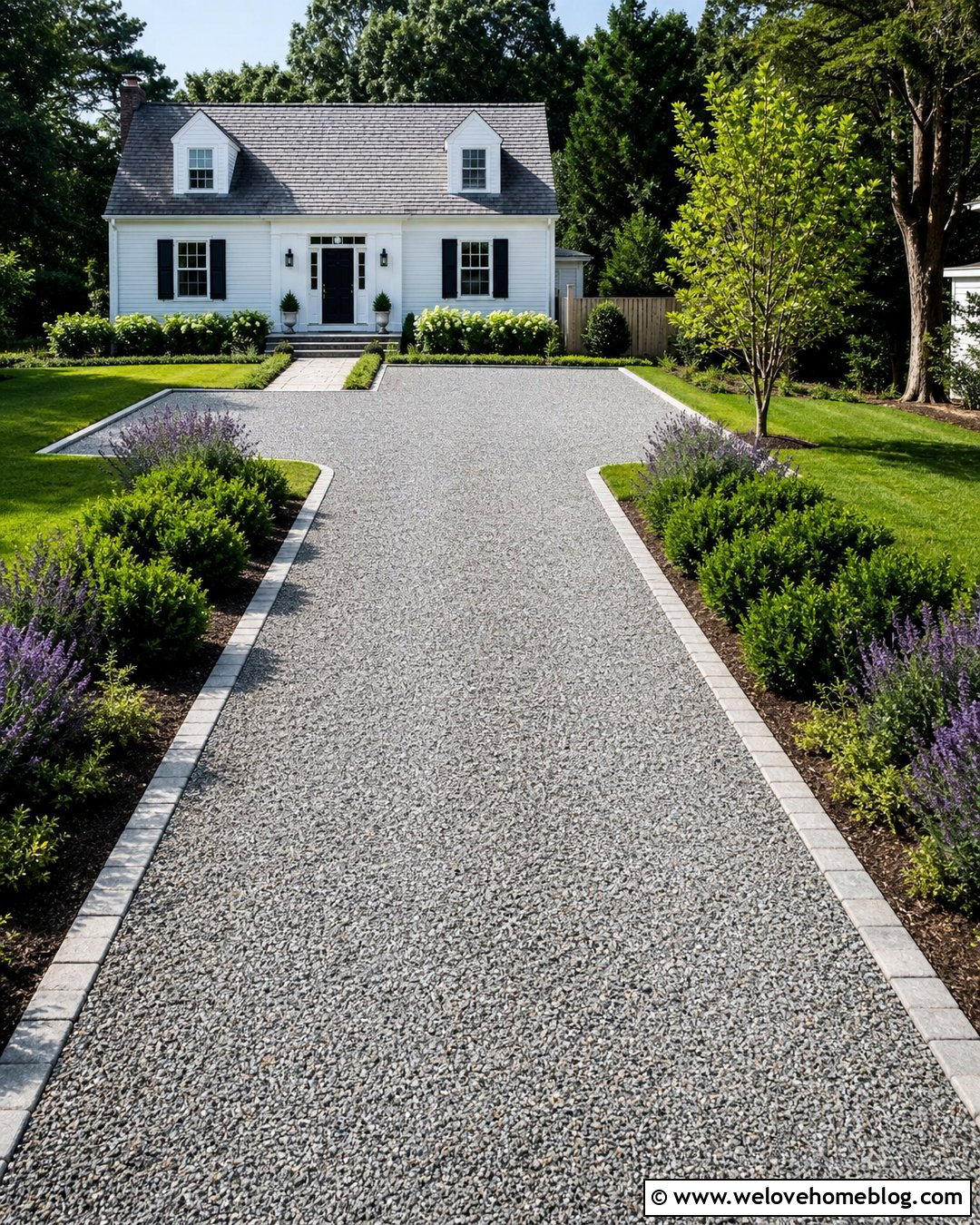
The gentle texture of gravel can make a compact front yard feel relaxed rather than cramped. Use angular gray gravel for a stable driving surface and contain it with flush-cut limestone or granite edging. A straight layout usually makes the best use of a narrow lot, while a slightly wider parking pad near the garage improves everyday access. Add slender planting beds with lavender, catmint, or compact evergreen shrubs along one side. Leave the opposite edge more open for comfortable door clearance. A stepping-stone walkway can branch toward the porch without requiring another large paved area. This complete look suits cottages, Cape Cod homes, and modern farmhouses, especially when the stone border repeats masonry found on the house.
3. Small Paver Driveway In A Herringbone Pattern
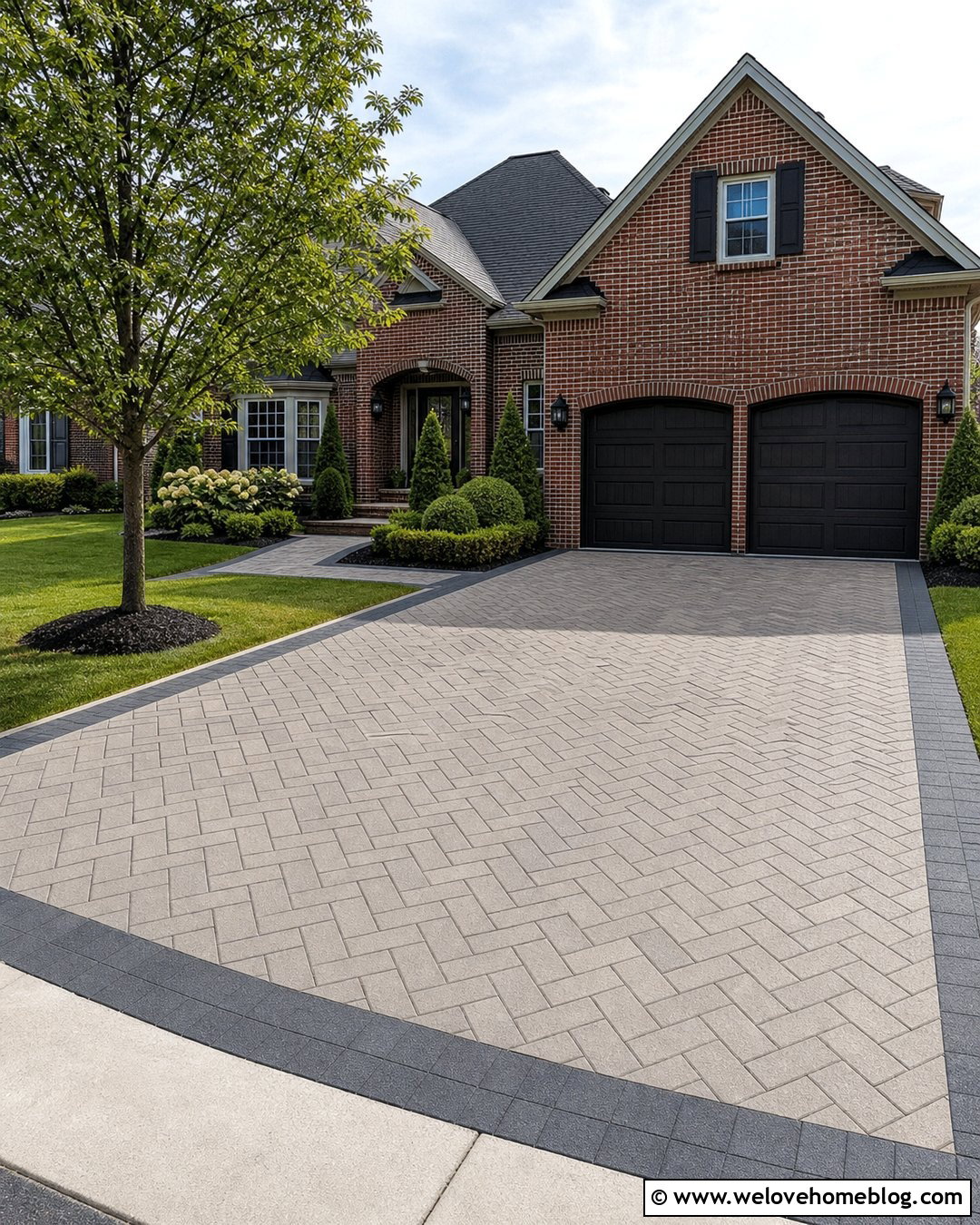
Herringbone pavers bring visible movement to a short driveway and help the surface feel intentionally designed. Select medium-size concrete pavers in a warm gray, charcoal, or blended taupe finish. Install them at a 45-degree angle to visually widen the space. A darker paver border will contain the pattern and sharpen the driveway’s outline. Keep surrounding landscaping simple with narrow lawn strips, clipped shrubs, and one small ornamental tree near the street. Connecting the driveway to the front walk with matching pavers produces a smooth, unified appearance. This layout complements brick homes and traditional suburban properties. Avoid mixing several additional patterns because a restrained palette makes a compact driveway appear calmer, larger, and easier to navigate.
4. Small Ribbon Driveway With Grass Strips
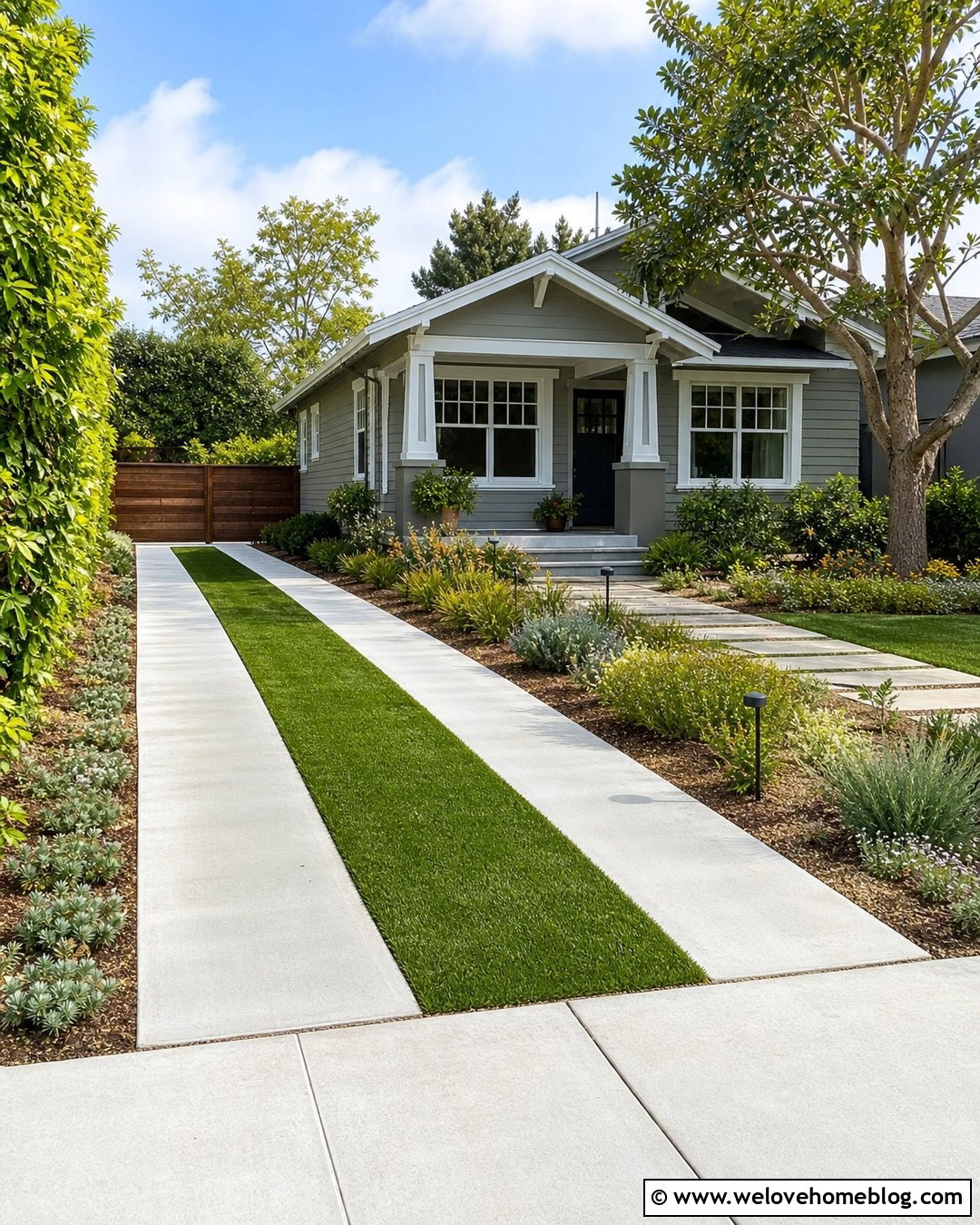
Could your driveway provide reliable parking without covering the entire front yard in paving? A ribbon driveway uses two paved wheel tracks with grass or low groundcover between them. Concrete strips create a crisp suburban look, while brick or cobblestone tracks feel more traditional. Keep the center planting low and durable so it does not obstruct tires or collect against the vehicle. Reinforced turf, creeping thyme, or another locally suitable groundcover can soften the design. Frame the outer edges with lawn or slim flower beds rather than heavy borders. This space-saving layout works best on a straight approach to a single garage. It preserves visible greenery and gives a small property a more garden-focused appearance from the curb.
5. Small Driveway With A Curved Approach
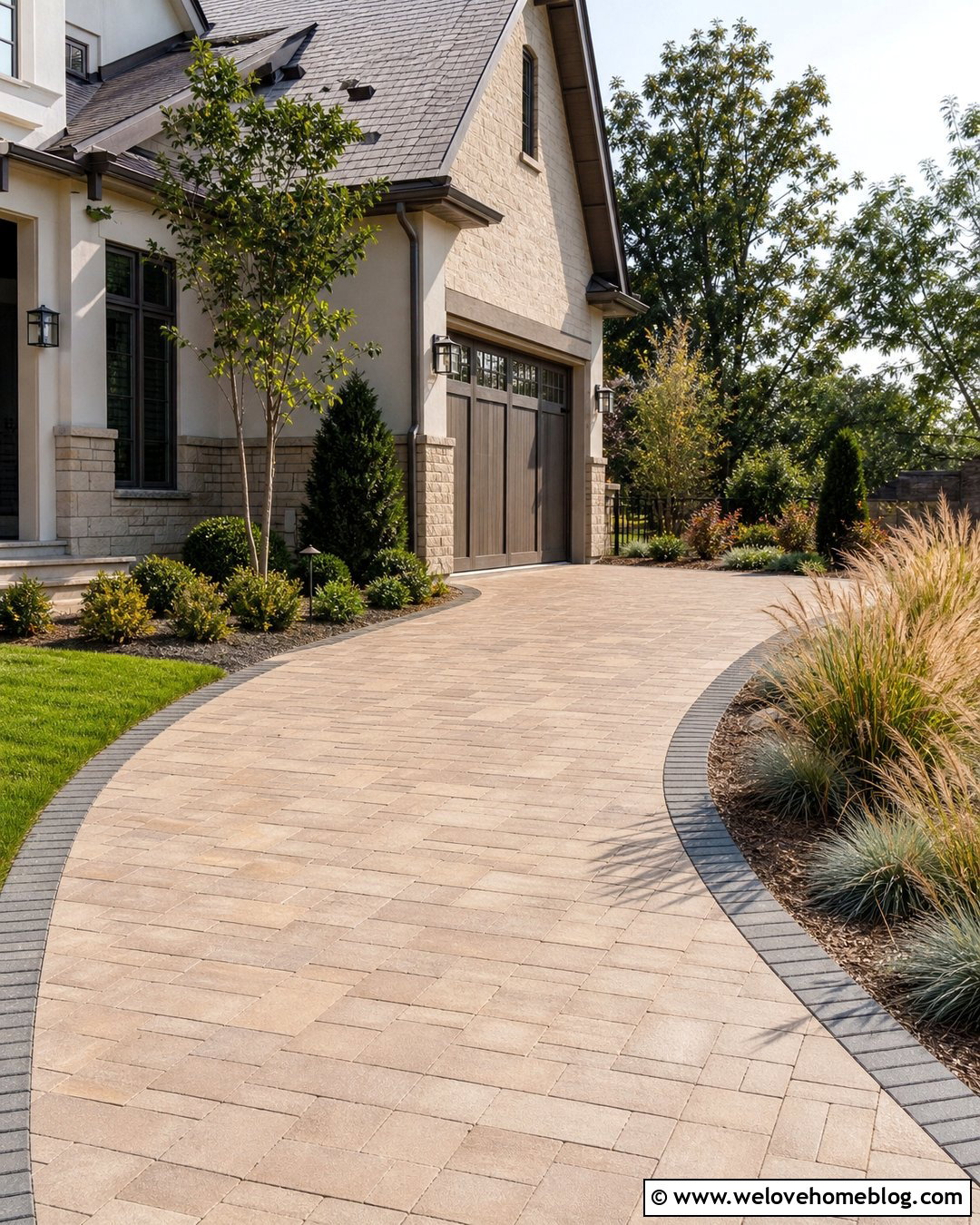
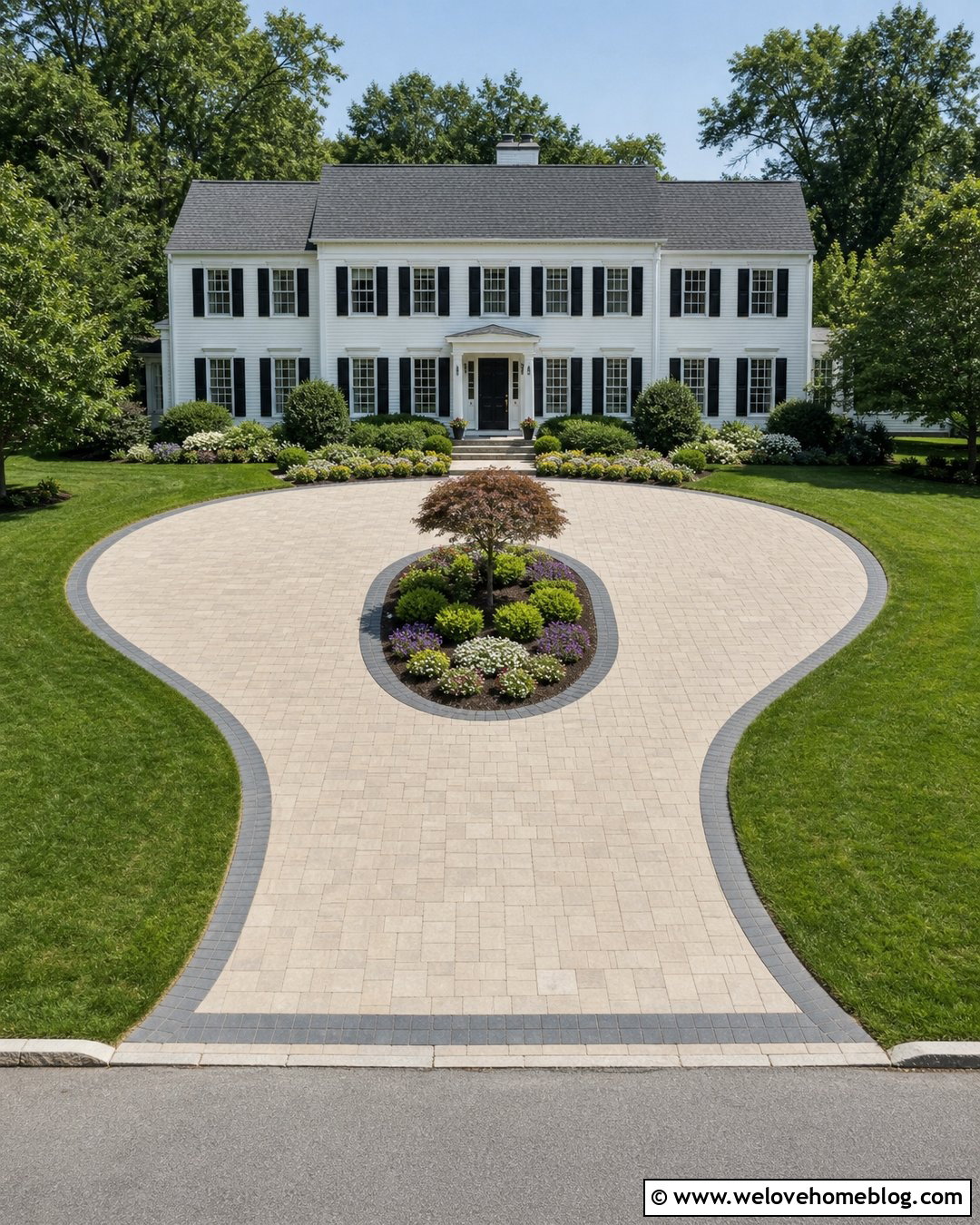
Even a gentle curve can make a short driveway feel less rigid. Begin with a narrow entrance and sweep the surface slightly toward a side-facing garage or parking pad. Use warm beige concrete pavers to make the bend easy to read, then define it with a contrasting charcoal border. Place low shrubs and ornamental grasses along the outer curve to emphasize the shape. Keep plants short near the street for an open view of pedestrians and traffic. On the inside curve, a compact lawn or small specimen tree can provide a simple focal point. This design is useful for an offset garage, angled house, or irregular lot. The curve should remain broad enough for smooth daily movement without repeated maneuvering.
6. Small Asphalt Driveway With A Paver Border
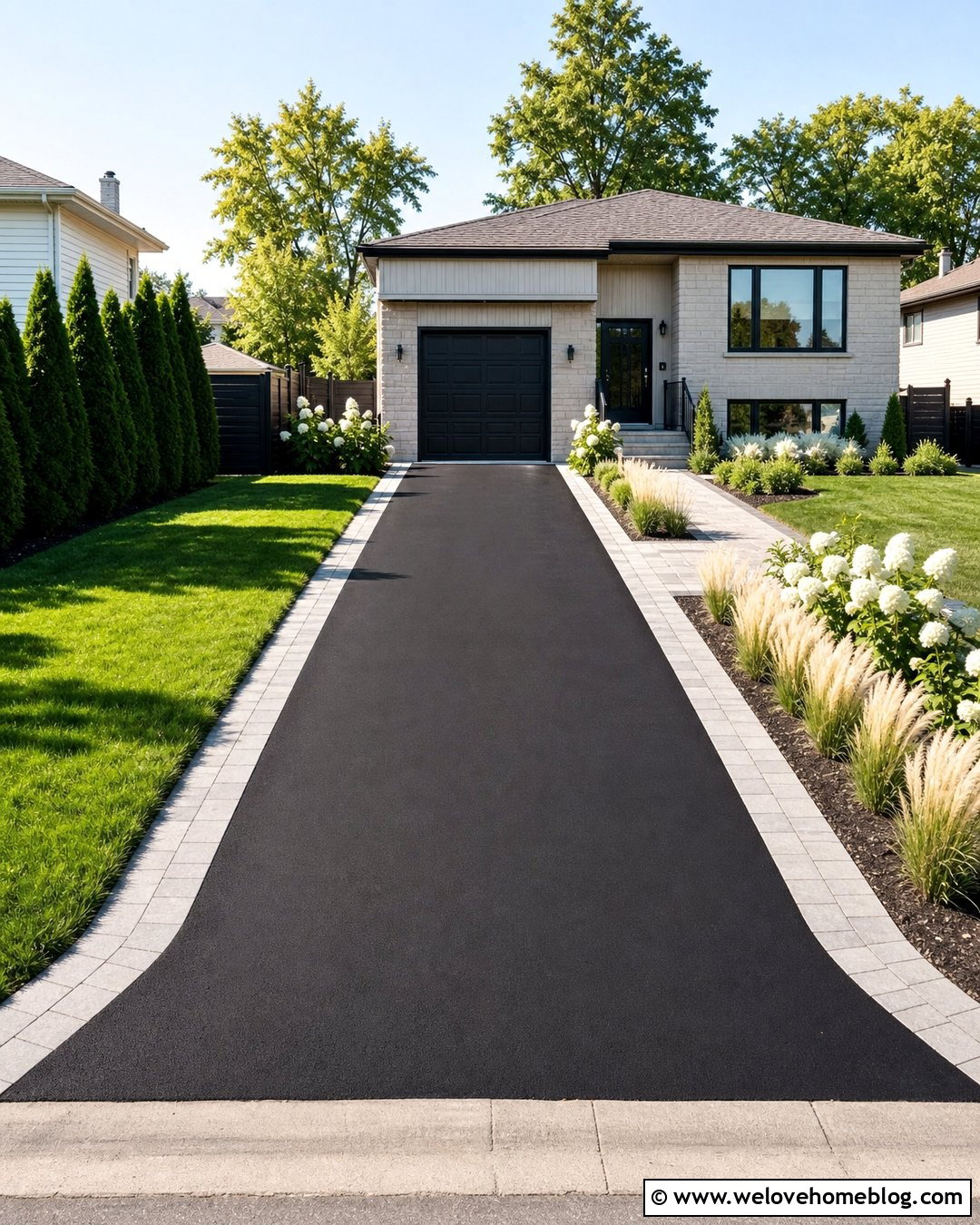
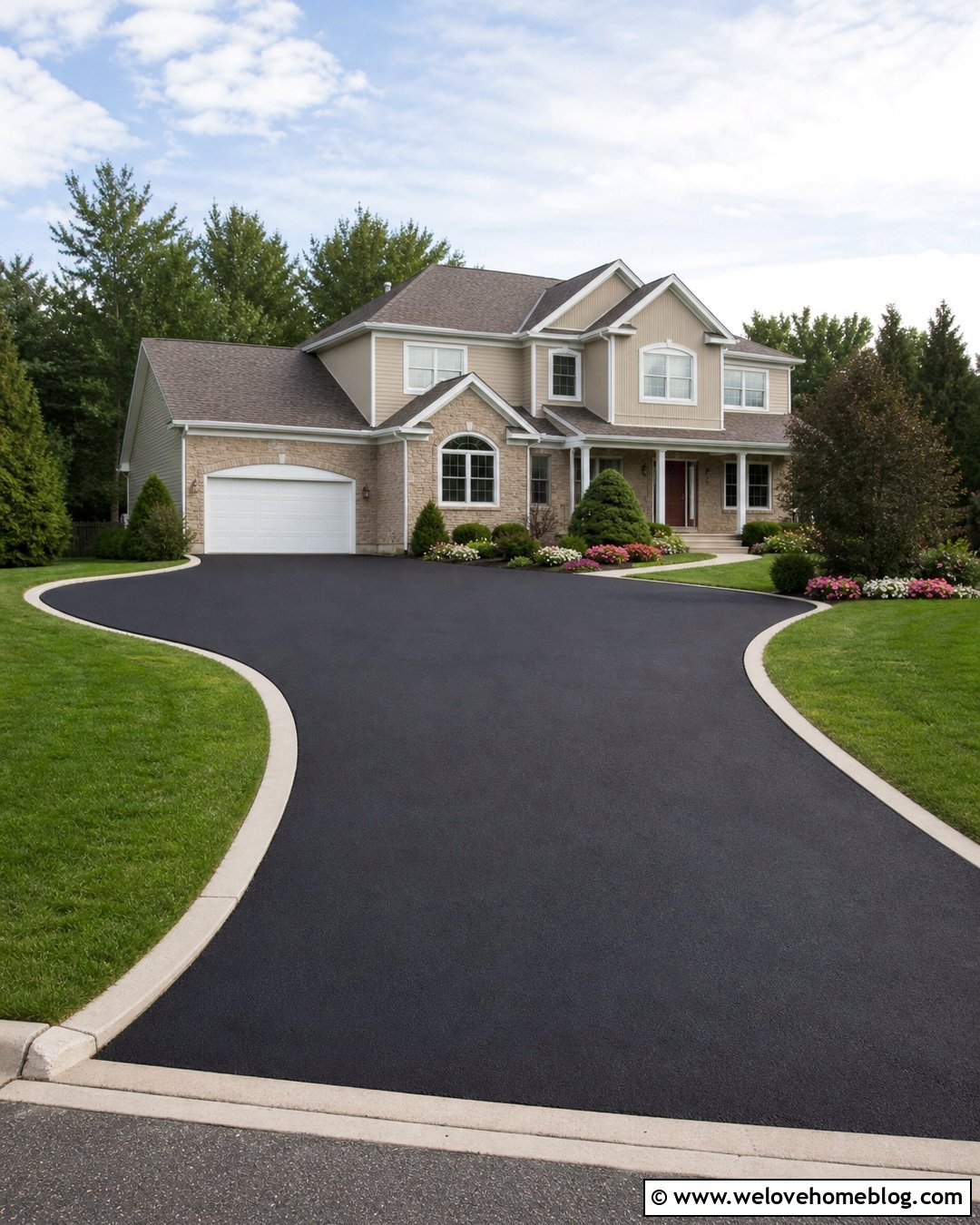
Fresh black asphalt offers a clean, practical foundation for a small driveway. Its dark color looks especially polished when outlined with light gray concrete pavers or warm clay bricks. Keep the border narrow so it defines the surface without reducing useful parking width. A straight driveway leading to an attached garage is the simplest layout, although a subtle flare near the curb can make entry more comfortable. Balance the dark paving with bright landscaping, such as pale ornamental grasses, white flowering shrubs, and a narrow lawn strip. Repeating the border material on the walkway creates a finished appearance. This combination provides an uncomplicated look for ranch houses, split-level homes, and modest suburban properties while keeping decorative details controlled.
7. Small Driveway With Large Concrete Pavers
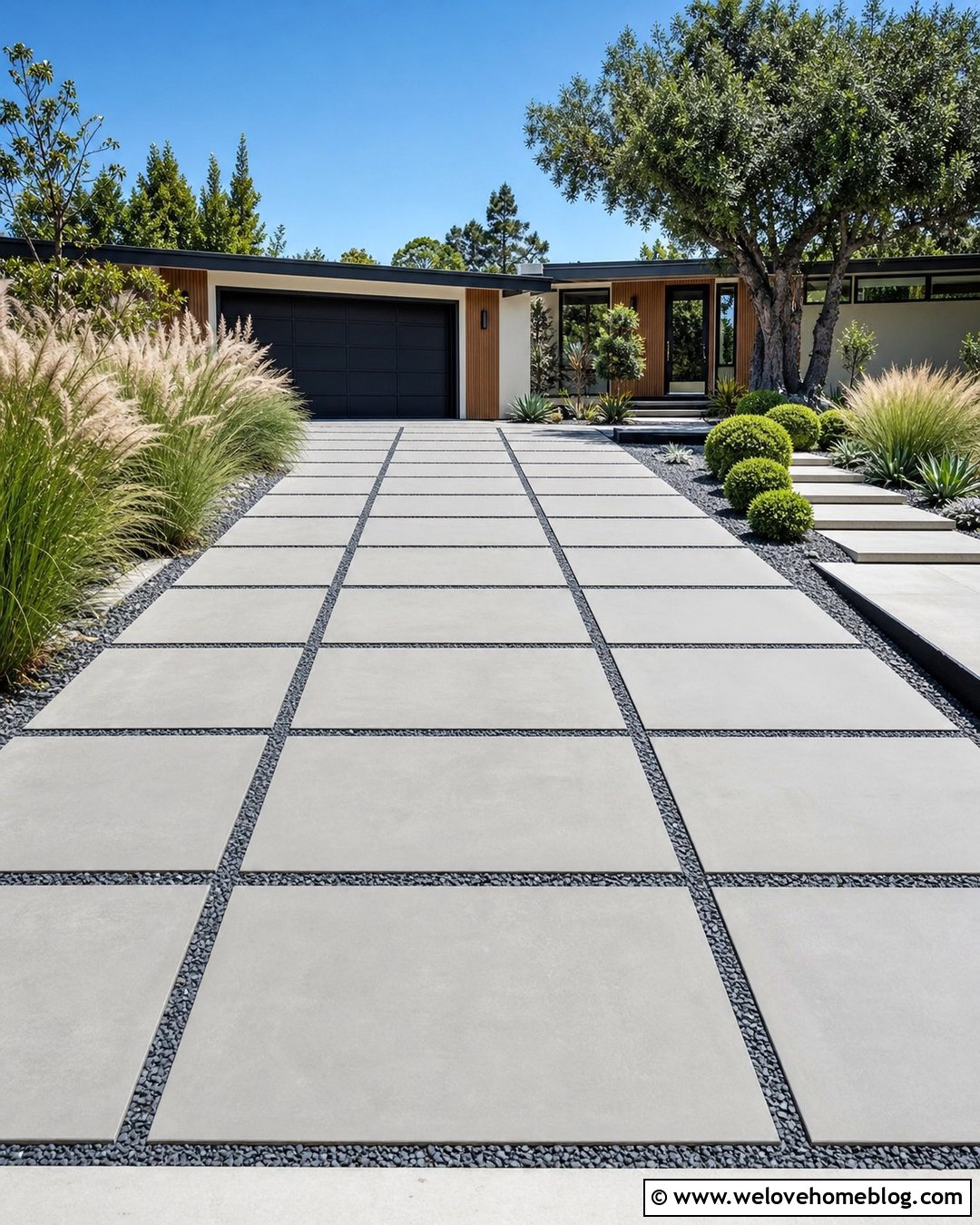
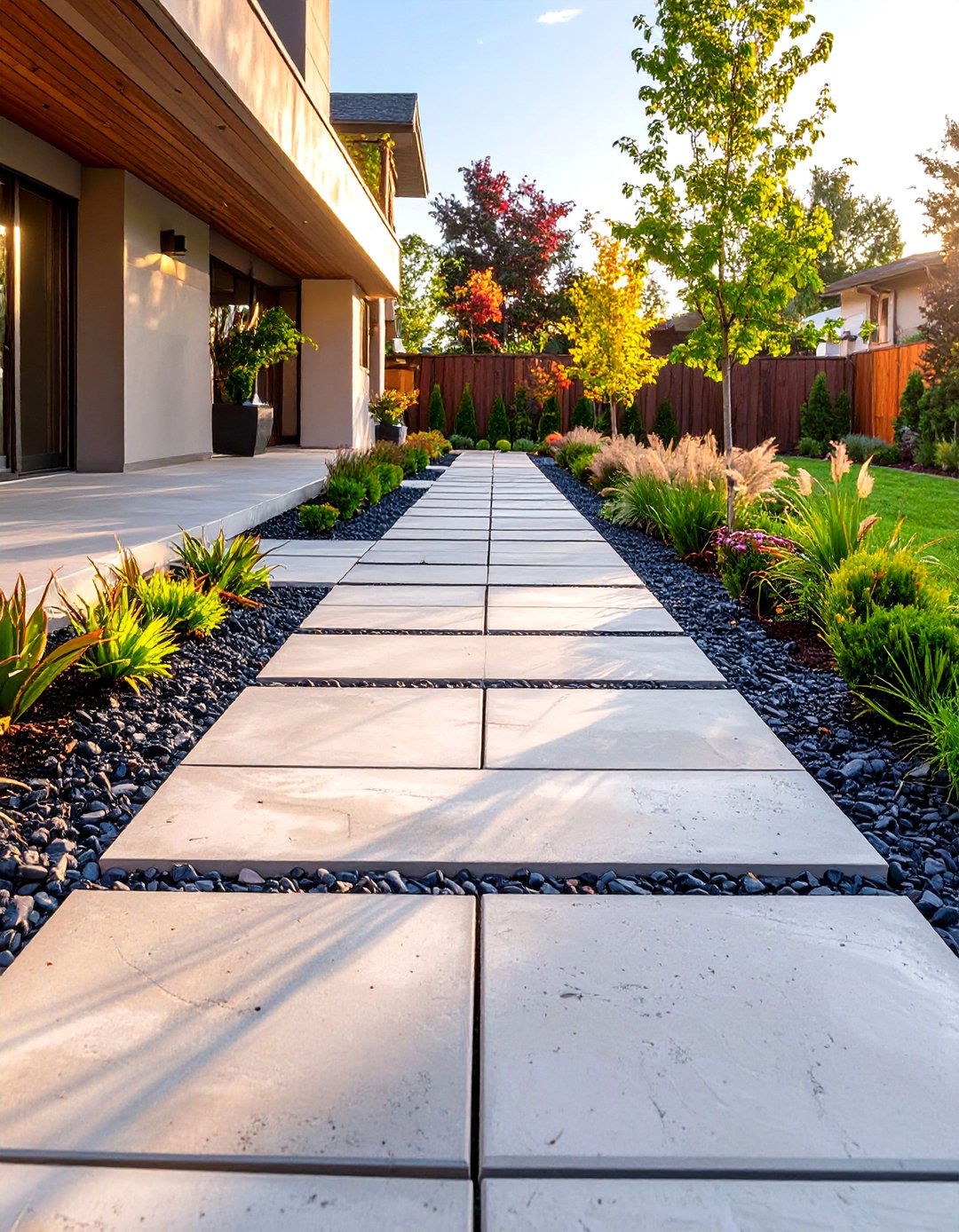
Large-format concrete pavers can reduce visual clutter and make a compact frontage seem more spacious. Choose smooth light gray slabs arranged in a simple grid, with narrow joints rather than complicated patterns. Dark gravel, permeable joint material, or thin grass strips between the pavers can add contrast. Continue the grid toward a modern walkway so the driveway and entry feel like one organized surface. Plant sculptural grasses, rounded evergreens, or drought-tolerant perennials in narrow beds beside the paving. A low steel edge will keep gravel and soil out of the joints. This complete design is particularly effective beside a contemporary or midcentury home, where the large rectangular shapes can echo windows, garage doors, and architectural lines.
8. Small Brick Driveway With A Basketweave Pattern
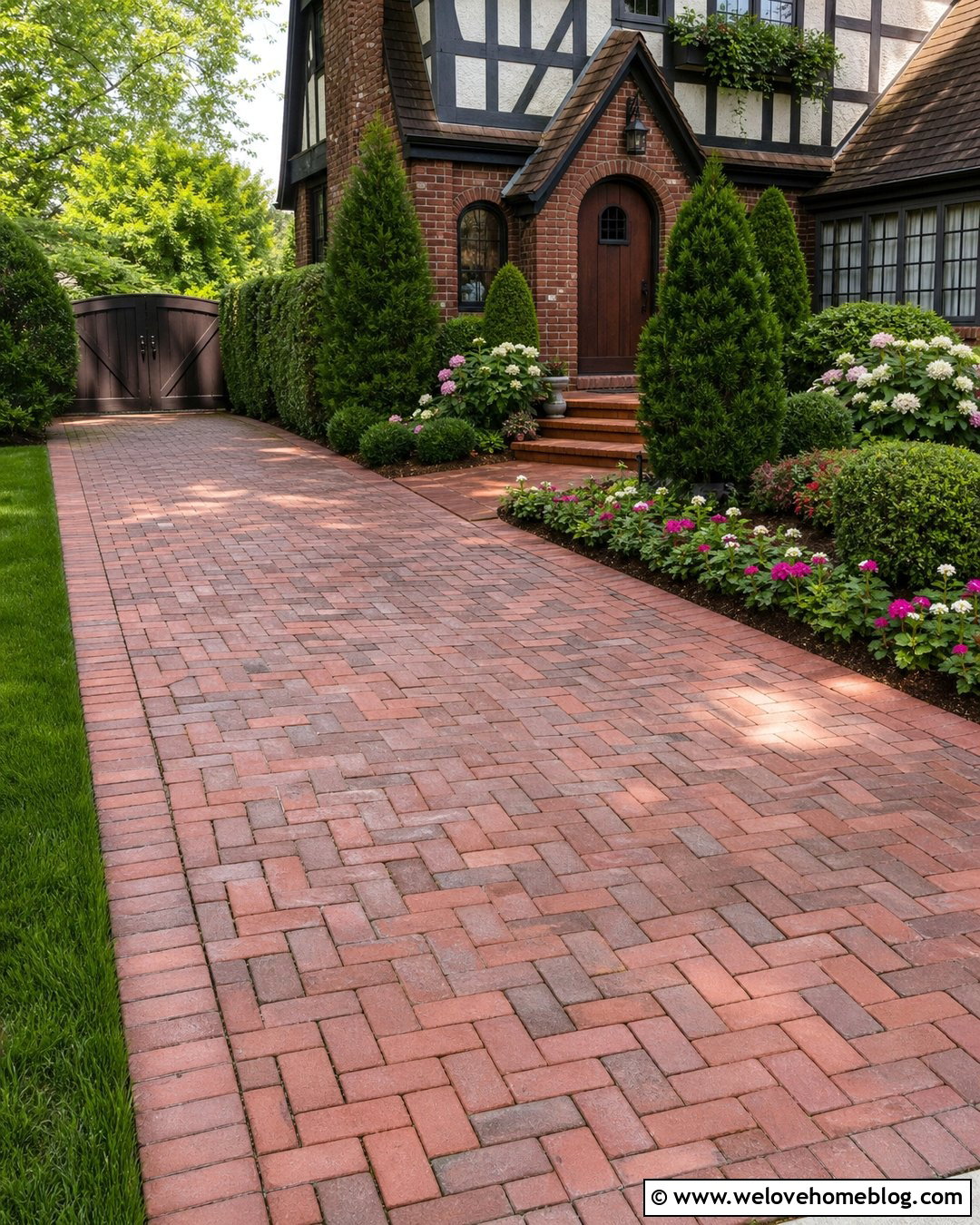
Rich clay brick gives a short driveway character without requiring elaborate landscaping. A basketweave pattern works well because its compact repeating blocks can visually broaden a narrow surface. Choose weathered red, brown, or muted burgundy brick that complements the home instead of competing with it. Frame the pattern with a simple running-bond border, and use matching brick for the front walkway. Along one side, add a shallow cottage bed filled with compact flowers and evergreen structure. Keep the other side open with a tidy lawn edge for easier access. This traditional small driveway looks natural in front of colonial, Tudor, and cottage homes. Occasional color variation within the brick will make the paved area feel established and inviting.
9. Small Driveway With Pea Gravel And Timber Edging
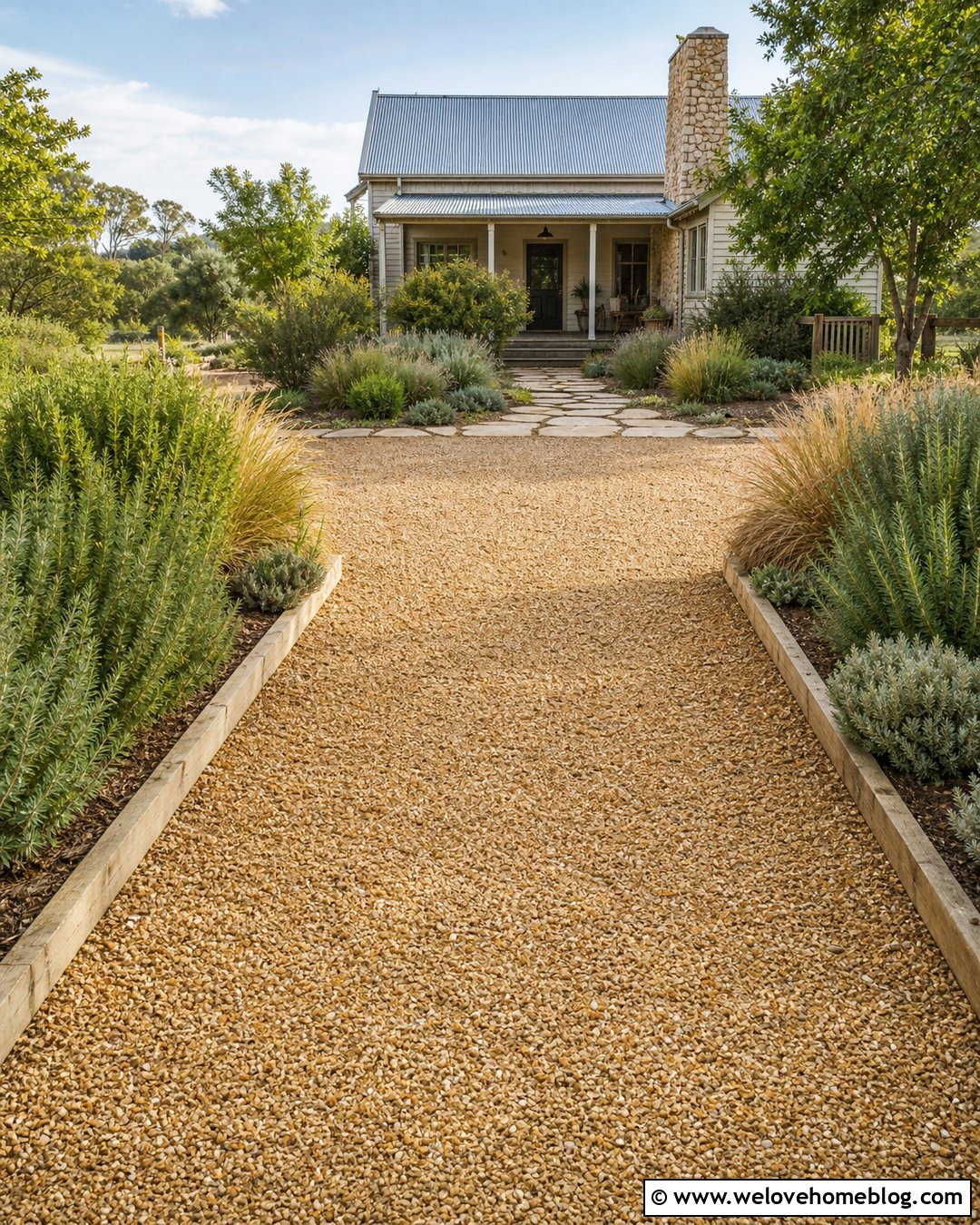
Warm pea gravel and natural timber create an affordable-looking driveway that feels casual and approachable. Use compacted golden or tan pea gravel over a properly prepared base, then contain it with pressure-treated landscape timbers. A straight layout is easiest to maintain on a narrow property. Near the house, widen the surface slightly to form a practical parking pad. Plant soft grasses, rosemary, or low native shrubs behind the timber edging, leaving enough clearance for vehicle doors. A simple flagstone path can cross the gravel and lead to the porch. This design pairs nicely with rustic cottages, cabins, and small farmhouse homes. The limited material palette prevents the frontage from appearing busy while still providing plenty of texture and warmth.


10. Small Driveway With A Side Garden
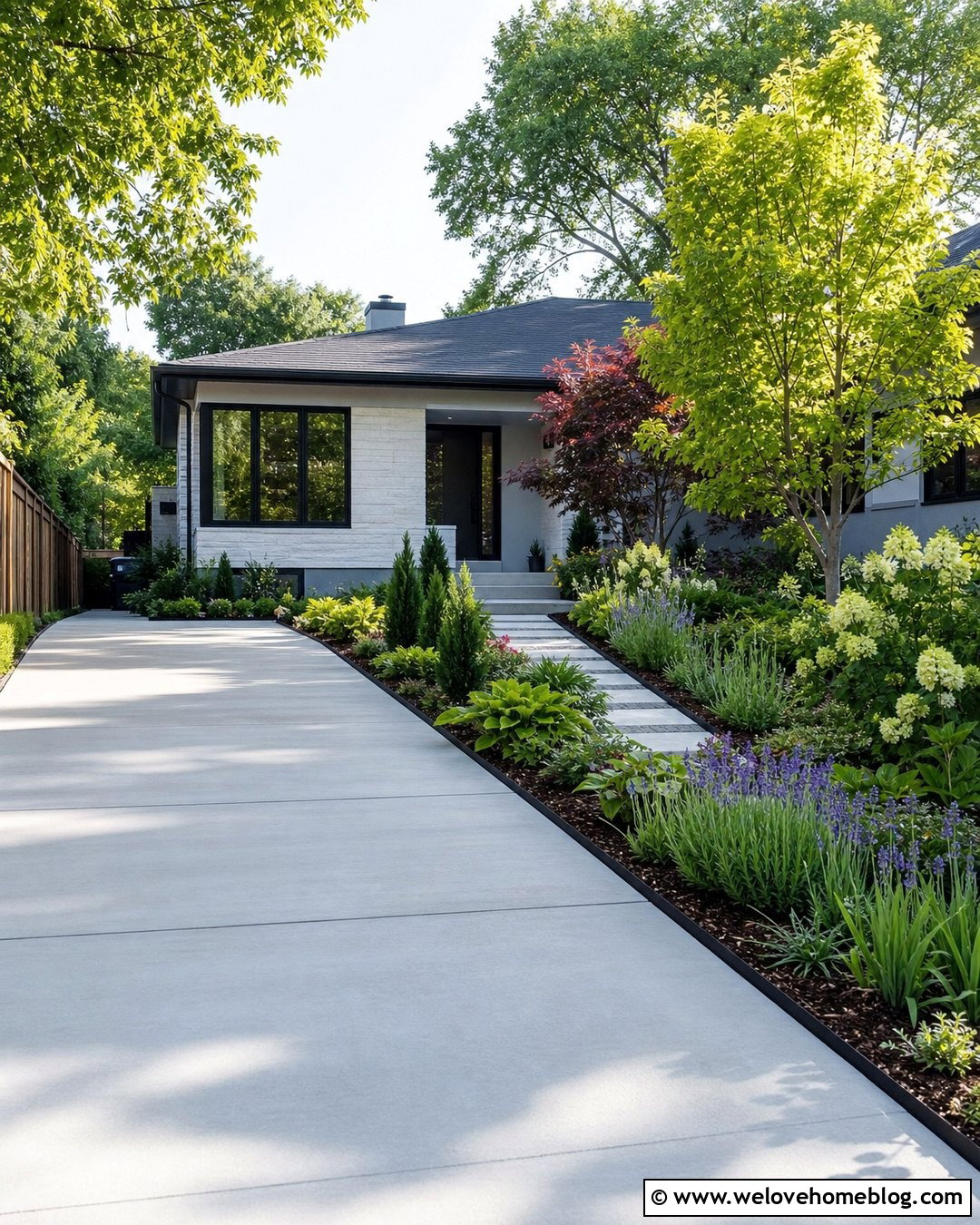
When the driveway occupies most of the front yard, concentrate the greenery into one carefully designed side garden. A smooth concrete or concrete-paver surface creates a practical parking area, while a narrow curved bed brings softness to the remaining space. Layer low groundcover at the front, compact flowering plants in the middle, and upright shrubs near the house. This arrangement adds depth without allowing branches to interfere with vehicles. Use a brick, steel, or stone edge that relates to the driveway material. A small walkway can pass through the garden before reaching the porch. Repeating only a few plant varieties will keep the narrow frontage orderly. The result is a complete landscape rather than a driveway with leftover plants squeezed around it.
11. Small Driveway With Permeable Pavers
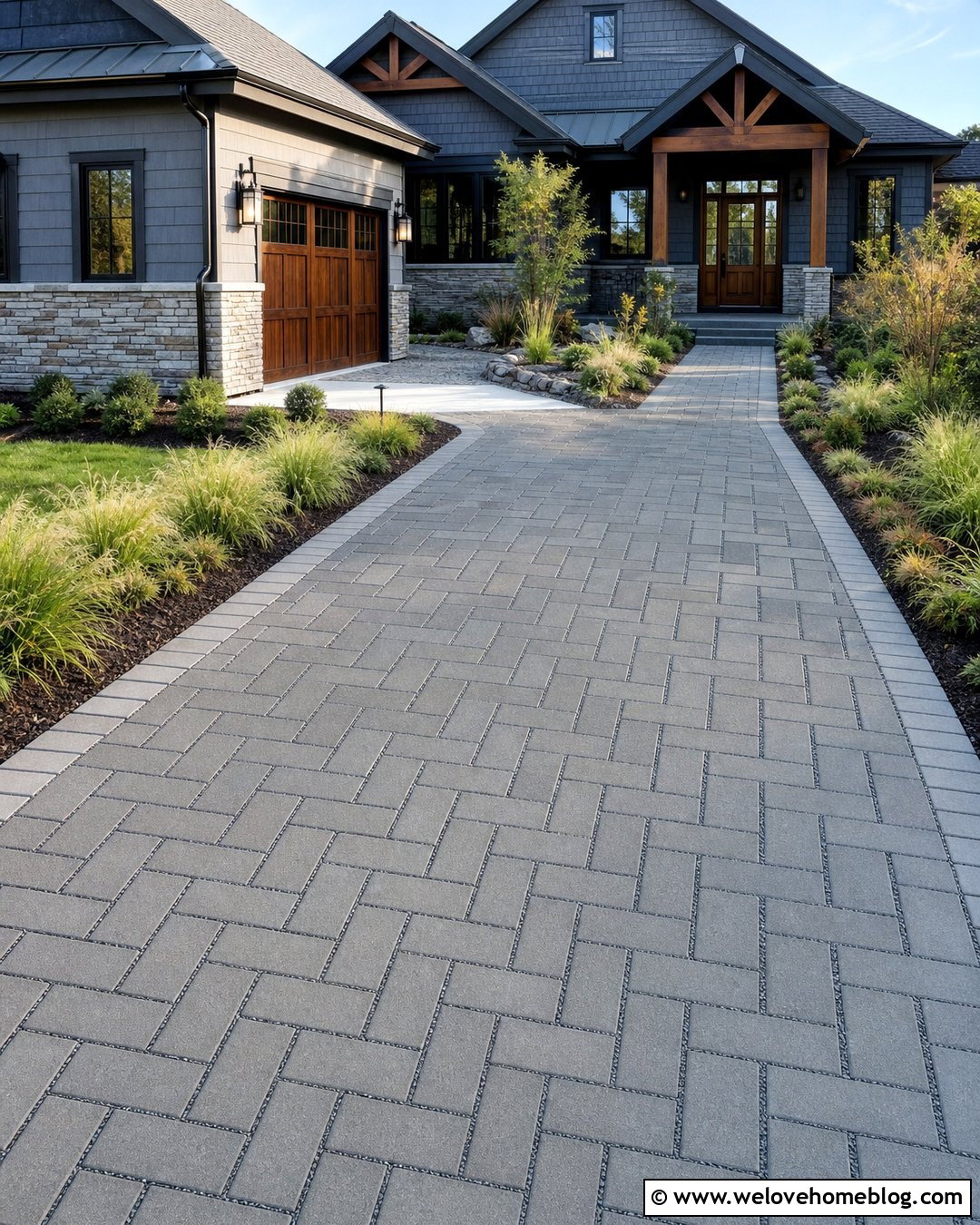
Rain-darkened paving can look attractive when the joints form part of the design. Permeable concrete pavers use wider, aggregate-filled openings that give a small driveway texture while allowing water to move through the prepared system. Choose mid-gray rectangular pavers with charcoal stone in the joints for a modern appearance. A narrow soldier-course border will produce a neat transition to the lawn and planting beds. Keep the driveway straight, and connect it to a matching permeable walkway. Add compact rain-tolerant plants in a shallow bed near the lower edge, where appropriate for the property. This cohesive look works well with contemporary, Craftsman, and bungalow homes. Confirm local drainage requirements and installation specifications before selecting the base and paving system.
12. Small Driveway With A Cobblestone Apron
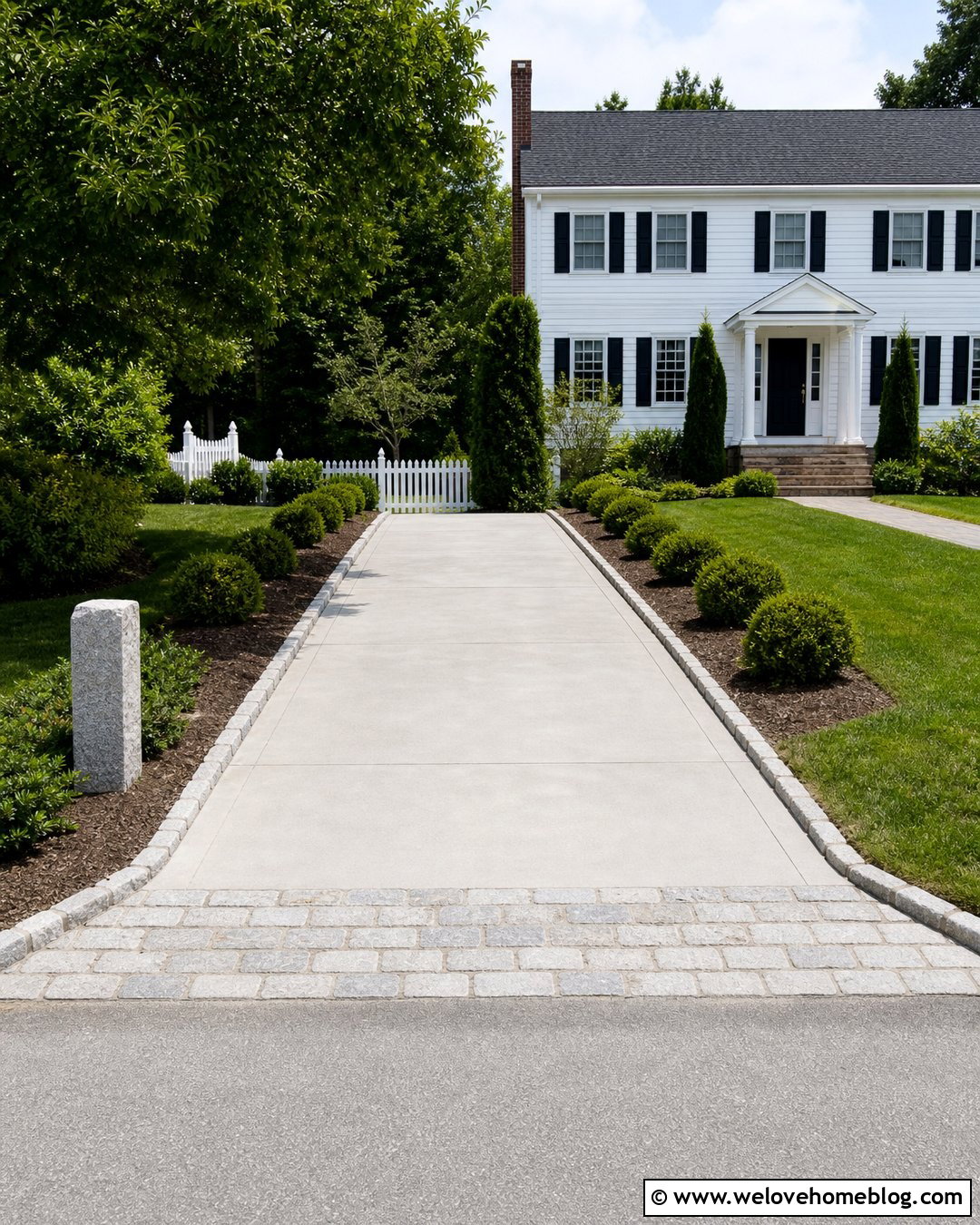
A cobblestone apron can give a modest driveway a stronger street presence without covering the whole surface in expensive stone. Use smooth gray concrete, asphalt, or gravel for the main parking area. Install a band of granite cobblestones across the driveway entrance and repeat the stone as narrow side edging. The contrasting apron clearly marks the transition from street to private property. Pair it with low evergreen mounds and a compact address marker near the curb. Keep the entrance open and avoid tall plants that could make maneuvering difficult. This detail looks especially appropriate in front of colonial, European-inspired, and traditional homes. Because the cobblestone is limited to key areas, the overall driveway remains simple, practical, and visually balanced.
13. Small Driveway With A Built-In Walkway
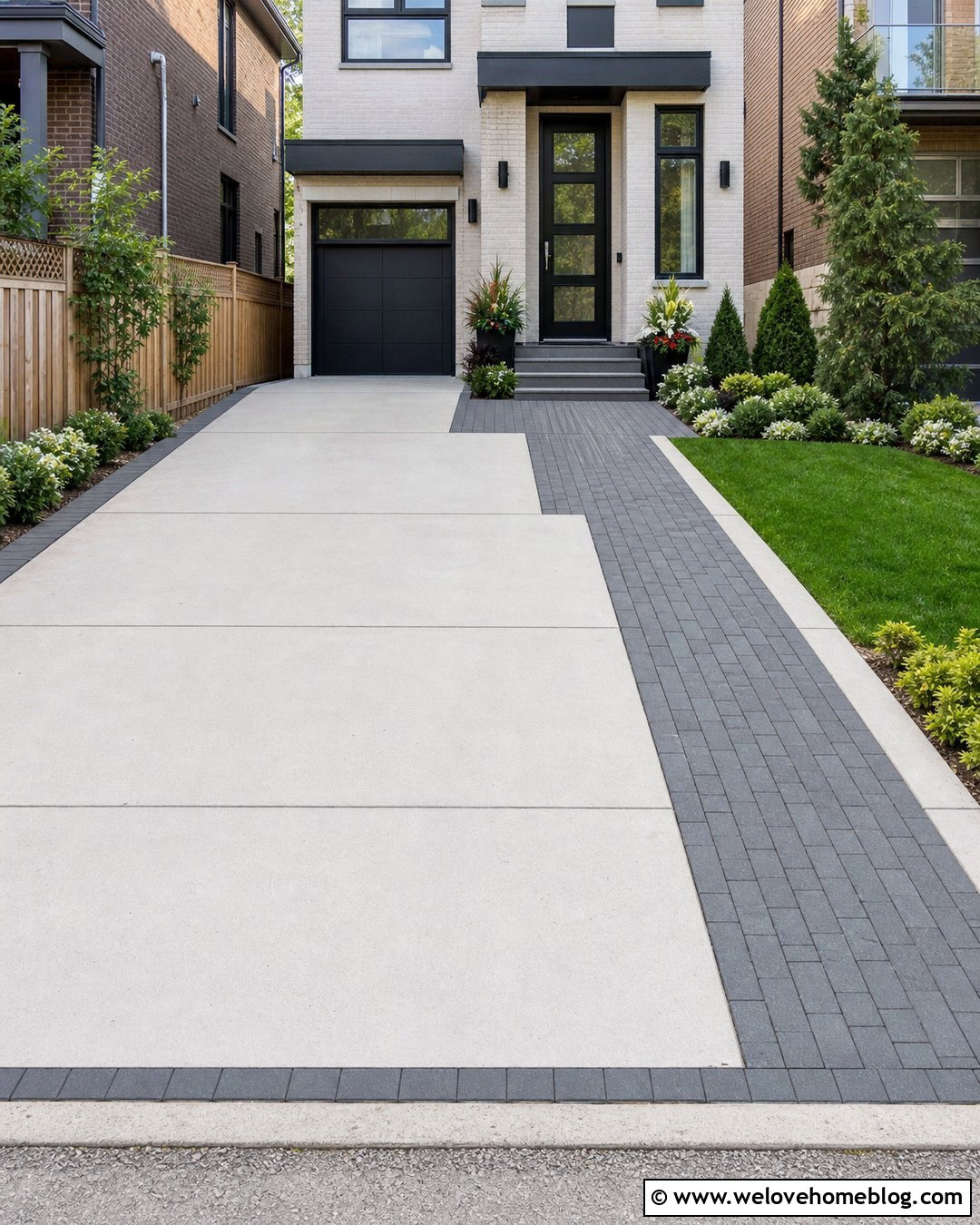
Combining a driveway and pedestrian path can save space, but each route should still be easy to recognize. Create the main driveway with smooth light gray concrete and define a walkway along one side using a darker paver band. Continue that band from the curb or parking area directly to the porch. A slight change in color and texture helps guide visitors without adding a separate path. Frame the outer edge with a narrow bed of dwarf shrubs and flowering groundcover. Near the house, widen the walkway to create a comfortable entry landing. This organized layout is useful for townhomes, duplexes, and narrow suburban lots. Keep the pattern simple so the shared surface looks deliberate rather than divided into too many small sections.
14. Small Driveway With Grass Pavers
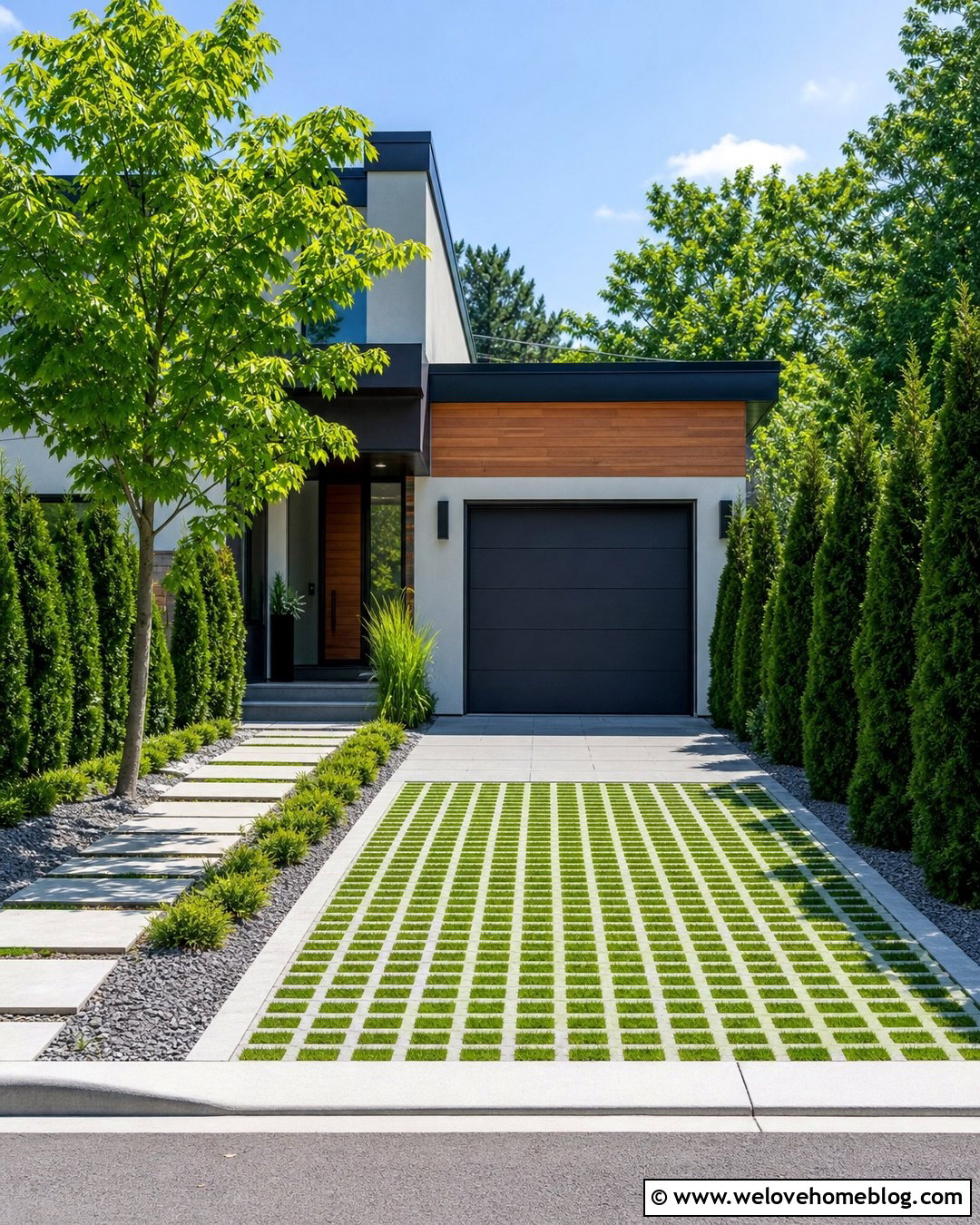
Grass pavers turn a parking surface into part of the landscape. Concrete grid units or reinforced cellular systems can support vehicles while leaving openings for turf or suitable low-growing plants. Use the green surface for a straight single-car driveway, then add solid concrete pavers near the garage and walkway where foot traffic is heavier. A clean metal or concrete edge will keep the grid aligned. Surround the driveway with uncomplicated lawn, columnar shrubs, and one compact shade tree. The resulting design feels softer than a fully paved frontage and can blend well with contemporary or eco-conscious homes. Choose planting and grid products suitable for local conditions, expected traffic, and maintenance. Regular trimming keeps the wheel area looking crisp rather than overgrown.
15. Small Driveway With White Gravel
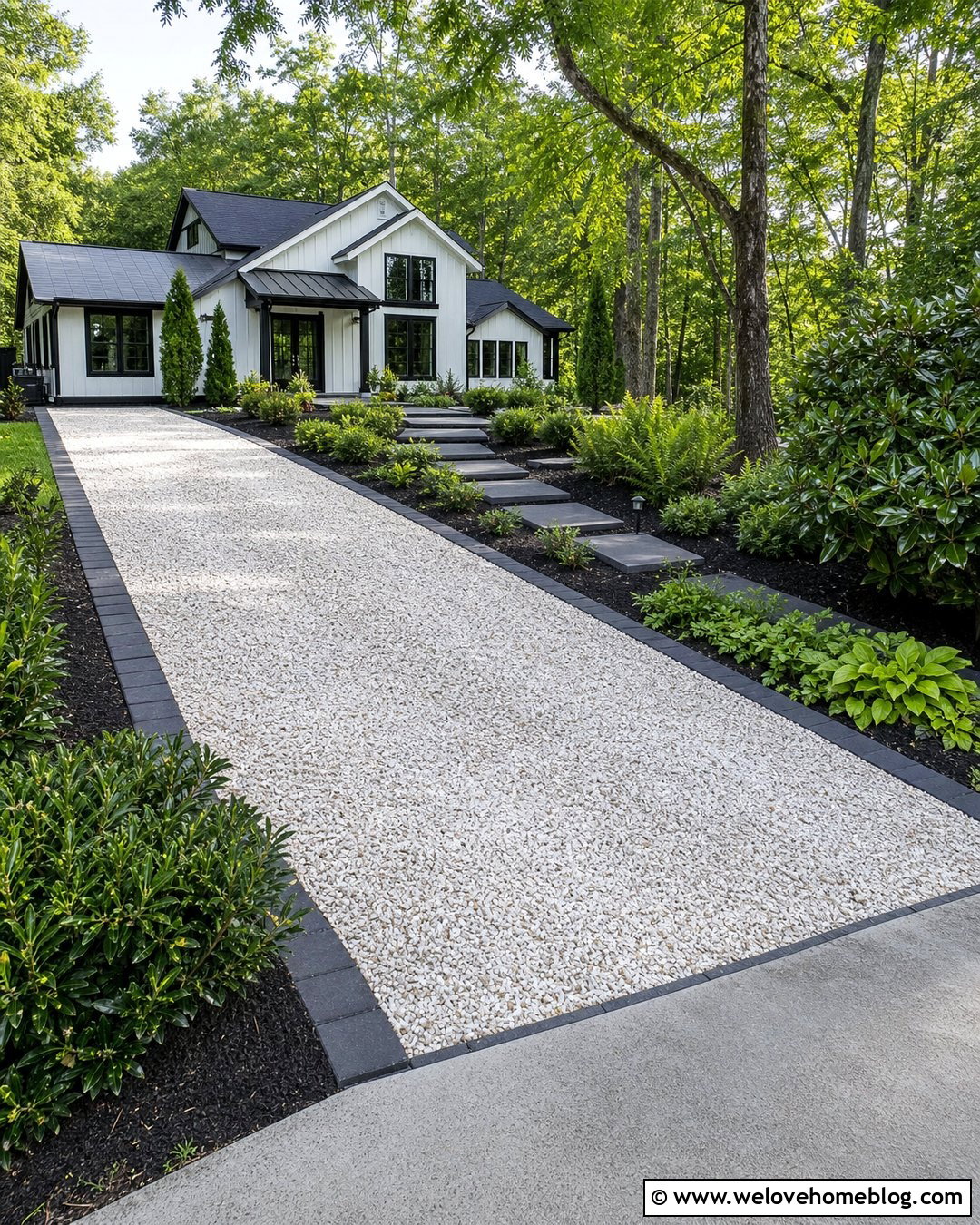
Bright white or pale cream gravel can visually lift a shaded, compact front yard. Use angular gravel rather than overly rounded stone when you want the surface to feel firmer under tires. Define the driveway with dark charcoal pavers for strong contrast, and keep the layout straight to emphasize its tidy proportions. Beside the parking space, plant glossy evergreen shrubs, ferns, or shade-tolerant groundcover in a slim mulched bed. A stepping-stone walkway in matching charcoal can lead across the gravel to the front door. This light-and-dark palette pairs beautifully with black, gray, and white house facades. Regularly maintained borders are important because scattered pale gravel will be noticeable against dark soil, mulch, or adjacent pavement.
16. Small Driveway With A Parking Pad
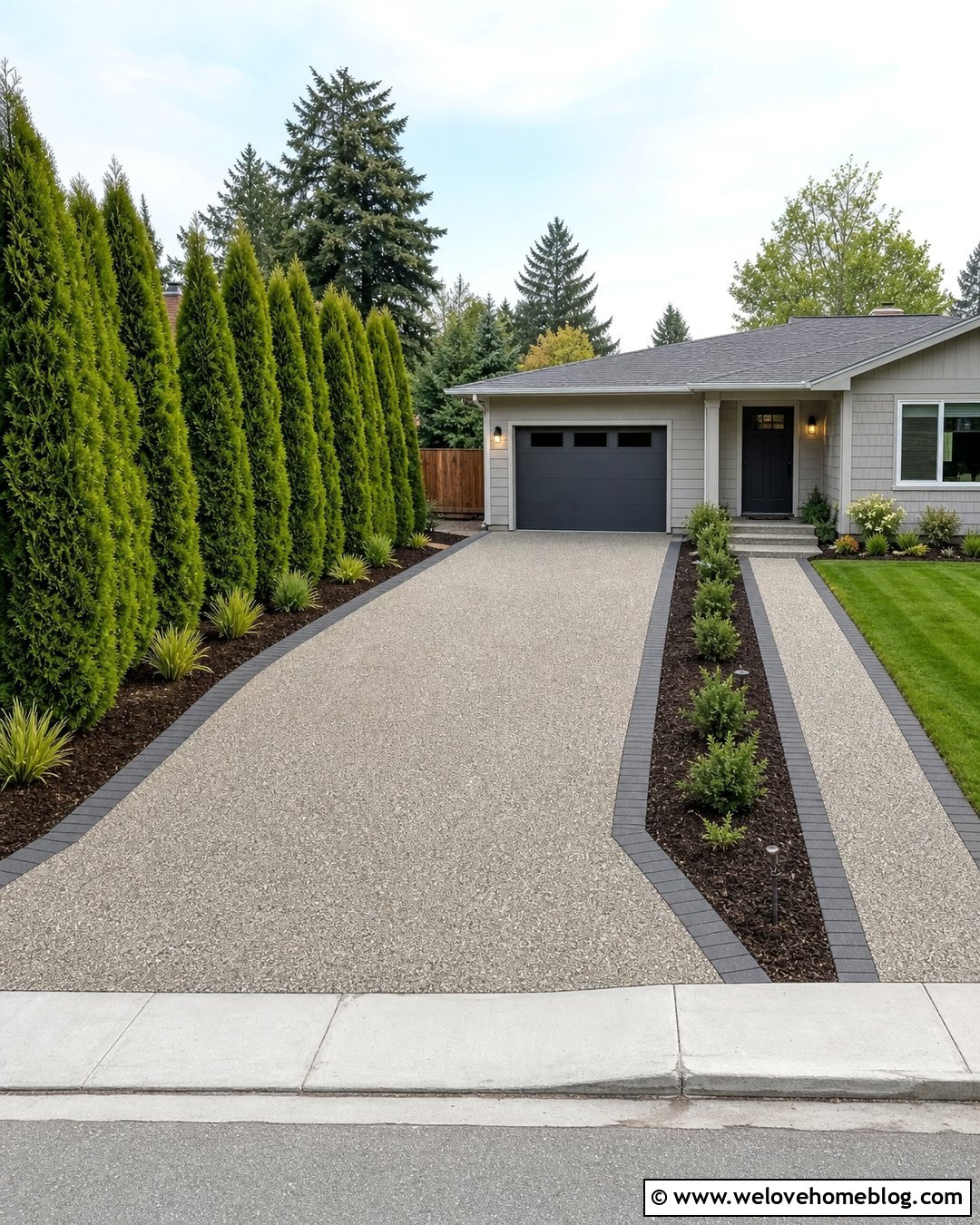
A short driveway may become more functional when it widens only where a vehicle actually parks. Keep the entrance narrow, then create a rectangular or gently tapered pad beside the house or garage. Use exposed aggregate concrete for the main surface and define the enlarged parking zone with a darker paver outline. Place a narrow walkway and planting bed along the opposite side so the yard still has a welcoming route to the porch. Upright evergreens can screen the parked vehicle without consuming much ground space. This layout prevents the entire frontage from looking like one broad paved area. Before construction, plan comfortable door clearance and verify that the expanded section fits property boundaries, drainage needs, and applicable local rules.
17. Small Driveway With Exposed Aggregate Concrete
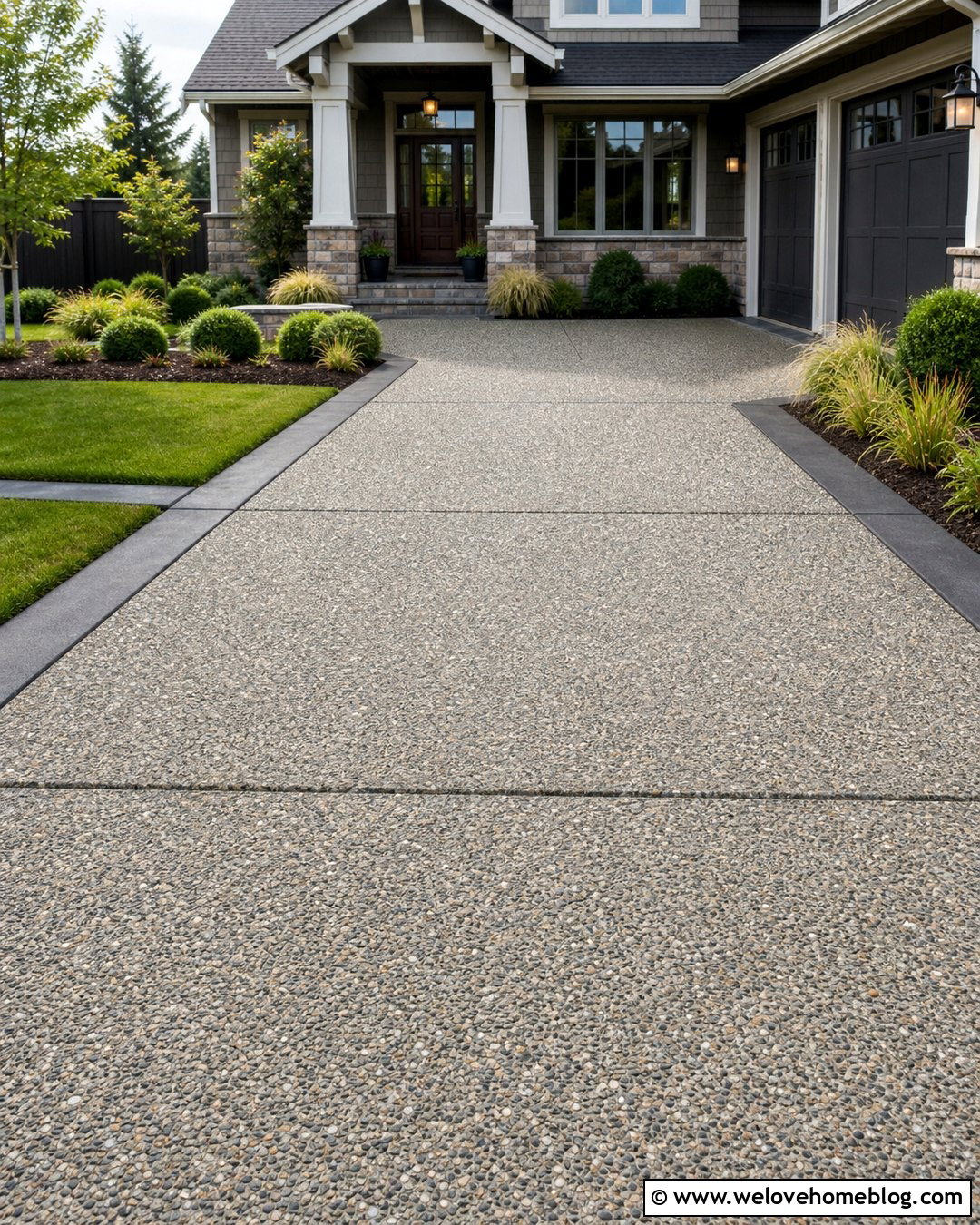
Exposed aggregate introduces fine texture that can disguise everyday dust and create a more decorative surface than plain concrete. Select a warm gray mix containing tan, cream, and charcoal stones. A straight or gently curved layout will allow the aggregate finish to remain the main visual feature. Outline the driveway with smooth charcoal concrete bands for a crisp contrast. Beside it, use low grasses, rounded shrubs, and a small lawn panel to balance the textured paving. Match the front steps or walkway to one of the aggregate colors rather than introducing another unrelated material. This complete look is adaptable to ranch, contemporary, and Craftsman homes. Apply the finish consistently so the compact driveway feels unified and not visually fragmented.
18. Small Driveway With A Modern Black Border
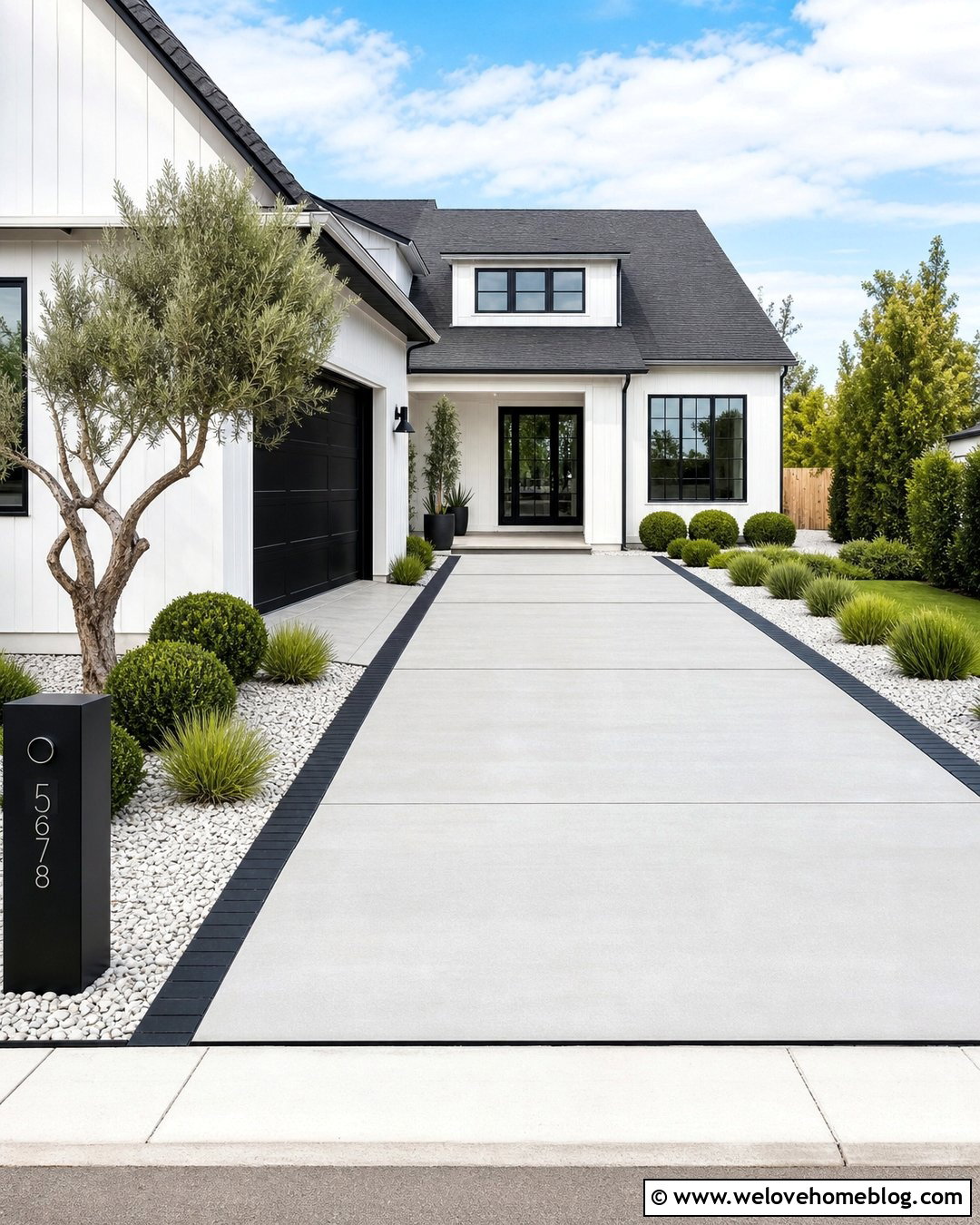
A bold black border can transform a basic driveway into a sharp contemporary feature. Start with large light gray concrete pavers or smooth poured concrete, then install black brick or charcoal pavers around the perimeter. Keep the driveway rectangular and align its joints with the garage and front walkway. Matte black address numbers, narrow planters, and simple path lights can repeat the border color. Use restrained landscaping with ornamental grasses, low green shrubs, and one sculptural tree. White gravel mulch can brighten small planting pockets without crowding the paving. This coordinated look works best with modern and modern farmhouse homes. Avoid decorative curves and multiple accent colors, since clean lines make a compact driveway appear more organized and generous.
19. Small Driveway With Low-Maintenance Landscaping
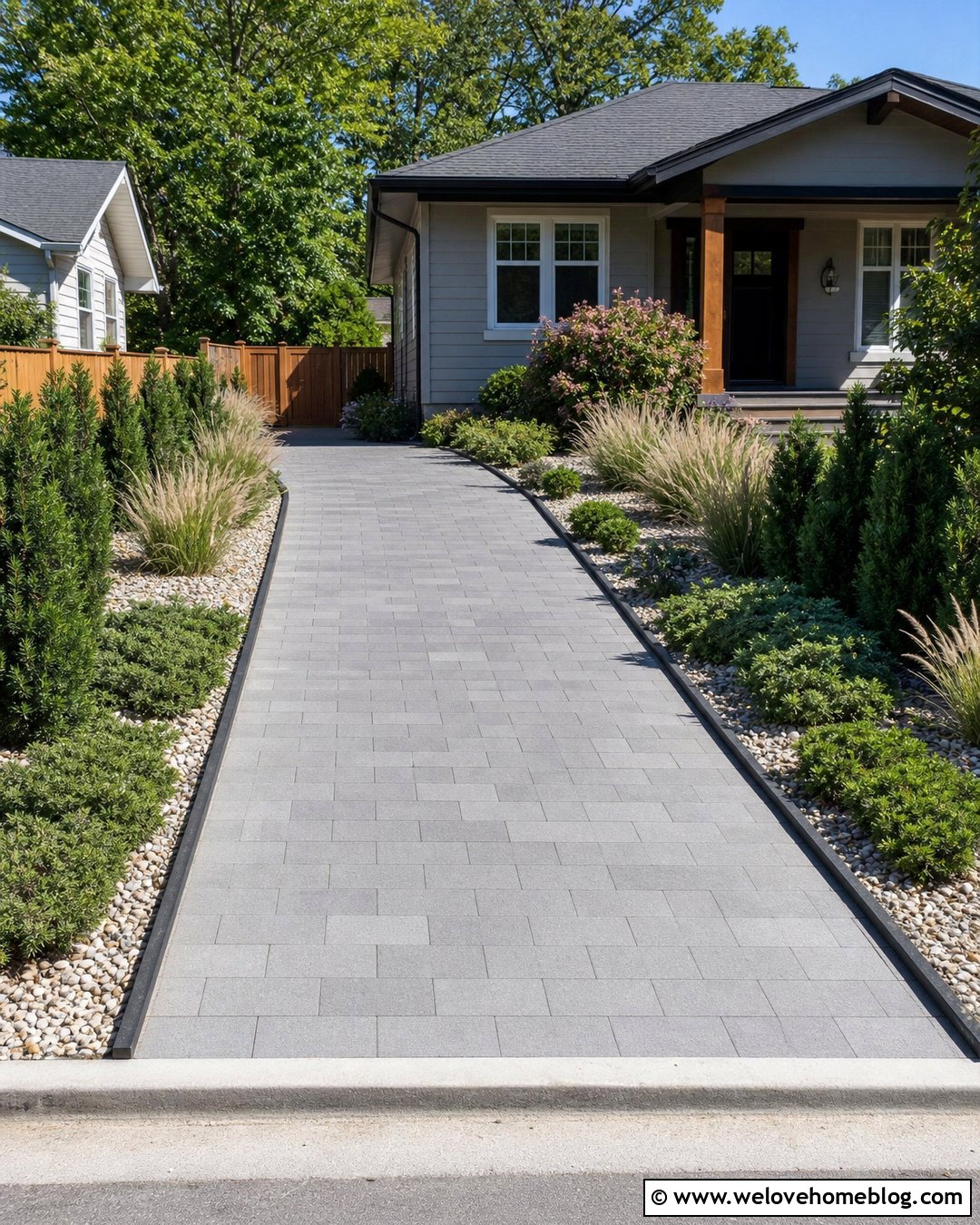
Picture a tidy driveway that does not require constant trimming or replanting. Begin with warm gray concrete pavers in a straight layout and frame them with shallow beds of slow-growing shrubs, ornamental grasses, and durable groundcover. Use a limited plant palette repeated on both sides to create visual rhythm. Gravel mulch and steel edging will give the beds a neat finish while preventing loose material from moving onto the paving. Include one compact flowering shrub near the porch as a seasonal focal point. Leave clear space beside the usual parking position so plants are not damaged by opening doors. This balanced design works for busy households that want greenery, structure, and curb appeal without filling a small yard with demanding garden features.
20. Small Driveway With Drought-Tolerant Planting
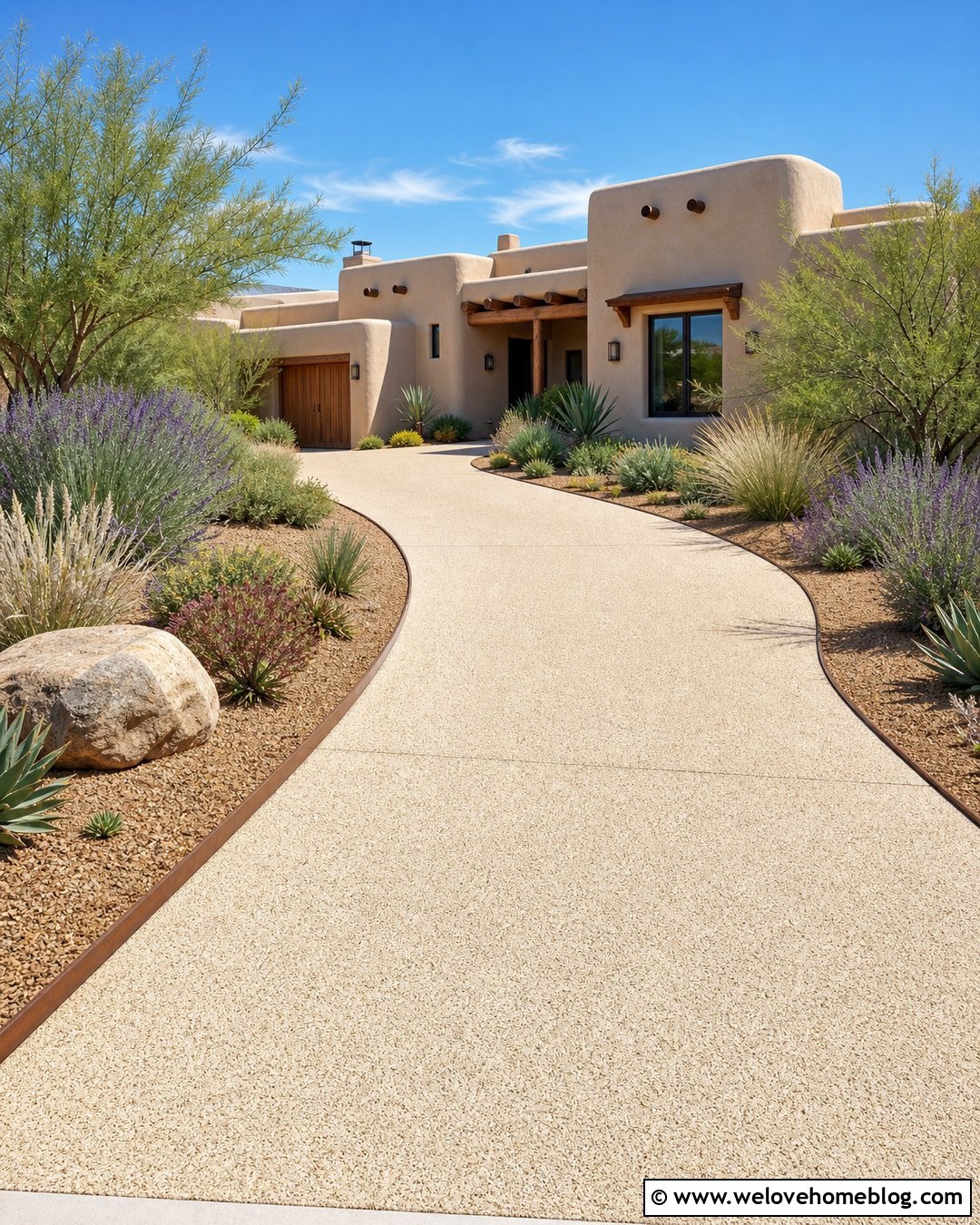
A sun-baked front yard can still feel colorful and inviting. Pair a pale resin-bound gravel or light concrete driveway with narrow beds of drought-tolerant plants suited to the local climate. Compact agave, salvia, lavender, feather grass, and low succulents can provide varied shapes without creating a bulky border. Use decomposed granite mulch and weathered steel edging to reinforce the warm, dry-garden palette. A slightly curved driveway can weave around one small specimen plant or decorative boulder, provided the parking route remains generous enough. This design looks natural beside Southwestern, modern, and stucco homes. Keep taller or sharply pointed plants away from vehicle doors and pedestrian areas. Group plants in simple clusters so the small landscape remains calm and cohesive.
21. Small Driveway With A Cottage Flower Border
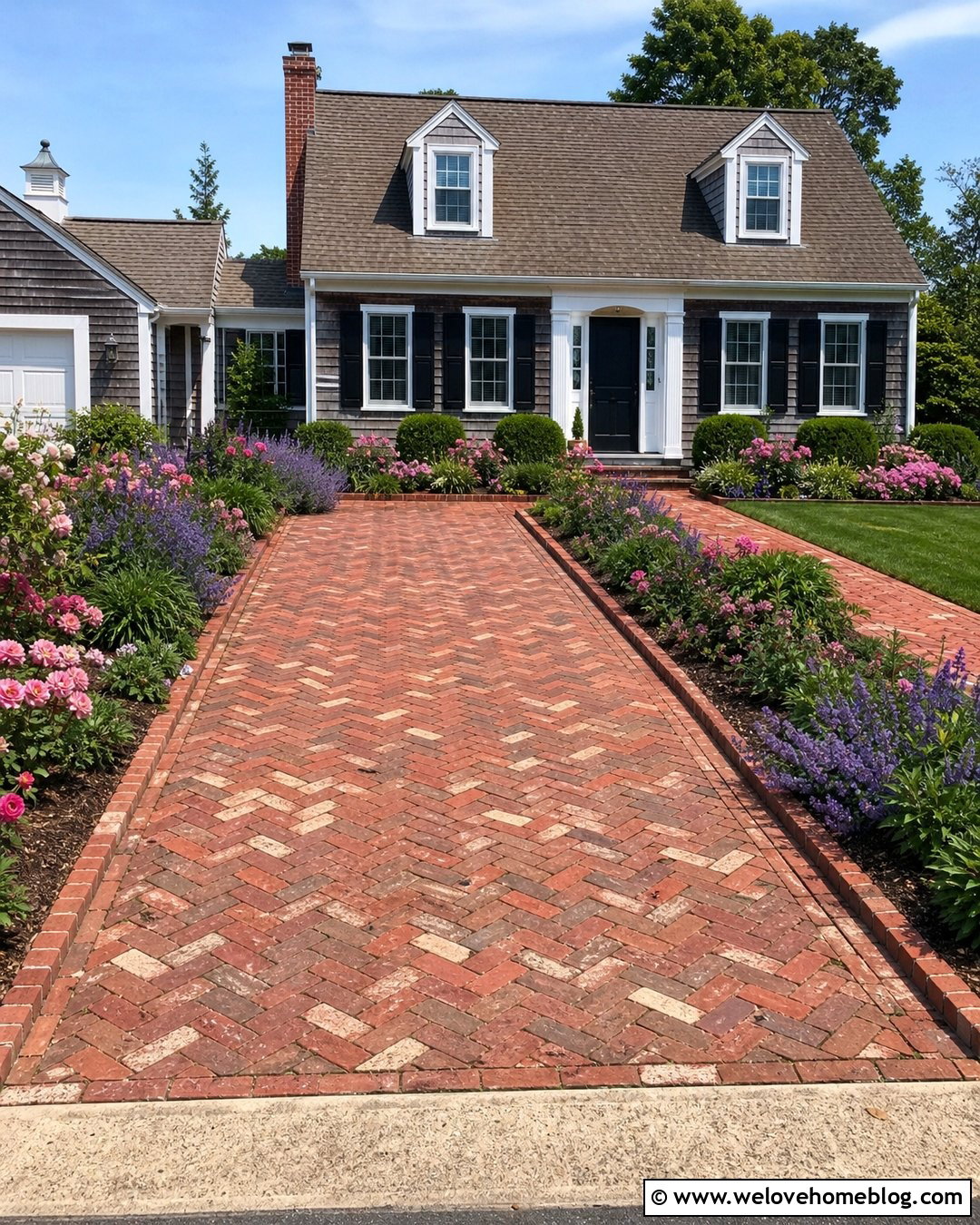
Soft flowers can turn a practical driveway into a charming approach to the house. Use aged clay brick pavers or warm gravel for the surface, then create one narrow flower border along the sunniest side. Combine compact roses, catmint, hardy geraniums, salvia, and clipped evergreens, choosing plants appropriate for local conditions. Repeat colors rather than filling the bed with unrelated varieties. A low brick edge will keep soil away from the driveway and connect the landscaping to the paved surface. On the opposite side, maintain a simple lawn strip for easier vehicle access. Lead a matching brick walkway toward the porch or garden gate. This complete driveway look suits cottages, Cape Cod homes, bungalows, and smaller traditional houses.
22. Small Driveway With Columnar Trees
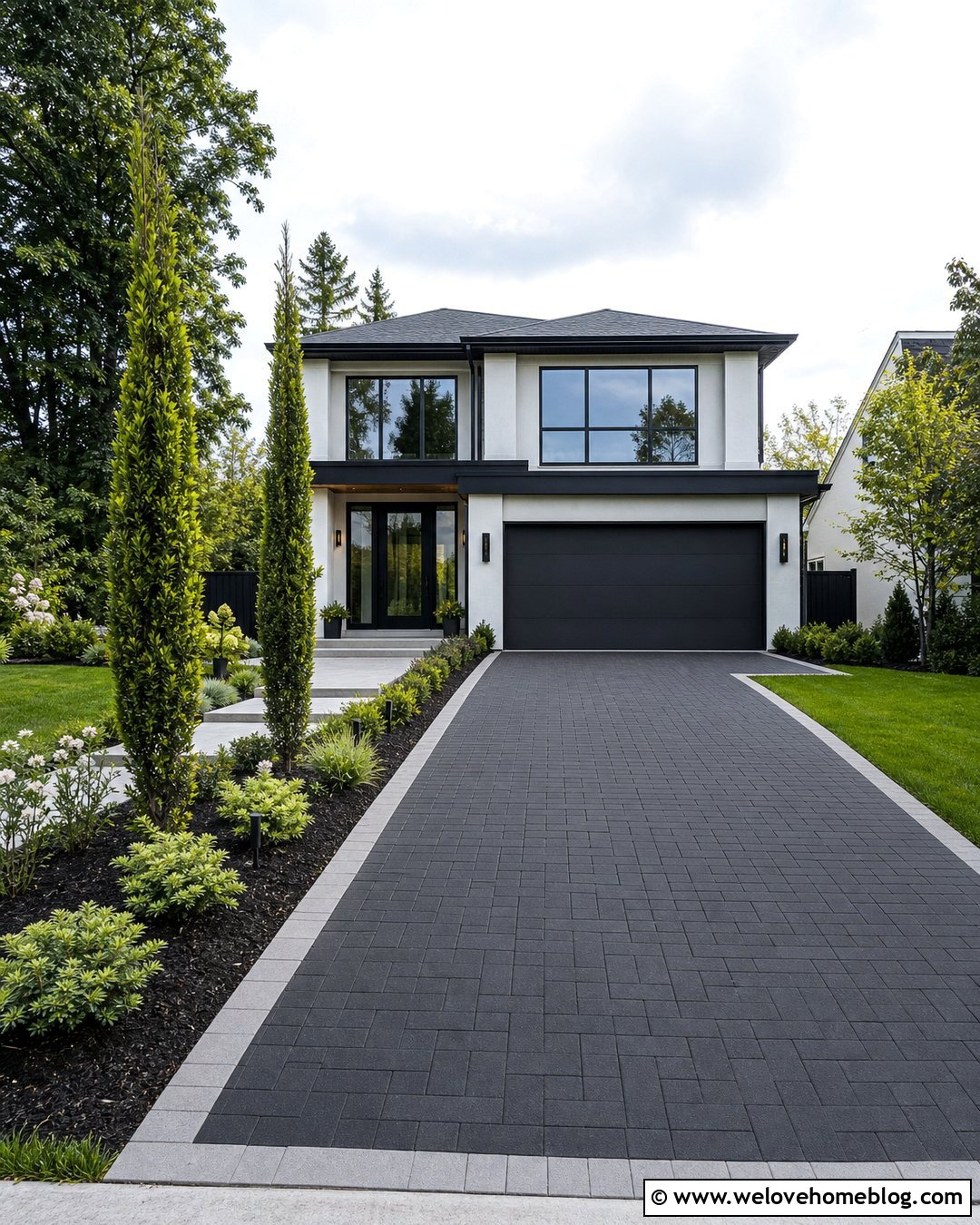
Tall, narrow trees draw the eye upward and provide structure without occupying the width of a compact driveway. Frame a straight charcoal-paver surface with two columnar trees positioned near the house or entrance, depending on available space. Surround each tree with a restrained bed of groundcover and low shrubs. Keep trunks, branches, and roots comfortably separated from paving and vehicle movement. A lighter paver border can outline the dark driveway and connect to the walkway. This vertical composition works well with two-story homes because the planting balances the height of the facade. Select tree species based on local climate, mature dimensions, utility lines, and root behavior. Repeating the same tree on each side creates symmetry and helps a narrow property feel intentionally arranged.
23. Small Driveway With Raised Planters
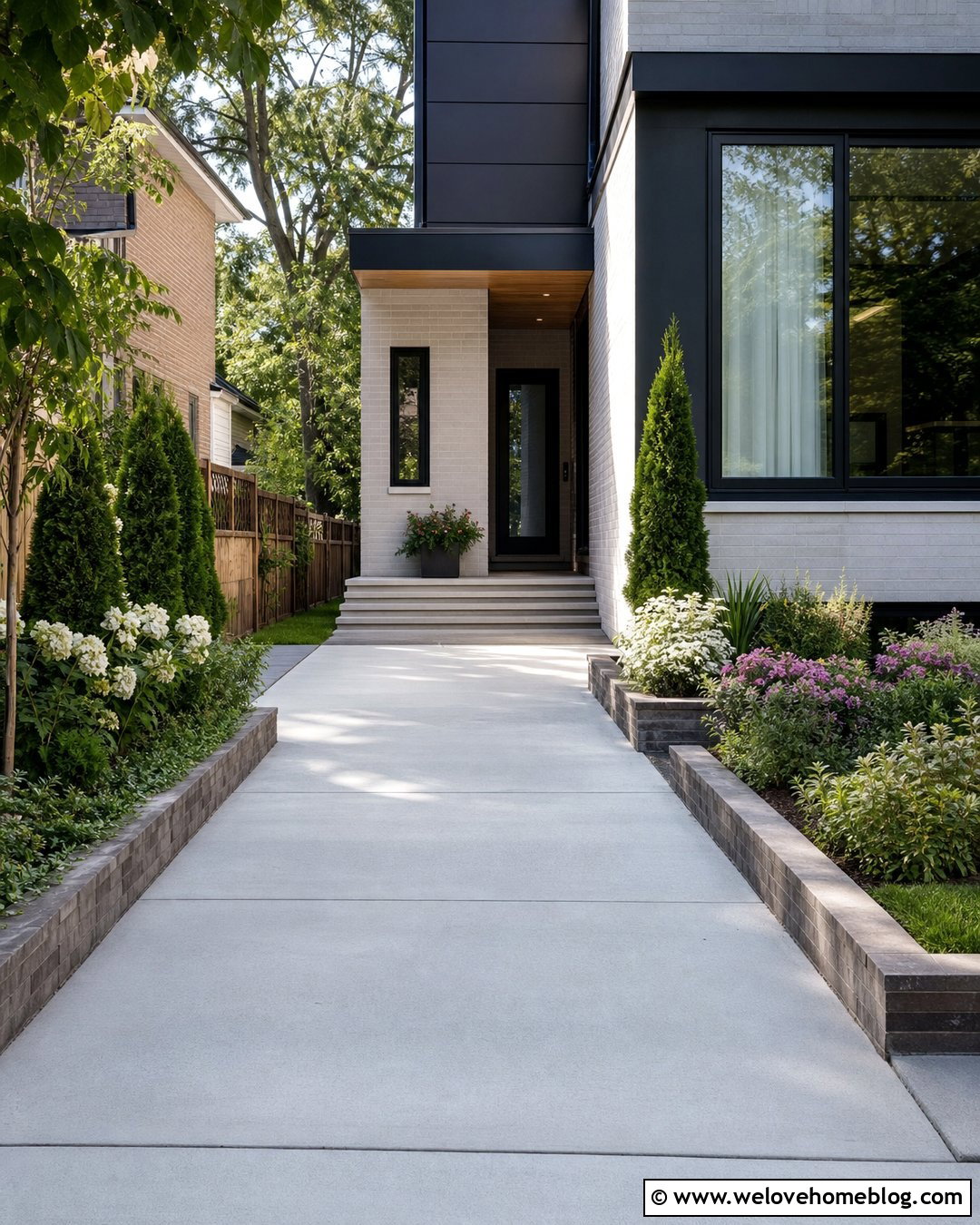
Raised planters can provide greenery where open soil is scarce. Build two slim planters along the outer driveway edge or place one beside the garage, using brick, rendered masonry, or stone that matches the home. Pair them with a smooth poured-concrete driveway in a straightforward rectangular layout. Fill the planters with layered but compact vegetation, such as trailing groundcover, flowering perennials, and upright evergreen accents. Keep the walls low near the curb and parking area so they do not obstruct movement or make the space feel enclosed. Continue the planter material around the porch steps or address sign. This complete arrangement is useful for urban homes and narrow lots where defined beds create a cleaner appearance than several disconnected containers.
24. Small Driveway With A Horizontal Slat Gate
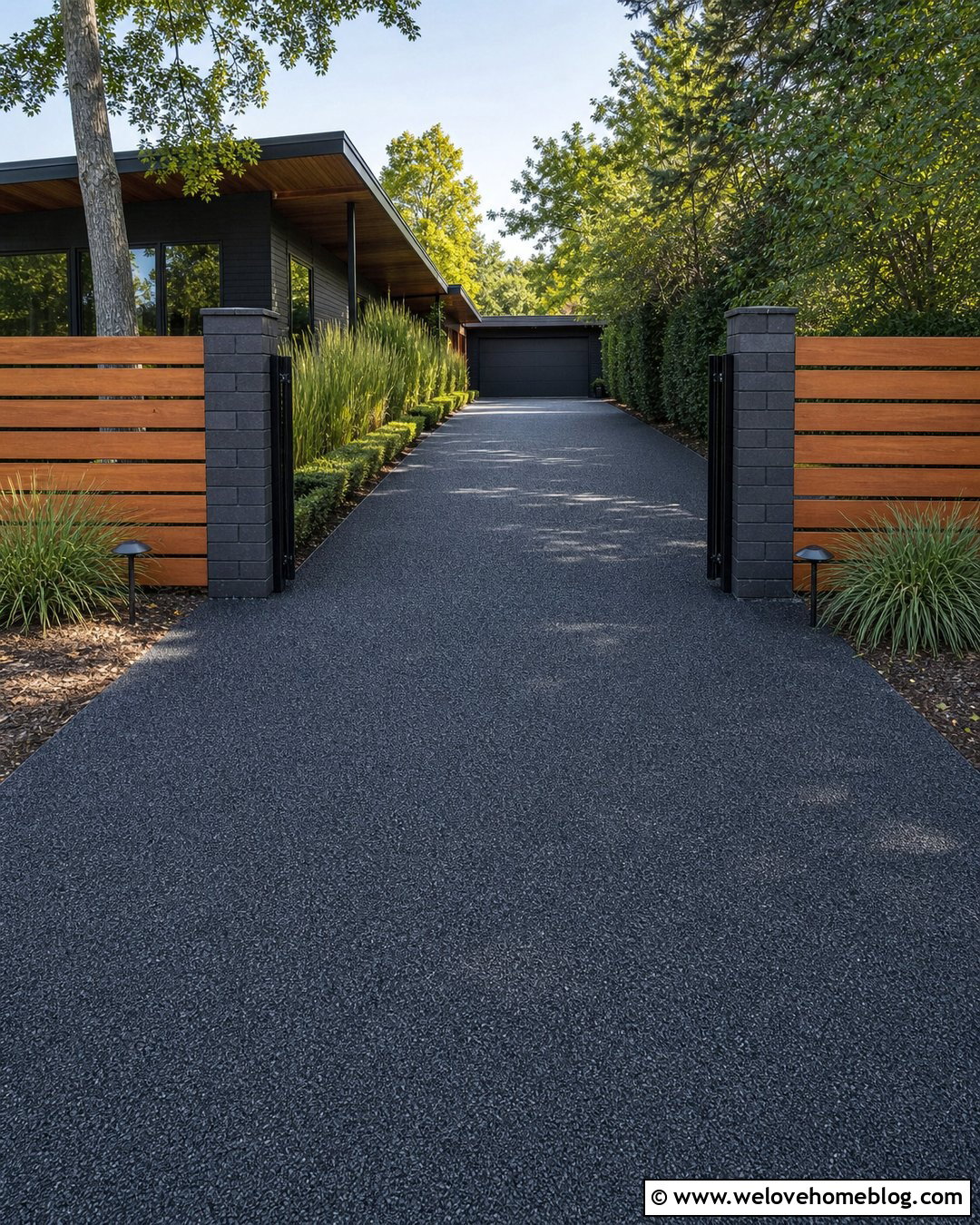
A slim horizontal slat gate can make a compact driveway feel private without looking heavy. Choose a straight resin-bound gravel or smooth concrete surface leading to a detached garage or side yard. Install a simple wood or powder-coated aluminum gate between narrow masonry pillars, leaving enough clear width for convenient entry. Repeat the gate’s horizontal lines in a low fence or house detail. Beside the entrance, add upright grasses and clipped shrubs that soften the structure without hiding it. Recessed or low-profile lighting can define the threshold while preserving the uncluttered design. This setup is especially effective with modern, midcentury, and contemporary homes. Keep the gate color coordinated with the garage door, window frames, or front door for a unified facade.
25. Small Driveway With Brick Pillars
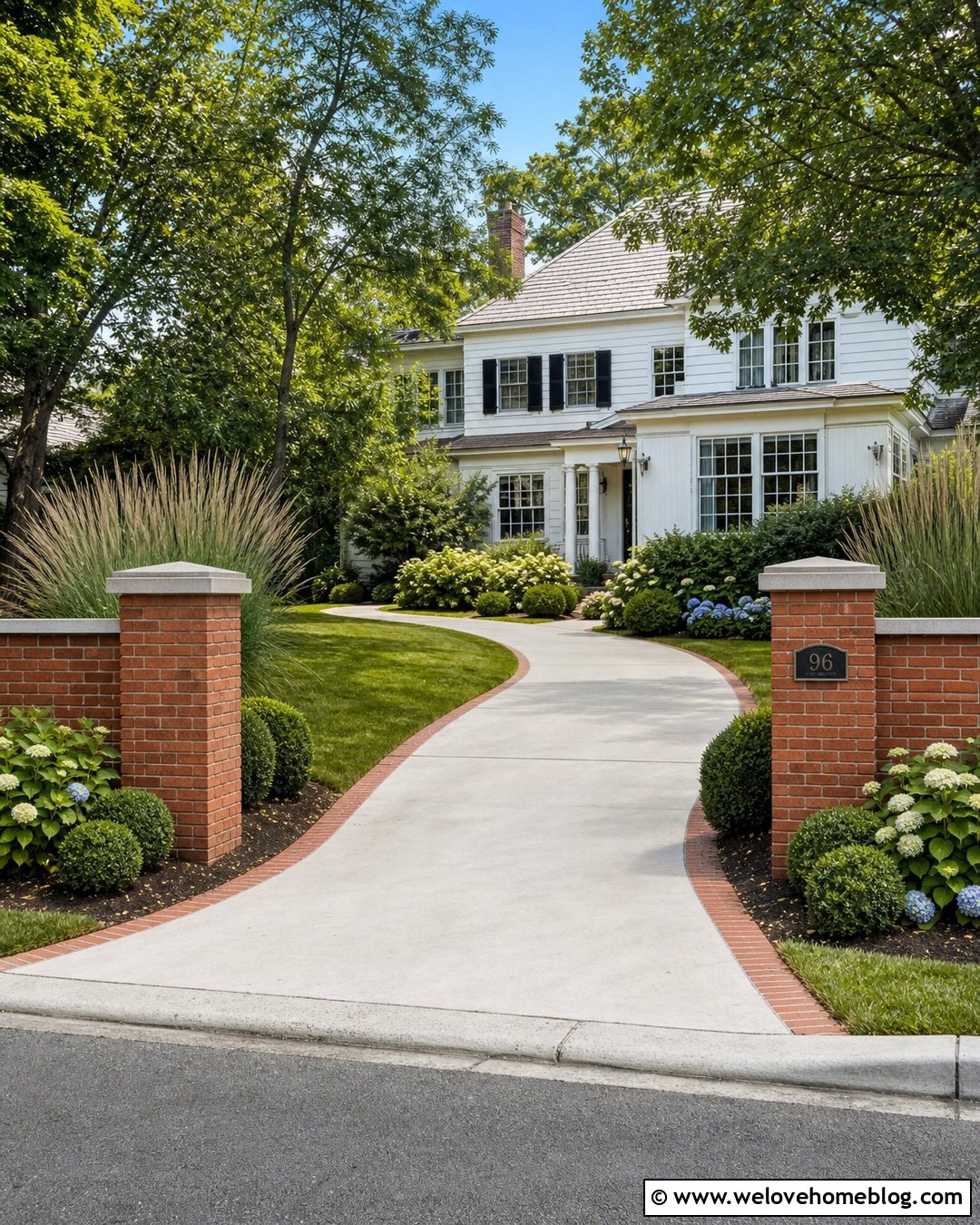
Brick pillars give a small driveway entrance a sense of permanence, but their scale should suit the limited frontage. Use narrow pillars with simple caps rather than oversized structures. Connect them to low brick walls or short planting beds, leaving the center visually open. A light gray concrete driveway with a subtle curve will contrast naturally with red or brown brick. Repeat the pillar material as a thin driveway border and around the mailbox or address plaque. Low boxwood, hydrangeas, or compact ornamental grasses can soften each base. This traditional arrangement complements colonial, Georgian, and Craftsman houses. Carefully coordinate the entrance width, pillar placement, and vehicle path so the decorative structure improves the approach without making everyday access feel restrictive.
26. Small Driveway With A Wooden Arbor Entrance
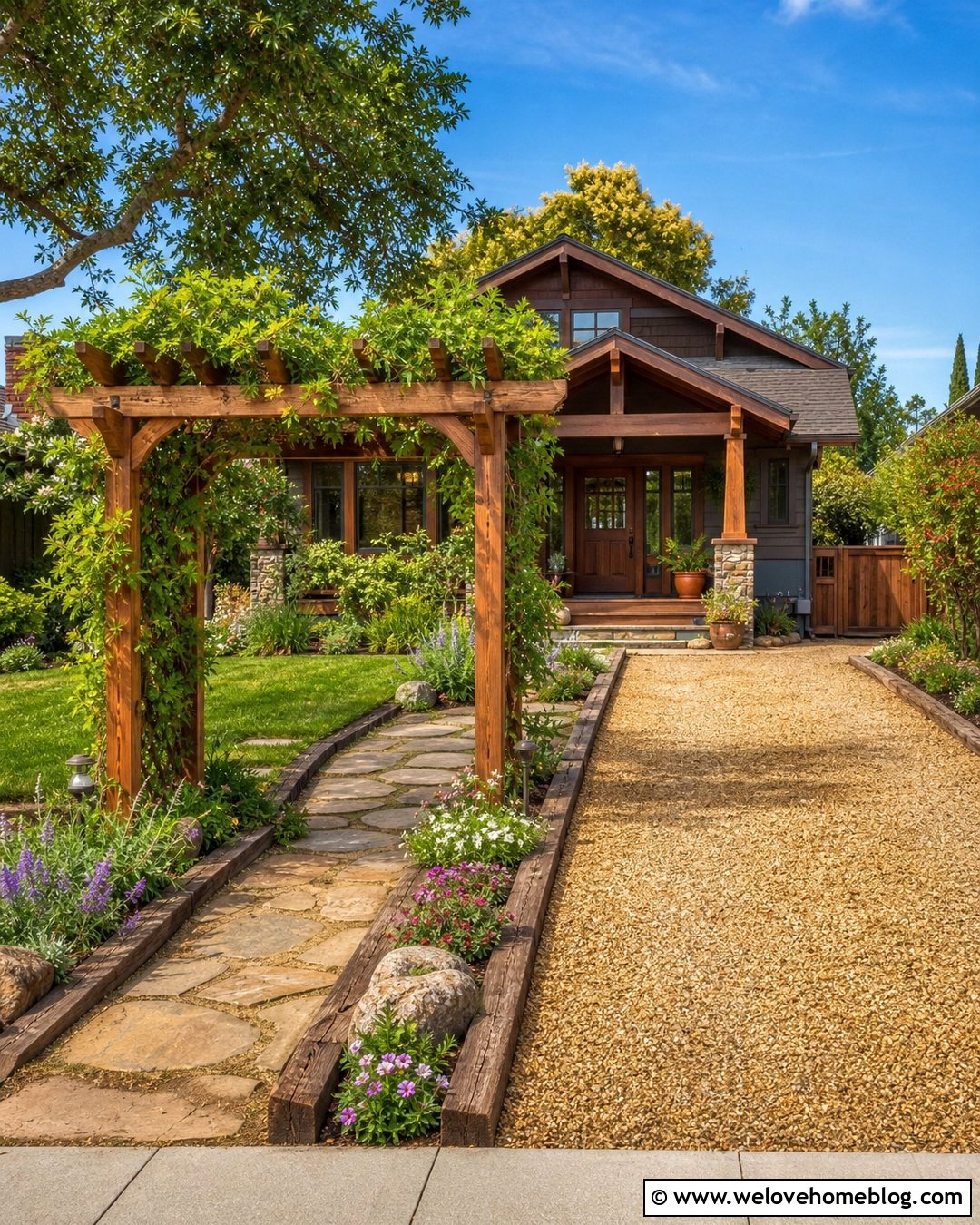
A simple wooden arbor can distinguish the pedestrian entry while allowing the driveway to remain open. Place it over a narrow side walkway rather than directly above the vehicle route. Use warm tan gravel for the driveway and flagstone for the path, tying both materials together with timber or natural stone edging. Climbing roses, clematis, or another suitable vine can soften the arbor without spreading into the parking area. Add a low cottage border near the walkway and leave the opposite driveway edge mostly clear. This layered entrance looks inviting in front of cottages, Craftsman bungalows, and farmhouse homes. Paint or stain the arbor to match the porch, fence, or front door so it feels connected to the architecture.
27. Small Driveway With A Stepping-Stone Path
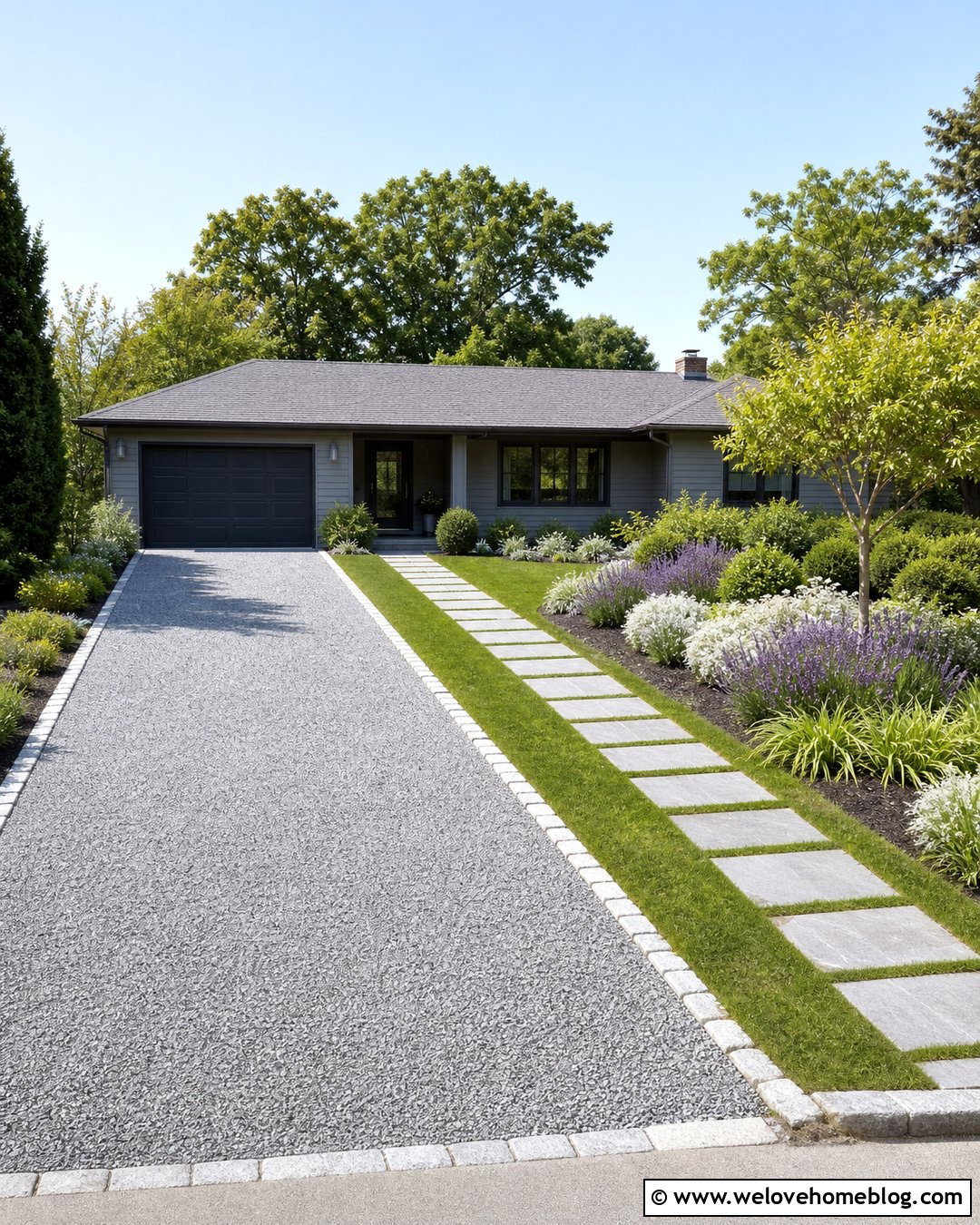
A separate walkway does not need to consume a large portion of the yard. Pair a compact gray gravel driveway with rectangular stepping stones set through a narrow lawn or groundcover strip. Begin the path near the parking position and direct it toward the front steps. Use stone in a color that complements the driveway edging and house facade. Along the outer edge, add low shrubs and one compact ornamental tree to frame the route. Keep the stepping stones level and generously sized for an easy transition from car to porch. This design gives pedestrians a clear path while preserving a softer garden appearance. It works especially well with bungalows, cottage homes, and casual ranch houses where highly formal paving might feel out of place.
28. Small Driveway With A Diagonal Paver Pattern
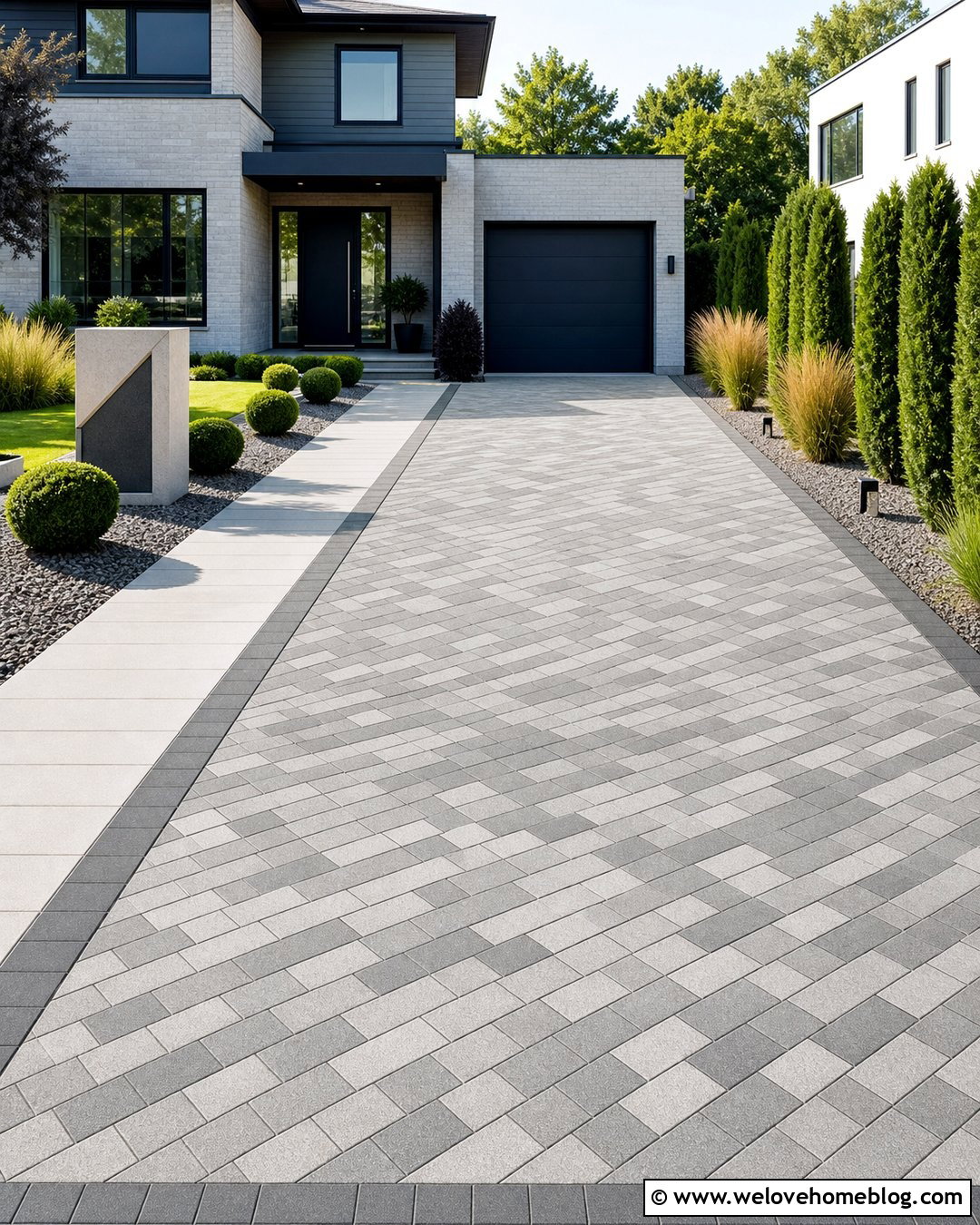
Diagonal lines can visually stretch a short driveway and make its limited width feel more dynamic. Choose rectangular concrete pavers in two closely related gray tones, then install the main field at a 45-degree angle. Contain the pattern with a straight charcoal border so the surface does not appear overly busy. Keep the driveway rectangular and connect it to a plain paver walkway near the house. Narrow beds of clipped evergreens and ornamental grasses will provide texture without competing with the paving. A modern address marker can reinforce the angled geometry near the curb. This design suits compact contemporary and transitional homes. Limit the palette to a few coordinated colors because too much contrast can make a small paved area look fragmented.
29. Small Driveway With A Paver Accent Strip
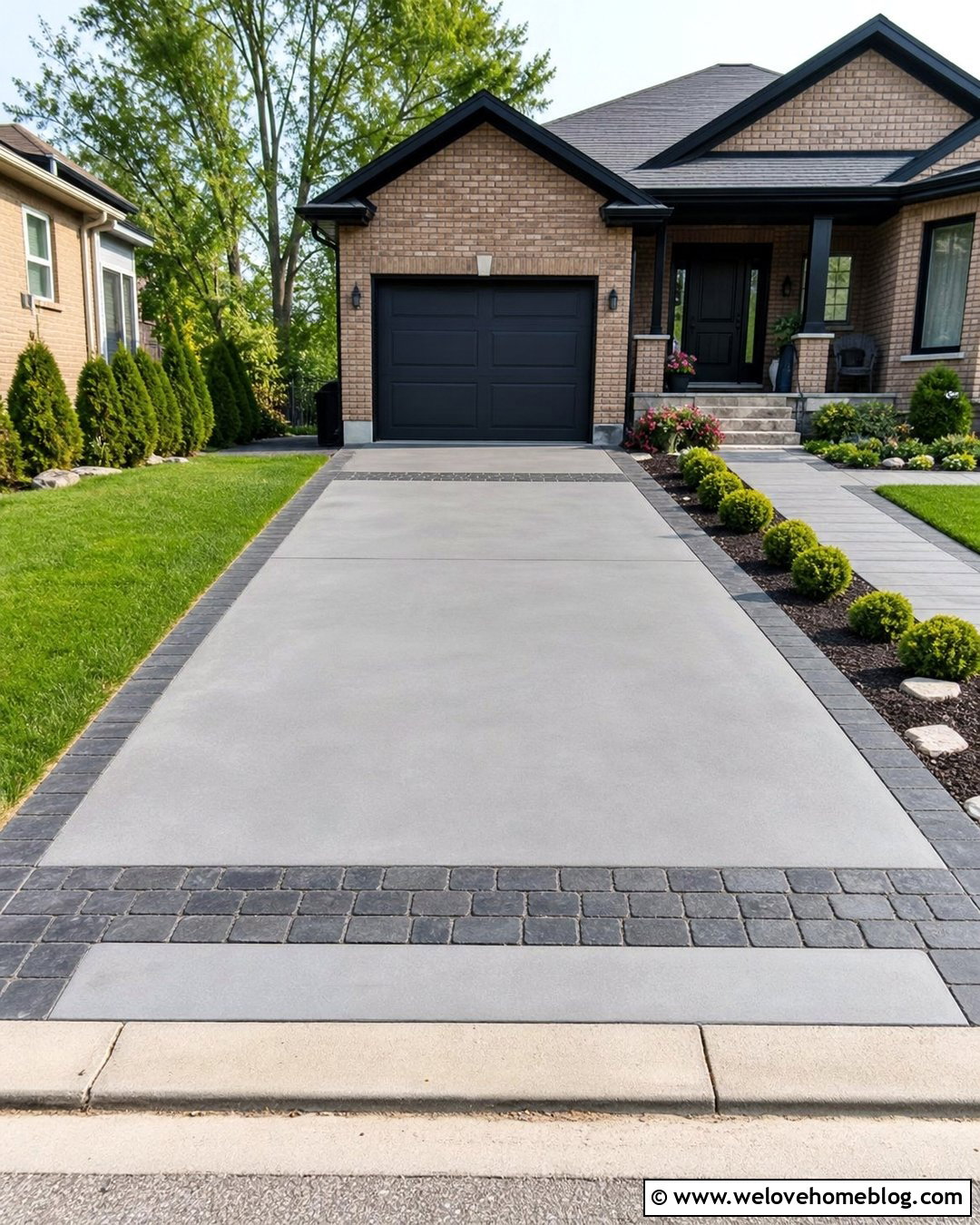
One carefully positioned accent strip can add interest to a plain driveway without overwhelming it. Start with smooth gray concrete and install a narrow band of brick, cobblestone, or dark pavers across the entrance. Repeat the strip near the garage or where the driveway meets the walkway. These bands create visual sections and can help a short surface feel more thoughtfully proportioned. Use the same accent material for a slim side border and front-step detail. Surround the driveway with lawn, low evergreen shrubs, and one small flower bed near the porch. This versatile approach can coordinate a newer driveway with an older brick or stone house. Choose one accent material and repeat it consistently instead of introducing several unrelated decorative finishes.
30. Small Driveway With A Tapered Entrance
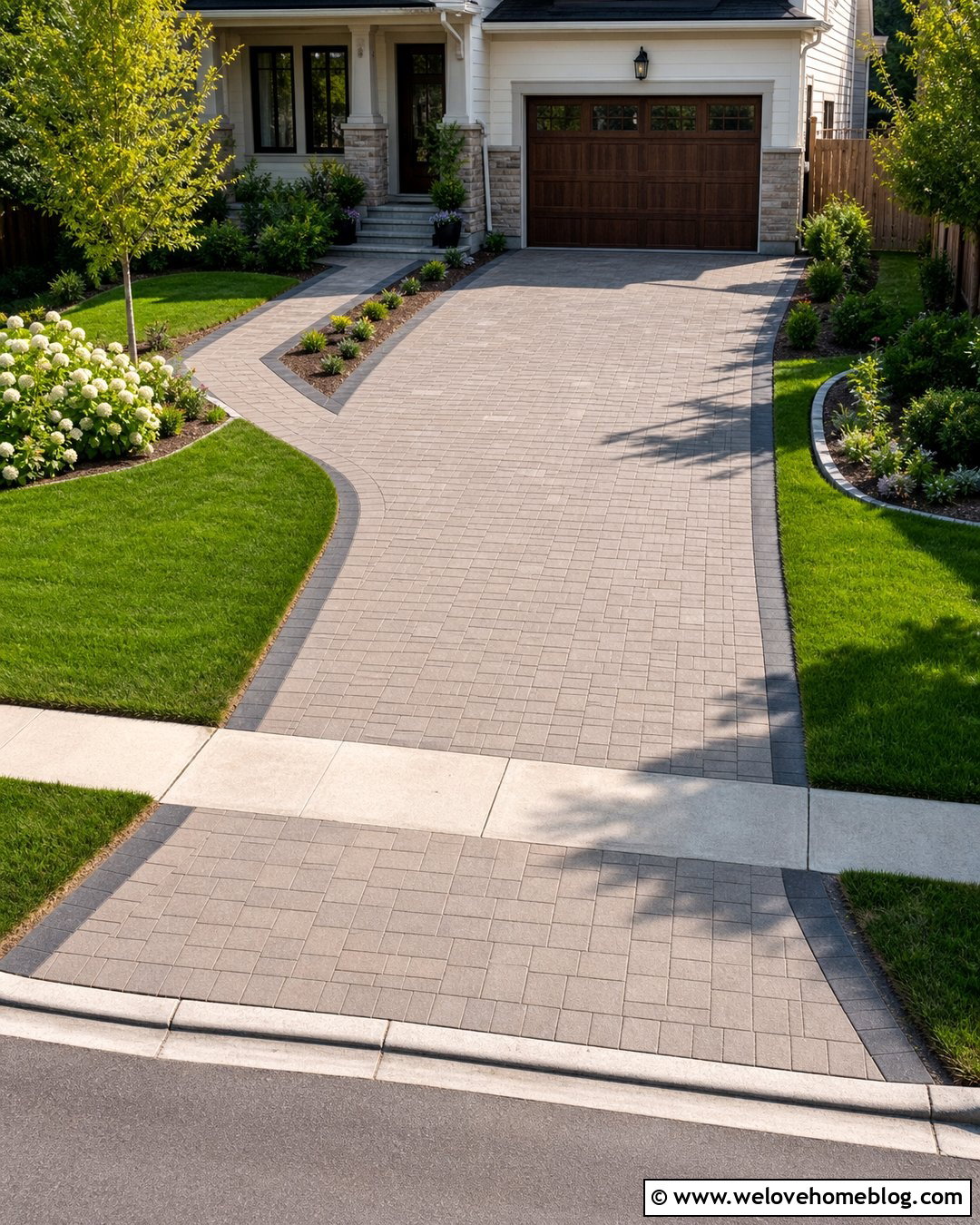
A driveway that begins narrow and widens toward the parking area can preserve valuable planting space near the street. Use neutral concrete pavers arranged in a running bond to reinforce the direction of travel. Define the taper with dark paver edging so its shape looks purposeful. Fill the extra curbside space with low lawn, a compact rain garden, or simple planting beds, depending on drainage and site conditions. Near the garage, provide enough width for parking and comfortable door access. A walkway can branch from the widened section and lead directly to the porch. This layout works on small lots where a broad driveway apron would dominate the frontage. Smooth, gradual transitions are preferable to abrupt angles that complicate vehicle movement.
31. Small Driveway With A Front Door Focal Point
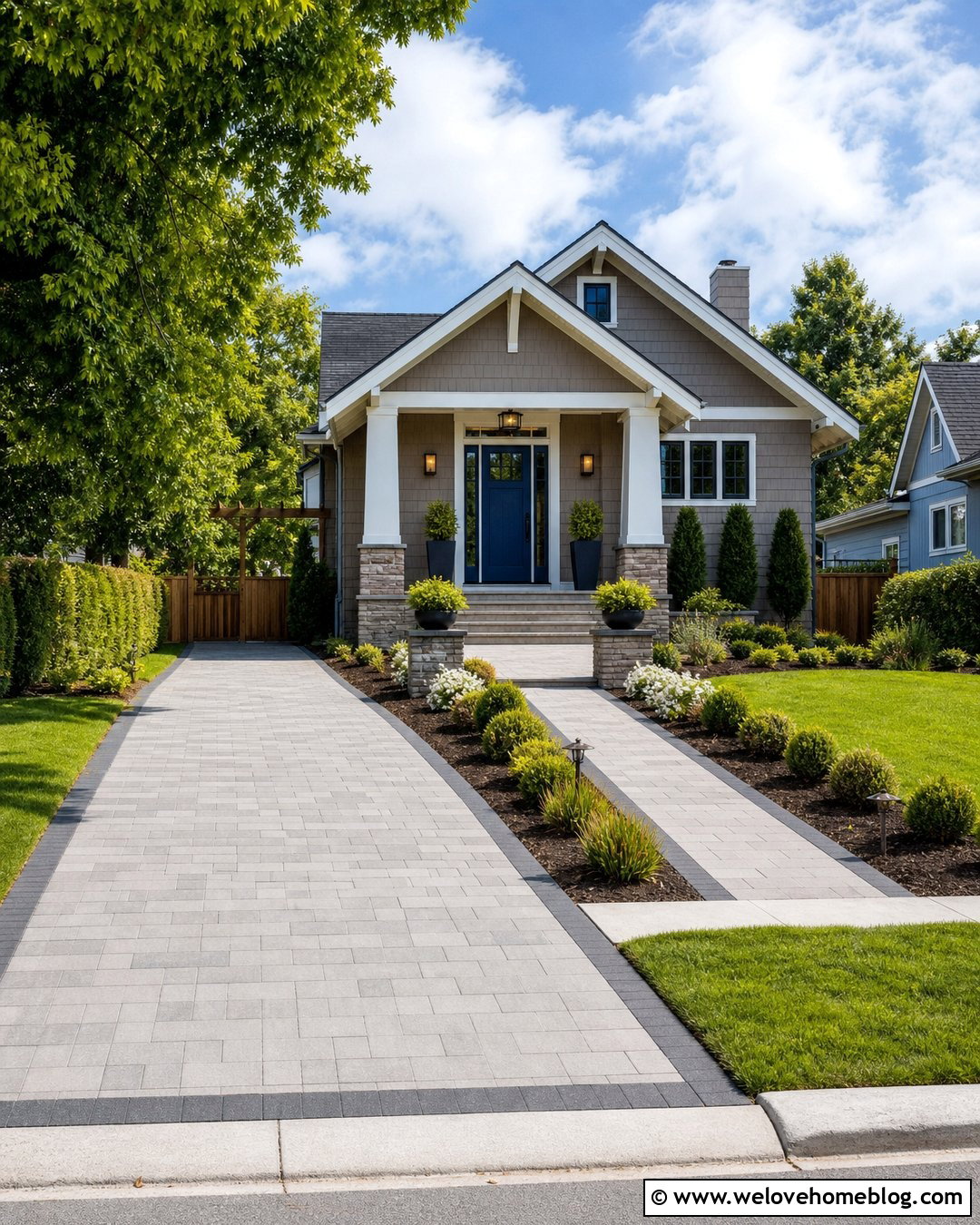
A short driveway naturally directs attention toward the house, so use that visual line to emphasize the front door. Select light gray concrete pavers for a straight driveway and frame them with a narrow dark border. Place a matching walkway along one side, leading to a brightly painted door or covered porch. Symmetrical planters, clipped shrubs, and compact wall lights can reinforce the destination. Keep landscaping low near the driveway, then increase plant height closer to the facade. Repeating the door color in a small flower bed or address plaque helps connect the entire composition. This arrangement works with almost any house style. The key is making the driveway, walkway, and entrance read as one clear and welcoming sequence from the curb.
32. Small Driveway With A Retaining Wall
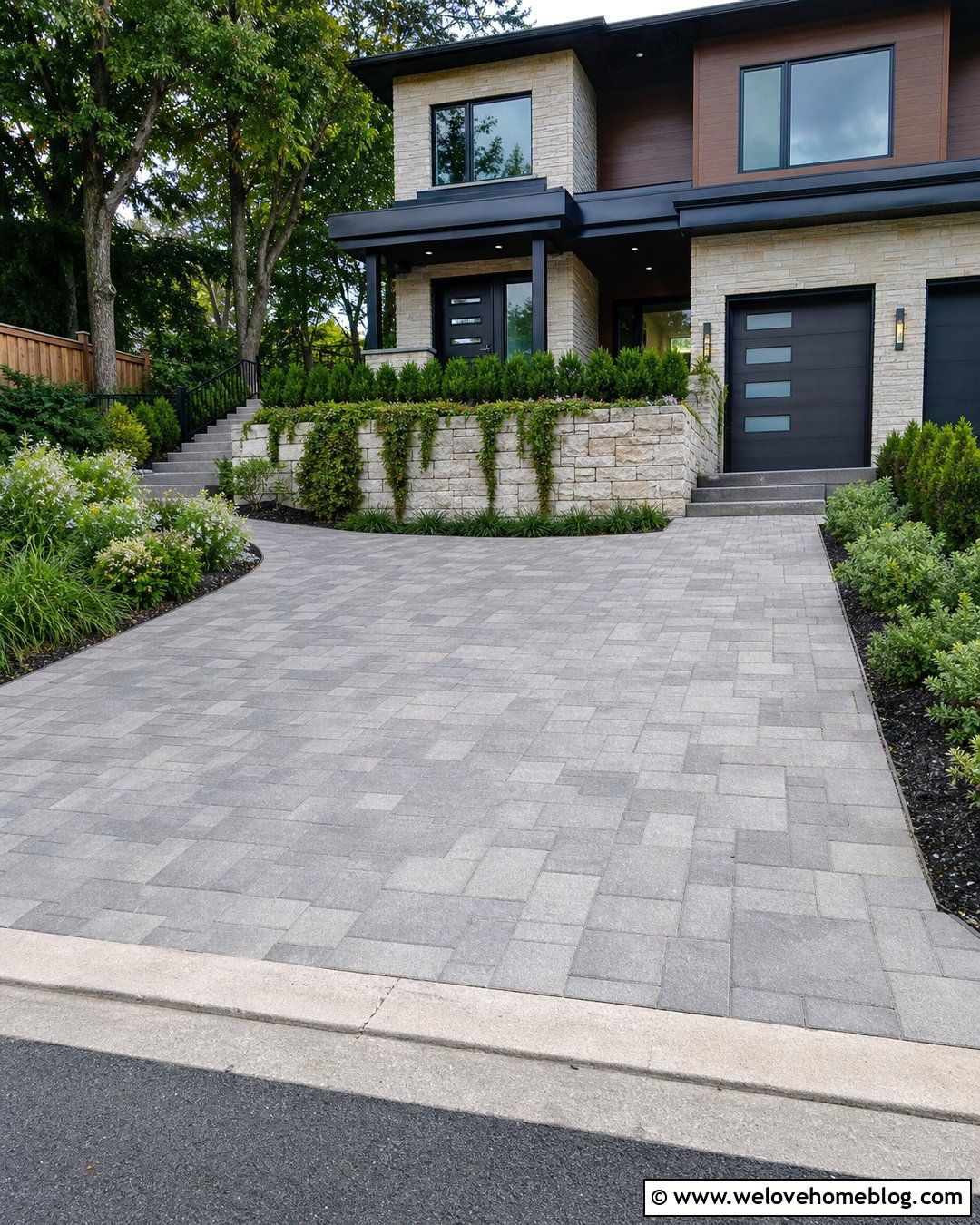
A sloped small yard may benefit from a low retaining wall that creates a level driveway and usable planting area. Choose textured concrete pavers for the driving surface and build the wall from compatible segmental blocks or natural stone. Follow a straight or gently angled layout, depending on the garage position. Plant trailing groundcover along the wall’s upper edge and add compact shrubs farther back to soften the grade. Include safe steps or a walkway between the parking area and front door. Keep the wall proportionate to the frontage, and avoid adding several unrelated masonry colors. Because retaining walls involve drainage, soil pressure, and structural considerations, obtain suitable professional guidance when needed. A coordinated wall can make a difficult site appear orderly and intentional.
33. Small Driveway With A Rain Garden
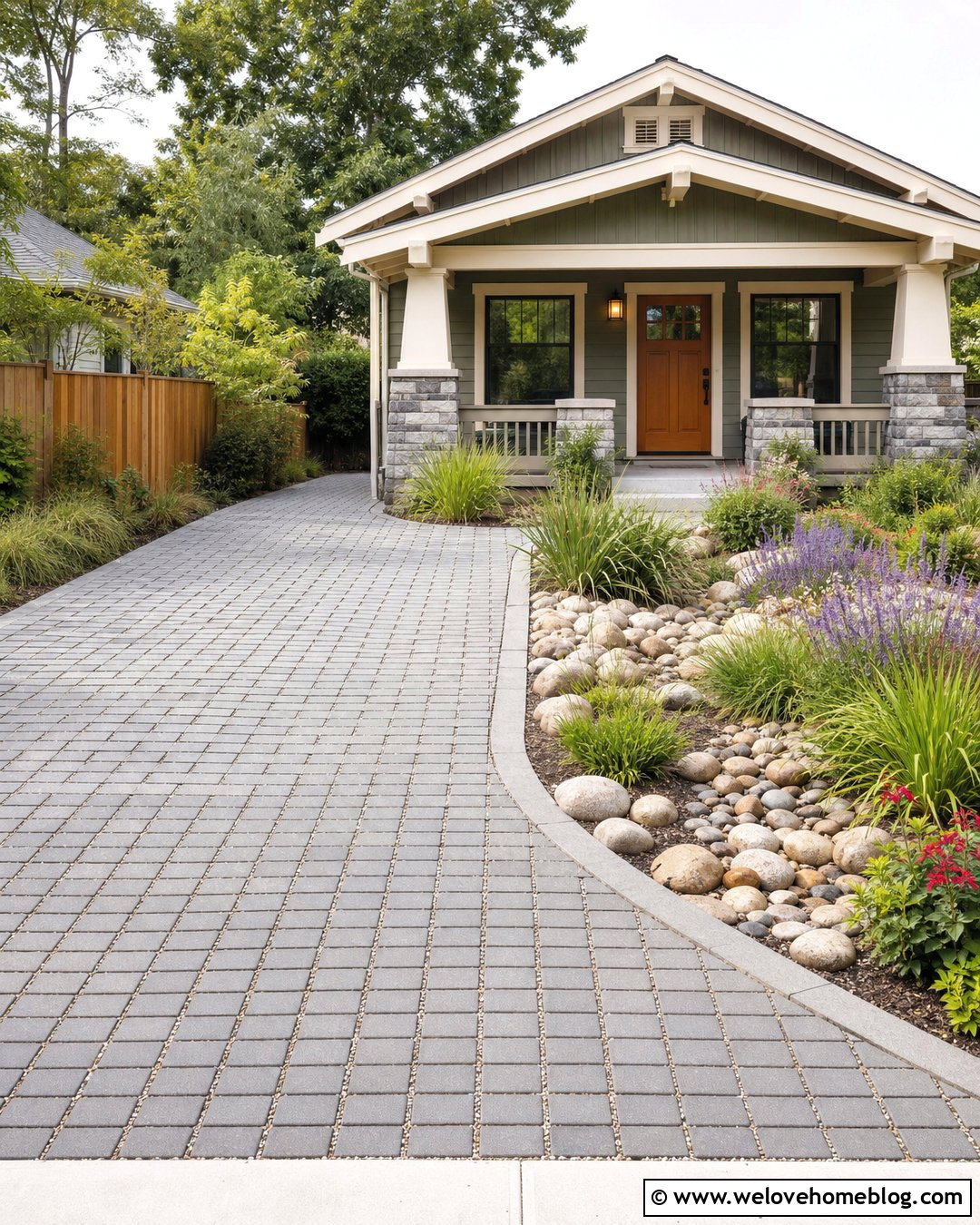
A planted rain garden can become part of the driveway composition rather than an awkward drainage feature. Pair permeable gray pavers with a shallow, curved planting area positioned where site design allows runoff to be managed appropriately. Fill it with moisture-tolerant native grasses, flowering perennials, and low shrubs suited to local conditions. Use rounded river stone around inlets or transitions, while keeping loose rock away from vehicle tires. Define the driveway with a simple concrete border and provide a solid walkway to the porch. This landscape works especially well beside Craftsman, contemporary, and nature-inspired homes. The planted area should remain visually open near the street. Proper grading and location are essential, so plan the system around existing soil, utilities, and drainage requirements.
34. Small Driveway With A Desert Landscape
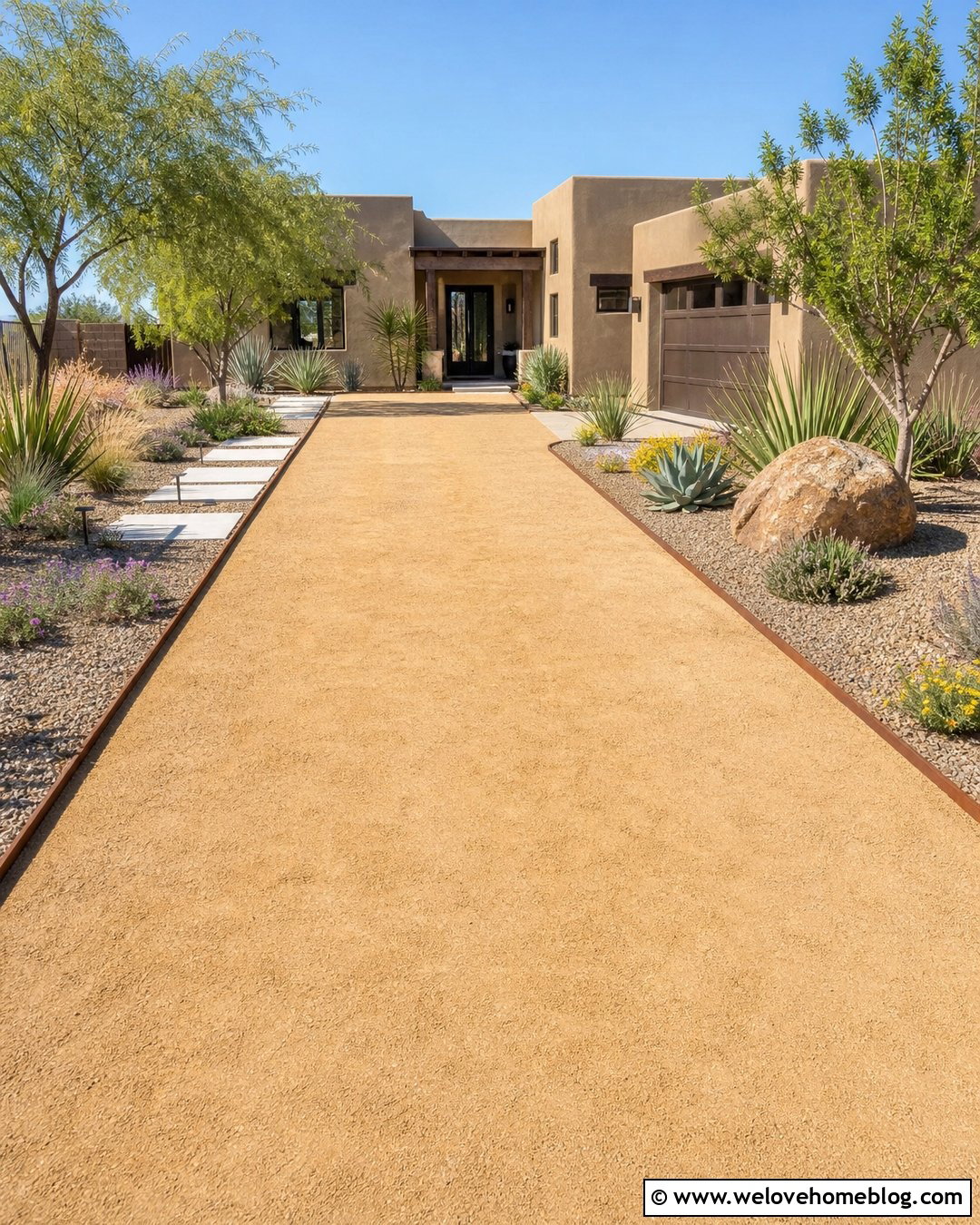
Warm gravel, sculptural planting, and clean boundaries create a striking driveway for a dry climate. Use stabilized decomposed granite or tan resin-bound gravel in a straight layout leading to a stucco home. Edge the surface with rust-colored steel or dark concrete pavers. Arrange small agaves, yuccas, desert grasses, and flowering native plants in broad gravel-mulched clusters. Include one decorative boulder or compact desert tree as a focal point, but keep the driving area open. A path of large concrete stepping pads can lead to the front door. This design uses shape and texture rather than dense planting, helping a small yard feel spacious. Choose plants carefully so mature forms and sharp foliage remain clear of doors, sidewalks, and vehicle routes.
35. Small Driveway With Coastal Landscaping
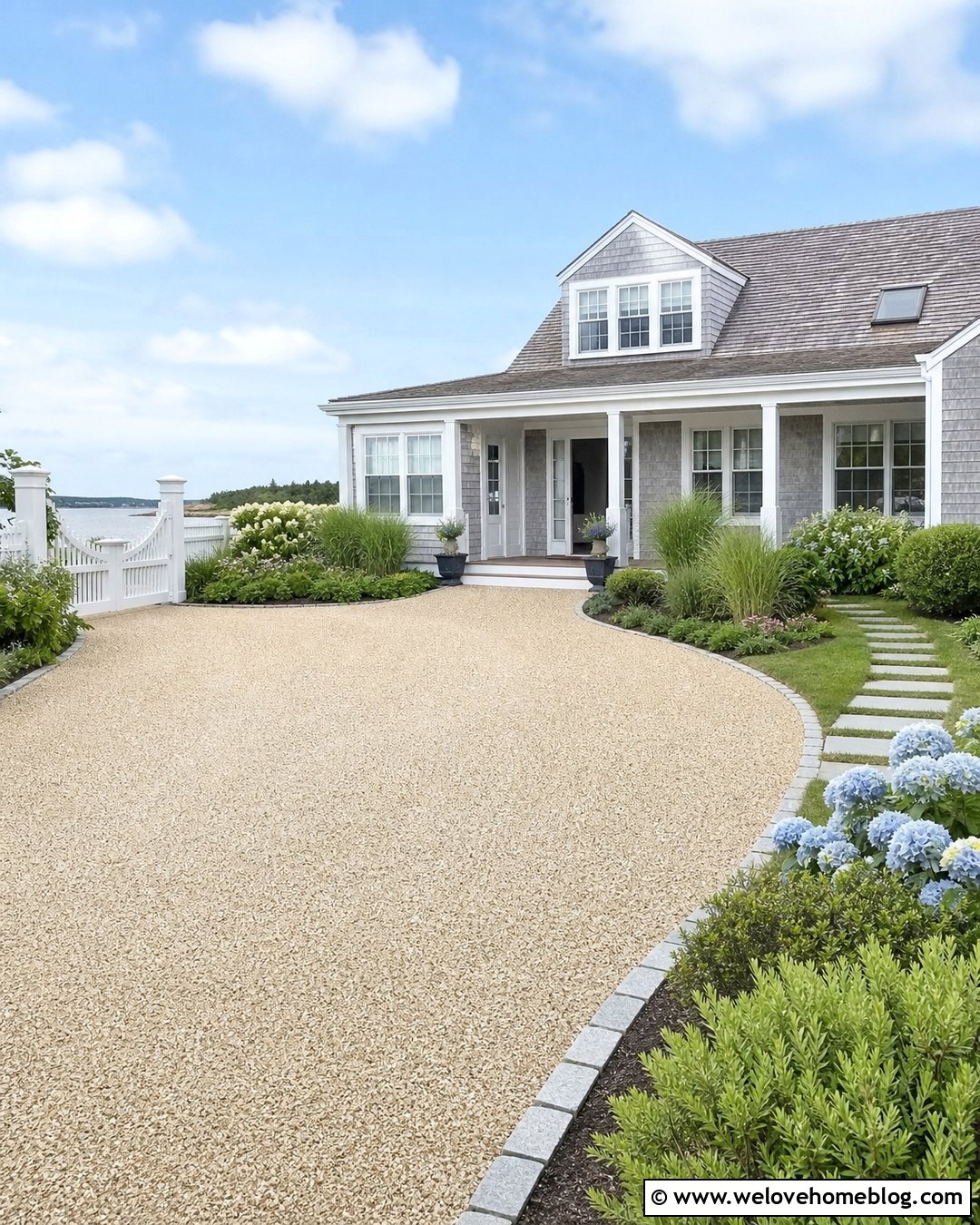
Pale materials and breezy planting can give a compact driveway a relaxed coastal character. Start with light beige permeable pavers or cream resin-bound gravel arranged in a straight or softly curved layout. Add a narrow border of weathered gray pavers that echoes driftwood tones. Surround the surface with ornamental grasses, compact hydrangeas, low evergreen shrubs, and salt-tolerant plants where local conditions require them. A stepping-stone walkway and simple white gate can connect the driveway to a beach cottage or coastal-style home. Keep the planting loose but not overgrown, leaving open sightlines and convenient access around parked vehicles. Soft blue, gray, cream, and green tones will create a cohesive frontage without relying on nautical decorations or unnecessary themed accessories.
36. Small Driveway With Farmhouse Landscaping
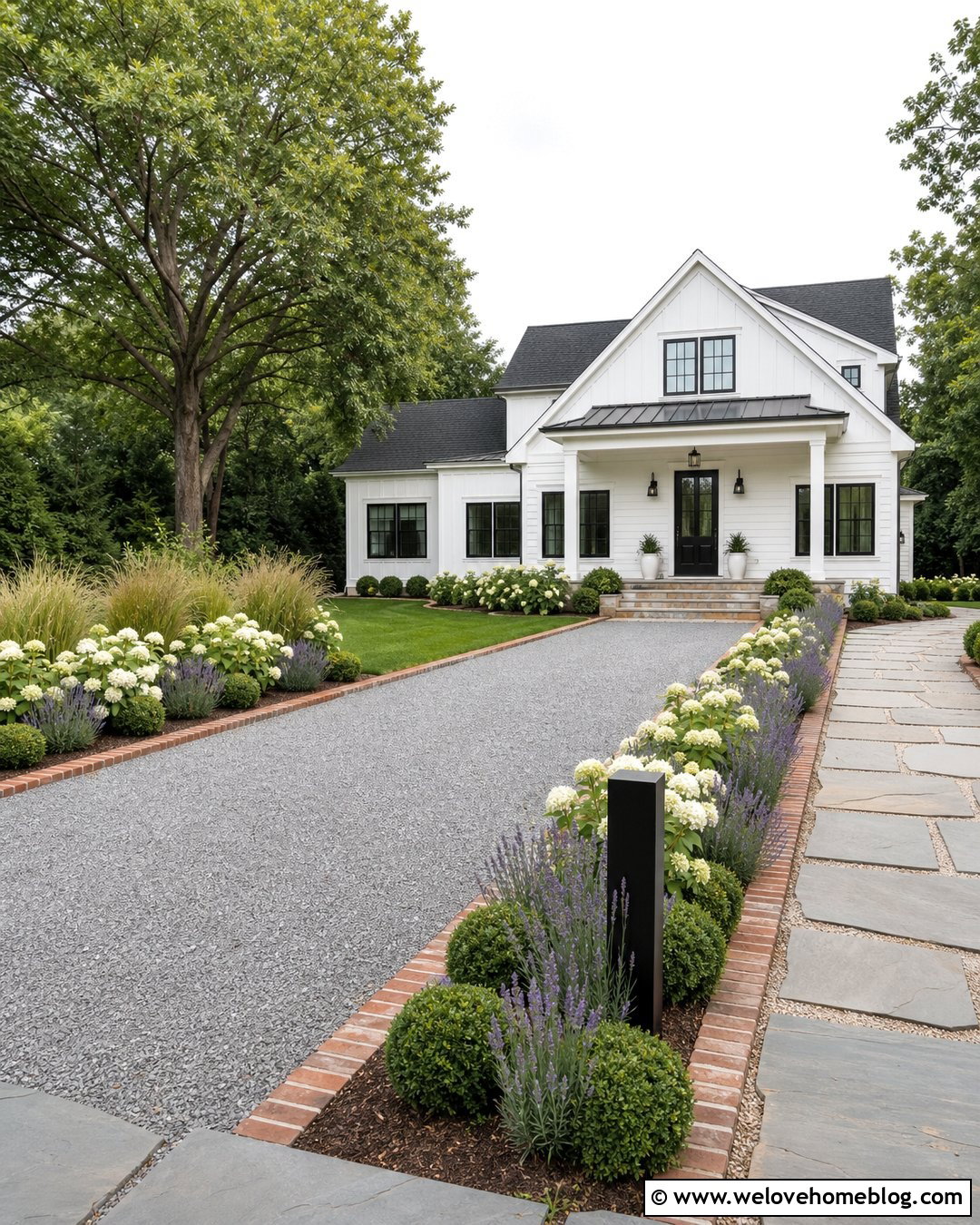
A farmhouse-inspired driveway should feel simple, useful, and connected to the surrounding yard. Use warm gray gravel or lightly textured concrete, then frame it with reclaimed-looking brick or natural stone. Keep the layout straight and widen it slightly near the garage or side entrance. Plant compact hydrangeas, ornamental grasses, lavender, and clipped evergreens in informal groups. A narrow post-and-rail fence or black metal address sign can define the street edge without enclosing the small property. Connect the driveway to the porch with large flagstones or matching brick pavers. White siding, black fixtures, and natural wood details will complete the palette. Avoid oversized rural features that could overwhelm the limited space; restrained details create a more convincing farmhouse appearance.
37. Small Driveway With Midcentury Landscaping
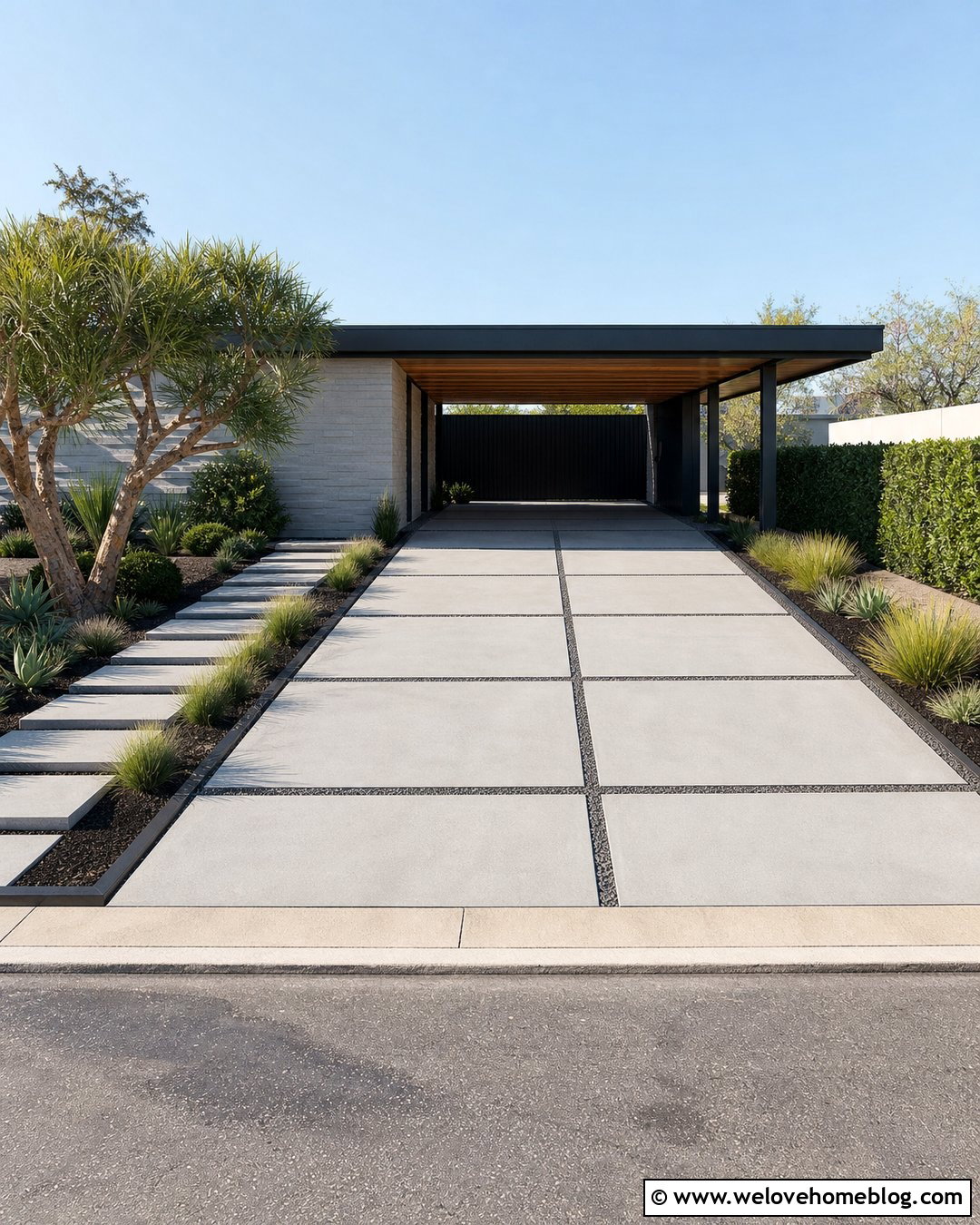
Strong geometry and textural planting suit a compact midcentury front yard. Build the driveway from large rectangular concrete slabs separated by narrow strips of dark gravel. Keep the layout straight or slightly offset to align with a carport. Use steel edging and a limited planting palette of architectural grasses, compact agaves, rounded shrubs, and one sculptural small tree. Extend several slabs into a floating walkway toward the front door. Dark charcoal gravel can fill the planting beds and emphasize the pale concrete grid. Repeat warm wood tones from the house in a horizontal screen or address marker. This organized design feels spacious because every line has a clear purpose. Keep decorative objects minimal and allow the house’s low roofline and facade to remain visible.
38. Small Driveway With Craftsman Details
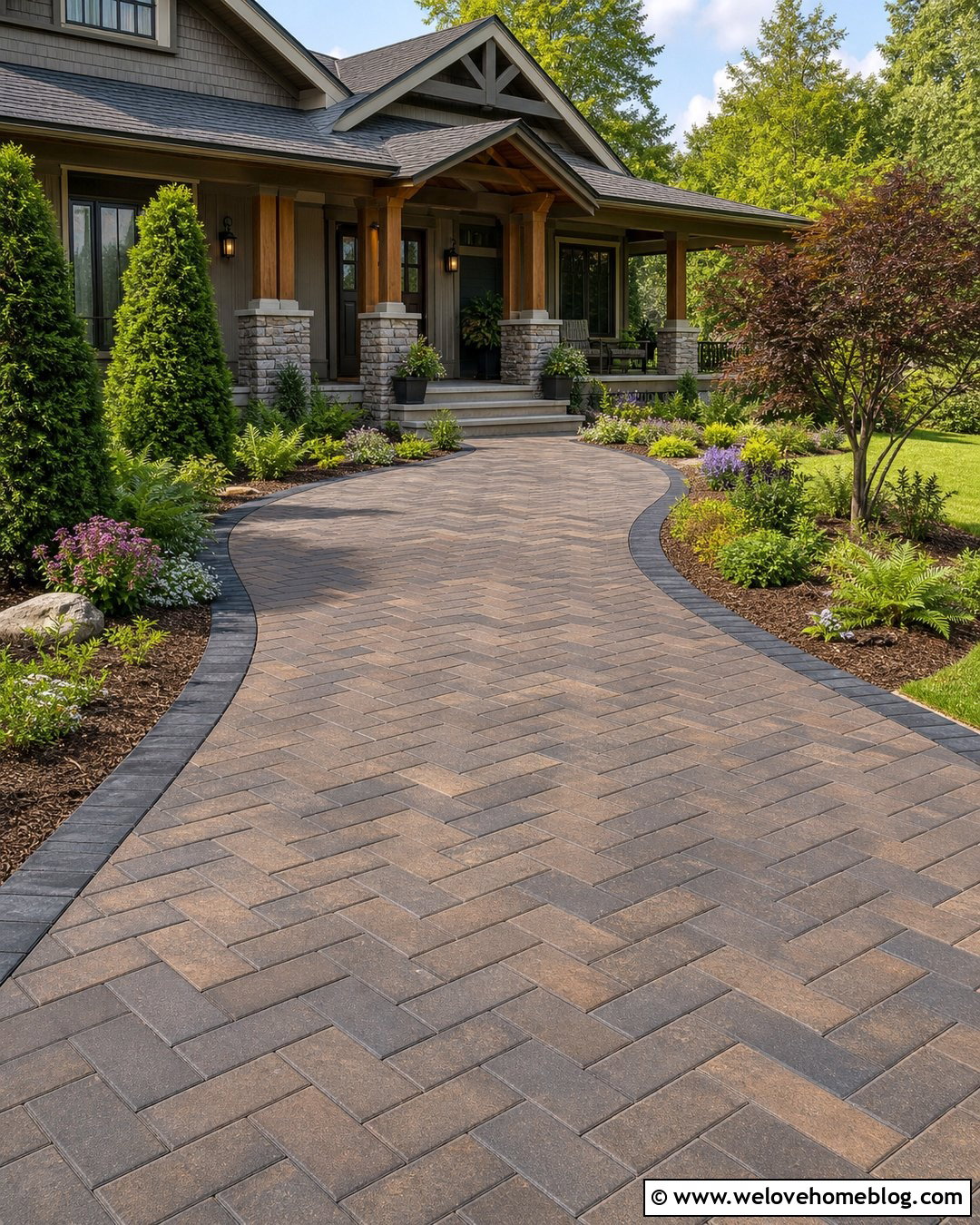
A Craftsman home looks most cohesive when the driveway repeats its natural materials and warm colors. Use blended brown and charcoal concrete pavers in a running-bond or herringbone pattern. Frame the surface with a darker border that connects visually to porch columns, stone bases, or brick steps. Create narrow planting beds containing compact evergreens, ferns, flowering perennials, and one small ornamental tree. A matching paver walkway should lead directly toward the covered porch. Low landscape lights can mark the route without introducing tall fixtures into the compact yard. Keep the driveway shape simple, preferably straight or gently curved. The combination of textured paving, layered greenery, and architectural repetition creates a welcoming frontage without crowding the limited space with excessive ornament.
39. Small Driveway With A Minimalist Landscape
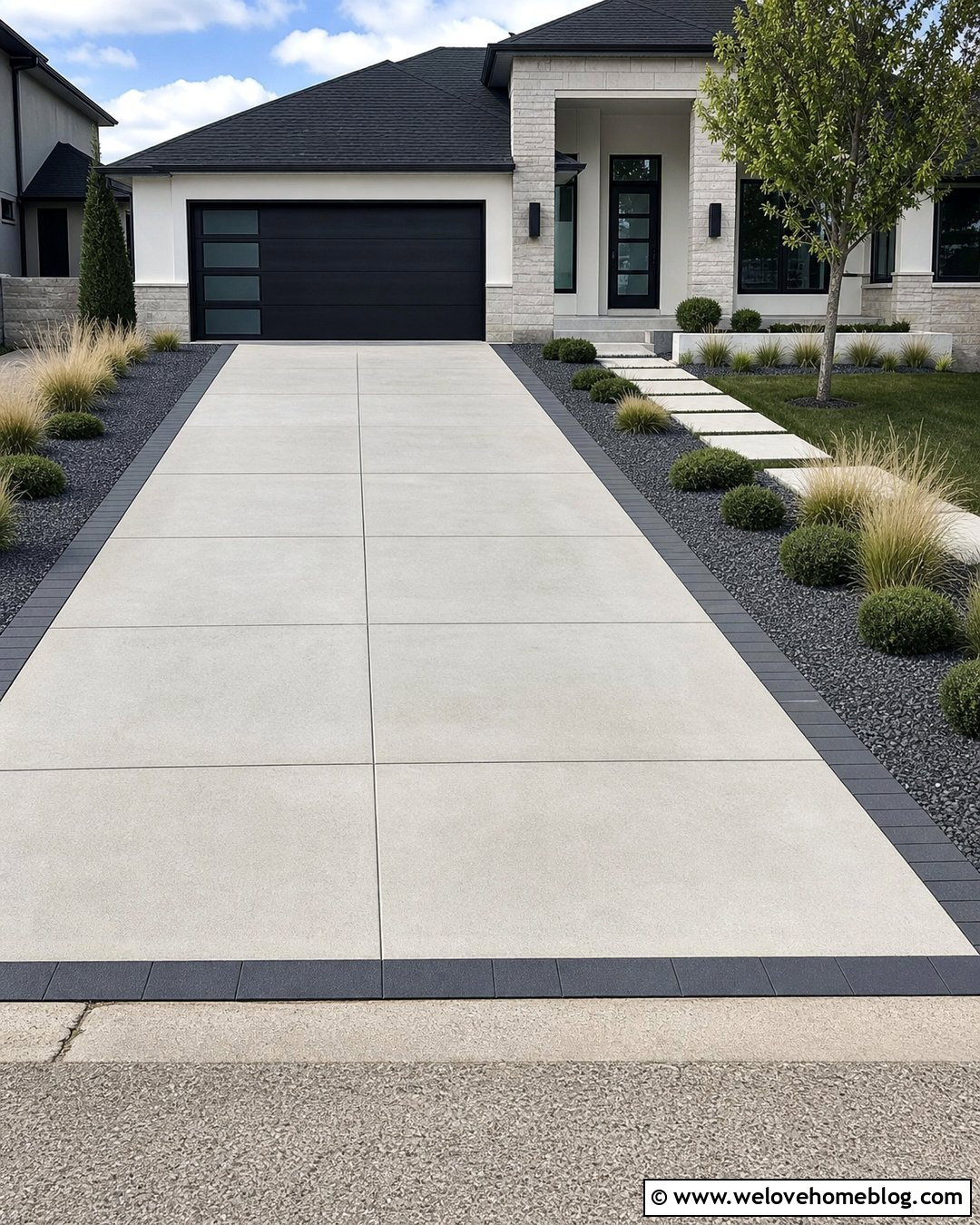
Clean surfaces can make even a very narrow driveway feel calm and generous. Choose smooth gray poured concrete divided by a few straight control joints. Add a flush charcoal paver border or slim black steel edge. Use only two or three plant varieties, such as feather grass, low evergreen mounds, and one upright tree. Arrange them in rectangular gravel-mulched beds that align with the driveway and house. A simple concrete walkway can branch toward the entrance without changing material. Keep lighting, planters, and address markers geometric and coordinated with the facade. This minimalist design works best with modern and transitional homes. Precision matters because uneven edges, scattered gravel, or crowded plant growth will be more noticeable within such a restrained composition.
40. Small Driveway With Budget Gravel And Brick
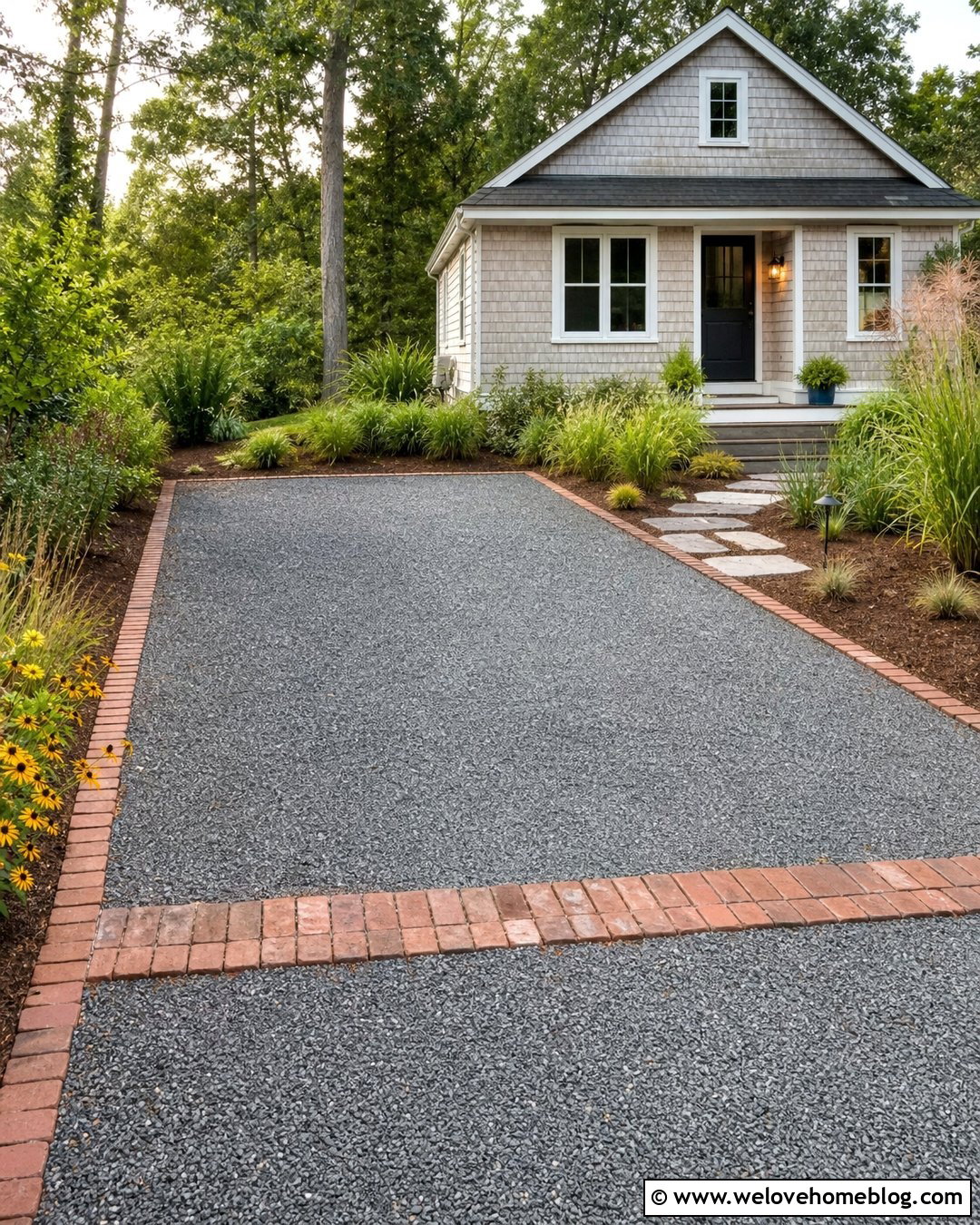
A well-planned driveway does not need an elaborate material palette to look finished. Use locally available gray angular gravel for the main surface and contain it with salvaged or standard clay brick. Lay the brick in a simple soldier course along the sides and across the entrance. Keep the driveway straight to reduce complicated cuts and create a small rectangular parking pad near the house. Add mulch beds with affordable native plants, ornamental grasses, or divided perennials. A basic stepping-stone walkway can connect the parking space to the porch. Repeat the brick around one small planting bed for continuity. This practical design delivers texture, color, and structure while allowing decorative improvements to be added gradually as time and budget permit.
Conclusion:
The most successful **40 small driveway ideas** treat the parking surface, entrance, walkway, borders, and landscaping as one complete design. Start by measuring the usable space and identifying how vehicles and pedestrians will move through it. Then select a simple material palette that complements the house. Gravel, concrete, asphalt, brick, permeable paving, and large-format pavers can all work beautifully when their scale suits the property. Narrow beds, upright plants, clear edging, and integrated walkways add curb appeal without reducing function. Before installation, consider drainage, mature plant sizes, utilities, and local requirements. A small driveway may have limited square footage, but thoughtful details can give it a polished, spacious, and welcoming appearance.

Related posts:

Leave a Reply