
Stone pillars can turn a basic driveway into a defined, welcoming entrance that feels connected to the home. They work with everything from gravel country lanes to sleek concrete approaches, while also supporting gates, lanterns, address plaques, and fencing. The strongest designs coordinate the pillar stone with the driveway surface, house facade, surrounding walls, and landscape colors. Scale matters too. Wide entrances usually need substantial columns, while smaller front yards look better with lower, slimmer posts that do not overwhelm the space. Whether you prefer rustic fieldstone, clean-cut limestone, stacked ledgestone, or an affordable stone veneer, the complete entrance should feel balanced and practical. Explore these **40 Stone Pillars Driveway Entrance Ideas** to find a complete look suited to your property.

1. Fieldstone Pillars With A Gravel Driveway
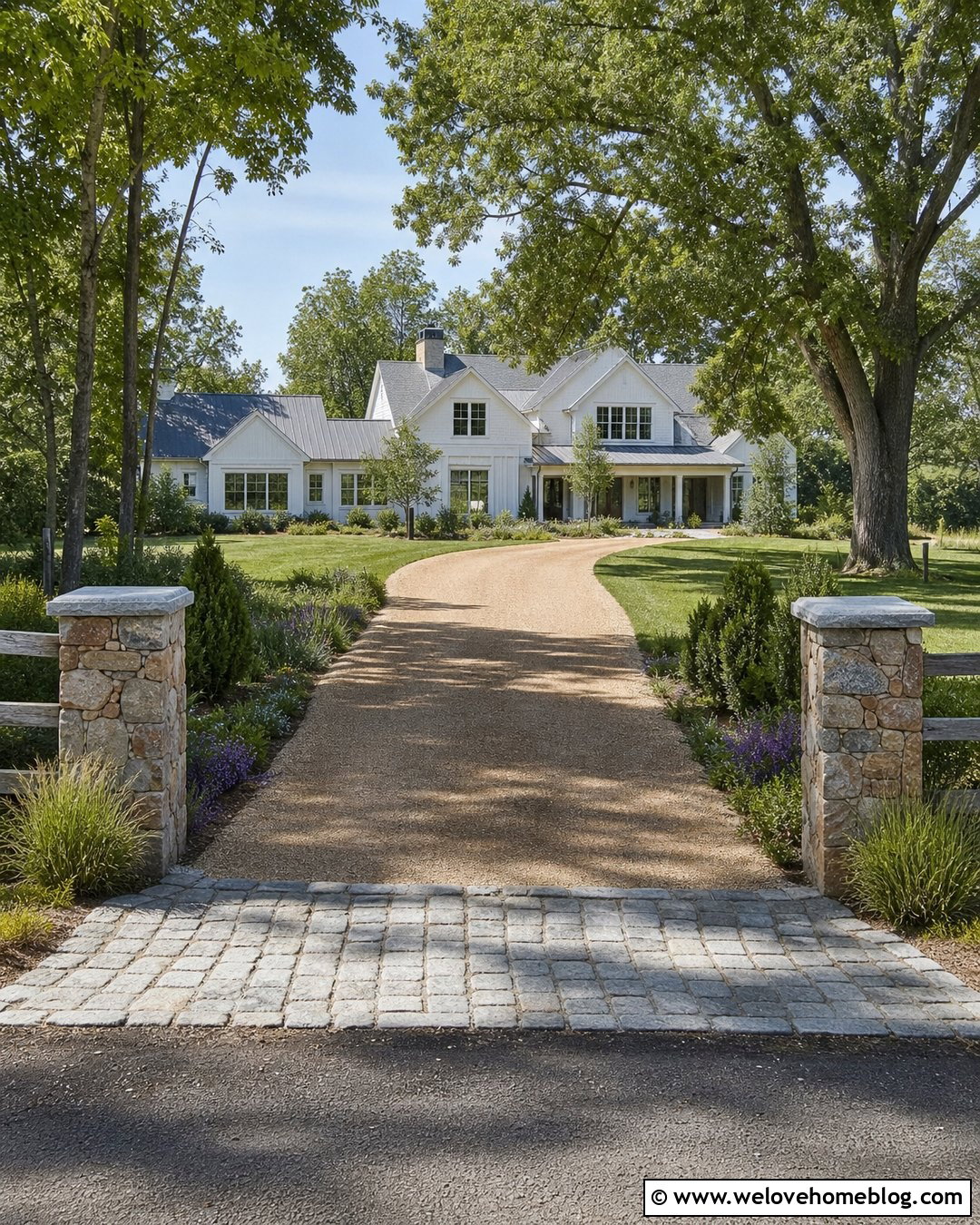
Rugged fieldstone pillars feel completely at home beside a warm tan gravel driveway. Choose broad, slightly tapered columns built from irregular gray, brown, and rust-colored stones. Their rough texture creates an established country look, especially when the driveway curves gently toward a farmhouse or ranch home. Add flat bluestone caps to protect the masonry and create a finished top. Low ornamental grasses, spreading juniper, and groups of native perennials can soften the pillar bases without hiding the stonework. Continue a split-rail fence from each column to define the property line. A cobblestone apron at the road keeps loose gravel contained and gives the entrance a stronger visual edge.
2. Stone Pillars With A Black Iron Gate
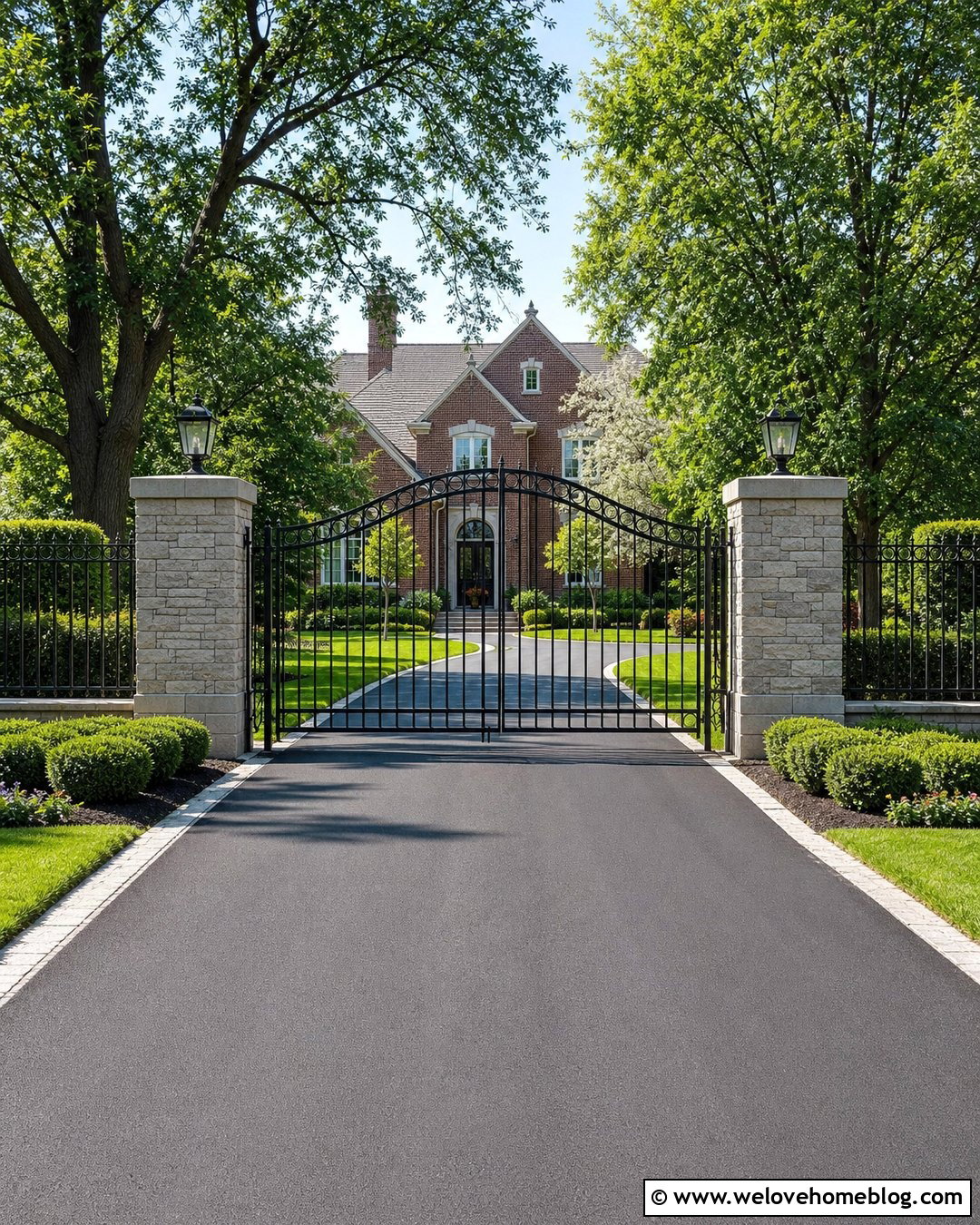
A black iron gate creates a crisp contrast against light gray stone pillars. This combination suits a straight asphalt or concrete driveway leading to a traditional brick, stucco, or stone house. Keep the gate design relatively simple, using vertical bars and a gently arched top rather than excessive ornament. Limestone caps can extend slightly beyond each pillar to create clean shadow lines. Match the gate hardware, lantern frames, and nearby fencing in the same matte black finish. Neatly clipped boxwoods placed outside the swing area add greenery while maintaining visibility. Before construction, coordinate the structural gate posts, masonry cores, hinges, wiring, and automation equipment so the finished pillars remain stable and uncluttered.
3. Stone Pillars With A Wood Driveway Gate
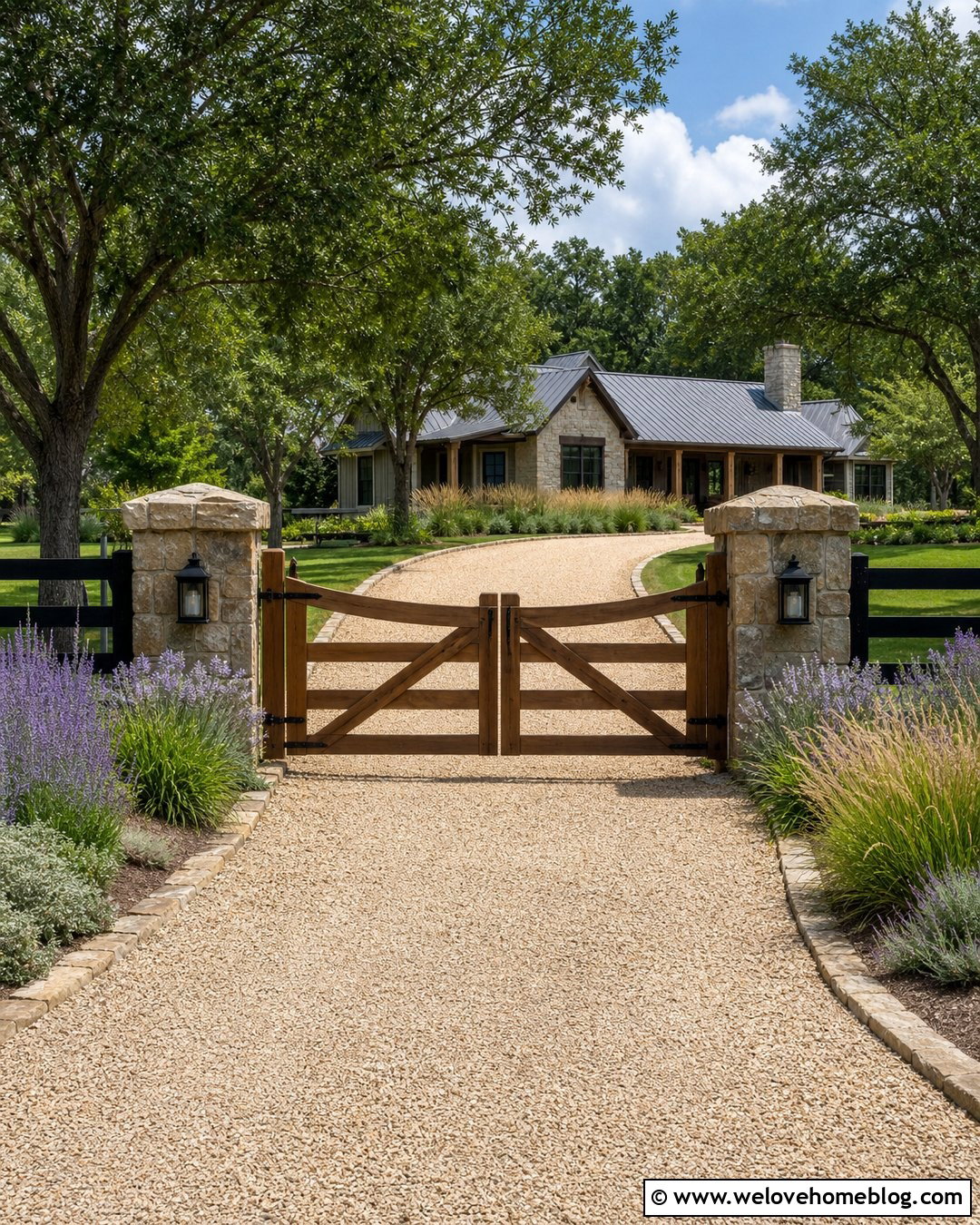
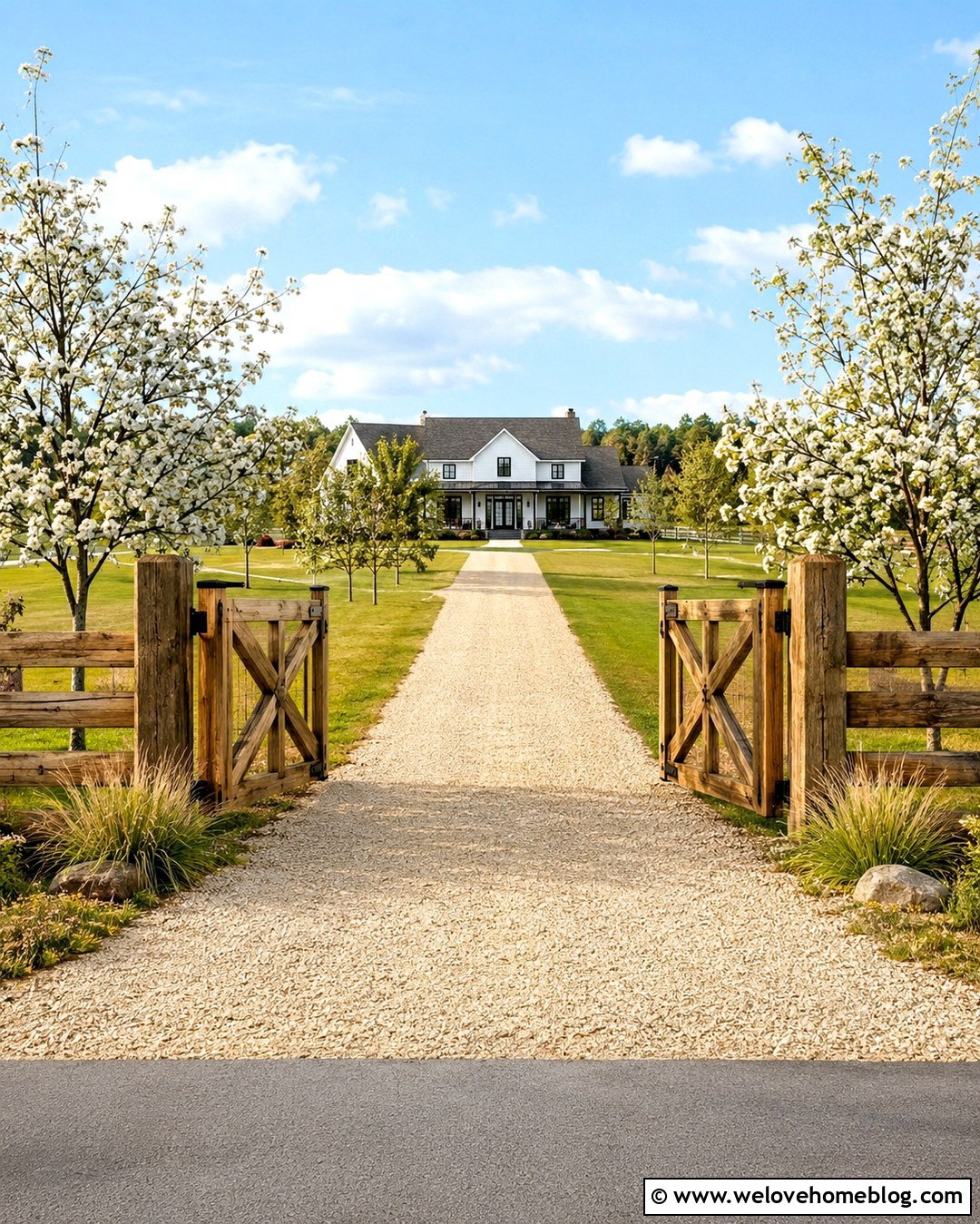
Natural wood adds warmth to the substantial appearance of stone entrance pillars. Pair rough-cut granite or fieldstone columns with a double cedar gate featuring horizontal boards, diagonal braces, or a simple farm-inspired pattern. A pale gravel driveway reinforces the relaxed rural character and keeps the darker wood visually prominent. Allow enough open space around the gate for safe operation and easy maintenance. Flat stone caps give the pillars a grounded silhouette, while low-voltage lanterns provide useful entrance lighting. Continue cedar fencing or black post-and-rail fencing from both sides. Lavender, catmint, and compact grasses can frame the entrance with soft color while remaining low enough to preserve clear road views.
4. Modern Stone Pillars With A Concrete Driveway
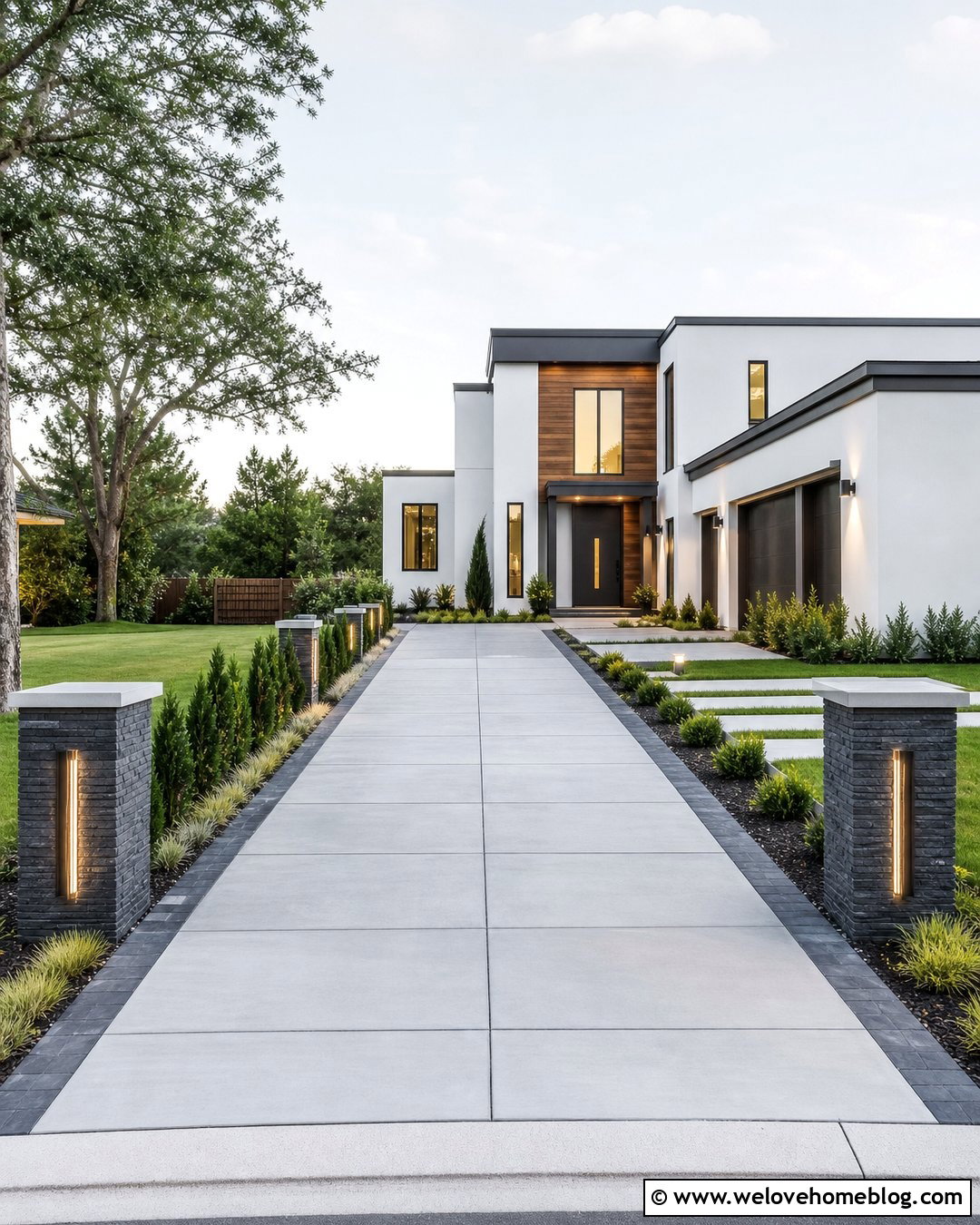
Modern stone pillars look best when their lines are straight, proportions are simple, and materials are carefully coordinated. Use narrow rectangular columns faced with charcoal stacked stone beside a smooth light gray poured-concrete driveway. Large saw-cut panels or subtle control-joint patterns make the driveway feel intentional rather than plain. Add flat precast concrete caps that sit nearly flush with the stone. Instead of traditional lanterns, integrate slim vertical lights into the front faces of the pillars. Linear planting beds filled with ornamental grasses, dwarf evergreens, and dark mulch support the contemporary look. A modern home with wood siding, white stucco, or dark metal accents will connect naturally with this clean entrance composition.
5. Limestone Pillars With A Paver Driveway
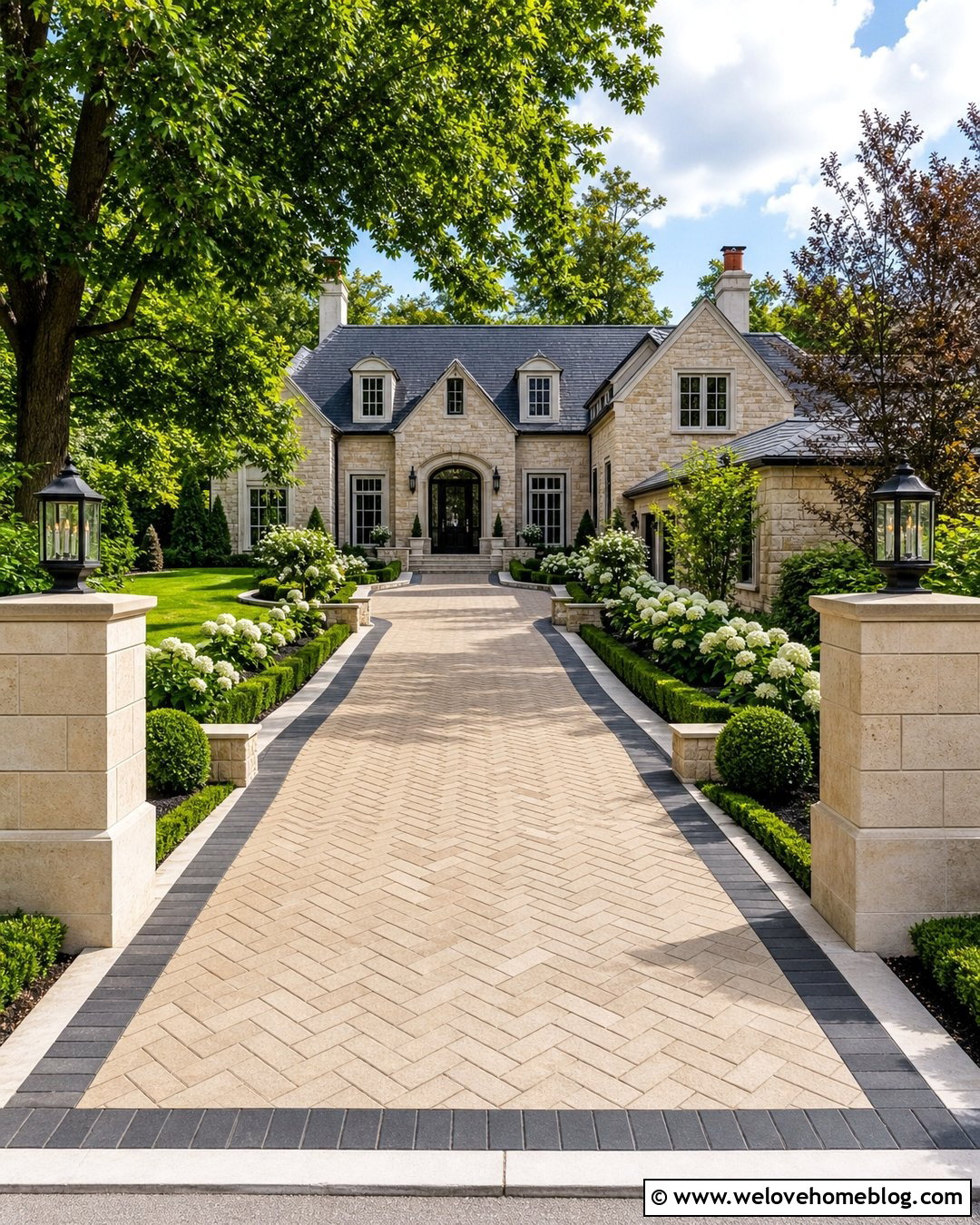
Cream limestone pillars can brighten the entrance to a warm-toned paver driveway. Select buff, beige, or lightly weathered limestone that relates to the exterior walls or front walkway. The driveway may use tan concrete pavers laid in a running-bond or herringbone pattern, with a darker border defining its edges. Square pillars with substantial limestone caps provide an elegant but approachable frame. Add black lanterns for contrast and place symmetrical planting beds outside the columns. Boxwoods, white roses, and hydrangeas support a traditional appearance without competing with the masonry. Repeating the pillar stone in low garden walls or walkway edging helps the entrance and house feel like parts of one coordinated landscape.
6. Stacked Stone Pillars With An Asphalt Driveway
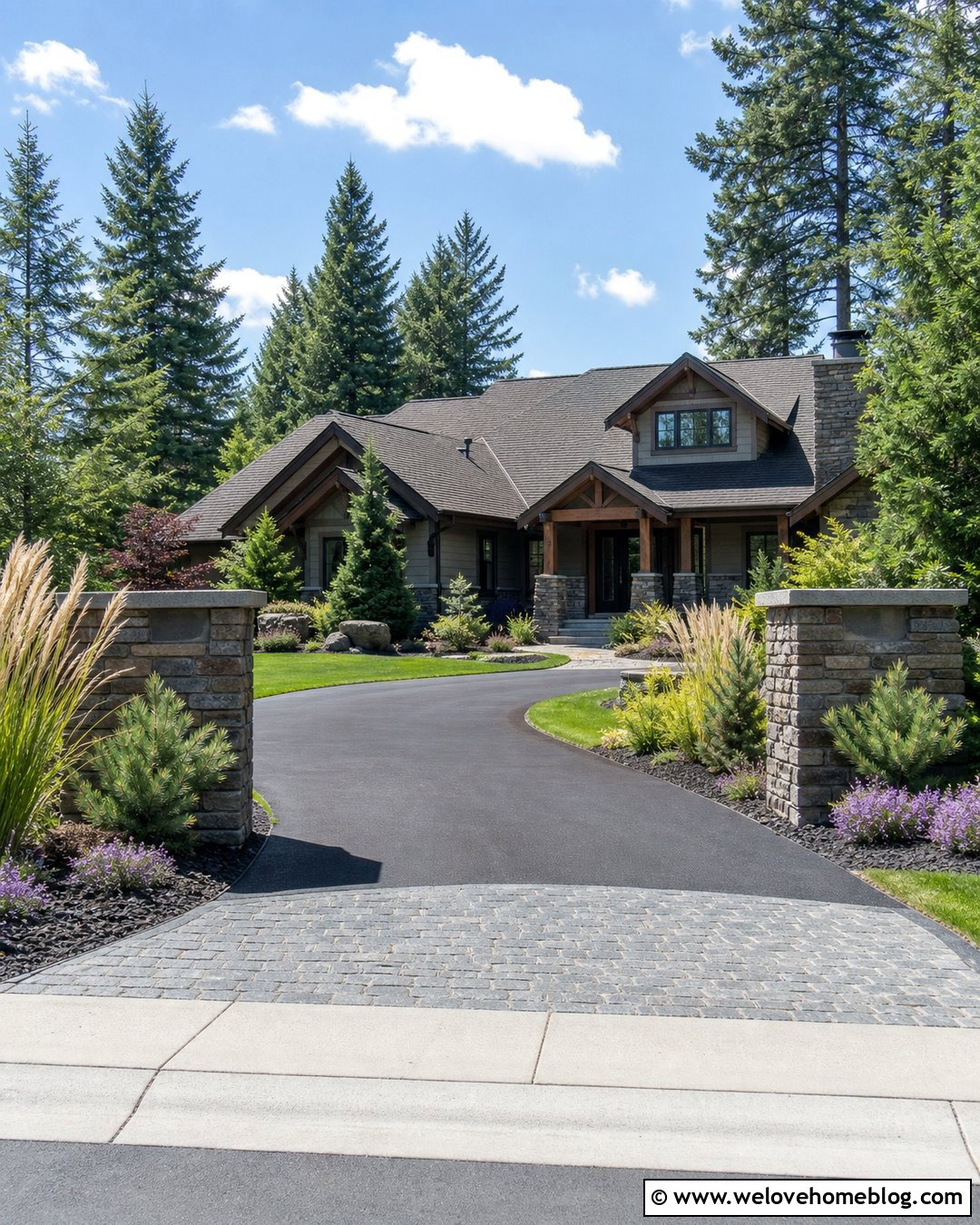
Stacked stone can give an ordinary black asphalt driveway a richer architectural presence. Choose ledgestone in mixed gray, charcoal, and soft brown tones to bridge the dark pavement and surrounding greenery. Wide columns with level caps create a stable visual frame without requiring a gate. Install a cobblestone or concrete-paver apron between the pillars to make the transition from the street more distinctive. Deep planting beds filled with dwarf pines, fountain grass, and flowering ground cover can soften the asphalt edges. If the driveway is long, repeat some of the same stone near the house or garage. This repetition keeps the pillars from looking like unrelated decorative additions placed beside the road.
7. Stone Pillars With A Circular Driveway
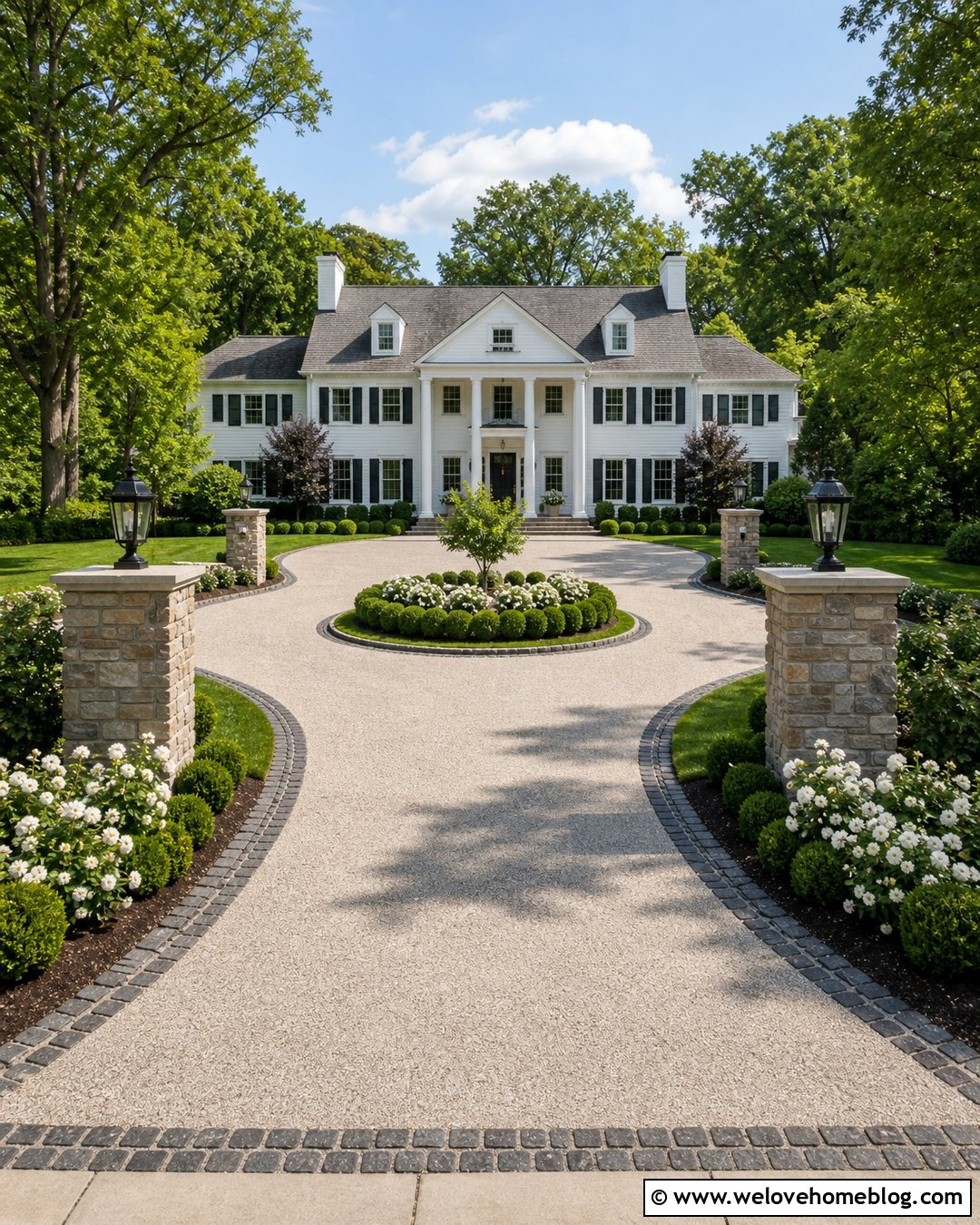
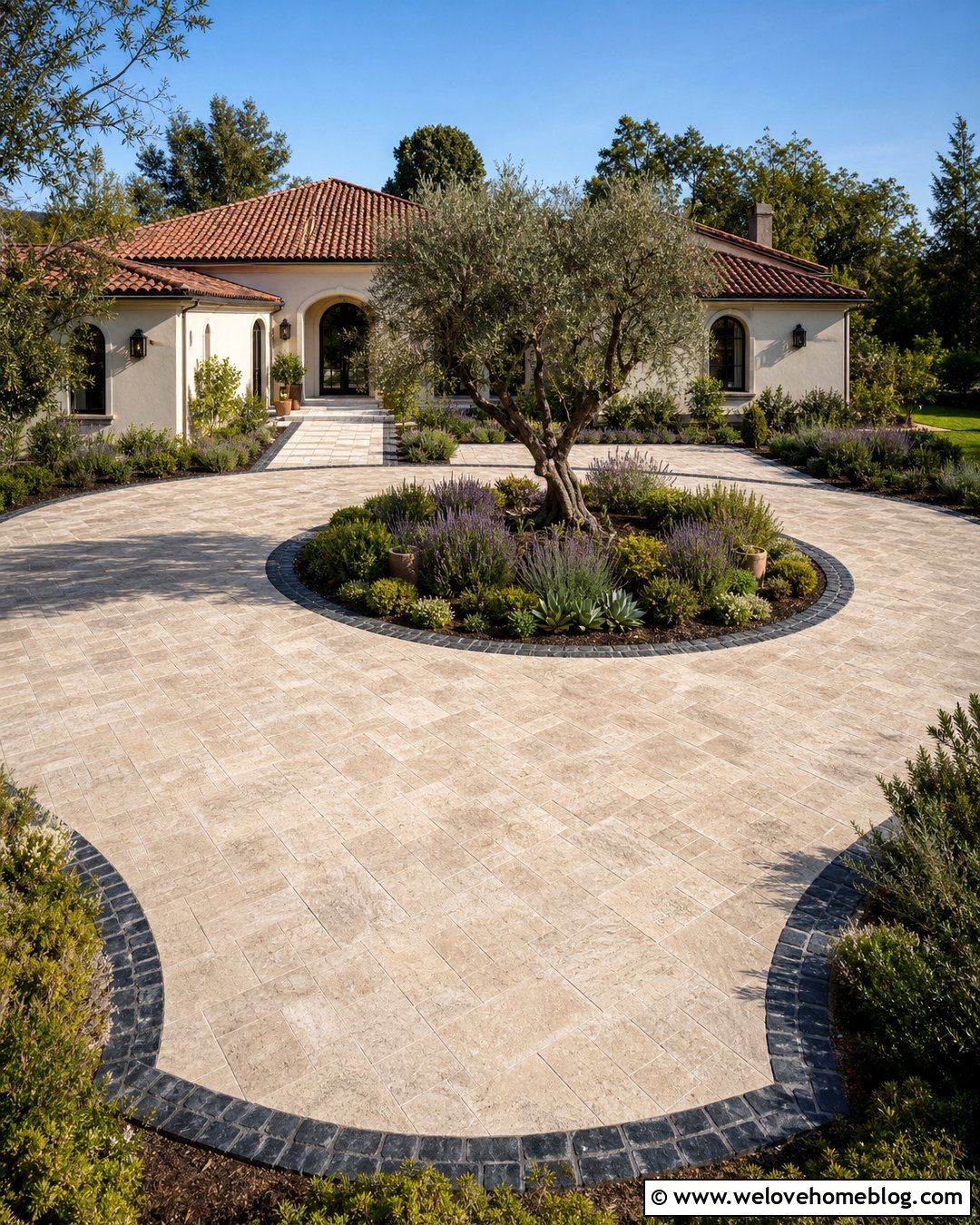
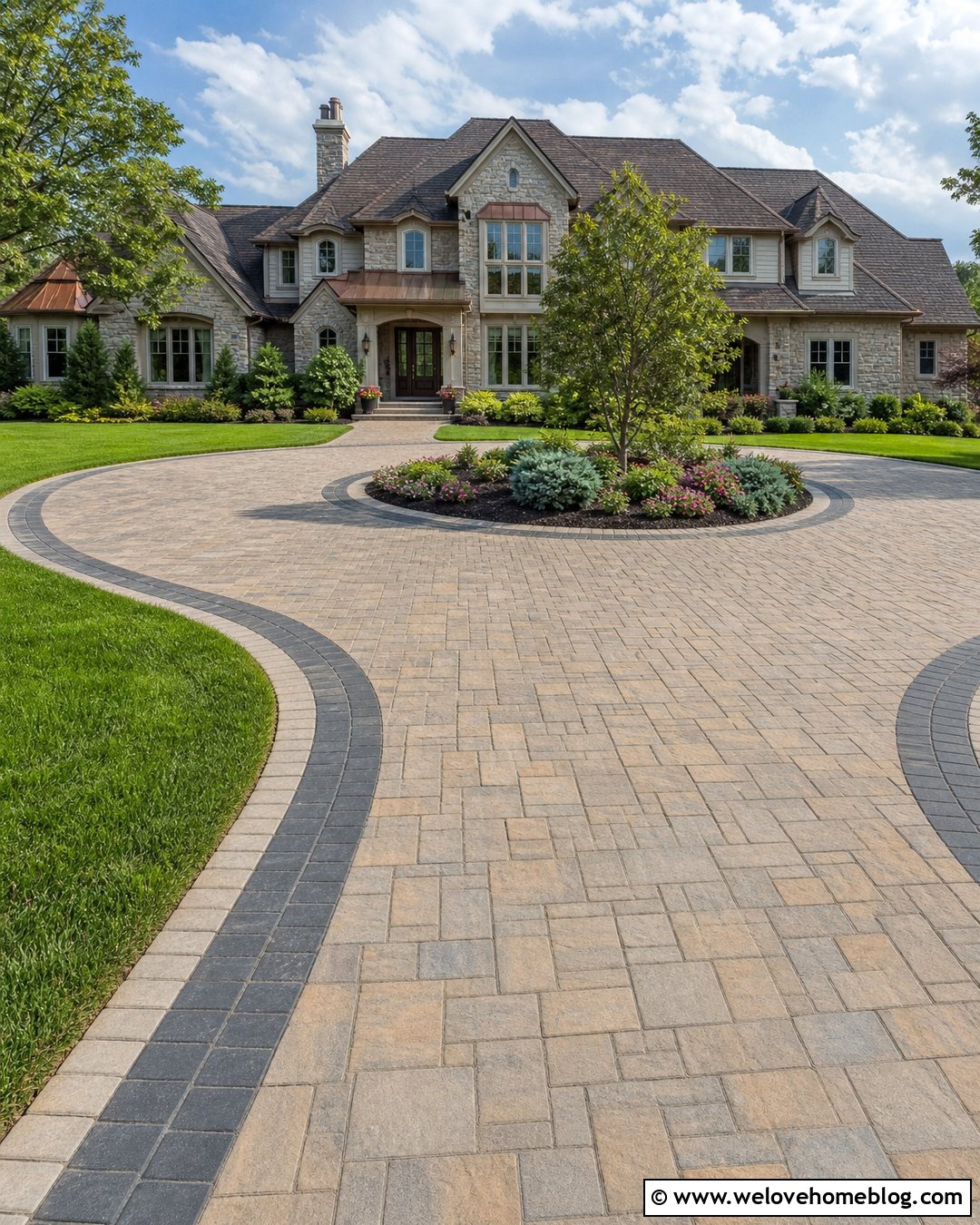
A circular driveway benefits from pillars that clearly identify its entrance and exit. Place matching stone columns at both openings, using the same height, stone blend, and cap design for visual continuity. A light exposed-aggregate surface works well because its texture complements natural stone without creating a busy pattern. Curved cobblestone borders can follow the circular layout and protect nearby planting beds from vehicle tires. Keep shrubs near the road low and reserve taller trees for the center island or background. Address numbers should appear on the primary entry pillars so visitors understand which opening to use. Repeated lanterns, groundcover, and seasonal flowers can connect all four columns without making the frontage feel overly formal.
8. Low Stone Pillars For A Small Driveway
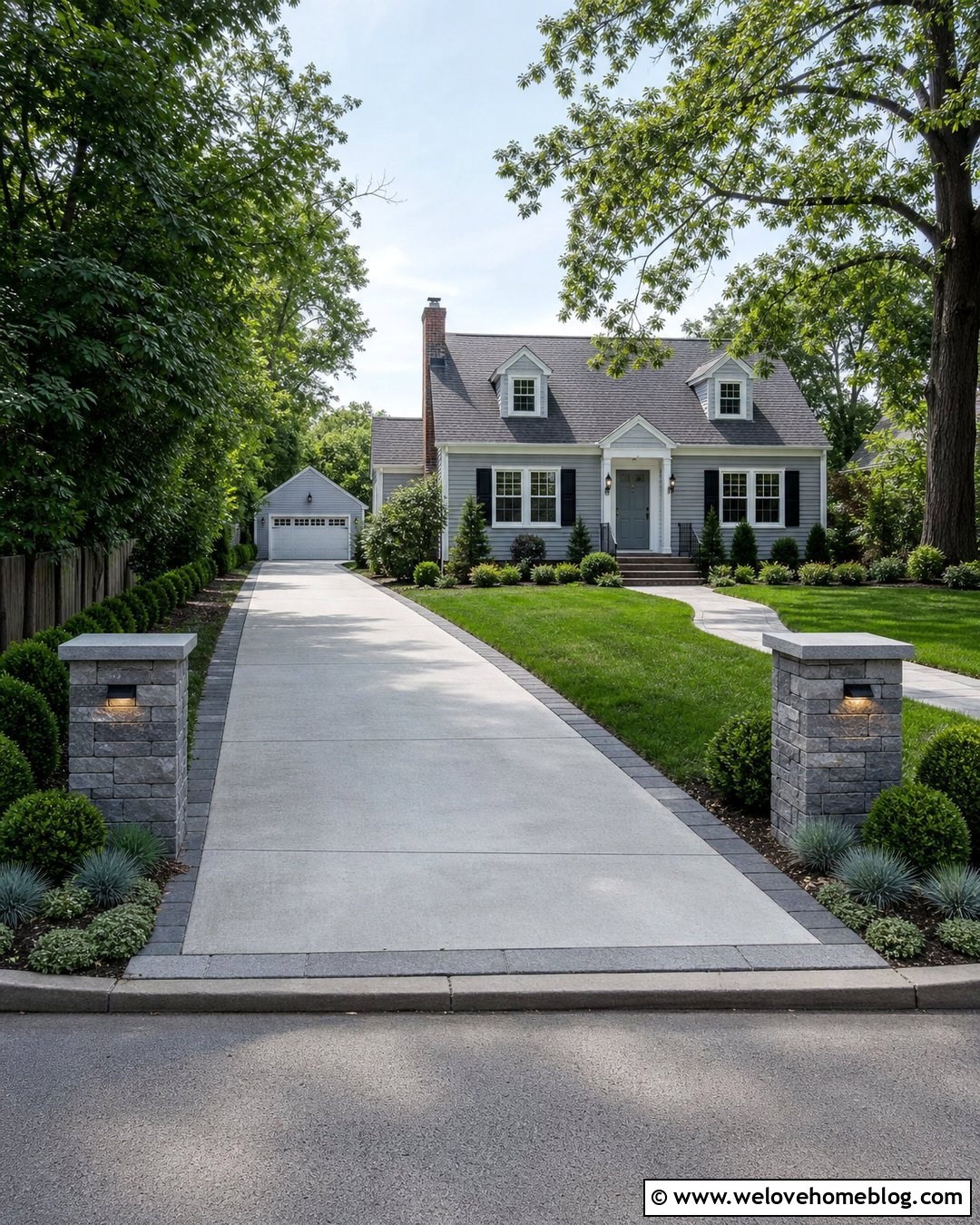
A compact property does not need oversized entrance columns. Low stone pillars, approximately aligned with nearby fencing or hedges, can define a narrow driveway without blocking the house or making the yard feel crowded. Pair slim gray stone veneer columns with a straight concrete driveway and a single row of darker pavers along each edge. Simple flat caps keep the design visually light. Place small address numbers on one pillar and a compact downlight on the other. Low-growing plants such as creeping thyme, dwarf boxwood, or blue fescue can soften the bases. Maintaining open sightlines around the road is especially important, so avoid tall shrubs, bulky decorations, and planting beds that reduce the usable driveway width.
9. Tall Stone Pillars For A Long Driveway
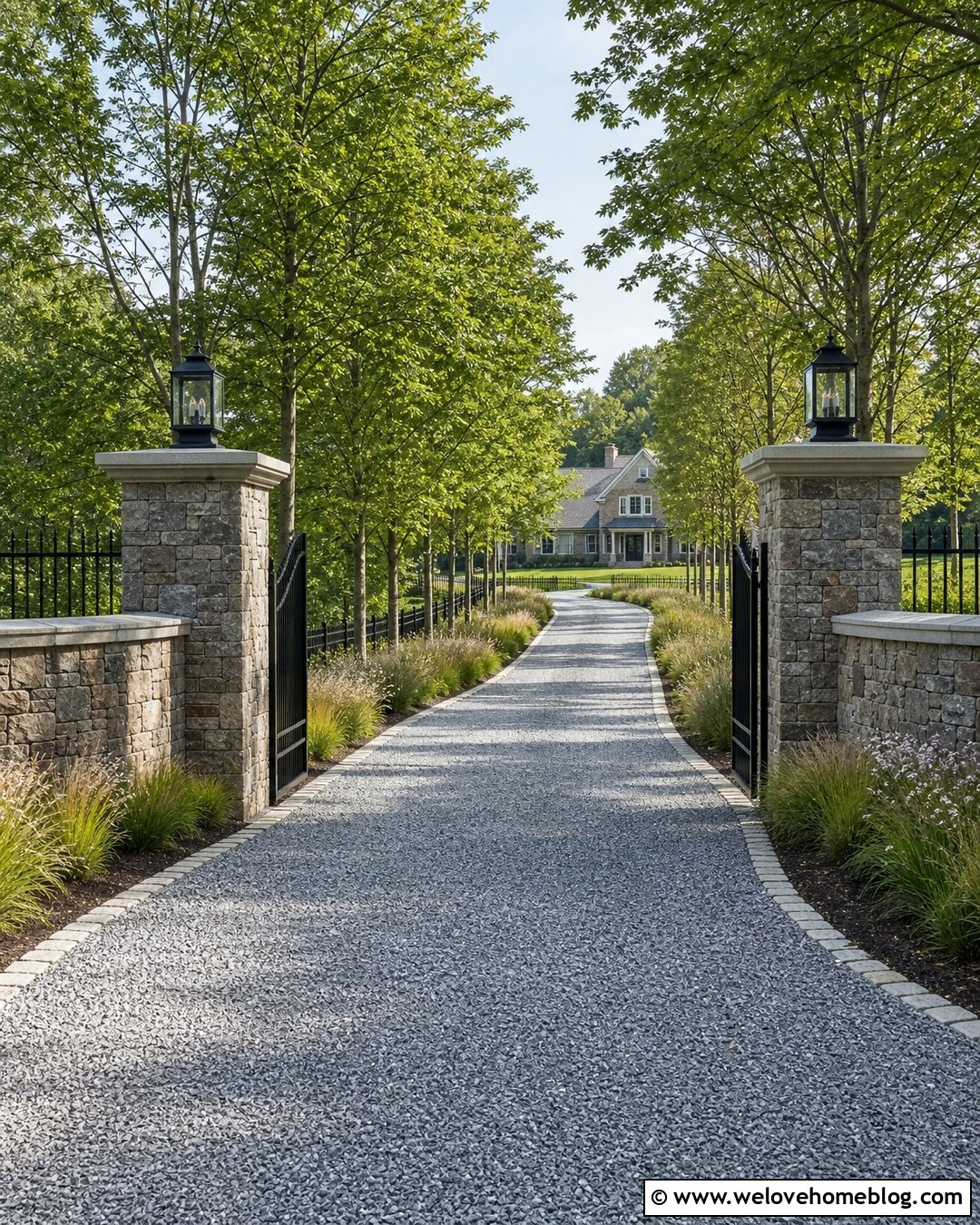
Tall pillars give a long driveway the visual importance needed to mark its entrance from the road. Use substantial square columns faced with mixed granite or large-format stone veneer, then top them with broad caps and appropriately scaled lanterns. A sweeping gray gravel driveway can pass through the opening before curving toward a distant country home. Continue low stone walls or black estate fencing from each side to make the columns feel anchored in the landscape. Rows of deciduous trees can emphasize the length of the approach, while low meadow planting keeps the entrance relaxed. Tall pillars should remain proportional to the gate, driveway width, and surrounding structures rather than appearing as isolated towers.
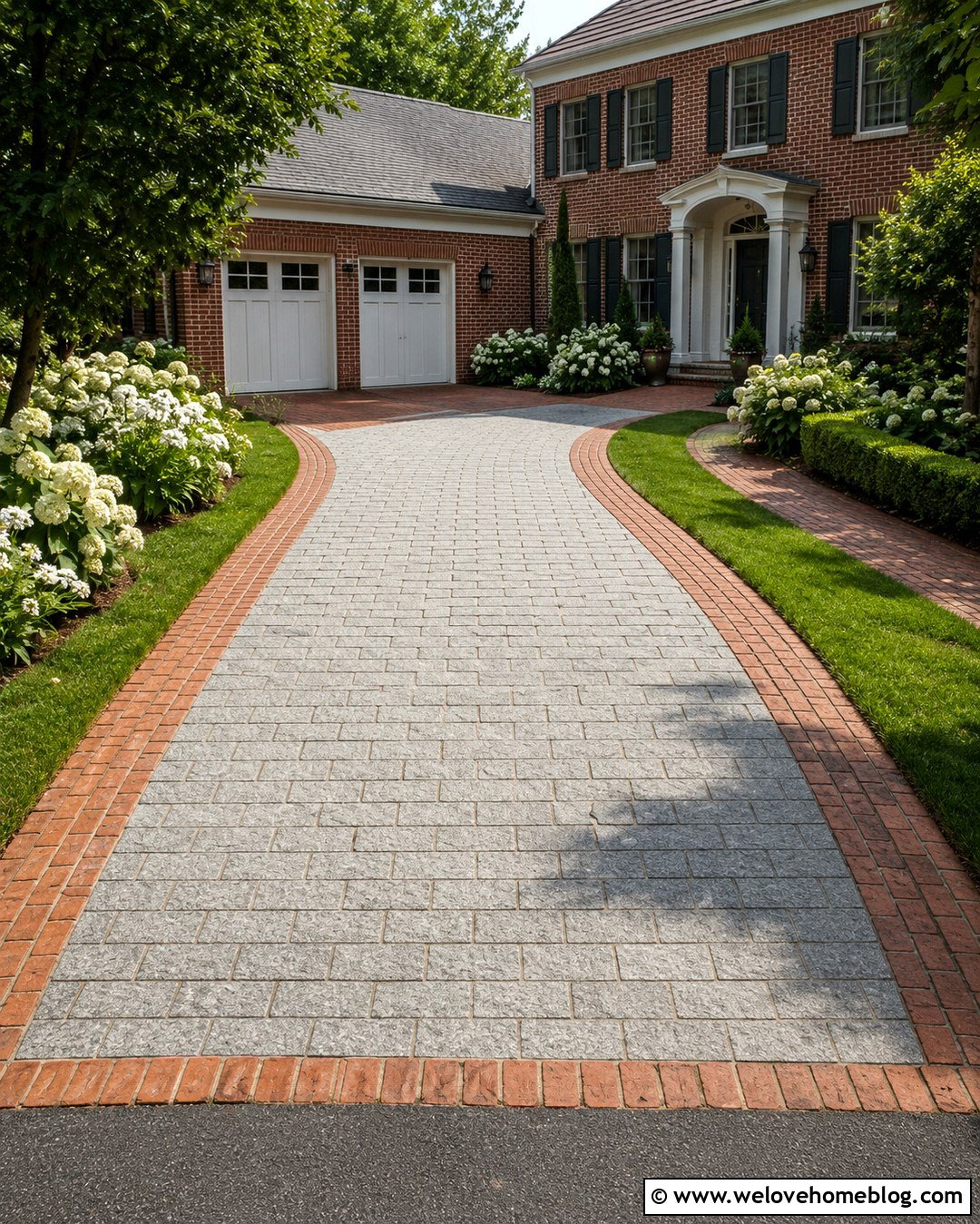
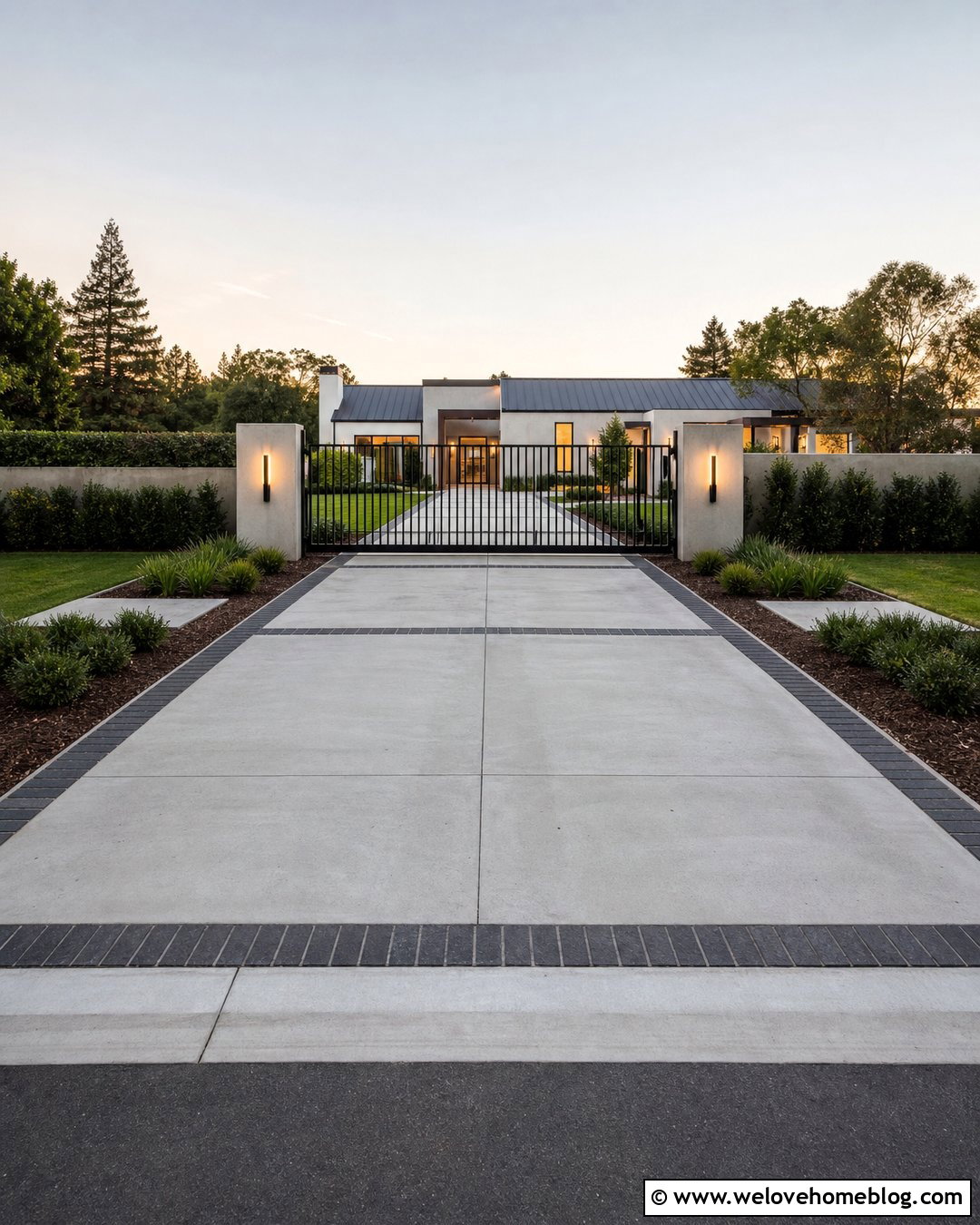
10. Stone Pillars With Lantern Lights
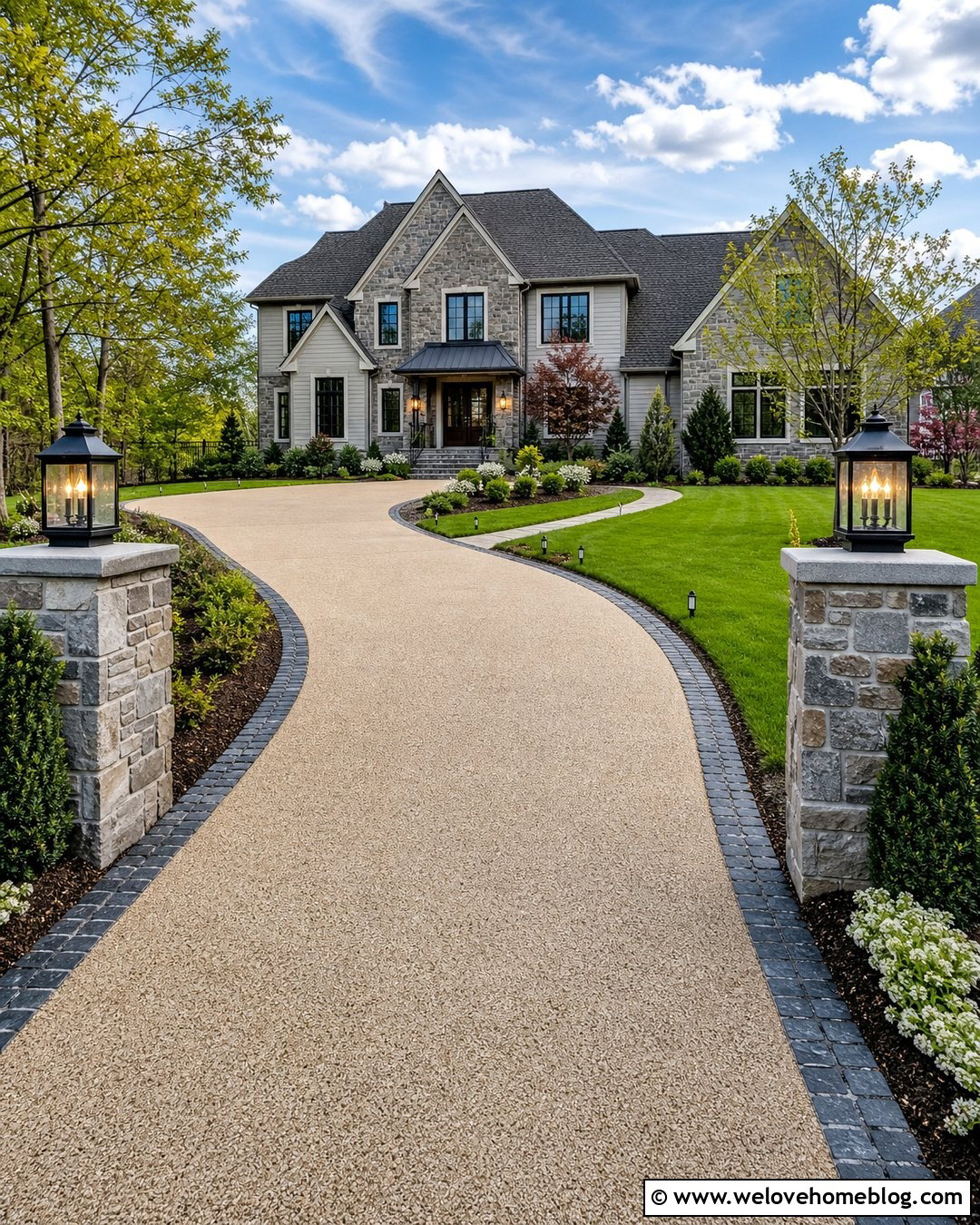
Lantern-topped stone pillars make a driveway easier to identify while creating a polished daytime focal point. Choose fixtures with clear glass and simple black or bronze frames that suit the architecture of the house. Oversized lamps can make small columns appear top-heavy, so keep the fixture width proportional to the cap. Warm gray stone pillars pair attractively with a curved resin-bound gravel driveway and dark cobblestone edging. Repeat the lighting finish on the porch, garage, and walkway for a cohesive result. Plant compact evergreen shrubs behind the pillars and spreading perennials toward the road. Position plants carefully so mature branches will not cover address numbers, interfere with fixtures, or narrow the entrance over time.
11. Stone Pillars With Built-In Lighting
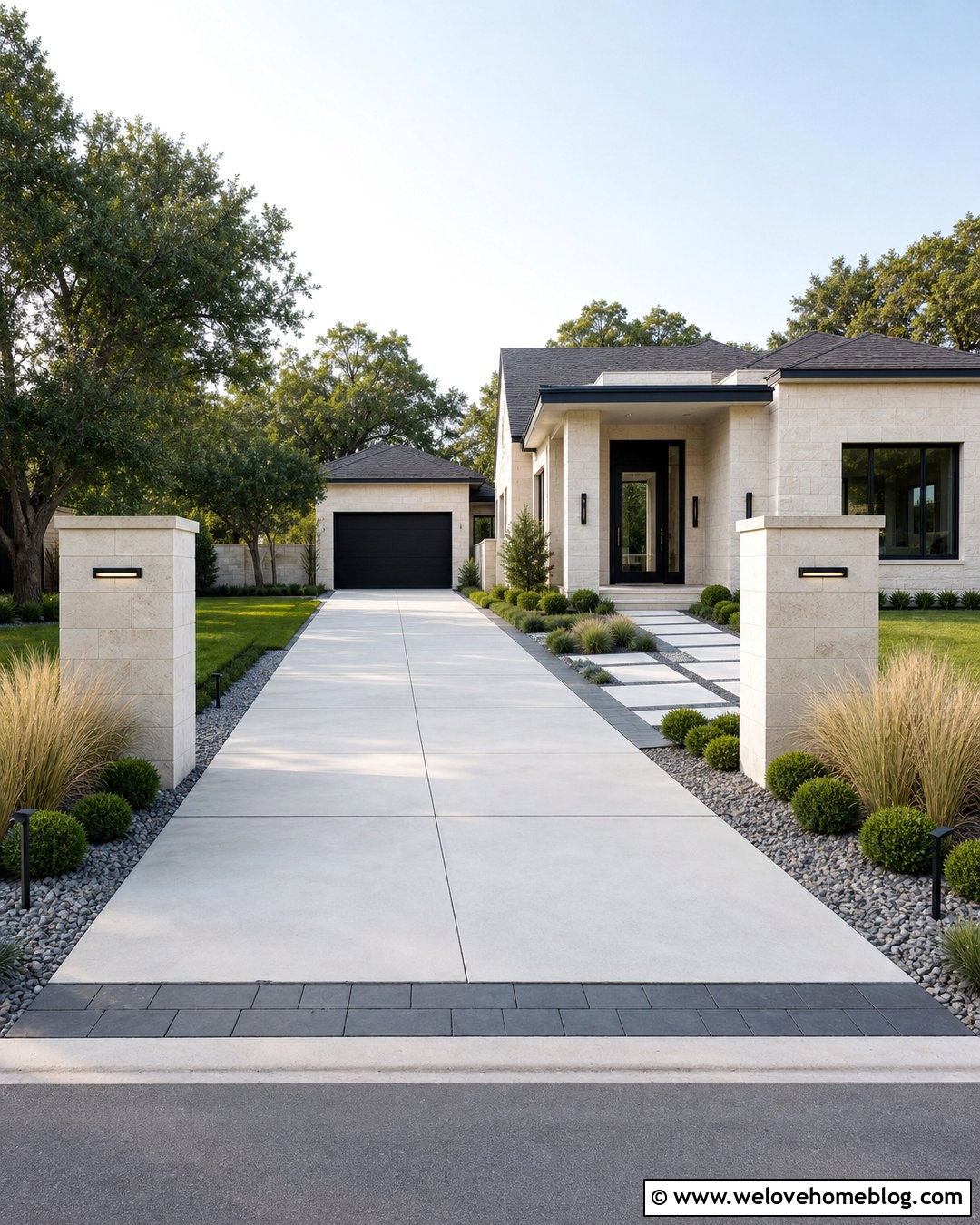
Built-in lighting offers a streamlined alternative to traditional pillar lanterns. Recessed fixtures can be positioned on the road-facing side, driveway-facing side, or both, depending on visibility needs. Rectangular limestone columns with narrow horizontal lights suit a smooth concrete driveway leading to a modern or transitional home. Keep wiring, junction boxes, sensors, and access points concealed but serviceable. A charcoal paver border can connect the light-colored pillars with dark window frames on the house. Use simple landscaping, such as clipped grasses and compact evergreen mounds, to keep attention on the masonry. Downward-directed illumination generally produces a cleaner entrance appearance and reduces distracting glare around neighboring properties and approaching drivers.
12. Stone Pillars With Address Plaques
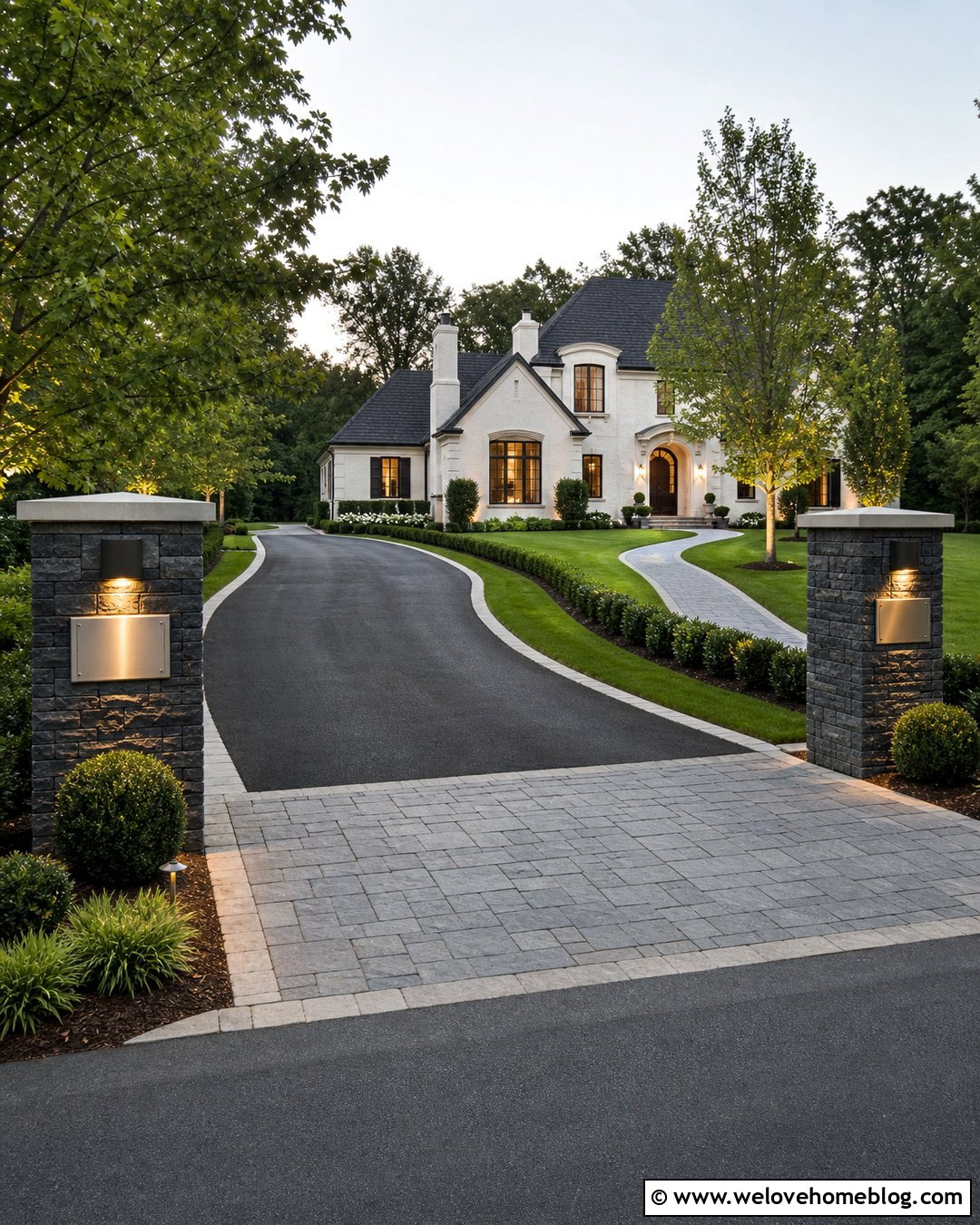
An address plaque transforms stone pillars into practical entrance markers. Mount a large, high-contrast number panel on the pillar most visible from approaching traffic. Dark metal numbers stand out against cream limestone, while brushed steel or pale cast-stone plaques read clearly on charcoal ledgestone. Pair the pillars with a gently curved asphalt driveway and a stone-paver apron at the road. A small directional light can illuminate the numbers without dominating the design. Keep vines, tall grasses, and flowering shrubs away from the plaque face. If the house sits far from the street, repeat smaller address numbers near the front door. Consistent typography and metal finishes help the entrance look designed rather than assembled from unrelated pieces.
13. Stone Pillars With A Mailbox
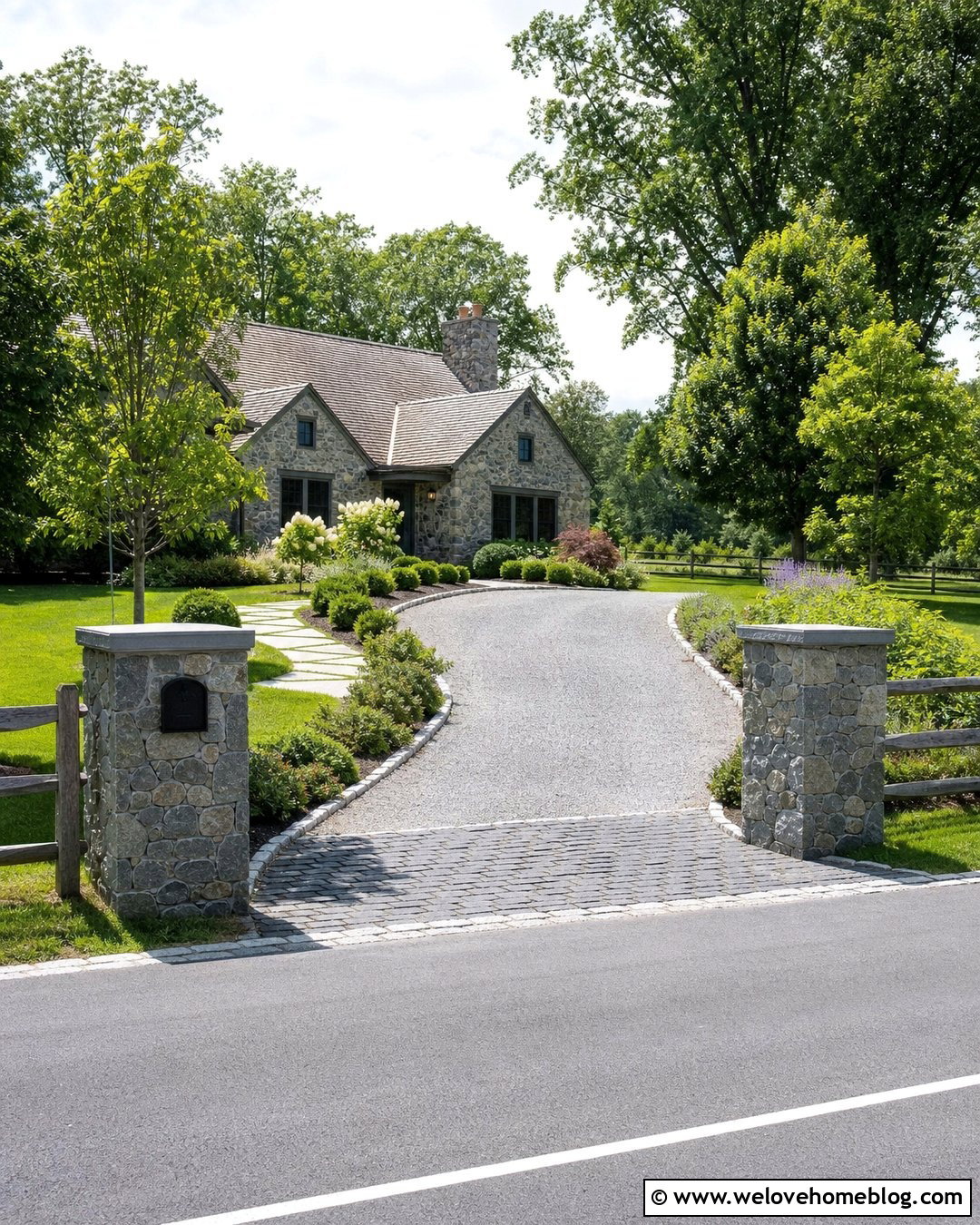
Combining a mailbox and stone pillar can reduce clutter around the driveway entrance. Build the mailbox into a wider roadside column and use a matching pillar across the driveway to maintain balance. Gray fieldstone with bluestone caps pairs naturally with a light gravel drive and informal cottage landscaping. The mailbox opening, door, flag, and house numbers should remain easy to see and access from the road. Use a metal insert designed for outdoor exposure rather than leaving the interior masonry unprotected. A short cobblestone apron can reinforce the mailbox area and reduce loose gravel near the pavement. Keep flowers low around the column so postal access and driver visibility remain clear throughout every season.
14. Stone Pillars With Curved Wing Walls
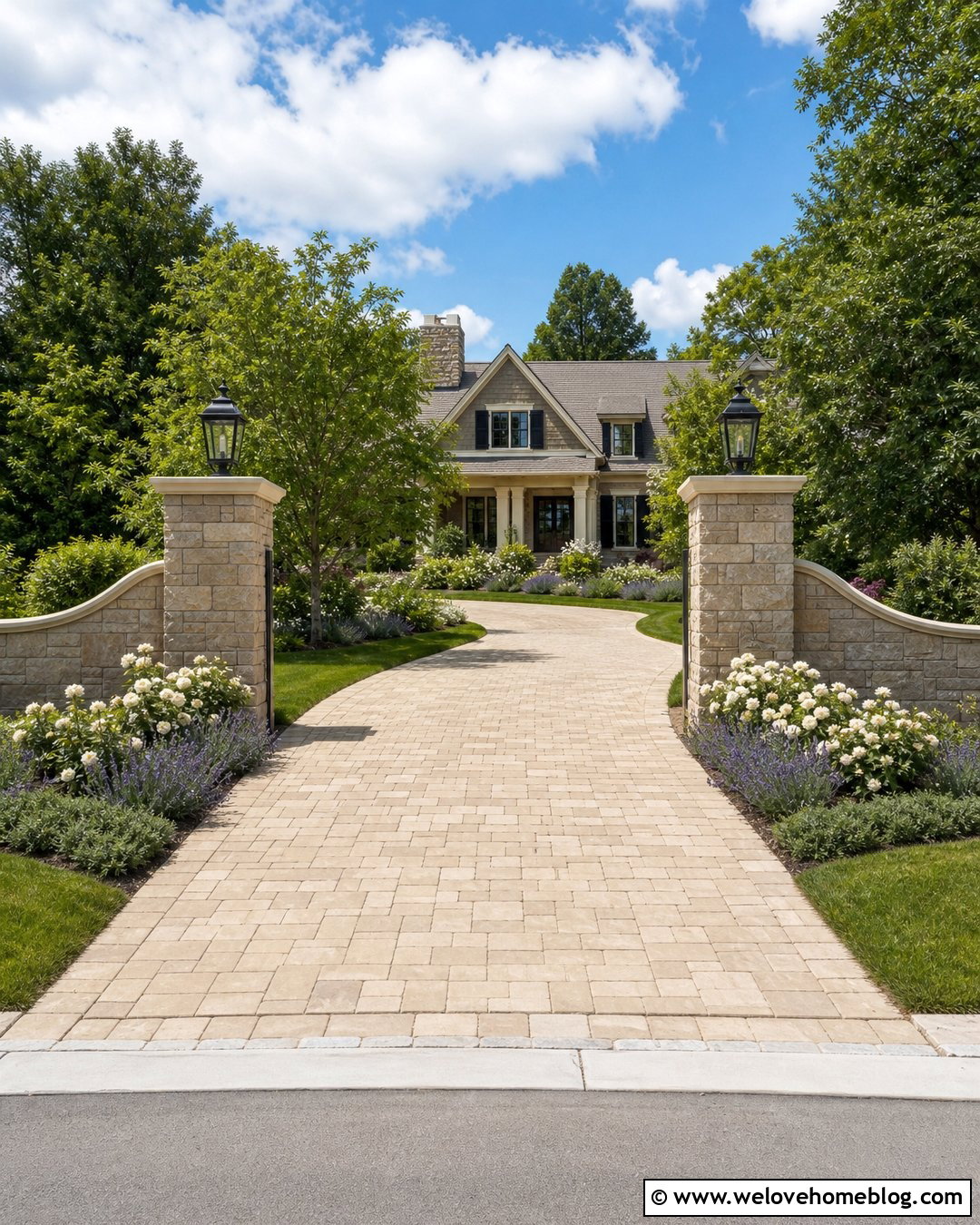
Curved wing walls make stone entrance pillars look integrated into the property instead of standing alone. Extend low masonry walls outward from each column, allowing their lines to follow the driveway flare or surrounding planting beds. Warm ashlar stone with sawn rectangular faces suits a tan paver driveway and a traditional home. Finish the walls and columns with matching limestone caps for a continuous appearance. Plant low roses, catmint, or evergreen groundcover along the outer curves. The walls can gradually step down toward the lawn, making the transition feel softer. Keep the inner opening unobstructed, especially where the driveway meets the road. Properly proportioned wing walls create presence without needing a large or elaborate gate.
15. Stone Pillars With Straight Garden Walls
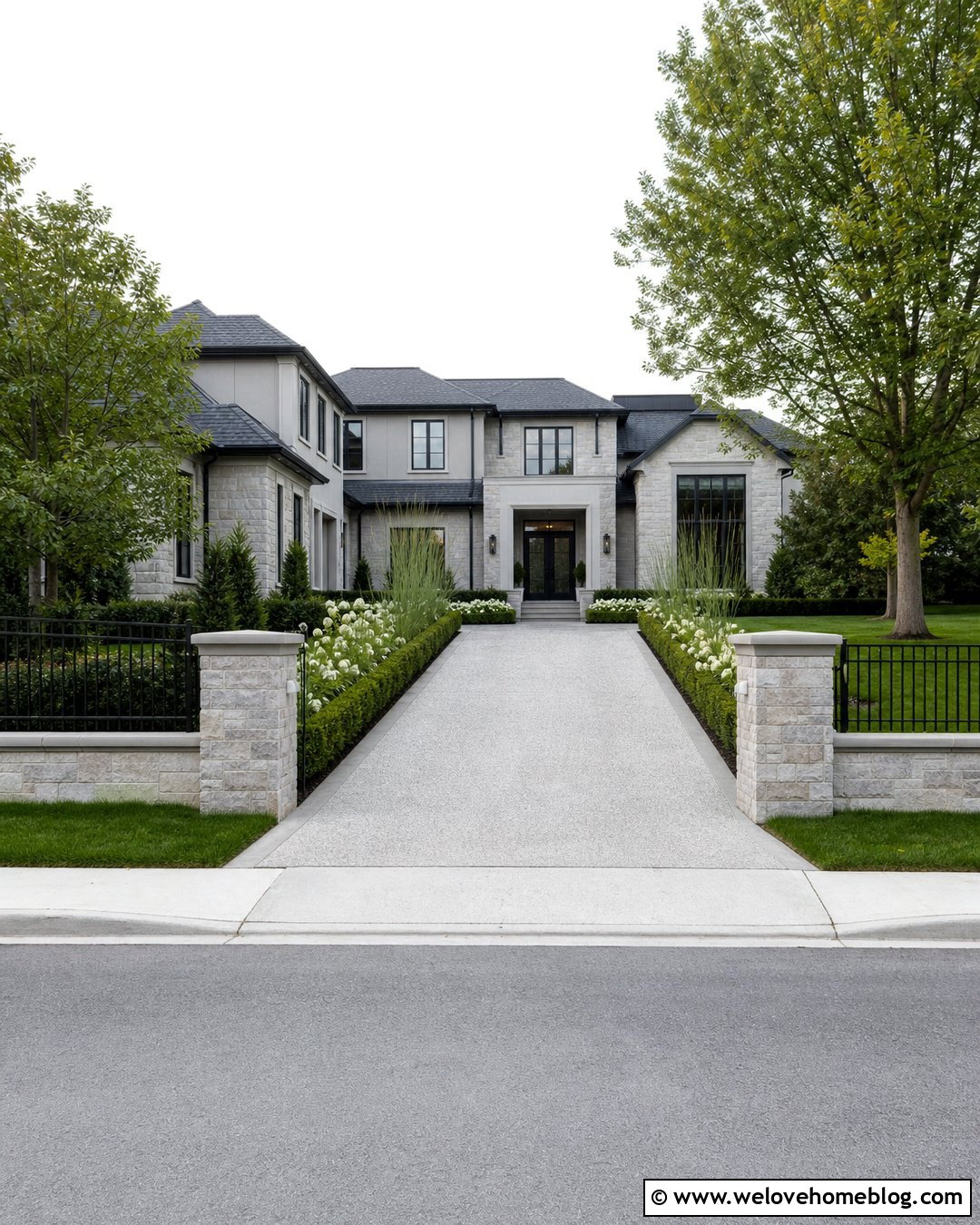
Straight garden walls extending from stone pillars create a structured entrance for formal or modern homes. Use clean-cut gray limestone blocks with smooth caps beside a straight exposed-aggregate driveway. Narrow planting beds between the walls and lawn can hold clipped boxwoods, upright grasses, or repeated white flowering plants. The strong horizontal wall lines balance the vertical pillars and visually widen the entrance. Consider adding simple metal fencing above the low walls when more boundary definition is needed. Match the wall joints, caps, and stone color to the house foundation or facade. Avoid crowding the composition with too many materials. Two stone tones, one metal finish, and a restrained plant palette are usually enough to establish a cohesive design.
16. Stone Pillars With A Split-Rail Fence
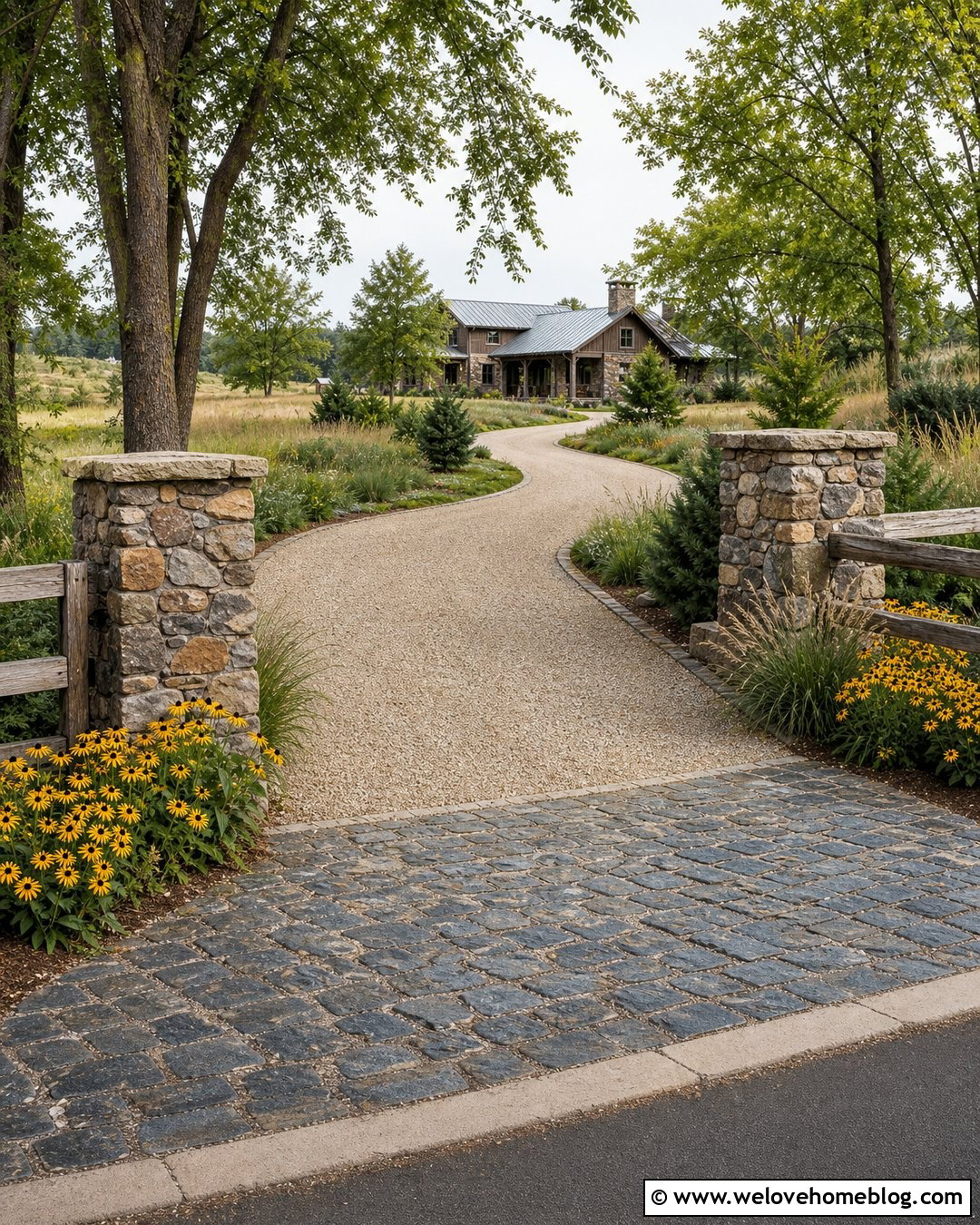
Stone pillars and split-rail fencing create an inviting entrance for rural properties. Build the columns from local-looking fieldstone in natural gray and brown shades, then connect weathered cedar rails along both sides of a curved gravel driveway. The contrast between solid masonry and open fencing feels substantial without closing off the landscape. Flat, irregular stone caps complement the relaxed construction. Native grasses, black-eyed Susans, and low evergreen shrubs can blend the entrance into a meadow or wooded setting. A darker cobblestone strip at the road keeps gravel from scattering and clearly defines the threshold. If a gate is included, choose a straightforward timber design that repeats the color and proportions of the fence rails.
17. Stone Pillars With Black Metal Fencing
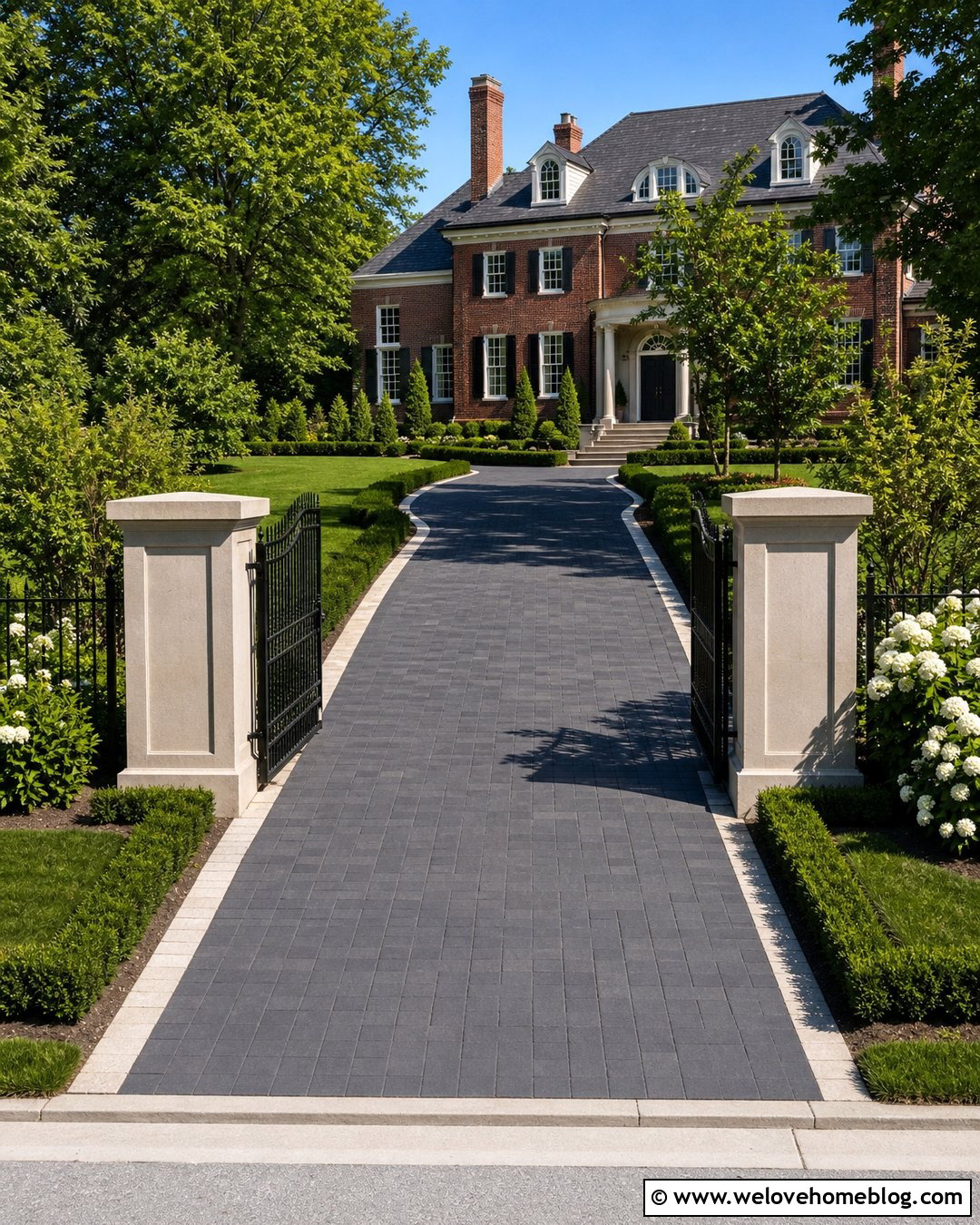
Black metal fencing can give stone pillars a refined edge while preserving views into the property. Pair buff limestone or pale granite columns with slim vertical fencing and a coordinated double gate. A dark charcoal paver driveway reinforces the metal color, while a light stone border connects back to the pillars. Set the fence panels into or directly behind the columns so transitions look deliberate. Formal hedges can run along the interior fence line, but they should be maintained below key sightlines near the road. Simple pier caps and restrained lighting prevent the entrance from becoming overly decorative. This balanced combination works especially well with colonial, Georgian, French country, and traditional brick homes.
18. Stone Pillars With Cedar Fencing
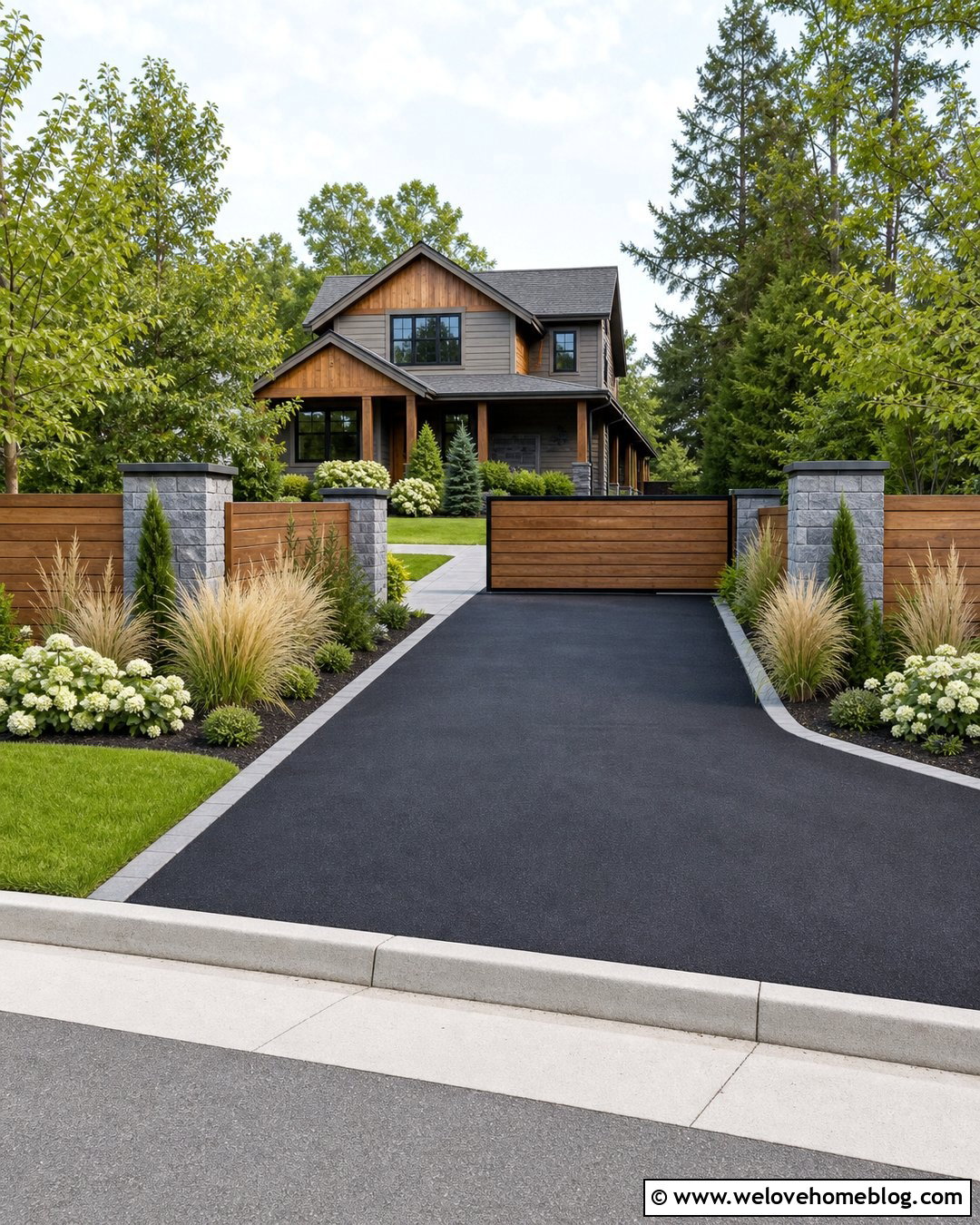
Cedar fencing brings warmth and privacy to cool-toned stone pillars. Use horizontally arranged cedar boards between square granite-faced columns for a contemporary entrance, or vertical boards for a more traditional look. A smooth black asphalt driveway creates a calm background that allows the wood and stone textures to stand out. Match the cedar gate to the fencing so the opening reads as part of one continuous boundary. Flat charcoal caps can repeat the driveway color. Add restrained planting beds with feather reed grass, compact hydrangeas, and dark green evergreens. Allow a small gap beneath the fence where appropriate to avoid a heavy appearance and protect the lower wood from constant contact with wet soil.
19. Granite Pillars With A Cobblestone Driveway
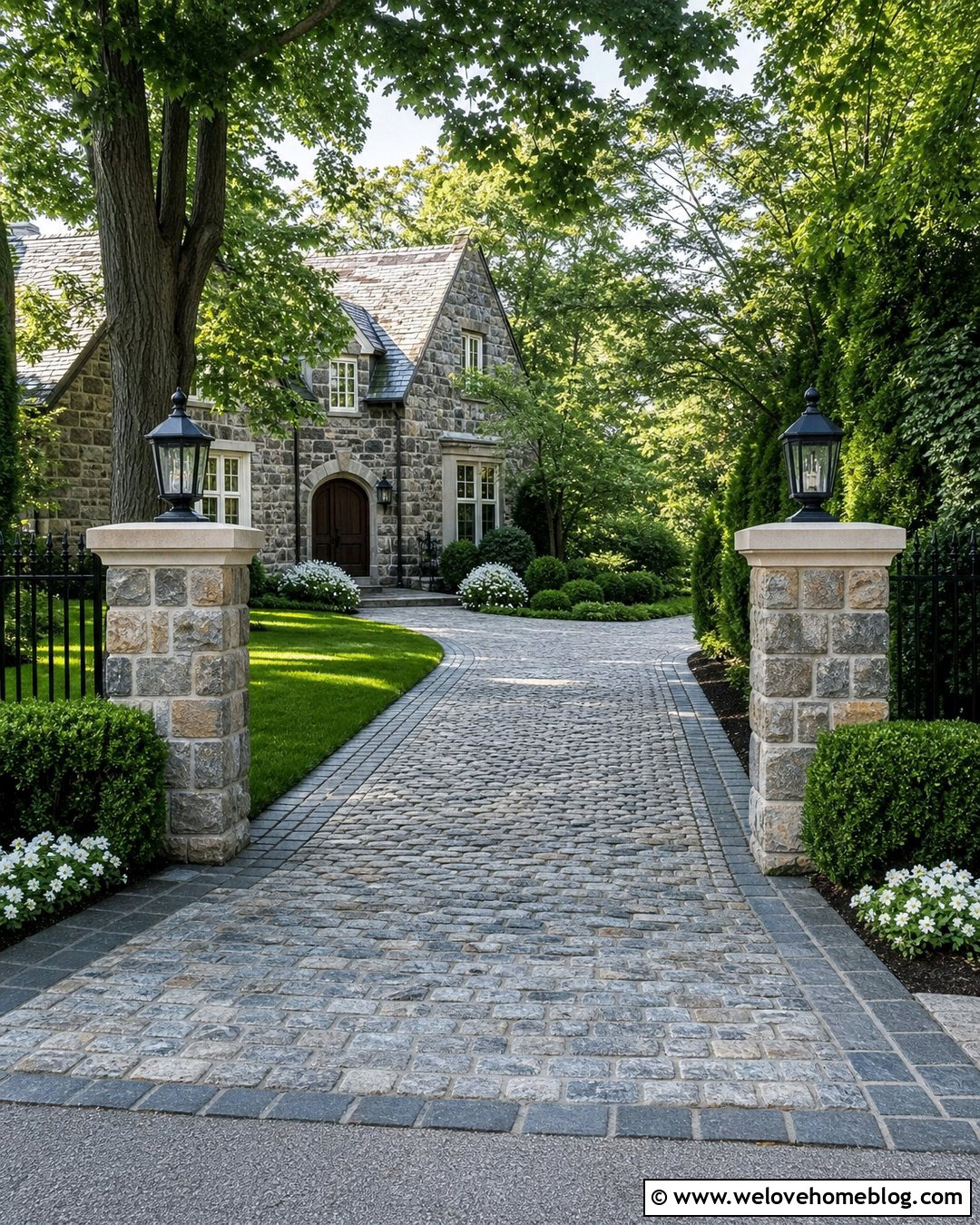
Granite pillars and cobblestones form an especially durable-looking entrance with a strong historic character. Use large, roughly squared granite pieces for the columns and smaller gray cobbles across a straight or gently curved driveway. A contrasting border of darker setts can define the driving area and keep the pattern crisp. Broad granite caps should echo the stone texture without looking overly polished. Traditional lanterns and black iron fencing complement the masonry. Soften the hard surfaces with deep green hedges, mature shade trees, and restrained white flowers. Because both materials have pronounced texture, keep additional decorations simple. The completed entrance should feel permanent and carefully crafted rather than busy or excessively ornamental.
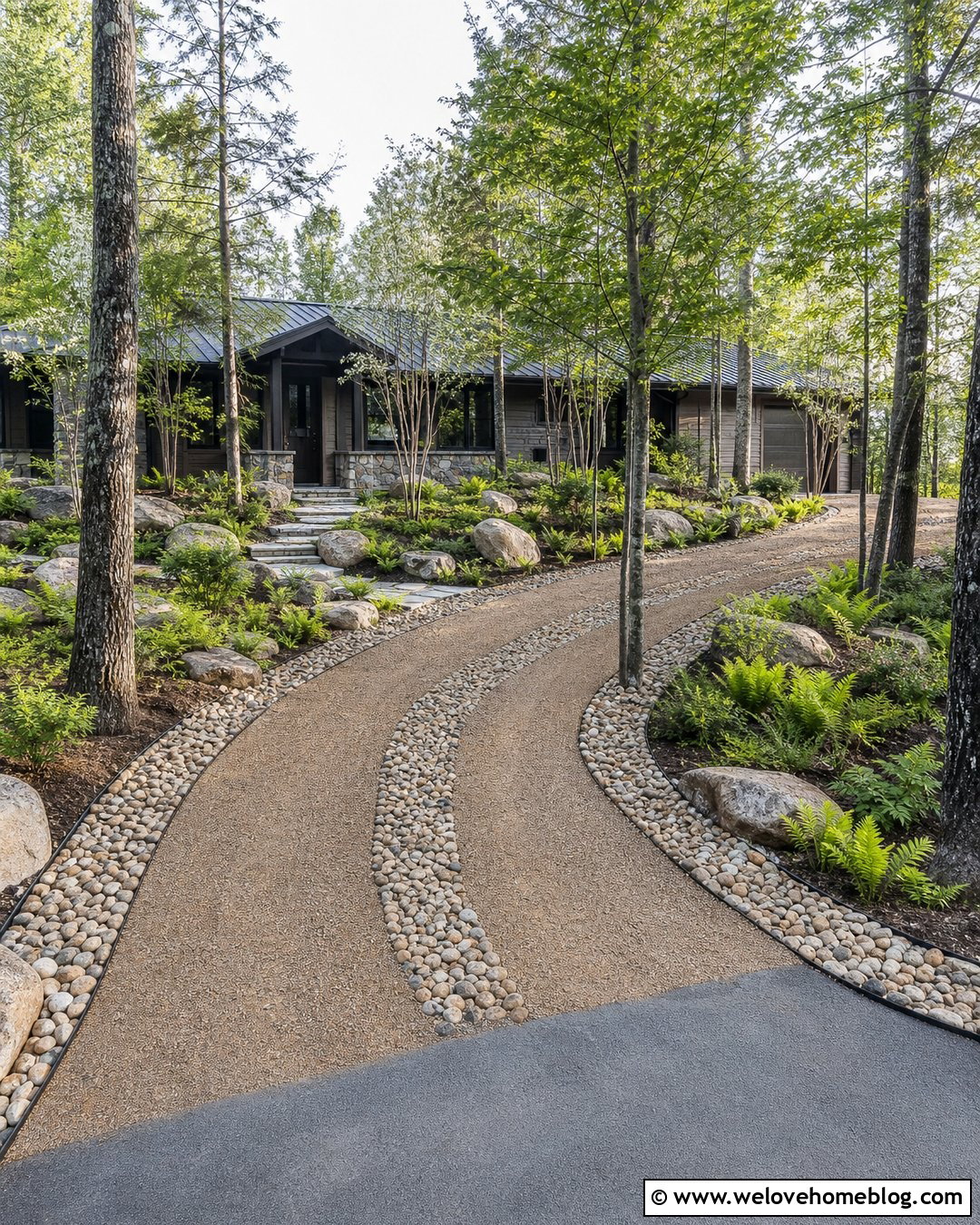
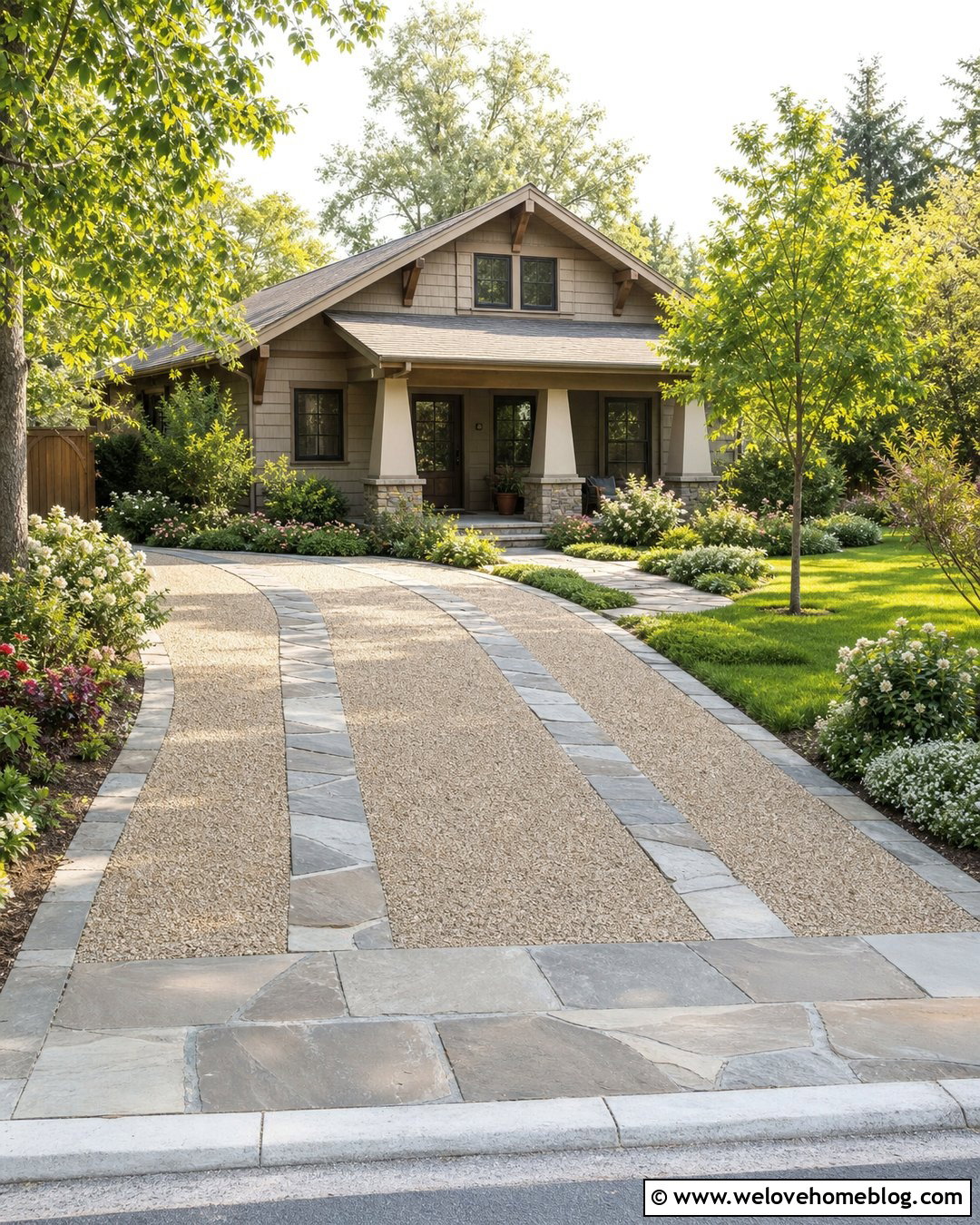
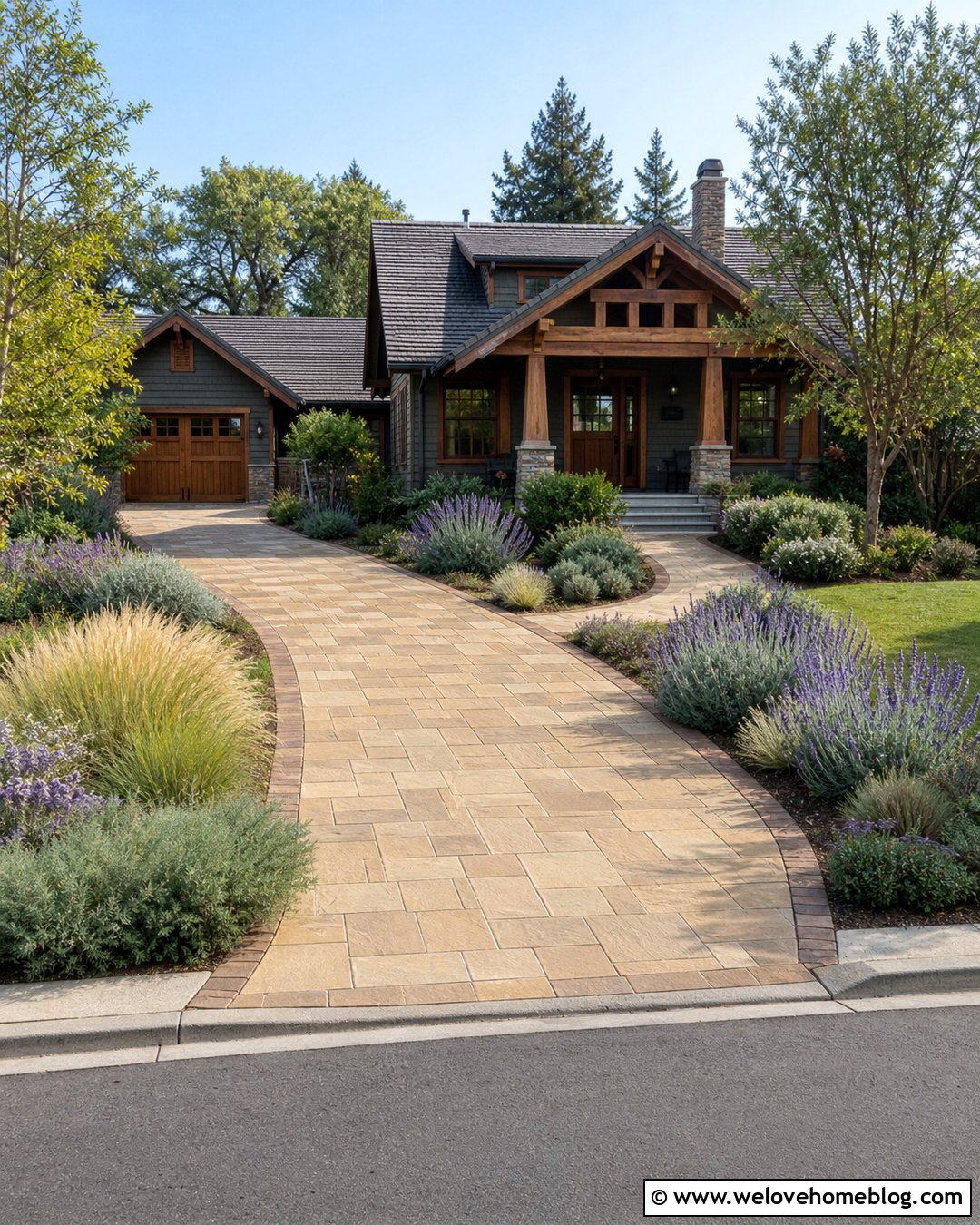
20. Bluestone Pillars With A Brick Driveway
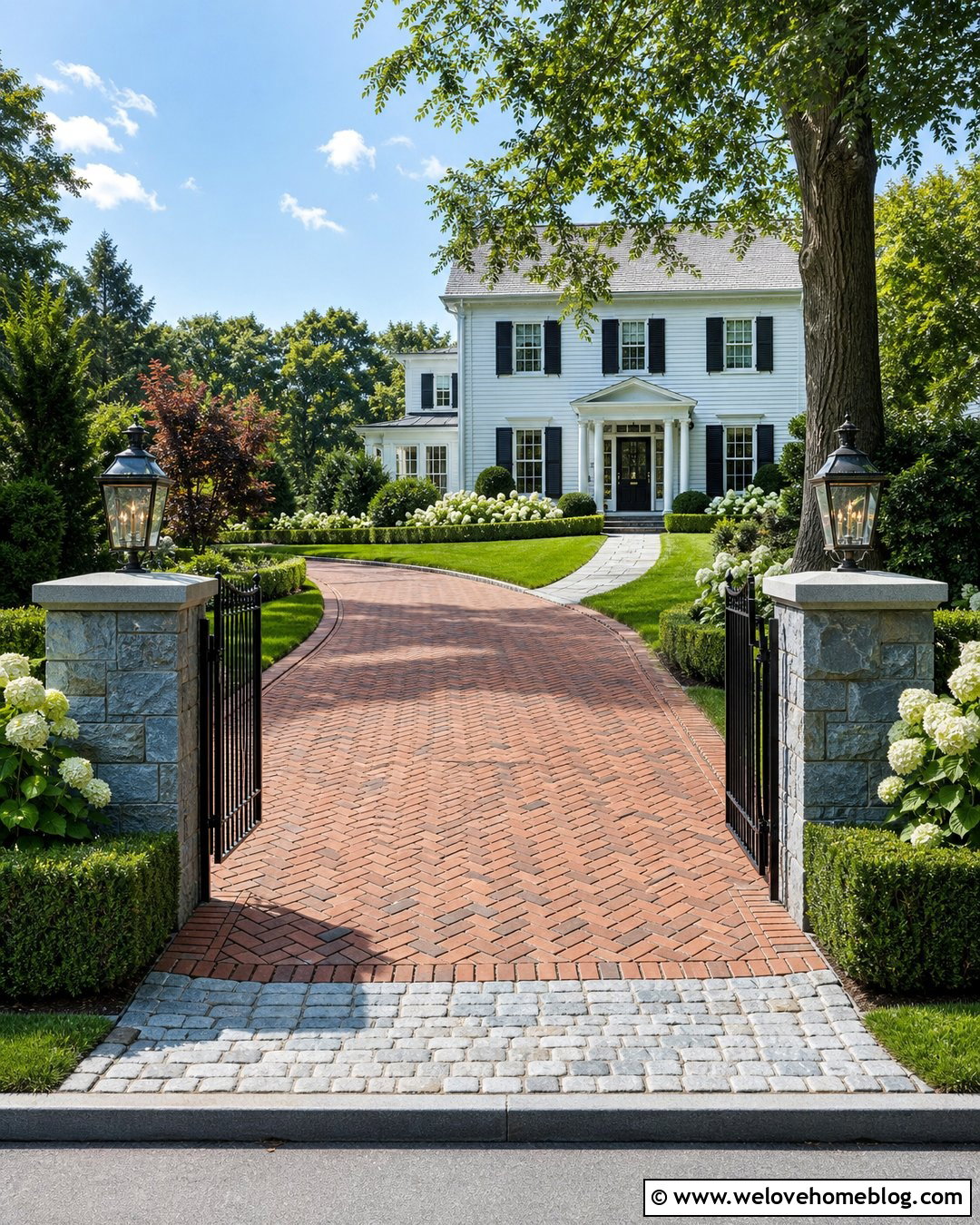
Cool bluestone pillars can balance the warm red and brown tones of a clay brick driveway. Choose rectangular stone pieces with tight mortar joints for a neat, tailored appearance. Lay the brick in herringbone through the entrance and use a soldier-course border to reinforce the driveway edges. Smooth bluestone caps establish a direct connection between the columns and nearby walkways or porch steps. Black lanterns and a simple iron gate complete the classic palette. Add low boxwood hedges, white hydrangeas, and a green lawn to frame the masonry. This combination works especially well with colonial and Cape Cod homes because it uses familiar materials while creating enough contrast to keep every surface visually distinct.
21. Stone Veneer Pillars On A Budget
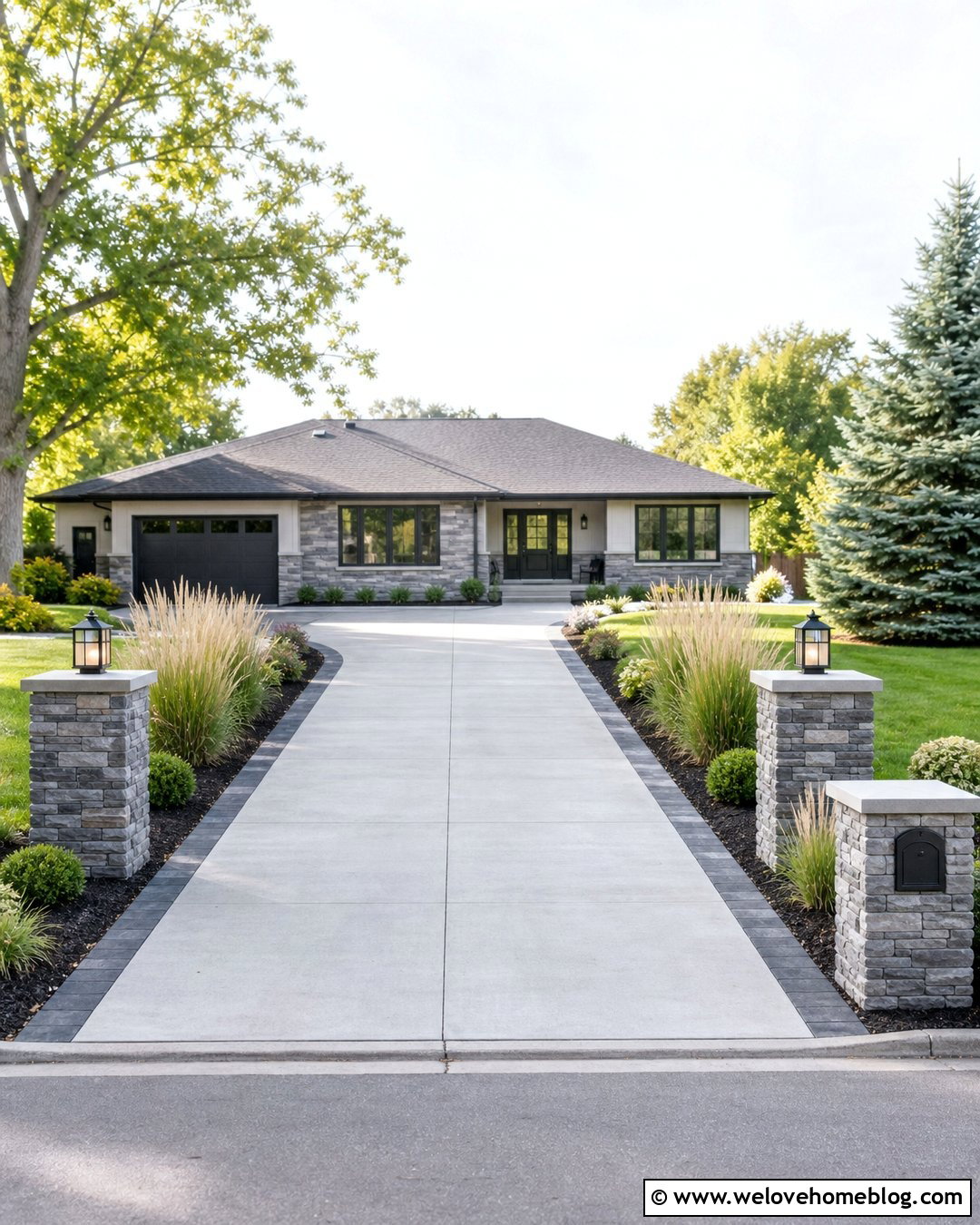
Stone veneer can deliver the visual presence of masonry pillars without requiring solid stone throughout the entire structure. Select a weather-resistant veneer that coordinates with the home, then wrap properly built column cores at both sides of a concrete or asphalt driveway. A mixed gray ledgestone veneer can look convincing when corners, mortar joints, caps, and transitions receive careful attention. Keep the pillar shape simple to avoid unnecessary cuts and labor. Precast concrete caps and modest solar or wired fixtures can complete the entrance economically. Extend mulch beds around the bases and use affordable mass plantings of grasses or dwarf shrubs. Repeating the veneer on a mailbox or porch column strengthens the overall design connection.
22. Rustic Stone Pillars With A Farm Gate
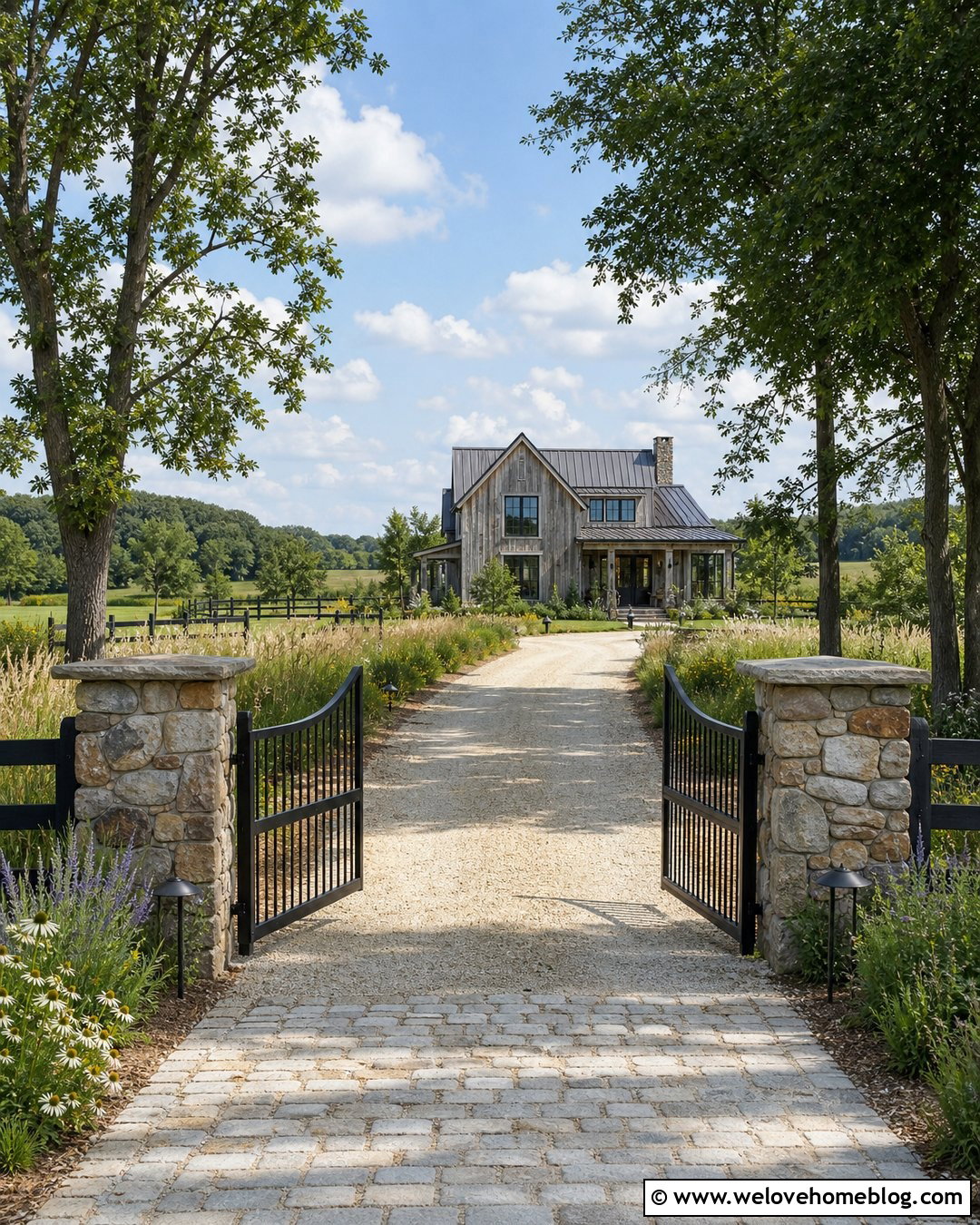
A practical farm gate can become an attractive residential feature when framed by rustic stone pillars. Use thick fieldstone columns with irregular caps beside a broad crushed-stone driveway. A galvanized metal gate provides a light, functional appearance, while a black powder-coated gate feels more finished. Continue woven wire or post-and-rail fencing from each pillar to suit the surrounding land. Meadow grasses and native wildflowers can grow nearby, but the immediate gate area should remain clear and easy to navigate. Add discreet address numbers and simple downward-facing lights. For a complete country composition, repeat the fieldstone around the farmhouse foundation, entrance steps, or landscape walls rather than introducing a completely different masonry color near the house.
23. White Stone Pillars With A Dark Driveway
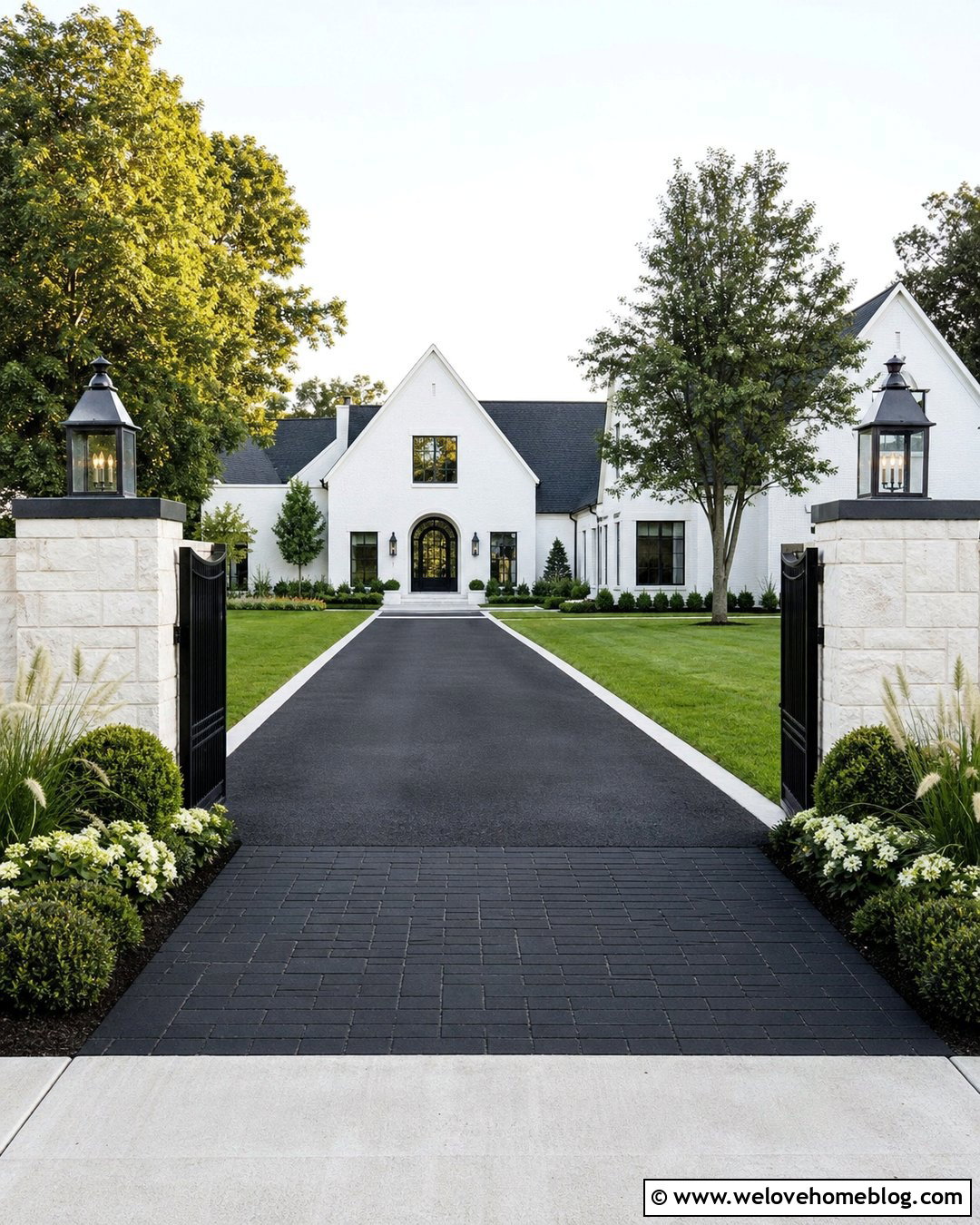
White or pale cream stone pillars stand out sharply against a black asphalt driveway. This high-contrast palette works with white-painted brick, light stucco, modern farmhouse siding, and dark exterior trim. Keep the columns rectangular and top them with charcoal caps that visually connect to the pavement. A short border of black concrete pavers can create a crisp transition through the entrance. Matte black lanterns, address numbers, and a simple gate reinforce the graphic appearance. Surrounding beds should remain uncomplicated, using green boxwoods, ornamental grasses, and white flowers. Regular cleaning may be needed to preserve the light masonry near the road, so avoid placing sprinklers where water and soil repeatedly splash onto the pillar faces.
24. Dark Stone Pillars With A Light Driveway
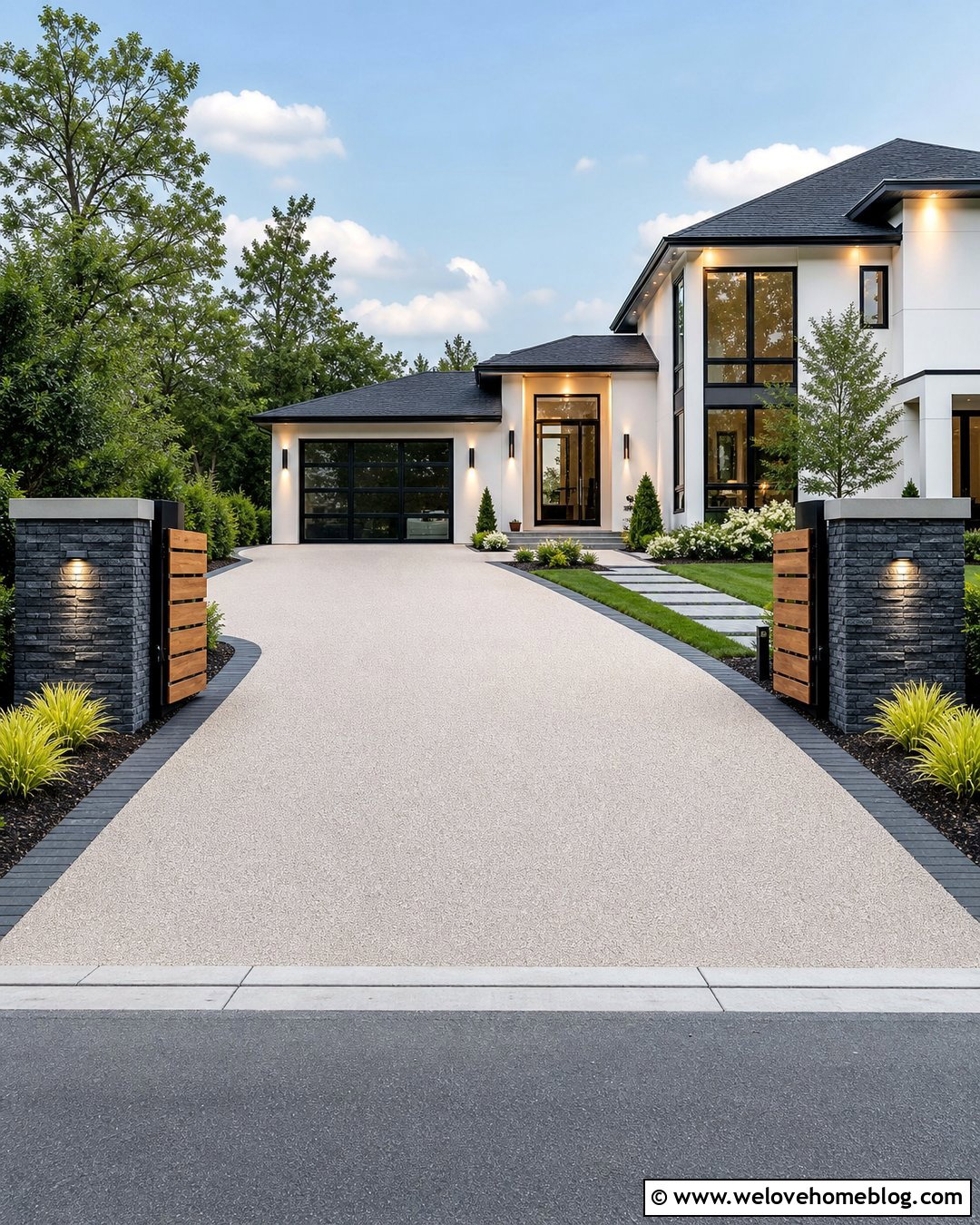
Charcoal stone pillars can frame a light driveway with strong modern contrast. Pair dark stacked ledgestone columns with pale gray concrete, cream resin-bound gravel, or warm beige pavers. Flat concrete caps and narrow integrated lights maintain clean lines. If a gate is desired, choose horizontal cedar slats to soften the dark masonry or black metal for a monochromatic effect. Extend charcoal paver ribbons along the driveway edges so the pillars relate to the entire approach. Lime-green grasses, white flowering shrubs, and neatly maintained lawn prevent the entrance from feeling severe. A house with dark windows, metal roofing, or charcoal siding accents will tie the palette together and make the pillars feel architecturally connected.
25. Stone Pillars With Planter Bowls
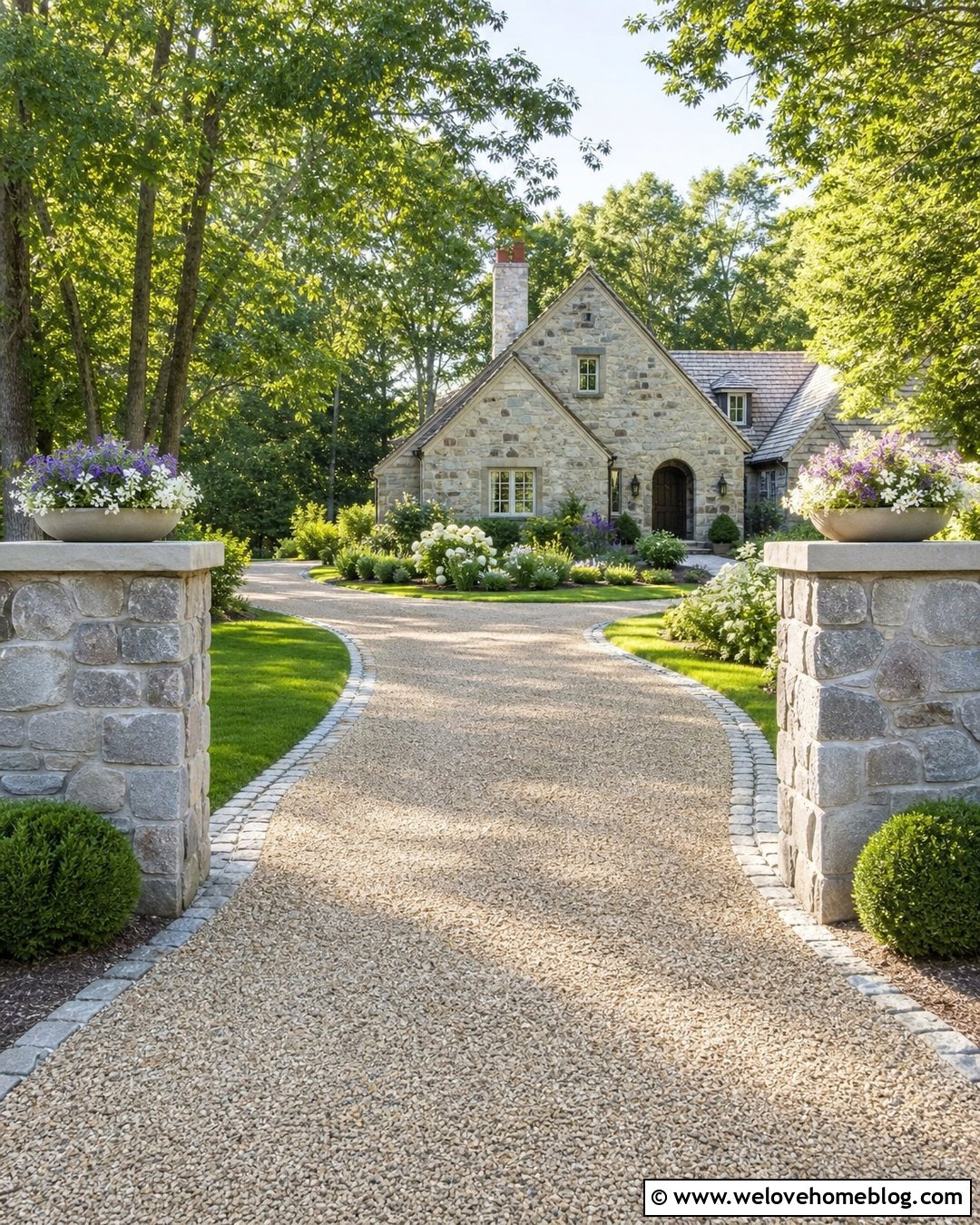
Planter bowls placed on stone pillars introduce seasonal color without requiring large roadside flower beds. Wide, low bowls usually look more stable than tall urns, especially on broad fieldstone or limestone columns. Fill them with compact plants that will not obscure lights or become top-heavy in wind. Below, a curved pea-gravel driveway can feature cobblestone edging and small boxwood mounds around the pillar bases. Match both planters in color, shape, and planting arrangement to preserve symmetry. Neutral cast-stone bowls complement rustic masonry, while black metal containers suit refined ashlar pillars. Plan for drainage so water does not stain the caps or stonework. The overall entrance should remain balanced even when the containers are temporarily empty.
26. Stone Pillars With Flower Beds
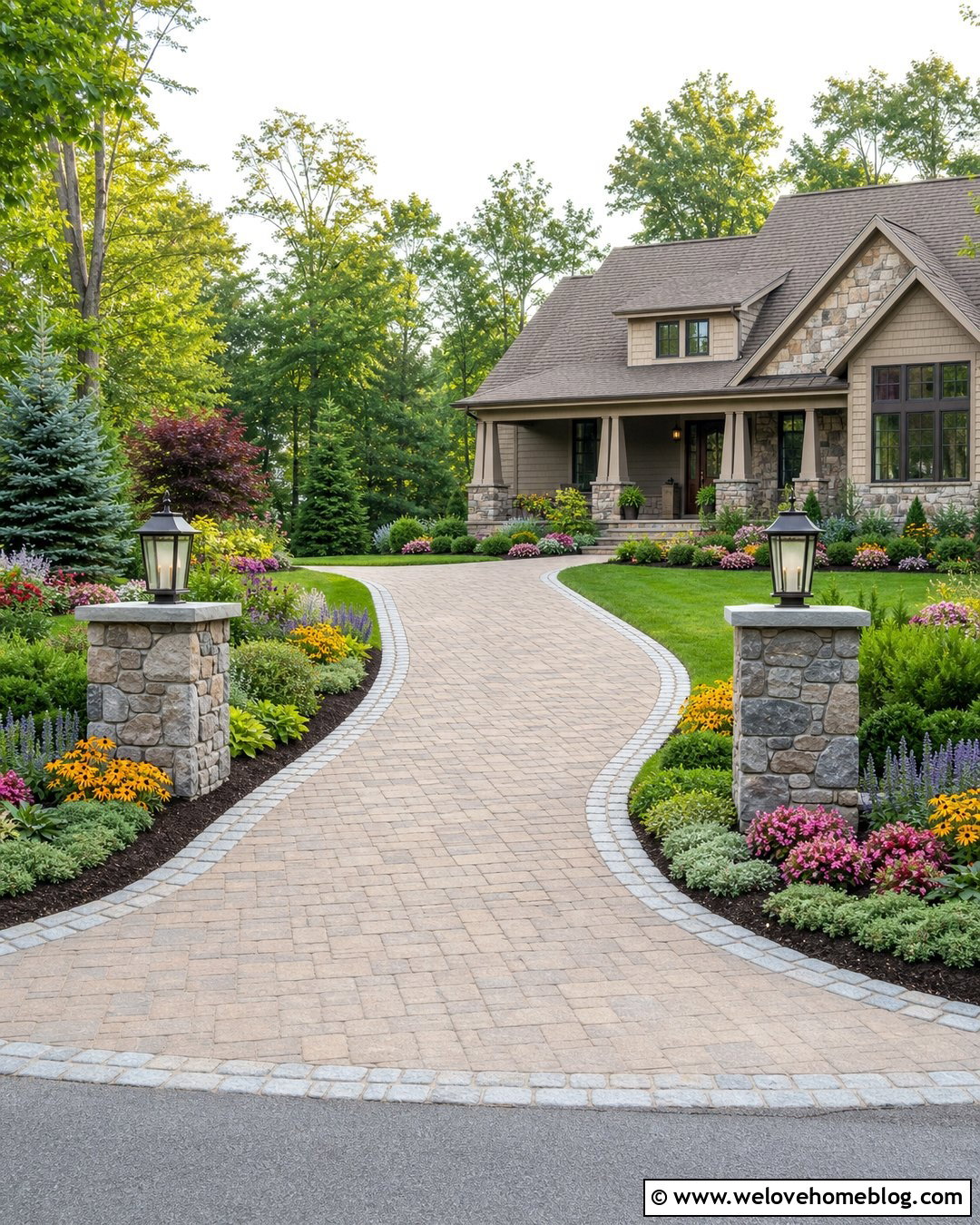
Flower beds can soften heavy stone pillars and create a friendlier transition from the road to the home. Begin with a curved concrete-paver driveway framed by medium-height gray stone columns. Shape broad planting beds around the outer sides, keeping the inner driveway edges open. Layer low groundcover at the front, flowering perennials in the middle, and compact evergreen shrubs toward the back. Repeat a limited selection of colors rather than mixing too many unrelated plants. Curved cobblestone edging can connect the beds with the pillar masonry. Choose varieties suited to the site’s light, soil, and local conditions. Mature plant dimensions matter, since overgrown shrubs can hide stonework, reduce visibility, and make the entrance harder to maintain.
27. Stone Pillars With Hydrangea Borders
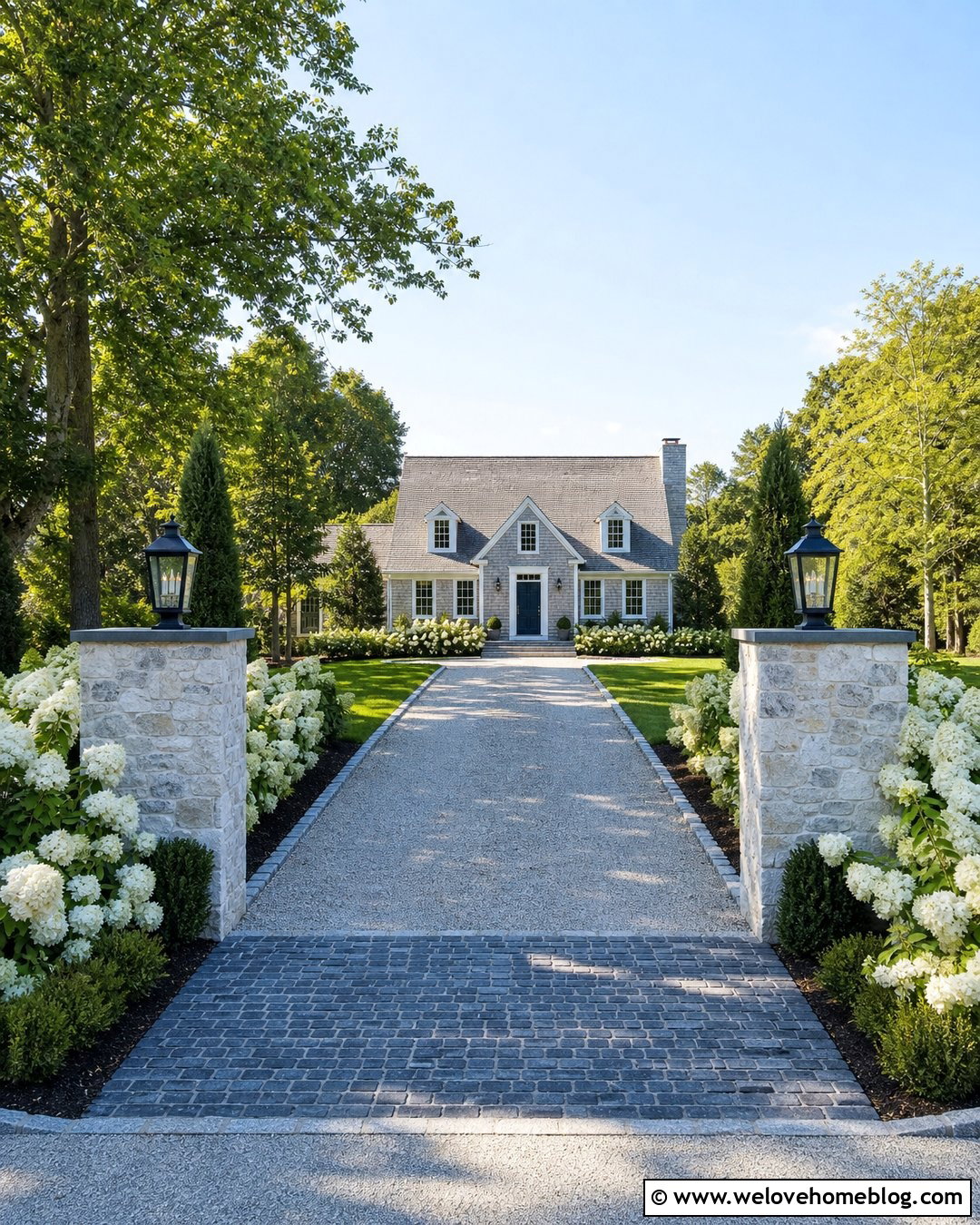
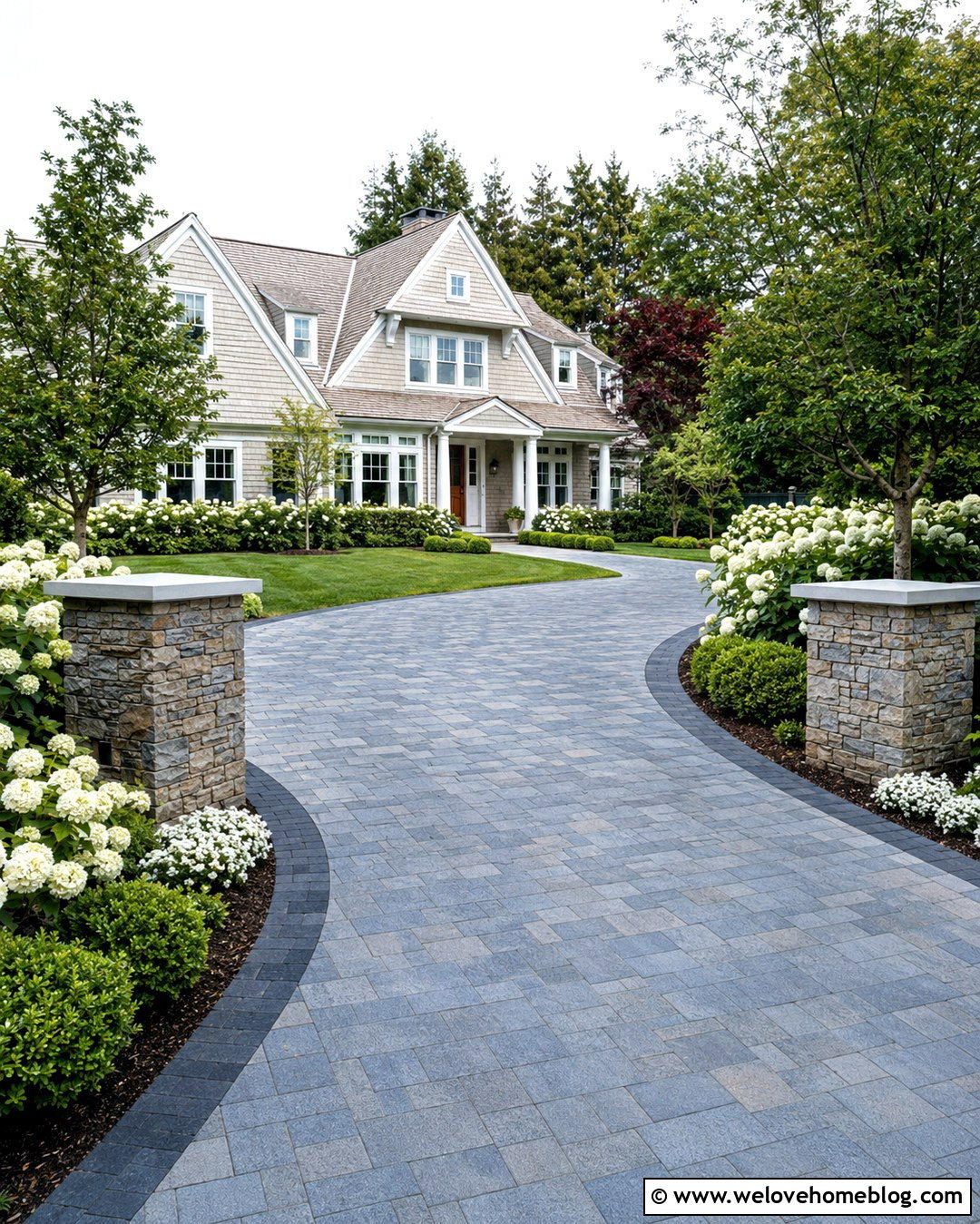
Hydrangeas create a lush, classic frame for stone entrance pillars when there is enough space for their mature size. Pair pale gray limestone columns with a straight gravel driveway and a dark cobblestone apron. Plant hydrangeas behind or outside the pillars, leaving the gate opening and roadside sightlines clear. White varieties complement nearly any masonry color, while blue and pink blooms can connect with shutters, doors, or garden accents. Add a low evergreen layer to provide structure when the shrubs are not flowering. Flat limestone caps and traditional black lanterns complete the composition. Consistent mulch, generous bed curves, and repeated planting on both sides make the entrance feel intentional rather than like two individual shrubs placed beside columns.
28. Stone Pillars With Ornamental Grasses
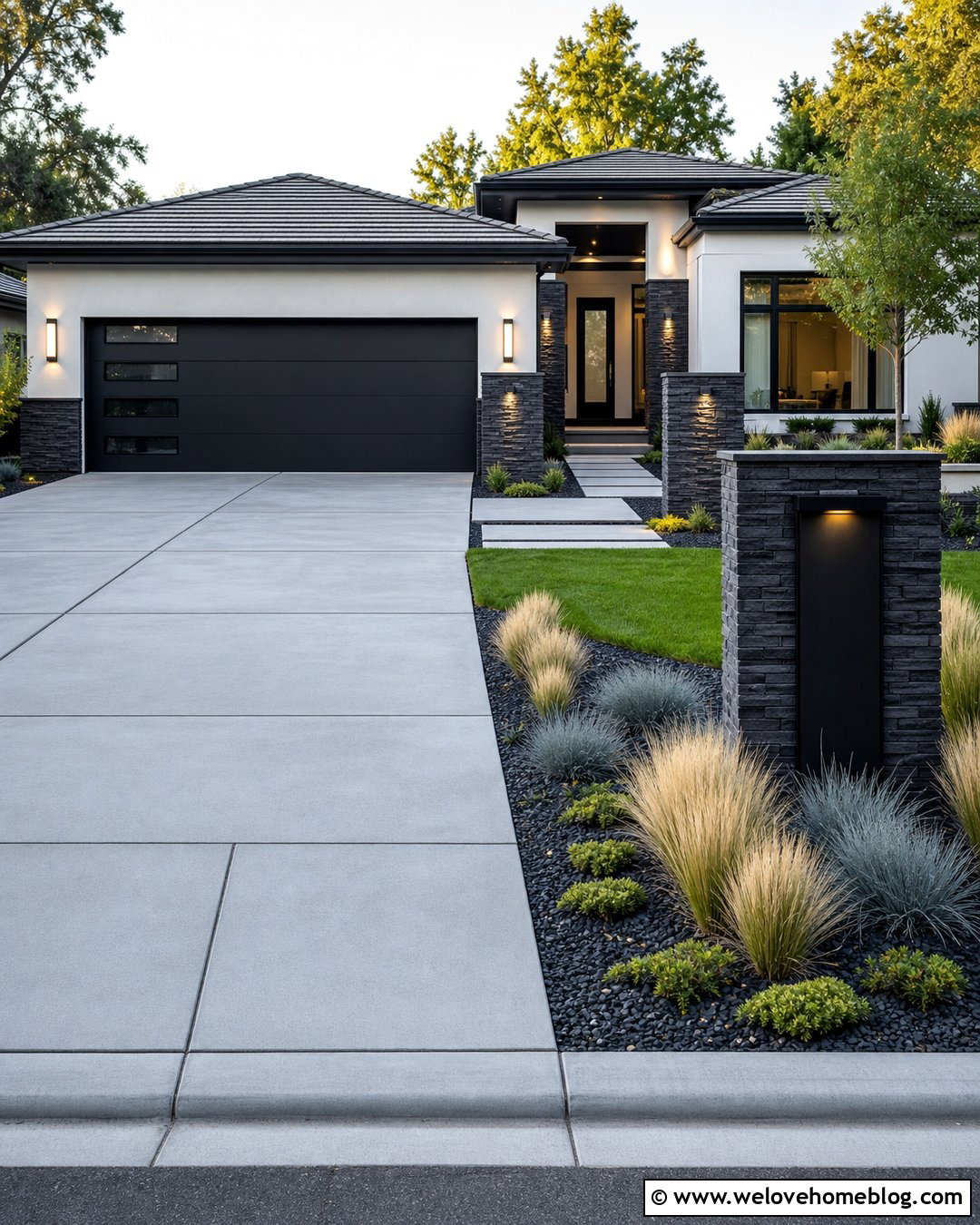
Ornamental grasses can make stone pillars feel lighter and more contemporary. Use clean-lined stacked-stone columns beside a wide poured-concrete driveway with large rectangular panels. Group upright grasses on the outer sides of the entrance, where their movement softens the rigid masonry without blocking vehicles. Low blue fescue or spreading groundcover can occupy the front edge, while taller feather reed grass provides a vertical background. A dark metal address plaque and integrated pillar lighting support the modern look. Gravel mulch reduces visual clutter and relates naturally to the stone texture. Choose grasses that remain manageable at maturity, and position them far enough from the pavement that arching foliage will not brush vehicles or cover lighting fixtures.
29. Stone Pillars With Evergreen Landscaping
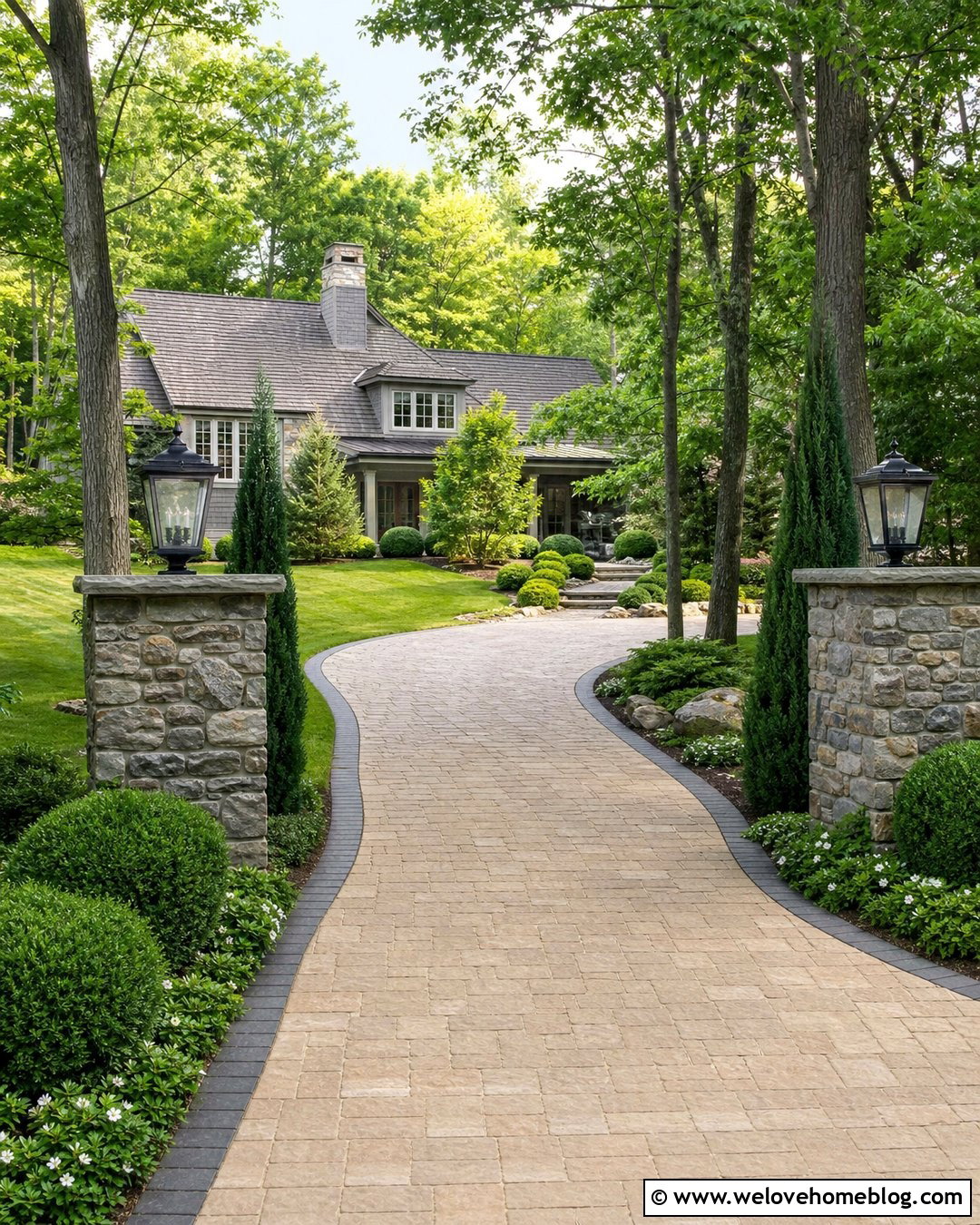
Evergreen landscaping keeps a stone pillar entrance structured throughout the year. Frame warm gray fieldstone columns with rounded boxwoods, spreading junipers, and narrow upright evergreens placed farther from the road. A curved tan paver driveway can include a charcoal border that echoes the stone’s darkest shades. Vary plant forms rather than using many colors: rounded shrubs, low groundcover, and vertical accents create depth without visual confusion. Avoid placing matching tall trees directly beside the columns, where they may eventually compete with the masonry. Lanterns and address plaques should remain visible from both directions. This entrance works particularly well for traditional homes, woodland properties, and front yards where seasonal flowers require more upkeep than desired.
30. Stone Pillars With Native Landscaping
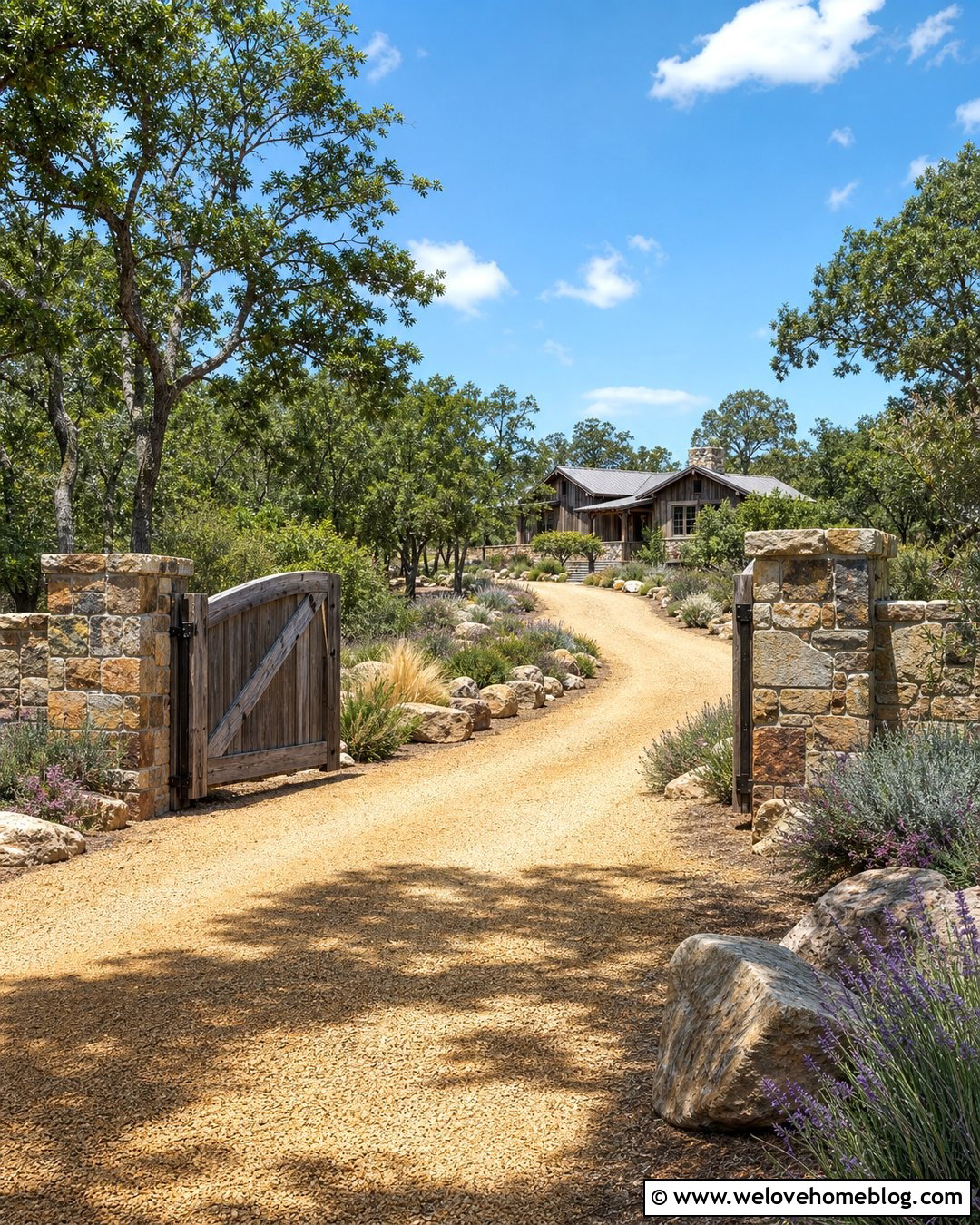
Native landscaping can help rugged stone pillars blend naturally into a rural or woodland property. Pair locally inspired fieldstone columns with a winding decomposed-granite driveway and irregular stone edging. Use broad sweeps of regionally appropriate grasses, flowering perennials, and low shrubs instead of tightly clipped foundation plants. The entrance should look relaxed but still maintained, with clear boundaries between the driving surface and planting areas. A weathered wood gate and simple metal address numbers complement the natural palette. Place taller vegetation behind the pillars and shorter plants near the road. Repeating some of the same stone as landscape boulders or drainage accents creates continuity, but use it selectively so the entrance does not become crowded with competing textures.
31. Stone Pillars With A Curved Driveway
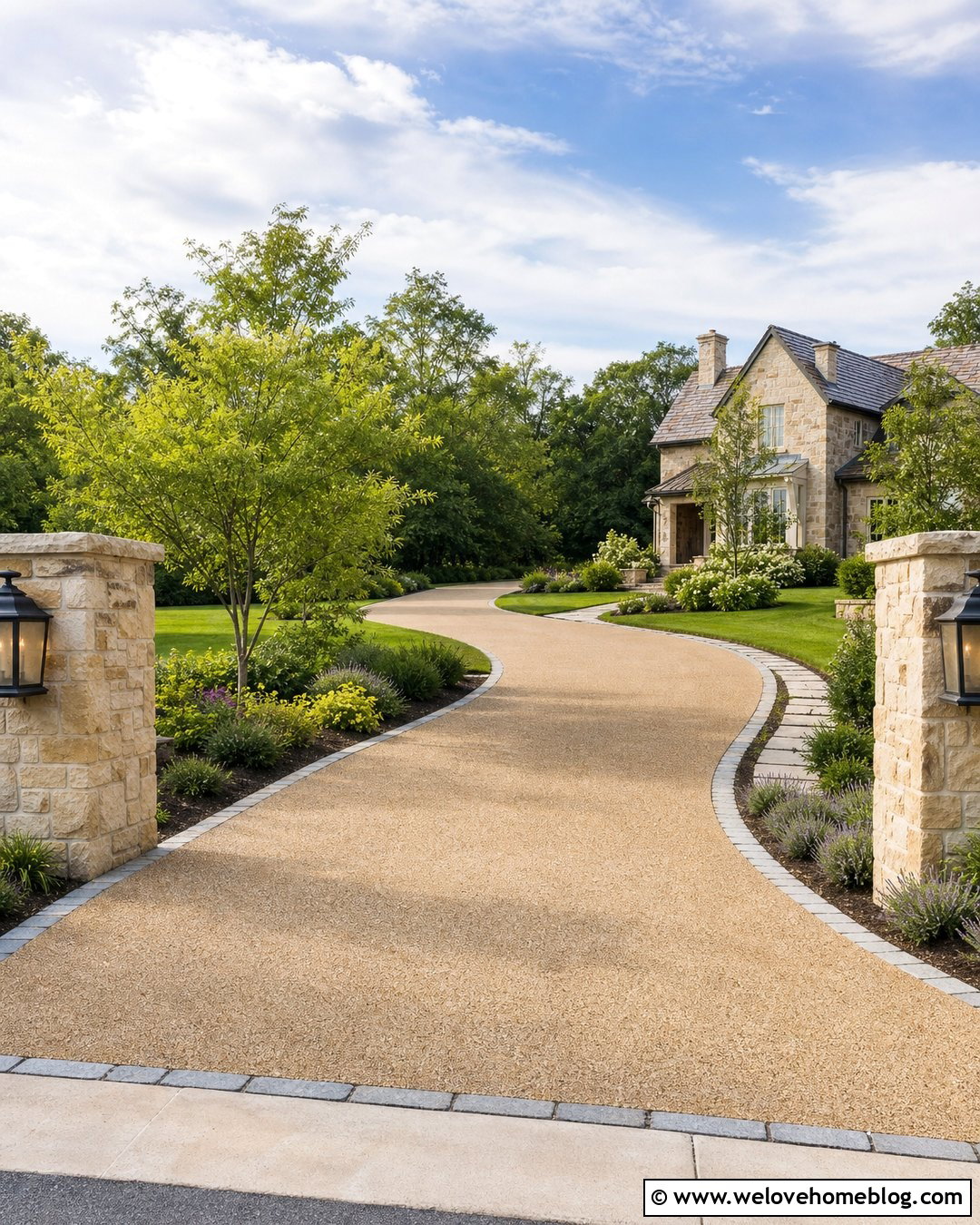
Stone pillars can emphasize the graceful approach of a curved driveway. Angle the entrance opening slightly toward the driveway’s first bend so vehicles move naturally between the columns. Buff limestone pillars suit a warm resin-bound gravel surface edged with dark granite setts. Continue the curve through adjacent planting beds using low shrubs, flowering groundcover, and one carefully placed ornamental tree. Matching pillar caps and understated lanterns maintain a polished appearance. Avoid tall planting at the inside of the curve, where it could limit visibility. The house should appear gradually along the approach, creating depth without making navigation confusing. A consistent edging material helps the eye follow the complete route from the entrance to the garage or parking court.
32. Stone Pillars With A Straight Driveway
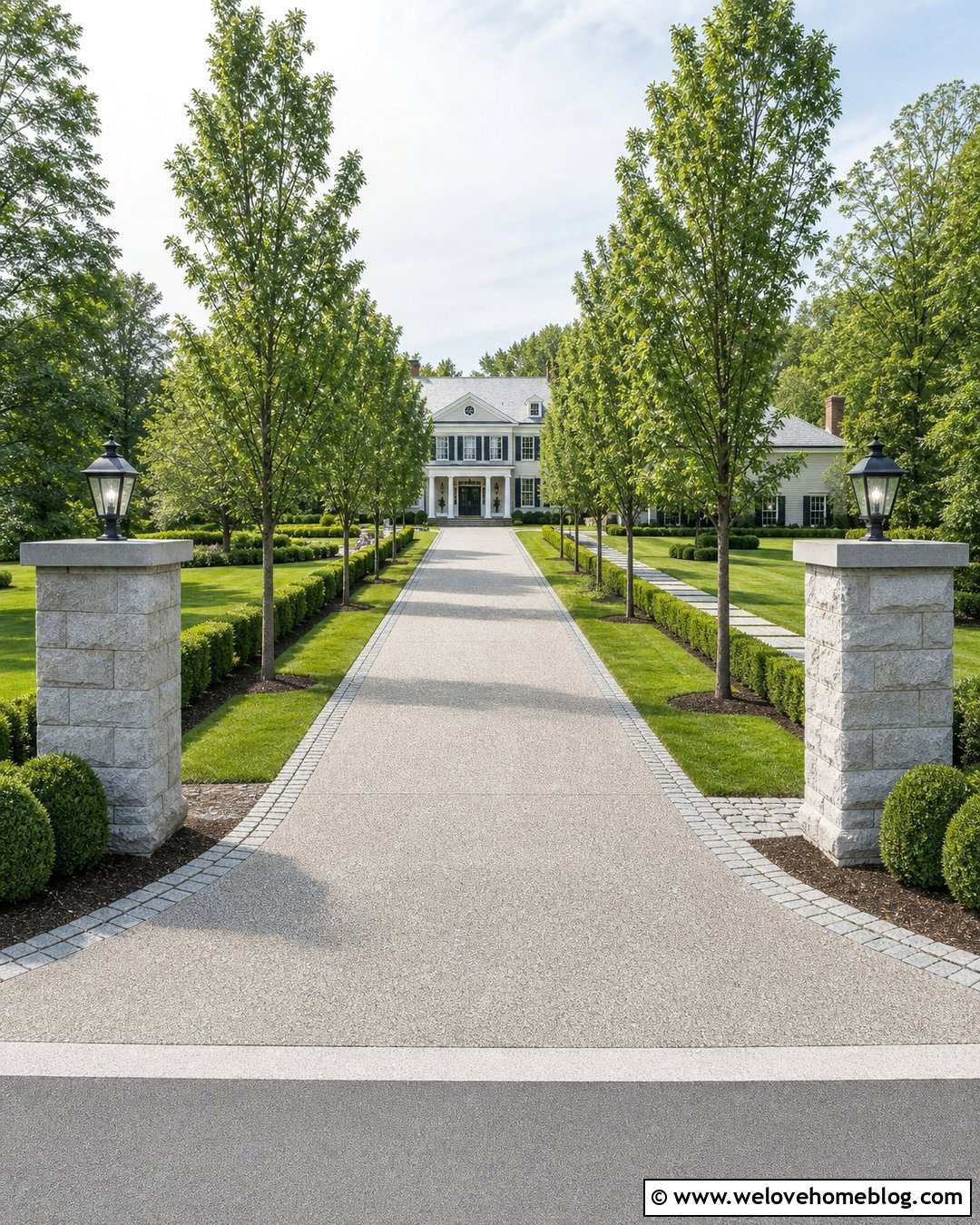
A straight driveway creates a strong visual axis, so stone pillars should align carefully with the house, garage, or central landscape feature. Use symmetrical granite columns at the entrance to a long exposed-aggregate driveway. A double row of cobblestone edging can sharpen the linear composition, while evenly spaced trees guide the eye toward the home. Place matching lanterns and address plaques at consistent heights. If the property is narrow, use lower hedges rather than broad planting beds that reduce the drive’s apparent width. Slightly flaring the driveway at the road makes turning easier and gives the pillars more breathing room. The finished view should feel orderly, welcoming, and proportioned to the length of the approach.
33. Stone Pillars With A Horseshoe Driveway
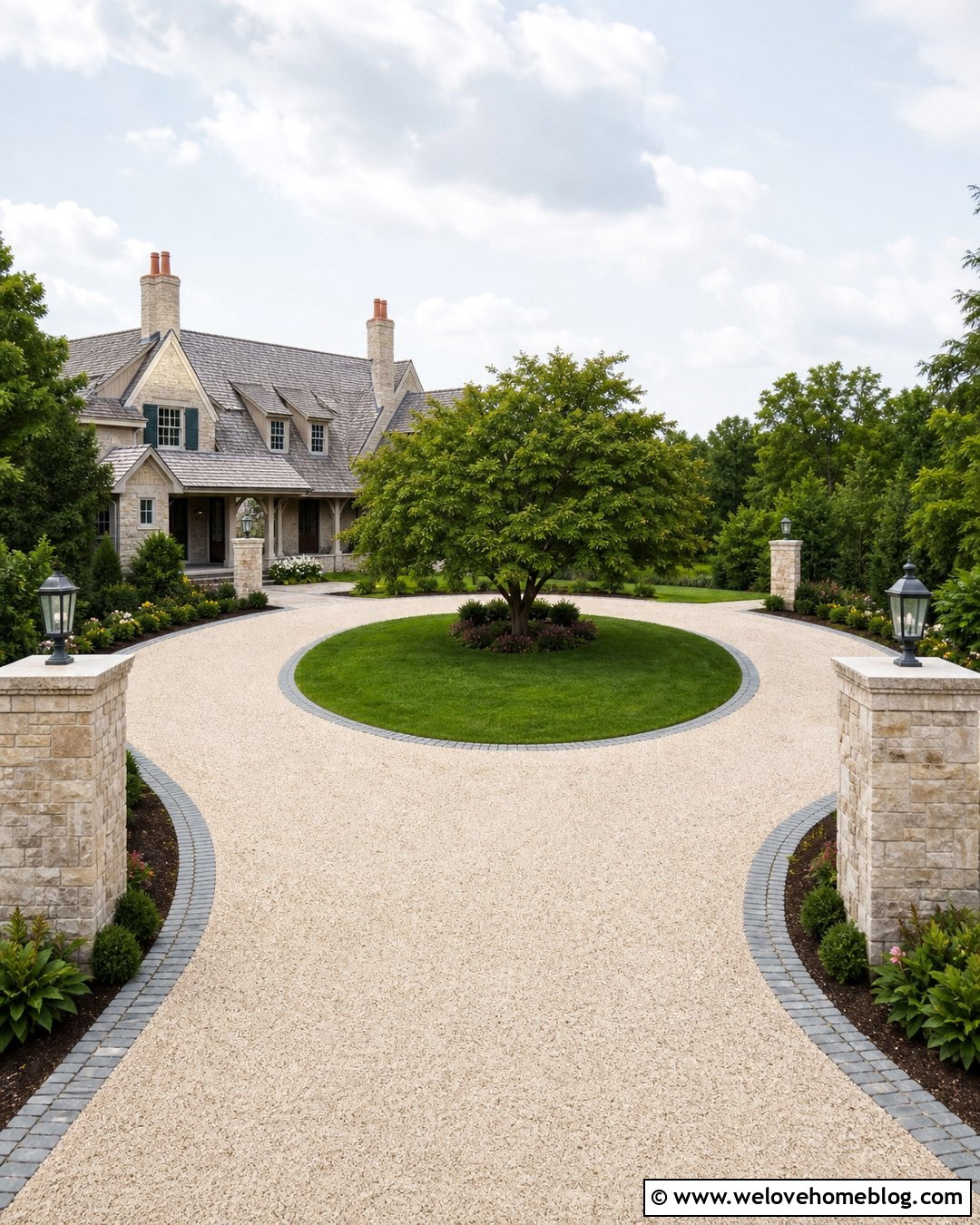
A horseshoe driveway needs a coordinated set of pillars that distinguishes the primary entry from the exit. Place substantial address columns at the preferred entrance and simpler matching pillars at the second opening. Use cream-colored gravel throughout the horseshoe layout, contained by warm gray cobblestone borders. Repeating the same stone, caps, and lantern finish on all four pillars unifies the frontage. Keep the central lawn open or add one well-scaled tree surrounded by a low circular bed. Gates are usually most effective when both openings have compatible designs and operating systems. Landscaping should guide movement without blocking views across the curve. Clear visual cues make the sweeping arrangement elegant and easy for first-time visitors to understand.
34. Stone Pillars With A Driveway Apron
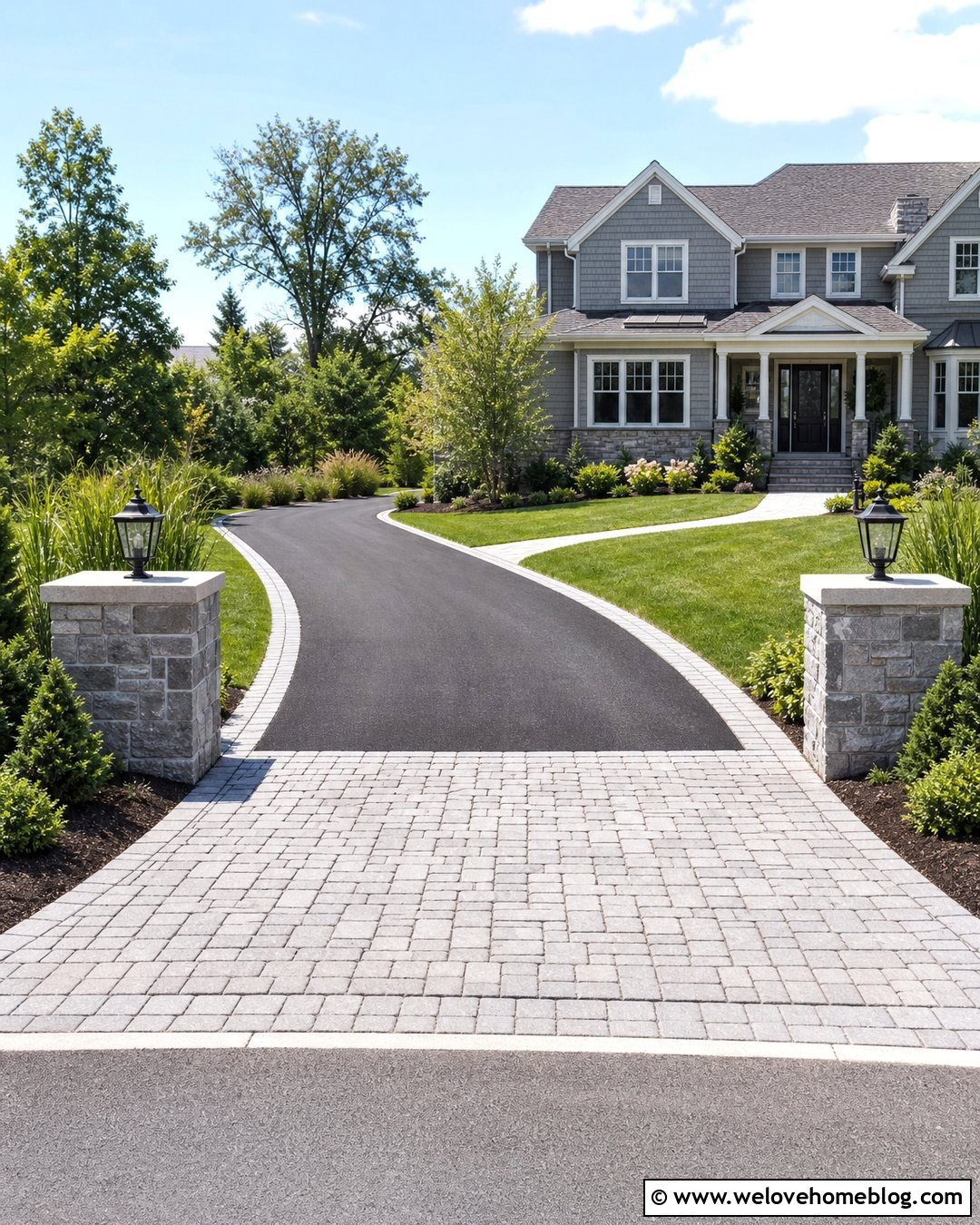
A contrasting driveway apron can visually connect stone pillars across the full entrance. Place gray ashlar columns on both sides of a black asphalt driveway, then install a band of matching gray cobblestones or concrete pavers between them. The apron creates a defined threshold and protects the road edge from looking unfinished. Extend the same pavers a short distance along the driveway border for a deliberate transition rather than an isolated strip. Flat caps, simple lanterns, and restrained evergreen beds maintain a clean composition. Select apron materials with a suitable surface texture and install them over a properly prepared base. Matching stone colors does not require identical products; coordinated undertones are enough to make the entrance feel unified.
35. Stone Pillars With A Pedestrian Gate
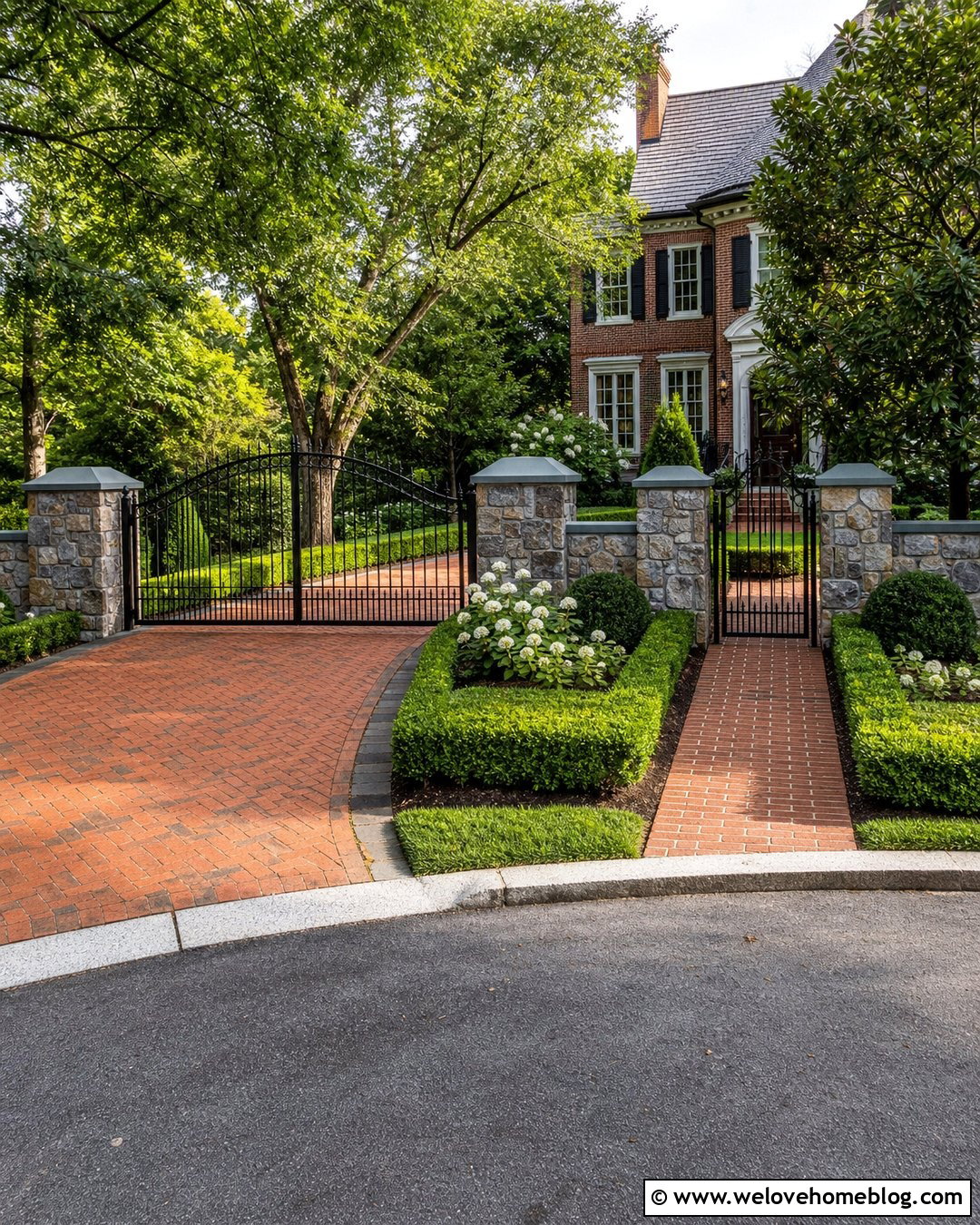
A separate pedestrian gate makes a stone pillar entrance more convenient and easier to navigate on foot. Position a narrower matching opening beside the main driveway gate, using an additional stone column to separate the two. A brick-paver driveway and walkway can share the same material while using different patterns to clarify their functions. For example, herringbone may cover the driveway while running bond marks the footpath. Black iron gates and bluestone pillar caps suit a traditional home. Continue the walkway through low hedges toward the front door so visitors immediately recognize the route. Include comfortable clearances, accessible hardware, and lighting around the smaller entrance. Consistent masonry keeps the extra opening from appearing added later.
36. Stone Pillars With A Sliding Gate
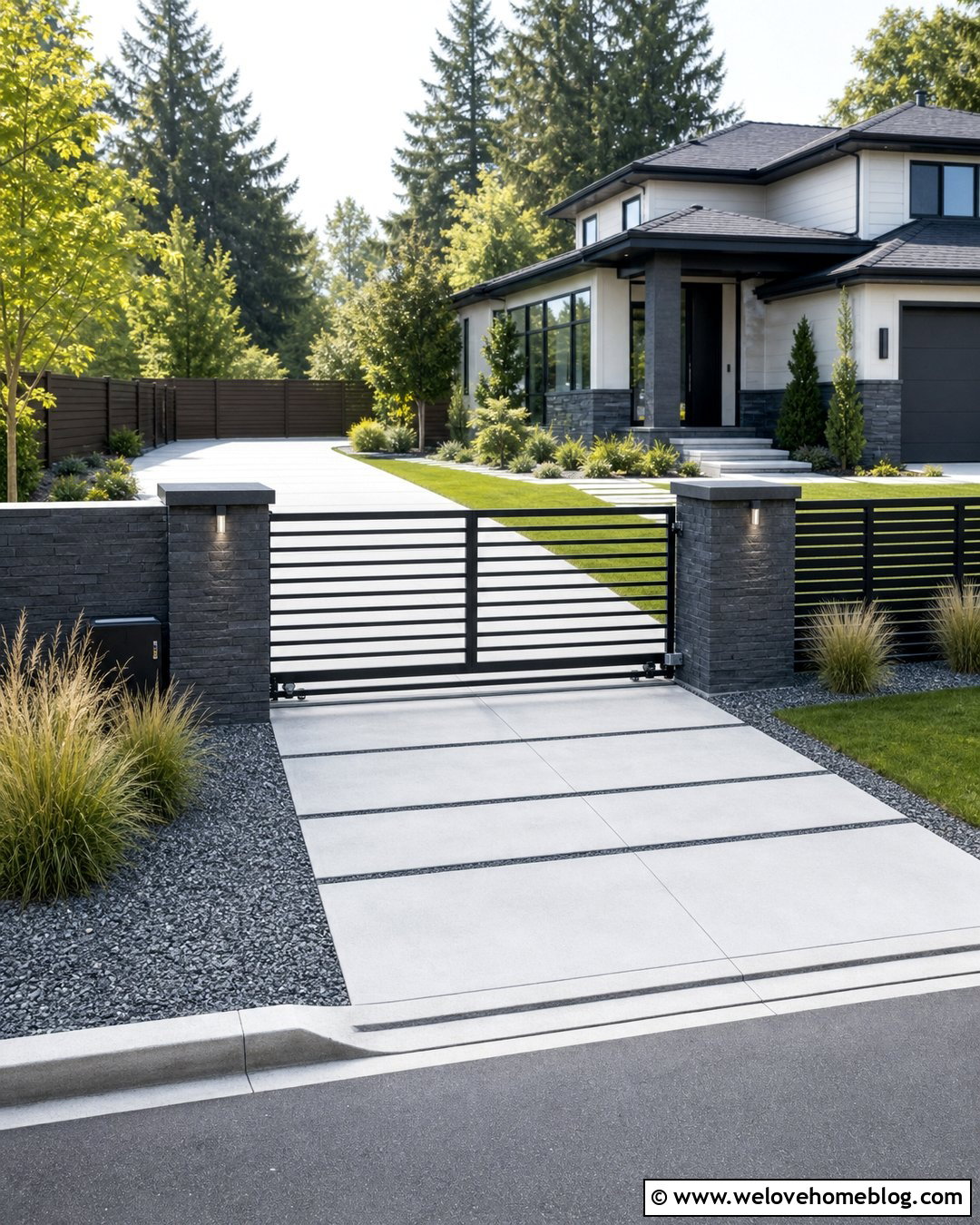
A sliding gate works well where a swinging gate would interfere with a sloped, short, or frequently used driveway. Frame the opening with rectangular charcoal stone pillars and use a clean horizontal metal or wood gate. A smooth concrete driveway supports the streamlined look and provides a visually calm approach. The gate requires clear space along the fence line, so keep planting and decorative rocks away from its travel path. Conceal mechanical equipment behind fencing or low landscaping while preserving maintenance access. Flat caps and recessed pillar lights reinforce the contemporary composition. Coordinate the structural posts and gate hardware before adding stone facing, since the decorative columns should not conceal poorly planned mounting points or restrict the gate’s movement.
37. Stone Pillars With A Double Swing Gate
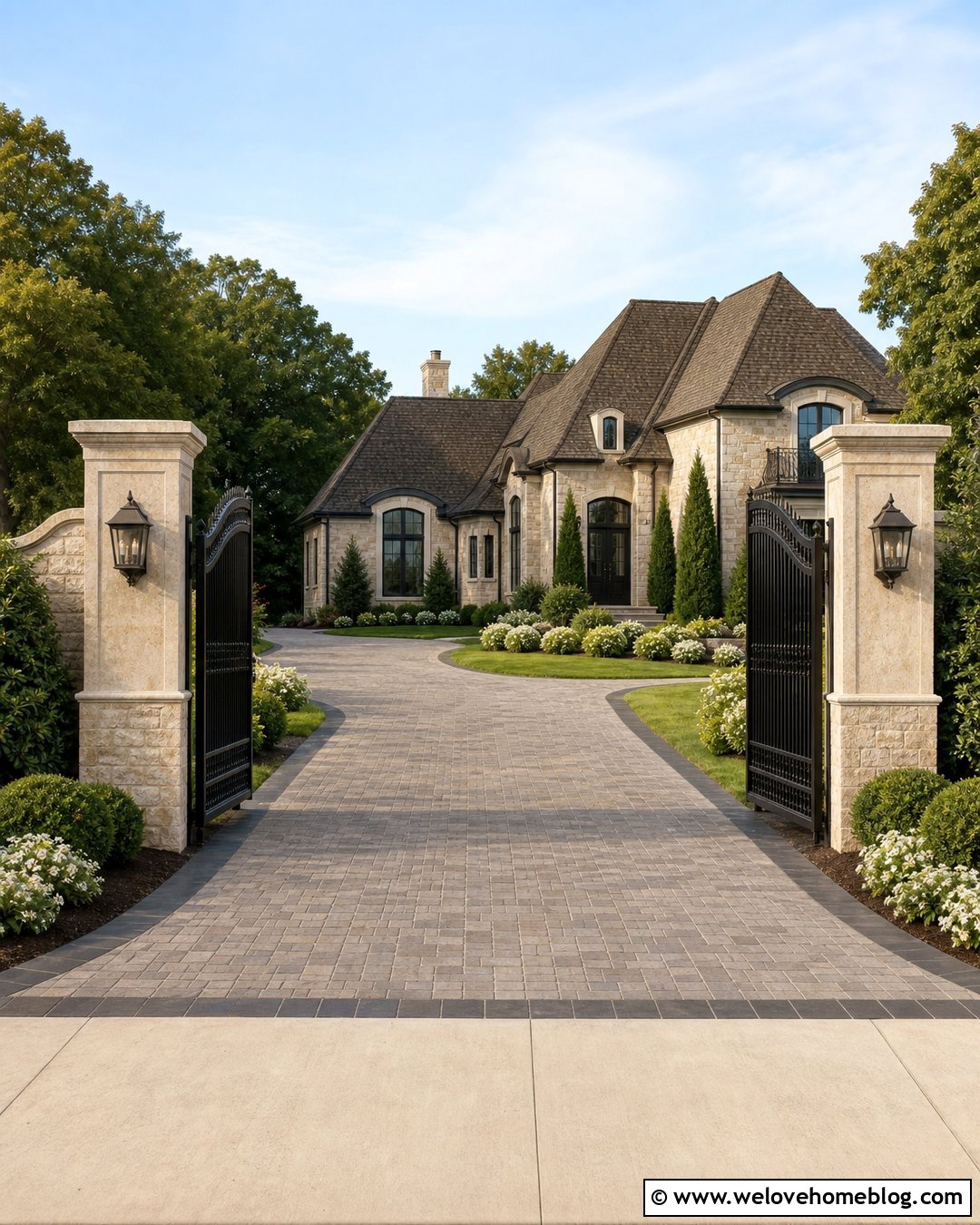
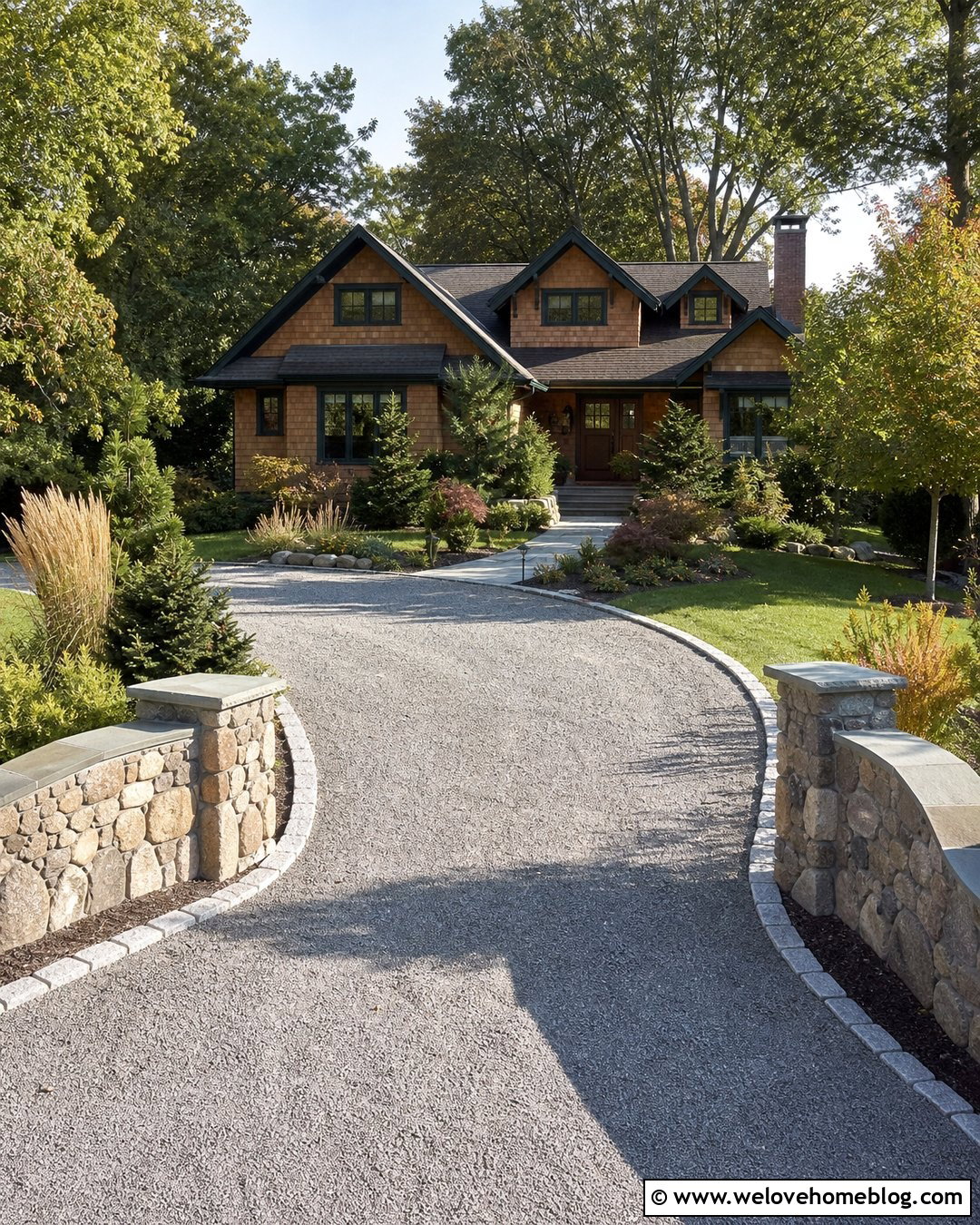
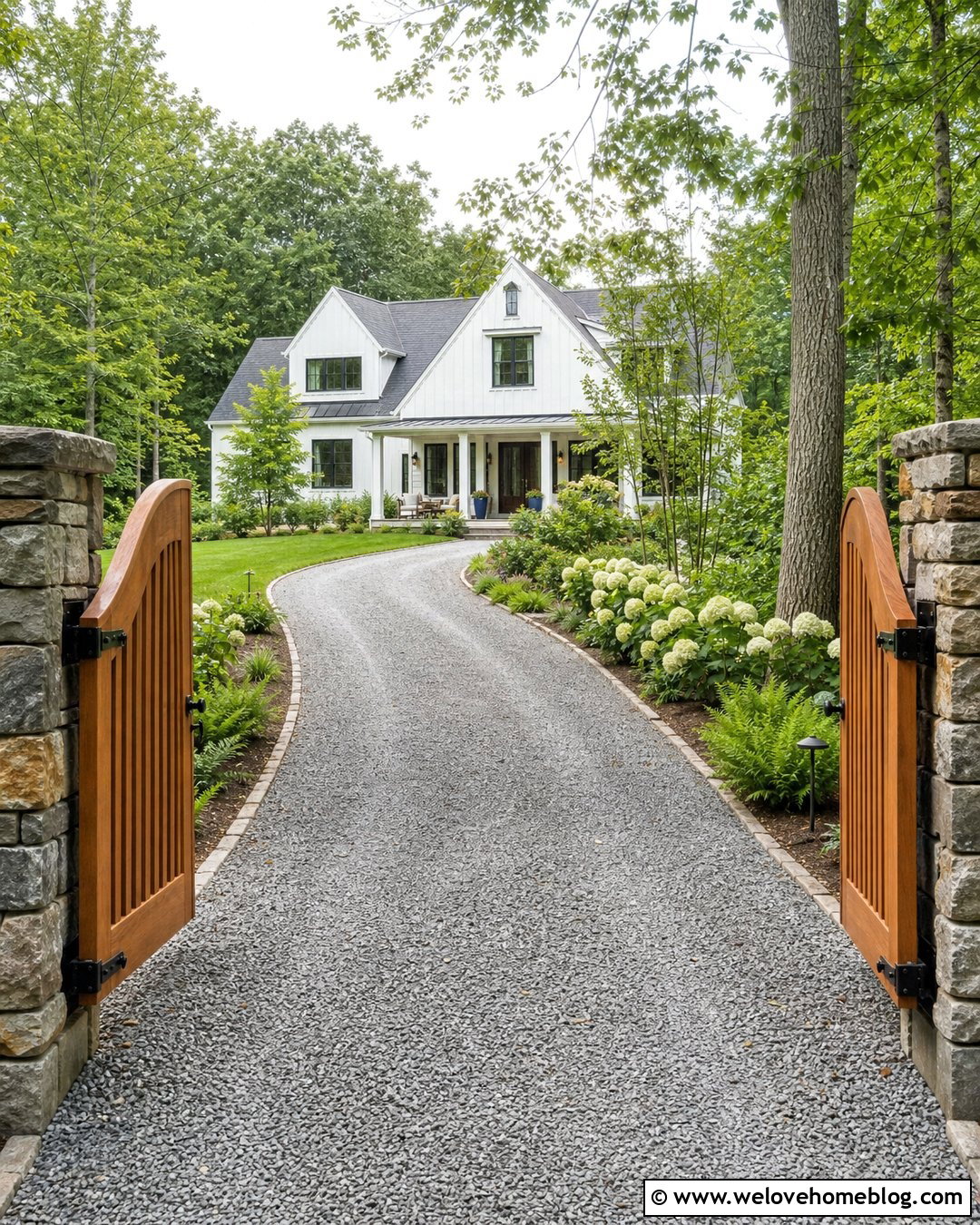
A double swing gate creates a balanced centerpiece between matching stone pillars. Wide limestone or granite columns can support the visual weight of two arched wood or metal leaves. Pair the entrance with a broad paver driveway that flares gently near the road, providing a comfortable transition into the property. Use a contrasting paver border to emphasize the opening and relate to the pillar caps. Keep plants, walls, and snow-storage areas outside the full gate path. Matching lanterns can reinforce symmetry, while address numbers on one pillar add function without disrupting the design. The gate should suit the house architecture: restrained iron for traditional homes, cedar for country properties, or horizontal metal for modern residences.
38. Stone Pillars Without A Gate
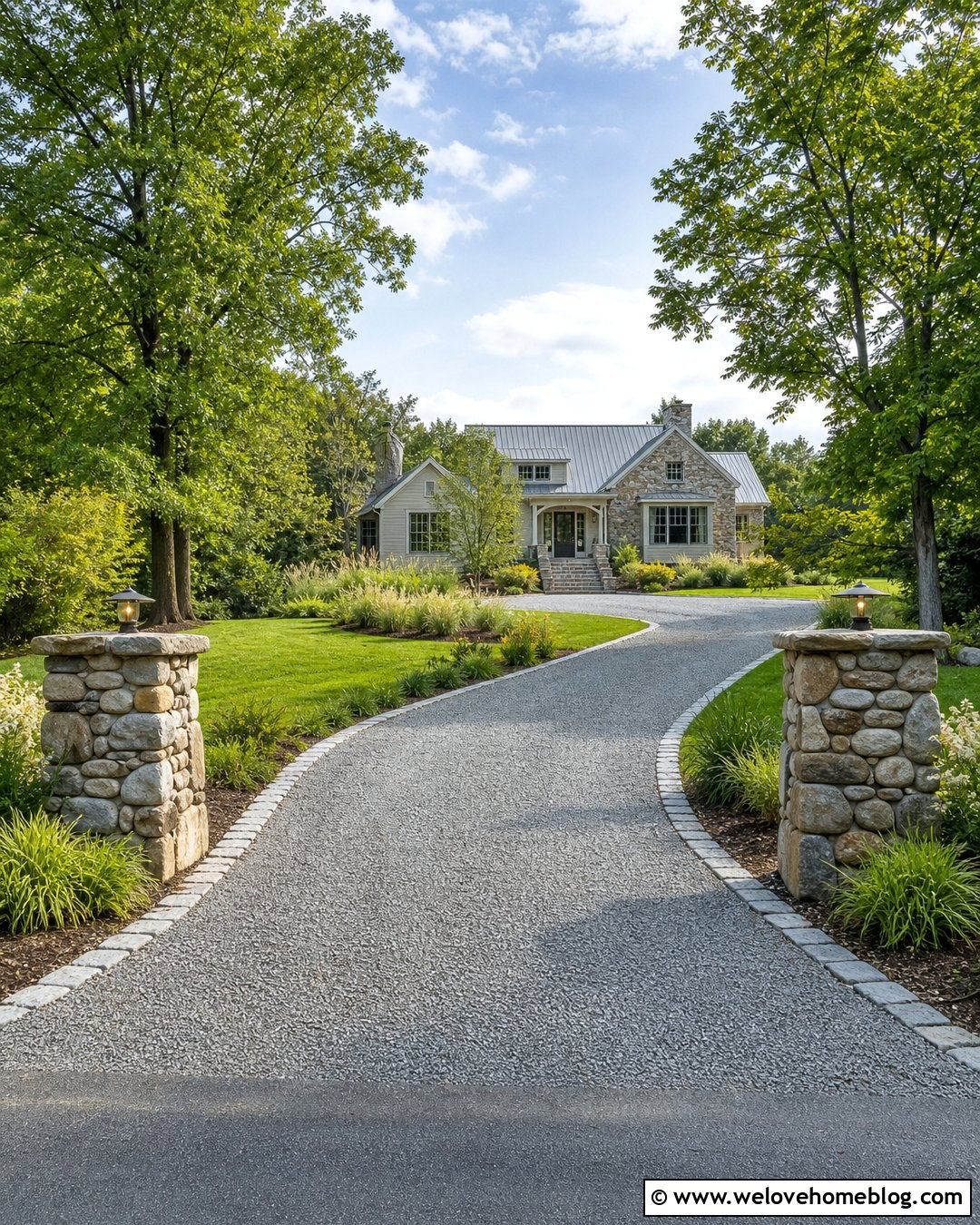
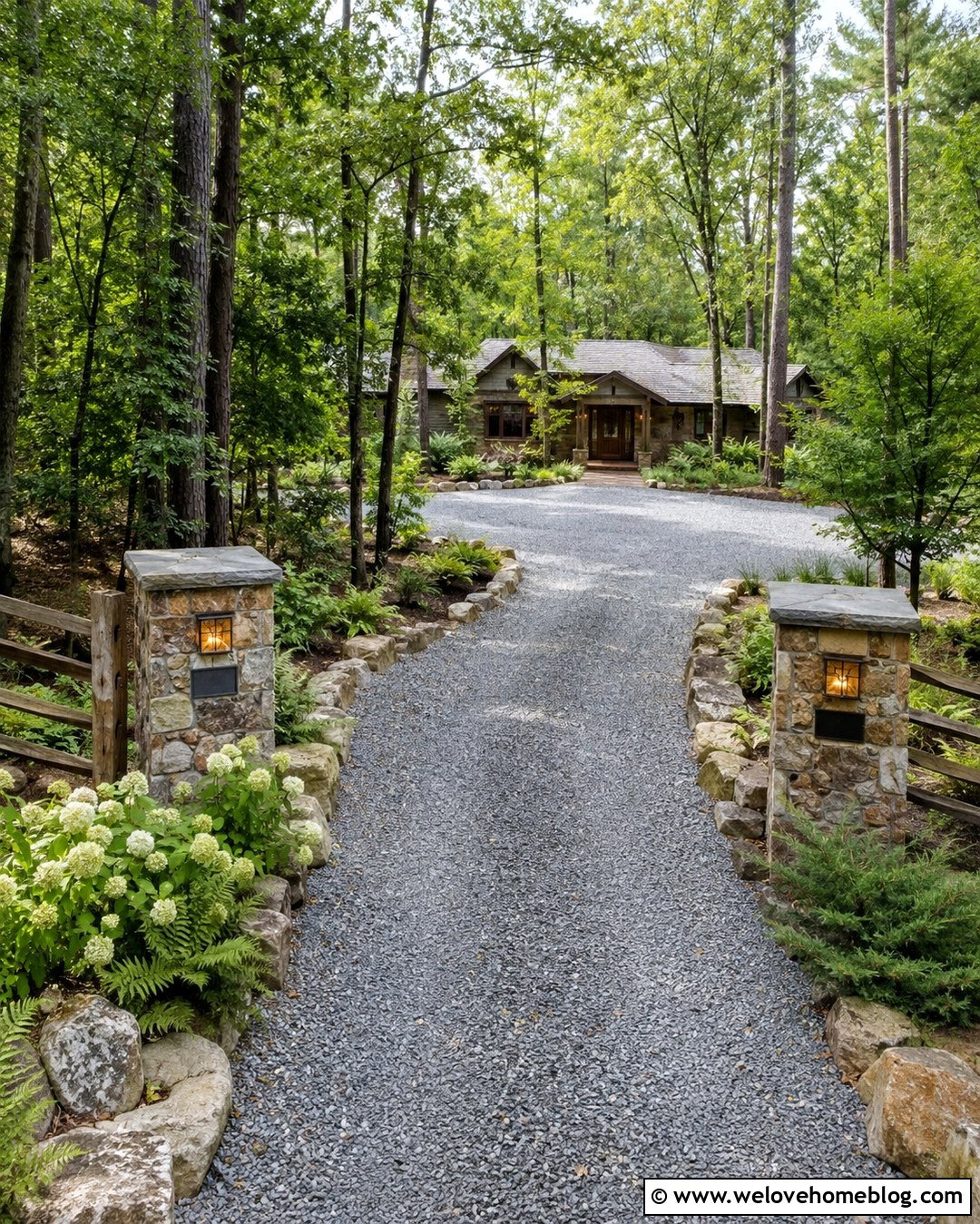
Stone pillars do not need a gate to create a complete driveway entrance. Two well-proportioned columns can mark the property, improve visual orientation, and frame the first view toward the house. Pair informal fieldstone pillars with a curved gray gravel driveway and low cobblestone edging. Add simple cap lights or address numbers, then extend natural planting beds from the outer sides. Without a gate, the opening can remain generous and visually welcoming. Keep the columns far enough from turning vehicles and avoid unnecessary fencing if the surrounding yard is open. Repeating the stone in a mailbox, garden wall, or front steps establishes a stronger connection to the home. This arrangement offers definition without making the property feel closed off.
39. Stone Pillars With Matching House Stone
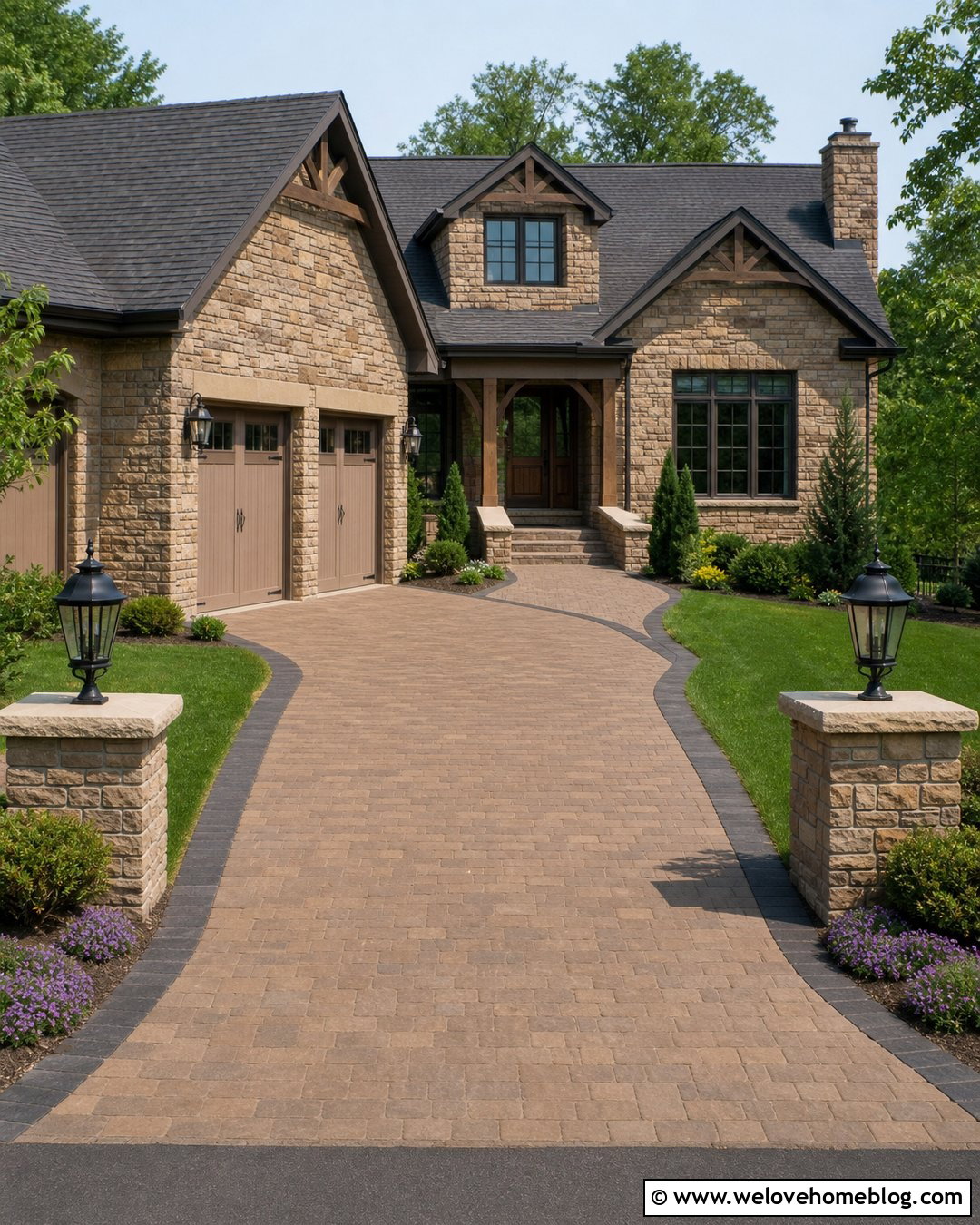
Repeating stone from the home facade is one of the easiest ways to create a cohesive driveway entrance. If the house uses warm tan ledgestone, apply the same material or a closely coordinated blend to the pillars. A medium-brown paver driveway can bridge the colors without matching either surface exactly. Repeat important details such as mortar color, corner treatment, cap profile, and masonry pattern. Black lanterns and restrained landscaping allow the stone relationship to remain the focus. If an exact match is unavailable, compare full samples outdoors rather than relying on small indoor displays. Slight variation often looks natural, but dramatically different undertones can make the entrance feel disconnected from the house it is supposed to introduce.
40. Stone Pillars With A Mixed-Material Entrance
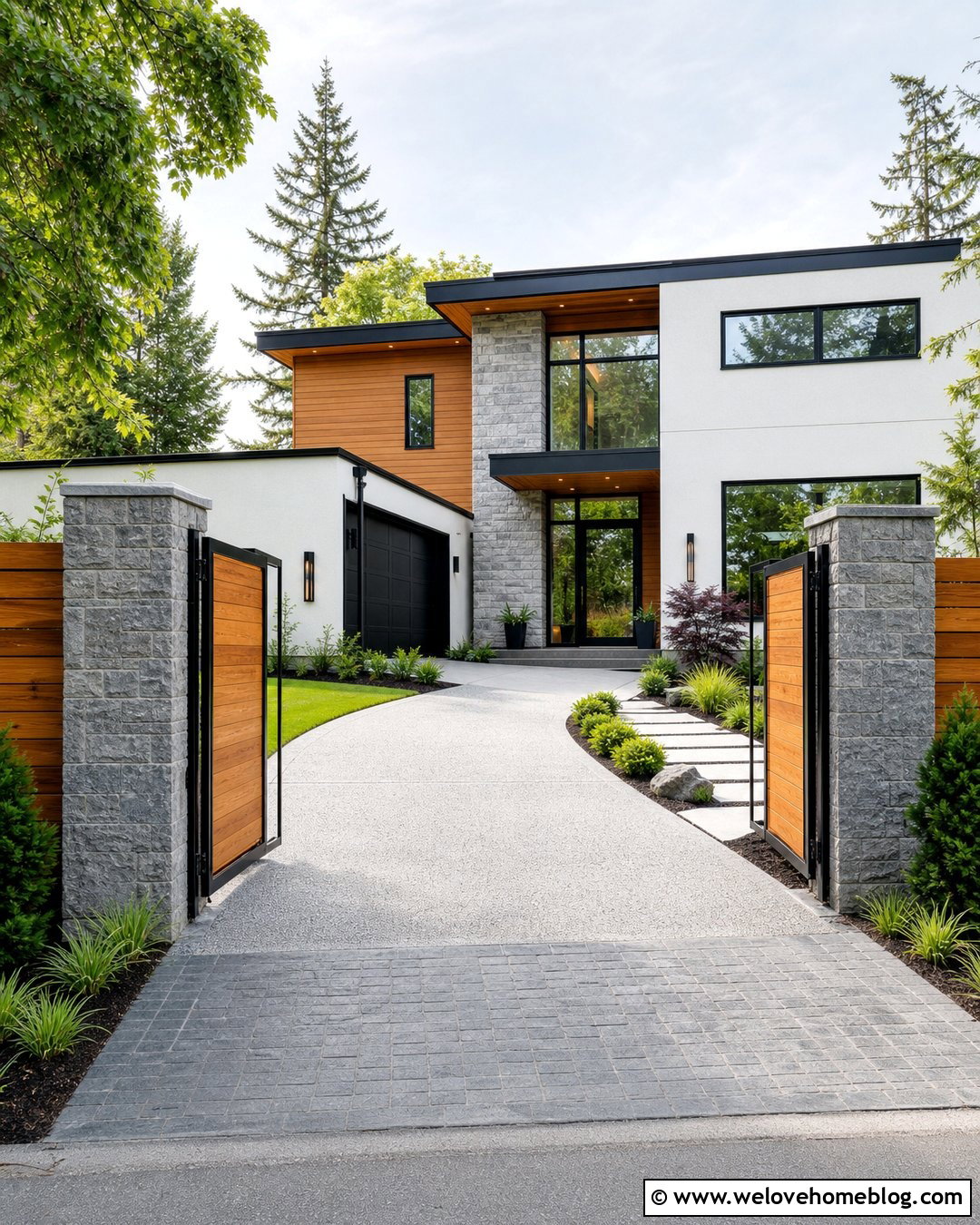
A mixed-material entrance can feel rich and layered when every finish has a clear purpose. Combine gray stone pillars, warm cedar gate panels, black metal framing, and a pale exposed-aggregate driveway. Use charcoal pavers across the apron to connect the gate frame with the darker tones in the stone. Continue cedar fencing from the columns and place simple green planting beds along its base. The house might repeat these elements through stone cladding, wood siding, and black-framed windows. Limit the palette to a few coordinated colors so the design does not become visually chaotic. Clean transitions, repeated finishes, and consistent proportions allow stone, wood, metal, pavement, and landscaping to work together as one complete entrance.
Conclusion:
The best **40 Stone Pillars Driveway Entrance Ideas** combine visual character with a practical, well-planned approach to the property. Begin by matching the pillar stone to the home, driveway, and surrounding landscape. Then consider scale, visibility, lighting, drainage, gate operation, and long-term plant growth. Fieldstone and gravel create a relaxed country entrance, while cut limestone, concrete, and integrated lighting support cleaner modern designs. Gates, address plaques, mailboxes, wing walls, and fencing can add function when they are incorporated from the beginning. Most importantly, treat the pillars as part of the complete driveway composition. Coordinated materials, open sightlines, and thoughtful landscaping will make the entrance attractive, recognizable, and easy to use.

Related posts:
Leave a Reply