
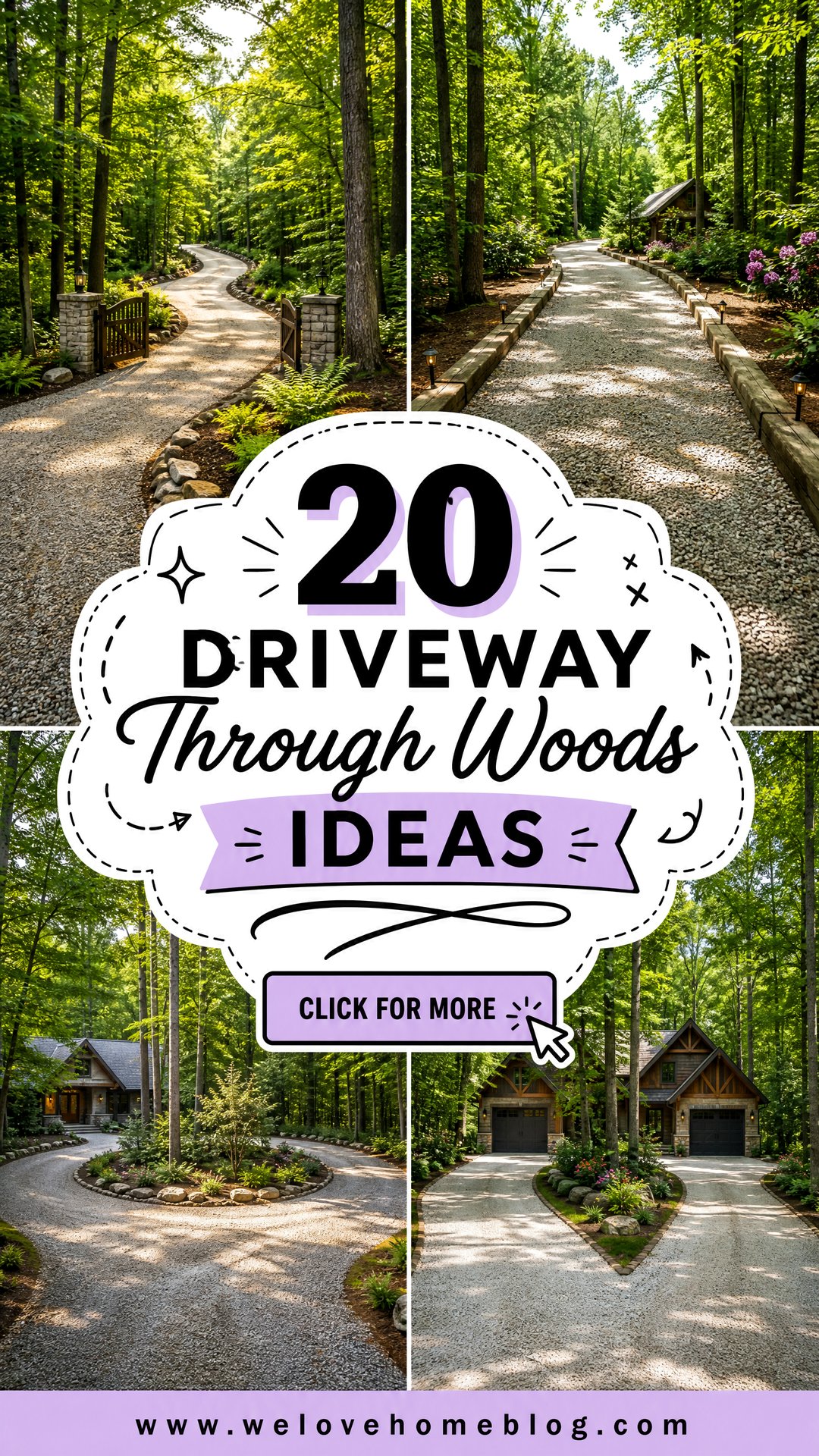
A wooded driveway should feel like a natural journey to the house, not a harsh strip cut through the landscape. These 20 Driveway Through Woods Ideas explore complete designs that balance durable surfaces, safe access, drainage, lighting, edging, and forest-friendly planting. You will find winding gravel lanes, smooth asphalt approaches, rustic cobblestone entrances, permeable pavers, and practical solutions for slopes or wet ground. Each look also considers how the driveway meets the road, follows existing trees, and transitions toward the home. Thoughtful curves and restrained landscaping can preserve the woodland atmosphere while creating a clear, welcoming route. Whether your property surrounds a cabin, farmhouse, ranch, or modern retreat, use these 20 Driveway Through Woods Ideas to plan an entrance that belongs in its setting.
1. Curved Gravel Driveway Through Woods
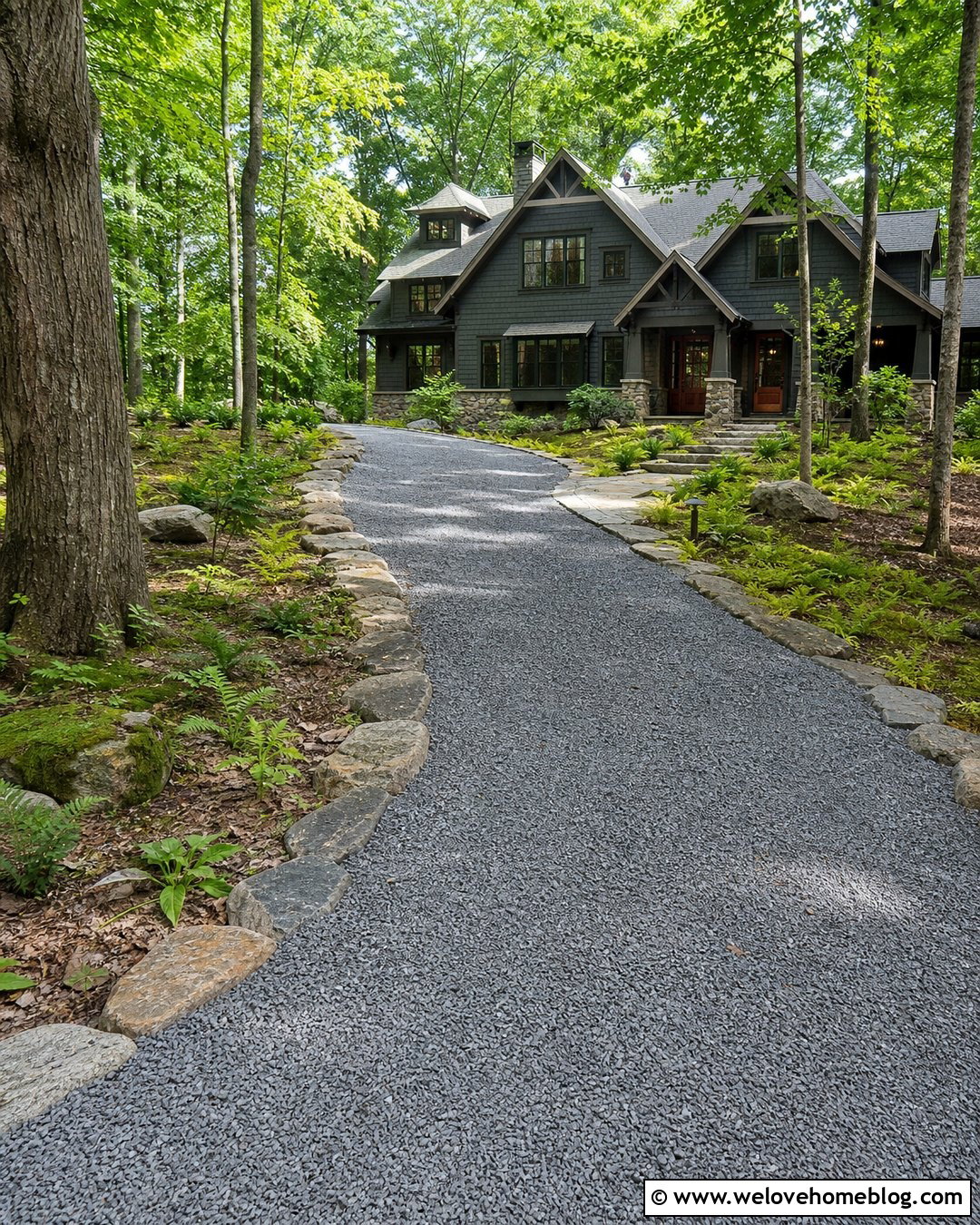
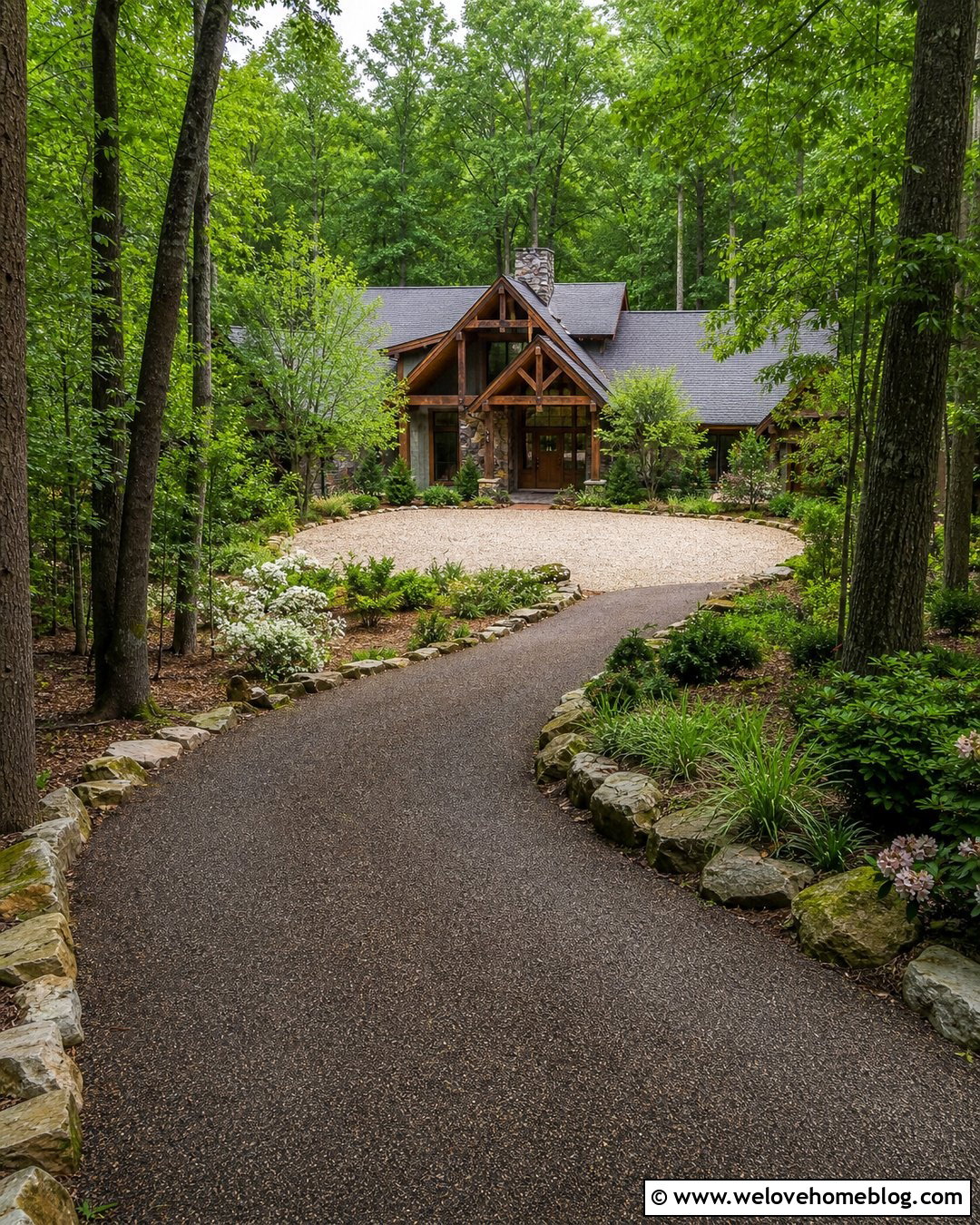
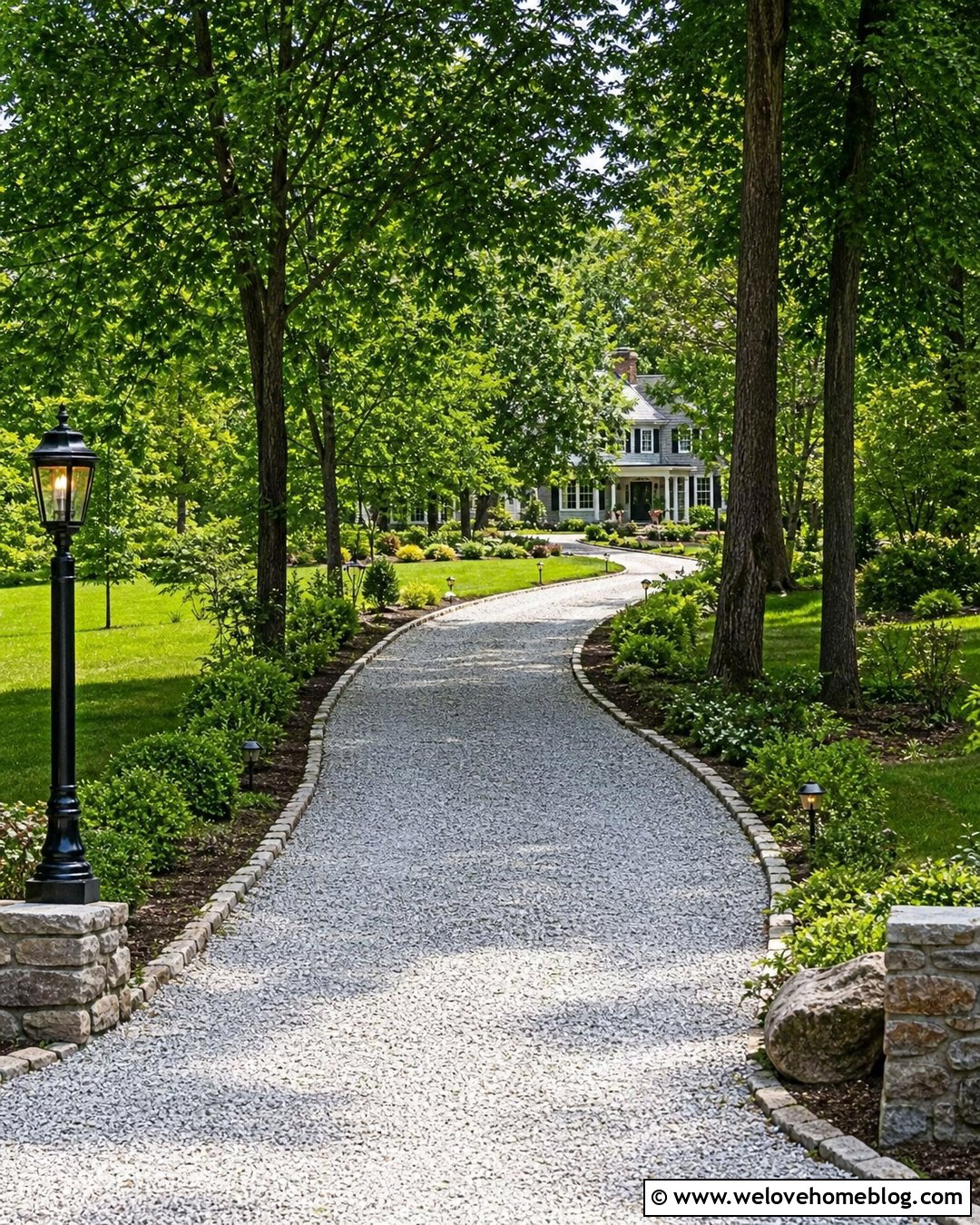
A curved gravel driveway is one of the most natural choices for a wooded property. Use compacted gray crushed stone rather than round pea gravel where you need better stability and traction. A gentle curve can follow the existing terrain, reduce unnecessary tree removal, and slowly reveal the house. Edge the route with locally sourced fieldstone to create a defined boundary without making it look overly formal. Ferns, sedges, and low native groundcovers can soften the stone edges while remaining below the driver’s sightline. Near the house, widen the driveway into a simple parking court. Keep branches trimmed above the travel lane and install discreet reflectors at sharper bends. The completed design should feel like a maintained forest road rather than a suburban driveway placed among trees.
2. Black Asphalt Driveway Through Woods
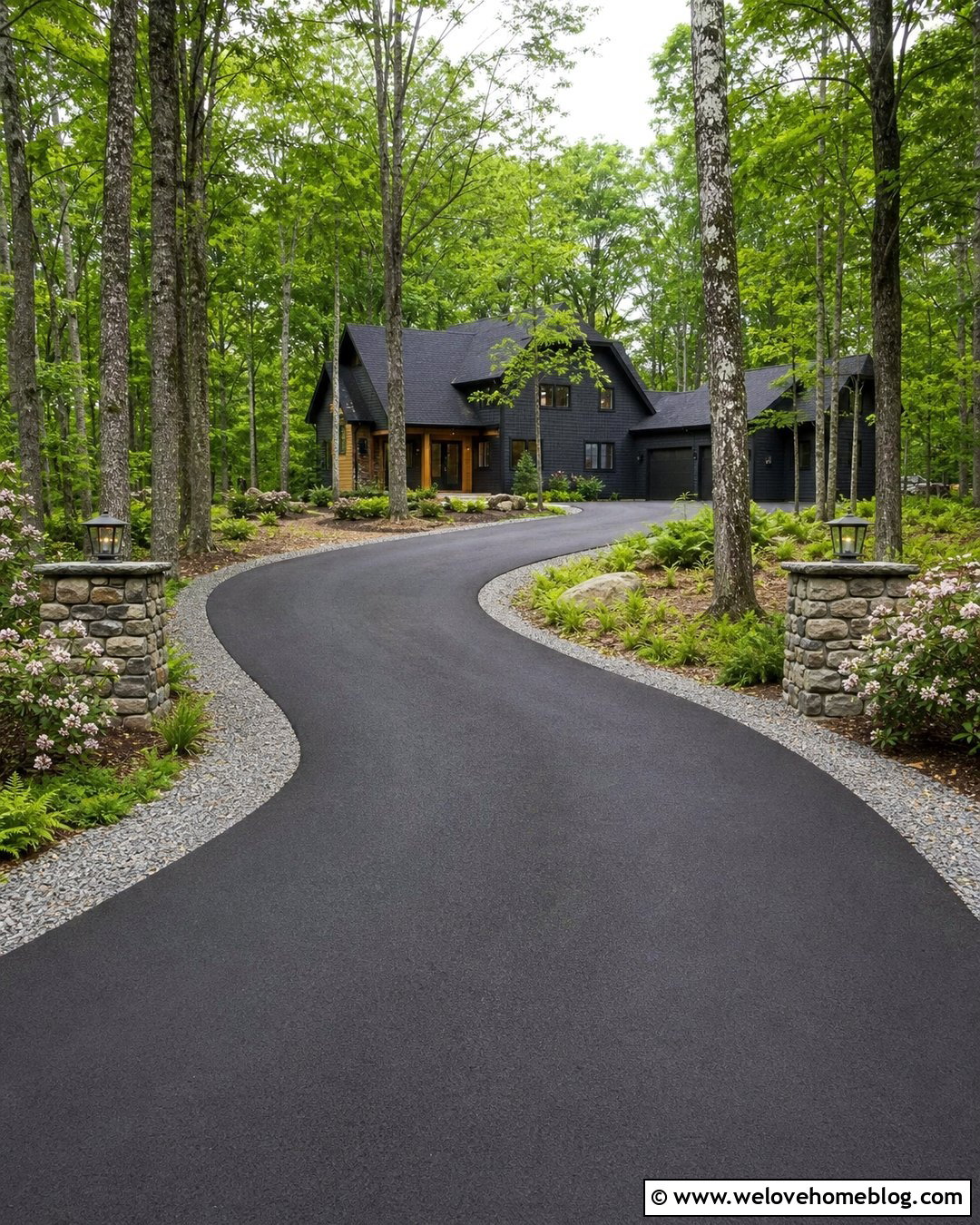
Smooth black asphalt provides a clean, dependable surface for a long wooded driveway. Its dark color settles visually into deep green surroundings, especially when the edges remain simple. Design the route with broad curves instead of tight turns, allowing vehicles and delivery trucks to move comfortably between the trees. A narrow border of compacted gray gravel can catch runoff, protect the asphalt edges, and create a softer transition into the forest floor. Add clusters of ferns, mountain laurel, and woodland grasses beyond the shoulder. At the road, use low stone pillars to mark the entrance without blocking visibility. The asphalt should widen near the house into an organized parking area. This complete look works especially well with contemporary cabins, dark-sided homes, and modern woodland retreats.
3. Crushed Stone Driveway With Timber Edging
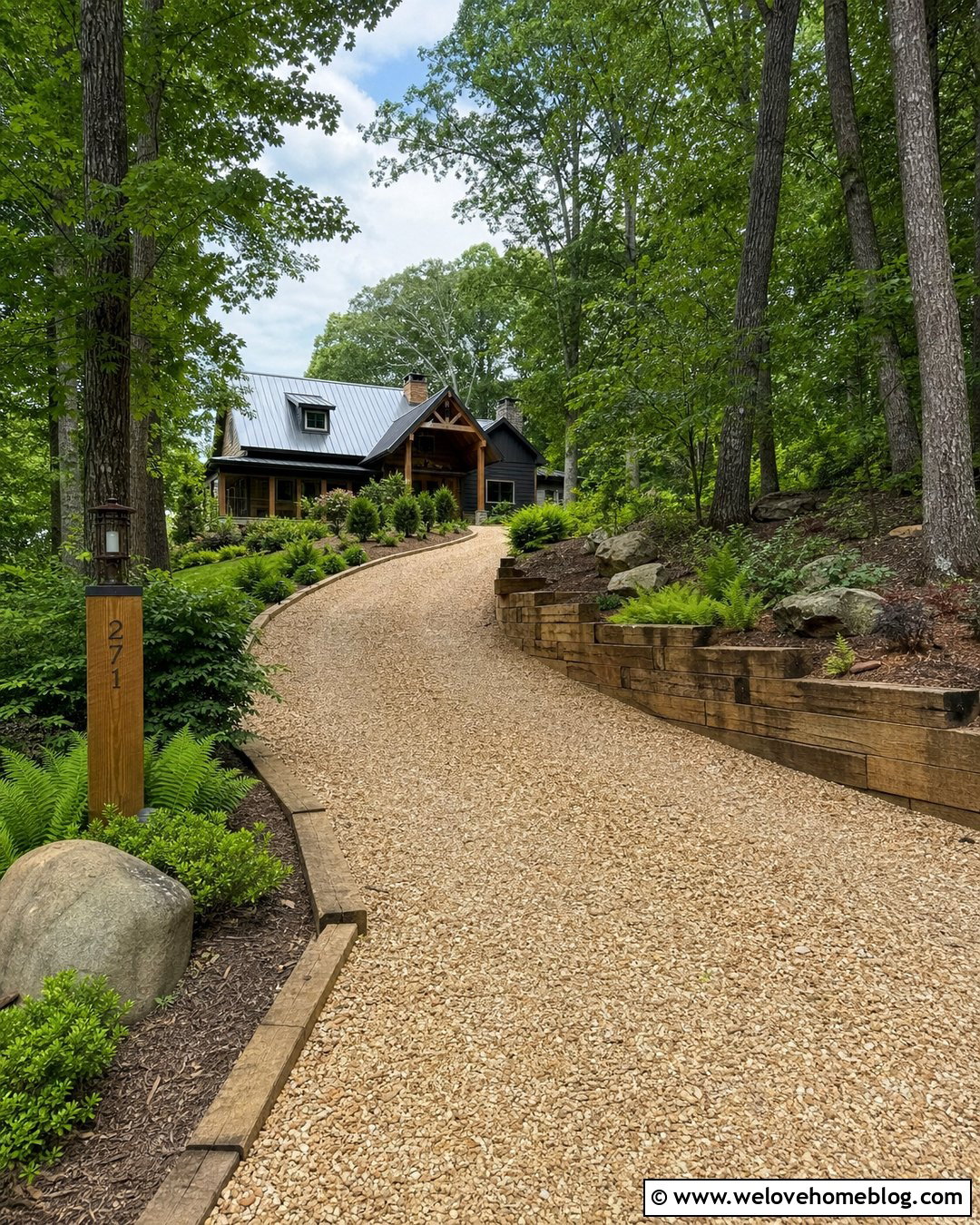
The warm color and informal texture of crushed stone pair beautifully with rustic timber edging. Choose tan or brown angular stone that complements fallen leaves, exposed soil, and tree bark. The driveway can wind gradually through mature woods before arriving at a farmhouse or cabin. Install substantial pressure-treated or naturally rot-resistant timbers along selected sections rather than enclosing every edge. This gives the route definition while maintaining a relaxed woodland appearance. Where the ground drops away, use stacked timber retaining edges to hold the base securely. Plant native ferns and low shrubs behind the timbers, leaving enough space for drainage and snow storage. A matching timber address post at the entrance ties the design together. Regular raking and occasional replenishment will keep the crushed stone surface even and attractive.
4. Cobblestone Driveway Through Tall Trees
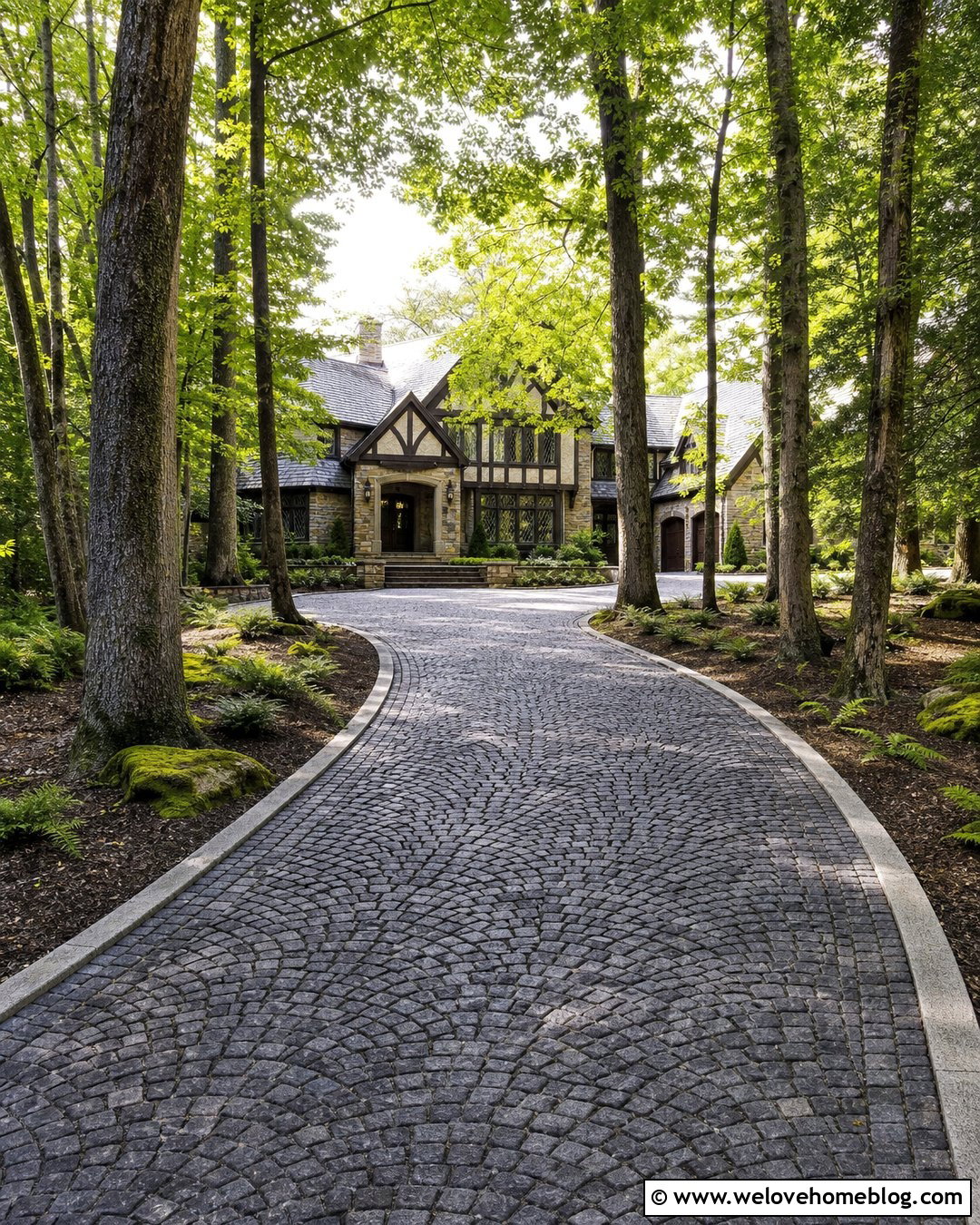
Cobblestone creates an established, storybook approach beneath tall deciduous trees. To keep the design practical, choose relatively flat cobblestones with tight joints and a properly prepared base. Lay them in gentle arcs that reinforce the driveway’s curved path through the woods. A flush border of larger rectangular stone can contain the pattern and protect the edges. Allow moss and low woodland groundcovers to grow nearby, but prevent vegetation from spreading into the driving surface. Small drainage channels may be incorporated where water naturally crosses the route. At the house, transition the winding lane into a wider cobblestone arrival court. This rich surface is best suited to shorter wooded driveways or prominent entrance areas because installation requires considerable labor. It complements stone cottages, Tudor homes, and traditional country houses.
5. Wooded Driveway With Stone Entrance Pillars
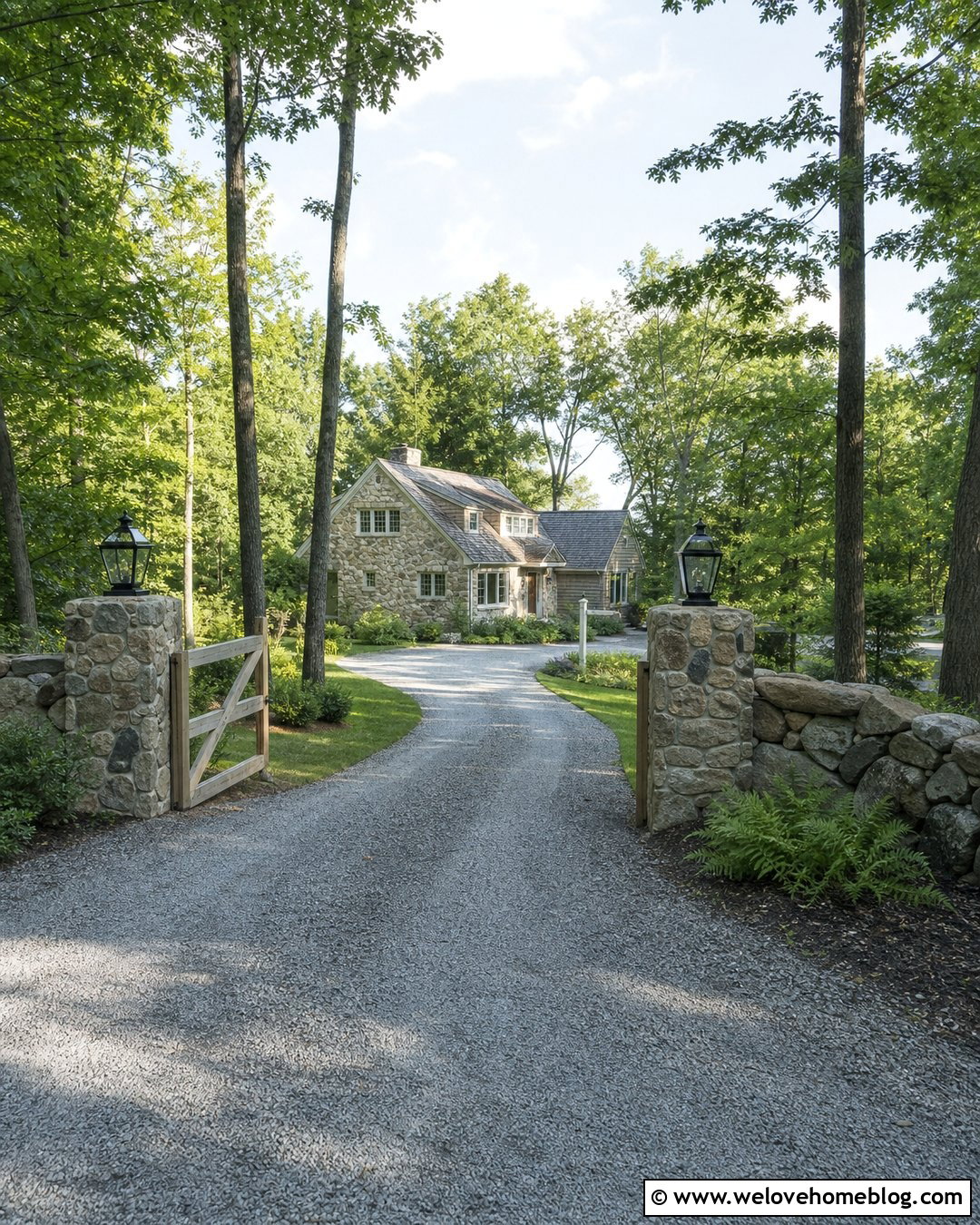
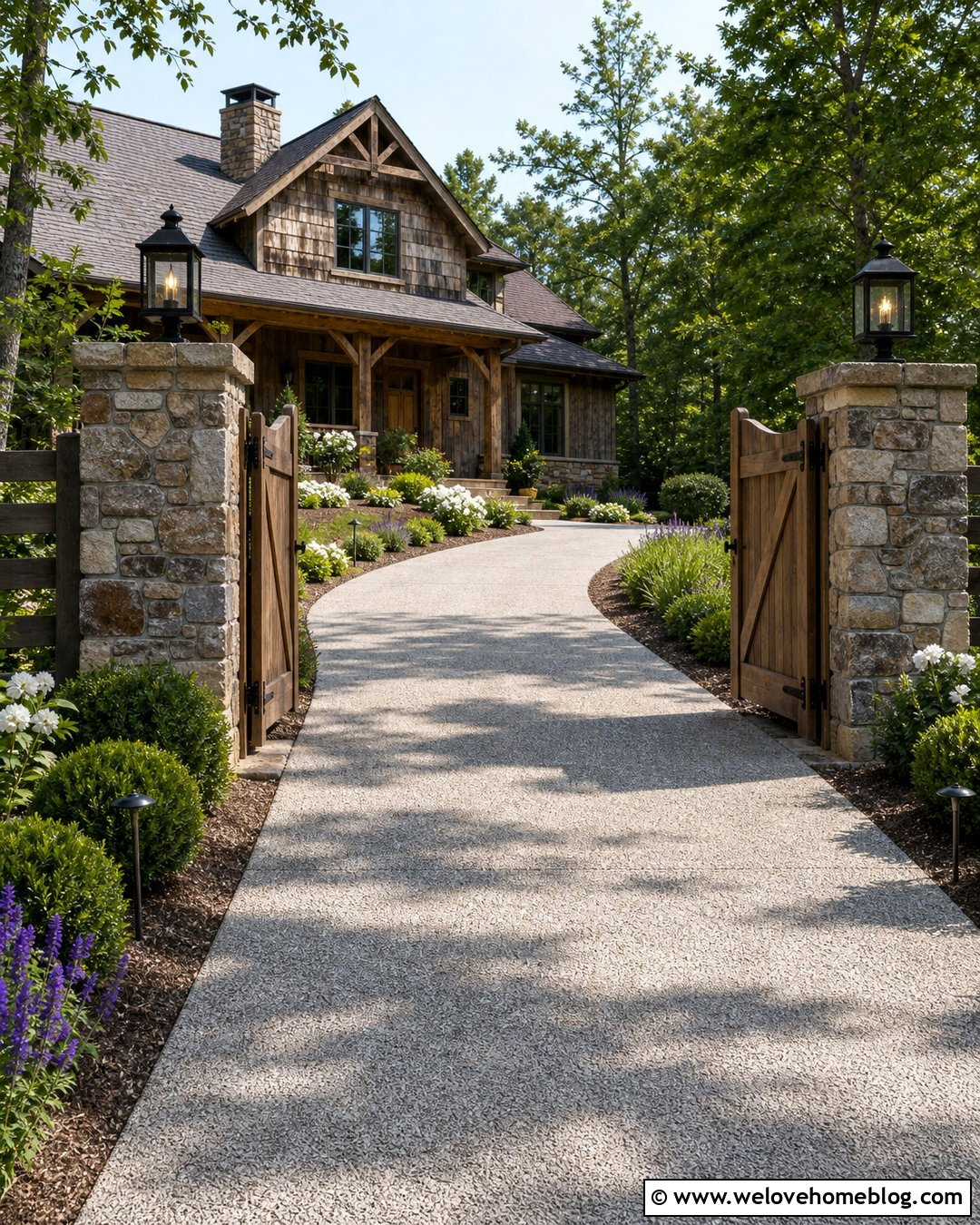
Stone entrance pillars give a woodland driveway a clear beginning without changing its natural character. Pair rugged fieldstone pillars with a compacted gravel lane that curves gently away from the road. Keep the pillars low enough to preserve visibility and position them outside the required driving clearance. Simple black lanterns, metal address numbers, and a wooden gate can provide useful detail without overwhelming the setting. Continue the same stone along short entrance walls before allowing the edges to dissolve into ferns, native shrubs, and mature trees. Inside the property, the driveway can narrow visually while maintaining enough usable width for vehicles. Repeat the fieldstone near the house in retaining walls or planting-bed borders. This repetition connects the public entrance, wooded approach, and final arrival area as one unified design.
6. Wooded Driveway With Rustic Farm Gate
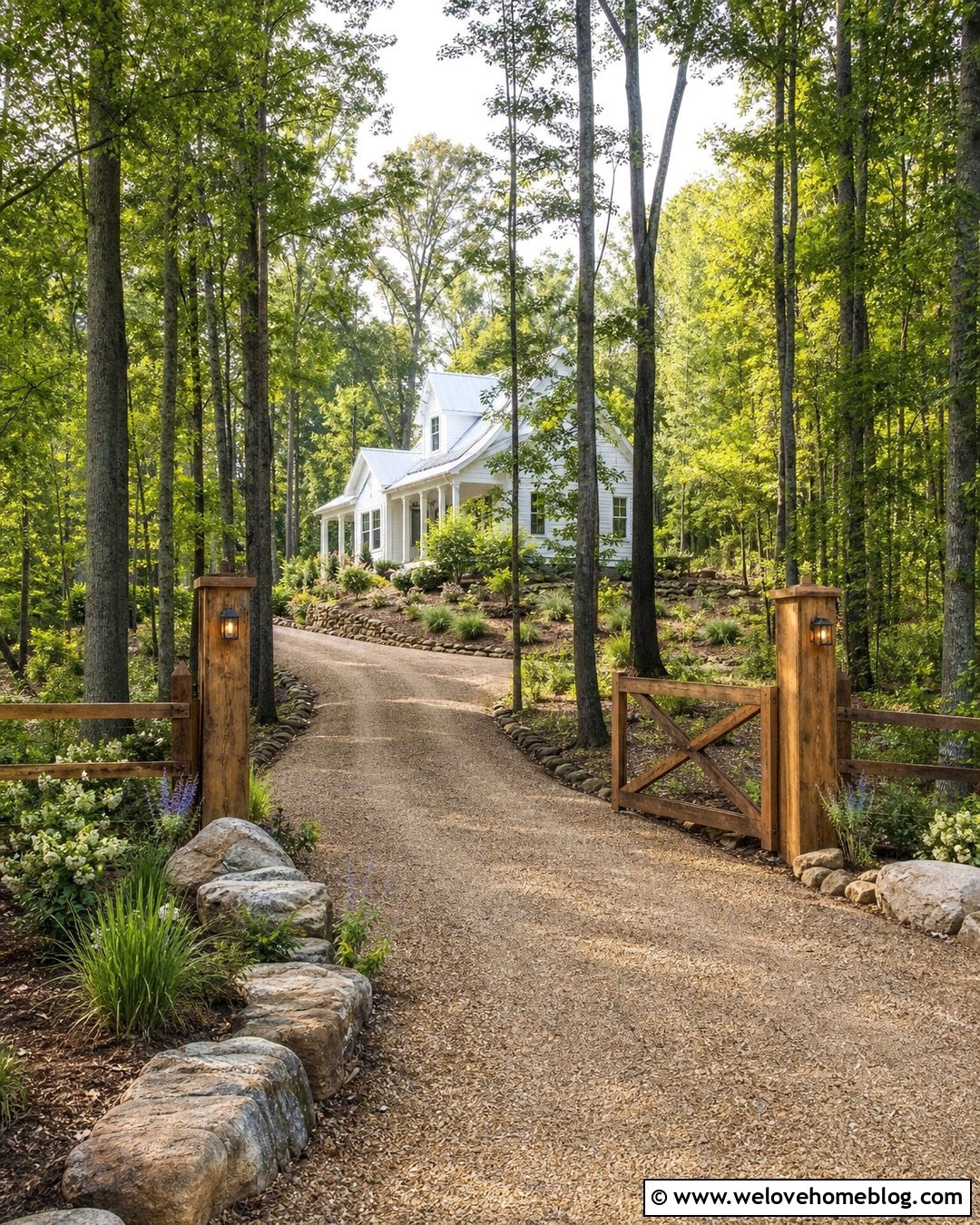
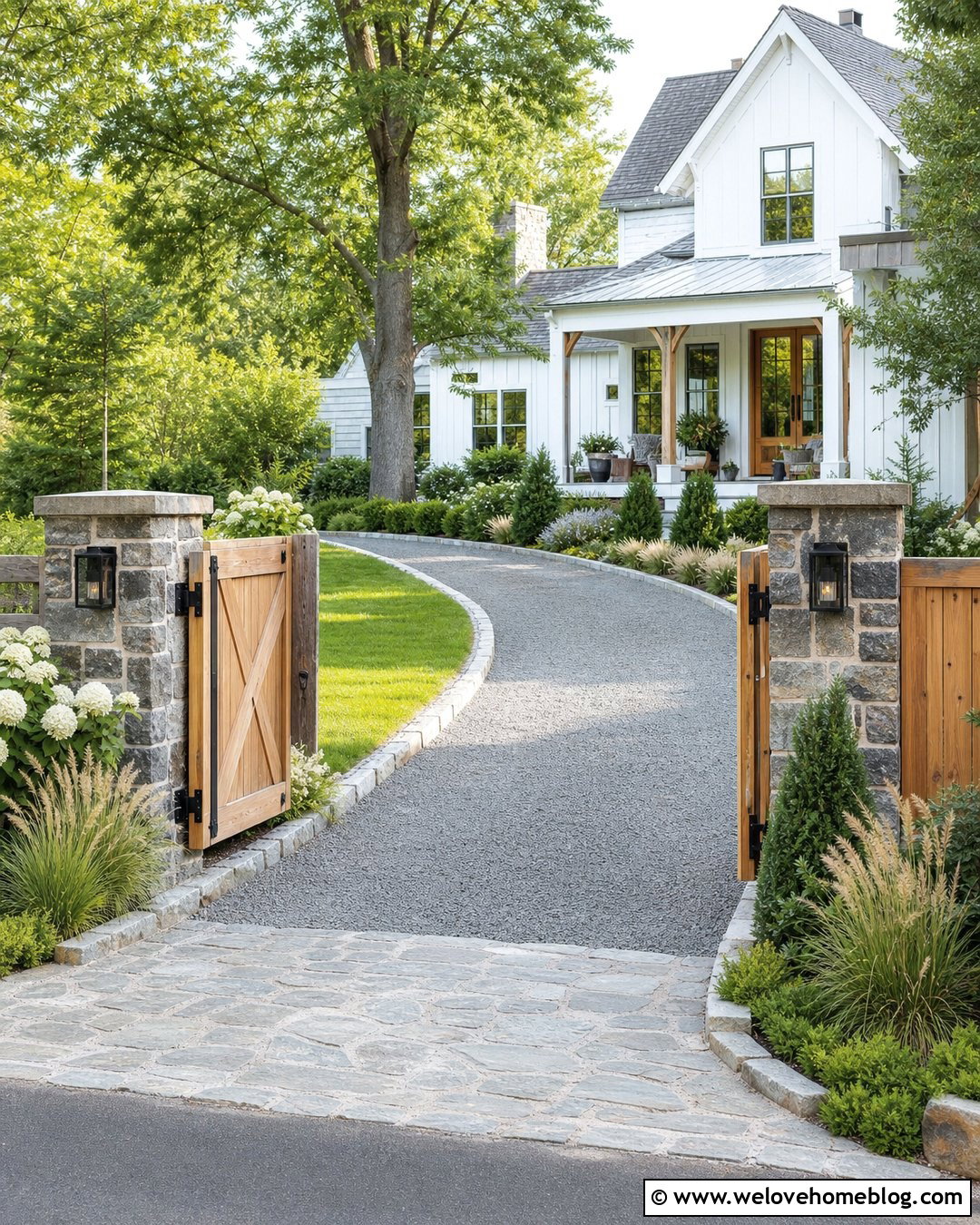
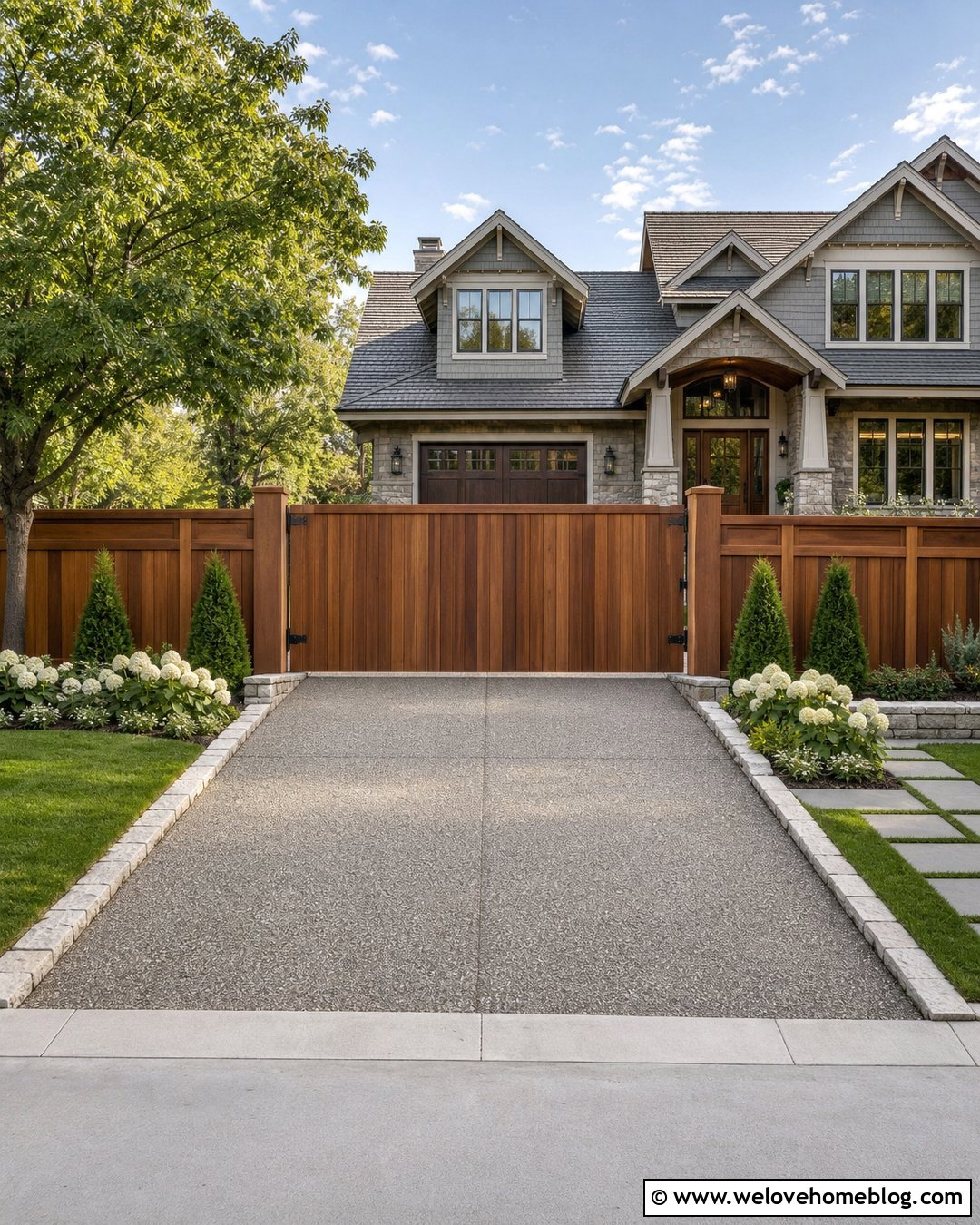
Imagine turning off a country road and passing through a simple wooden gate beneath a leafy canopy. This design combines a brown crushed-gravel driveway with a rustic farm gate supported by substantial timber posts. A shallow curve beyond the entrance creates privacy by keeping the house out of immediate view. Use split-rail fencing for a short distance on both sides, then let it disappear naturally into the woods. Native grasses, low flowering shrubs, and informal stone groupings can soften the entrance while preserving clear sightlines. Choose gate hardware that can withstand regular exposure to rain and winter weather. Solar or low-voltage lights mounted discreetly on the posts improve nighttime access. The entire arrangement feels appropriate for a farmhouse, equestrian property, woodland cabin, or relaxed country home.
7. Permeable Paver Driveway Through Woods
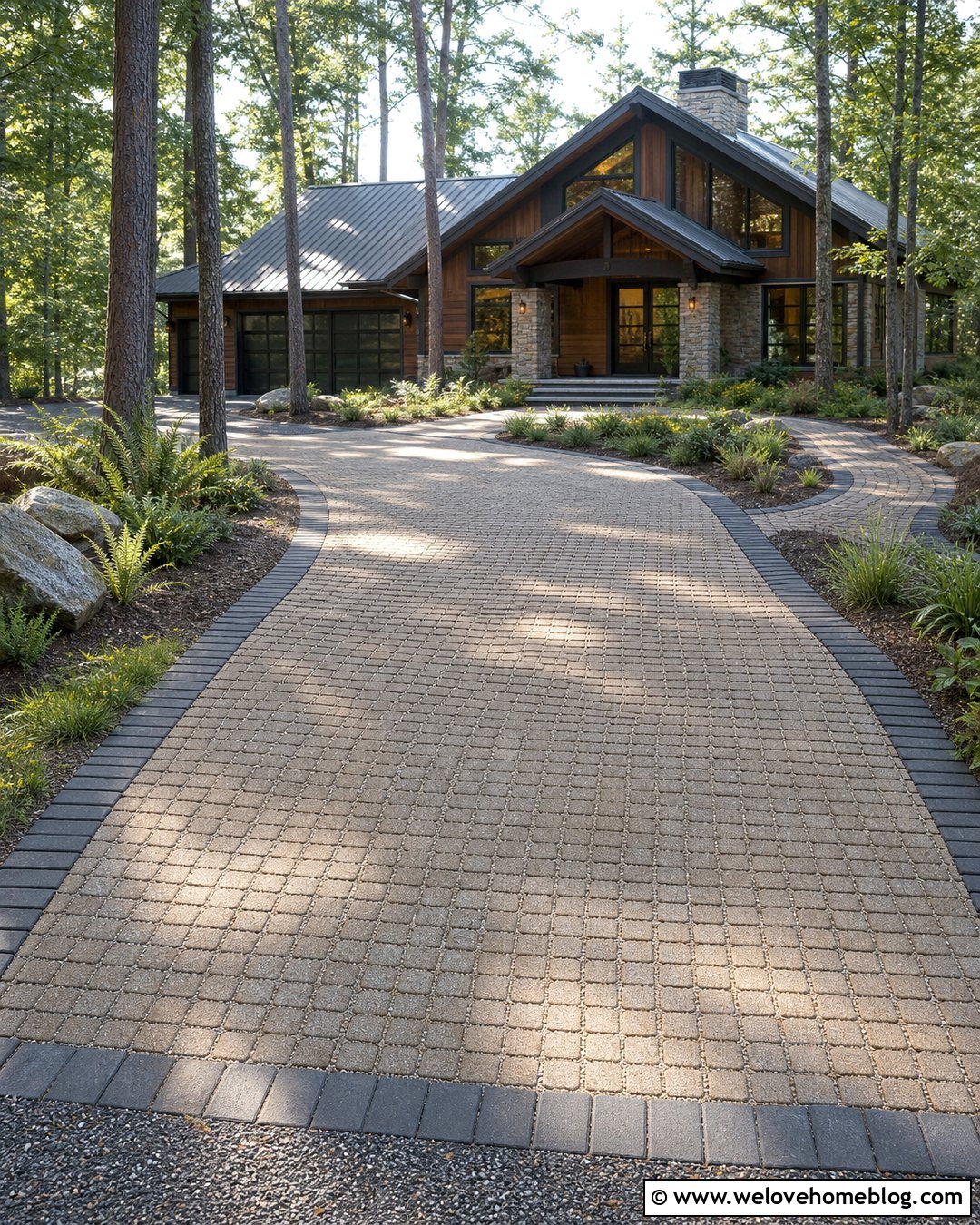
Permeable concrete pavers offer a refined surface while supporting a drainage-conscious wooded layout. Select charcoal or earth-toned pavers with open joints filled with clean aggregate. Water can filter through permeable paving systems into prepared stone layers below, which can reduce surface pooling when the driveway is correctly engineered. () Arrange the pavers in a running-bond or modular pattern that follows a wide, flowing curve between existing trees. Define the edges with a darker paver soldier course. Nearby rain gardens filled with sedges, ferns, and moisture-tolerant native plants can receive additional runoff from sloped sections. Repeat the pavers in the walkway approaching the house. This complete driveway feels tailored and modern, yet its muted colors prevent it from competing with the surrounding woodland landscape.
8. Gravel Driveway With Grass Center Strip
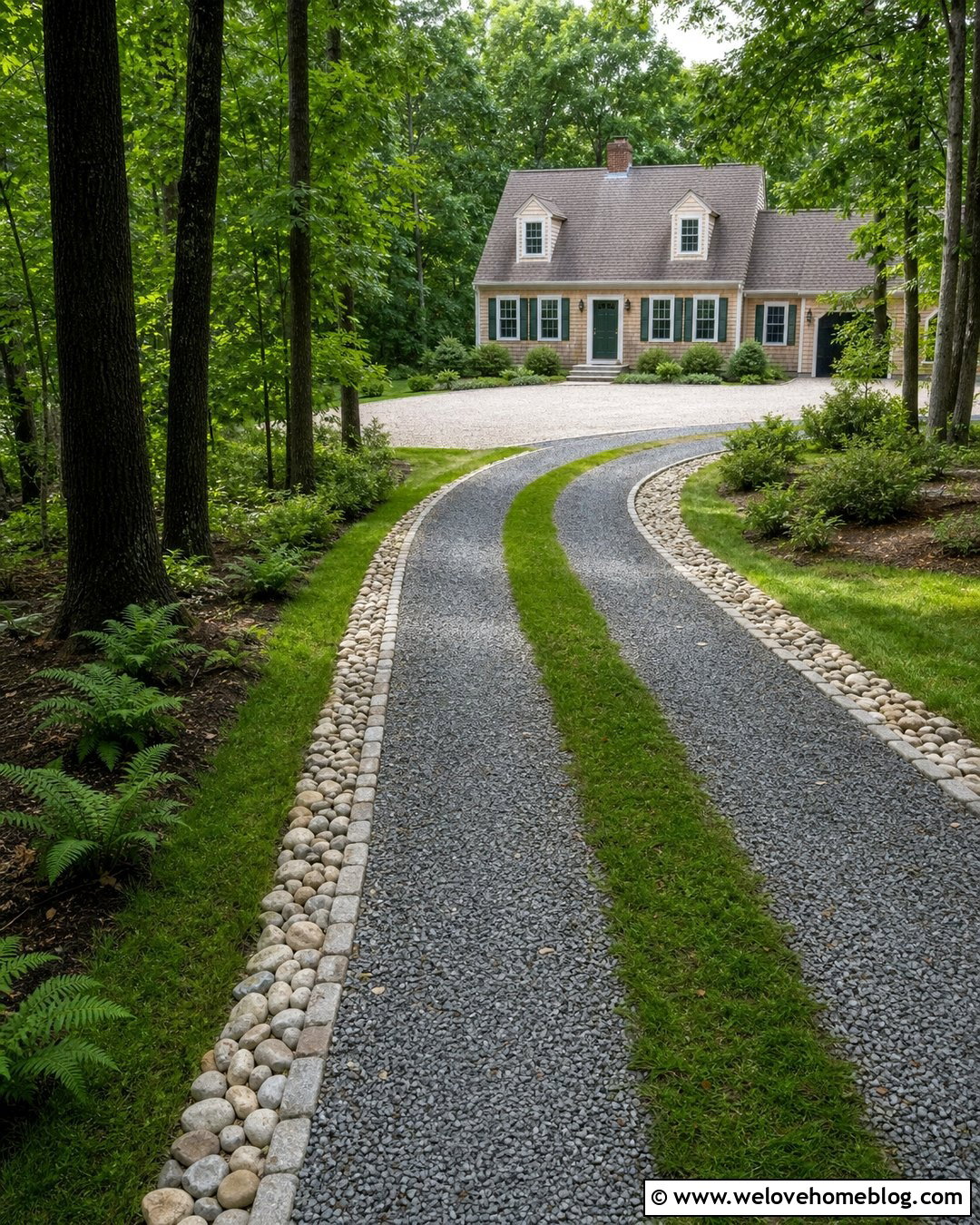
A grass center strip can make a wooded gravel driveway look narrower, softer, and more connected to nature. Build two compacted crushed-stone tire tracks with a durable strip of shade-tolerant turf or low groundcover between them. This layout works best on relatively level ground with moderate residential traffic. Use steel or stone edging to prevent gravel from spreading into the planted center. Along the outside edges, maintain shallow drainage swales covered with woodland sedges and smooth river rock. The route can remain mostly straight where tree spacing allows, then open into a full gravel parking court near the house. Keep the center growth trimmed so it does not scrape vehicle undersides. This relaxed design complements cottage, Craftsman, and cabin architecture while preserving more visual greenery than a fully surfaced driveway.
9. Wooded Driveway With Gravel Stabilization Grid
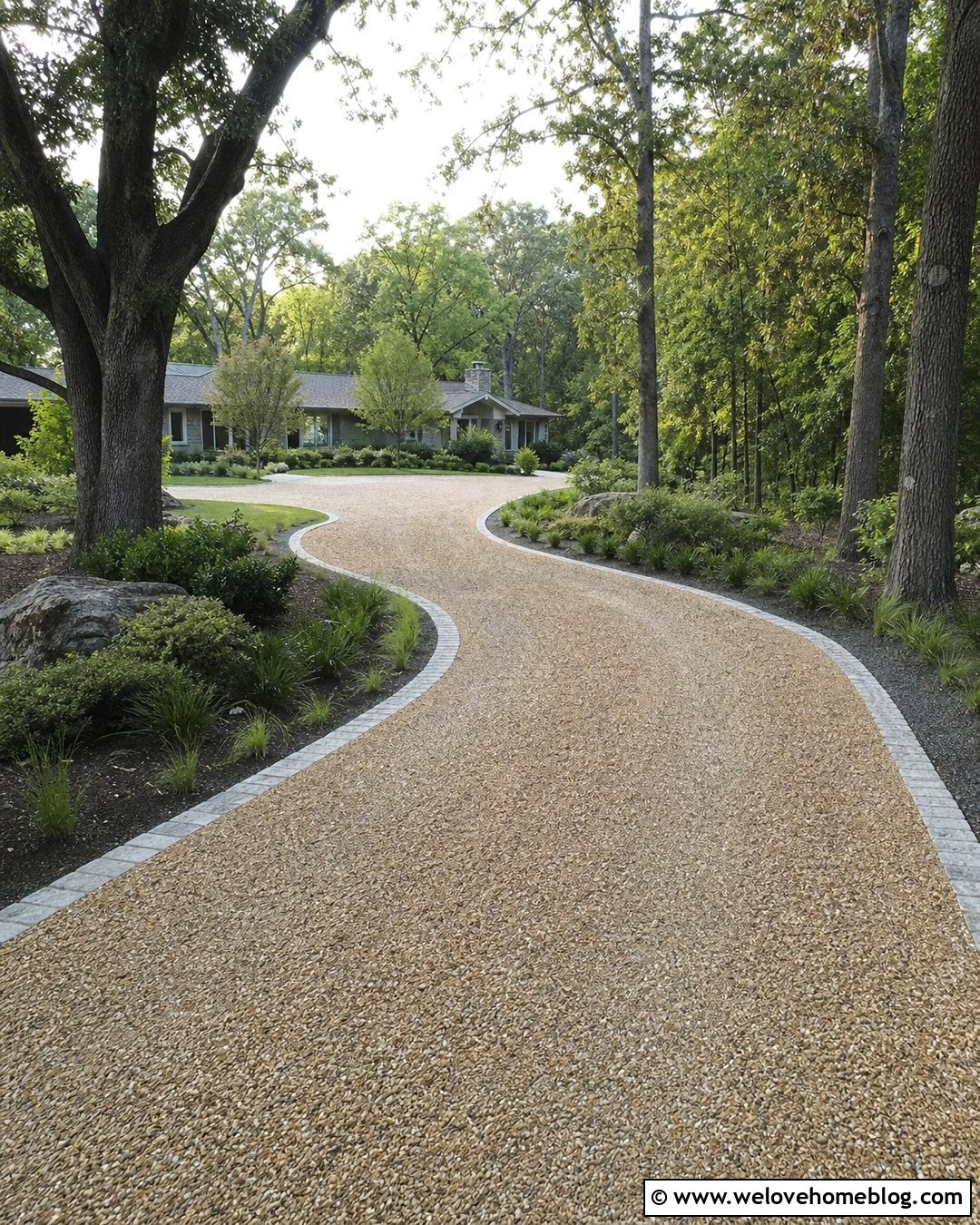
Loose gravel can shift on curves, slopes, and frequently traveled sections. A gravel stabilization grid creates a more controlled surface while retaining the informal appearance that suits a forest. Fill the cellular grid with angular gray or warm tan gravel, then compact it according to the product and site requirements. These systems help hold aggregate in place while allowing water to move through the surface. () Follow the natural contours of the land with gradual bends and reinforce the edges using flush granite setts. Add native ferns, inkberry, and low woodland grasses beyond a narrow gravel shoulder. At the house, continue the stabilized surface into a wider turnaround. The finished driveway appears simple, but its hidden structure provides a cleaner, more consistent driving route through the trees.
10. Wooded Driveway With Boulder Edging
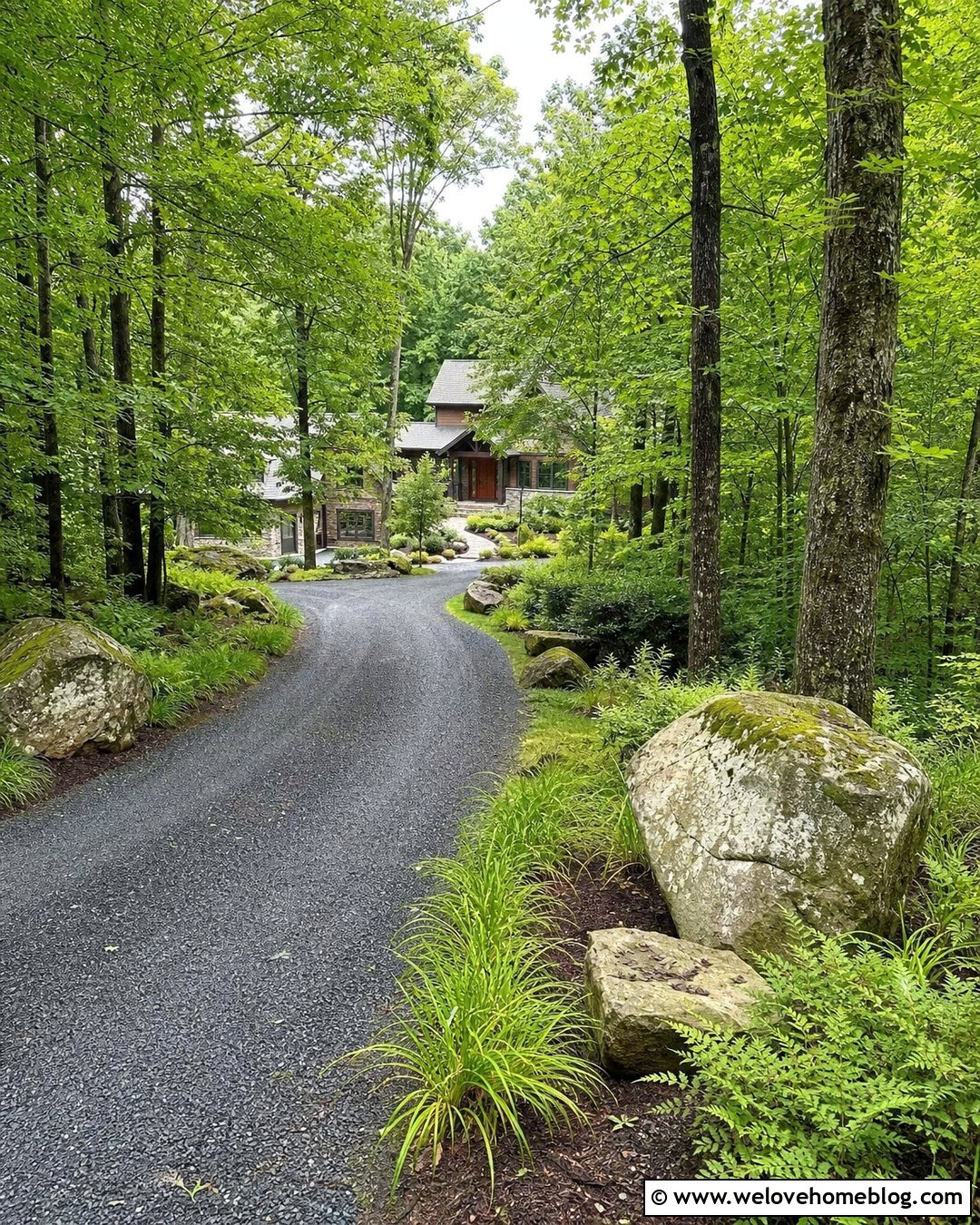
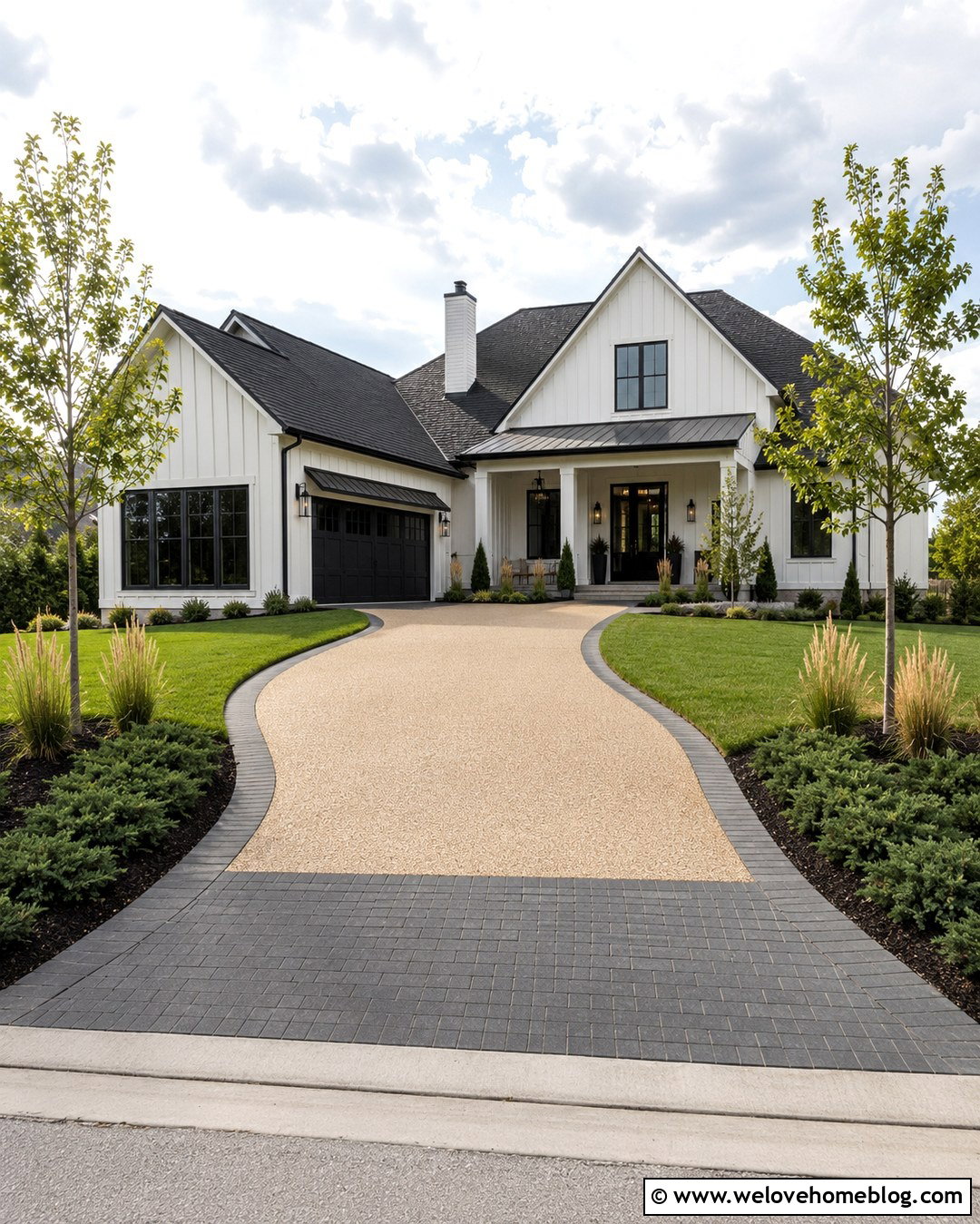
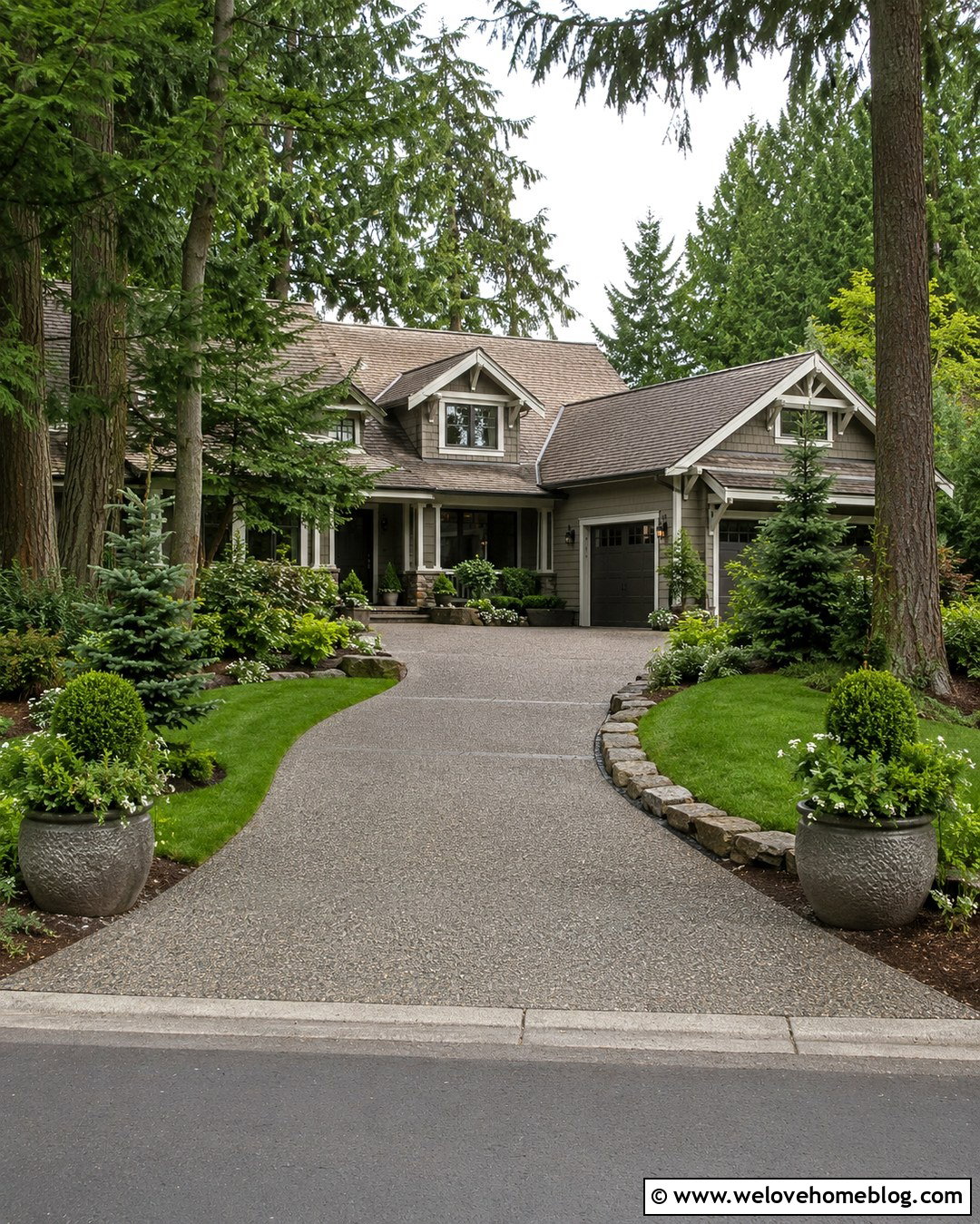
Large boulders can define a wooded driveway while echoing the natural geology of the property. Pair irregular mossy stones with a dark gray crushed-granite surface and a gently winding layout. Space the boulders in loose groups rather than creating an unbroken barrier. This keeps the border natural and provides openings for drainage, maintenance, and snow placement. Position every rock well outside the vehicle clearance zone, especially around curves and narrow sections. Between the stone groups, plant Christmas fern alternatives such as evergreen wood fern, Pennsylvania sedge, or other regionally suitable shade plants. A wider boulder arrangement near the entrance can frame a modest address marker. Repeat a few matching stones beside the house walkway. The result feels rugged and intentional, as though the driveway was carefully threaded through an existing rocky forest.
11. Wooded Driveway With Native Fern Borders
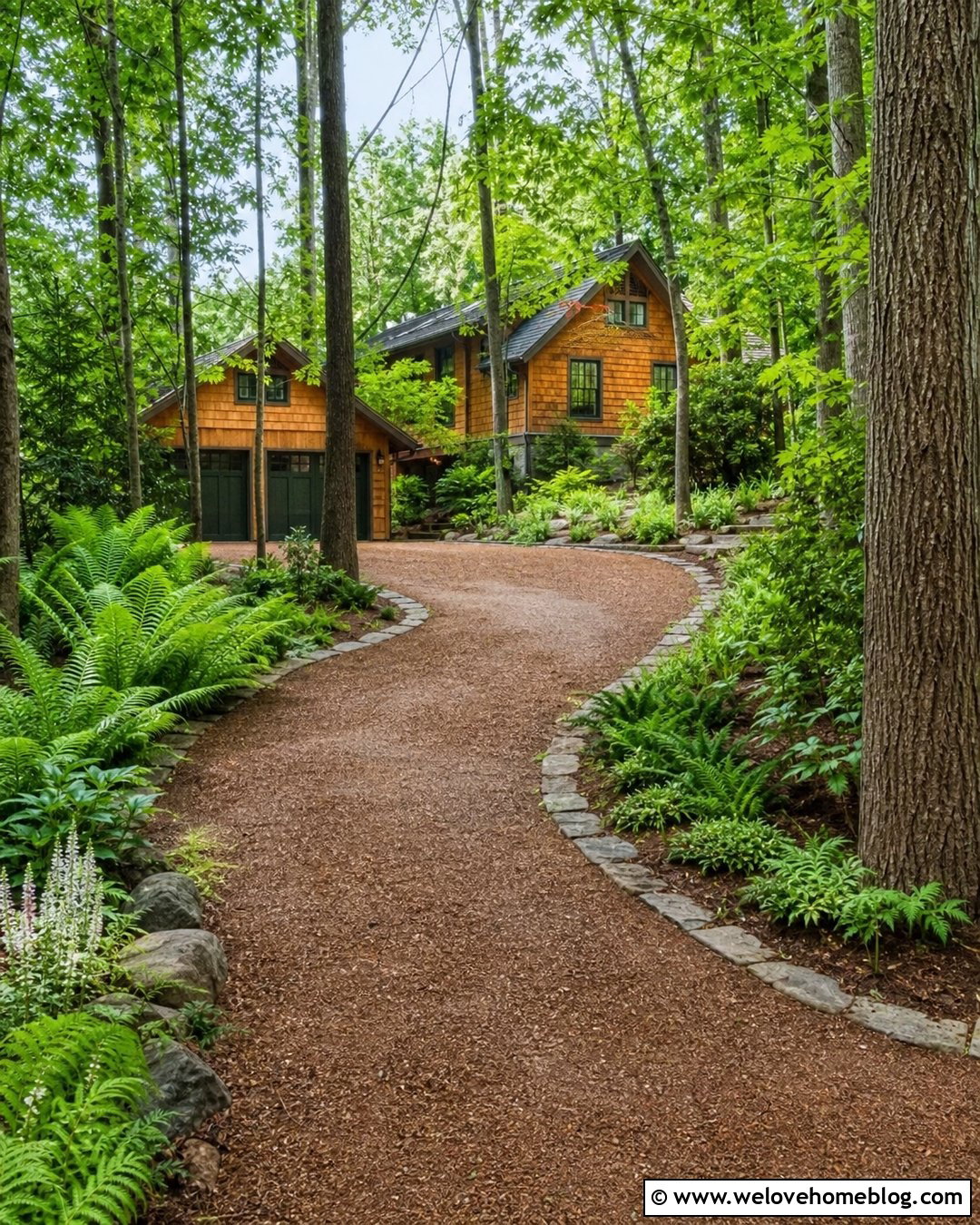
Soft green fern borders can transform a basic driveway into a lush woodland approach. Start with a smooth, compacted brown gravel surface that blends with the forest floor. Let the driveway follow a relaxed S-curve through mature shade trees, with shallow planted beds on both sides. Use native fern species suited to the property’s soil and moisture, combining them with sedges, foamflower, or low shrubs for variation. Keep plants far enough from the driving lane to prevent damage and maintain open visibility around bends. Natural fieldstone edging can separate the gravel from the beds without looking rigid. Near the house, continue the fern planting around a matching gravel parking court and stone walkway. This cohesive design feels immersive, green, and peaceful while requiring less ornamental styling than a conventional suburban landscape.
12. Concrete Ribbon Driveway Through Woods
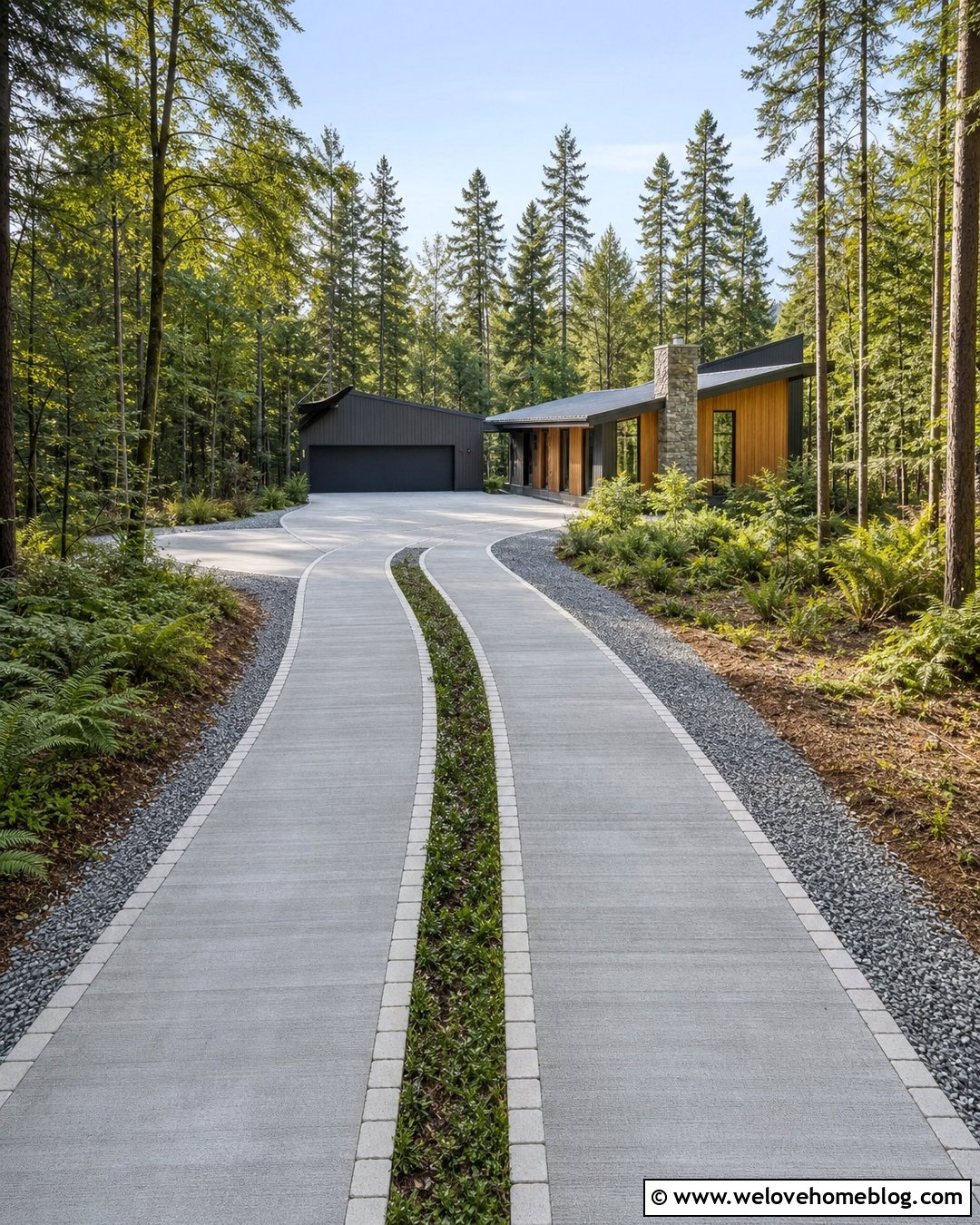
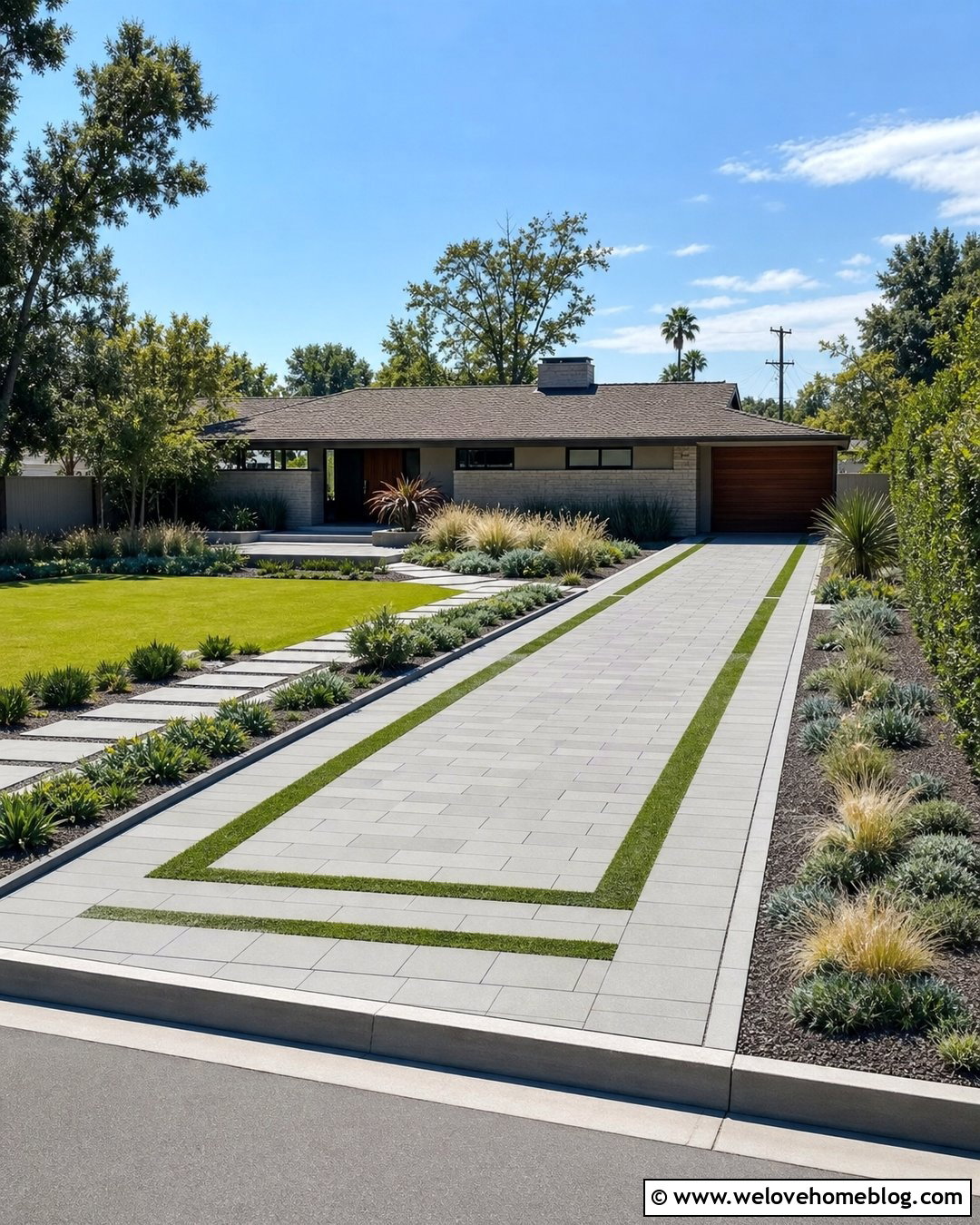
A concrete ribbon driveway uses two narrow paved tracks instead of one large slab. This reduces the visual weight of the hardscape and leaves a planted center that helps the route merge with the woods. Choose light-gray broom-finished concrete for dependable traction, then fill the middle strip with shade-tolerant grass, fine gravel, or durable groundcover. Shape the driveway with broad curves and slightly widened tracks where vehicles turn. Flush cobblestone edging can protect the concrete and create an attractive transition into drainage shoulders. Surround the route with native shrubs and existing tree trunks rather than formal flower beds. Near the garage, join the ribbons into a complete concrete parking apron for easier maneuvering. This design works especially well with modern cabins, contemporary ranch houses, and minimalist woodland homes.
13. Brick Driveway Through Woods
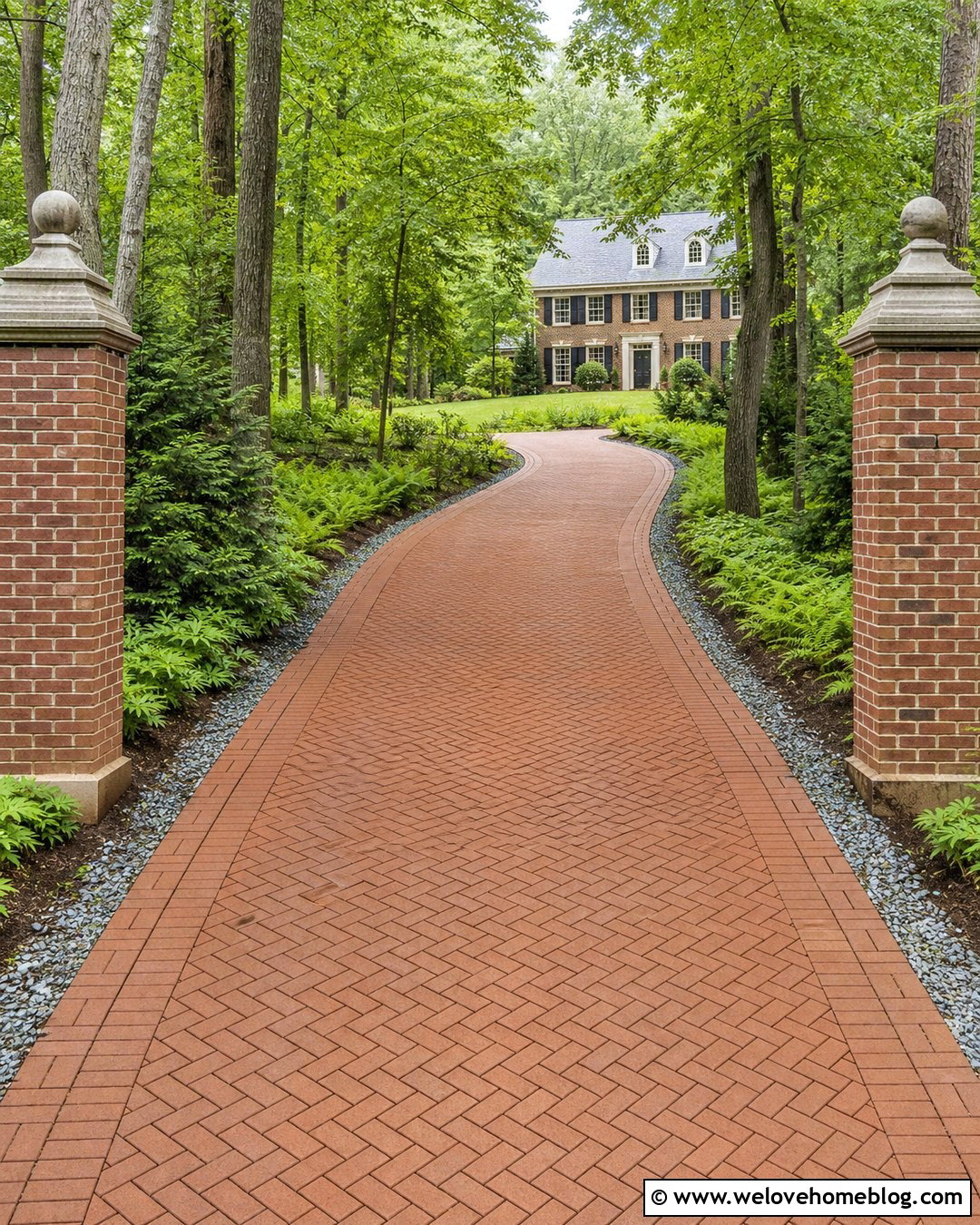
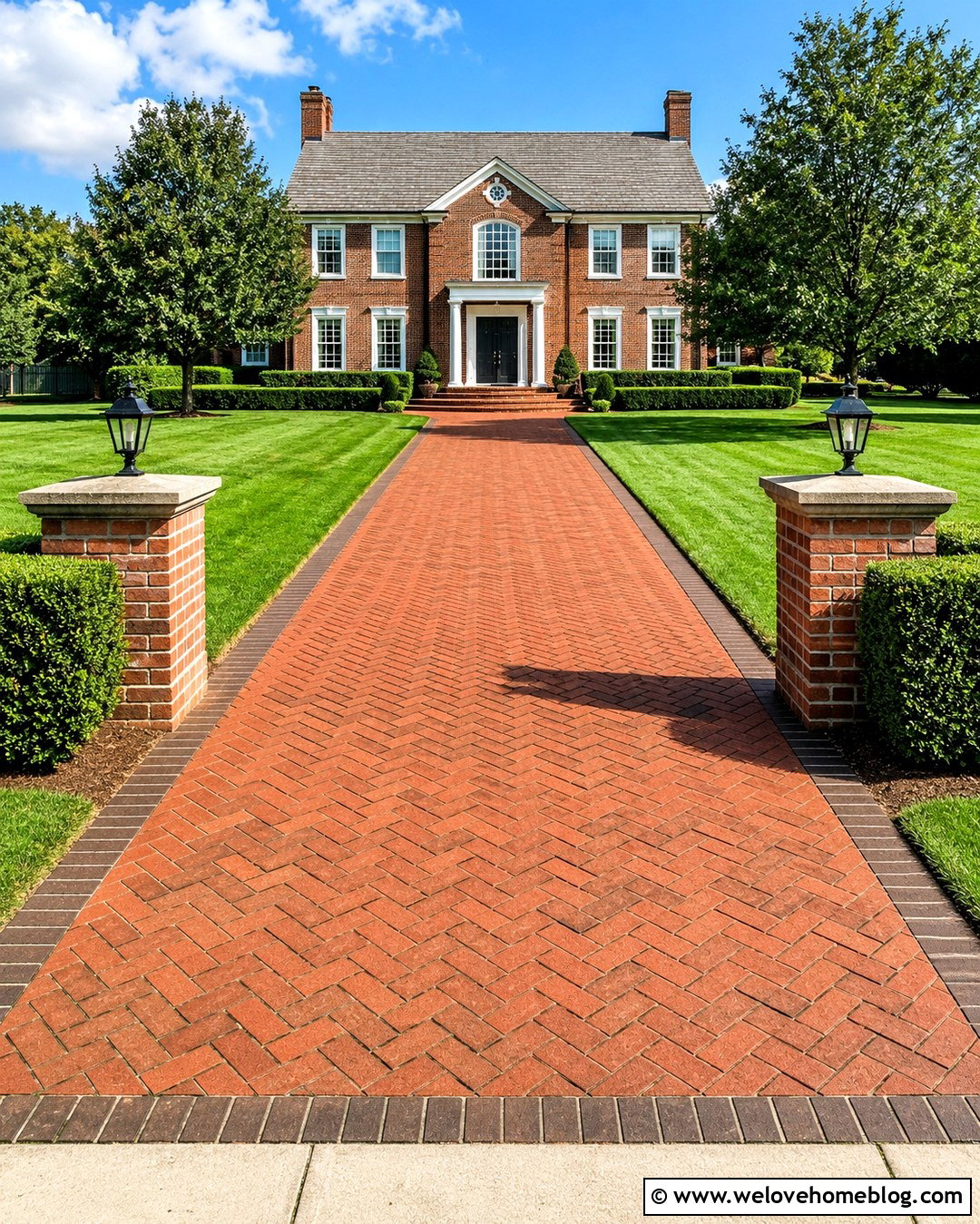
Red or brown clay brick pavers bring warmth to a wooded setting filled with green foliage and textured tree bark. Lay the bricks in a herringbone pattern for a visually strong driving surface, then use a simple running-bond border to define the edges. A gentle curve prevents a long brick driveway from appearing too formal or rigid. Keep surrounding landscaping understated with ferns, evergreen shrubs, and broad drifts of woodland groundcover. A narrow strip of crushed stone along the outside edge can help manage water and separate the paving from roots and soil. At the entrance, brick pillars or low brick walls can repeat the surface material. The driveway should widen gradually as it reaches a traditional Colonial, Cape Cod, or Craftsman home, creating a welcoming arrival court beneath the trees.
14. Wooded Driveway With Low Retaining Walls
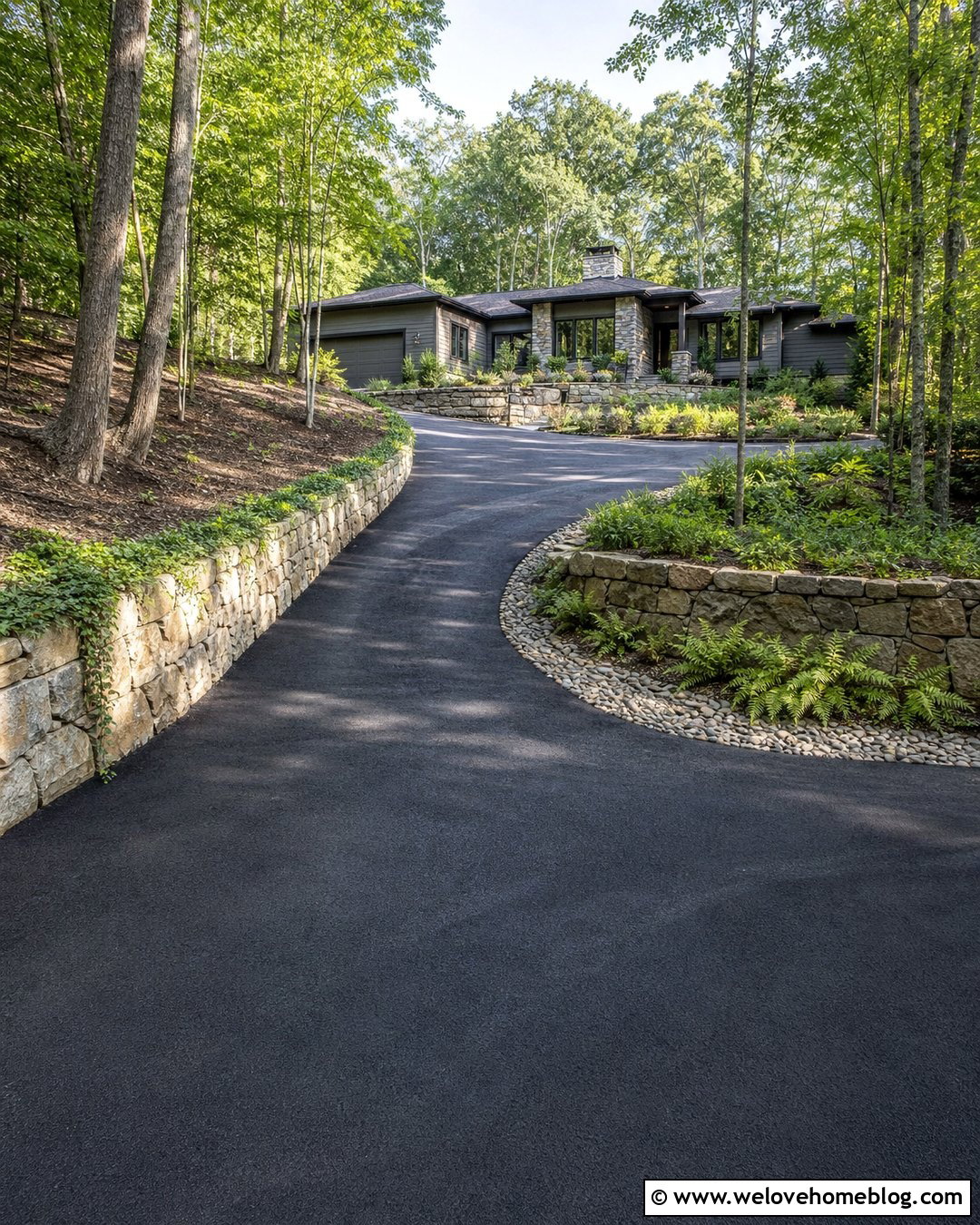
Sloped forest properties often need more structure than simple edging can provide. Combine a dark asphalt or compacted gravel driveway with low retaining walls made from rough-cut local stone. Let the walls follow the curves of the driveway, holding back uphill soil while leaving the downhill side open where possible. Keep wall heights modest to preserve the natural scale of the woods. Plant ferns, sedges, and trailing groundcovers above the stone to soften the top edge. Drainage behind the wall should be planned carefully so water does not push against the structure or wash across the driveway. Add wider pull-off space at a convenient level section. Repeating the same stone around the house foundation or front steps creates a strong connection between the wooded approach and the architecture.
15. Wooded Driveway With Bridge Crossing
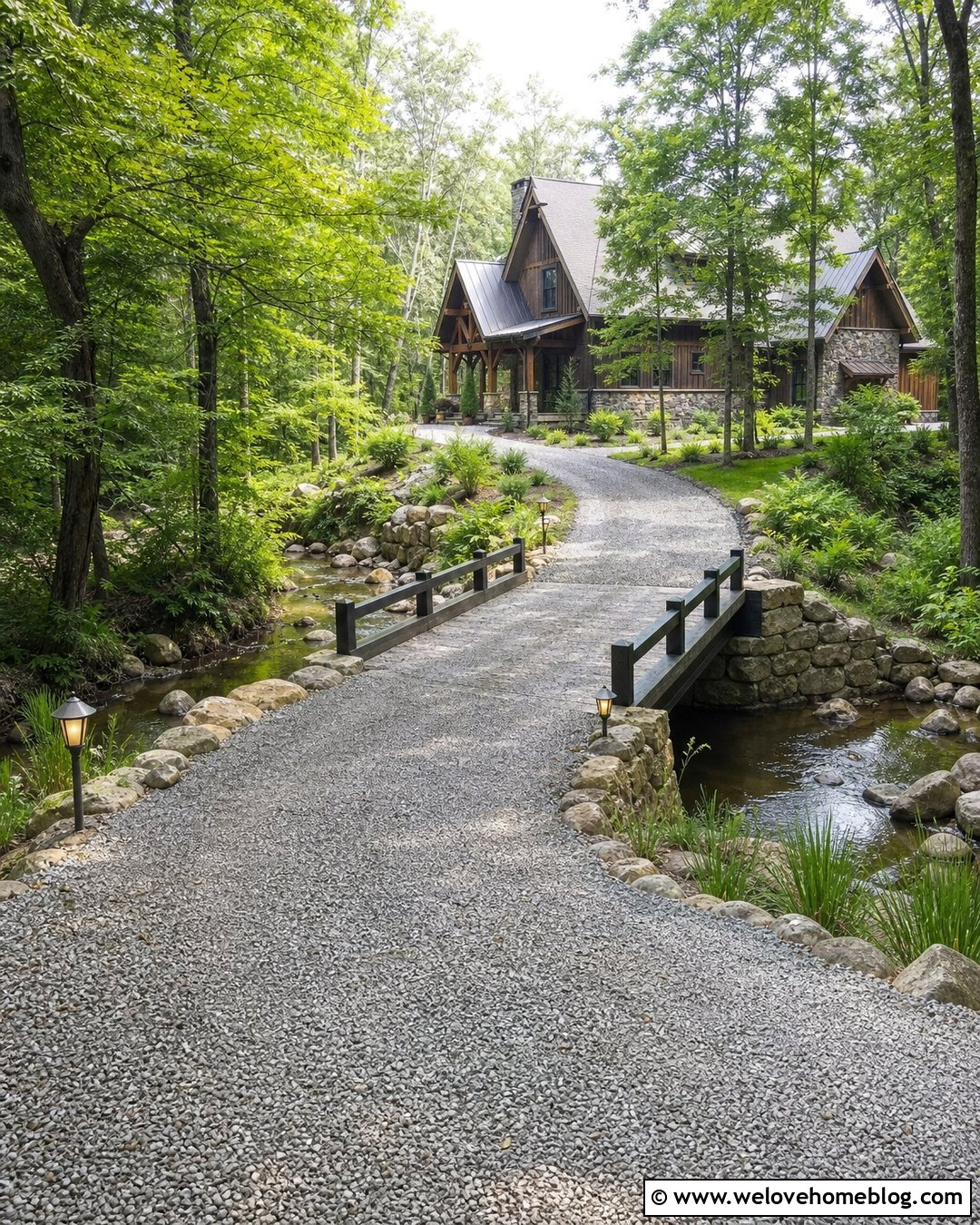
A small bridge can become the defining feature of a driveway that crosses a seasonal stream or drainage channel. Use a compacted gray gravel driveway that transitions onto a sturdy timber-and-steel bridge with simple dark railings. The bridge design, load capacity, permits, and waterway requirements should always be handled by qualified local professionals. Visually, keep the structure understated so it fits beneath the tree canopy. Fieldstone abutments and native moisture-loving plants can help the crossing feel integrated with its surroundings. Continue the driveway in a gentle curve after the bridge rather than aiming it directly at the house. Low marker lights at both ends improve visibility without turning the forest into a brightly lit corridor. This complete approach creates a memorable sense of arrival while responding to the property’s natural terrain.
16. Wooded Driveway With Modern Lighting
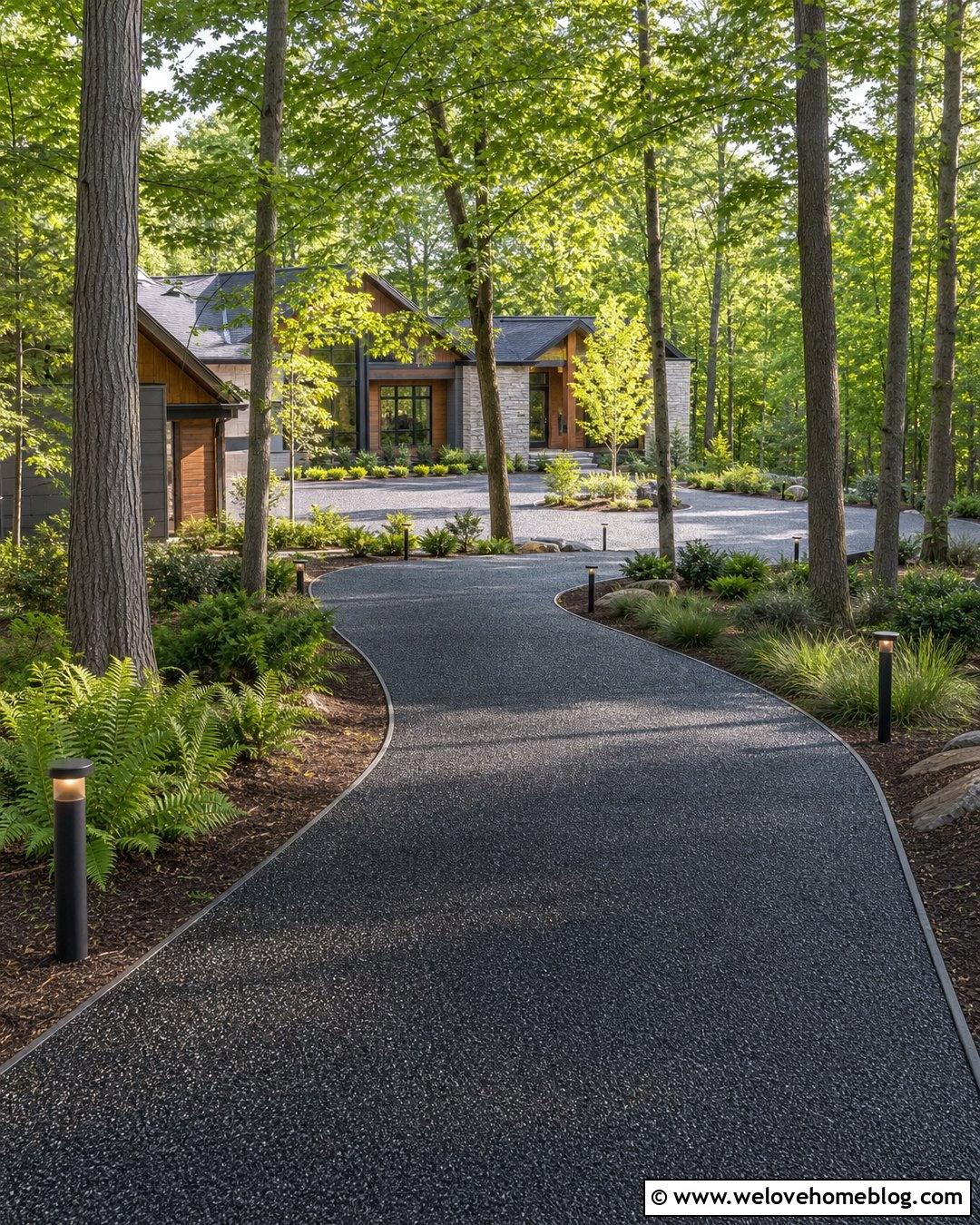
Good lighting can make a forest driveway easier to navigate without flooding the entire property with glare. Pair a charcoal resin-bound gravel surface with short, shielded black bollards placed at entrances, curves, and changes in grade. The smooth driveway can follow a broad S-shaped route toward a modern wood-and-stone house. Use flush steel edging to create crisp boundaries, then soften them with ferns, native grasses, and low evergreen shrubs. Keep fixtures consistently spaced only where guidance is needed. Downward-facing light helps define the road while limiting unnecessary illumination in the tree canopy. During daylight, the slim black fixtures almost disappear against the trunks. At the house, repeat the same lighting around the parking court and walkway. The finished design feels modern, safe, and restrained rather than overbuilt.
17. Wooded Driveway With Circular Turnaround
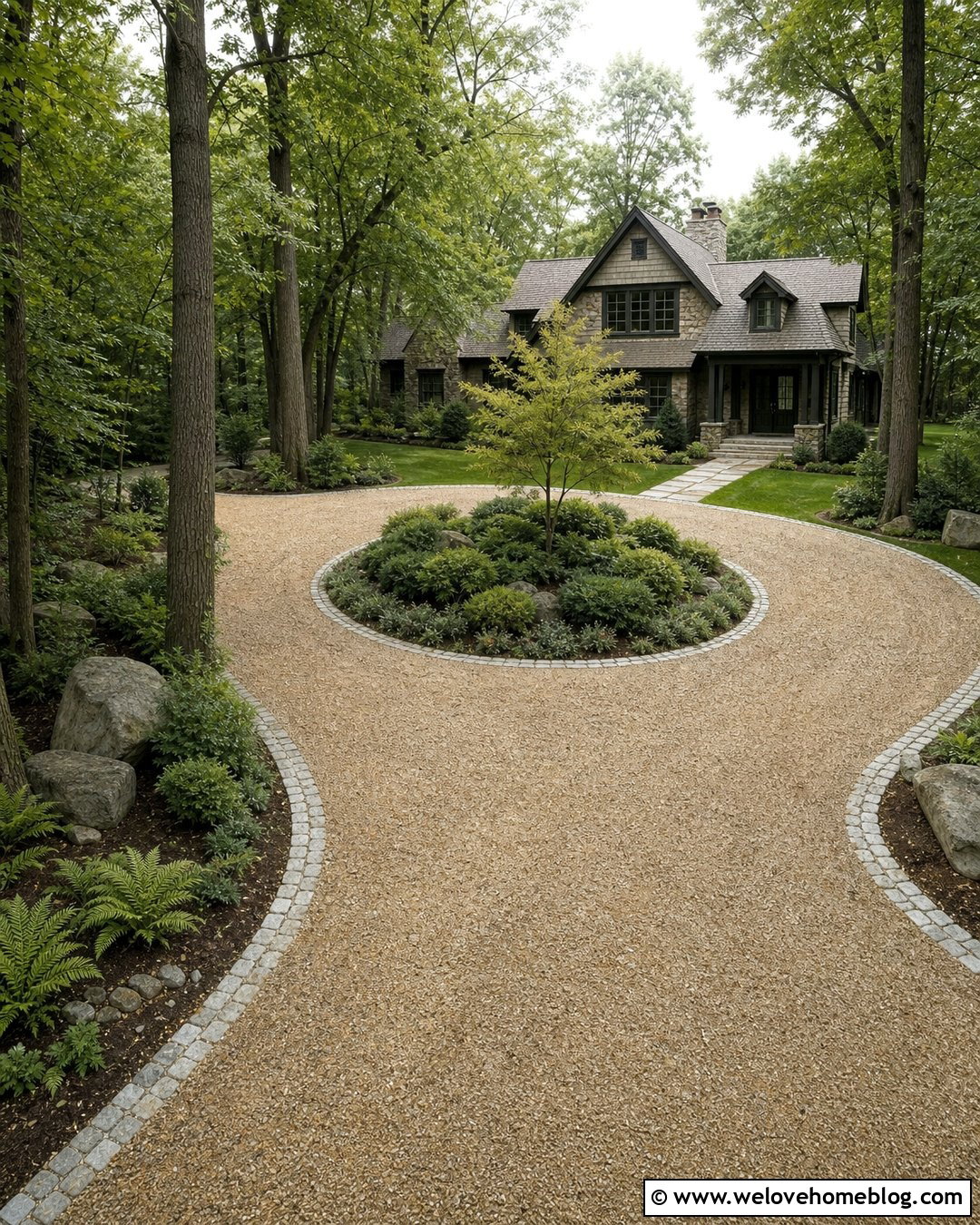
A circular turnaround can make a long wooded driveway more practical near the house. Use warm beige gravel for the approach and continue it around a planted central island. Define the outer edge with flush cobblestones, which help contain loose aggregate and give the circle a finished shape. Preserve an attractive existing tree in the island only when its roots, health, and mature size are compatible with construction. Otherwise, create a layered planting of small native trees, shrubs, ferns, and woodland groundcovers. Make the circle large enough for everyday turning needs, deliveries, and emergency access under local requirements. A stone walkway can branch from the inner curve toward the front door. This layout creates an organized arrival area while keeping most of the parking surface visually screened by the surrounding forest.
18. Wooded Driveway With Split Garage Approach
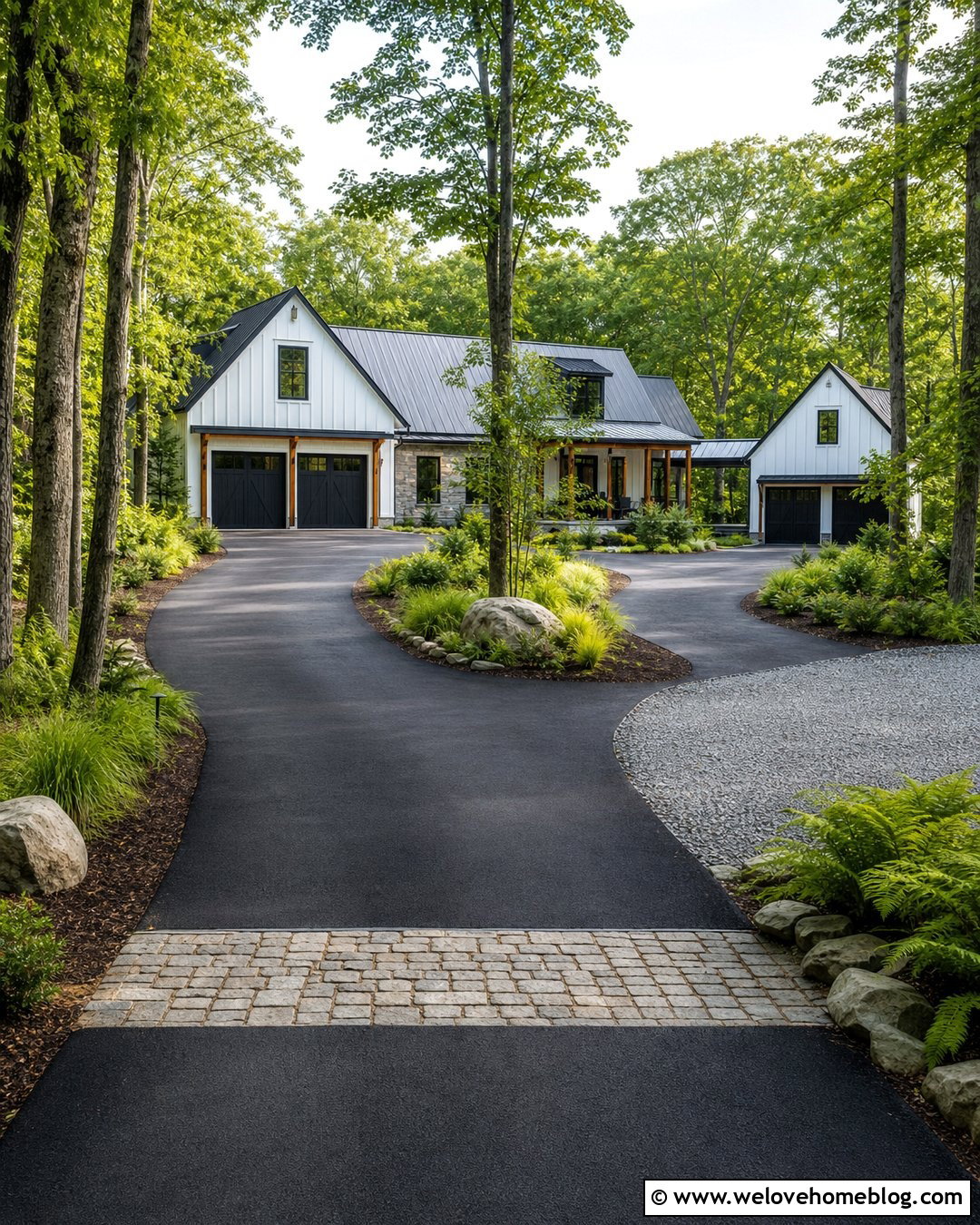
A split driveway can serve separate garages, a guest parking area, or a house and workshop without creating one oversized paved zone. Begin with a shared black asphalt lane through the woods, then divide it near the buildings into two narrower curved branches. Mark the split with a planted island containing native shrubs, ferns, ornamental grasses, and one carefully placed boulder. Add a cobblestone apron where the branches separate to highlight the transition and protect the asphalt edges. Keep signs and lighting simple so drivers can understand the layout quickly. One branch may lead to the main garage while the other reaches a gravel guest court. Repeating the same edge stone and planting palette across both routes makes the entire wooded approach feel coordinated rather than pieced together.
19. Wooded Driveway With Mountain Cabin Entrance
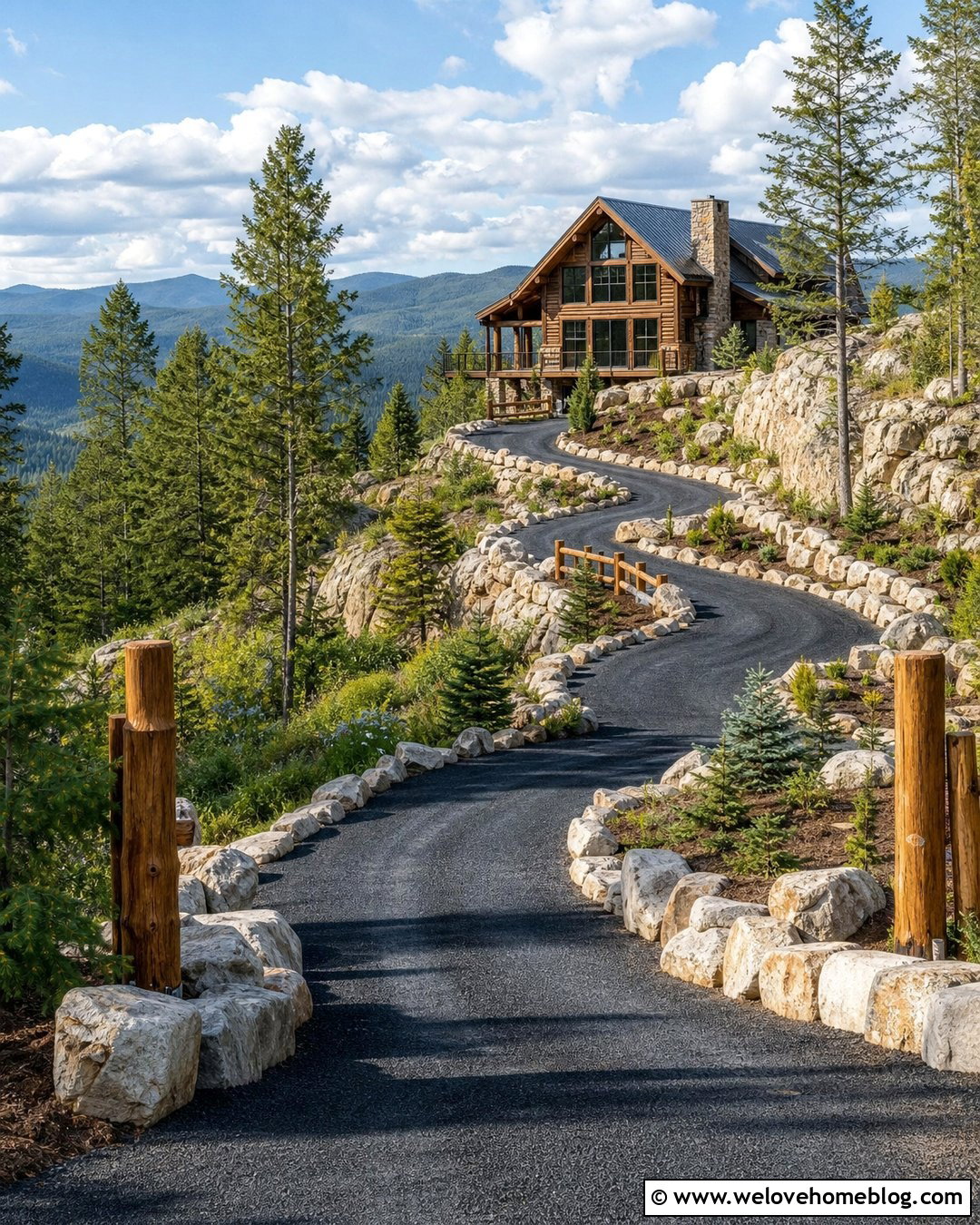
A mountain cabin driveway should feel rugged enough for the landscape while remaining clearly maintained. Use compacted dark crushed stone with a crowned center that guides water toward stone-lined side swales. Follow the hillside with broad switchback-style curves instead of forcing a steep, direct climb. Rough granite boulders can protect outside corners, while low timber guard elements mark significant drop-offs where professionally appropriate. Plant native evergreen shrubs, grasses, and ferns along disturbed edges to reconnect the construction with the forest. At the entrance, use heavy timber posts and a simple metal address sign. Near the cabin, widen the driveway into a level parking and turnaround area. The complete design pairs naturally with log construction, dark siding, exposed beams, and stone foundations.
20. Wooded Driveway With Rain Garden Drainage
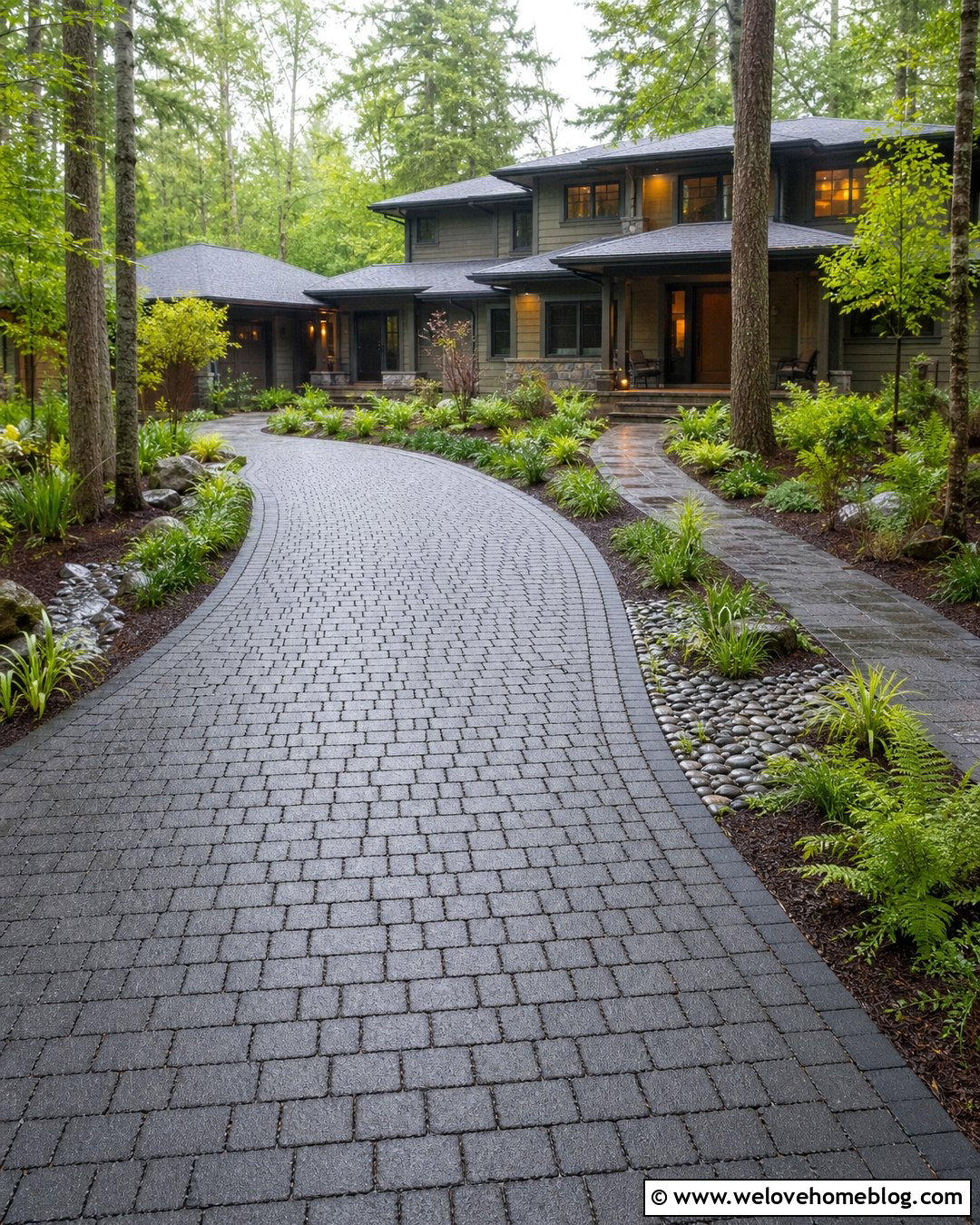
In a wet woodland, drainage should shape the driveway design from the beginning. Use permeable charcoal concrete pavers on the approach, bordered by shallow rain gardens placed where runoff naturally collects. Fill the planted channels with regionally appropriate sedges, rushes, ferns, shrubs, and moisture-tolerant groundcovers. Add river stone at concentrated entry points to reduce visible erosion and create a clean transition. The driveway can curve gently between the rain gardens before widening near a modern farmhouse or Craftsman home. Keep planting heights low around turns and road connections. Permeable surfaces and planted drainage areas can help water soak into the ground when they are designed for local soils, slopes, and rainfall. () The final result looks lush and intentional while addressing a practical woodland challenge.
Conclusion:
The best 20 Driveway Through Woods Ideas combine a dependable driving surface with the shape, drainage, vegetation, and character of the land. Gravel creates a relaxed forest-road appearance, while asphalt, brick, concrete ribbons, resin-bound gravel, and permeable pavers offer more structured alternatives. Whichever material you choose, use gentle curves, durable edges, safe visibility, and a properly prepared base. Native planting can repair disturbed ground and connect the route to the surrounding woods. Gates, pillars, boulders, bridges, and subtle lighting should support the complete design rather than compete for attention. Before construction, confirm local requirements and consult qualified professionals about drainage, grading, tree roots, retaining walls, bridges, and emergency access.

Related posts:
Leave a Reply