
A driveway can do much more than provide a place to park. With the right surface, borders, plants, lighting, and entrance details, it can become a polished extension of your home. The best driveway decoration ideas also work as complete designs. Instead of adding random ornaments, coordinate every feature with the driveway material, layout, house exterior, and surrounding yard. Current driveway design inspiration often combines defined edging, layered planting, practical lighting, attractive gates, and visible address markers to improve the entire approach. () Whether you have a short concrete pad or a long country lane, thoughtful updates can make it feel more welcoming. Use these 20 Driveway Decoration Ideas to create a finished look that suits your property.

1. Concrete Driveway With Brick Border
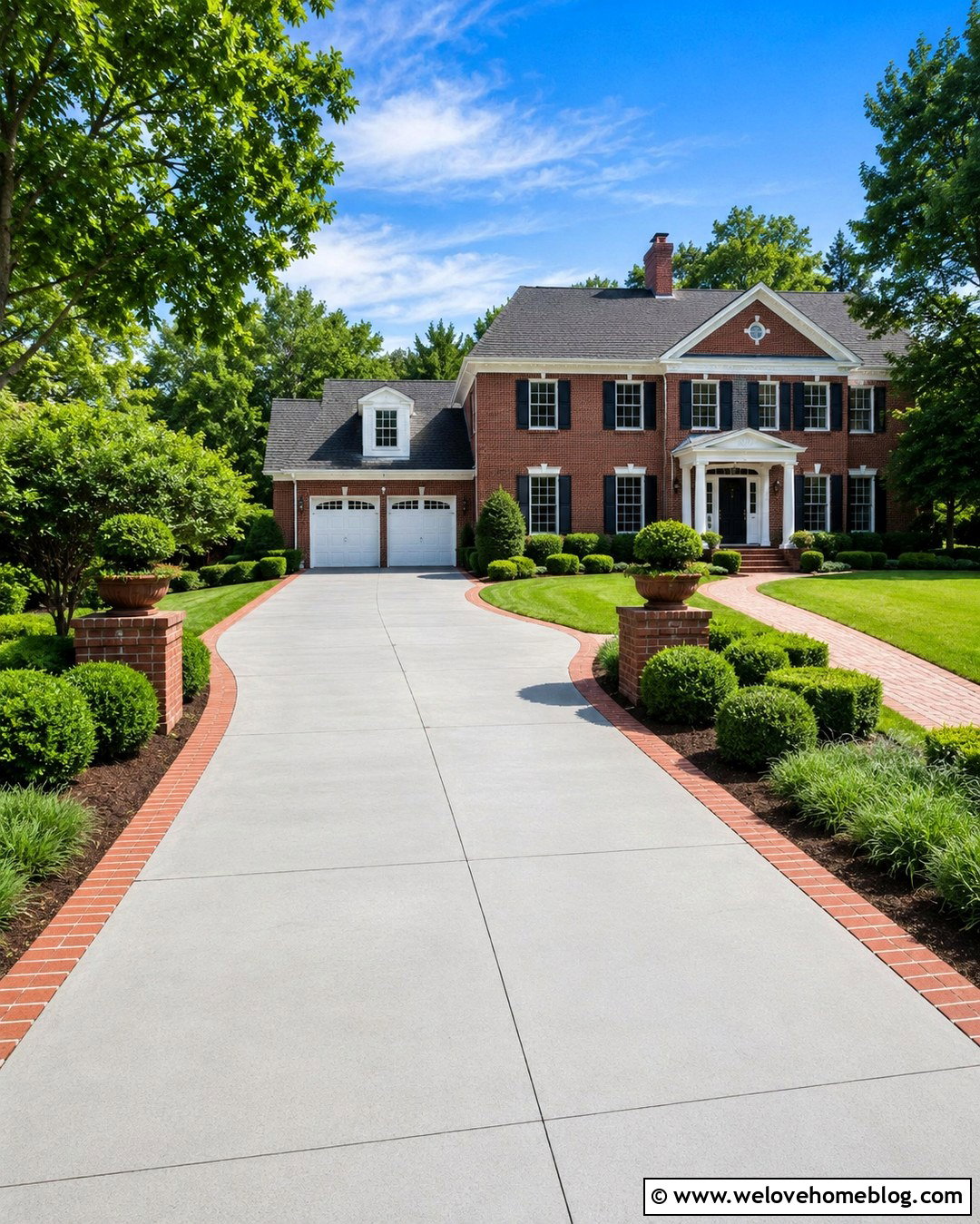
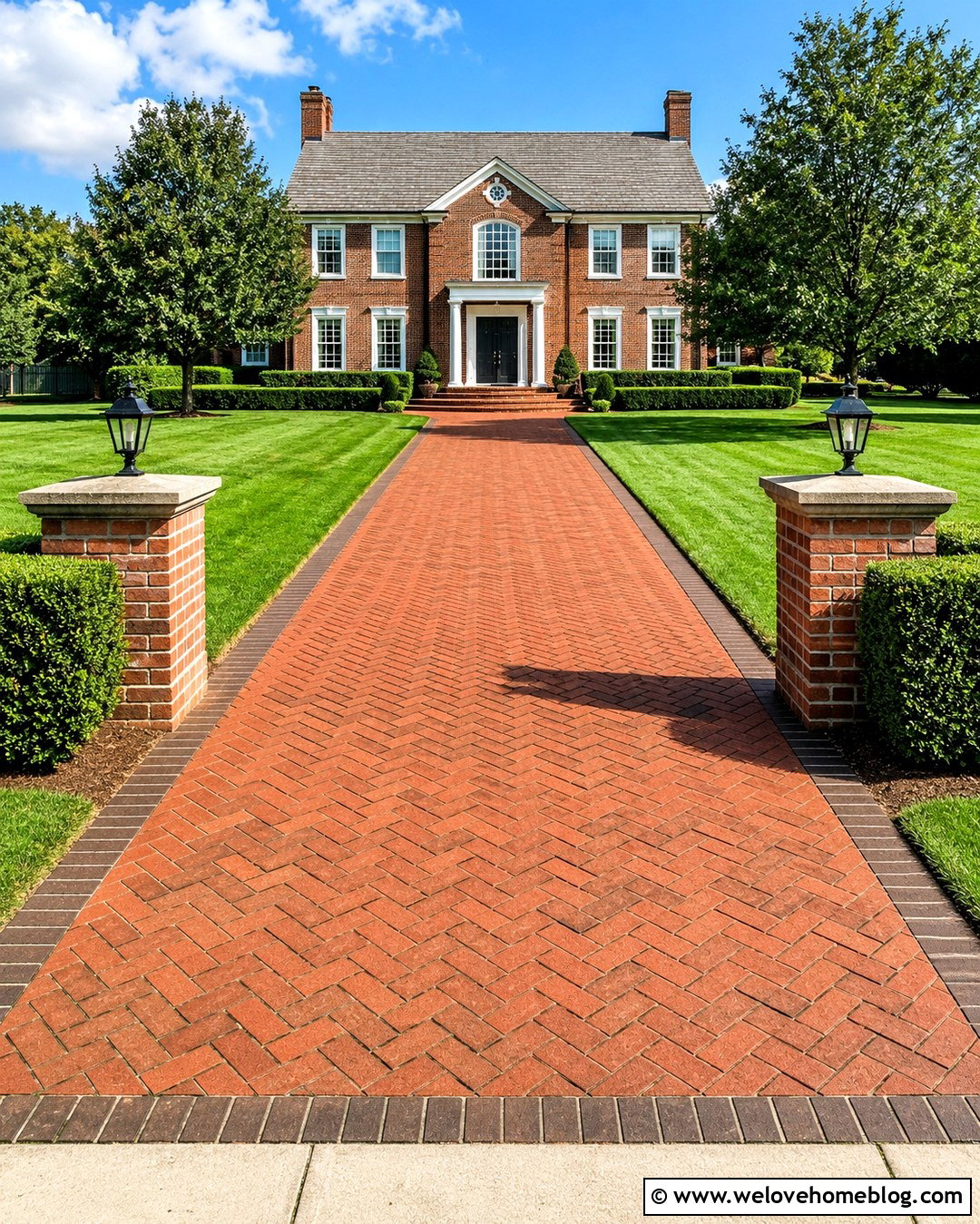
A gray concrete driveway gains warmth and definition when framed with a clay brick border. Choose red, brown, or charcoal bricks that repeat colors found in the house facade. A single soldier-course edge creates a simple outline, while a double brick ribbon feels more substantial. Continue the brick detail around nearby planting beds or along the front walkway for a connected appearance. Low evergreen shrubs can soften the straight driveway edges without hiding the border. Near the garage, add matching brick planters filled with compact ornamental grasses. This complete look works especially well with traditional ranch, colonial, and Craftsman homes. Keep the concrete clean and seal the brick when needed so the contrasting colors remain crisp rather than weathered and uneven.
2. Asphalt Driveway With Stone Edging
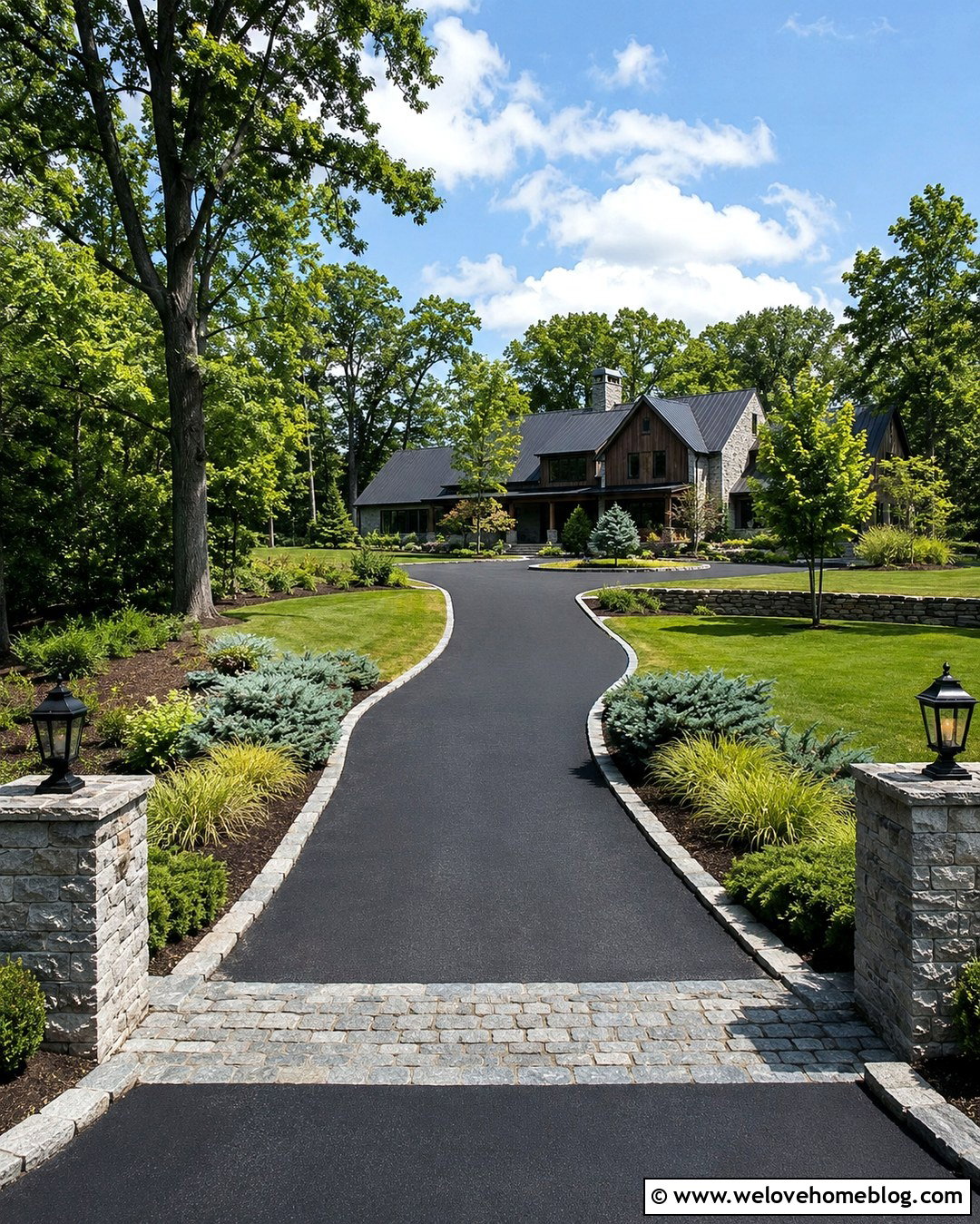
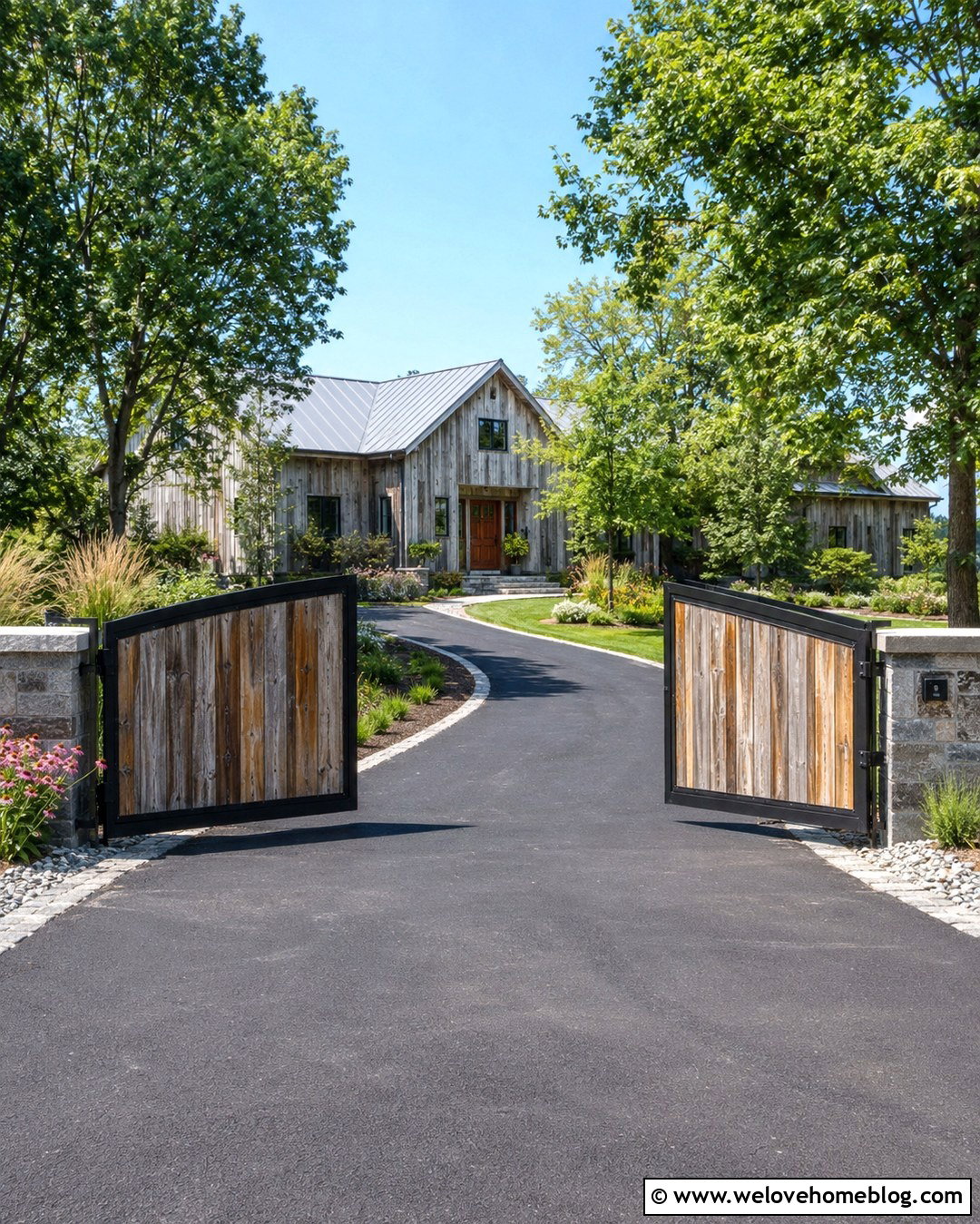
Black asphalt can look surprisingly refined when paired with natural stone edging and balanced landscaping. Use granite cobbles, limestone blocks, or locally sourced fieldstone to create a durable border along both sides. Their lighter tones provide contrast against the dark pavement while connecting the driveway to the yard. A gently curved layout will make the approach feel softer and less utilitarian. Plant spreading junipers, dwarf grasses, and flowering perennials behind the stones, leaving enough clearance for vehicle doors and snow removal. At the street, widen the stone border to create a defined entrance. The finished design suits rustic homes, mountain properties, and modern farmhouses because the smooth asphalt and textured stone create an attractive mix of practical and natural materials.
3. Gravel Driveway With Lavender Borders
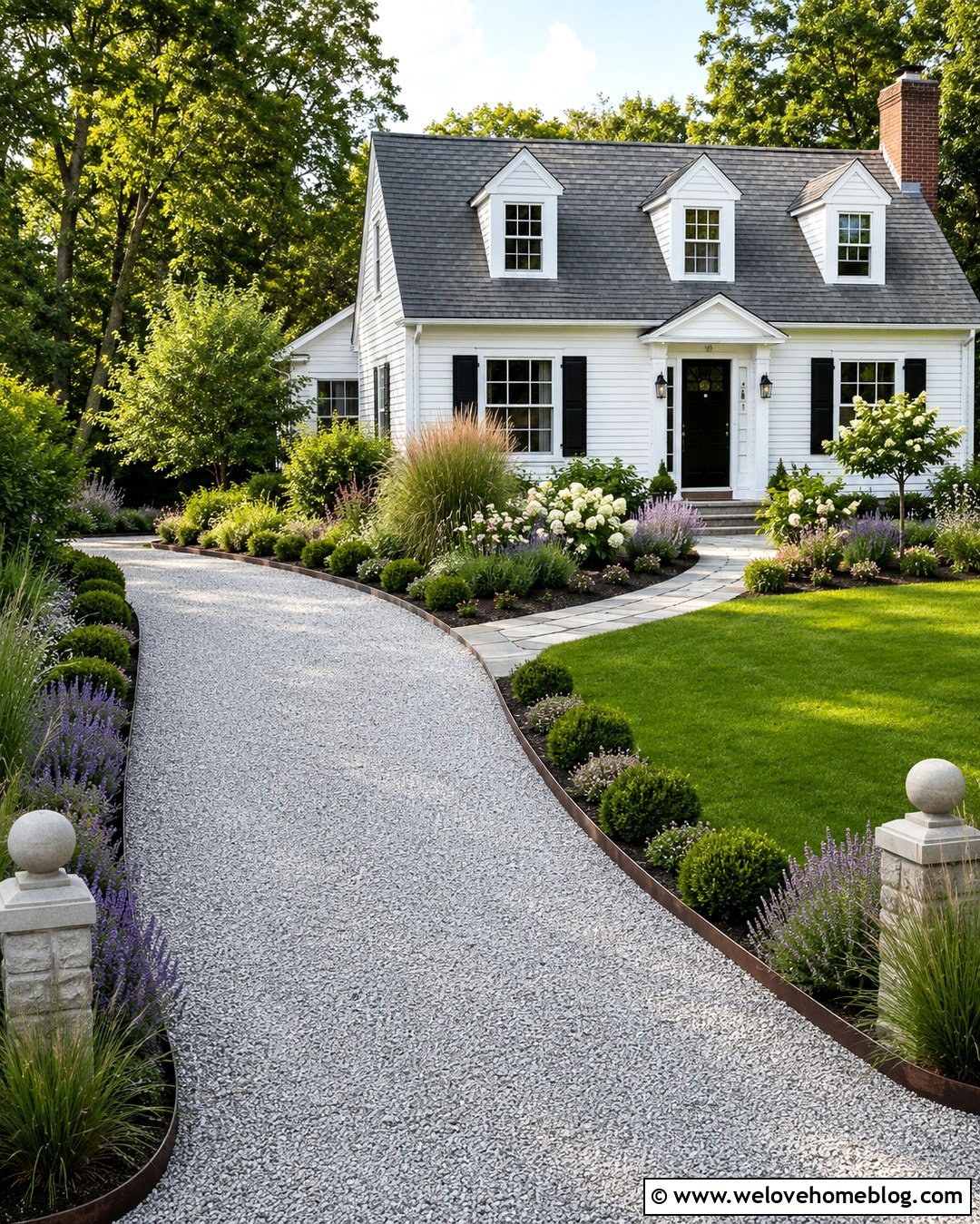
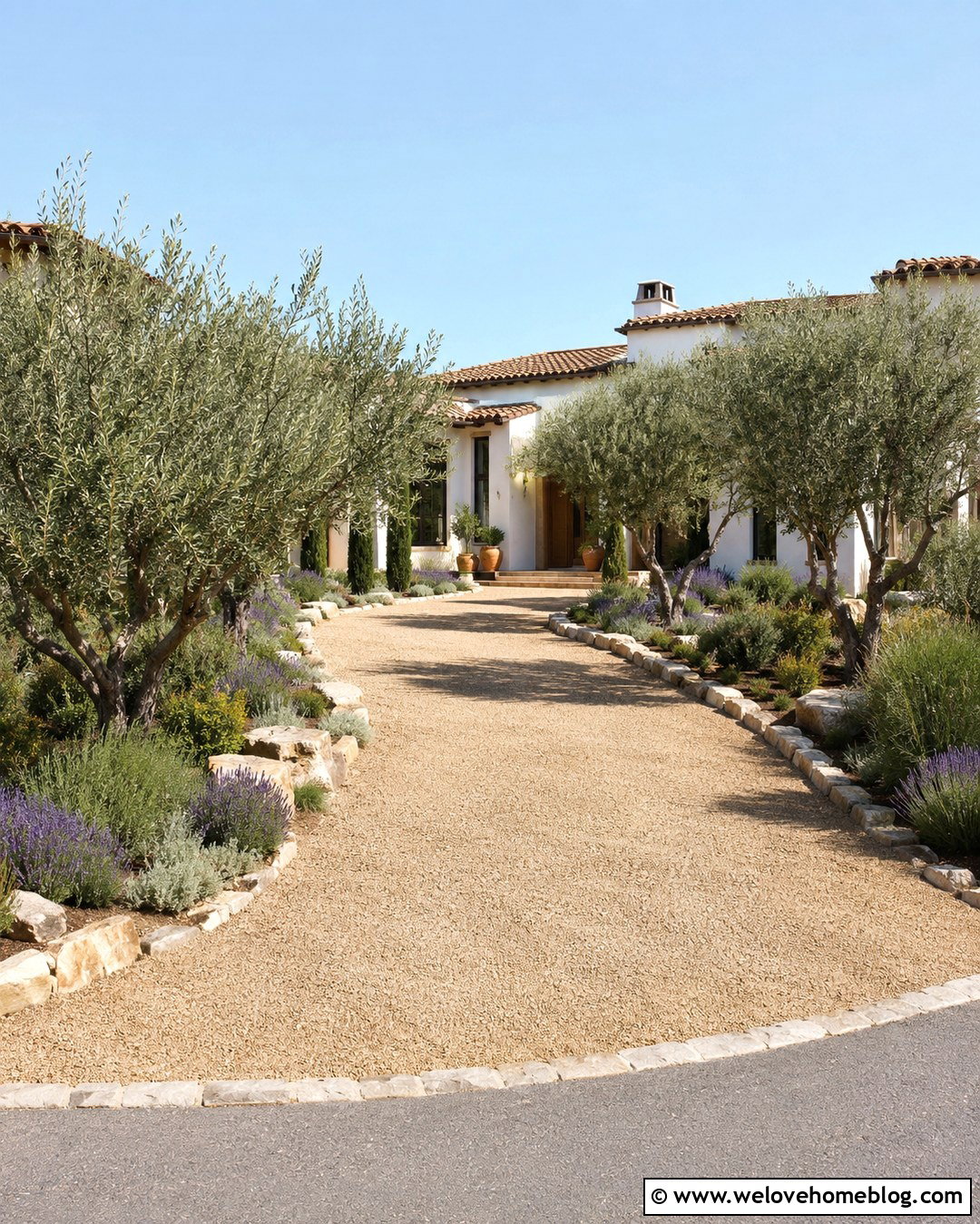
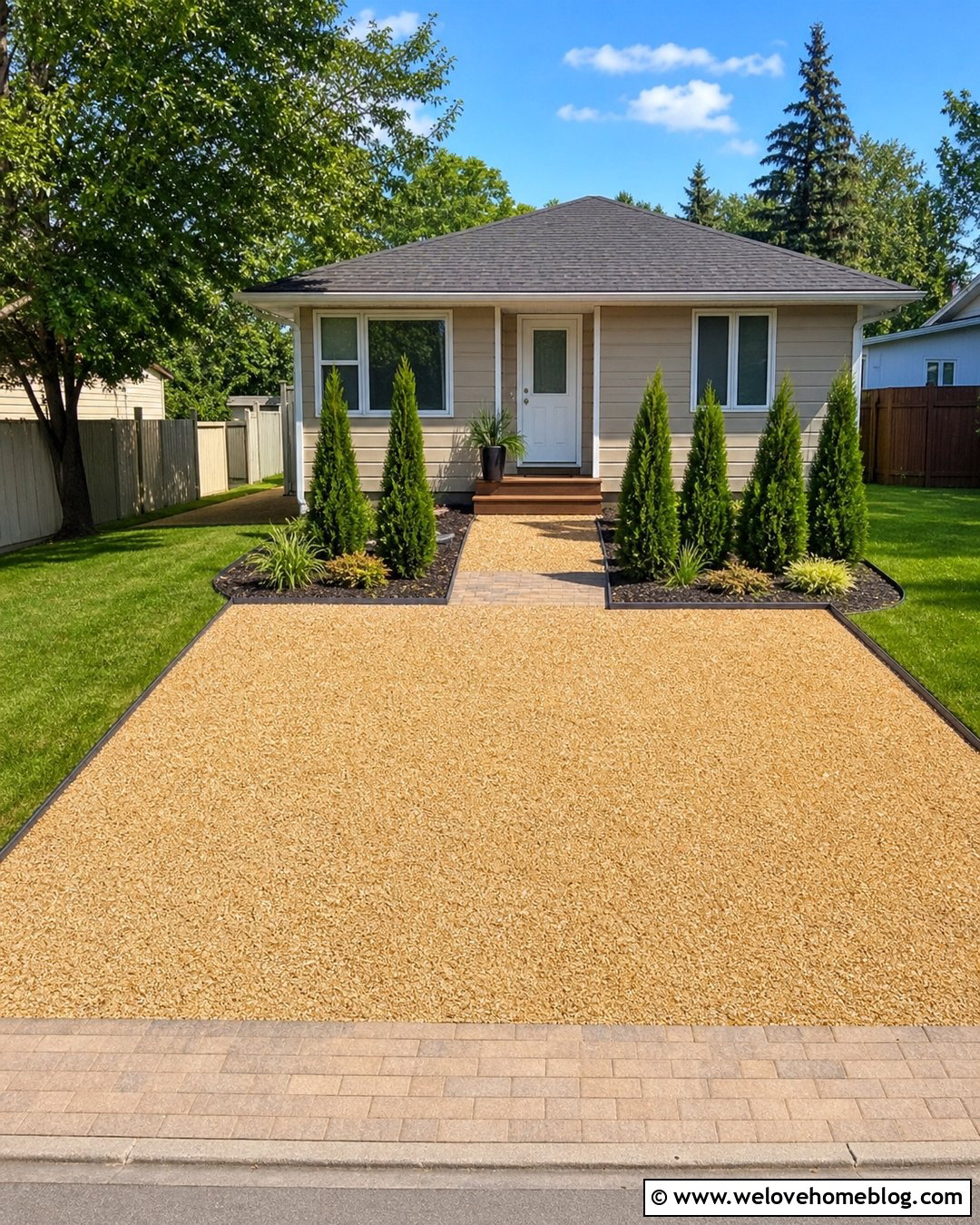
Imagine pale gravel curving toward a cottage-style home between two fragrant lavender borders. This combination creates a relaxed, orderly approach without making the landscape feel overly formal. Use compacted gray or buff gravel for the main surface and install steel edging beneath the planting line to prevent loose stones from spreading into the beds. Position lavender in sunny, well-drained areas, repeating plants at consistent intervals for visual rhythm. Add dwarf boxwood or ornamental grasses where winter structure is needed. A wider planting area near the house can connect the driveway border to the front garden. This complete driveway works beautifully with cottages, Cape Cod homes, and light-colored farmhouses. Select plants suited to your climate if lavender does not thrive locally.
4. Paver Driveway With Grass Strips
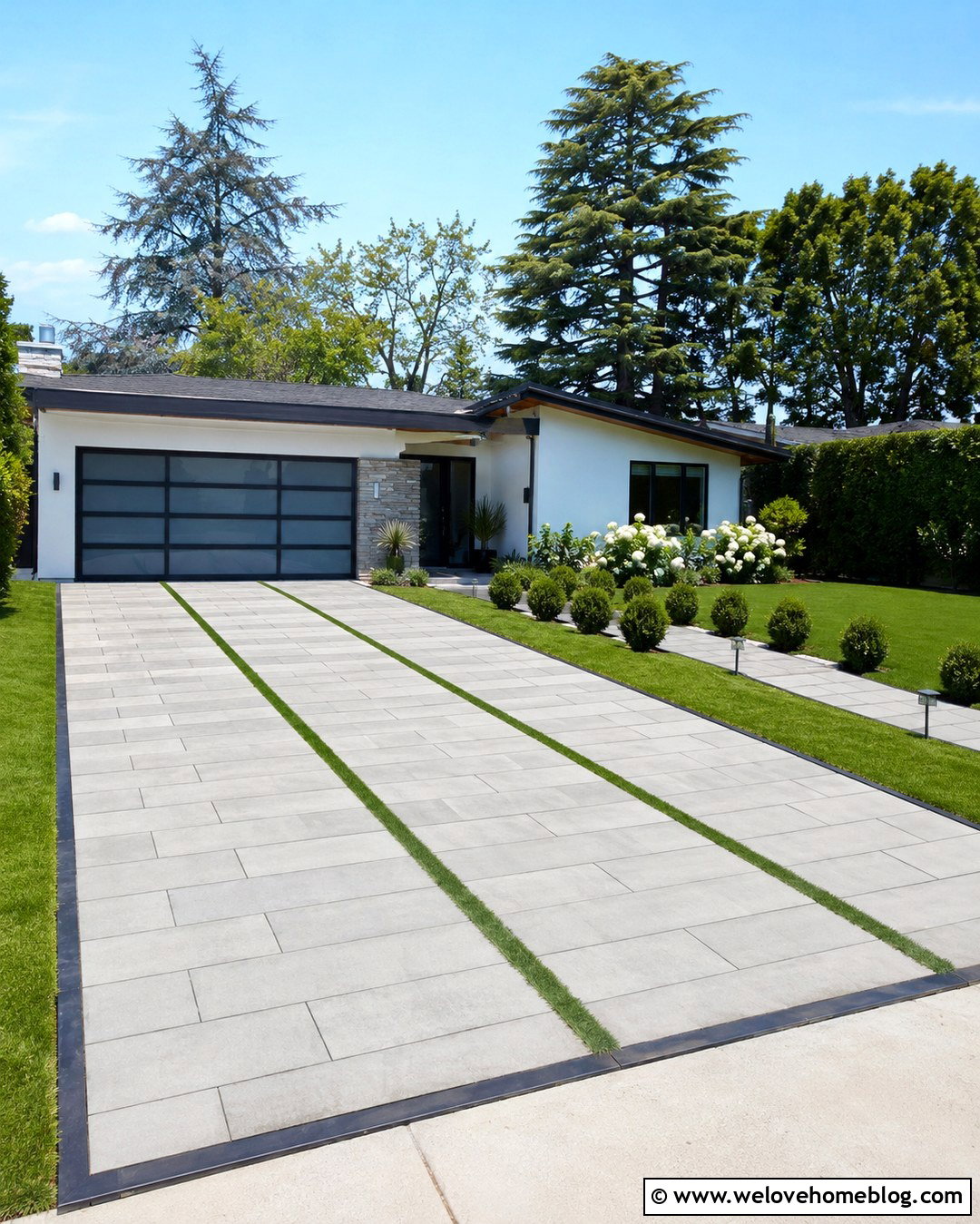
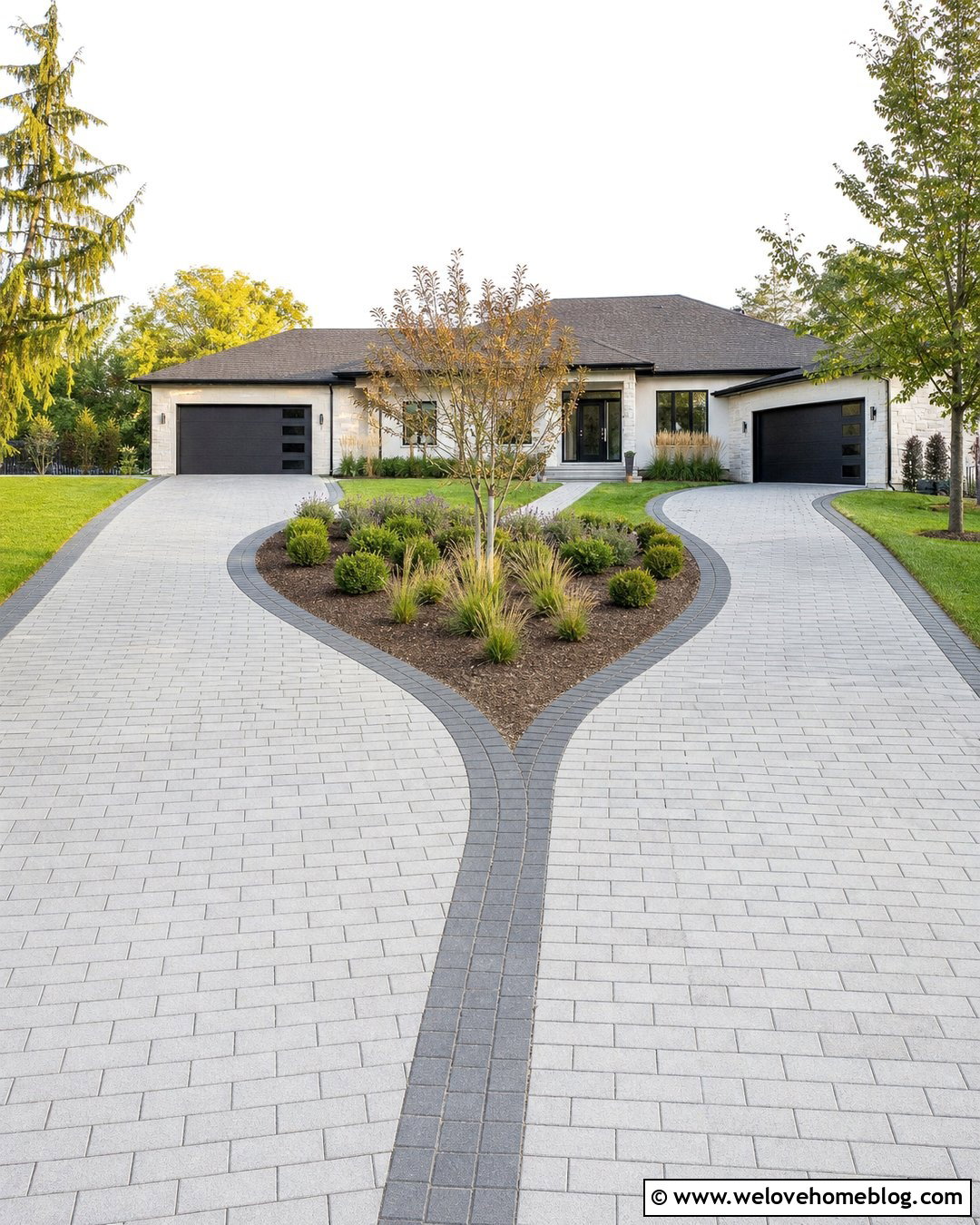
A paver driveway with narrow grass strips offers a clean way to break up a large paved area. Choose light gray concrete pavers in a running-bond or grid pattern, then place green strips between the wheel lanes or along the outer edges. The grass provides color and helps the driveway blend with the front lawn. For lower maintenance, replace traditional turf with a durable, regionally appropriate ground cover. Frame the layout with simple steel edging and restrained planting beds filled with clipped shrubs and white flowers. A straight walkway made from the same pavers can branch toward the entrance. This design is particularly effective outside modern, transitional, and midcentury homes where strong geometry, limited materials, and uncluttered landscaping create the desired curb appeal.
5. Circular Driveway With Center Garden
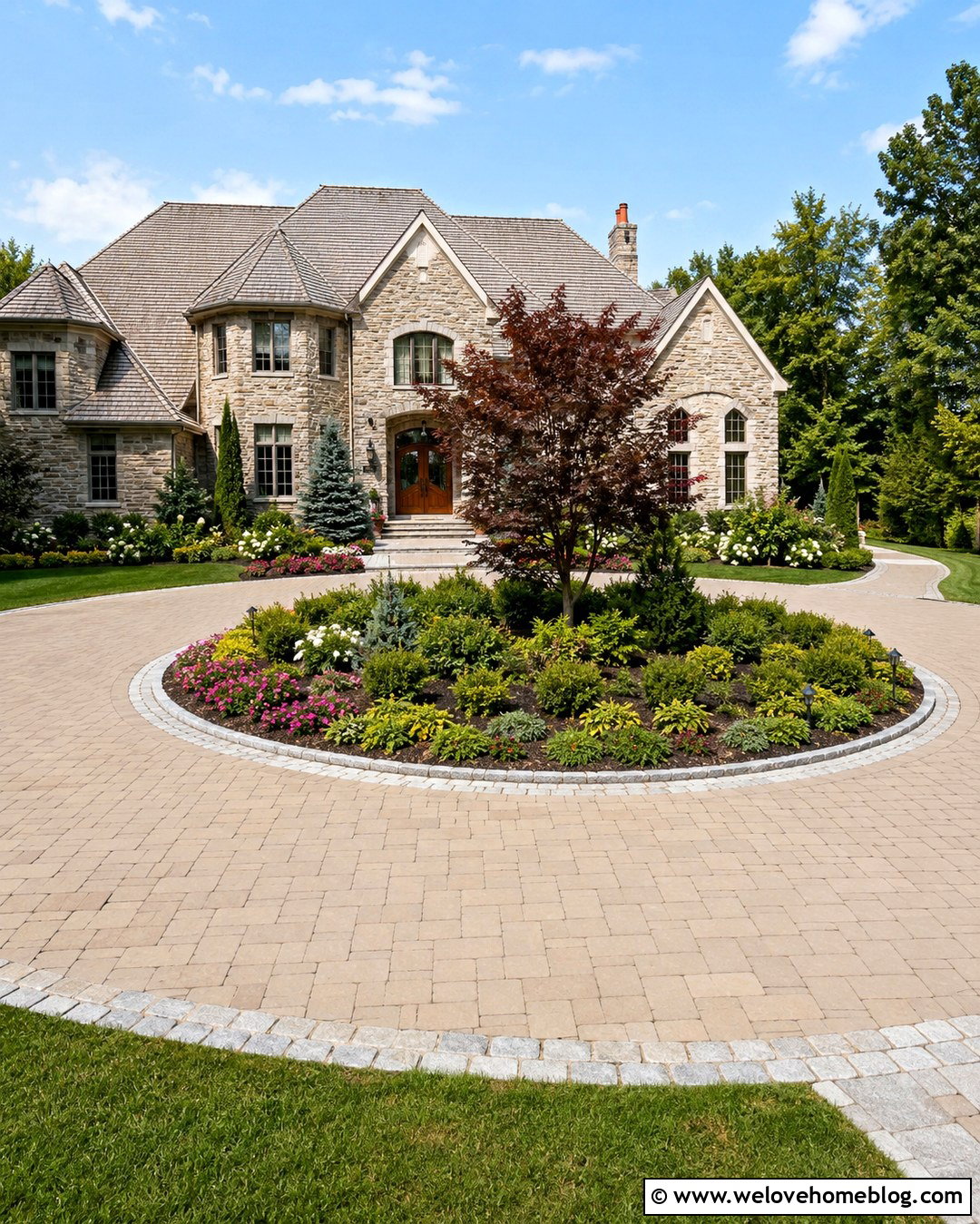
A circular driveway becomes a memorable front-yard feature when its center island is treated as a complete garden. Build the driving surface with warm-toned concrete pavers, then define the island with a low cobblestone curb. Use one small ornamental tree as the main focal point and surround it with layered shrubs, flowering perennials, and low ground cover. Keep mature plant sizes in mind so branches and foliage do not obstruct visibility. Repeating a few of the island plants beside the house helps connect the entire landscape. Low fixtures can illuminate the curb and tree without overpowering the entrance. This arrangement works well on wider lots because it improves vehicle circulation while turning an otherwise empty central space into an attractive feature viewed from every direction.
6. Driveway With Solar Path Lights
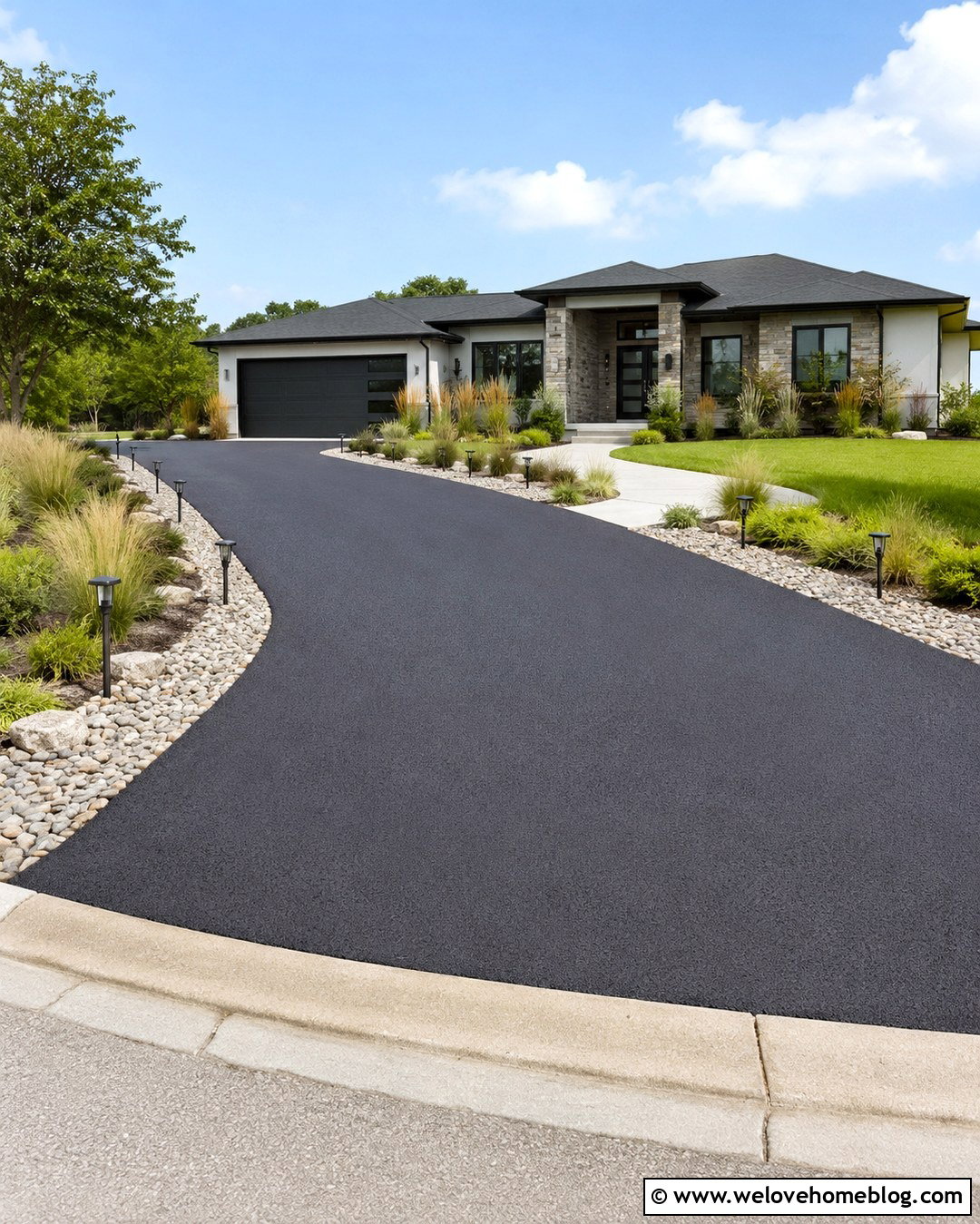
Lighting can decorate a driveway while making its edges easier to understand after dark. For a cohesive daytime look, line a charcoal asphalt driveway with slim black solar fixtures rather than using many mismatched lanterns. Space them evenly along a curved border of pale river rock and low ornamental grasses. The fixtures should guide the eye toward the house without resembling an airport runway. Place additional lights near changes in direction, the walkway connection, and the garage entrance. During daylight, the dark housings coordinate with the pavement and modern exterior accents. This setup is suitable for suburban homes where trenching for electrical cable may be undesirable. Choose sturdy fixtures with replaceable batteries, then clean the solar panels periodically so landscaping debris does not reduce their performance.
7. Driveway Entrance With Stone Pillars
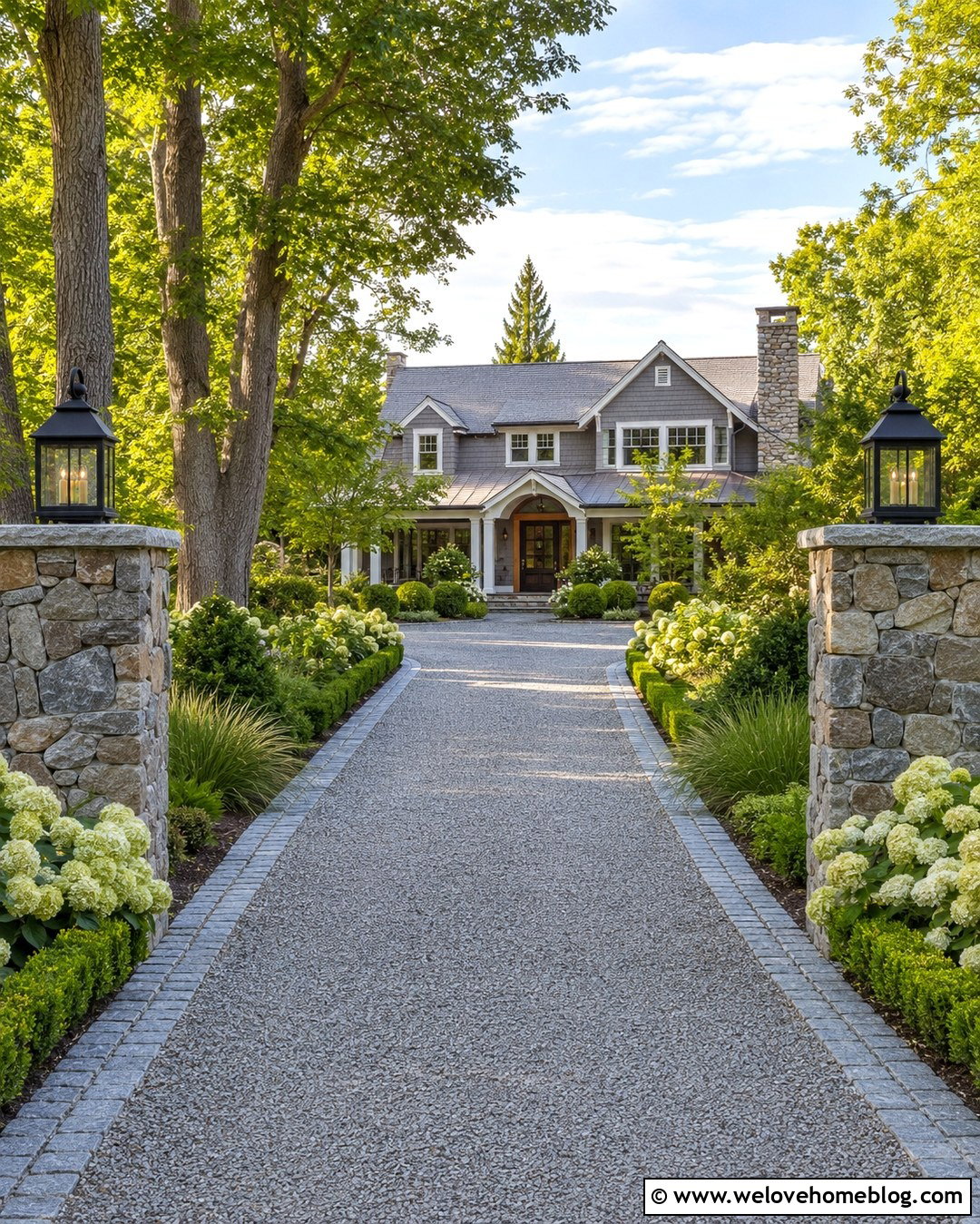
Substantial stone pillars can make a long driveway feel intentional from the moment it meets the street. Build them with stone veneer that coordinates with the house foundation, chimney, or porch columns. A warm gray gravel driveway framed by granite cobbles complements the texture without competing with it. Position the pillars outside the vehicle clearance zone and keep nearby plants low enough to preserve visibility. Matching lanterns can sit on top, while curved beds of hydrangeas, boxwood, and ornamental grasses soften the masonry. Continue smaller stone details near the house to prevent the entrance from feeling disconnected. This complete arrangement is especially appropriate for Craftsman, country, and European-inspired homes. Check local setback, sightline, utility, and permit requirements before planning permanent structures beside the road.
8. Driveway Gate With Matching Fence
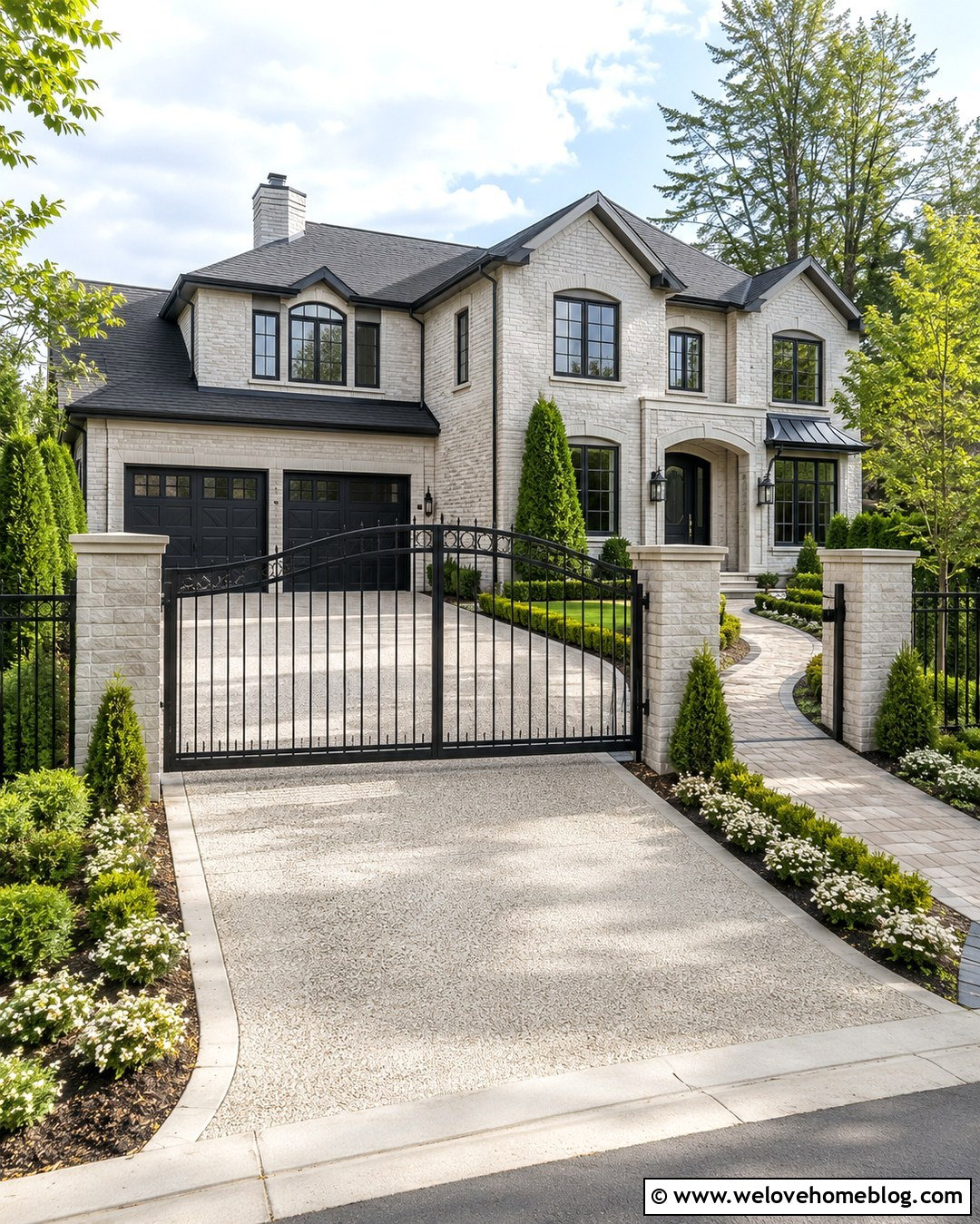
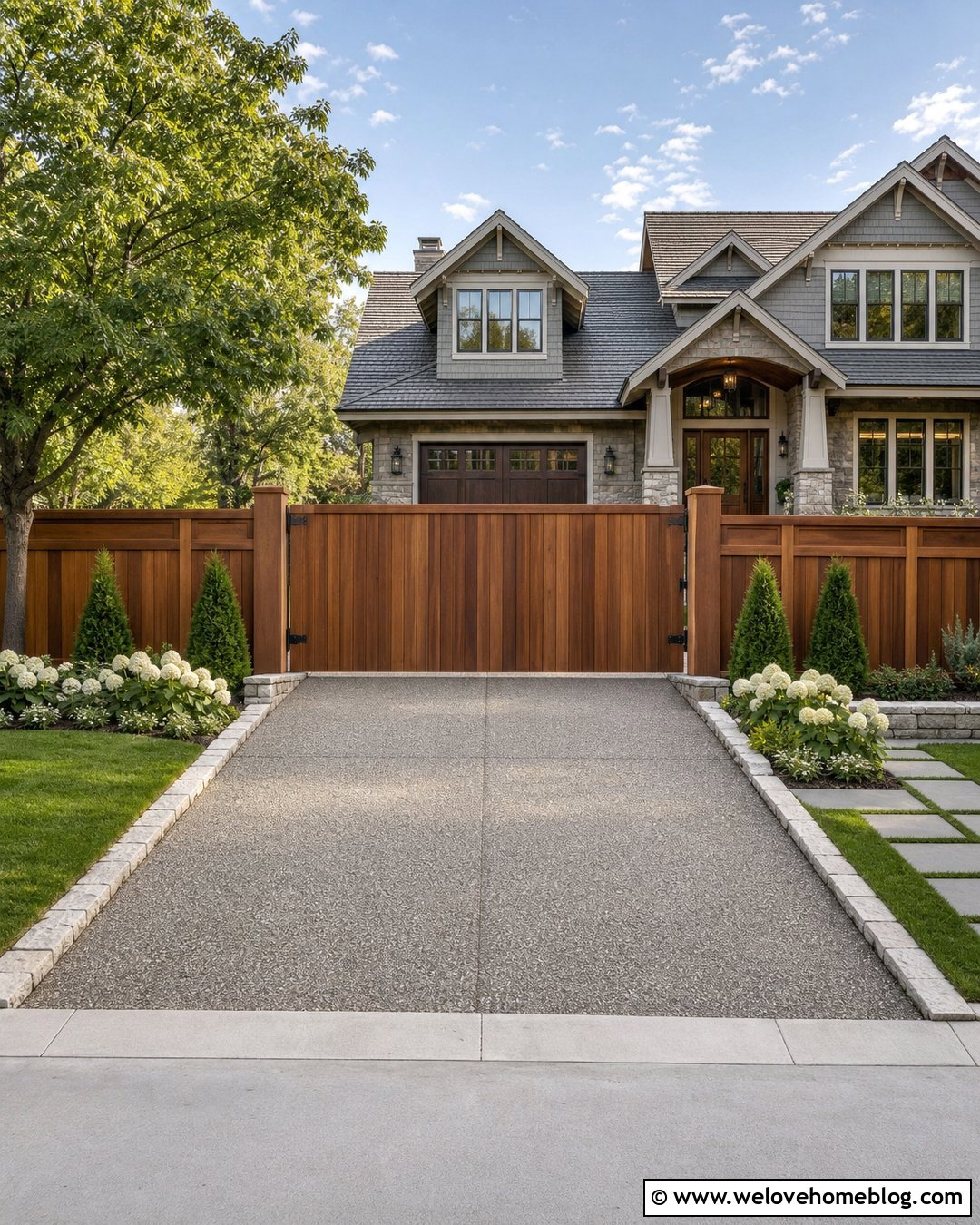
A coordinated gate and fence can provide decoration, privacy, and a clear sense of arrival. Pair a black metal gate with a light exposed-aggregate concrete driveway for strong but balanced contrast. Continue the same metal design in short fence panels on each side, then anchor the entrance with simple masonry posts. Curved planting beds filled with evergreen shrubs and flowering ground cover will soften the hard surfaces. The gate should reflect the home’s architecture: straight horizontal lines suit modern houses, while restrained arches complement traditional facades. Include a separate pedestrian path if visitors should not walk through the vehicle opening. Keep controls, hinges, drainage, and opening clearance integrated into the plan. The result should feel like one practical entrance composition rather than a decorative gate added as an afterthought.
9. Driveway With Flower Bed Border
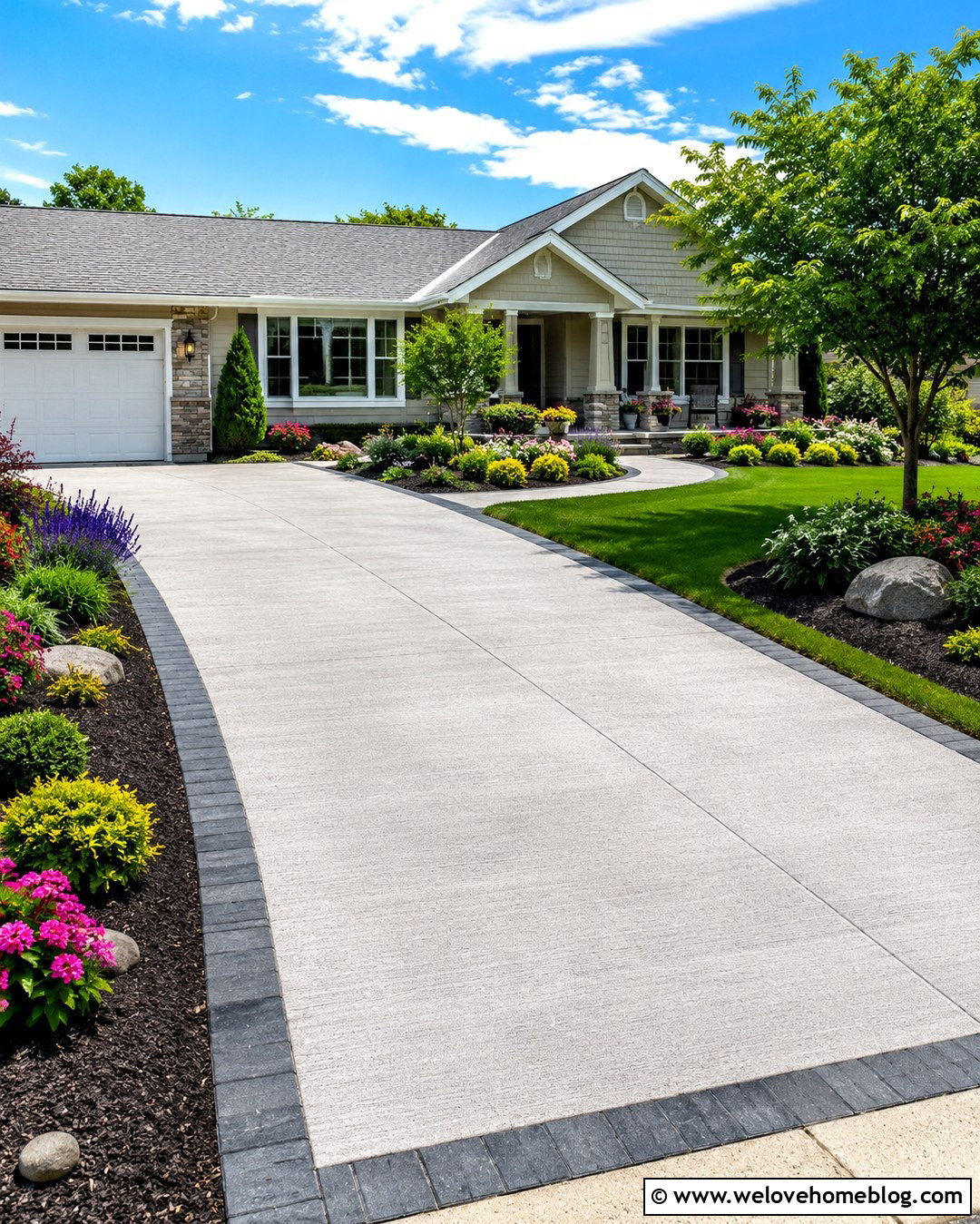
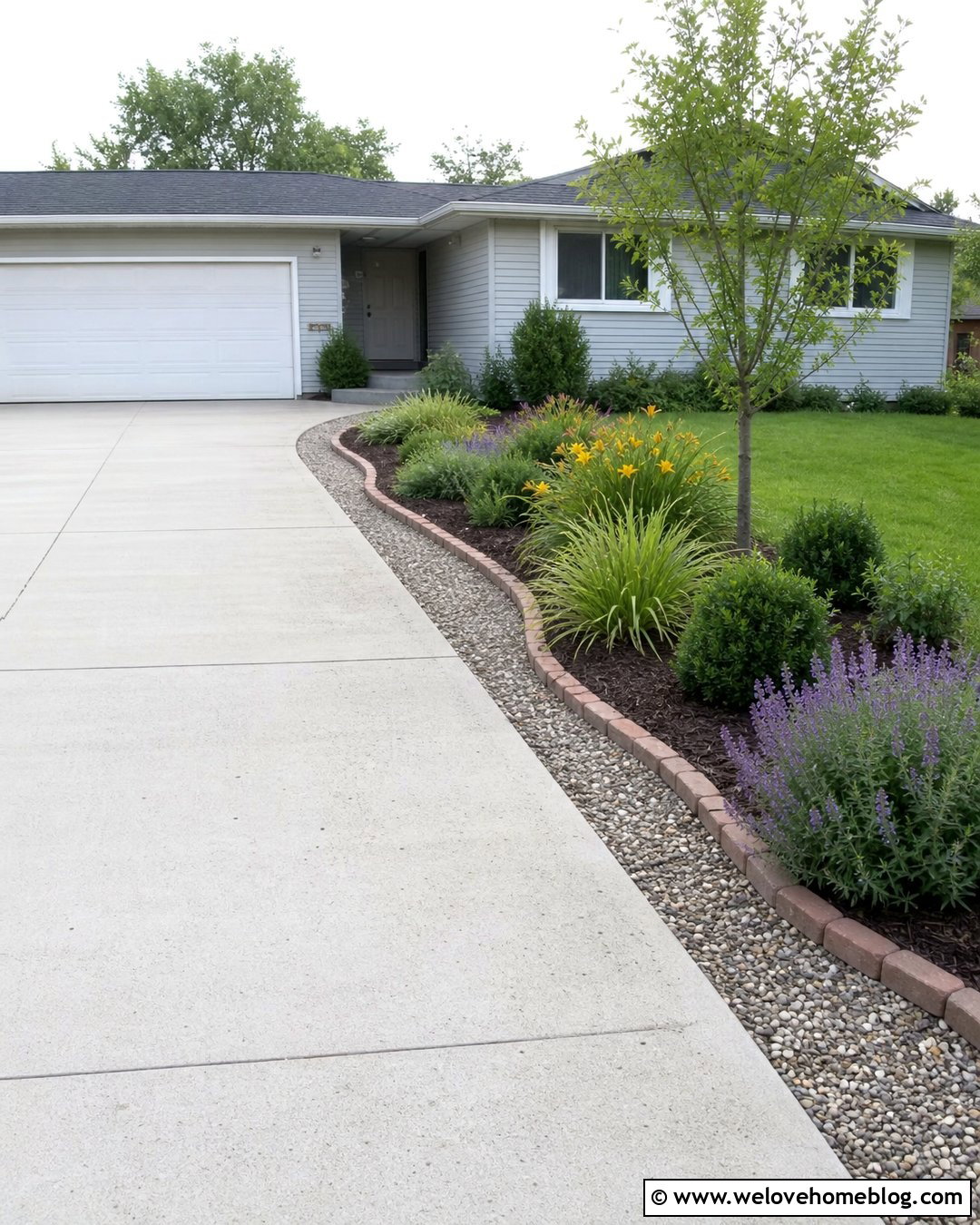
Colorful planting can transform a plain driveway when the beds are planned around the entire approach. Start with a brushed concrete surface bordered by narrow charcoal pavers. Behind that edge, create gently curved beds containing compact evergreen shrubs, long-blooming perennials, and seasonal flowers. Use repeated groups instead of scattering many unrelated varieties. Taller plants belong near the house or at wider points, while low plants should line areas where drivers need clear visibility. Mulch gives the border a finished appearance and limits soil from washing onto the pavement. Connect the driveway beds to the front walkway and foundation landscaping for continuity. This cheerful design works with ranch, cottage, and suburban homes, and the planting palette can be adjusted for sun exposure, climate, and preferred maintenance level.
10. Driveway With Large Planters
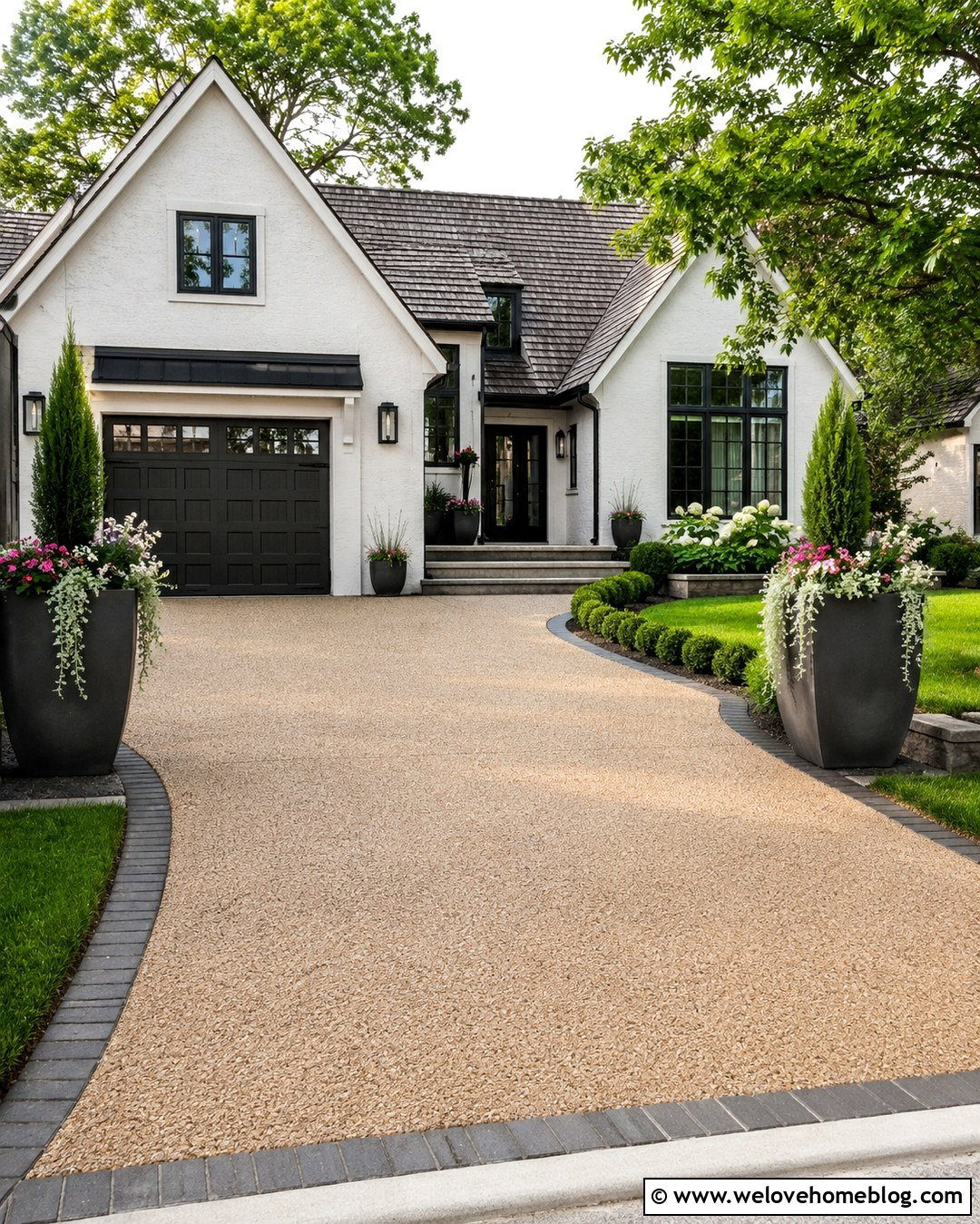
Large planters offer flexible decoration when permanent planting beds are impractical. Place two matching containers where a tan resin-bound gravel driveway meets the garage or front walkway. Their scale should suit the house and remain safely outside the driving path. Fill each container with a layered arrangement, using an upright evergreen or ornamental grass in the center, medium flowering plants around it, and trailing foliage along the rim. Choose frost-resistant containers in stone, charcoal, or warm terracotta tones that complement the facade. Smaller matching pots can repeat the color near the porch, but avoid cluttering every open corner. This design works particularly well for compact driveways because it adds height, color, and structure without reducing usable parking space or requiring major construction.
11. Driveway With Decorative Address Sign
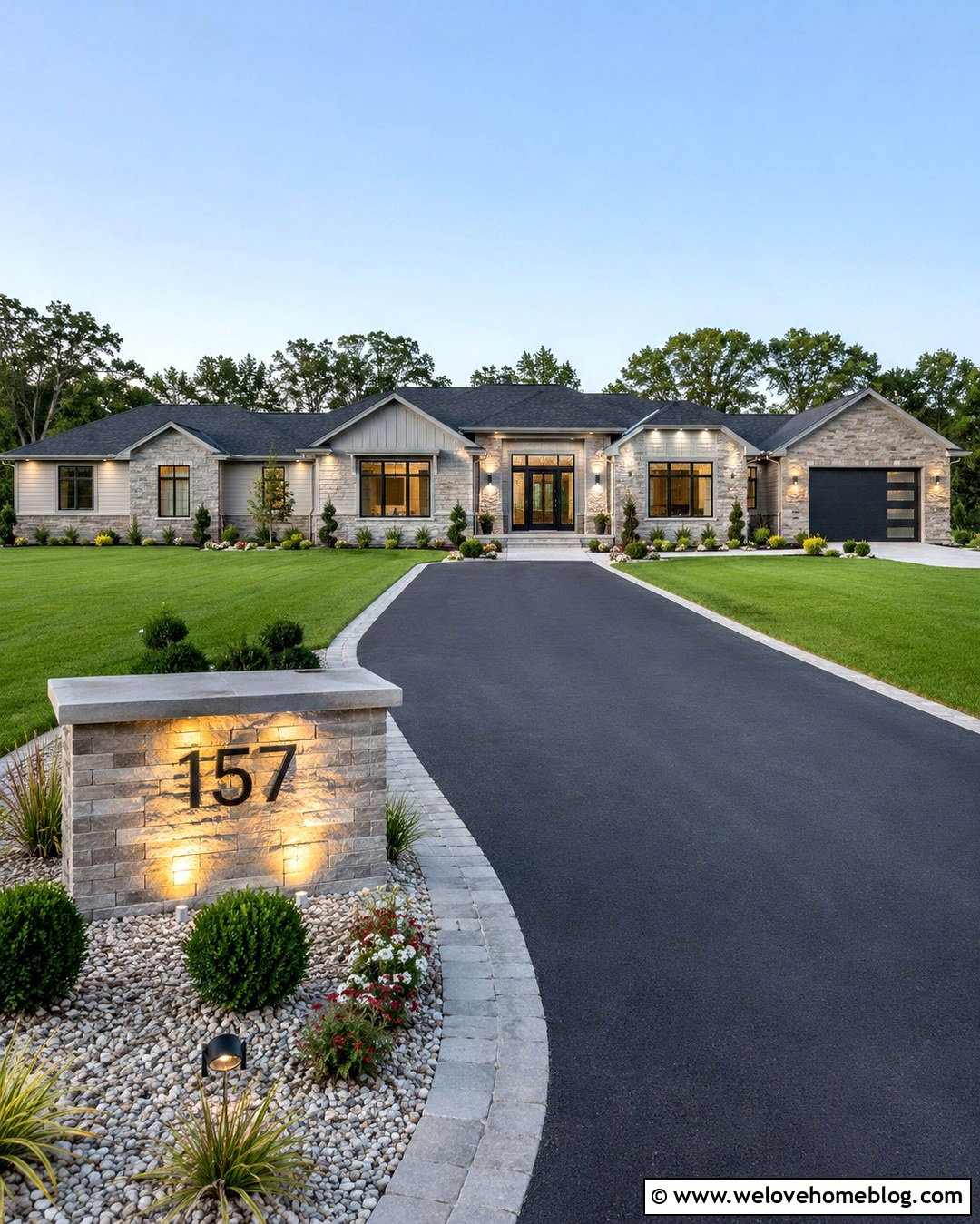
A visible address marker can become part of a polished driveway entrance rather than a purely functional sign. Pair a straight black asphalt driveway with a low stone monument placed beside the entrance, safely beyond the pavement edge. Mount clean metal numerals on a smooth central panel and add a discreet light for visibility. A bed of pale gravel, dwarf evergreens, and low flowering plants can frame the marker without covering it. Repeat the monument stone in the driveway edging or house foundation to create unity. Keep the sign proportional to the property and easy to see from both travel directions. This complete look suits contemporary ranch homes and larger suburban lots, where the combination of dark pavement, natural masonry, and restrained planting creates a neat first impression.
12. Driveway With Cobblestone Apron
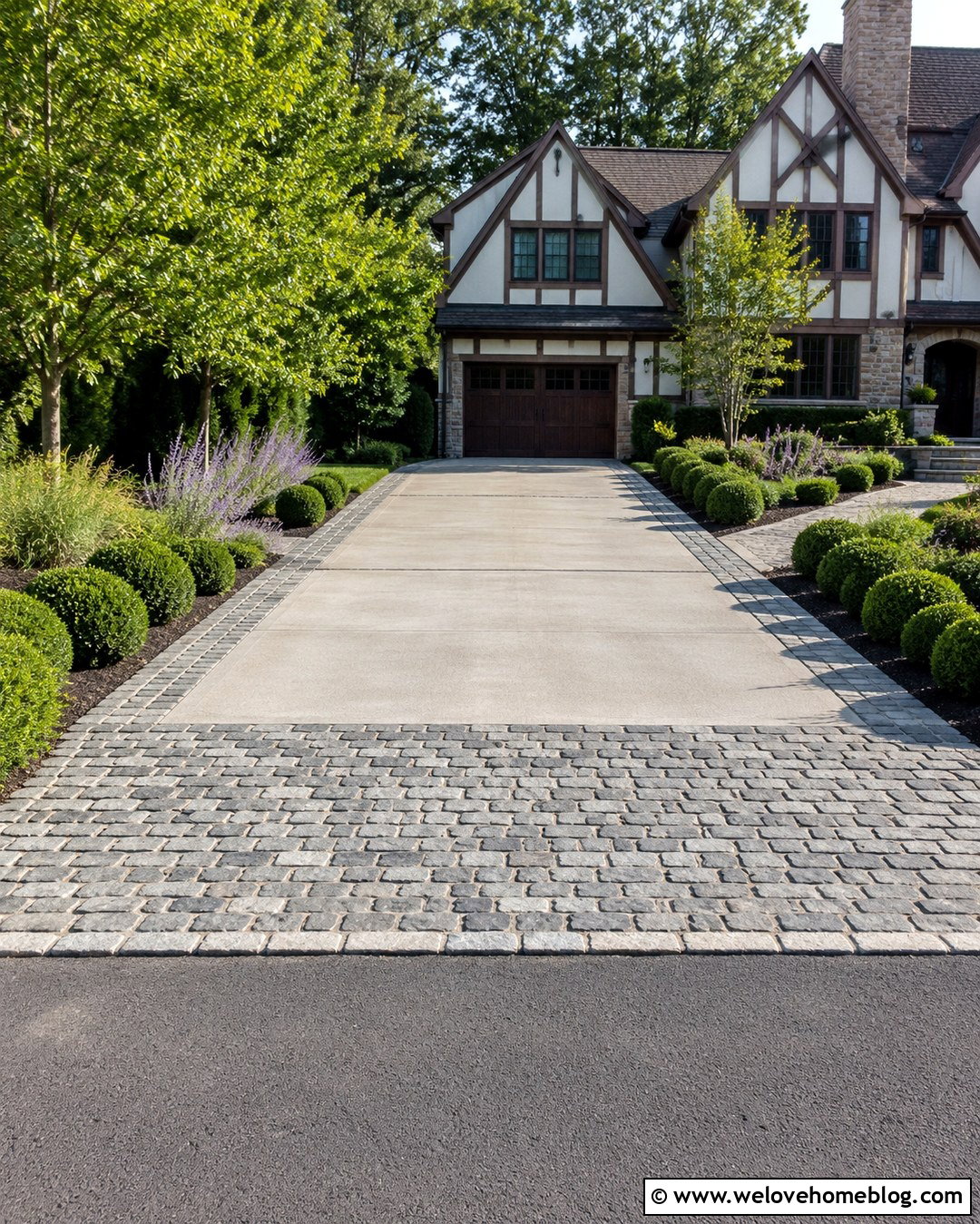
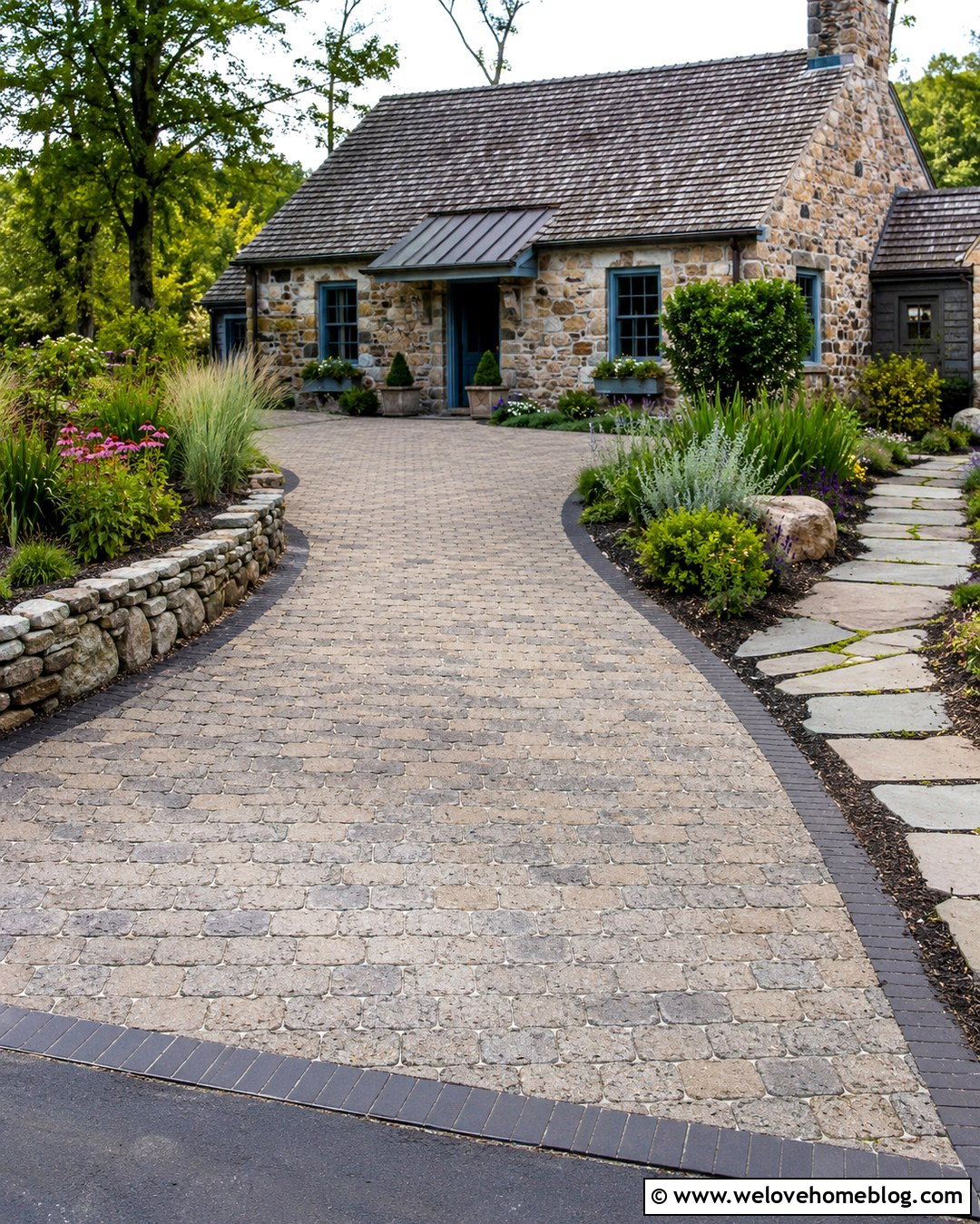
A cobblestone apron decorates the most visible part of a driveway while strengthening the transition from street to property. Use weathered gray cobblestones across the first several feet, then continue into a smooth light-gray concrete driveway. A narrow cobblestone border along the remaining edges ties the entrance detail to the house. Flank the apron with low planting beds containing boxwood, catmint, and compact ornamental grasses. If space permits, create a subtle outward flare that makes turning into the driveway more comfortable. Repeat the cobblestone around the walkway landing or porch steps for a coordinated finish. This treatment looks natural with colonial, Tudor, and stone-front homes. Proper base preparation is essential because an apron receives frequent turning forces and considerable surface wear.
13. Driveway With Pergola Entrance
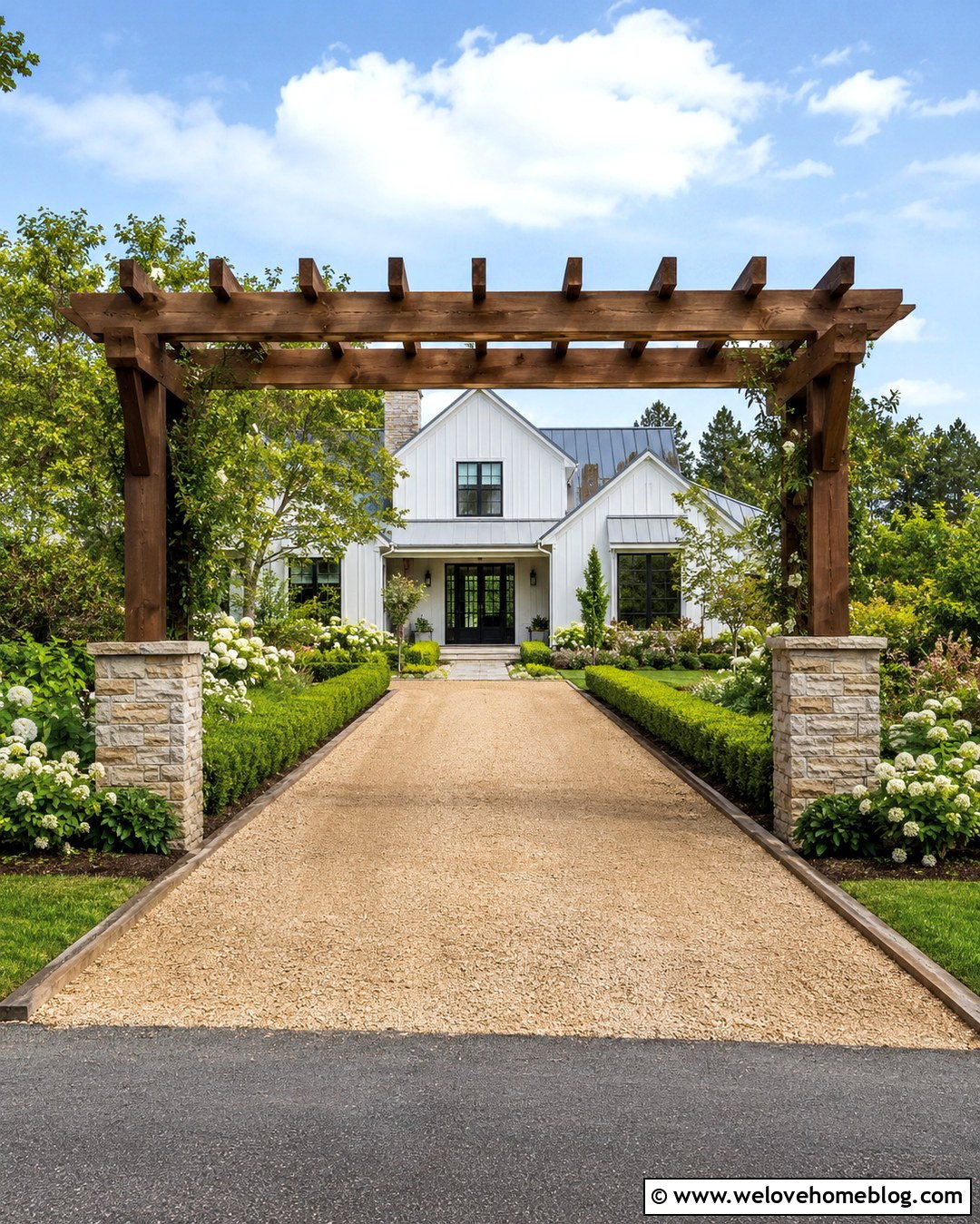
A pergola can frame a driveway entrance without creating the visual weight of a solid gate. Place a simple stained-cedar structure over a straight buff gravel driveway leading to a modern farmhouse. Support it with stone-faced pillars that coordinate with the home’s porch or foundation. Low hedges and white flowering perennials can define both sides of the entrance, while a timber edge contains the gravel farther along the drive. Keep the overhead opening generous enough for delivery vehicles and other expected traffic. For a cleaner appearance, use restrained climbing plants on the outer posts rather than allowing vines to cover the full structure. The finished entrance combines architecture, landscaping, and driveway materials in one welcoming composition that feels appropriate for country and semi-rural properties.
14. Driveway With Ornamental Trees
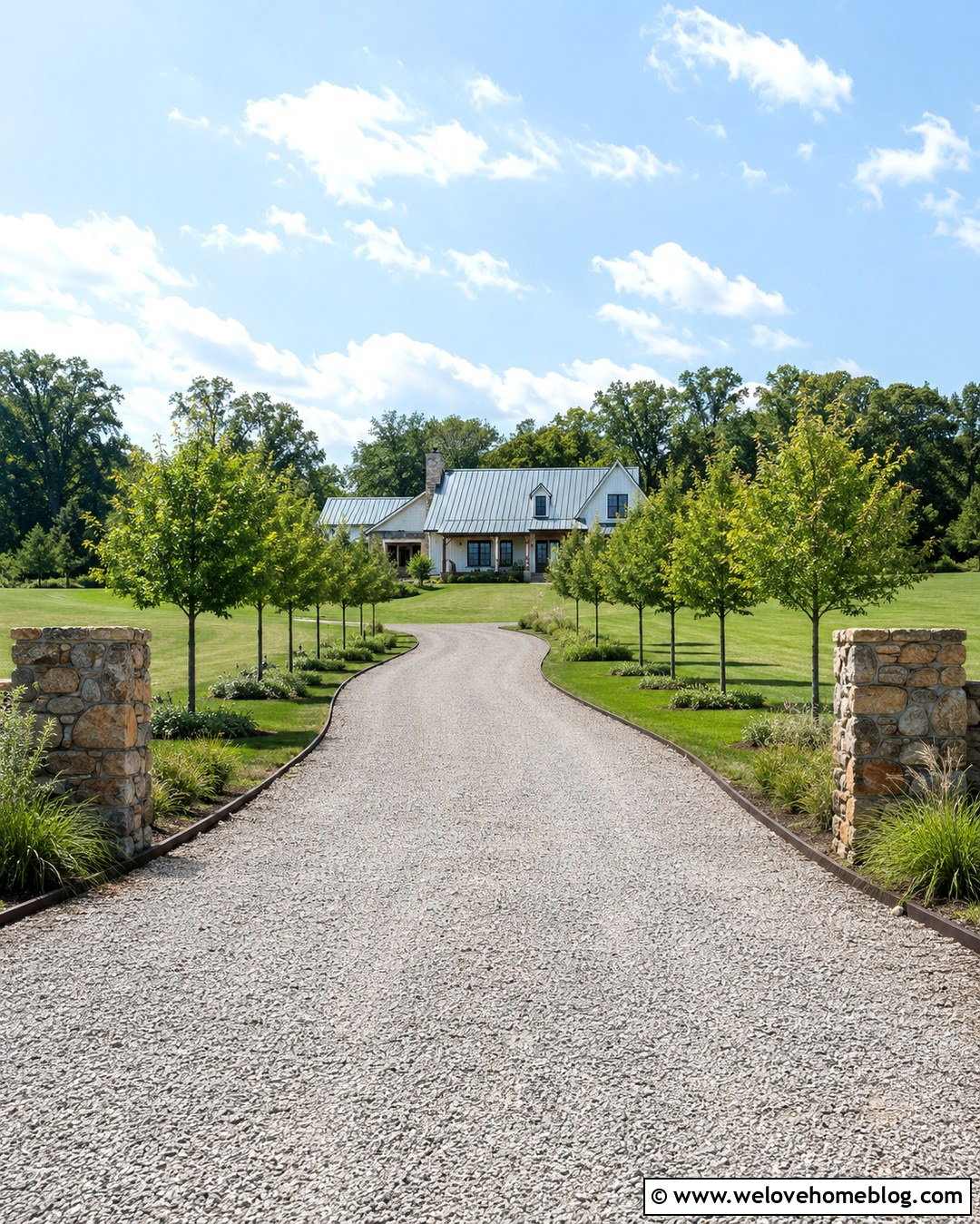
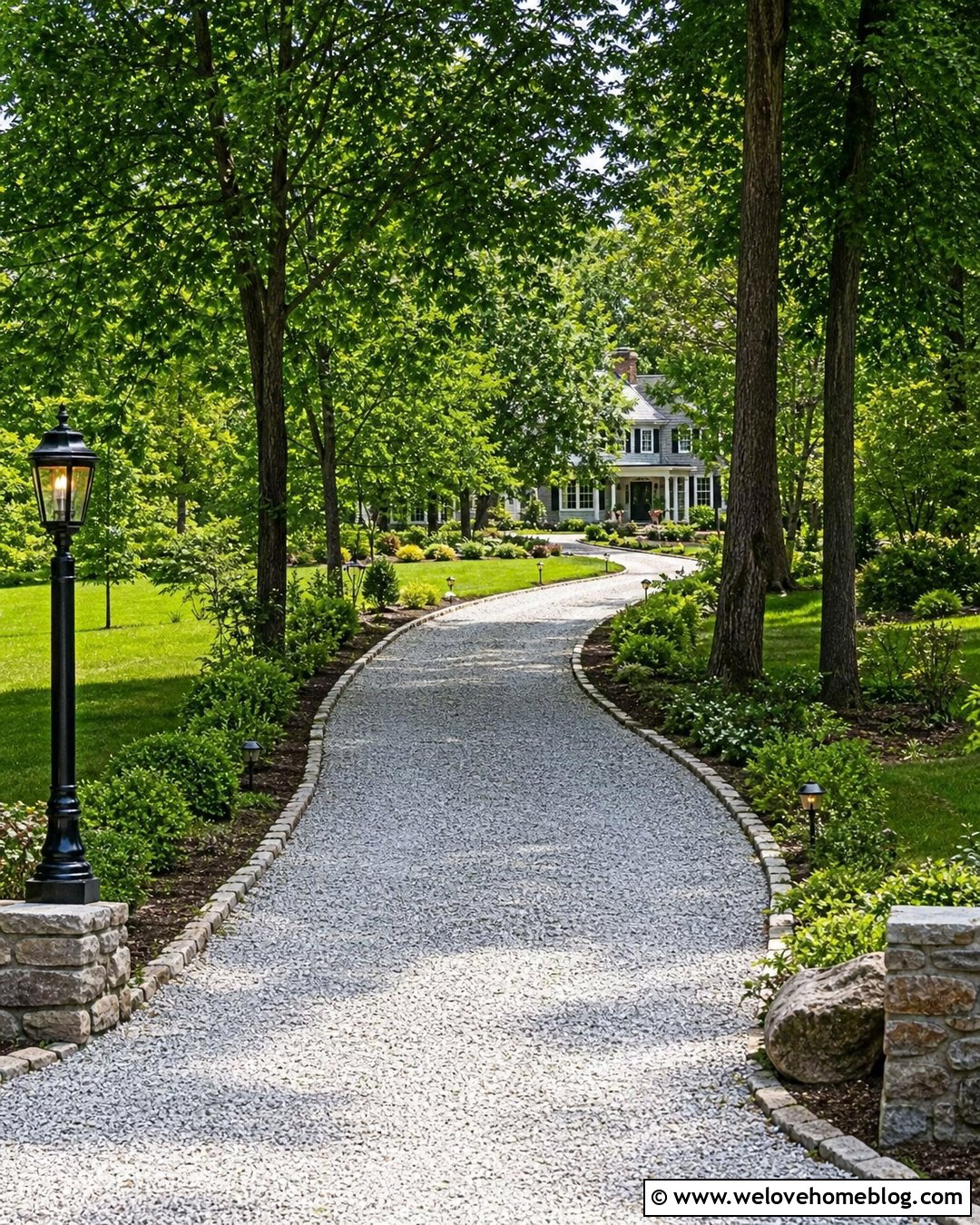
A tree-lined driveway creates rhythm, shade, and a strong visual connection between the street and the house. Along a long, gently curved gravel driveway, plant evenly spaced ornamental trees outside the required vehicle clearance area. Select compact species with root habits, mature canopies, and climate needs appropriate for the site. Beneath them, use simple lawn or low ground cover to keep the arrangement uncluttered. Steel edging can separate the gray gravel from the green landscape, while fieldstone entrance pillars establish a clear starting point. Consider how falling fruit, leaves, roots, and low branches could affect maintenance before selecting trees. This complete design is ideal for country homes, farmhouses, and larger properties where repeated plantings can guide the eye through the landscape toward the front facade.
15. Driveway With Raised Garden Beds
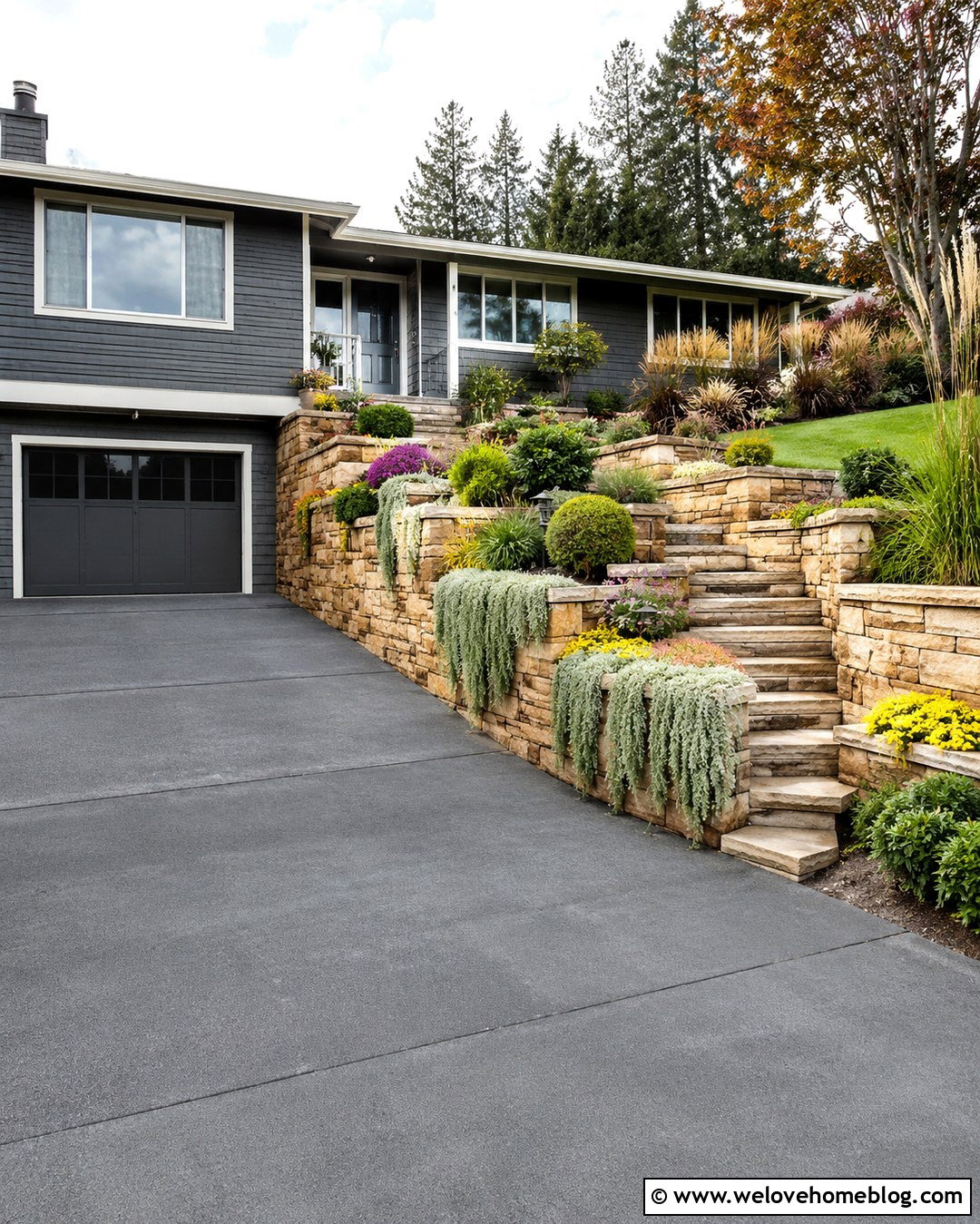
Raised beds can soften a sloped or elevated driveway while giving the landscape clear structure. Pair a dark gray poured-concrete driveway with low retaining beds built from warm buff stone. Step the beds gradually with the grade rather than forcing one tall wall along the entire edge. Fill them with cascading ground cover, compact shrubs, ornamental grasses, and seasonal flowers that will not spill into the driving area. A matching stone staircase can connect the driveway to the front walkway, making the grade change feel deliberate. Add drainage behind the walls to protect both the planting soil and paved surface. This design works well for hillside homes and split-level houses because it turns a difficult transition into a layered, attractive approach that connects the driveway with the architecture.
16. Driveway With Wooden Fence Border
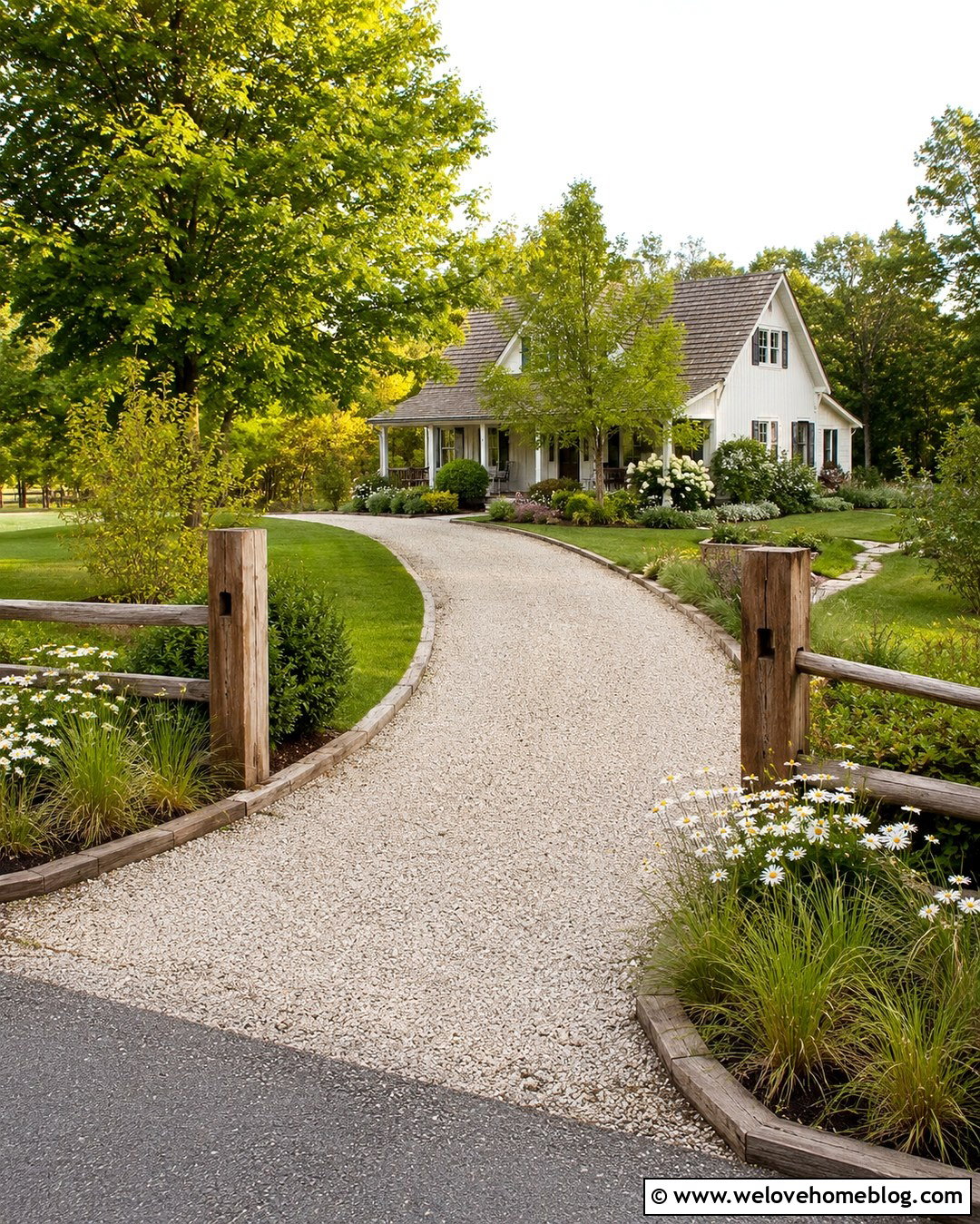
A low wooden fence can frame a country driveway without making the entrance feel closed. Use a pale pea gravel surface with gently curved timber edging, then run a white or natural split-rail fence along one side. Position the fence far enough from the driveway to allow comfortable door clearance and routine maintenance. Plant informal drifts of native grasses, daisies, and flowering shrubs between selected fence sections. At the entrance, simple wooden posts and a gravel flare can establish a welcoming transition from the road. Repeat the fence material in a nearby garden gate or porch railing to connect the design with the house. This complete look complements farmhouses, cottages, and rural ranch homes, combining a practical boundary with relaxed landscaping and a softly textured driving surface.
17. Driveway With Modern Metal Edging
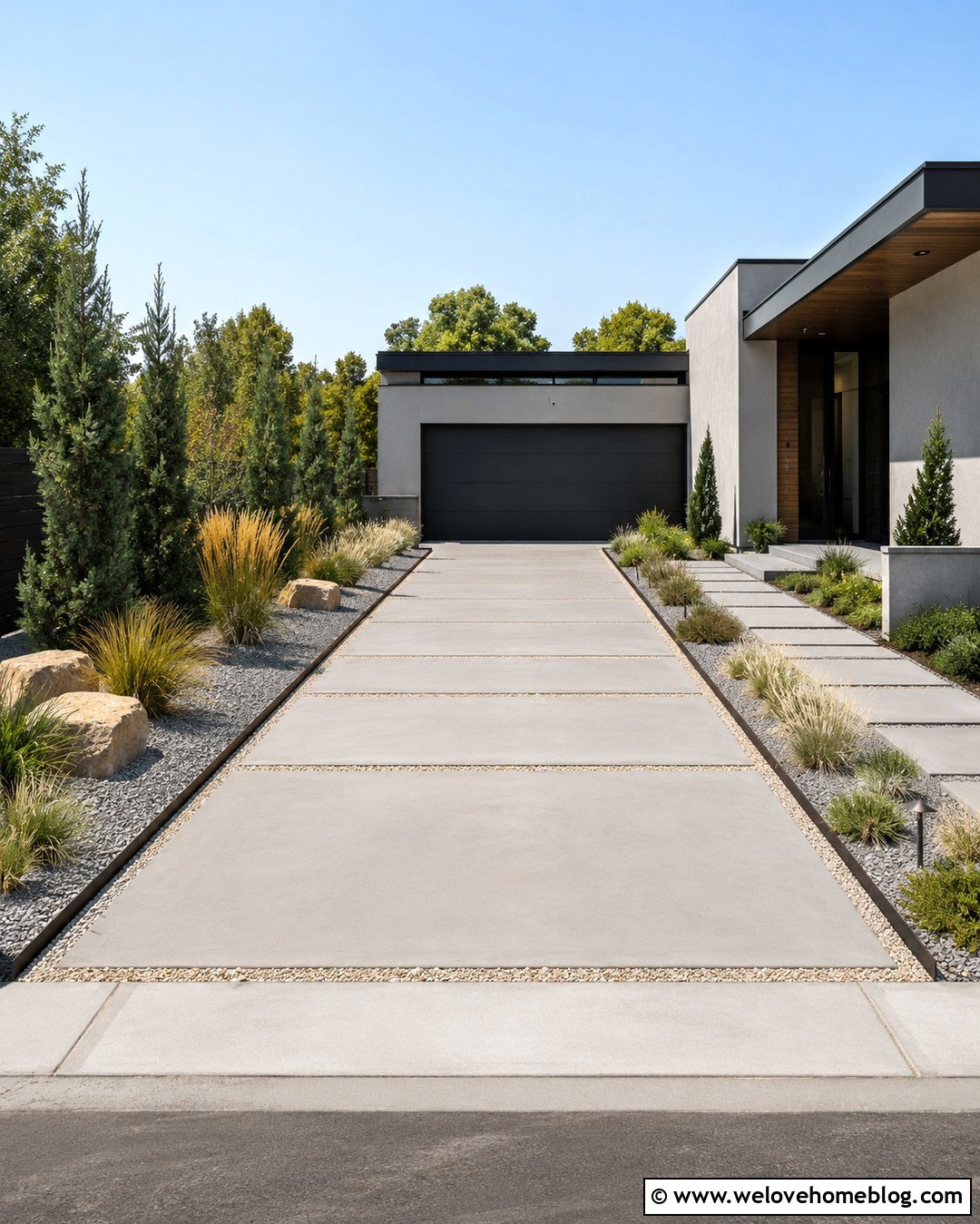
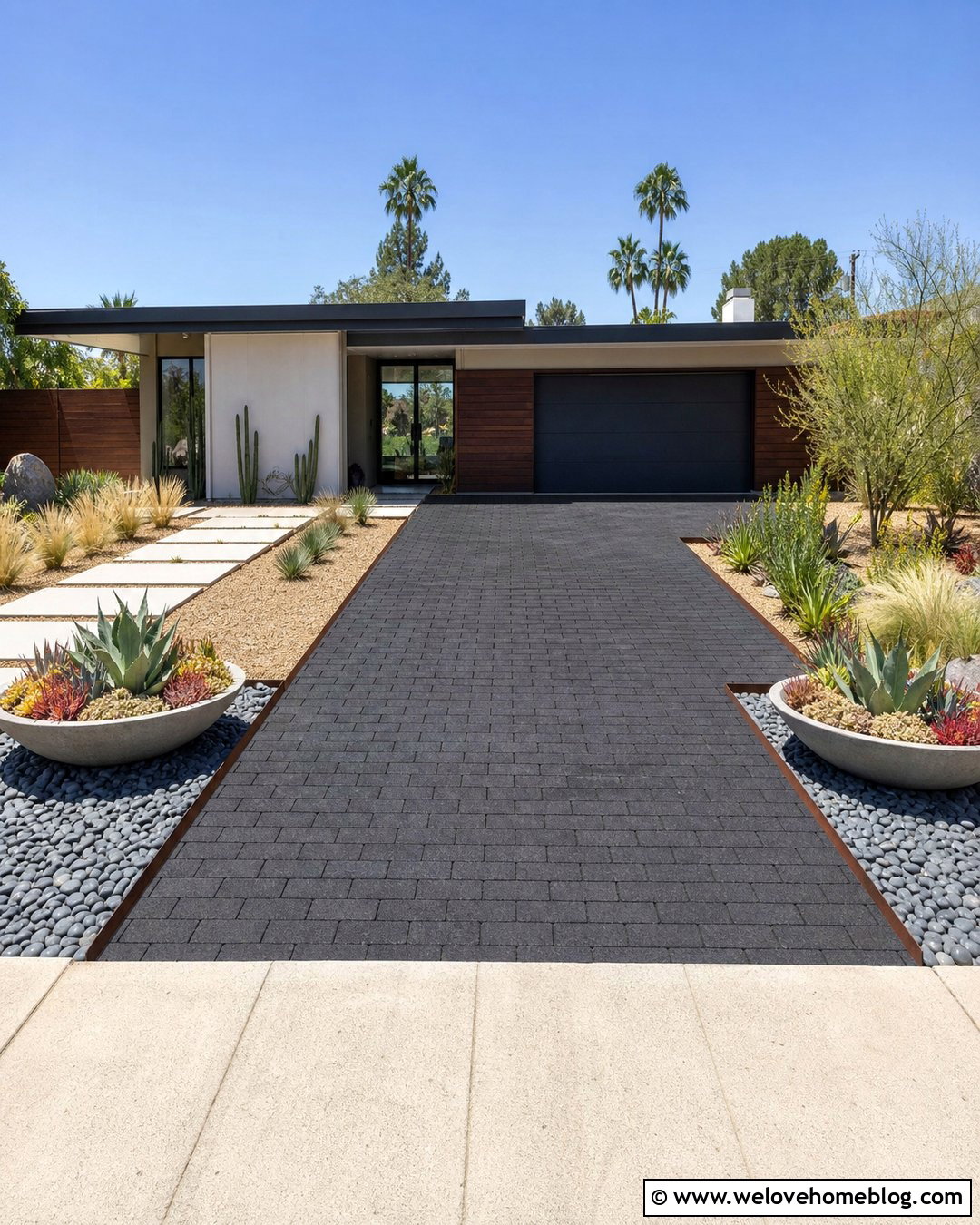
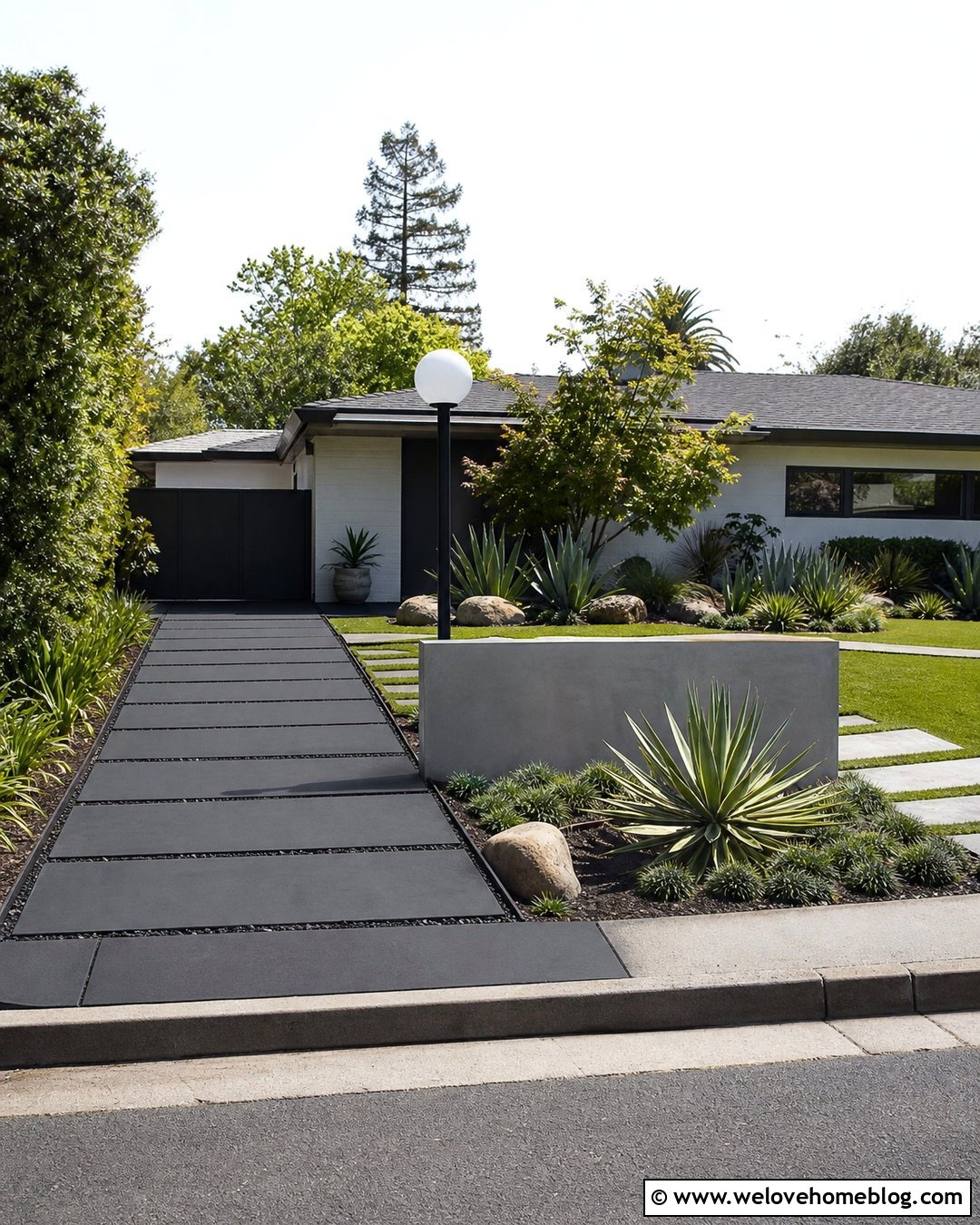
Thin metal edging gives a driveway a precise outline without adding a bulky border. Use black steel or aluminum beside a smooth, light-gray concrete driveway made from large rectangular slabs. Narrow gravel joints or planted strips can separate the slabs, reinforcing the modern geometry. Beyond the edging, arrange drought-tolerant grasses, sculptural evergreens, and pale decorative stone in broad, uncluttered groups. Continue the same metal finish in the house numbers, mailbox, and exterior lighting. A straight or slightly angled layout will complement a modern home’s clean lines. Although the edging is visually subtle, the entire composition should remain carefully aligned. This driveway decoration works best when the planting palette is limited and every material repeats elsewhere, creating a coordinated transition from the curb to the garage.
18. Driveway With Checkerboard Pavers
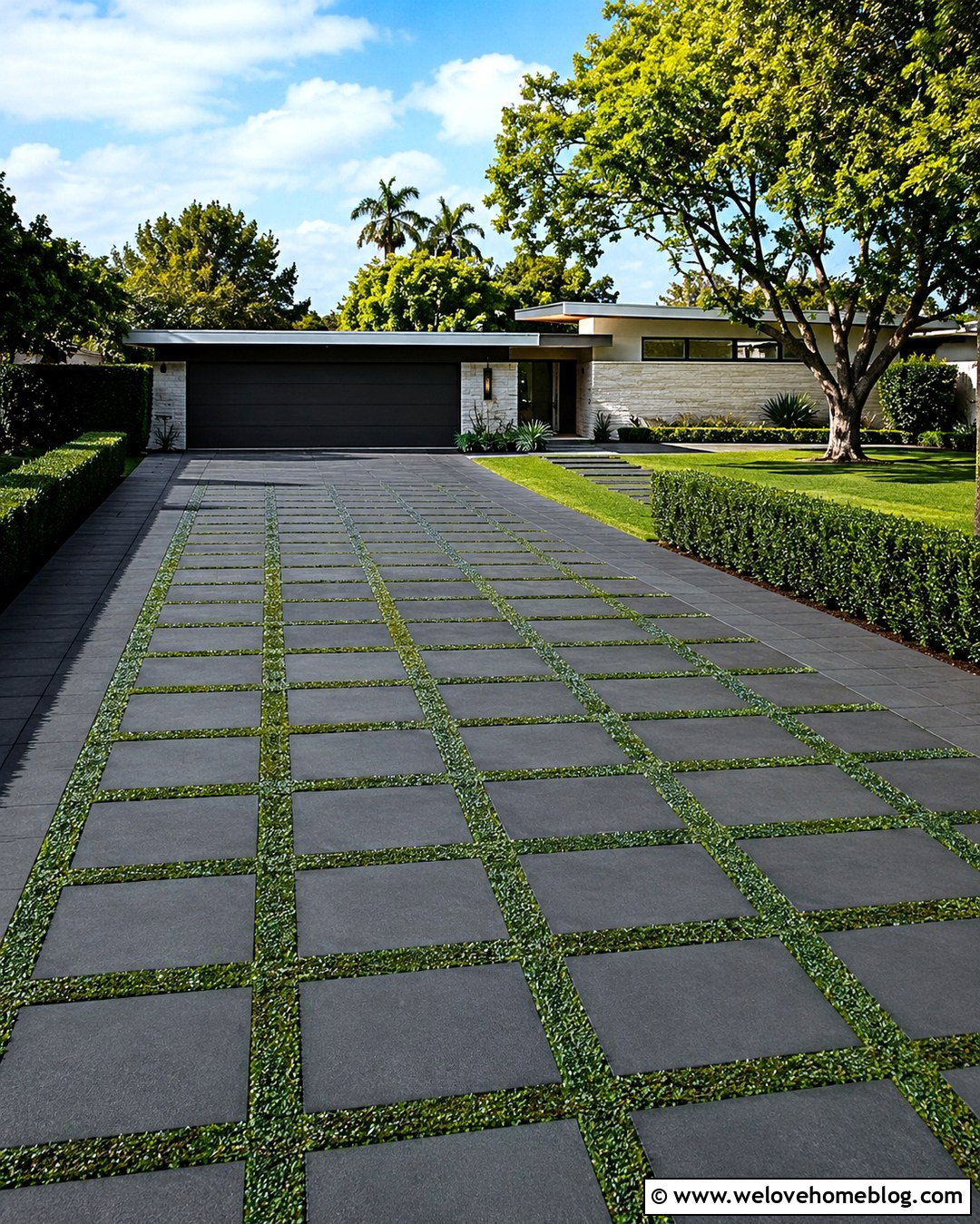
Checkerboard paving turns a wide driveway into an attractive geometric feature. Install charcoal concrete pavers in a grid with planted squares of durable grass or low ground cover between them. Use solid paver wheel lanes in the areas receiving the heaviest traffic, then reserve more planting for the edges or central parking court. A flush dark border keeps the pattern contained and provides a clean transition to the lawn. Frame the driveway with simple hedges, one ornamental tree, and a matching paver walkway. This design pairs naturally with modern and midcentury homes because the repeating squares echo their strong architectural geometry. Good drainage, a stable base, and plants suited to occasional vehicle exposure will help the surface remain practical as well as decorative.
19. Driveway With Rock Garden Landscaping
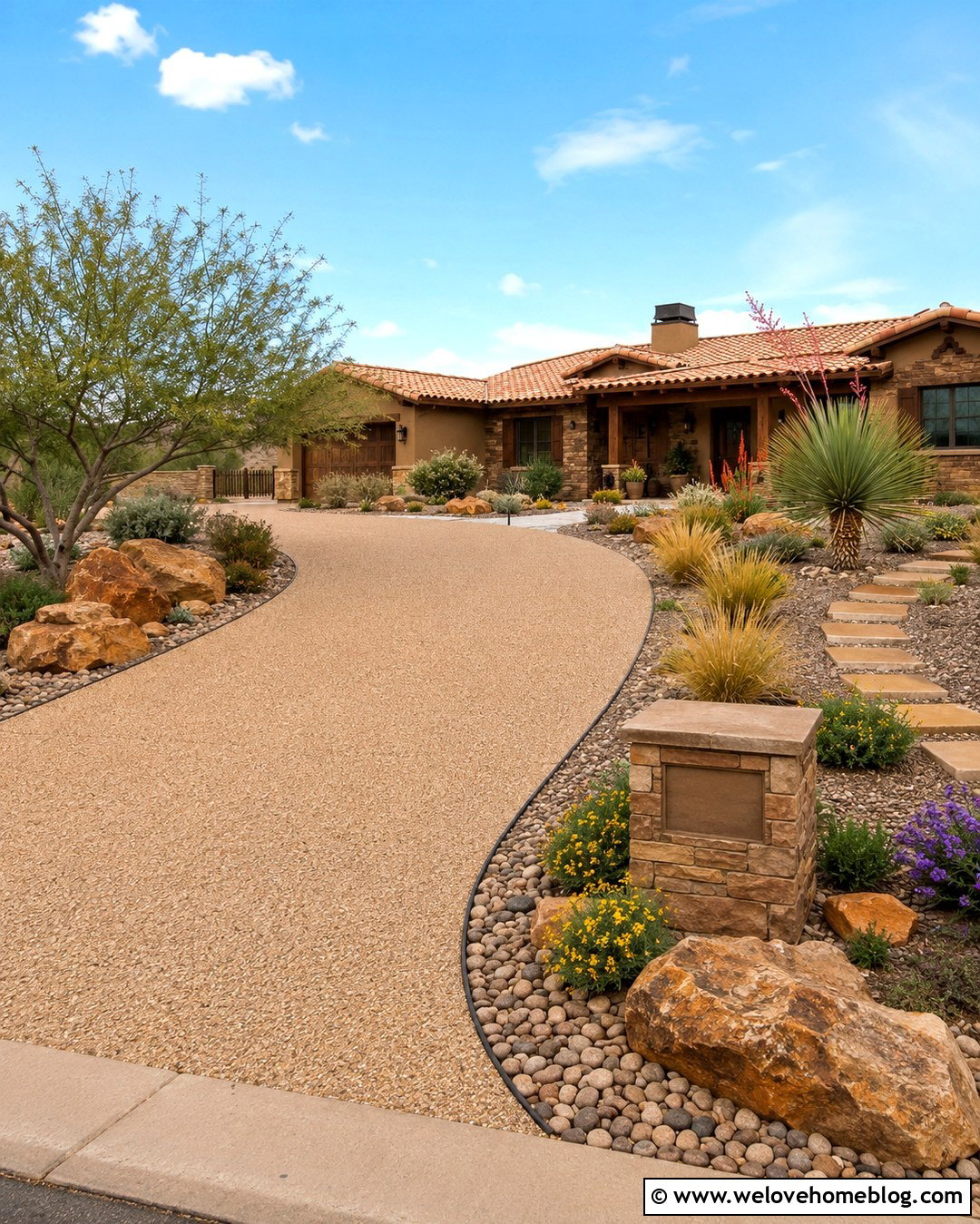
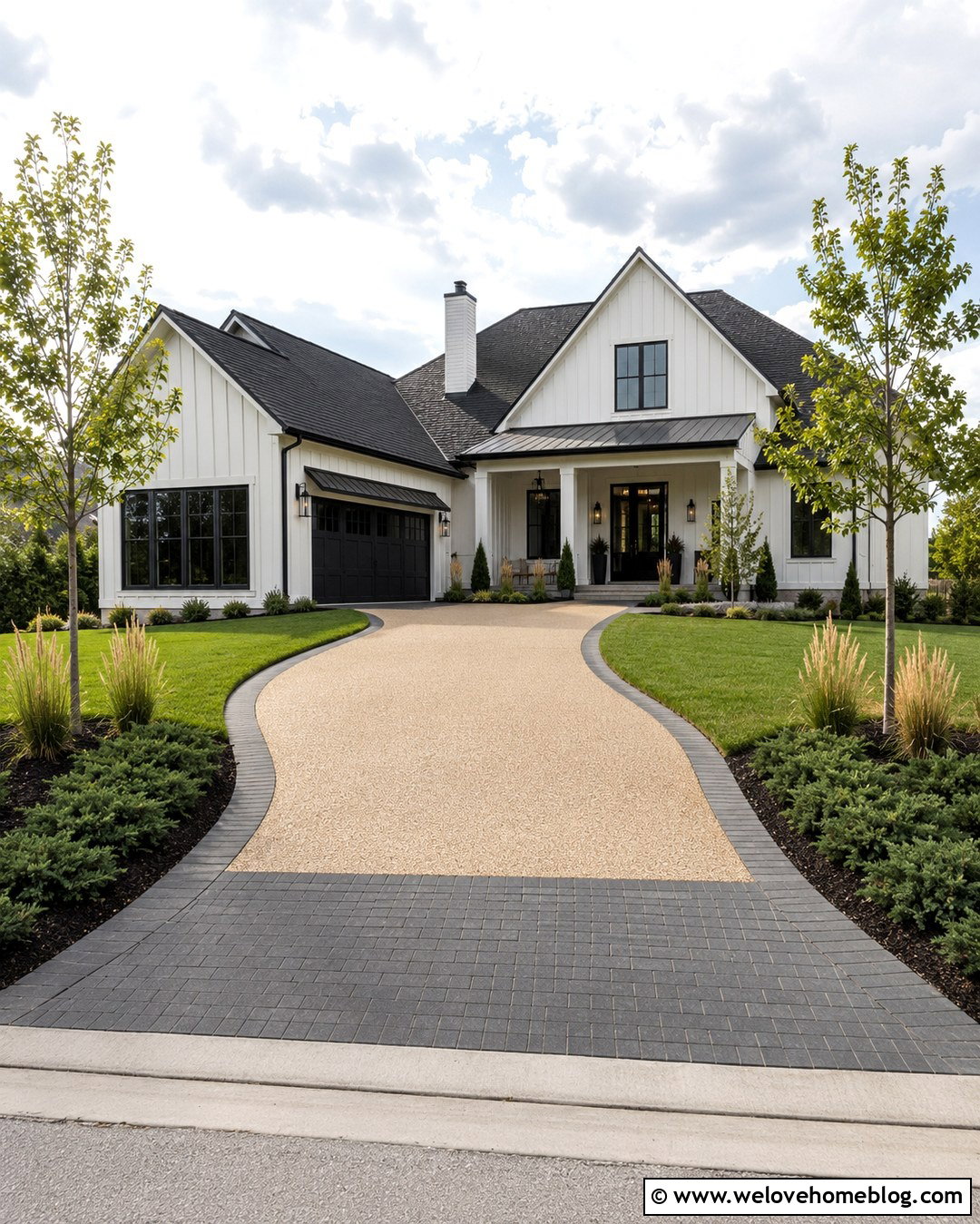
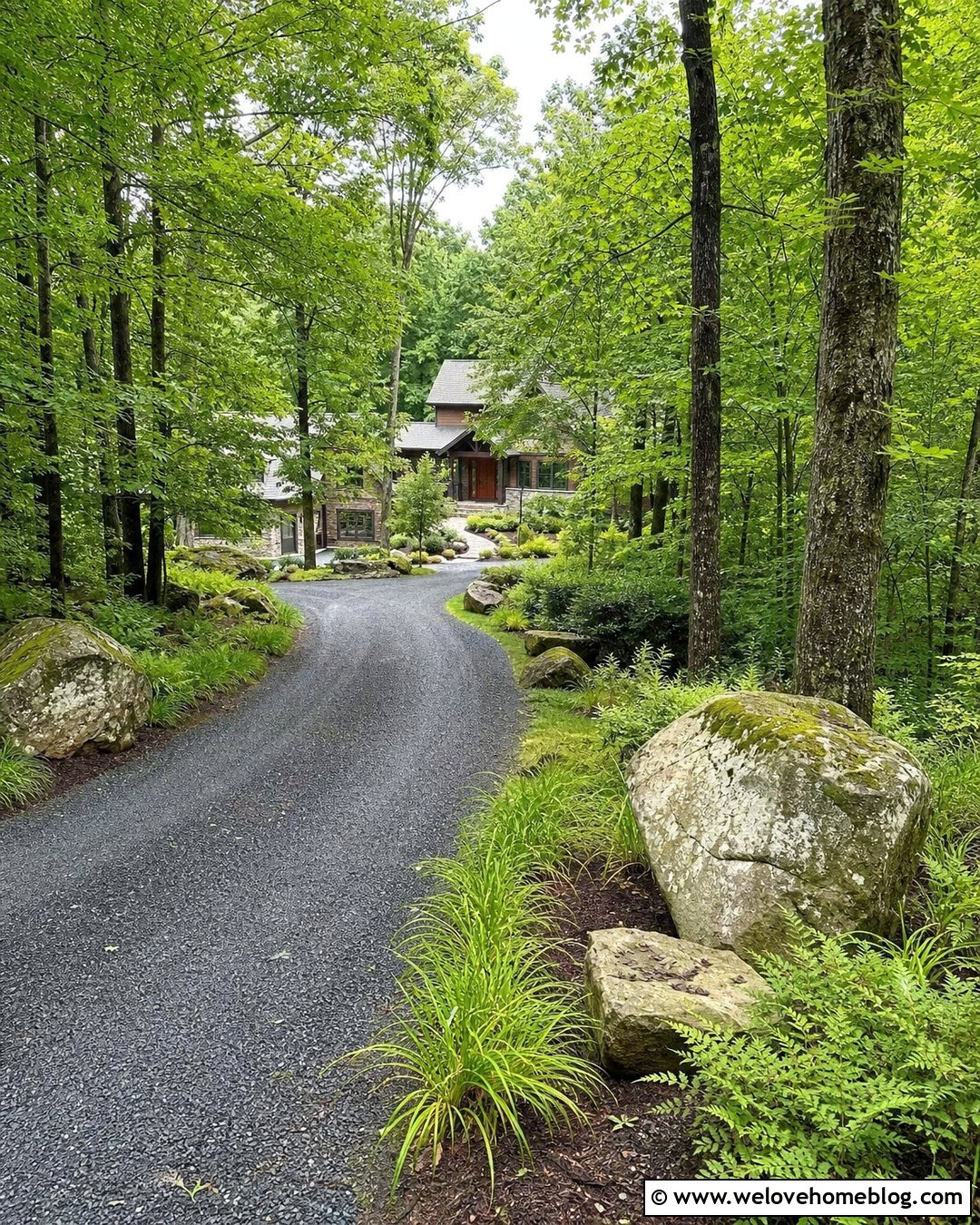
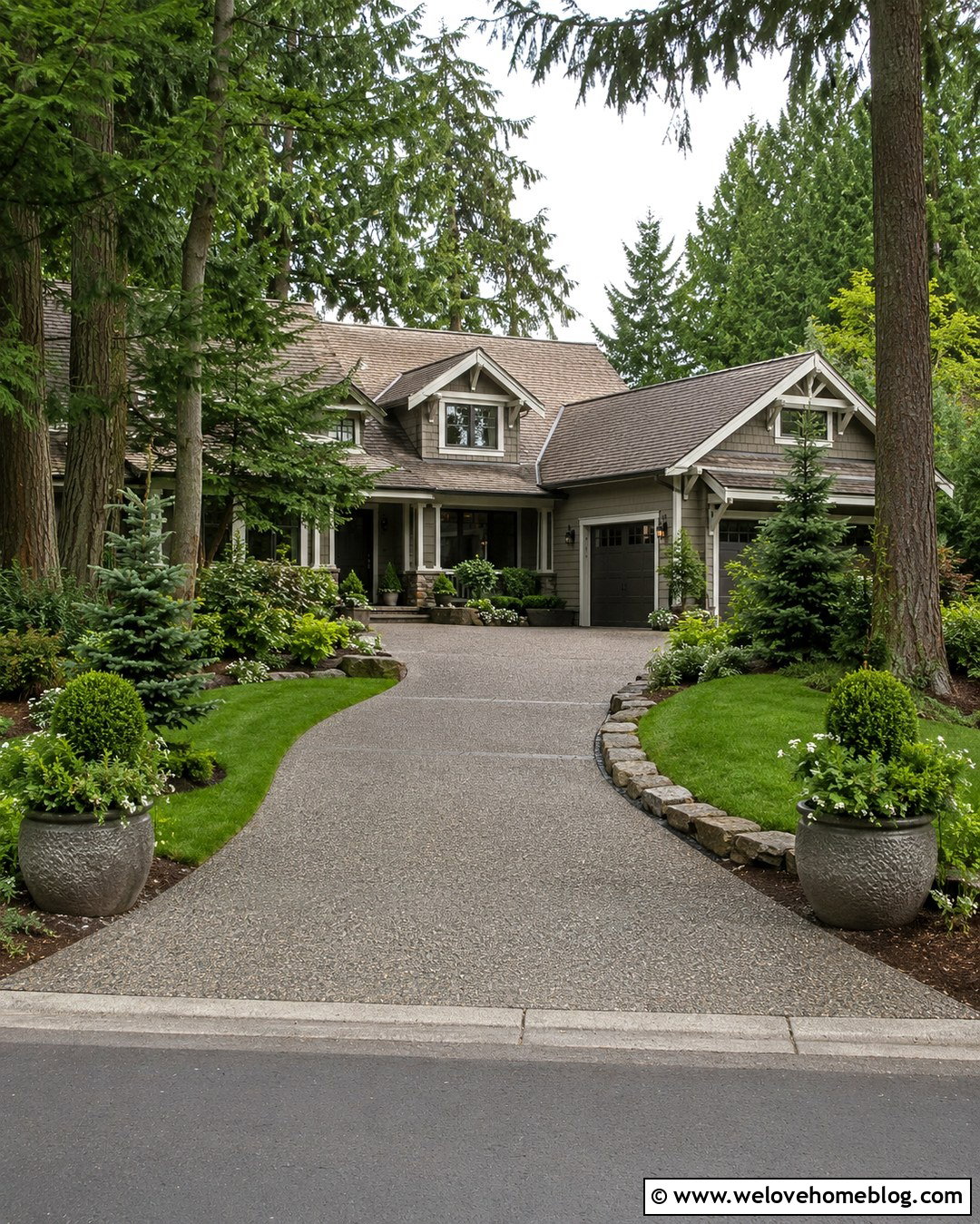
A rock garden creates a low-water frame for a driveway while adding texture and year-round structure. Begin with a warm beige resin-bound gravel driveway in a broad curved layout. Along the outer edge, arrange weathered boulders, smaller river stones, drought-tolerant grasses, yucca, and compact flowering plants in natural-looking groups. Use fewer large rocks rather than many scattered pieces, and partially settle them into the soil so they appear established. A steel edge should separate the smooth driveway surface from loose landscape gravel. Near the entrance, repeat one prominent boulder beside a simple address marker. This complete design fits Southwestern, contemporary, and ranch homes, especially where conventional lawns require too much water or maintenance for the local growing conditions.
20. Driveway With Garage Door Accents
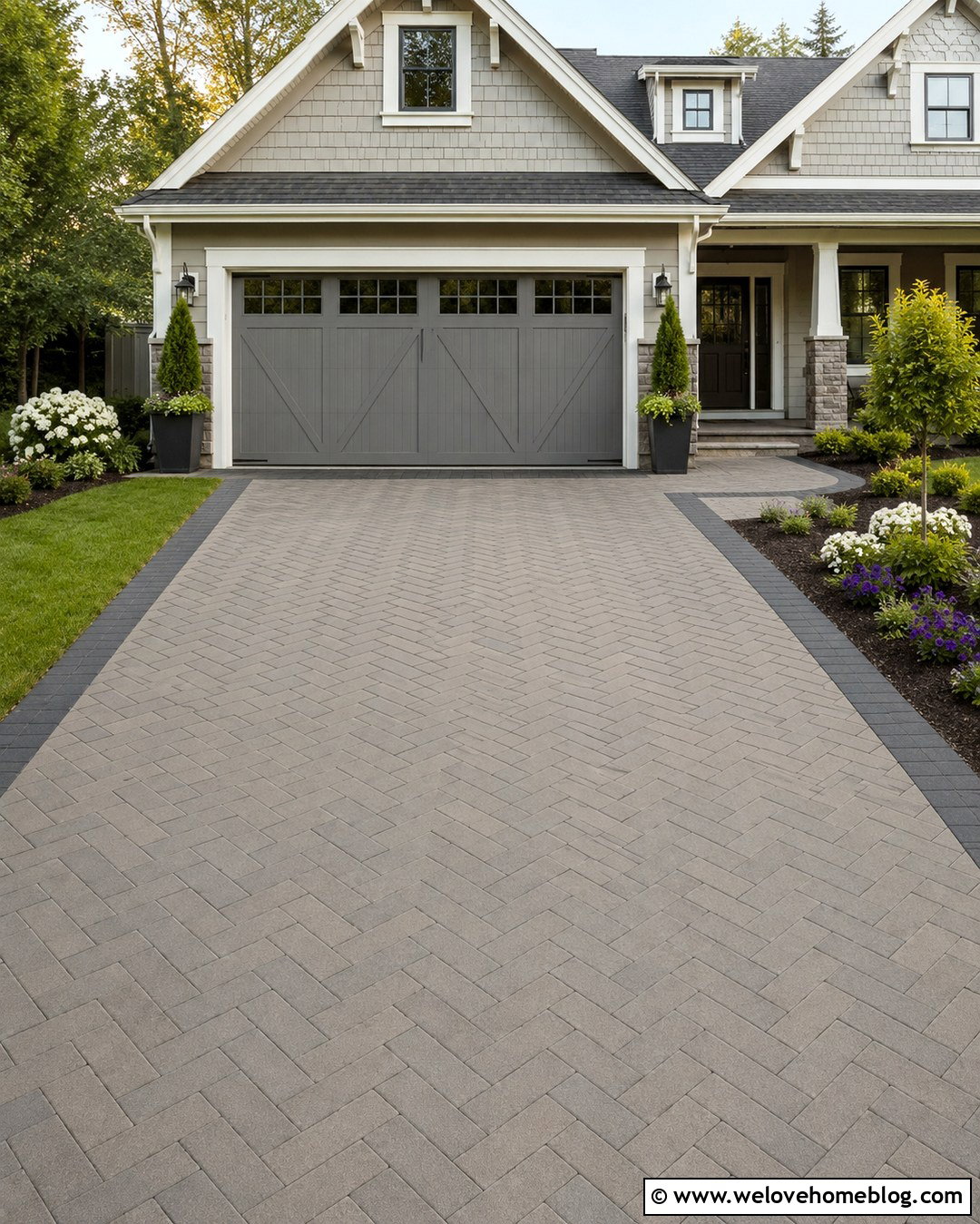
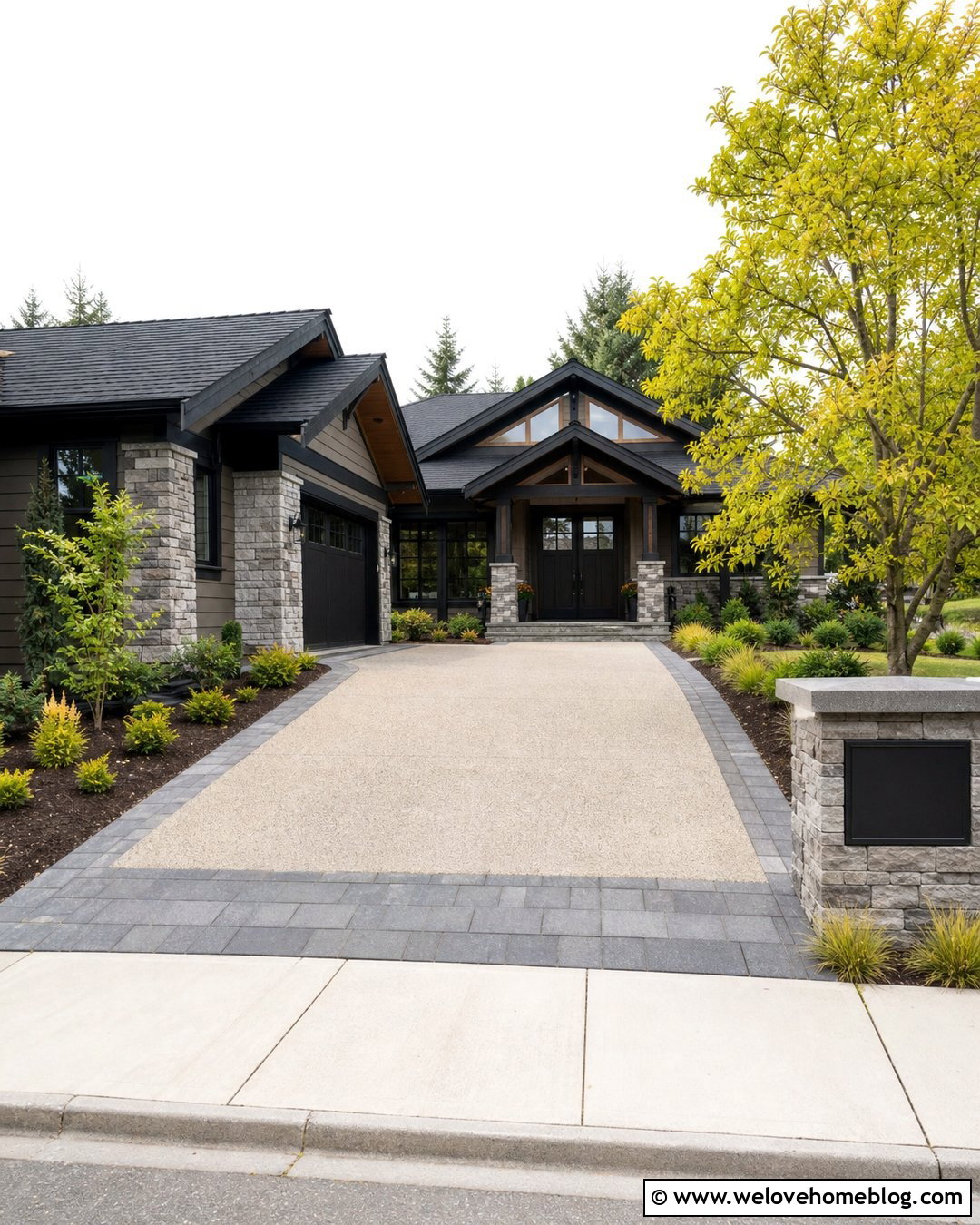
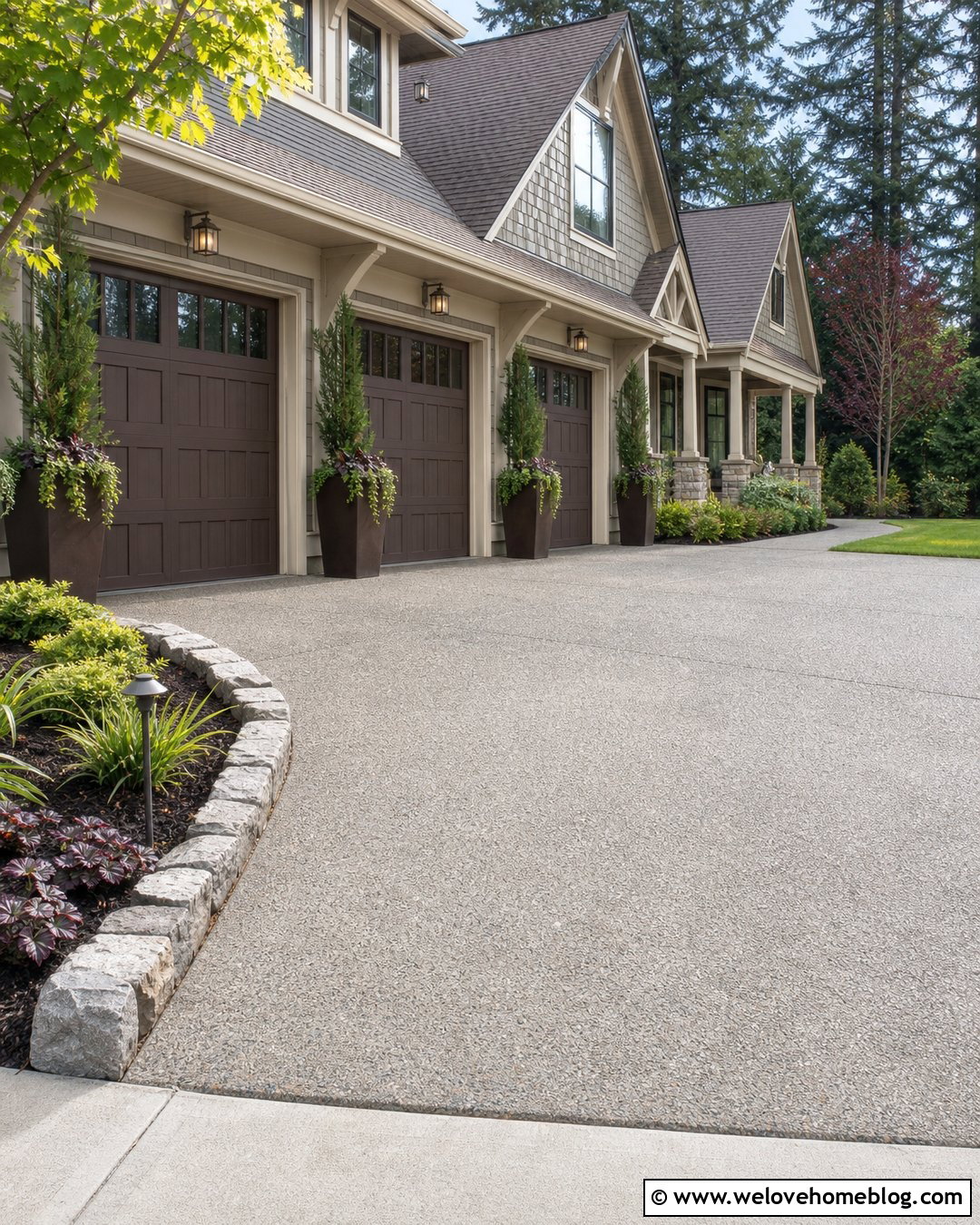
When a driveway ends at a prominent garage, decoration should connect the pavement to the building rather than stop at the yard. Use warm gray interlocking pavers laid in a herringbone pattern, bordered with a darker paver band. Choose garage doors with subtle windows and a finish that repeats the home’s trim or front door color. Place tall matching planters between the doors where space allows, and add compact planting beds along the outer driveway edges. A paver walkway branching toward the porch will guide pedestrians away from vehicle areas. Balanced wall lights can complete the facade without overwhelming it. This coordinated design makes the garage feel integrated with the house while the patterned surface, borders, containers, and landscaping create a finished curb view.
Conclusion:
Successful driveway decoration starts with the whole property, not a collection of unrelated accessories. Look at the surface color, driveway shape, house architecture, planting areas, and entrance before choosing new features. A brick border may give concrete more warmth, while stone pillars can anchor a long gravel approach. Lighting, planters, address markers, trees, and flower beds should improve the view without reducing visibility or usable driving space. Repeat two or three materials throughout the entrance, walkway, and facade to create a connected appearance. Whether you prefer a modern geometric layout or a softer country setting, these 20 Driveway Decoration Ideas can help you build a practical, welcoming approach with lasting curb appeal.

Related posts:
Leave a Reply