
Stenciled concrete can turn a plain driveway into a detailed surface that resembles brick, slate, cobblestone, tile, or natural stone. The technique works especially well when the pattern, color, border, driveway shape, landscaping, and home exterior are planned as one complete look. Popular choices range from traditional herringbone brick to cleaner linear patterns suited to modern homes. Borders and layered colors can make the finish appear more realistic while visually defining the driveway. Existing concrete may also be suitable for a decorative stencil overlay when the slab is stable and properly prepared. () The following complete designs offer practical inspiration for choosing colors, layouts, and surrounding details from these 20 Driveway Stencil Ideas.

1. Ashlar Slate Driveway Stencil
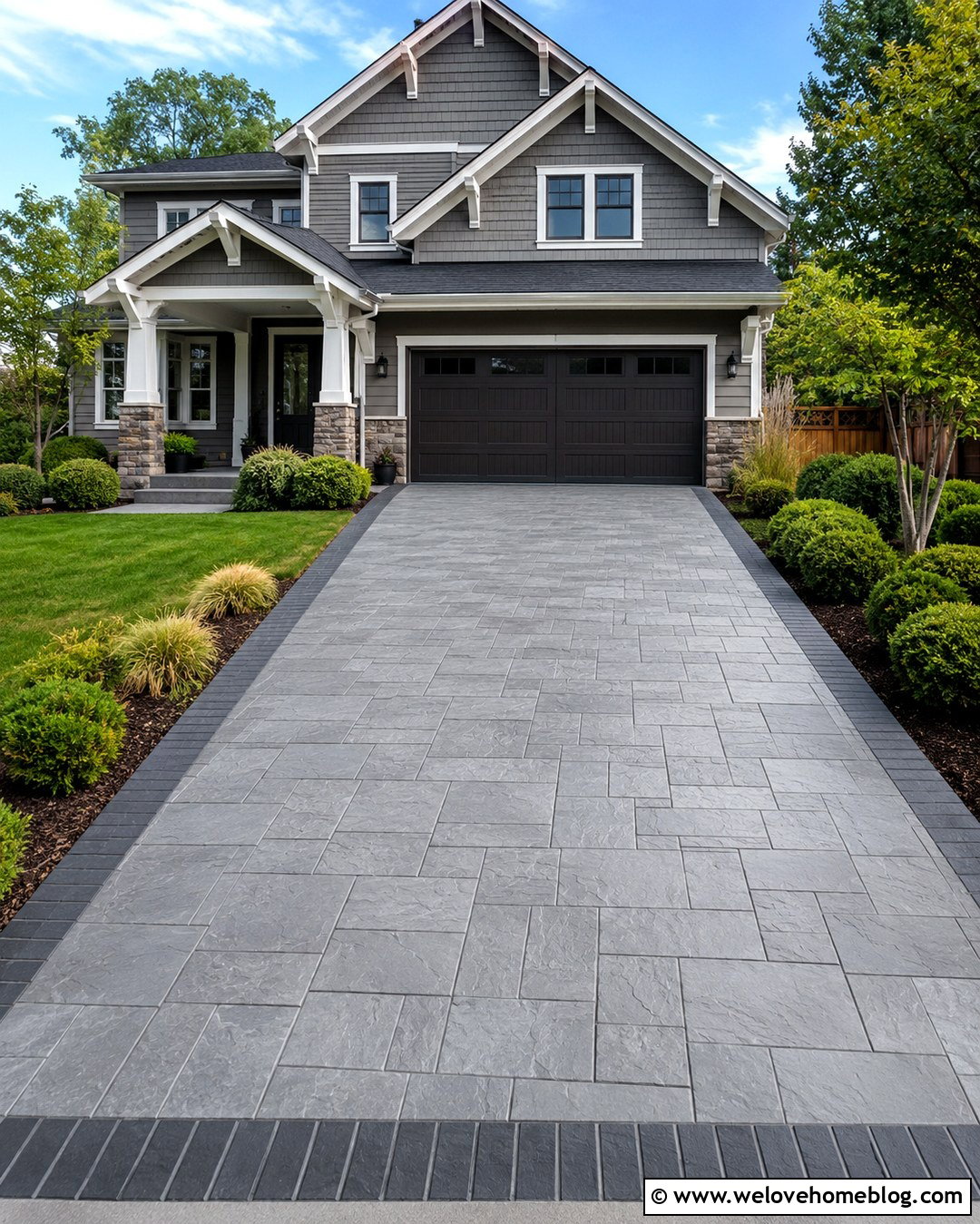
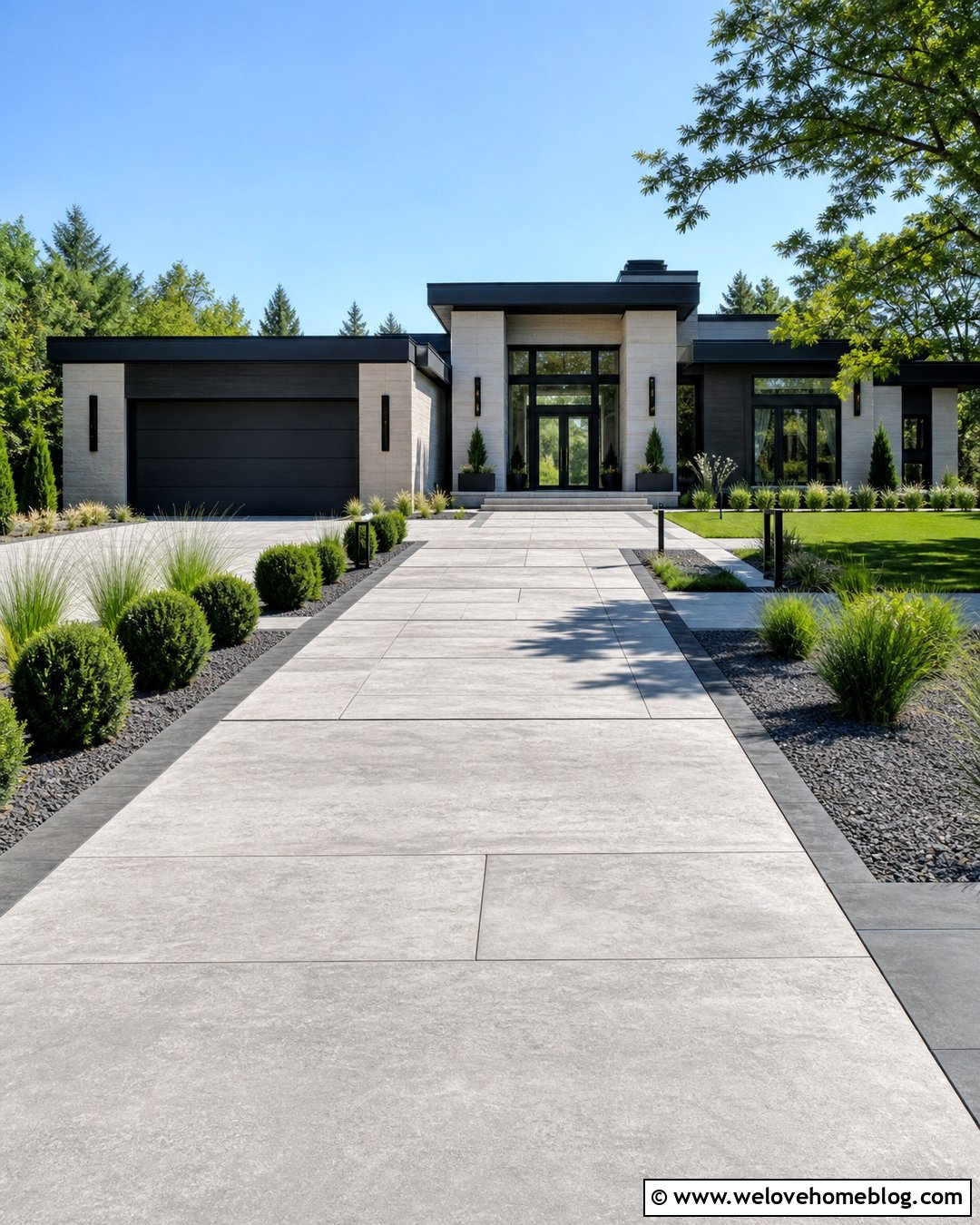
An ashlar slate stencil creates the appearance of rectangular cut stones in several coordinating sizes. Choose a medium-gray concrete overlay with charcoal joints for a natural surface that works with modern, Craftsman, and transitional homes. A straight driveway gives the varied stone pattern enough room to remain visible from the curb. Frame it with a dark soldier-course border to create a crisp transition into the lawn. Low ornamental grasses, rounded evergreen shrubs, and a wide concrete walkway can soften the structured layout. Use subtle color variation instead of one flat gray so the individual “stones” have more depth. Existing control joints should remain functional and can be positioned along pattern lines where possible. The complete look feels tailored without becoming overly formal.
2. Herringbone Brick Driveway Stencil
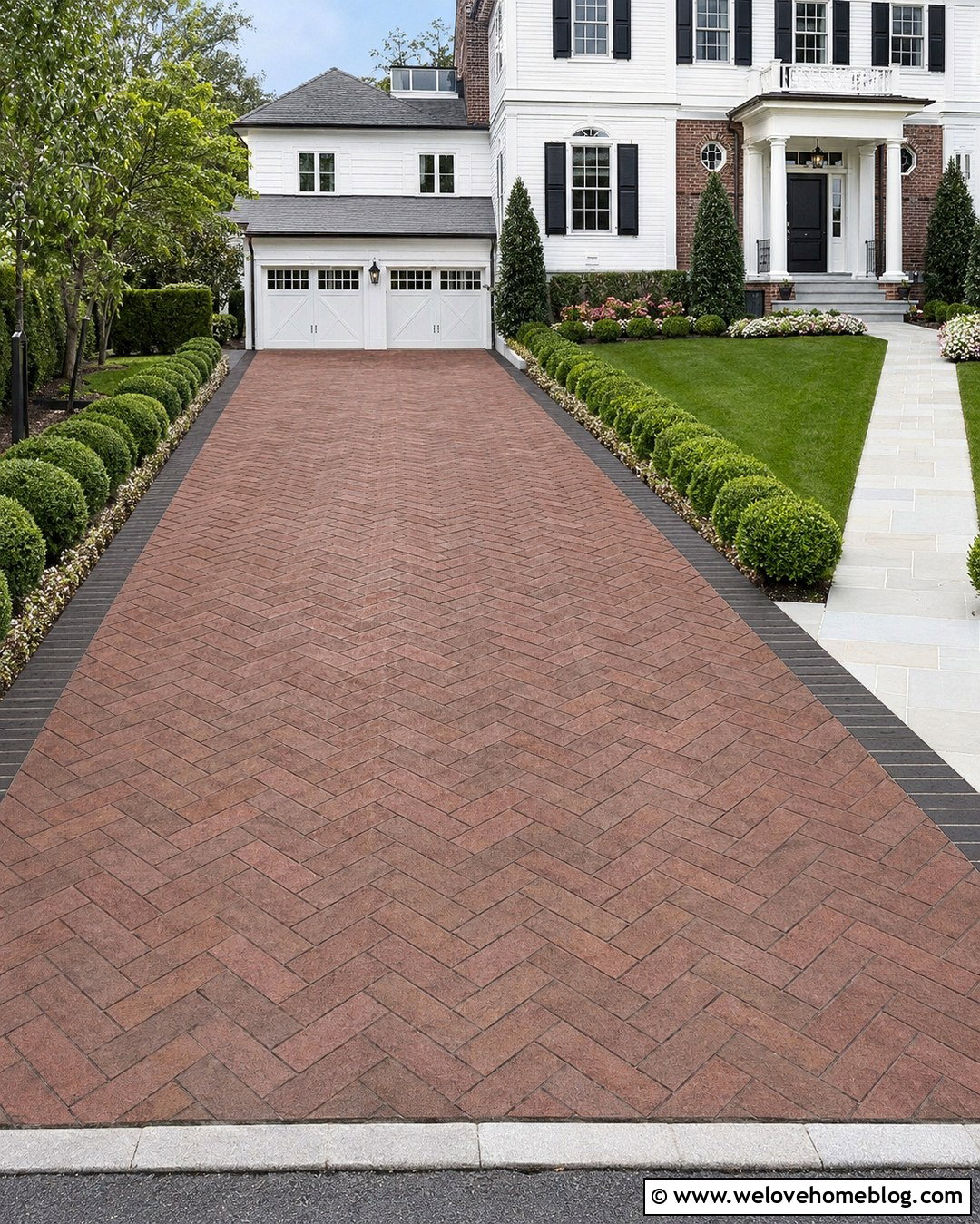
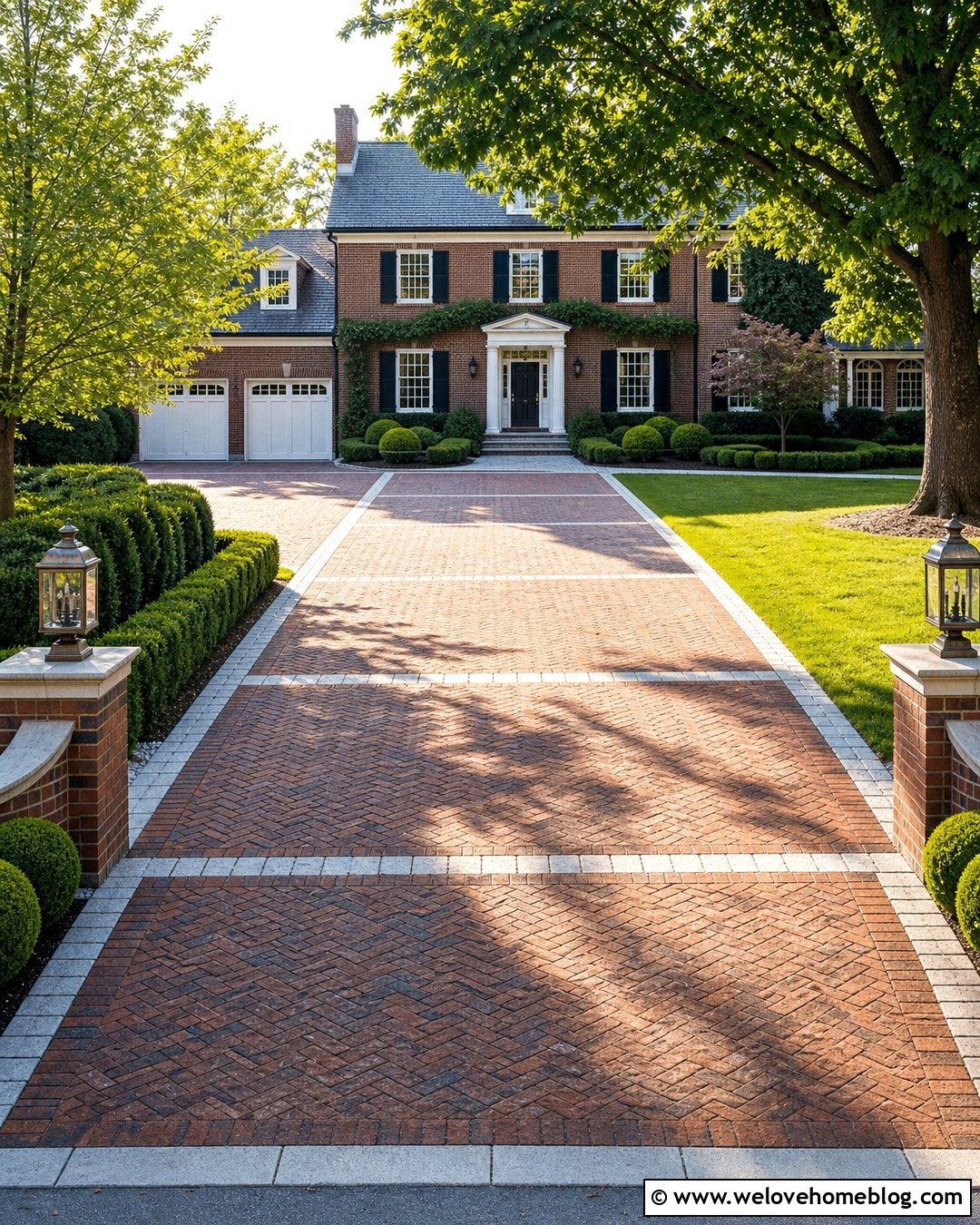
Herringbone is a strong choice when you want the driveway to guide the eye directly toward the garage or front entry. The angled brick pattern adds movement, making a basic straight driveway appear more detailed. Use warm red-brown tones with muted charcoal joints for a traditional brick effect, or select taupe and gray for a more contemporary interpretation. A darker running-bond stencil border keeps the diagonal layout visually contained. Pair the surface with a Colonial or brick ranch house, clipped boxwood beds, and a simple paved walkway. Matching the stencil color to existing brick on the home helps everything feel connected. Because the pattern is busy, keep nearby landscaping organized and relatively simple. The result offers classic curb appeal without requiring individual clay brick pavers.
3. Cobblestone Driveway Stencil
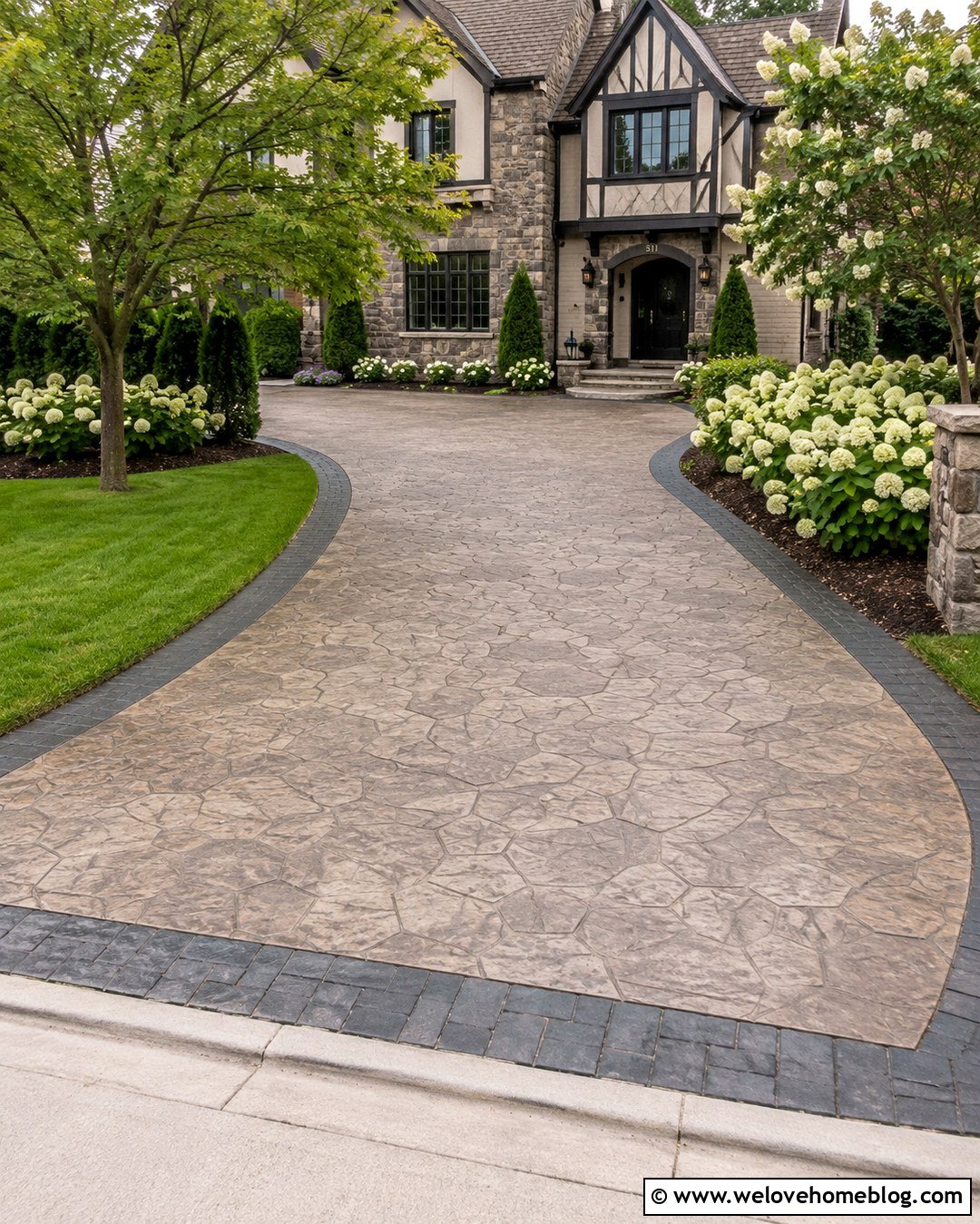
Softly irregular cobblestone shapes bring an established, traditional appearance to a wide driveway. A blend of warm gray, tan, and weathered brown can make the pattern feel more natural than a single solid color. This design is especially convincing on a gently curved approach leading to a Tudor, European-inspired, or stone-front house. Add a charcoal cobblestone stencil border and a matching apron near the street to anchor the composition. Deep planting beds filled with hydrangeas, evergreen shrubs, and small flowering trees balance the visual weight of the surface. Keep the simulated joints dark but not black, since softer contrast looks more like aged stone. A smooth transition at the garage prevents the pattern from competing with doors, steps, or drainage channels.
4. European Fan Driveway Stencil
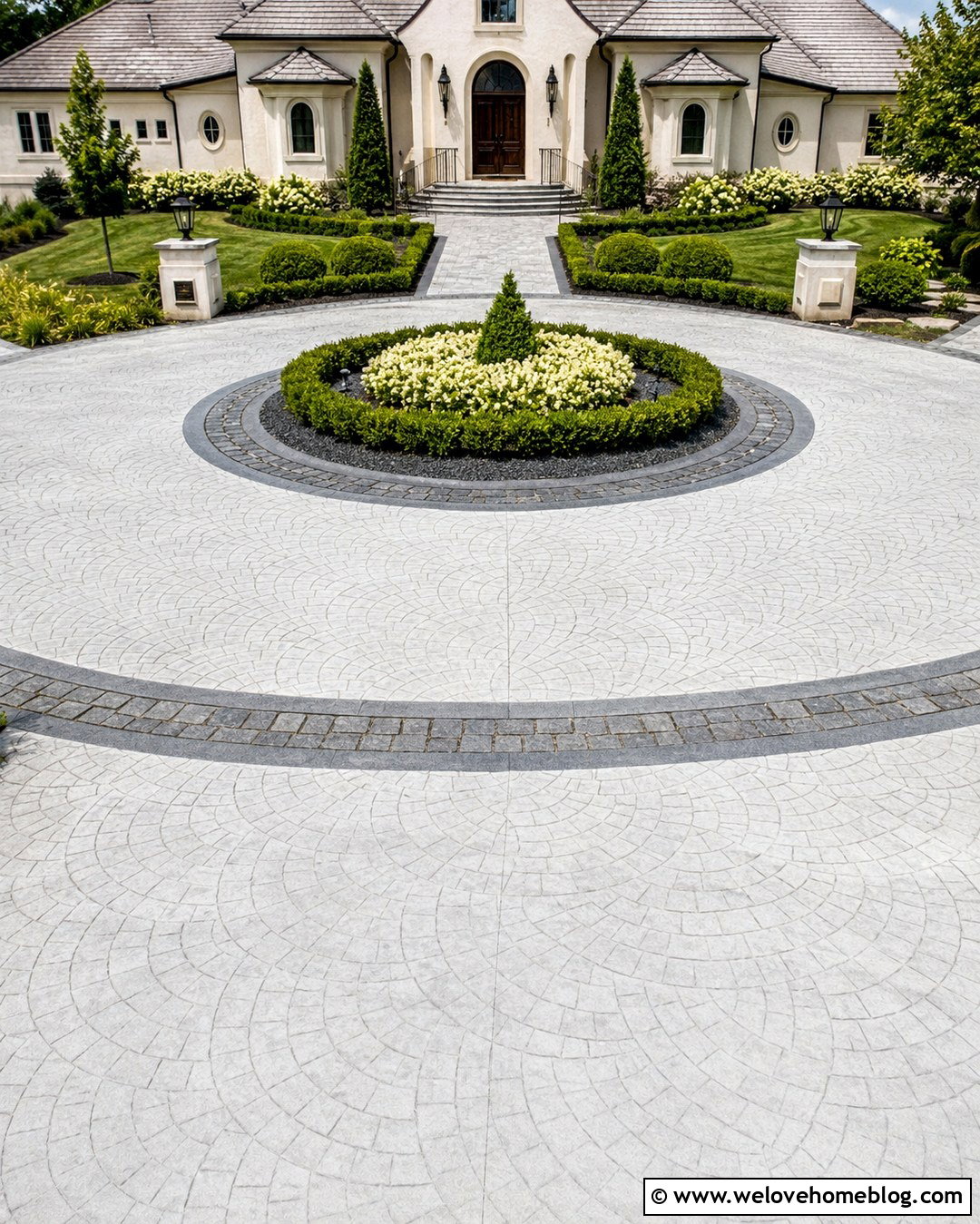
The repeating arcs of a European fan stencil can make an ordinary concrete driveway feel like a formal courtyard. It works best across a broad driveway or circular layout where the curved pattern has enough space to develop. Consider a warm limestone-gray overlay with darker gray fan outlines and a narrow cobblestone border. Position the fans consistently so they flow toward the house rather than turning unexpectedly between slabs. A light stucco home, symmetrical foundation shrubs, stone entrance pillars, and neatly shaped planting beds complement the Old World influence. Avoid adding too many decorative colors because the fan layout already provides strong movement. A matching stenciled walkway can continue the design toward the front door, while a plain concrete band separates the driveway from the garage threshold.
5. Random Flagstone Driveway Stencil
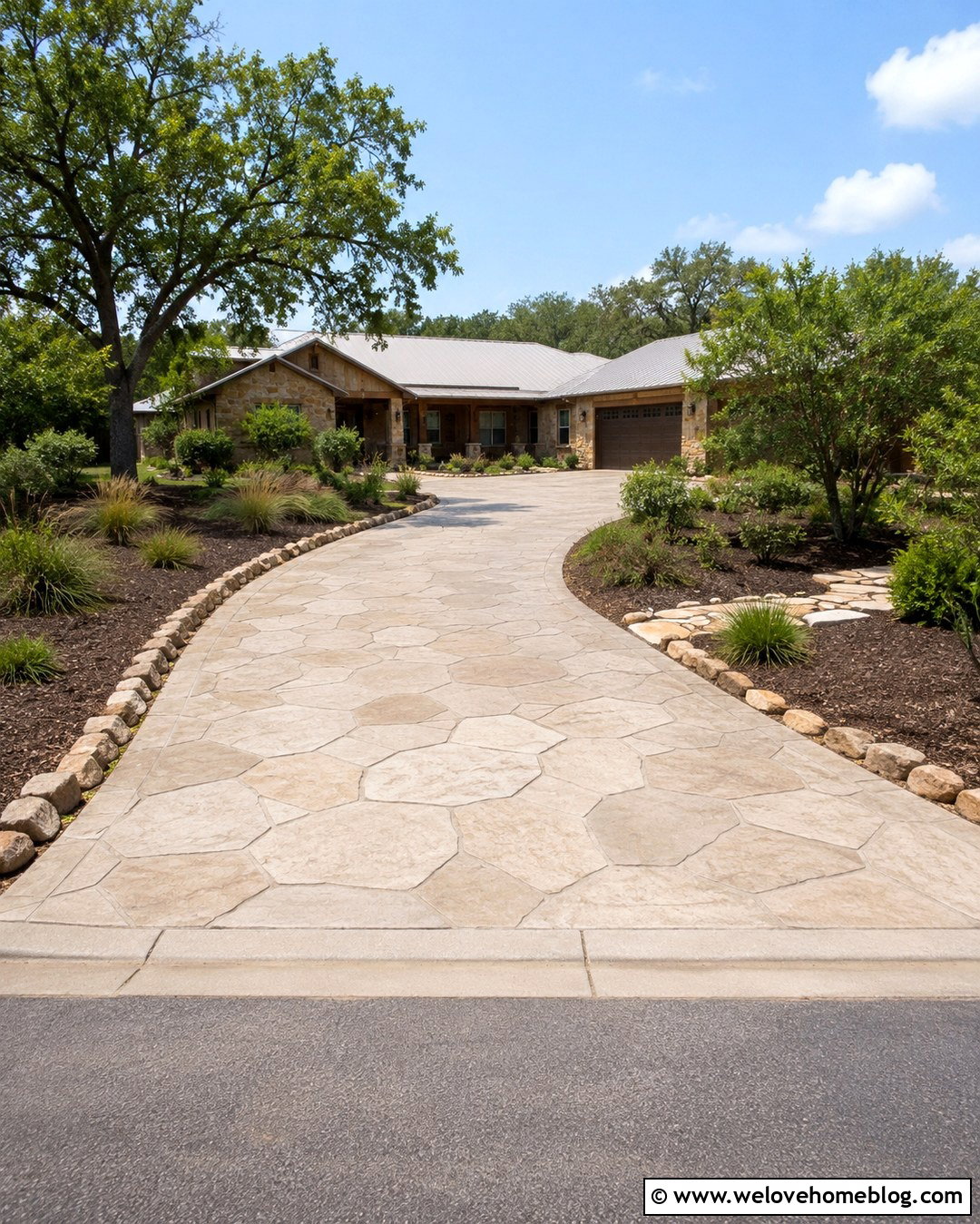
Would you like a stone-inspired driveway that feels relaxed rather than highly structured? A random flagstone stencil uses irregular shapes to break up the long visual expanse of concrete. Layer soft sandstone, beige, and warm-gray tones across the surface, then use medium-brown joints to define each simulated stone. A curved driveway suits this organic pattern particularly well. Natural stone edging, broad mulch beds, native grasses, and loosely grouped shrubs can extend the informal character into the yard. This combination looks at home beside a ranch, cottage, or country house. Keep the color changes subtle and repeat the same tones on steps or walkway accents. For comfortable vehicle use, choose a lightly textured finish rather than an aggressively rough surface that may be harder to clean.
6. Running Bond Brick Driveway Stencil
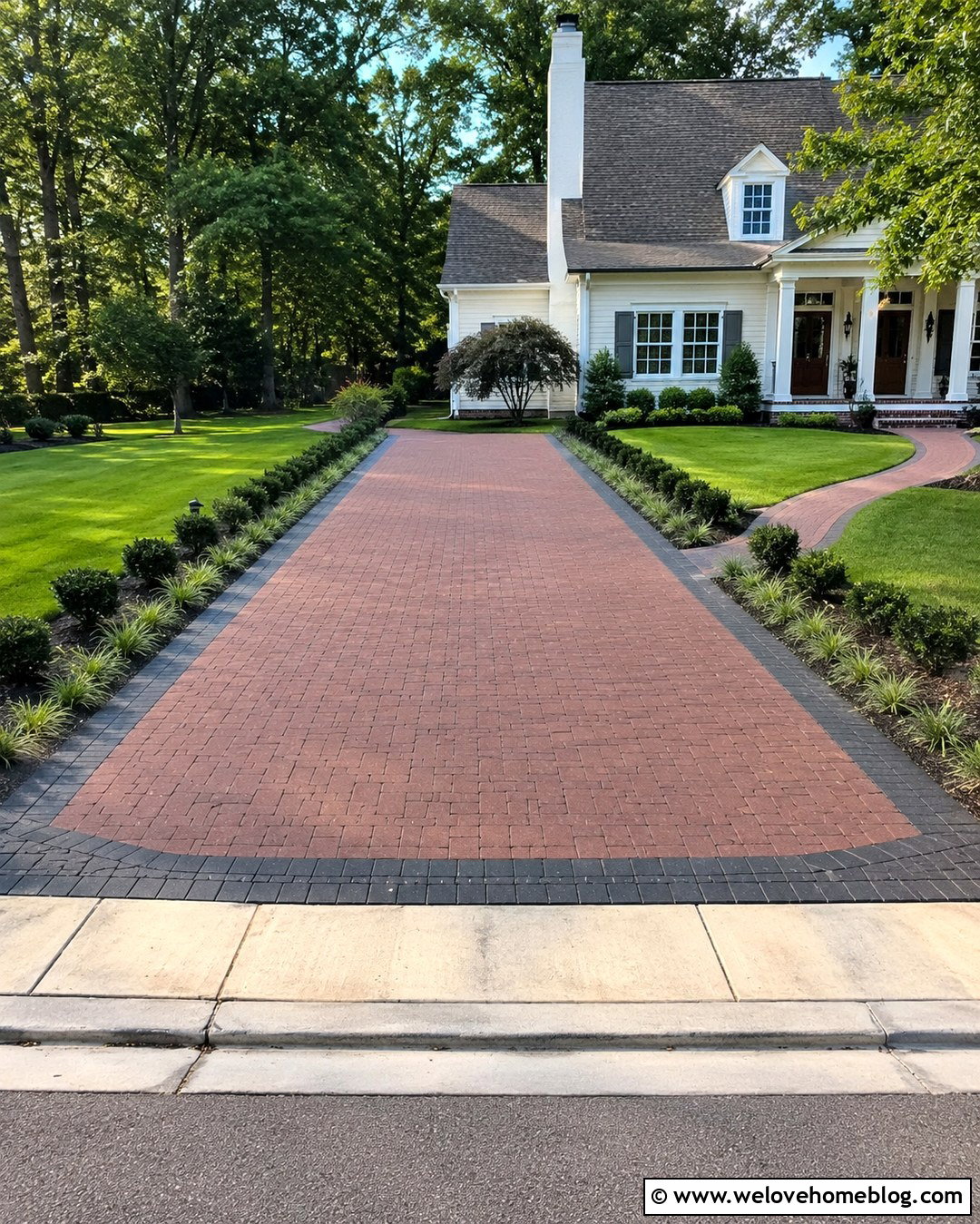
Simple rows of offset brick shapes provide familiar detail without making the driveway look overly decorated. Running bond is particularly effective on a long, narrow driveway because the lines can be oriented toward the garage, visually reinforcing the direction of travel. Try a muted clay-red finish with warm-gray joints beside a traditional brick or white-sided house. A charcoal brick border can sharpen the edges and help conceal minor color differences near the lawn. Add narrow planting strips with dwarf hollies, liriope, or compact ornamental grasses where space is limited. Near the street, widen the stencil pattern into a defined entrance apron. The straightforward repeat is easier on the eye than intricate motifs, making it a practical option when the home already has strong architectural details.
7. Basketweave Brick Driveway Stencil
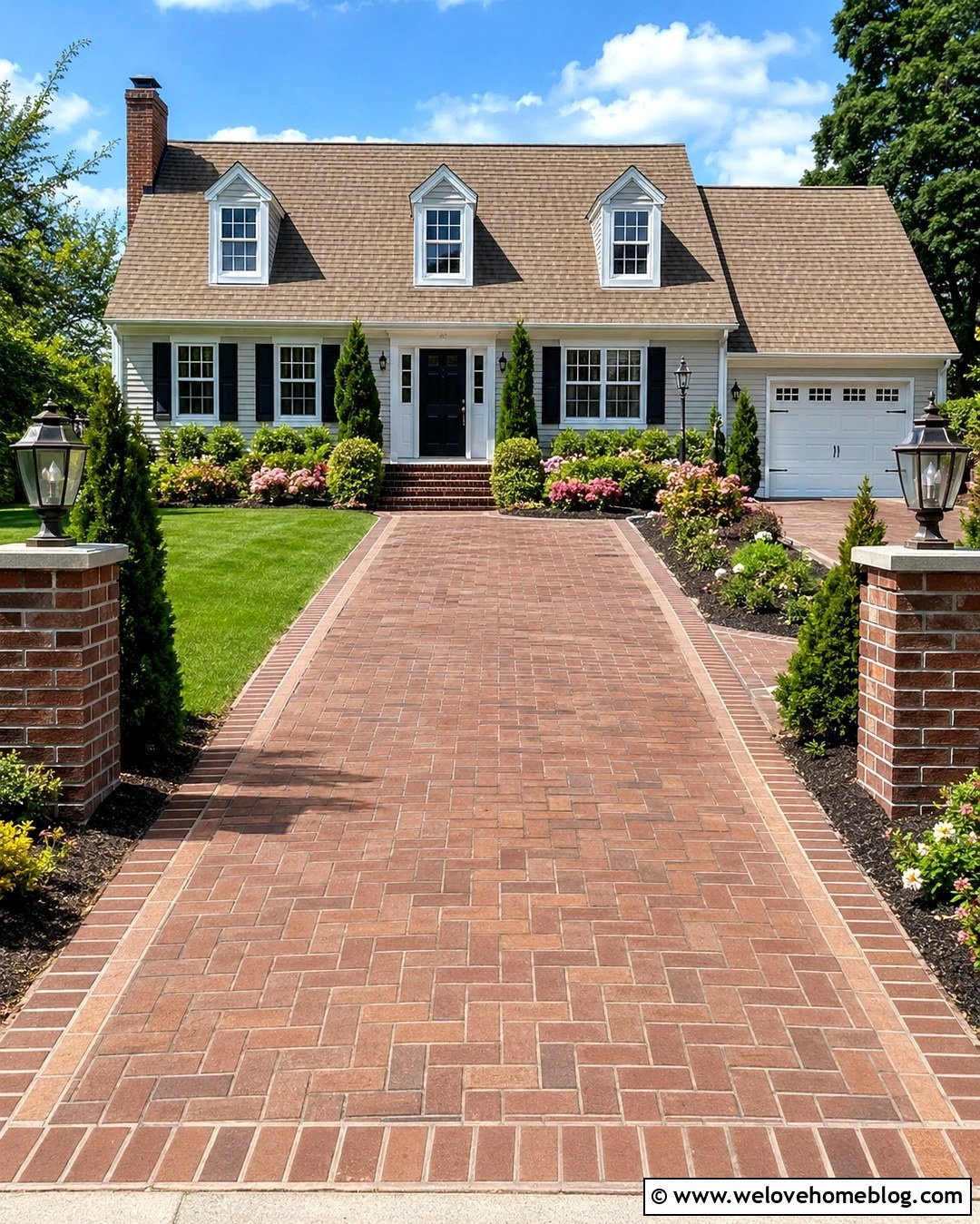
A basketweave driveway stencil alternates pairs of brick shapes to produce a compact, decorative grid. The pattern fits especially well with Cape Cod, Georgian, and traditional cottage exteriors. Choose aged red and brown coloring when you want a classic clay-brick appearance, or use greige bricks with charcoal joints for a quieter update. A straight driveway with a matching running-bond border allows the woven pattern to remain orderly. Frame the entrance with low brick pillars, evergreen foundation beds, and a brick-edged walkway leading to the front door. Since basketweave contains frequent joint lines, avoid excessively high color contrast that could make the surface appear crowded. Carry one driveway color onto the porch steps or walkway border to establish a deliberate connection between the street, driveway, and house.
8. Large Tile Driveway Stencil
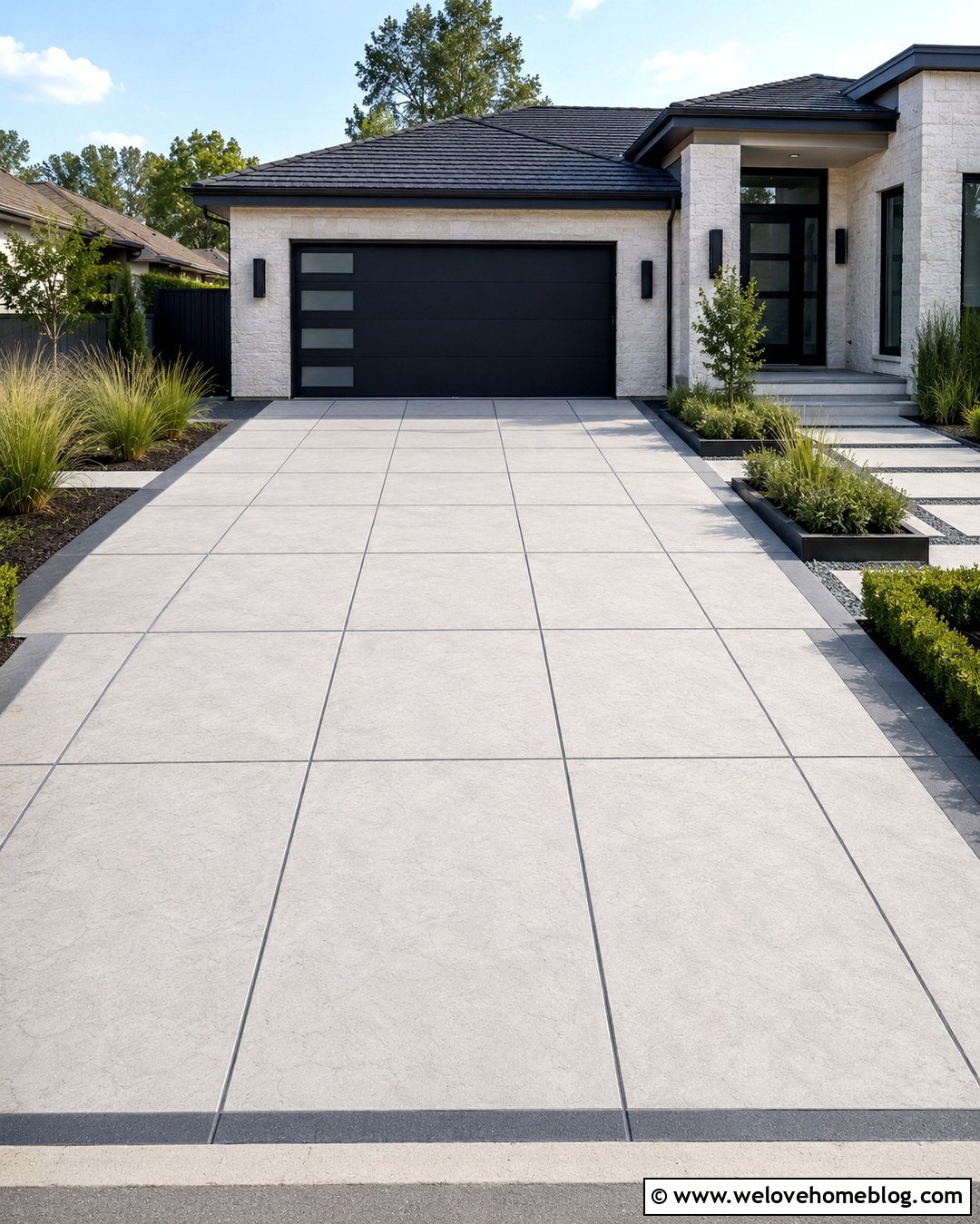
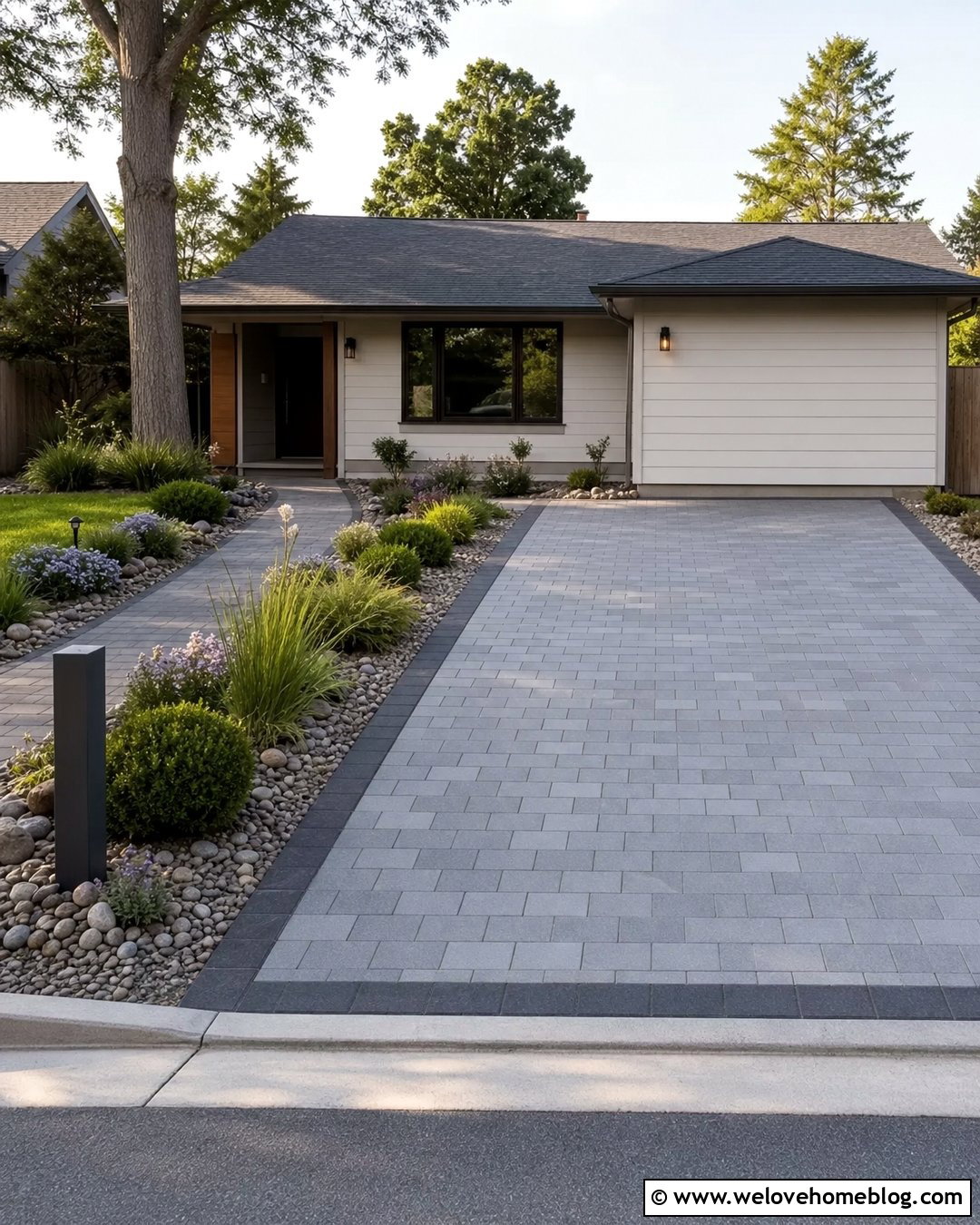
Large square tiles can give stenciled concrete a clean, spacious appearance, especially in front of a contemporary suburban home. Use a pale warm-gray overlay with narrow graphite joints to imitate oversized exterior porcelain or cut stone tiles. A wide, straight driveway provides the best canvas, while a simple dark border keeps the grid from fading into the lawn. The tile lines should be planned around control joints so the full layout appears balanced. Pair the driveway with rectangular planting beds, architectural grasses, clipped shrubs, and a broad slab walkway. Because oversized patterns show stains and color inconsistencies more readily, choose a softly mottled finish rather than a perfectly uniform coating. The finished surface should look streamlined from the curb but still offer enough texture for practical outdoor use.
9. Diamond Tile Driveway Stencil
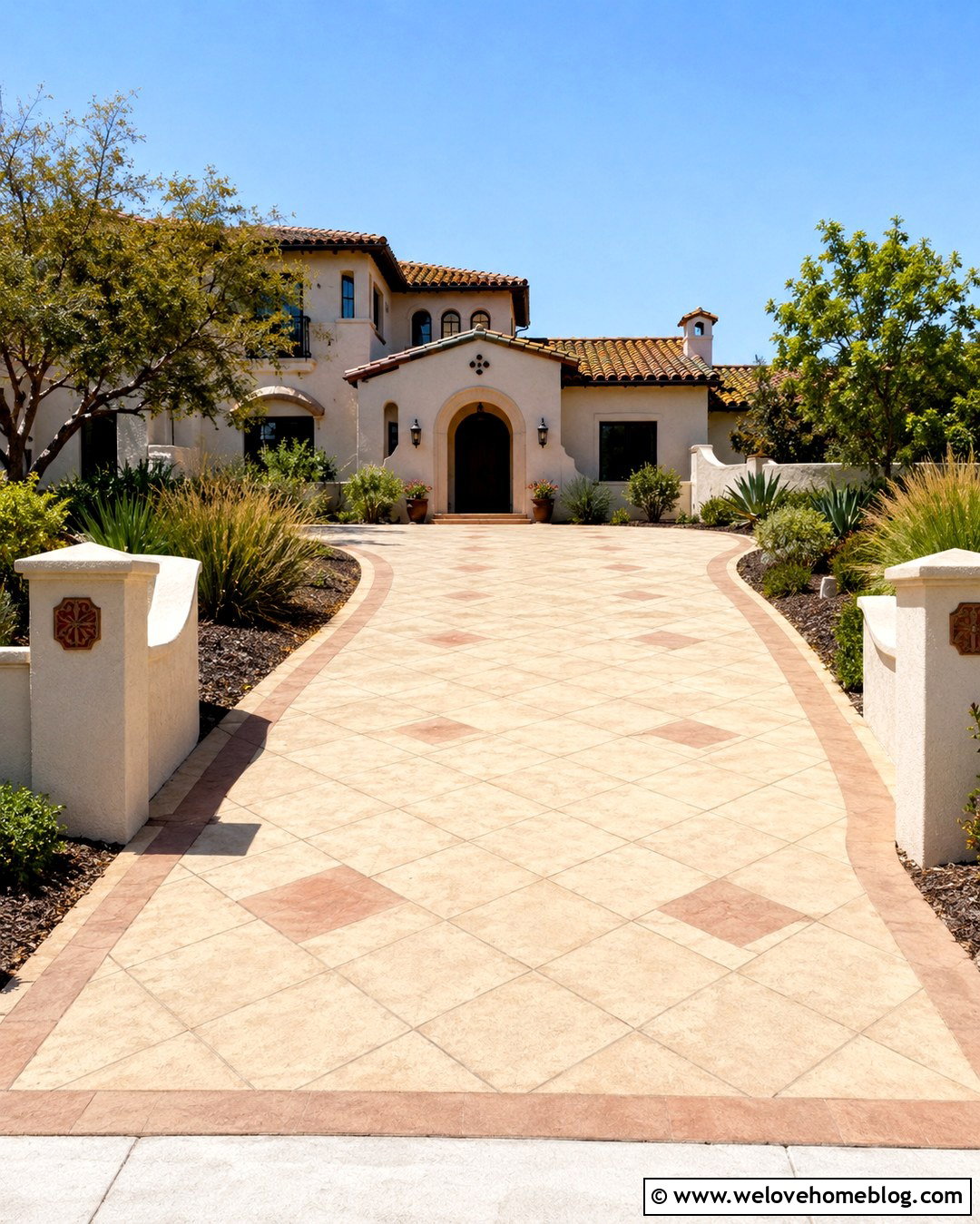
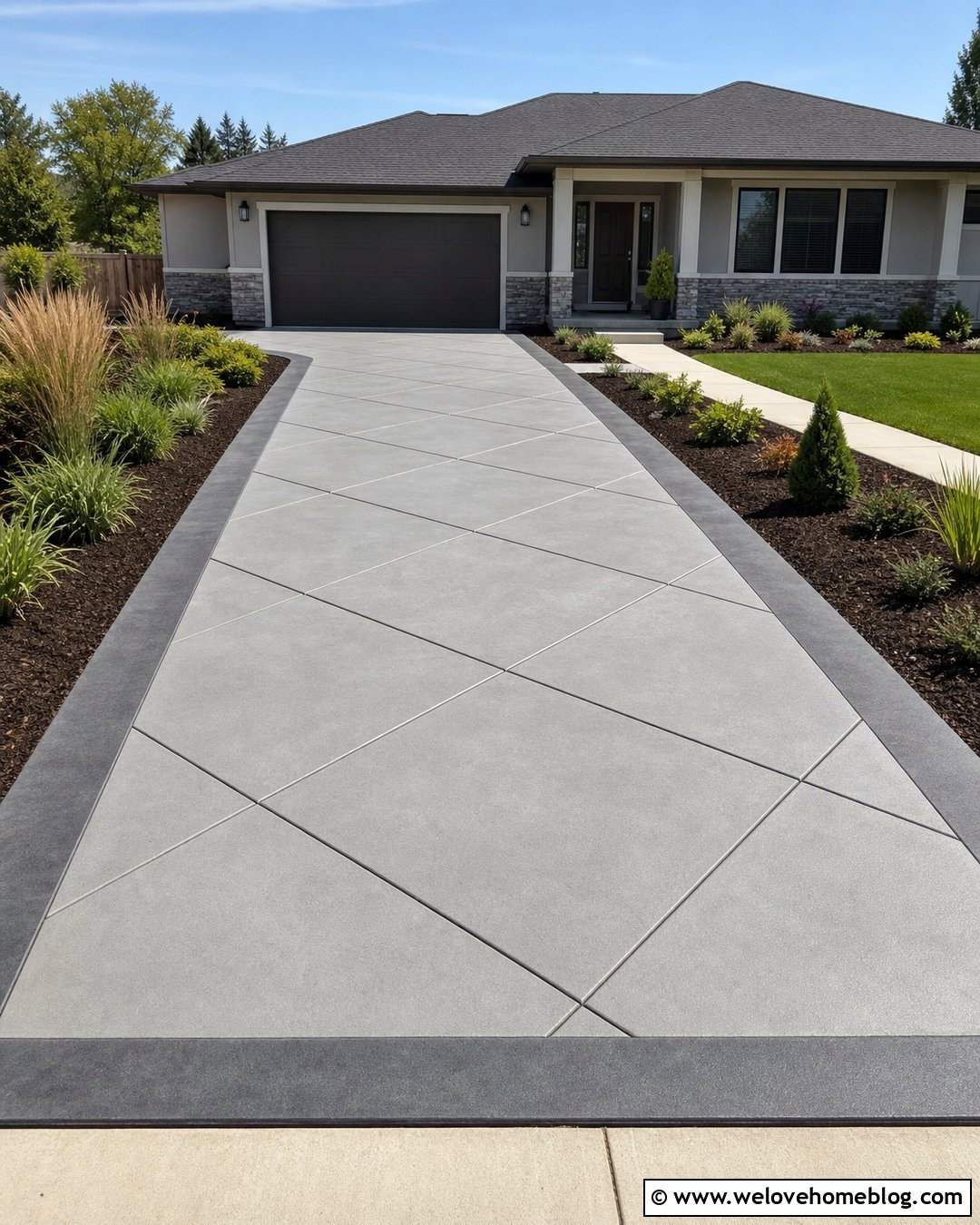
Turning a square tile stencil diagonally creates a diamond layout that can make a compact driveway appear wider and more dynamic. This look works well with Spanish Revival, Mediterranean, and updated ranch homes. Consider a light sandstone base with muted terracotta diamonds and warm-gray joint lines. A solid-color stencil band around the perimeter prevents partial shapes along the edges from appearing unfinished. Use curved planting beds, drought-tolerant shrubs, ornamental grasses, and a stucco entrance wall to support the warm palette. Keep the garage apron slightly simpler so the diagonal pattern does not clash with door panels. For a custom focal point, place a small contrasting diamond motif near the beginning of the driveway. Careful alignment is essential because uneven diagonal lines become noticeable across a large concrete surface.
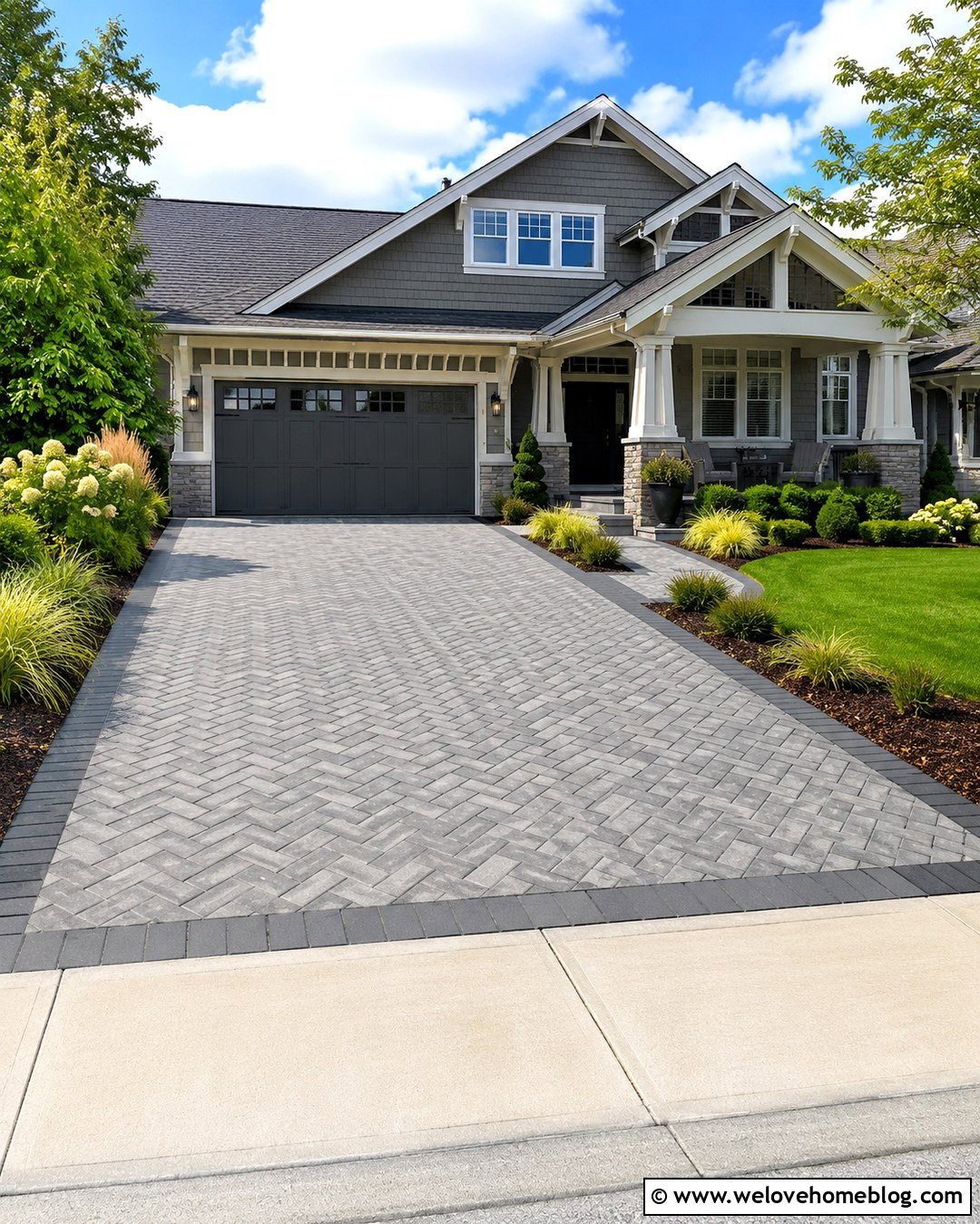
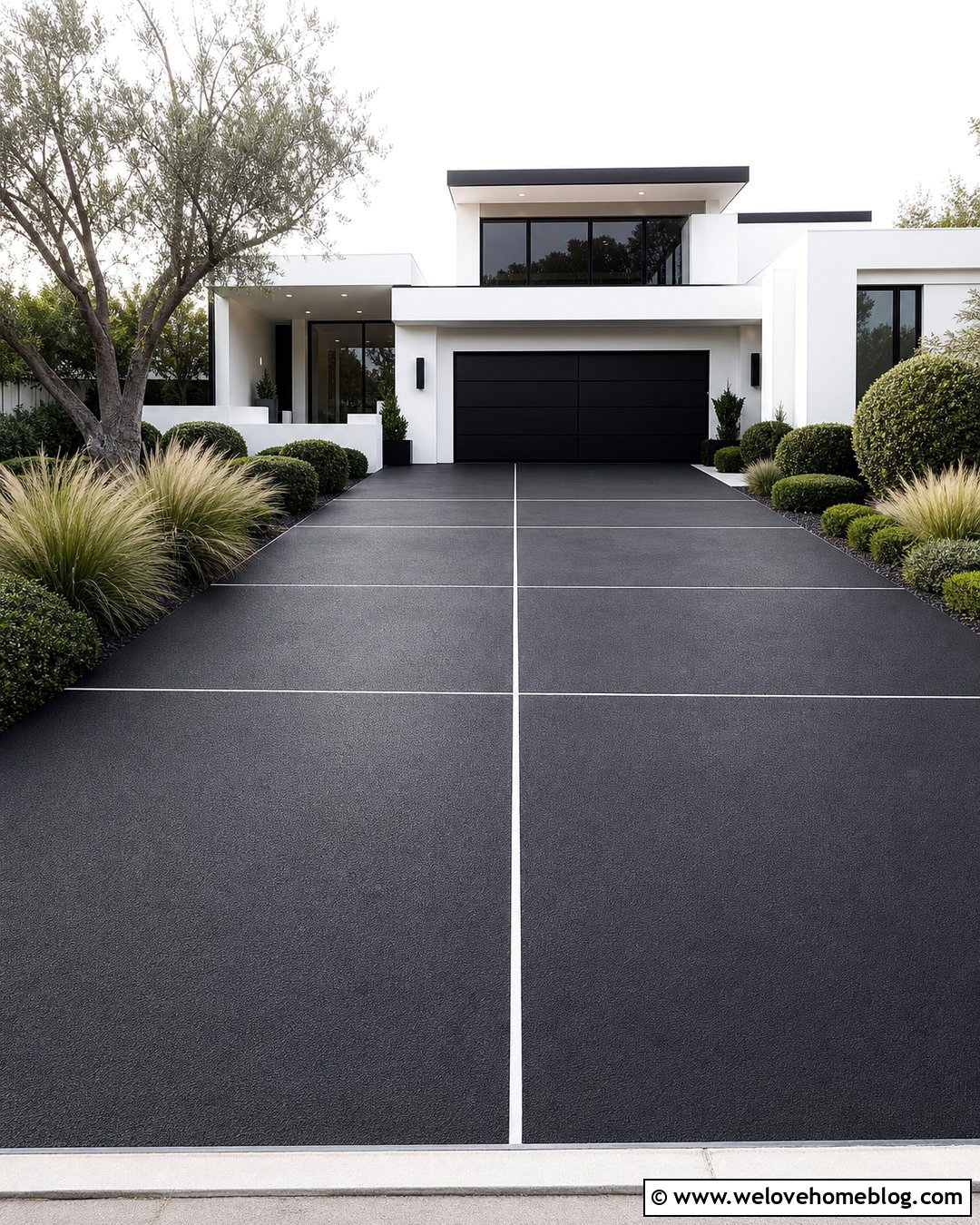
10. Bluestone Driveway Stencil
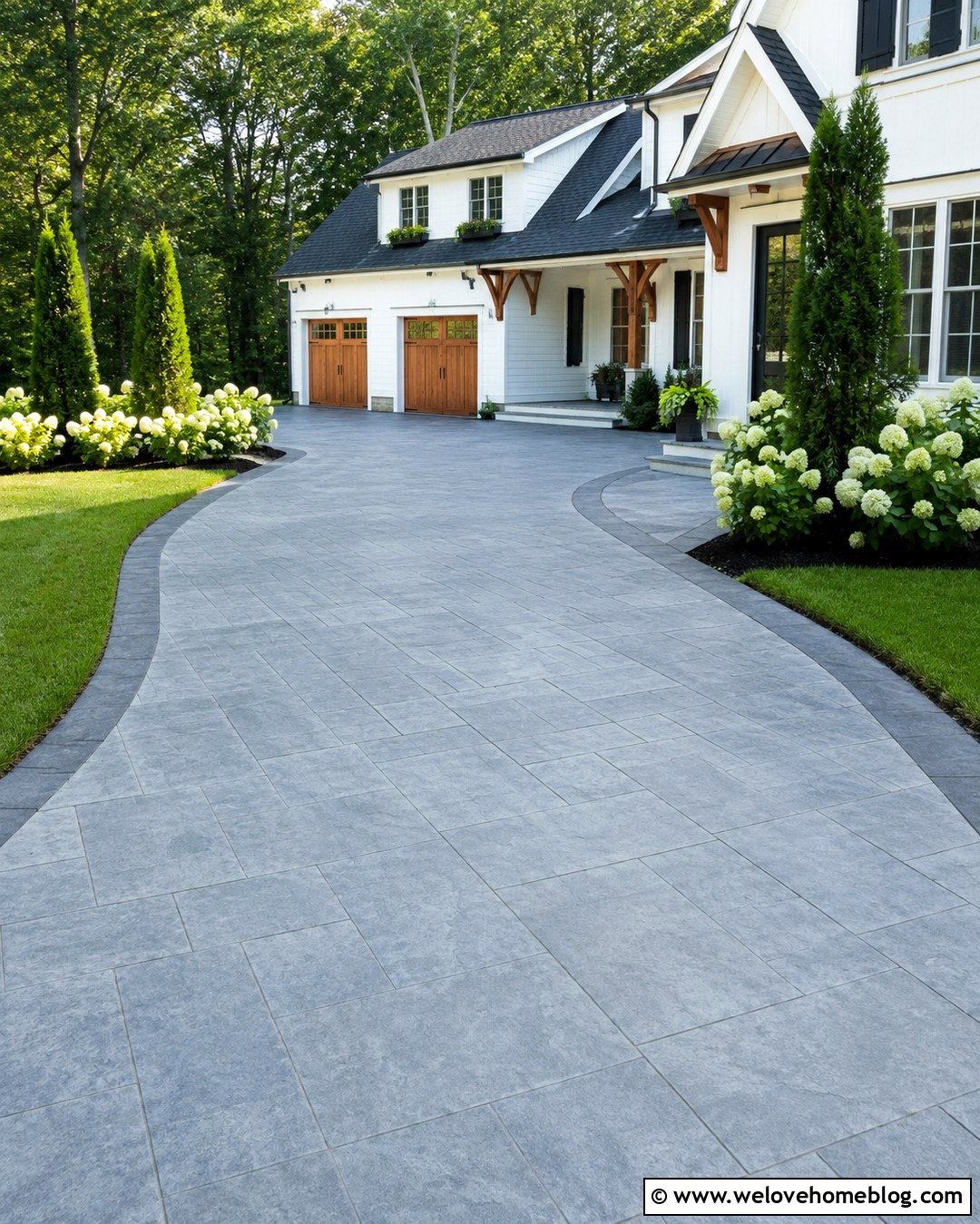
Cool blue-gray coloring gives a stenciled driveway the refined appearance of cut bluestone. Select an irregular rectangular stencil with layered slate, steel, and charcoal tones rather than applying one flat blue coating. The restrained palette pairs beautifully with white siding, natural cedar details, black shutters, or a gray stone facade. A gently curving driveway edged with charcoal blocks helps define the surface while echoing its deeper color. Surround it with fresh green lawn, white hydrangeas, upright evergreens, and a bluestone-toned walkway. The landscaping introduces warmth and prevents the cool driveway from feeling stark. Use lighter coloring through the center and darker accents near the edges to create subtle dimension. A satin or natural-looking sealer will usually appear more convincing than an excessively glossy finish.
11. Sandstone Driveway Stencil
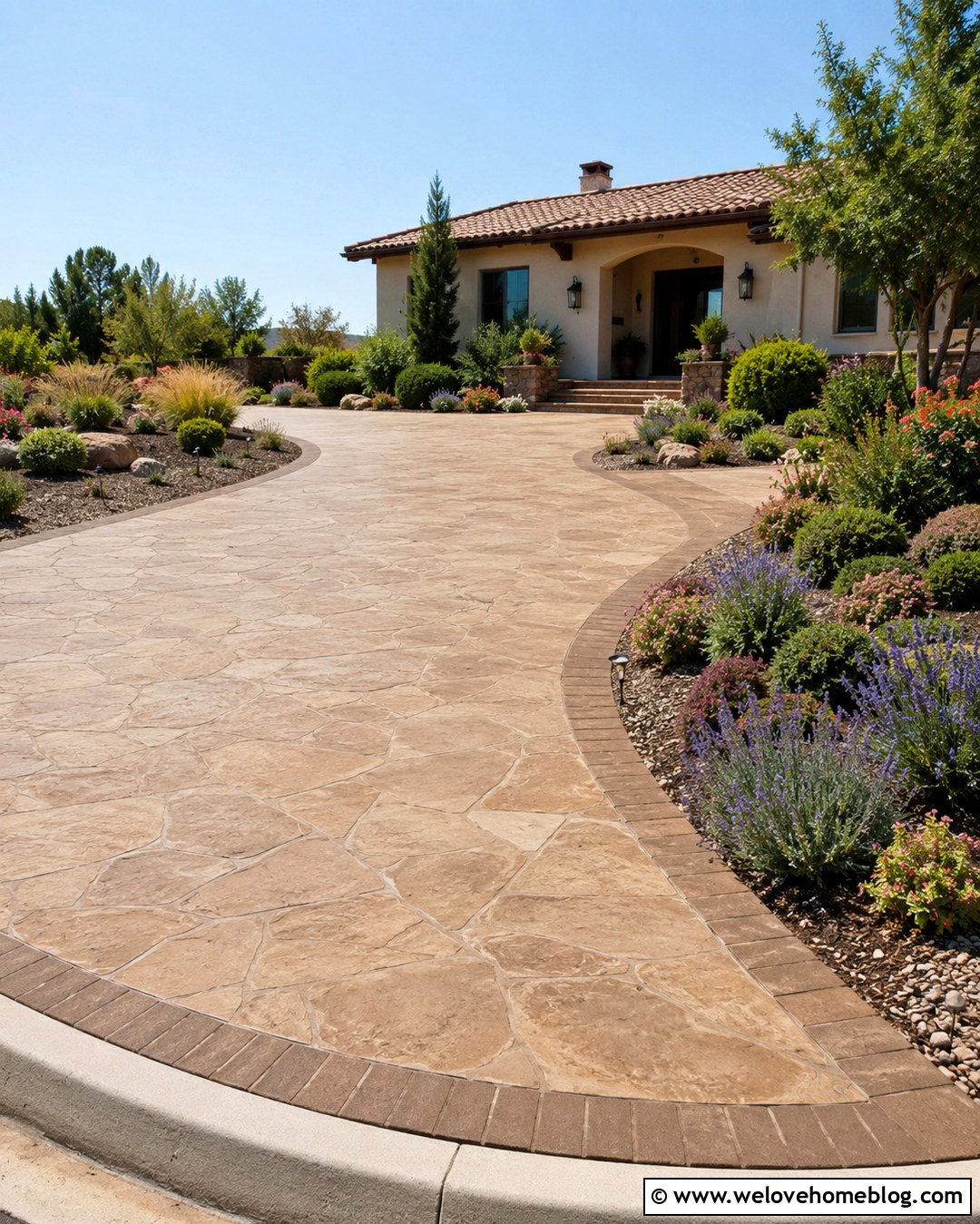
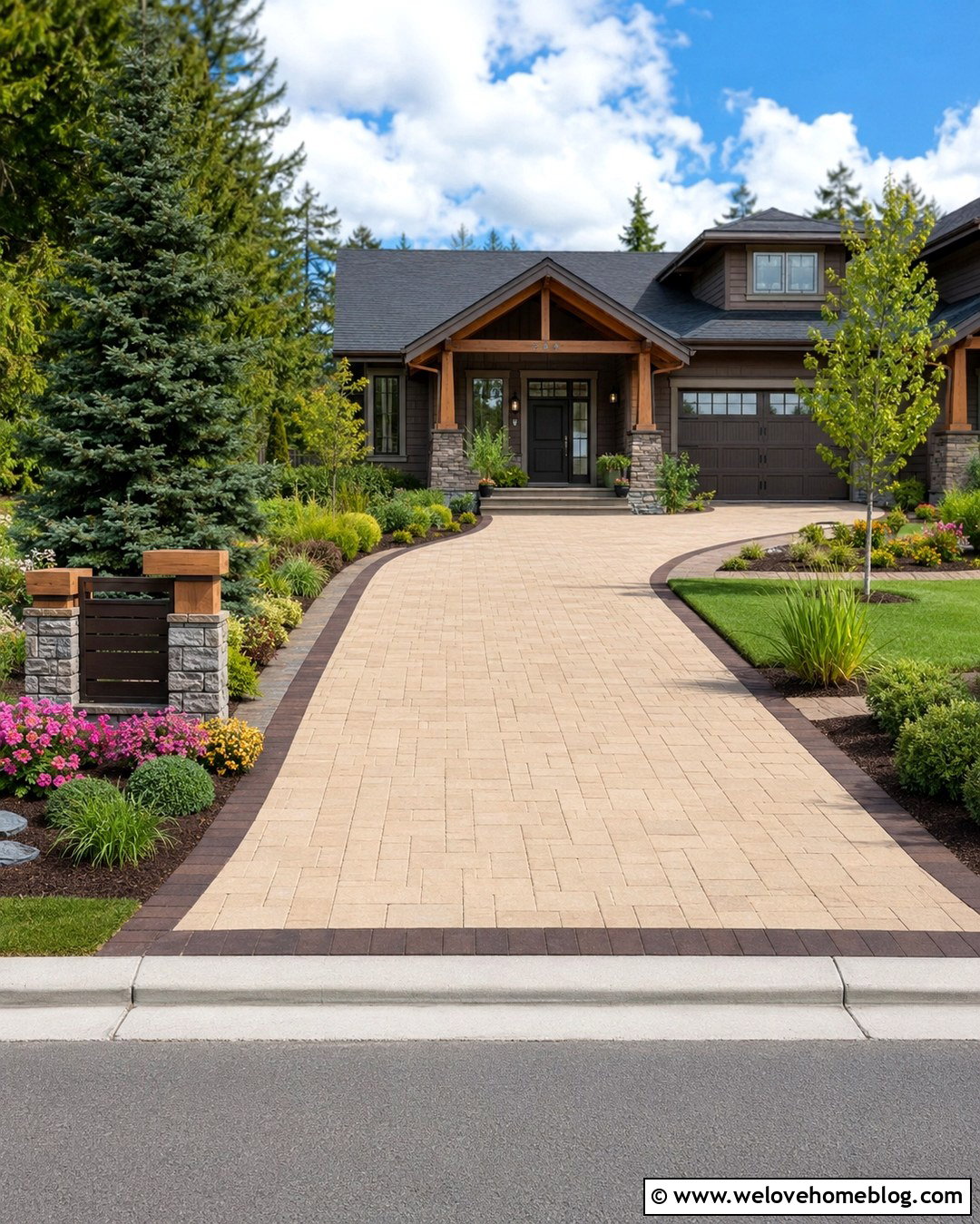
Warm sandstone colors can brighten a driveway while blending naturally with tan brick, cream stucco, and earth-toned siding. Choose an irregular cut-stone stencil with soft beige, buff, and light brown variation. A wide curved layout will make the surface feel relaxed and welcoming, particularly when paired with rounded garden beds. Edge the driveway with medium-brown stenciled blocks or real stone curbing to give the pale field a defined outline. Lavender, sage, ornamental grasses, and compact flowering shrubs can continue the warm, sun-friendly color scheme. Avoid orange-heavy coloring that may make the finish appear artificial. Instead, use several quiet neutral tones with slightly darker simulated joints. A smooth sandstone-colored walkway connecting the driveway to the porch completes the design without adding another competing pattern.
12. Granite Block Driveway Stencil
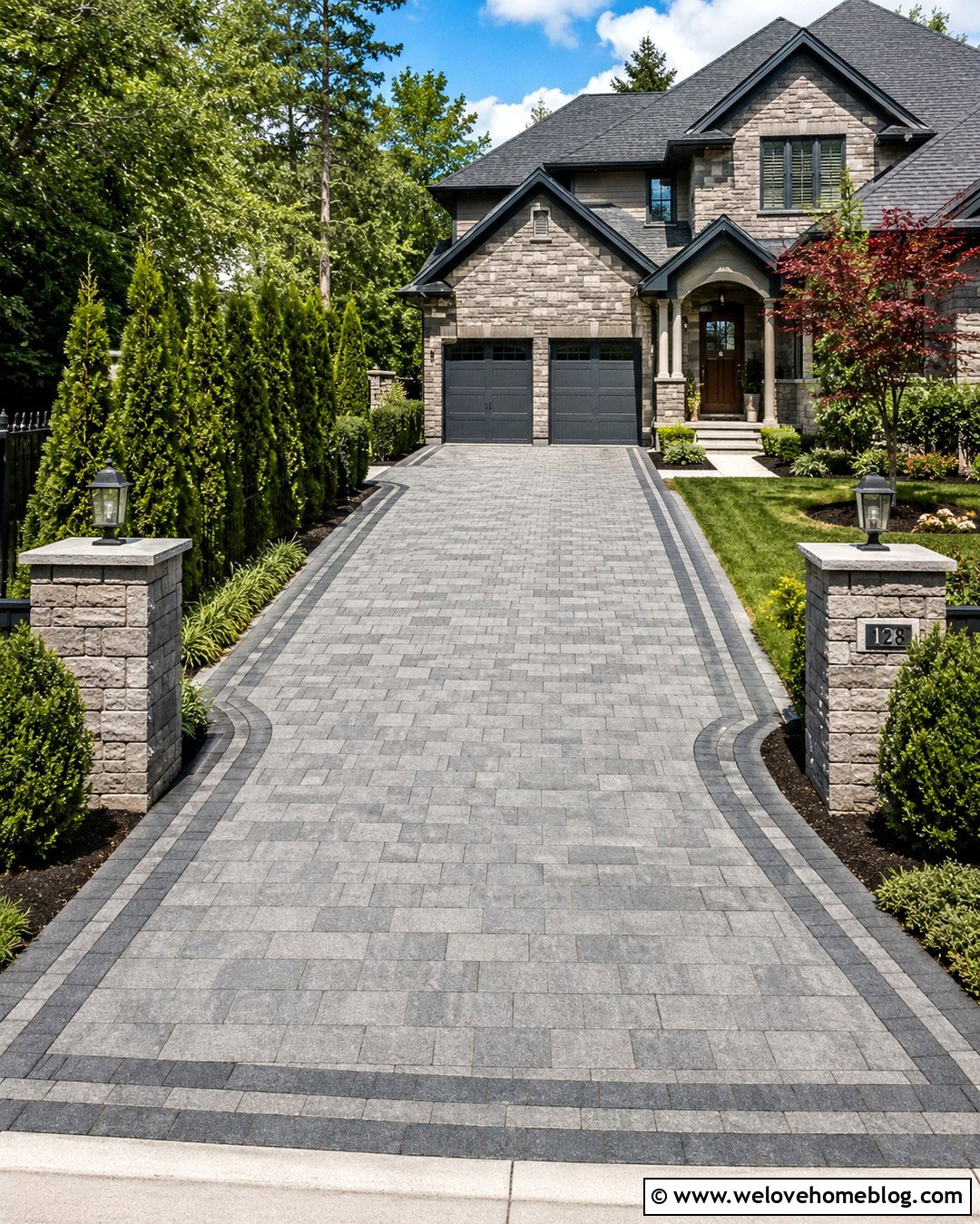
A granite block stencil provides the sturdy appearance of small rectangular setts while maintaining a continuous concrete base. Mix medium gray, charcoal, and occasional taupe blocks to avoid a uniform checkerboard effect. This pattern looks substantial on a wide driveway leading to a stone-front Craftsman or traditional suburban house. Use a straight central layout with a gently flared entrance, then emphasize the opening with matching masonry pillars. A darker double-row stencil border can visually contain the small blocks and establish clean edges beside the lawn. Evergreen shrubs, structured planting beds, and one or two ornamental trees complement the durable character. Because the pattern contains many joints, select restrained colors and a moderate surface texture. The completed driveway should look detailed from nearby while reading as one cohesive gray surface from the street.
13. Compass Medallion Driveway Stencil
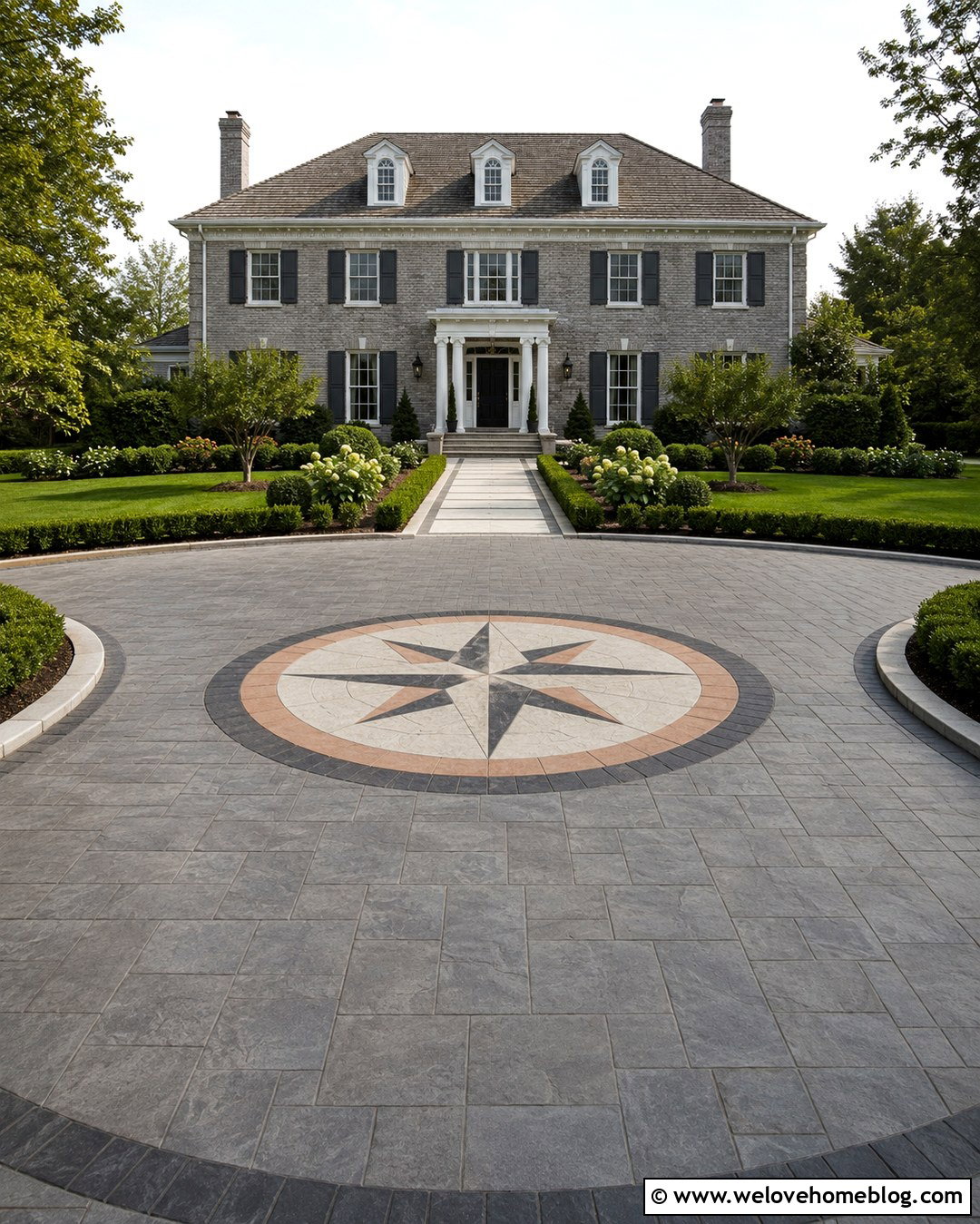
A compass medallion works best as a carefully placed focal point within a simpler stenciled driveway. Start with a warm-gray ashlar slate field, then center the medallion near a circular turnaround, driveway intersection, or broad garage court. Use charcoal, cream, and muted terracotta accents so the feature is visible without looking like a painted sign. Surround it with a narrow circular border that separates the motif from the main pattern. Symmetrical planting beds, low hedges, and a centered walkway help reinforce the balanced composition. Keep vehicles from regularly turning directly over delicate painted details when planning its location. The medallion should occupy only a controlled portion of the surface. This allows the full driveway, landscaping, and house facade to remain the main visual experience from the curb.
14. Hexagon Driveway Stencil
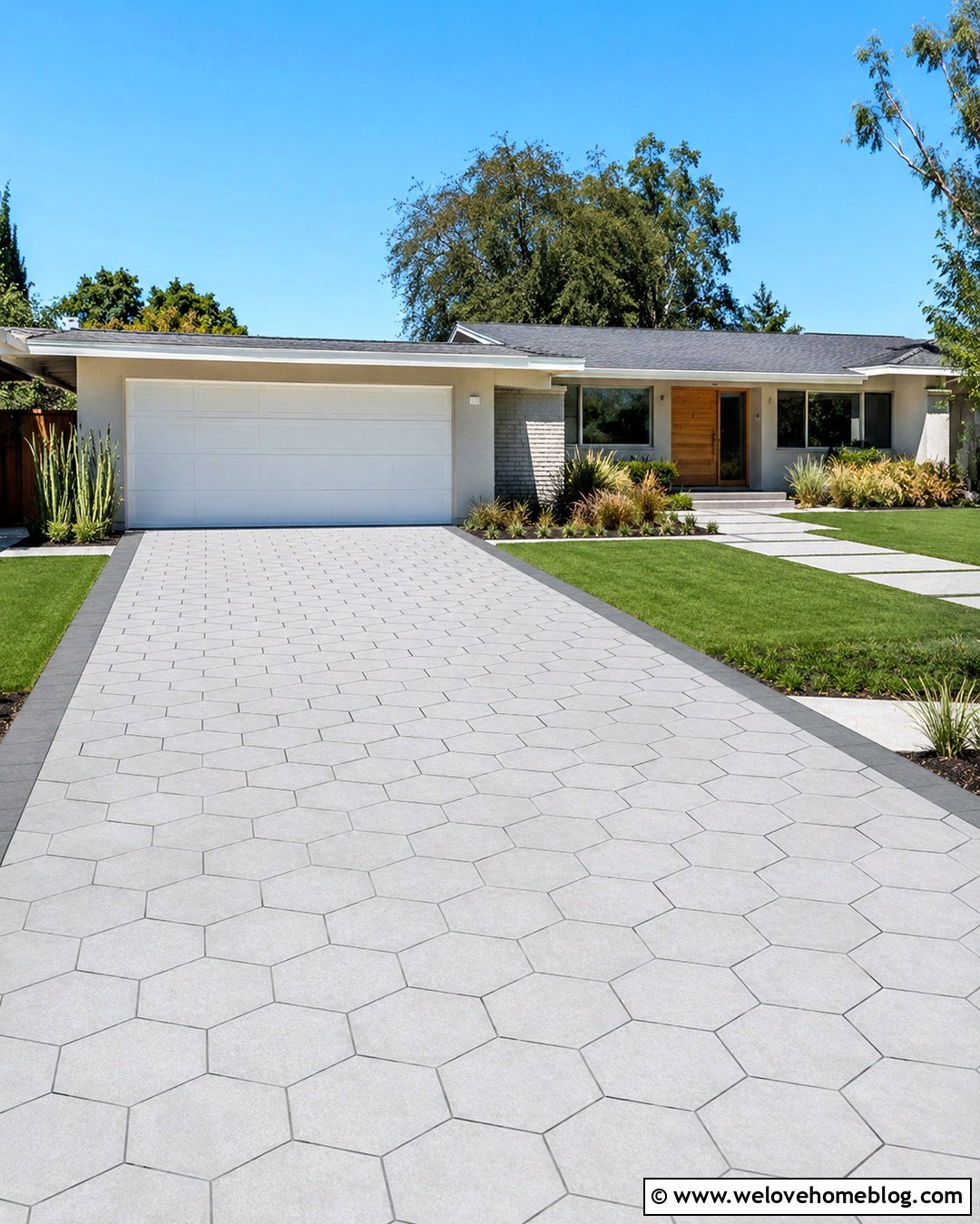
A hexagon stencil introduces geometric character while staying practical enough for a residential driveway. Choose medium-size hexagons in light gray with restrained charcoal joints for a modern look that will not overpower the house. On a straight driveway, align the pattern consistently and surround it with a smooth dark-gray concrete band. A midcentury ranch or contemporary two-story home provides an ideal backdrop. Pair the geometric surface with rectangular lawn panels, linear planting beds, sculptural grasses, and a simple concrete walkway. Two or three slightly darker hexagons may be scattered through the design, but avoid strong multicolor combinations that resemble indoor floor tile. The repeating shapes already provide plenty of detail. A clean garage transition and understated landscaping allow the pattern to look current, organized, and intentional.
15. Modern Linear Driveway Stencil
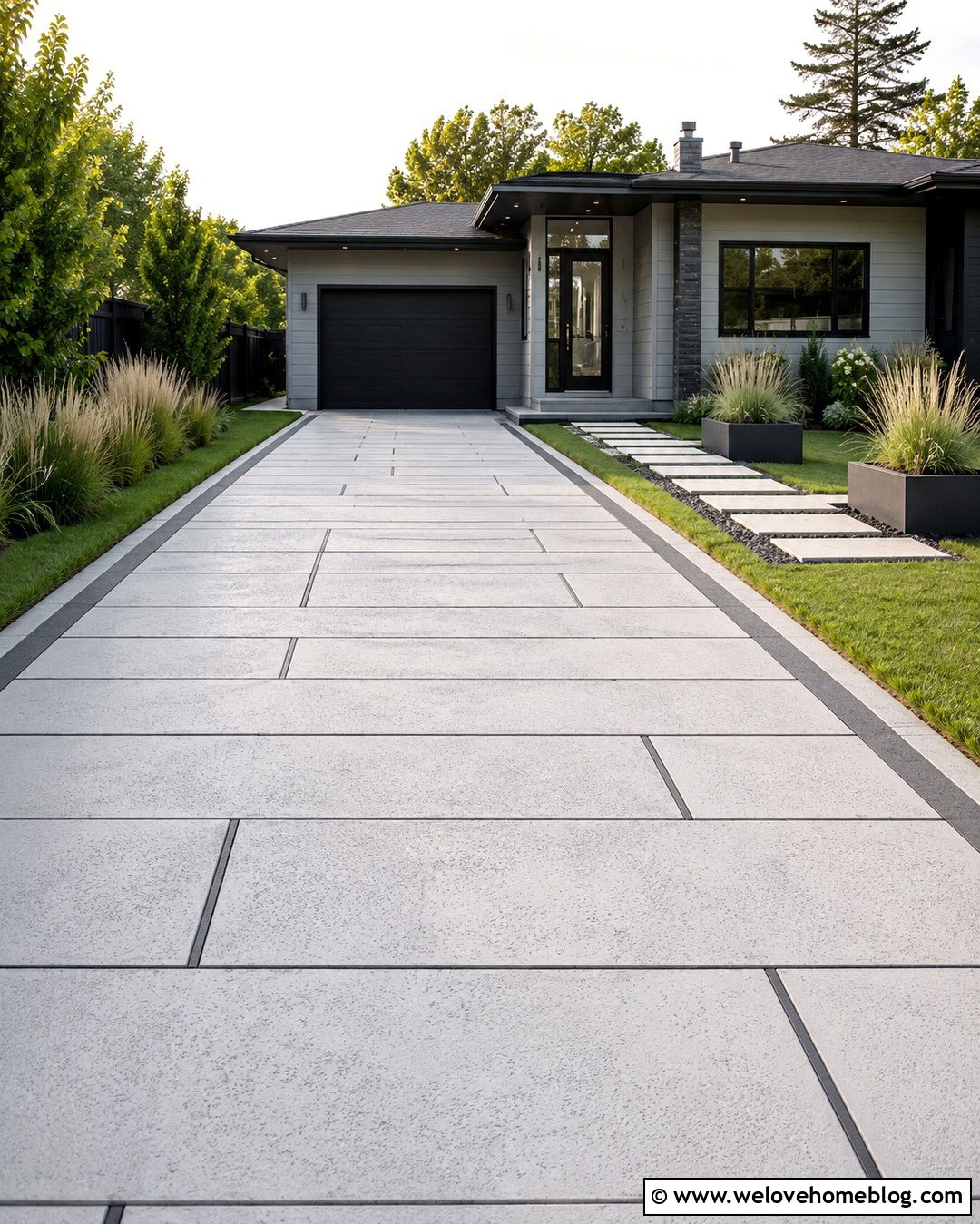
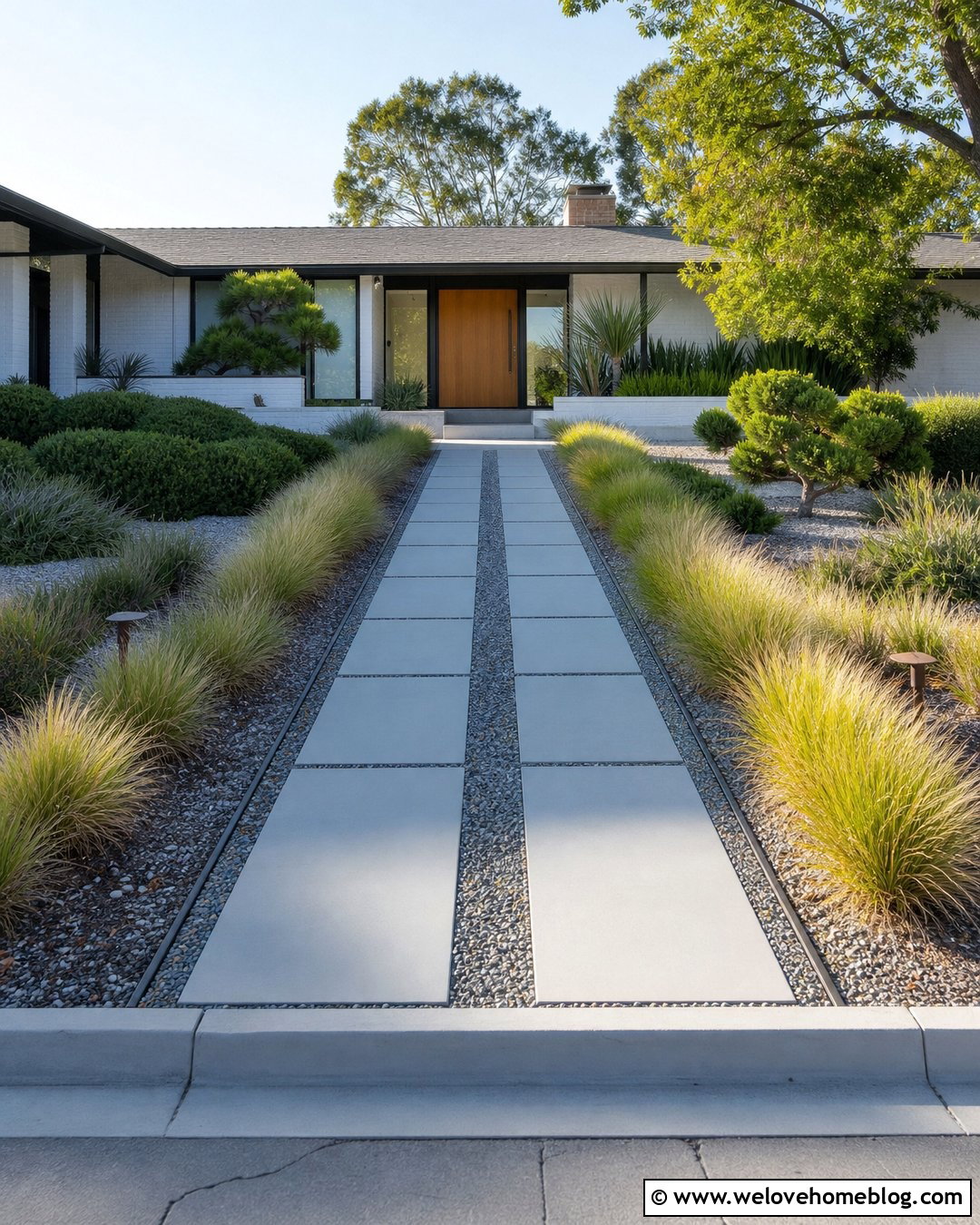
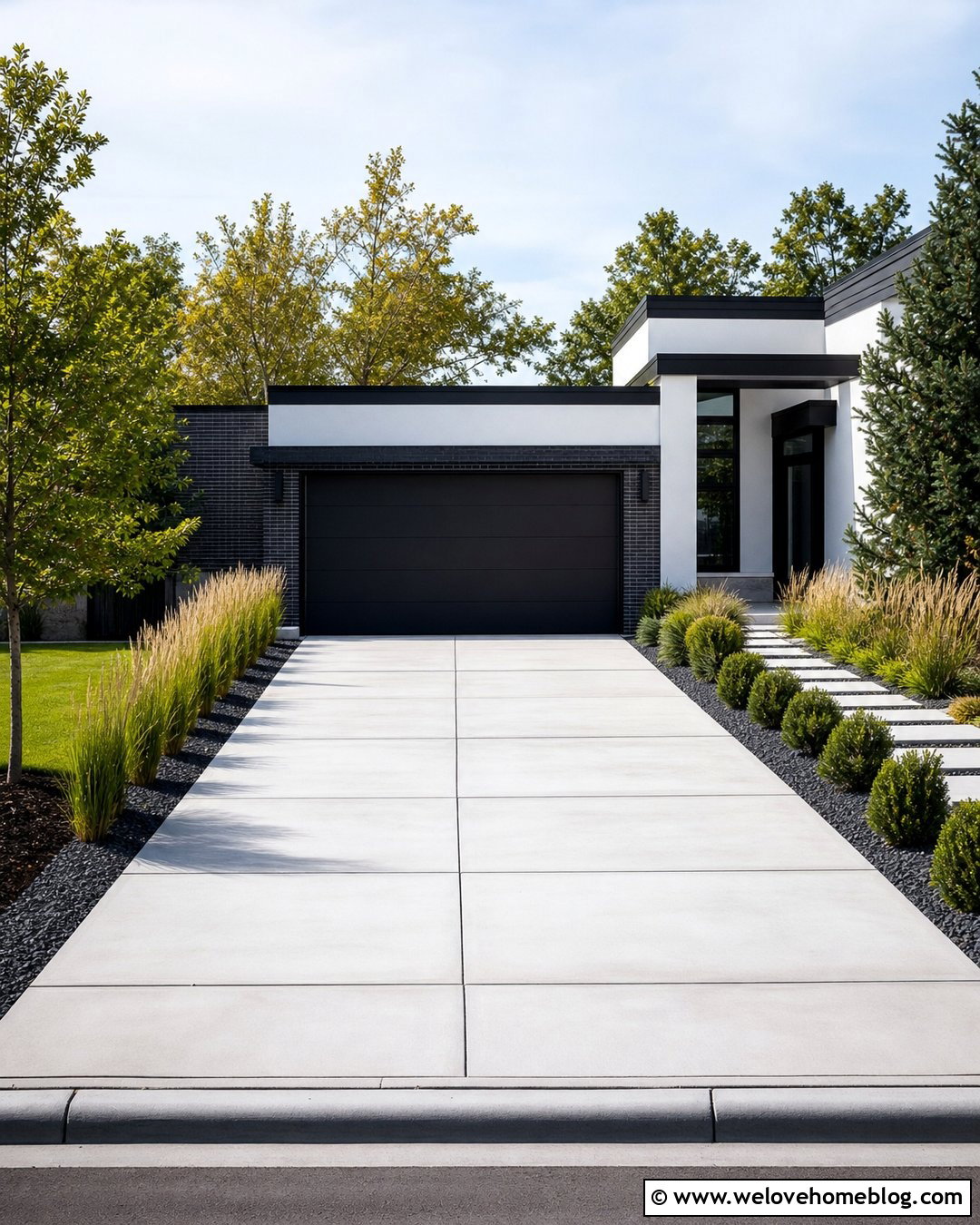
Long rectangular stencil lines can visually lengthen a driveway and complement contemporary architecture. Use a smooth light-gray concrete overlay with narrow charcoal lines arranged in offset linear sections. Position the longest shapes in the direction of the garage to create an uninterrupted sense of movement. A black or dark-gray perimeter band will frame the composition without adding another pattern. Complete the look with horizontal house siding, a flat or low-pitched roof, rectangular planters, ornamental grasses, and a straight slab walkway. Thin lawn strips along one edge can introduce green color while preserving the minimalist layout. Skip antiqued brown highlights, which may conflict with the crisp geometry. Instead, use subtle variations of gray. The overall driveway should appear streamlined, bright, and carefully connected to the home’s architectural lines.
16. Driveway With Brick Stencil Border
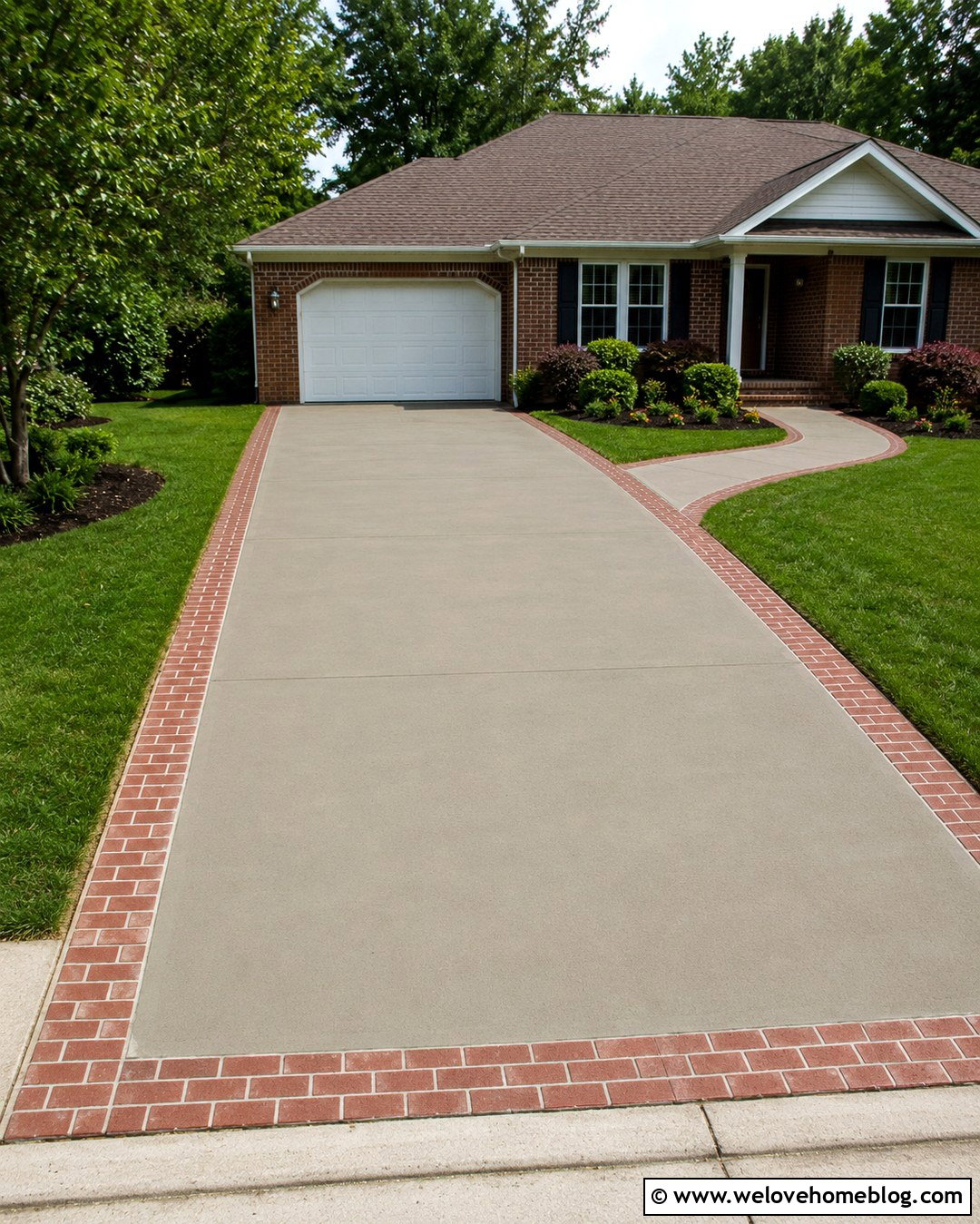
You do not have to stencil every inch of concrete to create a noticeable improvement. A smooth, warm-gray driveway framed by a red-brown brick stencil border offers a balanced combination of simplicity and detail. Run the border along both sides, across the entrance apron, and around the garage court so it forms one continuous outline. This approach suits a suburban driveway with a brick ranch, Colonial, or Craftsman house. Match the border to the home’s masonry, but use a slightly muted tone so the new finish does not appear too bright. Neatly trimmed lawn, foundation shrubs, and a brick-edged walkway can repeat the same visual language. The plain center remains easy to maintain, while the patterned perimeter defines the driveway shape and improves its presence from the street.
17. Two Tone Driveway Stencil
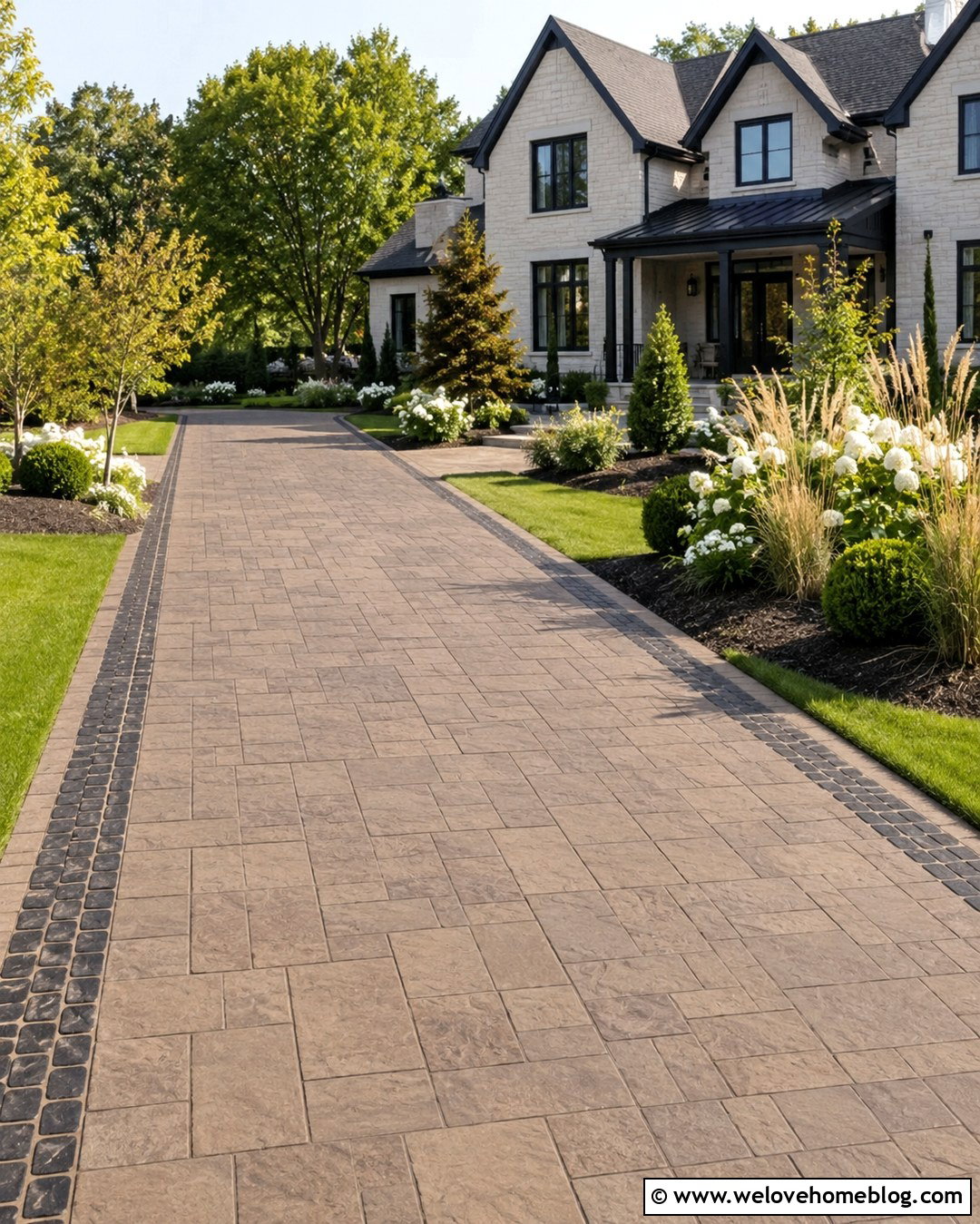
Two-tone coloring makes a stencil pattern easier to see and gives the driveway more depth, but the shades should remain closely related. Consider a taupe ashlar field with dark-brown joints and a charcoal cobblestone border. The combination creates clear definition without introducing too many competing colors. A broad driveway leading to a transitional home provides enough room for both patterns to be appreciated. Repeat the taupe on the walkway and the charcoal on porch steps, planters, or exterior trim. Layered planting beds with green shrubs, white flowers, and ornamental grasses will keep the neutral surface from feeling dull. Before choosing colors, compare samples beside the house in direct sun and shade. A coordinated palette makes the stencil appear integrated with the property instead of looking like a separate decorative coating.
18. Circular Cobblestone Stencil Driveway
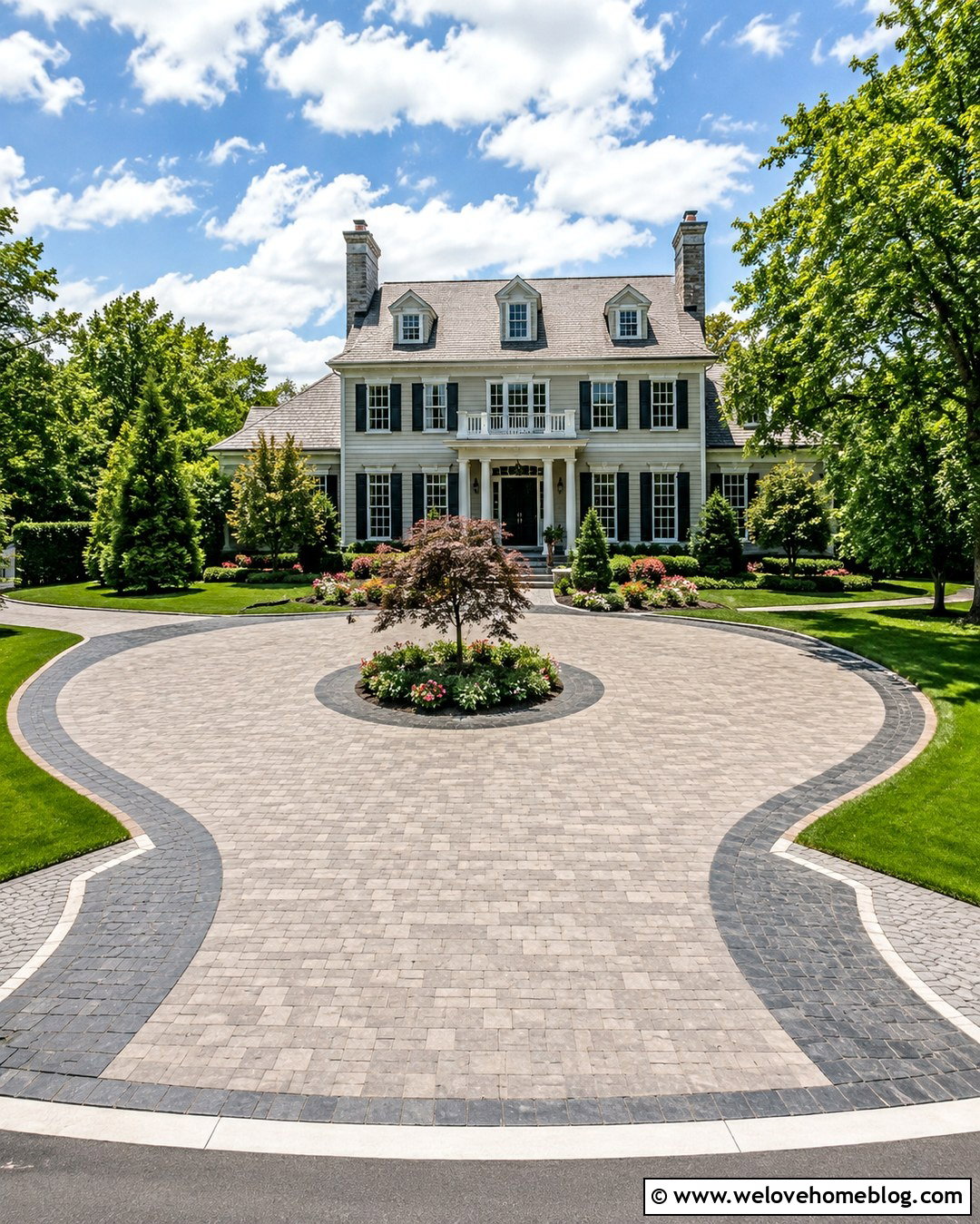
A circular driveway naturally complements the arcing lines and traditional character of a cobblestone stencil. Use mixed warm-gray and taupe coloring across the main driving lane, then add a darker soldier-course border along both the outer edge and center island. The double border clearly explains the circular shape from the curb. Fill the island with a small ornamental tree, low evergreen shrubs, flowering perennials, and a simple path toward the front door. A Colonial, Tudor, or stone country house provides a fitting background. Keep the cobblestone scale moderately large so the pattern does not become visually noisy across the broad surface. At the two street entrances, flare the driveway slightly and continue the border around each curve. The completed layout should feel formal, functional, and easy to understand.
19. Curved Slate Stencil Driveway
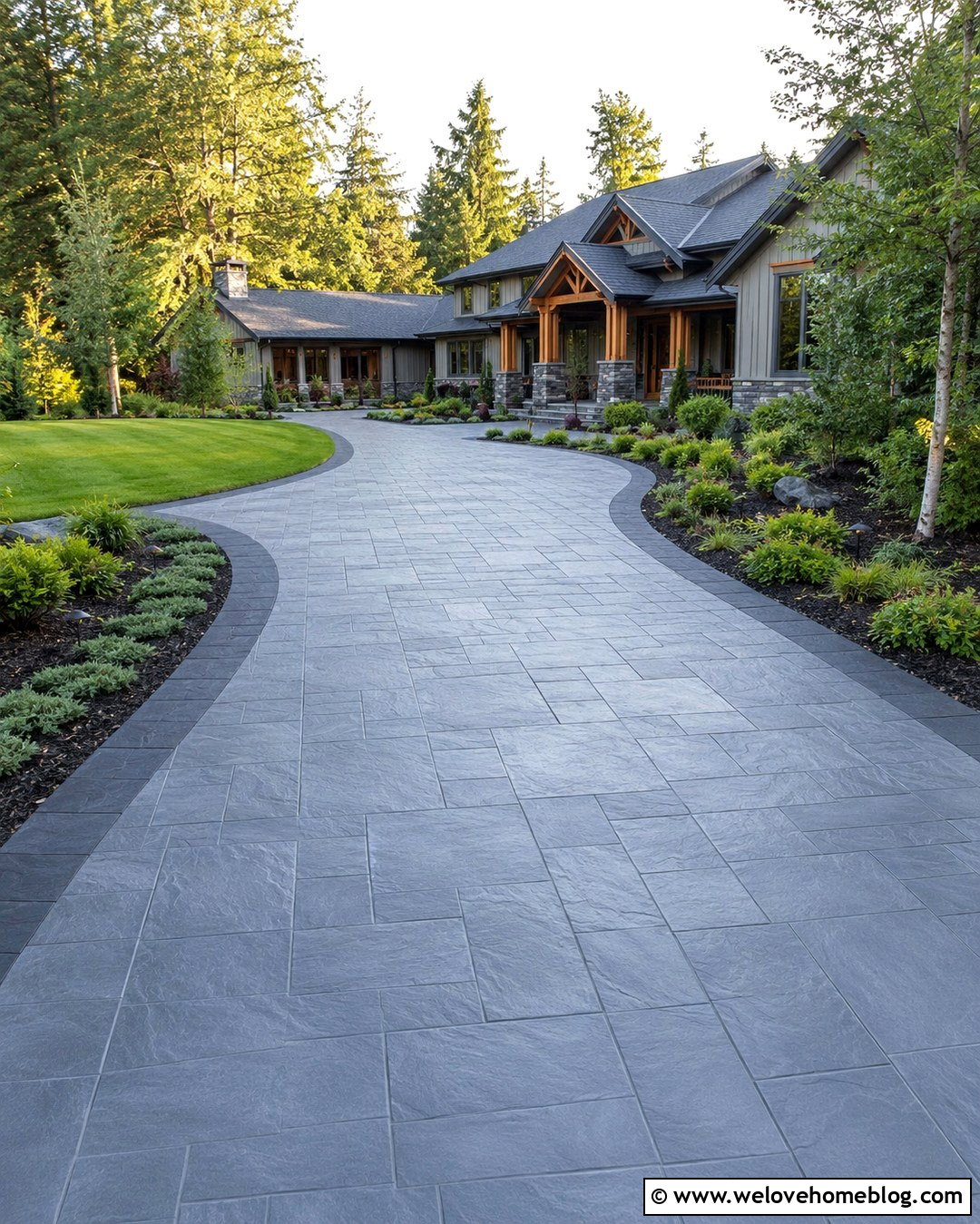
A slate stencil can emphasize the graceful movement of a driveway that bends through a landscaped front yard. Choose a random rectangular slate pattern in medium gray with subtle blue and charcoal accents. A flexible dark border should follow the driveway curves smoothly rather than breaking into awkward straight segments. Plant layered beds along the outside bend, using low ground covers near the pavement and taller shrubs farther back. On the inside curve, preserve enough open lawn to keep visibility clear and make the approach feel spacious. This combination works with Craftsman, contemporary, and wooded suburban homes. Repeat the slate color on a front walkway or porch landing. The driveway’s shape, stone-inspired pattern, and planting arrangement should guide attention naturally toward the house instead of competing for it.
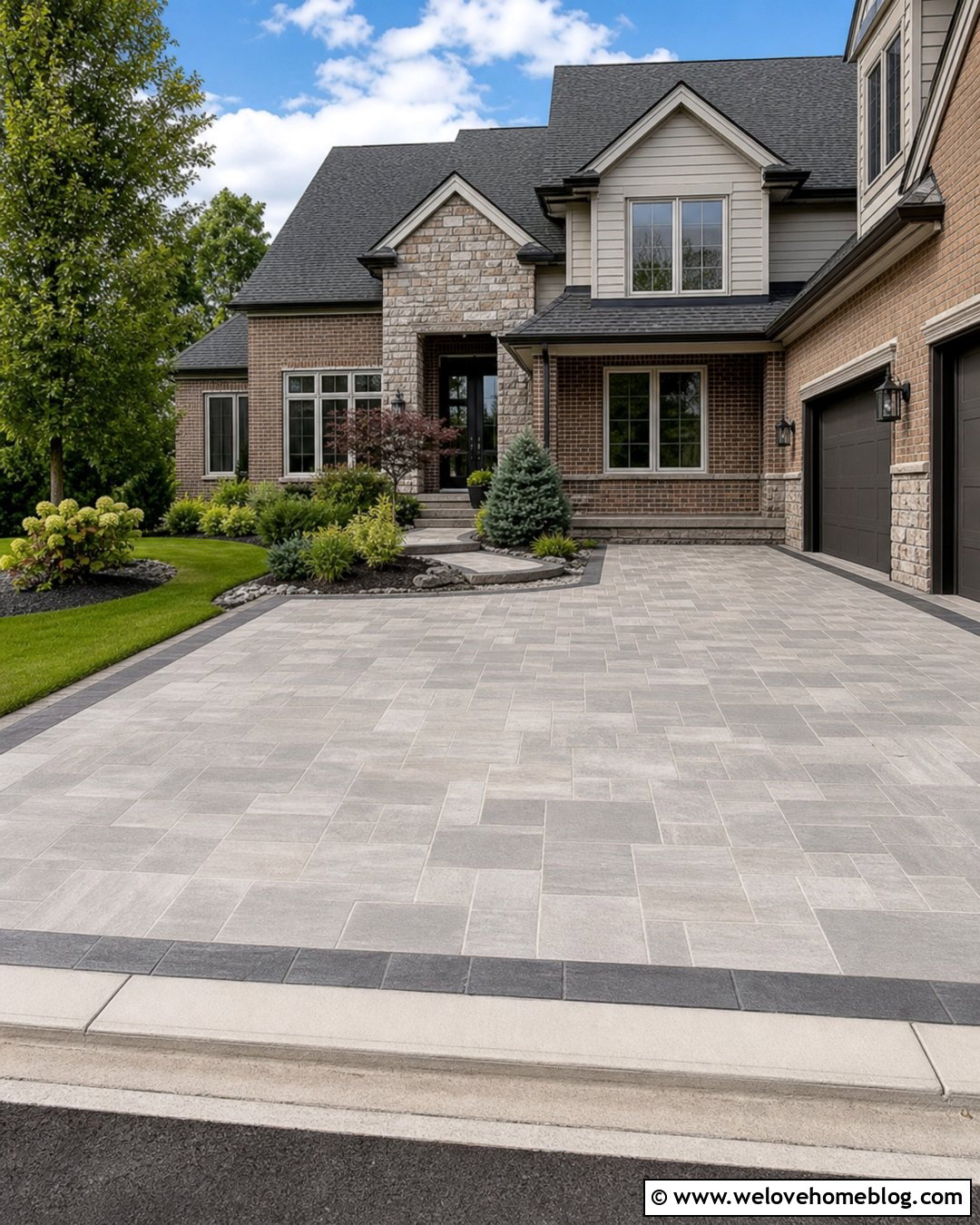
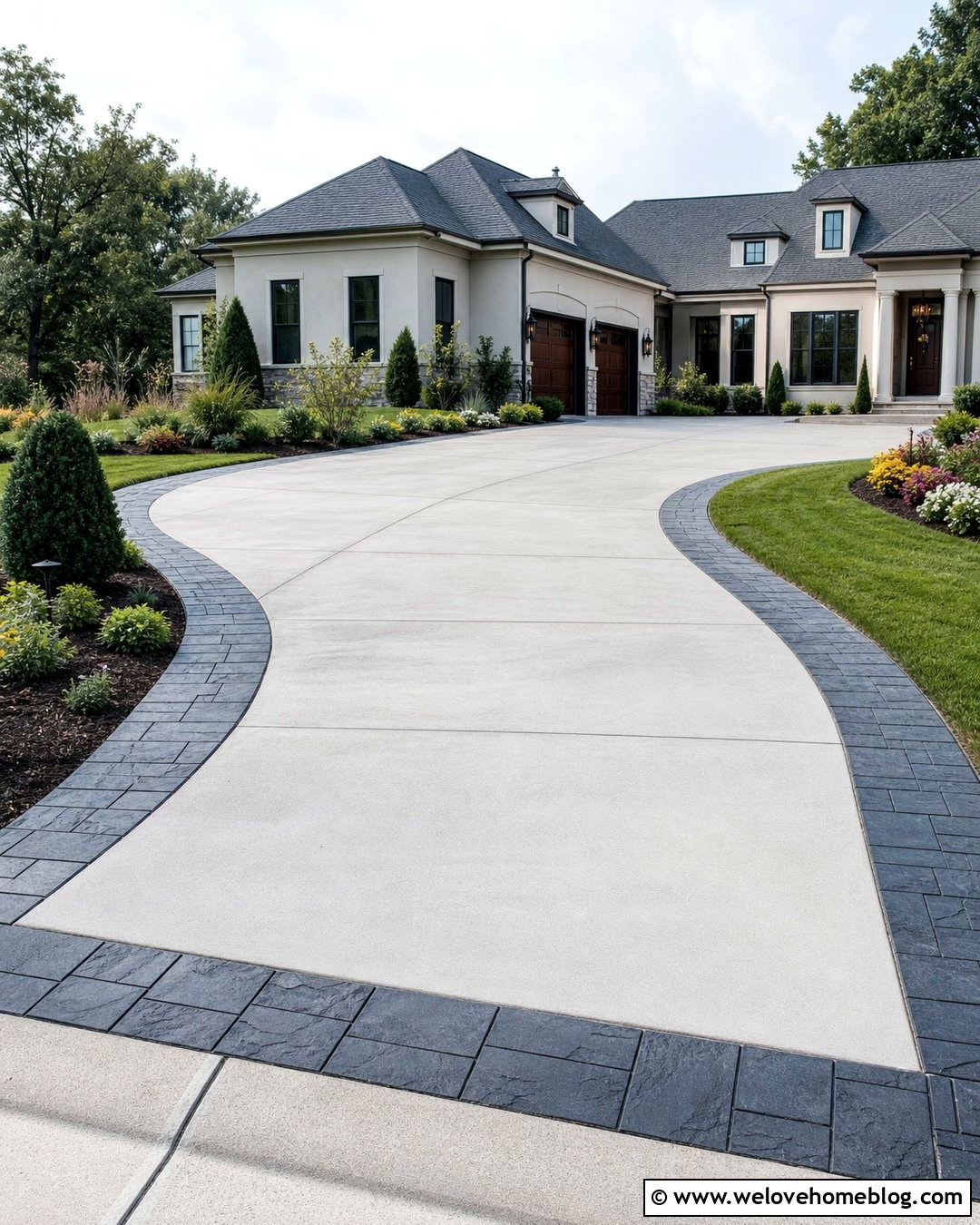
20. Driveway Apron Stencil
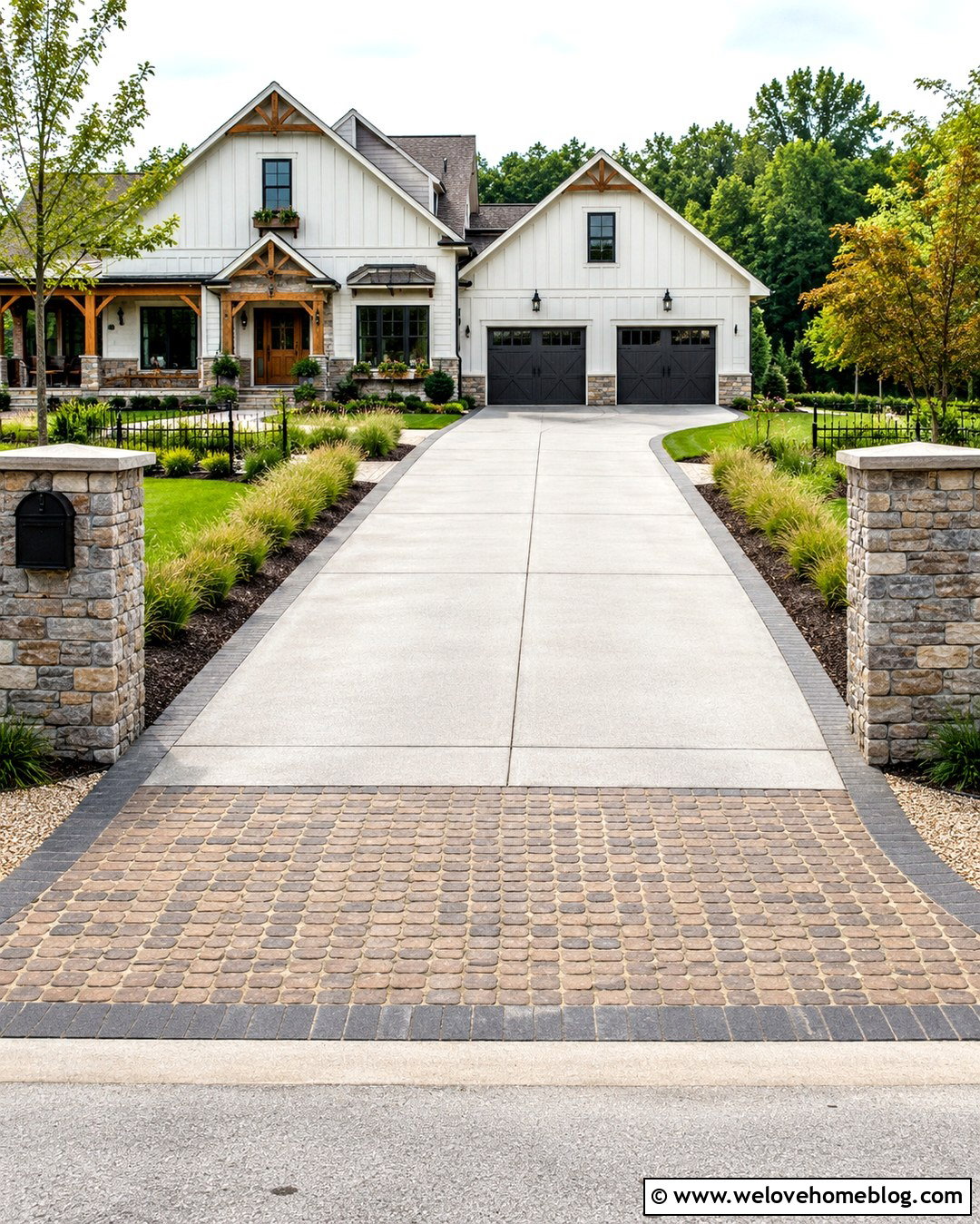
A stenciled apron creates a strong entrance without covering the entire driveway in a decorative pattern. Use a cobblestone, herringbone brick, or ashlar slate stencil across the first several feet near the curb, then transition into smooth poured concrete. A charcoal band can outline the apron and provide a clean stopping point for the pattern. Choose colors that coordinate with the house, entrance pillars, mailbox, and walkway. For example, warm brown cobblestones pair well with a farmhouse facade and natural stone columns, while blue-gray slate suits a modern home with black trim. Add matching planting beds on both sides of the entrance to frame the feature. This focused approach gives the driveway a distinctive street presence while allowing the longer central section to remain visually quiet and uncomplicated.
Conclusion:
The best driveway stencil design considers much more than the surface pattern. Color, scale, driveway shape, borders, landscaping, walkways, and the home’s exterior should all support the same visual direction. Slate and geometric layouts suit cleaner architecture, while brick, cobblestone, and European fan patterns complement traditional properties. A border or entrance apron can provide enough detail when a fully patterned driveway feels excessive. Before installation, evaluate the concrete’s condition, drainage, control joints, surface preparation, texture, and maintenance needs with a qualified professional. Test physical color samples outdoors whenever possible, since light can change their appearance. With thoughtful planning, these 20 Driveway Stencil Ideas can create a practical, coordinated, and attractive approach to your home.

Related posts:


Leave a Reply