
A long driveway is more than a route from the street to the garage. It shapes the first impression of the property and creates a sense of arrival. If you searched for **20 Driveways For Long Ideas**, focus on designs that balance appearance with grading, drainage, visibility, maintenance, and daily traffic. Gravel, asphalt, concrete, brick, pavers, and permeable surfaces can all work beautifully when paired with the right borders and landscaping. Curves can soften a large yard, while straight lines can frame the house and make the entrance feel more formal. Gates, trees, lighting, and turnaround areas add function without making the route feel crowded. The complete driveway looks below offer practical inspiration for **20 Driveways For Long Ideas**. ()

1. Long Gravel Driveway With Stone Edging
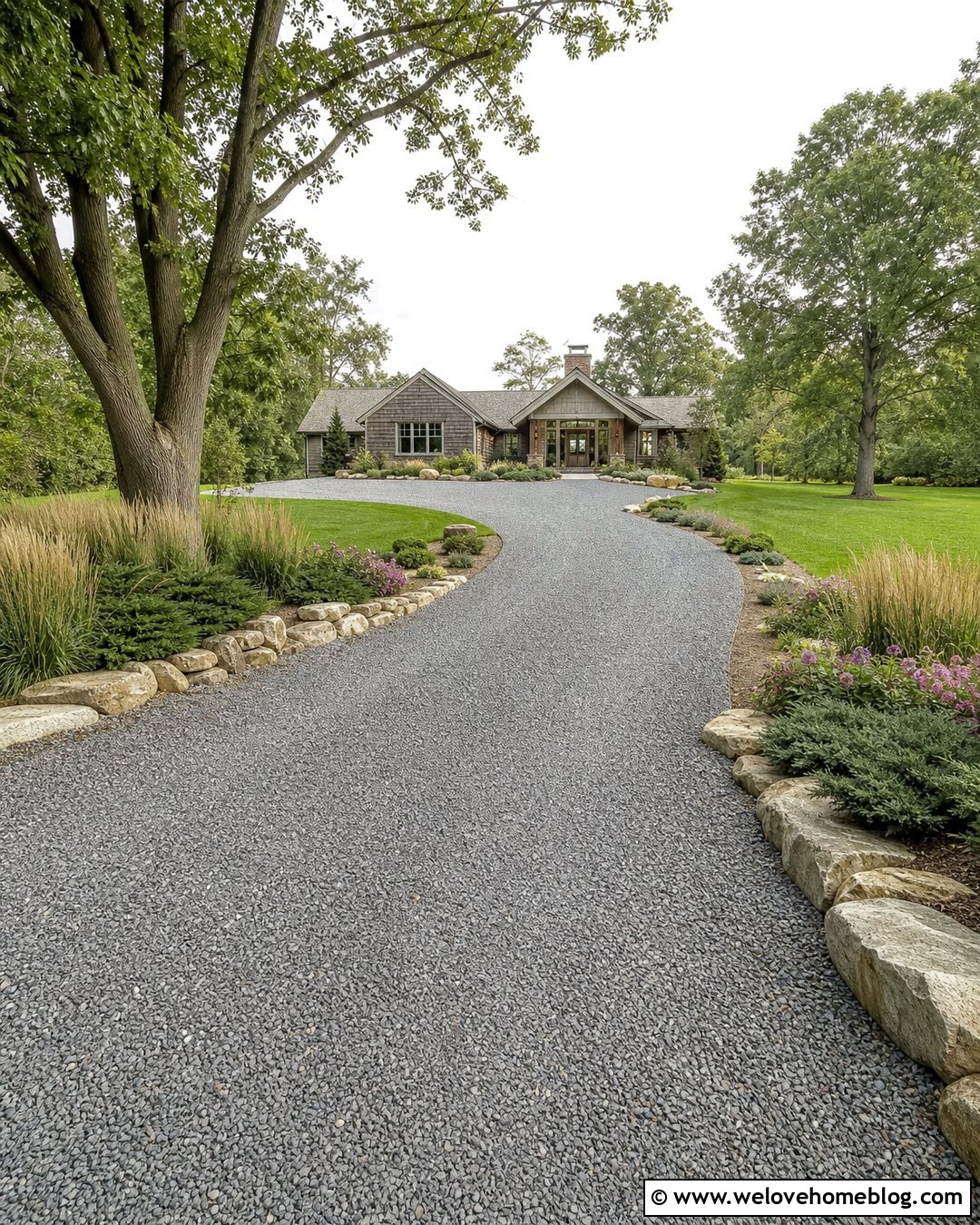
Loose gray gravel gives a long driveway a relaxed country appearance without requiring an overly decorative layout. Run the driveway in a gentle curve so the house is revealed gradually rather than immediately from the road. Large fieldstones along both edges keep the gravel contained and create a clear boundary beside the lawn. Add wide planting pockets with ornamental grasses, low junipers, and flowering perennials at selected points. Leaving some open lawn between the beds prevents the long route from looking cluttered. Near the house, widen the surface into a simple parking court finished with the same gravel. A compacted base, suitable driveway aggregate, and dependable drainage help reduce ruts, spreading, and recurring maintenance on such an extended surface.
2. Long Asphalt Driveway With Brick Borders
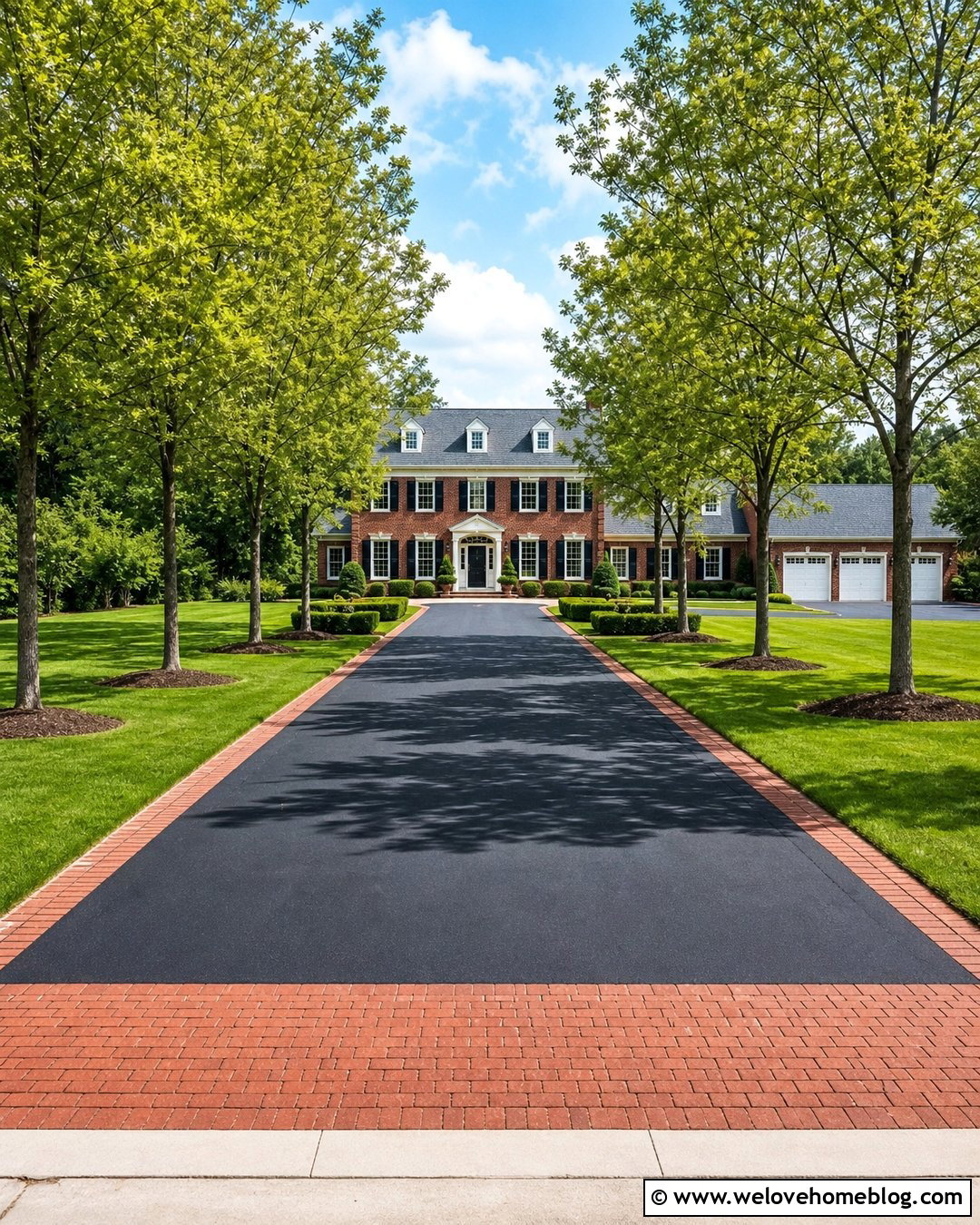
Black asphalt is practical for a long driveway, but it can appear visually heavy when used without contrasting details. Narrow red or charcoal brick borders introduce color and define the pavement from the street to the garage. A straight layout complements a colonial or traditional brick house, especially when the driveway lines up with an attached side garage. Plant evenly spaced shade trees outside the brick edging to create rhythm without allowing roots to interfere with the pavement. Low hedges closer to the house can make the arrival area feel more finished. Use a matching brick apron at the road and another ribbon near the parking court. These repeated accents connect the long stretch of asphalt to the architecture and make the overall design feel intentional.
3. Long Concrete Driveway With Grass Strips
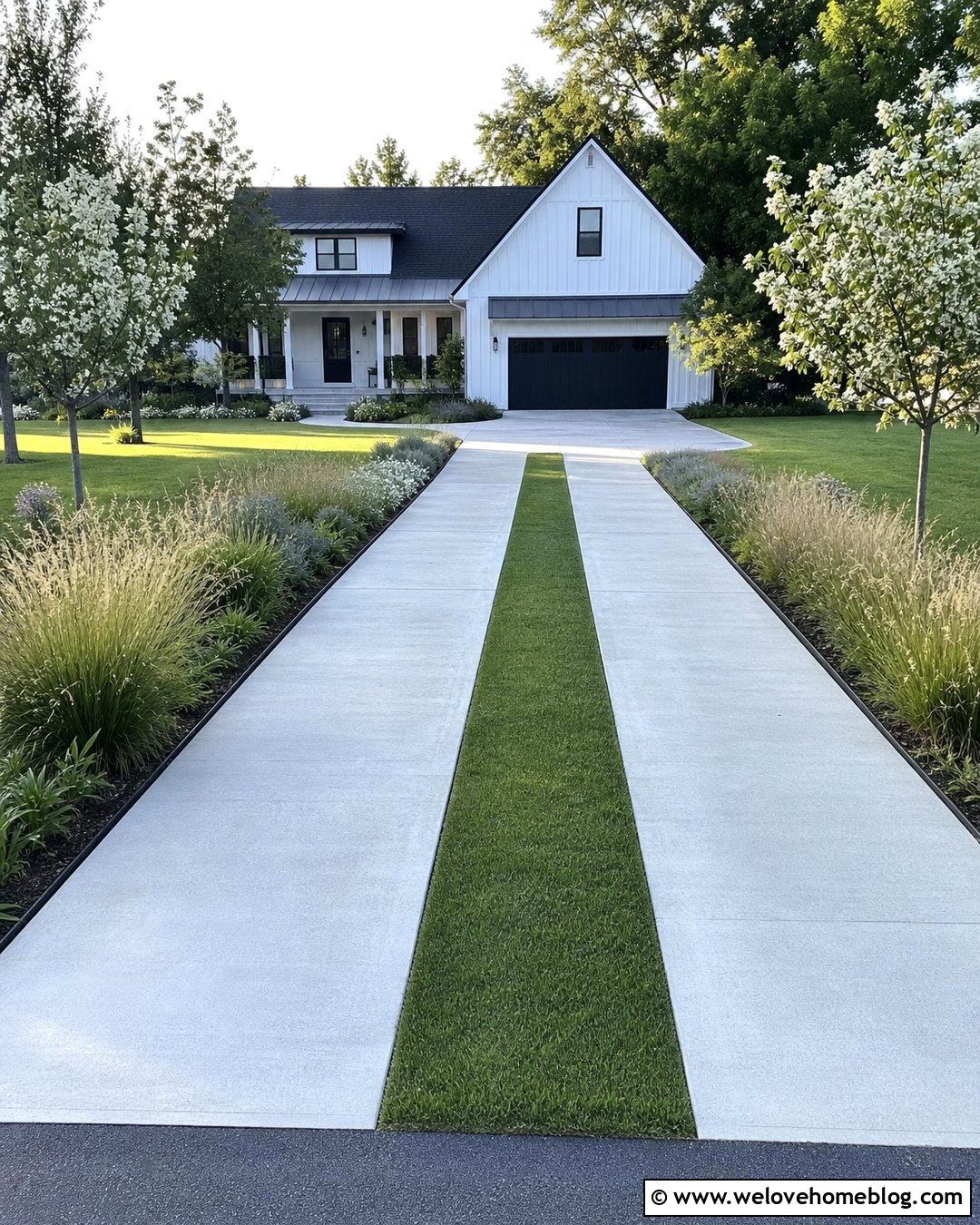
A long poured concrete driveway can feel lighter when divided into two driving lanes with grass between them. This ribbon layout works especially well for a modern farmhouse, ranch home, or quiet country property. Use smooth light-gray concrete for the wheel tracks and maintain a durable strip of turf or low-growing ground cover through the center. Metal landscape edging can create crisp transitions and prevent grass from spreading across the concrete. Frame the outer sides with simple lawn, groups of native grasses, and occasional flowering trees. At the garage, merge the tracks into a full-width concrete parking pad for easier turning. The design reduces the visual amount of hardscape while preserving a clear route, although careful grading is essential to keep water away from the center planting strip.
4. Long Paver Driveway With Tree Rows
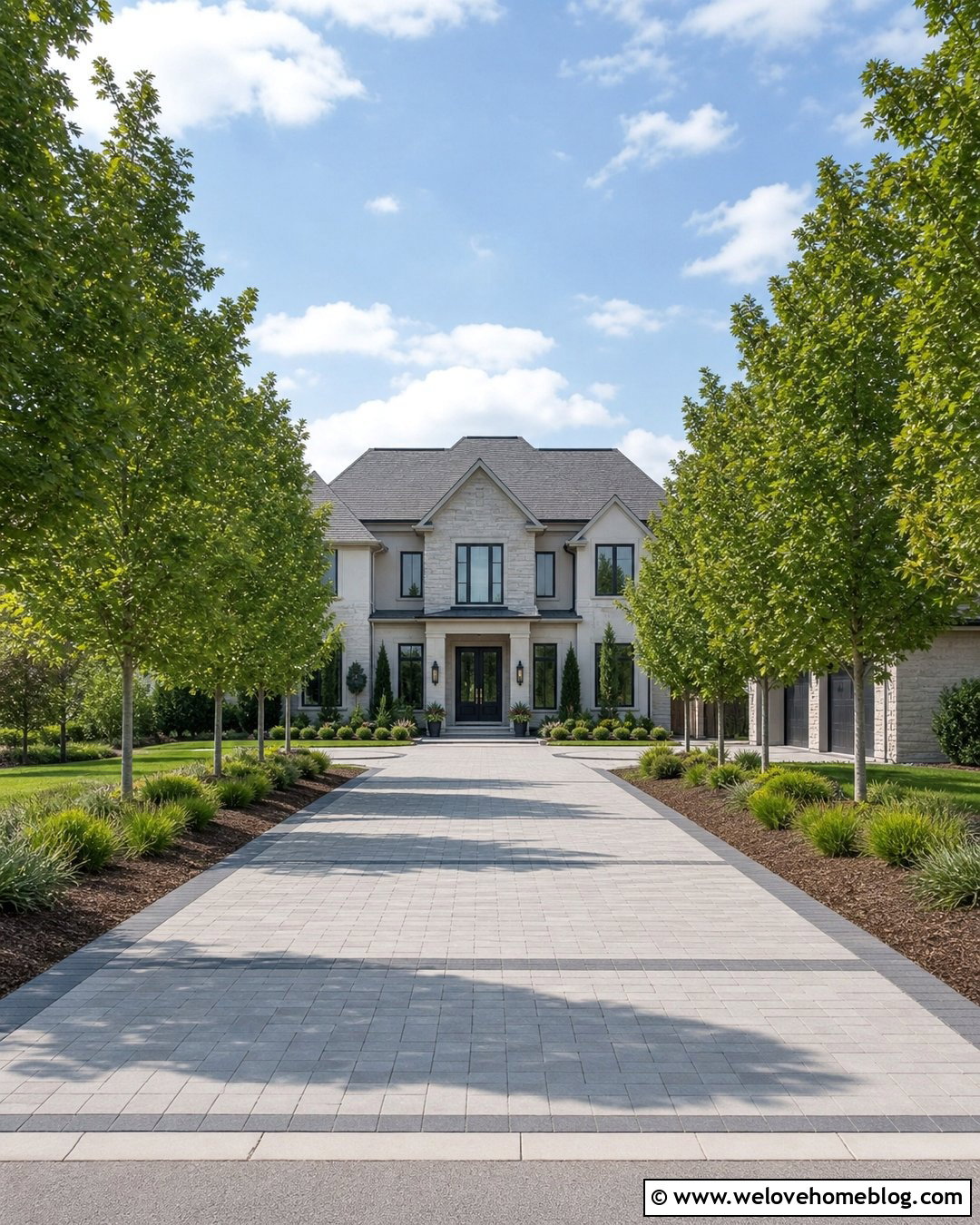
Rows of trees can turn a long paver driveway into a structured entrance that feels connected to the house. Choose large-format concrete pavers in a warm gray tone and install them in a running-bond pattern. A straight driveway reinforces the symmetrical look, while darker paver borders keep the edges clear. Place medium-size trees at generous, consistent intervals beyond the paved surface, accounting for their mature canopy and root spread. Underplant them with simple mulch beds, low ornamental grasses, or clipped shrubs rather than dense flowers. The repeated planting produces shade and visual rhythm while directing attention toward the home. Finish the approach with a wider paver court and a walkway using the same border color, allowing the driveway, front path, and architecture to read as one coordinated landscape.
5. Long Curved Driveway With Native Landscaping
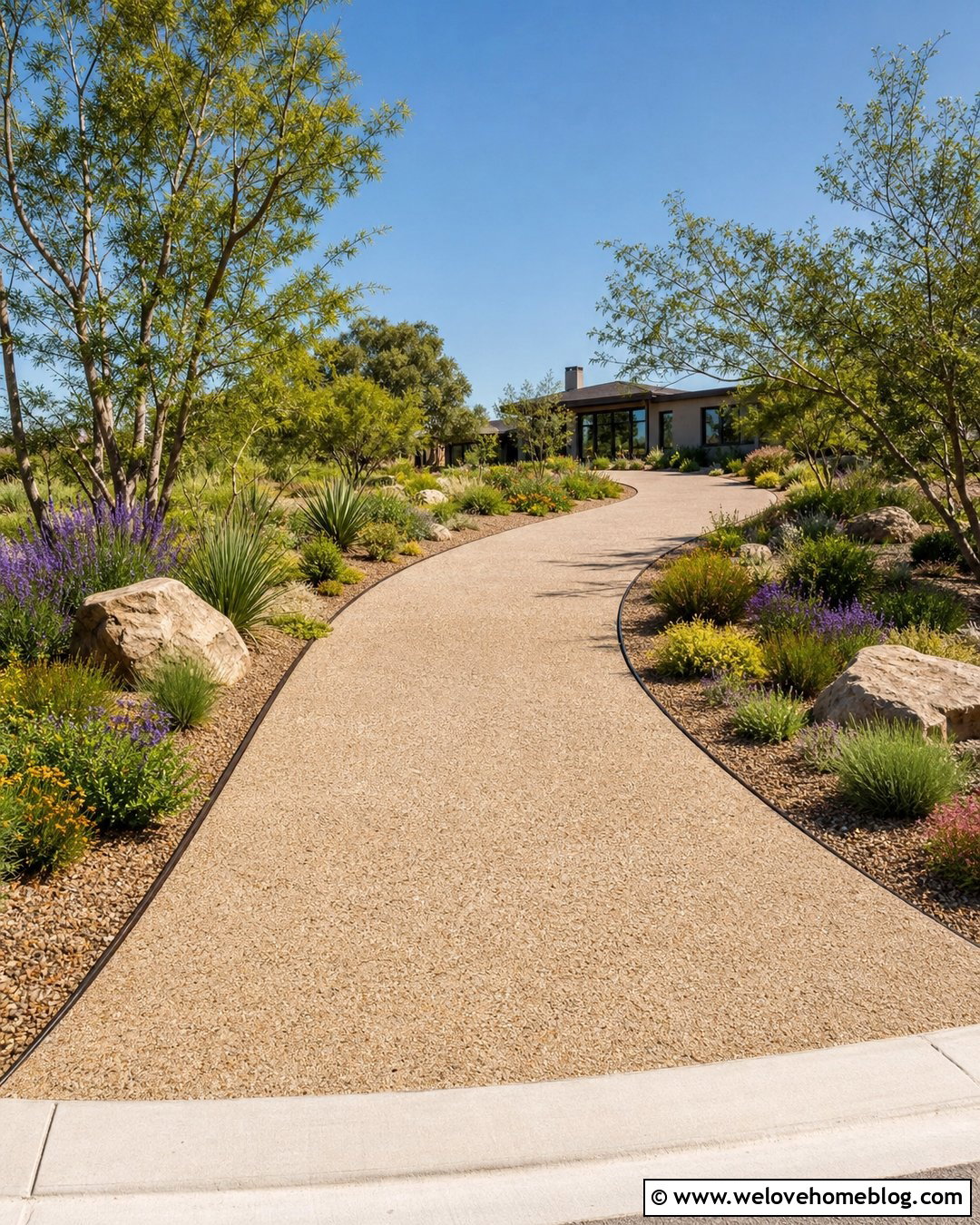
Imagine a driveway moving gently through layered grasses and wildflowers before reaching a low, contemporary house. A warm exposed-aggregate concrete surface suits this natural setting because its subtle texture echoes surrounding stone and soil. Follow the existing contours of the yard rather than forcing a rigid straight route. Edge the driveway with flush steel strips so plants can soften the boundaries without spilling onto the driving area. Use regionally appropriate grasses, flowering perennials, shrubs, and small trees in broad groups. Keep vegetation lower around curves and the street entrance to preserve sightlines. A few larger boulders can anchor the beds where the driveway changes direction. This complete look makes an extended approach feel integrated with the land while reducing the need for continuous formal hedges or intensive flower borders.
6. Long Brick Driveway With Boxwood Borders
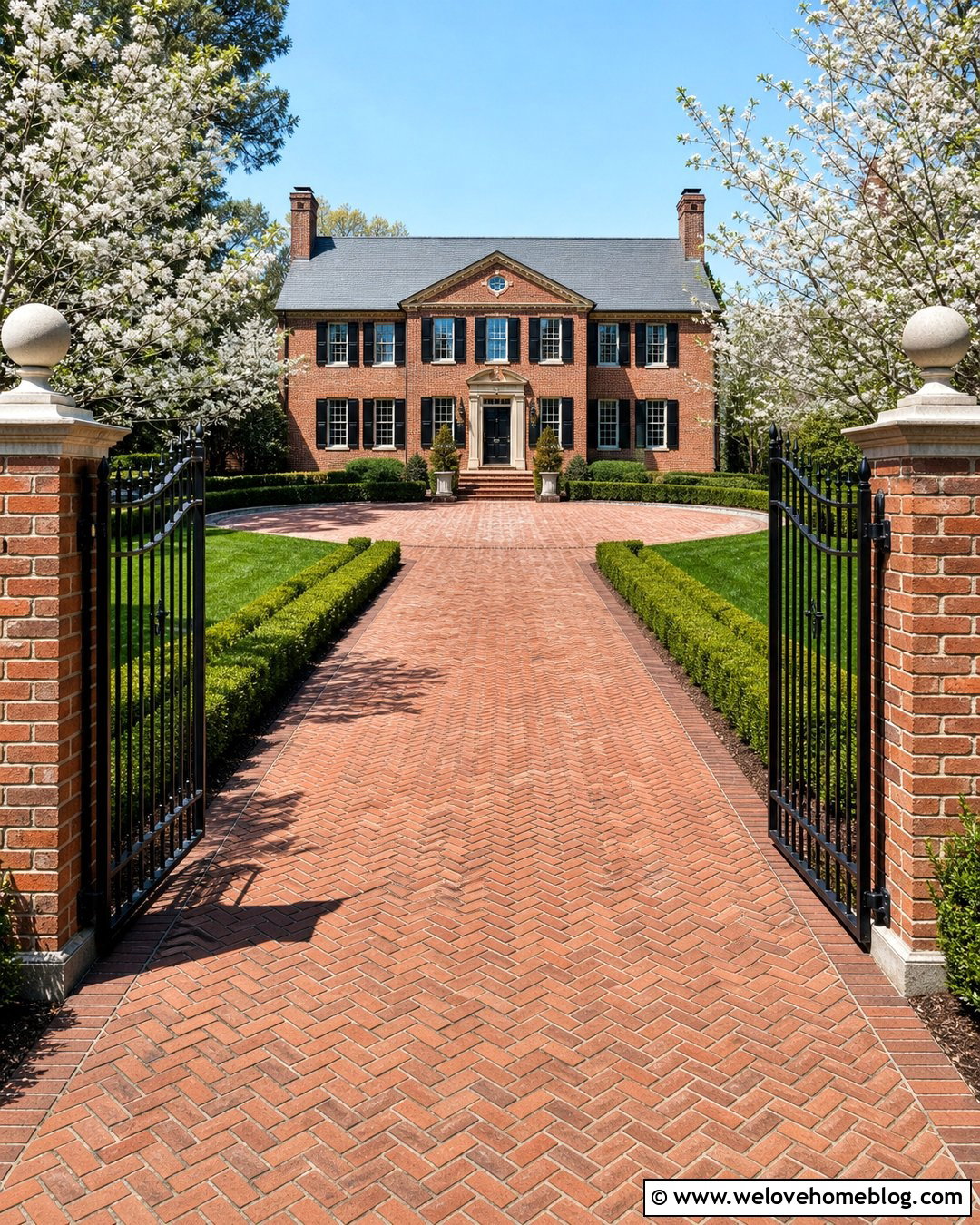
Clay brick pavers bring warmth and traditional character to a long driveway leading toward a colonial, Georgian, or Cape Cod home. Lay the main surface in a herringbone pattern, then add straight soldier-course borders to visually contain it. Low boxwood hedges can follow both sides, creating a formal green frame without hiding the driveway. Position taller shrubs and small flowering trees farther back so the route retains an open, comfortable width. Brick pillars at the entrance can repeat the home’s facade and support simple lanterns or a restrained metal gate. Near the house, expand the driveway into a rectangular parking court with a centered brick pattern. Because such a detailed surface dominates the landscape, keep the surrounding lawn and planting beds orderly, limited, and closely connected to the home’s traditional proportions.
7. Long Cobblestone Driveway With Garden Borders
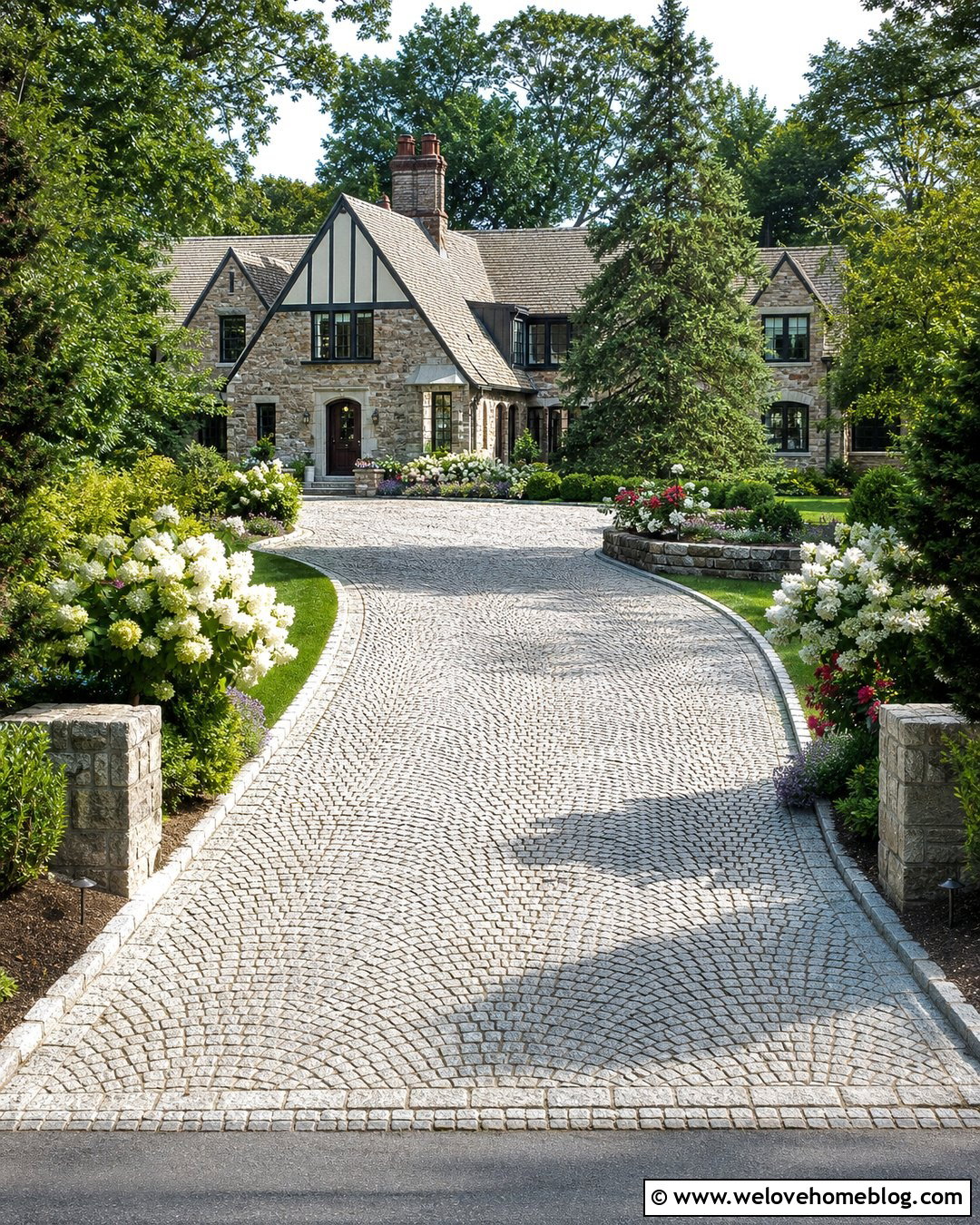
Cobblestone creates a substantial old-world surface that suits a Tudor, stone cottage, or European-inspired residence. On a long driveway, a subtle fan or running pattern helps break up the distance and highlights the material’s varied tones. Use granite cobbles with slightly smoother tops to provide a more comfortable driving surface. Wide garden borders can soften the rugged stone with hydrangeas, roses, catmint, evergreen shrubs, and seasonal bulbs. Curving the planting beds in and out prevents them from resembling narrow strips. Introduce stone garden walls near the entrance and repeat the same masonry closer to the house. Since a complete cobblestone installation can be costly, another option is using cobblestone for the borders, entrance apron, and arrival court while filling the central stretch with compatible gravel or pavers.
8. Long Driveway With Modern Concrete Pavers
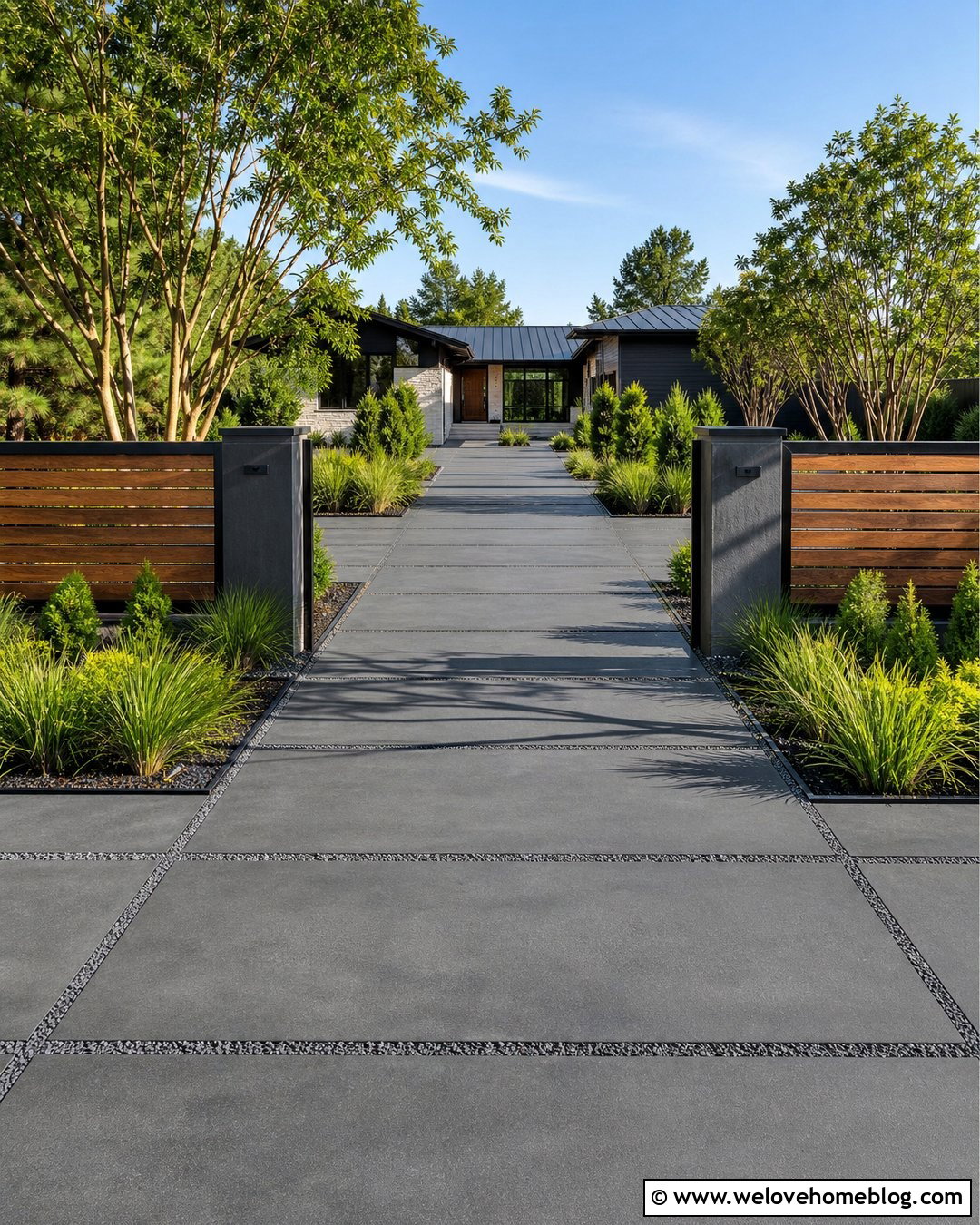
Clean lines can make a long driveway feel calm instead of empty. Use oversized charcoal or medium-gray concrete pavers in a linear pattern leading toward a modern house. Narrow dark gravel joints add texture and emphasize the direction of travel. Keep the driveway mostly straight, with one slight offset that prevents the entire property from being visible from the street. Low rectangular planting beds filled with ornamental grasses, compact evergreens, and sculptural multi-stem trees reinforce the architecture. Corten steel or black metal edging provides a precise boundary between the pavers, planting, and lawn. Near the entrance, a horizontal slatted gate can repeat the house’s wood accents. Continue the pavers into the parking court and front walkway so every hardscape area shares the same restrained color palette and geometric language.
9. Long White Gravel Driveway With Lavender
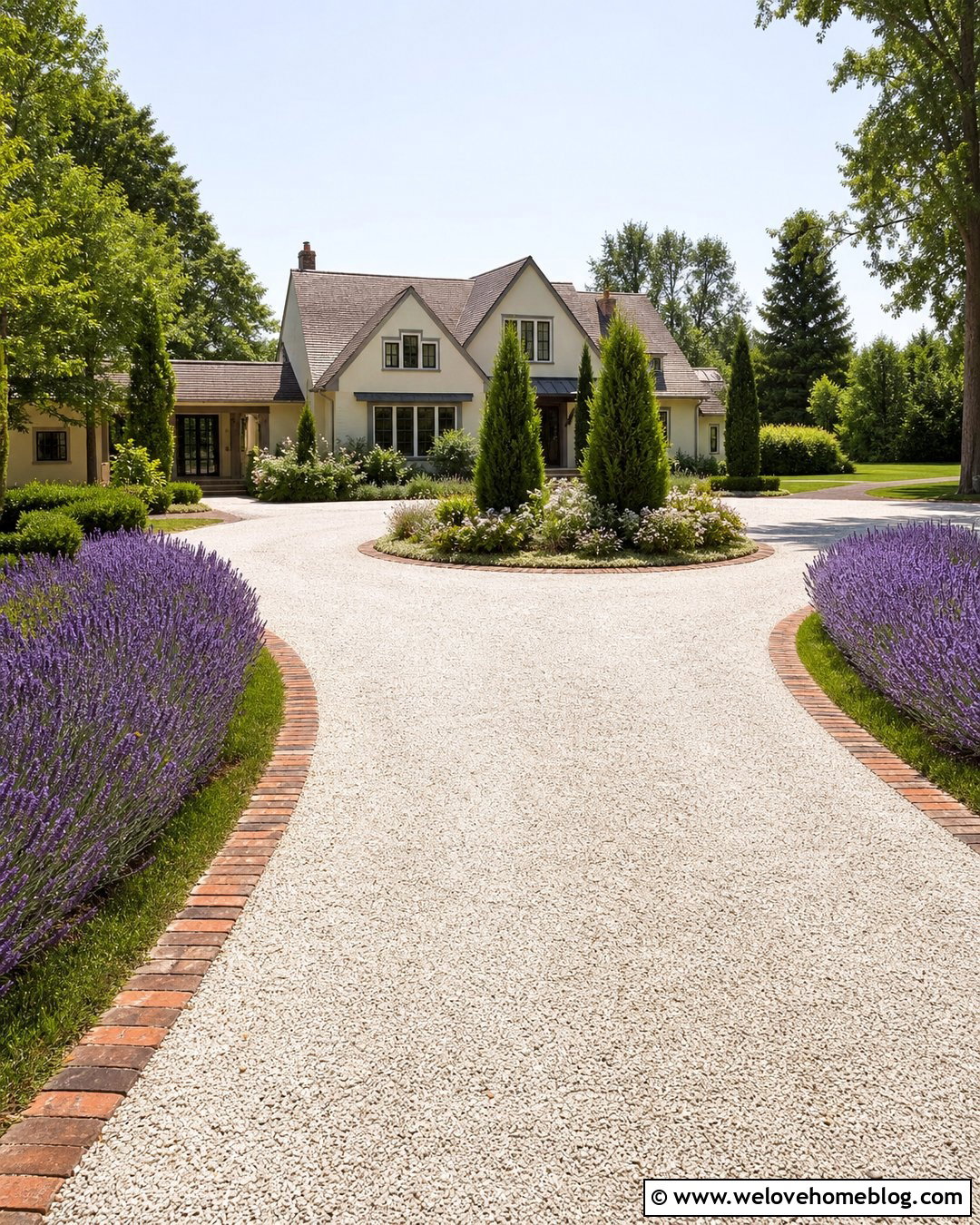
Bright limestone or pale crushed gravel creates a distinctive long driveway for a cottage, farmhouse, or Mediterranean-influenced home. A sweeping curve keeps the light surface from resembling a rigid road across the yard. Define both sides with reclaimed brick or warm-toned stone edging, which adds contrast and helps hold loose aggregate in place. Broad lavender borders deliver color, fragrance, and a strong repeated shape during the growing season. In colder or wetter regions, use similarly sized rows of climate-appropriate flowering perennials instead. Include occasional upright evergreens to maintain structure when flowers are not blooming. At the house, form a generous gravel turnaround around a planted center bed or mature tree. The pale material, warm border, and purple planting create a complete palette that remains attractive without complicated decorative features.

10. Long Driveway With a Gated Entrance
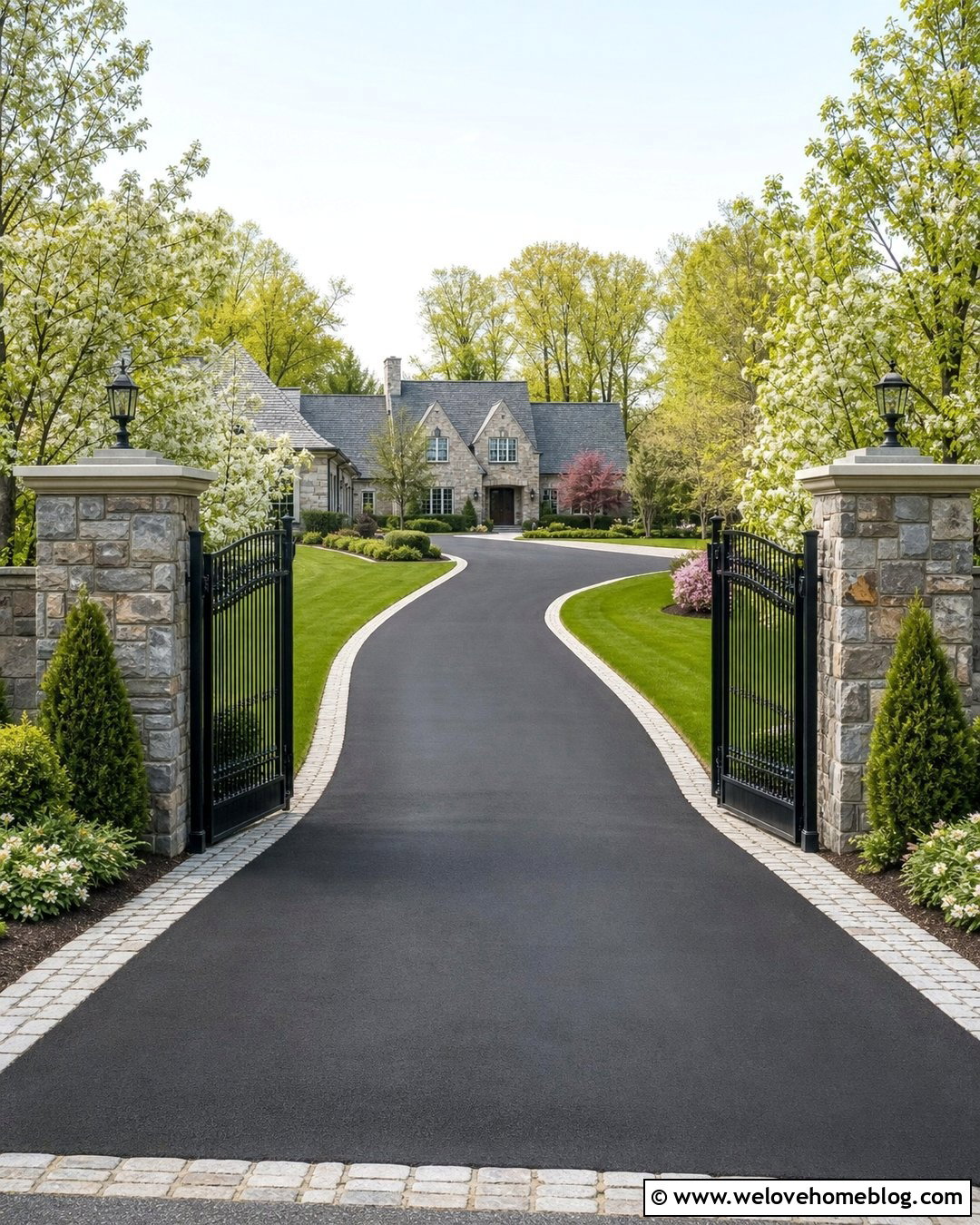
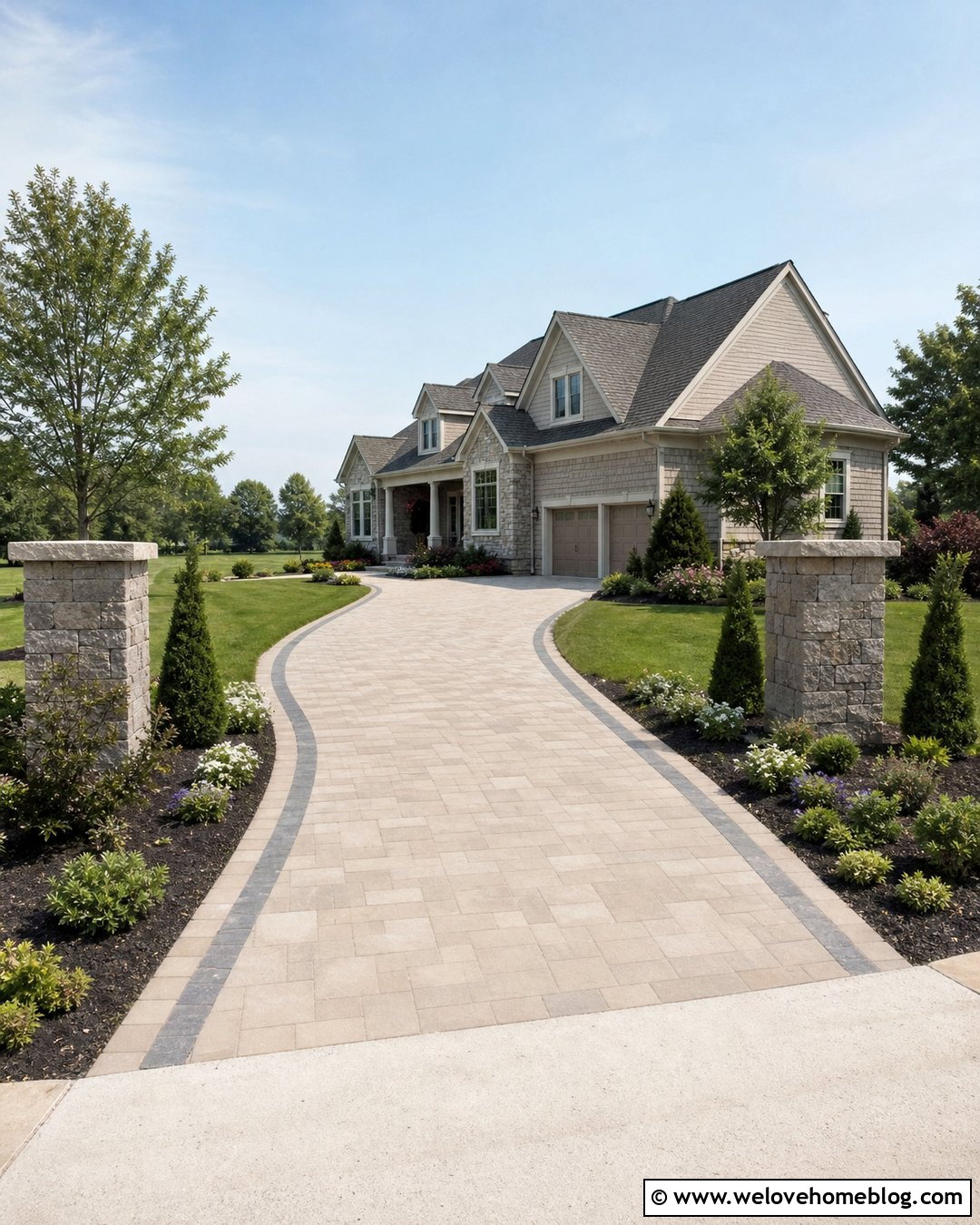
A gate gives a long driveway a clear beginning and can establish the design language for the entire property. Pair a dark wrought-iron swing gate with natural stone pillars and a smooth asphalt driveway bordered by matching stone setts. Position the gate far enough inside the property to provide a safe waiting area where permitted, and ensure the opening accommodates expected vehicles. Continue the driveway in a gradual curve toward a traditional stone or brick house. Beyond the pillars, use layered evergreen shrubs, flowering trees, and open lawn to frame the approach. Low planting near the entrance preserves street visibility. Repeat the pillar stone around the arrival court or front steps. Electrical access, drainage, gate movement, emergency entry, and local setback requirements should all be considered before construction begins. ()
11. Long Driveway With Low Landscape Lighting
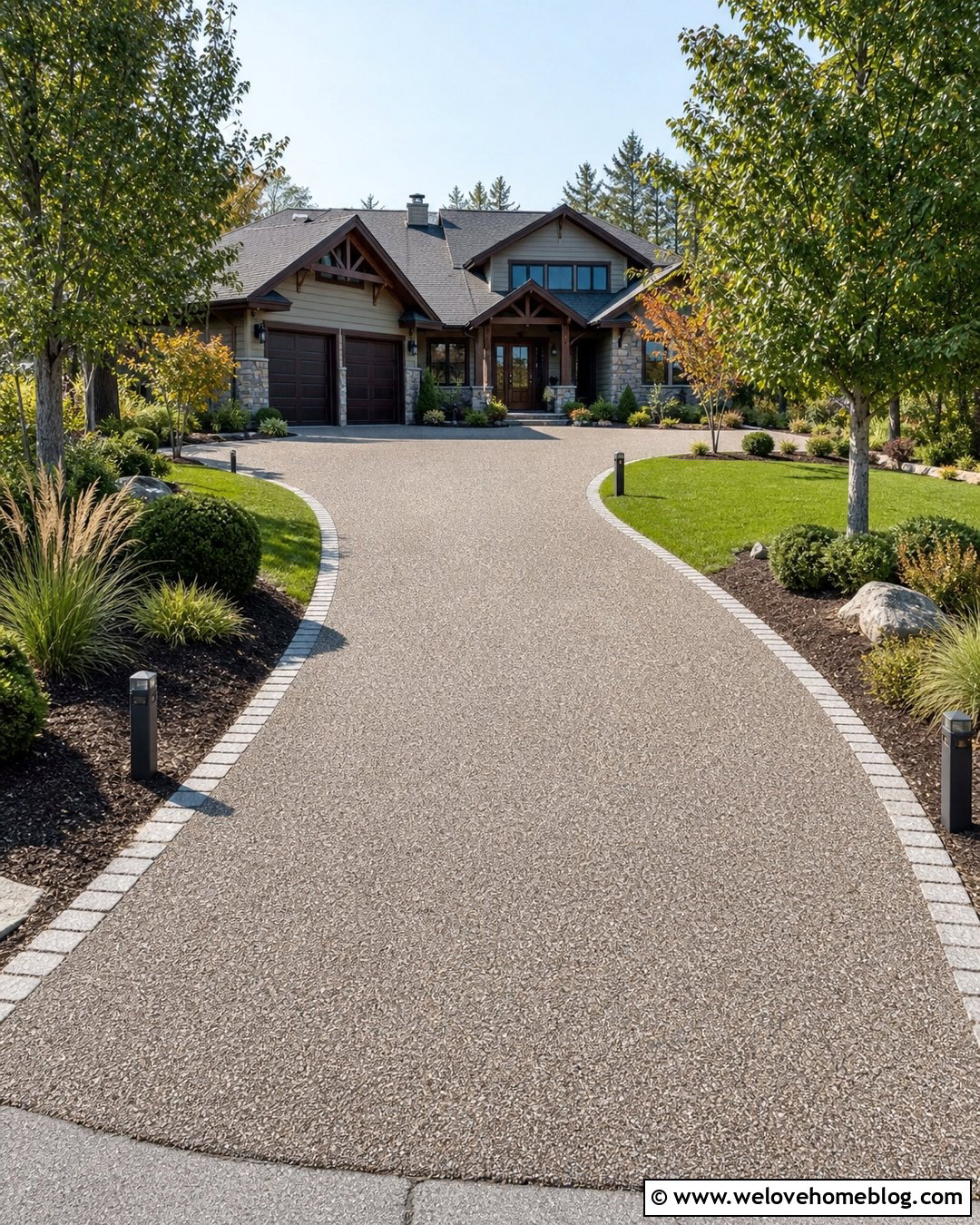
Thoughtful lighting makes an extended driveway easier to follow while highlighting the landscape after dark. Start with a warm-gray resin-bound gravel surface edged by narrow granite blocks. The seamless-looking material creates a quiet background for evenly spaced low bollards placed beyond the driving edge. Rather than lighting every foot, illuminate curves, grade changes, gates, intersections, and the final parking area. Add discreet uplights beneath selected trees to create depth and prevent the bollards from resembling an airport runway. During the day, layers of lawn, ornamental grasses, and evergreen shrubs keep the route attractive. Choose fixtures that direct light downward and avoid glare toward drivers, neighbors, or the house. Planning conduits and transformer locations before installing the driveway can reduce later disruption to the finished surface. ()
12. Long Farmhouse Driveway With Split Rail Fencing
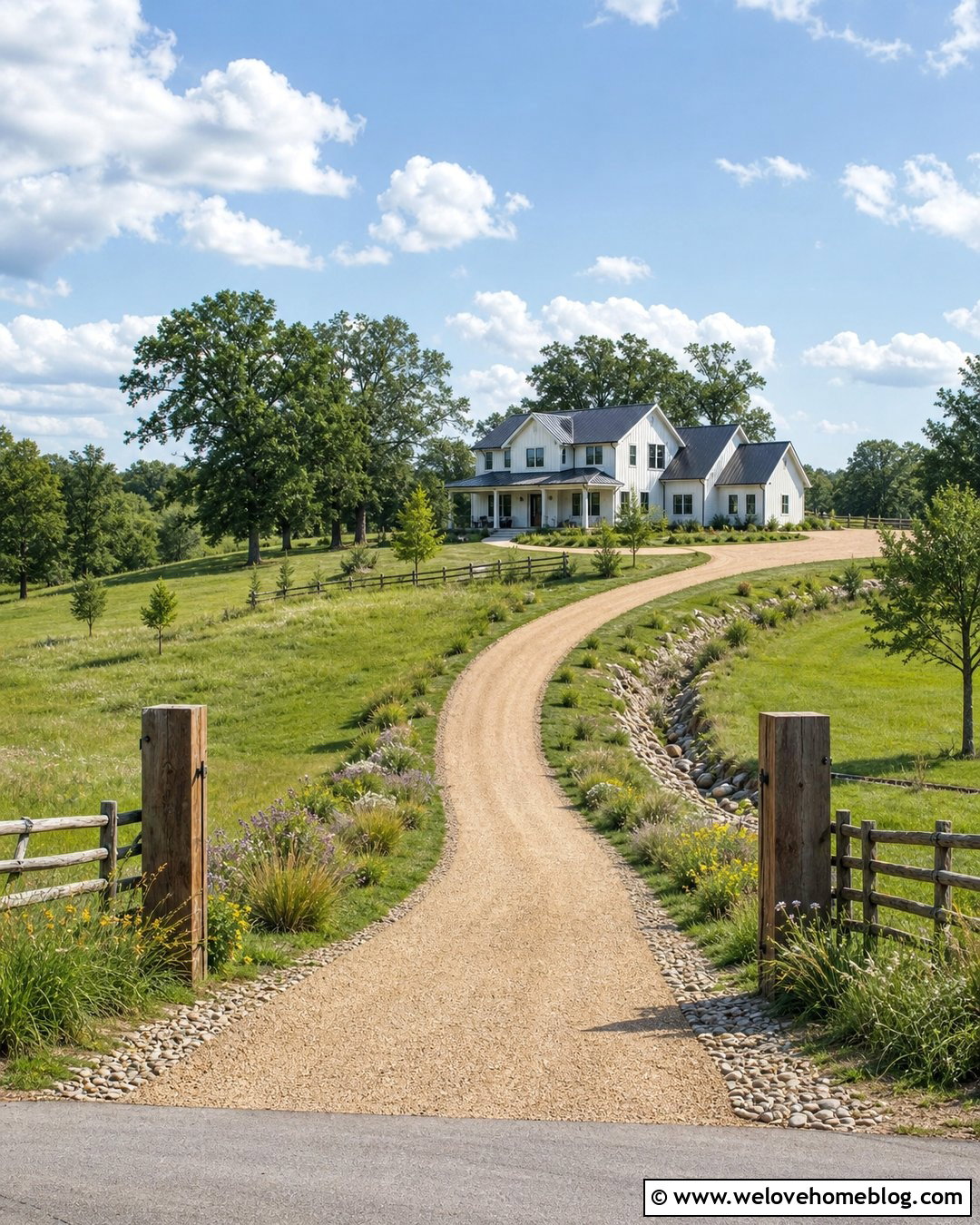
A split rail fence is an effective companion for a long driveway crossing an open country yard. Use tan compacted gravel for the surface and shape the route with a broad, relaxed curve toward a white modern farmhouse. Install natural wood fencing on one side or both sides, leaving enough separation for snow storage, drainage, mowing, and vehicle clearance. Native grasses and informal wildflower drifts can fill selected areas outside the fence, while open lawn maintains broad views. Add a stone-lined drainage swale where water naturally collects instead of creating continuous raised beds. At the road, simple timber posts and a gravel apron establish an understated entrance. Repeat the wood tone in the house porch, garage doors, or nearby outbuilding to make the fence feel like part of the property rather than an unrelated boundary.
13. Long Driveway With an End Turnaround
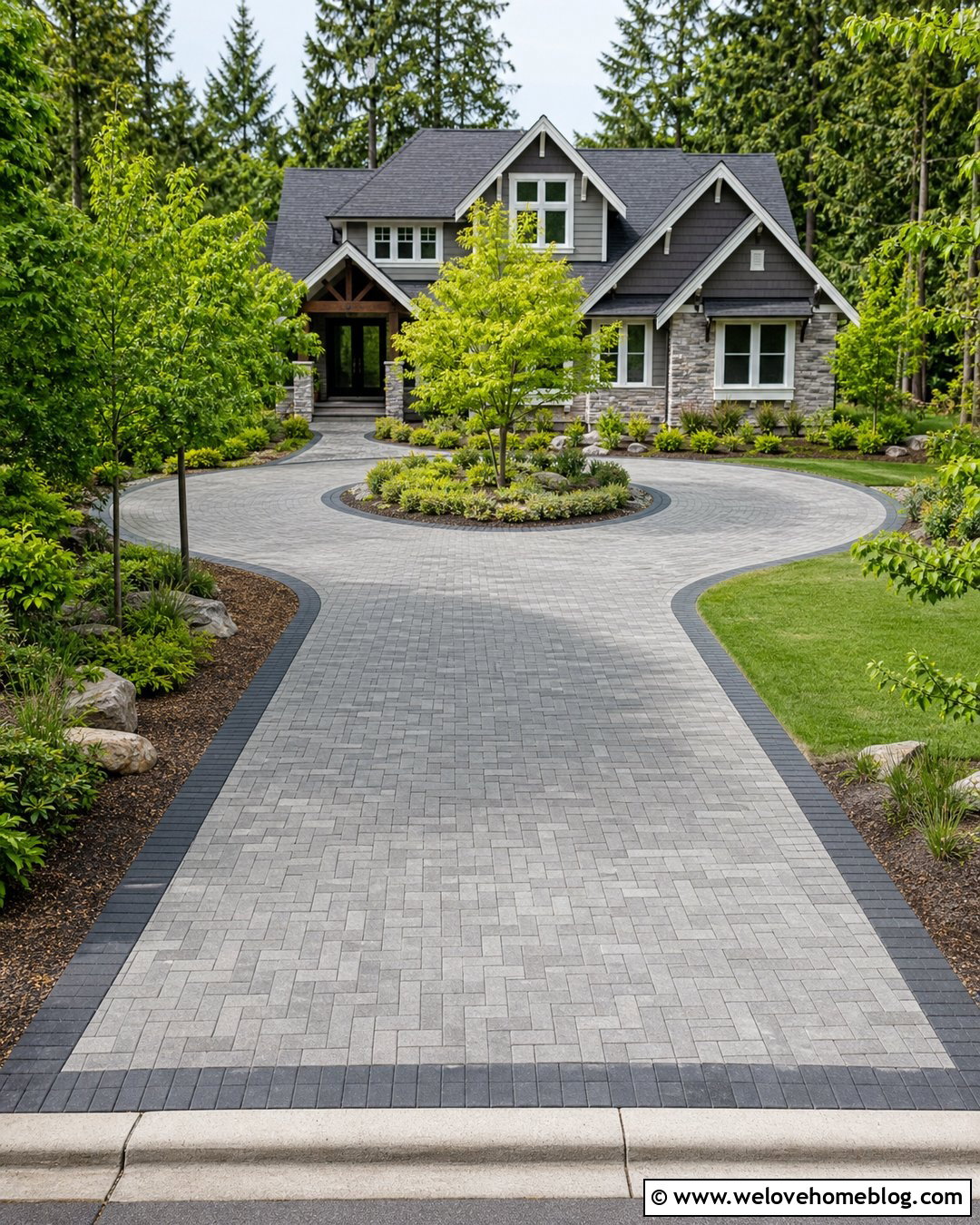
Daily maneuvering becomes much easier when a long driveway ends in a properly planned turnaround. Use medium-gray interlocking concrete pavers for a straight approach, then expand them into a circular or hammerhead turning area near the house. A contrasting charcoal paver band can define the outer edge and organize parking spaces without painted lines. Place a landscaped island inside a circular turnaround, using one ornamental tree, low shrubs, and ground cover that will not block visibility. Connect a separate walkway from the parking area to the front door so visitors do not have to walk down the driving lane. A craftsman home with stone columns and warm siding complements the mixed paver colors. Size the turnaround for the vehicles that regularly use the property, including service, delivery, and emergency access where applicable.
14. Long Driveway With Stone Retaining Walls
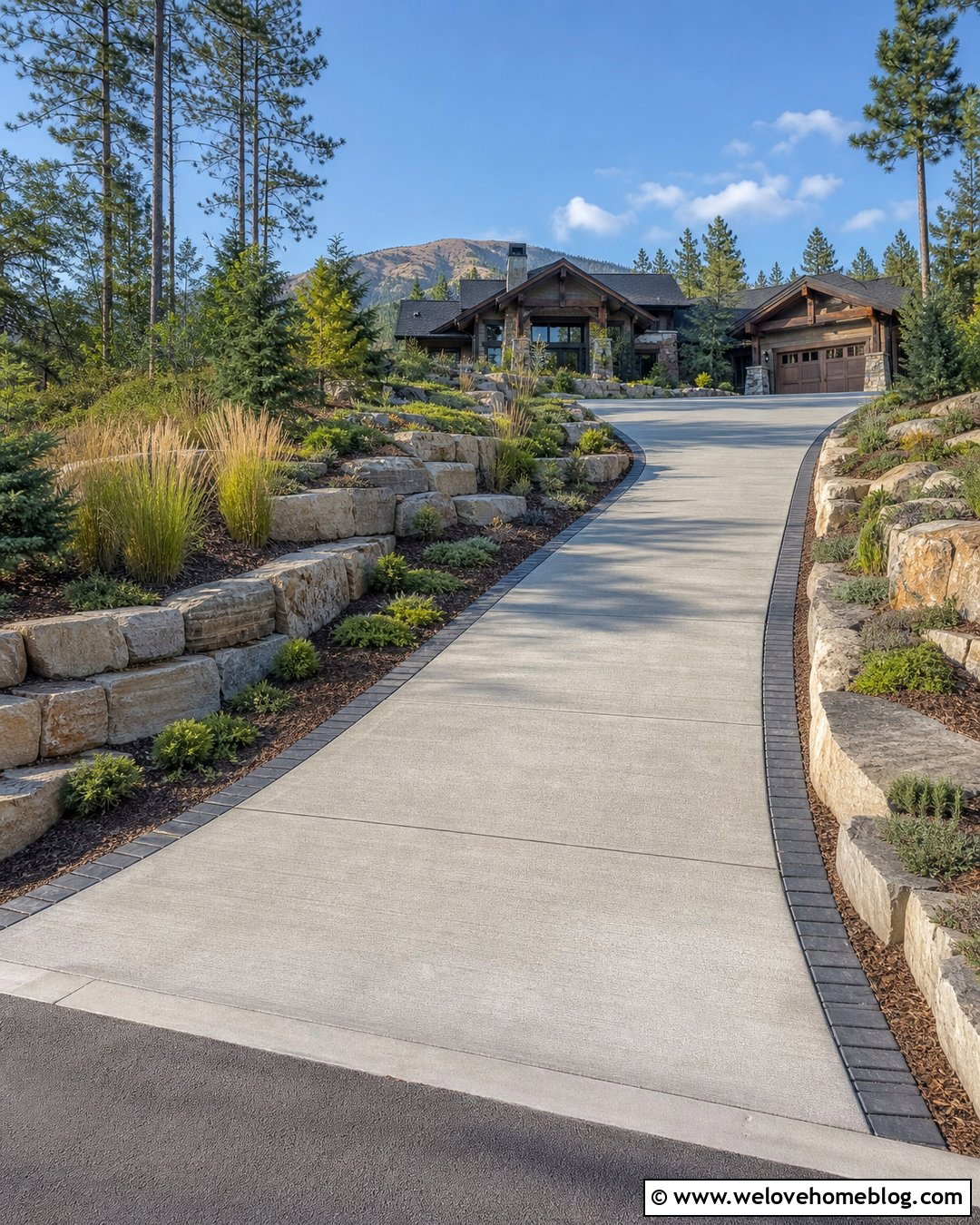
Sloping property requires a driveway design that works with elevation changes rather than ignoring them. A broom-finished concrete driveway provides a clean, durable-looking surface for a gradual uphill approach. Build low natural stone retaining walls where the cut slope needs support, stepping the wall height with the terrain instead of creating one imposing barrier. Plant the upper side with deep-rooted shrubs, ornamental grasses, and erosion-conscious ground covers. The lower side can remain more open to maintain views and accommodate drainage. Add a dark stone or paver border that connects the concrete to the wall material. Near a mountain craftsman or rustic contemporary house, widen the driveway into a level arrival court. Engineering, soil conditions, frost movement, runoff, and wall drainage deserve professional attention before excavation begins.

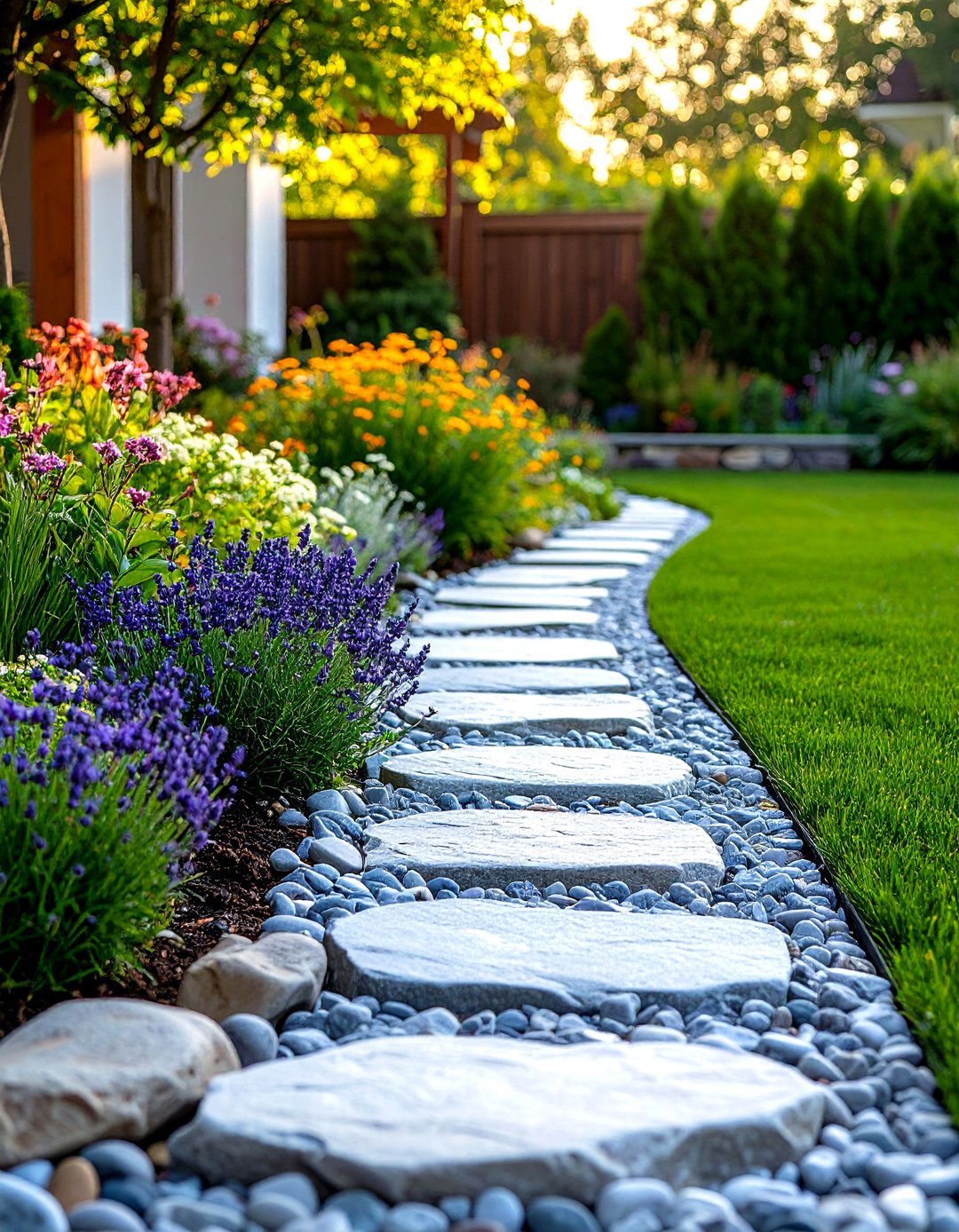
15. Long Permeable Paver Driveway With Rain Gardens
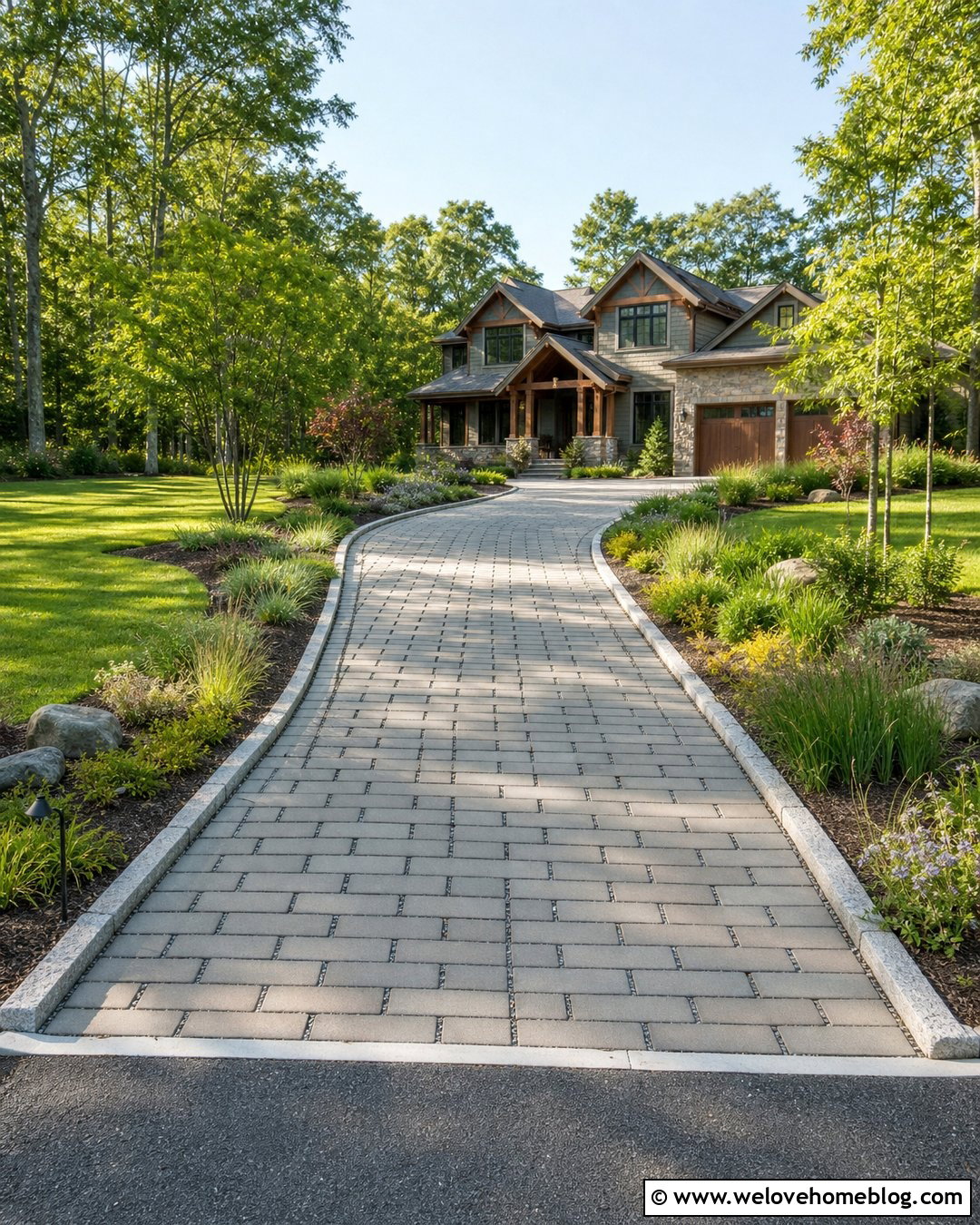
Permeable pavers can help a long driveway feel greener while giving stormwater more opportunities to move into a properly designed base. Select warm-gray permeable concrete pavers with visible stone-filled joints and arrange them in a simple running pattern. Use a gentle curved layout that directs runoff toward shallow rain gardens rather than neighboring property or building foundations. Plant those gardens with moisture-tolerant native grasses, sedges, flowering perennials, and small shrubs suited to local conditions. Granite edging can define the paver surface without competing with the landscape. Leave open lawn and occasional shade trees between the rain gardens to avoid an overgrown appearance. The result works particularly well with a contemporary craftsman house, where natural planting softens the structured paving while the engineered surface and landscape operate as one drainage-conscious system. ()
16. Long Driveway With a Circular Arrival Court
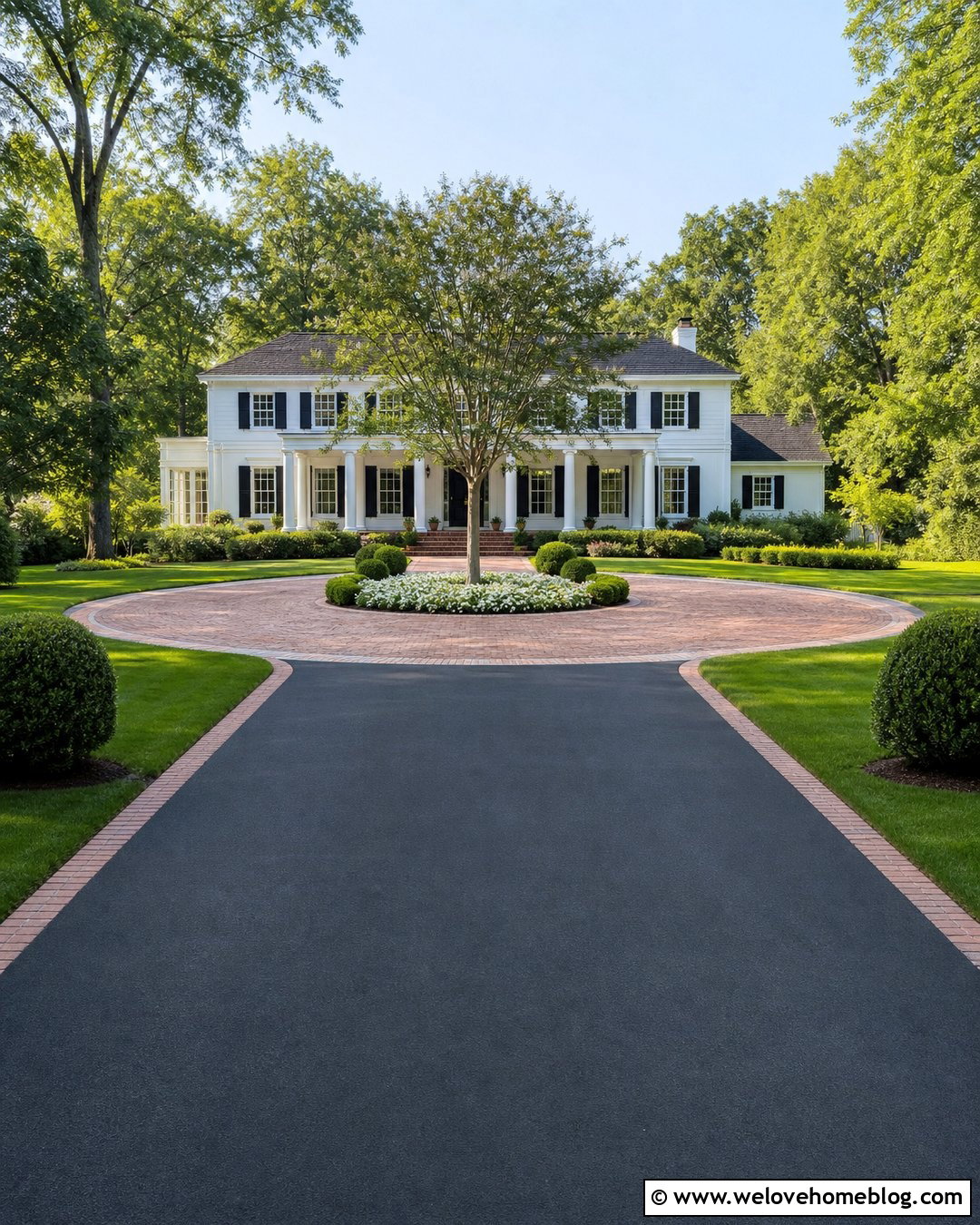
A circular arrival court adds convenient movement and a strong focal point at the end of a long approach. Create the main driveway with black asphalt for a smooth, visually simple route, then transition to clay brick pavers around the circle. A brick ribbon along the asphalt connects the two materials and prevents the arrival court from feeling added later. In the central island, use a small ornamental tree surrounded by clipped shrubs, flowering ground cover, and seasonal bulbs. Keep the planting below key windows and driver sightlines. A large colonial or Southern traditional house provides an appropriately balanced backdrop. Position the walkway so guests can move directly from the circle to the front entrance. The combination controls costs across the long distance while reserving the more decorative material for the most visible part of the property.
17. Long Driveway With Rustic Timber Edging
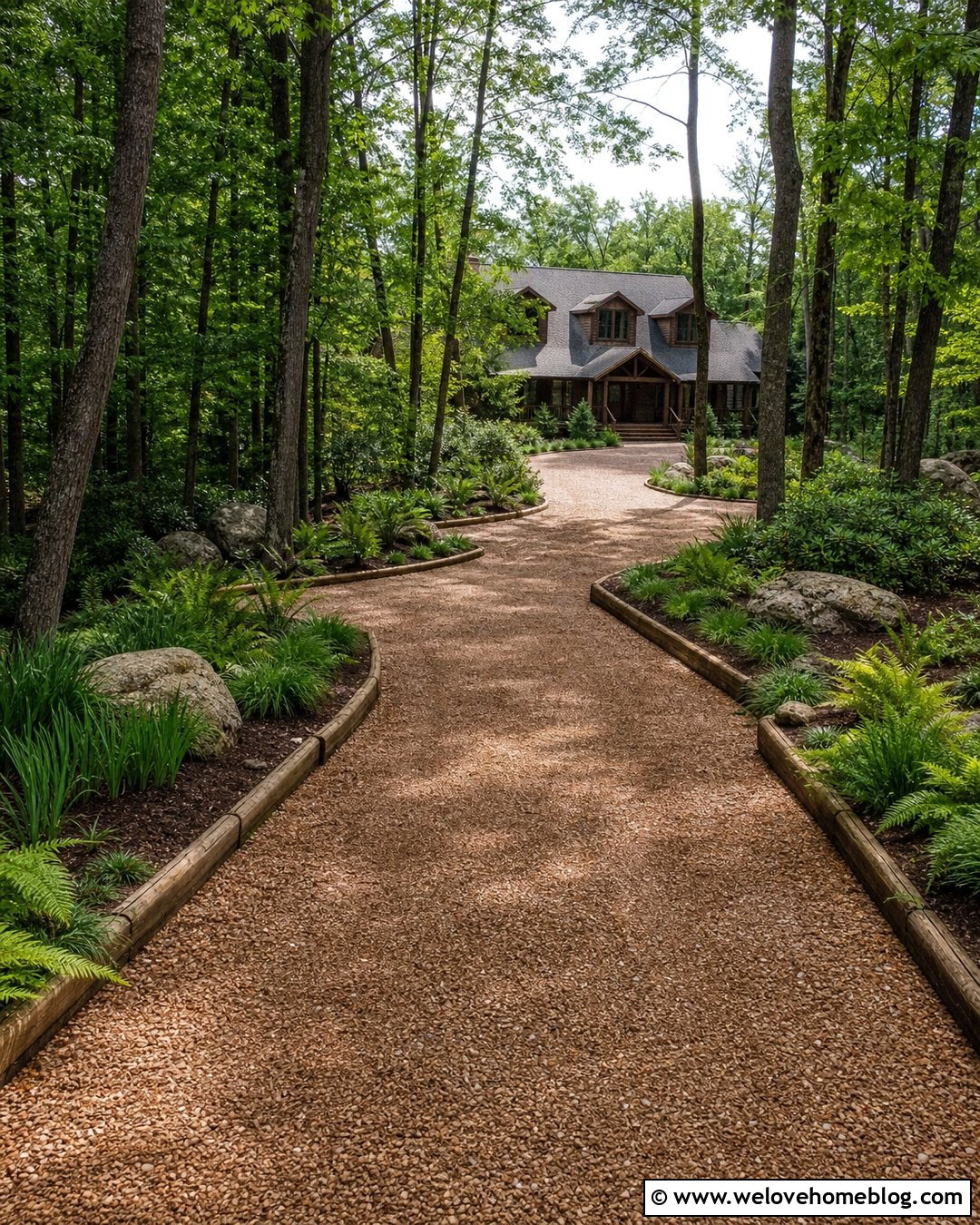
Timber edging brings a relaxed, natural boundary to a long driveway serving a cabin, ranch, or wooded country house. Choose compacted brown crushed stone rather than rounded gravel, allowing the surface color to blend with surrounding soil and tree trunks. Follow a gentle curve through the landscape and use substantial pressure-treated or naturally durable timbers to contain the aggregate. Set the edging close to grade so it does not become a harsh raised obstacle. Ferns, woodland grasses, shade-tolerant shrubs, and native ground covers can soften the outer edge while leaving a clear maintenance strip beside the driveway. Add occasional boulders at wider planting pockets instead of lining the entire route with stone. Near the house, transition into a broader gravel court with a timber-edged walkway leading to the porch.
18. Long Driveway With Mixed Paver Bands
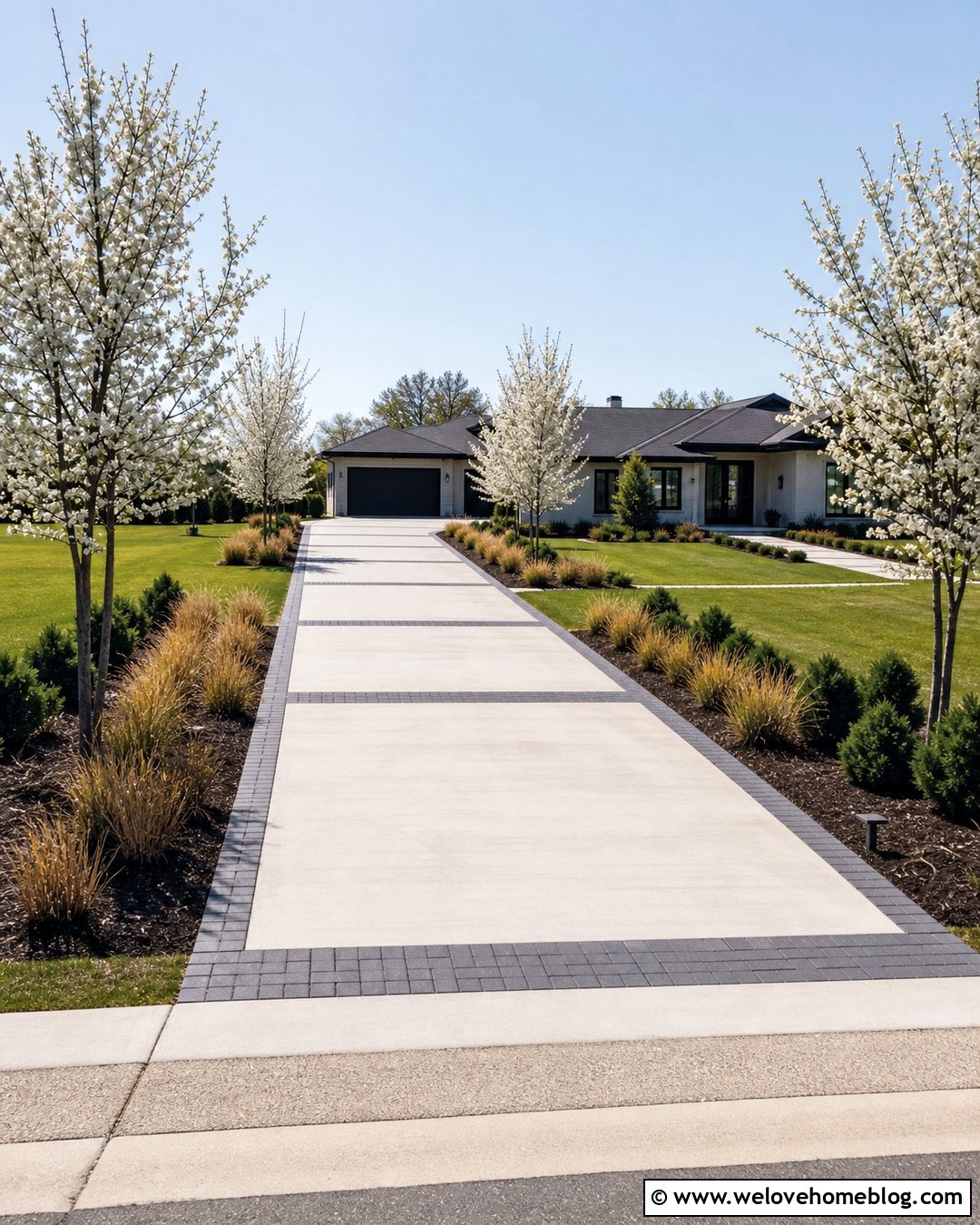
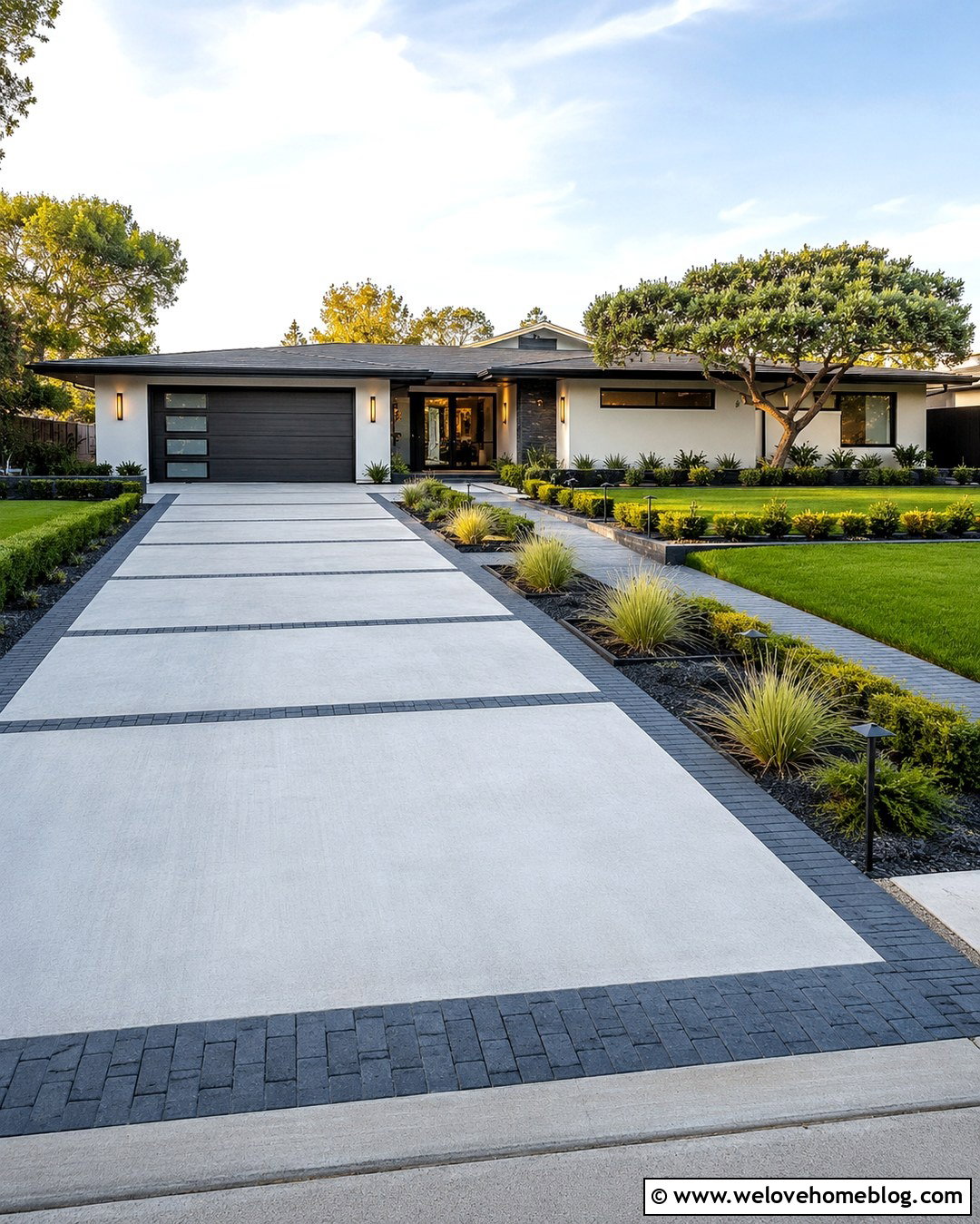
Breaking a long paved surface into visual sections can make the route feel more proportional. Use light-gray poured concrete for the main driveway and install charcoal concrete paver bands across it at measured intervals. Matching pavers along both edges create a continuous frame and connect the crossbands into one coordinated pattern. A mostly straight layout suits a contemporary ranch or transitional home, while a slight curve near the garage softens the final approach. Plant small flowering trees at selected bands, with low grasses and evergreen mounds beneath them. Avoid placing a tree at every division, which could make the landscape feel overly repetitive. Carry the charcoal pavers into the front walkway and porch steps. Proper joint planning allows the decorative bands, control joints, and concrete panels to look aligned rather than randomly divided.
19. Long Driveway With a Tree Island
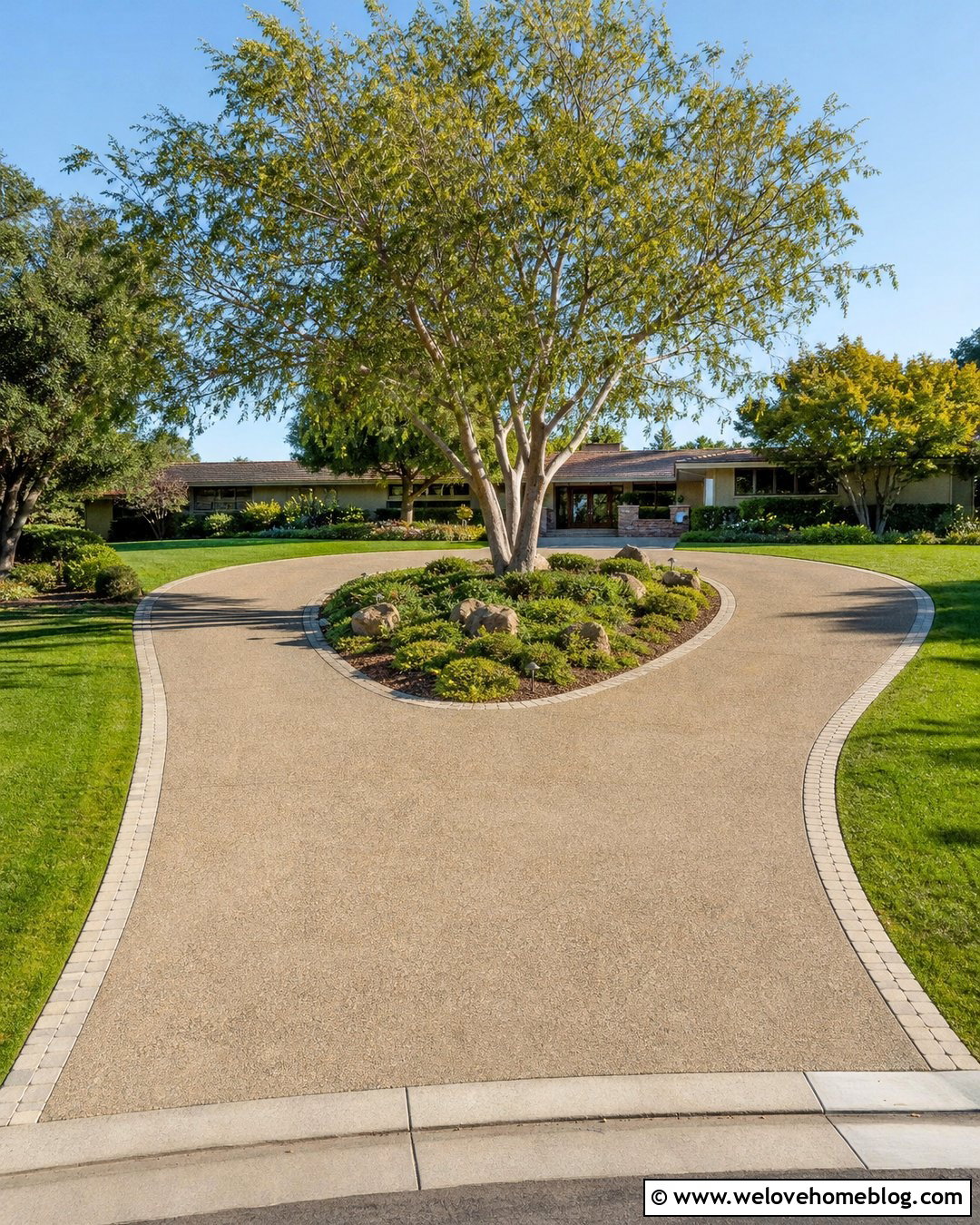
A broad planting island can interrupt the view down an exceptionally long driveway without reducing its usefulness. Choose warm beige exposed-aggregate concrete and curve the driveway around a large oval bed before bringing both views back toward the house. The island may feature an existing mature tree or a well-positioned new specimen with an appropriate growth habit. Beneath it, use mulch, low shrubs, ground cover, and several boulders, keeping the perimeter low for driver visibility. A flush cobblestone border protects the planting edge and repeats the aggregate’s natural colors. Continue simple lawn and scattered tree groups along the rest of the approach. This composition works well for a midcentury ranch or spacious craftsman property because it introduces movement and scale without requiring dense planting along every foot of the driveway.


20. Long Driveway With Drainage Swales
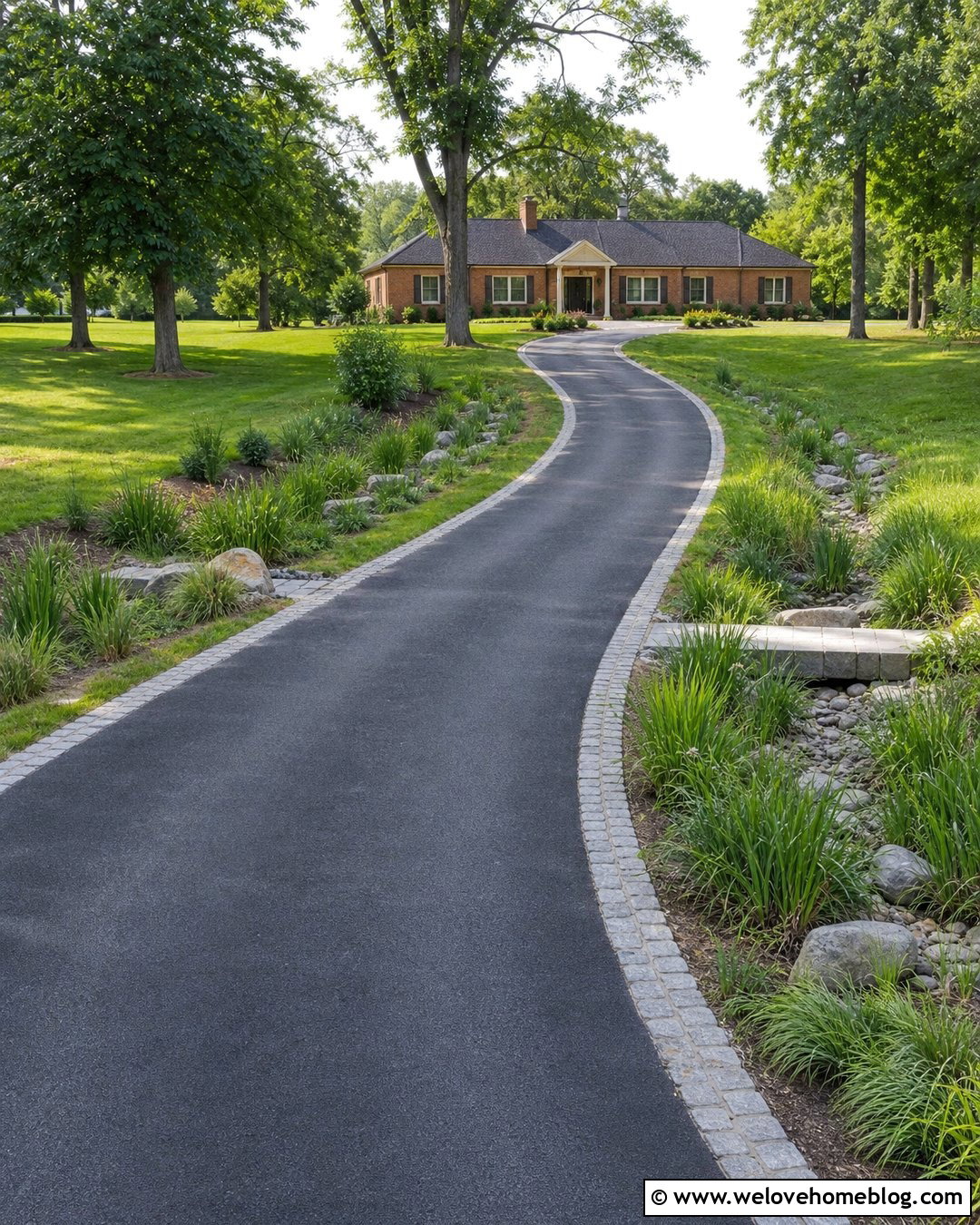
Heavy rain can expose every weakness in a long driveway, making drainage part of the visual design rather than an afterthought. Use dark-gray asphalt with a compact cobblestone edge and shape the surface so runoff reaches landscaped swales at planned locations. The swales should appear as shallow planted channels, not unfinished ditches. Fill them with regionally suitable grasses, sedges, stones, and moisture-tolerant shrubs. Small culvert crossings may be necessary where a walkway or secondary drive passes over the drainage route. On the opposite side, maintain a simple lawn verge with widely spaced trees to balance the denser planting. A brick ranch or traditional suburban house provides a familiar backdrop. Professional grading helps protect the pavement, nearby soil, garage, and landscaping from uncontrolled water movement over the driveway’s full length.
Conclusion:
The strongest long driveways combine a suitable surface with thoughtful grading, clear edges, practical vehicle movement, and landscaping that relates to the home. Gravel feels natural and economical, while pavers, brick, cobblestone, and decorative concrete create a more detailed entrance. Asphalt can also look polished when paired with contrasting borders, tree rows, or an attractive arrival court. Whatever material you choose, plan drainage, lighting, mature plant sizes, snow storage, gate access, and turning space before construction starts. A consistent palette will help the route feel connected from the street to the house. Use these **20 Driveways For Long Ideas** to create an approach that is attractive, functional, and appropriate for your property.

Related posts:



Leave a Reply