
The best 20 driveway berm ideas combine better drainage, attractive landscaping, and a more polished approach to the house. A berm is a gently raised mound built from soil, stone, or both. It can redirect runoff, stabilize sloped ground, create privacy, and add dimension to a flat front yard. Berms also provide space for layered plants without placing them directly beside tires or pavement. The right design depends on your driveway material, property grade, climate, and available space. Before changing drainage patterns, confirm that runoff will reach a safe outlet without affecting the foundation, street, or neighboring property. () From subtle planted ridges to stone-armored slopes, these practical 20 driveway berm ideas offer inspiration for many homes and budgets.

1. Curved Gravel Driveway Berm
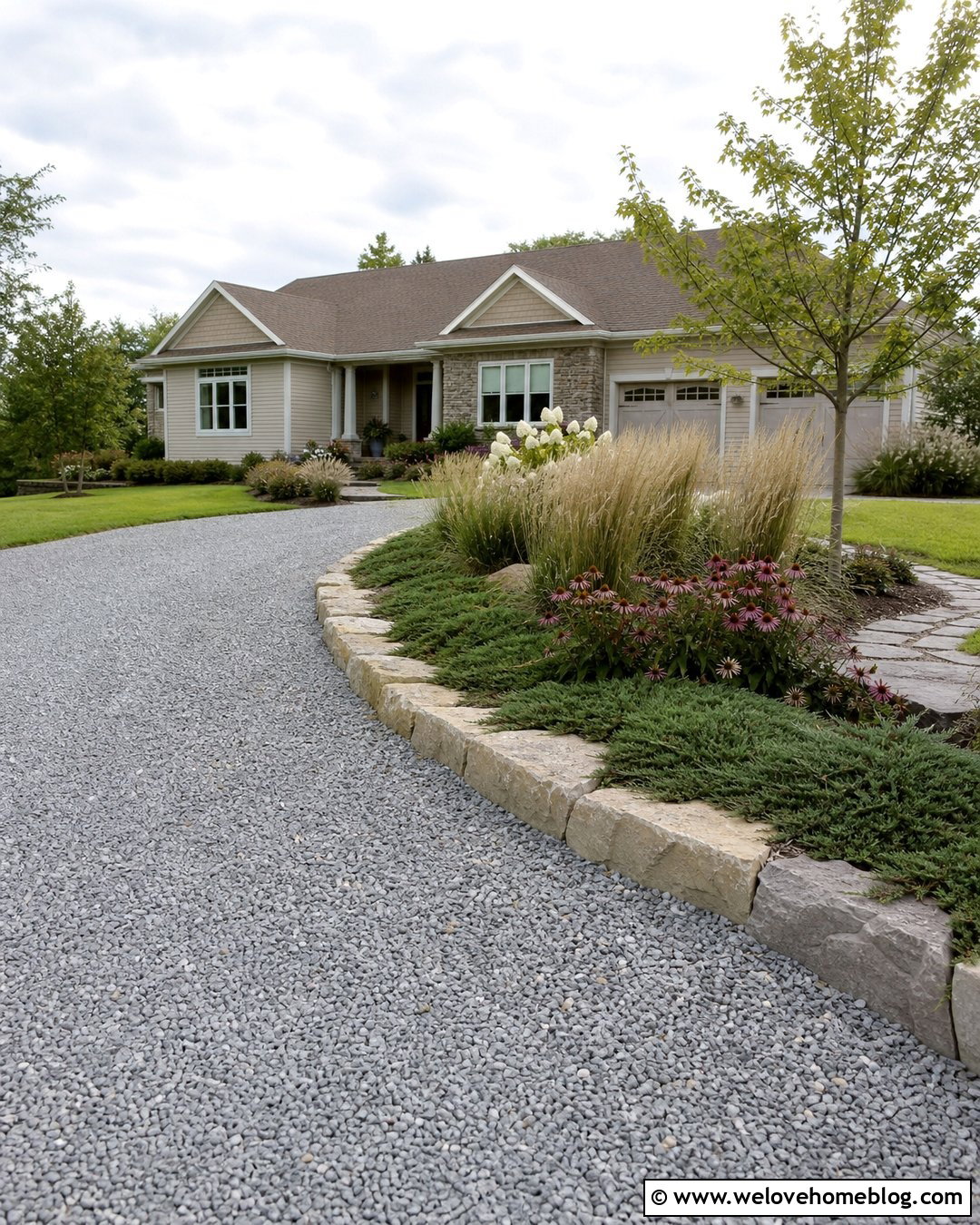
A sweeping gravel driveway feels more integrated with the yard when a long, gently curved berm follows its outer edge. Use compacted gray crushed stone for the driving surface and natural fieldstone as a low border. Build the berm with broad curves rather than a steep, narrow mound. This produces a natural appearance and makes the slope easier to plant and maintain. Feather reed grass, coneflowers, creeping juniper, and small flowering trees can create layers without hiding the driveway. Keep plants low near the road so drivers retain a clear view of traffic and pedestrians. The gravel surface helps slow runoff, while the planted berm can guide excess water toward a lawn, rain garden, or another suitable drainage area. ()
2. Concrete Driveway Rain Garden Berm
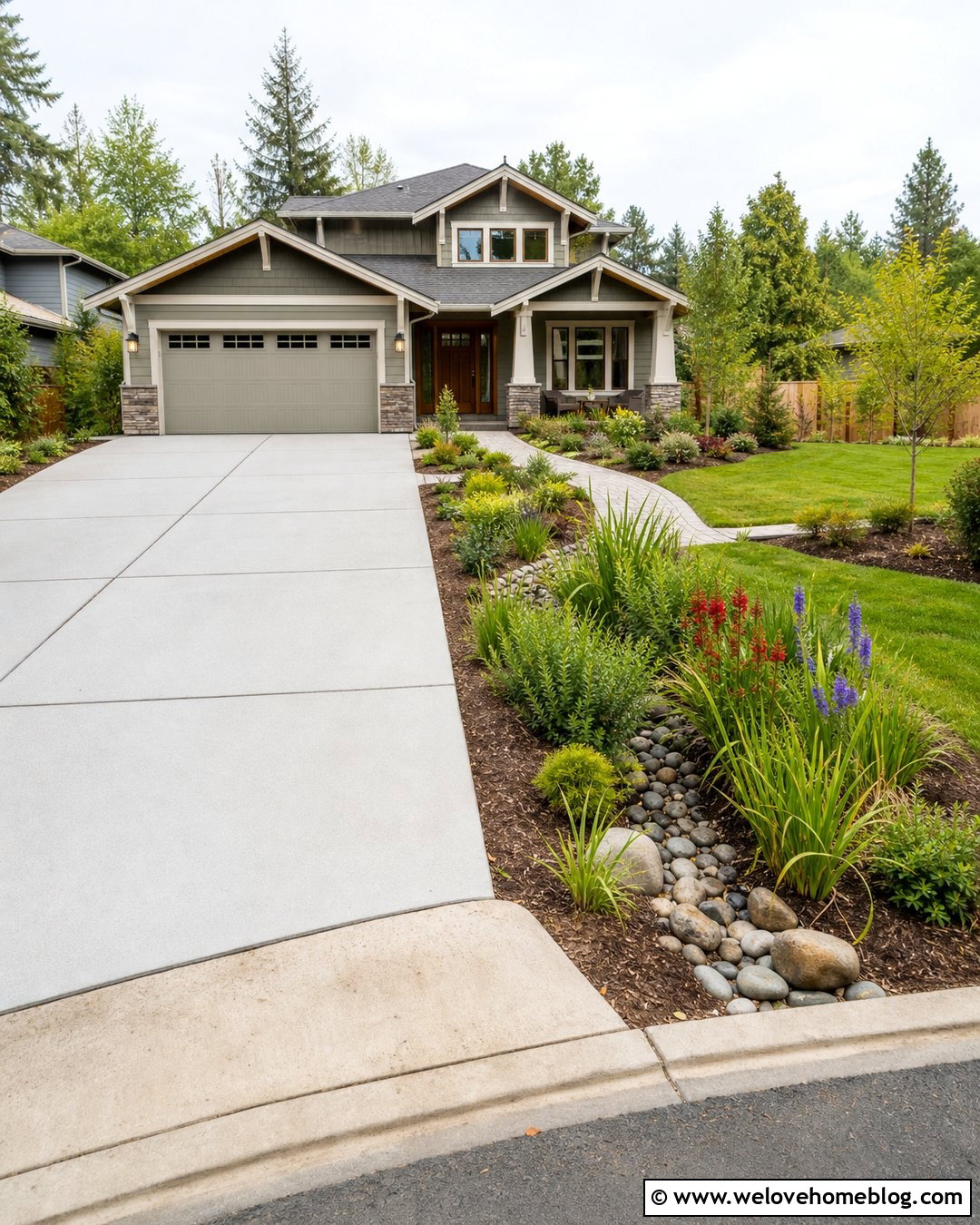
A straight concrete driveway can work beautifully with a rain garden and low berm placed along its downhill side. Grade the concrete slightly toward a planted depression, then use excavated soil to form a shallow ridge behind it. The berm helps hold and direct water while giving the planting bed more visual depth. Fill the lower area with moisture-tolerant native sedges, iris, cardinal flower, and compact shrubs suited to your region. Plants requiring drier conditions can grow higher on the berm. Add a river-rock inlet where runoff enters to reduce soil erosion. This complete layout softens the broad concrete surface and turns necessary drainage into an attractive landscape feature. Include a stable overflow route for unusually heavy storms. ()
3. Asphalt Driveway Privacy Berm
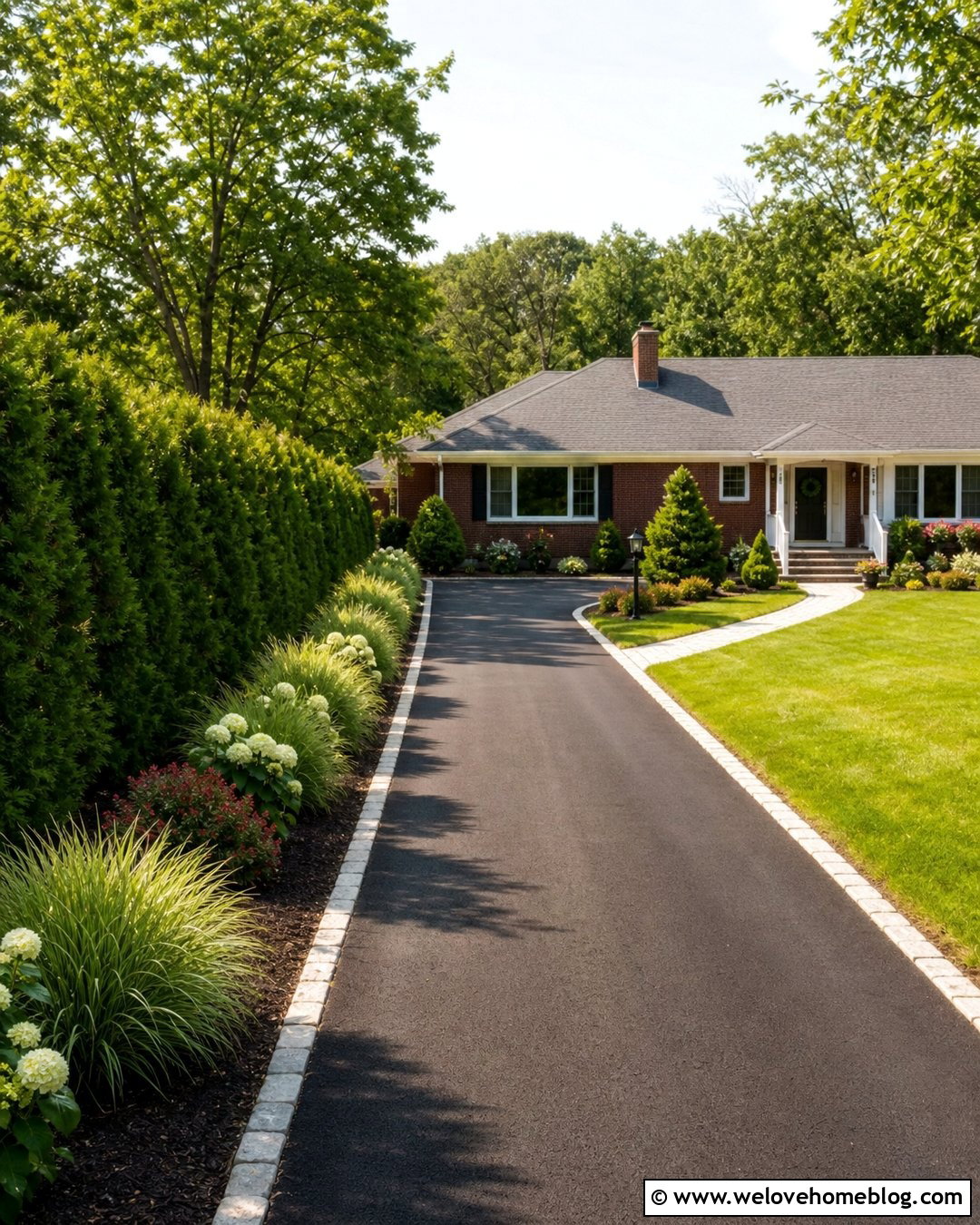
If an asphalt driveway runs close to the street or neighboring property, a planted privacy berm can create separation without building a solid wall. Shape a long, asymmetrical mound beside the black asphalt and edge the pavement with a narrow band of light granite cobbles. Plant staggered groups of compact evergreens, ornamental grasses, and deciduous shrubs instead of creating one rigid hedge. The varying heights make the screen look natural throughout the year. Position taller plants away from the driveway entrance to protect visibility. A shredded-bark mulch layer keeps the slope neat and limits weed growth. This treatment balances the dark pavement, reduces the exposed appearance of a wide driveway, and gives a ranch or suburban home a quieter, more sheltered approach.
4. Paver Driveway Flowering Berm
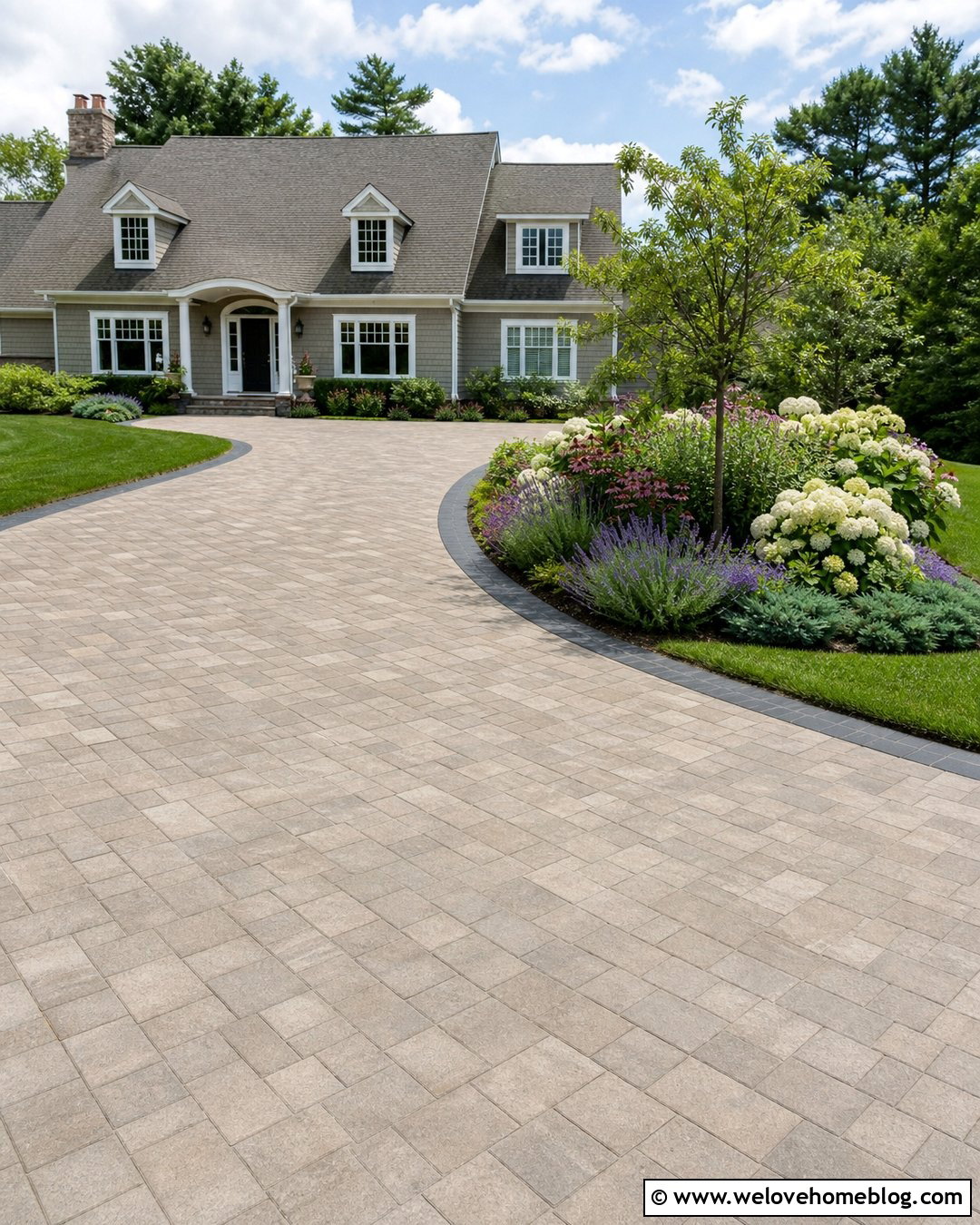
Warm concrete pavers and a flowering berm create a welcoming driveway that changes naturally through the seasons. Choose tan or greige interlocking pavers in a running-bond pattern, then add a darker paver ribbon around the perimeter. Shape the berm into a wide crescent along one side rather than placing narrow beds on both edges. Layer dwarf hydrangeas, salvia, catmint, coneflowers, and low evergreen ground cover according to local growing conditions. A small ornamental tree can anchor the widest part of the mound. Leave an open strip between the plants and pavement to prevent stems from brushing vehicles. Repeating colors from the house facade in the pavers, flowers, and mulch creates a coordinated driveway landscape instead of a disconnected garden bed.
5. Circular Driveway Island Berm
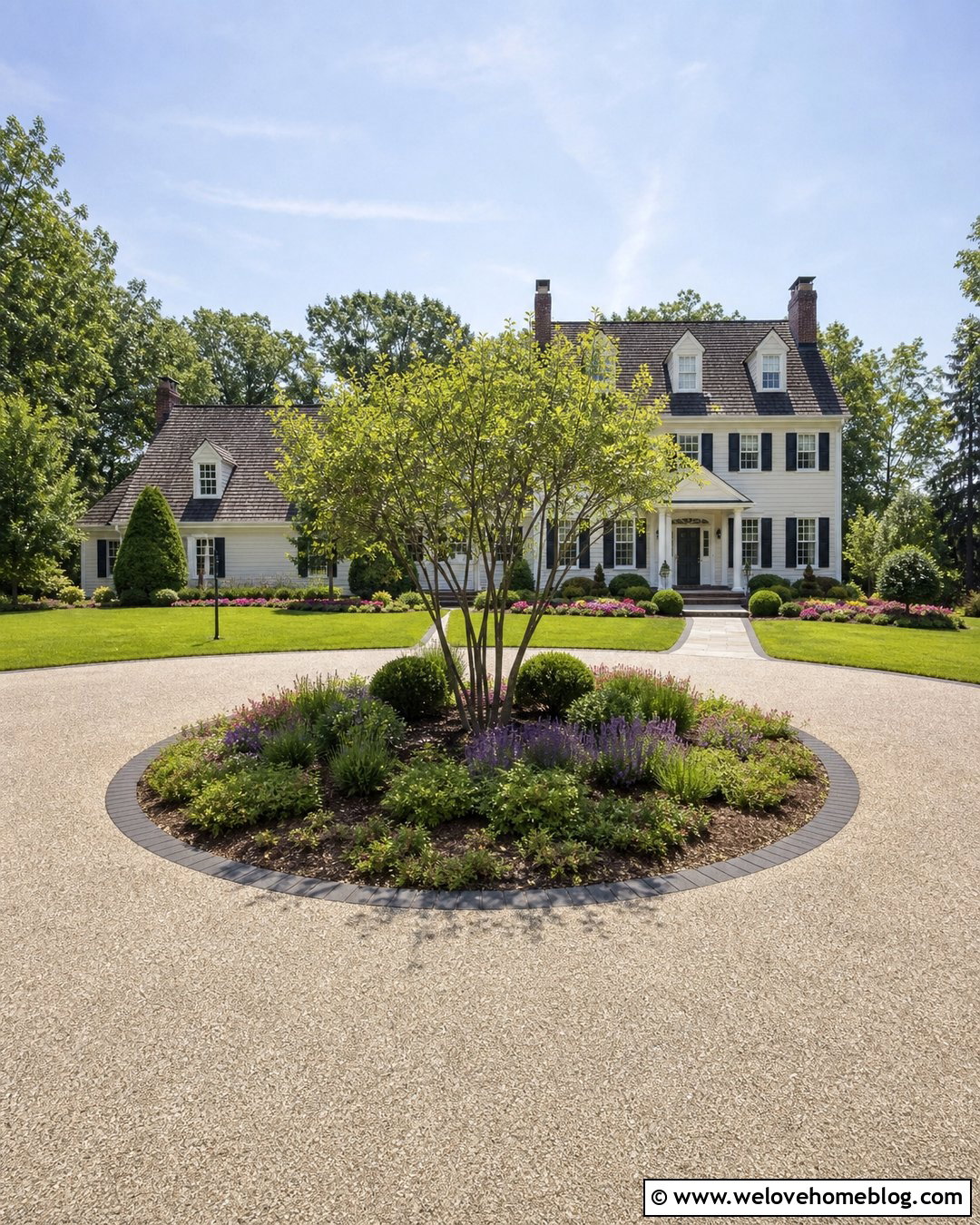
A circular driveway offers an ideal location for a central berm because the raised island becomes visible from several directions. Surround the island with light beige exposed-aggregate concrete and a charcoal paver border that clearly defines the driving lane. Build the berm slightly off-center, using a taller focal tree near the middle and lower shrubs toward the pavement. A multi-stem serviceberry, crape myrtle, or Japanese maple can provide height without overwhelming the house. Repeat ornamental grasses and flowering perennials around the outer slope for continuity. Keep the edges low and open so the turning route remains easy to understand. This complete arrangement adds dimension to a large front yard while making the circular layout feel intentional, balanced, and connected to the home.
6. Sloped Driveway Stone Berm
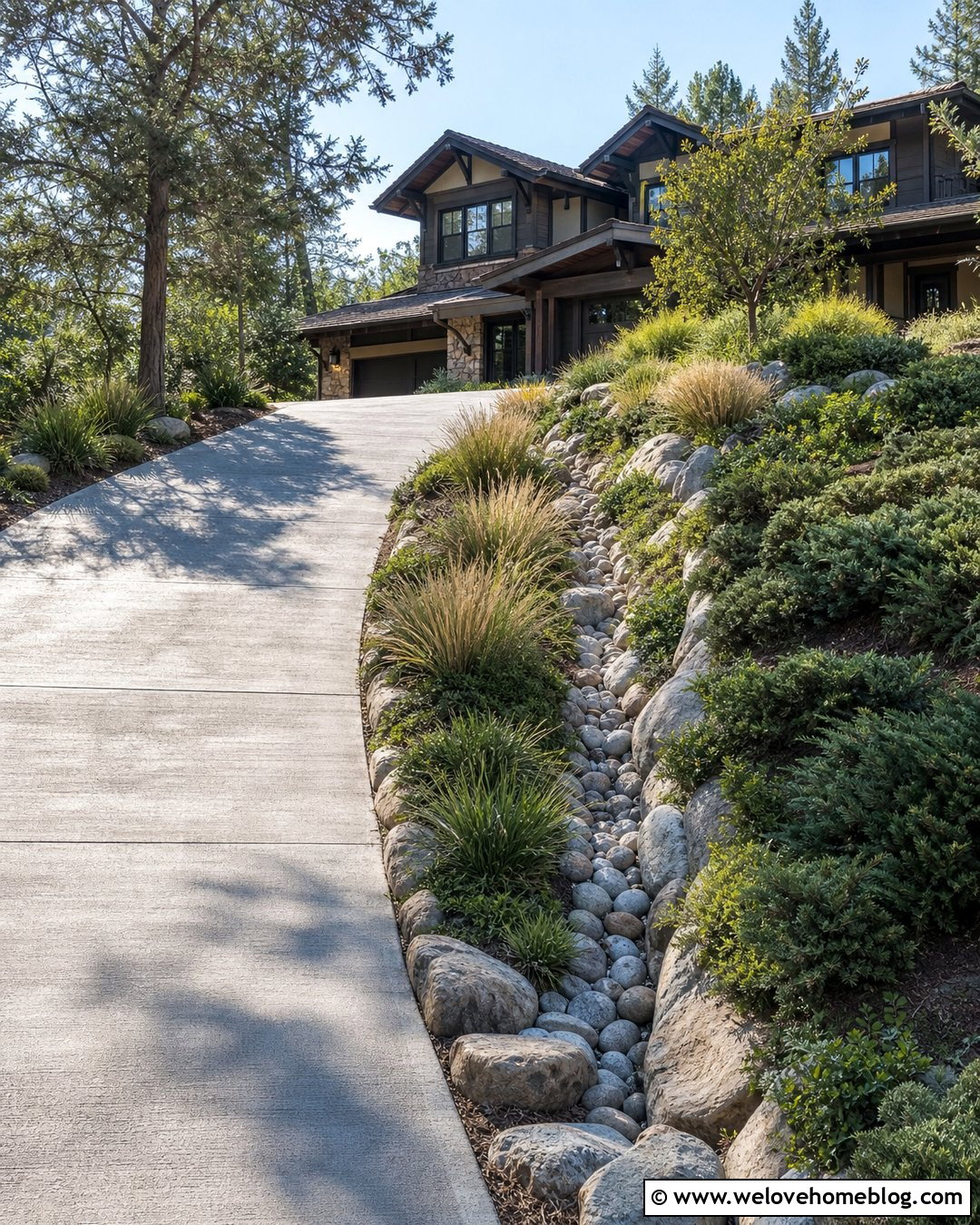
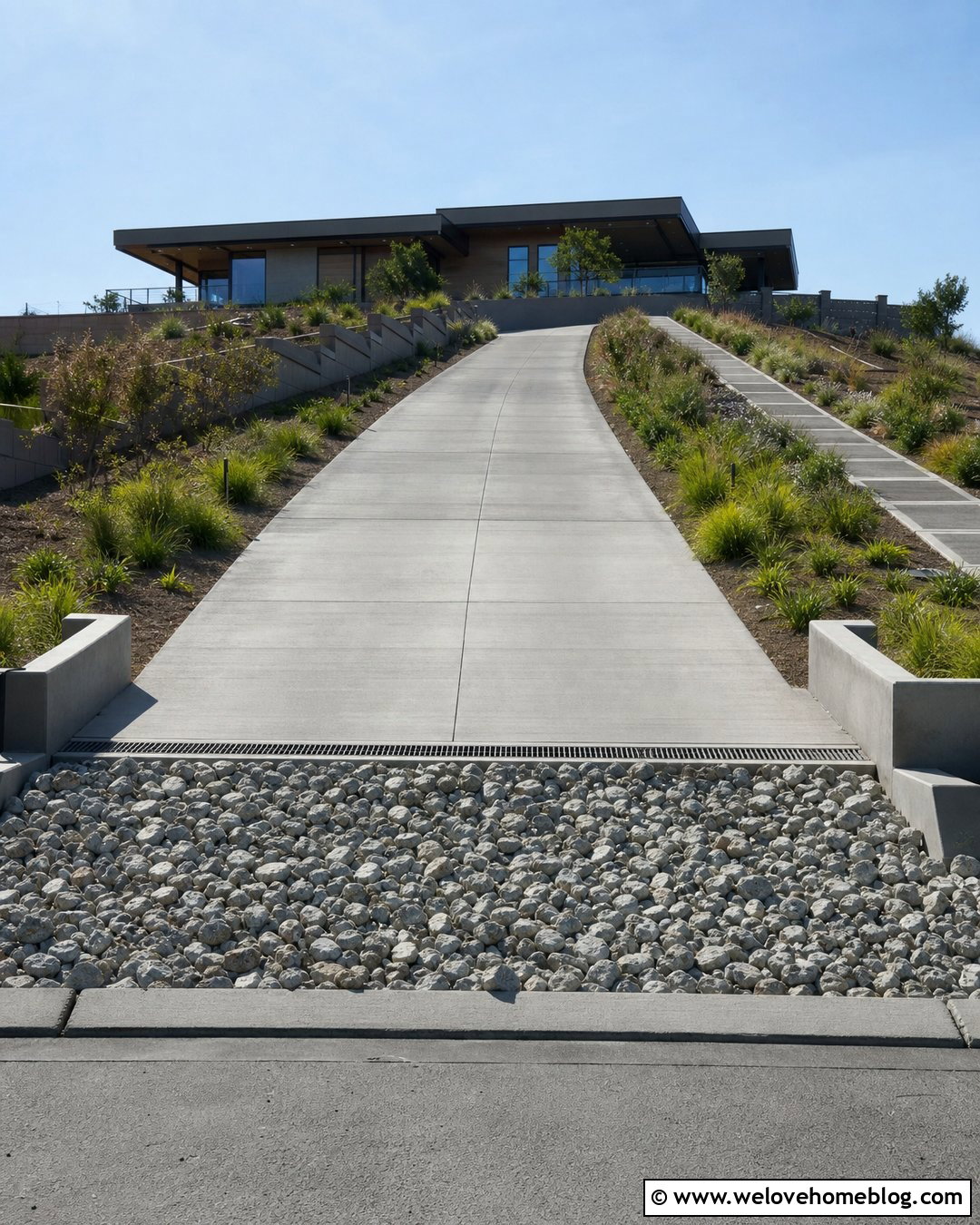
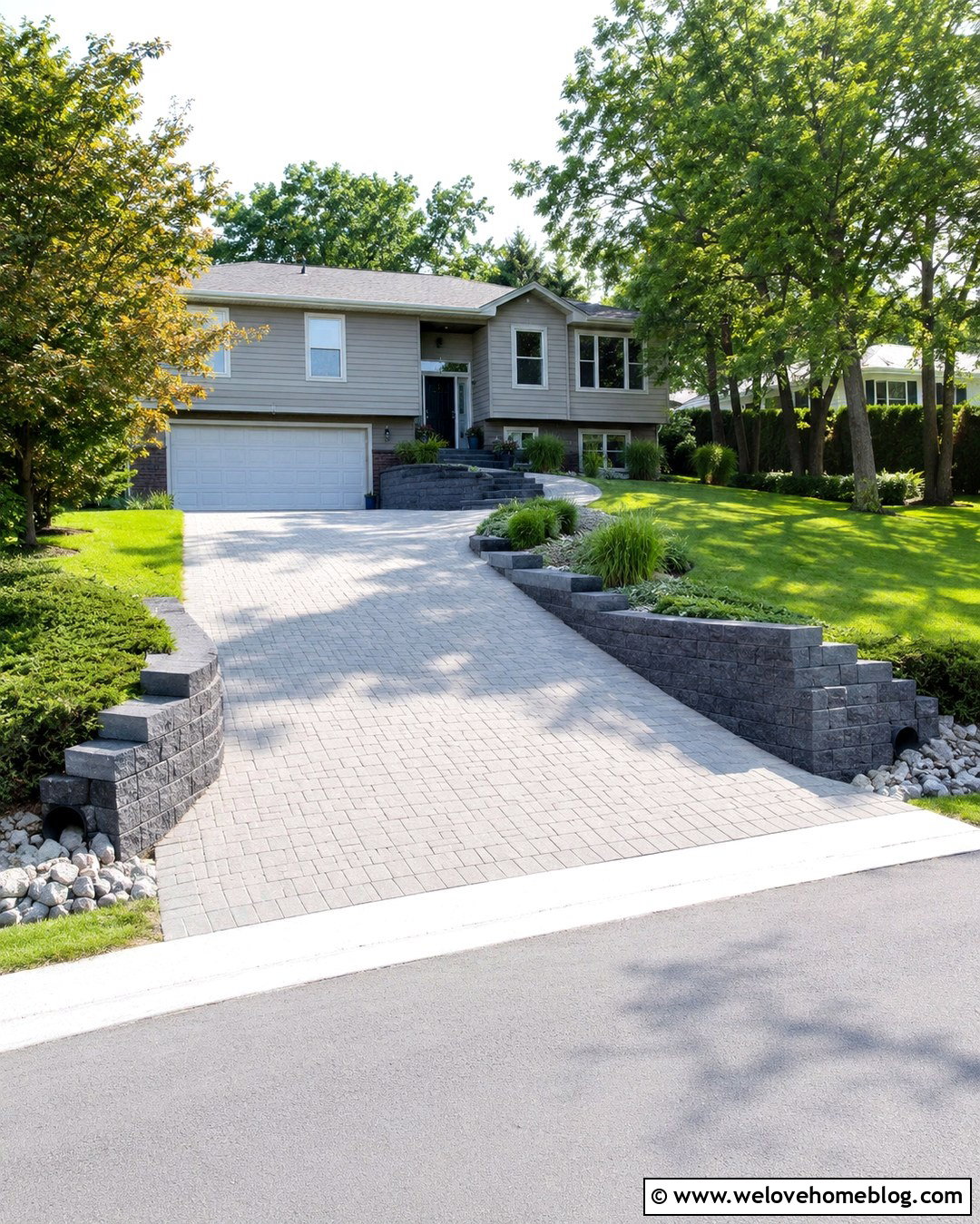
Water can move quickly beside a sloped driveway, so the berm must be both attractive and resistant to erosion. Pair a broom-finished concrete surface with a compacted earth berm protected by large fieldstones along the downhill edge. Set the stones irregularly into the slope instead of stacking them like a tall wall. Deep-rooted native grasses, spreading junipers, and tough ground covers help hold exposed soil above the rocks. A stone-lined channel can carry concentrated runoff toward a stable outlet at the bottom. Avoid creating a mound that traps water against the driveway base or sends it across an unstable slope. Properties with significant grades, heavy runoff, or erosion concerns should have the drainage route reviewed by a qualified local professional. ()
7. Farmhouse Gravel Driveway Berm
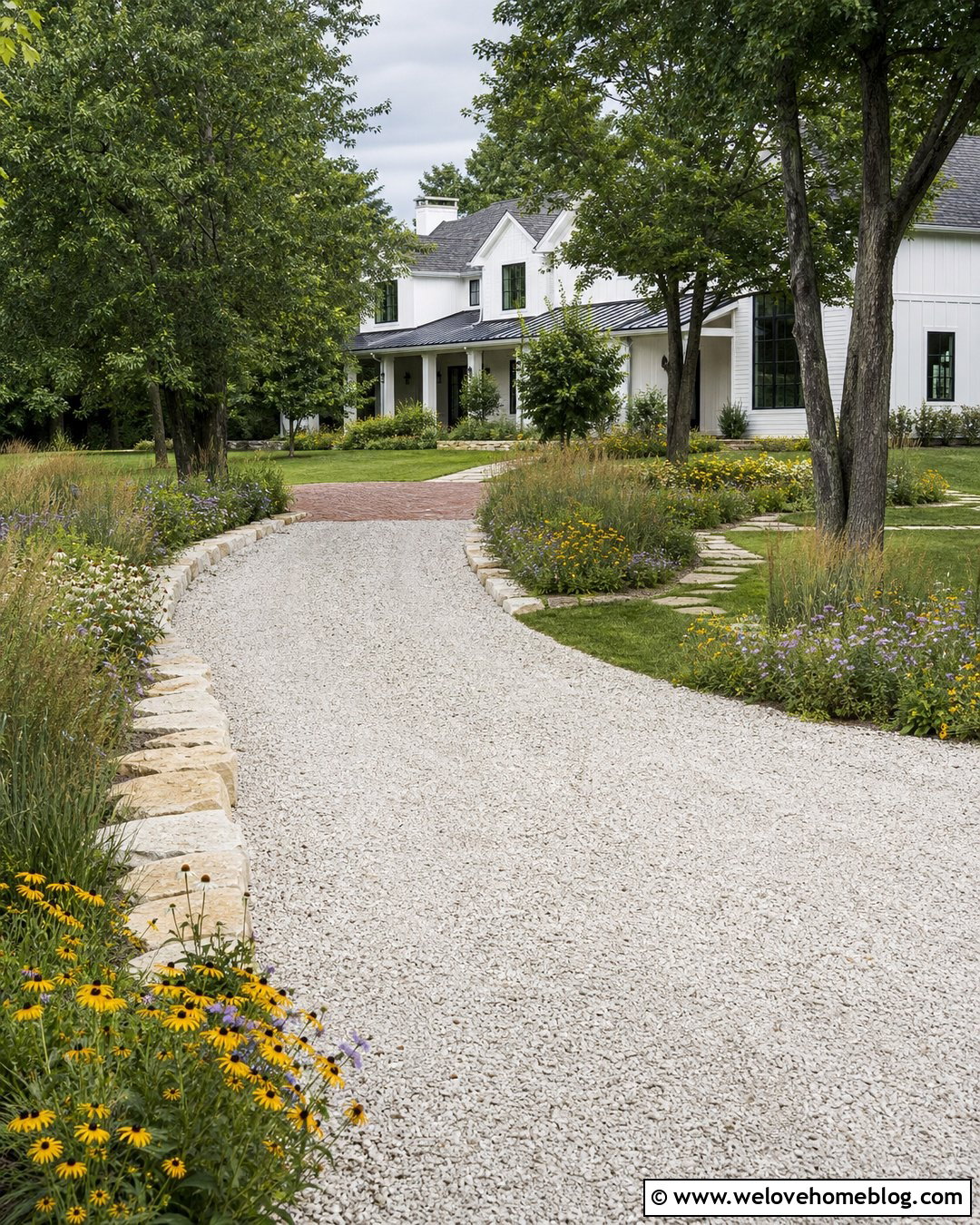
A farmhouse driveway looks relaxed and established when pale crushed limestone curves between meadow-style berms. Use weathered limestone blocks or simple steel edging to keep loose gravel away from the planting soil. Shape the berms as long, uneven ridges instead of matching formal mounds. Plant little bluestem, black-eyed Susans, asters, white coneflowers, and a few compact flowering shrubs for a natural country palette. Groups of plants should repeat along the route while leaving occasional open areas of mulch or stone. Near the house, transition the gravel into a brick or flagstone parking apron for a cleaner arrival point. The combination of practical gravel, informal planting, and a gently rolling layout complements white siding, timber details, and traditional farmhouse architecture.
8. Modern Concrete Driveway Berm
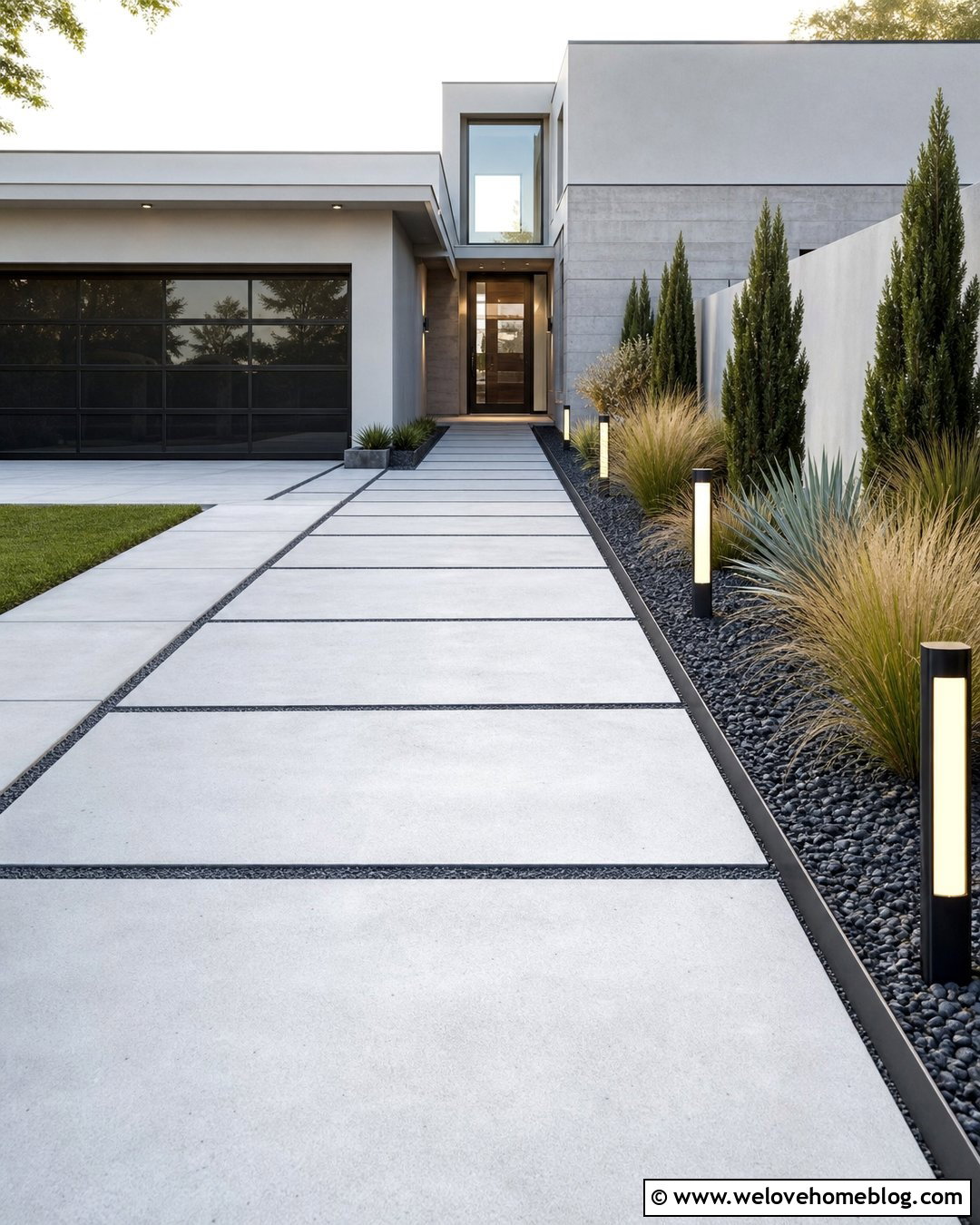
Clean geometry makes a modern driveway berm feel like part of the architecture. Start with large rectangular slabs of light gray poured concrete separated by narrow gravel joints. Beside the driveway, form a low linear berm with crisp but gently sloped sides. Use black steel edging where the planting soil meets a strip of dark crushed basalt. Limit the planting palette to sculptural grasses, compact evergreens, yucca, or other climate-appropriate architectural plants. Repeating fewer species creates stronger visual impact than filling the mound with many unrelated flowers. Position simple bollard lights along the berm to illuminate the approach without crowding the pavement. This combination introduces height and texture while preserving the uncluttered lines expected around a contemporary house.
9. Brick Driveway Entrance Berm
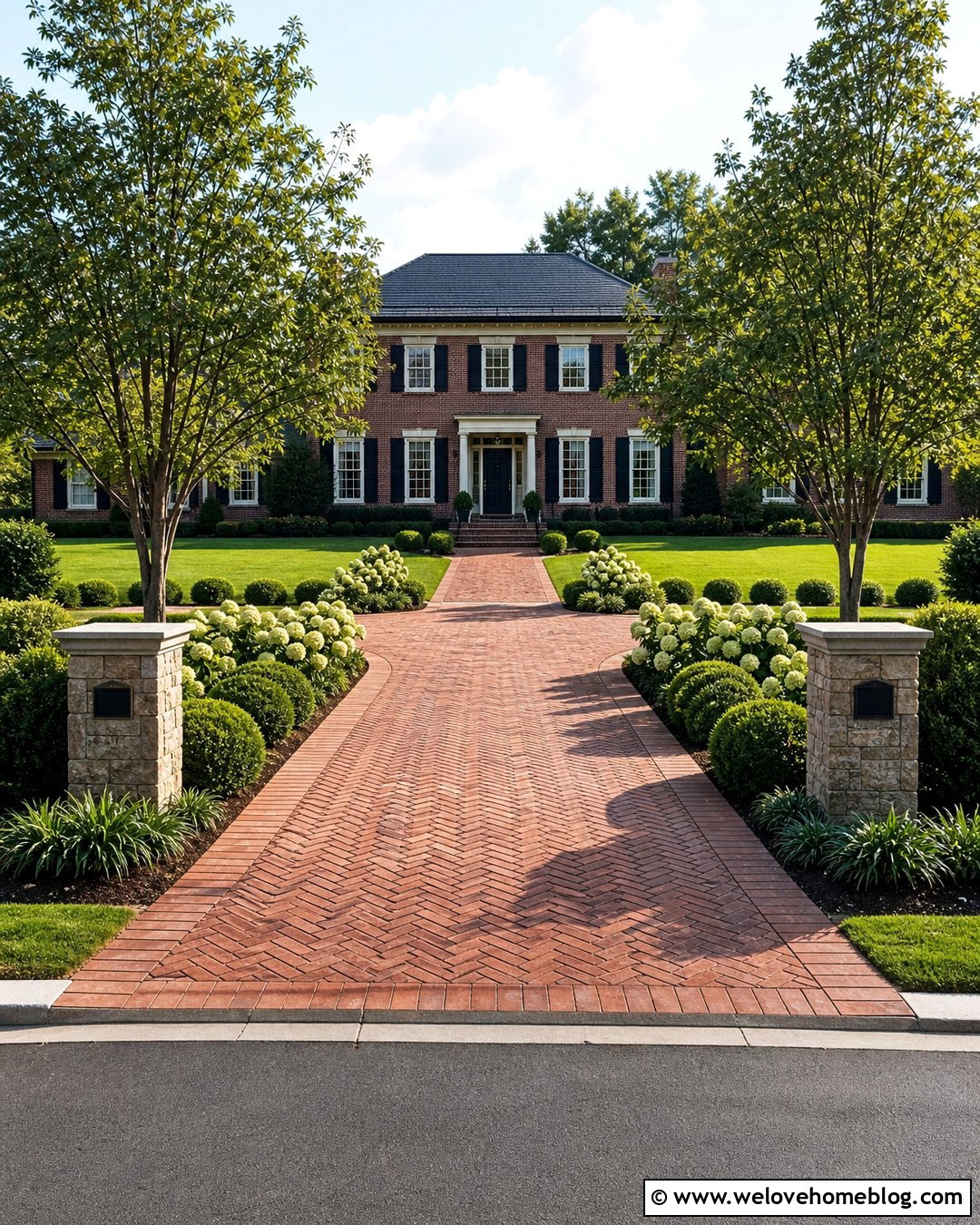
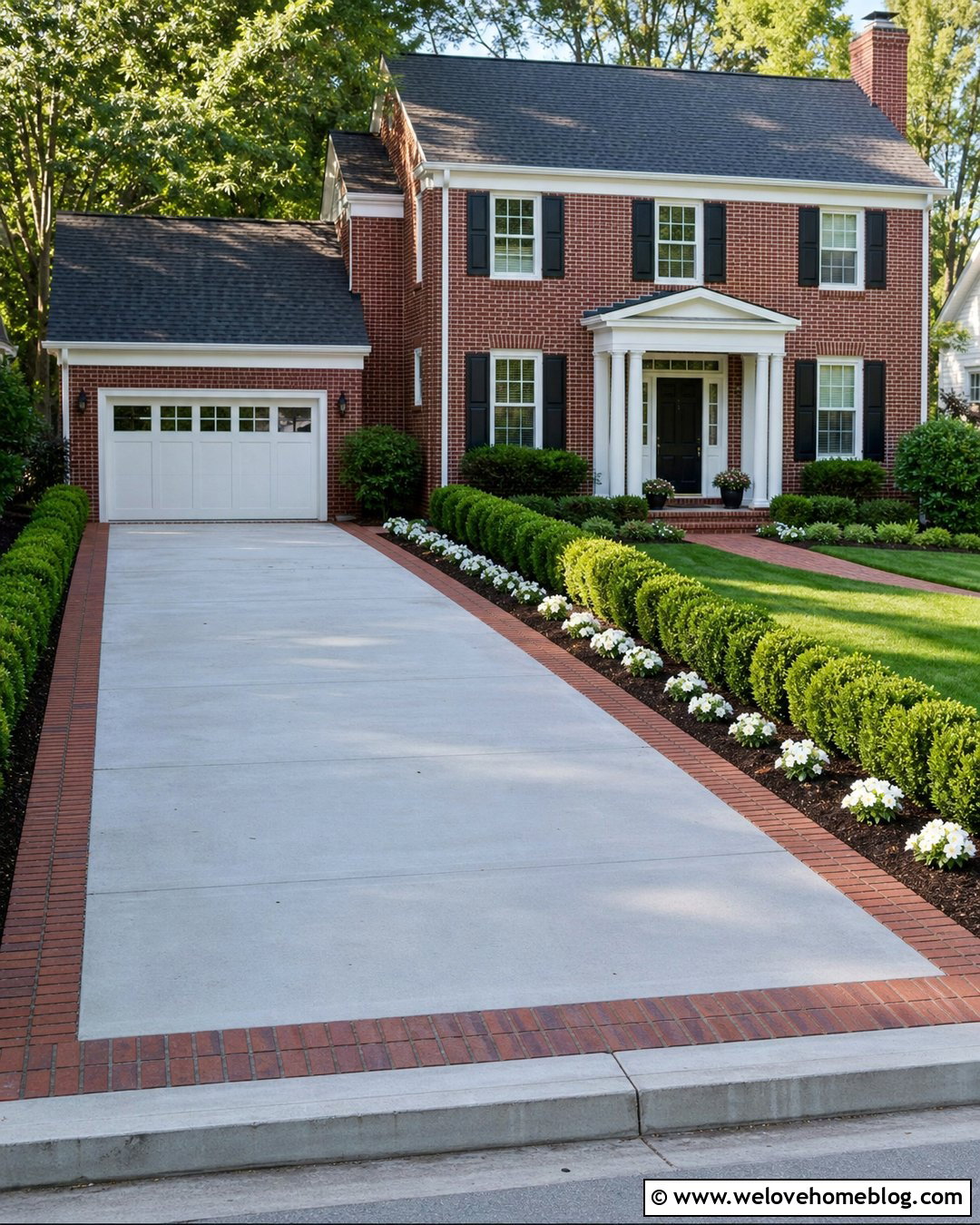
A traditional brick driveway gains a stronger street presence when two low entrance berms frame the approach. Lay red or brown clay brick pavers in a herringbone pattern with a soldier-course border. On each side of the opening, shape broad mounds that rise gradually behind the pavement. Match their overall scale, but vary the planting slightly to avoid an overly rigid appearance. Rounded boxwood, panicle hydrangeas, liriope, and a pair of small ornamental trees suit many Colonial and Georgian-inspired homes. Brick or stone mailbox pillars can sit near the inner edges without blocking sightlines. Extend the berms back along the driveway so they appear connected to the landscape. This creates a defined entrance while preserving an open, comfortable turning area.
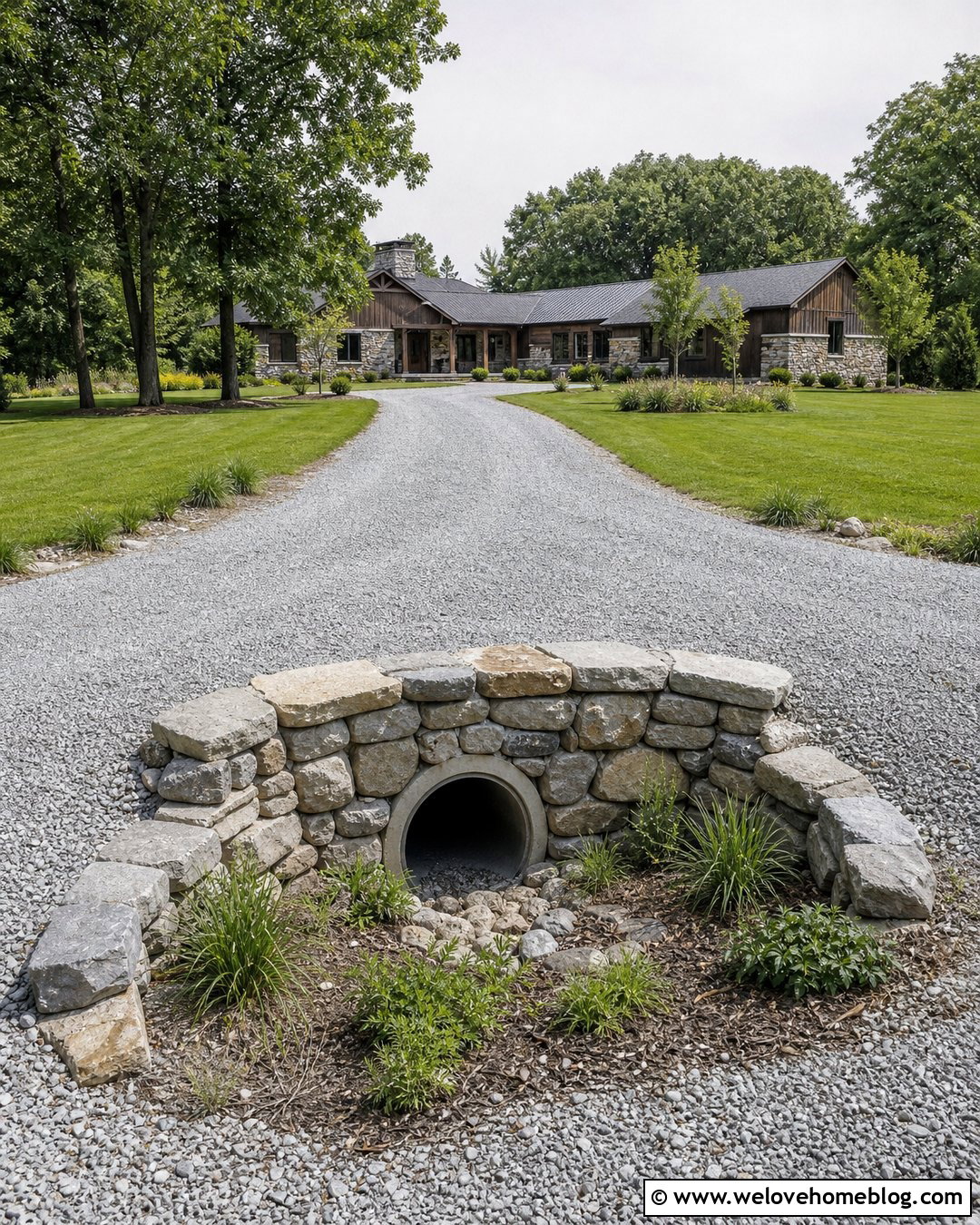
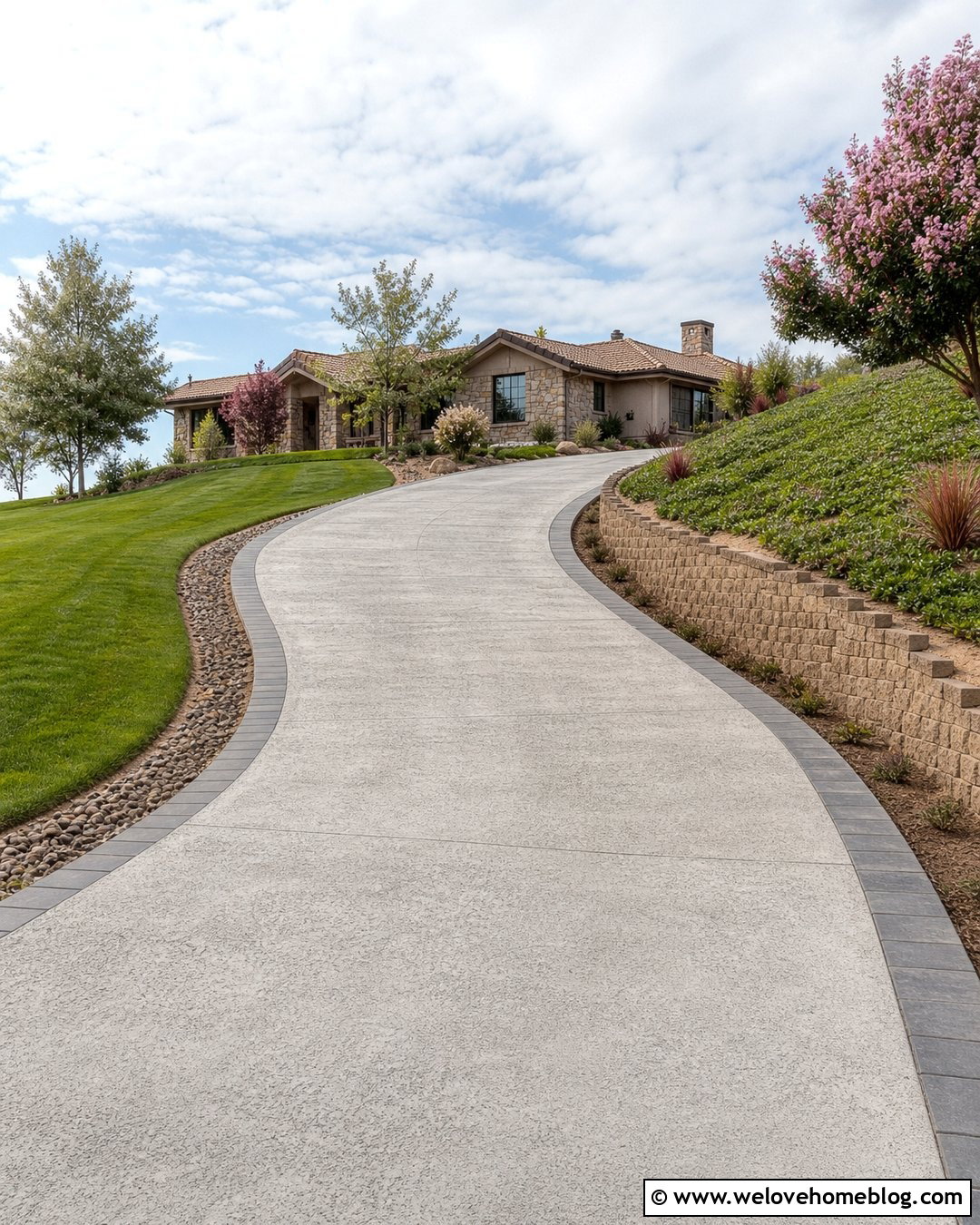
10. Permeable Driveway Swale And Berm
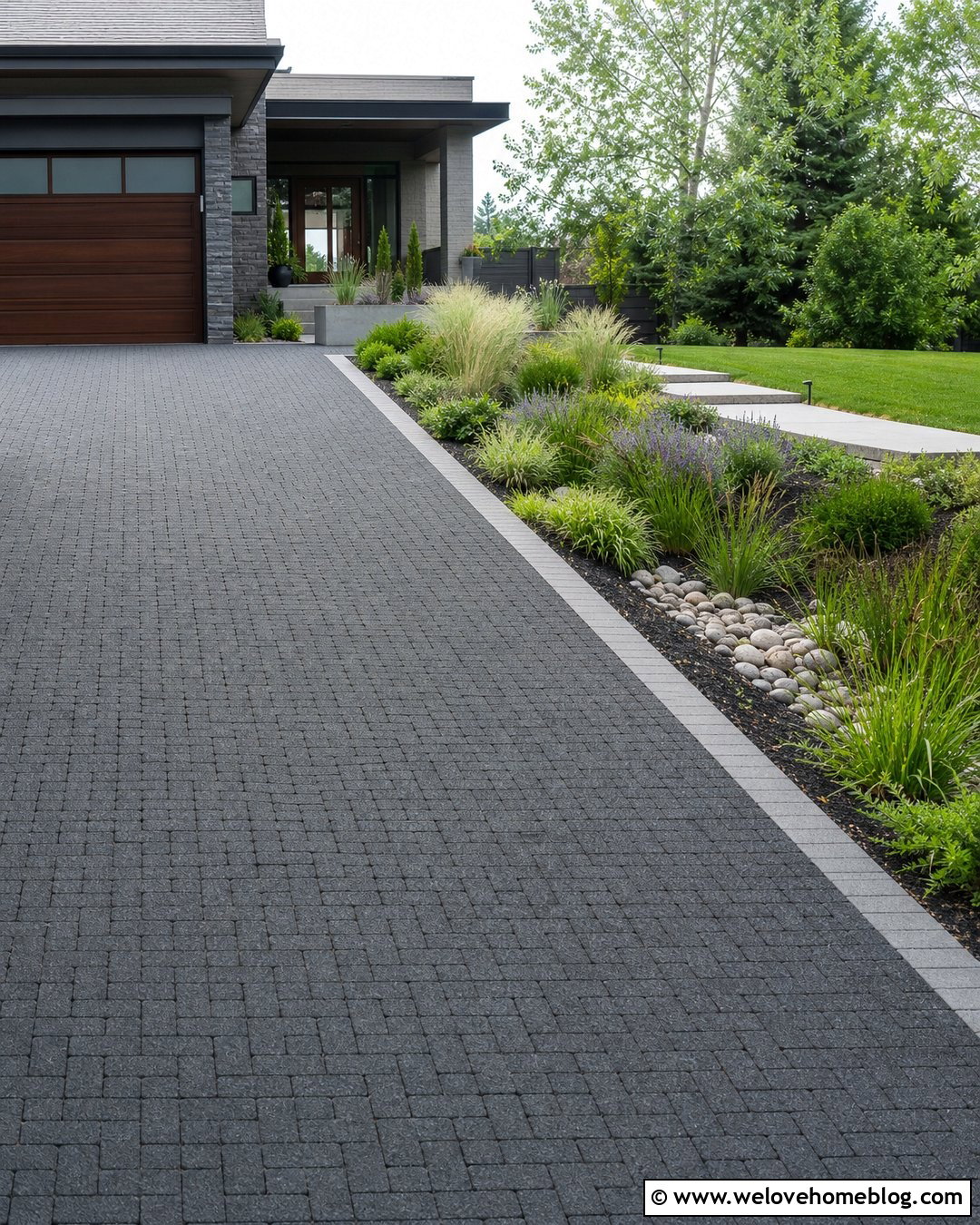
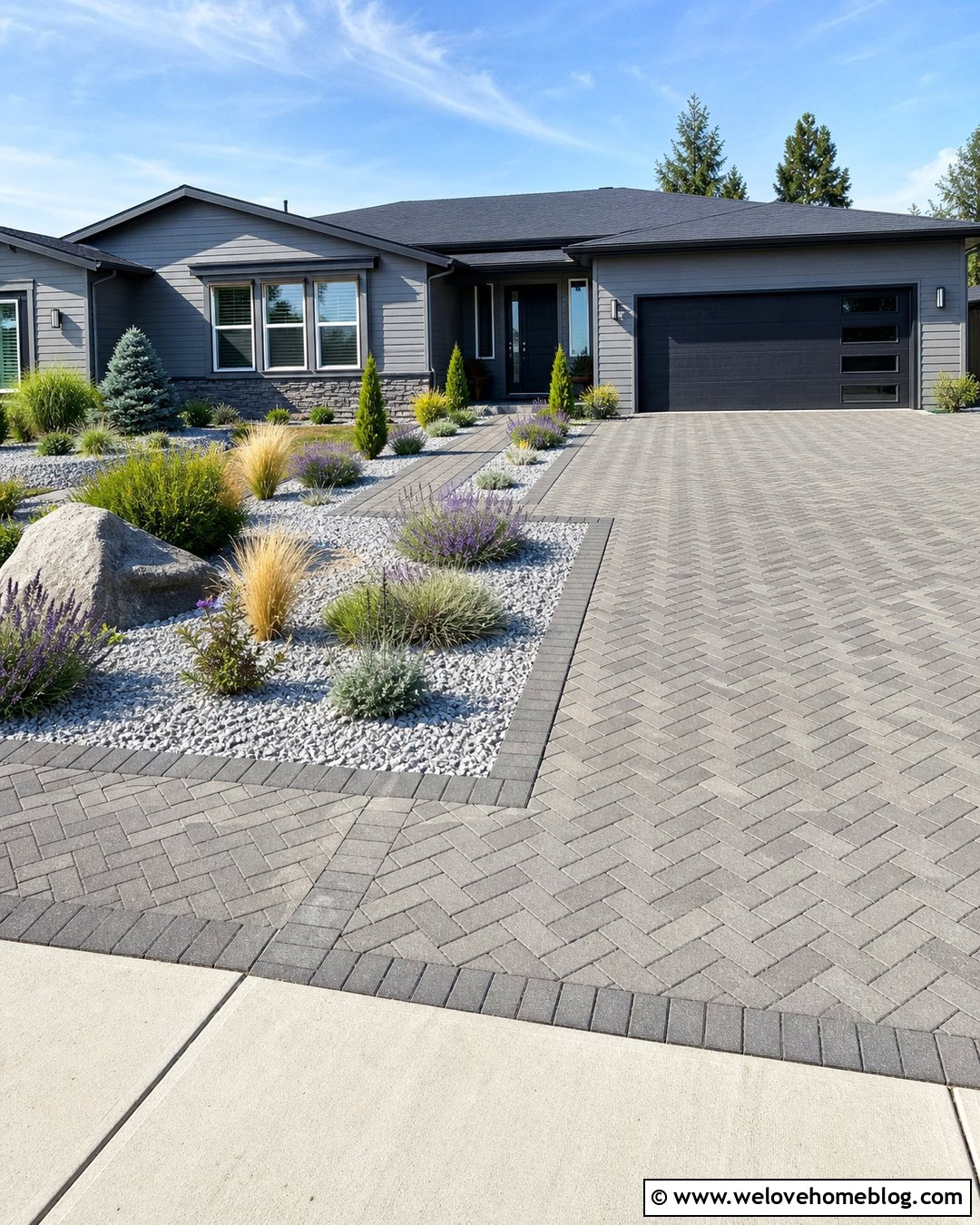
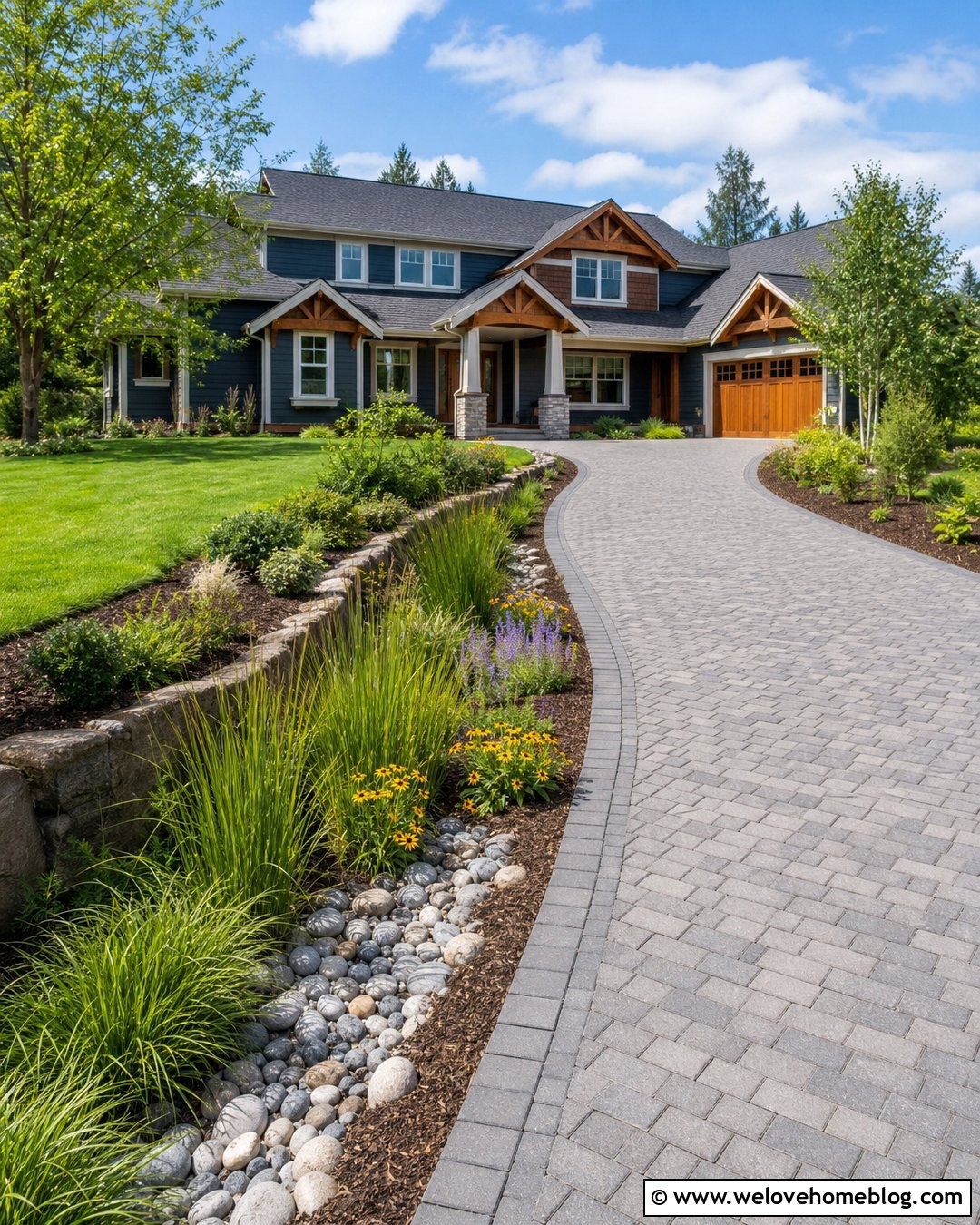
A swale-and-berm layout can make drainage an attractive part of a permeable driveway. Install charcoal permeable concrete pavers over the correctly prepared open-graded base, then place a shallow vegetated swale along the lower edge. Soil removed from the swale can help form a gradual berm behind it when site conditions allow. River stones at runoff entry points protect the soil and add texture. Fill the depression with moisture-tolerant sedges and rushes, while lavender, ornamental grasses, or low shrubs occupy the drier upper mound. The driveway, swale, and berm should lead water toward an approved infiltration or overflow area. This system works especially well beside contemporary homes where visible drainage features can be organized into clean, intentional lines. ()
11. Desert Driveway Xeriscape Berm
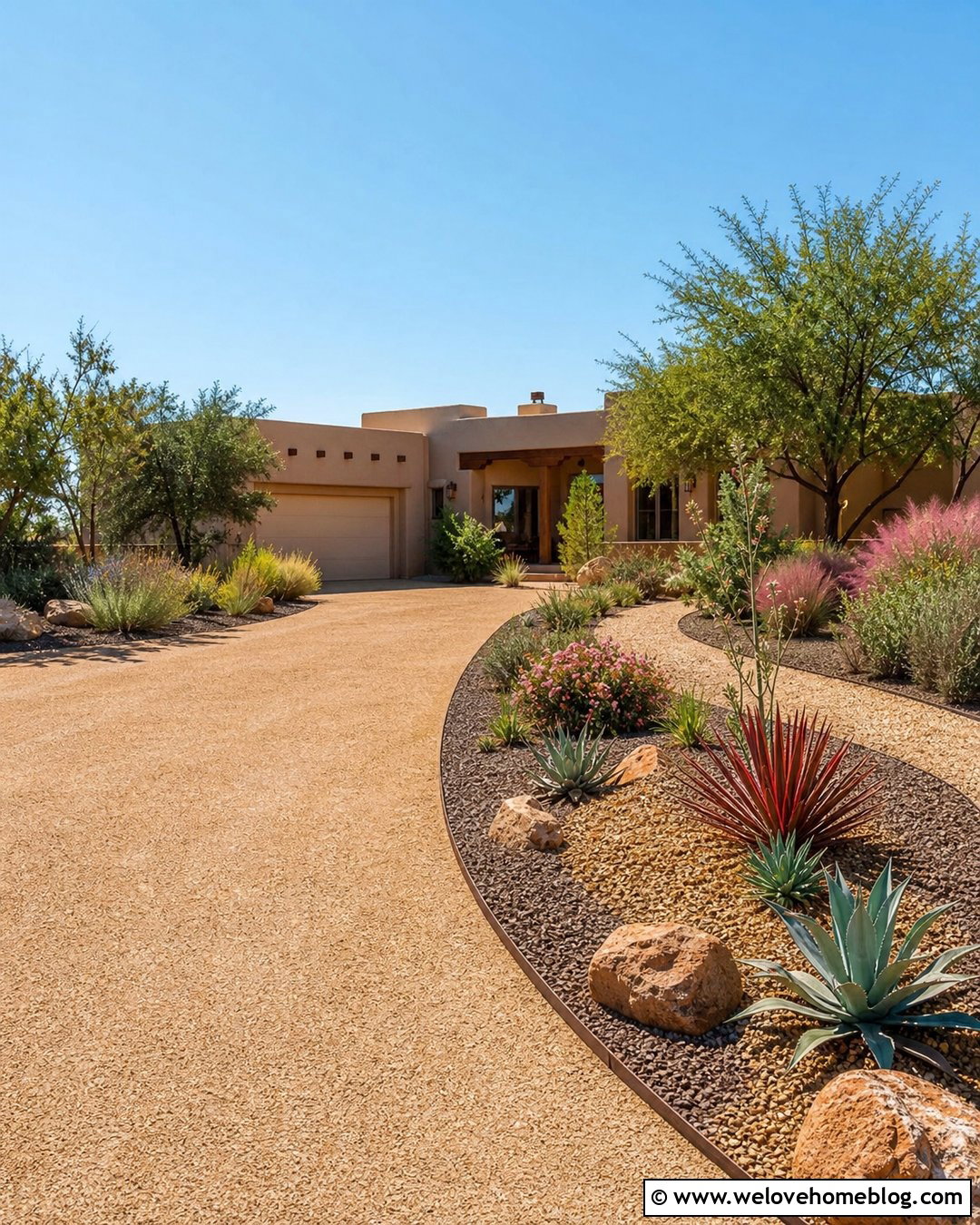
In a dry climate, a xeriscape berm can frame the driveway without demanding a thirsty lawn. Use stabilized decomposed granite for a warm, permeable-looking driving surface and rust-colored steel edging to hold the material in place. Build a low, irregular berm beside a gently curved approach, then cover the soil with gravel mulch in two complementary colors. Arrange agave, red yucca, desert spoon, muhly grass, and small flowering desert shrubs in widely spaced groups. Several weathered boulders can anchor the mound and reduce the amount of exposed planting space. Keep thorny plants well away from doors, walkways, and vehicle paths. A drip-irrigation line beneath the mulch supports establishment while maintaining the clean appearance of this low-water driveway landscape.
12. Woodland Cobblestone Driveway Berm
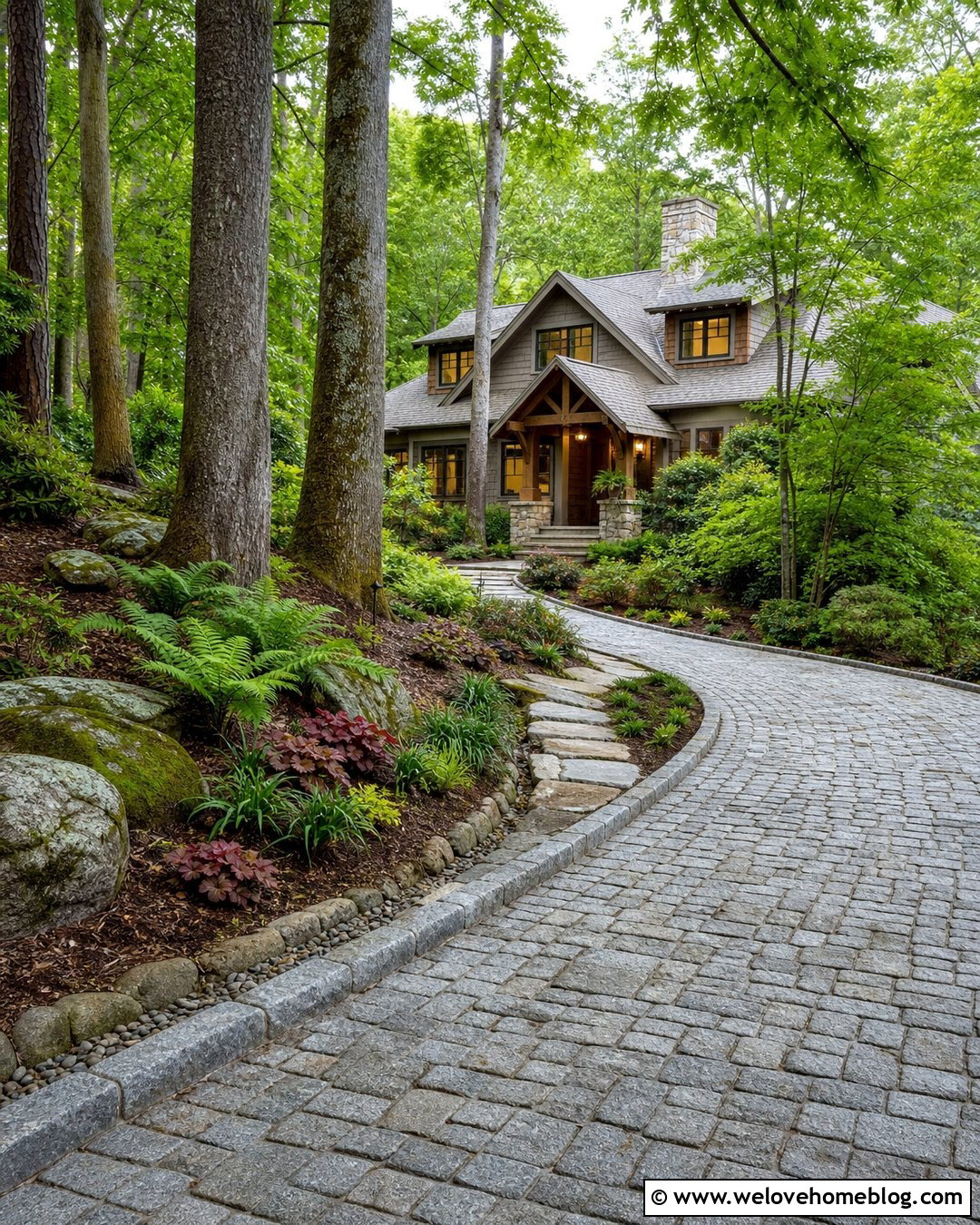
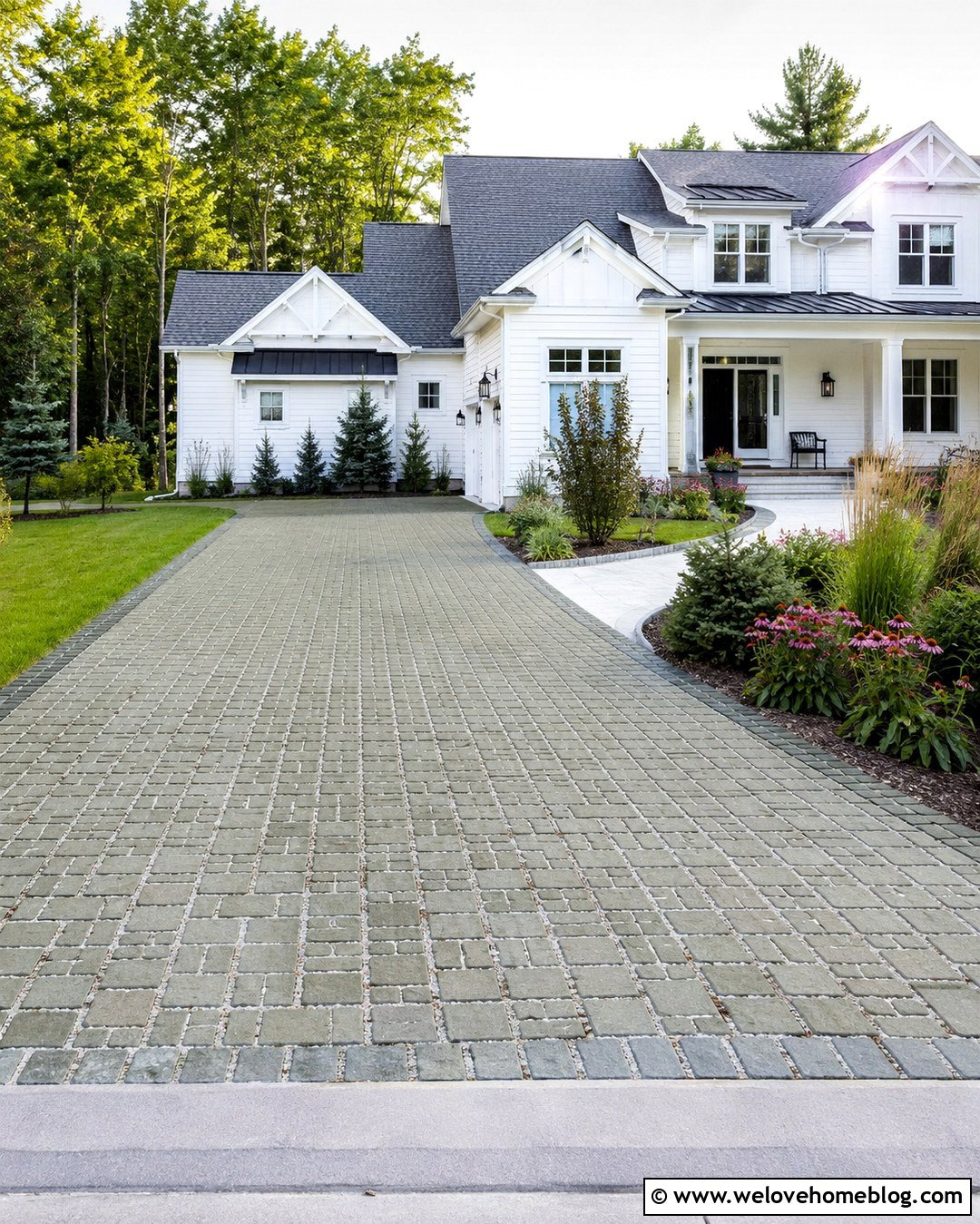
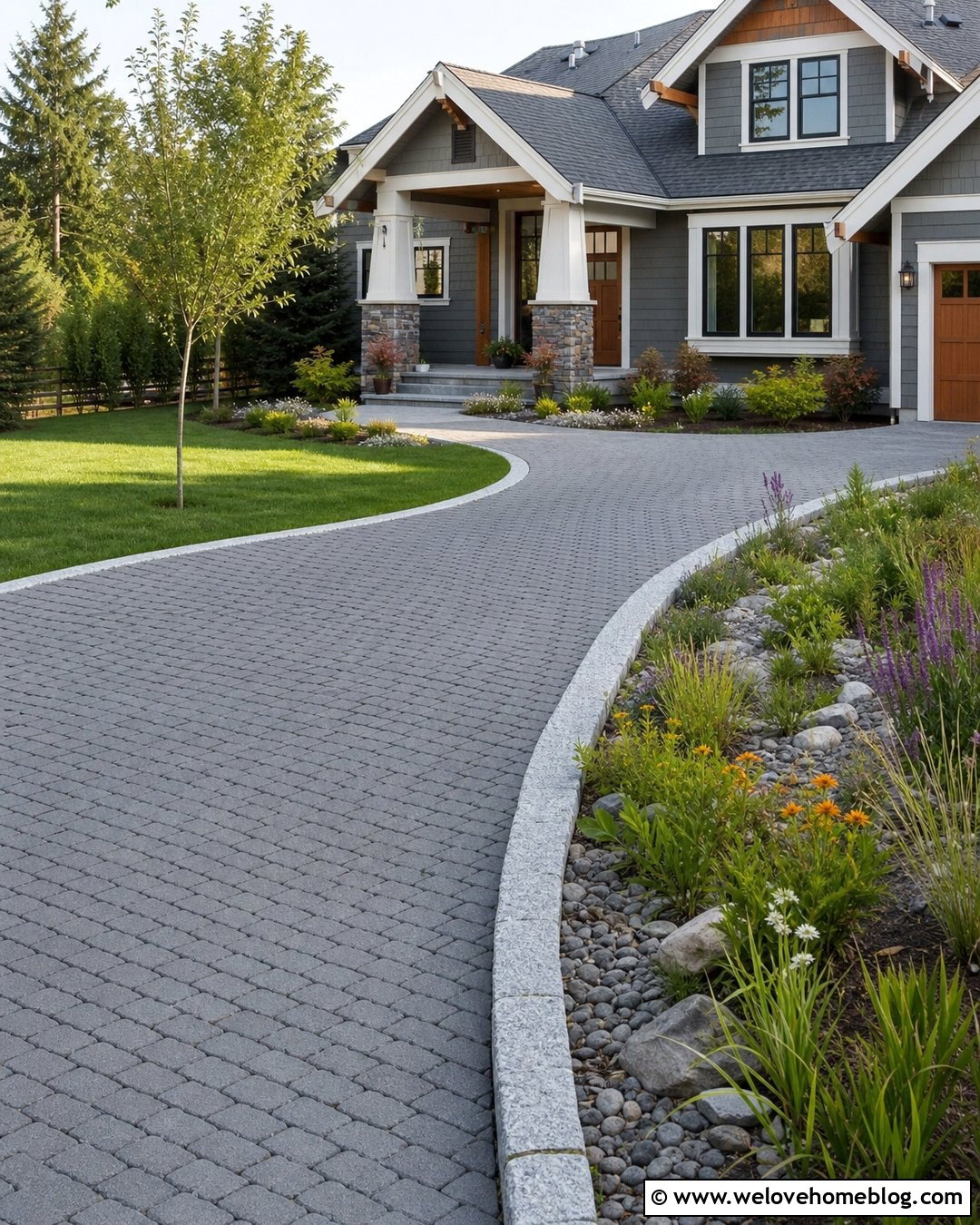
A wooded property benefits from a driveway berm that looks as though it belongs to the existing landscape. Use gray granite cobblestones or cobblestone-style pavers for a gently curving driveway leading toward a Craftsman or cottage home. Form a soft berm around mature trees without piling new soil against their trunks. Add woodland plants such as ferns, sedges, coral bells, foamflower, and shade-tolerant shrubs where they suit the climate. Mossy boulders and shredded leaf mulch can create natural transitions between planted areas and the surrounding forest floor. A narrow stone drainage channel along the driveway prevents runoff from cutting through the mound. The muted paving, layered shade planting, and irregular landform produce a quiet entrance that complements the trees rather than competing with them.
13. Narrow Driveway Side Berm
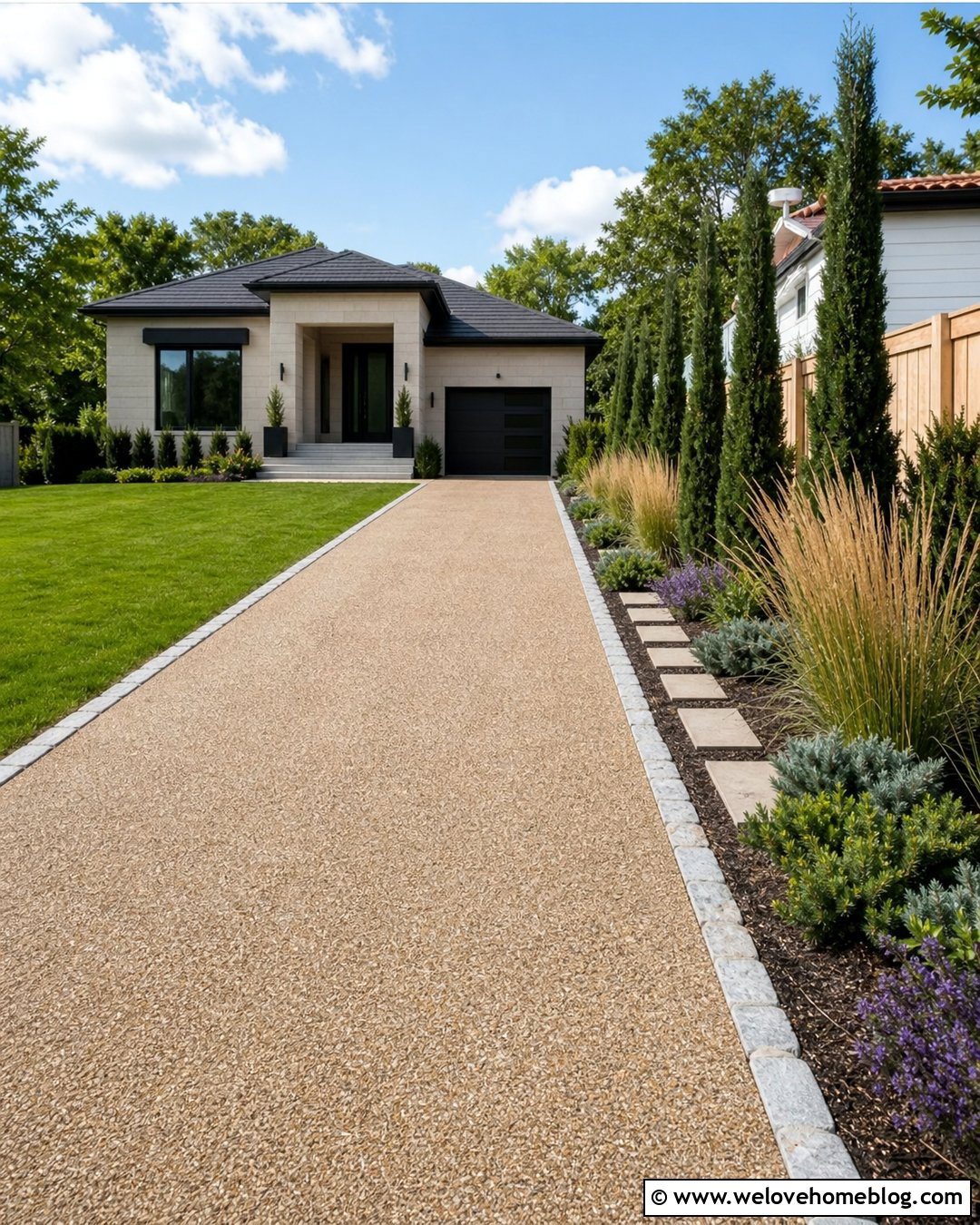
A compact front yard can still accommodate a driveway berm when the design uses one side efficiently. Pair a straight resin-bound gravel driveway in a warm beige tone with a single narrow, elongated mound along the property edge. Hold the lower slope with a low row of granite setts, leaving enough clearance for car doors and foot traffic. Use upright plants such as switchgrass, columnar juniper, dwarf inkberry, and compact flowering perennials to provide height without excessive spread. Keep the berm lower near the sidewalk and garage entrance. A matching stepping-stone walkway can cross the planting bed where access is needed. Concentrating the landscaping on one side leaves the driveway feeling wider while still adding privacy, structure, and a finished border.
14. Corner Lot Driveway Berm
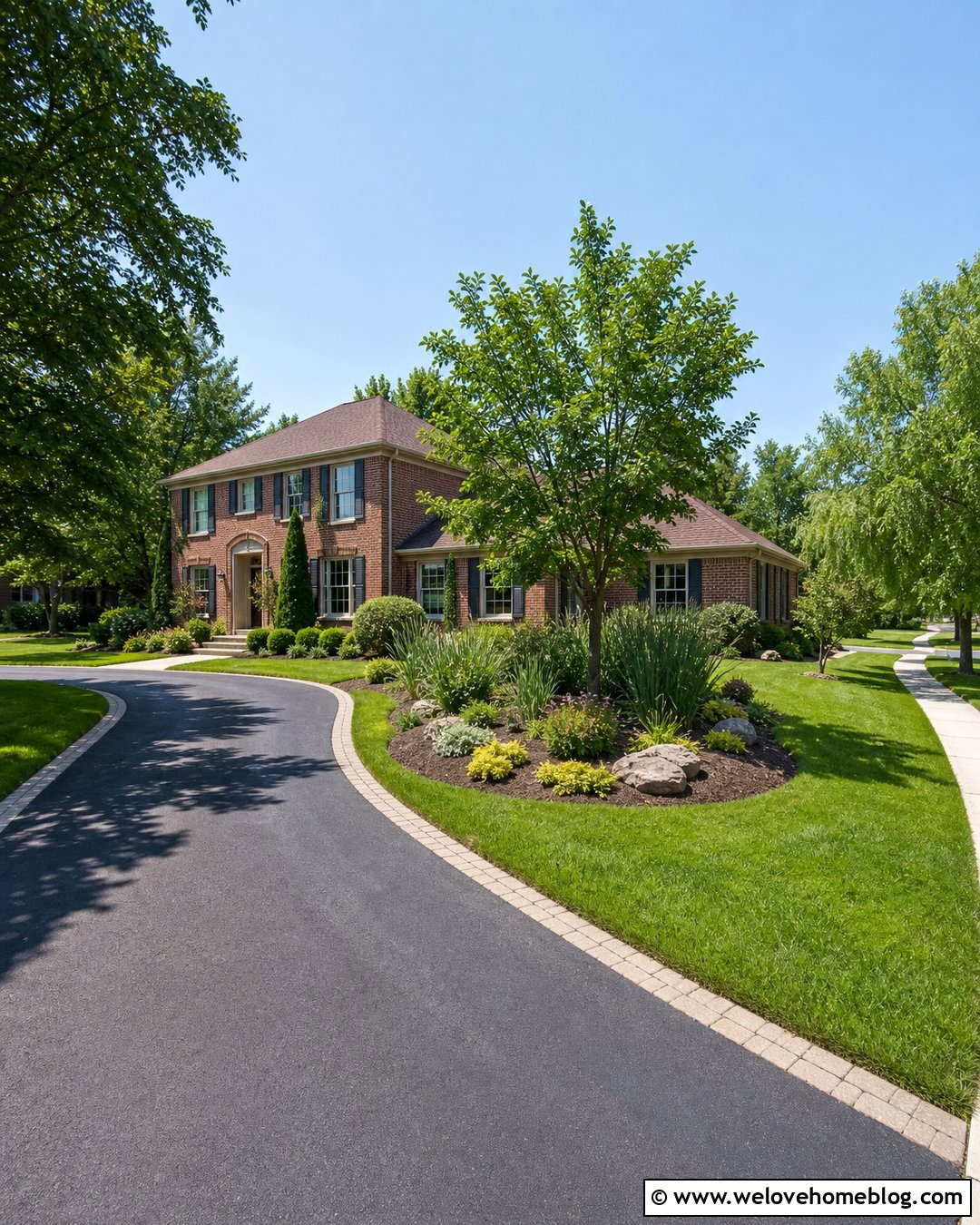
Corner properties often need landscaping that looks attractive from two streets while maintaining clear views near the driveway. A curved black asphalt driveway with a light concrete paver border provides a simple foundation. Build a broad kidney-shaped berm farther inside the yard, away from the traffic corner. Plant a small canopy tree at the highest point, then step down through medium shrubs, grasses, and low ground cover toward both street edges. Avoid tall hedges near the driveway opening, intersection, sidewalks, and utility equipment. A sweeping mulch line can connect the berm to the front walkway and house foundation beds. This arrangement gives the exposed corner more dimension and privacy without making the entrance feel enclosed or reducing the driver’s ability to see approaching vehicles.
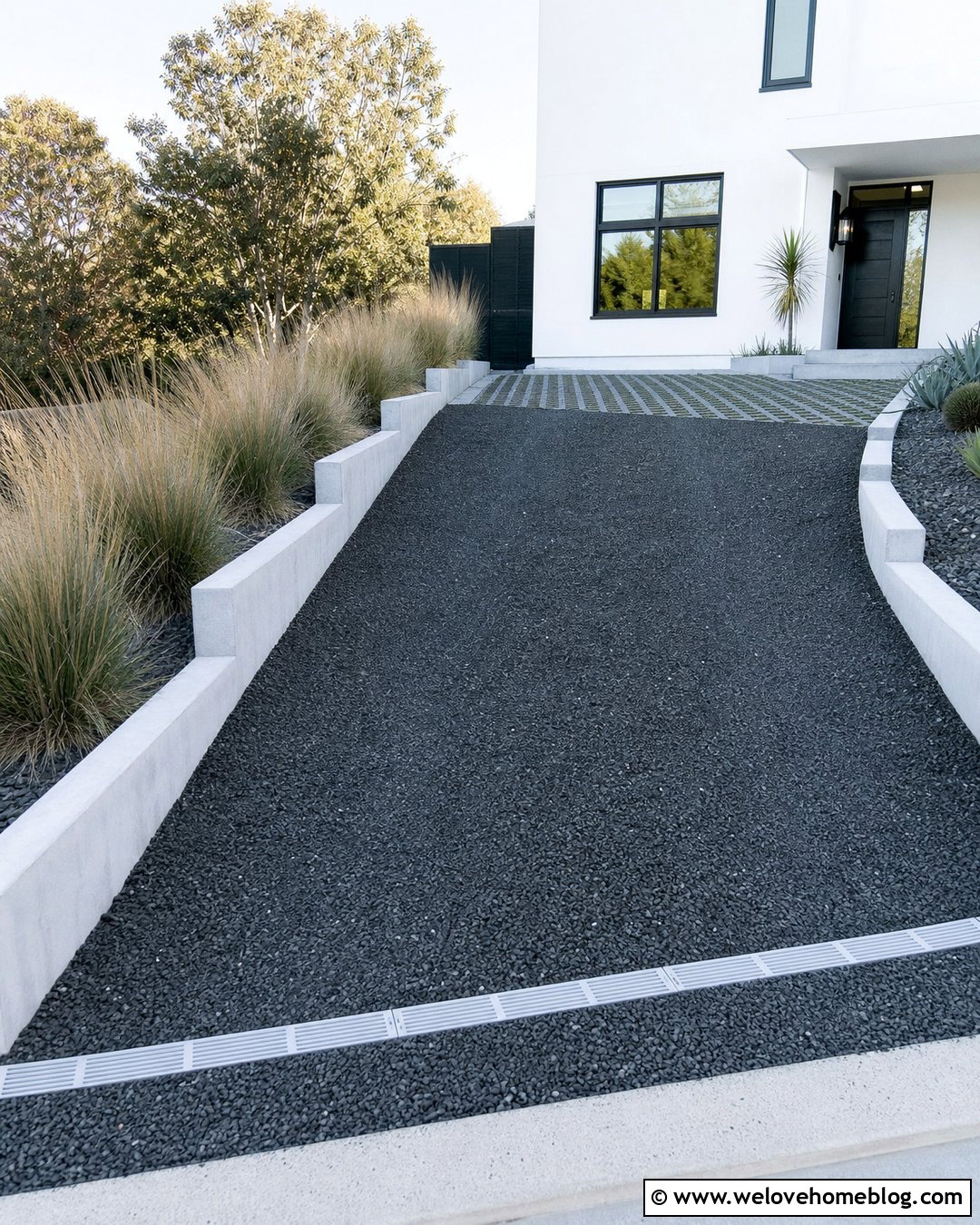
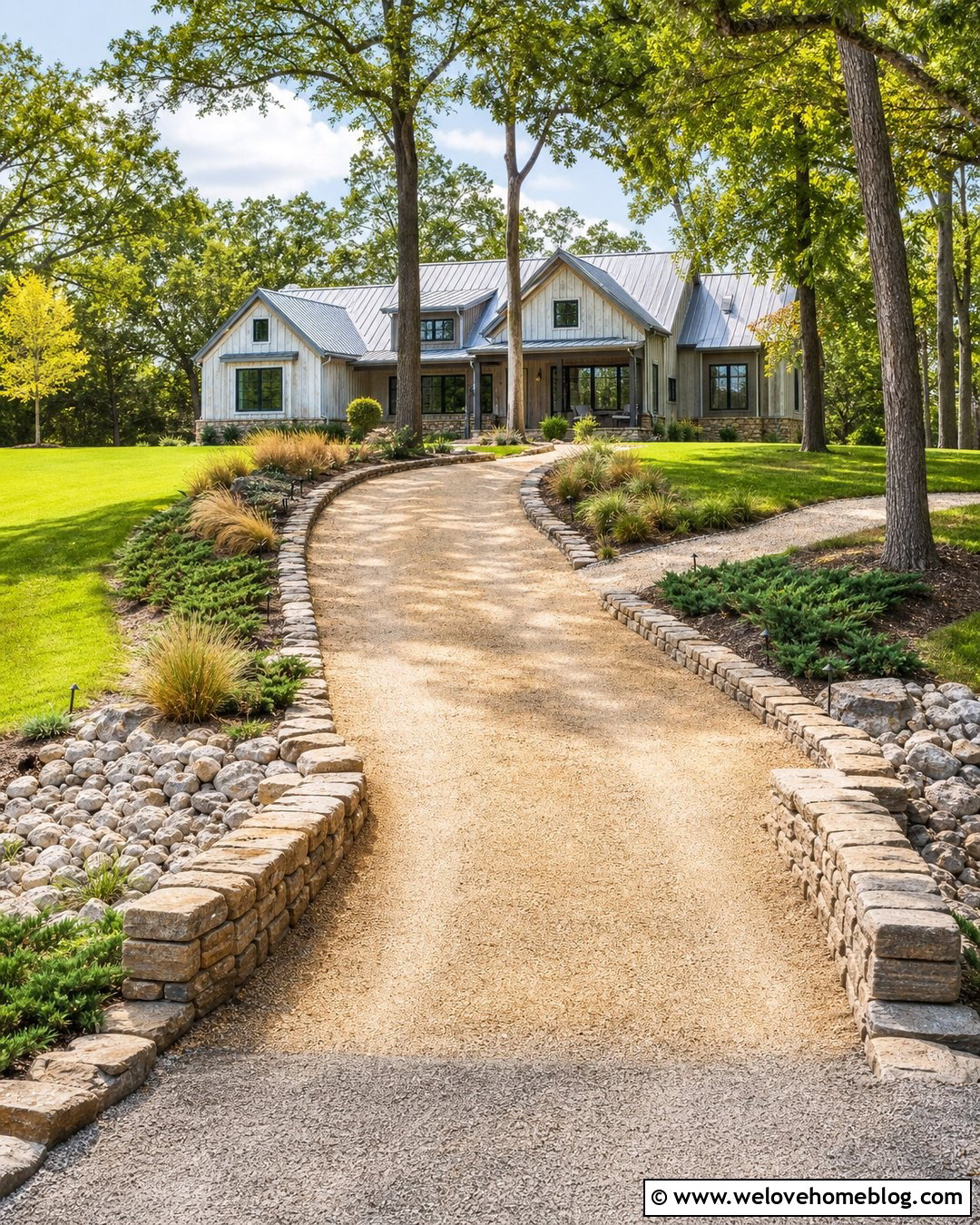
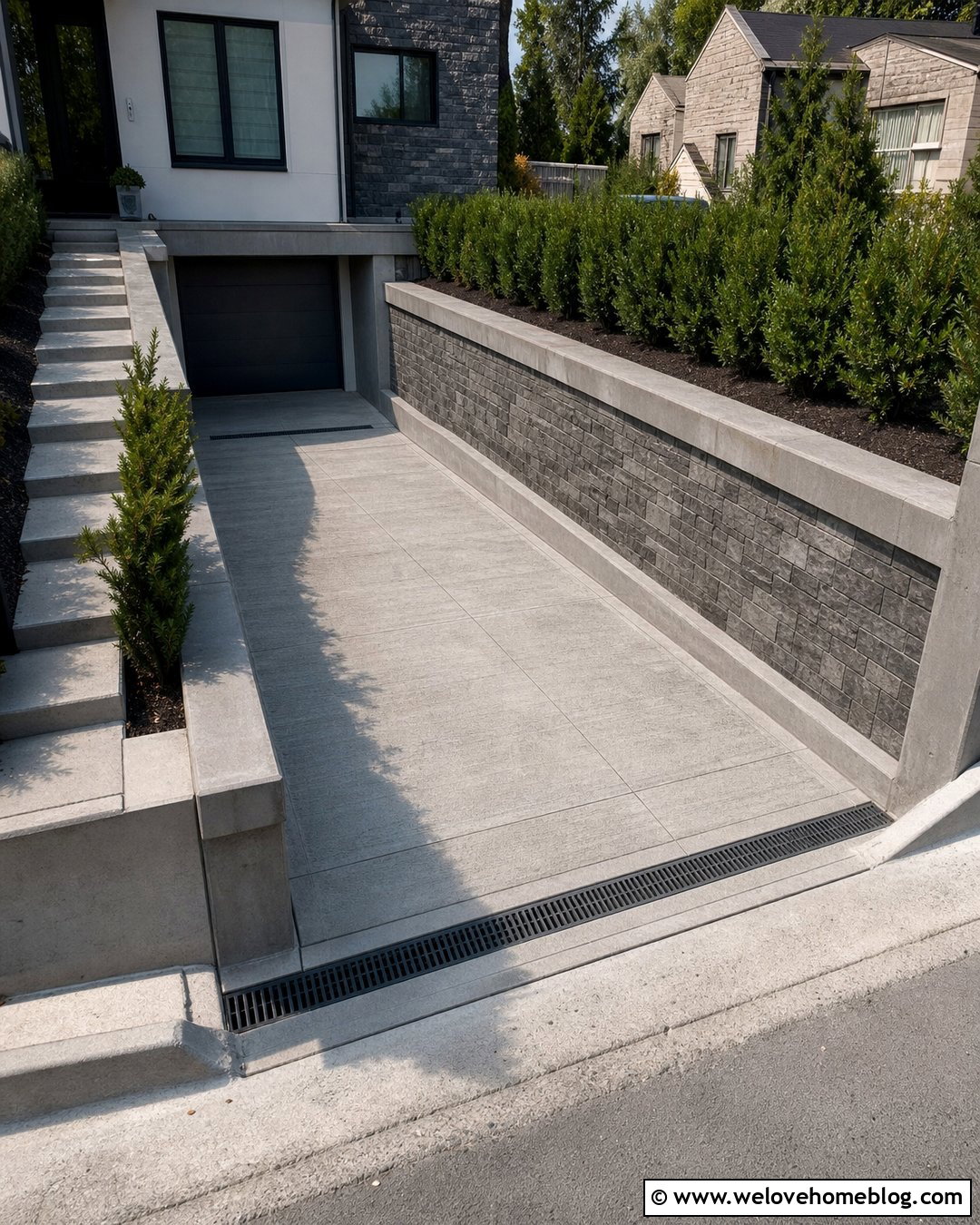
15. Gated Driveway Berm
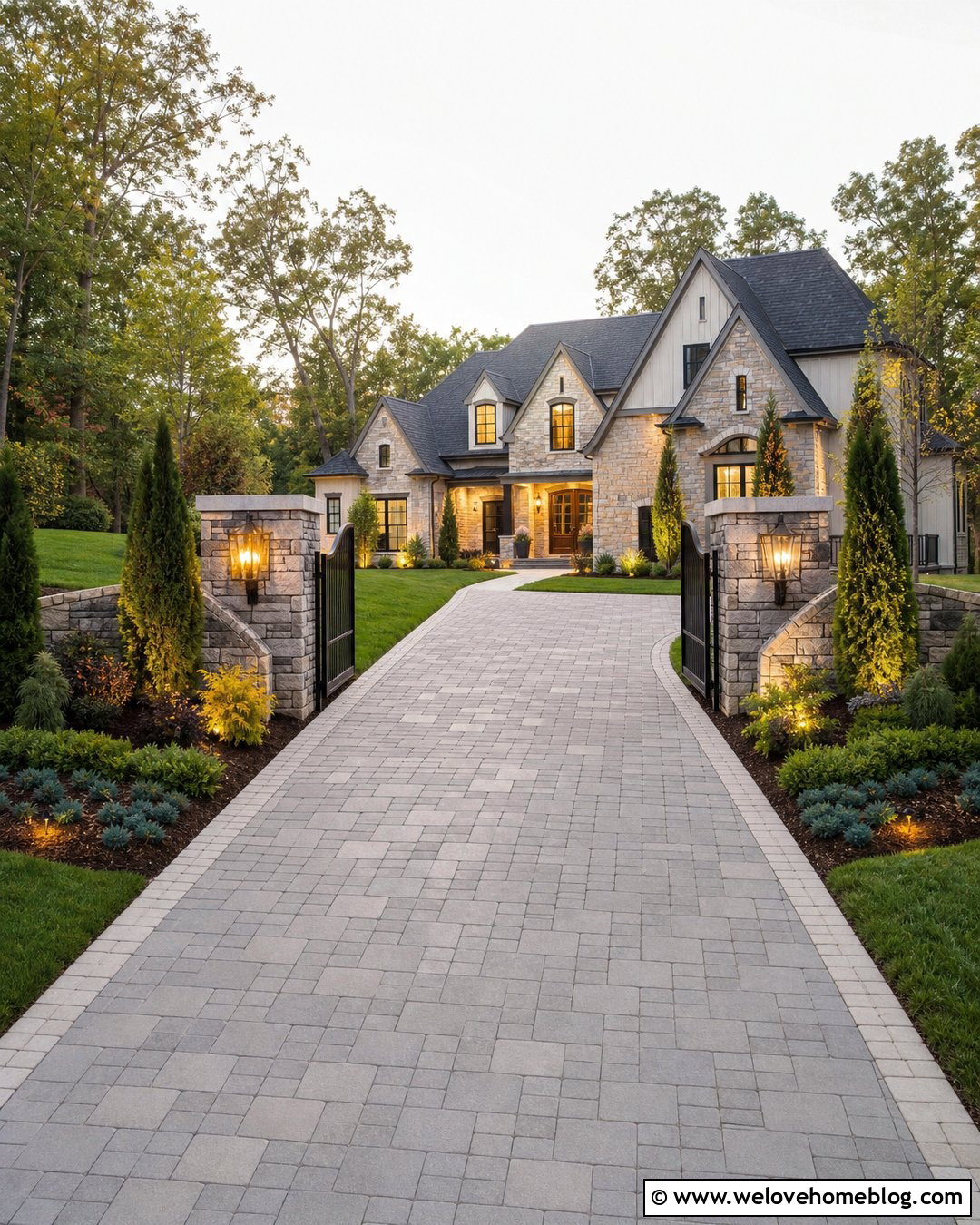
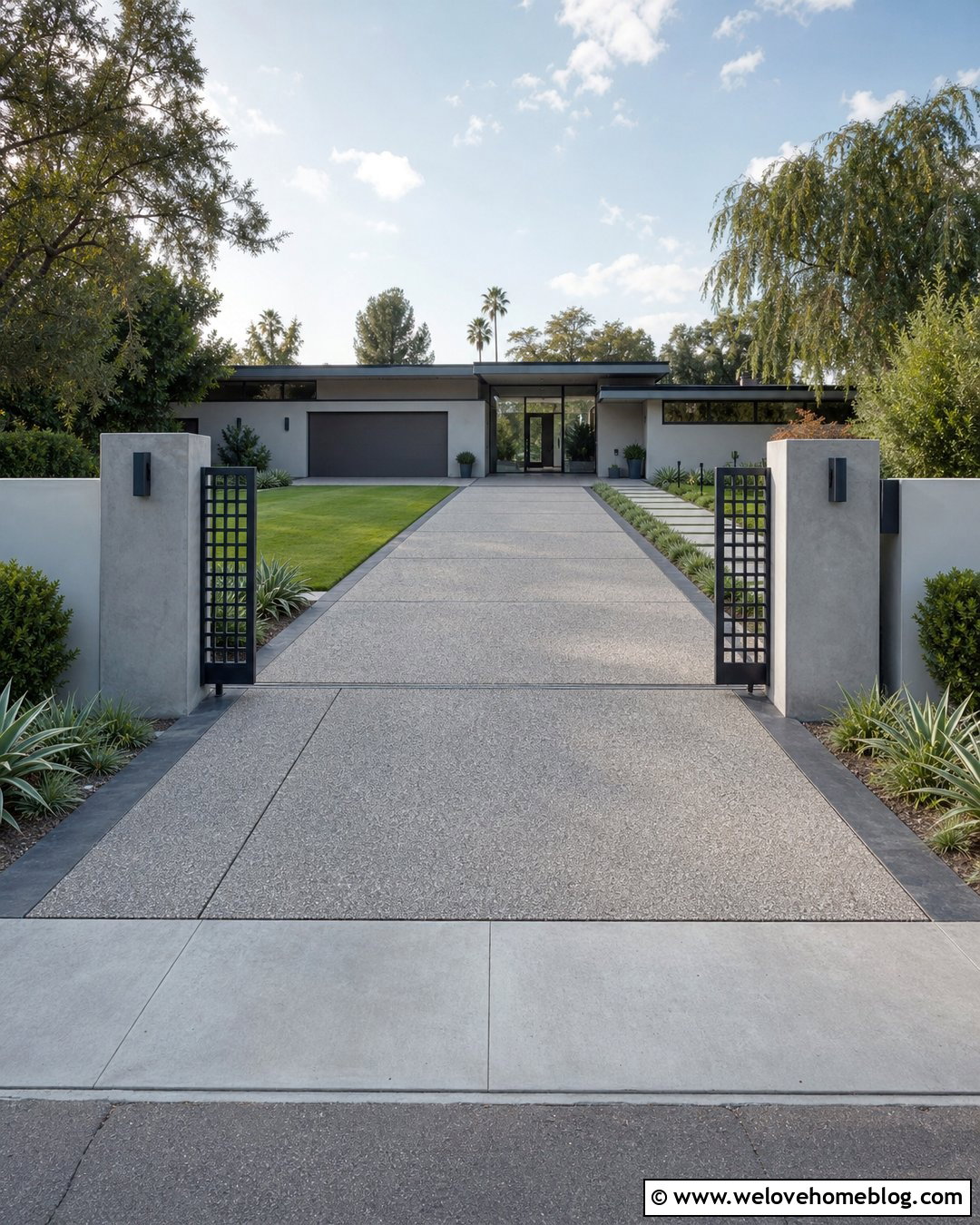
A driveway gate looks less isolated when its pillars and adjacent berms are designed as one complete entrance. Use warm gray concrete pavers for a straight driveway and construct stone-faced pillars outside the required vehicle clearance. Extend low berms from the outer sides of the pillars, blending them gradually into the lawn. Plant upright evergreens behind the masonry, then add dwarf shrubs, ornamental grasses, and ground cover toward the front. The arrangement should frame the gate without hiding its operating hardware or interfering with the swing or sliding path. Low-voltage lighting can highlight the stone and mark the driveway edges. Matching the pillar stone to the house foundation or facade helps the entrance feel permanent, coordinated, and proportional to the property.
16. Driveway Address Sign Berm
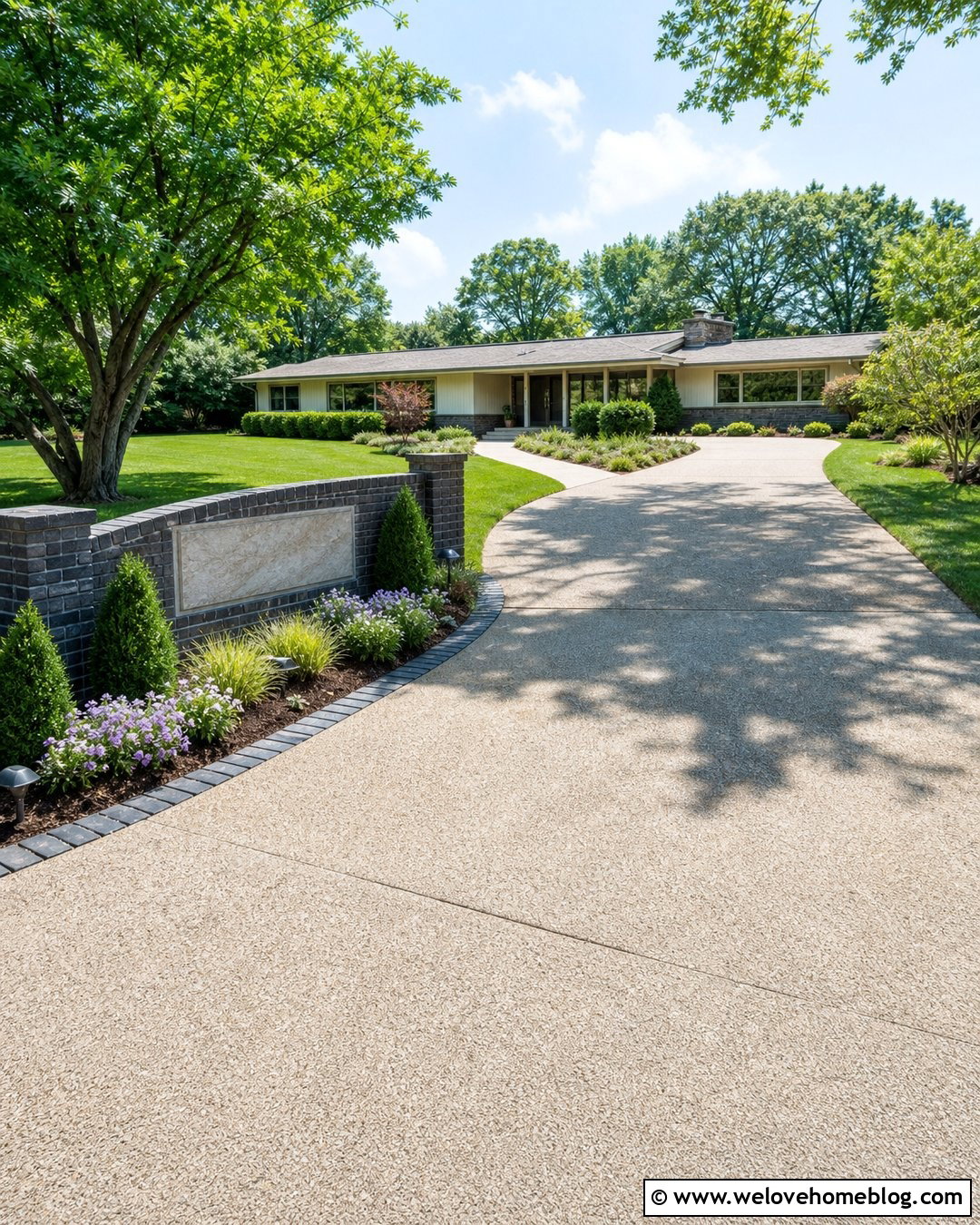
An address sign becomes easier to see when it is incorporated into a low landscaped berm near the entrance. Pair a straight exposed-aggregate concrete driveway with a curved bed edged in charcoal brick. Place a simple stone or metal sign on the highest section of the mound, but keep it outside visibility triangles, utility zones, and snow-storage areas. Surround it with compact evergreens, low grasses, and seasonal flowers that will not cover the numbers as they mature. A small spotlight can illuminate the sign while another fixture marks the pavement edge. Repeat the aggregate and brick colors in the sign base for visual continuity. This practical setup identifies the property clearly and makes the driveway entrance look considered rather than decorated as an afterthought.
17. Driveway Berm With Dry Creek
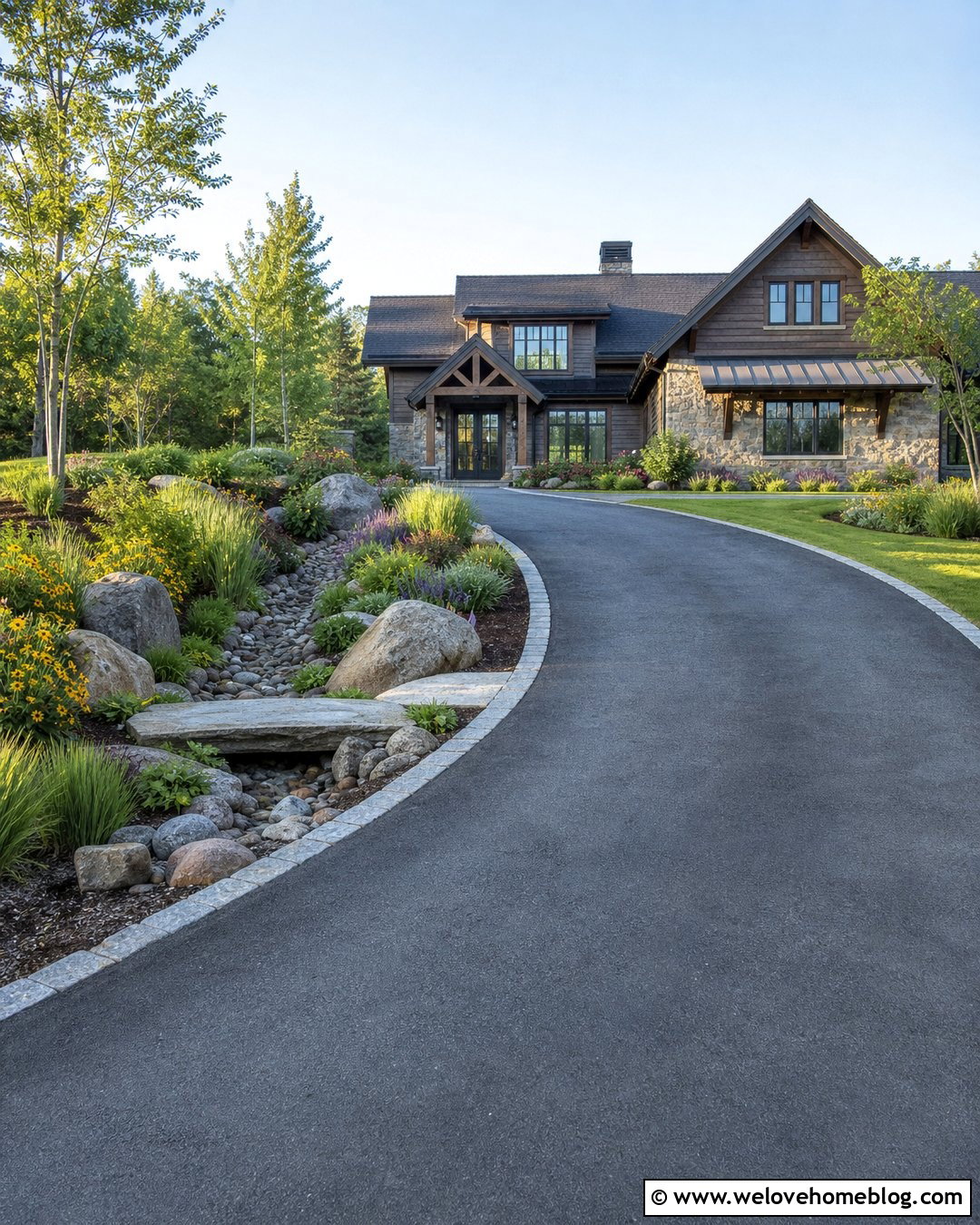
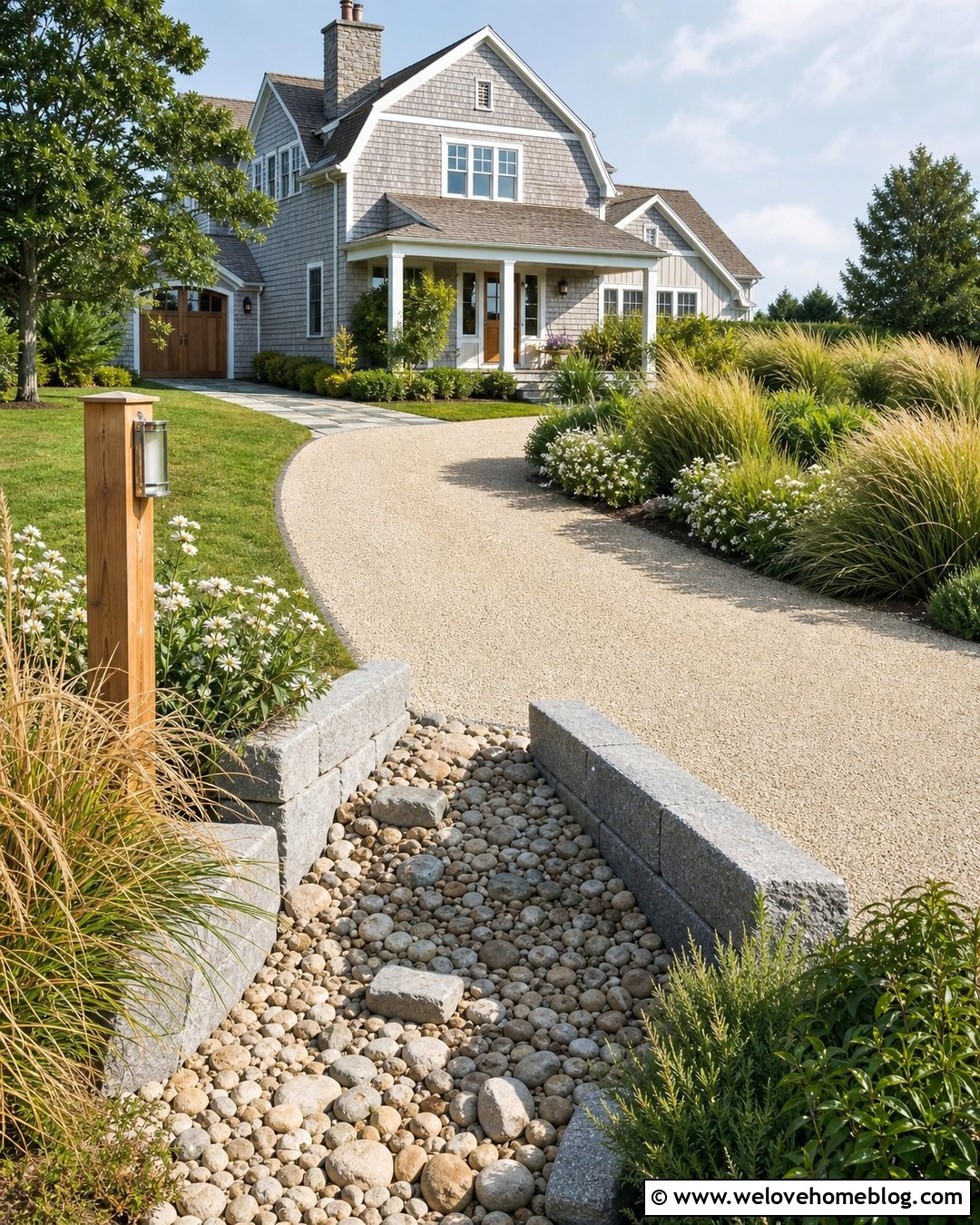
A dry creek can transform runoff control into a strong landscape feature beside the driveway. Use medium-gray asphalt for the driving surface, edged with a flush row of granite cobbles. Shape a shallow stone channel along the lower side and build a planted berm behind it using broad, stable slopes. Arrange river rock in mixed sizes, with larger stones near bends and runoff entry points. Plant native grasses, sedges, low shrubs, and flowering perennials along the banks while keeping the center open for water movement. A small stone bridge can carry the front walkway across the channel. The creek should end at a safe drainage or infiltration area, not abruptly beside the foundation. This design works particularly well on long or gently sloping suburban lots.
18. Boulder Retained Driveway Berm
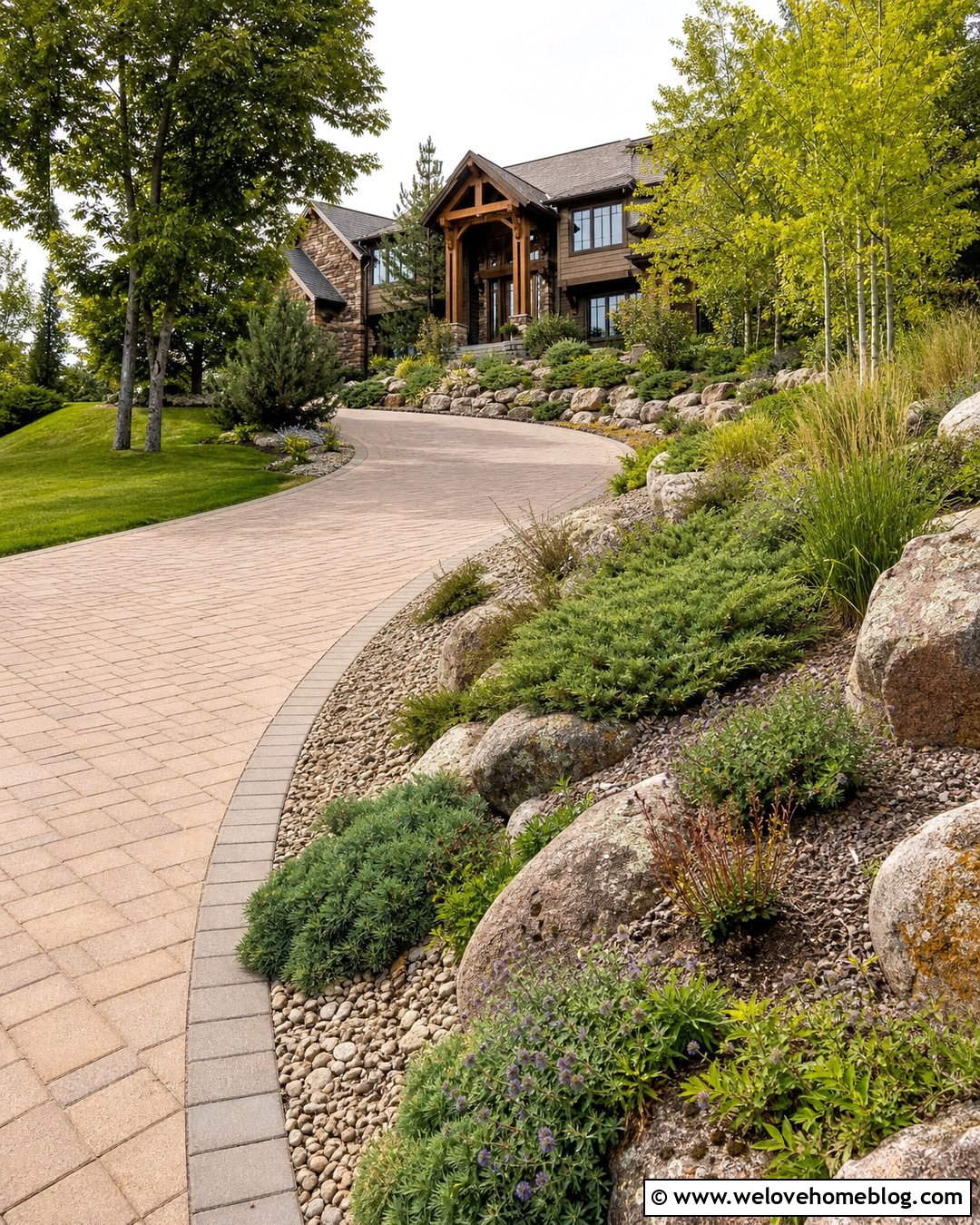
Large boulders can support a driveway berm where the yard rises beside the pavement, but they should appear integrated rather than lined up like barriers. Use tan concrete pavers for a curved driveway and place partially buried fieldstones along the uphill edge. Stagger the rocks at different depths, keeping their stable faces toward the driveway. Build the soil back gradually and plant creeping juniper, native grasses, spreading perennials, and small shrubs between wider gaps. Gravel mulch allows water to pass around the stones without exposing bare soil. Leave a clear shoulder beside the driving lane and avoid unstable rocks that could shift onto the pavement. The result is a durable, natural-looking transition that fits mountain, lodge, ranch, and rustic Craftsman homes.
19. Low Maintenance Driveway Berm
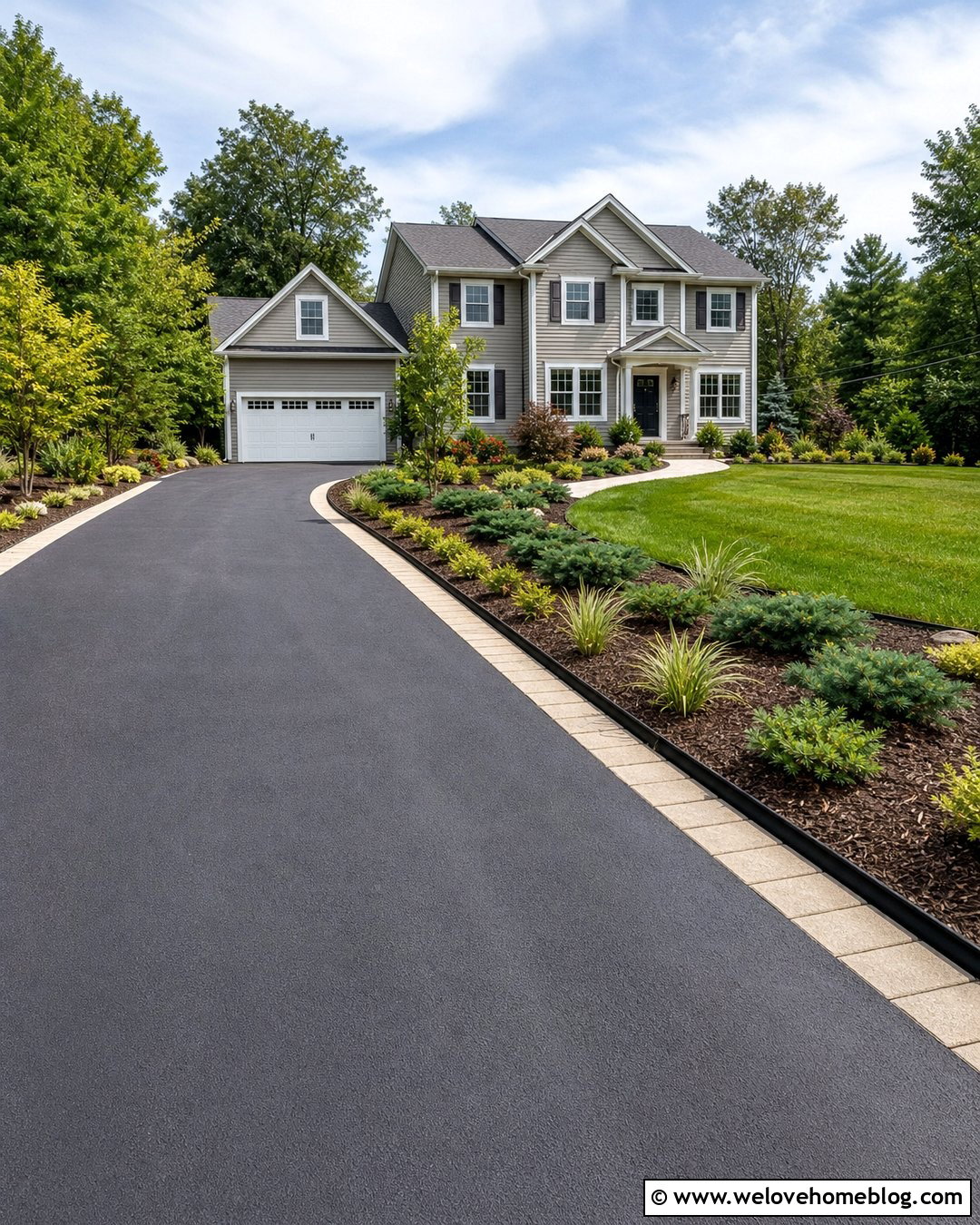
A low-maintenance berm relies on durable materials, restrained planting, and enough space for every plant to mature. Begin with a dark gray asphalt driveway bordered by a flush strip of tan concrete pavers. Create one broad mound with a gentle slope that can be accessed for occasional pruning and weeding. Cover it with shredded hardwood mulch or washed gravel, depending on the climate and house style. Choose a limited mix of dwarf evergreen shrubs, tough ornamental grasses, and spreading ground covers. Install plants in repeated groups rather than isolated spots. Drip irrigation and a clean metal edge reduce routine work further. This simple combination delivers year-round structure and curb appeal without requiring constant trimming, seasonal replanting, or complicated maintenance around the driveway.

20. Small Front Yard Driveway Berm
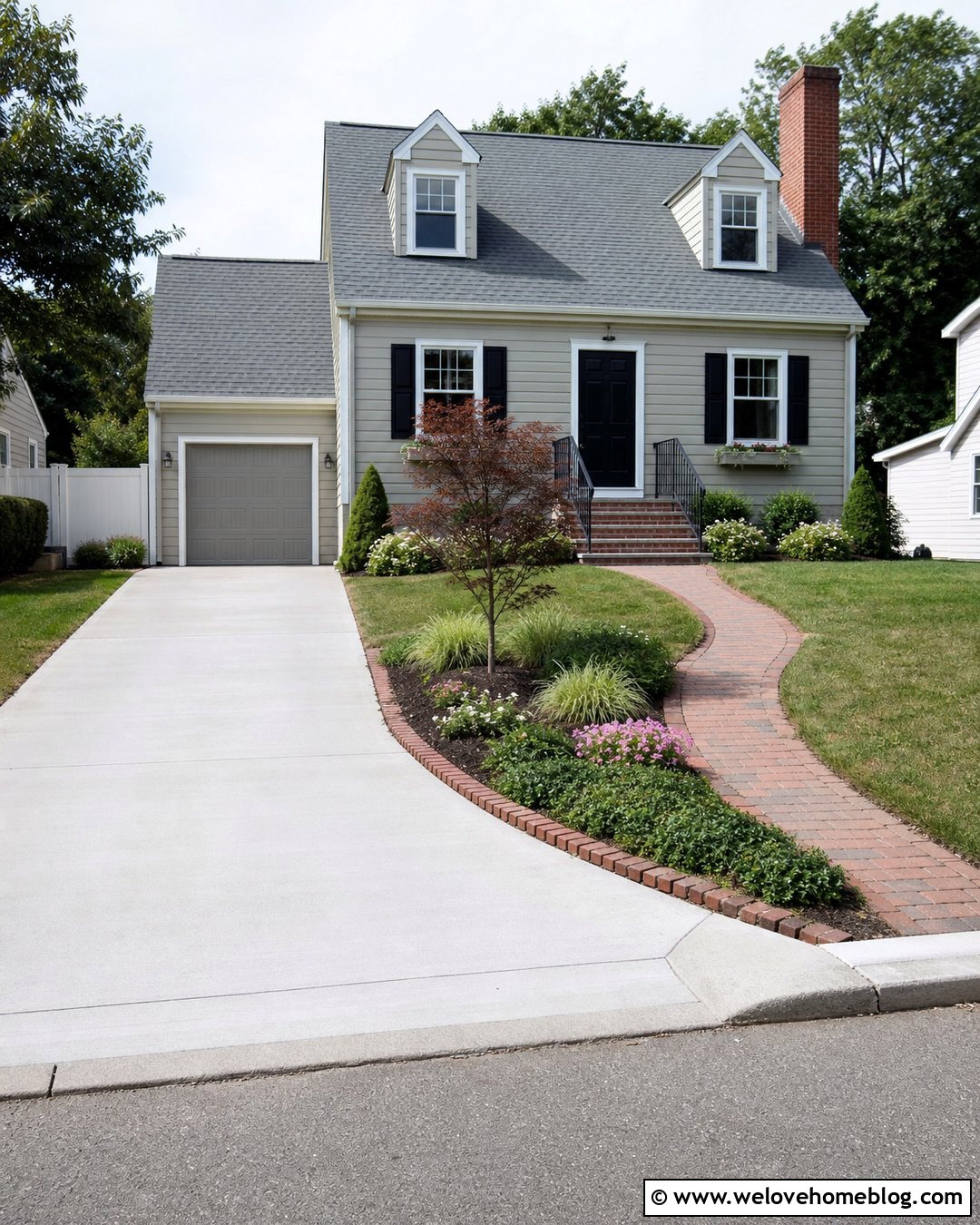
A small driveway berm should create definition without consuming valuable parking or lawn space. Use light gray broom-finished concrete for a straight single-car driveway and add a narrow brick ribbon along the landscaped side. Shape a compact crescent berm between the driveway and front walkway, keeping its highest point well below window level. One dwarf ornamental tree or upright shrub can provide focus, while compact grasses, low flowering plants, and evergreen ground cover fill the slope. Continue the same brick into the walkway border to connect the entrance visually. Avoid oversized boulders, spreading shrubs, and tall plants near the sidewalk. With careful scale and a simple plant palette, even a shallow mound can make a modest home’s approach feel layered, welcoming, and complete.
Conclusion:
Successful 20 driveway berm ideas should improve the whole approach rather than adding an unrelated mound beside the pavement. Coordinate the driveway material, berm shape, edging, planting, drainage path, and house architecture from the beginning. Broad slopes usually look more natural and are easier to stabilize than steep piles of soil. Keep mature plant sizes, vehicle clearance, utilities, visibility, and maintenance in mind when planning the layout. Most importantly, identify where water enters and where it can exit safely. A landscape professional, drainage contractor, or civil engineer can help with difficult slopes and substantial runoff. Whether planted with flowers, evergreens, native grasses, or boulders, a well-planned berm can make a driveway more functional and attractive.

Related posts:
Leave a Reply