
A well-designed driveway gate can add privacy, security, and instant curb appeal while creating a clear transition from the street to your home. These 35 entrance gates driveway ideas explore complete entrance designs rather than gates in isolation. Each look combines the gate material, opening system, driveway surface, pillars, lighting, and landscaping for a coordinated result. You will find modern aluminum gates, traditional wrought iron, warm wood, practical sliding systems, and affordable rural options. Before choosing, consider driveway slope, available opening space, visibility, maintenance, delivery access, and how the entrance relates to your home’s architecture. The following complete designs make it easier to compare 35 entrance gates driveway ideas.
1. Modern Horizontal Slat Driveway Gate
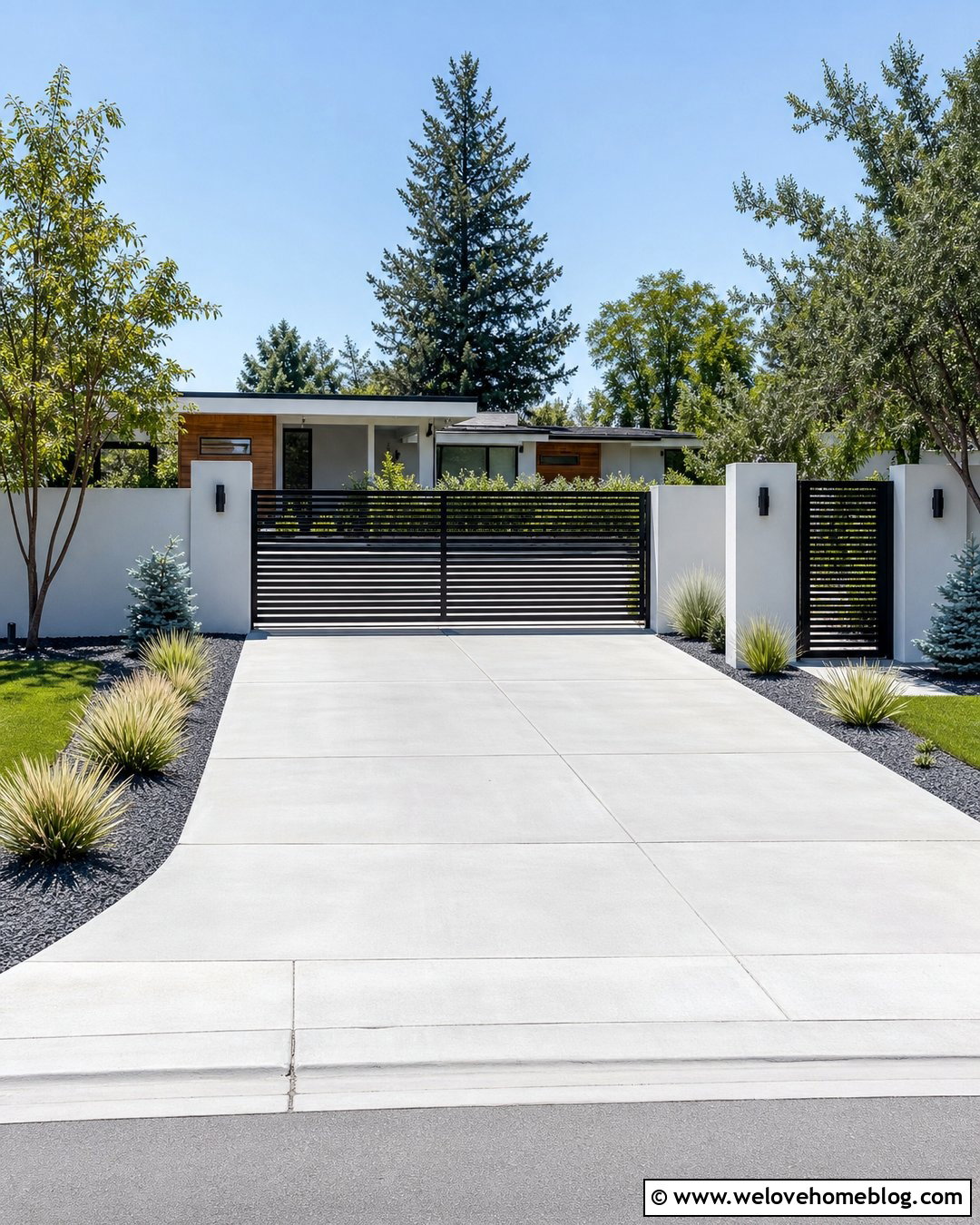
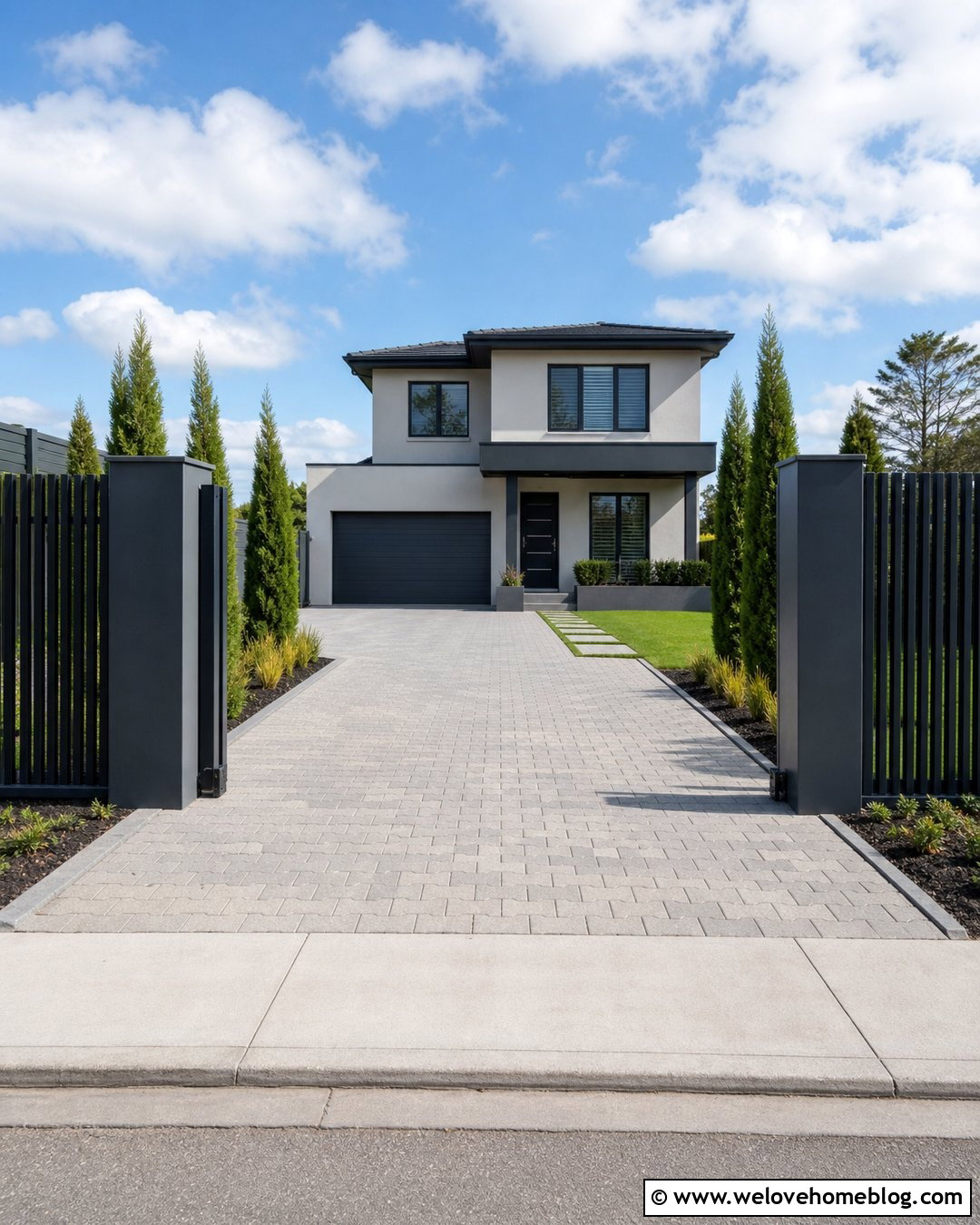
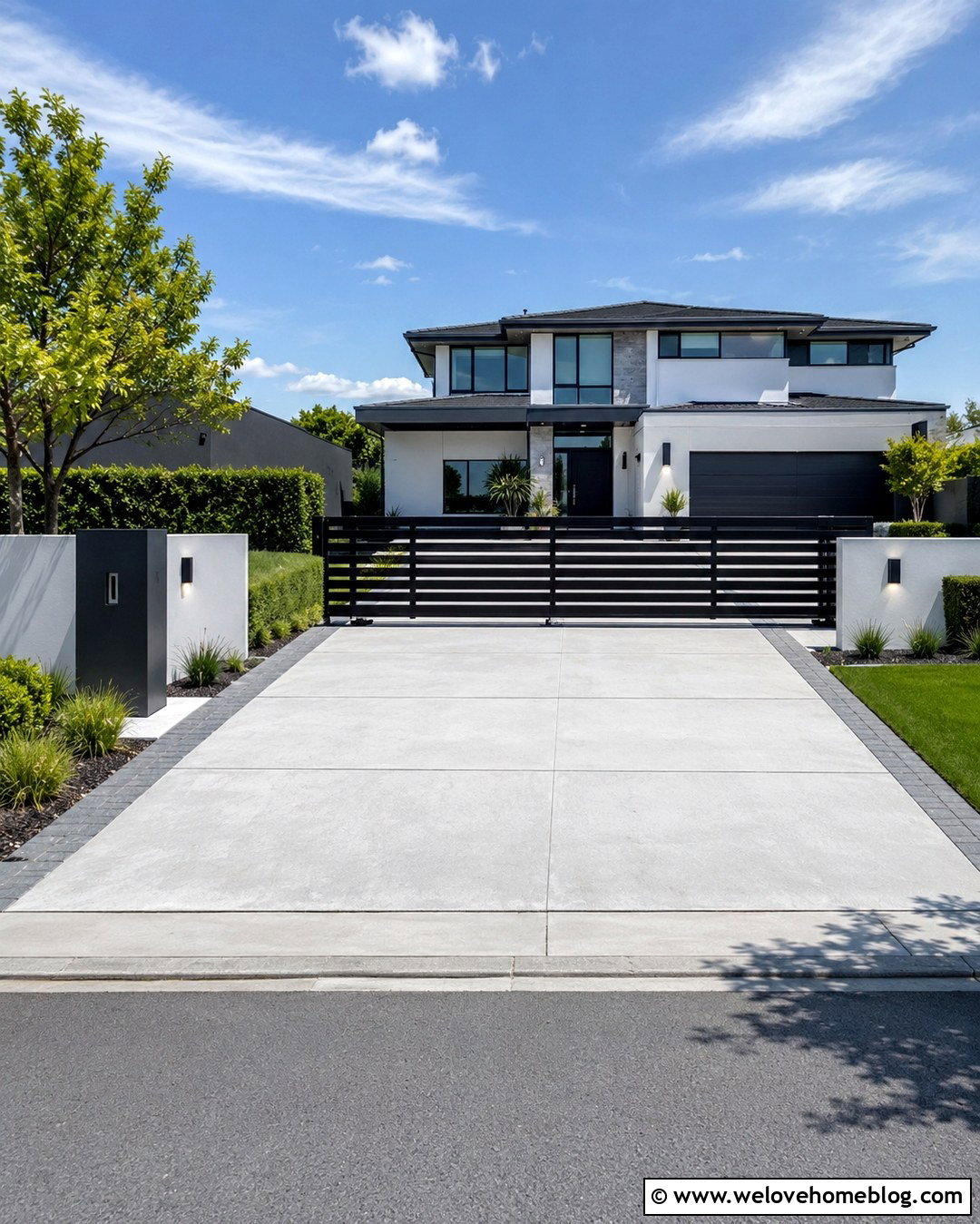
A horizontal slat gate gives a residential entrance a clean, contemporary appearance without making it feel overly formal. Choose matte black aluminum slats with narrow spacing for partial privacy and pair them with a straight, light gray concrete driveway. Smooth stucco pillars can repeat the home’s exterior finish, while simple cap lights keep the entrance polished. Continue the linear theme with rectangular planting beds filled with ornamental grasses, dwarf evergreens, and dark landscape gravel. A matching pedestrian gate beside the driveway creates safer everyday access. This design works especially well with modern and midcentury homes because every line feels connected. Keep the colors limited to black, gray, green, and warm wood for a balanced entrance.
2. Black Wrought Iron Driveway Gate
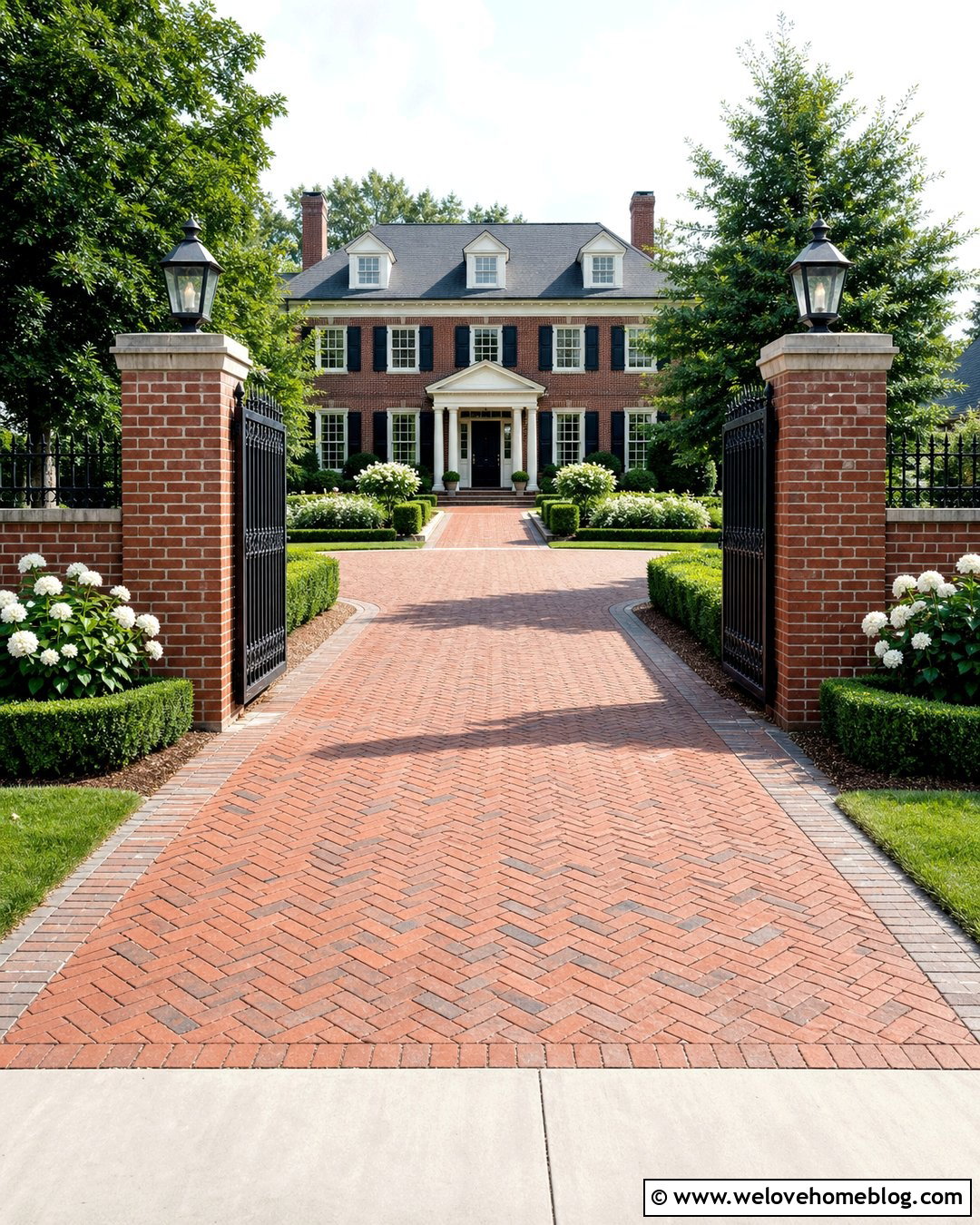
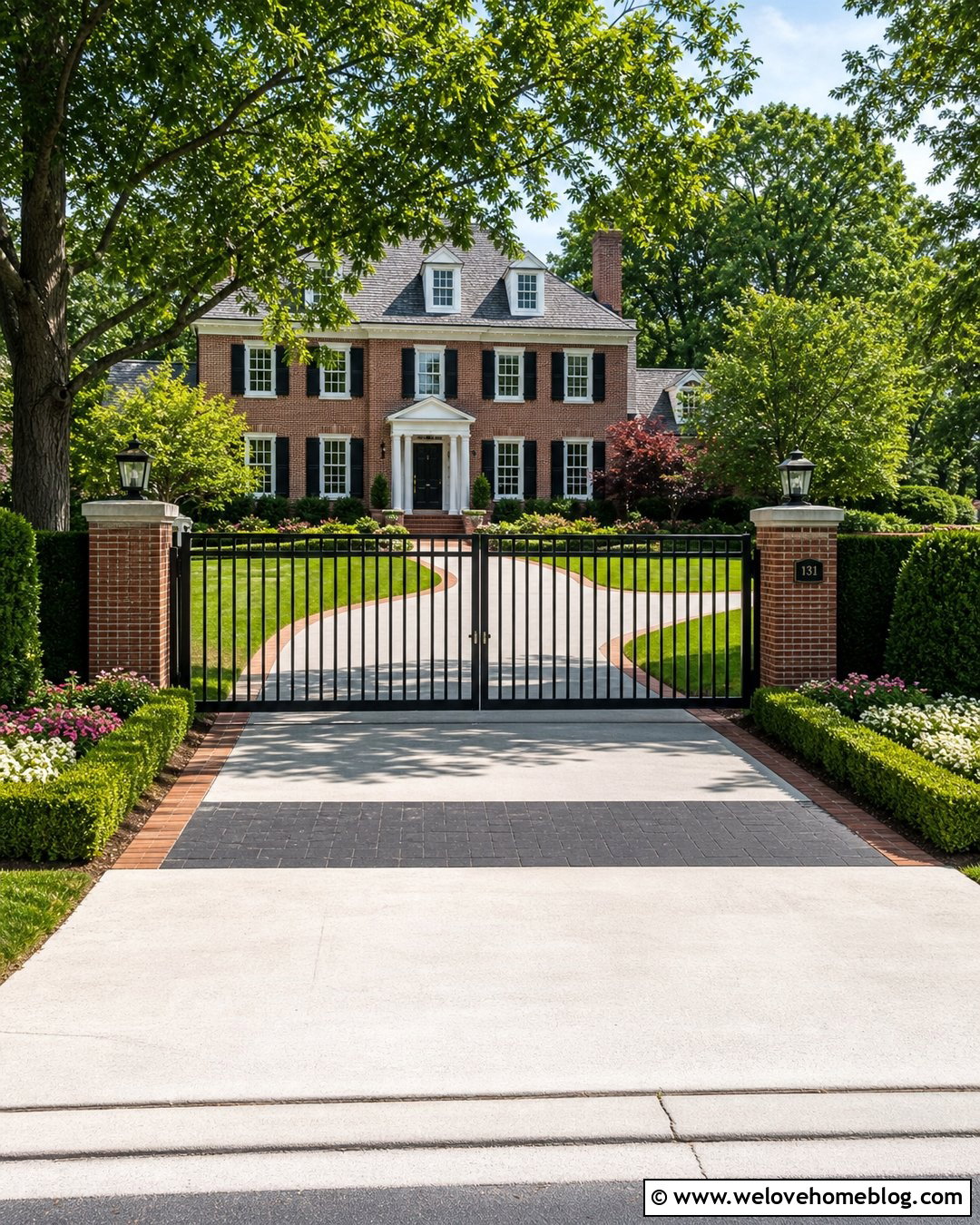
Classic black wrought iron suits a formal driveway leading to a brick, stone, or Colonial-style home. A double swing gate with an arched upper rail creates a graceful outline while maintaining views into the property. Pair it with clay brick pavers laid in herringbone and use a contrasting soldier-course border to define the entrance. Substantial brick pillars make the gate feel properly supported and can be topped with traditional lanterns. Low boxwood hedges, white flowering shrubs, and a neatly edged lawn soften the hard materials. Avoid excessive metal scrollwork if the home has a simple facade. A restrained pattern usually looks more timeless and keeps the gate, driveway, architecture, and landscaping visually connected.
3. Wood And Metal Driveway Gate
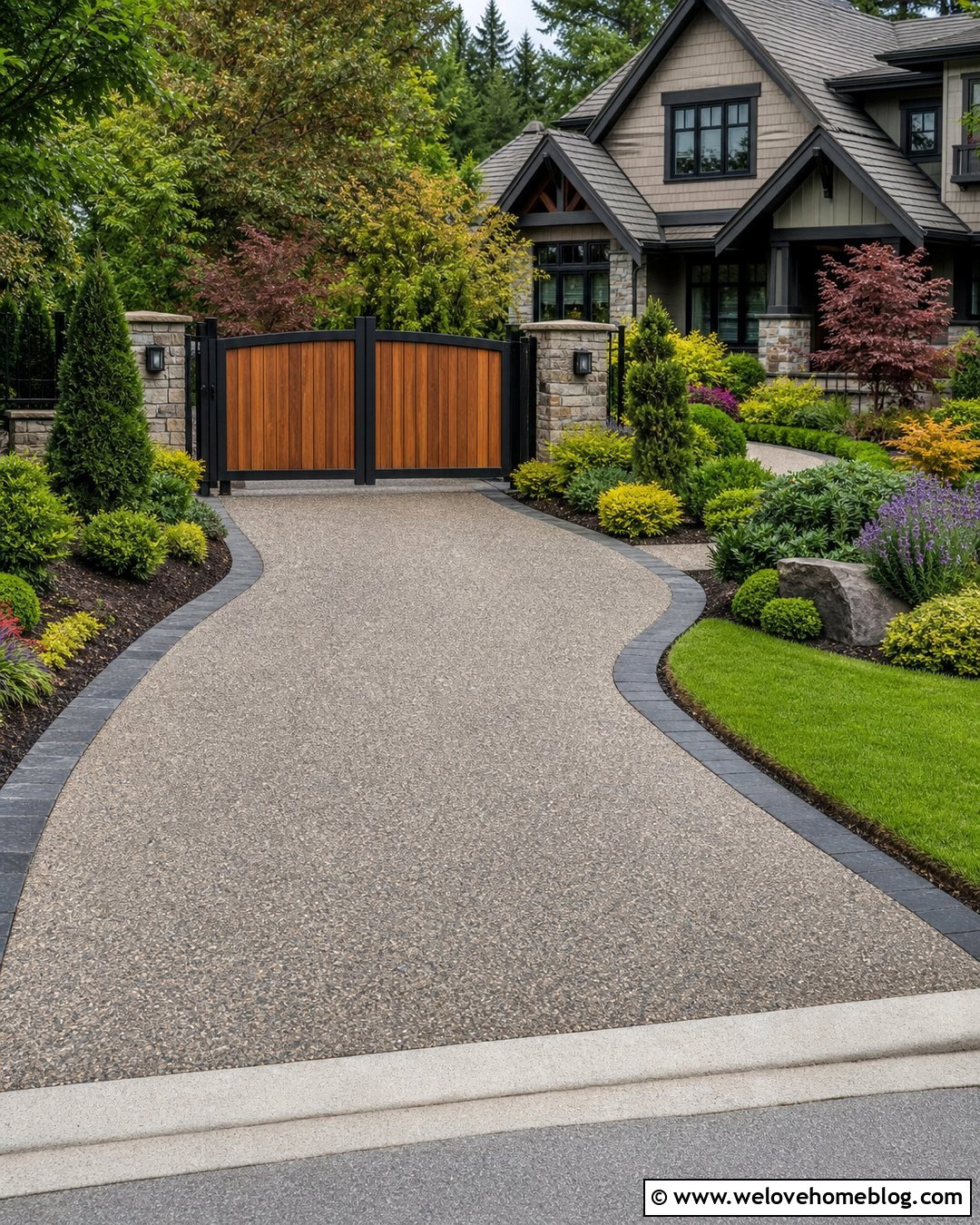
Warm wood framed by dark metal creates a driveway gate that feels both welcoming and secure. Use vertical cedar boards inside a powder-coated steel frame, then connect the gate to low stone walls or sturdy masonry pillars. A curved exposed aggregate driveway complements the natural wood tones while providing visible surface texture. Plant layered beds beside the entrance with evergreen shrubs, flowering perennials, and one small ornamental tree on each side. The wood can echo a garage door, porch ceiling, or exterior accent panel on the house. Slight gaps between boards keep the gate from looking too heavy. This complete entrance works with Craftsman, contemporary, and rustic homes, especially when the landscape includes similar natural colors and materials.
4. Sliding Driveway Gate For Small Spaces
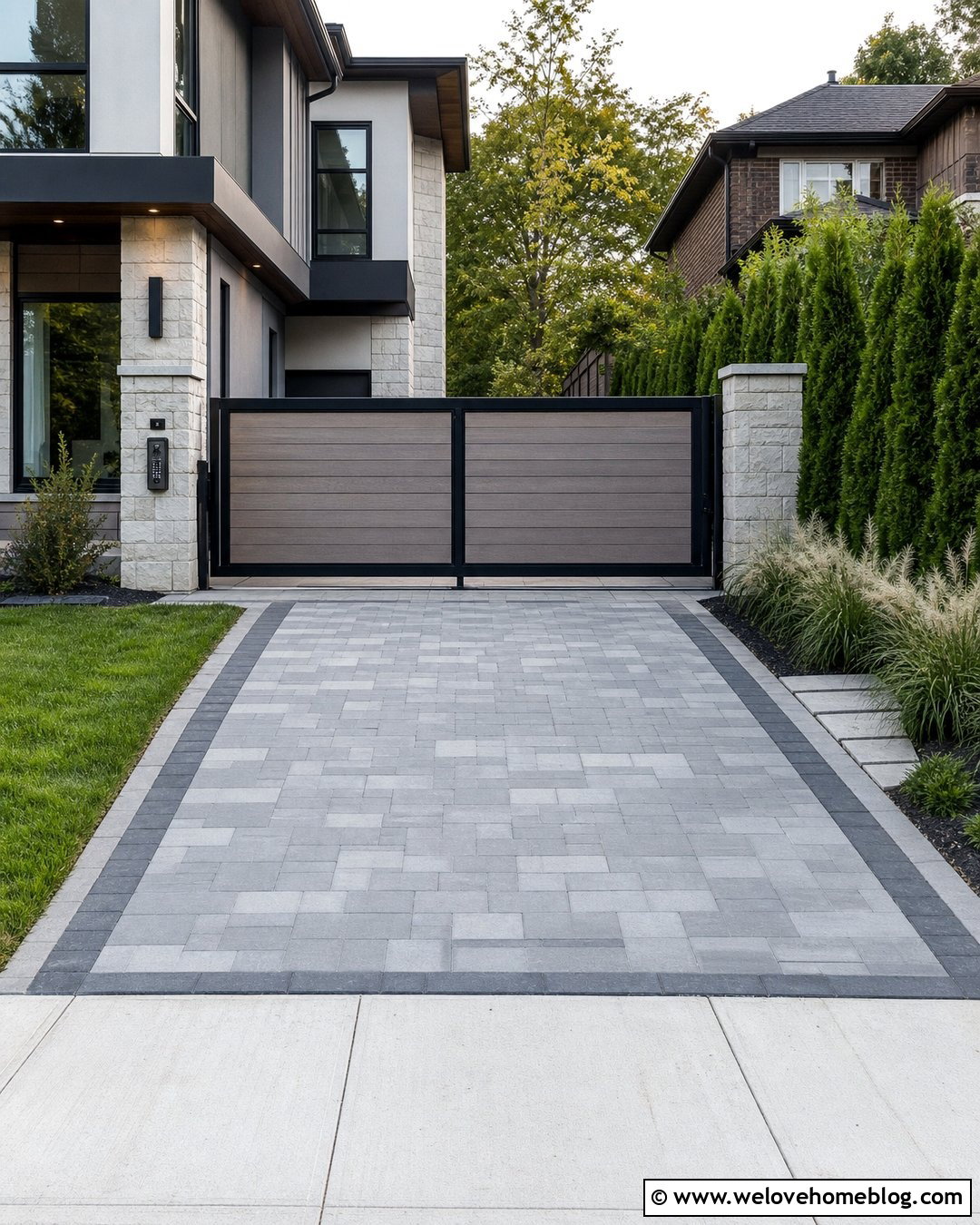
When a driveway lacks room for swinging panels, a sliding gate can move parallel to the property boundary instead. () Select a slim black steel frame with horizontal composite boards for a low-maintenance, space-conscious entrance. Pair it with a narrow driveway surfaced in medium gray concrete pavers and edged with charcoal blocks. The fence beside the gate should continue far enough to visually conceal the open panel. Use upright shrubs, compact grasses, and a narrow walkway to keep the landscaping attractive without reducing vehicle clearance. A recessed keypad and small address plaque can be built into one masonry post. This layout feels organized and works particularly well for urban homes, side driveways, and properties with limited front-yard depth.
5. Cantilever Driveway Gate On A Sloped Entrance
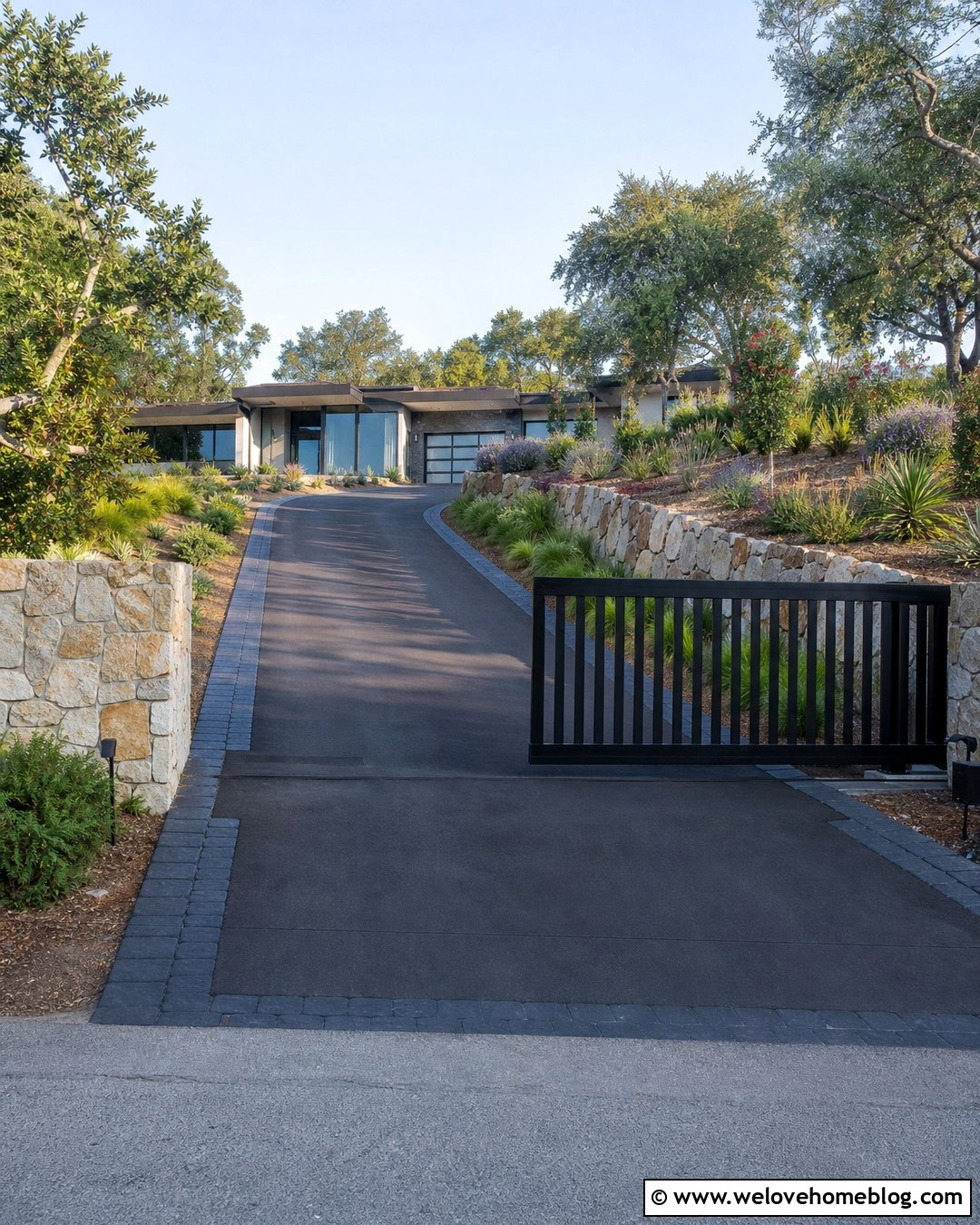
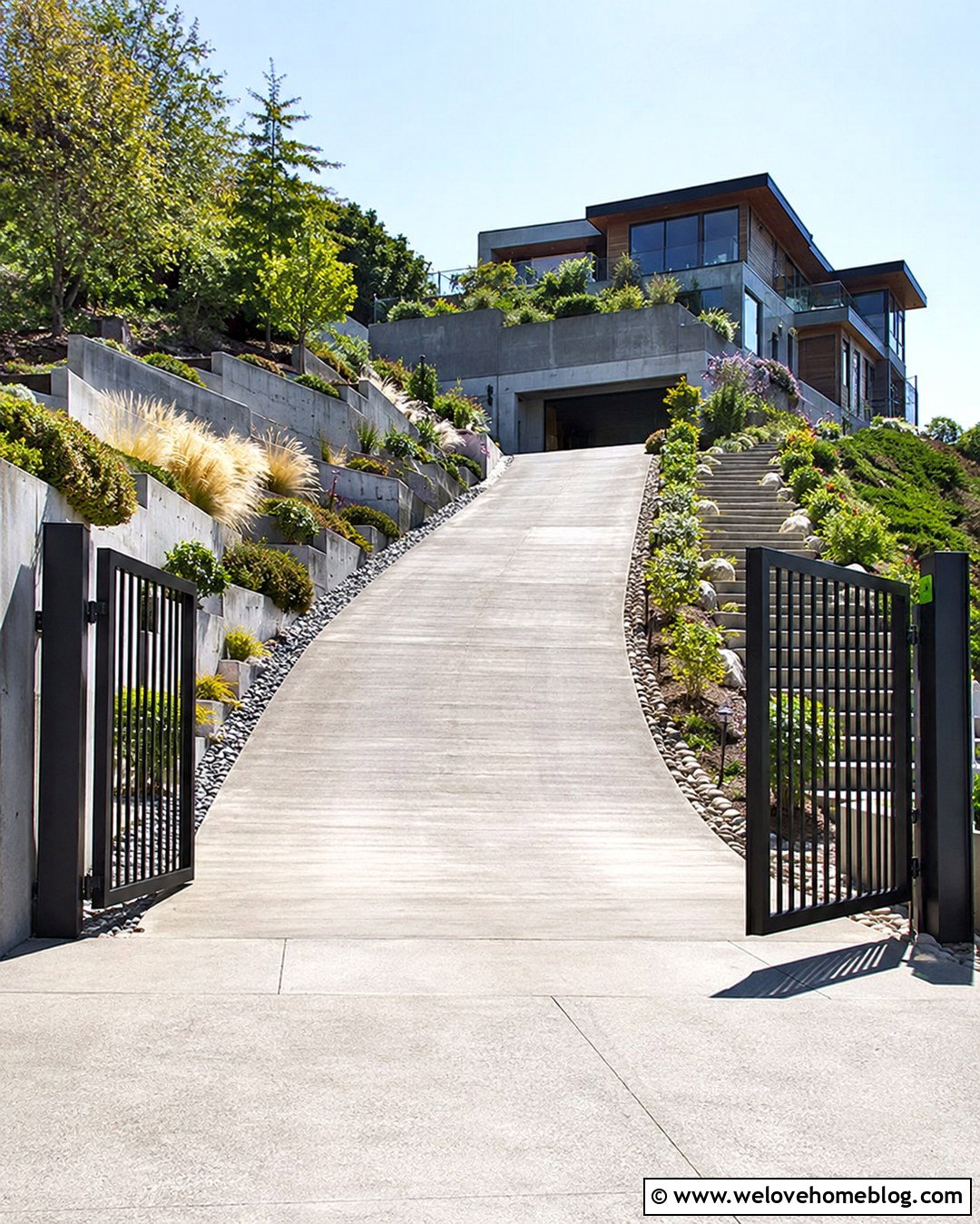
A cantilever gate is a practical match for an entrance where a swinging gate would conflict with the driveway grade. The panel slides above the driveway without relying on a track across the driving surface, helping the entrance maintain a clean appearance. () Use a lightweight aluminum gate with evenly spaced vertical bars and pair it with a sloped black asphalt driveway. Natural stone retaining walls can manage the raised planting beds on either side. Add low junipers, native grasses, and small flowering shrubs that will not obstruct visibility. Keep the gate’s lower edge visually aligned with the grade for a custom look. A contemporary ranch or hillside home provides an ideal backdrop for this sturdy, uncluttered entrance.
6. Farmhouse Wood Driveway Gate
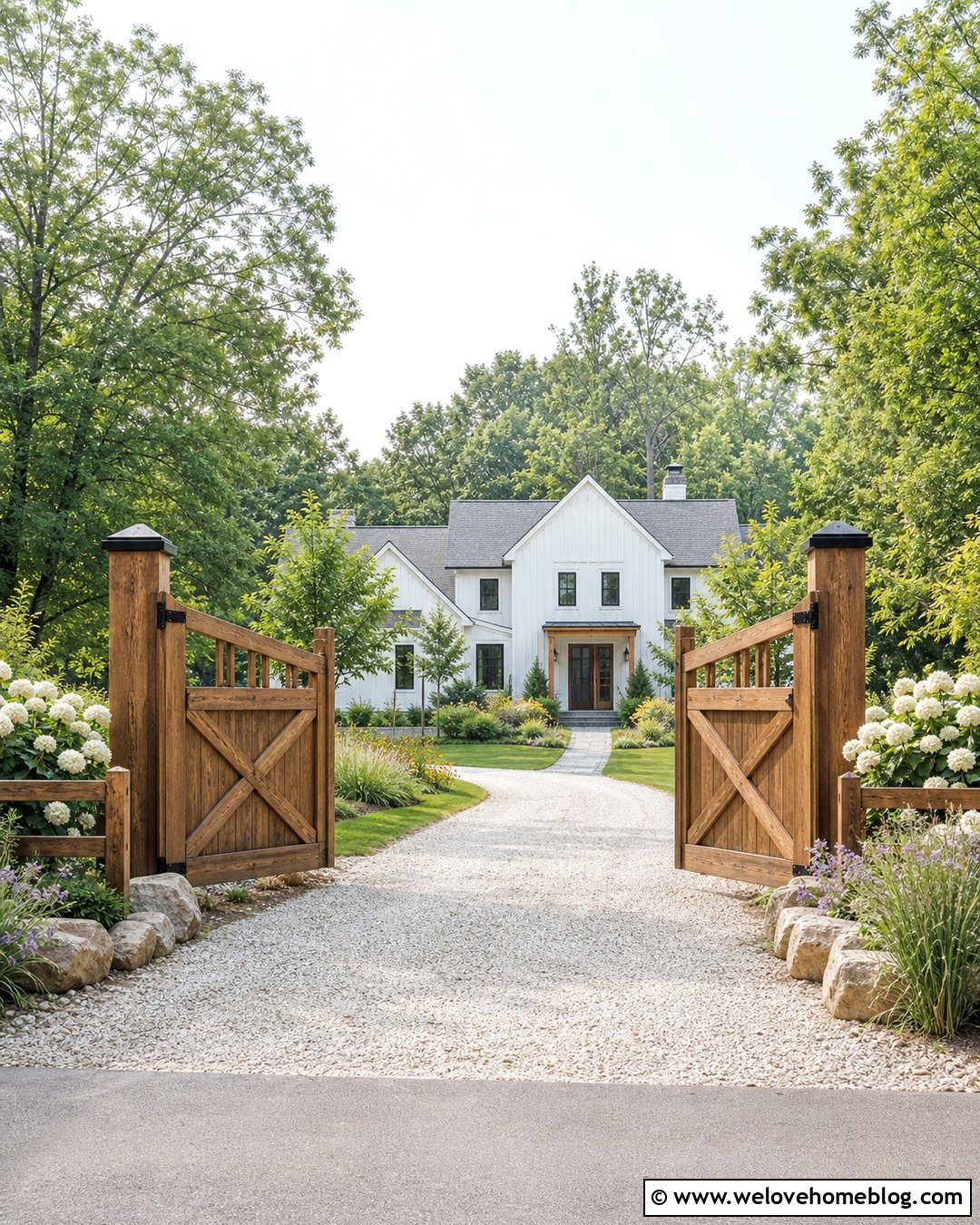
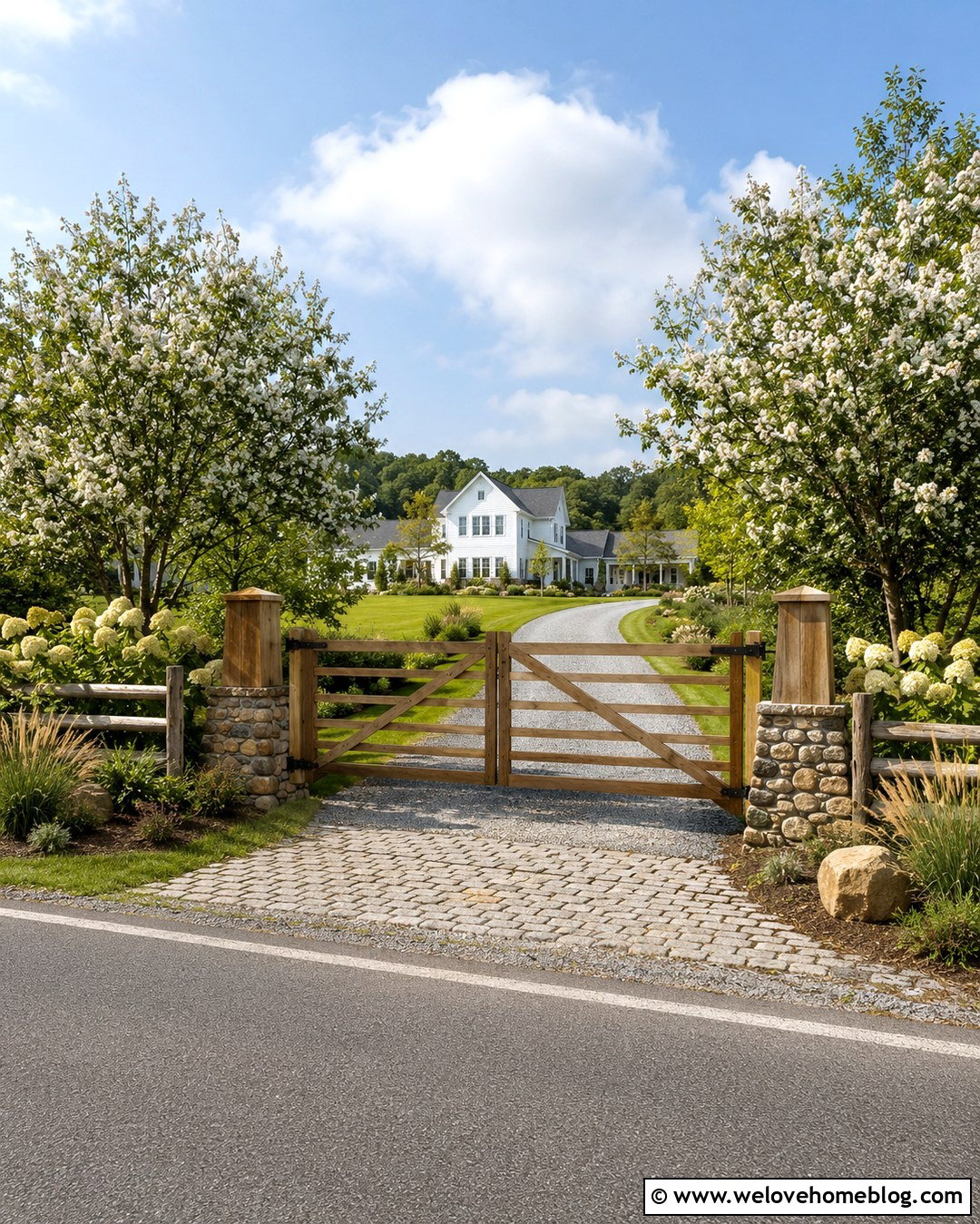
A simple wood gate can make a gravel driveway feel like a natural extension of a modern farmhouse. Choose a double board-and-batten design made from stained cedar, supported by square timber posts with dark metal caps. A pale crushed limestone driveway keeps the setting bright and creates a relaxed country character. Define the entrance with large fieldstones, split-rail fencing, and broad planting beds containing hydrangeas, ornamental grasses, and native flowers. The gate should repeat the tone of the porch columns or front door rather than introducing an unrelated wood color. Black strap hinges add useful contrast. Leave enough openness between boards to preserve countryside views and prevent the entrance from appearing too solid or defensive.
7. Ranch Pipe Driveway Gate
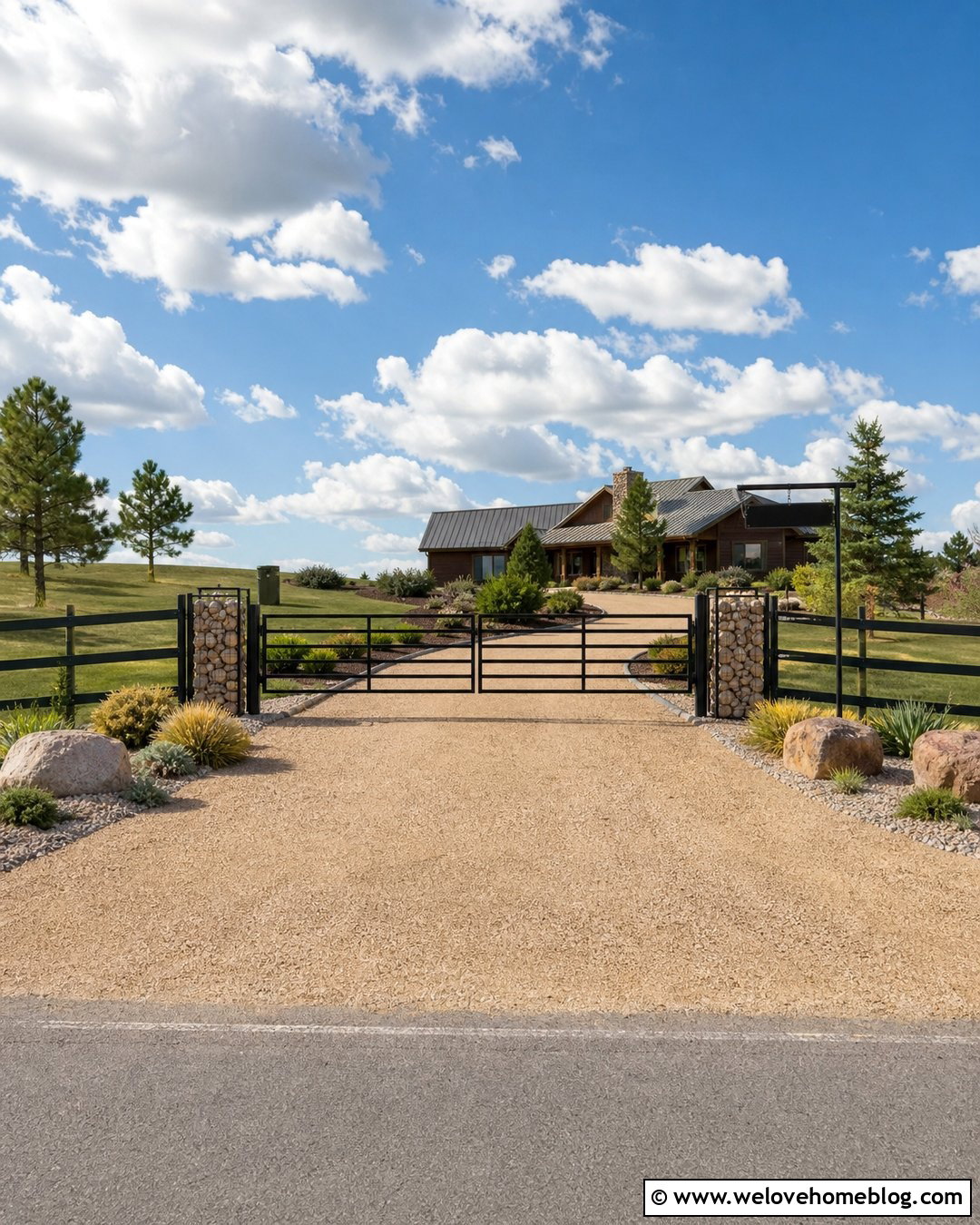
For a rural property, a powder-coated pipe gate offers a straightforward entrance that can still look intentionally designed. Choose a black or deep bronze metal frame with horizontal rails and place it between stone-filled or timber-clad posts. A wide tan gravel driveway provides space for trucks, trailers, and everyday vehicles while matching the informal landscape. Continue the entrance with post-and-rail fencing, native grasses, drought-tolerant shrubs, and a simple metal address sign. A small grouping of boulders can protect the posts and visually anchor each side. Avoid delicate decorations that feel disconnected from the working landscape. The strongest ranch entrance uses durable-looking materials, generous proportions, and clear sightlines while maintaining the property’s open character.
8. Stone Pillar Driveway Gate
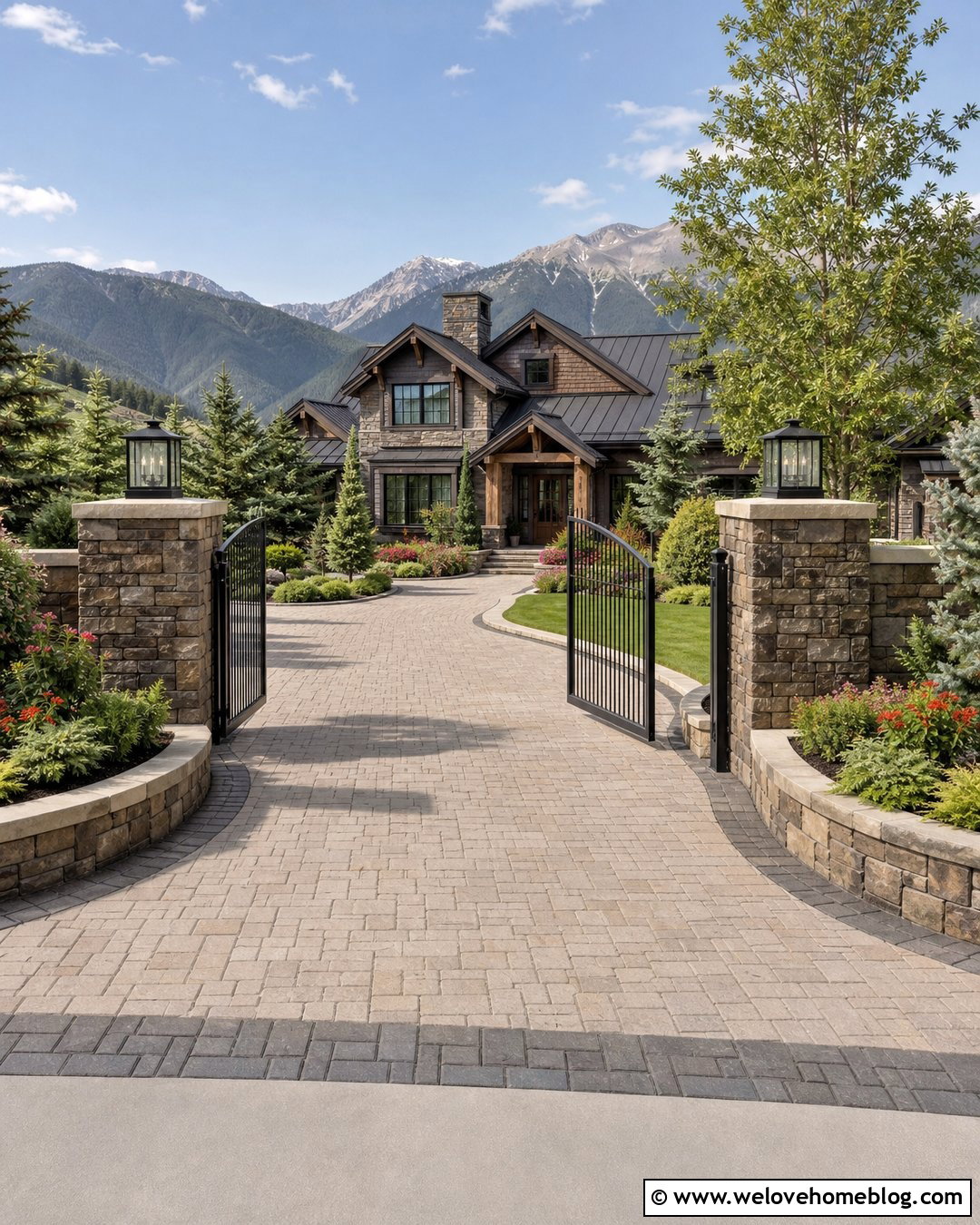
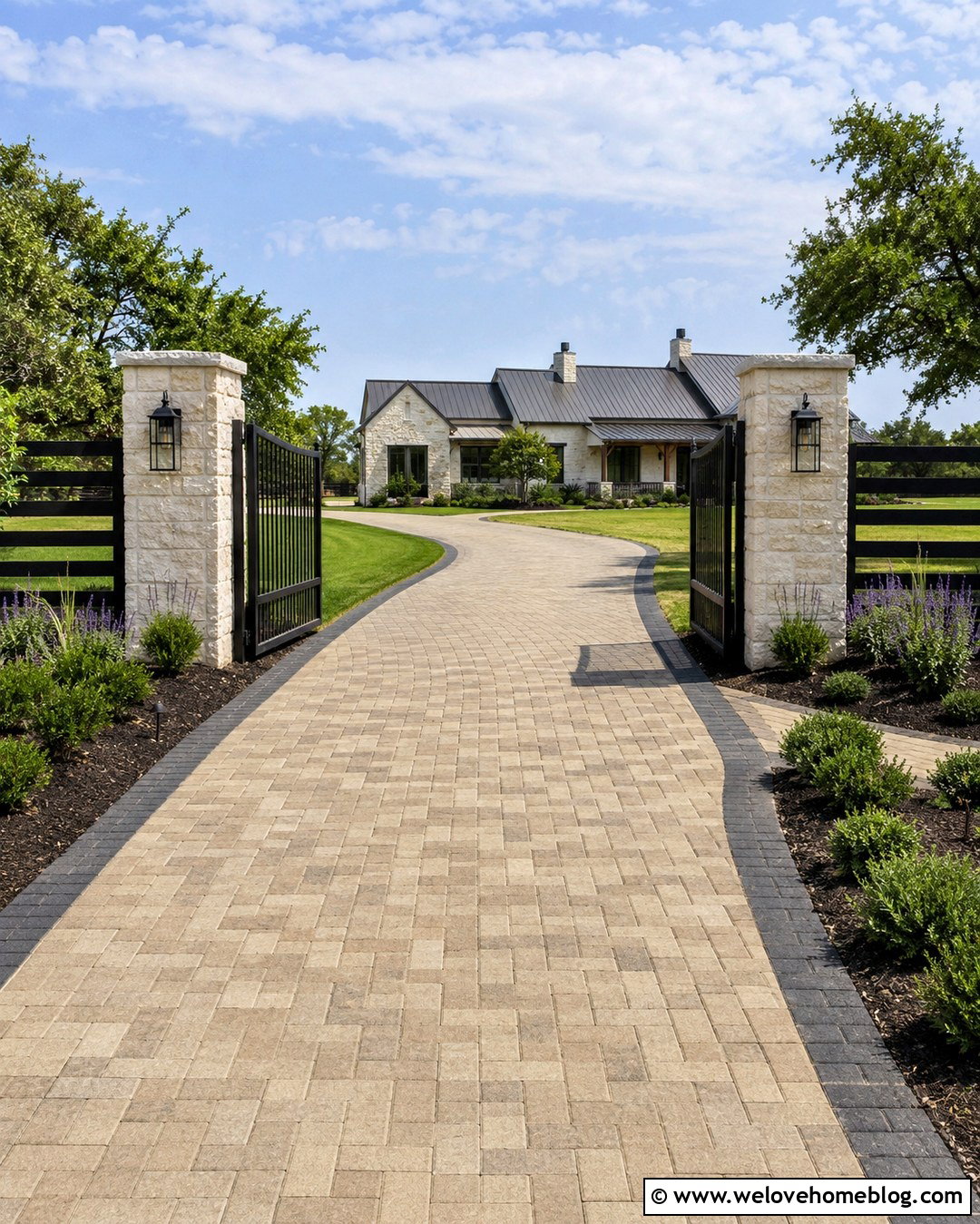
Stone pillars can transform a standard gate into a substantial residential entrance. Build the pillars with ledgestone or locally inspired fieldstone, then install a black steel double gate with a simple curved top. A gently sweeping driveway made from warm-toned concrete pavers continues the refined look toward a Craftsman or mountain-style house. Repeat the pillar stone in low retaining walls or porch details so the entrance belongs to the architecture. Lanterns with clear glass provide a traditional finishing touch. Around the base, use evergreen shrubs, groundcover, and seasonal flowers in broad planting beds. The pillars should feel proportional rather than oversized. Keeping their height close to the gate produces a cohesive design that frames the driveway without overwhelming it.
9. Brick Column Driveway Gate
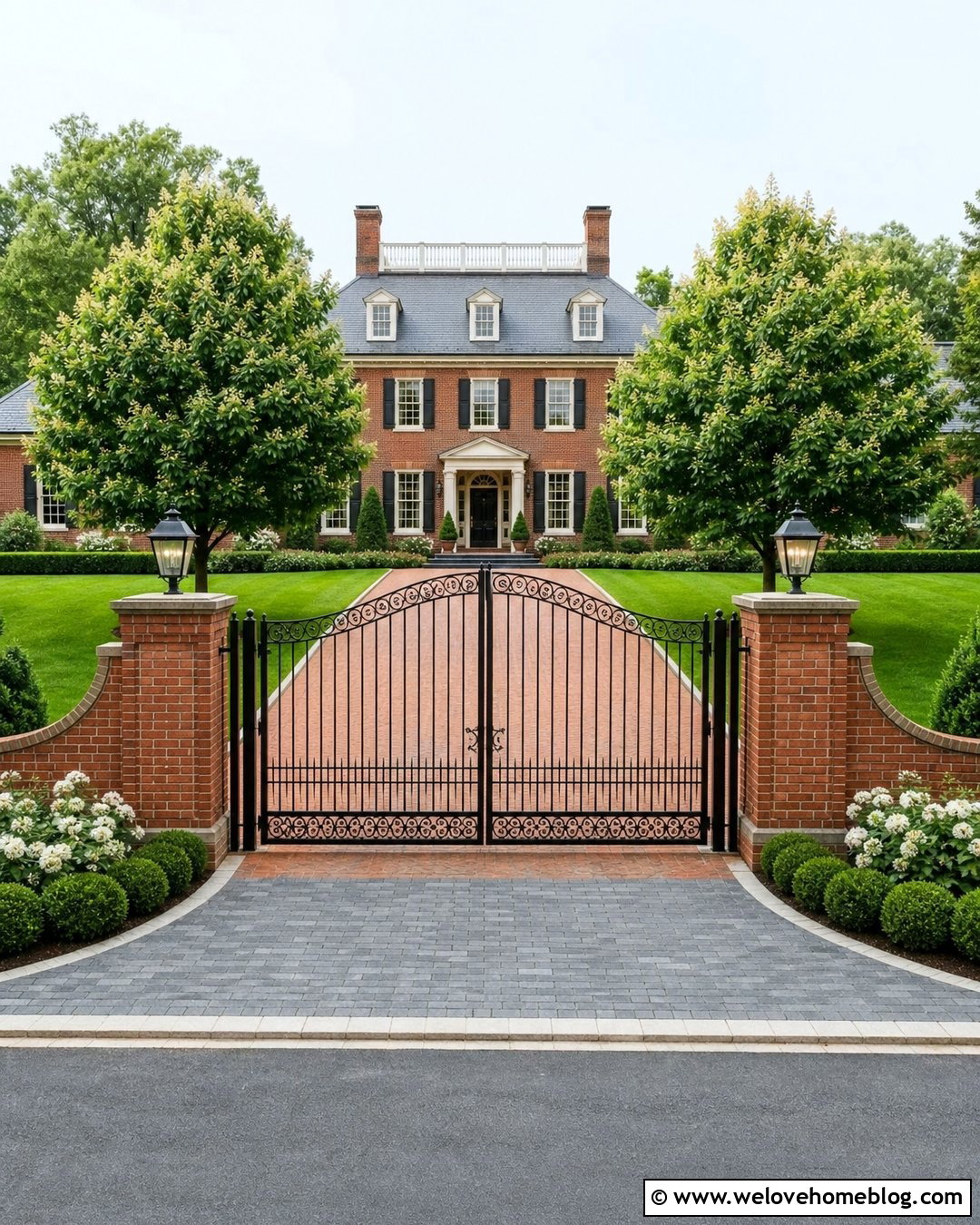
Brick columns are a natural choice when the house already features red, brown, or painted brick. Install a dark wrought iron double gate between square columns and continue the masonry with short curved walls. A brick driveway in a running-bond or herringbone pattern creates a seamless transition from the street. For contrast, add a charcoal paver apron where the driveway meets the road. Traditional lanterns, clipped hedges, and white flowering plants give the entrance a polished appearance. Match the column brick and mortar as closely as possible to the house facade. If an exact match is unavailable, choose a complementary neutral rather than a noticeably different red. This approach works beautifully for Colonial, Georgian, and traditional suburban properties.
10. Stucco Pillar Driveway Gate
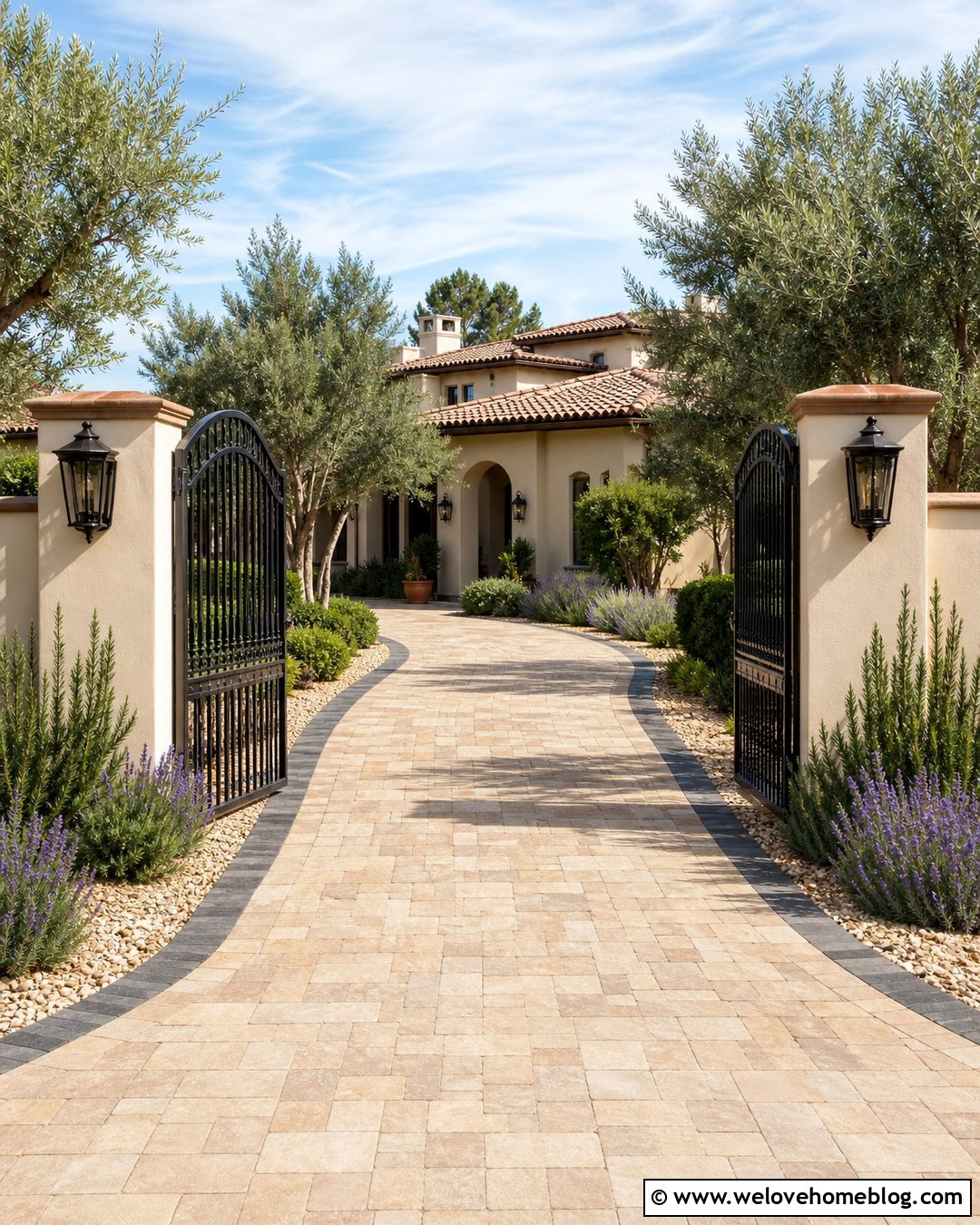
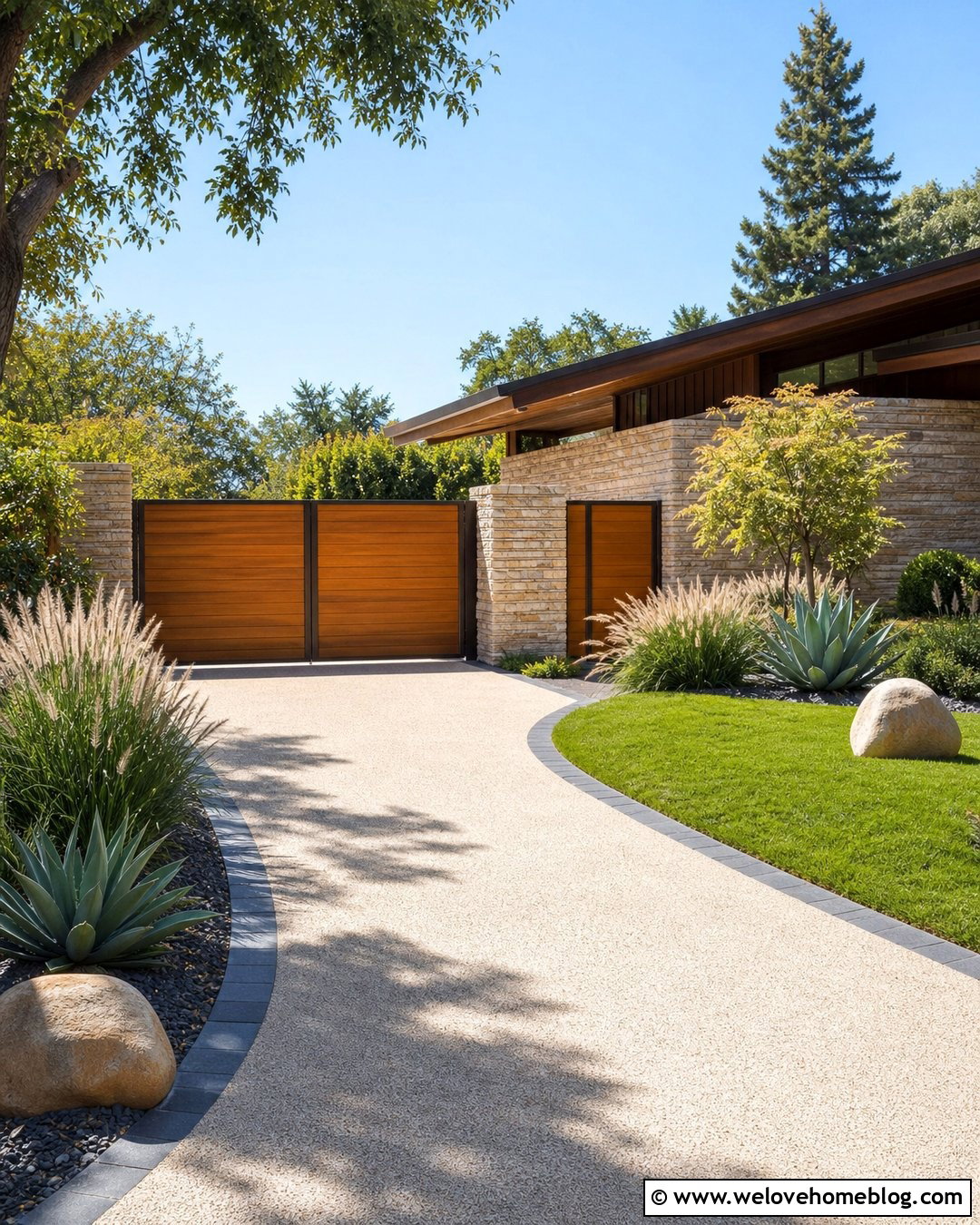
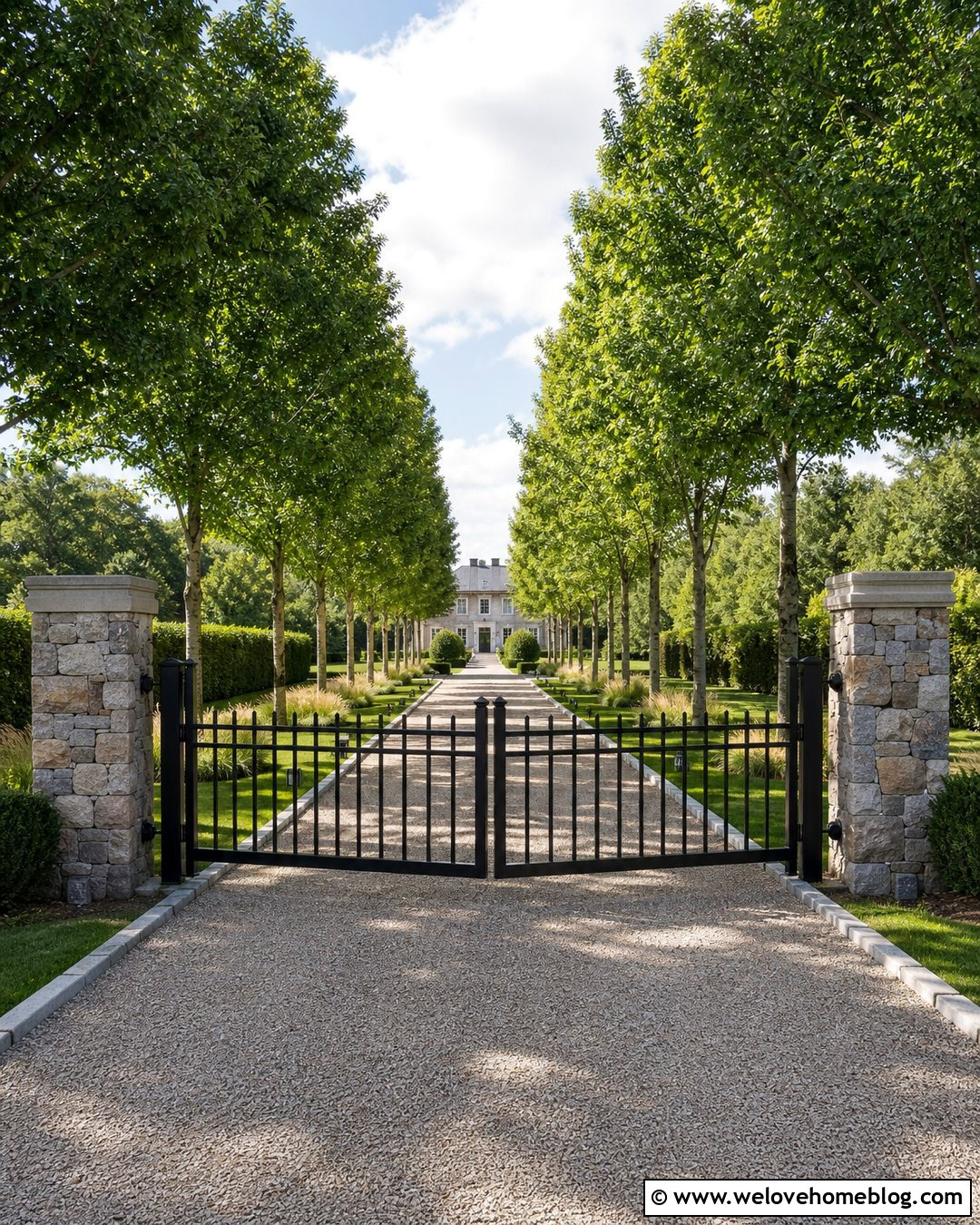
Smooth stucco pillars create a bright, architectural frame for a Mediterranean-inspired driveway gate. Use a gently arched gate made from dark iron with modest scroll details, then pair it with a warm beige concrete paver driveway. Terracotta coping on the pillars can connect the entrance to a tile roof, while black lanterns repeat the gate finish. Plant olive trees, lavender, rosemary, and low evergreen shrubs in gravel-mulched beds beside the entrance. A curved driveway strengthens the relaxed Mediterranean character and reveals the home gradually. Keep the stucco color close to the house exterior for continuity. The combination of warm masonry, dark metal, textured paving, and drought-tolerant planting creates a complete entrance that feels established rather than added later.
11. Aluminum Privacy Driveway Gate
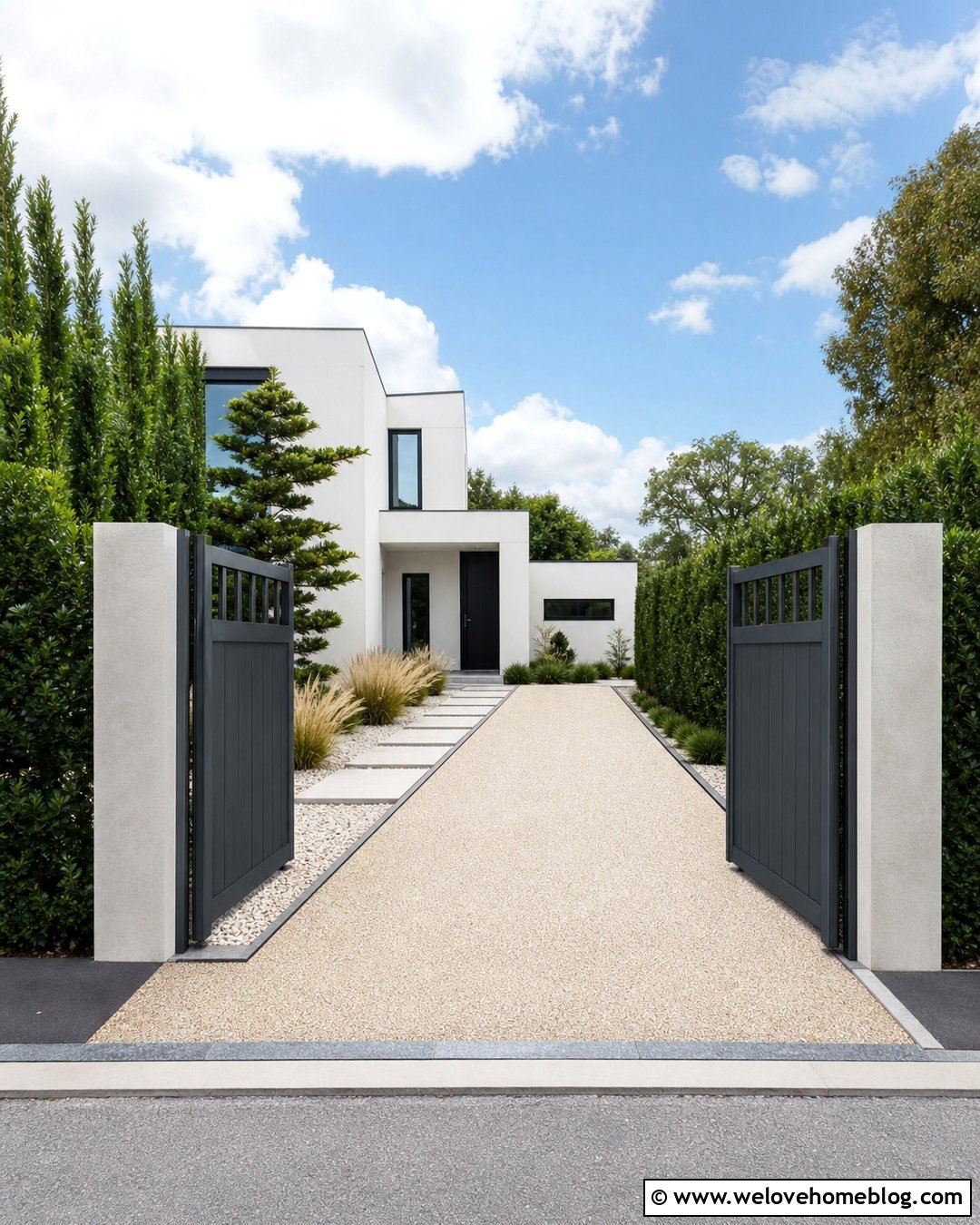
A solid aluminum gate provides privacy with less visual weight than many heavy wood designs. Choose wide vertical panels in charcoal gray and include narrow decorative gaps near the top. Place the gate between matching metal posts or smooth concrete pillars for a crisp finish. A straight resin-bound gravel driveway in a light natural tone prevents the dark gate from making the entrance feel gloomy. Frame the driveway with clipped evergreen hedges, ornamental grasses, and pale gravel beds. The house could feature white stucco, dark windows, and simple geometric landscaping. Conceal automation equipment behind the pillars whenever possible. This entrance is especially effective when a busy street or close neighboring property makes screening important, but a clean modern appearance remains the priority.
12. White Picket Driveway Gate
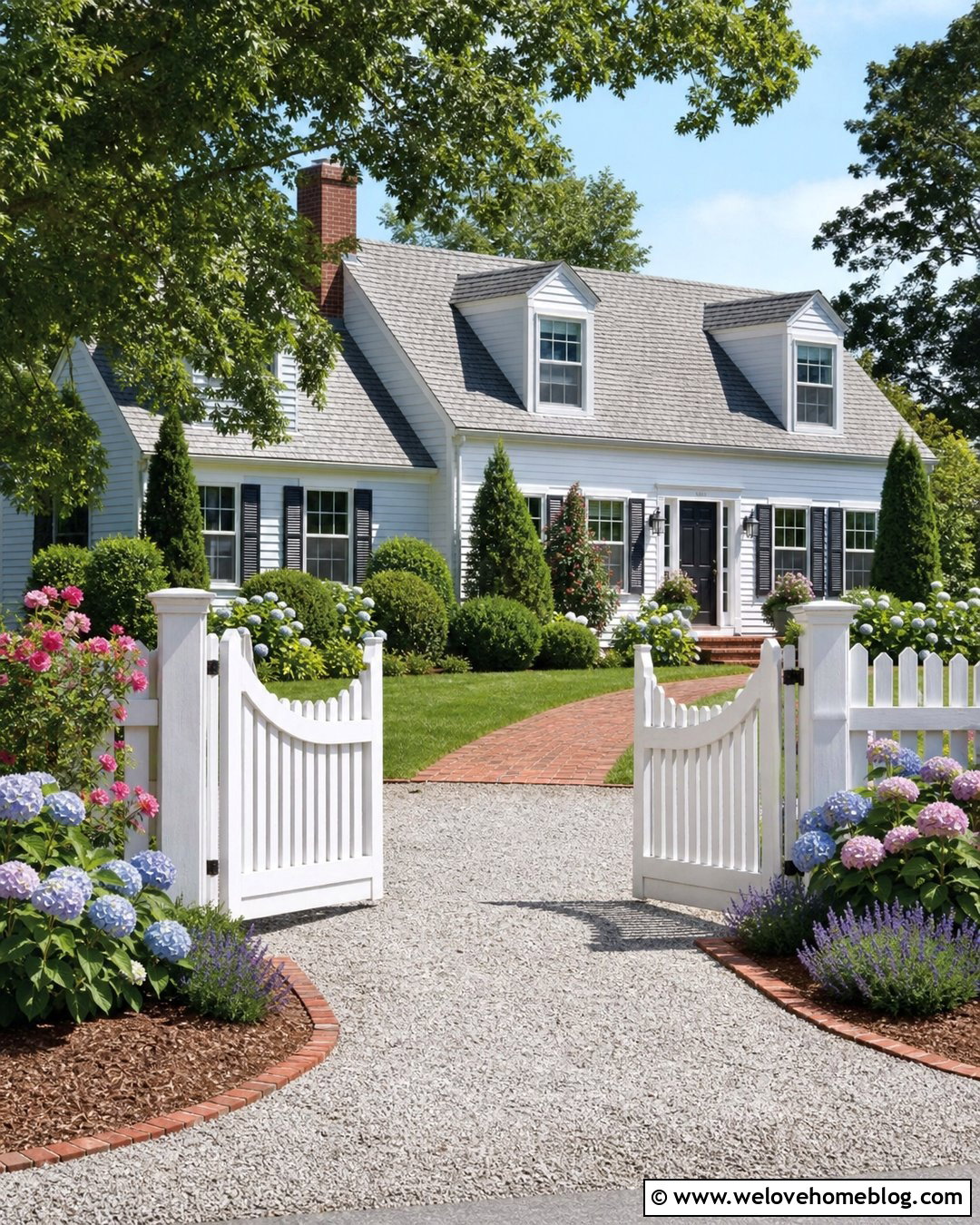
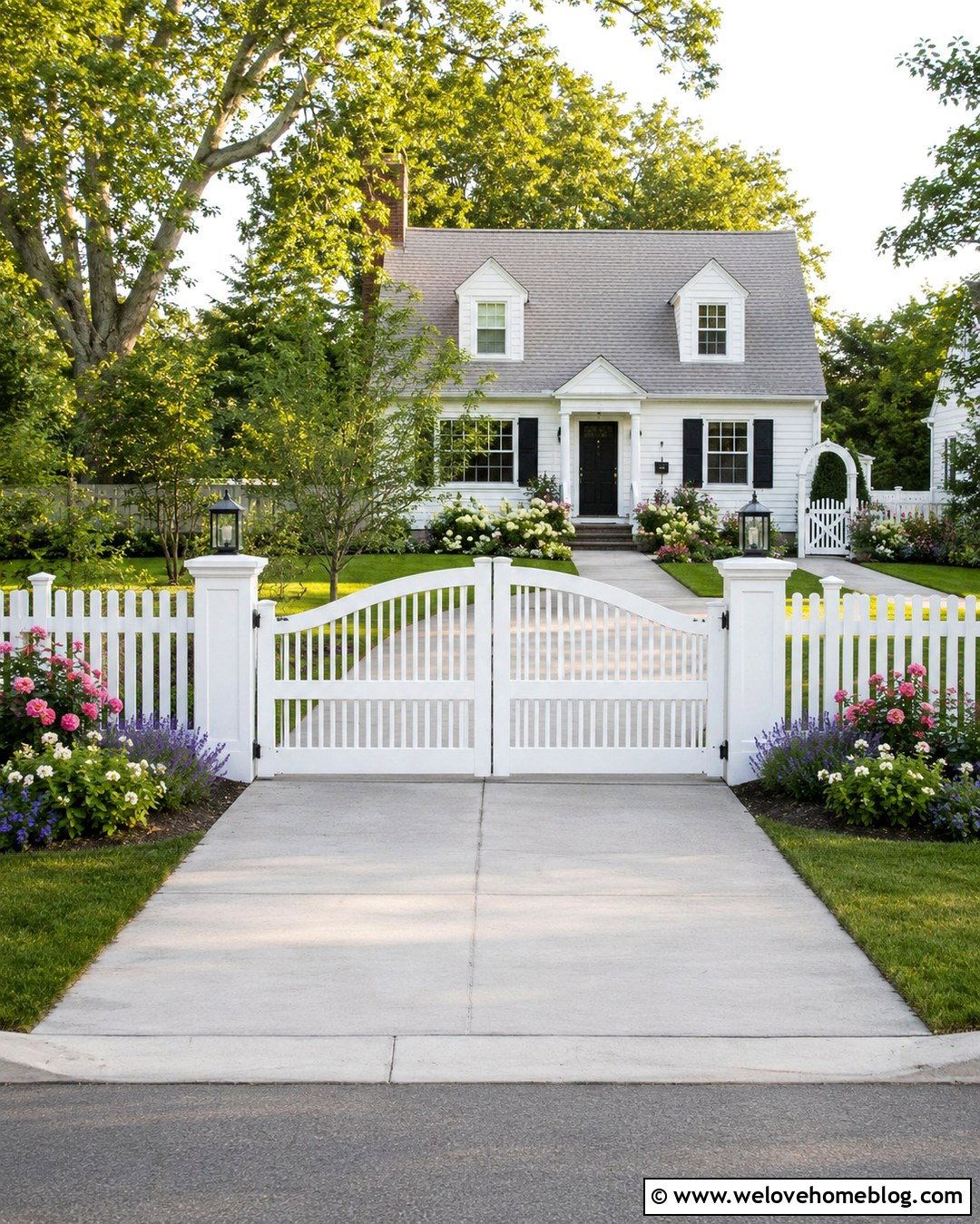
A white picket gate brings a friendly, traditional character to a cottage or Cape Cod home. Use a double swing design with gently curved tops and wider posts capped by small lanterns. Pair it with a light gray gravel driveway bordered by red brick, creating a crisp outline that connects with the front walkway. Continue matching picket fencing on both sides so the gate does not appear isolated. Plant hydrangeas, roses, catmint, and low evergreen shrubs in informal beds around the entrance. A white clapboard house with dark shutters provides an ideal background. Keep the gate relatively open to preserve a welcoming street view. Durable composite pickets can reproduce the classic appearance while reducing the repainting associated with traditional painted wood.
13. Arched Wood Driveway Gate
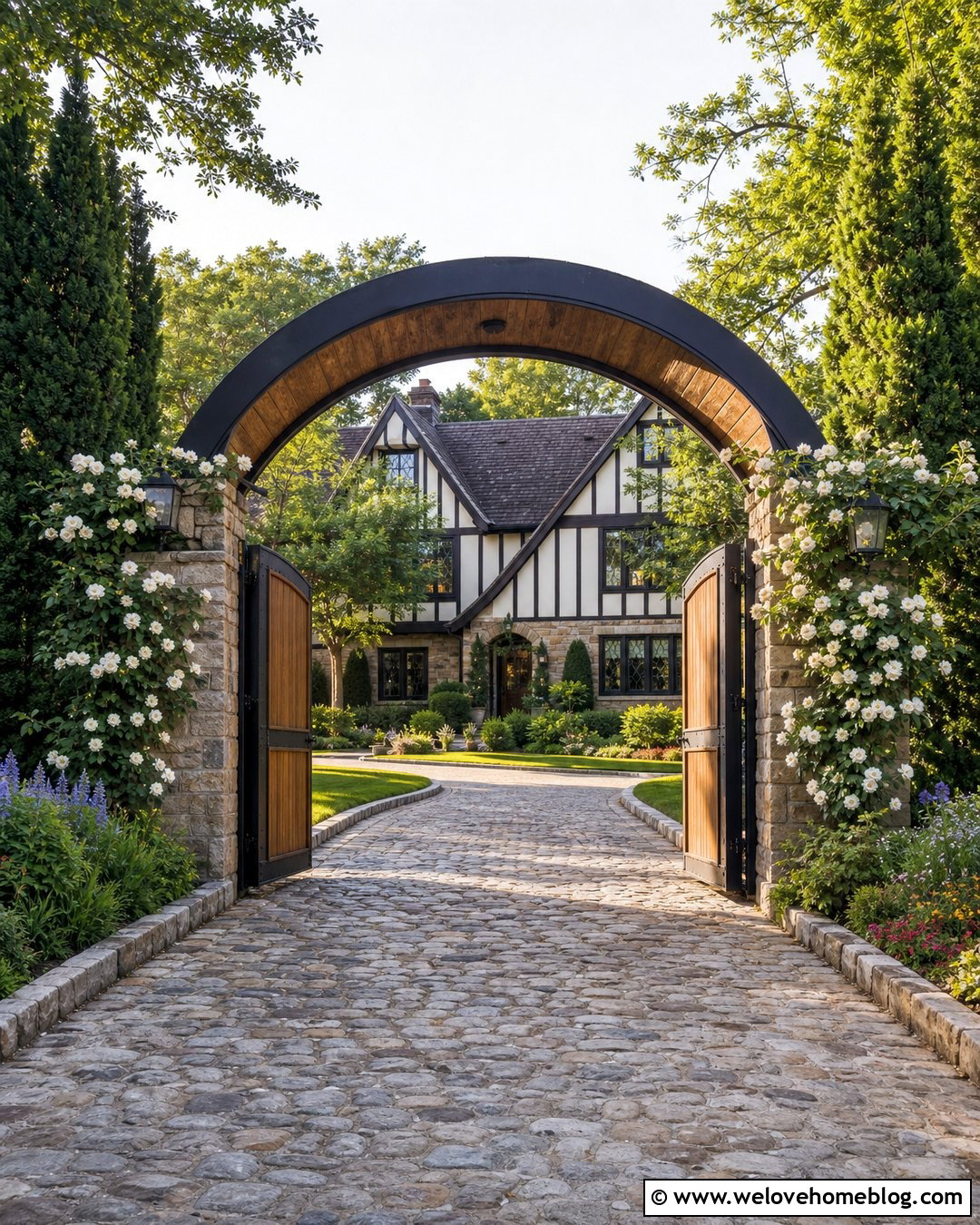
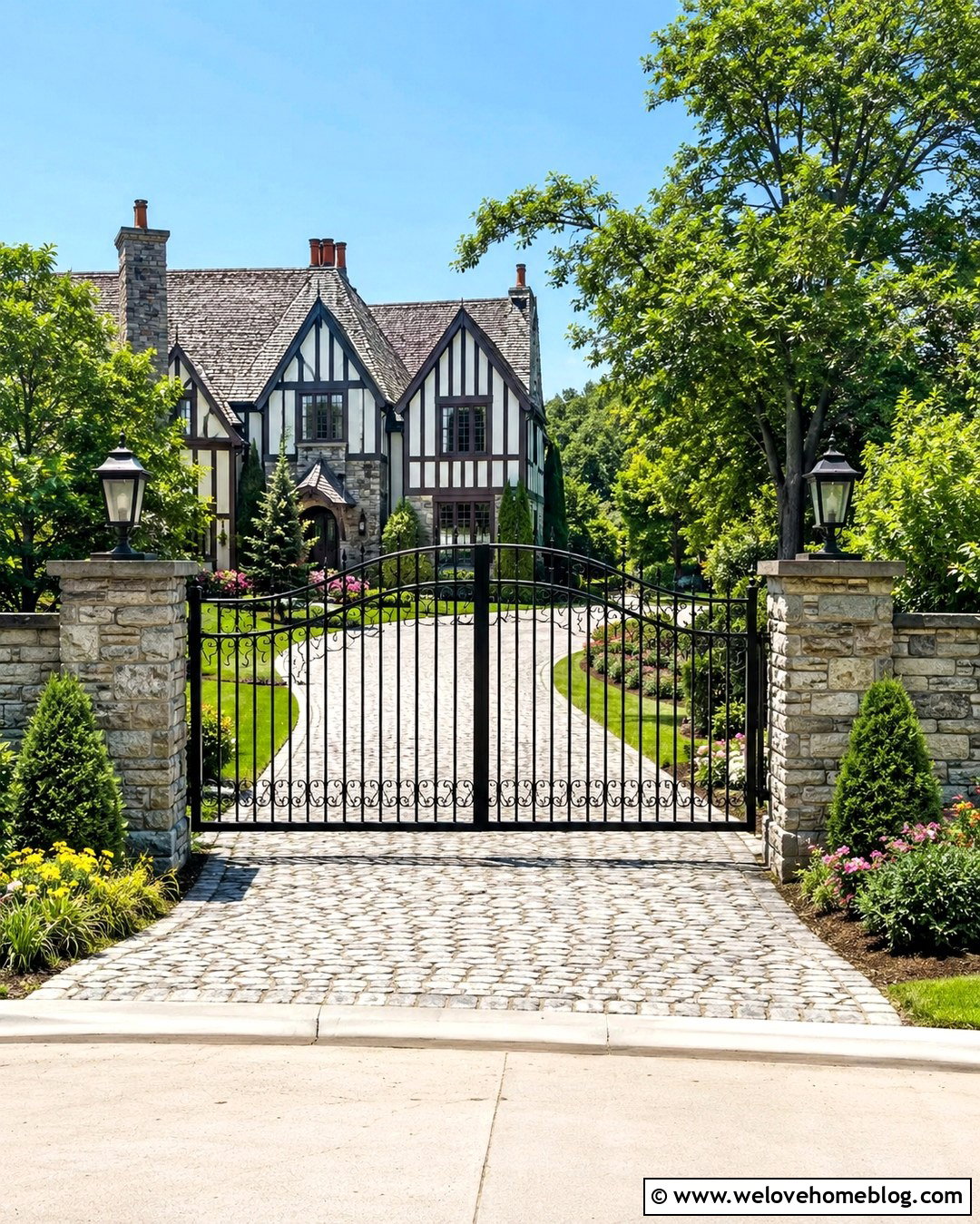
An arched wood gate adds softness to a wide entrance while giving a traditional home greater privacy. Choose tongue-and-groove cedar panels with a curved upper edge and frame them in black steel for structural definition. A cobblestone driveway or cobblestone entrance apron reinforces the established, old-world character. Support the gate with stone pillars that repeat masonry found on the home or landscape walls. On each side, plant layered evergreens, climbing roses, and low flowering perennials. The arch should rise gradually rather than forming a sharp peak. This allows the gate to feel graceful and keeps the center from becoming excessively tall. Warm wood, weathered stone, and restrained planting work together particularly well around Tudor, European cottage, and traditional estate-style houses.
14. Laser Cut Metal Driveway Gate
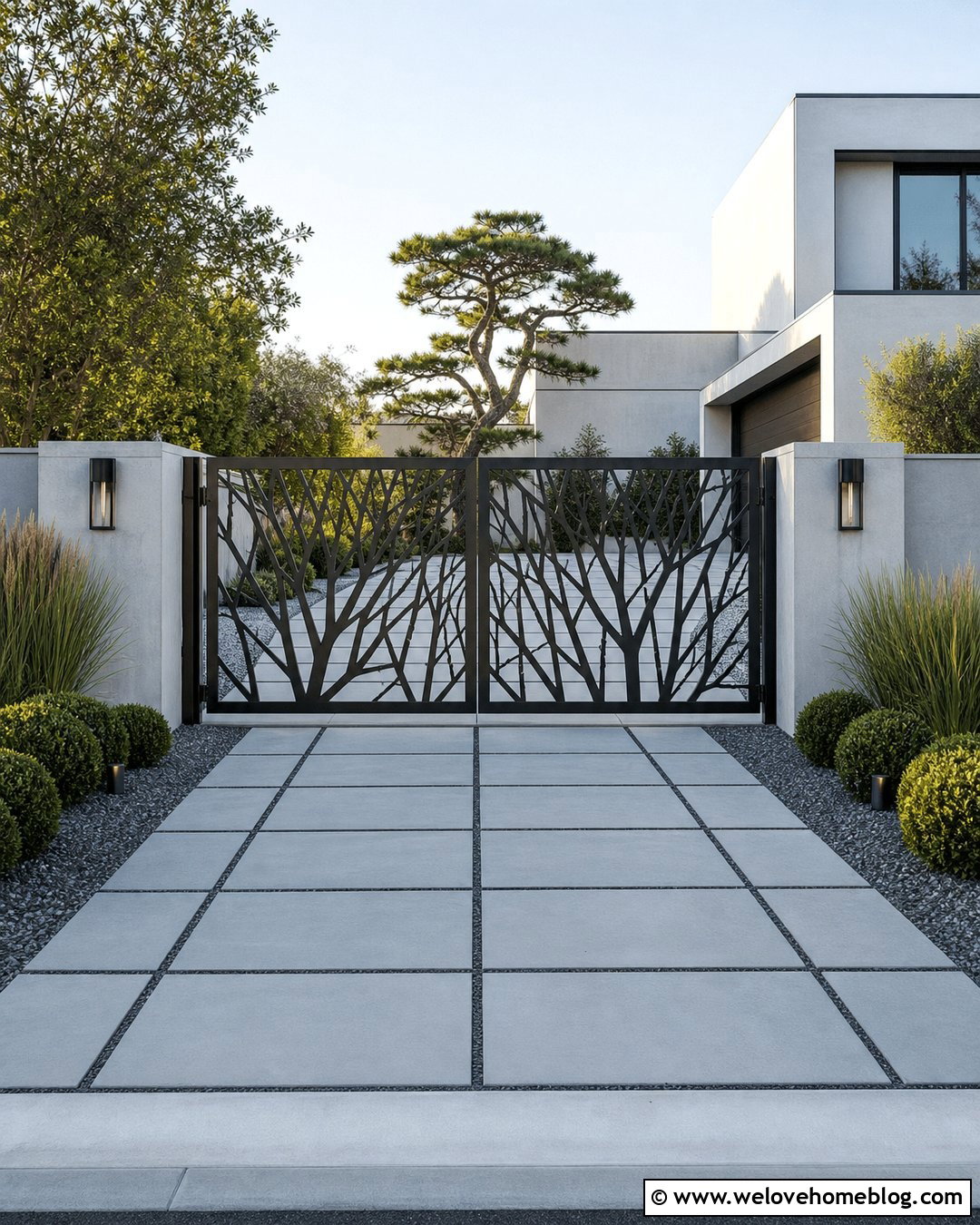
A laser-cut gate can introduce pattern without relying on traditional scrollwork. Choose a powder-coated steel panel with a simple leaf, branch, or geometric motif and place it between clean concrete pillars. Pair the gate with a straight driveway made from large-format gray concrete pavers separated by narrow dark joints. Minimal planting will keep the decorative panel from competing with a busy landscape. Use clipped shrubs, architectural grasses, and one sculptural tree in a gravel bed. The cutout pattern should provide partial visibility and cast interesting shapes while remaining easy to understand from the curb. Repeat one element of the pattern in a pedestrian gate or address panel. This complete look suits modern homes that need privacy but still benefit from texture and personality.
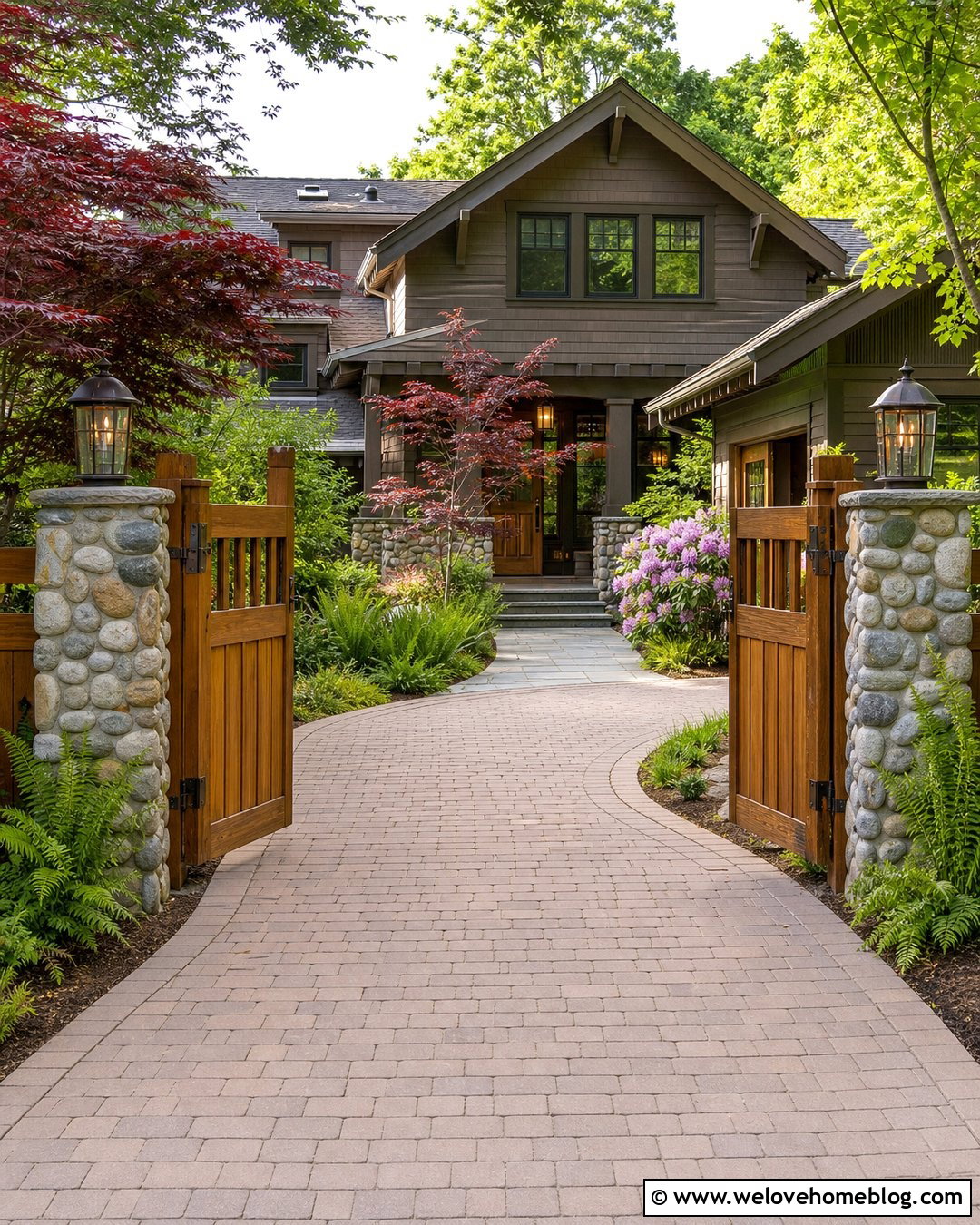
15. Corten Steel Driveway Gate
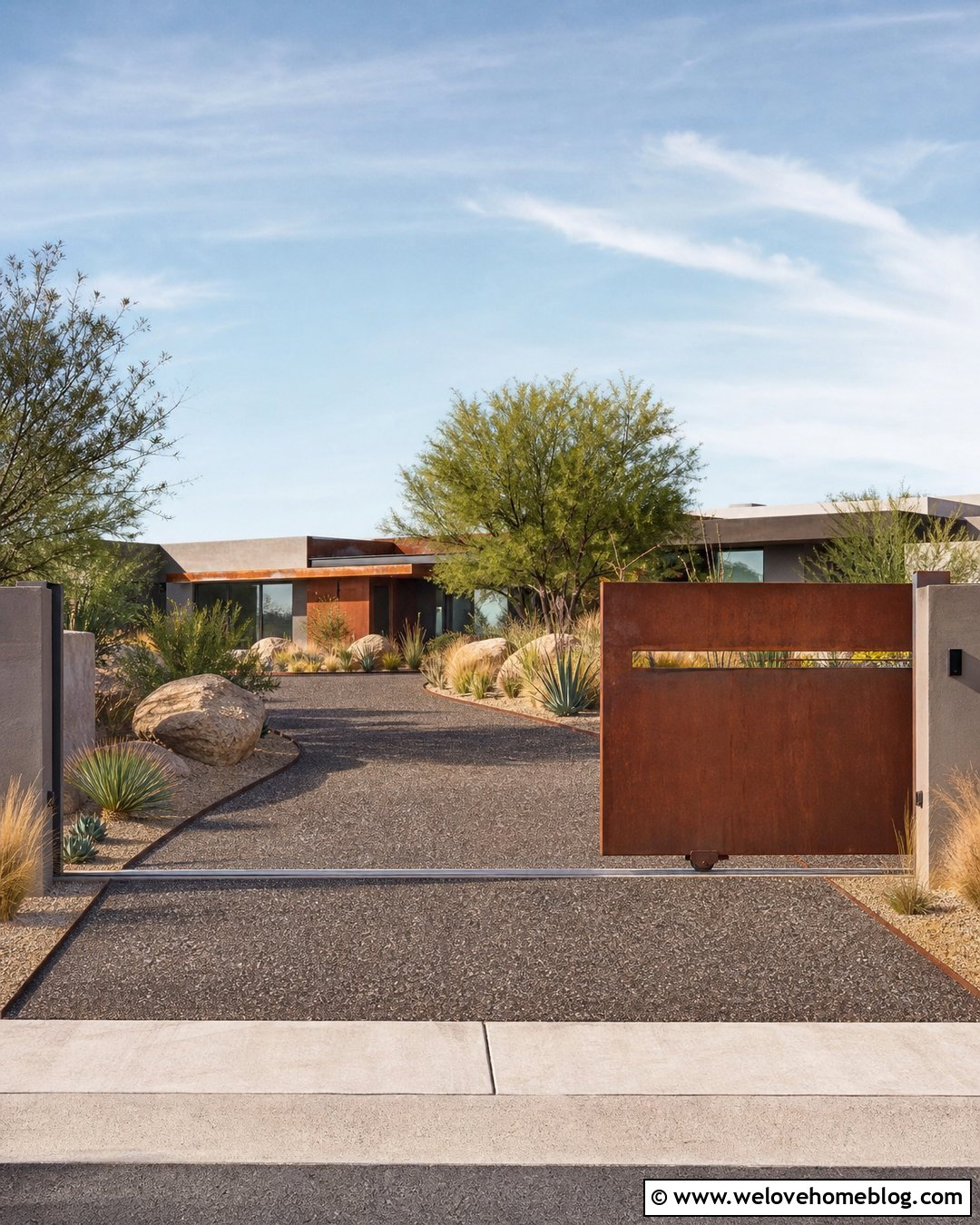
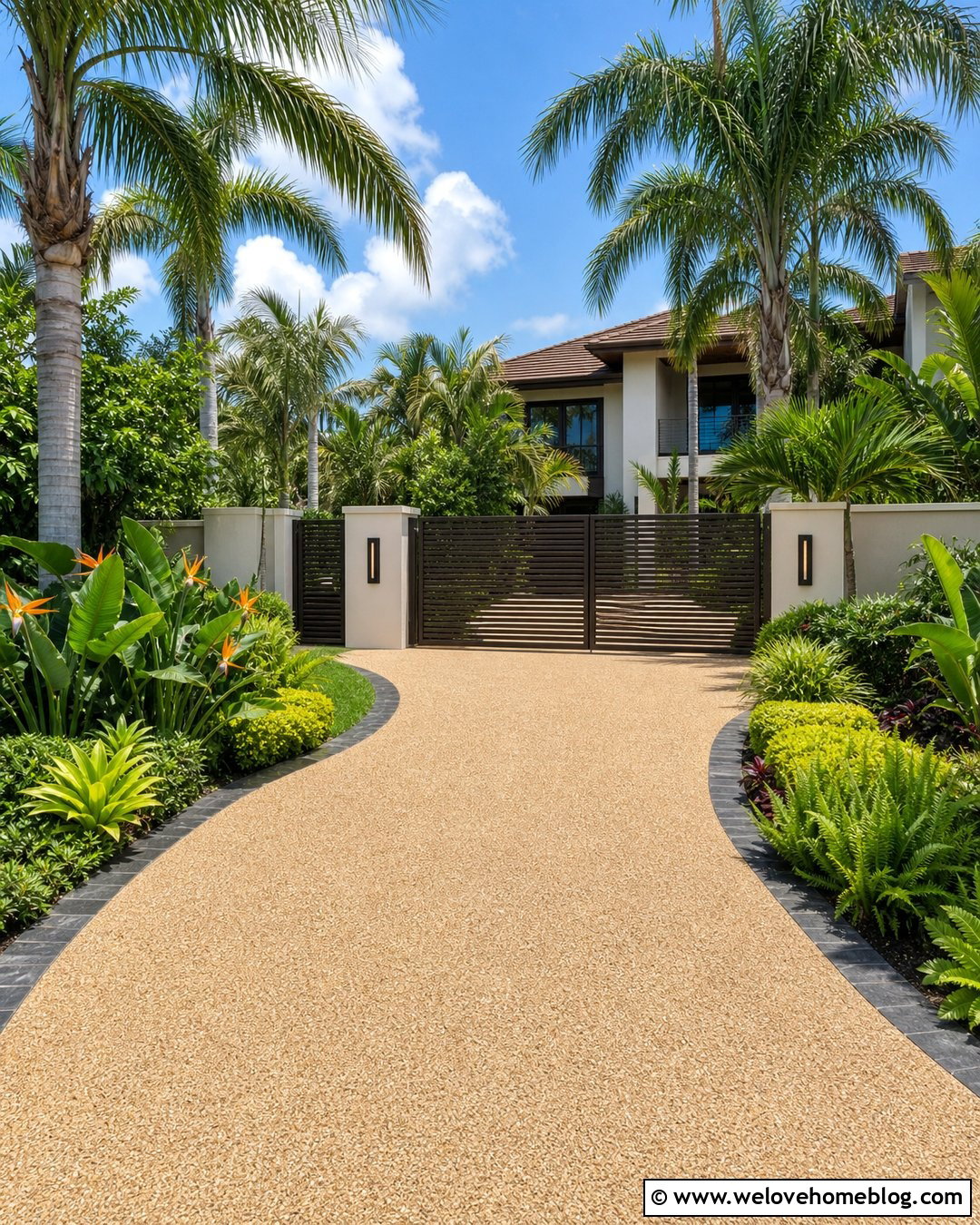
Weathered steel introduces warm rust tones that look striking beside modern architecture and natural landscaping. Use a solid Corten steel sliding gate with a narrow horizontal opening for controlled visibility. A dark exposed aggregate driveway provides a durable-looking contrast, while low concrete walls keep the entrance structured. Surround the gate with feather grasses, yucca, agave, and drought-tolerant groundcover. Large boulders can help transition from the industrial metal to the planting beds. Repeat Corten steel in the address marker or garden edging, but avoid using it everywhere. The material should remain a focal point. This entrance works especially well with desert modern, contemporary ranch, and woodland homes where earthy colors help the gate settle naturally into the landscape.
16. Modern Farmhouse Driveway Gate
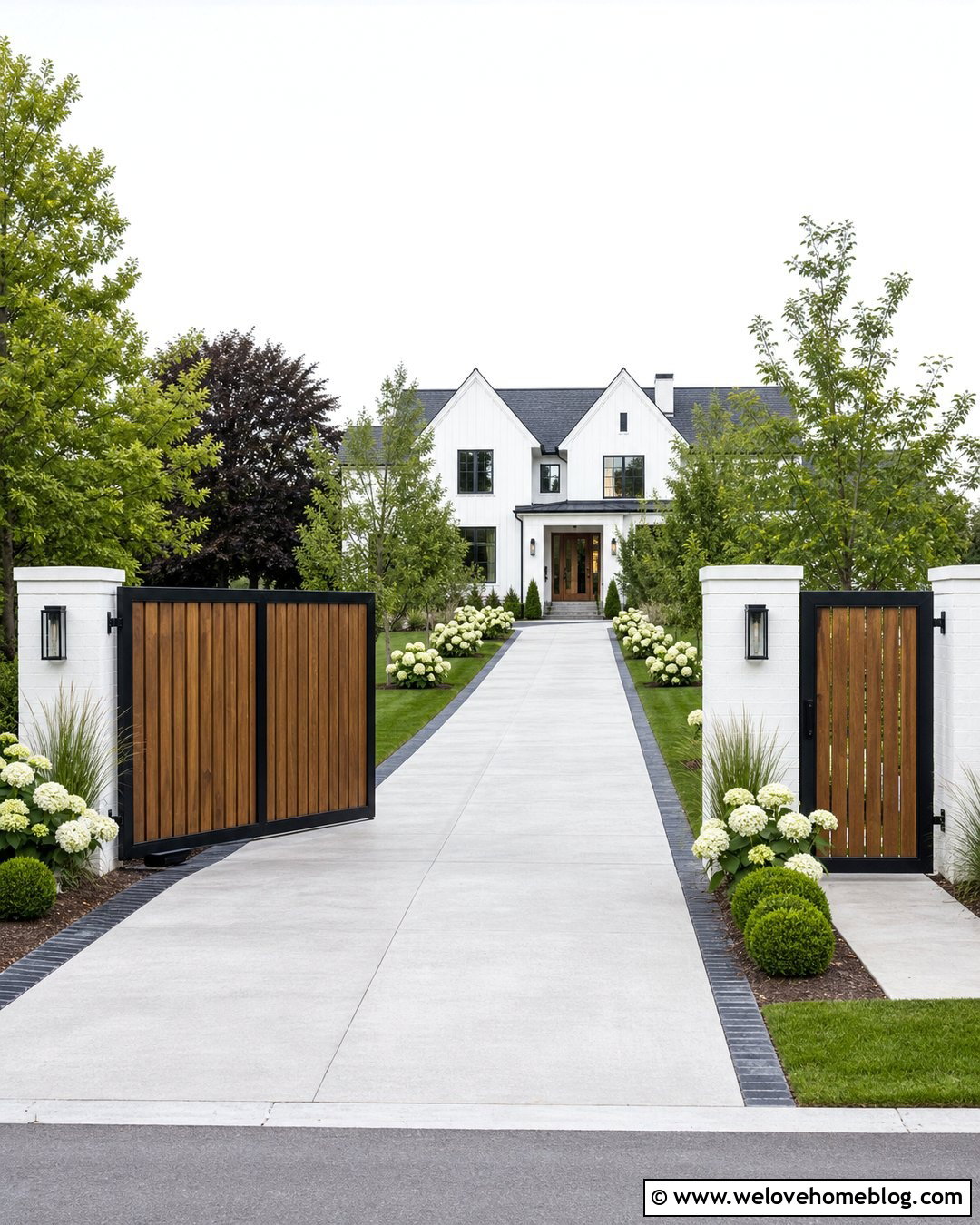
A modern farmhouse gate looks best when rustic materials are simplified into crisp shapes. Select a black steel frame filled with straight vertical cedar boards and use square white masonry pillars on both sides. Continue the entrance with a light gray concrete driveway edged by black brick pavers. Plant symmetrical groups of boxwood, white hydrangeas, and fountain grass to create order without appearing overly formal. Black lanterns can coordinate with the home’s windows, roof, and garage hardware. A separate pedestrian gate improves convenience and balances a broad driveway opening. Keep decorative cross braces minimal unless they repeat details on the garage doors. The finished entrance should combine farmhouse warmth with modern restraint, allowing the gate, driveway, landscaping, and white house facade to read as one composition.
17. Craftsman Driveway Gate
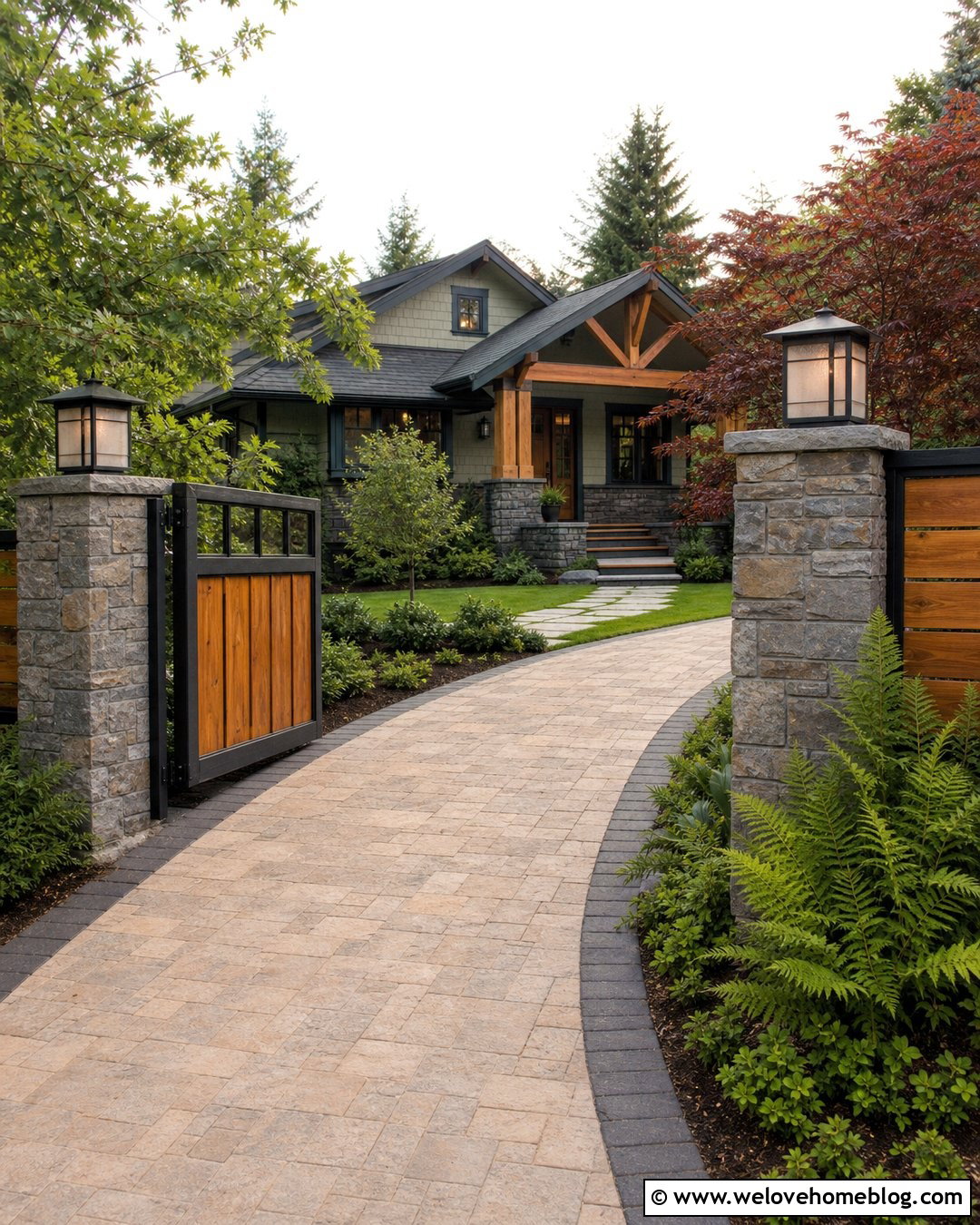
Craftsman architecture calls for substantial materials and visible construction details. A stained wood gate with square panels, dark metal framing, and modest diagonal bracing suits this character. Set it between tapered stone pillars that echo the home’s porch columns. Use warm-toned concrete pavers for the driveway, with a darker border following its gentle curve. Layer the surrounding landscape with ferns, evergreen shrubs, Japanese maple, and shade-tolerant groundcover. Low lanterns with simple geometric frames complete the entrance. Rather than making the gate completely solid, include an open upper section with vertical wood slats. That detail creates visibility and keeps the broad gate from feeling heavy. Rich wood, textured stone, handcrafted metal, and natural planting give the entire approach an authentic Craftsman identity.
18. Colonial Driveway Gate
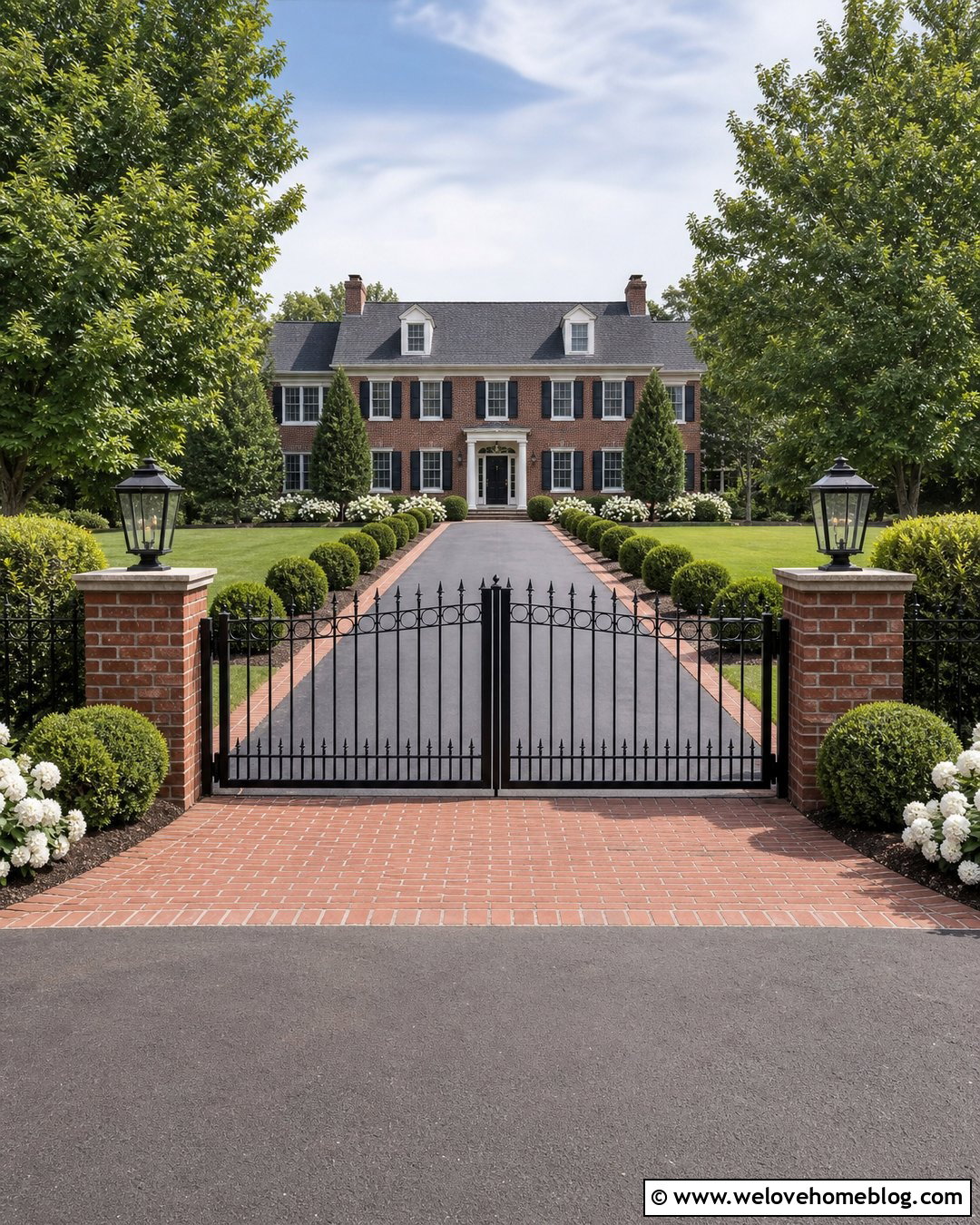
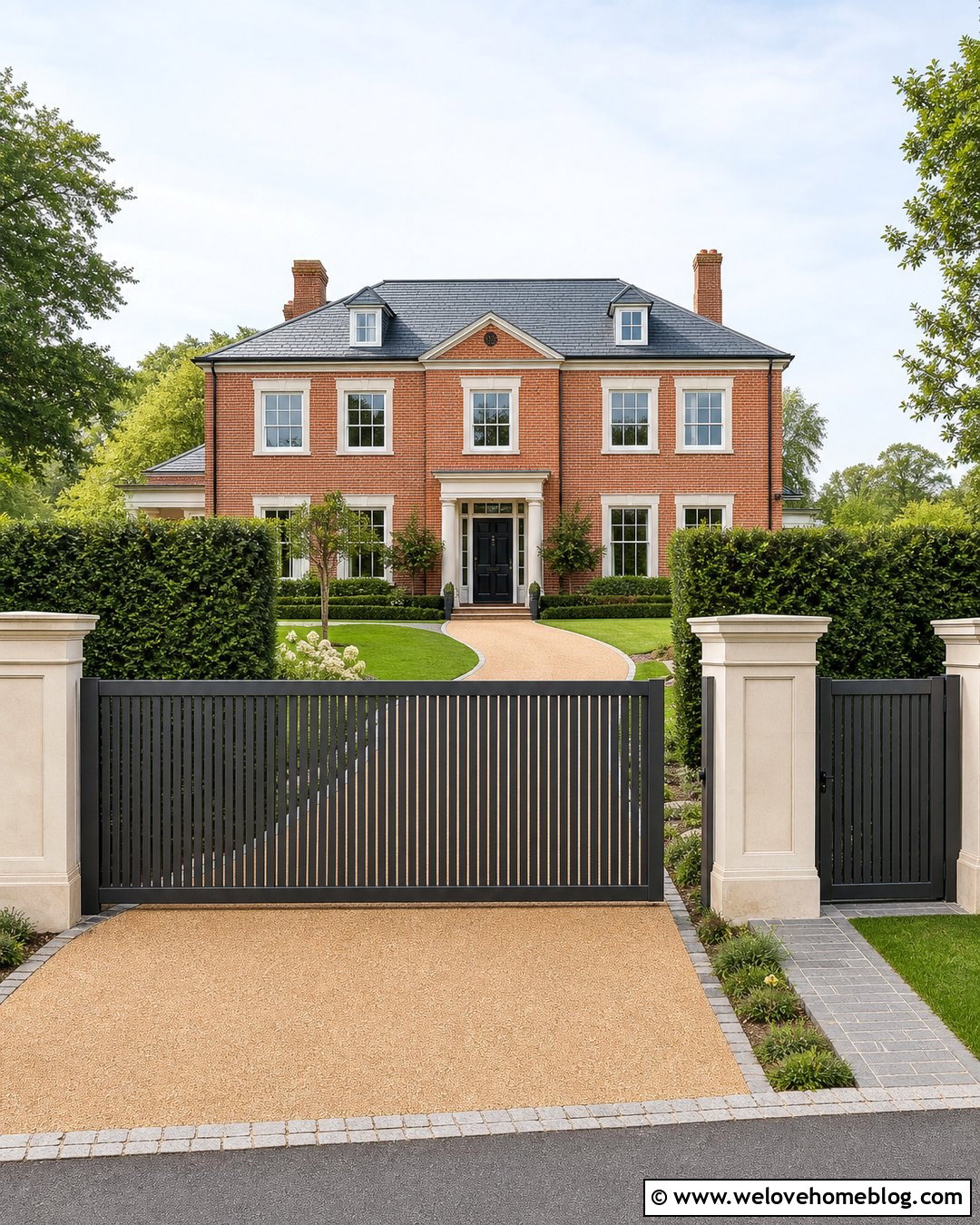
Symmetry is the key to a successful Colonial entrance. Choose a black iron double gate with evenly spaced vertical bars and understated finials. Position it between matching red brick columns topped with traditional lanterns. A straight driveway made from gray asphalt can be upgraded with a brick apron and matching brick edging. Mirror the landscaping on both sides with clipped boxwood, white flowering shrubs, and small ornamental trees. Continue a simple black metal fence along the front boundary for a complete appearance. The gate should align visually with the home’s centered front door whenever the property layout allows. Avoid elaborate curves or oversized decorations. Balanced proportions, repeated brick, formal planting, and a direct view toward the house create the orderly curb appeal associated with Colonial architecture.
19. Mediterranean Driveway Gate
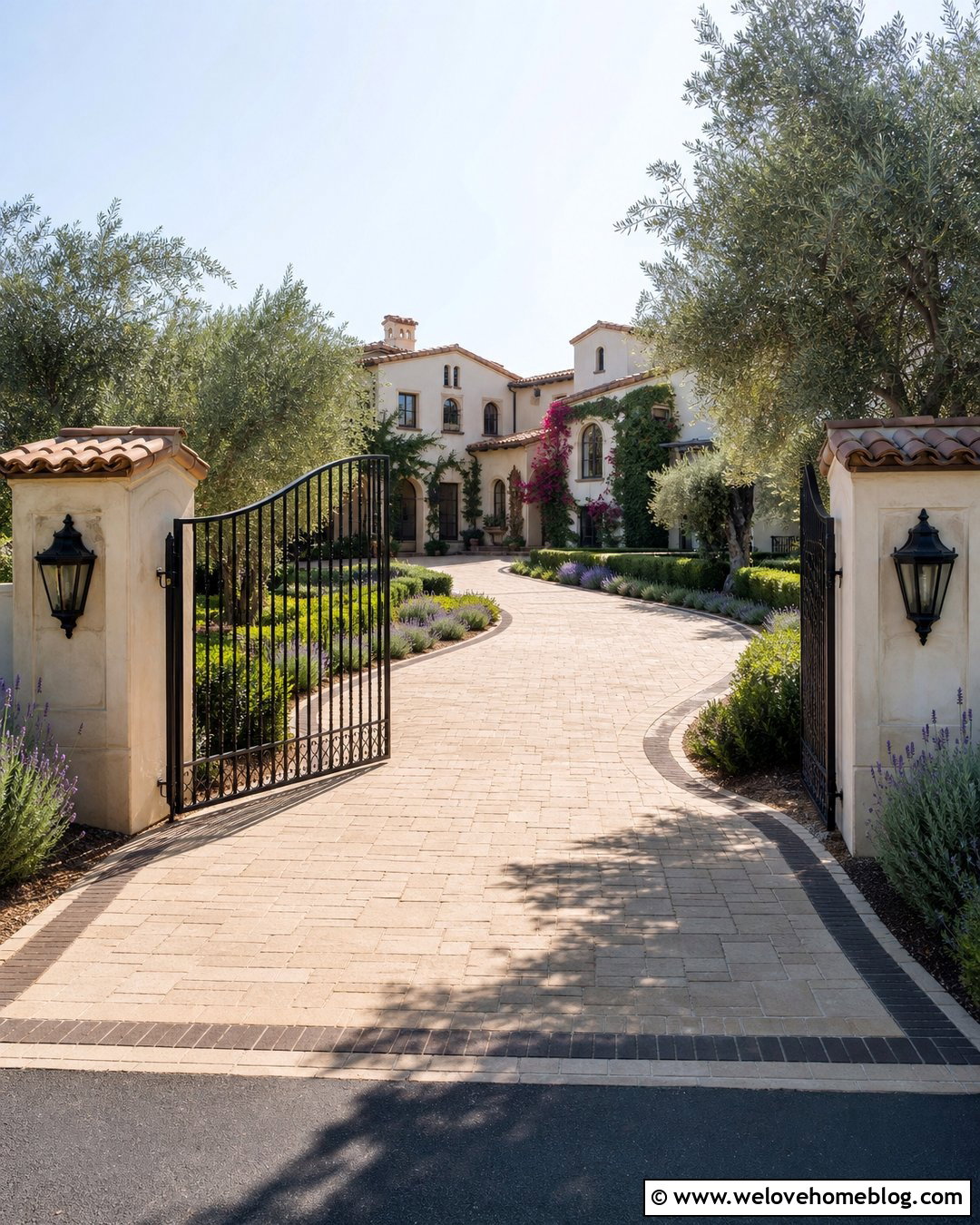
A Mediterranean entrance combines warm surfaces, curved lines, and strong planting. Install a dark forged iron gate with a shallow arch between cream stucco pillars topped with clay tile caps. Use warm travertine-look pavers or sand-colored concrete pavers for a curved driveway leading toward a stucco home. Add olive trees, lavender, rosemary, bougainvillea, and low hedges around the gateway. Decorative lanterns can sit on the pillars, but their scale should remain secondary to the gate. A narrow paver ribbon in a darker brown tone will define the driveway edge and reduce visual monotony. The gate pattern can include a restrained central medallion. Together, the iron, warm paving, stucco, tile, and silver-green planting create a rich entrance without requiring excessive ornament.

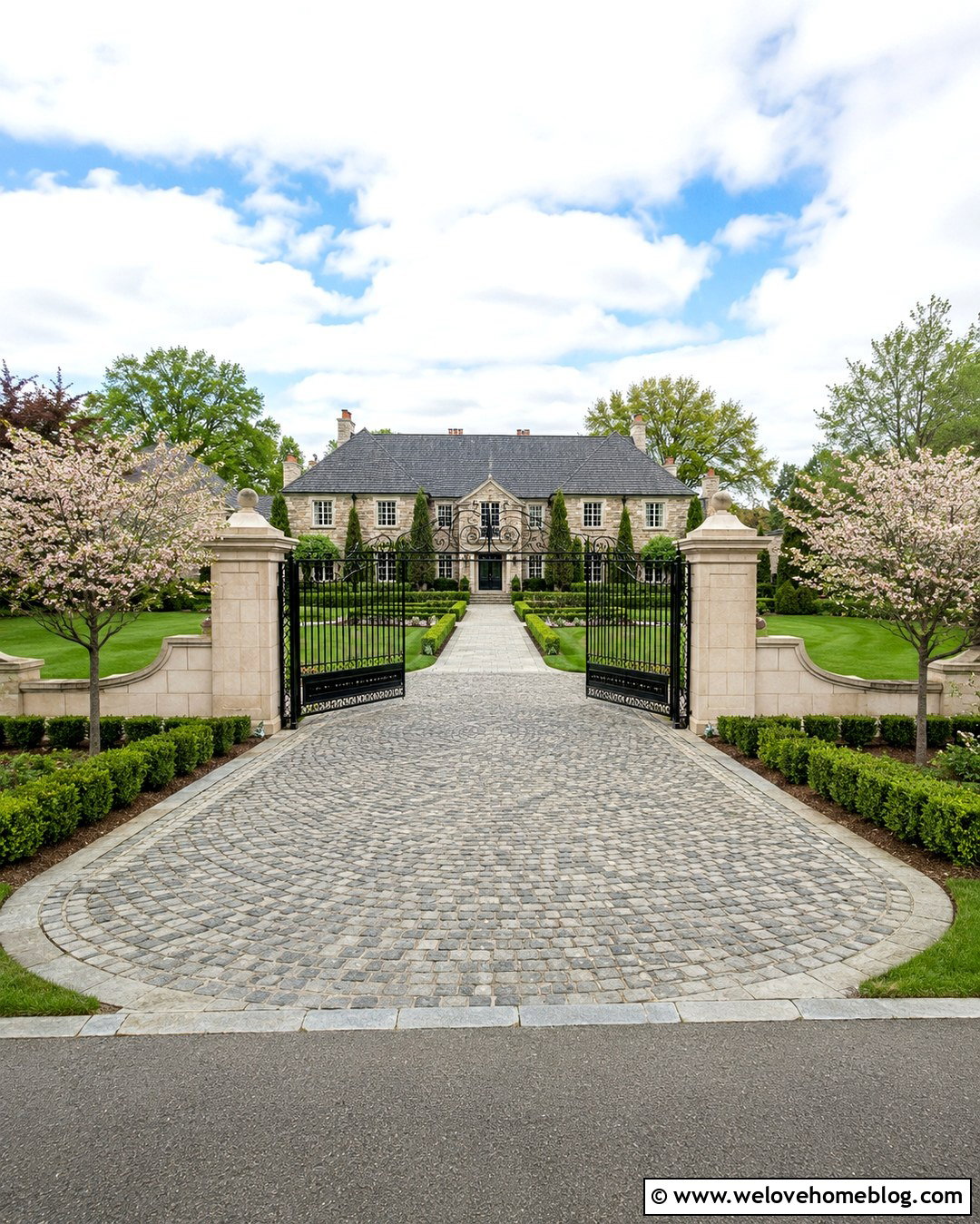
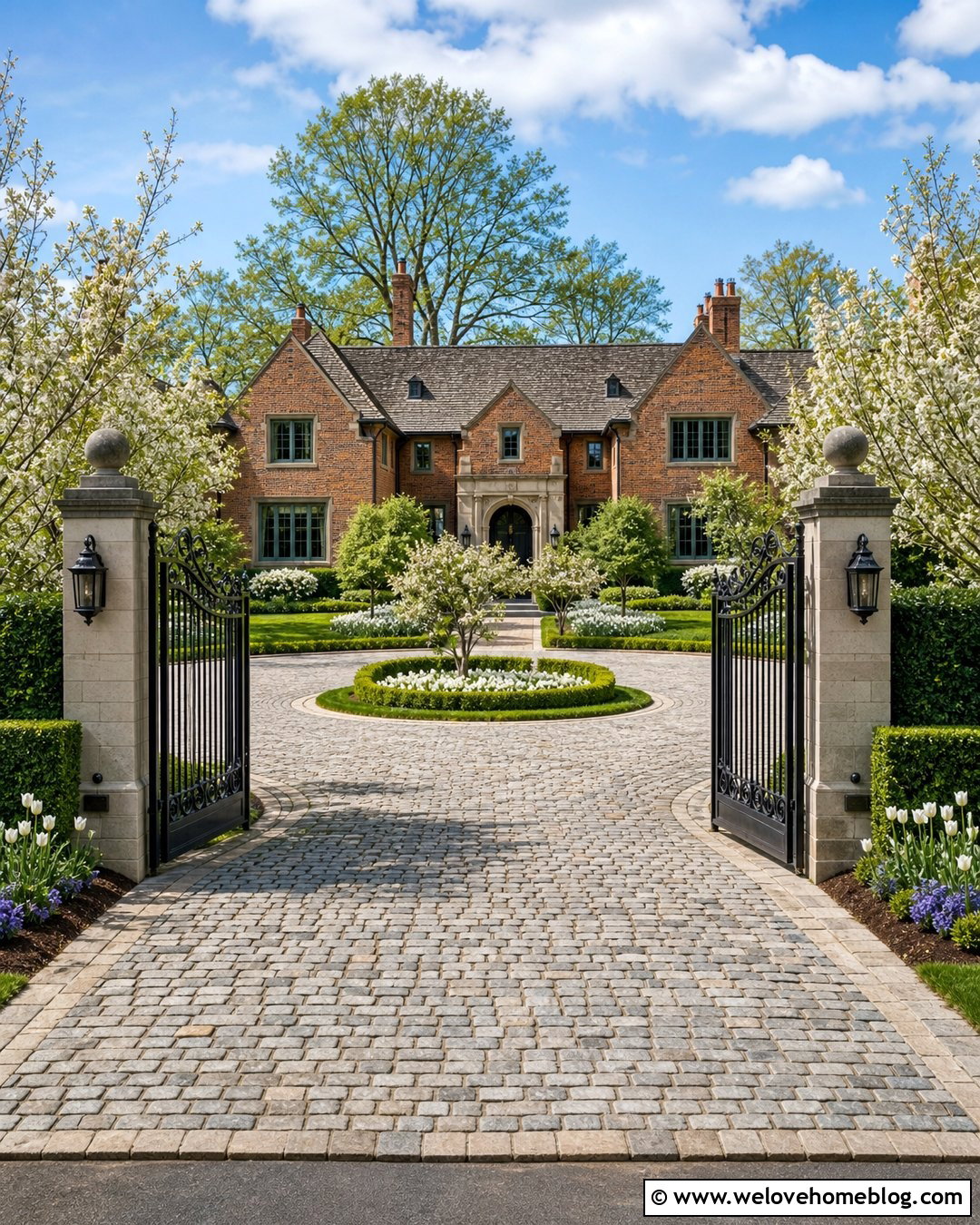
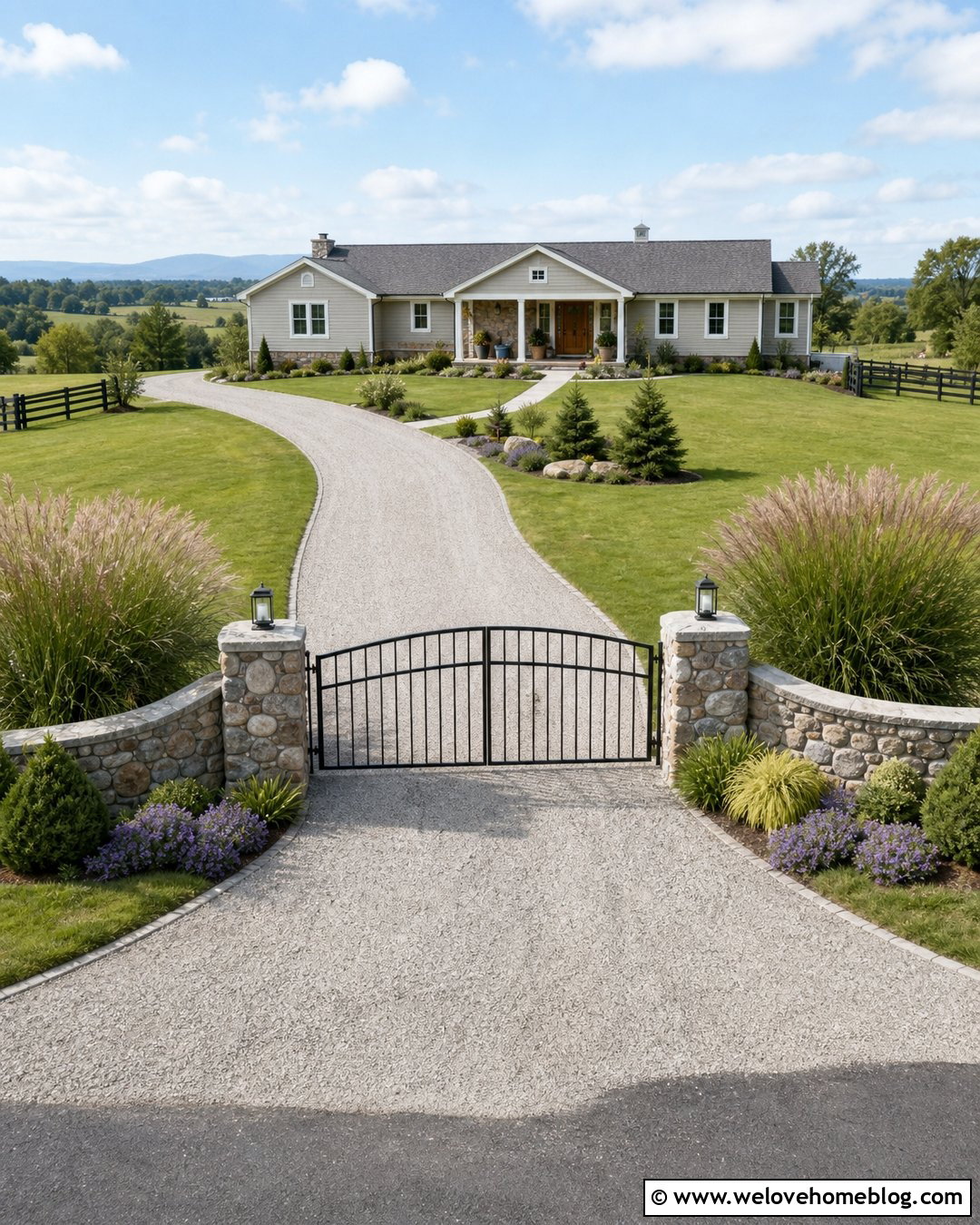
20. Coastal Driveway Gate
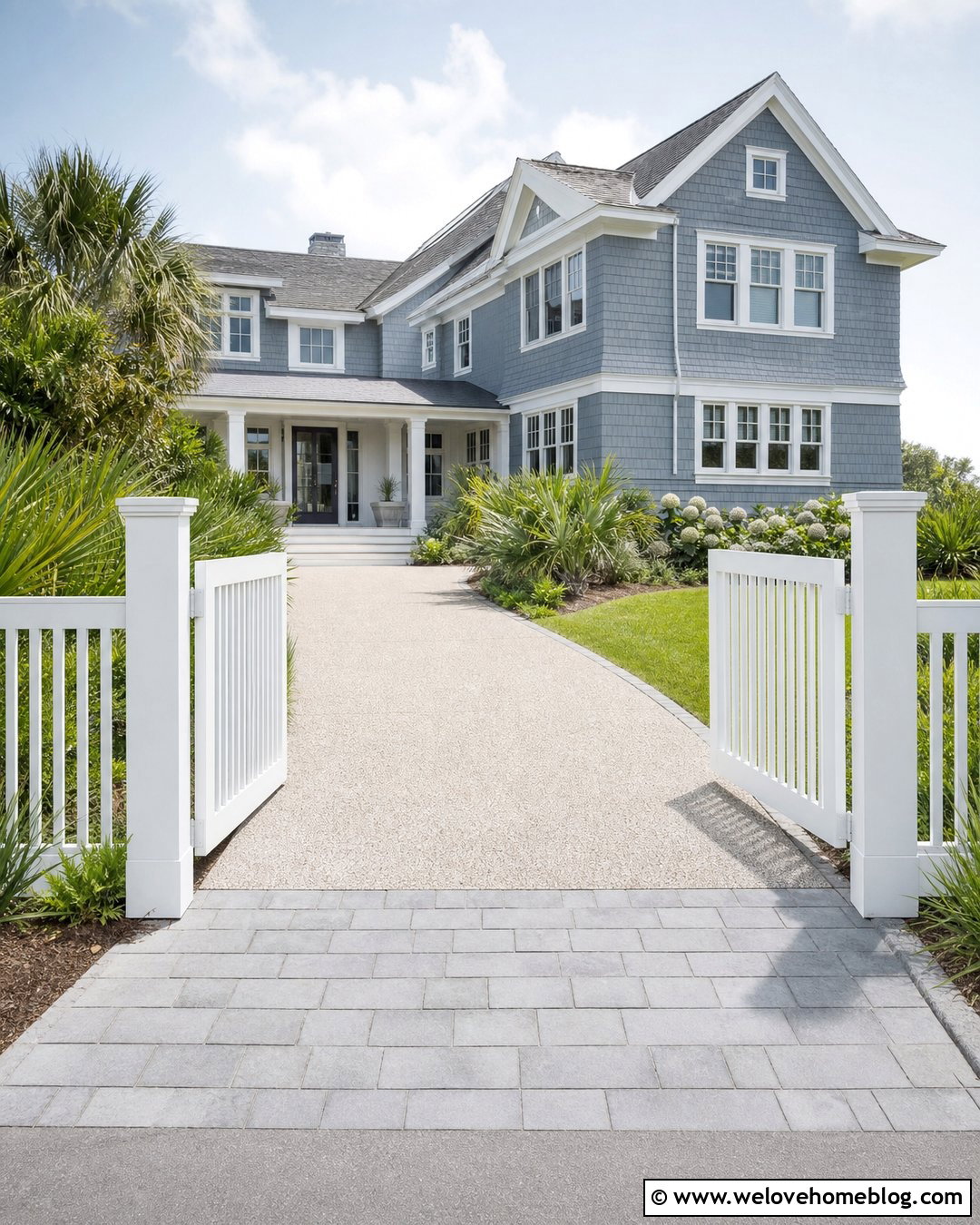
A coastal gate should feel airy, durable, and relaxed rather than massive. Use a white aluminum double gate with widely spaced vertical slats and simple square posts. Pair it with a pale shell aggregate or light exposed aggregate driveway that reflects the bright character of the setting. Border the entrance with beach grass, dwarf palmettos, hydrangeas, and salt-tolerant shrubs suited to the local climate. A low white fence can connect the gate to the wider front yard. For definition, add a soft gray paver apron at the curb and matching paver edging. The house in the background might feature shingles, white trim, and a blue-gray facade. Keep the entrance open enough to preserve views and breezes while still marking a clear property boundary.
21. Desert Driveway Gate
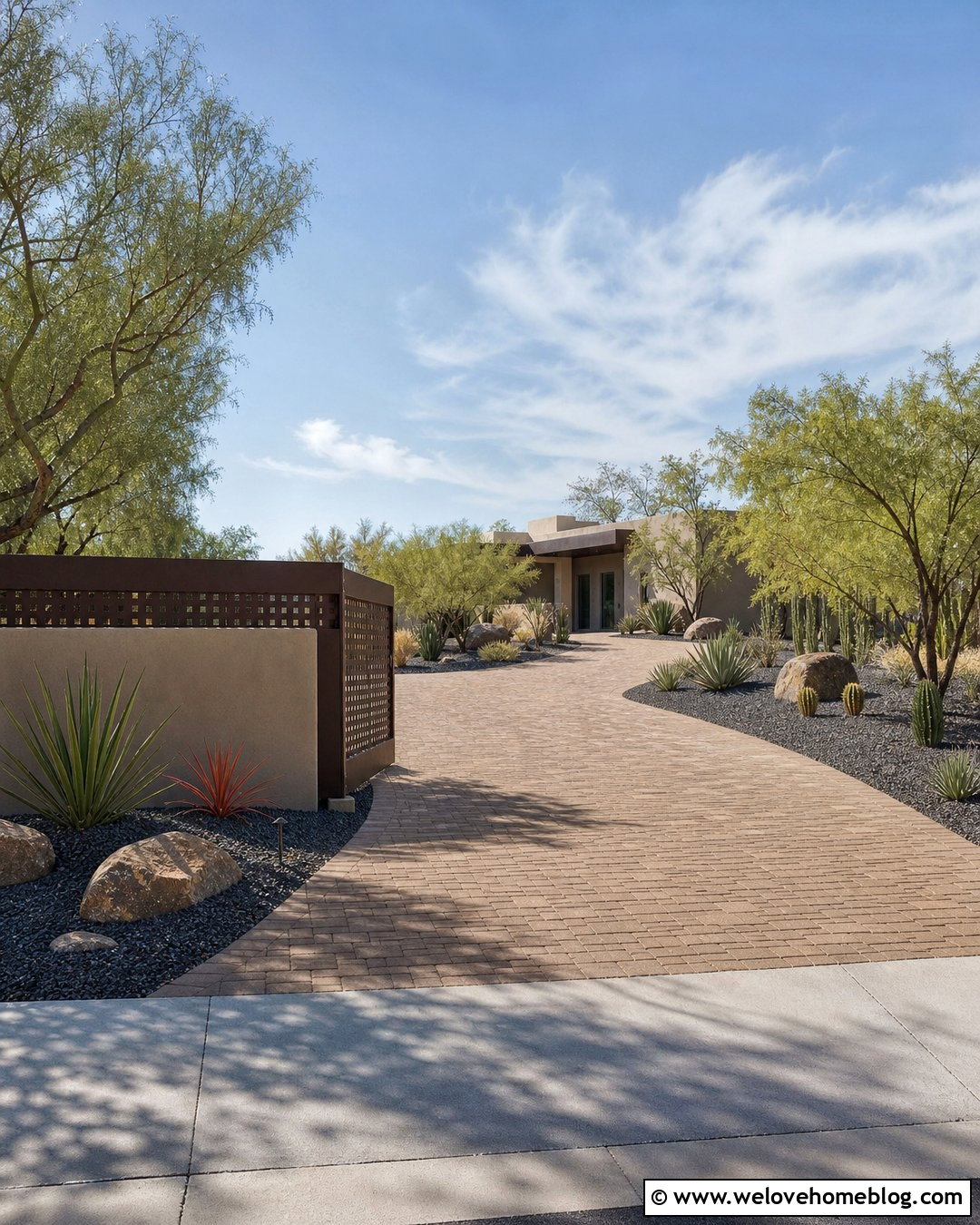
A desert entrance can make strong use of earthy colors and low-water landscaping. Choose a wide steel sliding gate finished in sand, bronze, or weathered brown. Horizontal bars or perforated panels provide privacy while complementing a low-profile desert modern home. Surface the driveway with warm tan permeable pavers and define the sides with dark gravel bands. Plant agave, yucca, red yucca, desert spoon, and small desert trees in broad beds. Place a few carefully selected boulders near the posts to visually ground the entrance. A stucco address wall can replace a separate sign and conceal gate controls. Keep plants back from the moving gate path. This design feels most successful when the metal, paving, stone, and architecture repeat colors already present in the surrounding landscape.
22. Woodland Driveway Gate
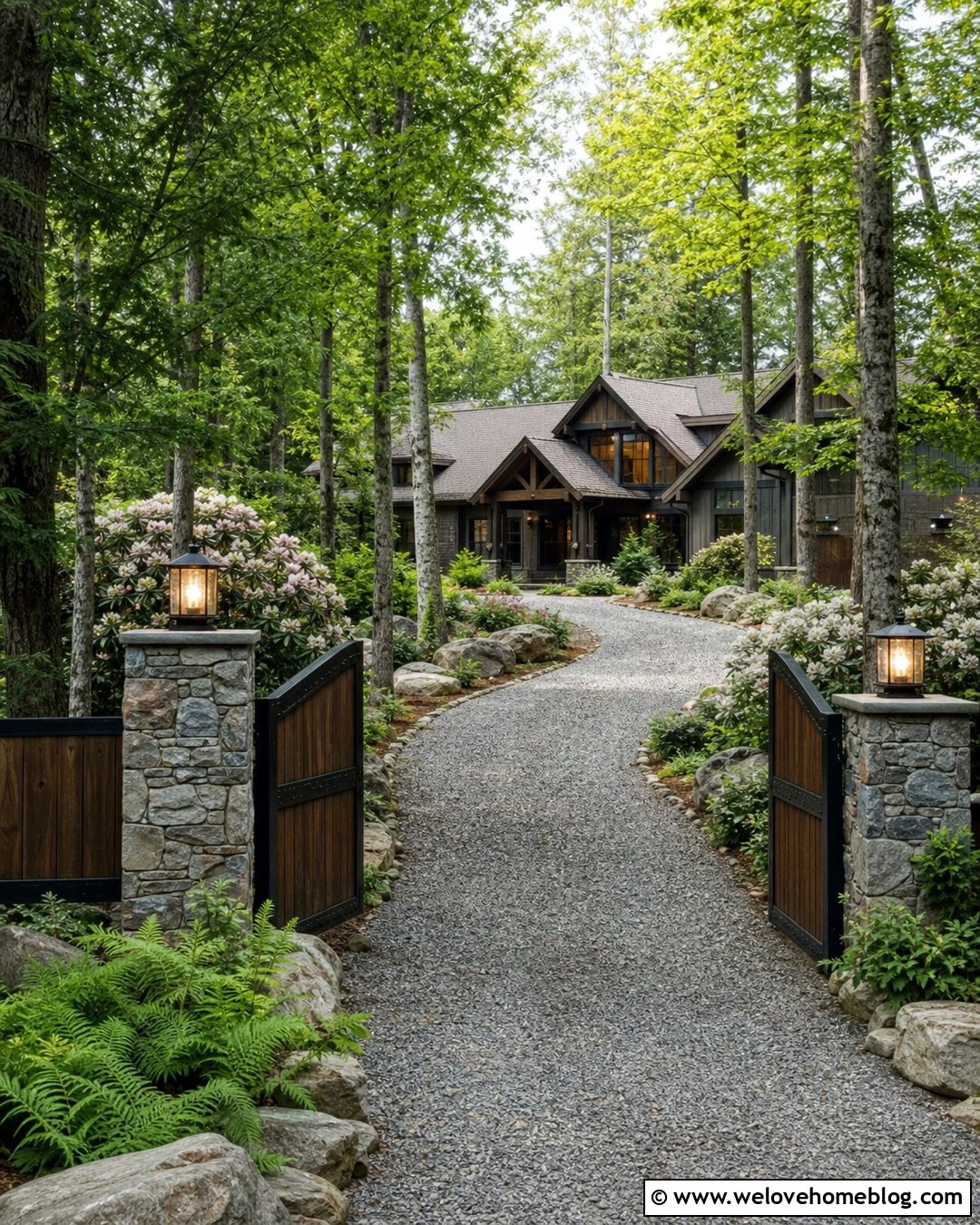
A woodland entrance should blend into its surroundings while remaining easy to see from the road. Use a dark-stained timber gate with a black metal frame and place it between fieldstone pillars. A curved driveway covered in compacted gray gravel can disappear naturally beneath mature trees. Edge the drive with larger stone rather than bright manufactured curbing. Ferns, rhododendrons, mountain laurel, and shade-tolerant groundcover will soften the base of the pillars. Warm lanterns can be mounted beneath simple caps, although the daytime design should remain attractive without lighting. Leave the upper section of the gate partially open so the entrance does not resemble a solid wall. Natural textures and muted colors help the gate feel connected to a cabin, lodge, or wooded Craftsman home.
23. Circular Driveway Gate Entrance
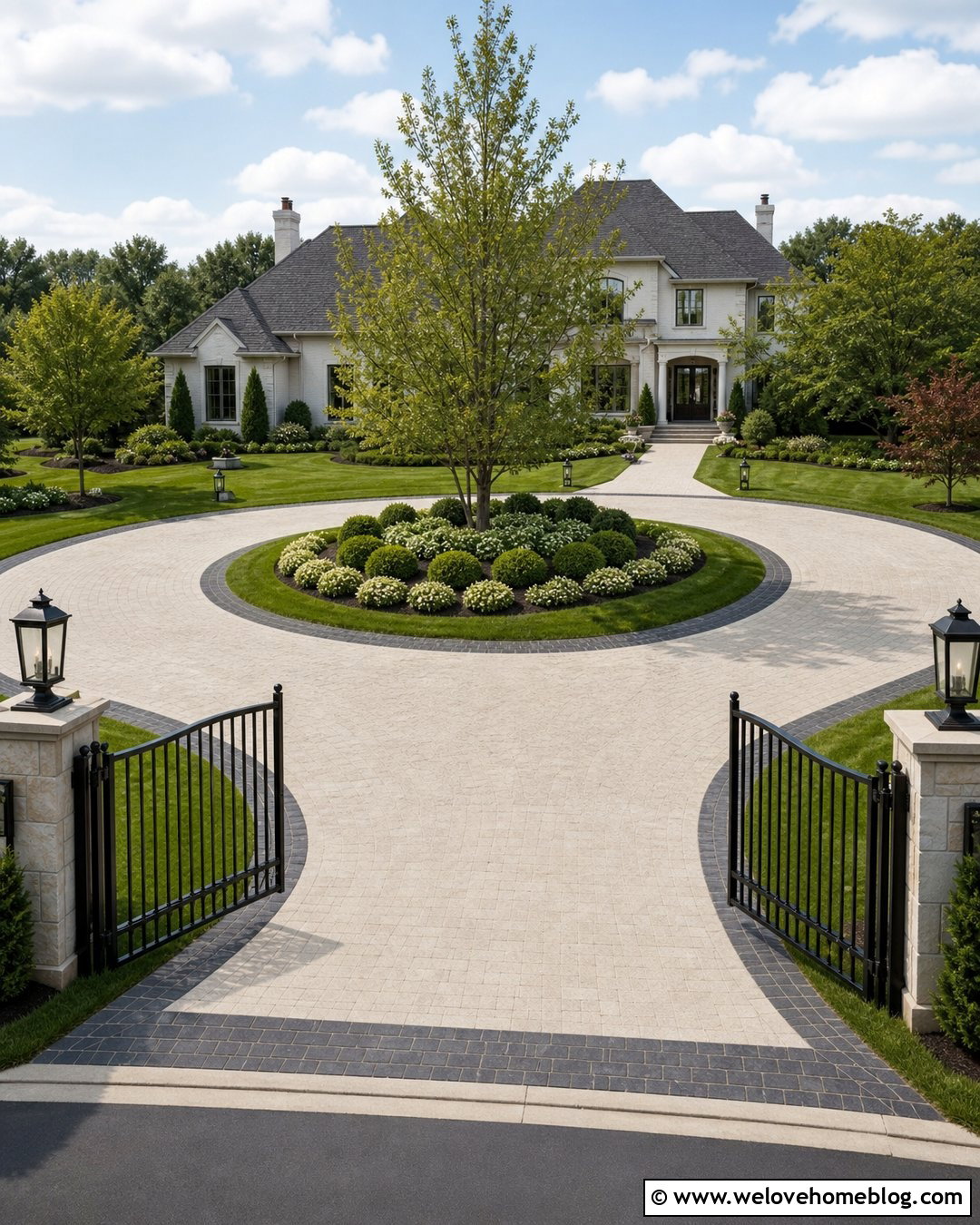
A circular driveway needs an entrance that clearly guides arriving and departing vehicles. Place matching gates at both curb openings, or install one primary gate while visually coordinating the second opening with pillars and landscaping. Black aluminum gates with simple vertical bars work well with a circular driveway made from light concrete pavers. Use a contrasting charcoal border to emphasize the flowing shape. The center island can contain a specimen tree, clipped shrubs, and low groundcover that will not block visibility. Repeat the same masonry pillars and lanterns at each opening. Address numbers should be visible before drivers choose an entrance. This arrangement creates a formal sense of arrival while preserving the practical circulation that makes a circular driveway useful.
24. Curved Gravel Driveway Gate
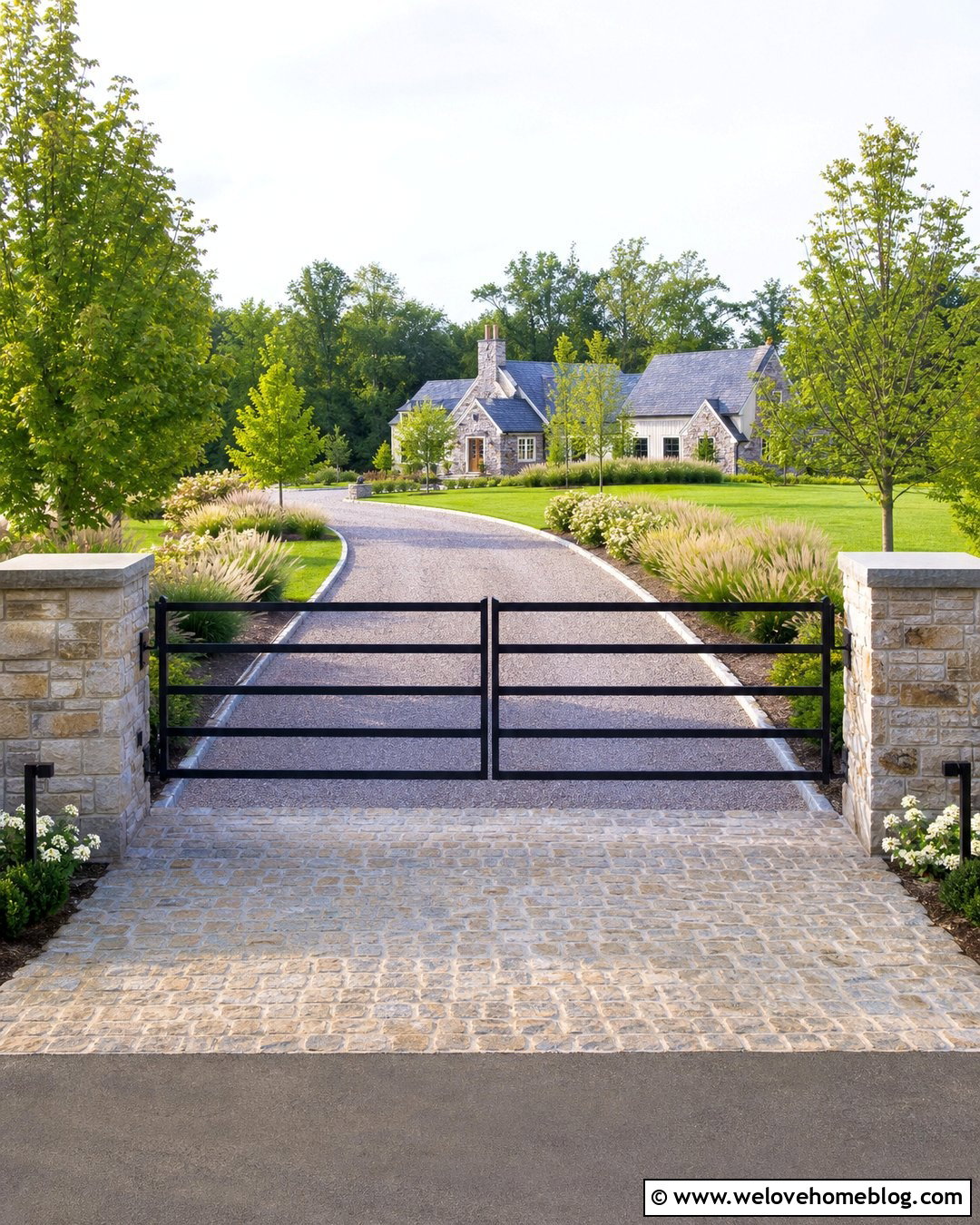
A curved gravel driveway creates an inviting approach because the house is revealed gradually beyond the entrance. Choose a simple black metal gate with horizontal rails and support it with natural stone pillars. Use warm gray crushed stone for the driveway and install steel or cobblestone edging to hold the curve clearly. A brick or cobblestone apron near the gate can reduce scattered gravel at the public road. Plant small trees, flowering shrubs, and sweeping ornamental grass beds outside the curve. Keep the inside corner more open for driver visibility. The gate’s design should remain simple because the driveway shape and landscaping already provide movement. This complete look suits country homes, traditional estates, and large suburban properties with enough space for layered planting.
25. Narrow Driveway Gate
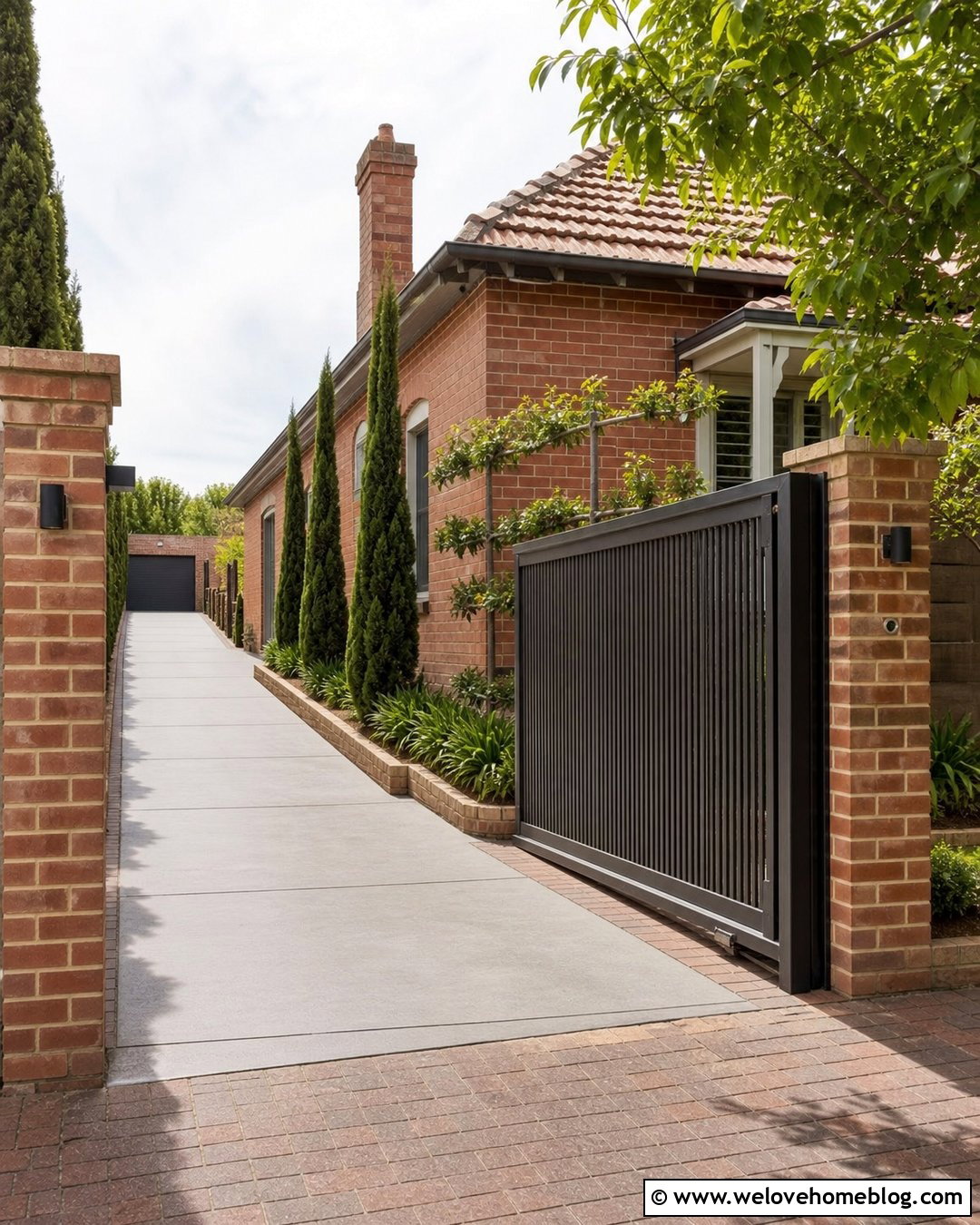
A narrow side driveway benefits from a gate that provides security without adding unnecessary bulk. Use a single sliding aluminum gate with vertical slats, mounted close to the side fence or property wall. Pair it with smooth gray poured concrete divided into neat rectangular sections. A slim brick border can introduce warmth and connect the driveway to the house facade. Use columnar evergreens, narrow raised planters, or wall-trained greenery rather than wide shrubs that reduce clearance. Place the keypad where drivers can reach it without leaving the vehicle, but keep it protected from the gate’s movement. A matching pedestrian gate near the front walkway creates visual consistency. Simple materials and a limited color palette will make the compact entrance feel wider, cleaner, and more intentional.
26. Long Driveway Gate Entrance
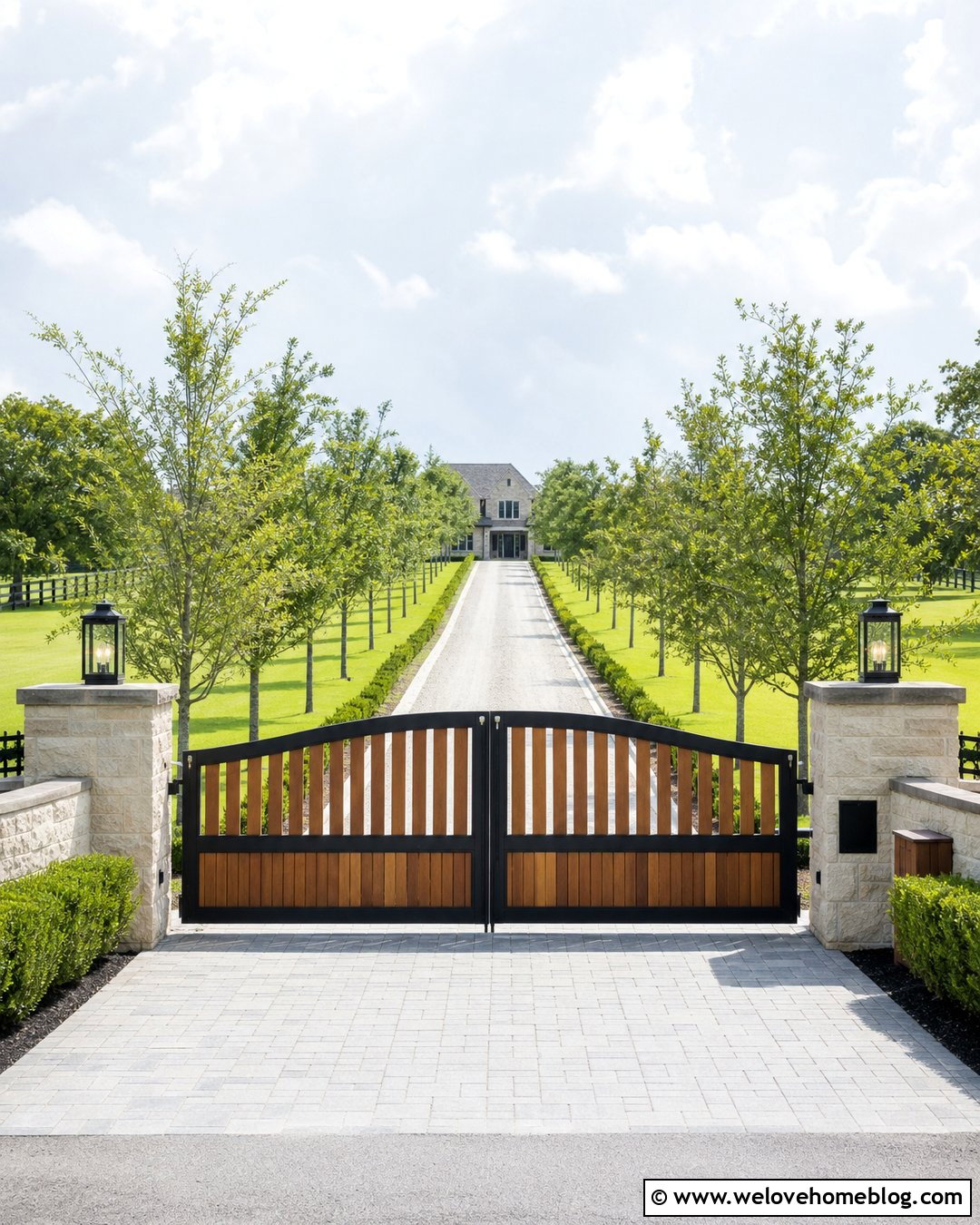
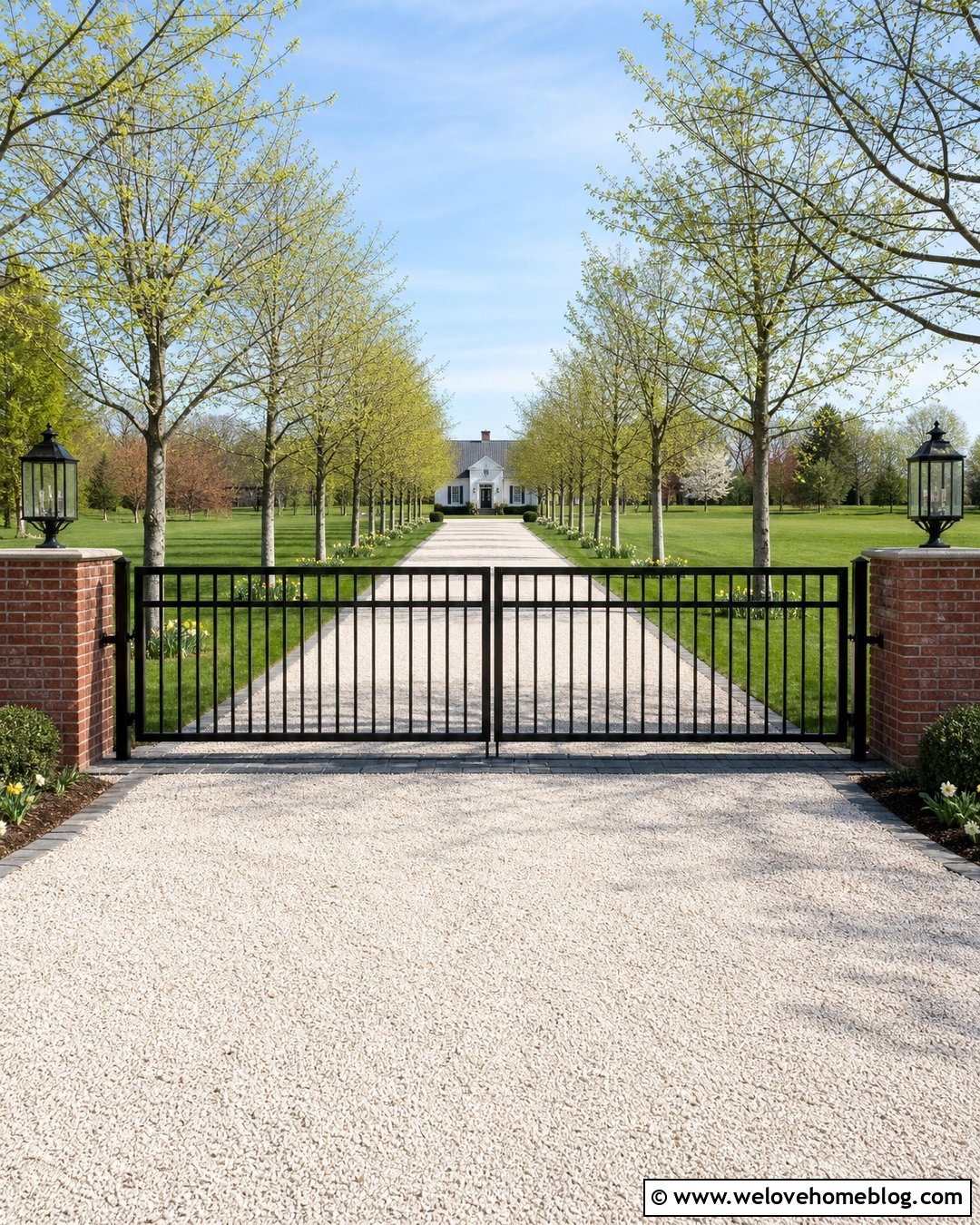
A long driveway needs a gate with enough visual presence to mark the property from the road. Choose a broad double gate made from black steel and warm wood, then anchor it with substantial stone pillars. A pale gravel driveway can extend toward the distant house, bordered by regularly spaced trees or low hedges. Add a generous entrance apron in concrete pavers to create a stable-looking transition at the curb. The first section inside the gate should provide an open, uncluttered view down the drive. Use pillar lanterns, a clear address marker, and a discreet package area near the entrance. Repeating the gate’s wood or stone at the house helps connect the distant building to the gateway and makes the entire approach feel deliberately planned.
27. Split Driveway Entrance Gate
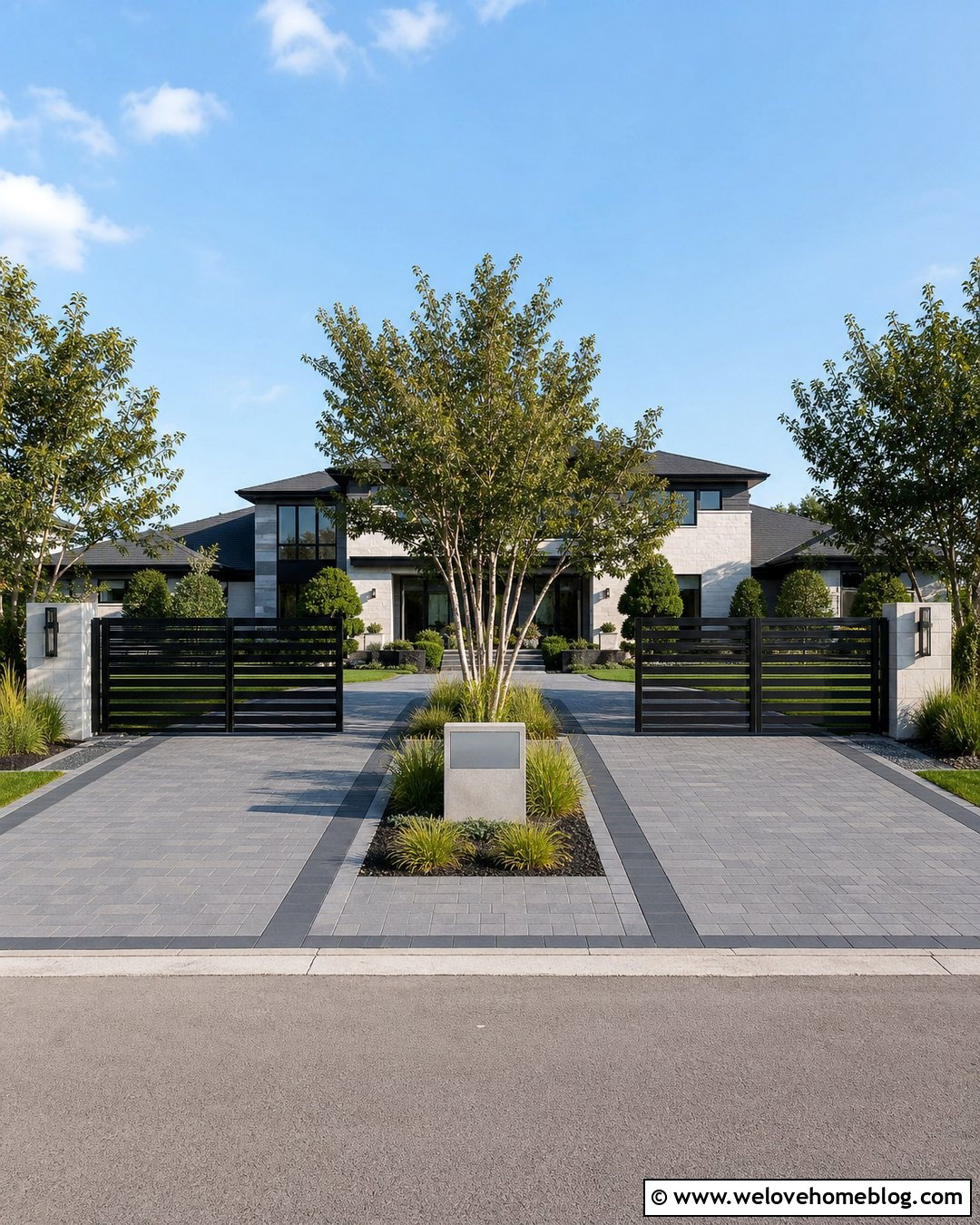
A split driveway entrance can separate guest access, service traffic, or entry and exit lanes. Use two coordinating black aluminum gates divided by a central masonry island. Surface the lanes with medium gray concrete pavers and mark their edges with a darker paver ribbon. The center island can hold a low address monument, ornamental grasses, and a small multi-stem tree, provided the planting does not interfere with visibility. Repeat matching shrubs and lighting on the outer sides for balance. Directional organization should come from the layout rather than oversized signs. Keep both gate designs consistent, even if one opening is wider. A split arrangement works best on a spacious property where vehicles have sufficient room to approach, wait, and turn without crowding the public road.
28. Driveway Gate With Pedestrian Entrance
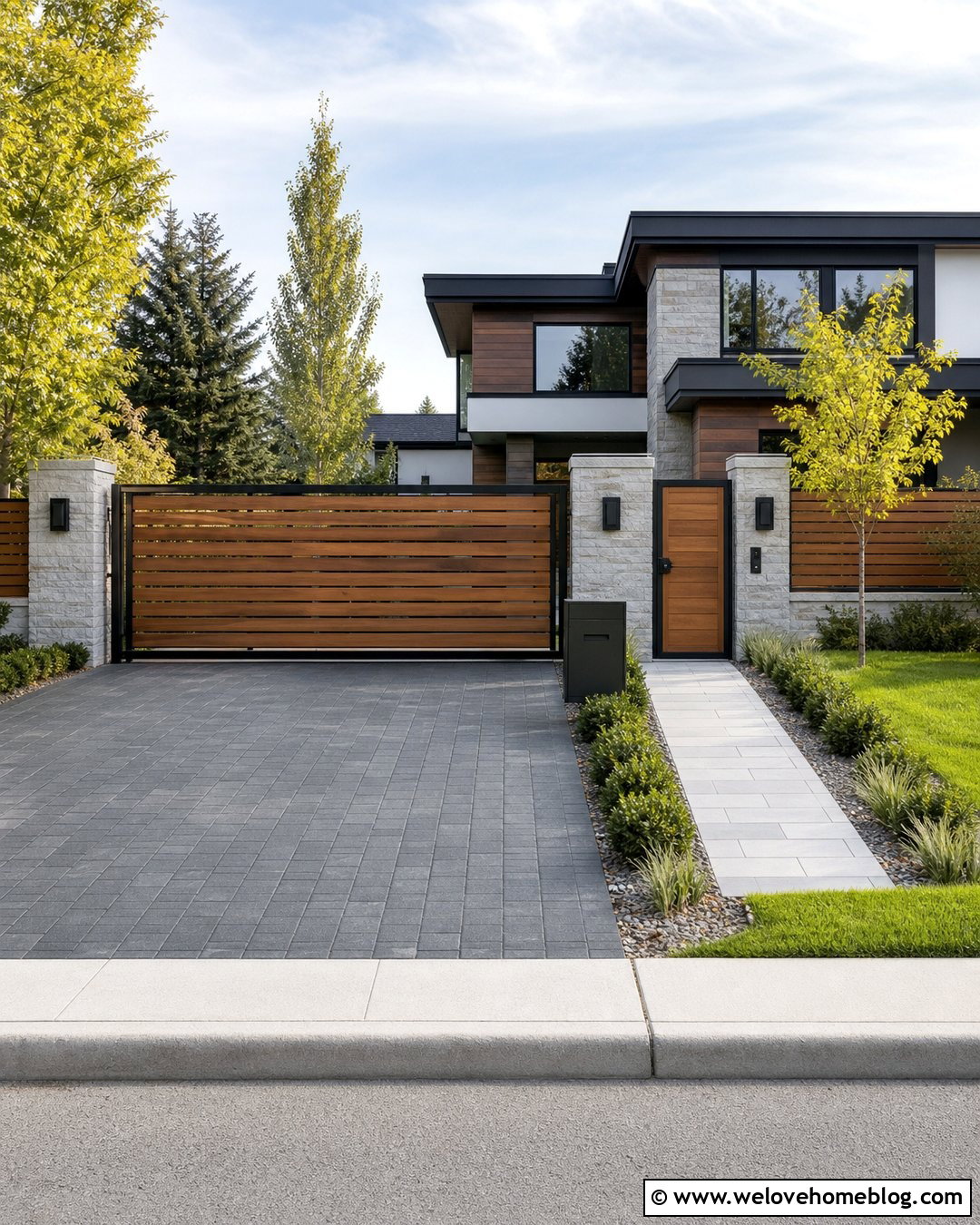
A separate pedestrian gate makes a gated entrance more comfortable for family members, visitors, and service access. Pair a wide horizontal cedar driveway gate with a narrower matching walk gate set into the adjacent fence. Use a straight driveway of charcoal concrete pavers and create a separate light-colored paver walkway leading toward the front door. Stone or stucco pillars can visually divide the two openings. Add a recessed intercom, house number, and package box near the pedestrian entrance so these features remain easy to reach. Low hedges and ornamental grasses should frame the walkway without concealing visitors. Repeating the same slat spacing, hardware, and finish across both gates keeps the design unified while clearly separating vehicle and foot traffic.
29. Driveway Gate With Address Sign
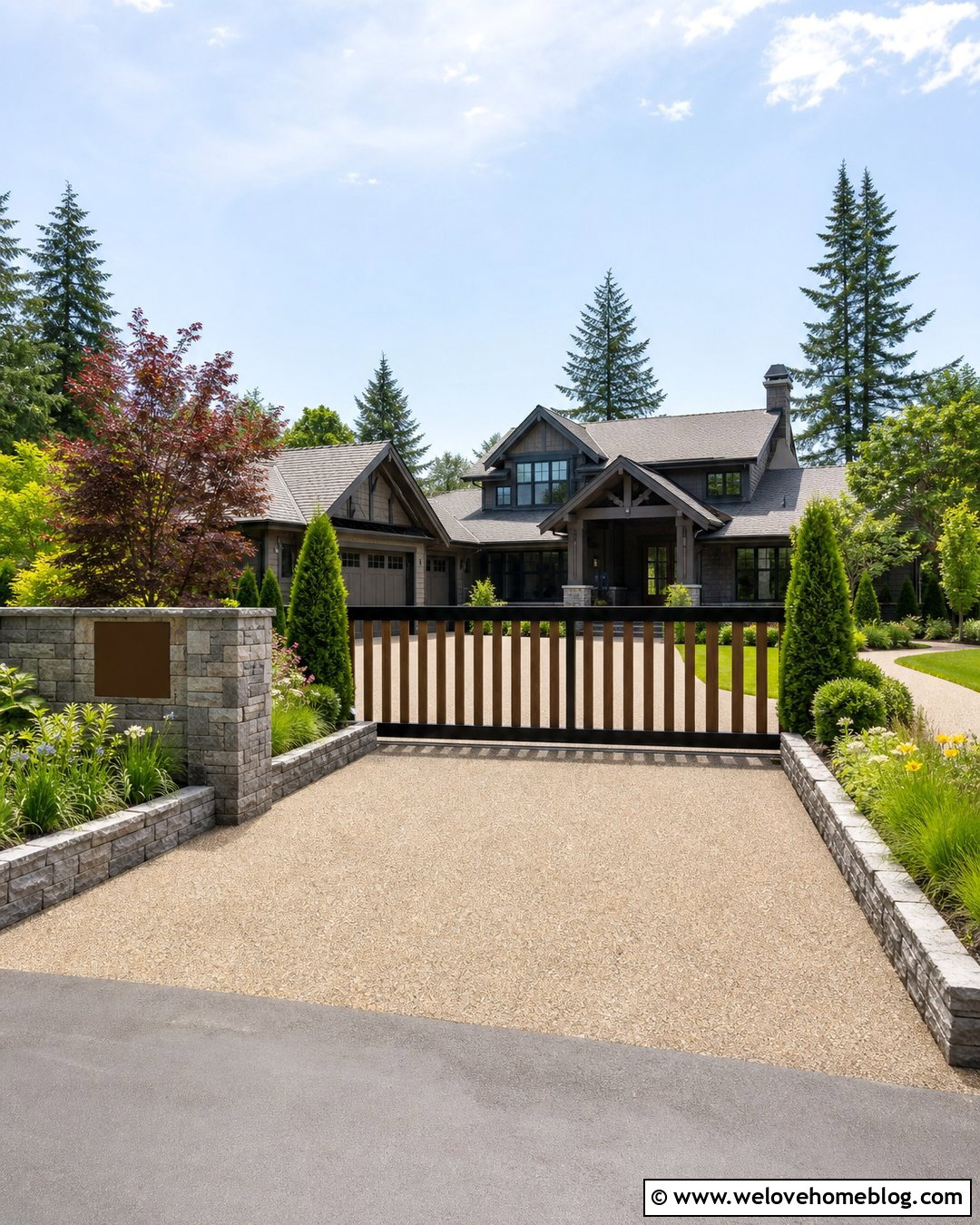
An integrated address sign can make a gated entrance easier to identify while reducing visual clutter. Use a black steel sliding gate with vertical wood inserts and position a large, simple number panel on the stationary masonry wall beside it. A light resin-bound gravel driveway will contrast clearly with the dark gate. Repeat the wall material in low borders around nearby planting beds. Upright evergreens, flowering grasses, and a small ornamental tree can frame the sign without covering it as they mature. Keep the lettering style consistent with the home’s architecture and mailbox. The address should face approaching traffic rather than sitting flat where it is difficult to notice. This coordinated entrance feels polished because identification, access controls, landscaping, and materials are planned together.
30. Driveway Gate With Stone Walls
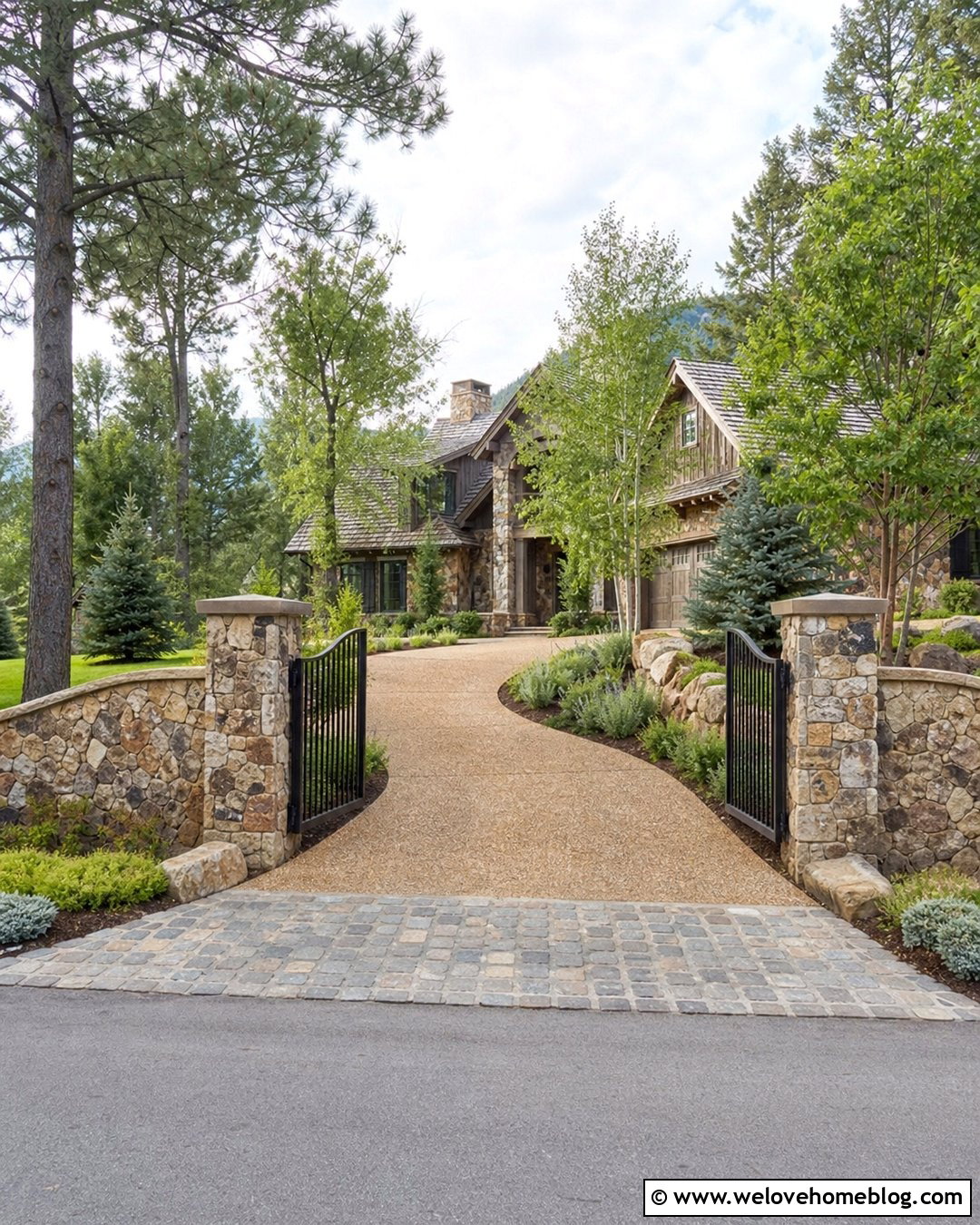
Low stone walls can extend a gate into the surrounding landscape and make the entire property boundary feel established. Choose a simple dark iron gate and connect it to gently curving walls made from irregular fieldstone. Surface the driveway with warm exposed aggregate and define the entrance apron with cobblestone. Plant low evergreen shrubs, lavender, and creeping groundcover along the walls so the masonry remains visible. Taller trees should sit farther back, where they can frame the entrance without narrowing it. Cap the pillars and walls with complementary stone for a finished edge. This combination suits traditional, mountain, and country homes. The gate can remain visually open because the stonework already provides weight, structure, and a strong sense of permanence.
31. Driveway Gate With Brick Walls
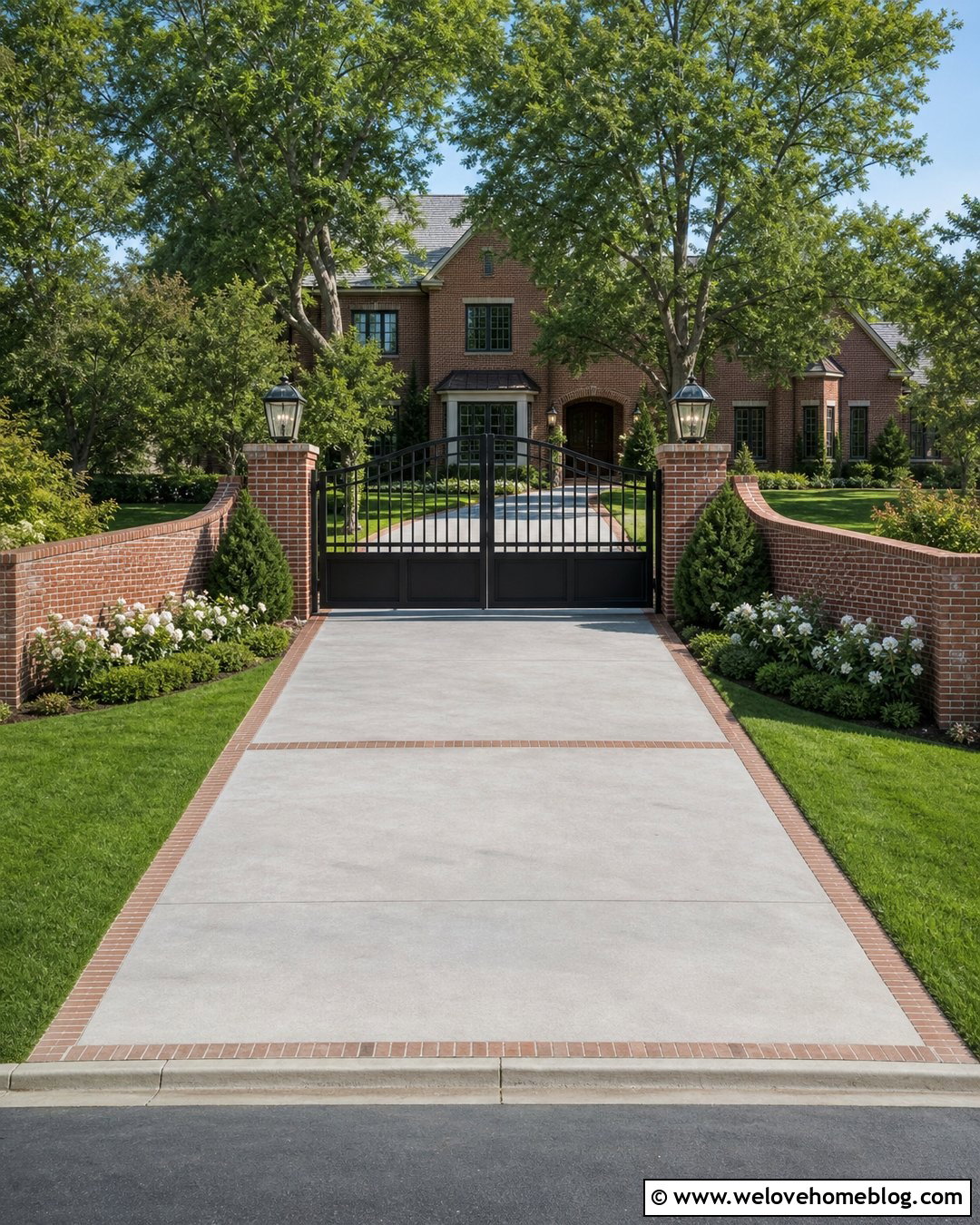
A driveway gate set within brick walls creates privacy while maintaining a strong relationship with a brick home. Use a black steel gate with a partially solid lower section and open vertical bars above. Continue the entrance with matching brick walls that step down gradually toward the sidewalk. A gray concrete driveway with brick edge bands keeps the surface practical while visually tying it to the boundary. Add formal evergreen shrubs, white roses, and small ornamental trees in the beds behind the walls. Traditional lanterns can top the gate columns, while discreet ground-level lighting highlights the masonry. Keep the brick and mortar colors consistent across the entrance. The stepped wall design prevents the boundary from looking excessively tall or severe when viewed from the street.
32. Driveway Gate With Modern Lighting
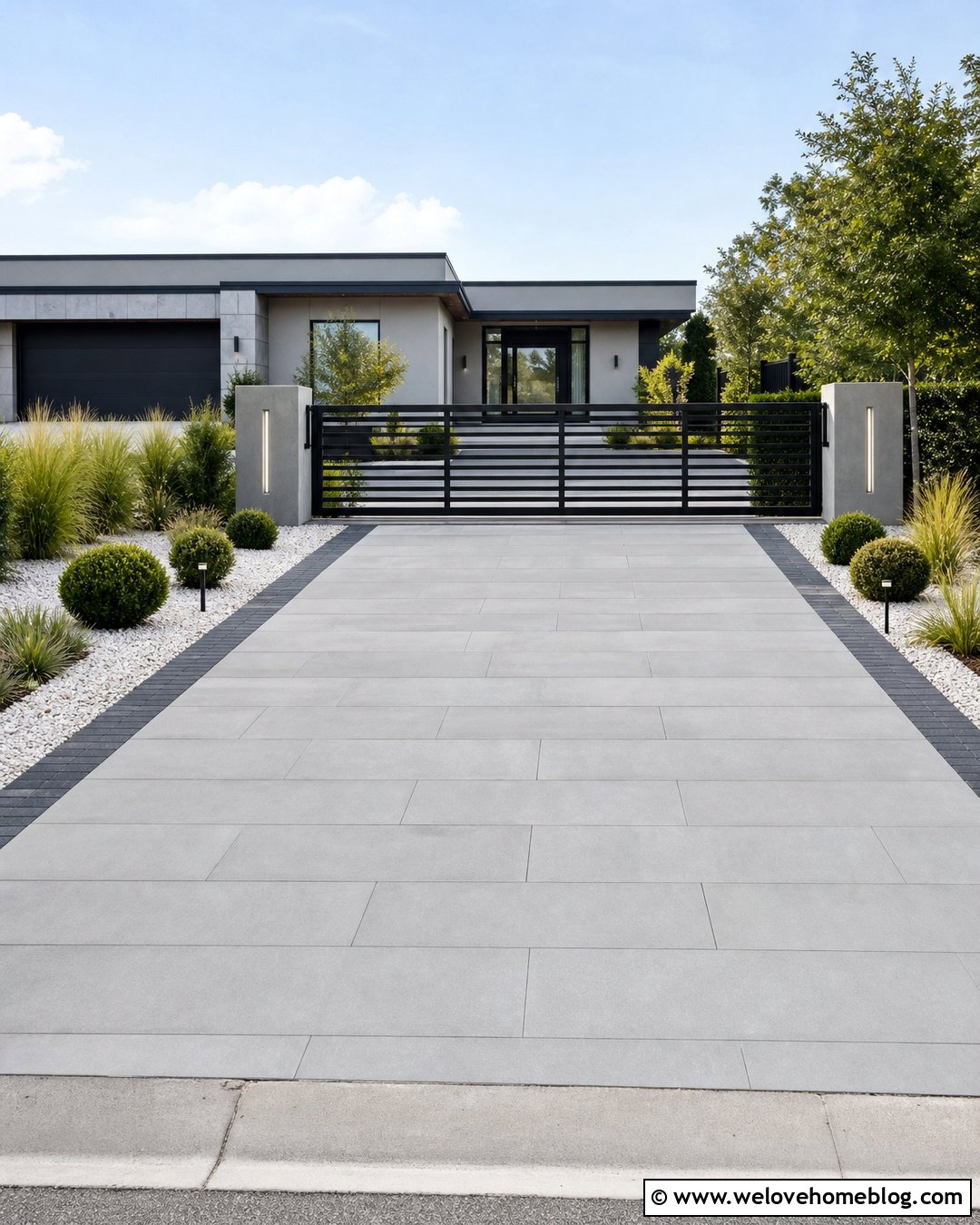
Lighting can be integrated into a driveway entrance without turning the gate into a decorative display. Choose a matte black aluminum sliding gate between smooth concrete pillars, then recess narrow linear lights into the pillar faces. Use large-format gray concrete pavers for the straight driveway and continue small path lights along the approach. During daylight, the fixtures should appear clean and unobtrusive. Ornamental grasses, clipped shrubs, and white gravel beds can reinforce the modern geometry. Keep lights away from moving hardware and position them to reveal driveway edges rather than shine toward drivers or neighboring homes. A flat-roof contemporary house provides a fitting background. The final design combines visibility, access, landscaping, and architecture in one streamlined entrance.
33. Driveway Gate With Pergola Entrance
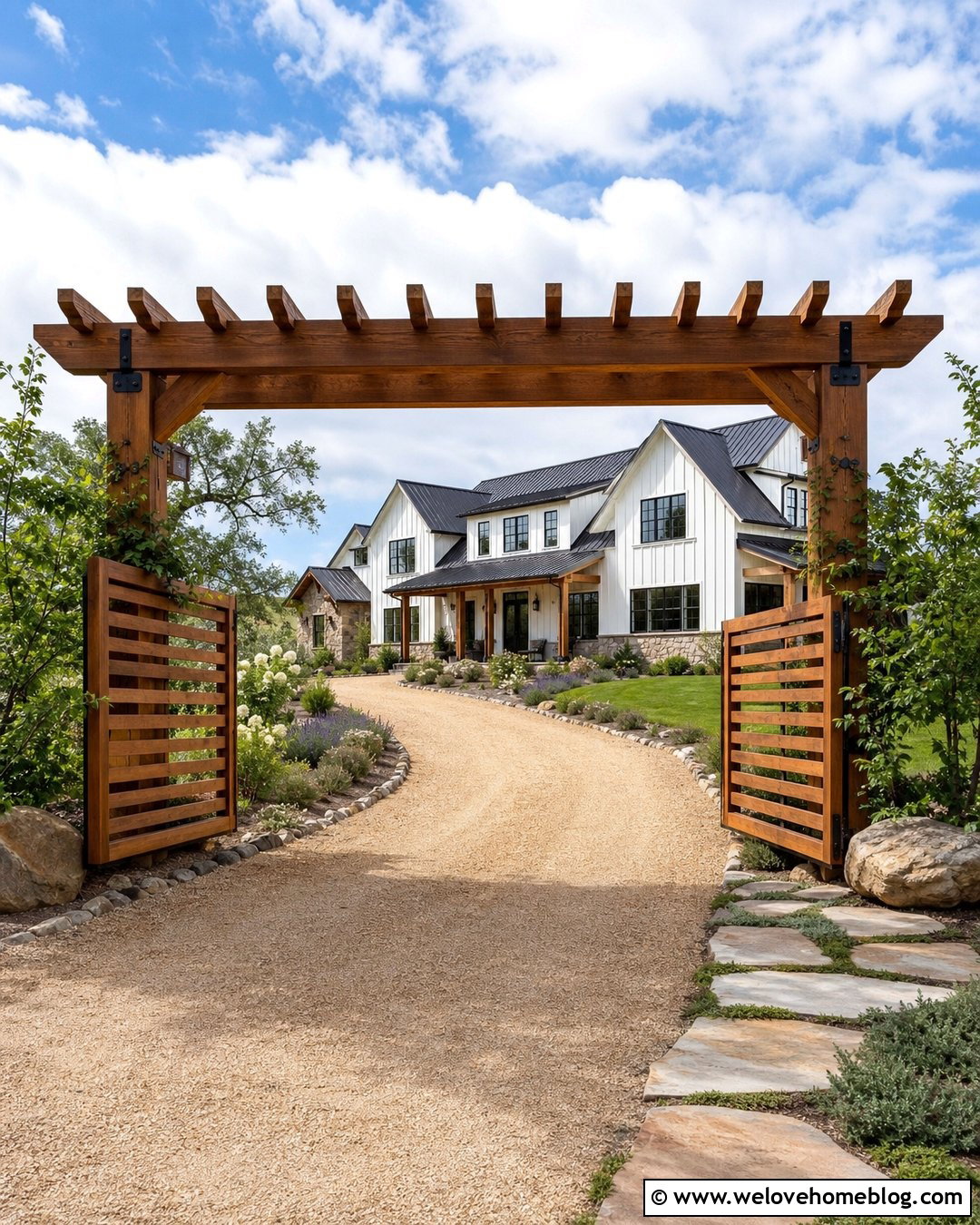
A pergola structure above a driveway gate can create an architectural entrance for a cottage, farmhouse, or Craftsman property. Use sturdy stained timber posts and beams with a matching open-slat wood gate below. Pair the structure with a curved tan gravel driveway edged in natural stone. Climbing plants can soften the side posts, but keep growth controlled and away from hinges, sensors, and overhead clearance. Add low flowering shrubs, native grasses, and a separate flagstone path beside the vehicle opening. Dark metal brackets and gate hardware provide contrast against the warm wood. The overhead structure should be broad and simple, with proportions that suit the driveway. Repeating the same timber on the porch or garage makes the pergola entrance feel connected to the house.
34. Affordable Wood Driveway Gate
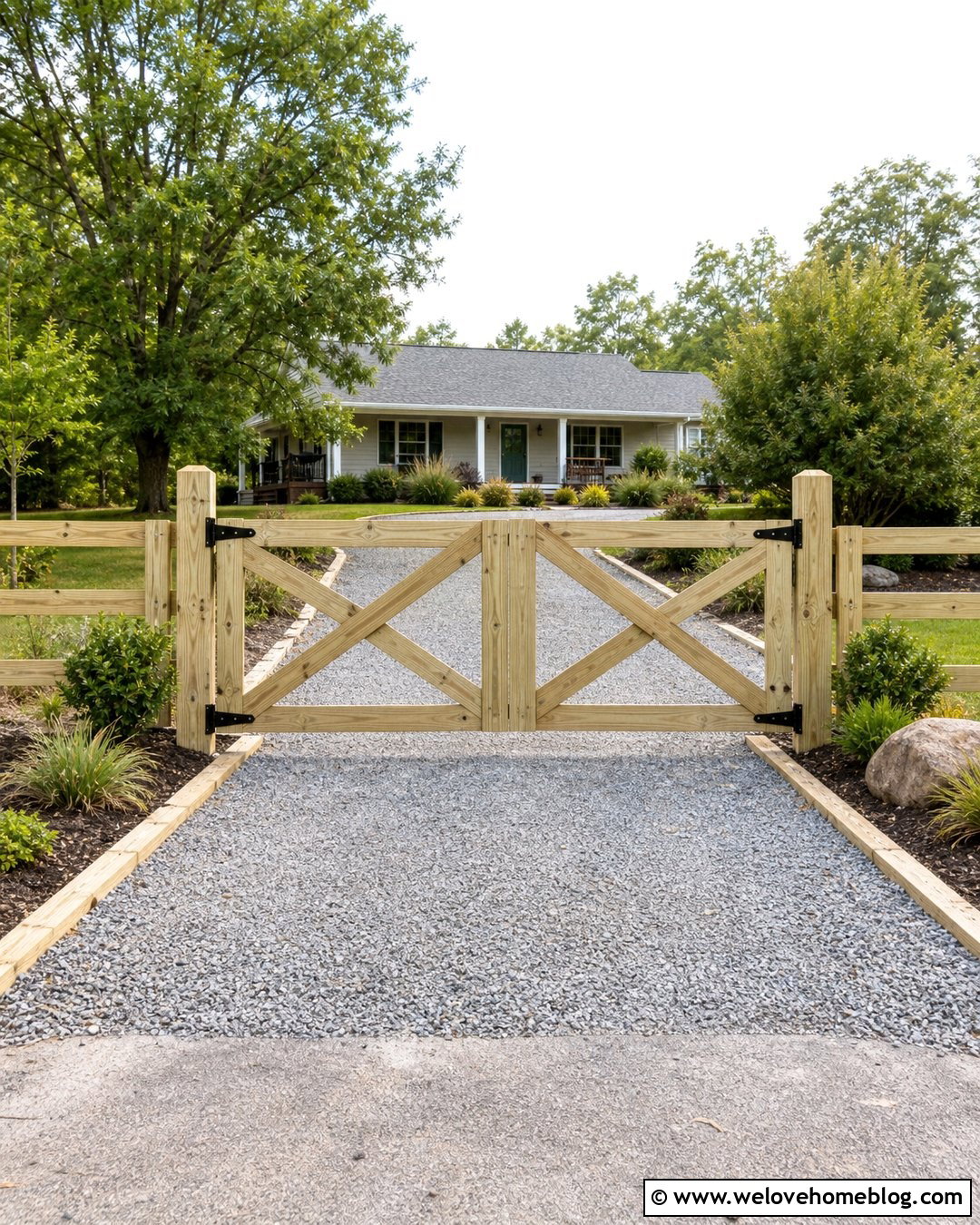
An affordable entrance can still appear complete when the materials are simple and carefully coordinated. Build a basic double gate from pressure-treated wood with diagonal braces, then stain it a medium brown for a consistent finish. Set the gate between substantial timber posts rather than adding costly masonry pillars. A compacted gravel driveway with treated timber edging keeps the overall project practical. Plant low-maintenance native shrubs, ornamental grasses, and groundcover in small mulched beds beside the posts. Black hinges, a simple latch, and a clearly mounted address plaque provide useful detail. Keep both gate leaves level and repeat the same wood in a short boundary fence. Good proportions and neat installation matter more than elaborate decoration when creating a budget-conscious entrance.
35. Mixed Material Estate Driveway Gate
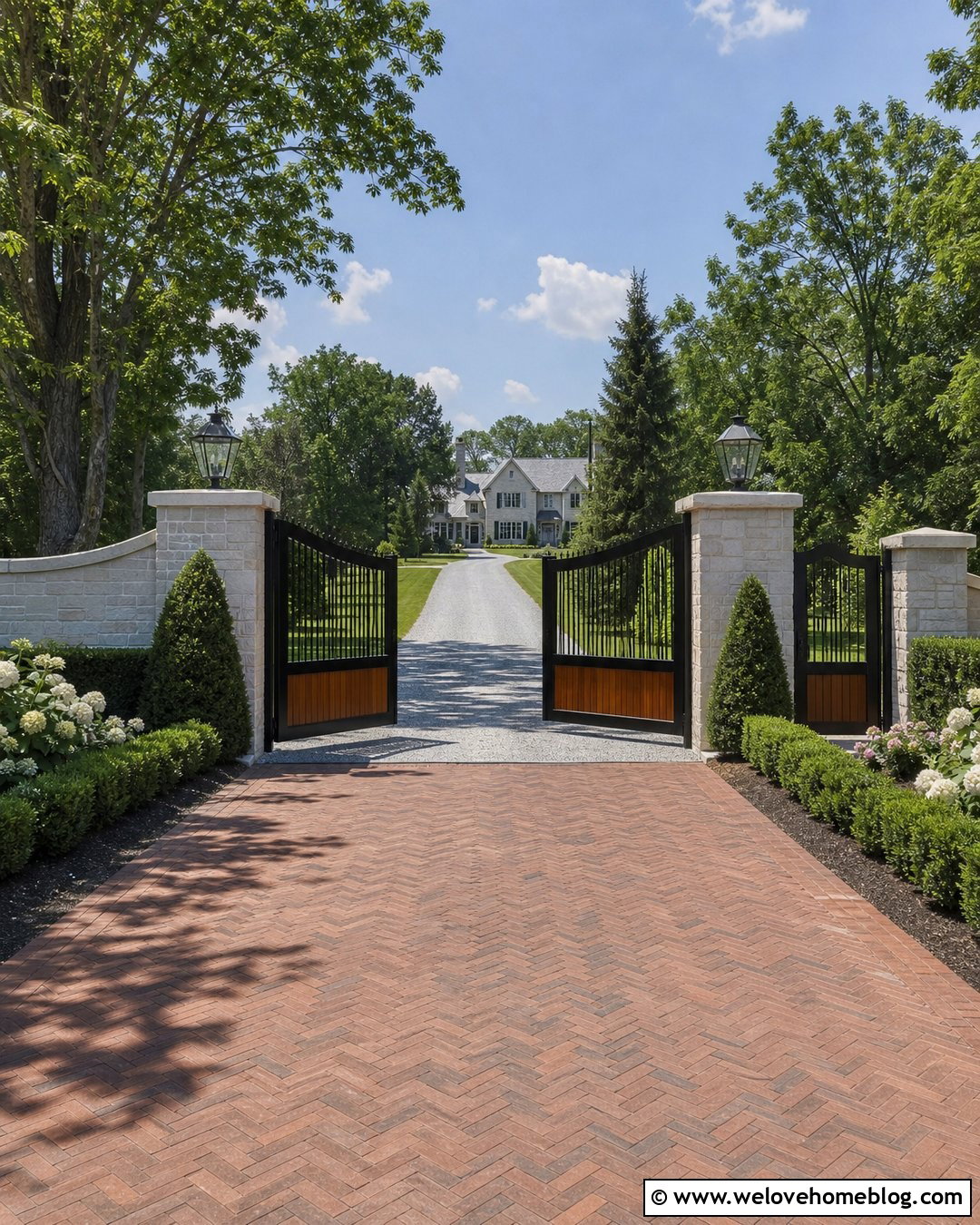
A mixed-material gate can bring together the architecture, driveway, and landscape of a larger property. Combine a black steel frame, warm hardwood panels, and narrow open metal sections in a balanced double-swing design. Support it with limestone pillars and continue the stone into low curved walls. Use clay brick pavers in herringbone for the entrance apron, transitioning to a long light-gray gravel driveway beyond. Layer the landscaping with clipped evergreens, flowering shrubs, broad lawn areas, and mature trees. Lanterns, an integrated intercom, and a separate pedestrian gate complete the arrangement. Limit the design to a few repeated materials so it remains cohesive. The goal is a substantial entrance where every finish reappears elsewhere in the property rather than competing for attention.
Conclusion:
The most successful gate is not simply an attractive panel placed across a driveway. It is part of a complete entrance that includes the driveway material, opening system, pillars, boundaries, lighting, address details, and surrounding landscape. These 35 entrance gates driveway ideas show how different combinations can suit contemporary homes, traditional properties, rural settings, and compact suburban lots. Start by considering the available space, slope, sightlines, access needs, and architectural character of your house. Then select a gate material and driveway surface that complement each other. Thoughtful repetition of colors and materials will make even a simple entrance look coordinated, welcoming, and intentionally designed.

Related posts:
Leave a Reply