
A gravel driveway can feel relaxed and natural, but a crisp concrete edge gives it the structure needed for polished curb appeal. These **gravel driveway with concrete border ideas** combine practical stone surfaces with clean, durable boundaries that visually connect the driveway to the house and landscape. Concrete borders can be narrow and subtle, wide enough to serve as walkways, curved around planting beds, or coordinated with an entrance apron. Gravel color also matters. Pale limestone feels traditional, dark granite creates modern contrast, and warm pea gravel complements rustic homes. A well-planned border helps contain loose aggregate and maintains a more defined edge beside lawns and gardens. () Explore these complete gravel driveway with concrete border ideas to find a layout that fits your property.

1. Pea Gravel Driveway With Smooth Concrete Border
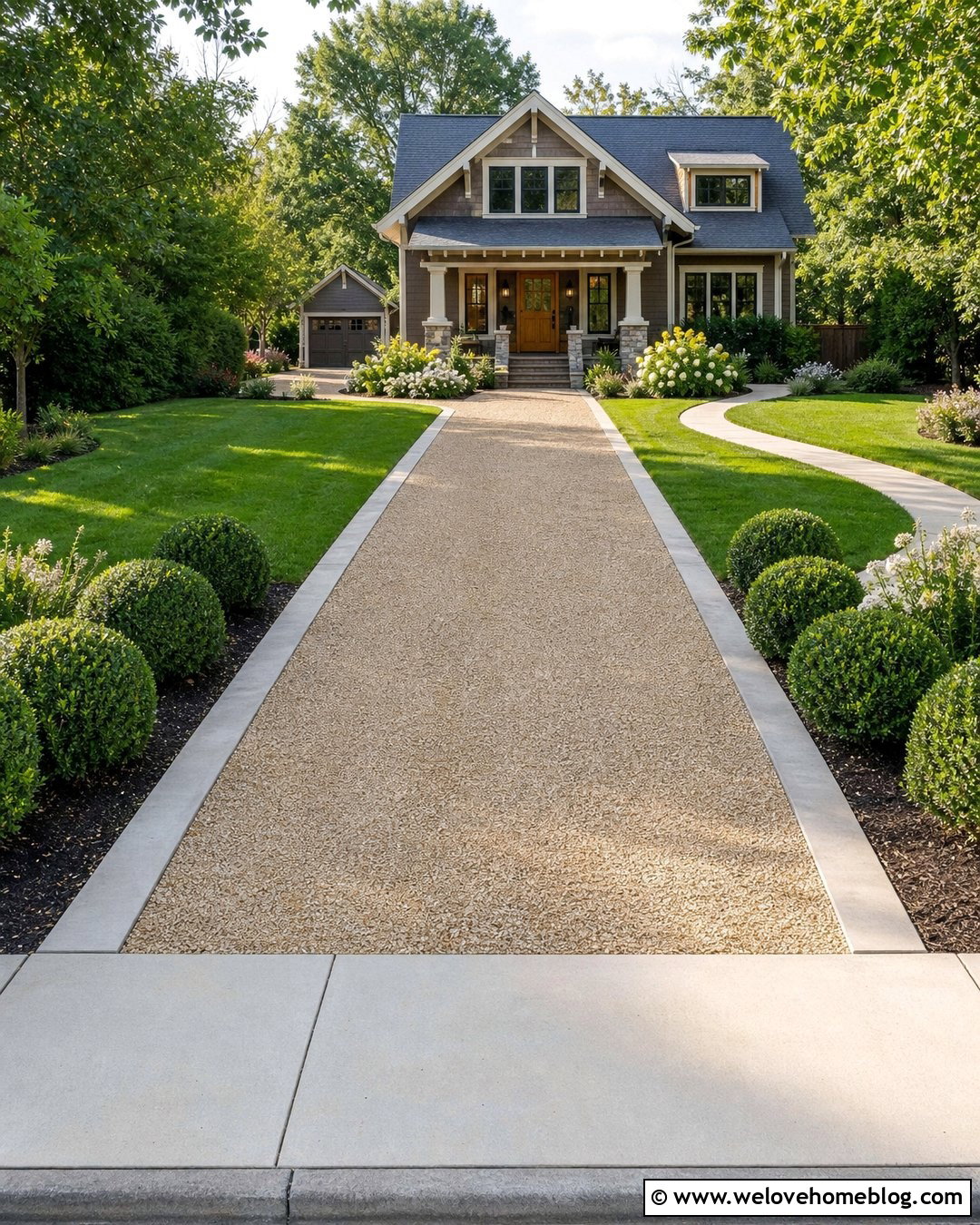
Warm pea gravel creates a welcoming surface that looks especially attractive beside a smooth, light-gray concrete border. Use a straight driveway layout for a simple suburban home, keeping the concrete approximately level with the finished gravel. This creates a clean transition without making the edge feel heavy. Continue the border across the entrance as a coordinated concrete apron for a more finished curb view. On both sides, add green lawn, rounded boxwood shrubs, and small flowering beds that soften the hard materials. A matching concrete walkway can branch toward the front door. The combination works well with Craftsman, ranch, and cottage homes because the rounded gravel brings natural texture while the smooth border adds order and definition.
2. Gray Gravel Driveway With Broom-Finished Concrete Border
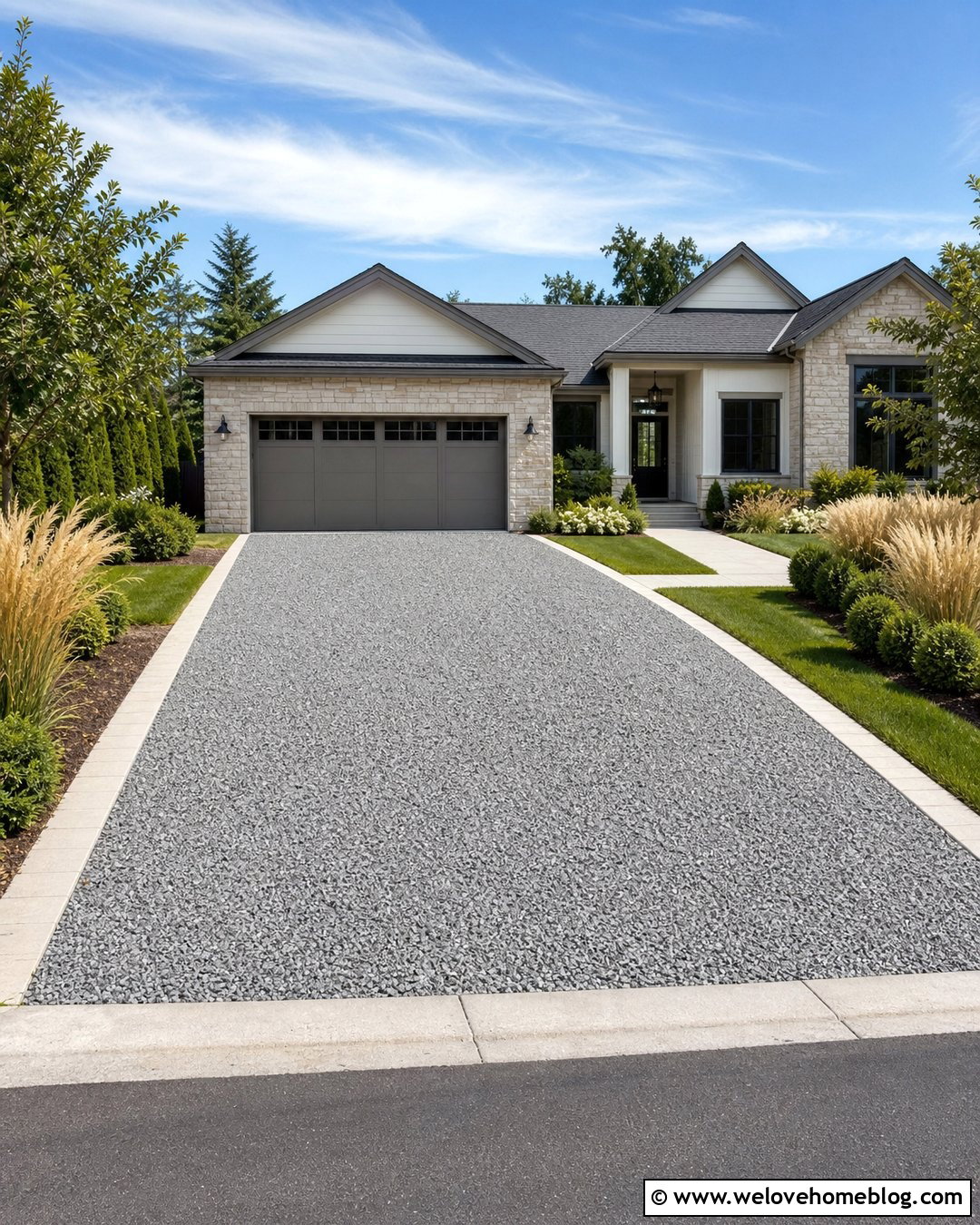
A medium-gray crushed stone driveway paired with broom-finished concrete offers a practical, understated look. The subtle texture of the concrete reduces the visual contrast between the two materials while still giving the driveway a clearly defined outline. Choose a straight or gently tapered layout leading toward a two-car garage. A narrow grass strip can separate one concrete edge from a parallel front walkway, creating an organized entrance without filling the yard with pavement. Frame the opposite side with low evergreen shrubs and layered ornamental grasses. This complete design suits contemporary ranch and transitional homes with gray siding, white trim, or stone accents. Repeat the concrete finish on the walkway and entrance apron so every hardscape element feels intentional and connected.
3. White Gravel Driveway With Charcoal Concrete Border
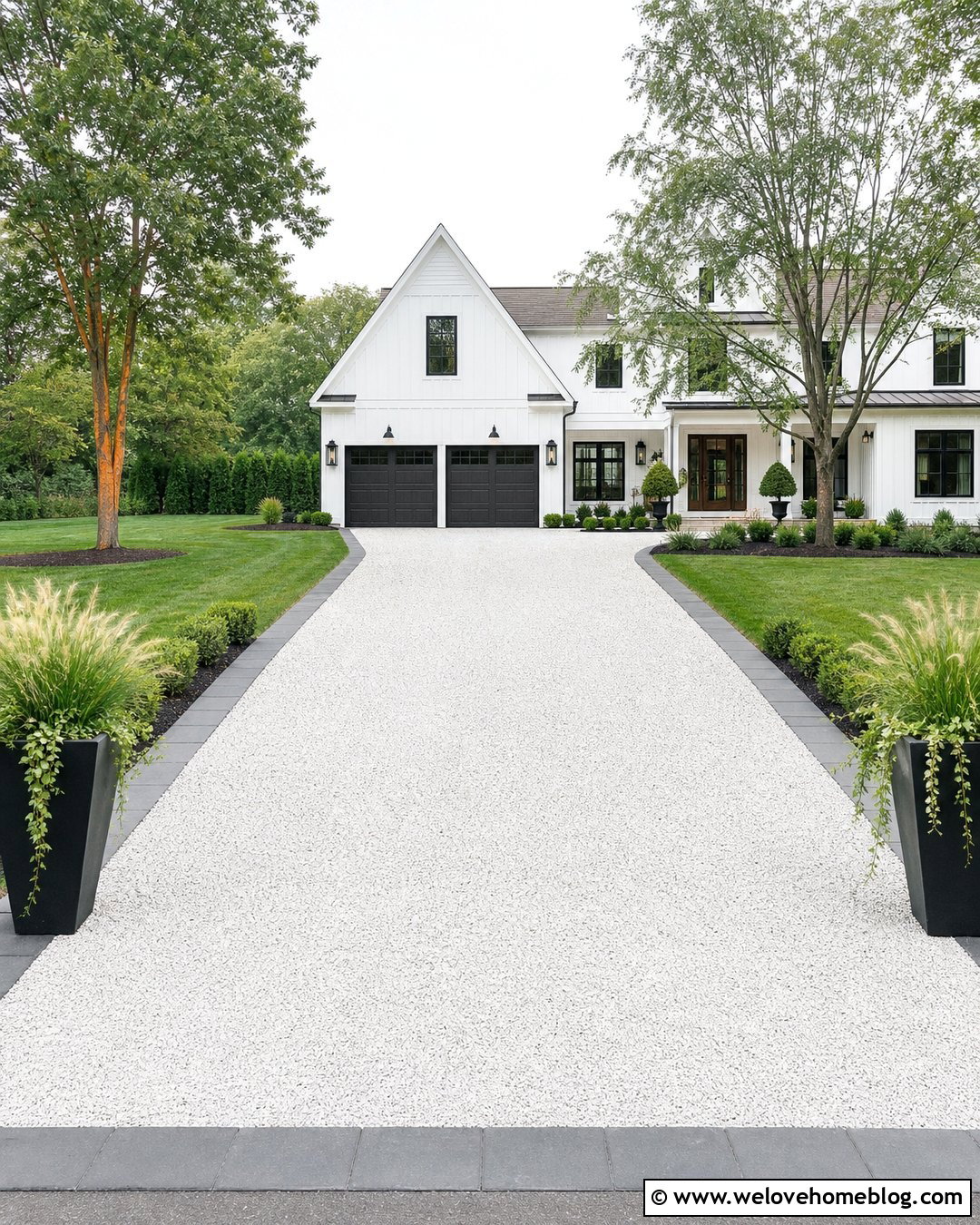
Bright white gravel becomes much easier to define when surrounded by a charcoal-colored concrete border. The strong contrast highlights the driveway shape and gives an ordinary front yard a sharper, more modern appearance. A straight driveway with a slightly wider entrance works particularly well because the dark edge creates bold lines from the street to the garage. Use integral-colored concrete or a suitable exterior concrete stain rather than relying on surface paint. Black planters, dark window frames, and charcoal stepping stones can repeat the border color around the property. Keep the landscaping restrained with clipped shrubs, pale ornamental grasses, and a clean green lawn. This combination looks most cohesive beside a white modern farmhouse or a minimalist home with monochrome exterior finishes.
4. Black Gravel Driveway With Light Concrete Border
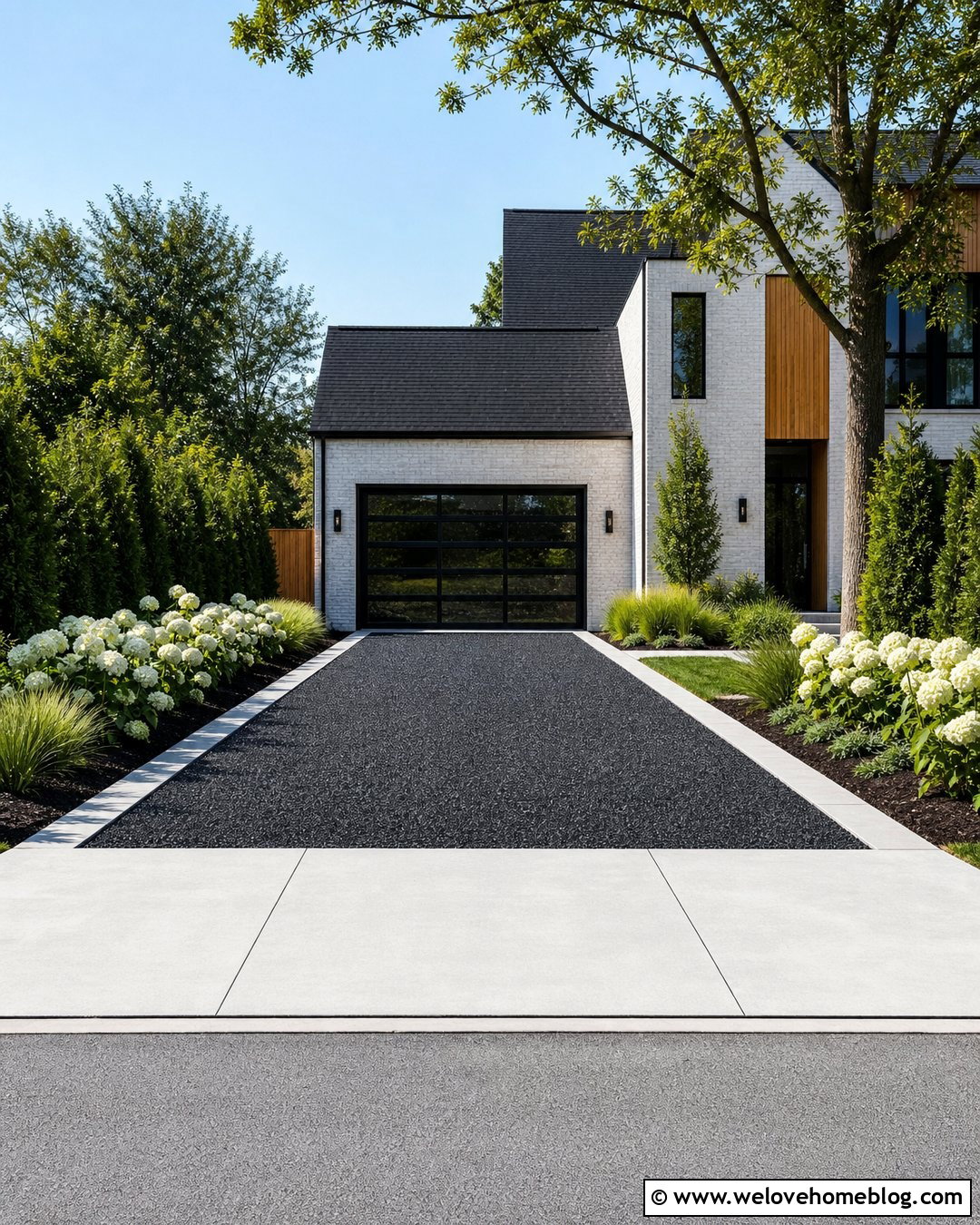
Deep black gravel framed by pale concrete delivers dramatic contrast without requiring a complicated layout. Use angular crushed basalt or similarly dark driveway stone for a firmer-looking, textured surface. A wide, light-gray border makes the driveway feel substantial and provides a visible separation from surrounding lawns. Near the street, extend the concrete into a full-width apron that creates a smooth transition at the entrance. White hydrangeas, soft green grasses, and simple evergreen hedges prevent the dark gravel from overwhelming the yard. This complete driveway look complements modern homes, light brick facades, and contemporary exteriors with natural wood accents. Regularly raking the dark surface and keeping loose stones away from the concrete will preserve the graphic, high-contrast appearance that makes this design stand out.
5. Curved Gravel Driveway With Continuous Concrete Border
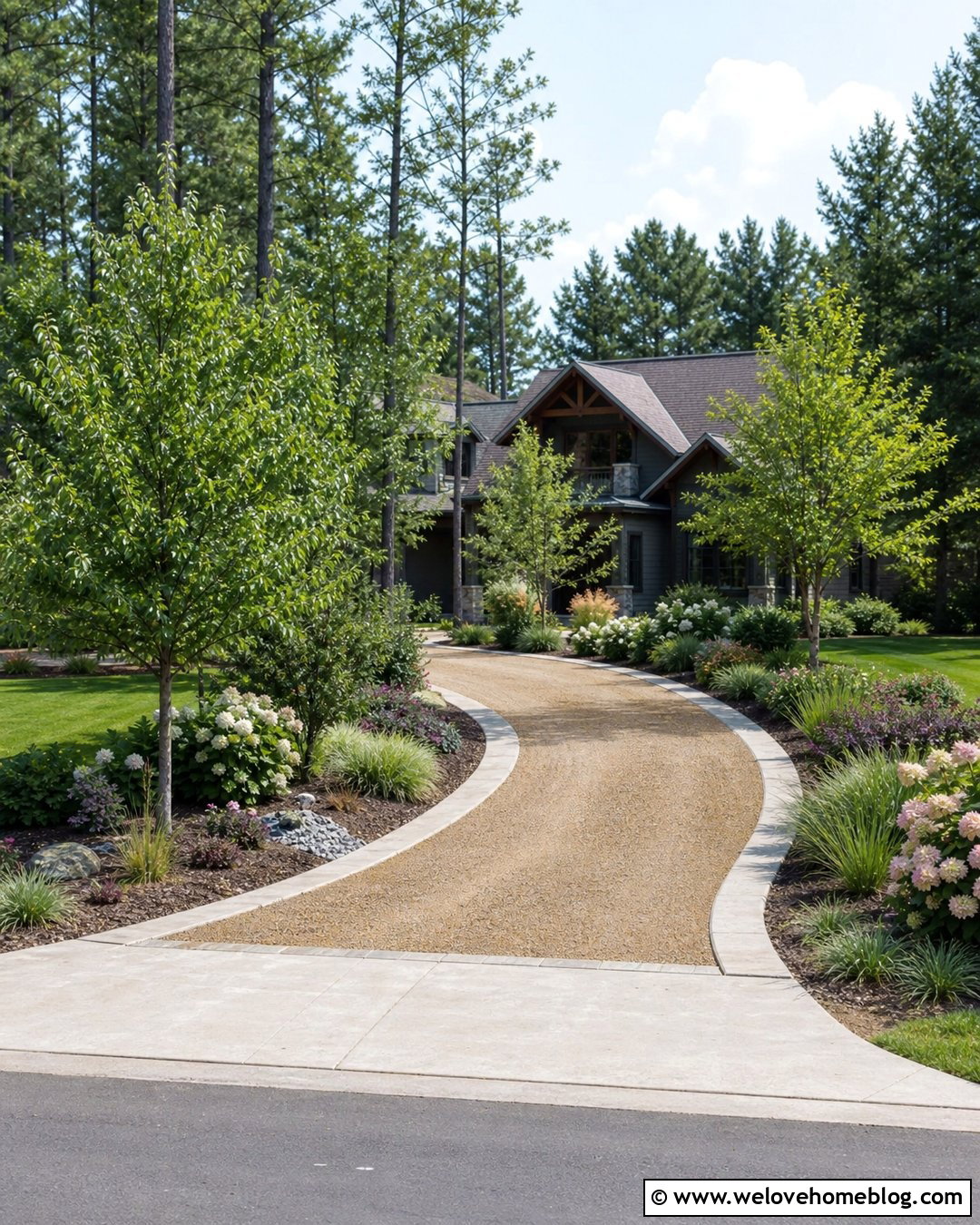
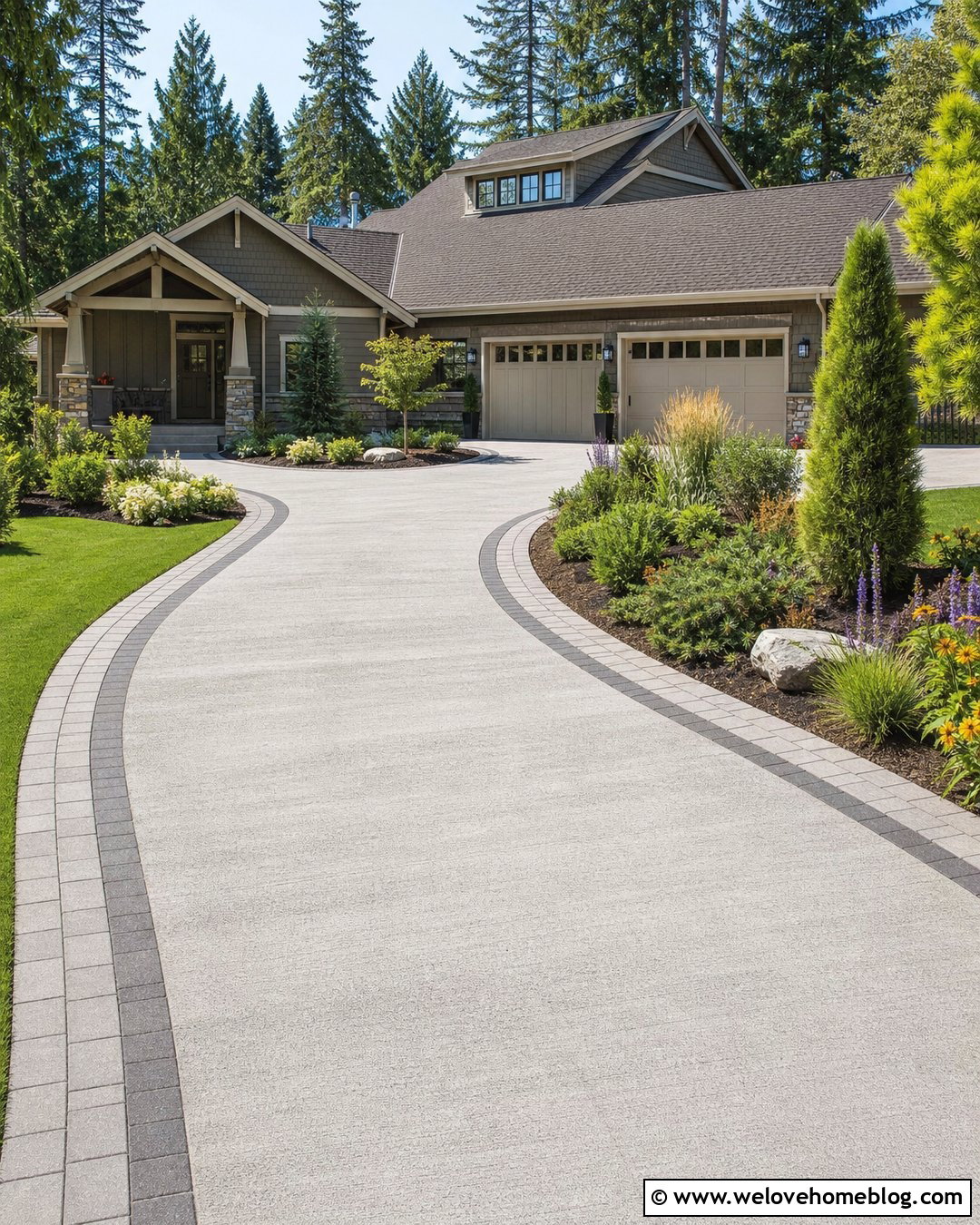
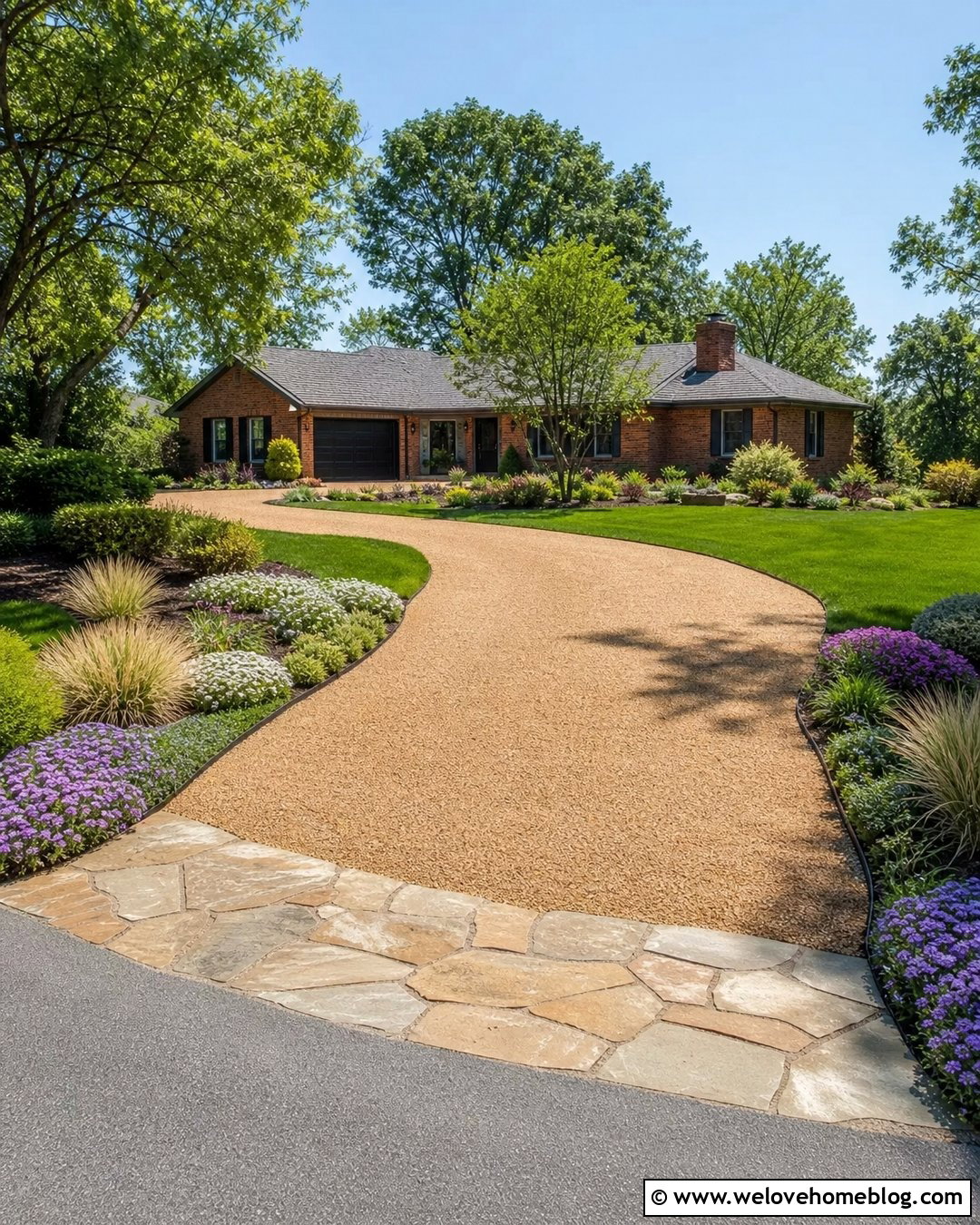
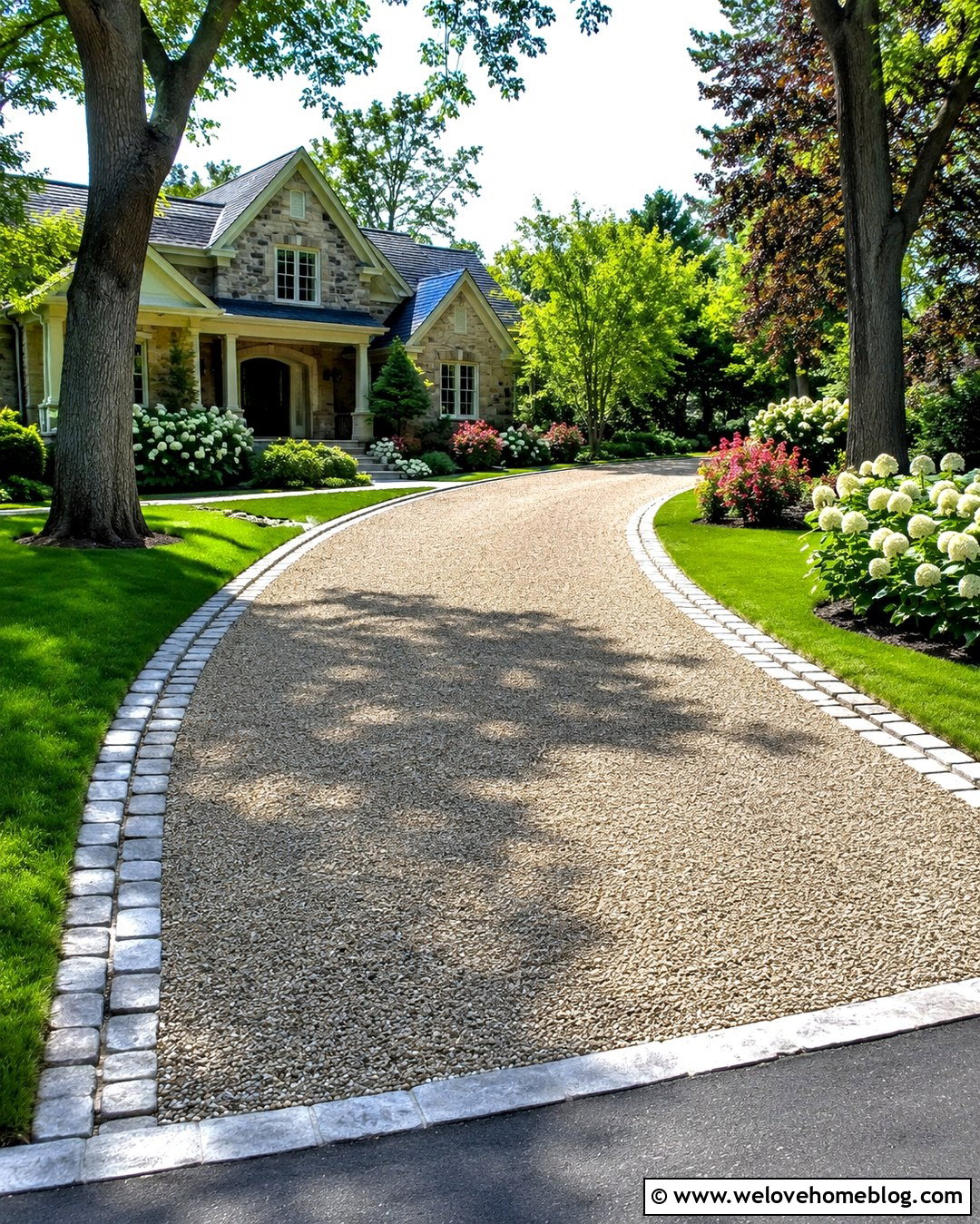
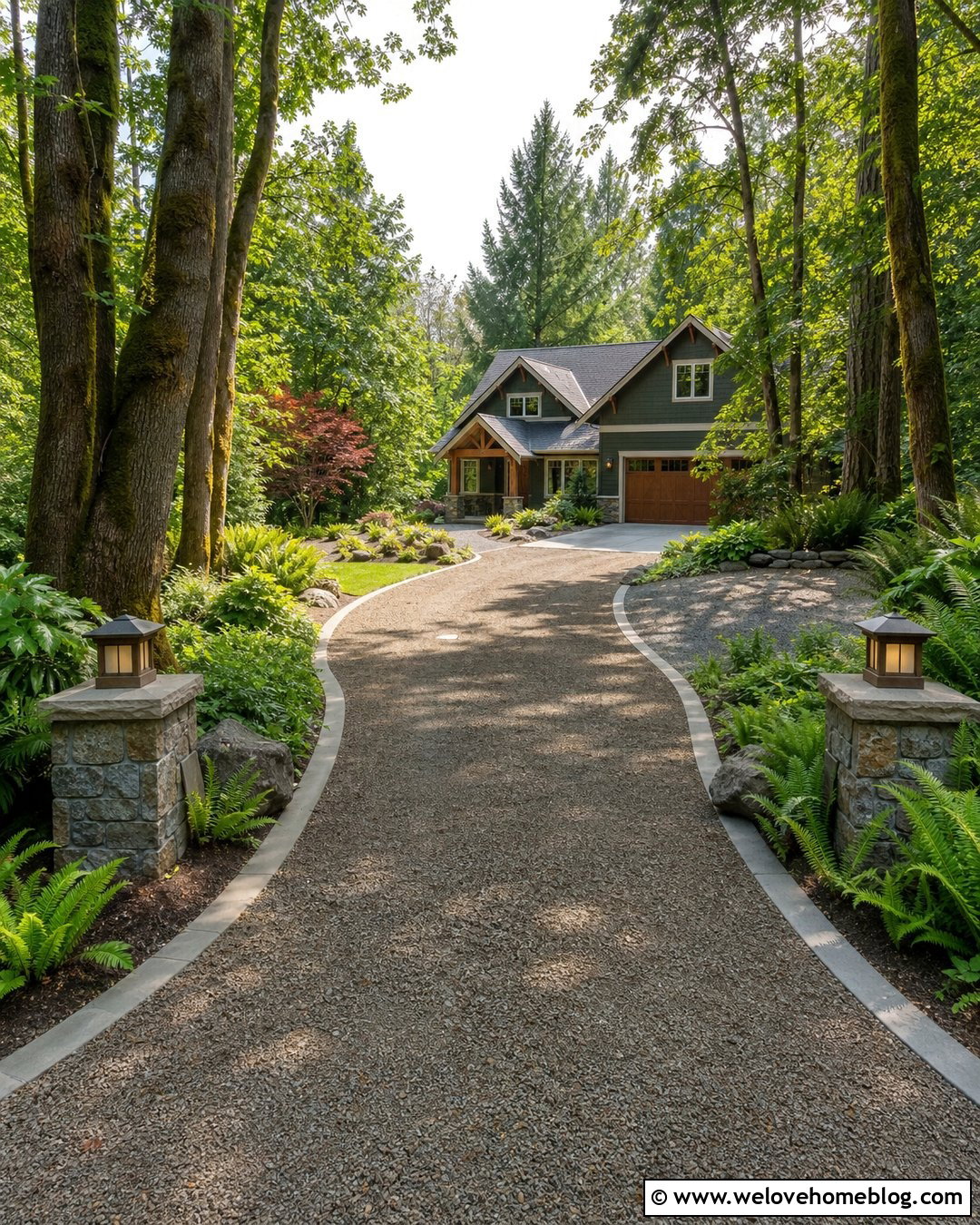
A curved gravel driveway can guide visitors naturally toward the house while making a wide front yard feel more landscaped. Follow both sides of the curve with continuous poured concrete borders rather than short, disconnected edging pieces. The smooth lines emphasize the driveway’s shape and help the entire route look planned. Select tan crushed gravel for a warm, approachable surface, then use natural-gray concrete that blends with the street apron. On the outside curve, plant layered beds with small trees, flowering shrubs, and ornamental grasses. Keep the inside curve more open with lawn and low groundcover so drivers retain a clear view. This arrangement is well suited to Craftsman homes, wooded suburban lots, and properties where a straight driveway would feel too rigid.
6. Circular Gravel Driveway With Concrete Center Island
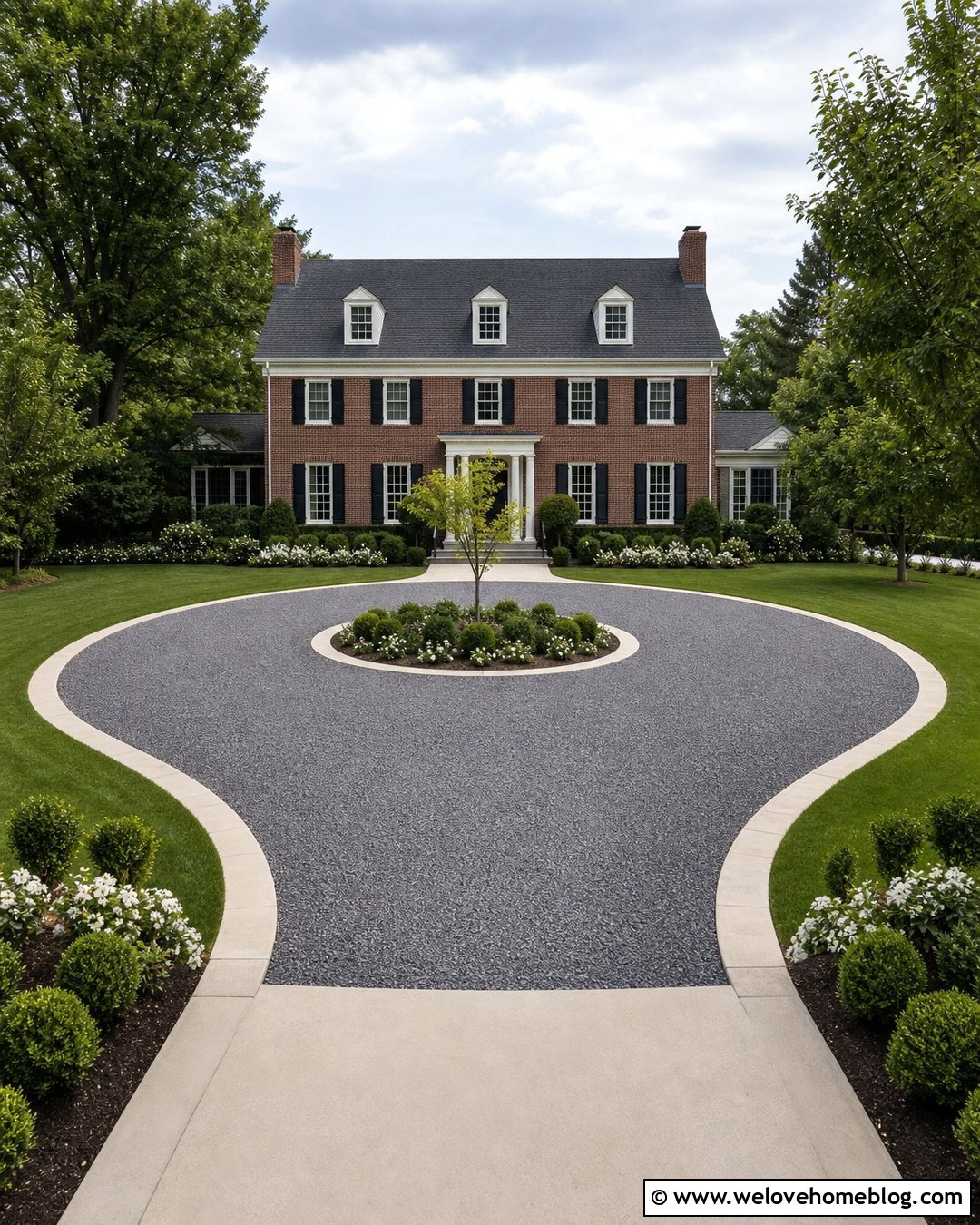
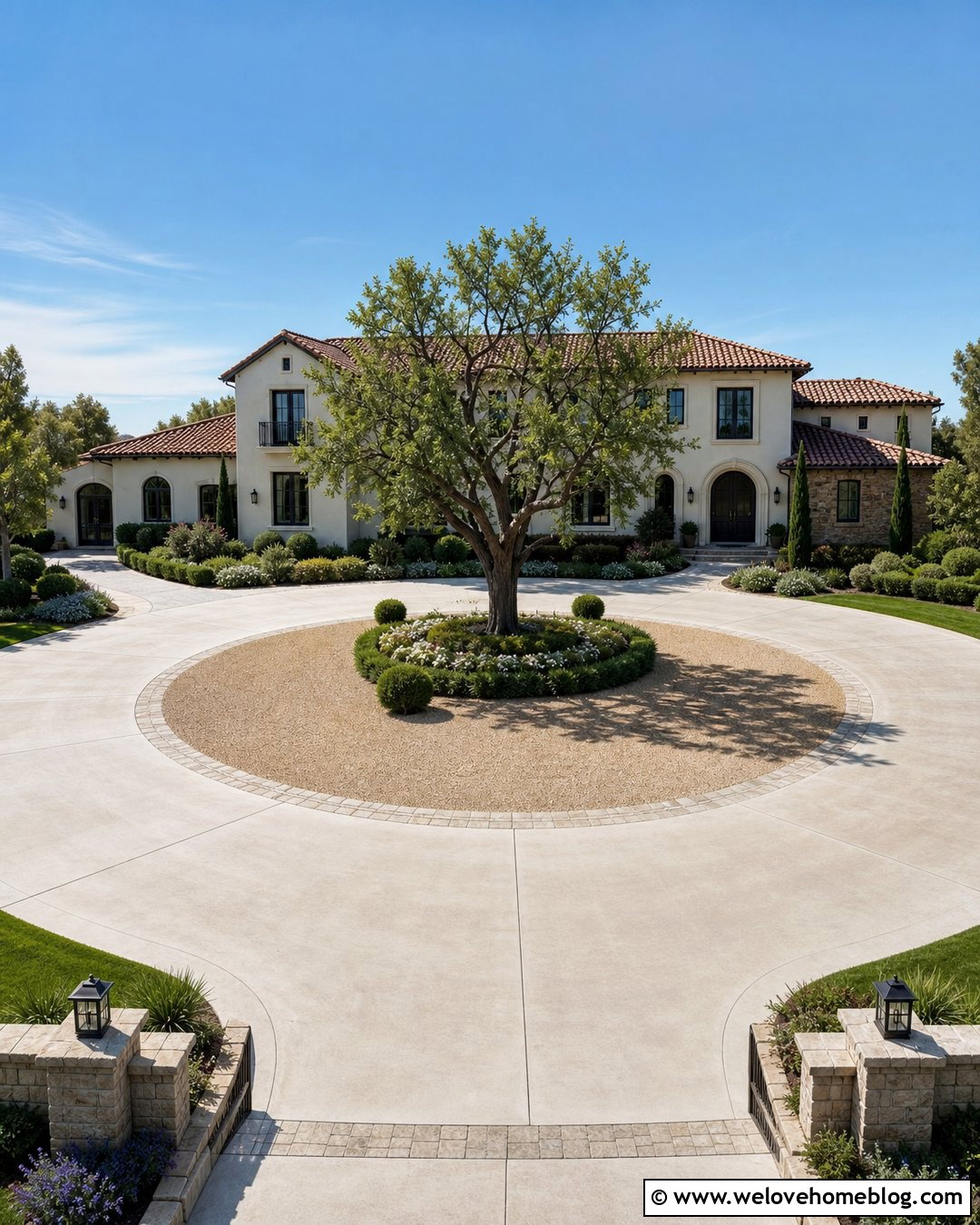
A circular gravel driveway becomes a strong landscape feature when a concrete border defines both its outer edge and center island. Fill the driving surface with compacted gray or buff crushed gravel, then use smooth concrete curbing to create a consistent ring. Inside the island, plant a small ornamental tree surrounded by low shrubs and seasonal flowers that will not block views across the driveway. The outer edge can transition into lawn, formal hedges, or broad planting beds. Include a concrete apron at each opening to visually mark the entrance and exit. This layout works especially well in front of colonial, Georgian, and larger traditional homes. Repeating the border around the center island ties the entire circular design together and keeps the landscaping visually balanced.
7. Long Gravel Driveway With Wide Concrete Edges
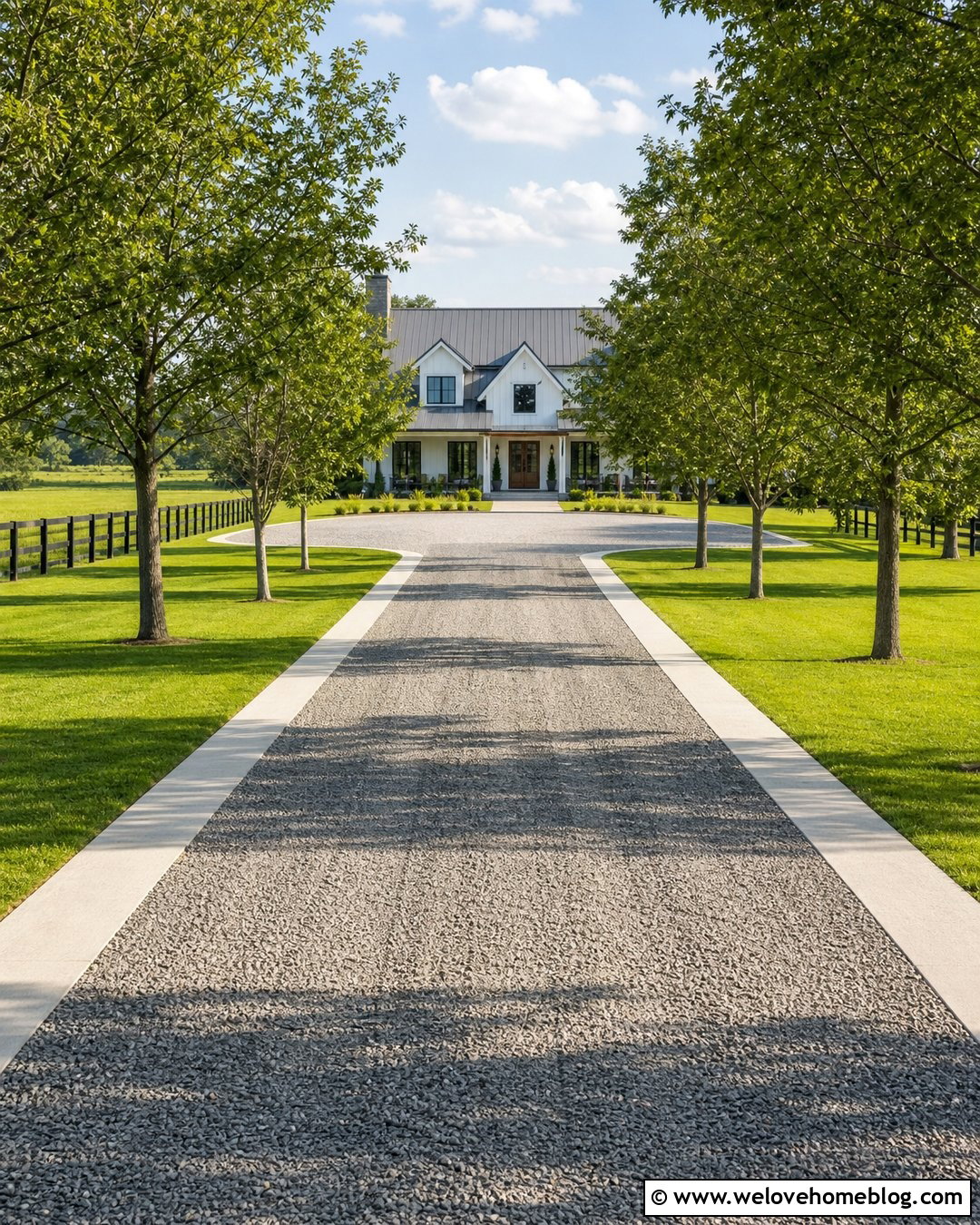
Long driveways benefit from borders that remain visible from the street to the house. Consider wide concrete edges rather than narrow curbs, especially when the property has a broad lawn or rural setting. Warm gray crushed gravel can fill the center while two broom-finished concrete bands form clean parallel lines along the route. The bands may also provide stable walking areas when the gravel is wet or uneven. Plant evenly spaced shade trees beyond the borders to strengthen the long perspective without crowding vehicles. Near the house, widen the driveway into a gravel parking court surrounded by the same concrete edge. This complete arrangement suits country homes, modern farmhouses, and large ranch properties, creating a formal sense of arrival while preserving gravel’s casual character.
8. Gravel Driveway With Concrete Apron And Border
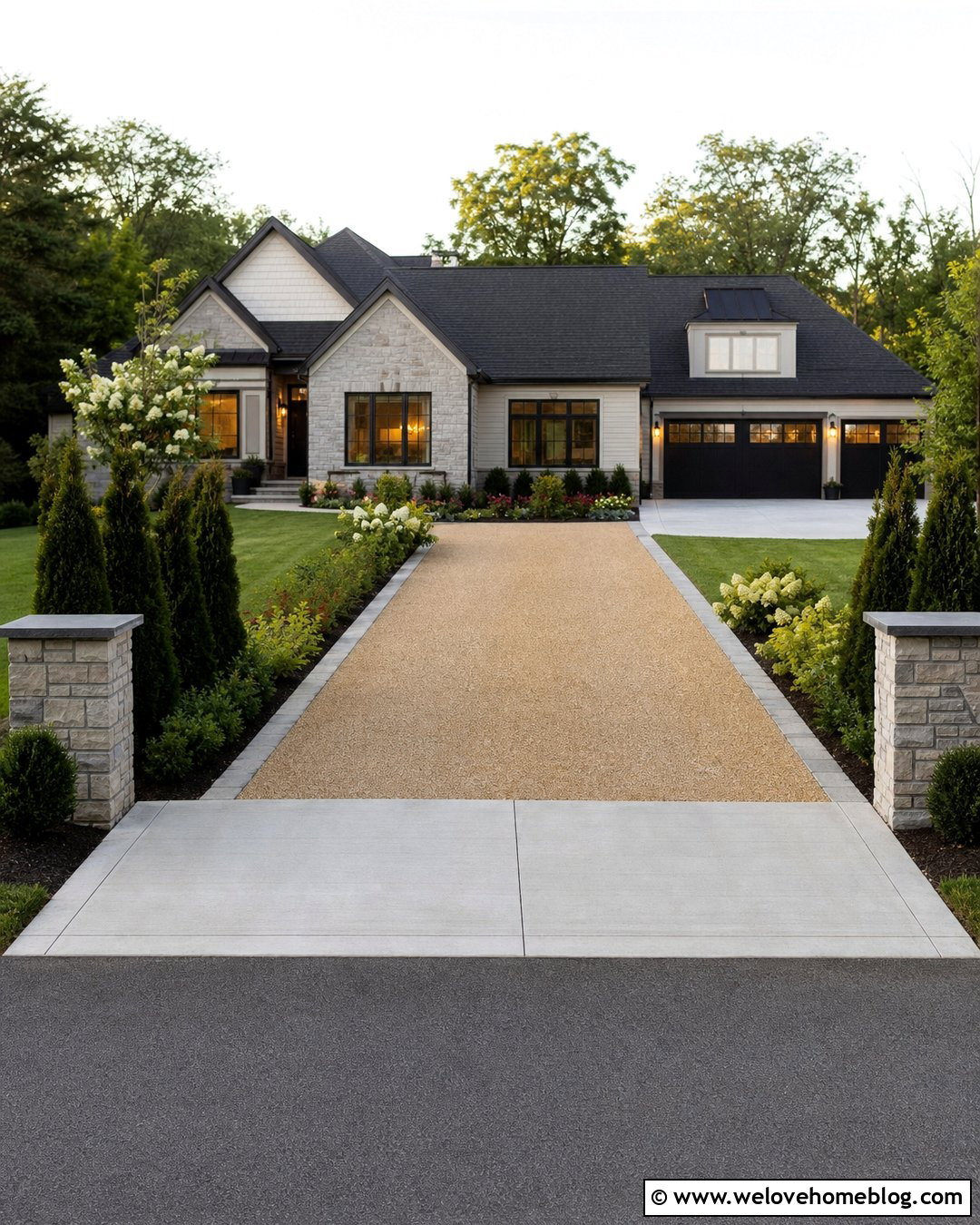
Combining a gravel surface with a concrete apron creates a more substantial entrance at the street. Start with a full-width section of broom-finished concrete, then continue narrow concrete borders along both sides of the gravel driveway. This makes the apron and edging look like one connected design instead of unrelated additions. Choose tan or honey-colored gravel to soften the gray concrete and complement brick, siding, or stone facades. Low masonry pillars, address numbers, and compact evergreen plantings can frame the entrance without reducing visibility. Repeat concrete near the garage to form a stable transition where tires frequently turn. This practical layout works for straight and gently curved driveways, giving the most visible and heavily traveled areas a solid surface while keeping gravel across the main approach.
9. Sloped Gravel Driveway With Raised Concrete Border
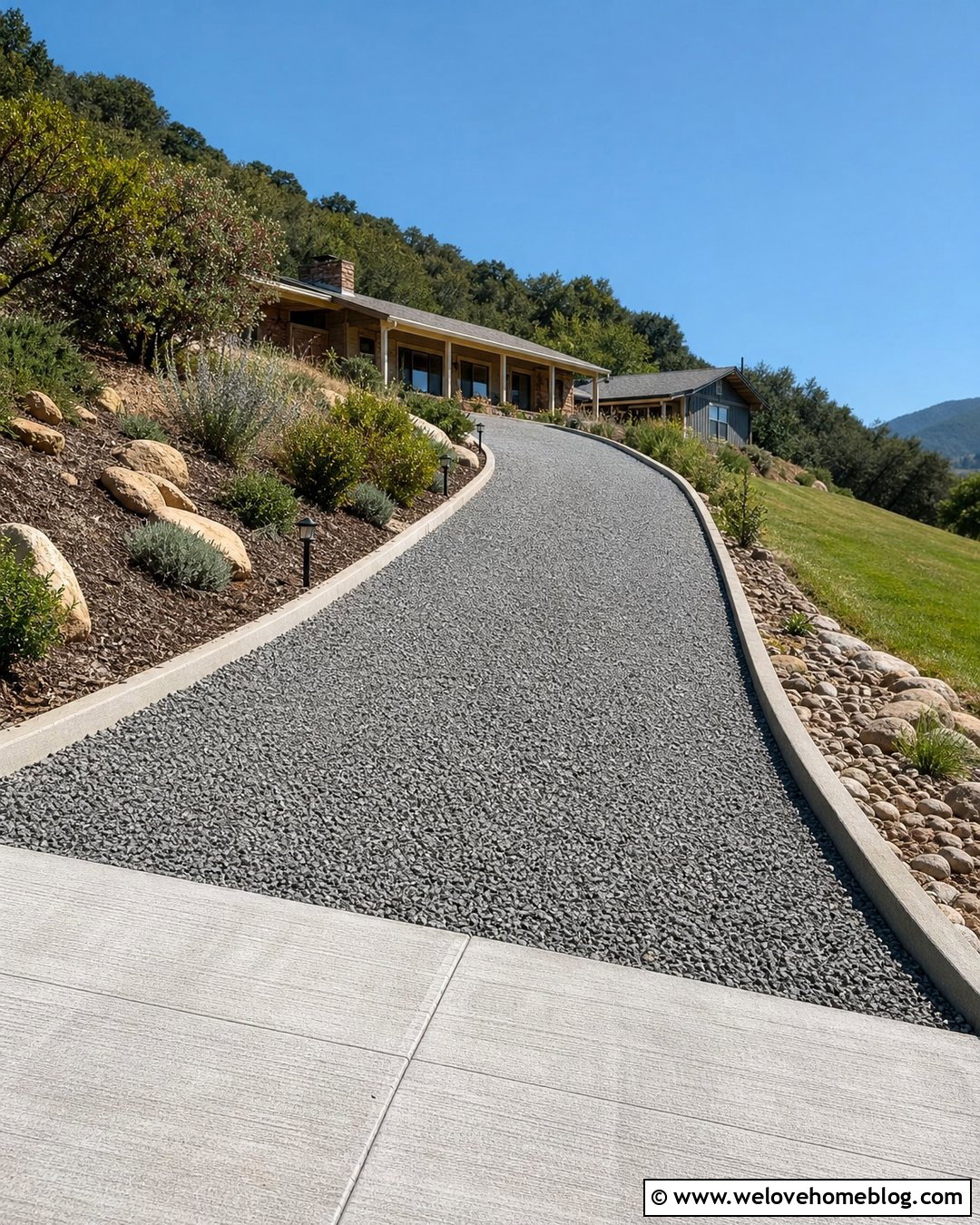
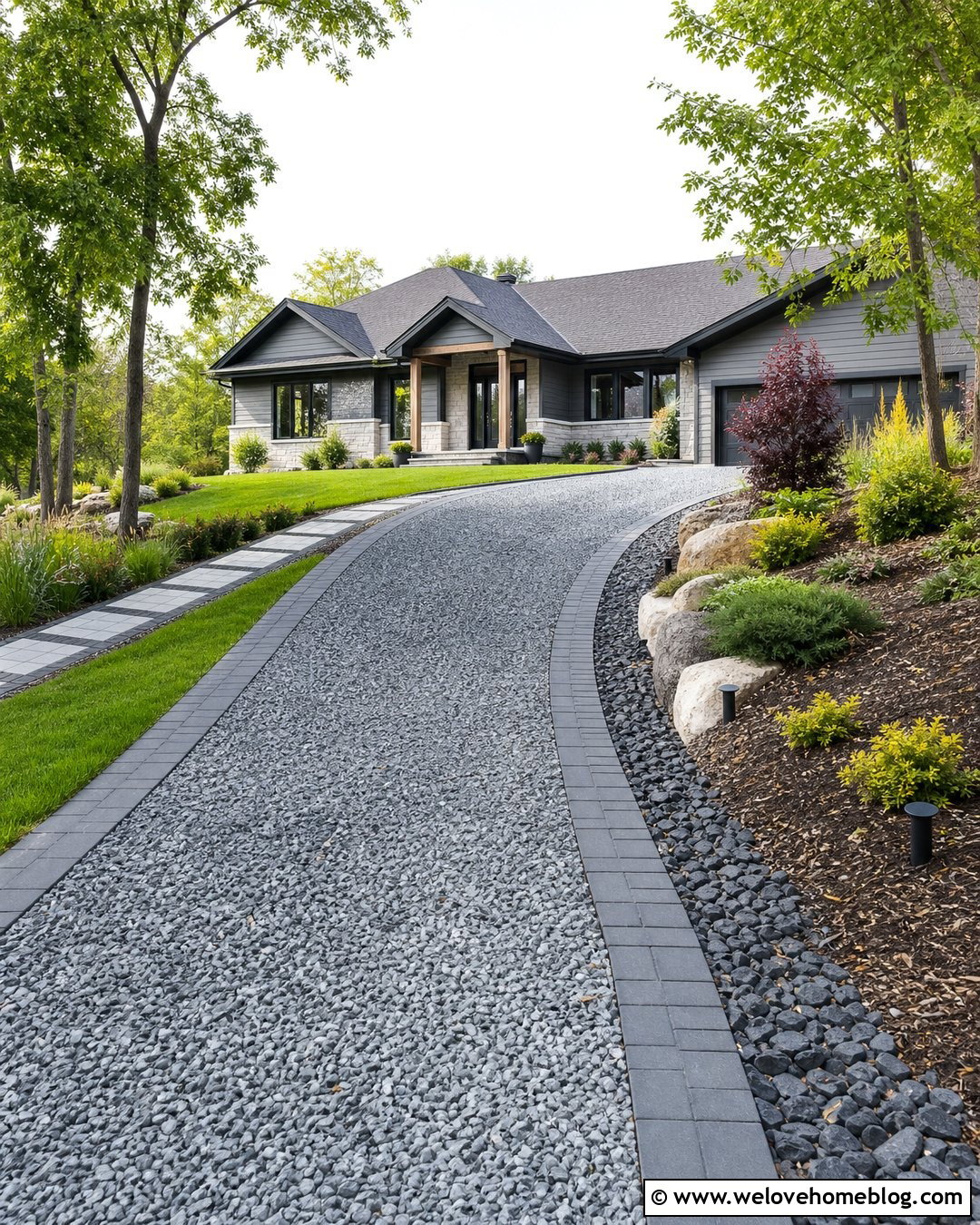
On a sloped property, a slightly raised concrete border creates a strong visual frame around the gravel surface. Use compacted angular crushed stone rather than highly rounded decorative gravel, and shape the driveway with a gentle crown or planned cross slope. The concrete edge can follow the grade while separating the driving area from planting beds and soil. Along the uphill side, include drought-tolerant shrubs and groundcovers that keep the landscape low and open. The downhill edge can border lawn or a shallow landscaped drainage area. A textured concrete apron at the bottom helps establish a clear entrance. Because grading and runoff conditions vary considerably, have the drainage and border elevations planned together before installation. This prevents the decorative edge from interfering with the driveway’s water-management strategy.
10. Gravel Driveway With Concrete Mow Strip
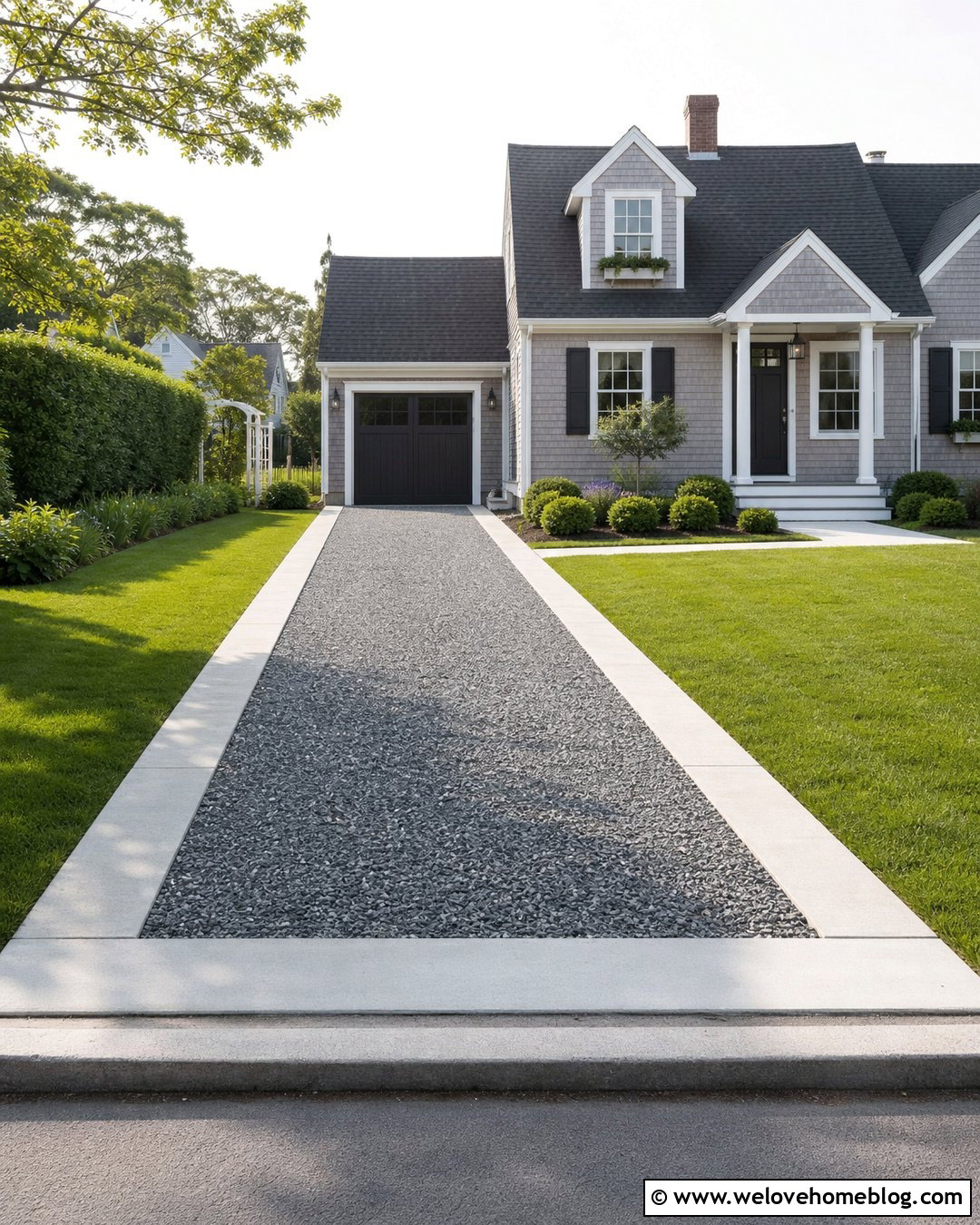
A flush concrete mow strip gives a gravel driveway a neat edge while creating a convenient transition beside the lawn. Keep the strip broad enough to read as an intentional border rather than a thin, barely visible line. Fill the driveway with medium-gray crushed granite and align the gravel surface slightly below the top of the concrete. This allows the border to visually contain the stone while maintaining a smooth appearance. Follow the straight driveway with closely trimmed turf on both sides and a few simple planting beds near the house. The result feels clean without appearing overly formal. This design works particularly well for ranch homes, Cape Cod houses, and smaller suburban properties where elaborate landscaping could overwhelm the yard. Match the mow strip to the front walkway for continuity.
11. Gravel Driveway With Concrete Border And Lavender
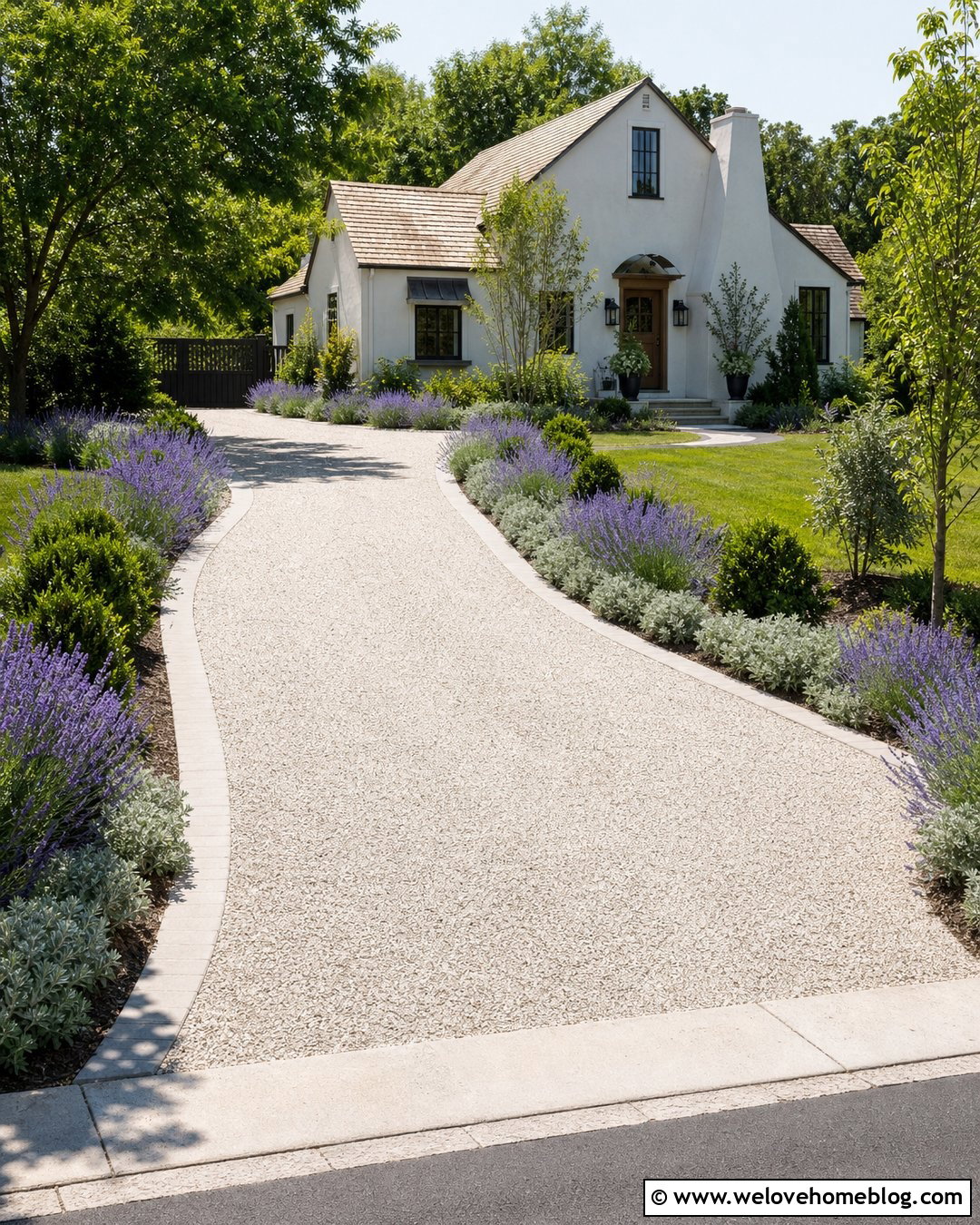
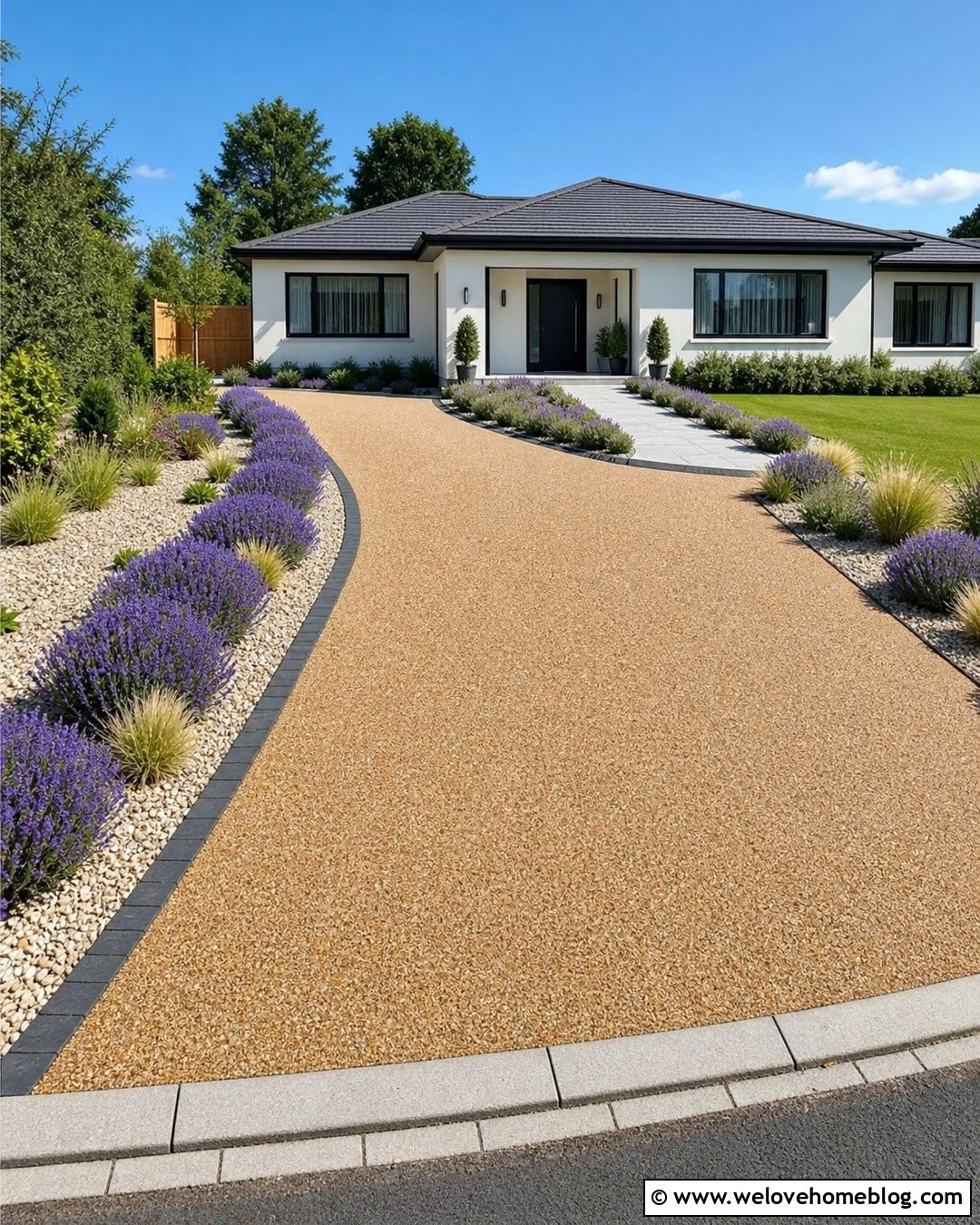
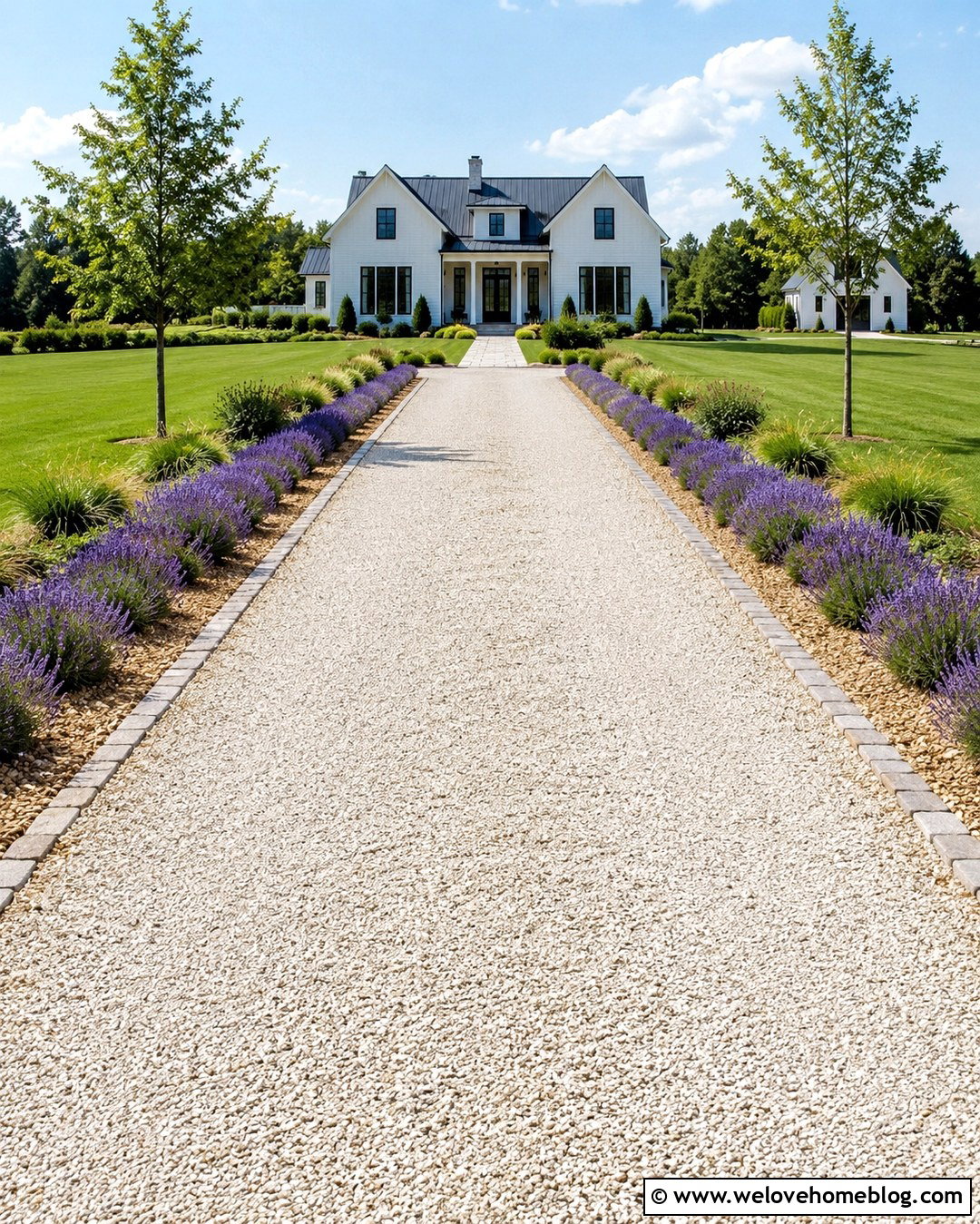
Soft lavender planting can transform a basic gravel driveway into a complete garden entrance. Begin with pale limestone gravel and a narrow, smooth concrete border that clearly separates the driving surface from the beds. Plant lavender in repeated groups beyond the concrete, leaving enough space for mature growth and easy maintenance. Mix in silver-leaved groundcover and compact evergreen shrubs for structure outside the flowering season. A gently curved layout will make the planting feel natural, while a straight driveway creates a more formal rhythm. This combination works beautifully with cottage homes, stucco houses, and light stone facades. The cool concrete edge acts as a quiet divider between gravel and planting soil, ensuring the purple flowers remain the focal point without making the overall driveway appear untidy.
12. Gravel Driveway With Concrete Border And Ornamental Grass
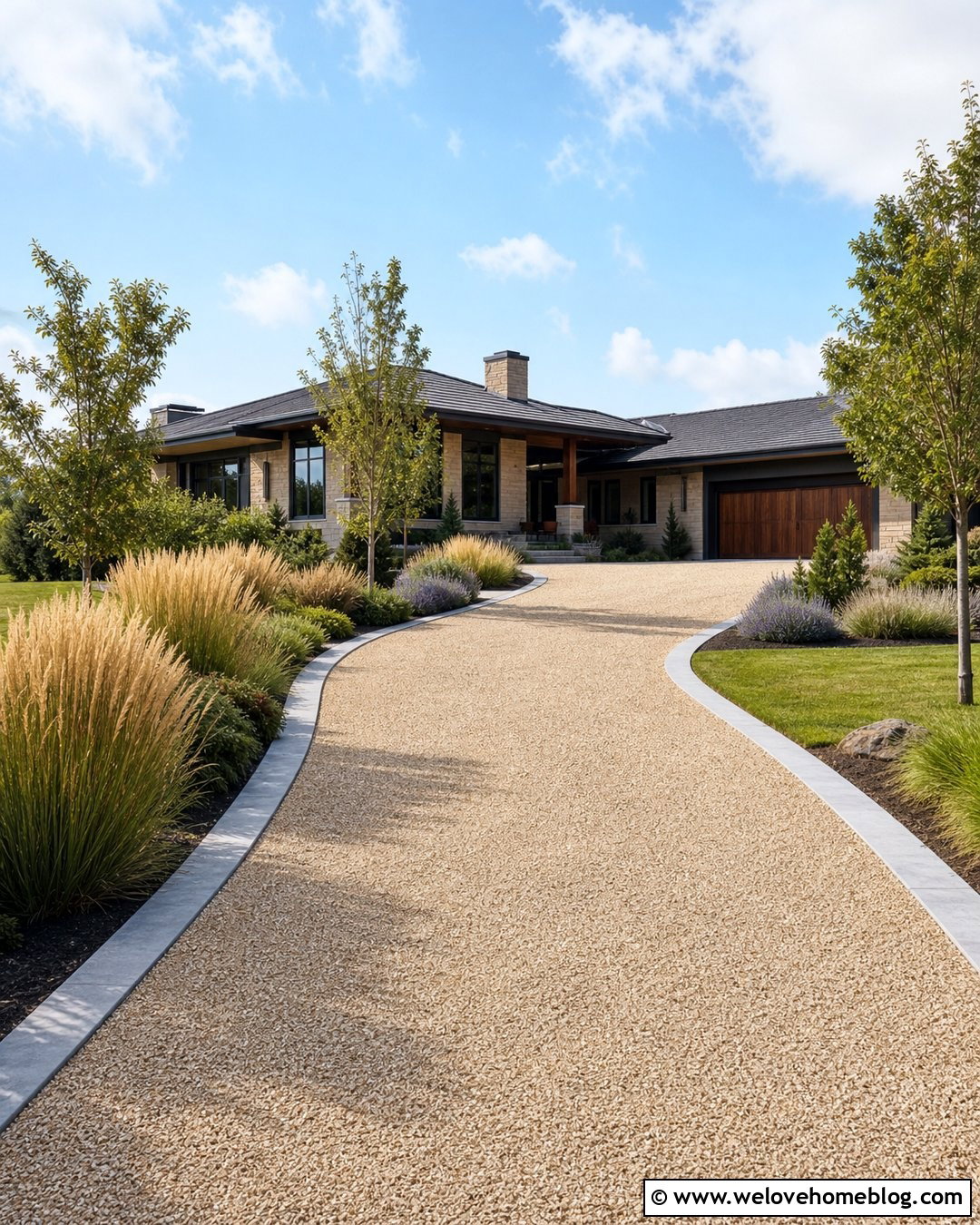
Ornamental grasses bring movement and softness to the firm lines of a concrete-edged gravel driveway. Use warm beige crushed gravel inside a smooth natural-gray border, then create broad planting beds along one or both sides. Arrange grasses in repeated clusters, mixing upright varieties with lower mounding plants so the driveway remains visible from the curb. A curved or flared entrance complements the loose shape of the foliage. Add small evergreen shrubs near the house to provide year-round structure and keep taller grasses away from sightlines. This complete design feels especially appropriate beside modern ranch, prairie-style, and contemporary farmhouse homes. The gravel, concrete, and flowing plants create three distinct textures, giving the landscape depth without needing complicated paving patterns or a large number of plant species.
13. Gravel Driveway With Concrete Border And Boxwood Hedge
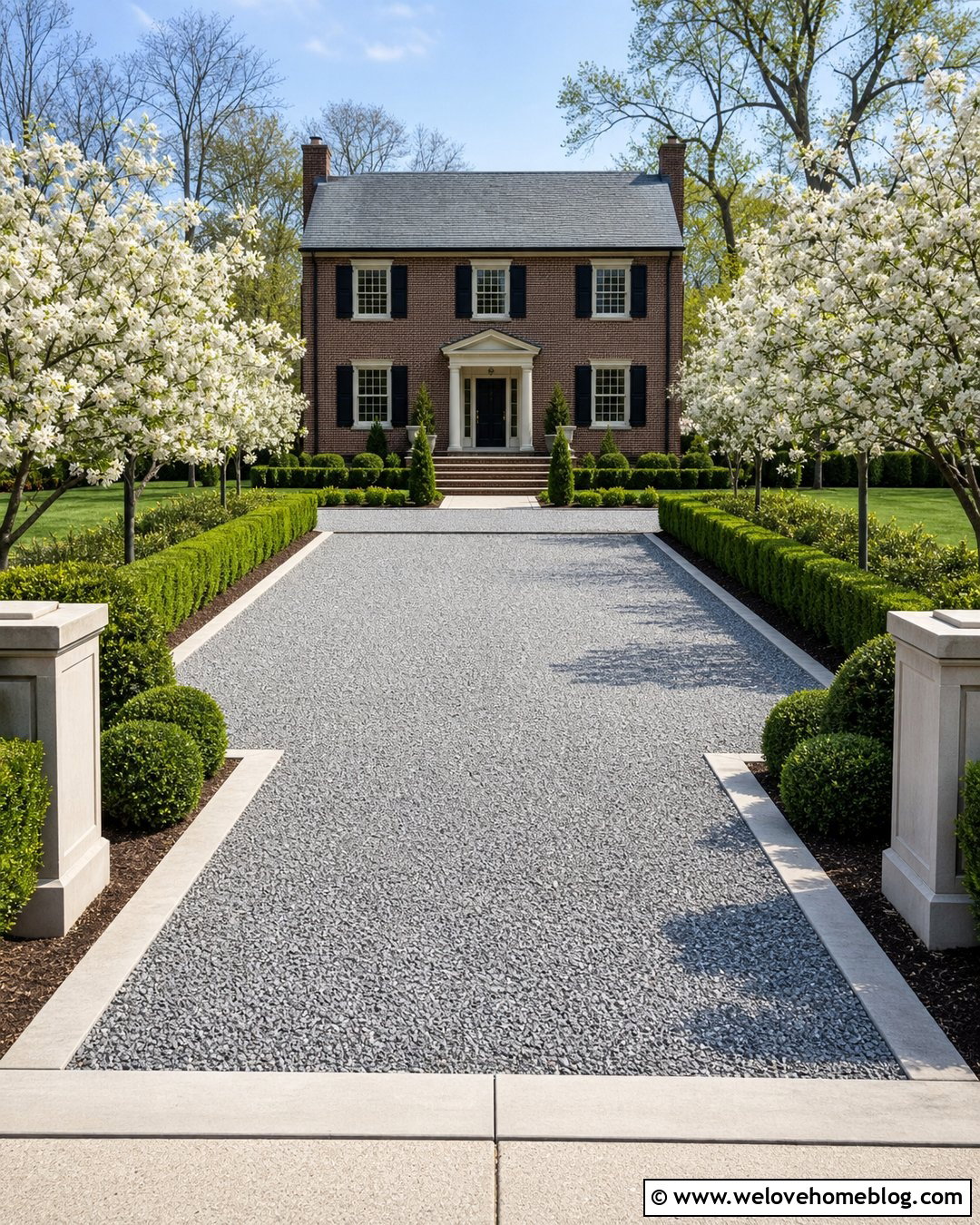
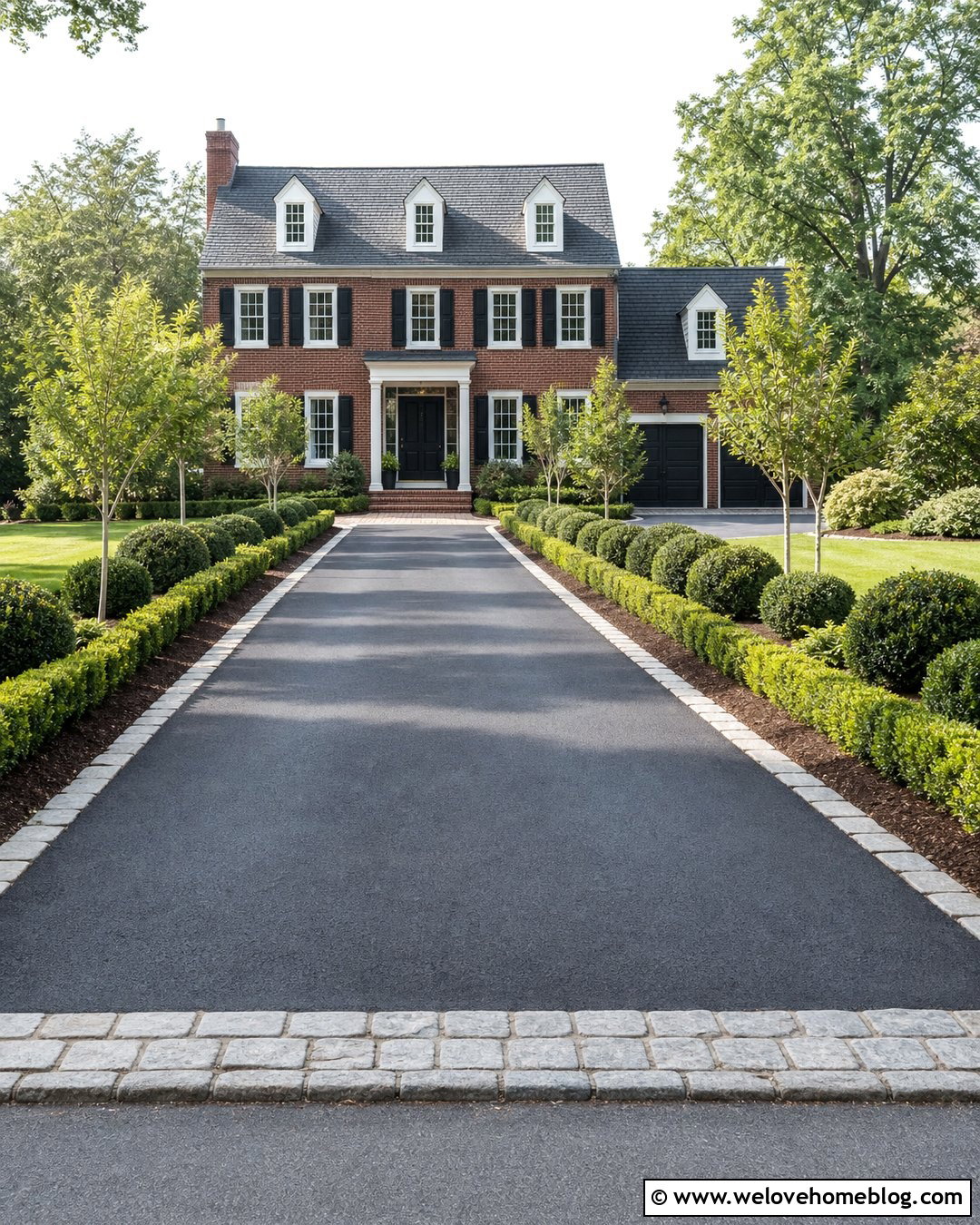
A clipped boxwood hedge gives a gravel driveway a formal appearance that suits symmetrical home exteriors. Choose fine gray gravel and a smooth concrete border laid in straight, precise lines. Beyond the concrete, plant low boxwoods at consistent spacing and allow them to form an even green boundary. Keep the hedge short enough to preserve visibility when entering the street. At the house, widen the driveway into a rectangular parking court, continuing both the concrete edge and hedge around the perimeter. A matching concrete walkway can cross the planting line and lead directly to the front steps. This arrangement looks natural beside colonial, Georgian, and traditional brick homes. The restrained material palette allows the home’s architecture to remain prominent while the hedge and border keep the gravel surface looking orderly.
14. Gravel Driveway With Concrete Border And Desert Landscaping
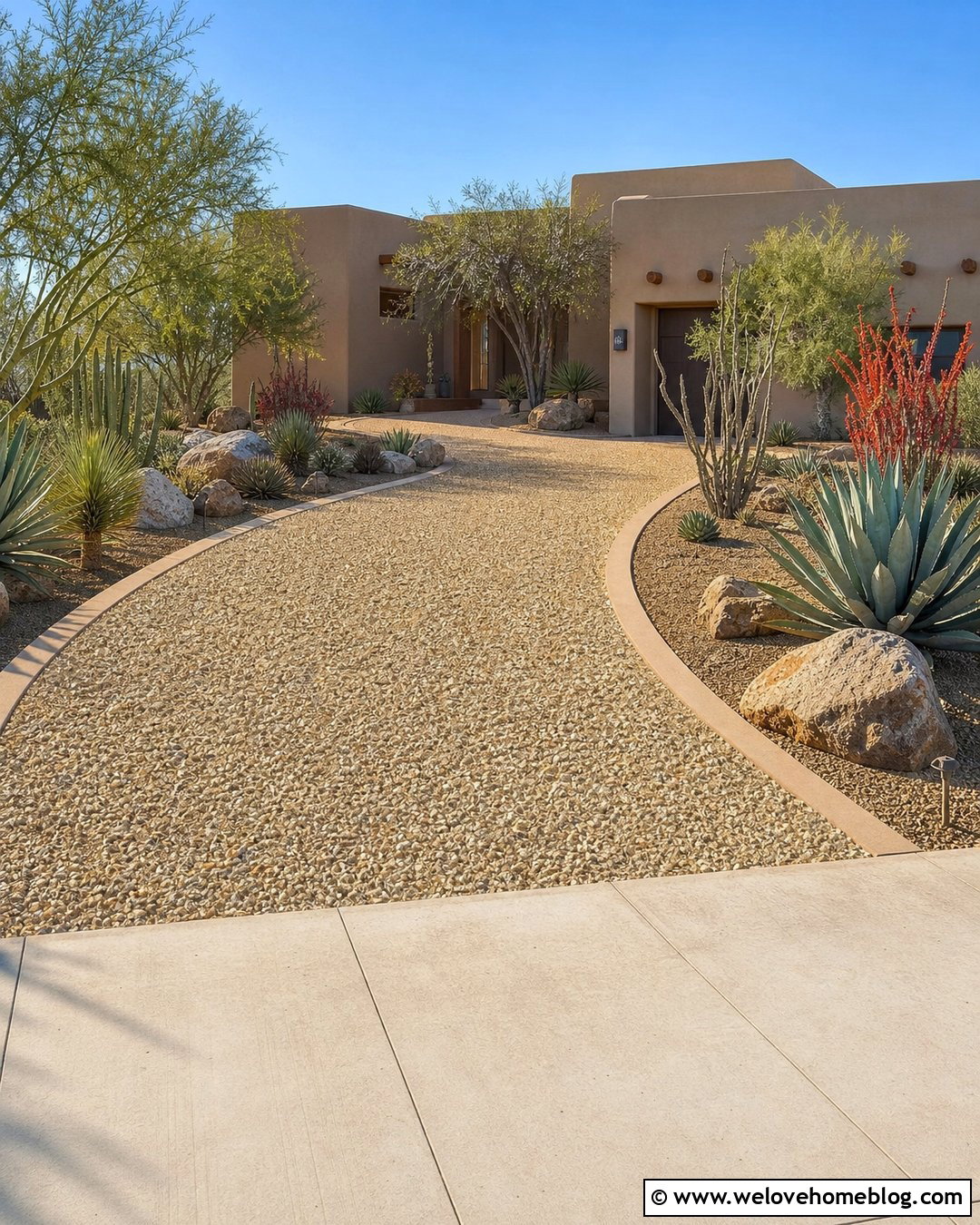
A concrete-edged gravel driveway fits naturally into a water-conscious desert landscape. Use compacted golden crushed stone for the driving surface and a warm beige concrete border that blends with sandy soil and stucco walls. Shape the driveway with a gentle curve or broad entrance flare, then surround it with decomposed granite planting areas. Agave, yucca, red yucca, desert spoon, and sculptural boulders can add form without crowding the vehicle route. Keep loose landscape rock visually different from the driveway gravel so the border remains easy to recognize. This complete look works well with Southwestern, Pueblo Revival, and desert-modern homes. The concrete line provides needed structure among the organic plant shapes, while the coordinated earth tones create a calm transition from the street to the house.
15. Modern Gravel Driveway With Concrete Border
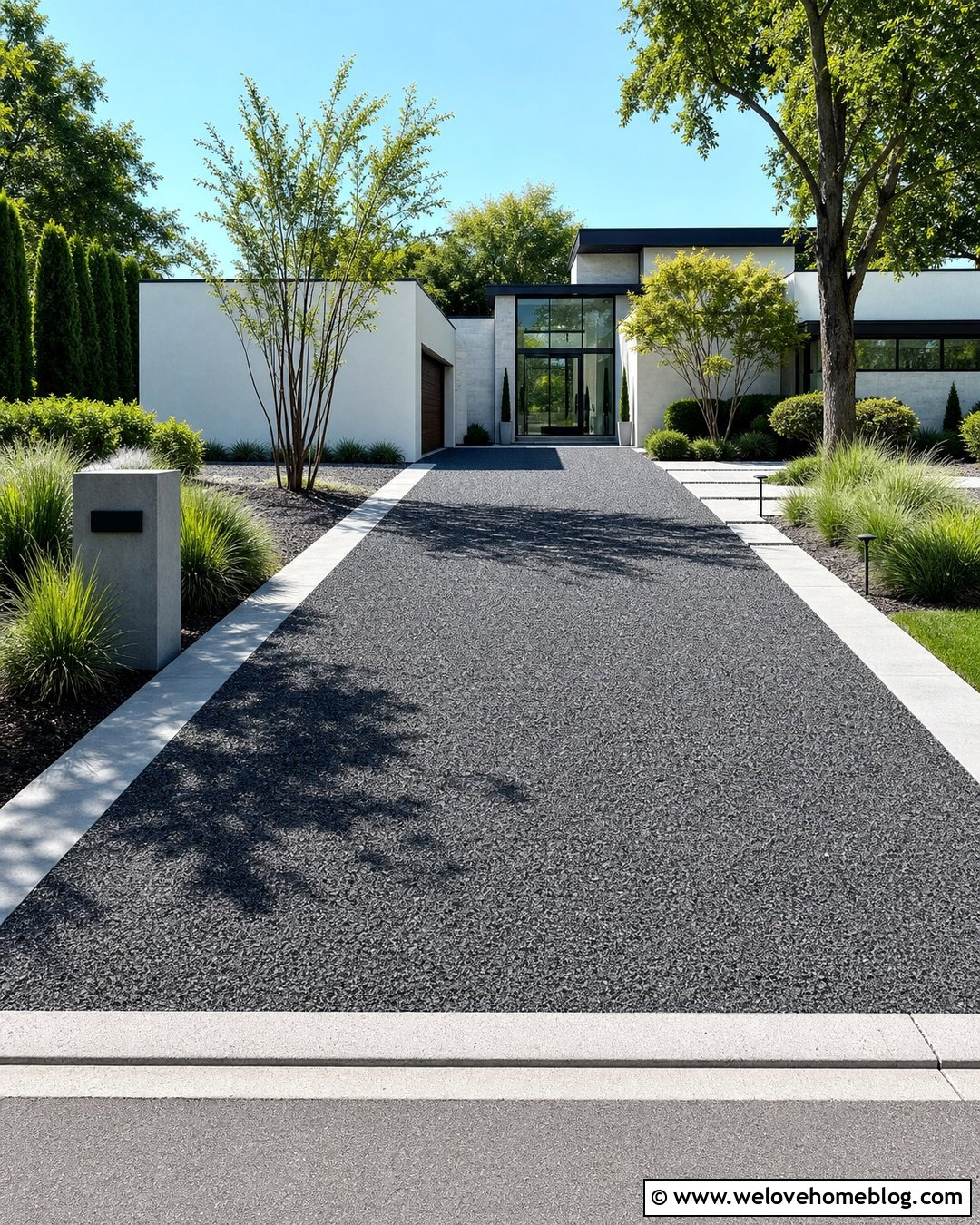
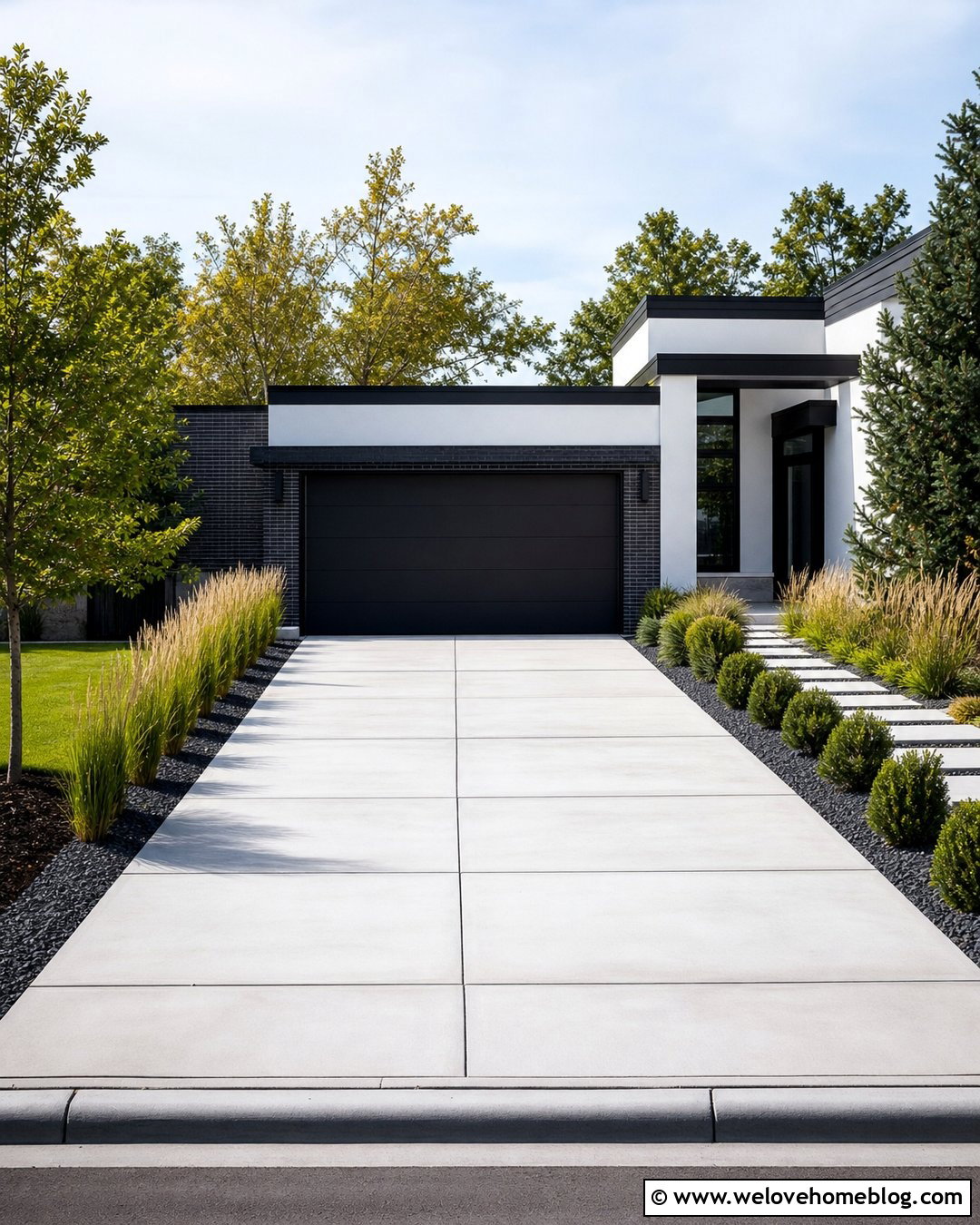
Clean geometry makes a gravel driveway feel appropriate for a modern home. Select charcoal crushed stone and frame it with wide, smooth, light-gray concrete borders. A straight layout with a rectangular entrance and sharply defined parking area reinforces the home’s architectural lines. Add narrow planting beds containing sculptural grasses, clipped evergreens, and one or two small multistem trees. Concrete stepping pads can cross the gravel toward the front door, but their finish should match the driveway border. Avoid overly detailed edging patterns because the contrast between dark aggregate and pale concrete already provides plenty of visual interest. Black exterior lighting and a simple address monument can complete the entrance. Together, the gravel, border, planting, and facade form one controlled design that feels modern without covering the entire front yard in concrete.
16. Farmhouse Gravel Driveway With Concrete Border
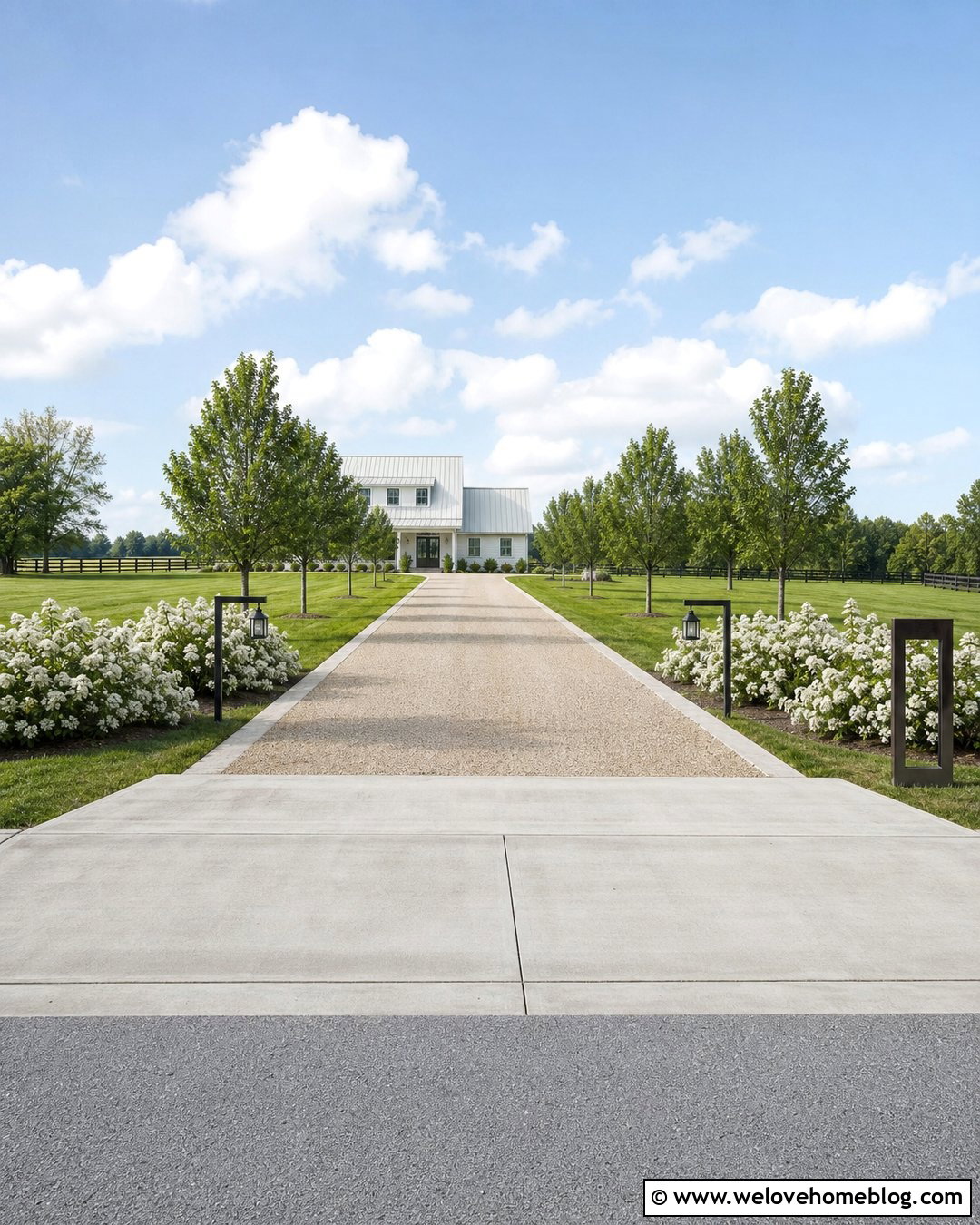
A warm gravel driveway feels at home beside a farmhouse when the concrete border remains simple and understated. Use tan crushed limestone or buff gravel within a lightly textured, natural-gray concrete edge. A long straight approach can widen near the house into a generous parking and turning area. Frame the route with open lawn, white flowering shrubs, and evenly spaced deciduous trees. At the roadside, a wider concrete apron provides a polished threshold without changing the rural character of the main gravel surface. If the home has black windows or a dark roof, repeat that color with modest entrance lights or a simple metal address sign. The finished look blends traditional country materials with practical definition, creating an inviting arrival that feels tidy but not overly formal.
17. Colonial Gravel Driveway With Concrete Border
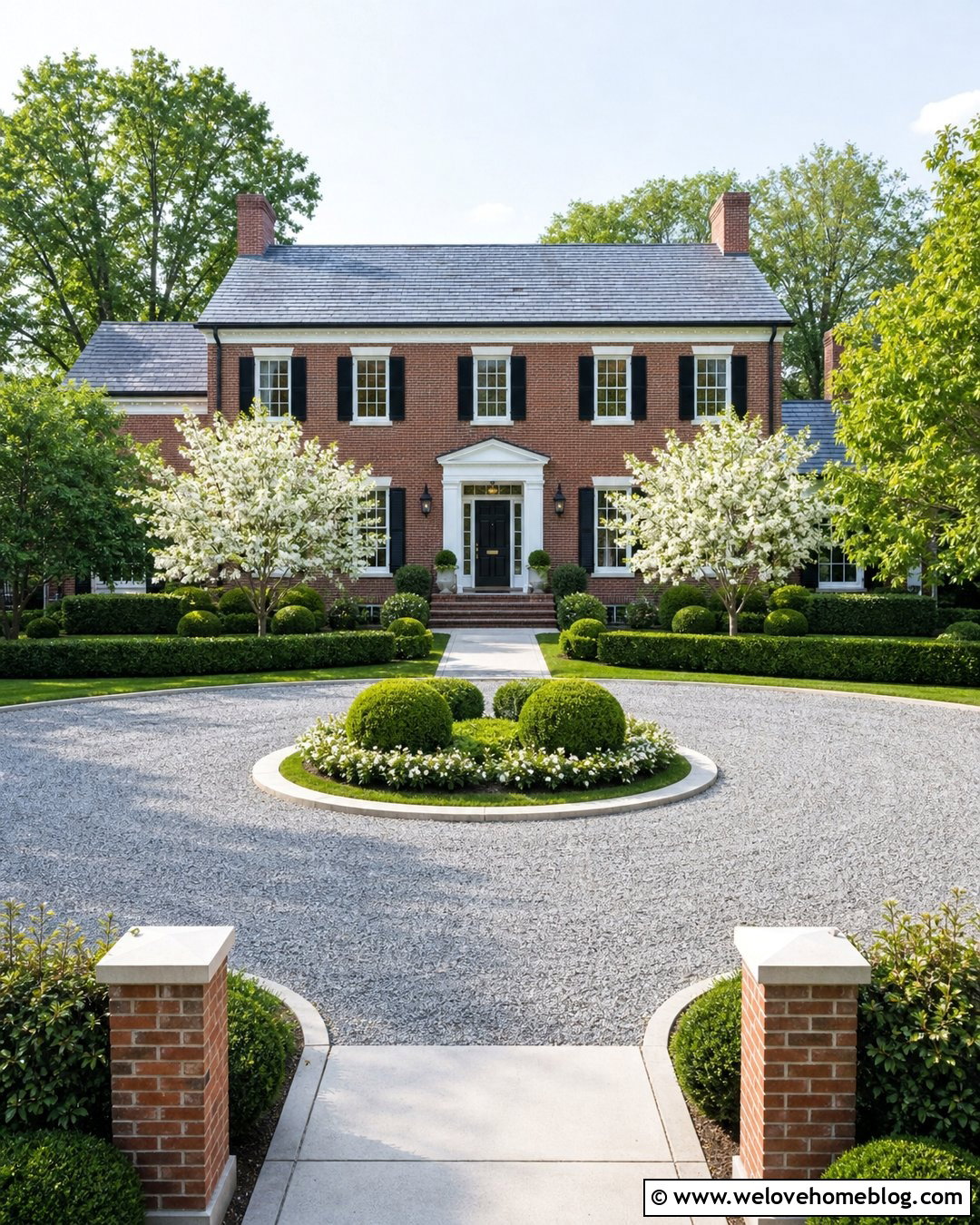
Symmetry is the key to coordinating a gravel driveway with a colonial house. Center a straight driveway or formal circular layout on the home’s main entrance, using fine gray gravel surrounded by a smooth concrete border. Match the border width on both sides and repeat it around any center island or parking court. Plant paired boxwoods, small flowering trees, or formal hedges to reinforce the balanced architecture. A concrete walkway should connect the driveway to the front steps at a clear right angle. Near the street, include matching entrance pillars or low walls positioned beyond safe sightlines. The simple gravel surface prevents the landscape from feeling too rigid, while the concrete edging keeps every line crisp. This balanced arrangement complements brick facades, white columns, shutters, and traditional paneled garage doors.
18. Small Gravel Driveway With Narrow Concrete Border
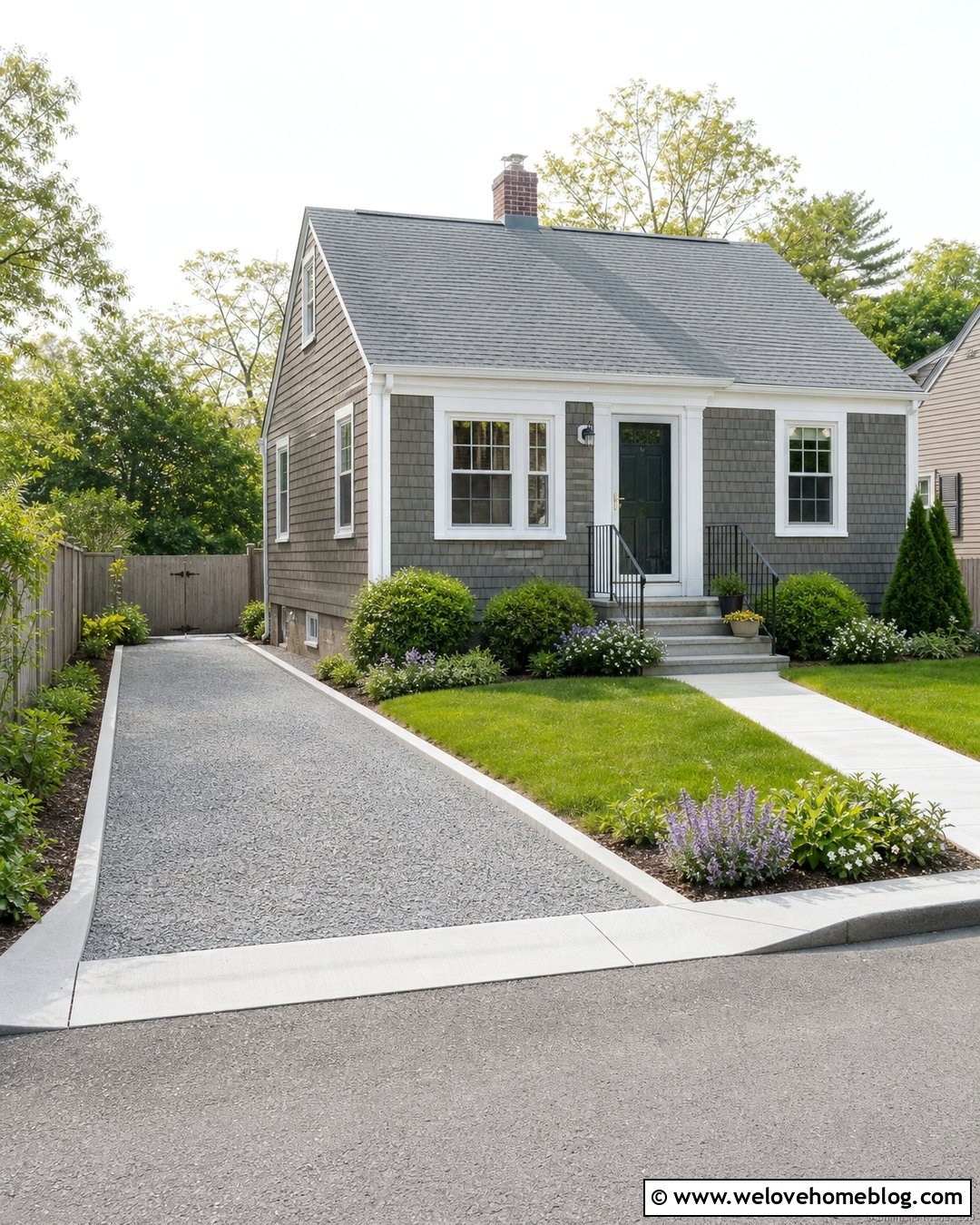
Even a compact front yard can accommodate a polished gravel driveway. Use light-gray crushed stone to keep the space visually open and frame it with a narrow, flush concrete border. A straight single-car layout often works best because it preserves room for lawn, planting, and a separate walkway. Slightly flare the driveway at the curb to make entry easier, then taper it toward the garage or side parking area. Plant low shrubs and groundcovers beside the border rather than large hedges that could make the space feel confined. A matching concrete path can branch from the driveway near the house. This design offers clear material separation without sacrificing valuable width, making it suitable for bungalows, cottages, Cape Cod homes, and modest urban or suburban lots.
19. Gravel Driveway With Concrete Drainage Channel
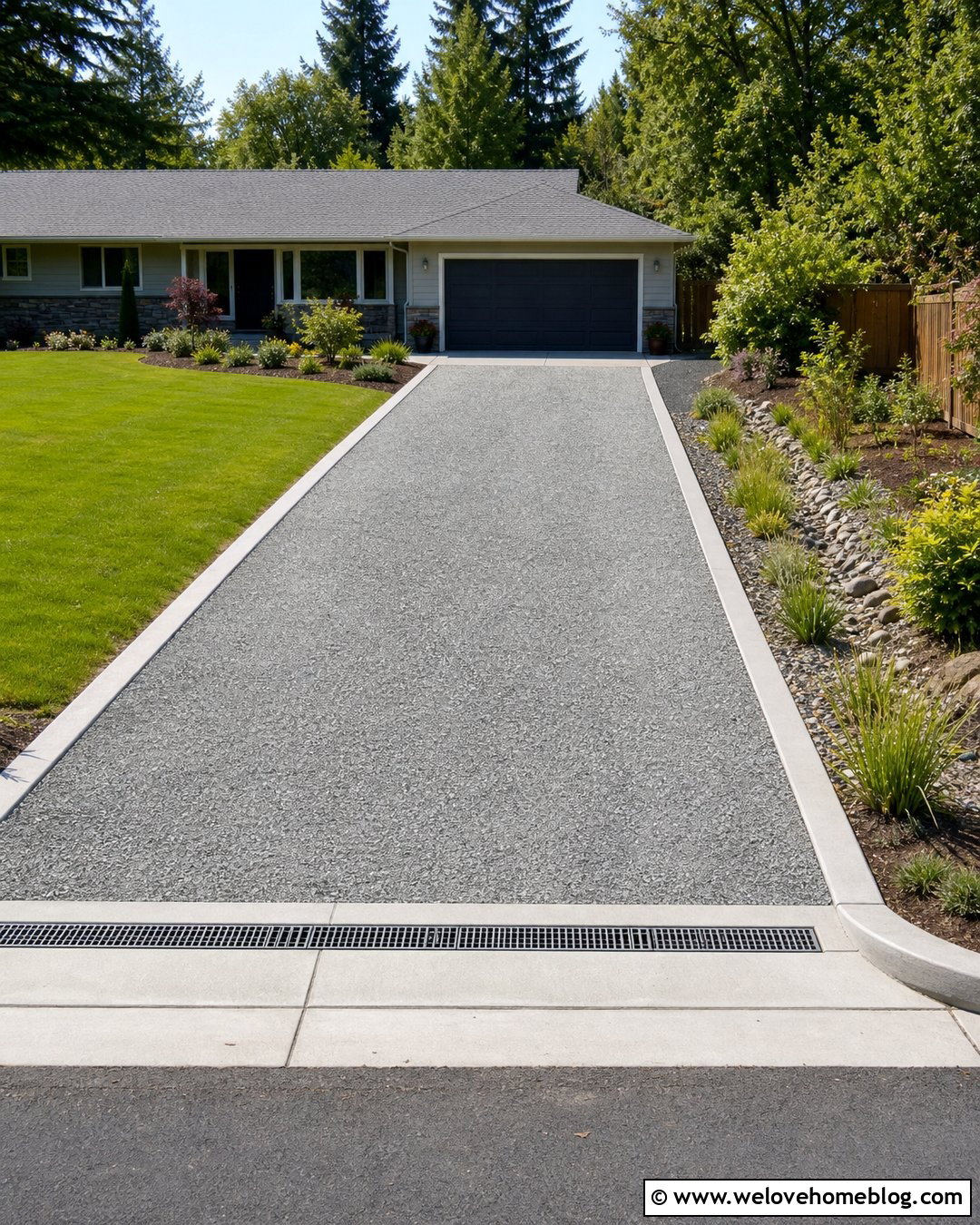
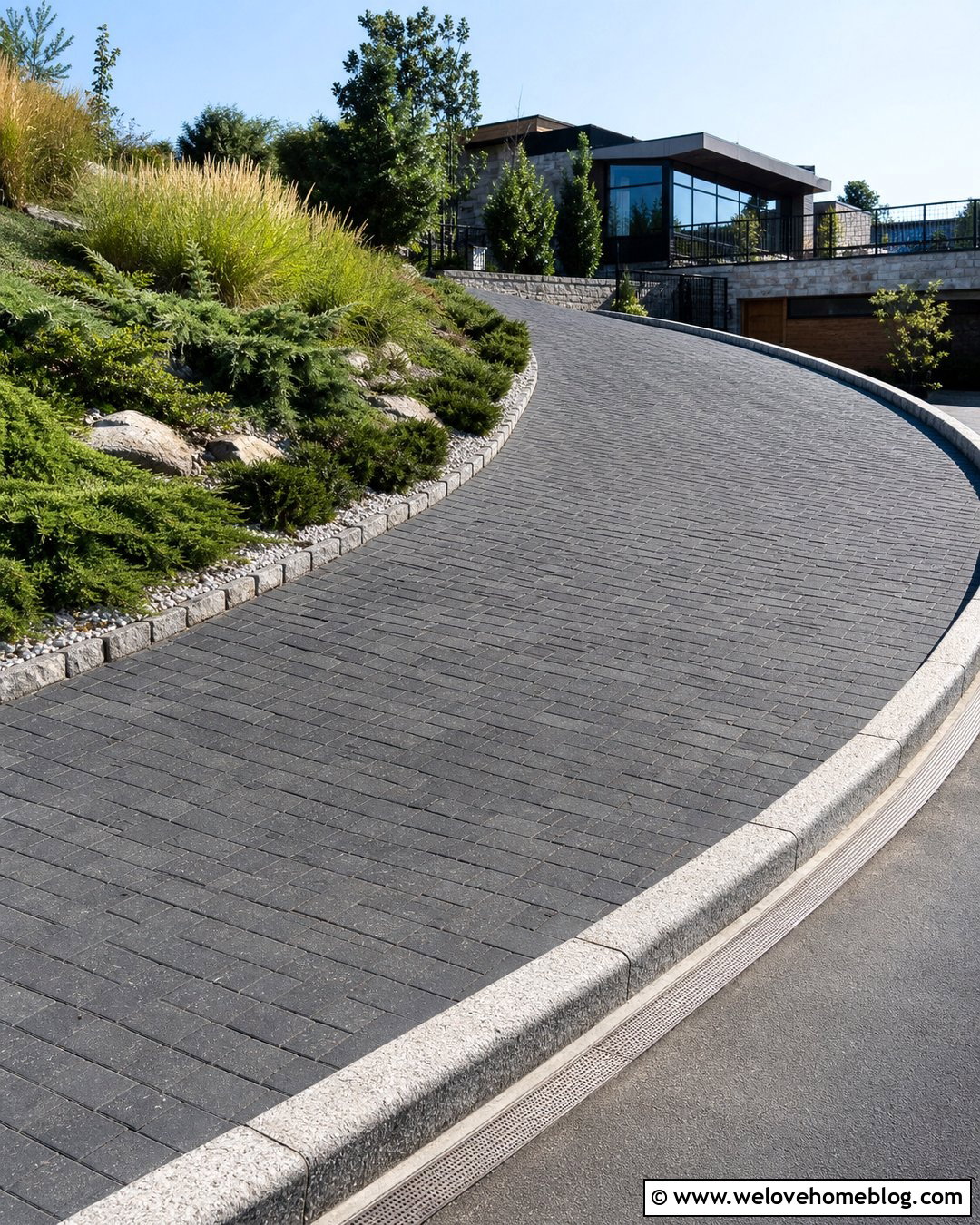
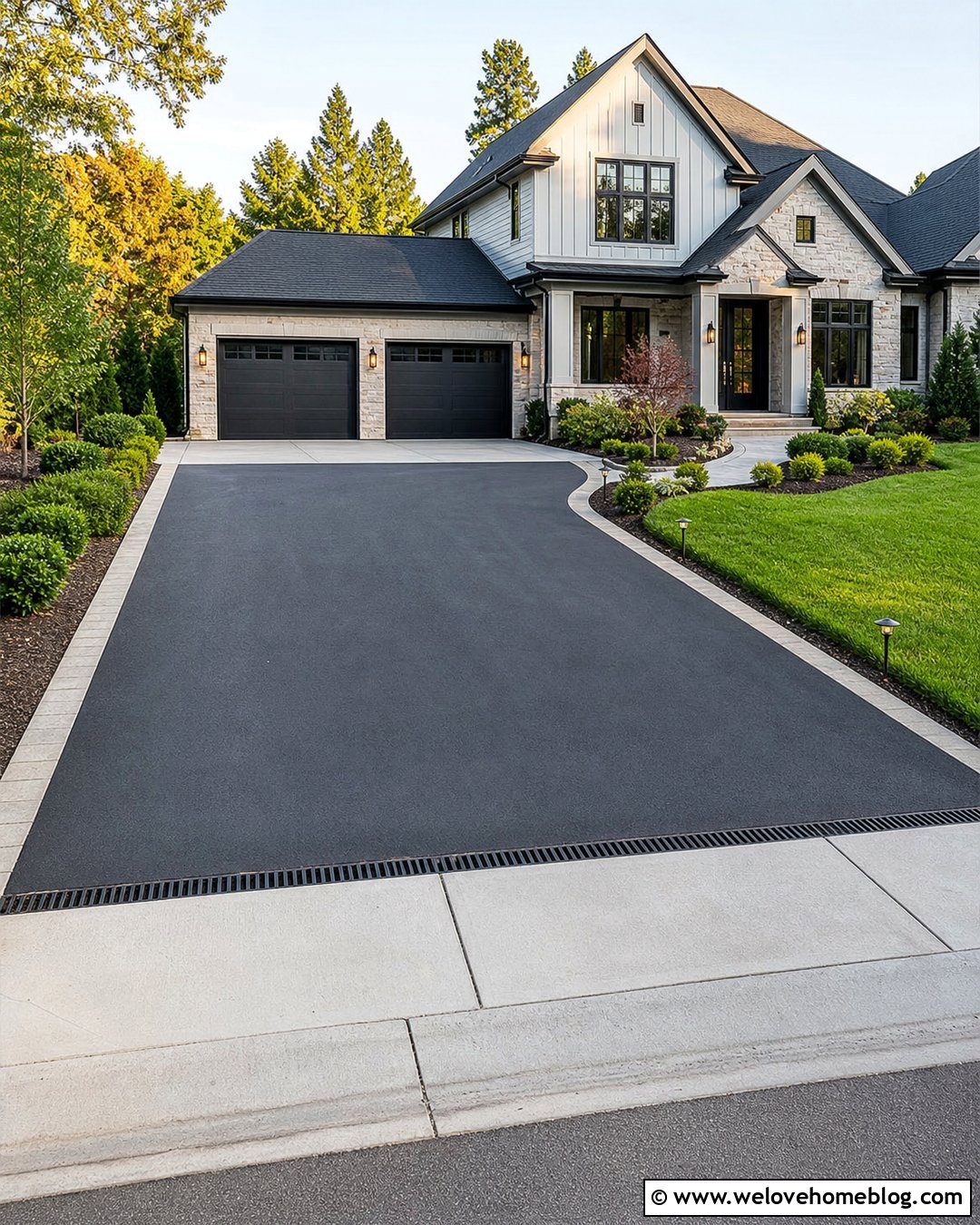
Where runoff regularly crosses the driveway, drainage can become part of the finished design rather than an afterthought. Frame compacted gray gravel with poured concrete borders, then install a properly specified concrete channel or grated trench drain across the surface at the necessary collection point. Align its color and width with the edging so it looks integrated. Continue the surrounding landscape with lawn, moisture-tolerant planting, or a shallow vegetated area where local conditions allow. Maintain a clear transition at the road and garage to reduce scattered stone near solid surfaces. The exact slope, discharge location, and drainage capacity should be determined for the site instead of copied from another property. Coordinating these details early helps the gravel, edging, and water-management features function as one complete driveway layout. ()
20. Gravel Driveway With Concrete Border And Entrance Lights
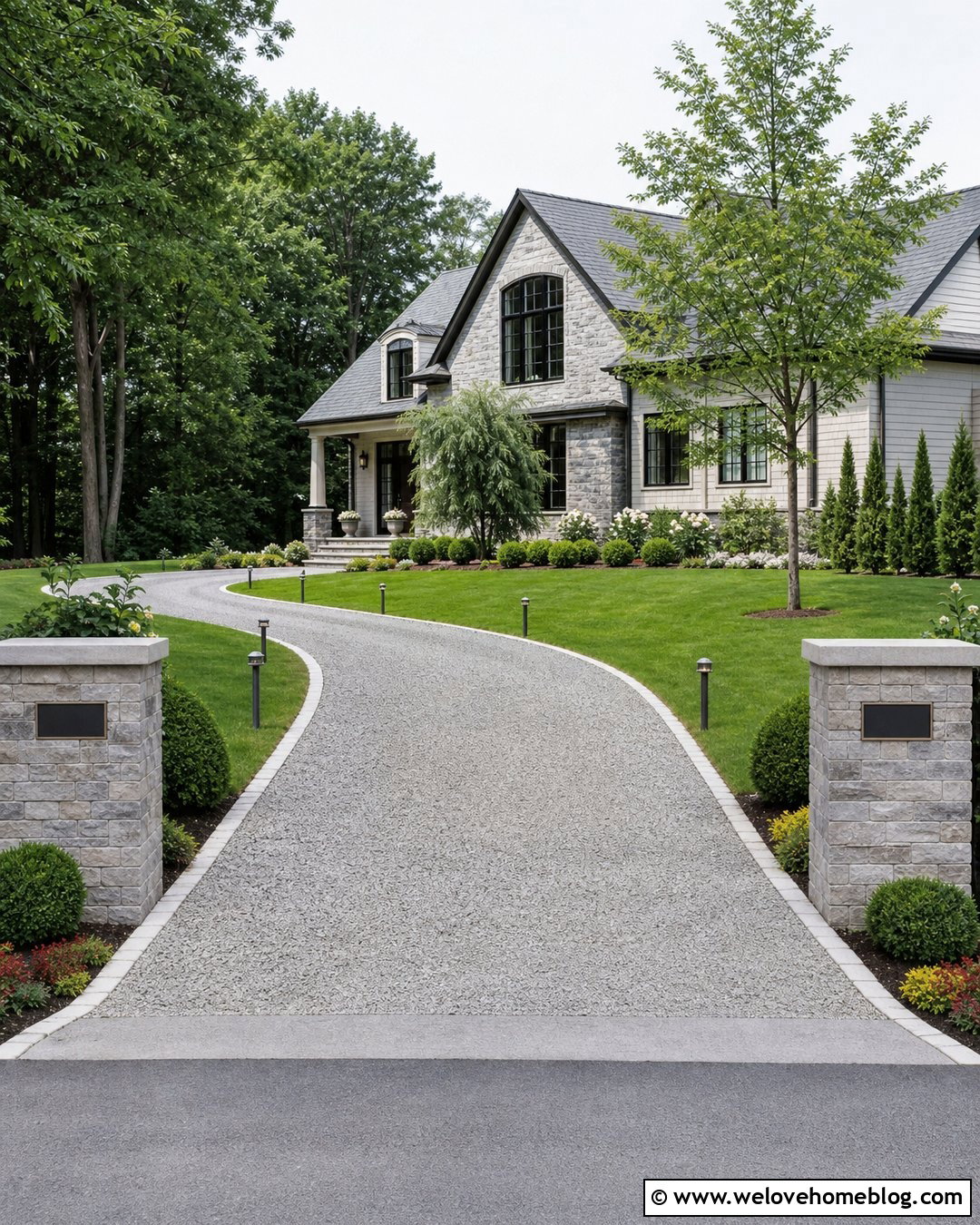
Low entrance lighting can emphasize a concrete border and make the driveway feel more complete from the curb. Choose warm gray gravel within a smooth pale concrete edge, using a straight or gently curved route toward the house. Position simple bollard lights or low landscape fixtures outside the concrete so they do not interrupt the driving surface. At the street, pair the border with concrete or masonry pillars containing an address plaque and restrained lighting. Continue the planting with compact shrubs, groundcover, and a few small trees that frame rather than hide the approach. During daylight, the repeated fixtures strengthen the driveway’s lines and add architectural detail. This complete design works with transitional, contemporary, and traditional homes, provided the fixture shape and pillar materials coordinate with the facade.
Conclusion:
The best **gravel driveway with concrete border ideas** balance appearance, vehicle access, drainage, and the architectural character of the home. Light gravel with dark concrete creates bold contrast, while similar tones produce a softer and more natural transition. Straight borders suit compact or formal properties, whereas curved edging can guide the driveway around lawns, trees, and layered planting beds. Concrete aprons, mow strips, center islands, and integrated drainage channels can also make the design more practical. Before installation, choose driveway gravel intended for vehicle traffic and coordinate the grading, base, border height, and water flow. With thoughtful planning, gravel and concrete can create a durable, defined entrance that improves the entire front yard.

Related posts:
Leave a Reply