
Brick paving brings warmth, texture, and lasting character to the front of a home. The best 20 Brick Paving Driveway Ideas go beyond choosing an attractive brick color. They combine a durable paving pattern with the right driveway shape, border, drainage plan, landscaping, and architectural style. Red clay can complement traditional homes, while charcoal or sand-toned brick creates a cleaner look for modern properties. Herringbone patterns add movement, running bond emphasizes length, and contrasting borders give the surface a polished frame. Thoughtful planting can soften large paved areas without making vehicle access difficult. Whether you have a narrow suburban lot or a spacious country property, the complete designs below offer practical and attractive 20 Brick Paving Driveway Ideas.

1. Red Brick Herringbone Driveway
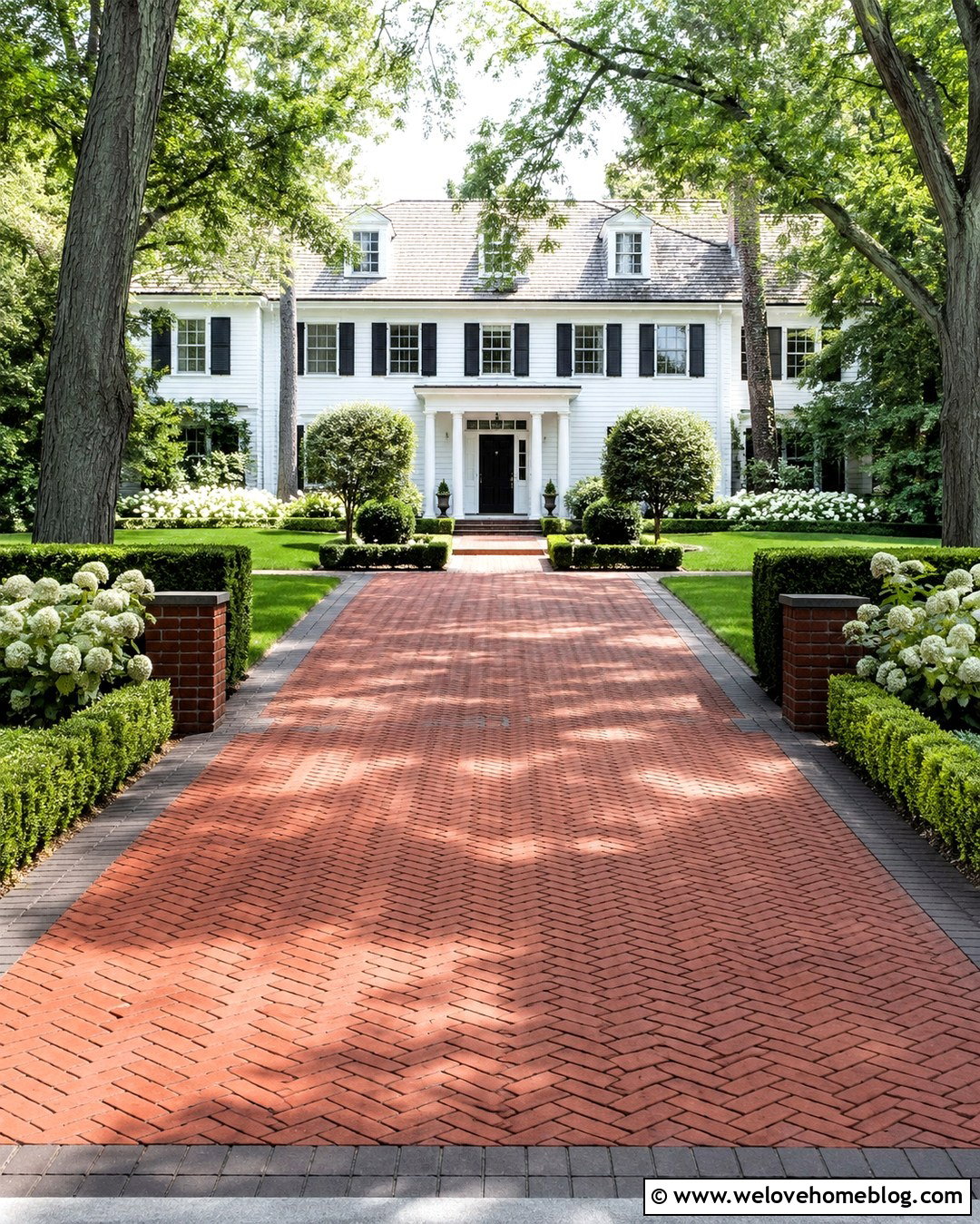
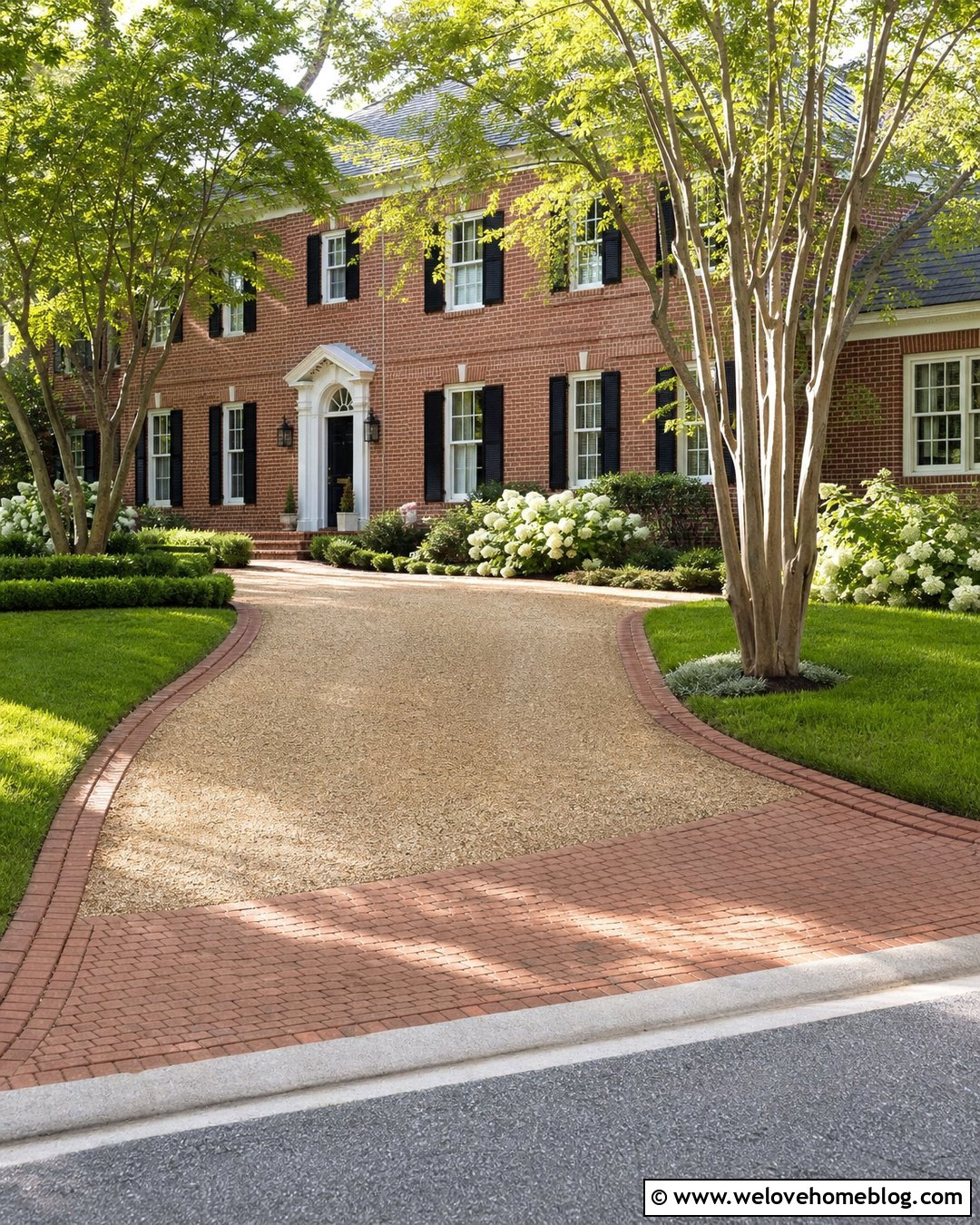
A red brick herringbone driveway delivers a traditional look with enough visual movement to keep the entrance interesting. Arrange rectangular clay brick pavers at 45 or 90 degrees, depending on the direction you want the eye to travel. A charcoal soldier-course border provides a crisp outline and makes the warm red surface feel more defined. Keep the driveway straight for a colonial or Georgian home, then connect it to a matching brick walkway near the porch. Low boxwood hedges, white hydrangeas, and a simple green lawn soften the paving without hiding it. Because herringbone involves many edge cuts, careful planning matters. A properly prepared, compacted base and strong edge restraints help the finished surface remain even under regular vehicle traffic.
2. Running Bond Brick Paver Driveway
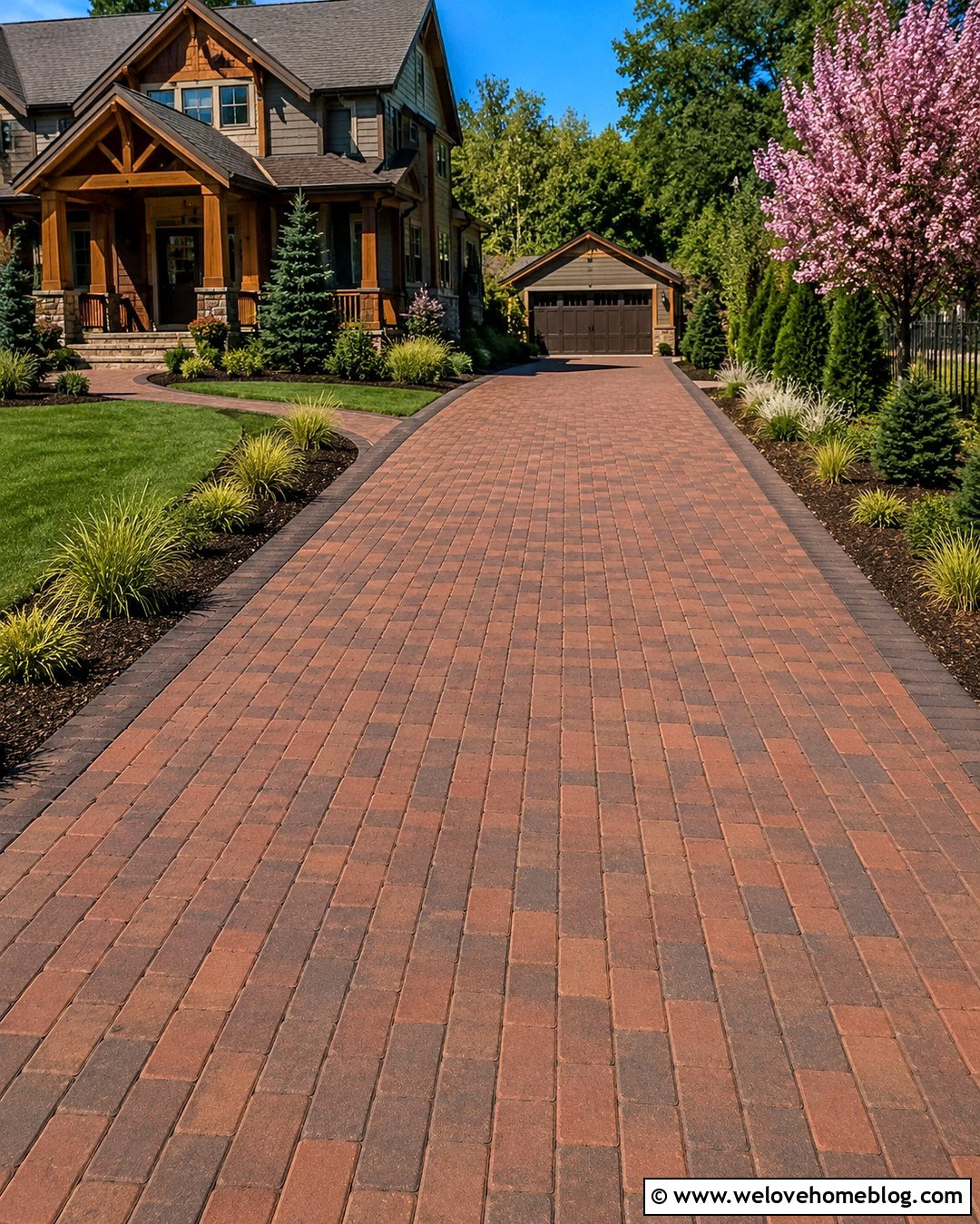
Long, narrow driveways often benefit from a running bond brick pattern. The staggered rows create clean horizontal or vertical lines without making the surface look overly decorative. Positioning the bricks lengthwise can visually extend the approach toward the garage, while laying them across the width can make a tight driveway appear broader. Choose earthy red and brown clay brick pavers for a craftsman home, then frame them with a darker brick border. A slim planting bed can hold ornamental grasses, compact evergreens, and seasonal flowers without reducing parking space. Continue the same bricks into a front walkway to create a connected landscape. Gentle curves are also possible because the staggered pattern can adapt to changing edges when the cuts and border course are carefully installed.
3. Basketweave Brick Paver Driveway
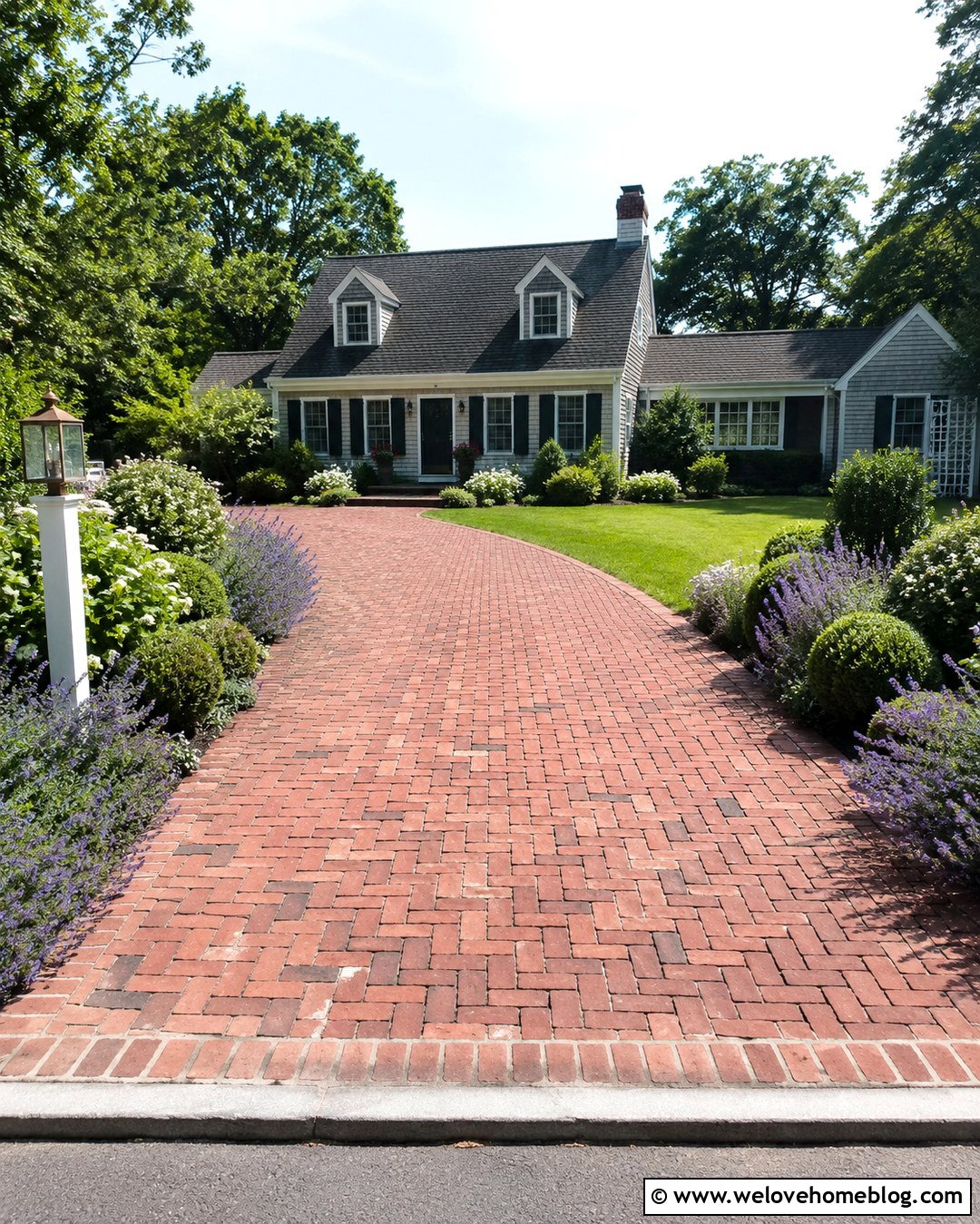
There is something welcoming about a basketweave driveway paired with a cottage or Cape Cod home. Alternating pairs of horizontal and vertical brick pavers create a pattern that resembles woven squares. The layout feels detailed, but its repeating geometry remains easy to understand from the curb. Use weathered red clay bricks for traditional character, or choose tan and brown bricks for a softer, more relaxed palette. A single soldier-course border keeps the pattern contained and separates it from the lawn. Curved flower beds filled with lavender, catmint, dwarf shrubs, and white blooms can echo the driveway’s friendly appearance. Basketweave works especially well on a compact, straight layout where the entire pattern remains visible. Avoid too many additional inlays, since the paving already provides plenty of texture.
4. Curved Brick Paver Driveway
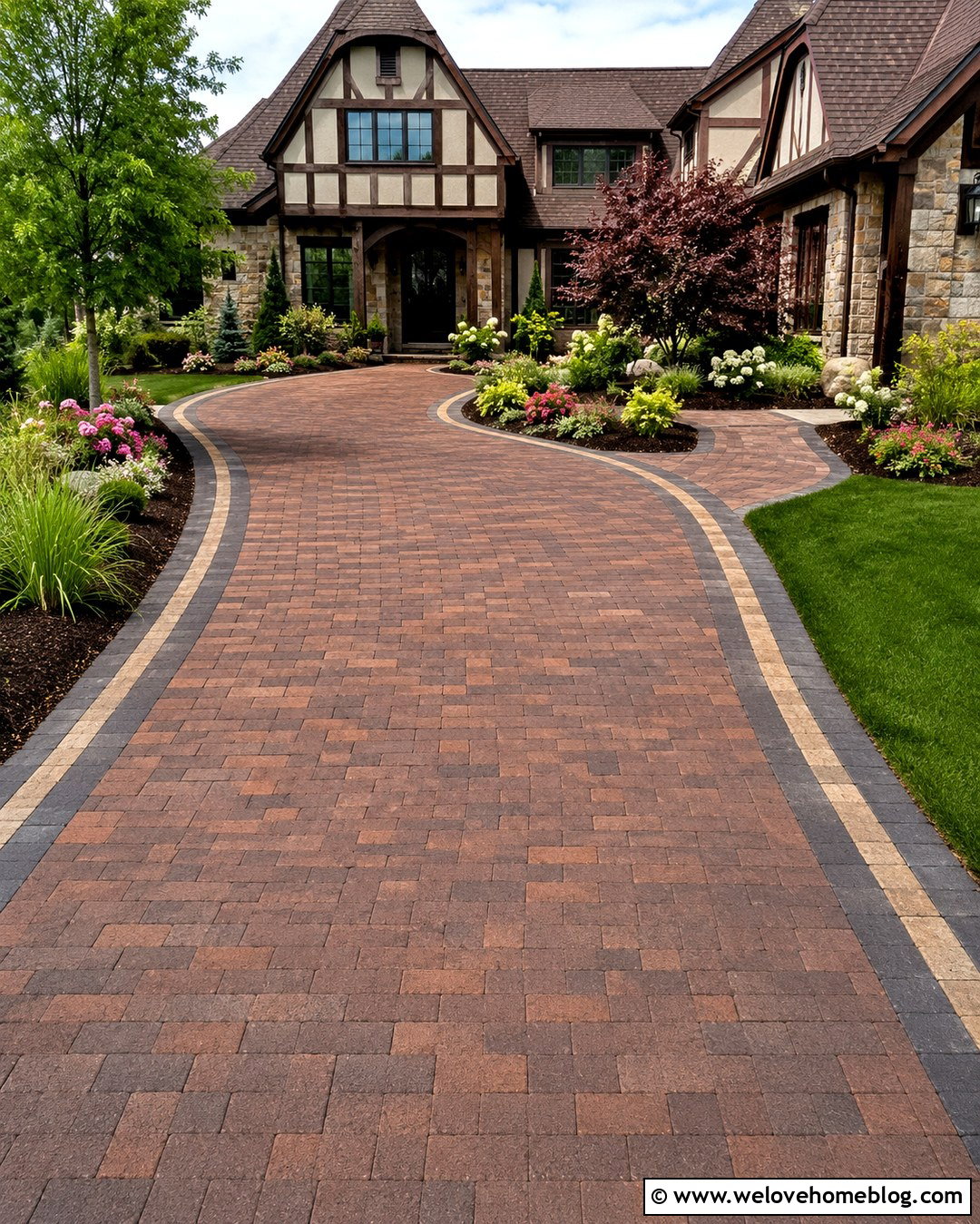
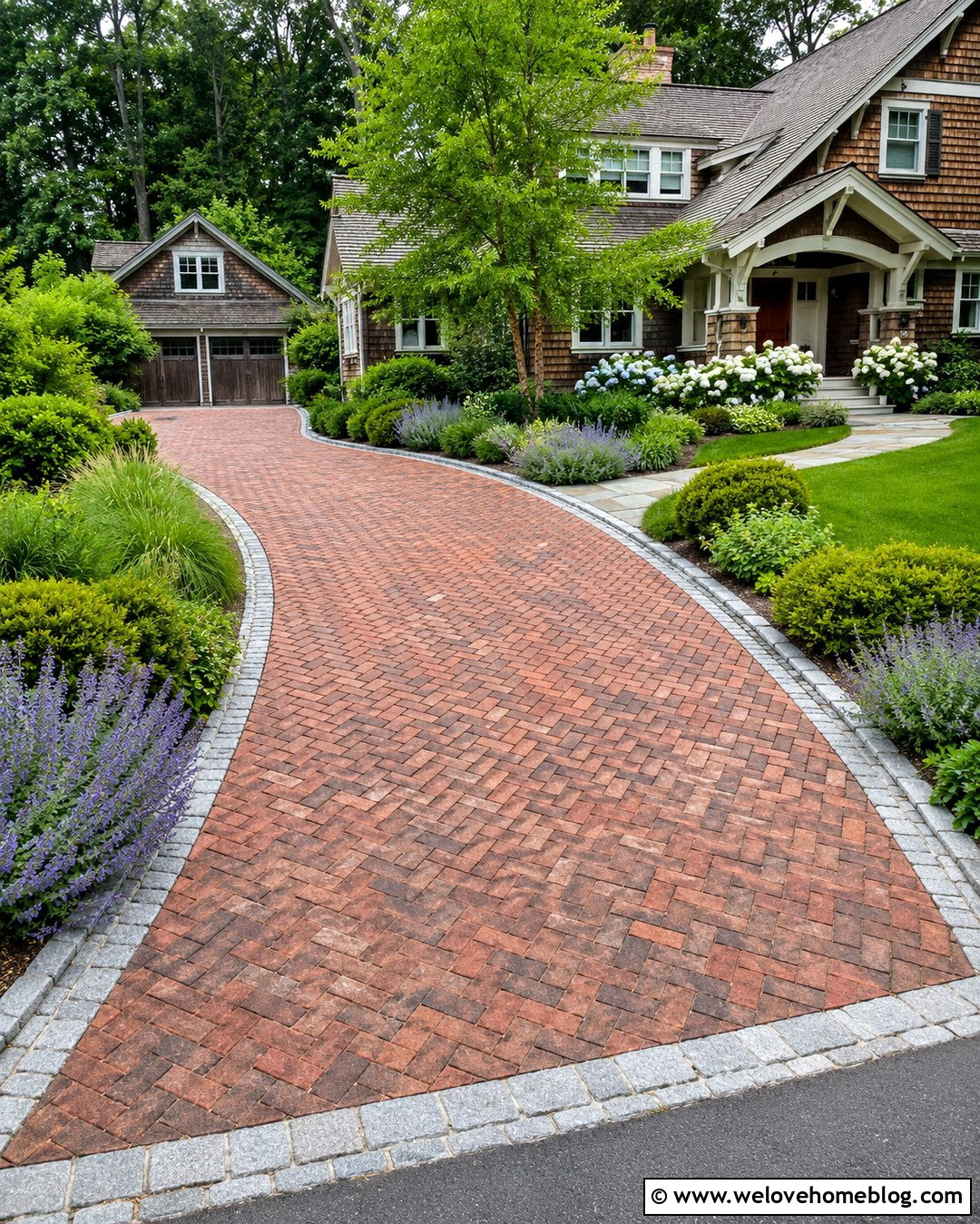
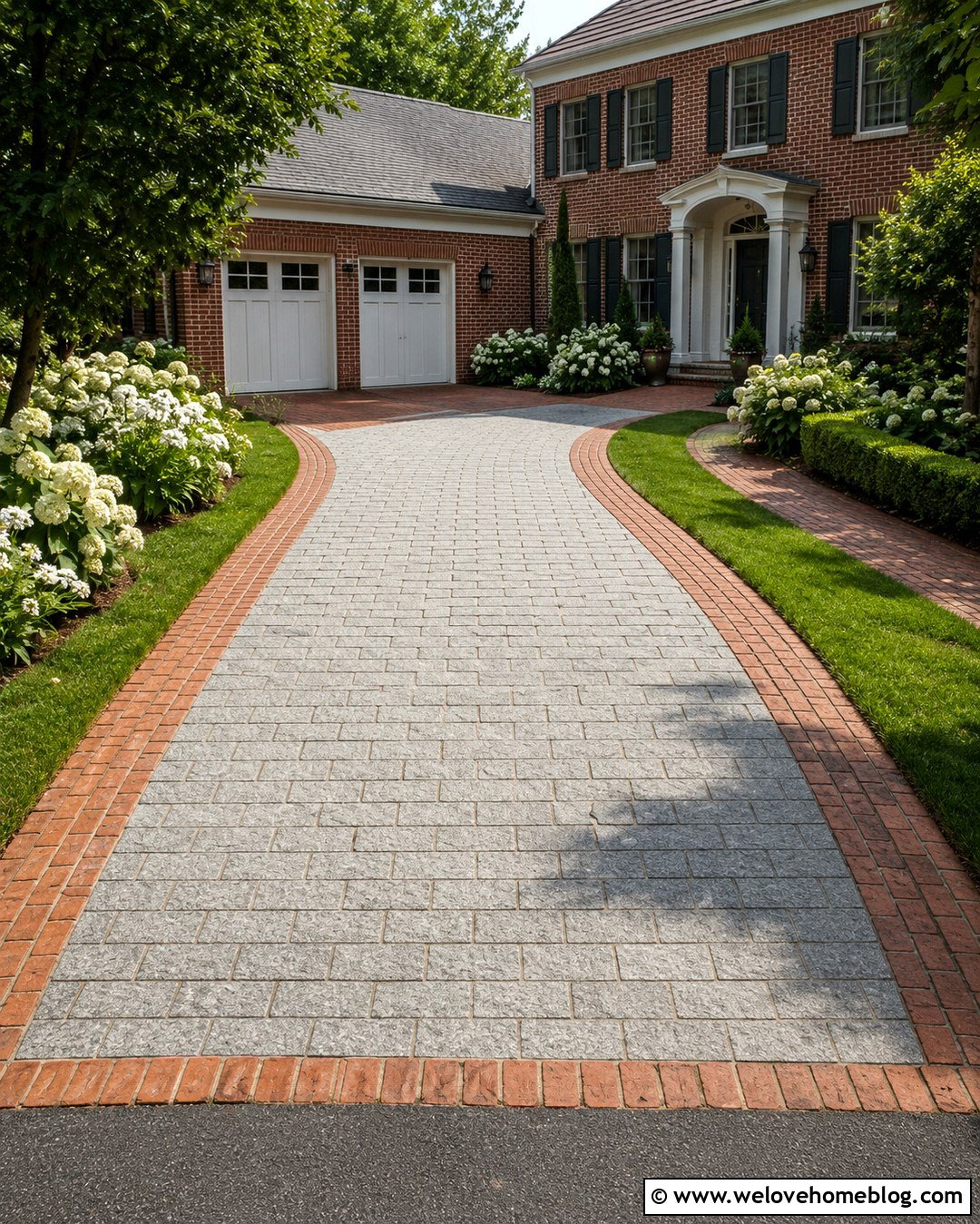
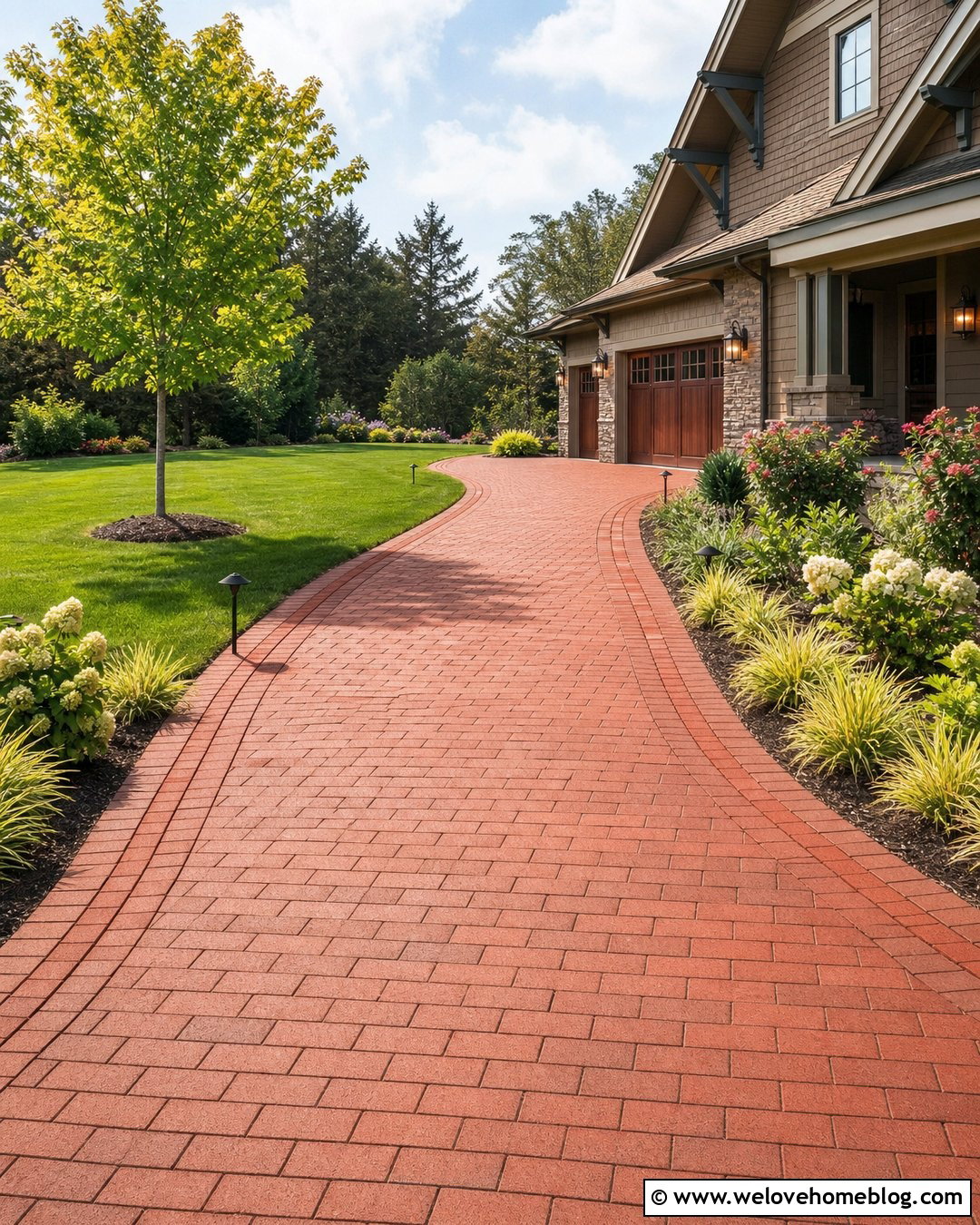
A curved brick paver driveway can make the approach feel more natural while revealing the home gradually. Warm brown and burgundy clay bricks laid in a running bond pattern follow a gentle curve without creating an overly busy surface. Add a double border using charcoal bricks on the outside and a narrow tan accent course inside. The contrasting lines emphasize the driveway’s shape and guide vehicles toward the garage. Plant the wider side of the curve with a layered bed of ornamental trees, flowering shrubs, grasses, and ground cover. Keep plants low near the street so drivers have a clear view when entering and leaving. A matching curved walkway can branch toward the front door. This complete layout suits craftsman, Tudor, and traditional homes with generous front yards.
5. Circular Brick Paver Driveway
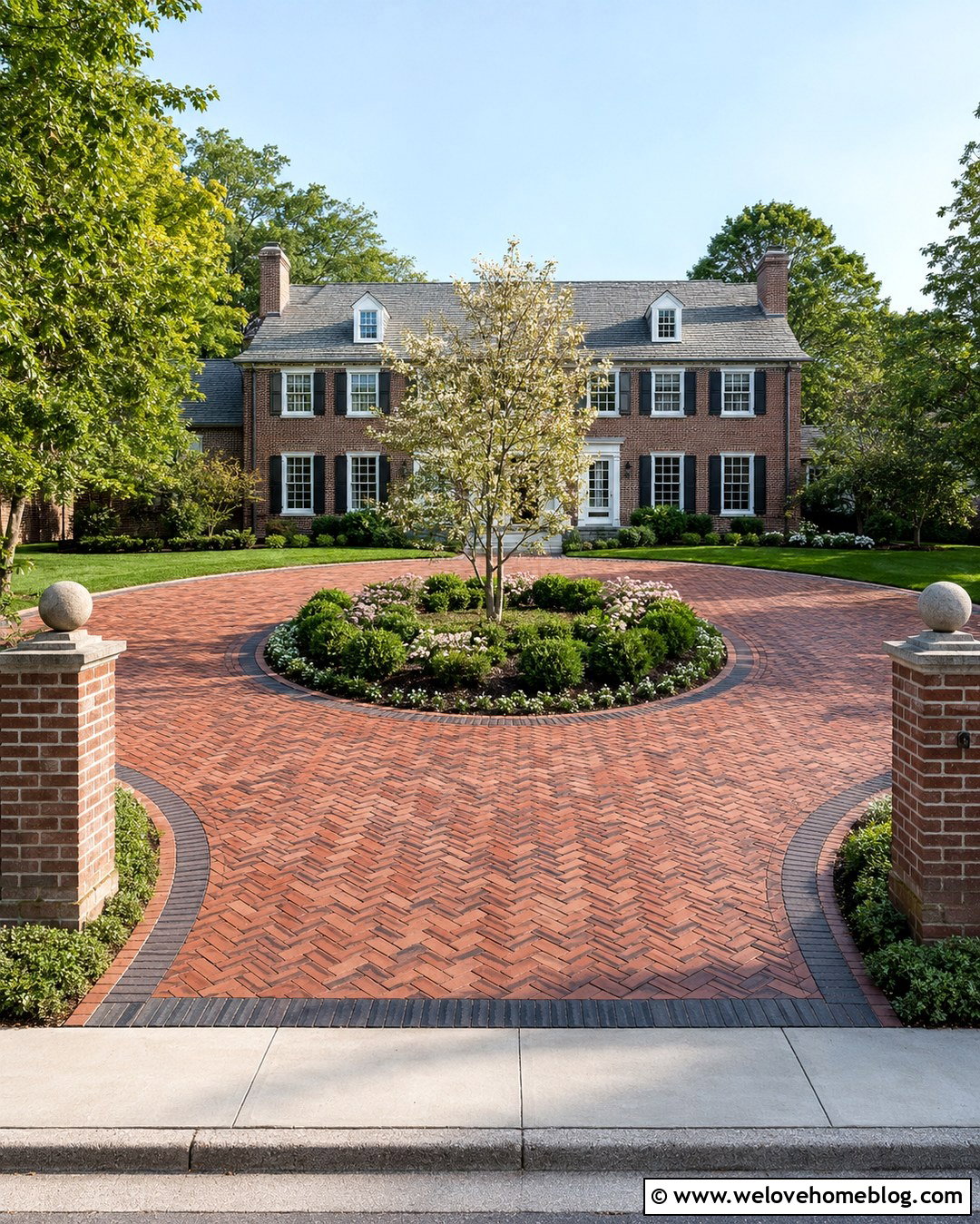
A circular brick paver driveway creates a convenient arrival area and a strong front-yard focal point. Use red and brown clay brick pavers in a herringbone field, then define the circle with a dark brick soldier-course border. A landscaped center island keeps the large paved space from feeling empty. One small ornamental tree, such as a serviceberry, can provide height, while low evergreen shrubs and flowering perennials add year-round structure. Leave enough open space around the island for comfortable vehicle movement and access to the front entrance. Brick pillars at the street can visually mark both openings without making the entrance feel closed. This driveway looks especially appropriate in front of colonial, Georgian, and country homes, where symmetry and traditional materials naturally complement the architecture.
6. Modern Gray Brick Paver Driveway
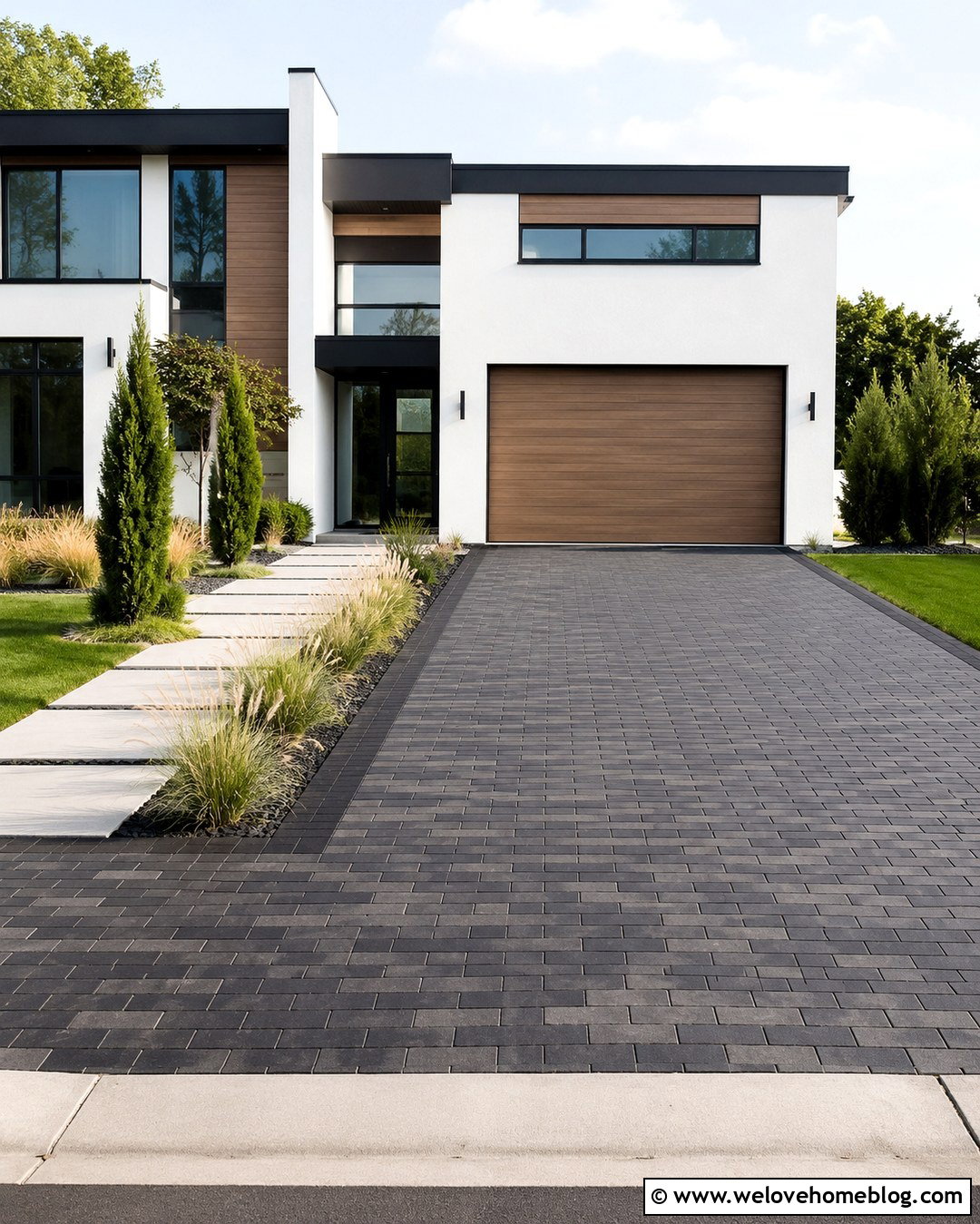
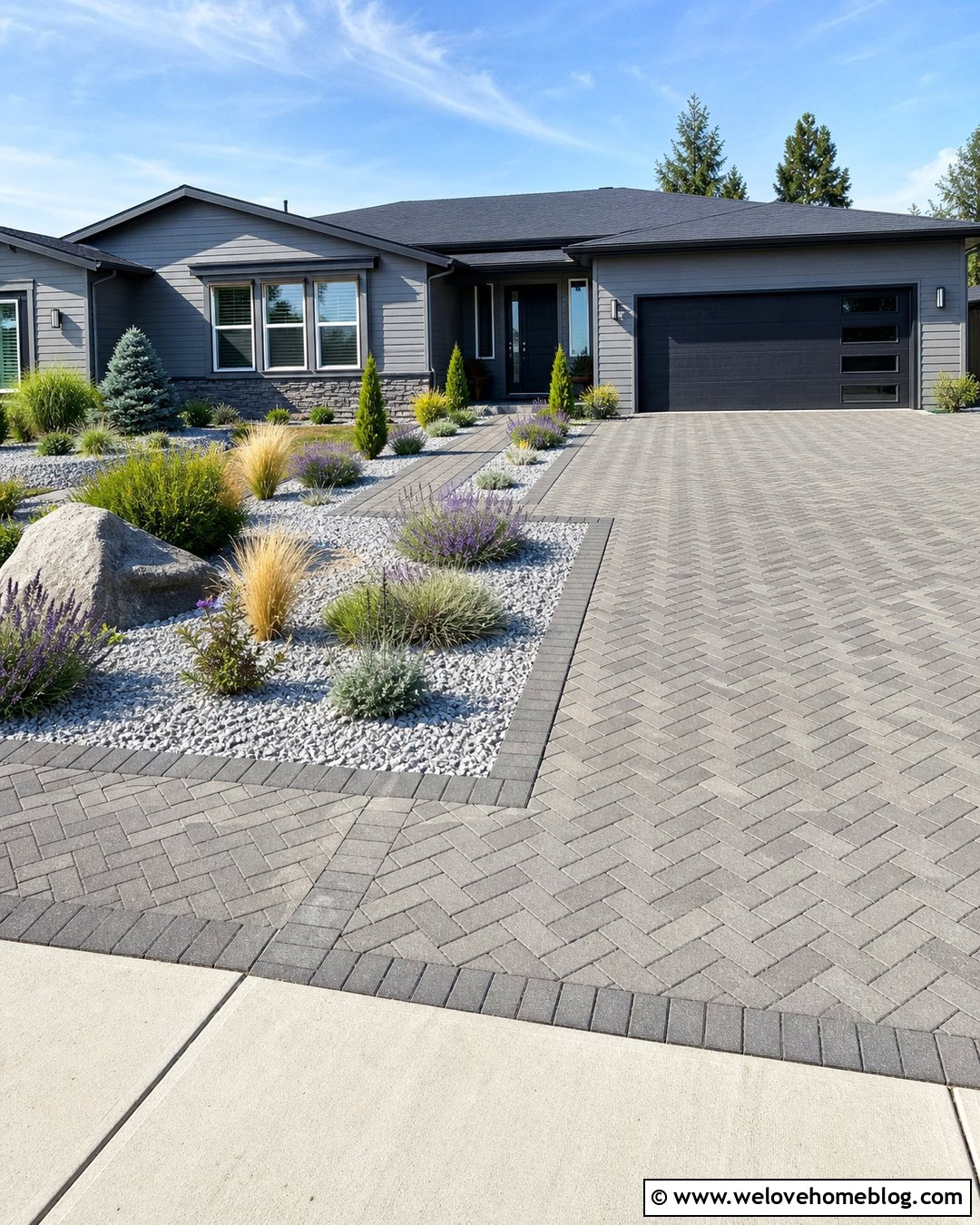
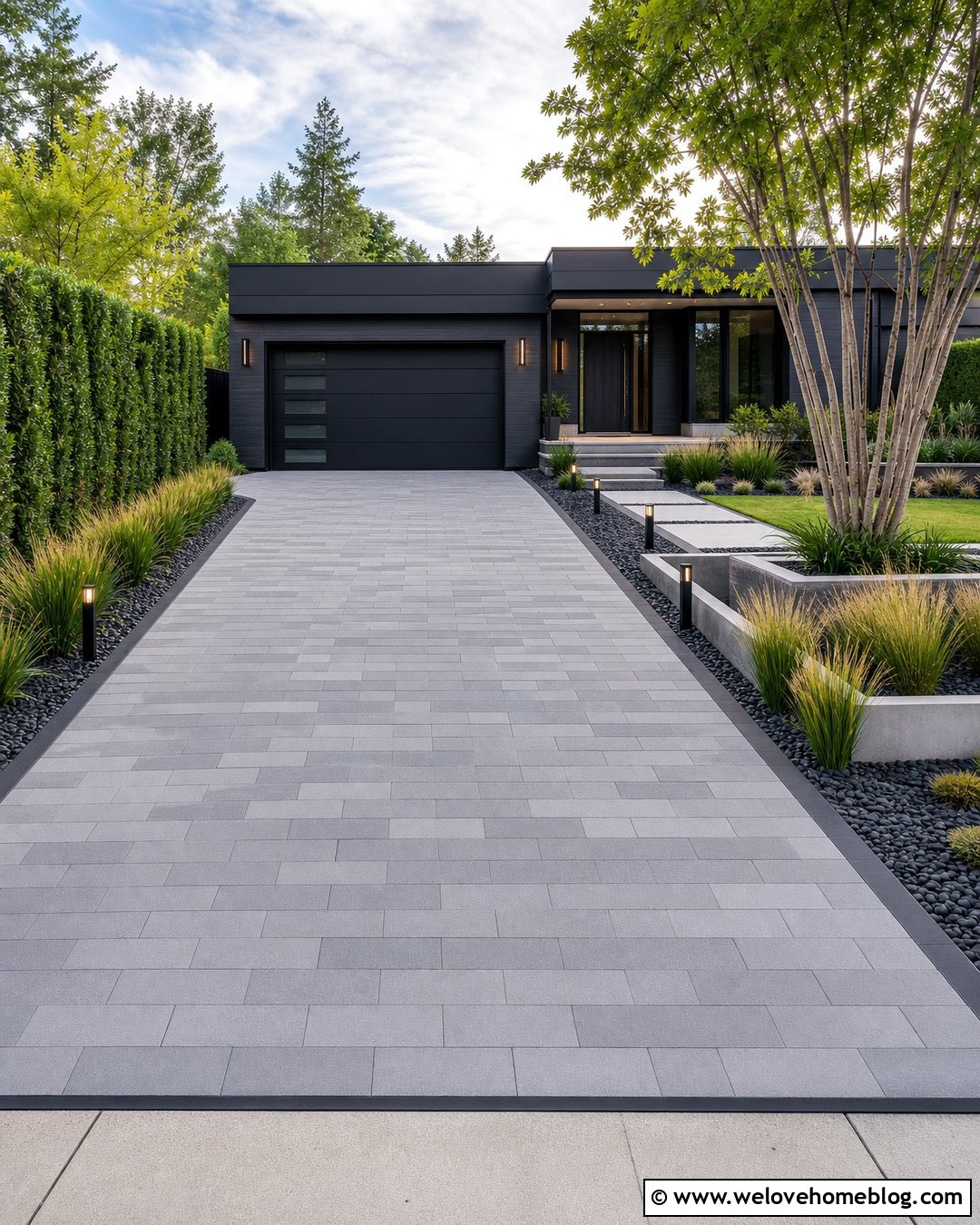
Brick paving does not need to look rustic or old-fashioned. Smooth charcoal and medium-gray brick pavers can create a clean driveway for a modern home. Lay the bricks in a straight stacked pattern or a restrained running bond, keeping joints and edges visually consistent. A narrow black brick border strengthens the rectangular layout without introducing another material. Break up a wide driveway with one or two slim planting strips positioned where they will not interfere with tires. Feather reed grass, compact shrubs, and sculptural evergreens fit the streamlined setting. Large concrete stepping pads can form the walkway, but the driveway should remain entirely brick paved. Pair the cool surface with a white, black, or natural wood facade. Minimal planting and precise geometry allow the brick texture to remain the main feature.
7. Reclaimed Brick Paver Driveway
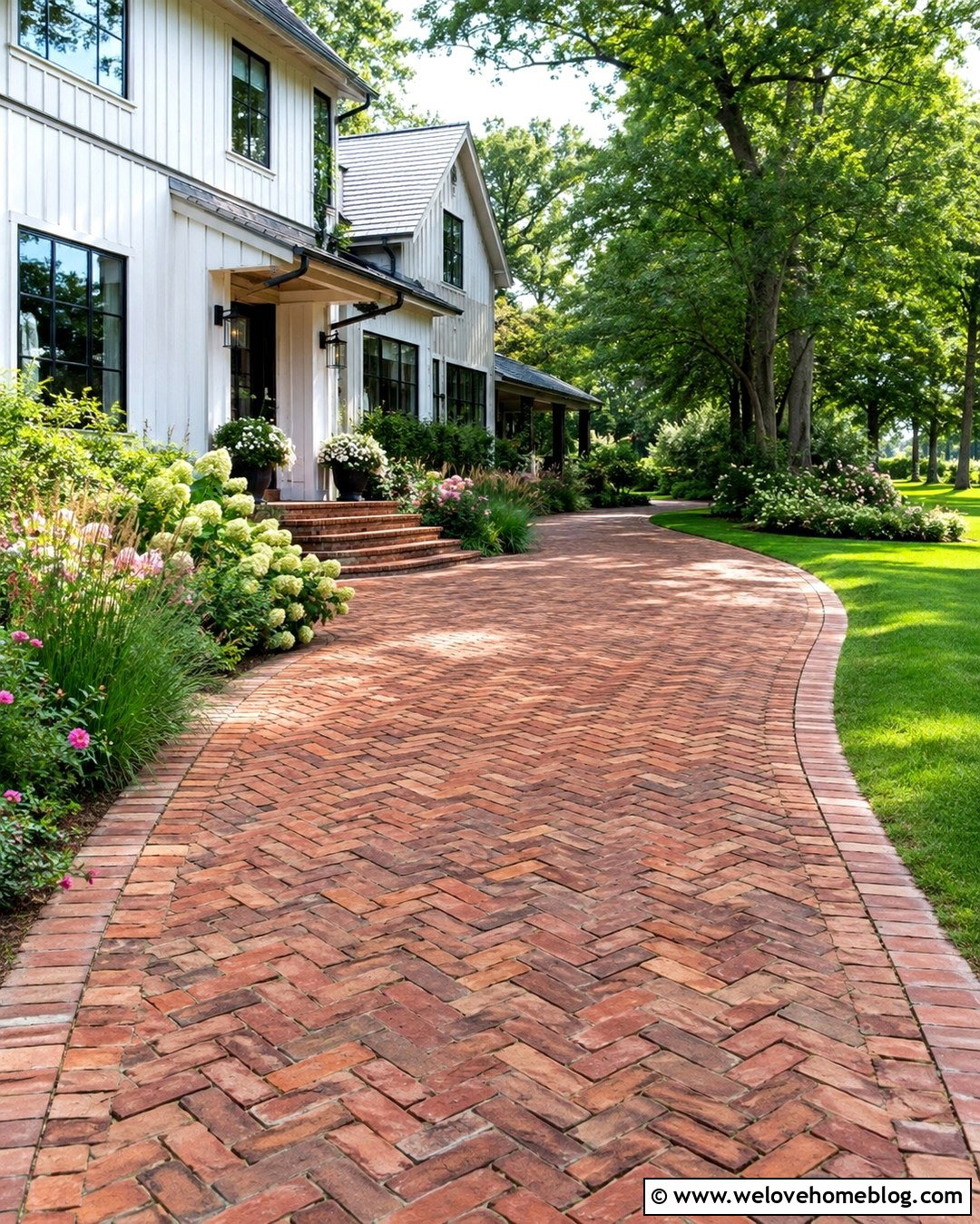
Uneven color is part of the appeal of a reclaimed brick paver driveway. A mixture of faded red, brown, orange, and deep burgundy bricks gives the entrance an established appearance that works beautifully with farmhouse and historic-inspired homes. Lay the bricks in a herringbone pattern to organize the varied colors, then add a simple rowlock or soldier-course border. A gently curved layout enhances the aged character and prevents the design from feeling too rigid. Surround it with loose planting beds containing hydrangeas, roses, salvia, and ornamental grasses. Reclaimed brick should still be suitable for paving and capable of handling the intended use. Sort the material before installation so colors and surface wear are distributed evenly. Matching brick steps or a short garden path can complete the cohesive, timeworn look.
8. Brick Paver Driveway With Dark Border
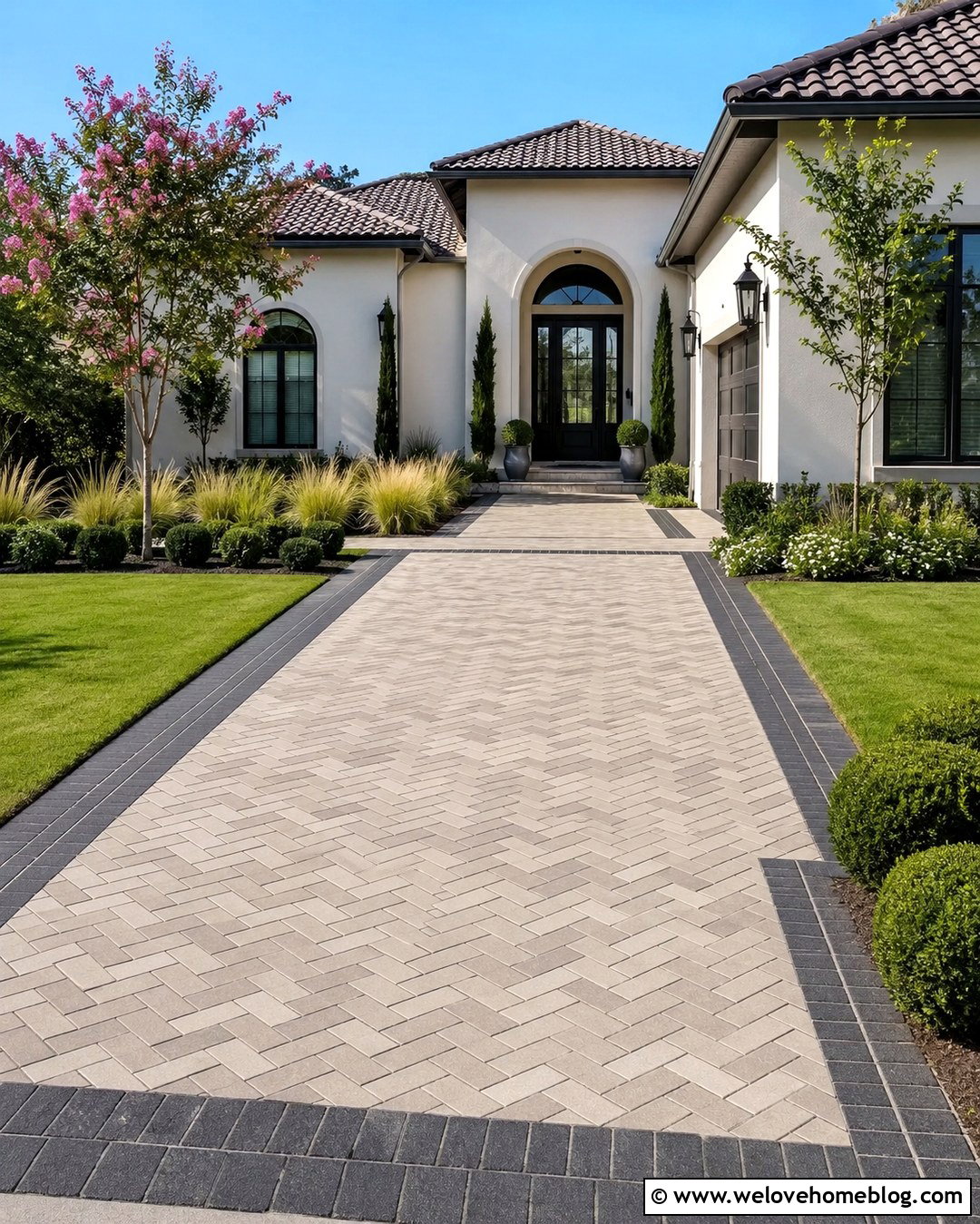
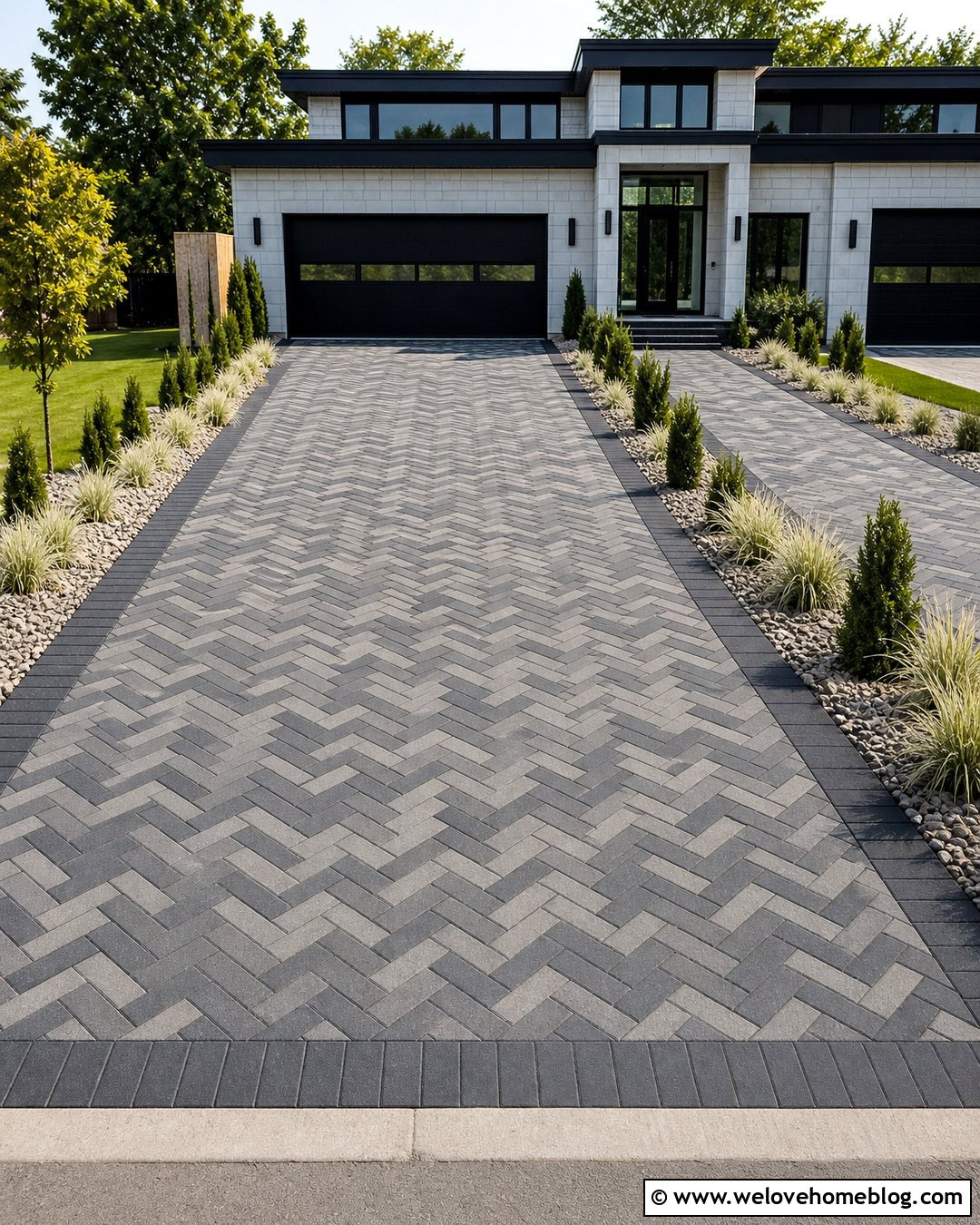
A dark border can give a light brick driveway a sharper and more finished appearance. Start with sand, cream, or pale brown clay brick pavers laid in a 45-degree herringbone pattern. Frame the entire surface with two rows of charcoal brick pavers placed in a soldier course. The darker edge clearly separates the driveway from lawns, beds, and walkways while drawing attention to its shape. This combination works well on a straight suburban driveway leading to a light stucco or painted brick home. Use neatly clipped shrubs, soft ornamental grasses, and a small flowering tree to balance the strong border lines. Repeating the charcoal brick around the front walkway helps connect the entrance. Keep other hardscape colors limited so the light field and dark frame remain the dominant design.
9. Brick Paver Driveway With Stone Edging
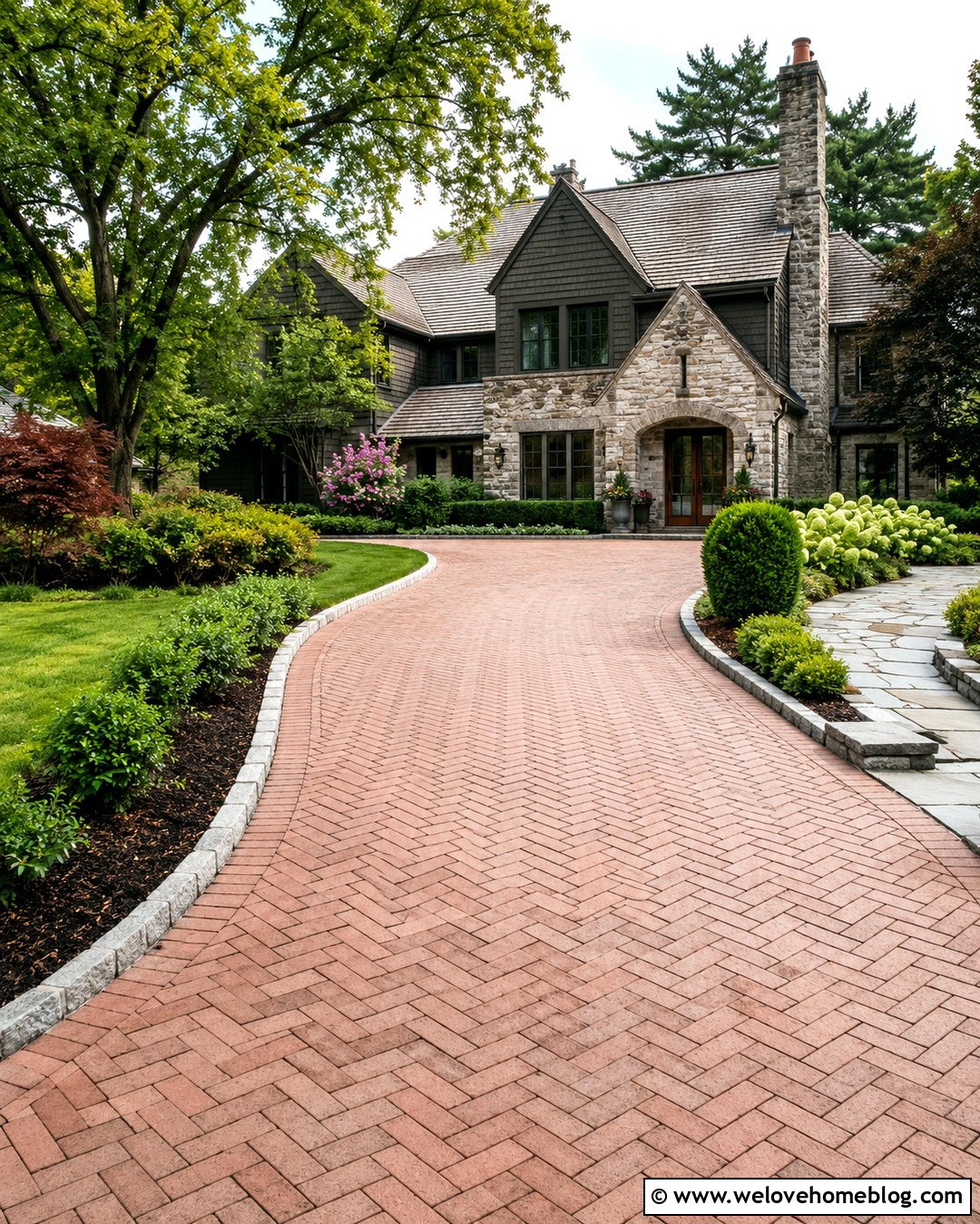
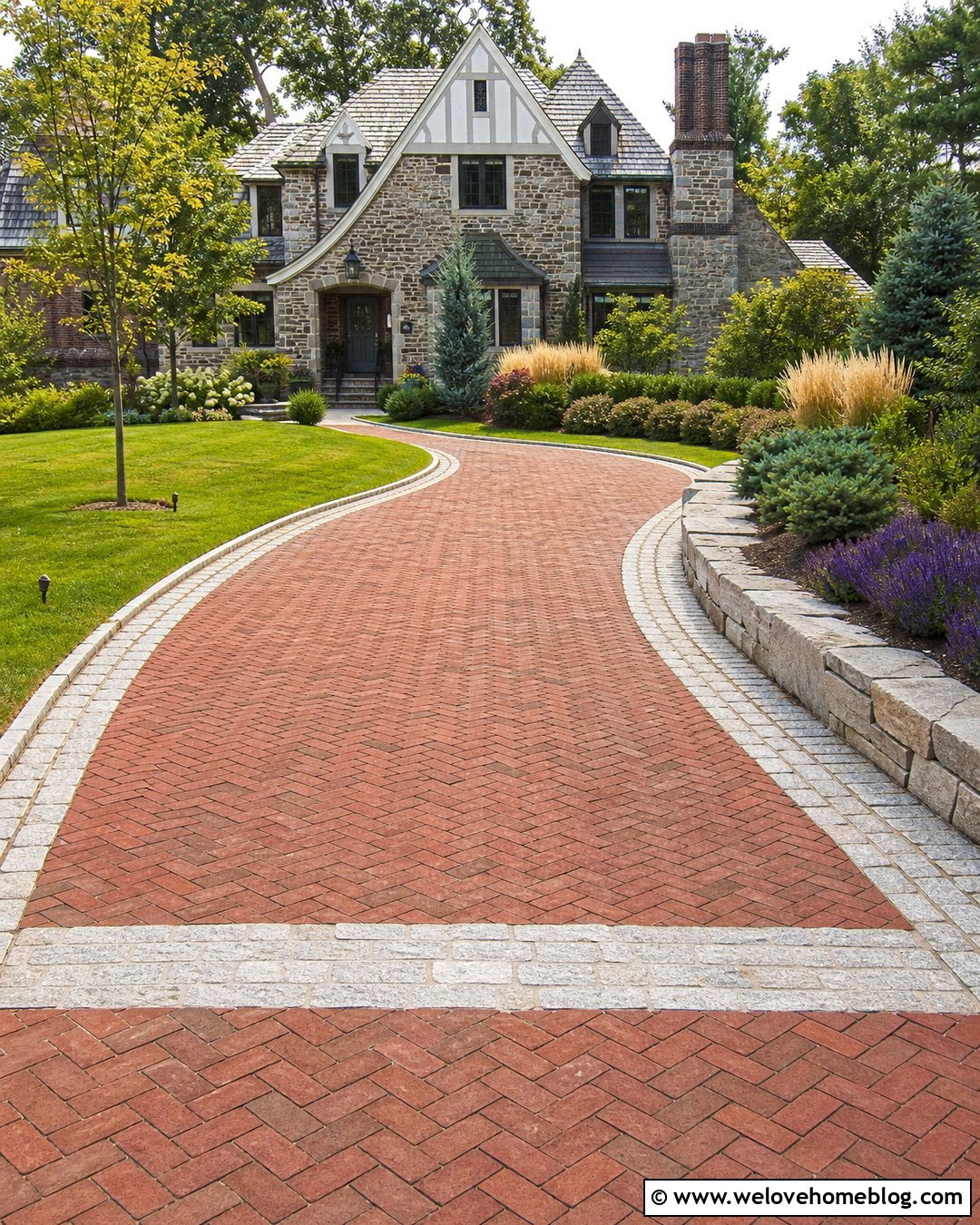
Natural stone edging adds weight and texture to a brick paver driveway without competing with the main surface. Use warm red clay bricks in a running bond or herringbone pattern, then outline the driveway with gray granite setts or small cobblestones. The cool stone creates a distinct transition between the brick and surrounding landscape. It also looks appropriate beside a stone farmhouse, Tudor home, or craftsman exterior with a masonry foundation. Follow a gently curved layout and widen the planting beds near the house. Layer compact evergreens, flowering shrubs, and ground covers against the stone edge. A few matching granite accents around the walkway can unify the design. Select edging with a comfortable, low profile near vehicle doors and walking areas, while maintaining a clearly defined boundary along lawns and garden beds.
10. Brick Paver Driveway With Grass Strips
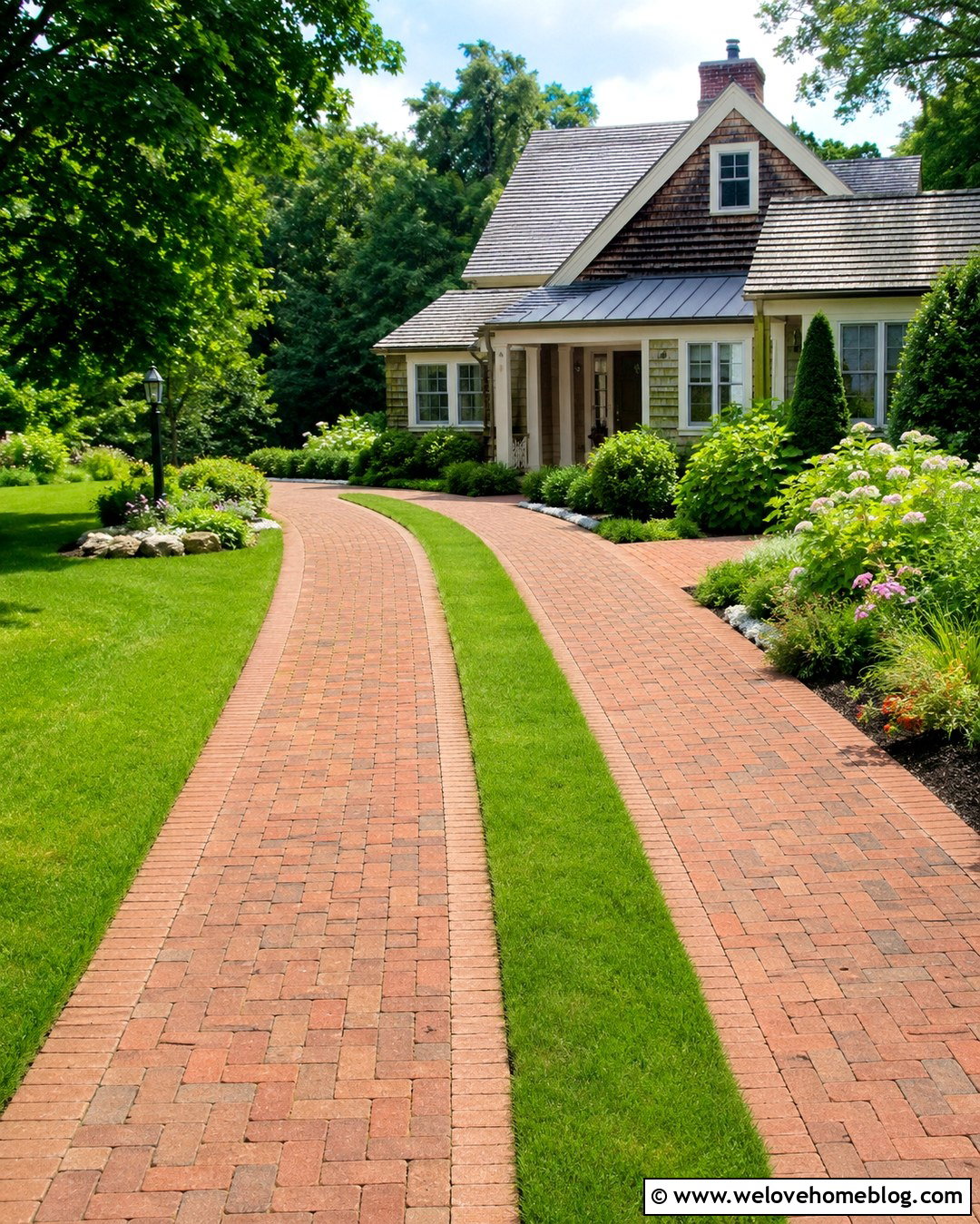
Grass strips can reduce the visual weight of a brick driveway and introduce more green space into a compact front yard. Lay red or brown clay brick pavers in two broad wheel tracks, with a durable grass strip running between them. Add brick shoulders outside the tracks to provide extra room for parking and turning. A simple running bond pattern supports the long, linear layout, while matching soldier-course edges create a clean frame. This look works especially well with cottages, farmhouses, and relaxed ranch homes. Continue the central green line into a wider lawn near the street for a seamless transition. Choose turf suited to local sunlight and traffic conditions, and make maintenance access easy. Proper grading is important so water does not collect where the grass and brick surfaces meet.
11. Brick Paver Driveway With Gravel Accent

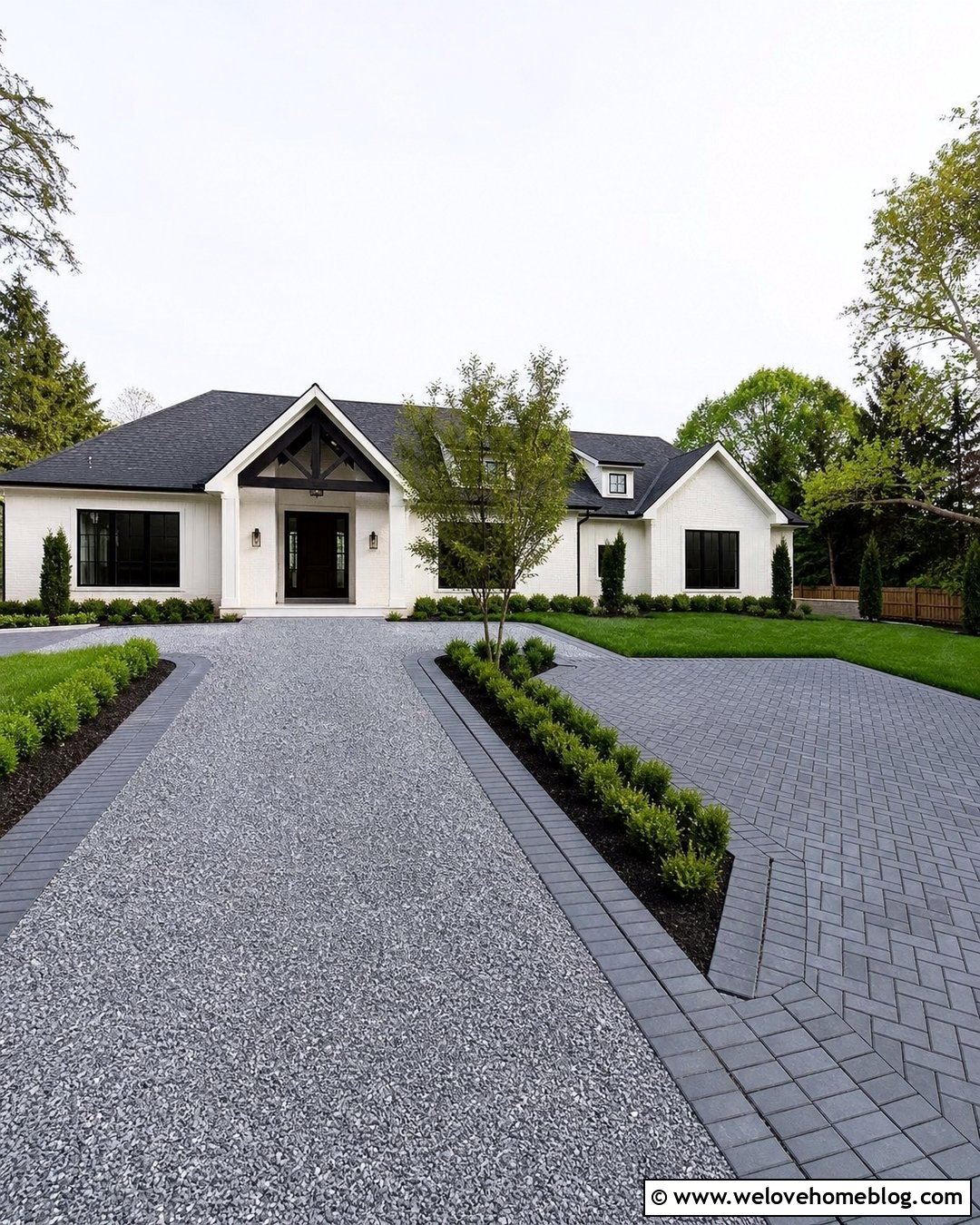
Combining brick paving with gravel can create a relaxed driveway while keeping the primary driving and parking areas well defined. Use weathered red clay brick pavers for the main surface, then introduce narrow bands of compacted gray gravel along the outer edges or around a landscaped turning area. A herringbone brick pattern gives the driveway structure, while the loose stone adds a softer country texture. Steel or stone restraints should clearly separate the materials and reduce gravel migration. Frame the layout with lavender, low grasses, rosemary, and drought-tolerant shrubs where the climate allows. This complete look complements farmhouse, cottage, and rustic craftsman homes. Repeat a small amount of gravel in nearby garden beds so the accent feels intentional. Keep the transition smooth near walkways and garage thresholds for comfortable everyday use.
12. Brick Paver Driveway With Center Medallion
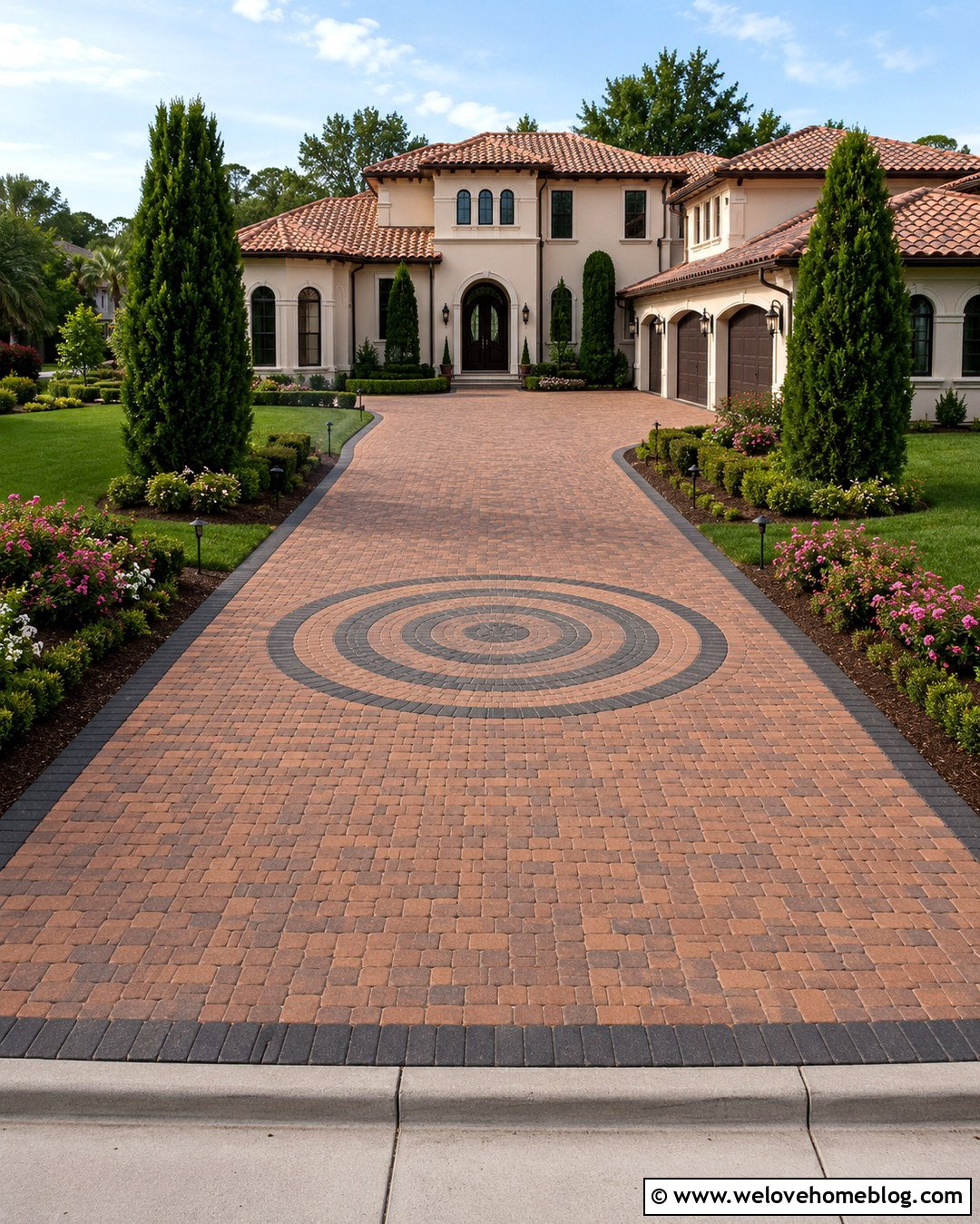
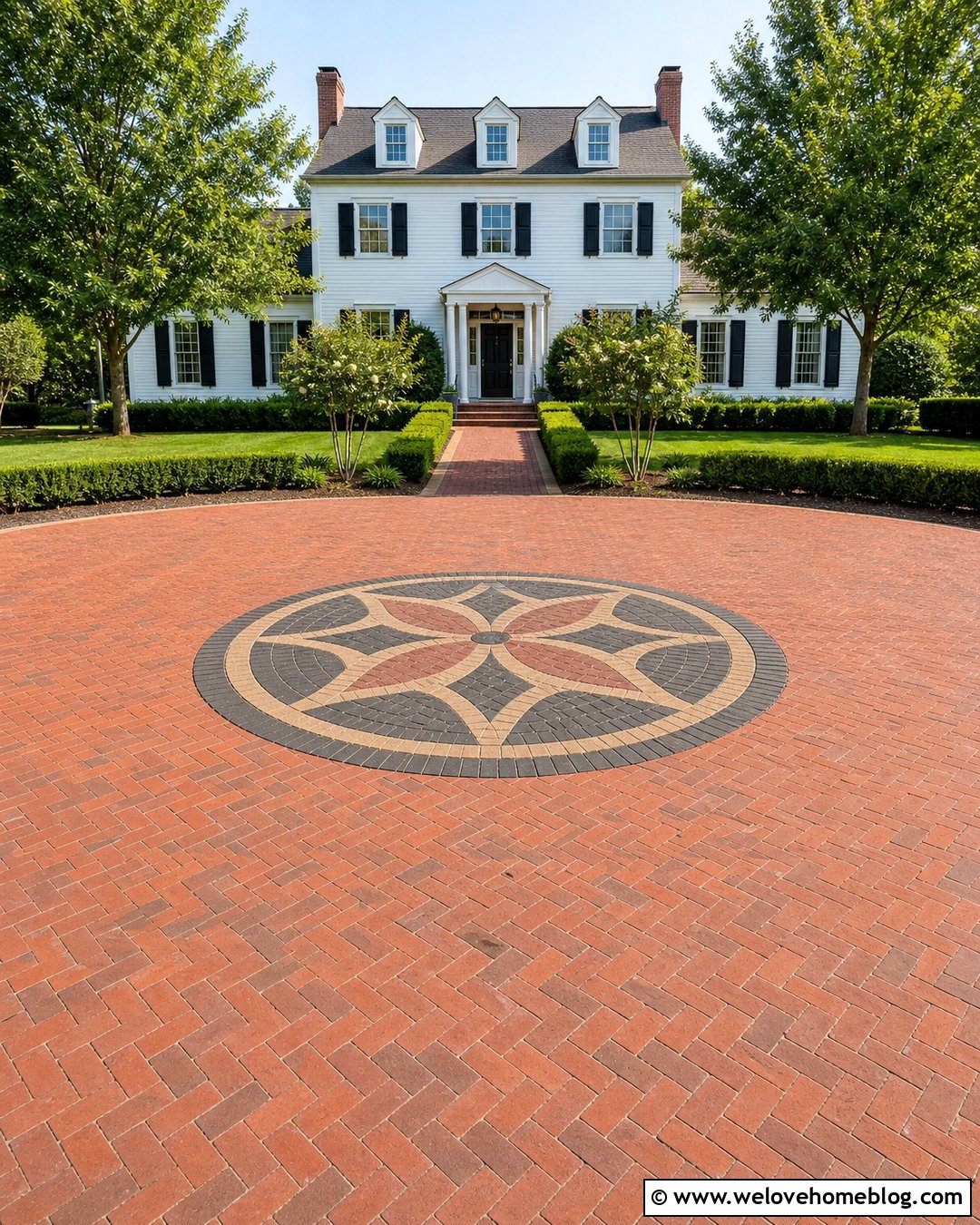
A brick medallion can turn a wide driveway into a more organized and memorable entrance. Begin with muted red and brown brick pavers in a simple running bond pattern. Place a circular medallion near the main parking court, using charcoal and tan bricks arranged in concentric rings or a fan pattern. A matching dark border around the driveway connects the focal detail to the perimeter. Keep the surrounding landscaping symmetrical so it supports rather than distracts from the center feature. Pairs of evergreen shrubs, flowering beds, and low pathway lights can frame the approach to a traditional or Mediterranean-inspired home. Scale matters with decorative inlays. The circle should be large enough to read from the curb but should not overwhelm the brick field or complicate normal vehicle positioning.
13. Brick Paver Driveway With Double Border

A double border adds depth to brick paving while giving the driveway a tailored outline. Choose medium-red clay brick pavers in a herringbone field. Surround them with one narrow course of tan brick followed by a wider charcoal soldier course. The two contrasting lines create a smooth visual transition between the main paving and the landscape. This treatment can make a basic straight driveway look more substantial without changing its practical footprint. Pair it with a craftsman or transitional home featuring warm siding, stone details, or dark trim. Low boxwoods, ornamental grasses, and seasonal flowers can follow the border without crowding the driving area. Carry the same two-color frame around the front walkway or entry landing. Consistent colors and border widths will help the entire front landscape look planned rather than pieced together.
14. Brick Paver Driveway With Matching Walkway

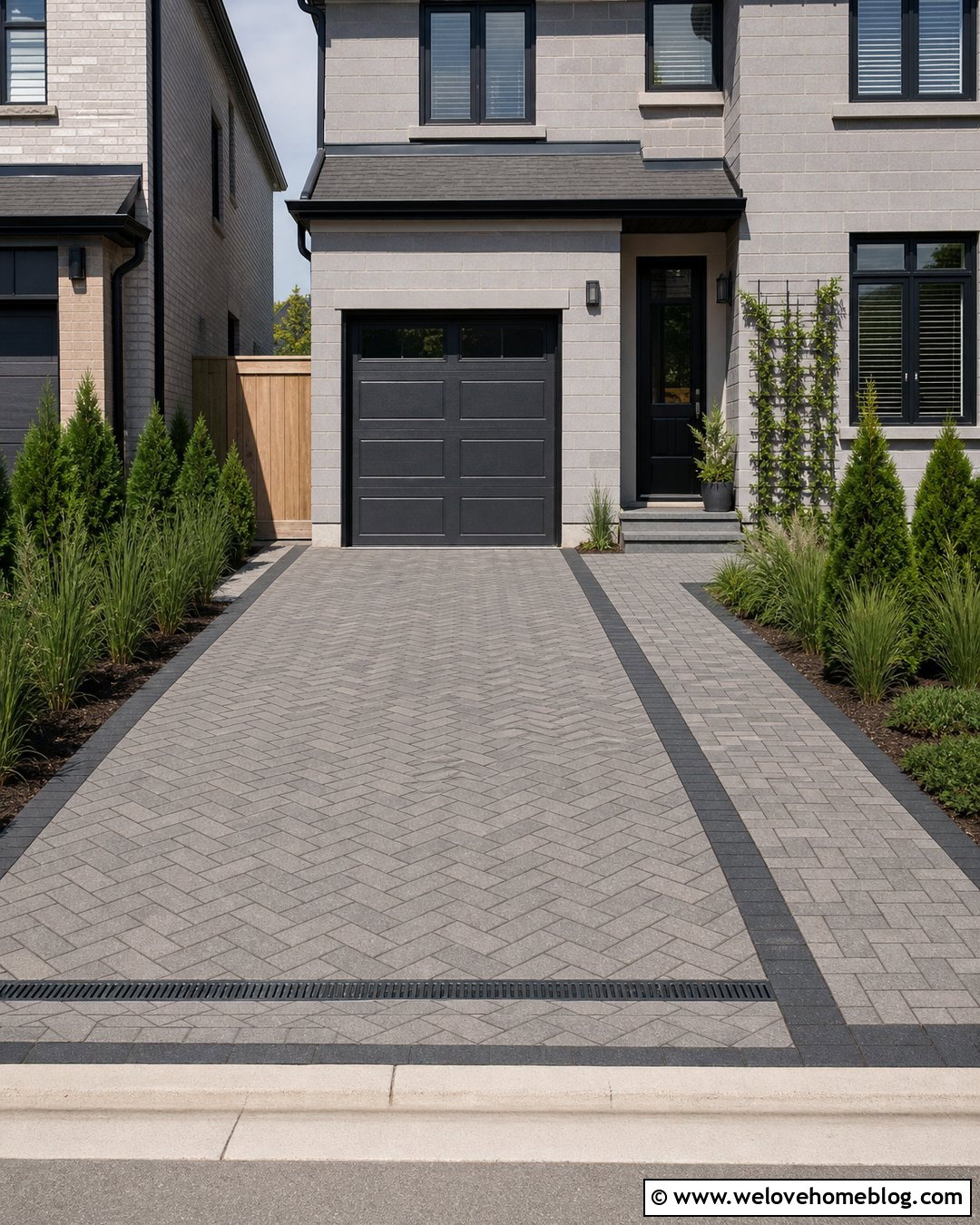
Connecting the driveway and front path with matching brick creates a unified entrance from the street to the door. Cover the driveway with red-brown clay brick pavers in a 45-degree herringbone pattern. Near the garage, branch off a narrower running bond walkway using the same bricks and border color. The pattern change distinguishes the pedestrian route while maintaining a consistent material palette. Add a charcoal soldier-course border around both surfaces to make the transition easy to see. Layer hydrangeas, compact evergreens, and flowering perennials along the path, leaving the driveway edges more open. This arrangement works for colonial, Cape Cod, and traditional suburban homes. Slightly widening the walkway where it meets the driveway can create a comfortable arrival point and prevent the connection from looking narrow or accidental.
15. Small Brick Paver Driveway
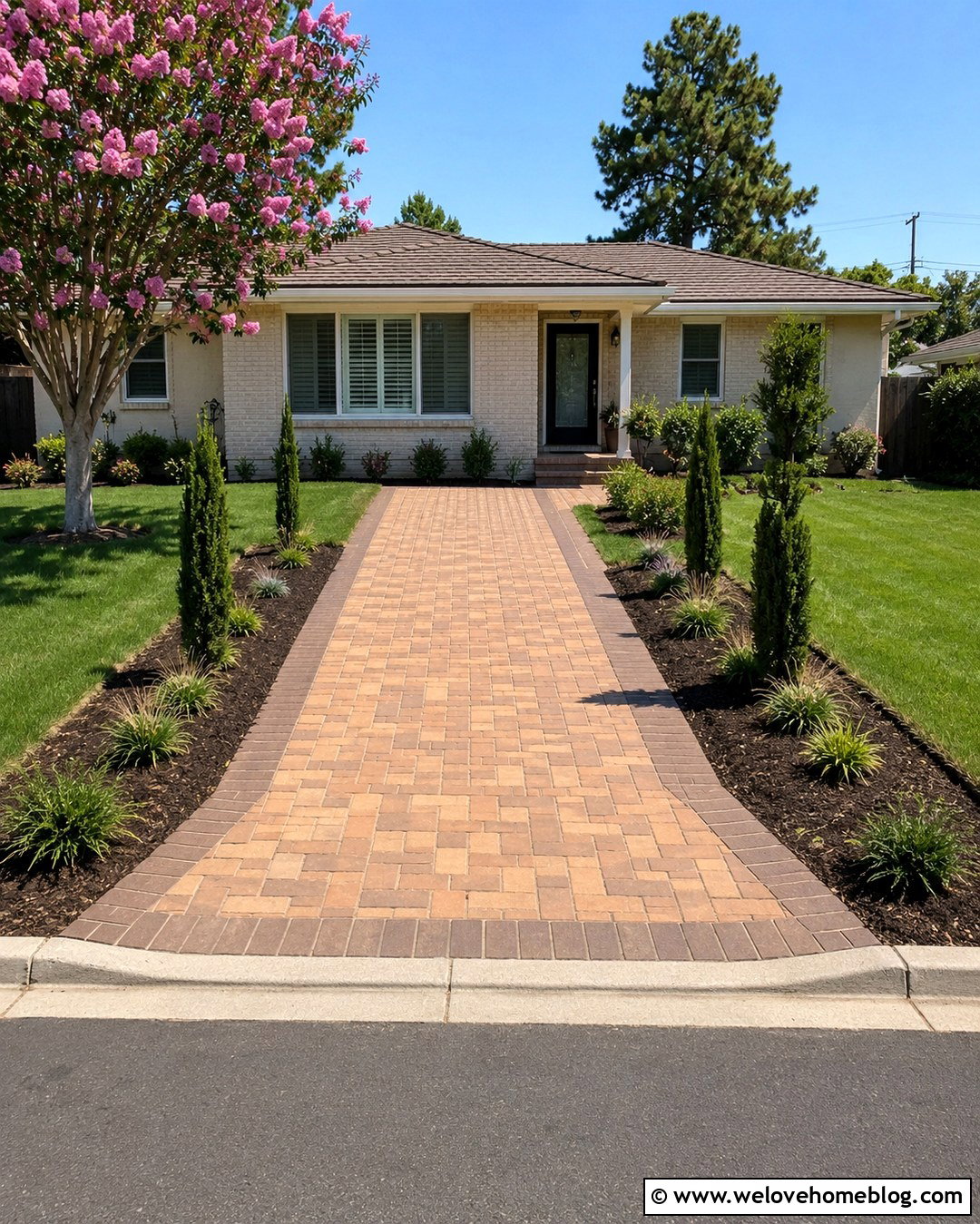
A small brick paver driveway needs a clear pattern and restrained details. Light red or warm tan bricks can prevent the space from feeling visually heavy, especially when paired with a narrow running bond layout. Use one dark soldier-course border rather than several decorative bands. It will define the edges without reducing the apparent width. A straight driveway usually makes the best use of a compact lot, while a slightly widened apron can simplify entry from the street. Choose upright shrubs, compact ornamental grasses, and one small flowering tree for the surrounding beds. Avoid planting that spills into parking or door-opening areas. A narrow brick walkway can connect one side of the driveway to the porch. Matching the pavers to the home’s roof, trim, or masonry helps the limited space feel coordinated.
16. Wide Brick Paver Driveway
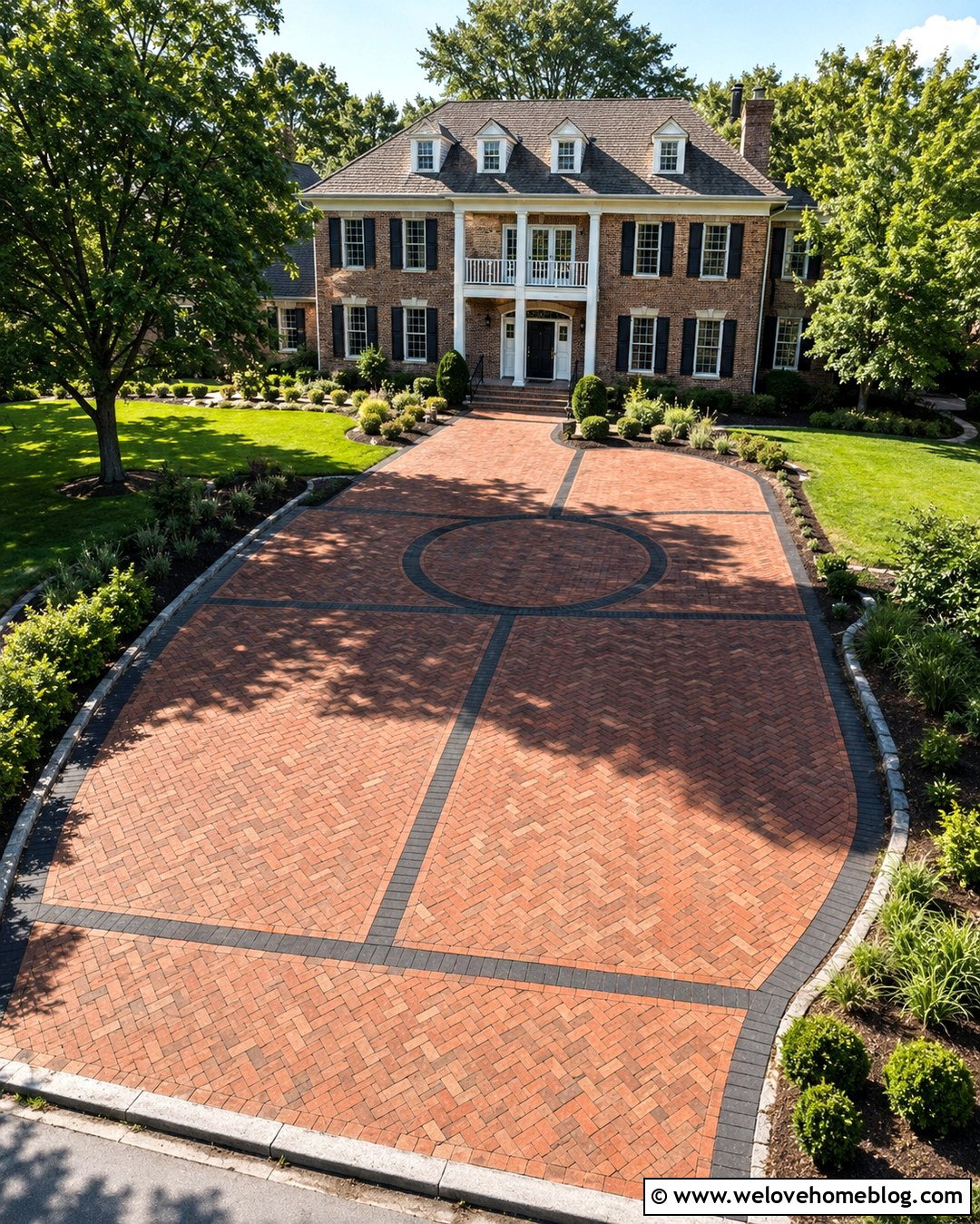
Large driveways can become visually overwhelming when one brick color and pattern cover the entire area. Divide a wide brick paver driveway into clear zones using contrasting bands. A red and brown herringbone field can be framed by charcoal brick ribbons that separate parking bays, guide the approach, and outline the garage entrance. Add a circular inlay or subtle rectangular panel at the center rather than filling the surface with multiple decorations. Broad planting beds should balance the scale of the paving. Use shade trees, layered shrubs, ornamental grasses, and generous areas of lawn around the edges. This organized layout suits a large colonial, Mediterranean, or traditional home. Repeating the same dark brick around walkways and porch steps will connect the spacious driveway to the rest of the front landscape.
17. Brick Paver Driveway With Brick Pillars
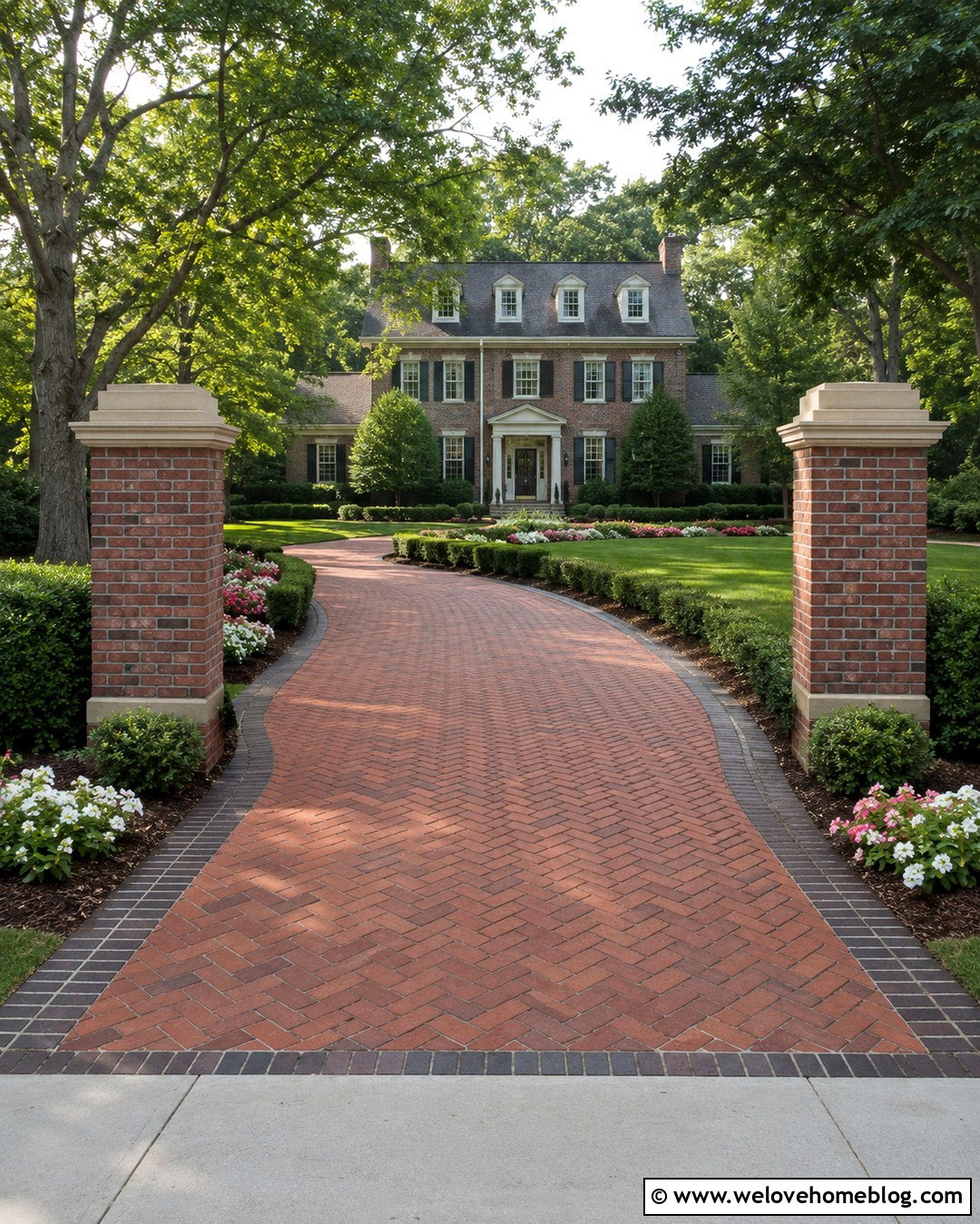
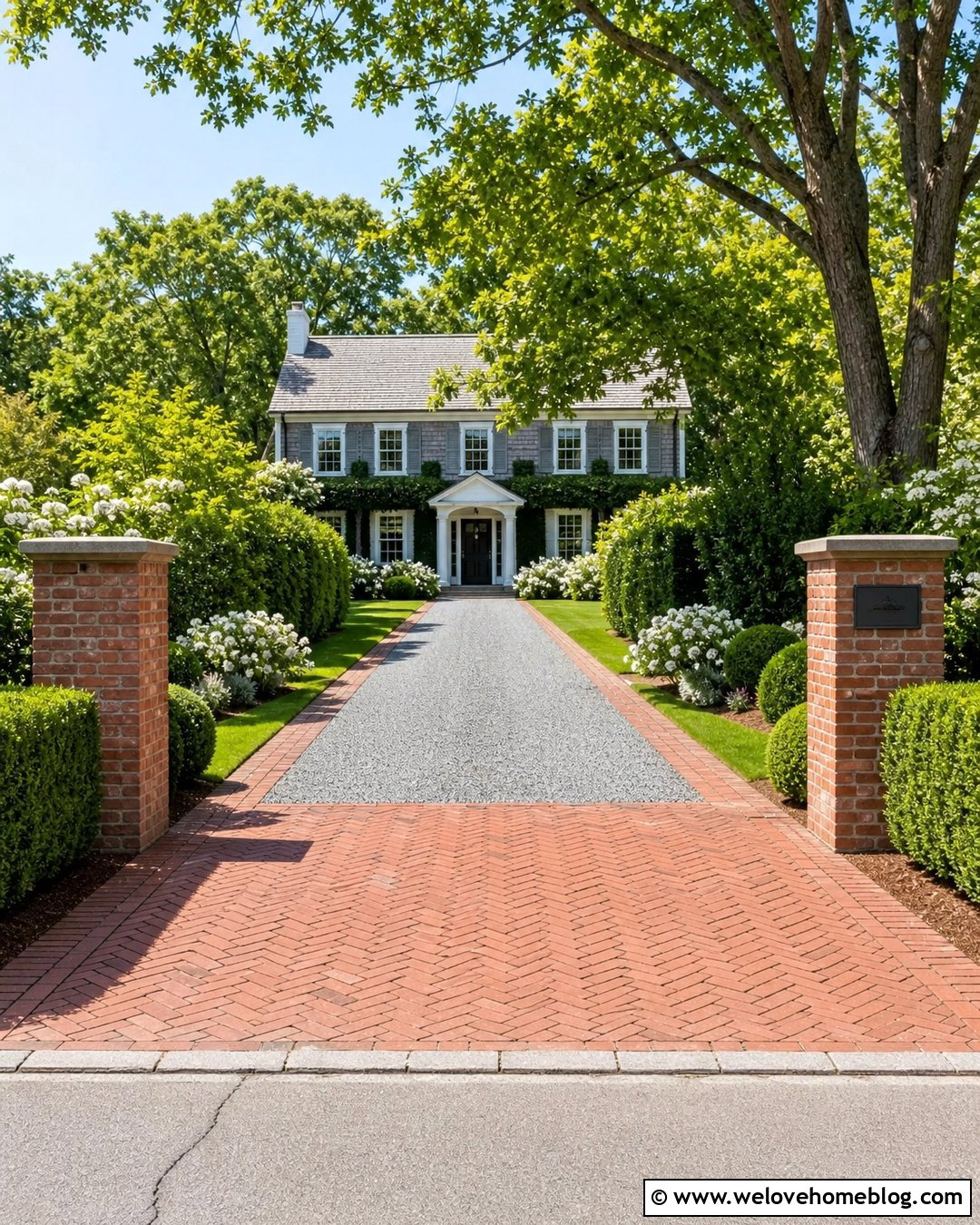
Brick pillars can make a driveway entrance feel established while connecting the paving to the home’s architecture. Use deep red clay brick pavers in a herringbone pattern for a straight or gently curved driveway. Build two proportionate brick pillars at the street, using masonry colors that match either the pavers or the house. Low stone caps can provide contrast and protect the tops without adding excessive ornament. Continue a dark brick border from the driveway around the base of each pillar to make the entrance read as one composition. Plant low evergreen shrubs and seasonal flowers nearby, keeping sightlines open for drivers. Simple metal lantern-style fixtures may be added for visibility, but the overall look should remain balanced. This complete entrance is especially effective for colonial, Georgian, farmhouse, and traditional homes.
18. Brick Paver Driveway With Permeable Joints
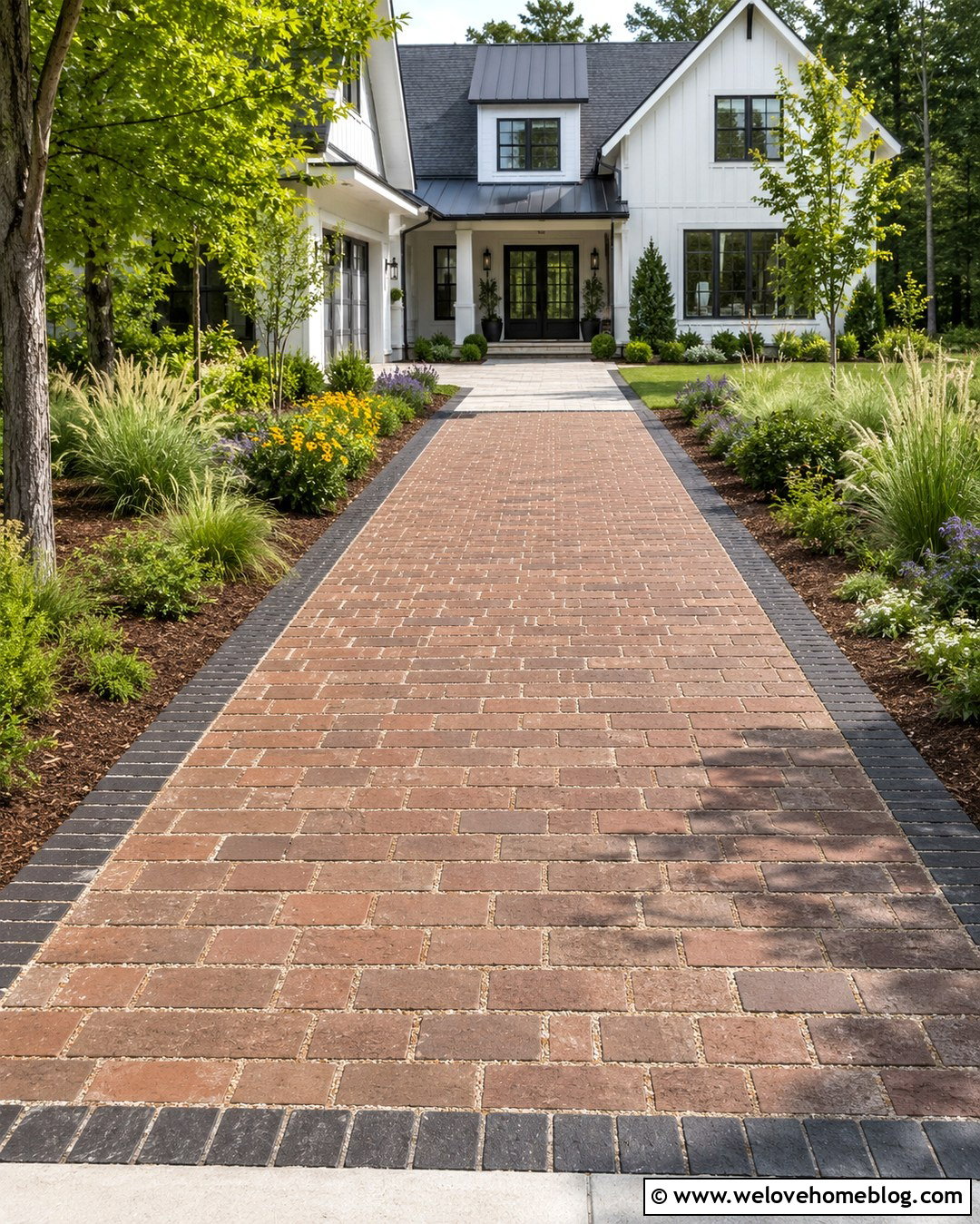
Wider planted or aggregate-filled joints can give brick paving a lighter, more environmentally responsive appearance. Choose weathered brown or red clay brick pavers and arrange them in a grid, running bond, or spaced herringbone layout designed for the selected joint system. Fill the joints with suitable small aggregate or low-growing greenery where site conditions and maintenance allow. A dark brick perimeter keeps the spaced layout visually contained. Pair the driveway with rain-friendly planting beds containing native grasses, flowering perennials, and shrubs suited to local conditions. A modern farmhouse or contemporary ranch provides an attractive architectural backdrop. The complete paving system, including the base, joint material, grading, and drainage plan, must work together. Consult an experienced installer so the finished surface is appropriate for vehicle loads and the property’s soil conditions.
19. Brick Paver Driveway With Tree-Lined Landscaping
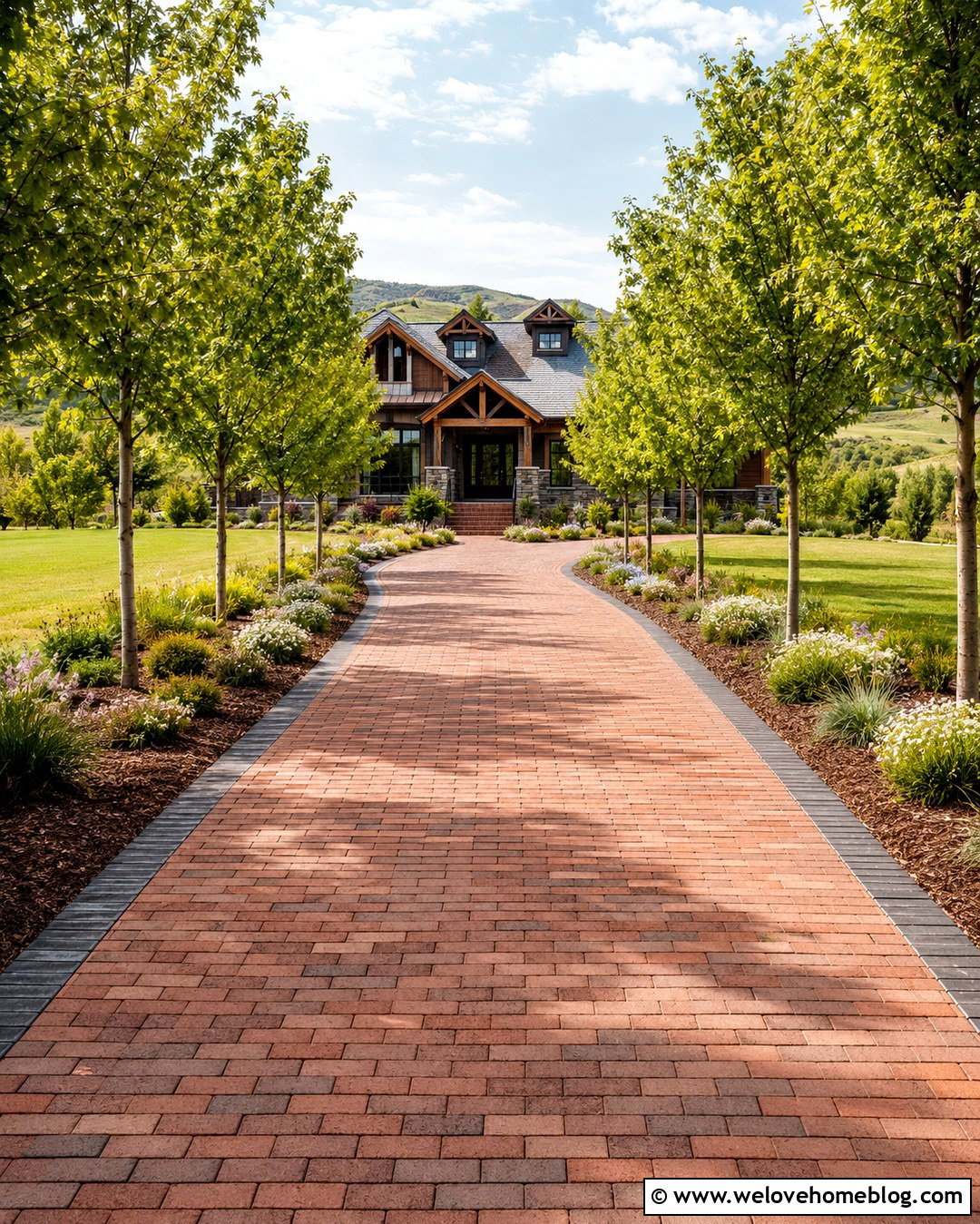
A tree-lined brick driveway creates a strong sense of approach on a long property. Use warm red and brown clay brick pavers in a running bond pattern that visually directs attention toward the house. Frame the surface with a charcoal soldier-course border and narrow planting beds on both sides. Evenly spaced ornamental trees can provide rhythm without creating a dense tunnel. Underplant them with low grasses, ground covers, or seasonal flowers that preserve clear views of the brick. A gentle curve can make the entrance feel more natural, particularly around a country, farmhouse, or traditional craftsman home. Select trees with root habits and mature sizes appropriate for their distance from the paving. Repeating a few matching brick accents around the front steps helps the long driveway feel connected to the home rather than isolated from it.
20. Brick Paver Driveway With Low Lighting
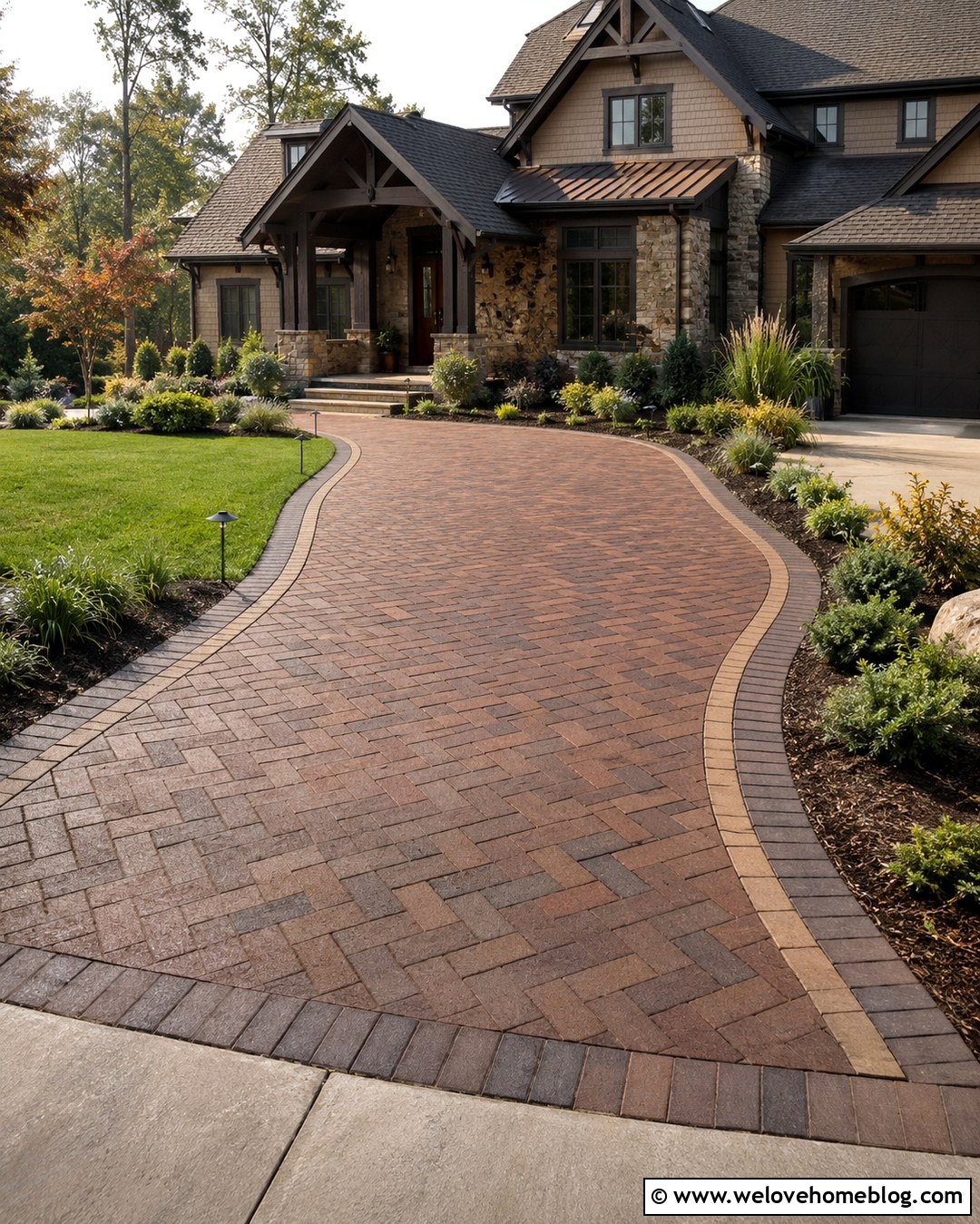
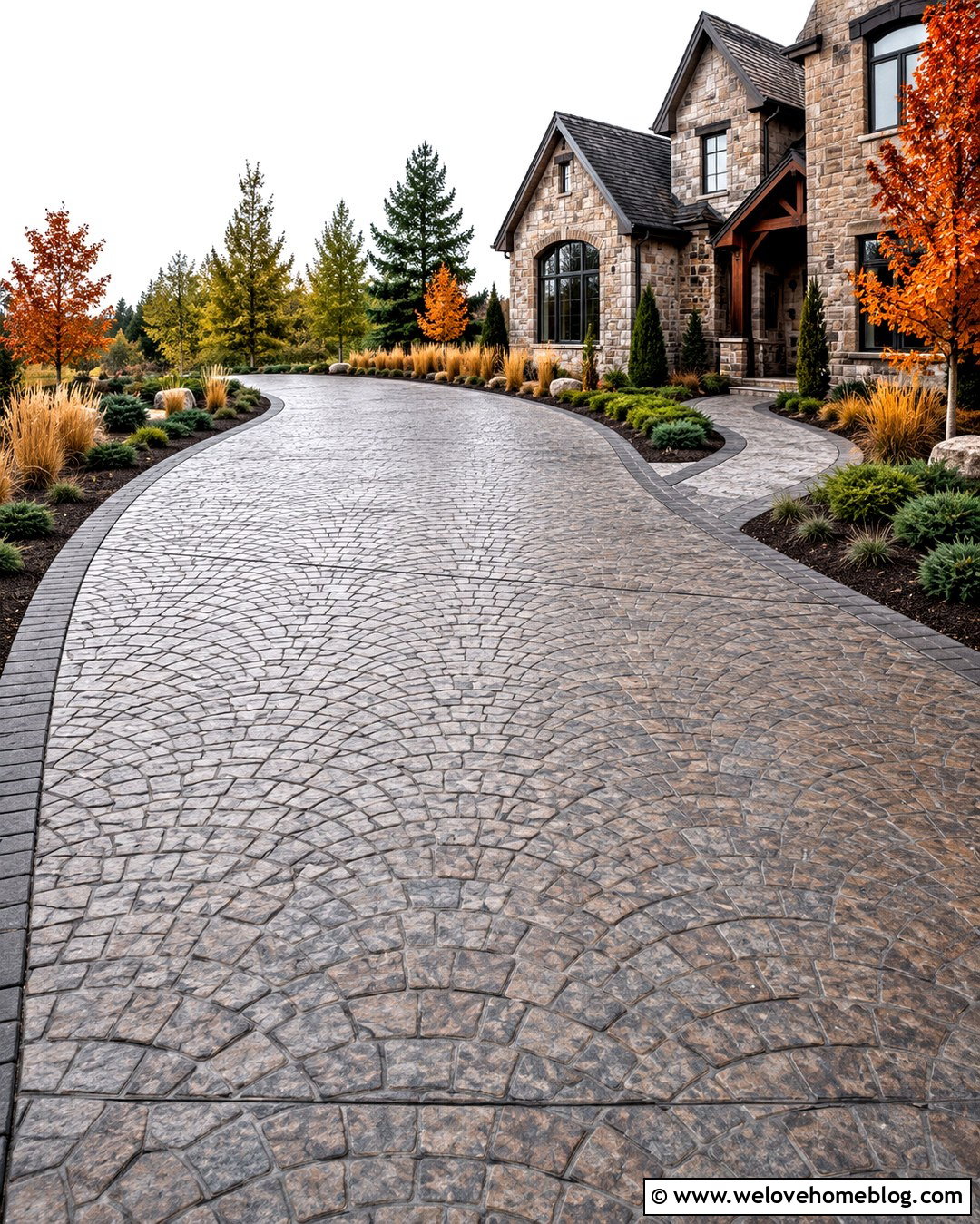
Low landscape lighting can make a brick driveway easier to follow while maintaining a clean daytime appearance. Start with burgundy and brown clay brick pavers arranged in a herringbone pattern on a gently curved layout. Add a tan inner border and a darker outer soldier course to emphasize the edges. During the day, compact black or bronze fixtures should blend into beds of ornamental grass, low evergreen shrubs, and ground cover. Position lights along curves, walkway connections, and entrance points rather than creating an uninterrupted runway effect. A craftsman or transitional home with warm facade materials completes the design. Lighting placement should preserve open space for vehicle doors, snow removal, mowing, and landscape maintenance. The finished driveway remains visually rich in bright conditions while its borders provide a clear, organized route after sunset.
Conclusion:
The most successful 20 Brick Paving Driveway Ideas treat the driveway as part of the entire front landscape. Pattern, brick color, shape, borders, planting, and architecture should support one another. Herringbone paving brings movement, running bond creates simplicity, and basketweave adds traditional detail. Borders can sharpen the layout, while trees, shrubs, and planting beds soften large areas of brick. Before selecting a design, consider vehicle movement, drainage, maintenance, local climate, and the scale of your property. Use pavers rated for driveway applications and invest in professional base preparation and edge restraint when needed. With thoughtful planning, brick paving can create a durable, welcoming approach that improves curb appeal without sacrificing everyday function.

Related posts:
Leave a Reply