
These 20 Reclaimed Brick Driveway Ideas show how salvaged brick can create an entrance that feels established, welcoming, and connected to the home. Weathered color variations, softened edges, and old markings give reclaimed bricks character that new paving often lacks. The key is designing the entire approach, not simply choosing a laying pattern. Driveway shape, borders, planting, walkways, lighting, and architecture should work together. Before installation, have the bricks checked for paving suitability and build a properly compacted base suited to local soil, drainage, climate, and vehicle loads. From traditional herringbone surfaces to relaxed grass-strip layouts, the following complete designs offer practical inspiration for different homes, yards, and budgets. Explore these 20 Reclaimed Brick Driveway Ideas to find a look that fits your property.
1. Reclaimed Brick Herringbone Driveway
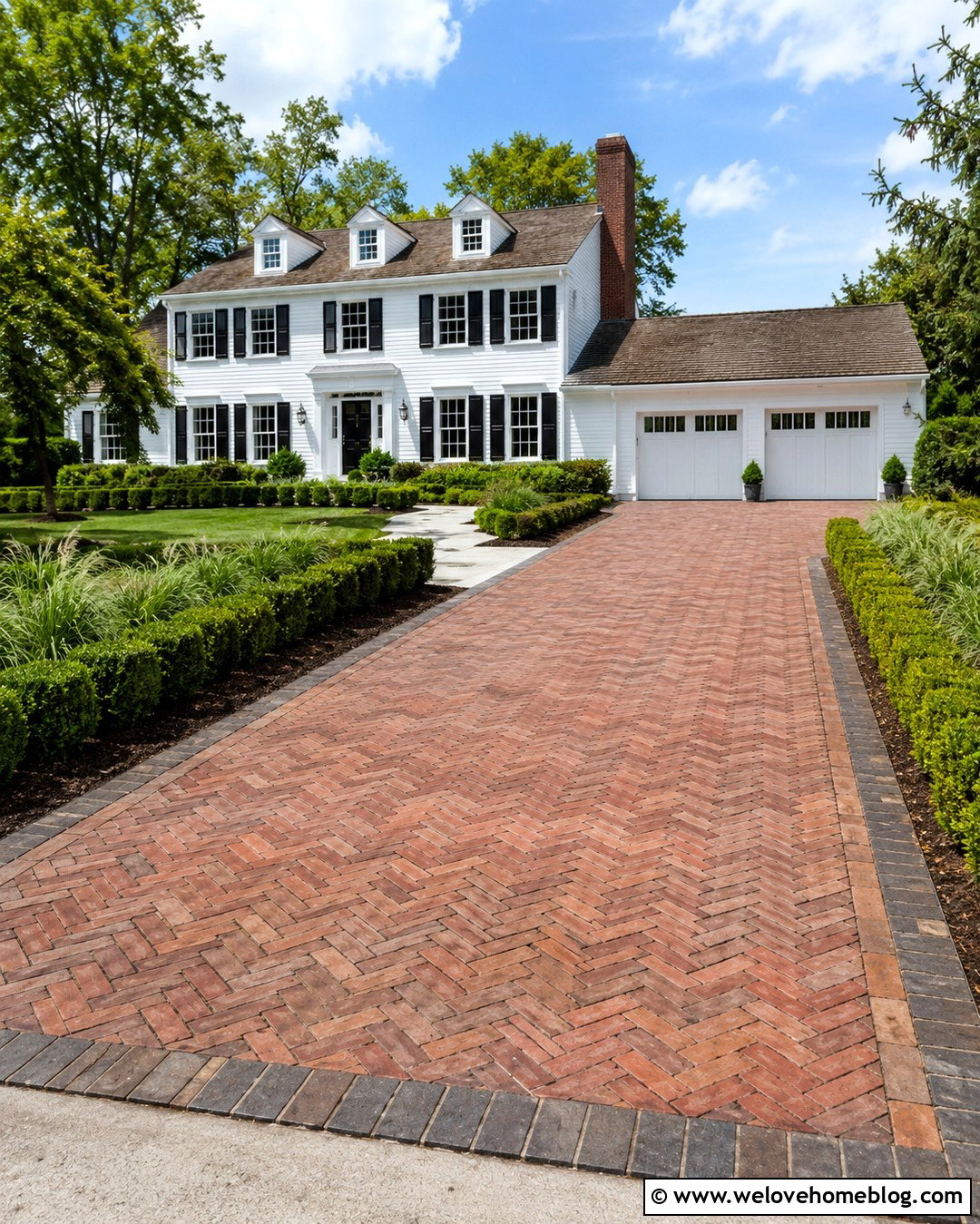
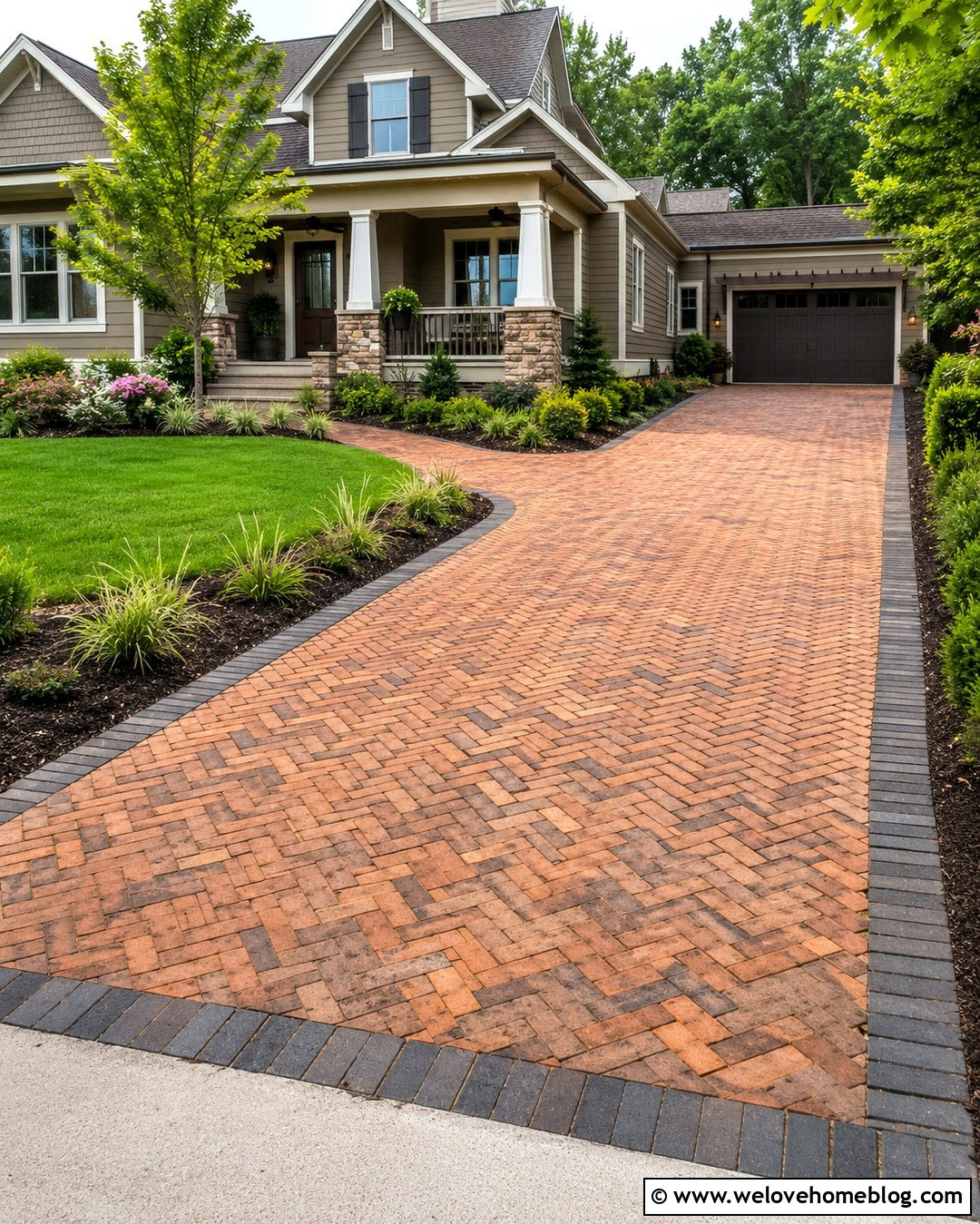
A herringbone layout gives a reclaimed brick driveway a structured appearance while allowing every weathered color and chipped edge to remain visible. Use a blend of deep red, muted orange, and brown bricks for an authentic surface rather than forcing every unit to match. Frame the paving with a straight granite or dark brick soldier-course border. This creates a clean outline around the busier angled pattern. A straight driveway works especially well with this combination because the strong geometry directs attention toward the garage. Add clipped boxwood, ornamental grasses, and a simple concrete walkway alongside it. Herringbone is commonly used for vehicle paving because its interlocking arrangement distributes loads across neighboring units. ()
2. Reclaimed Brick Running Bond Driveway
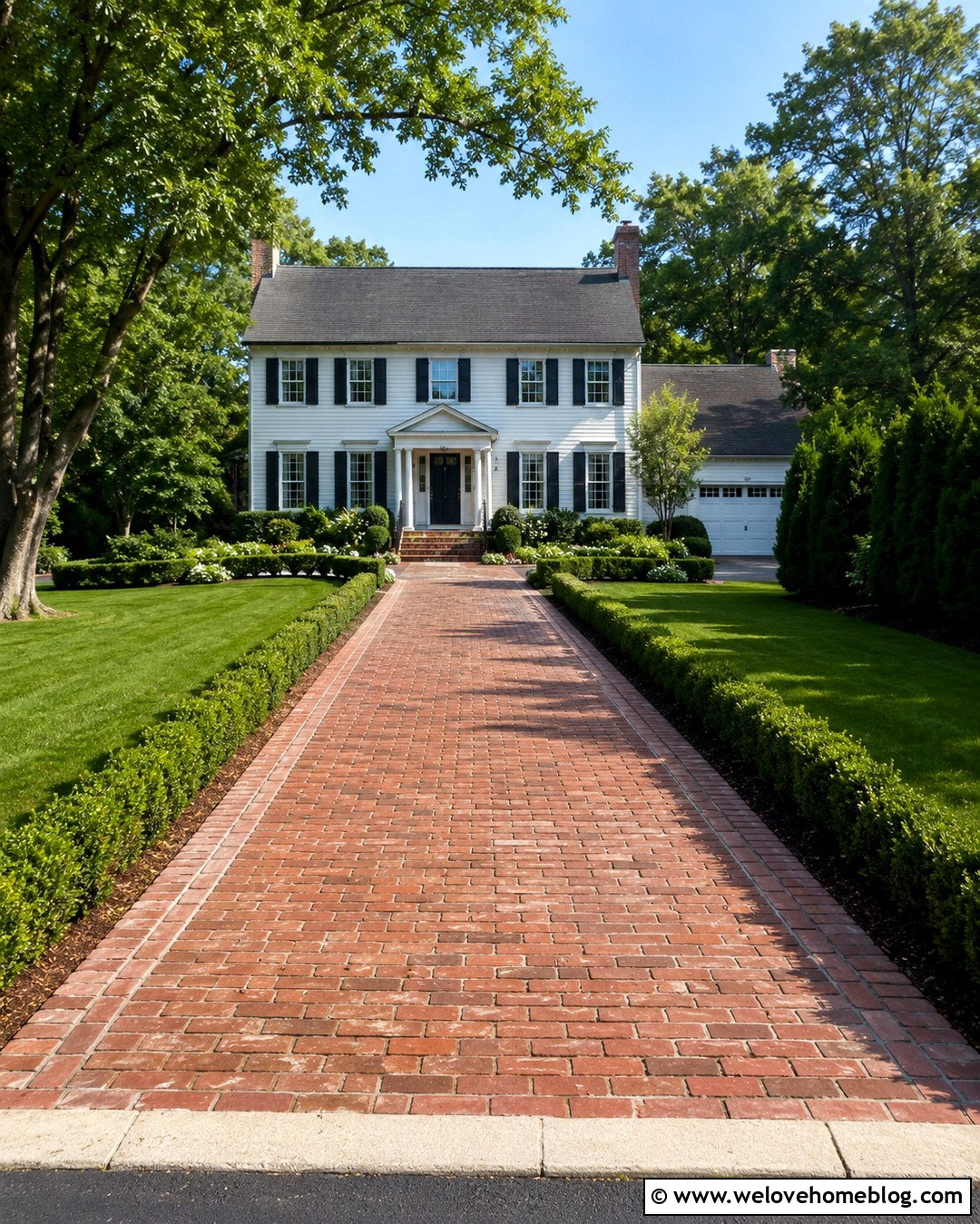
Long, orderly rows make a running bond driveway feel calm and visually spacious. Lay rectangular reclaimed red bricks with their long sides following the direction of travel. The continuous lines will naturally guide the eye from the street to the house. A double soldier-course border can hold the pattern within a crisp frame while emphasizing the driveway’s length. Pair the warm brick with a white Colonial home, symmetrical foundation shrubs, and a centered path to the front door. If the brick colors vary considerably, distribute darker and lighter pieces across the entire surface instead of creating accidental patches. This straightforward design suits a formal property without making the entrance appear overly decorative. Low hedges and broad lawn areas complete the balanced look.
3. Reclaimed Brick Basketweave Driveway
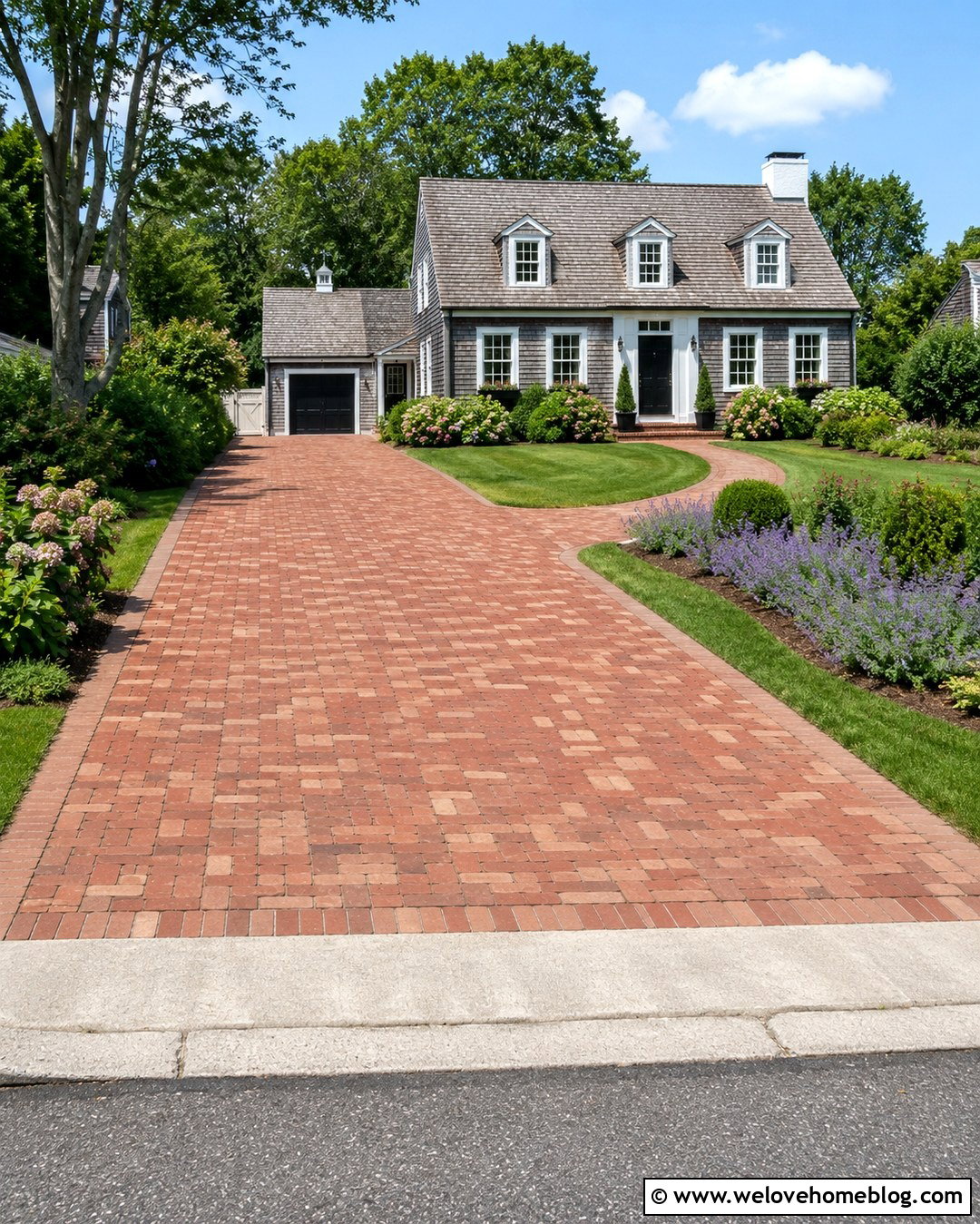
A basketweave pattern brings visible texture to a compact driveway without requiring multiple paving materials. Pairs of reclaimed bricks alternate direction, creating small woven blocks across the surface. The pattern looks particularly natural beside a cottage, Cape Cod, or older craftsman house. Choose brick with warm red, terracotta, and faded charcoal tones, then finish the edges with a simple running-bond border. Curved planting beds can soften the rectangular pattern and keep the overall entrance from feeling rigid. Fill them with hydrangeas, dwarf evergreens, catmint, or seasonal flowers suited to the local climate. A matching brick walkway can branch gently toward the porch. Keep additional hardscape details understated because the basketweave surface already provides plenty of movement and character.
4. Circular Reclaimed Brick Driveway
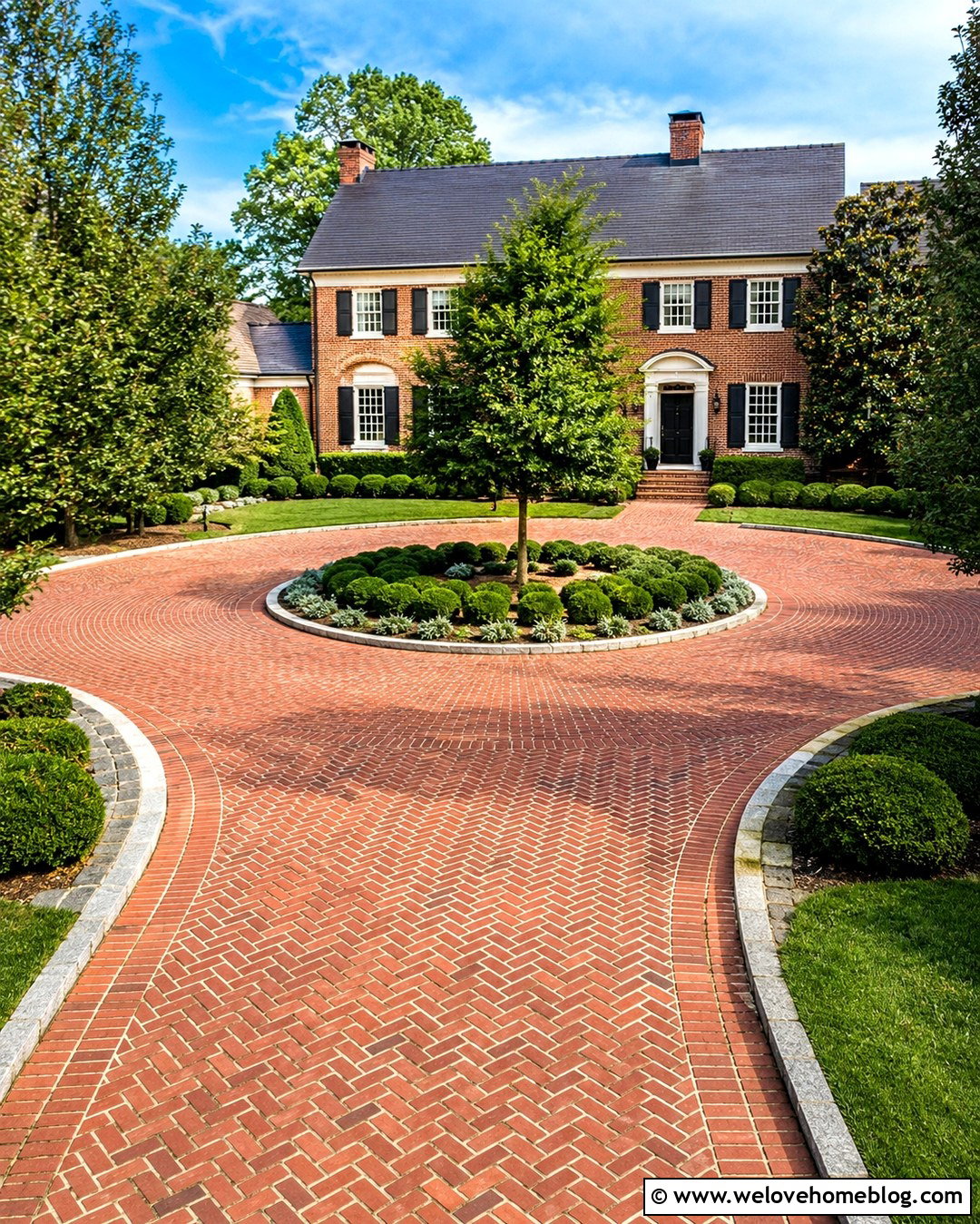
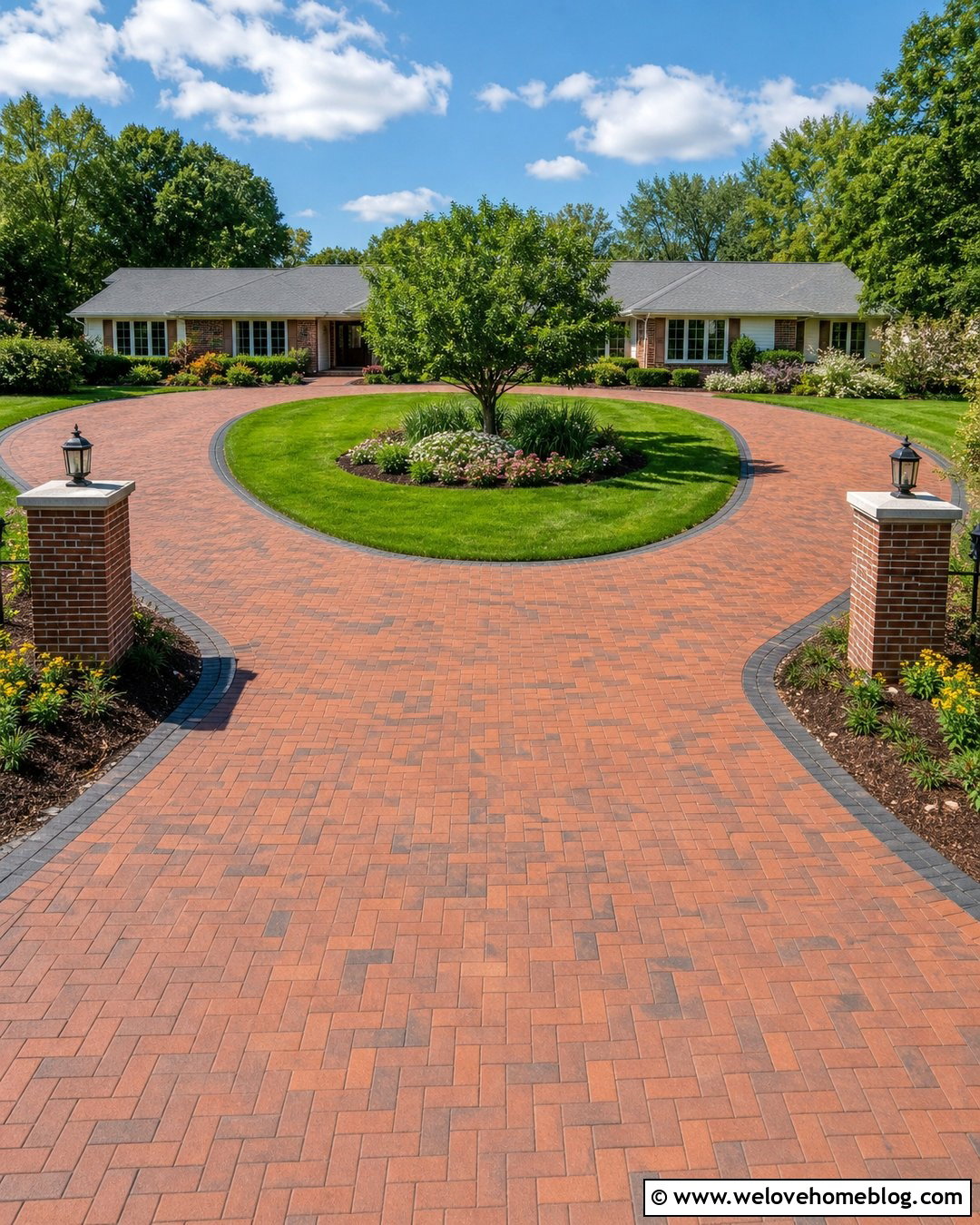
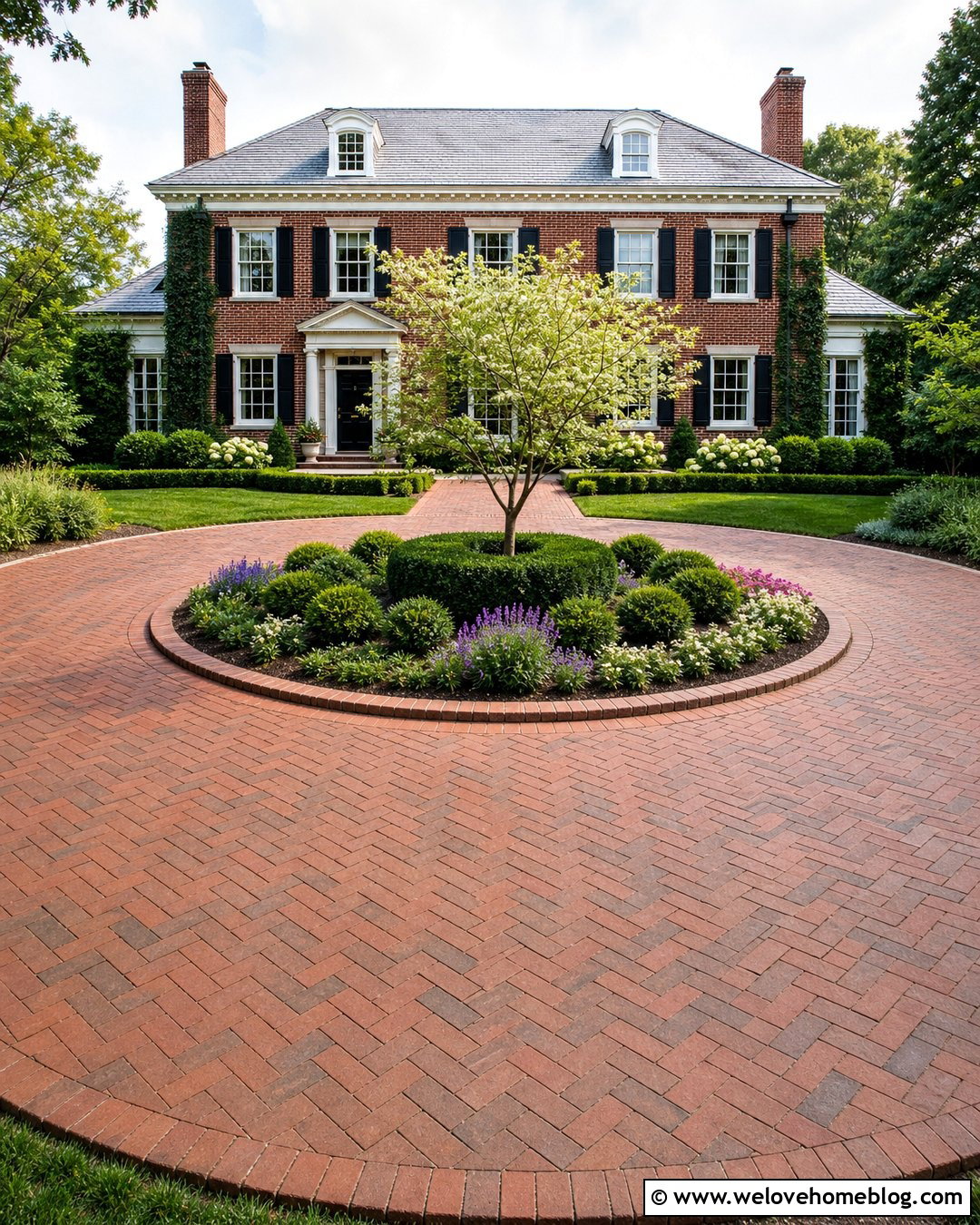
A circular reclaimed brick driveway creates a practical arrival area while giving the front yard a strong focal point. Use weathered red brick in a radial or herringbone pattern around a central landscaped island. A wide stone curb can define the inner circle, while a matching brick soldier course keeps the outer edge tidy. In the island, plant one appropriately sized ornamental tree surrounded by low shrubs and ground cover. Keeping plants below important sightlines makes the driveway easier to navigate. This layout works best on a broad lot with enough room for comfortable curves and clear entry and exit points. A traditional two-story home, symmetrical windows, and restrained foundation planting will complement the historic texture without competing with the driveway’s distinctive shape.
5. Curved Reclaimed Brick Driveway
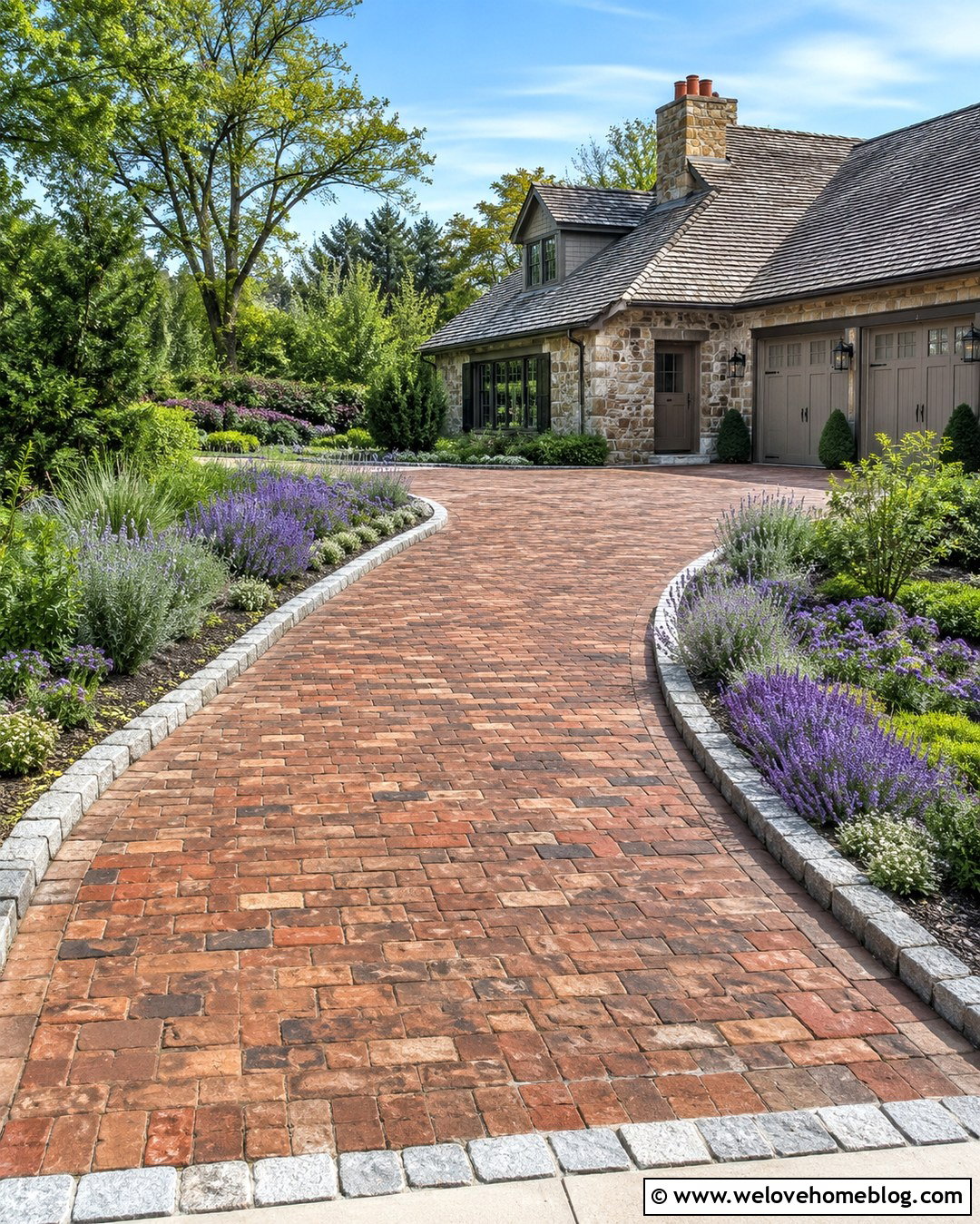
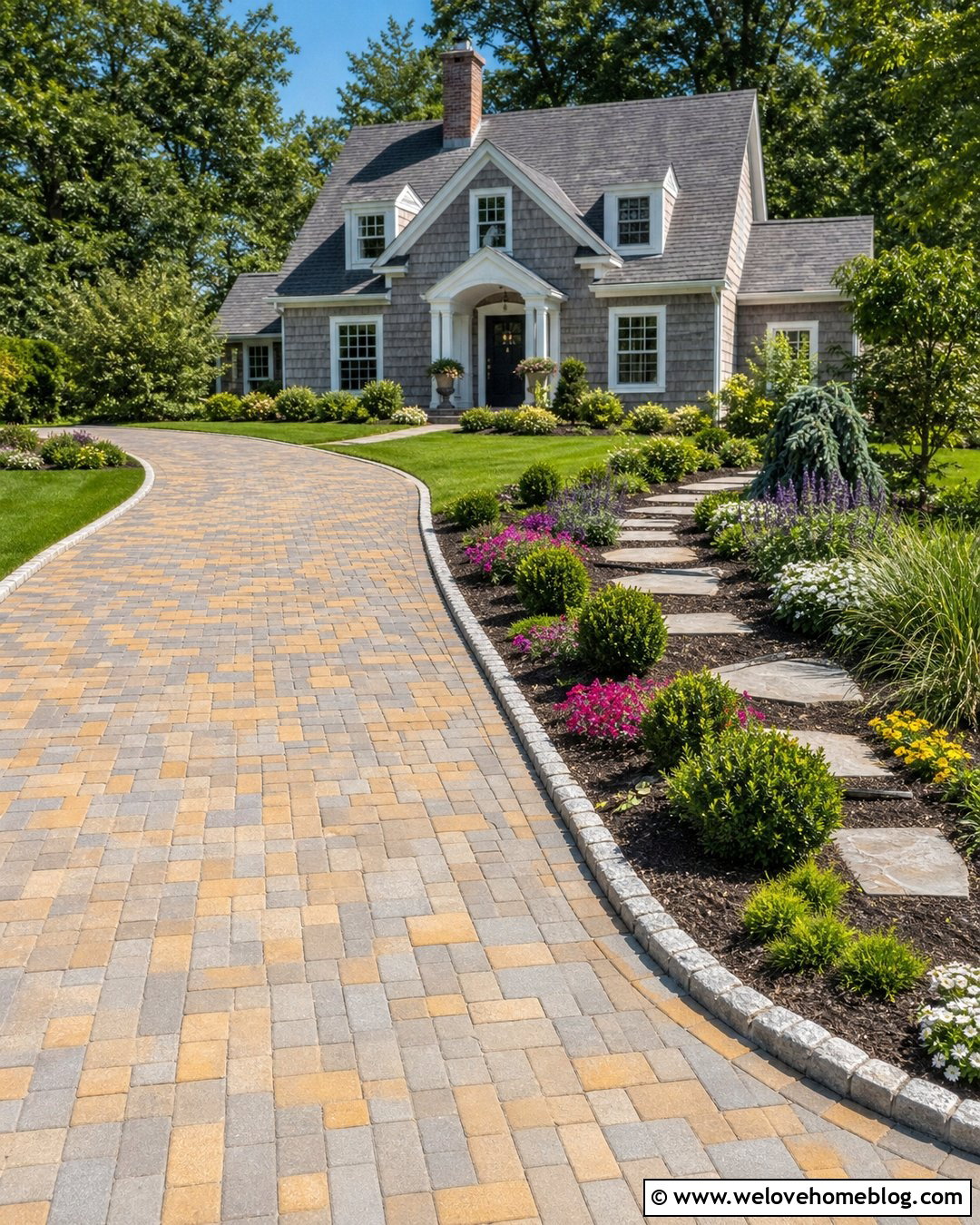
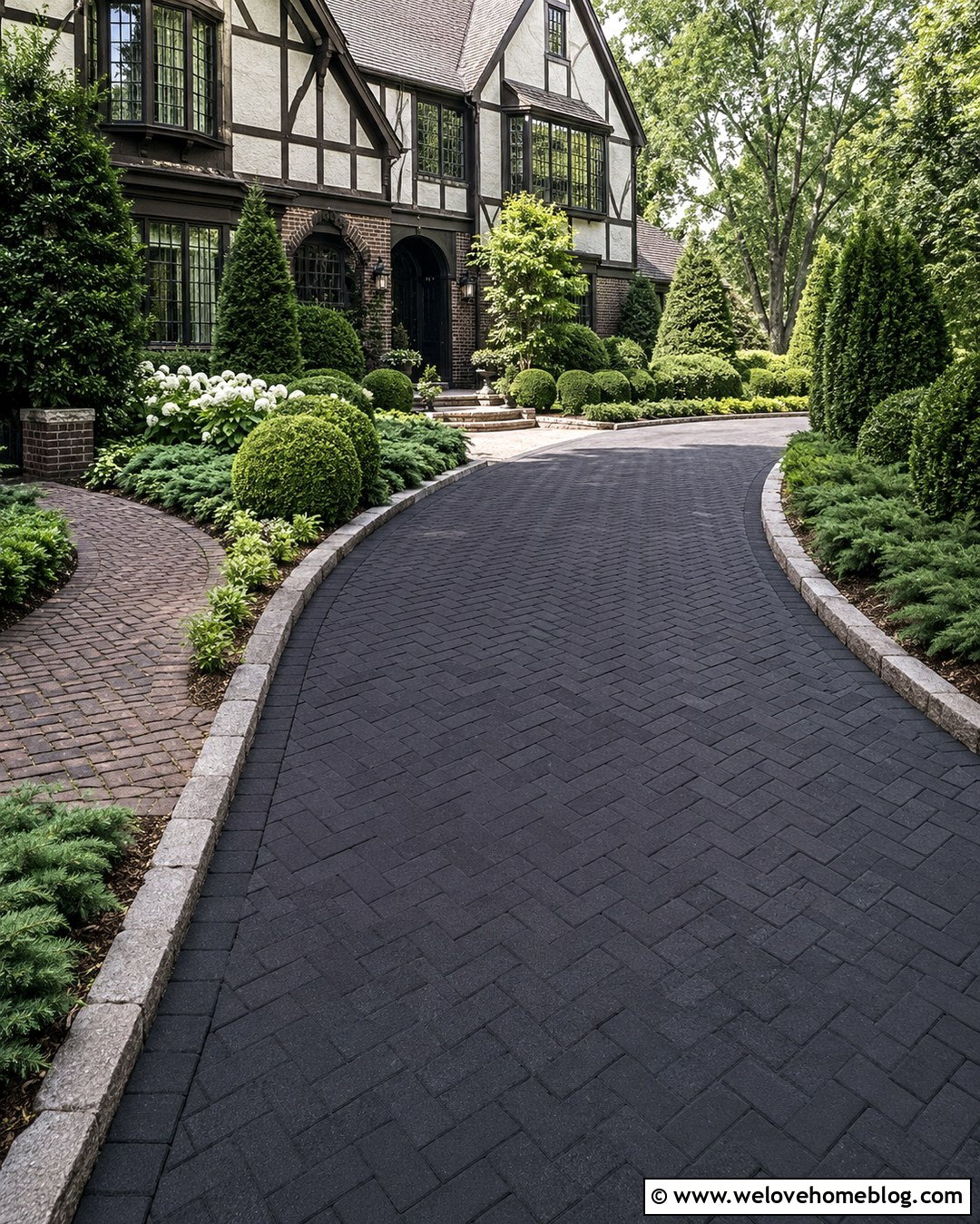
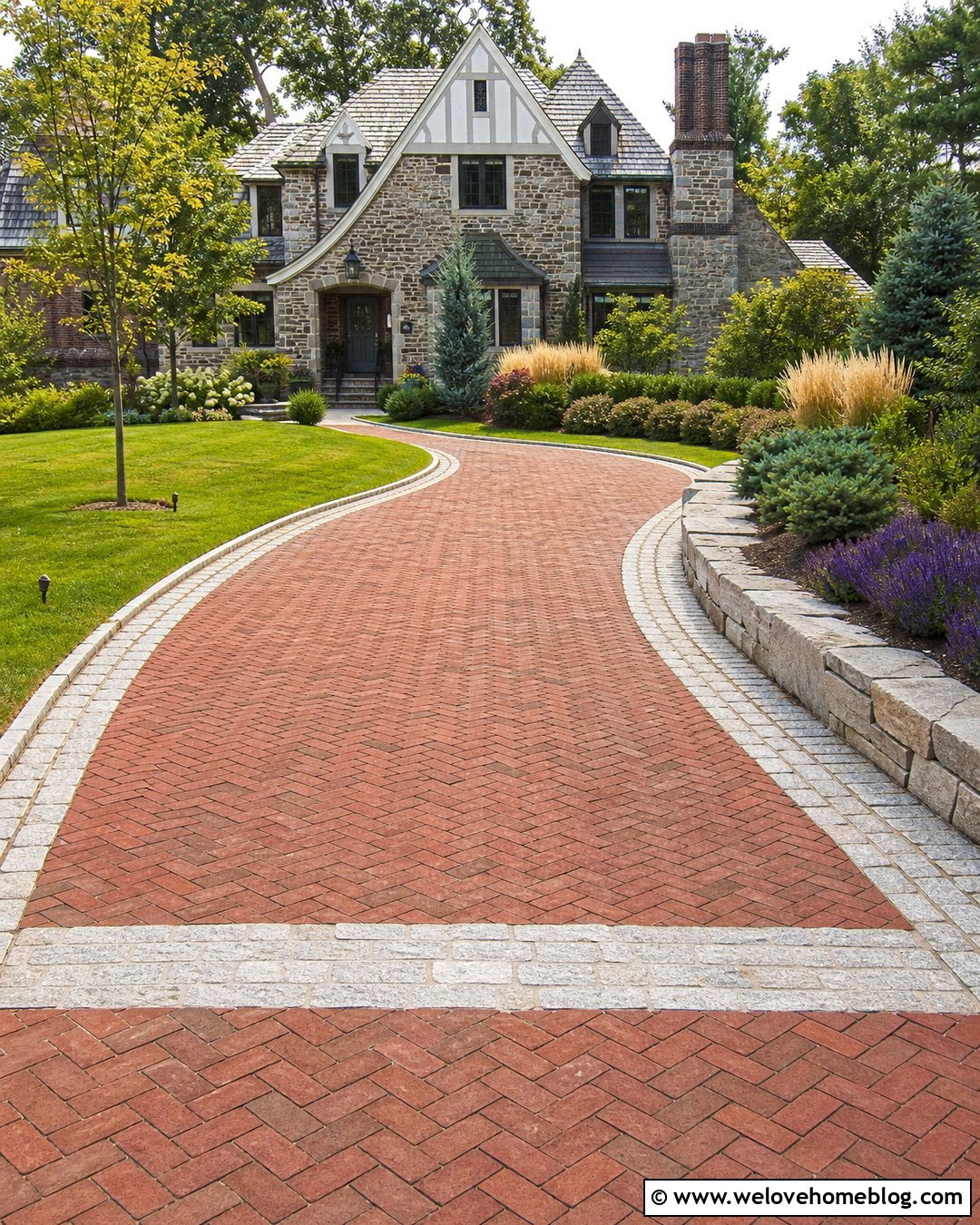
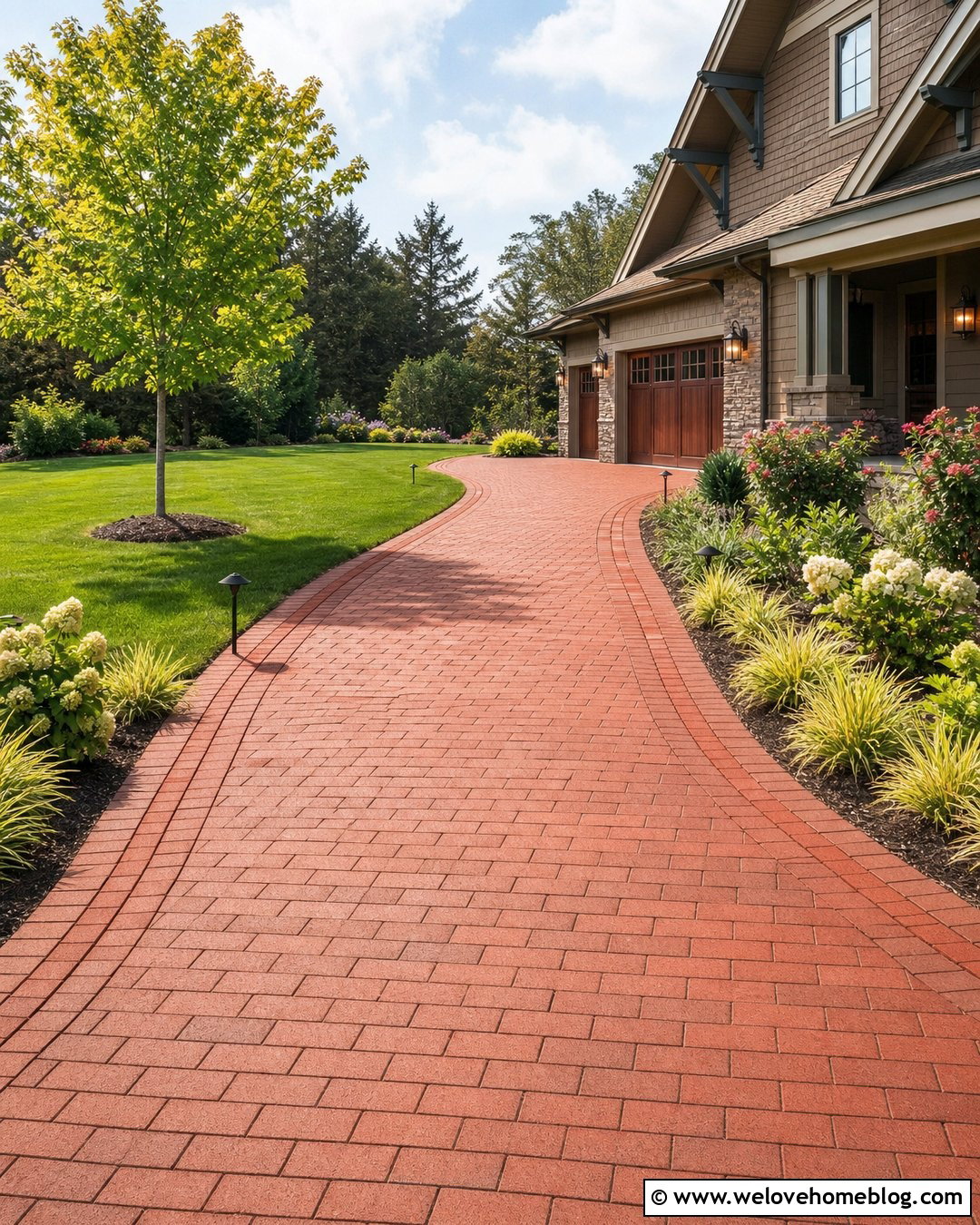
Imagine a gently curving brick surface disappearing behind soft planting before revealing the house. This layout can make a medium or long driveway feel more integrated with the yard. Lay mixed reclaimed bricks in a running bond that follows the curve, using carefully cut border units to produce smooth edges. A low cobblestone curb adds definition and helps separate the brick from mulched beds. Repeat clusters of lavender, salvia, ornamental grasses, and compact evergreen shrubs along the approach. Rather than planting identical rows, arrange the plants in loose groups for a relaxed appearance. A country home or stone-fronted cottage provides an ideal backdrop. At the garage, widen the driveway gradually so the transition feels intentional rather than abruptly changing from a narrow lane into a large parking area.
6. Mixed Color Reclaimed Brick Driveway
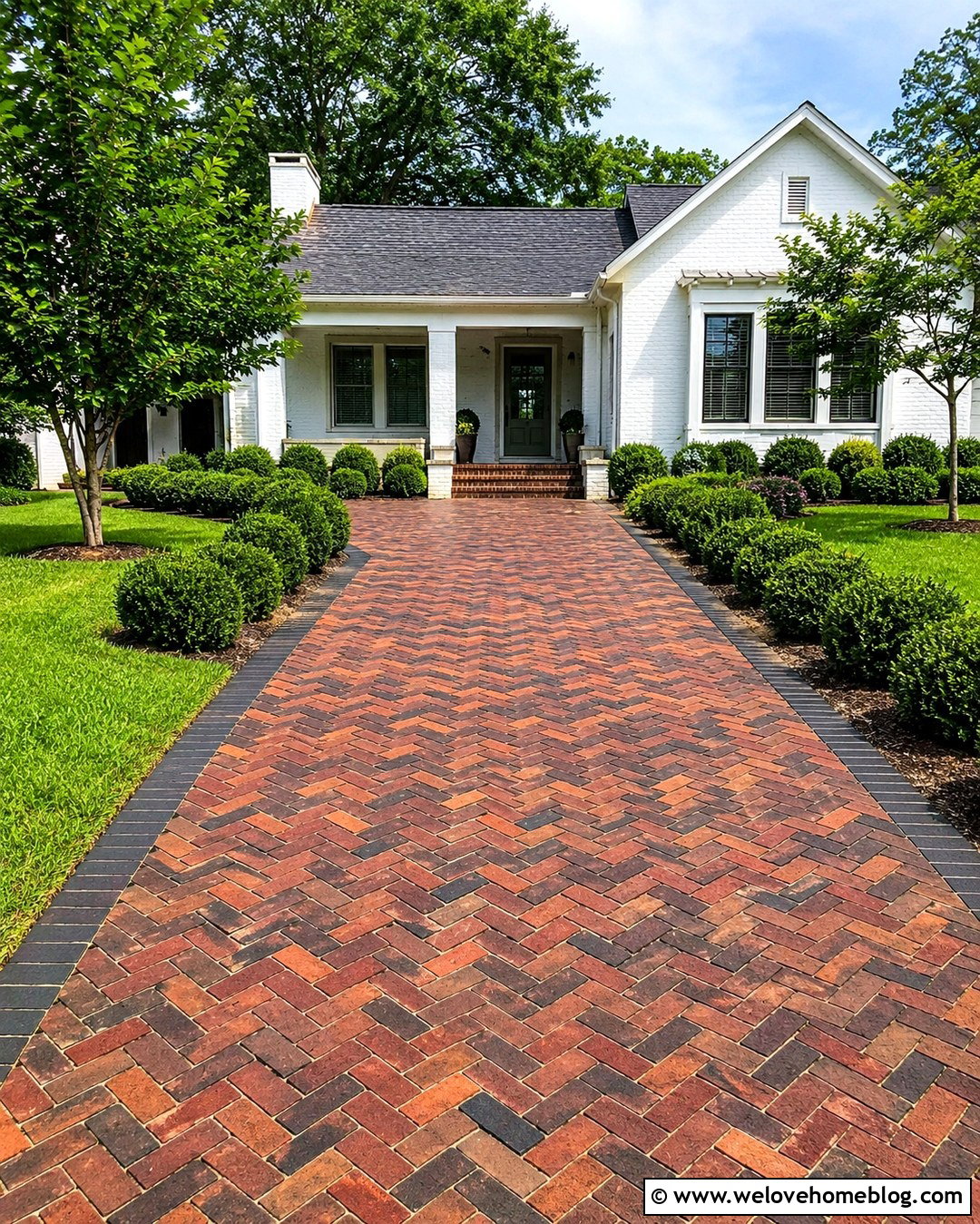
Not every reclaimed brick needs to share the same shade. A carefully blended driveway can combine burgundy, traditional red, dark brown, faded orange, and occasional charcoal bricks. Sort the material before installation, then mix colors evenly to prevent large, unintended blocks of one tone. A simple running bond or herringbone layout lets the varied surface remain the main feature. Use dark charcoal brick around the perimeter to visually contain the color blend. This driveway pairs beautifully with a neutral ranch house, especially one finished in warm white, beige, or soft gray. Keep the landscaping uncomplicated with green lawn, rounded shrubs, and two small ornamental trees near the street. Repeating one brick color in the porch steps or walkway will connect the driveway to the home.
7. Reclaimed Brick Farmhouse Driveway
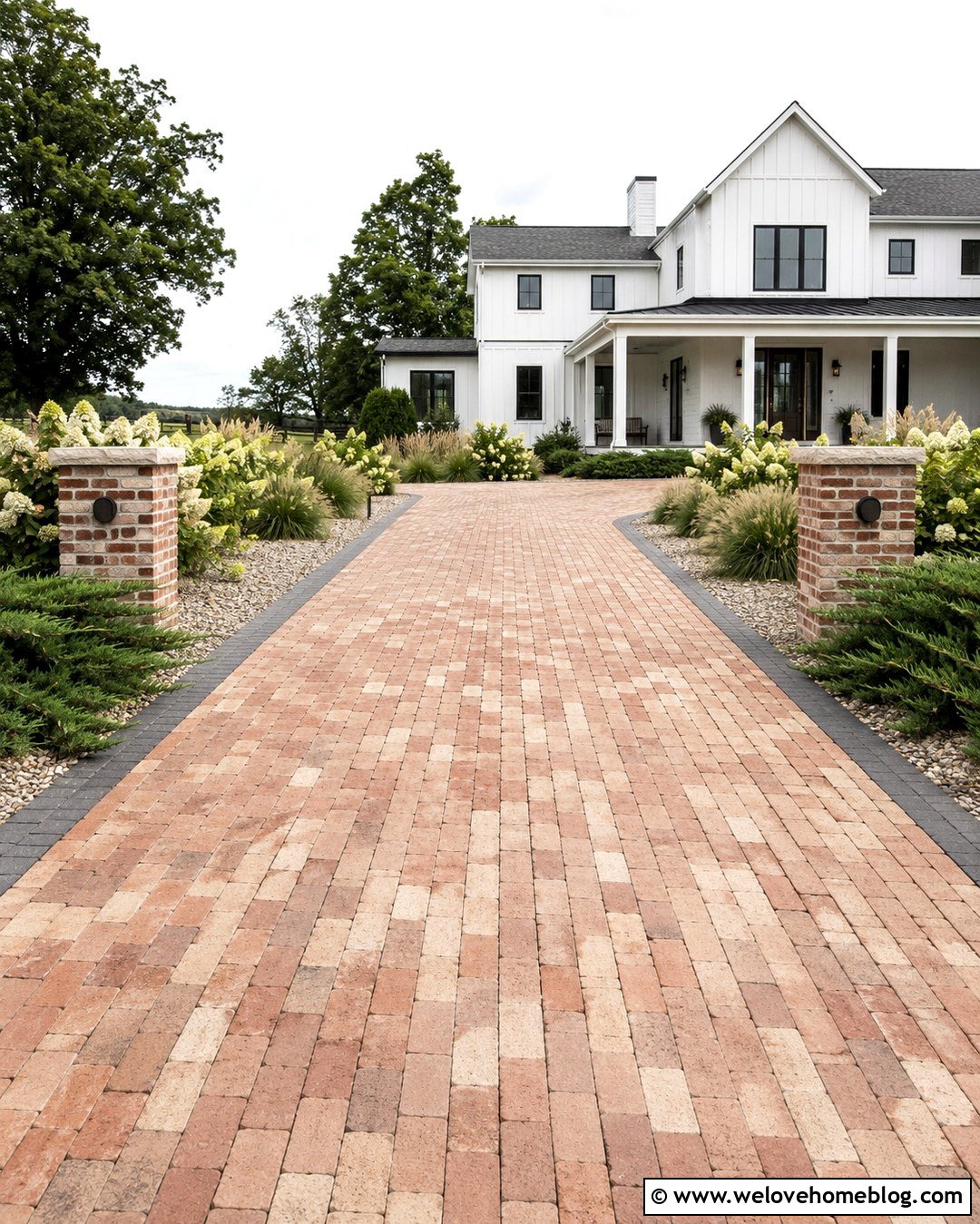
A farmhouse driveway should feel relaxed, durable, and appropriate for a rural or suburban setting. Choose faded red and buff reclaimed bricks with worn faces, then install them in long running-bond rows. A wide driveway can be visually narrowed with darker brick borders, helping the surface feel less like an open parking pad. Add gravel-filled planting strips or informal beds along the sides, using panicle hydrangeas, ornamental grasses, and low spreading evergreens. Brick entrance pillars can mark the property without requiring a heavy gate. A modern farmhouse with white siding, black windows, and a simple front porch provides a clean contrast to the uneven brick colors. Allow the material’s patina to be visible, but keep the edges and landscaping neat so the completed entrance feels intentional.
8. Reclaimed Brick Driveway With Grass Strip
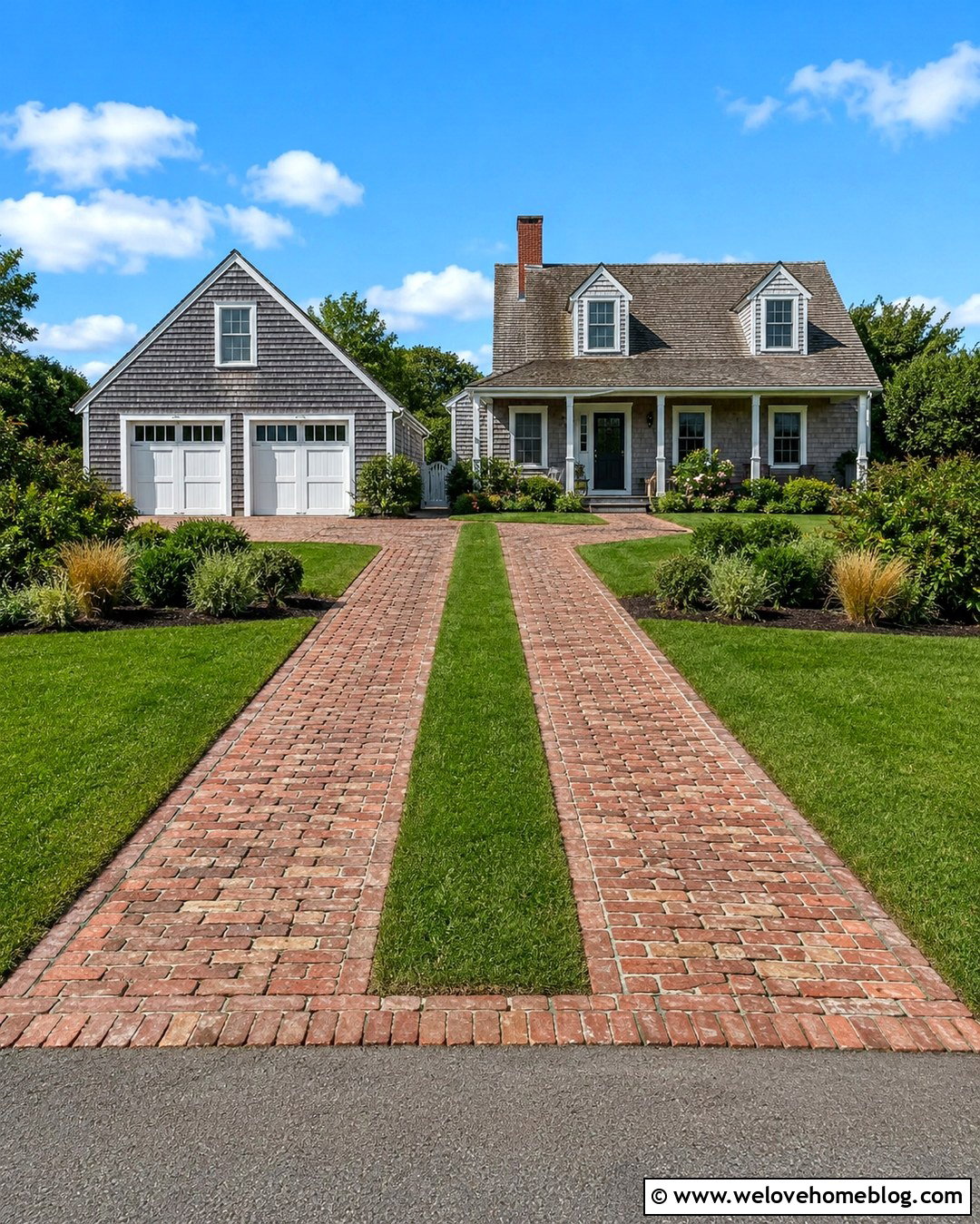
Two reclaimed brick wheel tracks separated by grass offer a lighter alternative to fully paved hardscape. This layout is most appropriate for a straight, lightly used residential approach where vehicles can follow a predictable path. Build each track wide enough for comfortable tire placement and frame the outer edges with steel, stone, or additional brick. The center can contain sturdy turf or low ground cover selected for the site’s sunlight and climate. Continue the brick across the garage apron to create a stable, visually complete arrival area. This driveway works naturally with cottages, coastal homes, and traditional houses surrounded by generous lawn. Keep the planting near the tracks low and resilient. A brick walkway leading to the porch can echo the same weathered colors and simple linear layout.
9. Reclaimed Brick Driveway With Stone Apron
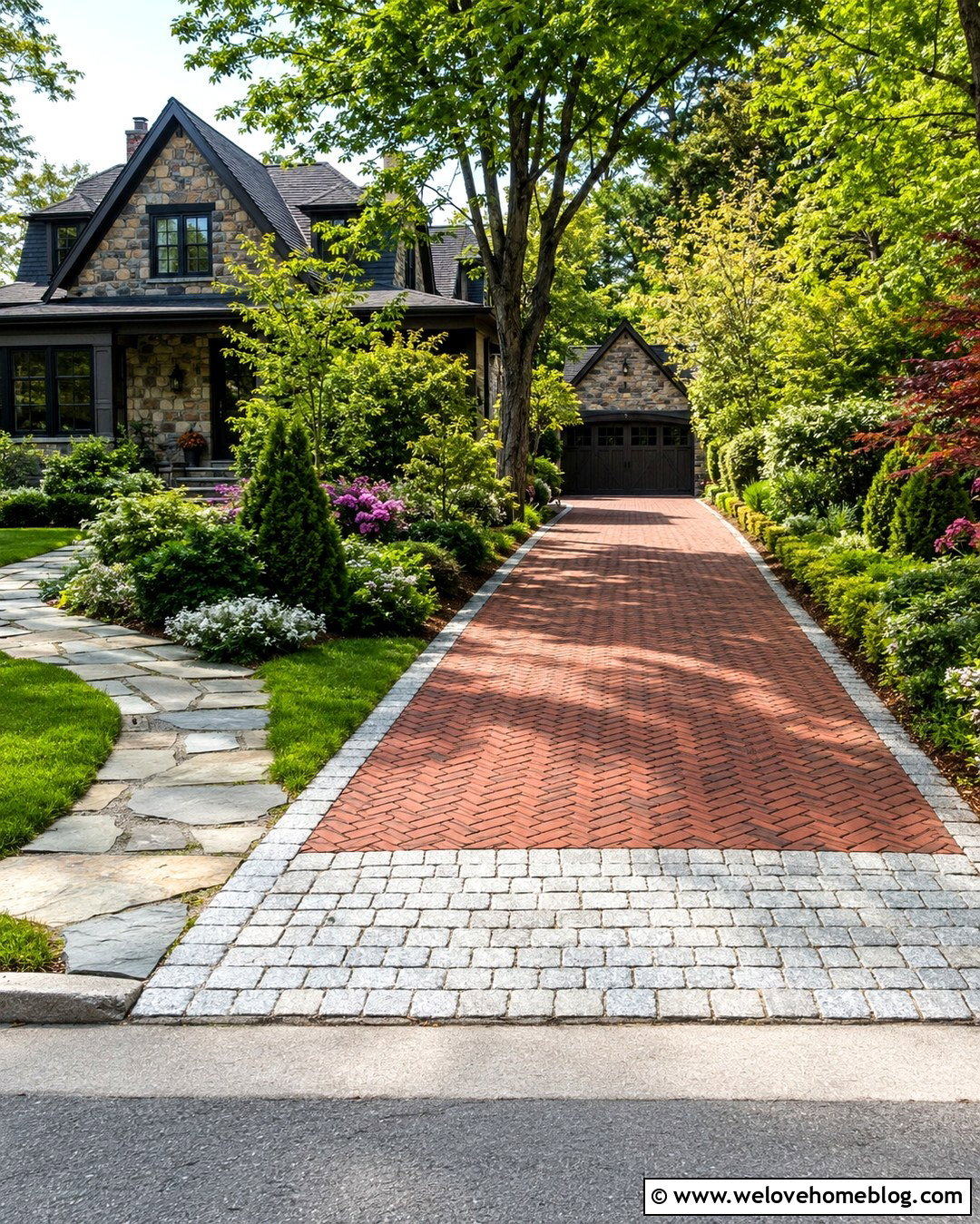
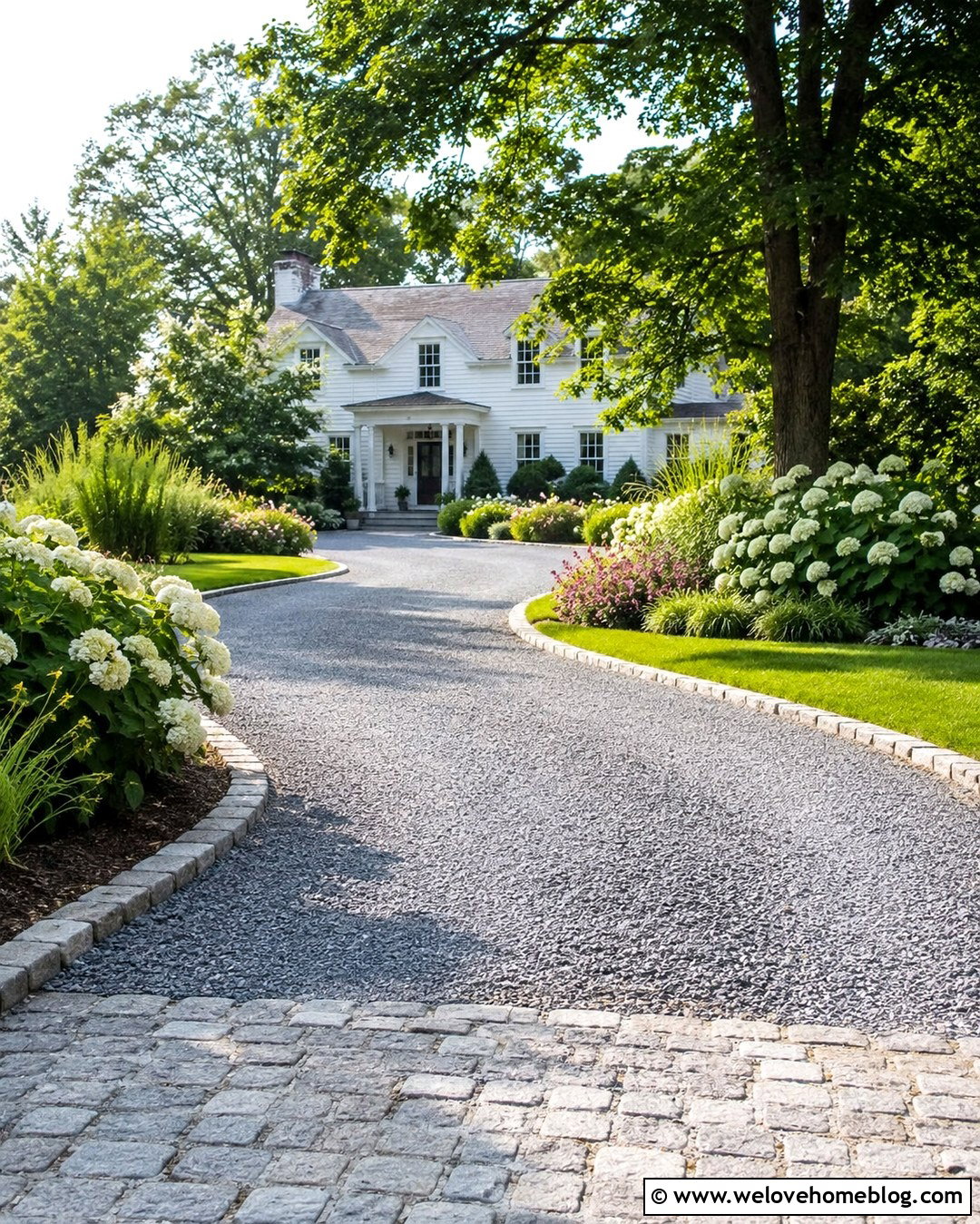
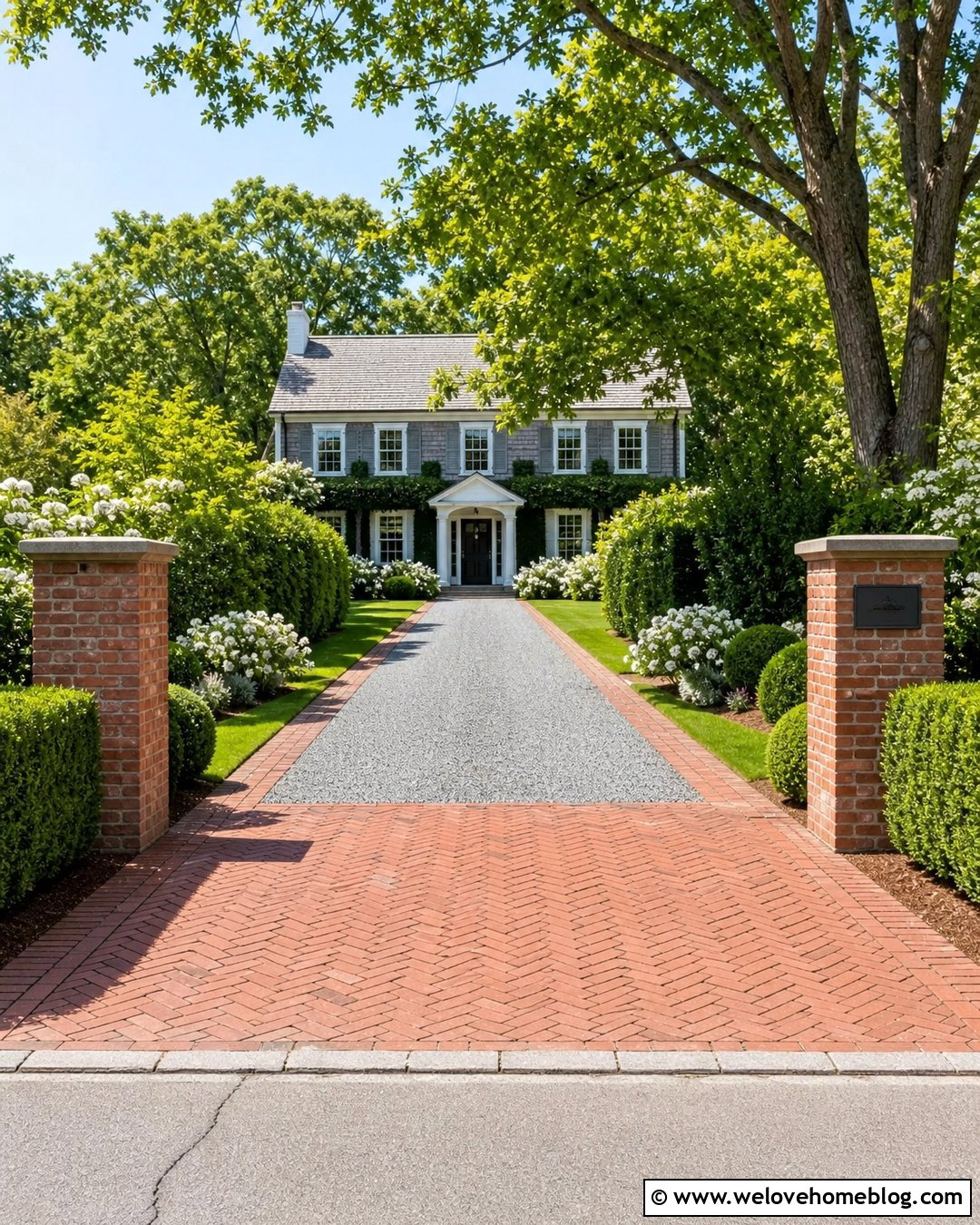
A natural stone apron gives the street end of a reclaimed brick driveway a stronger, more finished entrance. Start with broad granite setts, cobblestones, or irregular rectangular stone across the full driveway width. Continue with reclaimed red brick in herringbone or running bond toward the house. The change in material should occur in a straight, deliberate band rather than an uneven transition. Repeat the stone as narrow edging so the entrance apron feels connected to the rest of the layout. This combination suits a substantial craftsman, Tudor, or stone-clad home. Frame the approach with layered evergreens and flowering shrubs, leaving the street corners open for clear views. The cooler stone tones will balance the warm brick while adding another durable-looking texture to the overall driveway design.
10. Reclaimed Brick Driveway With Cobblestone Border
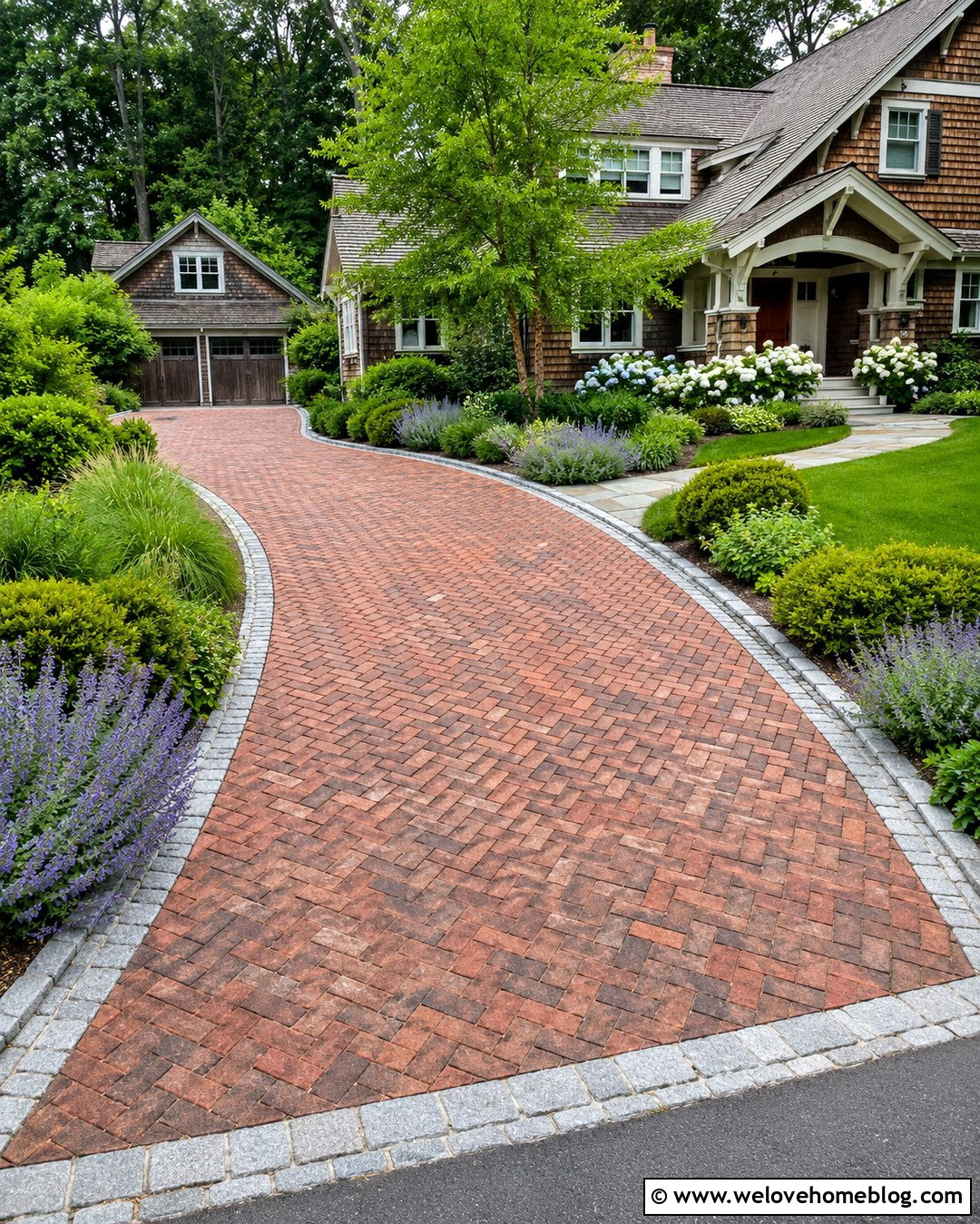
Would a darker outline help weathered brick stand out against the lawn? A cobblestone border creates a substantial frame around reclaimed brick while adding subtle contrast in color and scale. Use red and brown bricks in a simple herringbone field, then install gray granite cobbles along both sides. The cobbles can continue around planting beds or across the driveway as a decorative transition near the garage. A curved edge gives the layout a softer appearance, especially in front of a cottage or craftsman home. Plant low mounds of catmint, sedges, dwarf hydrangeas, and evergreen shrubs beyond the border. Avoid placing tall plants where they could obstruct visibility. The combination of weathered brick, rugged stone, and layered greenery creates a cohesive entrance with rich but controlled texture.
11. Narrow Reclaimed Brick Driveway
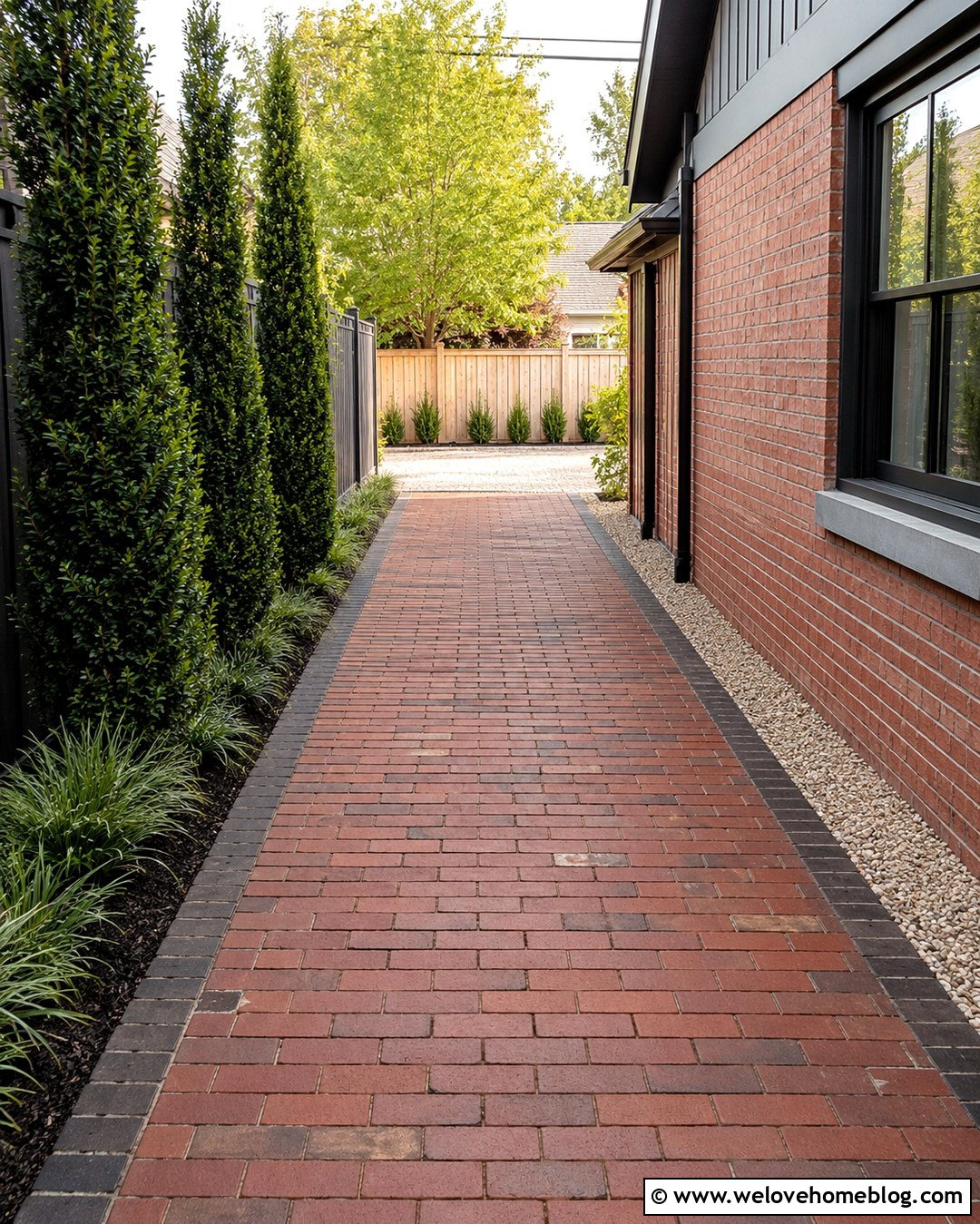
A narrow side driveway can still feel polished when its lines and transitions are carefully planned. Install reclaimed brick in a lengthwise running bond to visually stretch the space. A single darker soldier course along each edge provides definition without taking up too much width. Where the driveway passes close to the house, add a narrow gravel drainage strip instead of a bulky planting bed. On the opposite side, use a slim border containing columnar evergreens, compact grasses, or a clipped hedge. Continue the brick into a modest parking court behind the home so the route feels complete. This layout works well for urban cottages, bungalows, and older homes on tight lots. Wall-mounted or low-profile lighting can illuminate the approach without crowding the limited landscape area.
12. Permeable Reclaimed Brick Driveway
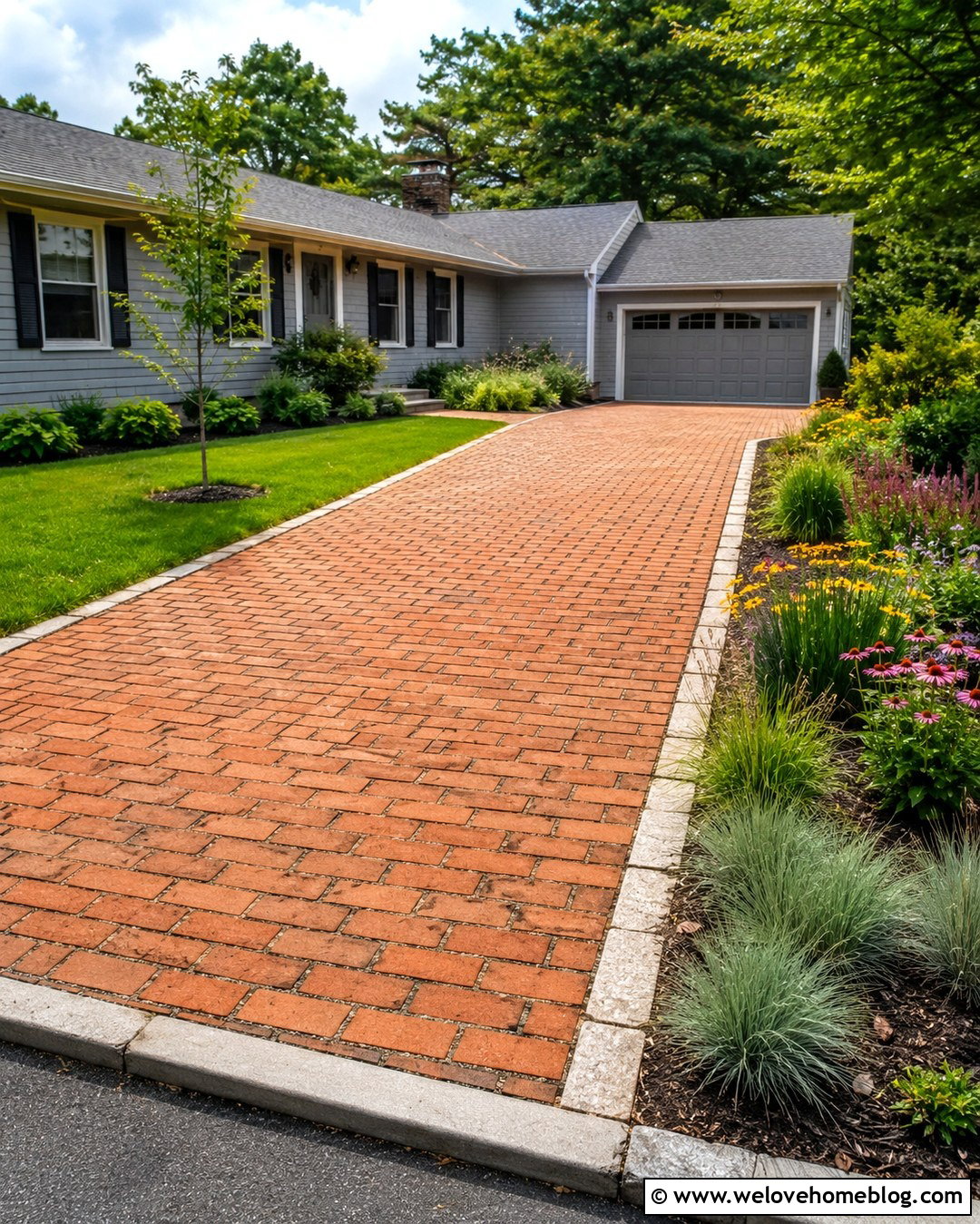
Wider, aggregate-filled joints can give reclaimed brick paving a softer and more permeable appearance when the complete system is designed for drainage. Arrange evenly sized reclaimed bricks in a running bond or grid pattern over a professionally specified, free-draining base. Fill the planned joints with compatible small aggregate rather than ordinary soil. A flush stone border will keep the surface visually contained while allowing water to move toward adjacent planted areas where local conditions permit. Add rain-garden planting beside the lower edge using species appropriate for regional moisture levels. A contemporary farmhouse or renovated ranch provides an attractive contrast to the aged brick. Because permeable performance depends on the base, joints, soil, slope, and maintenance, the system should be designed as more than widely spaced surface bricks. ()
13. Reclaimed Brick Driveway With Black Gate
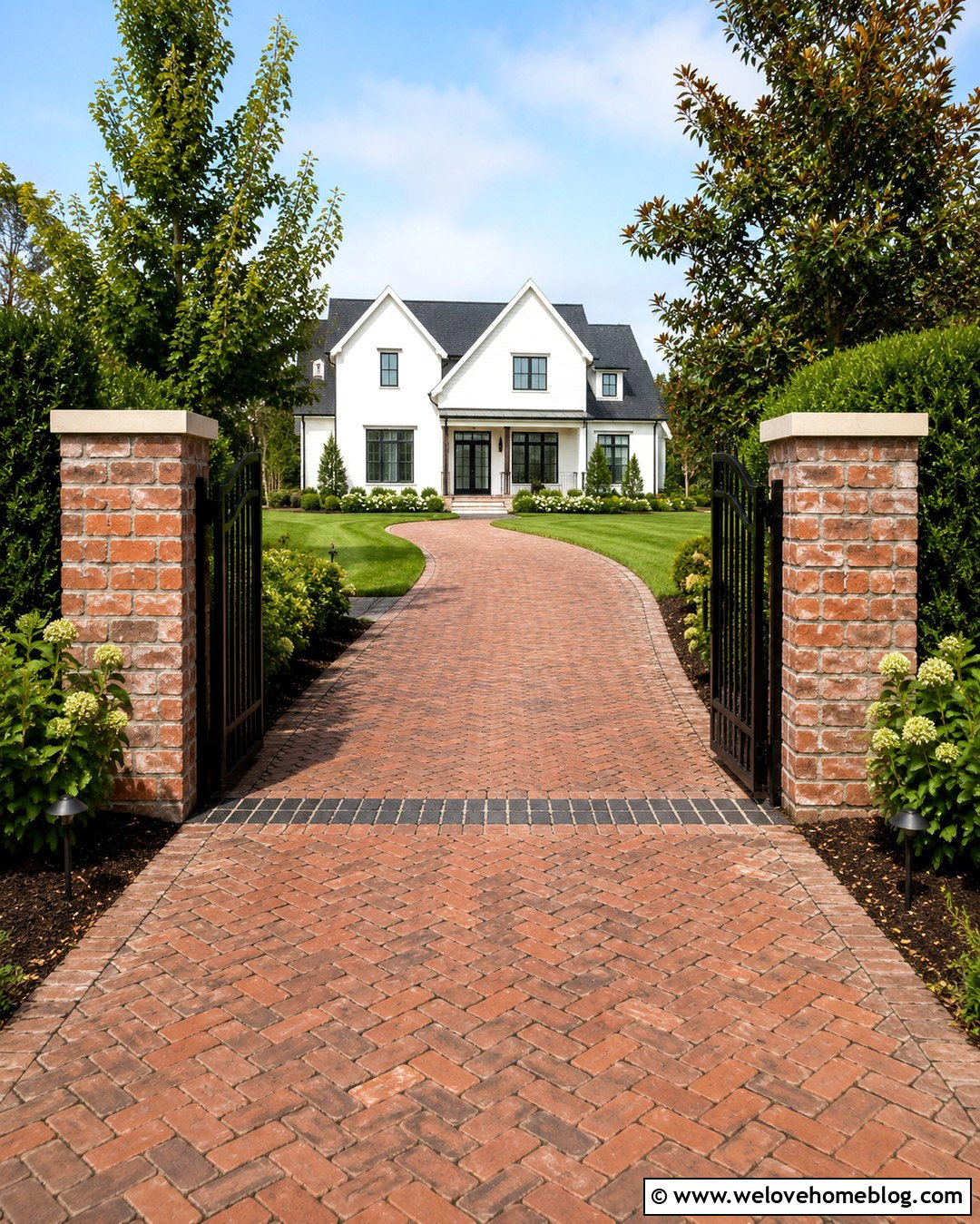
Weathered red brick and a simple black gate create an entrance that feels secure without becoming visually heavy. Use reclaimed brick in a herringbone pattern for the main driveway, then mark the gate line with a straight band of darker bricks. Build low brick pillars from complementary salvaged material, using smooth stone caps to protect and finish the tops. The gate should have an open design that allows the driveway and house to remain visible from the street. Continue the brick beyond the entrance in a gentle curve toward a traditional or modern farmhouse home. Evergreen hedges can frame the boundary, while looser flowering shrubs soften the inner approach. Position control equipment, lighting, and address details neatly so they feel integrated into the pillars rather than added after construction.
14. Reclaimed Brick Driveway With Matching Walkway
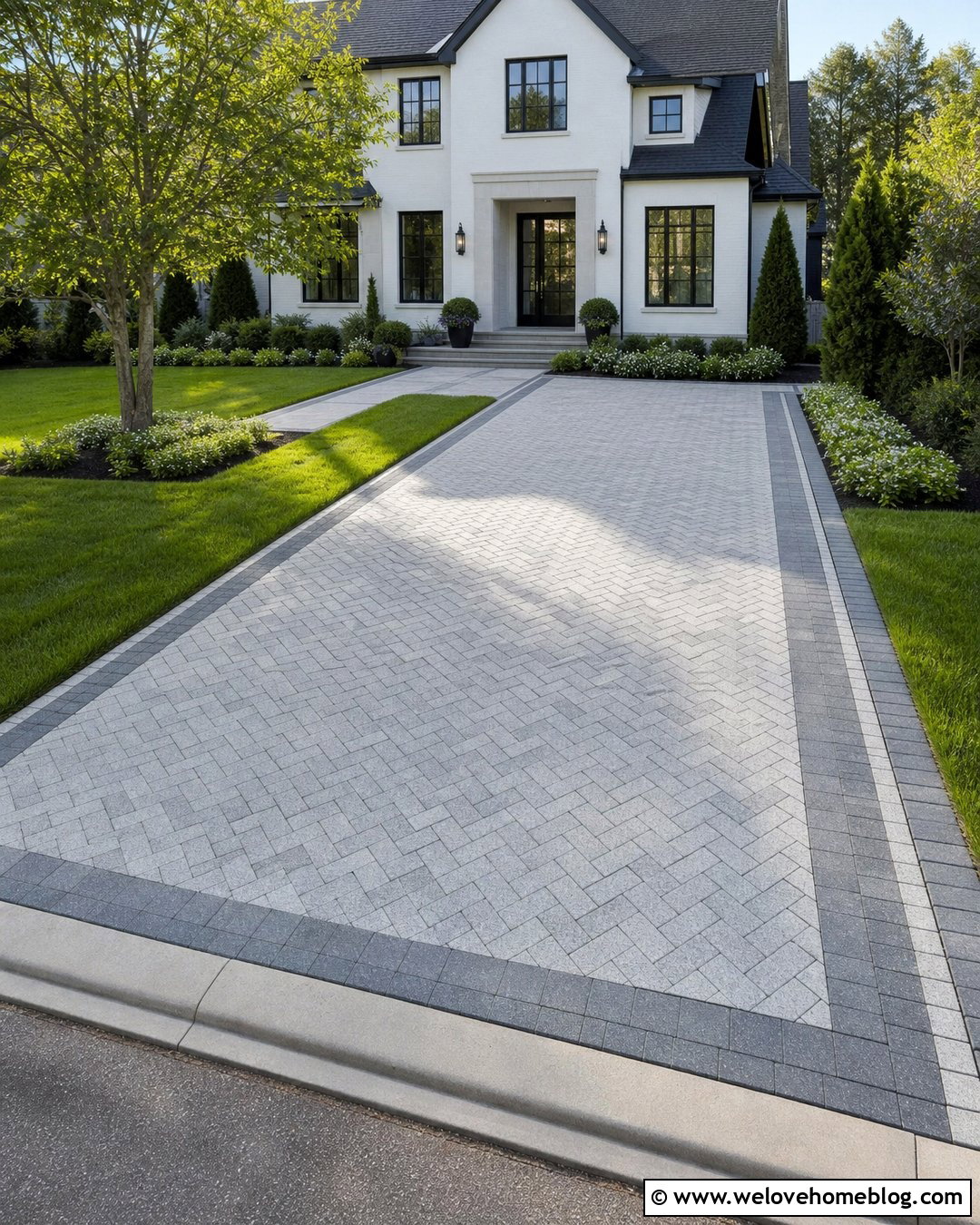
A coordinated walkway can make the front entrance easier to understand while tying the driveway to the porch. Pave the main driveway with reclaimed brick in herringbone, then use running bond for the narrower pedestrian route. Although the patterns differ, the shared material creates continuity. Separate the walkway from the driveway with a curved planting bed containing low shrubs, grasses, and seasonal flowers. At the meeting point, widen the walk slightly to form a clear landing rather than leaving an awkward narrow junction. A contrasting brick border can outline both paved areas. This complete arrangement suits a craftsman or Colonial house with a visible front door. Select the least worn, most even bricks for the walkway surface, where a comfortable and consistent walking route is especially important.
15. Reclaimed Brick Courtyard Driveway
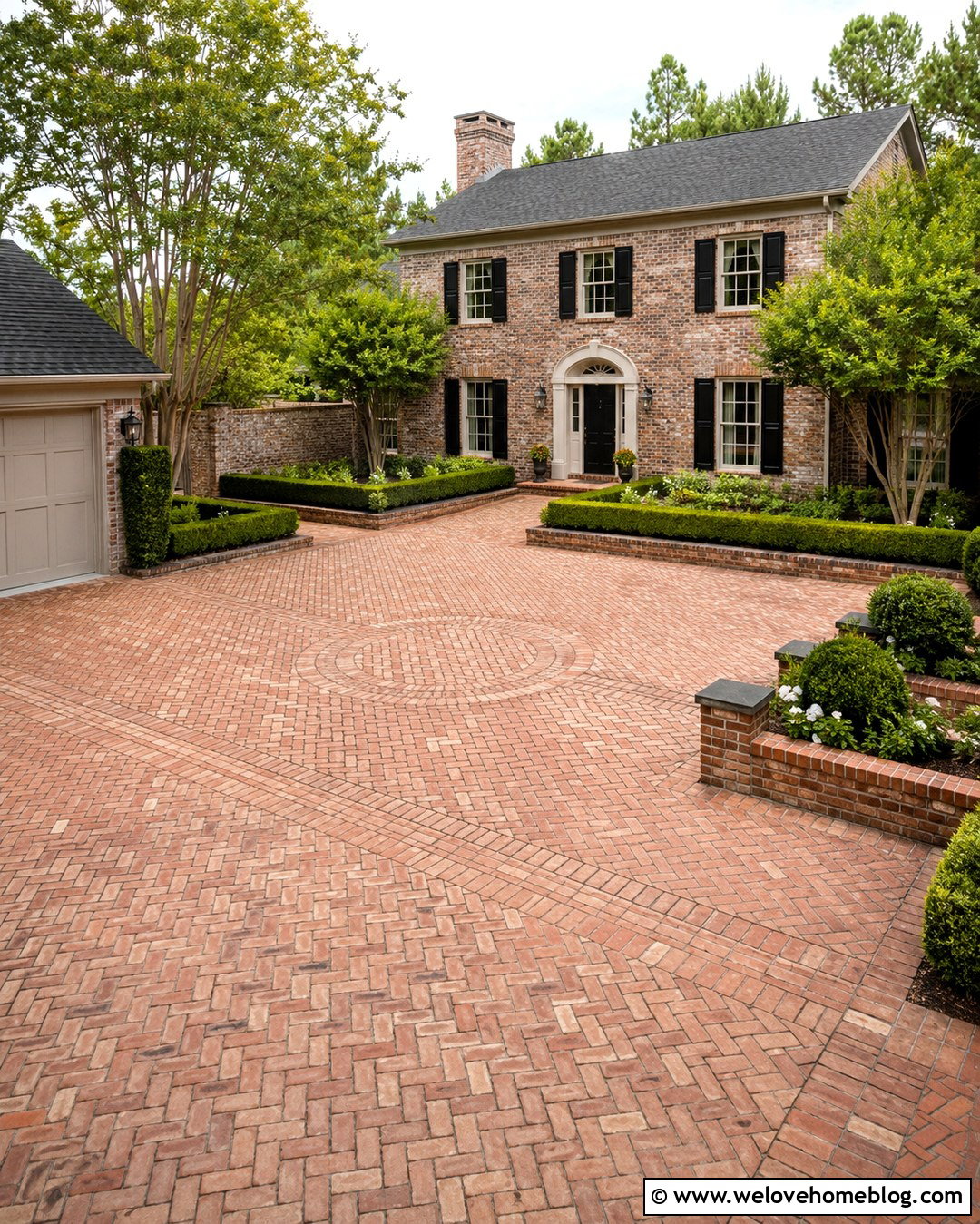
A broad front parking area can feel more like a landscaped courtyard when brick patterns and planting divide it into smaller visual zones. Use reclaimed red and brown brick in a herringbone field, outlined by straight running-bond bands. Place a circular brick medallion or simple contrasting ring at the center, but keep the design restrained enough for vehicles to cross comfortably. Define the outer edges with raised planting beds, low masonry walls, or clipped hedges. A separate pathway should lead clearly from the parking zone to the front door. This layout works particularly well with Mediterranean-inspired, Georgian, or courtyard homes. Small multi-stem trees can soften the corners without occupying useful maneuvering space. The result is a practical driveway that also reads as part of the home’s front landscape.
16. Sloped Reclaimed Brick Driveway
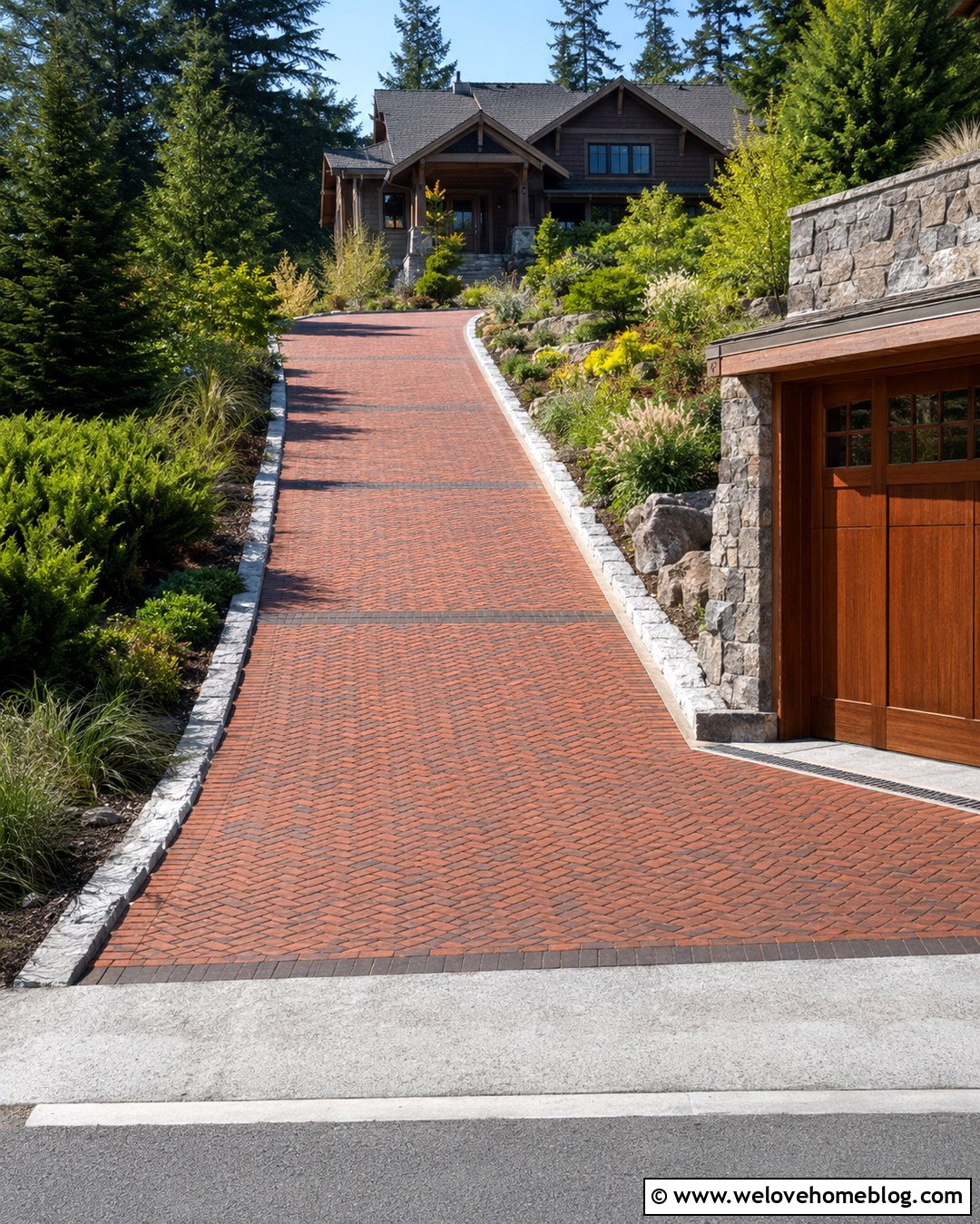
A sloped driveway needs a strong visual structure and a site-specific plan for managing runoff. Reclaimed bricks laid in herringbone create an interlocked appearance that suits an incline, while darker brick bands placed across the width can break up a long descent visually. Use sturdy stone curbs along the sides and incorporate professionally positioned drainage channels where the site requires them. Plant the banks with spreading evergreens, ornamental grasses, and erosion-conscious ground covers selected for local conditions. Near the garage, add a level-looking brick apron that creates a clear transition from the slope to the parking area. A hillside ranch or craftsman house will fit this design naturally. Have the base, edge restraints, surface levels, and drainage engineered for the actual grade rather than treating the project as ordinary patio paving.
17. Rustic Reclaimed Brick Driveway
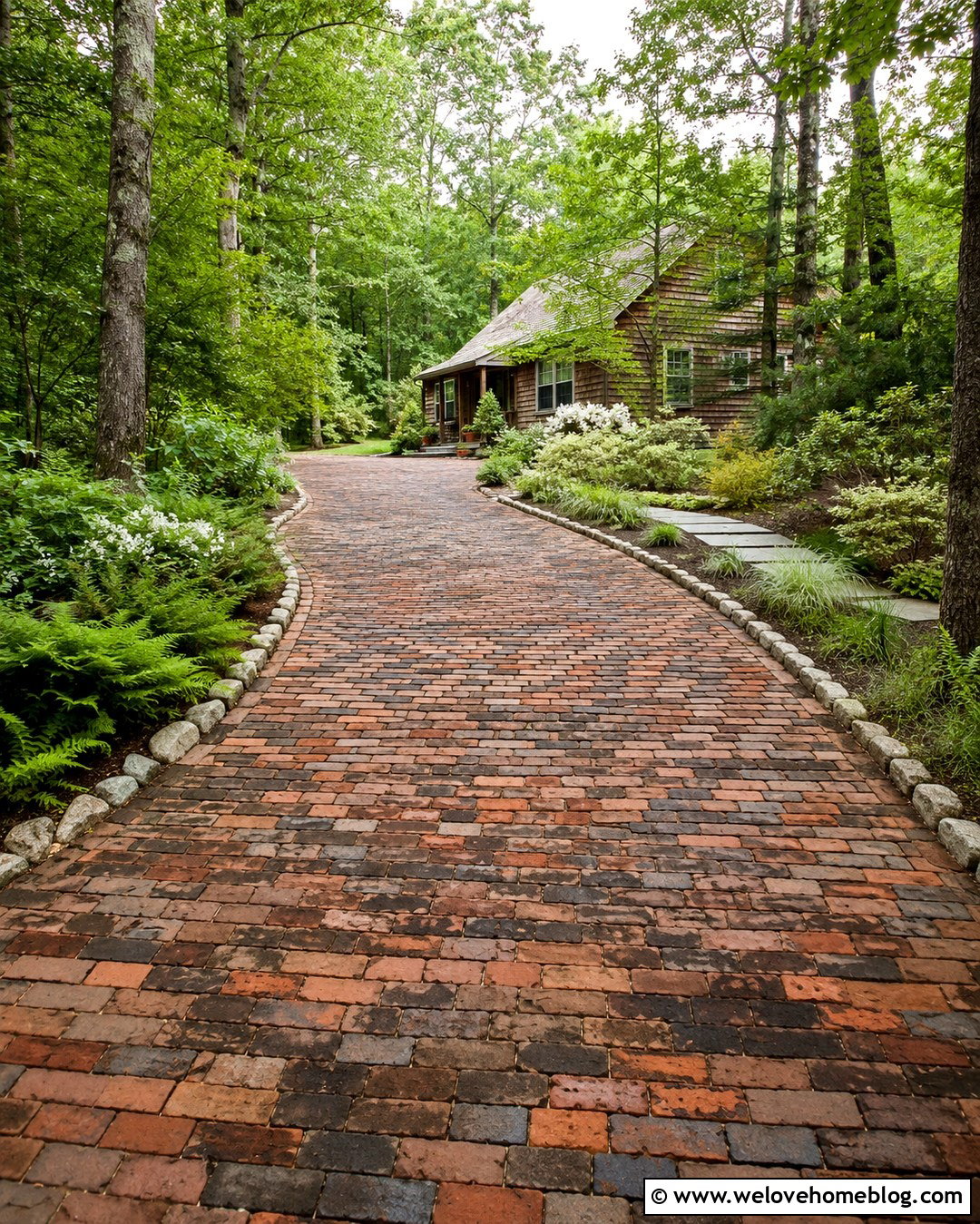
Uneven colors and softened corners can become the main attraction in a rustic driveway. Choose salvaged bricks in a broad mix of red, brown, orange, and soot-darkened tones. Arrange them in a simple running bond so the varied surfaces remain readable without making the pattern too busy. Use irregular fieldstone edging to connect the brick with a wooded or country setting. Broad planting beds filled with ferns, native grasses, flowering shrubs, and small trees can frame a gently curved approach. A cedar-sided home, log-inspired house, or renovated rural cottage makes an appropriate backdrop. Keep joints and outer lines consistent even when the individual bricks differ. That contrast between controlled installation and naturally aged material prevents the finished driveway from looking unfinished or accidentally patched together.
18. Reclaimed Brick Driveway With Ribbon Bands
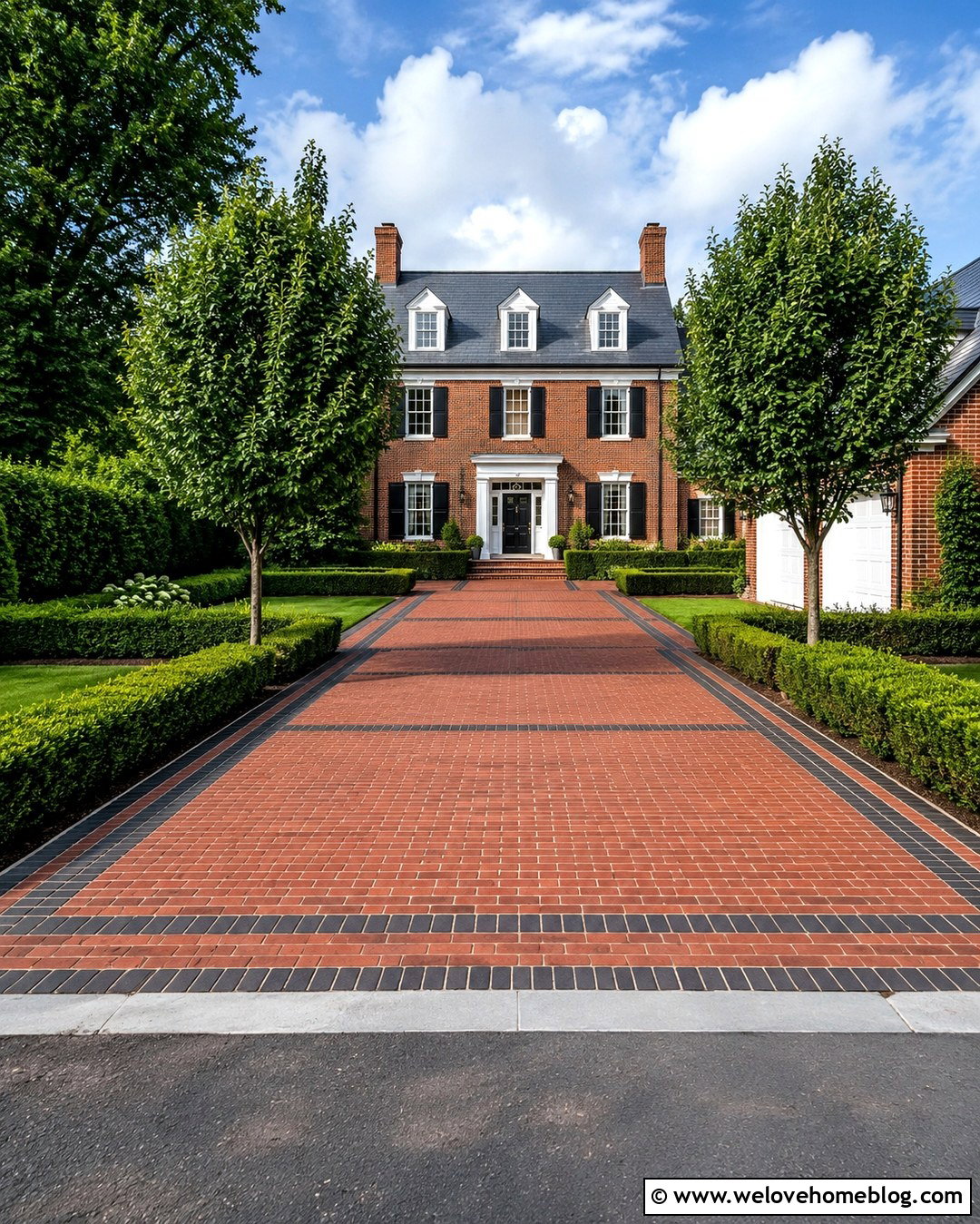
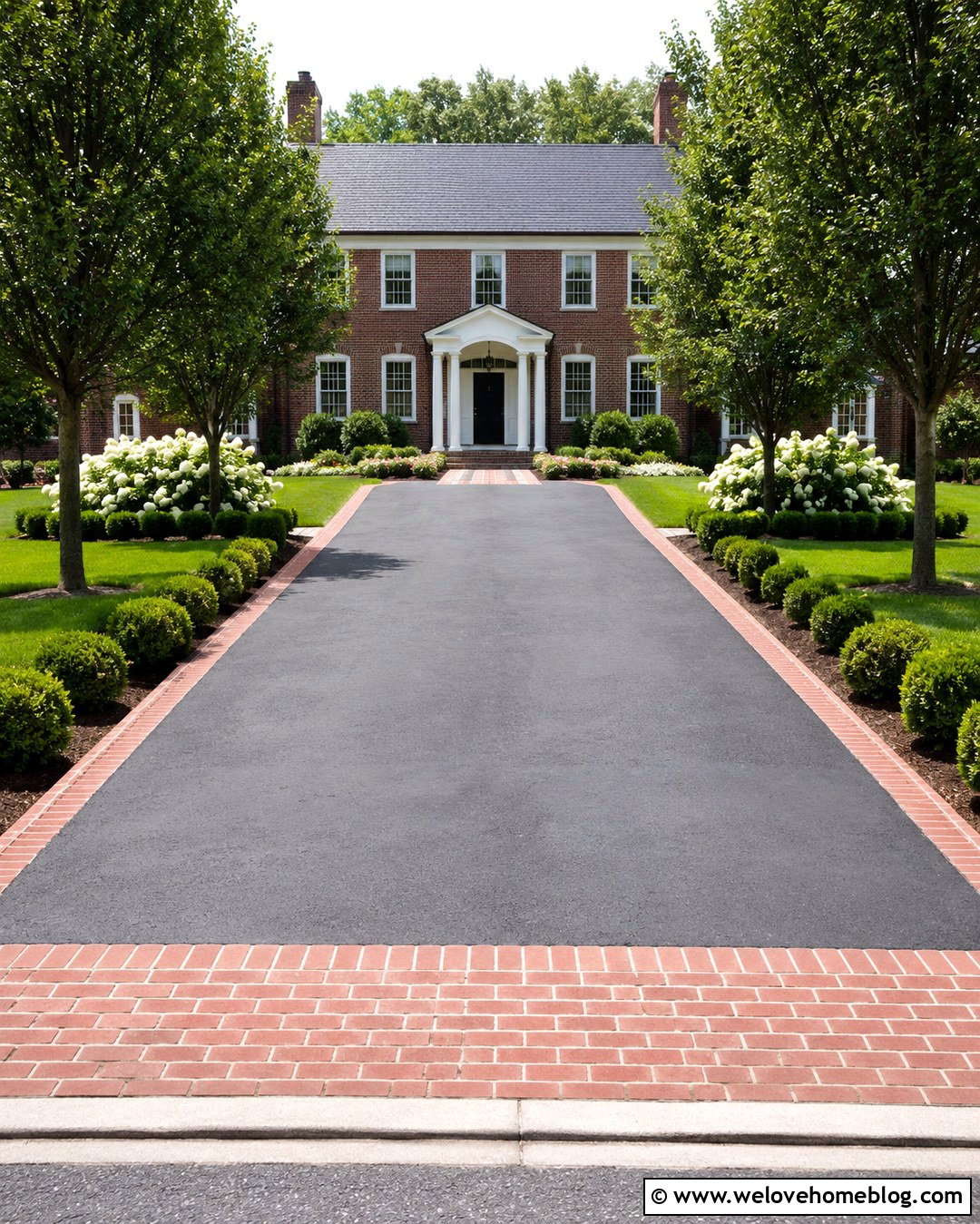
Brick ribbon bands can organize a large driveway and introduce subtle pattern without adding another material. Lay the main field with reclaimed bricks in running bond, then insert darker salvaged brick bands at the street apron, parking area, and garage threshold. A double border along the sides will repeat the same accent color. For a wide driveway, another narrow ribbon can separate vehicle bays or frame a rectangular center field. Pair this tailored layout with a brick Colonial or traditional two-story house. The bands should relate to architectural lines such as garage doors, porch columns, or window spacing. Formal hedges, symmetrical trees, and a straight walkway will reinforce the orderly composition. Keep the brick color changes gentle so the ribbons define the surface without producing a harsh striped effect.
19. Reclaimed Brick Driveway With Landscape Lighting
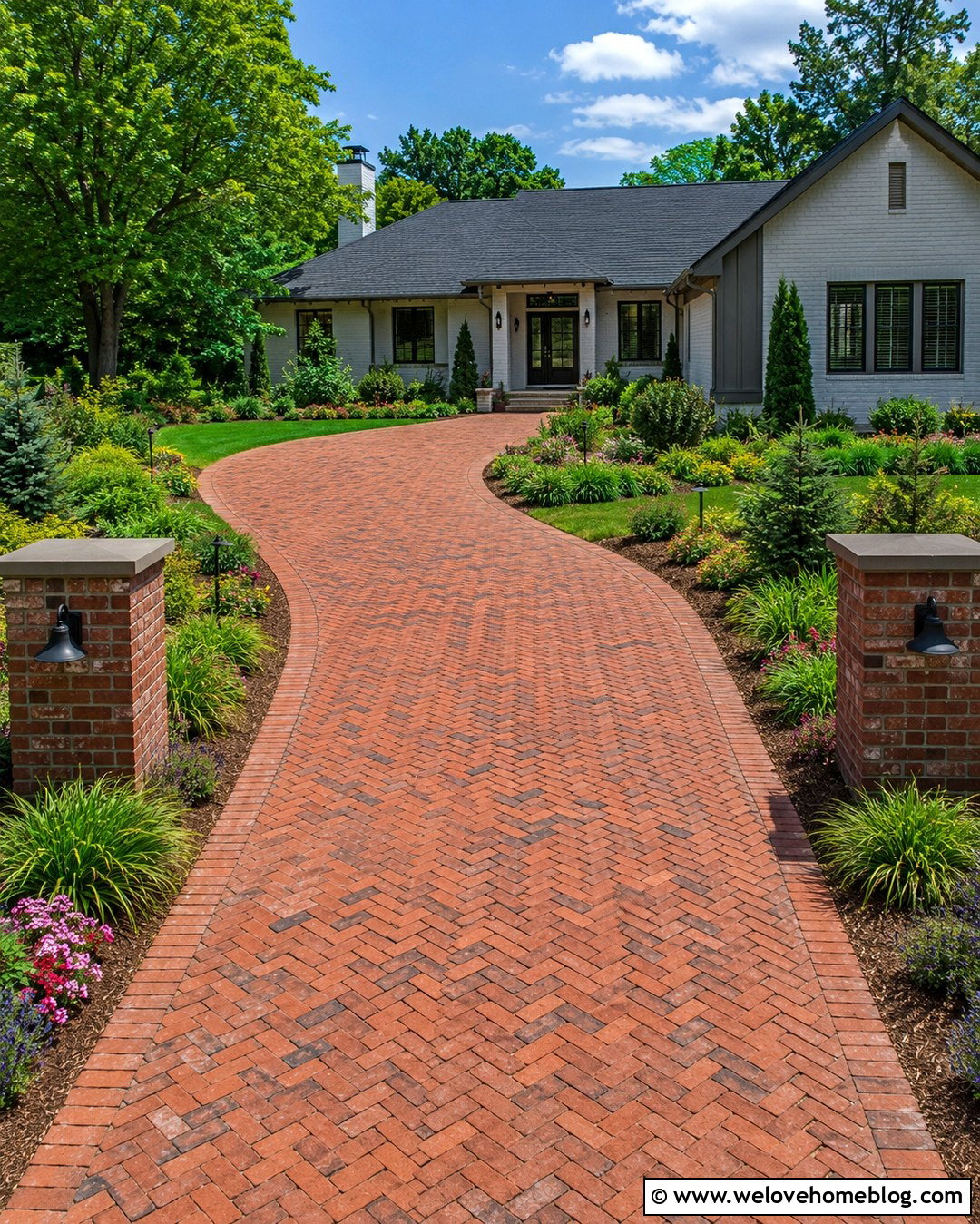
Softly integrated lighting can make a reclaimed brick driveway easier to follow while keeping the daytime design uncluttered. Choose low, simple fixtures with a dark bronze or black finish. Space them along planting beds rather than lining both edges like a runway. The driveway itself can feature warm red reclaimed brick in a basketweave pattern with a plain soldier-course border. Use curved beds of ornamental grasses, compact evergreens, and flowering perennials to hold the fixtures naturally within the landscape. At the entrance, add two downward-facing lights to low brick pillars or an address monument. A craftsman or updated ranch home will complement the approachable look. Plan fixture positions, wiring, glare control, and illumination levels with a qualified professional before the paving and planting are completed.
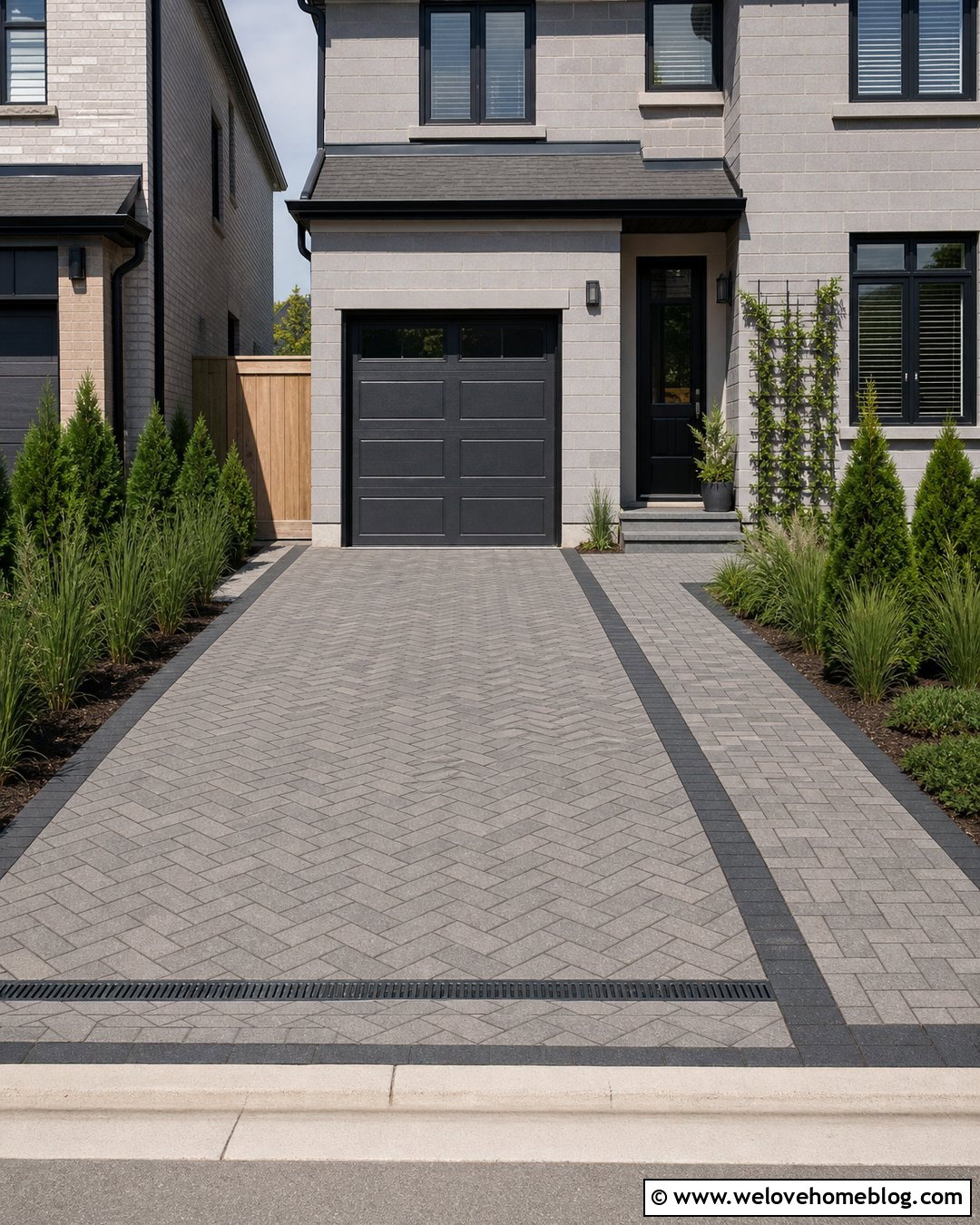
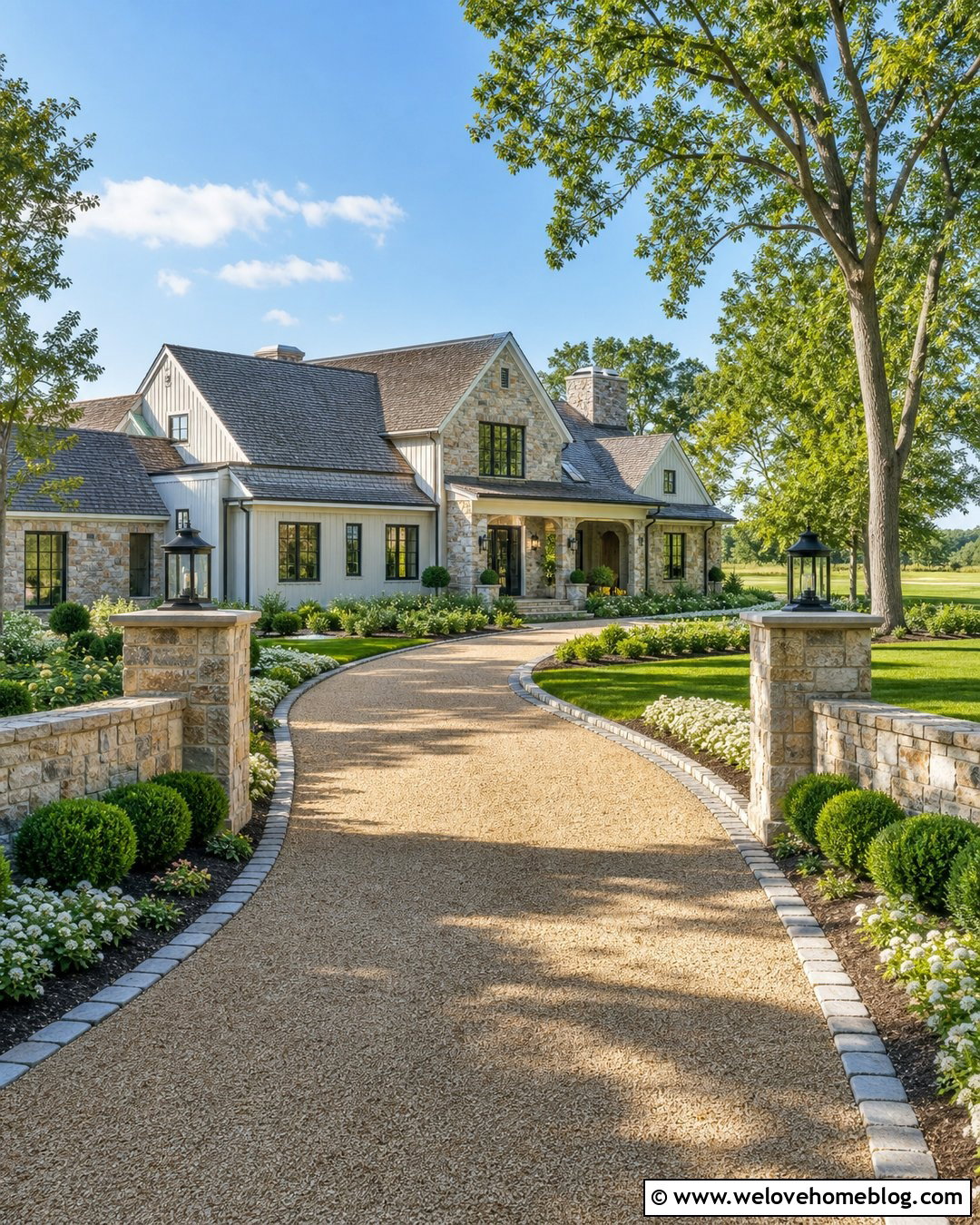
20. Reclaimed Brick Driveway With Salvaged Brick Patchwork
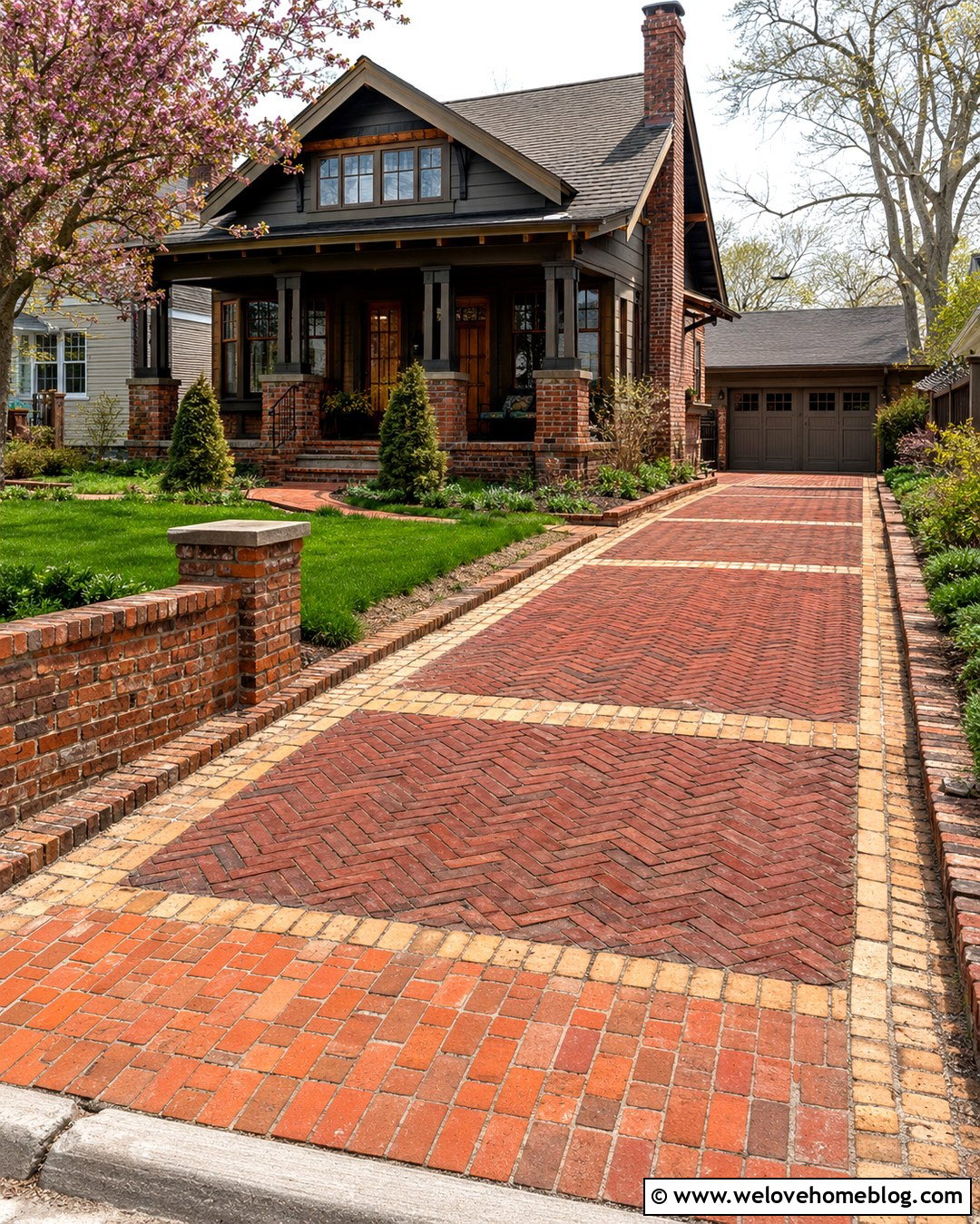
Limited quantities of matching brick do not have to prevent a cohesive driveway design. Divide reclaimed materials into color families, then place them in deliberate rectangular fields rather than scattering every type randomly. Dark red brick can form the main herringbone surface, while buff or orange bricks create broad borders and a garage apron. Occasional stamped or unusually weathered pieces may be concentrated in a decorative band where they can be appreciated. Repeat the dominant brick tone in a matching walkway or low garden wall. This approach suits an eclectic bungalow, historic renovation, or casual cottage. Keep the driveway shape simple and the landscaping restrained with lawn, evergreen shrubs, and one flowering tree. Clear organization allows the varied salvage materials to look collected and purposeful rather than mismatched.
Conclusion:
The best reclaimed brick driveway balances old-world character with thoughtful construction and a clear connection to the house. Brick color, laying pattern, driveway shape, edging, planting, and entrance details should feel like parts of one design. Herringbone can bring structure, while running bond creates calm directional lines. Stone borders, grass strips, gates, and coordinated walkways offer additional ways to personalize the approach. Because salvaged bricks vary in condition, size, and strength, have the material sorted for its intended use and rely on an appropriate base, edge restraint, and drainage plan. Use these 20 Reclaimed Brick Driveway Ideas as a starting point, then adapt the details to your architecture, climate, property size, and daily parking needs.

Related posts:
Leave a Reply