
A well-designed driveway does more than provide a place to park. It frames the home, guides visitors toward the entrance, and shapes the entire front yard. These 20 driveway landscaping curb appeal ideas combine attractive surfaces with practical borders, layered planting, lighting, and clear walkways. Some designs suit compact suburban lots, while others work beautifully with long approaches or circular layouts. You will find affordable gravel treatments, polished paver patterns, modern concrete finishes, and classic brick details. Each look can also be adjusted for your climate, maintenance needs, house style, and budget. Whether you want a quick refresh or a complete front yard update, explore these 20 driveway landscaping curb appeal ideas.

1. Concrete Driveway With Curved Flower Beds
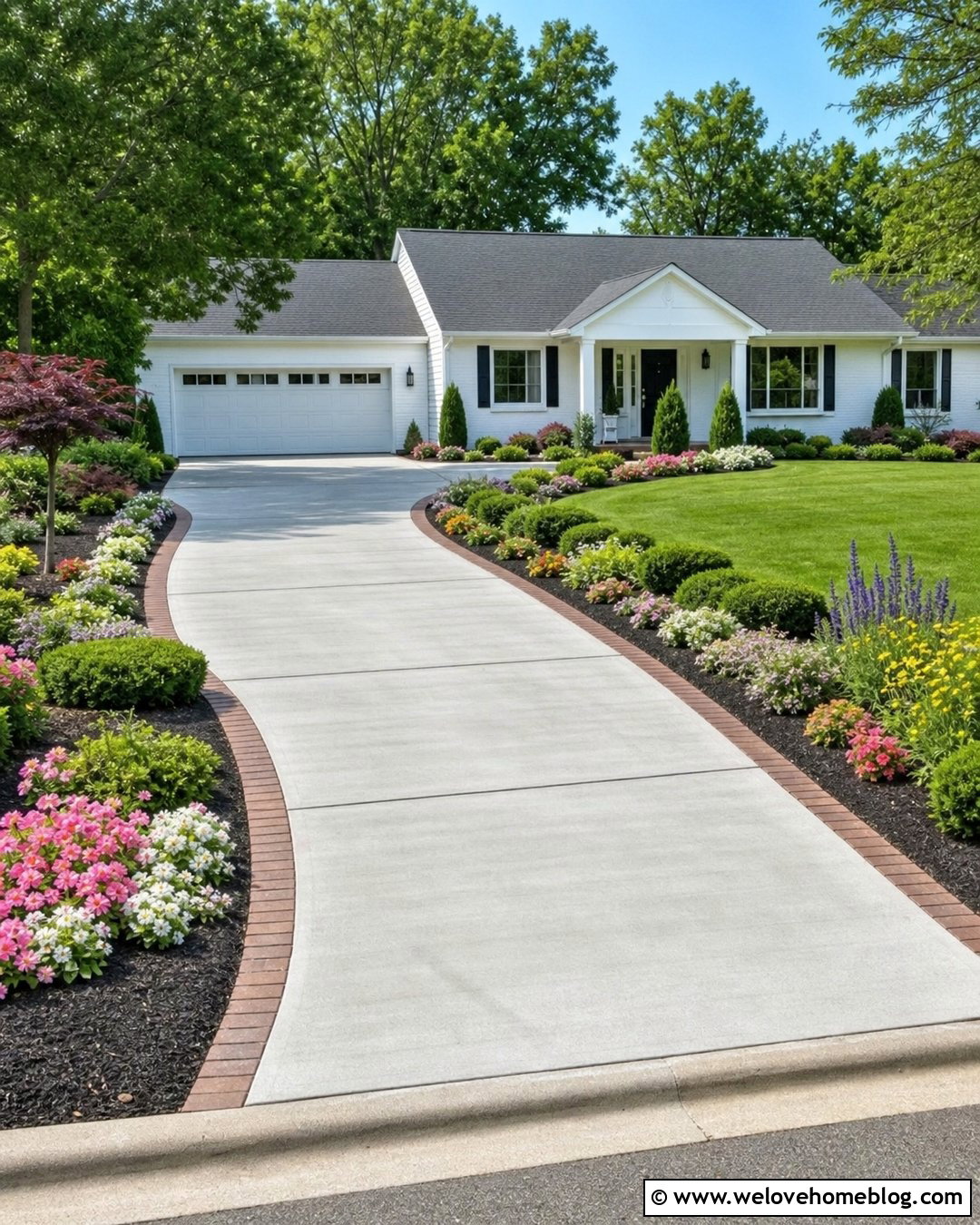
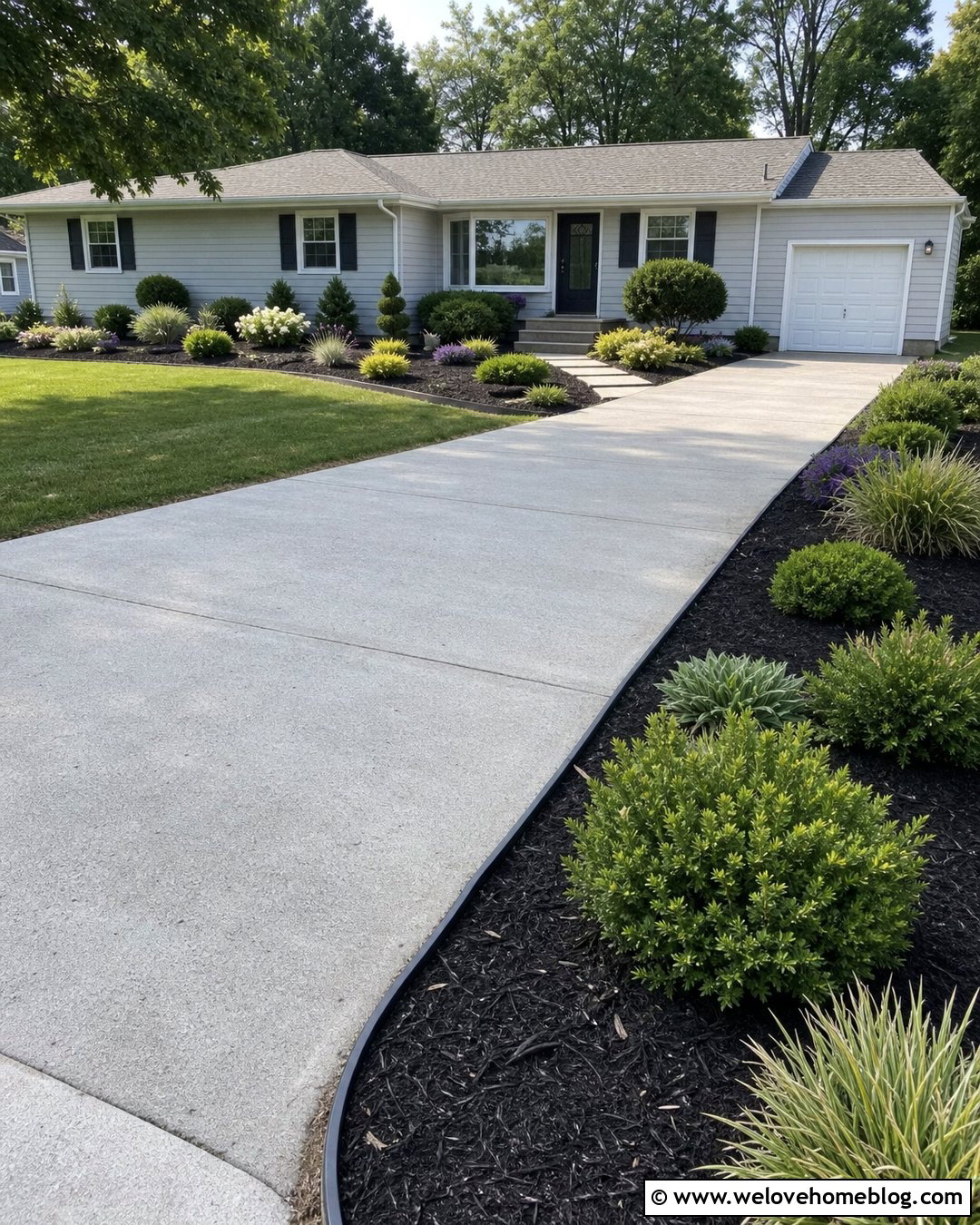
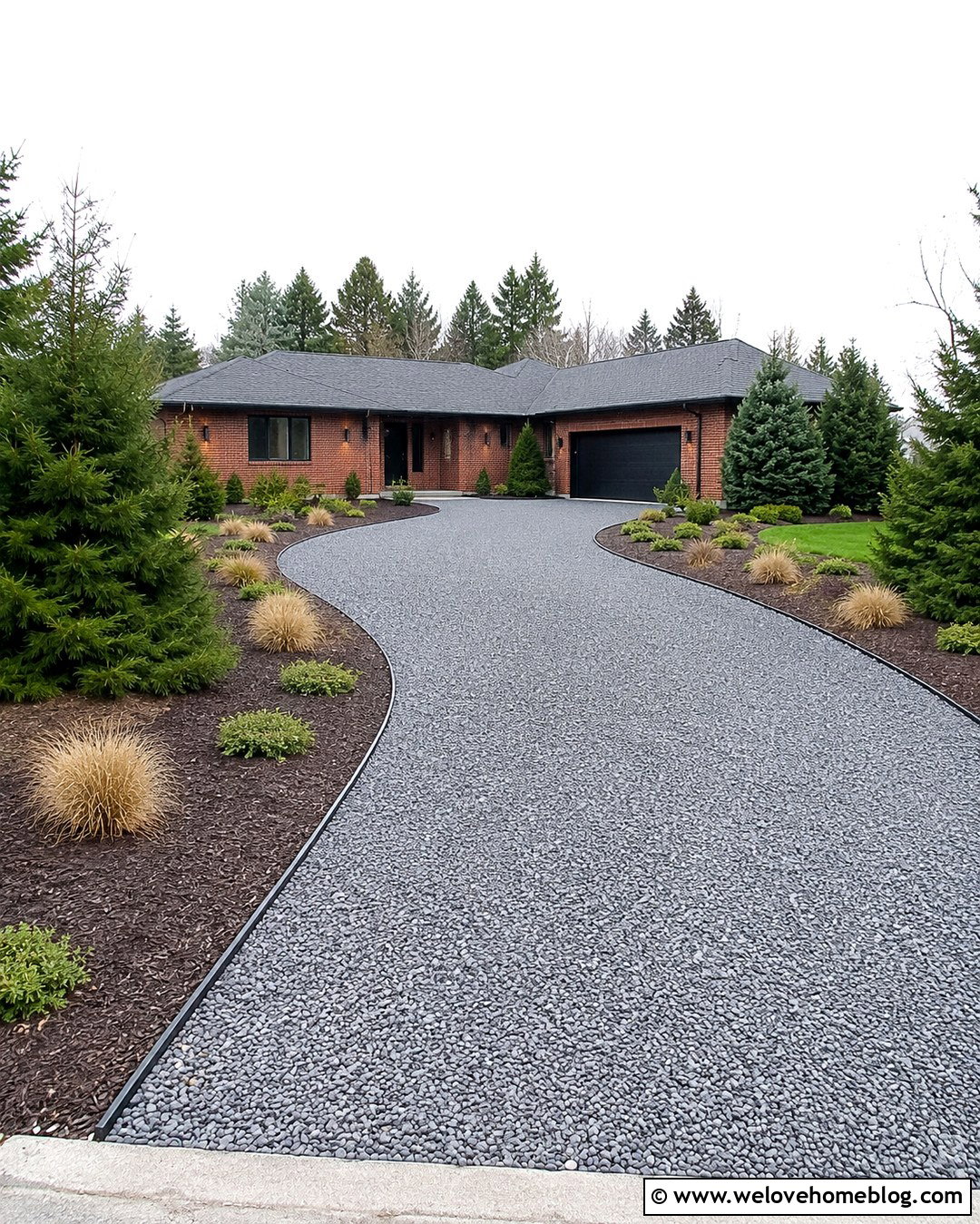
A plain concrete surface feels much more welcoming when broad flower beds soften both sides. Shape the beds with gentle curves that guide the eye from the curb toward the house. A dark brick or steel edge creates a crisp break between the gray poured concrete and the landscaping. Layer low ground covers near the pavement, flowering perennials in the middle, and compact evergreen shrubs toward the lawn. This arrangement adds depth without blocking visibility when you pull onto the street. Repeat a few flower colors near the front walkway to connect the driveway with the home’s entrance. Dark mulch provides a clean background and reduces visual clutter. The finished design suits ranch, Cape Cod, and traditional suburban homes.
2. Gravel Driveway With Lavender Borders
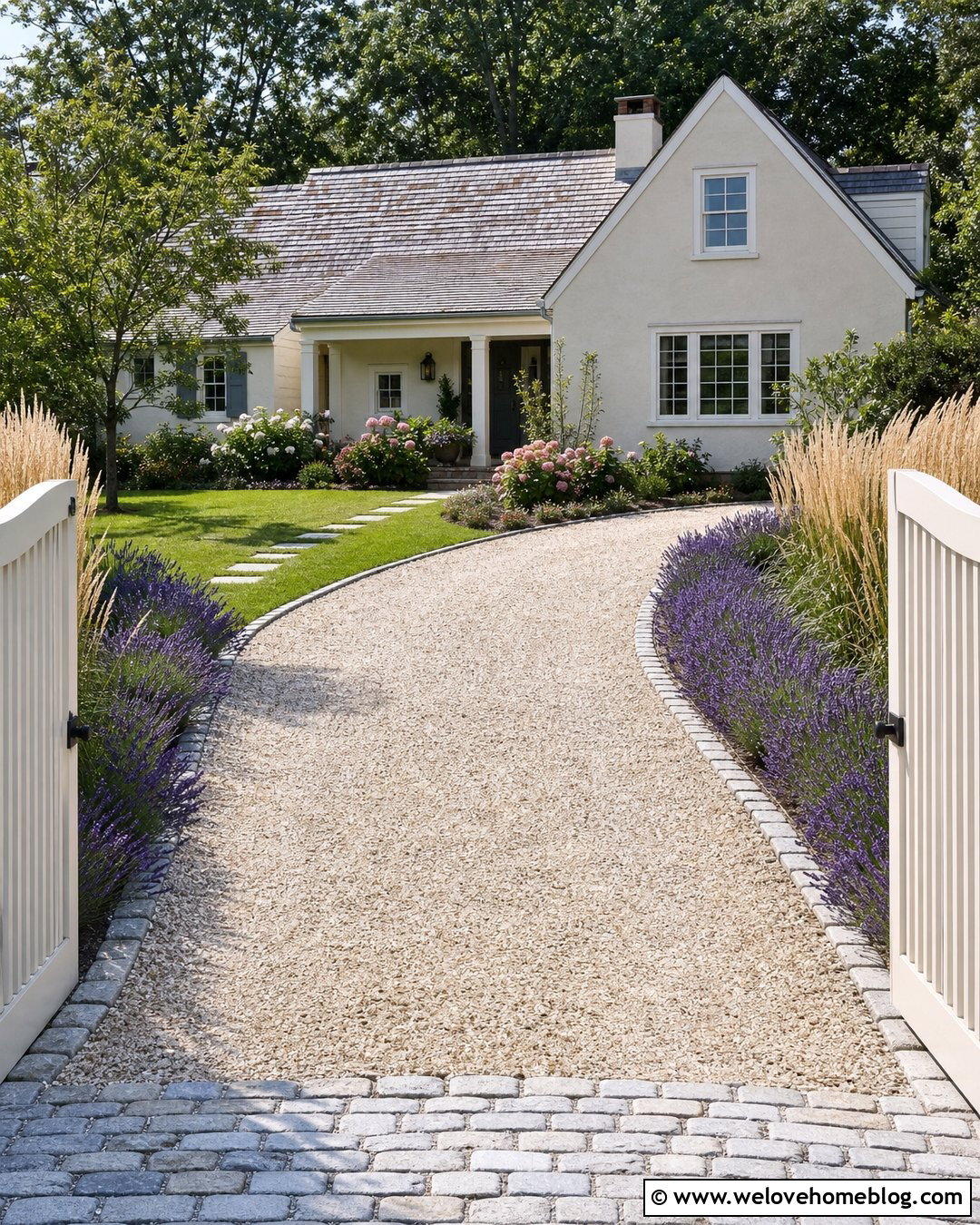
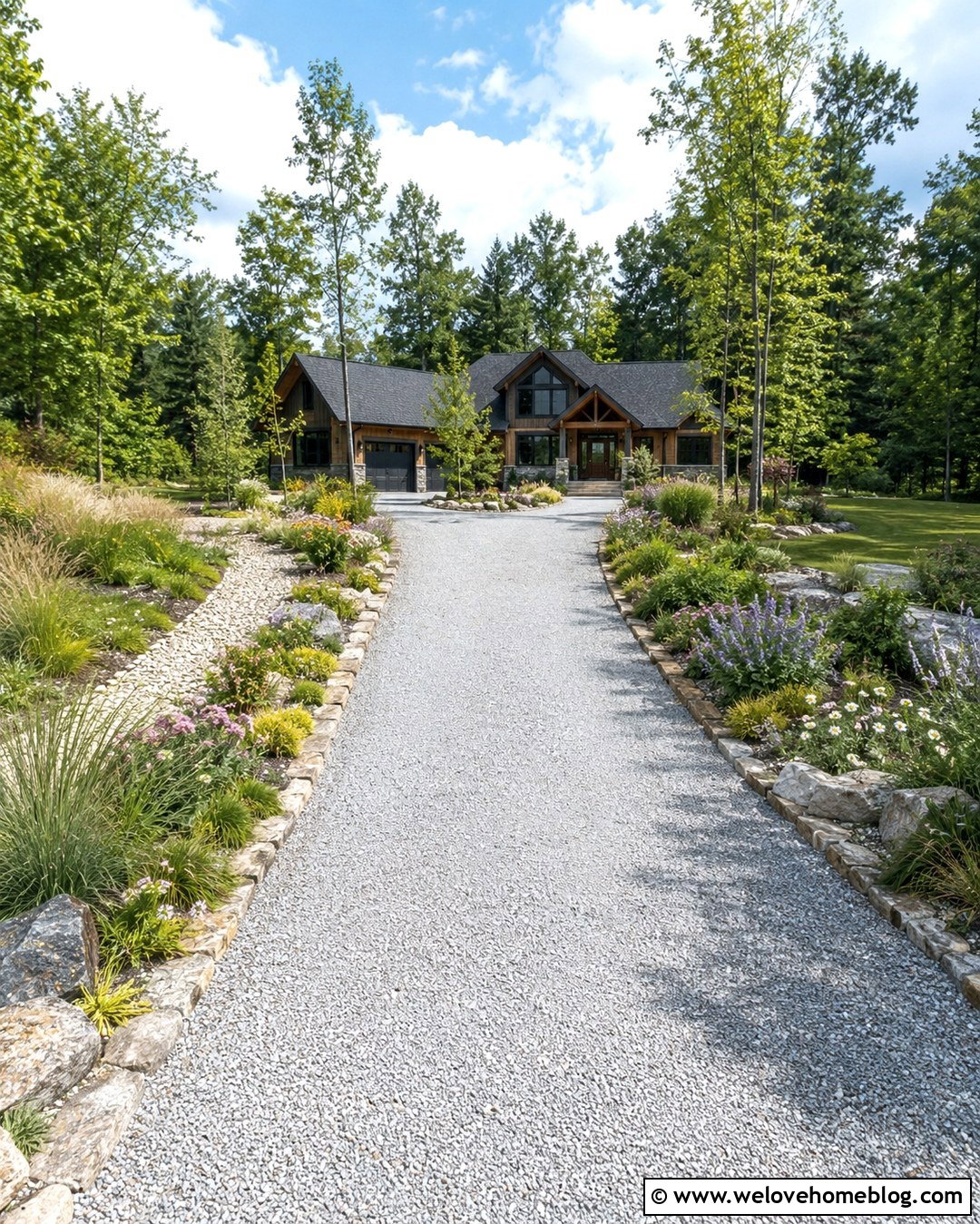
The soft texture of pea gravel pairs naturally with relaxed rows of lavender and ornamental grass. Use a straight or slightly curved driveway so the repeated planting can emphasize its length. Cobblestone edging holds the loose gravel in place while giving the surface a more finished appearance. Plant lavender behind the stones, leaving enough room for mature growth and convenient vehicle clearance. Small groups of feather reed grass can mark the entrance without creating a solid wall. Add a stepping-stone walkway through the planting bed if the driveway connects directly to the front door. This complete look feels especially appropriate beside a cottage, country house, or modern farmhouse. Choose locally suitable plants if lavender struggles in your climate.
3. Asphalt Driveway With Brick Edging
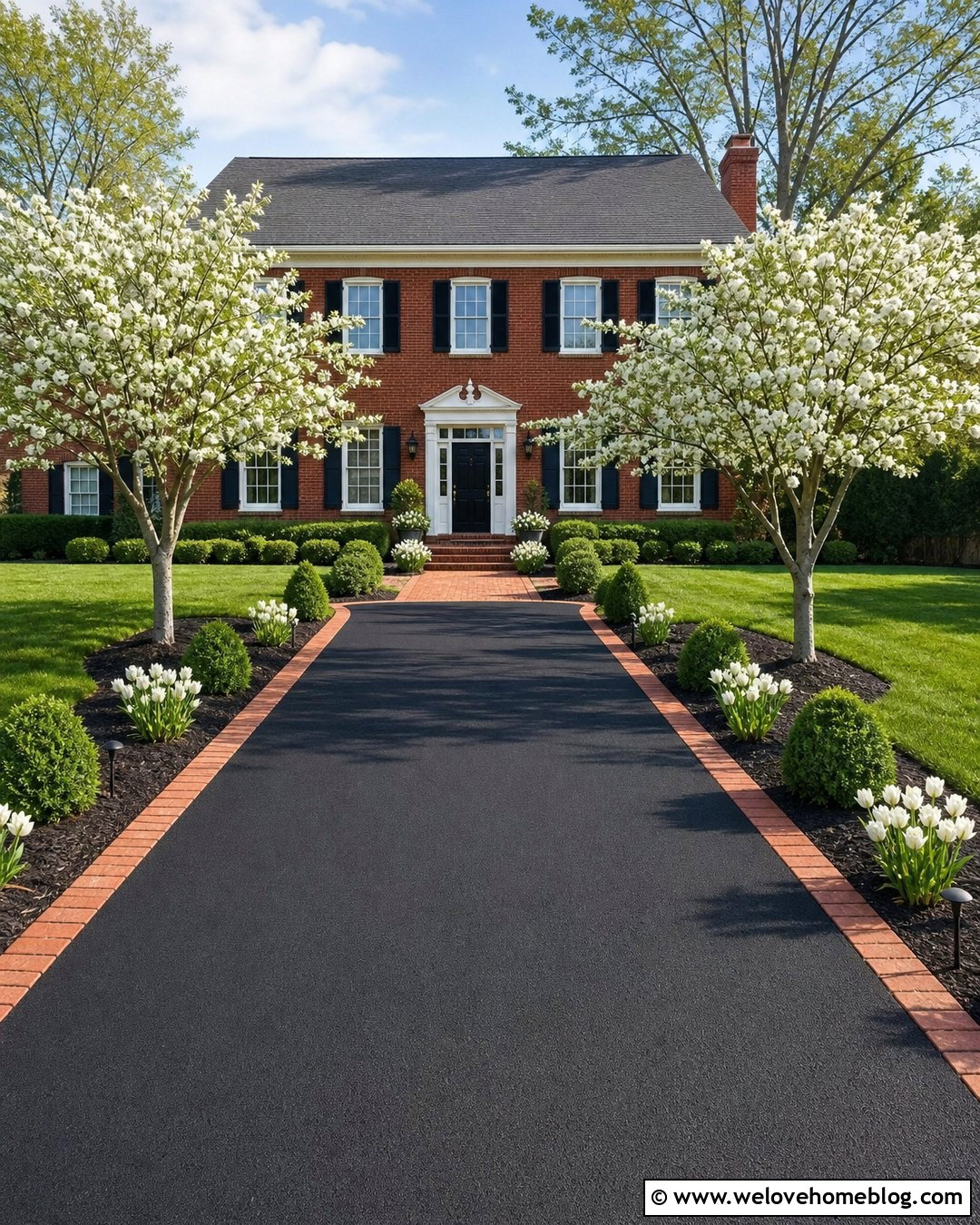
Fresh black asphalt can become a strong design feature instead of fading into the background. Frame a straight driveway with red or charcoal brick edging that complements the home’s facade. A narrow planting bed beyond the brick provides space for low evergreen shrubs, seasonal flowers, and tidy mulch. At the street, widen the beds slightly and add two small ornamental trees for a more noticeable entrance. Continue the same brick along the front walkway to make the separate hardscape areas feel connected. The dark driveway, warm masonry, and green planting create simple contrast that reads clearly from the curb. This approach works well for colonial, craftsman, and brick-front houses. Keep plants low near the entrance to preserve safe sightlines.
4. Paver Driveway With Boxwood Landscaping
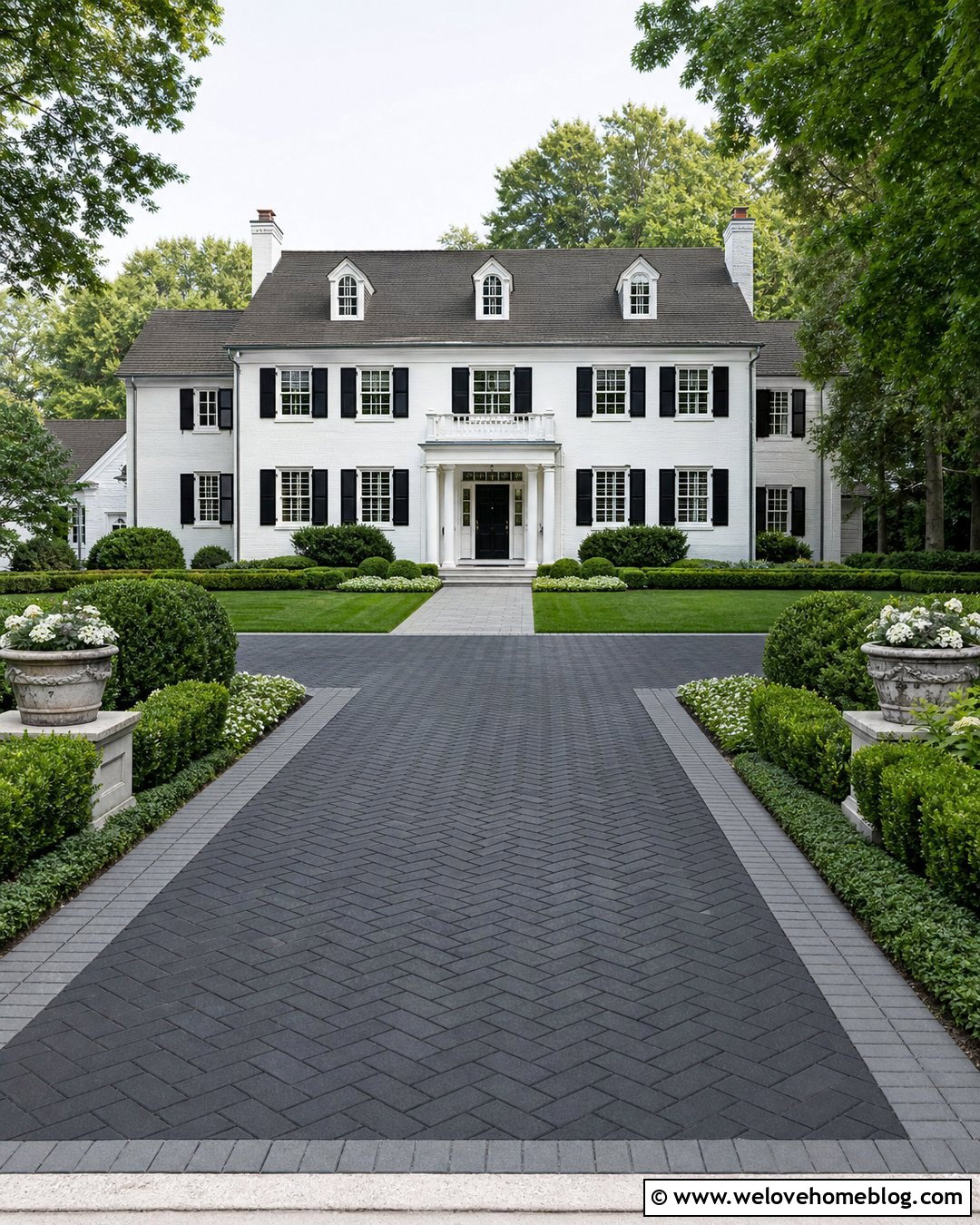
For a clean and formal front yard, combine interlocking concrete pavers with clipped boxwood borders. A herringbone or running-bond pattern adds detail across the driveway without requiring elaborate decoration. Install a contrasting paver soldier course around the perimeter to strengthen the outline. Behind it, position compact boxwoods in balanced rows, then layer white flowers and evergreen ground covers around them. Matching beds on both sides create symmetry, especially when the driveway leads directly to a centered garage or colonial-style house. Stone urns or simple planters can mark the transition to the walkway. Regular pruning keeps the shrubs proportional to the driveway and prevents branches from brushing vehicles. The overall look is structured, green, and attractive throughout the year.
5. Circular Driveway With A Center Garden
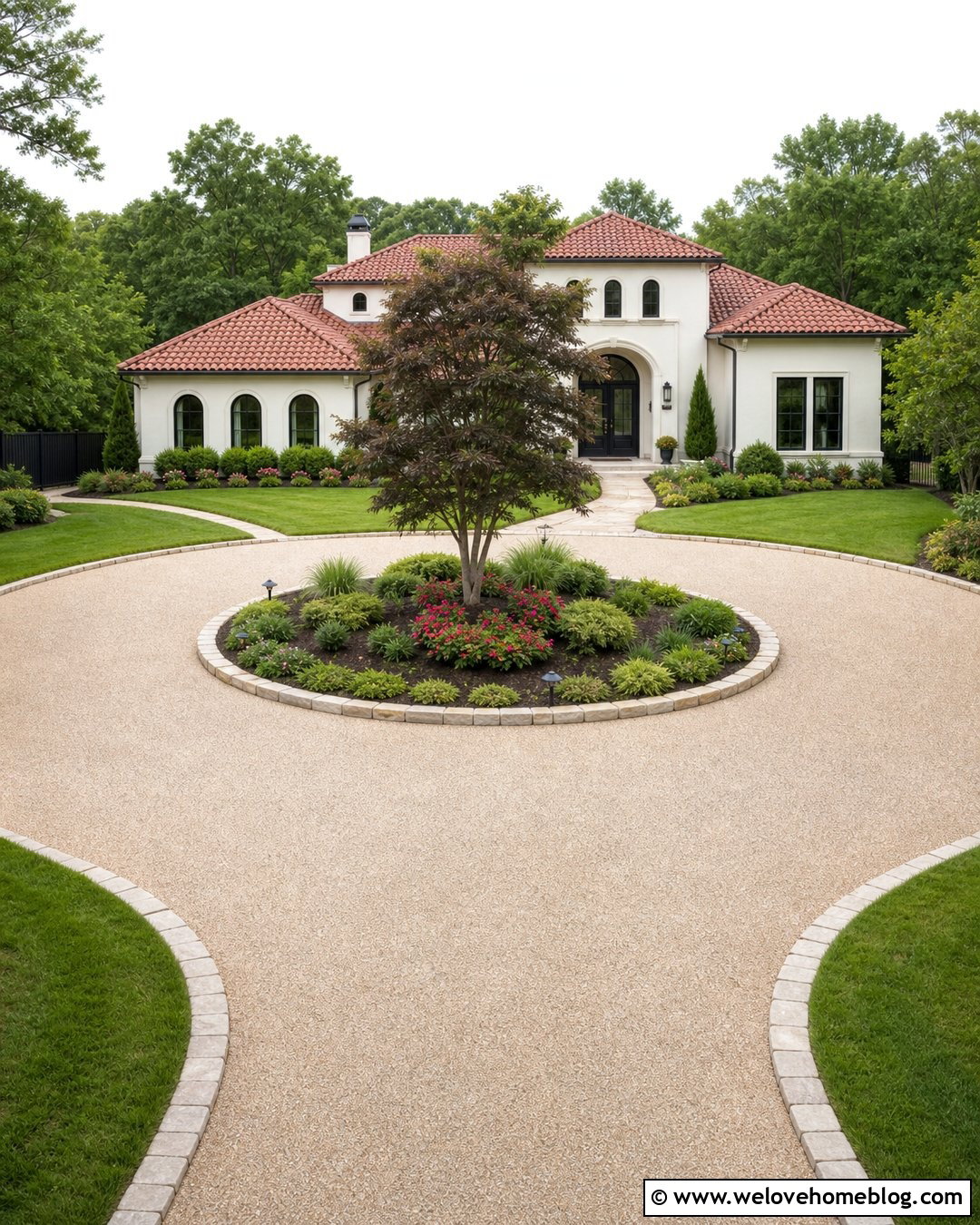
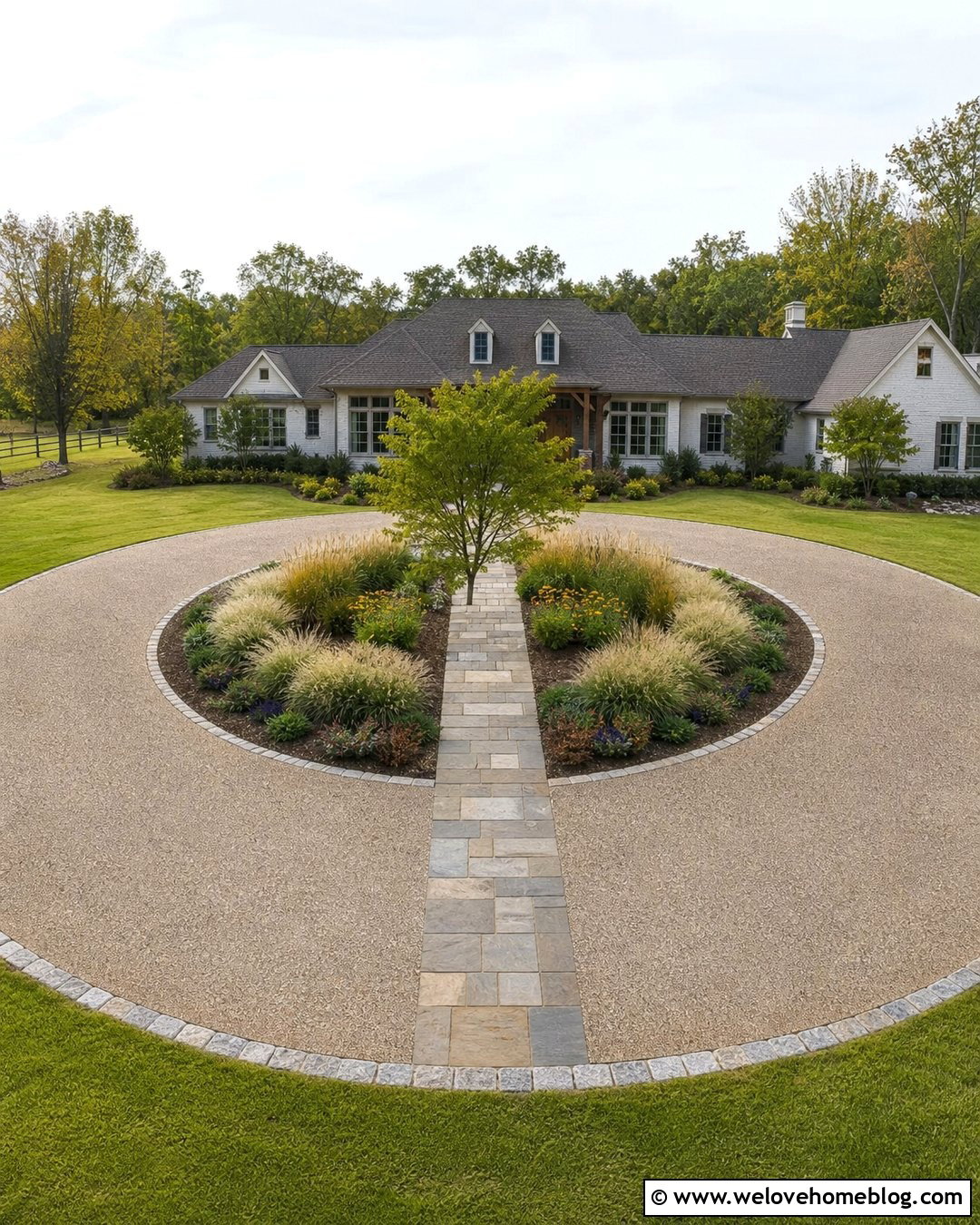
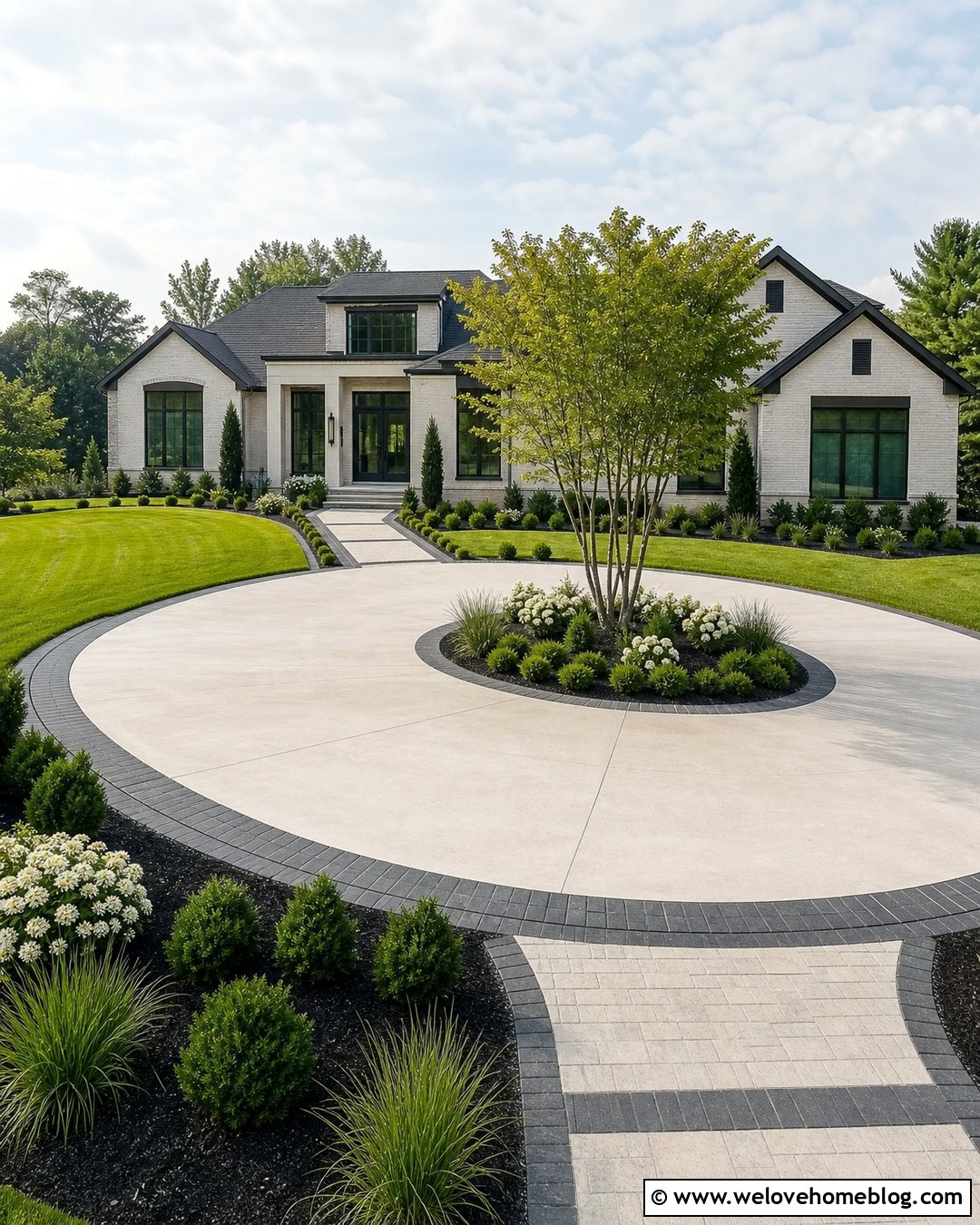
A circular driveway becomes far more appealing when its center island looks intentional and properly scaled. Surround the island with a durable stone curb that echoes the home’s exterior or the driveway material. Inside, place a small ornamental tree slightly off center and build layers with flowering shrubs, perennials, and low ground covers. Keep the tallest growth away from key sightlines so drivers can see across the circle. An exposed aggregate or light concrete surface provides a neutral backdrop for the greenery. Landscape lighting tucked inside the island highlights the tree and clarifies the curve without crowding the pavement. This layout creates an elegant arrival sequence for larger ranch, Mediterranean, traditional, or estate-style homes while preserving an easy vehicle turnaround.
6. Modern Concrete Driveway With Ornamental Grass
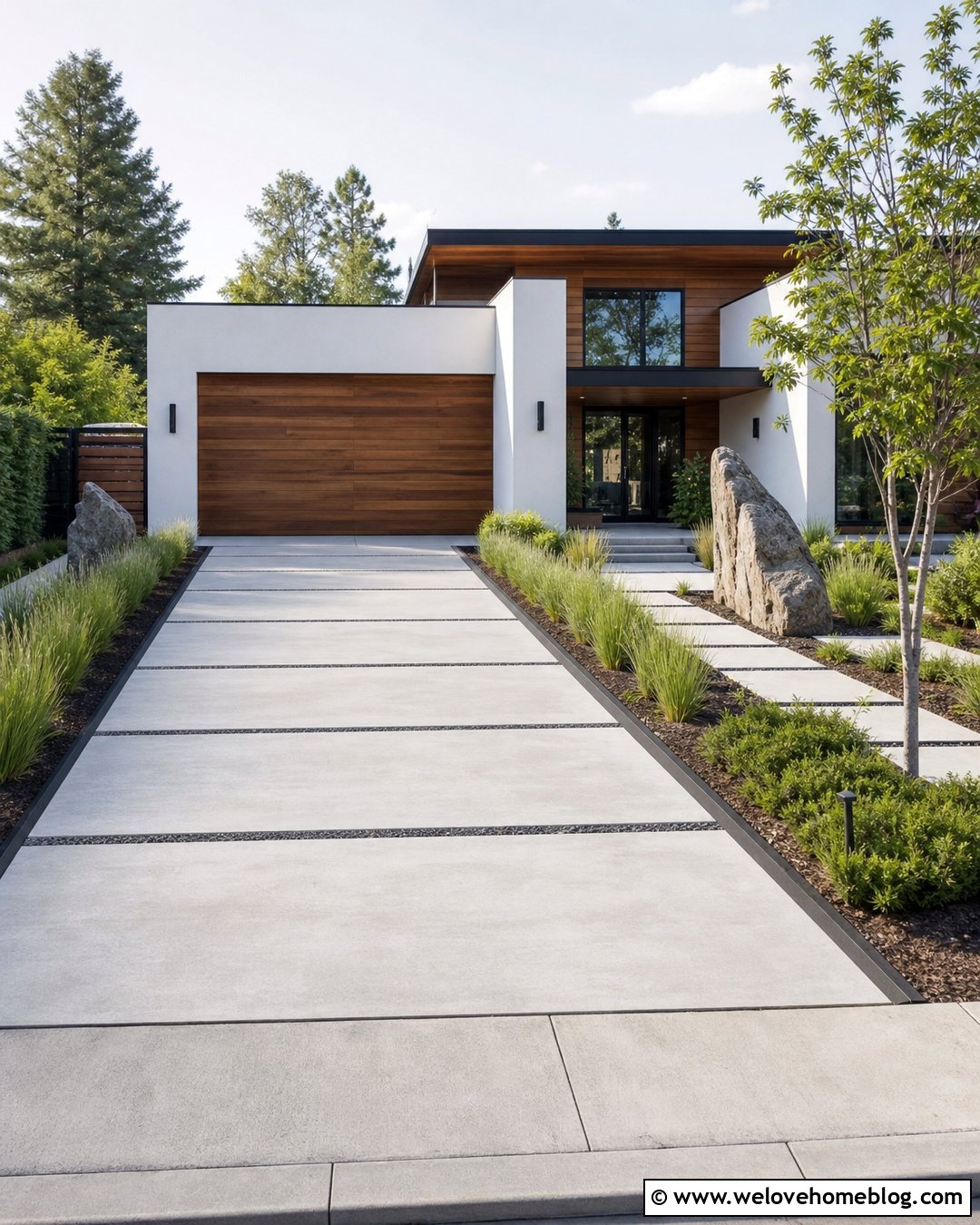
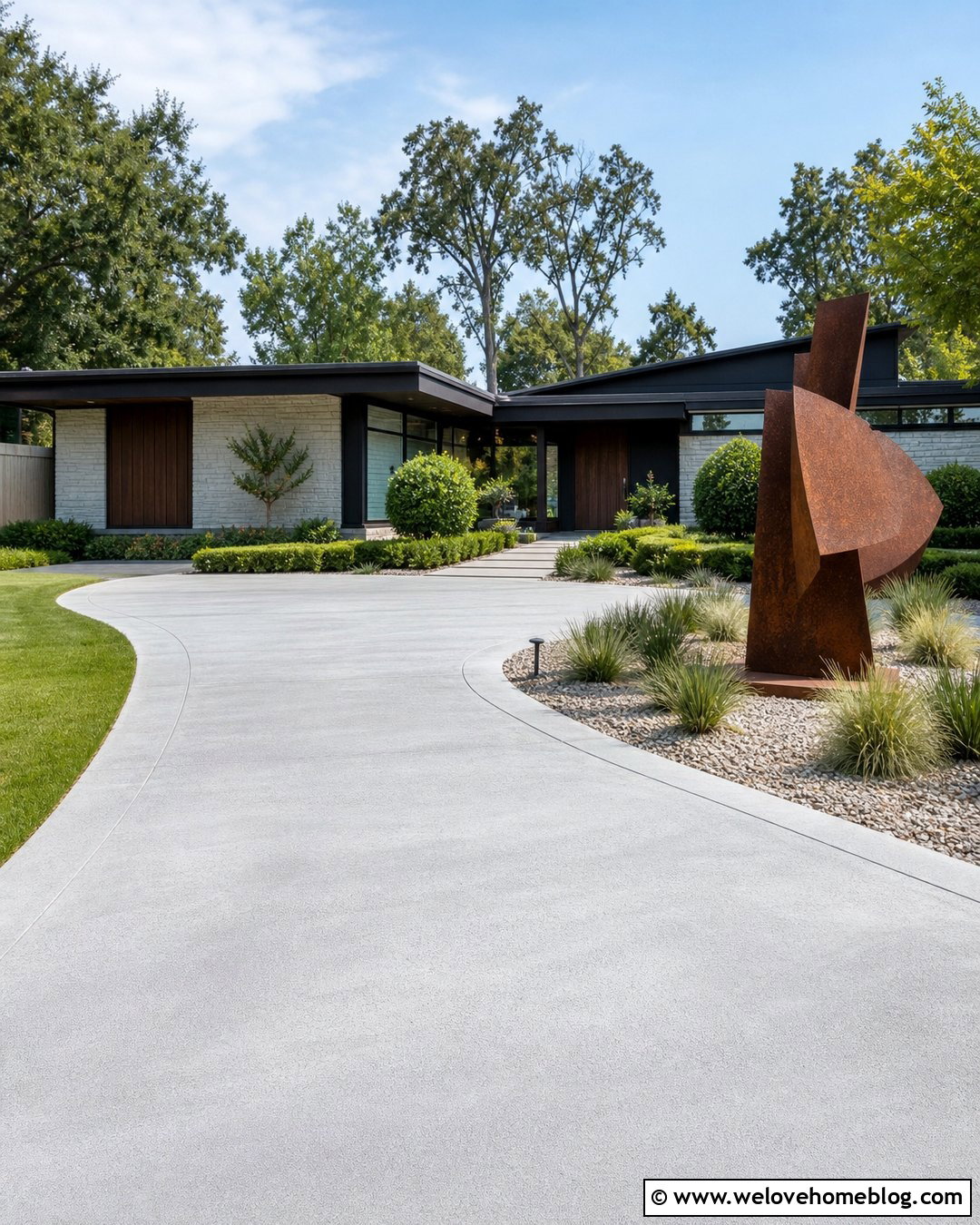
Wide concrete slabs and restrained planting create a modern driveway that feels connected to the architecture. Separate the light gray slabs with narrow bands of dark gravel or low grass to break up the paved area. Along one side, build a linear bed containing repeated groups of upright ornamental grass, compact shrubs, and sculptural boulders. Use black steel edging for a sharp transition between the bed and driveway. A simple concrete walkway can branch toward the front door using the same slab proportions. Limit the planting palette so the different textures remain easy to appreciate. This complete arrangement complements flat roofs, large windows, wood siding, and contemporary facades. Choose grasses that stay upright and do not scatter heavily across the pavement.
7. Brick Driveway With Hydrangea Borders
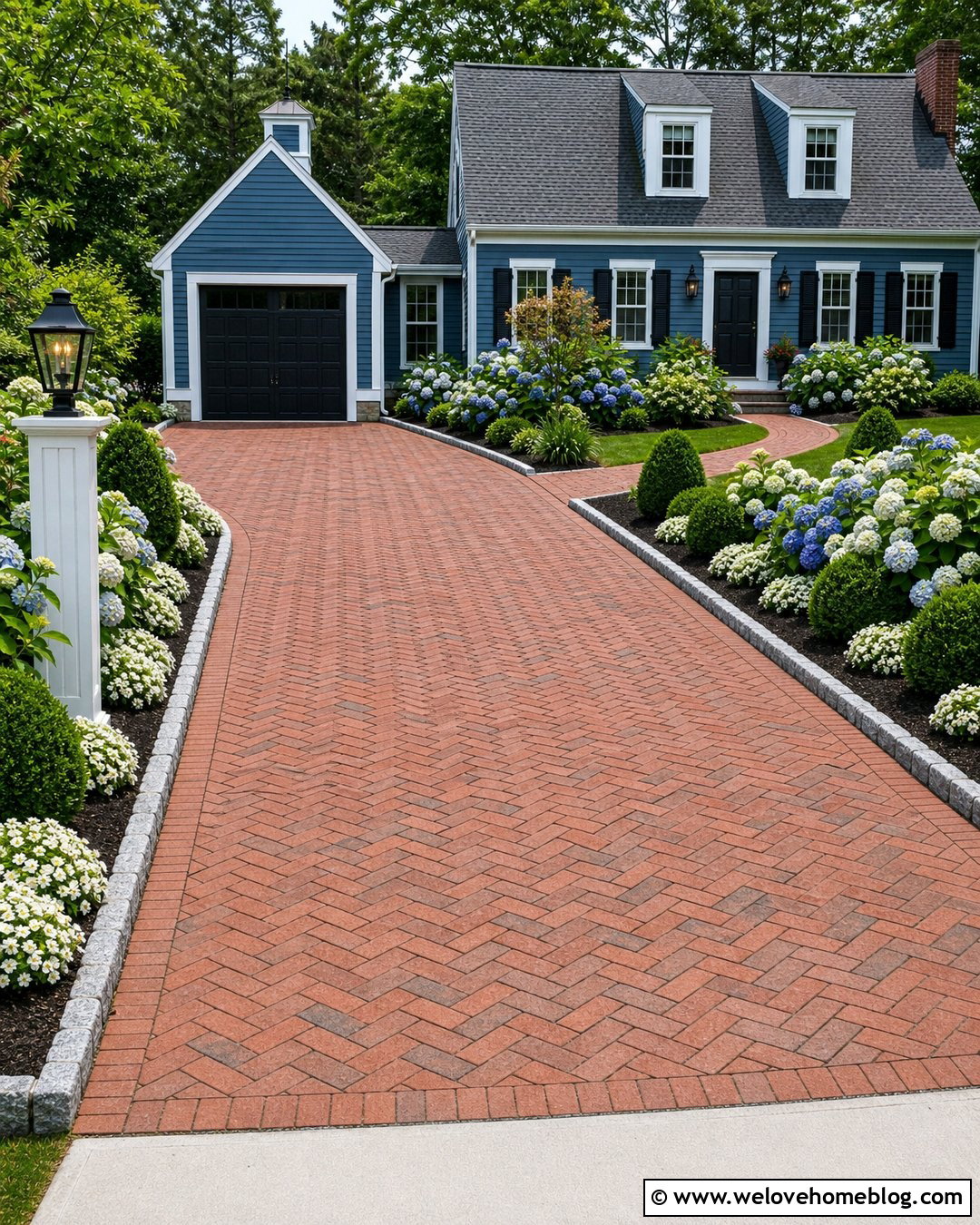
Clay brick pavers bring warmth to a driveway, while hydrangeas provide generous color and soft texture. Arrange the bricks in a herringbone pattern and use a straight border course to contain the edges. Create deep beds along the driveway, placing hydrangeas far enough from passing vehicles to accommodate their mature size. Add dwarf evergreens between the flowering shrubs for winter structure. A low stone mowing strip can separate the beds from the lawn and make routine trimming easier. Near the garage, narrow the planting to preserve comfortable door clearance. The combination is especially attractive with colonial, Cape Cod, and traditional homes featuring white, cream, or blue siding. Select a hydrangea variety suited to the light and growing conditions around your driveway.
8. Curved Driveway With Tree-Lined Landscaping
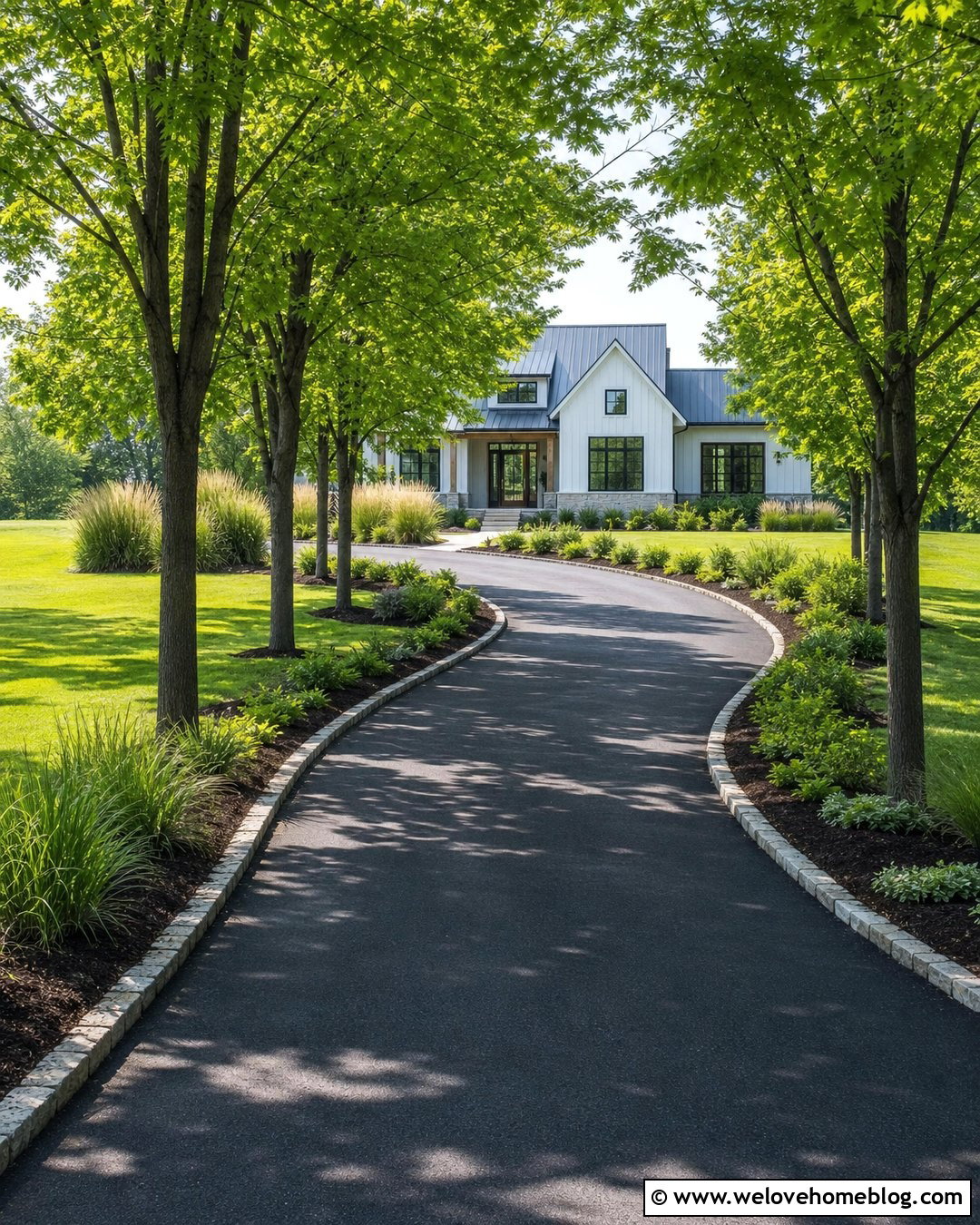
A sweeping driveway can feel like a natural part of the yard when trees reinforce its curve. Choose a durable surface such as asphalt, concrete, or compacted gravel, then frame it with low stone edging. Position appropriately sized trees at measured intervals beyond the pavement, allowing room for trunks, roots, and mature canopies. Underplant them with mulch, shade-tolerant ground covers, or simple sweeps of ornamental grass. Keep the entrance more open so drivers and pedestrians remain visible. The repeated trunks create rhythm, while the curving surface gradually reveals the house. This design works particularly well for long approaches leading to country, craftsman, or modern farmhouse homes. Avoid trees that regularly drop large fruit, brittle branches, or heavy surface roots onto the driveway.
9. Small Driveway With Raised Planting Beds
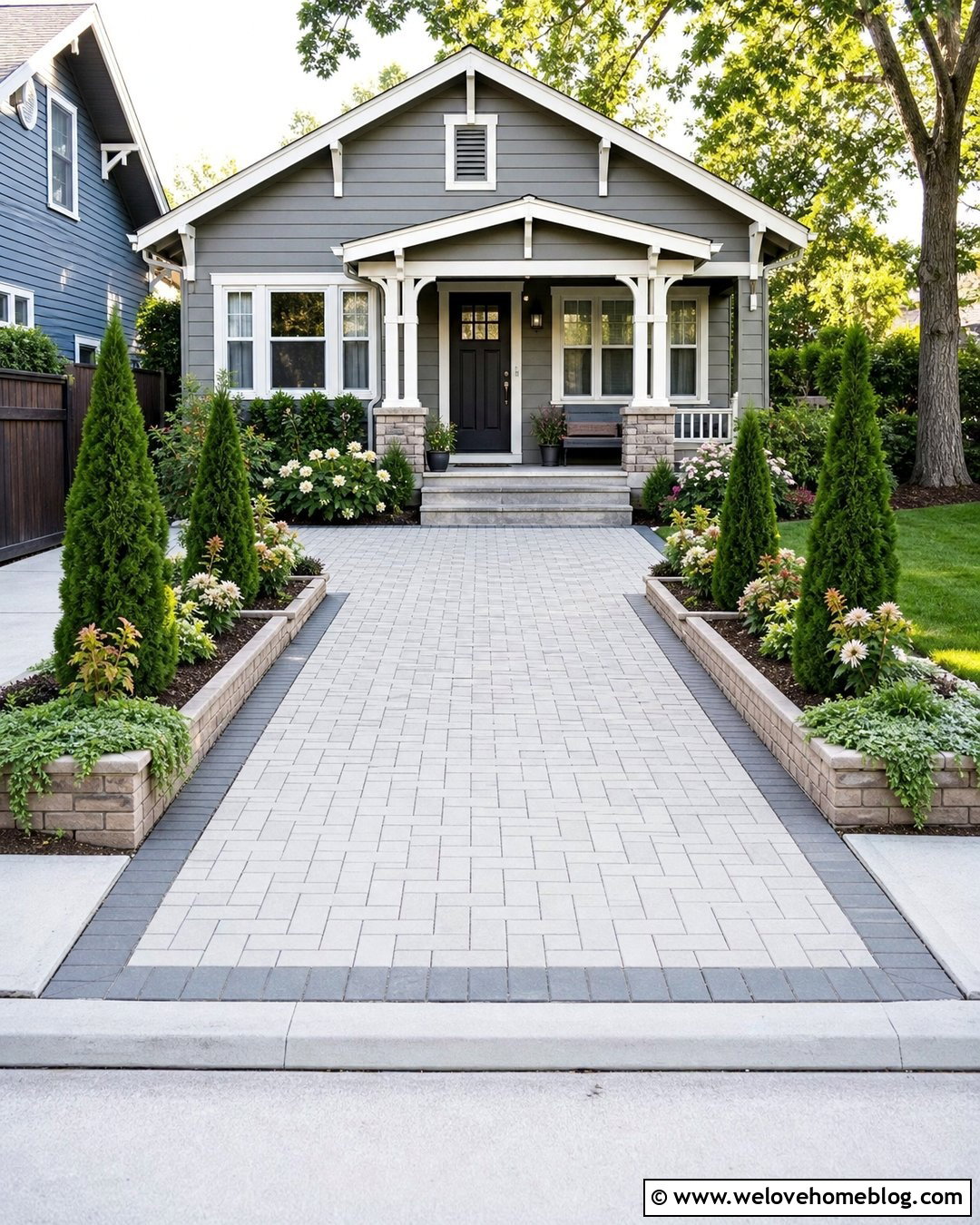
Limited frontage does not mean the driveway must look bare. A compact concrete or paver driveway can be framed with narrow raised beds that add greenery without consuming valuable parking space. Construct the beds from brick, natural stone, or smooth concrete that coordinates with the home. Fill them with upright evergreens, compact flowering shrubs, and trailing ground covers that soften the wall edges. Keep the beds low near the sidewalk and driveway entrance for visibility. A slim walkway in a matching material can lead from the driveway to the front steps. Wall-mounted address numbers and simple lighting provide detail without adding ground-level clutter. This efficient design gives a townhouse, bungalow, or small suburban home a finished and carefully organized street view.
10. Farmhouse Driveway With Timber Edging
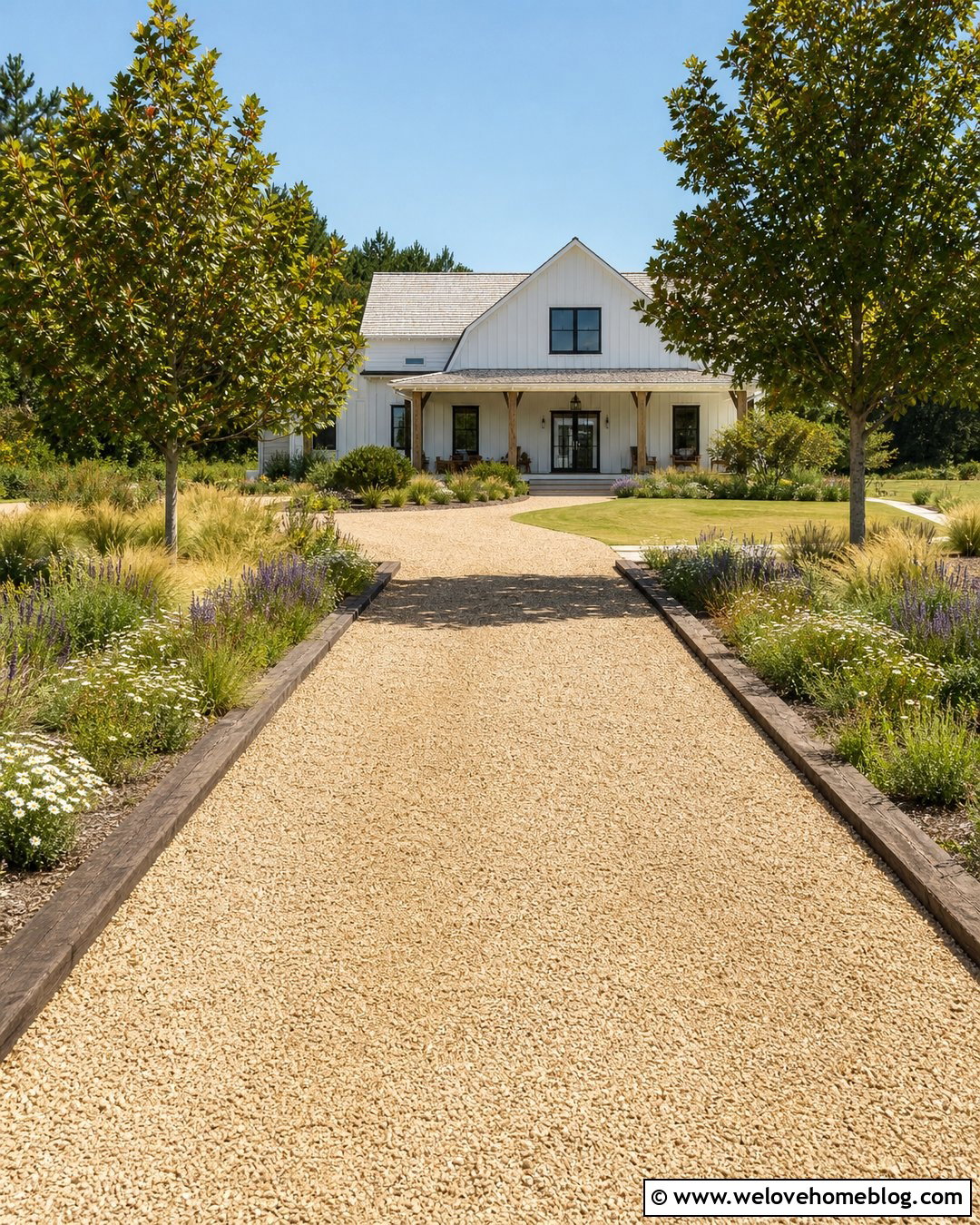
Crushed limestone or warm tan gravel creates an inviting foundation for a casual farmhouse entrance. Contain the loose material with pressure-treated timber, reclaimed-looking beams, or another outdoor-rated wood border. Beyond the edging, use wide planting beds filled with native grasses, daisies, salvia, and low evergreen shrubs. A pair of medium ornamental trees can frame the entrance while leaving the center open and easy to navigate. Connect the driveway to the porch with large flagstone steps set through the lawn. Near the house, repeat the wood tone in planters, porch posts, or garage doors. The combination of pale gravel, natural edging, and relaxed planting feels rural without becoming untidy. Maintain a sharply defined gravel edge so grass and weeds do not blur the layout.
11. Cobblestone Driveway With Evergreen Landscaping
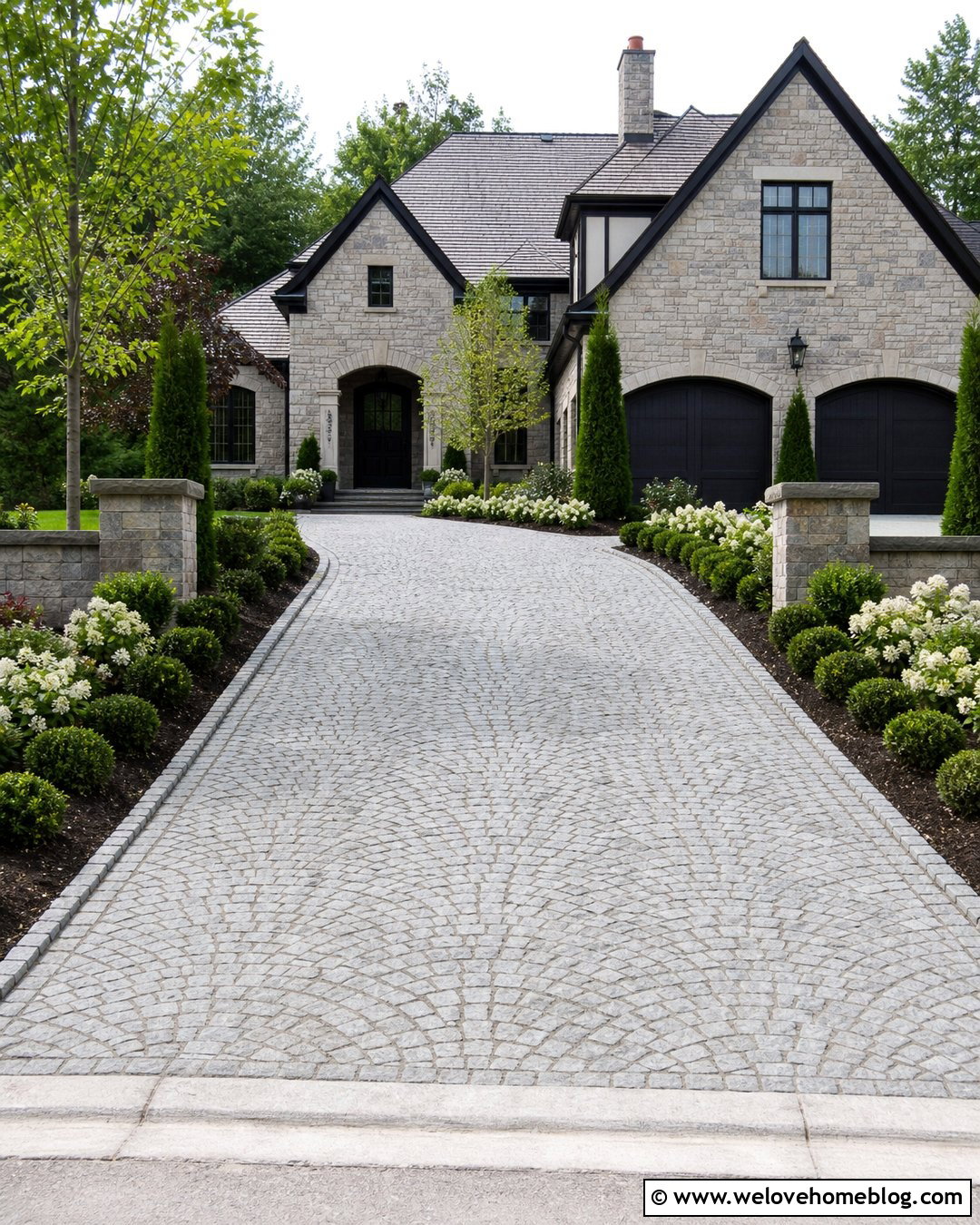
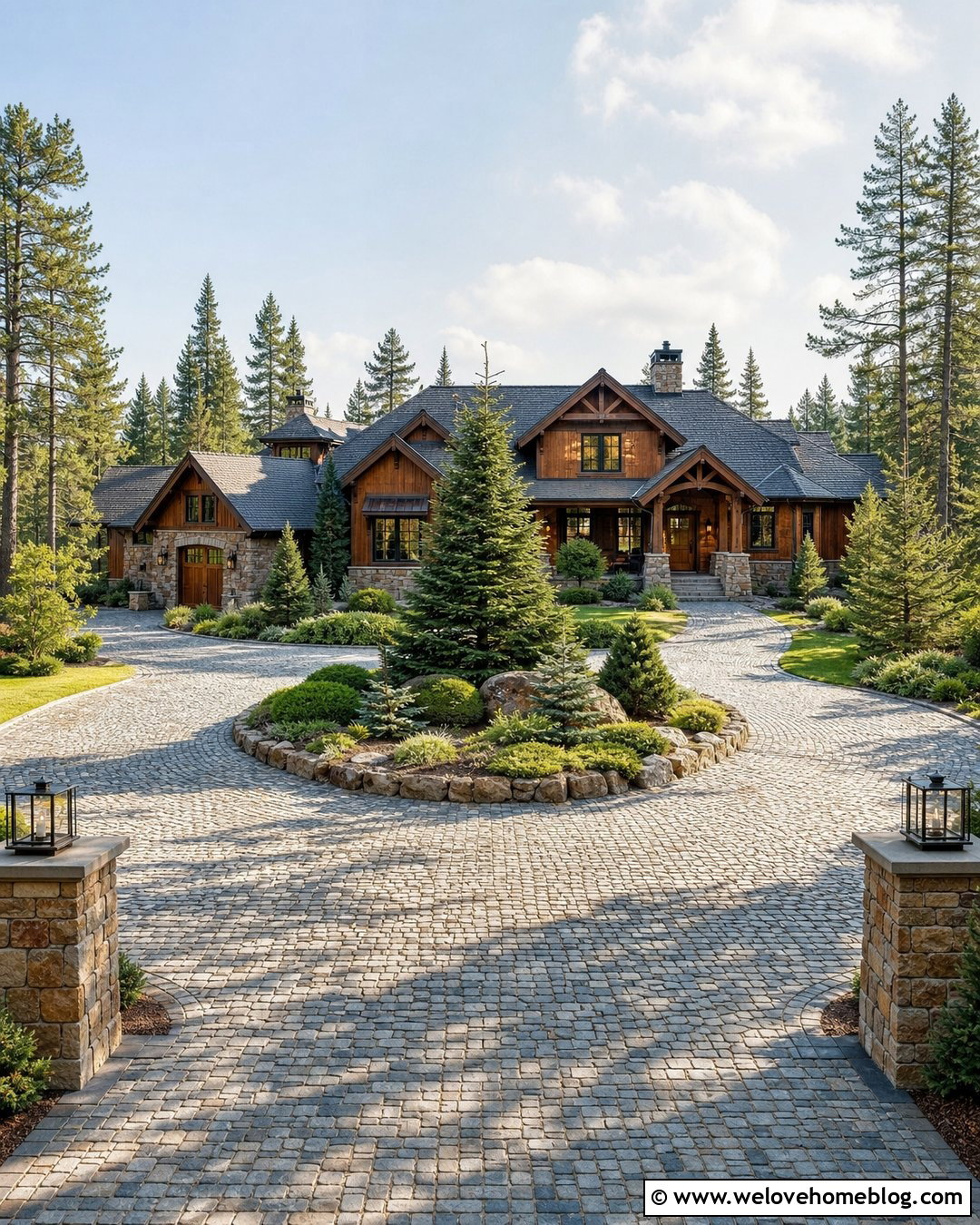
Cobblestone brings rich texture to the front yard, so the surrounding landscaping should support rather than overwhelm it. Use rectangular granite cobbles in a fan, running-bond, or gently arched pattern across a straight driveway. Frame the surface with matching stone curbs for a strong, durable outline. On both sides, arrange compact evergreen shrubs in staggered groups instead of one continuous hedge. Add white flowering perennials and dark mulch to create contrast against the gray stone. Taller columnar evergreens can anchor the driveway near the garage, provided they do not restrict vehicle clearance. A coordinating cobblestone walkway completes the design. This refined combination suits Tudor, European-inspired, colonial, and stone-front homes and remains visually interesting even when seasonal flowers are not blooming.
12. Driveway Entrance With Stone Pillars
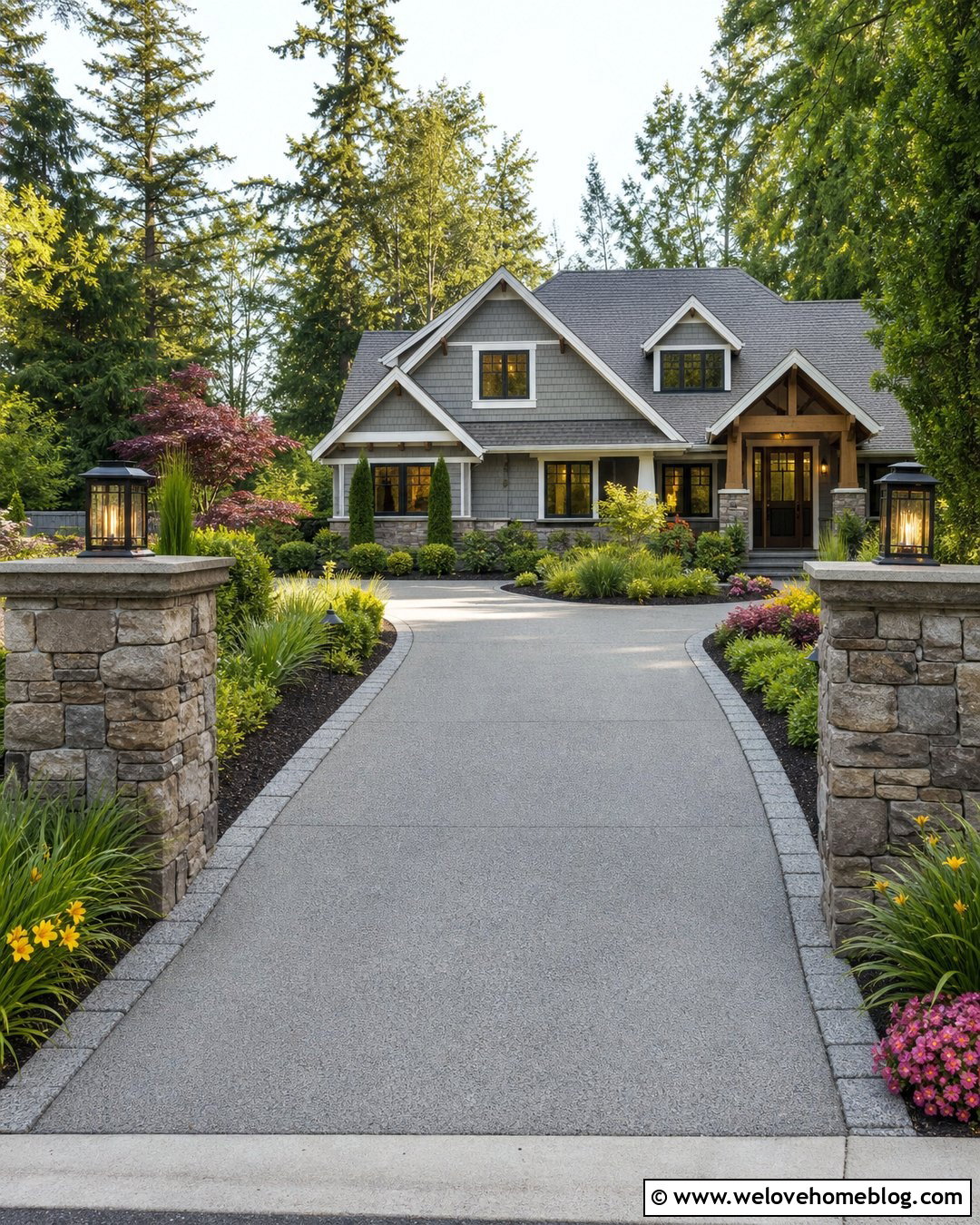
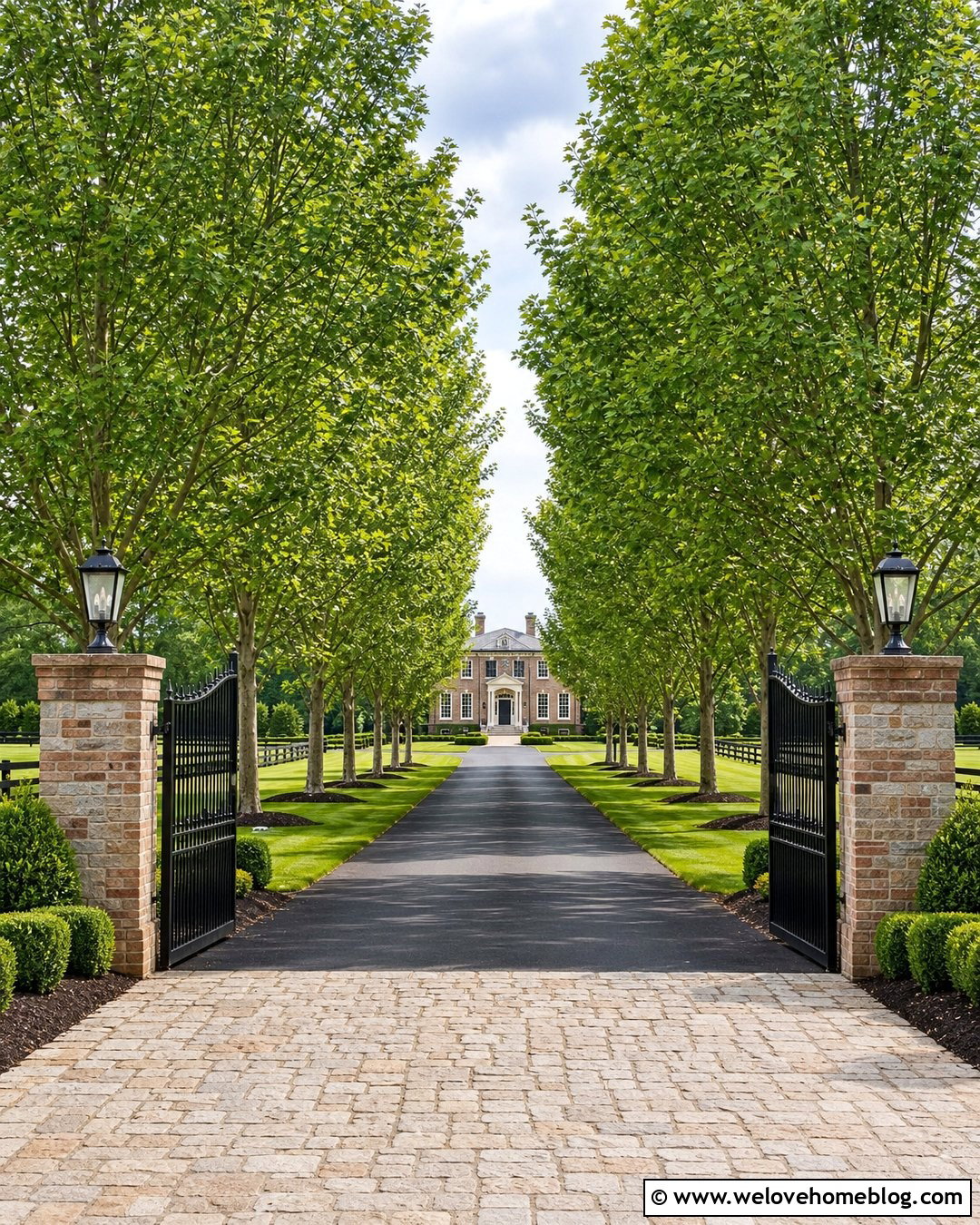
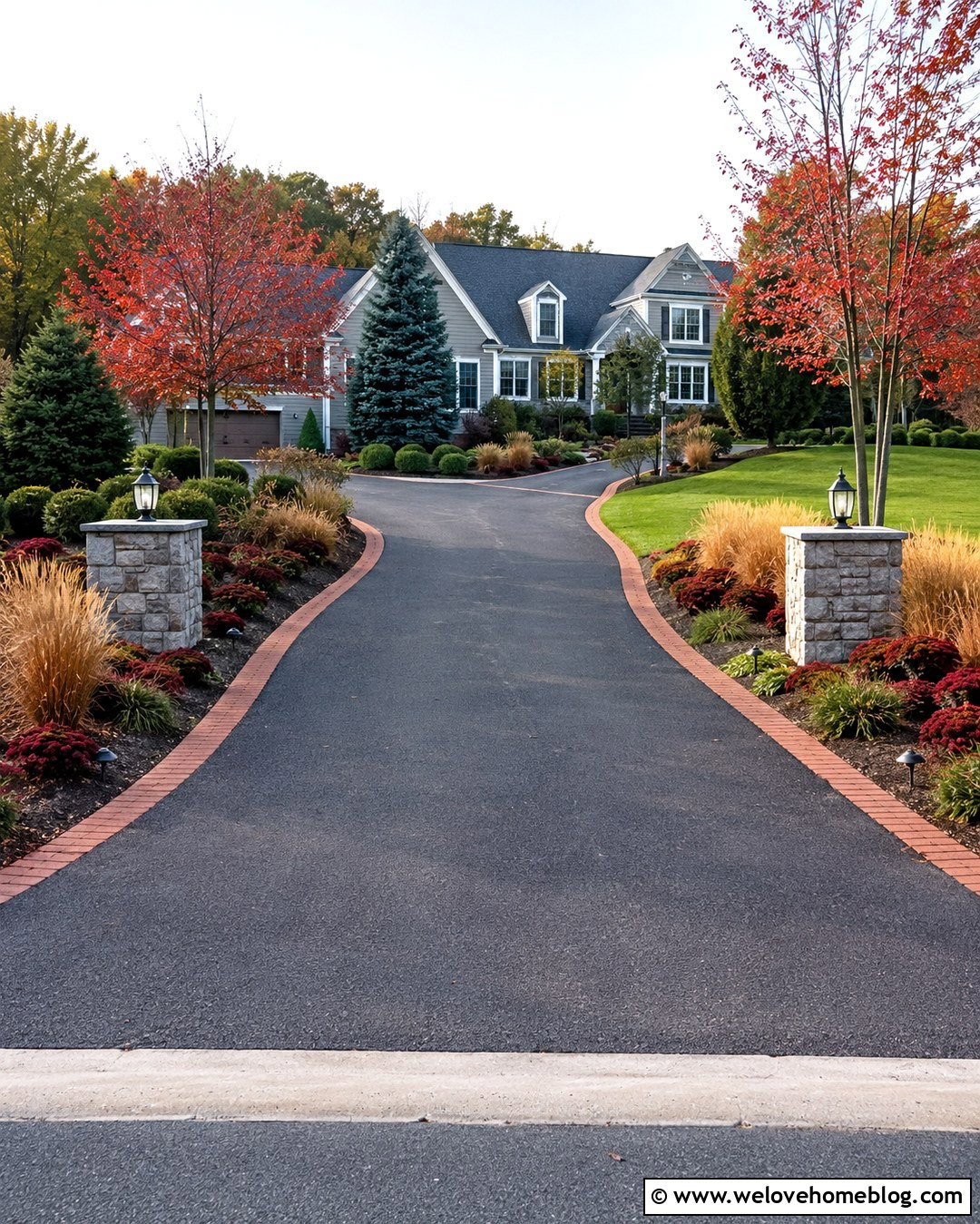
Strong entrance landscaping can make even a simple driveway feel established. Place natural stone or stone-veneer pillars on both sides of a straight concrete, asphalt, or gravel approach. Their height and width should suit the property rather than overpower the house. Build curved planting beds around the pillar bases using compact shrubs, ornamental grasses, and low seasonal flowers. A stone curb can follow the bed line and connect visually with the masonry. Mount lanterns or understated address plaques on the pillars, keeping the design easy to read from the street. Continue smaller groups of the same plants farther along the driveway for continuity. This layout works with craftsman, ranch, farmhouse, and traditional homes, creating a clear entrance without requiring a full gate or large architectural structure.
13. Driveway With Native Plant Borders
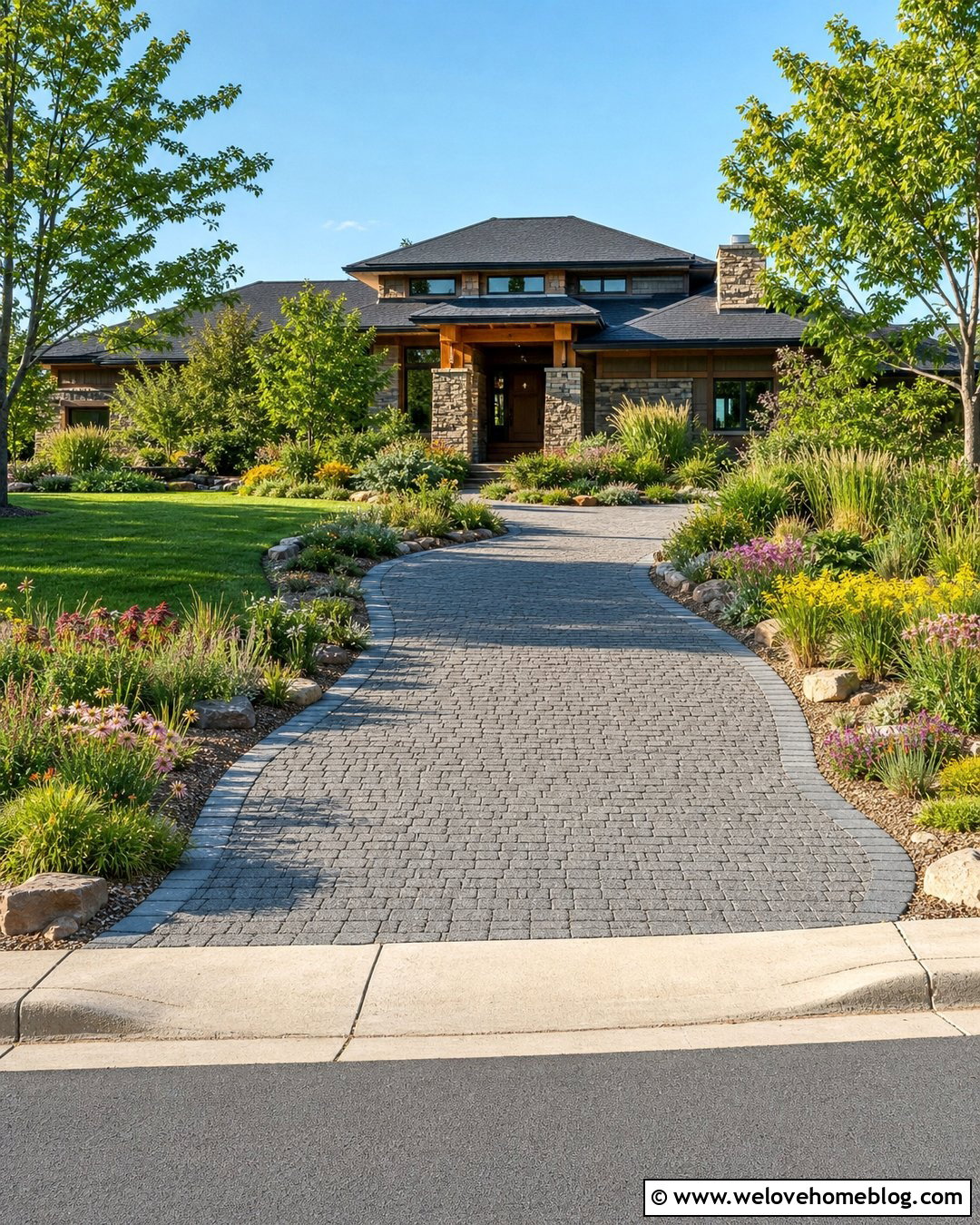
Native-focused landscaping can create a driveway border that feels colorful, layered, and closely connected to the local setting. Pair a permeable paver or exposed aggregate driveway with broad planting beds shaped in loose curves. Arrange lower ground covers and flowers near the pavement, medium grasses behind them, and compact native shrubs toward the lawn. Repeating plants in groups produces a calmer appearance than scattering many individual varieties. Add stone edging or a narrow gravel strip to keep stems and soil away from vehicle tires. The walkway should pass clearly through the beds and remain visible from the curb. Because suitable species vary by region, select plants for your local sun, moisture, and winter conditions. The finished look complements contemporary, prairie, cottage, and craftsman homes.
14. Sloped Driveway With Retaining Wall Landscaping
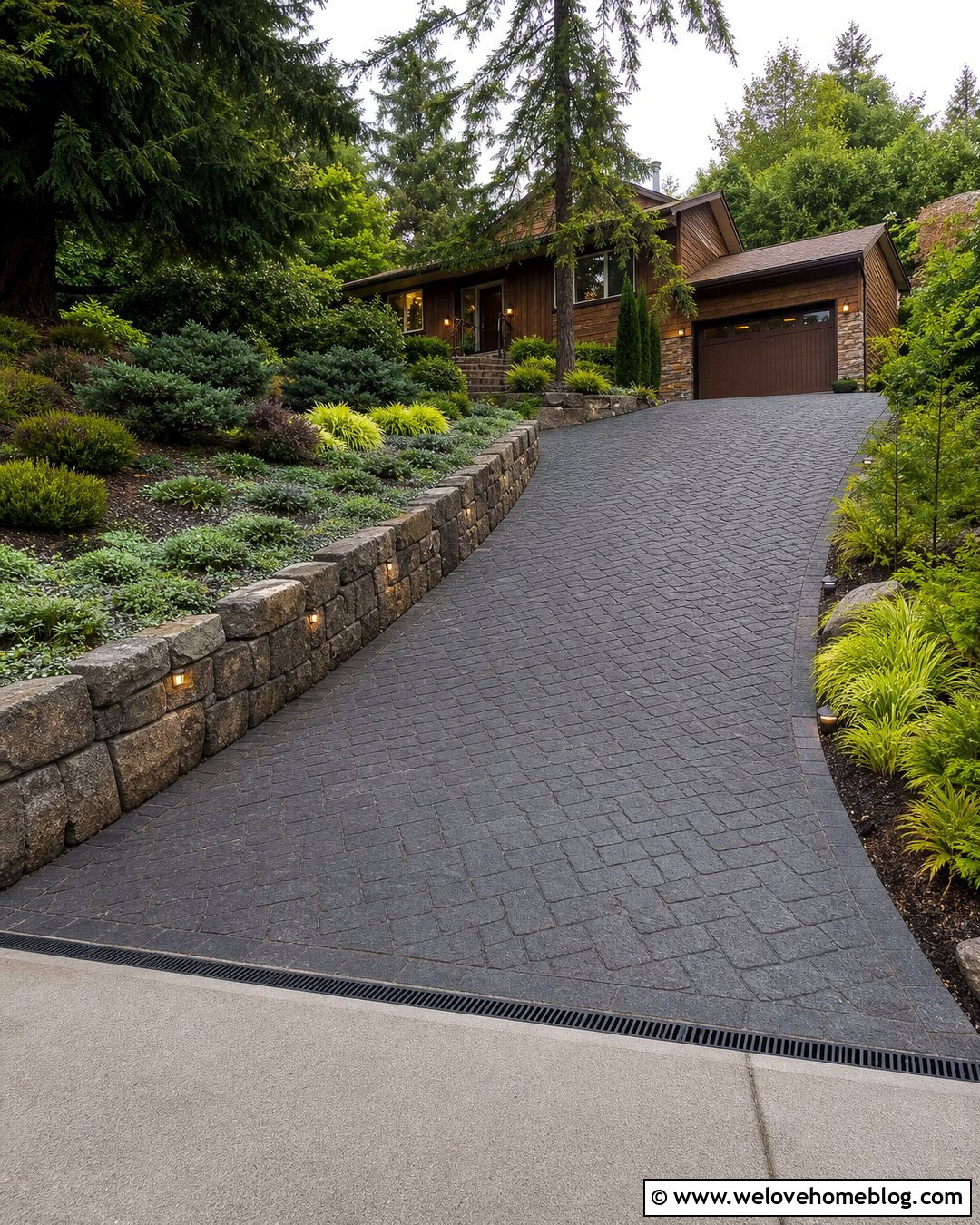
A sloped driveway needs landscaping that manages the grade while creating an attractive approach. Use textured concrete or interlocking pavers for the main surface, then install a stepped retaining wall along the higher side. Natural stone or concrete wall blocks can coordinate with the house foundation and driveway border. Above the wall, plant spreading ground covers, compact shrubs, and ornamental grasses that soften the masonry without spilling into the driving area. On the lower side, maintain an open lawn edge or a shallow bed with low plants. Integrated drainage should direct runoff away from the house and planting beds. Small wall lights can emphasize the slope and improve the layout’s visual clarity. This solution suits hillside ranches, split-level houses, and wooded suburban properties.
15. Driveway With A Rain Garden Border
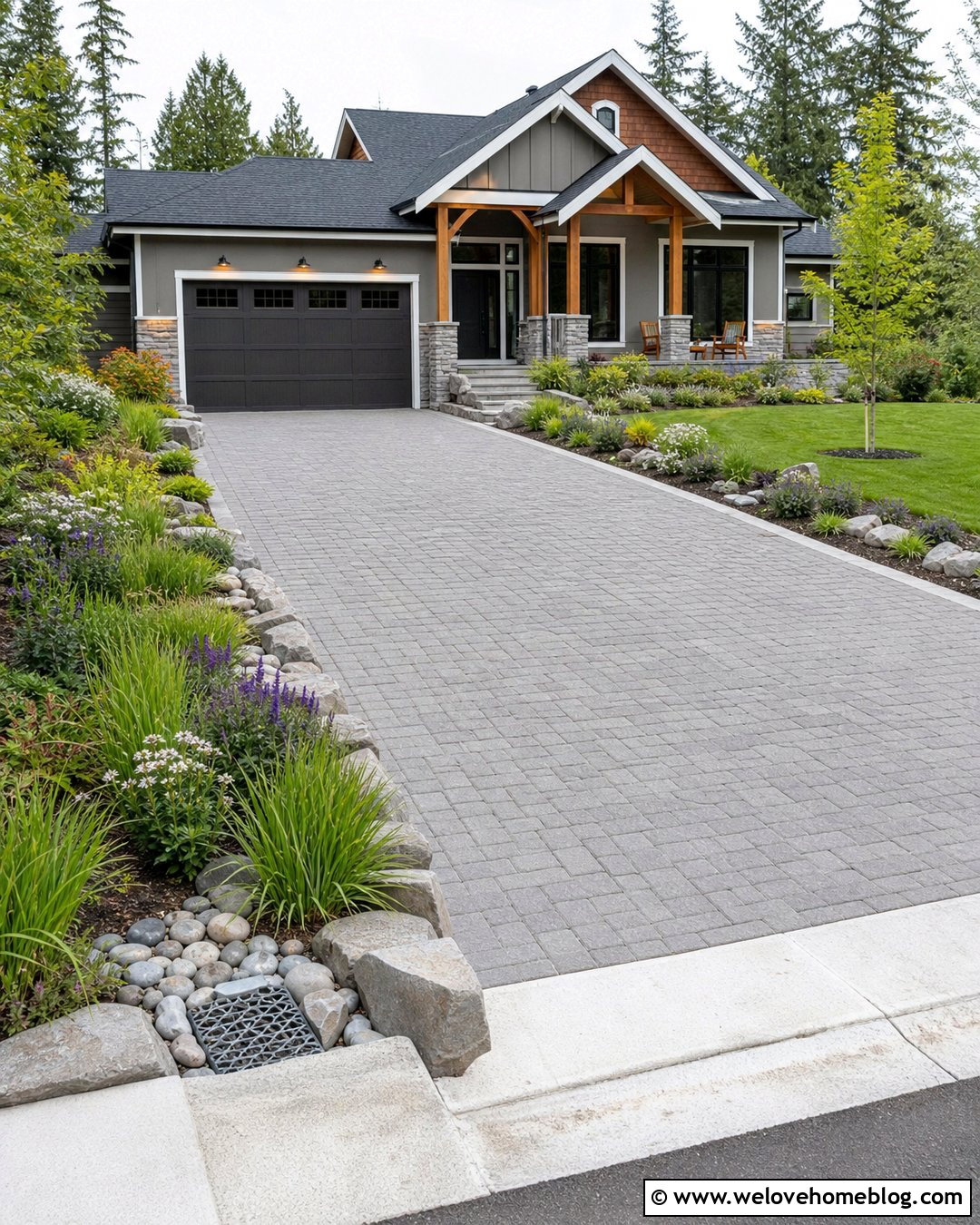
Where site conditions allow, a rain garden can turn the low side of a driveway into a purposeful landscape feature. Pair permeable concrete pavers or resin-bound gravel with a gently depressed planting bed that receives directed runoff. Define the driveway with a stone curb and create a clear inlet where water can move into the garden without washing soil onto the surface. Fill the bed with regionally appropriate plants that tolerate both temporary moisture and drier periods. Layer low sedges near the edge, flowering perennials through the middle, and compact shrubs at the back. Decorative river rock can highlight the drainage path. The result feels lush and natural beside a craftsman, contemporary, or cottage home while making an awkward low spot look intentional.
16. Driveway With Landscape Lighting
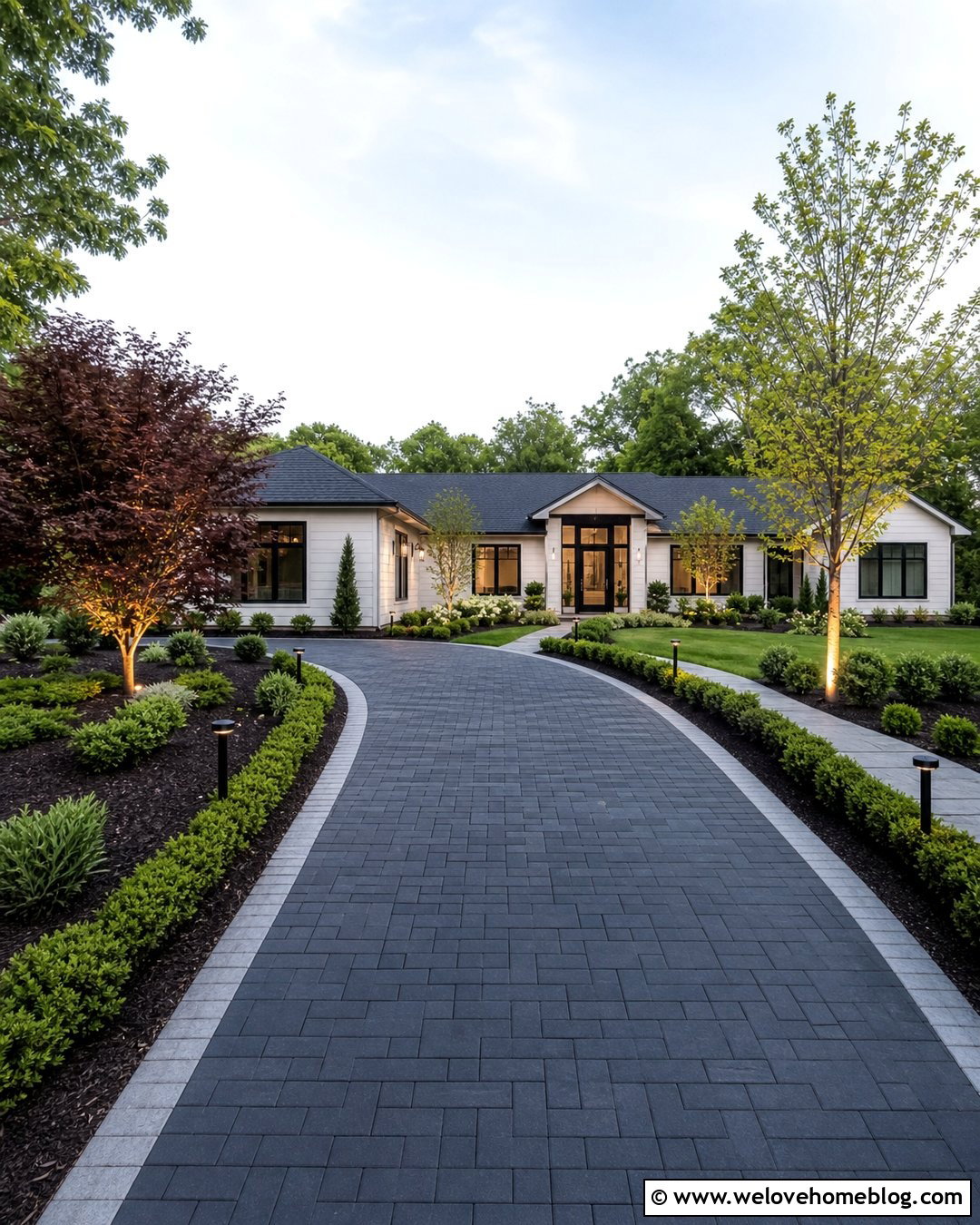
Thoughtful lighting can unify the driveway, planting beds, walkway, and house after sunset while remaining attractive during the day. Begin with a charcoal paver or smooth concrete driveway bordered by low shrubs and clean stone edging. Place compact path lights at consistent intervals along the outer beds rather than directly beside the tires. Add subtle uplights beneath one or two ornamental trees and use matching fixtures near the front walkway. The light positions should reveal the driveway’s shape and guide attention toward the entrance. During daylight, dark metal fixtures blend neatly into mulch or ground-cover planting. Avoid filling every bed with a fixture, since restraint creates a cleaner layout. This versatile treatment works with modern, craftsman, ranch, and traditional residential settings.
17. Driveway With A Flowering Tree Entrance
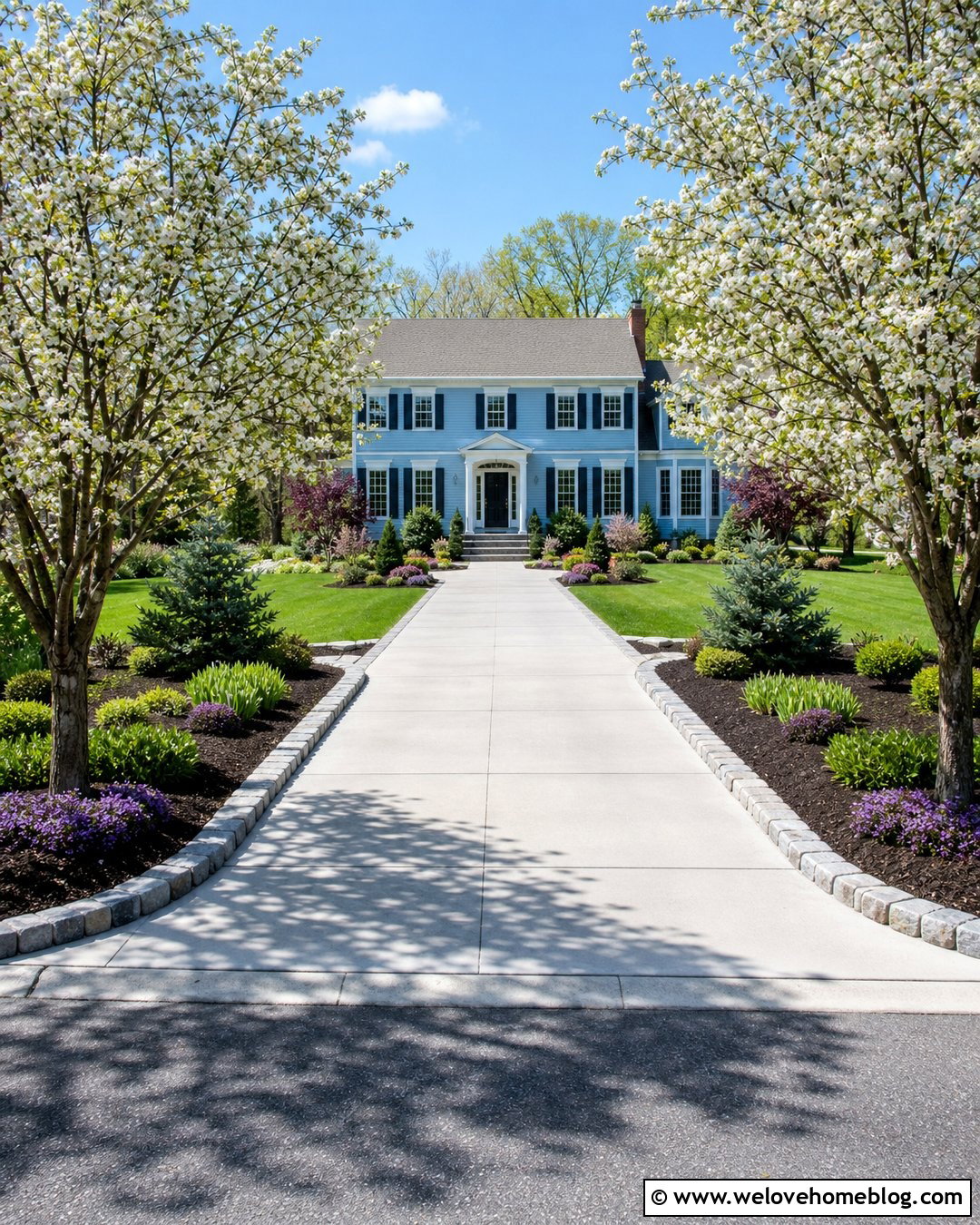
Two flowering trees can frame a driveway entrance and instantly connect the pavement to the surrounding yard. Set them beyond the vehicle clearance area on opposite sides of a poured concrete or brick-edged asphalt driveway. Create matching curved beds around the trees with evergreen shrubs, low perennials, and fresh mulch. Continue a narrow border of the same plants toward the house so the entrance does not appear separate from the rest of the design. Low stone edging keeps the beds clean and protects the lawn during mowing. Choose trees with a mature size appropriate for nearby overhead lines, sidewalks, and road visibility. The balanced composition suits ranch, colonial, craftsman, and cottage homes, delivering seasonal color while preserving an open and practical arrival area.
18. Desert Driveway With Rock Landscaping
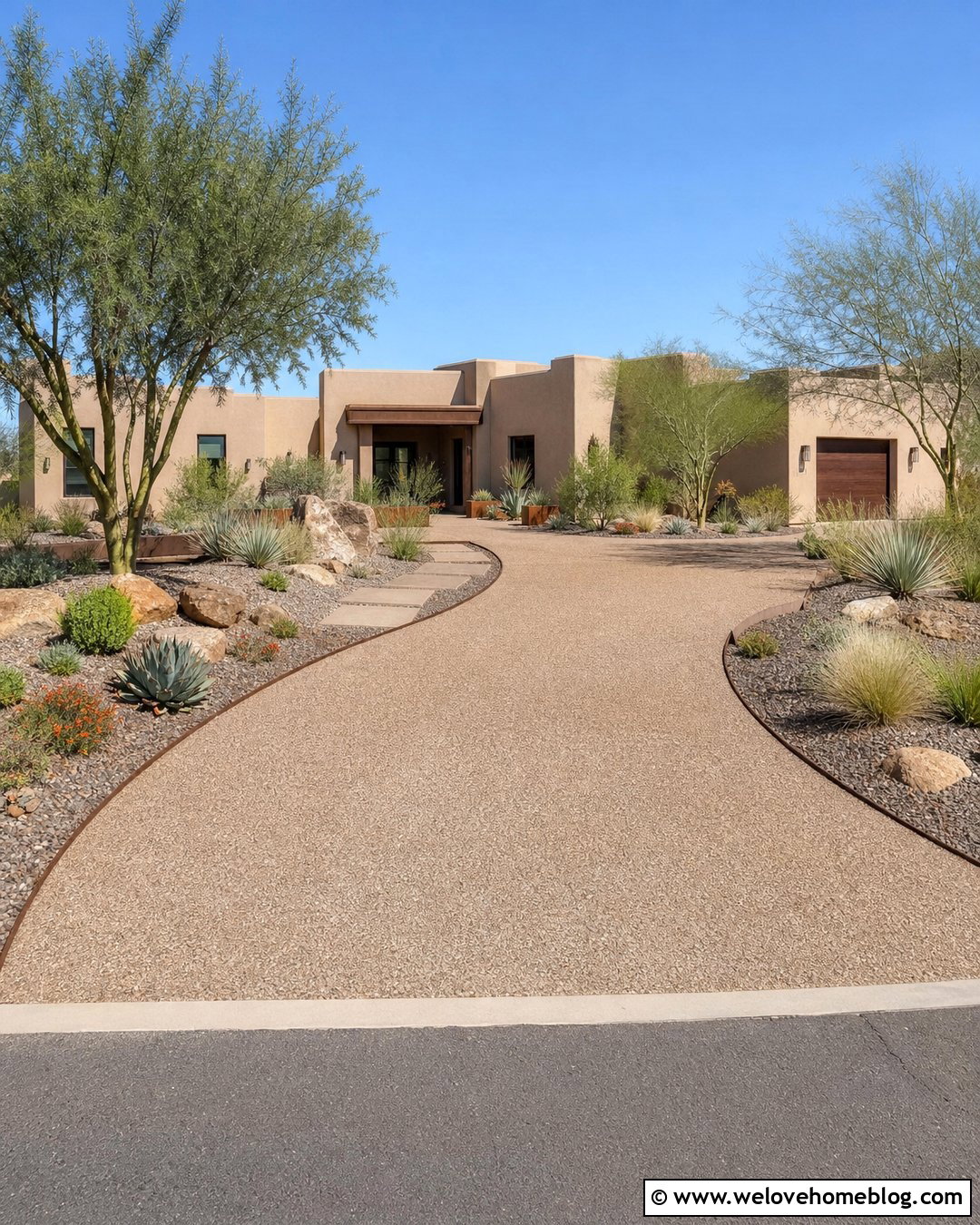
A desert-inspired driveway can offer strong curb appeal through shape, color, and texture rather than dense planting. Use warm exposed aggregate concrete in a gently curved layout, bordered by rust-colored steel or tan stone. Create broad beds containing gravel mulch, sculptural boulders, architectural succulents, and climate-appropriate ornamental grasses. Space the plants generously so their forms remain distinct and the composition does not feel crowded. A few taller specimens can mark the entrance, while lower plants maintain clear views near the street. Connect the driveway to the house with large concrete stepping pads through the rock landscape. The warm material palette works beautifully with Southwestern, desert modern, adobe, and contemporary ranch homes. Adapt plant choices to local temperature and moisture conditions.
19. Driveway With A Separated Front Walkway
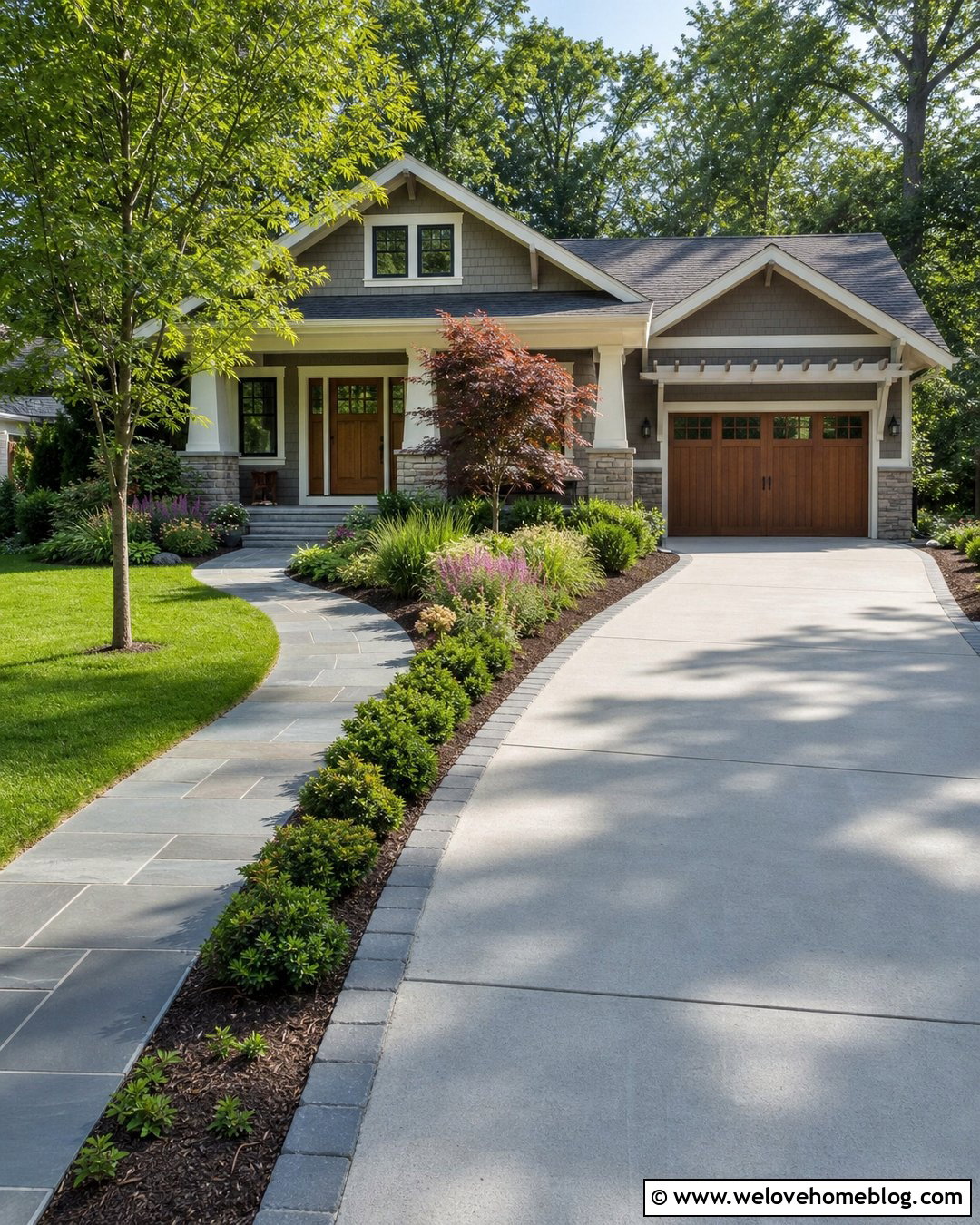
When the driveway and front path run too closely together, a planted divider can give each route a clearer purpose. Start with a light concrete driveway and a contrasting brick or bluestone walkway. Between them, create a narrow curved bed filled with low evergreen shrubs, flowering perennials, and ornamental grass. Keep the planting short enough that passengers can comfortably open doors and step toward the path. Repeat the walkway material as a slim driveway border to tie the two surfaces together. Near the house, widen the bed around a small ornamental tree or a statement planter. This complete layout directs visitors naturally toward the front door instead of the garage. It is practical for ranches, bungalows, craftsman homes, and typical suburban front yards.
20. Horseshoe Driveway With Layered Landscaping
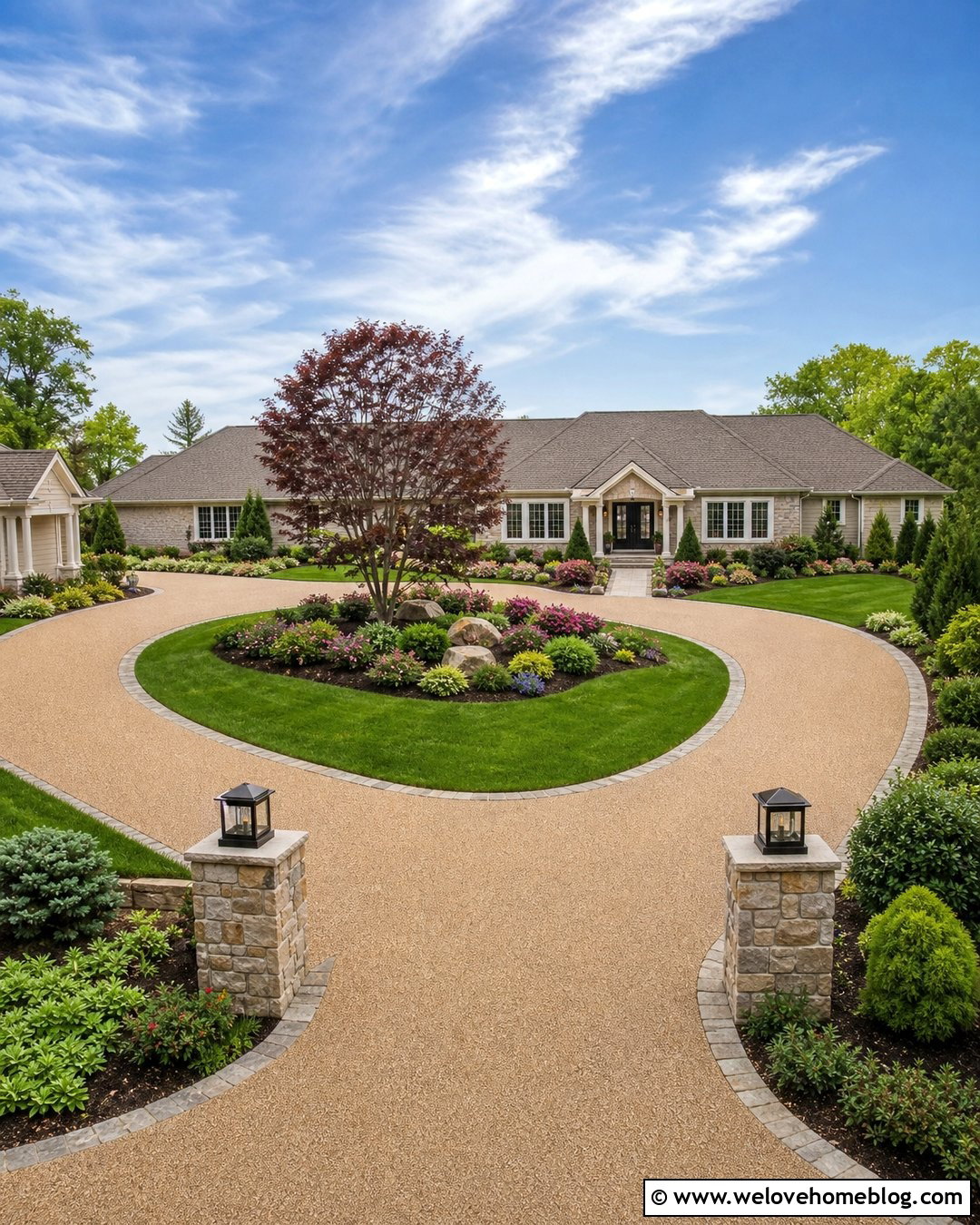
A horseshoe driveway offers two clear entrances, and landscaping helps the broad layout feel cohesive rather than oversized. Use tan resin-bound gravel or dark asphalt for the curved driving surface, contained by a contrasting stone or brick border. Fill the center lawn with a large layered bed containing an ornamental tree, groups of flowering shrubs, low perennials, and evergreen ground covers. Echo those plants in smaller beds around both driveway openings. Matching address pillars or low stone markers can define the entry and exit without blocking views. Add a direct walkway from the inner curve to the front door so guests do not cross unnecessary pavement. This balanced arrangement complements large ranch, colonial, farmhouse, and traditional homes while delivering impressive curb appeal from multiple street angles.
Conclusion:
The best driveway landscaping balances appearance, access, visibility, drainage, and realistic maintenance. Begin with the driveway’s existing material and shape, then add borders and plants that complement your house. Repeating a small selection of colors and materials usually creates a more unified front yard than adding many unrelated features. Keep mature plant sizes in mind, protect vehicle clearance, and maintain open views near the street. Lighting, defined edging, fresh mulch, and a clear walkway can also refresh an existing driveway without replacing its surface. Use these 20 driveway landscaping curb appeal ideas as flexible starting points, then adapt the plants, materials, and layout to your climate, property size, and budget.

Related posts:

Leave a Reply