
Sloped front yards can be challenging, but they also create opportunities for a layered, high-impact entrance. These 20 Terraced Driveways Ideas combine practical vehicle access with retaining walls, planting tiers, attractive surfaces, and well-planned drainage. Instead of forcing one steep driveway up the property, a terraced design can visually break the grade into more manageable sections. Terraces also provide space for shrubs, ground covers, lighting, steps, and decorative stonework. Because every hillside behaves differently, wall foundations, driveway transitions, soil pressure, runoff, and local permit requirements should be reviewed by qualified professionals. The best result feels connected to the architecture while remaining safe and easy to maintain. Explore the complete driveway looks below with these 20 Terraced Driveways Ideas.

1. Concrete Terraced Driveway With Stone Retaining Walls
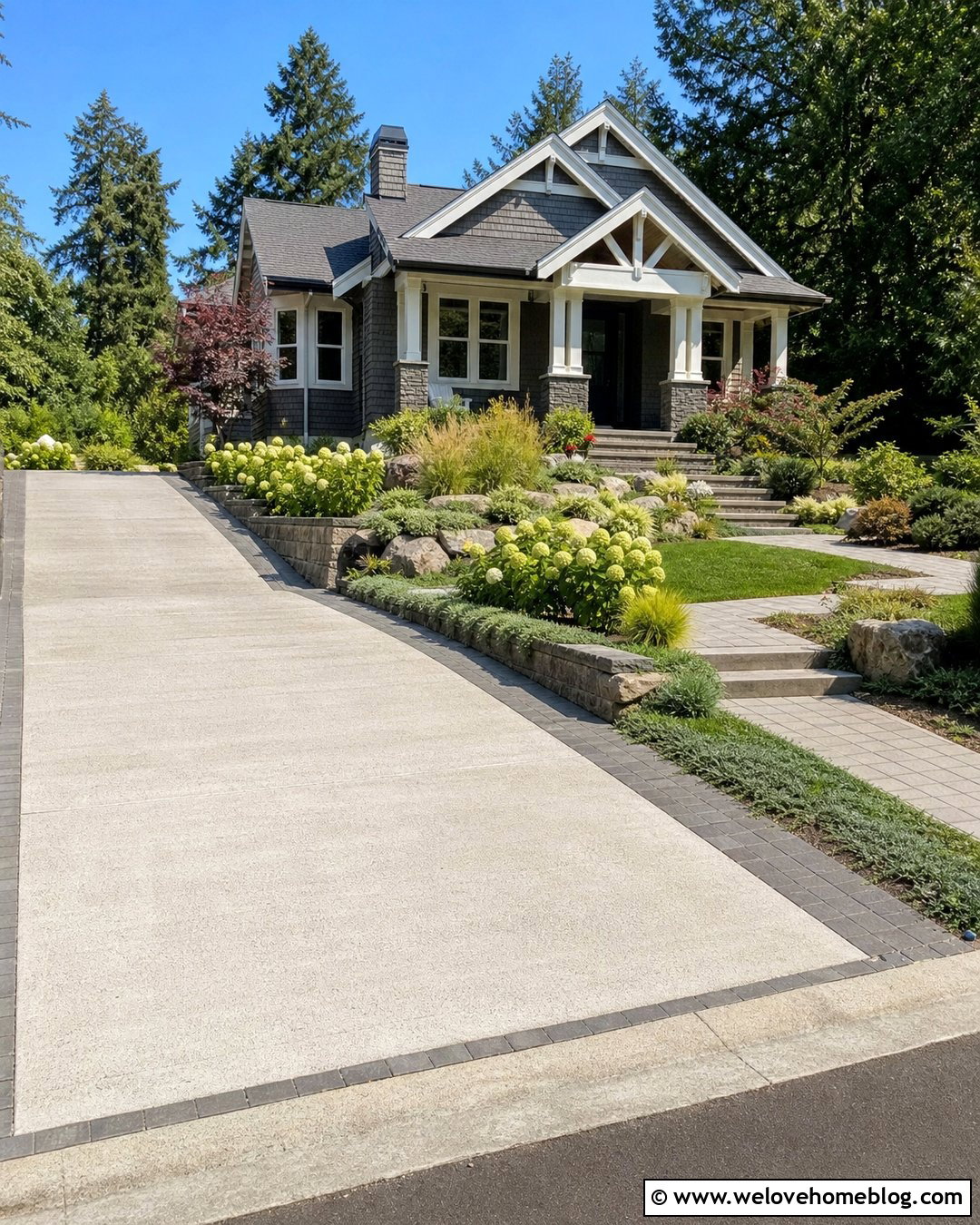
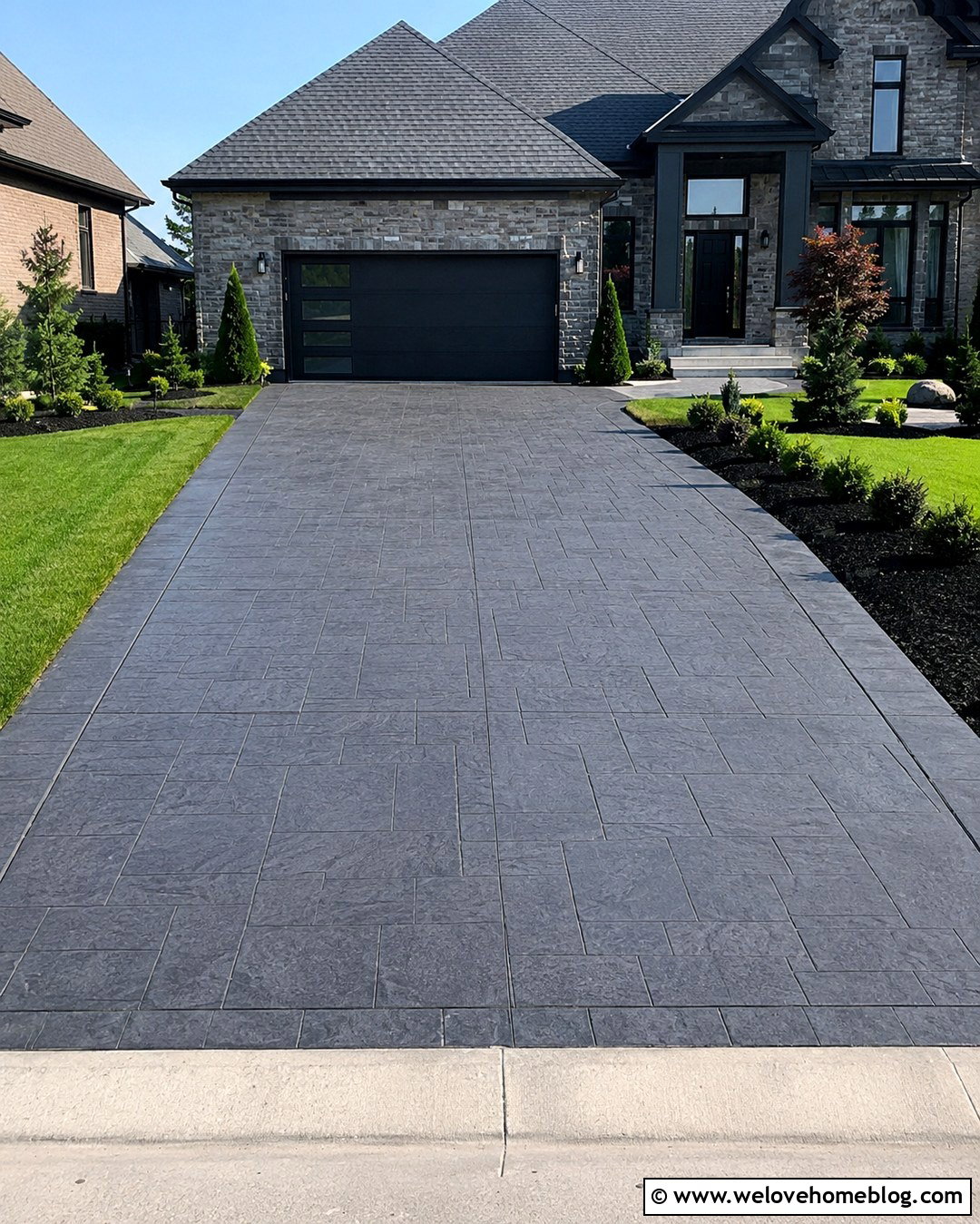
A light gray concrete driveway creates a clean foundation for a terraced hillside entrance. Run the driveway straight toward the garage while using two or three natural stone retaining walls to step the surrounding slope. Wide planting beds between the walls can hold ornamental grasses, spreading juniper, hydrangeas, or compact flowering shrubs. A subtle broom finish helps the concrete look less reflective and provides useful surface texture. Add a charcoal paver ribbon along both edges to define the driving area and coordinate with the stone. Low-voltage lights installed near the wall ends make the elevation changes easier to see. Keep each driving transition smooth rather than creating abrupt, stair-like changes that could cause vehicles to scrape.
2. Paver Terraced Driveway With Block Retaining Walls
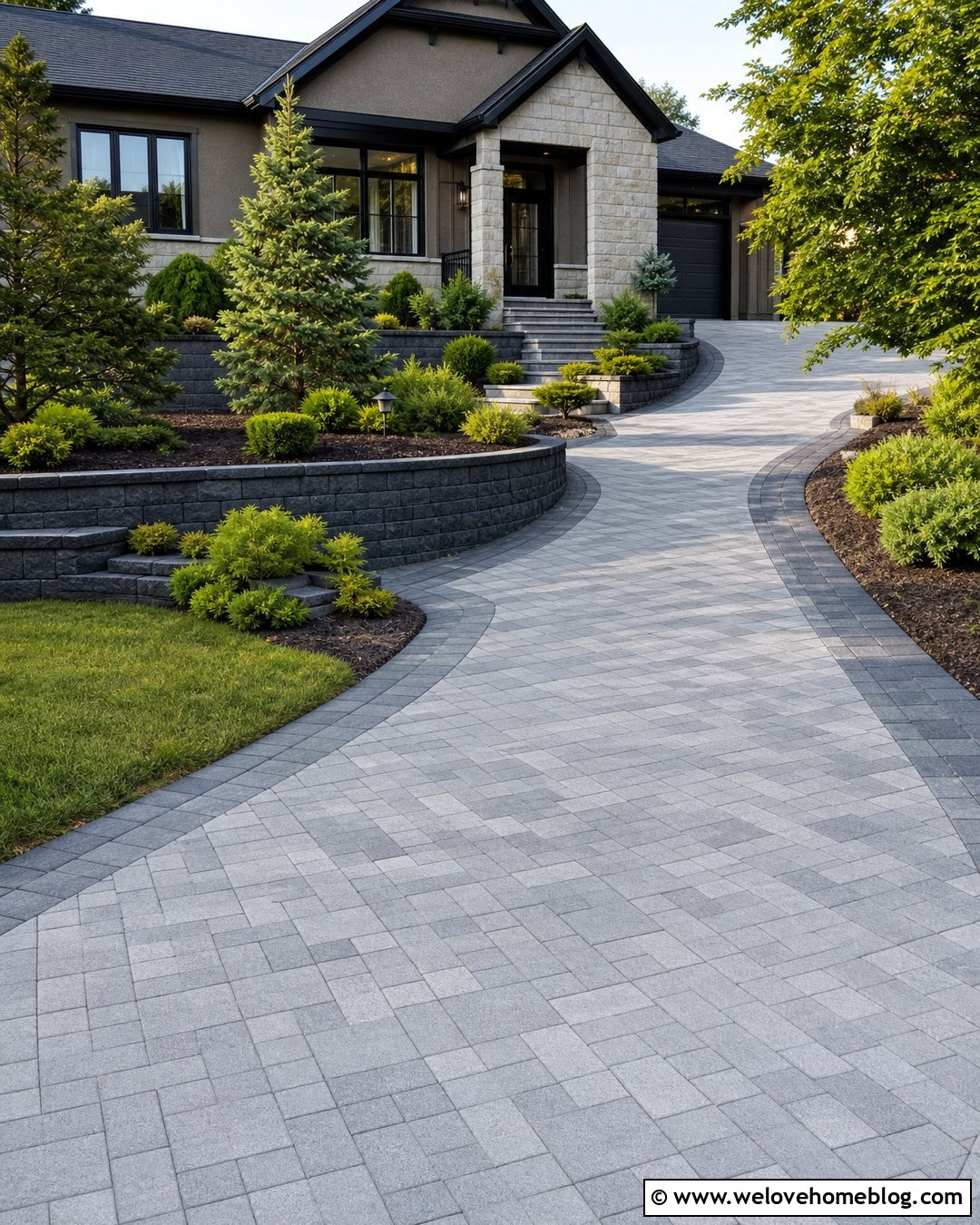
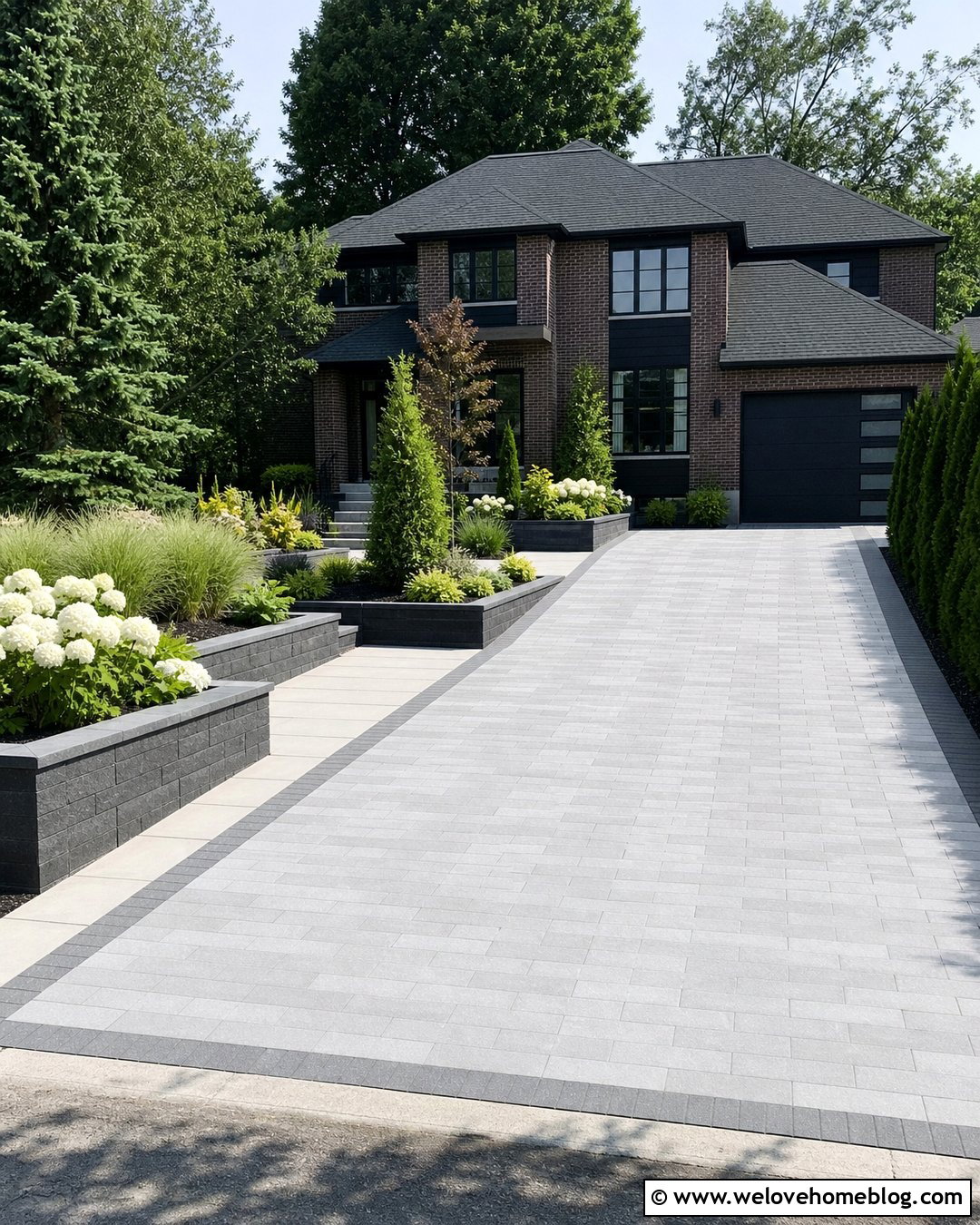
Concrete pavers work especially well when you want a driveway surface that feels detailed without overwhelming a sloped property. Choose medium-gray pavers in a running bond or herringbone pattern, then frame the driveway with darker border pavers. Matching segmental block retaining walls can form broad terraces on the uphill side. Fill those tiers with evergreen shrubs, dwarf trees, and low ground covers that soften the masonry. On the downhill edge, a low safety wall can visually balance the taller retaining structure. Include a paved walkway and short flights of steps between the terraces so guests do not need to walk on the driveway. A properly prepared base, sturdy edge restraints, and professionally planned wall drainage are particularly important on moving or water-prone slopes.
3. Gravel Terraced Driveway With Timber Planting Beds
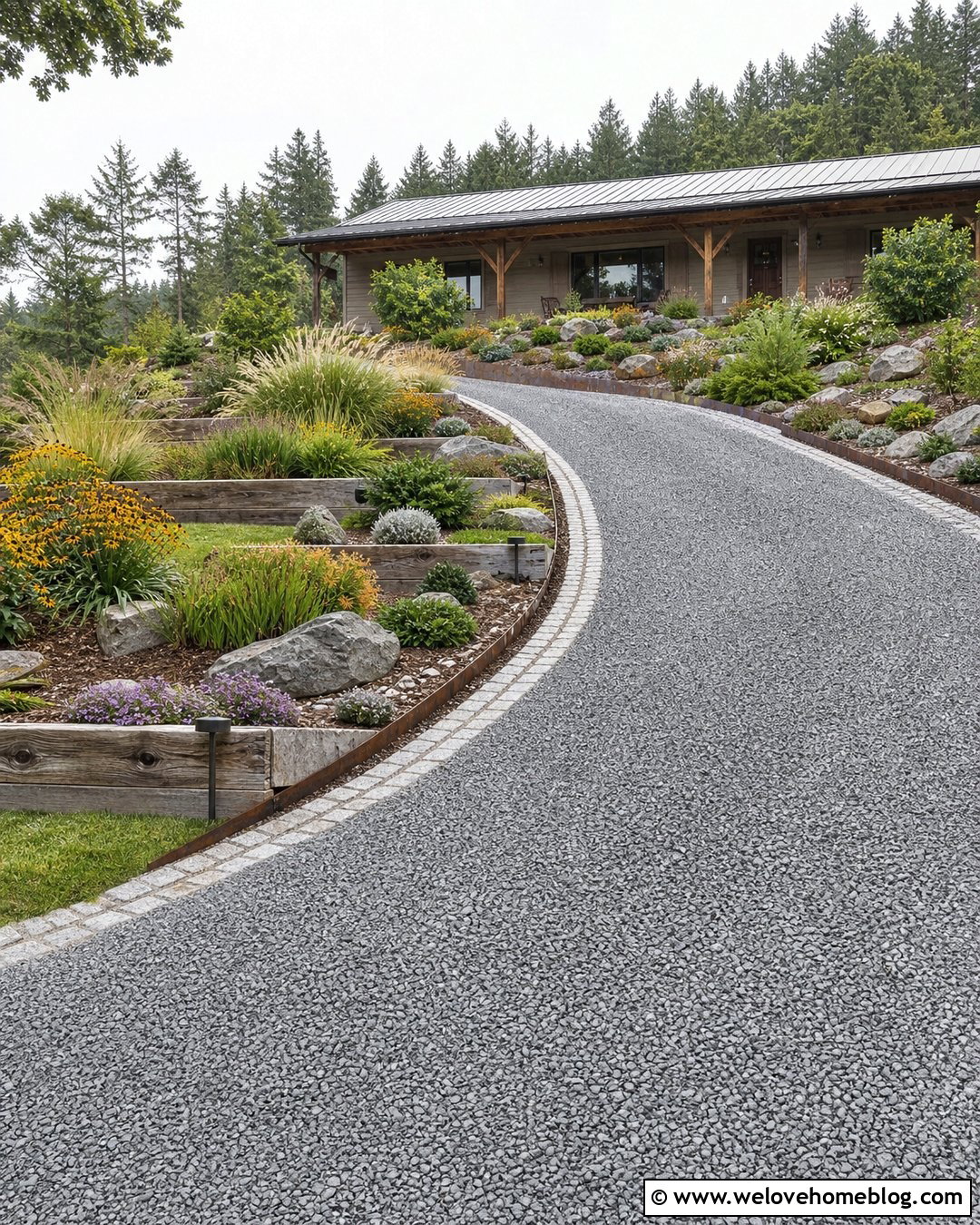
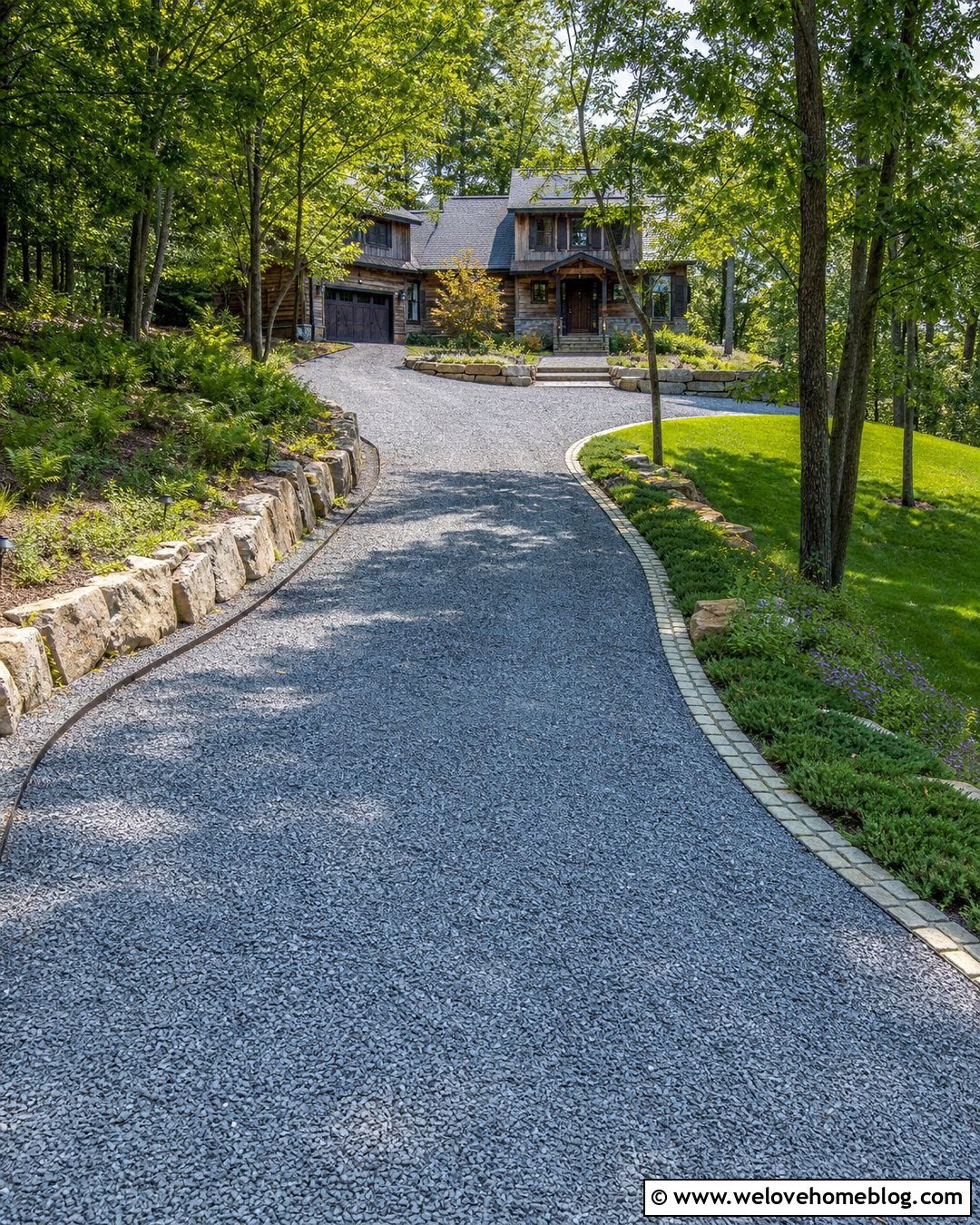
For a relaxed country setting, combine compacted crushed gravel with low timber terraces. The driveway can follow a gentle switchback across the slope, reducing the visual severity of a direct uphill route. Use angular gray gravel for the main surface because it locks together more effectively than loose, rounded decorative stones. Pressure-rated landscape timbers can define shallow planting tiers filled with native grasses, black-eyed Susans, creeping phlox, and small evergreen shrubs. A steel or cobblestone edge helps prevent gravel from spreading into the beds. Place larger stones at drainage outlets to slow and disperse runoff. This complete look suits cabins, ranch homes, and rustic farmhouses, although timber walls should remain modest in height and be inspected periodically for movement, moisture damage, or decay.
4. Asphalt Terraced Driveway With Boulder Landscaping
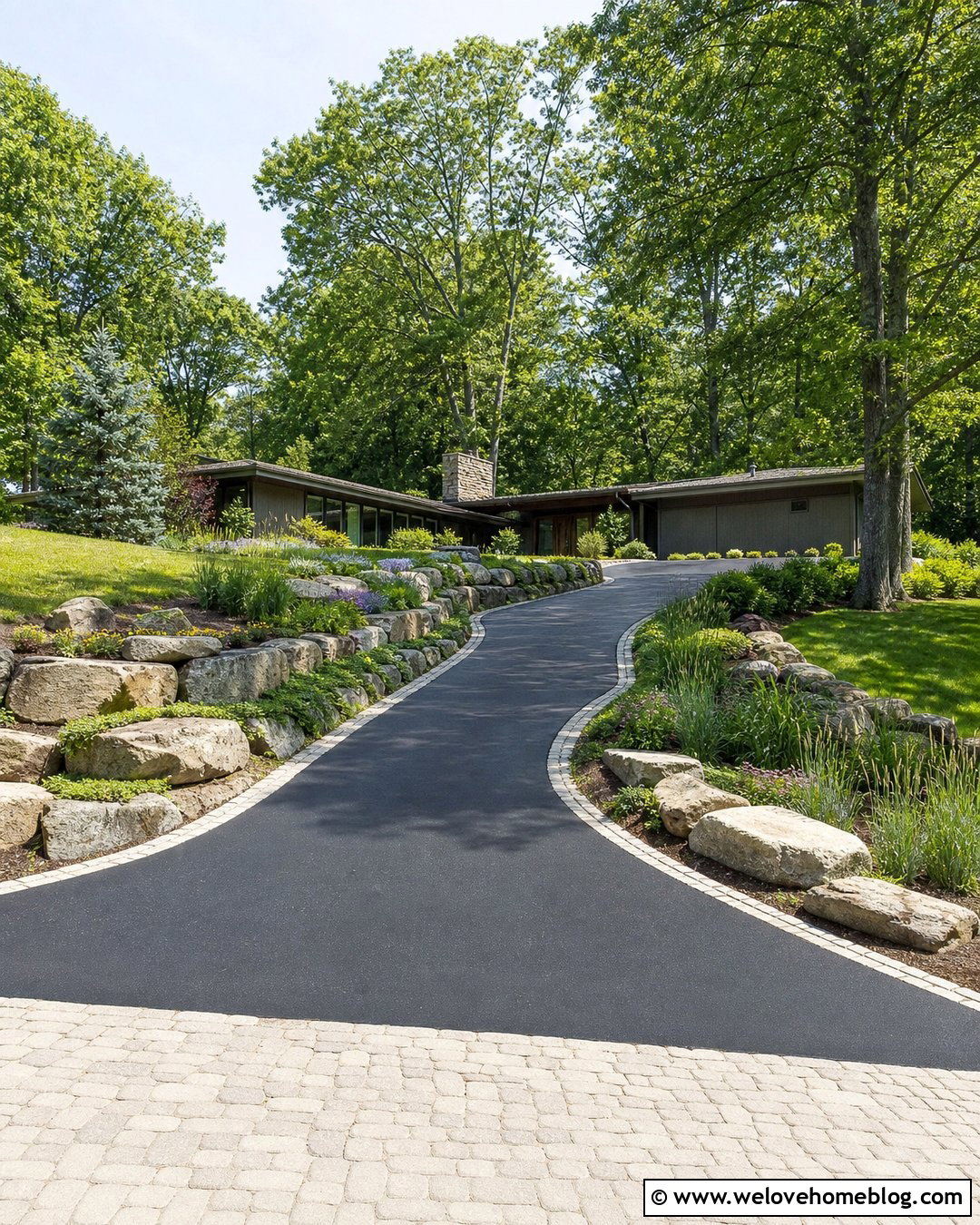
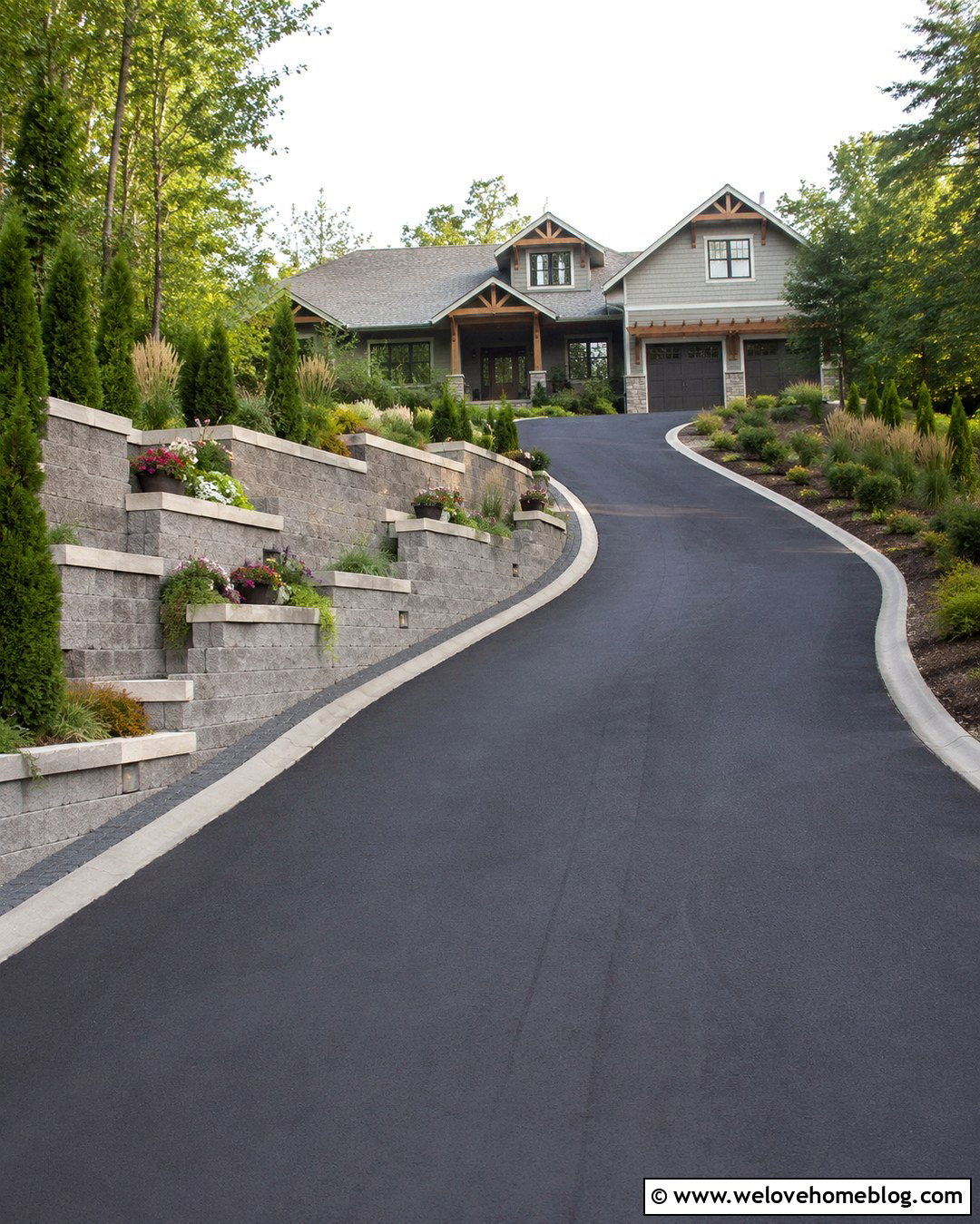
Smooth black asphalt can make a steep, winding driveway feel visually organized and easy to follow. Instead of installing formal retaining walls everywhere, use carefully placed boulders to hold shallow terraces along the uphill bank. Plant the spaces between them with sedges, native grasses, creeping juniper, and flowering perennials. A curved driveway layout looks more natural on a broad hillside and can provide gentler directional changes than a rigid straight approach. Add a pale cobblestone apron at the street and matching cobblestone edging to contrast with the dark asphalt. The boulders should vary in size but share similar colors for a cohesive result. Any stones performing structural work need suitable foundations and professional placement rather than simply resting on loose soil beside the driveway.
5. Exposed Aggregate Terraced Driveway With Curved Walls
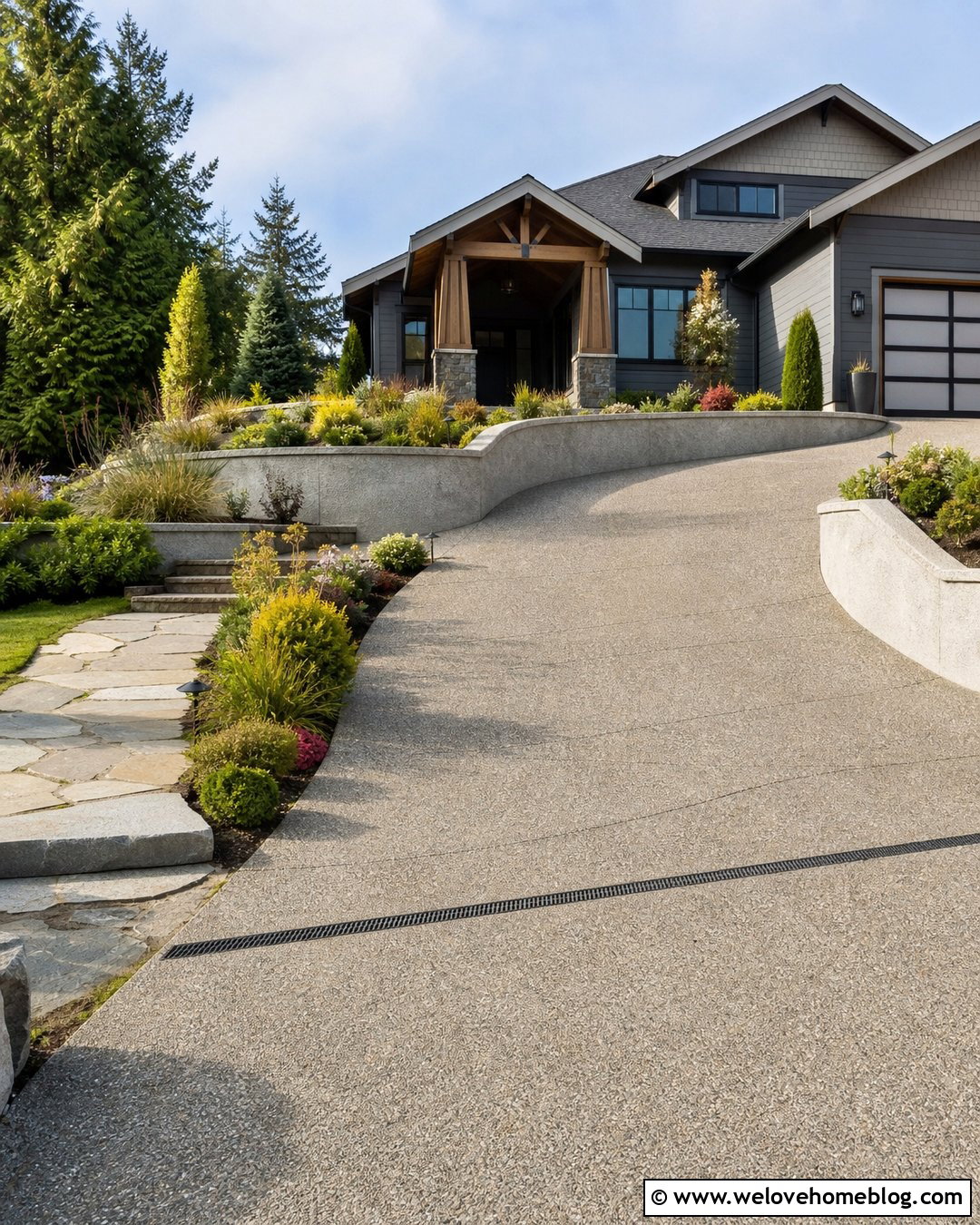
Warm exposed aggregate offers more texture than standard concrete while still creating a durable, polished entrance. Shape the driveway in a broad curve and echo that movement with low, curved concrete retaining walls. Choose aggregate containing tan, cream, and muted gray stones to complement a craftsman or contemporary home. The planted terraces can alternate between clipped evergreen shrubs, feathery grasses, and seasonal flowers. Rounded wall corners improve sightlines and keep the structure from feeling severe. Install a stone walkway on the inner curve, separated from the driveway by a narrow planting strip. A trench drain near the garage may help capture runoff when site conditions require it. Keep drainage grates, expansion joints, and driveway borders aligned with the curves so every functional detail looks intentional.
6. Brick Terraced Driveway With Formal Hedge Beds
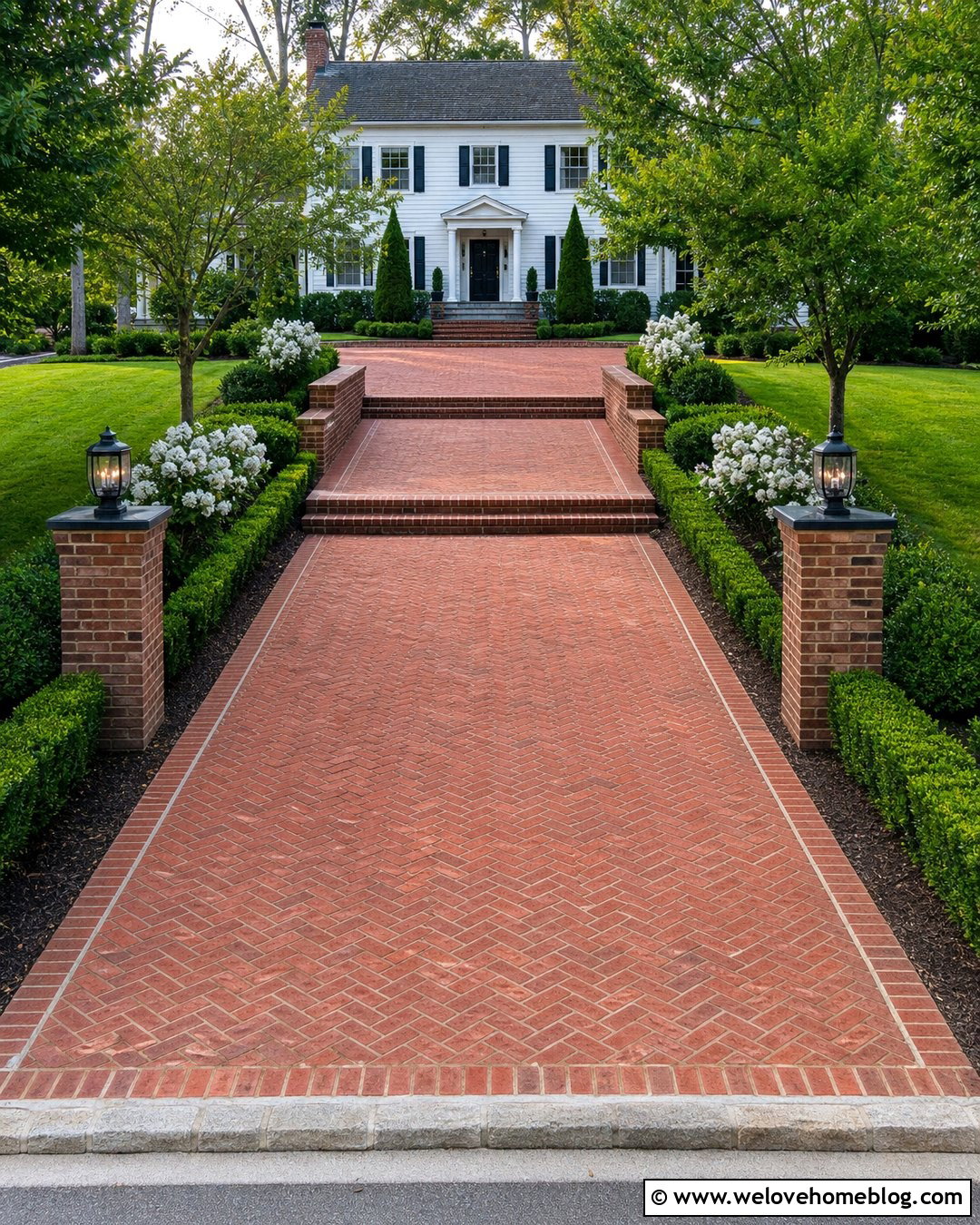
Red clay brick pavers bring warmth and traditional character to a terraced driveway serving a colonial or Georgian-inspired home. Lay the bricks in a herringbone pattern for the main driving surface and use a soldier-course border around the perimeter. Symmetrical brick retaining walls can create matching garden tiers on both sides of the lower entrance. Fill the beds with boxwood alternatives suited to the local climate, white flowering shrubs, and small ornamental trees. Near the house, widen the driveway into a level parking court that repeats the same border pattern. Black lantern-style fixtures on brick pillars add definition without blocking the view. This formal arrangement works best when wall heights, planting rows, steps, and garage doors are carefully aligned along strong visual axes.
7. Permeable Paver Terraced Driveway With Rain Gardens
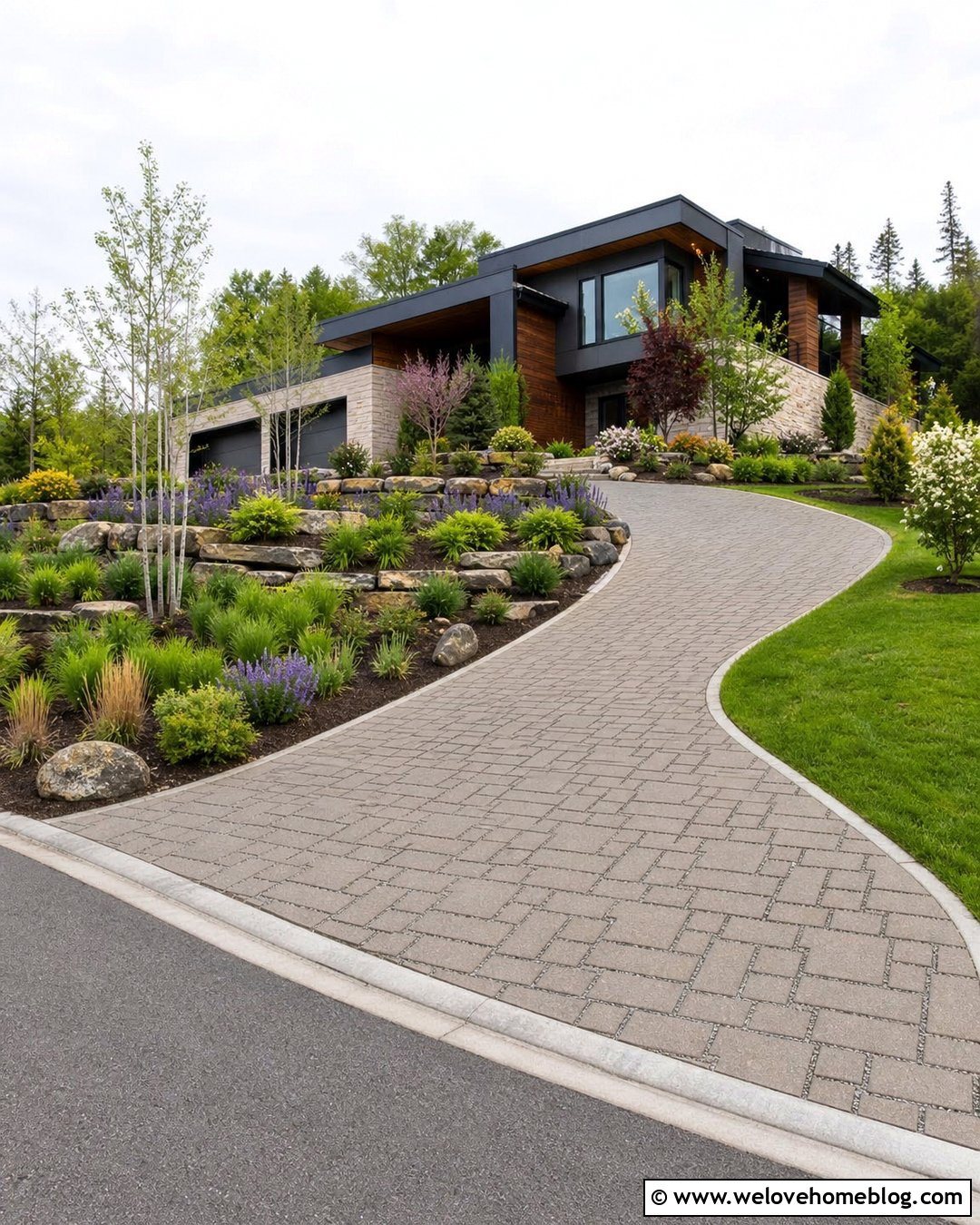
A permeable paver driveway can connect attractive hardscaping with a more water-conscious terraced landscape. Select charcoal or warm-gray permeable concrete pavers with gravel-filled joints and arrange them along a gently curving approach. On the lower side, create shallow rain-garden terraces where site conditions allow runoff to collect and filter safely. Use moisture-tolerant native grasses and flowering plants in the lower zones, with drought-tolerant shrubs higher on the slope. Stone check dams can separate the planted levels and reduce the appearance of one deep basin. Keep overflow routes away from foundations, neighboring properties, and unstable banks. Because the pavement base and drainage system must work together, the infiltration rate, soil type, seasonal groundwater, and local stormwater rules should be evaluated before construction.
8. Resin-Bound Terraced Driveway With White Retaining Walls
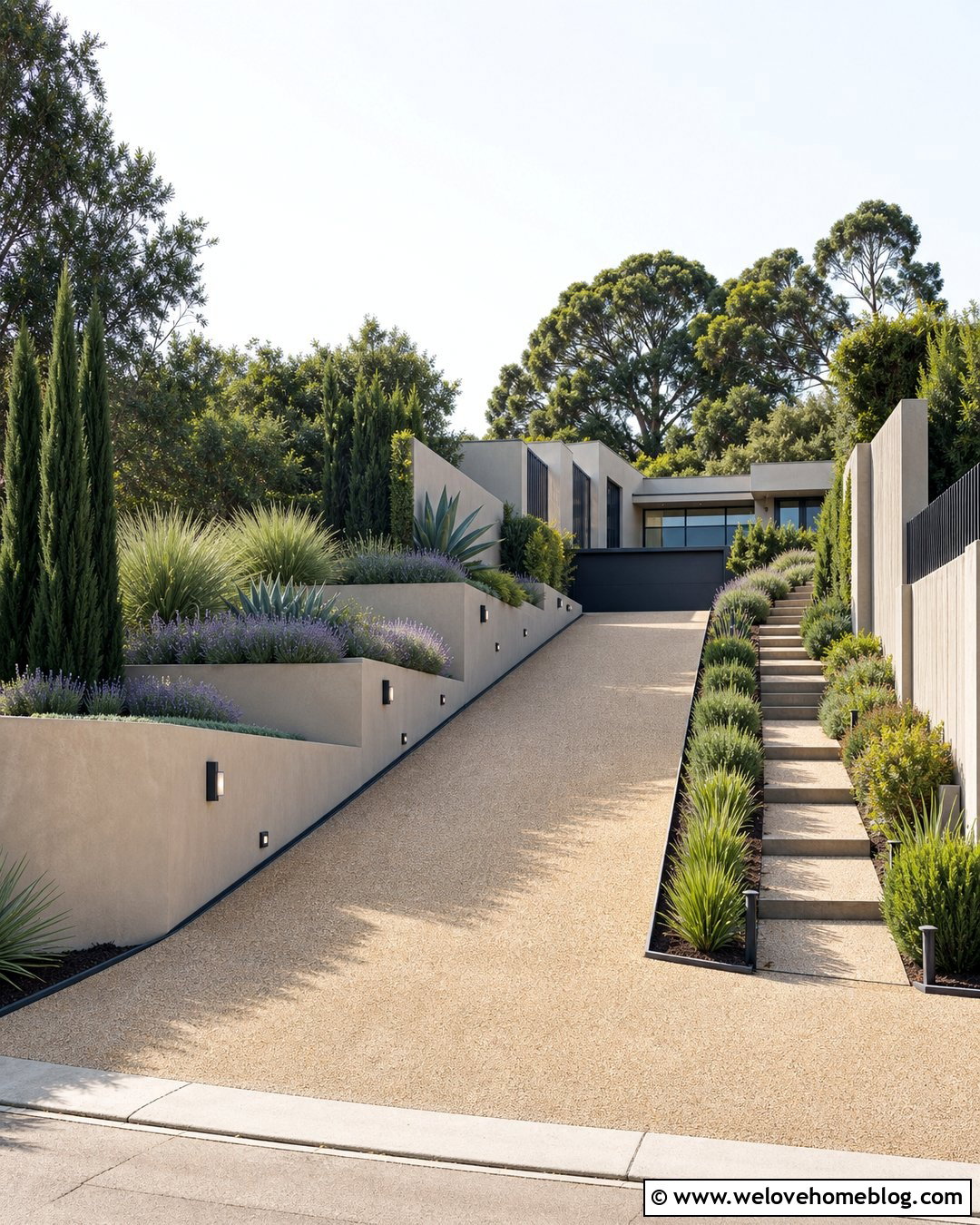
A sand-colored resin-bound gravel driveway can give a terraced property a smooth, contemporary appearance. Pair the warm surface with crisp white or pale greige rendered retaining walls that step gradually up the slope. Use straight lines for a modern home, but offset the wall sections slightly to avoid creating one long, blank façade. Narrow planting terraces filled with lavender, ornamental grasses, compact evergreens, and architectural succulents add color and movement. Dark metal edging provides a sharp transition between the driveway and beds. Integrate simple recessed lights into the walls and add a matching paved walkway beside the drive. Resin systems require an appropriate stable base and experienced installation, especially on slopes where water movement and surface traction must be considered as part of the complete design.
9. Cobblestone Terraced Driveway With Natural Stone Gardens
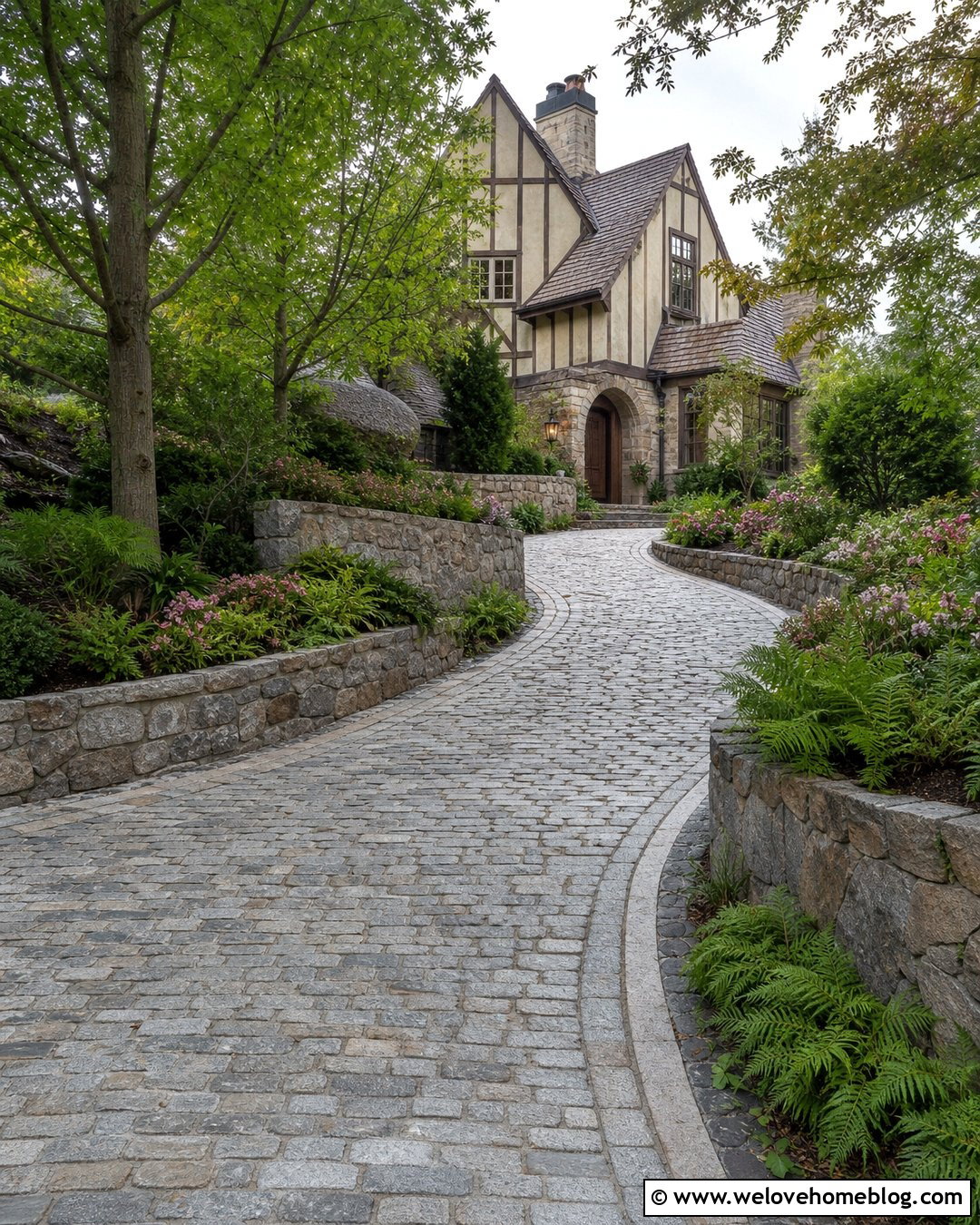
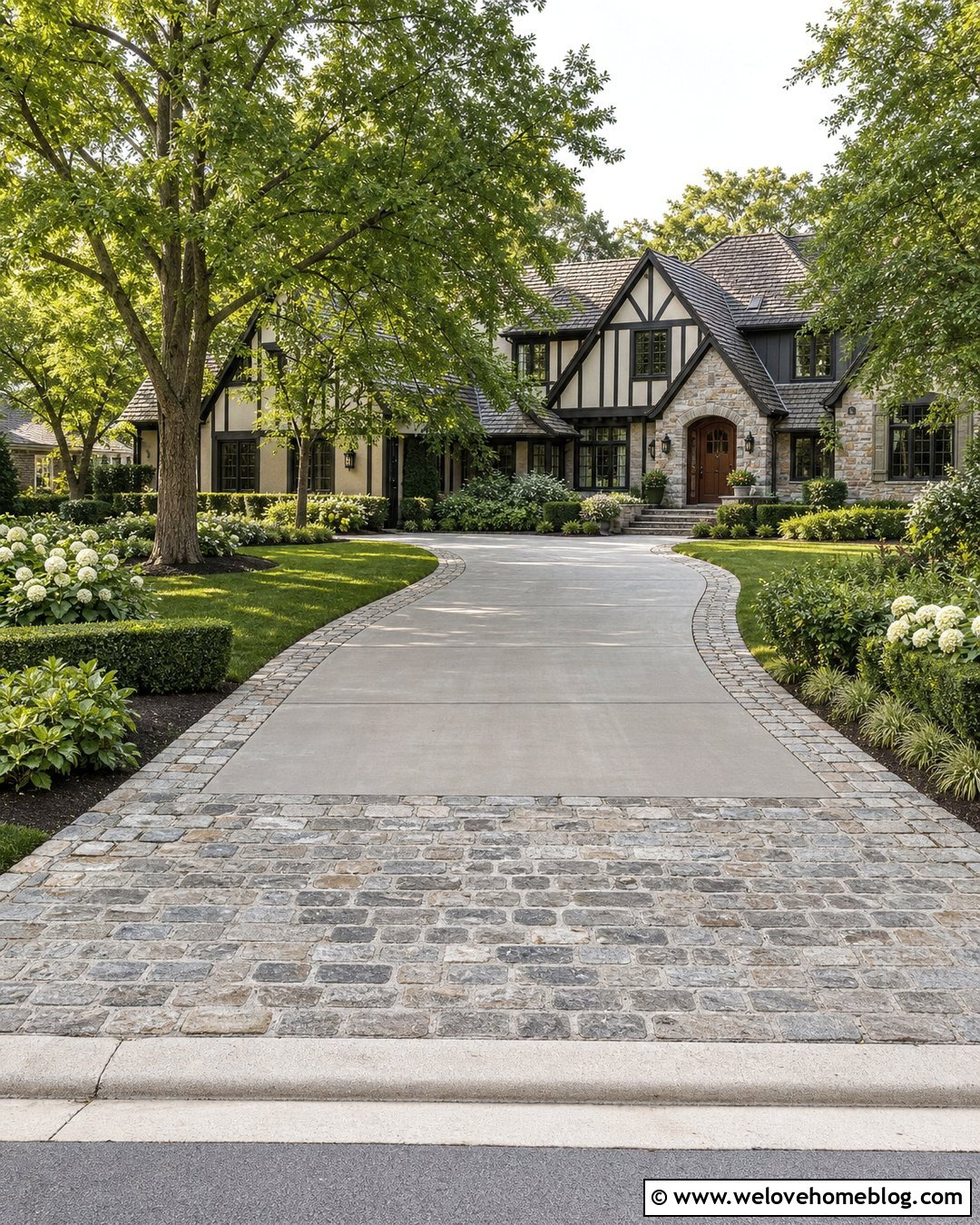
A cobblestone driveway can turn a steep approach into an established, old-world landscape. Use granite cobbles in mixed gray tones and follow a soft S-curve toward a Tudor, cottage, or stone-clad home. Dry-look natural stone retaining walls can form irregular terraces that blend into the hillside instead of appearing overly engineered. Plant the wider tiers with small trees, ferns, flowering shrubs, and cascading ground covers. Moss-like plants placed near shaded wall joints can reinforce the aged effect without covering the driving surface. Use larger granite setts along the edges and at the street apron for stronger visual definition. Since uneven stones may be uncomfortable on highly active driveways, choose accurately cut cobbles and maintain consistent joints to create a smoother, more practical vehicle path.
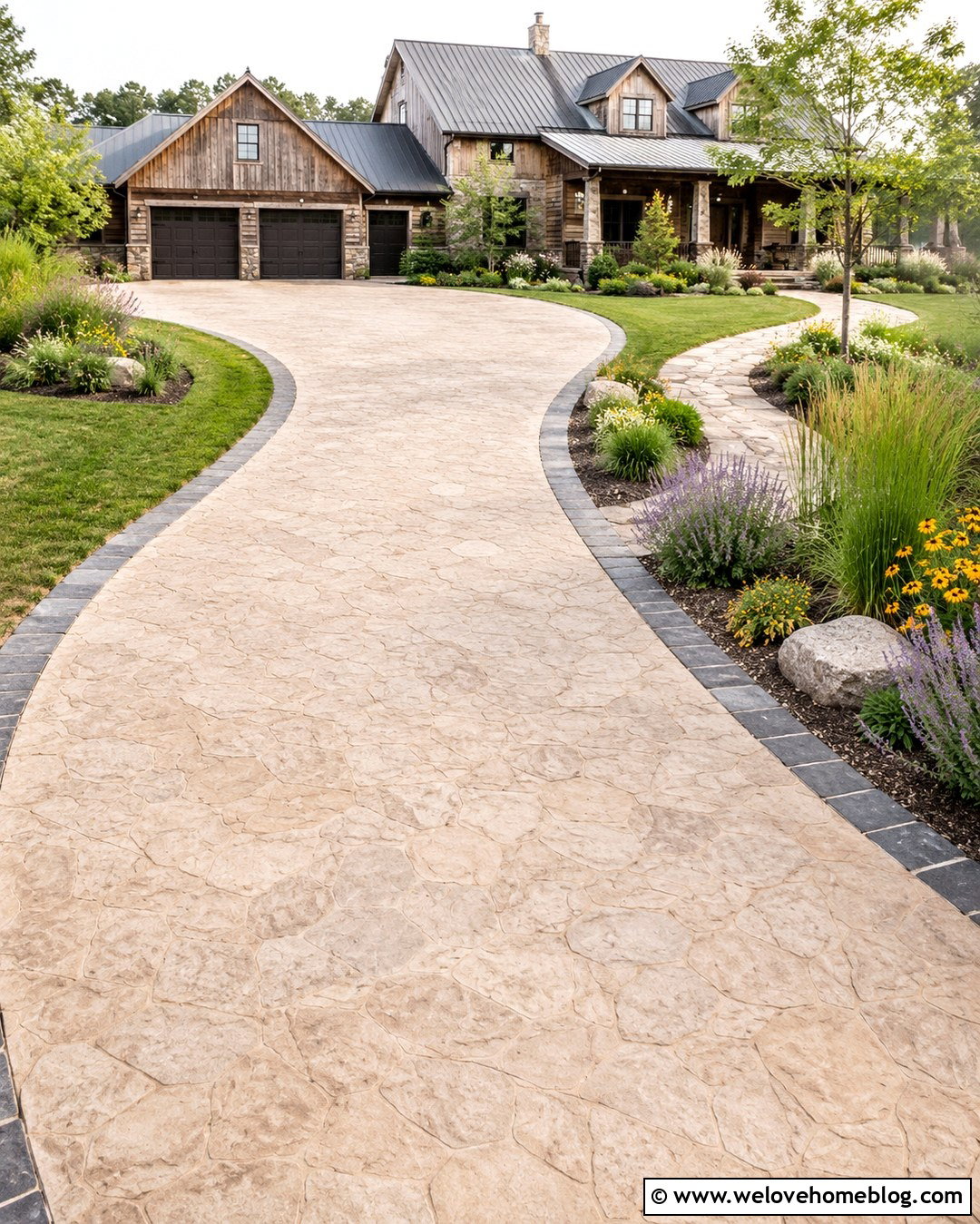
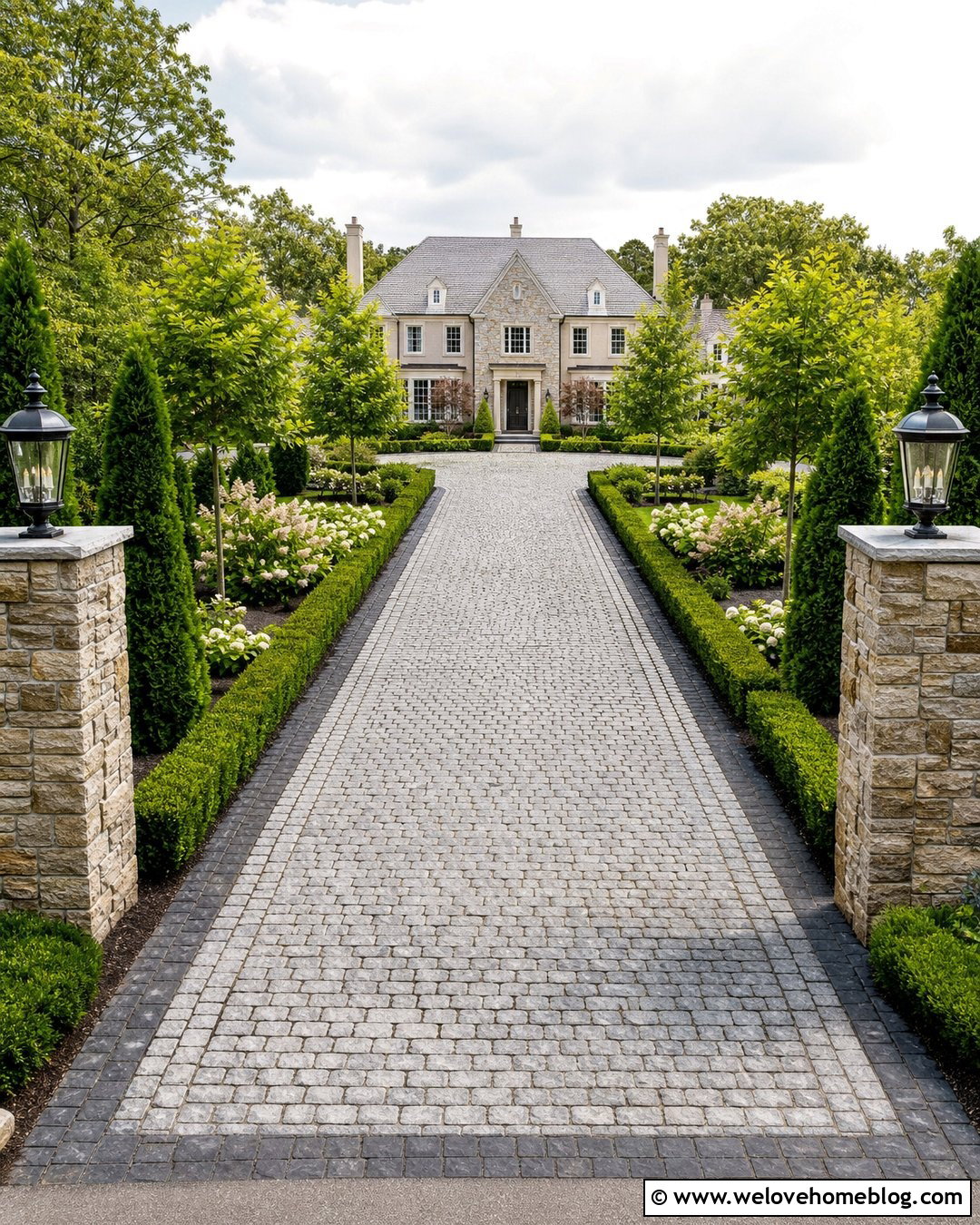
10. Small Terraced Driveway With Concrete Planters
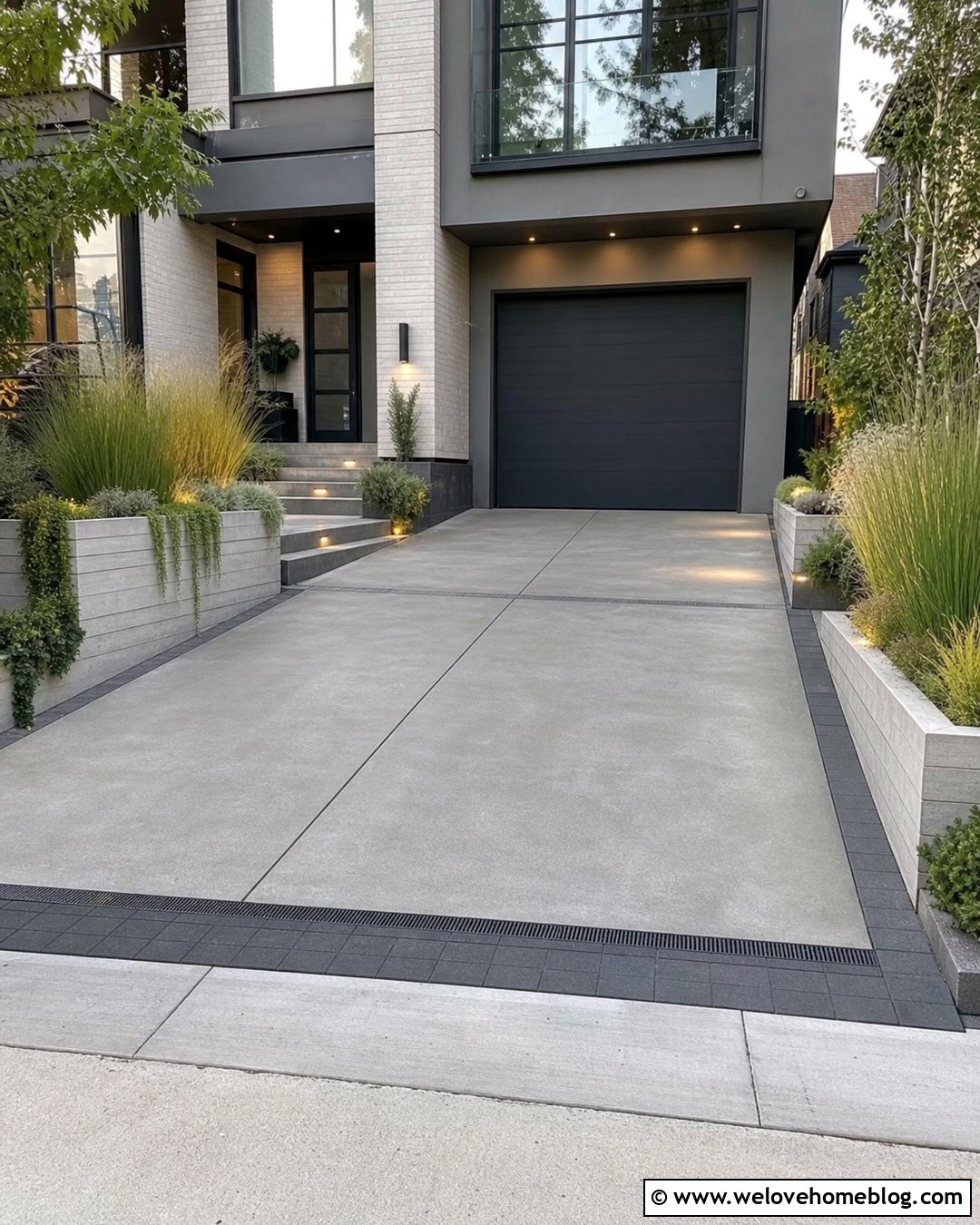
Limited frontage does not prevent a terraced driveway from looking organized and welcoming. For a compact urban lot, use smooth medium-gray poured concrete in a straight layout leading to a single garage. Build narrow board-formed concrete planters along the uphill side rather than wide garden terraces. Their slim footprint can retain smaller grade changes while holding upright grasses, compact shrubs, or trailing plants. A narrow channel drain can sit discreetly between the driveway and planter wall when professionally specified for the site. On the opposite edge, use a flush charcoal paver strip to avoid reducing the usable driving width. Wall-mounted address numbers and low recessed lights keep the design uncluttered. Maintain adequate clearance for doors, mirrors, trash containers, and everyday maneuvering before finalizing planter dimensions.
11. Ranch House Terraced Driveway With Low Timber Walls
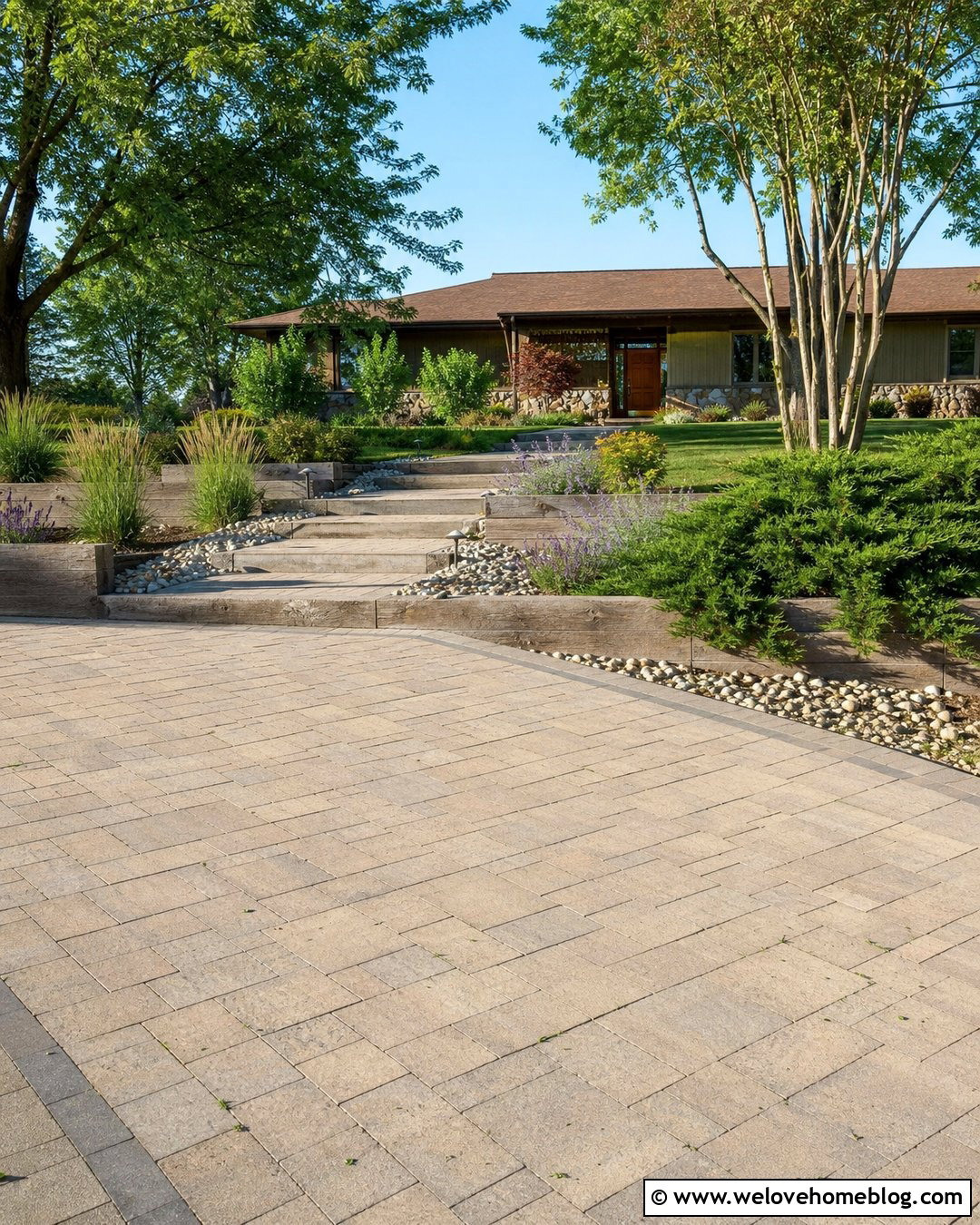
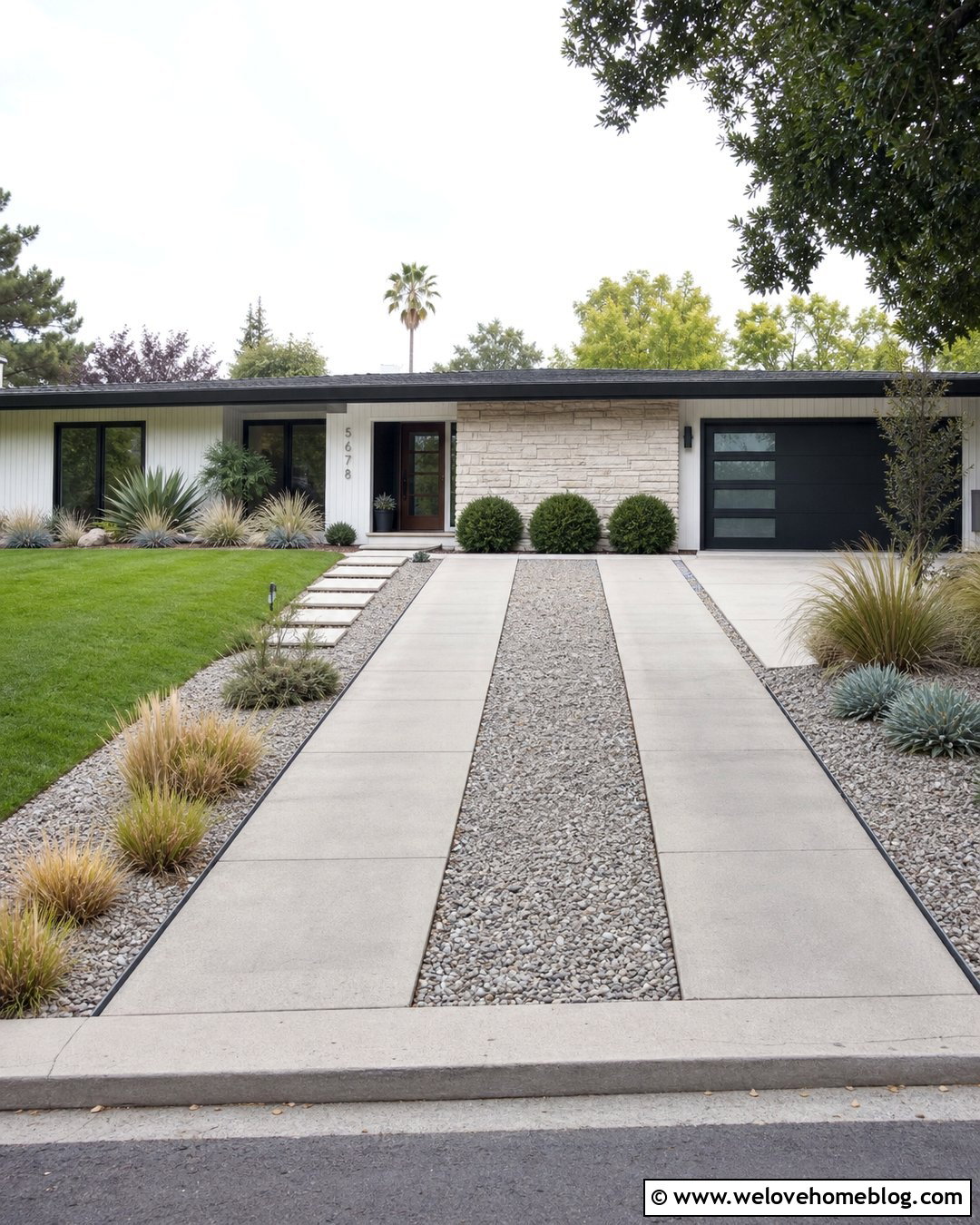
Long, low ranch homes pair naturally with broad terraces and simple horizontal materials. Use tan concrete pavers for a gently sloping driveway that widens near the attached garage. On the uphill bank, create several shallow terraces with substantial landscape timbers or wood-look concrete retaining units. The repeated horizontal lines can make the house and driveway feel visually connected. Fill the beds with ornamental grasses, low spreading evergreens, flowering sage, and one or two multi-stem trees. A band of river rock between the wall and driveway creates a clean maintenance strip, but it should not replace required subsurface drainage. Add a straight stepping-stone walkway through the lowest garden level. This design looks best when plants remain relatively low, preserving open views across the front yard and ranch-style façade.
12. Farmhouse Terraced Driveway With Gravel And Limestone
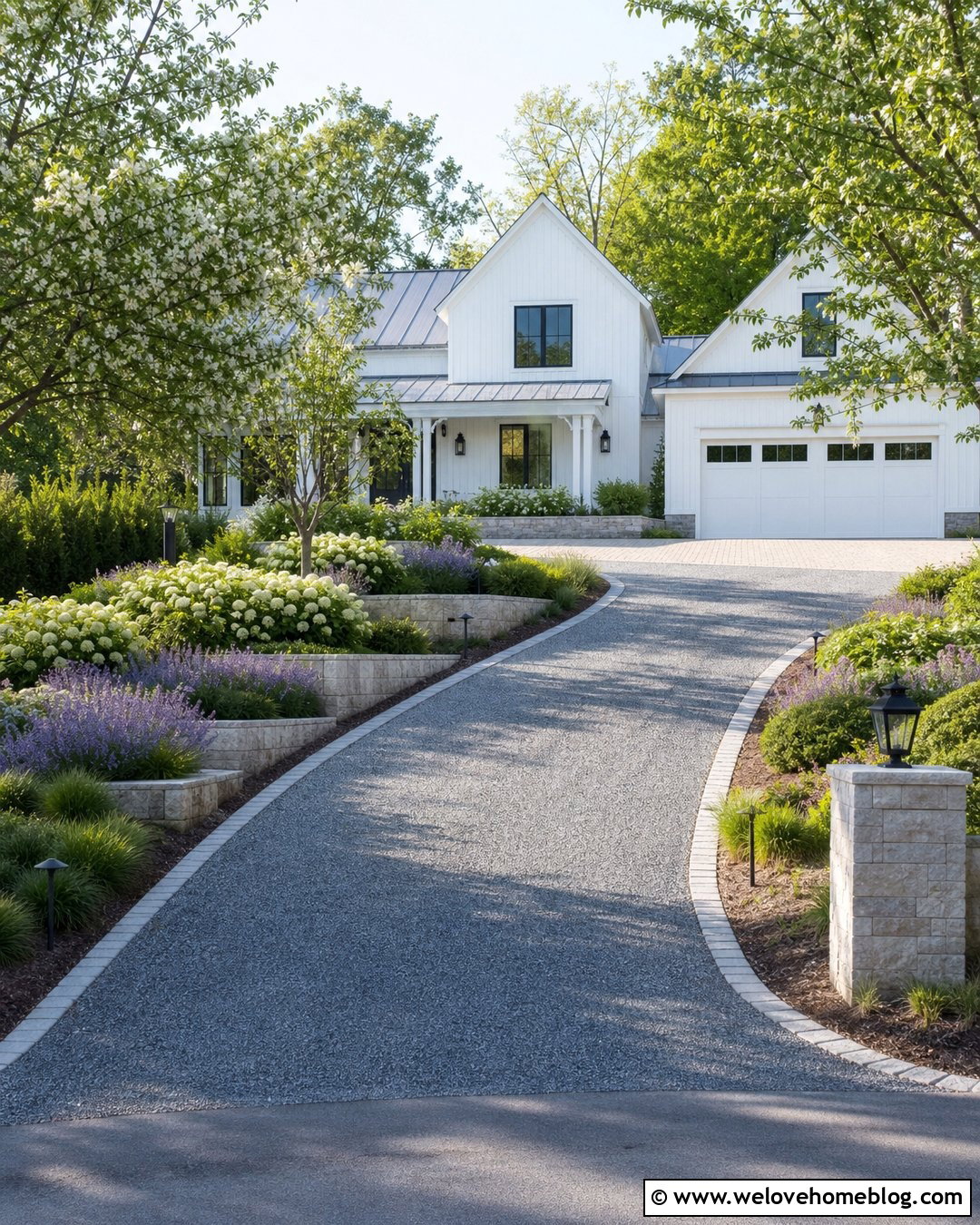
A modern farmhouse gains a softer entrance from a gray crushed-gravel driveway framed by pale limestone terraces. Run the driveway in a slight curve toward a white house with dark windows and a detached or side-entry garage. Use limestone blocks for low retaining walls, allowing broad beds of hydrangeas, catmint, ornamental grasses, and small flowering trees to rise beside the approach. A row of larger limestone setts can contain the gravel and repeat the wall color. Near the garage, switch to a stable paver parking pad that reduces loose gravel around entry doors. Simple black post lights and a matching address marker complete the look. The contrast between informal gravel, structured walls, and generous planting creates farmhouse character without making the landscape feel overly rustic or unfinished.
13. Mediterranean Terraced Driveway With Terracotta Pavers
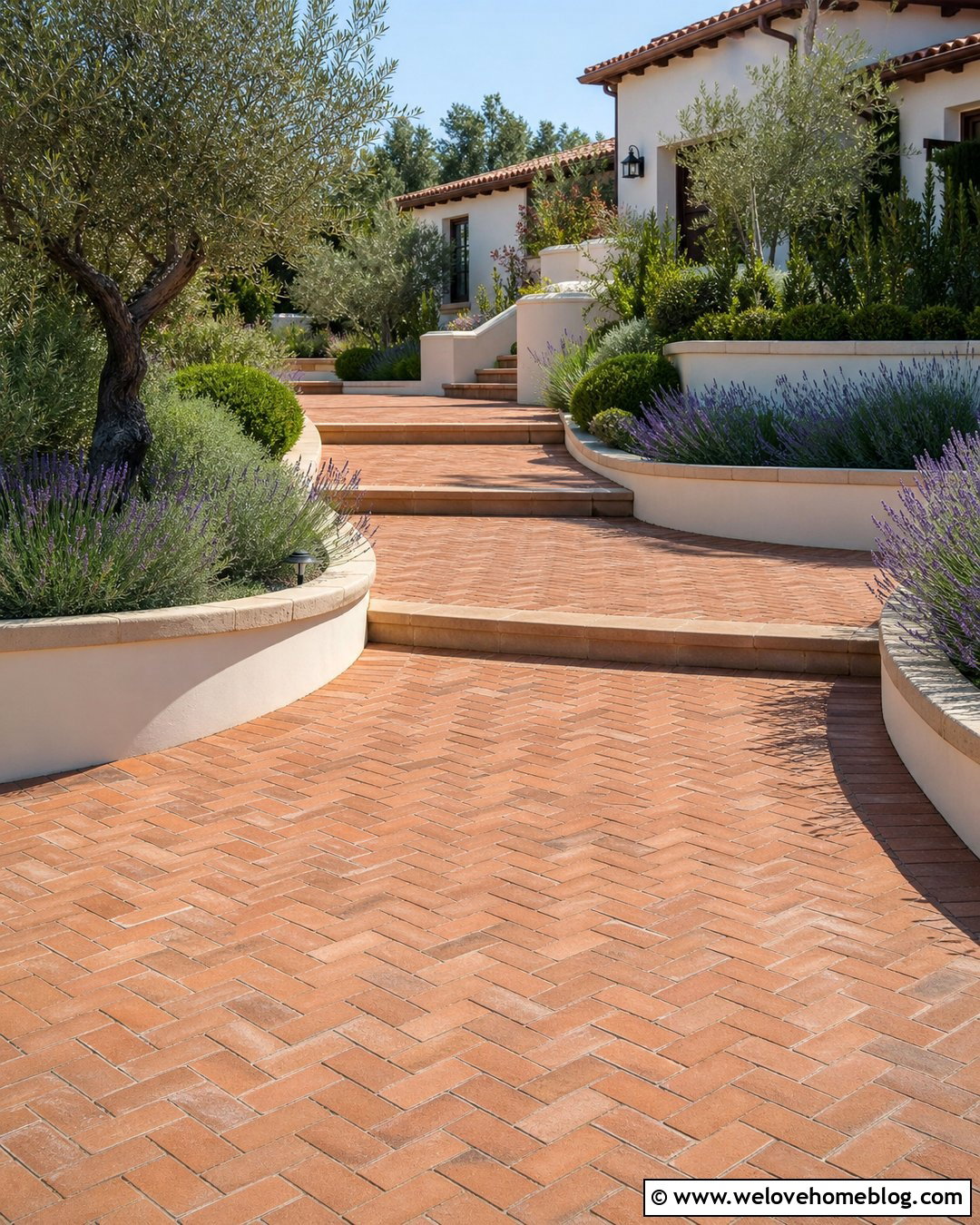
Sun-washed colors can make a terraced driveway feel like a natural extension of a Mediterranean-inspired home. Choose terracotta-toned concrete or clay pavers laid in a fan or herringbone pattern. Shape the driveway with a gradual curve and border it with cream limestone setts. Stucco retaining walls in a warm off-white can create planting tiers filled with rosemary, lavender, olive-like ornamental trees, sage, and drought-tolerant grasses suitable for the region. Decorative tile accents may be added sparingly to stair risers or entrance pillars rather than the driving surface. A small landing near the garage gives the upper level a practical, finished appearance. To maintain an airy look, keep the walls low where possible and allow selected plants to spill gently over their edges without obstructing visibility.
14. Woodland Terraced Driveway With Decomposed Granite
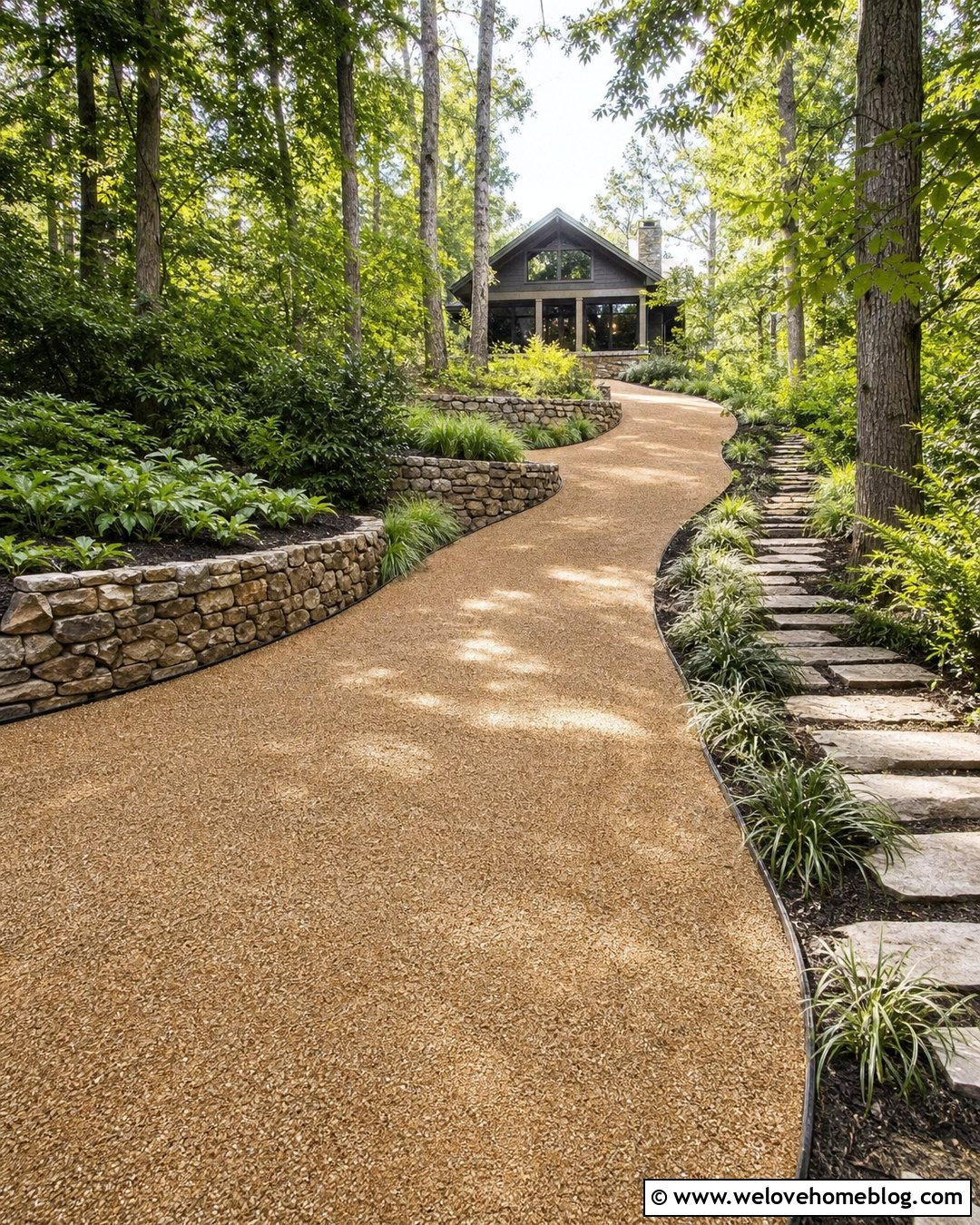
A wooded hillside calls for a driveway that feels settled into the landscape. Use stabilized decomposed granite in a warm brown or muted gold tone, supported by sturdy edging and a properly compacted base. Guide the driveway through a gentle curve between natural stone terraces. Plant the banks with ferns, woodland grasses, shade-tolerant shrubs, and native ground covers beneath existing trees. Irregular fieldstone walls can follow the contours without looking rigid. Include a separate stepping-stone path on the inside of the curve so pedestrians have a defined route. Low shielded fixtures placed near wall corners improve visibility while preserving the natural appearance. Tree roots, drainage patterns, and construction access require careful evaluation, since excavation for the driveway or retaining walls can affect mature trees and slope stability.
15. Coastal Terraced Driveway With Shell Gravel
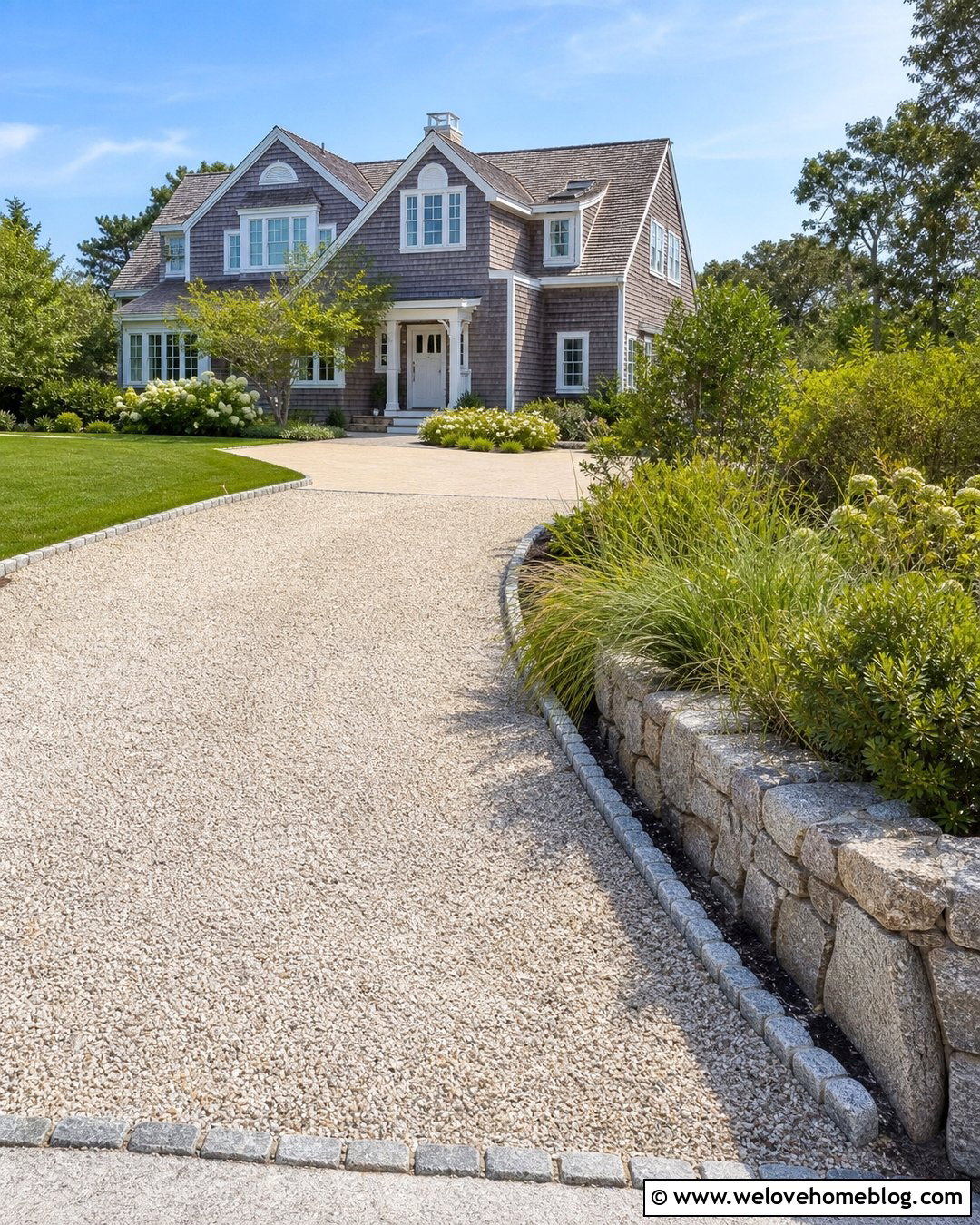
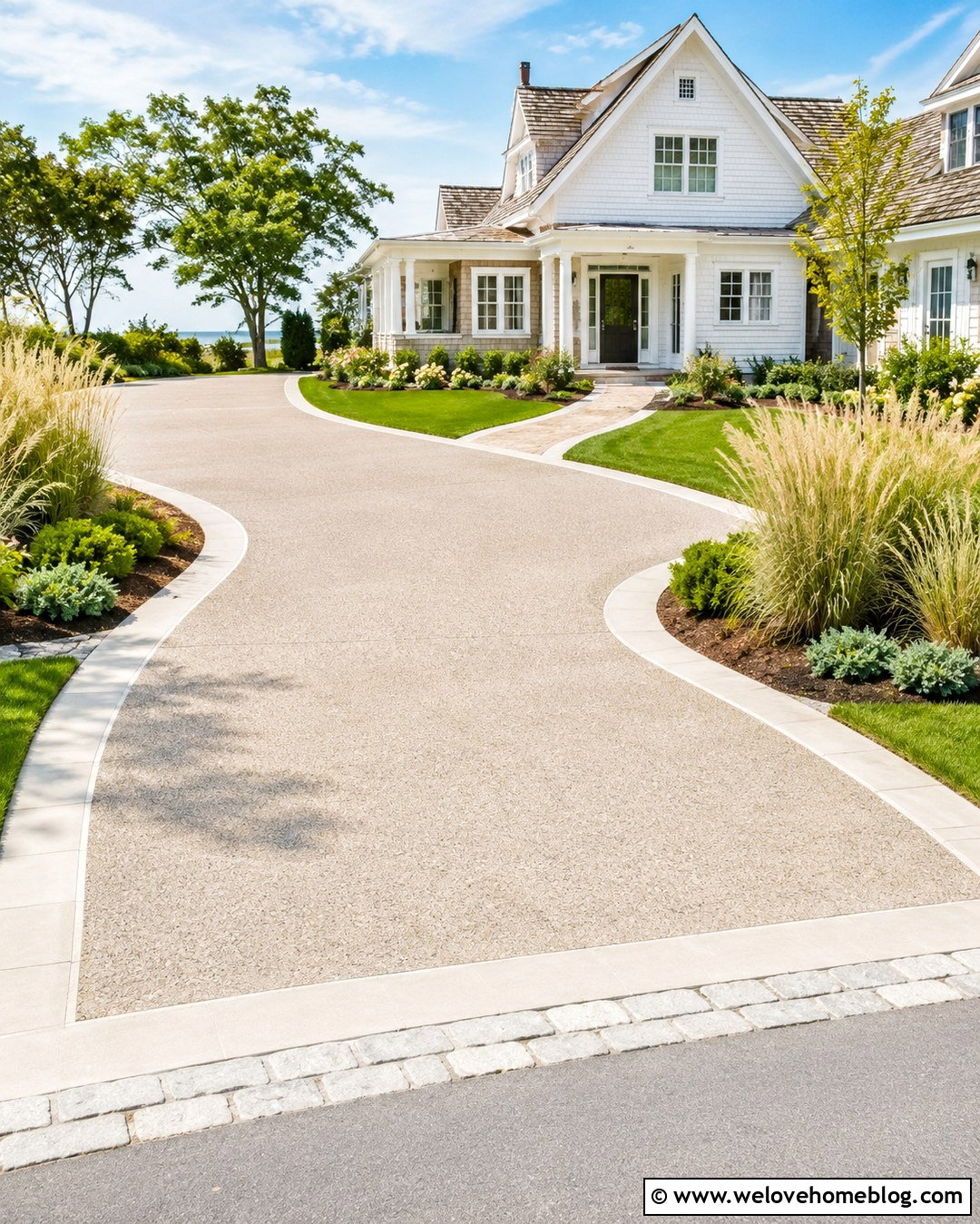
A shell-gravel driveway brings a light, breezy finish to a coastal or Cape Cod-style property. Use compacted crushed shell blended with pale aggregate, then shape the driveway into a relaxed curve toward a cedar-shingle or white-clapboard house. Low retaining walls built from weathered granite can create wide planting terraces on the sloped side. Fill them with beach grass, inkberry, bayberry, hydrangeas, and other salt-tolerant plants appropriate for the location. Granite cobbles should edge the shell surface and define the street apron. At the upper parking area, consider permeable pavers in a coordinating cream tone for a firmer surface. Keep the landscape open and windswept rather than overly formal. Proper containment is essential because lightweight surface material can migrate during heavy rain, snow removal, or frequent turning.
16. Circular Terraced Driveway With Center Landscaping
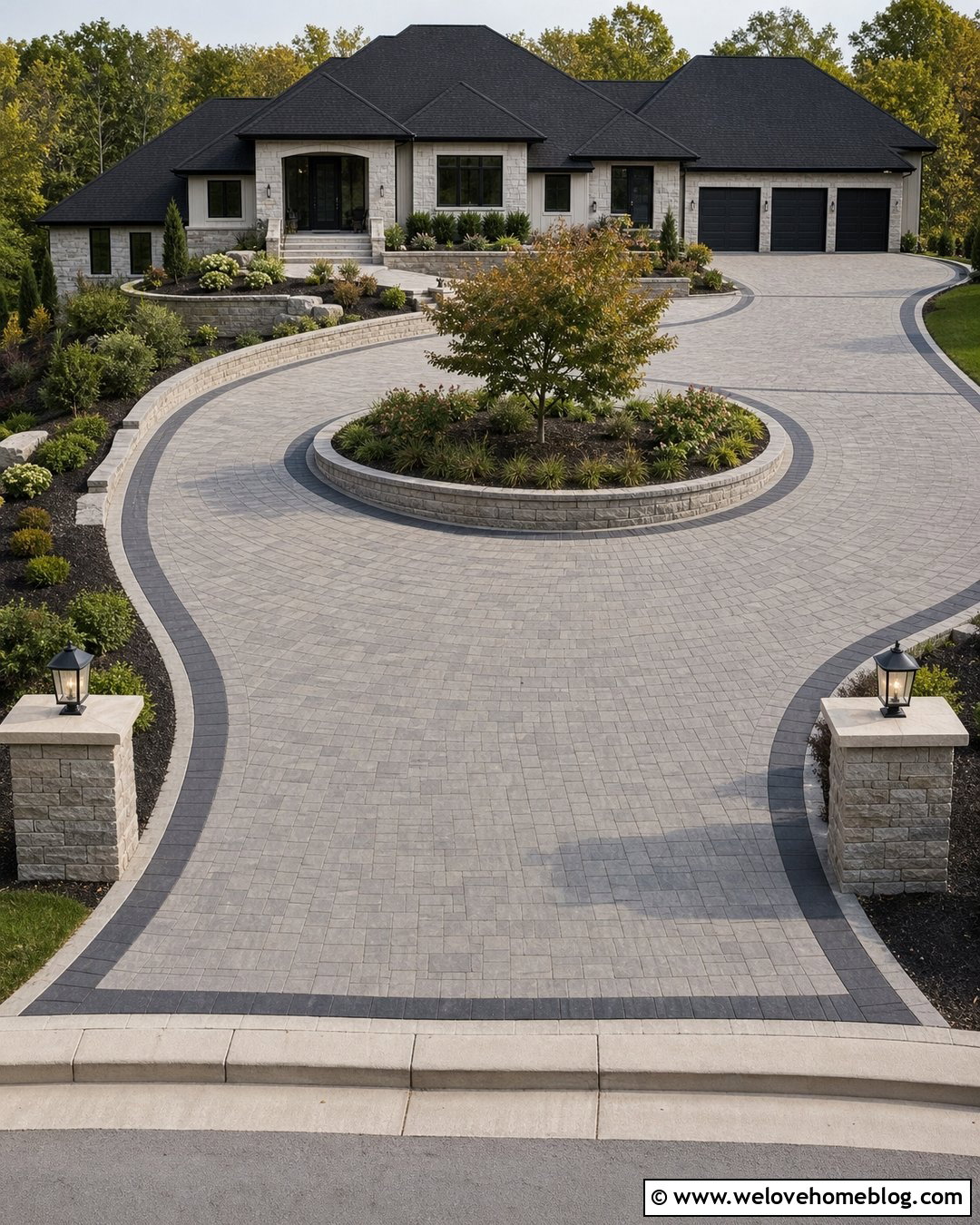
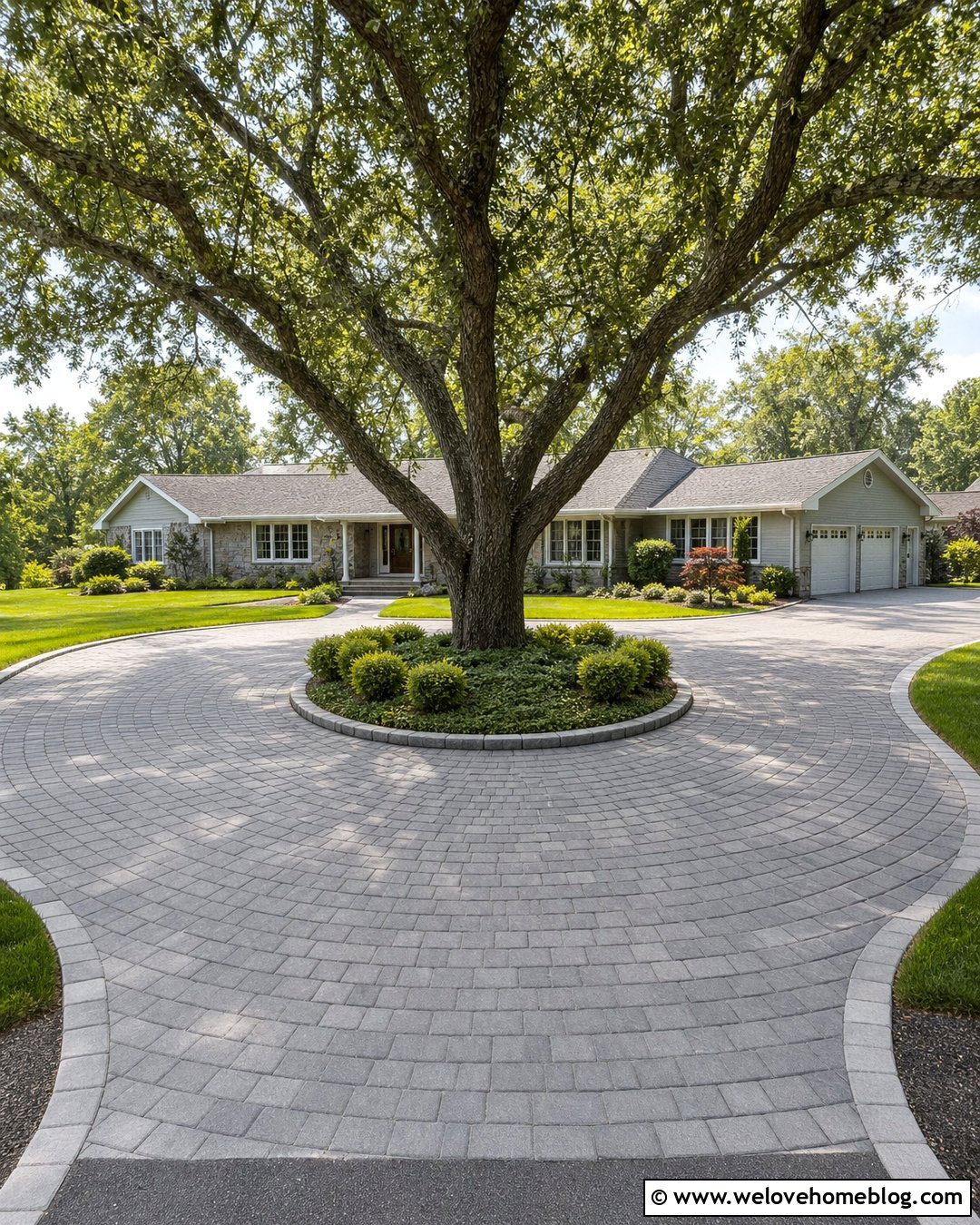
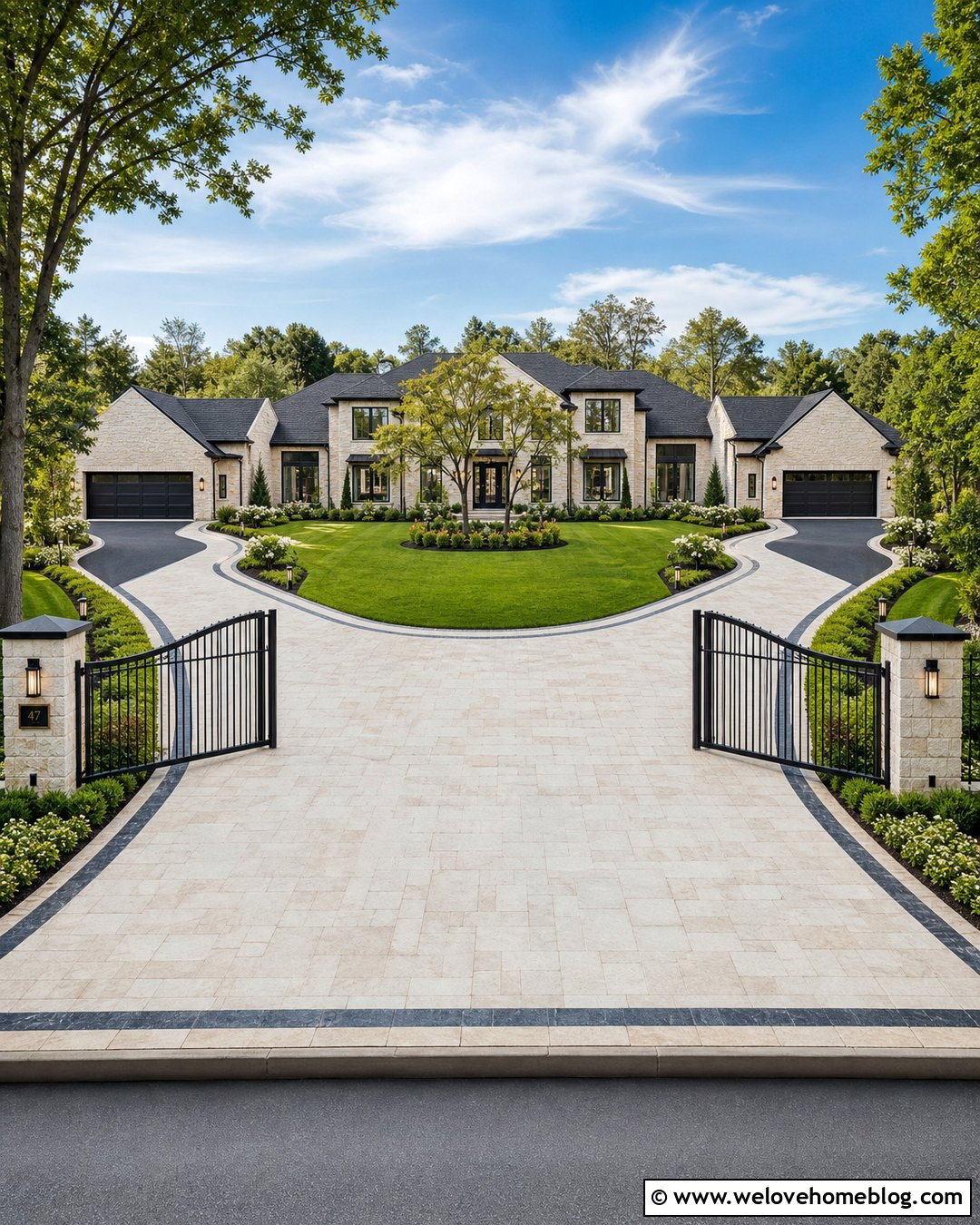
Where the property has enough frontage, a circular driveway can organize a sloped entrance while creating a strong focal point. Use warm-gray concrete pavers for the loop and place a raised, level planting island in the center. Curved segmental retaining walls can support the island and continue along the uphill side as wider garden terraces. Plant a small ornamental tree in the middle, surrounded by low shrubs and ground covers that preserve sightlines. A dark paver border should trace both edges of the circular route. Connect the upper section to a level garage apron without introducing a sharp grade change. Coordinated stone pillars at the two street entrances can complete the composition. Vehicle turning needs, emergency access, drainage, and available space should guide the loop’s final dimensions and alignment.
17. Split-Level Terraced Driveway With Parking Court
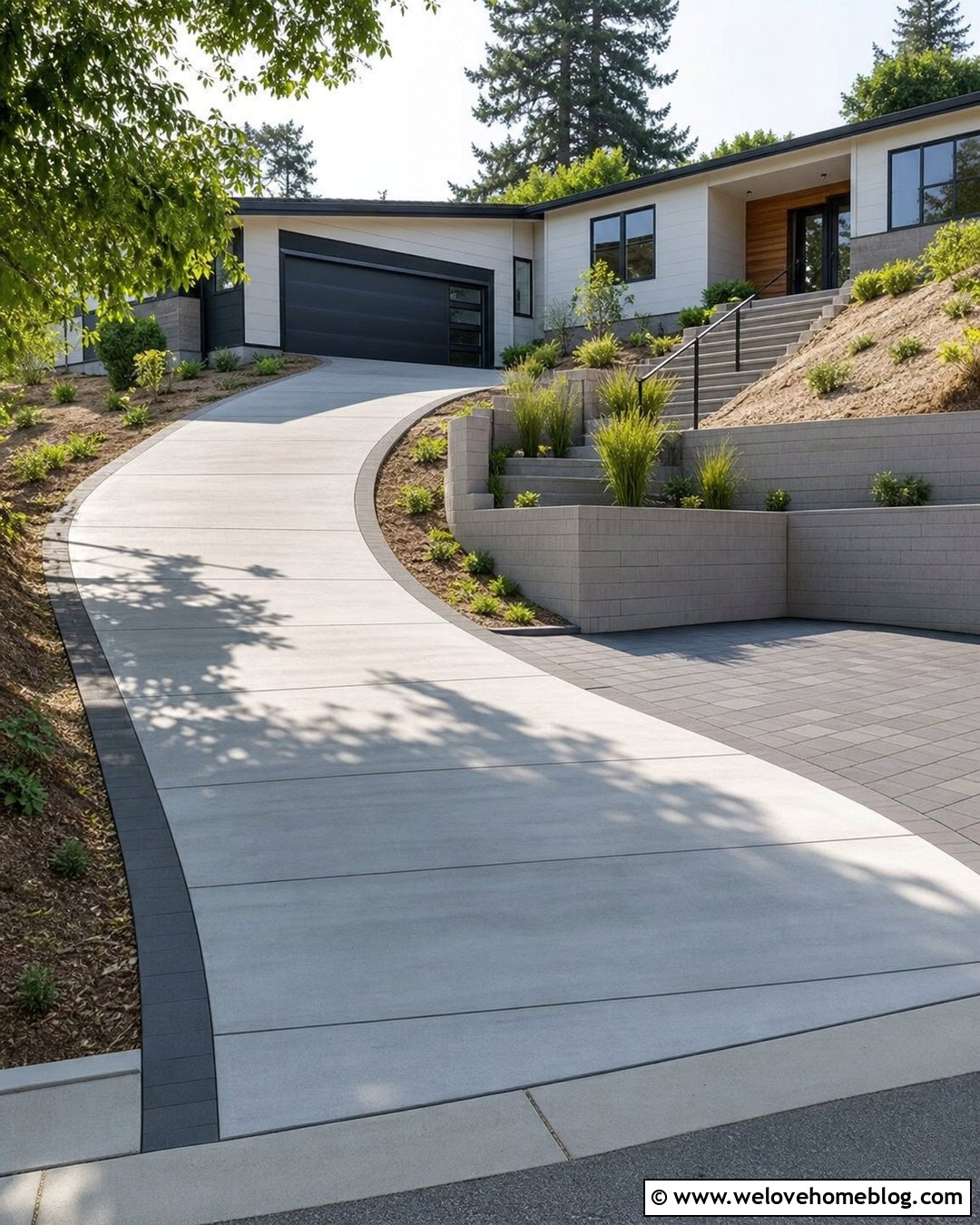
A split-level driveway can provide useful parking without turning the entire hillside into pavement. Start with a smooth broom-finished concrete approach, then widen one middle terrace into a paver parking court. Continue the main driveway toward the upper garage along a gradual curve. Low masonry retaining walls can define the parking level and support planted banks above and below it. Use a contrasting charcoal paver border around both surfaces to connect the different materials. Add compact shrubs and upright grasses where they will not interfere with reversing or sightlines. A separate stairway can link the parking terrace to the front door. The turning geometry, wall setbacks, protective barriers, and transition grades should be professionally planned so vehicles can enter, park, and leave comfortably on the multi-level layout.
18. Gabion Wall Terraced Driveway With Native Plants
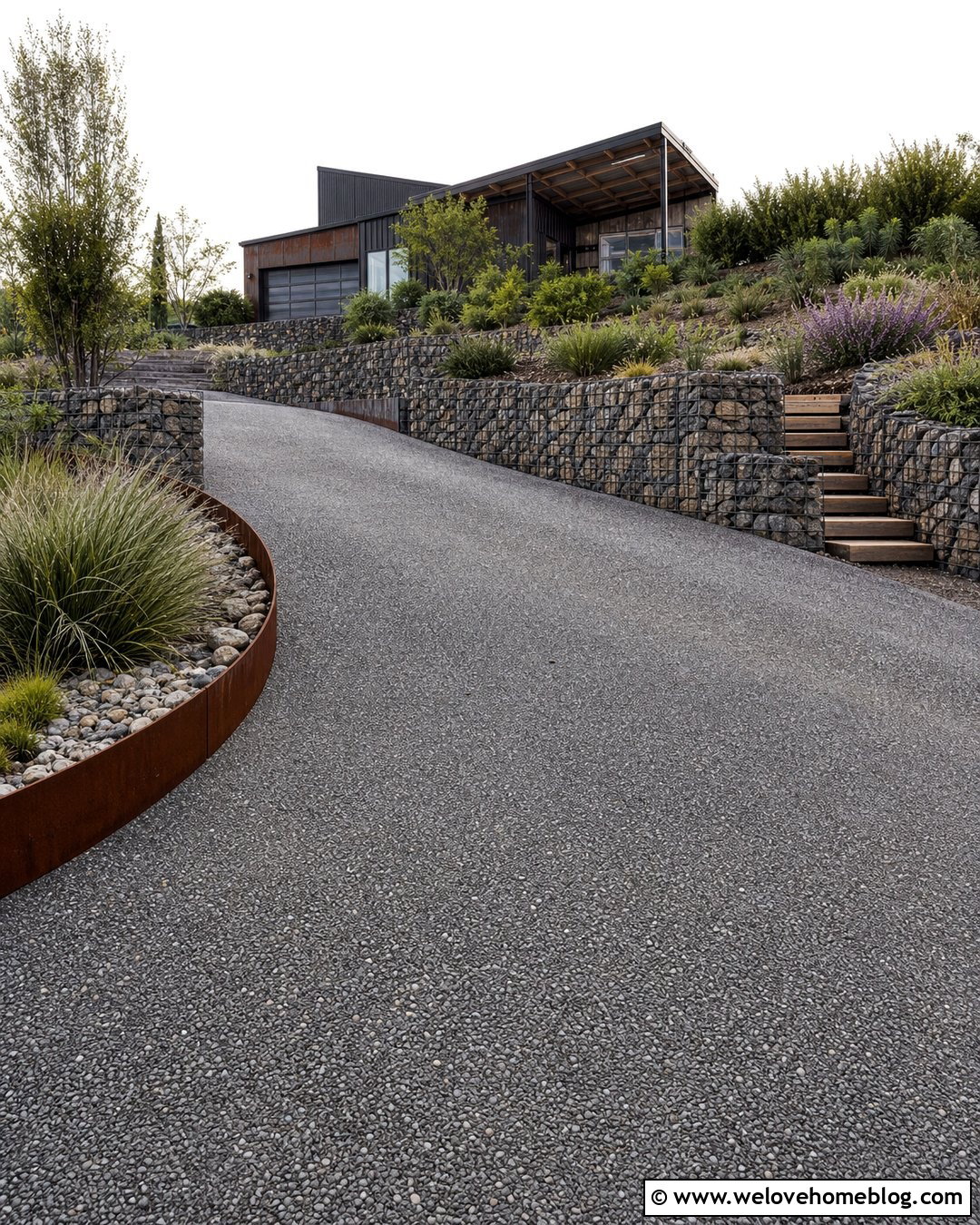
Gabion retaining walls give a terraced driveway a rugged, contemporary texture. Pair stone-filled steel cages with a dark exposed-aggregate concrete driveway that curves gently through the slope. Use two or three shorter gabion tiers instead of one visually dominant wall, provided the layout is structurally suitable. Fill the baskets with locally inspired stone in consistent gray, brown, or rust tones. Plant the terrace beds with native grasses, spreading shrubs, and deep-rooted flowering perennials selected for the soil and climate. A weathered steel edge can create a neat boundary along the driveway. Use timber or concrete steps for the pedestrian route, keeping them separate from vehicle movement. Gabion sizing, foundations, corrosion resistance, and slope loading require professional review when the walls support soil beside a driveway.
19. Xeriscape Terraced Driveway With Desert Stone Walls
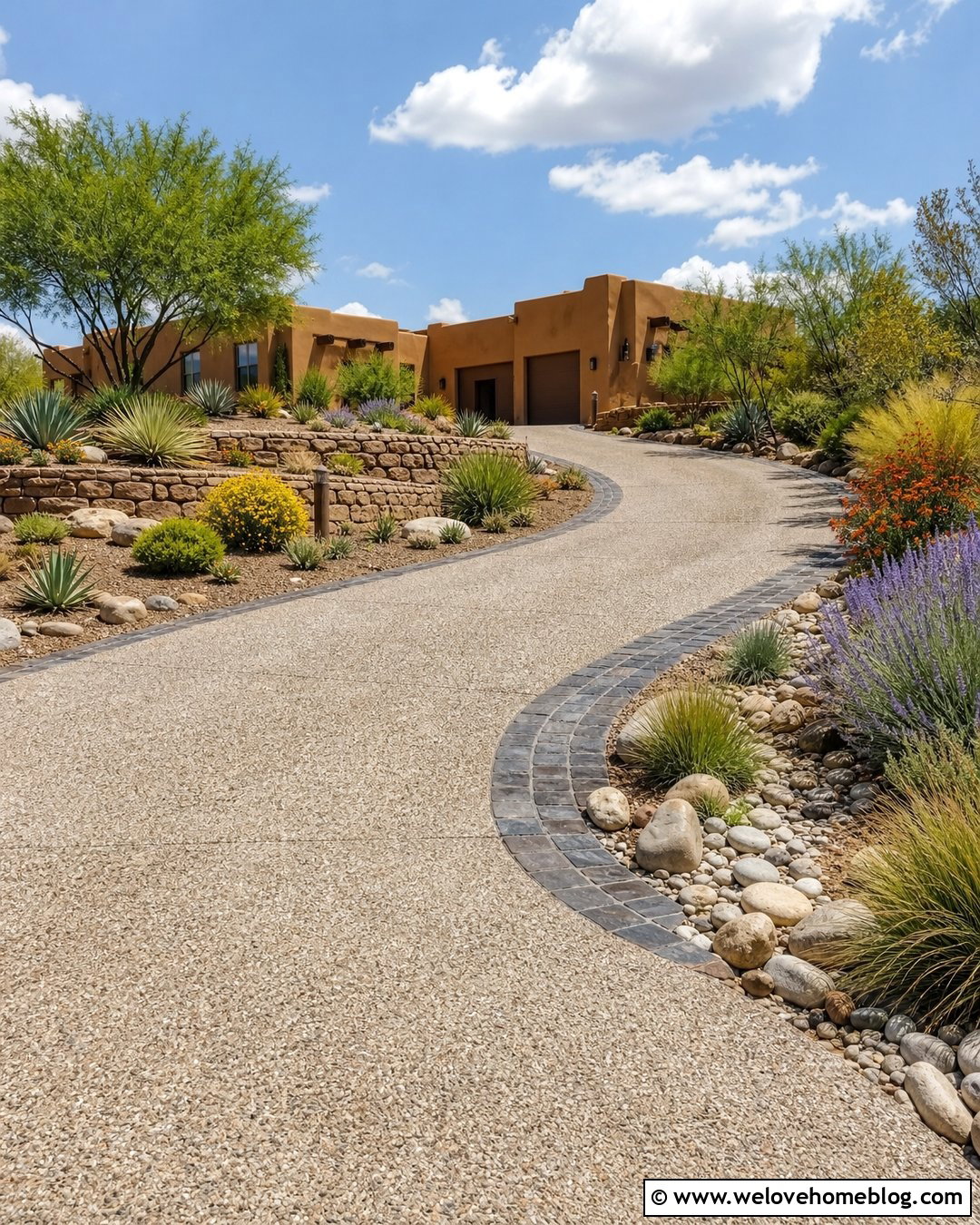
In a hot, dry landscape, terracing can support attractive planting without relying on a thirsty lawn. Use light beige concrete with an exposed salt-and-pepper aggregate finish for a gently curved driveway. Build low retaining walls from buff or rust-colored desert stone and create broad, gravel-mulched planting tiers. Combine agaves, yuccas, ornamental grasses, flowering perennials, and sculptural shrubs suited to local conditions. Arrange plants in repeating groups rather than scattering many unrelated varieties. A darker stone ribbon can border the driveway and define the transition into the gravel beds. Include shallow rock-lined swales only where they fit a professionally planned drainage route. This complete look complements Southwestern, adobe, and contemporary homes while reducing mowing on difficult slopes and keeping plants clear of vehicle sightlines.
20. Modern Terraced Driveway With Stepped Grass Strips
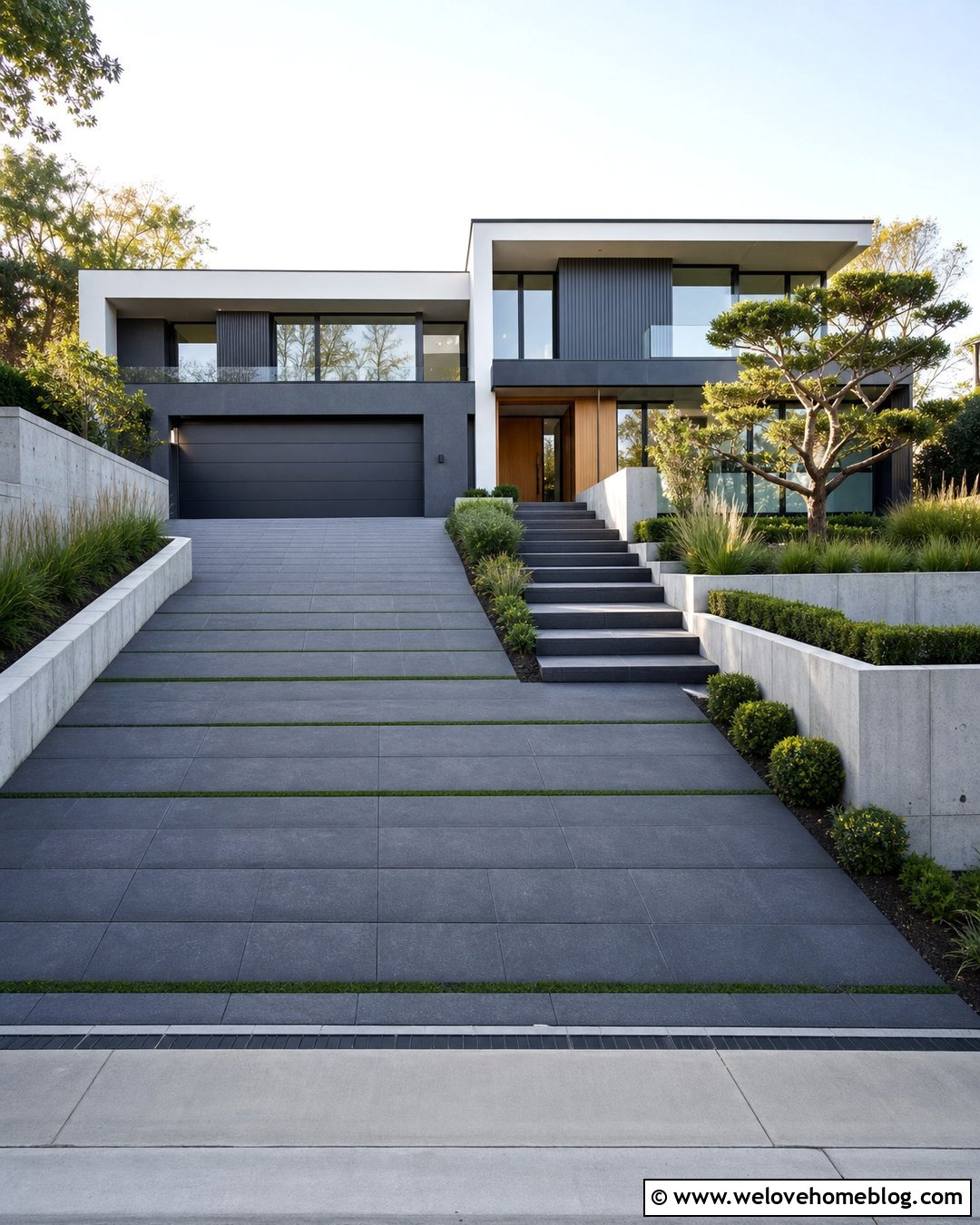
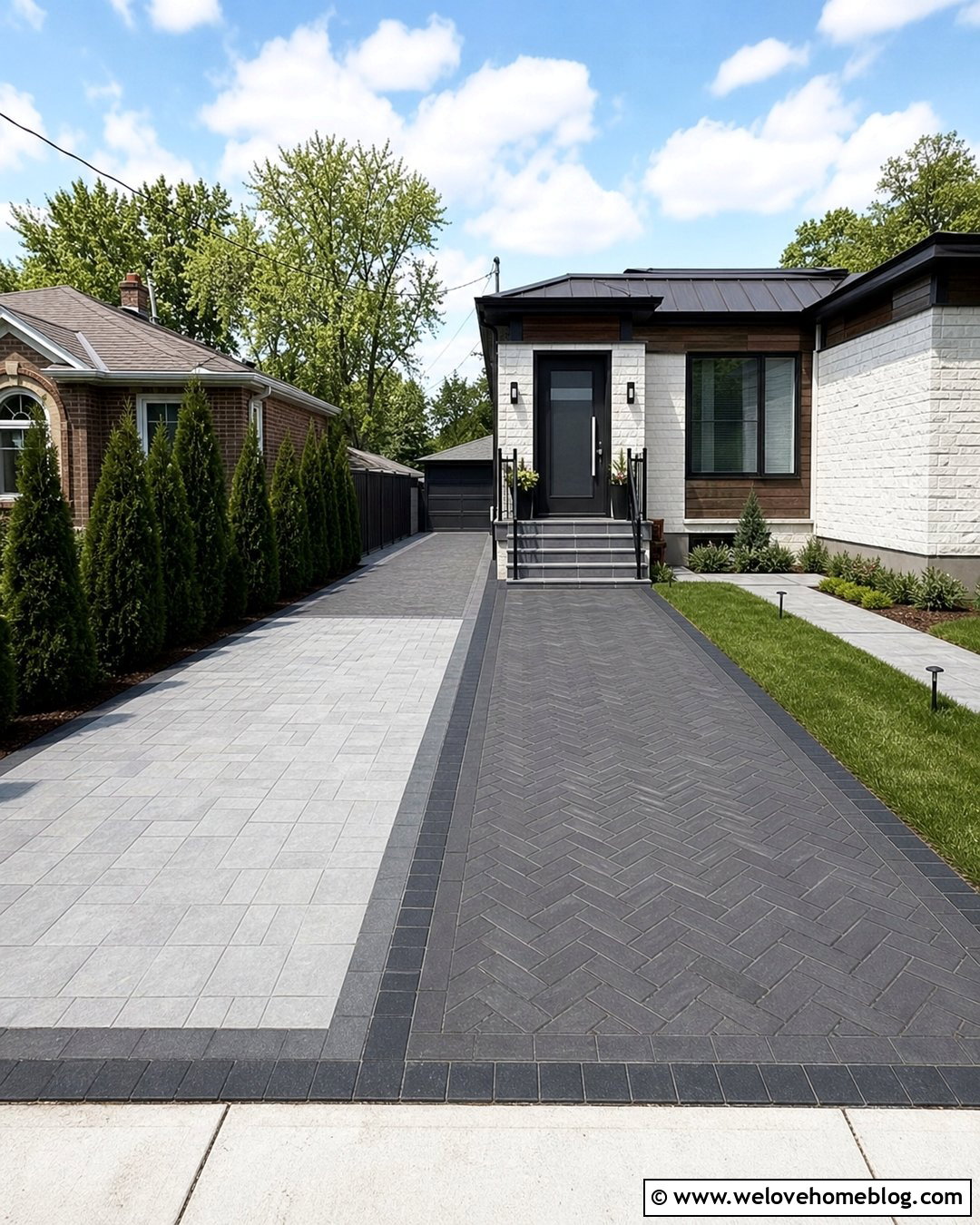
For a crisp but green entrance, pair large-format concrete pavers with stepped lawn and planting terraces. Use charcoal pavers in a straight or slightly angled driveway leading to a modern house. Narrow grass strips between selected paver bands can visually soften the surface where climate and maintenance conditions make them practical. On the uphill side, smooth concrete retaining walls should form long, shallow tiers planted with clipped shrubs, grasses, and one sculptural tree. Repeat the paver color in the walkway and entrance steps. Linear drainage channels can align with the geometric joints rather than looking like later additions. Keep wall tops, planting lines, and façade details carefully coordinated. The result should feel precise and spacious, with every terrace supporting the modern architecture rather than competing with it.
Conclusion:
The most successful terraced driveway combines a comfortable vehicle route with stable retaining structures, effective drainage, practical walking access, and landscaping that suits the property. Materials should complement the house while providing appropriate traction and durability for the local climate. Multiple planted levels can soften large grade changes, control the visual scale of retaining walls, and turn an awkward slope into memorable curb appeal. However, walls supporting a driveway, challenging soils, and significant elevation changes should always be evaluated by qualified local professionals. Use these 20 Terraced Driveways Ideas as inspiration, then adapt the surface, layout, planting, and retaining system to your site, maintenance preferences, budget, and applicable construction requirements.

Related posts:
Leave a Reply