
A well-planned terrace driveway turns a sloped front yard into an organized, attractive entrance. Instead of allowing one steep bank to dominate the property, the design uses retaining walls, stepped planting beds, and level transitions to connect the street with the house. These layers can reduce the visual weight of a long driveway while creating useful spaces for shrubs, flowers, lighting, and walkways. Materials such as concrete, gravel, brick, stone, asphalt, and permeable pavers can all work when they complement the home and terrain. Drainage and structural planning are especially important, since water and soil pressure affect every level. Explore these complete, practical, and stylish **20 terrace driveway ideas**.

1. Natural Stone Terrace Driveway
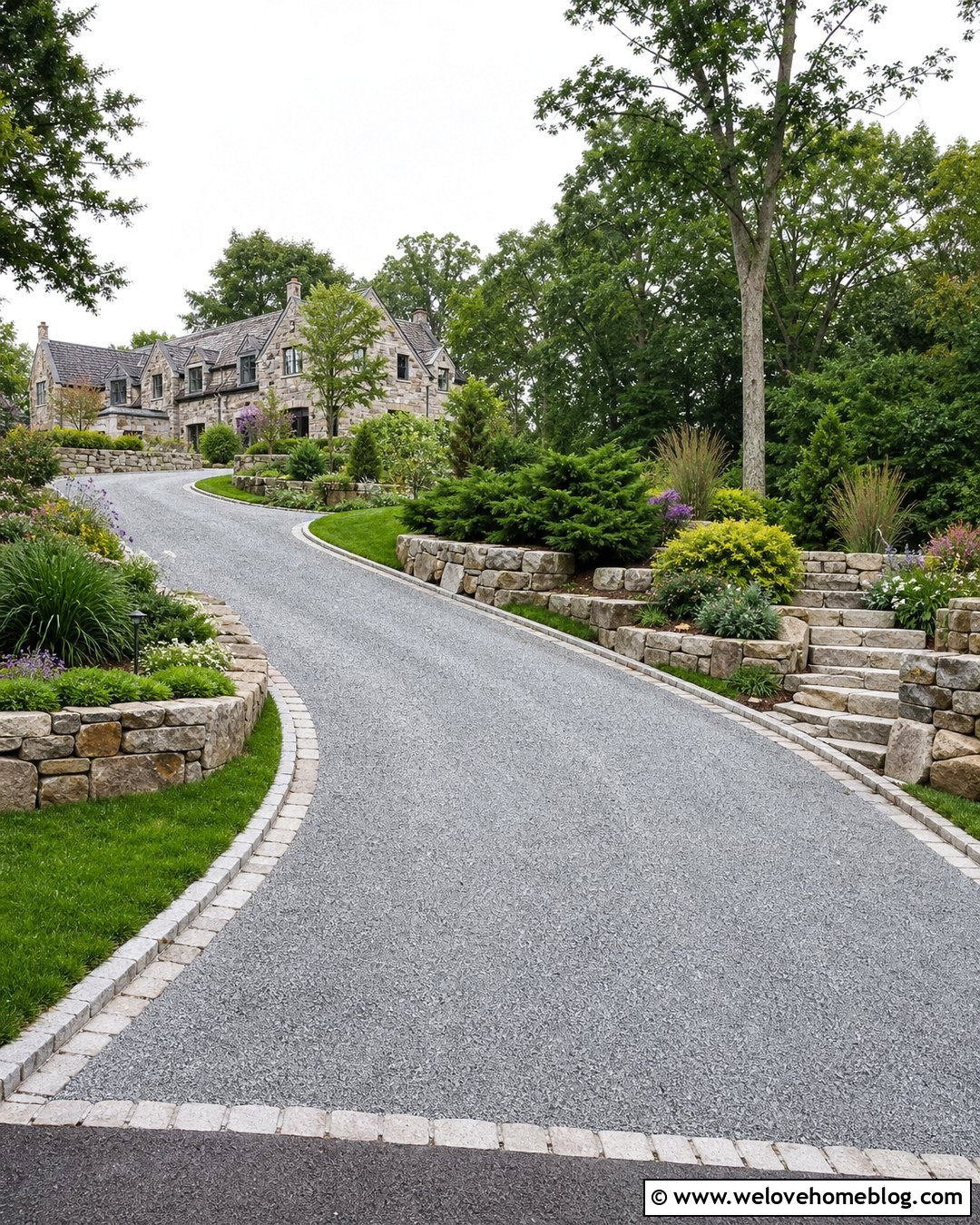
A natural stone terrace driveway feels settled into the landscape rather than imposed on it. Start with a gently curved gray gravel surface that follows the slope toward the house. Build several low retaining walls from locally sourced fieldstone instead of using one tall wall. This makes the elevation change appear softer and provides planting pockets between levels. Fill those beds with spreading juniper, ornamental grasses, flowering perennials, and a few compact evergreen shrubs. A cobblestone edge can keep loose gravel from migrating into the gardens. Add broad stone steps beside the driveway to create a separate pedestrian route. For a cohesive result, repeat the wall stone around the entrance, mailbox, or porch foundation.
2. Modern Concrete Terrace Driveway
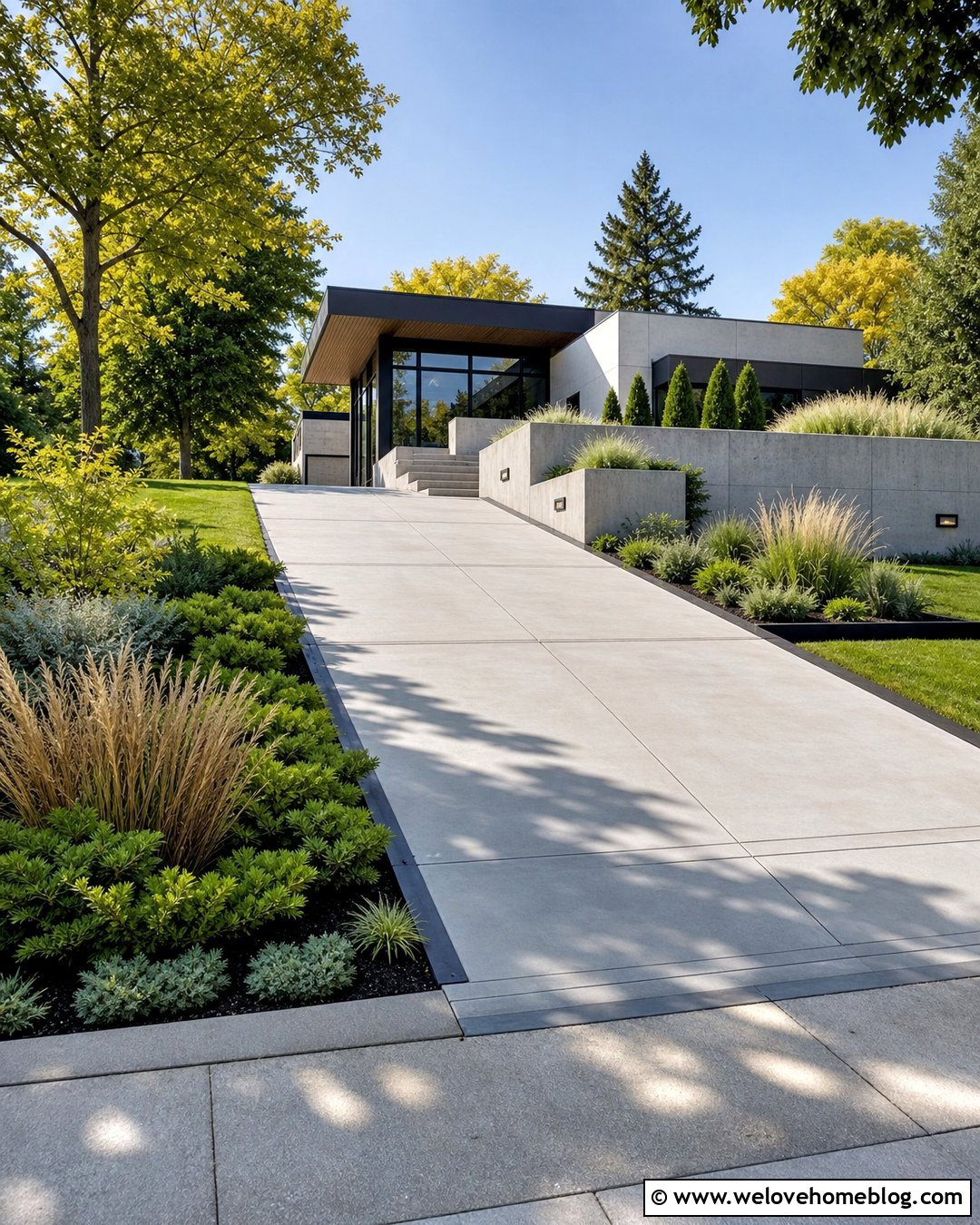
Clean horizontal lines can make a steep property look calm and carefully organized. Use light gray poured concrete for a straight driveway leading to a modern home. Along one side, install tiered retaining walls made from smooth architectural concrete. Keep each wall relatively low and offset the levels to create wide planting beds. Masses of feather reed grass, dwarf evergreens, and low ground covers will soften the concrete without hiding its crisp geometry. Narrow black metal edging can define the lawn on the opposite side. Consider large rectangular steps for the walkway and simple square lights built into the terrace walls. Matching materials across the driveway, stairs, and retaining walls creates a balanced contemporary entrance.
3. Brick Terrace Driveway
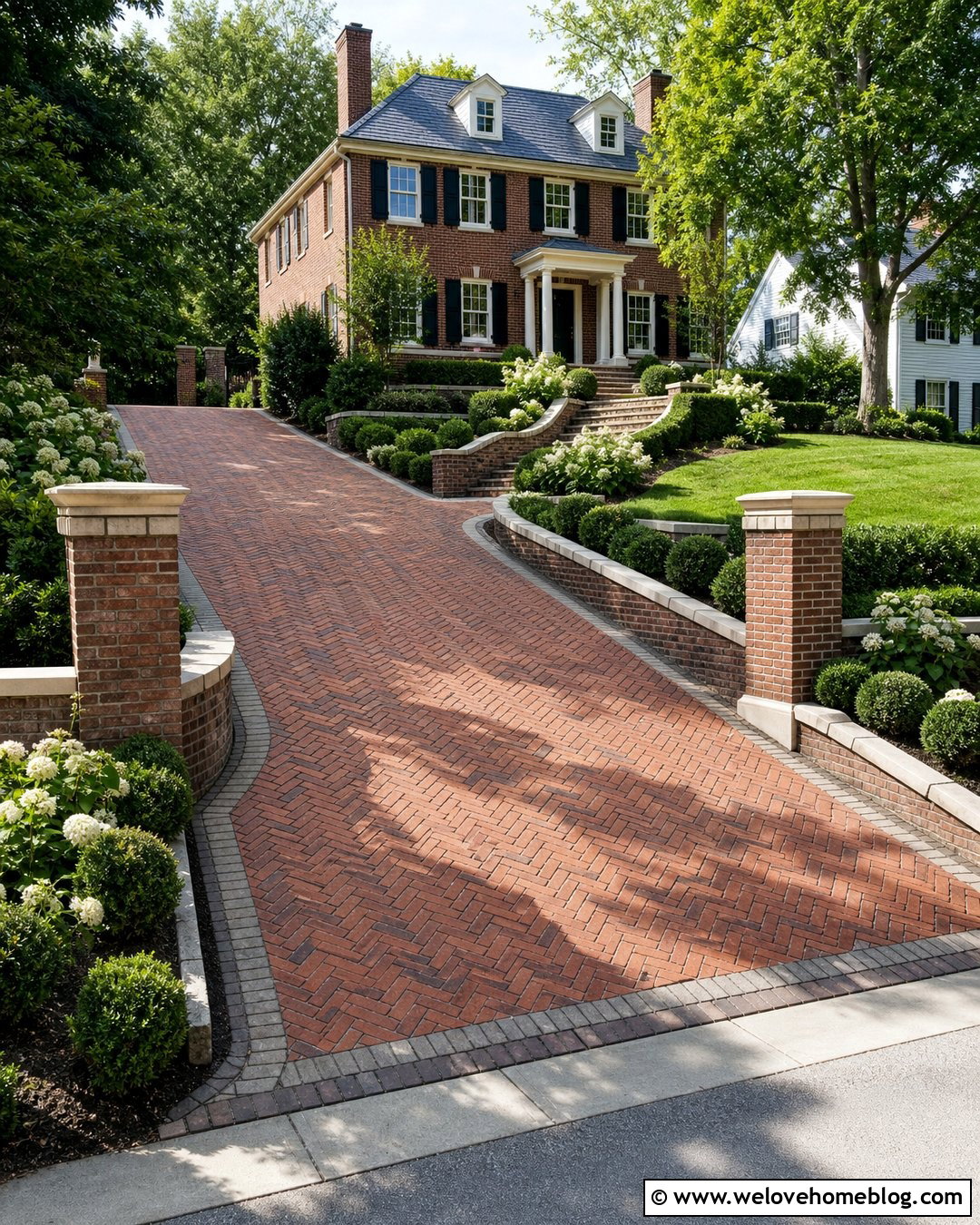
Warm brick adds character to a terraced entrance, especially near a Colonial, Georgian, or traditional brick house. Lay clay brick pavers in a herringbone pattern to improve visual movement along the sloping driveway. Frame the surface with a straight soldier-course border in a slightly darker color. Low brick retaining walls can rise beside the driveway in two or three tiers, creating formal beds for boxwood, hydrangeas, and seasonal flowers. Cap the walls with smooth limestone for a polished finish. A brick walkway with shallow steps should run through the planted terraces toward the front door. Use matching brick pillars at the curb so the complete design feels connected from the street to the house.
4. Gravel Terrace Driveway
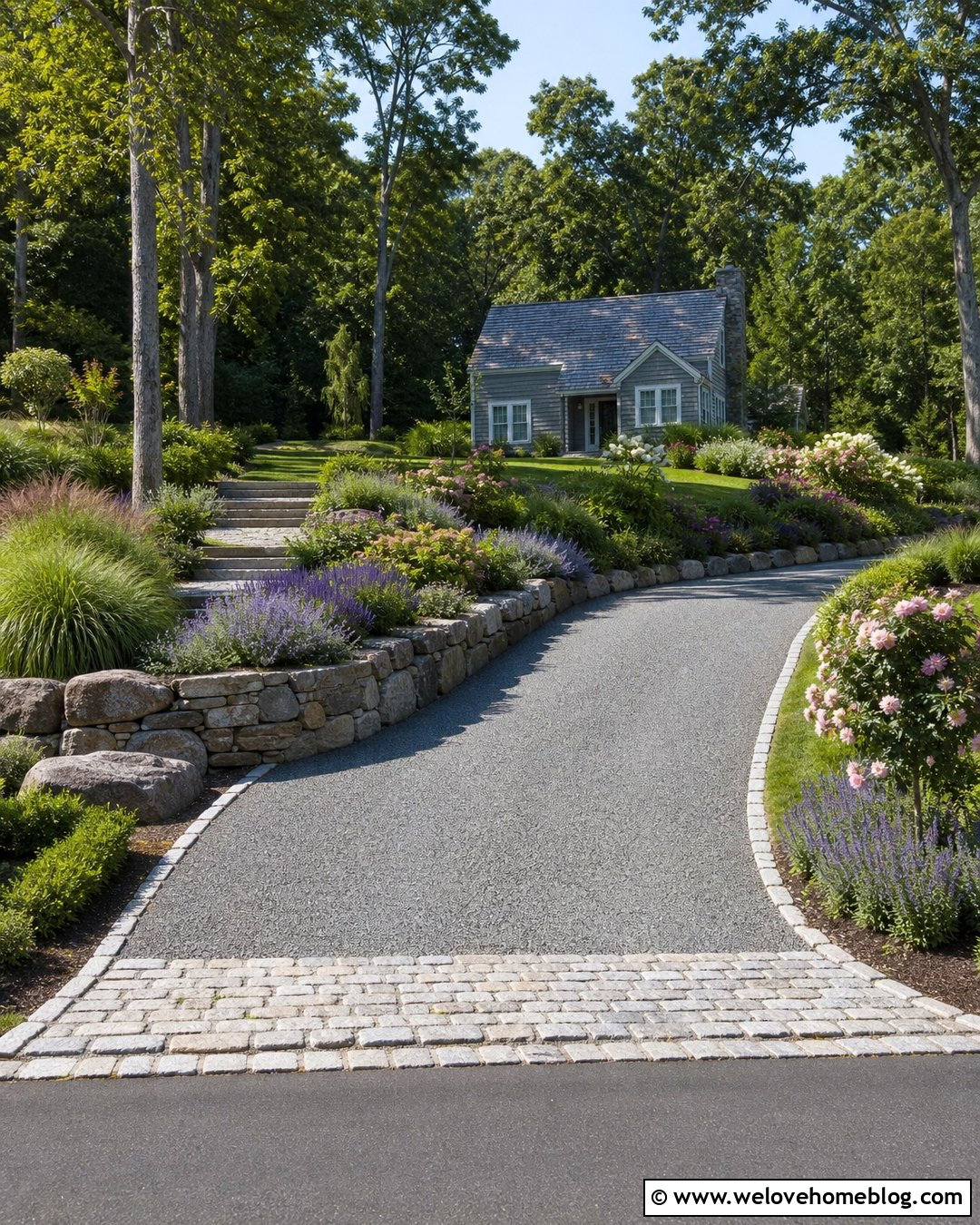
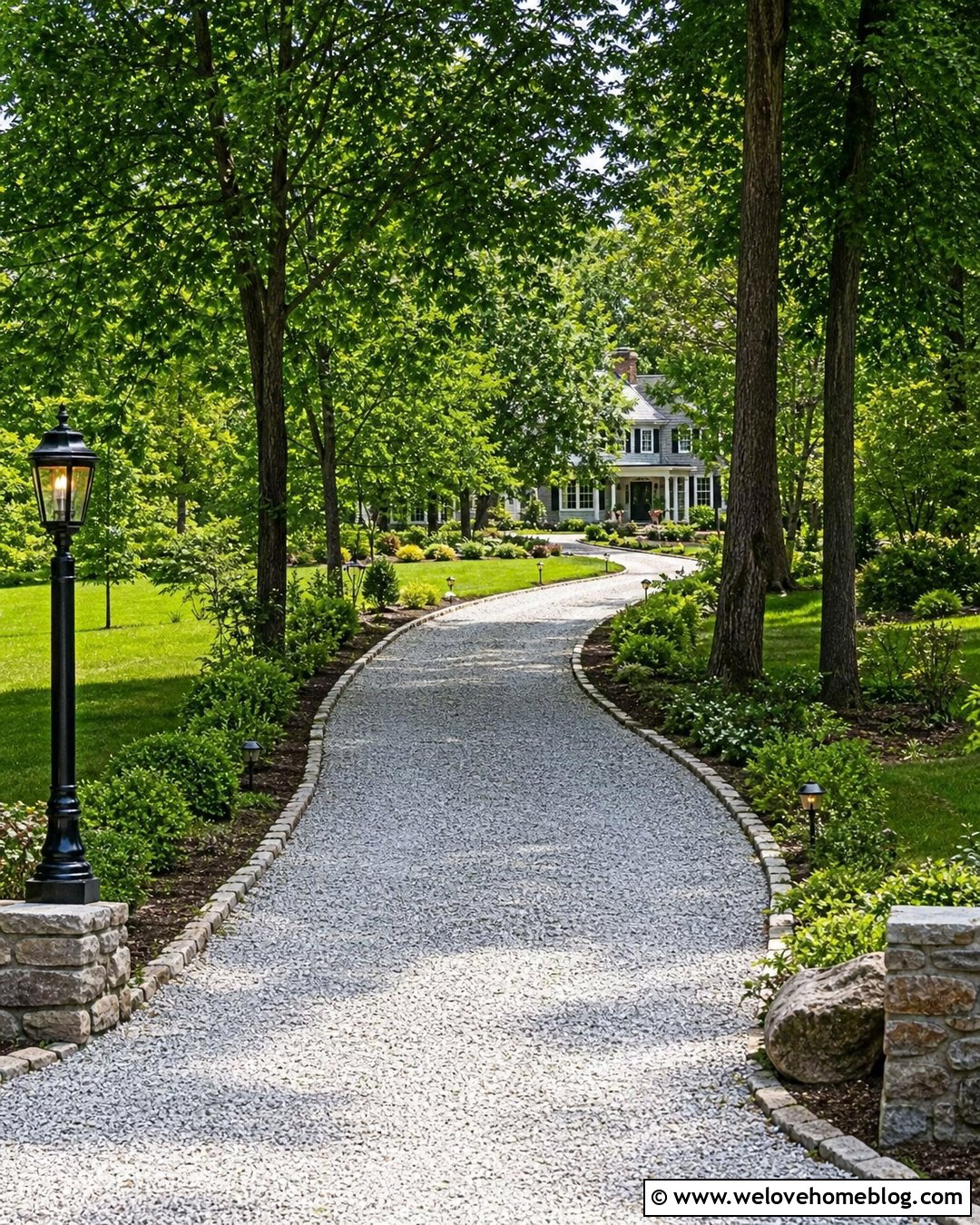
The gentle crunch and relaxed texture of gravel suit a country or cottage property. Choose compacted angular gray gravel rather than loose round stones for a more stable driving surface. Shape the driveway into a broad curve that climbs gradually toward the garage. On the uphill side, use stacked stone walls to form planted terraces filled with lavender, catmint, roses, and drought-tolerant grasses. A cobblestone apron at the street can create a strong transition and help contain the gravel. Steel or stone edging should define the outer curve. Place a stepping-stone path above the lowest terrace so visitors do not need to walk in the driveway. The result feels informal while remaining orderly and functional.
5. Paver Terrace Driveway
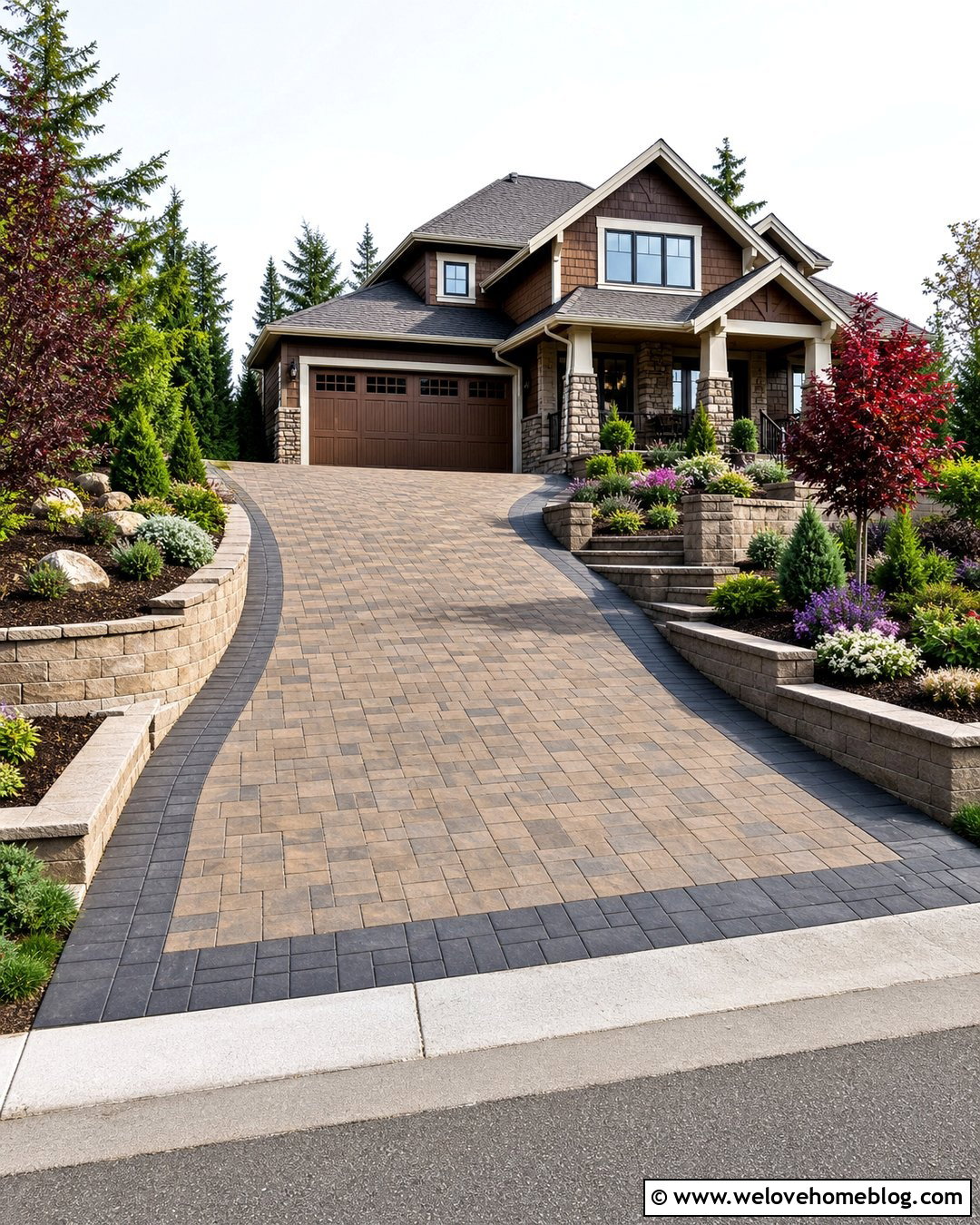
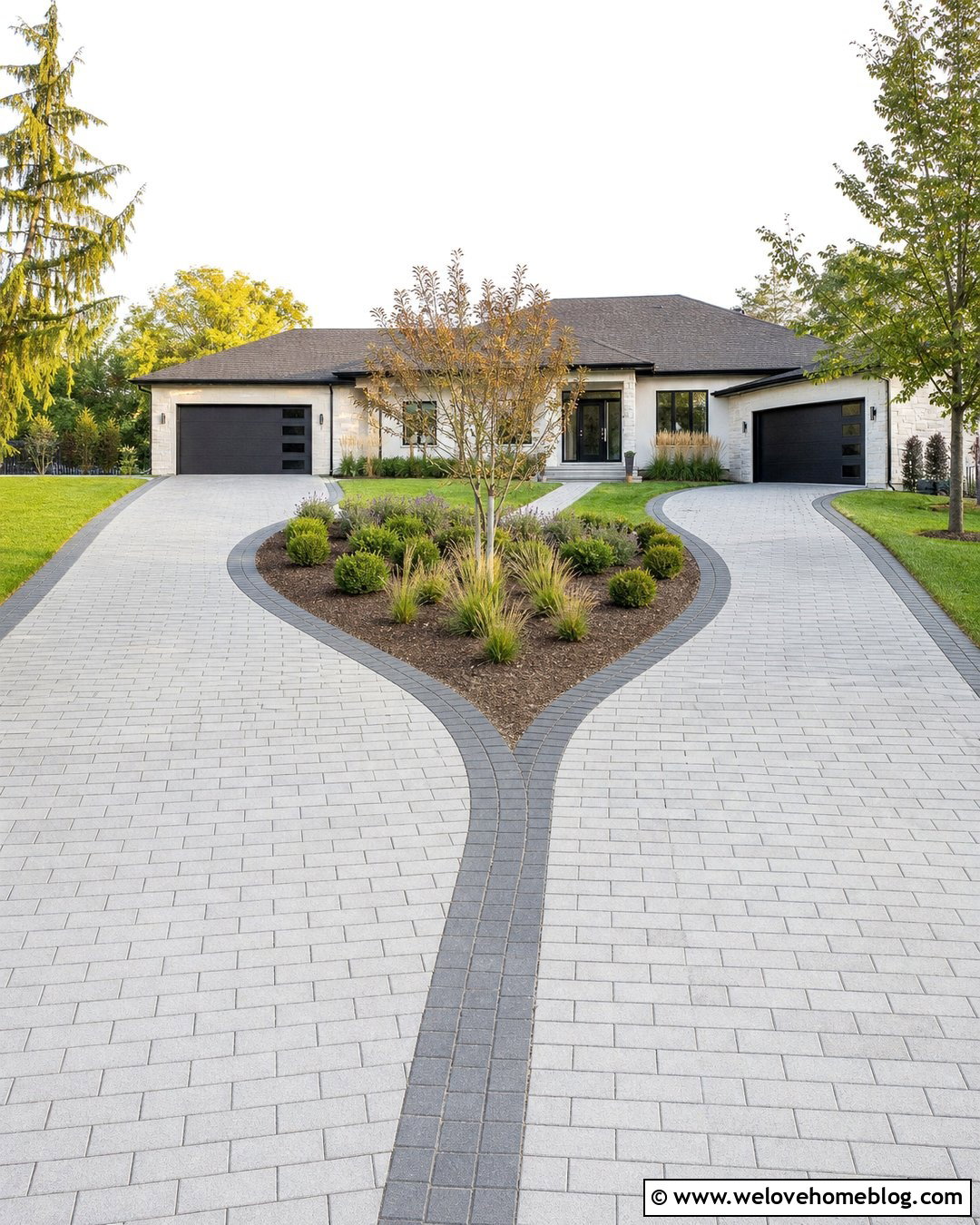
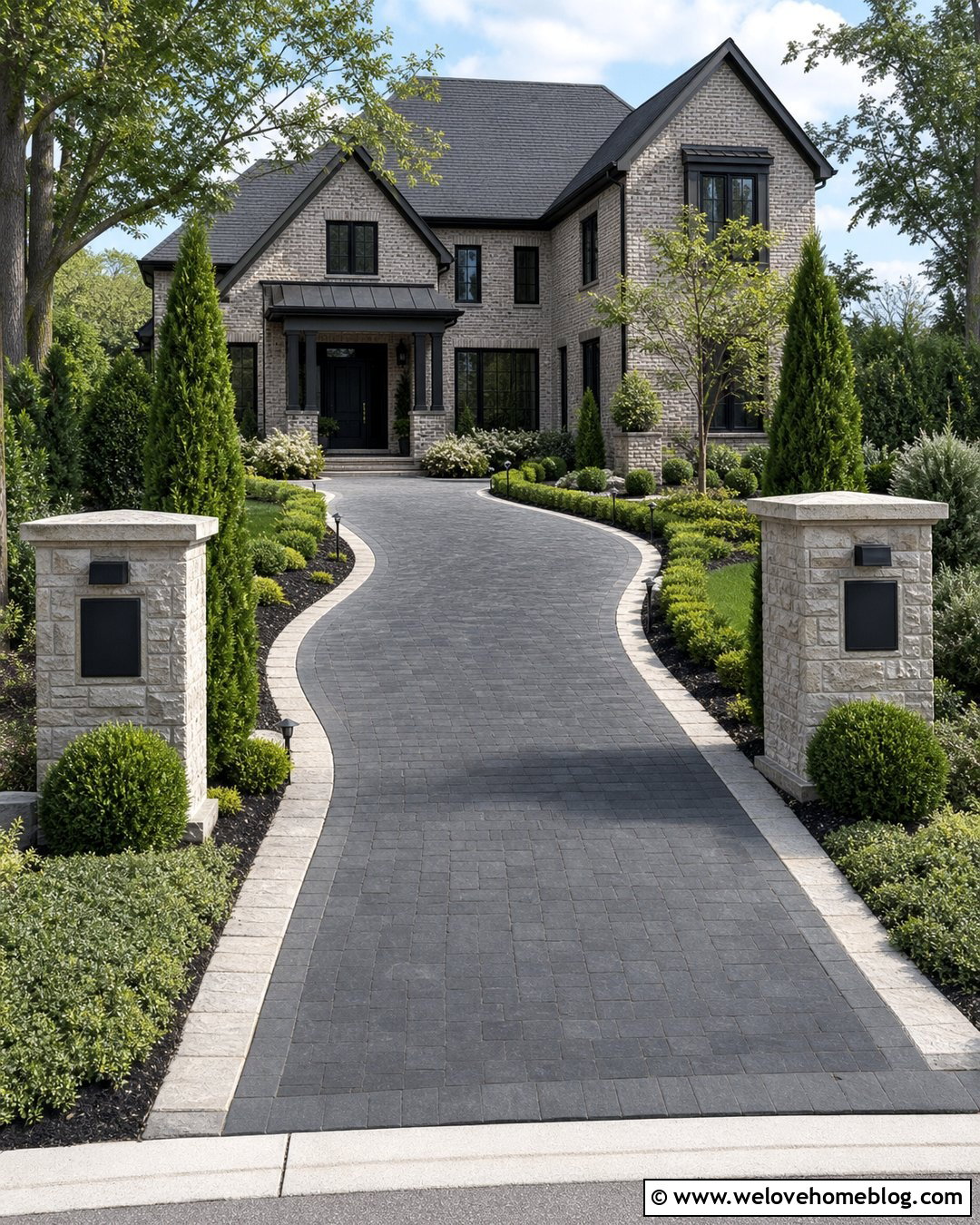
An interlocking paver terrace driveway offers pattern, color, and clear visual structure. Select tan and charcoal concrete pavers that echo the roof, siding, or masonry on the house. Arrange the main field in a running-bond pattern, then add a dark border along both edges. On a sloped lot, segmental retaining-wall blocks can create staggered terraces beside the drive. Plant each level with a simple mix of evergreen shrubs, flowering ground covers, and one small ornamental tree. Continue the driveway pavers into the walkway, but change the laying pattern to distinguish pedestrian space. Because herringbone and other interlocking arrangements can add stability, they are practical choices where the surface experiences frequent vehicle movement. ()
6. Curved Terrace Driveway
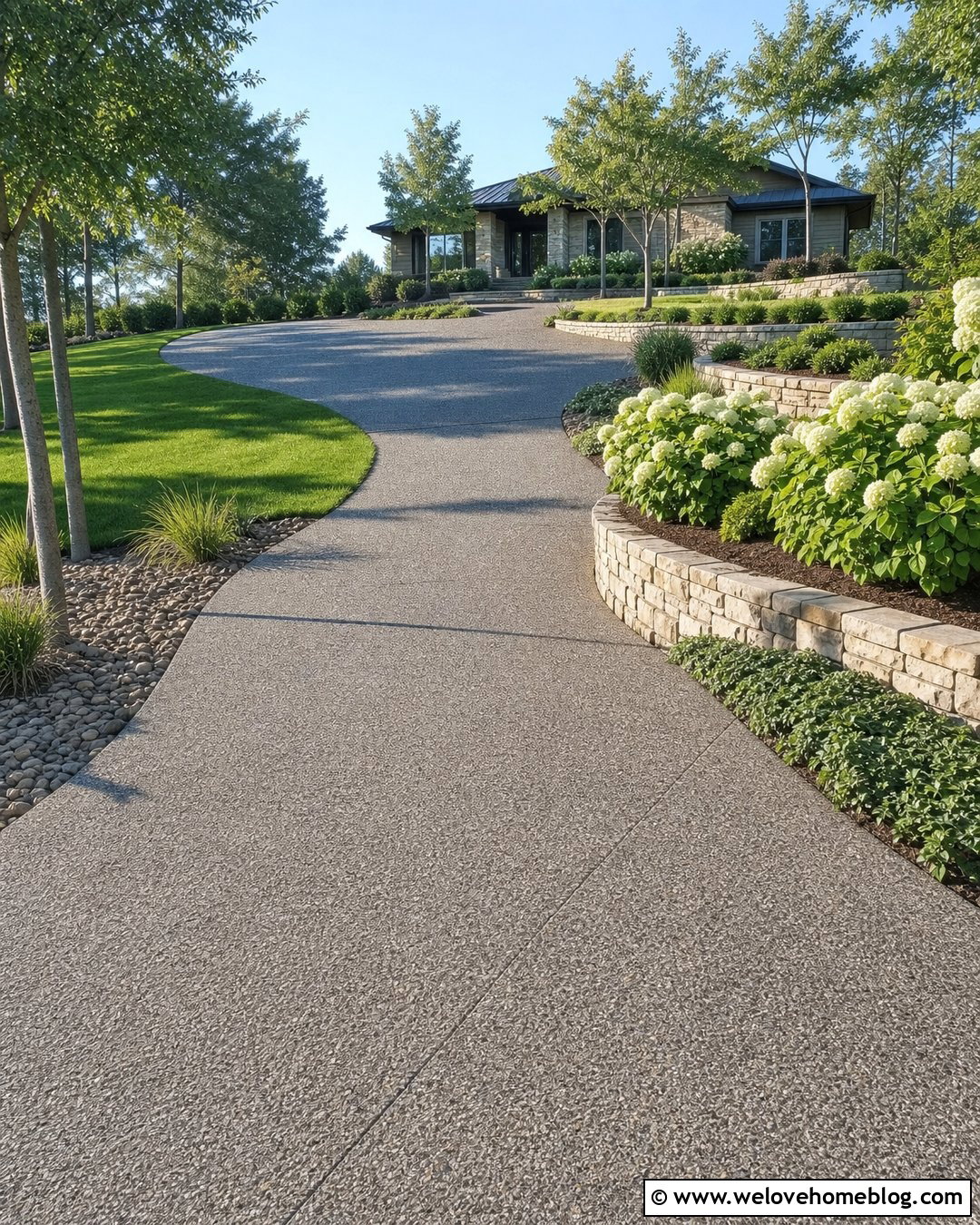
A curved terrace driveway can make a steep approach feel less abrupt while revealing the house gradually. Use exposed aggregate concrete in a warm gray tone and follow the natural contours of the yard. Place terraced planting beds along the inside of the curve, where they will become the main focal point from the street. Low natural stone walls can support layers of hydrangeas, ornamental grasses, and spreading ground covers. Along the outside edge, maintain a simple lawn border with evenly spaced shade trees. Include a paved pull-off or wider turning area near the garage. Soft landscape lighting at each retaining-wall level will improve visibility without crowding the design with tall fixtures.
7. Circular Terrace Driveway
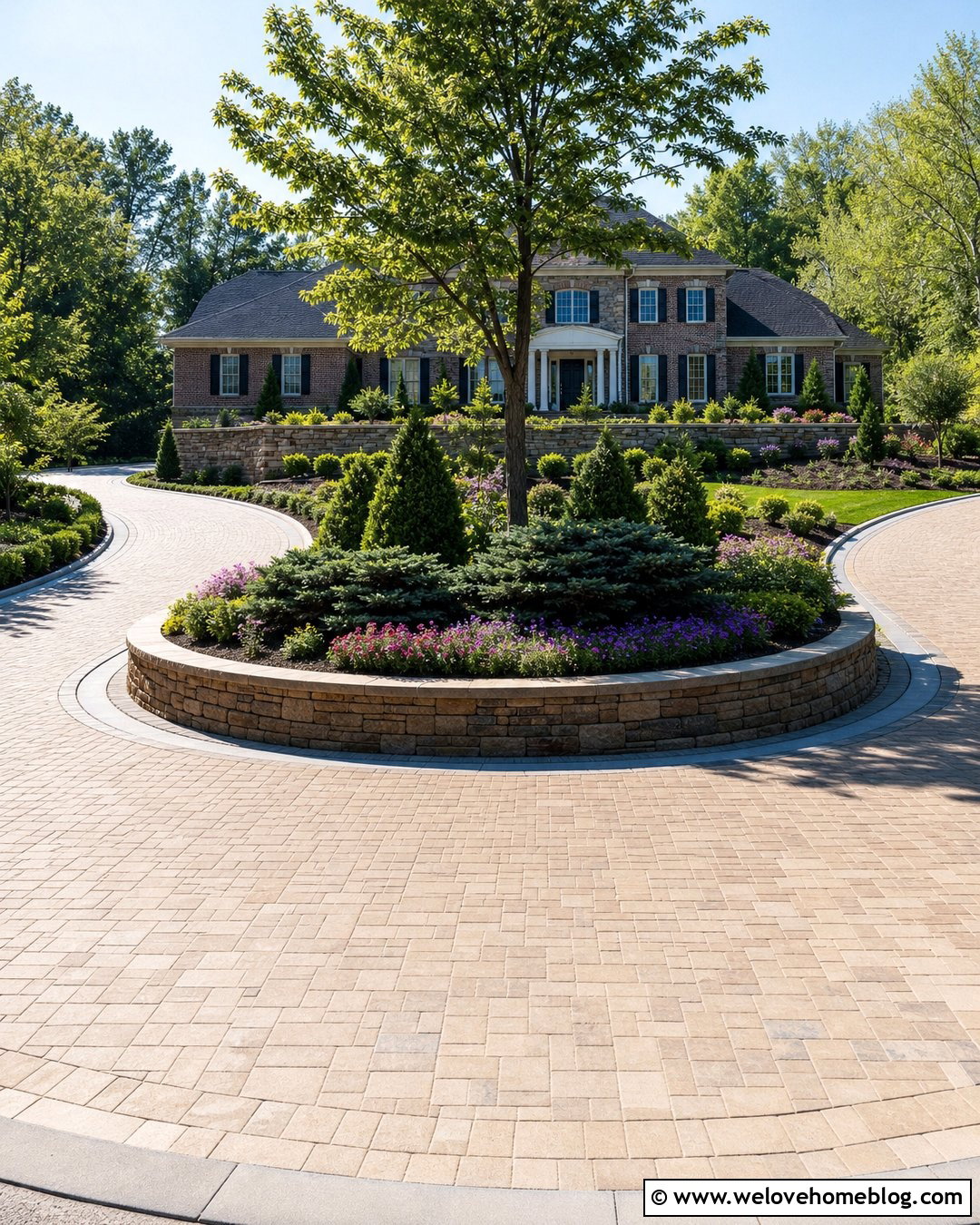
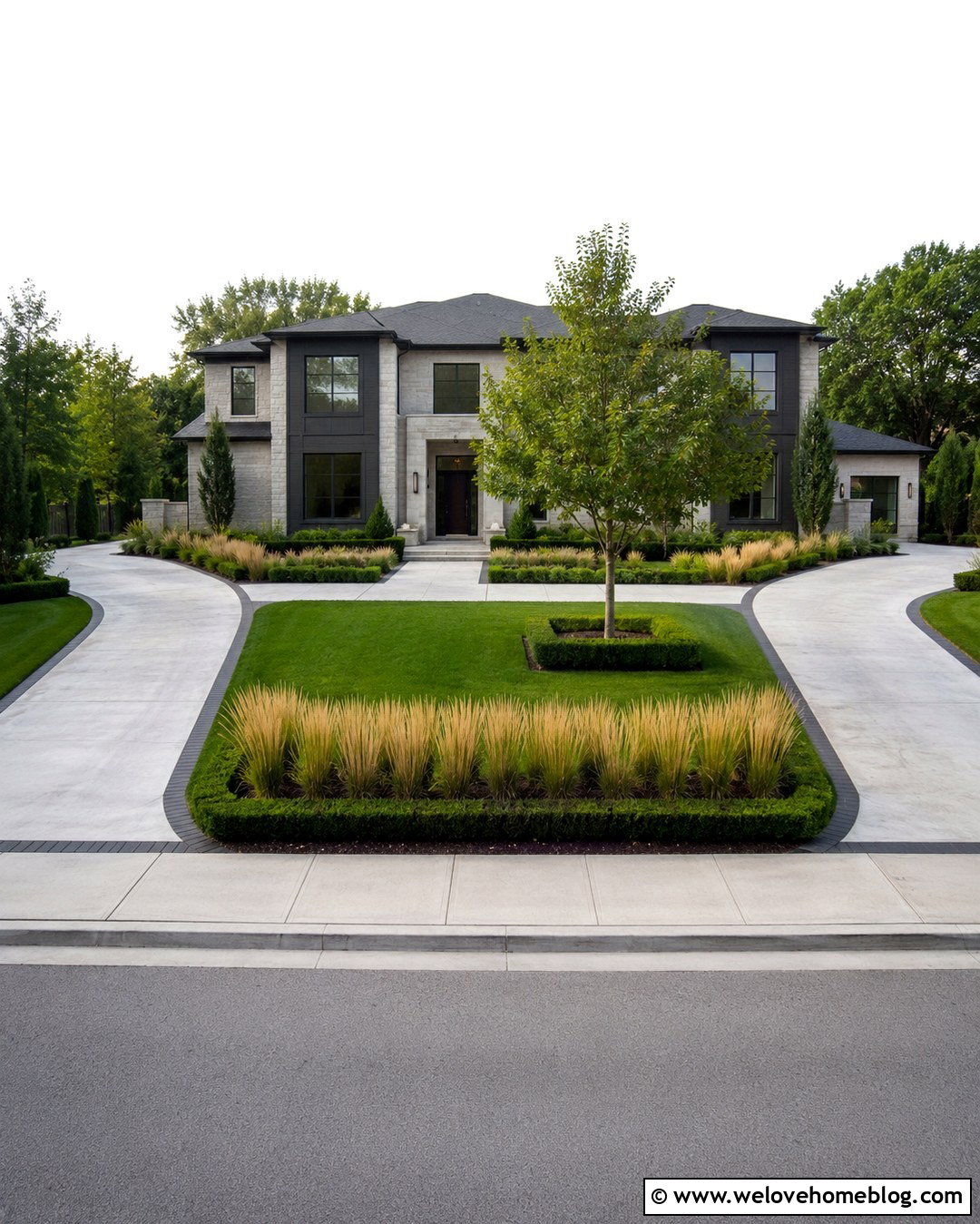
A circular terrace driveway works well on a wide sloping property where convenient entry and exit points are priorities. Create the loop with warm beige concrete pavers and place a raised landscaped island in the center. The island can form the first terrace, using a low stone wall around a specimen tree, evergreen shrubs, and colorful perennials. Add two more terraced beds along the higher side of the circle to connect the driveway with the elevated house. Curved retaining walls should mirror the driveway’s shape for a unified appearance. Make sure plantings near both street openings stay low enough to preserve clear views. Circular layouts can also provide a natural location for a central garden feature. ()
8. Timber Wall Terrace Driveway
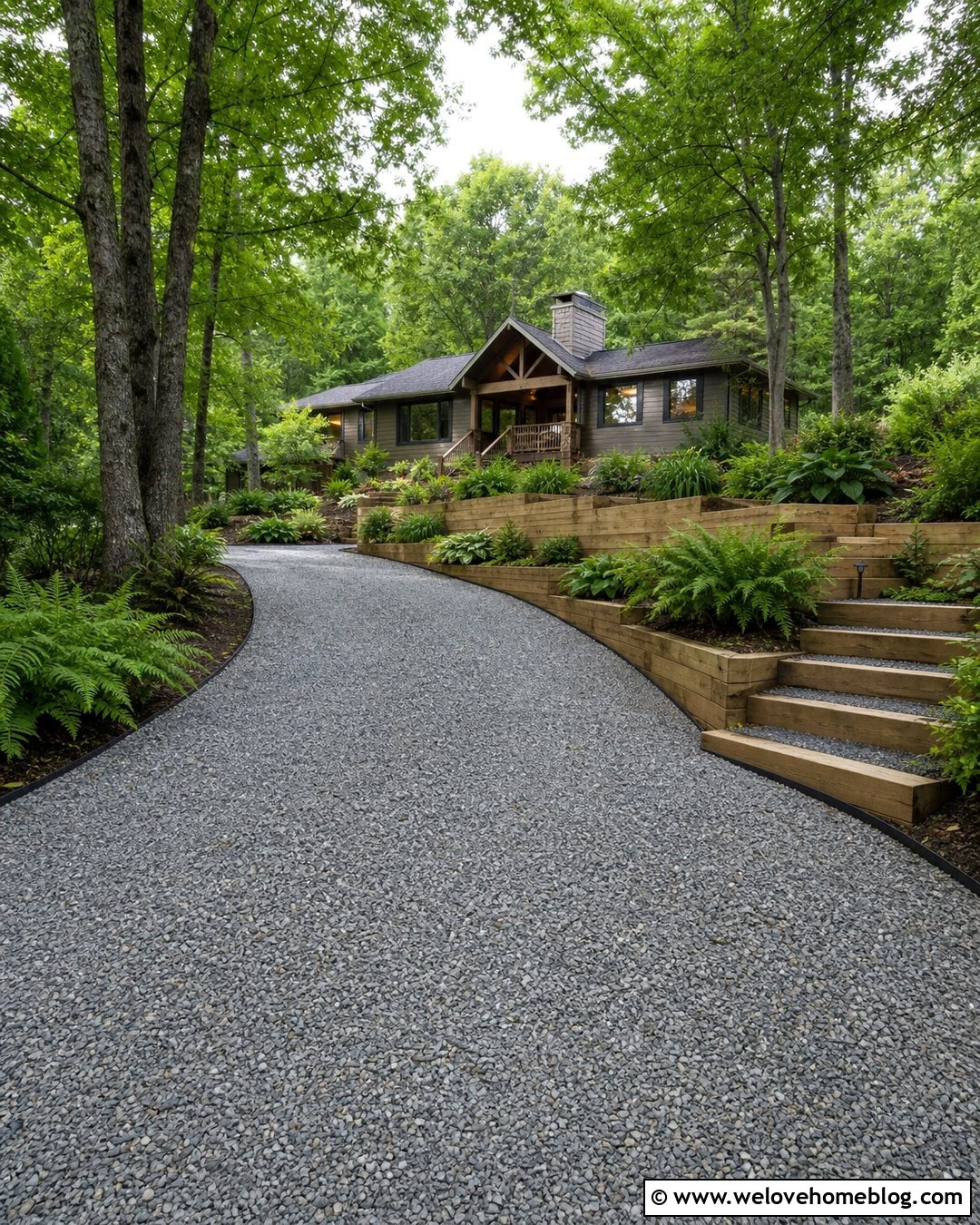
Timber retaining walls bring warmth to a casual ranch, woodland home, or modern farmhouse. Pair them with a compacted crushed-stone driveway that curves gently through a tree-filled front yard. Use pressure-treated structural timbers to form broad, low terraces rather than narrow stacked ledges. Fill the levels with ferns, hostas, native grasses, and shade-tolerant shrubs that suit the wooded setting. A dark steel edge along the driveway will provide a clean transition between stone and planting beds. Add timber-framed steps on one side, using gravel or concrete treads for dependable footing. Because retaining structures support significant soil loads, wall height, reinforcement, and drainage should be professionally evaluated, particularly on steep or unstable terrain.
9. Boulder Terrace Driveway
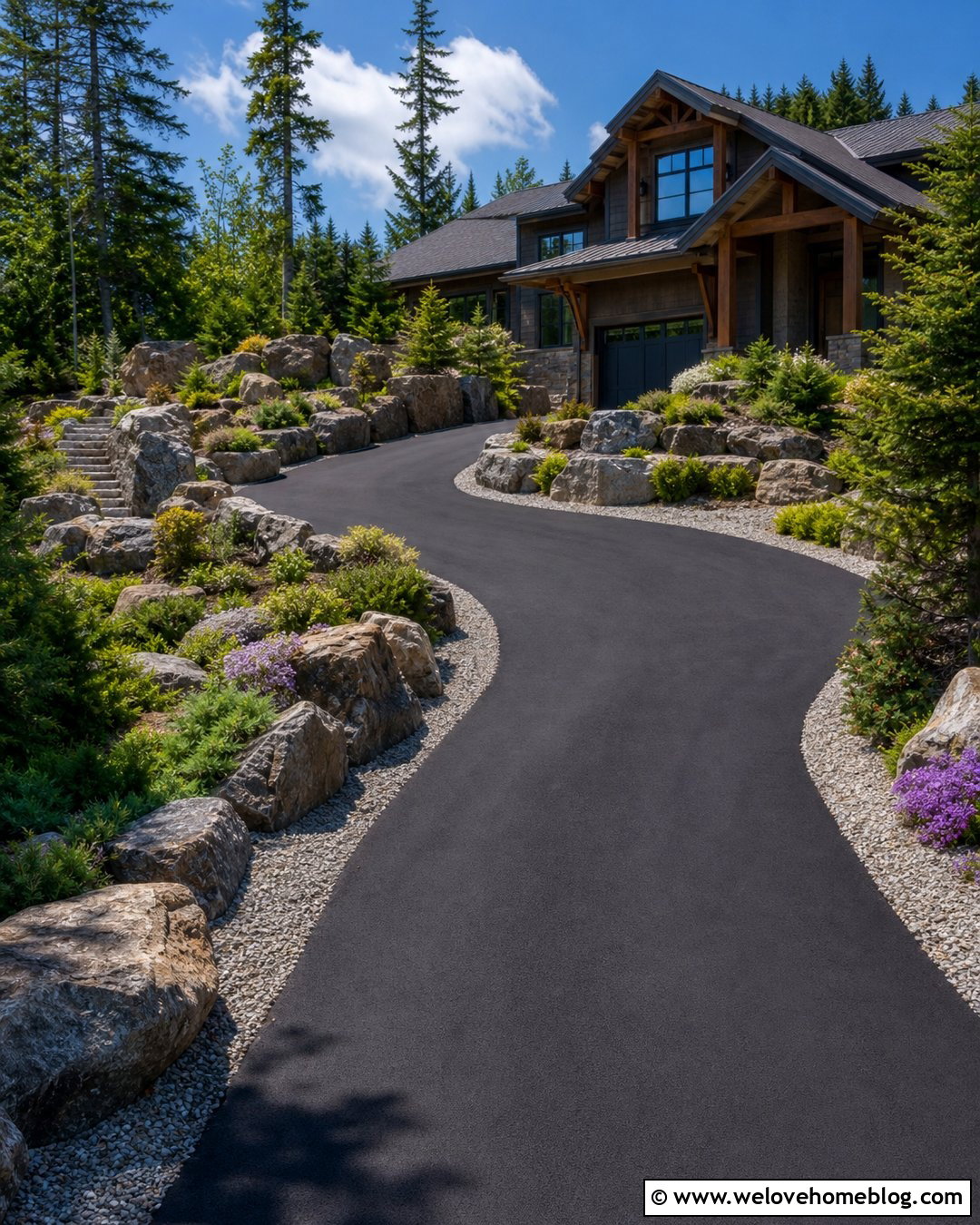
Large boulders can stabilize the appearance of a rugged slope while giving the driveway a natural mountain character. Install a dark asphalt driveway in a sweeping curve, then nest groups of weathered boulders into the uphill bank. Arrange them as irregular terrace edges with wide planting zones between each level. Use native ground covers, sedges, flowering shrubs, and small conifers to blend the stones into the yard. A crushed-granite shoulder can soften the transition from asphalt to landscaping. Include stone steps through the terraces, positioning them far enough from vehicle traffic for comfortable access. Avoid lining up identical rocks in perfect rows. Varied sizes and partially buried bases will make the finished landscape appear more realistic.
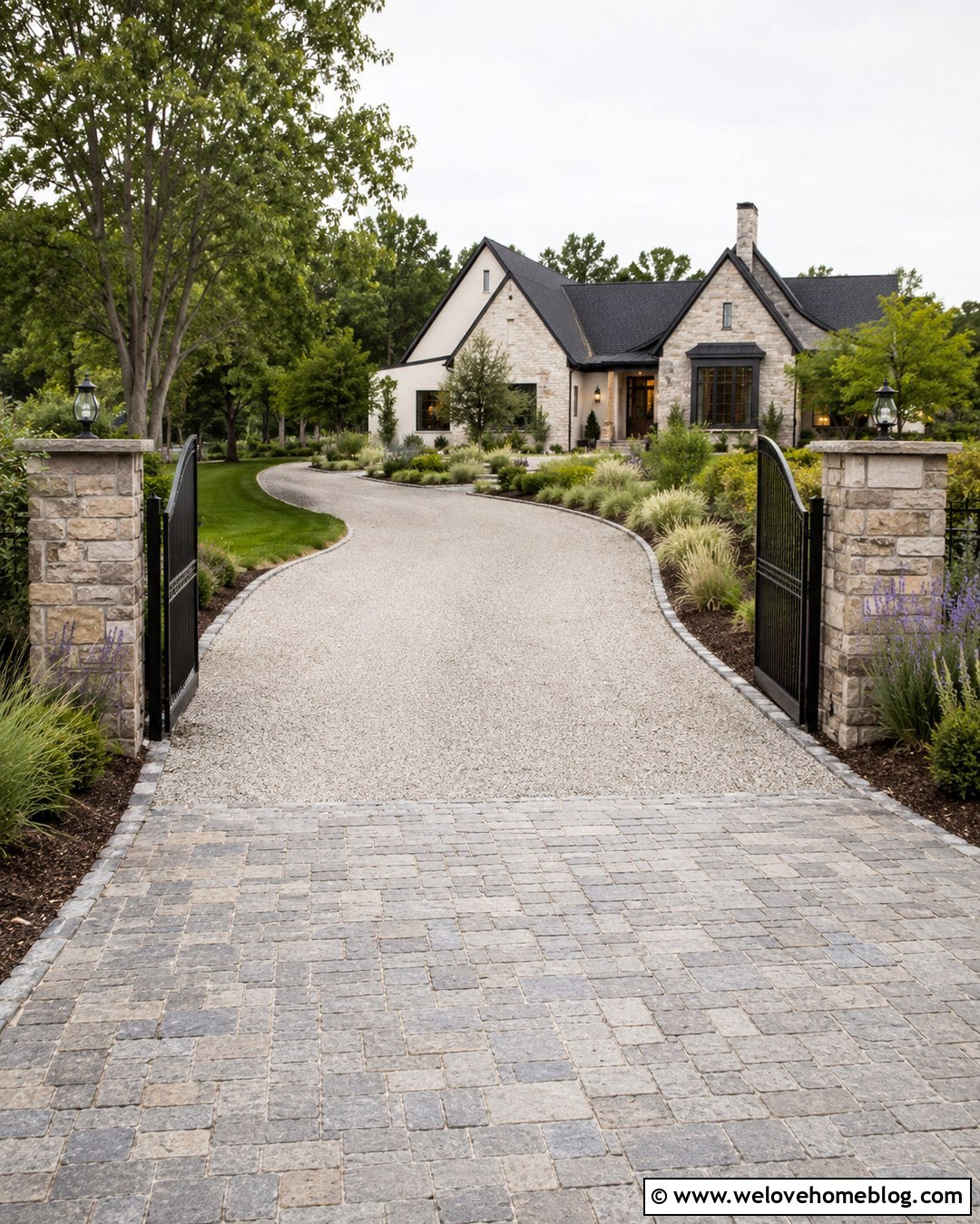
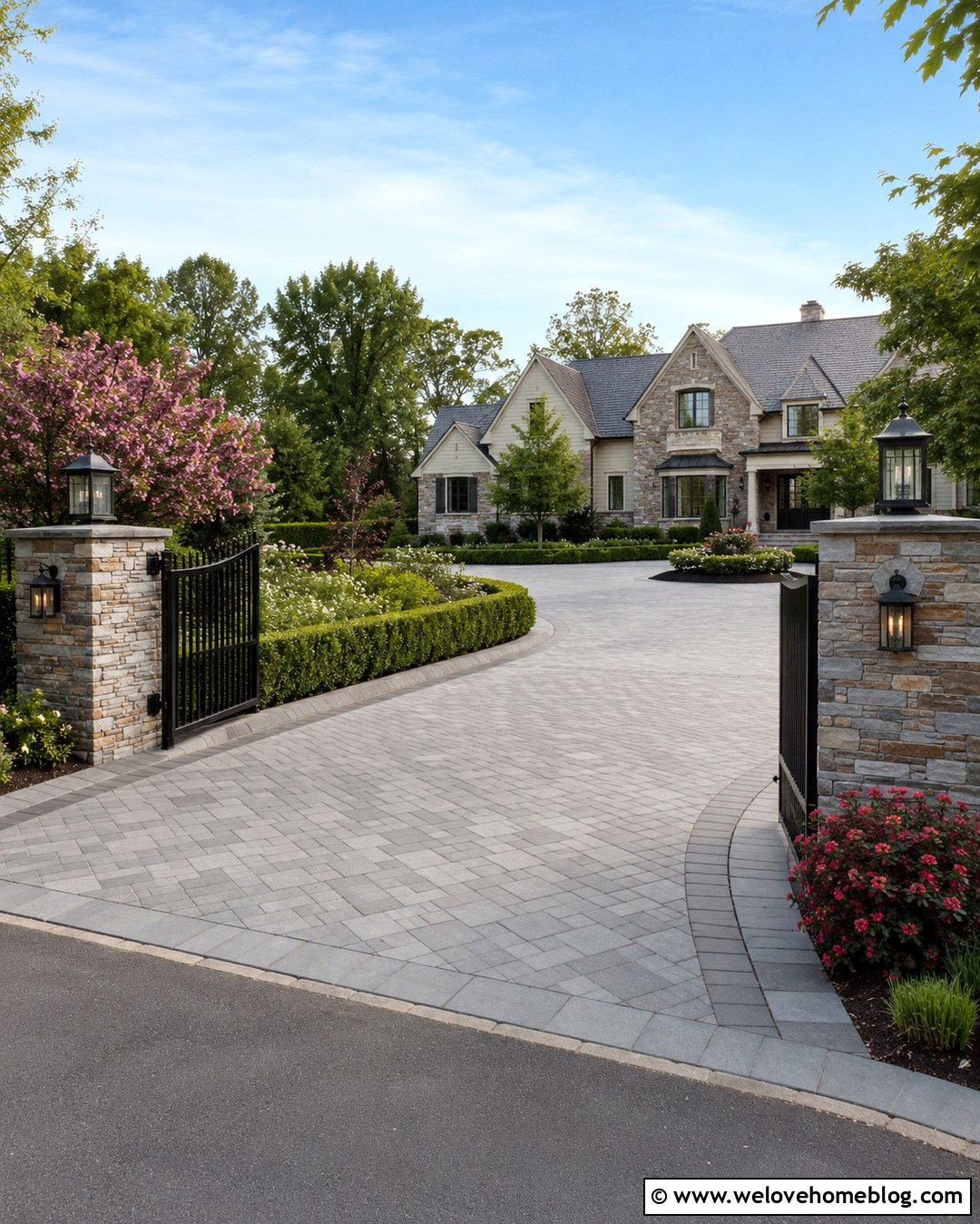
10. White Stucco Terrace Driveway
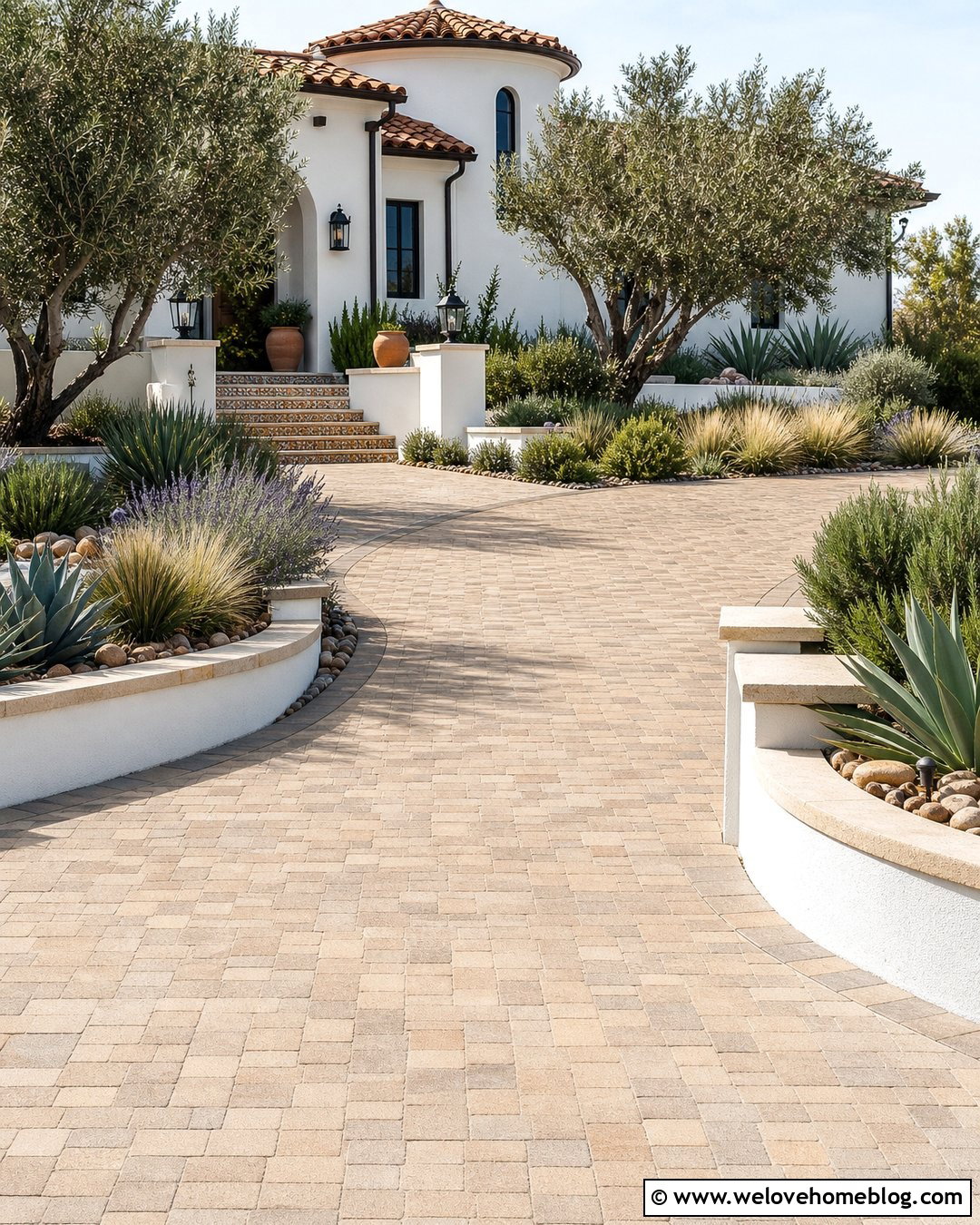
A bright Mediterranean-inspired terrace driveway can complement a white stucco house and warm climate landscaping. Choose sand-colored permeable pavers for a gently sloped driveway with a subtle curved approach. Build smooth stucco retaining walls in matching white, then cap them with pale limestone or terra-cotta tile. Fill the terraced beds with olive trees, rosemary, lavender, agave, and ornamental grasses. A narrow strip of river rock beneath the plants can create a clean, low-maintenance finish. Add broad tiled steps between the lower driveway and raised front entrance. Black metal lanterns and a simple gate will provide contrast. Keep the planting layout restrained so the architecture, layered walls, and driveway remain visually balanced.
11. Farmhouse Terrace Driveway
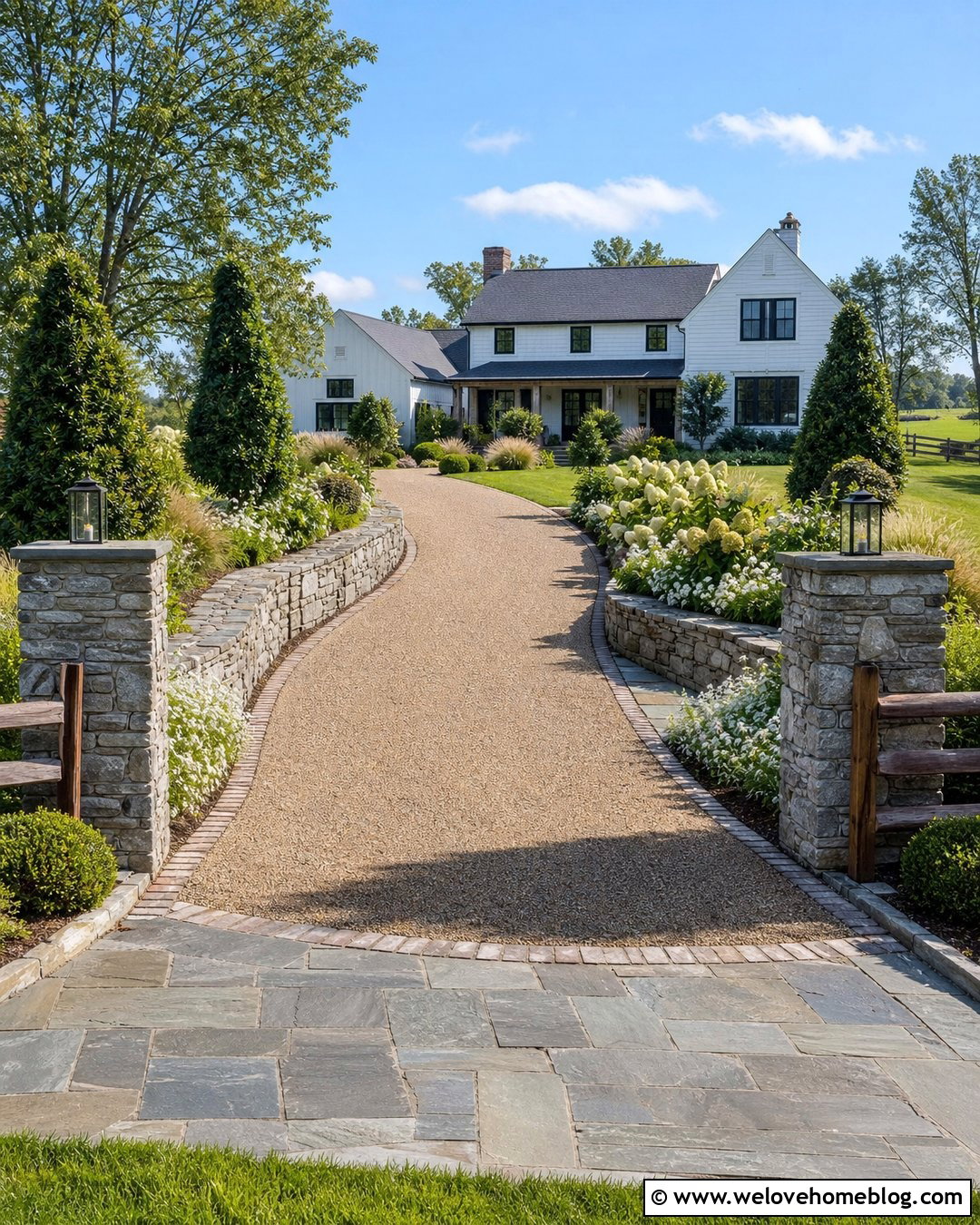
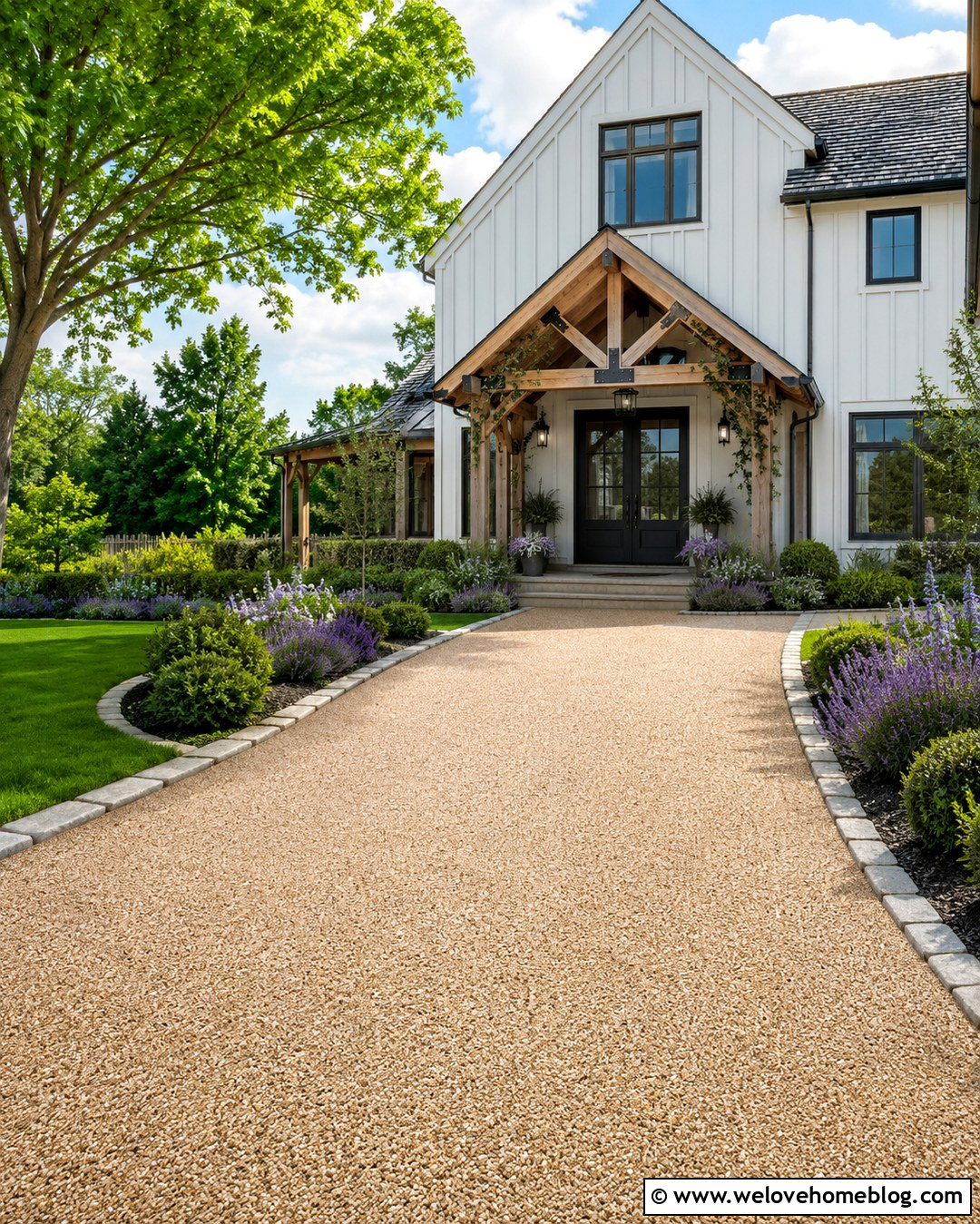
Picture a long farmhouse driveway climbing past layered gardens toward a welcoming porch. A tan resin-bound gravel surface provides a neat appearance while retaining the softer look associated with country homes. Edge the drive with reclaimed brick, and use weathered fieldstone retaining walls to create two generous terraces. Plant panicle hydrangeas, white flowering perennials, ornamental grasses, and clipped evergreen shrubs in relaxed groups. Near the road, add simple stone pillars with a horizontal wood fence extending into the landscape. A separate flagstone walkway can rise through the terraces to the porch. Repeat the driveway’s tan, brown, and gray tones in the wall caps and foundation beds to make the entrance feel naturally connected.
12. Small Front Yard Terrace Driveway
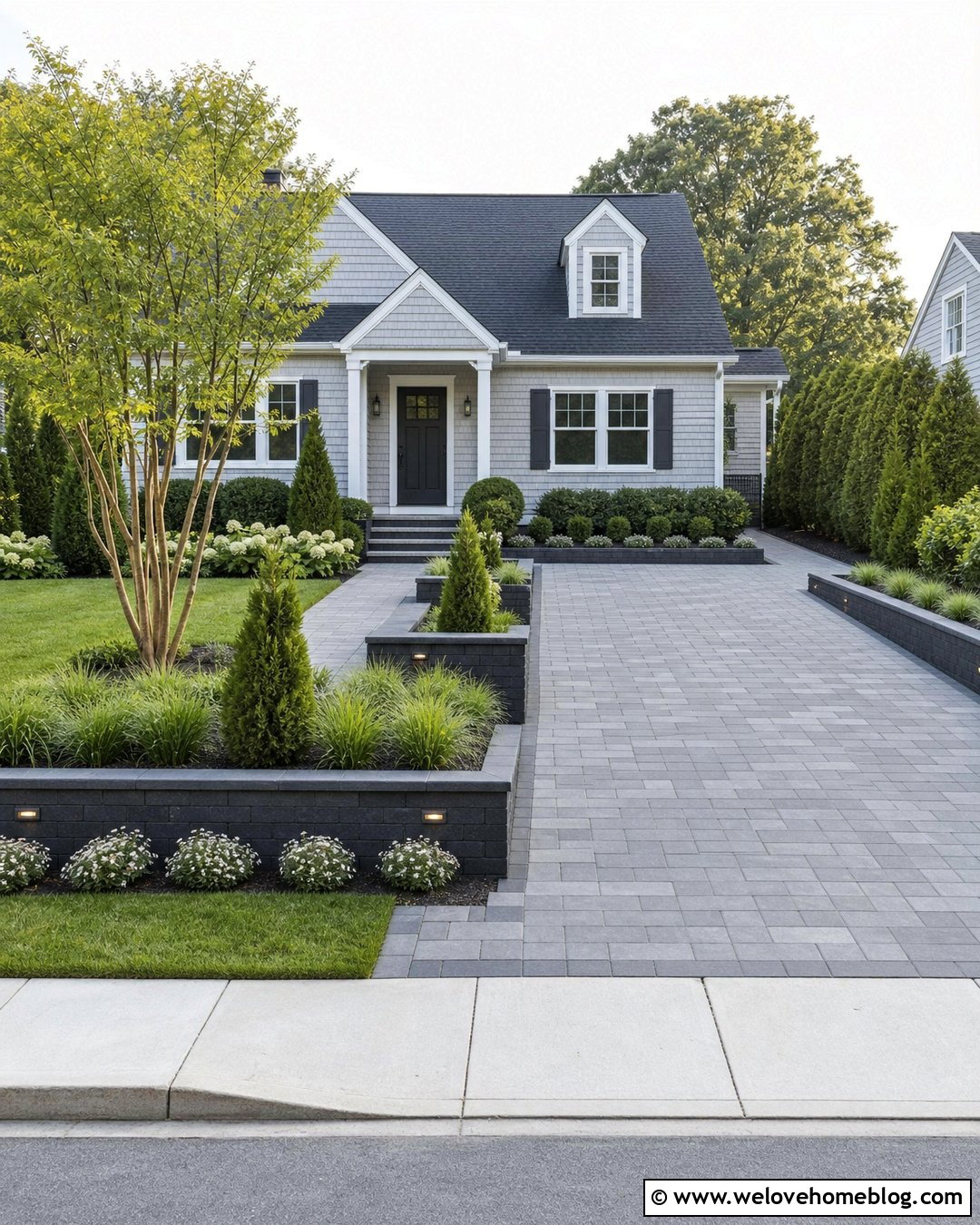
Limited frontage calls for a compact design that uses every foot efficiently. Install a straight driveway of medium-gray concrete pavers beside a small Craftsman or Cape Cod home. On the narrow uphill edge, create two slim terraces with stacked concrete blocks in a coordinating charcoal color. Use upright evergreen shrubs, compact ornamental grasses, and low flowering ground covers so plants do not spill into parking space. A narrow walkway can share the driveway border before separating near the porch. Add one small multi-stem tree in the upper terrace for height without overwhelming the yard. Concealed wall lights will illuminate the elevation changes. Keeping the materials and planting palette simple helps the small entrance appear wider and less cluttered.
13. Terraced Driveway With Stone Steps
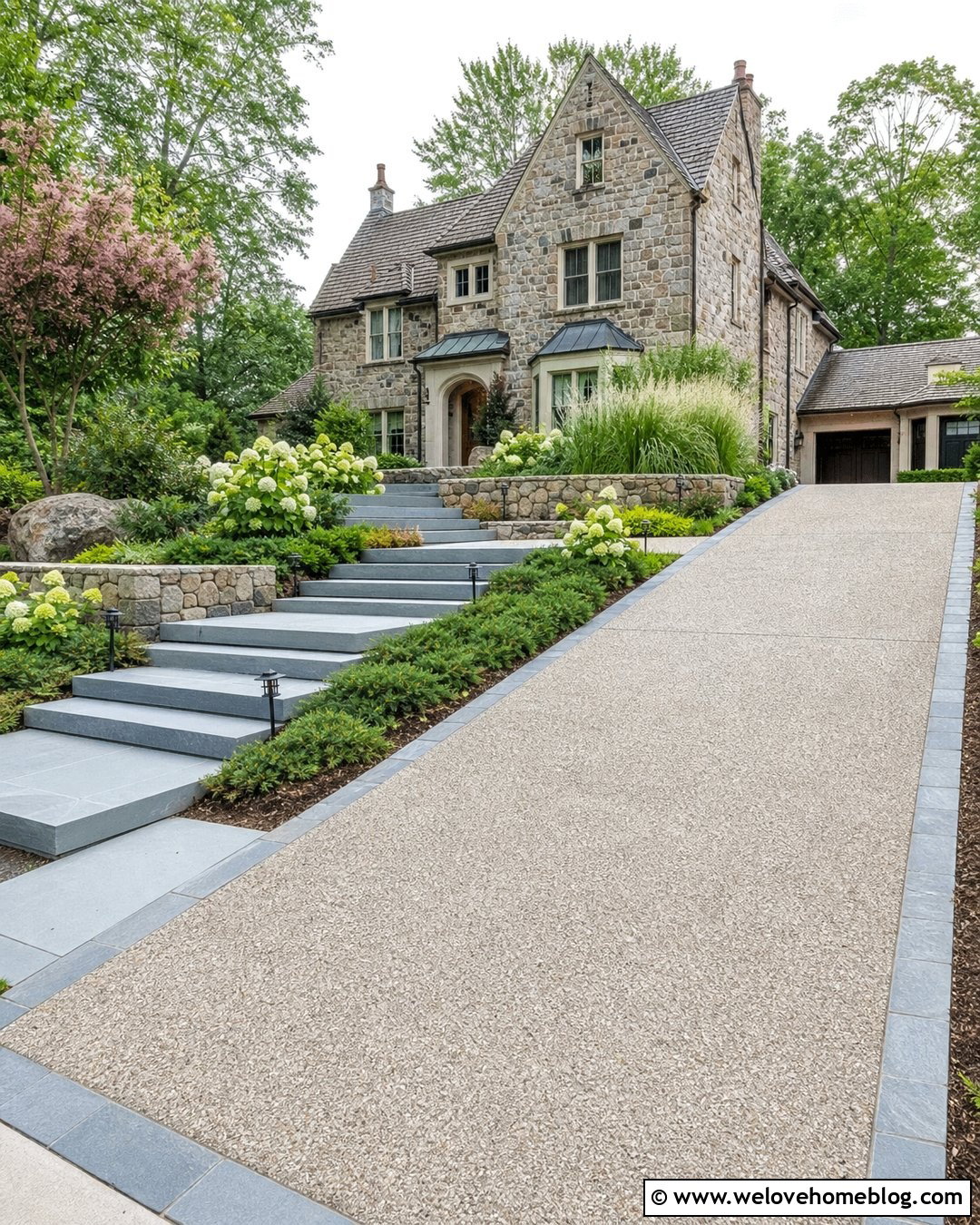
Separating foot traffic from vehicles makes a sloped entrance feel safer and more welcoming. Use light exposed aggregate concrete for the driveway and install wide bluestone steps through the adjacent terraces. A series of low fieldstone walls can follow the staircase, creating level beds on both sides. Fill them with evergreen ground covers, flowering shrubs, and grasses that arch gently over the wall edges without blocking the steps. Include generous landings where the walkway changes direction or meets the porch. At the street, connect the first landing to a short flagstone path. Repeat bluestone as a narrow driveway border or garage apron. This repetition ties the pedestrian route to the complete driveway design instead of treating it as an afterthought.
14. Terraced Driveway With Water-Wise Landscaping
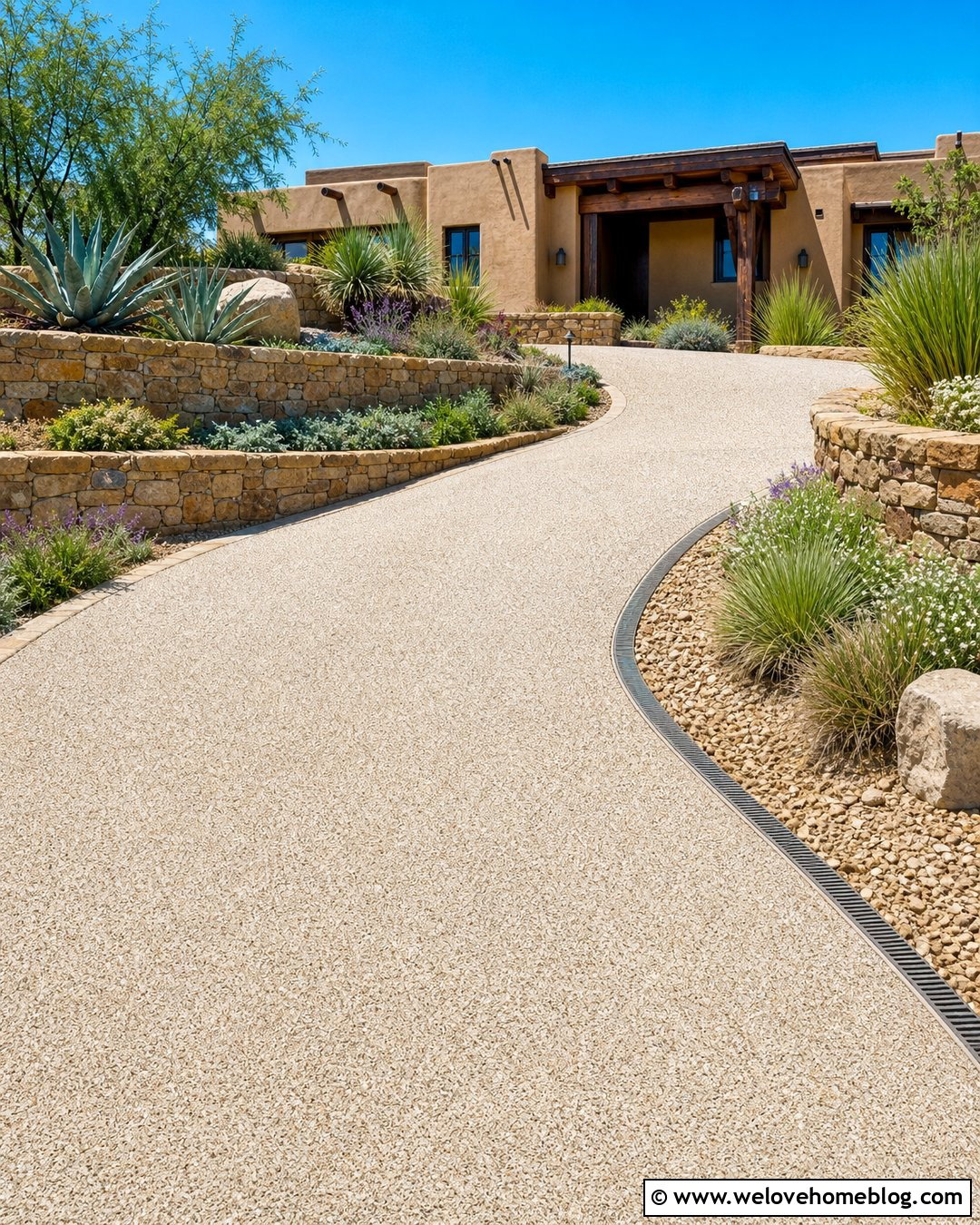
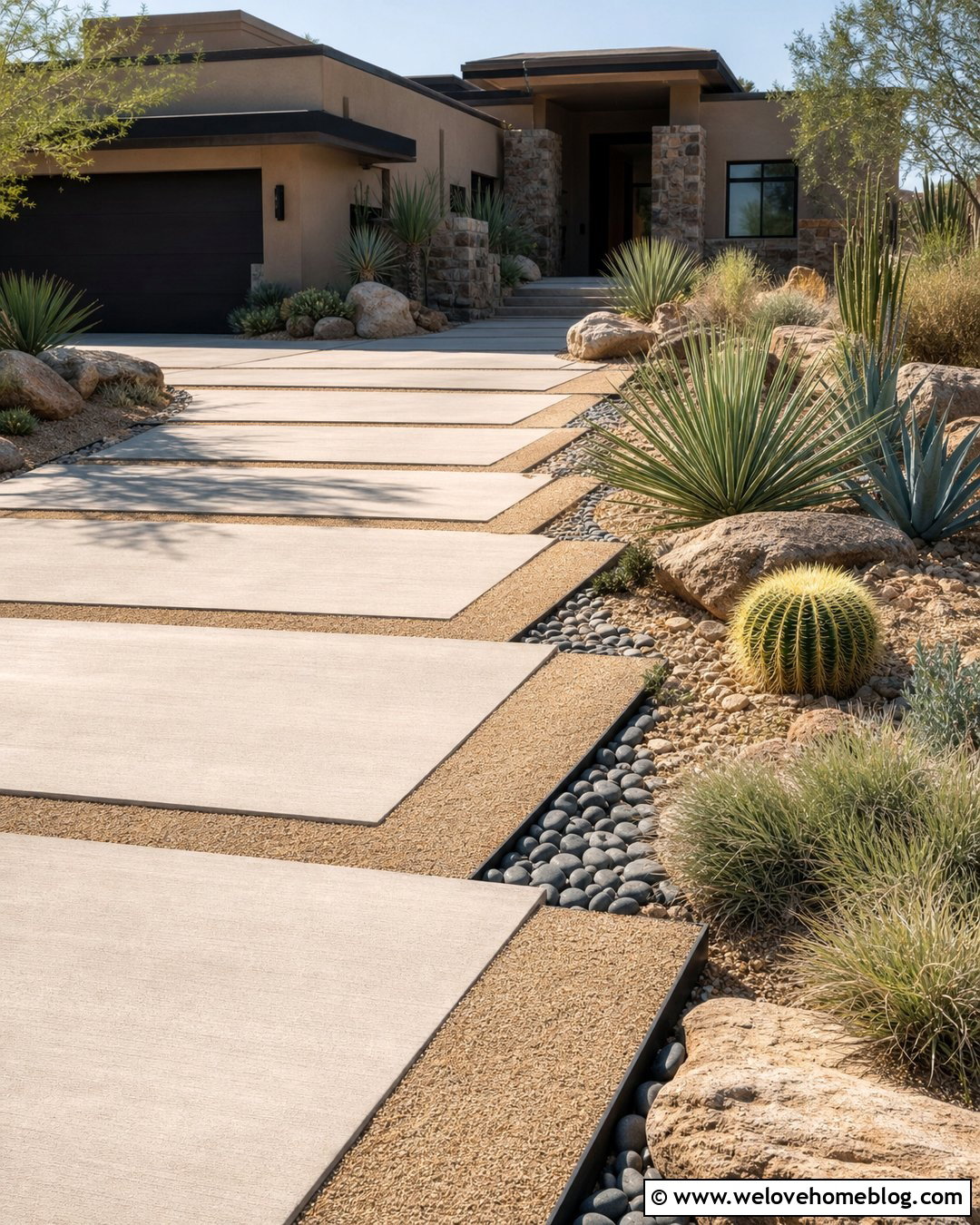
In a dry climate, terraced beds can showcase attractive planting without demanding a thirsty lawn. Pair a pale resin-bound gravel driveway with retaining walls made from tan concrete blocks or locally sourced stone. Shape the drive into a gentle curve and use the inner bank for three broad terraces. Plant agave, yucca, blue fescue, salvia, creeping thyme, and small drought-tolerant shrubs in repeated groups. Spread decorative gravel around the plants to create a finished surface and reduce exposed soil. A metal edge can separate the driveway from a narrow drainage strip. Install drip irrigation beneath the mulch layer where appropriate. Terraced landscaping can also support water-conscious planting when irrigation and soil preparation are incorporated during construction. ()
15. Terraced Driveway With Native Plants
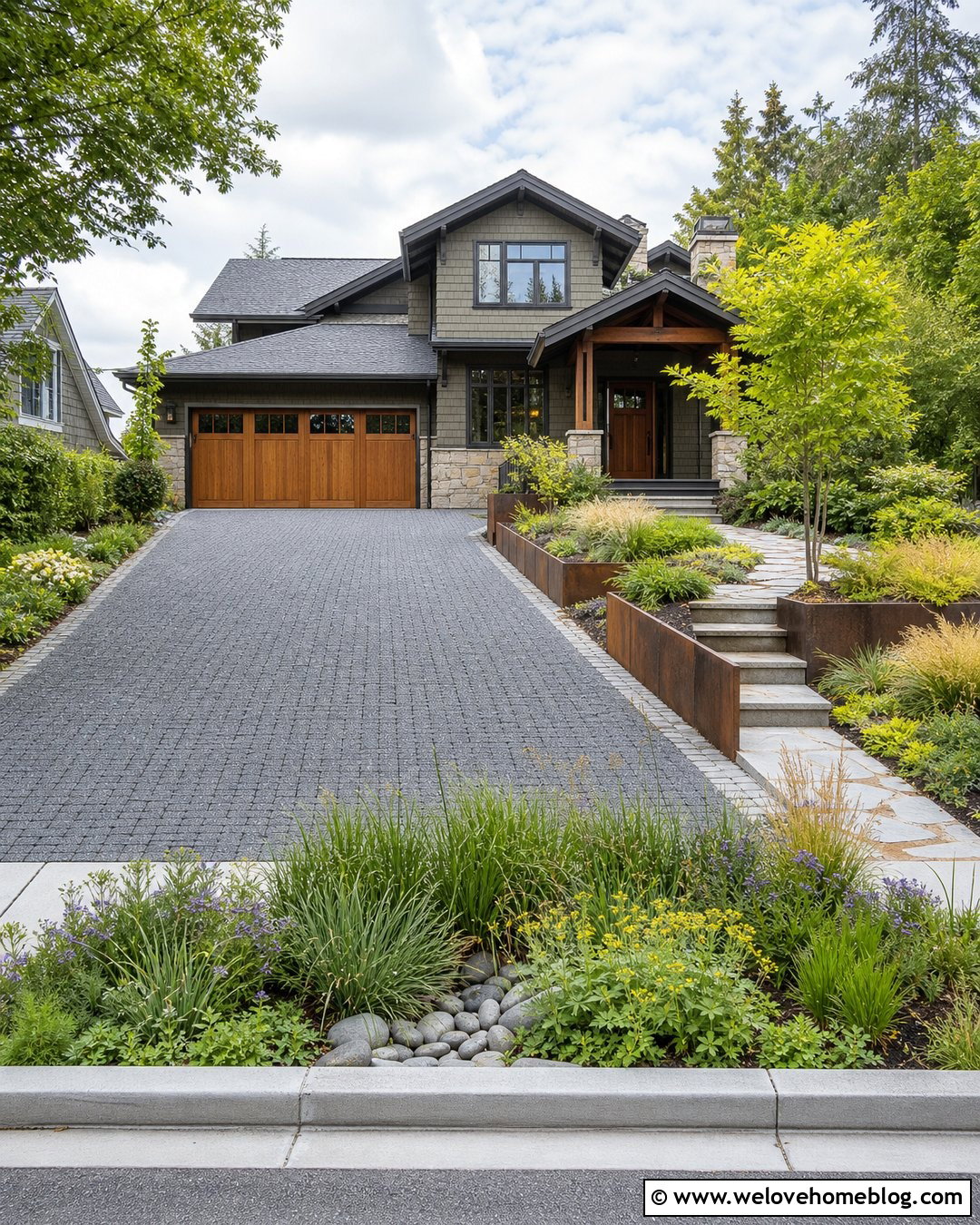
Native planting can help a terrace driveway blend with its wider surroundings. Begin with a charcoal permeable-paver driveway leading to a contemporary Craftsman home. Use low weathered-steel retaining walls to create horizontal planting bands on the uphill side. Select regional grasses, flowering perennials, ground covers, and compact shrubs suited to the property’s sun, moisture, and soil conditions. Repeat a few species across every level rather than filling each terrace with unrelated plants. This creates rhythm and makes maintenance more manageable. Add a bioswale or rain garden near the driveway’s lowest point where the site plan permits. A natural stone walkway and one native understory tree can connect the structured terraces with the rest of the front yard.
16. Terraced Driveway With Built-In Lighting
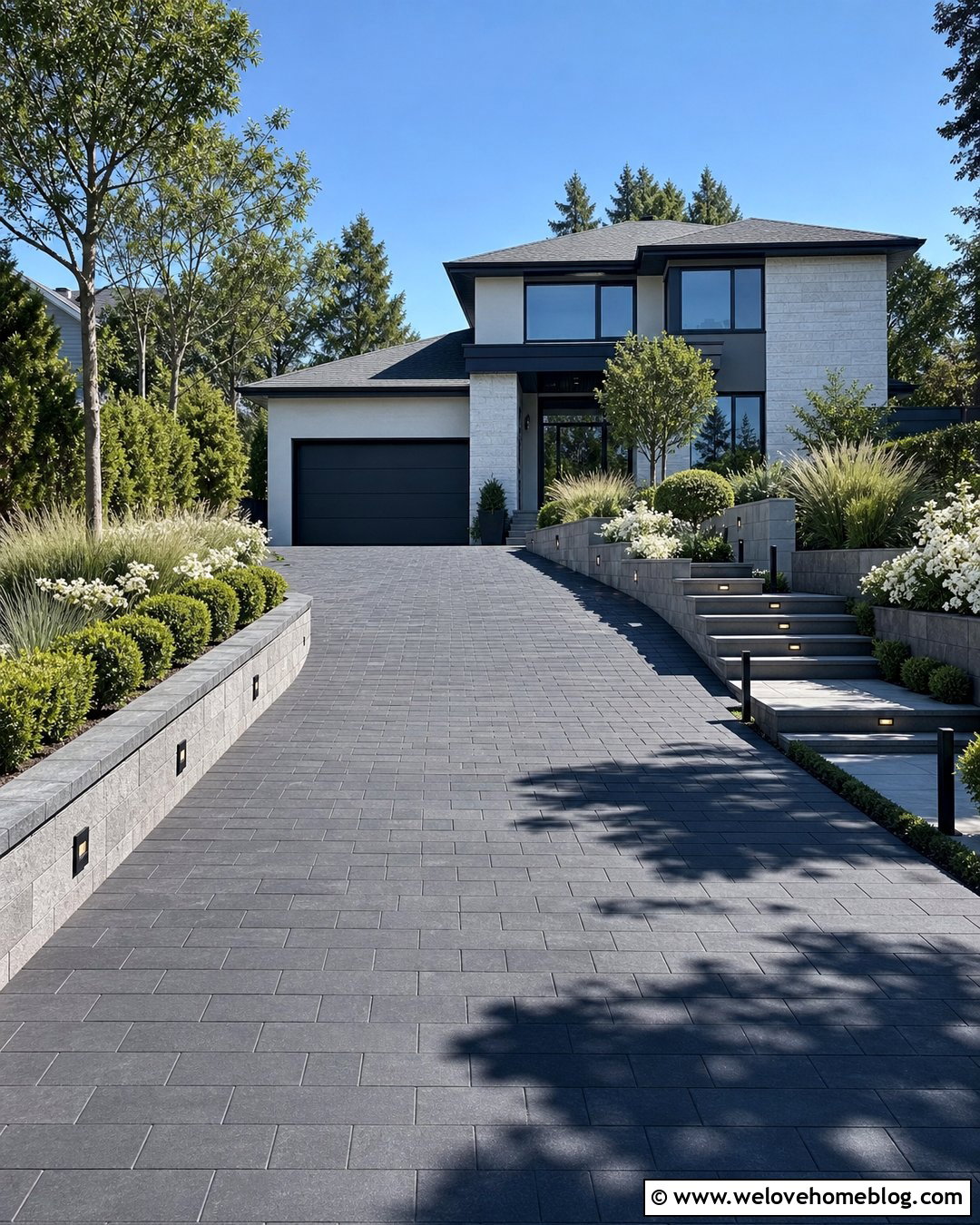
Lighting is particularly useful where driveway edges, retaining walls, and steps meet at different heights. Choose charcoal concrete pavers for a straight driveway beside a modern two-story home. Build staggered retaining walls from smooth gray masonry blocks and install small recessed lights in the wall faces. Keep the fixtures evenly spaced and directed downward to illuminate the surface without creating harsh glare. Add low bollards near the curb and step lights along the separate walkway. The terraces can hold clipped shrubs, ornamental grasses, and white flowering perennials that remain visible in daylight. Although lighting improves the design, plan the image and real installation around bright, practical visibility rather than dramatic darkness. Drive-over and wall-integrated fixtures can support a clean layout. ()
17. Terraced Driveway With Drainage Channels
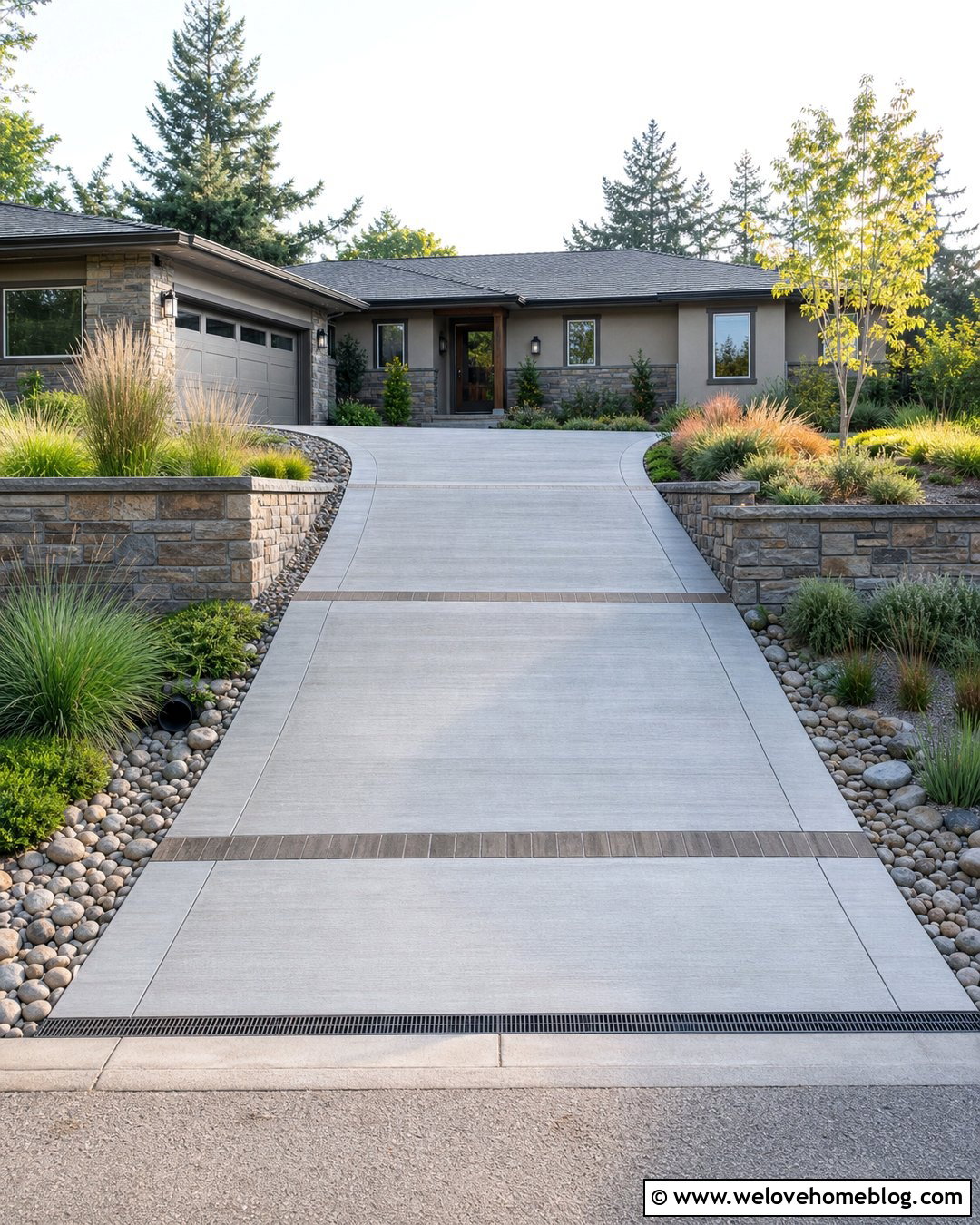
Water management should look like an intentional part of the driveway rather than a last-minute addition. Use broom-finished concrete for a sloped drive, with narrow brick bands running across the surface at planned intervals. Along the uphill edge, install stone-faced terrace walls with drainage outlets concealed among river rocks and low ground covers. A linear channel drain near the garage can intercept runoff before it reaches the building. At the lower side of the property, direct water toward an approved rain garden, swale, or drainage system based on local requirements. Plant moisture-tolerant grasses and shrubs where runoff is collected. Drainage planning should consider the driveway surface, surrounding landscape, slope, and final destination of captured water. ()
18. Terraced Driveway With Gabion Walls
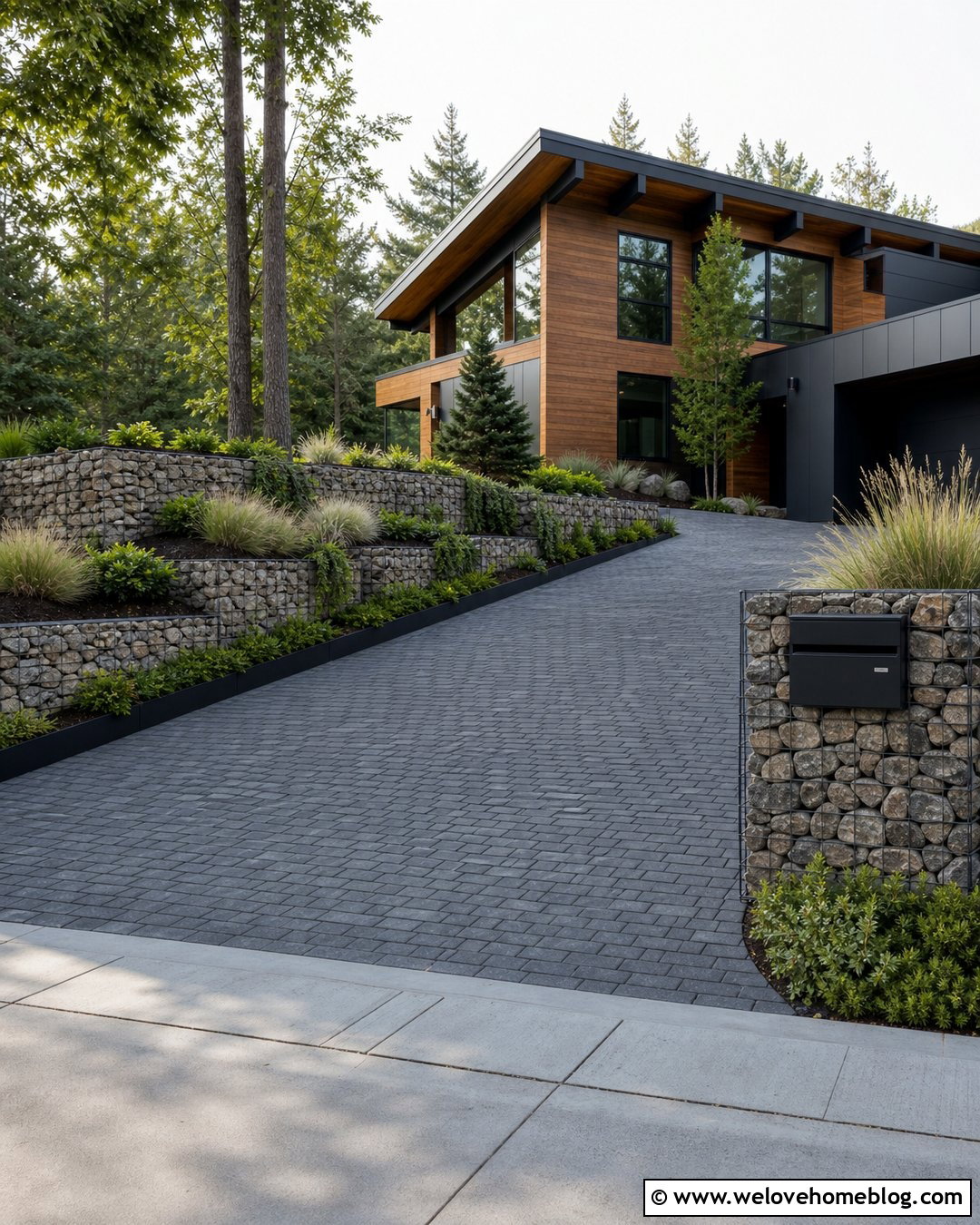
Gabion retaining walls give a steep driveway a sturdy, contemporary appearance. Use dark gray permeable pavers for a straight or slightly angled driveway leading to a modern home with wood and metal accents. Construct low wire cages filled with angular local stone, staggering them to form two or three planting terraces. Choose grasses, low evergreens, and trailing ground covers that soften the metal edges while leaving some stone visible. A black steel border can create a precise line along the driveway. Continue the gabion material into a mailbox surround or short entrance pillar for consistency. Since gabions have a strong texture, keep the house facade, paving pattern, and planting scheme simple to prevent the entrance from feeling visually crowded.
19. Terraced Driveway With Grass Strips
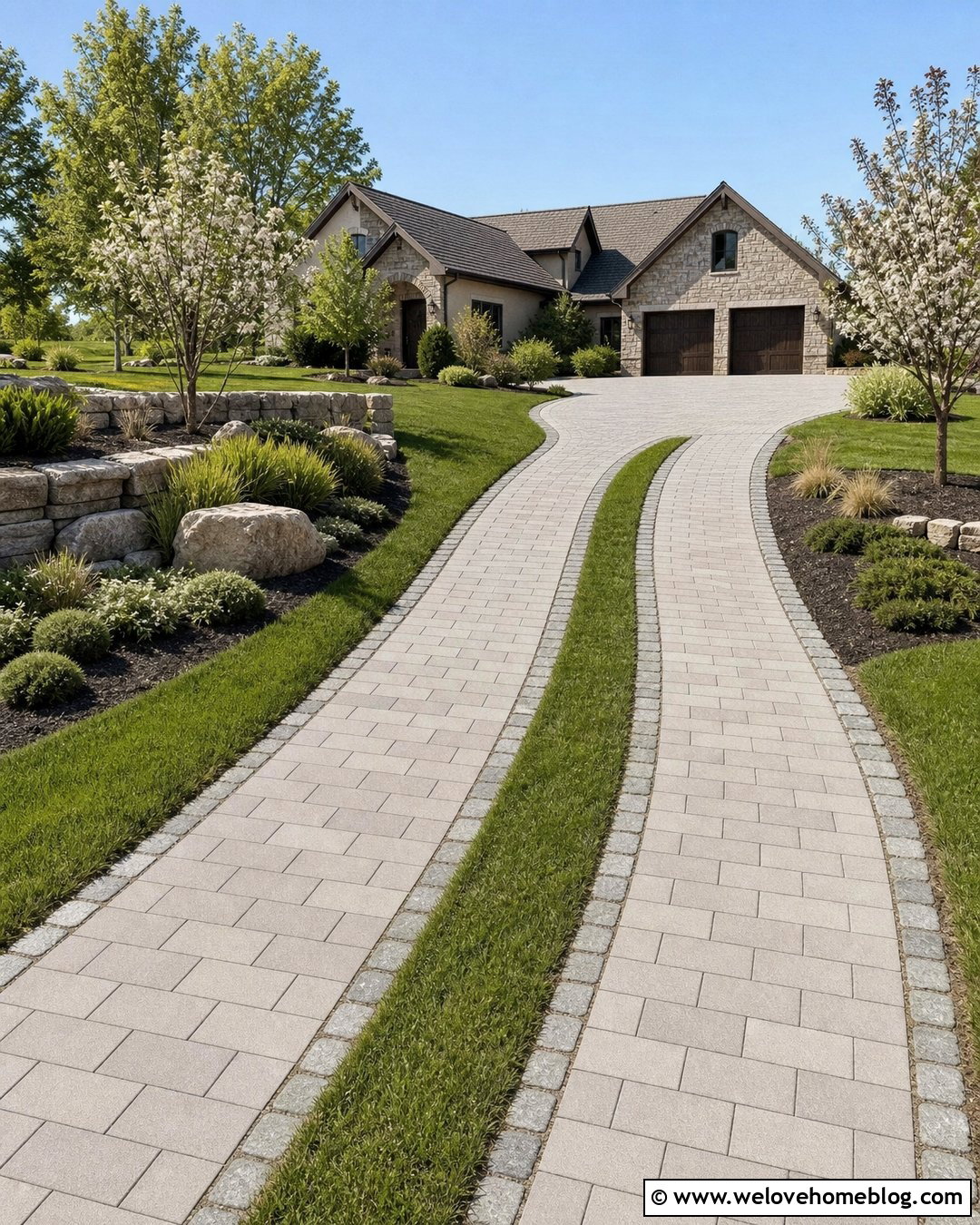
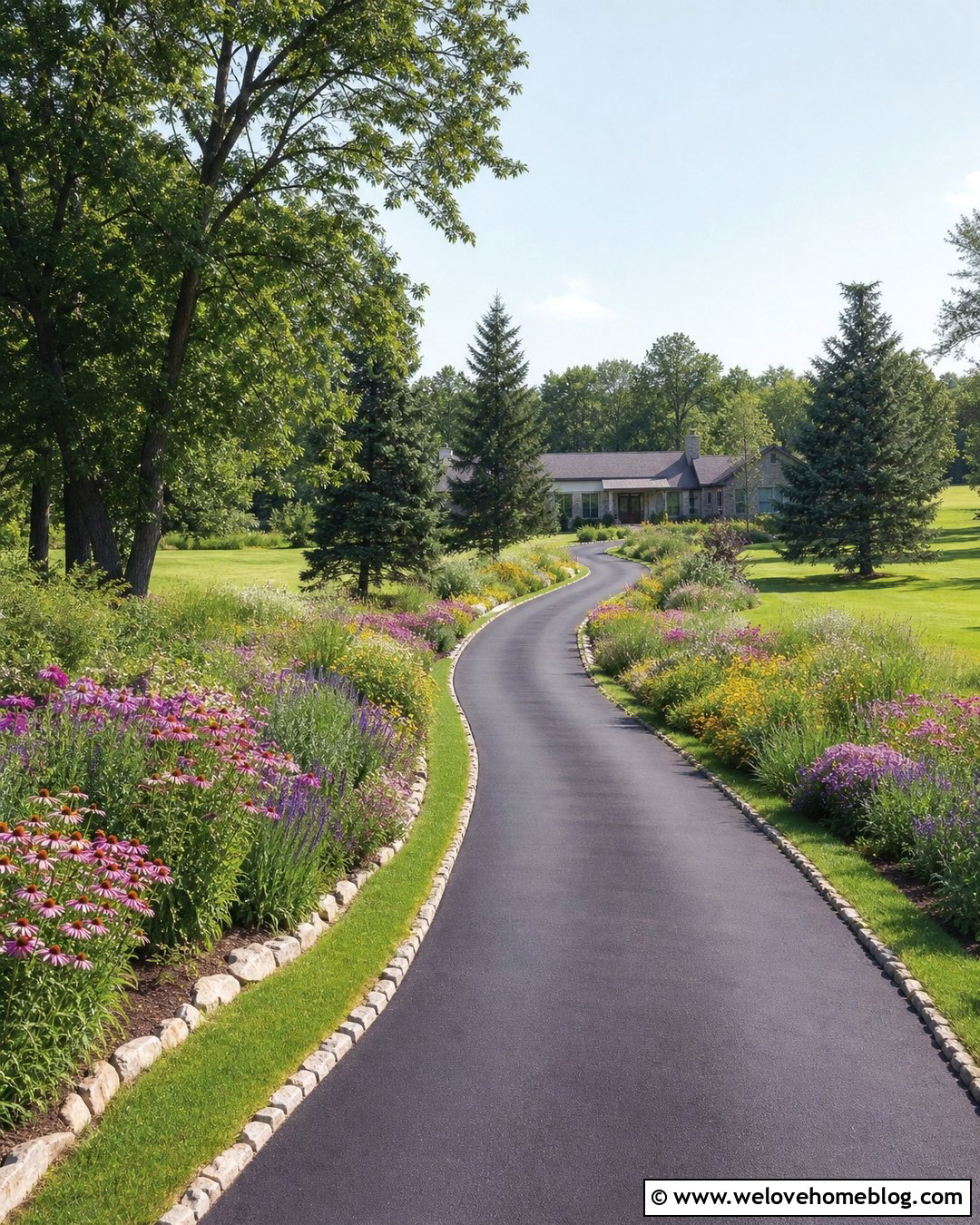
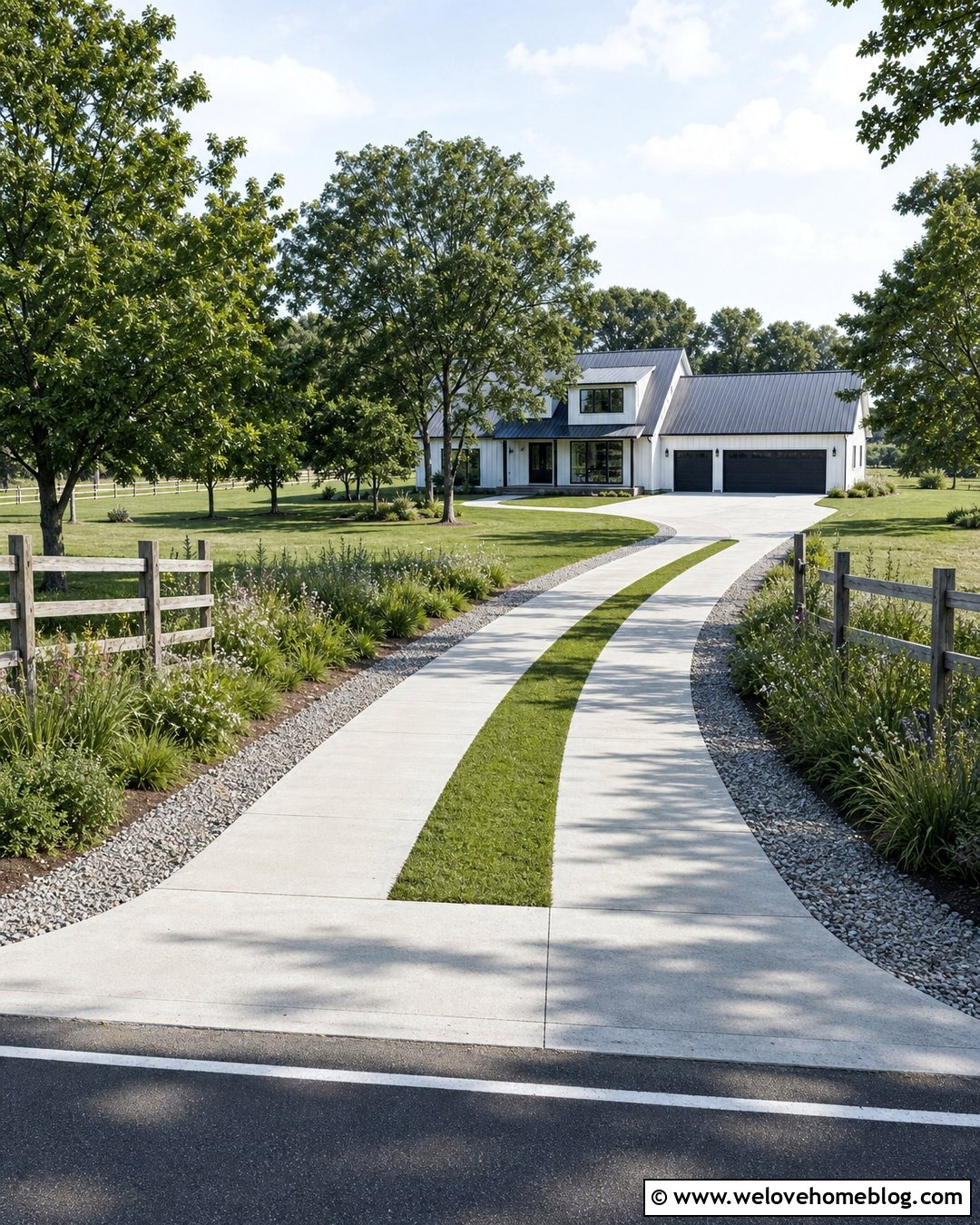
Grass strips can visually reduce the amount of hard paving on a broad residential driveway. Build two wheel tracks from warm gray concrete pavers and establish reinforced turf or durable ground cover between them. On the sloped side, create curved stone terraces filled with small flowering trees, ornamental grasses, and low shrubs. A cobblestone edge will define the driving lanes and protect the planting beds. This layout suits a low-traffic country property where the driveway alignment is predictable. Near the garage, transition to a fully paved parking and turning area for easier maneuvering. Maintain clear widths and select the center planting based on local growing conditions. The finished look feels green and integrated while still providing a clearly organized route to the house.
20. Budget Terrace Driveway
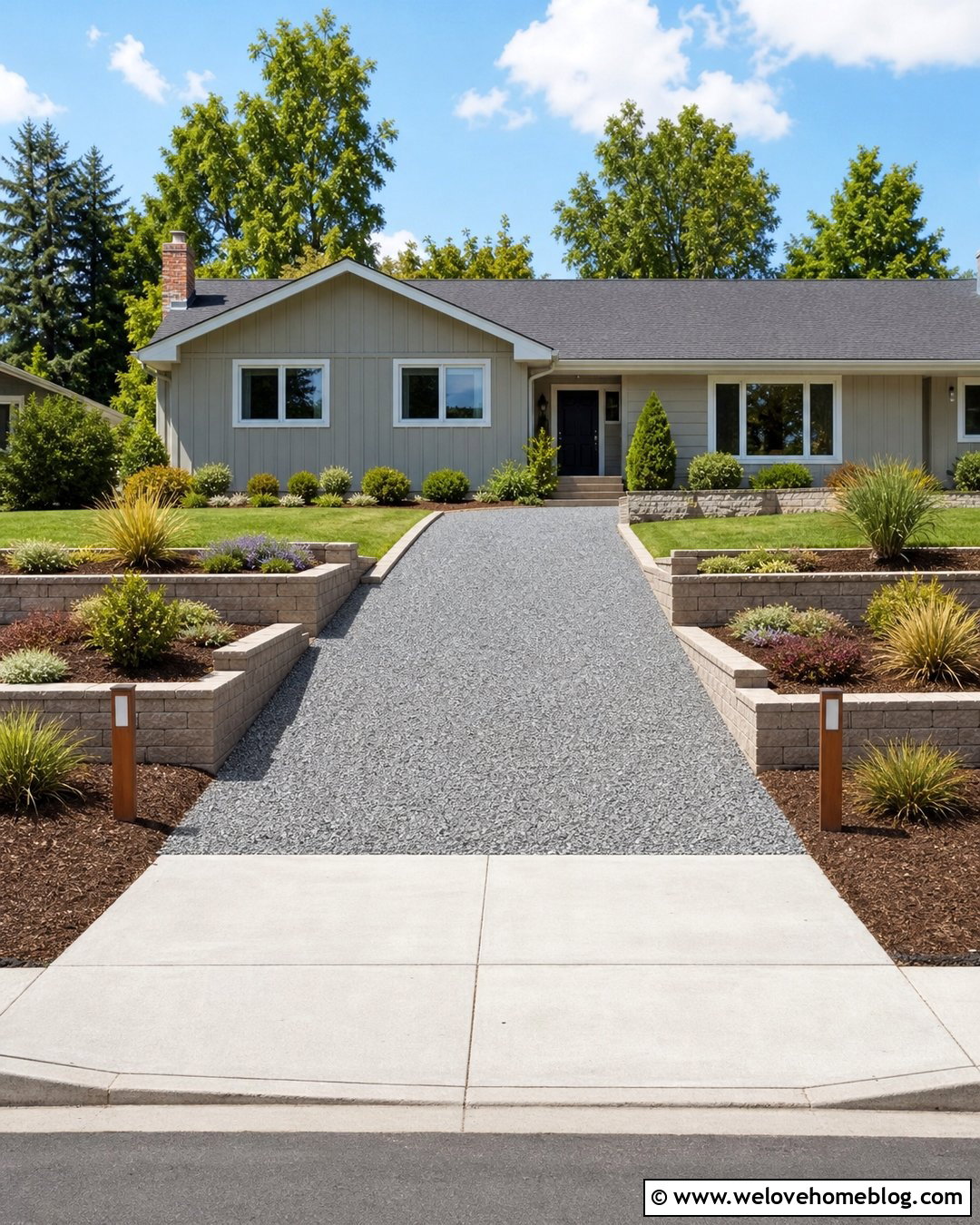
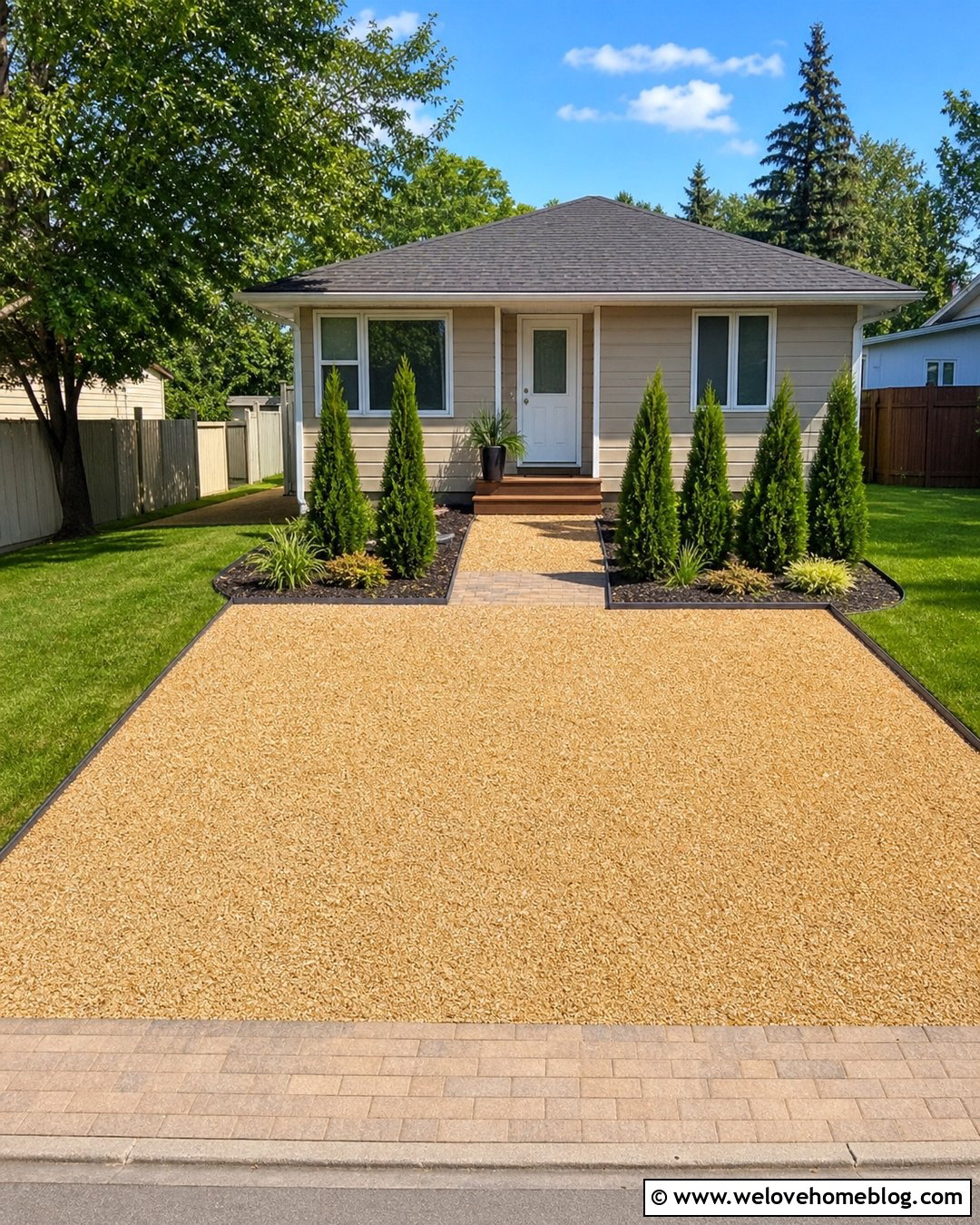
A practical terrace driveway does not need premium materials at every level. Start with compacted crushed gravel for a simple straight driveway, using an asphalt or concrete apron where it meets the street. Create two low terraces with affordable segmental retaining-wall blocks in a neutral color. Instead of installing many plant varieties, repeat hardy grasses, spreading ground covers, and a few compact shrubs across both beds. Use mulch to cover open soil while the plants become established. Basic solar markers can define the driveway temporarily, although professionally wired fixtures may provide more dependable long-term lighting. Spend first on proper grading, base preparation, drainage, and structurally sound retaining walls. Decorative stone, additional plants, and upgraded entrance details can be added in later phases.
Conclusion:
The best terrace driveway connects practical slope management with a welcoming, complete landscape. Its surface, curves, retaining walls, steps, borders, drainage, and planting should feel like parts of one plan. Natural stone and gravel create a relaxed look, while concrete, pavers, gabions, and smooth masonry support more modern architecture. Whatever materials you prefer, prioritize safe grades, stable walls, clear visibility, and controlled runoff before adding decorative details. Low terraces usually feel more integrated than one imposing wall, especially when plants soften each level. Use these **20 terrace driveway ideas** to shape an entrance that works with your terrain, complements your house, and adds lasting curb appeal.

Related posts:


Leave a Reply