
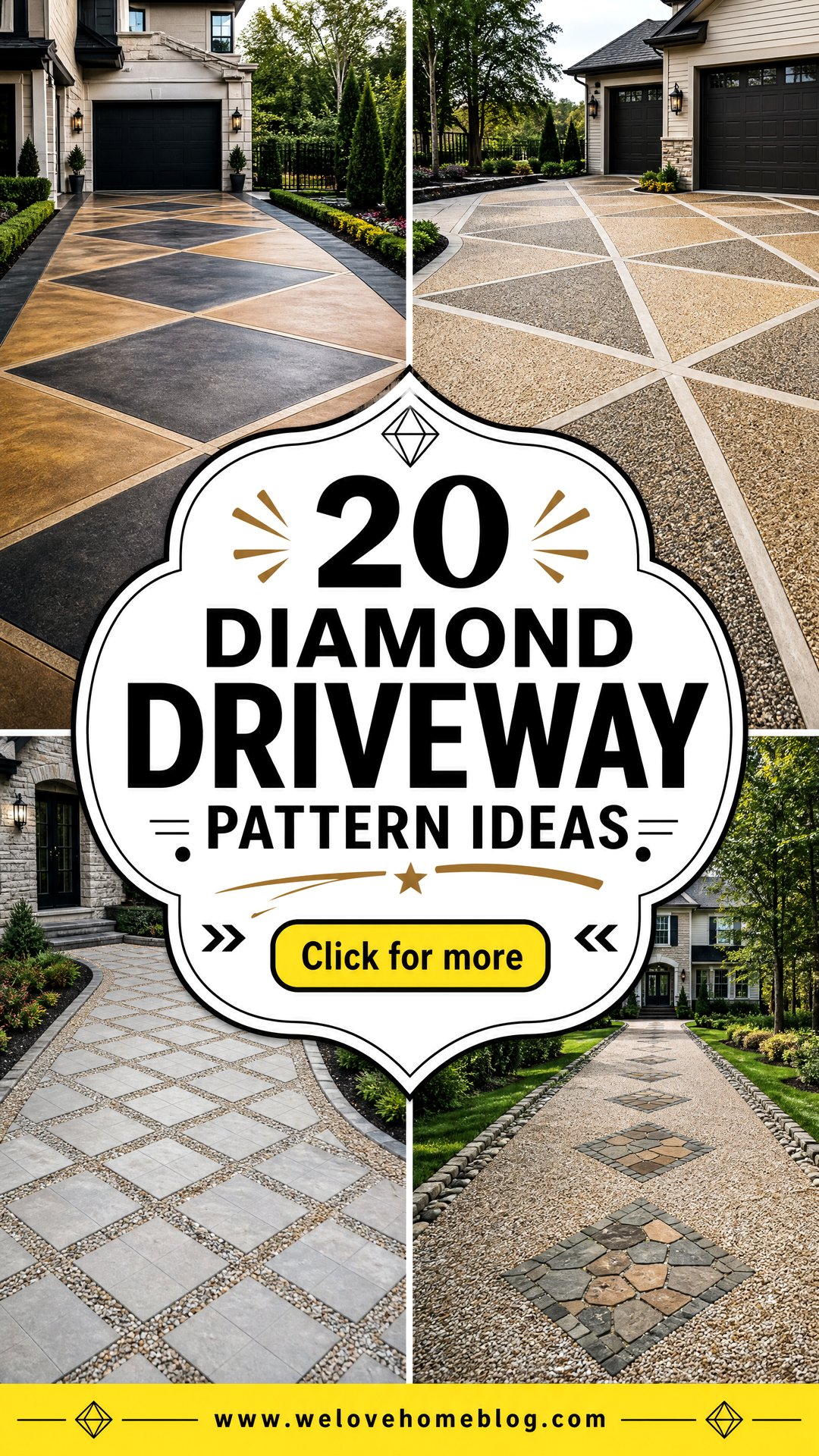
Diamond patterns bring order, movement, and custom character to an otherwise ordinary driveway. They can be created with decorative sawcuts, contrasting stains, concrete pavers, brick, cobblestone, gravel inlays, or narrow grass joints. The right scale matters. Large diamonds can make a broad surface feel clean and modern, while smaller repeating diamonds add detail to traditional homes. Borders, landscaping, and driveway shape also affect how clearly the geometry reads from the street. Decorative lines should be coordinated with necessary joints, drainage, vehicle loads, and the overall installation plan. () Whether you prefer understated concrete or a bold two-tone layout, these complete 20 Diamond Driveway Pattern Ideas offer practical inspiration for creating a distinctive entrance.
1. Gray Scored Concrete Diamond Driveway
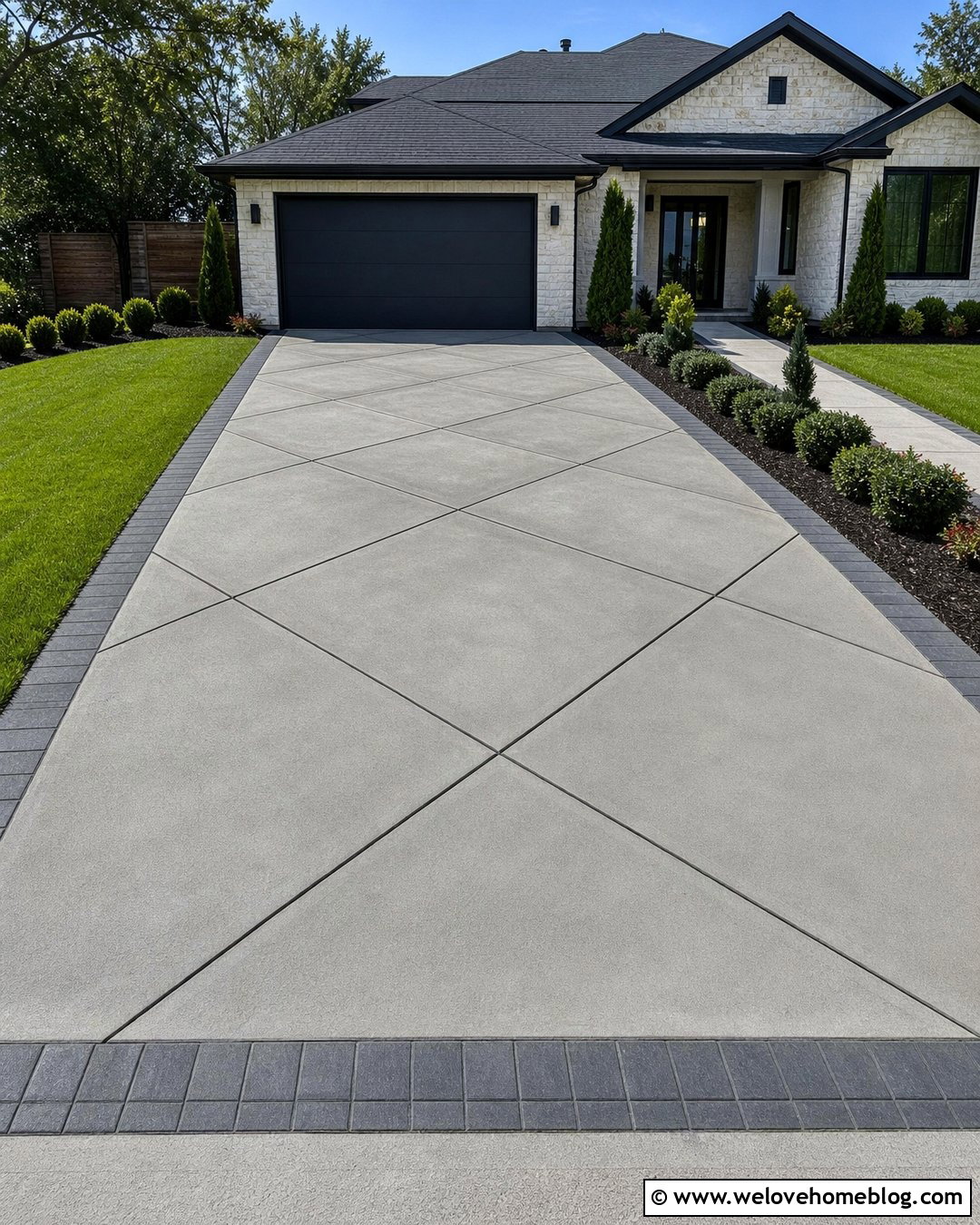
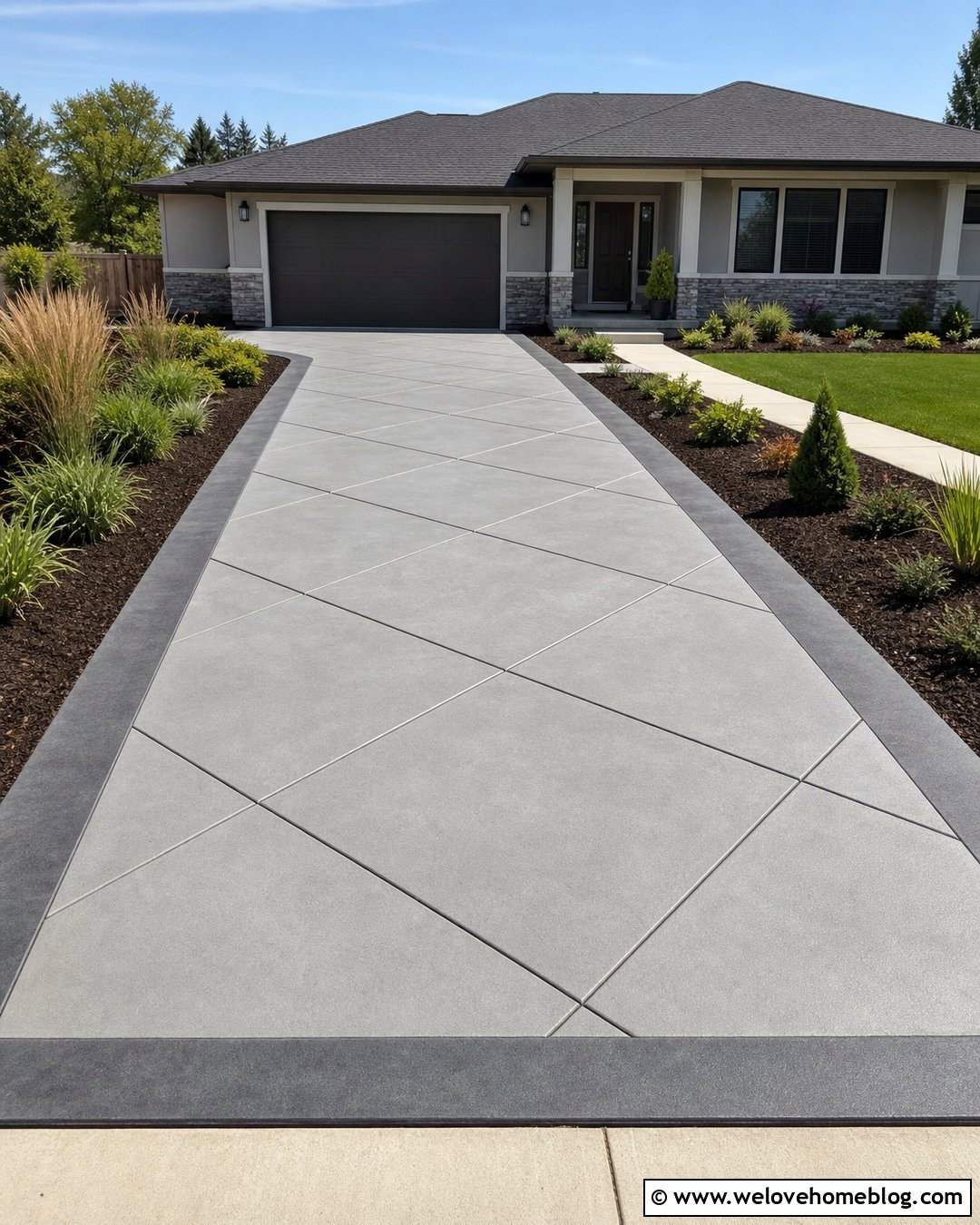
A light gray poured concrete driveway with diagonal sawcuts is one of the simplest ways to introduce a diamond pattern. The intersecting lines give the slab the appearance of oversized outdoor tiles without overwhelming the home. Choose medium or large diamonds for a clean layout, especially on a wide, straight driveway. Dark joint filler can make the geometry more visible from the curb. Frame the concrete with charcoal pavers, clipped shrubs, and narrow planting beds to create a finished edge. This combination works especially well with contemporary ranch and transitional homes. Ask the concrete contractor to coordinate decorative scoring with the slab’s planned control joints so the functional and visual lines form one organized design. ()
2. Two-Tone Stained Concrete Diamond Driveway
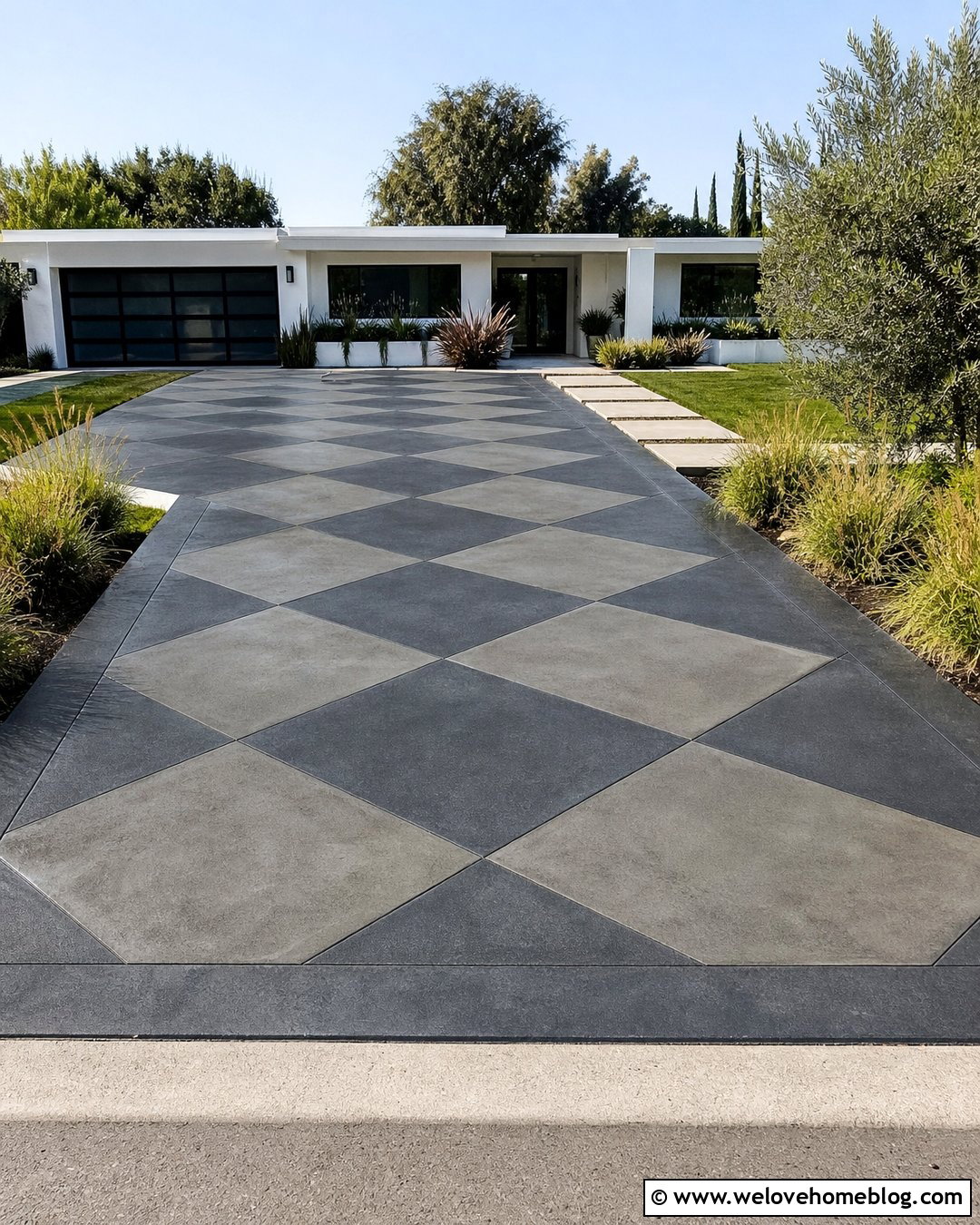
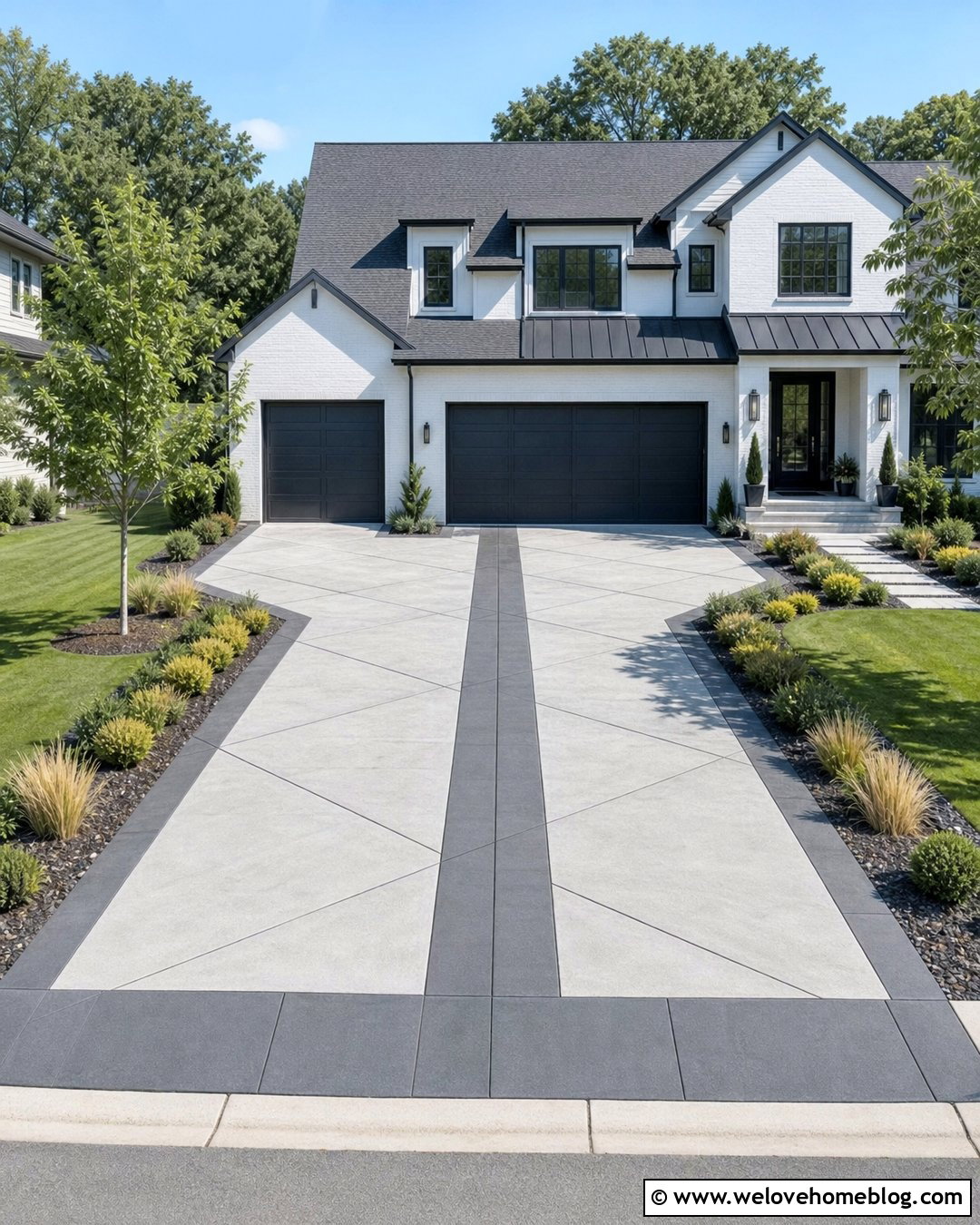
Alternating stained diamonds can turn a broad concrete driveway into a tailored checkerboard surface. Begin with poured concrete scored into evenly sized diamonds. Then use two related colors, such as warm gray and charcoal, rather than sharply opposing shades. The subtle contrast keeps the result suitable for a residential setting. A dark concrete border can repeat the deeper stain and visually contain the pattern. Beside the driveway, use simple lawn panels, low ornamental grasses, and a straight walkway leading to the front door. This complete look suits modern and midcentury homes with minimal exterior detailing. Test the stains on a small area first because the original concrete color and surface condition can influence the final appearance. ()
3. Oversized Concrete Diamond Driveway
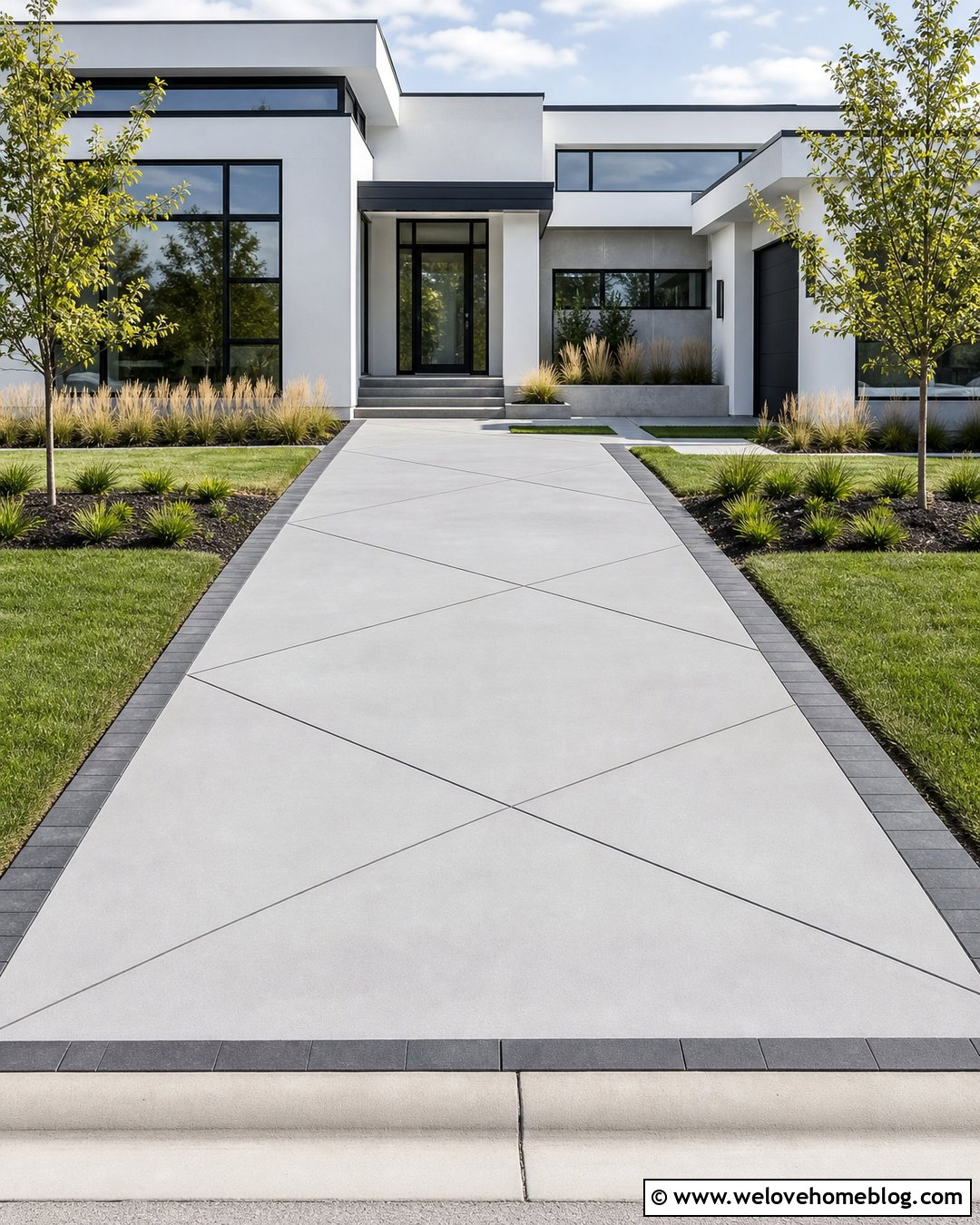
Large-scale diamonds create a calmer pattern than a grid filled with many small sections. This makes them a strong choice for a short driveway or a minimalist home where too many lines could look busy. Use smooth, pale gray concrete with wide diagonal scoring that produces only a few complete diamonds across the surface. Add a flush border of black concrete pavers to define the perimeter. Architectural grasses, rectangular planting beds, and a matching concrete walkway can continue the geometric theme without competing with it. The oversized layout should remain centered on the garage doors and symmetrical when viewed from the curb. Before installation, map the pattern on a scaled drawing to avoid awkward partial diamonds along visible edges.
4. Small Diamond Concrete Driveway With Brick Border
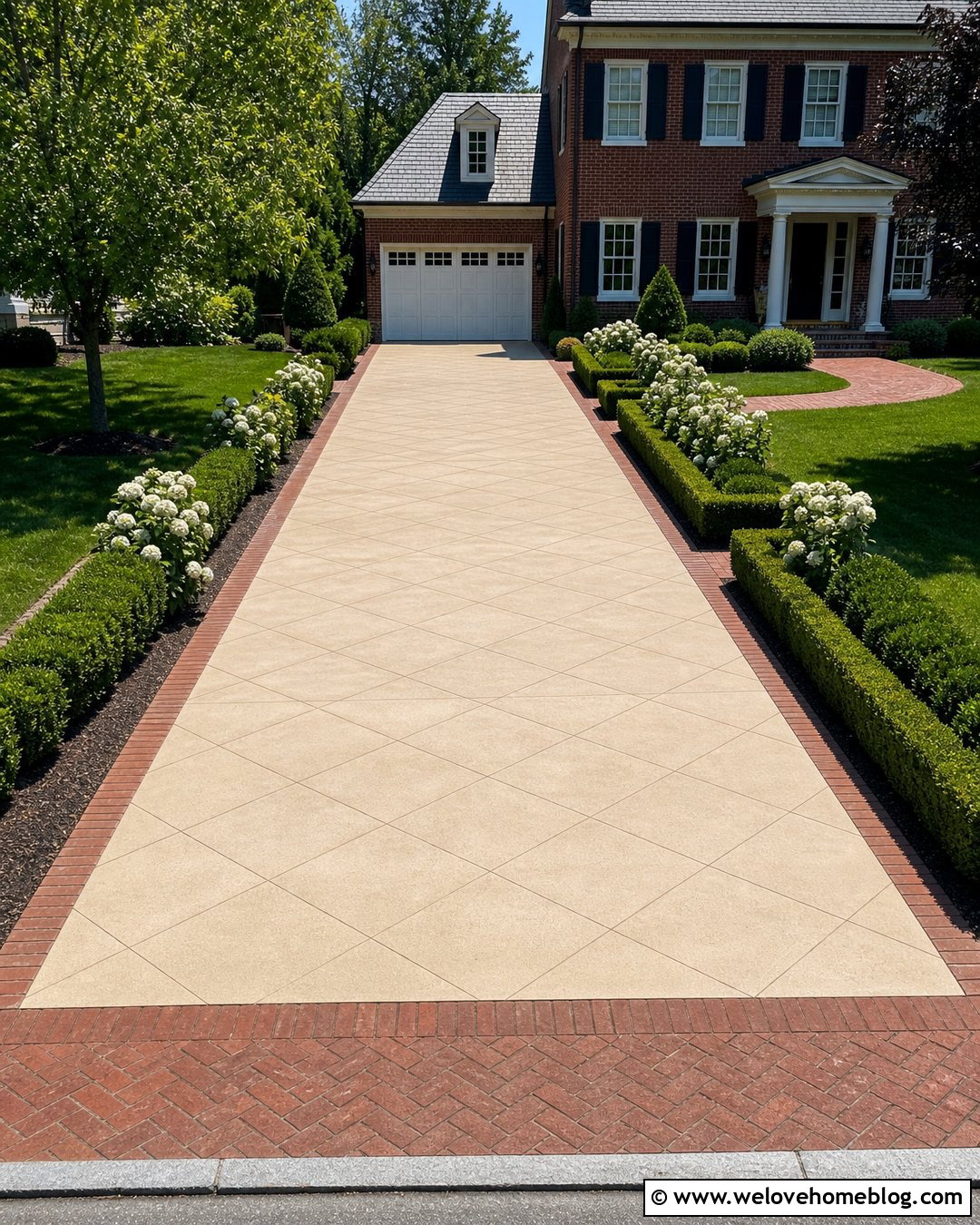
Smaller scored diamonds bring traditional detail to a basic concrete driveway. Pair cream or light taupe concrete with narrow scoring and a red clay brick border. The brick creates a warm connection to a colonial, Cape Cod, or brick-front house while clearly separating the driveway from the lawn. A matching brick apron at the street can make the entire entrance feel more intentional. Keep the surrounding landscaping structured with boxwood, flowering shrubs, and balanced beds on both sides. Because small patterns create more visible lines, use them on a compact or medium driveway rather than an exceptionally large parking area. Repeating the same brick around the walkway helps the driveway, entrance, and front door read as one coordinated exterior.
5. Exposed Aggregate Diamond Driveway
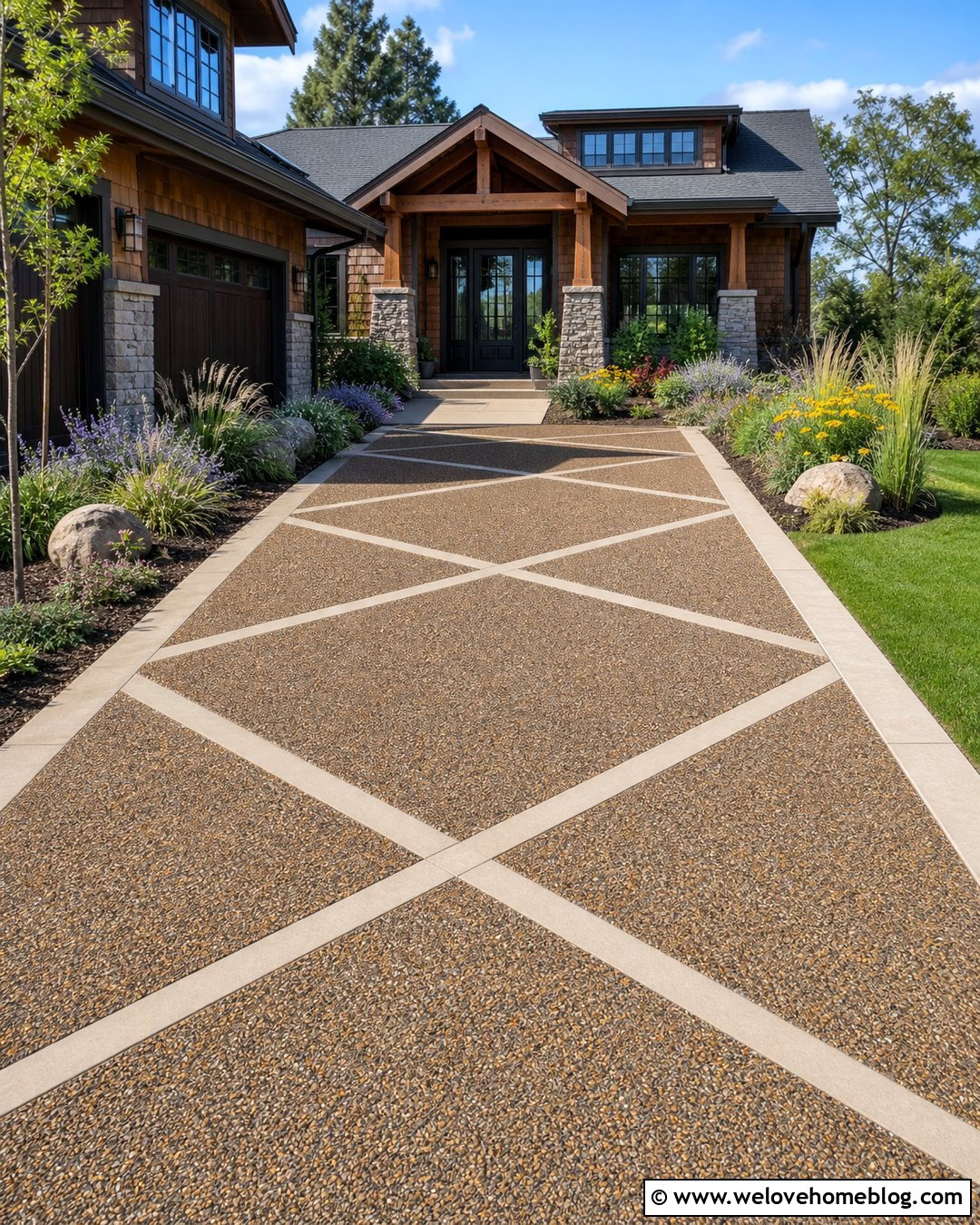
Exposed aggregate adds natural texture, while smooth concrete bands create the diamond geometry. Instead of cutting thin lines into the surface, form wider diagonal strips that cross the aggregate field. A warm mix containing tan, gray, and brown stones works beautifully with craftsman homes and natural stone facades. Outline the driveway with smooth concrete curbing in the same color as the bands. Plant compact evergreen shrubs, native grasses, and small flowering perennials beside the edges. The contrast between the pebbled surface and smooth grid makes the pattern visible without relying on strong color differences. Place the most complete diamonds in front of the garage and near the street, where they will have the greatest visual impact from common viewing angles.
6. Concrete Diamond Driveway With Grass Joints
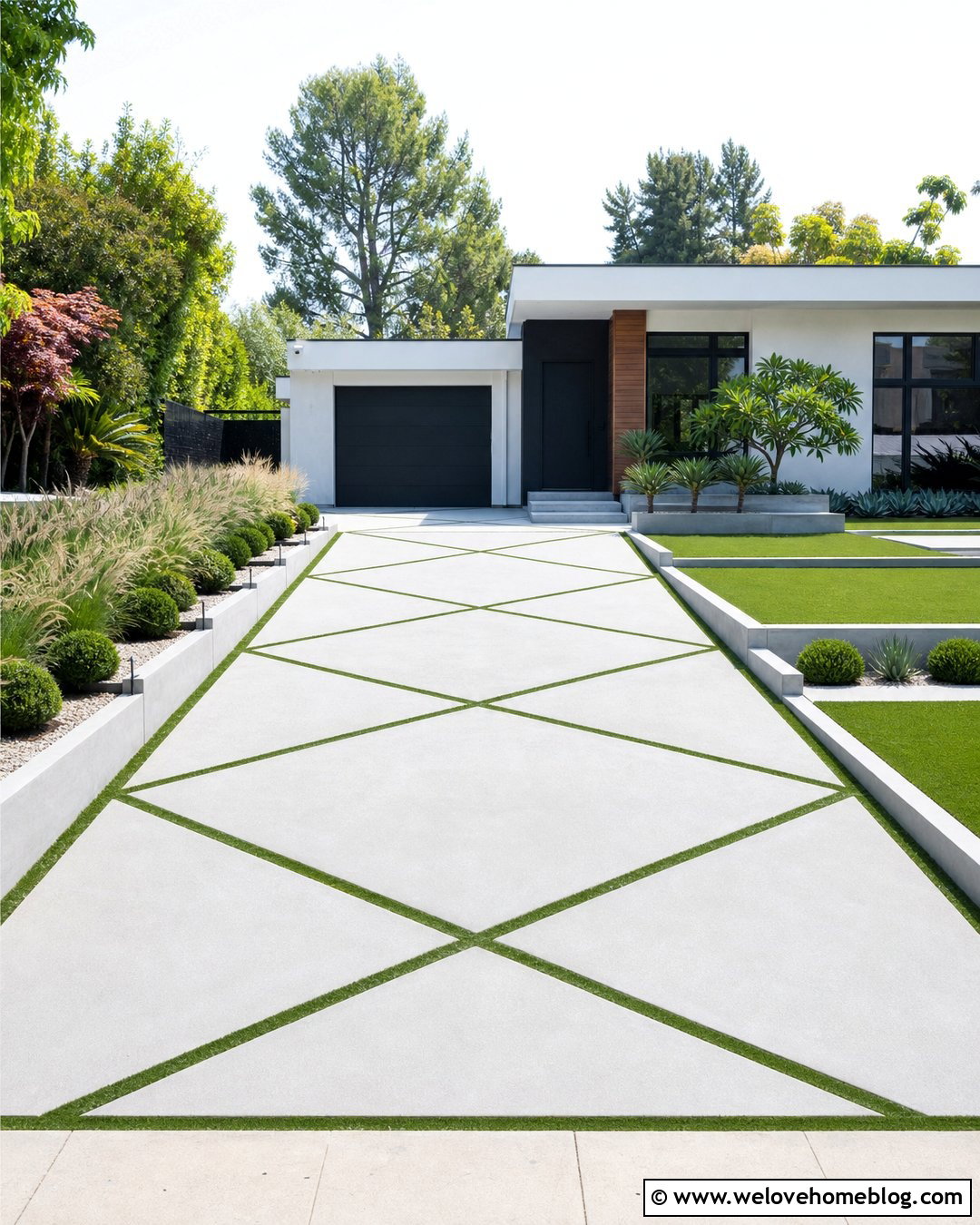
Green joints soften a modern driveway and turn the diamond grid into part of the landscaping. Use large, smooth concrete slabs positioned diagonally so narrow strips of grass or reinforced artificial turf form the pattern between them. A straight layout gives the geometry a crisp appearance, while low concrete edging keeps the surface visually contained. Continue the green accents with rectangular lawn areas, ornamental grasses, and a few sculptural shrubs near the house. This design works best when the joints are planned for the expected vehicle path and local maintenance conditions. Grass requires irrigation, trimming, and suitable sunlight, while artificial turf offers a more consistent appearance. Proper base preparation and drainage remain essential for a stable driving surface. ()
7. Concrete Paver Diamond Driveway With Gravel Joints
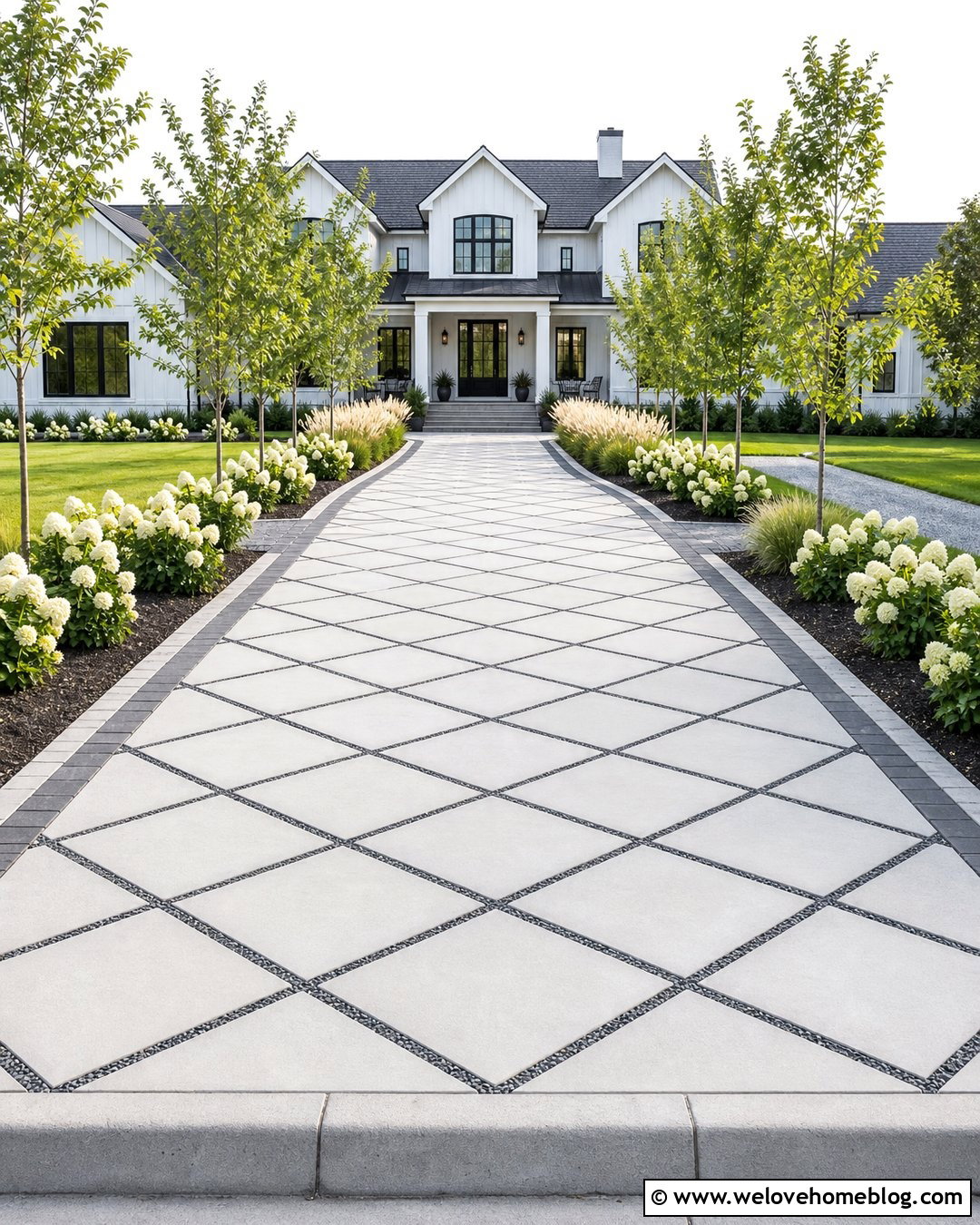
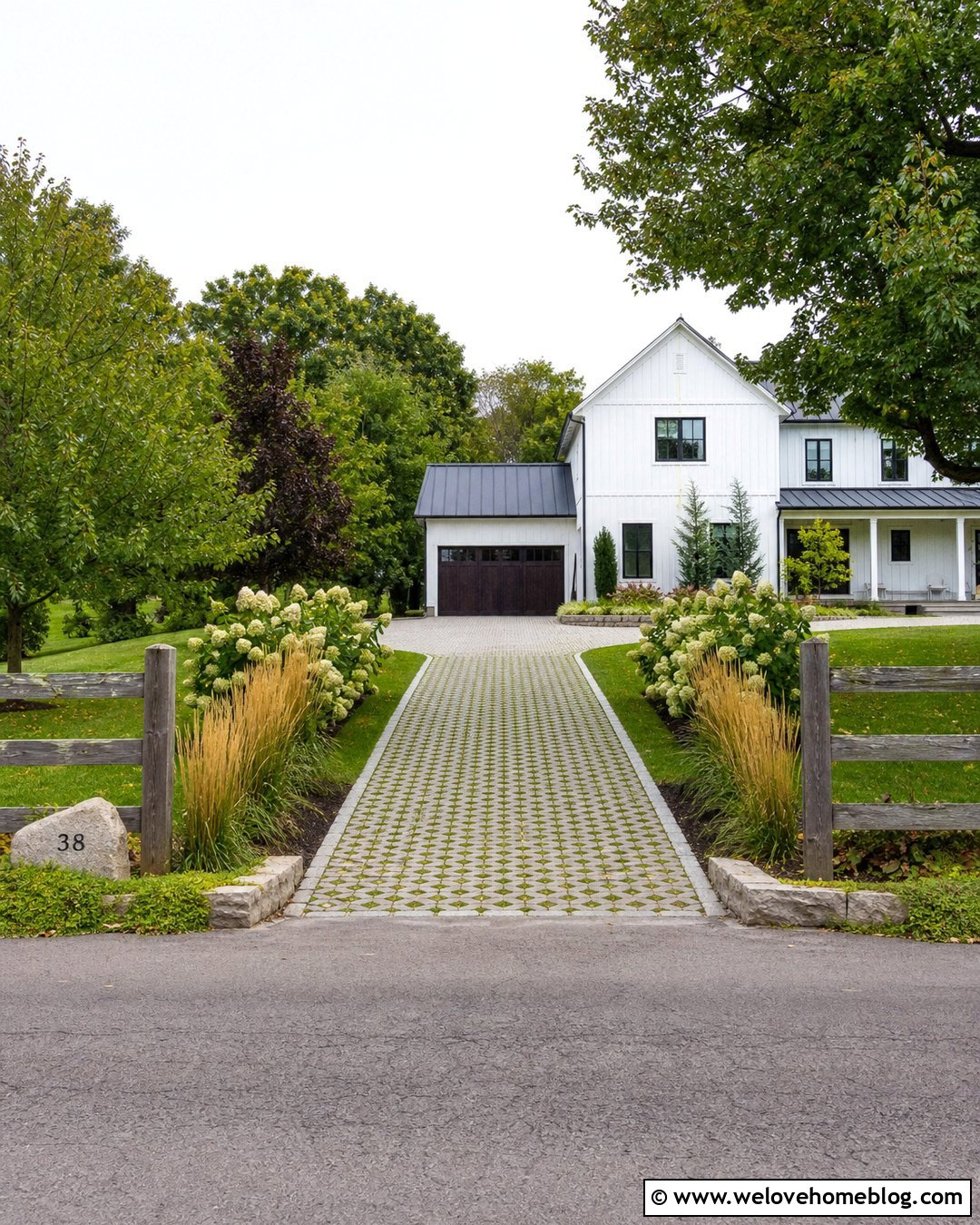
Square concrete pavers rotated 45 degrees can form a clear diamond layout without decorative cutting. Select large pale gray pavers and separate them with narrow bands of dark crushed gravel. The contrast outlines every unit and gives the driveway a relaxed contemporary character. Use rigid edging or a contrasting paver border to prevent the perimeter from appearing unfinished. This surface pairs naturally with a modern farmhouse, especially when surrounded by soft grasses, hydrangeas, and a generous green lawn. Keep gravel joints narrow in areas exposed to frequent tire movement, and use an appropriately prepared base beneath the entire driveway. A coordinating gravel walkway or planting-bed mulch can repeat the joint material elsewhere, making the pattern feel connected to the broader landscape.
8. Charcoal And Cream Paver Diamond Driveway
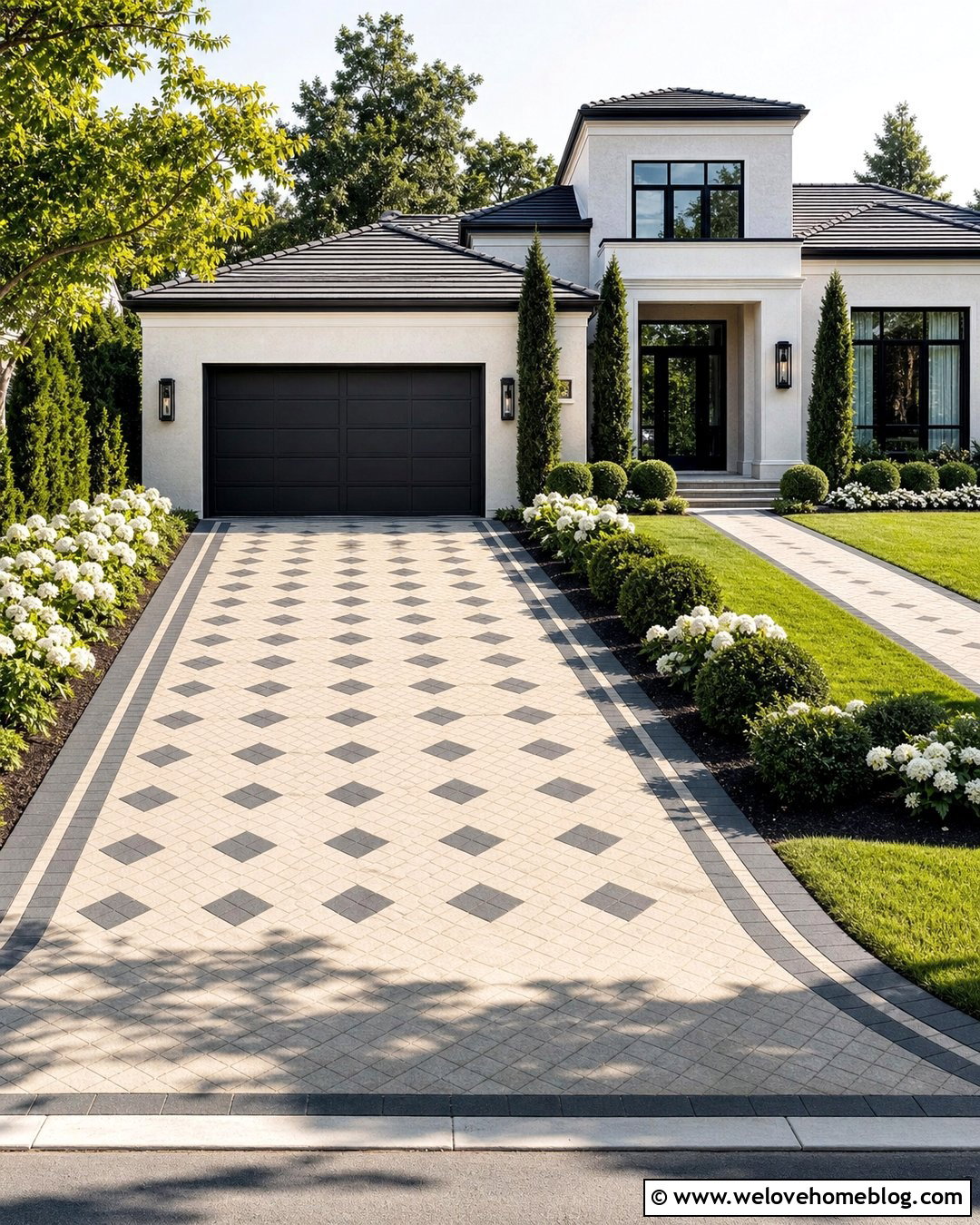
A two-color concrete paver layout delivers strong geometry with a polished finish. Use cream square pavers as the main field, turning each unit diagonally to form repeating diamonds. Add charcoal pavers at regular intervals to create a restrained checkerboard effect. A double charcoal border will frame the design and provide a clean transition to the lawn. This driveway looks especially balanced in front of a light stucco or painted brick house with dark windows. Keep the landscaping relatively simple so it does not compete with the surface. Rounded shrubs, white flowers, and a straight paved walkway are enough to complete the entrance. Lay out the color sequence carefully before installation so the dark accents remain evenly spaced across the entire driveway.
9. Red Brick Diamond Driveway
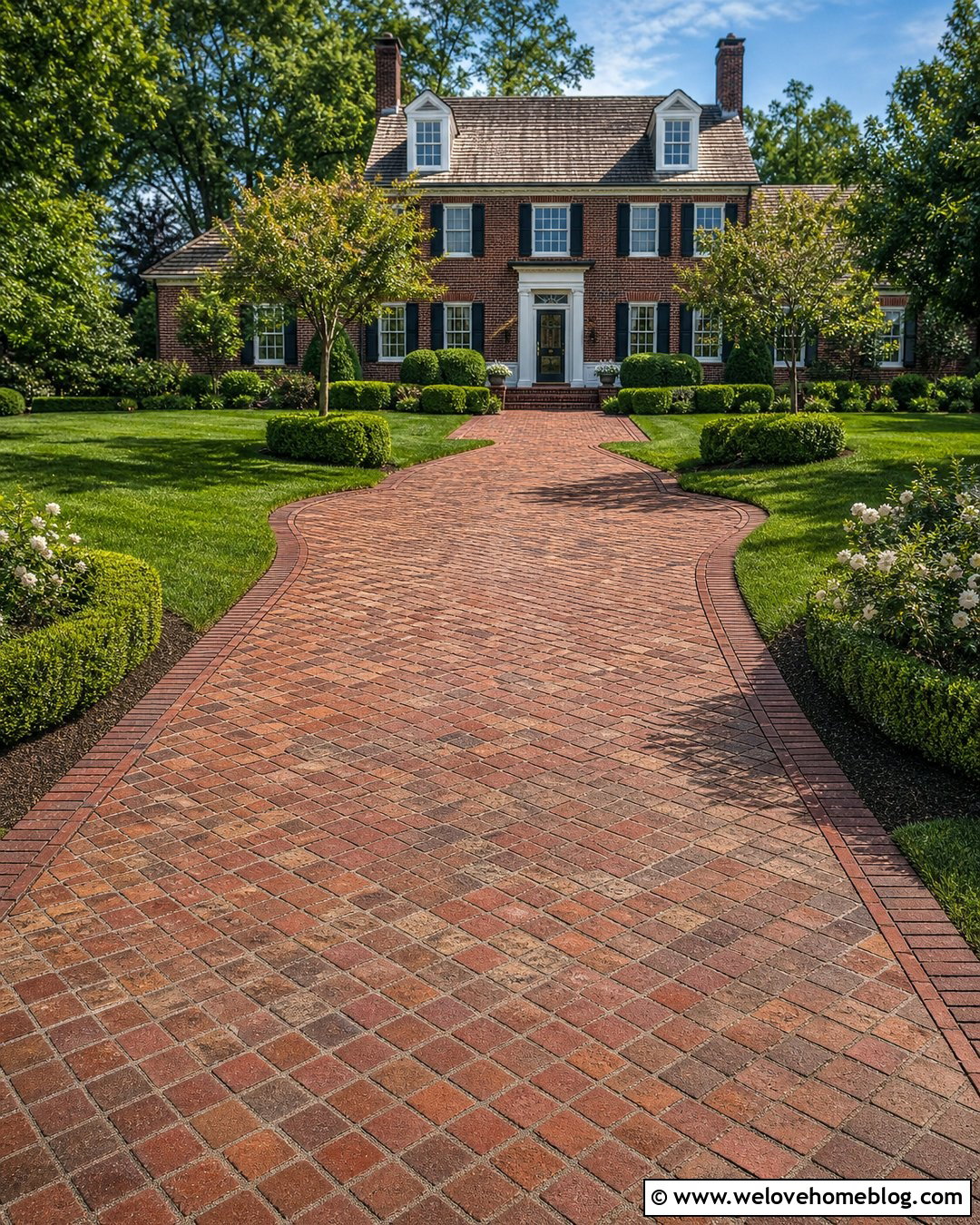
Clay brick pavers arranged in a diagonal grid create a warm driveway with traditional character. Choose weathered red and brown bricks for the main field, then install a darker soldier-course border around the perimeter. The angled layout makes the driveway feel more decorative than a standard running bond while still complementing classic architecture. This complete look suits colonial, Tudor, and traditional brick homes. Frame it with curved planting beds containing boxwood, roses, and small ornamental trees. A gently flared entrance can improve the view of the pattern from the street. Since real clay brick naturally varies in tone, blend bricks from multiple pallets during installation. That prevents isolated patches of one color and gives the diamond field a more balanced appearance.

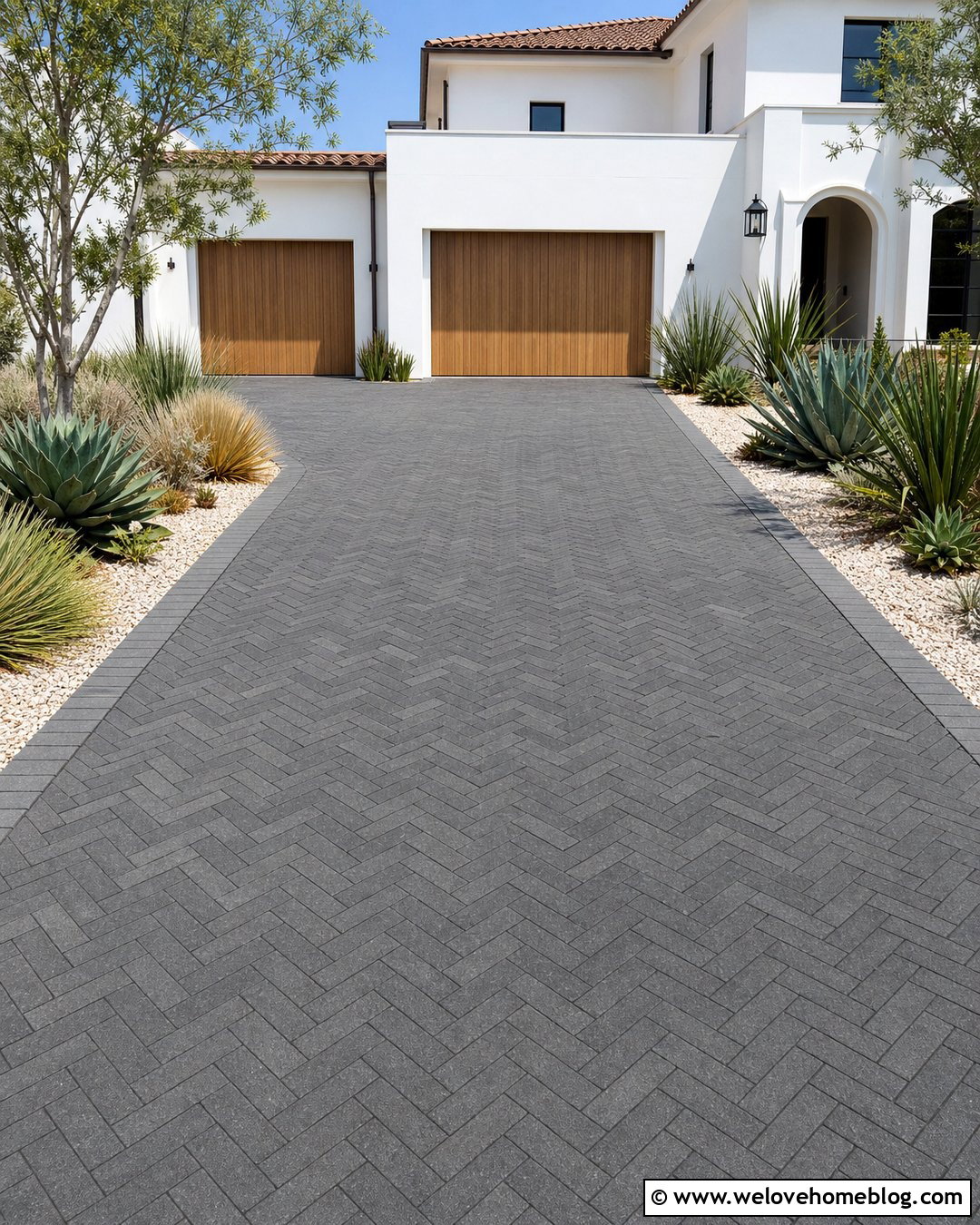
10. Cobblestone Diamond Driveway
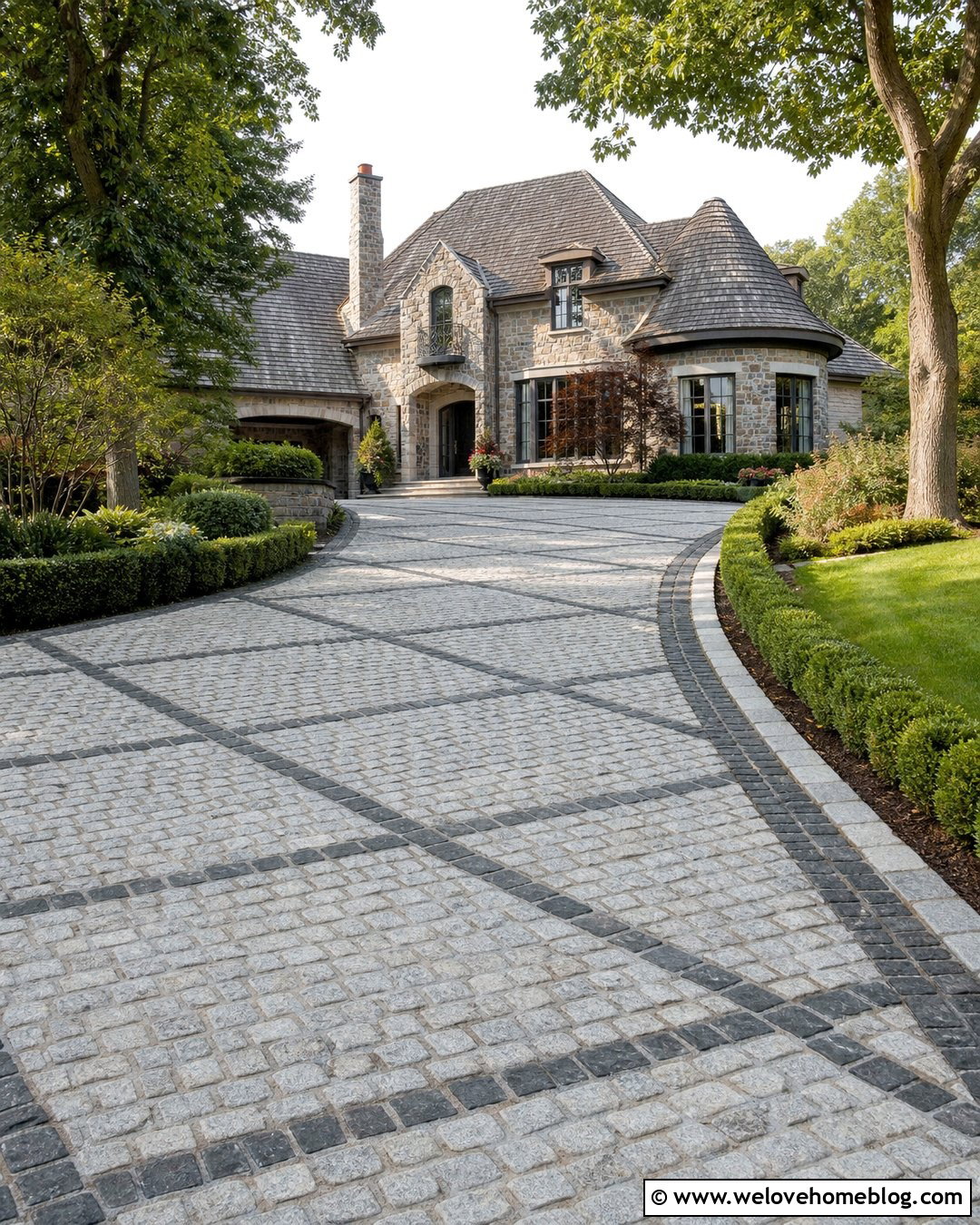
Granite cobblestones can form an elegant diamond driveway with deep texture and subtle color variation. Use medium gray cobbles for the main surface and charcoal stones to trace larger diamonds across the field. A wide cobblestone border will reinforce the perimeter and support the formal appearance. This material works especially well on a curved driveway leading to a stone colonial, European-inspired home, or renovated historic property. Surround the drive with clipped hedges, mature shade trees, and softly curved lawn edges. Keep the diamond scale generous because small cobblestone diamonds may appear visually crowded. A smoother stone apron near the garage can create a practical transition while preserving the overall look. Warm gray walkway stones can connect the driveway pattern to the front entrance.
11. Resin-Bound Diamond Driveway With Paver Bands
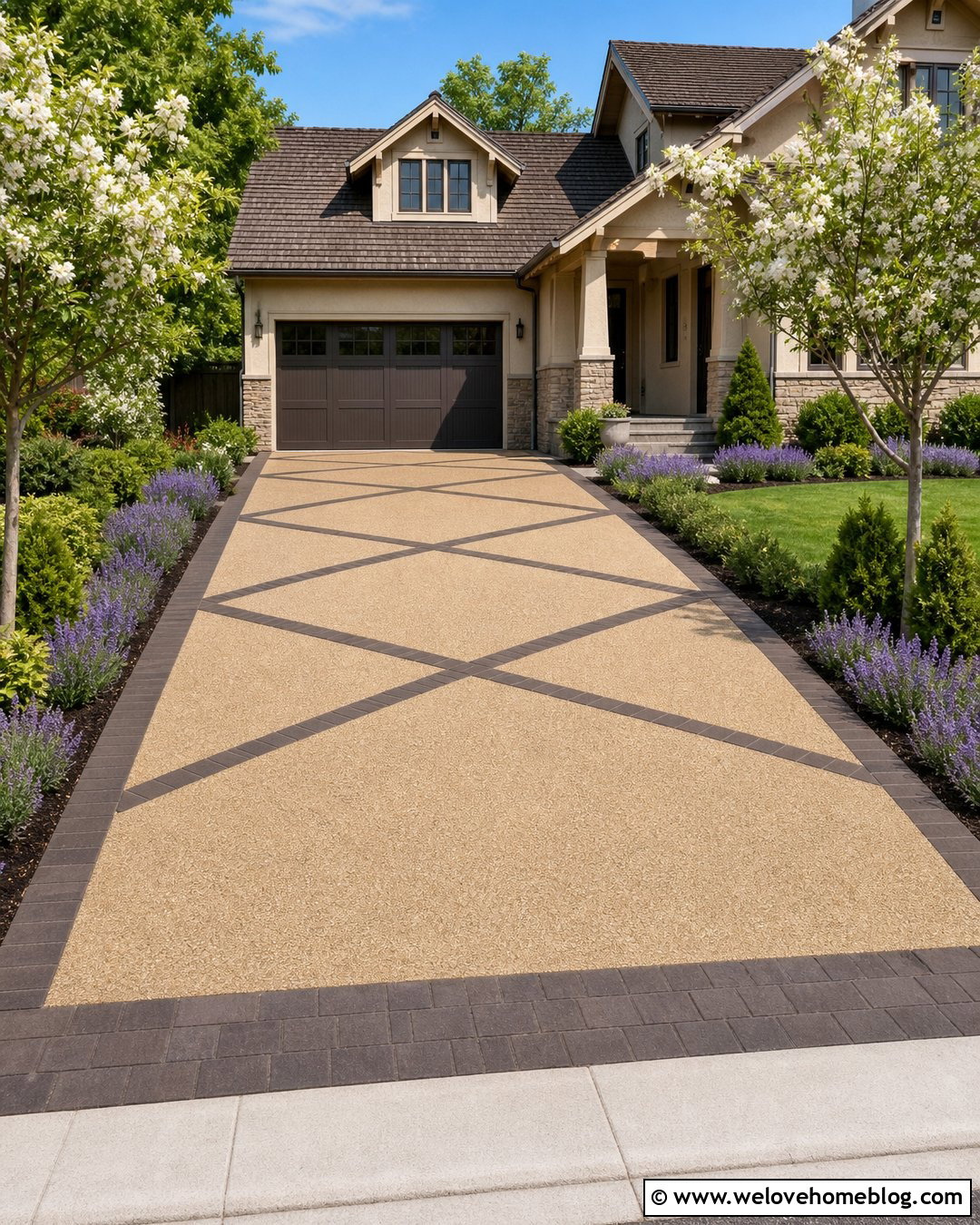
Resin-bound gravel creates a smooth-looking field that can be divided by crisp paver bands. Choose warm beige resin-bound gravel and install dark brown concrete pavers in diagonal lines to form oversized diamonds. Repeat the same pavers around the outer edge and at the street apron. The fine gravel texture keeps the surface understated, while the bands provide enough definition to make the pattern visible from a distance. This combination complements stucco, craftsman, and contemporary farmhouse exteriors. Use layered landscaping with evergreen shrubs, lavender, and small flowering trees to soften the straight geometry. Carefully planned drainage and professional installation are important, particularly where the paver bands meet the resin surface. Keep each transition level to create a unified driveway rather than separate decorative panels.
12. Gravel Driveway With Stone Diamond Inlays
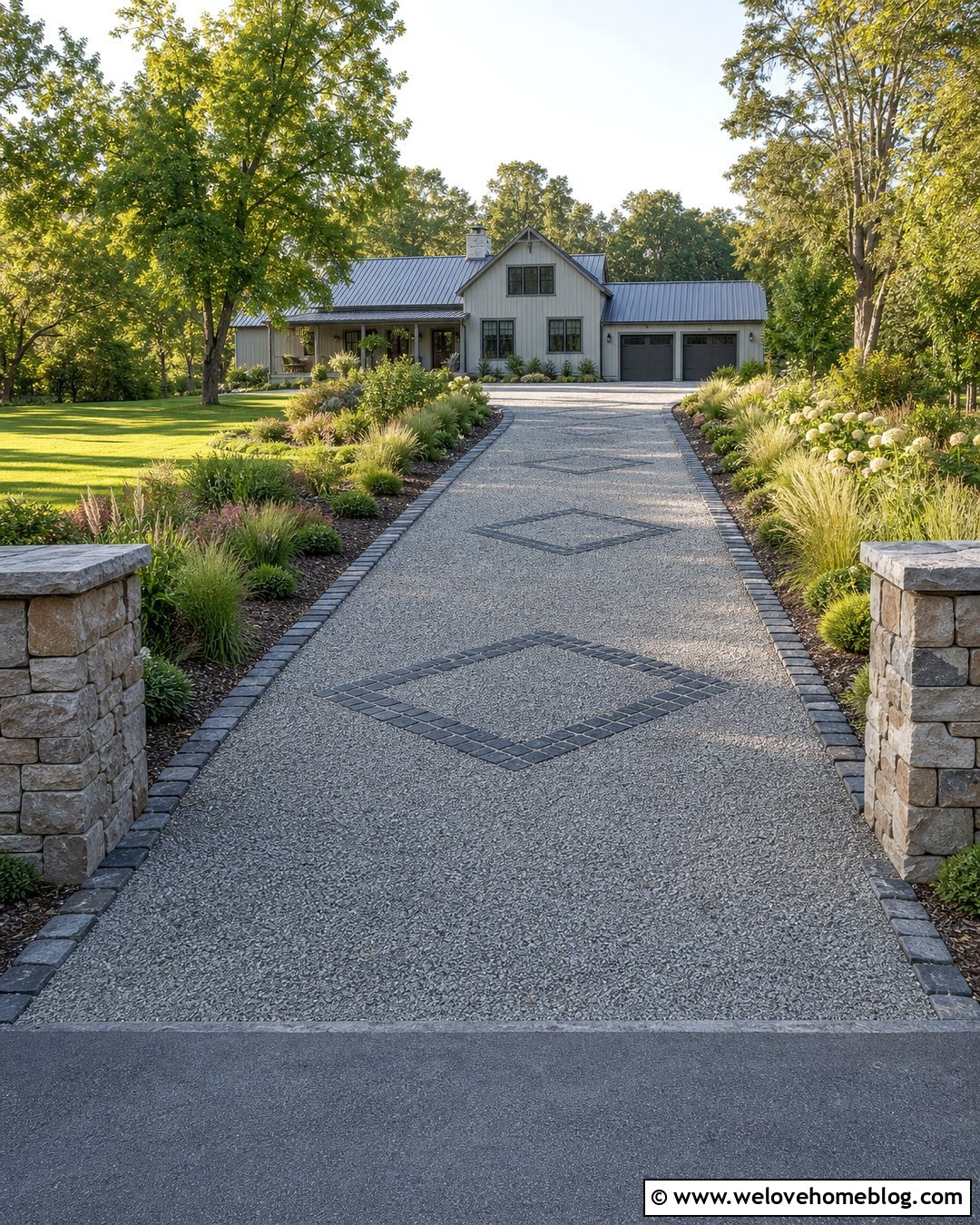
A compacted gray gravel driveway can include diamond-shaped stone inlays at key points instead of covering the entire surface with a pattern. Install large diamonds made from flat charcoal cobblestones near the entrance, parking area, and garage approach. Connect them visually with matching stone edging along both sides. The restrained repetition is easier to read than dozens of small shapes scattered through loose gravel. This look fits a country home, farmhouse, or wooded property. Frame the driveway with native grasses, flowering shrubs, and informal tree groupings. The stone inlays need a stable base and secure edges so they remain level beside the gravel. A generous gravel apron around each diamond helps the decorative stones feel integrated into the driving surface rather than placed on top.
13. Black Asphalt Driveway With Concrete Diamonds
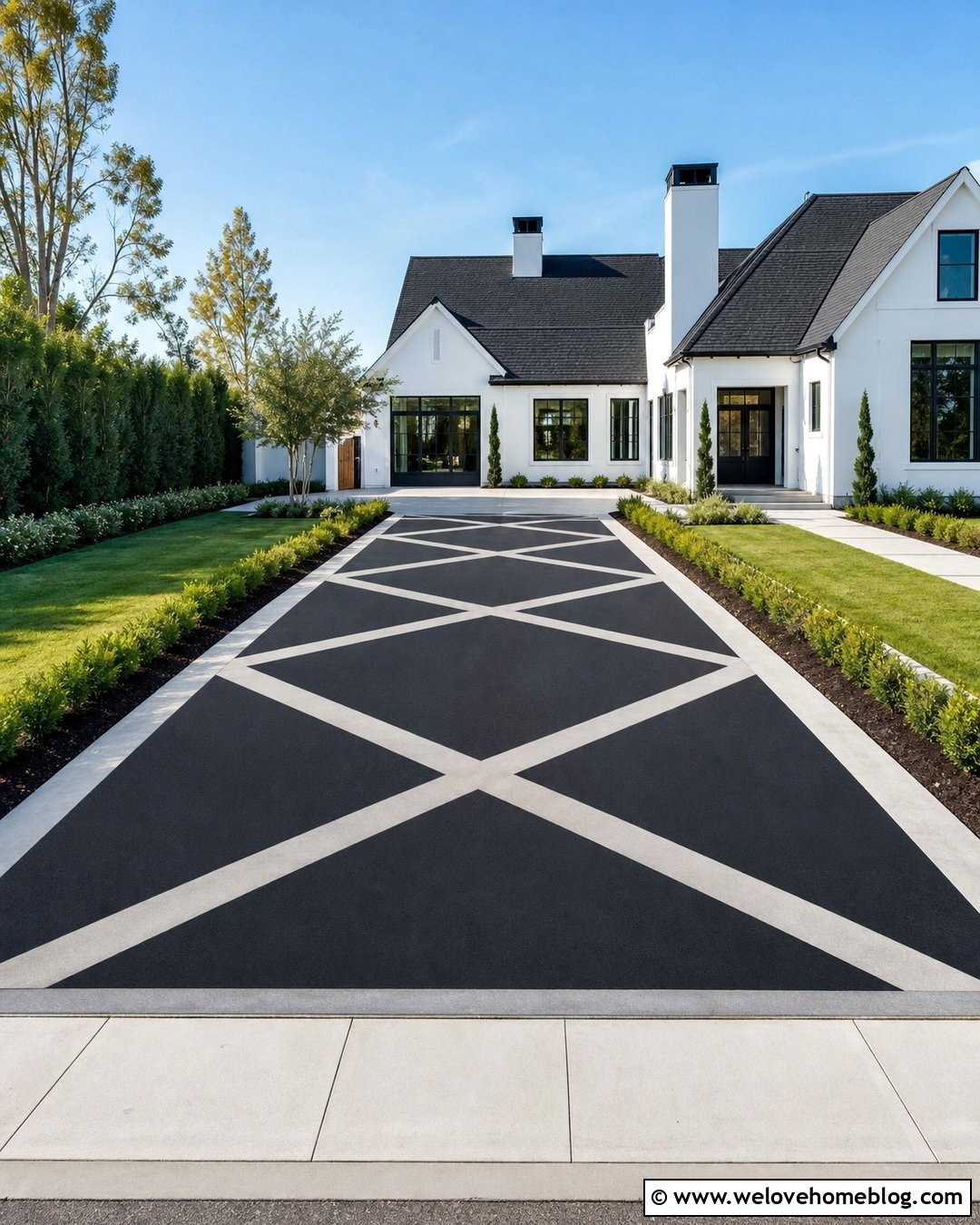
Black asphalt provides a bold background for pale concrete bands arranged in a diamond grid. Use wide concrete strips rather than painted markings so the pattern becomes a permanent hardscape feature. A matching concrete apron and edge restraint will connect the grid to the street and garage. This high-contrast design works well with a modern white house, dark roof, and simple facade. Surround it with broad lawn panels, low hedges, and linear planting beds to reinforce the clean geometry. Keep the diamonds large and evenly centered across the driveway. Too many narrow bands could make the surface resemble a parking area rather than a residential entrance. The asphalt and concrete should be installed with properly planned transitions because the two materials can respond differently to temperature and ground movement.
14. Stamped Slate Diamond Driveway
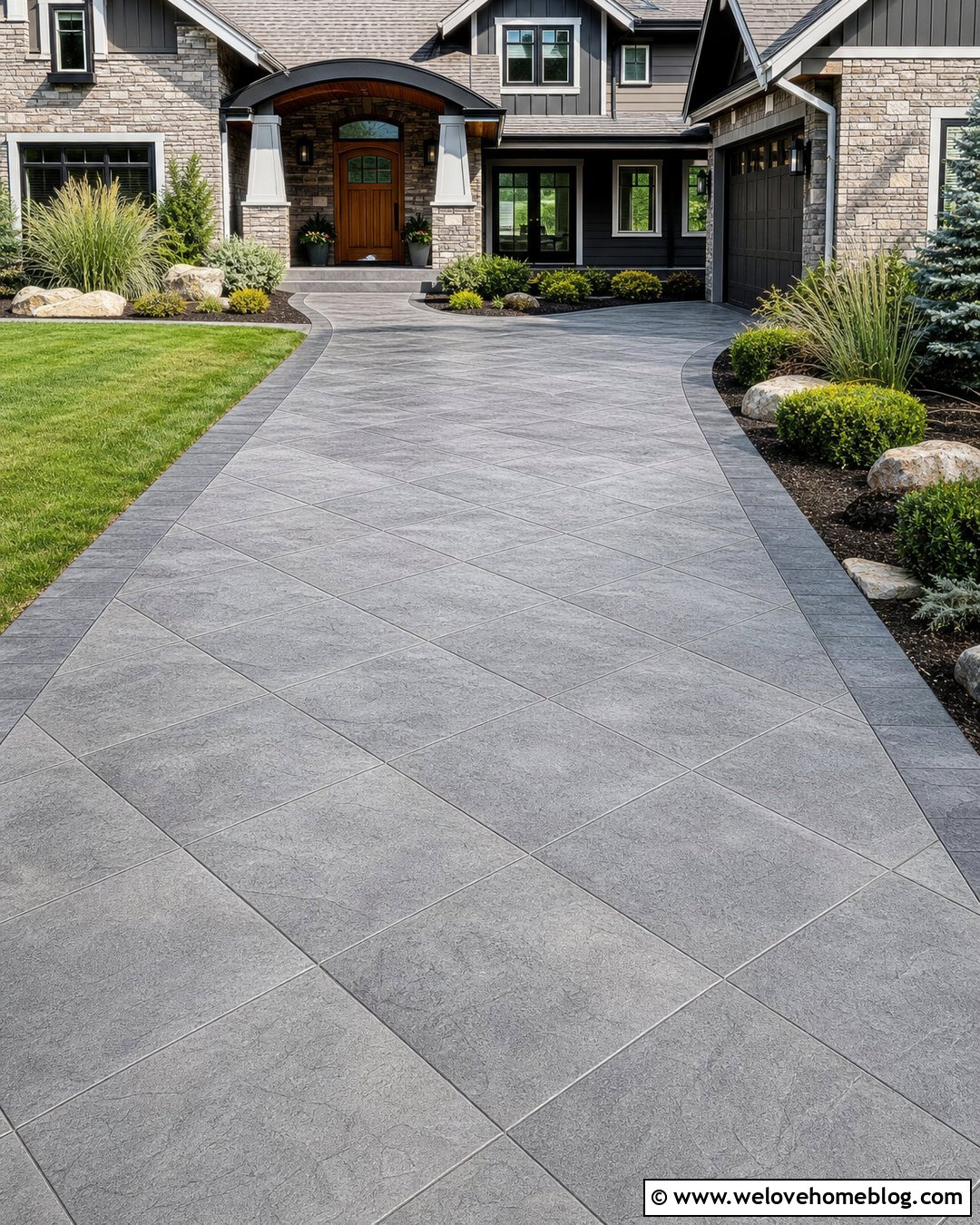
Stamped concrete can imitate the texture of slate while a diamond layout keeps the surface orderly. Choose a medium gray base with restrained charcoal antiquing, then form large tile-like diamonds across a straight driveway. A smooth charcoal concrete border will provide contrast without adding another competing texture. This combination suits transitional, mountain, and contemporary homes that use stone or dark siding. Add evergreen shrubs, natural boulders, and ornamental grasses around the edges for a complete landscape. Use a subtle slate texture rather than a deeply uneven finish in primary tire paths. Repeating the dark border around the walkway or entry steps can tie the entire front yard together. Limit the color palette to two or three related tones so the textured pattern remains sophisticated. ()
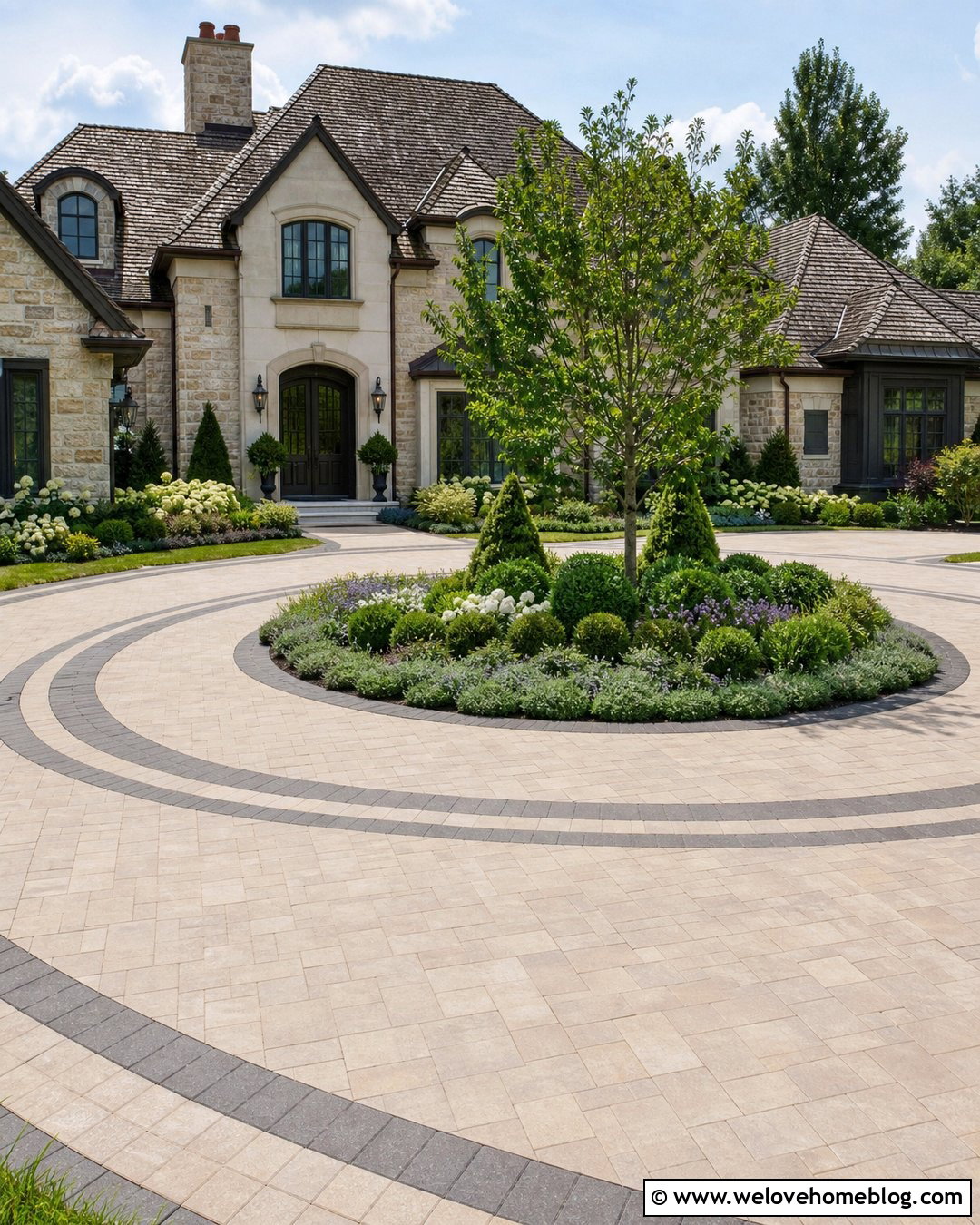
15. Travertine-Look Paver Diamond Driveway
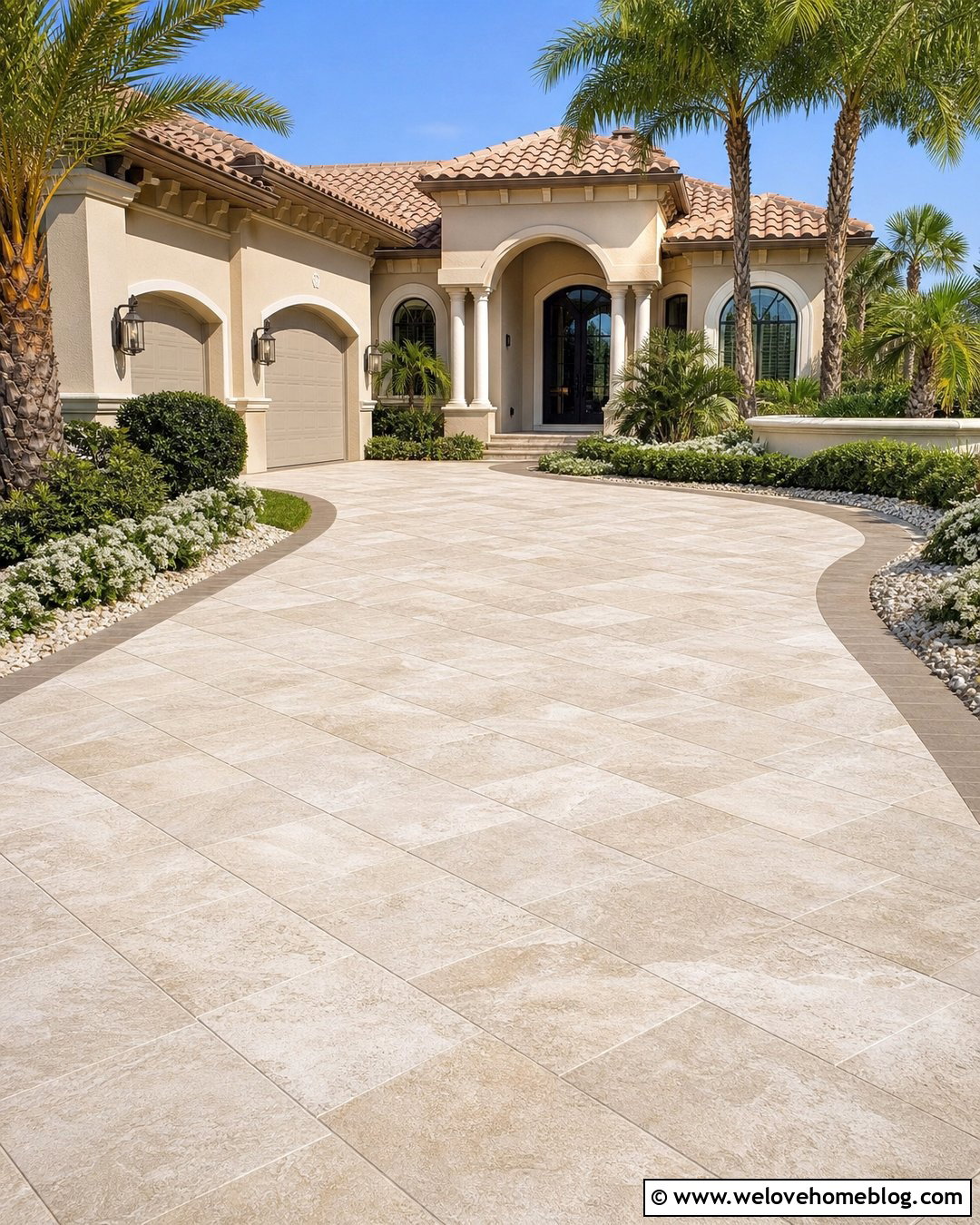
Cream and sand-colored concrete pavers can recreate the relaxed appearance of travertine in a driveway-friendly installation. Arrange square pavers diagonally, blending several warm tones throughout the diamond field. Add a narrow taupe border to define the edges without creating harsh contrast. This bright surface complements Mediterranean, Spanish revival, Florida, and coastal homes. Frame the driveway with palms, clipped evergreen shrubs, flowering ground cover, and pale decorative stone. A softly curved layout keeps the formal pattern from feeling too rigid. Use slightly darker pavers at the garage threshold to create a practical visual transition. Because pale surfaces make stains more noticeable, choose pavers intended for vehicle use and ask the installer about suitable sealing and routine maintenance for the specific product.
16. Circular Diamond Pattern Driveway
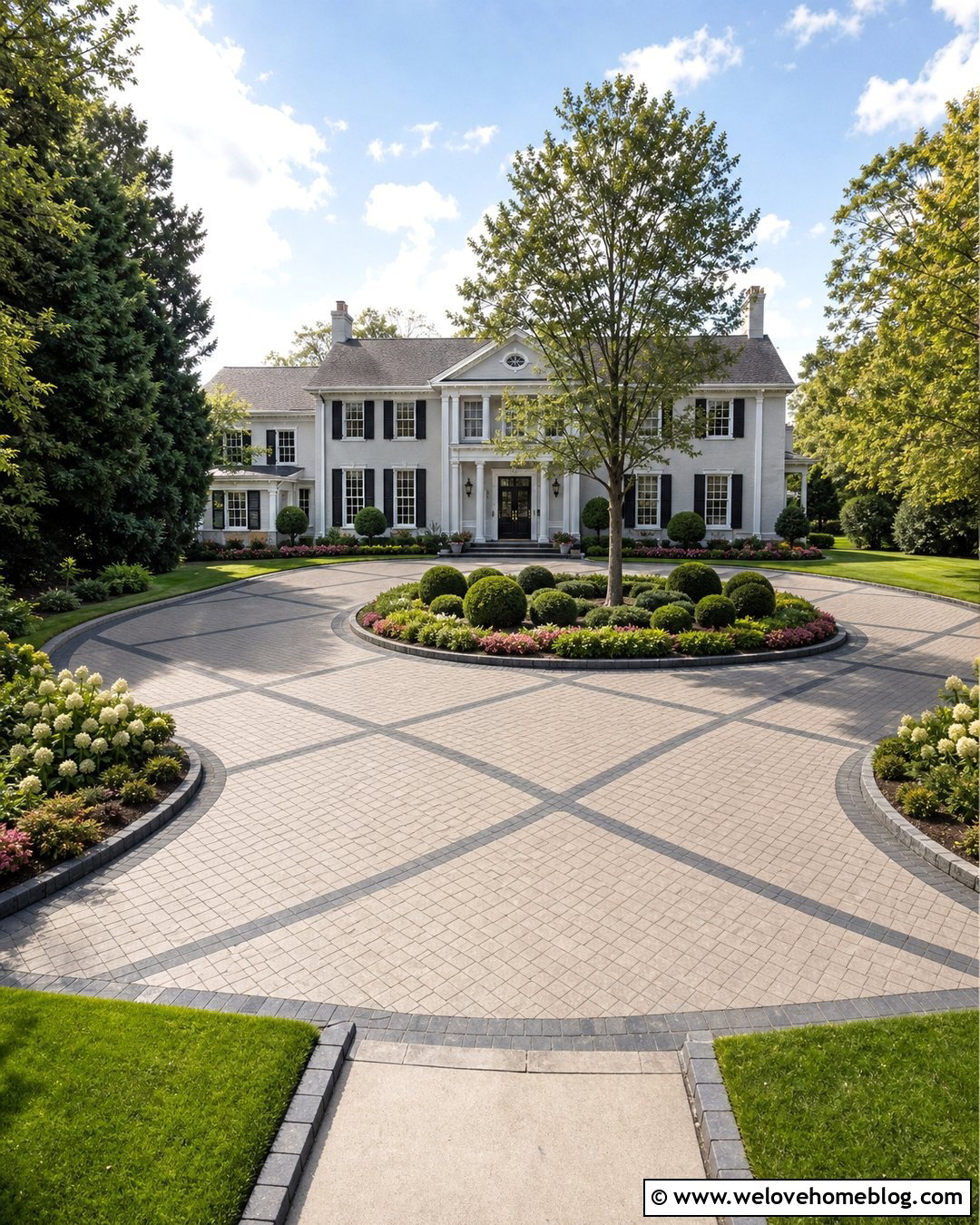
A circular driveway requires a diamond pattern that responds to its curves rather than fighting them. Use small rectangular concrete pavers arranged in angled fields around the loop, with charcoal bands dividing the surface into large diamond-shaped zones. A central landscaped island can feature a specimen tree, low shrubs, and seasonal flowers. Repeat the charcoal pavers around the island and the driveway’s outside edge to unify the design. This formal layout works beautifully with colonial, Georgian, and large traditional homes. Near the entrance and exit, allow the pattern to transition into simpler diagonal courses so cut pieces do not dominate the curb view. The resulting driveway combines the convenience of a circular route with a geometric surface that remains balanced from several viewing directions.
17. Curved Concrete Diamond Driveway
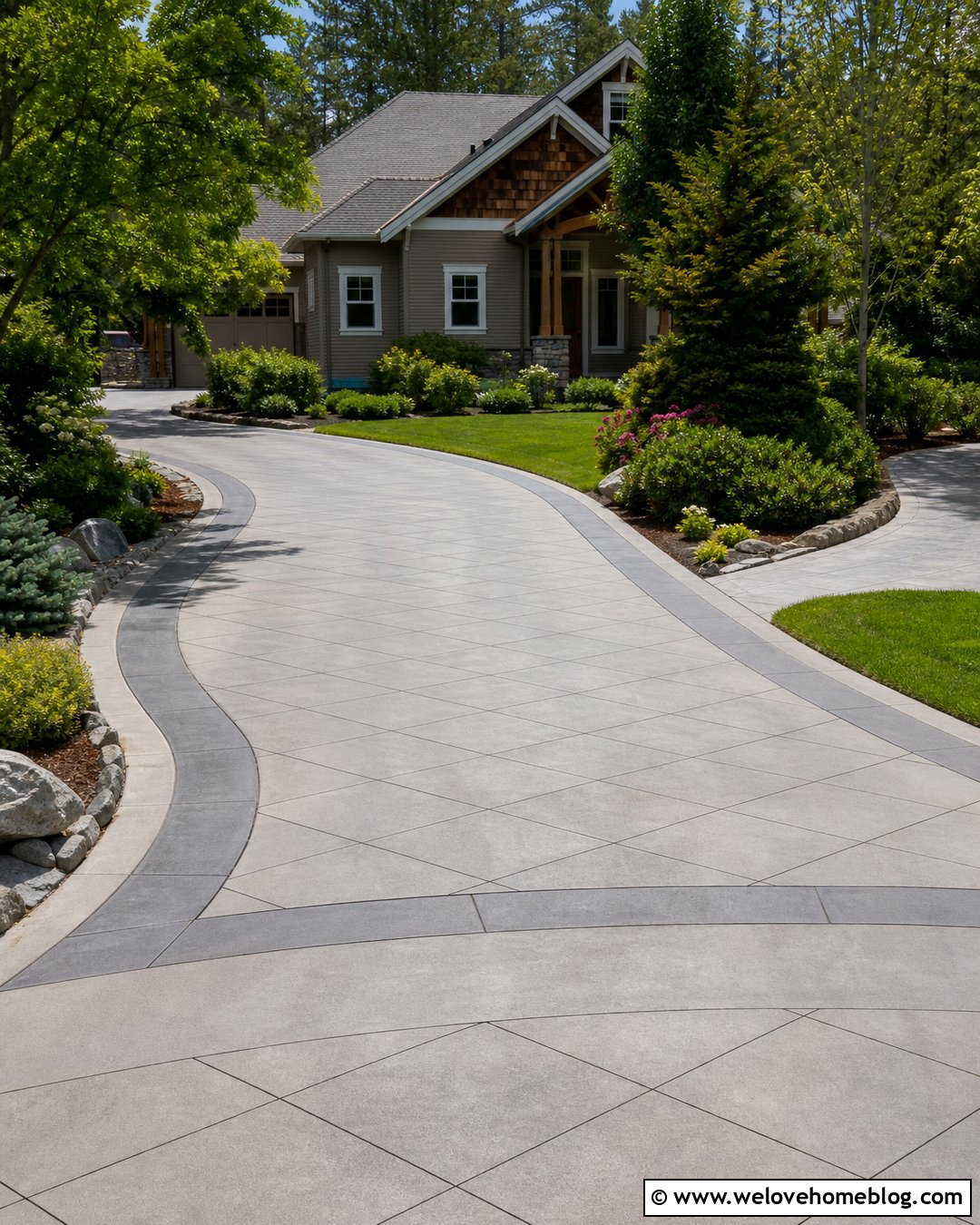
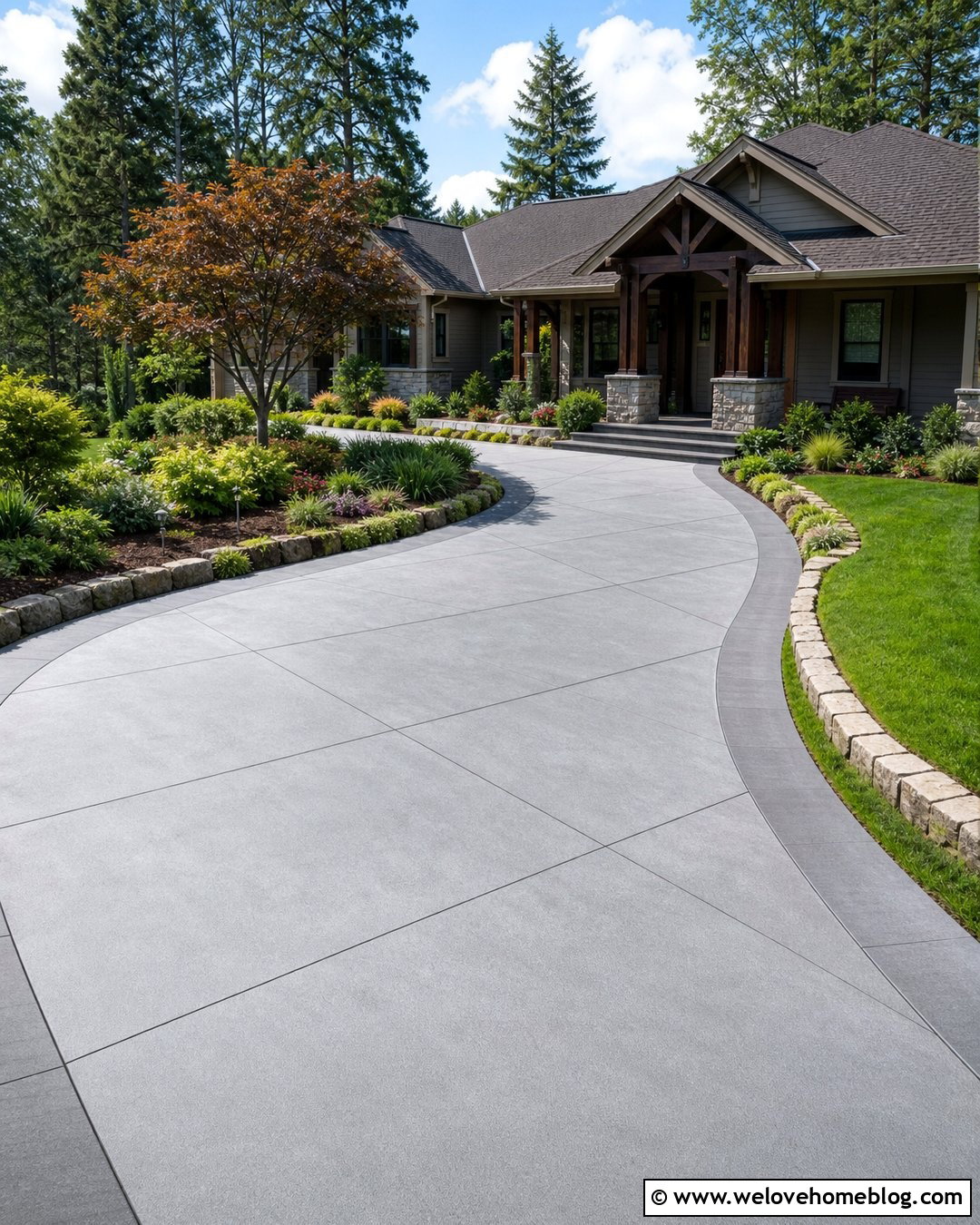
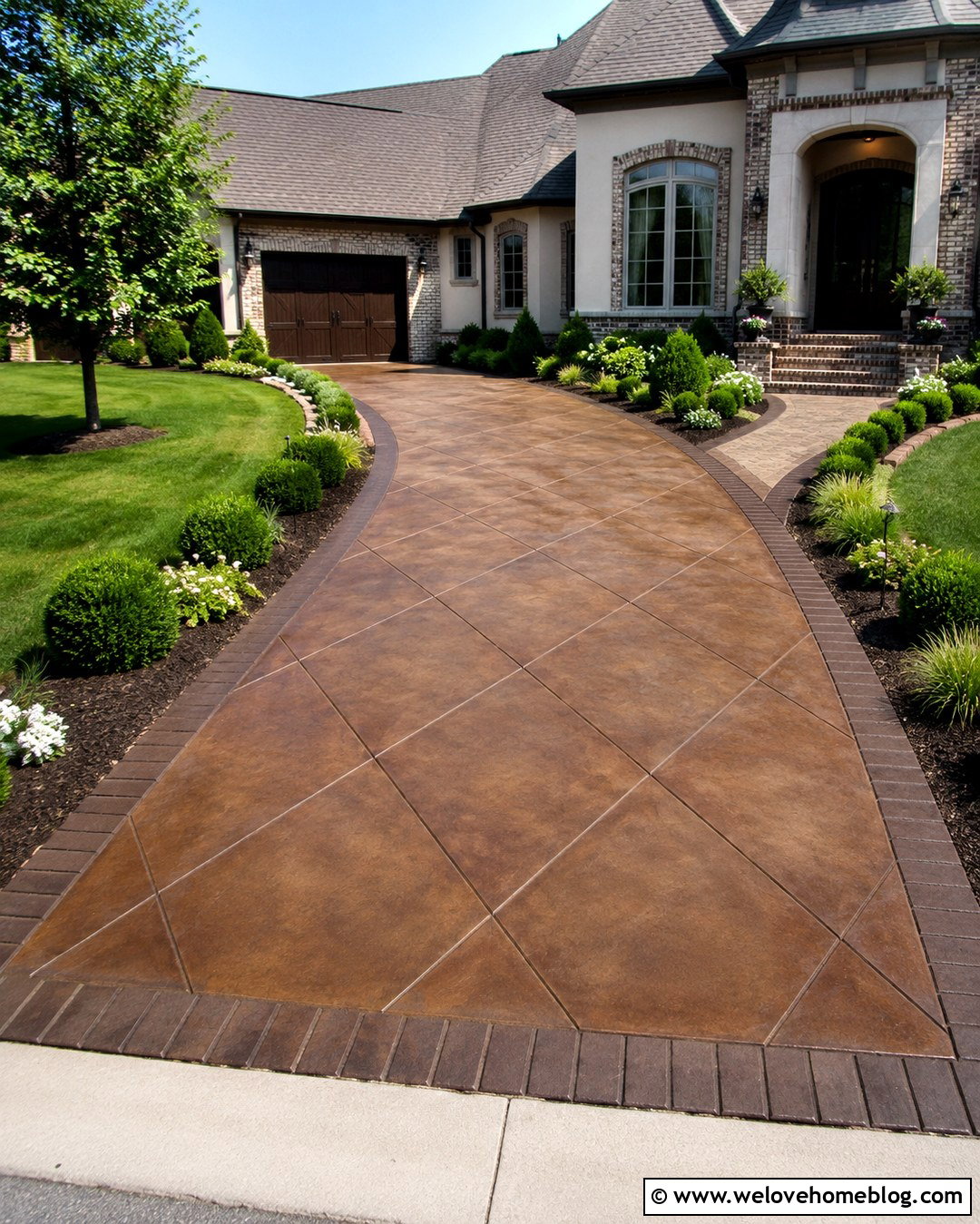
How can a straight-edged diamond grid work on a curved driveway? The key is to divide the surface into manageable sections. Use warm gray poured concrete with diagonal scoring inside each section, while smooth charcoal bands mark the transitions along the curve. The diamonds can subtly change direction as the driveway approaches the garage, creating a natural visual flow. Stone edging, sweeping lawn lines, and layered shrubs should follow the same curve. This design is ideal for a craftsman or contemporary home on a wide suburban lot. Avoid forcing one uninterrupted grid around the entire bend, which can produce awkward partial shapes. A contractor can establish central reference lines for each segment so the pattern remains deliberate and symmetrical in the most visible areas.
18. Farmhouse Concrete Driveway With River Rock Diamonds
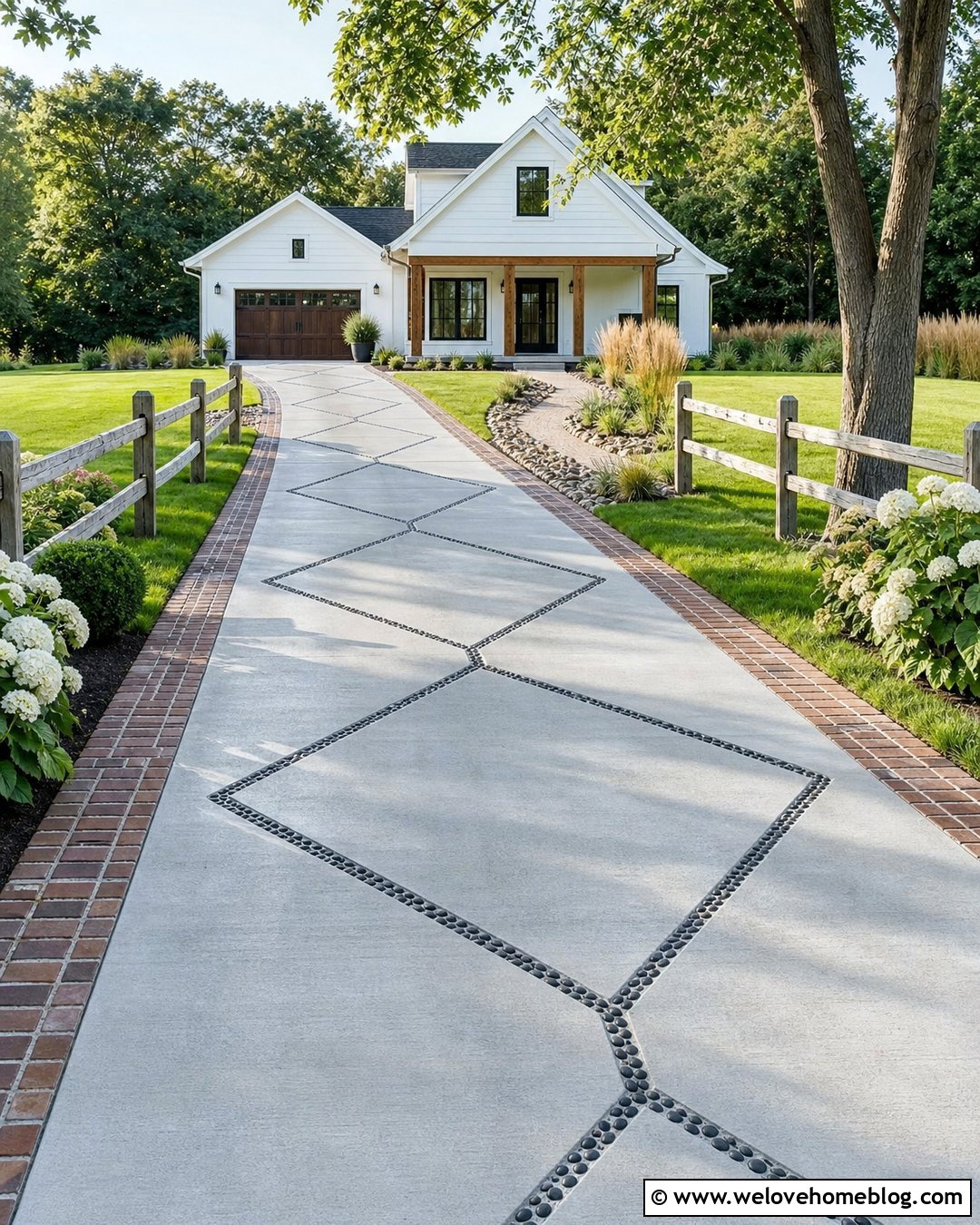
Smooth river rocks can create dark diamond inlays within a light broom-finished concrete driveway. Use the pebbles sparingly, forming a series of large connected diamonds through the center while leaving clear concrete tire paths on both sides. Add reclaimed brick or dark cobblestone edging to bring warmth to the perimeter. This combination feels especially appropriate beside a white modern farmhouse, barn-inspired garage, or country ranch. Frame the driveway with hydrangeas, ornamental grasses, split-rail fencing, and broad lawn areas. The stones should be securely embedded and finished as level as practical with the surrounding concrete. Repeating the river rock in nearby planting beds will make the decorative inlay feel like a natural extension of the landscape. ()
19. Shell Aggregate Diamond Driveway
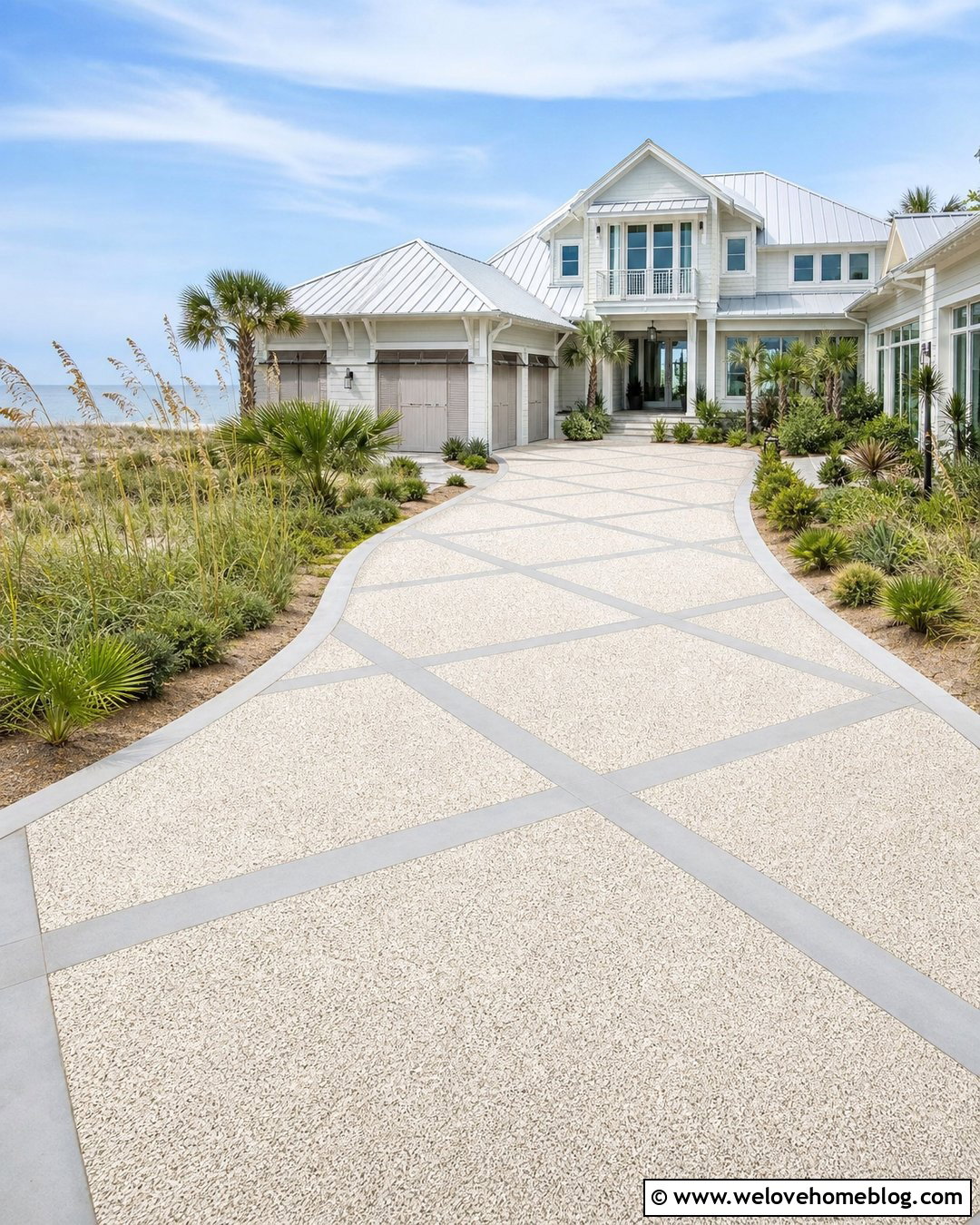
A pale shell or coastal aggregate surface can gain definition from smooth concrete diamond bands. Choose a cream-toned aggregate field with soft gray concrete strips crossing diagonally at wide intervals. Edge the driveway with the same gray concrete to create a clean boundary against sandy planting beds. Sea oats, dwarf palms, evergreen shrubs, and other regionally suitable plants can reinforce the coastal setting without hiding the pattern. This complete design works well with a beach cottage, coastal contemporary home, or light-colored bungalow. Keep the diamond layout broad and uncomplicated so the varied aggregate texture remains visible. Near the garage, use a wider smooth concrete band to create a strong transition. Material specifications should account for local weather, drainage, and regular vehicle traffic.
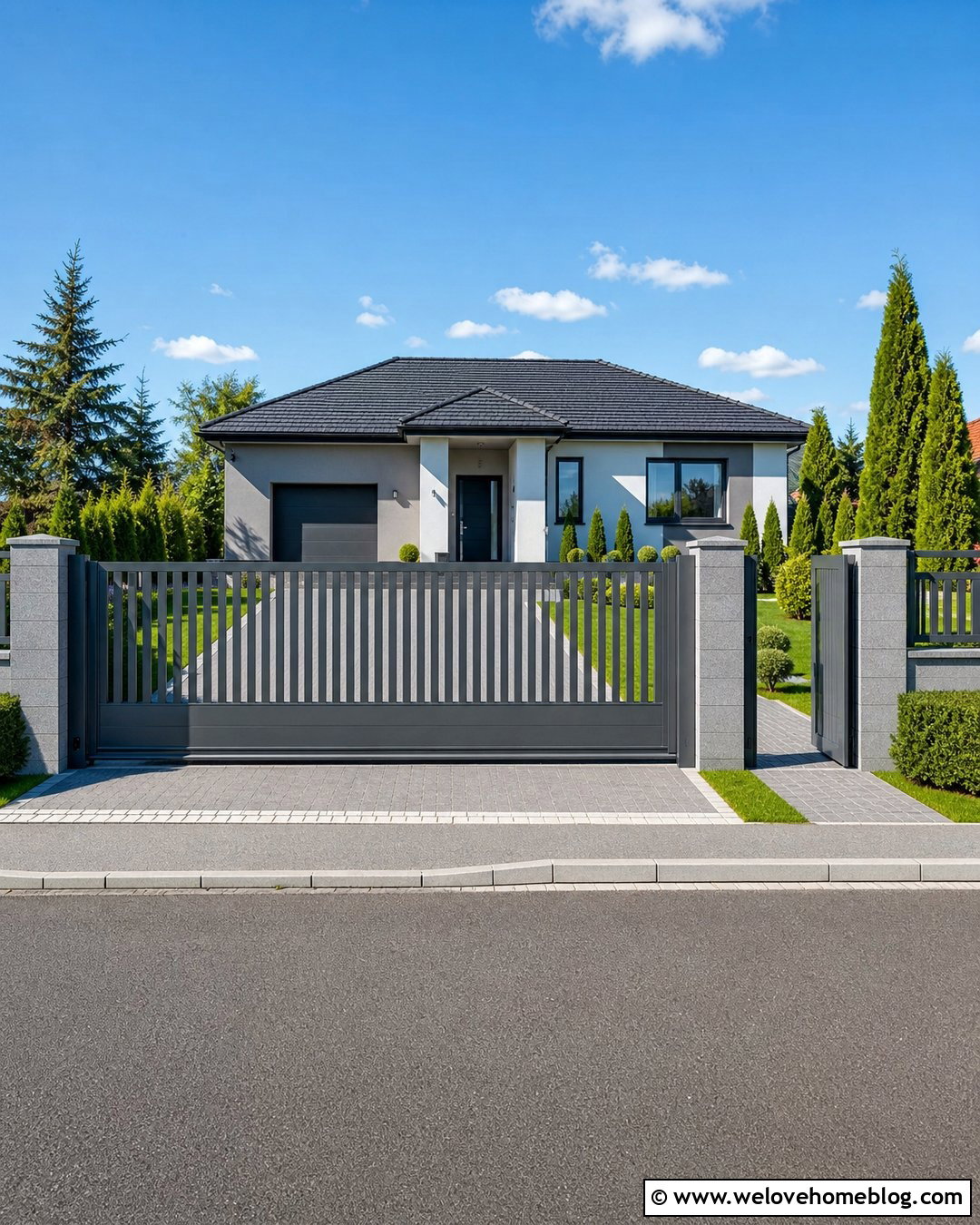
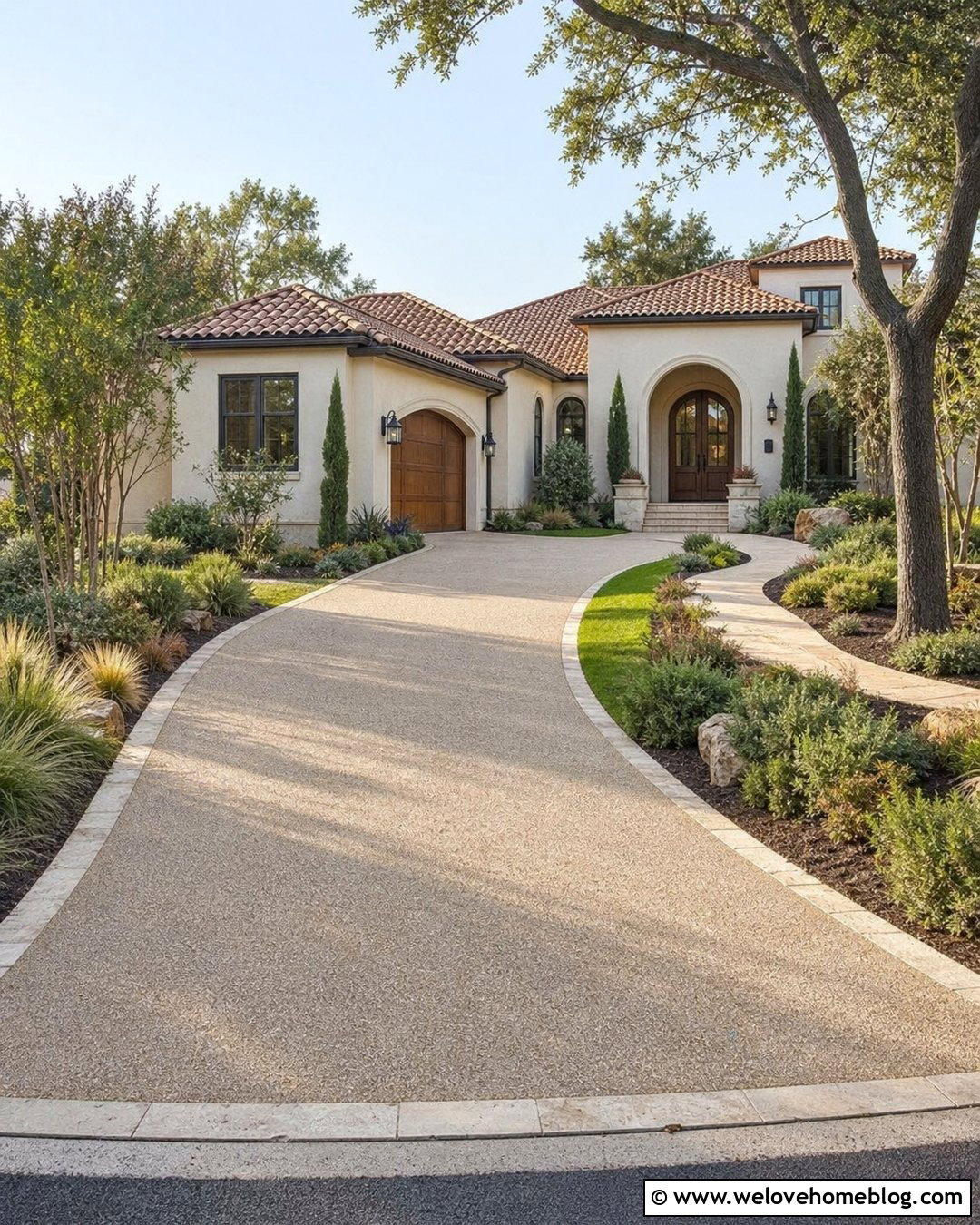
20. Central Diamond Medallion Driveway
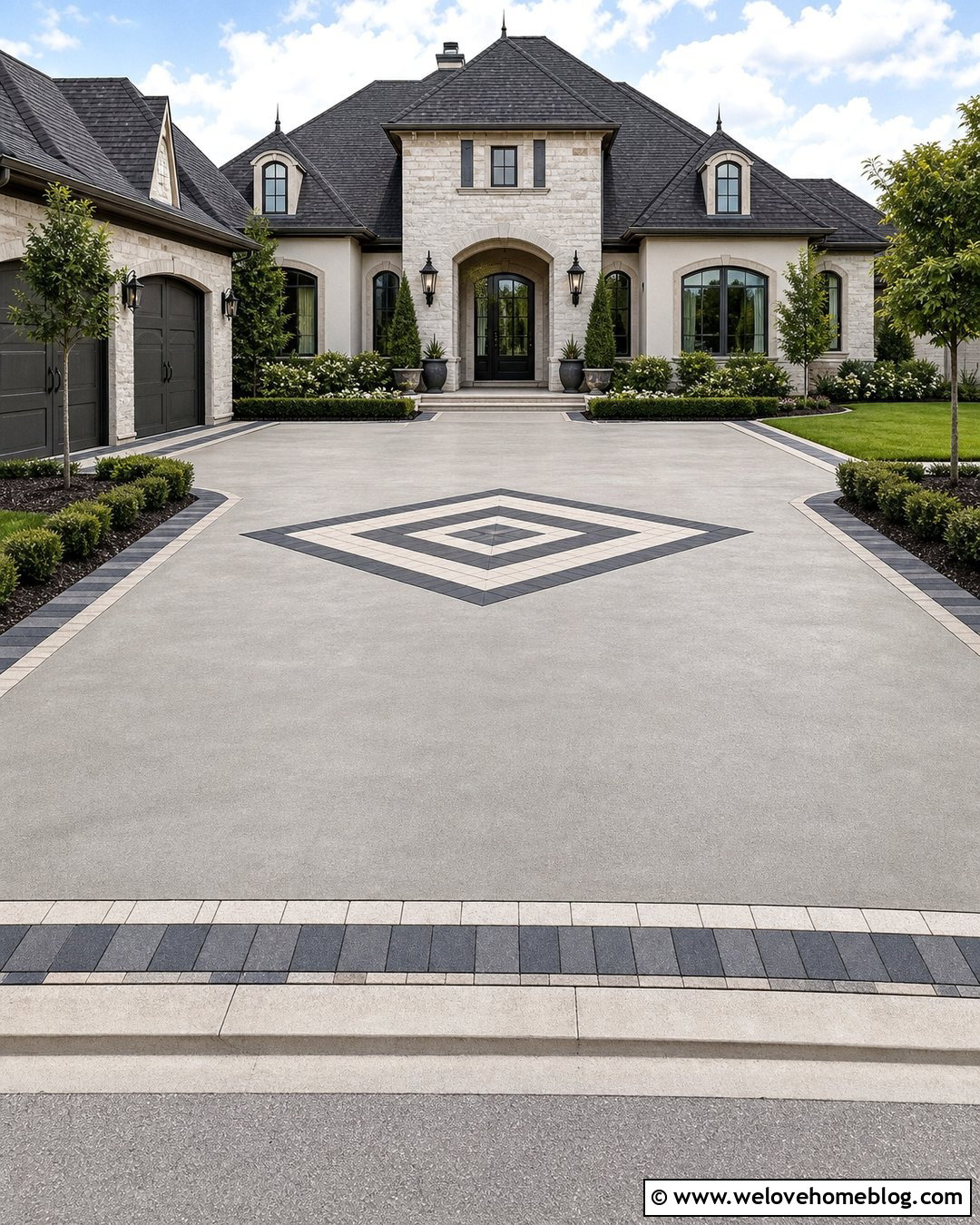
One large diamond medallion can provide a focal point without repeating the pattern across the entire driveway. Start with a warm gray poured concrete or concrete paver field. Place an oversized charcoal-and-cream paver diamond in the center, then repeat those colors in the perimeter border and garage apron. This arrangement is useful for a wide parking court or a driveway with a turnaround area. Low symmetrical planting beds can frame the medallion from both sides, while a centered walkway leads toward the front door. Match the medallion’s proportions to the available open space so it remains visible when vehicles are absent. The surrounding surface should stay relatively simple, allowing the central diamond, coordinated edging, landscaping, and house facade to function as one balanced composition.
Conclusion:
The best diamond driveway is more than a pattern placed on an empty surface. Its material, scale, borders, layout, landscaping, and relationship to the house should all feel connected. Scored concrete offers a clean and flexible option, while brick, pavers, cobblestone, gravel, aggregate, and planted joints create distinct textures. Large diamonds usually provide a quieter modern appearance. Smaller patterns add detail to compact or traditional entrances. Before building, review drainage, base preparation, joint placement, vehicle loads, and material transitions with an experienced installer. Use these 20 Diamond Driveway Pattern Ideas as a starting point, then adjust the colors and proportions to complement your property, maintenance preferences, climate, and budget.

Related posts:

Leave a Reply