
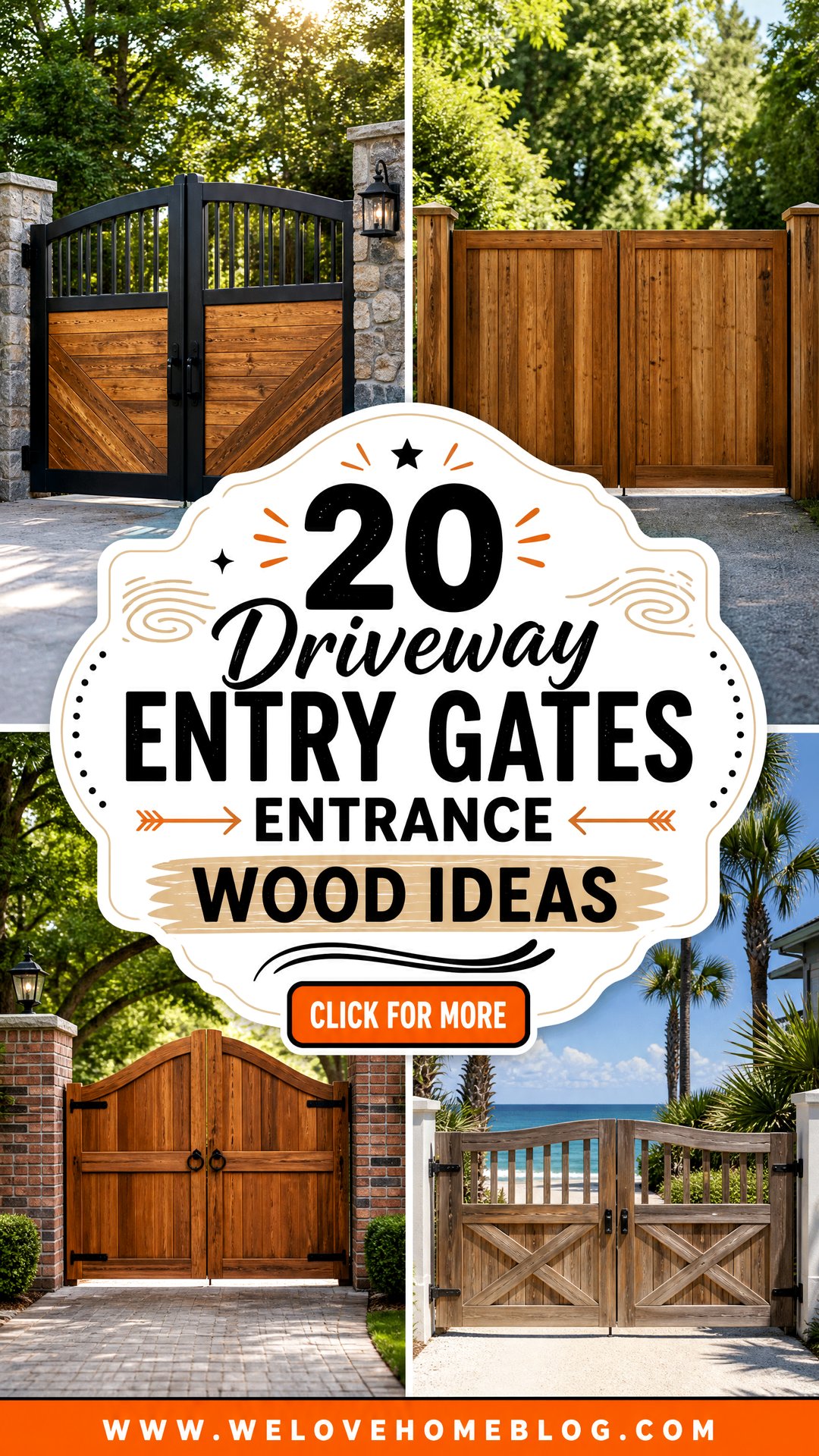
A wood gate can turn an ordinary driveway into a welcoming, private, and well-defined entrance. The best design does more than close an opening. It connects the driveway surface, gate shape, posts, fencing, landscaping, and house facade into one coordinated view. Wood also works across many architectural settings, from clean-lined modern homes to rustic ranches and traditional brick houses. Double-swing gates can create a balanced arrival, while sliding gates suit entrances where swing clearance is limited. Wood may also be combined with a concealed or visible steel frame for added structural support. () The complete looks below offer practical inspiration for different properties, privacy needs, and budgets through these **20 Driveway Entry Gates Entrance Wood Ideas**.
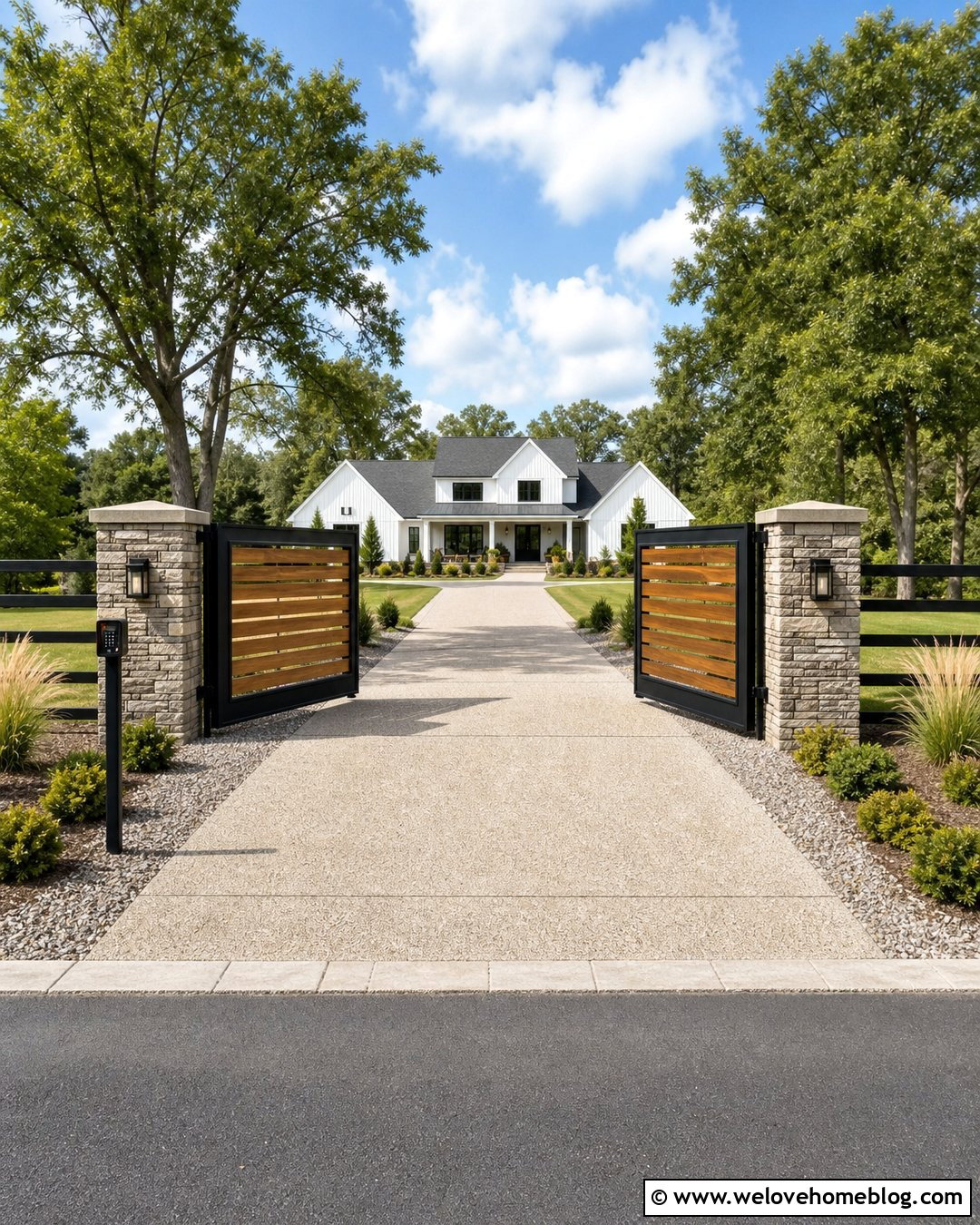
1. Modern Horizontal Slat Wood Driveway Gate
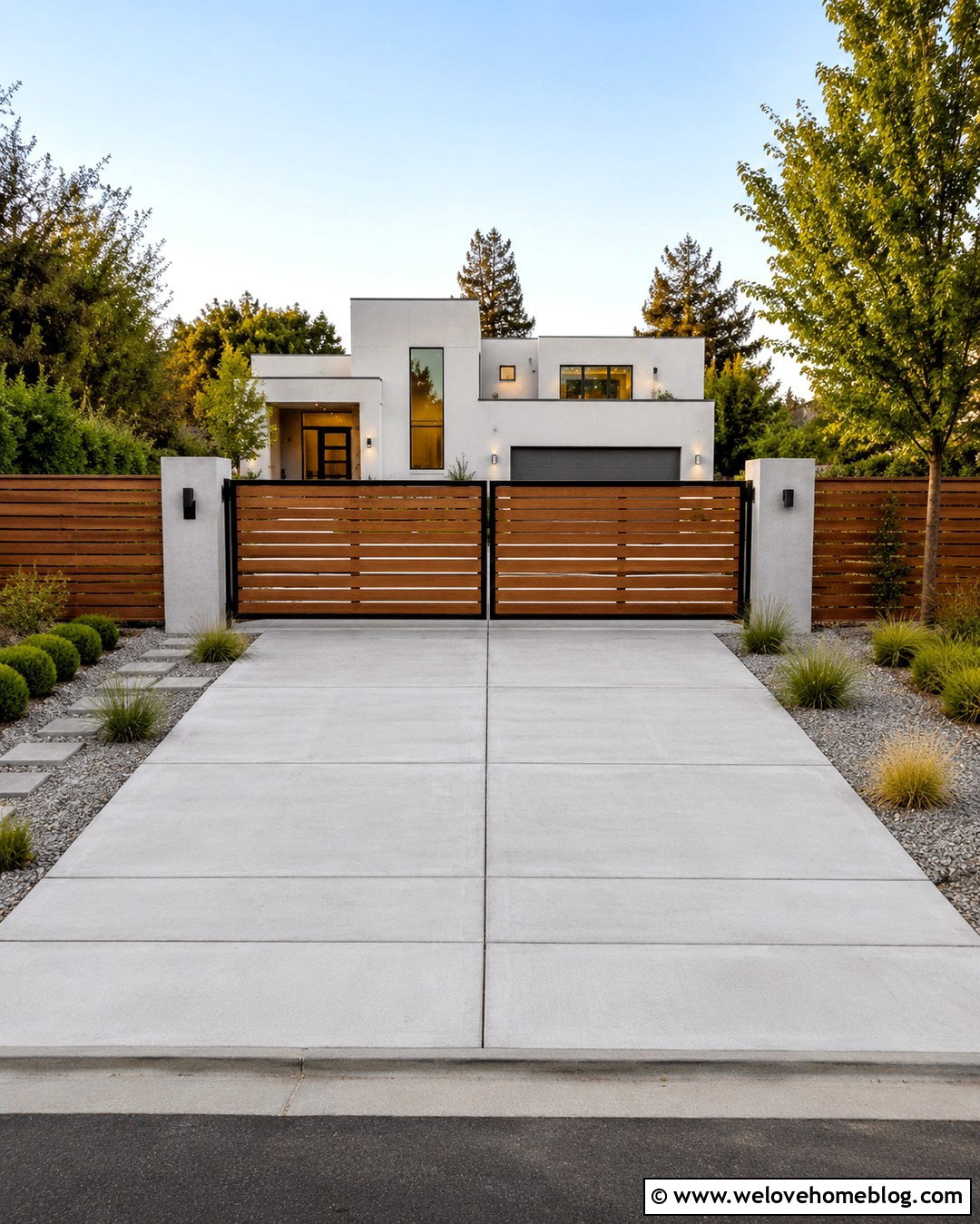
A horizontal slat gate brings clean structure to a contemporary driveway without making the entrance feel harsh. Use smooth cedar, teak, or ipe boards with narrow, consistent gaps that allow filtered views through the gate. A black powder-coated steel frame creates a crisp outline and helps support the wide wooden panels. Pair the gate with square concrete pillars, a straight poured-concrete driveway, and simple ornamental grasses. The horizontal lines can visually widen a compact entrance, especially when matching slats continue along the side fence. Choose a medium or dark stain to contrast with a pale stucco house. For a more integrated appearance, align the gate boards with nearby fence boards and keep hinges, latches, and automation equipment discreet.
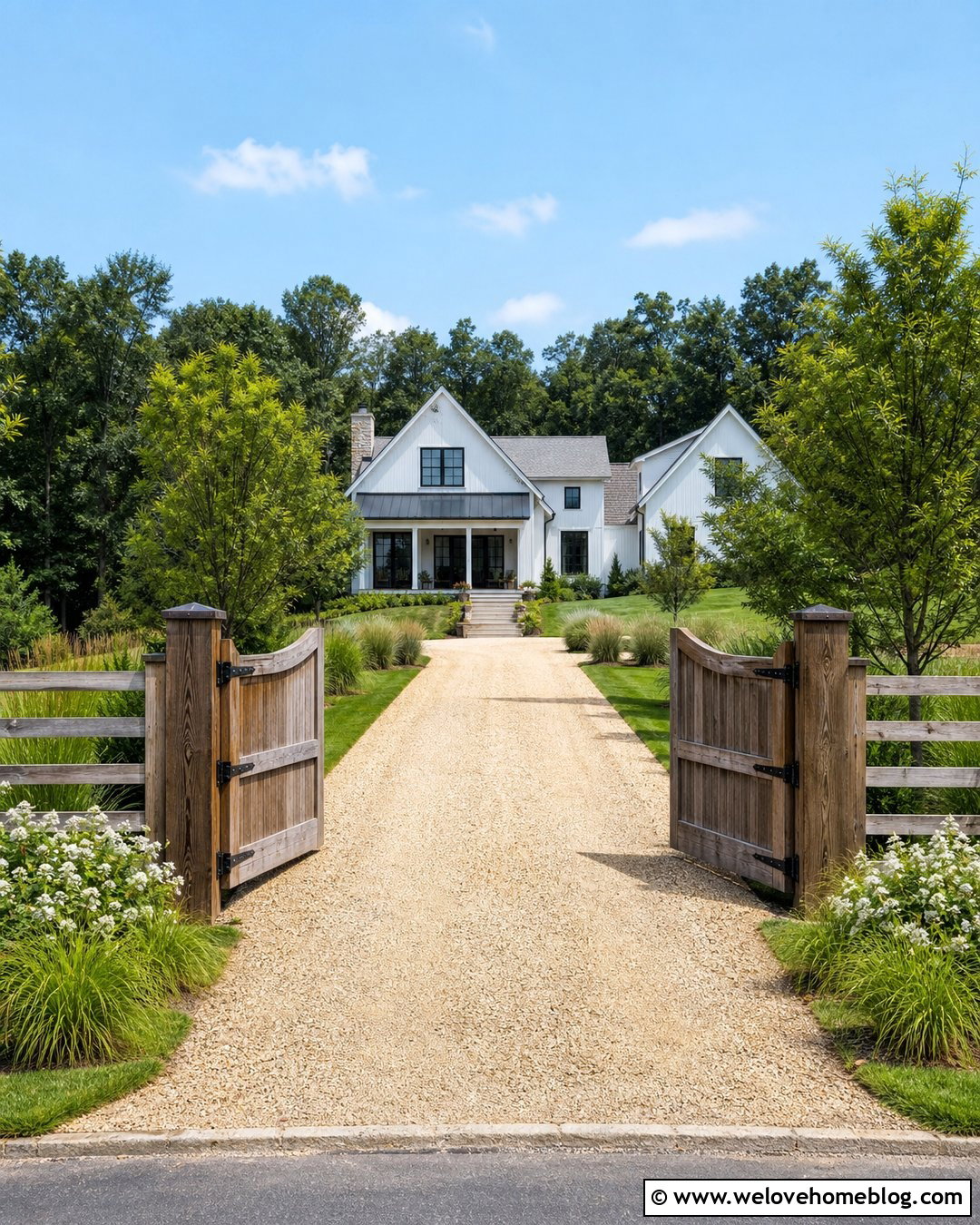
2. Rustic Double Swing Wood Driveway Gate
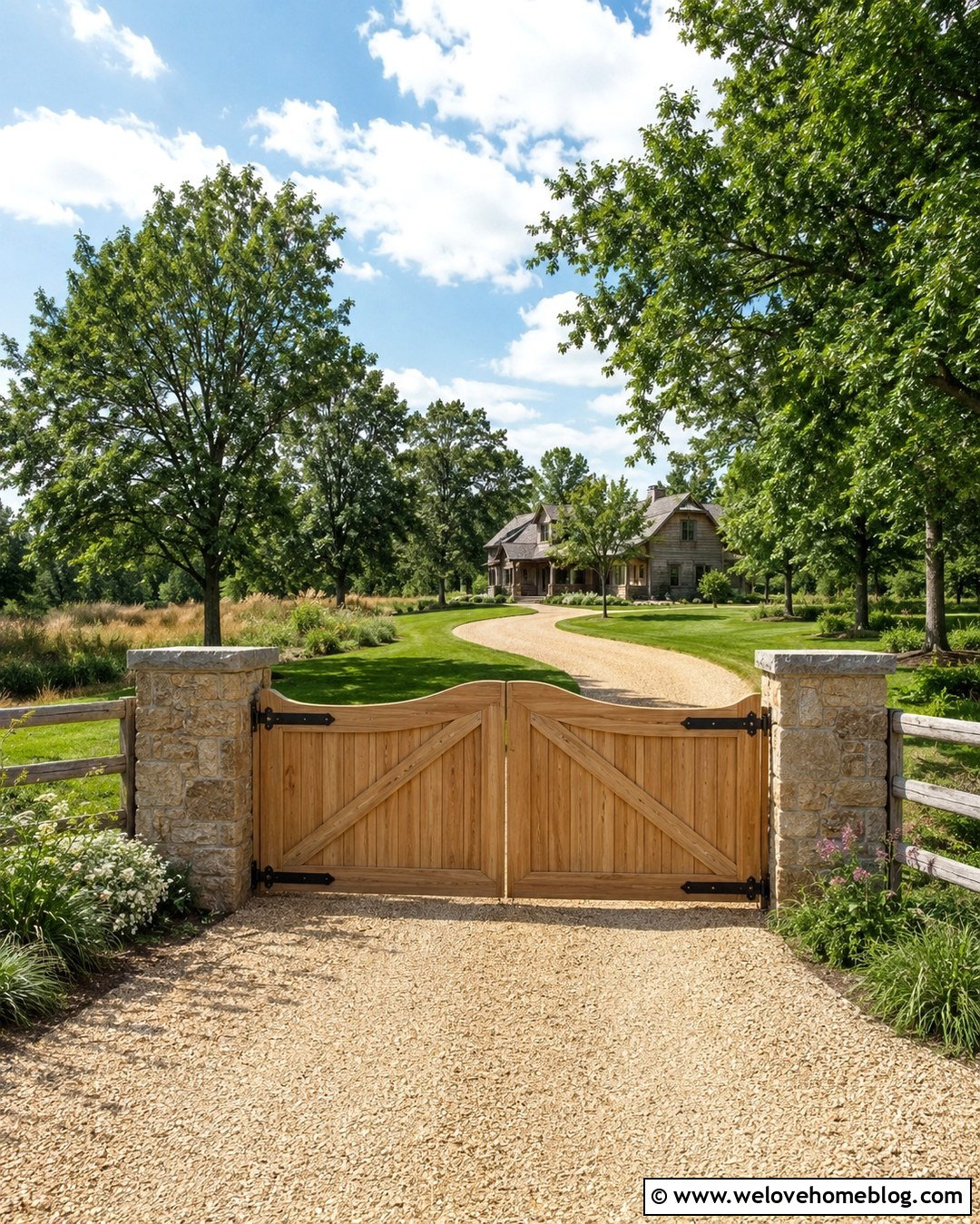
Warm timber, visible grain, and sturdy construction make a rustic double gate feel naturally connected to a country property. Build each leaf with vertical cedar or oak boards supported by strong diagonal braces. Large black strap hinges reinforce the traditional appearance and create useful contrast against honey-brown wood. A gently curved gravel driveway works especially well with this entrance because its relaxed texture complements the handmade character of the gate. Support the panels with substantial timber posts or rough-cut stone pillars. Native grasses, flowering shrubs, and mature shade trees can soften both sides of the opening. Leave the upper portion slightly open rather than completely solid when privacy is not essential. This keeps the entrance welcoming while still marking the property boundary clearly.
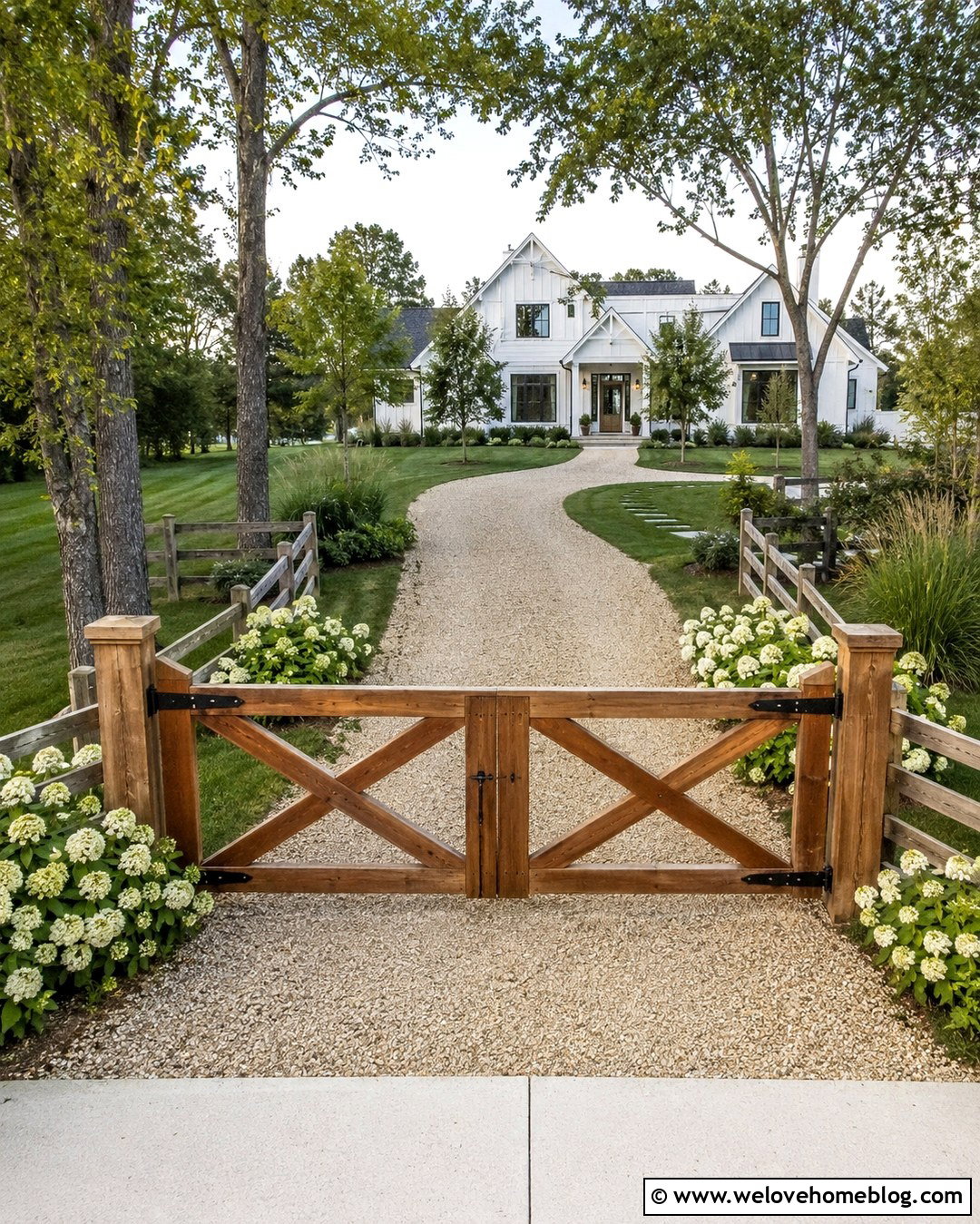
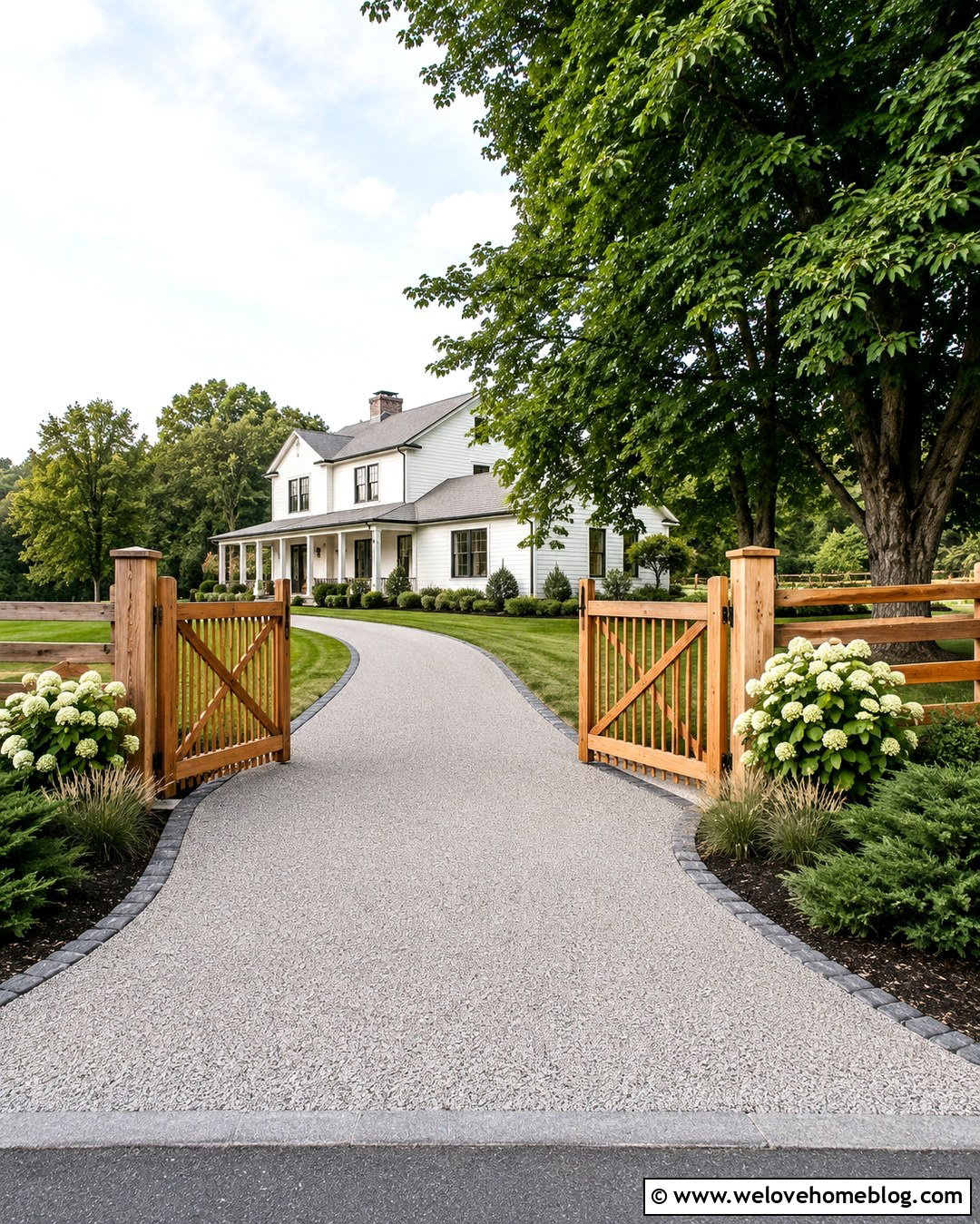
3. Farmhouse X-Brace Wood Driveway Gate
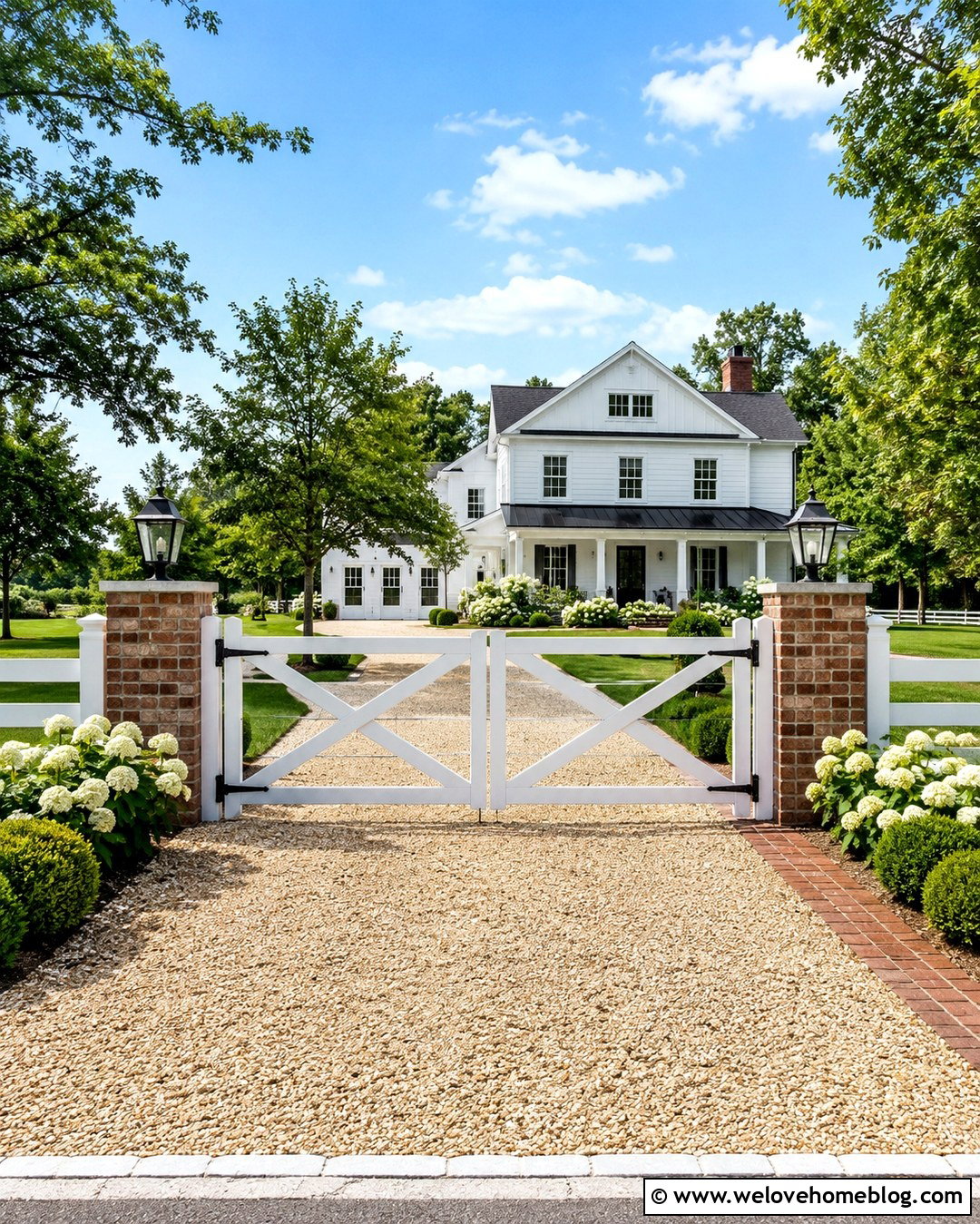
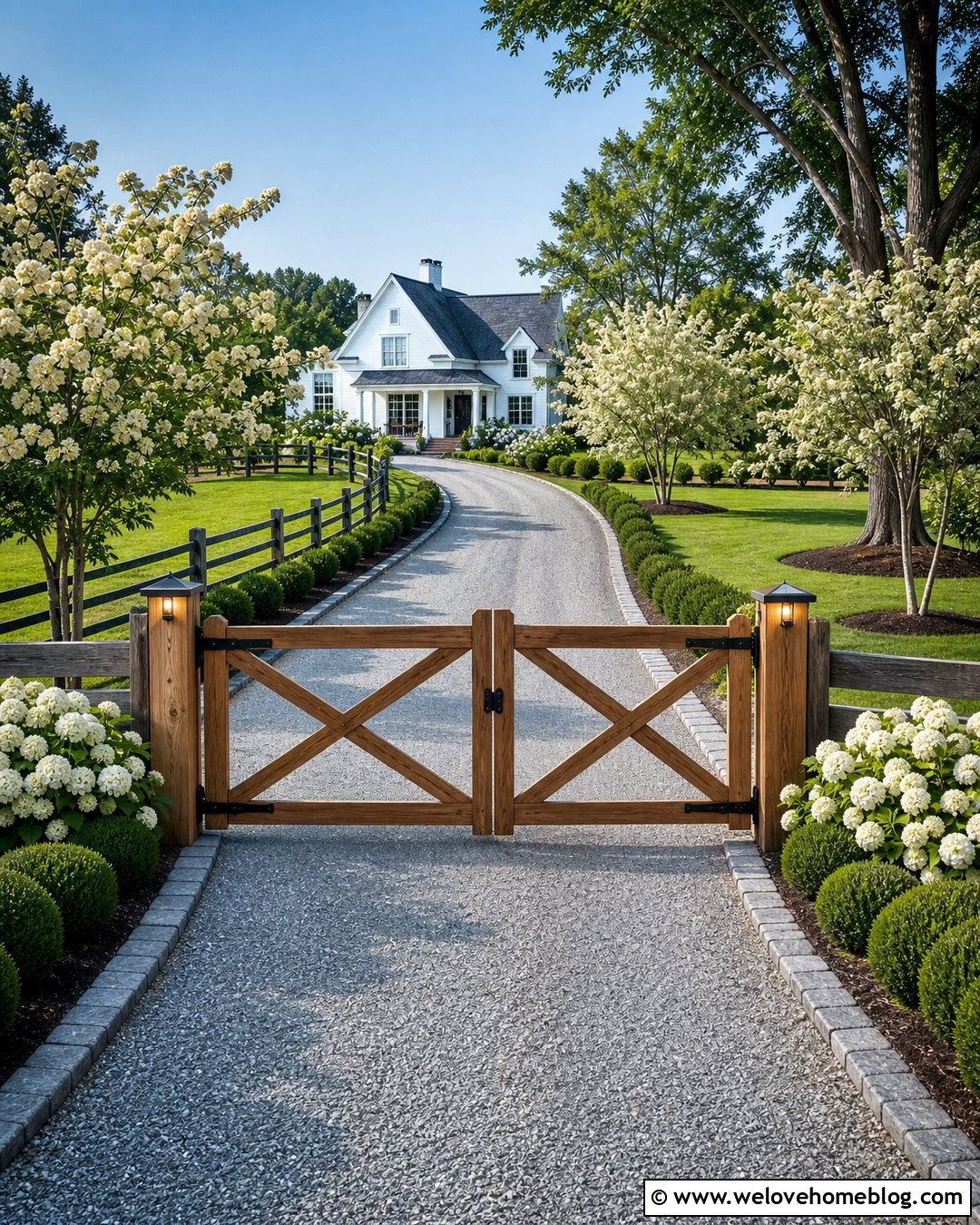
The familiar X-brace pattern gives a wood driveway gate an unmistakable farmhouse character. White-painted boards create a fresh entrance, while stained cedar offers a warmer and more natural alternative. Use a balanced double-swing layout with matching cross braces on both leaves. Brick pillars, black hardware, and a pale gravel driveway can make the overall design feel established rather than decorative. Continue the gate’s horizontal rails into a simple post-and-rail fence for a seamless property line. Nearby hydrangeas, clipped boxwoods, and a broad lawn provide soft contrast against the strong geometric pattern. This gate looks especially appropriate in front of a modern farmhouse, colonial home, or renovated barn-style residence. Keep the center low enough to preserve a clear view toward the house.
4. Arched Wood Driveway Gate With Stone Pillars
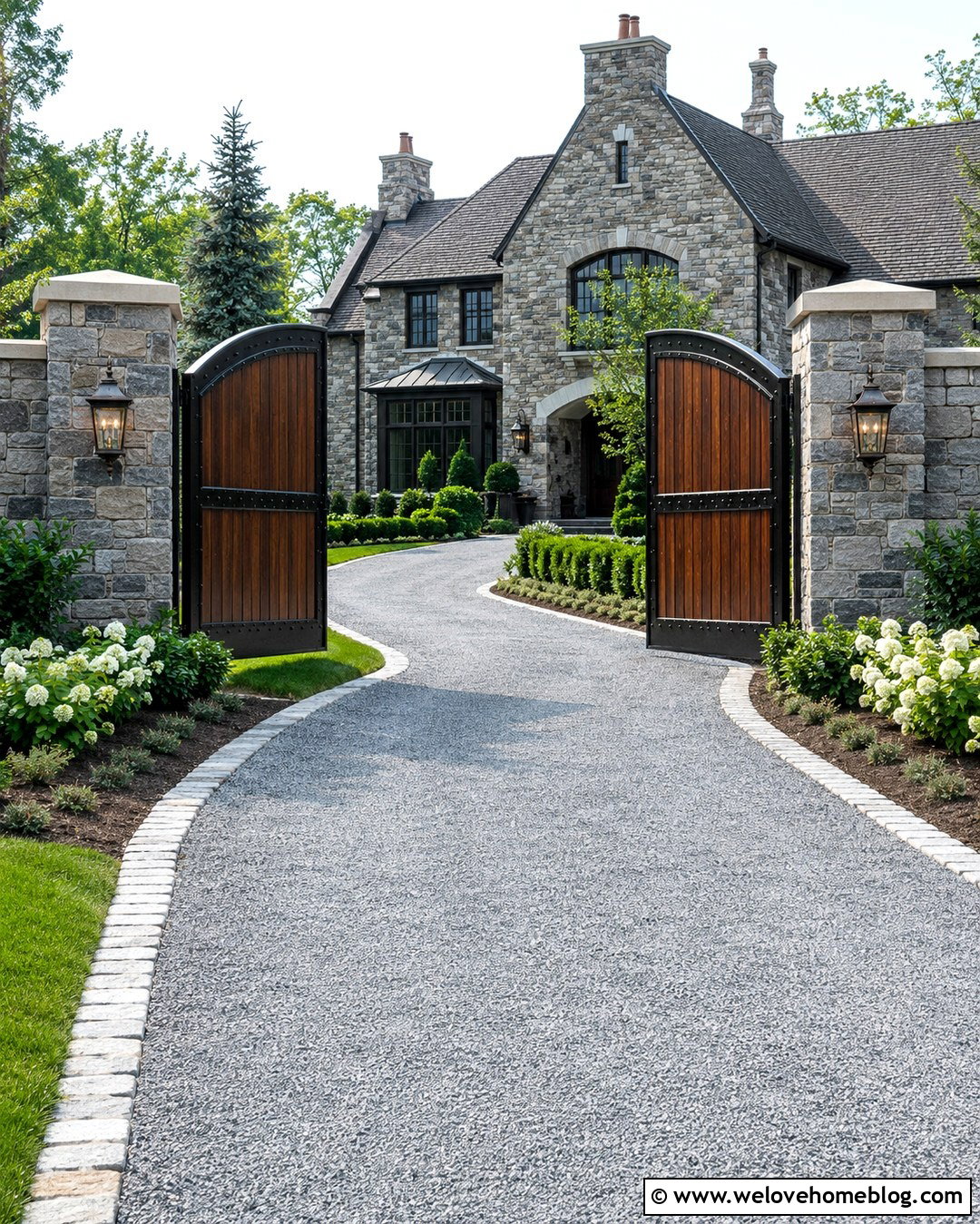
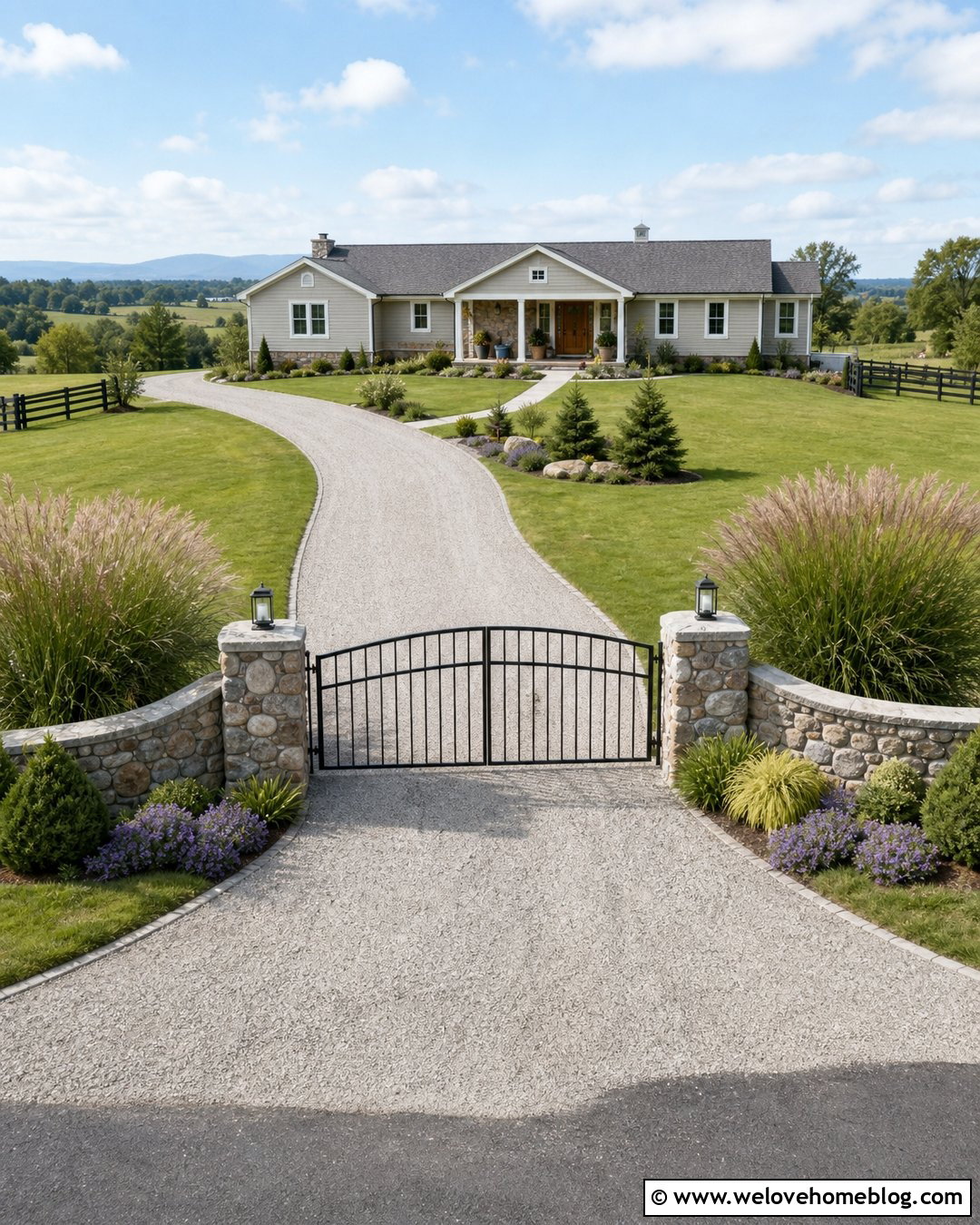
An arched gate introduces a graceful shape that can echo curved windows, entry doors, or roof details on the house. Select rich mahogany, redwood, or stained cedar boards arranged vertically within a supportive frame. The highest point should sit near the center, giving a double gate a symmetrical silhouette when closed. Natural stone pillars add visual weight and help the entrance feel proportional to a long or sweeping driveway. Include low stone walls on either side so the pillars appear connected to the surrounding landscape. A cobblestone apron can mark the transition from the street to a gravel or paved surface. Finish the look with evergreen shrubs and low flowering plants that frame the pillars without hiding the gate’s carefully shaped top.
5. Sliding Wood Driveway Gate
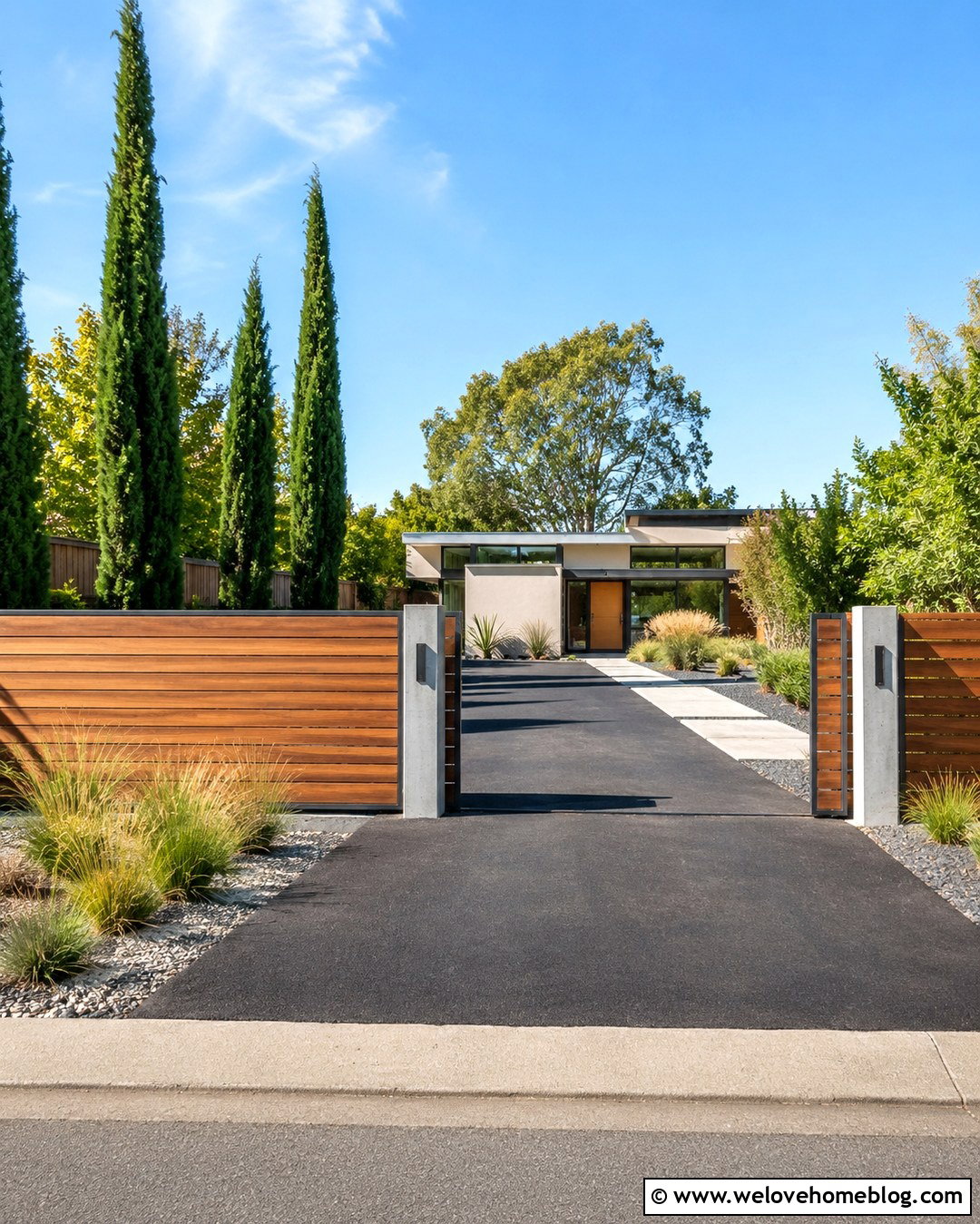
A sliding wood gate is a practical choice when a driveway slopes, curves quickly, or lacks room for swinging panels. The gate moves parallel to the fence, so the landscape plan must leave a clear run along one side of the entrance. Sliding mechanisms can also simplify automation and safety-equipment placement compared with gates that travel through a wide arc. () Use horizontal cedar boards over a rigid metal frame to reduce the risk of the long panel appearing uneven. A straight asphalt or concrete driveway gives the gate a clean path and emphasizes its streamlined form. Continue matching boards along the receiving fence to visually conceal the gate when open. Low hedges, gravel beds, and upright trees can soften the hardware without obstructing movement.
6. Wood and Black Metal Driveway Gate
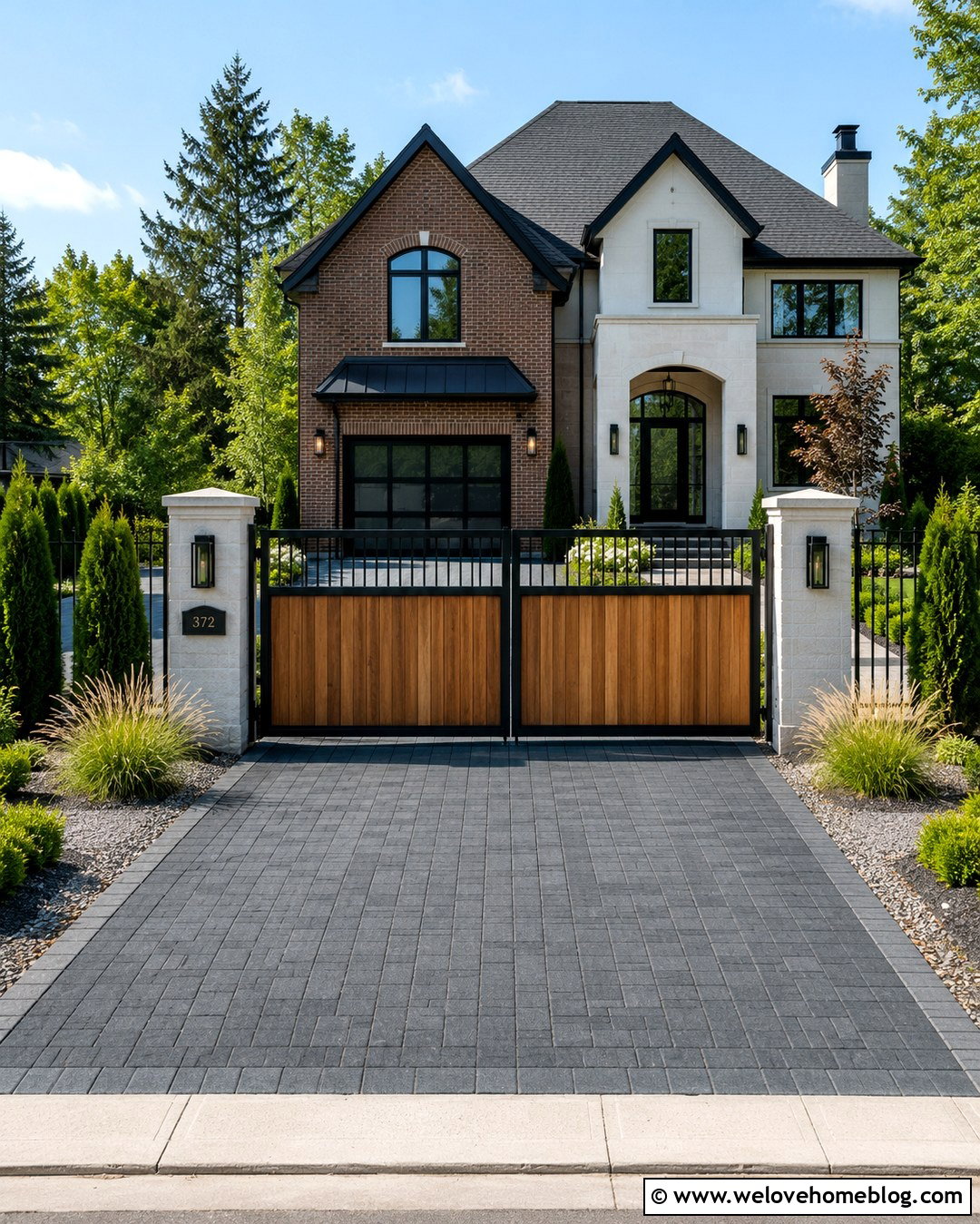
Combining wood with black metal creates an entrance that feels both warm and structured. A steel perimeter frame can hold vertical hardwood boards, while slim metal bars across the upper section preserve visibility. This mixed-material approach suits transitional, industrial, modern farmhouse, and contemporary homes. Match the steel finish to exterior lights, window frames, railings, or the front door for a coordinated facade. A gray concrete paver driveway provides a neutral base that allows the timber color to stand out. On each side, use black metal fencing with selective wood inserts rather than building a completely solid boundary. Stone-filled planting beds, clipped grasses, and small evergreen trees can reinforce the clean design. Keep decorative metalwork simple so the natural grain remains the gate’s main visual feature.
7. Privacy Wood Driveway Gate
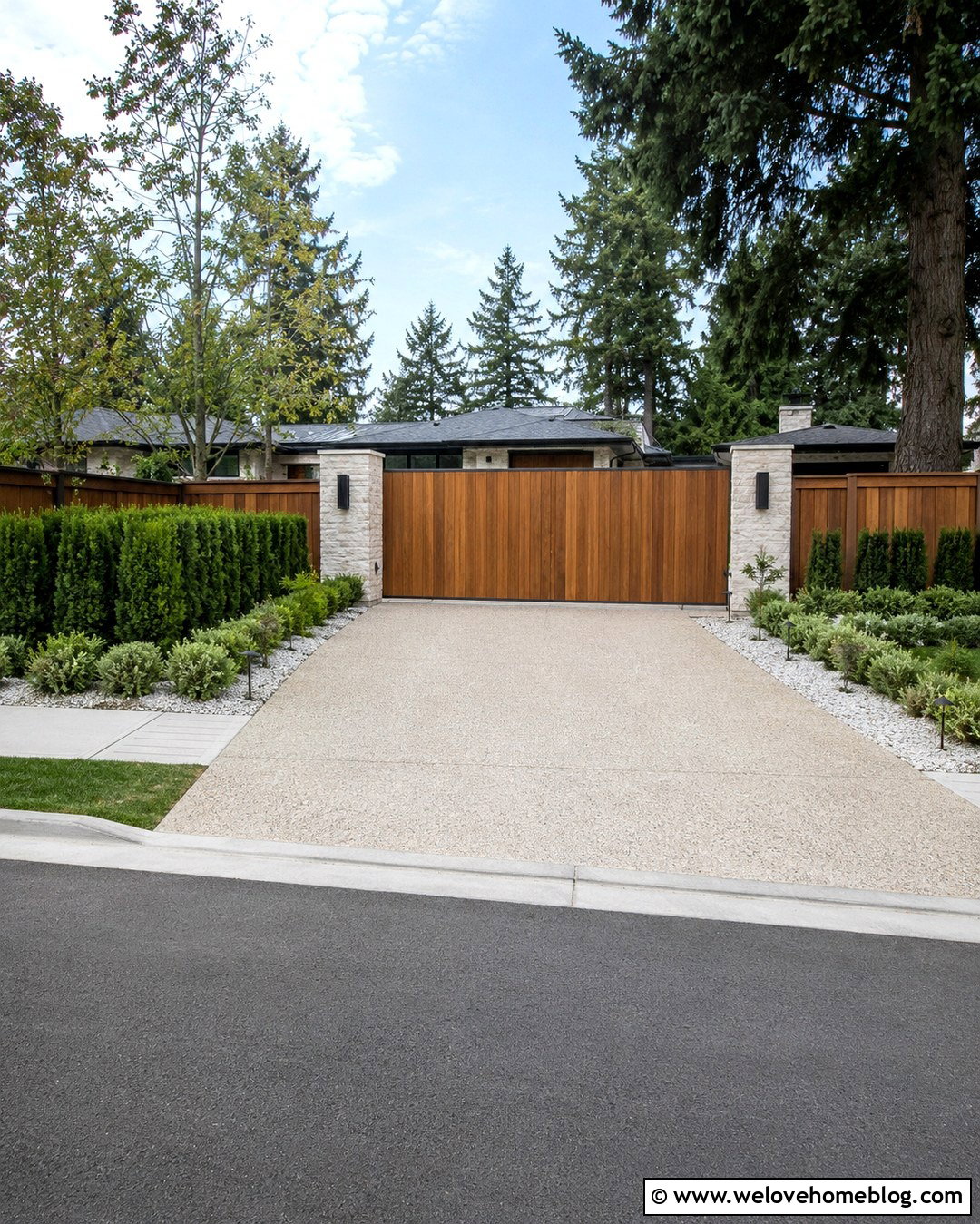
For a property close to the street, a solid privacy gate can make the front yard feel quieter and more protected. Tongue-and-groove cedar boards create a continuous face with minimal gaps, while a steel subframe provides hidden support. A flat top feels modern, whereas a shallow arch softens the appearance for a traditional house. Balance the gate’s visual weight with wide masonry pillars and matching privacy fencing on both sides. Because a tall solid gate can dominate a small frontage, use a warm medium stain instead of an extremely dark finish. A light exposed-aggregate driveway, layered evergreen planting, and pale stone borders will further brighten the entrance. Consider leaving a narrow setback area outside the gate for visitors, deliveries, and safer access away from the roadway.
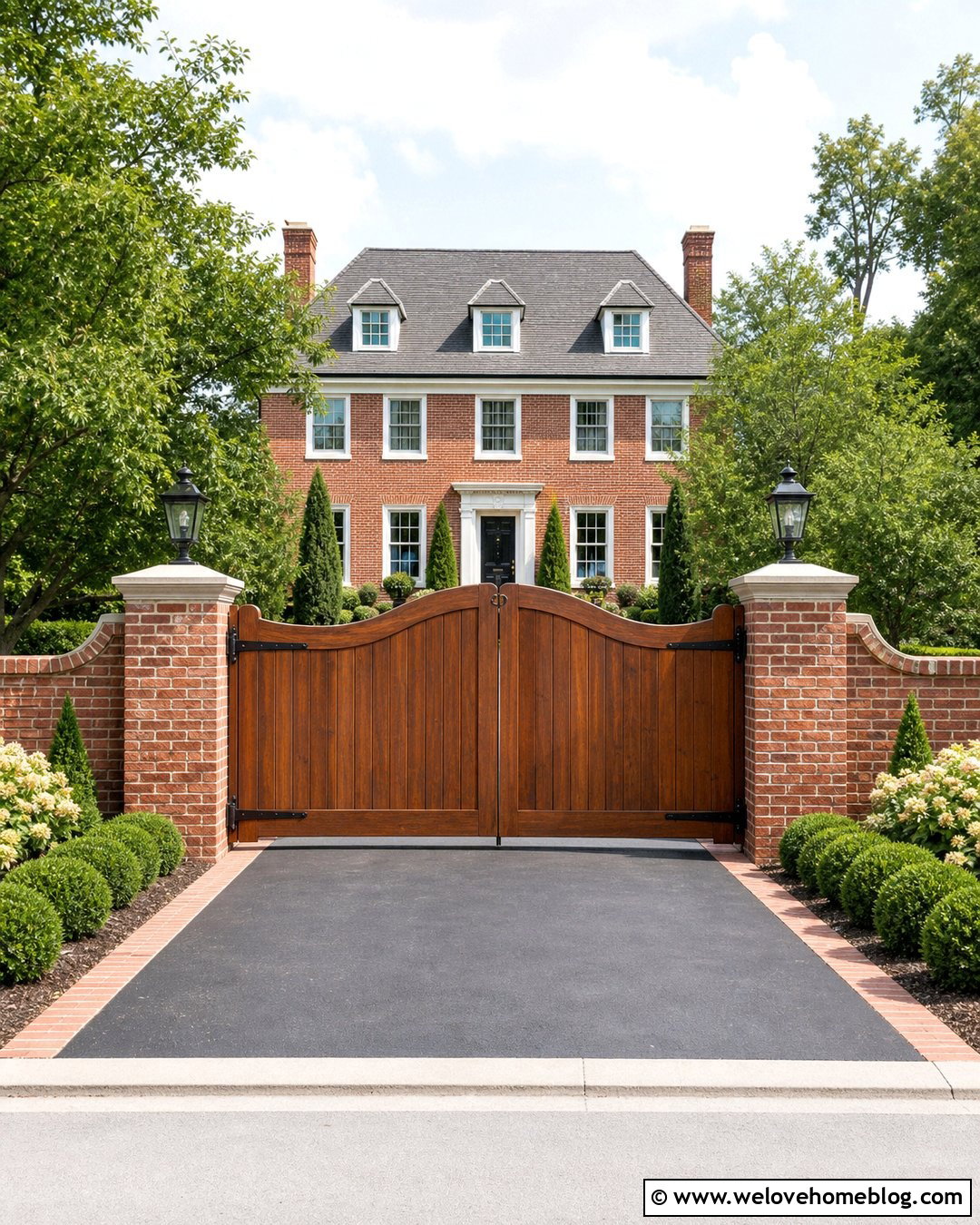
8. Cedar Driveway Gate With Brick Pillars
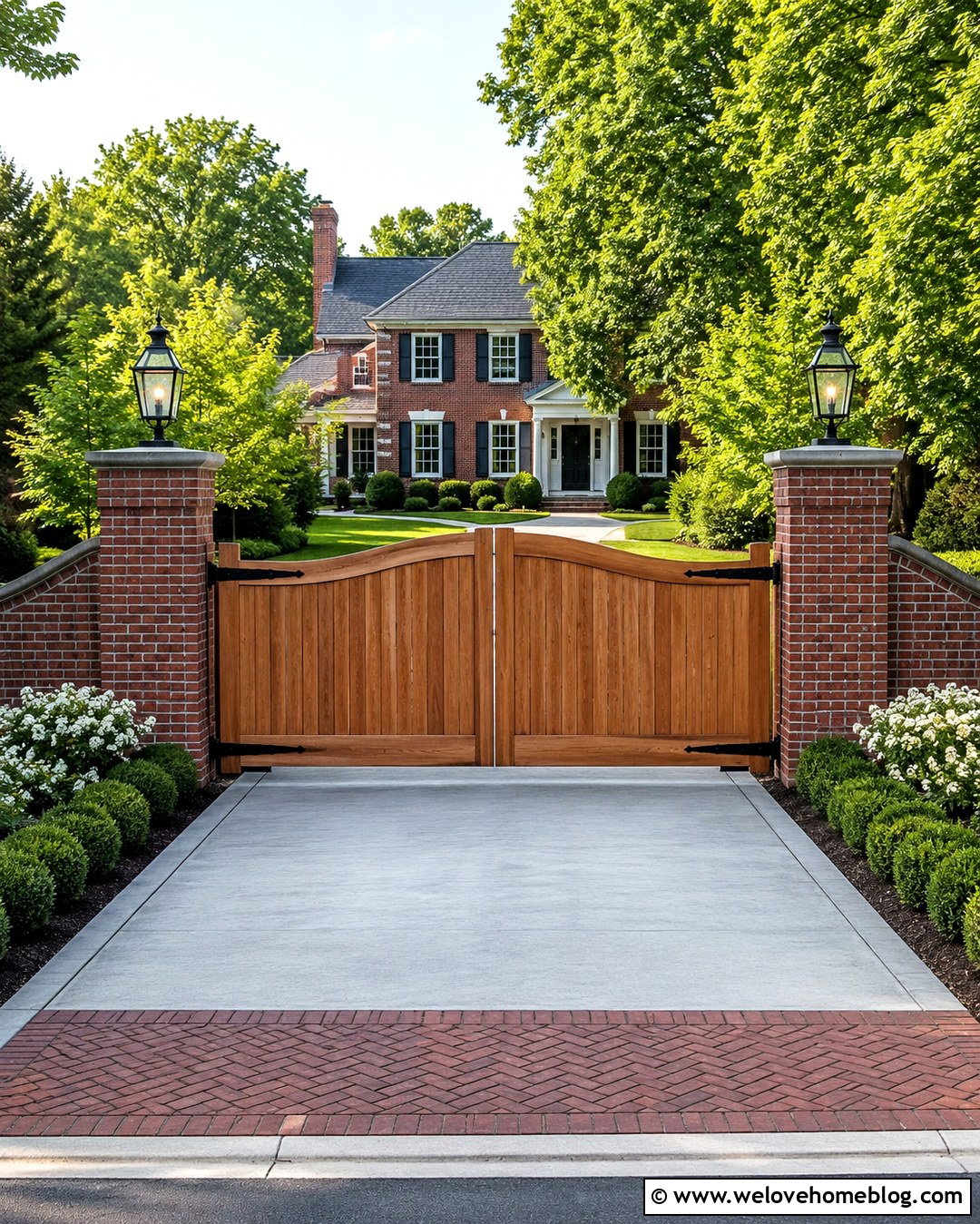
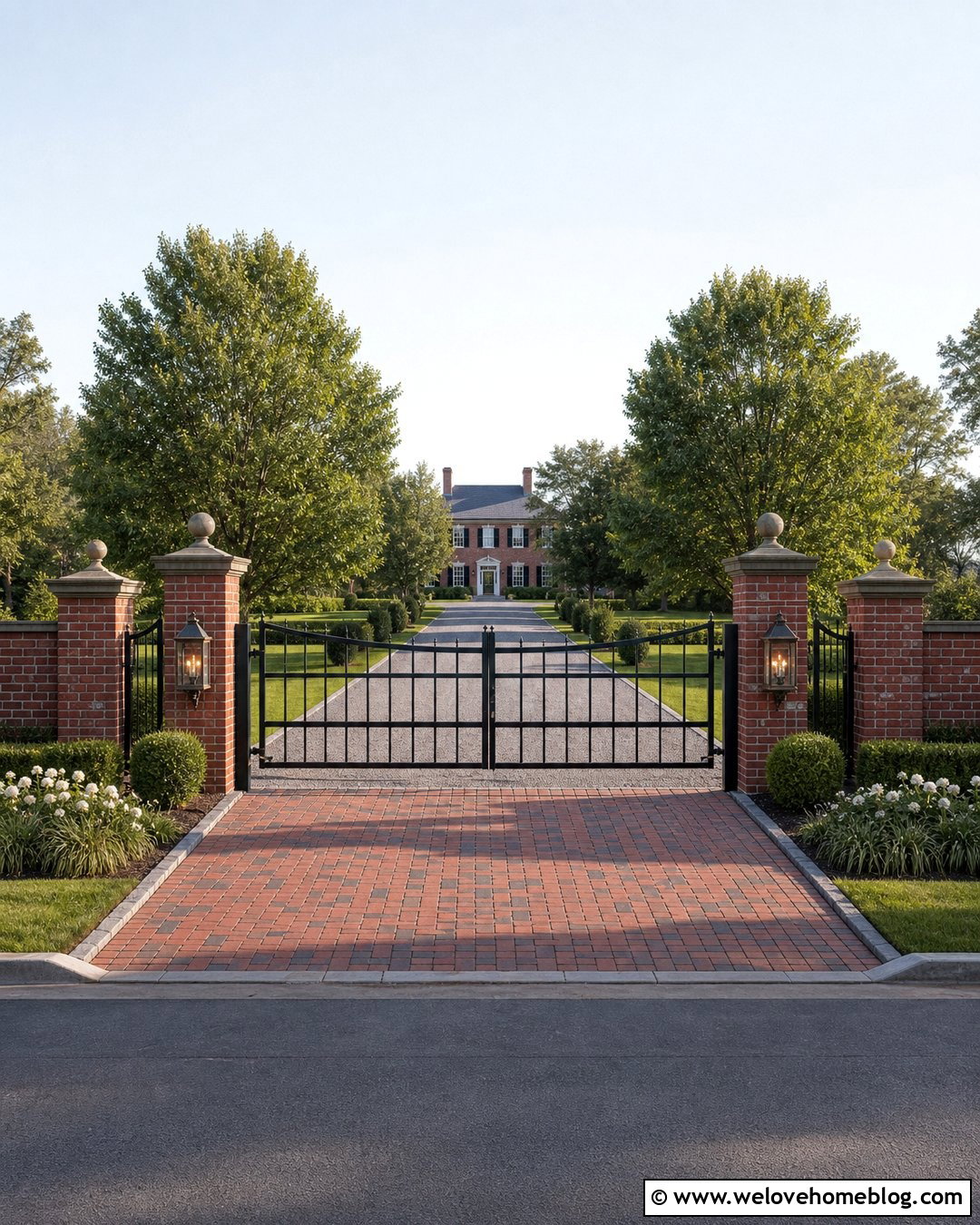
Red or brown brick pillars pair naturally with cedar because both materials bring warm color and visible texture to the entrance. Choose a double-swing cedar gate with vertical boards and a gently dipped or curved top. Traditional black hinges and a centered latch provide enough detail without competing with the brickwork. Match the pillars to the home’s brick facade whenever possible, or select a complementary blend for a more relaxed look. A herringbone clay brick apron can connect the entrance to a light concrete driveway beyond the gate. Add lantern-style fixtures to the pillar faces and keep plants below the hardware level. Boxwoods, white flowering shrubs, and neatly edged lawn create a polished frame. This complete design works especially well for colonial, Georgian, and traditional suburban houses.
9. White Painted Wood Driveway Gate
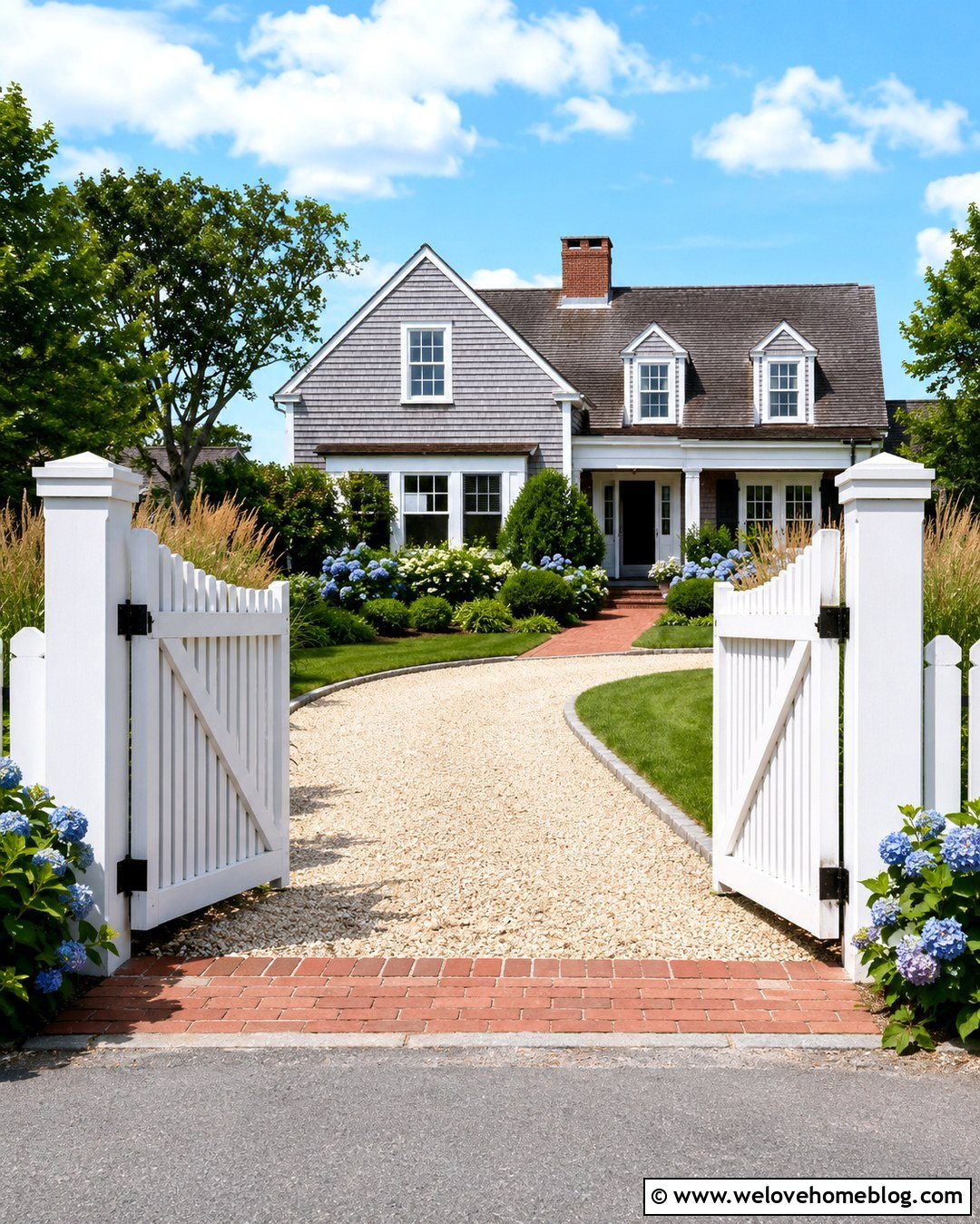
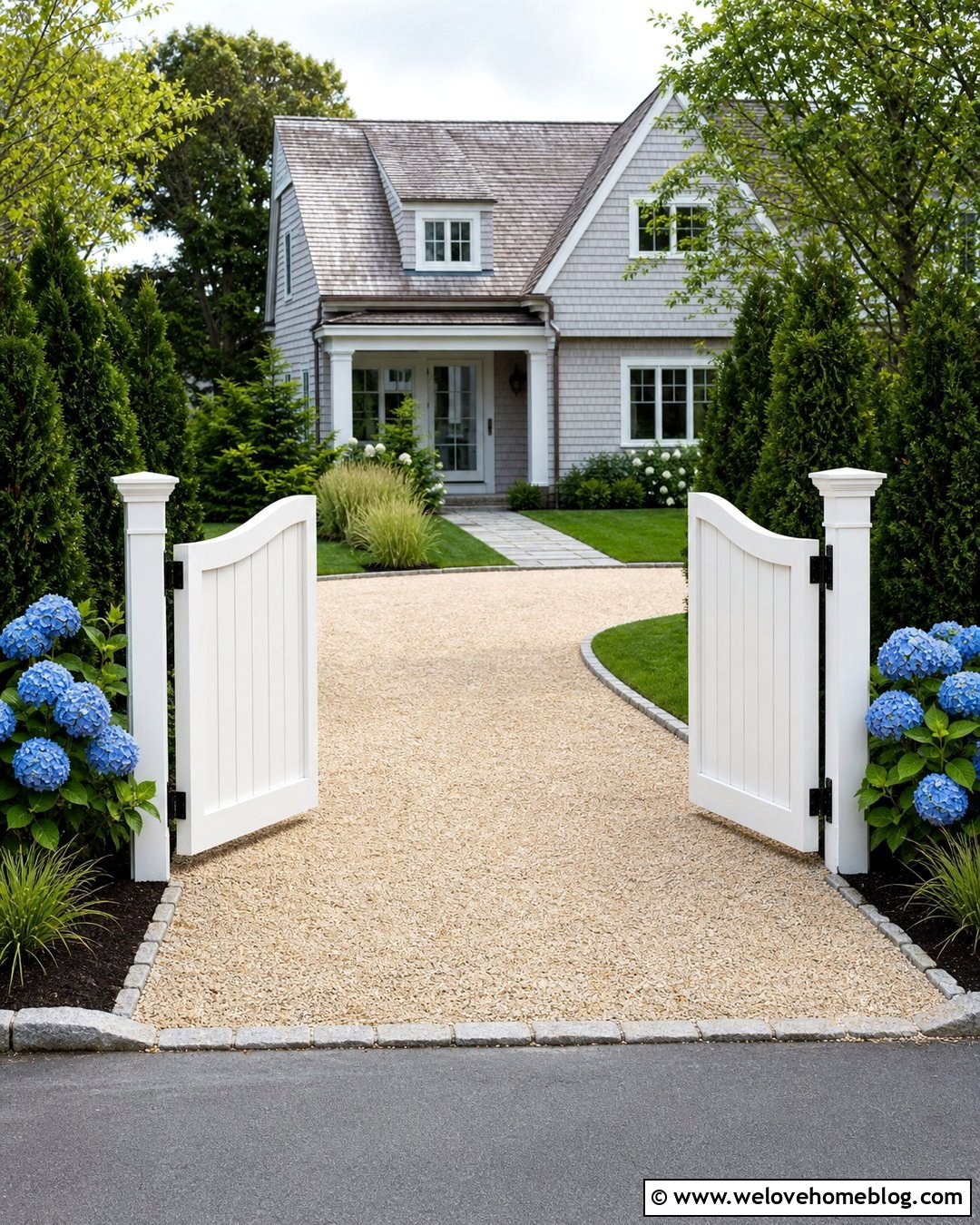
A white wood gate can give a compact entrance a bright, open, and carefully maintained appearance. Use exterior-grade painted cedar or another suitable outdoor wood, and repeat the white finish on adjacent fencing for continuity. An open-board design with modest spacing feels lighter than a tall solid gate and works beautifully with cottage, Cape Cod, and coastal architecture. Set the gate between painted timber posts topped with simple caps rather than oversized masonry columns. A pale pea gravel driveway reinforces the casual character, while a brick threshold adds a durable visual transition at the entrance. Frame the approach with blue-green shrubs, ornamental grasses, and flowering perennials. Black hinges, a dark latch, and understated post lights provide definition and keep the white gate from disappearing into the house facade.
10. Craftsman Wood Driveway Gate
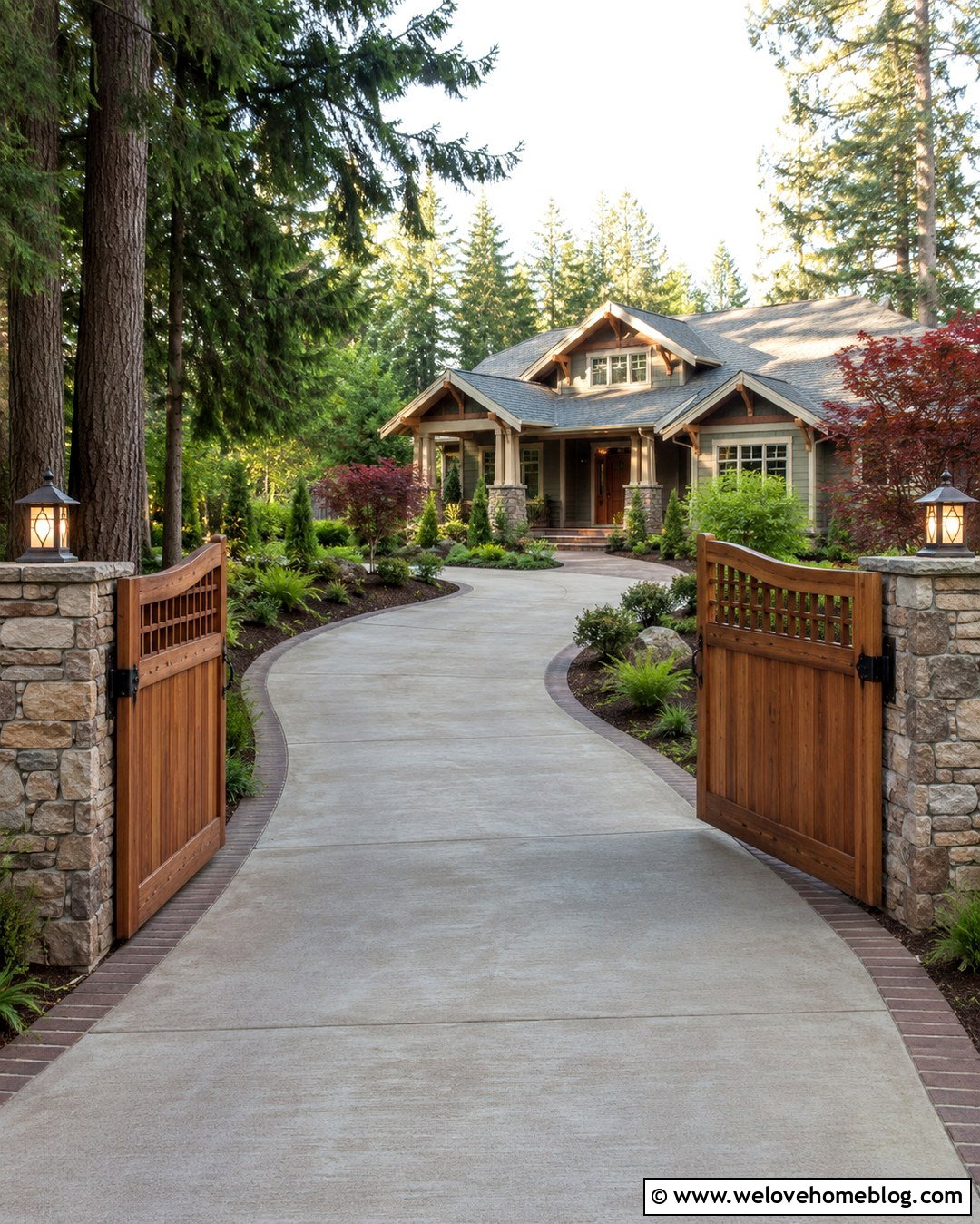
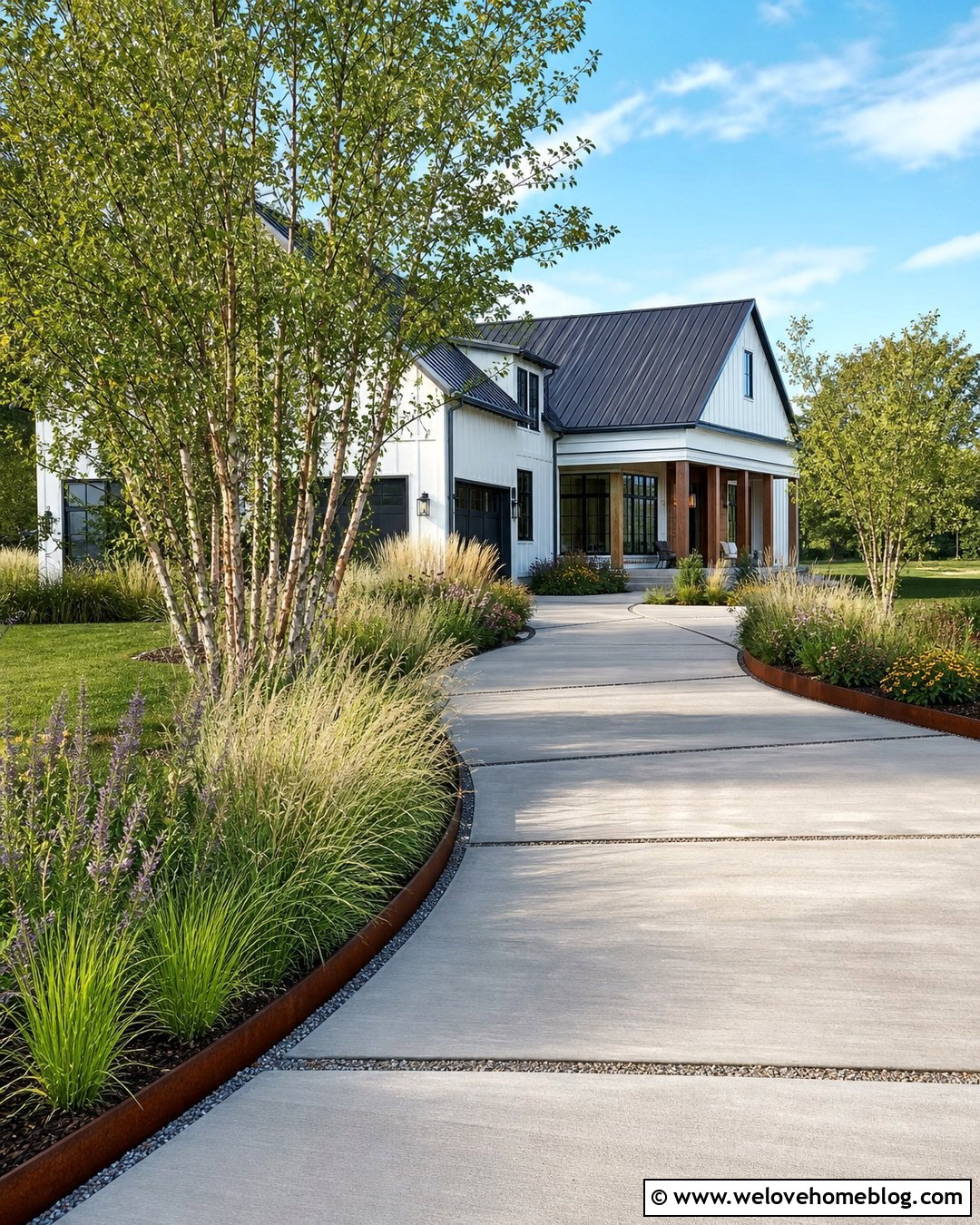
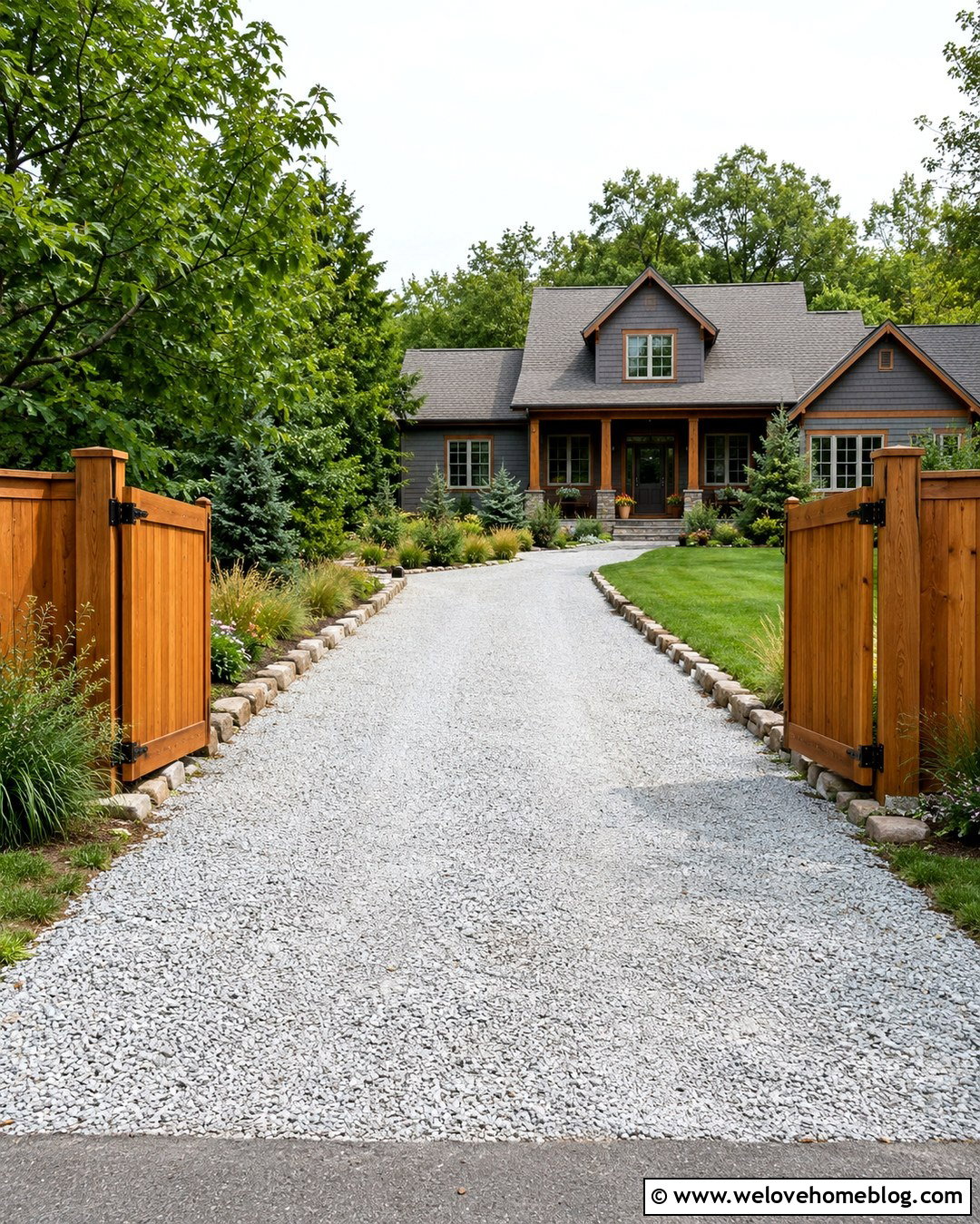
A Craftsman gate should emphasize honest materials, sturdy proportions, and clearly visible construction. Quarter-sawn oak, cedar, or another richly grained wood can be arranged in framed rectangular panels with a small open lattice across the top. Support the gate with tapered stone pillars that reflect the base of a Craftsman porch. Dark bronze hardware feels softer than black and pairs well with earthy brown or olive exterior colors. Lead the entrance into a gently curved concrete driveway edged with brick or natural stone. Ferns, low evergreens, Japanese maples, and layered woodland planting will connect the architecture to the landscape. Avoid delicate ornament and overly thin boards. Broad rails, balanced joinery, and a durable outdoor finish help the gate look substantial enough for the house without appearing excessively formal.
11. Ranch Rail Wood Driveway Gate
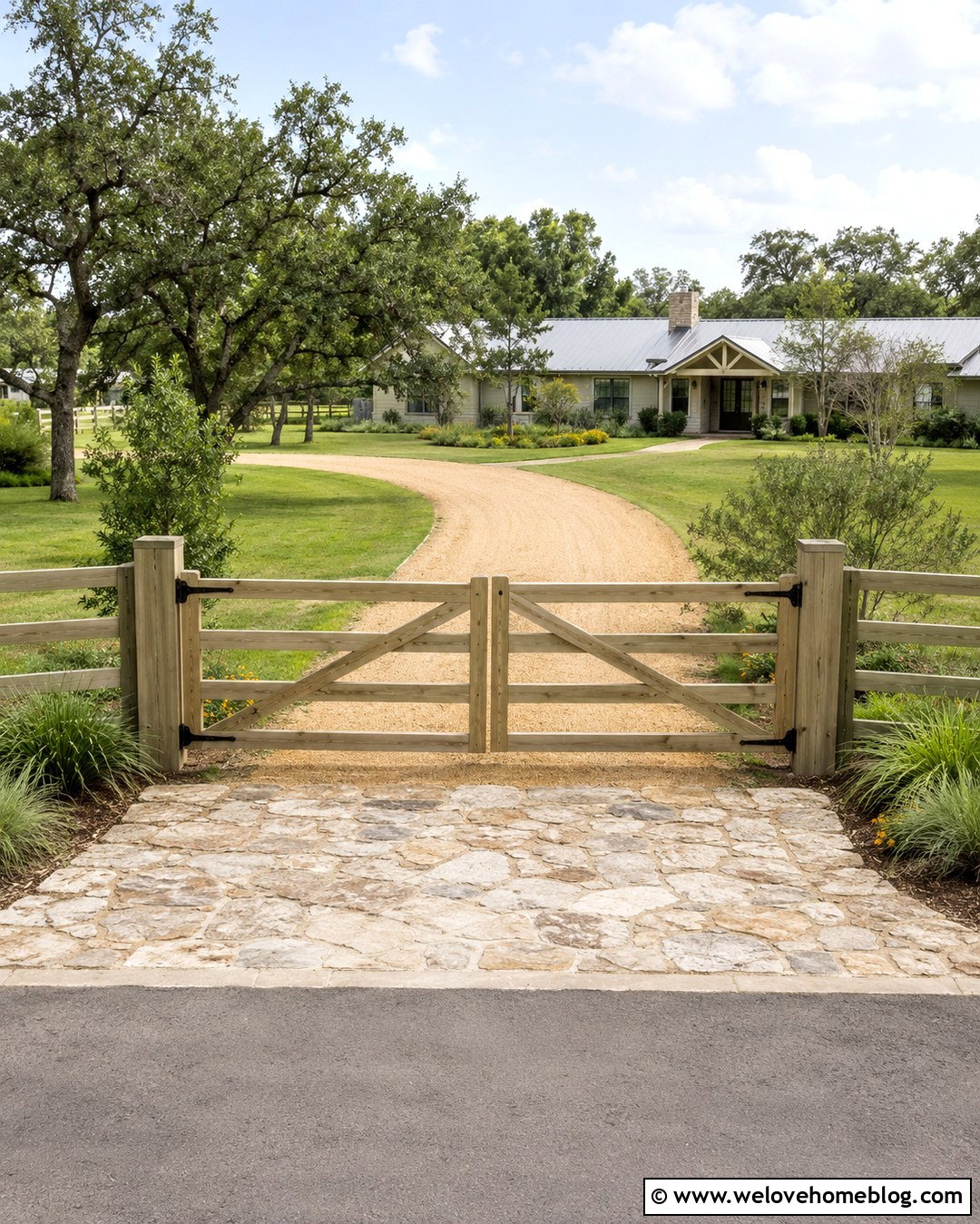
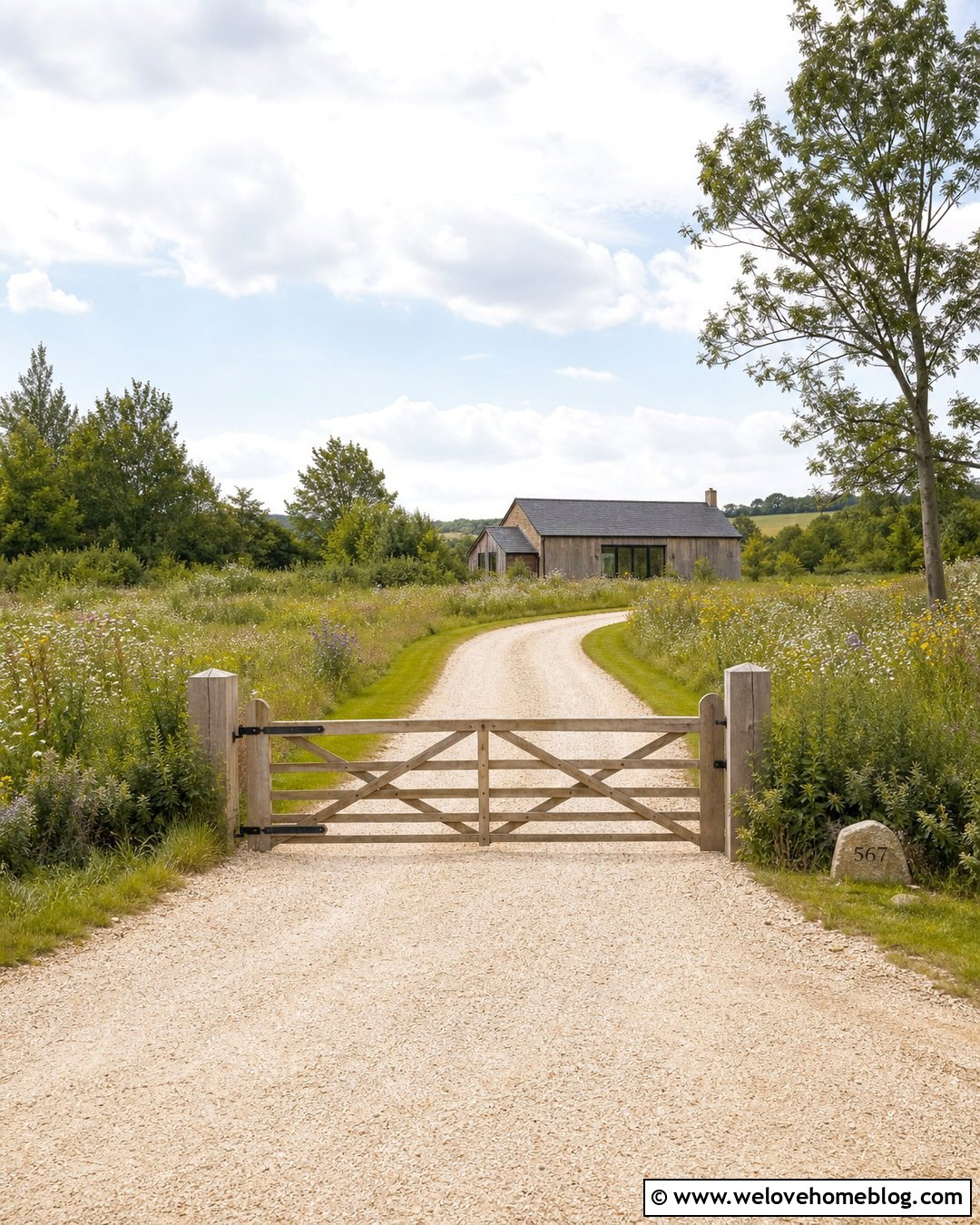
A low rail gate creates a relaxed entrance for ranch homes, rural lots, and properties where visibility matters more than privacy. Use three or four horizontal cedar or pressure-treated pine rails with diagonal bracing at each end. Wide timber posts and simple black hardware complete the practical appearance. Pair this gate with a broad gravel driveway that curves through native grass, meadow planting, or open lawn. A stone or brick entry apron can prevent the entrance from looking unfinished and give the gate a clear architectural anchor. Continue matching rail fencing along both sides, then add a small cluster of drought-tolerant shrubs near the posts. Because the design is visually lightweight, it works well across wider openings where a solid wood panel might feel heavy or block views of the property.
12. Wood Driveway Gate With Pedestrian Gate
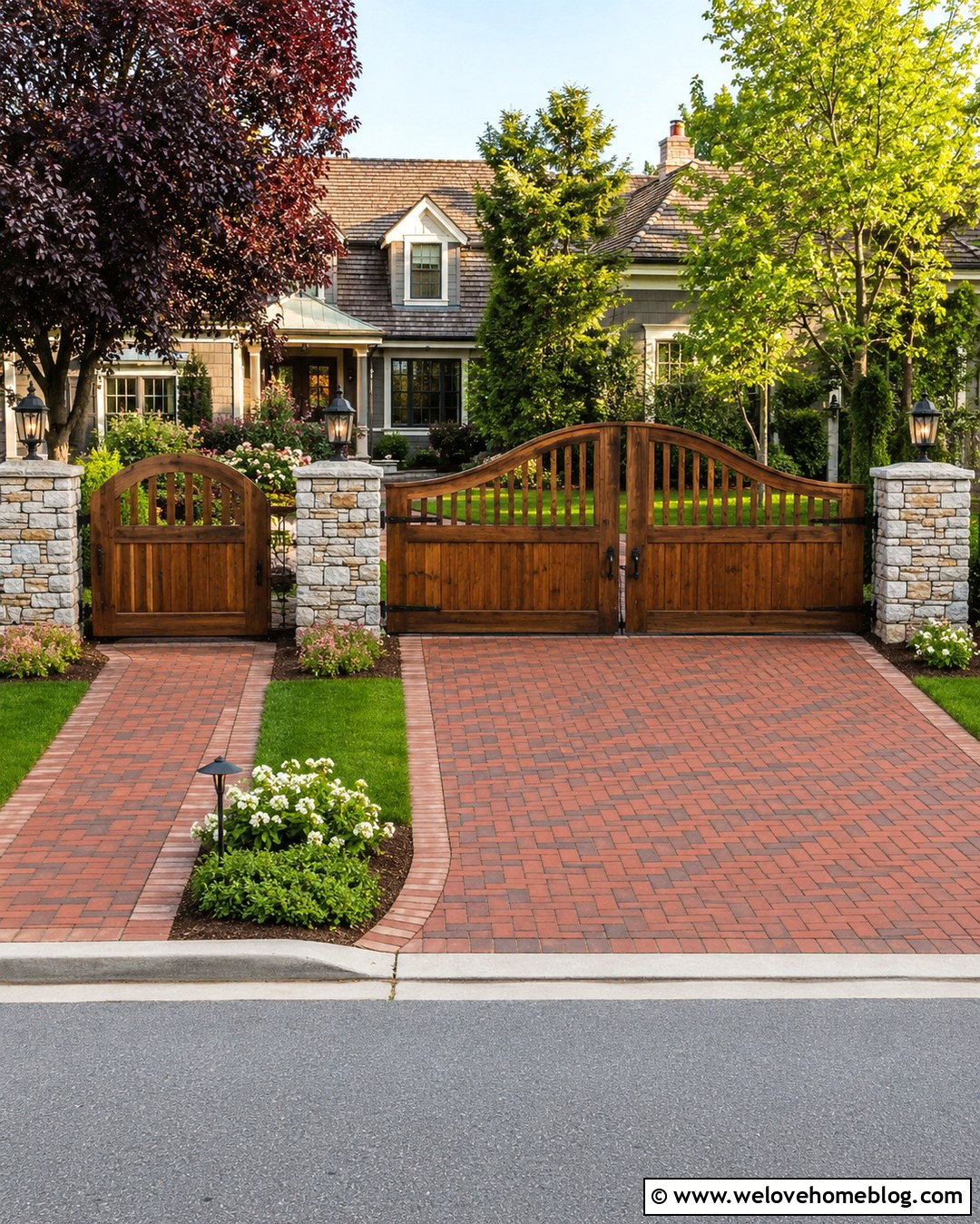
Adding a separate pedestrian gate makes the entrance easier to use when someone is walking, cycling, collecting mail, or visiting without a vehicle. Place the smaller gate beside the driveway opening and match its wood boards, top profile, and hardware to the main double gate. A stone pillar between the two openings creates separation and offers a convenient position for an intercom, mailbox, or address plaque. Use a brick paver driveway with a matching walkway so the vehicle and pedestrian routes remain visually connected but clearly defined. Layered shrubs can guide visitors toward the smaller entrance without restricting visibility. This arrangement works best when planned as one complete composition. Keep both gates aligned, repeat the same stain, and use coordinated lighting across every pillar for a balanced frontage.
13. Curved Top Wood Driveway Gate
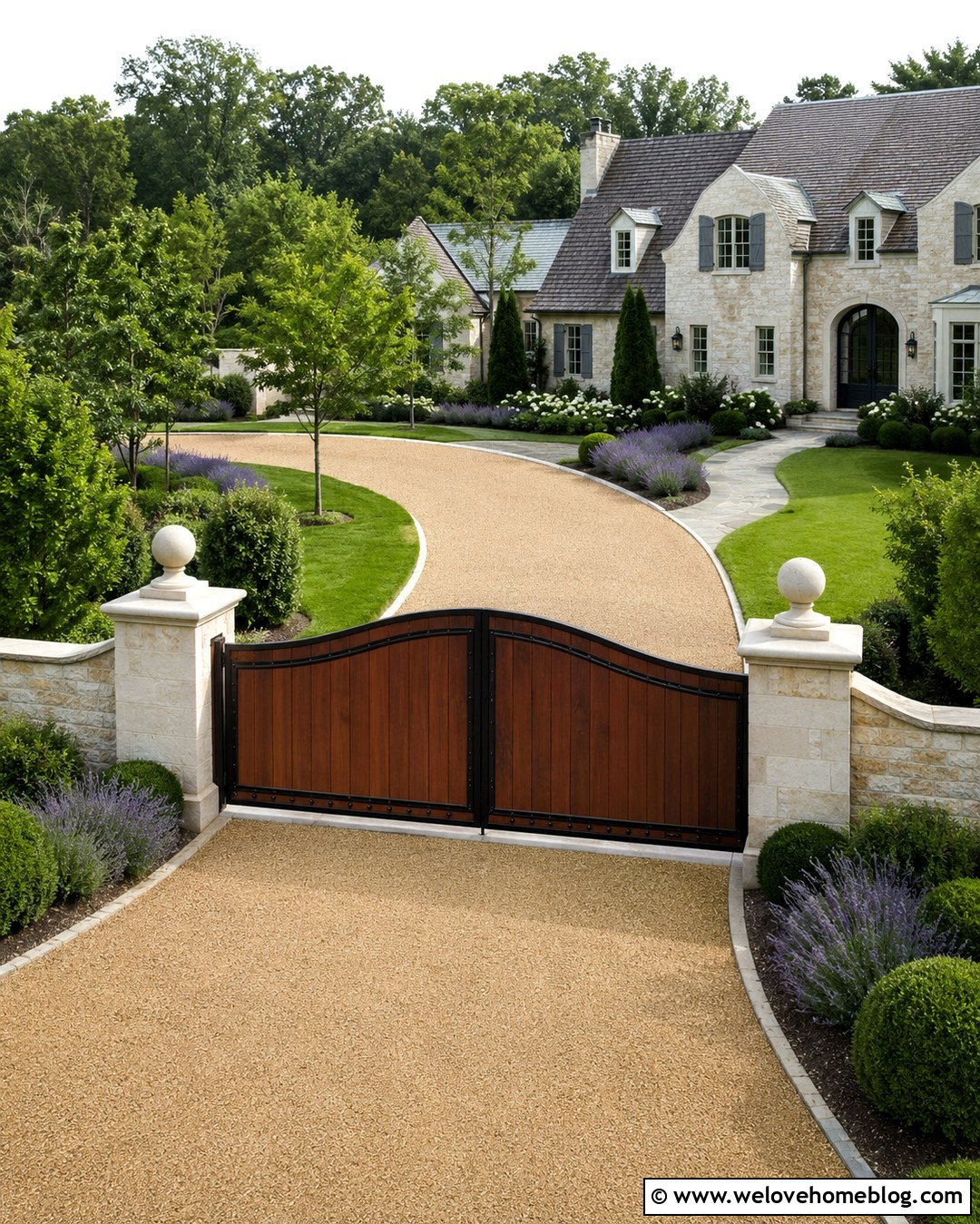
A curved top softens the strong horizontal line of a driveway entrance and gives a wood gate a more traditional profile. The curve may rise toward the center for a formal appearance or dip gently between the posts for a welcoming, informal effect. Vertical redwood or cedar boards make the shape easy to read from the street. Pair the gate with rounded stone pillars and a curved resin-bound gravel driveway that continues the flowing geometry. Plant mounded shrubs, lavender, and small ornamental trees along the entrance instead of rigid rows. Black metal edging around the gate frame can sharpen the outline and add structural support. Repeat the curve in a nearby walkway or planting bed, but avoid using too many arches. One clear shape creates a stronger, more cohesive design.
14. Automatic Wood Driveway Gate
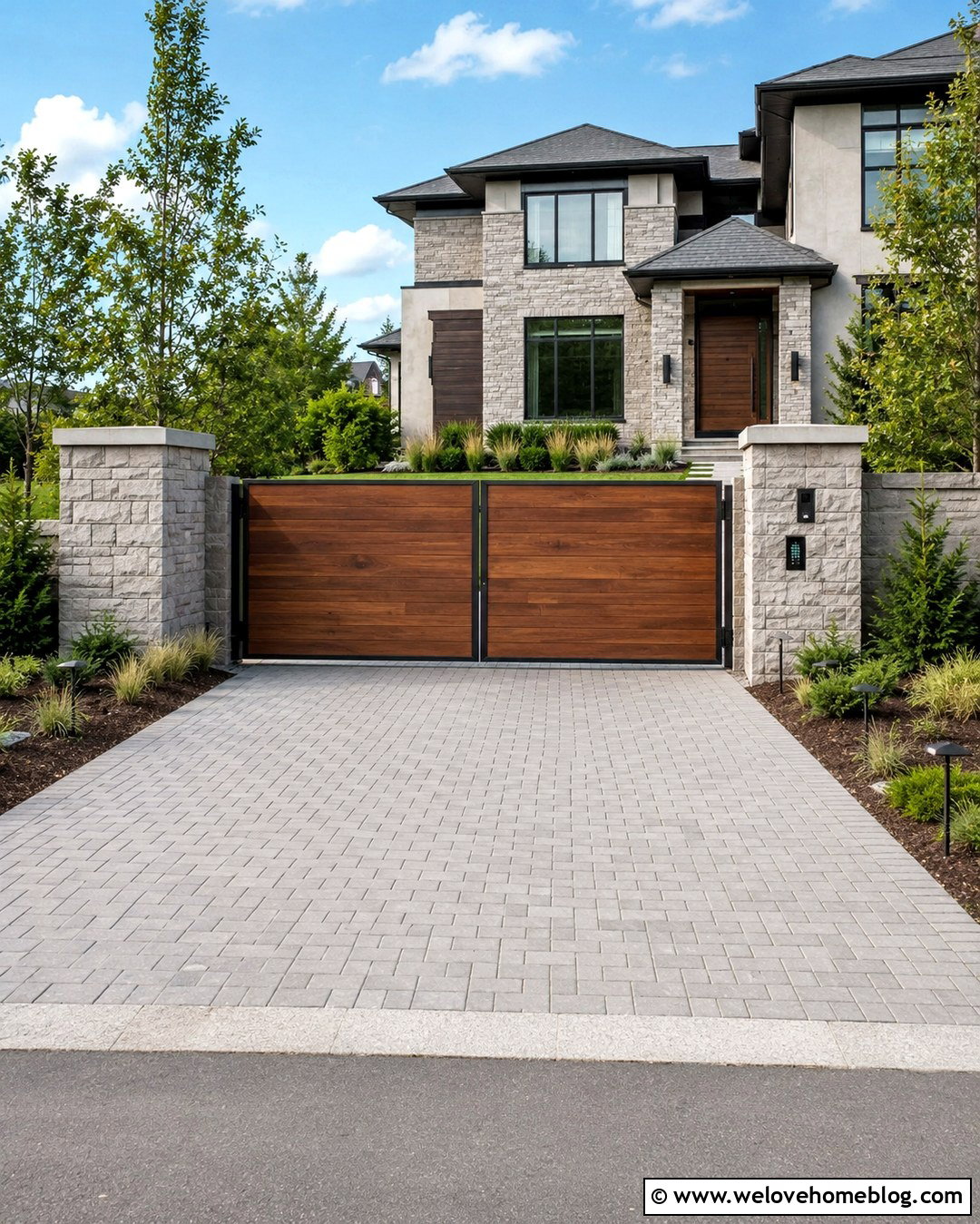
An automatic wood gate combines the welcoming character of timber with convenient controlled access. Both sliding and double-swing configurations can be automated, although the correct system depends on available clearance, entrance slope, gate weight, and daily use. Safety devices and the operating mechanism should be selected and installed by a qualified gate professional. () For an attractive design, mount cedar or ipe boards over a stable steel frame and conceal equipment behind pillars or landscaping without blocking required sensors. Use a smooth concrete or interlocking paver driveway around the moving area. An intercom, keypad, and delivery access point can be grouped neatly on one pillar. Low-voltage lighting along the approach improves visibility and gives the automated entrance a complete, intentional appearance.
15. Japanese-Inspired Wood Driveway Gate
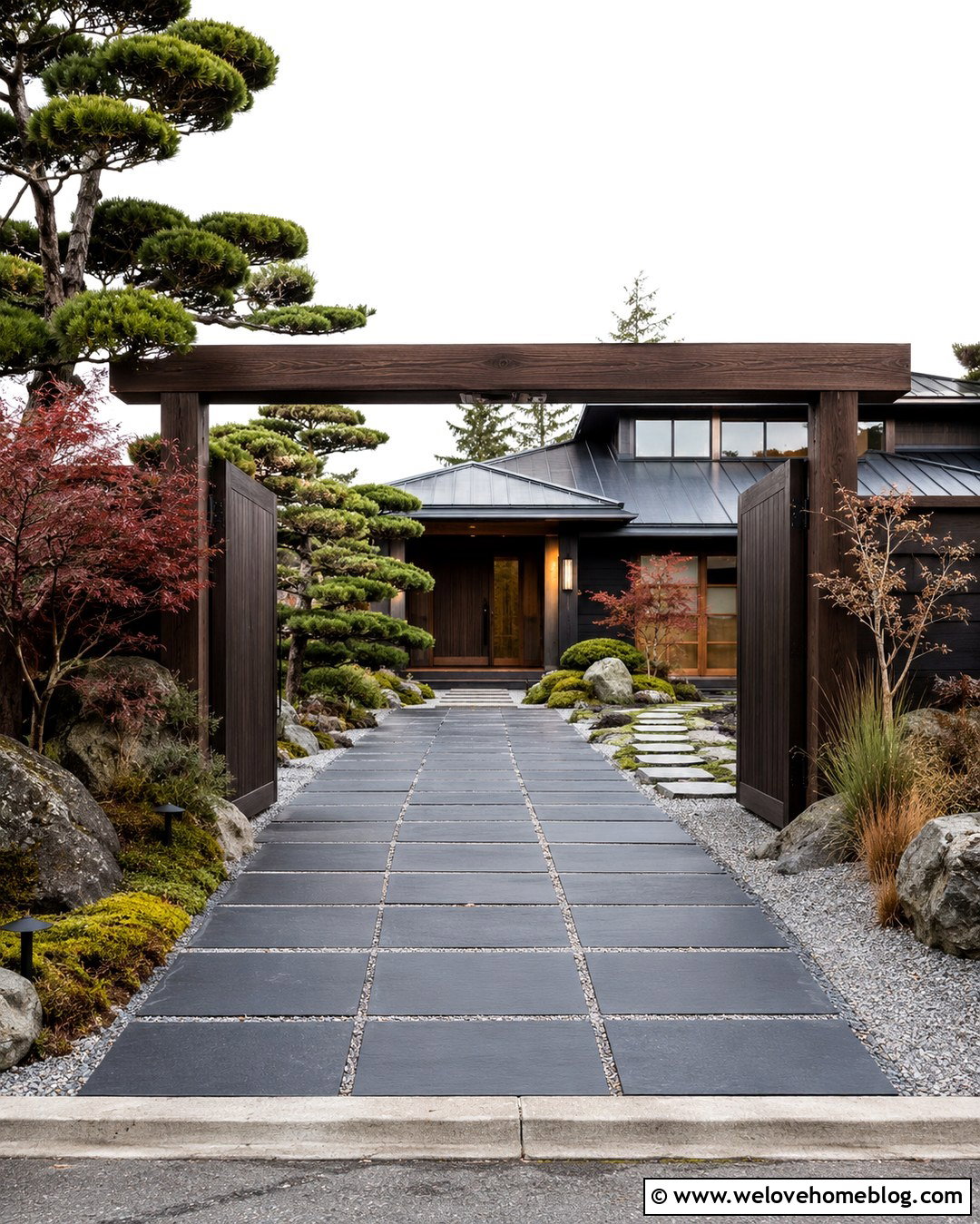
Clean joinery and restrained landscaping can give a wood gate a calm Japanese-inspired appearance. Choose dark-stained cedar boards arranged vertically within a broad timber frame. A shallow overhead beam may connect the posts and make the entrance feel architectural, but it should maintain appropriate clearance for vehicles and service access. Pair the gate with a straight driveway made from large charcoal concrete pavers separated by narrow gravel joints. Use sculptural evergreens, mossy stones, ornamental grasses, and a carefully placed Japanese maple to frame the approach. Keep the plant palette limited and leave visible open space around major elements. Hidden hinges and minimal hardware preserve the quiet composition. The same wood tone can reappear on the house siding, front door, or privacy screens, helping the gate feel connected to the entire property.
16. Coastal Wood Driveway Gate
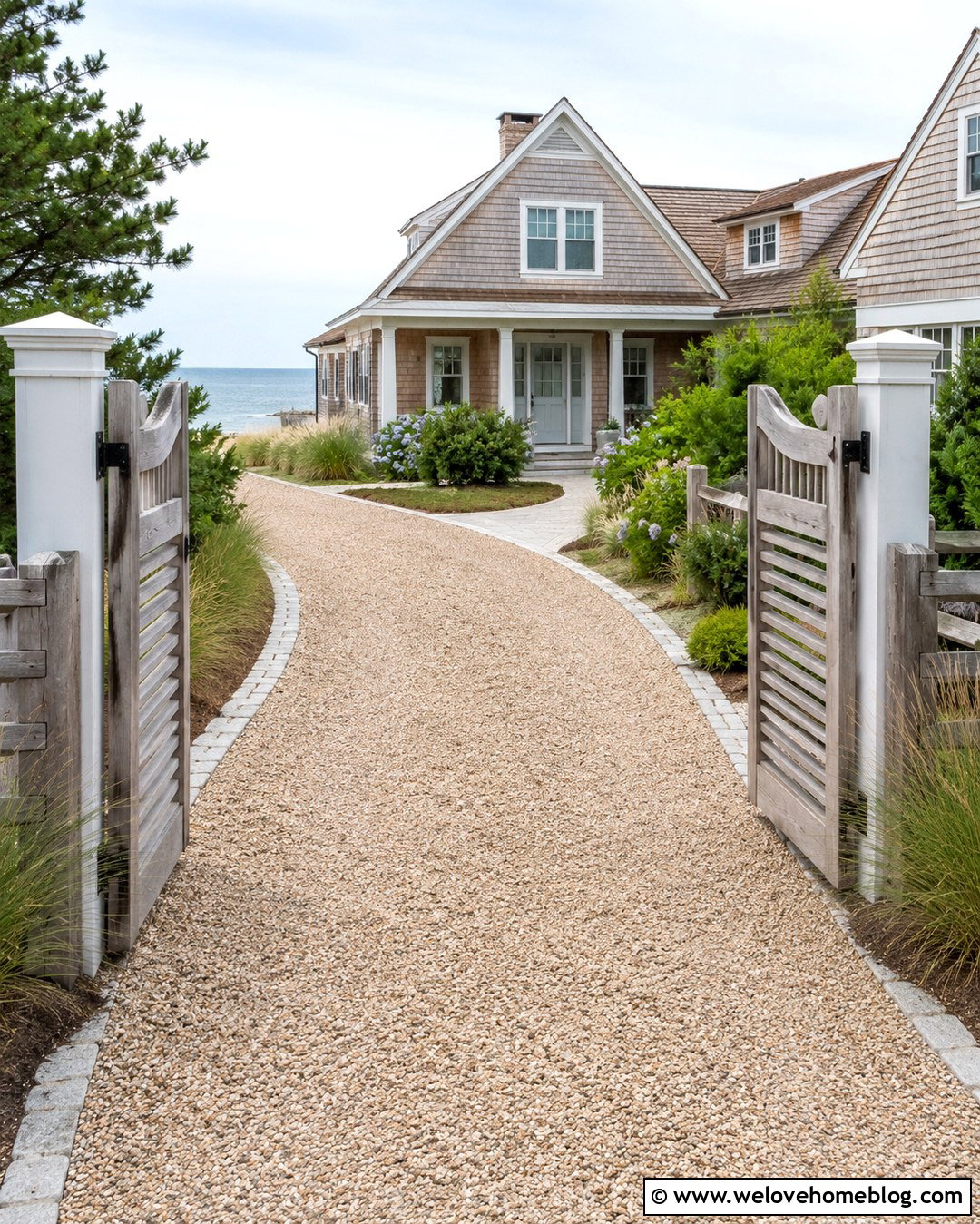
A coastal entrance feels most convincing when the gate, driveway, and planting all use light, weathered colors. Build an open slat gate from cedar and apply a pale gray stain that highlights the grain without looking heavily painted. White posts or light stone pillars will keep the frontage bright. A shell-toned permeable gravel driveway can curve gently toward a shingle-style or coastal cottage home. Surround the entrance with beach grass, low evergreen shrubs, hydrangeas, and wind-tolerant ground covers. Use stainless steel or matte black hardware with simple lines rather than ornate hinges. An open upper section allows filtered views through the gate and prevents the entrance from feeling enclosed. Repeat the pale wood on a pedestrian gate or short side fence to create a consistent coastal boundary.
17. Reclaimed Wood Driveway Gate
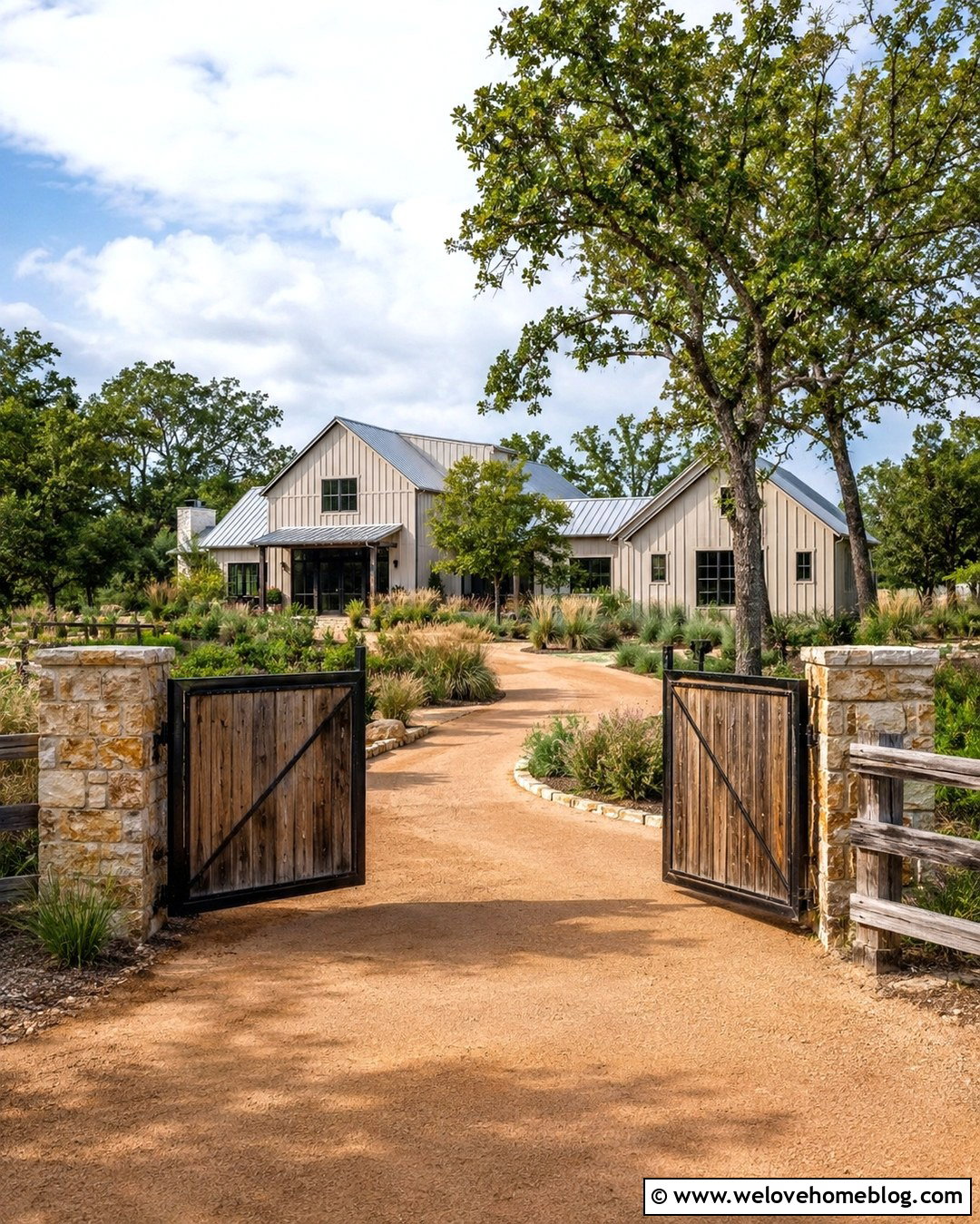
Reclaimed boards give a driveway gate character through varied grain, knots, and naturally weathered color. The best result comes from mounting selected boards over a newly built structural frame rather than expecting aged planks to support a wide entrance alone. Arrange the boards vertically for a traditional barn-like appearance, then add simple black cross braces or a metal border. Stone pillars and a warm decomposed-granite driveway reinforce the rustic palette. Continue the relaxed look with native shrubs, split-rail fencing, and mature trees, but keep the gate opening neatly graded and clearly defined. Reclaimed wood can vary dramatically in condition, so remove unsuitable pieces and prepare the remaining boards for exterior exposure. A clear matte finish can preserve the aged appearance while keeping the overall entrance tidy and intentional.
18. Narrow Wood Driveway Gate
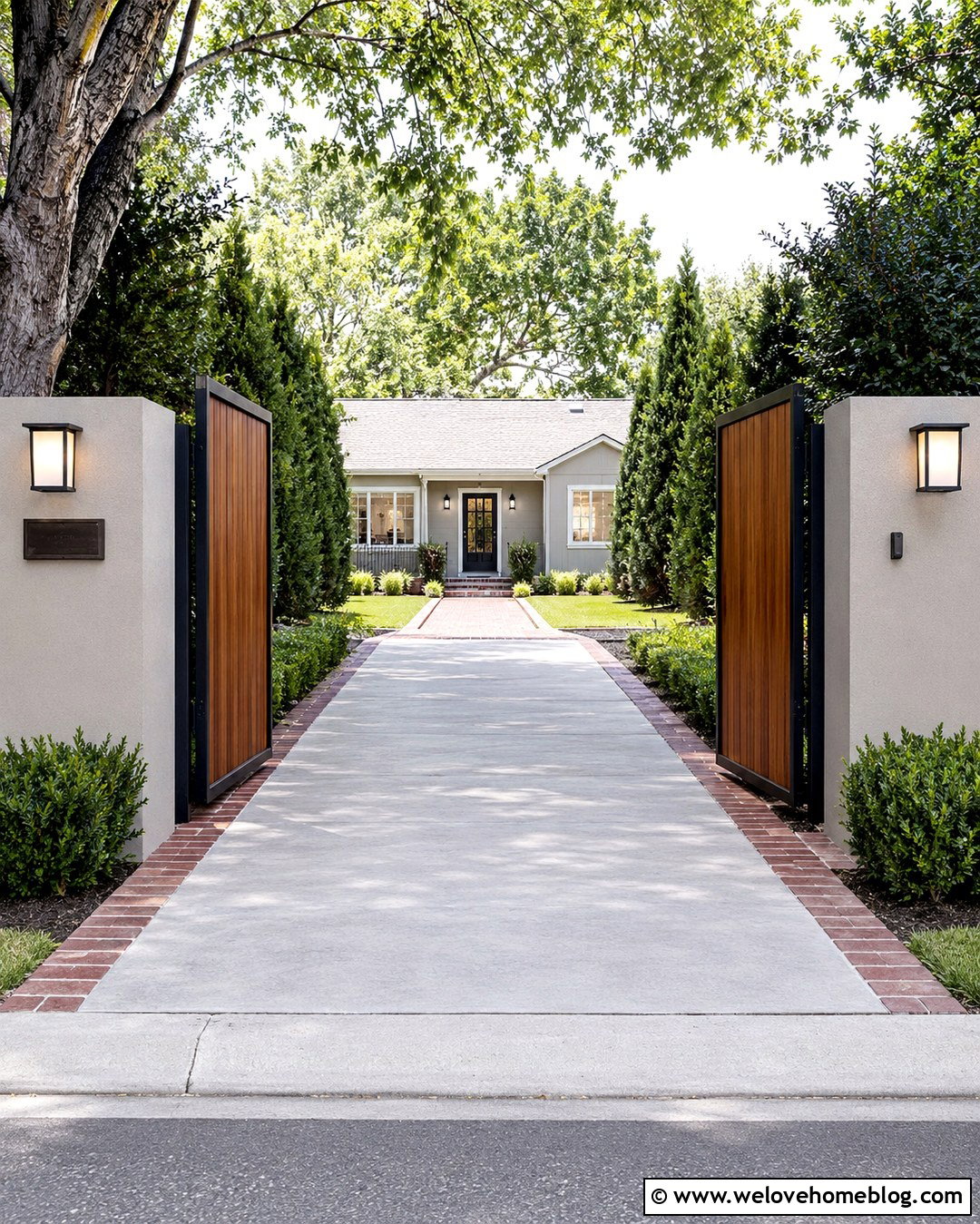
A narrow driveway entrance needs a gate that provides security without making the approach feel cramped. Use a simple pair of vertical cedar panels or one compact sliding gate, depending on available side clearance. Slim steel framing can support the wood without adding bulky visual weight. Position the posts carefully so mirrors, delivery vehicles, and turning cars have usable clearance through the opening. A straight poured-concrete driveway with a contrasting brick border helps drivers read the edges immediately. Keep landscaping low near the street, then allow taller shrubs farther inside the property. Light-colored wood or medium cedar stain will make the entrance appear more open than dark solid panels. Matching wall-mounted lights and a small address plaque add function without crowding the limited gate area.
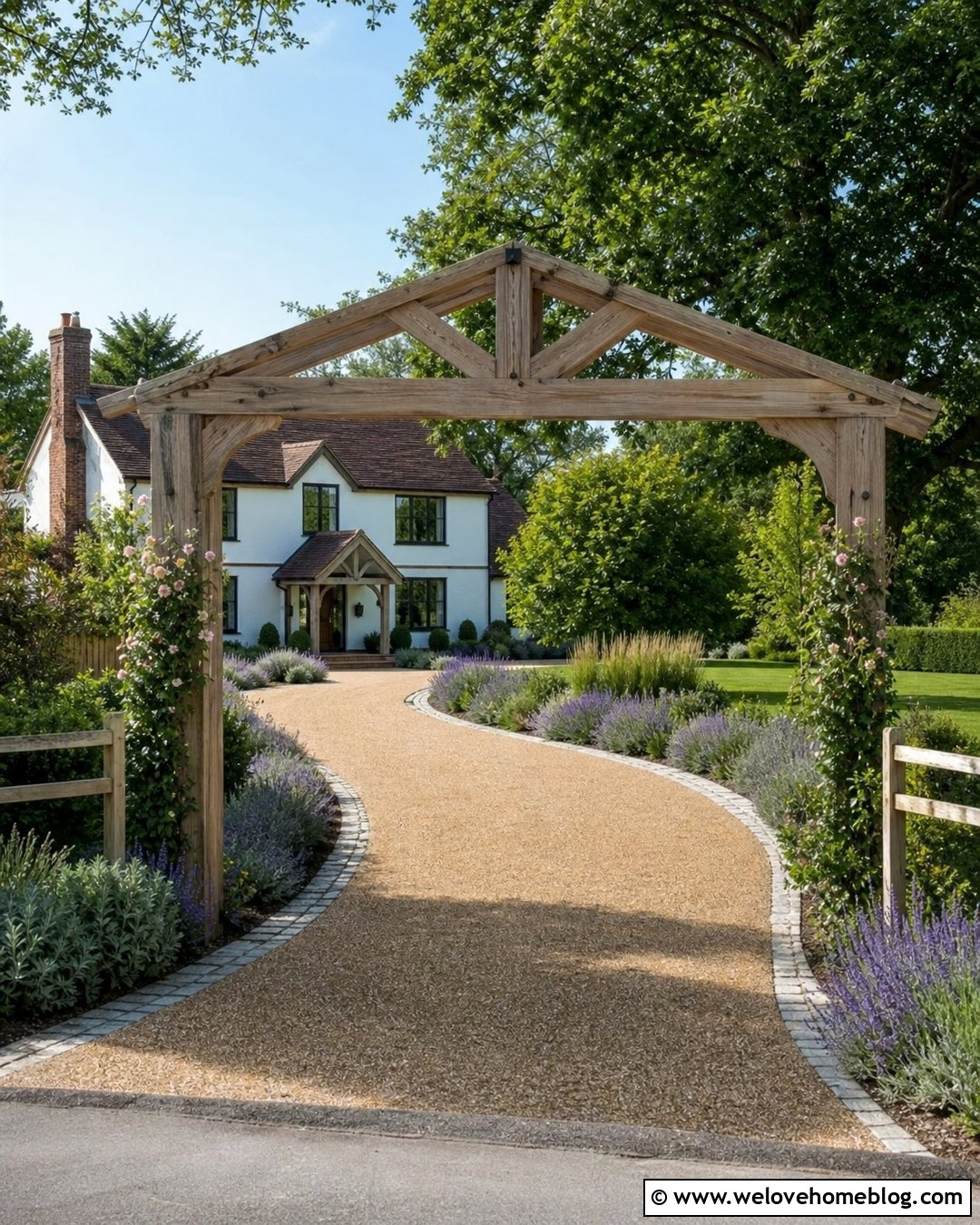
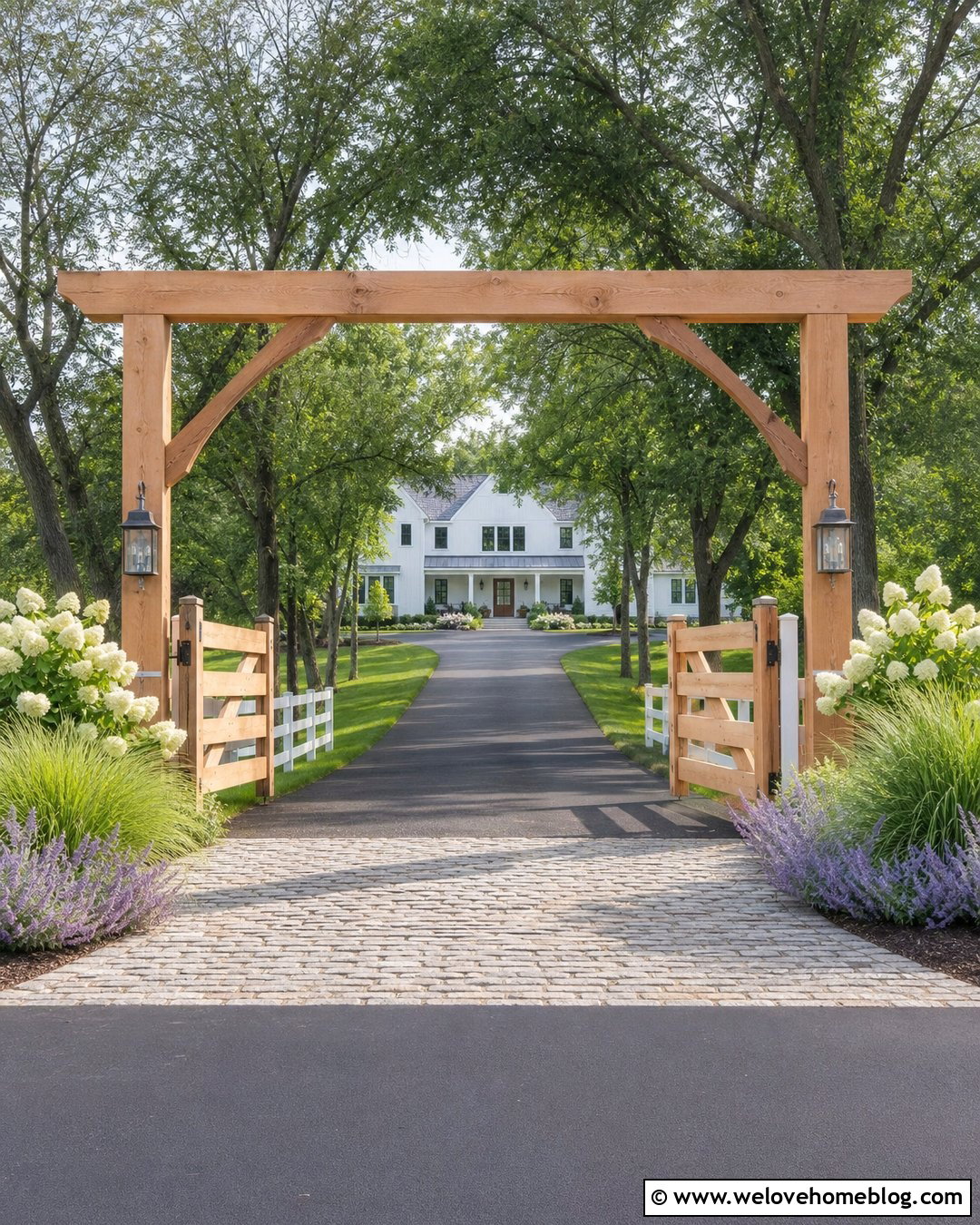
19. Wood Driveway Gate With Pergola
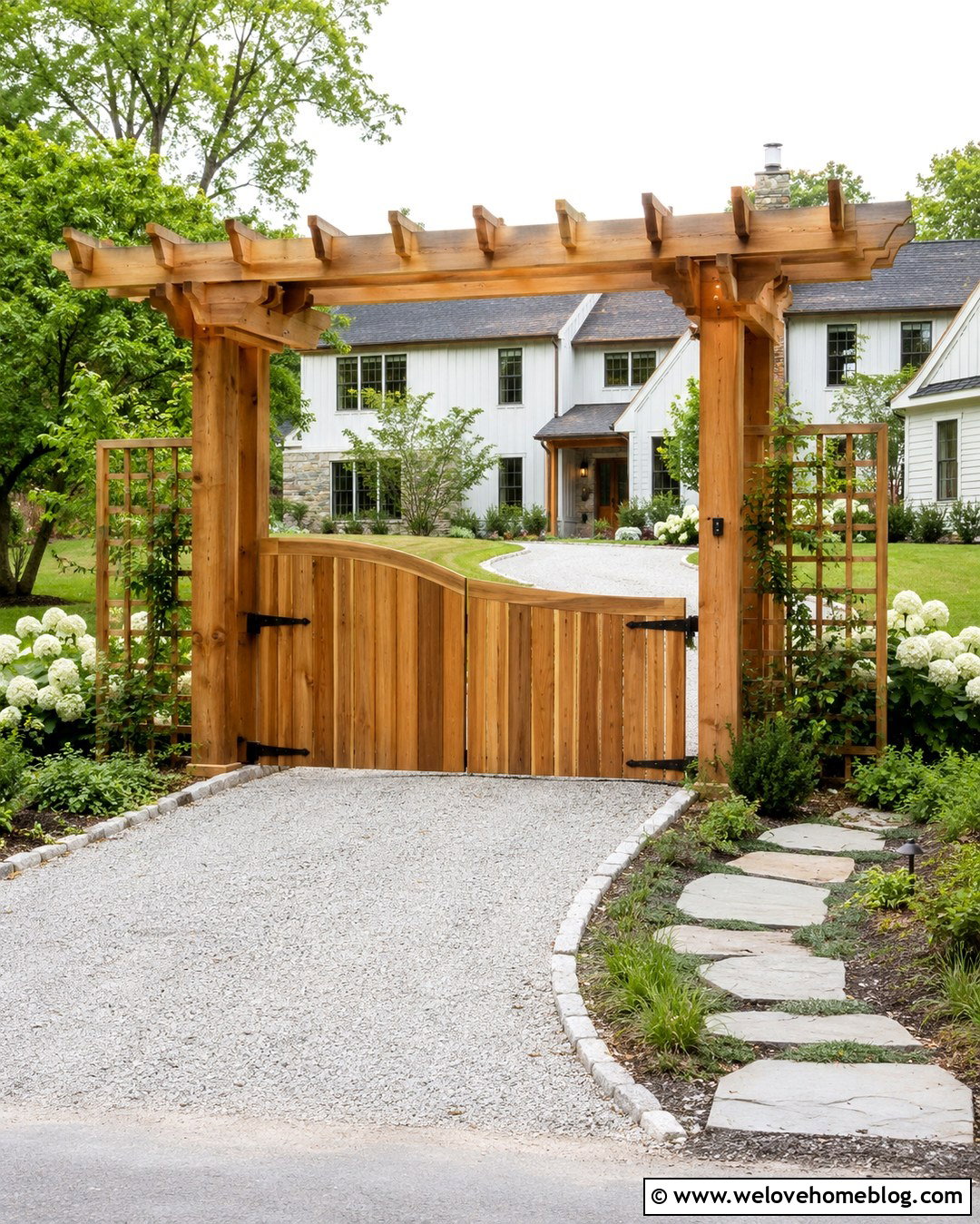
A pergola-style frame can transform a basic wood gate into a complete architectural entrance. Place two substantial timber posts outside the driveway clearance and connect them with a horizontal beam or a simple layered top. Below it, install a lower double-swing gate with vertical cedar boards and open spacing. This arrangement suits Craftsman, ranch, cottage, and modern farmhouse homes, especially when the overhead timbers repeat details from a porch or entry canopy. A curved gravel driveway and natural stone edging keep the design warm and approachable. Train restrained vines on side trellises rather than across moving gate components. Large planting beds can anchor the posts, while a separate path directs pedestrians safely around the vehicle opening. Keep the overhead structure simple so it frames rather than overwhelms the house.
20. Wood Driveway Gate With Lighting and Address Sign
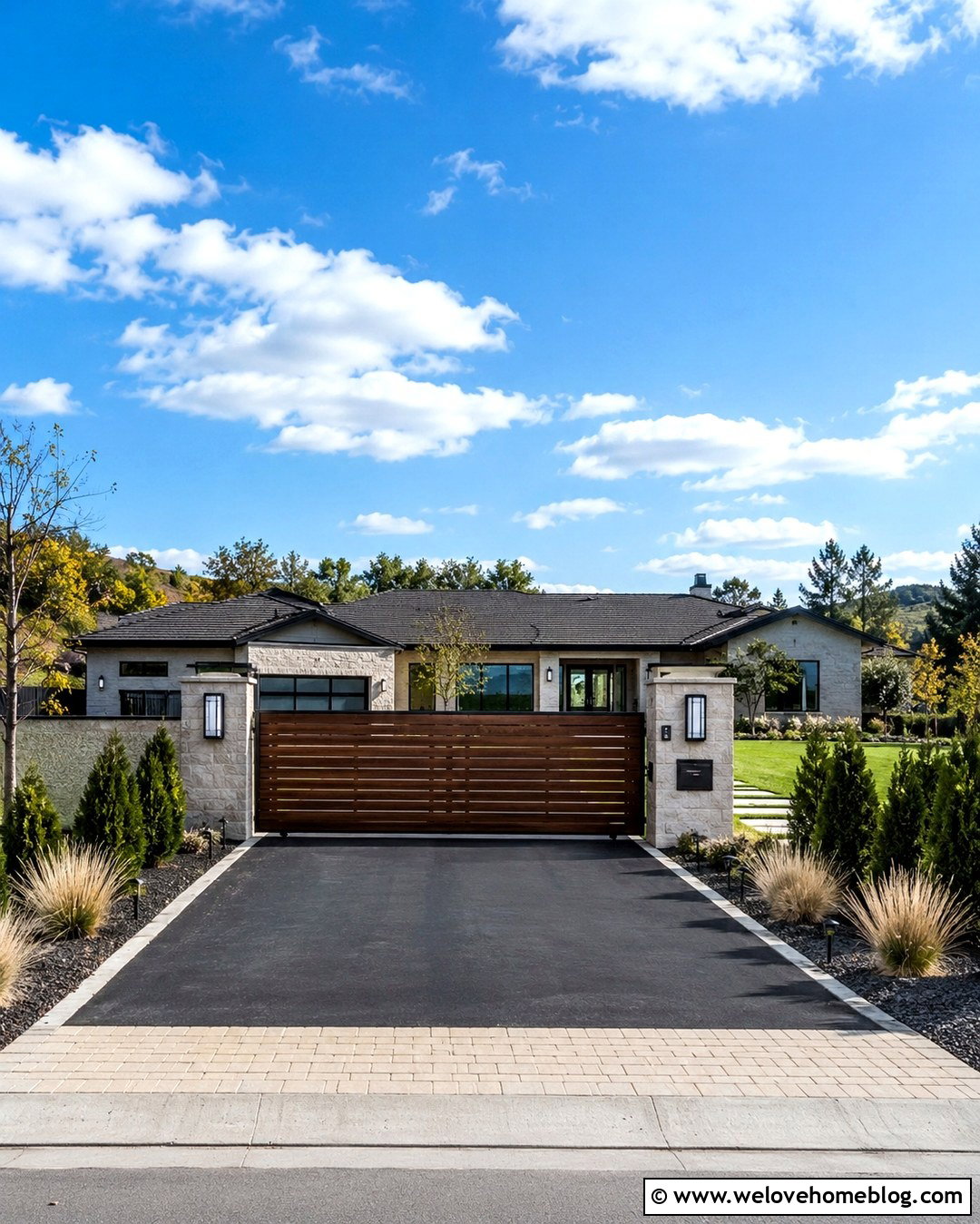
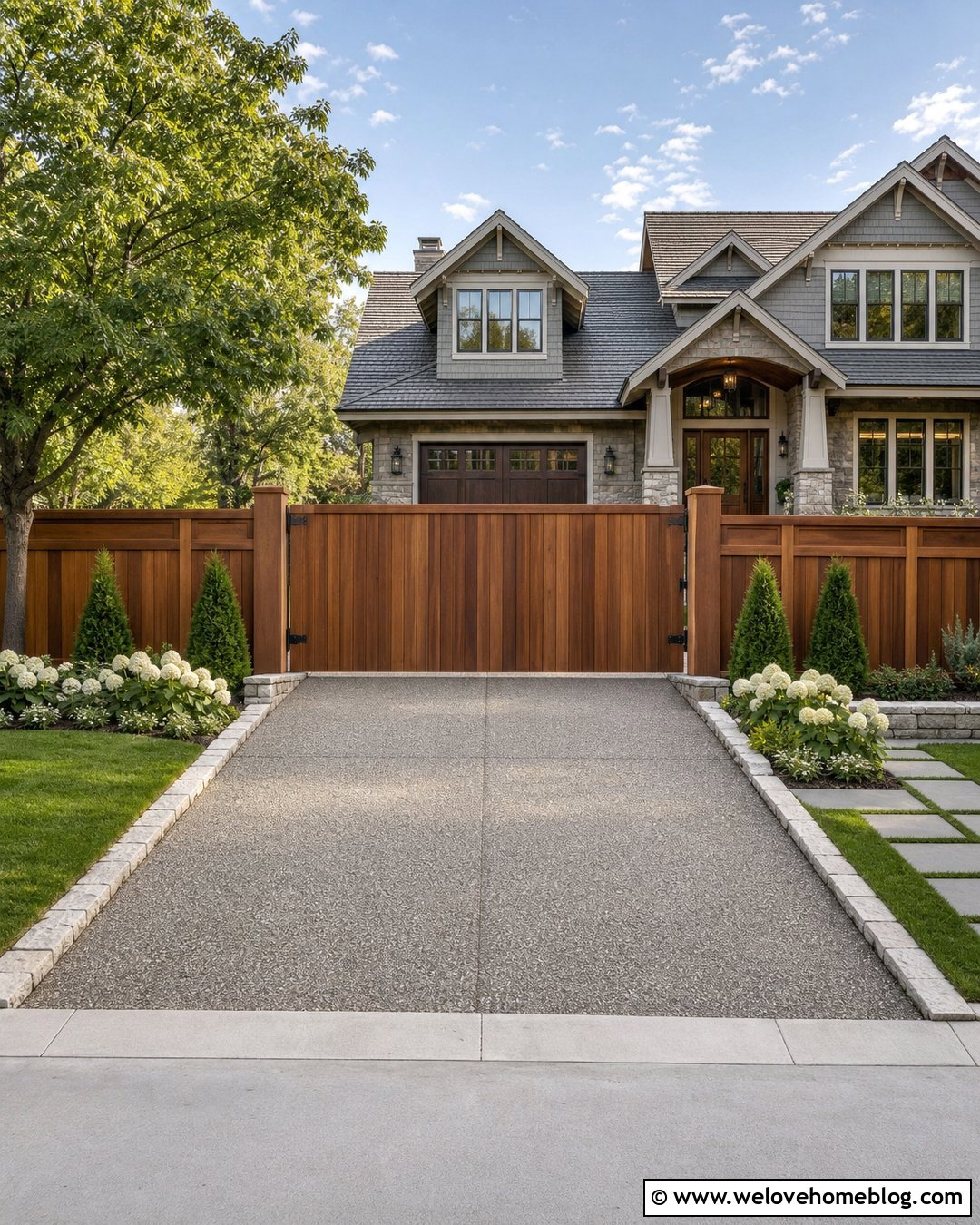
Lighting and a clearly positioned address sign make a wood gate more functional while strengthening its curb appeal. Use a horizontal walnut-toned cedar gate between light stone pillars, then mount matching shielded fixtures on both sides. Place the address numbers on one pillar where they remain easy to see from the street without adding lettering directly to the moving gate. A dark asphalt driveway with a light paver apron creates a strong entrance contrast. Low path lights can continue toward the house, while evergreen shrubs and pale ornamental grasses soften the masonry. Keep electrical components, keypads, and intercom equipment aligned in one organized zone. During the day, the timber remains the focal point. After dark, properly directed fixtures can clarify the opening, pillars, driveway edges, and access controls.
Conclusion:
The strongest wood gate entrance brings every exterior feature into one coordinated plan. Gate proportions should suit the driveway width, while the stain, posts, hardware, fencing, and landscaping should relate to the home. Modern slats, farmhouse braces, privacy panels, sliding systems, and pergola frames each create a different first impression. Before installation, consider vehicle clearance, drainage, grade, visibility, automation, and space for visitors to stop safely. Choose exterior-appropriate wood, reliable hardware, and a maintenance plan suited to local exposure. Whether the goal is privacy, rustic character, or contemporary curb appeal, these **20 Driveway Entry Gates Entrance Wood Ideas** can help shape a practical entrance that looks intentional from the curb to the house.

Related posts:
Leave a Reply