
Choosing an RV gate is about more than closing off a wide driveway. The entrance must provide comfortable turning room, dependable clearance, strong hardware, and a design that suits the house. These 20 Rv Driveway Gate Ideas cover practical layouts for suburban side yards, rural properties, sloped sites, and compact lots. You will find swing, sliding, cantilever, telescoping, and folding options paired with concrete, asphalt, gravel, pavers, and other driveway surfaces. Before building, measure the RV at its widest and tallest points, evaluate the approach angle, and discuss wind loads, automation, setbacks, and safety devices with a qualified installer. Sliding gates need side room, while swing gates require a clear opening arc. () Here are 20 Rv Driveway Gate Ideas for creating a functional, attractive entrance.

1. Modern Horizontal RV Driveway Gate
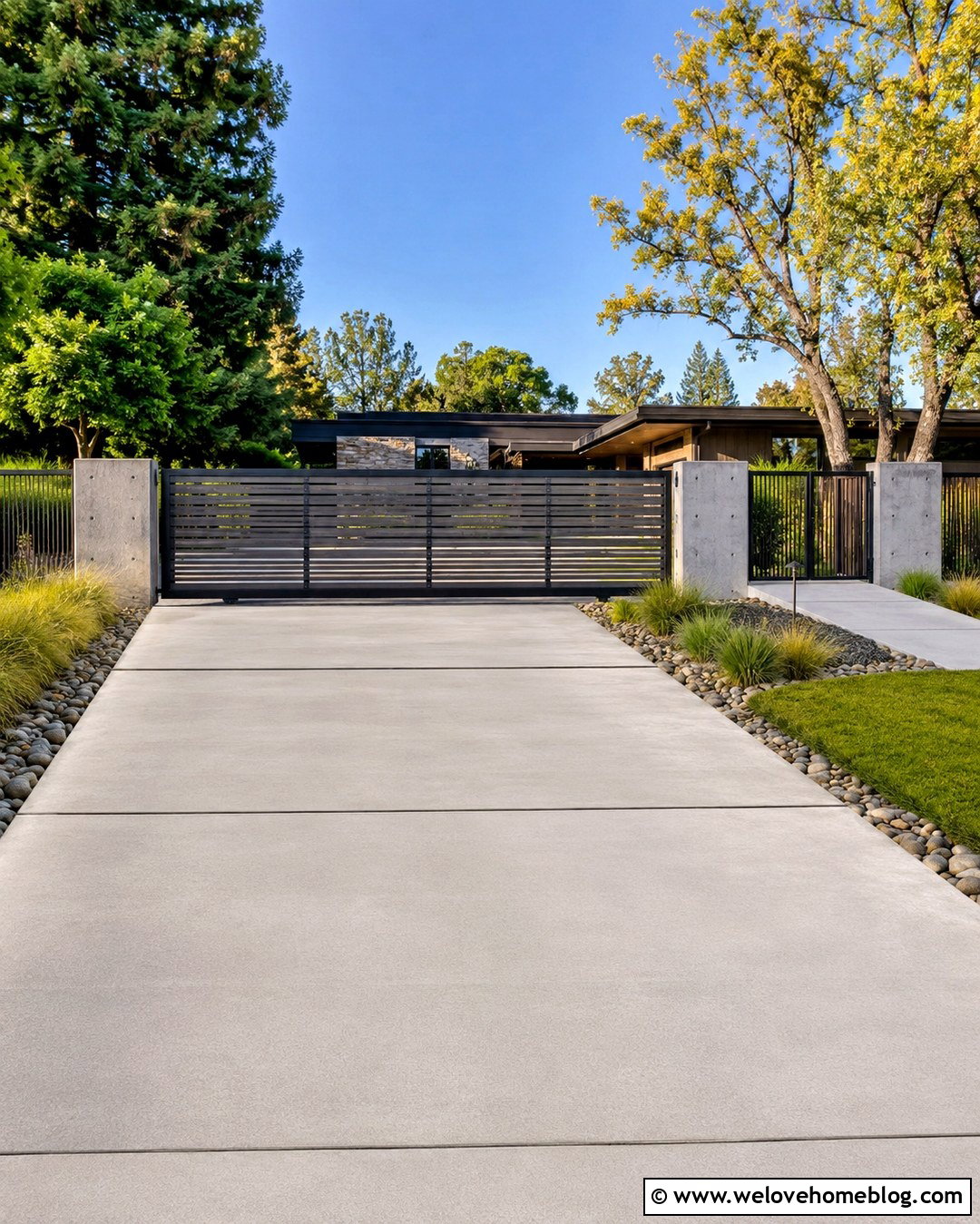
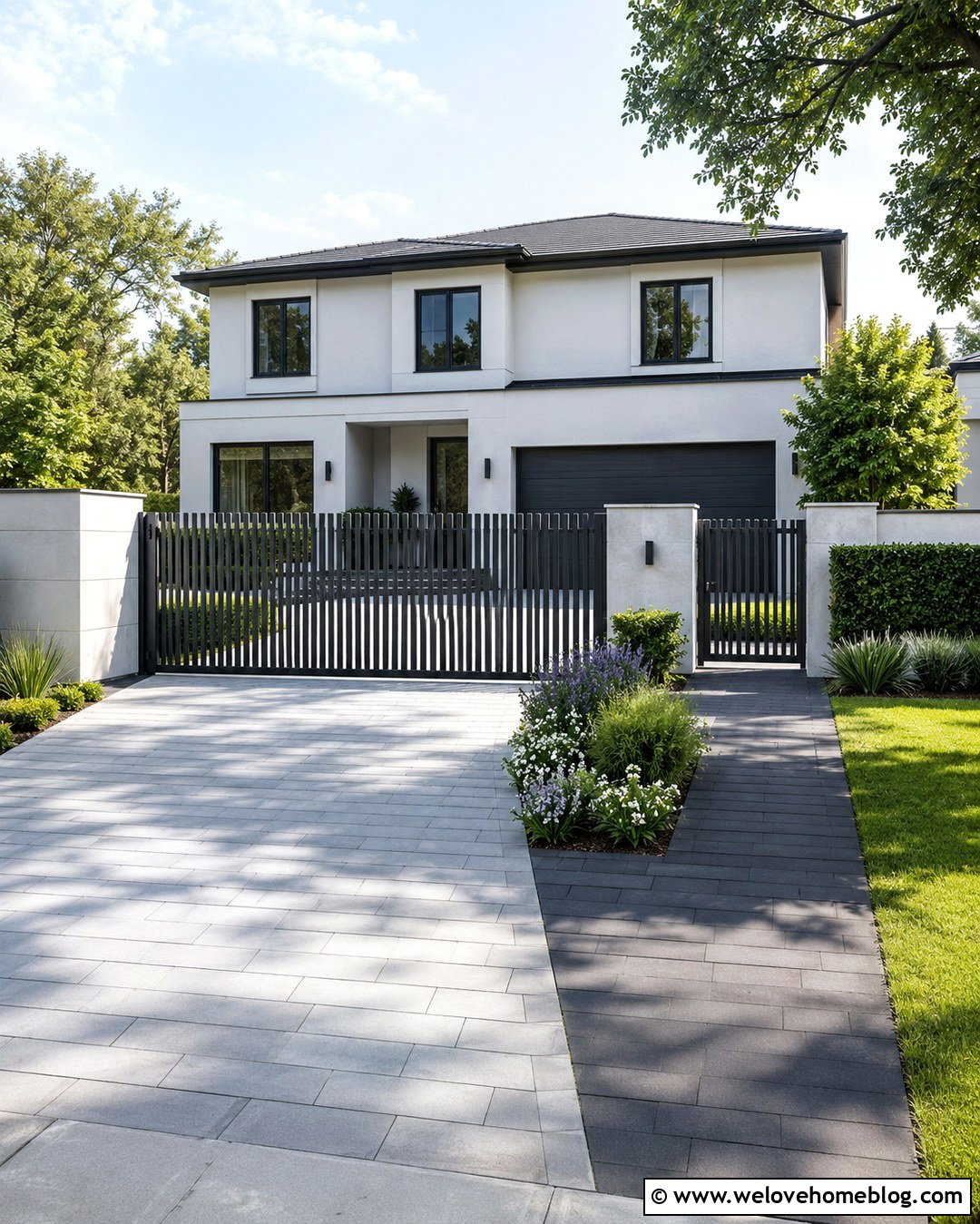
A horizontal RV driveway gate creates a clean entrance that works especially well with contemporary and midcentury homes. Use powder-coated aluminum slats over a reinforced steel frame to reduce maintenance without giving up strength. Small gaps between the slats can soften wind pressure while providing useful privacy. Pair the gate with a straight light-gray concrete driveway, charcoal metal fencing, and simple rectangular columns. Low ornamental grasses and river rock beds keep the wide opening from looking bare. A sliding or cantilever layout is often more practical than one oversized swing leaf because it does not occupy the RV parking area when open. Confirm that the fence line provides enough run-back space and select an operator rated for the completed gate’s weight and wind exposure.
2. Double Swing RV Driveway Gate
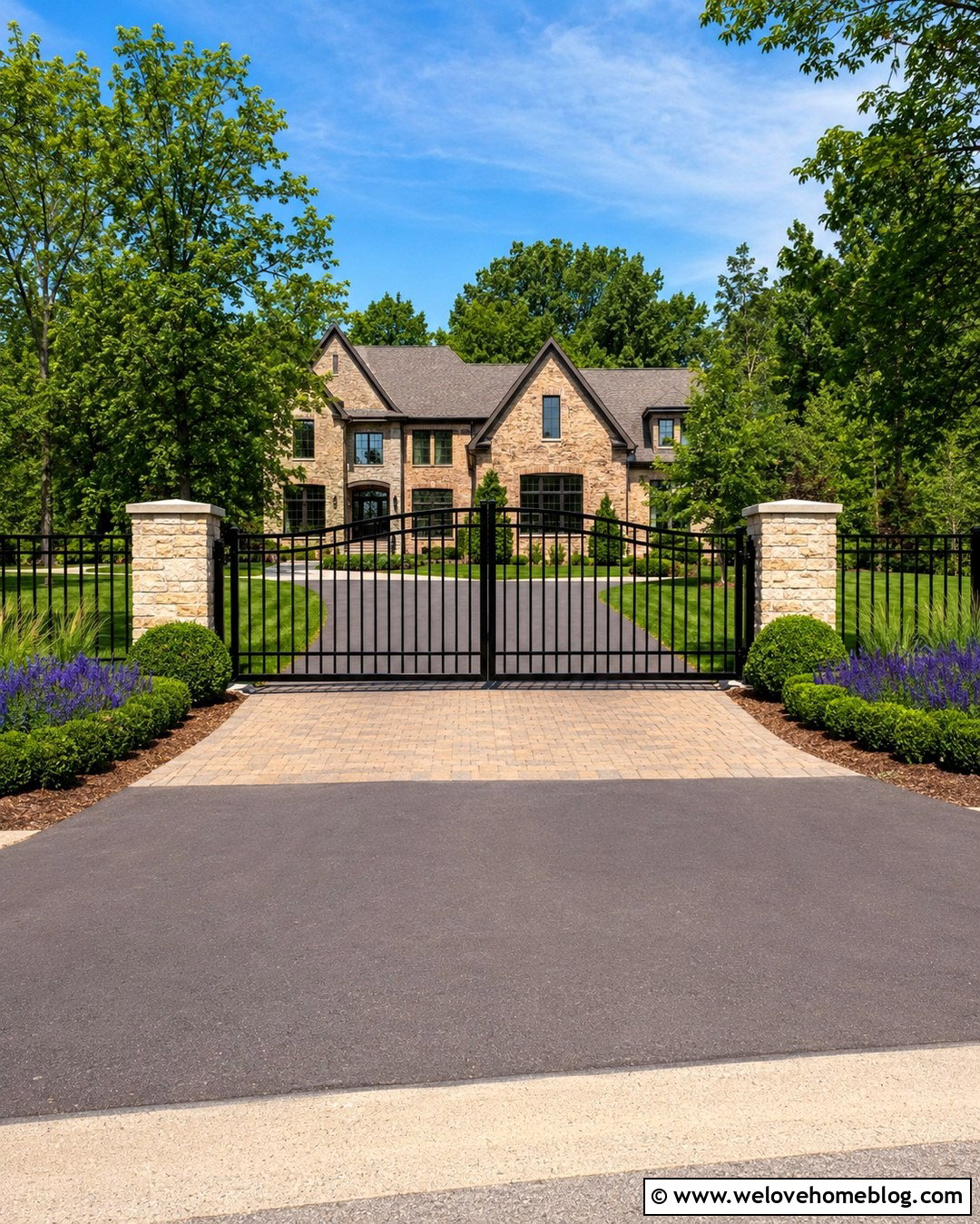
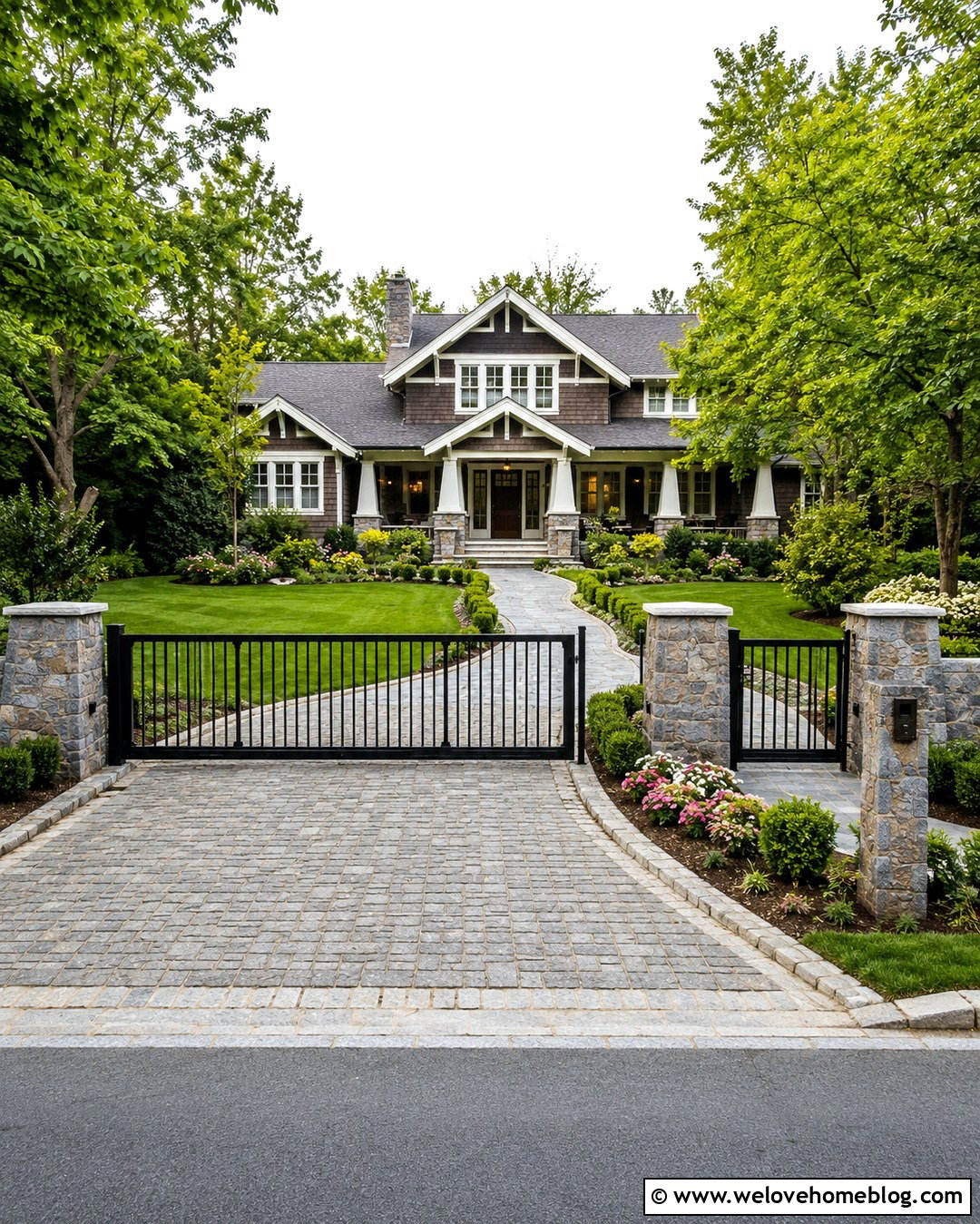
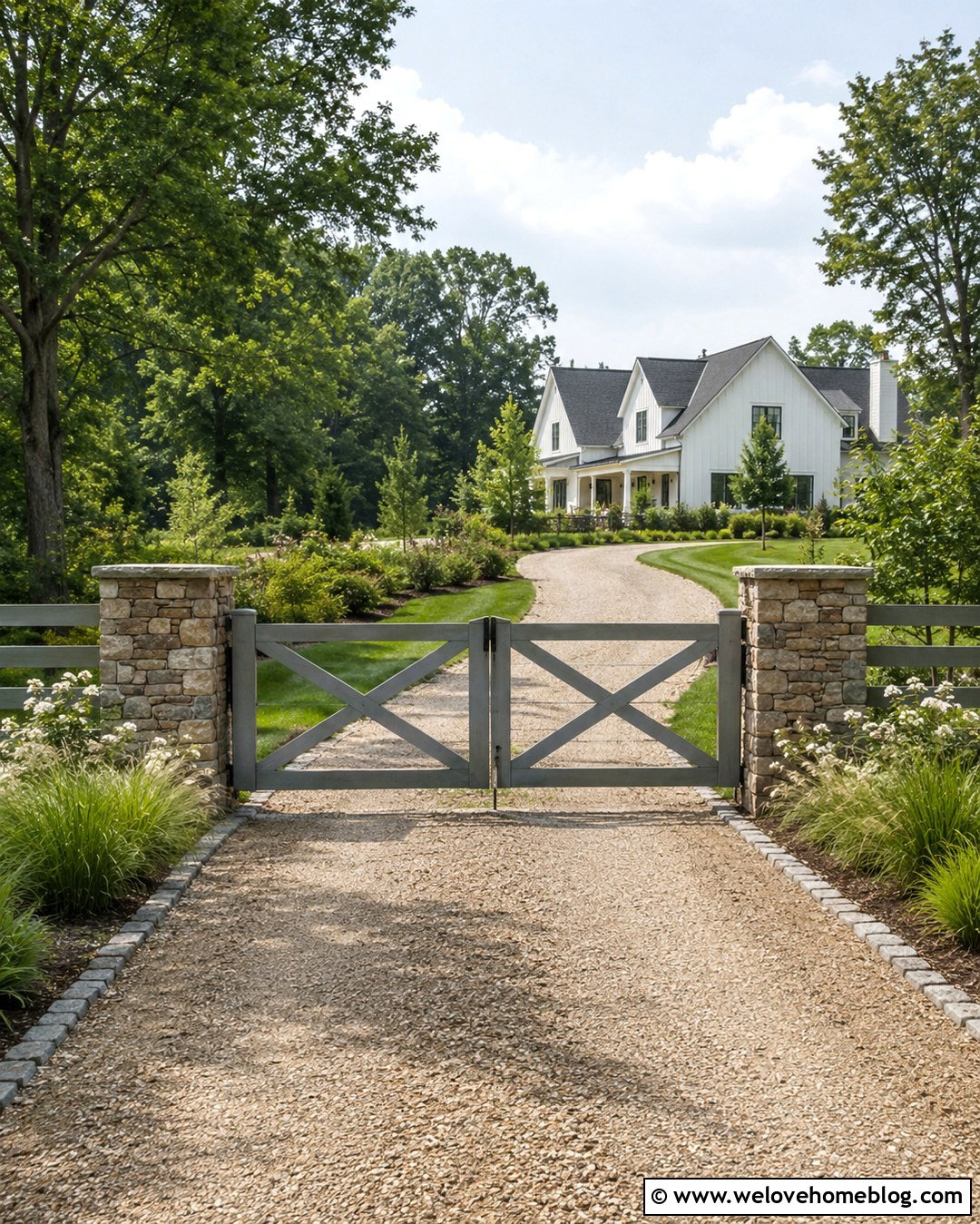
Two balanced gate leaves can make a broad RV entrance feel more traditional and proportional. This layout suits a flat driveway with enough interior space for both panels to open without touching the RV, landscaping, or parked vehicles. Choose lightweight aluminum or open steel pickets to limit stress on the posts and hinges. Stone pillars can visually anchor the wide span, while an asphalt driveway with a paver entrance apron creates a polished transition from the street. Add hold-open hardware for a manual gate or correctly positioned safety sensors for an automated system. Bi-parting gates reduce the swing depth required by a single full-width leaf, making them useful for wider entrances. However, their entire swing arcs must remain clear through every season. ()
3. Cantilever Sliding RV Driveway Gate
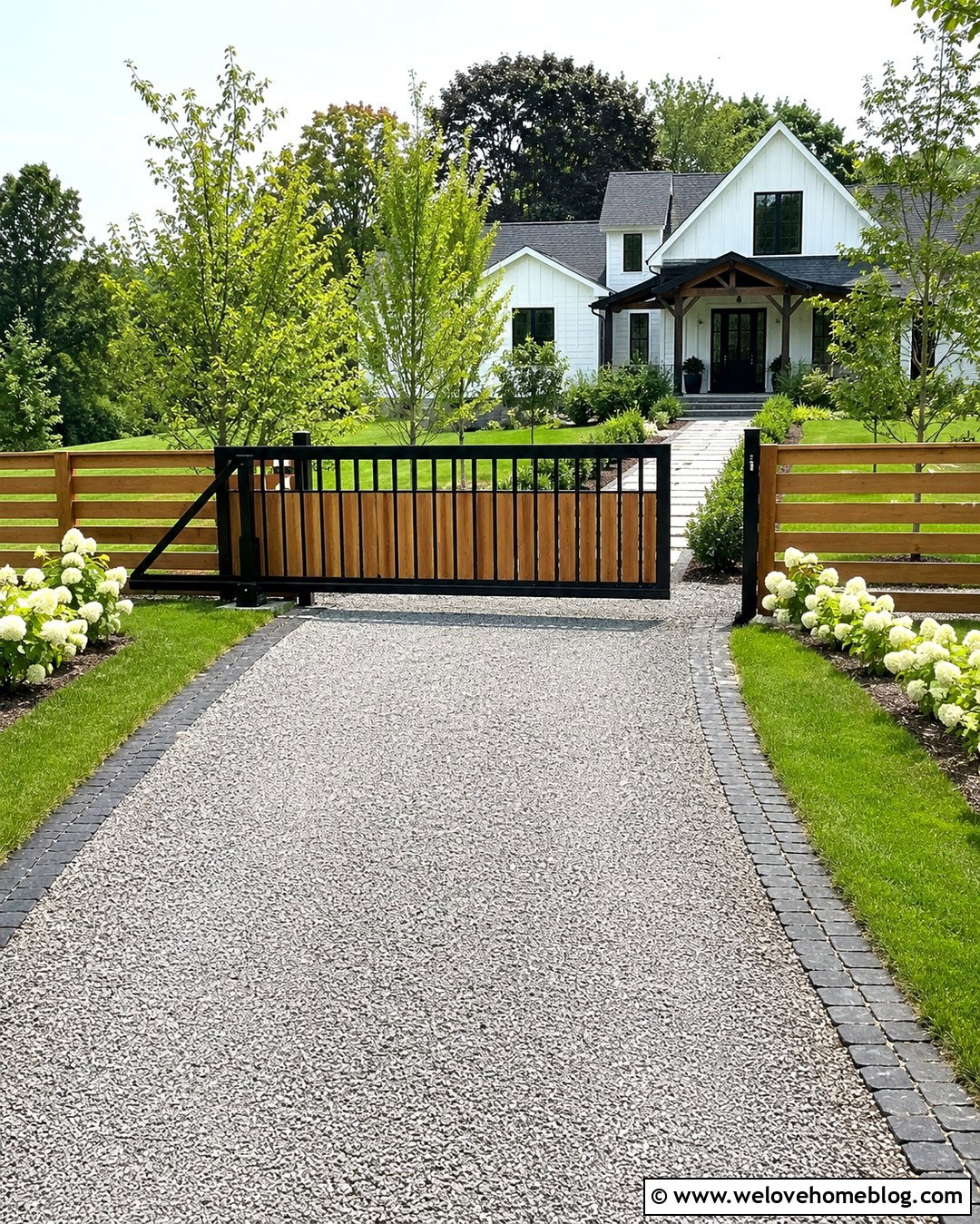
Does gravel, snow, or uneven pavement make a ground track seem impractical? A cantilever RV driveway gate slides above the entrance without wheels traveling across the driveway surface. That keeps the opening clear of a raised track and reduces problems caused by loose stones or debris. A black steel frame with vertical cedar infill looks warm and substantial beside a modern farmhouse. Continue the design with a compacted gray gravel driveway, dark cobblestone edging, and broad grass shoulders for easier maneuvering. This gate needs considerable unobstructed fence-line space because the frame includes a counterbalance section beyond the clear opening. Strong support posts, suitable foundations, sealed hardware, and an operator matched to the gate load are essential. Professional engineering is especially valuable for long, heavy, or wind-exposed designs. ()
4. Wood Privacy RV Driveway Gate
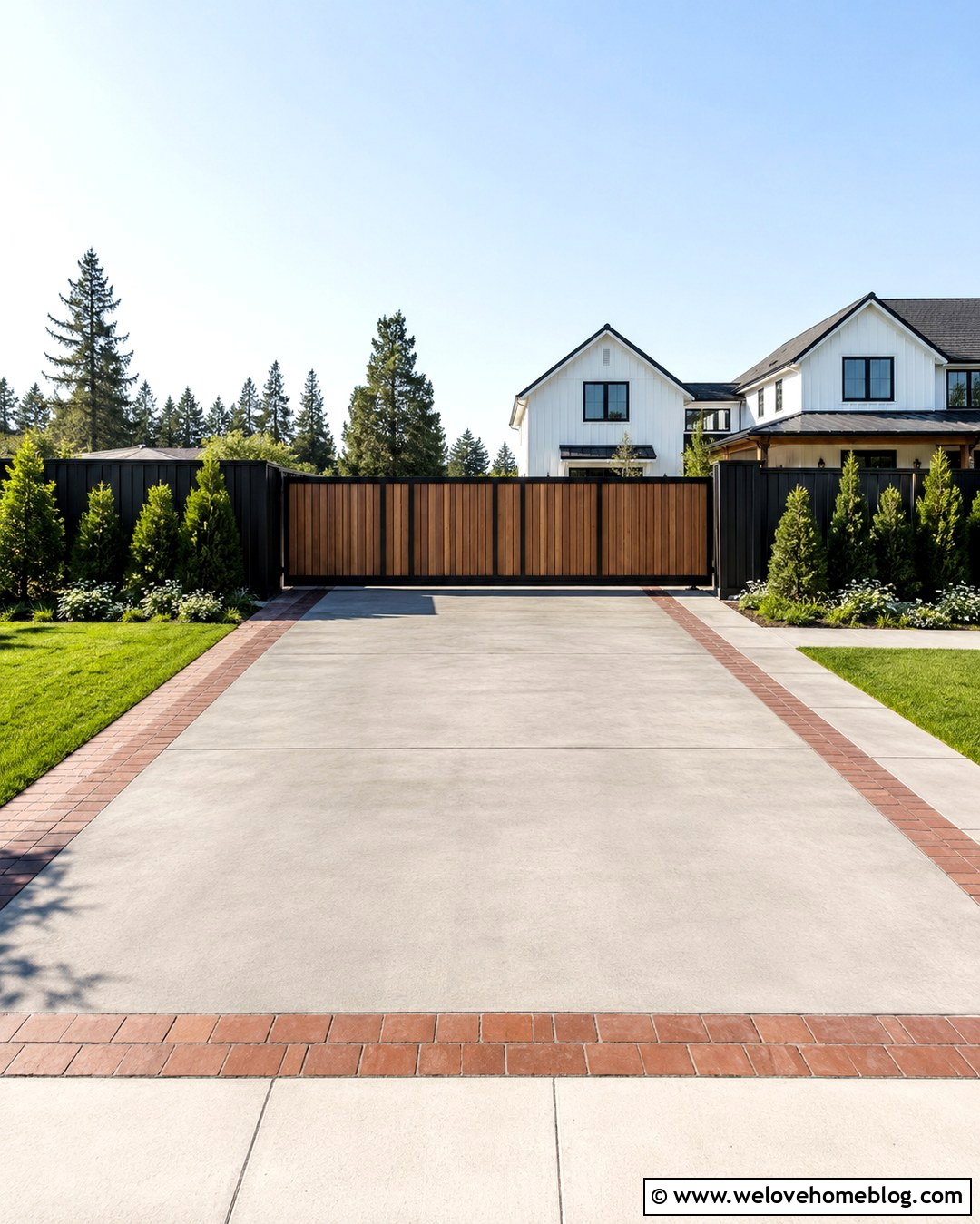
Warm cedar boards can turn an RV storage entrance into an attractive extension of the home’s exterior. Install the boards vertically on a rigid metal frame rather than relying on an unsupported all-wood structure across a large opening. A black frame outlines the natural wood and coordinates with modern farmhouse windows, lights, and fencing. Pair the gate with a brushed concrete driveway, brick ribbon borders, and layered evergreen shrubs set far enough back to preserve turning clearance. A sliding layout prevents the broad privacy panel from opening into the parking pad. Because a solid gate catches more wind than an open design, post size, footings, frame bracing, and operator capacity require careful planning. In exposed locations, narrow gaps between boards can lighten the appearance and reduce the gate’s solid surface area.
5. Black Metal RV Driveway Gate
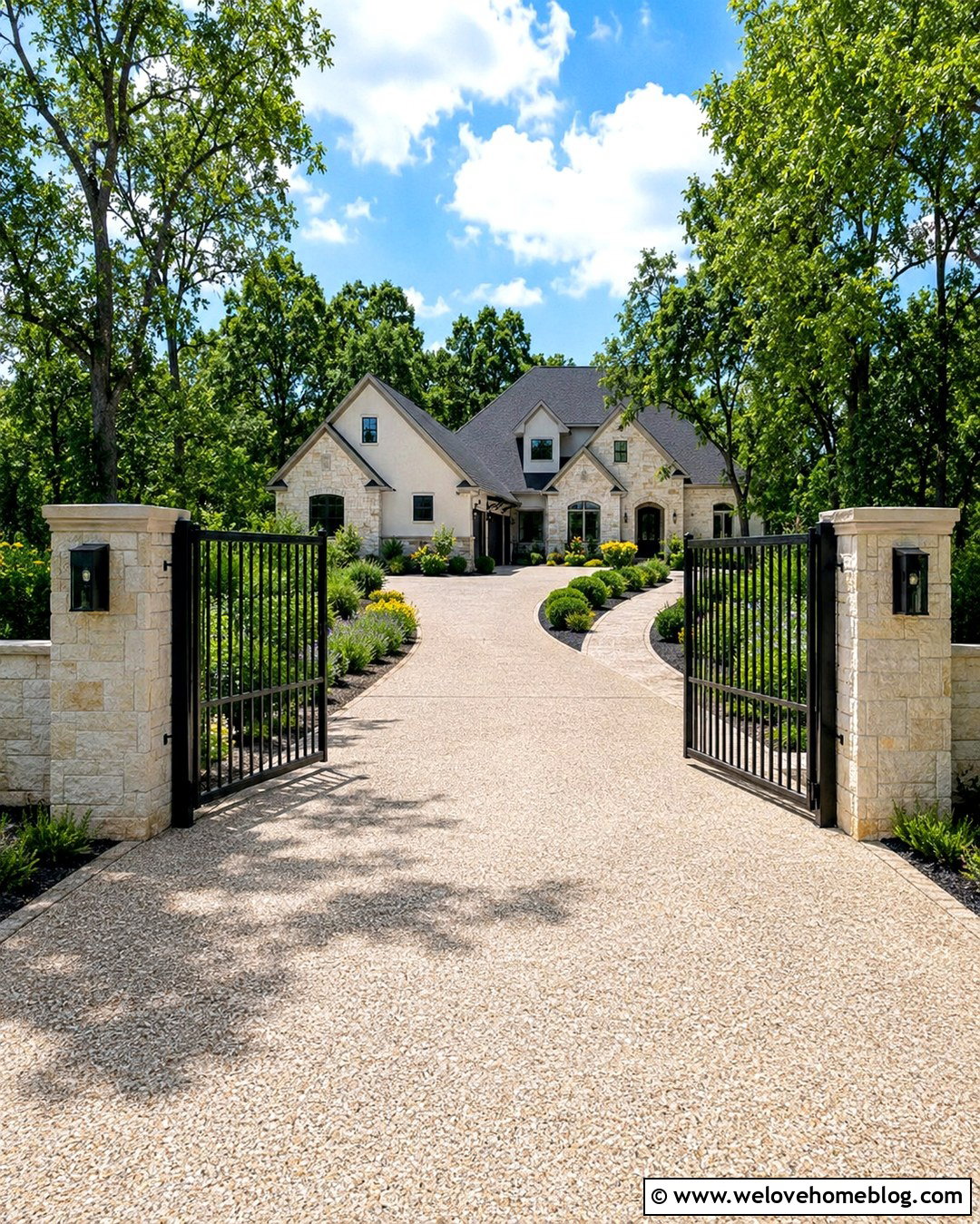
A black metal gate offers a versatile look that can feel traditional, transitional, or modern depending on its pattern. For a wide RV entrance, choose a simple square-tube frame with evenly spaced vertical pickets and a level top. The open construction preserves sightlines and feels less imposing than a solid privacy panel. Set it between limestone pillars beside an exposed aggregate concrete driveway for a durable, coordinated finish. Curved planting beds with boxwoods, salvia, and low grasses can soften the metal without narrowing the approach. A double swing configuration works on a level, deep driveway, while a sliding version fits properties with limited space in front of the RV pad. Keep decorative scrolls and projecting details minimal so the clear opening remains easy to read when backing a large vehicle.
6. Farmhouse RV Driveway Gate
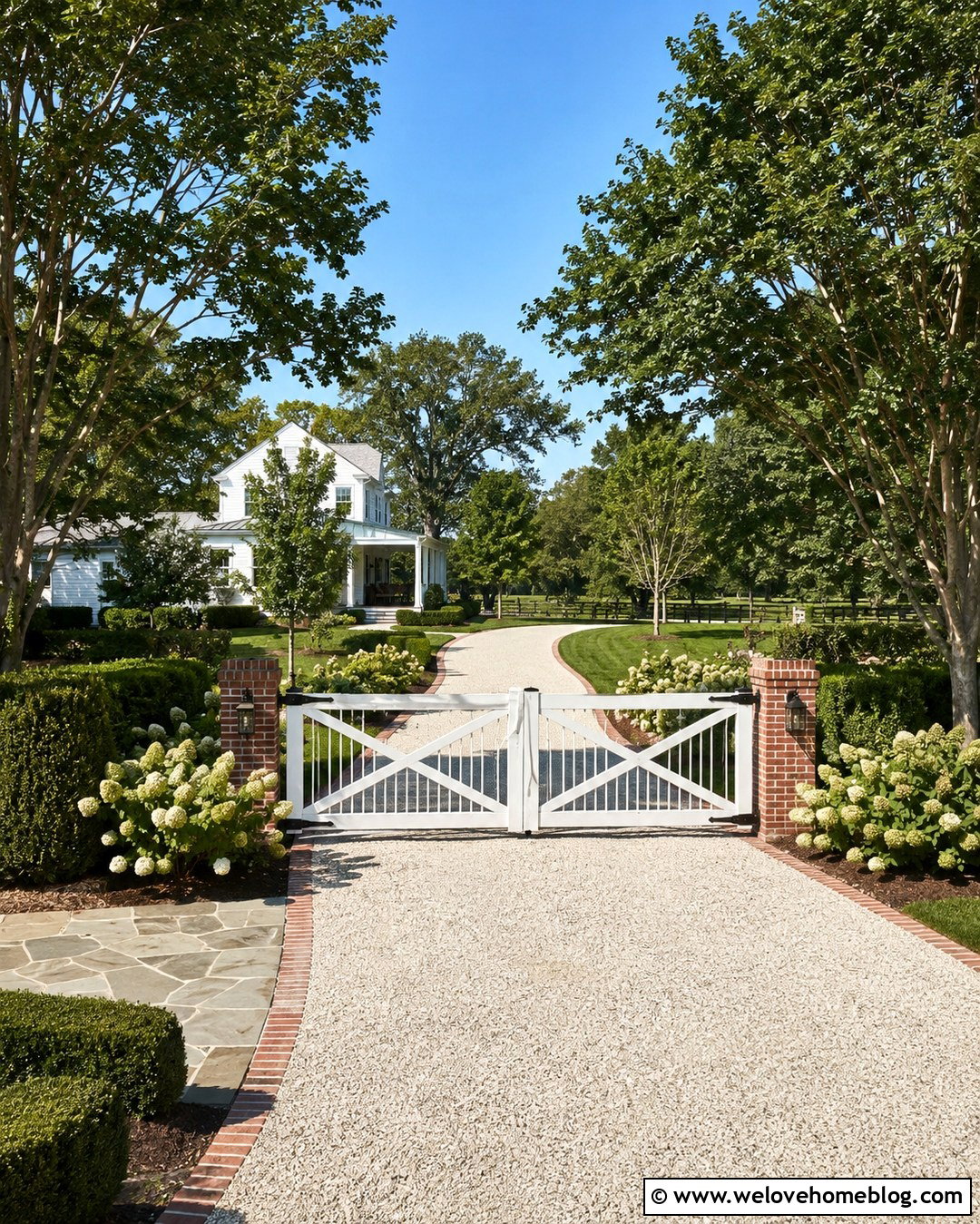
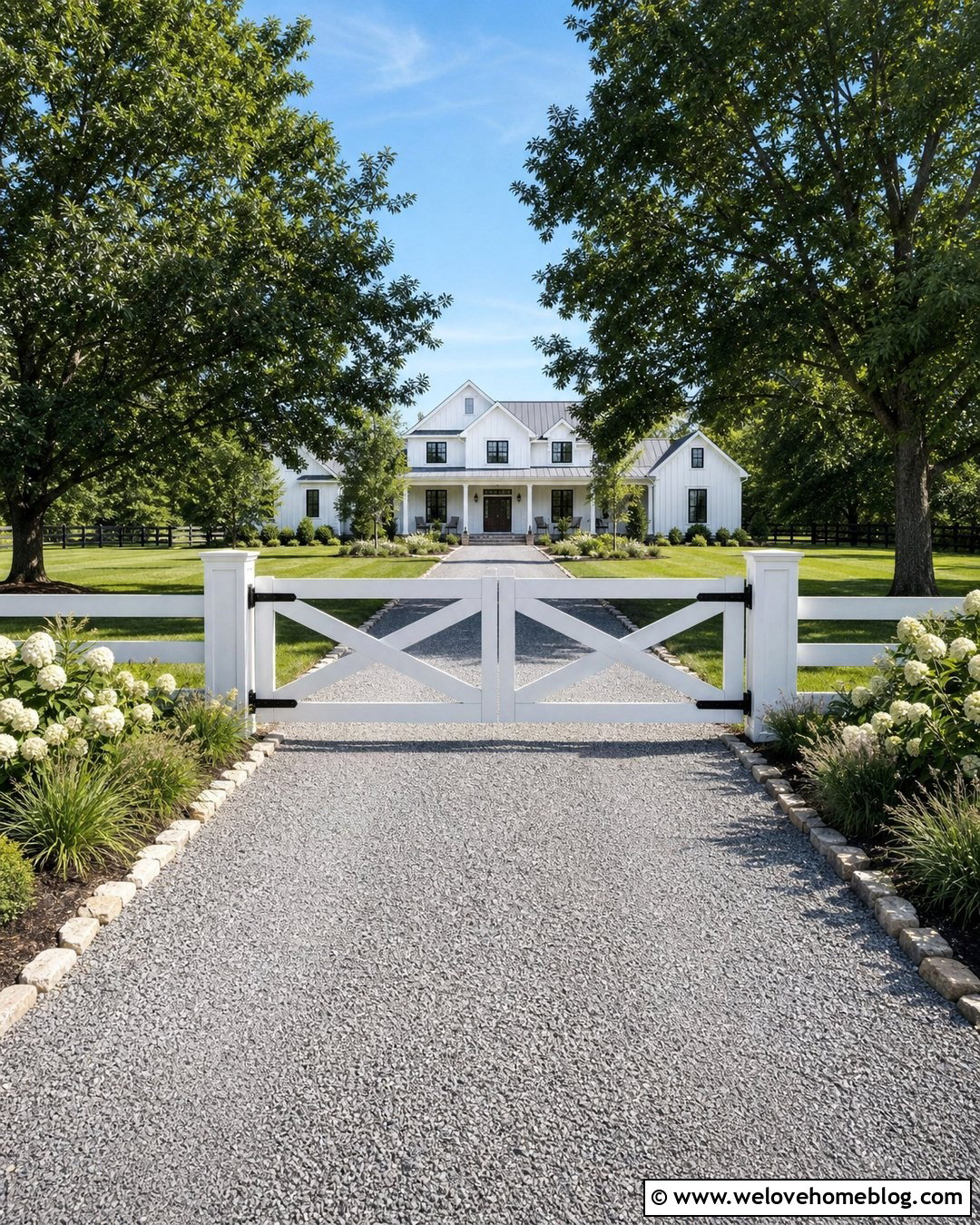
A farmhouse RV gate can look welcoming without resembling a basic utility entrance. Start with a wide white aluminum gate featuring simple cross-brace details inspired by barn doors. Aluminum creates the painted appearance of wood with less risk of warping, peeling, or adding excessive weight. Install the double gate between red brick pillars and continue the approach with a pale pea gravel driveway contained by reclaimed brick edging. Hydrangeas, clipped hedges, and a narrow flagstone walkway connect the entrance to a white farmhouse in the background. Leave generous, unobstructed shoulders around the gate so the RV can turn without crossing raised beds. If the leaves swing inward, place them where an open gate cannot interfere with the parked RV. Black hinges and lantern-shaped fixtures add definition while maintaining the relaxed country character.
7. Ranch RV Driveway Gate
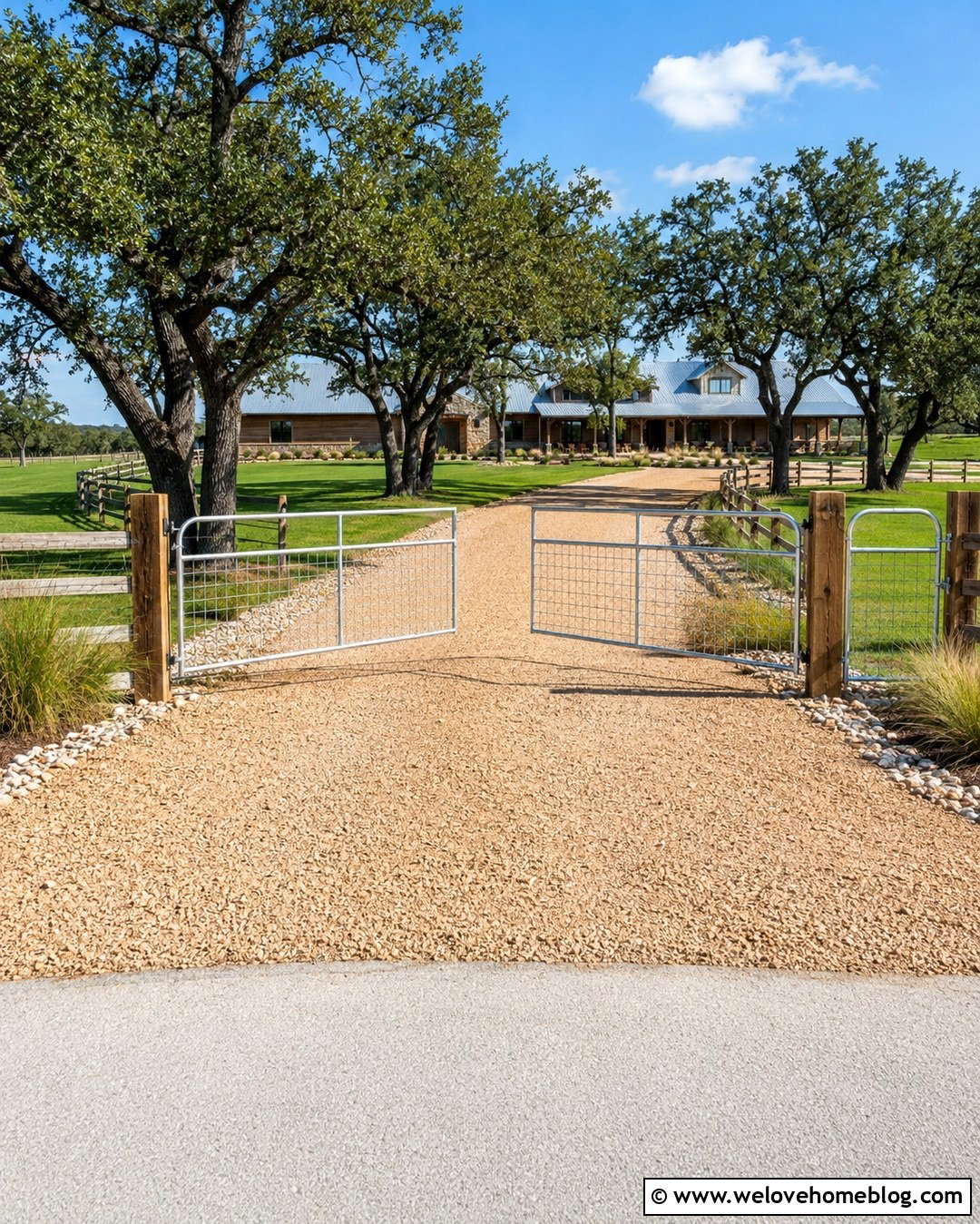
On a ranch property, an RV gate should feel sturdy, straightforward, and connected to the surrounding fence. A galvanized steel tube gate with welded wire infill provides an open view and avoids creating a large wind-catching panel. Use a double swing layout for a broad entrance across a tan crushed-stone driveway. Heavy timber posts, split-rail fencing, and native grasses help the gate blend naturally with the rural setting. A wider gravel turnout outside the entrance can improve the approach and reduce the need for sharp turns from the road. Add a separate pedestrian gate near the house-facing side so the large RV panels do not need to be opened for everyday foot access. For automated operation, protect exposed equipment from livestock, lawn equipment, and loose gravel while keeping all safety zones clearly defined.
8. Telescoping RV Driveway Gate
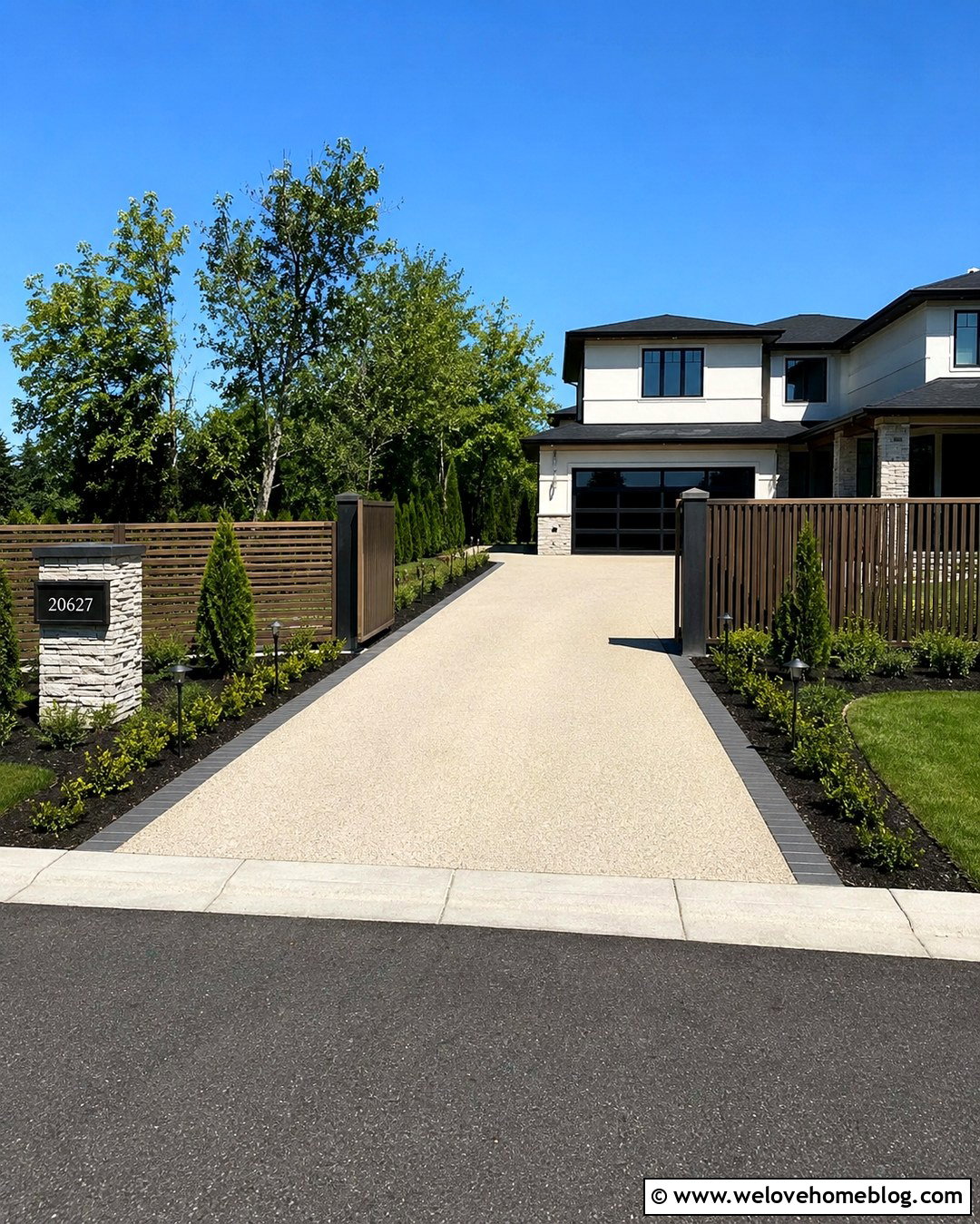
A telescoping RV gate can solve a challenging layout where the driveway is wide but the fence line provides limited room for a standard slider. Two or more connected panels move together and stack along one side, reducing the total run-back area. Give the system a contemporary appearance with narrow bronze aluminum slats and matching metal fencing. A straight cream resin-bound gravel driveway creates a smooth visual base, while dark paver borders define the RV route. Use compact evergreen beds and a modern address monument outside the moving panels so nothing obstructs their path. Telescoping hardware has more moving parts than a simple swing gate, so accurate alignment and professional maintenance matter. This design works particularly well on narrow suburban properties where preserving usable side-yard space is a priority. ()
9. Bi-Fold RV Driveway Gate
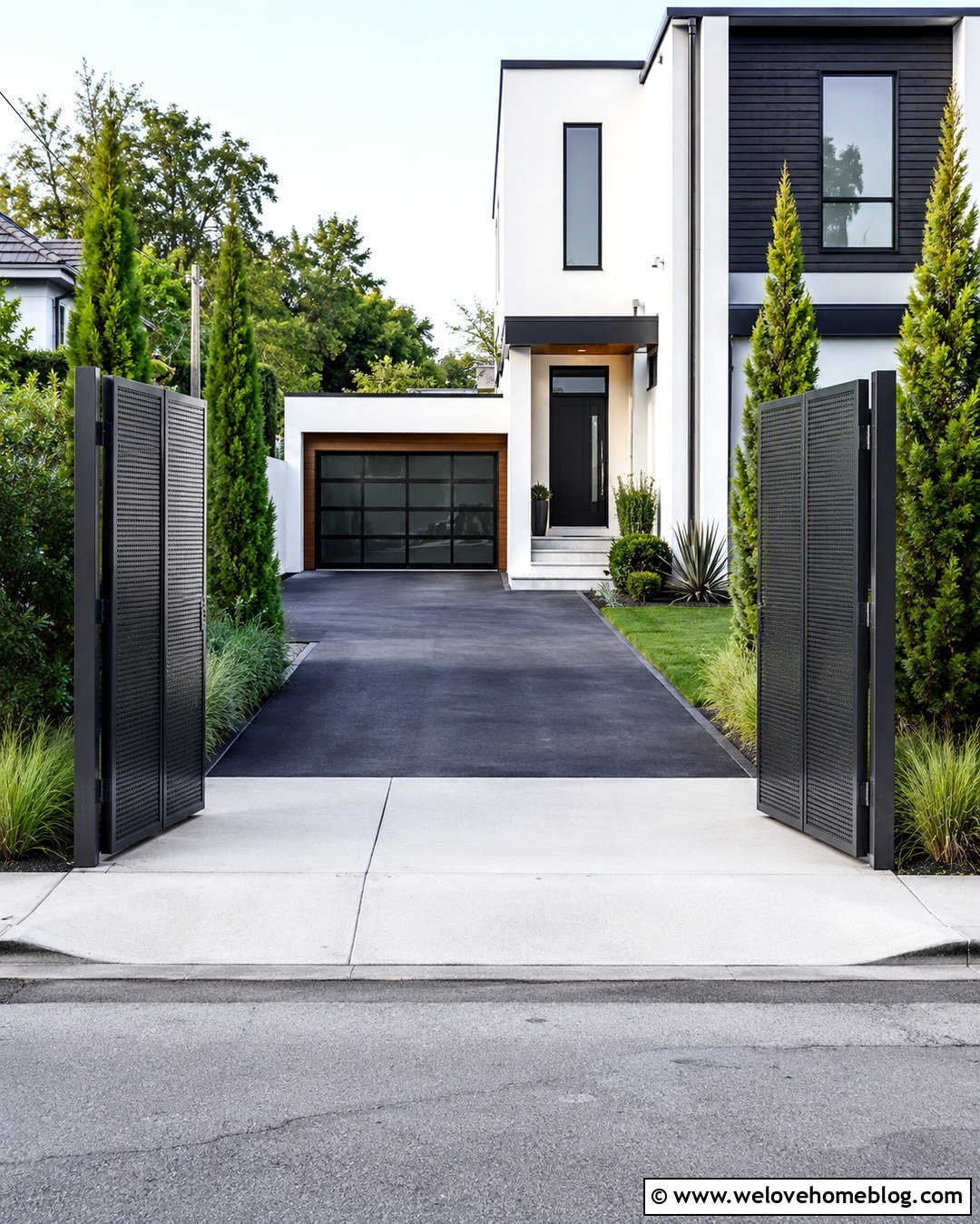
When neither a long sliding run nor a deep swing arc is available, a bi-fold RV gate offers a compact alternative. Each side folds into smaller sections as it opens, using less interior driveway space than conventional full-length swing panels. Choose perforated charcoal aluminum panels for a modern look that balances privacy and airflow. Pair them with a straight black asphalt driveway, a light concrete apron, and narrow steel edging. Upright junipers can screen the RV parking zone, but they should sit well beyond the folding path and vehicle mirrors. This gate requires coordinated hinges, guides, and operator equipment, so accurate fabrication is important for smooth movement. Include visible safety edges, photo-eye protection, and an emergency manual release. The complete entrance feels organized and architectural while making efficient use of a tight urban side yard.
10. Rustic Timber RV Driveway Gate
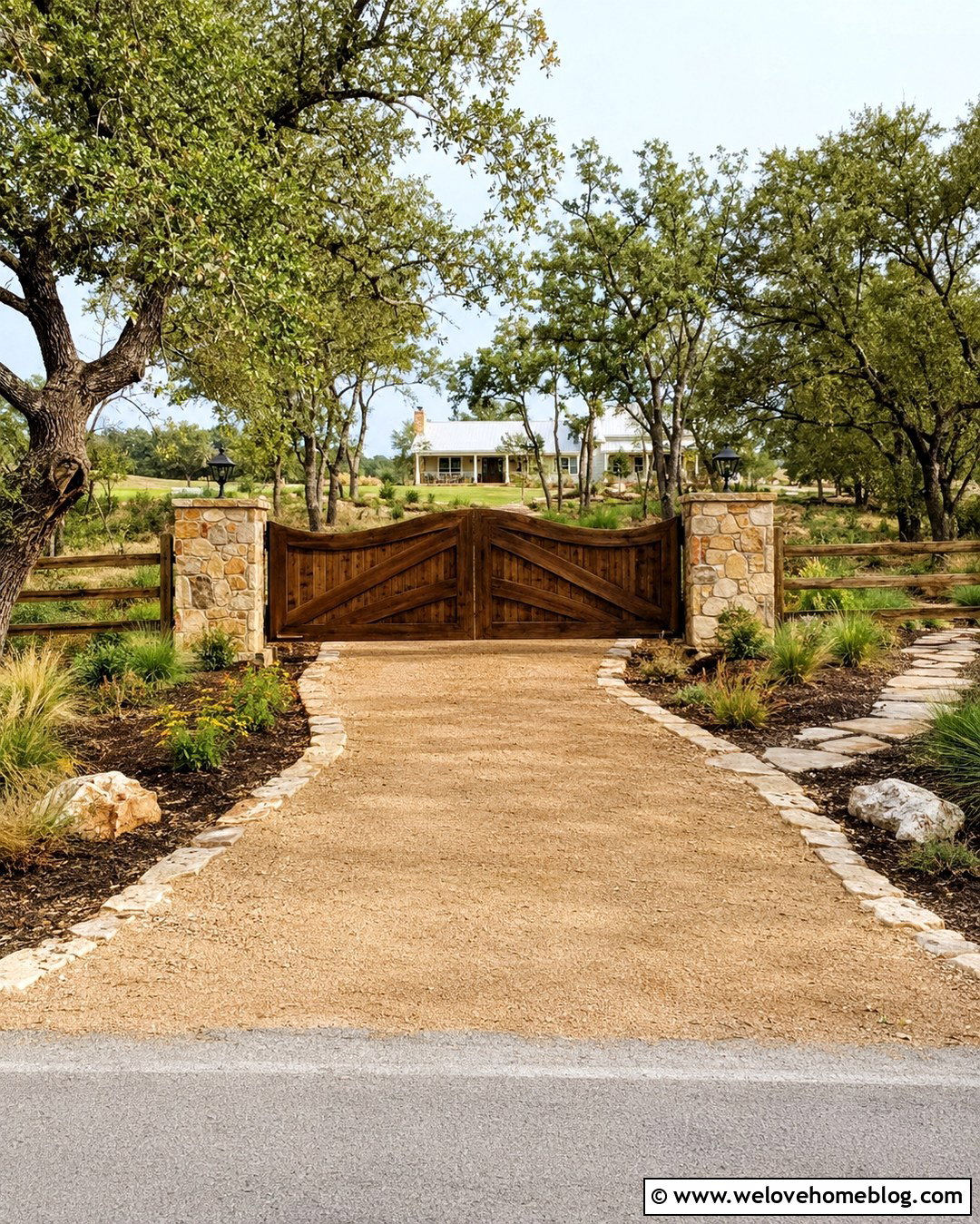
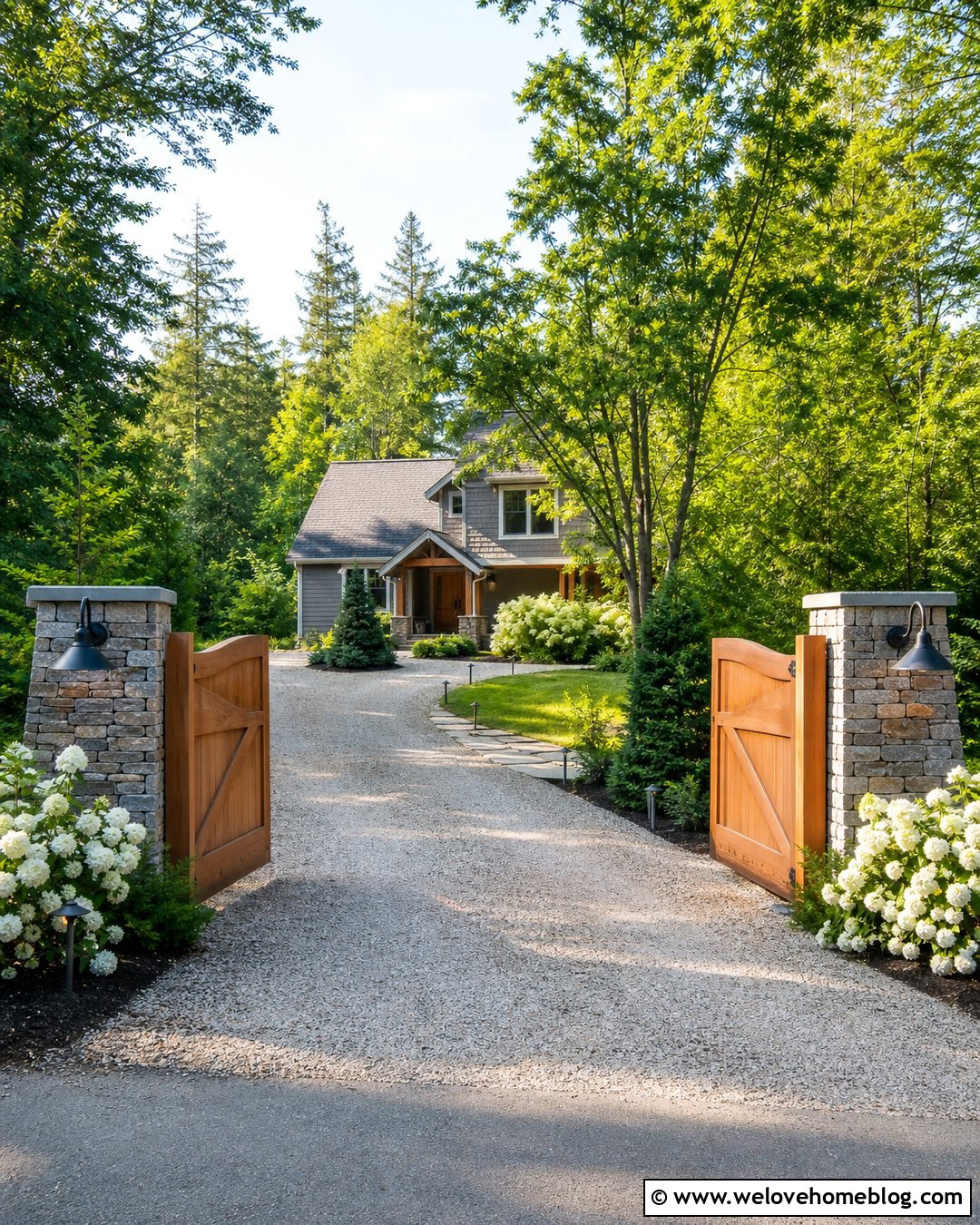
Thick timber adds character to a country entrance, but a large RV gate benefits from hidden structural reinforcement. Build the visual face with stained cedar or Douglas fir boards over a properly braced steel frame. Diagonal battens create a rustic appearance and help break up the broad surface. A curved decomposed granite driveway with natural stone edging complements the wood, while oak trees, drought-tolerant grasses, and split-rail fencing frame the approach. Stone-clad pillars can support the entrance visually, although the actual posts and foundations must be designed for the gate load. A pair of shorter swing leaves is generally more manageable than one extremely long timber panel. Use adjustable hinges and protect all wood surfaces with an exterior finish suited to local weather. Keep plantings low near the opening to maintain clear RV sightlines.
11. White Vinyl RV Driveway Gate
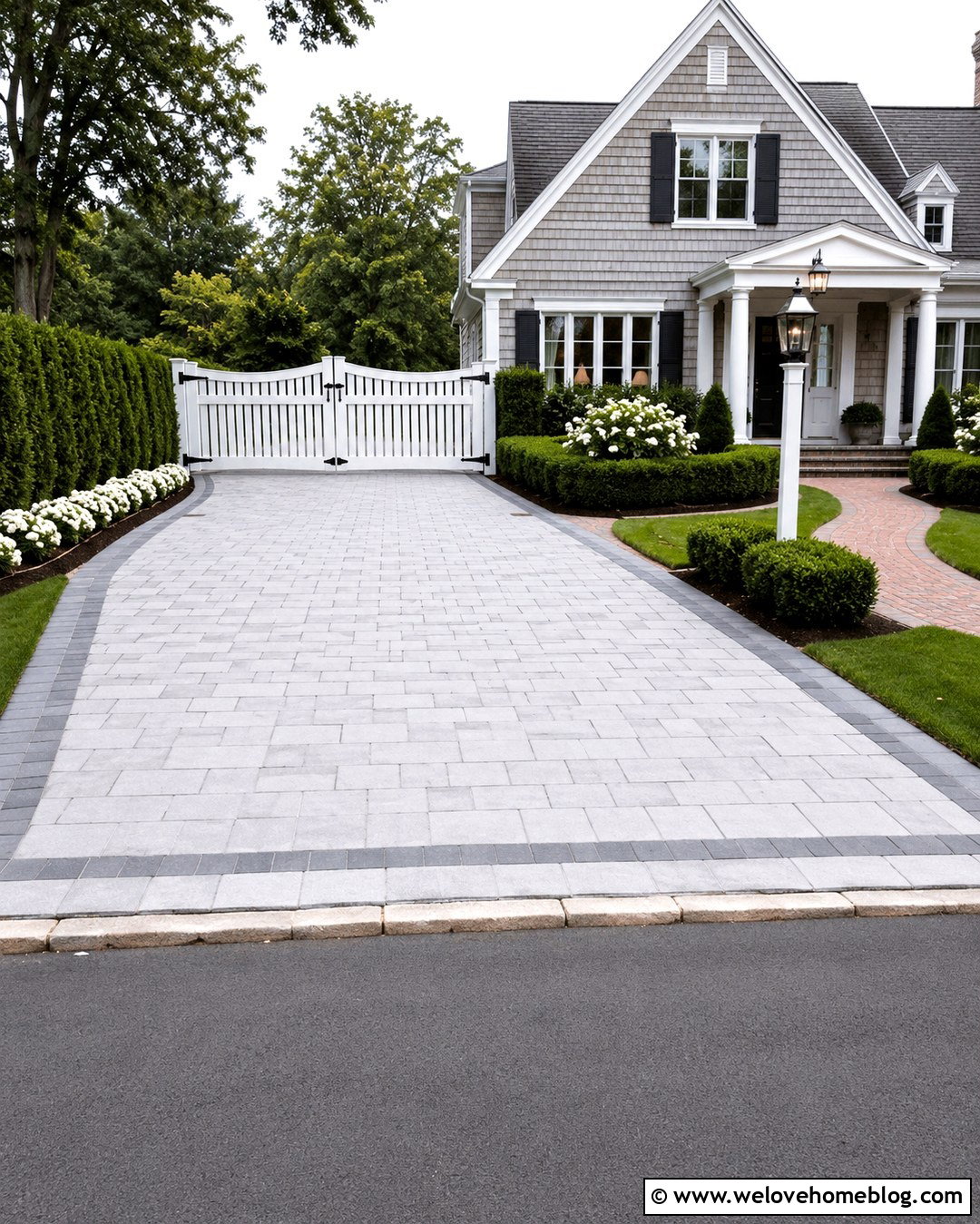
A white RV gate can brighten a side-yard entrance and coordinate beautifully with a Cape Cod, colonial, or coastal home. Rather than using a heavy solid panel, select reinforced vinyl pickets or spaced privacy boards supported by an internal aluminum frame. The reinforcement helps the wide gate retain its shape through regular use and changing temperatures. Continue the crisp appearance with a light-gray concrete paver driveway in a running-bond pattern and a navy-gray border. Boxwood hedges, white flowering shrubs, and a curved lawn edge create a tidy setting without crowding the opening. A double swing arrangement provides symmetry when the driveway is level and deep enough. Black hinges and post caps add contrast. Position the gate far enough from the street to provide a comfortable stopping area while opening it safely.
12. Corrugated Metal RV Driveway Gate
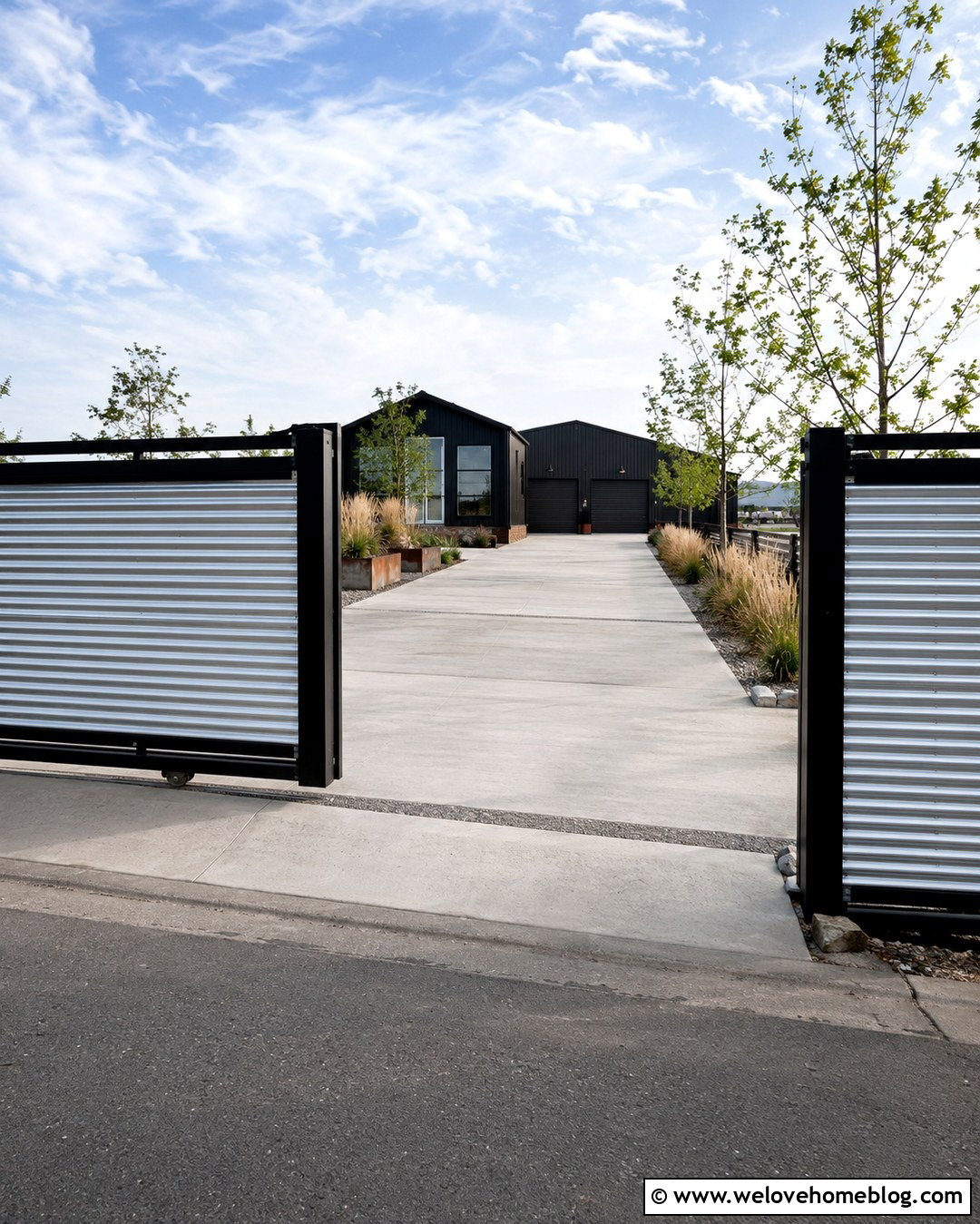
Corrugated metal brings a durable agricultural-industrial look to an RV entrance. Use horizontal galvanized panels inside a matte-black steel frame, leaving a small open section near the top to reduce the visual weight. This finish works well beside a metal-sided barndominium or a dark modern farmhouse. Pair the sliding gate with a wide broom-finished concrete driveway and a gravel drainage strip along the fence. Weathered steel planters, feather reed grass, and young shade trees can soften the hard materials. Keep every planter outside the gate’s travel zone and away from the RV’s turning path. Corrugated panels create a substantial privacy screen, so wind exposure must be included in the structural and operator calculations. A reinforced lower frame also helps the long gate maintain alignment as it opens across the broad entrance.
13. Decorative Iron RV Driveway Gate

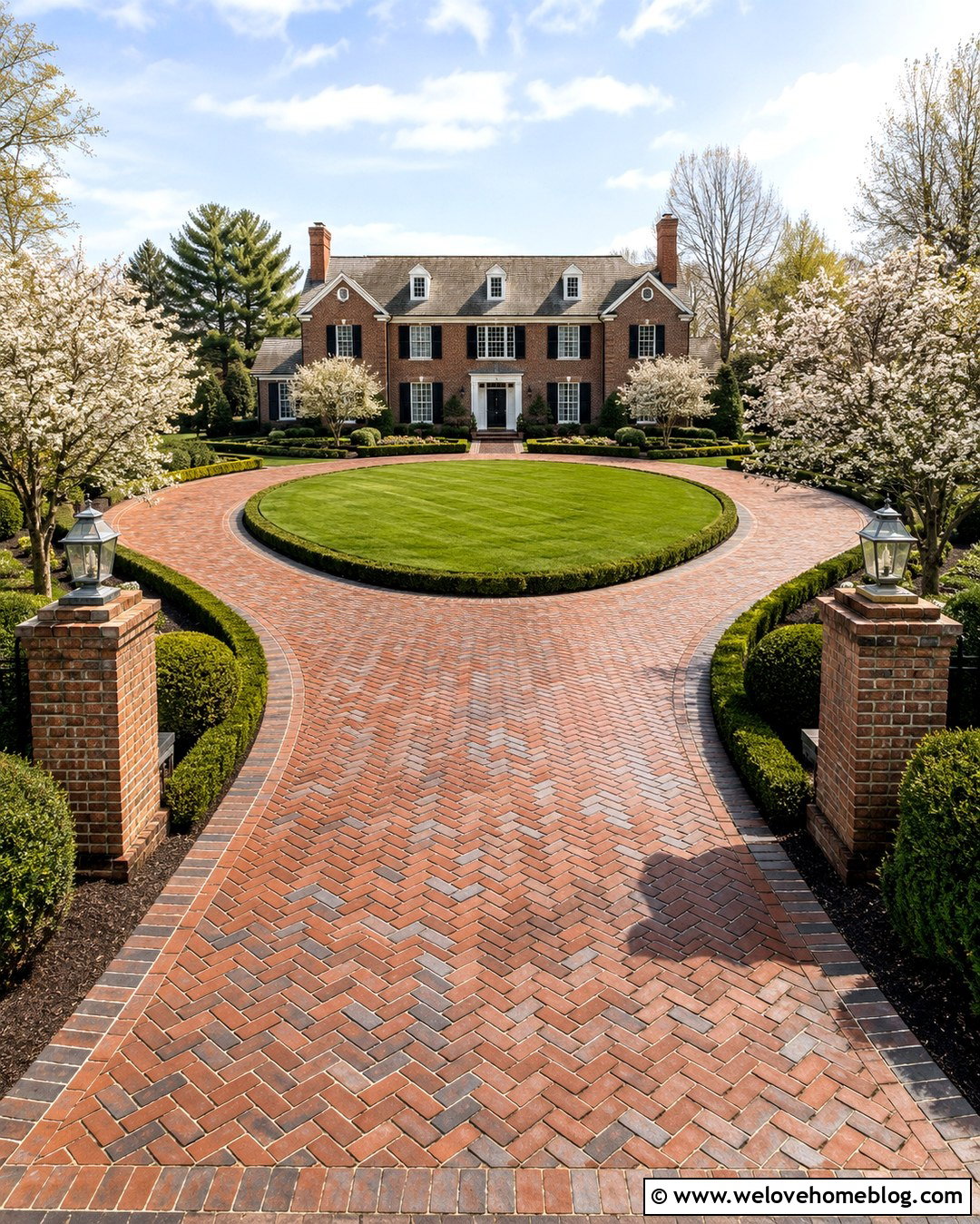
Decorative iron can make an RV entrance feel formal while preserving visibility through the gate. Choose a restrained design with straight pickets, a shallow arched top, and limited scrollwork. Excessive ornament can visually shrink the opening or introduce projecting details near a large vehicle. Set the double swing gate between pale stone columns and use clay brick pavers in a herringbone pattern across the circular driveway entrance. Low roses, clipped boxwoods, and symmetrical lawn panels reinforce the traditional look of a brick colonial home. The arch should rise gently without creating a low point near either side of the RV. Concealed underground operators can provide a cleaner view when site conditions and maintenance access permit. Accurate gate stops help the two leaves align consistently at the center when closed.
14. Perforated Steel RV Driveway Gate
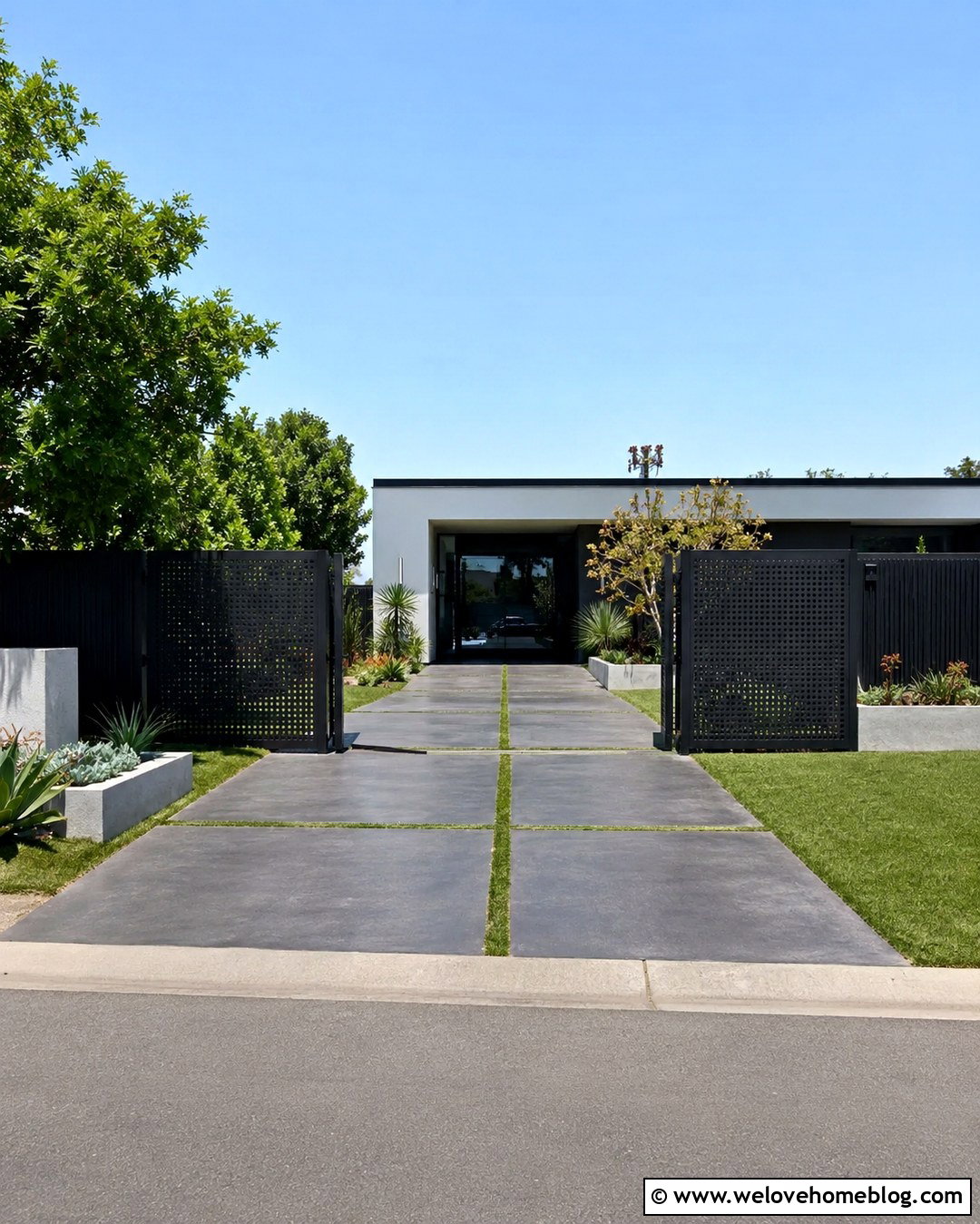
Perforated steel provides partial screening without making a wide RV entrance feel completely sealed. Small, evenly spaced openings allow light and air to pass through while obscuring direct views of the storage pad. Frame the panels in black powder-coated steel and use a trackless cantilever layout for a sharp modern finish. A straight charcoal concrete driveway with narrow grass strips creates a strong geometric approach to a flat-roofed home. Add low succulents, ornamental grasses, and rectangular concrete planters beside the stationary fence sections. The plants should never extend into the gate’s travel path or reduce mirror clearance. Select a perforation pattern that complements the home’s facade while keeping the total panel weight manageable. This complete design works especially well where owners want privacy, ventilation, and a contemporary street-facing appearance.
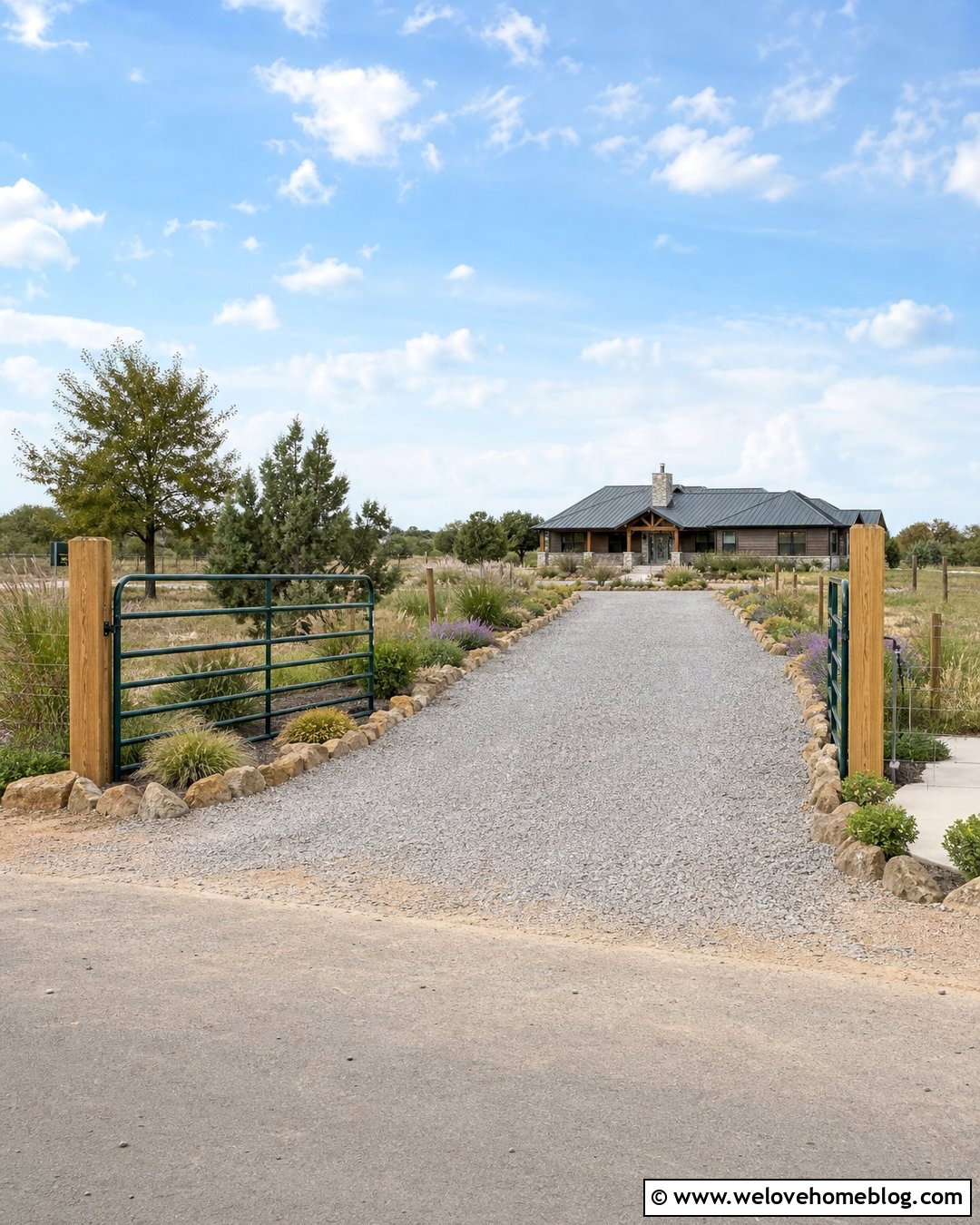
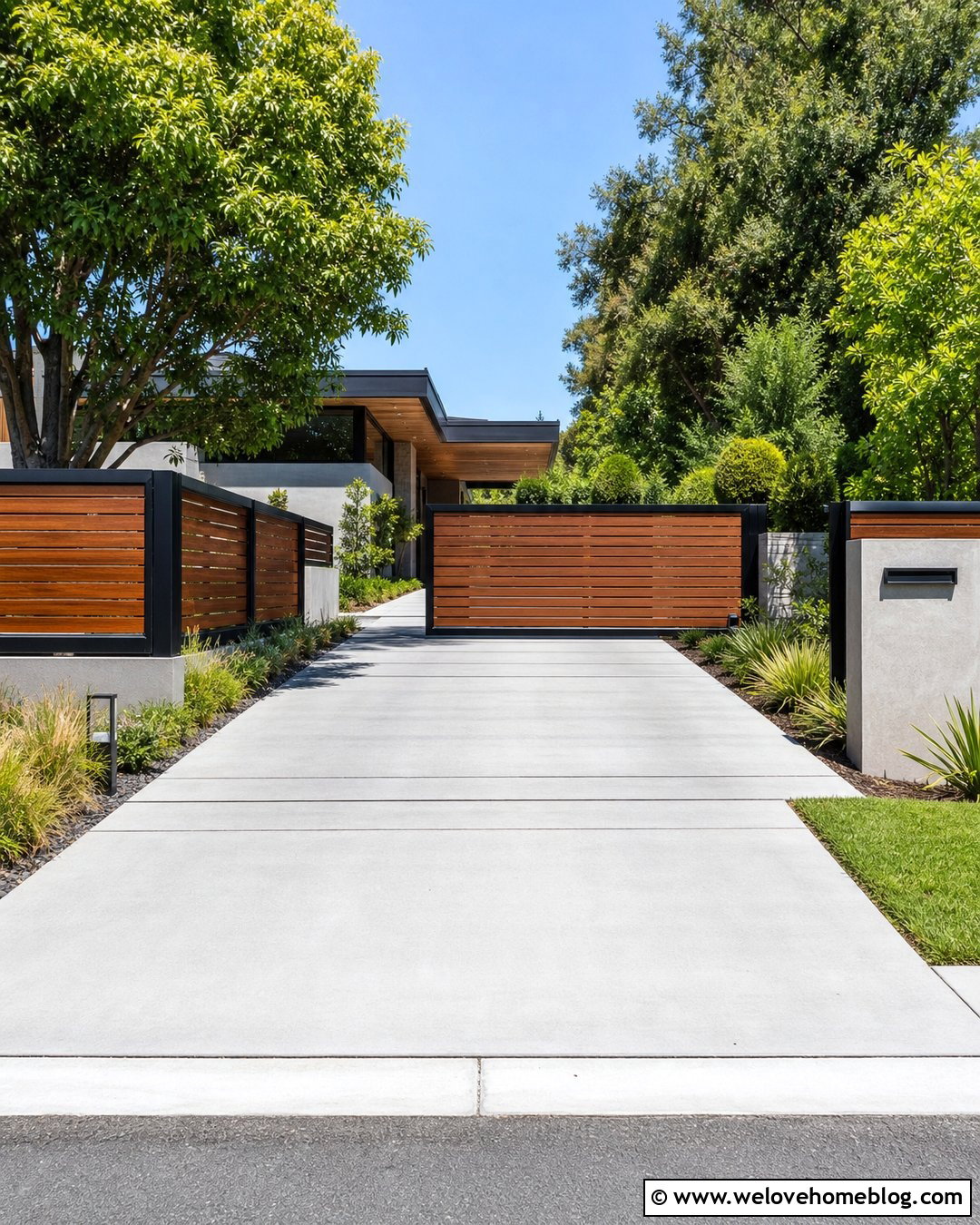
15. Sloped RV Driveway Gate
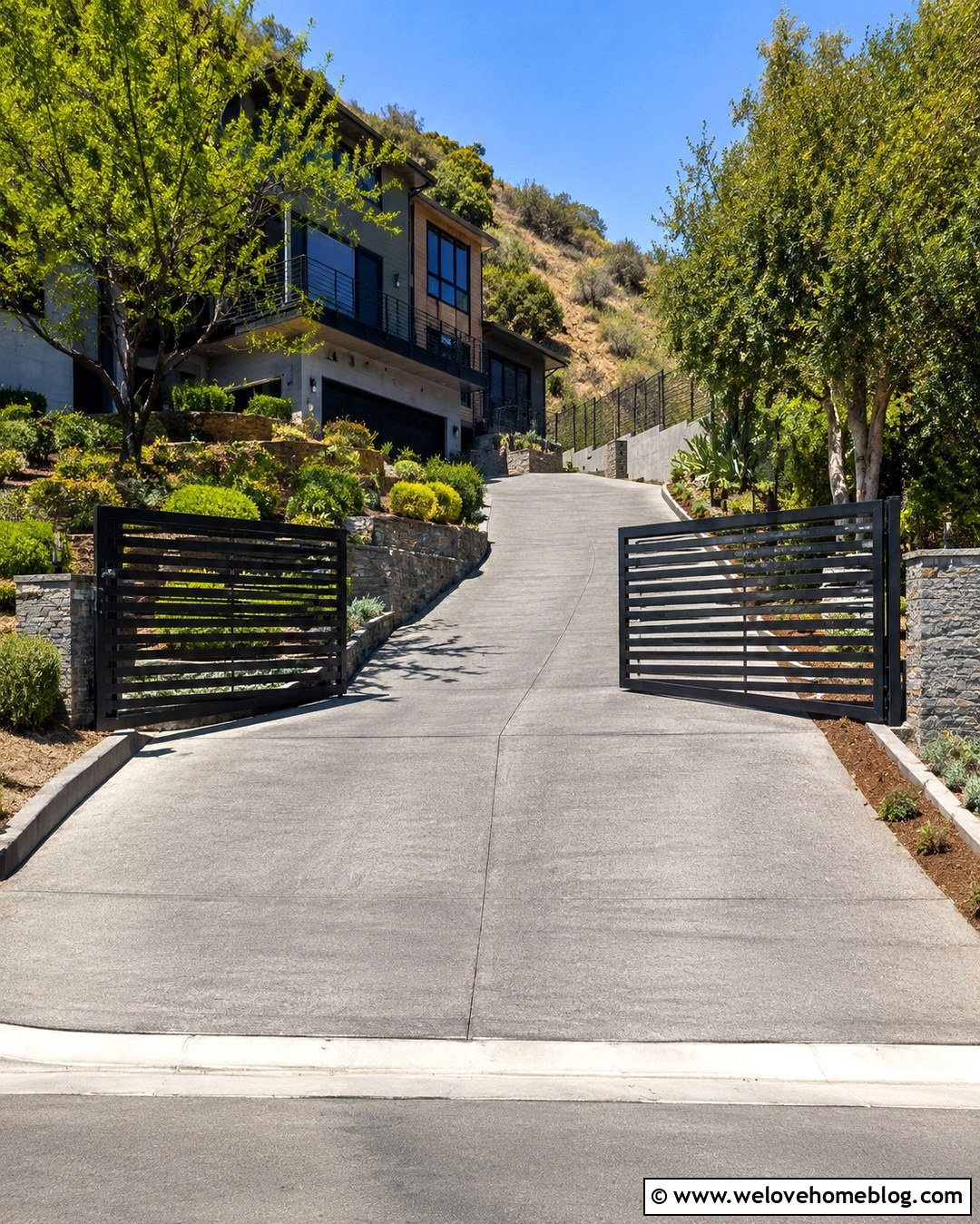
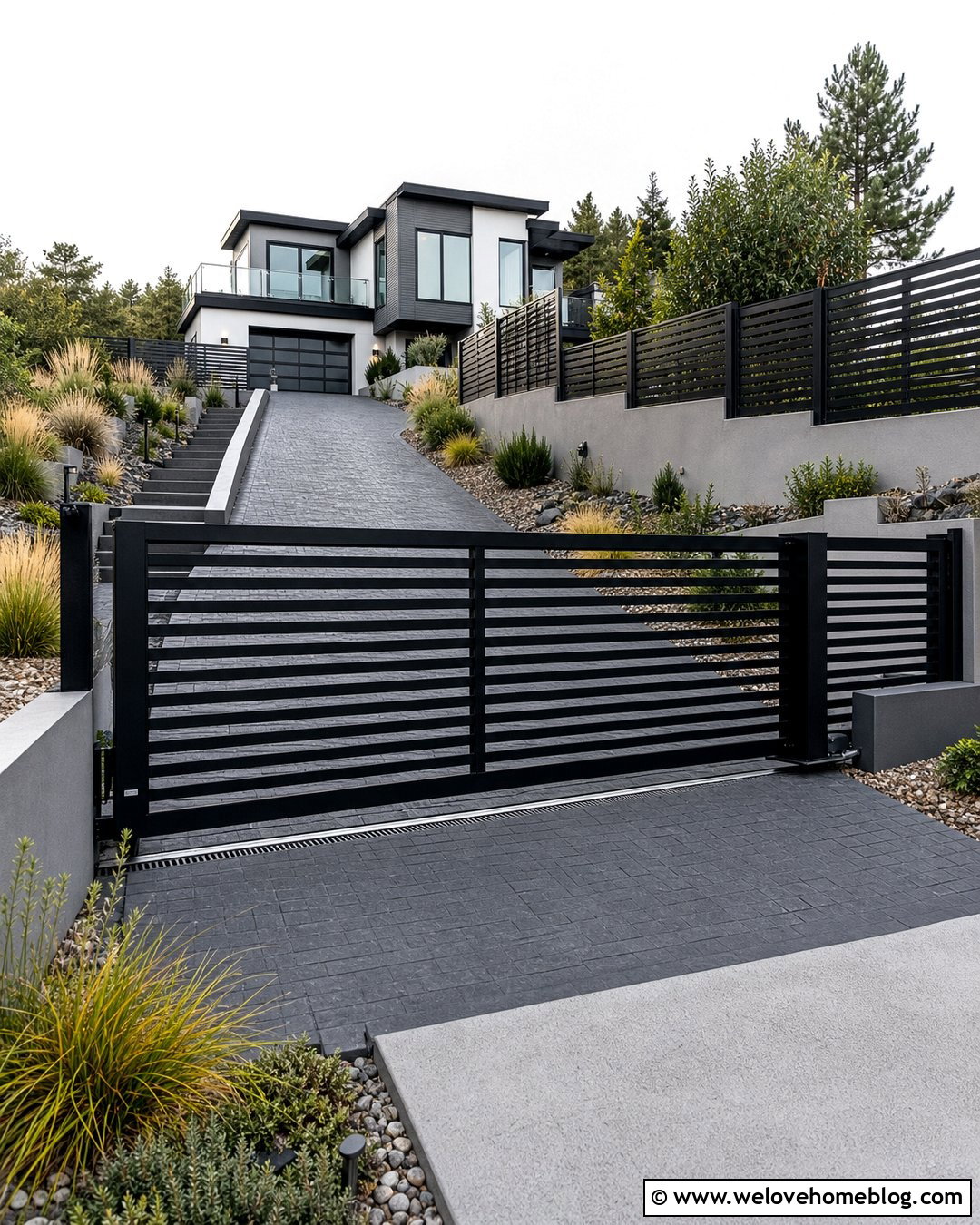
A sloped driveway can make a conventional swing gate difficult because the bottom edge may meet rising pavement as it opens. A sliding or cantilever gate avoids that swing arc and moves parallel to the fence instead. Use an open black aluminum frame with horizontal slats to reduce visual bulk at the elevated entrance. A textured poured concrete driveway with saw-cut control joints provides traction, while stacked-stone retaining walls manage the grade on both sides. Plant creeping ground covers and compact shrubs above the walls rather than near the vehicle path. The gate itself should remain level even when the driveway slopes, which may create a tapered gap below it. A custom lower profile or stepped landscape transition can manage that visual difference. Site measurements should account for grade, drainage, side clearance, and RV breakover angles. ()
16. Coastal RV Driveway Gate
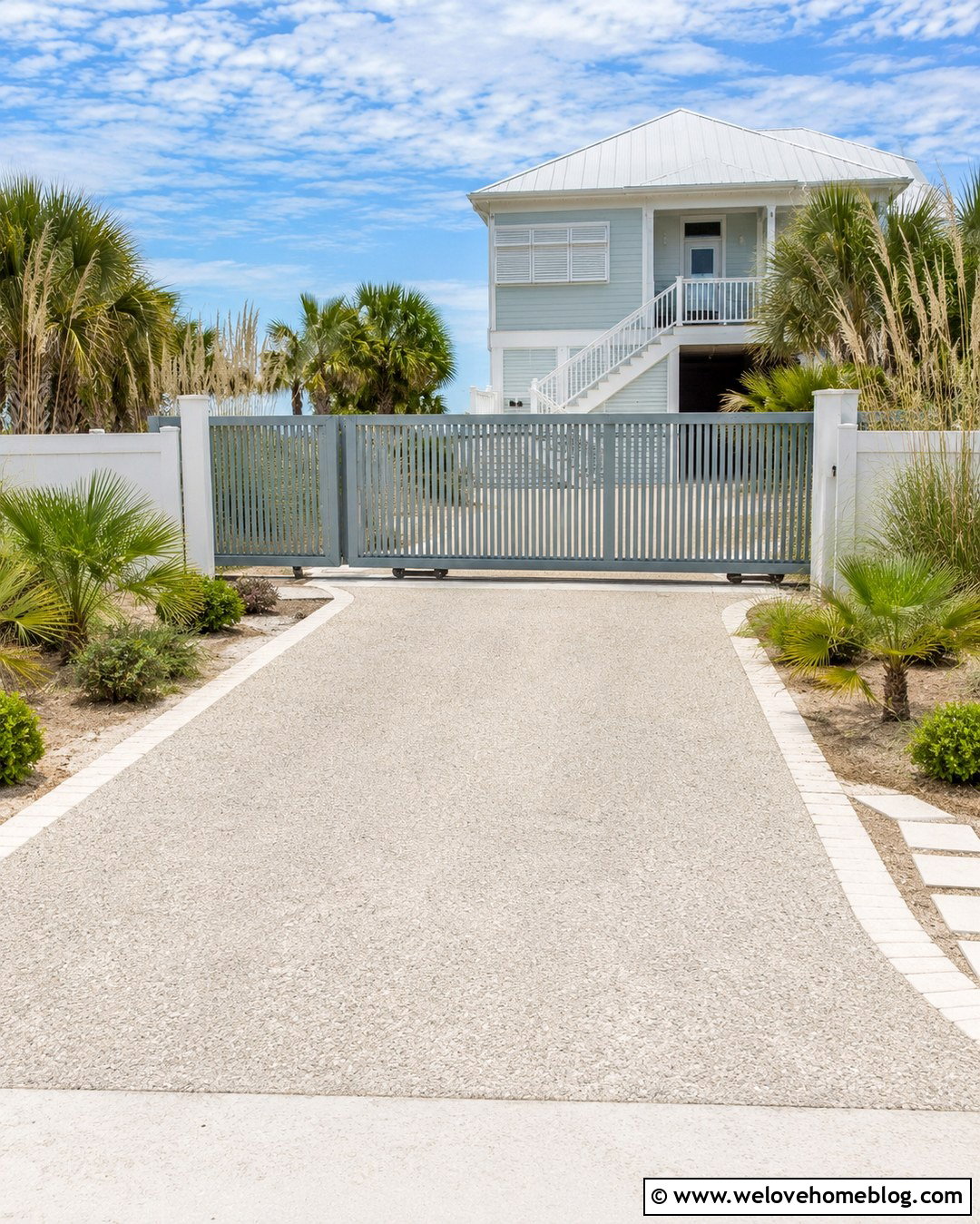
Salt air and moisture call for materials and finishes that can handle a demanding coastal environment. A marine-grade powder-coated aluminum RV gate offers a lighter alternative to steel while creating a crisp, refined entrance. Use spaced vertical slats in a soft gray-blue tone and install the gate as a sliding panel along matching fencing. A pale shell aggregate driveway, light stone edging, and sandy planting beds reinforce the coastal palette. Sea oats, dwarf palms, and salt-tolerant shrubs provide movement without hiding the opening. Pair the design with a raised coastal cottage featuring white siding and simple balconies. Stainless or corrosion-resistant hardware should be selected for the local exposure. Keep the entrance open and uncluttered so a tall motorhome can approach easily without low branches, hanging fixtures, or narrow ornamental columns.
17. Desert RV Driveway Gate
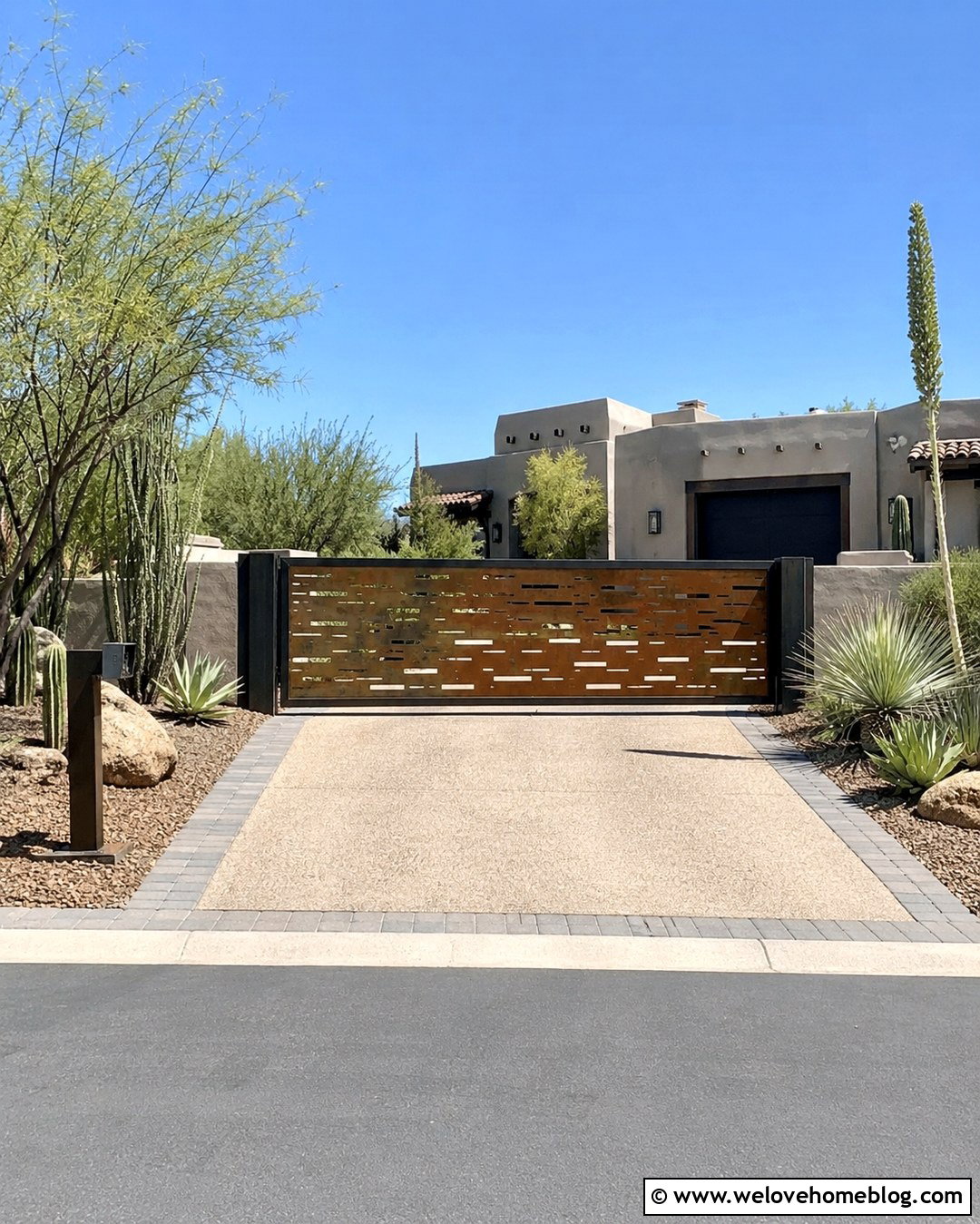
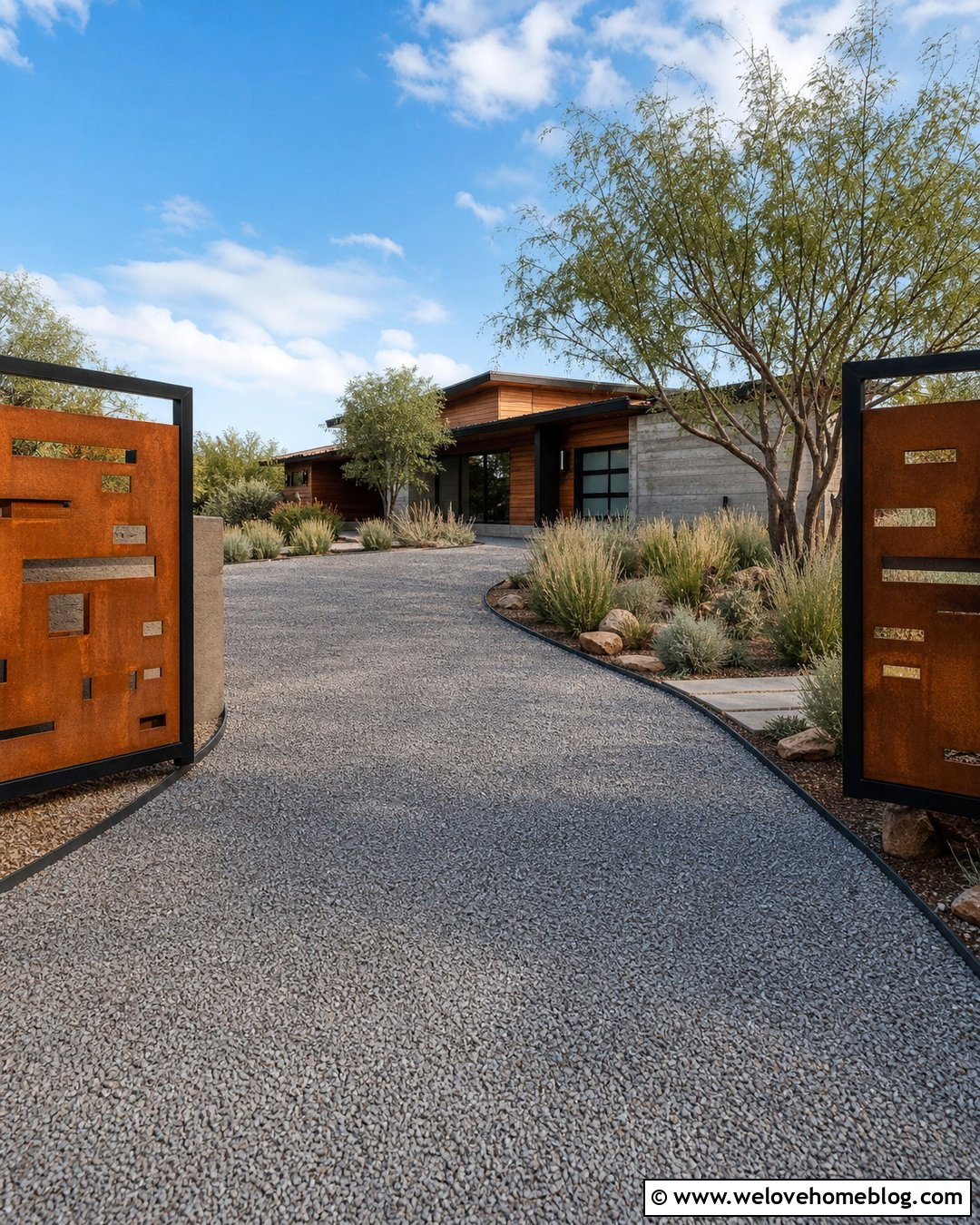
A desert RV entrance needs generous clearance, heat-tolerant materials, and landscaping that does not crowd a large vehicle. Choose a rust-toned weathering steel gate with laser-cut rectangular openings and a reinforced dark steel frame. A sliding configuration keeps the gate outside the RV parking pad when open. Pair it with a tan stabilized decomposed granite driveway bordered by charcoal concrete pavers. Agaves, yuccas, desert spoon, and boulders can create a bold landscape, but sharp plants should remain well away from tires, doors, and mirrors. A smooth stucco wall and flat-roofed Southwestern house complete the setting. Incorporate a shaded keypad pedestal that can be reached from the driver’s position without blocking the entrance. Solar-powered automation may be useful where conditions and system requirements support reliable operation.
18. Craftsman RV Driveway Gate
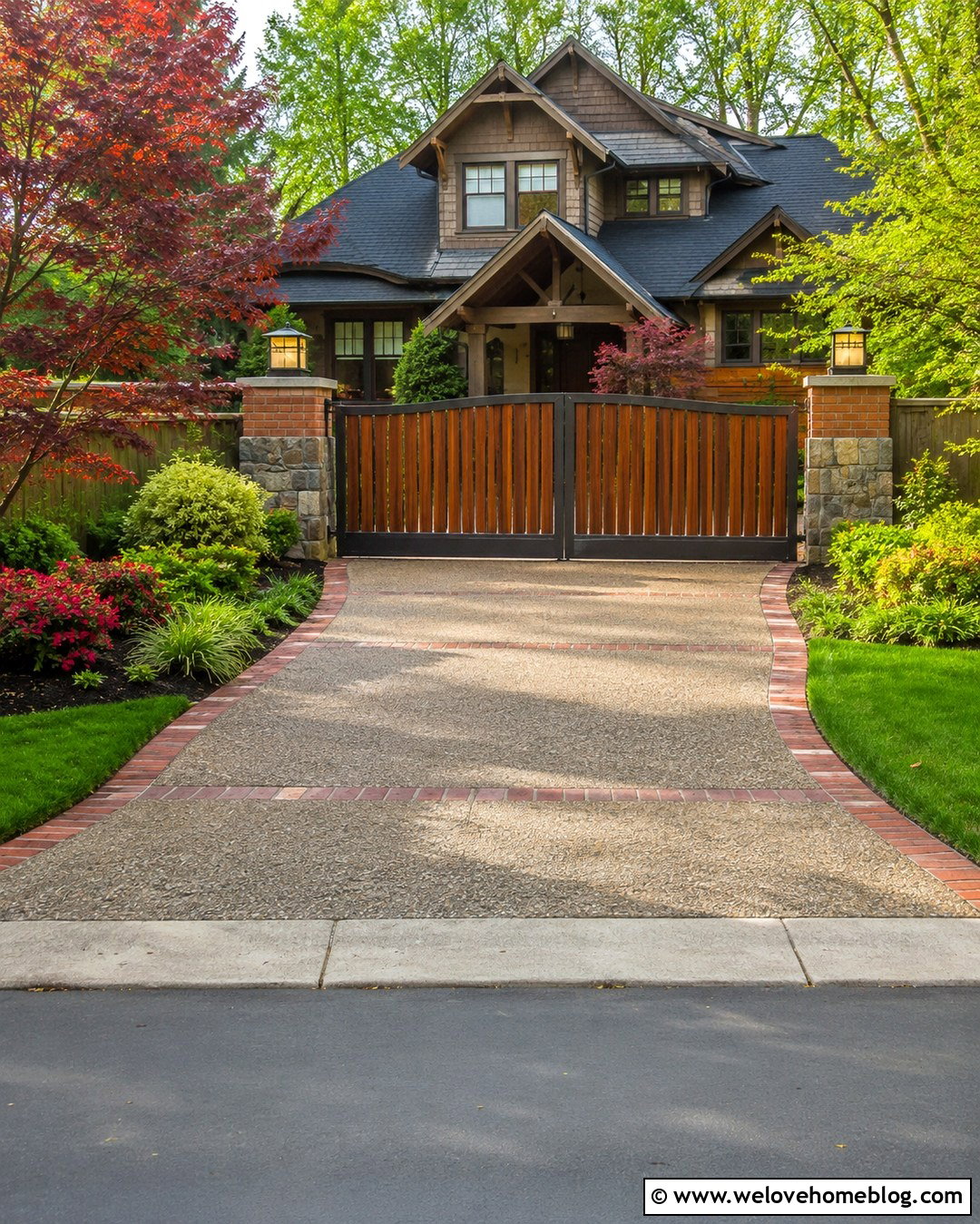
A Craftsman RV gate should echo the home’s strong woodwork and masonry without becoming too bulky. Use vertical stained cedar slats inside a dark bronze metal frame, topped with a straight horizontal rail. Install two balanced swing leaves between tapered stone-and-brick pillars that repeat materials from the front porch. A warm exposed aggregate driveway with a red brick border adds texture while handling the broad approach. Layer Japanese maples, ferns, azaleas, and low evergreen shrubs along the outer edges, preserving a wide central maneuvering area. Square lanterns can sit on the pillars, but they should remain below any line that could interfere with tall RV components. Concealed framing gives the gate an authentic wood appearance while providing greater rigidity. Match the fence height and gate proportions so the complete entrance feels intentional.
19. Mixed Material RV Driveway Gate
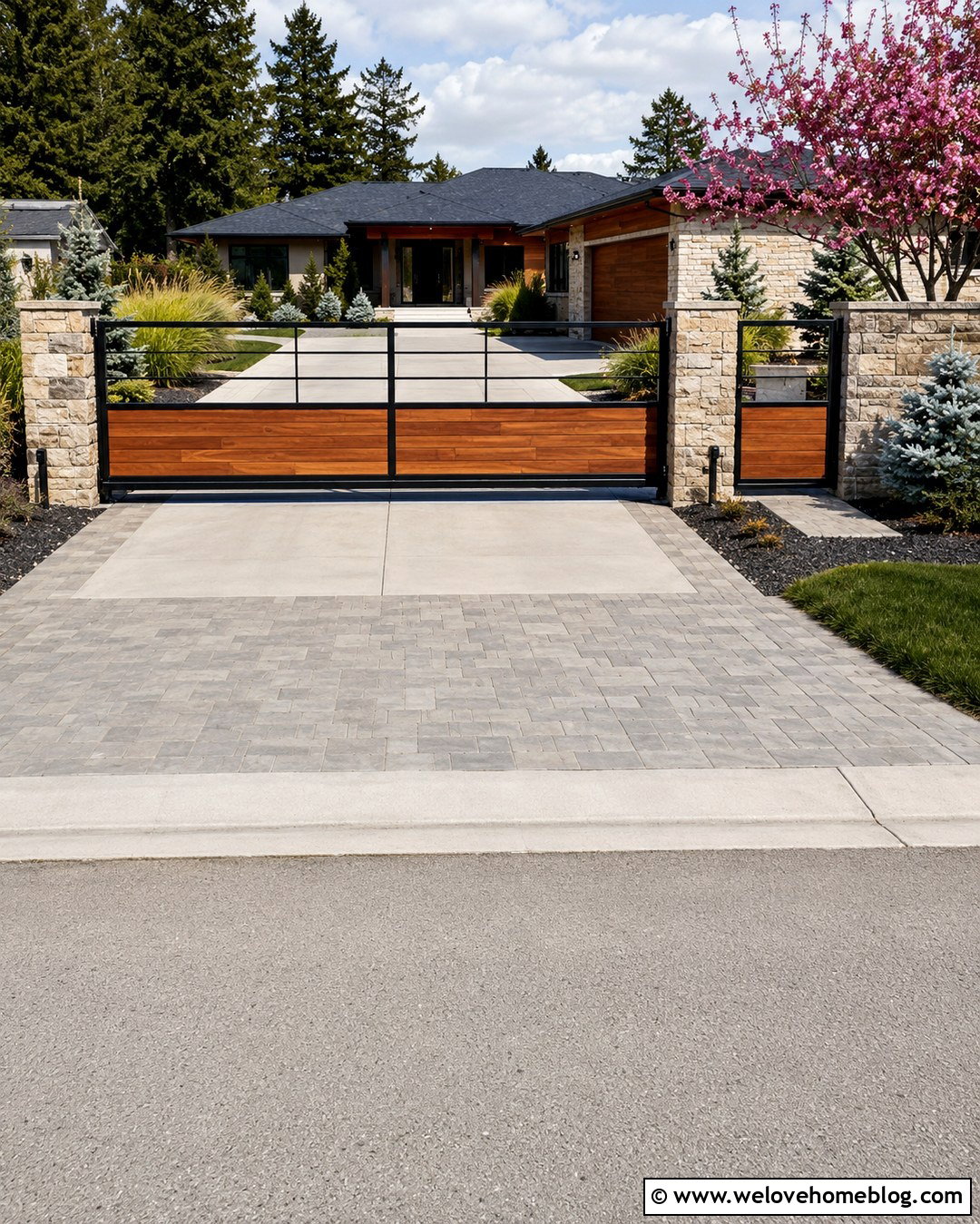
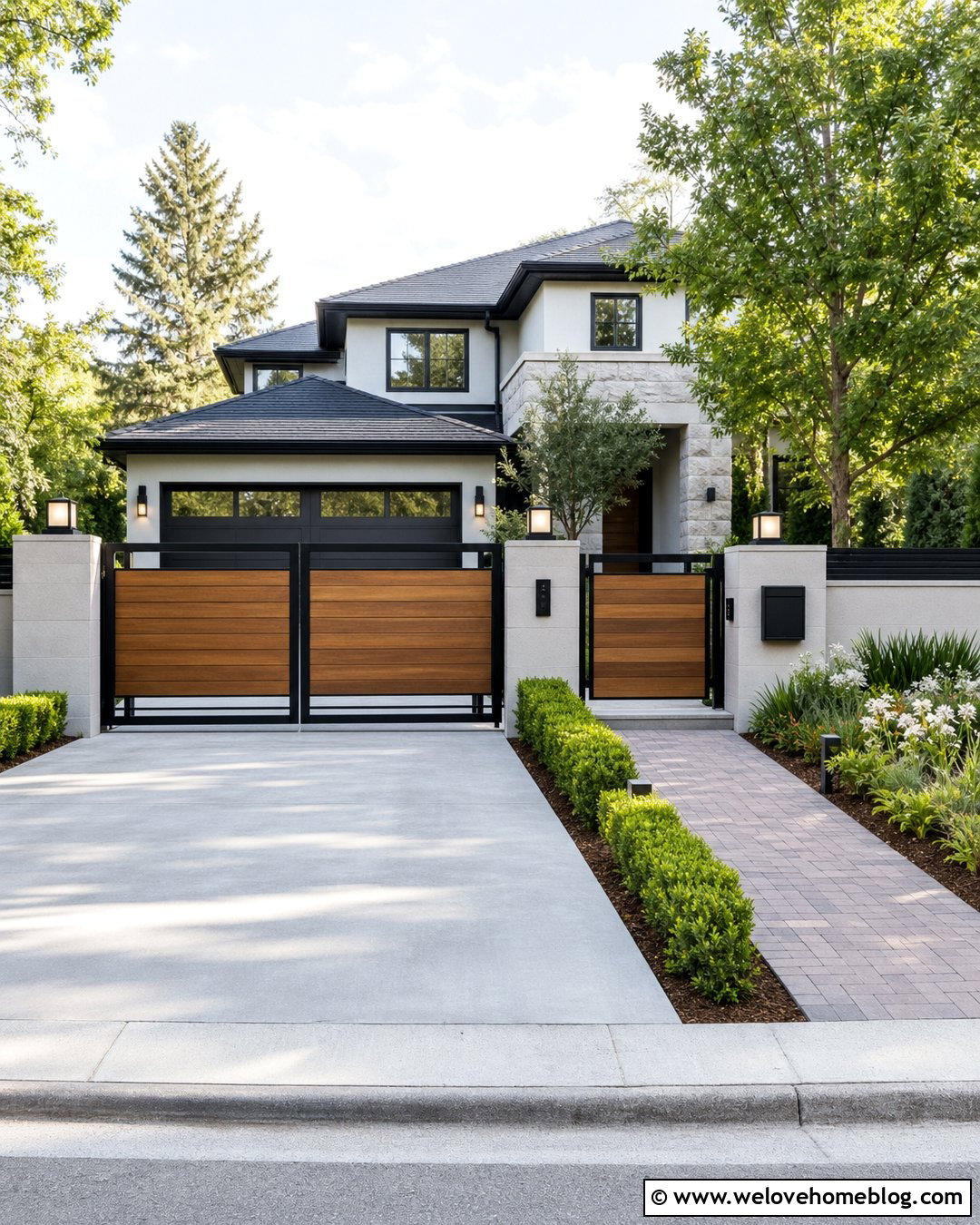
Combining wood and metal creates an RV gate that feels warm, sturdy, and adaptable to many house styles. Start with a black steel frame, then add horizontal cedar boards across the lower two-thirds and open metal bars above. The transparent upper section keeps the entrance from appearing overly heavy and allows better visibility when the RV approaches. Use a cantilever sliding layout beside a wide gray concrete driveway with a cobblestone apron and matching edge bands. Layer ornamental grasses, dwarf evergreens, and a small flowering tree along the stationary fence. A modern ranch house with wood siding and dark trim ties the materials together. Repeat cedar on the pedestrian gate and address panel for continuity. Plan for drainage around the posts and keep irrigation spray away from the wood, hardware, and gate operator.
20. Solar Automatic RV Driveway Gate
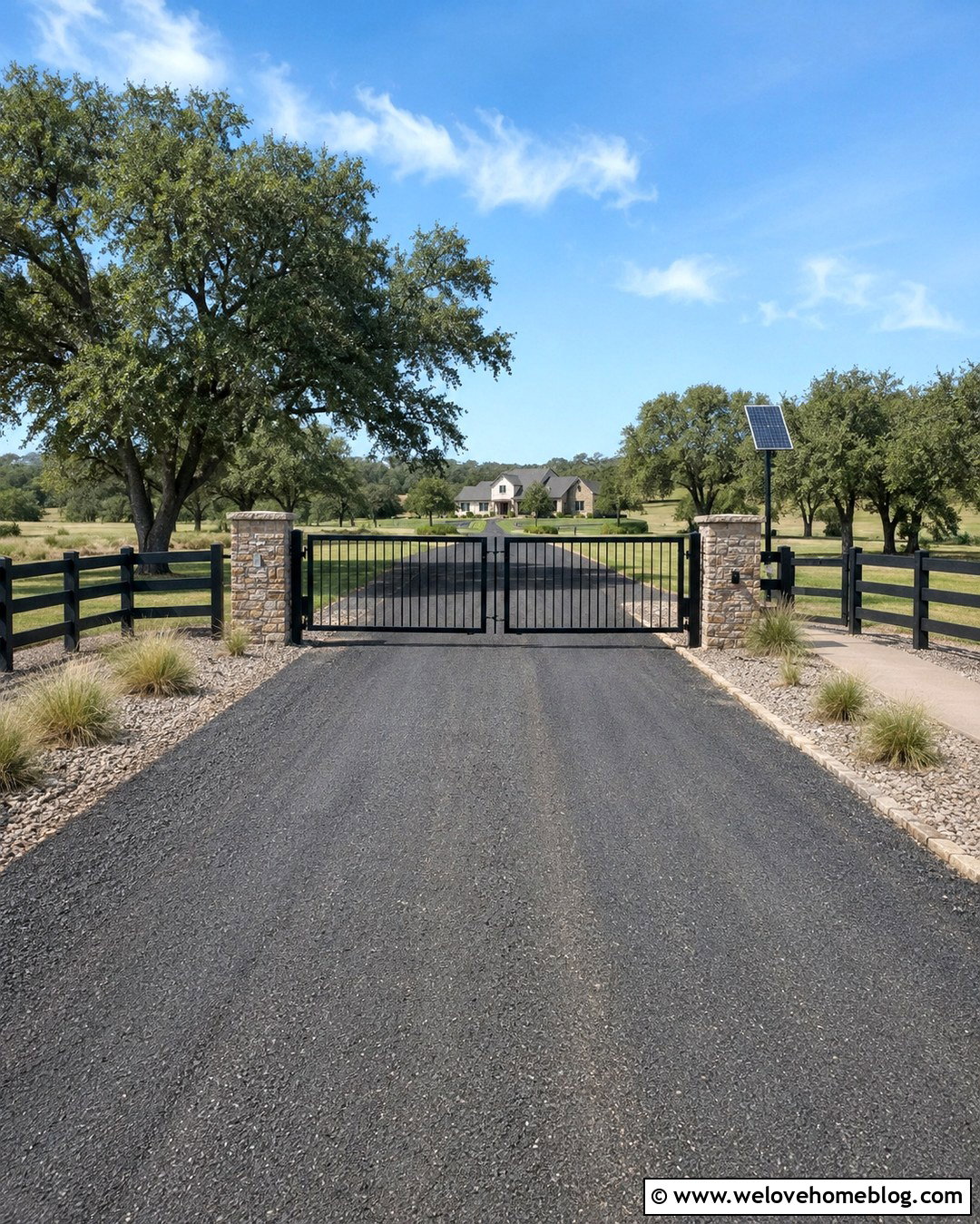
A solar automatic RV gate can be useful where the entrance sits far from the home and running electrical service would be difficult. A lightweight open aluminum gate typically places less demand on the operator than a dense, solid panel. Use a double swing design across a wide chip-seal driveway, with black ranch fencing and natural stone pillars defining the entrance. Position the solar panel in an unshaded location while keeping it visually integrated with the fence or equipment enclosure. Native grasses, live oaks, and broad gravel shoulders complete the rural setting and leave ample turning room. The system should include appropriately sized batteries, manual release access, monitored entrapment protection, and controls suitable for the expected number of daily cycles. Have an experienced installer evaluate gate weight, wind, sunlight, and site geometry before choosing the equipment.
Conclusion:
The best entrance combines comfortable vehicle access with materials and movement that fit the property. These 20 Rv Driveway Gate Ideas demonstrate how sliding, swing, cantilever, folding, and telescoping gates can work with different driveway surfaces, landscapes, and house designs. Begin by measuring the complete RV, including mirrors, awnings, ladders, and roof-mounted equipment. Then consider turning angles, driveway slope, gate setbacks, drainage, wind, and available opening space. Avoid designing around the vehicle’s dimensions alone; extra clearance makes backing and future RV upgrades easier. Finally, use strong frames, suitable posts, reliable hardware, and modern safety devices. A professionally planned gate can improve privacy, security, convenience, and curb appeal without making RV access unnecessarily difficult.

Related posts:

Leave a Reply