
A pull-through driveway creates an easy, welcoming route that lets vehicles enter from one opening and leave through another without backing into the street. The layout may form a horseshoe across the front yard, circle a landscaped island, pass beneath a porte cochere, or wrap around the side of the house. Beyond improving traffic flow, the right design can add parking, frame the home, and make a large front yard feel intentional. Materials, turning space, drainage, edging, lighting, and plant placement all influence how well the finished driveway works. Before building, confirm local requirements for curb cuts, property setbacks, and street access. The complete looks below offer practical inspiration for planning **20 Pull Through Driveway Ideas**.
1. Circular Gravel Pull Through Driveway
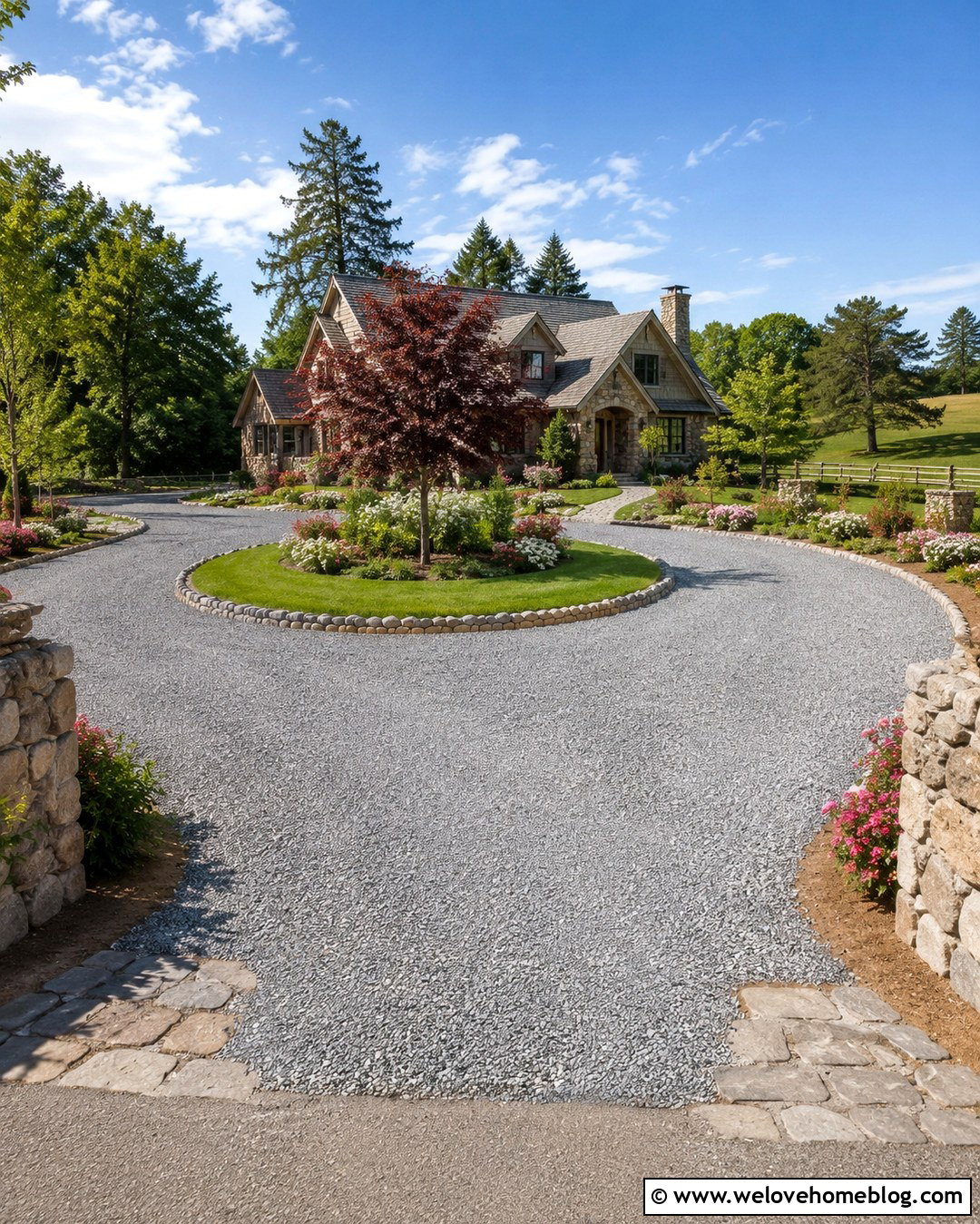
A circular gravel pull-through driveway brings relaxed character to a country, farmhouse, or cottage-style home. Use compacted gray crushed stone for the main driving surface and create a broad center island filled with lawn, one ornamental tree, and low flowering shrubs. Natural fieldstone edging keeps loose gravel from spreading into the planting beds. At the street, matching stone aprons can visually define the separate entrance and exit. Keep plants near both openings low enough to preserve clear views of pedestrians and approaching traffic. A curved walkway from the inner loop to the front porch completes the layout. This design feels spacious without looking overly formal, while the soft gravel texture helps the driveway blend into a large green yard.
2. Concrete Horseshoe Pull Through Driveway
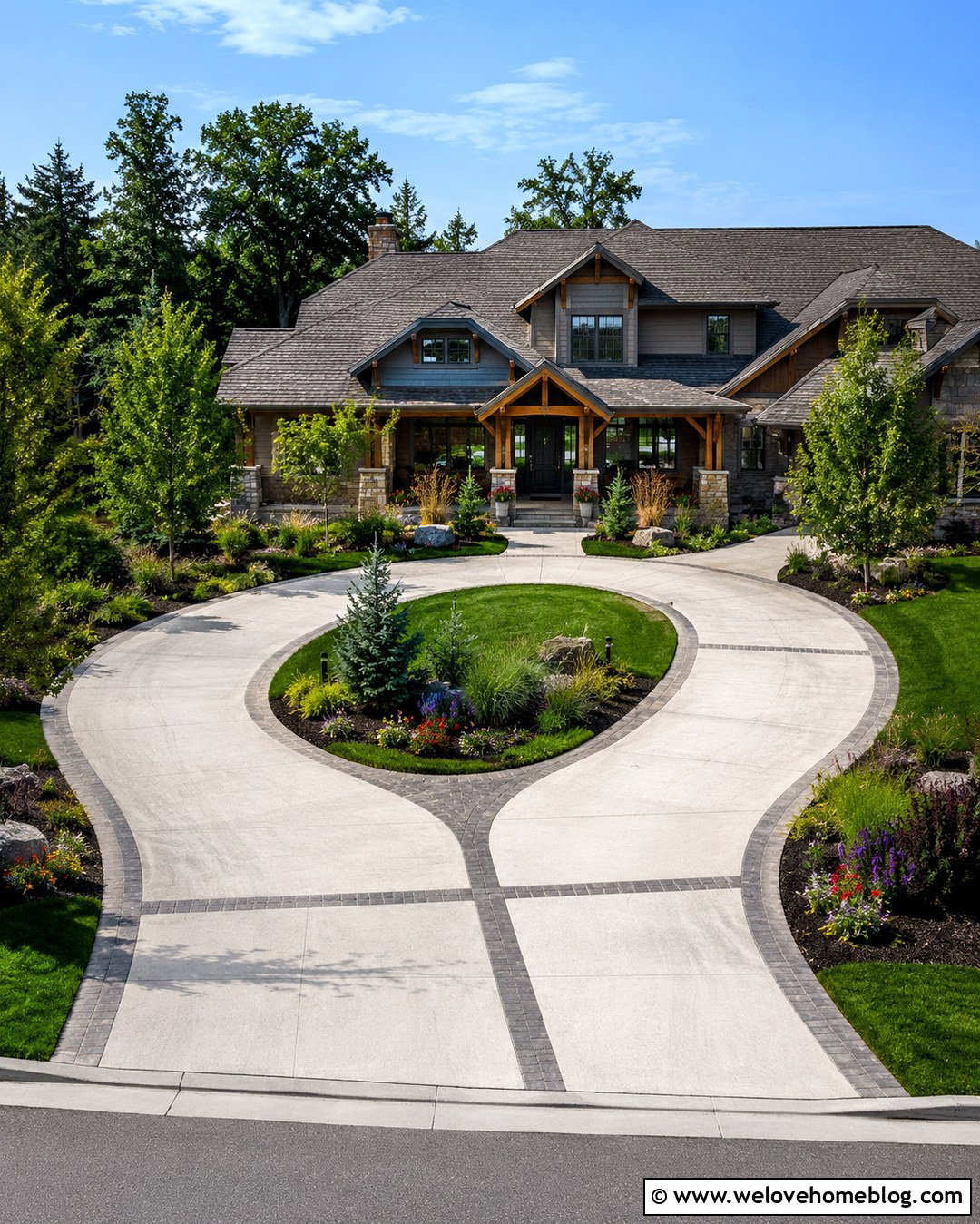
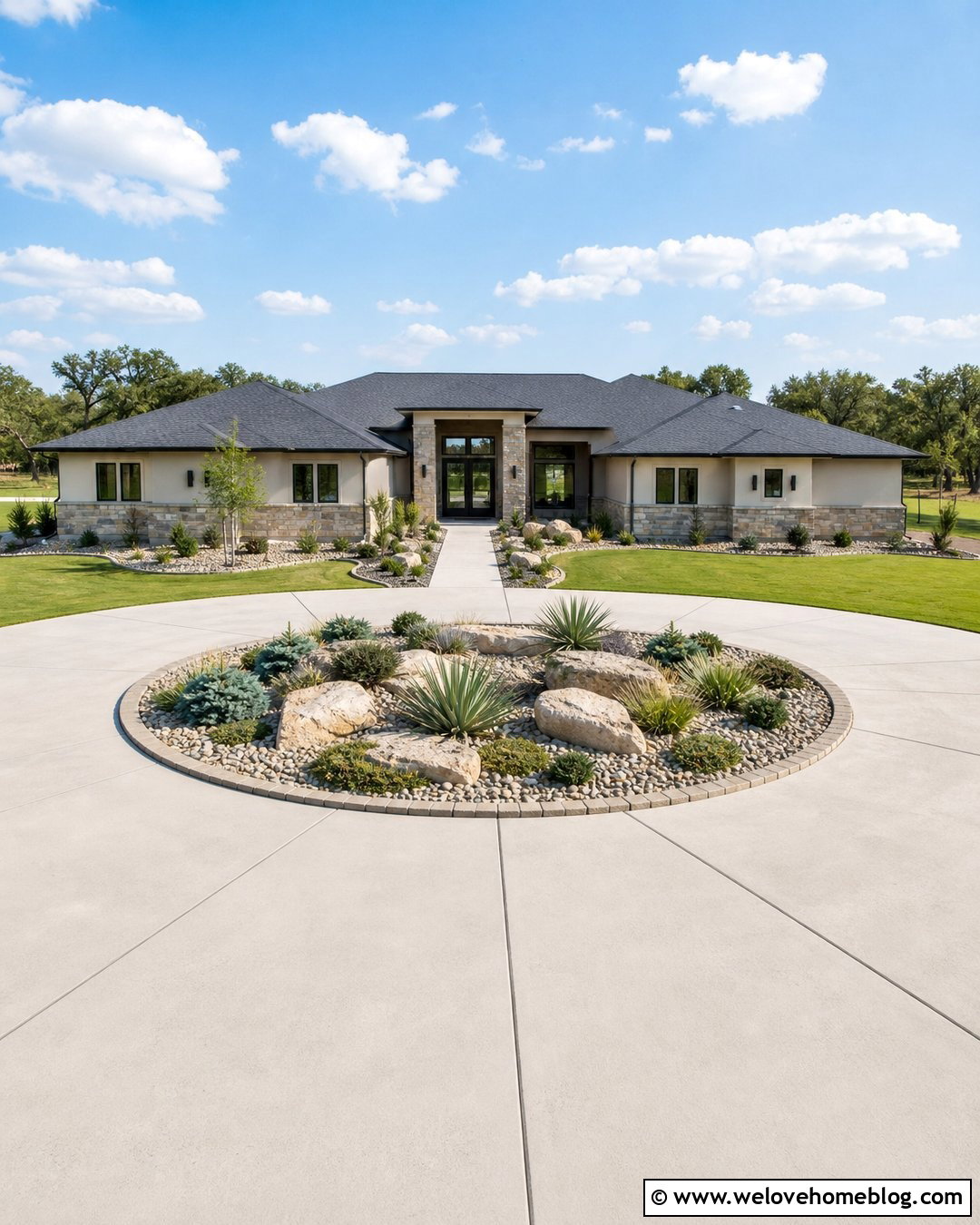
A concrete horseshoe pull-through driveway gives a suburban home a clean, practical entrance with dependable everyday circulation. Choose light gray poured concrete with evenly spaced control joints, then add a darker paver ribbon along both edges for definition. The horseshoe can sweep close to the front walkway while leaving a wide lawn or landscaped island at its center. Rounded corners are important because tight bends can encourage tires to cross the edging. Frame the center with compact evergreens, ornamental grasses, and seasonal flowers that will not block views. A wider section near the front door can provide short-term guest parking without interrupting the driving lane. This complete look works especially well with ranch, Craftsman, and traditional brick homes.
3. Asphalt Pull Through Driveway With Center Island
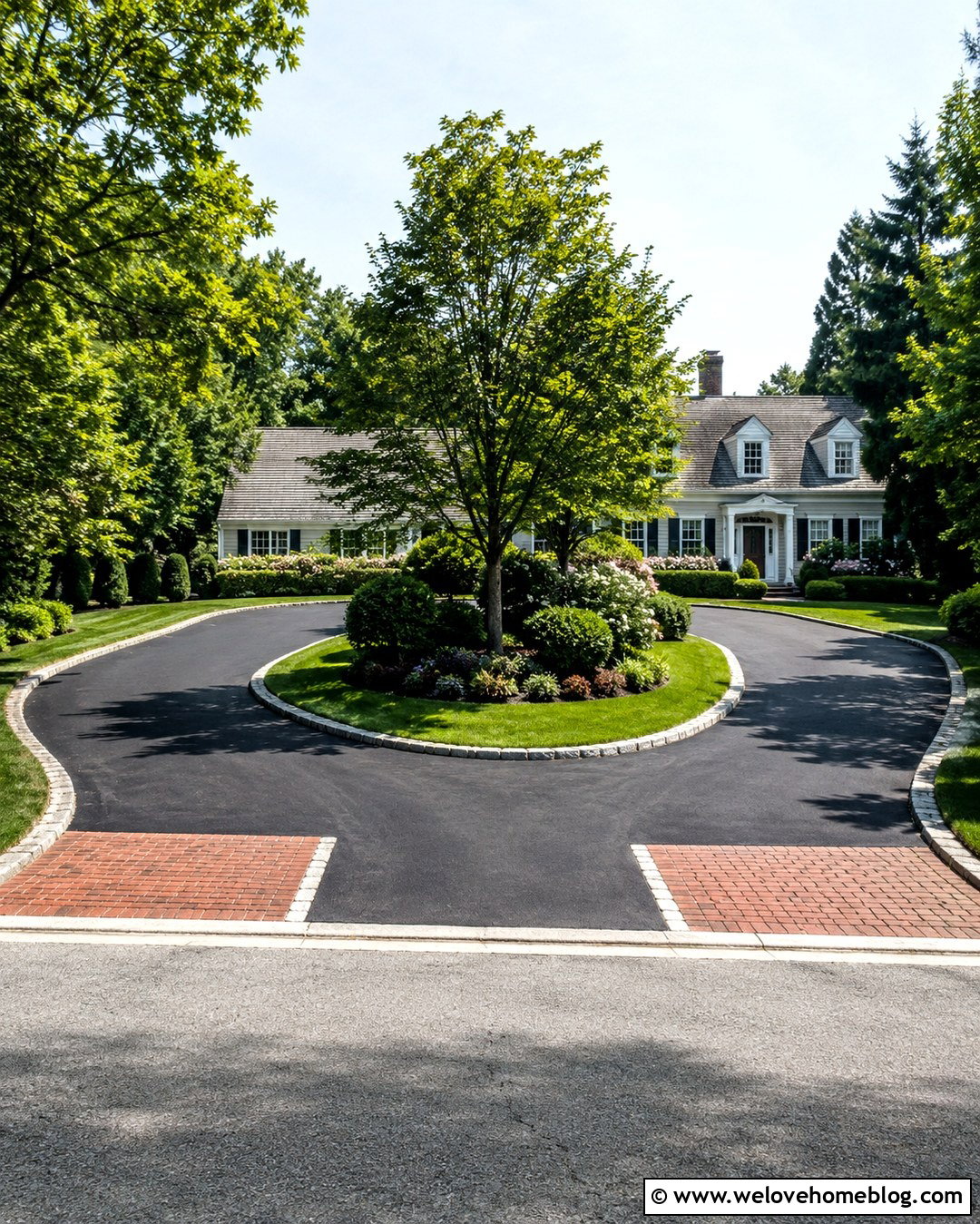
Smooth black asphalt creates a simple pull-through driveway that suits large properties and long road frontages. Shape the driveway around an oval center island rather than installing one uninterrupted area of pavement. The island breaks up the dark surface and creates space for a shade tree, lawn, and layered shrubs. A border of granite cobbles adds contrast while protecting the planting area from turning tires. Near the street, use concrete or brick aprons to strengthen the two entrances and make them easier to identify. Gentle curves will make the route feel natural from either direction. This design is especially effective beside a Cape Cod or traditional siding home, where the black asphalt can coordinate with dark shutters, roofing, and exterior lighting.
4. Paver Pull Through Driveway With Porte Cochere
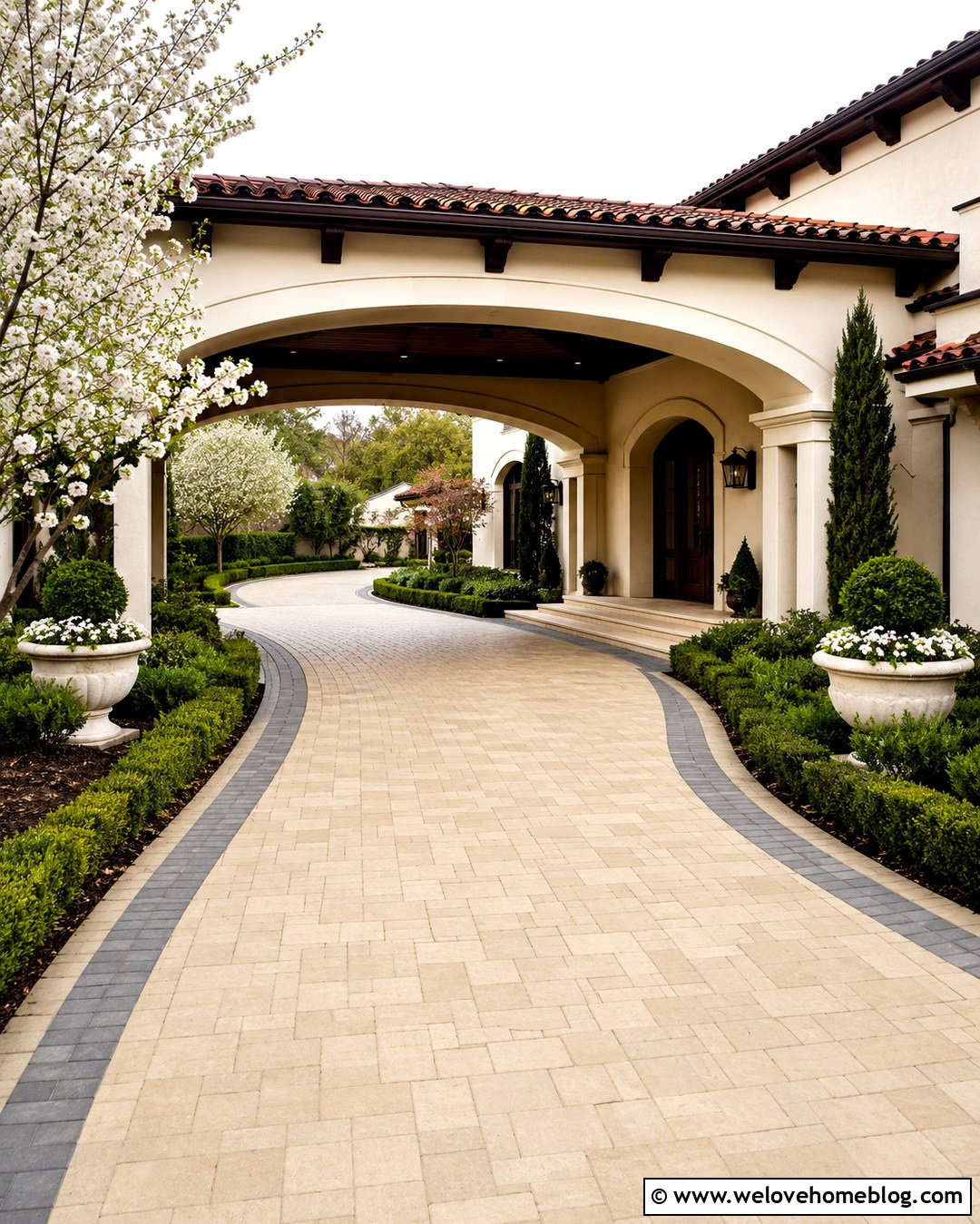
For a refined arrival, route a paver pull-through driveway beneath a porte cochere before curving it back toward the street. Warm tan concrete pavers in a running-bond pattern provide a durable-looking surface that complements stucco, stone, and Mediterranean-style architecture. Use a contrasting charcoal paver band to outline the route and emphasize the curves. The covered drop-off area should connect directly to the main entrance, allowing guests to reach the door without crossing a parking area. Beyond the porte cochere, continue the driveway toward the exit with enough open space for a comfortable turn. Formal hedges, symmetrical planters, and small flowering trees can frame the approach. The result feels elegant, but its clear circulation also supports convenient daily use.
5. Long Gravel Pull Through Driveway
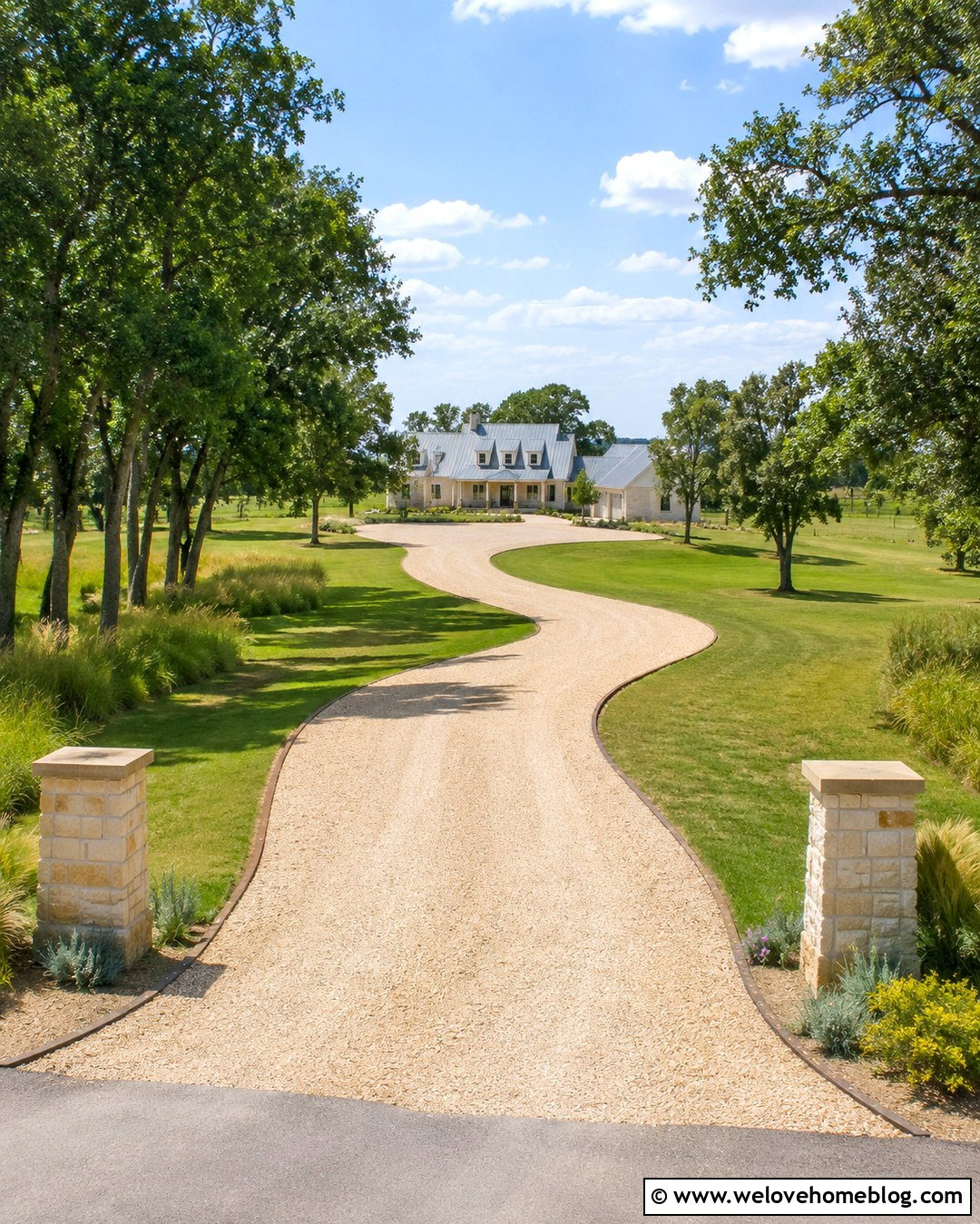
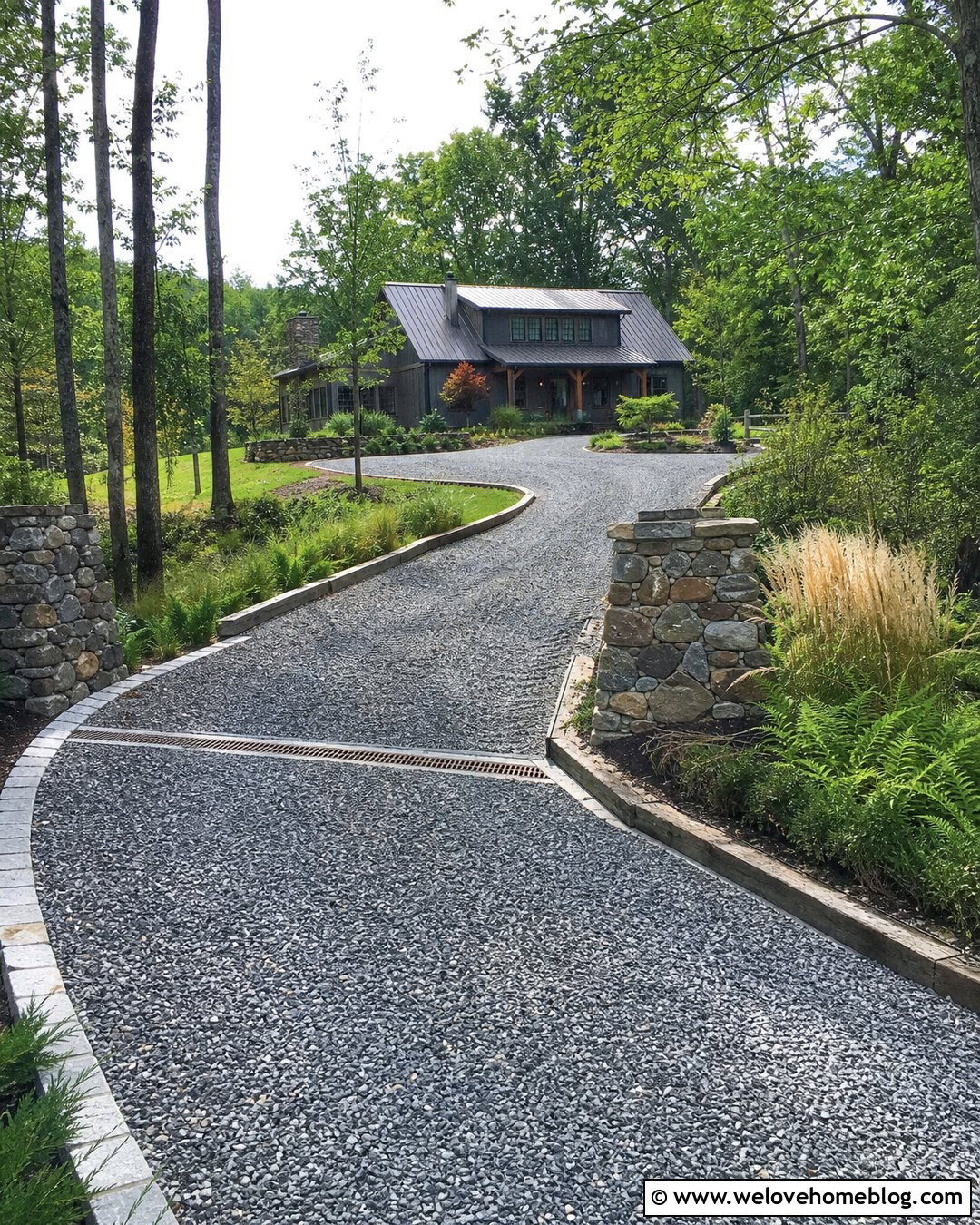
Picture a long gravel driveway gently curving through an open country property before looping past the house and returning to the road. Beige crushed limestone gives the route a warm, natural appearance, while steel edging creates a crisp boundary that is nearly invisible from a distance. Plant groups of native grasses and deciduous trees along the drive instead of creating one continuous formal border. This makes the approach feel integrated with the wider landscape. Near the home, widen the loop slightly for guest parking and deliveries. Stone columns at the two street openings can mark the entrance and exit without requiring a full gate. This pull-through layout works beautifully for rural homes because it combines clear vehicle movement with a scenic, gradually unfolding view.
6. Modern Concrete Pull Through Driveway
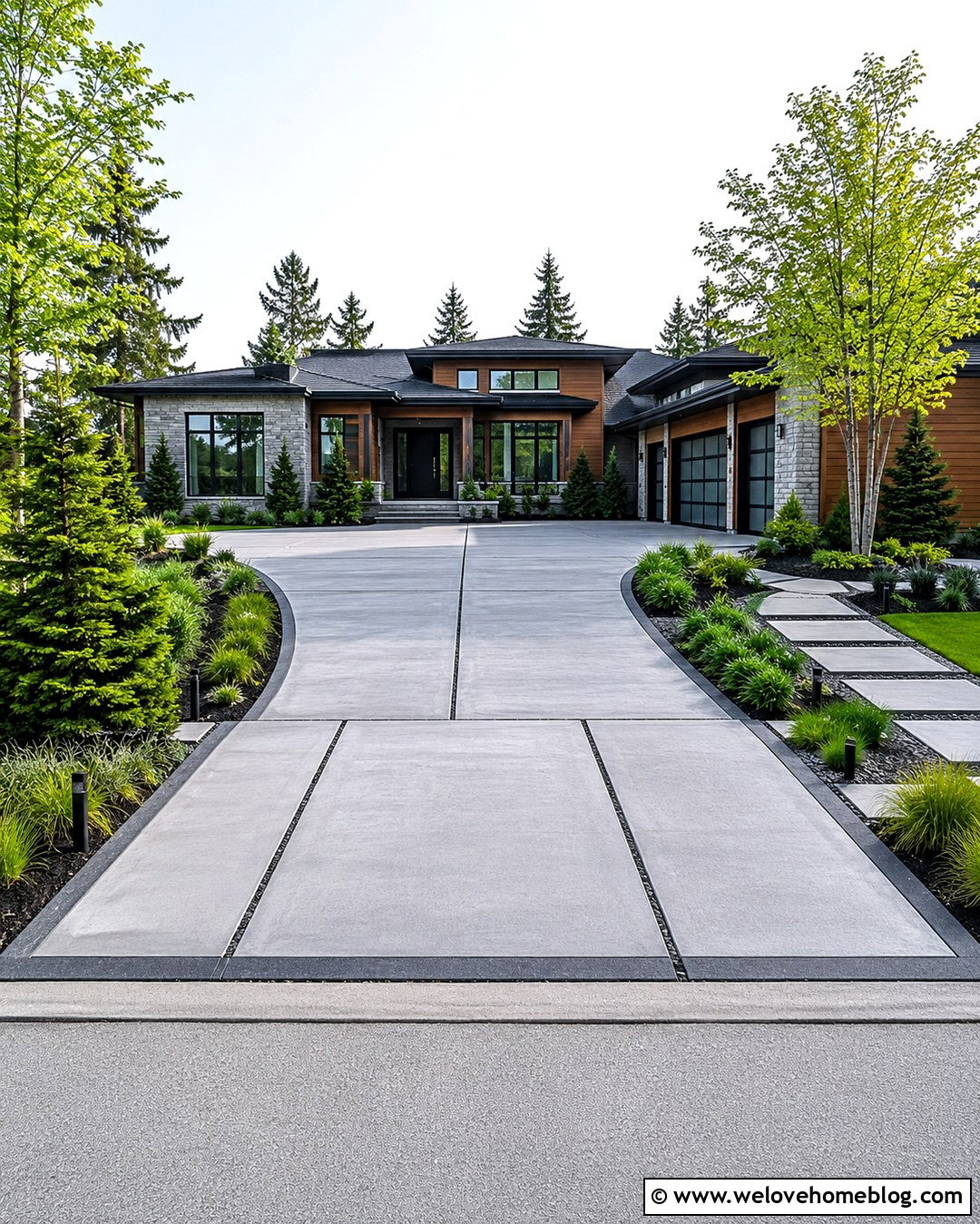
Large-format concrete panels can turn a modern pull-through driveway into a strong part of the home’s architecture. Use smooth medium-gray poured concrete divided into broad rectangular sections, with narrow black gravel joints adding contrast. A shallow U-shaped layout can connect two street openings while running parallel to the front facade. Keep the center landscape simple with clipped grasses, sculptural evergreens, and one multistem tree. Dark steel edging and square concrete walkway slabs reinforce the home’s clean lines. Low bollard lights can identify the route without cluttering the yard. Avoid excessive decorative patterns, which may compete with the minimalist facade. This complete design feels especially cohesive when the driveway color repeats tones found in the home’s stone, metal, or fiber-cement exterior.
7. Farmhouse Pull Through Driveway
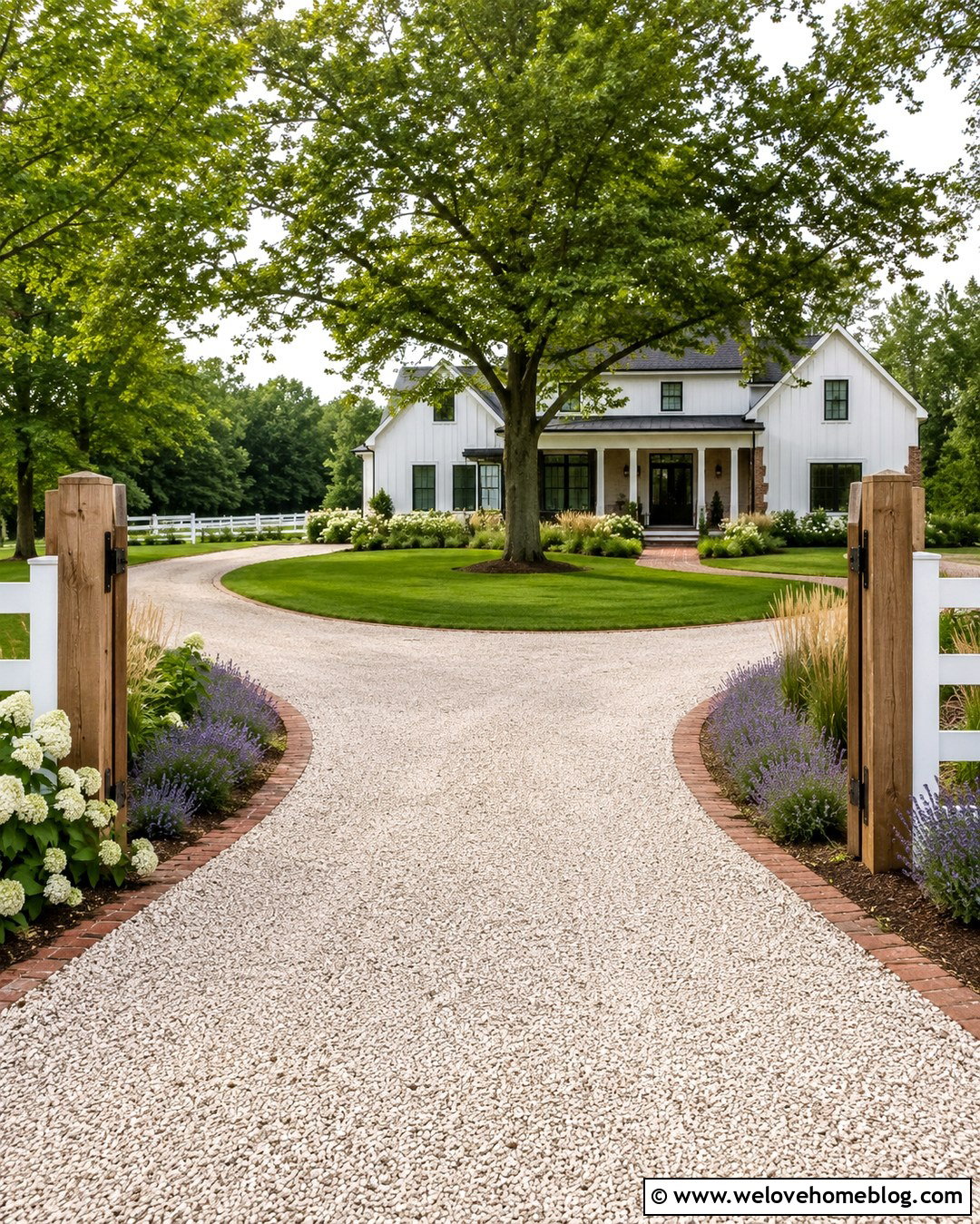
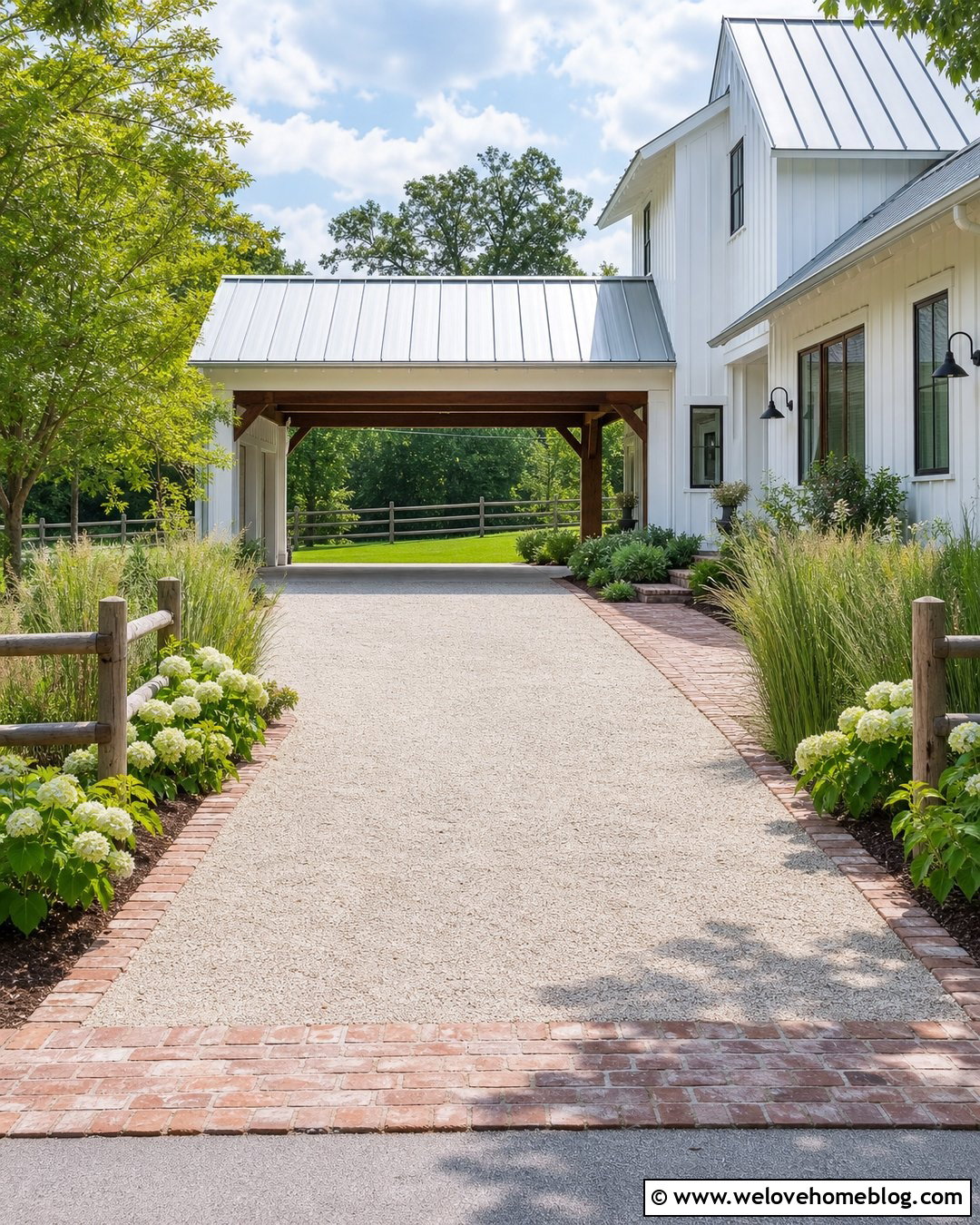
A farmhouse pull-through driveway should feel generous, welcoming, and connected to the surrounding land. Use pale crushed stone in a wide horseshoe layout, finished with reclaimed-looking brick edging near the house. A central lawn with a mature shade tree creates a classic focal point while leaving open views toward the porch. White fence sections can follow the outer curves without enclosing the entire driveway. At each road connection, simple timber posts and dark lanterns provide subtle entrance markers. Add hydrangeas, catmint, and ornamental grasses around the inner loop for a soft but manageable border. A brick walkway can lead from the drop-off area to the front steps. The mix of gravel, brick, lawn, and informal planting complements a white modern farmhouse without feeling overly polished.
8. Brick Pull Through Driveway
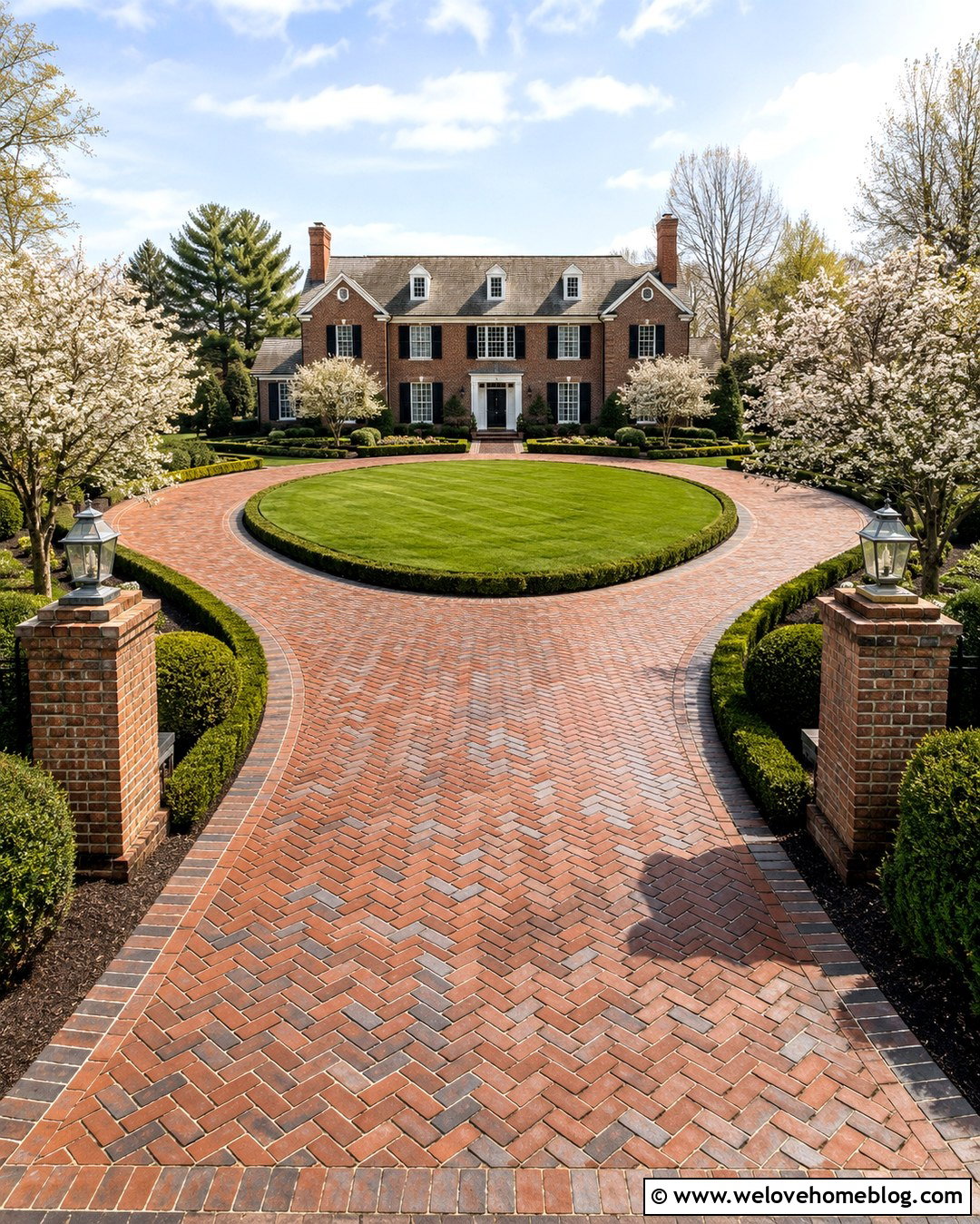
Clay brick pavers give a pull-through driveway rich color and a sense of permanence that suits a Colonial home. Lay red and brown bricks in a herringbone pattern across a symmetrical horseshoe layout. A soldier-course border can define both sides of the driveway and keep the pattern visually organized around the curves. Place an oval lawn in the center, surrounded by low boxwood and balanced flowering trees. Matching brick walkways can connect the inner drive to the front entrance, creating one coordinated hardscape. Use traditional lantern posts near both street openings and repeat the home’s brick tones in low entrance pillars. Because brick already offers strong texture, keep the landscaping controlled and simple. The finished driveway should frame the facade rather than compete with it.
9. Cobblestone Pull Through Driveway
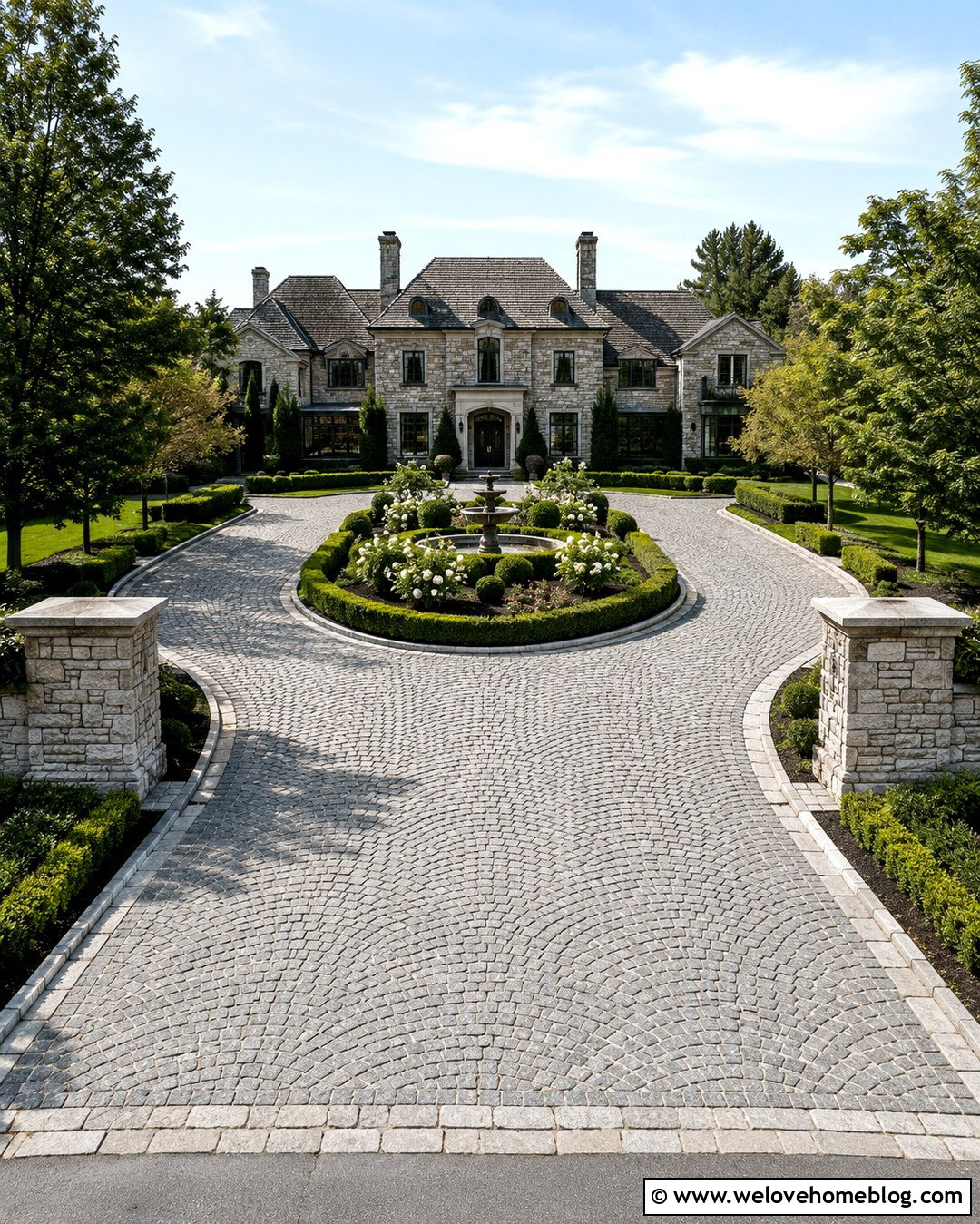
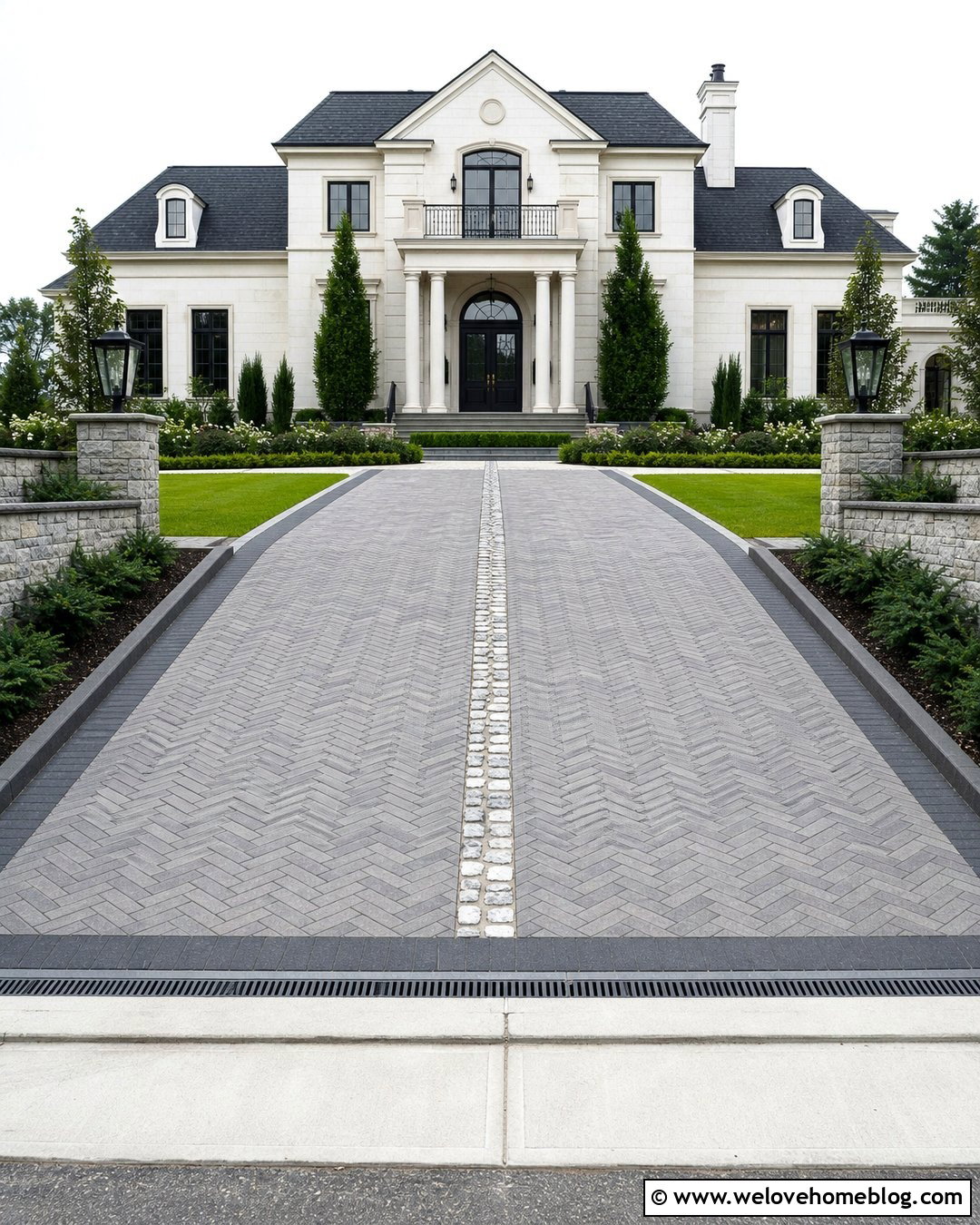
A cobblestone pull-through driveway creates an impressive estate-style approach while maintaining a warm, historic appearance. Use gray granite cobblestones in a sweeping oval loop around a formal center garden. A fan or arched laying pattern can help the surface follow the bends gracefully. Border the driveway with flush-cut stone curbs that contain the paving without creating a harsh raised edge. In the center island, combine clipped hedges, a small fountain, and balanced planting beds for a structured focal point. Stone pillars at the entrance and exit can echo the home’s masonry facade. This surface has considerable visual detail, so understated landscaping along the outer edge works best. A wide curb view should reveal the entire route and make both connections to the street easy to understand.
10. Permeable Paver Pull Through Driveway
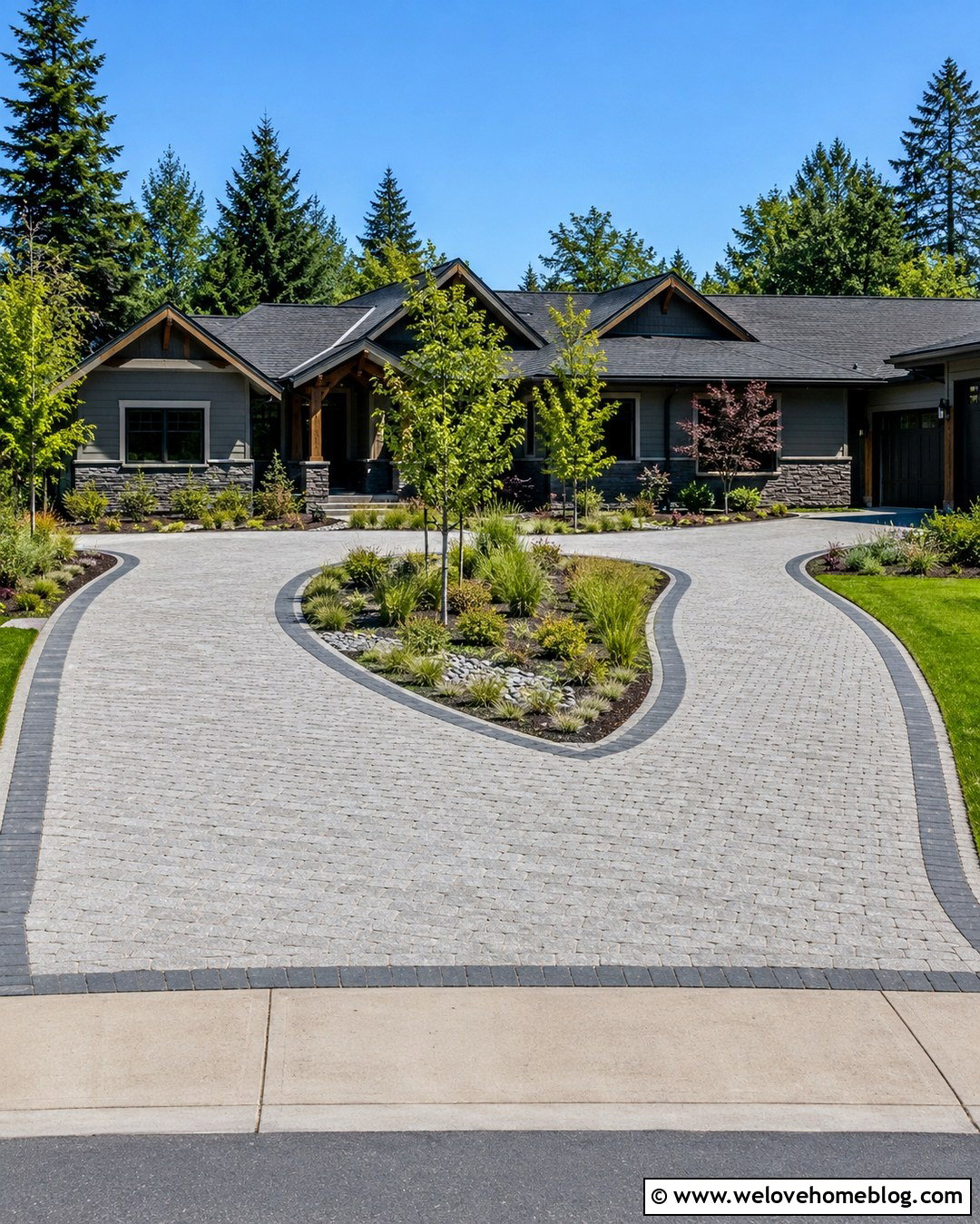
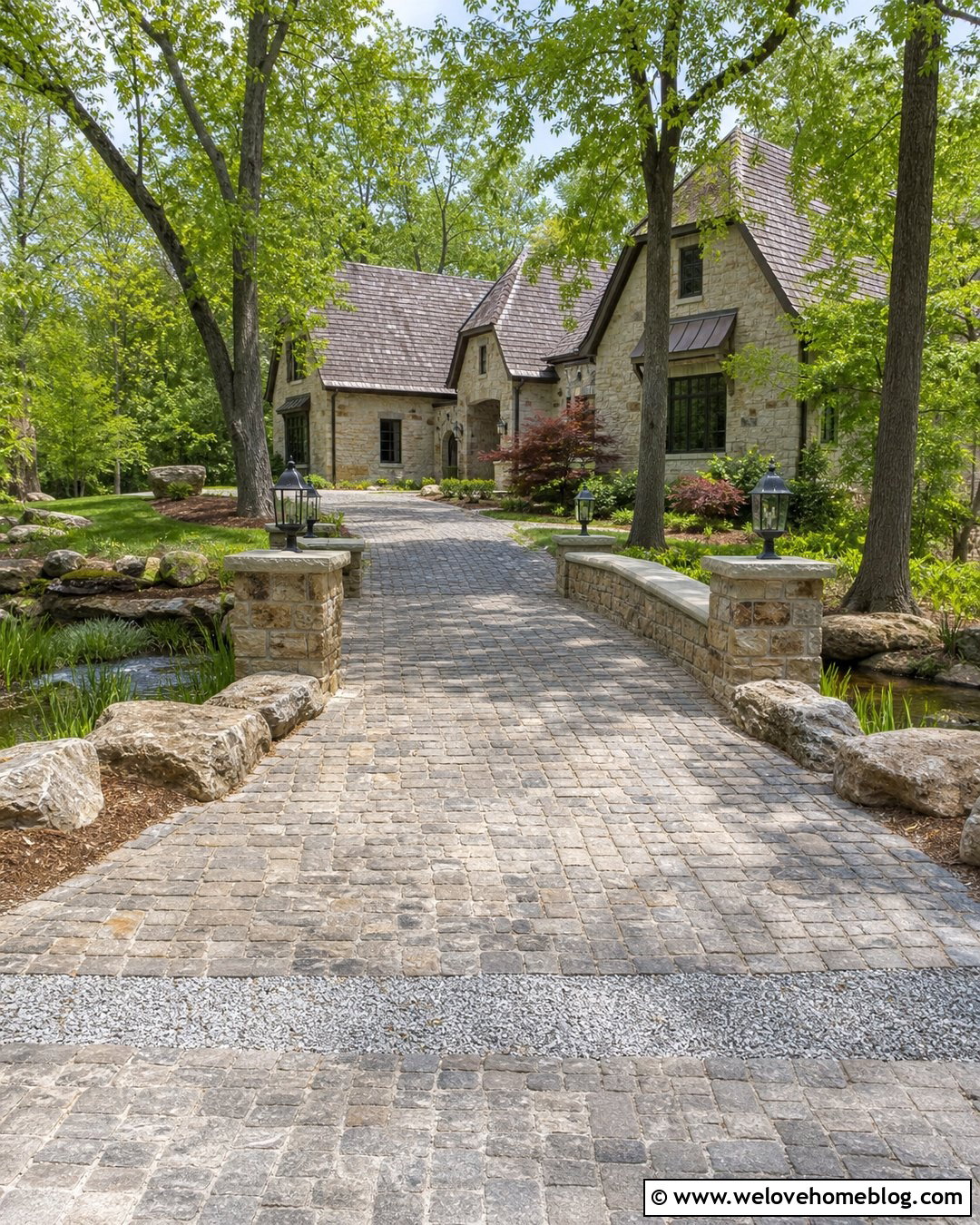
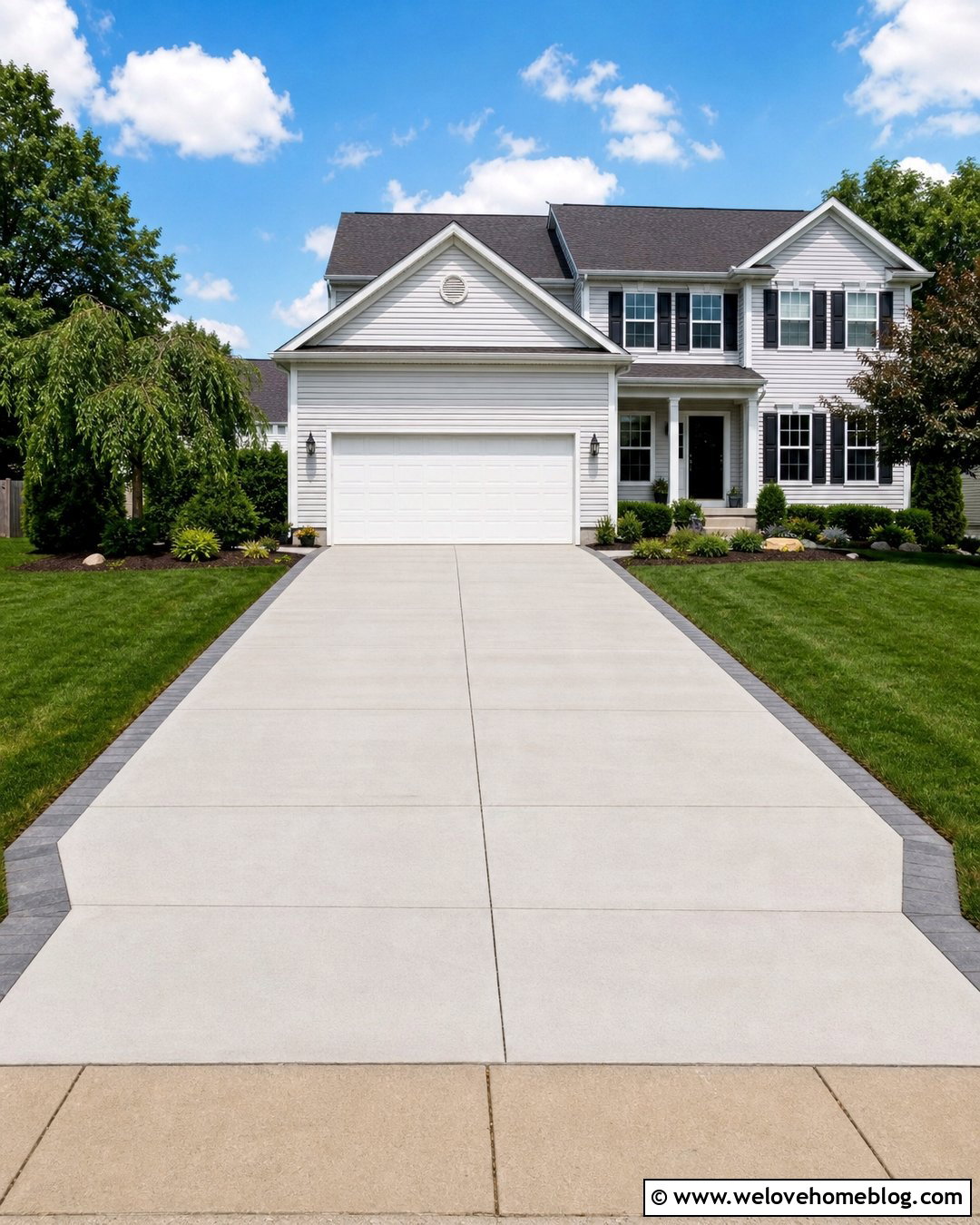
A permeable paver pull-through driveway combines an organized appearance with a surface designed to let water pass into the prepared aggregate layers below. Choose light gray permeable concrete pavers with wider gravel-filled joints and arrange them in a curved horseshoe layout. Dark charcoal border pavers can clarify the driveway edges and distinguish them from nearby walkways. Create a planted center island with moisture-tolerant grasses, small shrubs, and a shallow rain garden at its lowest point. The surrounding beds should be graded carefully so runoff does not carry soil onto the pavers. This complete look works well with contemporary Craftsman and modern suburban homes. Clean edging, open planting, and clearly defined street aprons prevent the environmentally focused design from appearing rustic or unfinished. ()
11. Small Front Yard Pull Through Driveway
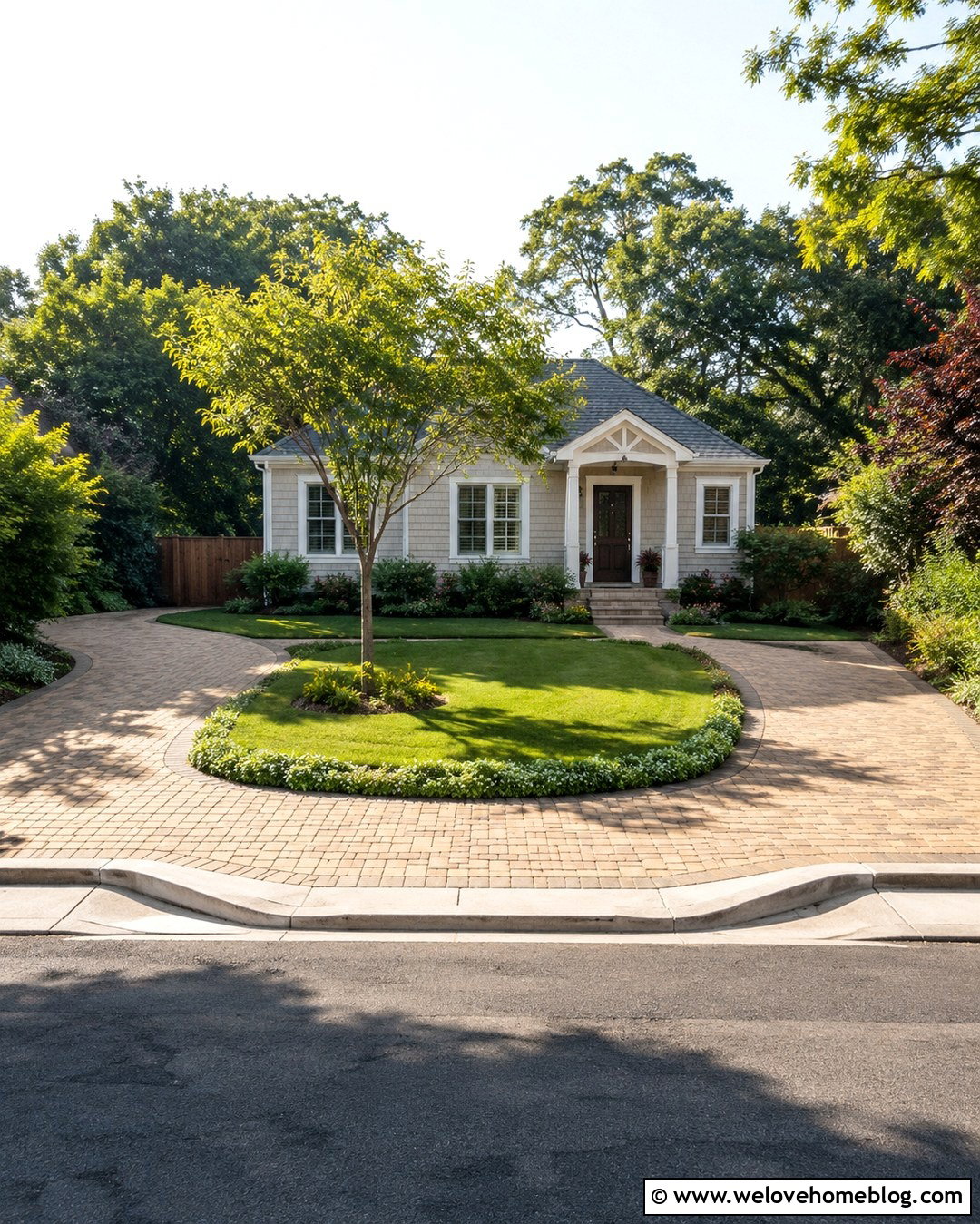
A compact front yard may support a pull-through driveway when the route is carefully simplified. Use narrow tan concrete pavers in a shallow semicircle that connects two modest street openings. Instead of a large center island, retain a slim curved lawn with one small ornamental tree and low groundcover. Flush paver edging helps maximize usable driving width and reduces the visual weight of the hardscape. Place guest parking closer to the side of the house so stopped vehicles do not block the loop. A short walkway should connect the inner curve directly to the front porch. Keep mailboxes, large rocks, and tall plants away from turning points. This layout can make a bungalow or small ranch home more accessible while preserving enough greenery to maintain inviting curb appeal.
12. Side Garage Pull Through Driveway
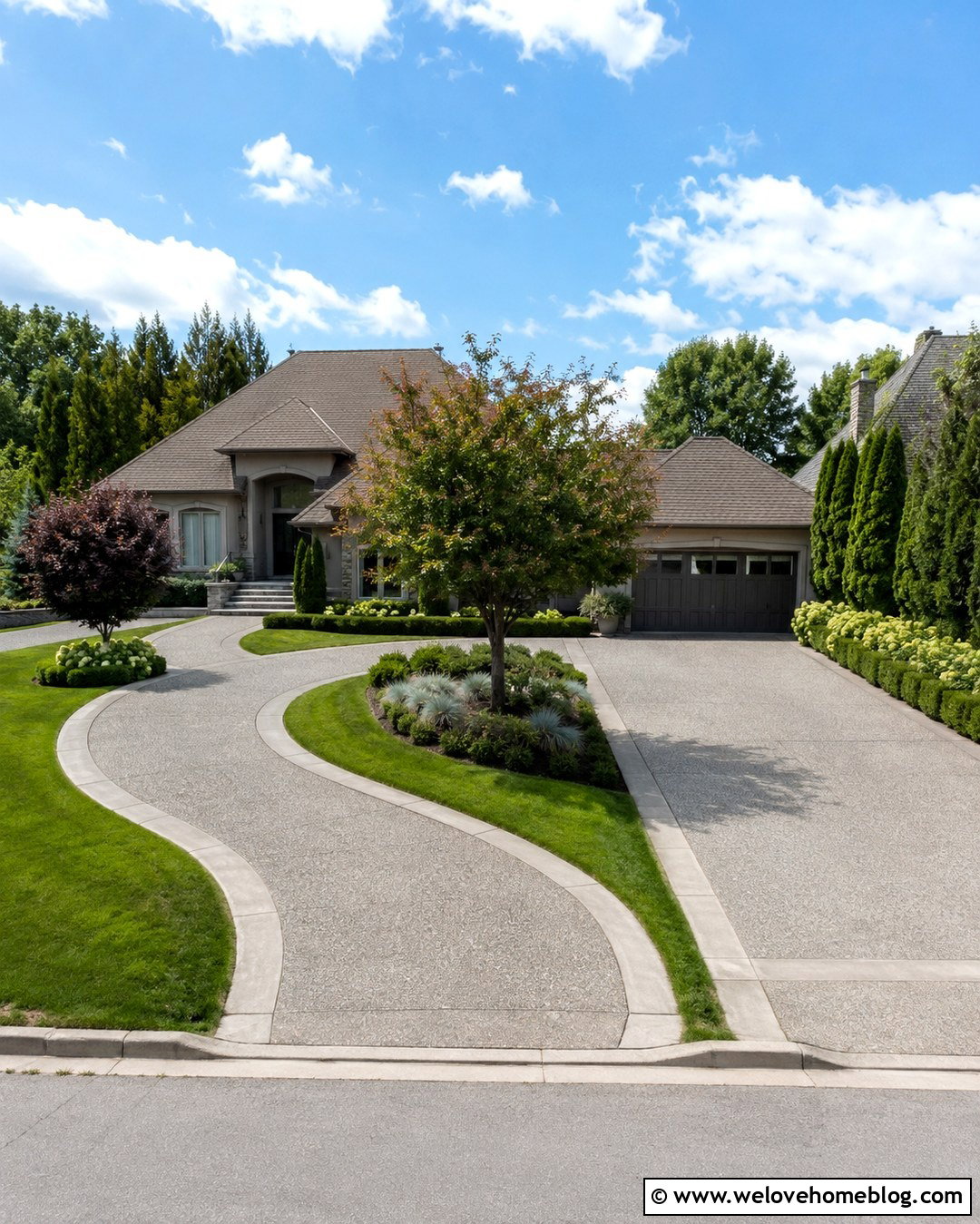
A side-entry garage can be incorporated into a pull-through driveway without making the garage dominate the front elevation. Begin with a curved exposed-aggregate concrete entrance that passes the front walkway, widens near the side garage, and continues around a landscaped island toward a second street opening. Use smooth concrete bands around the aggregate surface for a tailored border. The garage apron should be broad enough for vehicles to align with the doors while keeping the main route open. Place taller screening shrubs near the garage wall, but use lower plants beside the travel lane. An ornamental tree in the center island can draw attention back toward the house. This design separates routine garage access from guest drop-off space and gives the entire front yard a more balanced appearance.
13. Gated Pull Through Driveway
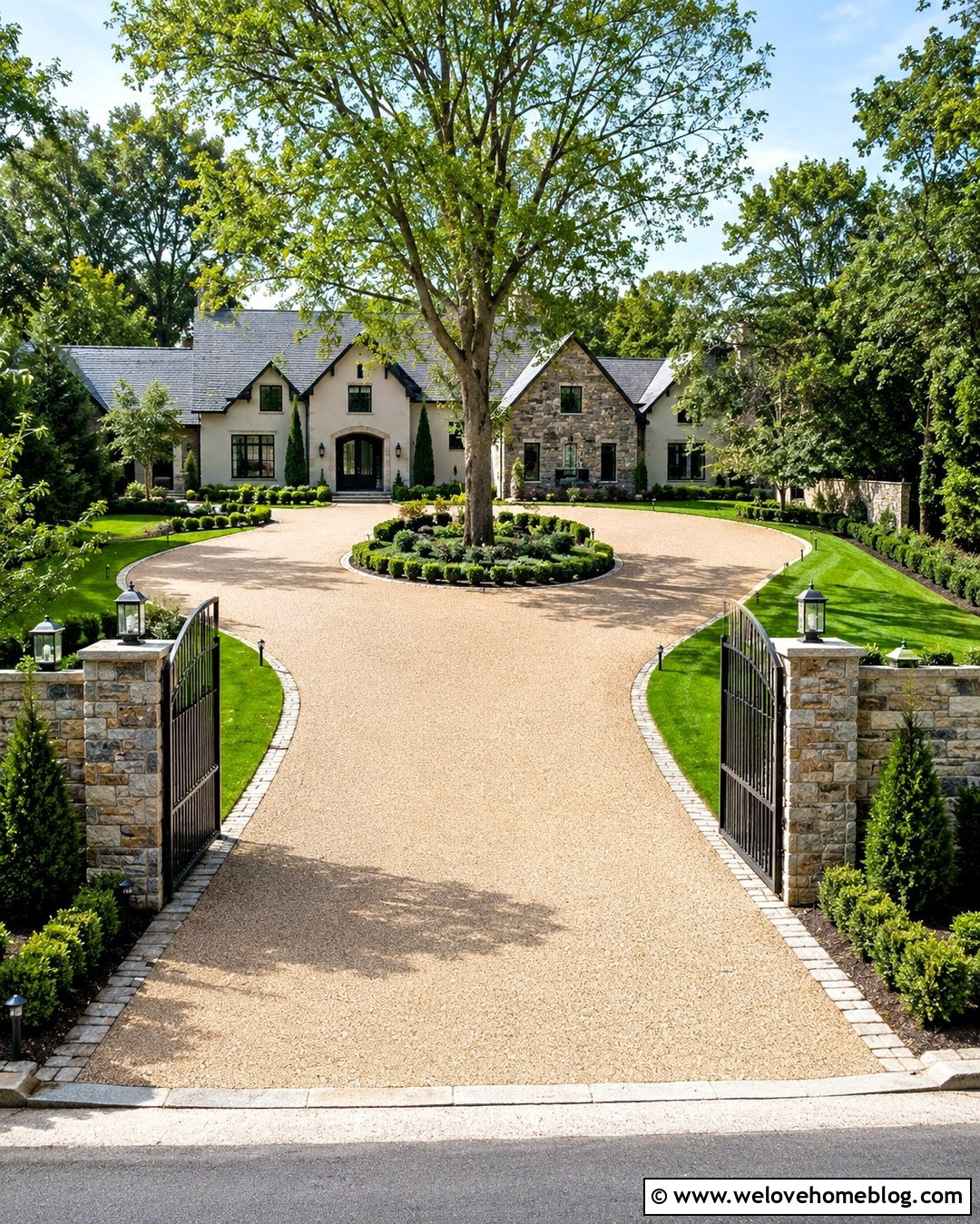
Separate entrance and exit gates make a pull-through driveway feel secure and easy to navigate. Pair black steel gates with light beige resin-bound gravel in a broad U-shaped layout. Stone pillars can anchor each gate and coordinate with a traditional stone or stucco home. Set the entry gate far enough inside the property for an arriving vehicle to wait without remaining in the street. Use a simple center island of lawn, evergreen shrubs, and a specimen tree to guide vehicles naturally through the loop. The exit side can have a matching gate for a consistent street view. Low landscape lighting should illuminate the pillars, edges, and control equipment without creating glare. Gate movement, driveway slope, vehicle clearance, and emergency access should all be evaluated during professional planning. ()
14. Tree Lined Pull Through Driveway
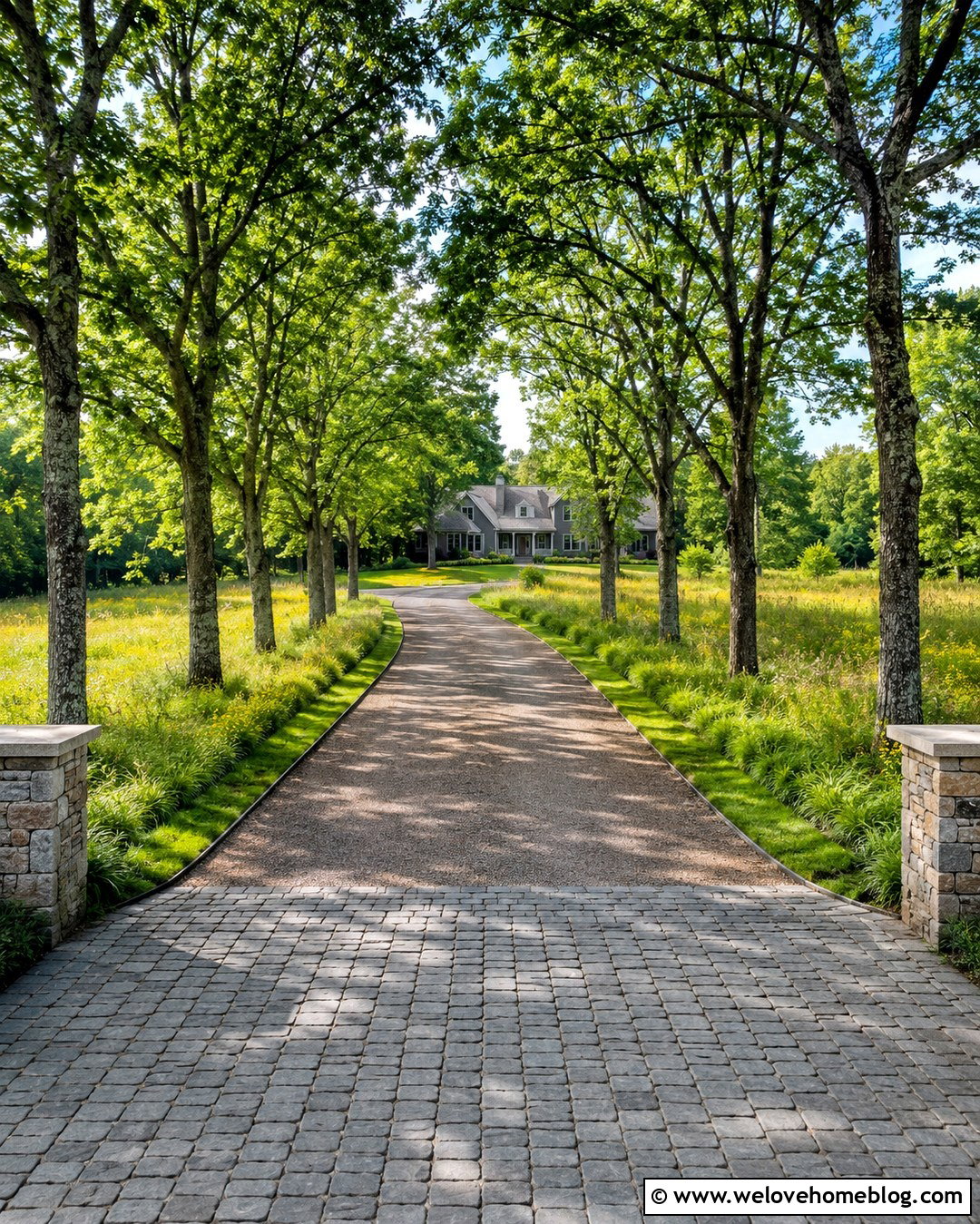
Rows of trees can transform a long pull-through driveway into a shaded, memorable approach. Use warm gray gravel for a gently curving loop that reaches a country Craftsman home before returning along a parallel route. Plant deciduous trees at regular intervals outside the driveway edges, leaving enough room for trunks, roots, and mature canopies. A low steel edge can contain the gravel while remaining visually subtle beneath the planting. Near the home, transition to a larger cobblestone apron that clearly identifies the arrival area. Underplant the trees with simple grass or low groundcover rather than dense shrubs. This keeps the route open and easy to read. The repeating trunks create structure, while the gravel and surrounding meadow planting keep the overall driveway relaxed and natural.
15. Sloped Pull Through Driveway
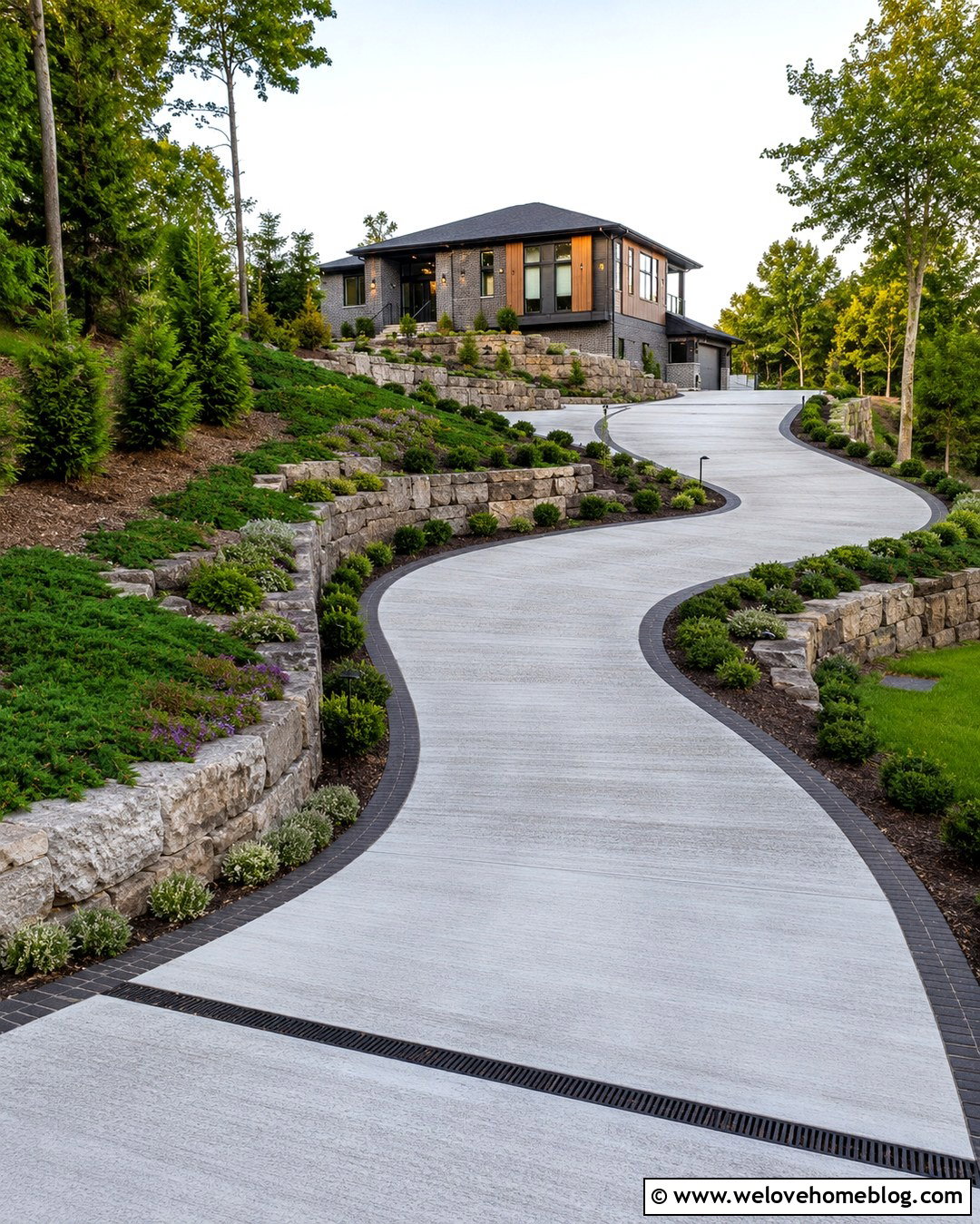
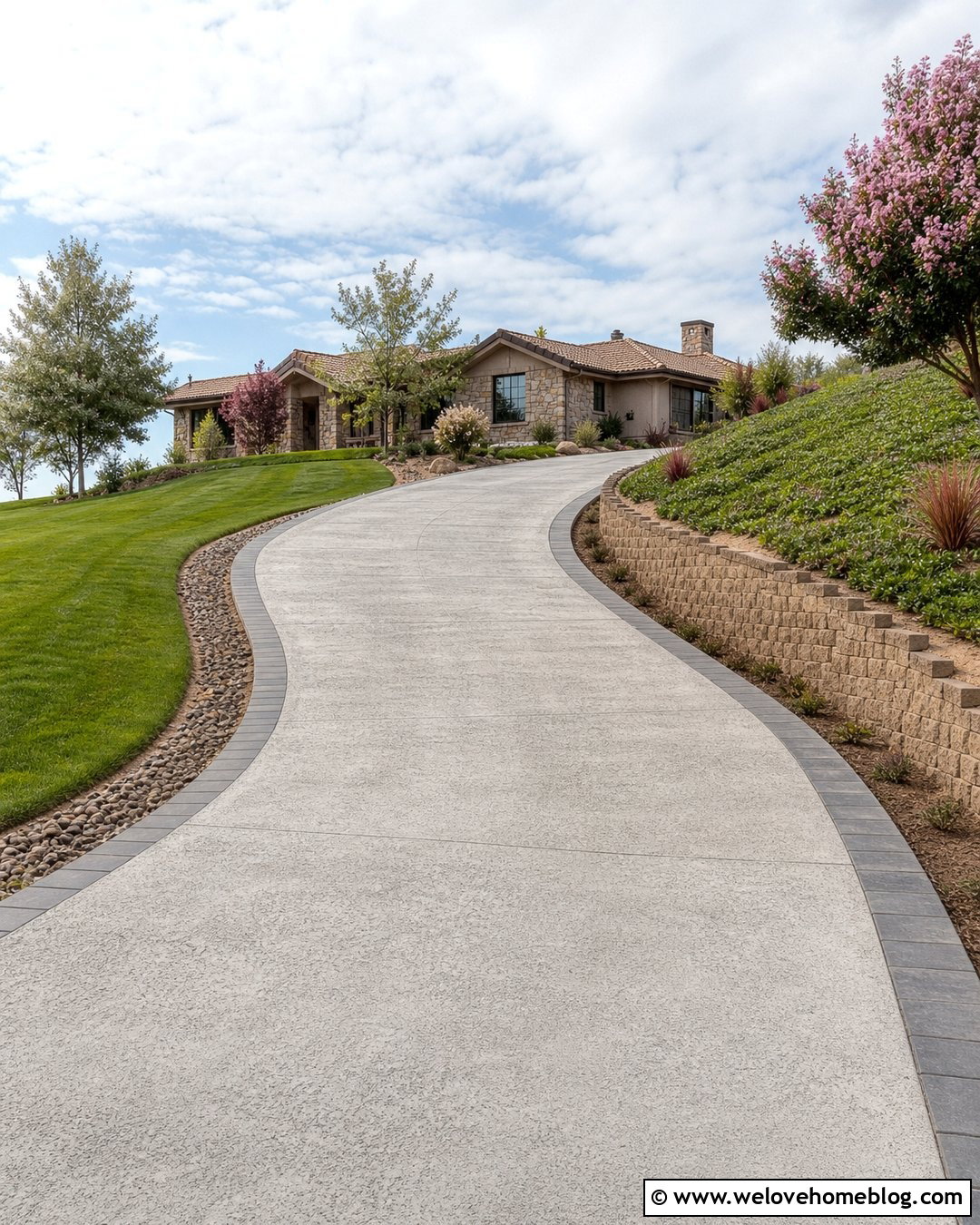
A sloped property needs a pull-through route that follows the terrain rather than fighting it. Consider broom-finished concrete for reliable surface texture, arranged in a wide switchback loop with gradual curves. Dark brick edging can emphasize the driveway shape and protect nearby planting beds. Use terraced stone retaining walls only where needed, then soften them with cascading groundcover and compact shrubs. Drainage channels should direct water away from the house, garage, and street connections. Avoid placing the sharpest turn at the steepest point of the route. Instead, create a slightly wider, flatter arrival area near the front entrance before continuing downhill toward the exit. A hillside contemporary or split-level home can look especially cohesive when the driveway follows existing contours and repeats stone from the facade.
16. RV Pull Through Driveway
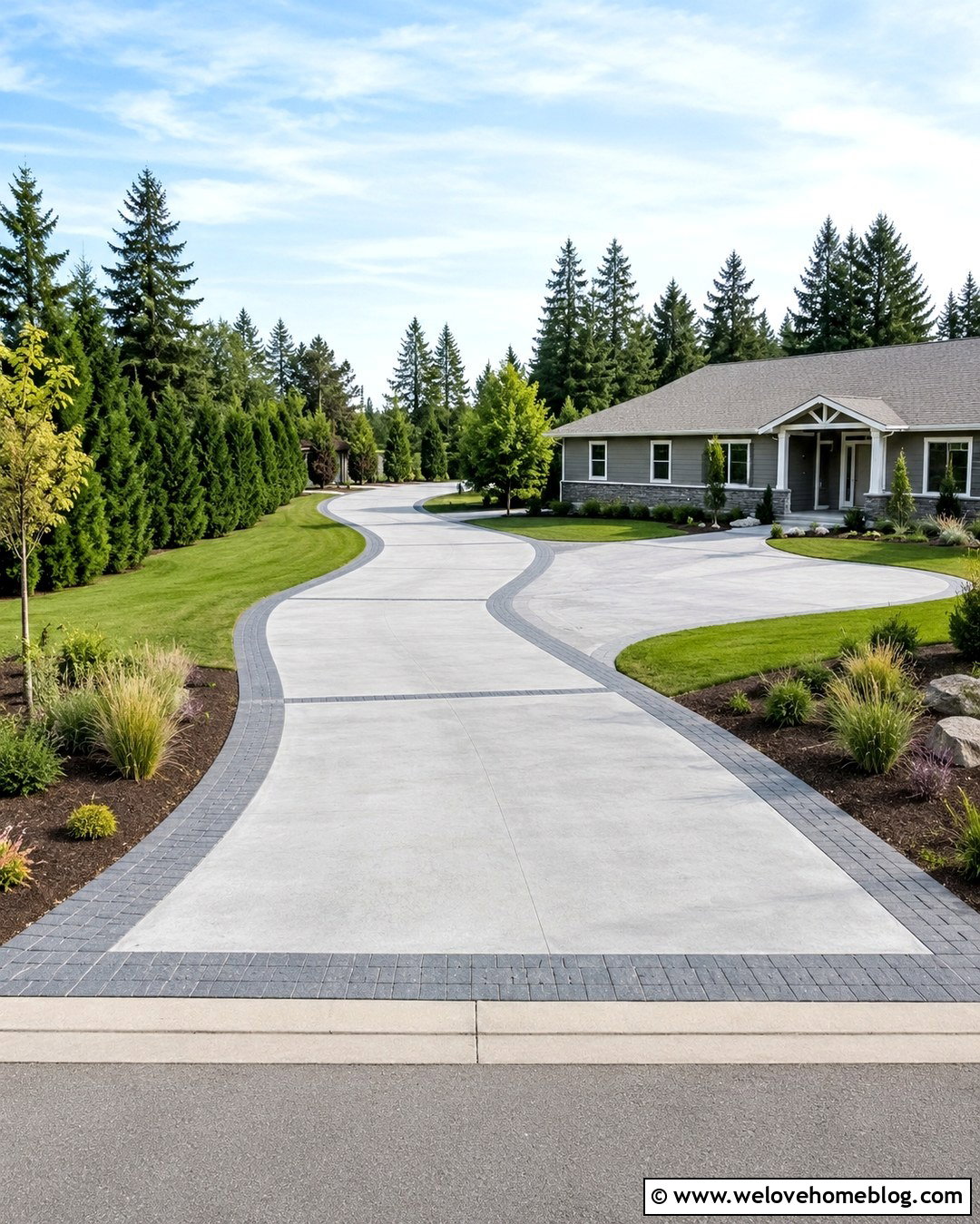
A pull-through driveway designed for an RV or trailer needs open curves, a stable surface, and fewer overhead obstacles. Use reinforced light gray concrete in an elongated loop that runs beside a ranch home and connects back to the street. Widen the route near the side yard to create a dedicated parking pad while preserving a clear lane around it. Flush charcoal paver bands can define the edges without creating tall curbs that interfere with turning. Keep trees, gate posts, roof overhangs, and lighting fixtures away from the vehicle path. Low ornamental grasses and broad lawn areas provide attractive landscaping without narrowing the route. This complete design can accommodate large vehicles while still looking residential, especially when the parking area is screened from the front by a layered evergreen bed.
17. Courtyard Pull Through Driveway
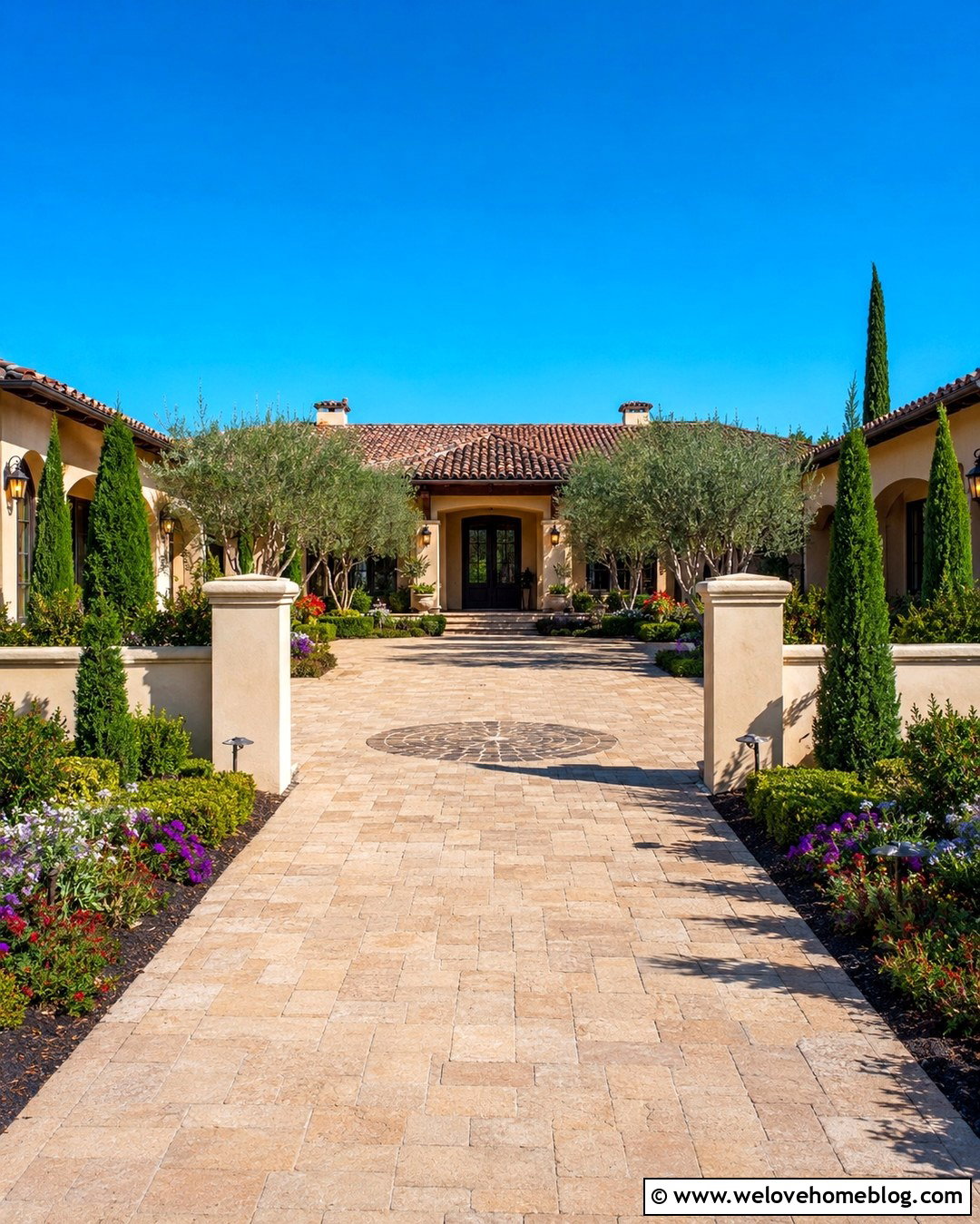
A courtyard pull-through driveway creates a strong connection between the vehicle route and the home’s main entrance. Use sandy limestone pavers in a wide loop that enters through one side of a walled courtyard, passes the front door, and exits through the opposite side. A circular paver medallion can identify the central drop-off point without interrupting traffic. Border the drive with narrow planting beds containing clipped evergreens, flowering perennials, and small citrus-like ornamental trees suited to the local climate. Low stucco walls and square pillars help define the courtyard while preserving visibility. The route works especially well with Spanish, Mediterranean, or Southwestern architecture. Keep permanent parking outside the primary loop so the courtyard remains open, functional, and visually connected to the entrance.
18. Mixed Material Pull Through Driveway
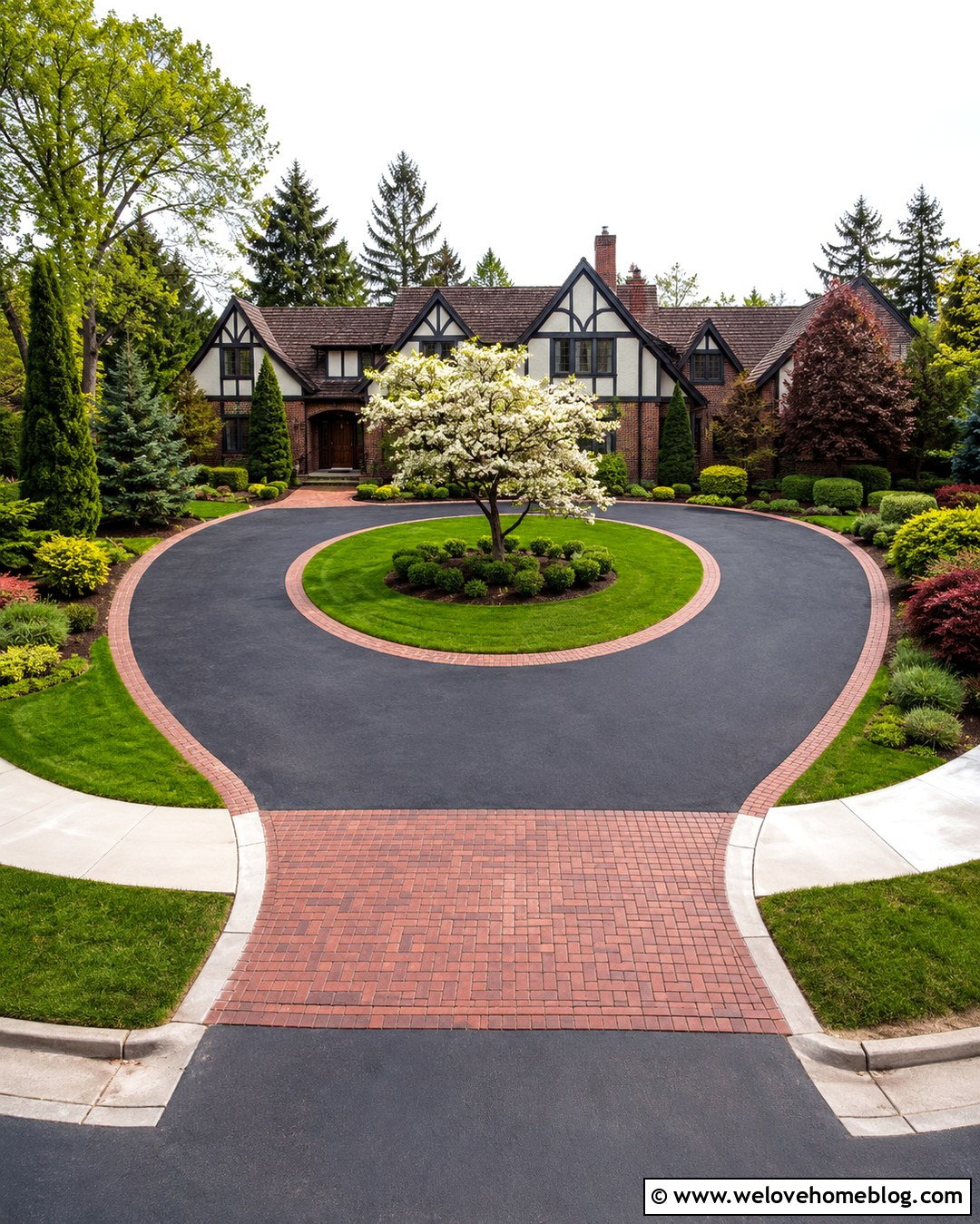
Combining materials helps a large pull-through driveway feel detailed without covering the entire area in expensive decorative paving. Use black asphalt for the main horseshoe route, then add clay brick borders and a brick-paved drop-off apron near the front door. The warm brick draws attention toward the house, while the asphalt creates a smooth, understated background. Place an oval lawn in the center with a flowering tree and layered evergreen shrubs. Matching brick entrance bands can mark both street connections and visually link them to the arrival area. This approach works particularly well with traditional brick, Tudor, and Craftsman homes. Limit the palette to two primary driveway materials and repeat both consistently. Too many unrelated colors or patterns can make the loop appear divided rather than thoughtfully coordinated.
19. Budget Pull Through Driveway
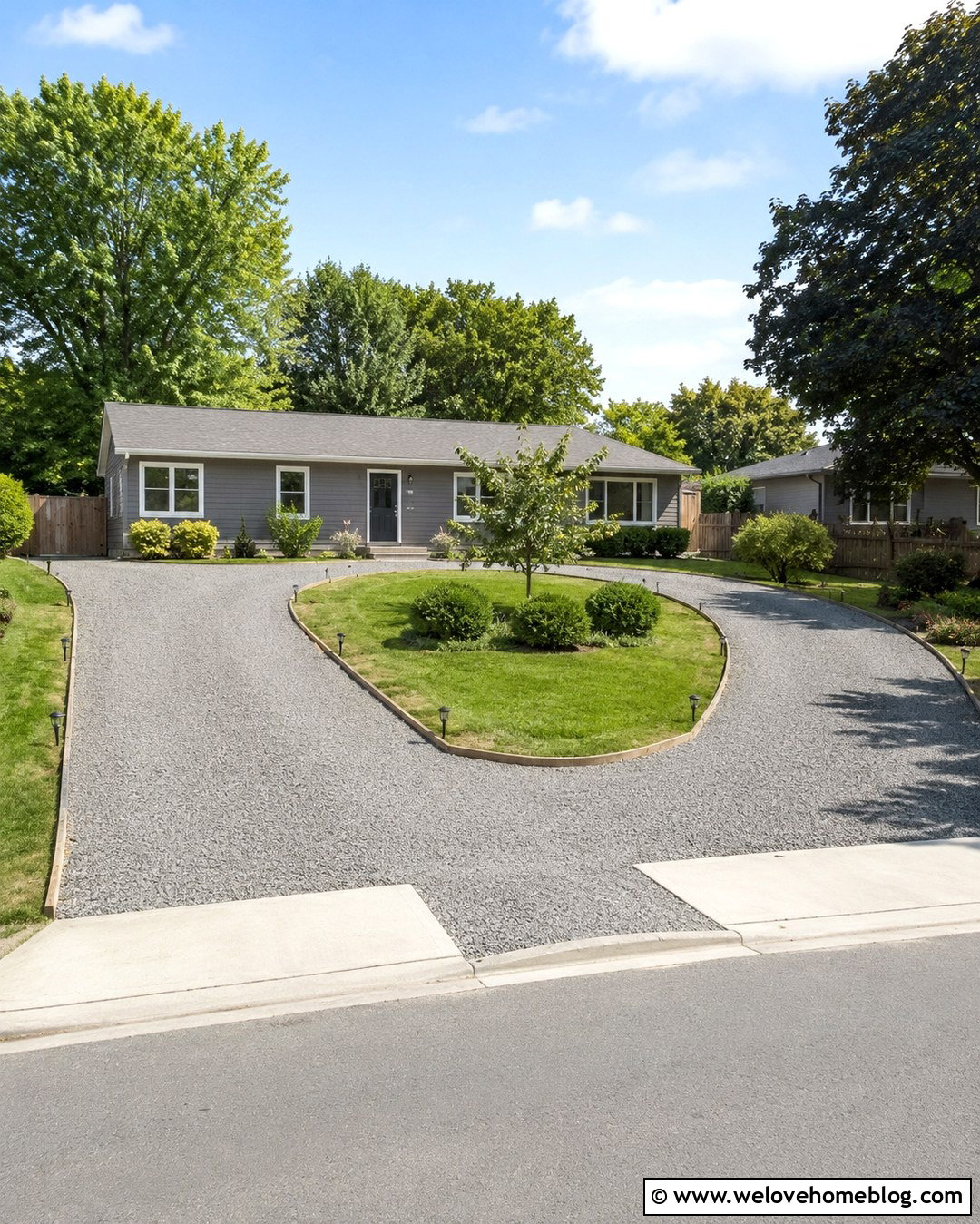
A budget-friendly pull-through driveway can still look finished when its shape and borders are carefully planned. Start with compacted gray crusher-run gravel in a simple horseshoe layout with broad, uncomplicated curves. Pressure-treated timber edging can contain the stone along planting beds, while a short concrete apron at each street opening protects the highest-traffic transition points. Preserve an existing lawn as the center island instead of adding an elaborate new garden. A few grouped shrubs and one small tree can provide enough structure without increasing maintenance costs. Solar-style fixtures may mark the route, although permanent wired lighting usually gives a more consistent appearance. Investing first in excavation, base preparation, grading, and drainage creates a stronger foundation. Decorative pillars, upgraded edging, or additional planting can be added later.
20. Landscaped Pull Through Driveway
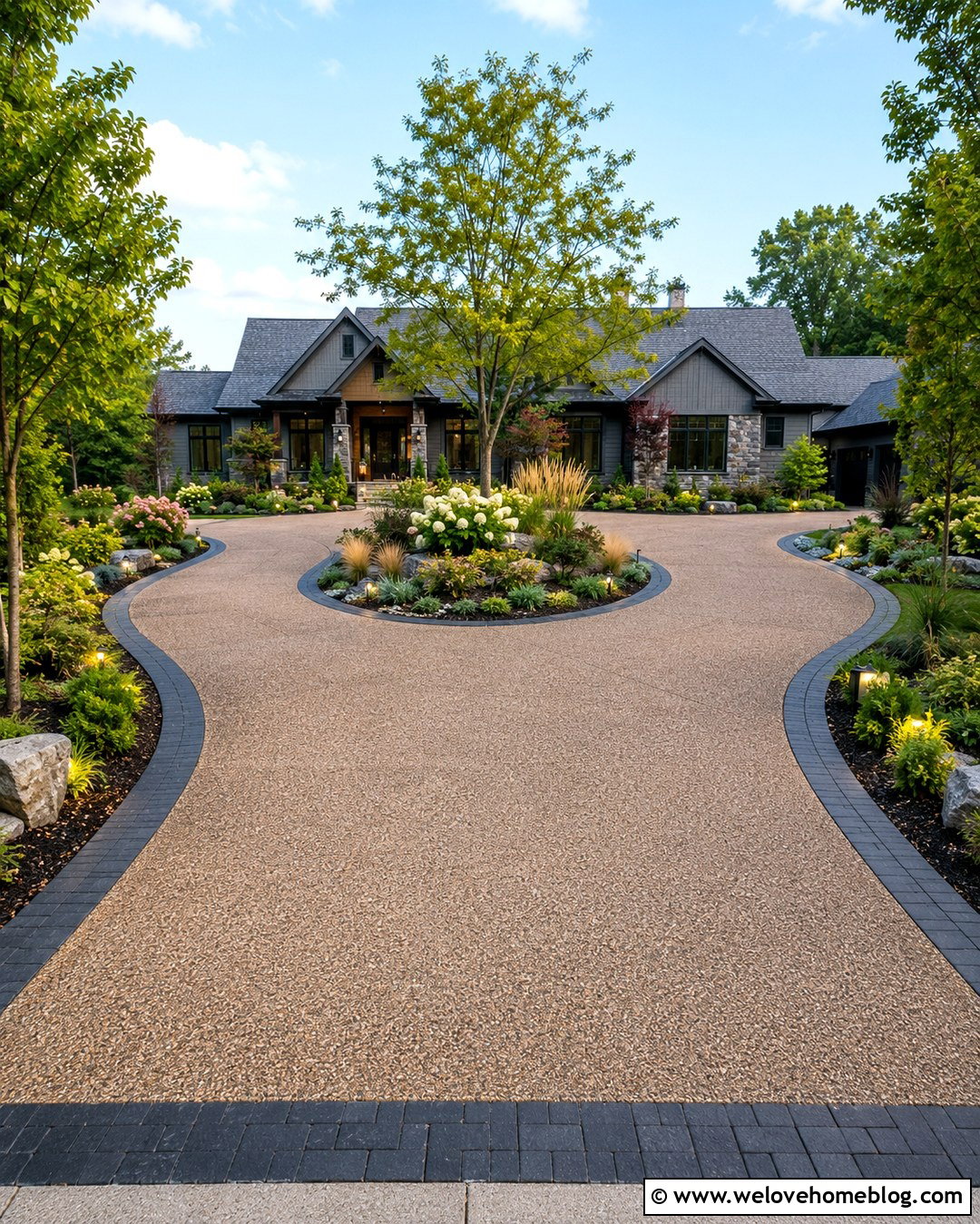
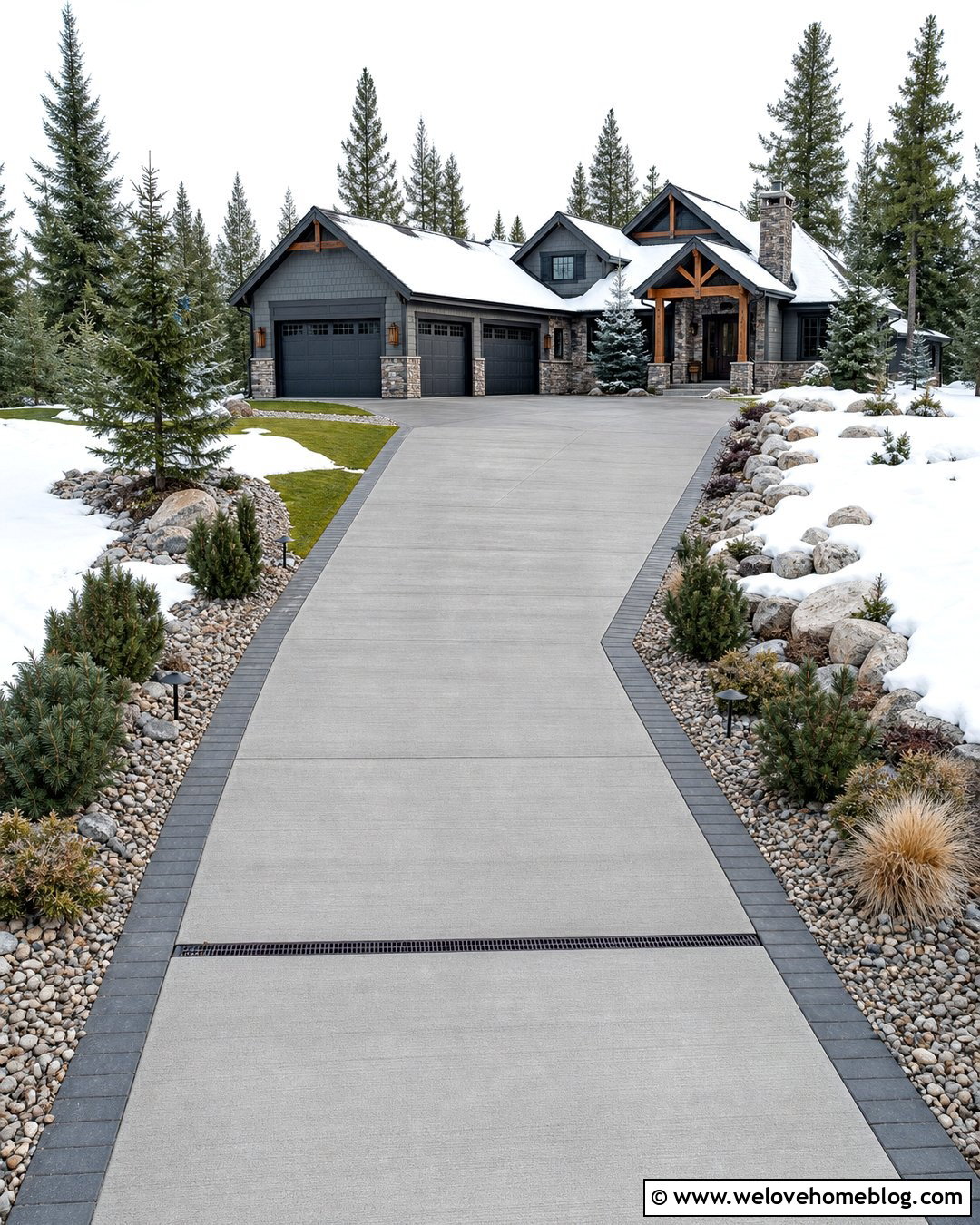
A fully landscaped pull-through driveway should make the surface, route, and planting feel like one coordinated front-yard design. Use warm exposed-aggregate concrete in a graceful horseshoe shape with a dark cobblestone border. Fill the center island with a layered arrangement of one canopy tree, flowering shrubs, ornamental grasses, and low groundcover. Repeat smaller groups of the same plants near the two street openings to visually connect the entire composition. Keep tall growth away from sightlines and leave a clear pedestrian route from the inner curve to the front door. Add discreet lighting at bends, borders, and walkway intersections. Before construction, verify local rules for curb cuts, drainage, street access, and required permits because requirements can differ by location. ()
Conclusion:
The best **20 Pull Through Driveway Ideas** balance convenient circulation with a design that complements the house and surrounding yard. Gravel can create a relaxed rural approach, while concrete, brick, cobblestone, resin-bound gravel, and pavers deliver more defined finishes. Whatever material you choose, treat the driveway as one complete landscape. Coordinate its shape, borders, planting, walkways, gates, lighting, and parking areas from the beginning. Leave comfortable curves, protect sightlines, and keep stopped vehicles from blocking the driving route. Proper grading, drainage, and base preparation are equally important. With thoughtful planning and local approval, a pull-through layout can make everyday arrivals safer, simpler, and far more attractive.

Related posts:

Leave a Reply