
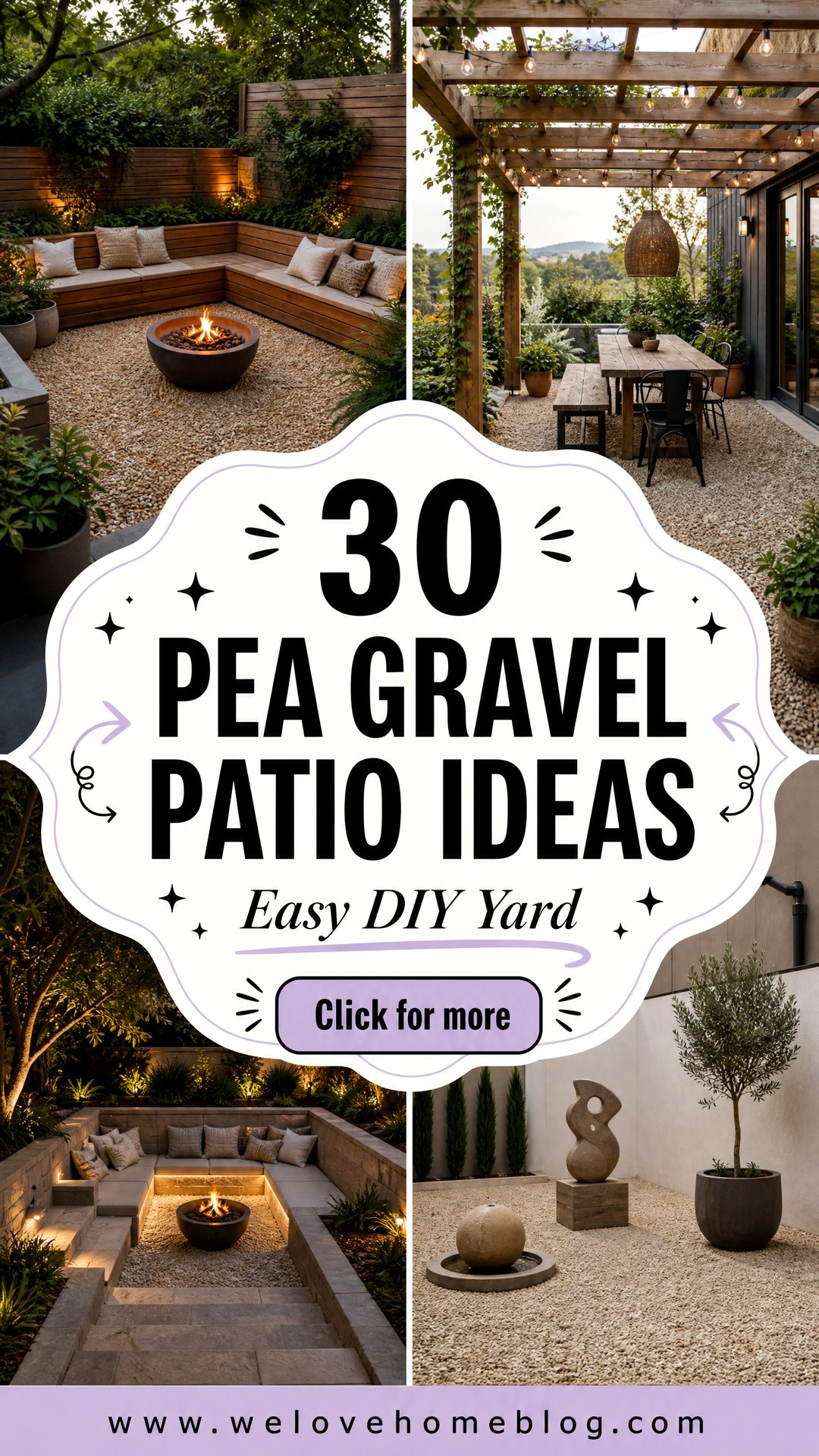
Pea gravel patios offer a charming, affordable, and low-maintenance alternative to traditional pavers or concrete. This versatile material complements a wide range of styles, from rustic country gardens to sleek modern landscapes. Its natural look and satisfying crunch underfoot create a relaxed and inviting outdoor space. Whether you are looking to create a cozy seating area, a functional dining space, or a winding garden path, pea gravel provides a flexible and attractive foundation. With a bit of creativity, you can easily transform your backyard into a beautiful and practical retreat using this simple yet elegant material.
1. Pea Gravel Patio with a Flagstone Pathway
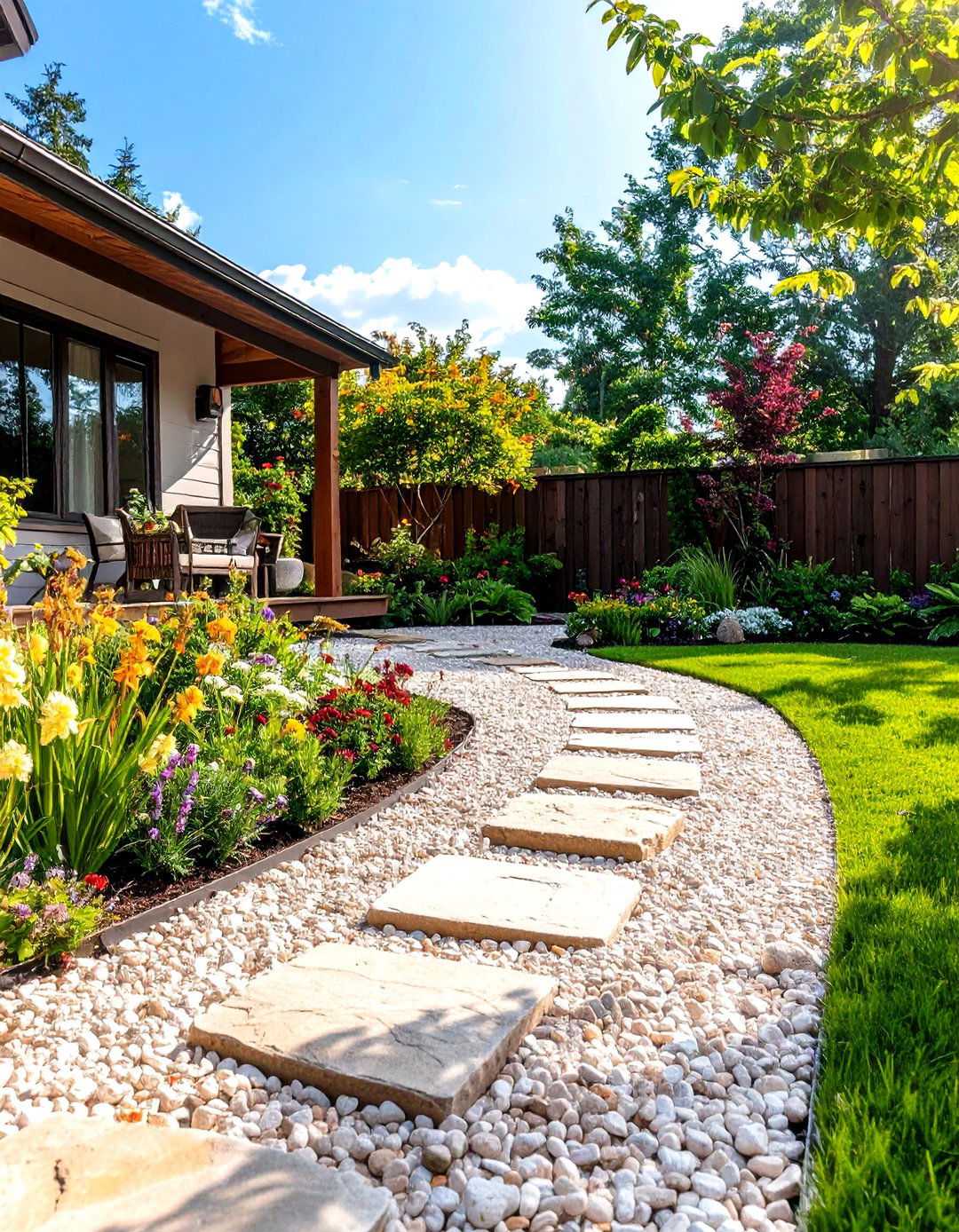
Integrating a flagstone pathway through your pea gravel patio creates a stunning visual contrast and a solid surface for walking. The irregular shapes and earthy tones of the flagstones break up the uniformity of the small pebbles, adding texture and interest. This design is not only beautiful but also practical, providing a stable walkway that prevents furniture from sinking and keeps shoes cleaner. To achieve this look, lay the flagstones first, ensuring they are level, and then fill the surrounding area with a generous layer of pea gravel, creating a seamless transition between the two materials for a polished, professional finish.
2. Circular Pea Gravel Patio with a Fire Pit
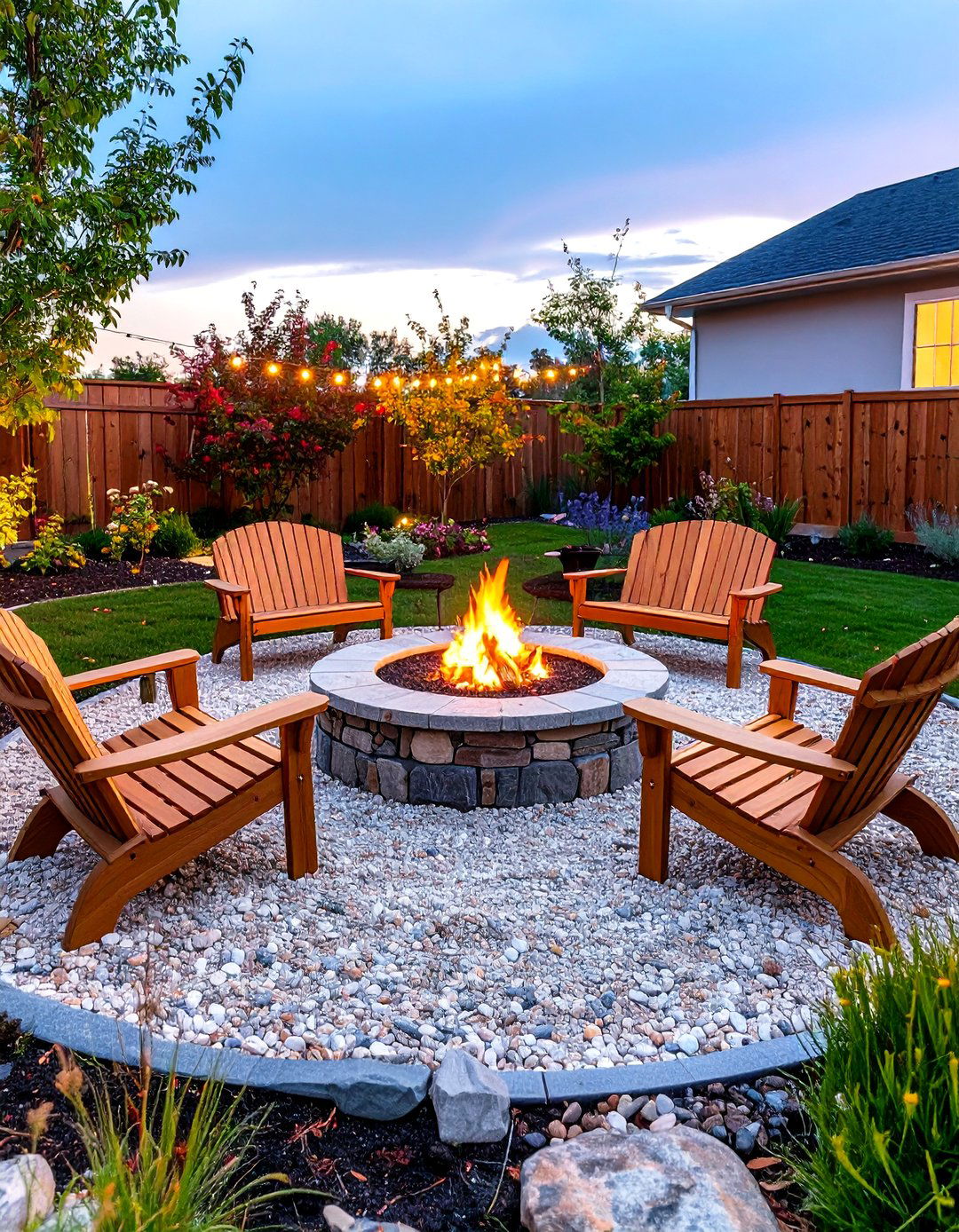
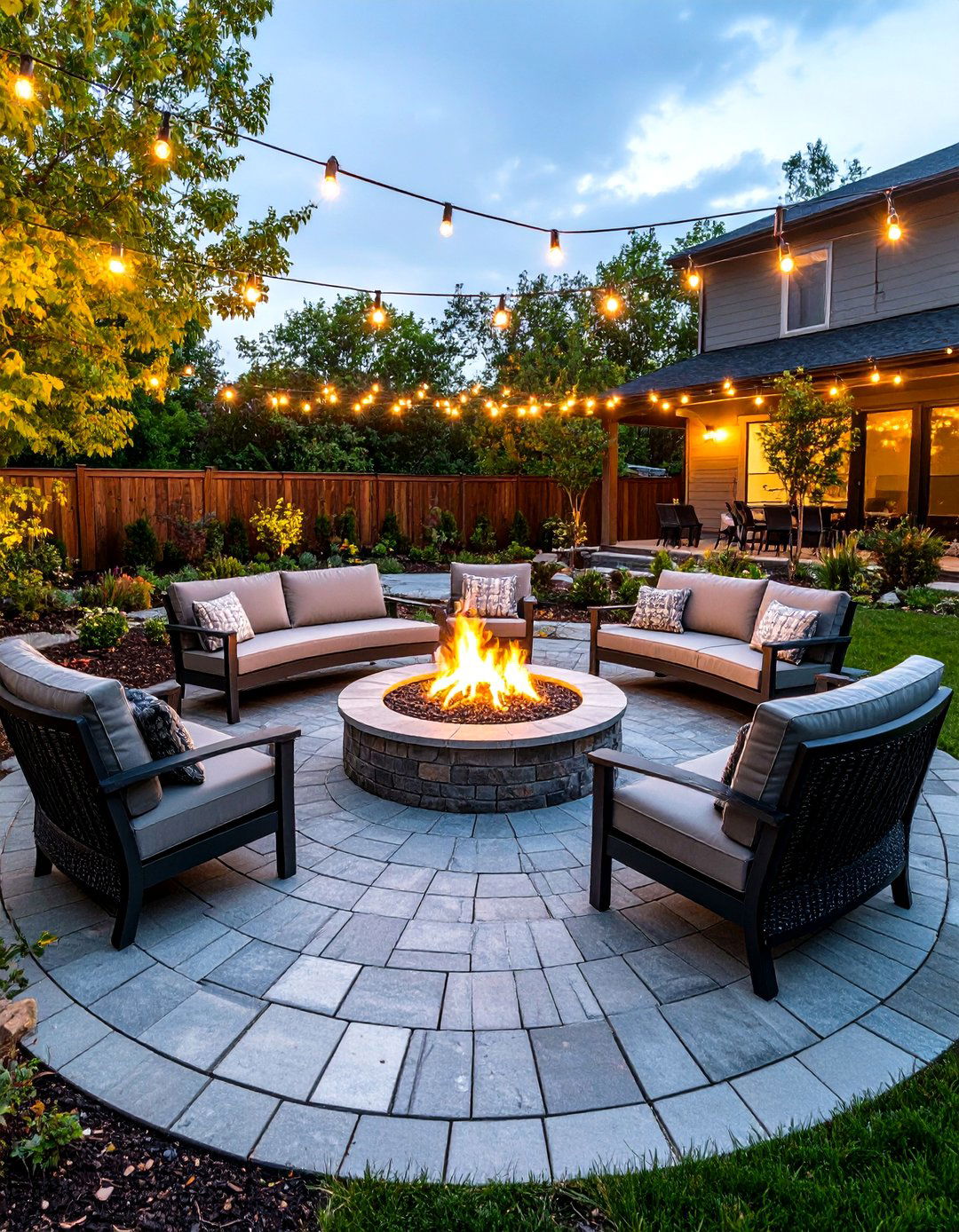
A circular pea gravel patio with a central fire pit creates an inviting focal point for evening gatherings. This design naturally encourages conversation and social interaction as guests gather around the warmth of the fire. The circle shape softens the landscape and can be easily defined with a border of bricks, stones, or flexible metal edging. This keeps the gravel contained and provides a clean, finished look. The pea gravel itself is a safe, non-combustible material to surround a fire feature, making this a smart and stylish choice for any backyard looking to add a cozy and functional entertainment area.
3. Modern Pea Gravel Patio with Concrete Pavers
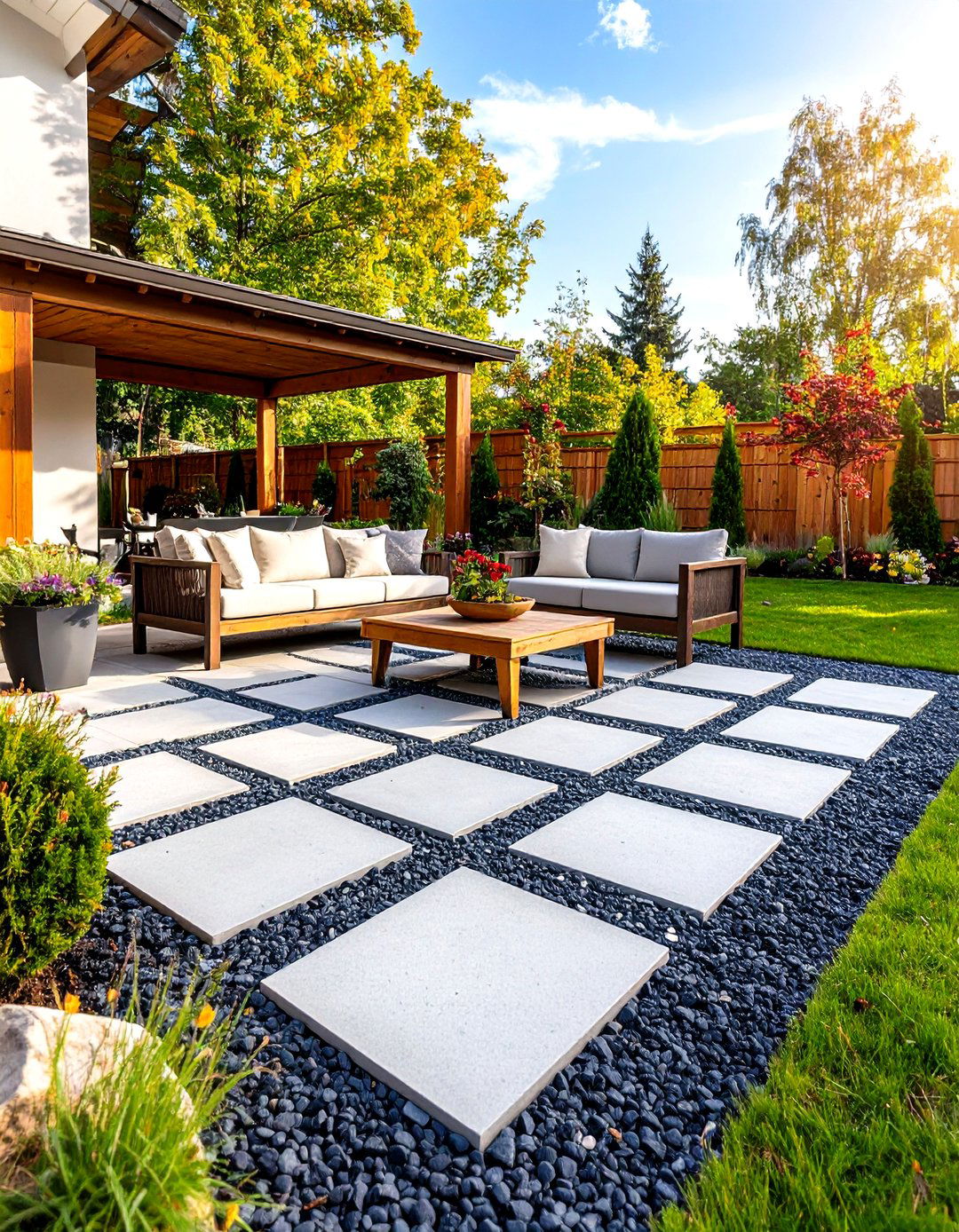
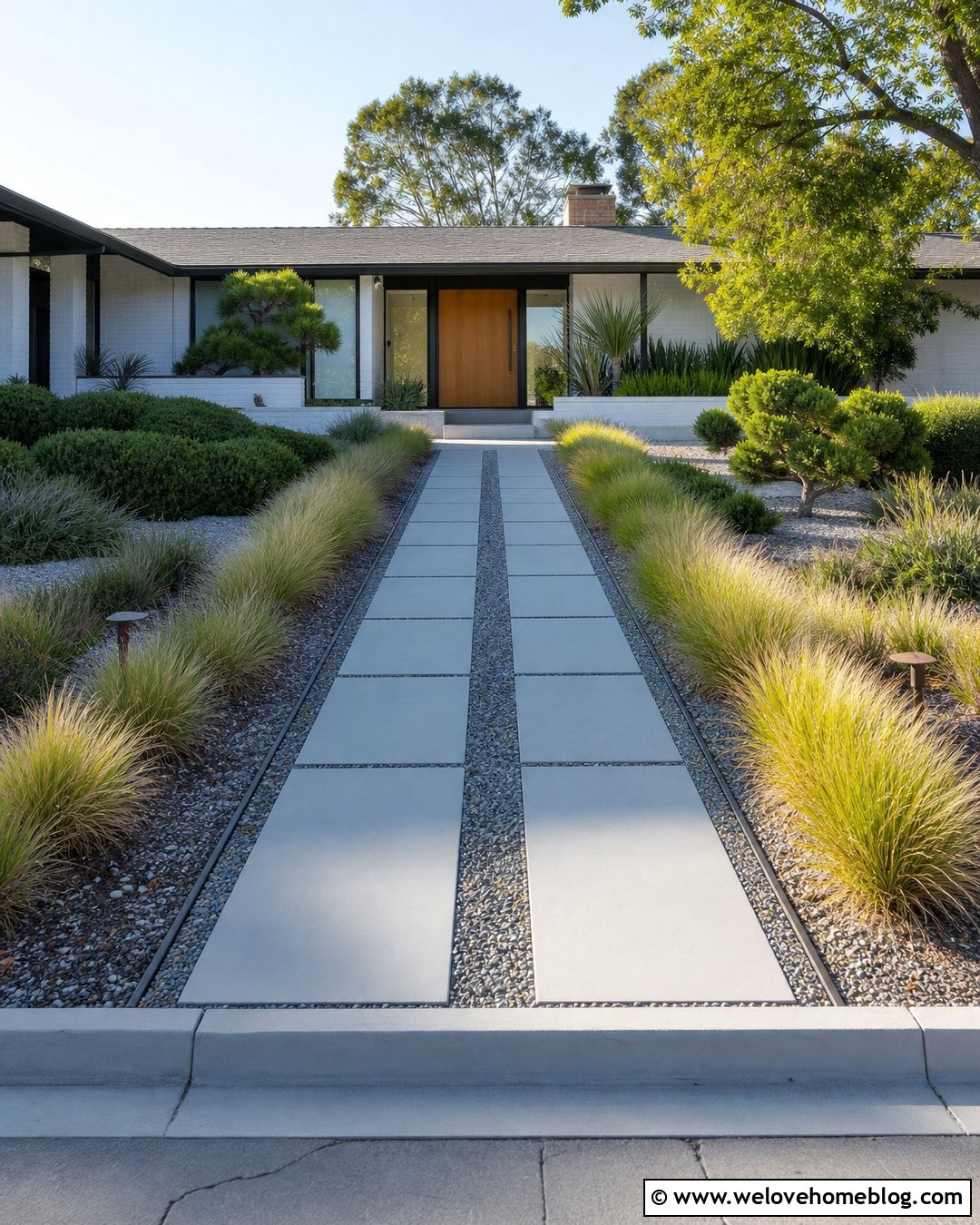
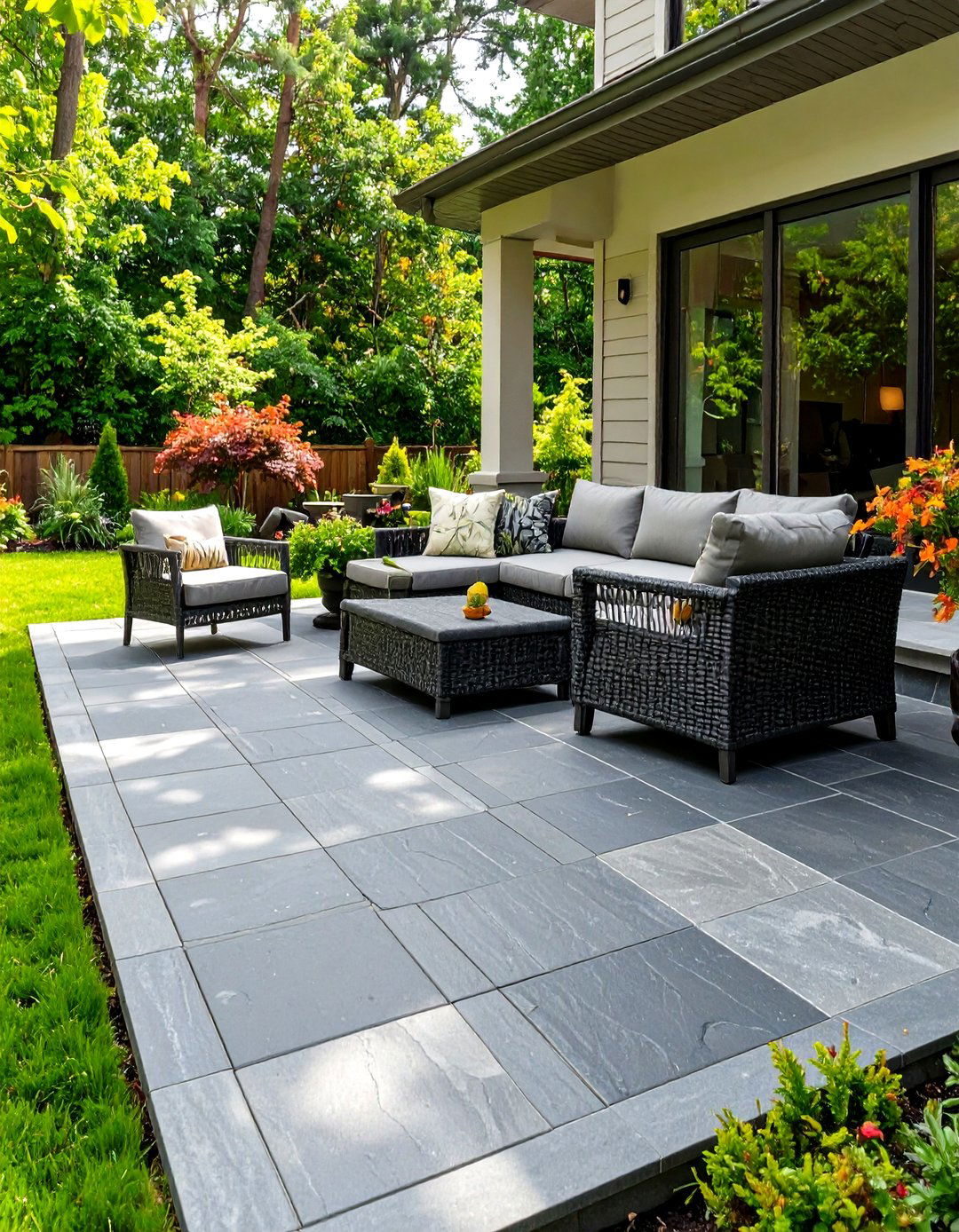
For a clean, contemporary look, combine pea gravel with large-format concrete pavers. This design creates a striking geometric pattern and a sophisticated blend of textures. The smooth, minimalist look of the concrete slabs contrasts beautifully with the fine, organic texture of the pea gravel. You can arrange the pavers in a grid pattern to create a spacious, modern patio floor, leaving uniform gaps to be filled with the gravel. This approach is not only visually appealing but also helps with drainage and reduces the overall cost compared to a fully paved surface, offering a high-end look on a budget.
4. Pea Gravel Patio with Built-In Wooden Benches
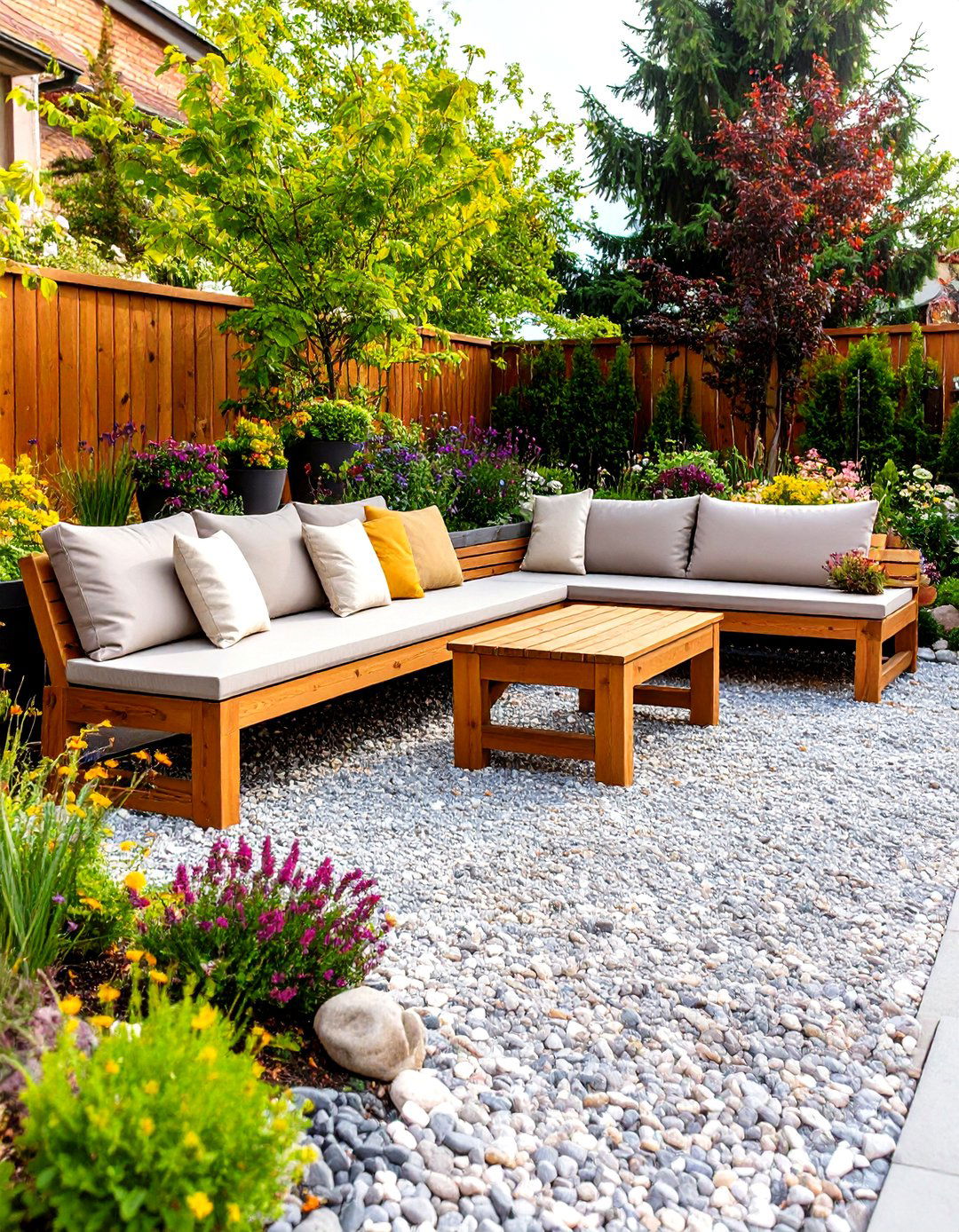
Incorporating built-in wooden benches around the perimeter of your pea gravel patio adds permanent seating and defines the space with a warm, natural element. This functional design feature maximizes seating without cluttering the area with movable furniture. The wood’s texture and color provide a beautiful contrast to the fine-grained gravel. Consider L-shaped or curved benches to soften the edges and create a more intimate, conversational nook. This idea works exceptionally well in smaller backyards where efficient use of space is key, providing a stylish and practical solution for outdoor living and entertaining.
5. Pea Gravel Patio with a Water Feature
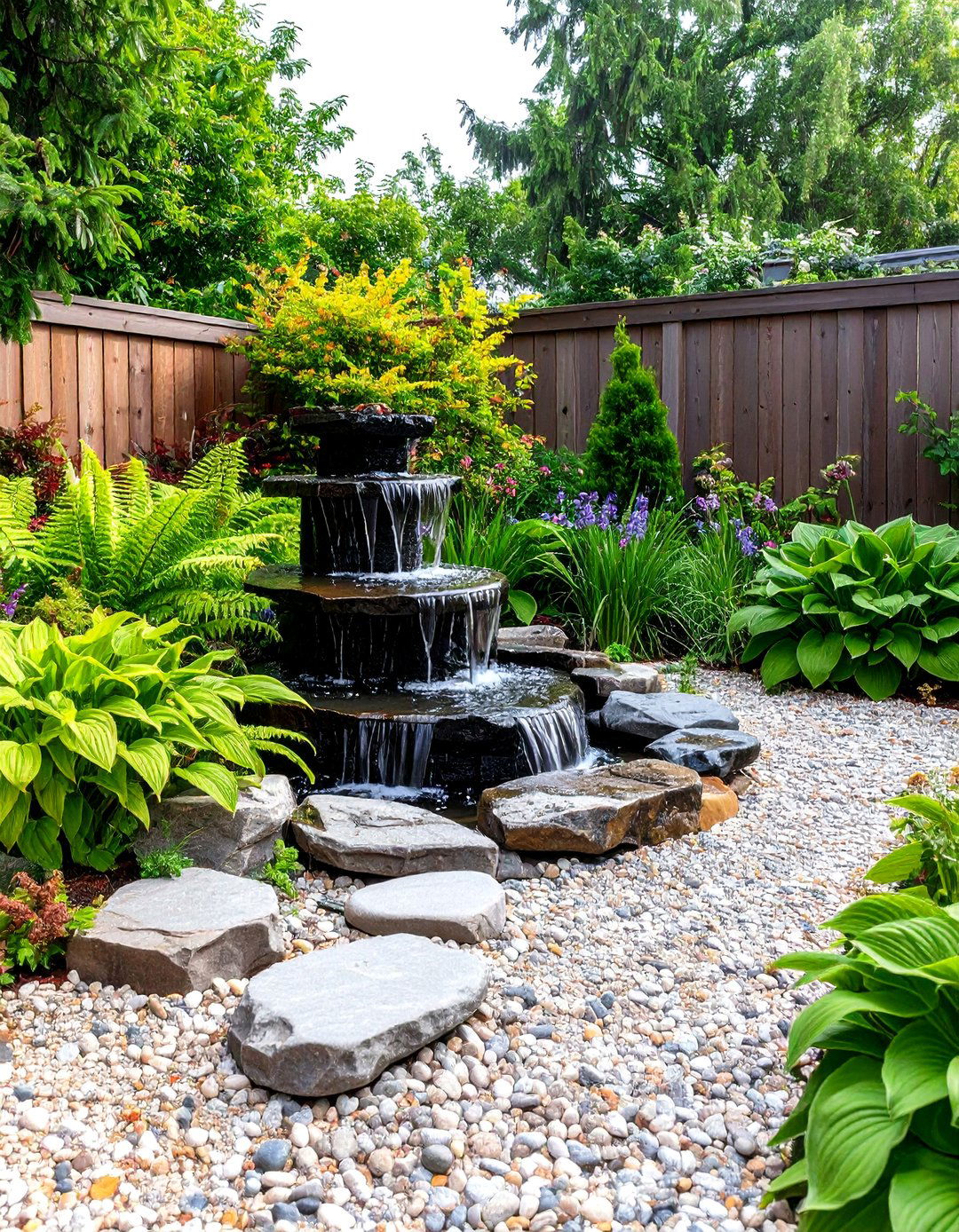
Adding a water feature, such as a small fountain or a bubbling rock, can transform your pea gravel patio into a tranquil oasis. The soothing sound of trickling water masks neighborhood noise and creates a serene atmosphere for relaxation. Pea gravel is an excellent base for a water feature, as it allows for good drainage and complements the natural look of stone or ceramic fountains. Placing the feature in a central or corner location can create a stunning focal point. Surrounded by the soft texture of the gravel, a water feature elevates the sensory experience of your outdoor space.
6. Layered Pea Gravel Patio on a Slope
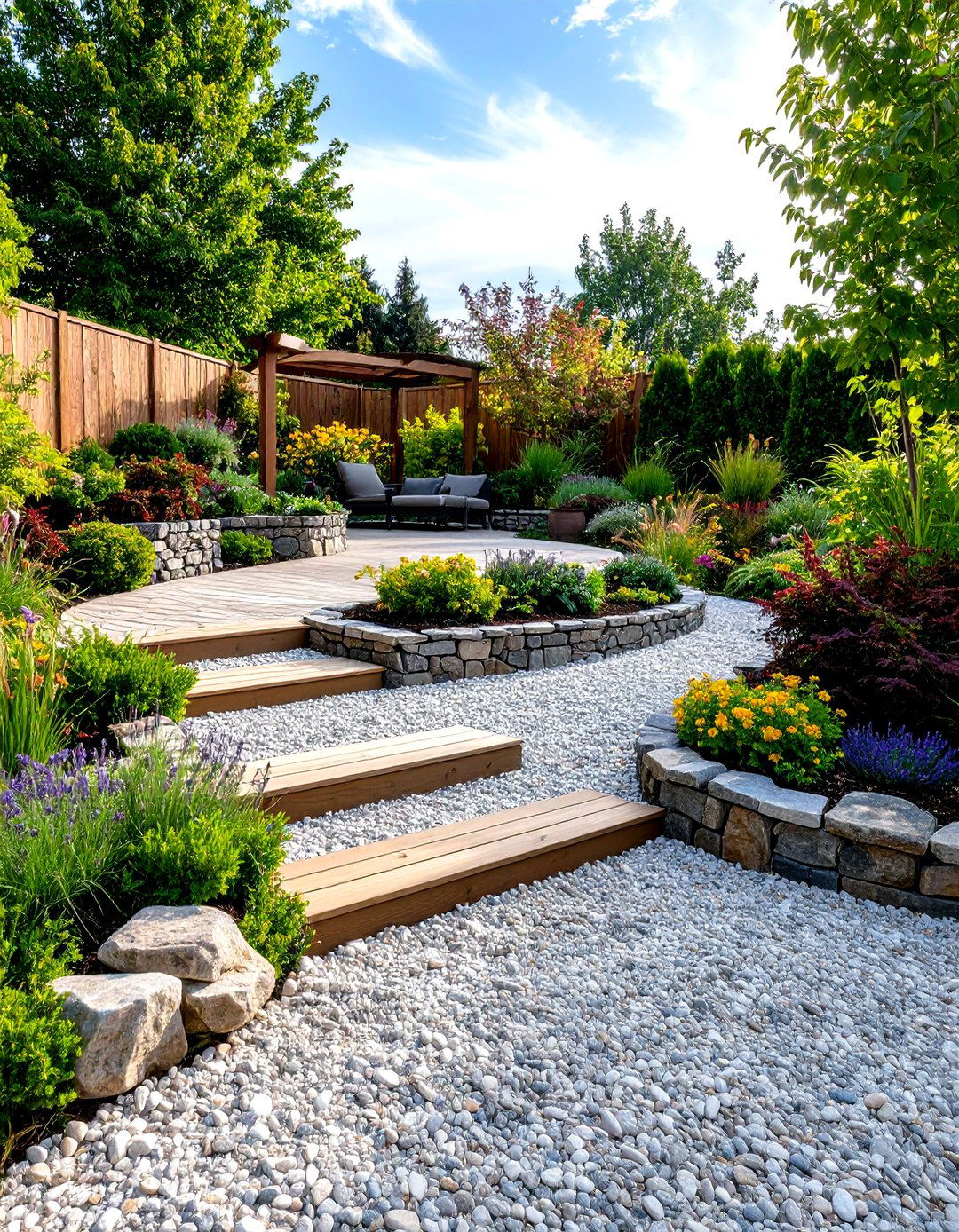
If your backyard has a slope, a layered or terraced pea gravel patio can turn a challenging landscape into a stunning feature. By creating multiple levels connected by stone or wooden steps, you can establish distinct functional zones, such as a dining area on one level and a lounge space on another. Retaining walls made of timber, stone, or corten steel are essential for holding back the soil and containing the gravel on each tier. This design not only solves erosion issues but also adds incredible visual depth and dimension to your garden, making the space more dynamic and usable.
7. Pea Gravel Patio with Corten Steel Edging
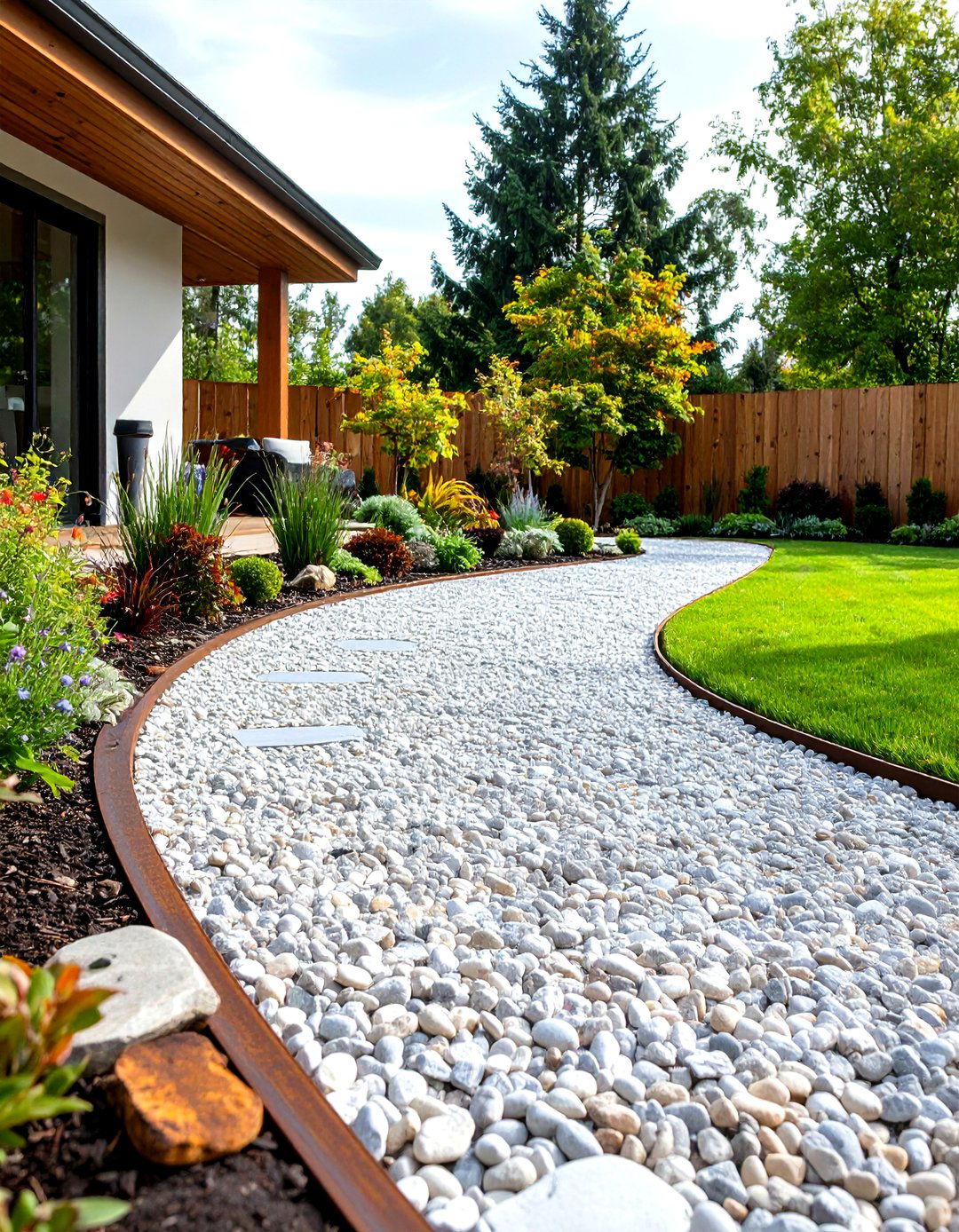
Using corten steel edging to contain your pea gravel patio delivers a sharp, modern aesthetic with an industrial-rustic charm. The steel naturally develops a stable, rust-like patina over time, which contrasts beautifully against the soft, muted tones of the pea gravel. This durable edging creates clean lines and distinct separation between the patio and surrounding garden beds or lawn. It is flexible enough to form straight lines or gentle curves, allowing for creative and precise design. This combination of materials is perfect for a low-maintenance, contemporary landscape that feels both structured and organic.
8. Mediterranean-Inspired Pea Gravel Courtyard
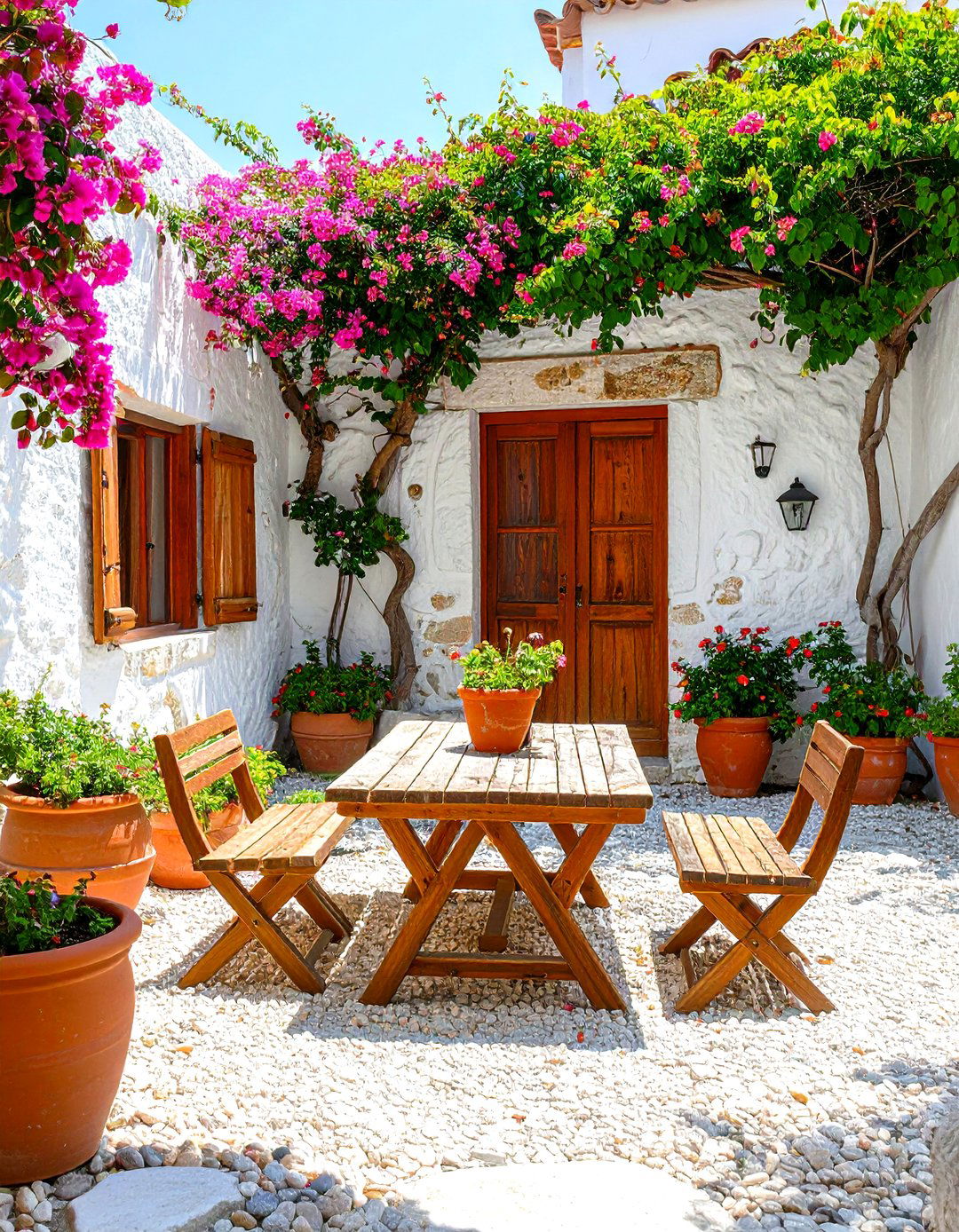
Capture the essence of a Mediterranean villa by creating a sun-drenched pea gravel courtyard. This style often features warm-toned gravel, terracotta pots overflowing with vibrant bougainvillea and fragrant herbs, and rustic wooden furniture. A simple bistro set or a long wooden table is perfect for alfresco dining. Consider adding a stucco wall or a wooden pergola draped with climbing vines to enhance the theme. The pea gravel provides the perfect neutral, textured base that evokes the relaxed, sun-baked landscapes of Southern Europe, creating a timeless and romantic outdoor retreat.
9. Pea Gravel Patio Framed by Ornamental Grasses
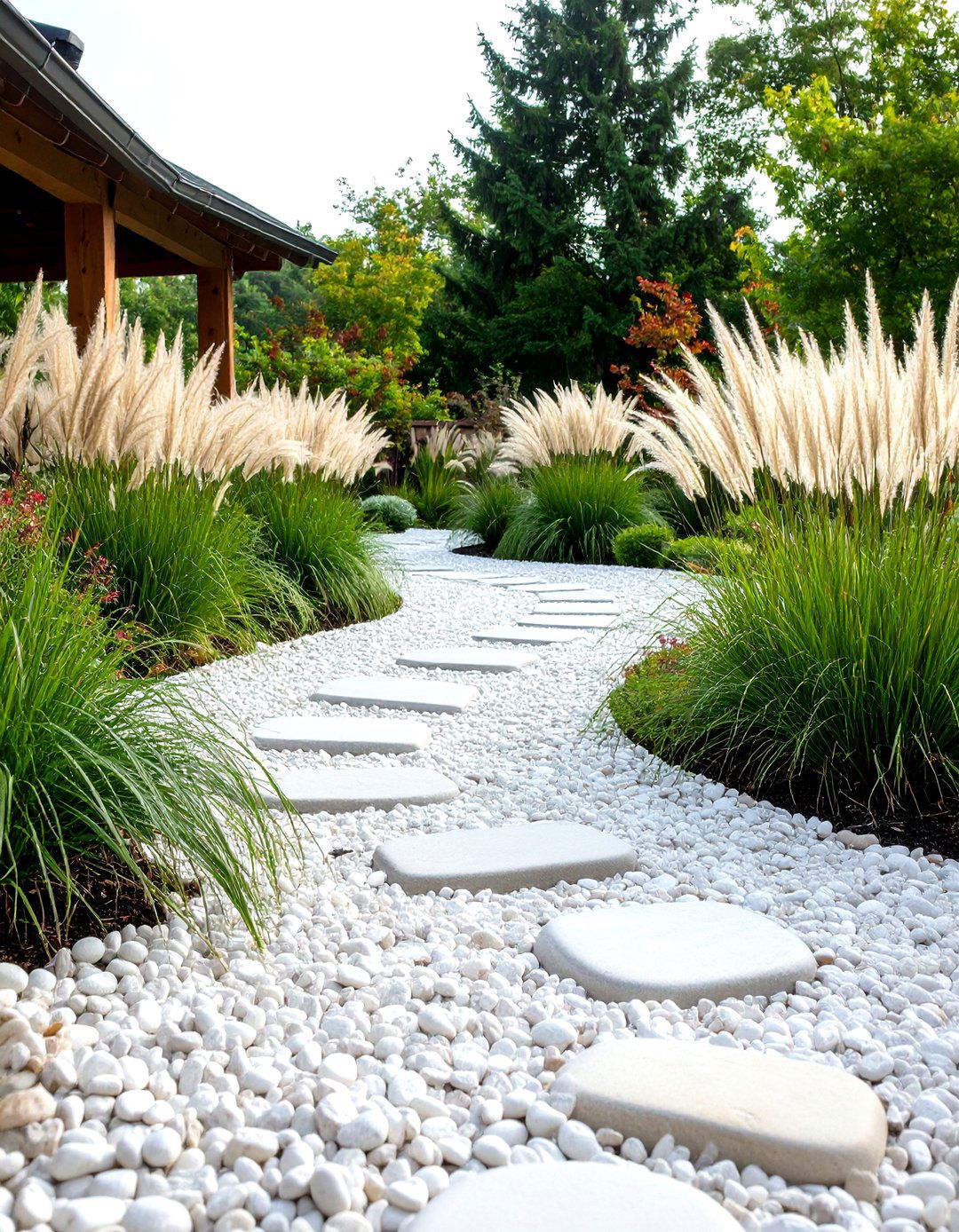
Framing your pea gravel patio with borders of ornamental grasses creates a soft, natural, and low-maintenance edge. The graceful movement and varied textures of grasses like fountain grass, miscanthus, or blue fescue add a dynamic, living element to the patio's perimeter. This design choice softens the hard lines of the patio and helps it blend seamlessly into the surrounding garden. In the breeze, the grasses create gentle sound and motion, enhancing the tranquil atmosphere. This approach is perfect for a relaxed, prairie-style or coastal-inspired garden, offering year-round interest with minimal upkeep.
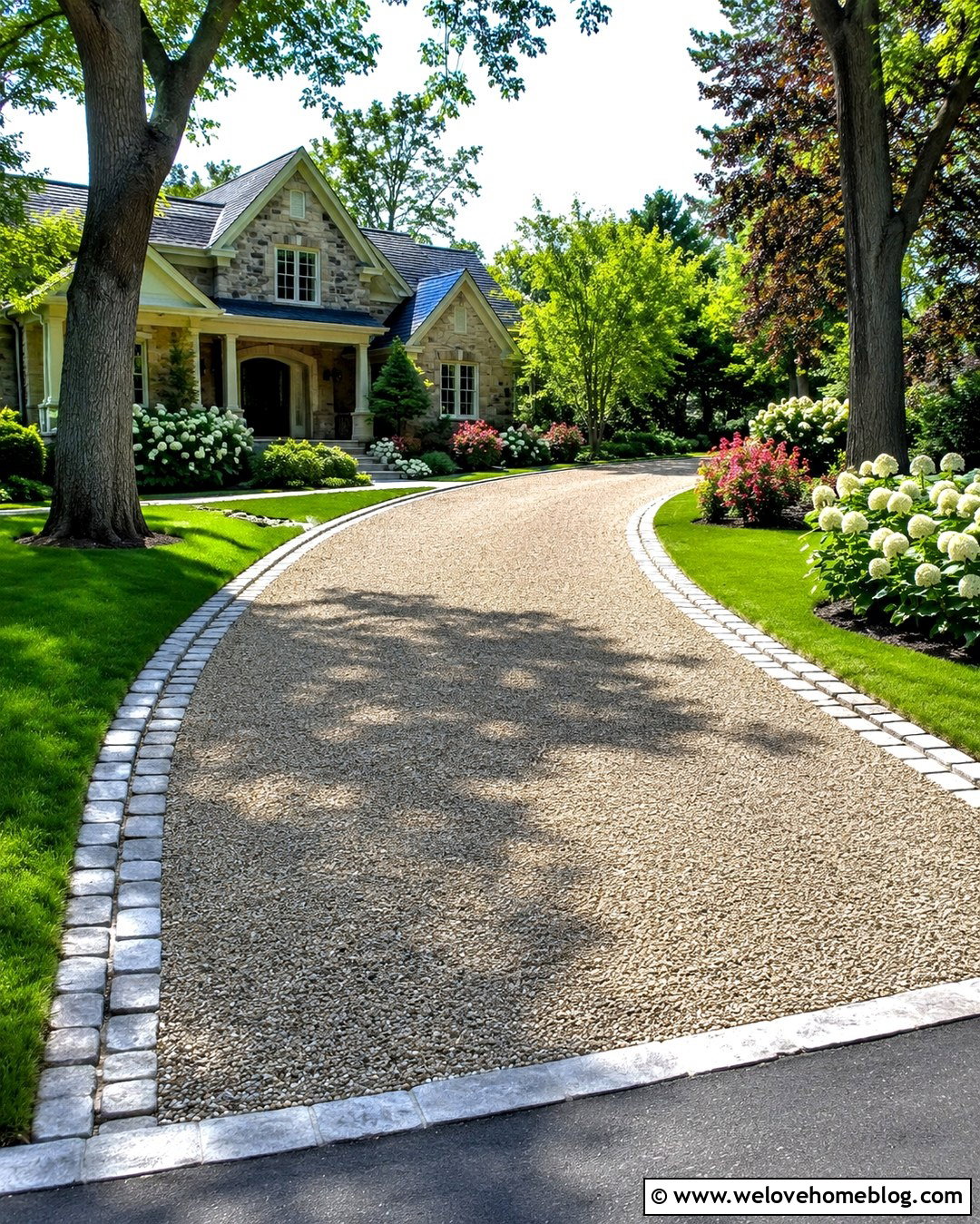
10. Pea Gravel Patio with an Outdoor Kitchen
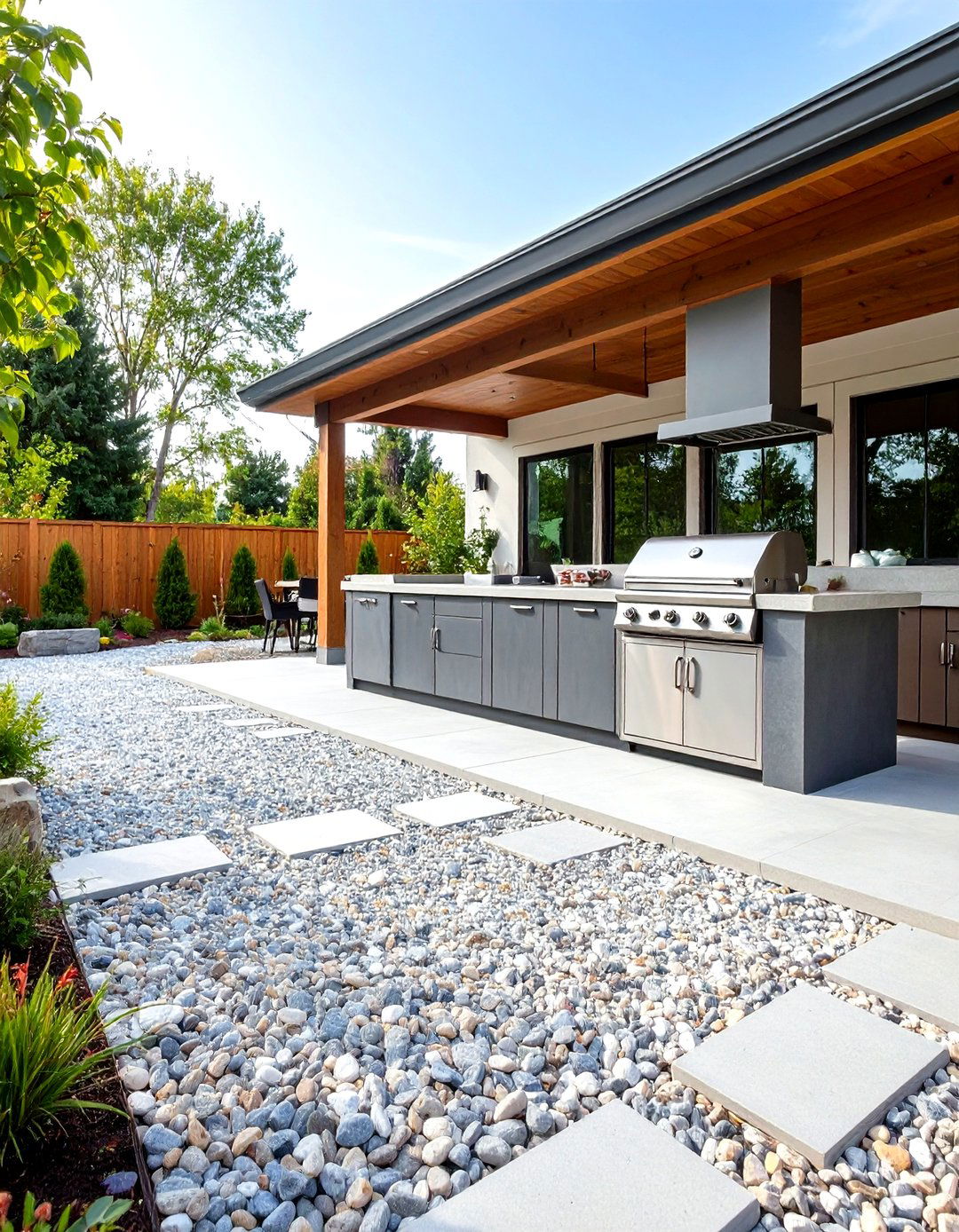
Designate a section of your backyard for an outdoor kitchen set on a pea gravel base. This informal yet practical surface is a great choice for a grilling and food prep area. The gravel is easy to install and provides excellent drainage. To create a more stable surface for appliances and foot traffic, you can embed larger stepping stones or concrete pads where the grill and countertops will be placed. Surrounded by the gravel, a stainless steel grill, wooden countertops, and some simple shelving can create a functional and stylish outdoor culinary space perfect for summer cookouts and entertaining.
11. Pea Gravel Patio Under a Pergola
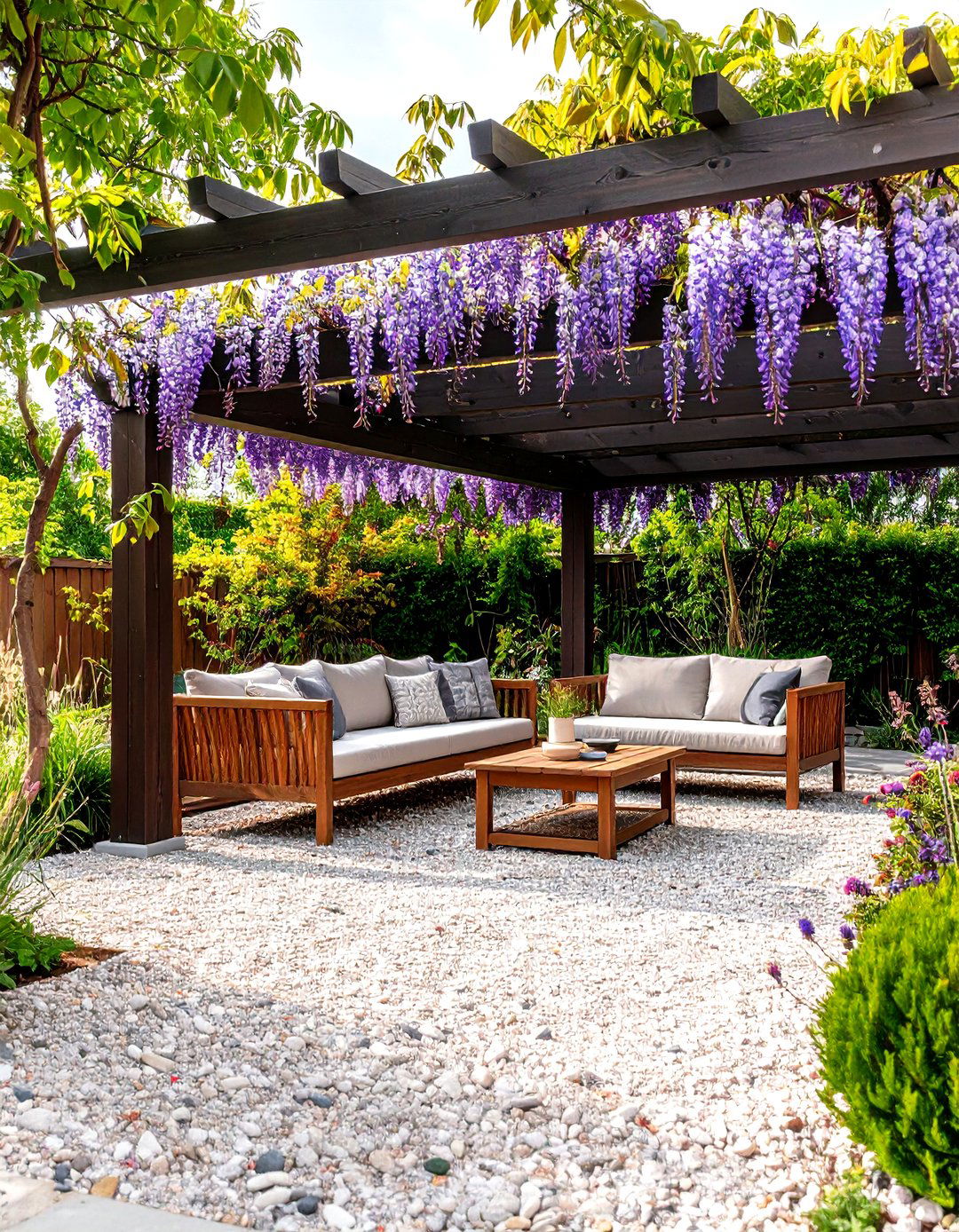
Placing your pea gravel patio beneath a wooden pergola instantly creates a defined outdoor room. The structure adds vertical interest and provides a framework for shade and ambiance. You can grow climbing plants like wisteria, grapes, or climbing roses up the posts and across the beams to create a lush, natural canopy. Alternatively, fabric sails can be attached for more immediate shade. The combination of the rustic pergola and the textured gravel floor creates a charming and comfortable space for dining or lounging, protected from the harsh sun while still feeling open and connected to the garden.
12. Checkerboard Pea Gravel and Grass Patio
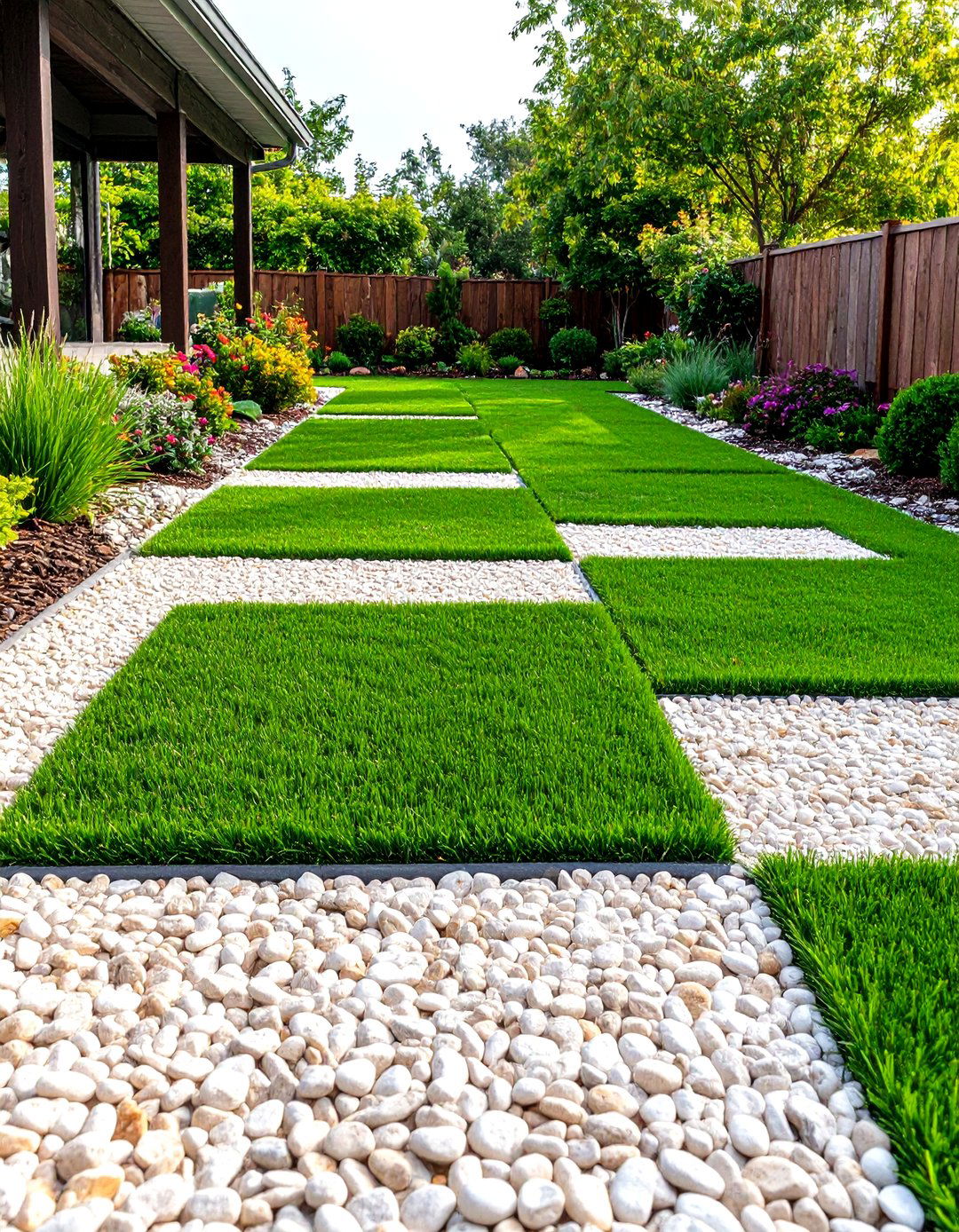
For a playful and visually interesting design, create a checkerboard pattern using pea gravel and squares of turf. This living patio floor combines the softness of grass with the texture and drainage of gravel. Use a grid of timber or metal edging to keep the materials separate and the lines crisp. This design is great for areas that receive moderate foot traffic and adds a unique, graphic element to the landscape. It’s a creative way to break up a large expanse and introduce more greenery into your hardscaping, resulting in a patio that feels both structured and lush.
13. Japanese Zen Garden with Raked Pea Gravel
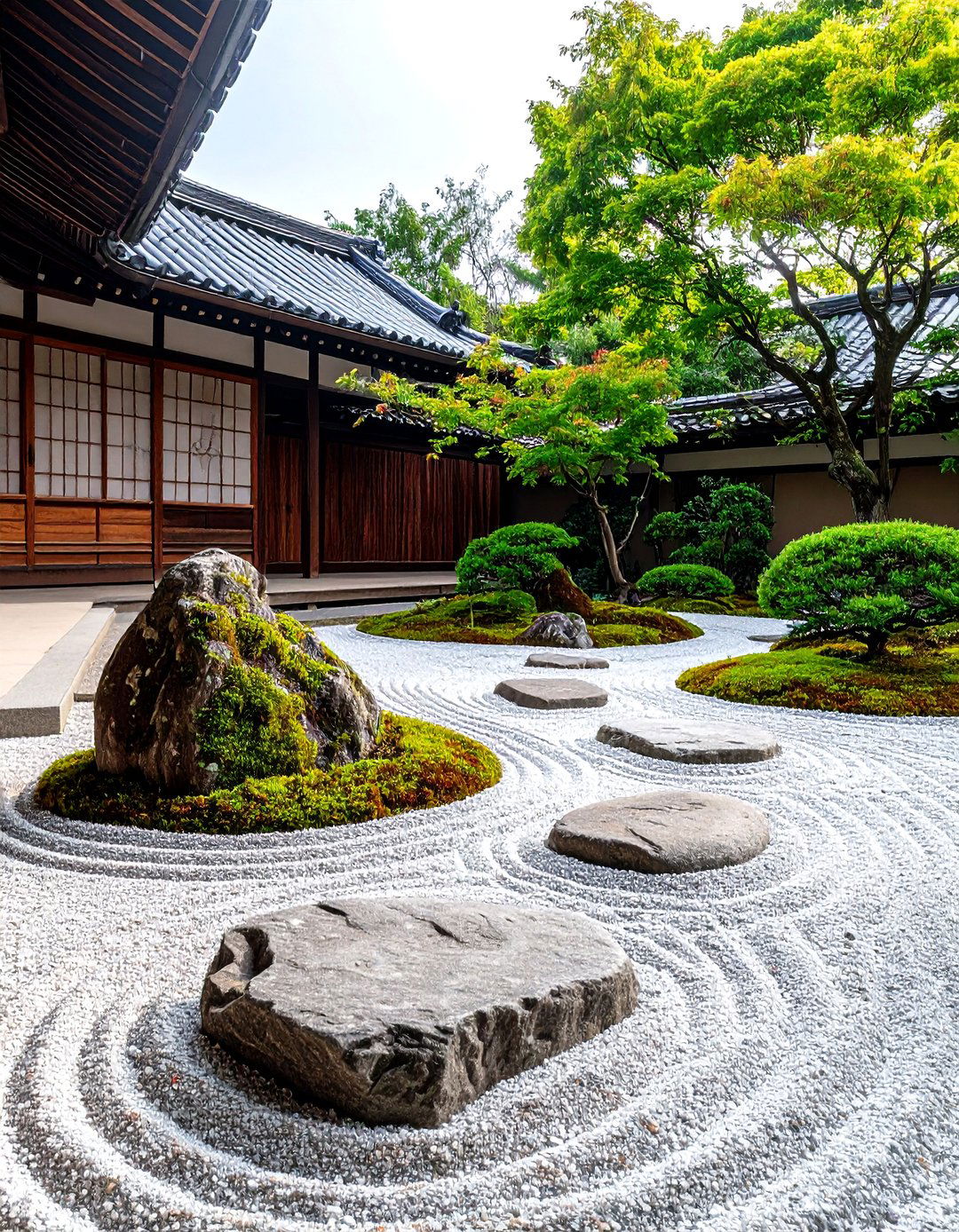
Transform your patio space into a serene Japanese Zen garden using fine, light-colored pea gravel. In this design, the gravel represents water and is raked into patterns like ripples or waves to encourage contemplation and tranquility. Carefully placed boulders represent islands, and minimalist plantings such as moss, bamboo, or a single Japanese maple complete the scene. The focus is on simplicity, natural materials, and creating a peaceful retreat. This style is ideal for small, enclosed spaces where you want to create a sense of calm and a strong connection to nature through mindful design.
14. Pea Gravel Patio with Integrated Garden Beds
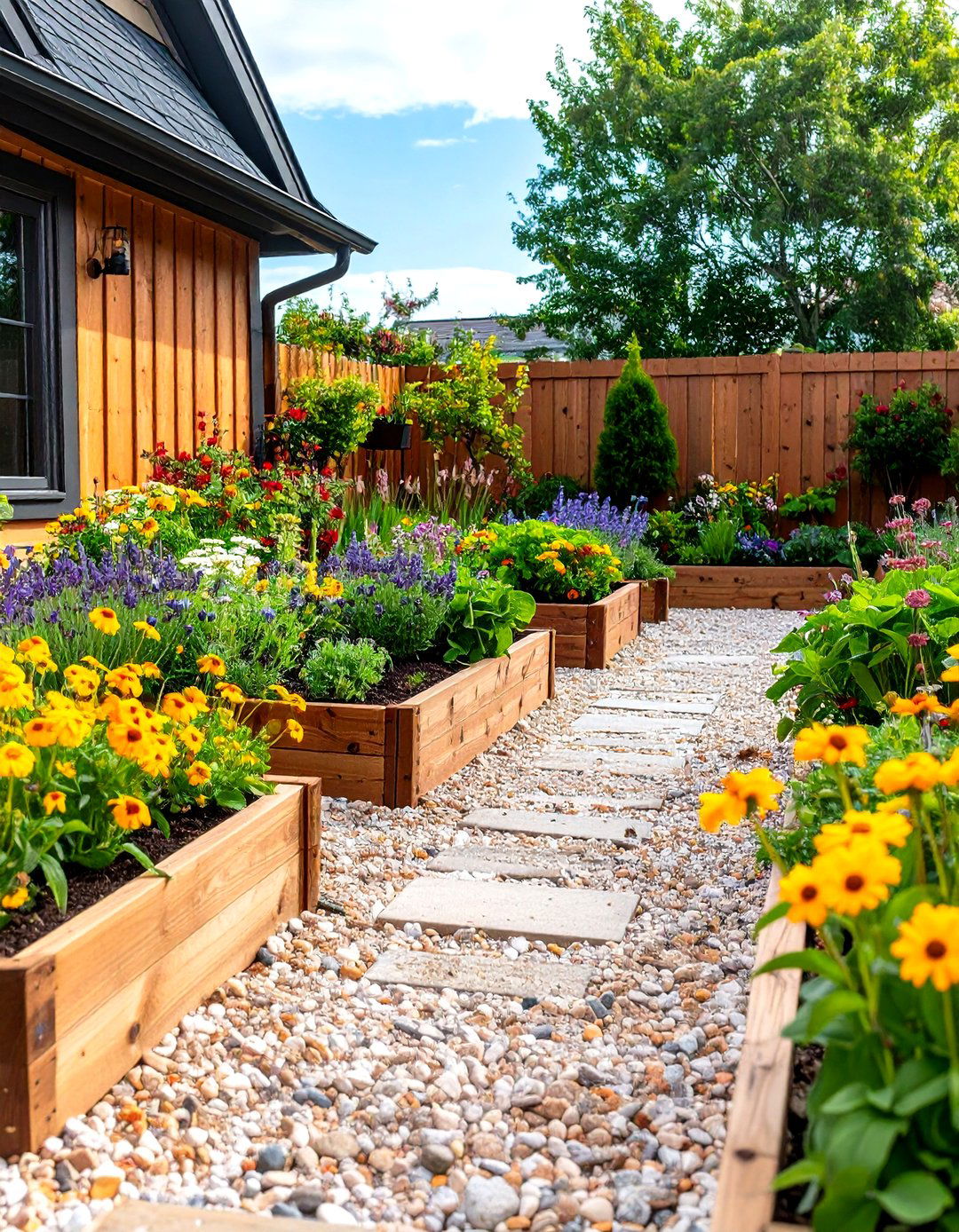
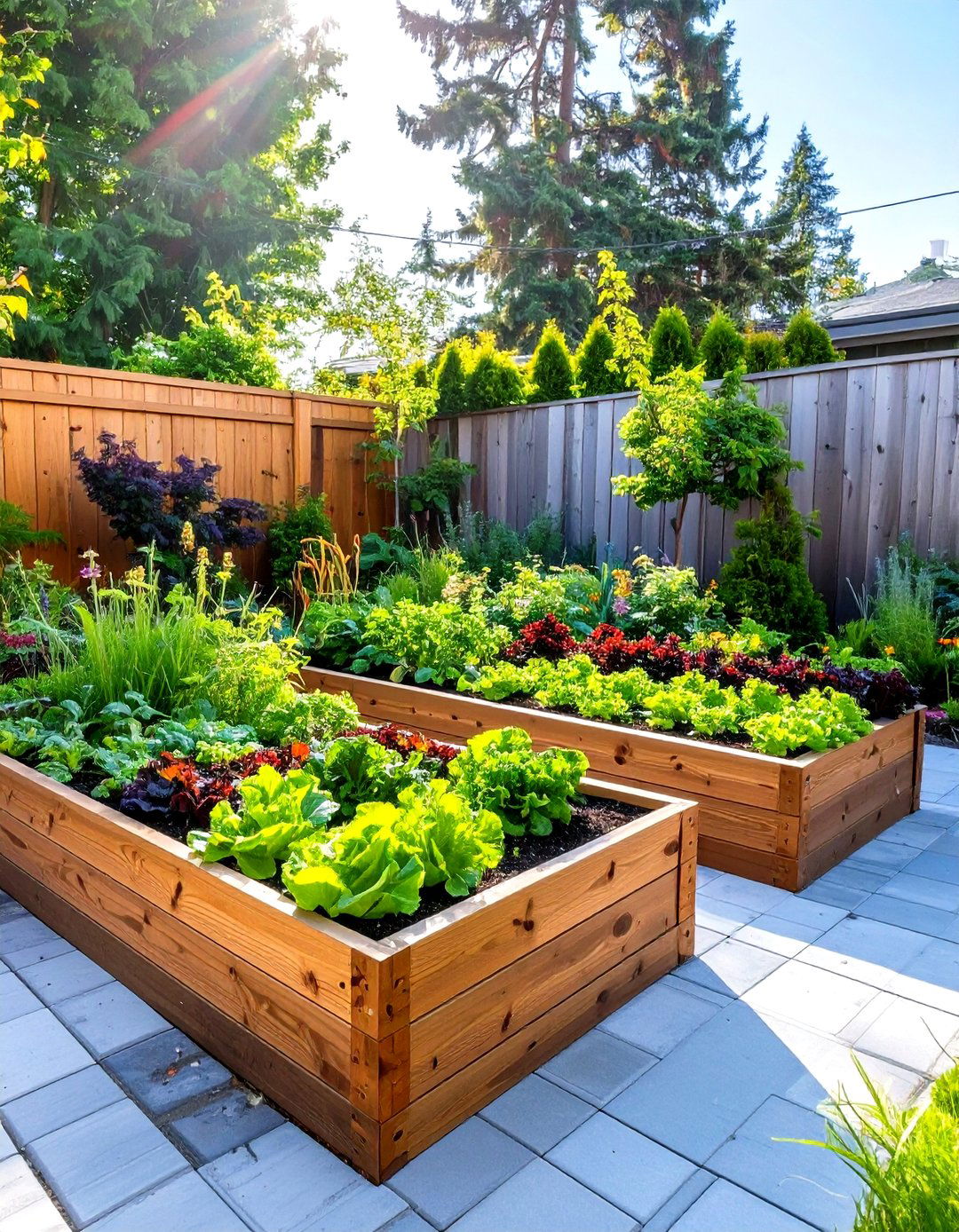
Integrate raised or flush garden beds directly into your pea gravel patio design. This allows you to bring flowers, herbs, or vegetables right to the edge of your seating area, blurring the lines between patio and garden. Use timber, stone, or metal to construct the beds, creating a neat border that contains the soil and separates it from the gravel. This approach adds color, fragrance, and life to your patio space. It’s particularly effective for creating a kitchen garden (potager) style, where you can easily access fresh herbs and produce while enjoying your outdoor living area.
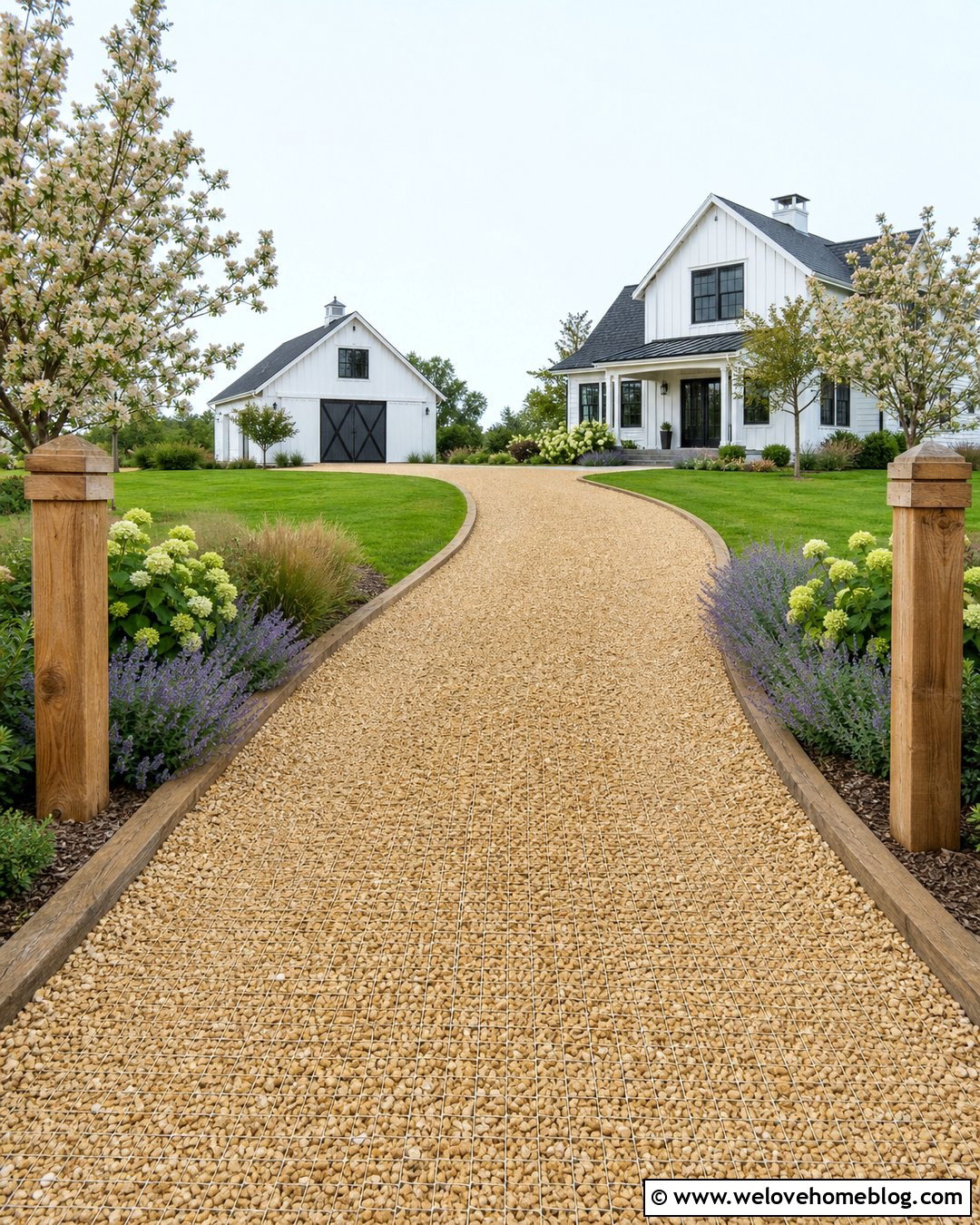

15. Eclectic Pea Gravel Patio with Colorful Furniture
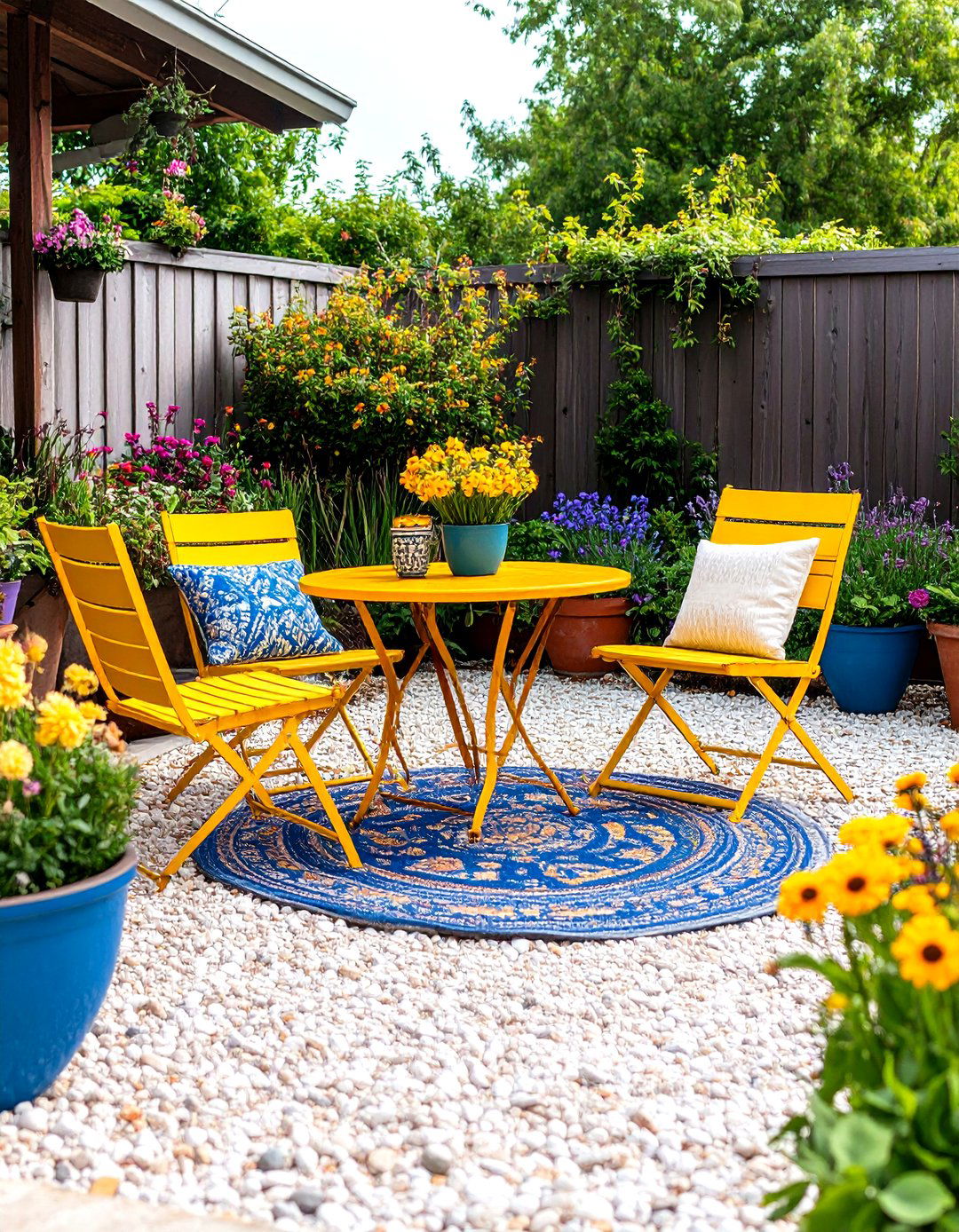
Let your personality shine by creating an eclectic pea gravel patio filled with vibrant and mismatched furniture. The neutral backdrop of the gravel is the perfect canvas for bold colors. Think bright red metal chairs, a turquoise bistro table, or patterned outdoor cushions. This style is all about mixing and matching different materials, colors, and styles to create a fun, bohemian vibe. Add colorful pots, string lights, and unique garden art to complete the look. The pea gravel keeps the space grounded and informal, allowing the playful elements to take center stage.
16. Pea Gravel Patio with a Stock Tank Pool
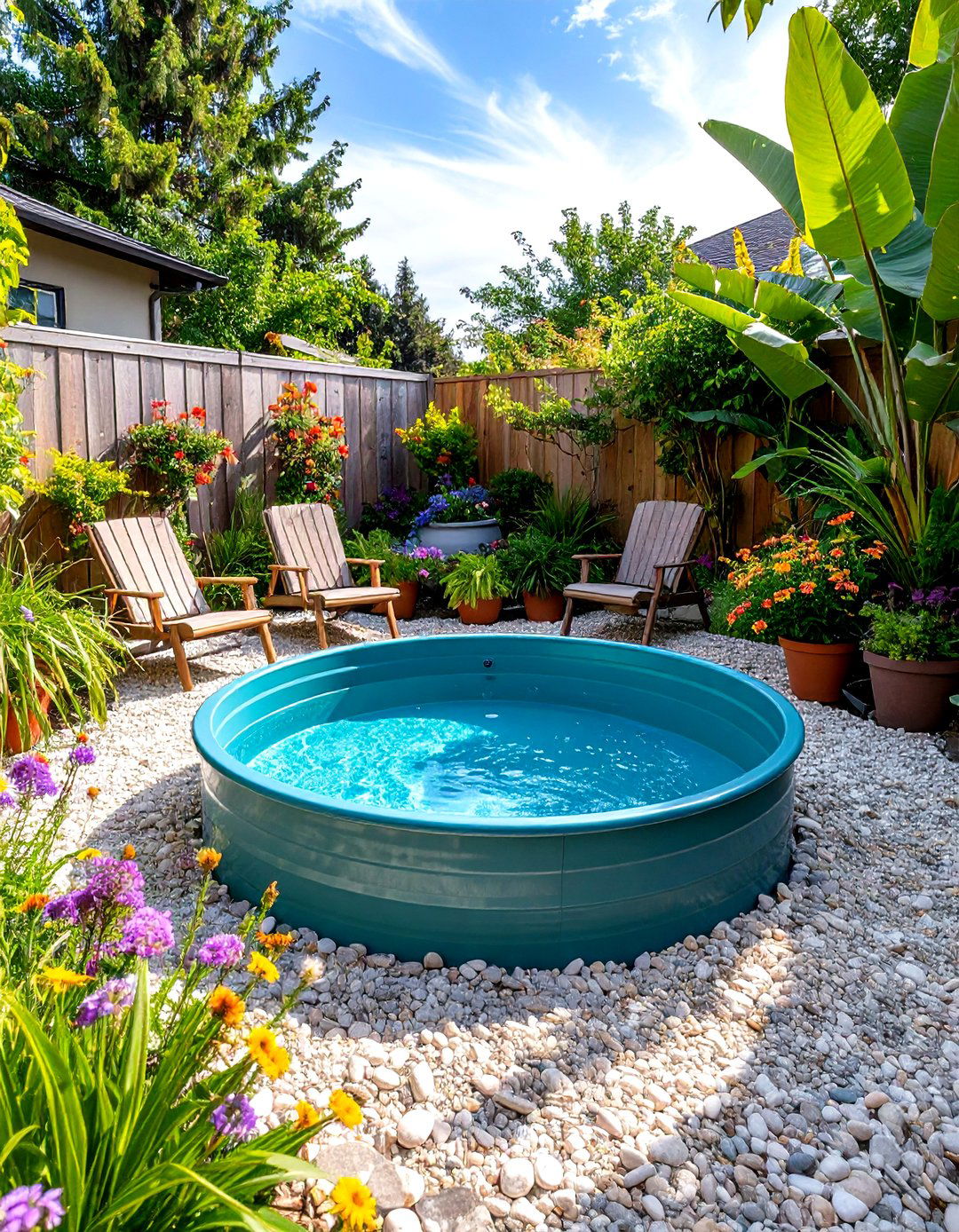
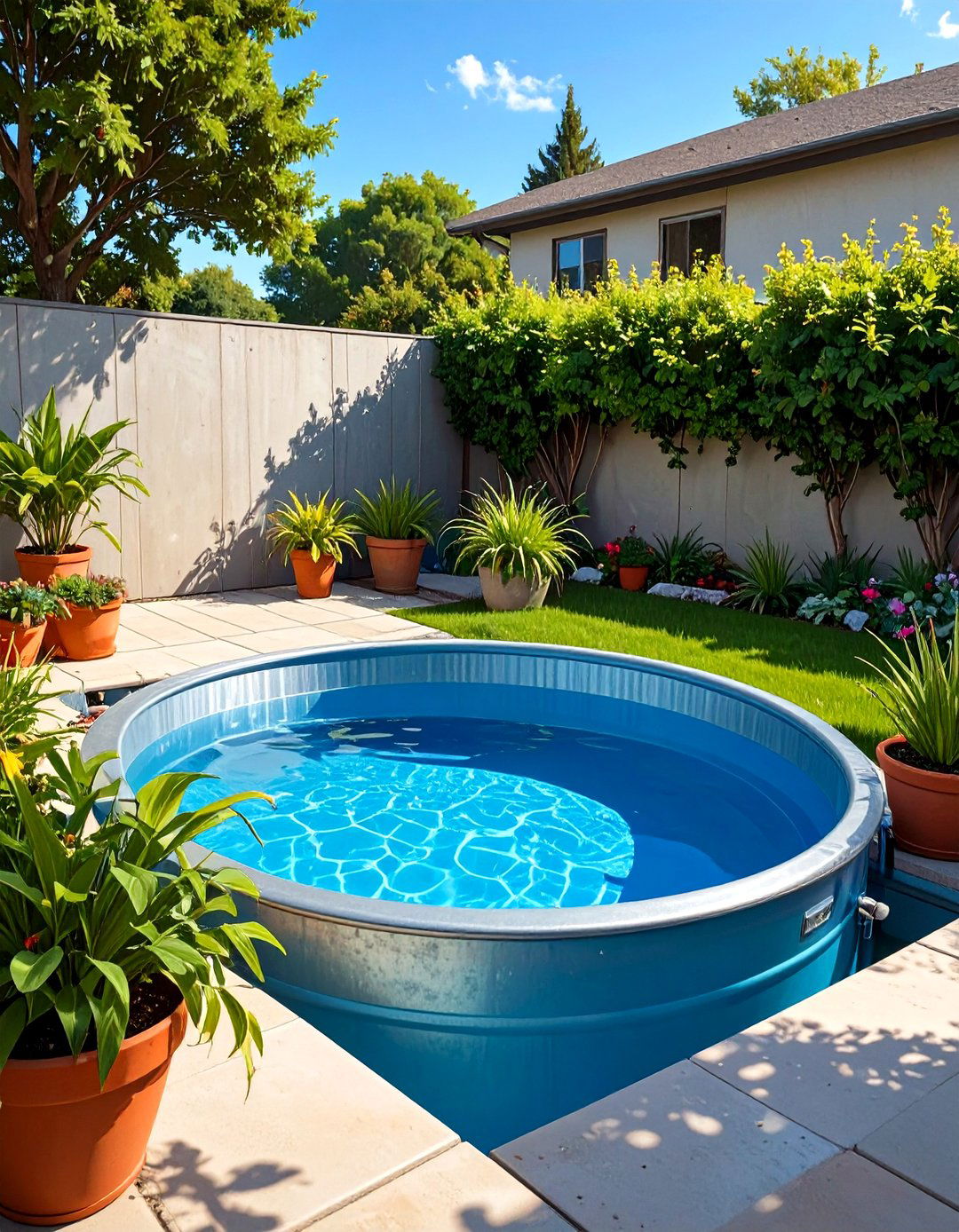
A stock tank pool is a trendy and affordable way to add a cooling water feature to your backyard, and a pea gravel patio is the perfect setting for it. The gravel provides excellent drainage around the pool, preventing muddy splashes and keeping the area clean. It also enhances the rustic, farmhouse aesthetic of the galvanized steel tank. Surround the pool with a generous area of pea gravel to create a "beach entry" feel and provide space for lounge chairs and side tables. This combination creates a fun, functional, and stylish summer hangout spot.
17. Pea Gravel Patio Edged with River Rocks
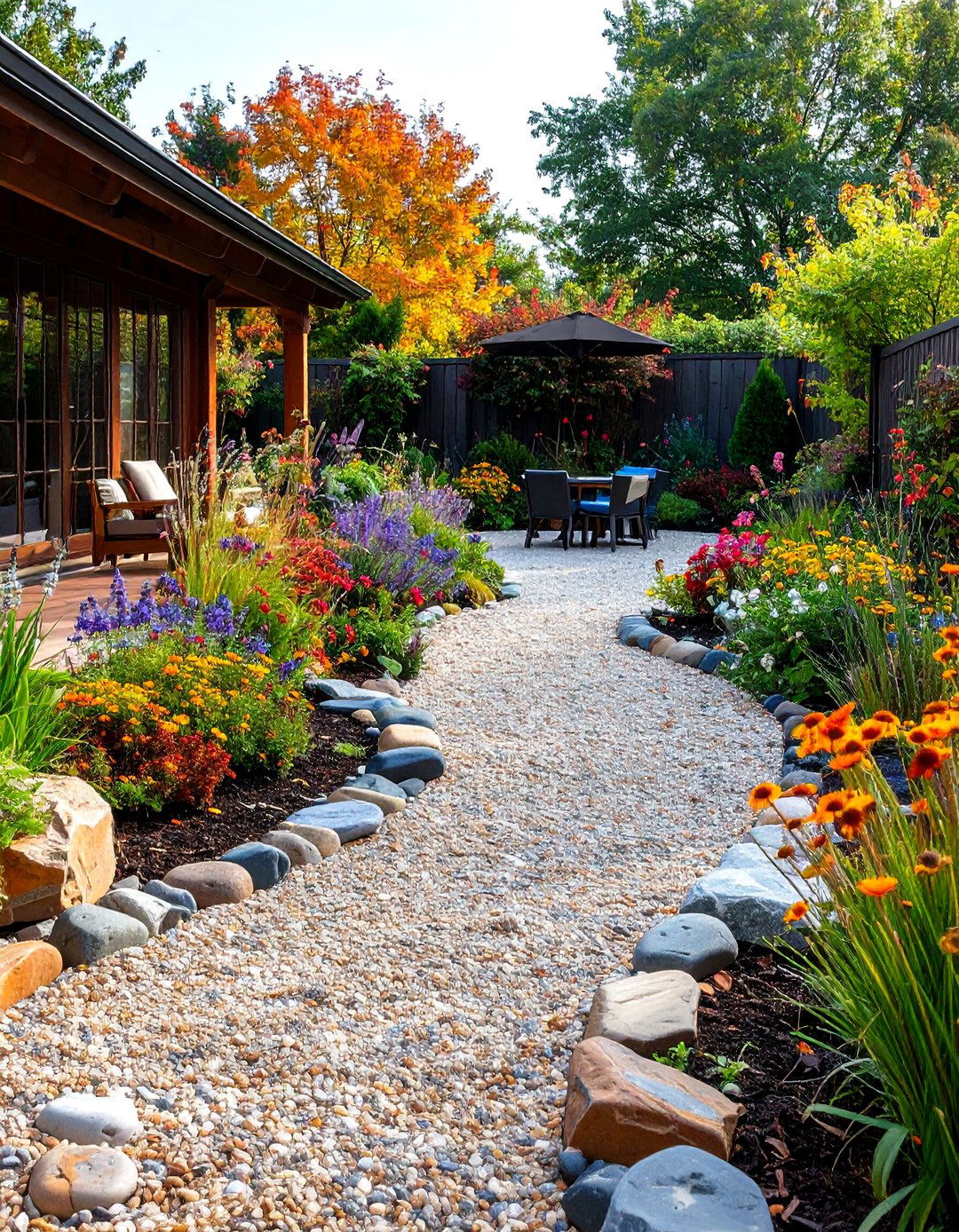
Create a natural, rustic border for your pea gravel patio by using larger, smooth river rocks. The difference in size and shape between the small pea gravel and the larger river rocks creates a beautiful, textured transition from the patio to the rest of your garden. This type of edging is informal and helps the patio blend seamlessly into a naturalistic landscape. Simply line the perimeter of your patio area with a wide band of river rocks to contain the gravel. This is an easy and effective way to add character and a handcrafted feel to your outdoor space.
18. Formal Pea Gravel Patio with Boxwood Hedges
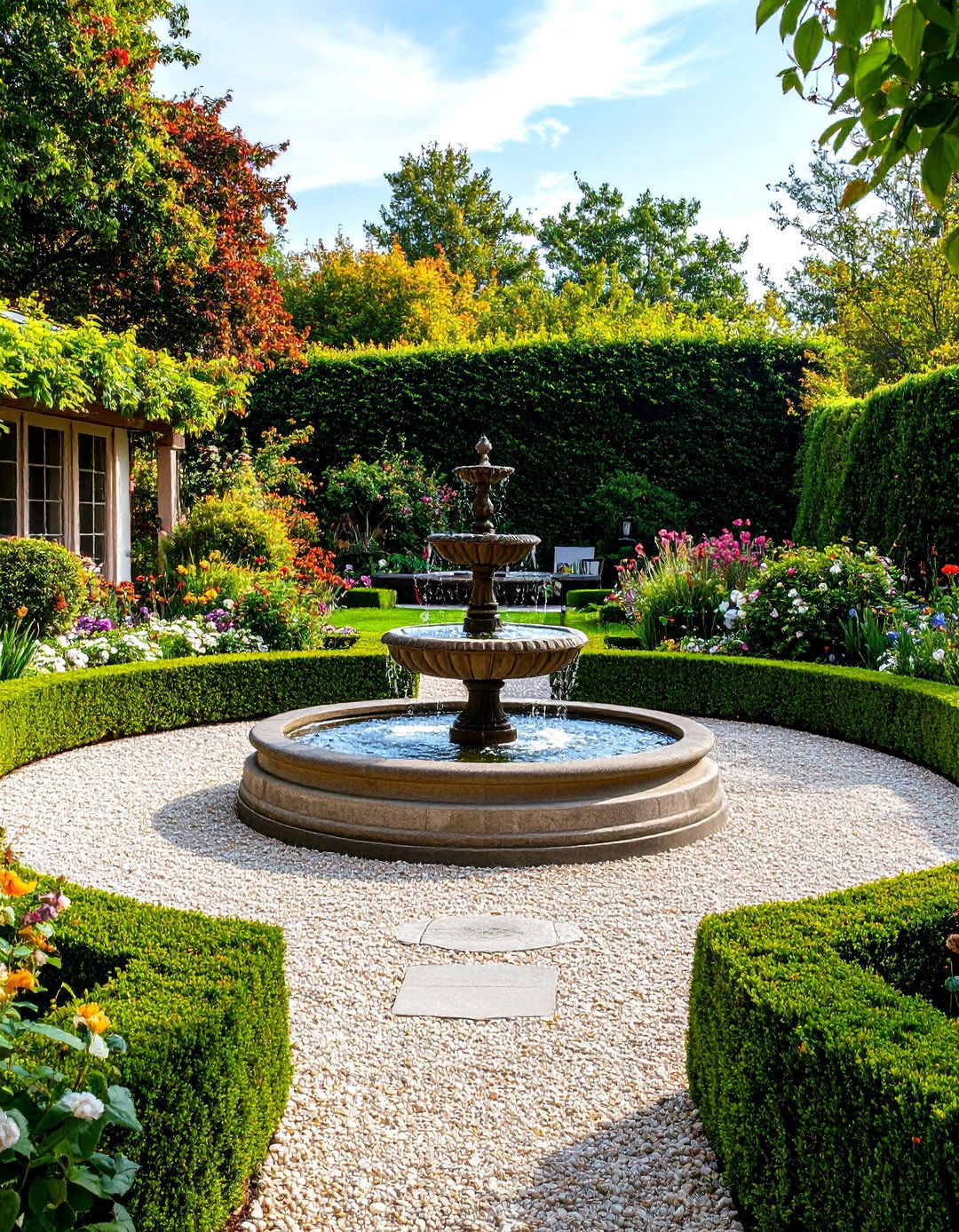
For a classic and elegant look, frame your pea gravel patio with neatly clipped boxwood hedges. This formal design evokes the grandeur of European gardens, where geometric shapes and clean lines are paramount. The deep green of the boxwoods creates a crisp, living wall that beautifully contrasts with the light, textured surface of the pea gravel. You can create a square, rectangular, or circular patio space enclosed by the low hedges. This structured approach adds a sense of order and sophistication to the landscape, making it a timeless choice for a traditional home.
19. Pea Gravel Dog-Friendly Patio Area
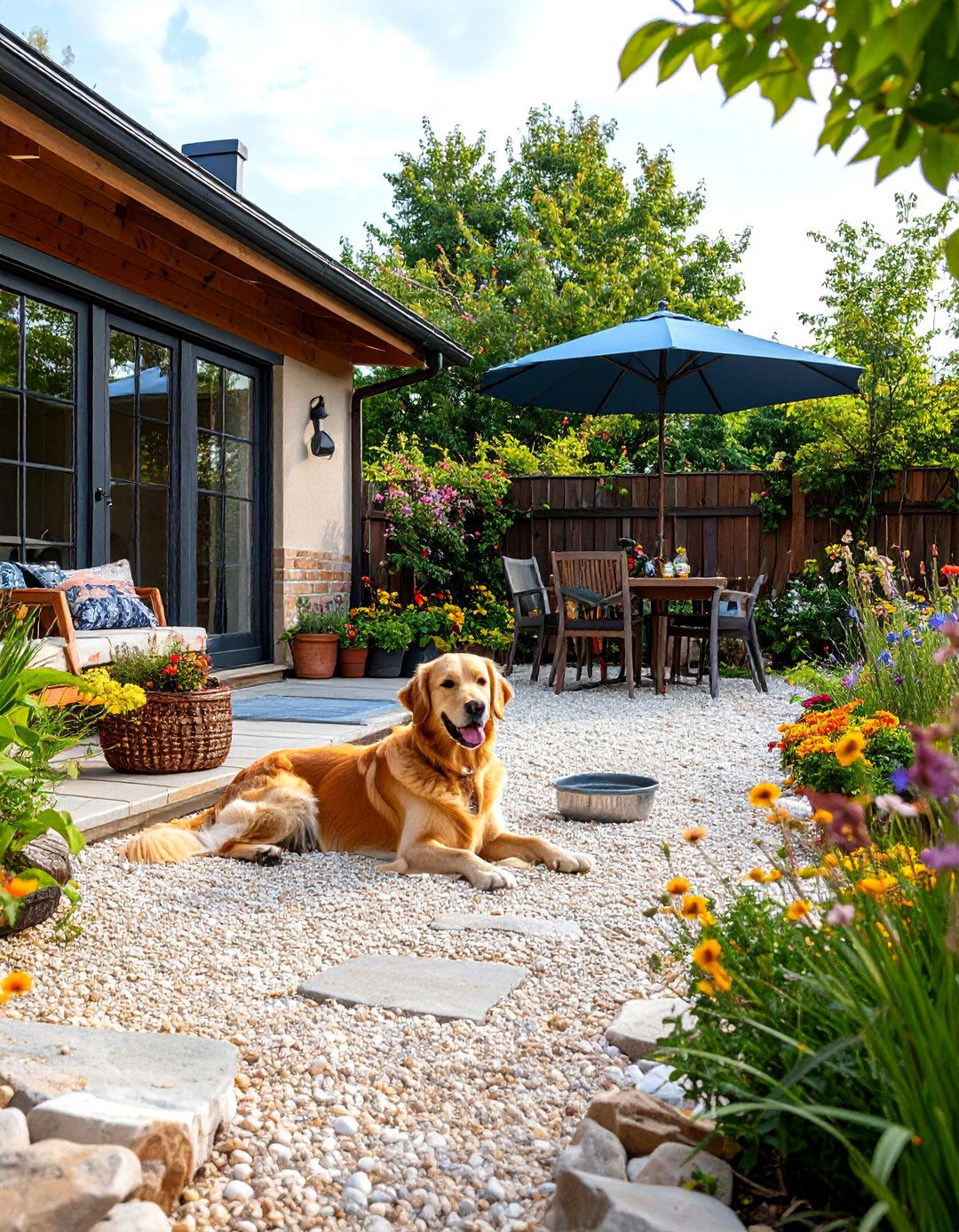
Pea gravel can be an excellent choice for a designated dog-friendly area in your yard. The smooth, rounded stones are comfortable on paws, and it provides excellent drainage, which helps to minimize odors and muddy spots. It is also easy to clean and maintain. Ensure the gravel is deep enough to be comfortable and that the area is well-contained with a solid border to prevent the stones from spreading. Adding some dog-friendly plants in containers and a shady spot can make it the perfect, low-maintenance outdoor space for your furry friend to enjoy.

20. Pea Gravel Dining Area with String Lights
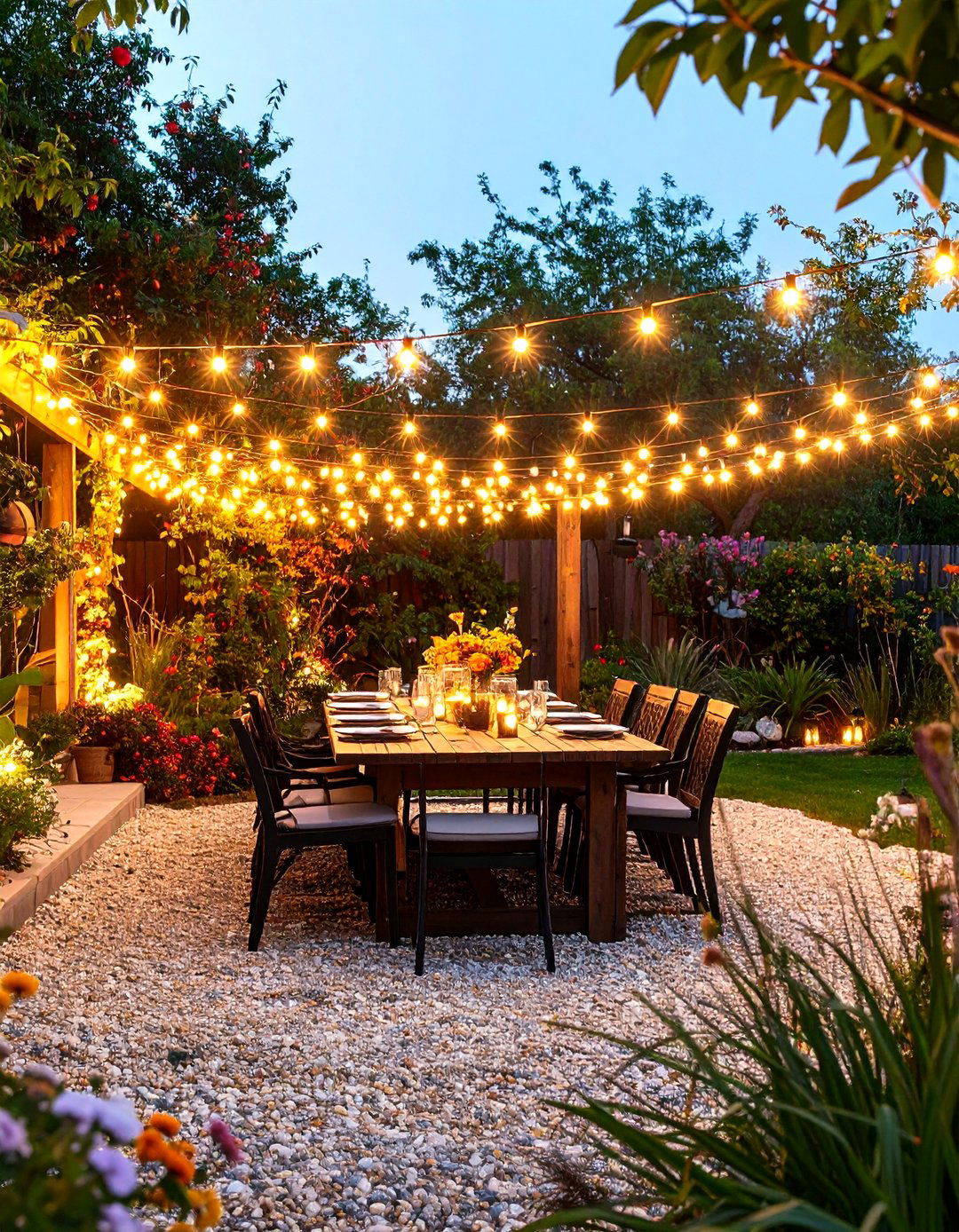
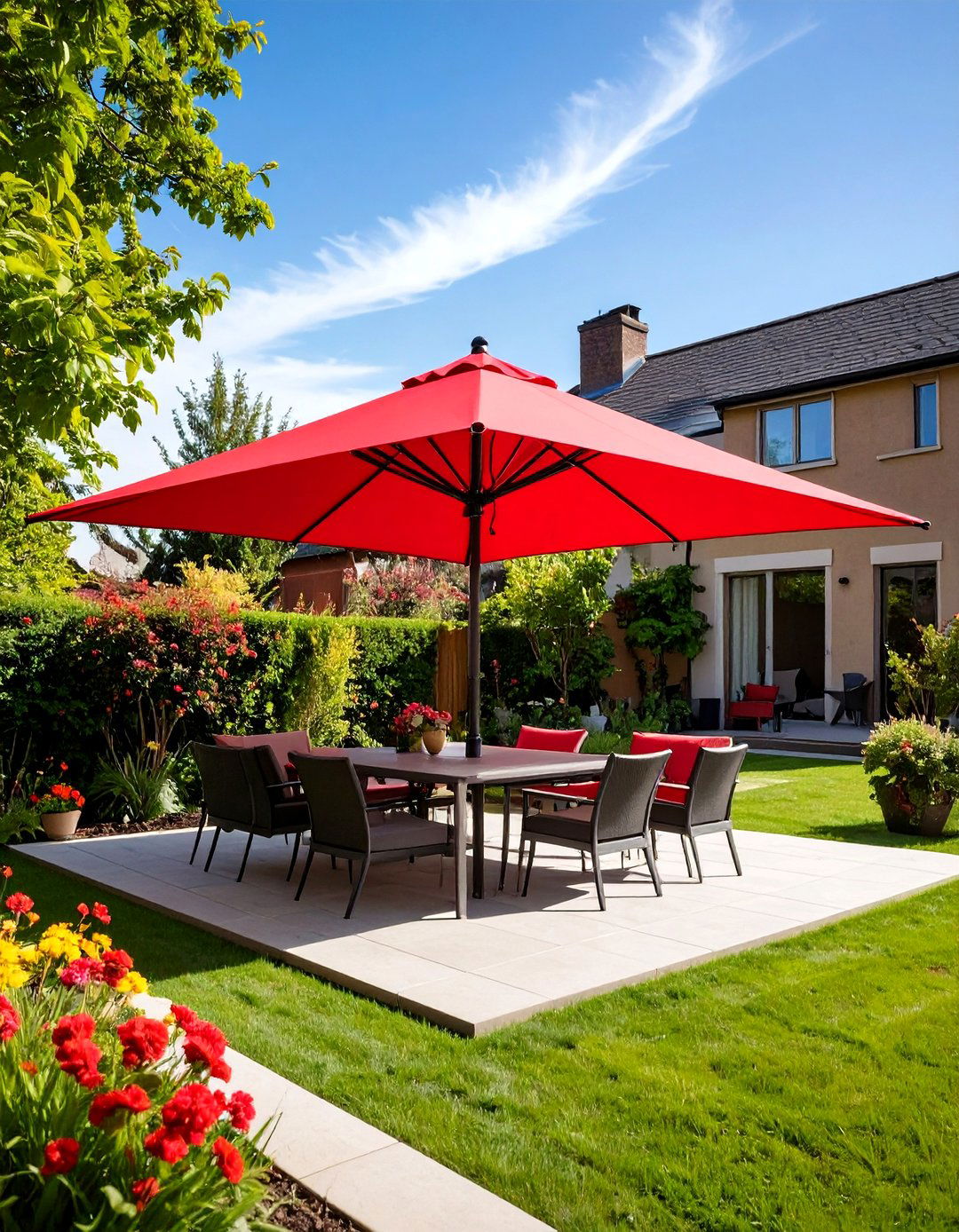
Create a magical alfresco dining experience by setting up your outdoor table and chairs on a pea gravel patio and stringing lights overhead. The soft crunch of the gravel underfoot combined with the warm, ambient glow of the lights creates an enchanting and romantic atmosphere. The pea gravel provides a casual, bistro-like feel, perfect for relaxed evening meals with family and friends. Use poles or nearby trees to hang the lights in a canopy or crisscross pattern above the dining area. This simple addition can transform a basic patio into a captivating nighttime destination.
21. Pea Gravel Patio with a Rustic Stone Wall
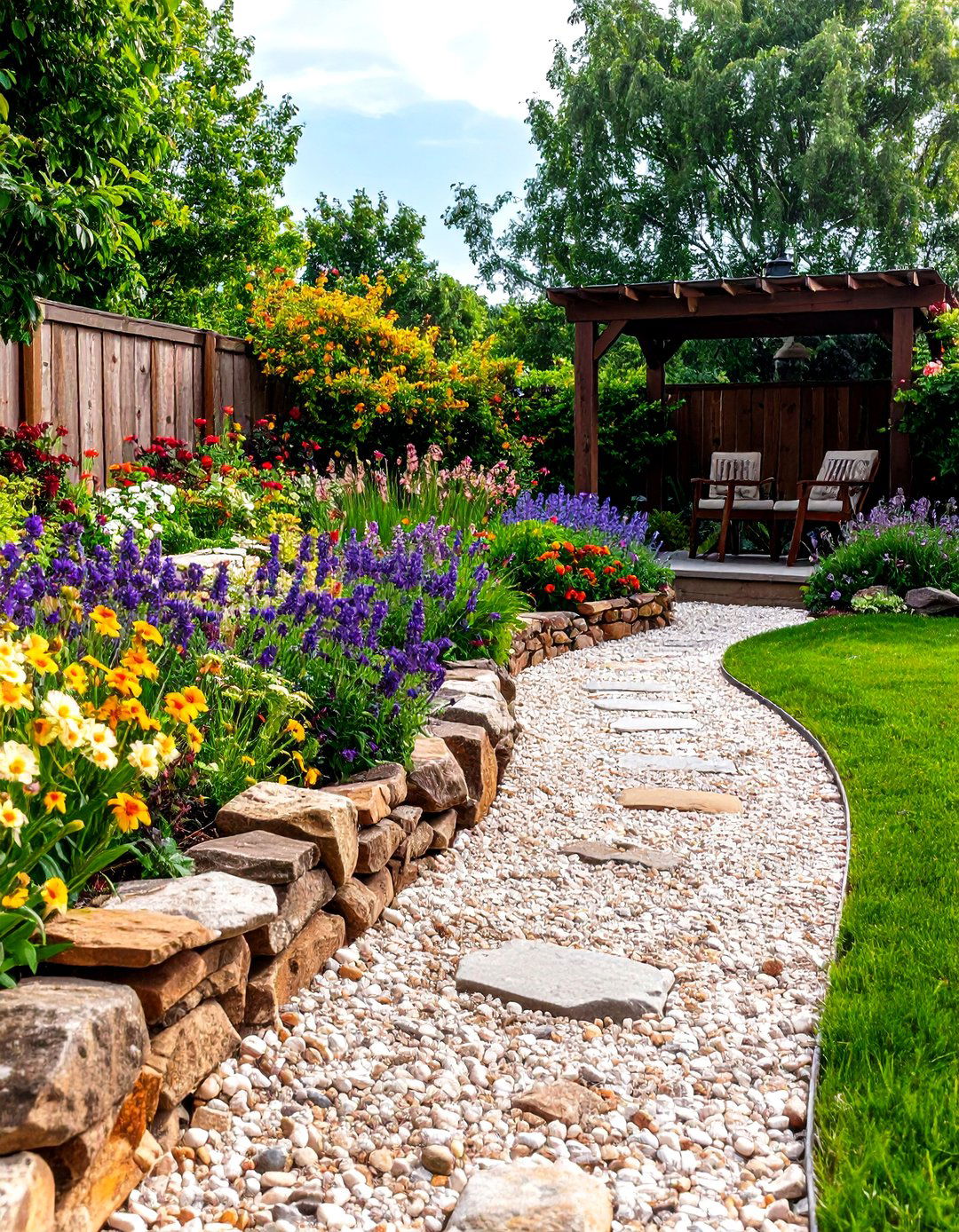
A low-slung, rustic stone wall can serve as both a border and informal seating for your pea gravel patio. Using natural, irregularly shaped stones for the wall enhances the organic feel of the gravel and adds a sense of permanence and history to the space. The wall can define the edge of the patio, retain a small slope, or simply act as a beautiful backdrop. Its wide, flat top can double as a spot for setting down drinks or for extra seating during large gatherings, making it a highly functional and aesthetically pleasing feature for a country or cottage-style garden.
22. Pea Gravel Patio Combined with a Wooden Deck
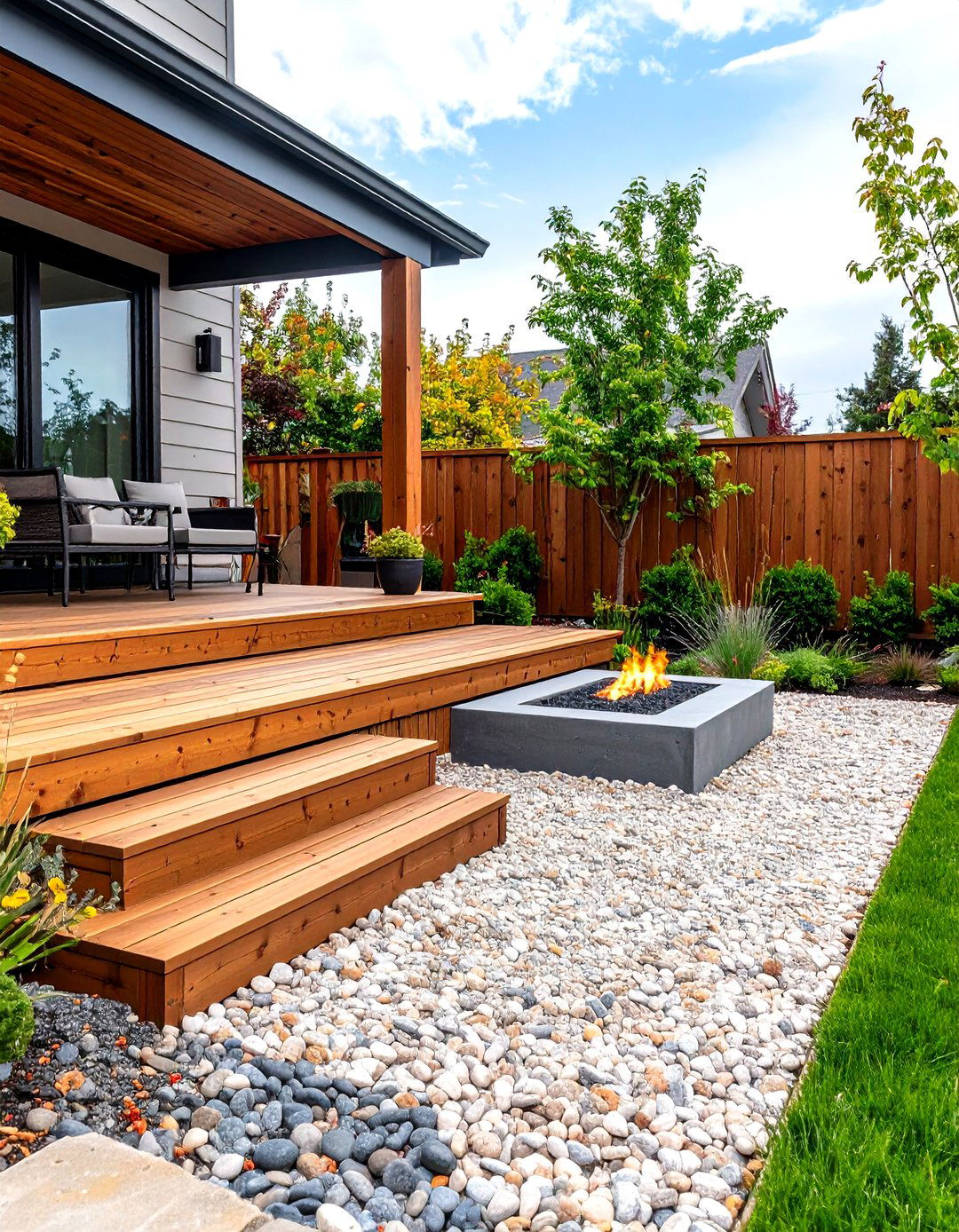
Combine the warmth of a wooden deck with the texture of a pea gravel patio for a multi-level, multi-functional outdoor space. The deck can serve as the primary area for dining or lounging, providing a solid, elevated surface, while the adjacent pea gravel area can be a more informal space for a fire pit, garden path, or secondary seating. This design creates a dynamic interplay of materials and levels, adding significant visual interest to your backyard. The transition from wood to gravel can be defined by steps or a simple edge, creating two distinct yet connected zones.
23. Pea Gravel Utility Area for Potting and Storage
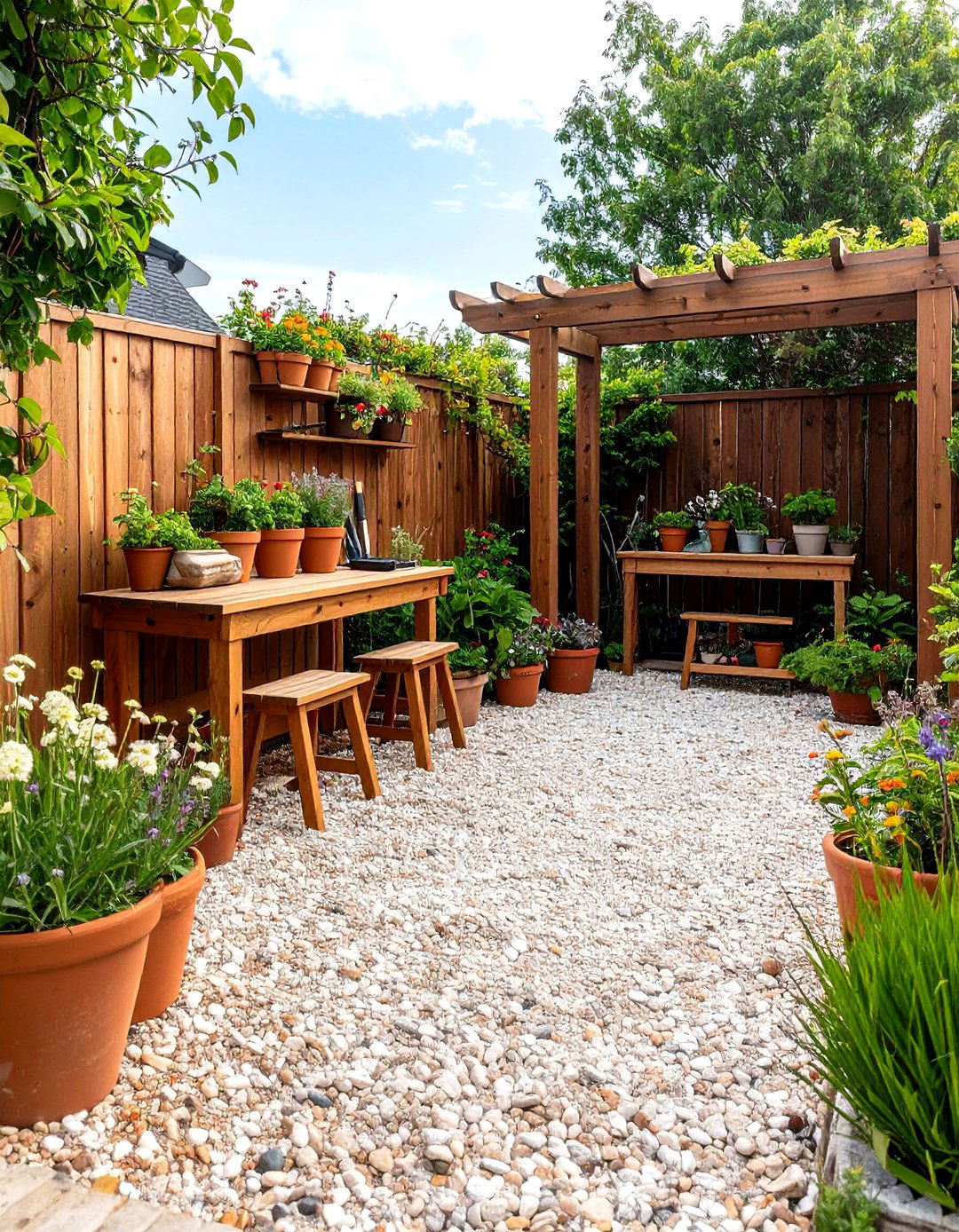
Designate a practical utility area in your garden using pea gravel as the base. This is an ideal surface for a potting station, tool storage, or a place to keep garbage and recycling bins out of sight. The gravel provides excellent drainage, so spills from watering cans or potting soil are no issue. It's also easy to keep tidy with a rake. A simple potting bench, some shelves for supplies, and a screen or trellis to hide it from view can create a functional and organized workspace that stays clean and dry, all while blending naturally into the garden landscape.
24. Sunken Pea Gravel Patio for an Intimate Feel
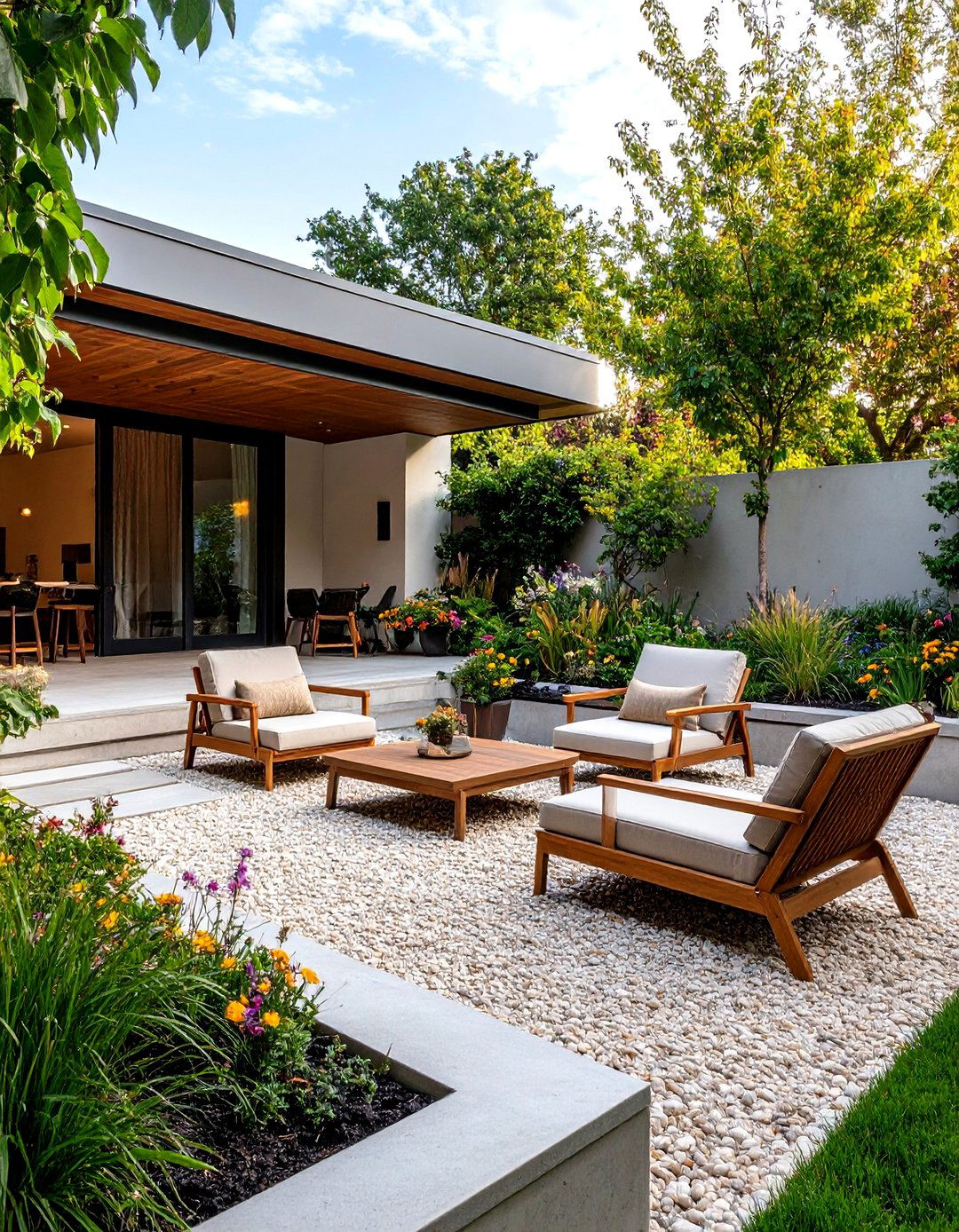
Creating a sunken pea gravel patio can make your outdoor space feel more intimate and secluded. By excavating the area slightly and using low retaining walls made of stone, wood, or concrete, you can create a cozy, enclosed "room" within your garden. This design provides a sense of privacy and protection from the wind. Steps leading down into the patio add a touch of drama and create a clear transition into the space. Furnish it with comfortable seating to create the perfect private retreat for quiet conversations or peaceful relaxation.
25. Pea Gravel Patio with a Central Tree
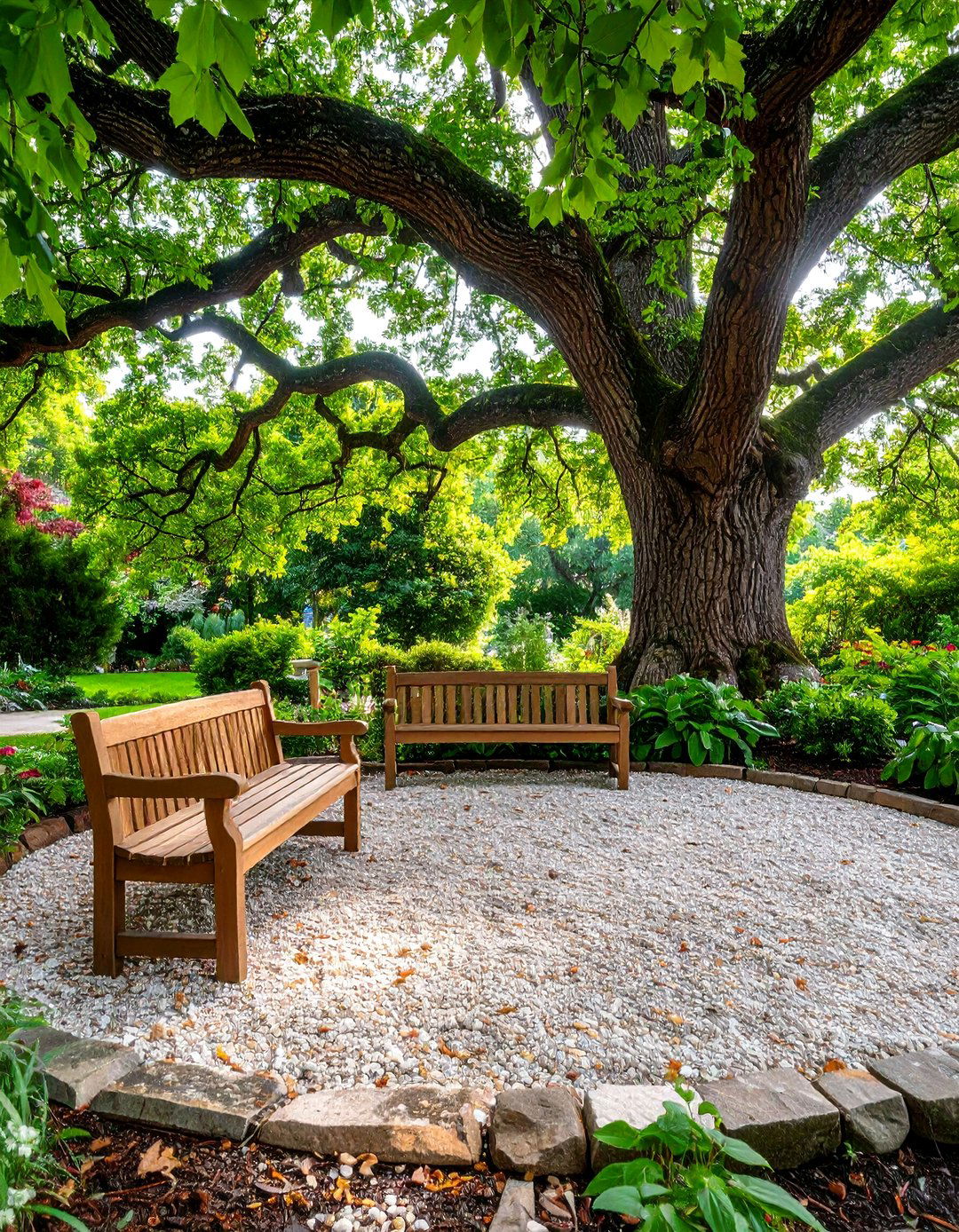
Design your pea gravel patio around an existing mature tree to create a beautiful, natural focal point and a source of shade. The gravel allows water and air to reach the tree's roots, making it a healthier option than solid paving. A circular or free-form patio shape can gracefully accommodate the tree's trunk and root flare. You can even build a circular wooden bench around the tree trunk for integrated seating. This design honors the natural landscape, providing a comfortable, shaded spot that feels perfectly integrated with its surroundings.
26. Pea Gravel Patio in a Side Yard
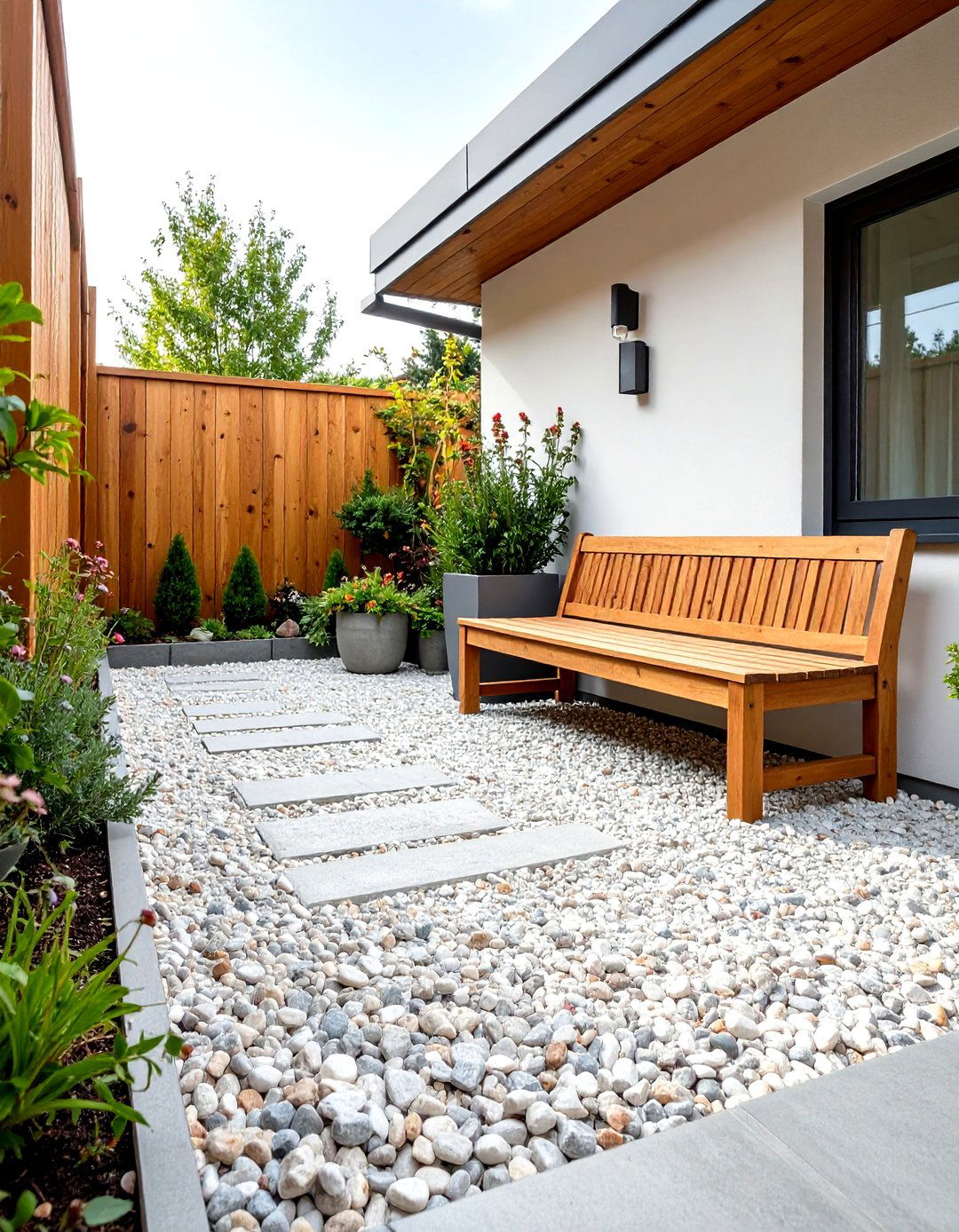
Transform a narrow, often-neglected side yard into a functional and attractive space with a pea gravel patio. This material is perfect for creating a clean, low-maintenance walkway or a long, narrow seating area. Add a slim bench, a few tall planters for vertical interest, and perhaps a trellis with climbing vines against the house wall to soften the space. The light color of the gravel can help to brighten up a shady side yard, making it feel wider and more inviting. It’s an excellent solution for turning a forgotten strip of land into a charming passage or a quiet retreat.
27. Pea Gravel Patio with a Bocce Ball Court
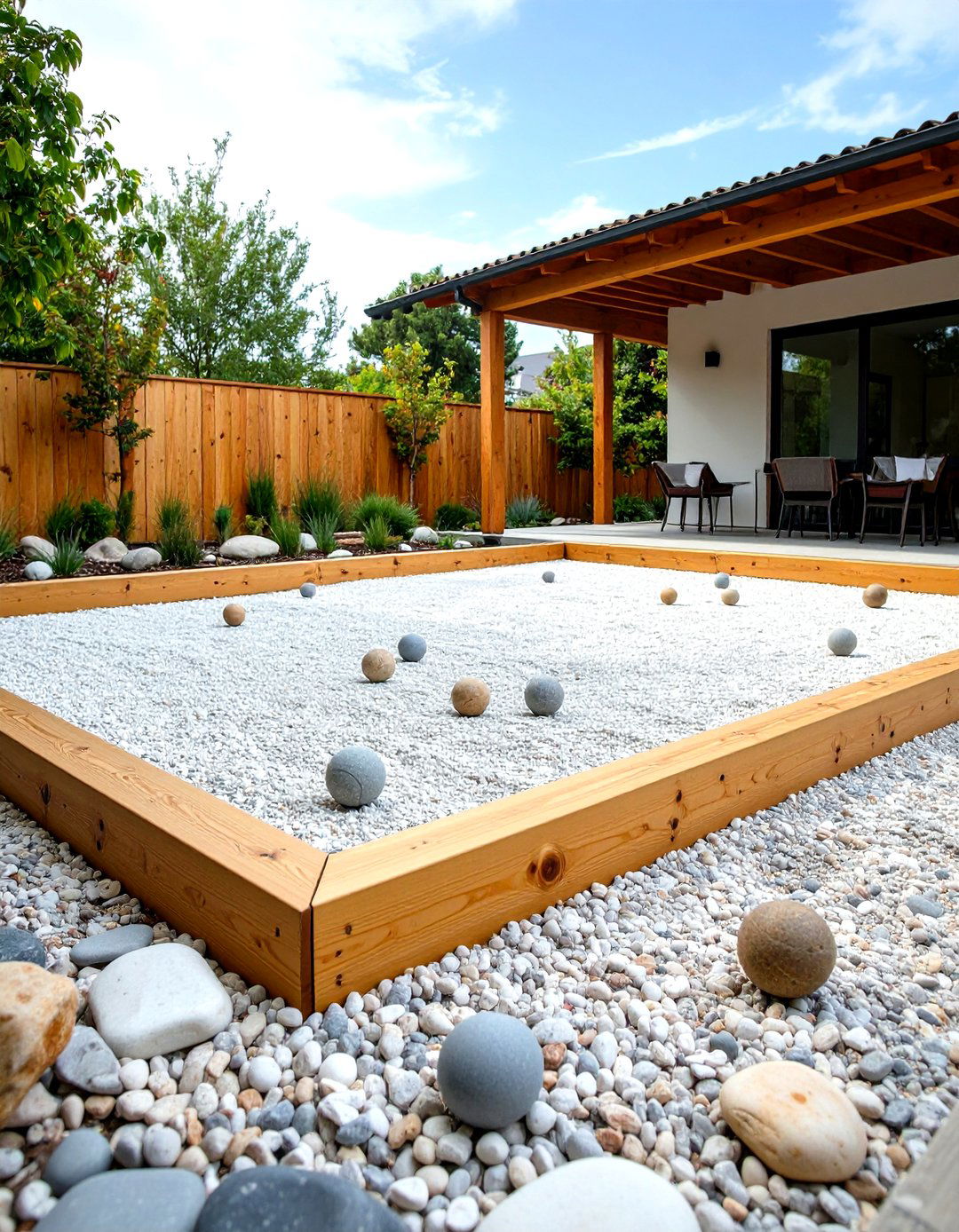
For those who love outdoor games, a pea gravel surface is ideal for building a bocce ball court. A regulation or custom-sized court can be easily constructed by framing a long, narrow rectangle with timber and filling it with a compacted base and a top layer of pea gravel. The gravel provides the perfect rolling surface for the balls. This feature can be integrated alongside a larger patio area for spectators to sit and watch the game. It adds a fun, interactive element to your backyard, encouraging activity and social gatherings for all ages.
28. Coastal-Themed Pea Gravel Patio
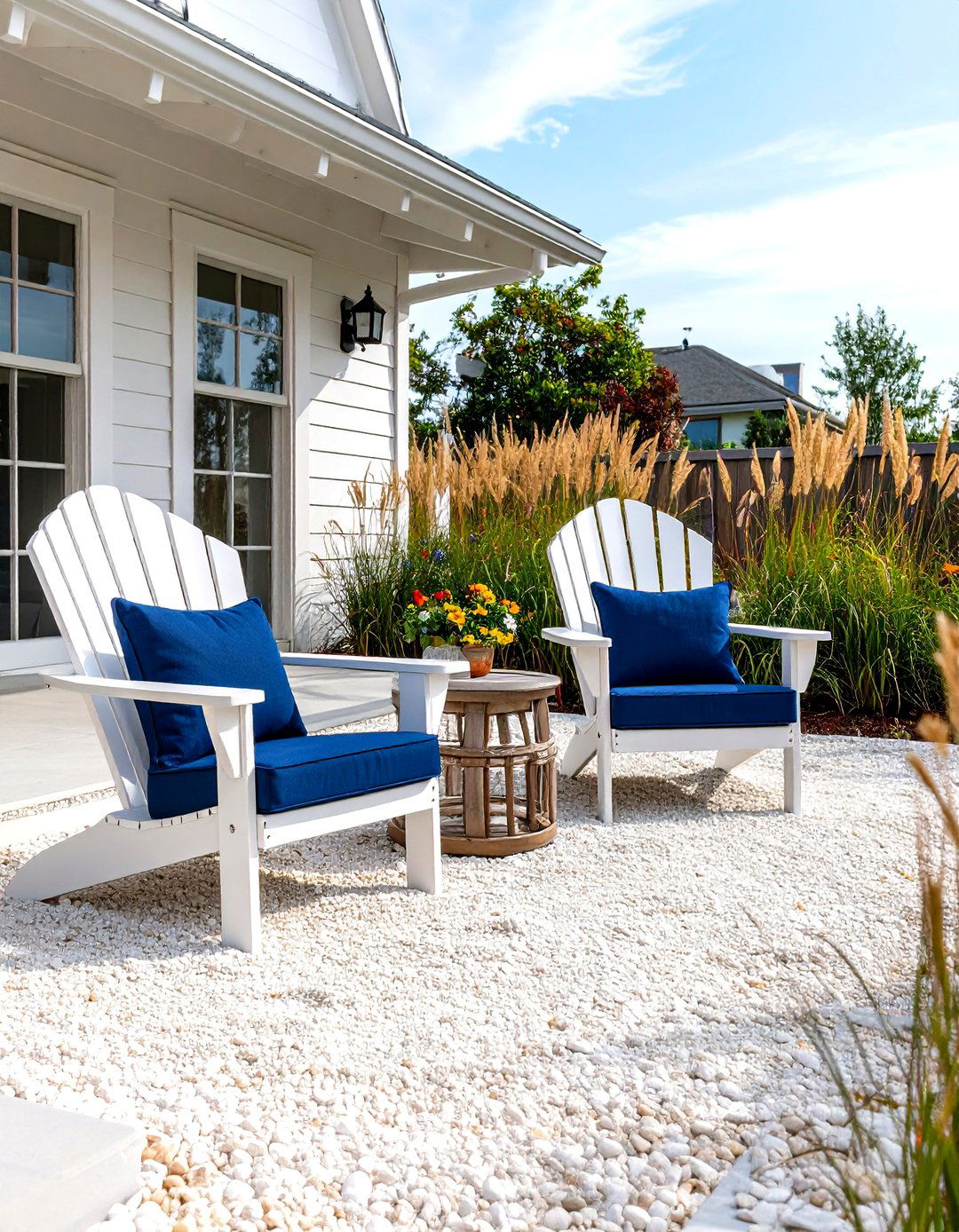
Evoke a breezy, coastal feel by using light-colored pea gravel for your patio. Combine it with weathered wood furniture, navy and white striped cushions, and nautical decor like rope details or lanterns. Surrounding the patio with beach-friendly plants like sea grasses, lavender, and succulents will enhance the theme. The pale gravel mimics the look of sand or pebbles on a beach, creating a relaxed, vacation-like atmosphere right in your own backyard. This design is all about creating a light, airy, and informal space where you can kick back and relax.
29. Pea Gravel Patio with Stepping Stone Accents
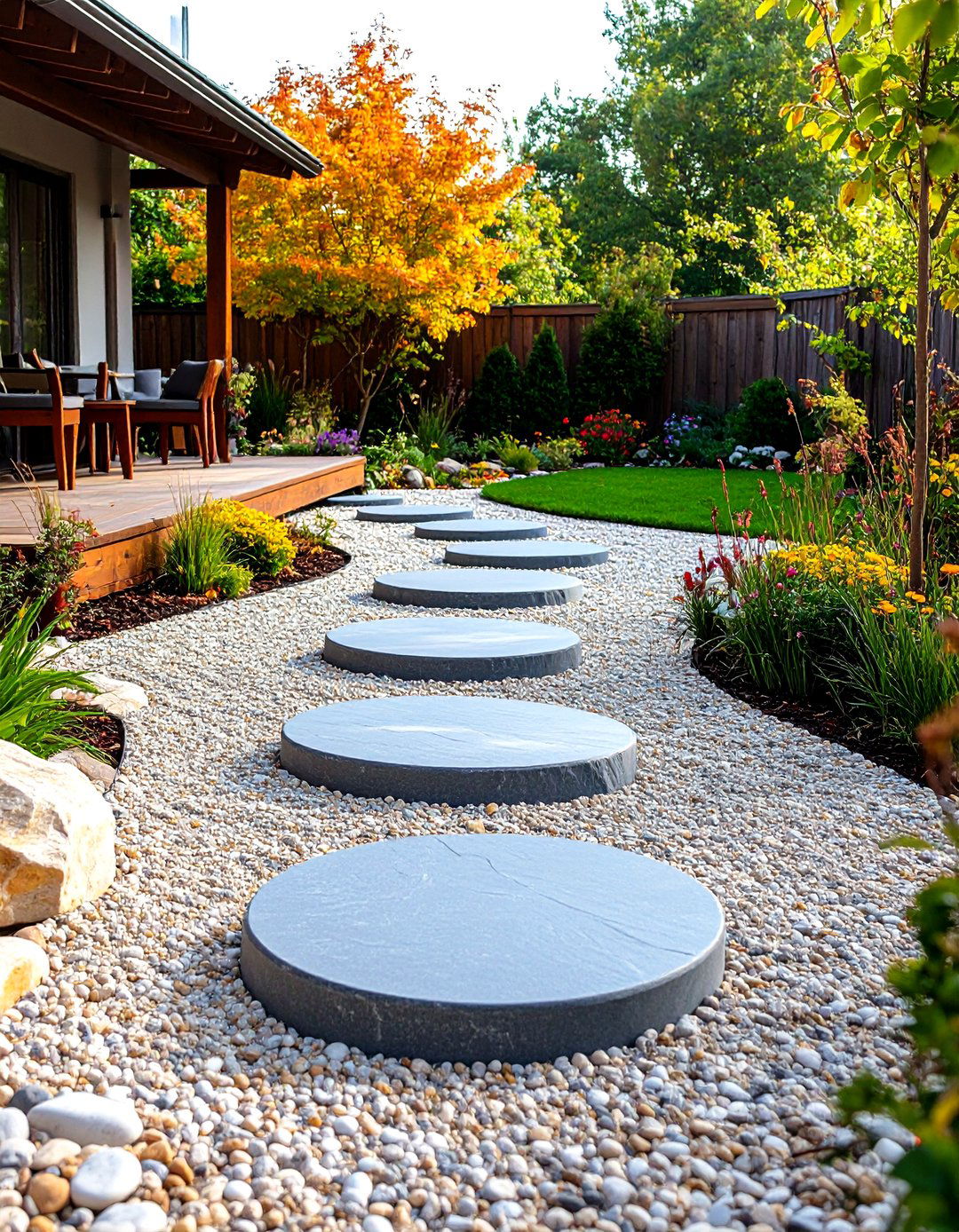
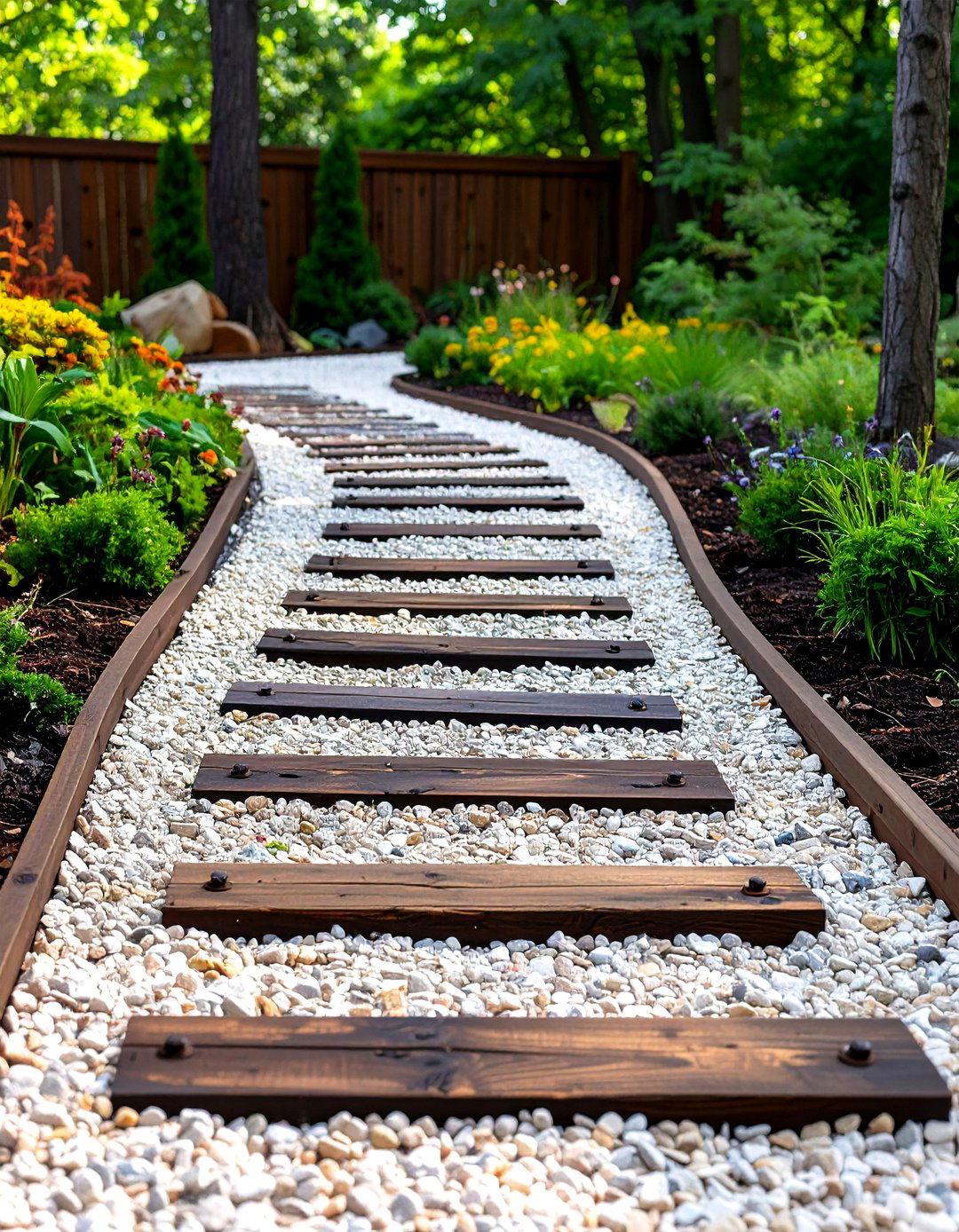
Intersperse your pea gravel patio with oversized, irregular stepping stones or precast concrete rounds for a decorative and functional touch. These larger stones can create an informal path across the gravel or simply act as accents, breaking up the texture and adding visual interest. They also provide stable spots to place planters or small decorative items. This approach allows you to customize the look of your patio, creating a unique pattern that guides movement or draws attention to certain areas. It’s a simple way to add a layer of design and personality to a basic gravel surface.
30. Minimalist Pea Gravel Patio with Sculptural Elements
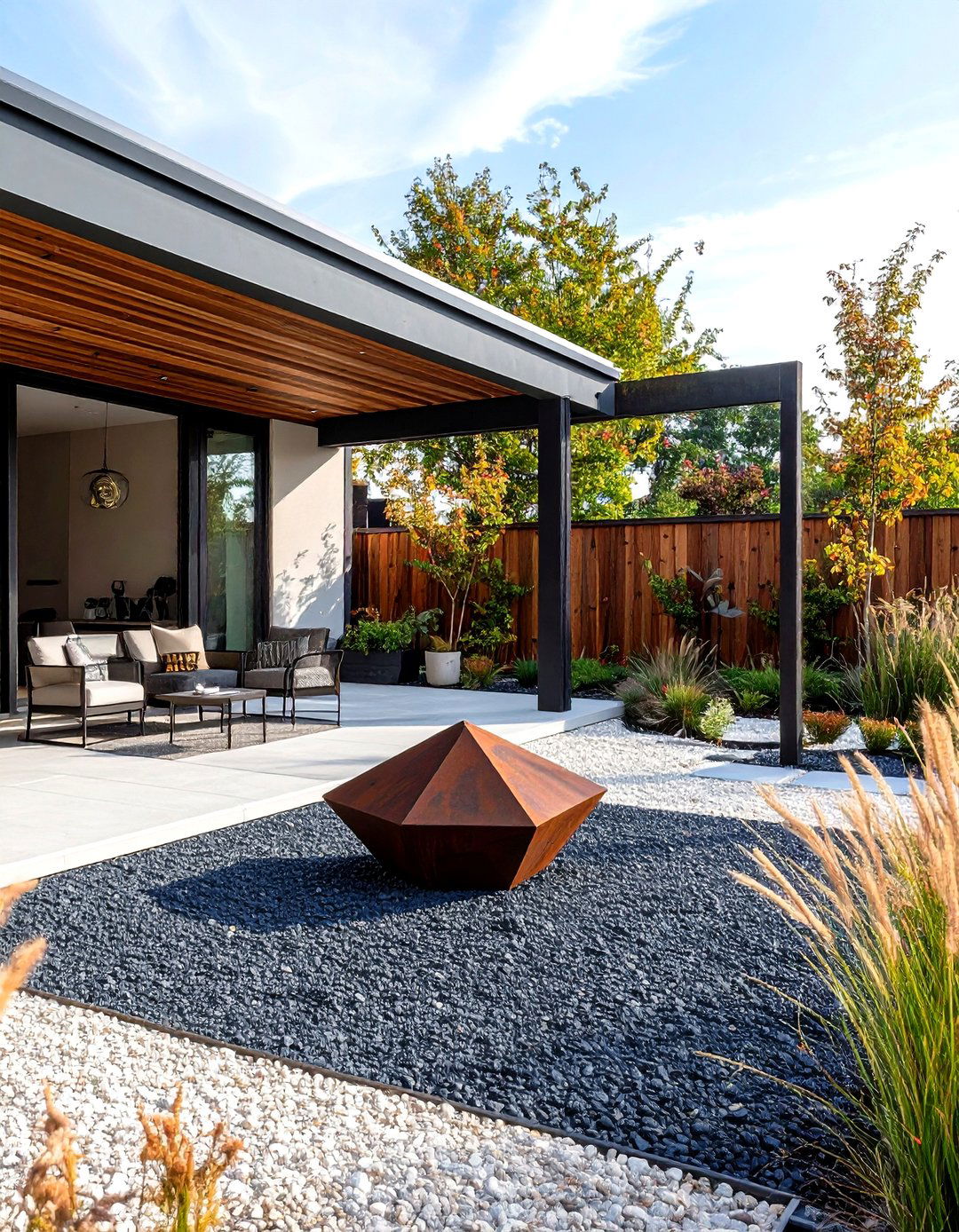
Embrace a minimalist aesthetic by keeping your pea gravel patio simple and uncluttered, using a single sculptural element as the main focus. This could be a modern metal sculpture, a uniquely shaped boulder, or a specimen plant like a twisted juniper or a graceful Japanese maple in a simple pot. The uniform texture of the pea gravel provides a neutral, gallery-like floor that allows the sculptural piece to stand out. Clean lines, a monochromatic color palette, and minimal furniture complete this sophisticated and contemporary look, creating a space that is both calming and visually impactful.
Conclusion:
Pea gravel patios are a remarkably versatile, stylish, and budget-friendly option for any outdoor space. From modern designs with clean lines to rustic, Mediterranean-inspired courtyards, the possibilities are vast. The 30 ideas explored demonstrate how this simple material can be combined with flagstone, wood, plants, and other elements to create functional and beautiful patios. Whether you seek a cozy fire pit area, a formal garden setting, or a playful family space, pea gravel provides a durable and attractive foundation that can be tailored to fit your personal style and landscaping needs.

Related posts:



Leave a Reply