
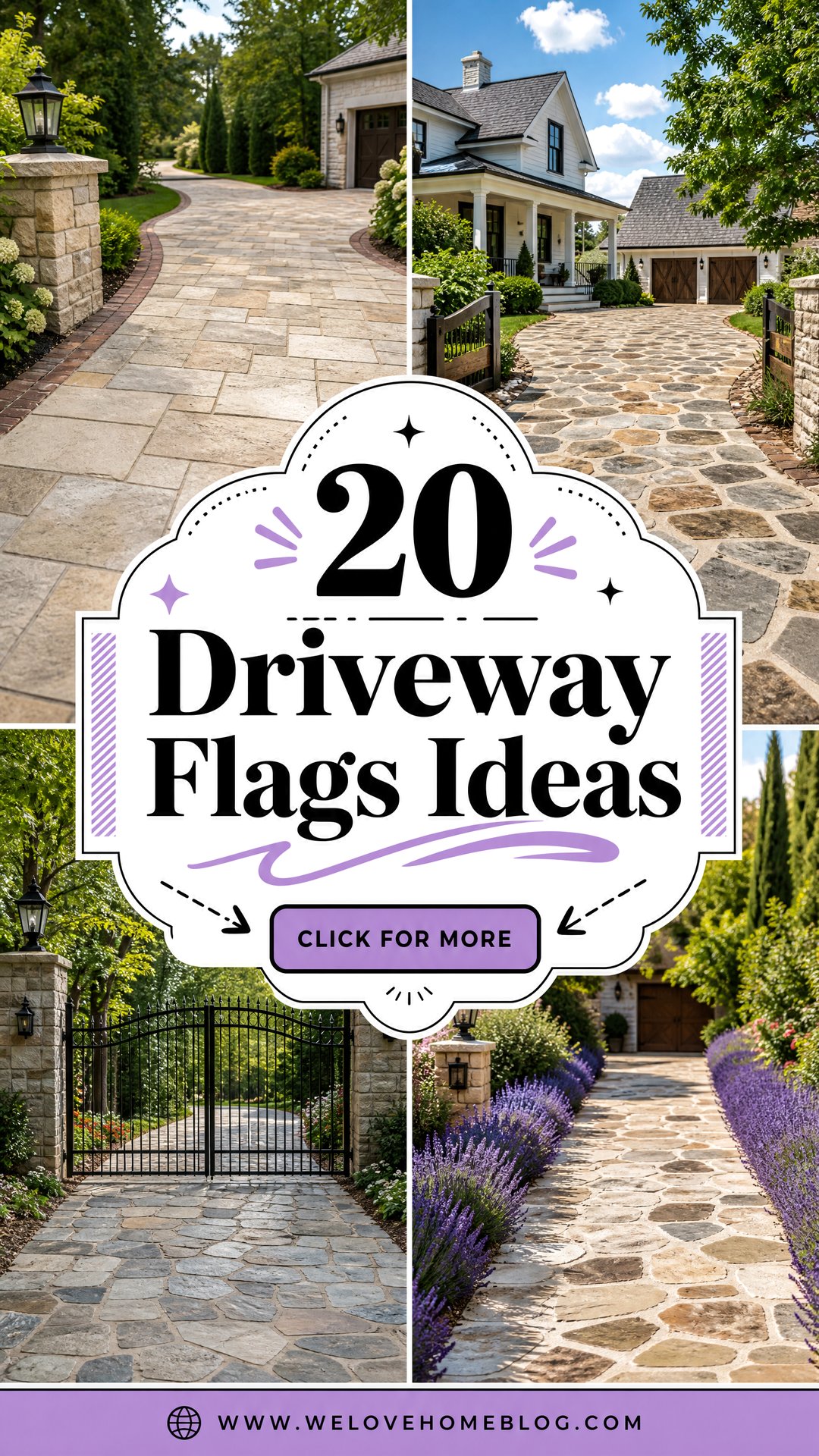
Driveway flags can create a durable, character-rich entrance that feels more inviting than a plain paved surface. These 20 Driveway Flags Ideas explore complete designs using natural flagstone and vehicle-rated paving slabs in varied colors, patterns, and layouts. You will find options for compact suburban yards, long country approaches, modern homes, and traditional properties. Each look combines the driveway surface with practical edging, attractive landscaping, and a clearly defined entrance. Before installation, confirm that the selected flags are suitable for vehicle traffic. A properly prepared base, full mortar support, effective drainage, and secure edge restraints help prevent movement and cracking. () Use the following 20 Driveway Flags Ideas to find a design that complements your home, parking needs, and front yard.
1. Irregular Sandstone Flagstone Driveway
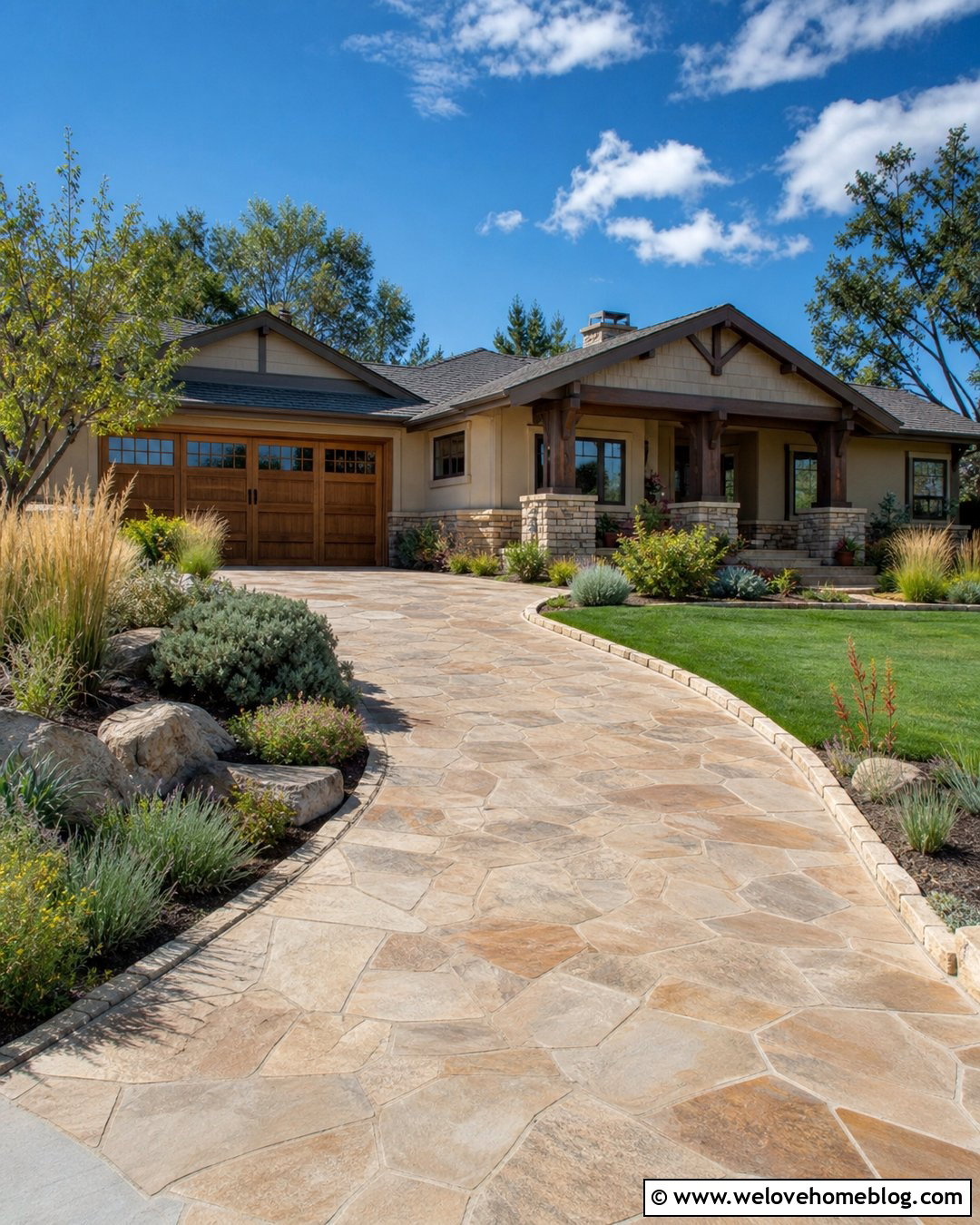
Irregular sandstone flags give a driveway a relaxed, natural appearance that works beautifully with ranch, cottage, and Craftsman homes. Choose buff, tan, and soft brown stones to create warmth without making the entrance look overly formal. A gently curved layout makes the random shapes feel intentional and guides the eye toward the garage. Fill narrow joints with durable mortar rather than loose soil where vehicles will regularly pass. Low limestone curbing can hold the edges firmly in place. Complete the look with ornamental grasses, spreading juniper, and drought-tolerant perennials planted in sweeping beds. Keep taller plants away from the street so drivers can see clearly when exiting. This complete design feels organic while still providing a strong, well-defined parking surface.
2. Rectangular Bluestone Flag Driveway
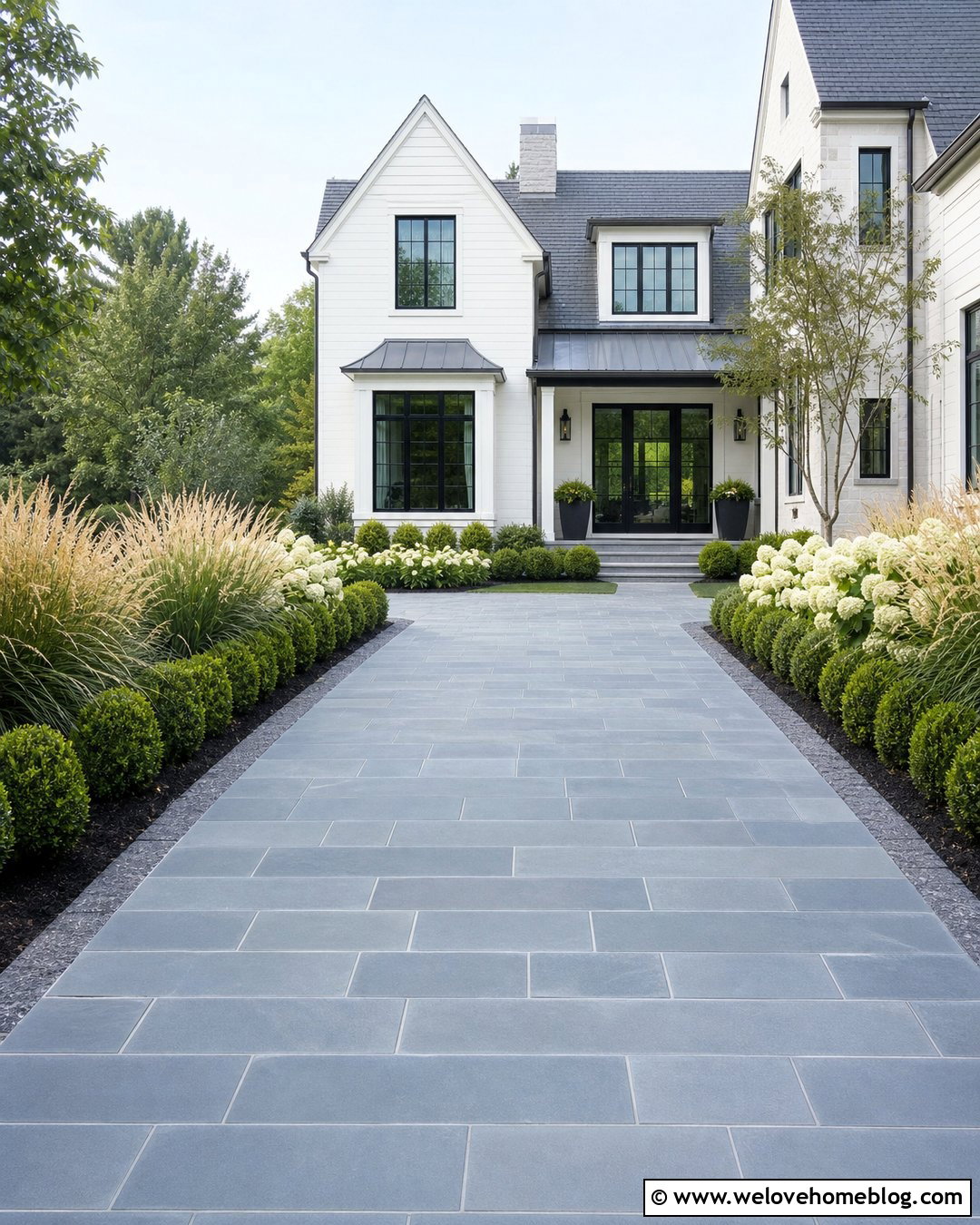
Clean rectangular bluestone flags bring structure to a modern or transitional home. Their blue-gray color pairs especially well with white siding, black window frames, and charcoal roofing. Arrange the stone in a running bond pattern to emphasize the length of a straight driveway. A narrow border of darker granite setts can frame the slabs and protect vulnerable edges from turning tires. Add simple planting beds containing boxwood, feather reed grass, and white hydrangeas for a crisp but welcoming finish. A matching bluestone walkway can branch toward the front door without disrupting the driveway pattern. For better visual balance, align the joints with major architectural features such as garage doors or porch columns. The result is orderly, practical, and easy to coordinate with contemporary exterior materials.
3. Limestone Flag Driveway With Brick Border
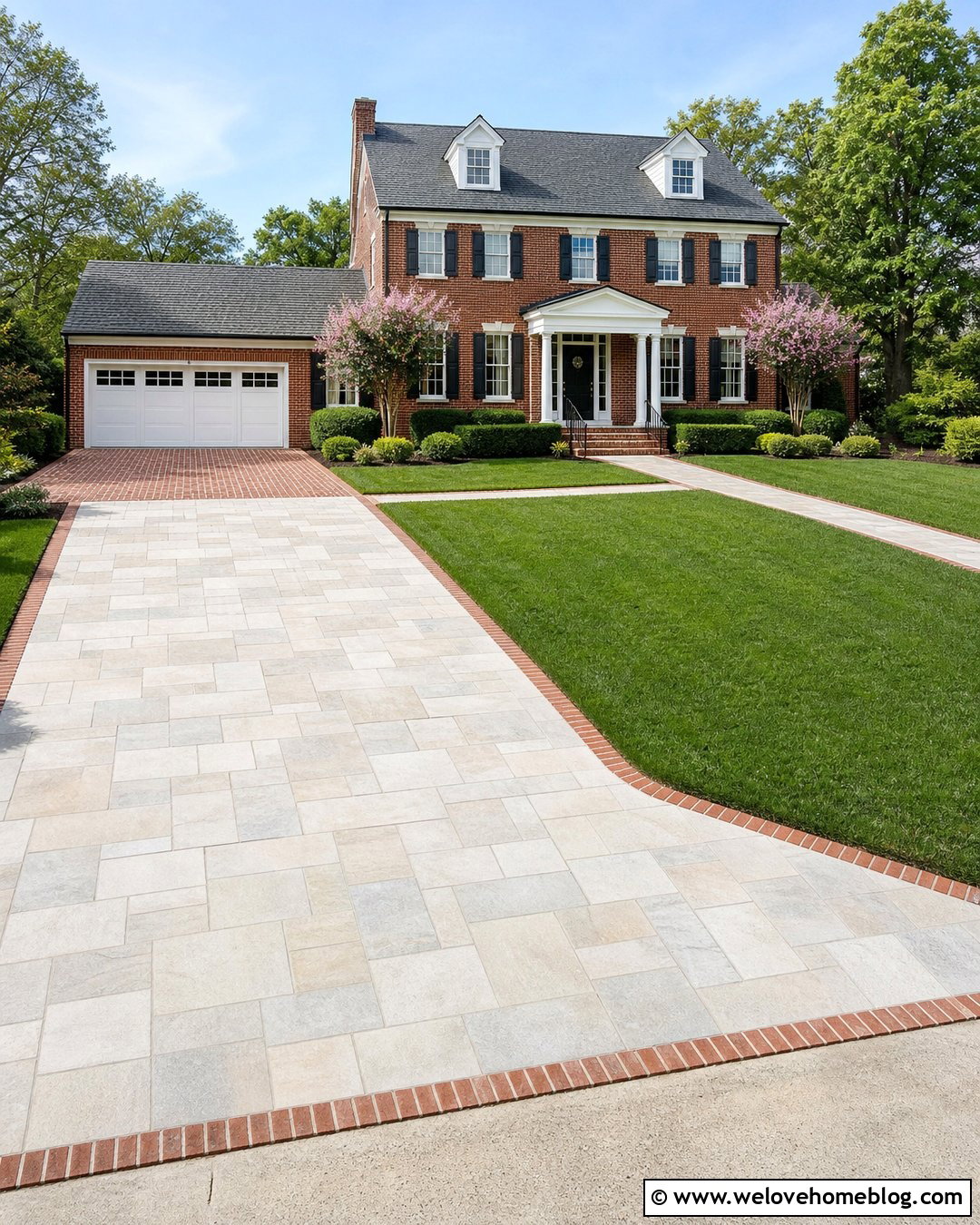
Pale limestone flags and a red brick border create a comfortable, established look around Colonial and Cape Cod homes. Use square or rectangular limestone pieces in a repeating pattern, then install brick in a soldier-course border along both sides. The contrasting colors clearly define the parking area and connect naturally with brick steps, chimneys, or garden walls. A straight layout keeps the formal material combination from feeling busy. Frame the driveway with clipped evergreen shrubs, small flowering trees, and neat lawn panels. At the garage, repeat the brick as a wider apron that can disguise stains and handle frequent turning. Choose textured limestone rather than a highly polished finish for better traction. This coordinated driveway feels traditional without appearing dated or excessively ornate.
4. Gray Flagstone Driveway With Granite Setts
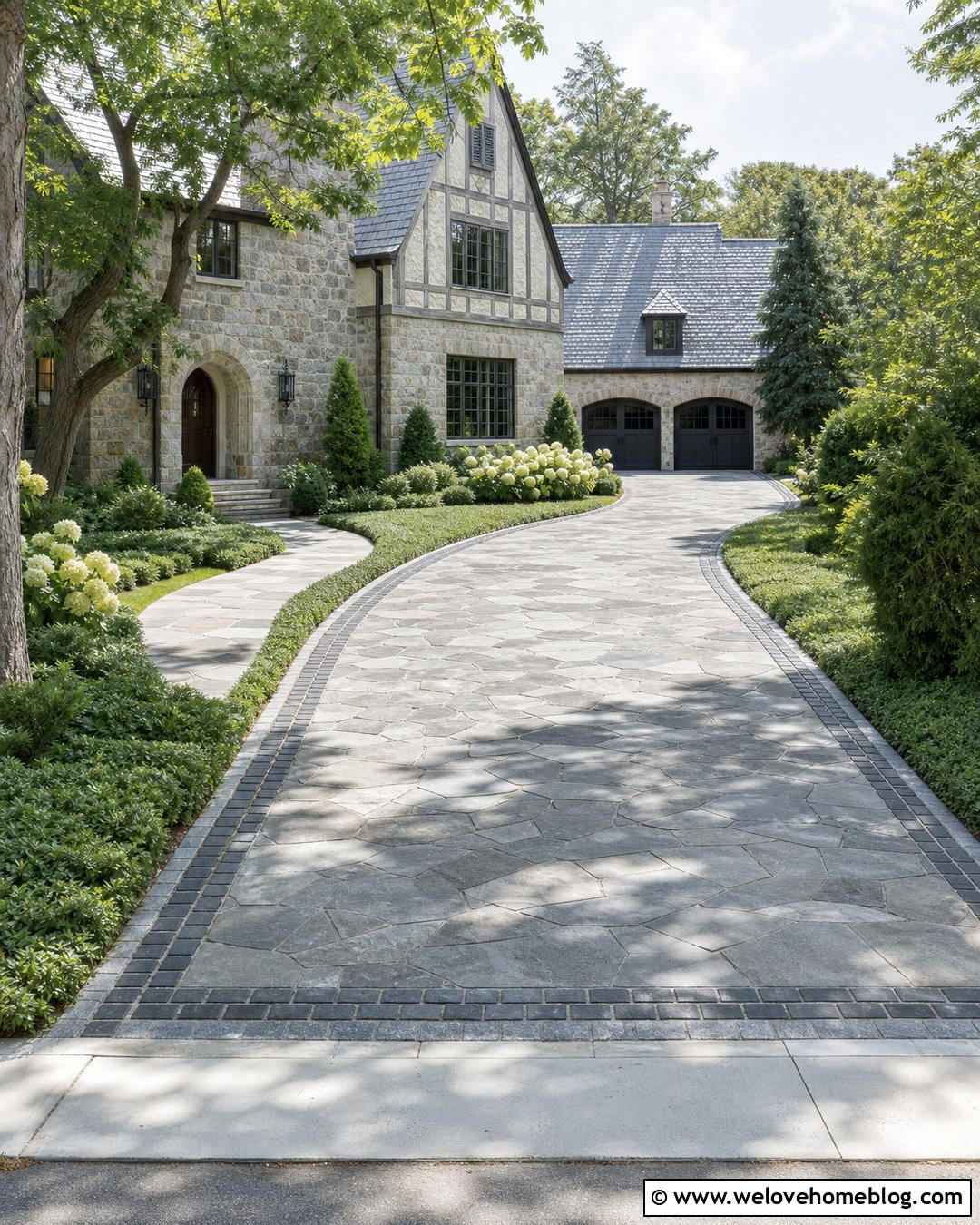
For a refined stone entrance, combine medium-gray flagstone with a double row of charcoal granite setts. The darker border sharpens the irregular flagstone edges and gives the driveway a more tailored appearance. This pairing suits stone-faced houses, Tudor homes, and upscale suburban properties. Use a broad, slightly curved layout that allows comfortable vehicle movement while softening the approach to the garage. Along one side, add a paved walkway separated by a narrow bed of low evergreen ground cover. Layer hydrangeas, dwarf conifers, and shade-tolerant grasses beneath existing trees. A granite sett apron at the street provides another strong visual anchor. Keeping the planting palette mostly green allows the natural variation within the flagstone to remain the primary feature of the complete driveway design.
5. Red Sandstone Flag Driveway
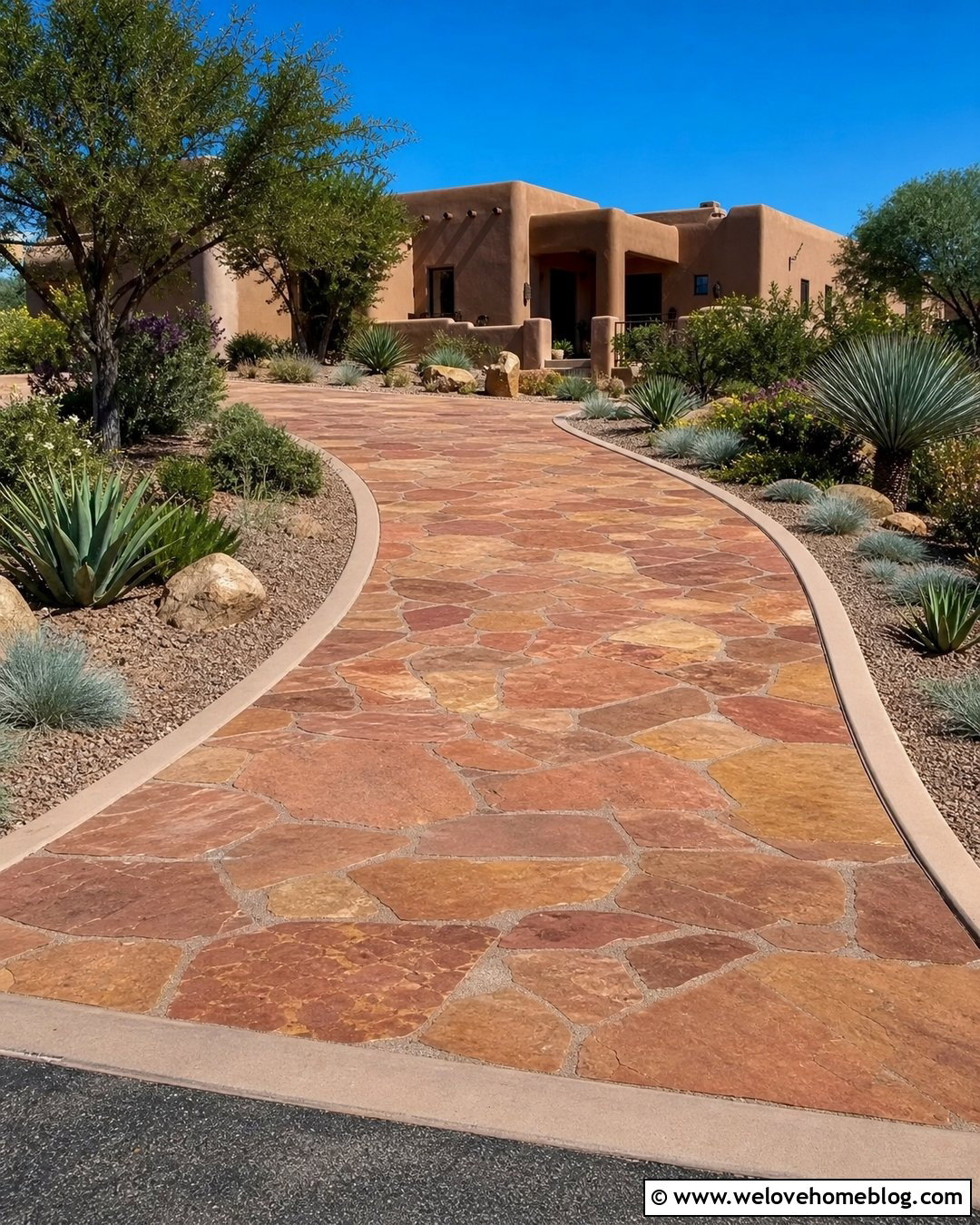
Red sandstone flags introduce earthy color that feels especially appropriate beside Southwestern, adobe, and warm-toned ranch homes. Select stones with muted rust, rose, and brown variation rather than a single bright shade. A wide curved driveway lets the changing colors unfold gradually as visitors approach the house. Border the paving with tan concrete curbing or matching sandstone blocks to create stable, visually quiet edges. Surrounding beds can include agave, yucca, blue fescue, and decorative gravel mulch for a water-conscious landscape. Place broad flagstone stepping pads between the driveway and front entrance to continue the material across the yard. Because natural sandstone can vary in strength, select dense, vehicle-rated pieces and use professional installation. The finished entrance feels warm, regional, and closely connected to the landscape.
6. Mixed Flagstone Farmhouse Driveway
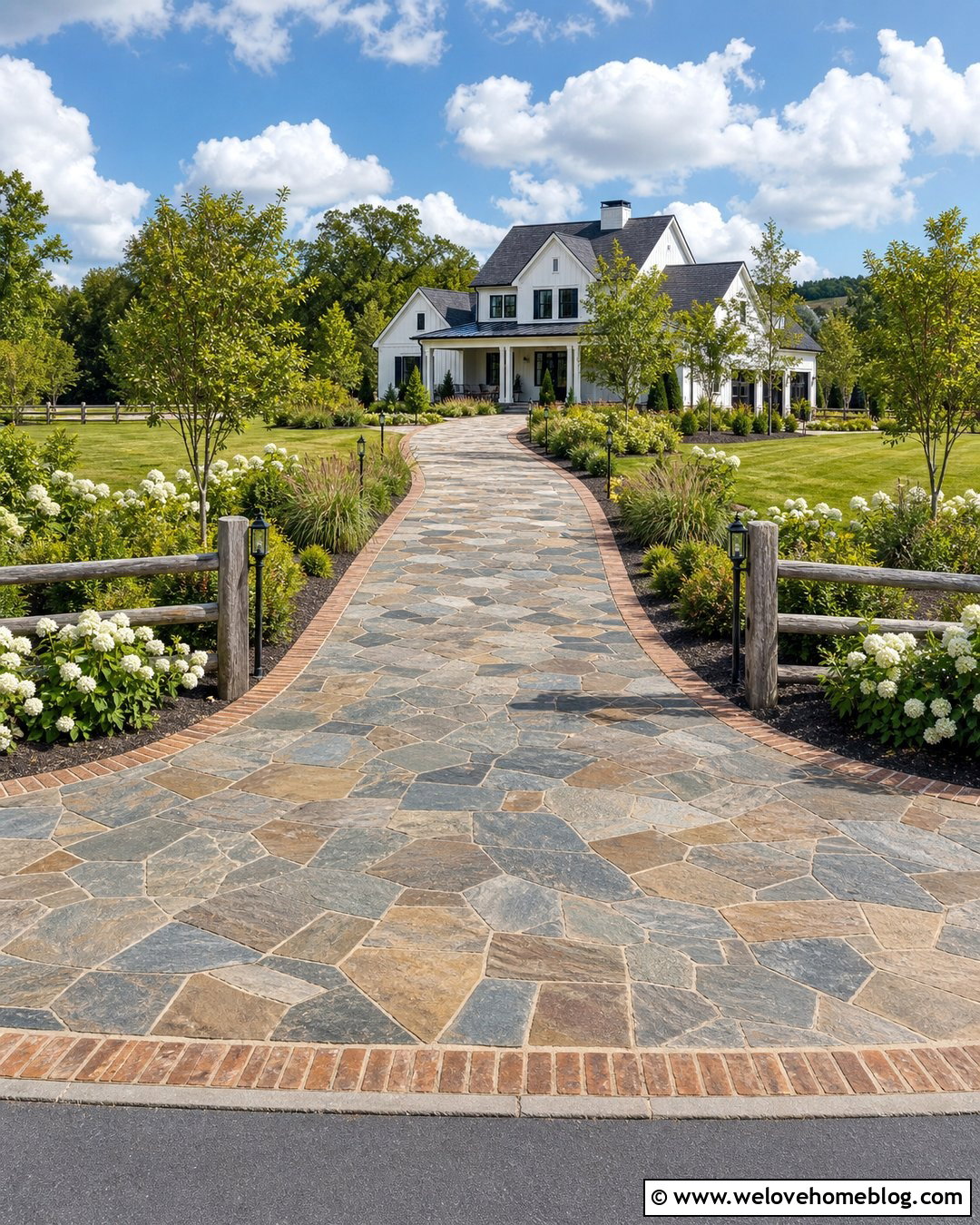
A mixed-color flagstone driveway can make a modern farmhouse feel relaxed rather than overly polished. Blend gray, brown, buff, and muted blue stones in an irregular pattern, distributing the colors evenly across the surface. Use a long, gently bending layout that follows the natural grade of the property. A border of reclaimed-looking clay brick creates a subtle link to a brick chimney or porch foundation. On both sides, plant white flowering shrubs, ornamental grasses, and small native trees behind low split-rail fencing. A broad flagstone apron near the garage provides room for turning while making the arrival area feel generous. Black post lights can mark the entrance without overwhelming it. This driveway combines practical country character with enough structure to complement a newer farmhouse exterior.
7. Large Format Flagstone Driveway
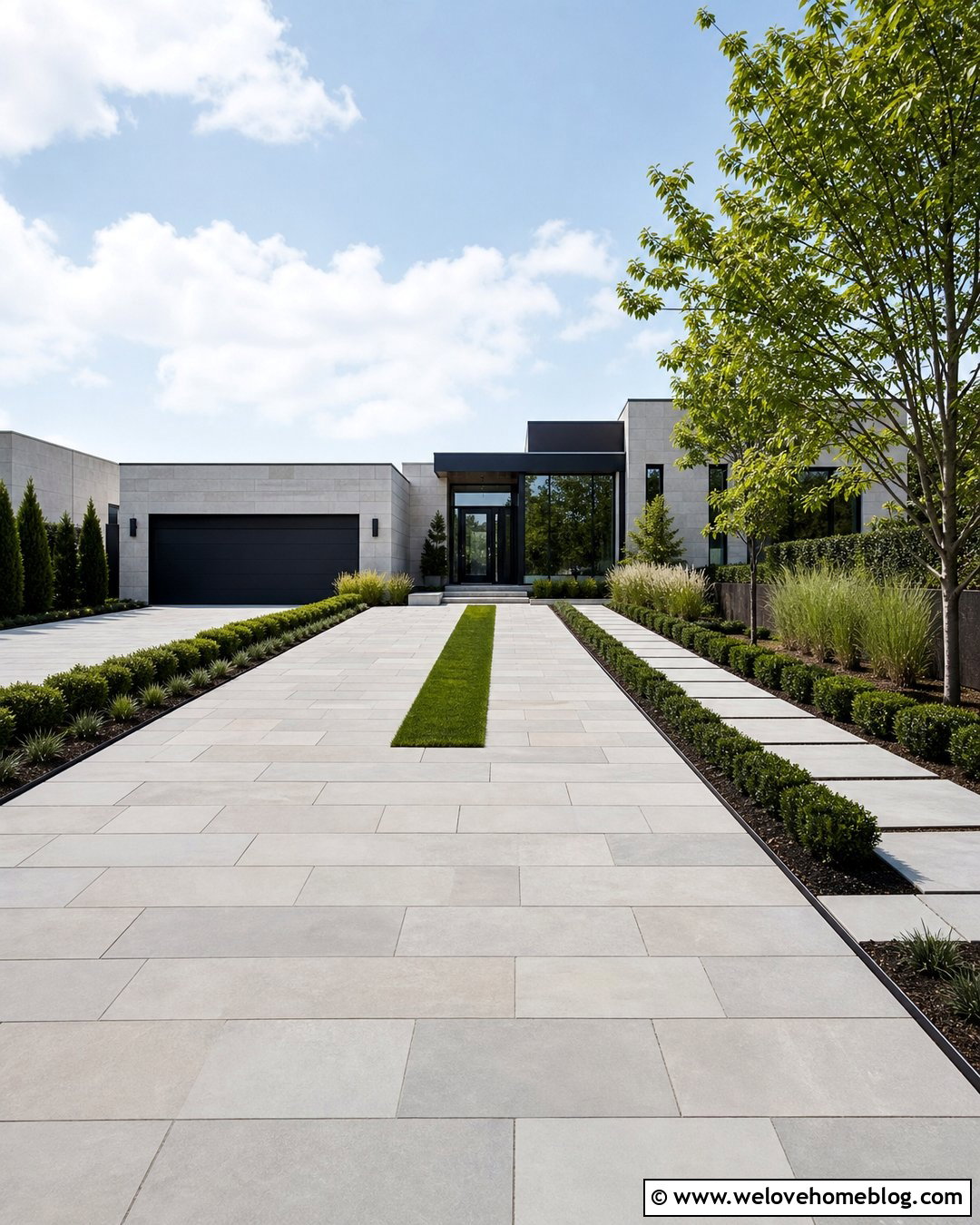
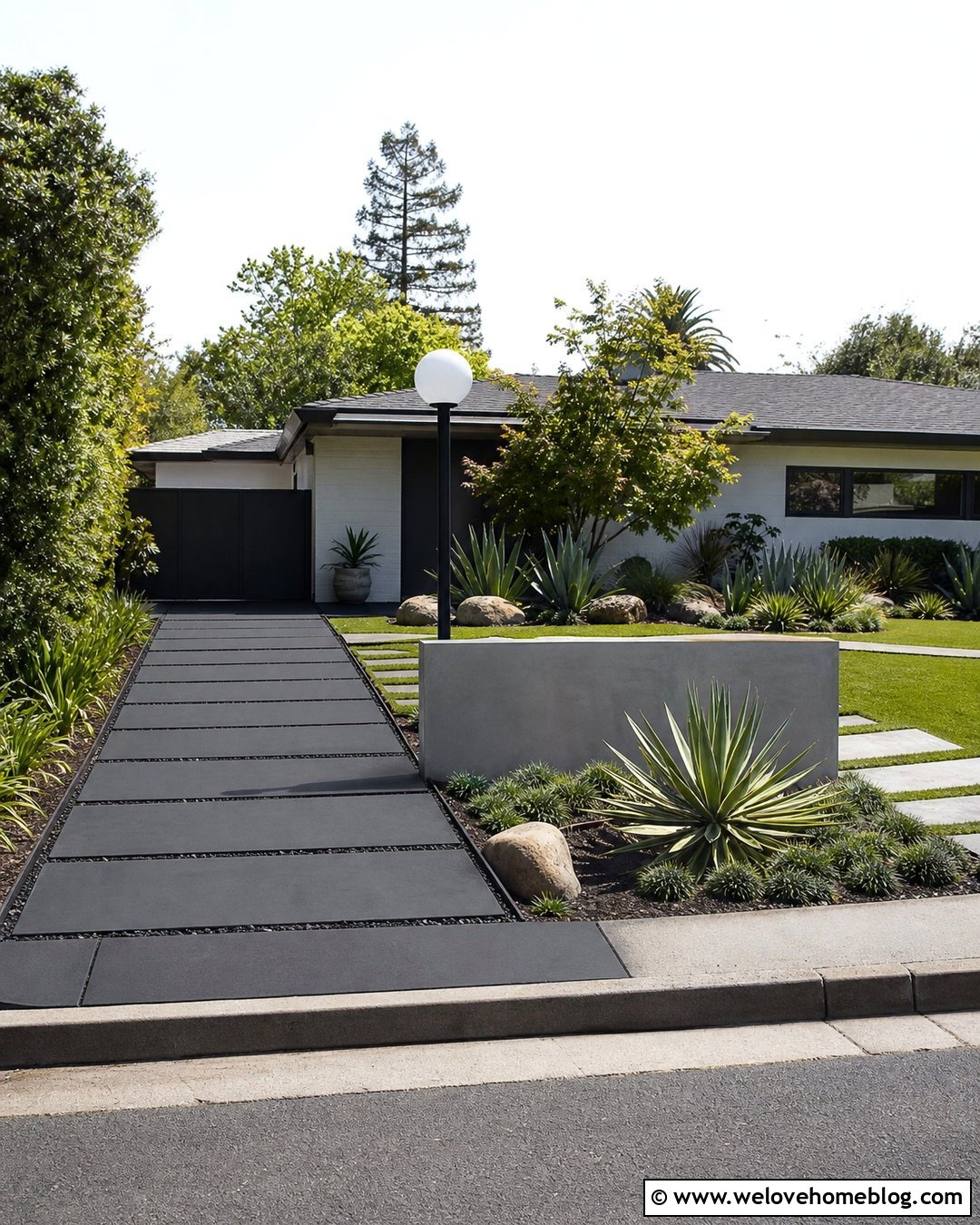
Large-format flagstone produces fewer joints and a calm, spacious look that suits contemporary architecture. Choose oversized rectangular limestone or dense sandstone slabs in a consistent light gray tone. Lay them in an offset grid across a straight driveway, using narrow joints to maintain the clean geometry. Slim steel edging can create an almost invisible boundary between the paving and surrounding landscape. Balance the broad stone surface with linear beds of clipped shrubs, upright grasses, and low ground cover. A central grass strip can be added to an extra-wide driveway, provided the vehicle paths remain comfortably sized. Repeat the same slabs on the front walkway and porch for continuity. This restrained approach highlights the scale and texture of the flags while allowing the home’s simple architectural lines to remain prominent.
8. Flagstone Driveway With Grass Joints
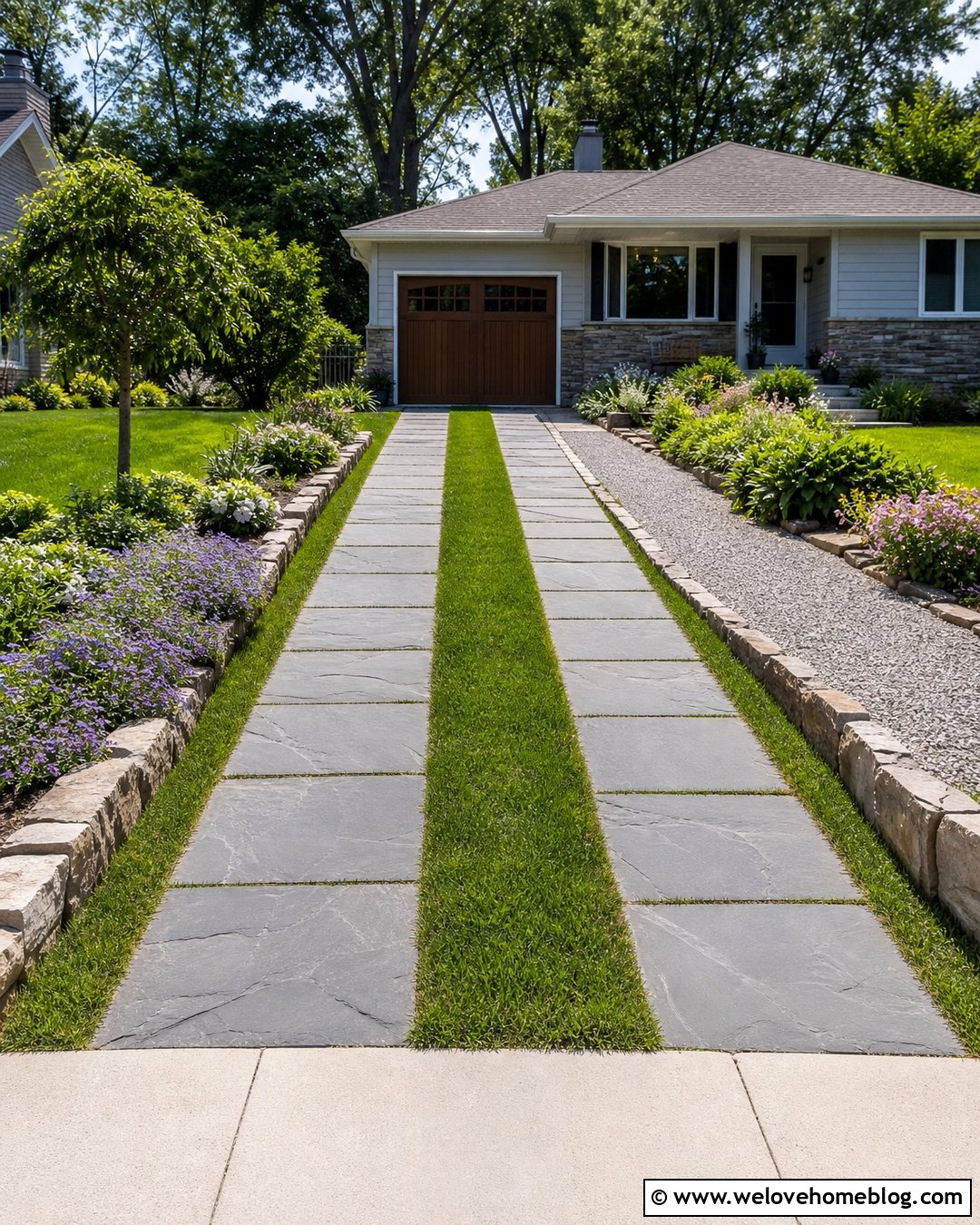
Grass joints soften the appearance of a flagstone driveway and increase the amount of visible greenery in the front yard. This treatment works best with large, evenly spaced vehicle-rated flags installed over a properly engineered base. Keep the planted joints narrow within frequently driven areas so tires have continuous stone support. A straight two-track layout can be especially effective for a small cottage, bungalow, or environmentally focused home. Use tougher low-growing plants or reinforced turf suited to the local climate and expected traffic. Frame the driveway with informal native planting, a simple gravel walkway, and a small flowering tree near the house. Avoid placing grass joints where vehicles turn sharply because repeated tire movement can cause damage. The finished design feels light, garden-friendly, and naturally integrated with the lawn.
9. Circular Flagstone Driveway
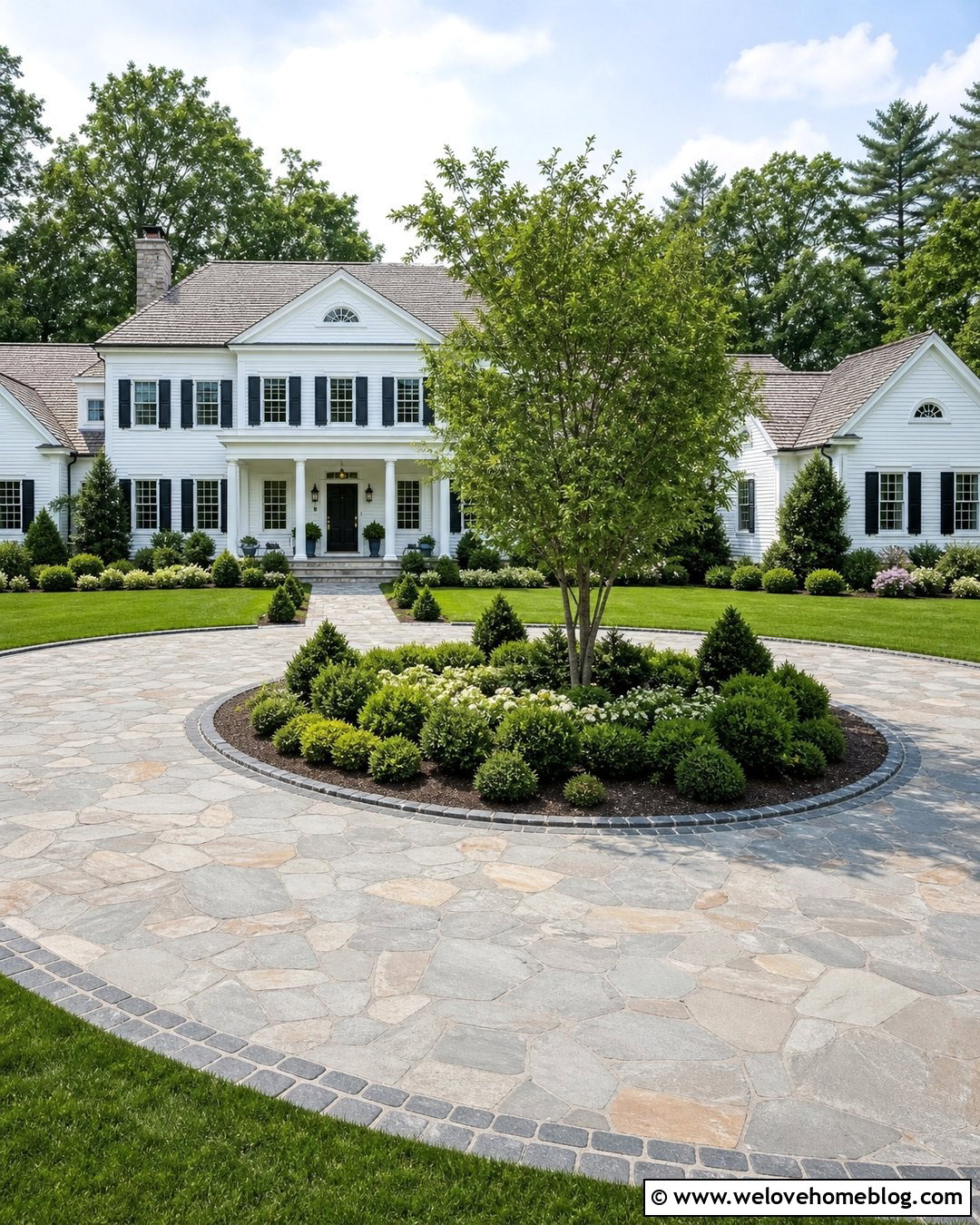
A circular flagstone driveway creates a graceful arrival sequence and allows vehicles to leave without reversing toward the street. Use irregular gray and tan flagstone for the main surface, then define the outer and inner curves with small granite setts. The center island becomes the focal point, so landscape it with one specimen tree, layered evergreen shrubs, and low seasonal flowers. Keep plants near the driveway edge compact to preserve visibility. This layout suits broad Colonial, Mediterranean, and traditional homes with centered front entrances. A matching flagstone walkway can cross the island or connect the closest section of driveway to the porch. Before finalizing the circle, check turning space for typical household and delivery vehicles. The combination of natural paving and structured planting creates an impressive but approachable front yard.
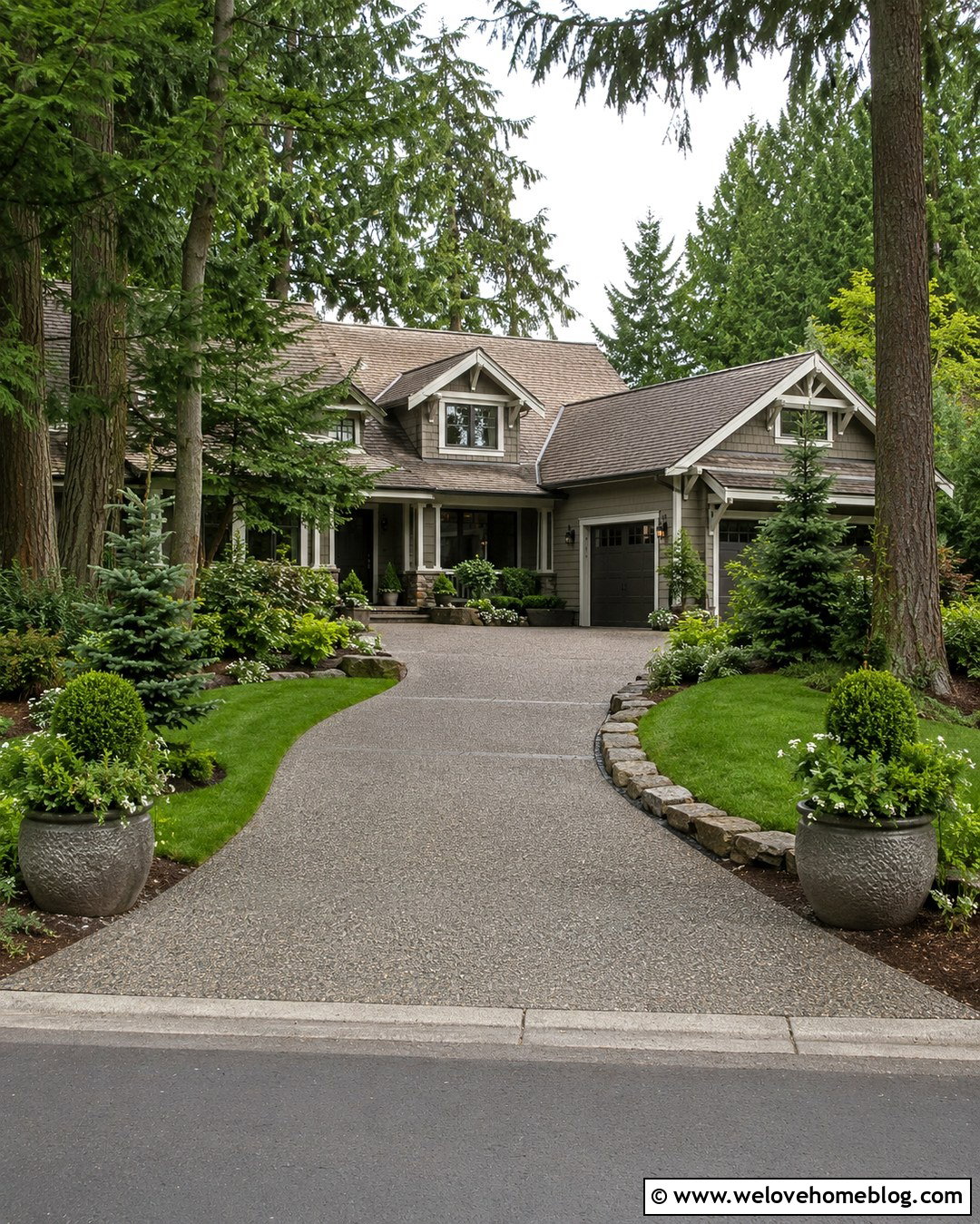
10. Flagstone Driveway With Gravel Joints
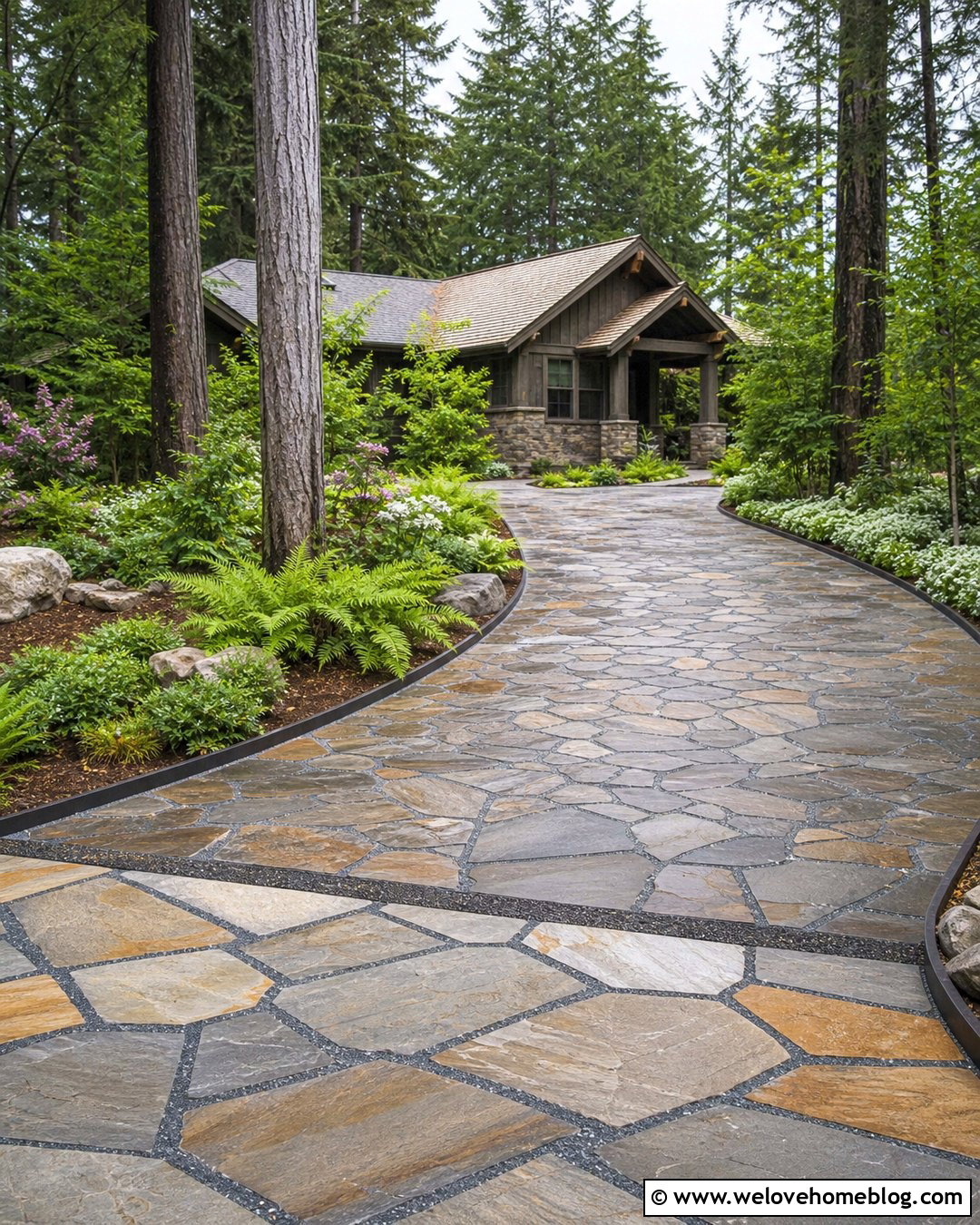
Gravel-filled joints emphasize the individual shapes of flagstone and create a more casual, textural surface. Choose thick, vehicle-rated gray or brown flags and fill the spaces with compacted angular stone rather than loose rounded pebbles. Use relatively tight joints where tires travel most often to maintain a stable driving path. A curved layout bordered with steel or stone restraints helps contain the joint material. Pair the driveway with woodland landscaping, including ferns, low shrubs, flowering ground cover, and mature shade trees. A wider gravel-filled flagstone apron near the house can visually connect the parking area with a matching garden path. Regular sweeping and occasional gravel replenishment may be needed. This complete look is best for lower-traffic residential settings where a rustic, natural appearance is more important than perfect formality.
11. Cut Flagstone Driveway With Mortar Joints
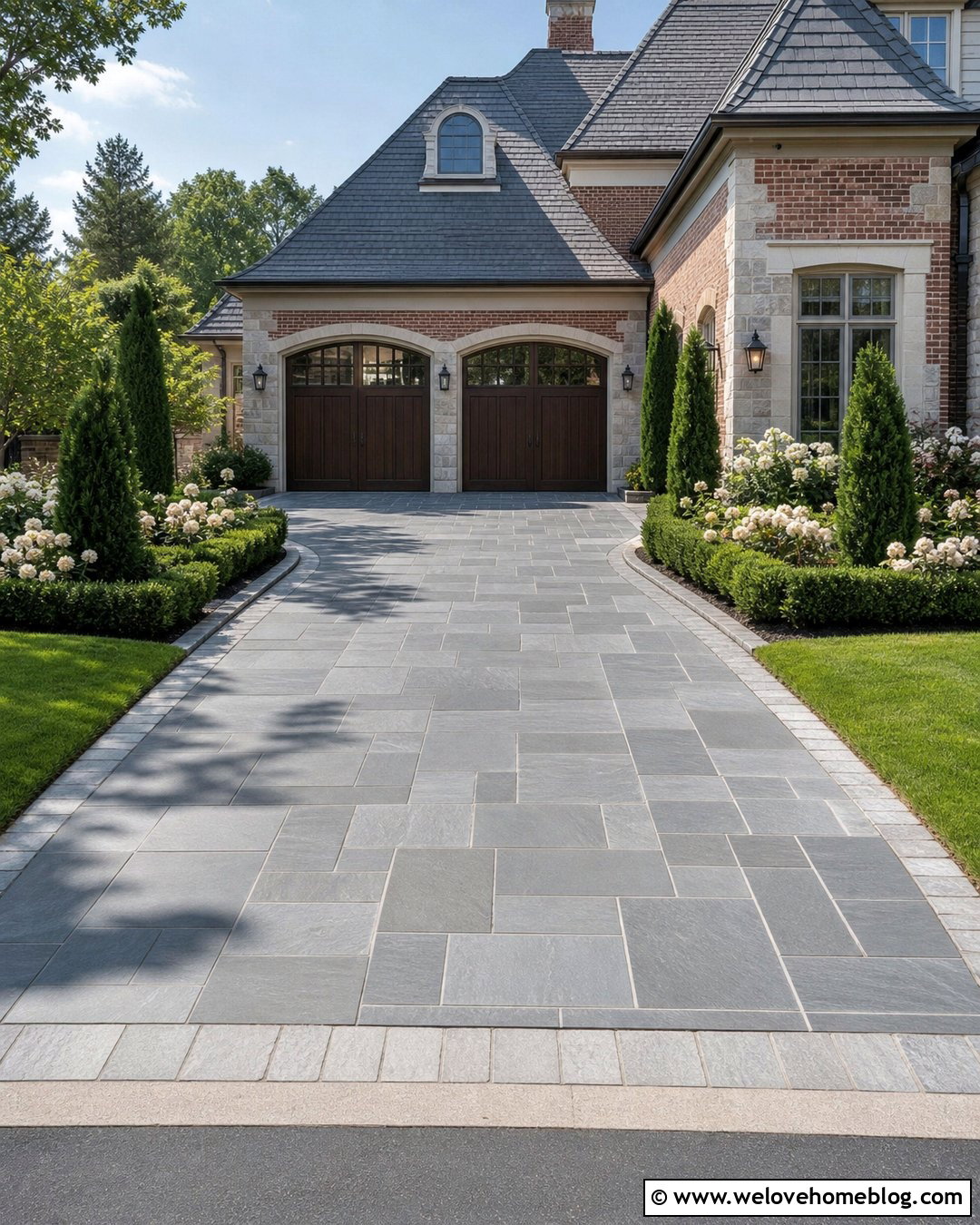
Cut flagstone with mortar joints offers the character of natural stone in a tidy, controlled pattern. Square and rectangular flags can be arranged in an ashlar layout, creating visual variety without the uneven edges of random paving. Choose medium-gray stone for a versatile surface that complements brick, stucco, or painted siding. A straight driveway with a slightly flared entrance improves access while making the property feel welcoming from the curb. Edge the paving with matching cut stone laid in a contrasting direction. Formal planting beds containing boxwood, roses, and upright evergreens can reinforce the orderly design. Use a full supportive bedding system specified for vehicles, and include planned drainage to move water away from the house. The finished driveway feels substantial, polished, and suitable for year-round residential use.
12. Flagstone Driveway With Cobblestone Apron
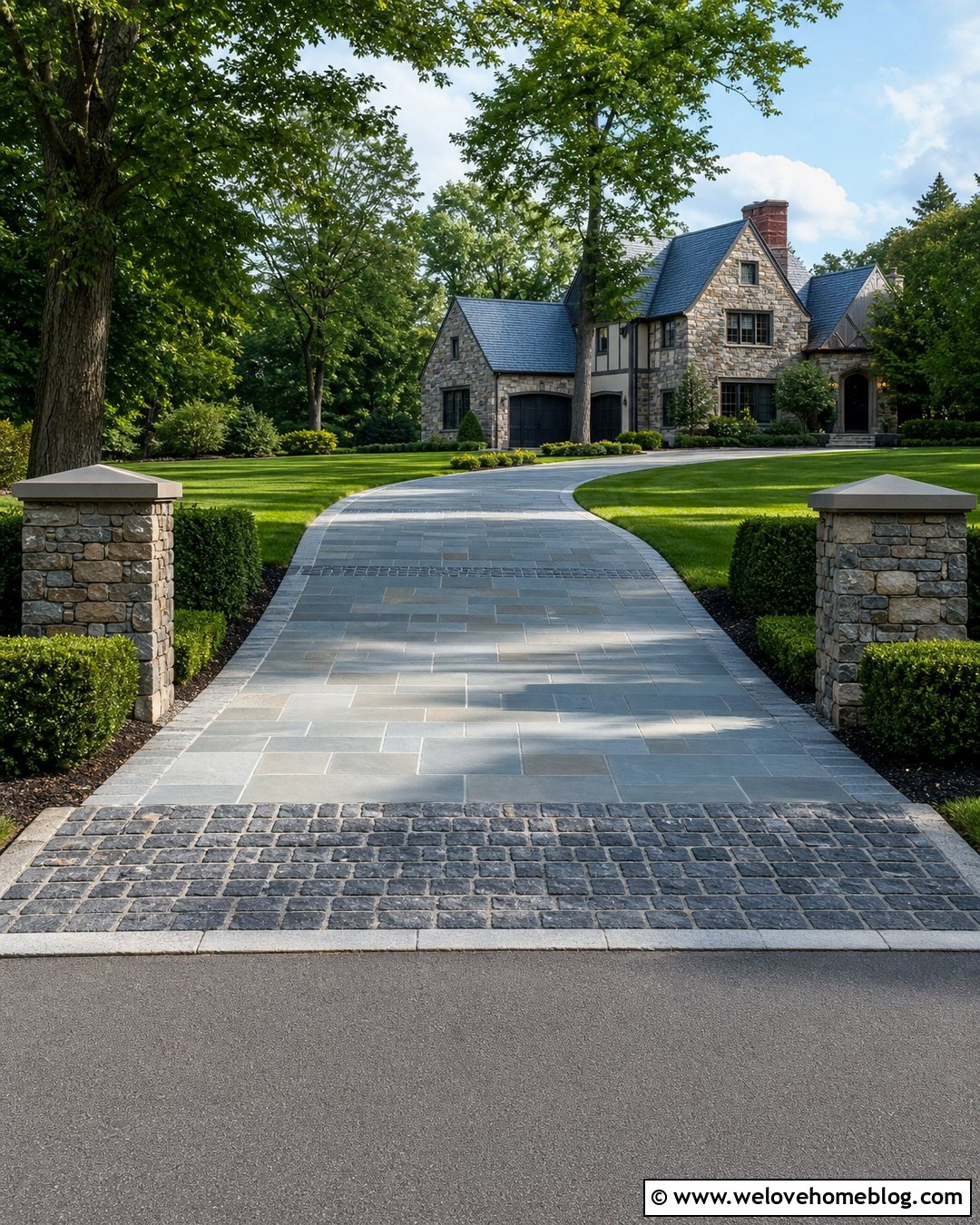
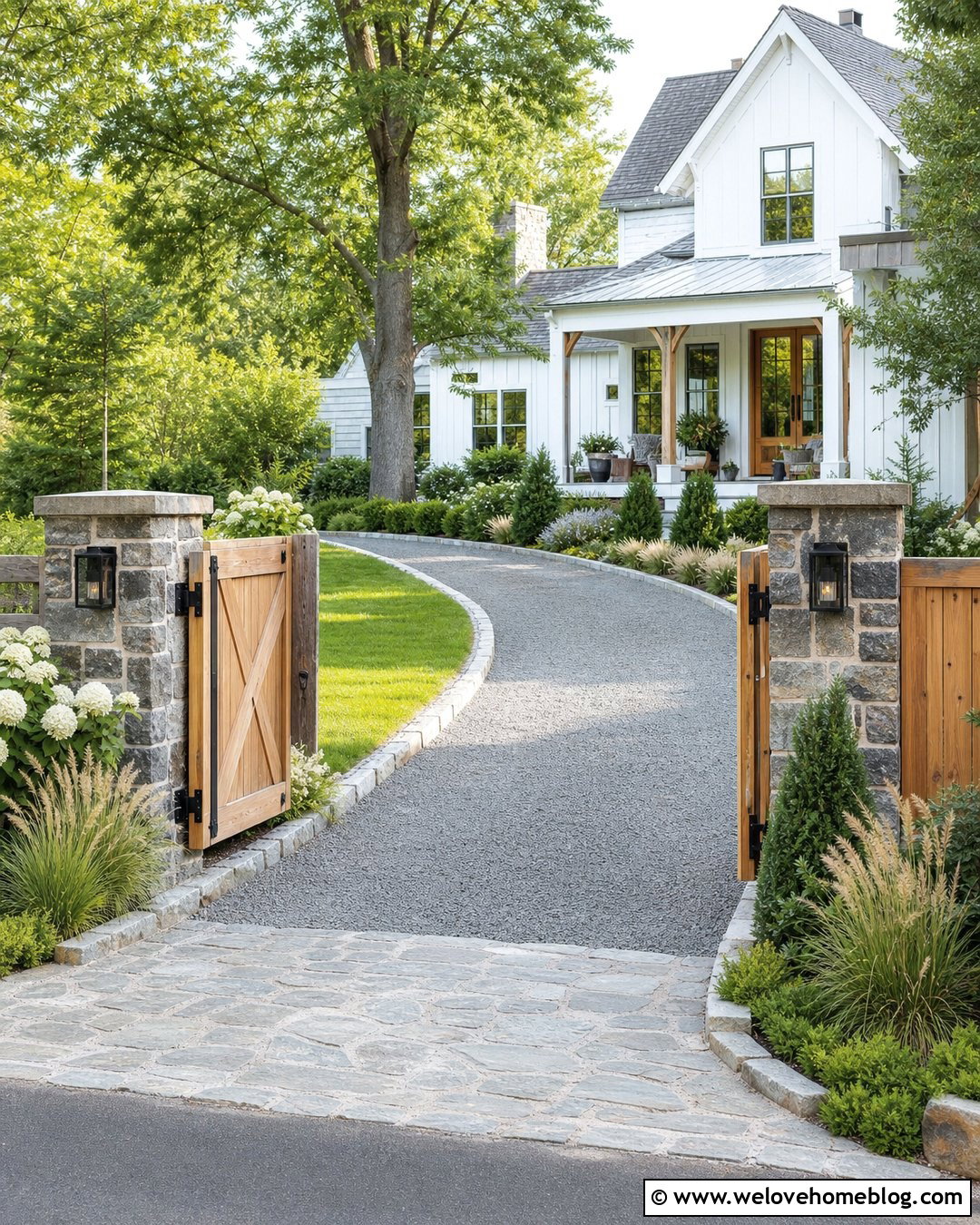
A cobblestone apron can protect and highlight the entrance of a flagstone driveway. Use broad Pennsylvania bluestone or gray sandstone flags for the main surface, then install a six- to eight-foot-deep band of granite cobblestone where the driveway meets the street. Repeat a narrower cobblestone band near the garage to create balance. This combination works particularly well with Tudor, European-inspired, and stone-front homes. Curve the driveway slightly and frame it with low hedges, shade trees, and sweeping lawn. At the curb, add simple masonry pillars positioned far enough apart for comfortable vehicle clearance. The smaller cobbles visually absorb changes in grade and make the transition between street and driveway feel deliberate. Together, the contrasting stone sizes produce a durable entrance with strong traditional character.
13. Flagstone Driveway With Stone Pillars
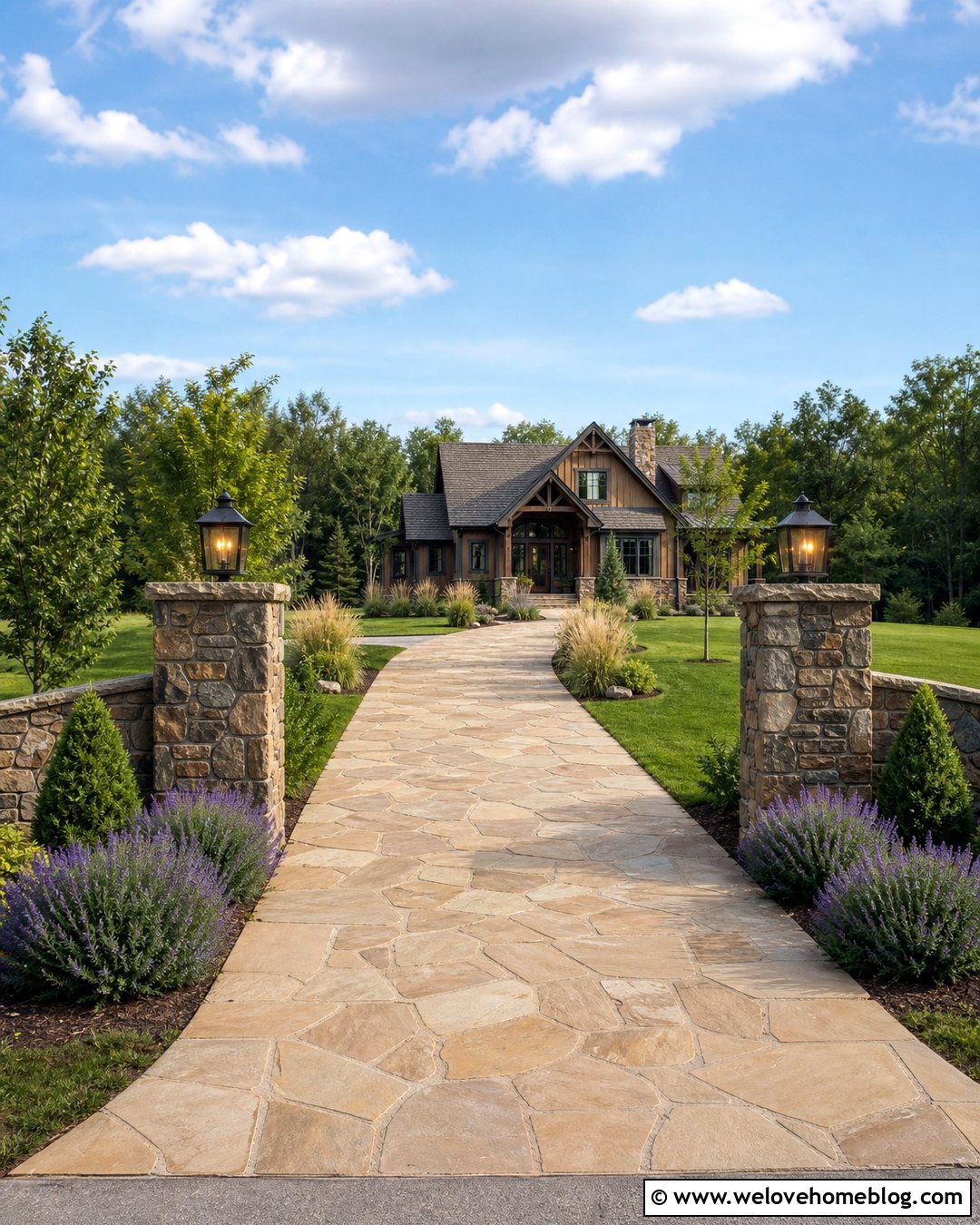
Stone pillars give a flagstone driveway a visible entrance without requiring a full gate. Build the pillars from stone that shares one or two colors with the driveway, creating a coordinated rather than perfectly matched look. Buff sandstone flags, for example, pair naturally with fieldstone pillars containing tan, gray, and brown tones. A long, straight approach is ideal because the pillars frame a clear view of the house. Continue low stone walls briefly beyond each pillar, then transition into layered planting beds. Compact evergreens, lavender, and ornamental grasses can soften the masonry while keeping sightlines open. Include understated downlights or shielded fixtures on the pillars for practical illumination. This complete entrance works well for Craftsman, country, and traditional homes, adding definition without making the property feel closed or unwelcoming.
14. Flagstone Driveway With Black Metal Gate
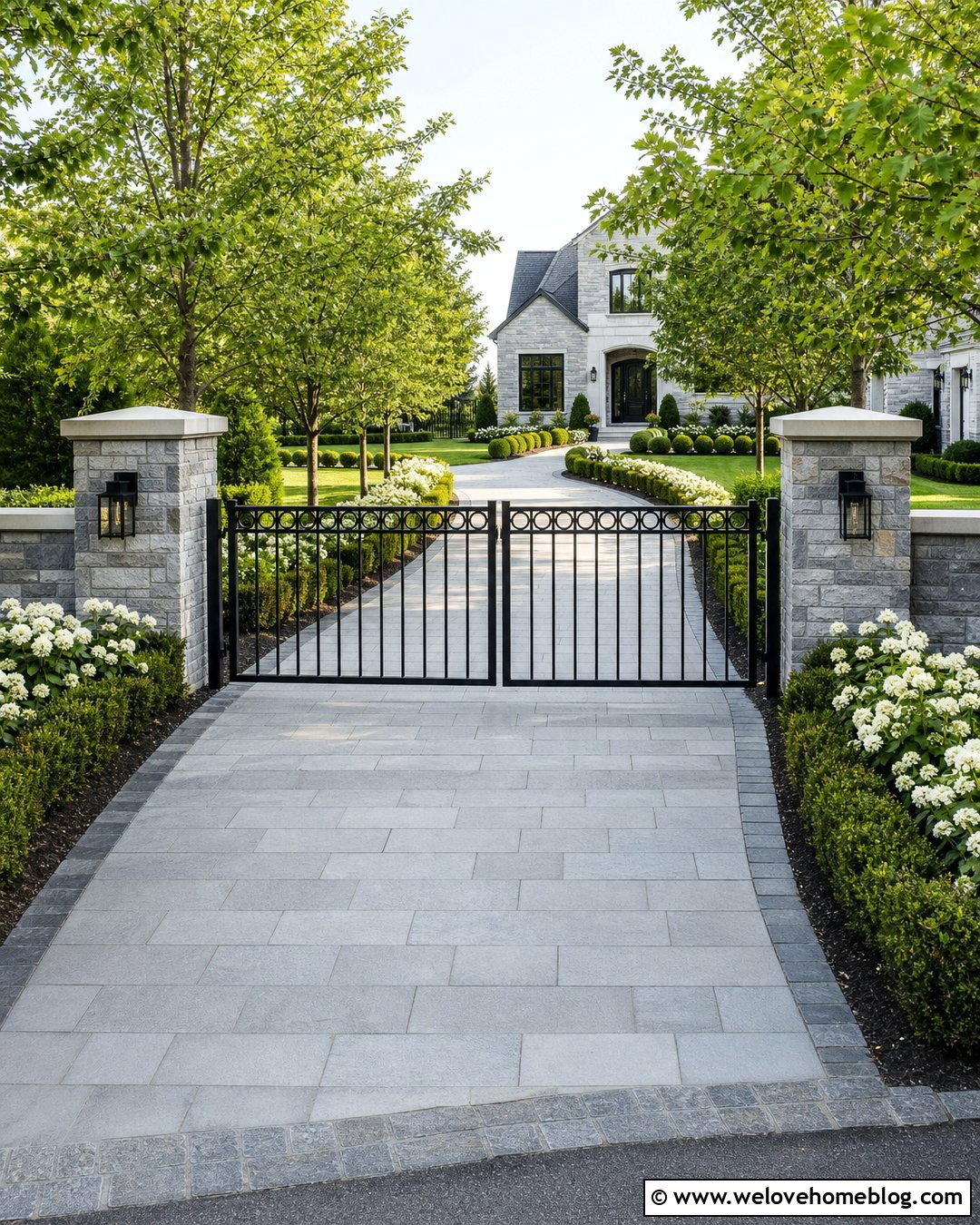
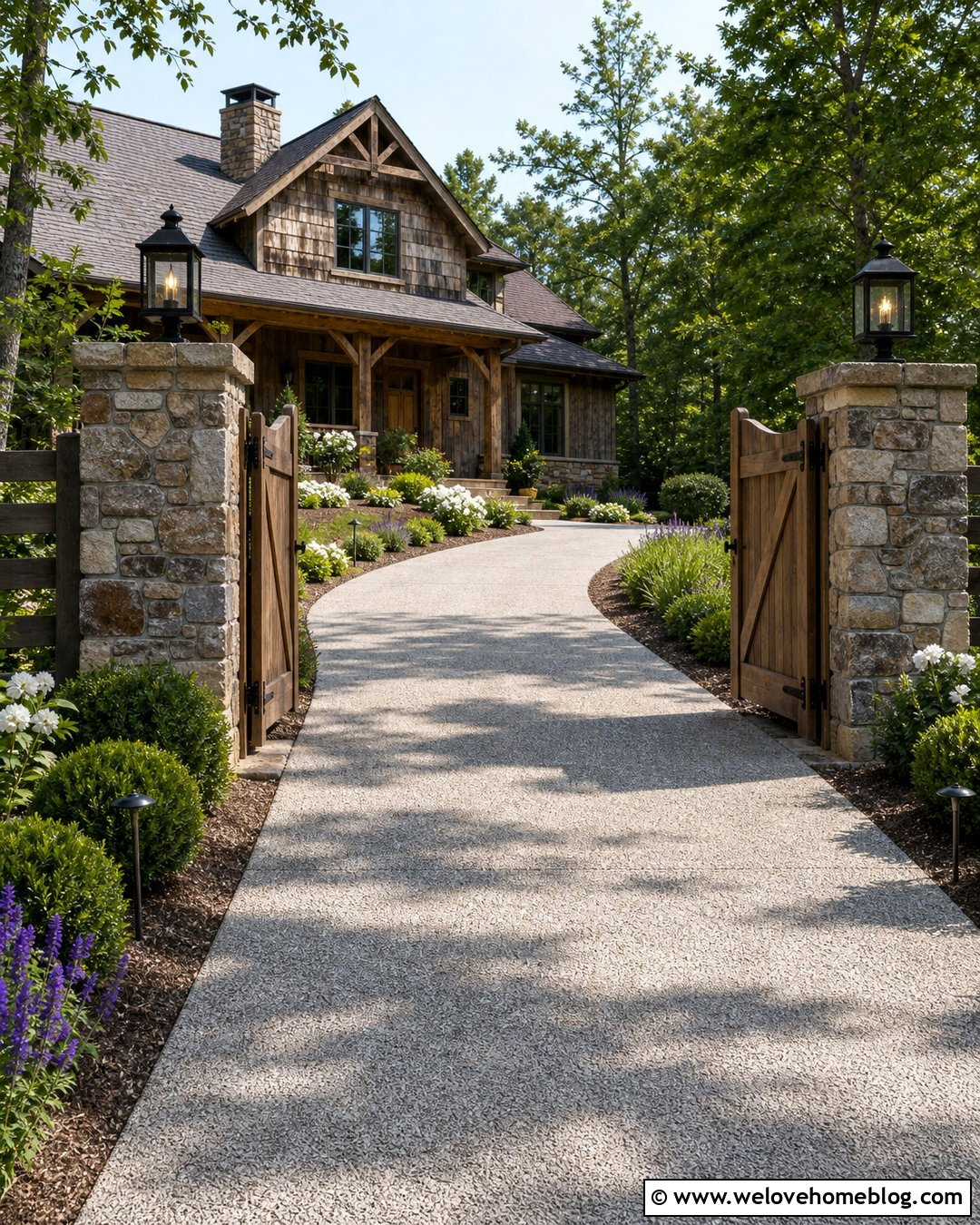
Natural flagstone and a simple black metal gate create an appealing balance between rustic texture and clean structure. Choose rectangular gray flagstone laid in a running bond pattern across a wide, gently curved driveway. Set the gate between stone-faced pillars that repeat materials found on the home’s facade. The gate should open onto a level section with enough space for vehicles to wait safely away from the street. Continue dark granite edging along the driveway to connect visually with the metalwork. Low boxwood, white flowering shrubs, and evenly spaced trees can frame the approach without hiding the gate. Avoid excessive ornament if the home has modern or transitional architecture. The resulting driveway provides security and a strong sense of arrival while preserving an open, well-landscaped residential appearance.
15. Flagstone Driveway With Lavender Borders
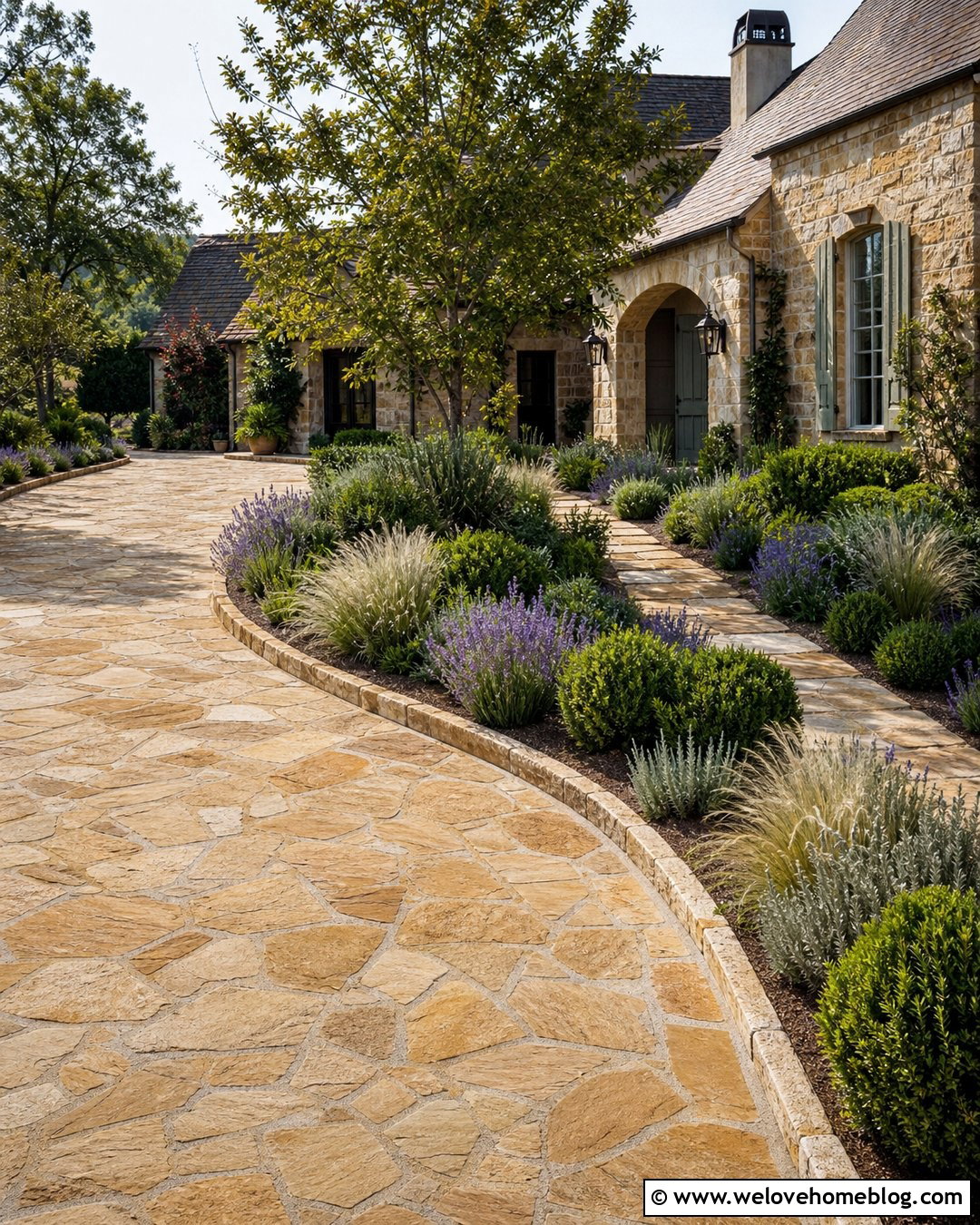
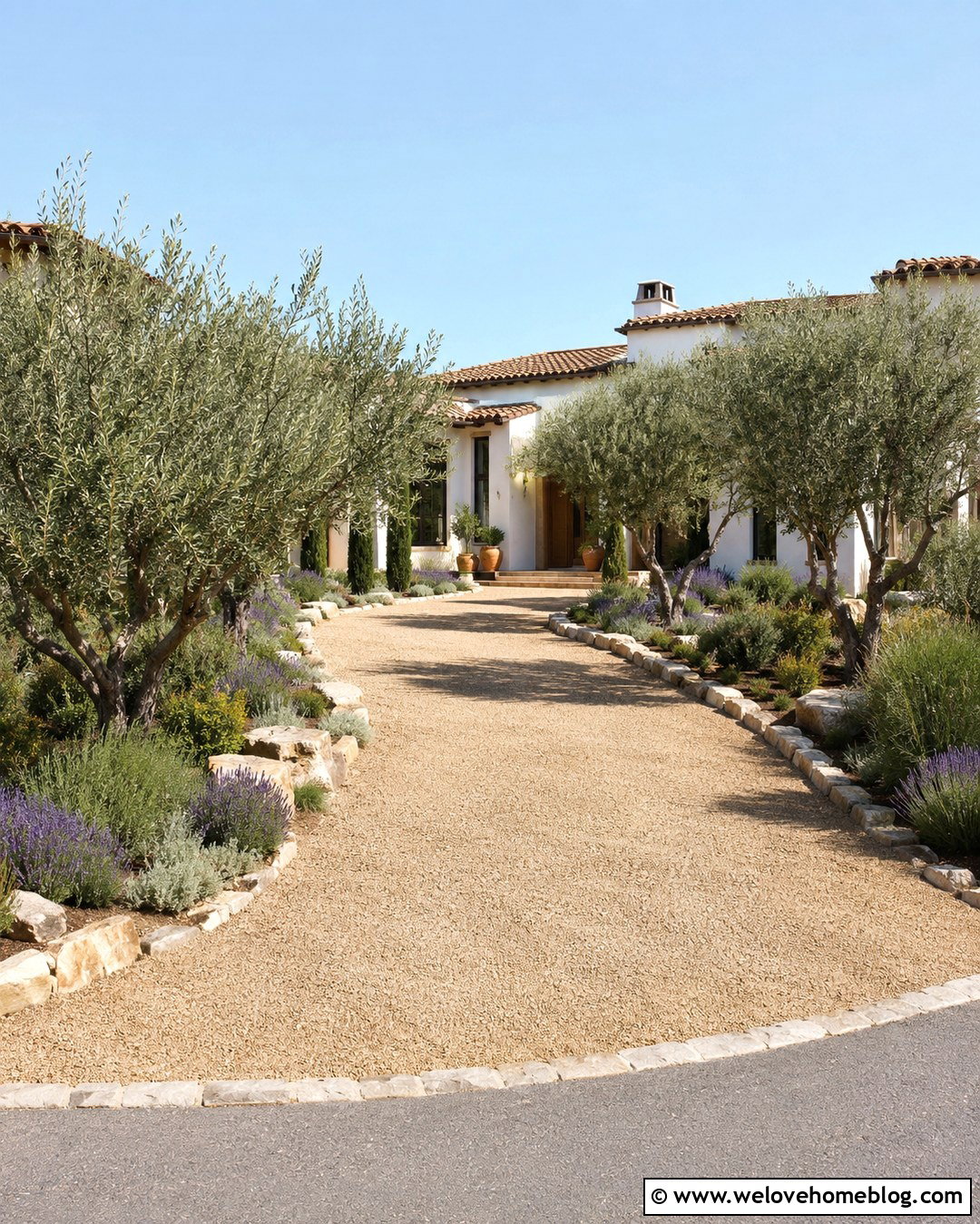
Imagine warm sandstone flags framed by soft rows of purple flowers and silvery foliage. Lavender borders are especially effective beside a sunny driveway leading to a cottage, French country, or Mediterranean-style house. Use buff or honey-toned irregular flagstone in a gentle curve, supported by a narrow stone curb that keeps soil and roots away from the paving. Plant lavender in repeated groups rather than one continuous dense row, leaving access points for maintenance. Add rosemary, catmint, ornamental grass, and small evergreen shrubs to extend the texture beyond flowering season. A matching flagstone walkway can branch through the border toward the front door. The stone’s earthy variation and the restrained planting palette work together to create a colorful entrance that still feels organized, practical, and easy to understand from the curb.
16. Flagstone Driveway With Native Landscaping
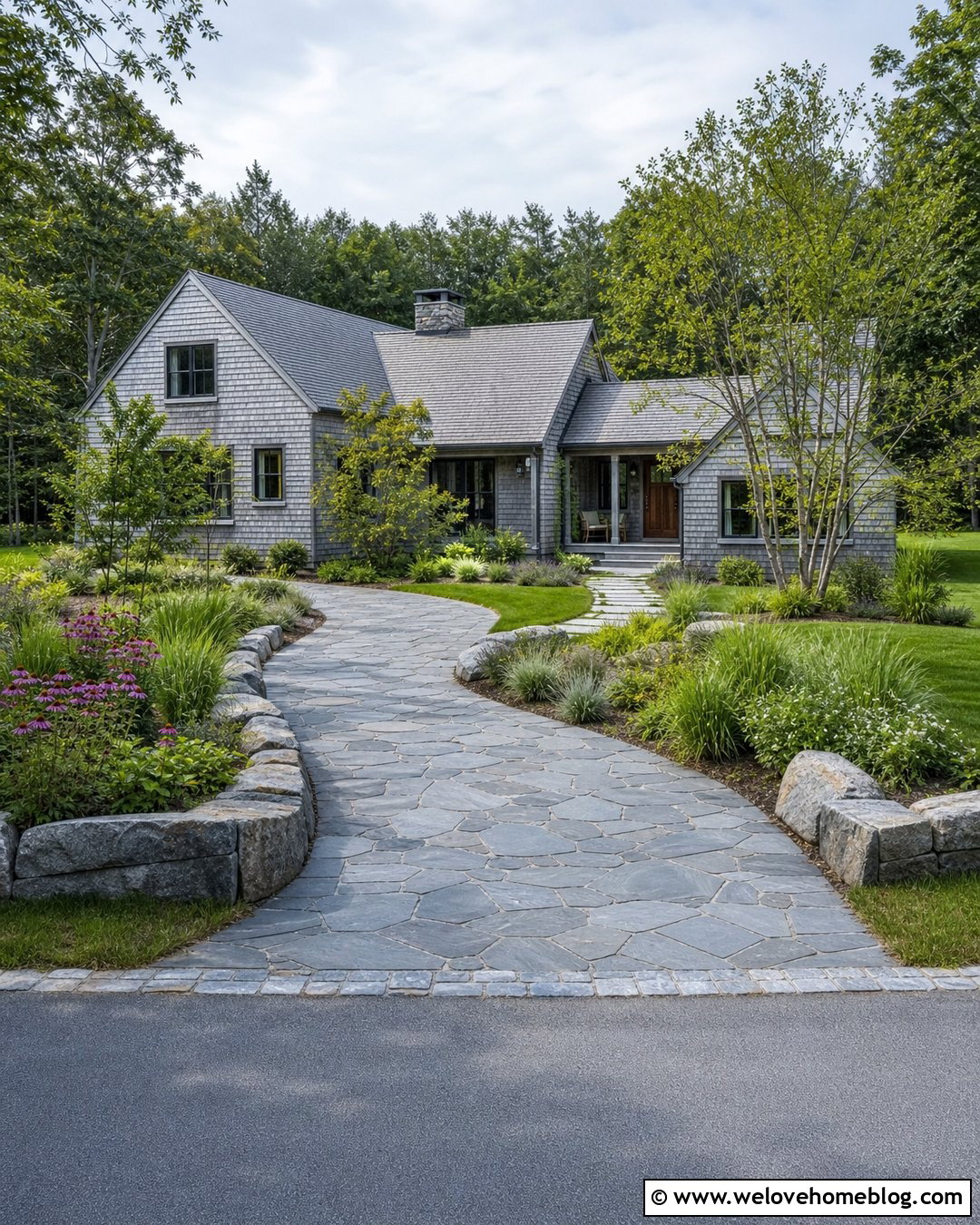
Native landscaping can make a flagstone driveway feel closely connected to its regional setting. Begin with locally appropriate stone, such as blue-gray flagstone in the Northeast or warm sandstone in the Southwest. Arrange the flags in an irregular but tightly fitted pattern across a driveway that follows the natural contours of the yard. Use sturdy stone edging to protect planting beds from tires and runoff. Fill the surrounding landscape with regionally native grasses, flowering perennials, shrubs, and small trees selected for local soil and sunlight. Keep plants low around the street entrance and any pedestrian crossings. A shallow planted drainage area can capture water from the driveway where site conditions allow. This complete design supports a natural-looking front yard while reducing the visual dominance of the paved parking surface.
17. Flagstone Driveway With a Paver Ribbon
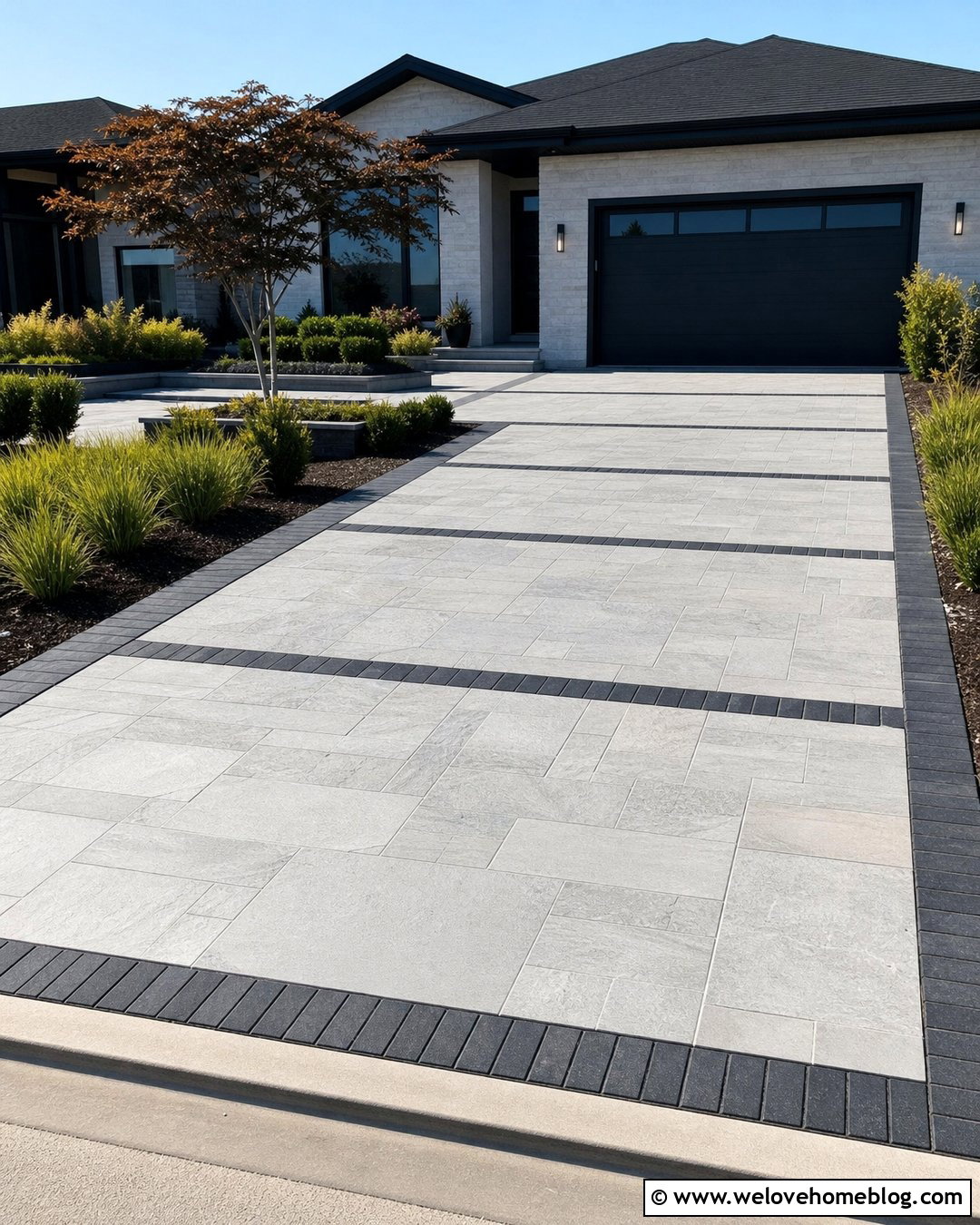
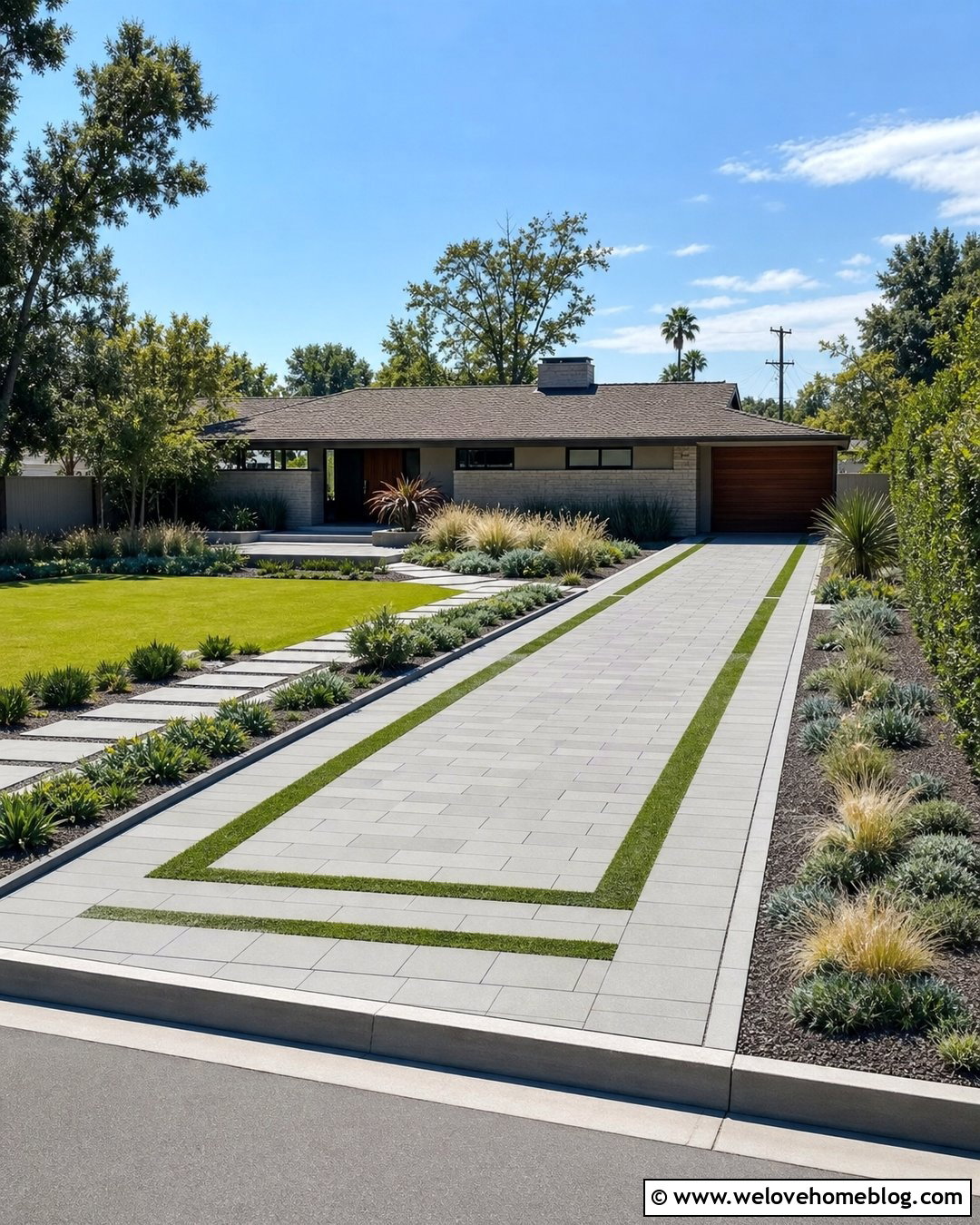
A contrasting paver ribbon can break up a broad flagstone driveway and connect it to other exterior details. Use light gray cut flagstone for the primary surface, then install charcoal concrete pavers in narrow bands across the driveway. Position the ribbons near the entrance, at the beginning of the parking area, and in front of the garage doors. Dark paver edging can continue along both sides for a cohesive frame. This approach suits modern, transitional, and remodeled suburban homes. Add geometric planting beds with compact shrubs, ornamental grasses, and one carefully placed accent tree. Keep the overall palette limited so the bands do not make the driveway look fragmented. The repeated lines provide visual rhythm, help organize a wide paved area, and make the complete entrance feel purposefully designed.
18. Flagstone Driveway With a Central Grass Strip
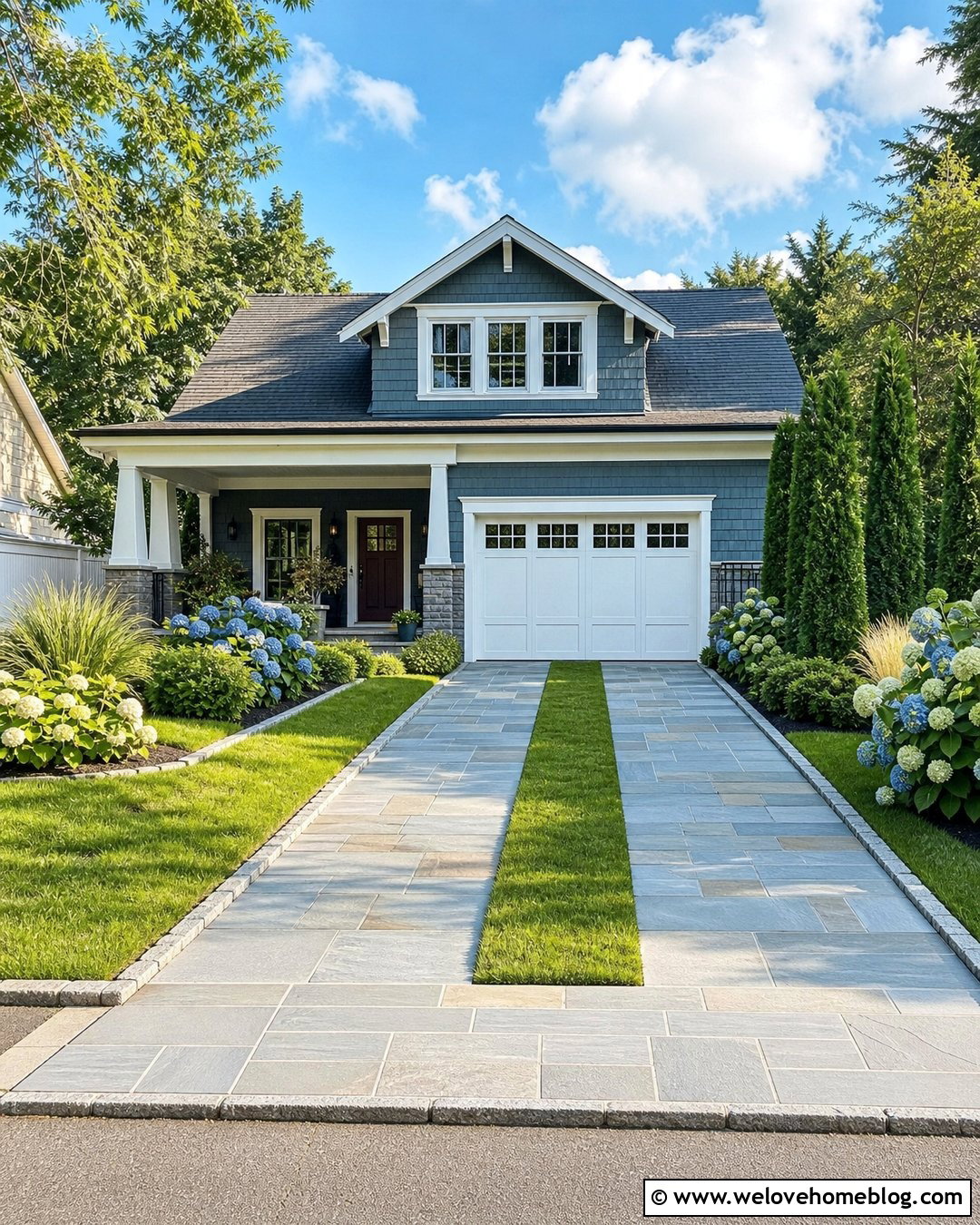
A central grass strip reduces the apparent width of a driveway while preserving two solid flagstone tracks for vehicle tires. Use large rectangular bluestone or limestone flags in each track, carefully spacing them to suit typical household vehicles. Continue the stone across the full width at the street and garage, creating stable aprons where turning is more common. Low granite curbing can separate the center strip from the paving and produce a clean edge for mowing. This layout looks attractive beside cottage, farmhouse, and Craftsman homes with modest front yards. Repeat the lawn strip with simple planting beds along the outer edges, using hydrangeas, grasses, and small evergreens. The finished driveway feels greener and less imposing than full-width paving, yet it still offers a clear, durable route to the house.
19. Flagstone Horseshoe Driveway
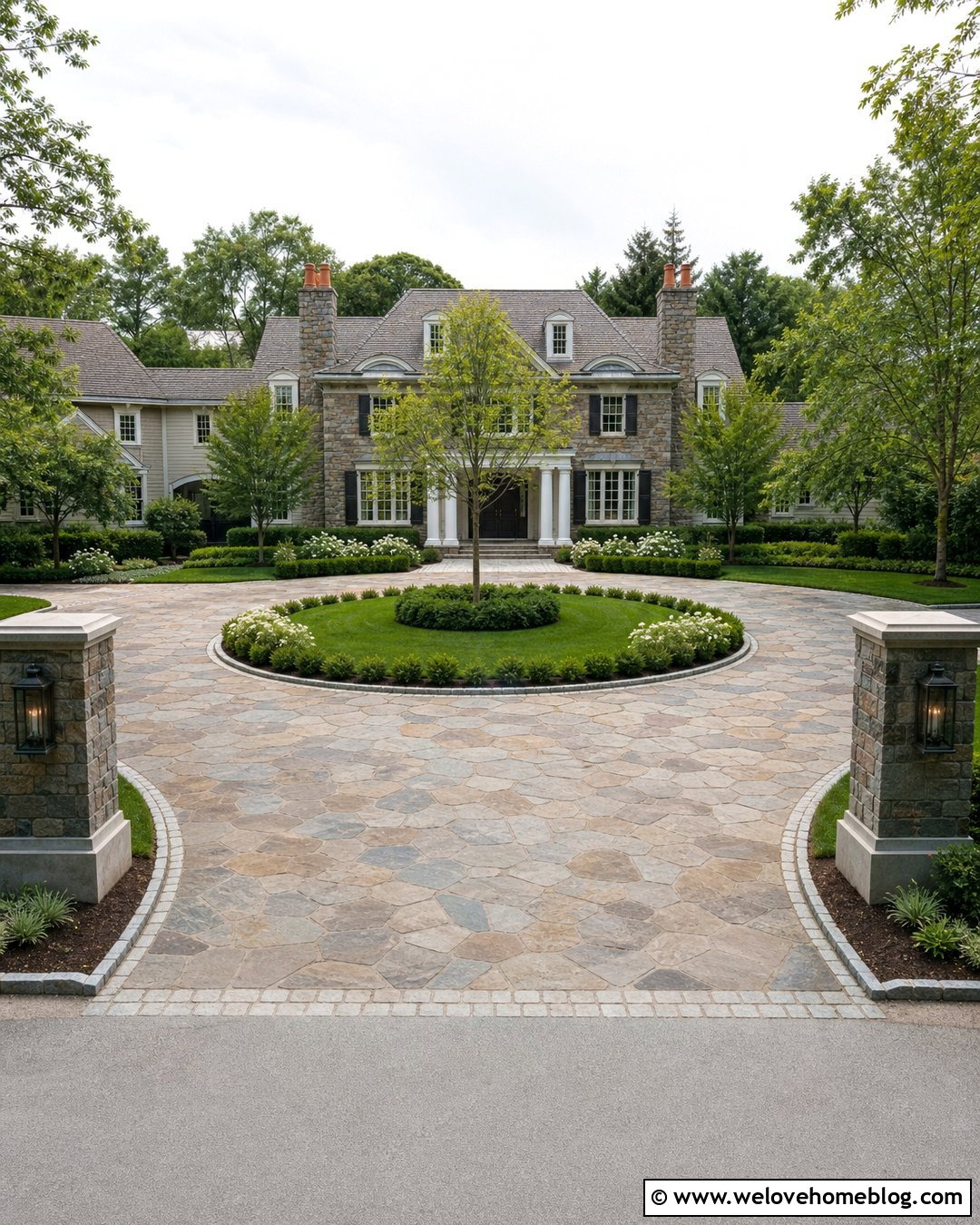
A horseshoe driveway provides two street connections and a broad, welcoming curve across the front yard. Cover the surface with mixed gray and brown flagstone, then use brick or granite setts to hold the sweeping edges. This layout works best on a wide property with enough room to preserve a useful central lawn. Place a small ornamental tree in the middle, surrounded by layered shrubs and low flowers that will not block views of the house. Near the front door, widen the driveway slightly to create a convenient drop-off point. A direct flagstone walkway can connect this area to the porch. Mark both entrances with matching stone columns or low landscape walls. The complete design feels grand but remains practical for households that frequently welcome guests or receive deliveries.
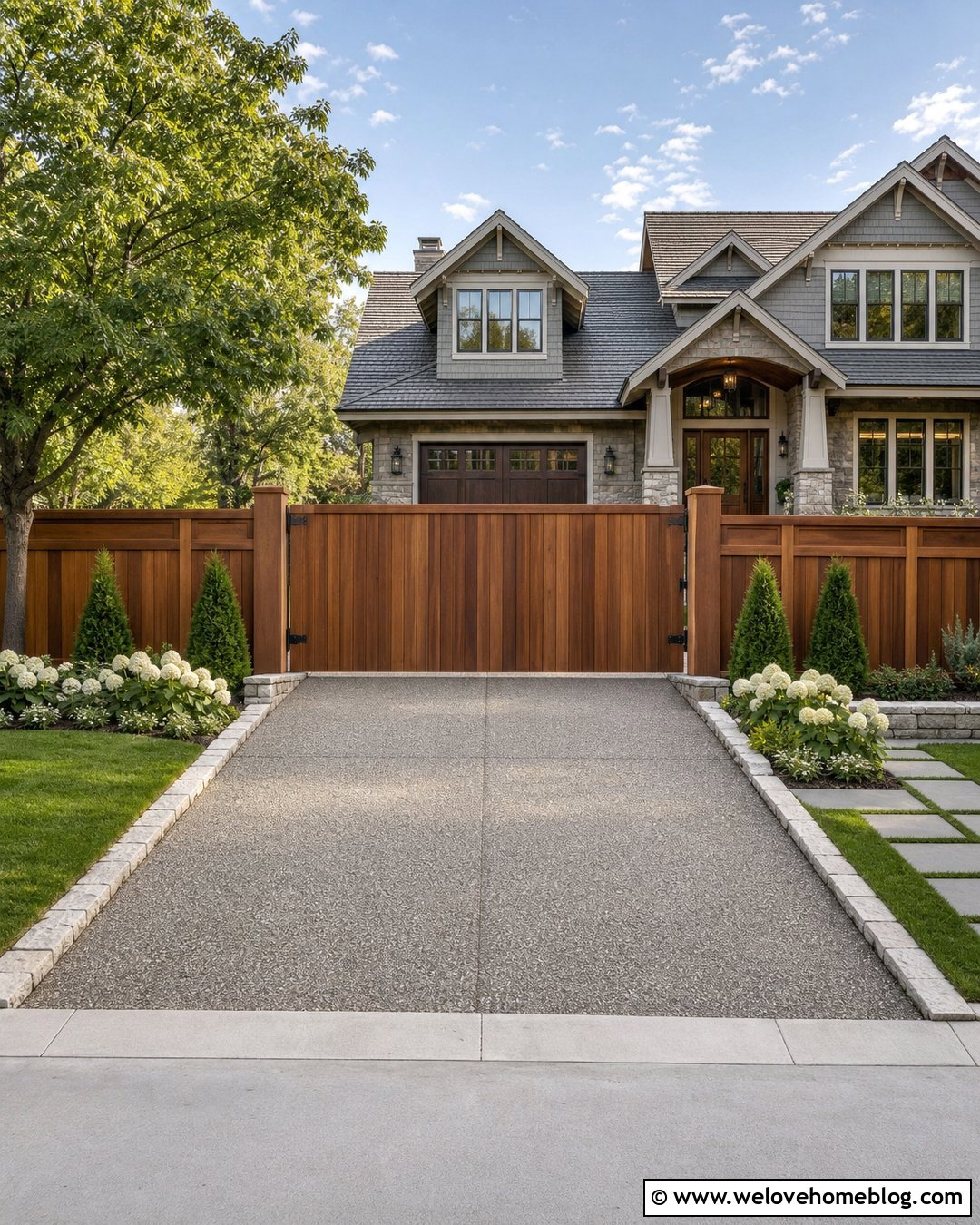
20. Flagstone Driveway With Drainage Channel
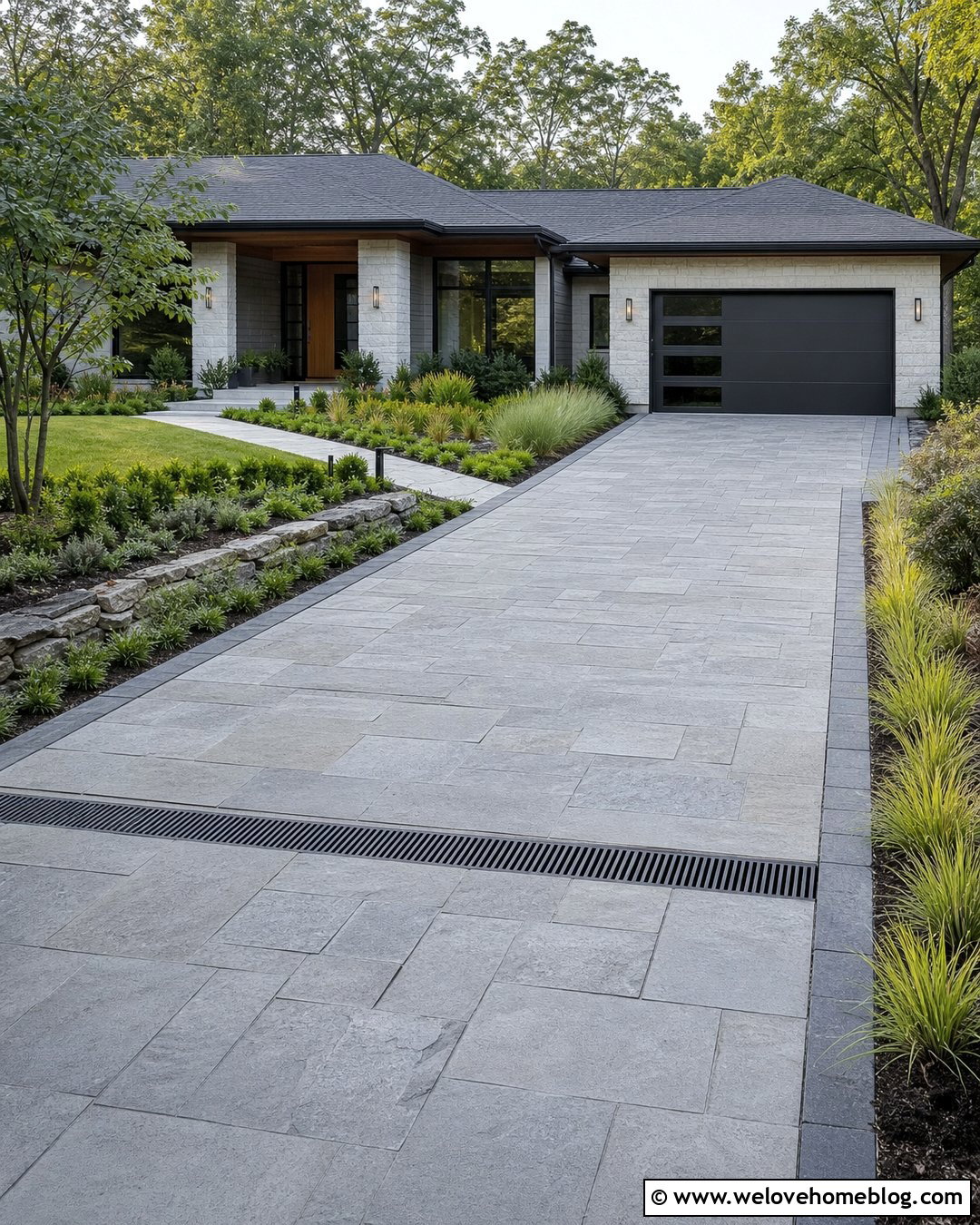
A well-integrated drainage channel can become part of the driveway design rather than an obvious utility feature. Use textured gray limestone flags on a straight or gently sloped driveway, directing surface water toward a narrow channel positioned across the lower end. Cover the drain with a dark cast-iron grate or a slim slot system that coordinates with charcoal stone edging. Along the sides, install rain-tolerant planting beds containing grasses, sedges, and compact shrubs. A shallow swale may be incorporated where local conditions and regulations permit. Keep the transition to the garage level and carefully supported to prevent water from collecting near the foundation. Professional grading is important because drainage requirements vary by property. This practical approach creates a polished driveway that manages rainfall without sacrificing curb appeal.
Conclusion:
The best flag driveway combines attractive stone with a layout that handles everyday vehicle movement safely. Irregular sandstone can create a relaxed country entrance, while cut bluestone or limestone offers a cleaner, more formal appearance. Borders, aprons, pillars, gates, planting beds, and drainage features should support the surface rather than compete with it. When reviewing these 20 Driveway Flags Ideas, consider your home’s architecture, yard size, turning requirements, climate, and maintenance preferences. Most importantly, select flags specifically rated for driveways and invest in a properly engineered base. Thoughtful planning beneath the surface is what keeps the finished design attractive and stable. With the right details, flag paving can deliver lasting character and exceptional curb appeal.

Related posts:
Leave a Reply