
Patio steps are more than just a functional way to navigate different levels in your garden; they are a key design element that connects your home to the outdoors. The right steps can transform the look and feel of your patio, enhancing its style, improving accessibility, and creating a seamless flow between spaces. From rustic natural stone to sleek modern concrete, the material and design choices are vast. Whether you're aiming for a grand entrance or a subtle, organic transition, carefully planned patio steps can elevate your entire landscape, turning a simple pathway into a stunning architectural feature.
1. Wide Concrete Patio Steps
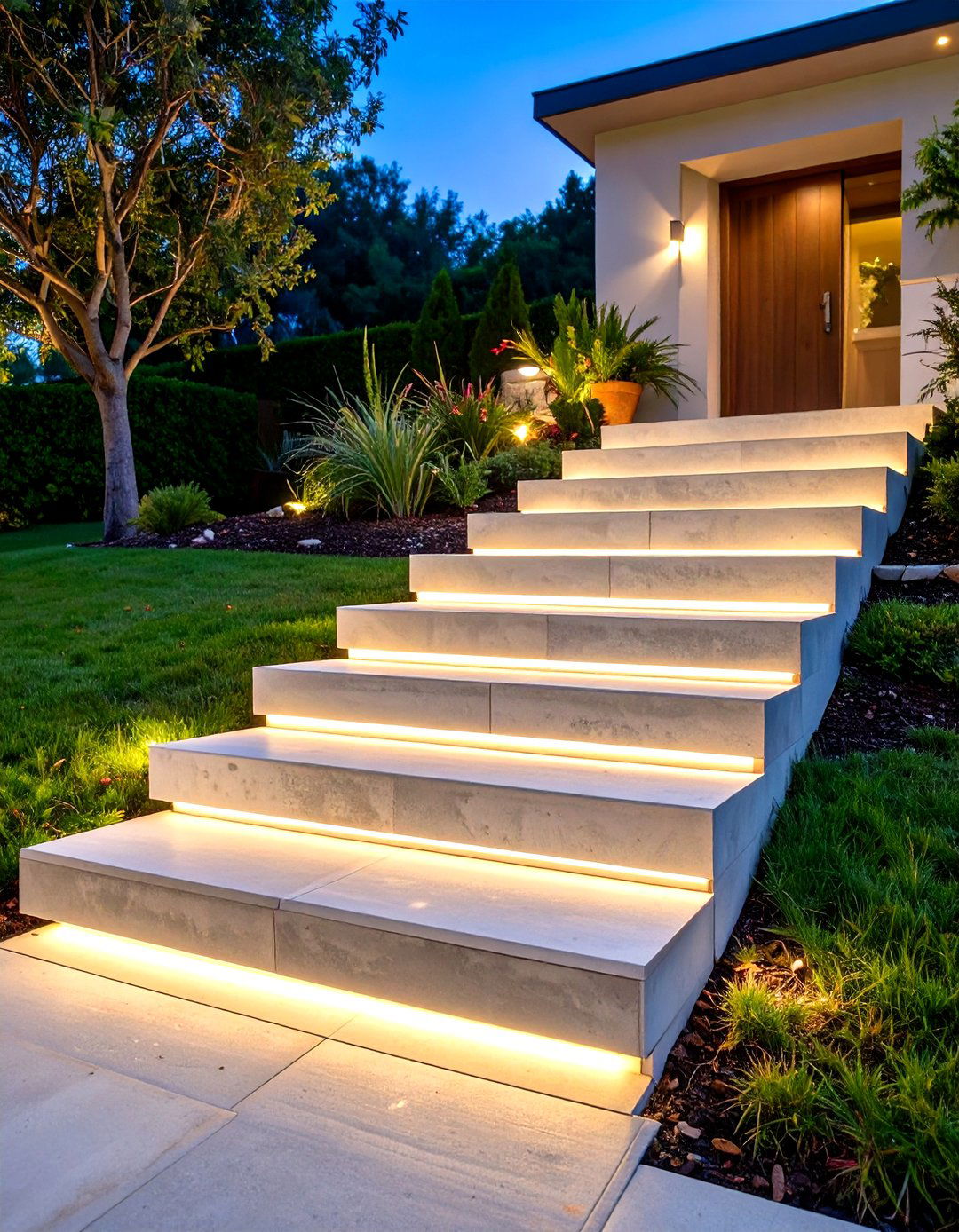
Wide concrete steps offer a modern, minimalist appeal that creates a grand, inviting transition to the patio. Their generous width provides a spacious and safe walkway, ideal for high-traffic areas or for placing decorative pots and lanterns. Pouring concrete allows for a smooth, clean finish that complements contemporary architecture. The solid, grounded feel of these steps anchors the patio space within the landscape. For an added touch of sophistication, consider integrating subtle LED strip lighting underneath each riser, casting a gentle glow that enhances both safety and ambiance during the evening hours. This design is durable and low-maintenance.
2. Natural Flagstone Patio Steps

For a rustic and organic connection to the landscape, natural flagstone steps are an excellent choice. Each stone possesses a unique shape, size, and texture, resulting in a charming, informal pathway. The irregular edges allow for planting creeping thyme or moss in the gaps, further blending the steps into the garden. Flagstone is incredibly durable and weather-resistant, ensuring a long-lasting feature. These steps work beautifully in cottage, woodland, or country-style gardens, creating a sense that they have always been part of the natural environment. Their earthy tones harmonize with surrounding plants and mulches.
3. Tiered Timber and Gravel Patio Steps
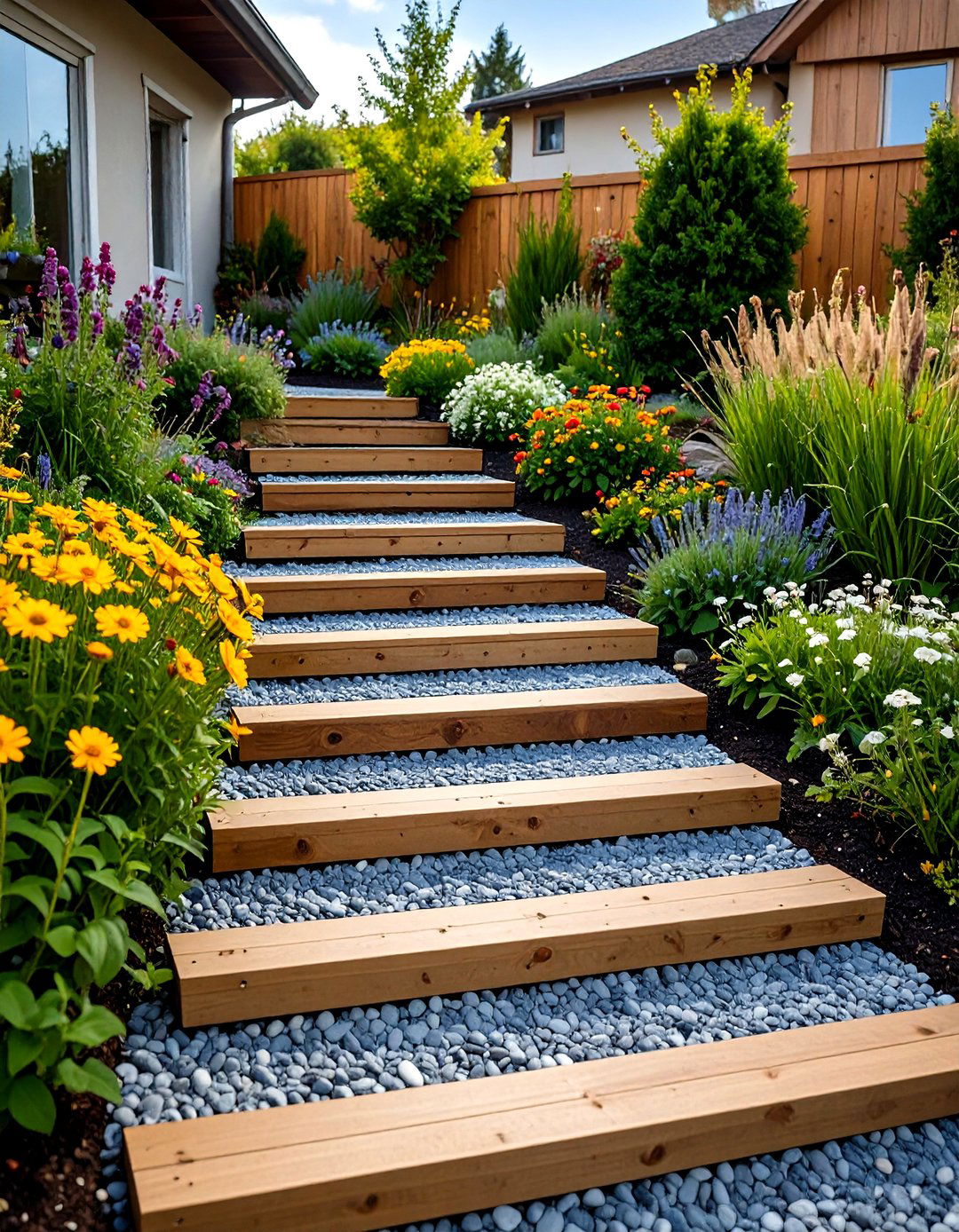
A combination of timber risers and gravel treads creates a relaxed, cost-effective, and visually interesting set of patio steps. Using pressure-treated wood or reclaimed railway sleepers for the vertical risers provides a sturdy frame, while filling the treads with decorative gravel or pebbles adds texture and ensures good drainage. This style is particularly well-suited for sloped gardens and informal landscapes. The contrast between the warm wood and the cool tones of the gravel offers a pleasing natural aesthetic. It's a relatively simple DIY project that can be customized with different types of wood and gravel to match your patio's style.
4. Curved Brick Patio Steps
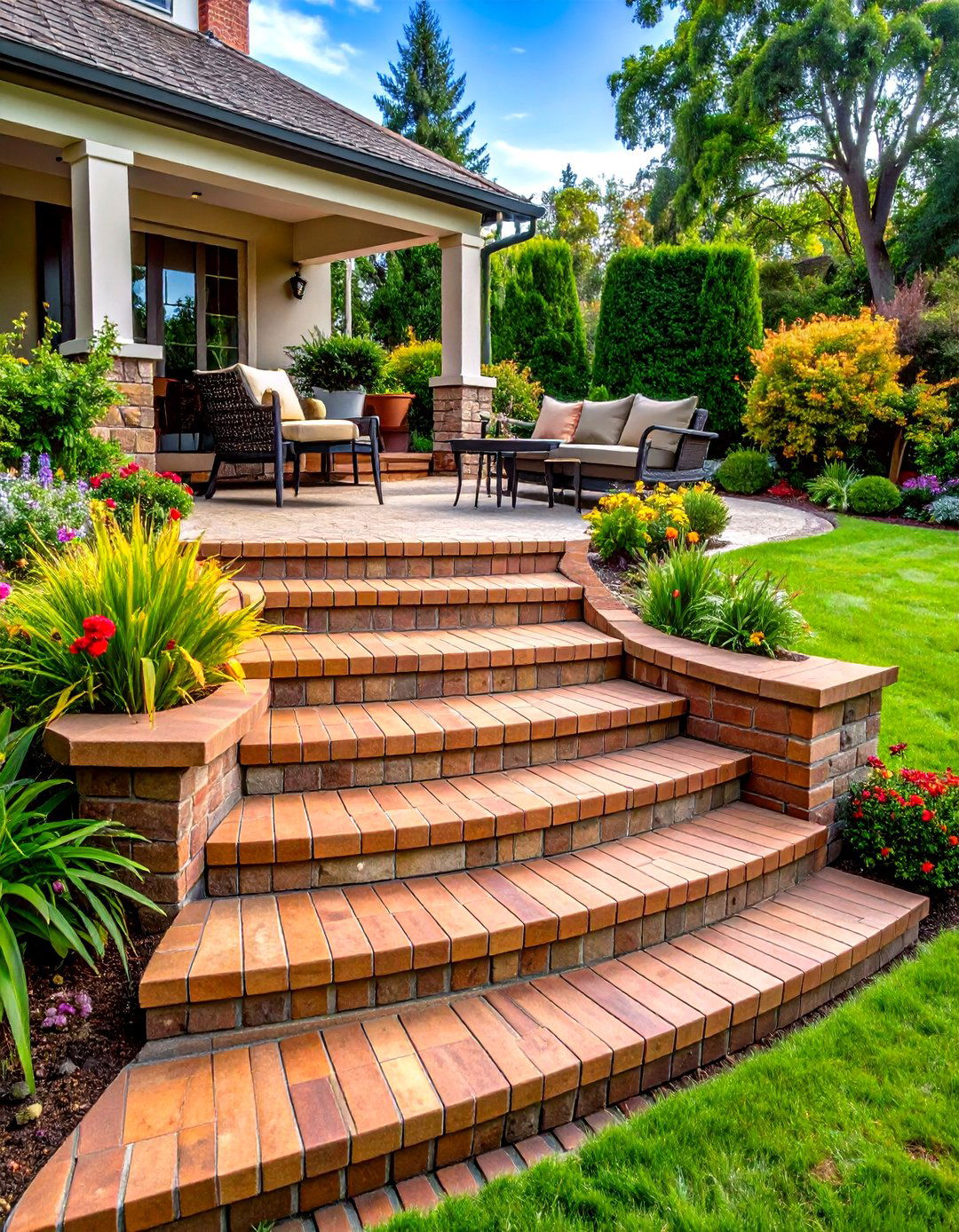
Curved brick steps introduce a sense of elegance and traditional charm to any patio design. The gentle arc creates a graceful, flowing transition that softens the hard lines of surrounding architecture. Bricks offer a classic, timeless look and are available in various colors, from rich reds to earthy browns, allowing for customization. Laying them in patterns like herringbone or basketweave can add intricate detail and visual interest. These steps are perfect for formal or colonial-style homes, providing a stately entrance to the patio area that feels both welcoming and distinguished. Their durability ensures they will withstand the elements for years.
5. Floating Concrete Slab Patio Steps
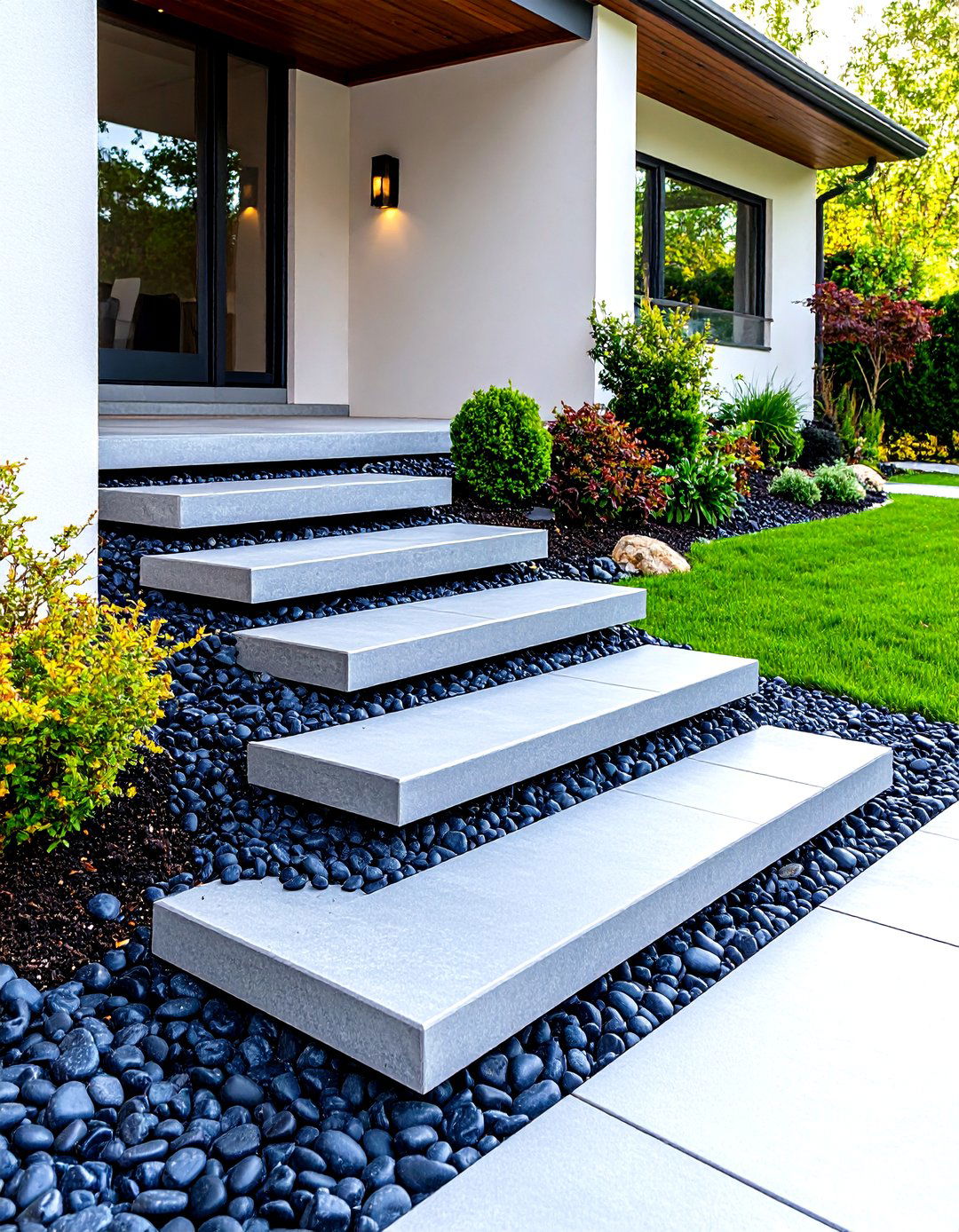
To achieve a sleek, ultra-modern look, consider floating concrete slab steps. These steps are designed to appear as if they are hovering above the ground, creating a striking visual effect. Each tread is a separate, thick slab of concrete, often with gaps between them filled with small stones or low-growing ground cover. This design imparts a sense of lightness and architectural sophistication. Cantilevered from a hidden support structure, they make a bold statement. This style works best with minimalist home designs and clean-lined landscapes, emphasizing geometric forms and negative space for a dramatic, high-end finish.
6. Multi-Level Deck Patio Steps

For patios connected to a raised deck, wide, multi-level steps can serve as both a staircase and functional seating space. By making the treads extra deep, you create informal benches that are perfect for social gatherings. This design helps to break down a significant change in elevation into more manageable, visually appealing tiers. Using the same decking material for the steps ensures a cohesive and unified look. This approach not only improves accessibility but also maximizes the utility of your outdoor area, turning a simple transition into a versatile, integrated feature of your deck and patio.
7. Patio Steps with Integrated Planters

Integrating planters into your patio steps is a brilliant way to soften their appearance and infuse the area with life and color. Built-in planters can be constructed at the sides of the steps or even incorporated into the structure of wider landings. This design allows you to add seasonal flowers, herbs, or small shrubs, creating a lush, green pathway to your patio. Materials like concrete, brick, or timber can be used to construct the planters, matching them to the steps for a seamless look. This idea is especially effective for adding greenery to smaller patios where garden space is limited.
8. Old Railway Sleeper Patio Steps
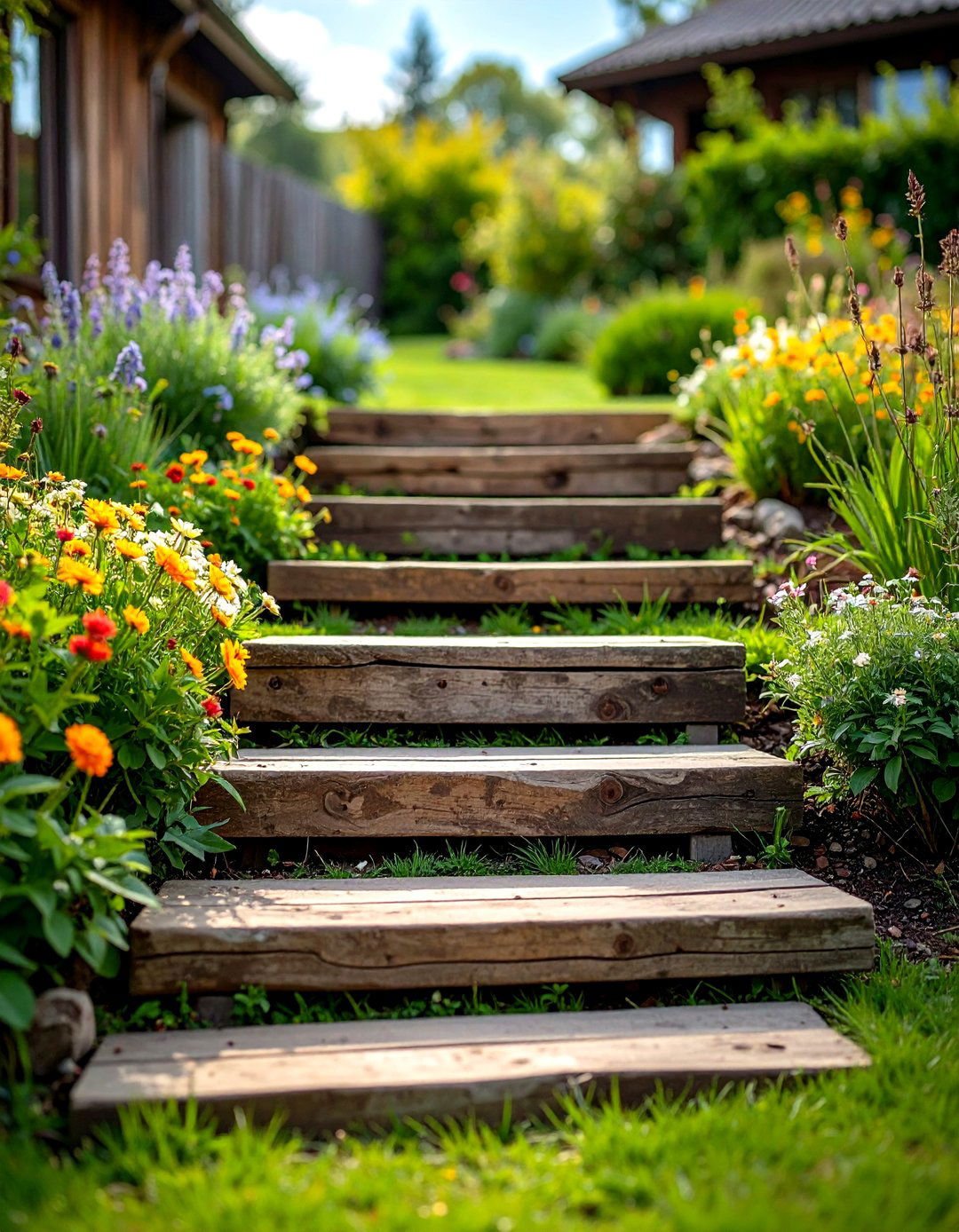
Using reclaimed railway sleepers to build patio steps adds instant rustic character and a sense of history to your garden. These chunky, weathered timbers are incredibly robust and create a solid, substantial staircase. They are perfect for sloped yards and informal, country-style landscapes. The wood's aged patina and rugged texture contrast beautifully with soft plantings and surrounding greenery. You can set them directly into a hillside, backfilling with soil or gravel for stability. This sustainable choice not only looks fantastic but also repurposes old materials, adding an eco-friendly element to your outdoor design.
9. Illuminated Patio Steps with LED Lighting

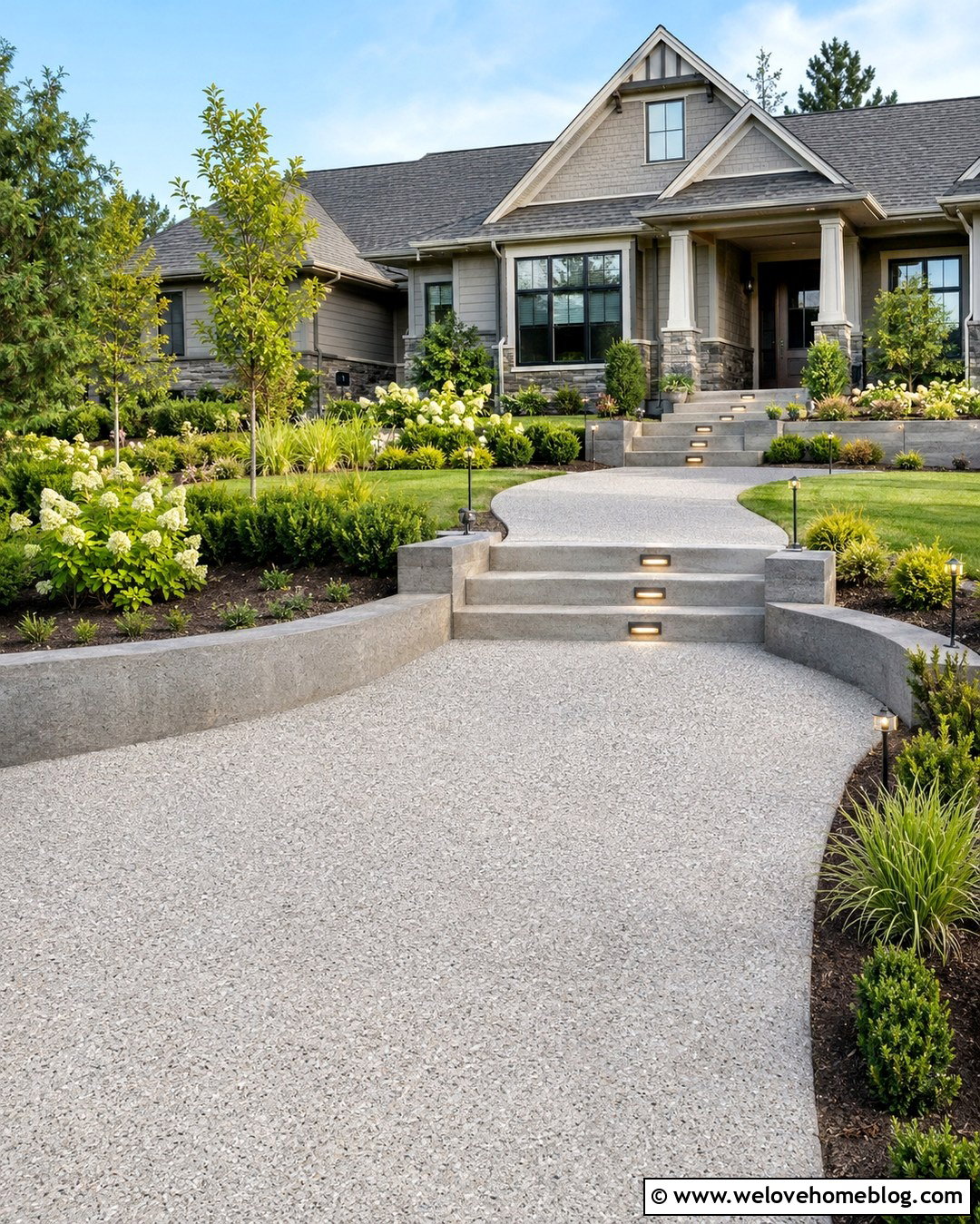
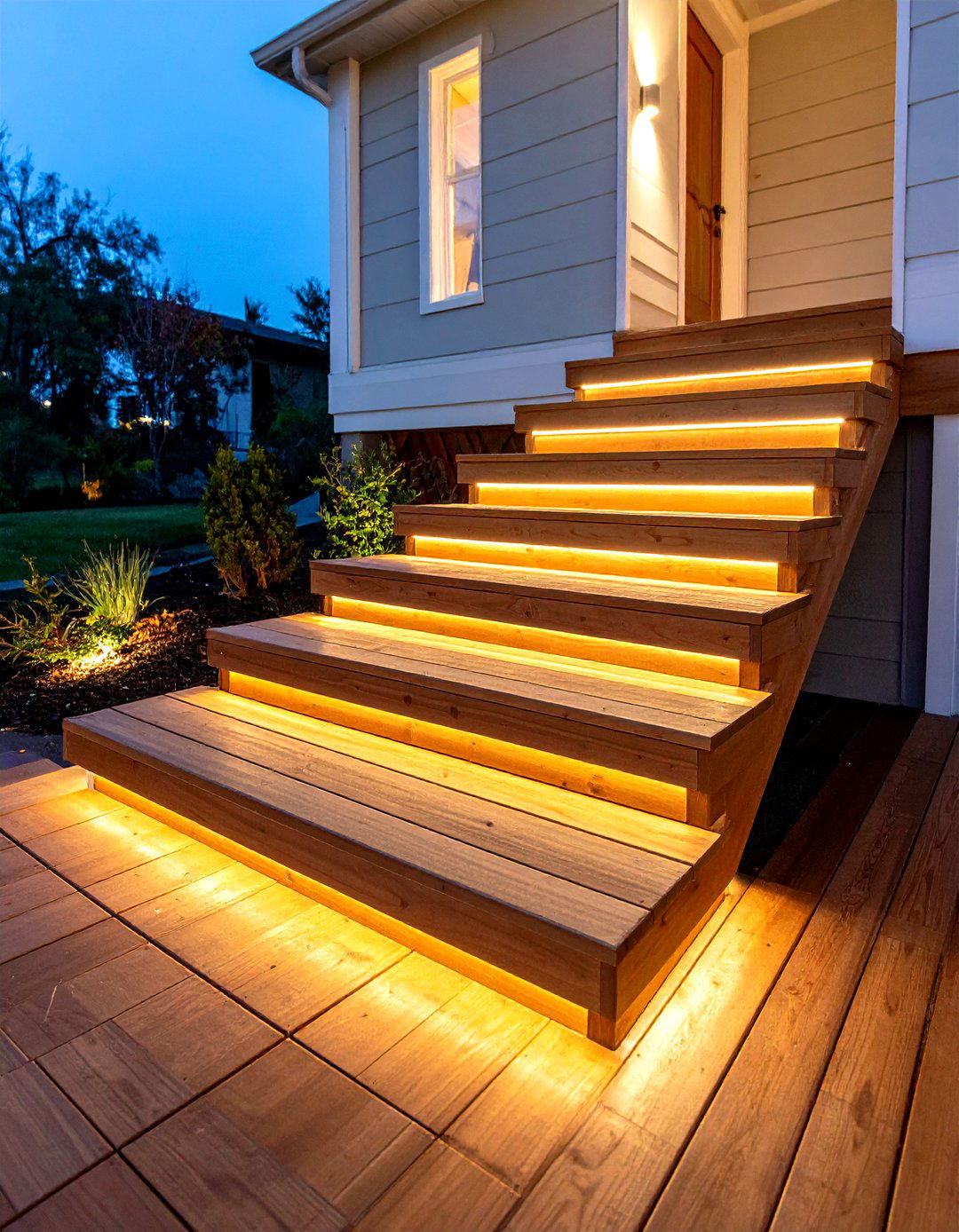
Incorporating LED lighting directly into your patio steps transforms them into a stunning feature after dark while significantly improving safety. Lights can be installed under the lip of each tread (riser lights) or recessed into the sides. This creates a subtle, ambient glow that guides the way without being harsh or glaring. Low-voltage LED options are energy-efficient and long-lasting. This modern touch adds a layer of sophistication to any step design, from concrete to wood, highlighting the architectural lines and creating a warm, inviting atmosphere for evening entertaining or relaxation.
10. Gabion Basket Patio Steps

Gabion baskets—wire cages filled with rocks—offer a unique, industrial-meets-natural aesthetic for patio steps. This method is incredibly sturdy, permeable, and visually striking. You can choose from various types of stone to fill the baskets, from smooth river rocks to jagged quarry stones, to achieve different looks. The wire cages provide a clean, geometric frame, while the natural stone filling connects the structure to the landscape. Gabion steps are an excellent solution for managing steep slopes and preventing erosion, providing a durable and contemporary alternative to traditional materials that makes a bold statement.
11. Mosaic Tile Riser Patio Steps
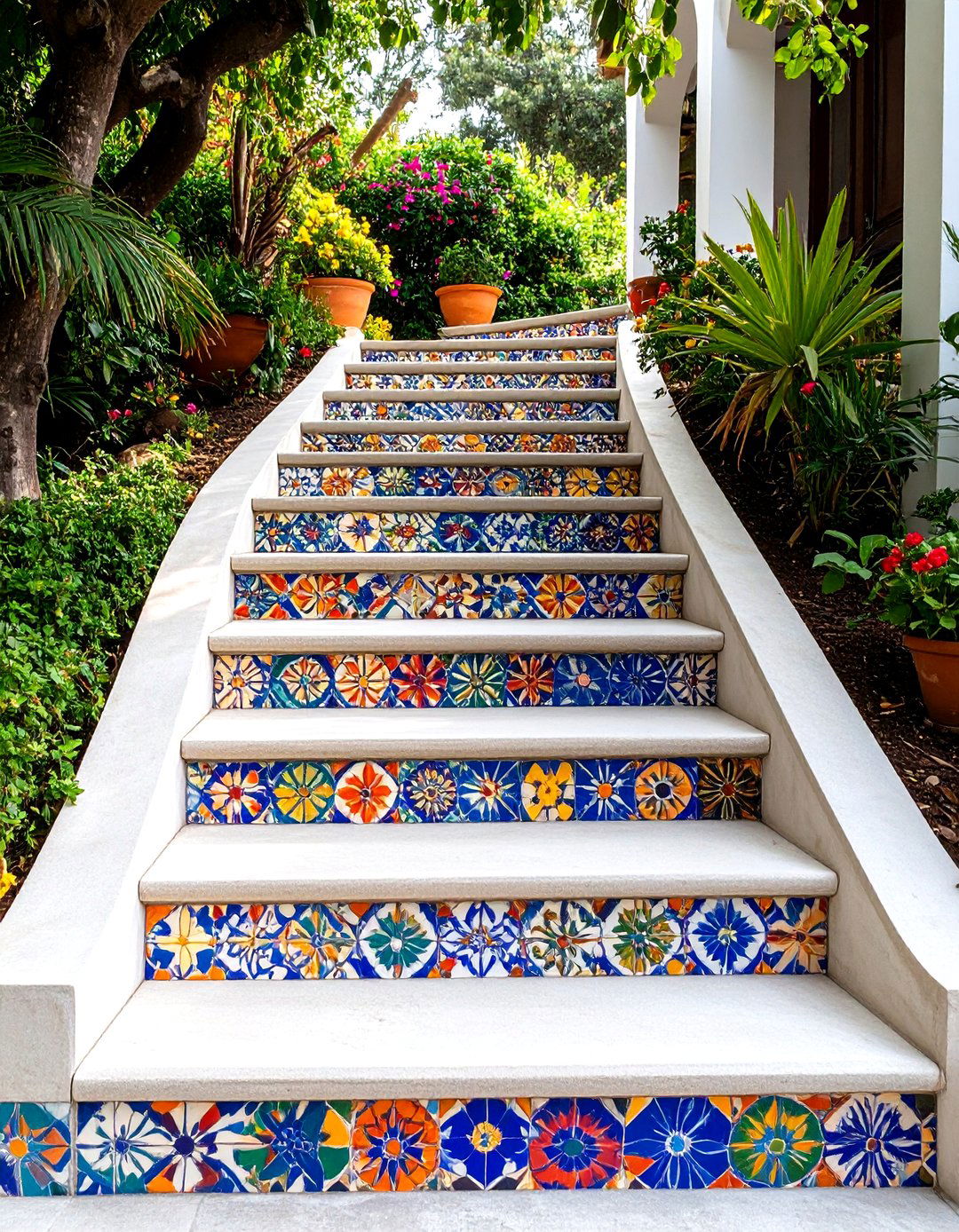
For a splash of color and personality, consider decorating the risers of your patio steps with mosaic tiles. This is a fantastic way to upcycle plain concrete or wood steps and turn them into a unique work of art. You can use broken ceramic pieces, colorful glass tiles, or custom-designed patterns to reflect your personal style. The design possibilities are endless, from intricate Moroccan patterns to simple, vibrant geometric shapes. This creative approach adds a surprising element of detail and craftsmanship, making the journey to your patio a joyful and visually stimulating experience that stands out.
12. Grass-Tread Patio Steps
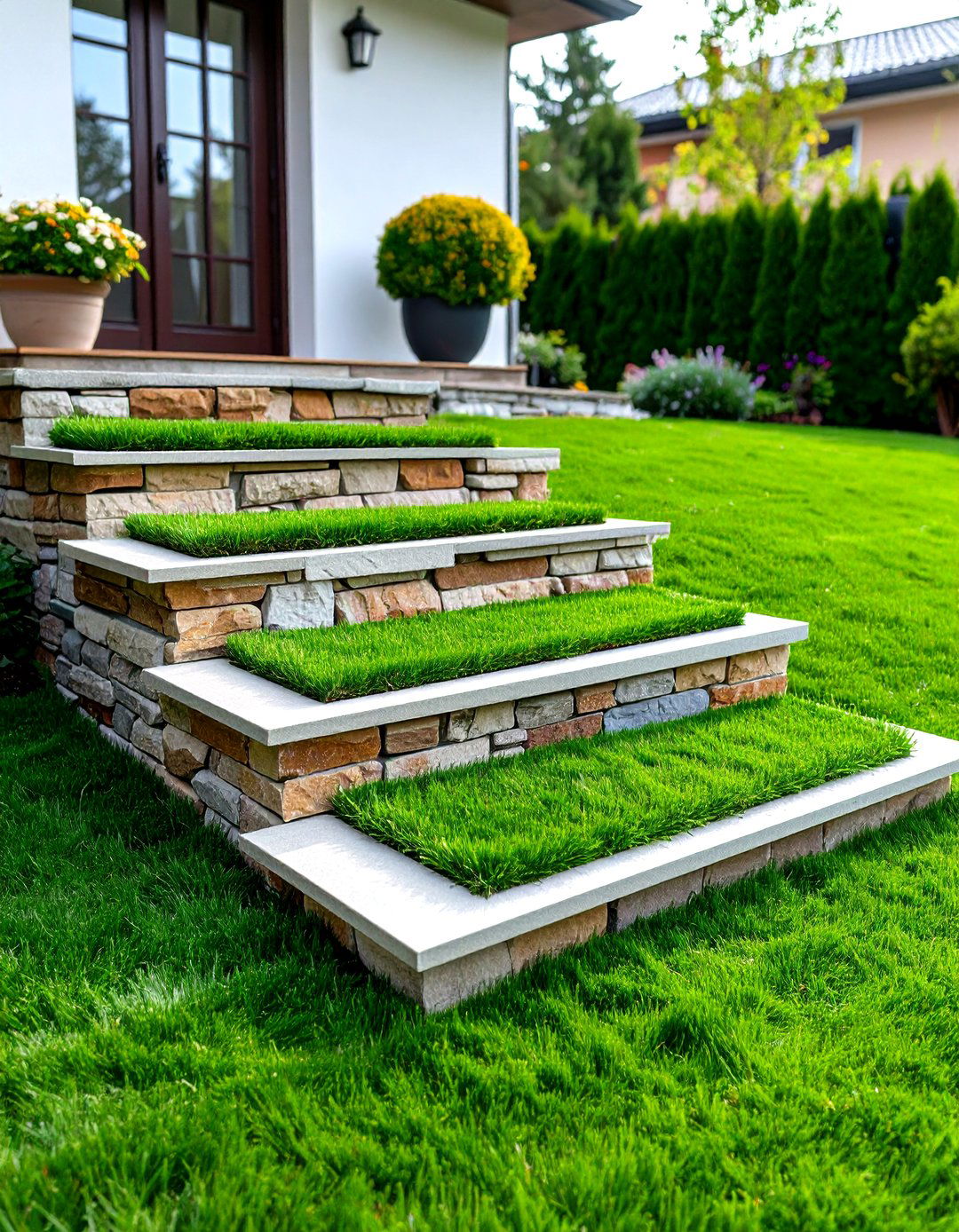
Grass-tread steps offer a beautifully seamless transition between a lawn and a patio, blurring the lines between hardscape and softscape. This design involves creating a solid frame for each step using materials like concrete, stone, or timber, and then filling the tread area with soil and turf. The result is a soft, green staircase that feels natural underfoot and integrates perfectly into the surrounding garden. This eco-friendly option helps with drainage and keeps the area cool. It’s ideal for gentle slopes and creates a lush, park-like feel in your own backyard, inviting barefoot exploration.
13. Cut Stone Block Patio Steps

For a look of timeless permanence and natural elegance, large, cut stone blocks are an unparalleled choice. These substantial, solid blocks of stone, such as granite or limestone, are precision-cut for a uniform size and shape, creating a formal and impressive staircase. Their weight and solidity provide an unshakeable foundation, while the natural texture and veining of the stone add subtle, organic beauty. These steps convey a sense of luxury and durability, perfectly complementing classic or stately homes. They are a significant investment that adds lasting value and a powerful architectural statement to any landscape design.
14. Polished Concrete Patio Steps
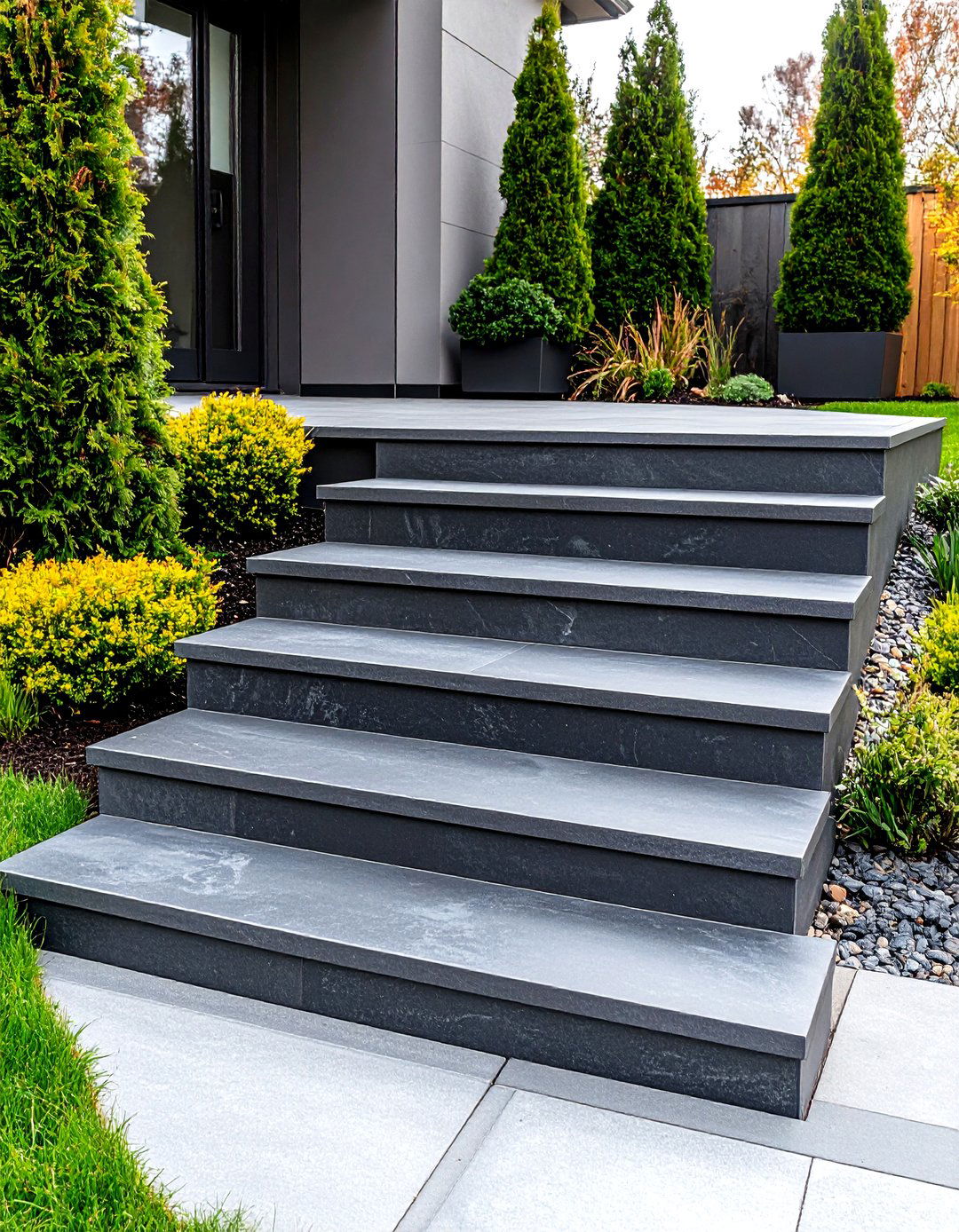
Polished concrete steps deliver a refined, contemporary finish that is both stylish and incredibly durable. The concrete is ground and polished to a smooth, almost glossy surface, revealing the aggregate within for a subtle, terrazzo-like effect. This sleek appearance works exceptionally well with modern architecture and minimalist garden designs. The surface is easy to clean and can be treated to be slip-resistant. You can also have pigments added to the concrete mix to achieve a wide range of colors, from charcoal gray to warm earth tones, allowing for perfect coordination with your patio and home exterior.

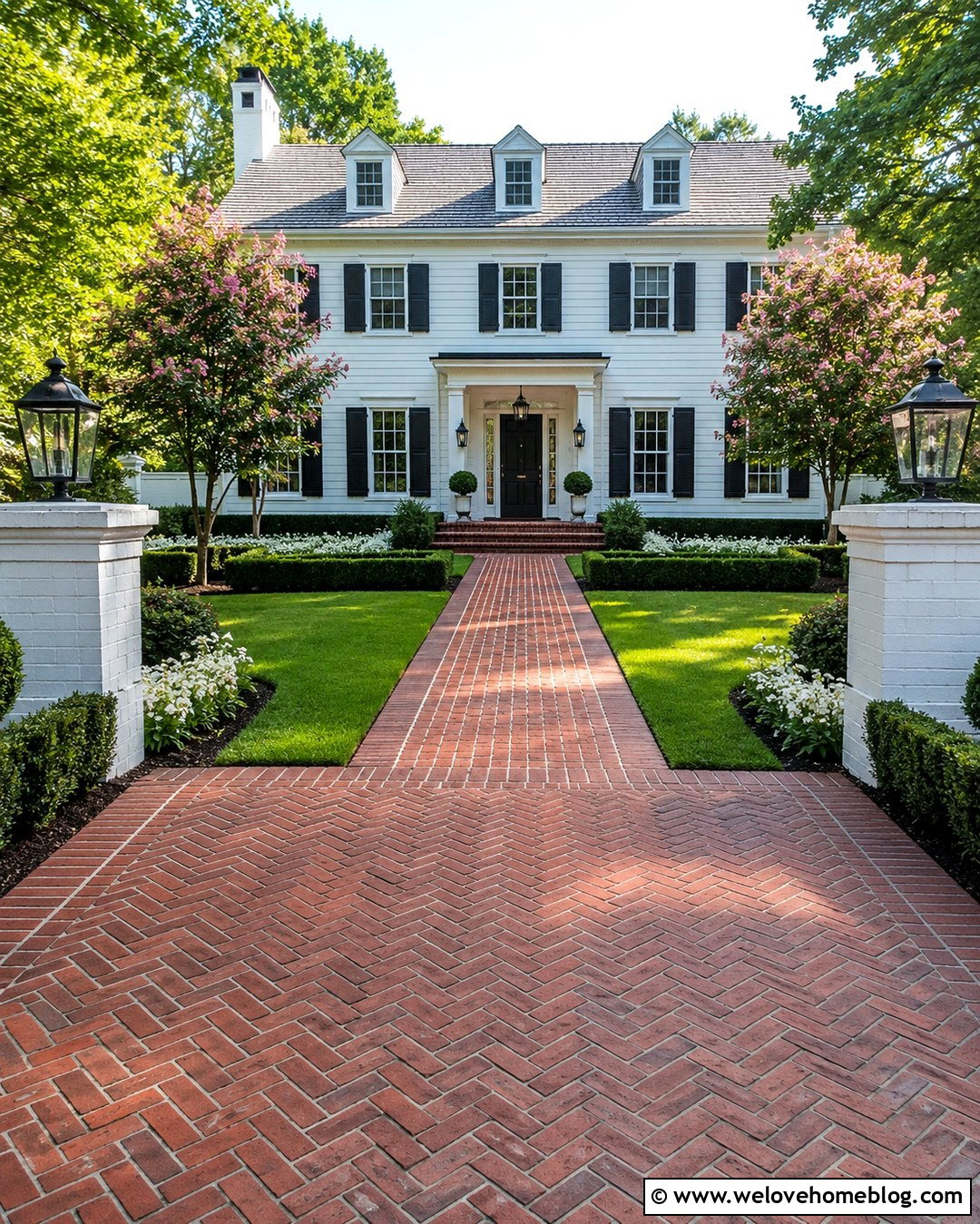
15. Stamped Concrete Patio Steps

Stamped concrete offers the durability and affordability of concrete while mimicking the look of more expensive materials like stone, brick, or slate. During the pouring process, a pattern is stamped into the wet concrete, and color can be added to create a realistic texture and appearance. This allows you to achieve the high-end look of natural flagstone or classic brickwork at a fraction of the cost. Stamped concrete steps are a versatile and practical solution, providing a decorative, custom finish that is low-maintenance and built to last, enhancing your patio with a sophisticated, textured look.
16. Log Slice Patio Steps

For a whimsical, woodland-inspired pathway, use large log slices as individual stepping stones or steps. Sourced from a fallen tree, these cross-cut sections of a log provide a rustic and completely natural look. Set them into a gentle slope and surround them with mulch or low-growing ground cover to create a charming, informal staircase. The natural rings and texture of the wood add incredible character. It's essential to use a rot-resistant wood like cedar or black locust to ensure longevity. This creative idea is perfect for connecting a patio to a forested part of your yard.
17. Terracotta Tile Patio Steps
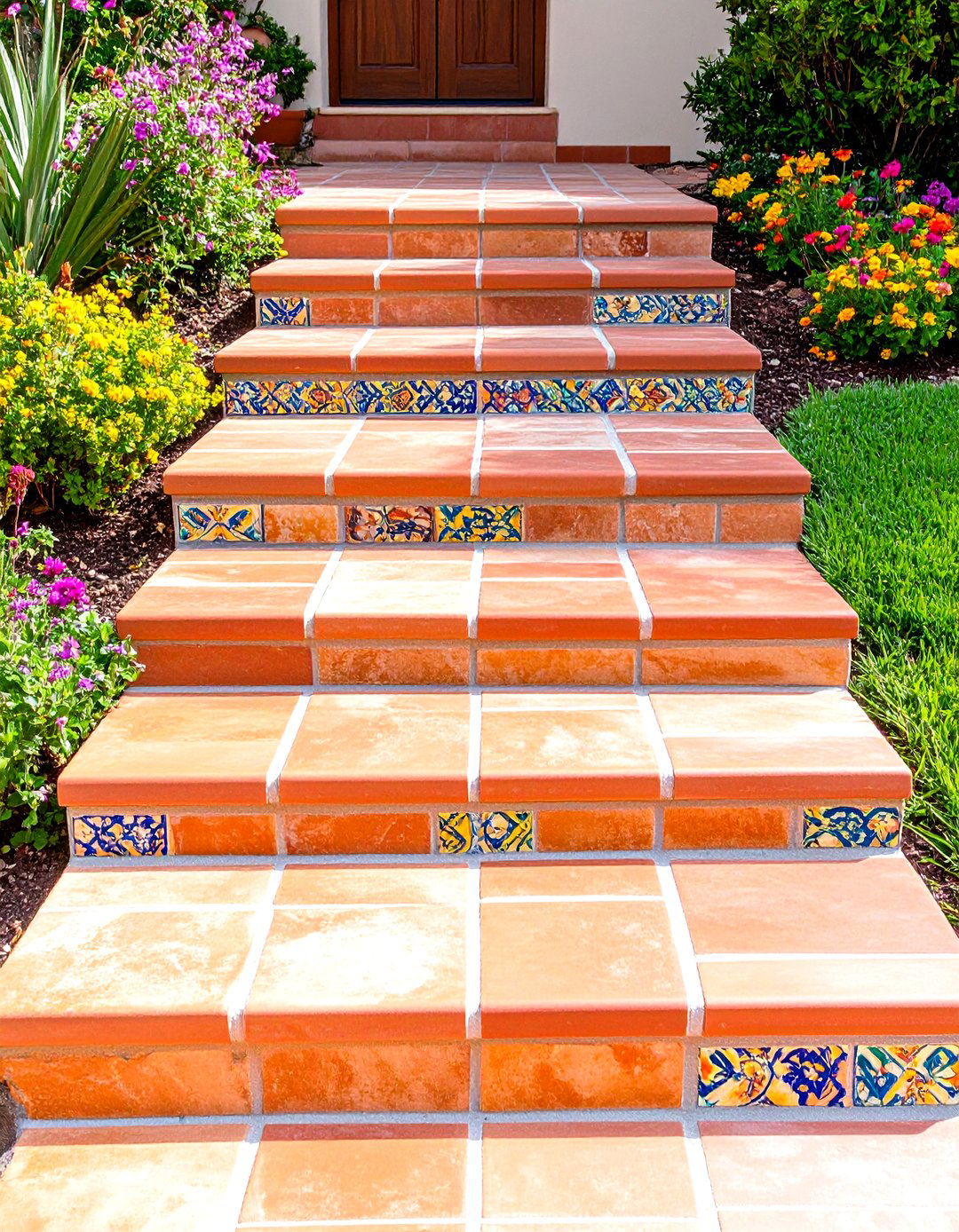
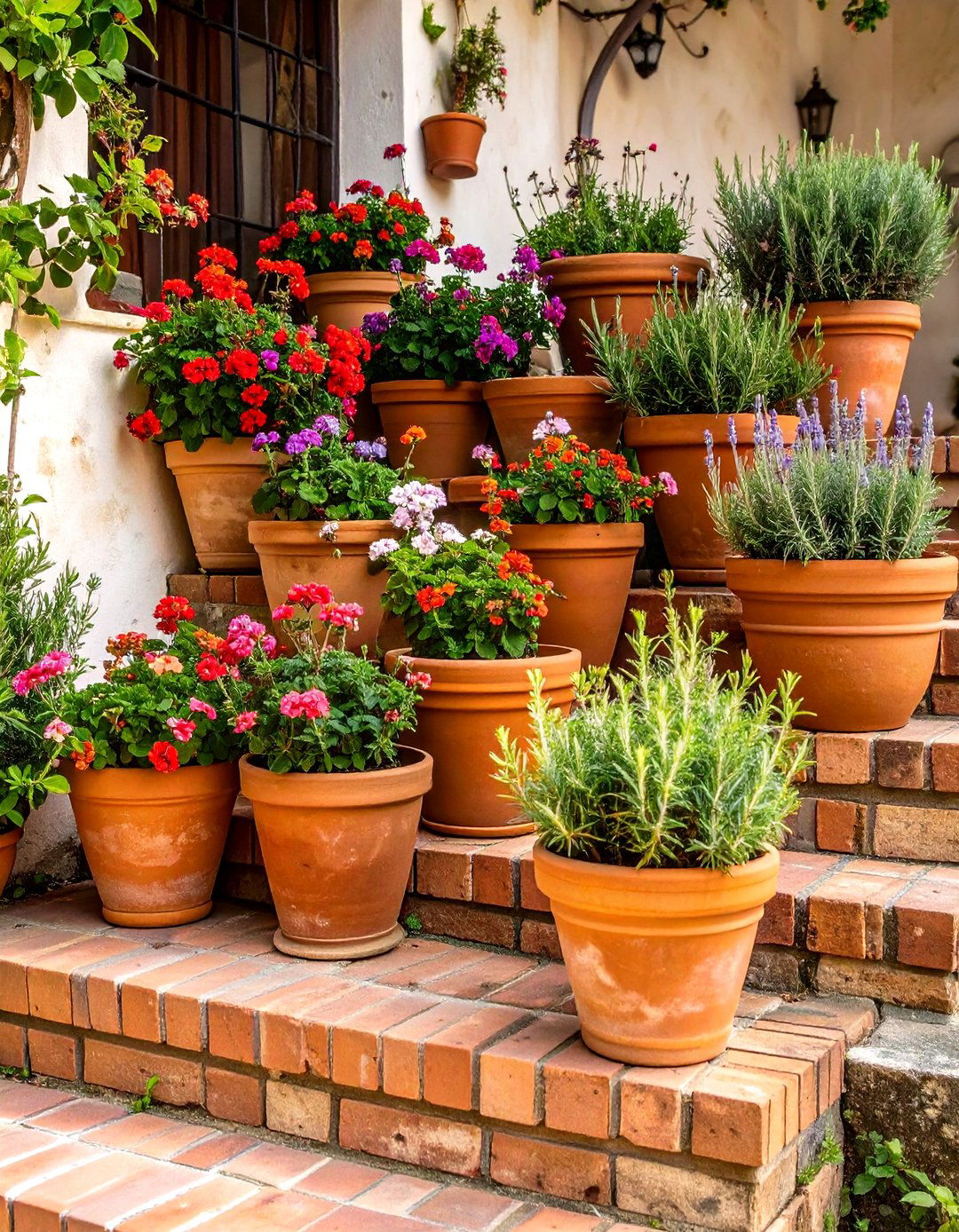
Evoke the warm, sun-drenched feel of a Mediterranean villa with terracotta tile steps. These earthy, reddish-brown tiles bring a sense of warmth and rustic elegance to any patio. They can be used to cover the entire step or just the treads, often paired with colorful painted risers for a classic Spanish or Mexican style. Terracotta is porous, so it's important to seal it properly to protect it from moisture and staining, especially in colder climates. The result is a vibrant, inviting staircase that pairs beautifully with stucco walls, lush potted plants, and wrought-iron railings.
18. Split-Level Patio Steps
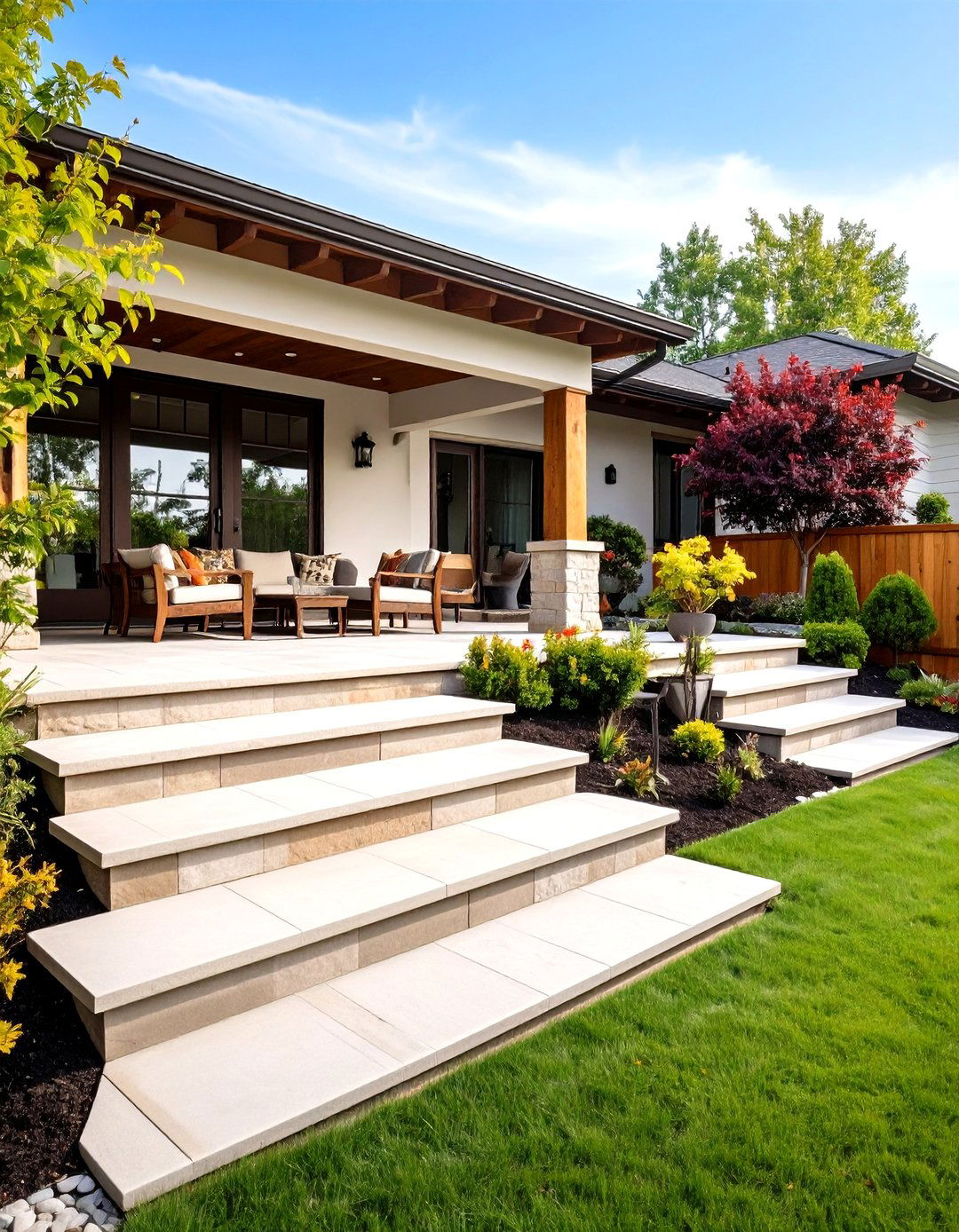
For a large patio with a significant elevation change, creating a split-level design with wide, shallow steps in the middle can be a brilliant solution. This approach breaks the patio into distinct zones for dining, lounging, or cooking, with the steps serving as a casual, open transition rather than a formal staircase. By making the steps deep and low, they can also function as informal seating. This design enhances the sense of space and adds architectural interest, transforming a potentially awkward slope into a dynamic and highly functional multi-tiered outdoor living area that encourages flow and interaction.
19. Modern Steel and Wood Patio Steps
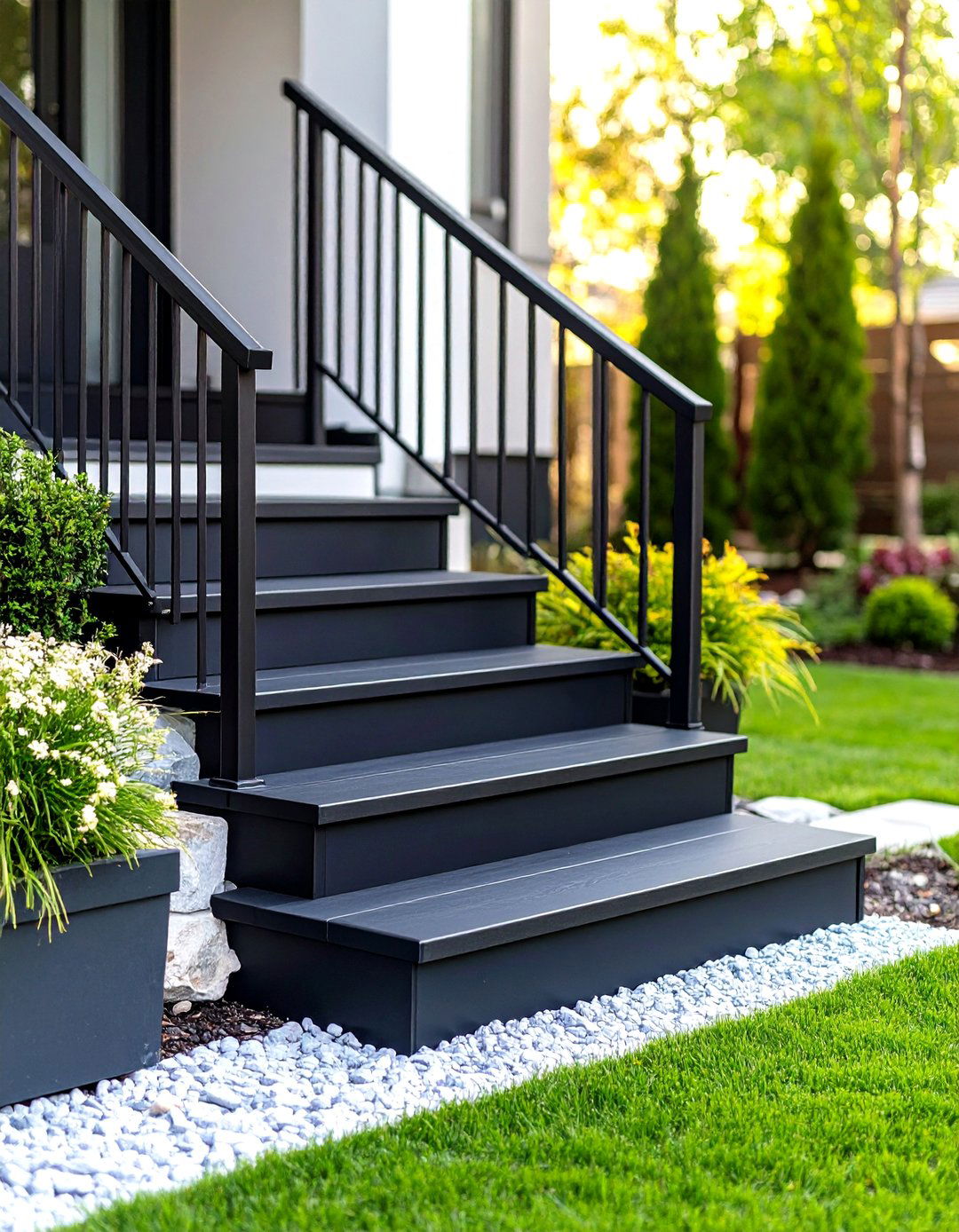
Combining the industrial edge of steel with the natural warmth of wood creates a chic and contemporary look for patio steps. A steel frame or stringers provide a strong, slender profile, while wood treads add texture and a comfortable surface underfoot. This pairing is perfect for modern, urban, or industrial-style homes. The steel can be powder-coated in black or charcoal for a sleek finish, contrasting beautifully with the rich tones of woods like ipe, cedar, or redwood. This design feels both lightweight and robust, offering a sophisticated and durable solution that bridges natural and man-made materials.

20. Permeable Paver Patio Steps
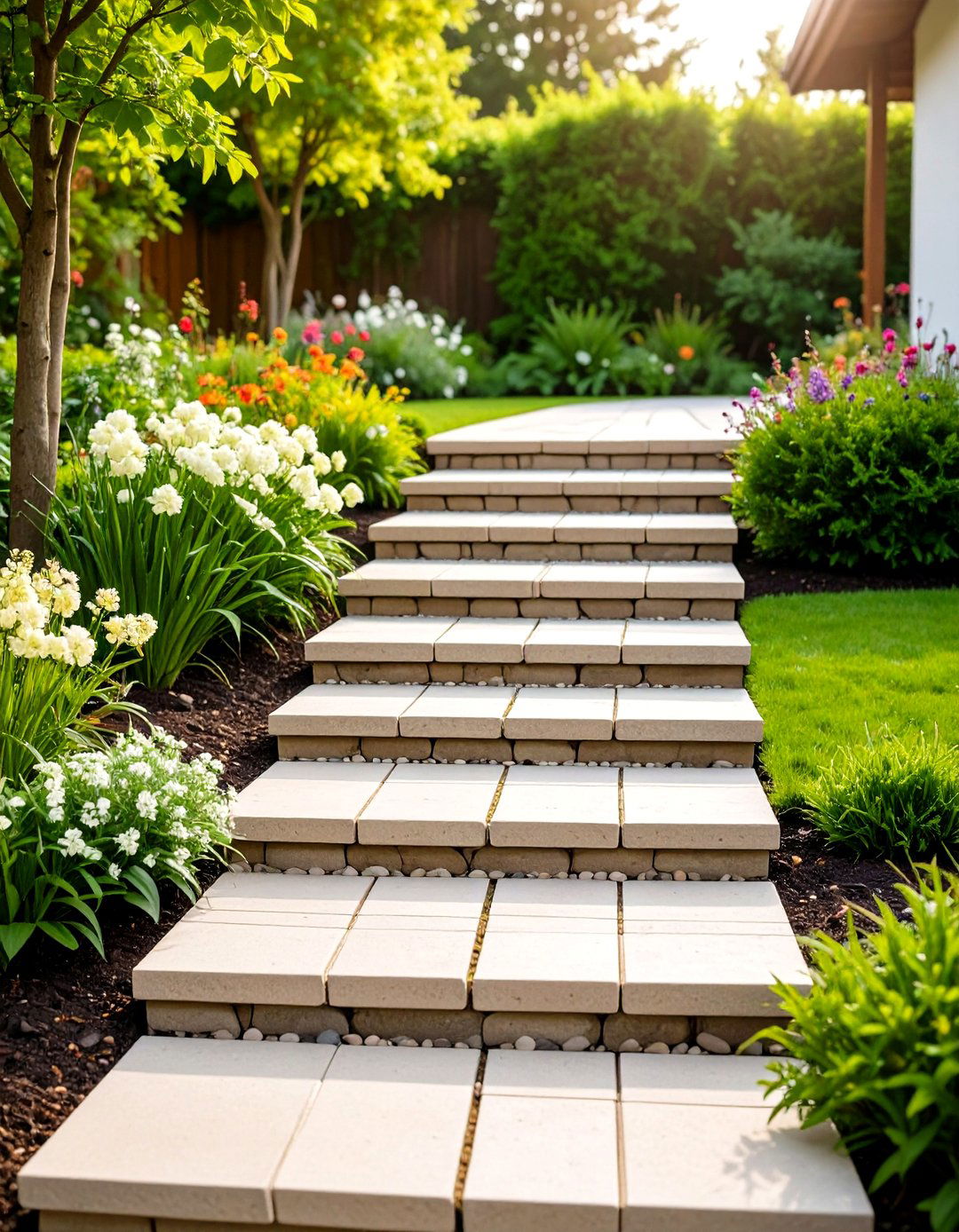
Permeable pavers are an environmentally friendly choice for constructing patio steps, designed to allow rainwater to filter through the surface and into the ground below. This helps to reduce runoff, recharge groundwater, and prevent erosion. The pavers are designed with small gaps between them, which are filled with tiny stones to facilitate drainage. They are available in a variety of styles and colors, mimicking traditional pavers or stone, so you don't have to sacrifice aesthetics for functionality. These steps are a smart, sustainable solution for creating a stable and eco-conscious transition to your patio.
21. Fieldstone Boulder Patio Steps
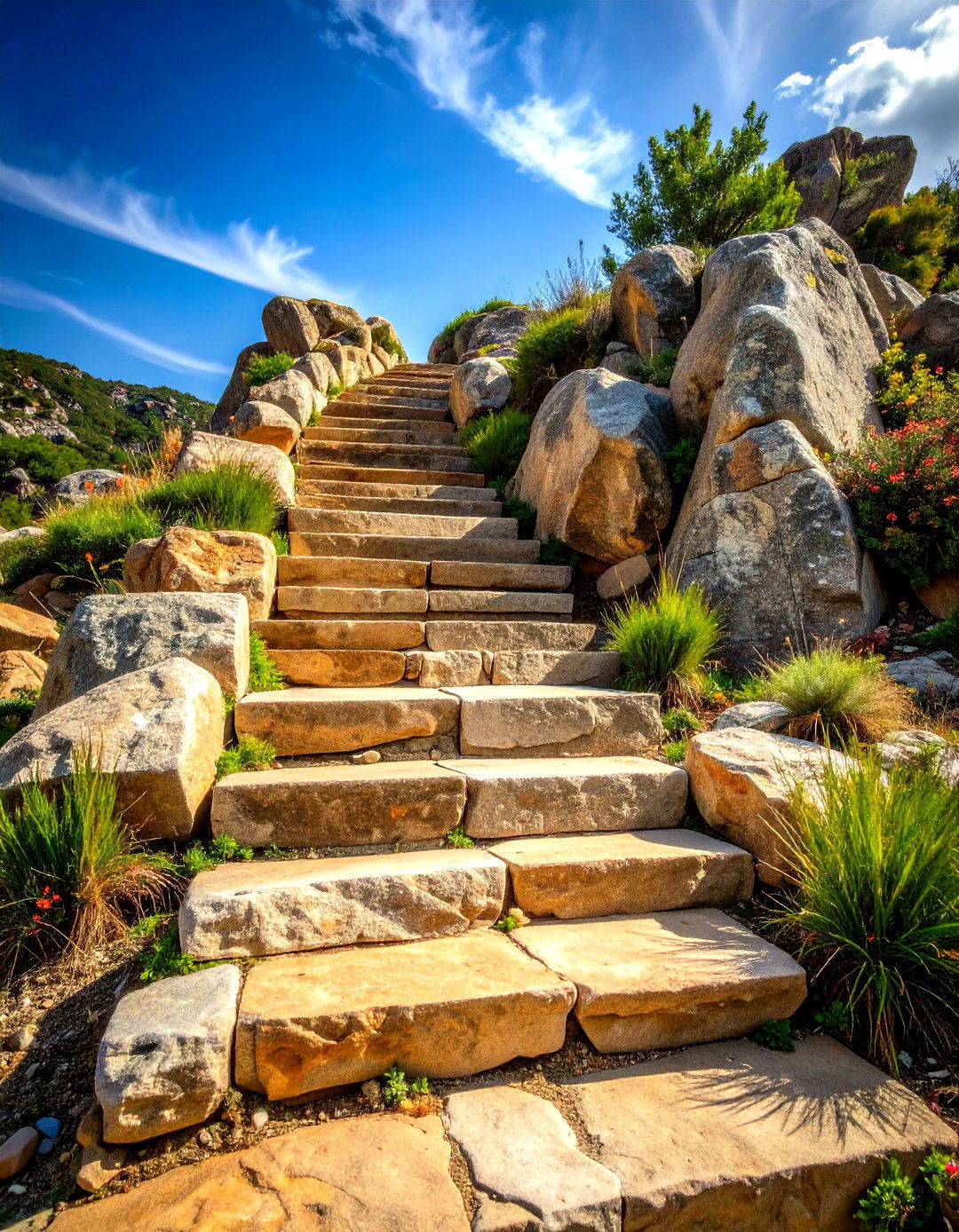
For the most natural and rugged look possible, use large, irregular fieldstone boulders to create your patio steps. These stones are minimally processed and retain their organic shapes, creating a staircase that seems to have been carved by nature itself. Setting these heavy boulders requires significant effort but results in an incredibly durable and impressive feature that blends seamlessly into a rustic or mountainous landscape. Each step is unique, creating a challenging but rewarding path. Gaps can be filled with smaller stones or planted with resilient alpines to enhance the naturalistic feel.
22. Cantilevered Wood Patio Steps
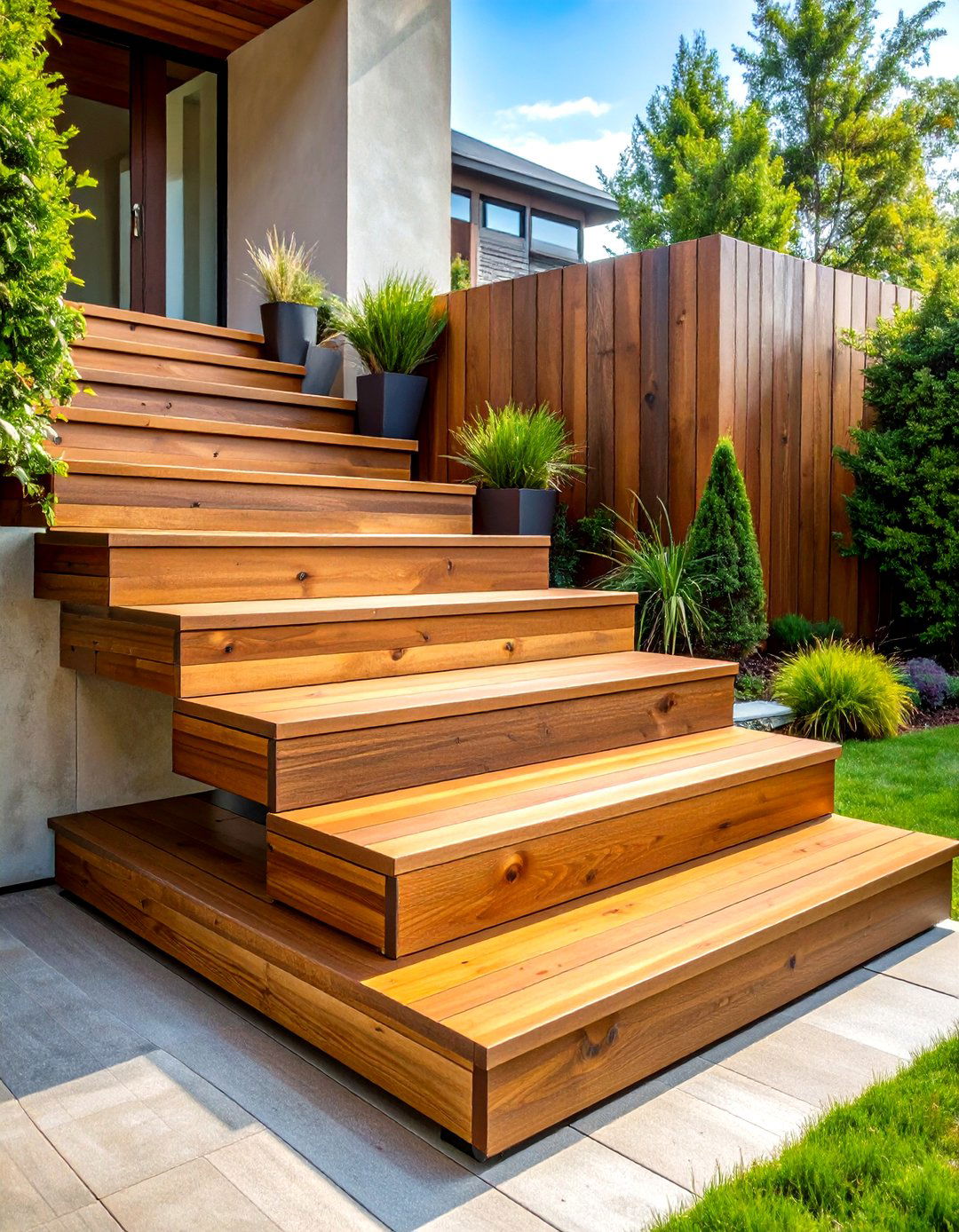
Cantilevered wood steps offer a stunning, gravity-defying design element for a modern patio. Each wooden tread appears to float out from a supporting wall with no visible support underneath, creating a clean, minimalist, and highly architectural look. This effect is achieved with a hidden steel support structure embedded within the wall and the treads. The warmth of the wood, such as a rich hardwood like ipe, provides a beautiful contrast to the sleek, unsupported appearance. These steps make a bold design statement and are perfect for creating a visually lightweight yet strong transition in a contemporary setting.
23. Painted Concrete Patio Steps
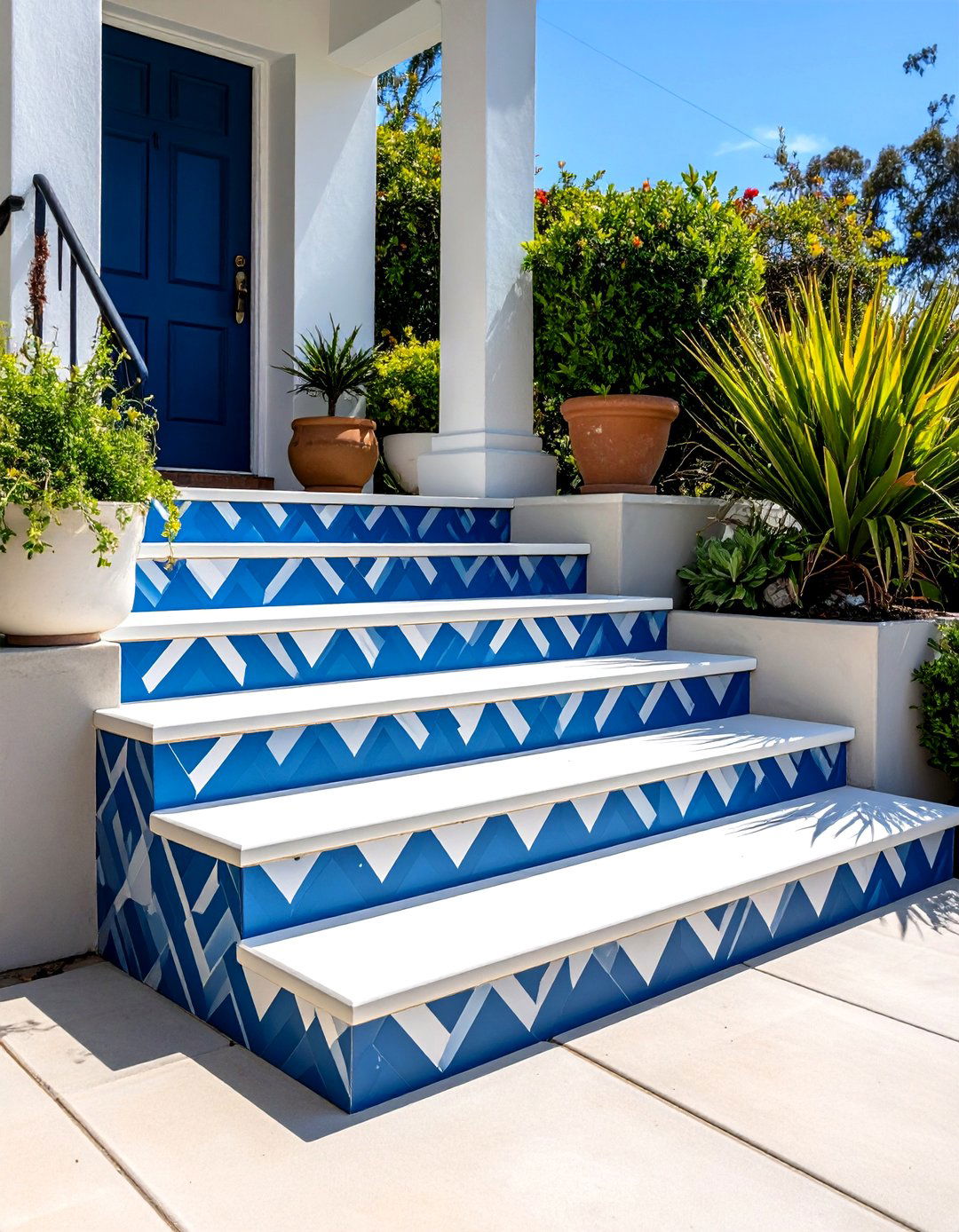
A simple coat of paint can completely transform boring concrete patio steps into a vibrant and personalized feature. This is a budget-friendly and creative DIY project that allows for endless possibilities. You can paint the steps a solid, bold color to make them pop, or create intricate patterns, stencils, or even a faux runner effect. Using durable, non-slip porch and floor paint is essential to ensure the finish withstands foot traffic and the elements. This is an easy way to refresh an old staircase and inject a dose of fun and personality into your outdoor space.
24. Low-Profile Composite Decking Steps
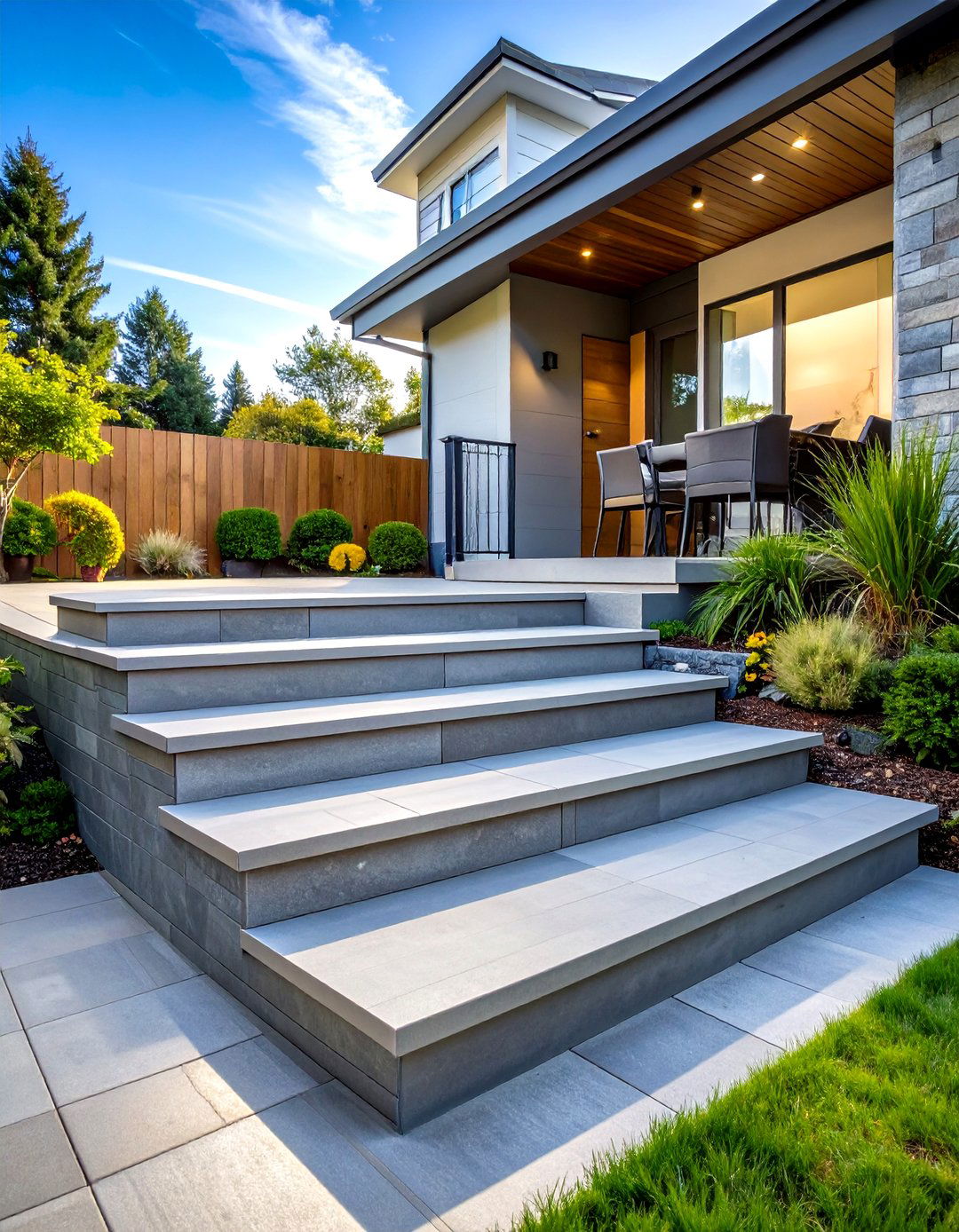
Composite decking material is an excellent choice for low-profile, long-lasting patio steps. Made from a mix of wood fibers and recycled plastic, it's resistant to rot, insects, and fading, requiring very little maintenance compared to traditional wood. Its uniform appearance creates a clean, consistent look that is perfect for contemporary designs. Building wide, low-rising steps with composite decking creates a comfortable and seamless transition from your home to your patio. The material comes in a wide range of colors and finishes, making it easy to match your existing patio or home exterior for a cohesive look.
25. Irregular Slate Patio Steps

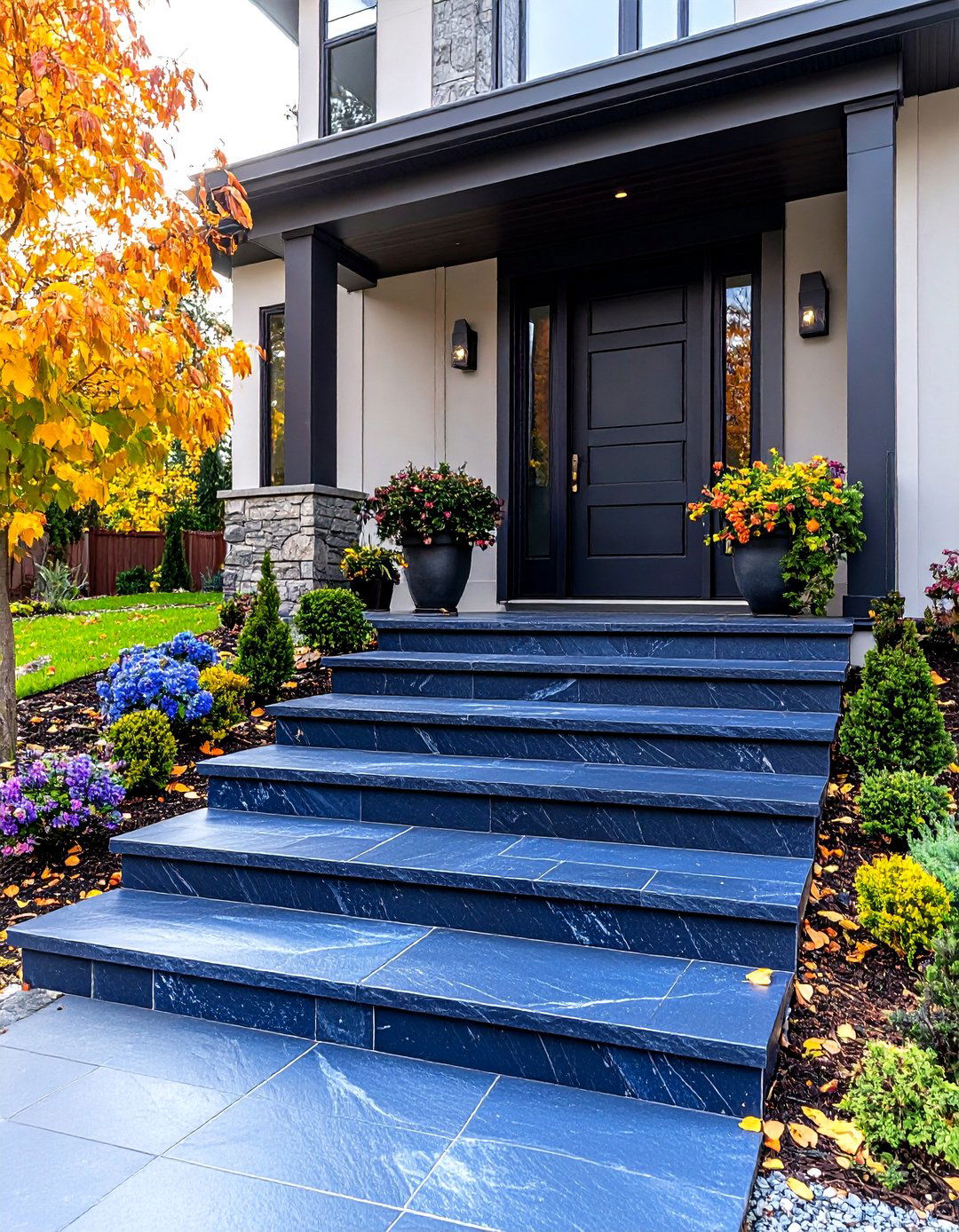
Slate offers a sophisticated and natural elegance with its fine-grained texture and layered appearance. Using irregular, un-squared pieces of slate to create patio steps results in a look that is both refined and organic. The deep charcoal, gray, and blue tones of slate provide a cool, contemporary color palette that complements lush green foliage beautifully. While slate is durable, it can be slippery when wet, so choosing a naturally cleft, textured surface is important for safety. These steps create a path that feels artfully crafted yet rooted in the natural world, perfect for modern and rustic gardens alike.
26. Retaining Wall Block Steps
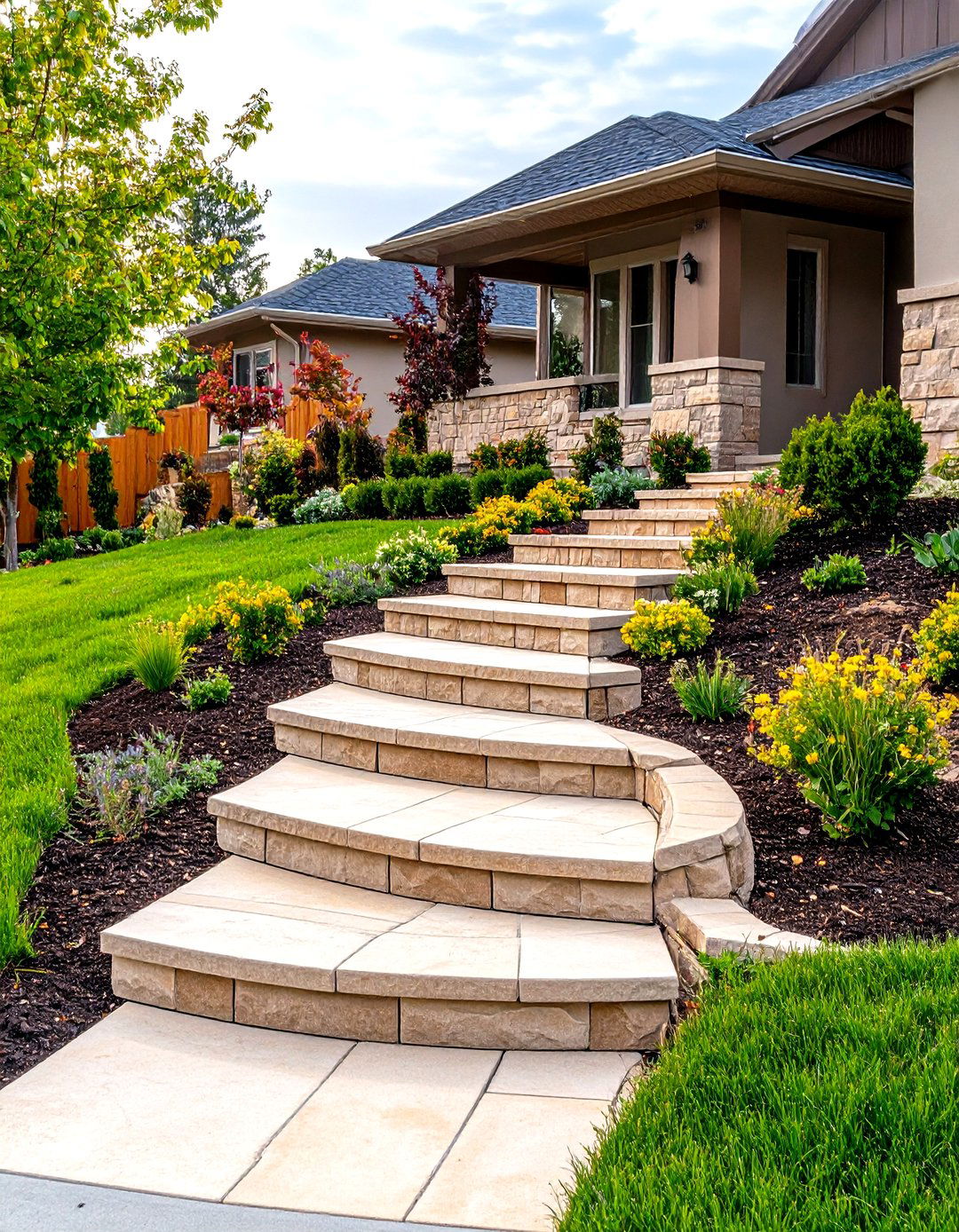
Using interlocking retaining wall blocks to build patio steps is a straightforward and highly effective method, especially for steep slopes. These concrete blocks are designed to fit together securely, creating a strong and stable structure without the need for mortar. They come in various colors, textures, and styles, many mimicking the look of natural quarried stone. This system allows for the easy creation of straight or curved staircases that integrate perfectly with matching retaining walls in the garden. It's a practical, durable, and cohesive solution for managing elevation changes in your landscape design.
27. Pebble Mosaic Patio Steps
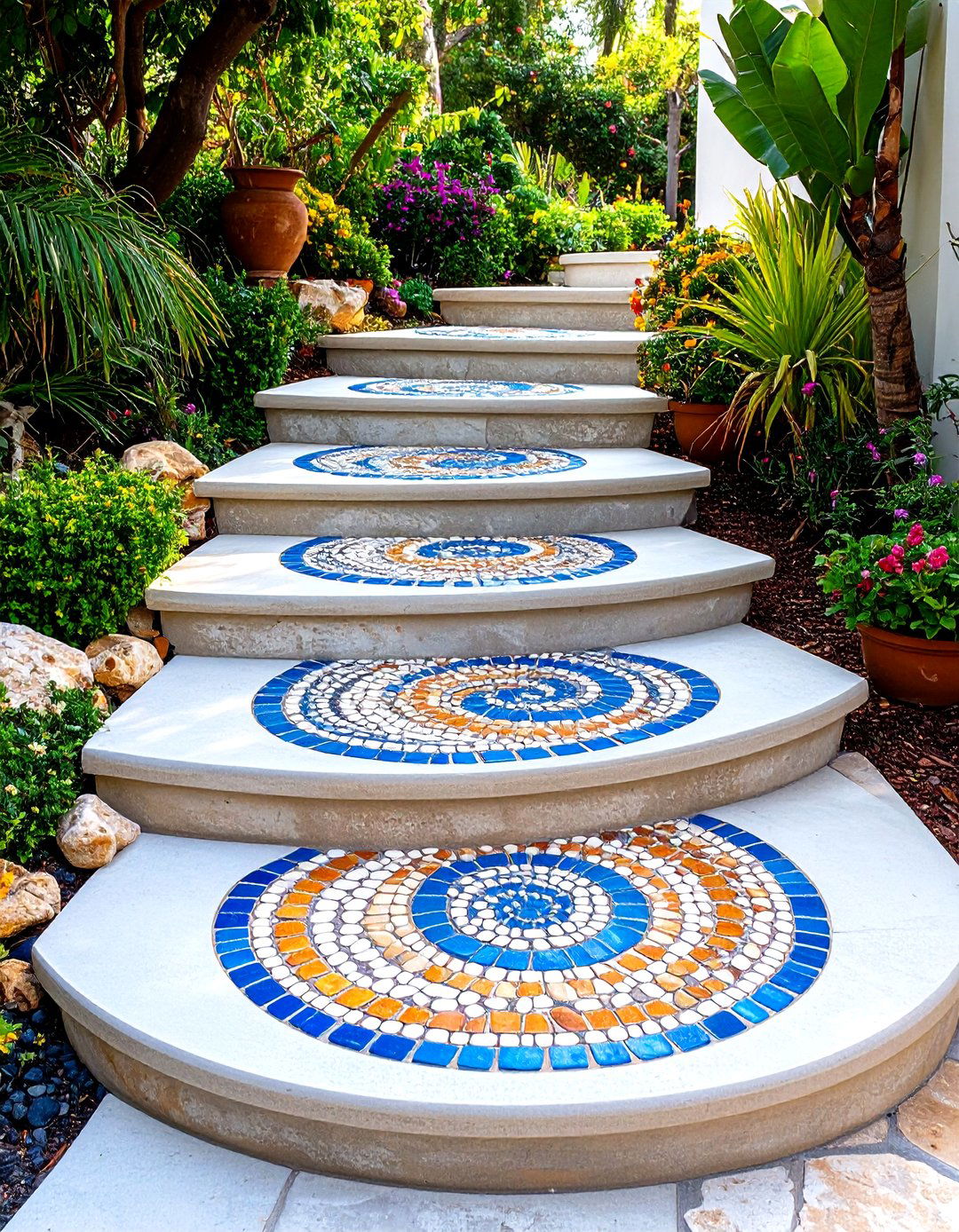
For an artistic and textural touch, create pebble mosaic designs on the treads or risers of your patio steps. This intricate work involves setting small, smooth river pebbles into mortar to create beautiful patterns, spirals, or images. It turns a functional staircase into a detailed piece of handcrafted art. You can use pebbles of different colors—black, white, gray, and tan—to create contrast and bring your designs to life. While time-consuming, the result is a one-of-a-kind feature that adds a personal and tactile element to your garden path, providing a delightful sensory experience with every step.
28. Minimalist Limestone Patio Steps
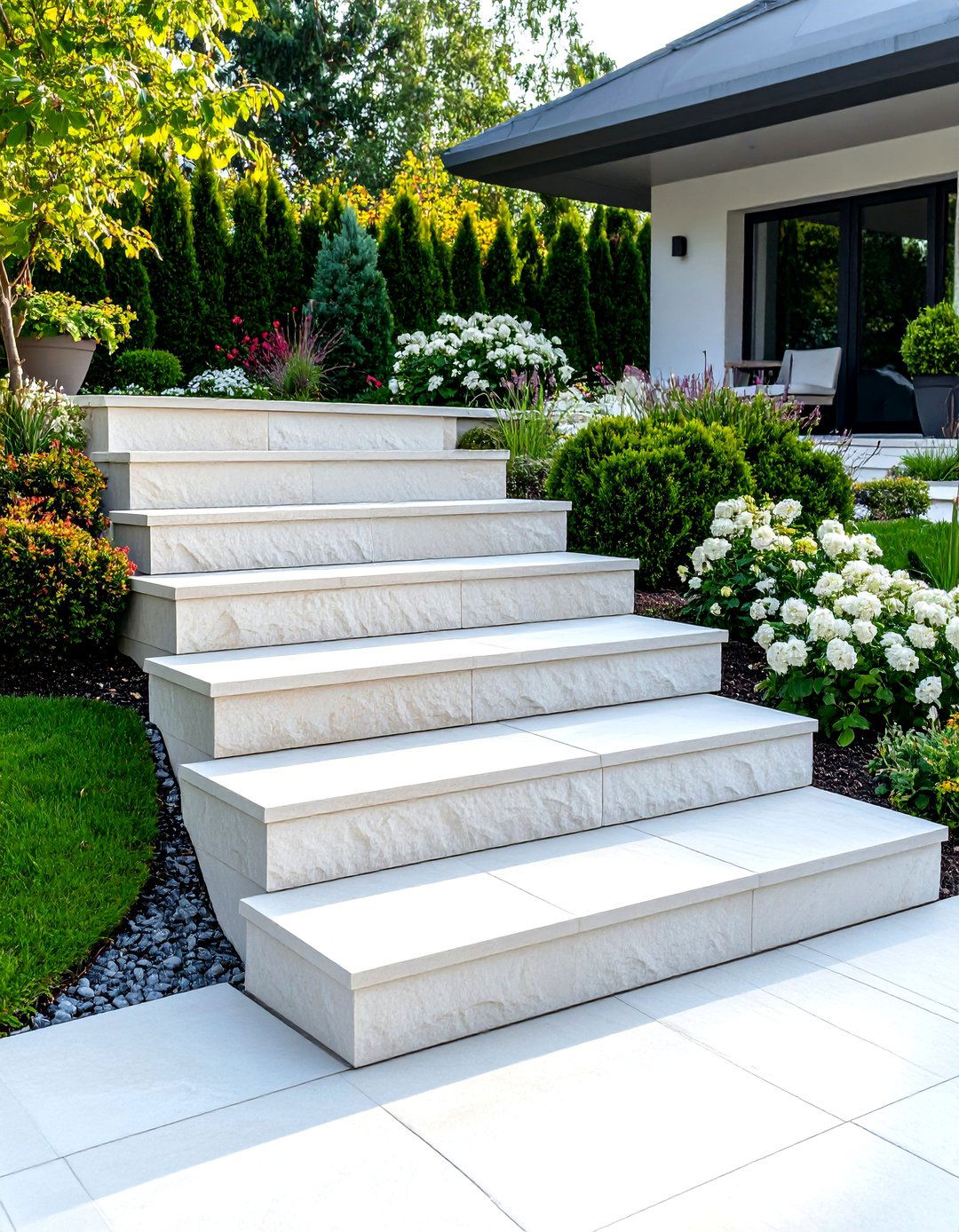
Limestone offers a clean, classic, and sophisticated option for patio steps. Its consistent color, typically in shades of white, cream, or light gray, and fine-grained texture create a soft and elegant look. For a minimalist aesthetic, use large, precisely cut slabs of limestone with clean lines and tight joints. This creates a serene and uncluttered appearance that enhances modern and formal garden designs. Limestone stays relatively cool in the sun, making it comfortable for bare feet. Its understated beauty provides a perfect, neutral backdrop that allows the surrounding architecture and plantings to take center stage.
29. Log Riser and Packed Earth Steps

For a truly rustic and eco-friendly approach, use logs as risers and packed earth for the treads. This style is ideal for informal paths on a gentle slope in a woodland or cottage garden. Sections of logs are laid down and secured with stakes to form the front edge of each step. The area behind the log is then filled and firmly compacted with soil or fine gravel to create a stable tread. This method uses natural, often on-site materials, to create a charming, low-cost staircase that blends effortlessly into its natural surroundings, feeling like an ancient garden path.
30. Black Basalt Patio Steps
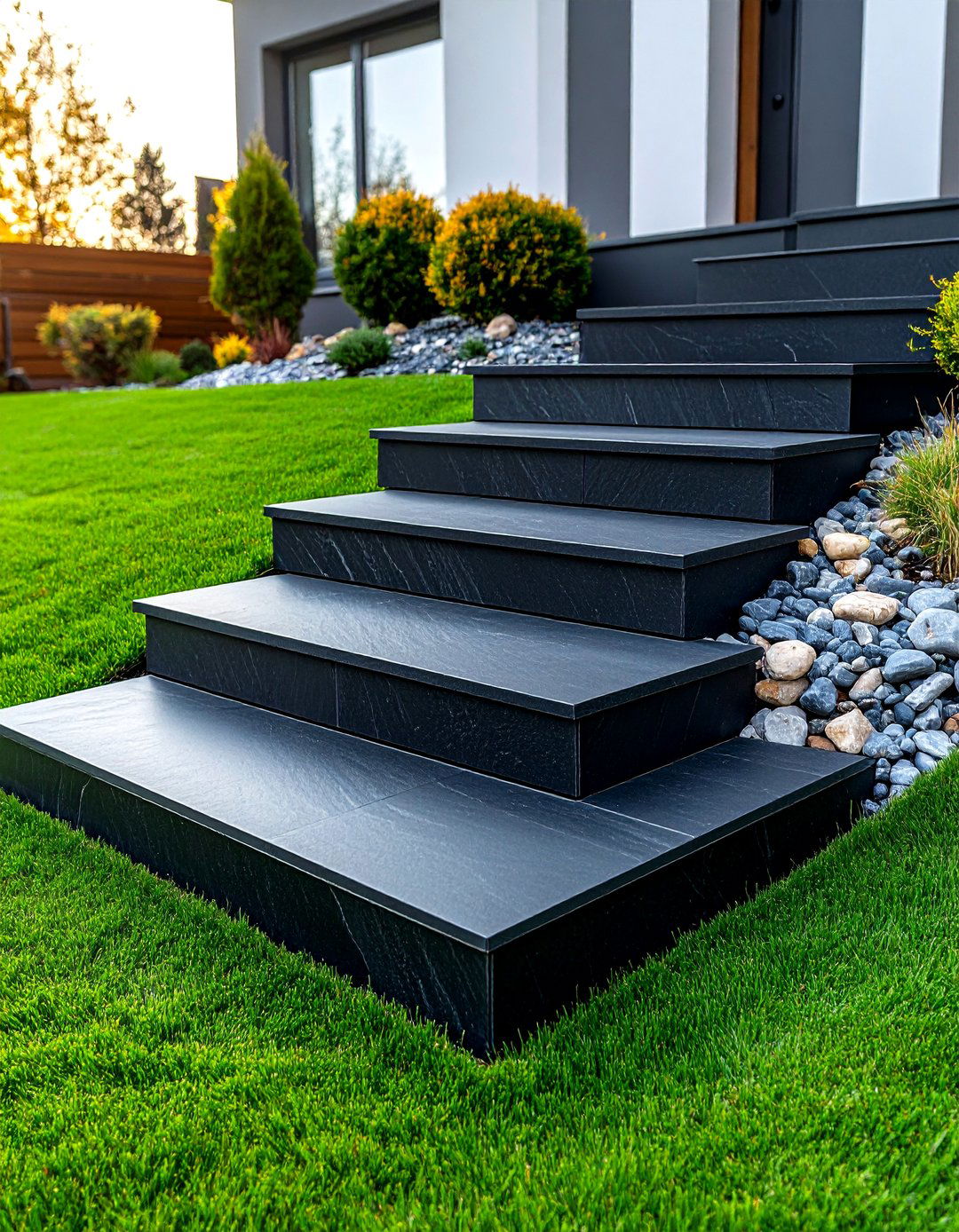
For a bold, dramatic, and contemporary statement, choose black basalt for your patio steps. This dark, volcanic rock has a fine-grained, consistent texture that provides a sleek, modern finish. When cut into clean, geometric slabs, basalt creates a powerful visual contrast against green lawns and light-colored patio pavers. Its dark color absorbs heat, which can be a consideration in very sunny climates. The result is a sophisticated and high-impact staircase that feels luxurious and commanding, anchoring the landscape design with its strong, minimalist presence and deep, uniform color that exudes modern elegance.
Conclusion:
Ultimately, designing the perfect patio steps involves balancing aesthetics, functionality, and budget. From the rustic charm of railway sleepers to the sleek modernism of floating concrete, the ideas are nearly limitless. The right choice will not only ensure safe passage but also act as a beautiful transition, unifying your home with your outdoor living space. By carefully considering materials and style, your patio steps can become a standout feature, significantly enhancing the overall character and appeal of your garden and making it a more inviting and cohesive environment for years to come.

Related posts:


Leave a Reply