
Outdoor steps are more than just a functional way to navigate different levels in your yard; they are a key design element that can define the character of your landscape. From rustic stone paths winding through a garden to sleek, modern floating stairs leading to a patio, the options are limitless. The right choice of materials and design can connect your home to the outdoors seamlessly, enhance curb appeal, and create a safe, inviting journey through your property. This guide explores thirty distinct outdoor step ideas to inspire your next landscaping project, ensuring both beauty and practicality.
1. Floating Concrete Outdoor Steps
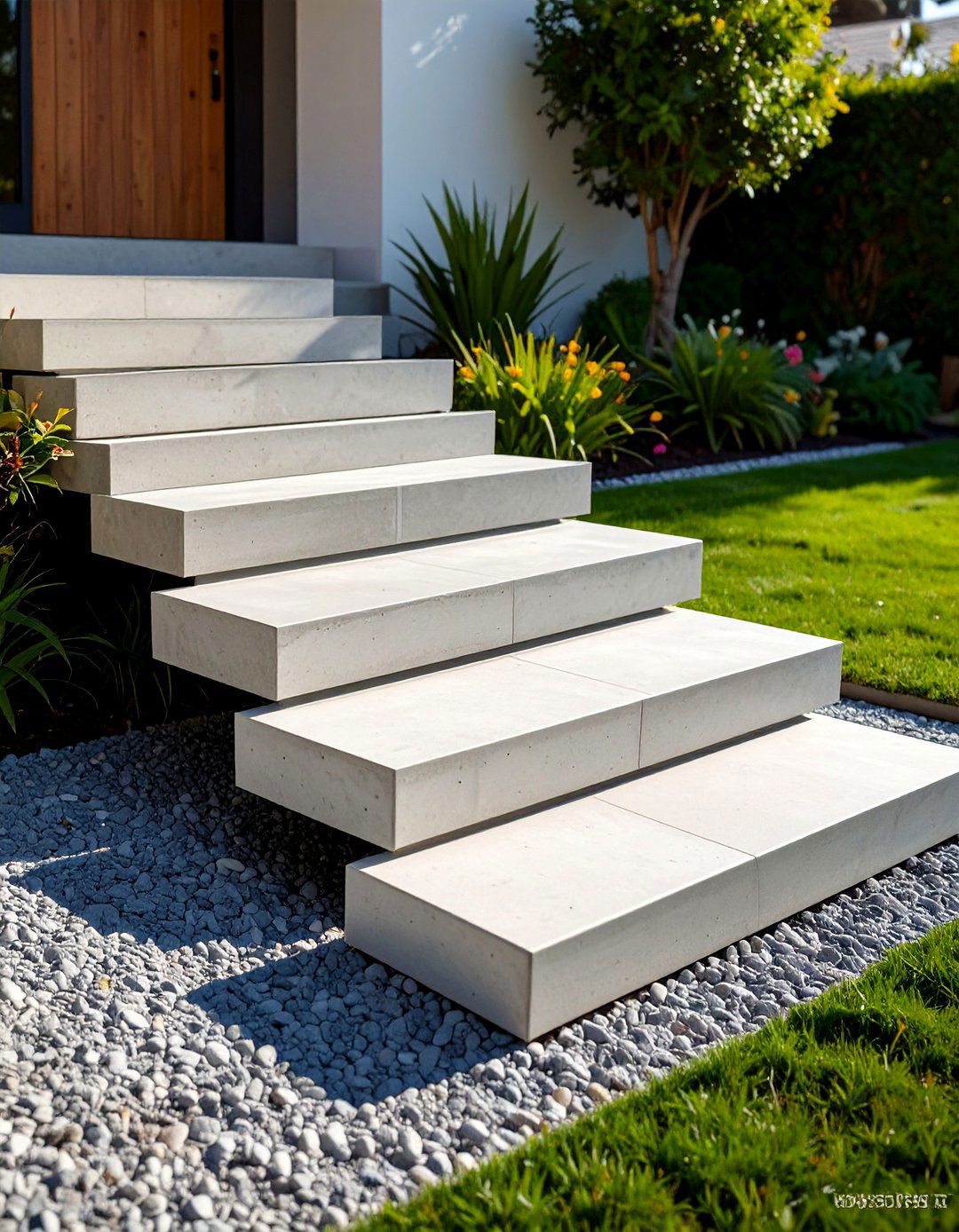
Floating concrete outdoor steps create a stunning, minimalist look that complements modern and contemporary architecture. Each tread appears to hover independently, casting dramatic shadows and adding a sense of lightness to a typically heavy material. These steps are formed using reinforced concrete slabs anchored discreetly into a structural wall or stringer, hiding the support system from view. The clean lines and uncluttered appearance make them a focal point in any landscape design. To enhance the effect, consider surrounding them with soft-textured ground cover like mondo grass or fine gravel, which accentuates their stark, geometric form.
2. Rustic Natural Stone Outdoor Steps
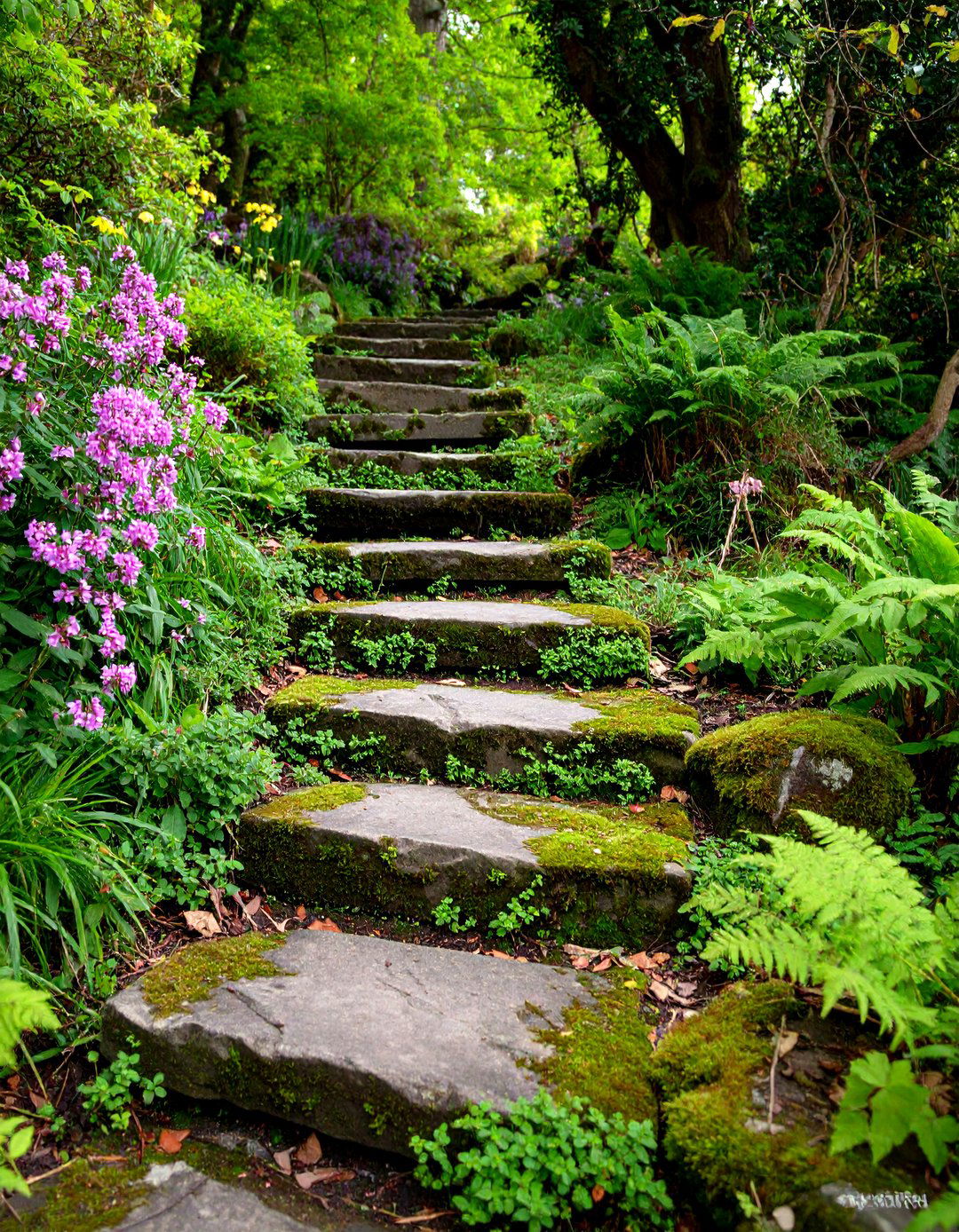
For a timeless and organic connection to the landscape, rustic natural stone outdoor steps are an unparalleled choice. Using large, irregular slabs of fieldstone, granite, or slate, these steps blend seamlessly into hillside gardens and woodland paths. The beauty lies in their imperfection; each stone has a unique shape, color, and texture, creating a path that feels as if it were carved by nature itself. Set directly into the earth and often bordered by moss or creeping thyme, these steps provide a sturdy and charming transition between different elevations, perfectly suiting cottage, country, and naturalistic garden styles.
3. Wooden Box Outdoor Steps
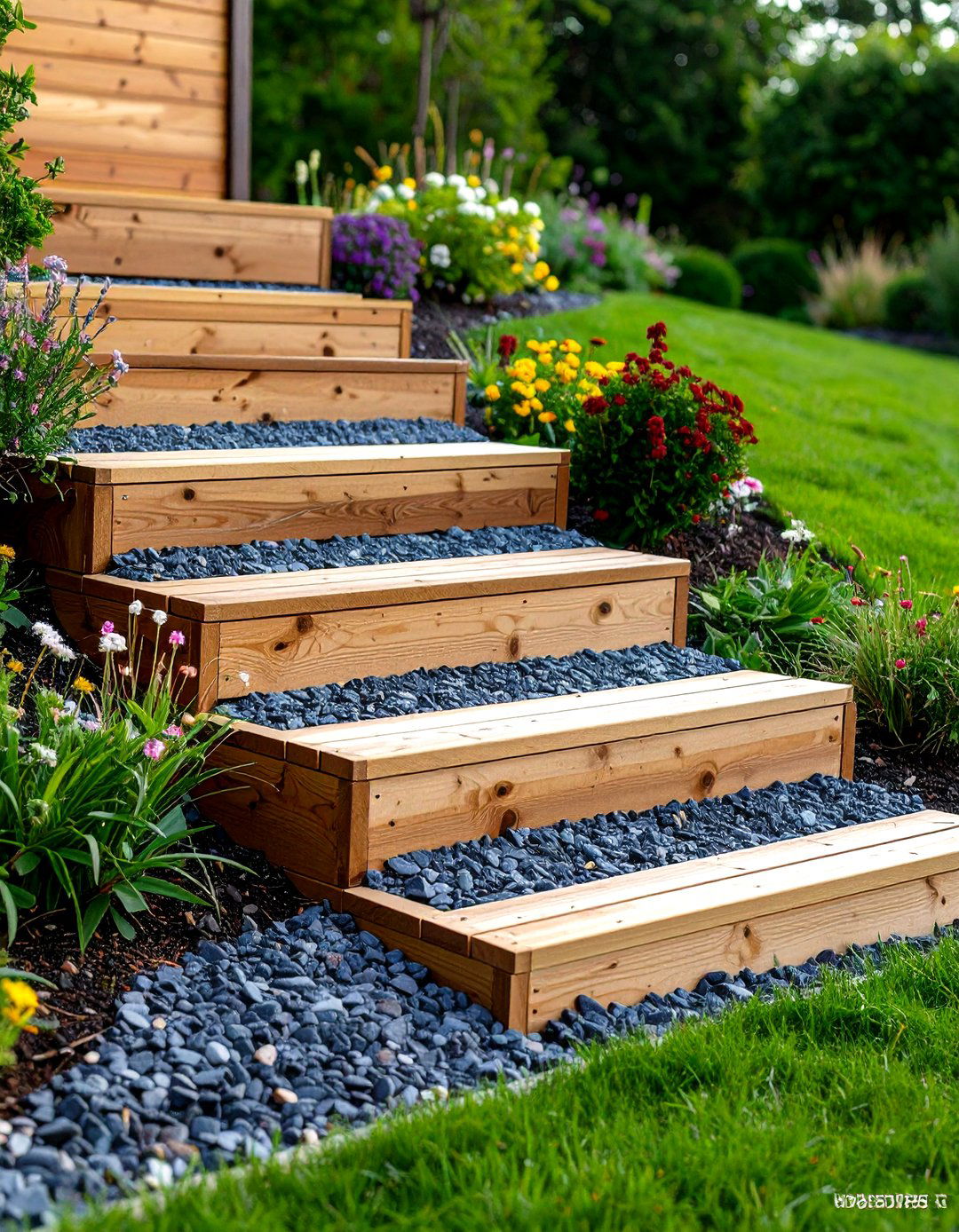
Wooden box outdoor steps offer a versatile and clean design that works well for gentle slopes and connecting decks to patios. These steps are essentially a series of rectangular wooden frames, or boxes, that are stacked and staggered to create a staircase. Typically filled with compacted gravel or soil, they can also be planted with low-growing, durable plants for a greener look. Using pressure-treated lumber or naturally resistant woods like cedar or redwood ensures longevity. Their simple, geometric construction provides a structured yet natural aesthetic that can be easily integrated into various garden designs, from rustic to contemporary.
4. Terraced Garden Path Outdoor Steps
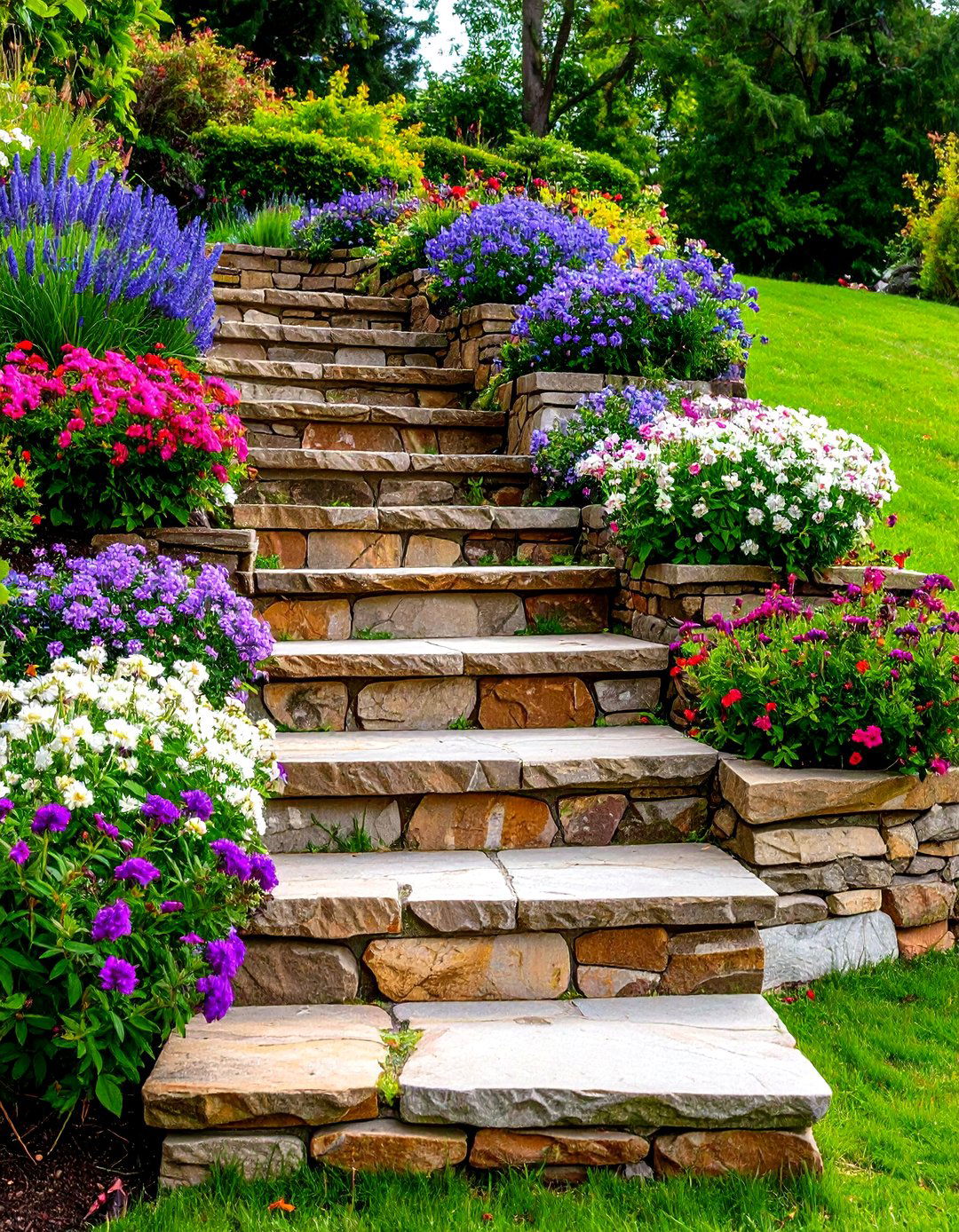
Combining functionality with horticultural beauty, terraced garden path outdoor steps transform a steep slope into a stunning feature. These wide, deep steps are integrated with retaining walls to create level planting areas on either side or even on the treads themselves. This design breaks up a long, intimidating climb into a series of shorter, more manageable flights, inviting leisurely strolls. The planting pockets can be filled with cascading flowers, herbs, or ornamental grasses, softening the hardscape and creating a lush, multi-level garden that is both accessible and visually captivating, making the journey as important as the destination.
5. Classic Brick Outdoor Steps with Lighting
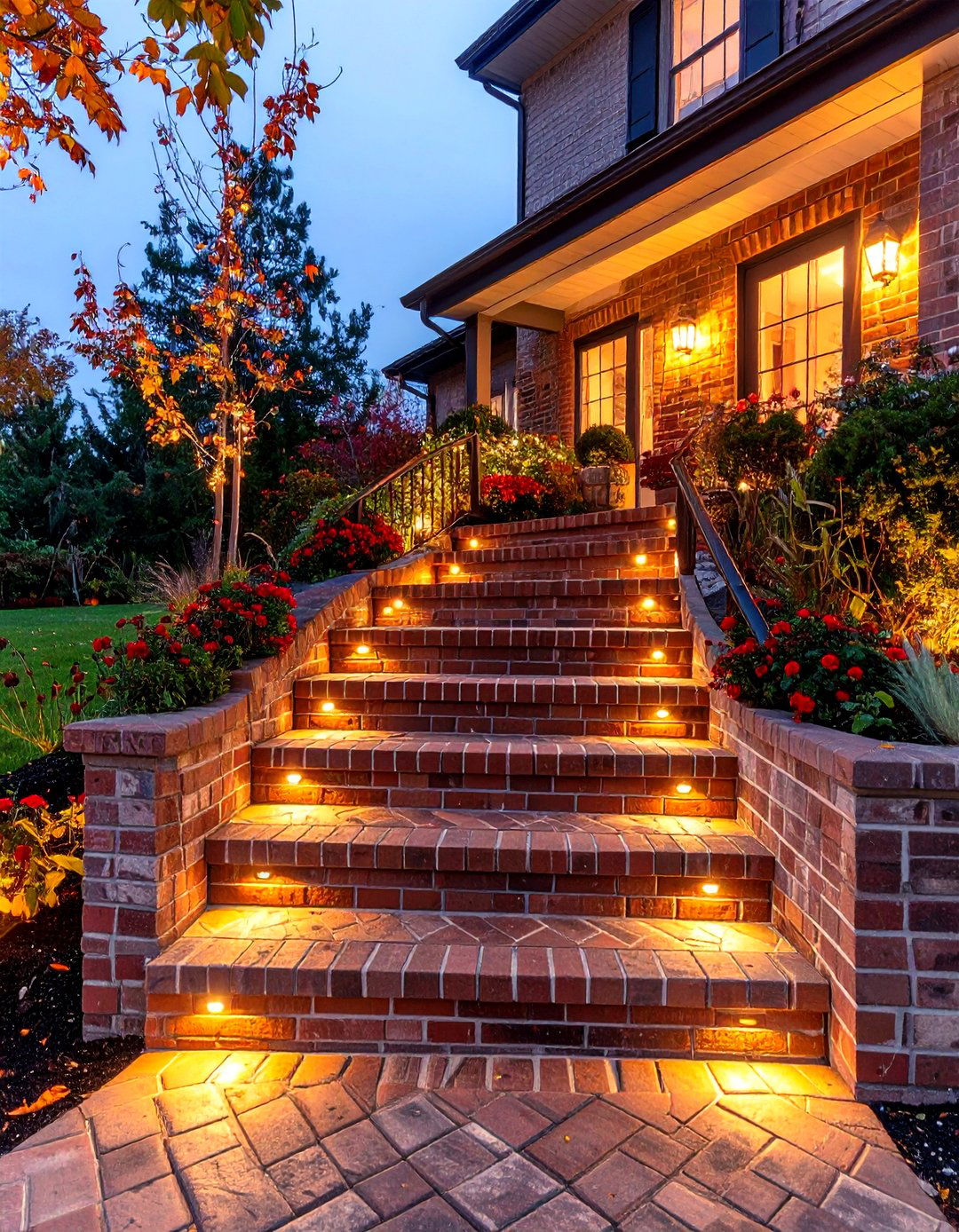
Classic brick outdoor steps offer enduring appeal and a sense of tradition, perfectly complementing colonial, Tudor, and traditional homes. The rich color and texture of brick add warmth and character to any entryway or garden path. For enhanced safety and dramatic nighttime ambiance, integrate low-voltage lighting directly into the risers or under the stair nosing. This subtle illumination casts a gentle glow across the treads, guiding the way after dark while highlighting the classic herringbone or running bond pattern of the brickwork. This combination of timeless material and modern technology creates a welcoming and secure feature.
6. Curved Flagstone Outdoor Steps
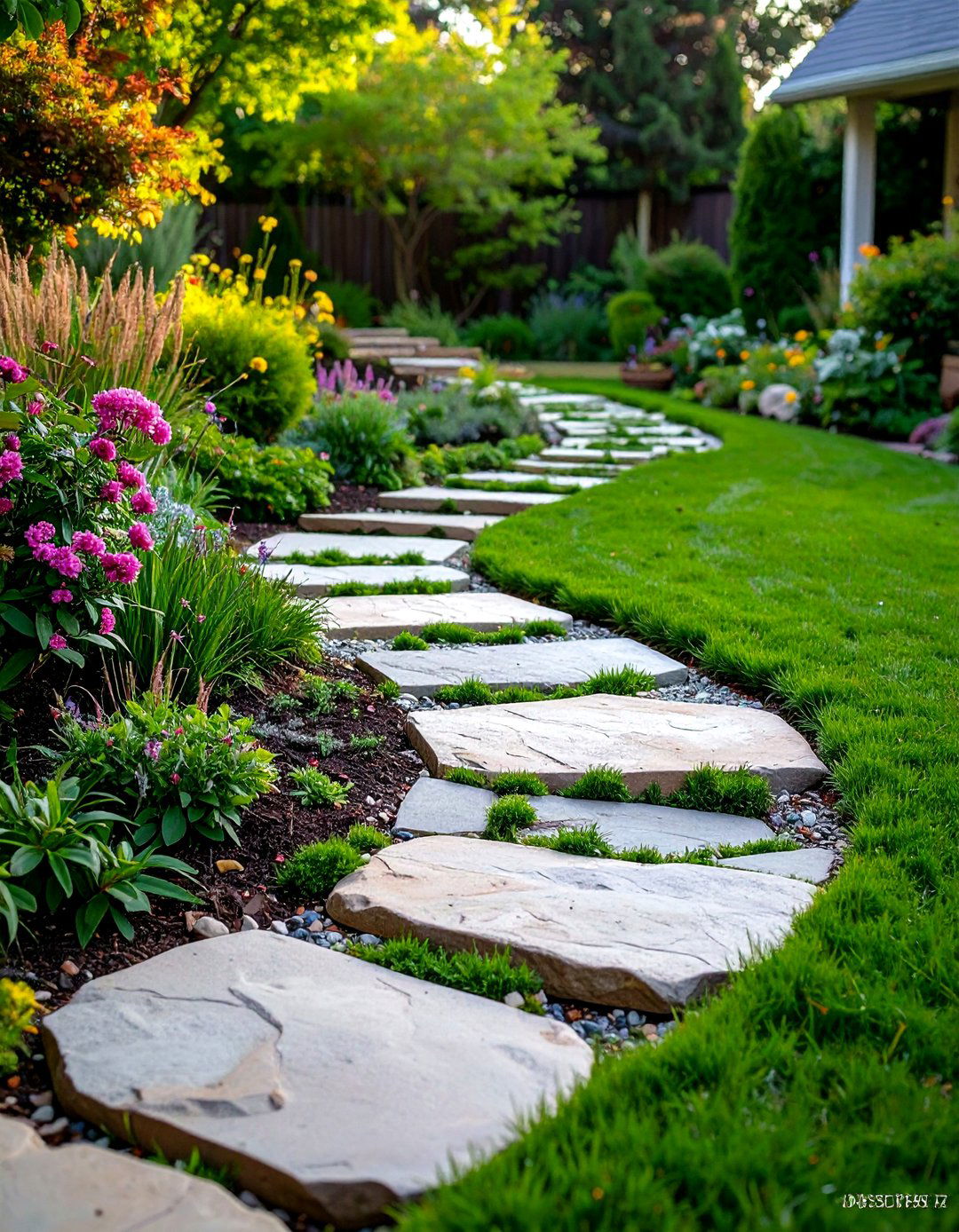
Curved flagstone outdoor steps introduce a graceful, flowing line into the landscape, softening hard angles and creating a more natural, meandering path. Using irregularly shaped pieces of flat stone like slate, bluestone, or sandstone, these steps are pieced together like a puzzle to form a gentle arc. The organic shape encourages a slower, more contemplative pace and is ideal for guiding visitors through a garden or up a gently rolling hill. The gaps between the stones can be filled with mortar for a solid feel or planted with creeping ground covers to further blend the steps into their surroundings.
7. Modern Metal Grate Outdoor Steps
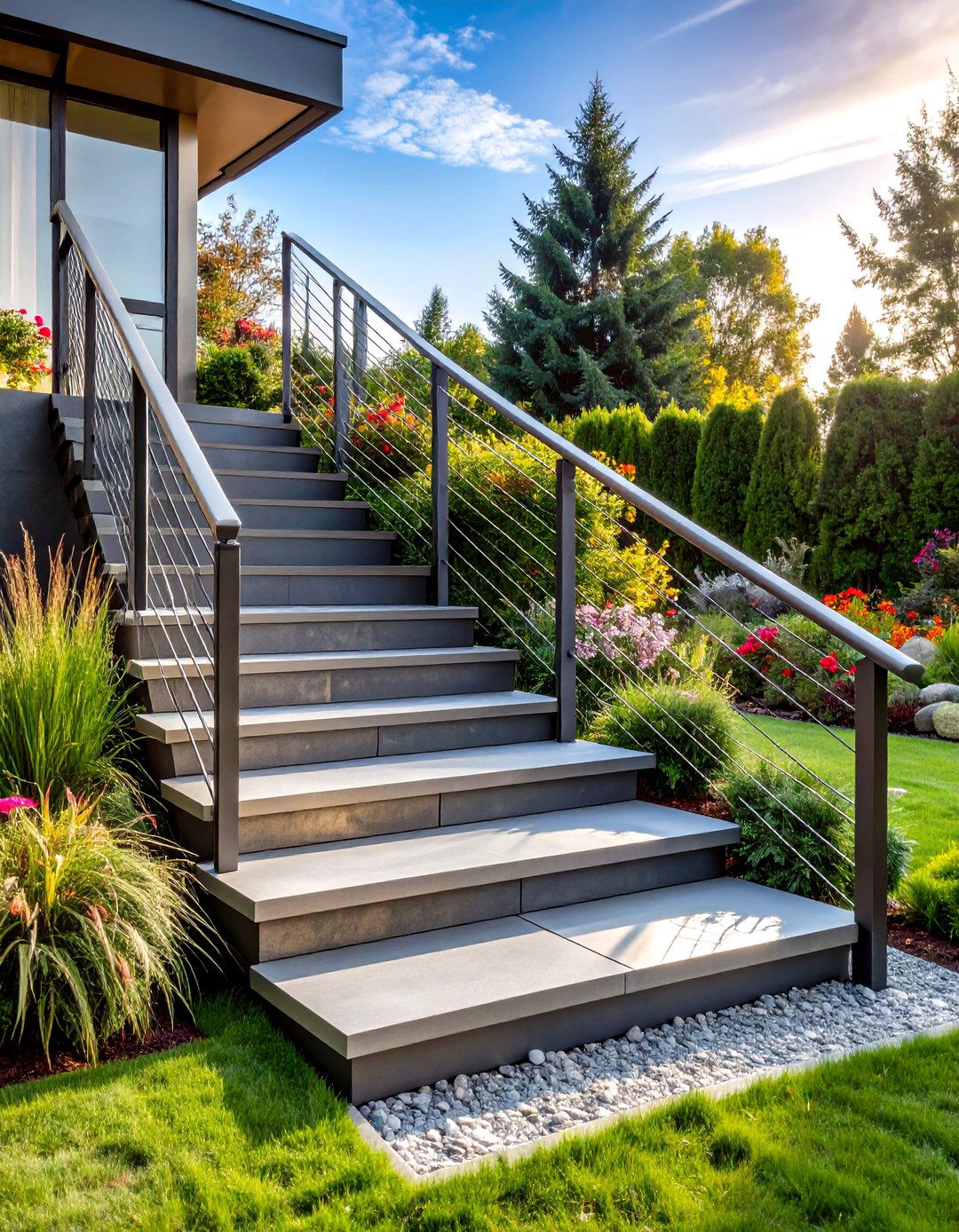
For an industrial-chic or ultra-modern aesthetic, modern metal grate outdoor steps are a durable and visually light option. Made from steel or aluminum, the grated treads allow water, snow, and debris to pass through, making them a practical, low-maintenance choice for all climates. Their see-through design creates a sense of openness and prevents the staircase from feeling bulky or obstructive, preserving views of the landscape beyond. These steps are often paired with a sleek metal or cable railing system, enhancing their minimalist appeal and making them a bold architectural statement for any contemporary home.
8. Tiered Deck Outdoor Steps
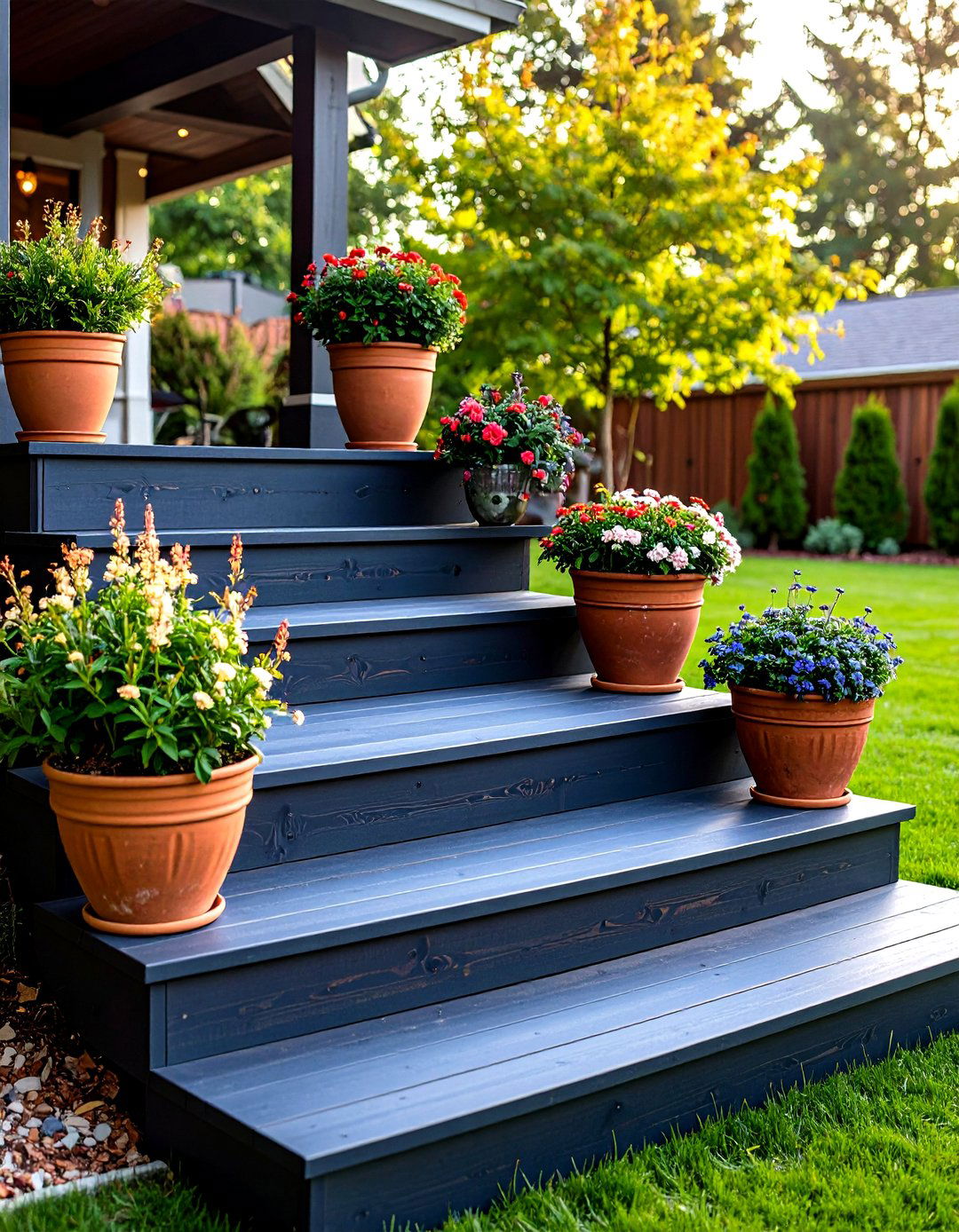
Tiered deck outdoor steps serve as both a staircase and an extension of the living space, creating a multi-level transition from a high deck to the yard below. Instead of a single, long flight of stairs, this design uses a series of wide, deep platforms or mini-decks. These intermediate levels break up the descent and provide extra space for container plants, seating, or decorative objects. This approach makes the journey safer and more interesting, transforming the steps into a functional and attractive feature that seamlessly integrates the deck with the rest of the outdoor environment.
9. Outdoor Steps with Grass Risers
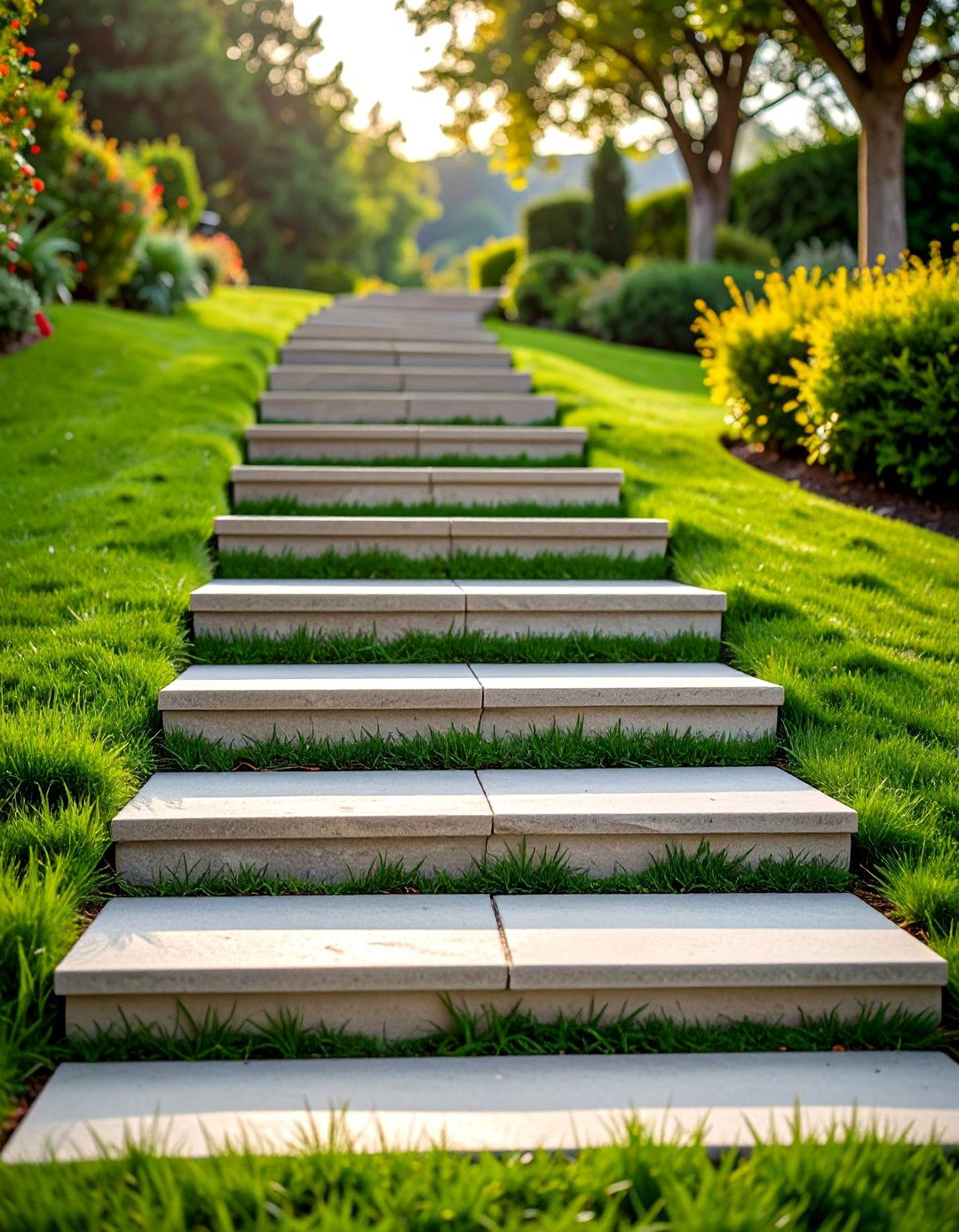
Outdoor steps with grass risers offer a unique and beautiful way to soften a hardscape staircase and merge it with the lawn. This design features solid treads made of materials like stone slabs, concrete pavers, or wooden beams, while the vertical risers are filled with soil and planted with turf. The result is a staircase that appears to emerge directly from the hillside, with ribbons of green connecting each step. This biophilic design is perfect for gentle slopes in garden settings, creating a living pathway that feels fully integrated with the natural environment and provides a lush, textured look.


10. Railroad Tie Outdoor Steps
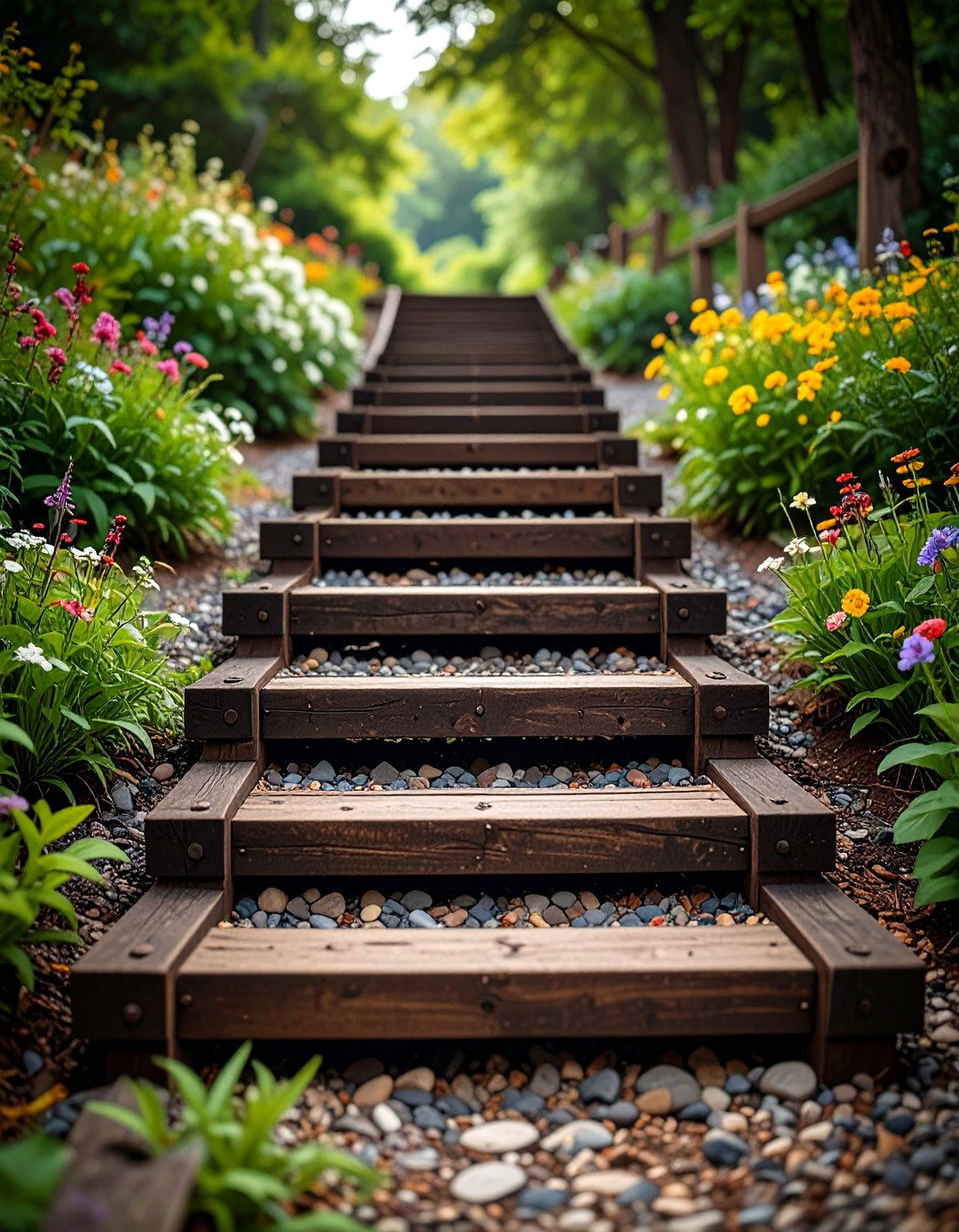
Railroad tie outdoor steps provide a rustic, robust, and cost-effective solution for creating pathways on sloped terrain. These chunky, substantial timbers are set into the hillside and backfilled with gravel, crushed rock, or wood chips to create the tread surface. Their weathered appearance adds instant character and a sense of history to the landscape, making them ideal for woodland, cottage, or informal garden settings. The simple, linear construction is easy to install and exceptionally durable. When staggered artfully down a hill, they create a charming and practical route that feels both man-made and perfectly at home in nature.
11. Outdoor Steps with Mosaic Tile Risers
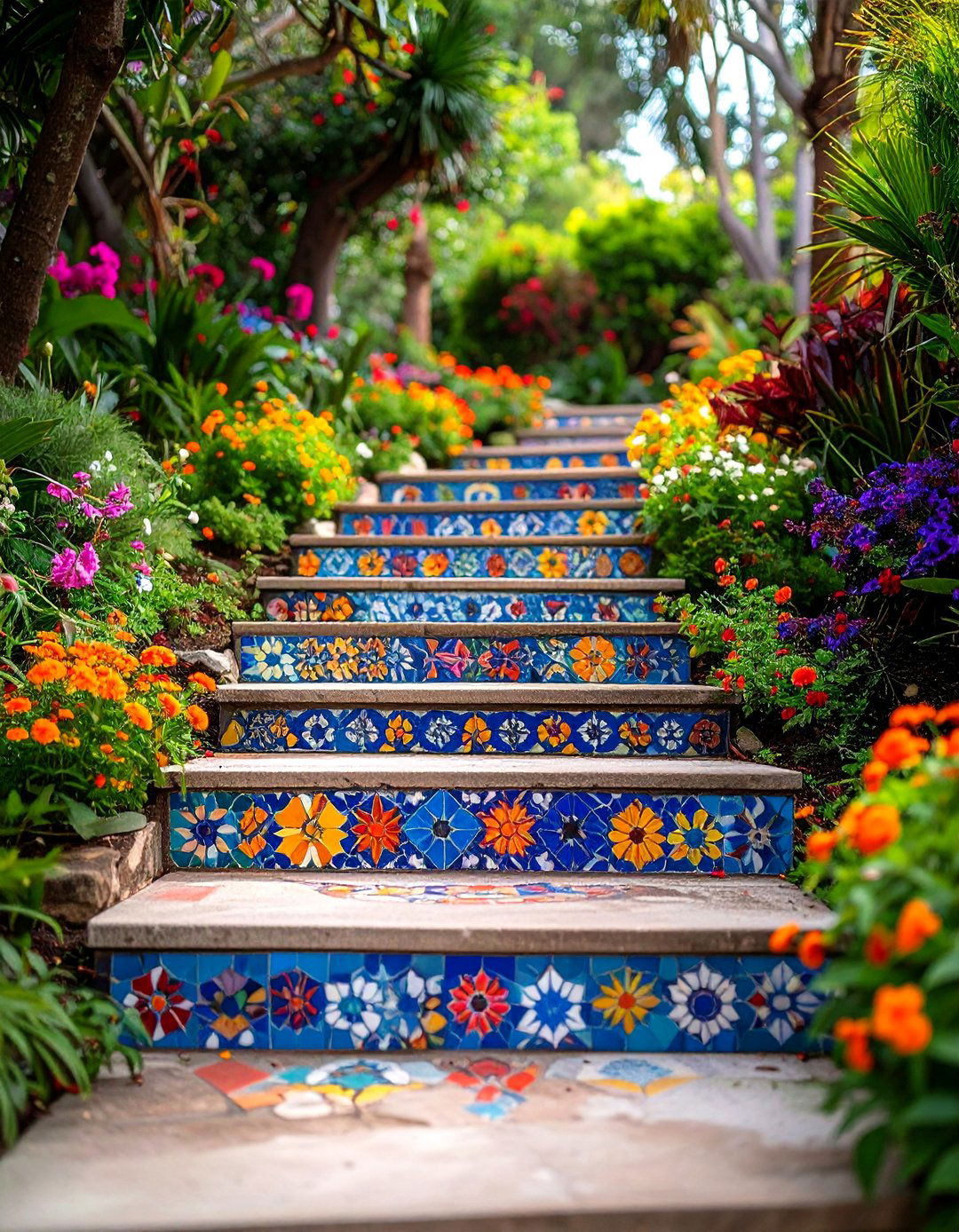
To inject vibrant color, personality, and artistic flair into your garden, consider outdoor steps with mosaic tile risers. While the treads are made from a durable material like concrete, stone, or wood, the vertical face of each step becomes a canvas for creativity. Using broken pieces of ceramic, glass, or porcelain tile, you can create intricate patterns, abstract designs, or whimsical scenes. This is a fantastic way to upcycle old materials and create a truly one-of-a-kind feature that reflects your personal style, turning a functional staircase into a stunning piece of outdoor art.
12. Poured Concrete Outdoor Steps
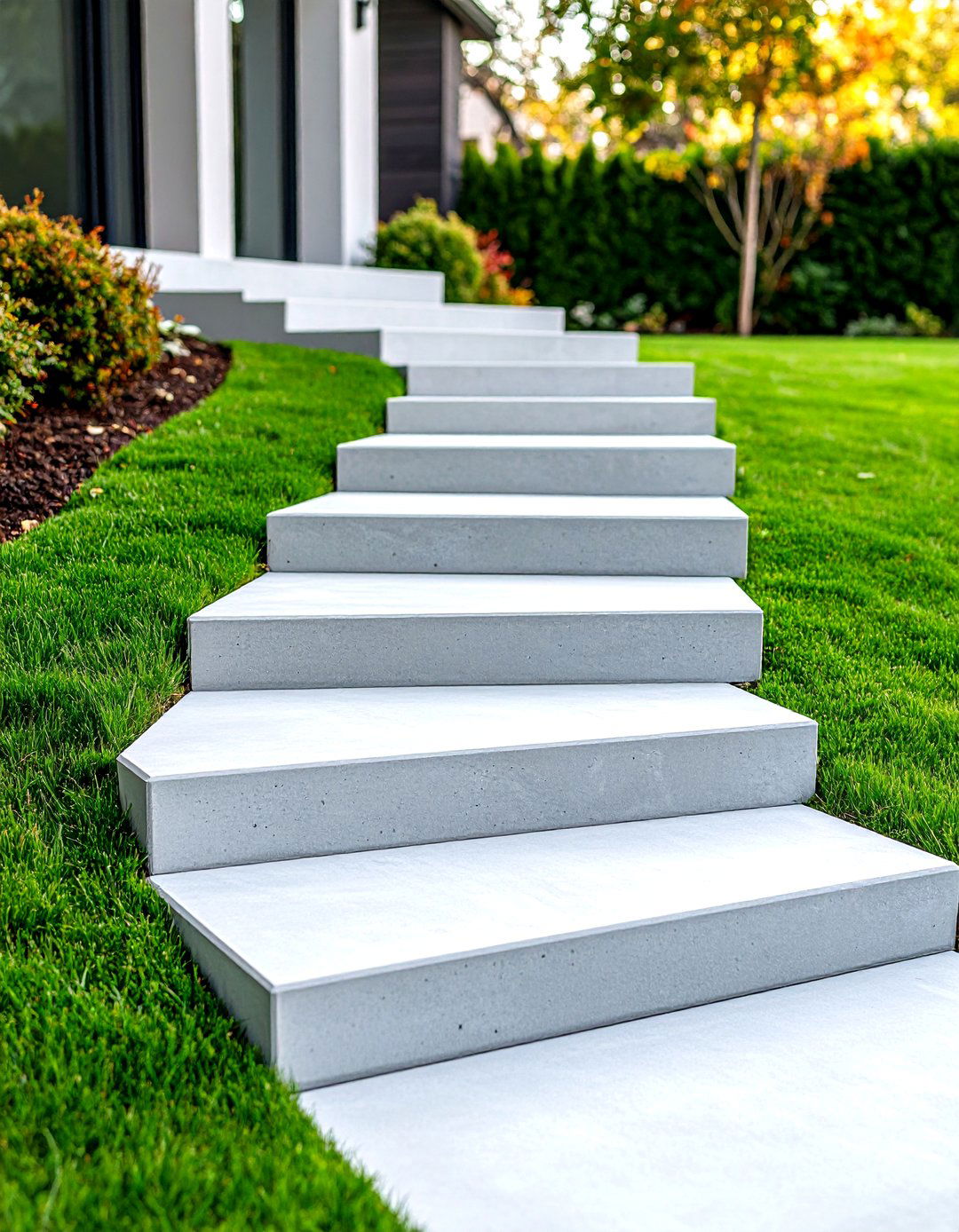
Poured concrete outdoor steps are a highly versatile and durable option that can be customized to fit any style. Concrete can be formed into virtually any shape, from straight, formal staircases to sweeping, curved designs. The surface can be left with a smooth, modern finish, or textured with a broom for added traction. Furthermore, pigments can be added to the mix to achieve a wide range of colors, from earthy tans to dramatic charcoals. Their solid, permanent nature makes them an excellent long-term investment for providing safe and stable access on any property, fitting seamlessly with various architectural styles.
13. Gabion Wall Outdoor Steps
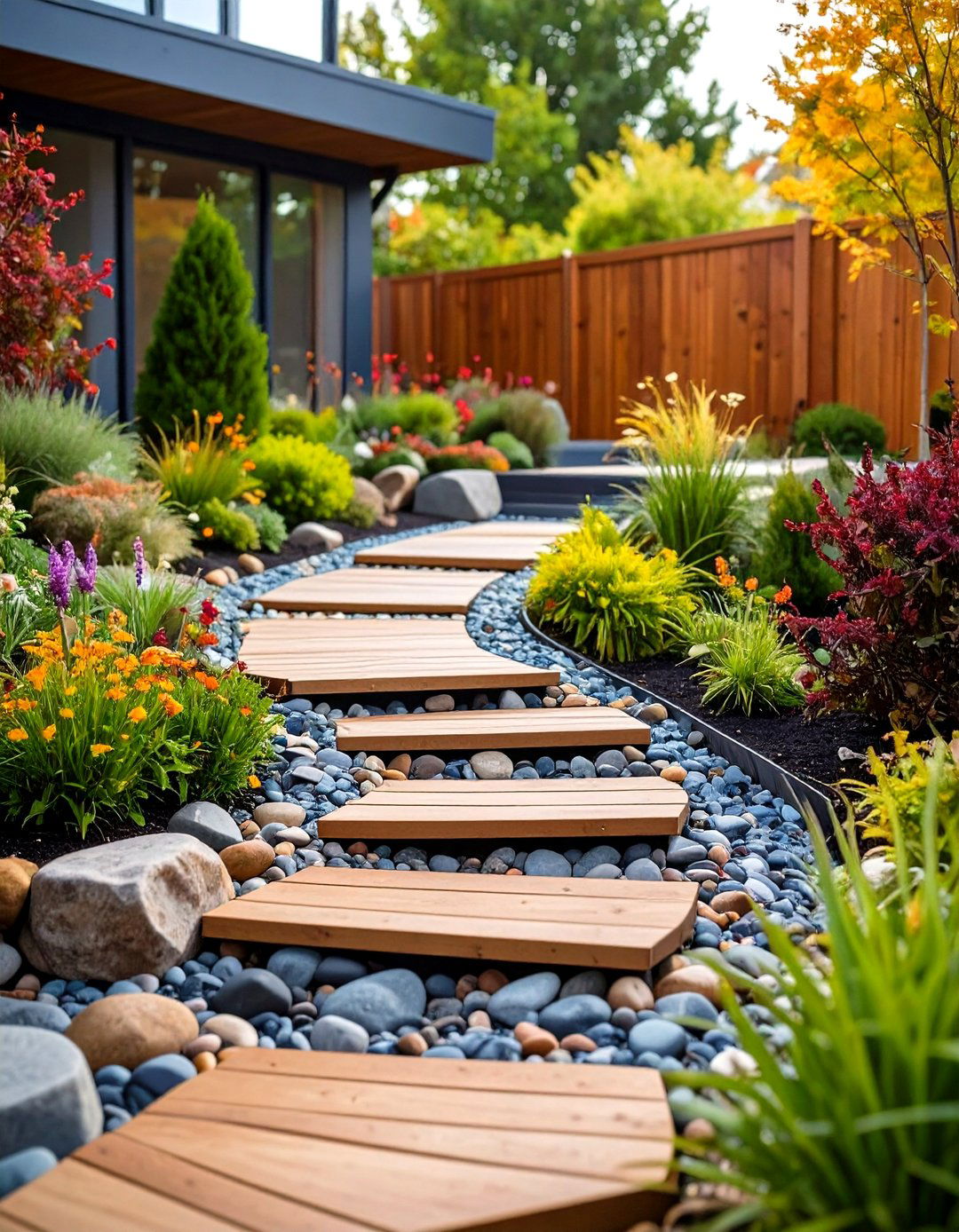
Gabion wall outdoor steps offer a unique, industrial, and eco-friendly design that combines function with rugged texture. These steps are constructed using wire mesh cages (gabions) that are filled with rocks, stones, or even recycled materials like broken concrete. The treads can be topped with flat stone slabs or wooden planks for a smoother walking surface. This method is excellent for stabilizing steep slopes and provides fantastic drainage. The resulting look is modern yet earthy, creating a striking visual contrast with softer garden foliage and providing a highly durable and permeable staircase solution.
14. Gravel-Filled Timber Outdoor Steps
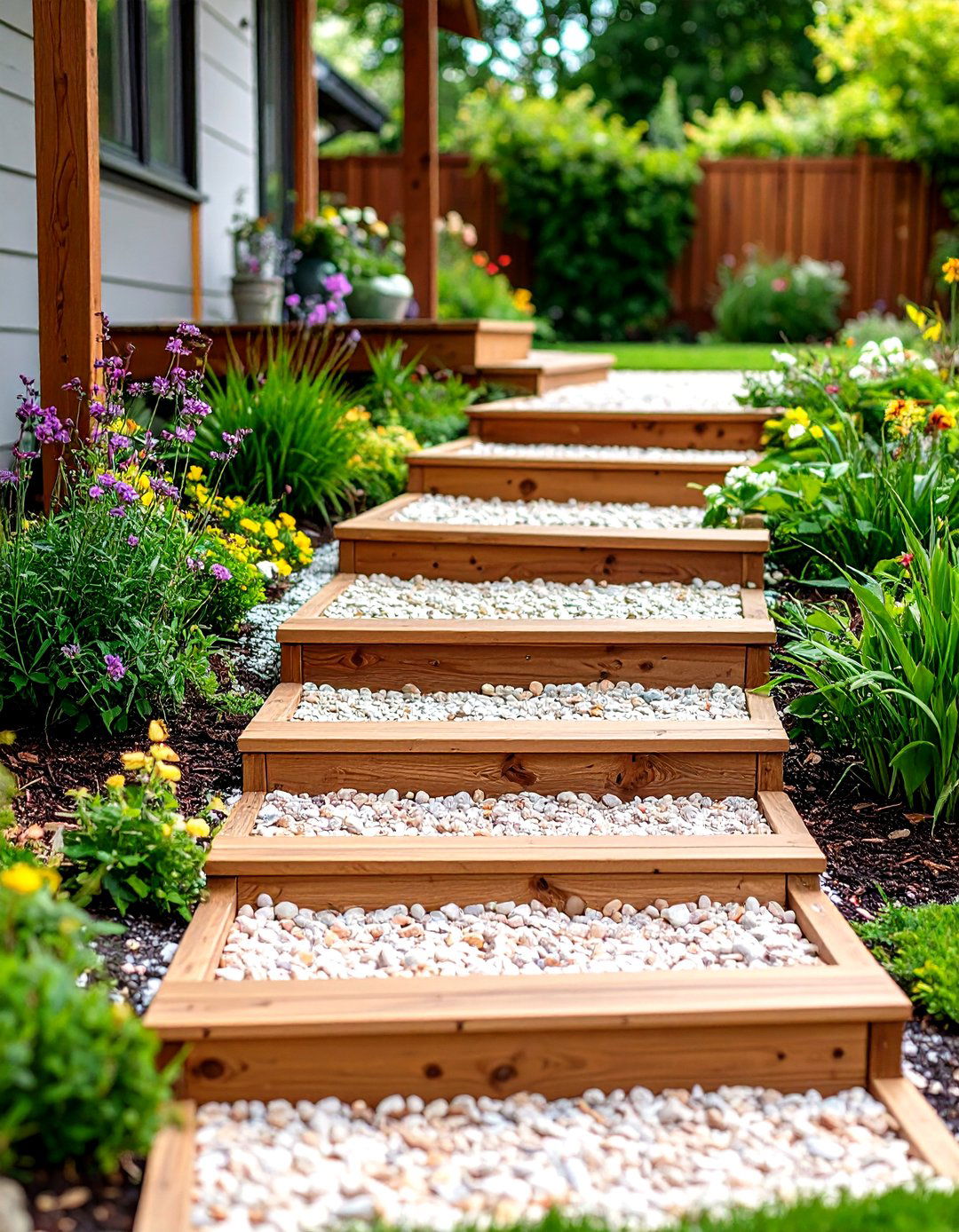
Gravel-filled timber outdoor steps are a simple, attractive, and budget-friendly option for creating a rustic pathway in a garden or on a natural slope. The structure is made by creating a frame for each step using landscape timbers or thick wooden planks. Each frame is then filled with pea gravel or crushed stone, which provides a textured, permeable surface for walking. This construction method allows water to drain through easily, preventing pooling and erosion. The combination of warm wood and natural stone creates a relaxed, informal look that complements country, cottage, and woodland-style landscapes perfectly.

15. Natural Boulder Outdoor Steps
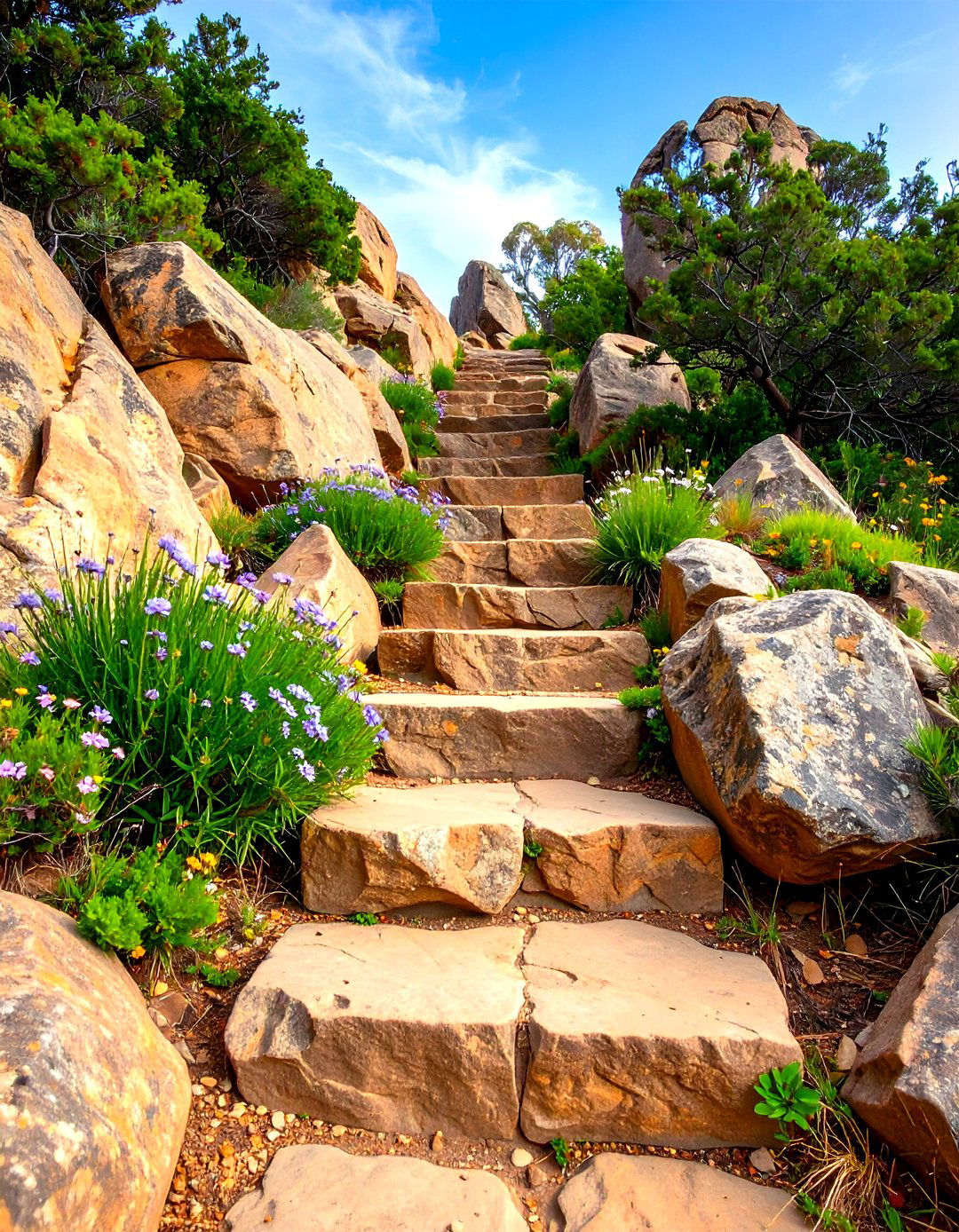
For the most natural and rugged look possible, natural boulder outdoor steps are created using massive, minimally-shaped stones. These large boulders are carefully selected and strategically placed and embedded into a hillside to form a primitive yet stable staircase. The goal is to make the steps look as if they have always been part of the landscape. This approach is ideal for steep, challenging terrains and properties with a naturalistic, wild aesthetic. Each step is a unique, powerful statement, requiring heavy machinery for placement but resulting in an ancient-looking, permanent feature that beautifully tames a wild slope.
16. Wide Slab Outdoor Steps
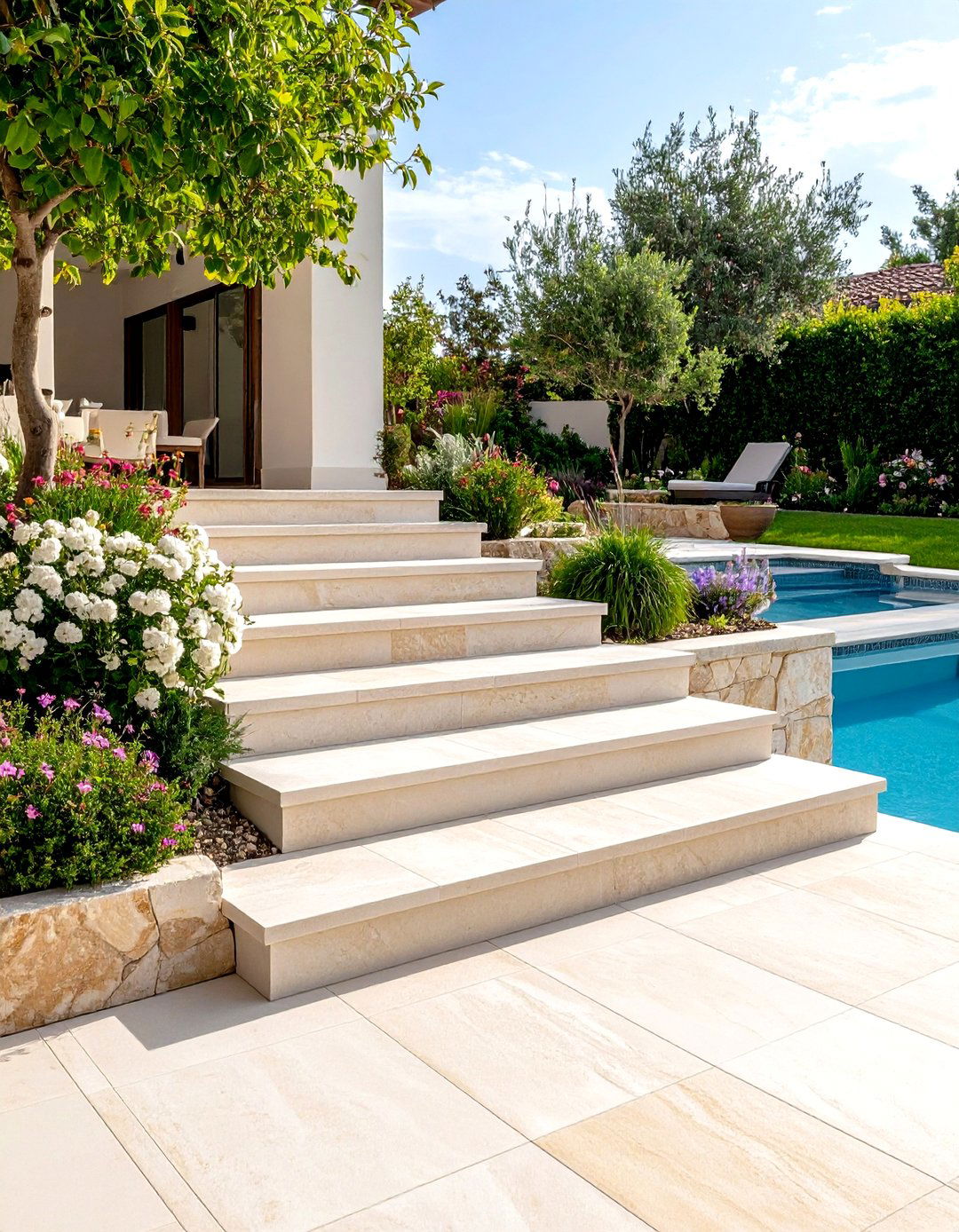
Wide slab outdoor steps create a grand and inviting entrance, encouraging a leisurely transition between levels. By using oversized single pieces of stone or precast concrete for each tread, these steps feel generous and luxurious. Their expansive surface provides ample room for walking side-by-side and can also accommodate decorative pots or planters without feeling cluttered. This style is particularly effective for main entryways or as a transition from a wide patio down to a lawn. The clean, simple lines of the large slabs offer a contemporary look, while the scale imparts a sense of permanence and stability.
17. Cantilevered Outdoor Steps
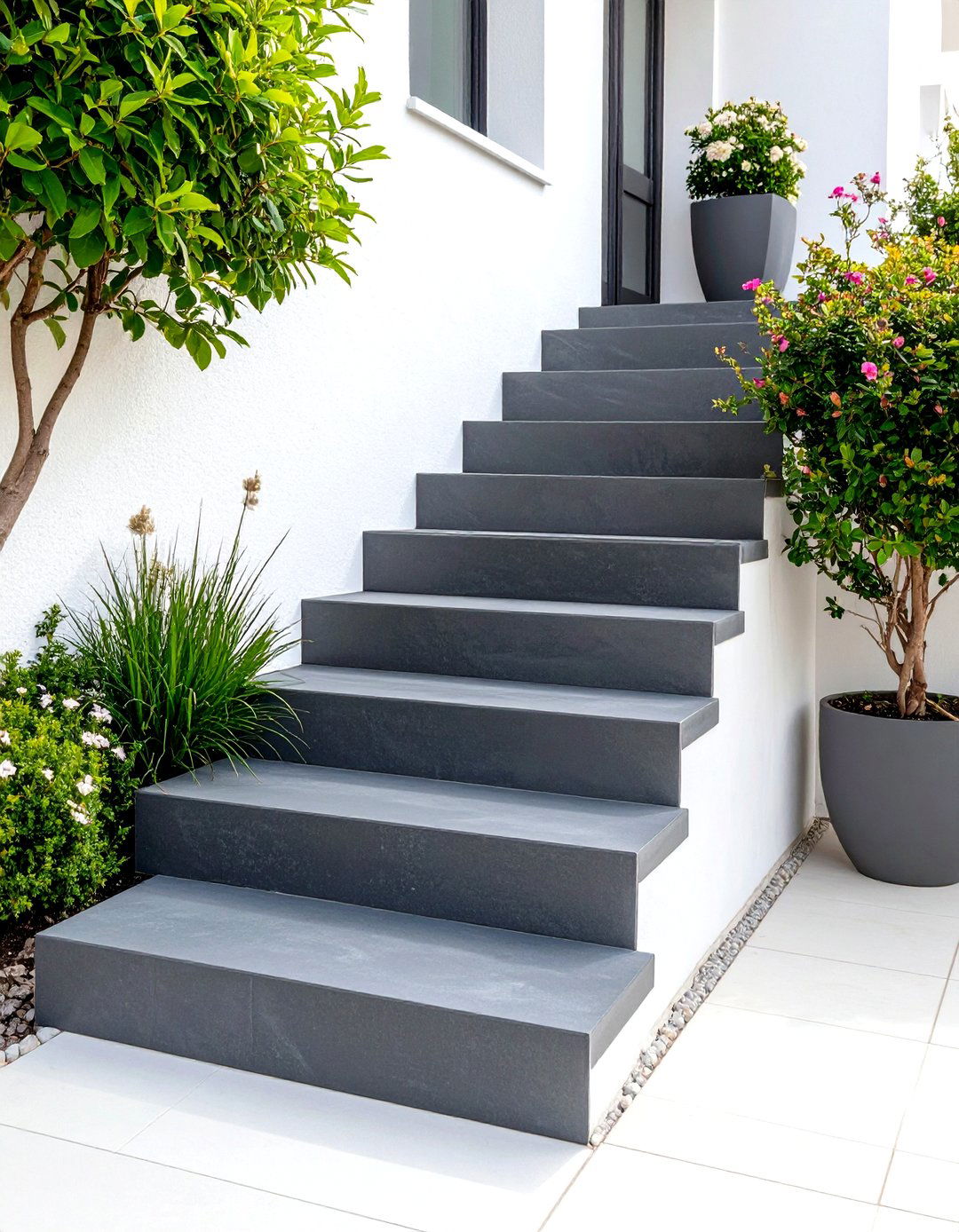
Cantilevered outdoor steps are a marvel of modern engineering and design, offering a sleek, gravity-defying appearance. Each tread extends directly from a solid, vertical wall without any visible support underneath, creating the illusion that they are floating in mid-air. This minimalist design requires significant structural planning, with each tread securely anchored into a reinforced concrete or steel support hidden within the wall. The result is a dramatic and sophisticated architectural feature that maximizes openness and light. Ideal for contemporary homes, these steps make a bold statement and transform a simple staircase into a work of art.
18. Log Slice Outdoor Steps
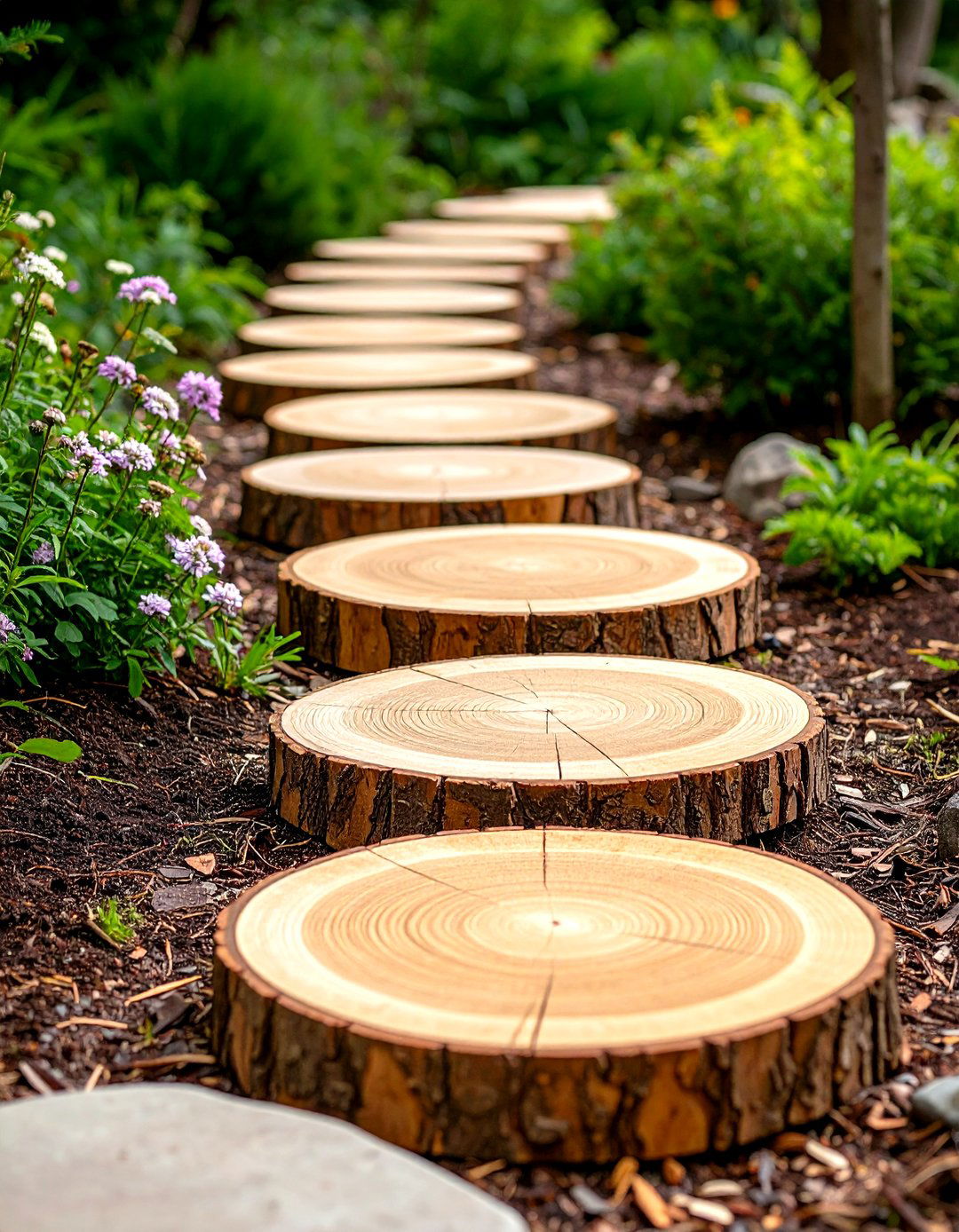
For a truly whimsical and rustic garden path, log slice outdoor steps offer a charming, woodland-inspired solution. This design uses thick, circular cross-sections of large logs as individual stepping stones. Set into a gentle slope and surrounded by mulch, dirt, or low-growing ground cover, they create an informal and magical trail. The natural wood grain and circular shape add organic texture and interest. It's best to use rot-resistant wood like cedar, locust, or redwood to ensure they last. These steps are perfect for meandering paths through a shady, forested part of your yard.
19. Paver and Pea Gravel Outdoor Steps
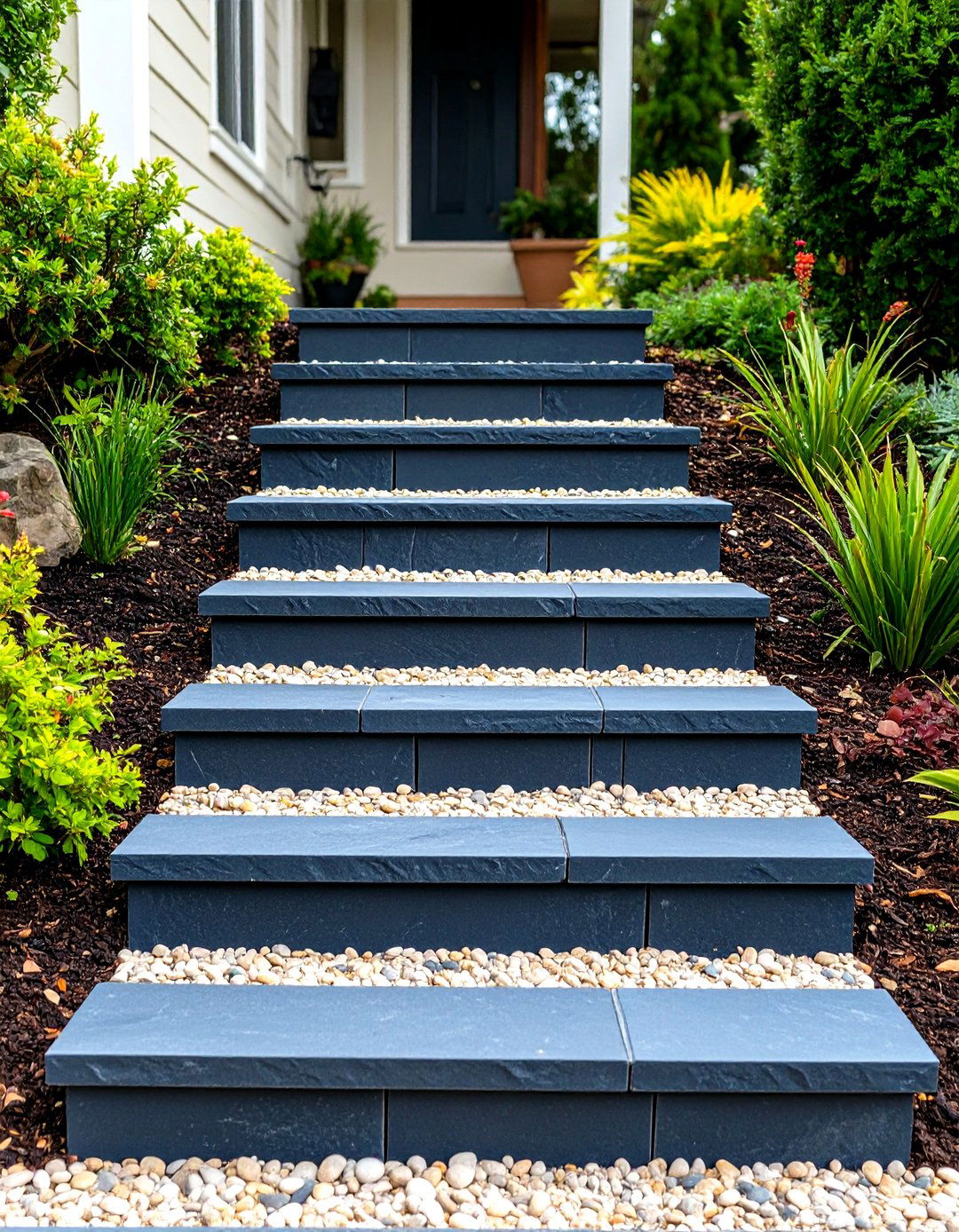
Combining the structure of pavers with the softness of gravel, paver and pea gravel outdoor steps create a durable yet informal look. The main structure and tread edges are defined by concrete or stone pavers, providing a stable and secure outline for each step. The interior of the tread is then filled with pea gravel, which offers excellent drainage and a satisfying crunch underfoot. This combination is cost-effective and relatively easy to install, offering a textured, multi-tonal appearance that works well for cottage gardens, coastal landscapes, and relaxed backyard settings, blending hardscape and softscape elements beautifully.



20. Corten Steel Outdoor Steps
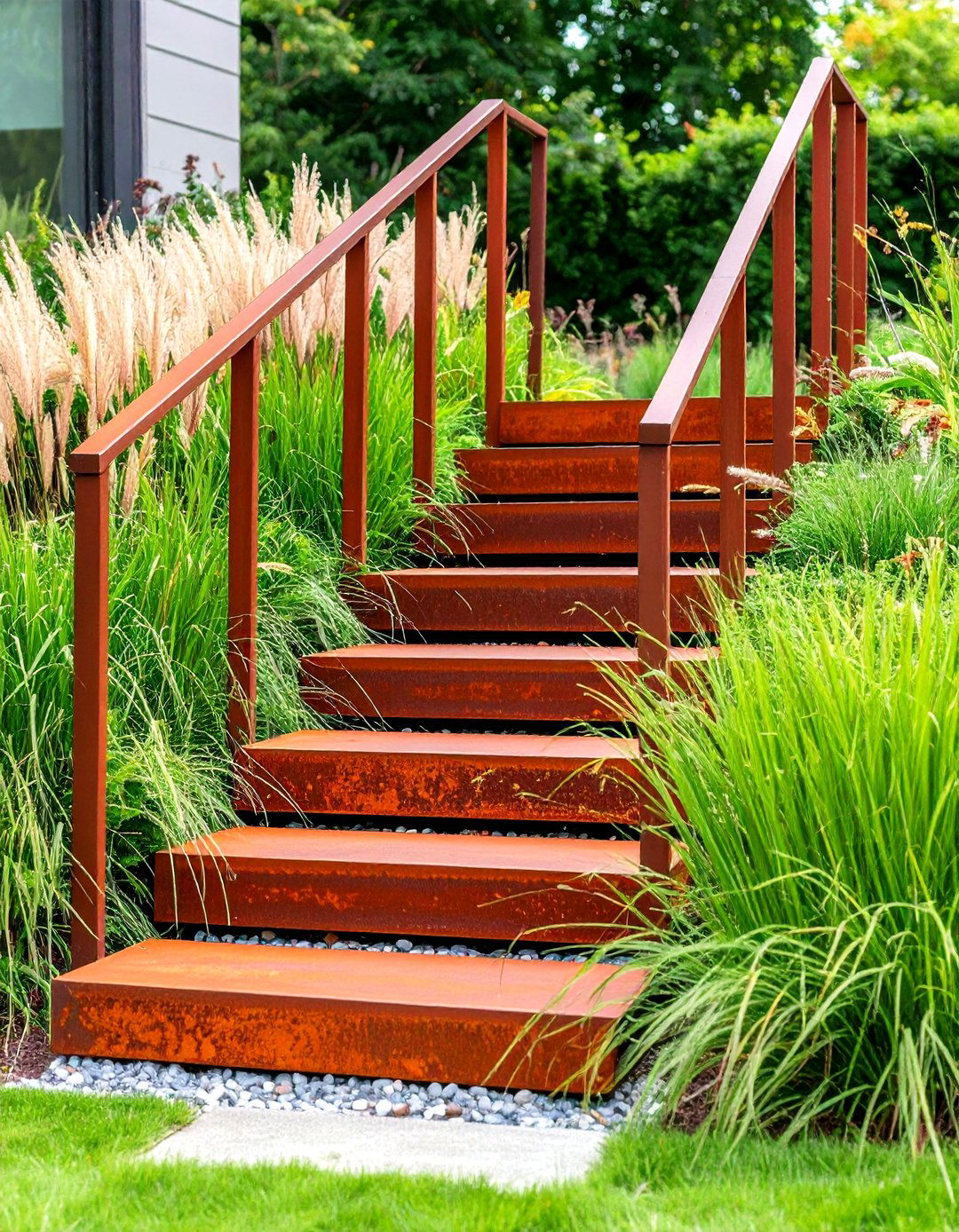
Corten steel outdoor steps provide a striking, contemporary look with a unique, self-protecting finish. This steel alloy is designed to develop a stable, rust-like layer when exposed to the elements, which not only protects the steel from further corrosion but also creates a beautiful, deep-brown or orange patina. The risers are typically made from sheets of Corten steel, while the treads can be made from matching steel, wood, or gravel. This material creates sharp, clean lines perfect for modern and industrial designs, offering a bold visual that evolves over time and contrasts beautifully with green foliage.
21. Illuminated Riser Outdoor Steps
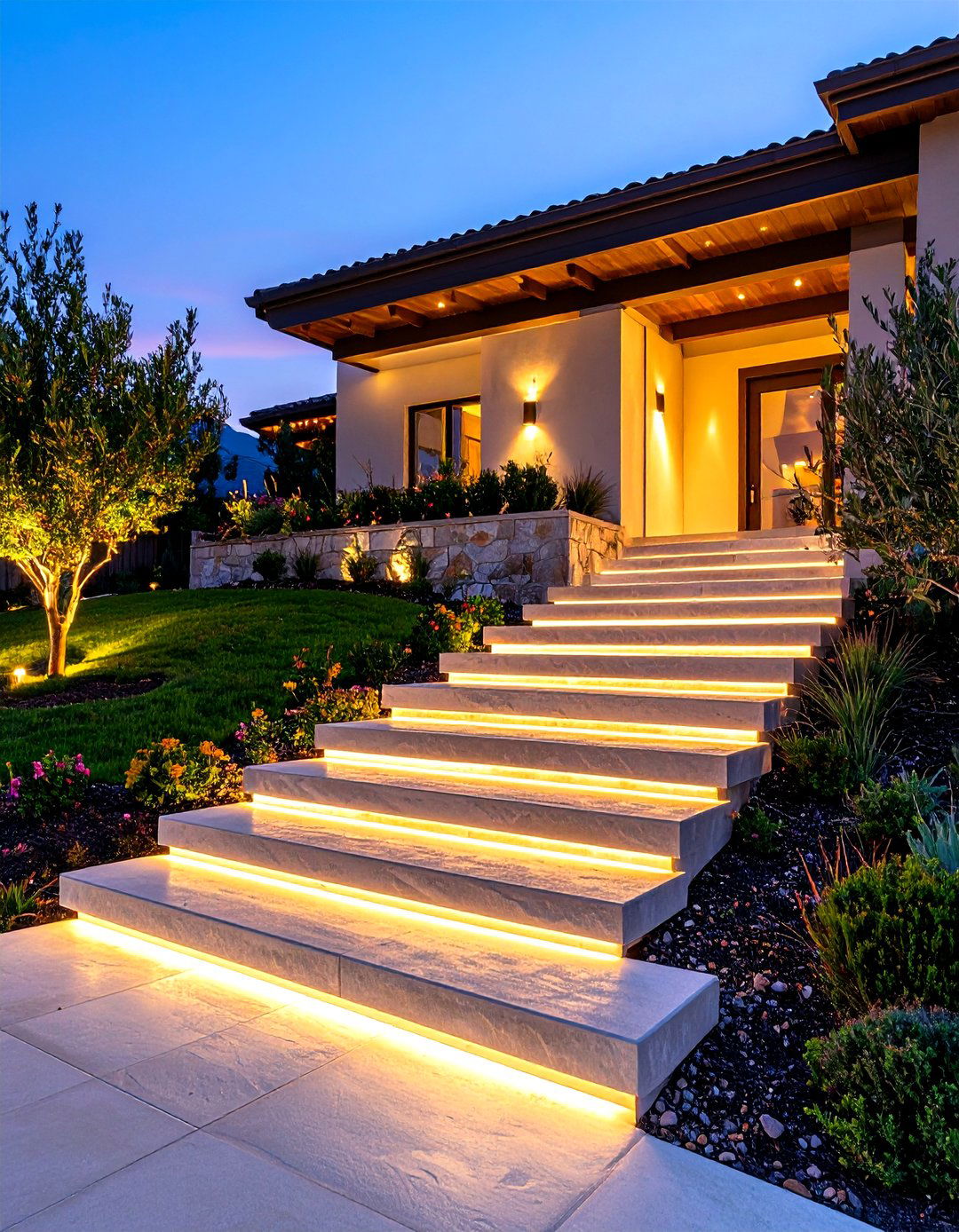
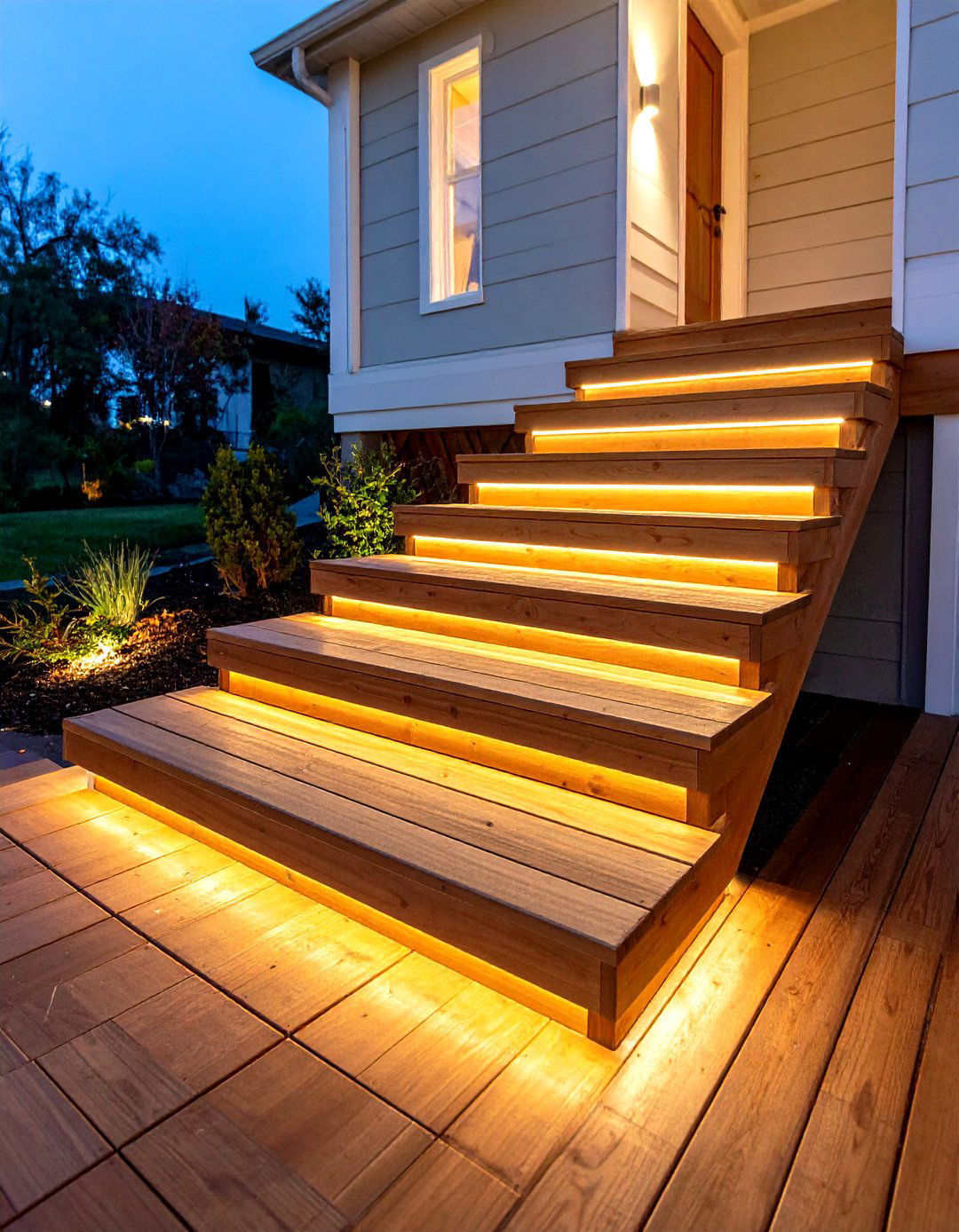
For a touch of modern sophistication and enhanced nighttime safety, illuminated riser outdoor steps are a fantastic choice. This design incorporates LED strip lighting or backlighting into the vertical riser of each step. When lit, the light source itself is hidden, casting a soft, downward glow onto the tread below. This creates a stunning visual effect, making the staircase appear to float and highlighting its architectural lines. It's a highly effective way to create ambiance for an outdoor entertaining area while ensuring every step is clearly visible, combining sleek aesthetics with practical, built-in safety features.
22. River Rock Border Outdoor Steps
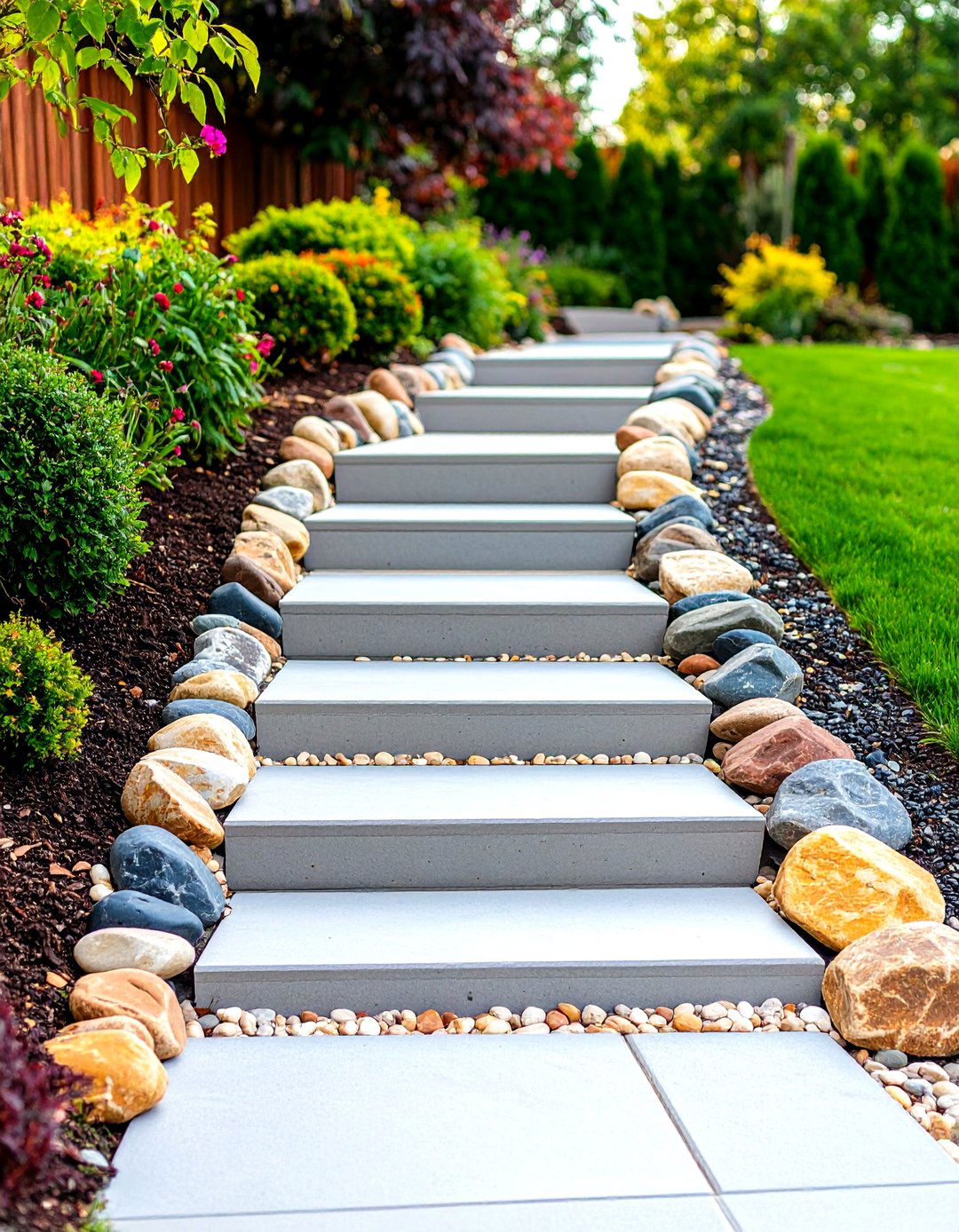
River rock border outdoor steps add a soft, natural, and decorative edge to a simple staircase. This design uses smooth, rounded river rocks of various sizes to line the edges of each tread, which might be made of concrete, pavers, or wooden planks. The rocks can be set in mortar for a permanent, clean finish or laid loosely for a more rustic, informal look. This detail helps to blend the man-made steps into the surrounding garden beds, softening the hard lines of the staircase and adding texture and visual interest drawn from nature’s own materials.
23. Multi-Level Patio Outdoor Steps
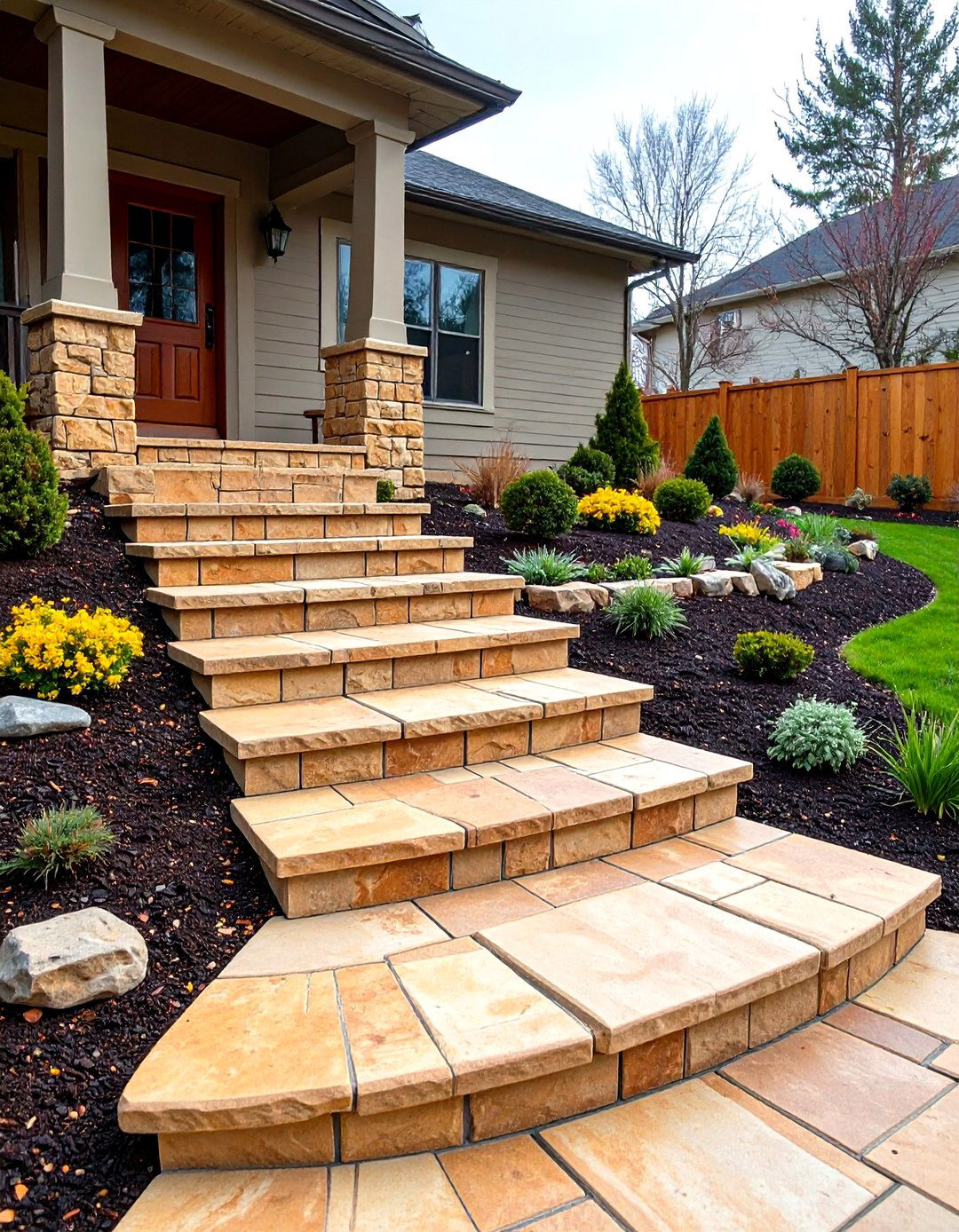
Multi-level patio outdoor steps are designed to connect tiered patio spaces, transforming them into a cohesive and dynamic outdoor living area. Instead of being a simple utility, the steps become an integral part of the patio's architecture. They are often built from the same material as the patio itself, such as pavers or flagstone, ensuring a seamless look. By making the steps wide and deep, they can also double as informal seating areas, further enhancing the functionality of the space. This approach effectively breaks down a large, sloped yard into distinct, usable zones for dining, lounging, and socializing.
24. Stamped Concrete Outdoor Steps
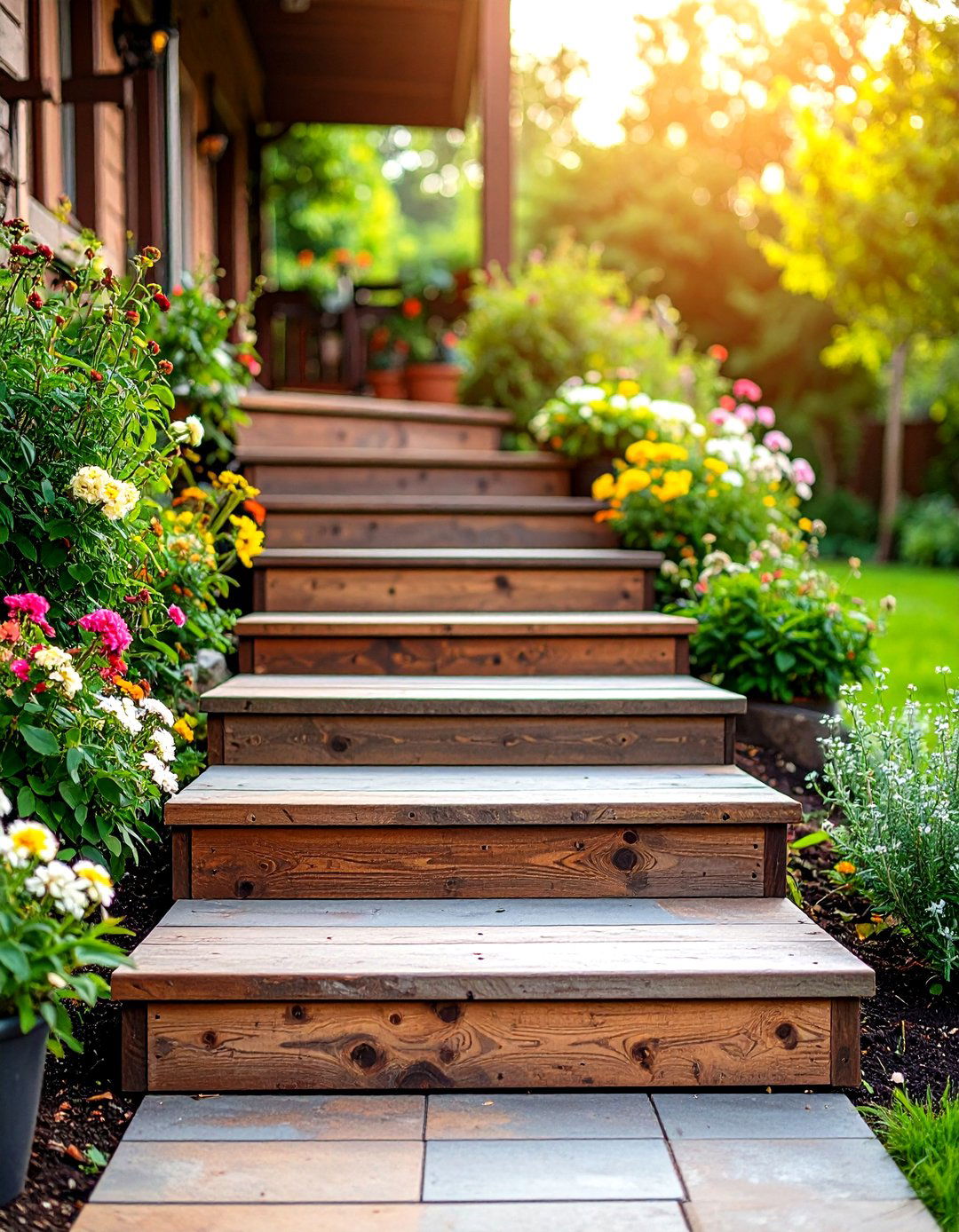
Stamped concrete outdoor steps offer the durability and affordability of poured concrete with the high-end look of more expensive materials like stone, brick, or wood. During the pouring process, the wet concrete is imprinted with special stamps to create realistic textures and patterns that mimic these materials. Color can also be added to enhance the illusion. This versatile technique allows you to achieve the aesthetic of natural flagstone, classic brick, or even weathered wood planks without the associated cost or maintenance, providing a customizable and long-lasting solution for any style of home.
25. Slate Tile Outdoor Steps
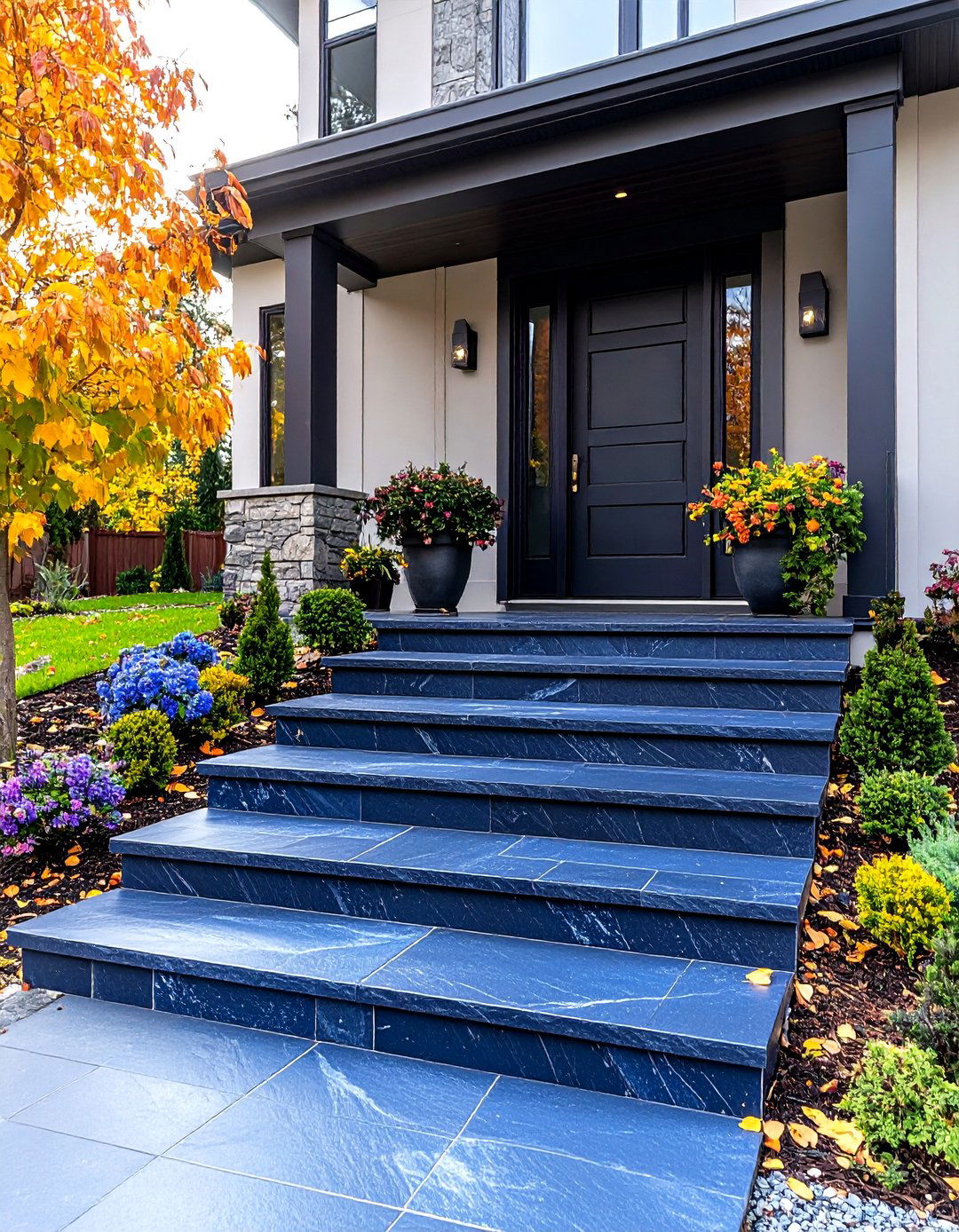
Slate tile outdoor steps provide a sleek, elegant, and naturally slip-resistant surface, making them a safe and stylish choice. Slate is a natural stone with a unique, subtly cleft texture and is available in a beautiful range of colors, including dark charcoals, greens, purples, and blues. Covering concrete steps with slate tiles is an excellent way to upgrade a basic staircase. The rich color and fine-grained texture add a touch of sophistication and modern appeal. Its durability and ability to withstand harsh weather conditions make it a practical and beautiful option for front entryways and patio stairs.
26. Reclaimed Wood Outdoor Steps
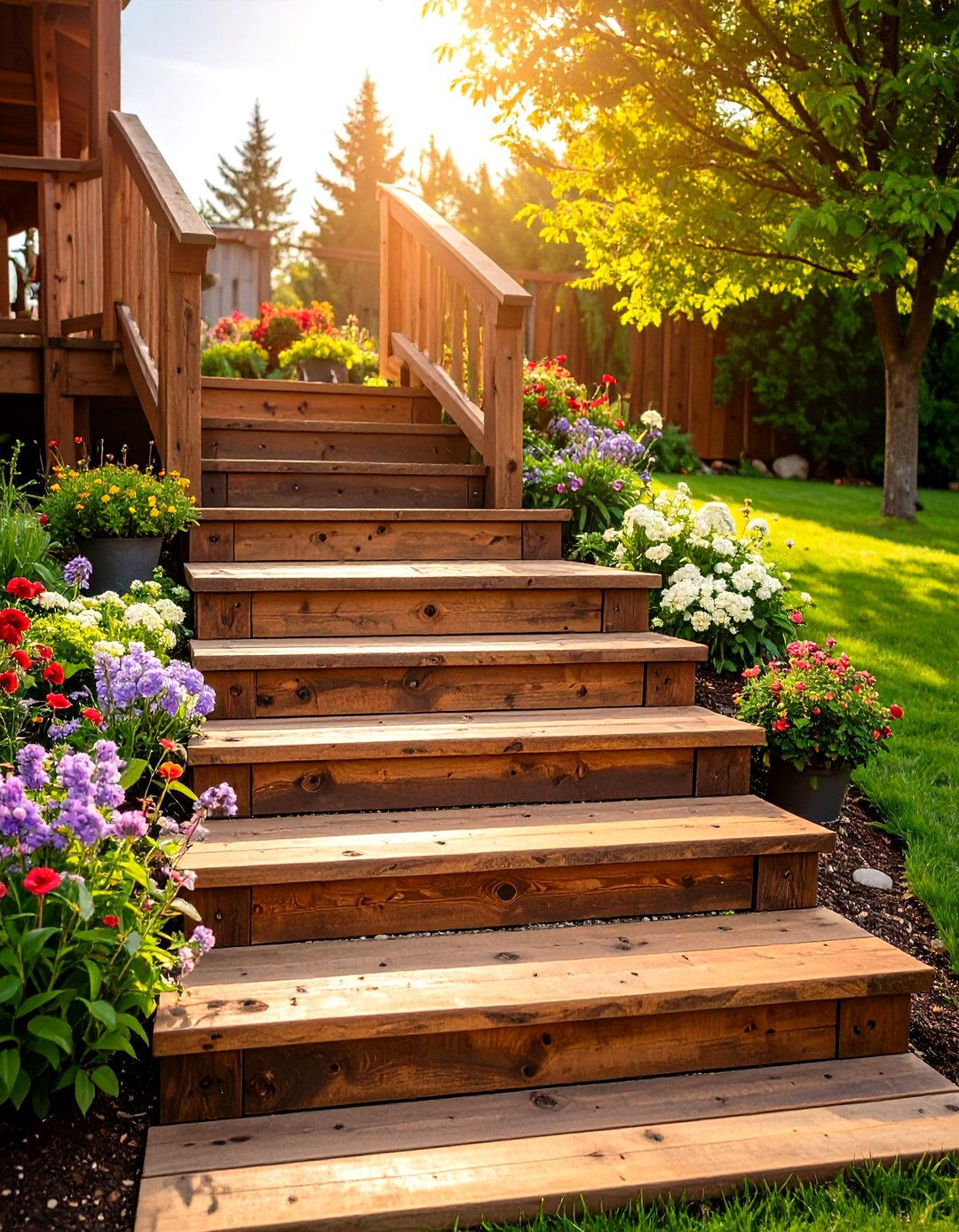
Reclaimed wood outdoor steps offer a sustainable and character-rich option for any landscape. Using salvaged lumber from old barns, fences, or industrial buildings brings a sense of history and unique patina that cannot be replicated with new materials. Each piece of wood tells a story through its knots, nail holes, and weathered texture. When used to build box steps or a simple staircase, this material adds immense warmth and rustic charm. It's an environmentally friendly choice that results in a one-of-a-kind feature, perfect for homes aiming for an eclectic, rustic, or eco-conscious design aesthetic.
27. Composite Decking Outdoor Steps
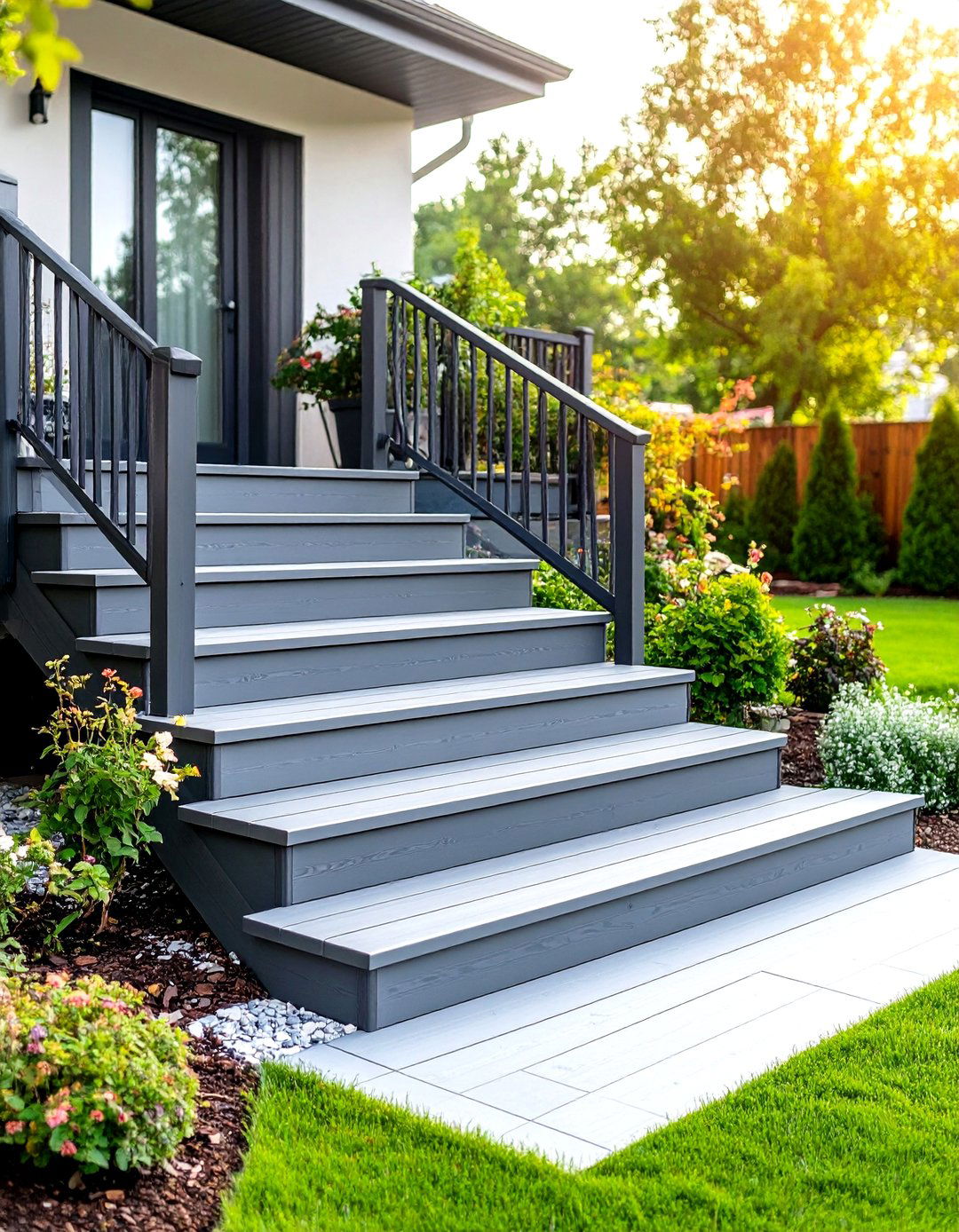
For a low-maintenance and highly durable staircase that perfectly matches a composite deck, composite decking outdoor steps are the ideal solution. Made from a blend of wood fibers and recycled plastic, composite material is resistant to rot, splintering, and insect damage, and it never needs to be stained or sealed. It is available in a wide variety of colors and grain patterns that convincingly mimic real wood. This allows you to create a seamless and cohesive transition from your deck to your yard, ensuring a long-lasting, safe, and consistently beautiful staircase with minimal upkeep required.
28. Turf Block Outdoor Steps
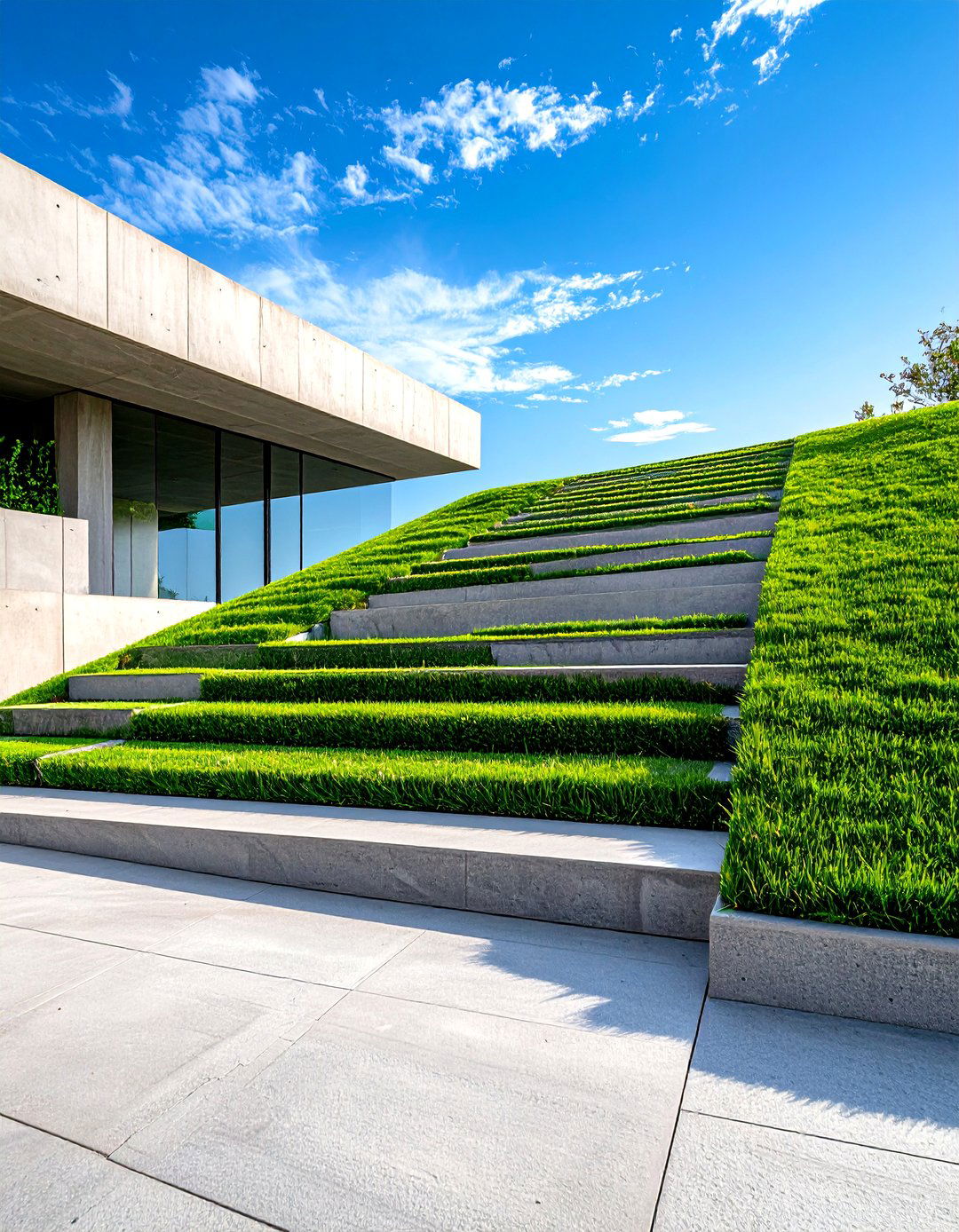
Turf block outdoor steps, also known as grass pavers, create a green and permeable staircase that is both functional and environmentally friendly. These are concrete or plastic grids with open cells that are laid on a slope and filled with soil and grass seed. The grid provides the structural support for walking, while the grass grows through the openings, creating a living, green surface. This design allows rainwater to soak into the ground, reducing runoff, and helps to cool the surrounding area. It’s an excellent choice for creating subtle, driveable-grade steps that blend almost invisibly into a lawn.
29. Terracotta Tile Outdoor Steps
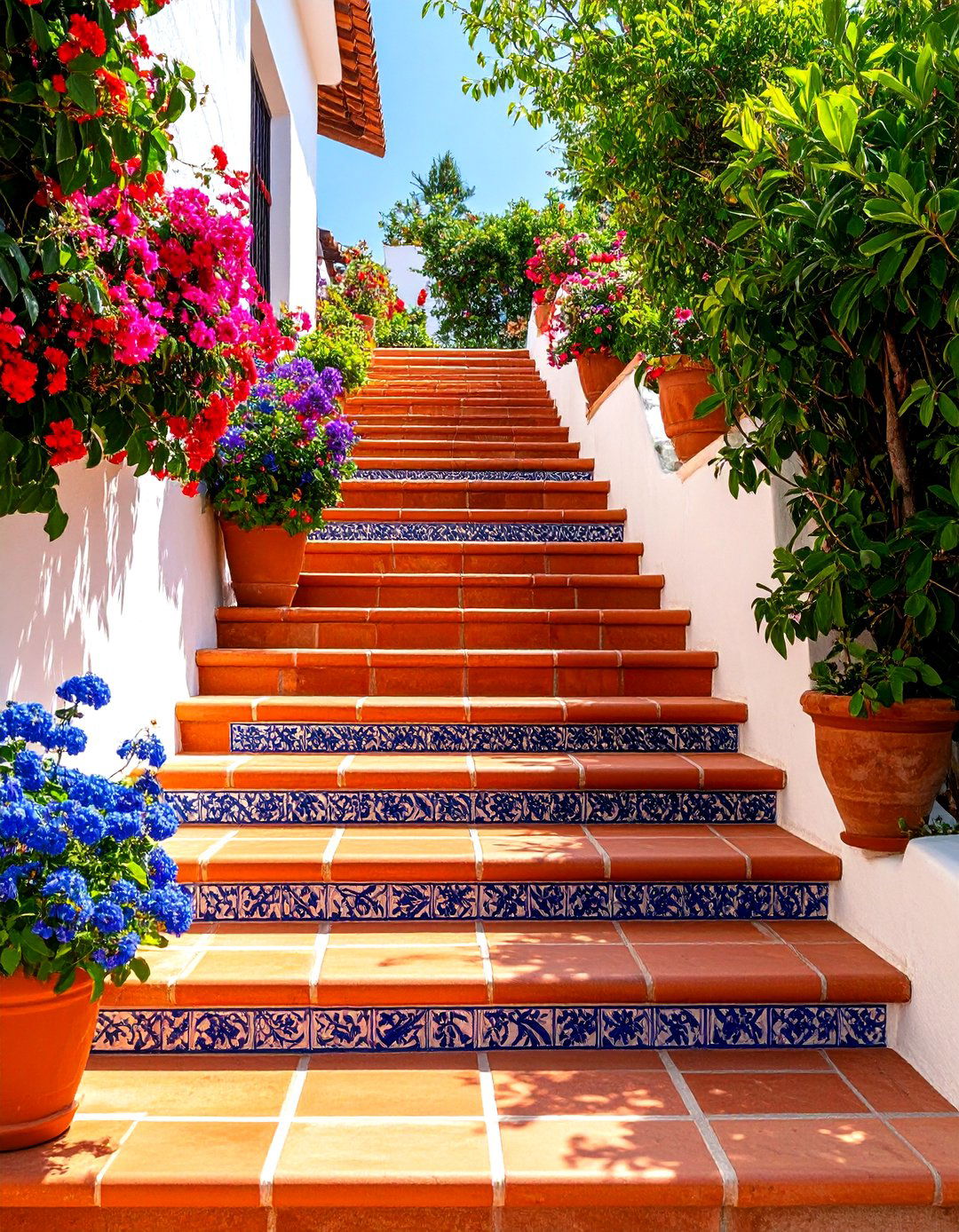
Terracotta tile outdoor steps bring a warm, Mediterranean or Southwestern charm to your landscape. The rich, earthy red and orange tones of terracotta create a welcoming and rustic feel, perfect for sunny climates. These tiles can be used to cover the treads and risers of a concrete staircase, often complemented by decorative accent tiles to add a splash of color and pattern. Their slightly porous nature provides decent traction, but it's important to use frost-proof rated tiles in colder climates to prevent cracking, ensuring a beautiful and durable feature that evokes a sun-drenched villa.
30. Circular Stone Outdoor Steps
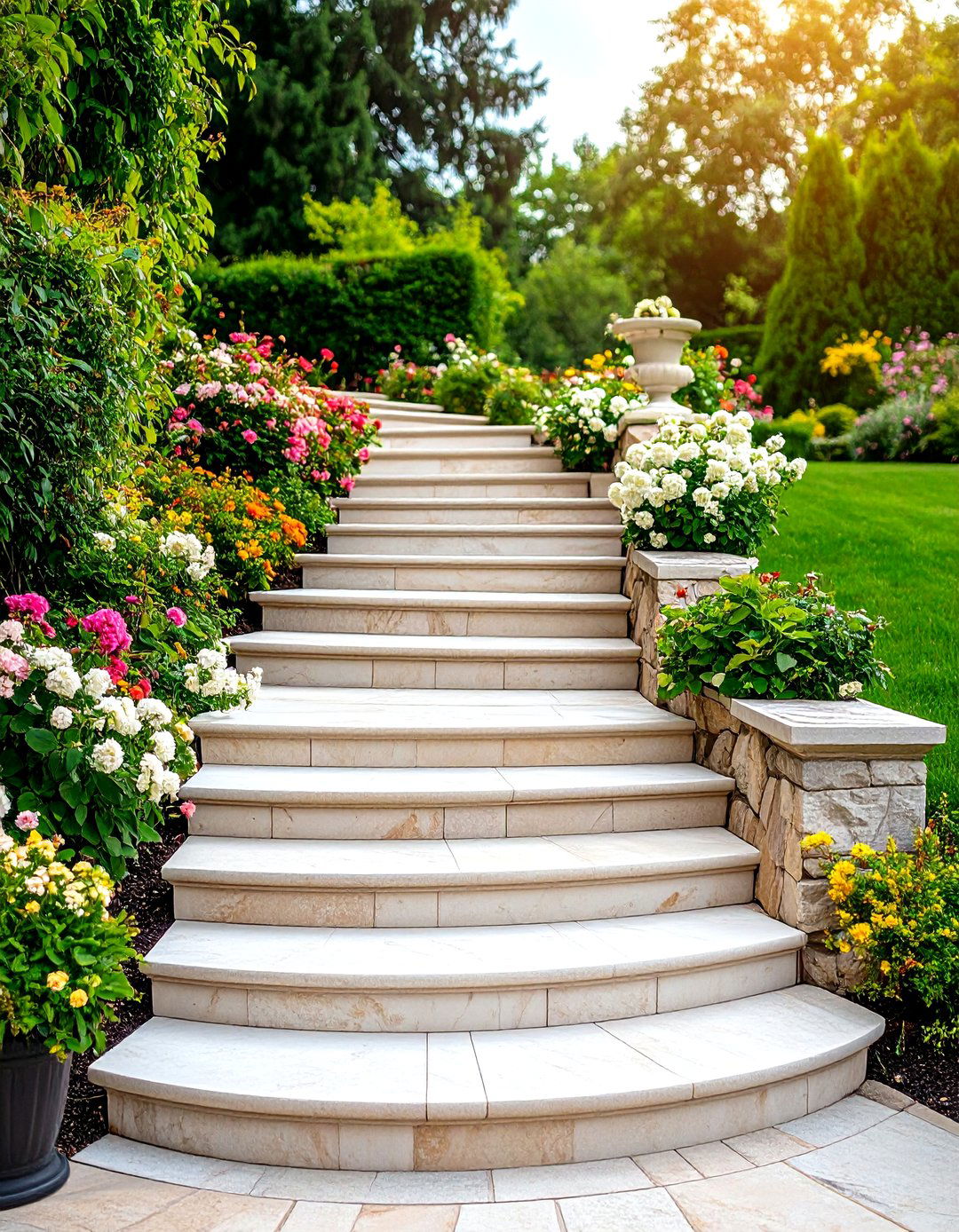
Circular stone outdoor steps create a dramatic and elegant focal point, especially when transitioning between two distinct garden areas or patios. Built in a spiral or semi-circular pattern, they introduce a powerful geometric element that is both classic and captivating. Typically constructed from cut stone, pavers, or brick, the radial pattern draws the eye inward and creates a graceful, flowing descent or ascent. These steps require careful planning and skilled installation but result in a truly grand and memorable feature that adds a touch of formal elegance and architectural interest to any landscape design.
Conclusion:
Ultimately, the best outdoor steps are those that harmonize with your home's architecture and your landscape's natural contours. From the rustic appeal of railroad ties to the modern sleekness of cantilevered concrete, each idea offers a unique blend of form and function. By considering materials, lighting, and integration with plantings, your outdoor steps can become more than a mere passageway. They can be a defining feature that enhances safety, adds significant visual appeal, and transforms your connection to the outdoor space, making every journey through your garden a delightful experience.

Related posts:



Leave a Reply