
An unfinished basement laundry room doesn't have to be a dark, uninviting space. With some creativity and practical upgrades, you can transform this purely functional area into a clean, organized, and even stylish part of your home. The key is to embrace the raw, industrial character while adding elements of comfort and efficiency. From simple paint jobs to clever storage solutions, these ideas focus on making the most of concrete floors, exposed joists, and open layouts. Tackling this project can significantly improve your daily laundry routine, proving that a finished look isn't necessary for a functional and pleasant atmosphere.

1. Painted Concrete Floors for a Clean Foundation
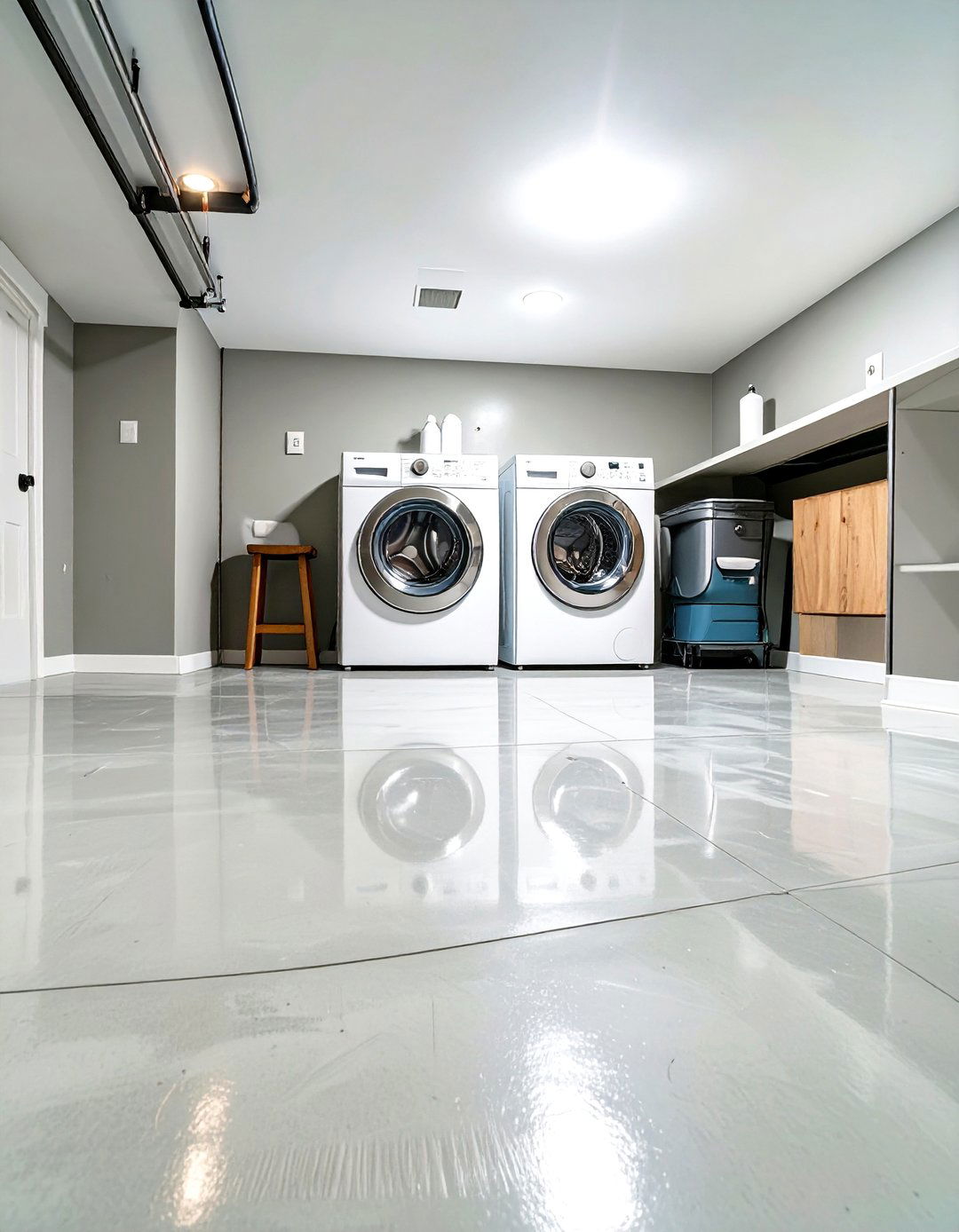
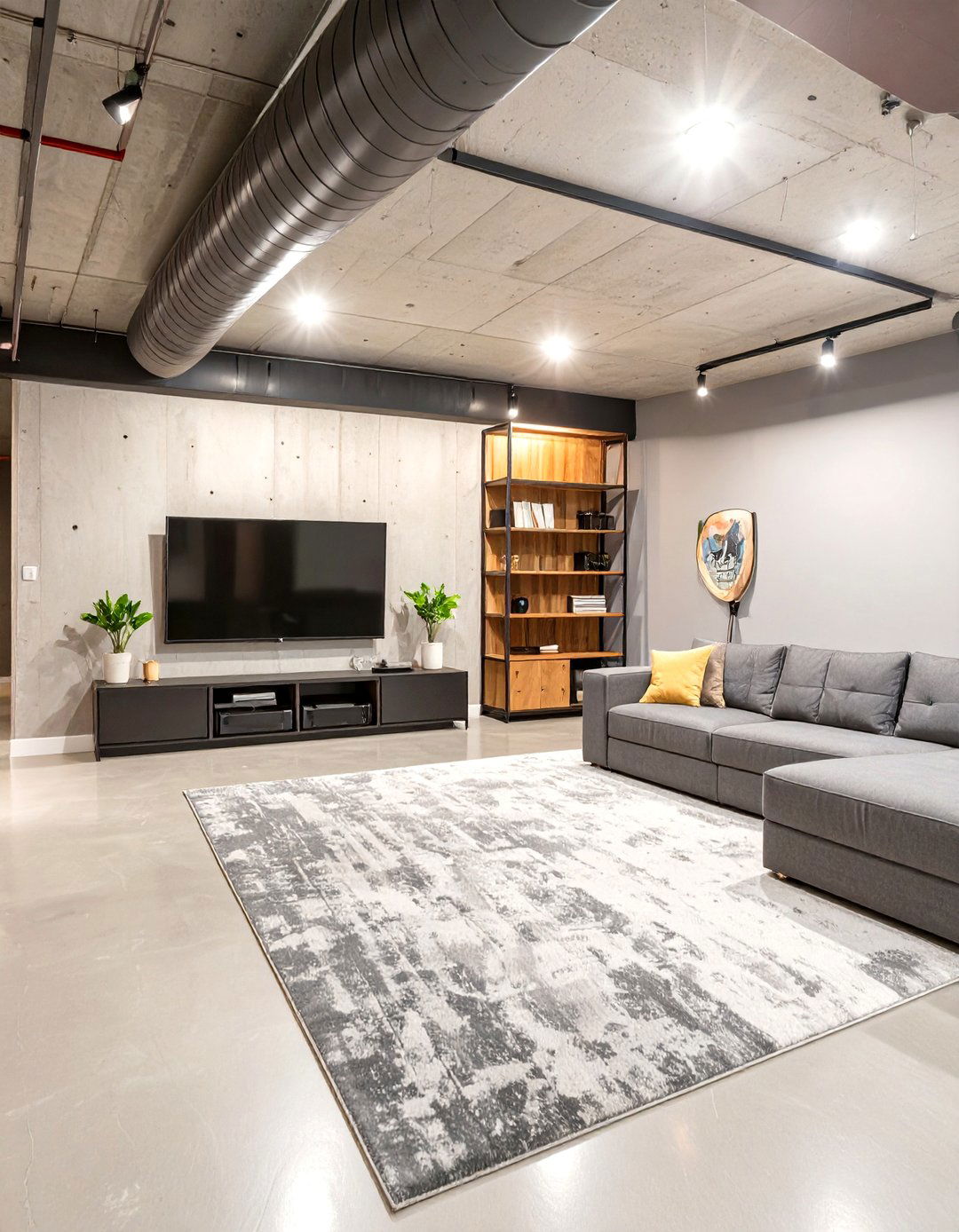
Transforming your basement floor is a simple yet impactful first step. A fresh coat of concrete or porch paint instantly seals the dusty surface, making the entire room feel cleaner and brighter. Choose a light color like gray, beige, or even a soft blue to maximize light reflection in a typically dim space. This single change reduces dust, makes spills easier to clean up, and provides a polished foundation for the rest of your laundry area setup. For a durable finish, ensure you properly clean and prime the concrete before applying at least two coats of high-quality floor paint.
2. Epoxy Floor Coating for Ultimate Durability
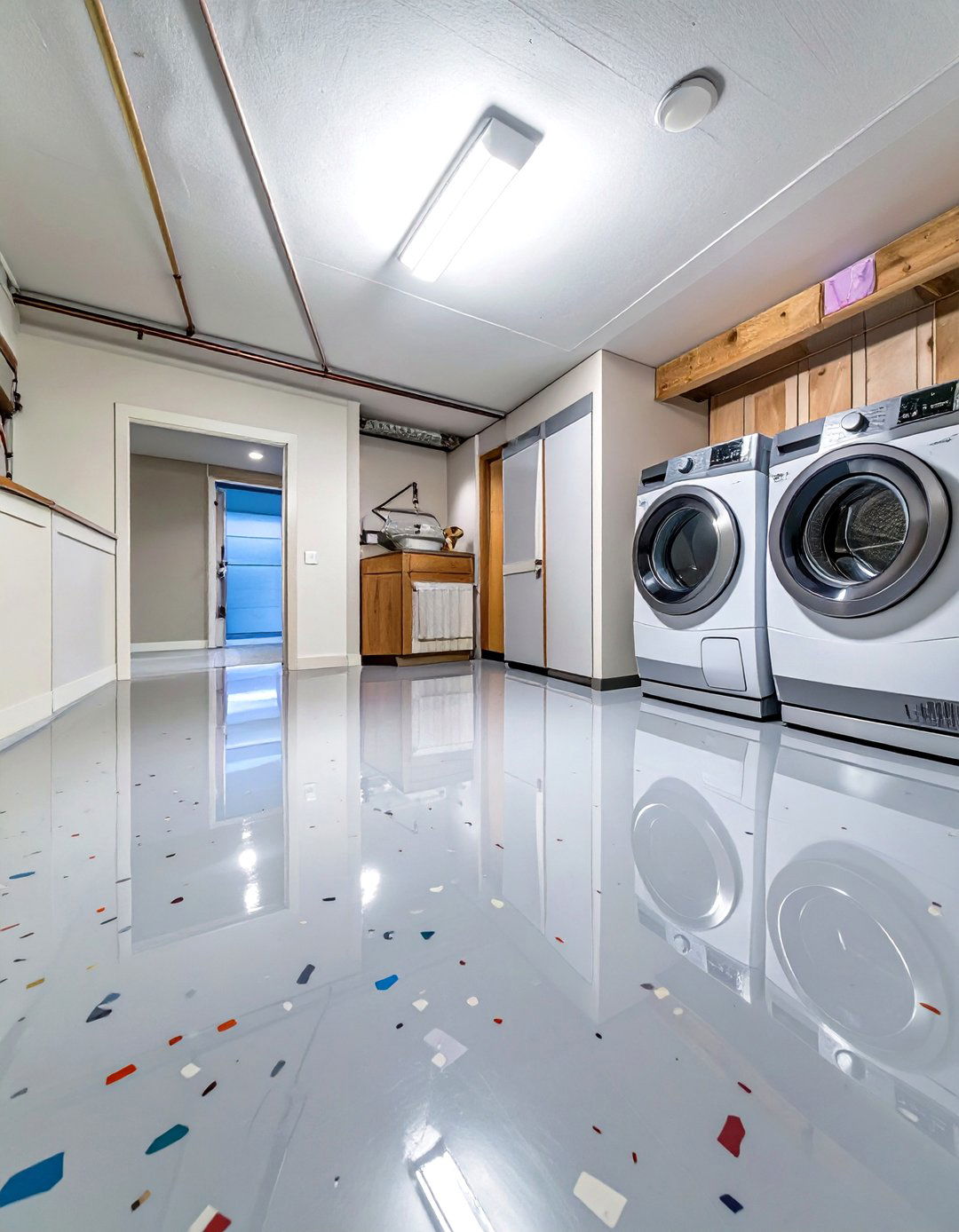
For a more robust and long-lasting solution, consider applying an epoxy floor coating. Unlike paint, epoxy creates a thick, hard-wearing, and seamless surface that resists moisture, stains, and chemicals, which is ideal for a laundry environment. Available in various colors and finishes, including decorative flakes that add texture and visual interest, it completely seals the concrete. This upgrade provides a professional, garage-style finish that is incredibly easy to sweep and mop. Although it's a more involved application process, the resulting durability and polished appearance make it a worthwhile investment for a high-traffic utility space.
3. Exposed Joist Ceiling Painted a Uniform Color
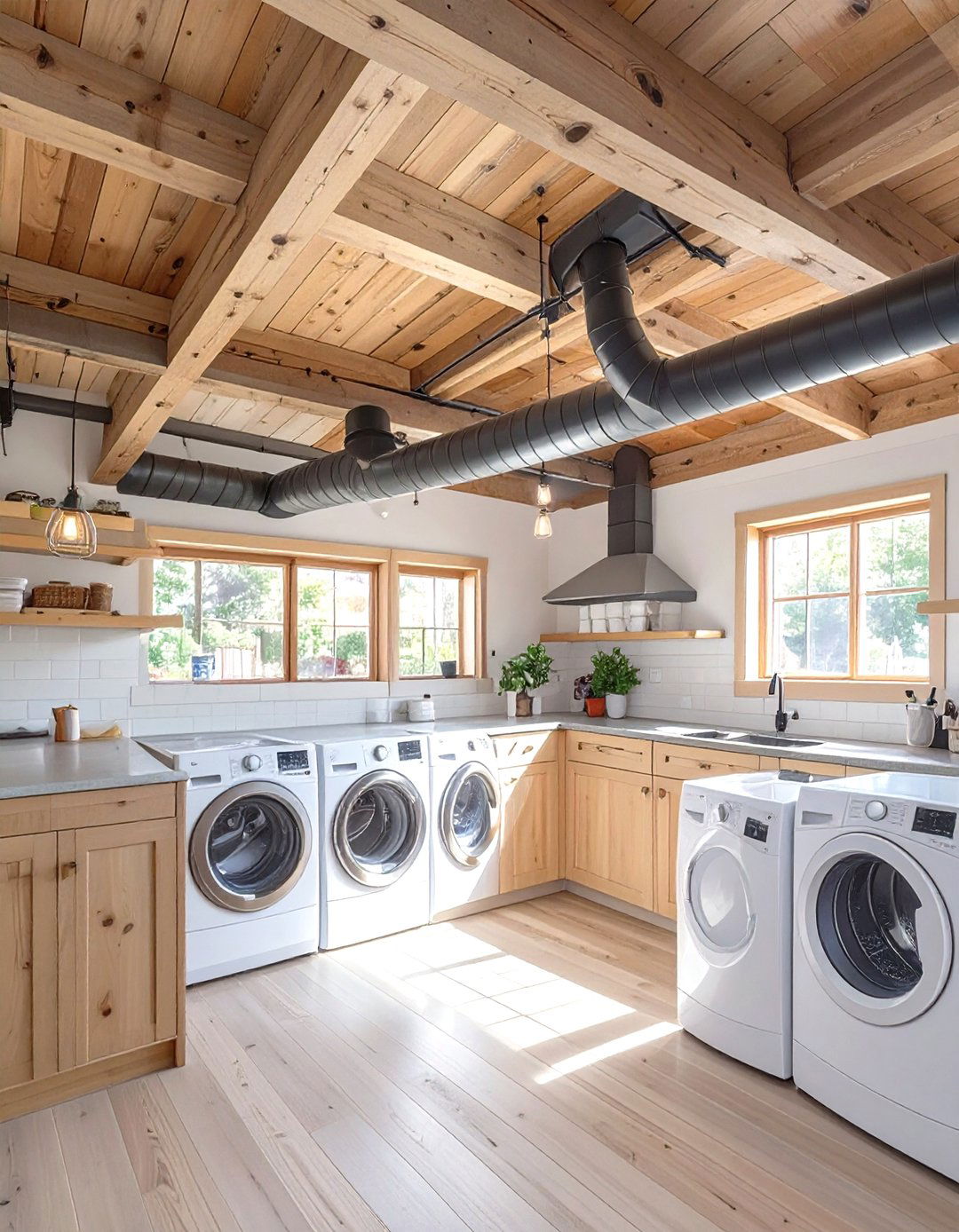
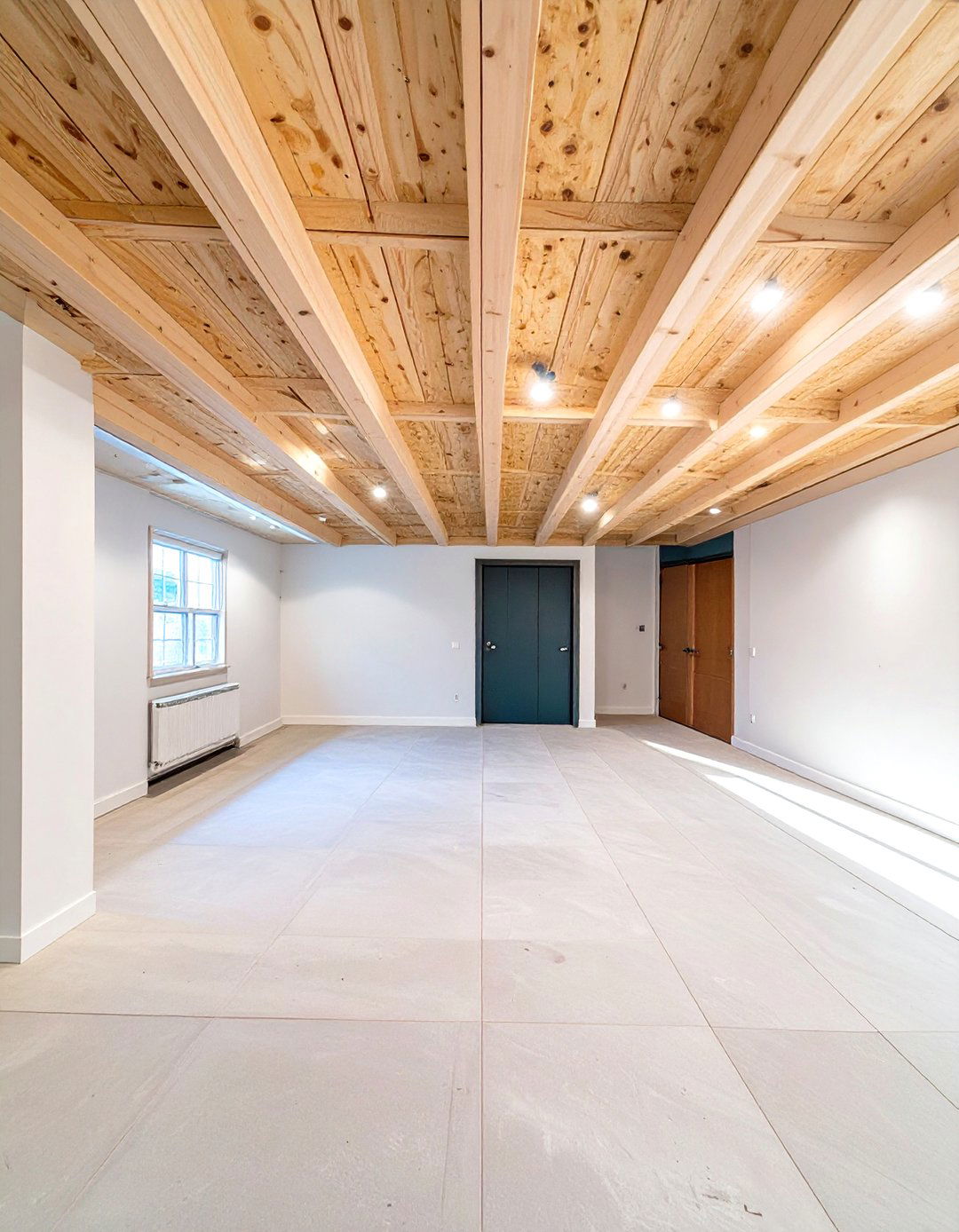
Leaving the ceiling joists exposed maintains the room's height and industrial feel, but painting them can elevate the look significantly. A coat of flat black paint makes pipes, wires, and ductwork recede, creating a clean, cohesive, and modern "industrial loft" ceiling. This technique visually hides the clutter above, making the space feel less chaotic and more intentional. Alternatively, painting the joists and the ceiling deck between them a bright white can make the entire basement feel taller and more open. This simple cosmetic fix is a budget-friendly way to bring a sense of design to the raw space.
4. Industrial Pipe Shelving for Open Storage
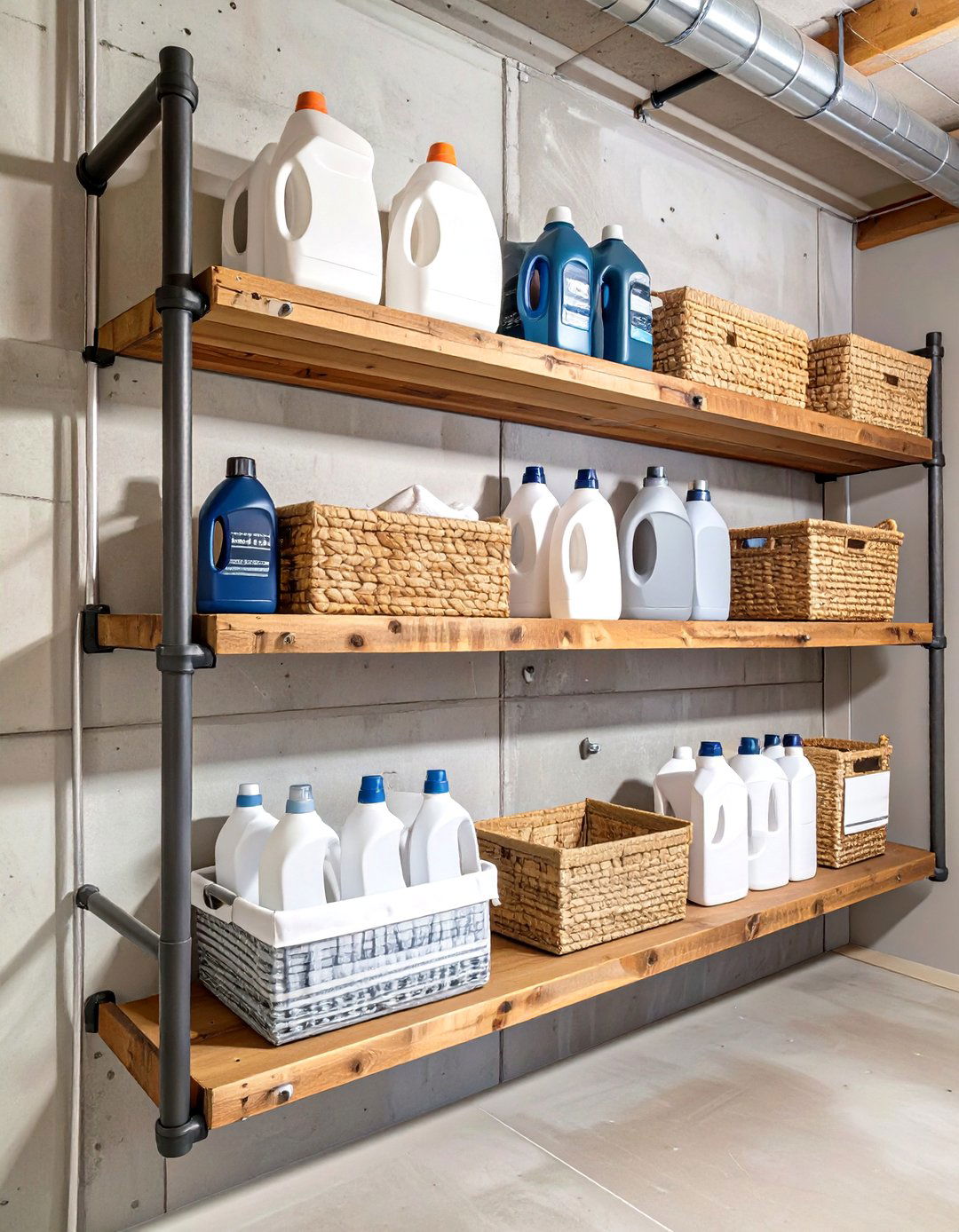
Embrace the utilitarian aesthetic by installing open shelves made from industrial pipes and wood planks. This style complements the unfinished nature of the basement while providing sturdy, accessible storage for detergents, baskets, and supplies. You can customize the height and length of the shelves to fit your specific wall space and needs. The combination of dark metal pipes and warm wood tones adds a touch of rustic charm, turning a basic storage solution into a deliberate design feature. This DIY-friendly project is both functional and stylish, perfect for keeping laundry essentials organized and within easy reach.
5. Plywood Wall Panels for a Touch of Warmth
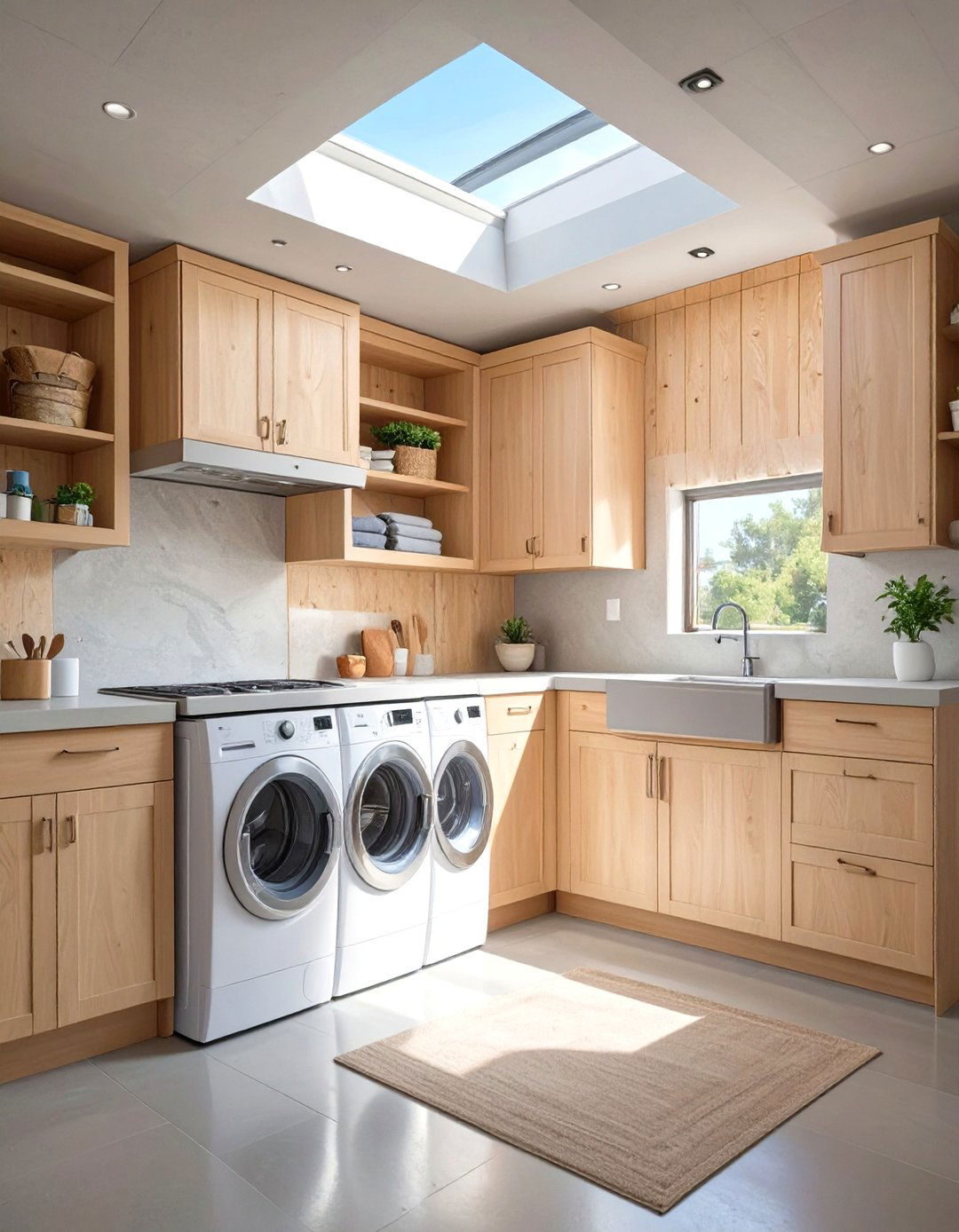
Covering at least one concrete wall with large plywood panels can instantly warm up a cold, sterile basement. This approach is much simpler and more affordable than installing traditional drywall. The natural wood grain adds texture and a finished look to a specific zone, such as the area behind your washer and dryer. You can leave the plywood in its natural state, apply a light stain, or paint it to match your desired color scheme. The panels create a feature wall that makes the space feel more like a completed room without requiring a full-scale renovation project.
6. Pegboard Wall for Versatile Organization
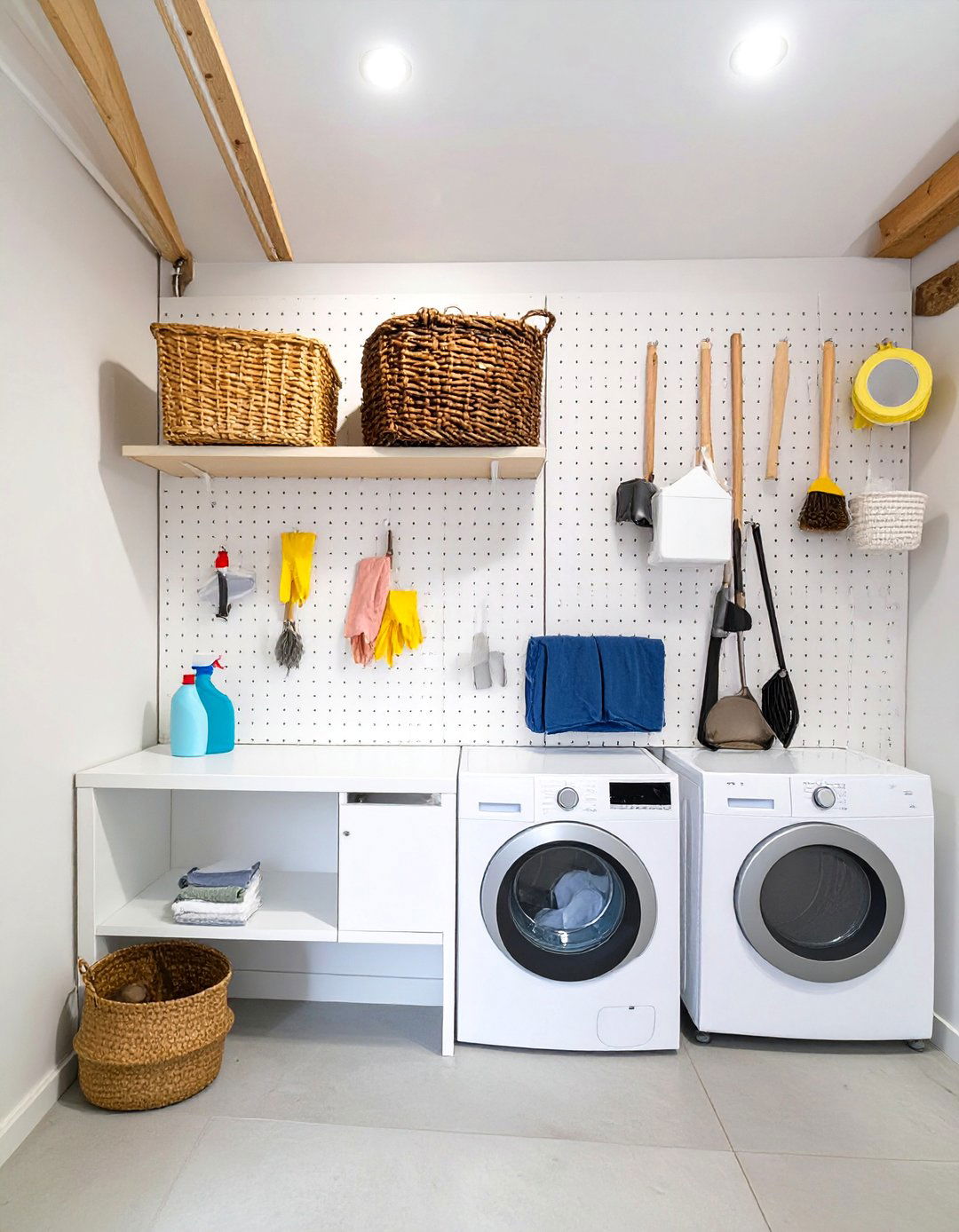
A large pegboard mounted on a concrete wall is an incredibly versatile and affordable storage solution for a laundry room. It allows you to hang everything from cleaning supplies and small tools to ironing boards and drying racks using various hooks, baskets, and shelves. This system keeps clutter off your folding surfaces and floor, utilizing vertical space efficiently. Paint the pegboard a bright color to create a functional accent wall that adds a pop of personality. It’s a perfect way to keep frequently used items visible, organized, and easily accessible in one central location.
7. Curtain Partitions to Conceal Unattractive Areas
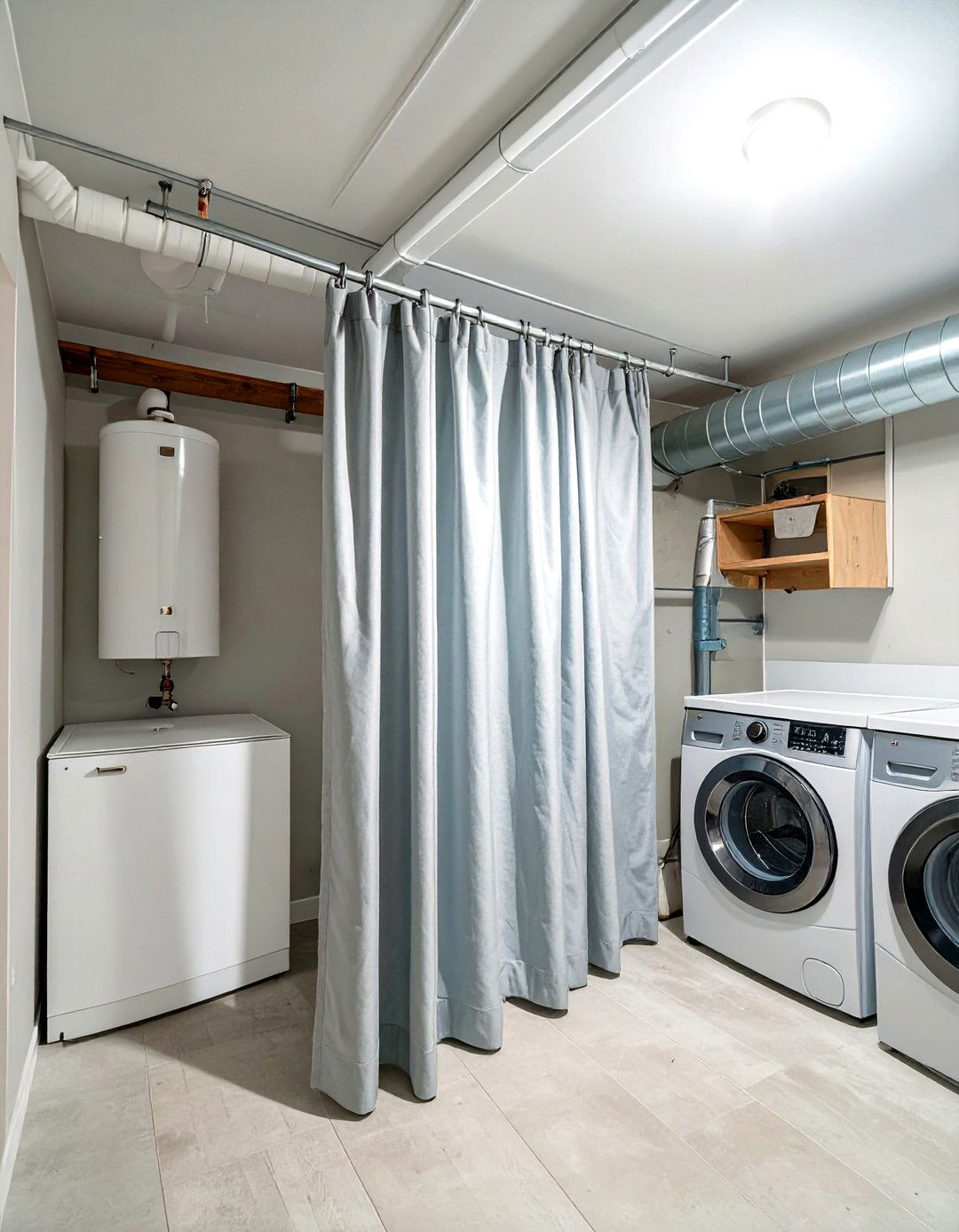
Use simple curtain systems to hide unsightly elements like water heaters, furnaces, or general storage clutter. Install a ceiling-mounted track or a sturdy tension rod and hang long, durable fabric panels. This creates a soft, visual separation, making the laundry area feel more self-contained and less chaotic. Choose a light-colored or subtly patterned fabric to maintain a bright, open feel rather than making the space seem smaller. This inexpensive solution allows you to quickly conceal the purely utilitarian parts of the basement, focusing attention on your organized laundry zone without building permanent walls.
8. DIY Butcher Block Folding Countertop
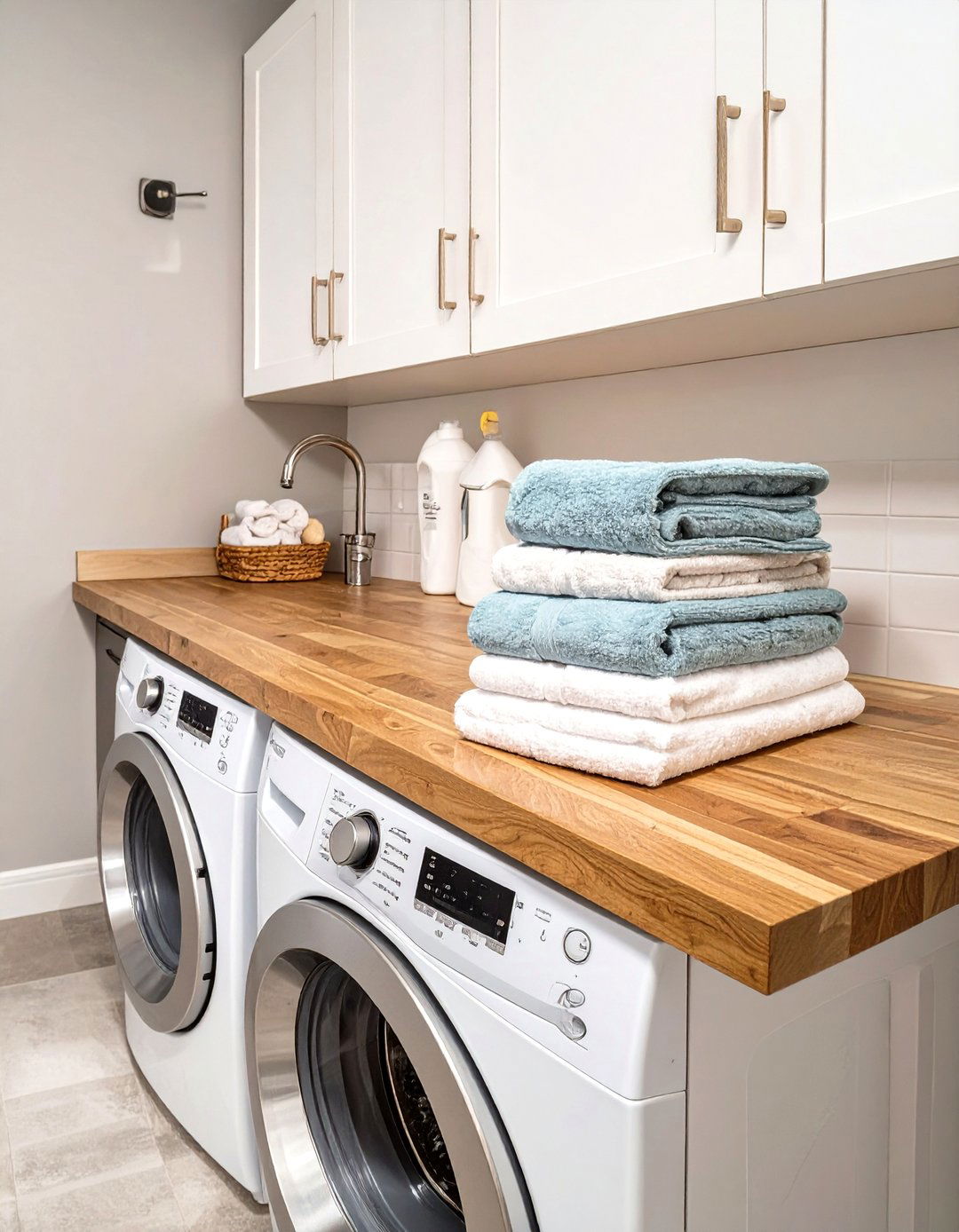
A dedicated folding surface is a laundry room game-changer. Create a custom countertop by placing a length of butcher block directly over your front-loading washer and dryer. This not only provides a large, sturdy area for folding clothes but also adds a warm, natural element to the space. You can purchase pre-made butcher block from a home improvement store and simply rest it on top, or secure it with brackets for added stability. This addition instantly elevates the room's functionality, giving it a custom-built feel while preventing socks and small items from falling behind the machines.
9. Freestanding Utility Sink with Cabinetry
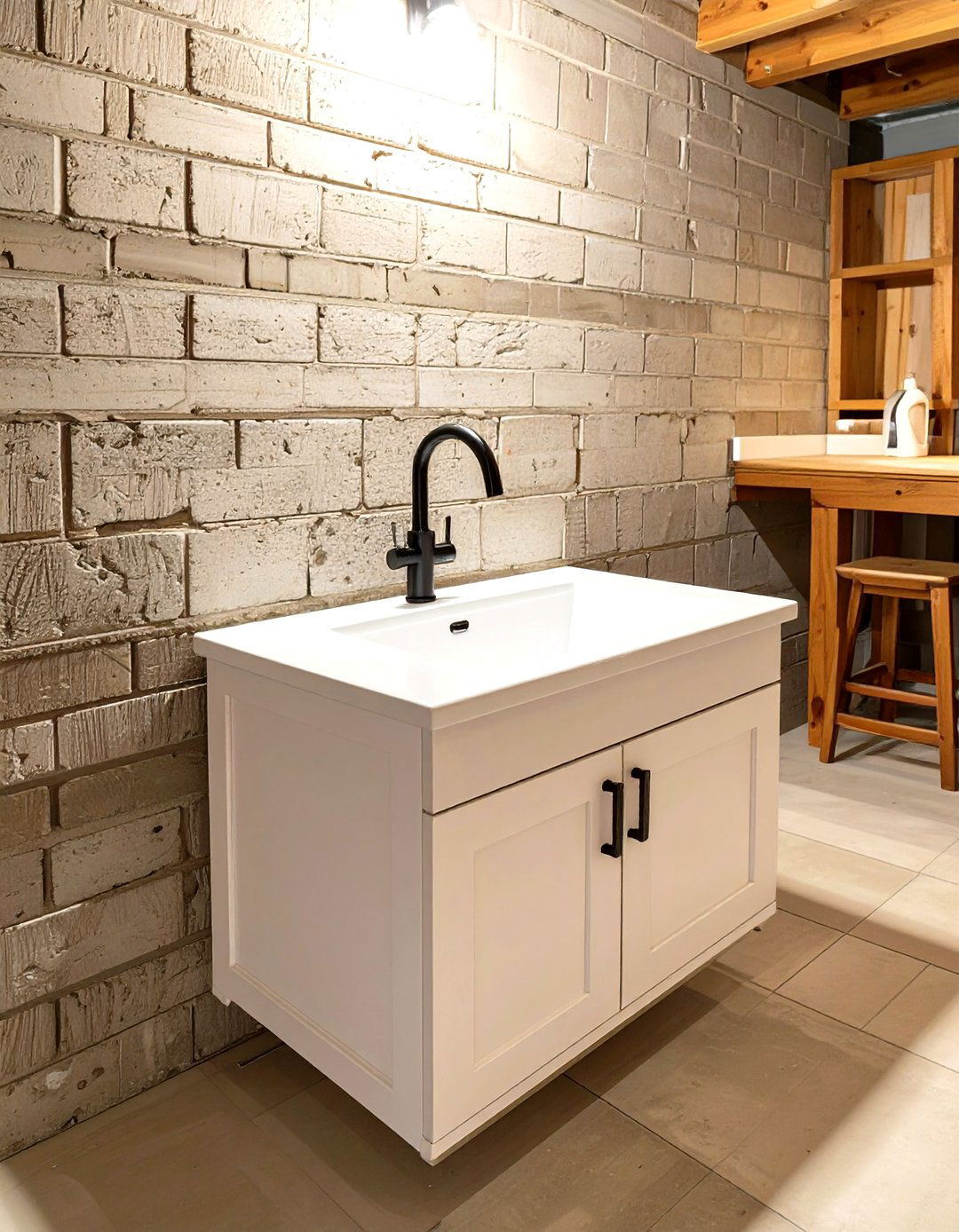
Upgrading from a basic plastic basin to a freestanding utility sink with a built-in cabinet makes a huge difference. This all-in-one unit provides a deep, functional sink for soaking stains or hand-washing delicates, while the cabinet below neatly conceals plumbing and offers valuable hidden storage for cleaning supplies. These units are available in various styles, from classic white to modern stainless steel, instantly making the area look more finished and organized. It's a practical enhancement that contains messes and reduces visual clutter, contributing to a more streamlined and efficient laundry workspace.
10. Rolling Laundry Carts for Sorting and Transport
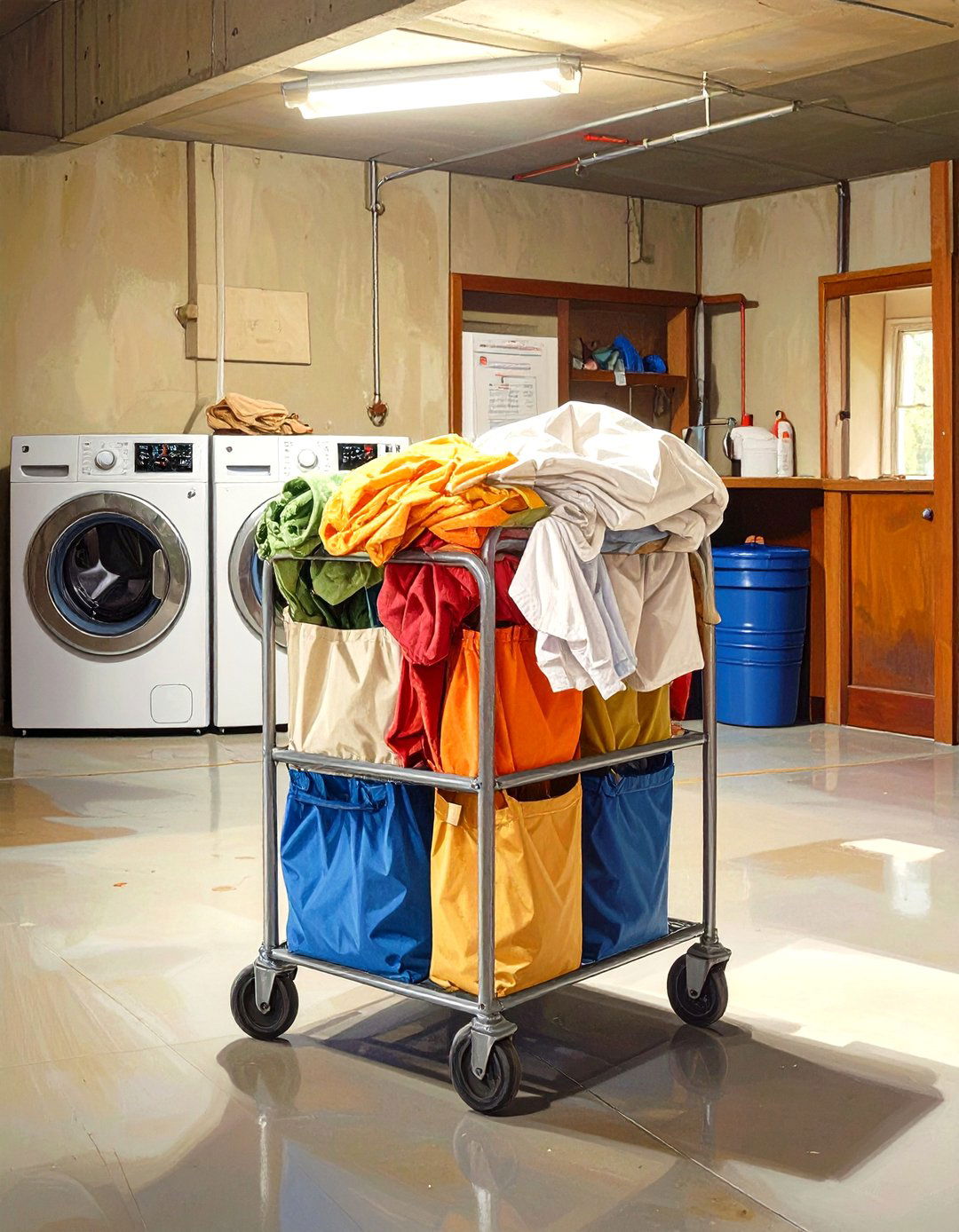
Incorporate rolling laundry carts to simplify your sorting process. Using multi-bin sorters on wheels allows you to separate whites, darks, and delicates as you go, keeping messy piles off the floor. Once a bin is full, you can easily roll it directly to the washing machine. These carts are also great for transporting clean, folded laundry back upstairs. Look for models with removable canvas bags for extra convenience. This system introduces a level of order and mobility that makes the entire laundry cycle, from sorting to putting away, feel much more manageable and efficient.
11. Wall-Mounted Drying Racks to Maximize Floor Space
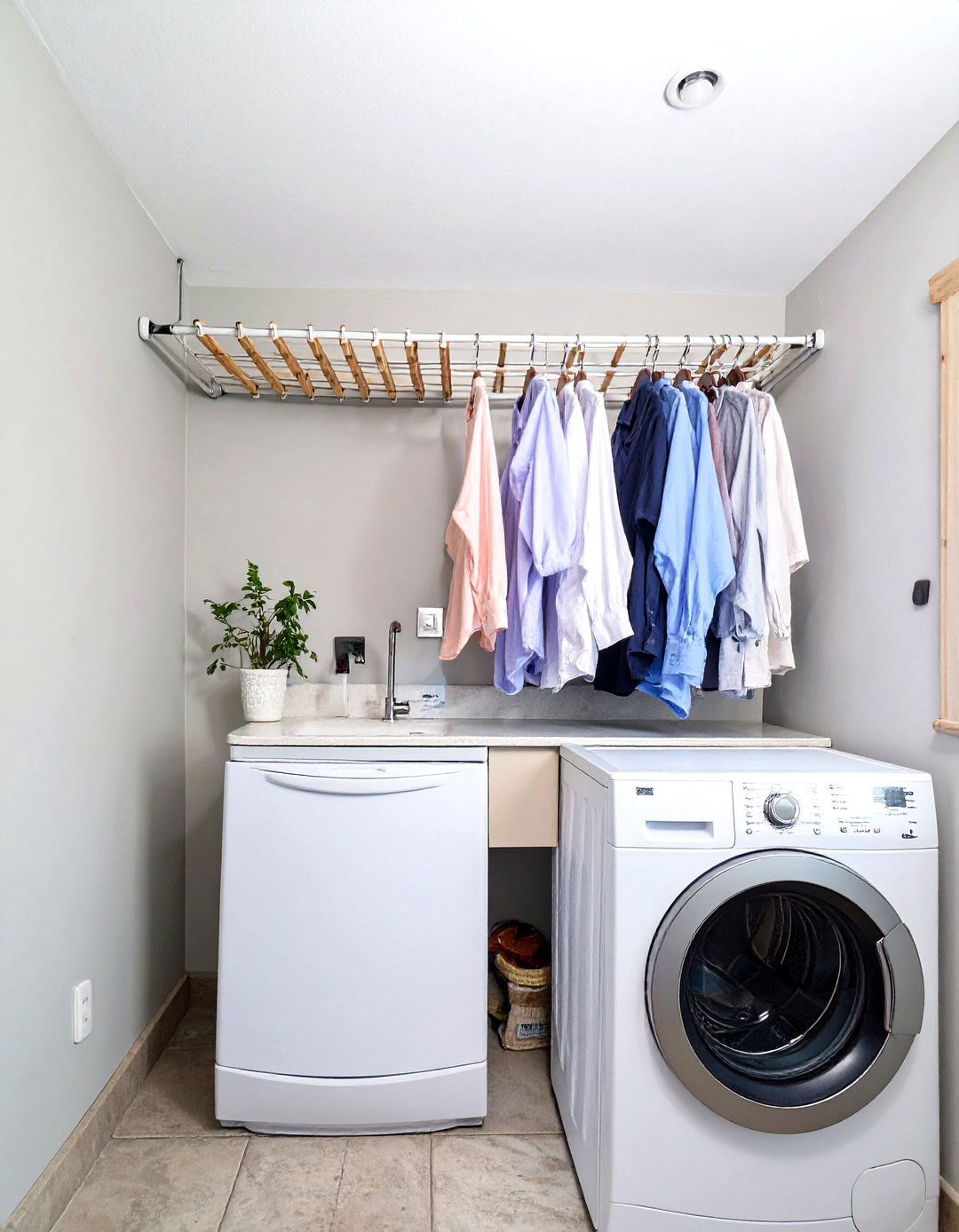
Free up valuable floor space by installing wall-mounted drying racks. Accordion-style or fold-down racks provide ample room for air-drying sweaters, delicates, and other items that can't go in the dryer. When not in use, they collapse neatly against the wall, maintaining an open, uncluttered environment. Mount them on a plywood-paneled wall or directly into concrete using appropriate anchors. This solution is perfect for small or narrow laundry areas where a traditional standing rack would be cumbersome, offering a practical drying station without sacrificing your walkway or folding area.
12. Bright Task Lighting Over Key Work Zones
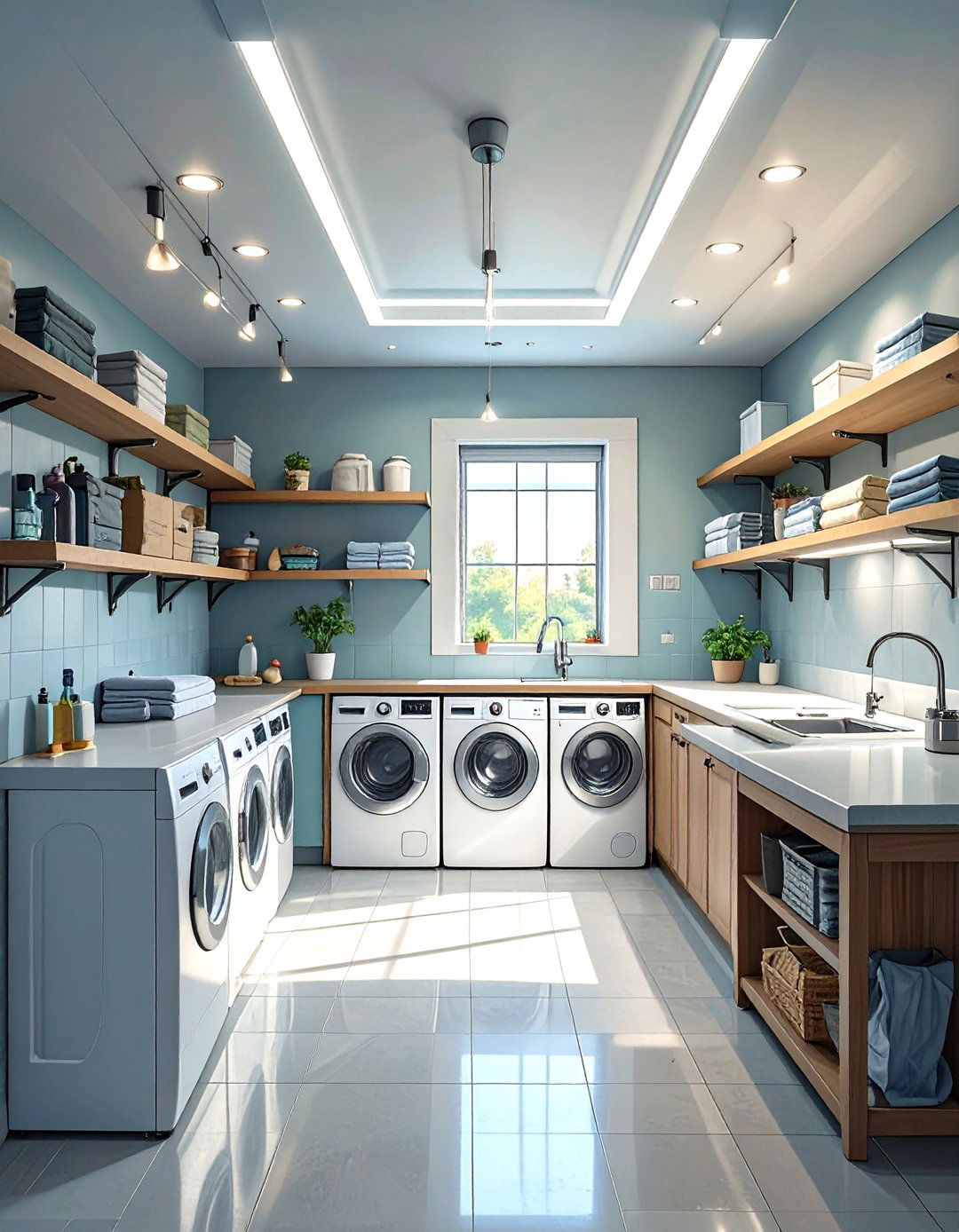
Proper lighting is crucial in a basement laundry room. Go beyond a single bare bulb and install focused task lighting over your primary work zones. A simple LED shop light or a track lighting system mounted on the ceiling above the washer, dryer, and folding area can dramatically improve visibility. This makes it easier to spot stains, sort clothes accurately, and fold everything without straining your eyes. Good lighting not only enhances functionality but also makes the entire space feel safer, cleaner, and more inviting, transforming it from a dark cavern into a pleasant workspace.
13. Galvanized Steel Tubs for a Farmhouse Feel
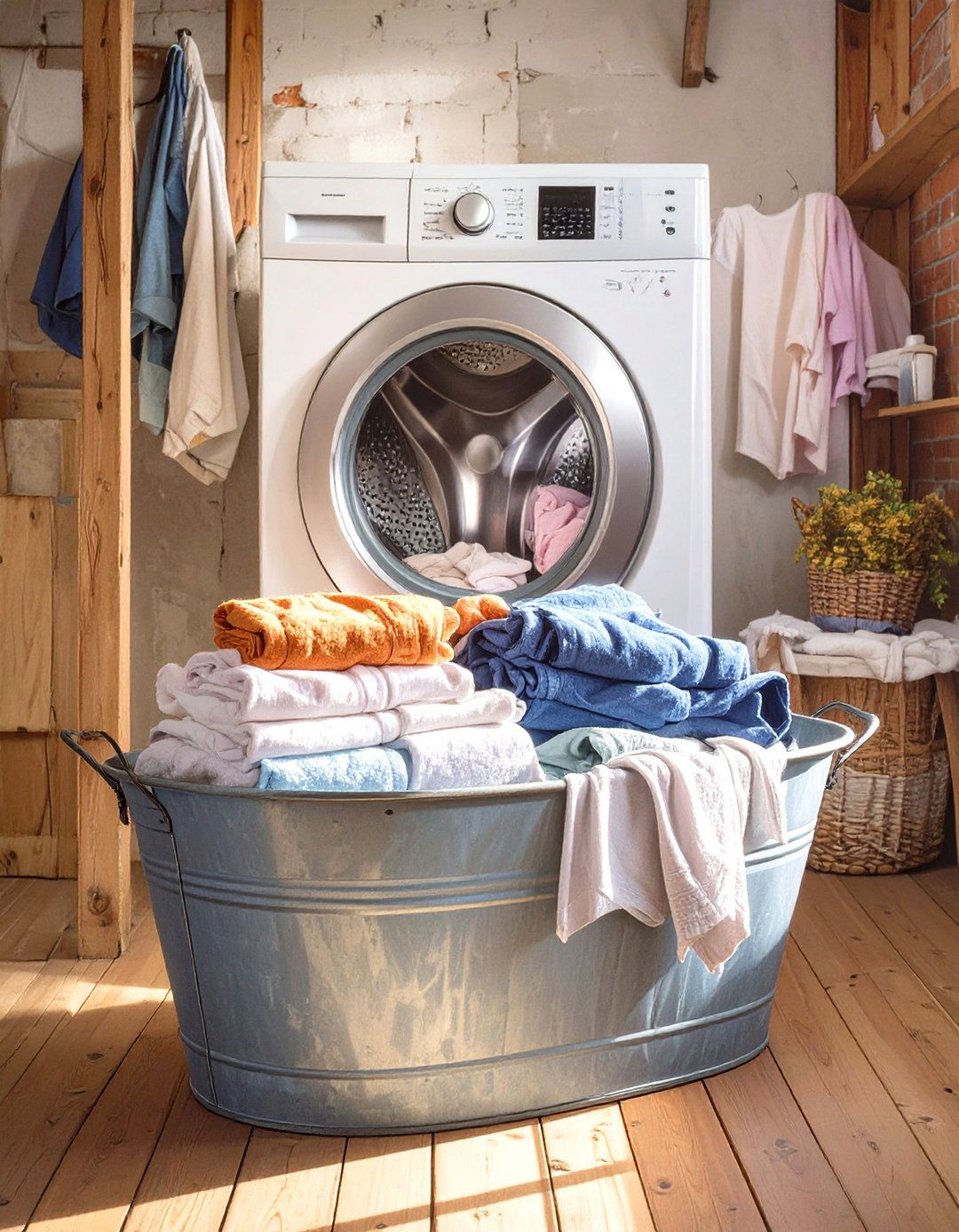
For a touch of rustic, farmhouse charm, use galvanized steel tubs as part of your laundry system. A large tub can serve as a stylish and durable utility sink for soaking clothes, while smaller buckets are perfect for storing detergent pods, clothespins, or even as planters for faux greenery. You can also use a wide, shallow tub as a base for a lost-sock collection. This simple addition introduces a different texture and a vintage aesthetic that works surprisingly well with the industrial look of an unfinished basement, adding personality without a significant investment.
14. Interlocking Rubber Tile Flooring for Comfort

Make your laundry room more comfortable underfoot by laying down interlocking rubber tiles. Often used in gyms, these tiles provide excellent cushioning, which is a welcome relief when you're standing for long periods folding clothes. They are also durable, water-resistant, and help insulate against the cold concrete floor. The tiles are easy to install directly over the concrete without any adhesive, making it a quick and reversible upgrade. Available in various colors, they can define the laundry area and add a touch of color and softness to the otherwise hard-surfaced space.
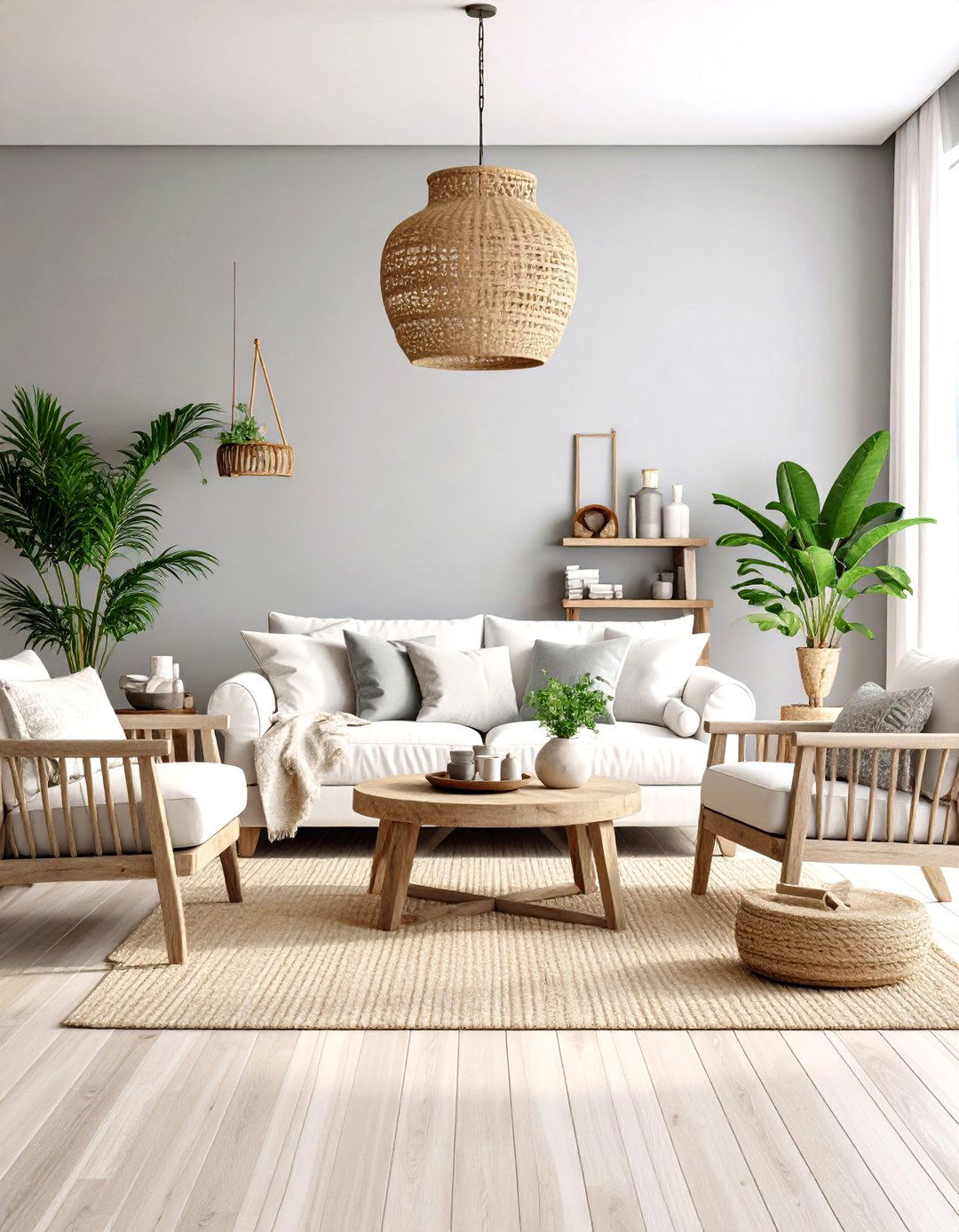



15. A Defined Rug Area for Added Coziness
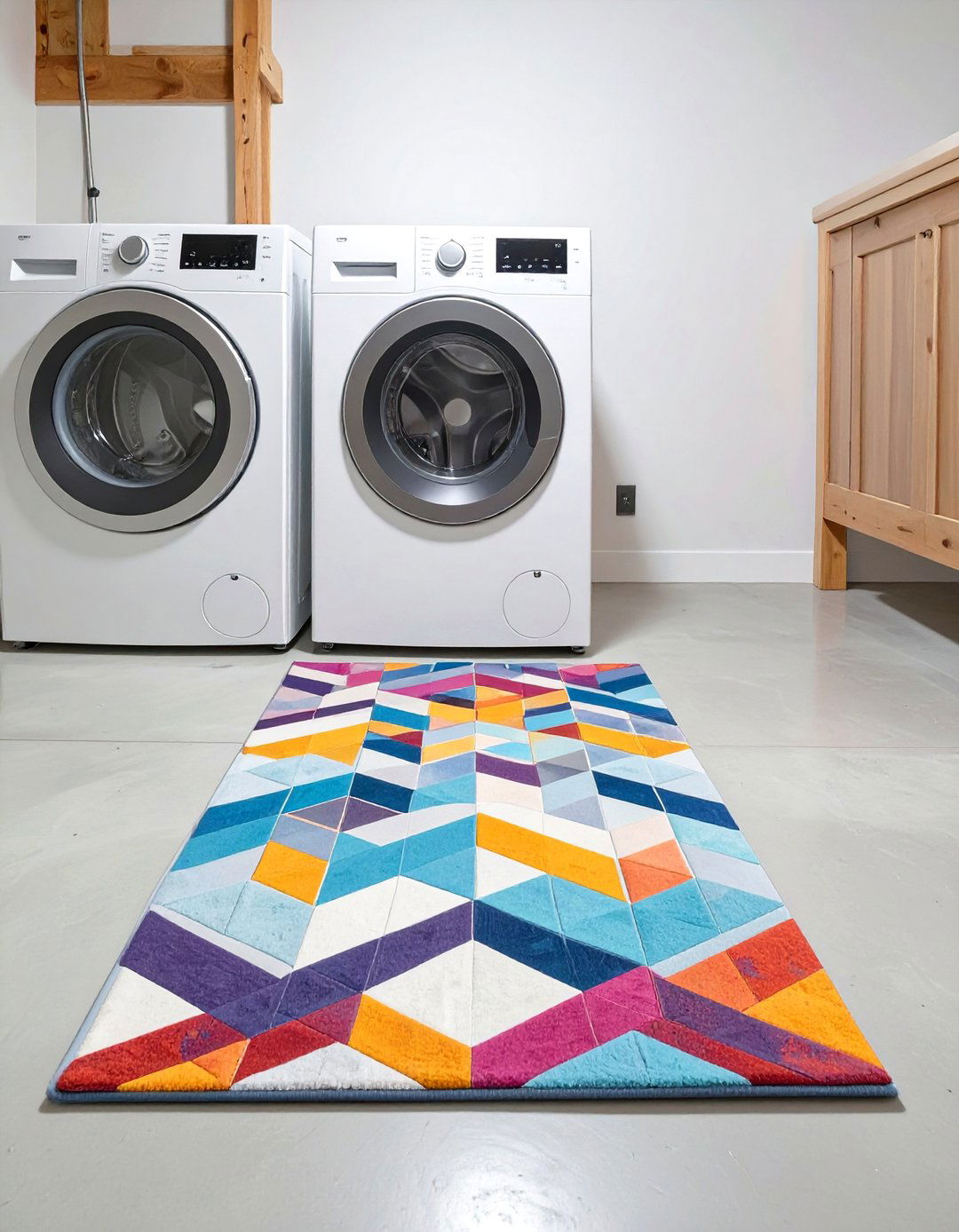
Place a large, durable area rug in the center of your laundry space to instantly add warmth and define the zone. An indoor-outdoor rug is an excellent choice as it's designed to withstand moisture and is easy to clean. A runner placed in front of the washer and dryer can also provide a soft spot to stand. A rug introduces color, pattern, and texture, breaking up the monotony of the concrete floor and making the space feel more comfortable and finished. This simple addition is one of the easiest ways to make a cold basement feel more like home.
16. Color-Blocked Sections on Concrete Walls
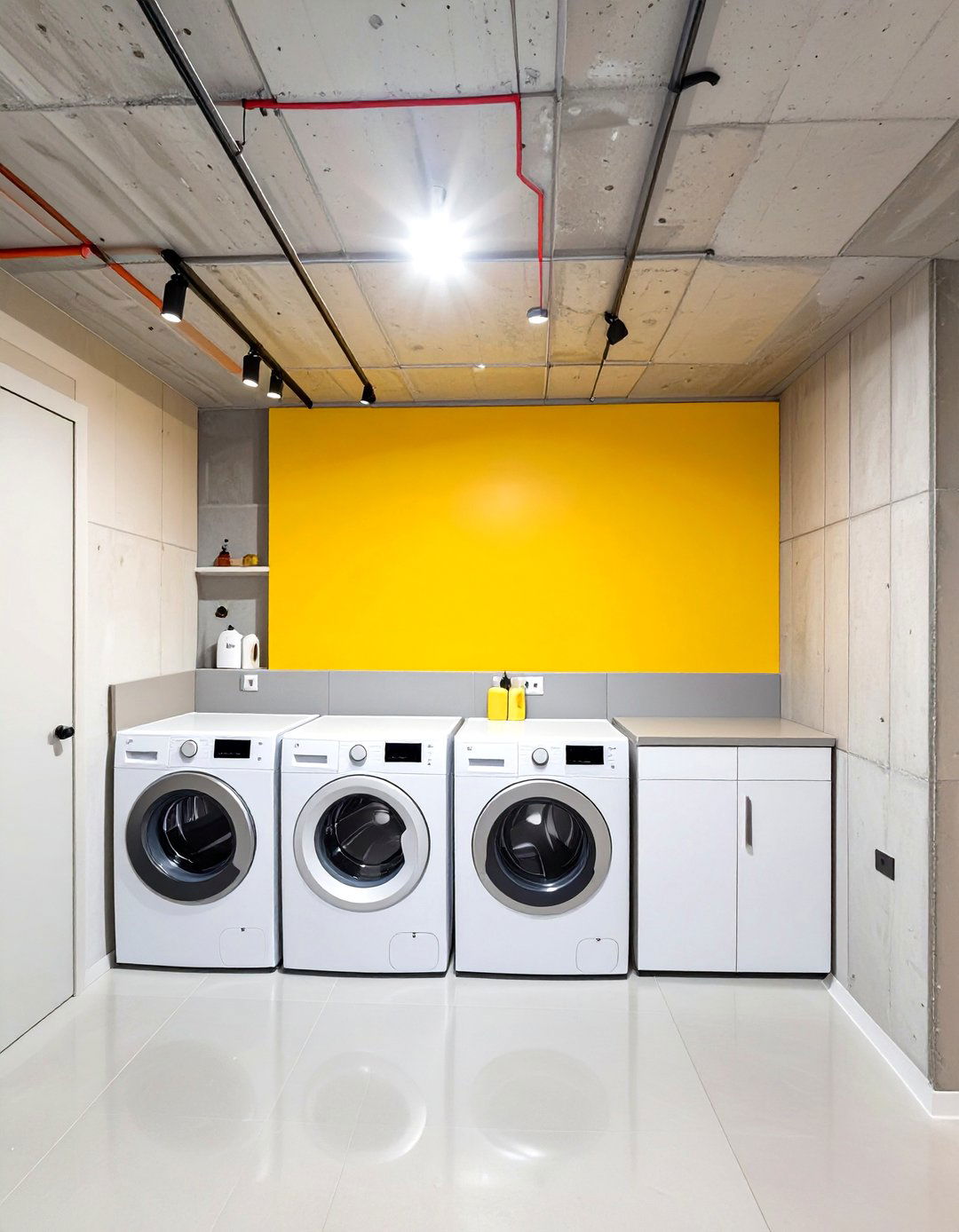
Add modern visual interest by painting color-blocked sections on the concrete walls. Instead of painting the entire room one color, tape off geometric shapes or a large horizontal band behind the laundry machines. Use a bold, cheerful color to create a focal point that defines the laundry station. This design trick adds a custom, graphic element to the space without the cost or effort of a full paint job. It’s a creative way to bring personality and a sense of deliberate design to the bare walls, making the area feel both functional and stylishly modern.
17. Stenciled Floor Patterns for Visual Appeal
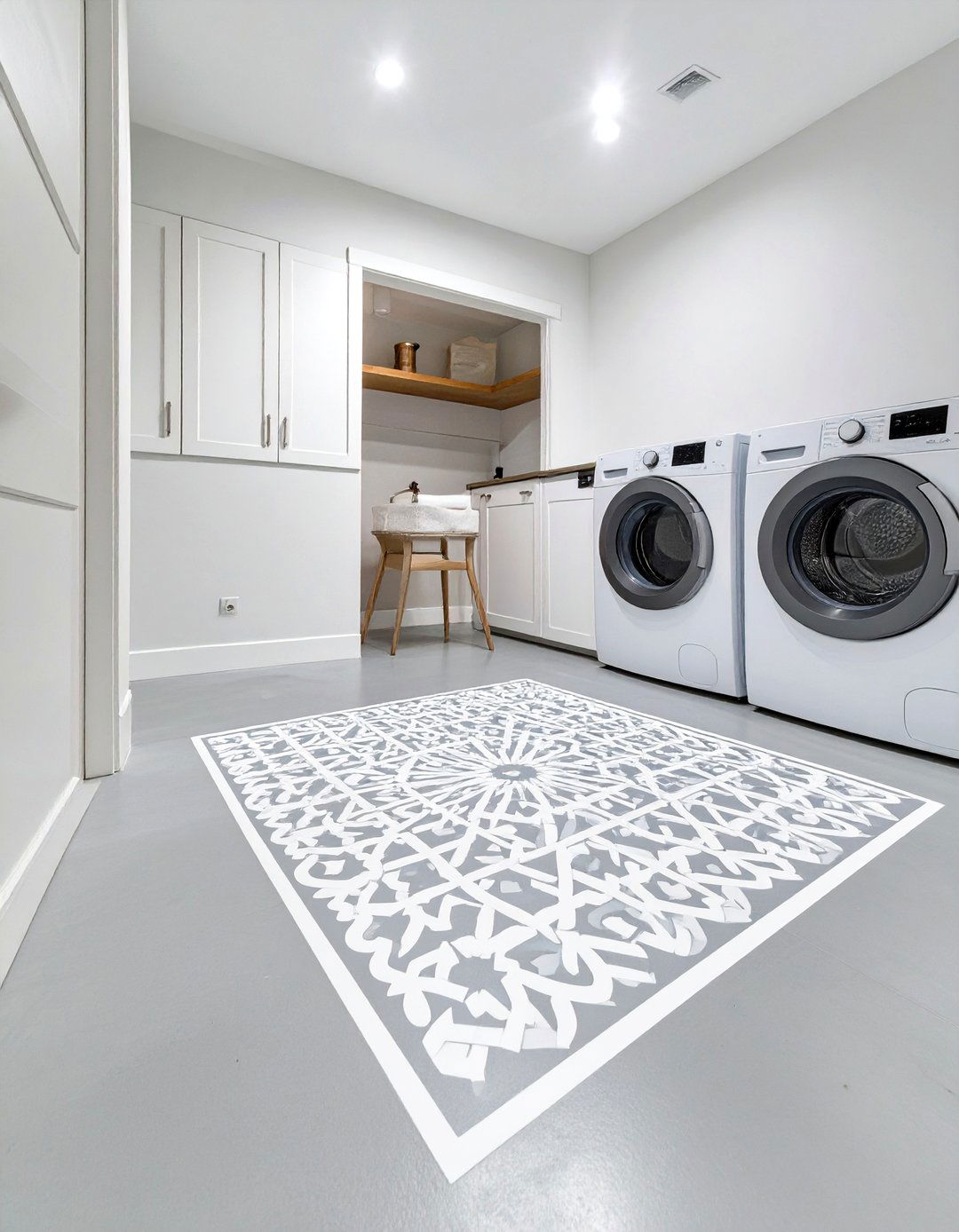
If you're painting your concrete floor, take it a step further by adding a stenciled pattern. This can mimic the look of expensive cement tiles for a fraction of the cost. Choose a geometric or floral pattern to create a feature that draws the eye and adds a significant amount of personality. A patterned floor can make the entire basement feel more intentional and beautifully designed. While it requires patience and a steady hand, the result is a unique, custom look that completely transforms the space from a drab utility area into a stylish room.
18. Mobile Storage Units on Casters
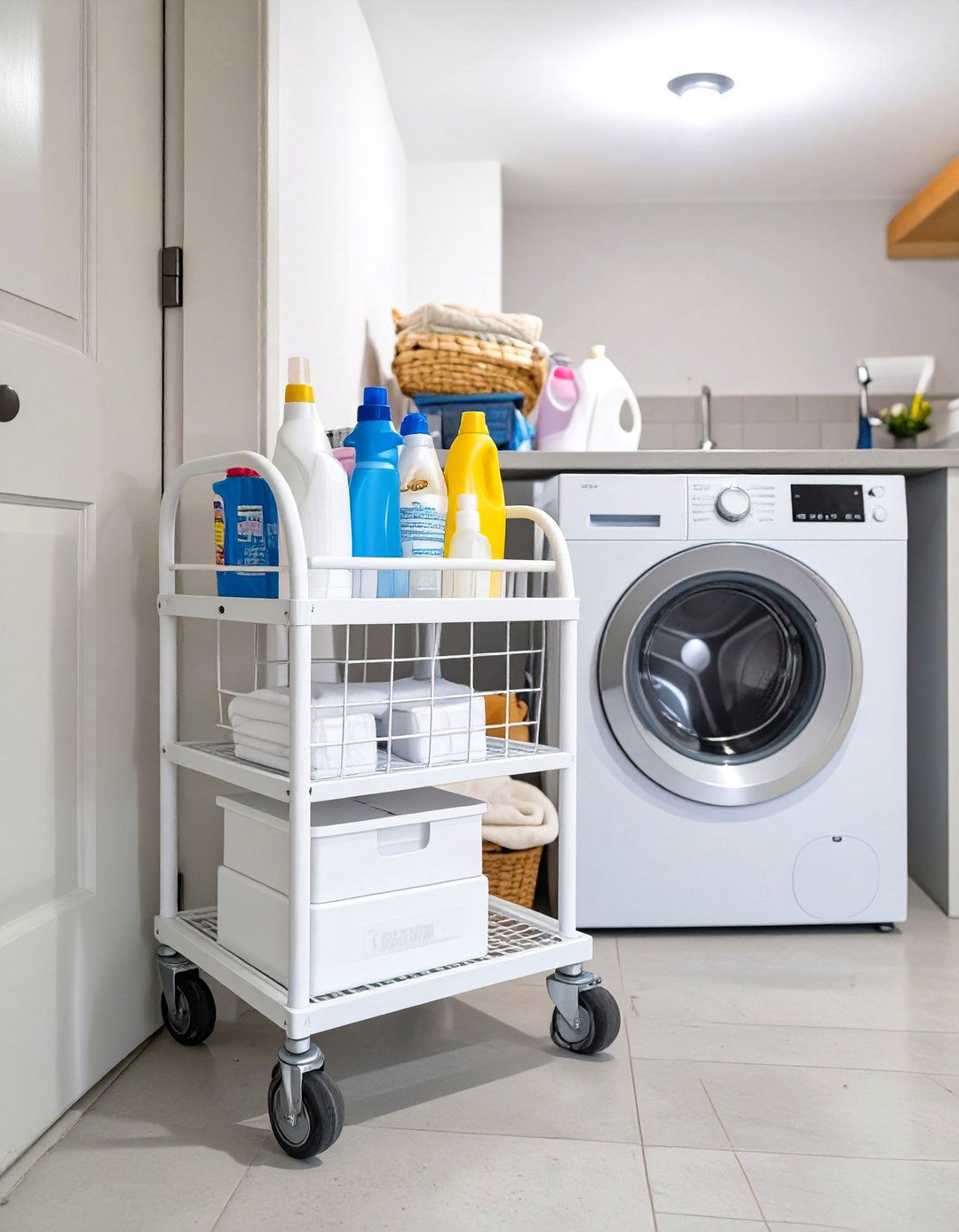
Incorporate mobile storage units to create a flexible and adaptable laundry room. A small kitchen cart or a set of wire drawers on casters can be moved around as needed, serving as a temporary folding station or a caddy for cleaning supplies. This is especially useful in multi-purpose basements where you might need to clear the area for other activities. You can tuck the unit away when not in use or roll it to wherever you need it most. This adaptability ensures your storage works for you, providing convenience and organization without permanent fixtures.
19. Behind-the-Door Storage Organizers
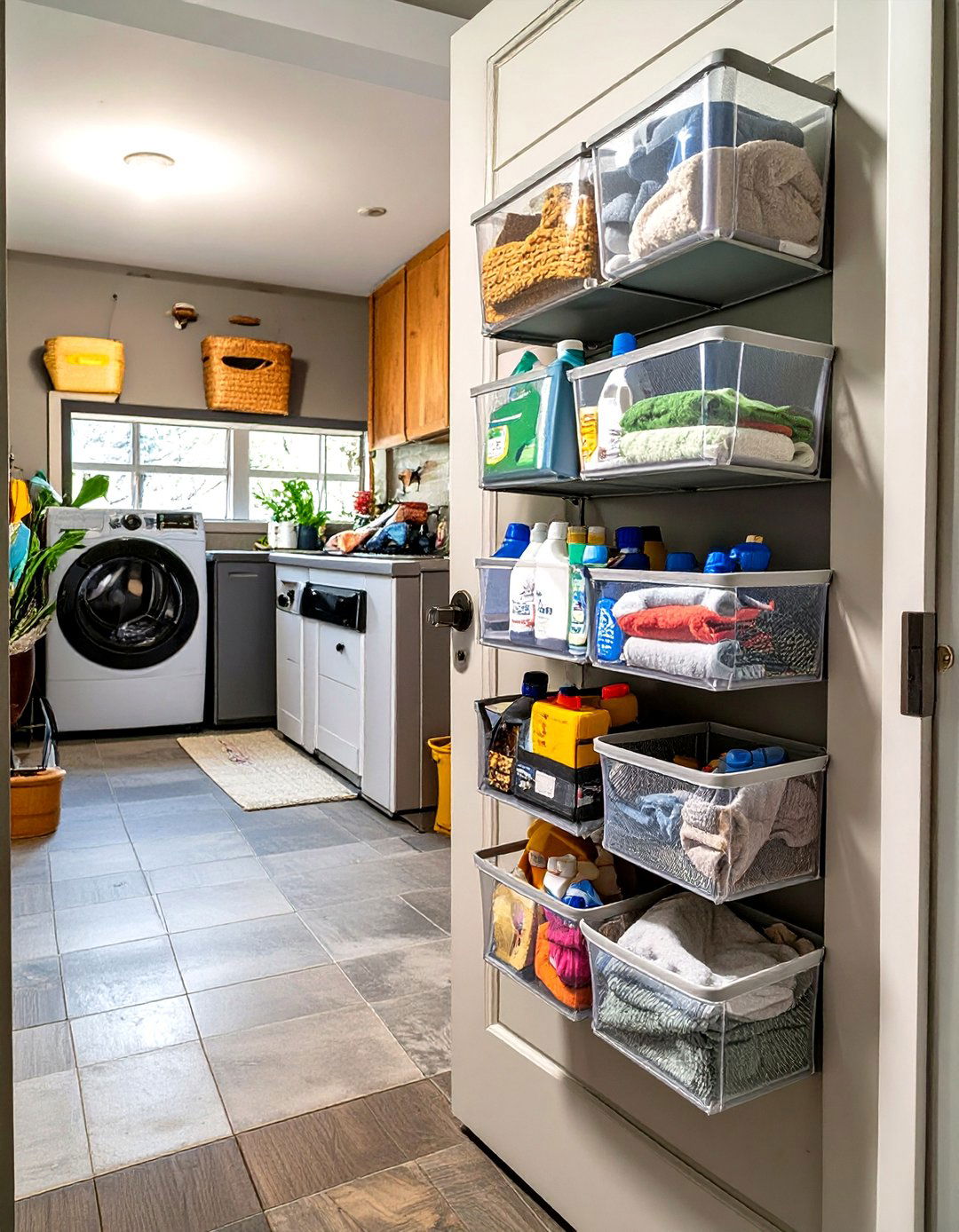
Maximize every inch of space by utilizing the back of the door leading into the laundry area. An over-the-door organizer with multiple pockets is perfect for storing small items like detergent pods, stain removers, dryer sheets, and clothespins. You can also find racks designed to hold an ironing board and iron, keeping these bulky items off the floor and out of the way. This simple addition clears clutter from other surfaces and uses otherwise wasted space, making your room feel more organized and spacious without any installation required.


20. A Chalkboard Wall for Notes and Labels
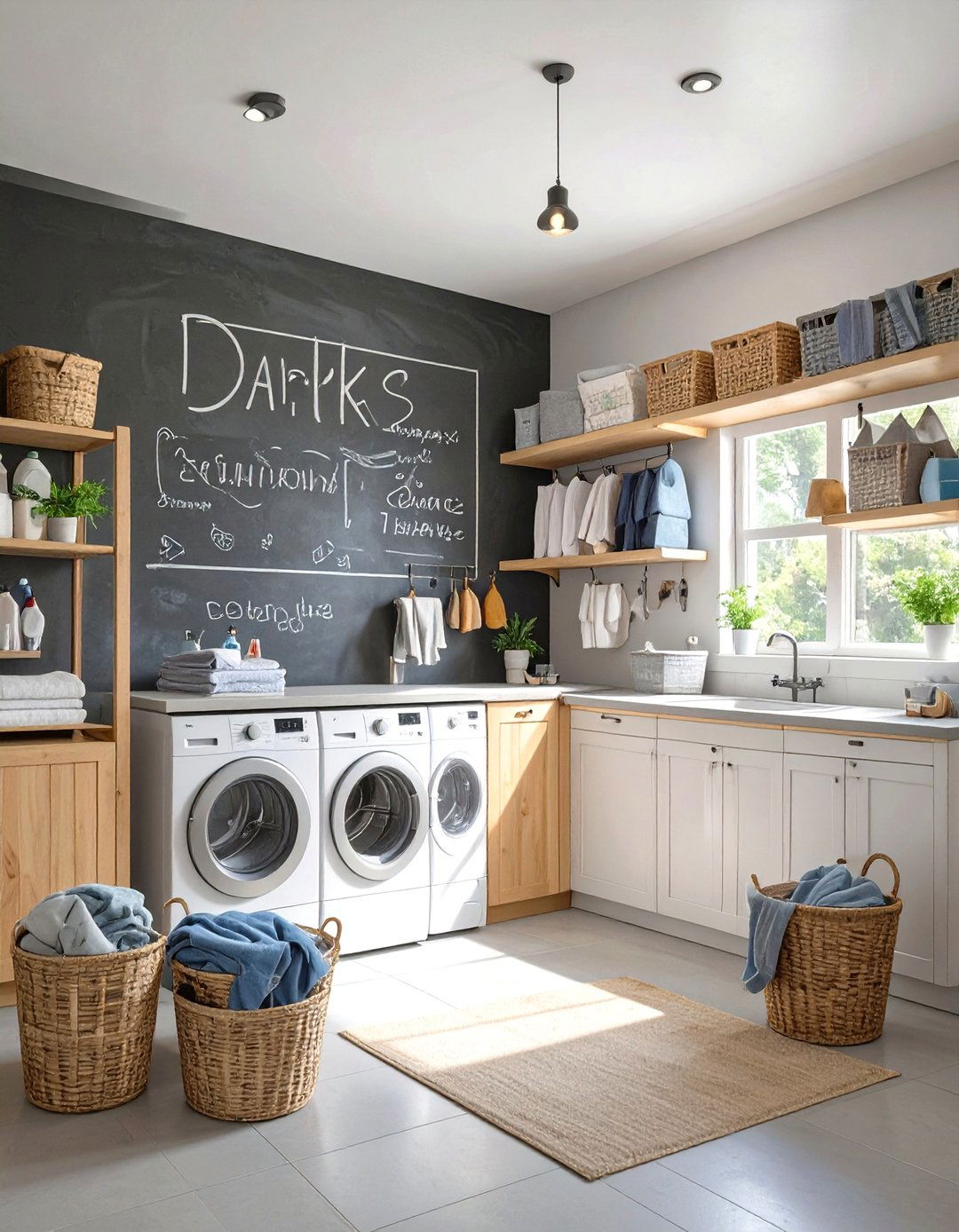
Create a fun and functional feature by painting a section of a wall with chalkboard paint. This allows you to write reminders, laundry care instructions, or sorting labels directly on the wall. It’s a great way to keep track of which items need special care or to leave notes for other family members. A chalkboard wall adds a playful, interactive element to the room and can be a creative outlet. It’s an inexpensive and easy DIY project that brings both personality and practical organization to your unfinished basement laundry space.
21. Fabric Skirting to Hide a Utility Sink Base
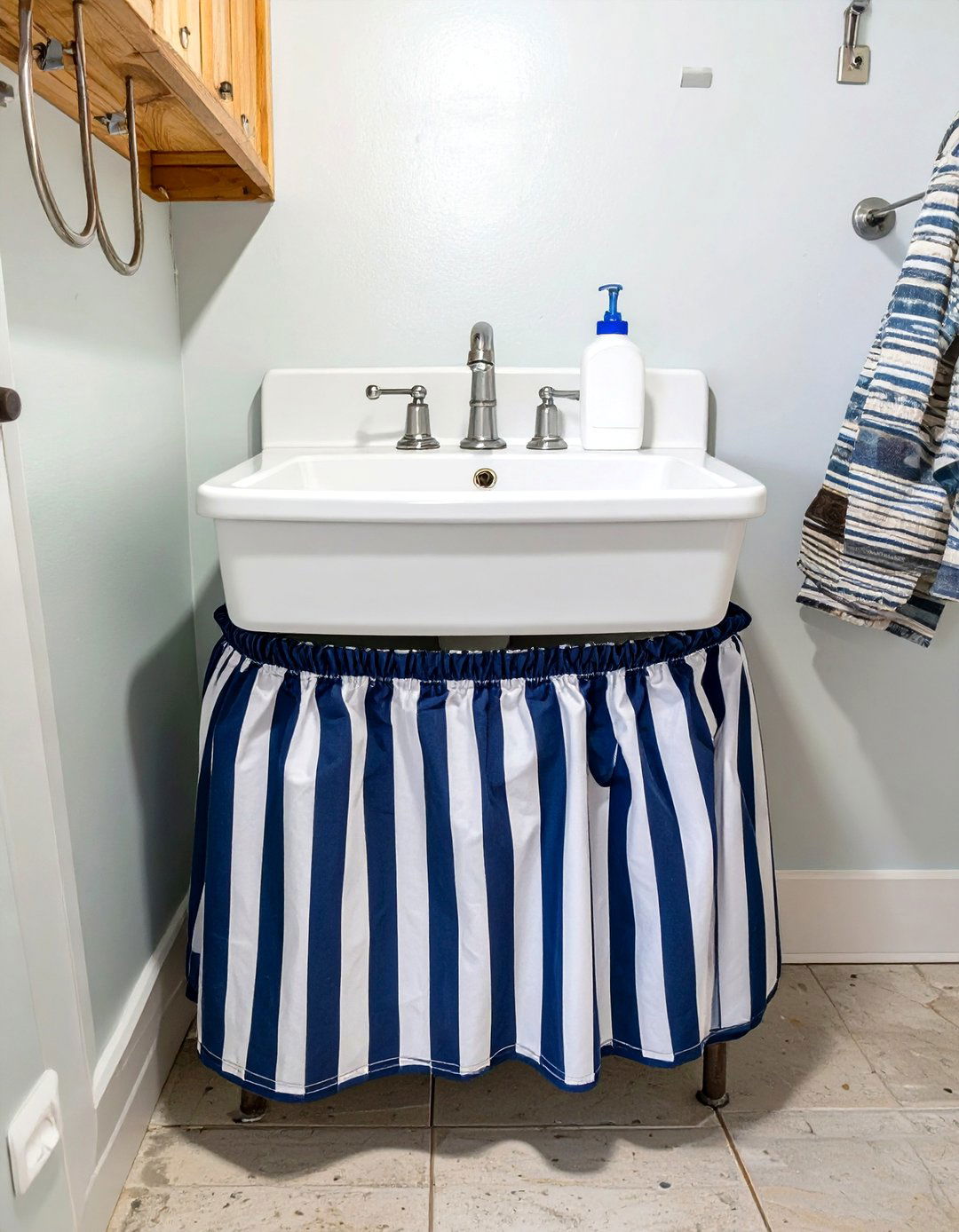
If you have a basic, open-base utility sink, an easy and attractive fix is to add a fabric skirt. Use adhesive-backed hook-and-loop tape or a small tension rod to attach a fabric panel around the sink's edge, concealing the plumbing and any items stored underneath. This softens the industrial look of the sink and adds a touch of color or pattern to the room. It’s a no-sew, budget-friendly solution that creates the illusion of a vanity, making the area appear tidier and more thoughtfully put together in just a few minutes.
22. Upgraded Flush Mount Ceiling Lights
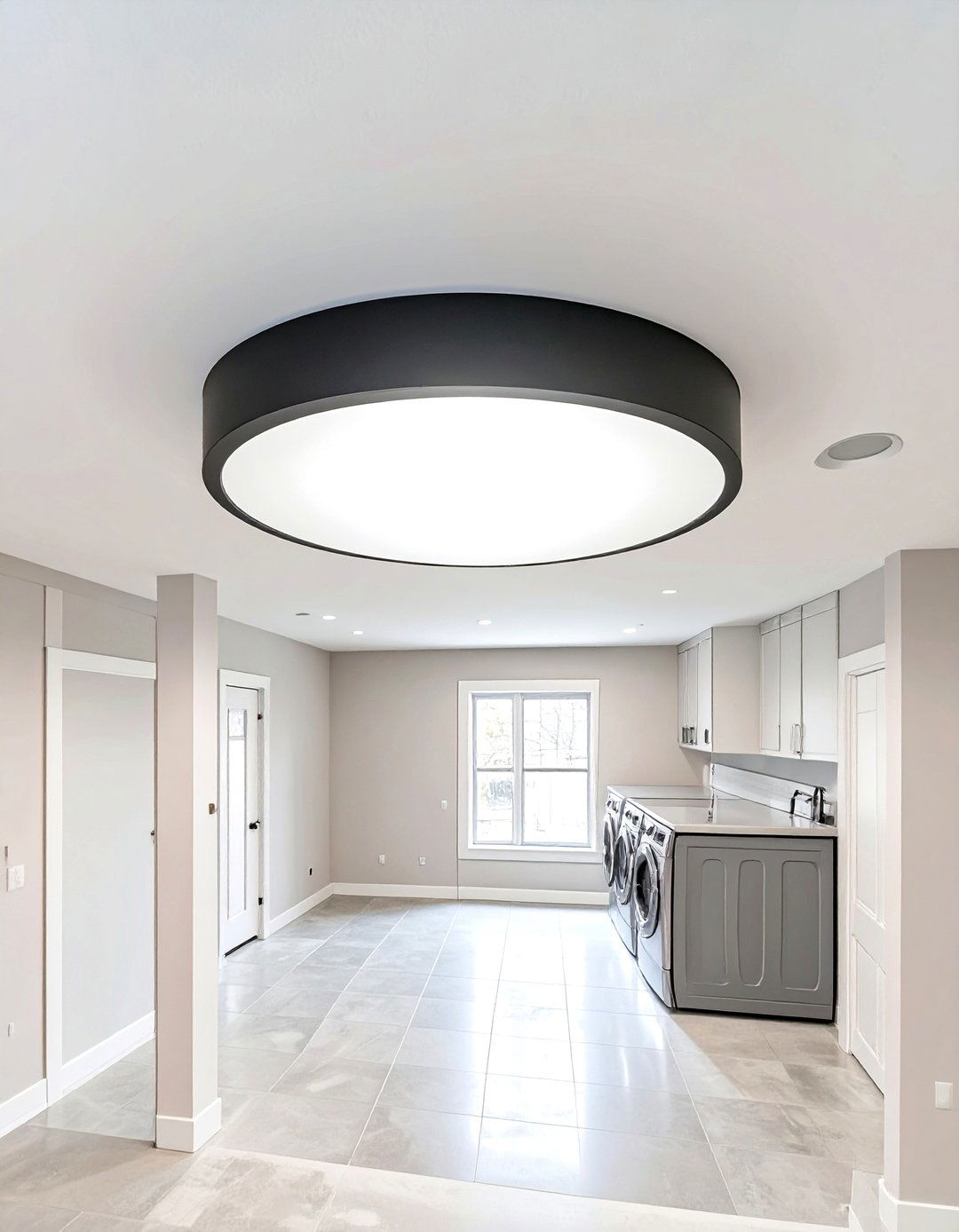
Replace the single bare bulb common in basements with a more substantial flush mount or semi-flush mount light fixture. This simple electrical swap can instantly make the room feel more finished and intentional. Choose a fixture with a glass or fabric shade to diffuse the light, reducing harsh glare and creating a softer, more pleasant ambiance. A modern, industrial-style fixture can complement the exposed elements of the room, while a more traditional design adds an unexpected touch of elegance. This upgrade enhances both the quality of light and the overall aesthetic of the space.
23. Wooden Crates as Wall-Mounted Cubbies
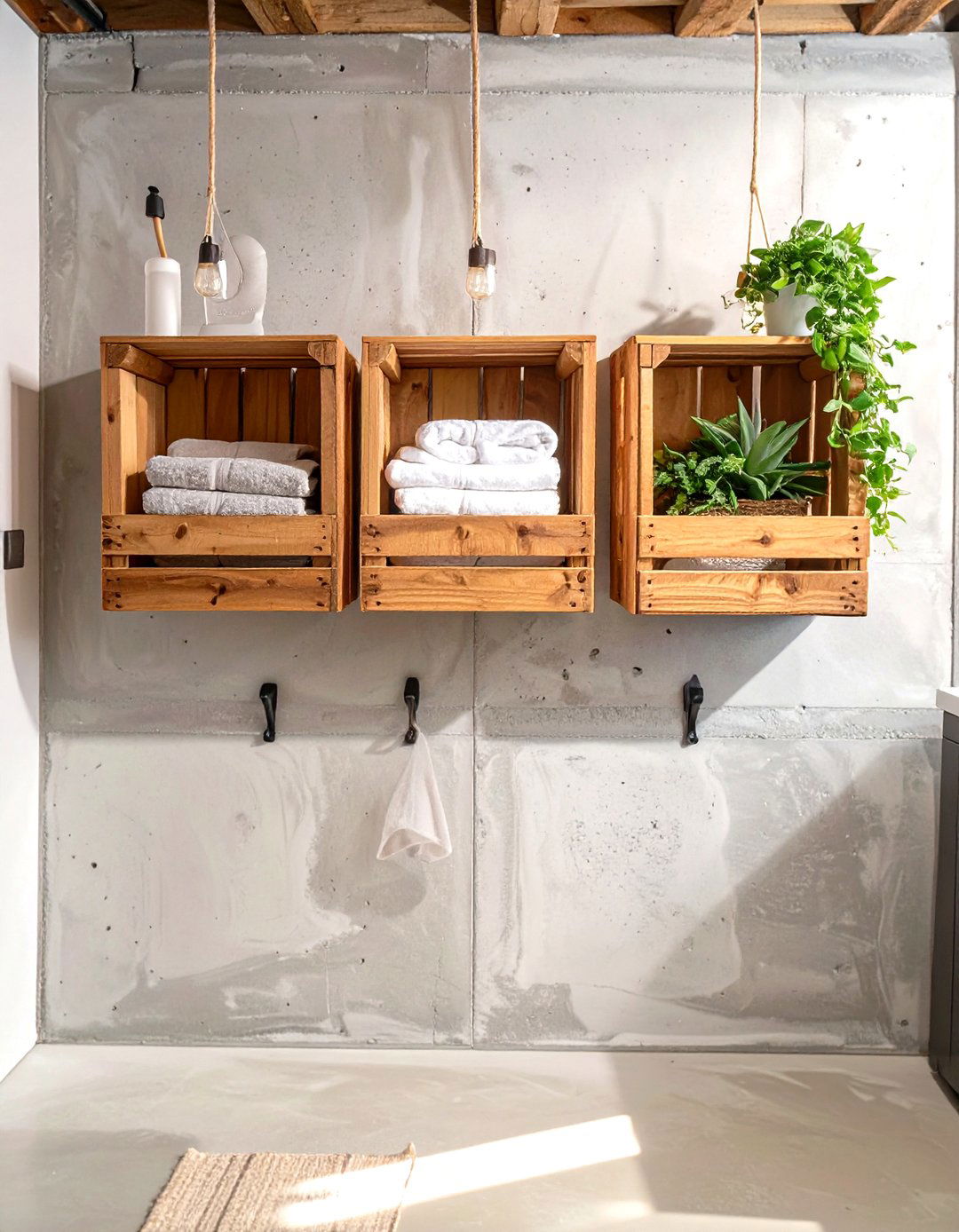
For a rustic and budget-friendly storage solution, mount wooden crates on the wall to act as cubbies. You can arrange them in a grid or a more scattered, artistic layout. Leave them in their natural wood state, or paint them to match your decor. These crates are perfect for holding folded towels, storing cleaning supplies in decorative bins, or displaying a few plants. They provide functional shelving while adding a warm, farmhouse-inspired texture to the cold concrete walls, turning a simple storage idea into a charming decorative feature.
24. A Stock Tank as a Unique Utility Sink
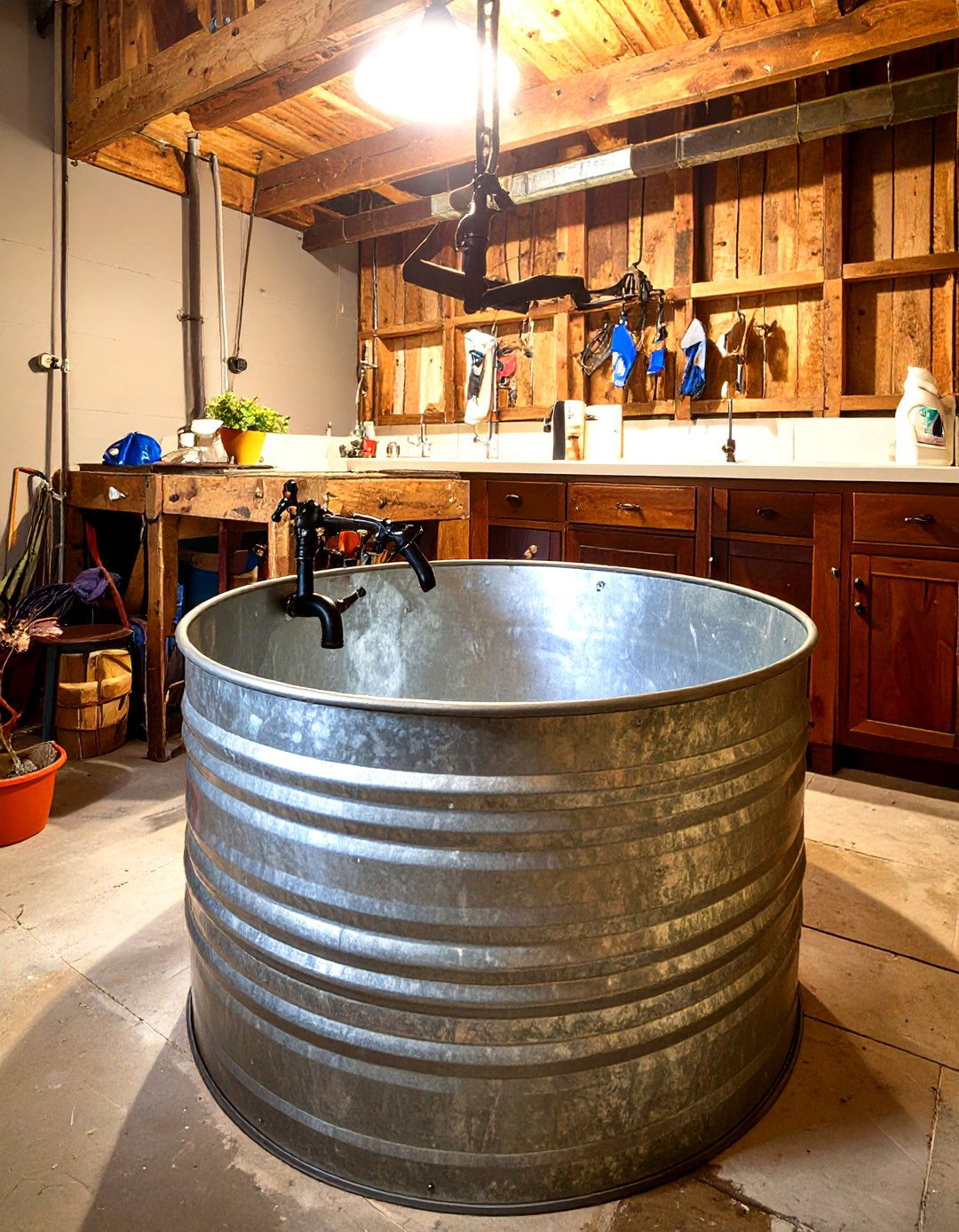
For a bold, industrial farmhouse statement, install a galvanized steel stock tank as your utility sink. These large, durable tubs offer a massive basin perfect for soaking large items or even washing a small pet. Paired with a wall-mounted faucet, a stock tank sink becomes a dramatic and highly functional focal point. Its raw, metallic finish perfectly suits the unfinished basement environment while adding a unique, custom design element. This unconventional choice is surprisingly practical and guaranteed to give your laundry room a memorable and stylish edge that sets it apart.
25. String Lights for a Touch of Ambient Charm
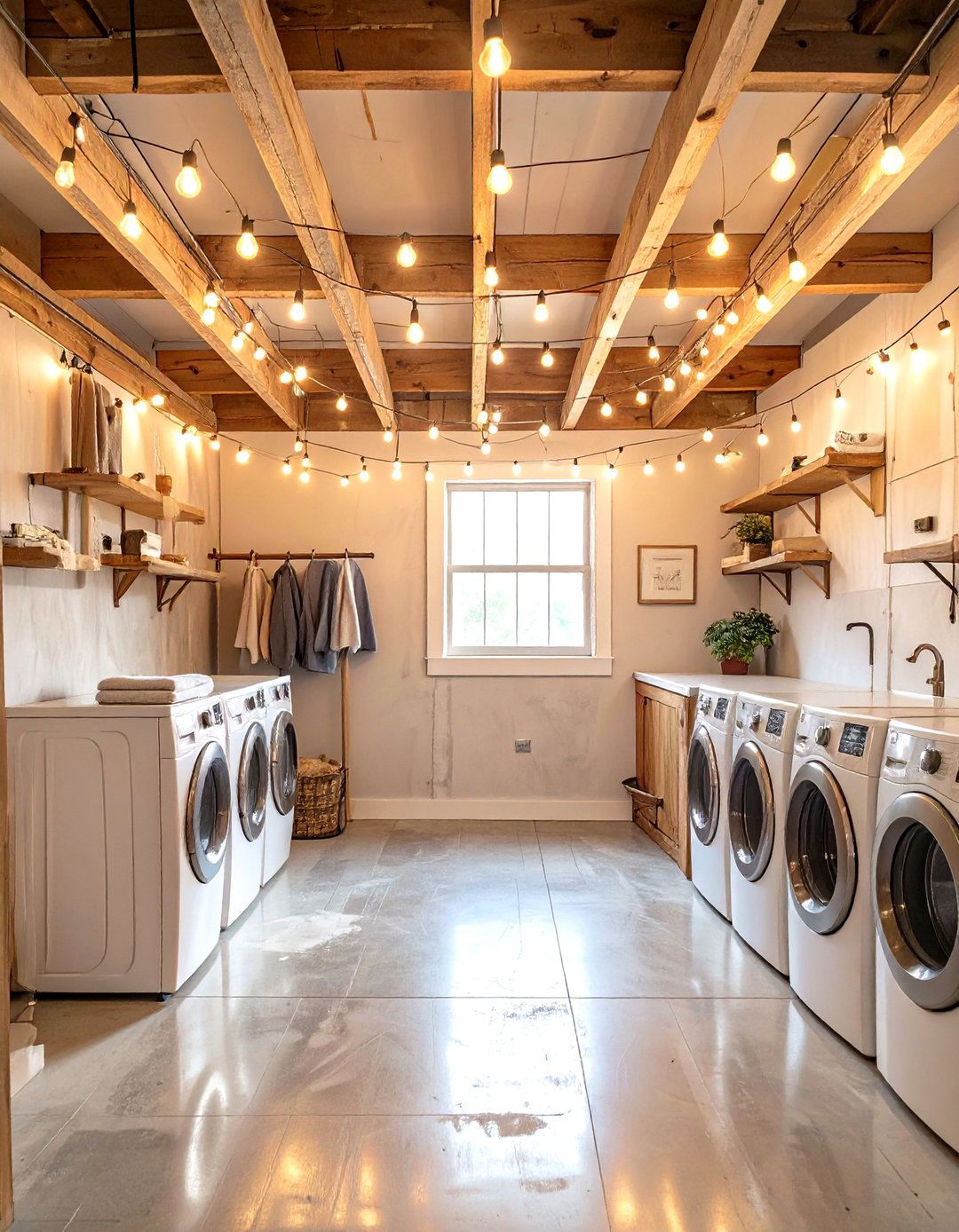
Beyond functional task lighting, add a layer of ambient light with strands of string lights. Drape industrial-style Edison bulb string lights or classic globe lights across the ceiling joists. This simple addition instantly creates a cozy and inviting atmosphere, making laundry chores feel a little less mundane. The warm glow softens the hard edges of the concrete and metal, transforming the space into a surprisingly charming area. It’s an inexpensive, plug-and-play solution that adds a significant amount of personality and warmth with minimal effort required.
26. Peel-and-Stick Backsplash Behind the Machines
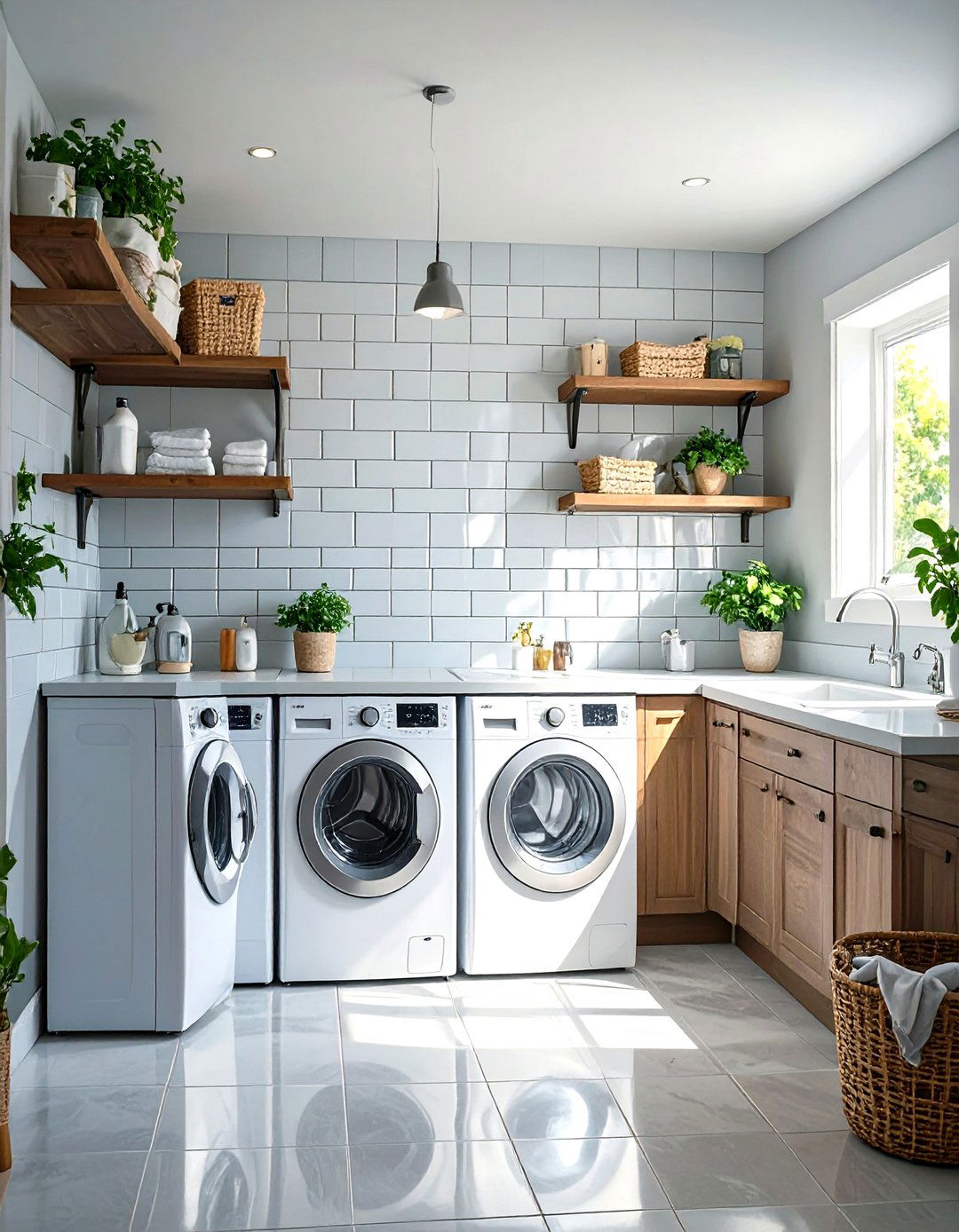
Create the illusion of a finished wall by applying a peel-and-stick tile backsplash in the area behind your washer and dryer. This is an incredibly easy and affordable way to add pattern and a wipeable surface without the hassle of real tile and grout. Subway tile, mosaic, or geometric patterns can define the laundry station and protect the wall from splashes. The installation takes very little time and can be applied directly to a painted concrete or plywood wall, providing an instant visual upgrade that makes the space feel more polished and complete.
27. Painting Exposed Ductwork a Statement Color
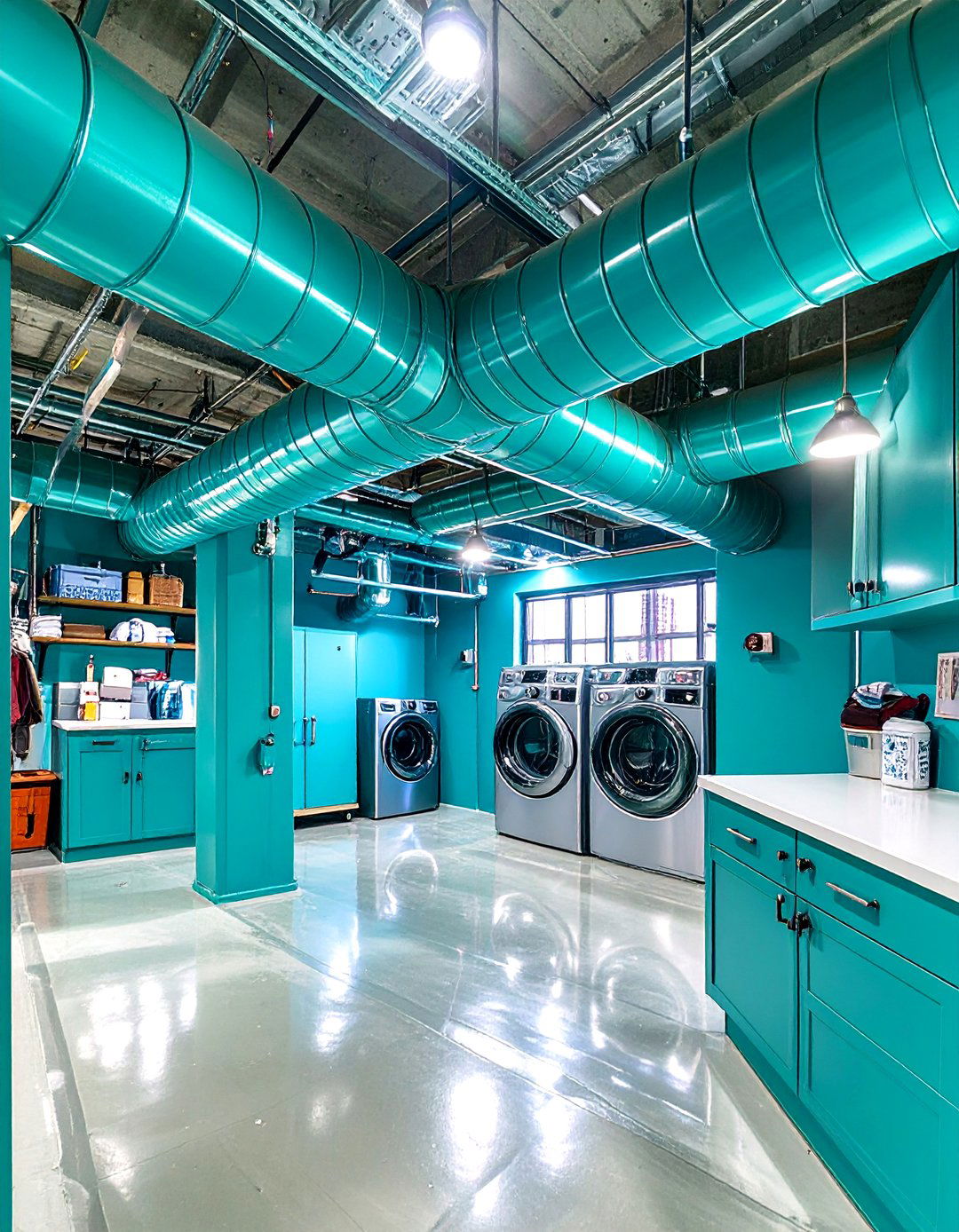
Instead of trying to hide the exposed ductwork, turn it into a deliberate design feature by painting it a bold, unexpected color. A bright yellow, vibrant teal, or even a sleek charcoal gray can transform the metal ducts from an eyesore into a graphic, architectural element. This approach celebrates the industrial nature of the space rather than fighting against it. Painting the ductwork draws the eye upward and adds a pop of personality that ties the entire room together, proving that even the most utilitarian components can become part of your design scheme.
28. Using Vertical Space with Tall Shelving Units
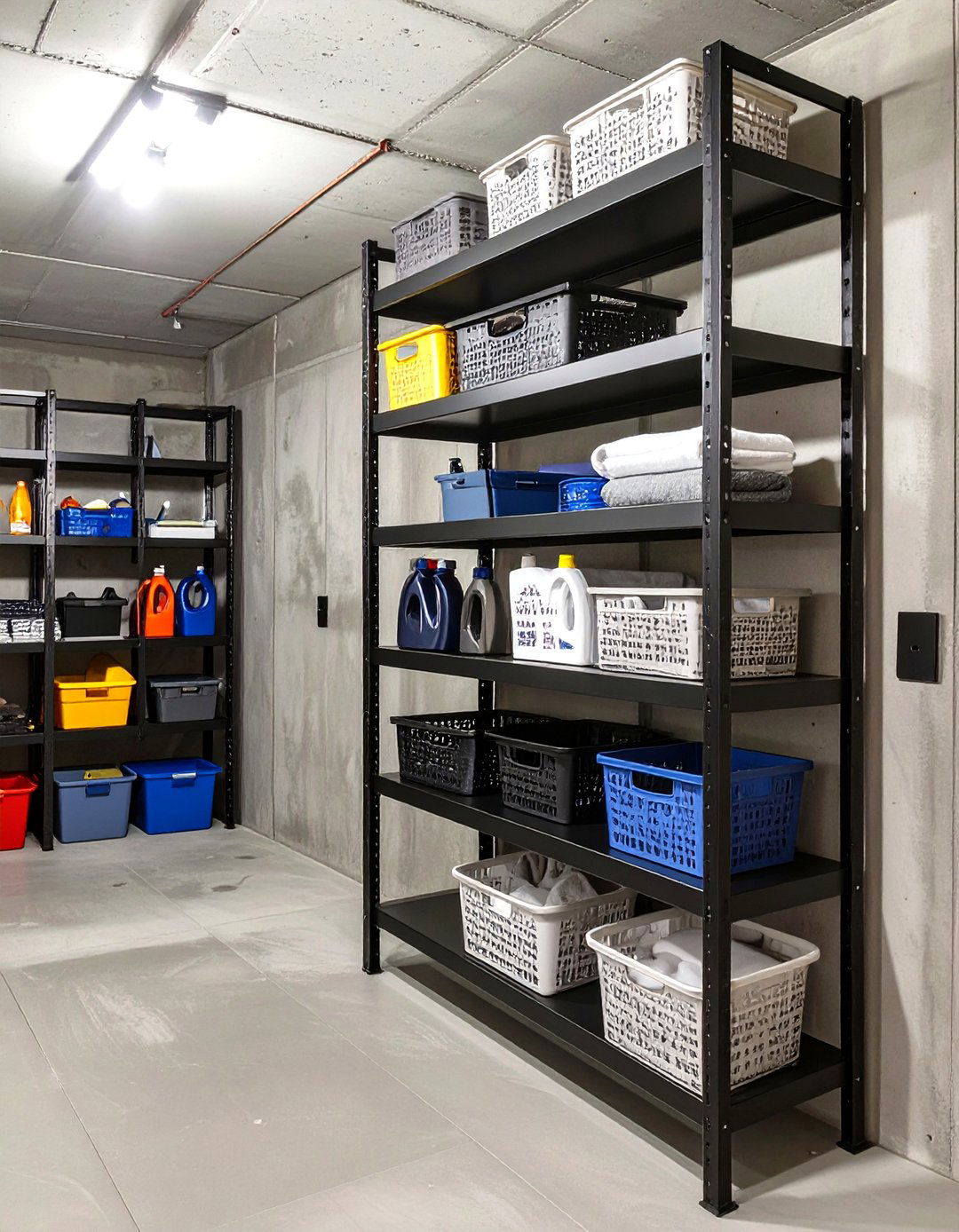
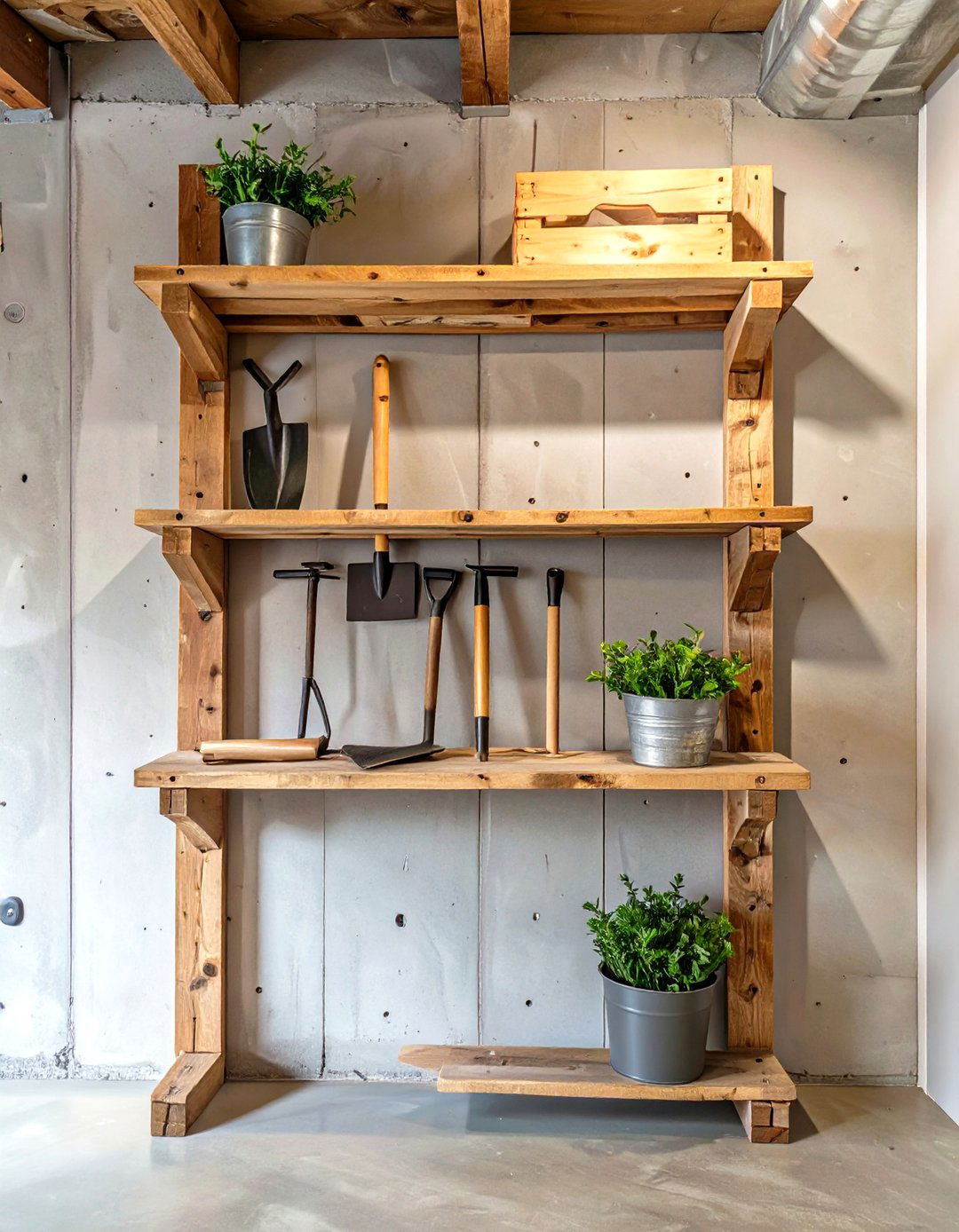
In a basement where floor space might be shared, maximizing vertical storage is key. Install tall, freestanding shelving units against a wall to house laundry baskets, bulk supplies, and backstock household items. Slim, industrial-style metal racks or sturdy wooden bookcases can hold a significant amount without a large footprint. By building upward, you keep the floor clear and everything organized in one designated zone. This strategy ensures that even a small corner of an unfinished basement can function as a highly efficient and well-stocked laundry center.
29. A Dedicated Clothes Hanging Rod
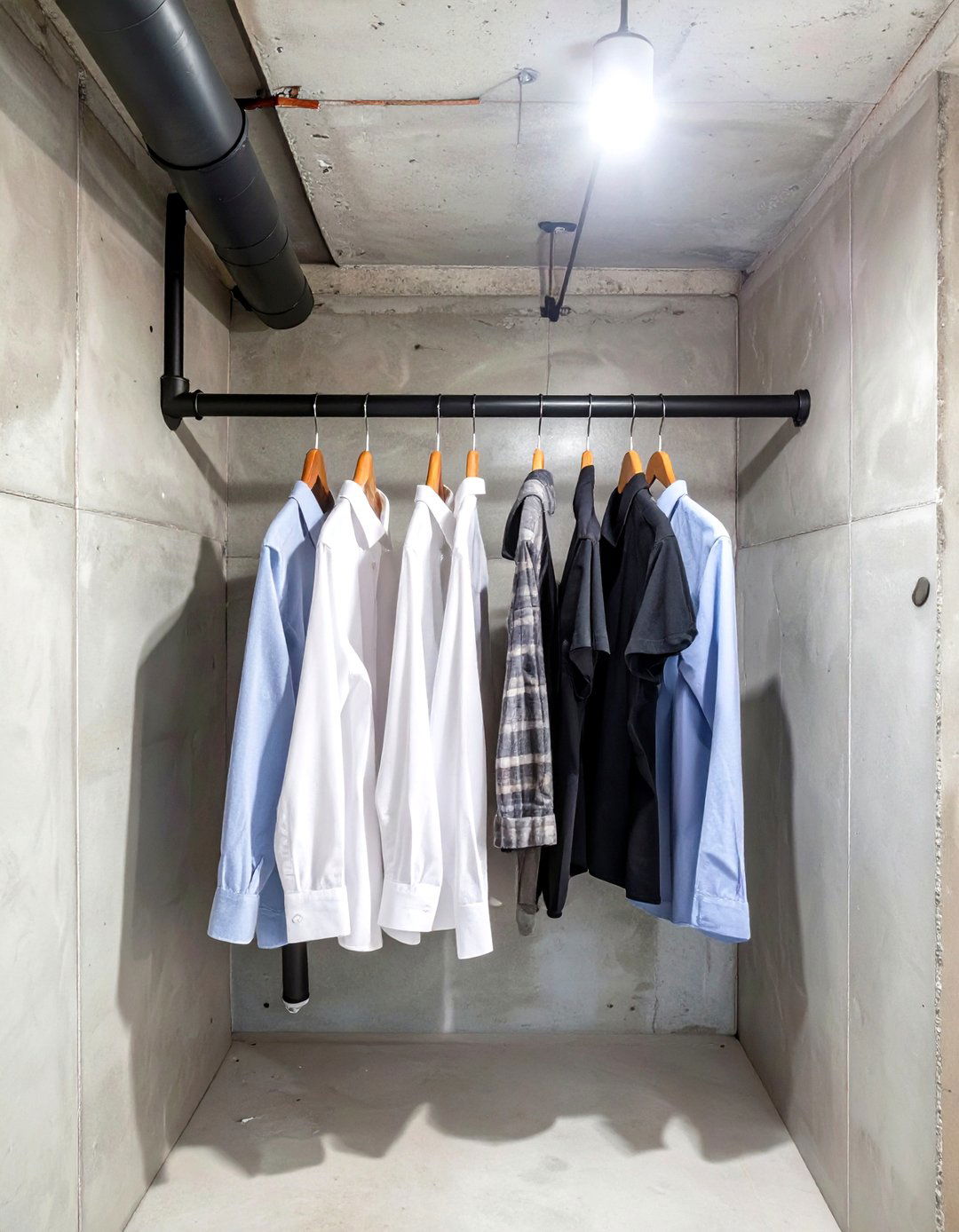
Install a simple rod for hanging clothes as they come out of the dryer or for air-drying items on hangers. You can mount a standard closet rod between two walls or install an industrial pipe rod underneath a shelf for a more integrated look. A ceiling-mounted rod is another excellent option that keeps floor space clear. This dedicated hanging area prevents wrinkles, simplifies the process of managing delicate garments, and keeps clothes off of doorknobs and furniture, making your entire laundry process more streamlined and organized.
30. Adding Low-Maintenance Artificial Plants
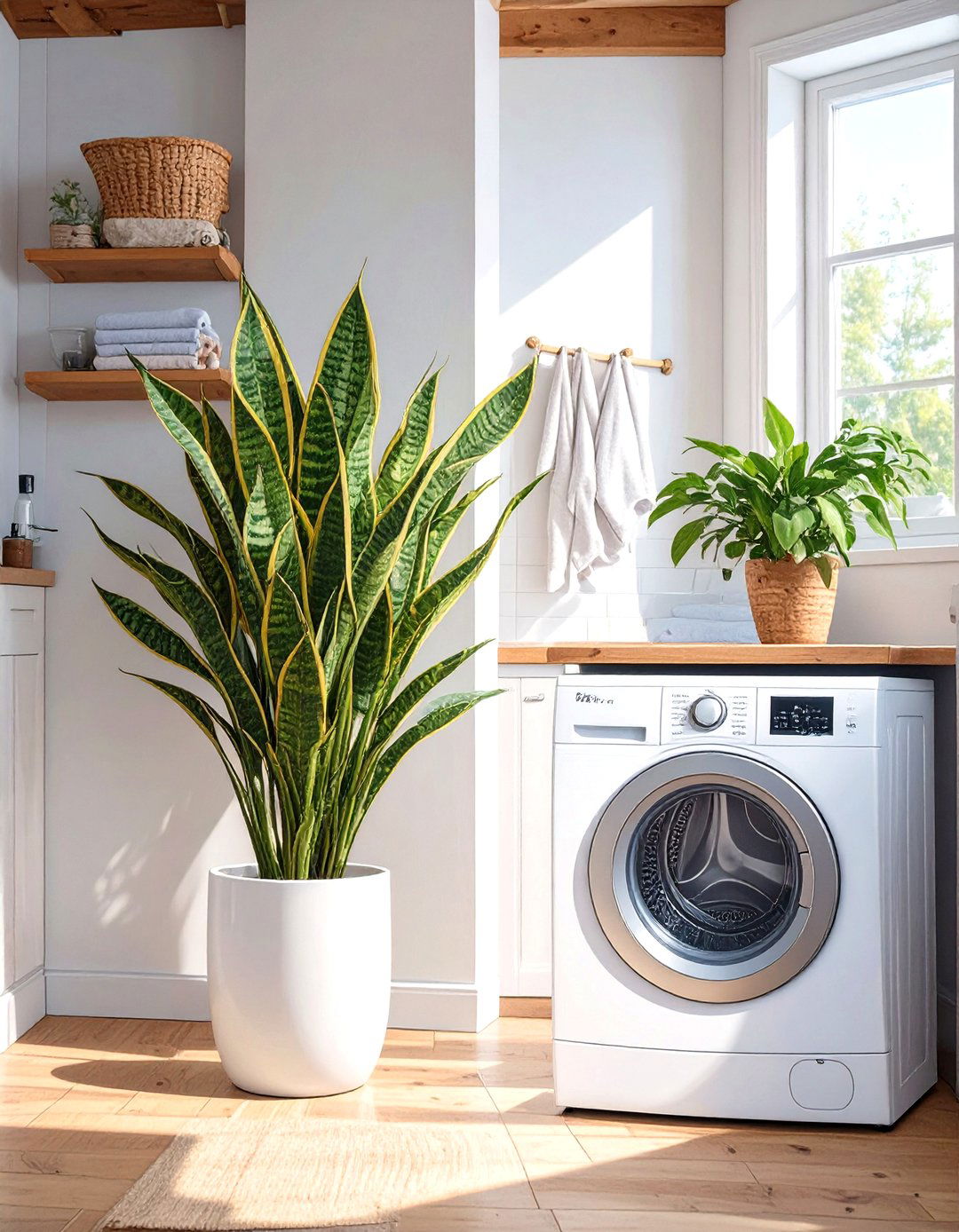
Bring a touch of life and color to the windowless environment of a basement laundry room with high-quality artificial plants. A faux fiddle leaf fig in a corner, a trailing ivy on a high shelf, or a small succulent on your folding counter can instantly soften the industrial space. Greenery adds a refreshing, organic element that makes the room feel more inviting and less sterile. Since you don’t have to worry about sunlight or watering, it’s a zero-maintenance way to enhance the atmosphere and make your laundry chores a bit more cheerful.
Conclusion:
Transforming an unfinished basement laundry room is an achievable goal that blends practicality with personal style. By focusing on key elements like painting floors and ceilings, installing smart storage like pipe shelves or pegboards, and improving lighting, you can create a highly functional and pleasant space. Simple additions such as rugs, curtains to hide utilities, and a proper folding counter make a significant impact on daily use. These ideas demonstrate that you don't need a full renovation to build a clean, organized, and efficient laundry area that makes chores feel less like a burden.

Related posts:


Leave a Reply