
A rustic farmhouse kitchen island serves as both a functional workspace and the heartwarming centerpiece of your home. Combining natural materials, weathered finishes, and practical design, these islands bring a sense of timeless comfort and provincial charm to any kitchen layout. From reclaimed wood creations to islands with integrated seating and smart storage, there is a design to suit every need and aesthetic preference. This collection explores thirty distinct ideas to inspire you, showcasing how to blend traditional character with modern convenience, creating a welcoming hub for cooking, dining, and gathering with loved ones.
1. Reclaimed Barnwood Farmhouse Kitchen Island
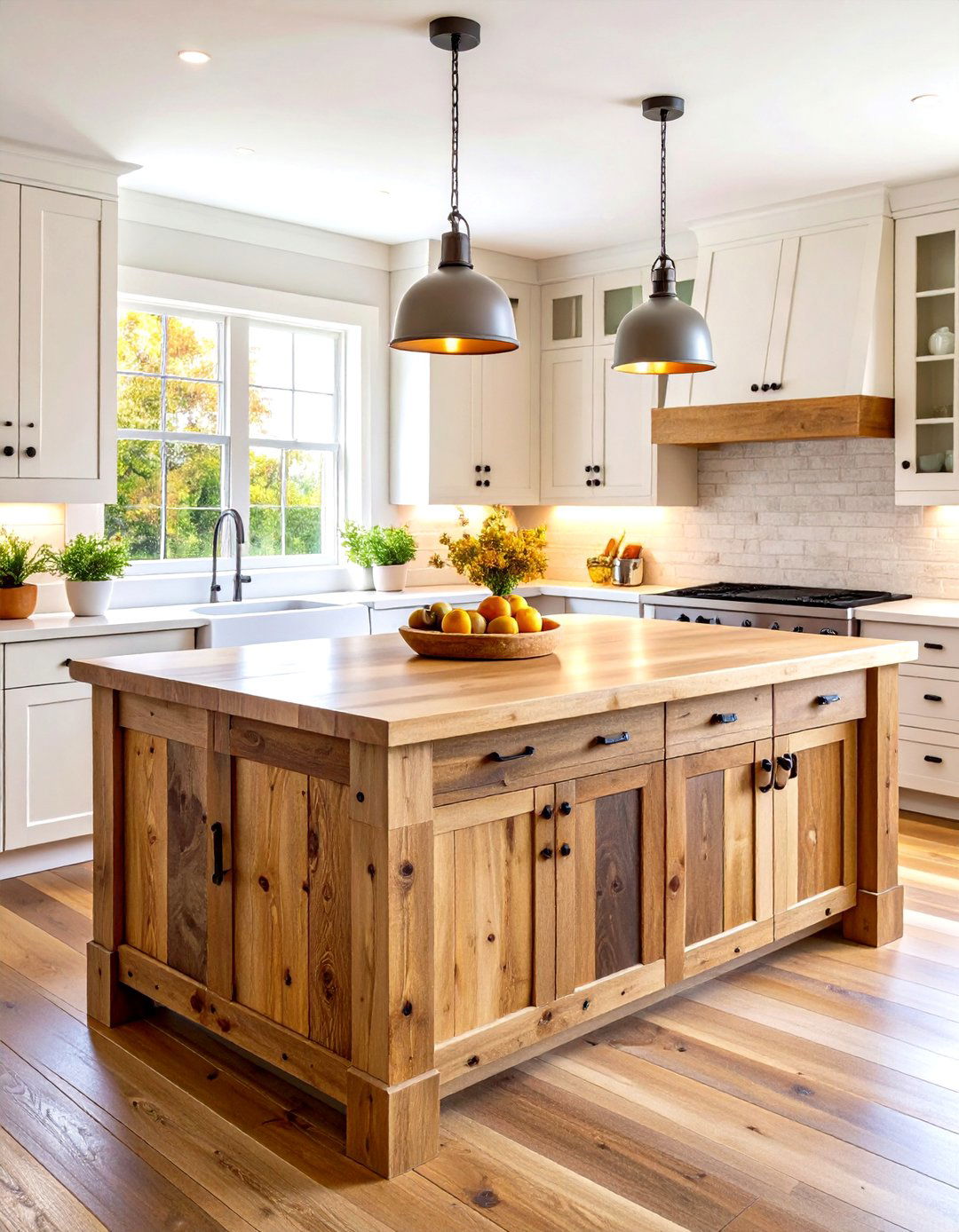
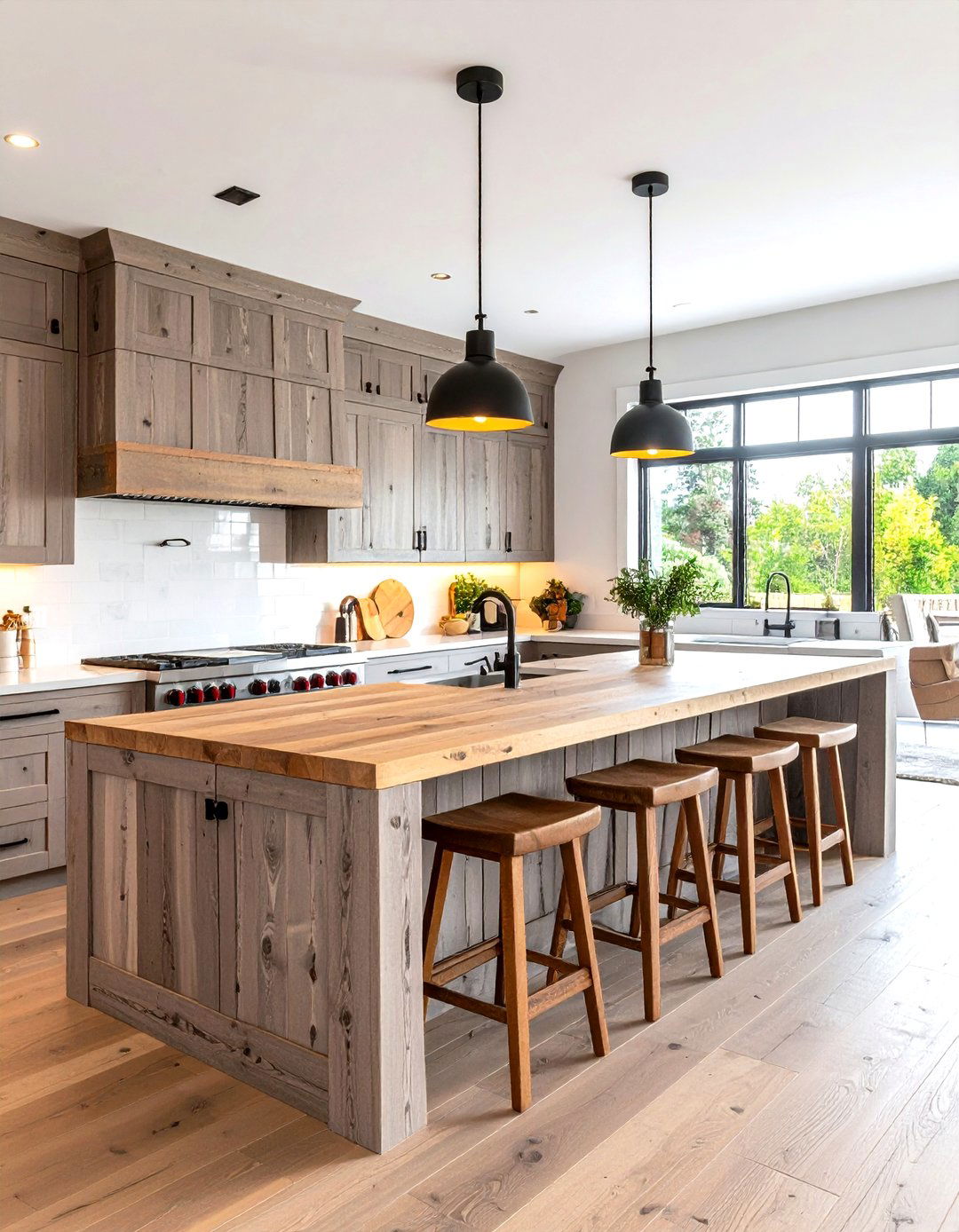
This design focuses on authenticity by using wood salvaged from old barns. A reclaimed barnwood farmhouse kitchen island brings a rich history and unique character to your space, with every knot, nail hole, and saw mark telling a story. The wood's deep, warm tones and naturally distressed texture create an instant focal point that feels both rugged and inviting. To complete the look, pair it with a simple quartz or butcher block countertop. This approach not only provides a sturdy and expansive surface for meal preparation but also champions sustainability by giving old materials a beautiful new purpose in the heart of your home.
2. Farmhouse Kitchen Island with a Butcher Block Top
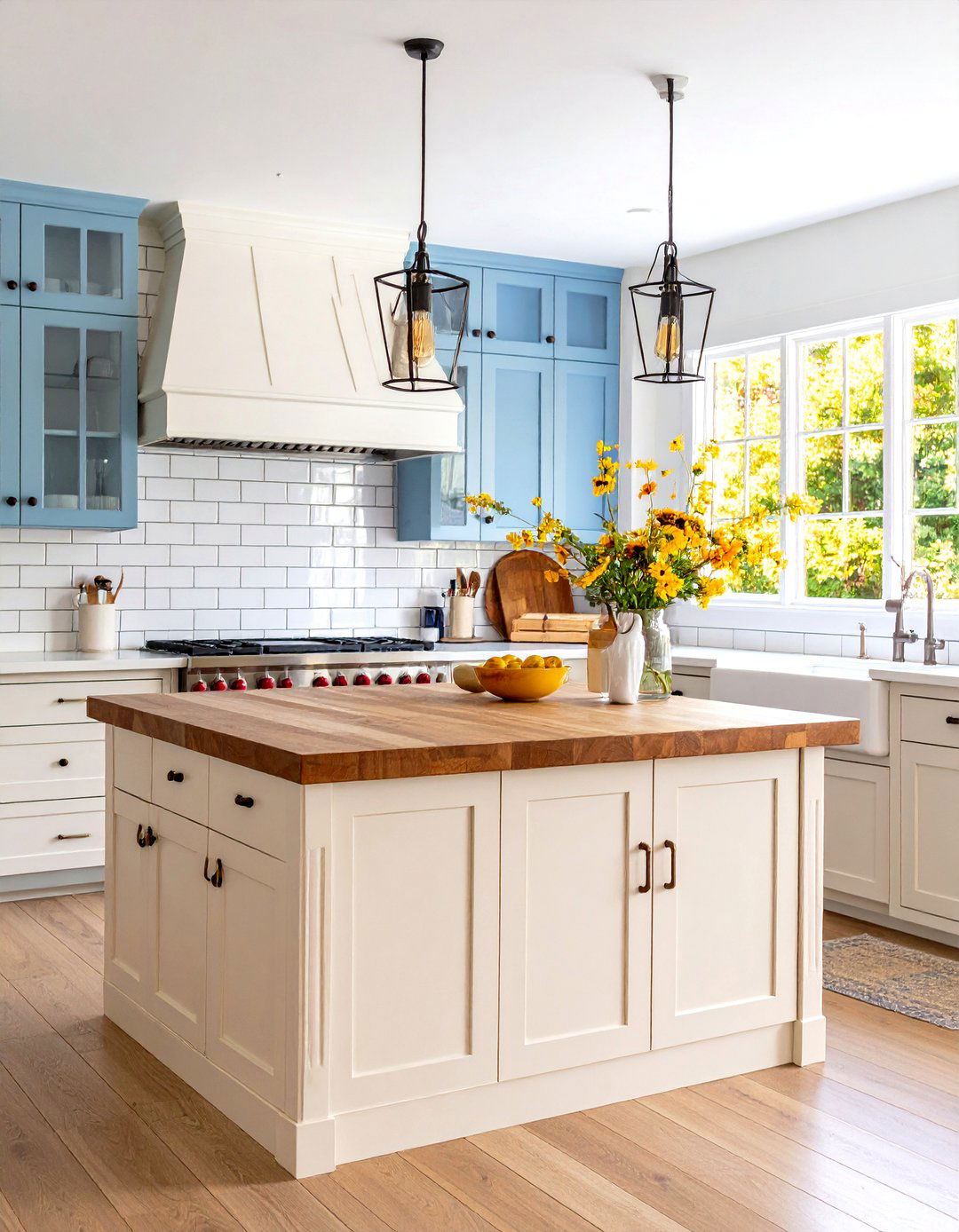
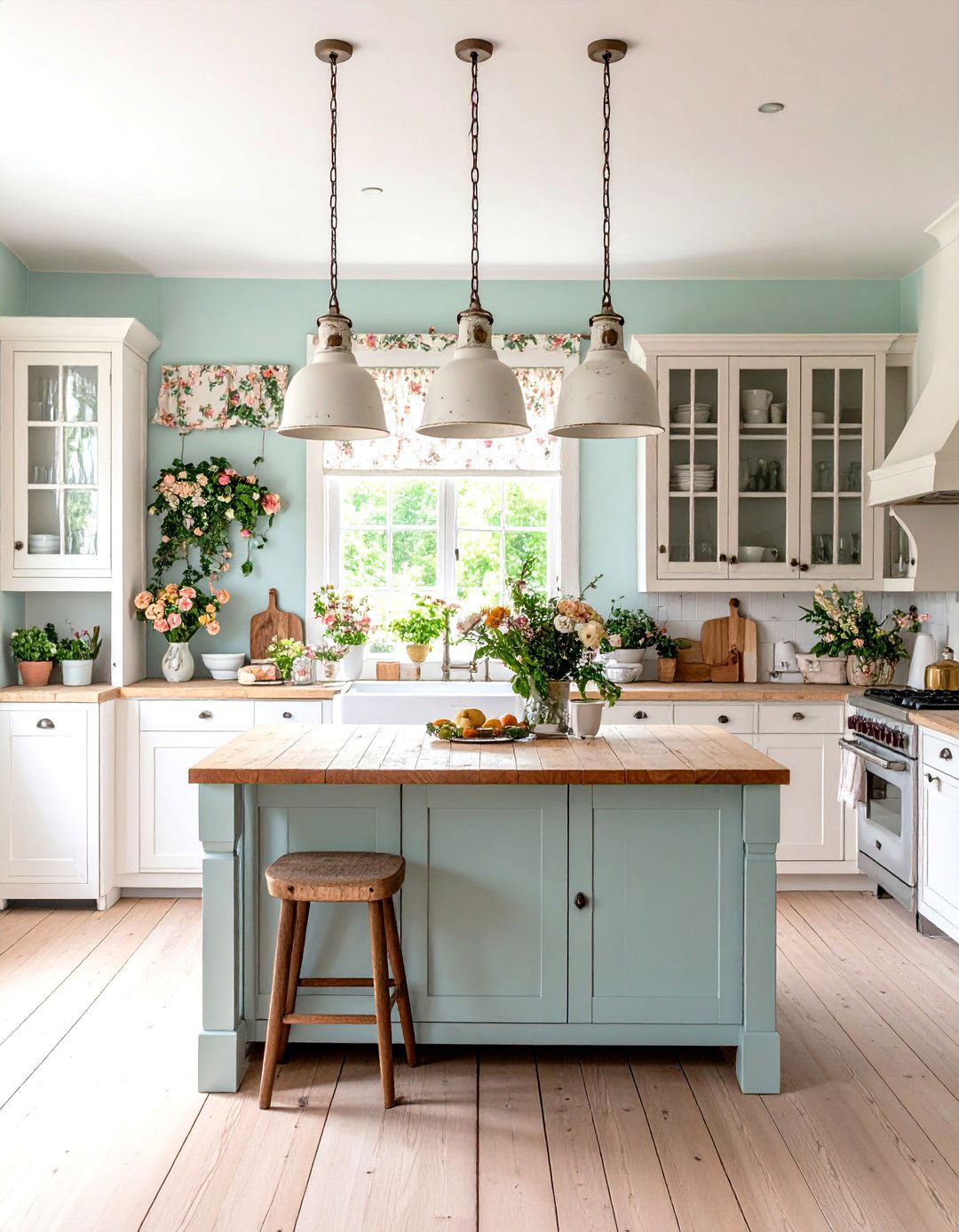
For a classic and highly functional choice, a farmhouse kitchen island with a butcher block top is unbeatable. The natural wood surface is perfect for chopping vegetables and preparing meals, developing a rich patina over time that enhances its rustic appeal. Often constructed with a painted base in a contrasting color like creamy white, sage green, or charcoal gray, this style provides a timeless look. The combination of the warm, durable wood top and the painted finish creates a beautiful balance between utility and cottage-inspired aesthetics, making it a practical and charming addition to any farmhouse kitchen.
3. Two-Tiered Farmhouse Kitchen Island
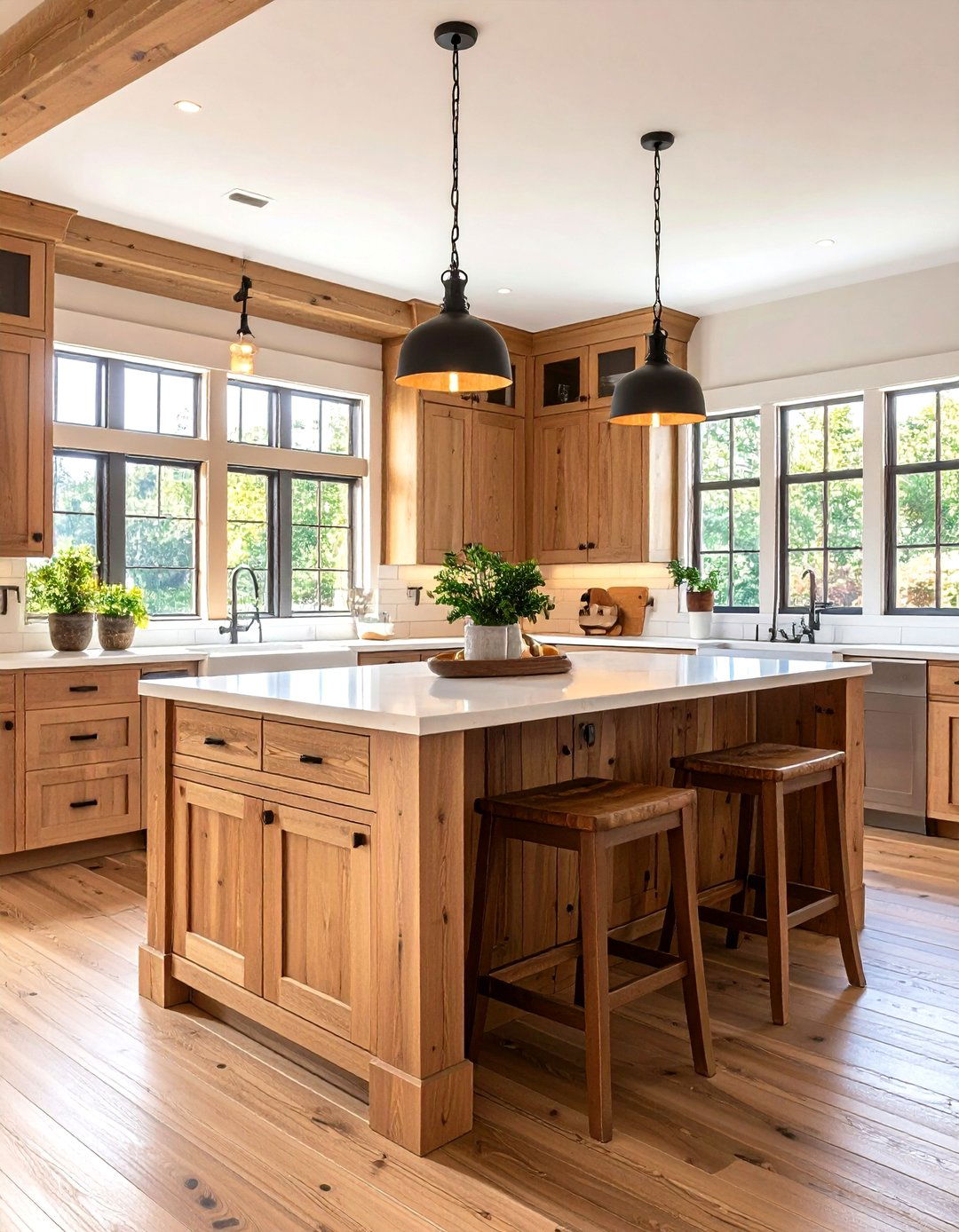
A two-tiered farmhouse kitchen island offers exceptional versatility by creating distinct zones for different activities. The lower tier typically serves as the primary food prep area, providing ample workspace at a comfortable height. The raised upper tier, often designed as a breakfast bar, is perfect for casual dining, morning coffee, or for guests to sit and chat while you cook. This split-level design not only adds visual interest and dimension but also helps to neatly separate cooking from socializing. Finished in distressed wood or a classic two-tone paint, it enhances functionality while maintaining a cozy, rustic atmosphere in your kitchen.
4. Farmhouse Kitchen Island with Integrated Seating
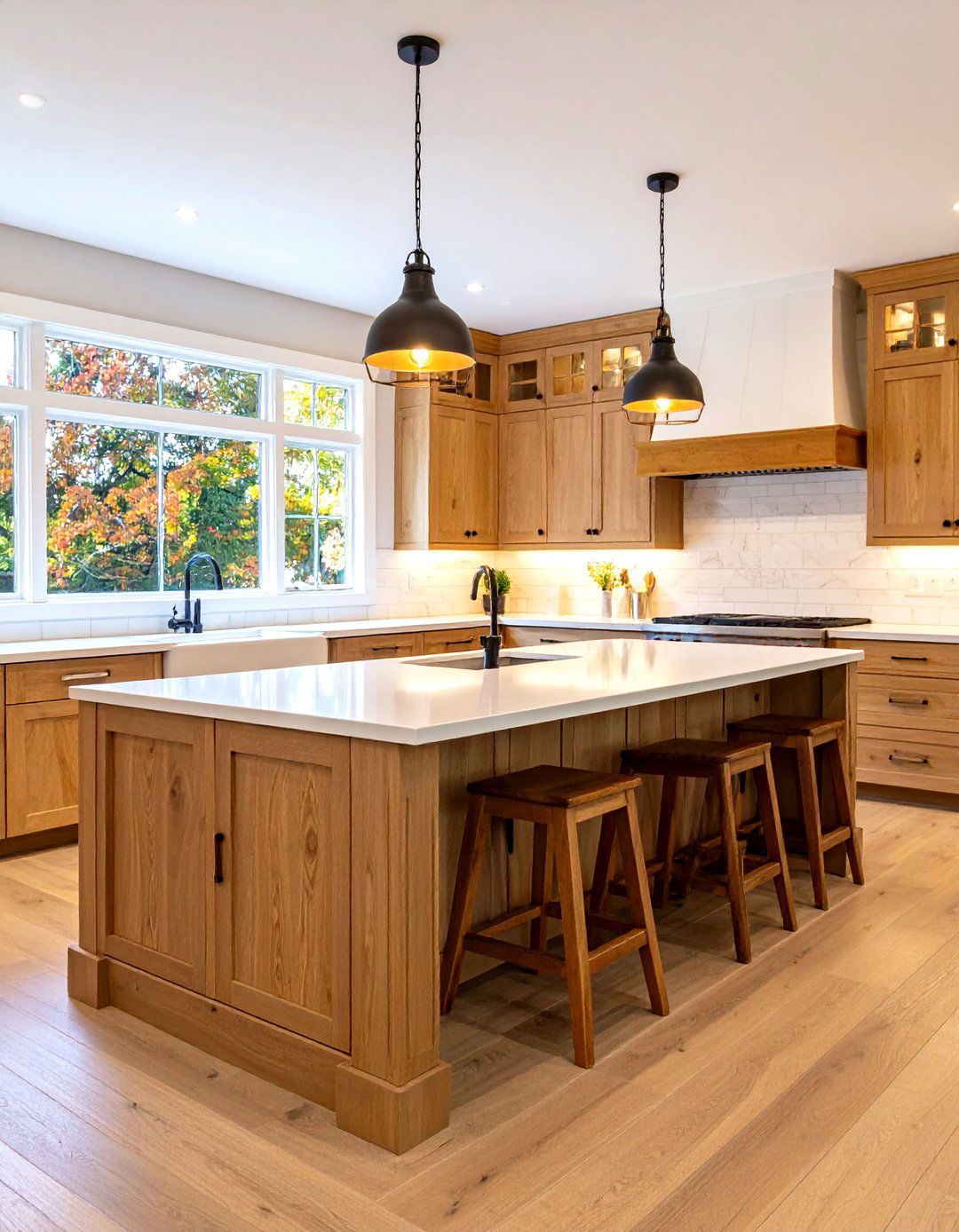
To create a welcoming and social hub, a farmhouse kitchen island with integrated seating is an ideal solution. This design extends the countertop to create an overhang, allowing space for stools to be tucked neatly underneath. It transforms the island from a purely functional workspace into a casual dining spot for quick meals or a place for kids to do homework. Whether it’s a long bench on one side or a few classic wooden stools, incorporating seating invites family and friends to gather, making the kitchen the true heart of the home while maximizing space and encouraging interaction.
5. Open Shelving Farmhouse Kitchen Island
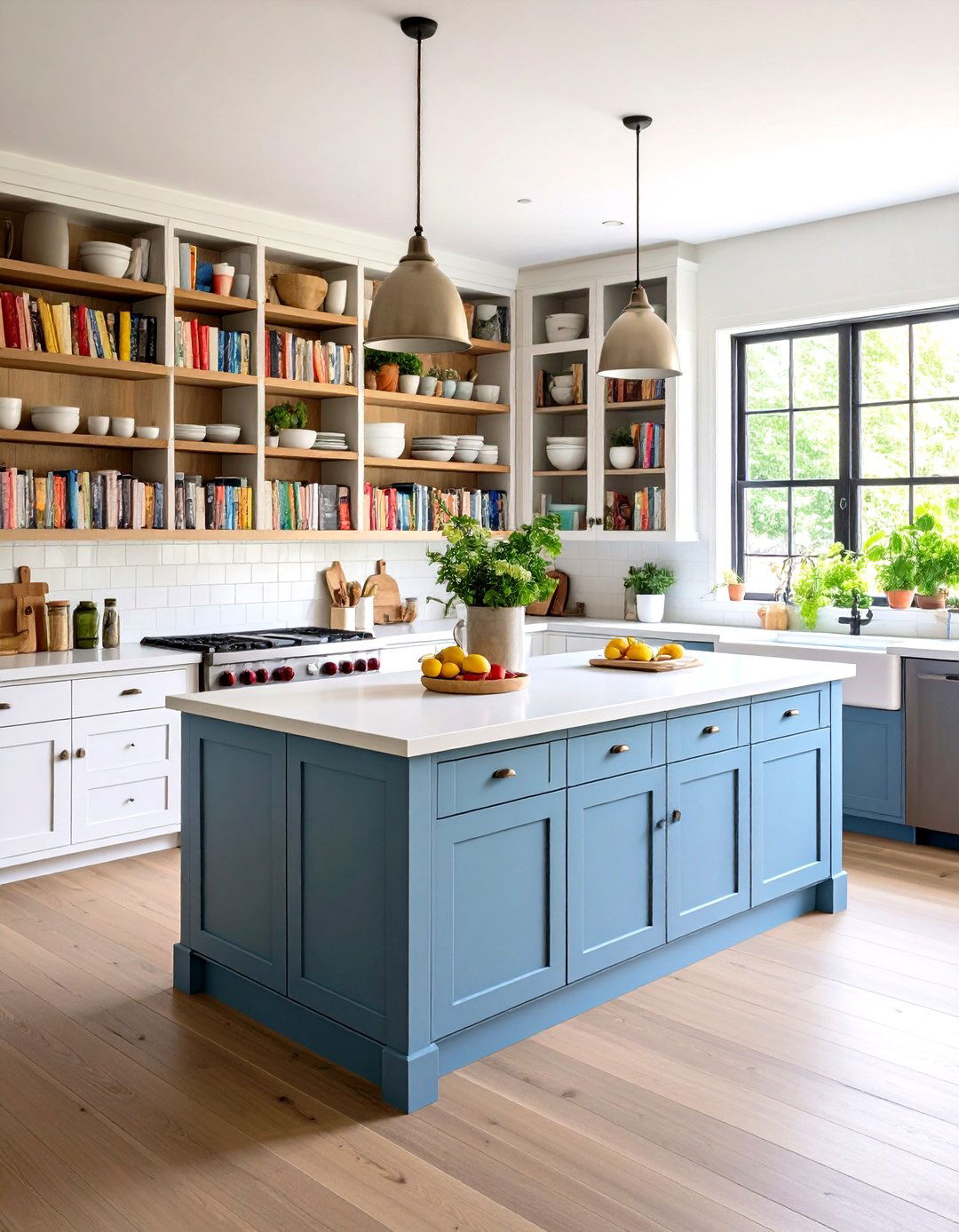
An open shelving farmhouse kitchen island beautifully blends storage and display. Instead of traditional closed cabinets, this design features exposed shelves, perfect for showcasing your favorite cookbooks, vintage mixing bowls, or neatly organized baskets. This approach creates a light, airy feel, preventing the island from appearing too bulky and making essentials easily accessible. The open shelves contribute to the relaxed, lived-in charm of the farmhouse aesthetic, allowing you to personalize the space with decorative and functional items. Finished in weathered wood or painted a soft, neutral shade, it adds both practicality and visual appeal.
6. Farmhouse Kitchen Island with a Built-in Sink
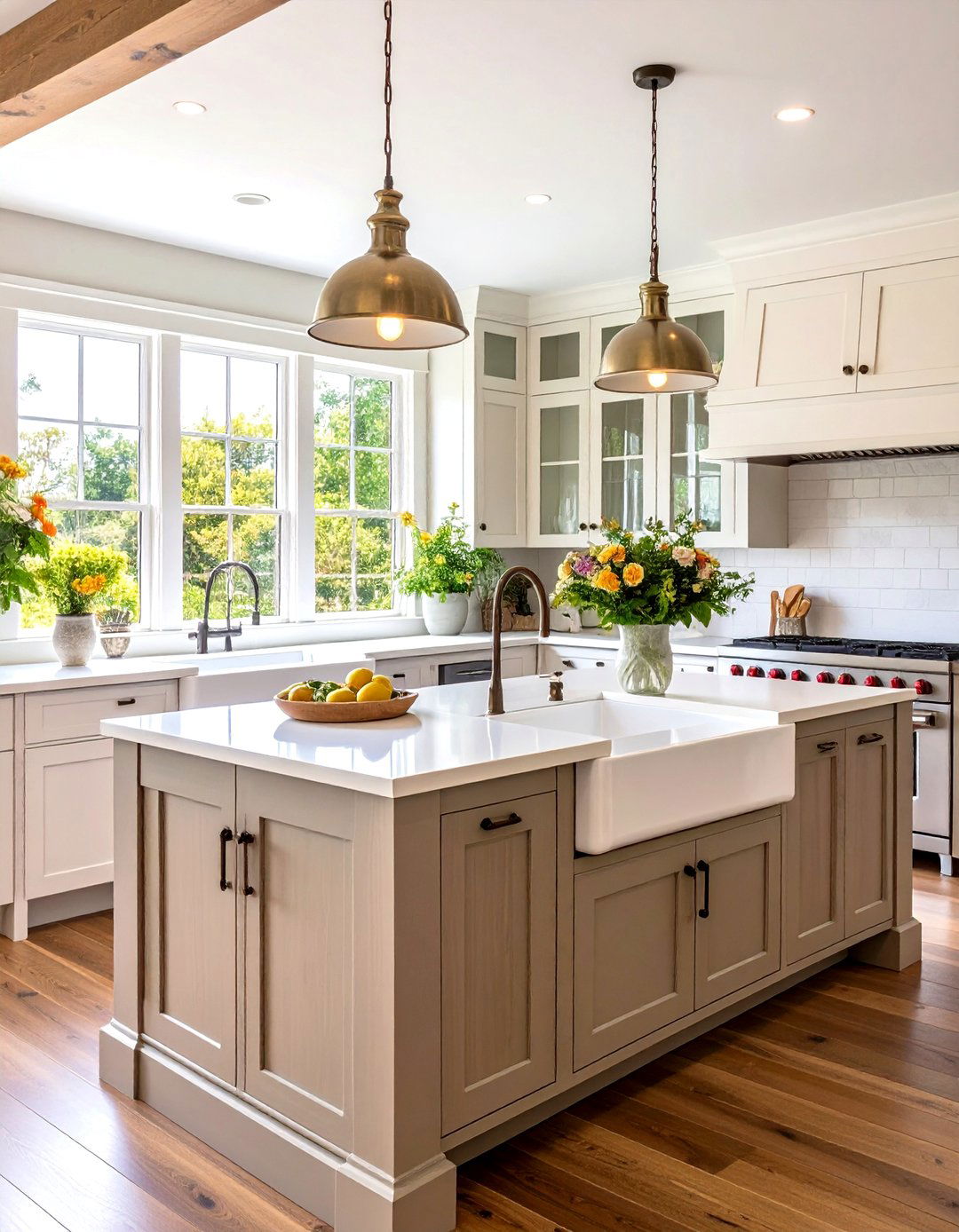
Integrating a sink into your farmhouse kitchen island greatly enhances workflow and efficiency. A popular choice is a classic apron-front or farmhouse sink, which perfectly complements the rustic style with its deep basin and exposed front. Placing the sink in the island creates a highly functional work triangle, centralizing tasks like washing vegetables and filling pots. This design is especially useful in larger kitchens, as it frees up counter space along the walls. Paired with a vintage-style bridge faucet, a built-in sink transforms the island into a hardworking station that is both practical and stylistically coherent.
7. Mobile Farmhouse Kitchen Island on Casters
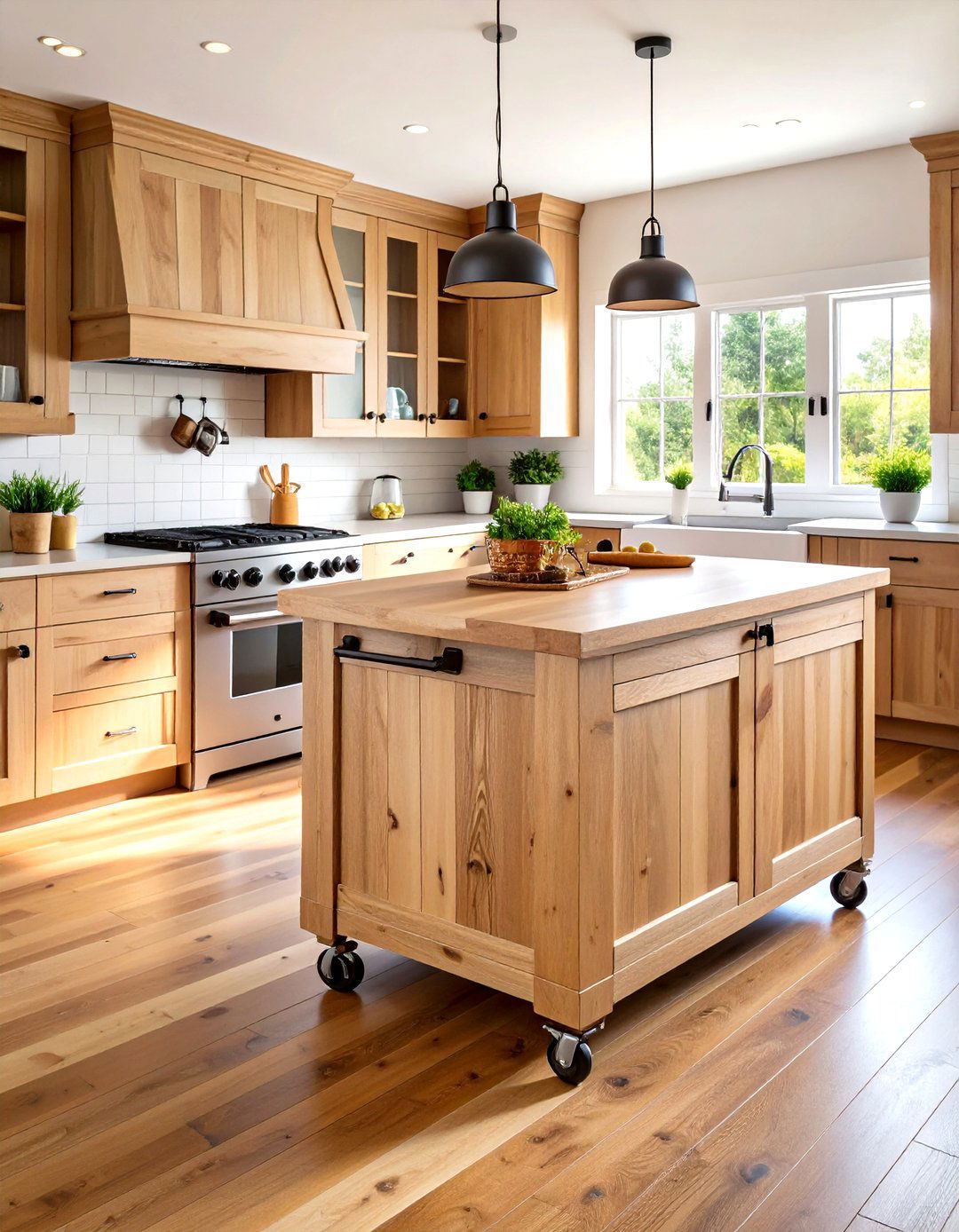
For those who value flexibility, a mobile farmhouse kitchen island on casters is the perfect addition. This portable design allows you to easily reconfigure your kitchen layout to suit your needs, whether you require more floor space for a gathering or want to move your prep station closer to the stove. Often smaller in scale, these islands can still offer ample storage with shelves or drawers. Built from rustic wood and fitted with industrial-style locking casters, a mobile island combines farmhouse charm with modern adaptability, providing a versatile workspace that can be moved wherever it’s needed most.
8. Farmhouse Kitchen Island with X-Brace Details

Adding X-brace details to the sides of a farmhouse kitchen island introduces a classic element of rustic architecture. This simple yet striking feature, often seen on barn doors, brings a touch of pastoral charm and structural beauty to the design. The "X" motif can be left in a natural wood finish to contrast with a painted base or painted the same color for a more subtle, textural effect. This stylistic detail enhances the island's visual appeal without overwhelming the space, reinforcing the sturdy, handcrafted feel that is central to the farmhouse aesthetic. It’s a timeless design that adds character and a bespoke touch.
9. Contrasting Color Farmhouse Kitchen Island
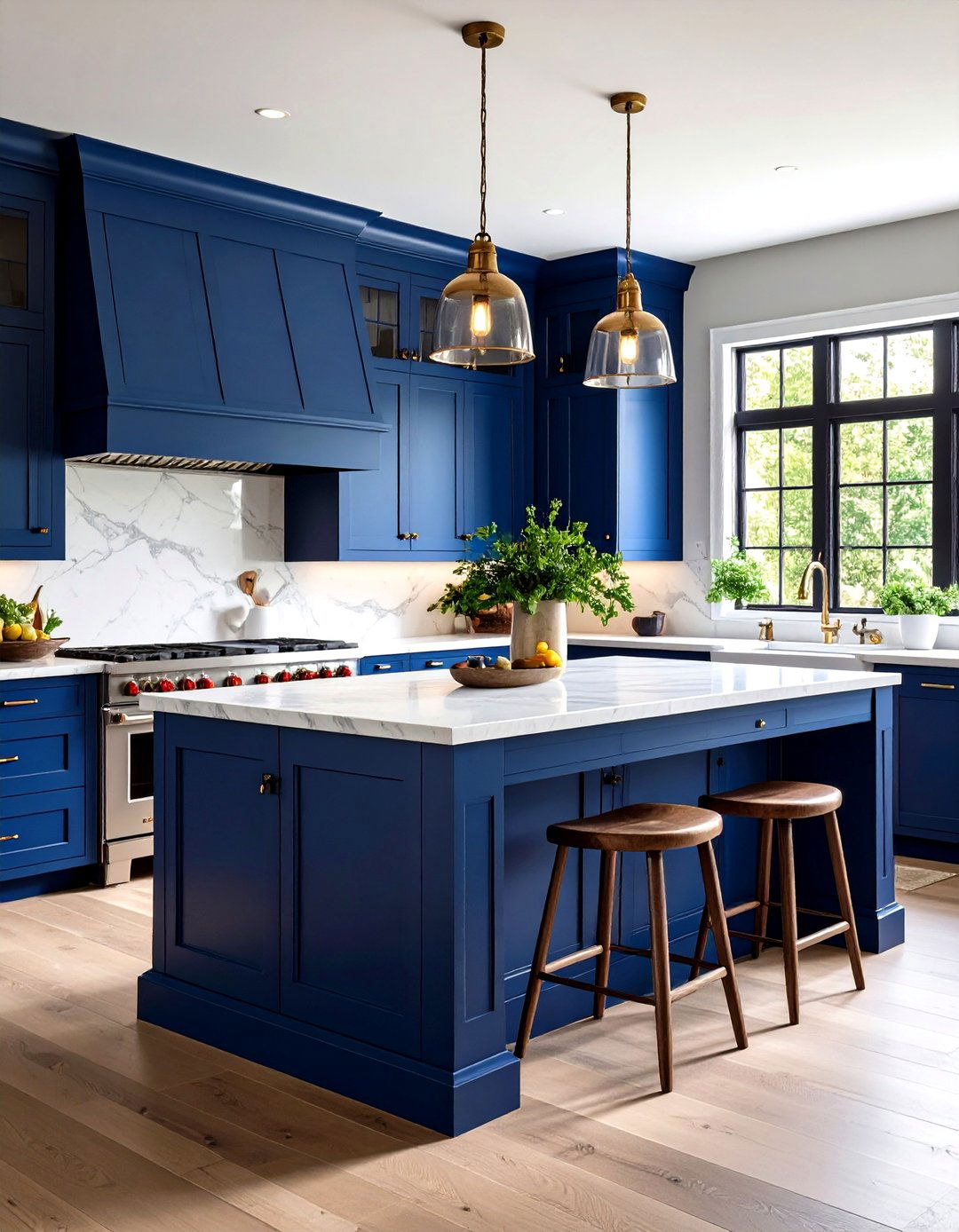
A farmhouse kitchen island painted in a contrasting color can serve as a stunning focal point. While the surrounding cabinetry might be a traditional white or neutral shade, the island can be finished in a bold hue like navy blue, forest green, or charcoal gray. This creates a dramatic and sophisticated look, adding depth and personality to the room. The contrasting color helps to anchor the space and define the island as a central feature. Topped with a neutral countertop like white marble or light wood, this design choice makes a memorable statement while remaining firmly rooted in classic farmhouse style.

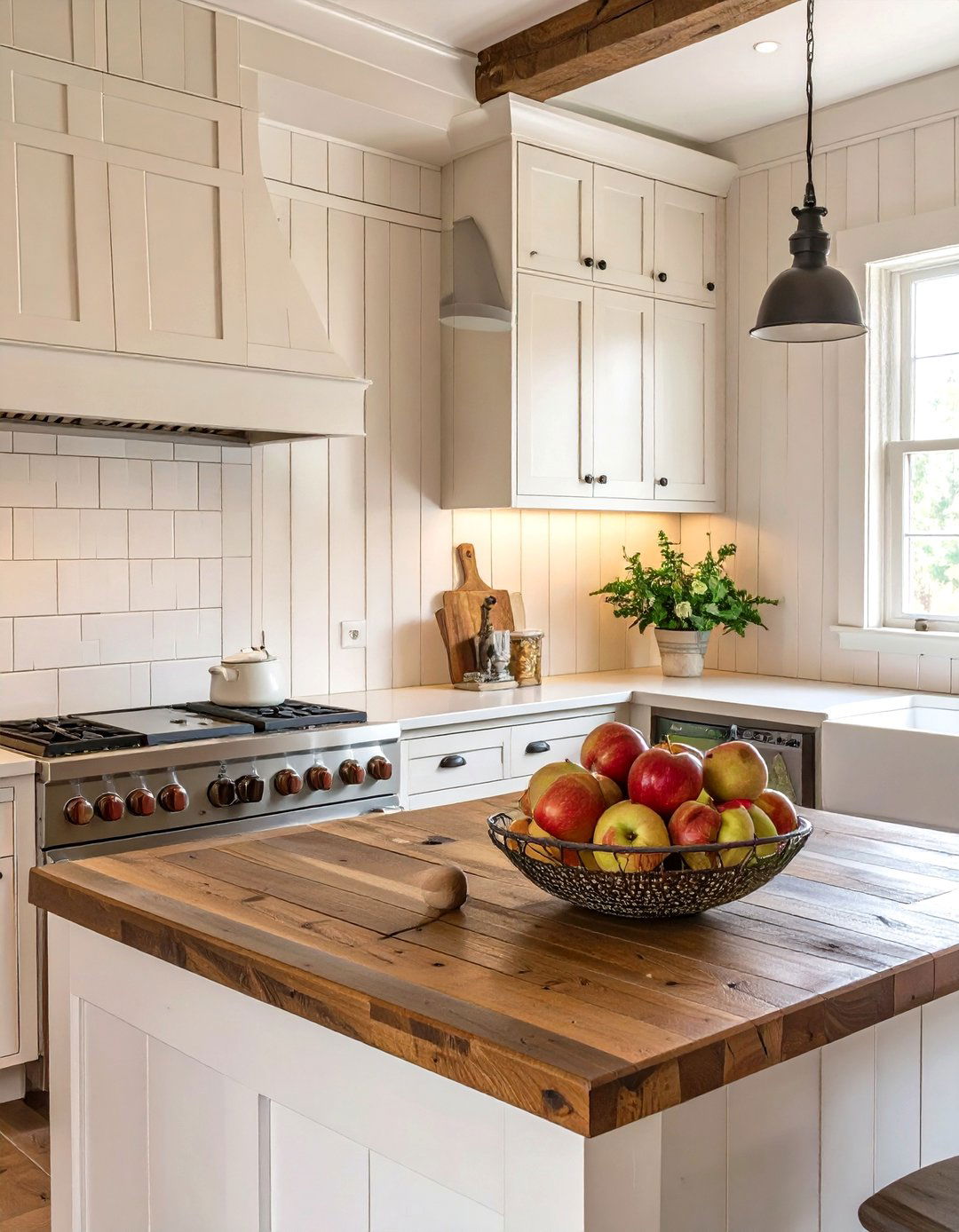
10. Farmhouse Kitchen Island from a Repurposed Table
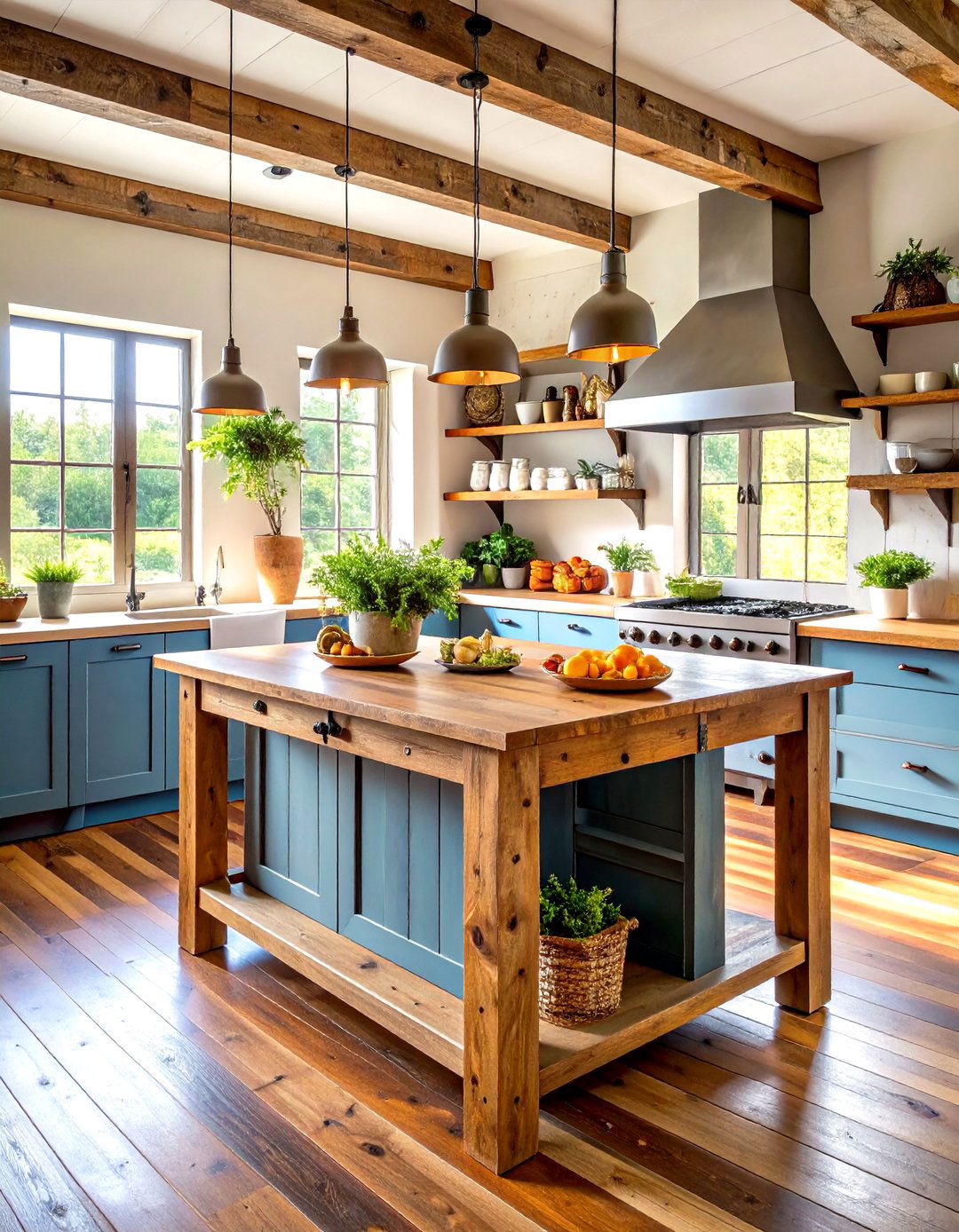
Transforming a repurposed table into a farmhouse kitchen island is a creative and budget-friendly idea. An old wooden dining table, console table, or even a sturdy workbench can be given a new life as a unique kitchen centerpiece. You can leave its original weathered finish for an authentic, time-worn look or give it a fresh coat of chalk paint. This approach adds a genuine piece of history and character to your kitchen, creating an island that is truly one-of-a-kind. Its open-leg design helps maintain a sense of space, making it an excellent choice for smaller kitchens.
11. Farmhouse Kitchen Island with Corbel Accents
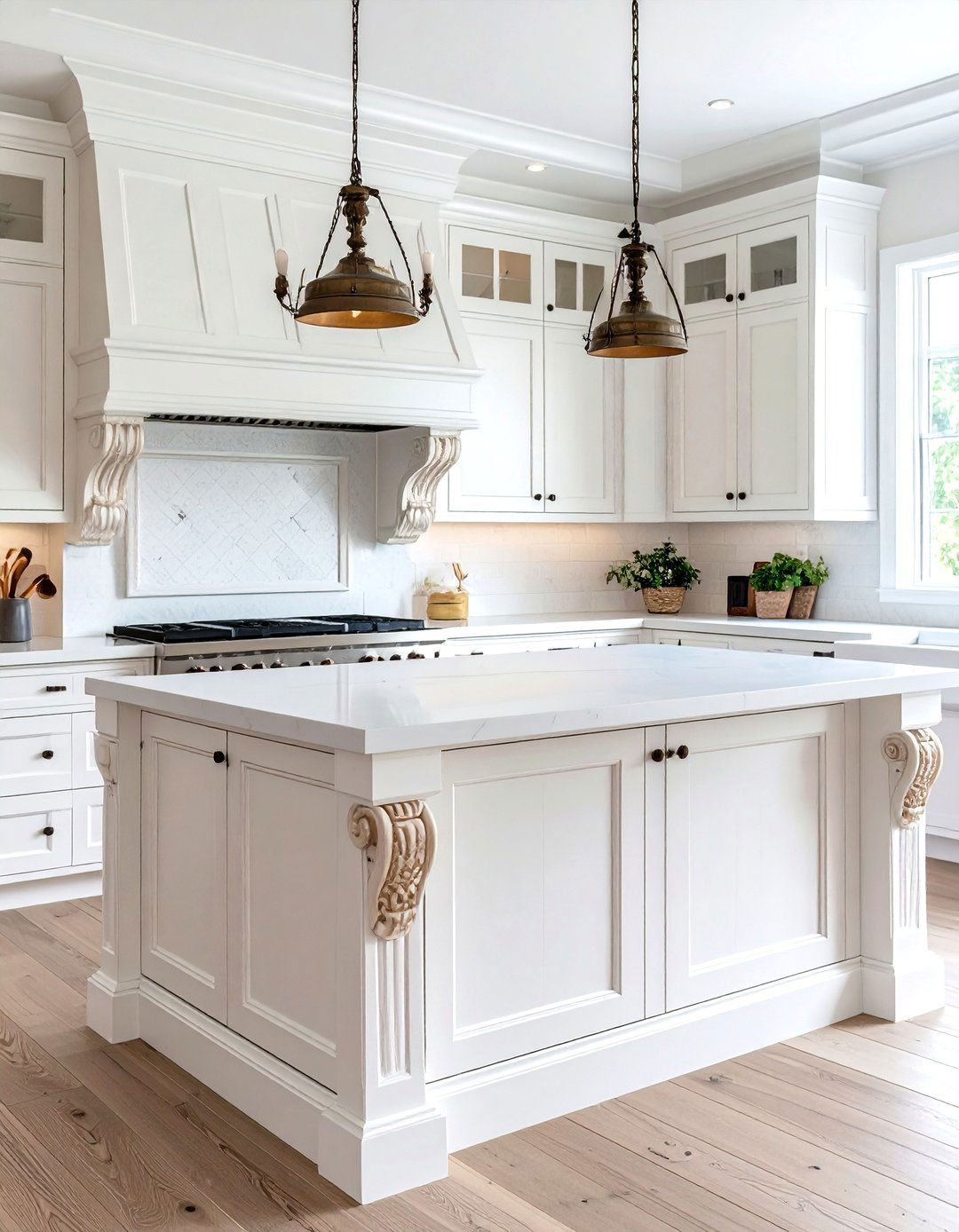
Incorporating decorative corbels beneath the countertop overhang of a farmhouse kitchen island adds an elegant, architectural touch. These carved wooden brackets provide both structural support for the breakfast bar and a significant stylistic element. Corbels can range from simple, chunky designs to more ornate, scrolled patterns, each contributing to the island's custom, handcrafted appearance. They evoke a sense of traditional craftsmanship and heritage, enhancing the rustic charm. Painted to match the island base or finished in a contrasting wood tone, corbels elevate the design from simple to sophisticated, adding a layer of classic detail.
12. Farmhouse Kitchen Island with Beadboard Paneling
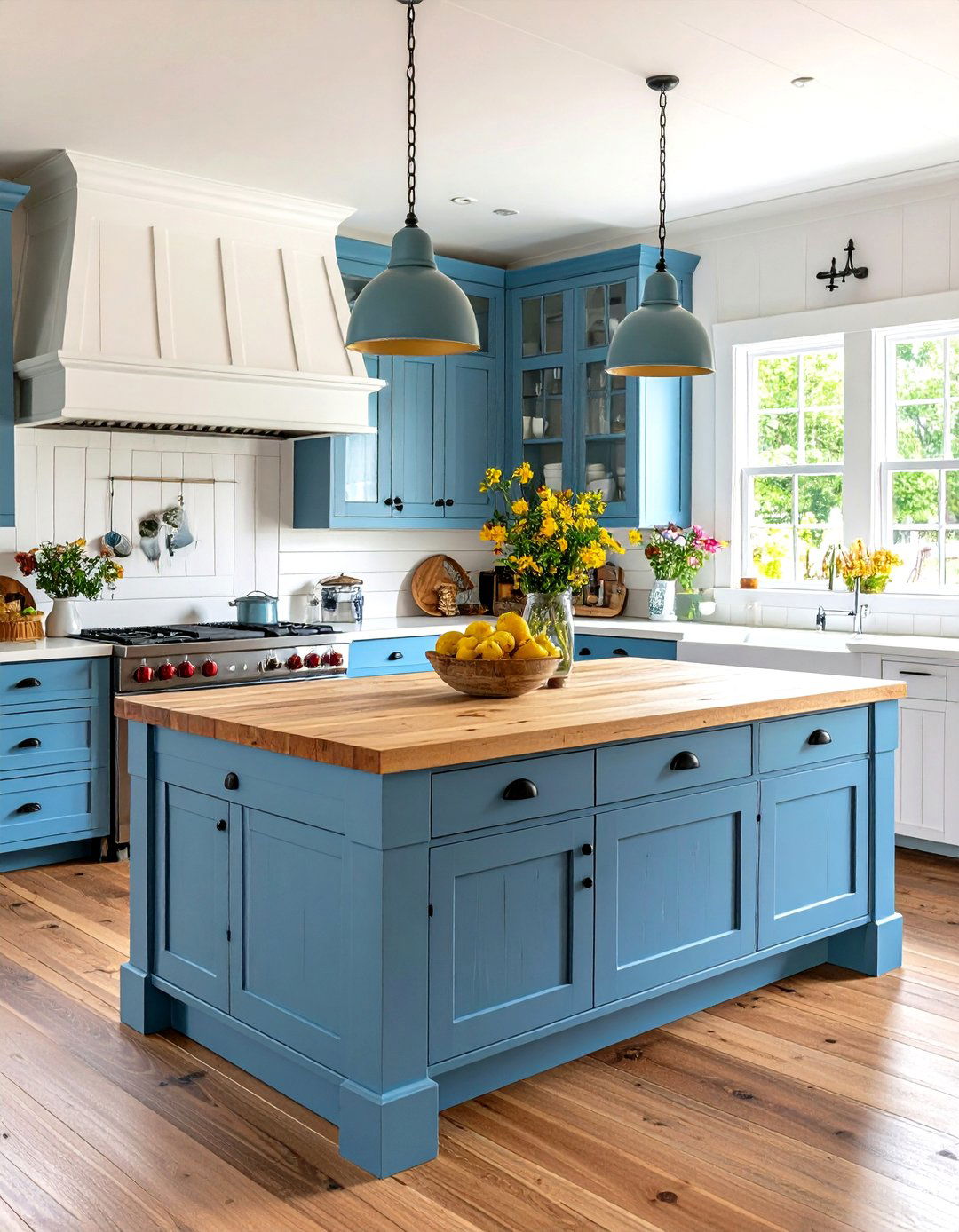
Using beadboard paneling on the sides of a farmhouse kitchen island is a classic way to add texture and cottage-inspired charm. The narrow vertical planks create subtle visual interest and a clean, traditional look that is quintessentially farmhouse. Typically painted in a soft white, cream, or pastel shade, beadboard enhances the island's cozy and welcoming feel. It’s a simple yet effective detail that complements other traditional elements like shaker-style cabinets and wooden countertops. This timeless finish adds a layer of handcrafted detail, making the island feel like a thoughtfully designed piece of custom furniture.
13. Minimalist Farmhouse Kitchen Island
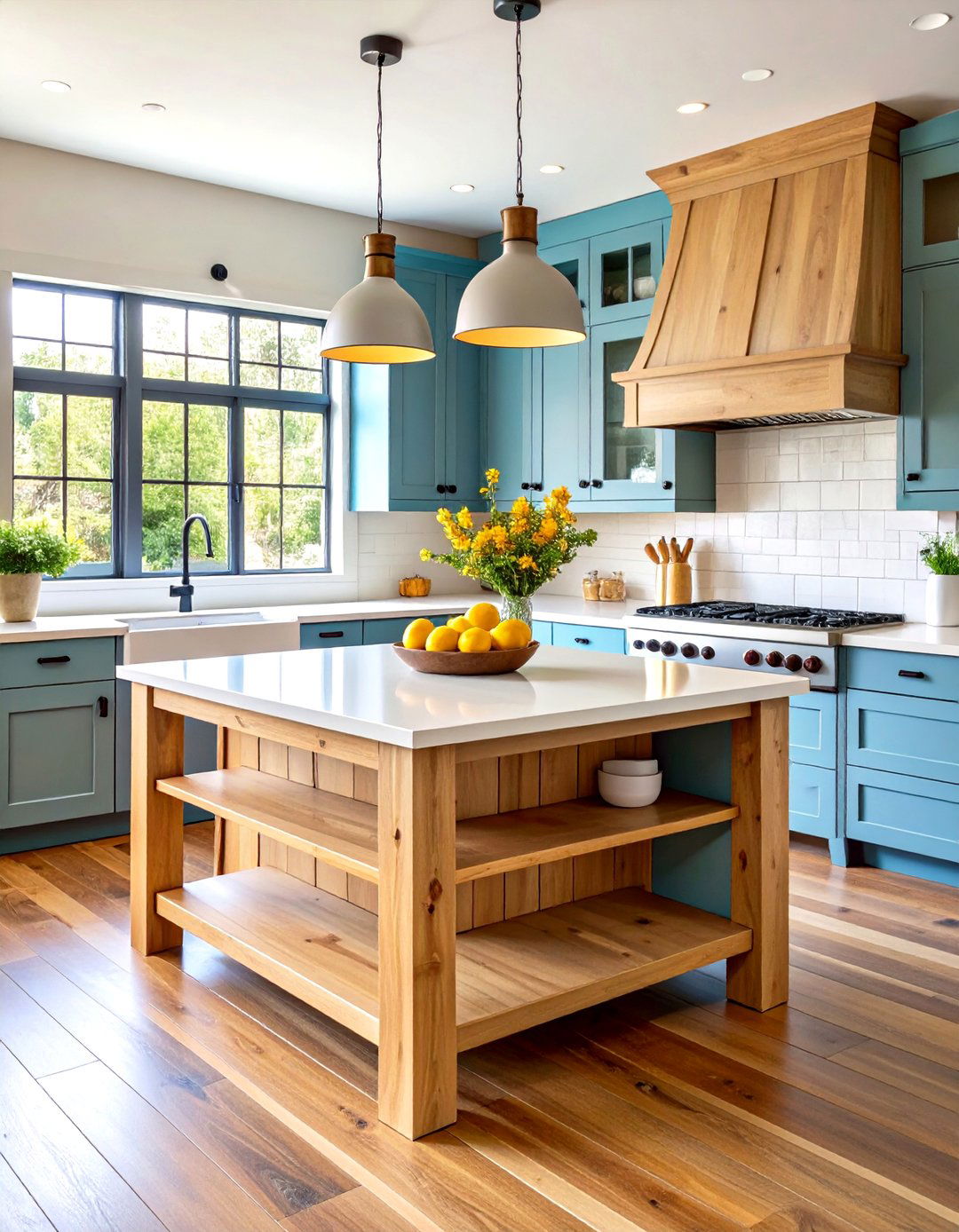
A minimalist farmhouse kitchen island proves that rustic style can also be clean and uncluttered. This design strips the island down to its essential form, focusing on simple lines, natural materials, and function. Think of a solid wood base with a waterfall countertop or a sleek, unadorned structure with a single open shelf. The beauty lies in its simplicity and the quality of the materials, such as a beautifully grained oak or a smooth, honed stone top. This approach offers a modern take on the farmhouse aesthetic, creating a serene and sophisticated centerpiece that feels both rustic and contemporary.
14. Farmhouse Kitchen Island with Wicker Basket Storage
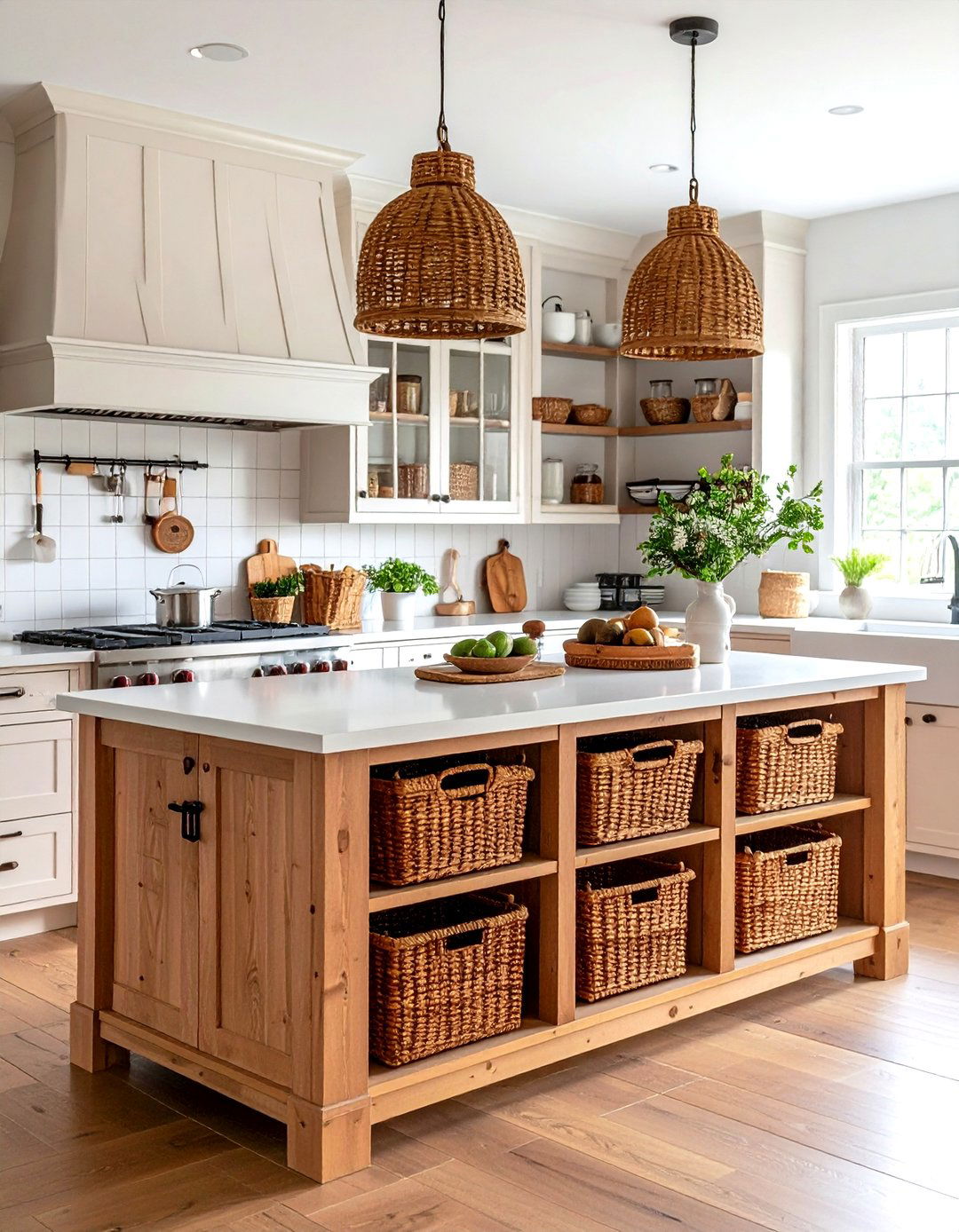
Integrating wicker or rattan baskets into a farmhouse kitchen island's open shelving is a perfect way to combine storage with natural texture. These baskets are ideal for stowing away everything from root vegetables and linens to kitchen gadgets, keeping clutter hidden while maintaining a relaxed, rustic look. The woven texture of the baskets adds warmth and contrasts beautifully with a painted or natural wood island base. This practical storage solution is easy to implement and enhances the cozy, organized, and lived-in feel that defines the farmhouse style, blending functionality with effortless country charm.
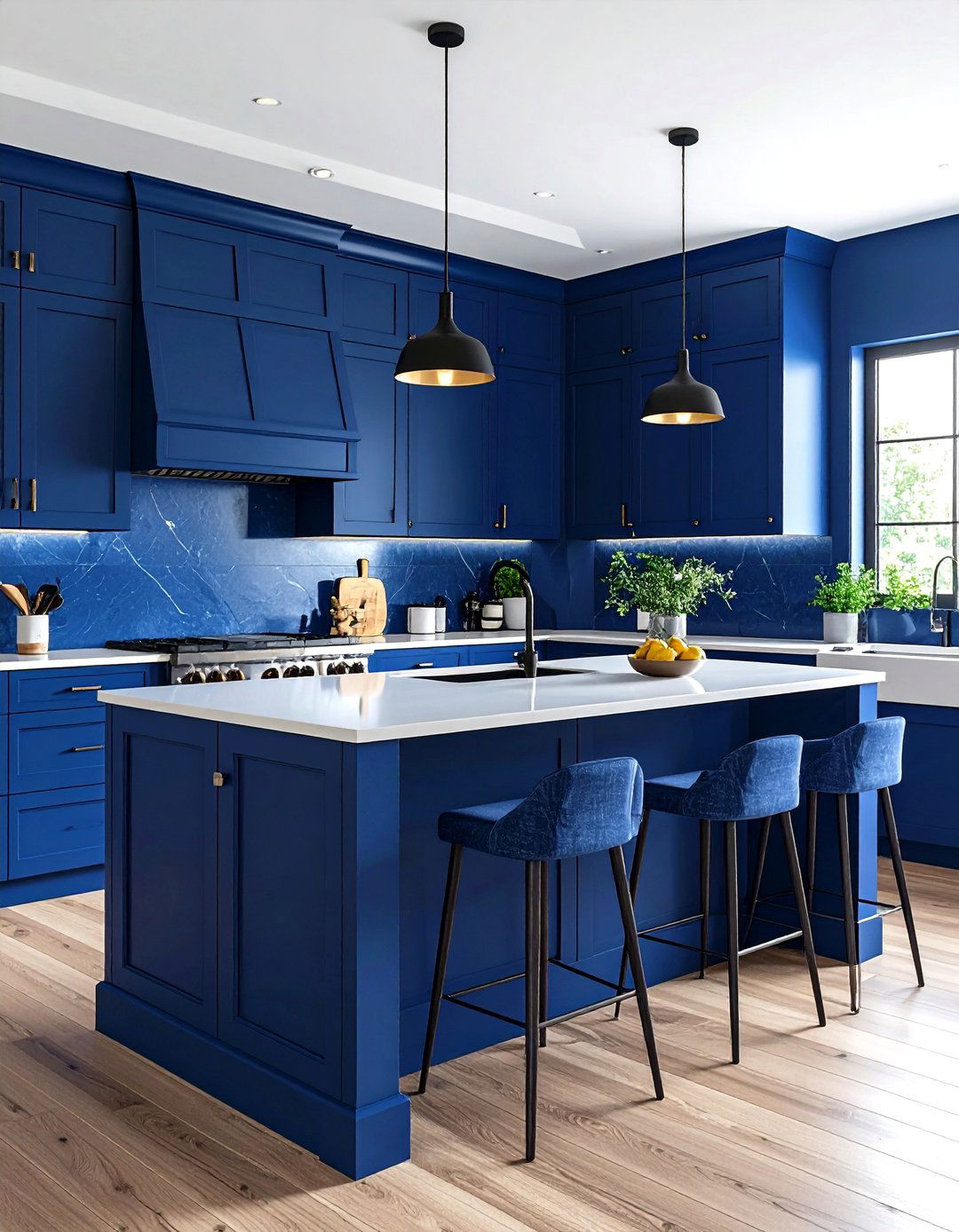

15. Extended Farmhouse Kitchen Island for Dining
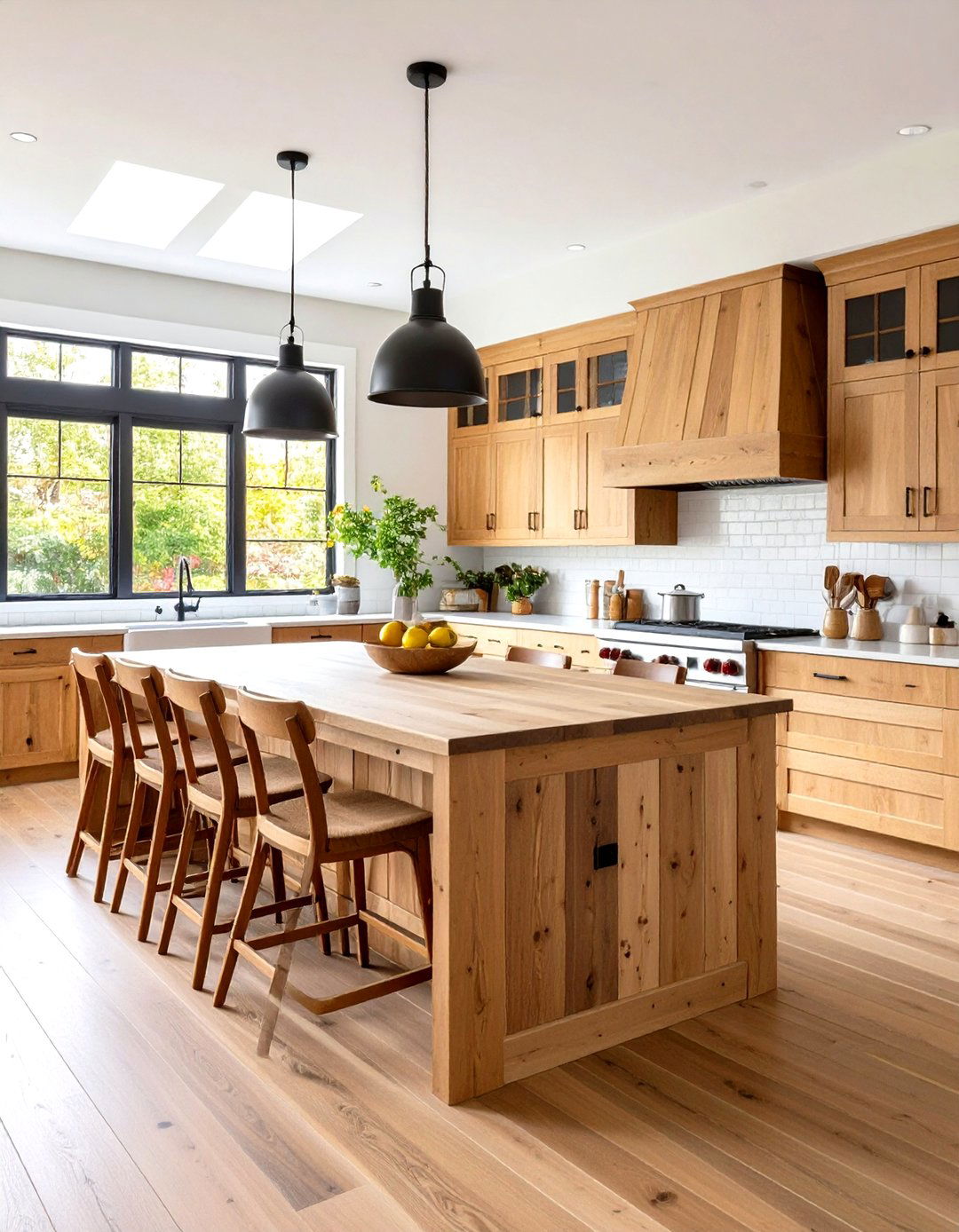
An extended farmhouse kitchen island that doubles as a dining table is a fantastic solution for open-concept living spaces. This design features a large, continuous surface that seamlessly transitions from a food prep area to a full-sized dining space, often at a single height. It encourages a communal atmosphere where cooking and dining happen together. Surrounded by comfortable chairs or a long bench, this oversized island becomes the primary gathering spot for family meals and entertaining. Made from sturdy, reclaimed wood, it embodies the spirit of a traditional farmhouse harvest table, updated for modern living.
16. Farmhouse Kitchen Island with a Concrete Countertop
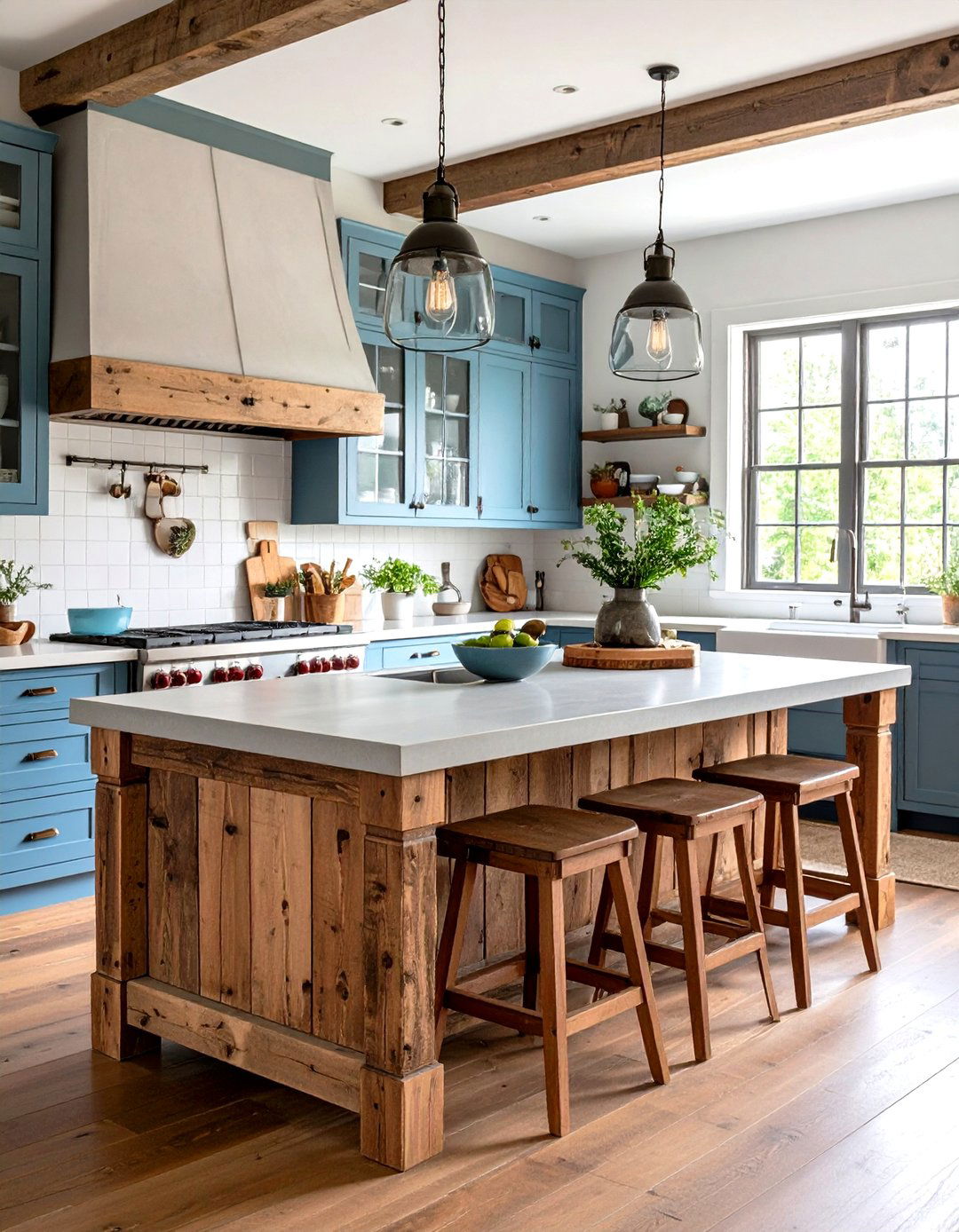
Pairing a rustic wooden base with a sleek concrete countertop creates a compelling blend of industrial and farmhouse styles. A concrete top offers a durable, heat-resistant surface with a unique, modern edge. Its cool, neutral tone and smooth or subtly textured finish provide a striking contrast to the warm, weathered wood of the island base. This combination feels both raw and refined, adding a contemporary twist to the traditional farmhouse aesthetic. The result is a statement piece that is as practical as it is stylish, perfect for a kitchen that embraces a mix of old and new design elements.
17. Farmhouse Kitchen Island with Turned Legs
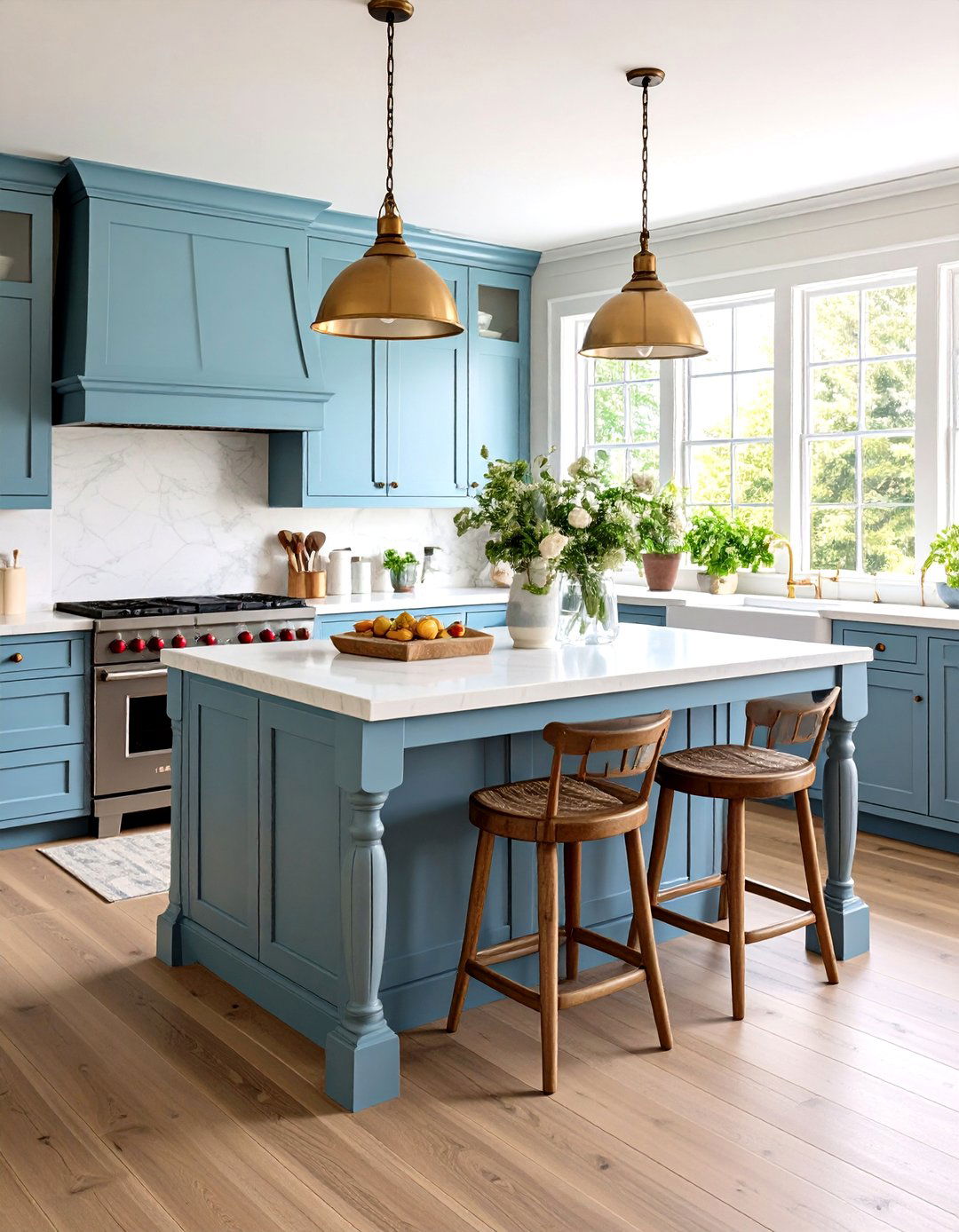
A farmhouse kitchen island featuring turned legs brings a touch of traditional craftsmanship and elegance to the kitchen. These shapely, lathe-turned legs are reminiscent of antique furniture and add a sense of history and refinement. The intricate curves and details of the legs create a beautiful contrast with the simple, functional top of the island. Whether chunky and substantial or more slender and delicate, turned legs elevate the island from a simple work surface to a beautiful piece of furniture. This design element is perfect for softening the rustic look and adding a touch of classic, sophisticated charm.
18. U-Shaped Farmhouse Kitchen Island
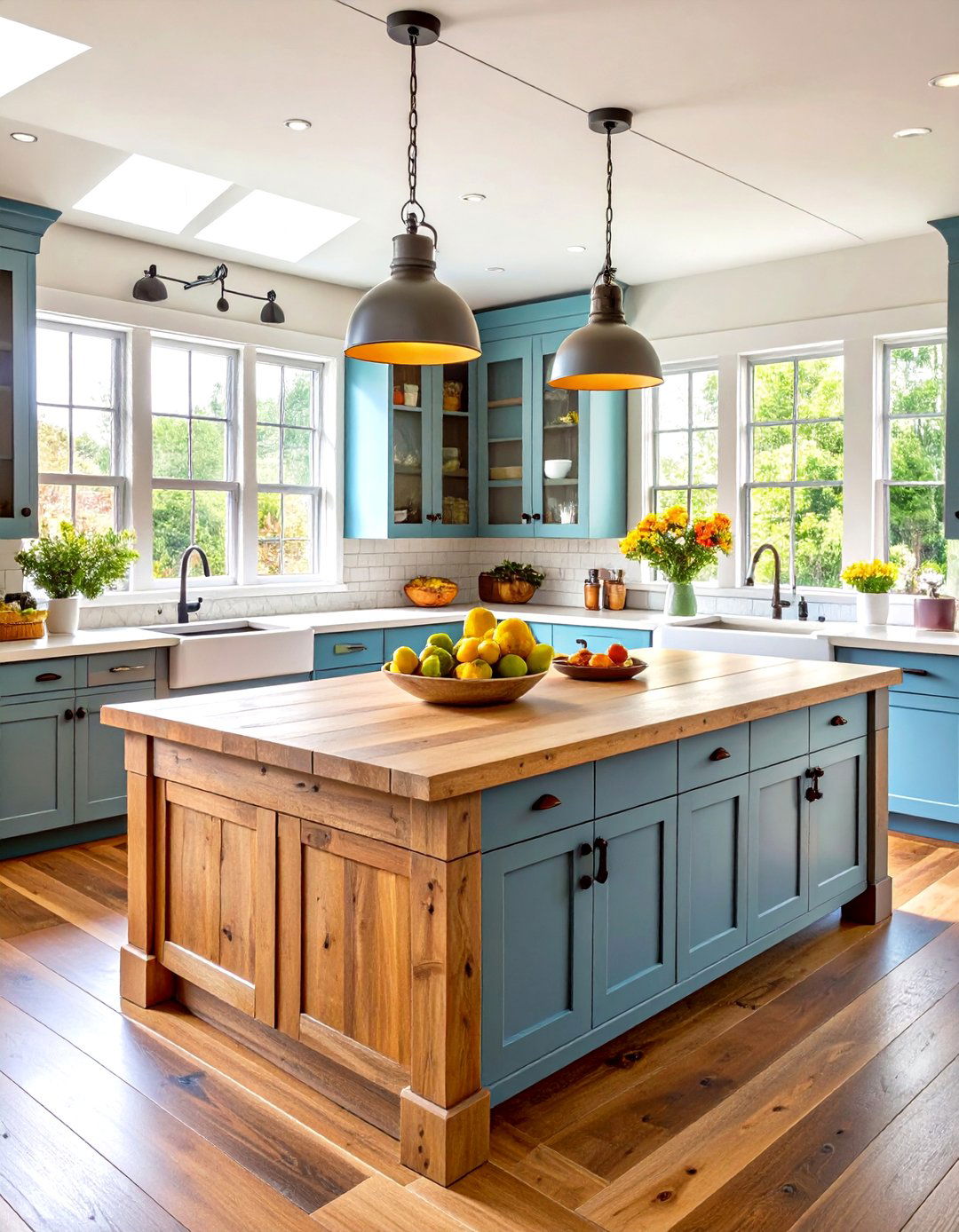
For large kitchens, a U-shaped farmhouse kitchen island offers an expansive and highly efficient workspace. This design provides three sides of counter space and storage, creating a self-contained work zone that is perfect for passionate home cooks. The layout naturally forms an effective work triangle, with ample room for a sink, cooktop, and preparation areas. The inner part of the "U" becomes a dedicated command center for cooking, while the outer edges can be used for seating or serving. Clad in rustic wood or painted shiplap, a U-shaped island is a commanding and practical centerpiece.
19. Farmhouse Kitchen Island with Glass-Front Cabinets
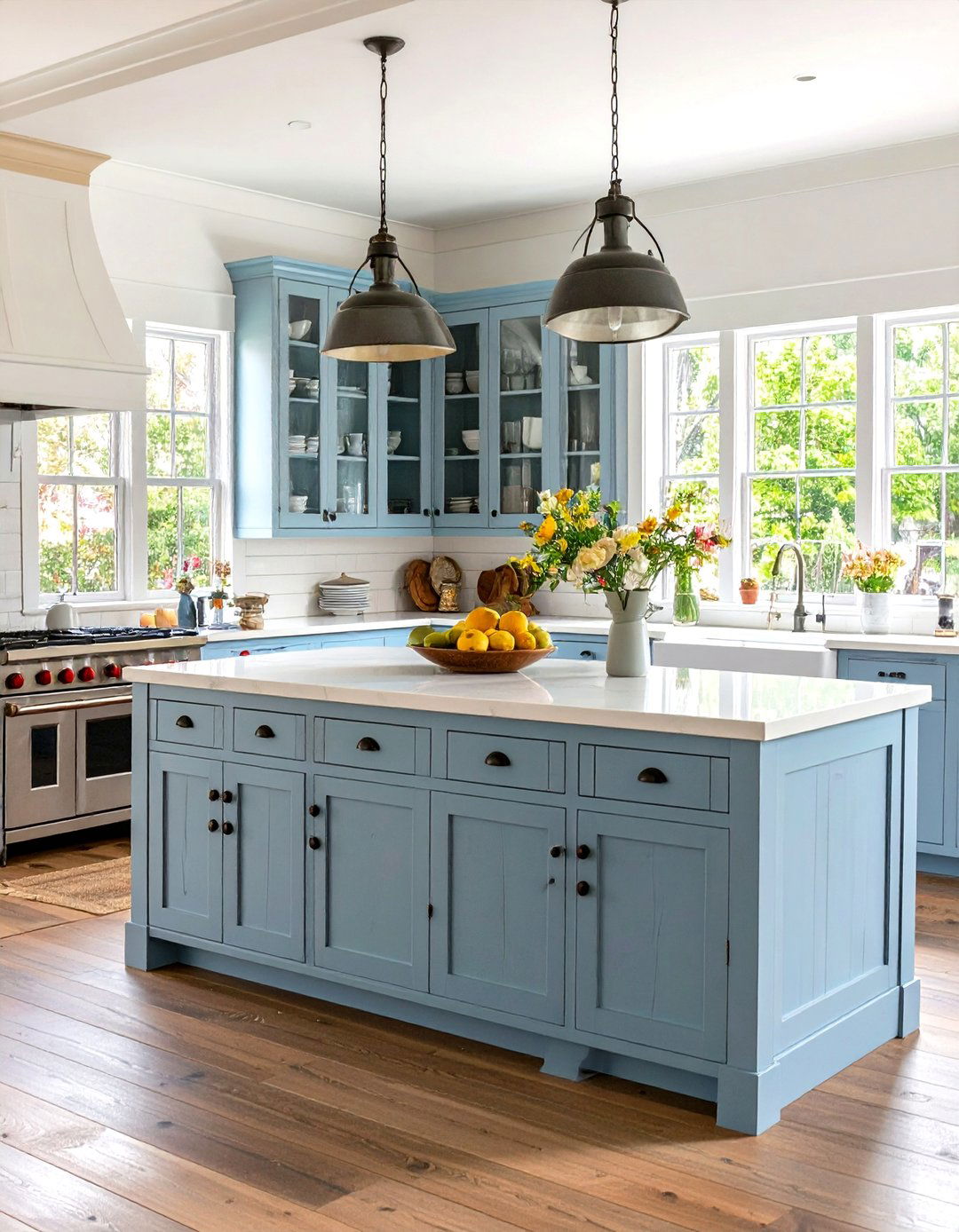
Adding glass-front cabinets to your farmhouse kitchen island offers a lovely way to display cherished dishware while keeping it protected. This feature breaks up the visual weight of solid cabinetry, creating a lighter, more open feel. The glass panels, whether clear or frosted, add a touch of vintage elegance. You can showcase your favorite china, colorful pottery, or neatly stacked linens, adding a personal and decorative element to your island. Paired with a rustic wood frame or a painted finish, glass-front cabinets enhance the charm and character of the farmhouse aesthetic, blending storage with curated display.

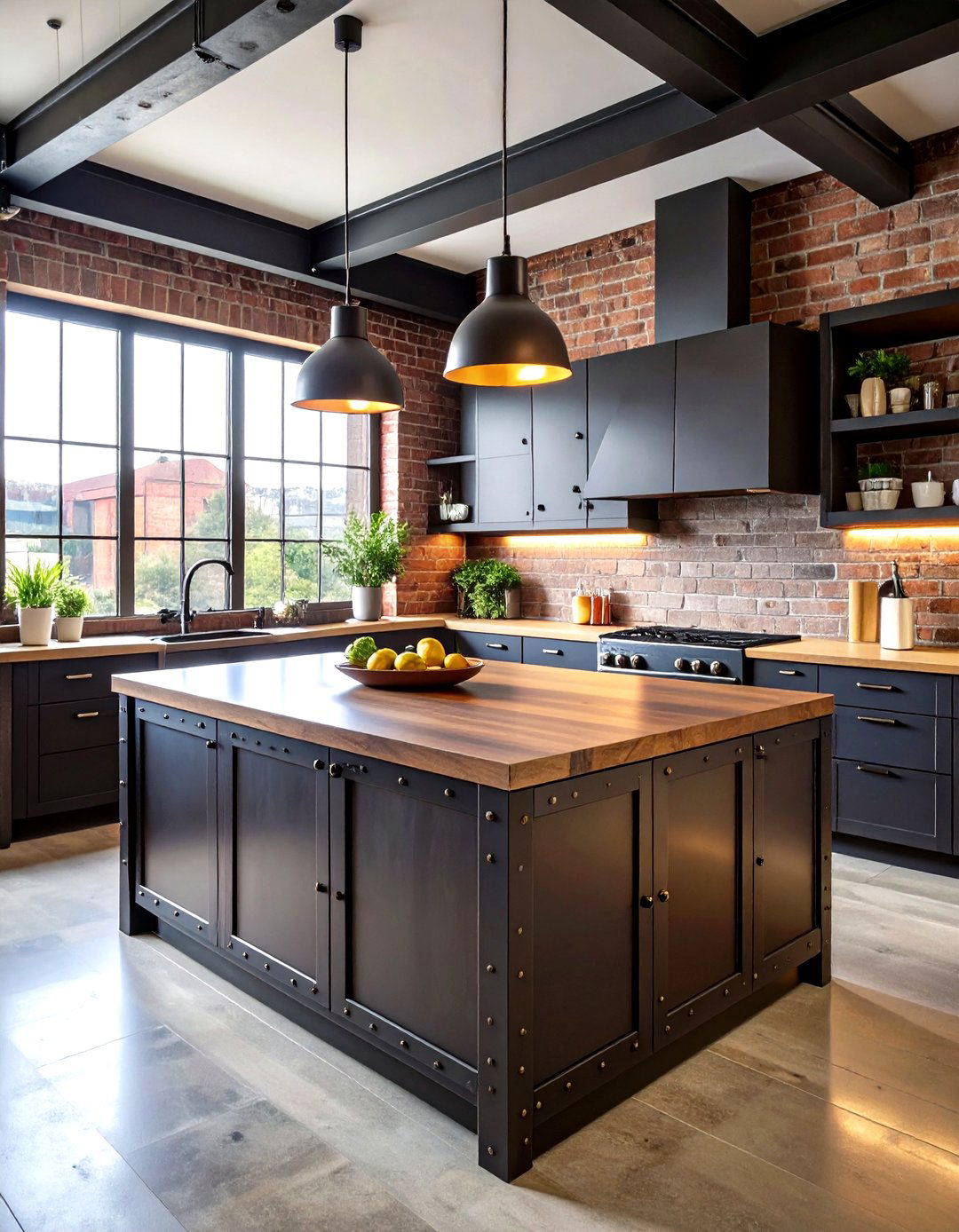
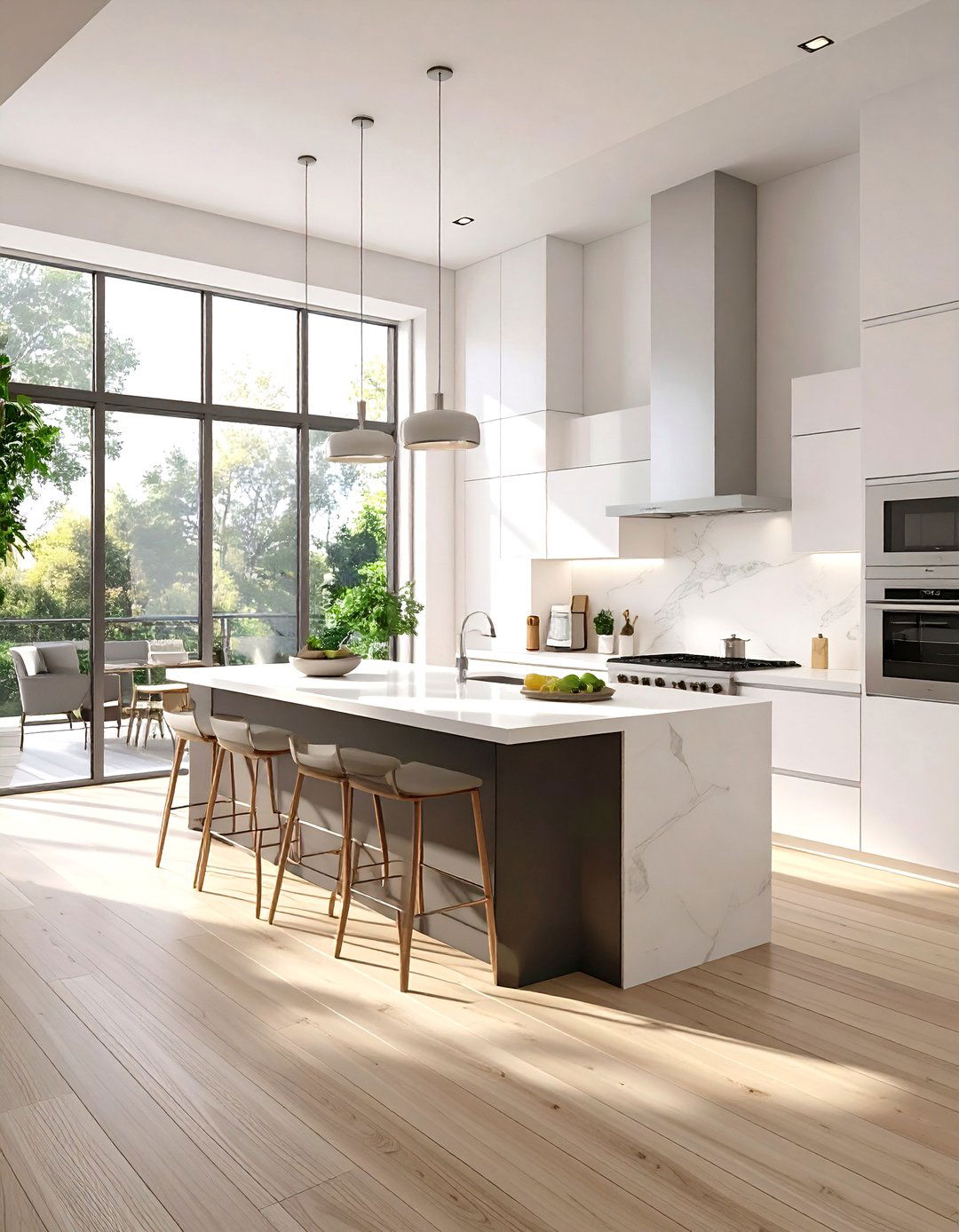
20. Farmhouse Kitchen Island with a Pop-Up Mixer Stand
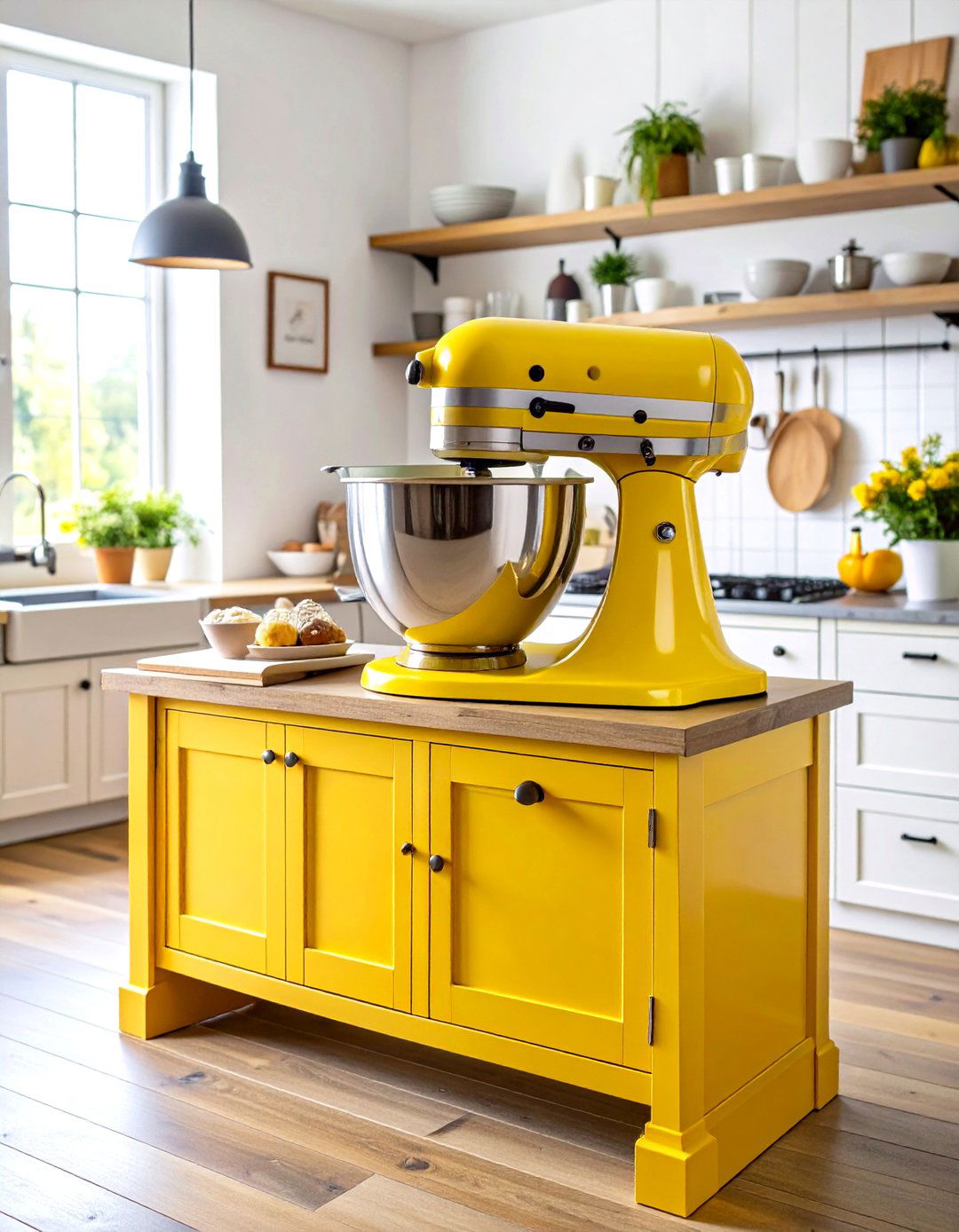
For the avid baker, a farmhouse kitchen island with a pop-up mixer stand is a game-changing feature. This clever mechanism consists of a spring-loaded shelf inside a base cabinet that smoothly lifts a heavy stand mixer up to counter height. When not in use, it tucks away discreetly, freeing up valuable counter space. This innovative solution keeps your kitchen organized and makes baking projects much more convenient. Integrated into a beautifully crafted rustic island, this modern amenity seamlessly blends with the traditional farmhouse style, proving that classic design can accommodate contemporary needs.
21. Galvanized Metal Accented Farmhouse Kitchen Island
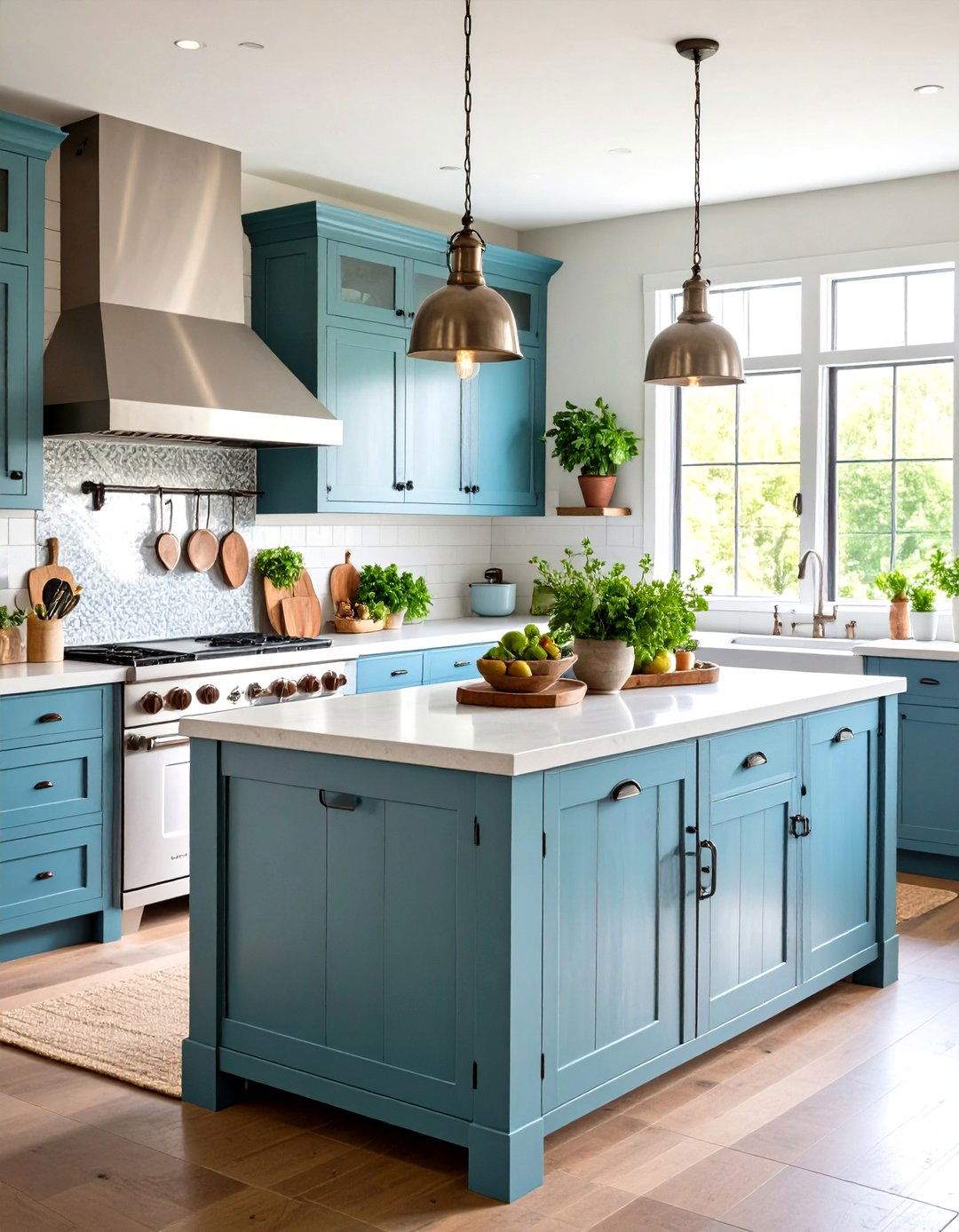
Incorporating galvanized metal accents into a farmhouse kitchen island introduces an industrial, utilitarian edge. This can be achieved by wrapping the countertop in sheet metal, adding galvanized panels to the cabinet fronts, or using metal bins for storage. The cool, matte finish of galvanized steel contrasts wonderfully with the warmth of rustic wood, creating a look that is both durable and stylish. This material choice harkens back to traditional farm equipment and utility items, reinforcing the hardworking nature of the farmhouse aesthetic while adding a unique, modern-industrial touch to your kitchen's centerpiece.
22. Farmhouse Kitchen Island with a Wine Rack
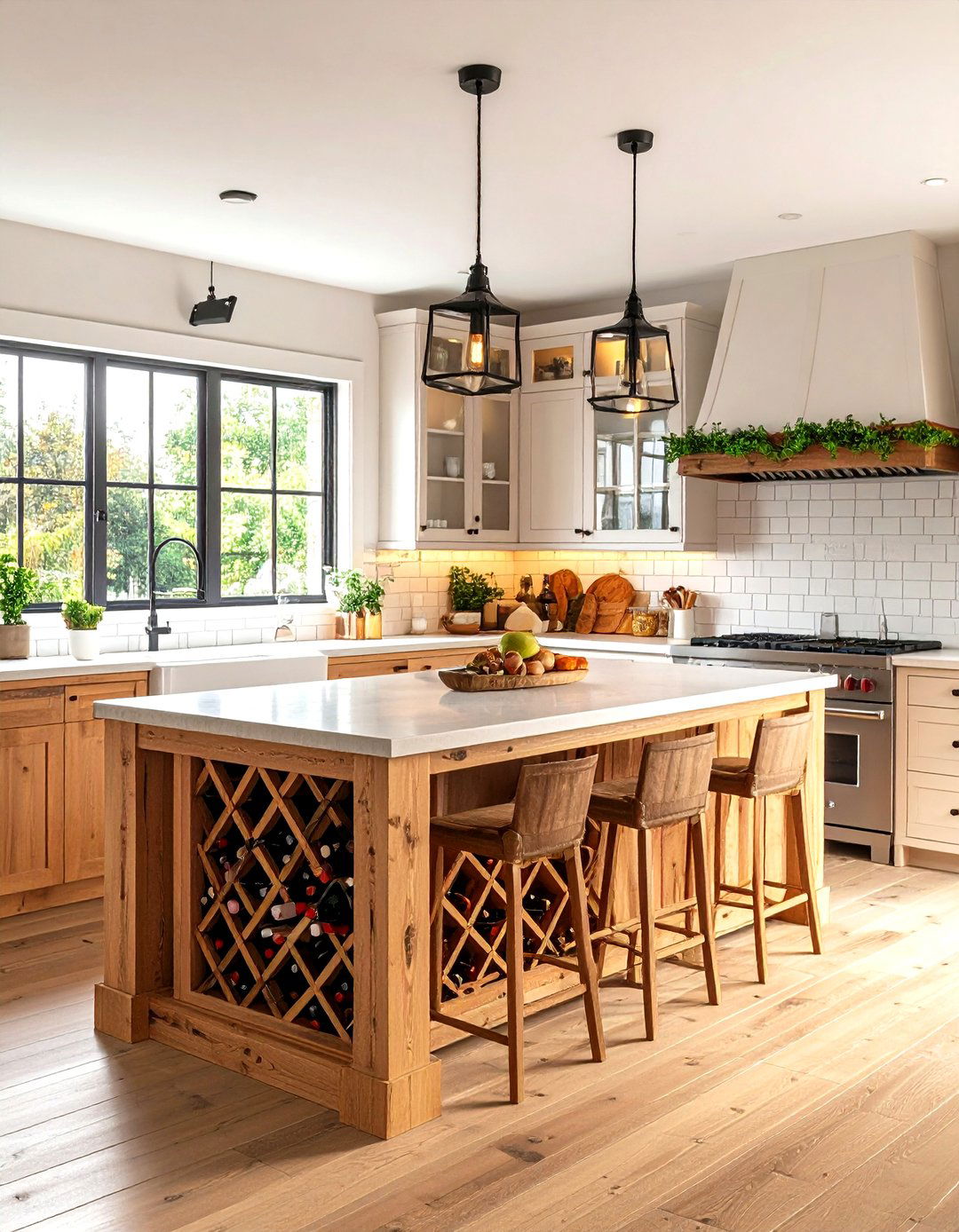
A farmhouse kitchen island with a built-in wine rack is a perfect feature for those who love to entertain. This design typically includes a grid or lattice-style rack integrated into the island's base, providing a stylish and convenient place to store wine bottles. It keeps your collection organized, accessible, and properly stored on its side. This feature adds a touch of sophistication and hospitality to the rustic design, transforming the island into a social hub. Whether it’s a small rack for a few favorite bottles or a larger section for a growing collection, it’s a functional and elegant addition.
23. Farmhouse Kitchen Island with Shiplap Siding
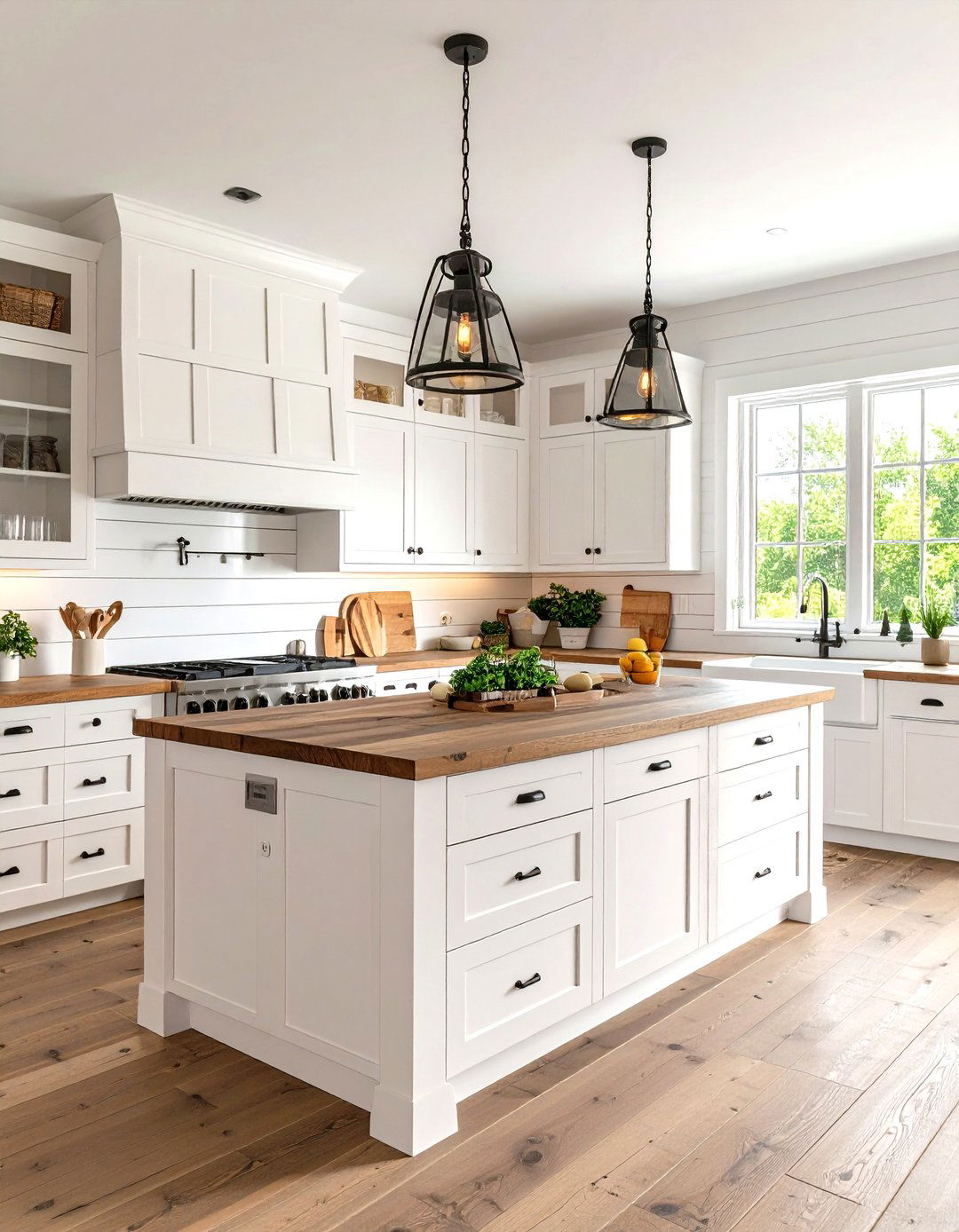
Cladding a farmhouse kitchen island with shiplap siding is a surefire way to achieve an authentic, rustic look. The horizontal wooden planks, whether painted a crisp white or a moody dark color, create clean lines and subtle texture that are synonymous with modern farmhouse style. Shiplap adds a layer of visual interest and a handcrafted feel, making the island a prominent and stylish focal point. It’s a versatile design element that pairs beautifully with various countertop materials, from classic butcher block to modern quartz, reinforcing the cozy, comfortable, and timeless appeal of a farmhouse kitchen.
24. Symmetrical Farmhouse Kitchen Island Design
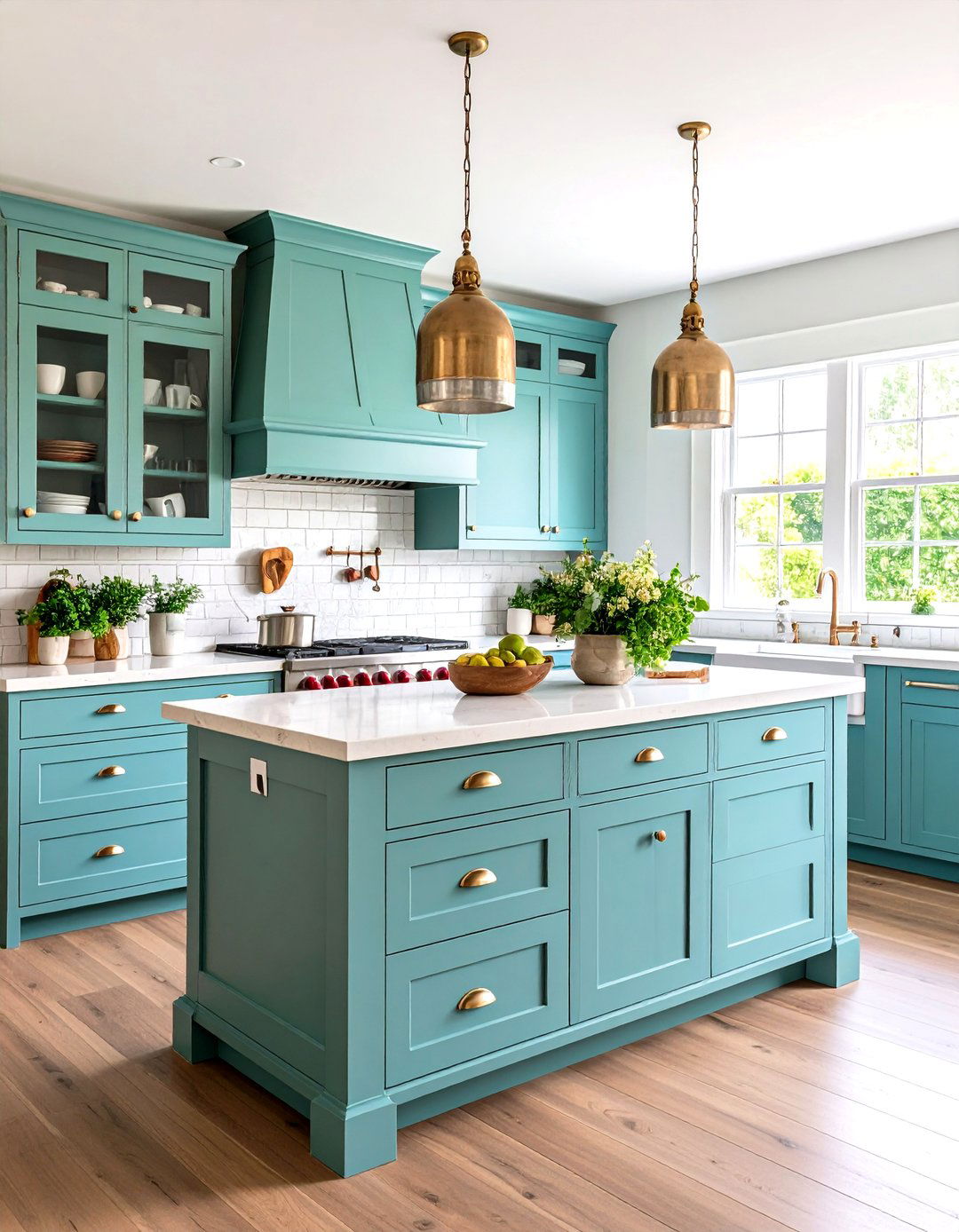
A symmetrical farmhouse kitchen island emphasizes balance and order, creating a calm and harmonious feel. This design features identical elements on either side, such as matching sets of drawers, cabinets, or open shelving. The clean, balanced lines provide a sense of classic formality and elegance within the rustic framework. A centrally located sink or cooktop can anchor the design, with storage and workspace mirrored on both sides. This thoughtful arrangement is not only visually pleasing but also highly practical, offering an organized and intuitive layout that enhances the kitchen’s workflow while maintaining a timeless, graceful appearance.
25. Farmhouse Kitchen Island with a Lower Pot Rack
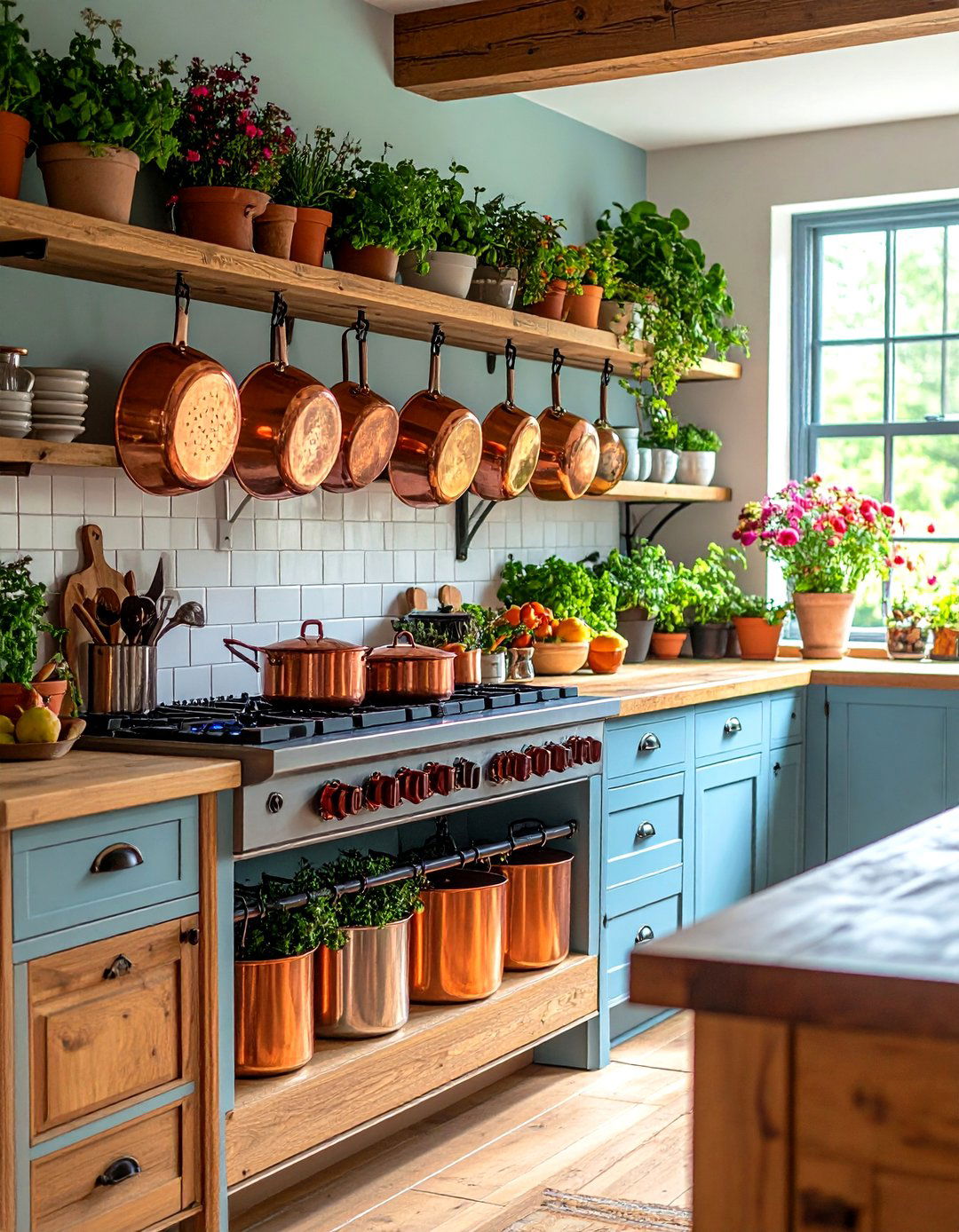
For easy access to cookware, a farmhouse kitchen island with a lower pot rack is an excellent feature. This design incorporates a sturdy rack or shelf, often made of metal or wood, near the base of the island. It allows you to hang pots, pans, and utensils underneath the main work surface, keeping them within arm's reach while you cook. This practical solution frees up valuable cabinet space and adds an element of a professional chef’s kitchen. The visible cookware contributes to the rustic, hardworking aesthetic, showcasing the functional heart of your kitchen in a stylish way.
26. Asymmetrical Farmhouse Kitchen Island
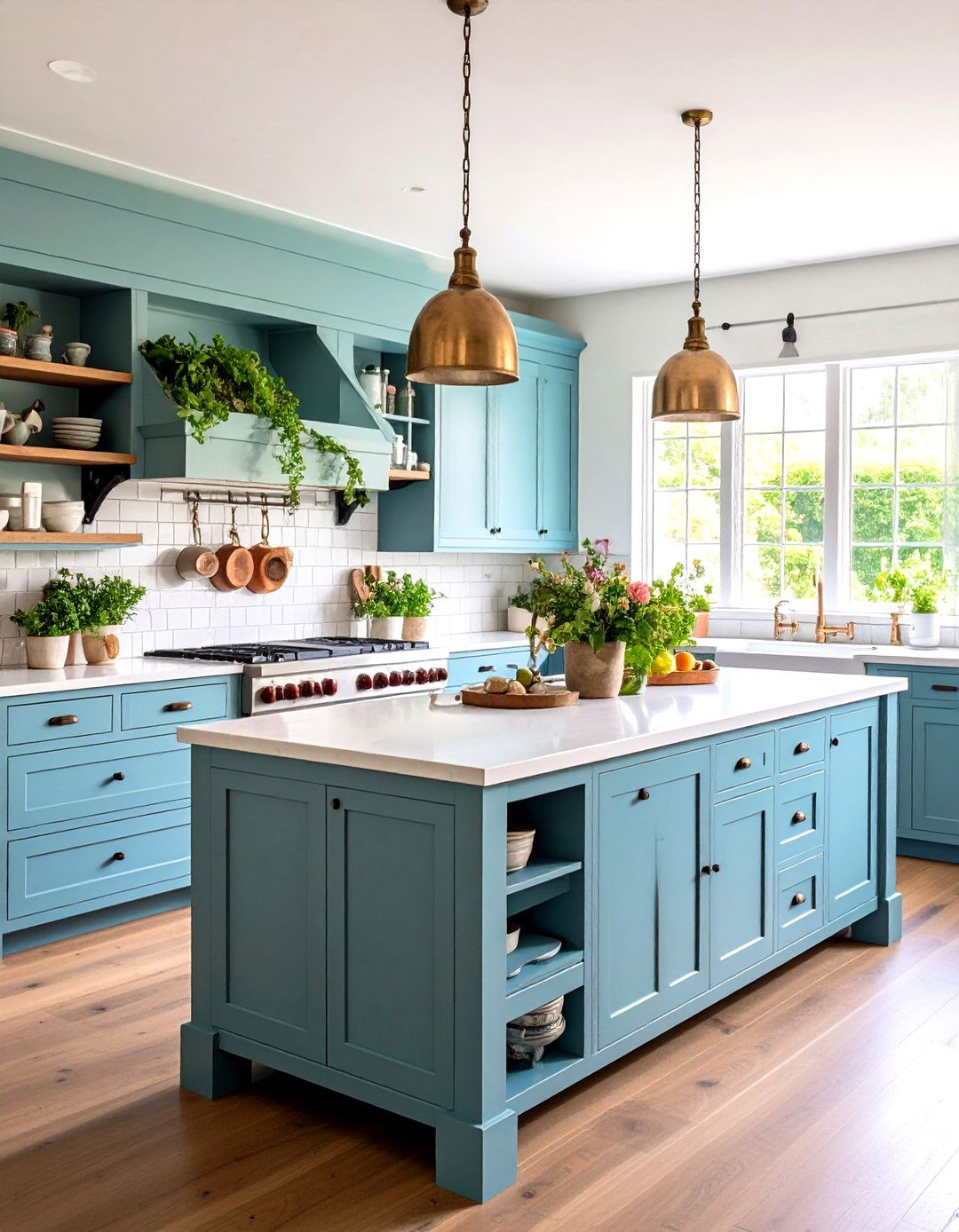
An asymmetrical farmhouse kitchen island offers a dynamic and visually interesting alternative to balanced designs. This approach intentionally avoids perfect symmetry, instead creating a unique composition of different elements. For example, one side might feature a series of small drawers, while the other has a large open shelf and a cabinet. This layout can be highly functional, tailored to specific storage needs and workflows. The varied components add character and a bespoke, collected-over-time feel. An asymmetrical design breaks from convention, resulting in a more relaxed, eclectic, and personalized centerpiece for your rustic kitchen.
27. Waterfall Edge Farmhouse Kitchen Island
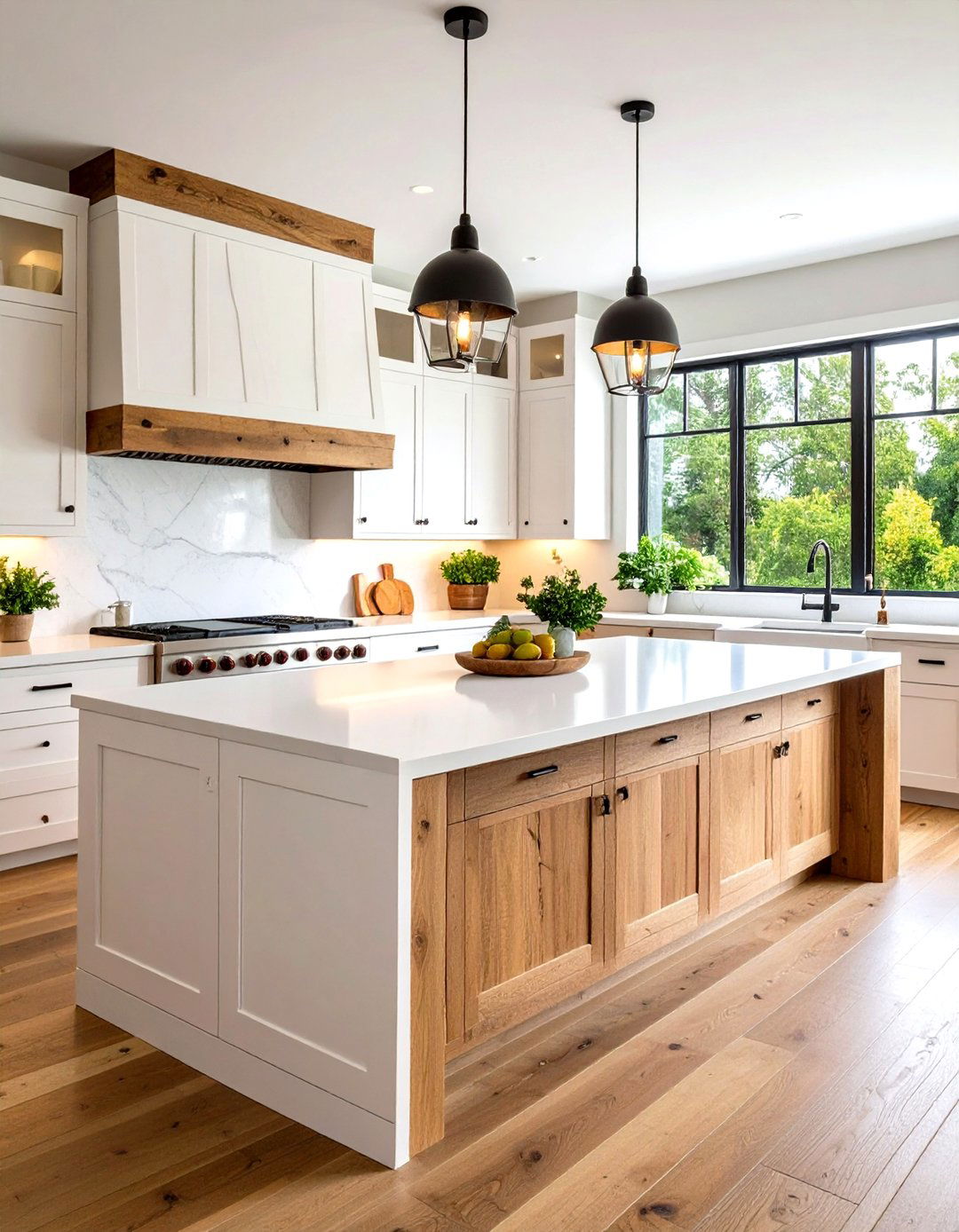
A waterfall edge, where the countertop material flows vertically down the sides of the island, adds a dramatic and modern touch to a rustic farmhouse design. This feature creates a continuous, seamless look that is clean and sophisticated. While often associated with contemporary styles, a waterfall edge made from a material like reclaimed wood, quartz with subtle veining, or even concrete can blend beautifully with rustic elements. It provides a striking contrast to a weathered wood base or shiplap siding, bridging the gap between traditional charm and sleek, modern design for a truly unique statement piece.
28. Multi-Material Farmhouse Kitchen Island
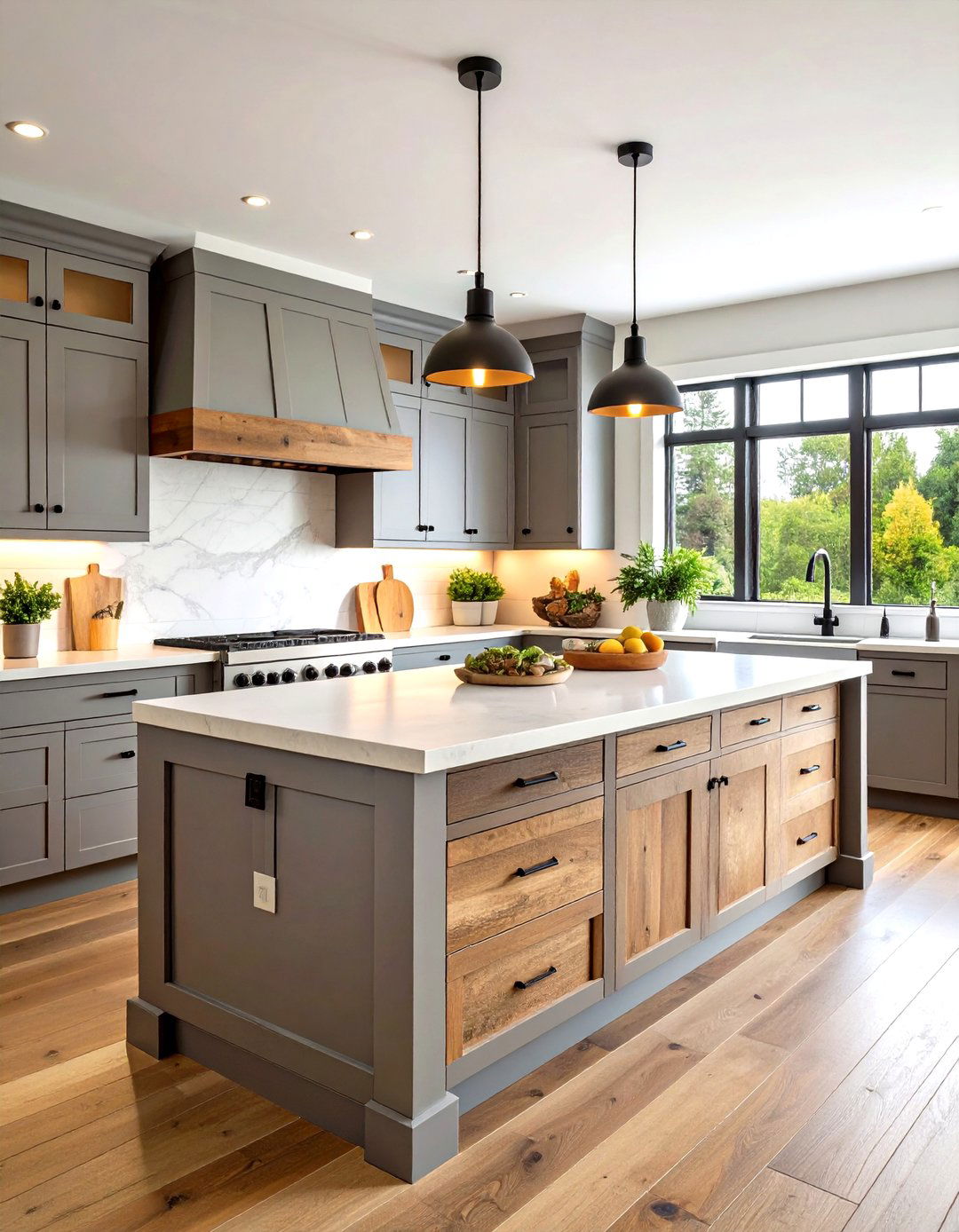
A multi-material farmhouse kitchen island uses a combination of different finishes and textures to create a rich, layered look. This could involve pairing a painted base with reclaimed wood drawer fronts, or combining a butcher block prep area with a durable quartz or marble section for other tasks. Using different materials helps to define functional zones and adds significant visual interest. This collected, eclectic approach gives the island a custom-built feel, as if it has evolved over time. The interplay of textures like smooth stone, rough wood, and painted surfaces results in a dynamic and personalized rustic centerpiece.
29. Farmhouse Kitchen Island with a Pet Feeding Station
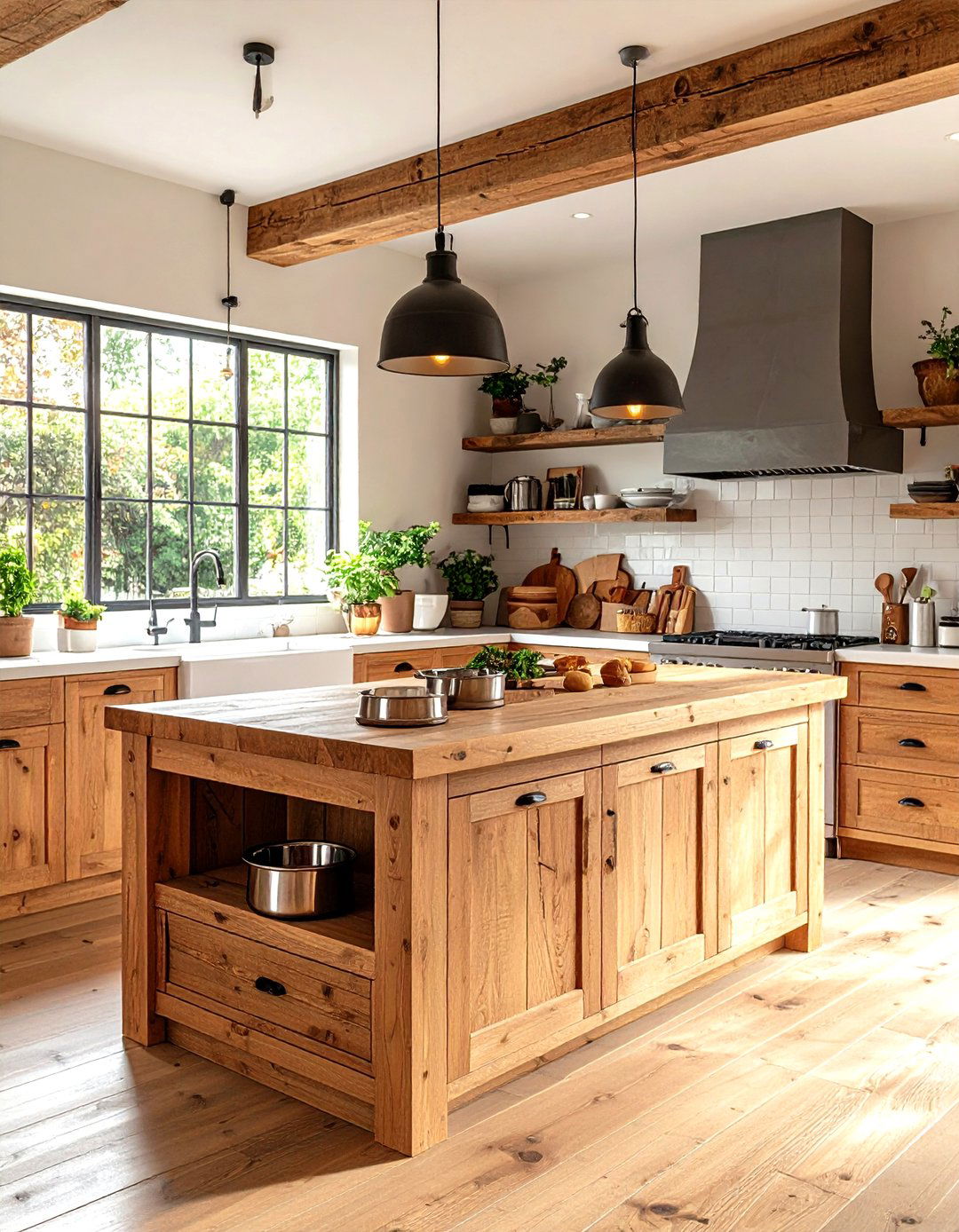
Integrating a pet feeding station into your farmhouse kitchen island is a clever way to cater to your furry family members while keeping your floor clear. This design typically involves a cutout in the island's base or toe-kick area, fitted with custom holders for food and water bowls. The bowls can be removed for easy cleaning and refilling. This thoughtful feature keeps pet dishes out of the main traffic path, preventing spills and trips. It’s a seamless and stylish solution that maintains the clean lines of your kitchen while showing that every member of the household is considered.
30. L-Shaped Farmhouse Kitchen Island
An L-shaped farmhouse kitchen island offers an expansive and versatile layout perfect for larger kitchens. This design provides extensive counter space, creating distinct zones for different activities like meal prep, cooking, and casual dining. One arm of the "L" can be dedicated to workspace, perhaps housing a sink or cooktop, while the other can serve as a spacious breakfast bar with ample seating. The shape naturally encloses the main kitchen work area, improving efficiency and workflow. Clad in rustic materials like reclaimed wood or shiplap, an L-shaped island makes a grand, functional statement.
Conclusion:
Ultimately, a rustic farmhouse kitchen island is more than just a piece of furniture; it is the functional and social anchor of your kitchen. From reclaimed barnwood designs that tell a story to versatile islands with integrated seating and clever storage, the possibilities are endless. By focusing on natural materials, handcrafted details, and practical features, you can create a centerpiece that is both beautiful and hardworking. These ideas demonstrate how to blend timeless rustic charm with modern convenience, ensuring your kitchen island becomes a beloved hub for countless meals and memories.

Related posts:

Leave a Reply