
Designing a shower for a small bathroom presents a unique opportunity to make a big impact in a compact space. The right tile choice can dramatically alter the perception of size, light, and style, transforming a cramped shower into a functional and beautiful focal point. From clever patterns that elongate walls to textures that add depth, strategic tile selection is key to maximizing both aesthetics and the sense of spaciousness. These ideas explore how different tiles can create an illusion of openness, inject personality, and turn your small bathroom shower into a personal retreat without overwhelming the room.

1. Large-Format Tile for Fewer Grout Lines

Using large-format tiles in a small bathroom shower is a brilliant strategy for creating a sense of openness. With fewer grout lines breaking up the visual field, the walls appear more continuous and expansive. This seamless look tricks the eye into perceiving a larger area, making the shower feel less confined. Tiles measuring 12x24 inches or even larger work wonderfully to minimize visual clutter. Opting for a light, neutral color like soft gray, beige, or white further enhances this effect, as these shades reflect light and contribute to a brighter, more airy atmosphere. The result is a clean, modern aesthetic that feels both luxurious and spacious.
2. Vertical Tile Installation to Add Height

To make a low-ceilinged small bathroom feel taller, consider installing tiles in a vertical orientation. By laying rectangular tiles, such as subway or plank tiles, upward along the shower walls, you draw the eye vertically. This simple trick creates a powerful illusion of height, making the entire space feel more elevated and less compressed. This technique works especially well with contrasting grout colors that accentuate the vertical lines, further enhancing the effect. Whether you choose a classic ceramic or a modern porcelain tile, this vertical arrangement is a highly effective design tool for visually expanding the shower's vertical dimensions.
3. Light-Colored Tile to Maximize Brightness

One of the most effective tile shower ideas for small bathrooms is to use light-colored tiles. Shades like white, cream, light gray, or soft pastels are excellent at reflecting both natural and artificial light. This reflection brightens the entire enclosure, making it feel more open and airy. A bright shower space can make the whole bathroom seem larger and more inviting. Glossy finishes can amplify this effect even further by creating a reflective surface that bounces light around the room. Pairing these light tiles with clear glass doors instead of a shower curtain will maximize the light-sharing potential and maintain an uncluttered feel.
4. Glossy Tile Finish for Light Reflection
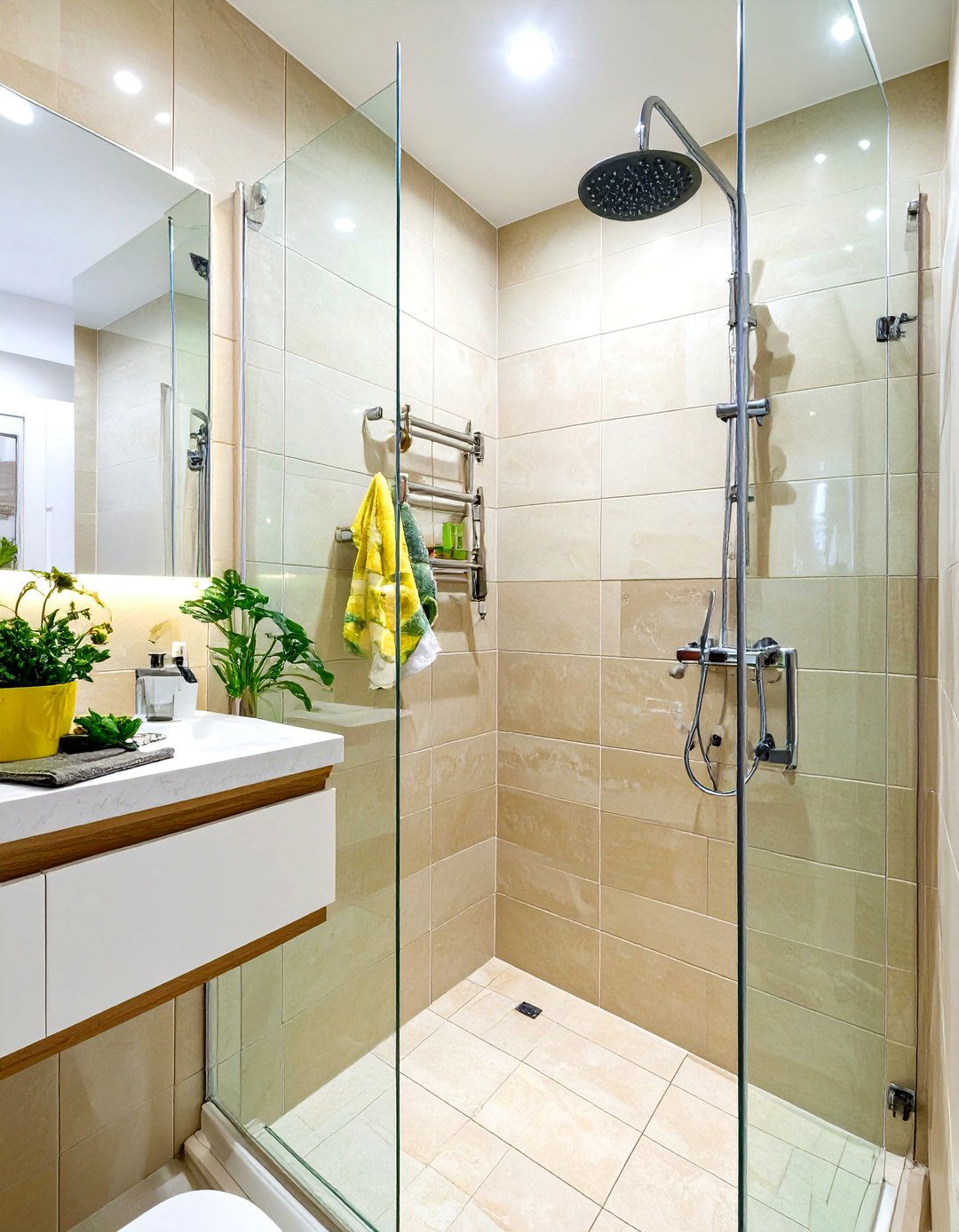
Choosing a glossy finish for your shower tiles is a superb way to enhance a small bathroom's sense of space. The reflective, high-sheen surface bounces light around the shower stall, creating a brighter and more vibrant environment. This effect works day and night, amplifying both natural light from a window and artificial light from fixtures. The shimmering quality of glossy tiles can make the shower feel more dynamic and less static, adding a touch of glamour while serving a practical purpose. This choice is particularly effective with simple, light-colored tiles, where the glossy finish can truly shine and contribute to a clean, polished look.
5. Hexagonal Tile for a Dynamic Pattern

Introducing hexagonal tiles into a small shower adds a touch of geometric interest without overwhelming the space. The honeycomb pattern creates a sense of movement and texture, breaking away from the monotony of standard square or rectangular tiles. For small bathrooms, using smaller-scale hexagonal tiles on the floor and a larger version on the walls can create a cohesive yet dynamic design. Sticking to a single color, such as a crisp white or a moody charcoal, keeps the look sophisticated and prevents the pattern from feeling too busy. This choice adds personality and modern flair while maintaining a clean aesthetic.
6. Penny Tile for Textured Floors

Penny tiles are an excellent choice for a small shower floor, offering both style and safety. Their small size and the abundance of grout lines provide superior slip resistance, which is a crucial feature in a wet environment. Beyond their practical benefits, penny tiles add a wonderful textural element and a vintage-inspired charm to the bathroom. You can use a single color for a classic look or create custom patterns and borders with different colored penny tiles for a more personalized touch. This tile style adds a unique visual detail underfoot that complements larger tiles on the walls without competing for attention.
7. Chevron Tile Pattern for Visual Movement

A chevron tile pattern is a fantastic way to add a sense of energy and direction to a small shower. This V-shaped arrangement creates strong diagonal lines that can make the shower walls appear wider or taller, depending on the orientation of the pattern. Laying the chevron pattern horizontally can give the illusion of a wider space, which is perfect for narrow shower stalls. The dynamic movement of the design draws the eye and adds a sophisticated, contemporary feel. Using a neutral-colored tile in this pattern allows the shape itself to be the star, preventing the design from overpowering the small bathroom.
8. Herringbone Tile Pattern for Subtle Elegance
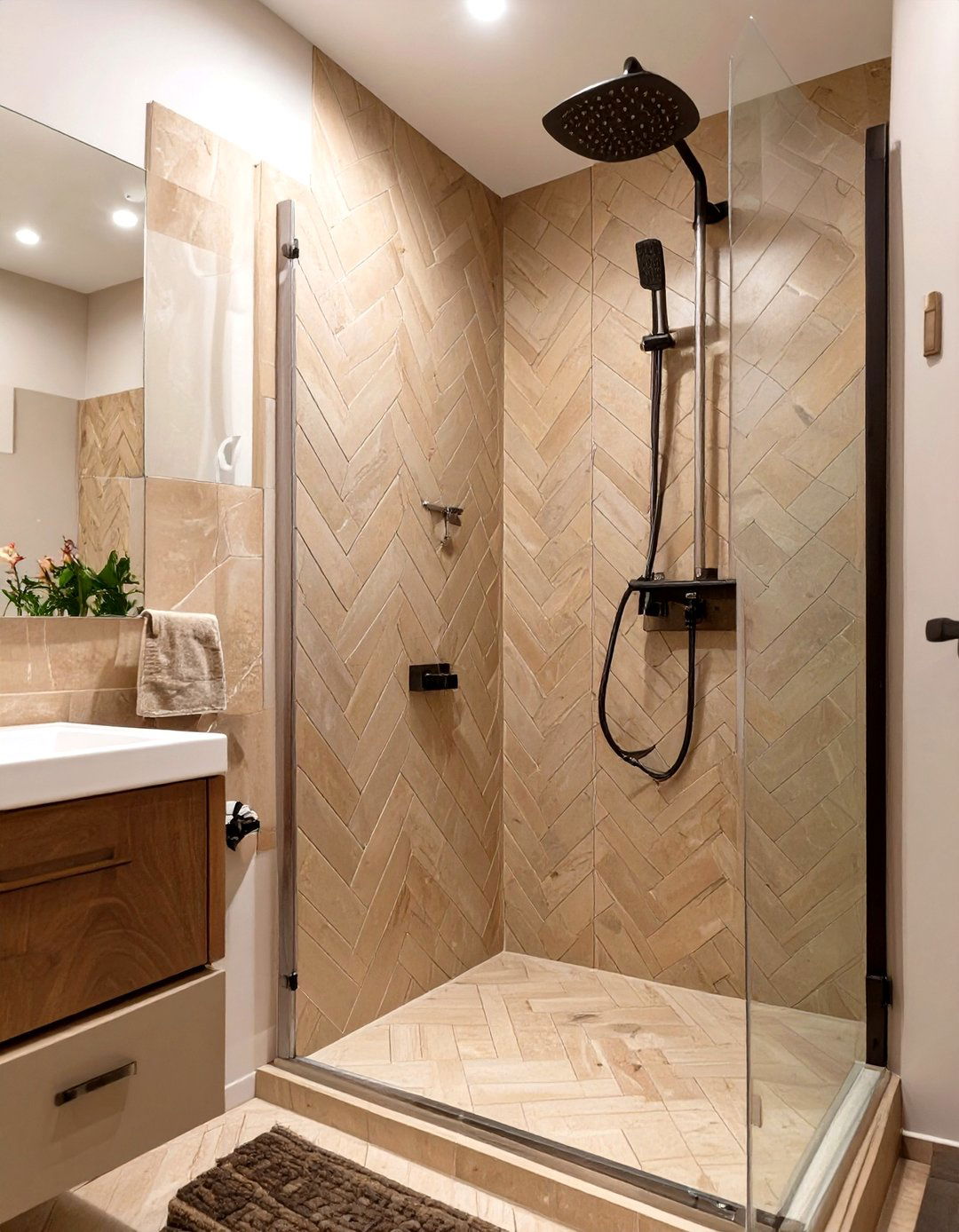
The herringbone pattern, arranged with rectangular tiles in a staggered zigzag design, brings a timeless elegance to a small shower. It offers a more subtle sense of movement compared to a chevron pattern but still adds a significant amount of visual interest. This classic layout can make a standard subway tile look custom and high-end. In a small bathroom, using a light-colored tile in a herringbone pattern adds texture and sophistication without making the space feel cramped. It’s a versatile look that works well with various design styles, from traditional to modern, providing a beautiful backdrop that enhances the overall aesthetic.
9. Glass Tile for a Luminous Effect

Glass tiles are a wonderful option for small bathroom showers because of their ability to reflect and refract light. This creates a luminous, shimmering effect that can make the entire space feel brighter and more ethereal. Available in a vast array of colors and finishes, from translucent to opaque, glass tiles can be used to create a stunning feature wall or to tile the entire shower for maximum impact. Their water-like appearance can also evoke a sense of tranquility and cleanliness. The light-play from glass tiles adds depth and dimension, helping to visually expand the perceived size of the shower.
10. Mirrored Tile for Ultimate Space Illusion
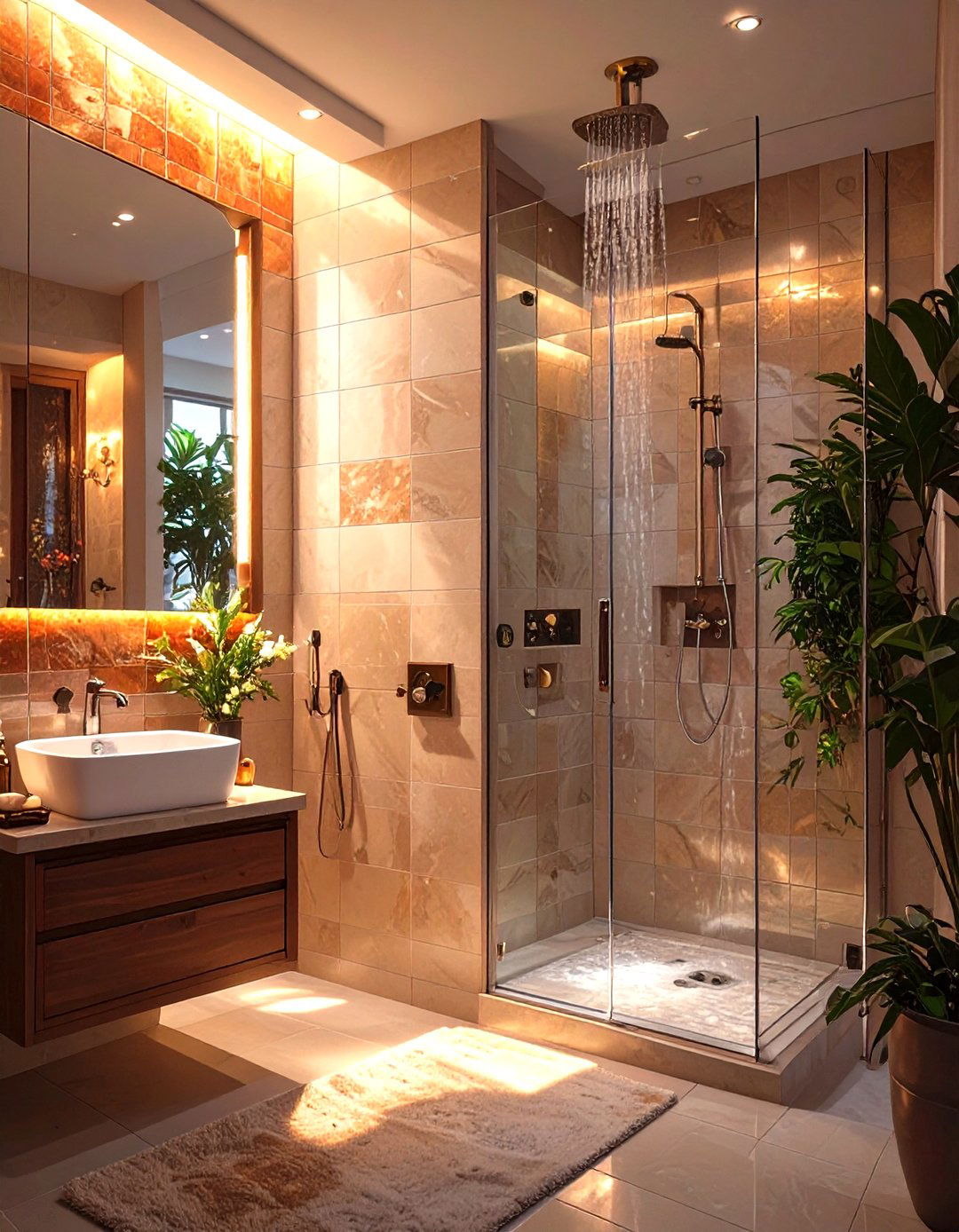
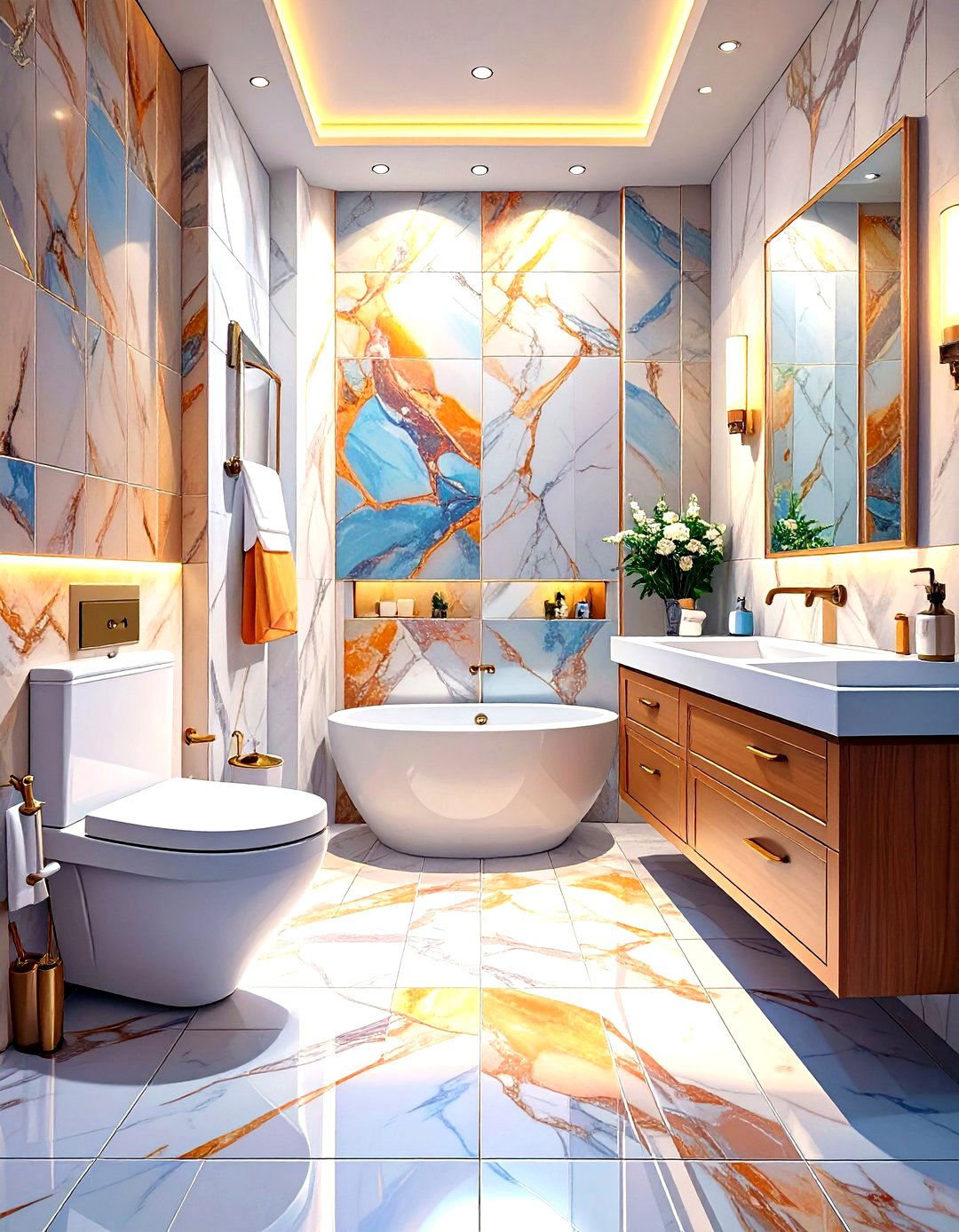
For the ultimate space-enhancing trick, consider using mirrored tiles in a small shower. These tiles work like a regular mirror, reflecting the entire bathroom and creating a powerful illusion of depth. By reflecting light and the surrounding space, they can make a tiny shower feel almost boundless. You can use them to create a feature wall or strategically place them in smaller sections, such as a vertical stripe, to add a touch of glamour and openness. While they require more frequent cleaning to keep them looking pristine, the dramatic, space-doubling effect of mirrored tiles is unmatched for small bathrooms.
11. Shower Niche with Contrasting Tile

A recessed shower niche is a practical storage solution that eliminates the need for bulky shower caddies. In a small bathroom, you can turn this functional element into a design feature by lining it with a contrasting tile. Using a bold color, a vibrant pattern, or a different tile shape for the niche creates a focal point and adds a pop of personality. This small accent area allows you to be creative without overwhelming the entire shower space. It’s an opportunity to incorporate a more expensive or daring tile in a small, controlled dose, adding custom detail and visual interest.
12. Floor-to-Ceiling Tile for a Seamless Look

Tiling the shower walls from floor to ceiling is a powerful design choice for a small bathroom. This technique creates a continuous, uninterrupted vertical surface that draws the eye upward, making the ceiling feel higher. The seamless look eliminates the visual break that occurs when tile stops partway up the wall, contributing to a more cohesive and expansive feel. Using the same tile throughout this expanse further enhances the effect, creating a unified and streamlined aesthetic. This approach gives the shower a custom, high-end appearance and is highly effective at making the entire bathroom feel more spacious and grand.
13. Same Tile on Floor and Walls

Using the same tile on both the shower floor and walls is a clever strategy to make a small bathroom feel larger. This creates a continuous, unified look that blurs the lines between the floor and the walls, reducing visual fragmentation. The seamless transition makes the space feel cohesive and expansive. This technique works particularly well with large-format tiles, which further minimize grout lines and enhance the sense of continuity. Opting for a neutral or light-colored tile will maximize this space-enhancing effect, resulting in a clean, modern, and uncluttered design that feels serene and open.
14. Diagonal Tile Layout to Widen the Space
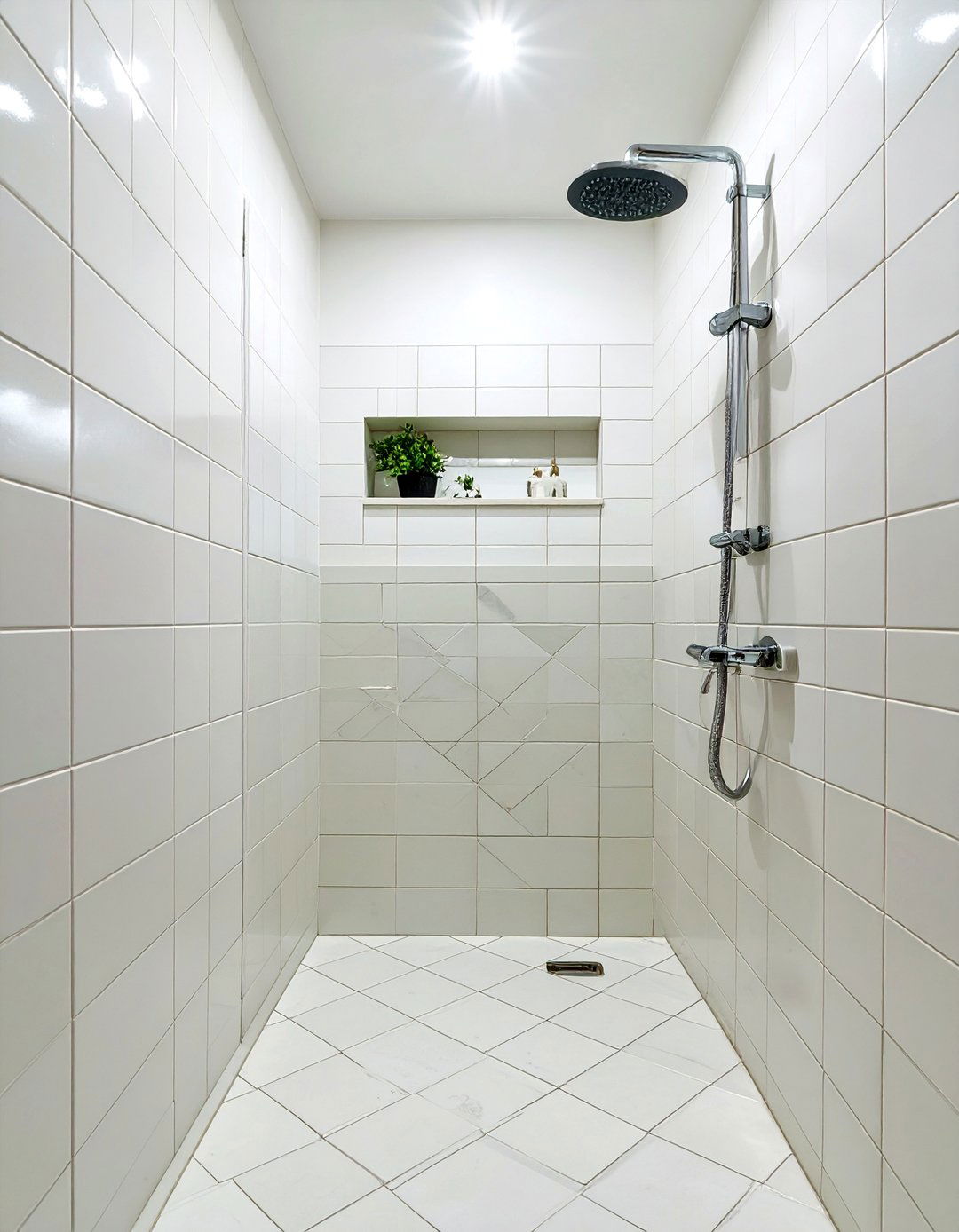
Laying square or rectangular tiles on a diagonal is another effective visual trick to make a small shower appear wider. The diagonal lines create a sense of movement and extend the perceived dimensions of the walls and floor. This layout is more dynamic than a standard grid pattern and can help break up the boxy feel of a small enclosure. It adds a touch of custom detail and sophistication without requiring a different type of tile. This simple change in installation can have a significant impact on how spacious the shower feels, making it a smart choice for narrow or compact bathrooms.


15. Dark Grout with Light Tile for Definition

Pairing light-colored tiles, like classic white subway tiles, with a dark grout is a popular trend that adds a bold, graphic element to a small shower. The dark grout lines, in shades of charcoal, gray, or black, create a strong contrast that makes each tile stand out. This defines the tile pattern and adds a sense of depth and architectural detail. While it may seem counterintuitive for a small space, this technique can add a lot of character and style without making the shower feel smaller, as the overall brightness of the light tiles still dominates. It’s a great way to make a simple tile choice look more impactful.
16. Natural Stone Tile for Earthy Texture

Incorporating natural stone tiles, such as marble, slate, or travertine, can bring a sense of organic warmth and texture to a small shower. The unique veining and natural variations in each tile add a layer of depth and sophistication that manufactured tiles often cannot replicate. For a small bathroom, sticking to lighter-colored stones like Carrara marble or light travertine can help maintain a bright and open feel. The earthy, tactile quality of natural stone creates a spa-like, luxurious atmosphere, making the shower a calming and grounded retreat. It adds a timeless appeal that elevates the entire bathroom design.
17. Textured Tile for Added Dimension

Using tiles with a three-dimensional or textured surface is an innovative way to add depth and interest to a small shower. These tiles catch the light in unique ways, creating subtle shadows and highlights that give the walls a sense of dimension. The texture can range from gentle waves and ridges to more pronounced geometric patterns. This adds a tactile quality and visual intrigue without relying on busy colors or patterns, which can sometimes overwhelm a small space. A textured tile feature wall can serve as a stunning focal point, making the shower feel custom-designed and thoughtfully curated.
18. Subway Tile with a Modern Twist

Classic subway tile is a versatile and budget-friendly option, but you can give it a modern twist for a small shower. Instead of the traditional brick-like running bond pattern, consider a different layout like a vertical stack or a crosshatch design. Using an unexpected color, such as a soft green or a deep navy, can also update the look. Another modern approach is to choose subway tiles with a beveled edge for added dimension or a handmade, uneven finish for a more organic feel. These variations on a classic keep the look clean and timeless but add a unique, contemporary personality.
19. Moroccan Fish Scale Tile for a Statement

Moroccan fish scale tiles, also known as scallop or fan tiles, make a beautiful and elegant statement in a small shower. The unique, curved shape adds a soft, organic feel and a touch of exotic charm. You can install them with the points facing up or down for different effects. In a small bathroom, using these tiles for a single feature wall in a vibrant color like teal or emerald green can create a stunning focal point. Alternatively, using them in a neutral white or gray maintains a serene feel while still adding plenty of textural interest and graceful movement.


20. Faux Wood Tile for Warmth
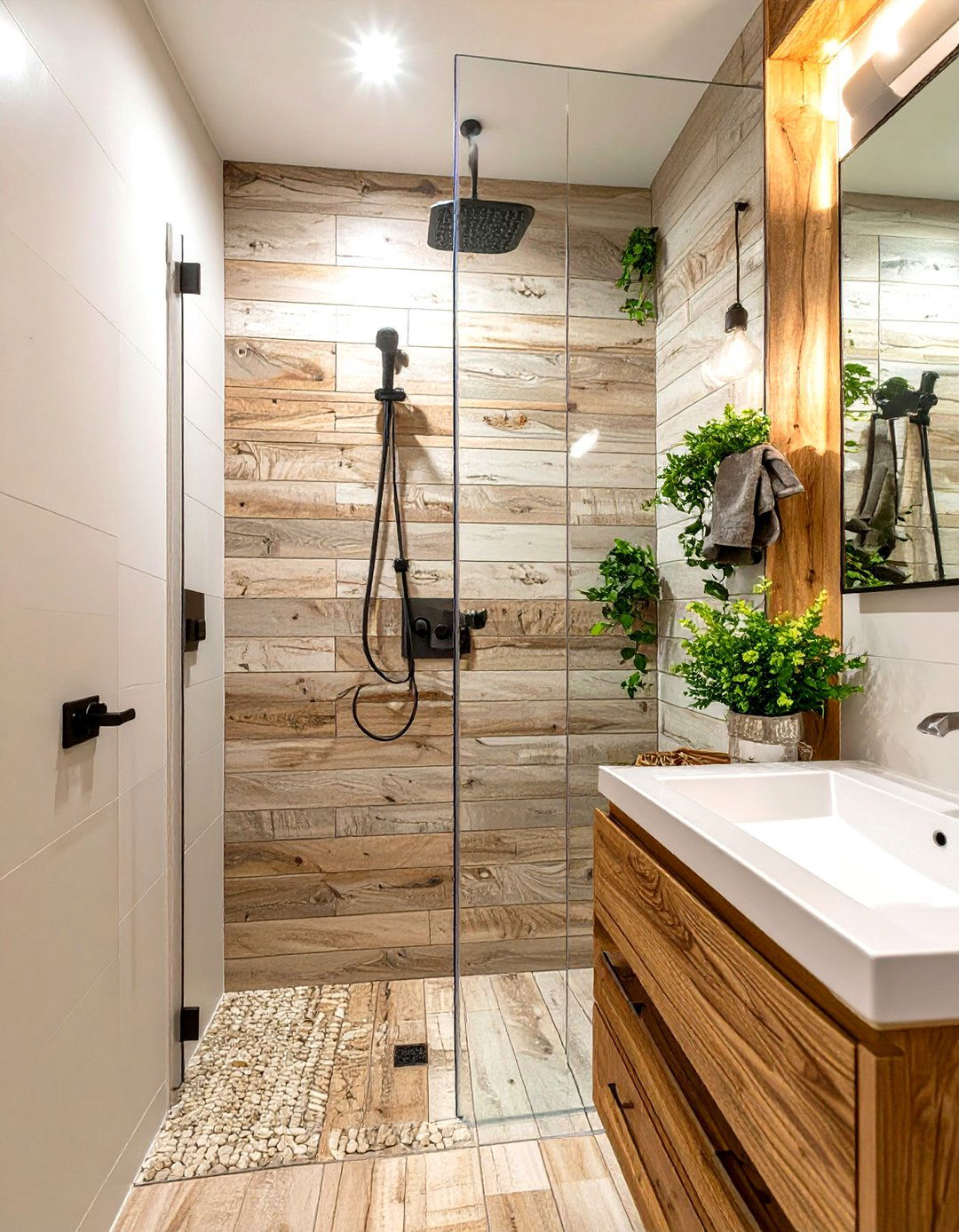
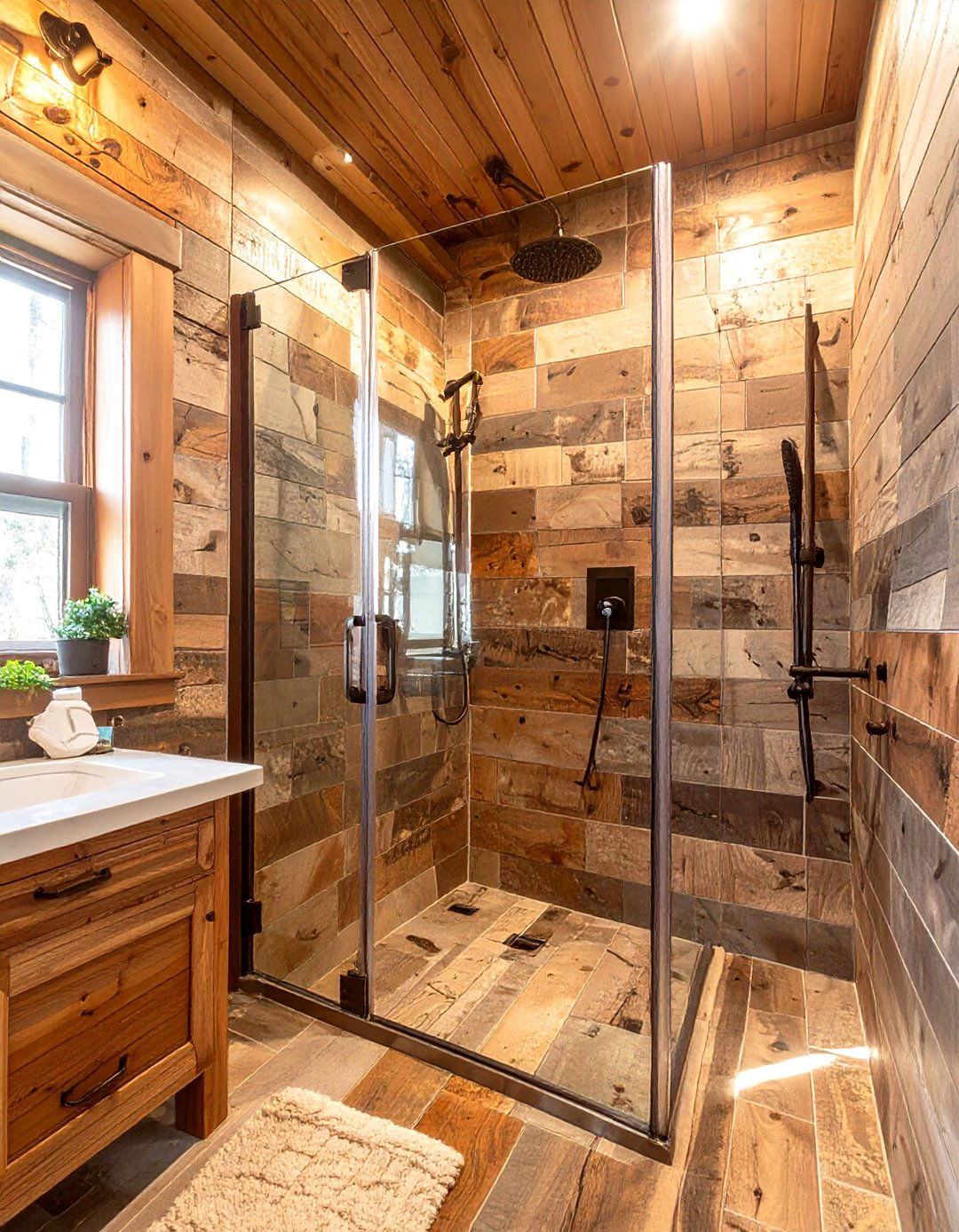
For those who love the look of wood but need the durability of tile, faux wood porcelain tiles are an excellent solution for a shower. They bring the warmth and organic texture of wood into the bathroom without the risk of water damage. In a small shower, using light-colored wood-look tiles can create a cozy, spa-like atmosphere that feels both rustic and modern. You can install them on the floor or on a feature wall to add a natural element. This choice is perfect for creating a relaxing, Scandinavian-inspired or modern farmhouse aesthetic that makes the space feel inviting and comfortable.
21. Patterned Tile Feature Wall

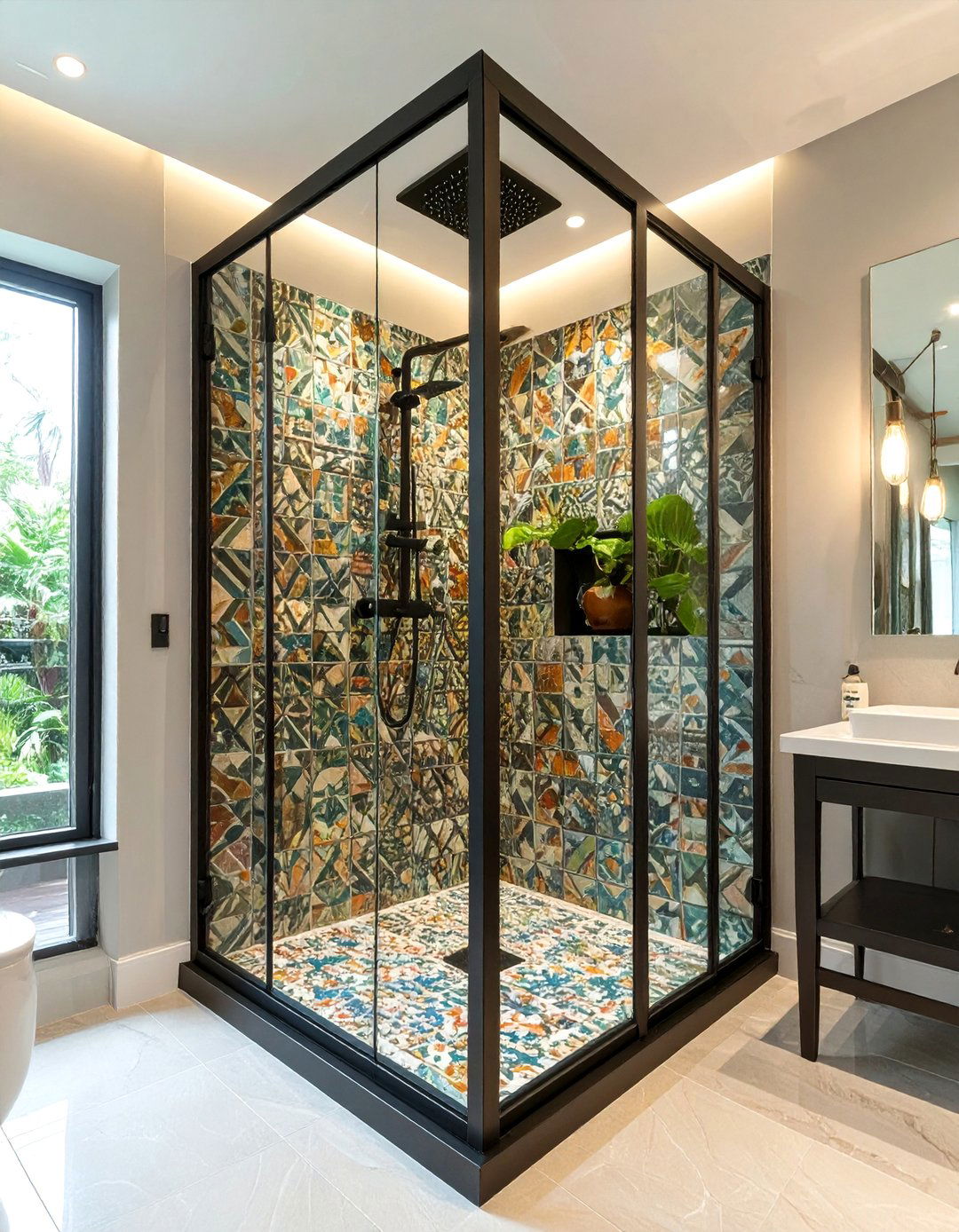
Creating a feature wall with bold, patterned tiles is a great way to inject personality into a small shower without overwhelming the space. Choose one wall, typically the one opposite the shower door, to showcase a vibrant geometric, floral, or encaustic-style tile. By keeping the other walls and the floor simple with neutral tiles, the feature wall becomes a stunning piece of art. This strategy allows for a high-impact design statement in a controlled area, adding character and a custom feel. It draws the eye and creates a sense of depth, making the shower a true focal point of the bathroom.
22. Terrazzo Tile for a Playful Look

Terrazzo tiles, with their composite material filled with chips of marble, quartz, granite, and glass, offer a playful and unique look for a small shower. The colorful flecks create a fun, retro-inspired vibe while the overall surface can be kept light and bright. Terrazzo provides texture and pattern in a subtle, integrated way, avoiding the busyness of some intricate tile designs. It’s a durable and long-lasting choice that hides water spots and soap scum well. Using terrazzo on the floor or for a feature wall can add a touch of modern whimsy and vibrant energy to the bathroom.
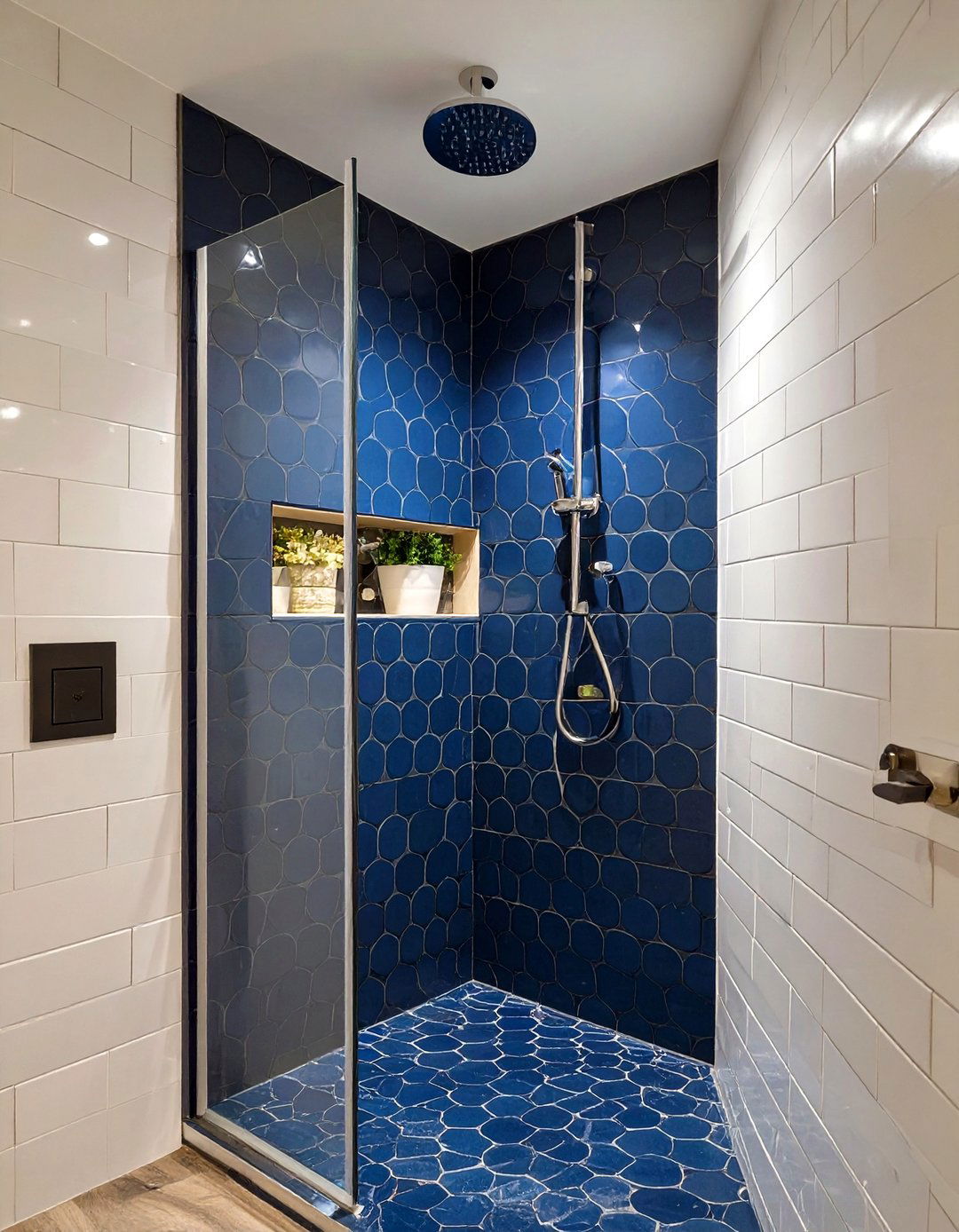
23. Zellige Tile for Handmade Charm

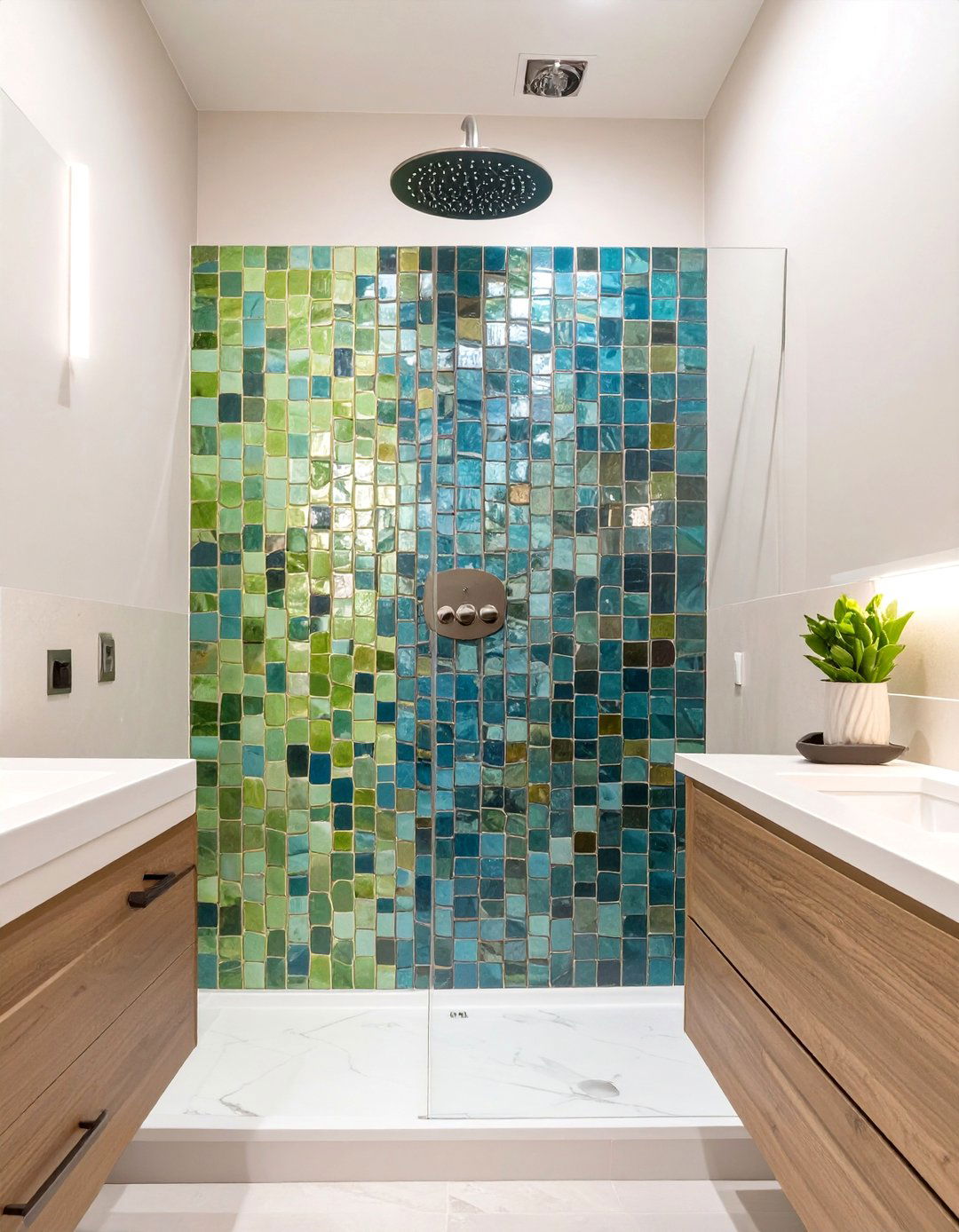
Zellige tiles, which are traditional handmade tiles from Morocco, bring an unmatched level of character and charm to a small shower. Each tile is unique, with slight variations in color, texture, and shape. This irregularity creates a surface that shimmers and reflects light beautifully, adding depth and a sense of movement. The glossy, imperfect finish gives the shower a rustic yet sophisticated look. Using Zellige tiles in a single, soft color like white, blush, or seafoam green results in a luminous and artisanal aesthetic that makes the small space feel special and thoughtfully designed.
24. Black Tile for a Dramatic Statement

While it may seem counterintuitive, using black tile in a small shower can create a surprisingly sophisticated and dramatic effect. Black tiles can make the space feel cozy and intimate rather than cramped, especially when paired with good lighting. A matte black finish can absorb light for a moody, modern look, while a glossy black finish will reflect light and add a touch of glamour. To avoid a cave-like feeling, consider using black tile on just one or two walls and pairing it with a lighter floor or ceiling. This bold choice creates a high-end, luxurious retreat.
25. Checkered Tile Pattern for a Classic Vibe

A classic checkered tile pattern brings a timeless, retro charm to a small bathroom shower. The simple black and white combination is always stylish and creates a clean, graphic look. To adapt it for a small space, consider laying the pattern on the diagonal, which can help to visually widen the floor or walls. You can also opt for a smaller-scale checkered pattern to ensure it doesn't overpower the room. This design choice adds a lot of personality and works well with simple fixtures and accessories, allowing the bold pattern to be the main feature of the shower.
26. Ombre Tile Effect for Gradual Color

An ombre tile effect, where the tile color gradually transitions from dark to light, is a creative and visually stunning idea for a small shower. Typically, the darker tiles are placed at the bottom and fade into lighter shades towards the ceiling. This technique draws the eye upward, creating an illusion of height and making the space feel more open and airy at eye level. It adds a beautiful, watercolor-like wash of color and a unique, custom-designed feel. This artistic approach can turn a simple shower wall into a captivating work of art.
27. Pebble Tile Floor for a Spa Feel

To create a natural, spa-like retreat, consider using a pebble tile floor in your small shower. These tiles consist of smooth, rounded river rocks mounted on a mesh backing for easy installation. The varied shapes, sizes, and colors of the pebbles add a wonderful organic texture and provide a gentle massage for your feet. The natural, earthy feel can transform your daily shower into a calming, sensory experience. Pairing a pebble floor with simple, light-colored wall tiles allows the unique texture of the floor to stand out, creating a grounded and serene foundation for the space.
28. High-Contrast Tile Combination

Creating a high-contrast look by pairing very dark and very light tiles can make a powerful statement in a small shower. For example, using bold black tile on one wall and crisp white tile on the others can create a dynamic and modern aesthetic. This dramatic interplay of light and dark adds depth and prevents the space from feeling monotonous. The key is to balance the two extremes so that the shower feels intentionally designed rather than chaotic. This approach adds a high level of sophistication and visual interest without needing complex patterns or textures.
29. Monochromatic Tile in Different Shapes

A monochromatic color scheme doesn't have to be boring. In a small shower, you can create a sophisticated and textured look by using tiles of the same color but in different shapes or sizes. For example, pair large square tiles on the walls with small hexagonal or penny tiles on the floor and in the niche, all in the same shade of gray or white. This creates subtle visual interest and depth through the variation in pattern and grout lines, while the single color palette maintains a cohesive and uncluttered feel, helping the space feel more expansive.
30. Tile Border or Stripe Accent

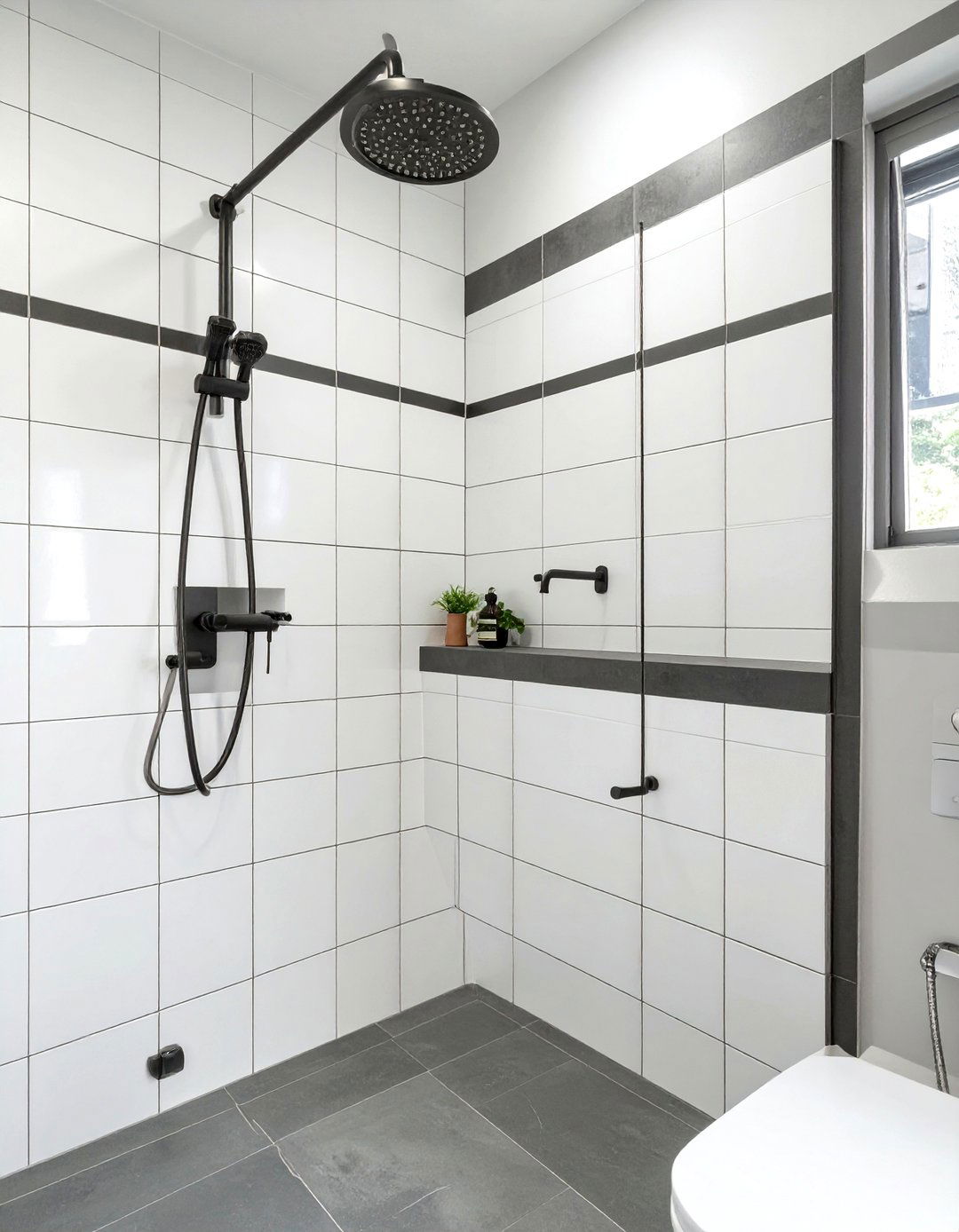
Adding a decorative tile border or a vertical stripe is a cost-effective way to add a custom touch to a small shower. This allows you to incorporate a small amount of a more expensive or highly patterned tile without the cost of tiling an entire wall. A vertical stripe can draw the eye upward, creating an illusion of height, while a horizontal border can add a classic, polished detail. This accent breaks up the monotony of a single tile field and provides a focal point, adding personality and a designer feel to an otherwise simple shower design.
Conclusion:
Ultimately, the best tile for a small bathroom shower is one that marries function with personal style. By using clever strategies like large-format tiles, vertical installations, or light-reflecting finishes, you can make any small space feel brighter and more expansive. Whether you opt for a bold pattern, a subtle texture, or a timeless neutral, the right tile choice is fundamental to creating a shower that is not only beautiful but also enhances the overall perception of the room. These ideas prove that limited square footage does not have to limit your design potential.

Related posts:



Leave a Reply