
Balancing entertainment and dining in a compact area presents a unique design challenge. A small living room must often serve multiple functions, seamlessly integrating a television for relaxation and a dining table for meals without feeling cramped or cluttered. The key is to employ clever strategies that maximize every square inch, using multifunctional furniture, smart layouts, and visual tricks to create a space that is both practical and inviting. From fold-down tables to integrated storage solutions, these ideas prove that you don't need a large footprint to accommodate both a cozy lounge and a comfortable dining spot.
1. Wall-Mounted TV Above a Slim Console with a Drop-Leaf Dining Table
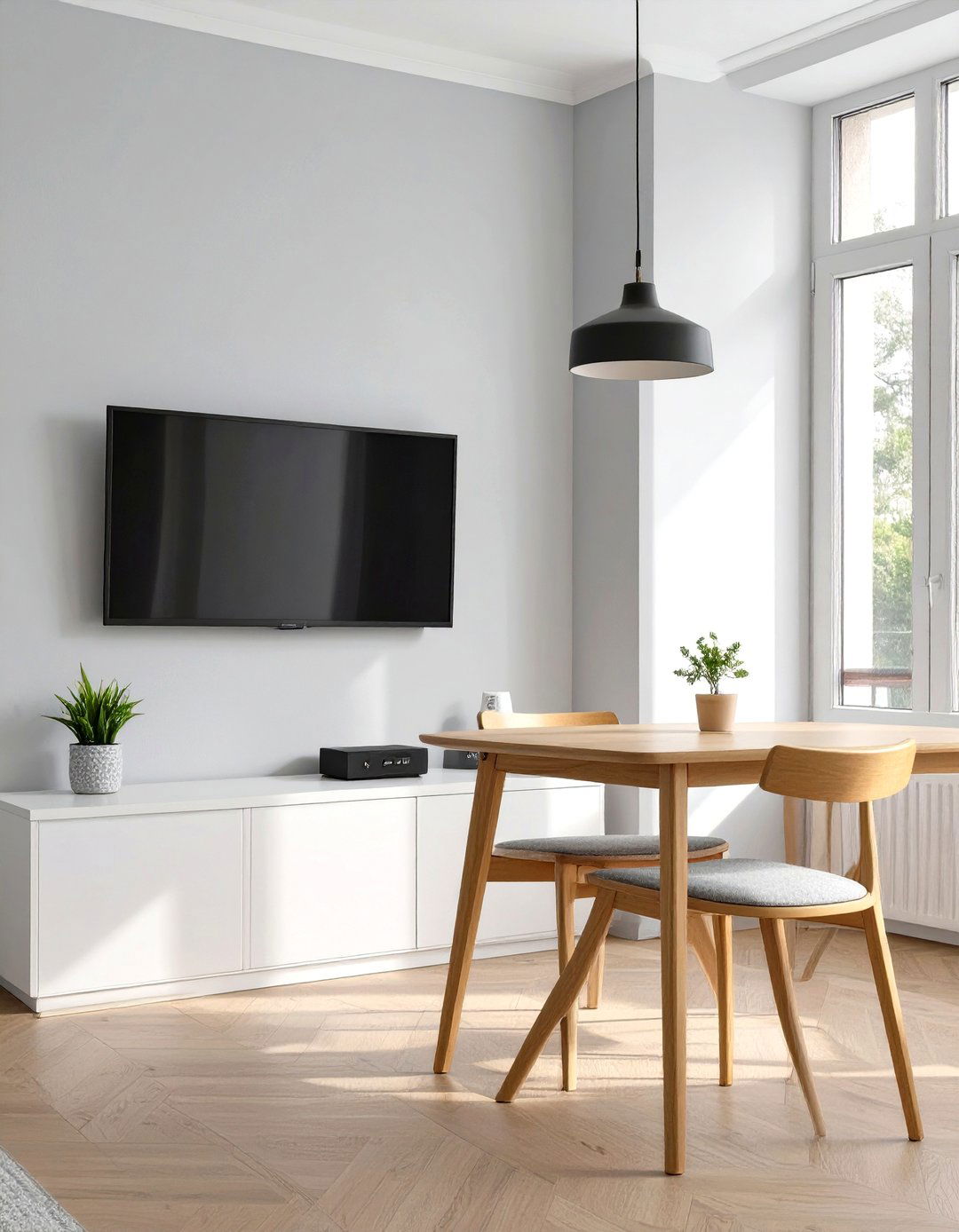
A wall-mounted TV is a classic space-saver, freeing up floor space that would otherwise be occupied by a bulky media unit. Pairing it with a slim, narrow console table provides just enough surface for essential devices without protruding too far into the room. This setup works harmoniously with a drop-leaf dining table placed against an adjacent wall. For daily use, keep one leaf down to save space, and simply raise it when guests arrive. This combination keeps the primary traffic areas open while ensuring both entertainment and dining needs are met efficiently and stylishly.
2. Integrated Media Wall Unit with a Pull-Out Dining Table
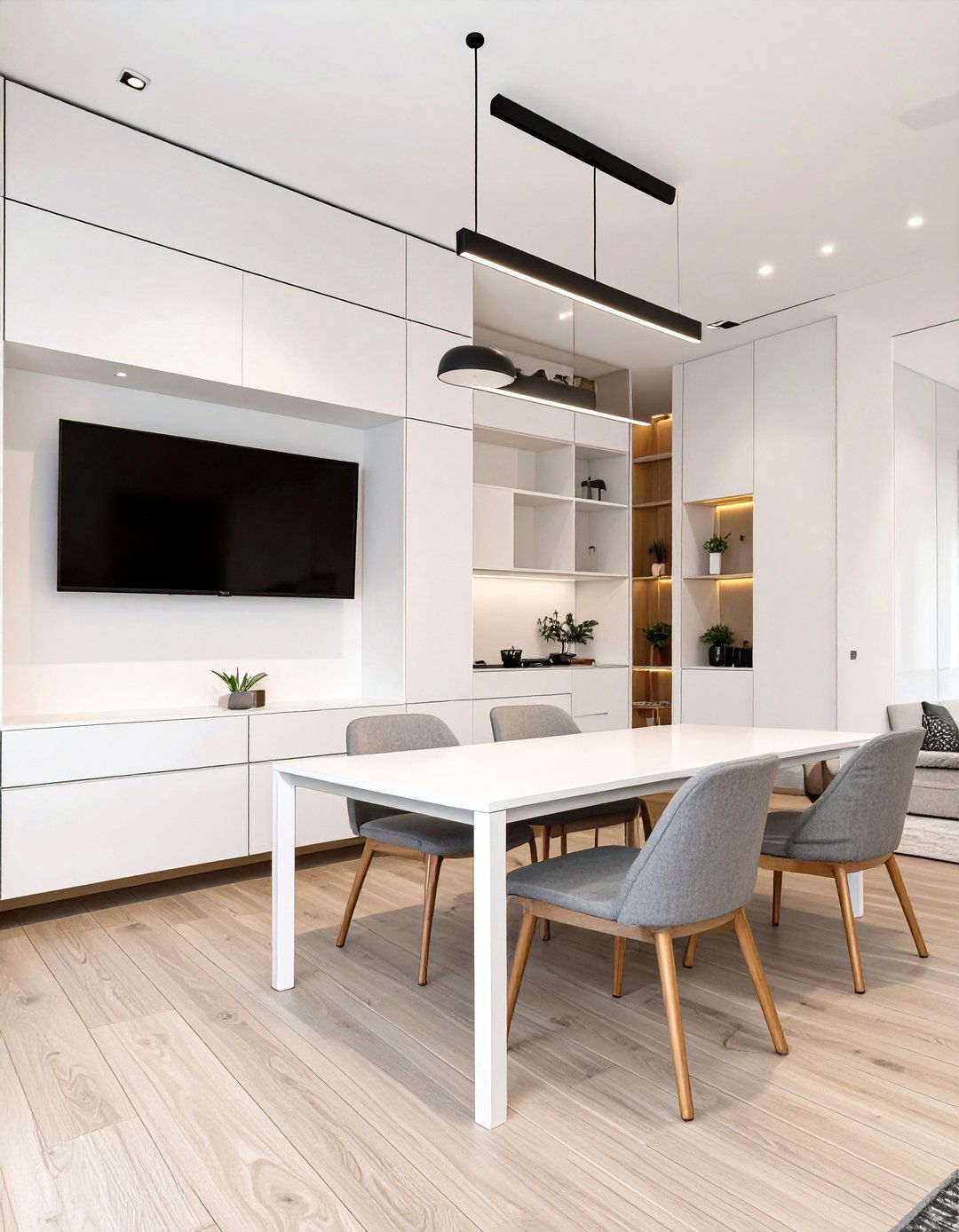
For a truly seamless look, consider an integrated media wall unit that incorporates a hidden, pull-out dining table. This custom or modular solution creates a sleek, unified aesthetic where the dining surface can be completely tucked away when not in use. The wall unit itself can house the TV, speakers, and other media essentials, while offering ample storage to keep clutter at bay. When it's time to eat, the table slides out effortlessly, transforming the living area into a dining space. This design is perfect for those who value a minimalist and ultra-organized environment.
3. Corner Banquette Seating with a Round Pedestal Dining Table
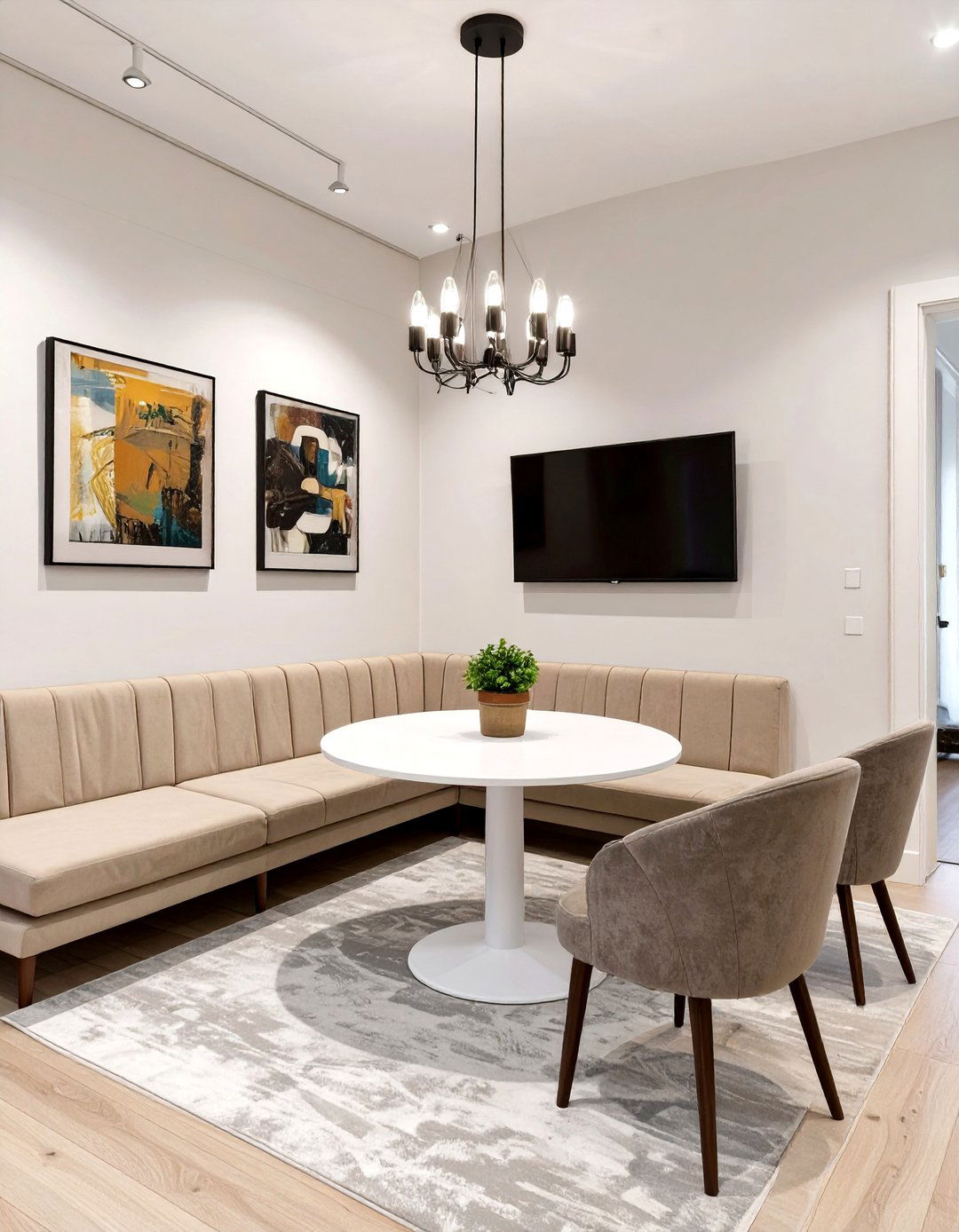
Utilizing a corner for dining is an incredibly efficient way to save space. A custom-built or store-bought banquette provides ample seating while taking up minimal floor area. Pair it with a round pedestal dining table, which eliminates bulky legs and allows chairs to be tucked in neatly. The TV can be mounted on the opposite wall, creating a distinct "zone" for entertainment. This layout not only maximizes seating but also adds a cozy, restaurant-inspired feel to your small living room, making the dining corner a comfortable and inviting nook for meals and conversation.
4. Back-of-the-Sofa Console Dining Table
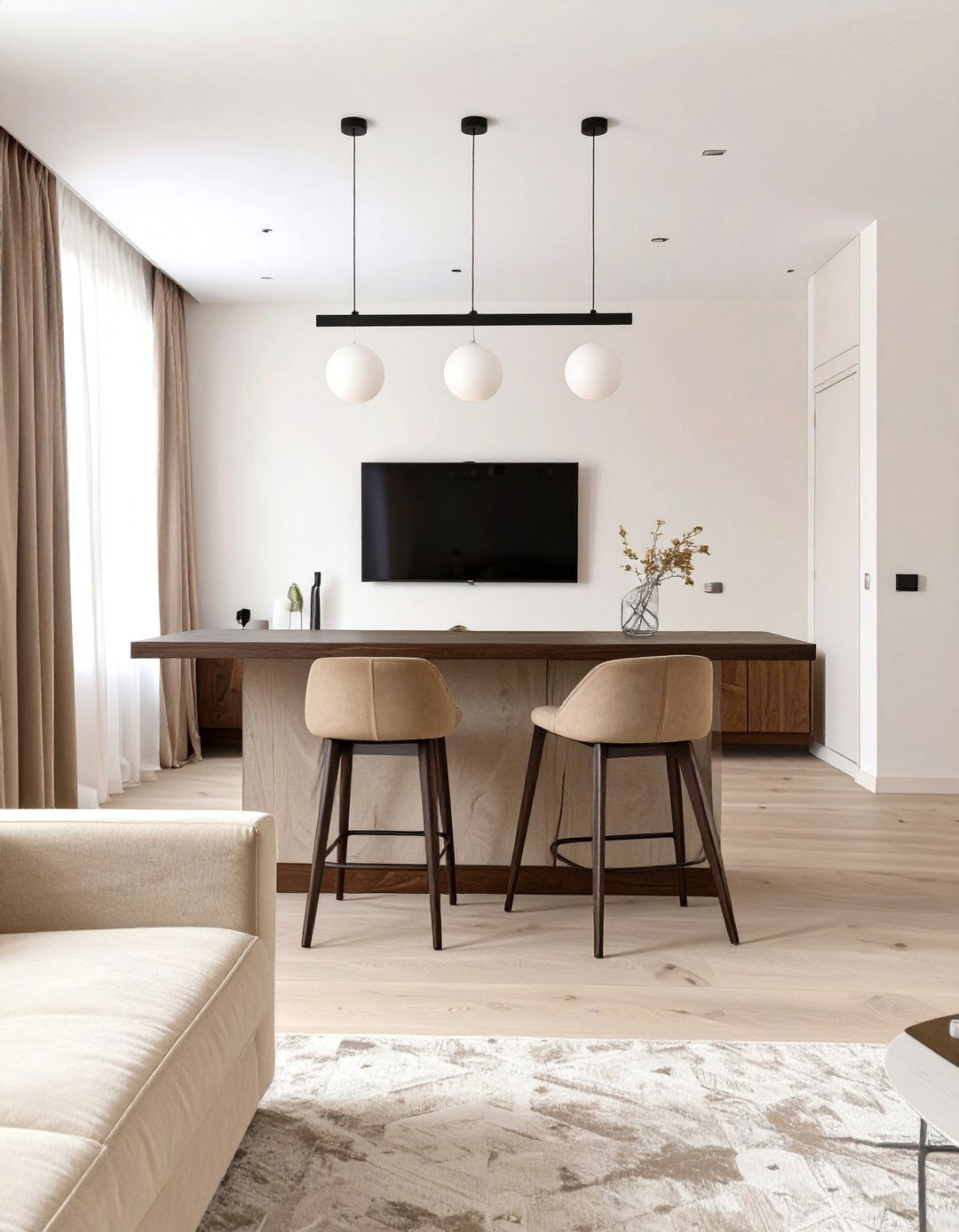
Placing a narrow console table directly behind your sofa creates a brilliant multi-purpose surface. This "sofa table" can serve as a slim dining bar, perfect for casual meals or as a workspace. Pair it with a couple of stylish bar stools that can be tucked underneath when not in use. The TV can be positioned on the wall opposite the sofa for comfortable viewing. This arrangement cleverly separates the living and dining functions without visually dividing the room, maintaining an open and airy feel while adding an extra layer of functionality right in the center of the space.
5. Extendable Coffee Table That Converts to a Dining Table
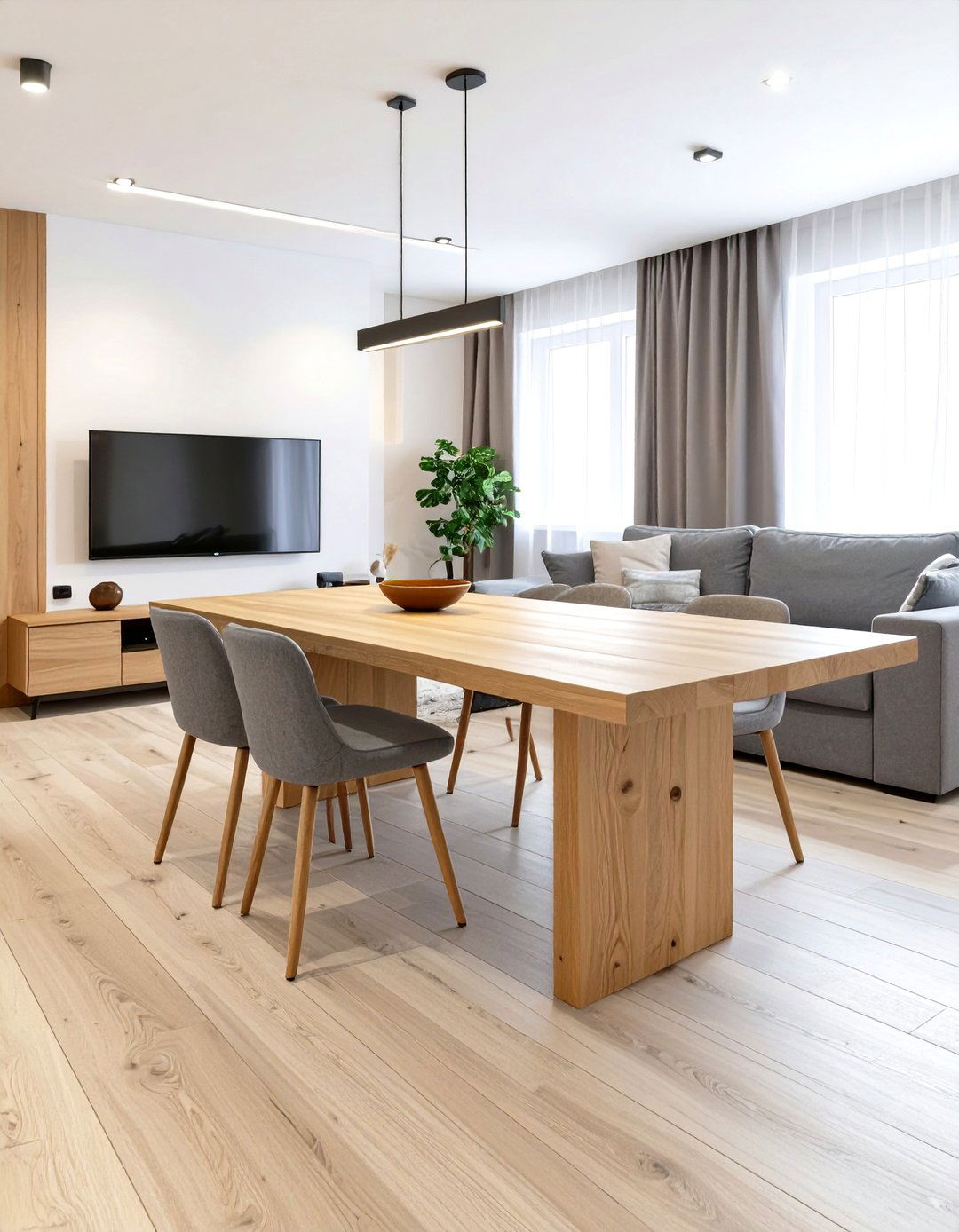
Multifunctional furniture is a small space's best friend, and a convertible coffee table is a prime example. These innovative pieces serve as a standard coffee table for everyday use but can be raised and extended to transform into a full-sized dining table. This eliminates the need for a separate dining set altogether, freeing up valuable floor space. Position your sofa and TV as you normally would, and simply activate the table's transformation when it's time for dinner. It's an ideal solution for those who entertain occasionally but need their living area to remain uncluttered day-to-day.
6. Glass Dining Table to Reduce Visual Weight
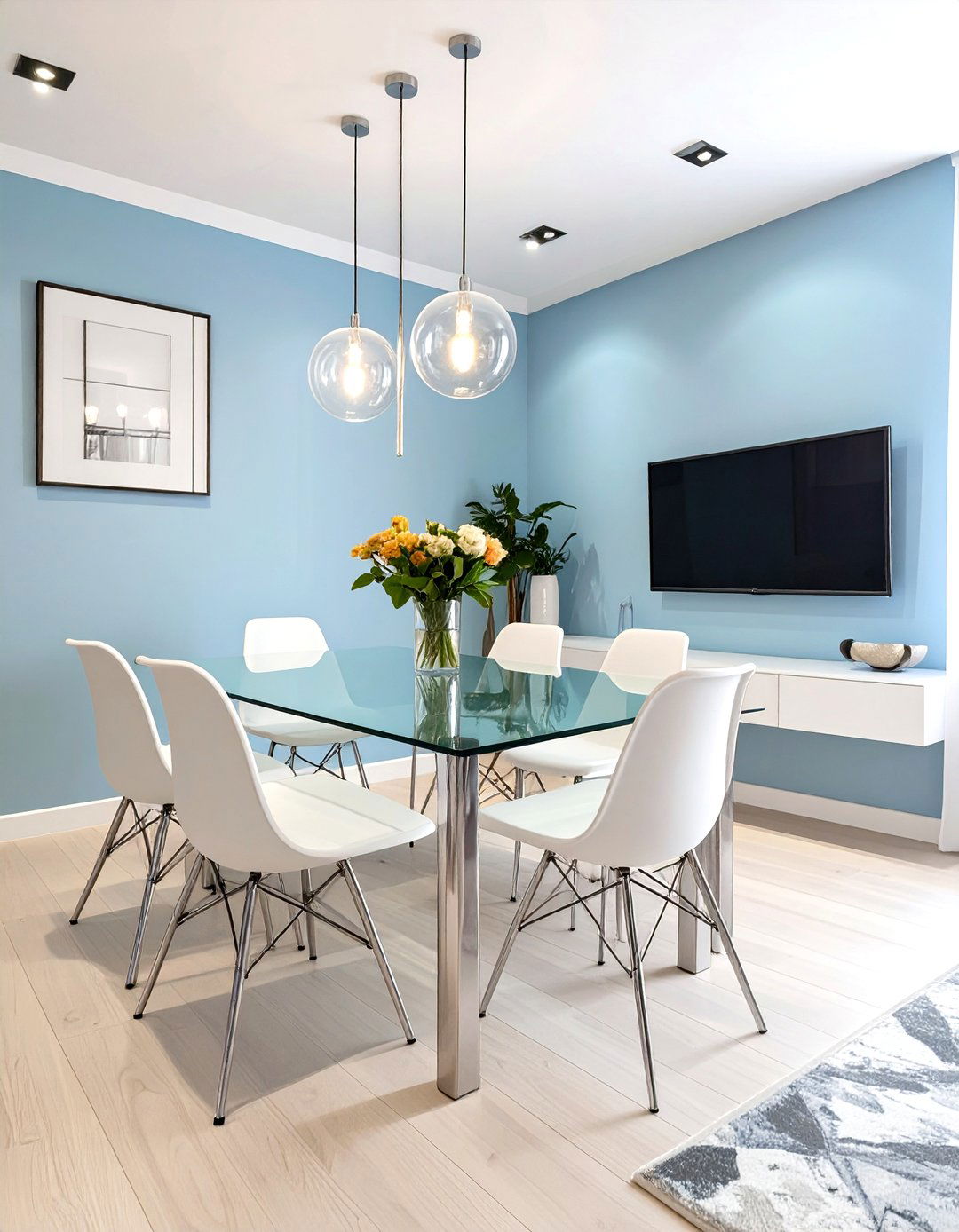
To create the illusion of more space, opt for furniture with a light visual footprint. A glass dining table is an excellent choice as its transparency allows the eye to travel through it, making the room feel more open and less crowded. Paired with slender chairs, it can be tucked into a corner or placed against a wall without overwhelming the area. Position the TV on a minimalist media stand or mount it on the wall to continue the airy, uncluttered theme. This approach ensures your dining set is fully functional without visually dominating the small living space.
7. Vertical Zoning with a Raised Dining Platform
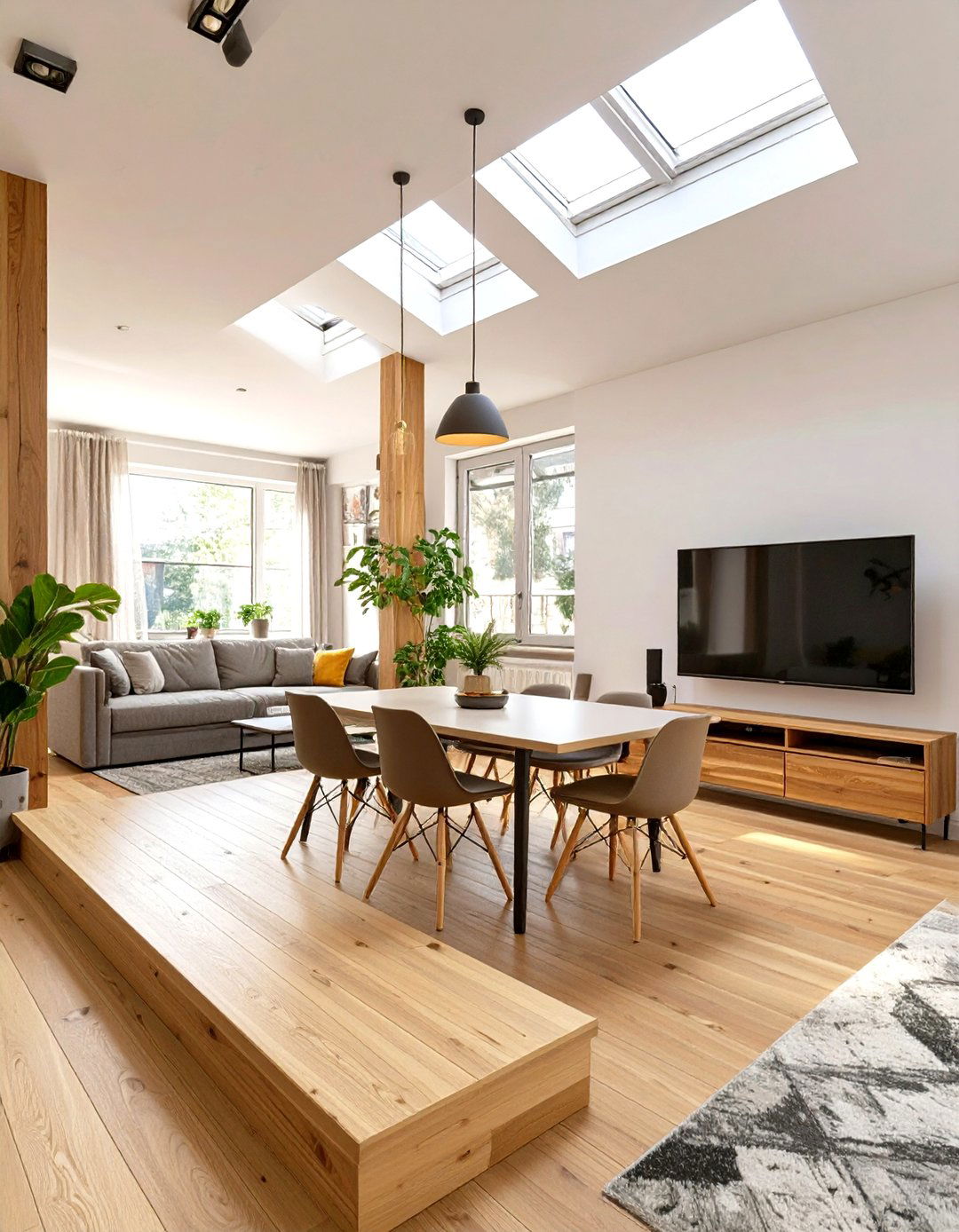
If your small living room has high ceilings, consider creating vertical zones. A slightly raised platform can be built to designate the dining area. This physical separation creates two distinct "rooms" without building any walls. Place a small dining table and chairs on the platform, and arrange your living room furniture, including the TV, on the lower level. This architectural approach adds depth and interest to the space, clearly defining the purpose of each area while maintaining a sense of openness. It’s a bold choice that makes a significant impact in a compact home.
8. Nesting Dining Tables for Ultimate Flexibility
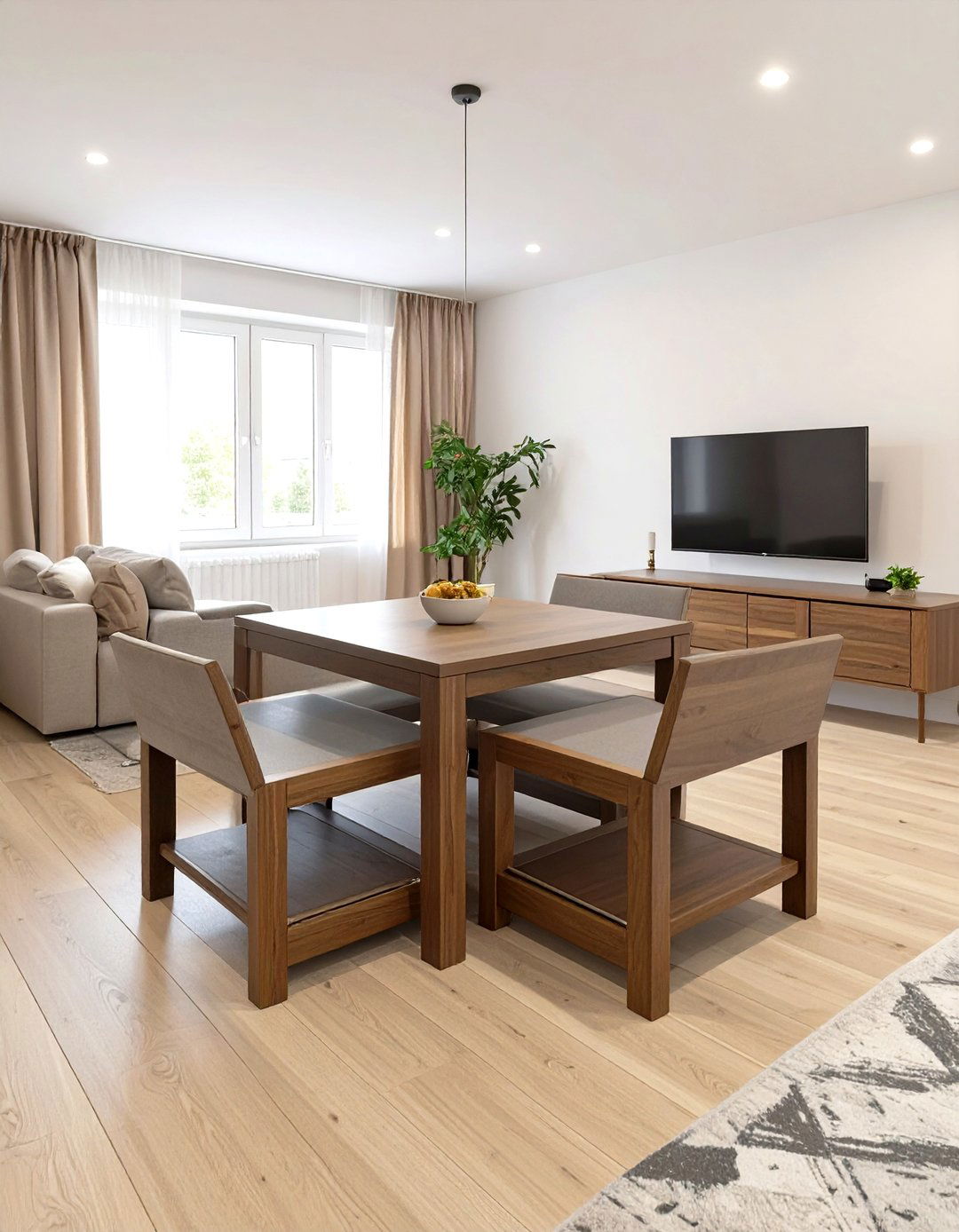
Nesting tables aren't just for coffee tables; they can also serve as a flexible dining solution. A set of nesting dining tables can be pulled apart to accommodate guests or kept stacked to save space for daily living. This is perfect for single occupants or couples who don't need a large dining surface every day. The TV and seating can be arranged traditionally, with the nested tables tucked against a wall or in a corner until needed. This adaptable system ensures you're always prepared for a meal, whether it's for one person or four.
9. Gateleg Dining Table Tucked Behind Furniture
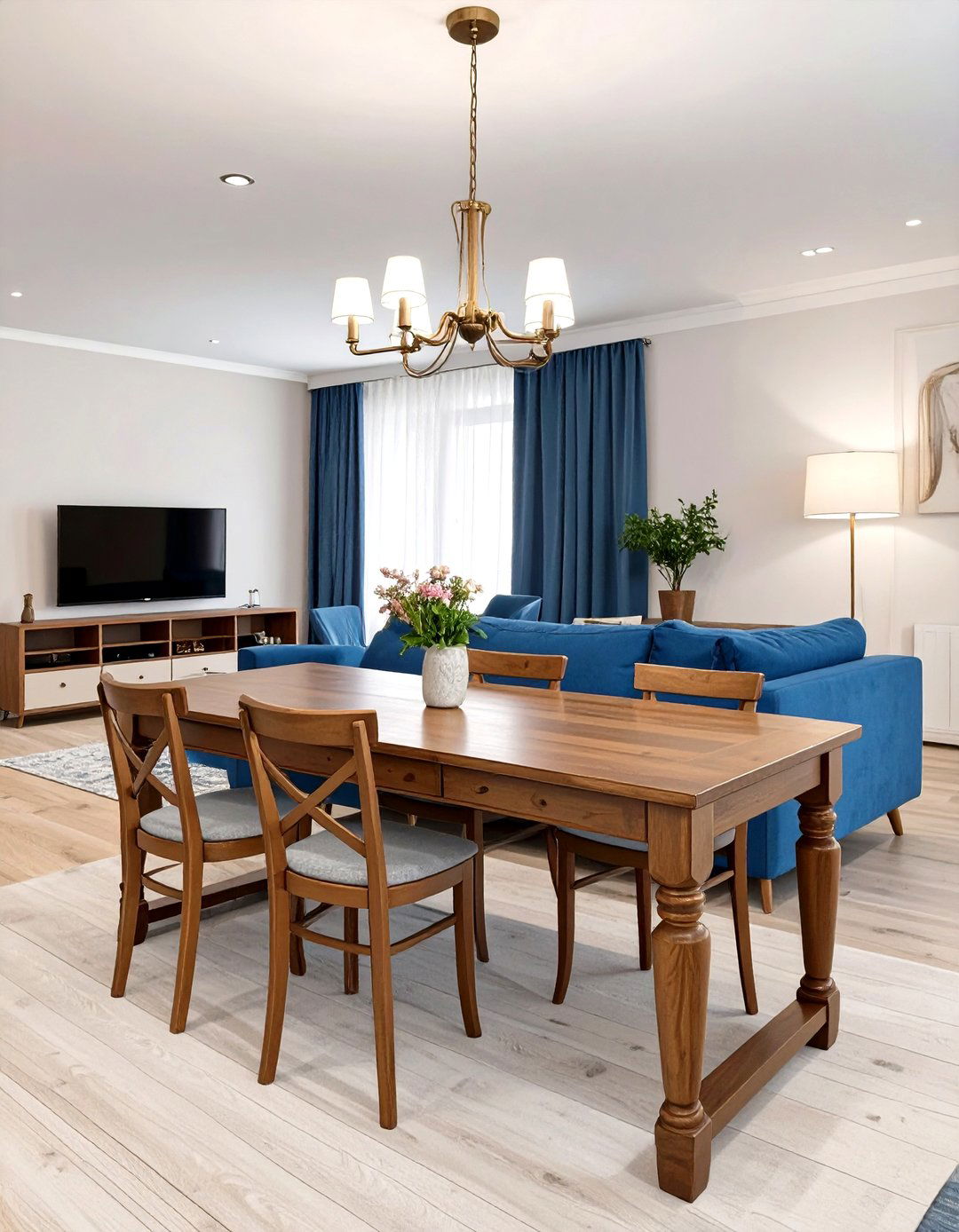
A gateleg table is a time-tested solution for small spaces. These tables have hinged leaves on both sides that can be folded down completely, creating a very slim profile. When not in use, the folded table can be discreetly tucked away behind the sofa or against a wall, appearing as a simple console table. For mealtime, simply lift one or both leaves and pull up a few folding chairs. This allows your living room to remain spacious and centered around the TV area, with the dining function ready to be deployed at a moment's notice.
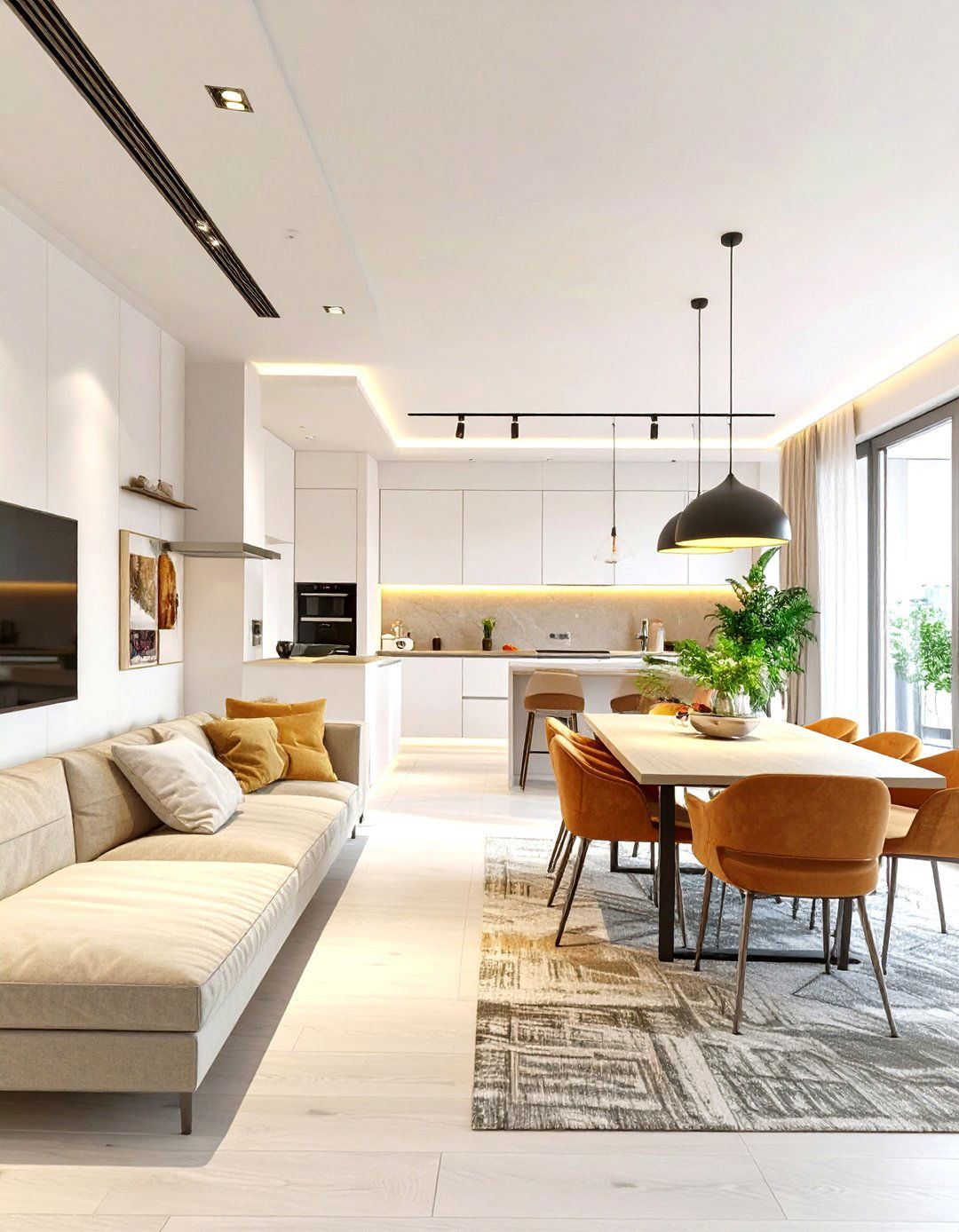

10. Using an Ottoman with a Tray as a Makeshift Dining Surface
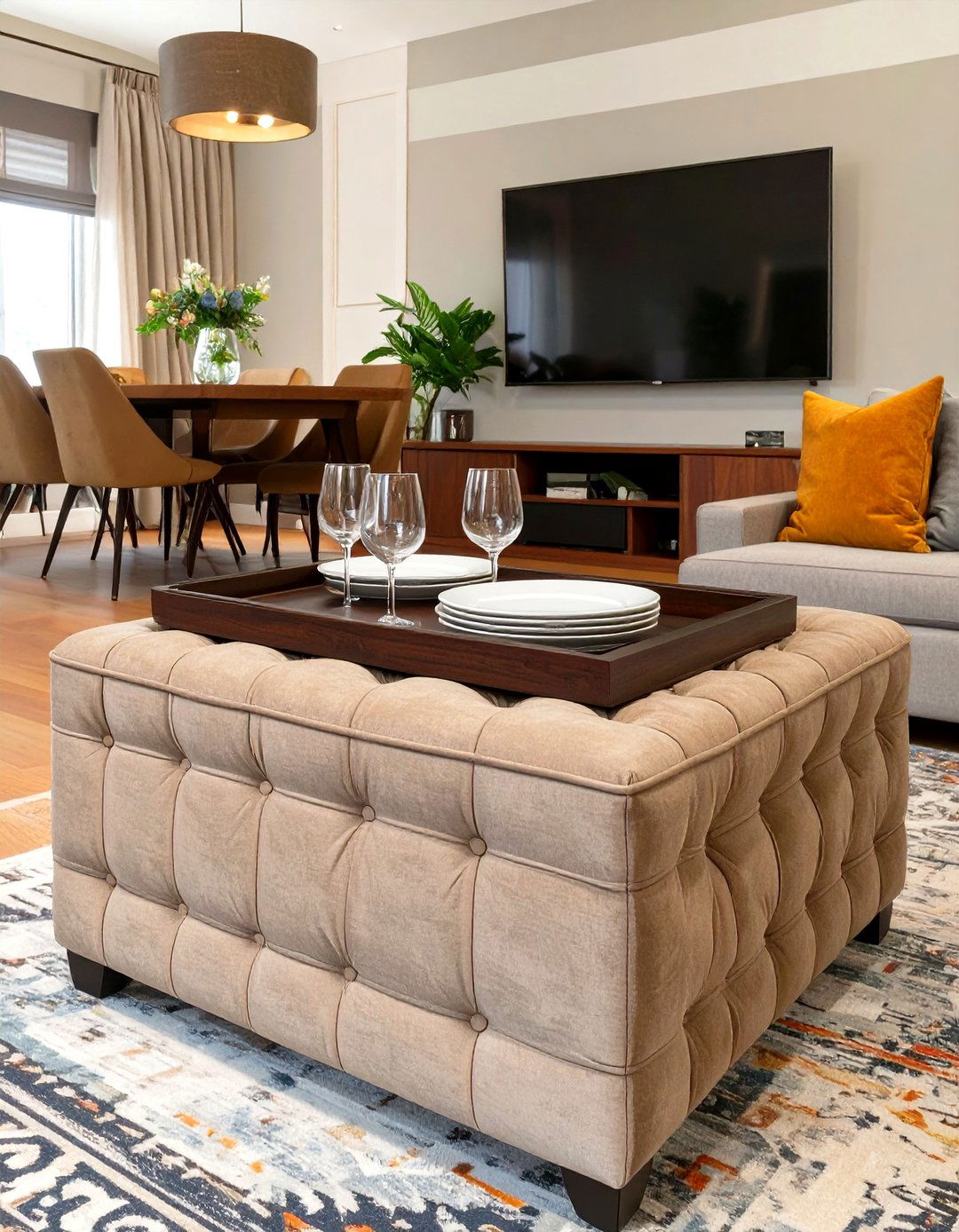
For an ultra-casual and flexible setup, use a large, flat-topped ottoman as your coffee table. Place your TV and sofa in a comfortable arrangement for viewing. When it's time to eat, a sturdy tray placed on the ottoman instantly transforms it into a stable surface for plates and drinks. This works especially well for solo diners or couples who enjoy watching TV while they eat. The ottoman can also provide extra seating or hidden storage, making it a truly hardworking piece of furniture in a small living room where every item must count.
11. Floating Wall Desk as a Dual-Purpose Dining Spot
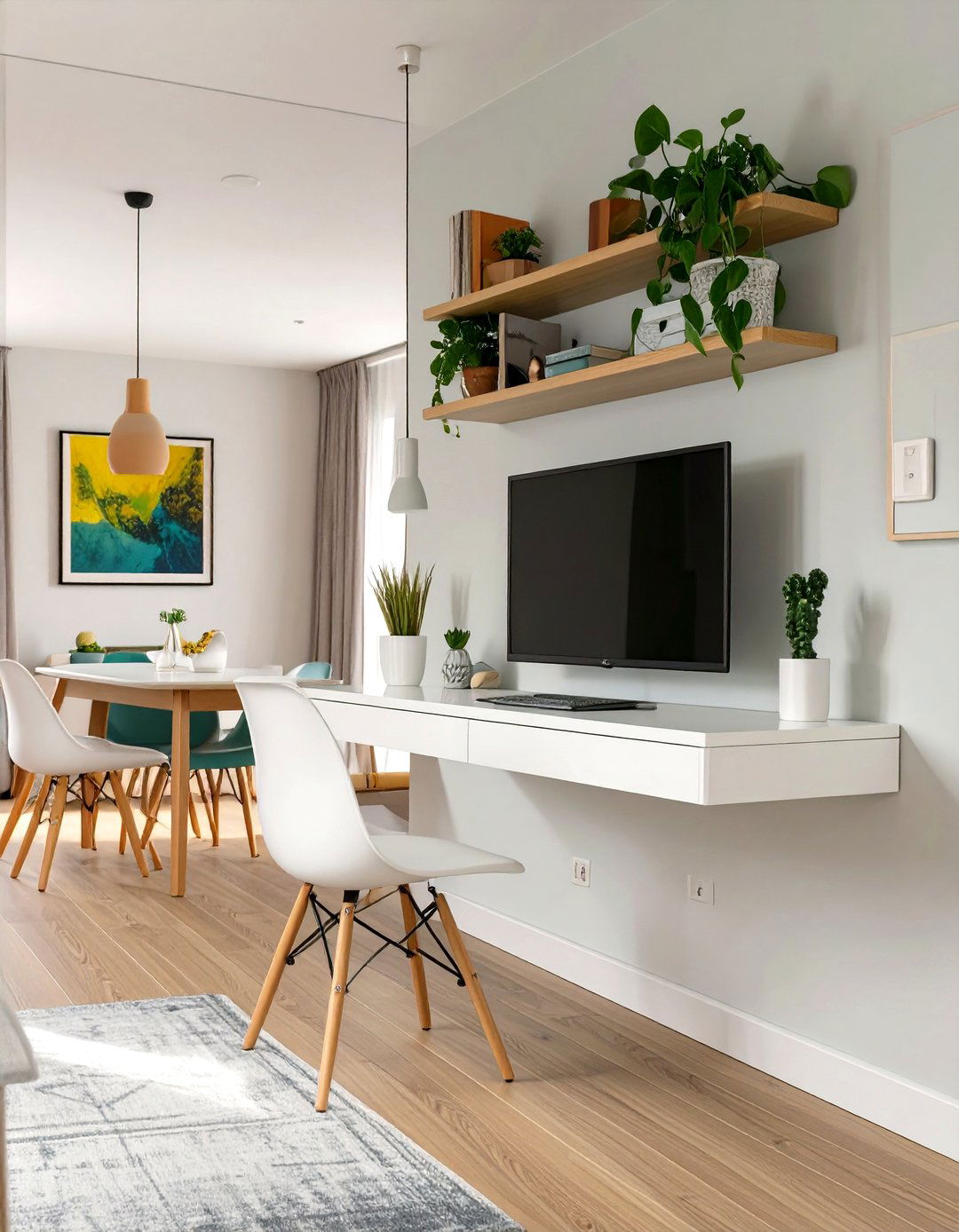
A wall-mounted floating desk is a minimalist's dream, offering a surface for work or dining without any cumbersome legs. Install one near a window or on a free wall, and pair it with a stylish chair that can be tucked underneath. This creates a dedicated spot for one or two people to dine comfortably. The rest of the living room can be arranged around the TV as the central focal point. This solution is perfect for apartment dwellers or anyone who needs a functional dining area that occupies virtually zero floor space, keeping the room feeling open.
12. Movable Kitchen Island or Cart as a Dining Table
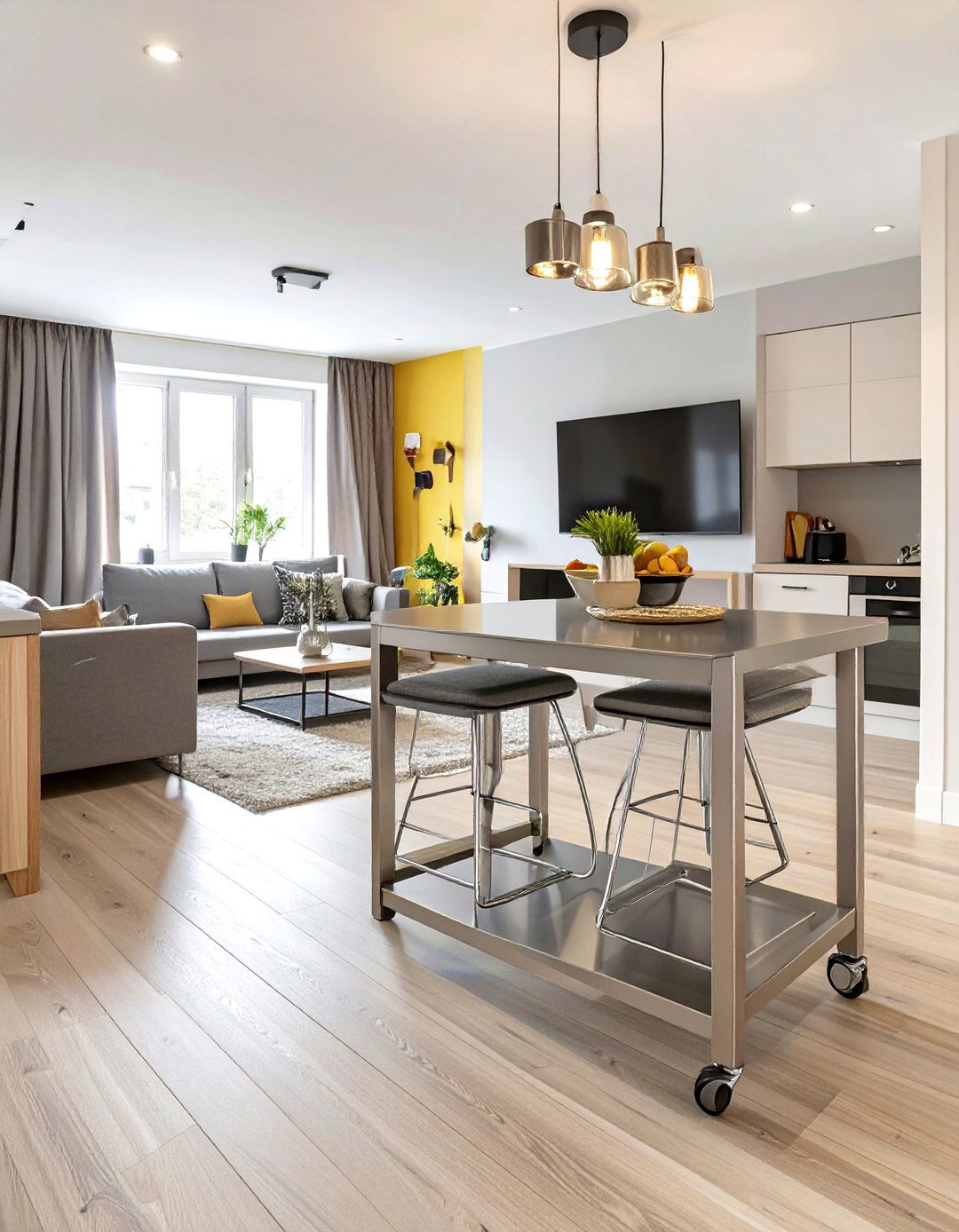
If your small living room is adjacent to the kitchen, a movable kitchen island or bar cart on wheels can serve as your dining table. Roll it into the living area when needed and position it for a meal, then simply roll it back to the kitchen to free up space. This provides not only a dining surface but also extra counter space and storage. Arrange your sofa and TV to face each other or in an L-shape, leaving a clear path for the cart. This dynamic solution offers ultimate flexibility for open-concept living.
13. Low-Profile Furniture to Create a Sense of Height
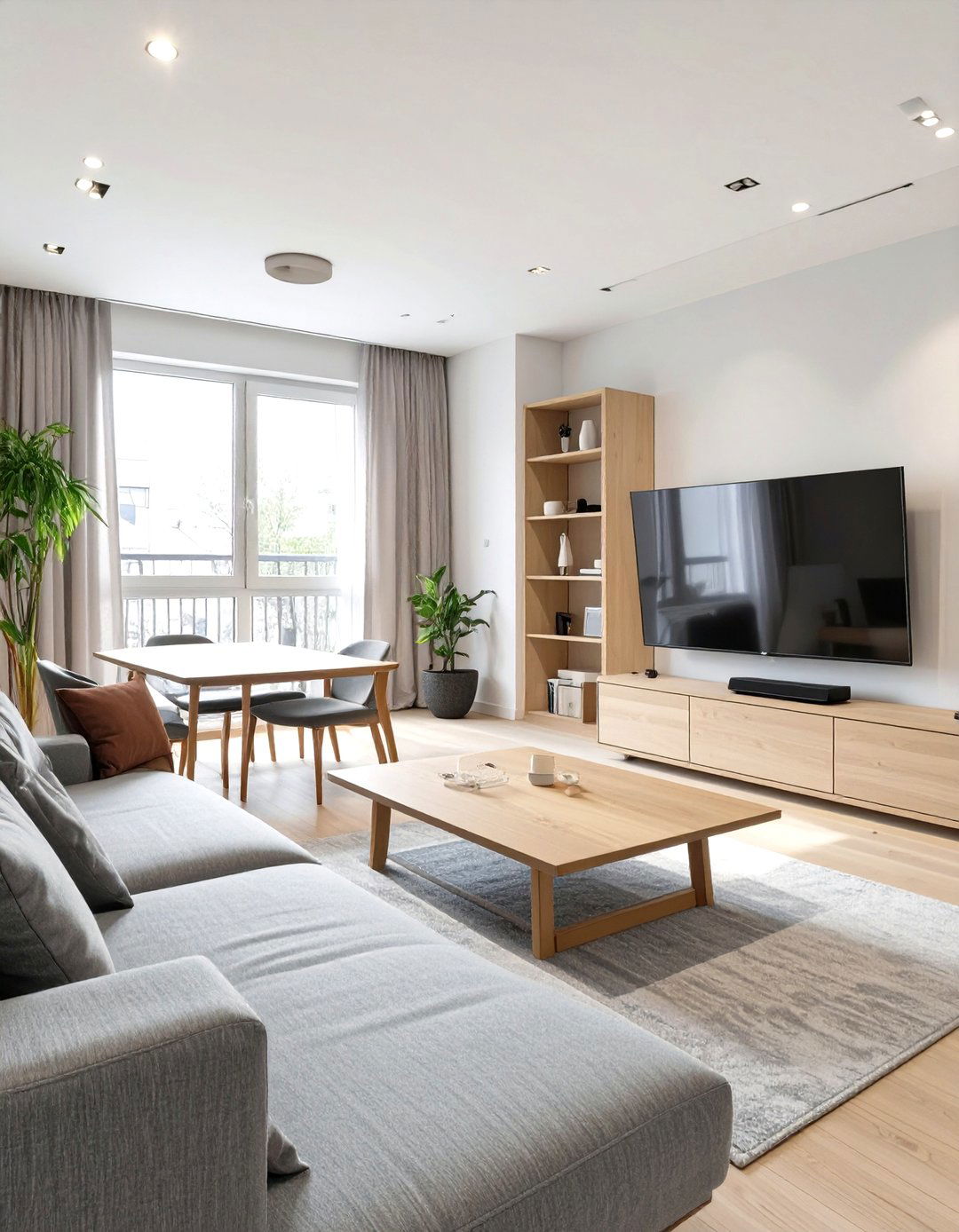
Using low-profile furniture, such as a low-slung sofa and a short media console for the TV, can make a small living room feel taller and more spacious. This visual trick leaves more open wall space above the furniture, creating an airy atmosphere. In this setting, a small, low dining table, perhaps in a Japanese-style or paired with floor cushions, can be integrated without disrupting the horizontal lines of the room. This cohesive, low-to-the-ground approach makes the entire space feel more open and thoughtfully designed, accommodating both functions gracefully.
14. Mirrored Wall Behind the Dining Area
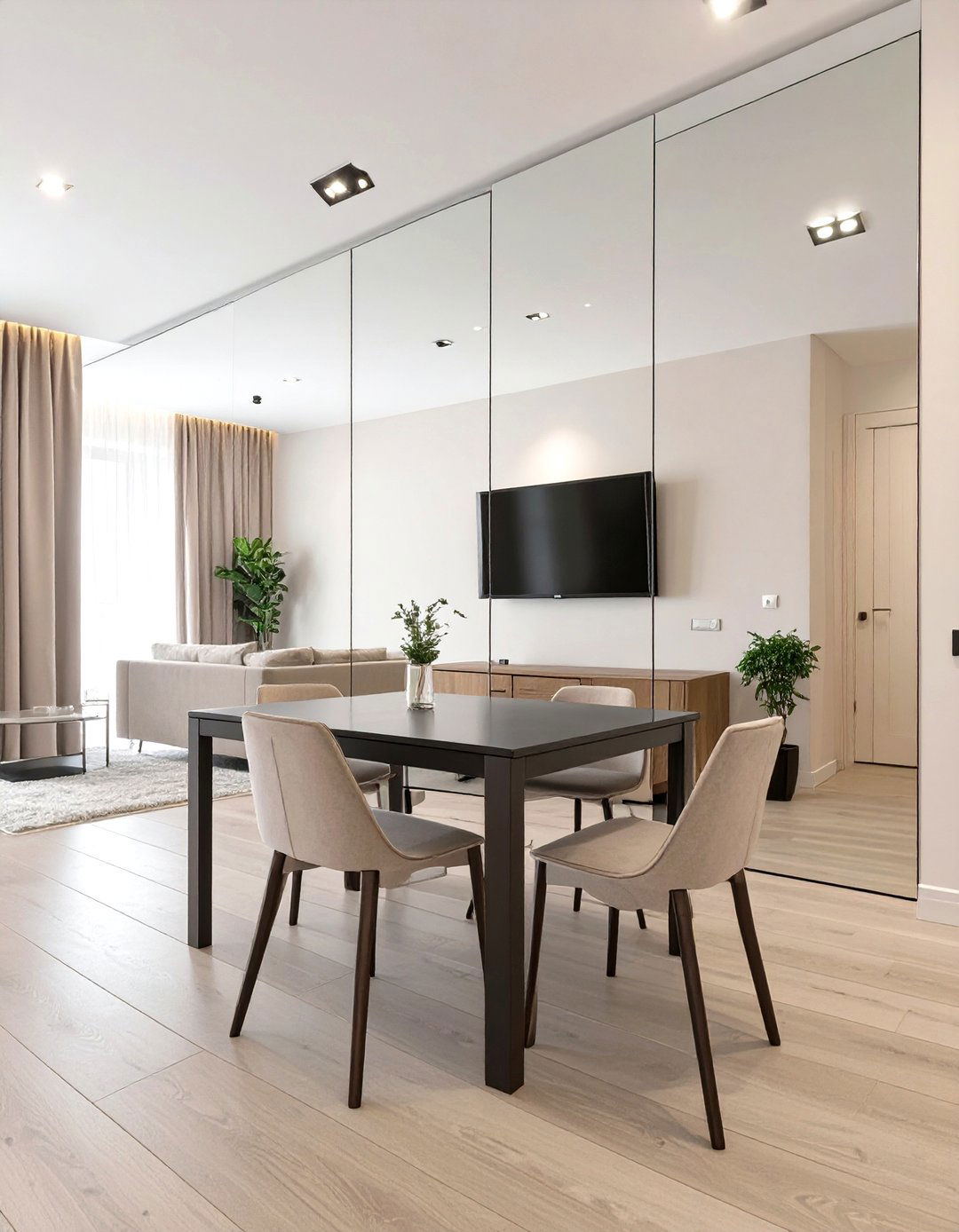
Mirrors are a powerful tool for enhancing the perception of space. Placing a large mirror or a series of mirrored panels on the wall behind your dining table can instantly make the room feel larger and brighter. The reflection creates an illusion of depth, visually doubling the size of the area. Set up a small, elegant dining table and chairs in front of the mirror, and arrange your TV and seating on another wall. The mirror not only helps define the dining nook but also reflects light, making the entire living room feel more expansive and glamorous.

15. Round Rug to Define the Living Area
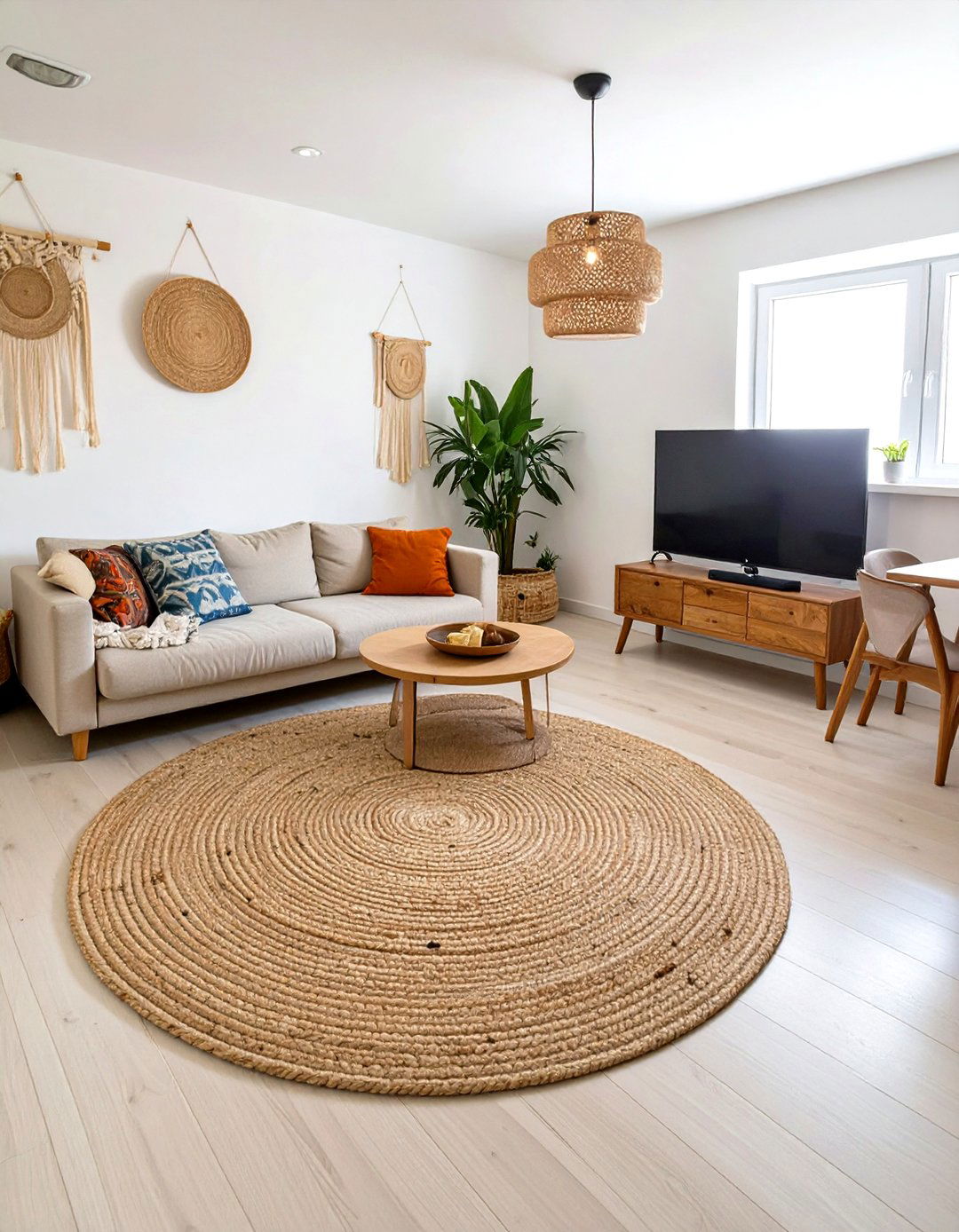
In a combined space, using rugs to define zones is a simple yet effective strategy. Place a large round rug in the center of the room and arrange your sofa, chairs, and coffee table on it. This visually anchors the living area and separates it from the dining space. The TV can be placed on a console against a wall facing the seating. A small dining table can then be positioned in a corner or off to the side, outside the boundary of the rug. This clear demarcation helps organize the room and prevents it from feeling like one jumbled space.
16. A Bar-Height Table Against a Wall
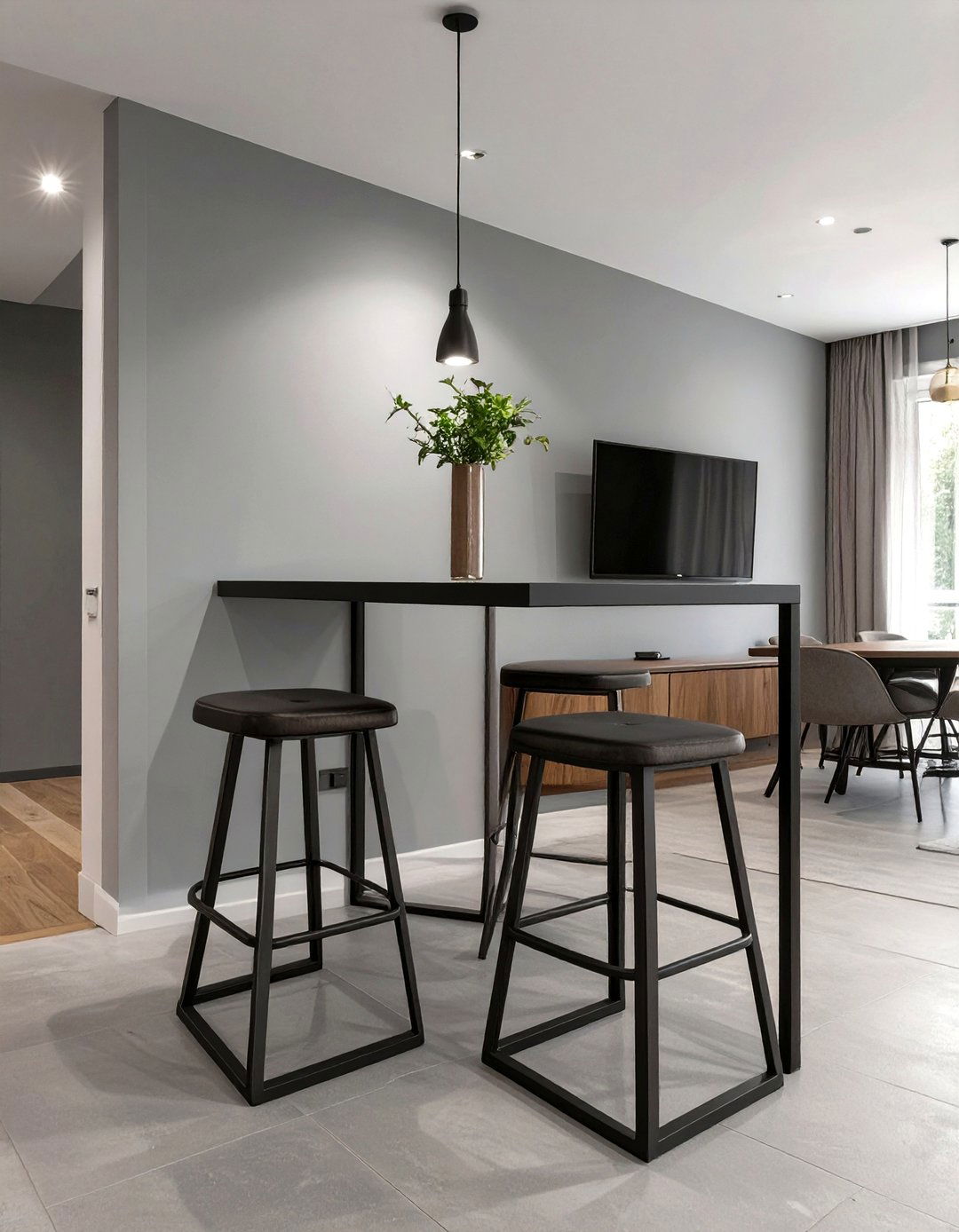
A tall, narrow bar-height table placed against an empty wall can function as a sleek and space-efficient dining area. Paired with two or three modern bar stools, it creates a dining spot that takes up very little floor space. The verticality of the arrangement draws the eye upward, which can help make a small room feel taller. This leaves the majority of the room open for your sofa and TV setup. It's a contemporary and stylish solution that feels more like a trendy café than a cramped dining room, perfect for small apartments.
17. Bookshelf Divider with an Integrated Dining Nook
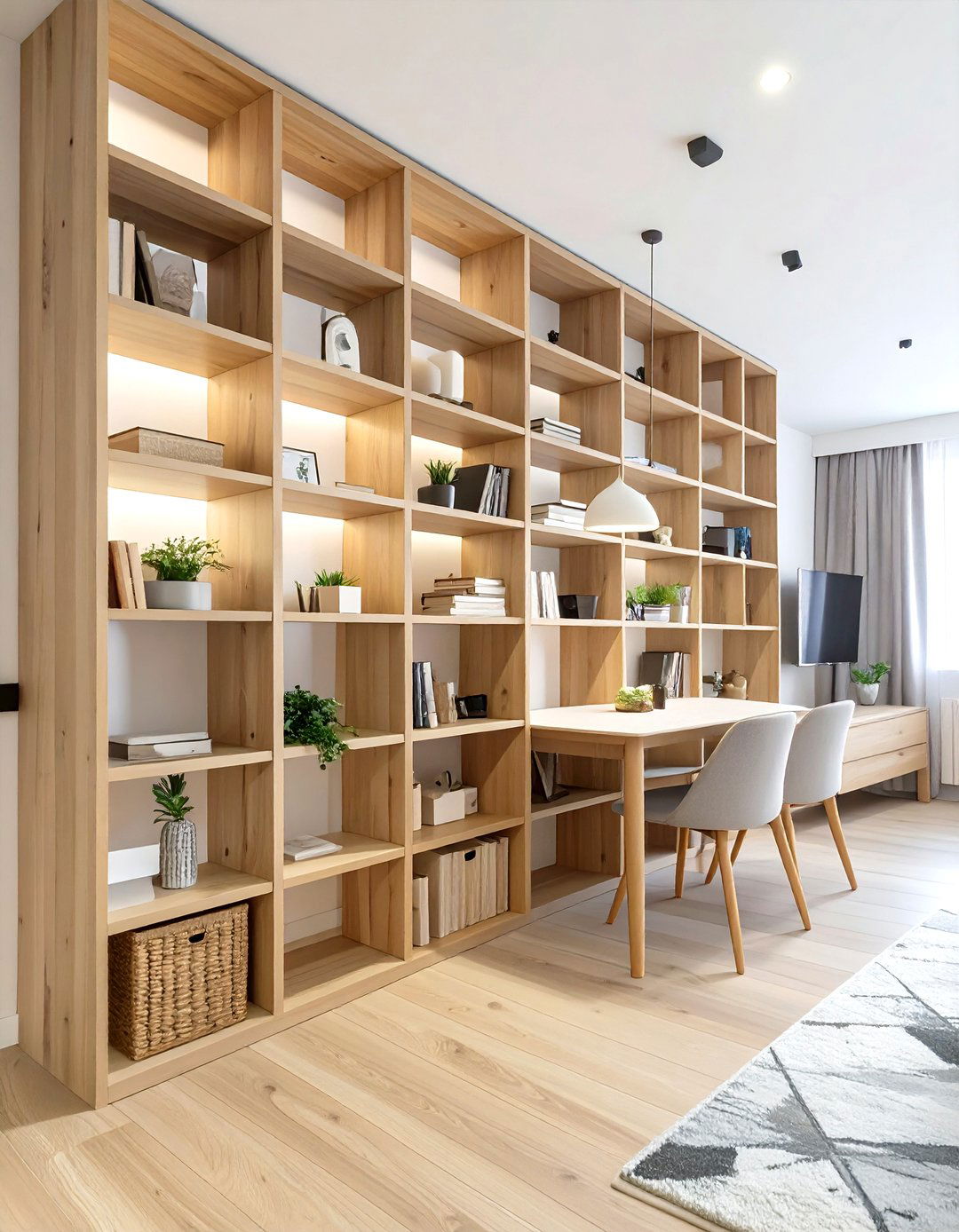
Create a subtle division of space with a tall, open-backed bookshelf. This acts as a semi-transparent wall, separating the living and dining areas without completely blocking light or sightlines. You can even find or create a bookshelf with a built-in folding desk or a wider bottom shelf that can serve as a dining surface. Place your TV against a solid wall, and use the bookshelf to carve out a cozy dining nook on the other side. The shelf also provides valuable storage for books, decor, and dining essentials.
18. Fold-Down Wall-Mounted Dining Table
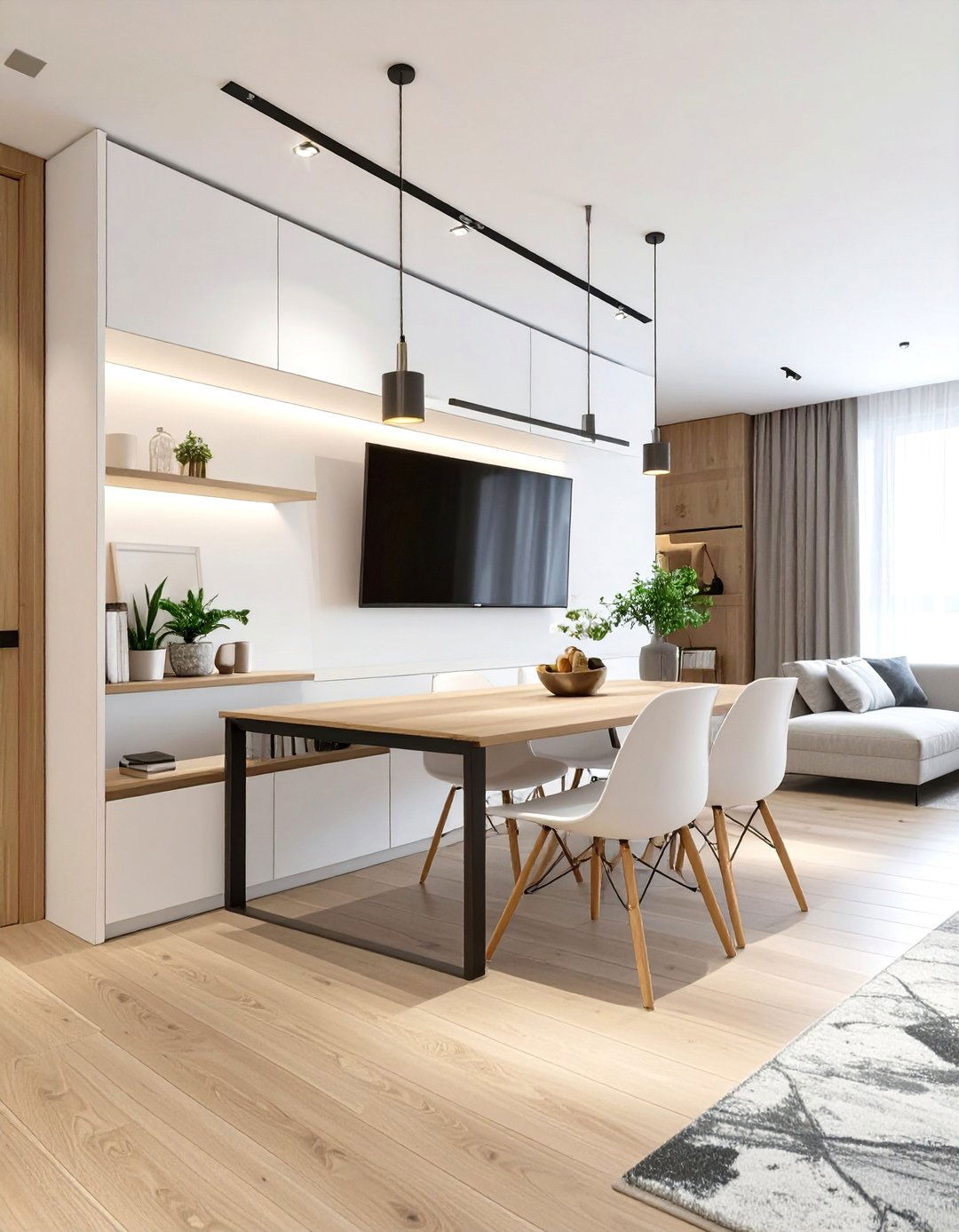
For the ultimate space-saving solution, a fold-down dining table that mounts directly to the wall is unbeatable. When not in use, it folds up flat against the wall, often appearing as a shallow cabinet or a piece of art. When you're ready to eat, you simply fold it down to reveal a sturdy dining surface. This frees up the entire floor area for your living room arrangement, allowing you to have a larger sofa or more circulation space around your TV and entertainment center. It's perfect for those who prioritize open space above all else.
19. Transparent Acrylic Furniture for a "Barely There" Look
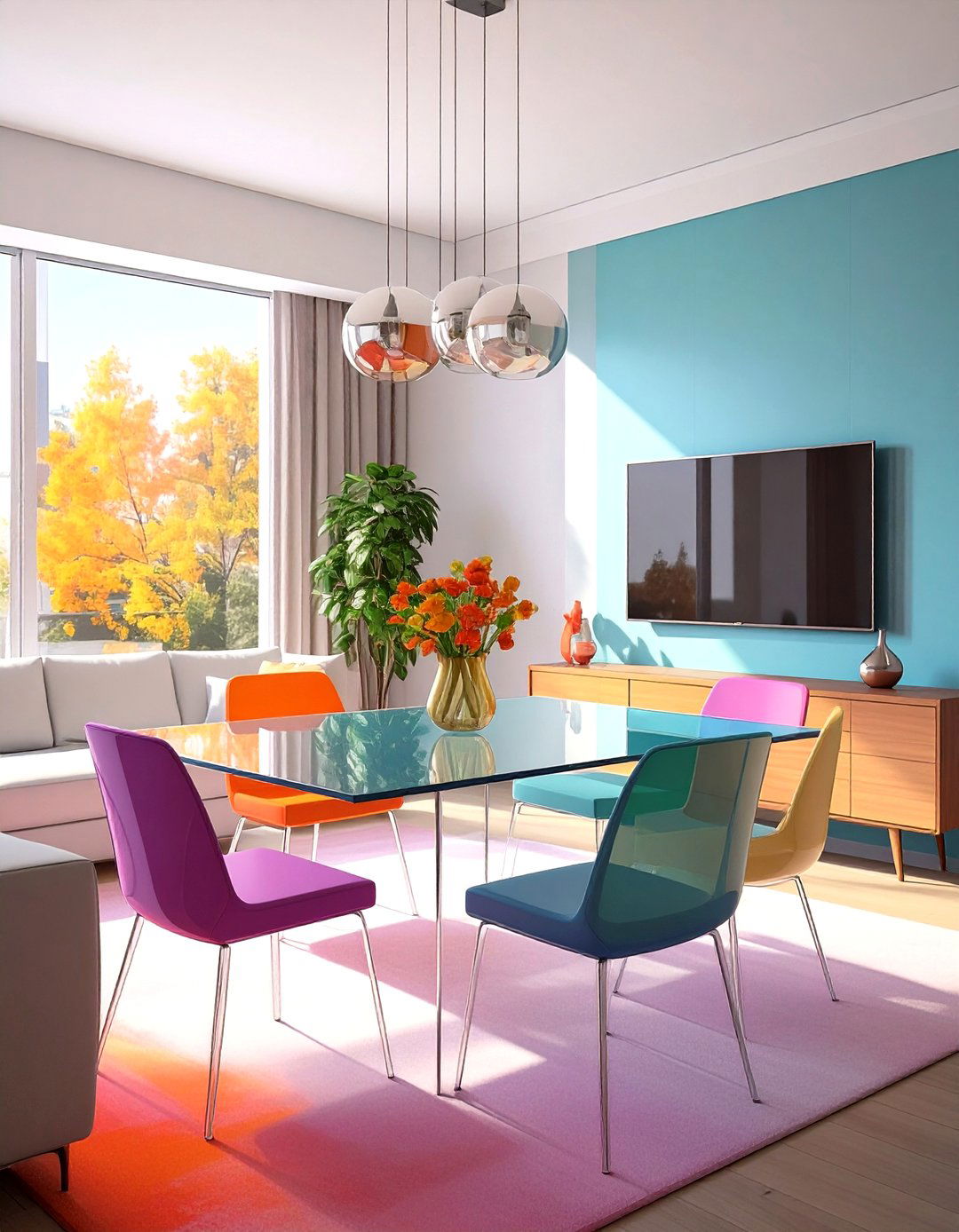
Similar to glass, acrylic or lucite furniture adds function without visual clutter. An acrylic dining table and chairs can seem to almost disappear, which is a huge advantage in a small room. This allows you to have a fully functional dining set that doesn’t make the space feel crowded. The "ghost" furniture allows the colors and textures of your rug and walls to show through, maintaining a cohesive and open feel. Position your TV and sofa as desired, and let the transparent dining set blend seamlessly into the background.
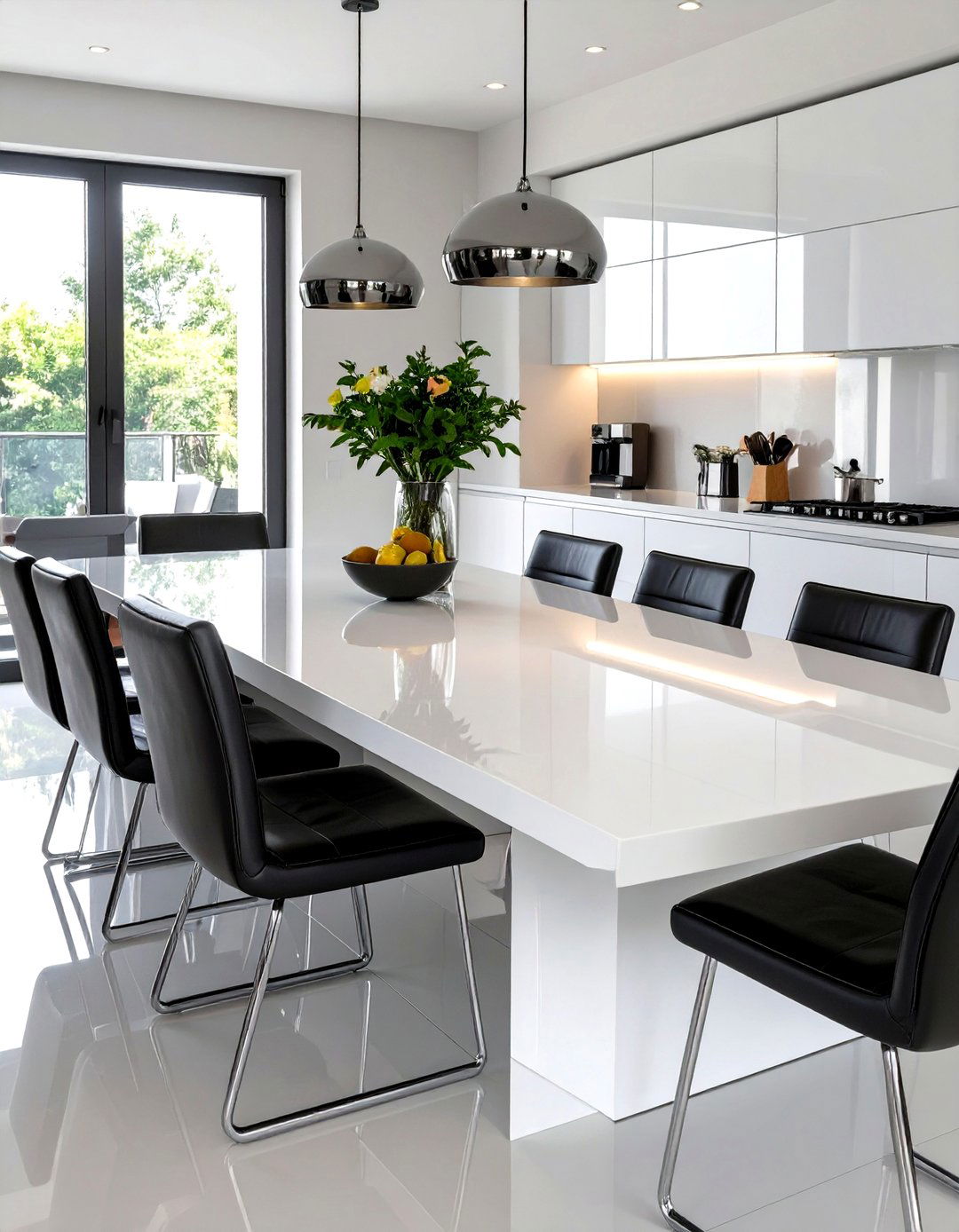


20. Sacrificing the Coffee Table for a Small Dining Table
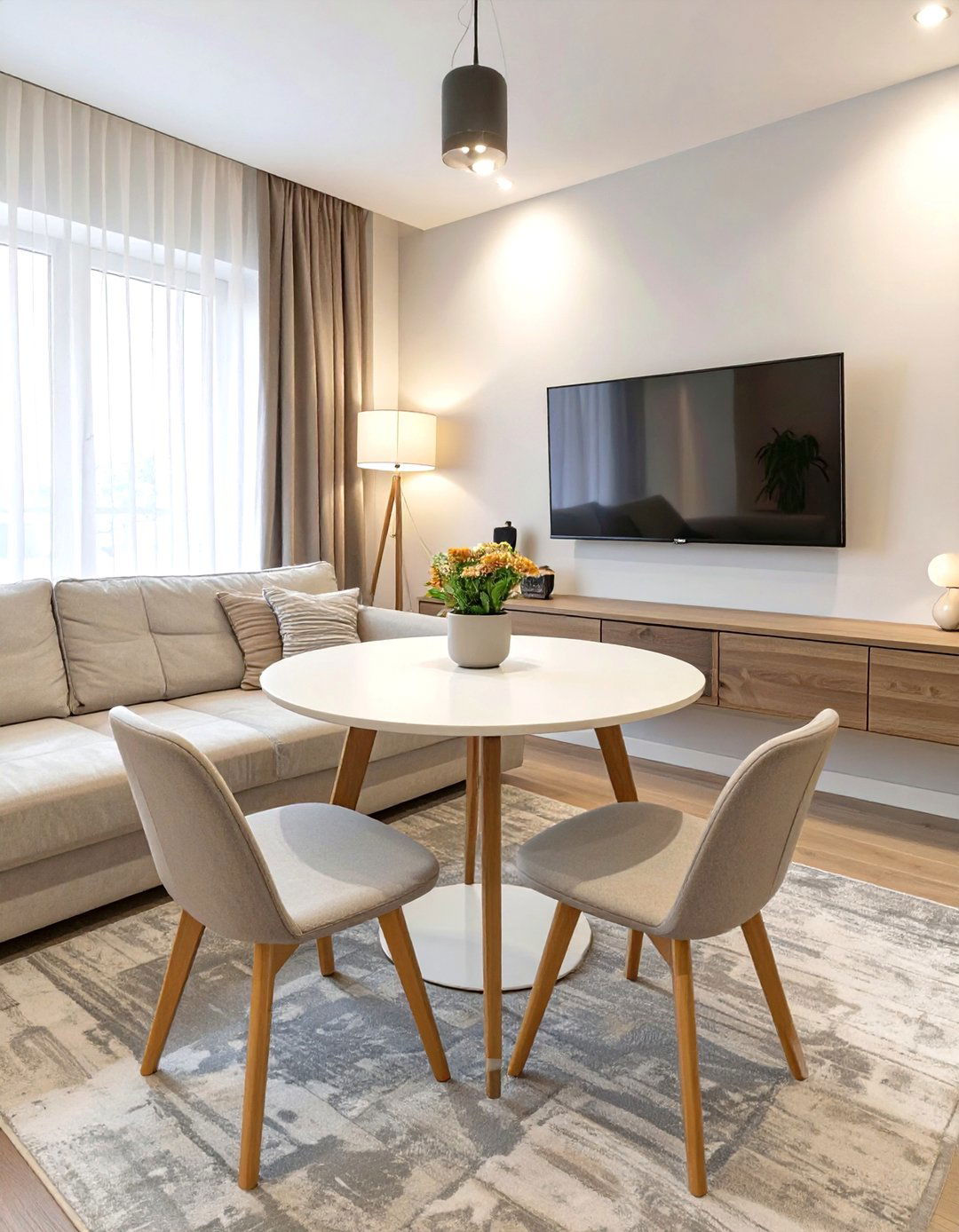
In a very tight space, sometimes you have to make a choice. Forgoing a traditional coffee table in favor of a small dining table can be a smart move. Place the small dining table in the middle of the seating area, where a coffee table would normally go. It can hold drinks and remotes when you're relaxing and serve as your meal spot when needed. Choose a round or oval table to improve flow and pair it with a couple of comfortable, compact chairs. Your TV can be wall-mounted to save even more floor space.
21. Matching Furniture Finishes for a Cohesive Look
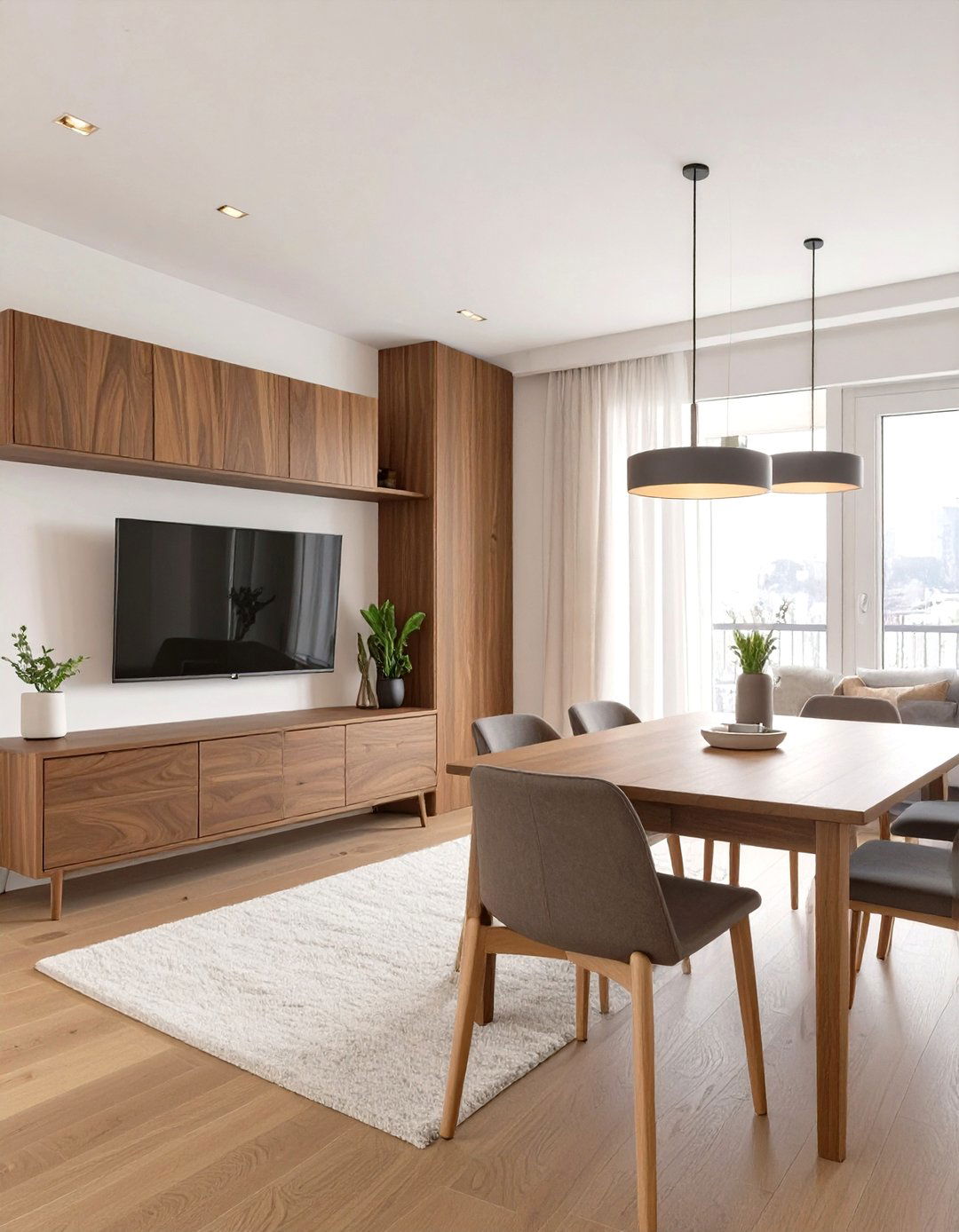
To create a sense of harmony in a multi-purpose room, use furniture with matching finishes. A dining table, media console for the TV, and side tables all made from the same wood or metal will create a cohesive, intentional look. This visual consistency helps the different zones blend together seamlessly, preventing the room from feeling chaotic or piecemeal. A unified color palette and material choice make the space feel more curated and less like a collection of random items forced to share a room, elevating the overall design.
22. L-Shaped Sofa to Define the Living Zone
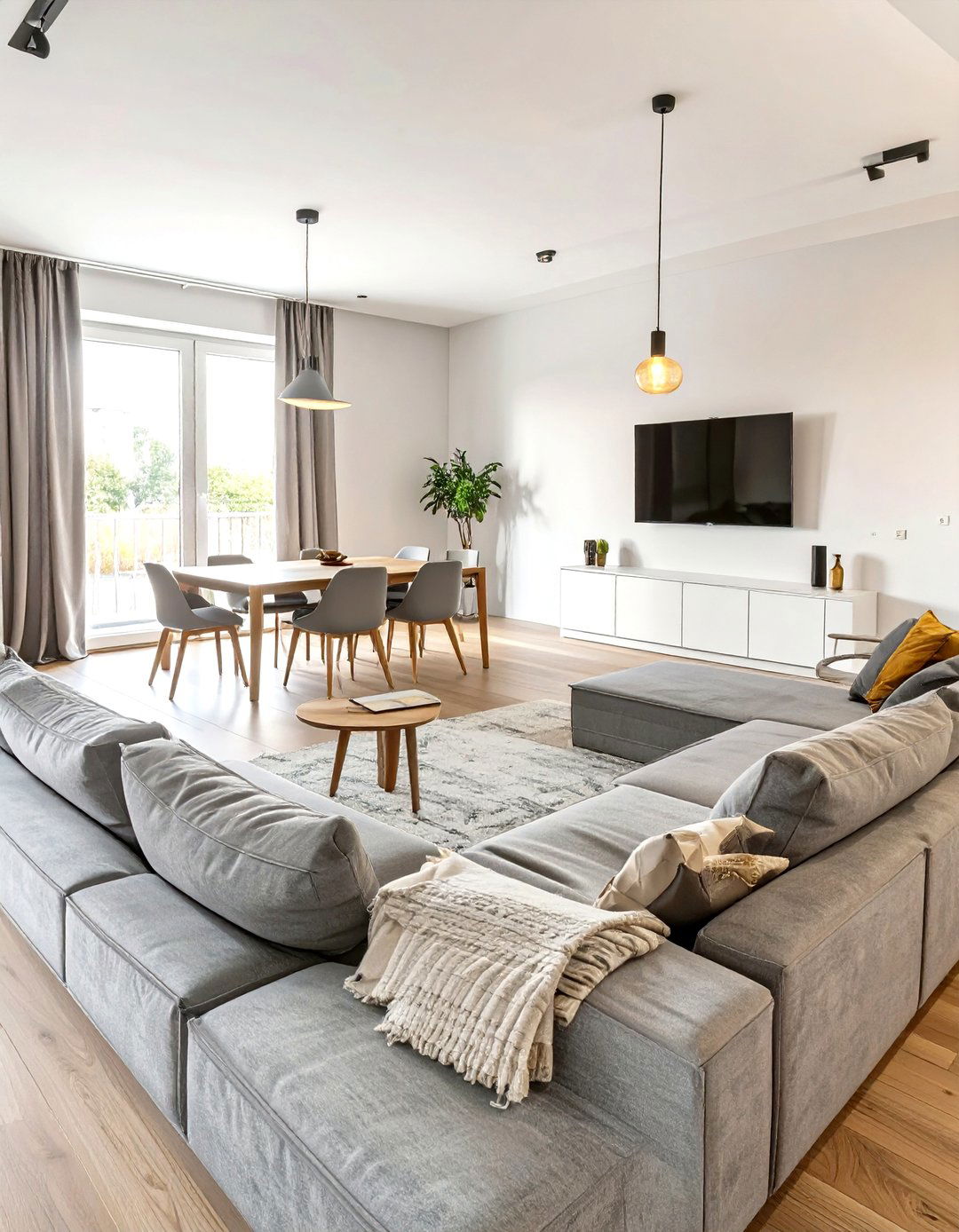
An L-shaped sectional sofa is excellent for creating a clear boundary for your living area. The back of the sofa can act as a natural divider, separating the lounge space from the rest of the room. Place the TV on the wall opposite the long side of the sofa. In the open space behind the shorter side of the "L," you can fit a small dining table and chairs. This layout effectively creates a "room within a room," giving both the living and dining areas their own distinct, cozy territory while maintaining an open-concept flow.
23. Wall Sconces for Lighting to Save Floor Space
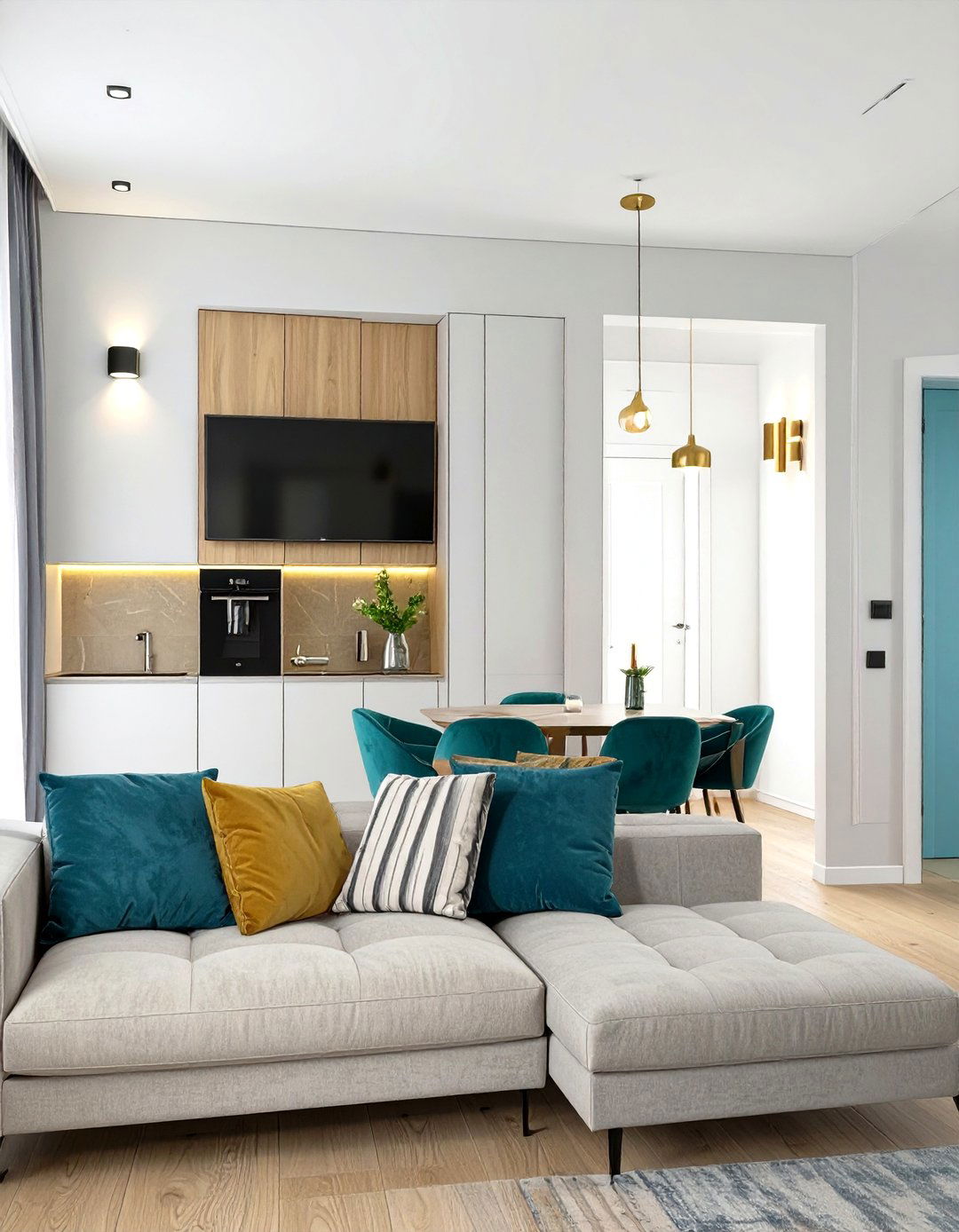
Free up precious floor and table space by opting for wall-mounted lighting. Instead of using floor lamps or bulky table lamps, install stylish wall sconces above the sofa and in the dining nook. This provides ample ambient and task lighting without cluttering surfaces. With lighting taken care of on the walls, you have more flexibility in placing your TV console and dining table. This approach contributes to a cleaner, more streamlined aesthetic, which is always beneficial in a small living room where every inch of space matters.
24. A TV on a Swivel Mount for Flexible Viewing
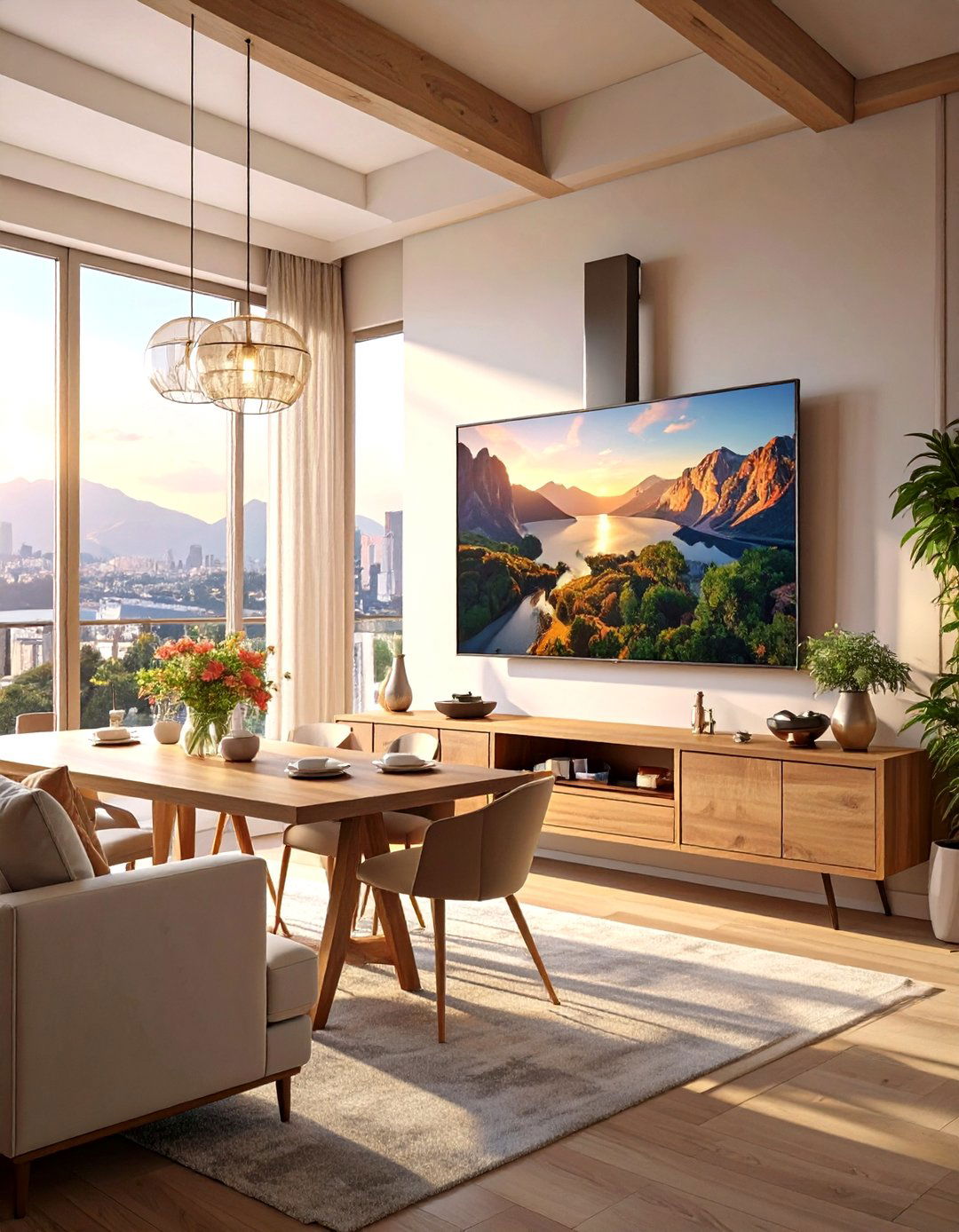
A TV on a swivel or articulating mount offers incredible flexibility. You can pull the screen out and angle it towards the dining table during meals, then push it back flat against the wall and turn it towards the sofa for movie night. This ensures optimal viewing from anywhere in the room without needing multiple screens. This simple piece of hardware allows your entertainment to adapt to your activity, whether you're dining, cooking in an adjacent kitchen, or lounging on the couch. It’s a small investment that greatly enhances the functionality of a dual-purpose space.
25. Using a Bench for Dining Seating
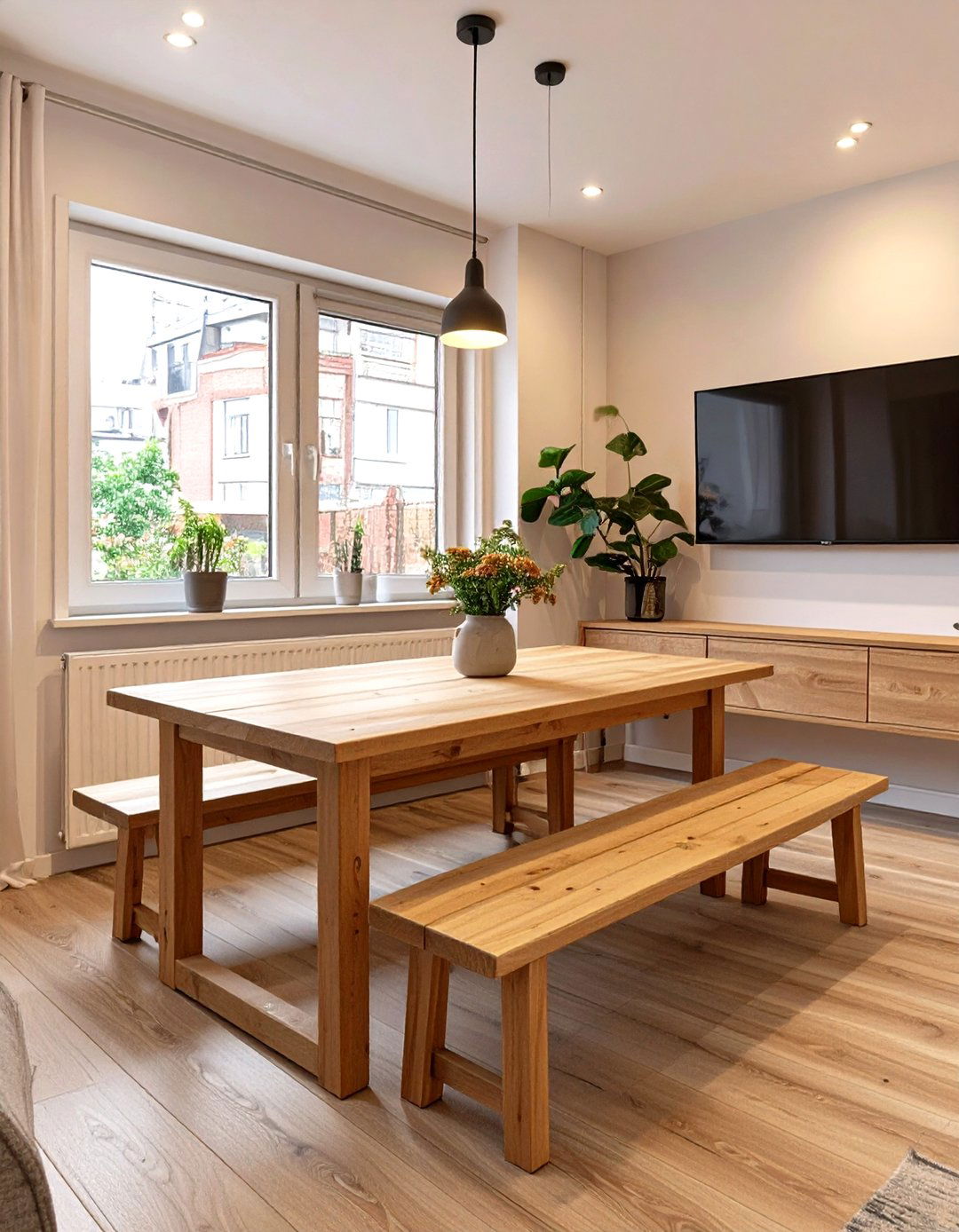
Instead of using chairs on all sides of your dining table, incorporate a bench. A bench can be pushed completely under the table when not in use, saving a significant amount of floor space. It can also seat more people than individual chairs. Place the bench against a wall to maximize clearance. This setup allows for a more open pathway through the room, which is crucial in a small area. Your TV and sofa can then be arranged with more breathing room, preventing the dining set from impeding traffic flow.
26. A Small Bistro Table Set in a Window Nook
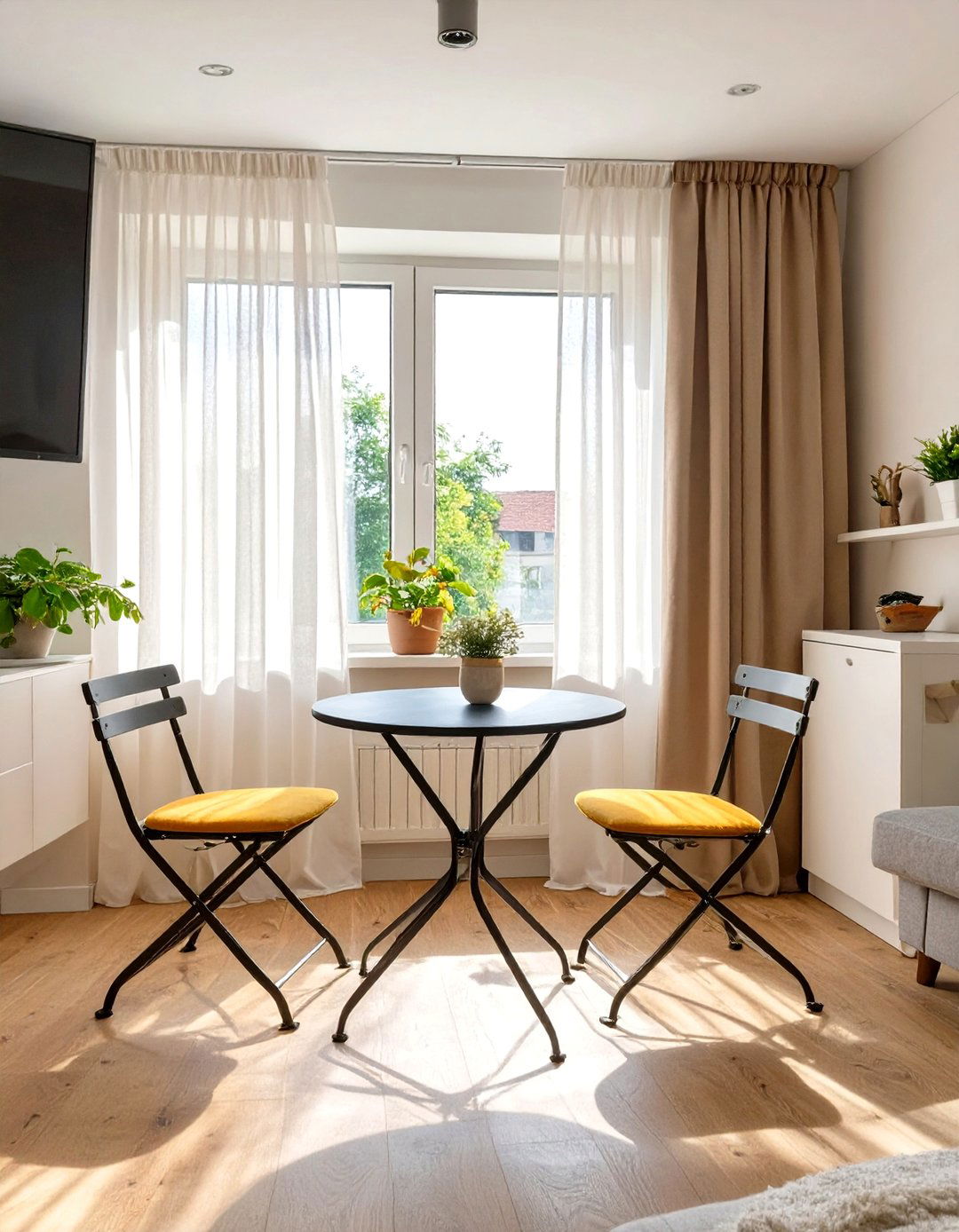
If you have a window nook, it's the perfect spot for a small bistro table and two chairs. This creates a charming and light-filled dining area that feels separate from the main living space. It takes advantage of an architectural feature that might otherwise go unused. The rest of the room can then be dedicated to a comfortable seating arrangement focused on the television. This creates a cozy, café-like corner for meals while allowing the living area to feel more spacious and uncluttered.
27. Linear Arrangement Along One Wall
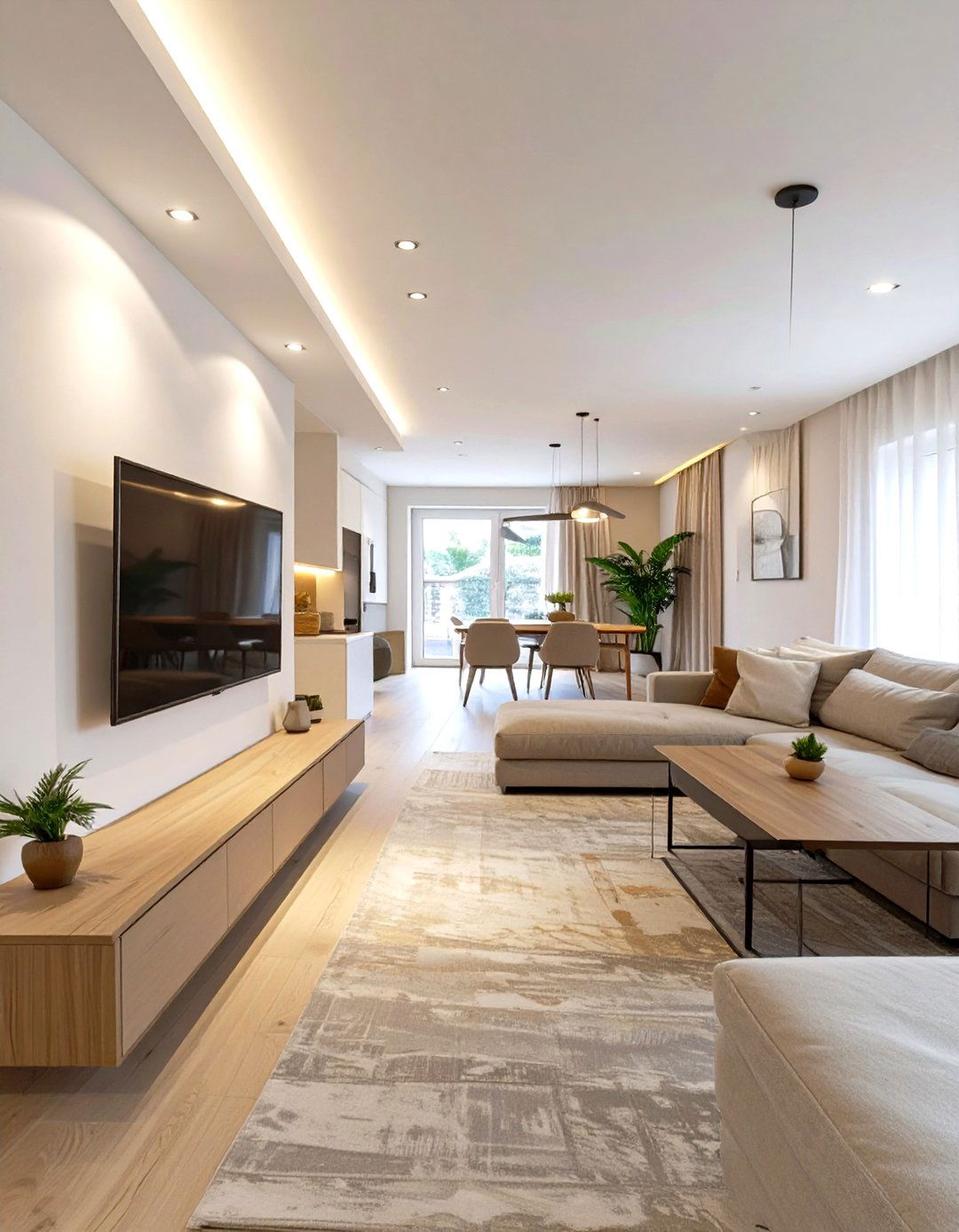
For long, narrow living rooms, a linear layout can be very effective. Place a long, low media unit against one wall to hold the TV. To one side of it, place your sofa. On the other side, place a slim rectangular dining table, parallel to the wall. This keeps everything aligned along one side of the room, leaving a clear and wide corridor for walking. Using furniture with clean lines and a consistent height profile will enhance this streamlined effect, making the room feel organized and intentionally designed rather than long and awkward.
28. Hidden TV Inside a Cabinet
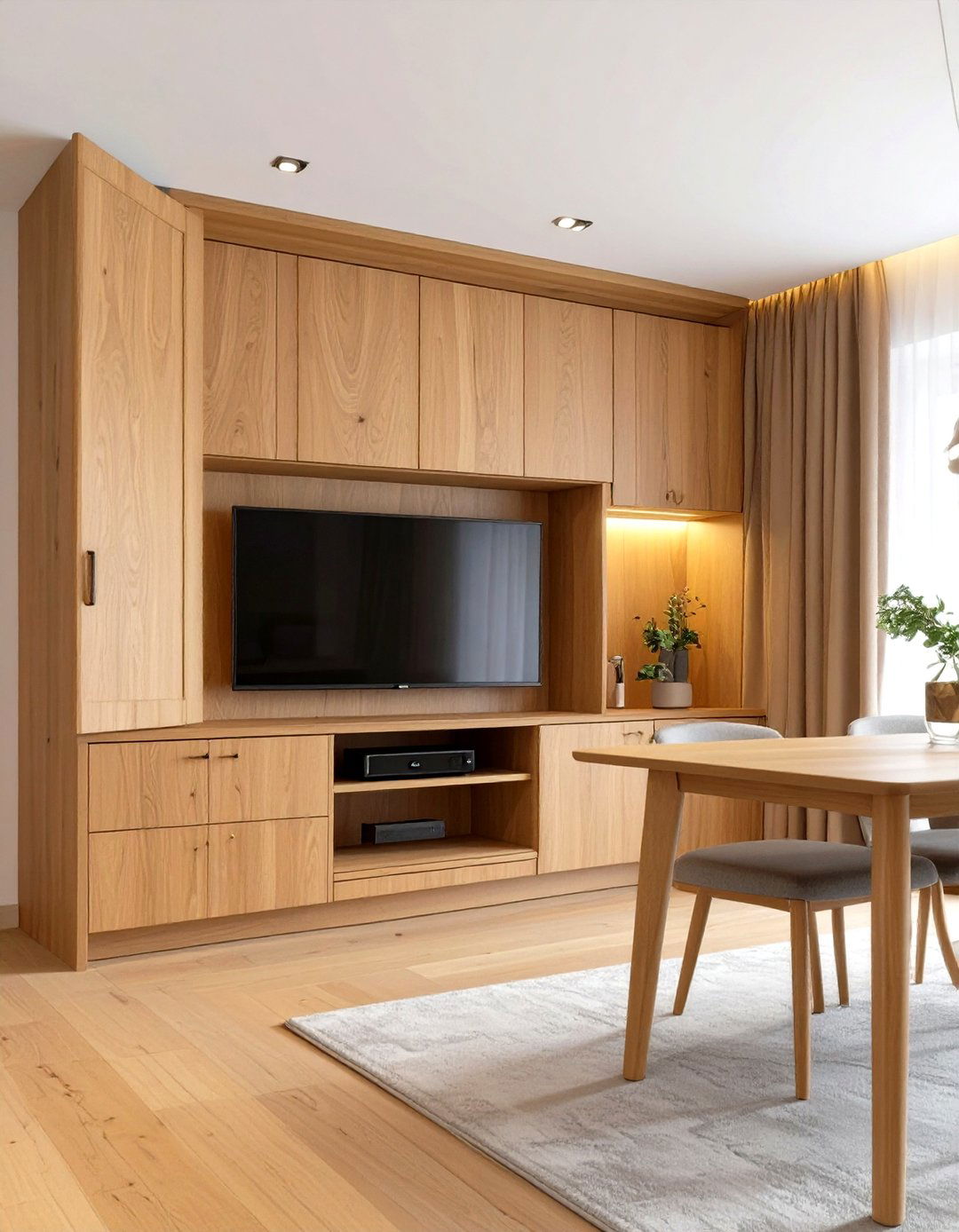
To make the dining area feel more formal and less like an afterthought, consider hiding the TV. A media cabinet with doors allows you to conceal the screen when you're eating or entertaining. This shifts the focus of the room from the television to the dining table and conversation. When you want to watch TV, you simply open the cabinet doors. This solution is perfect for those who want their small space to feel more like a traditional dining room during mealtimes, creating a more elegant and versatile environment.
29. Monochromatic Color Scheme to Unify the Space
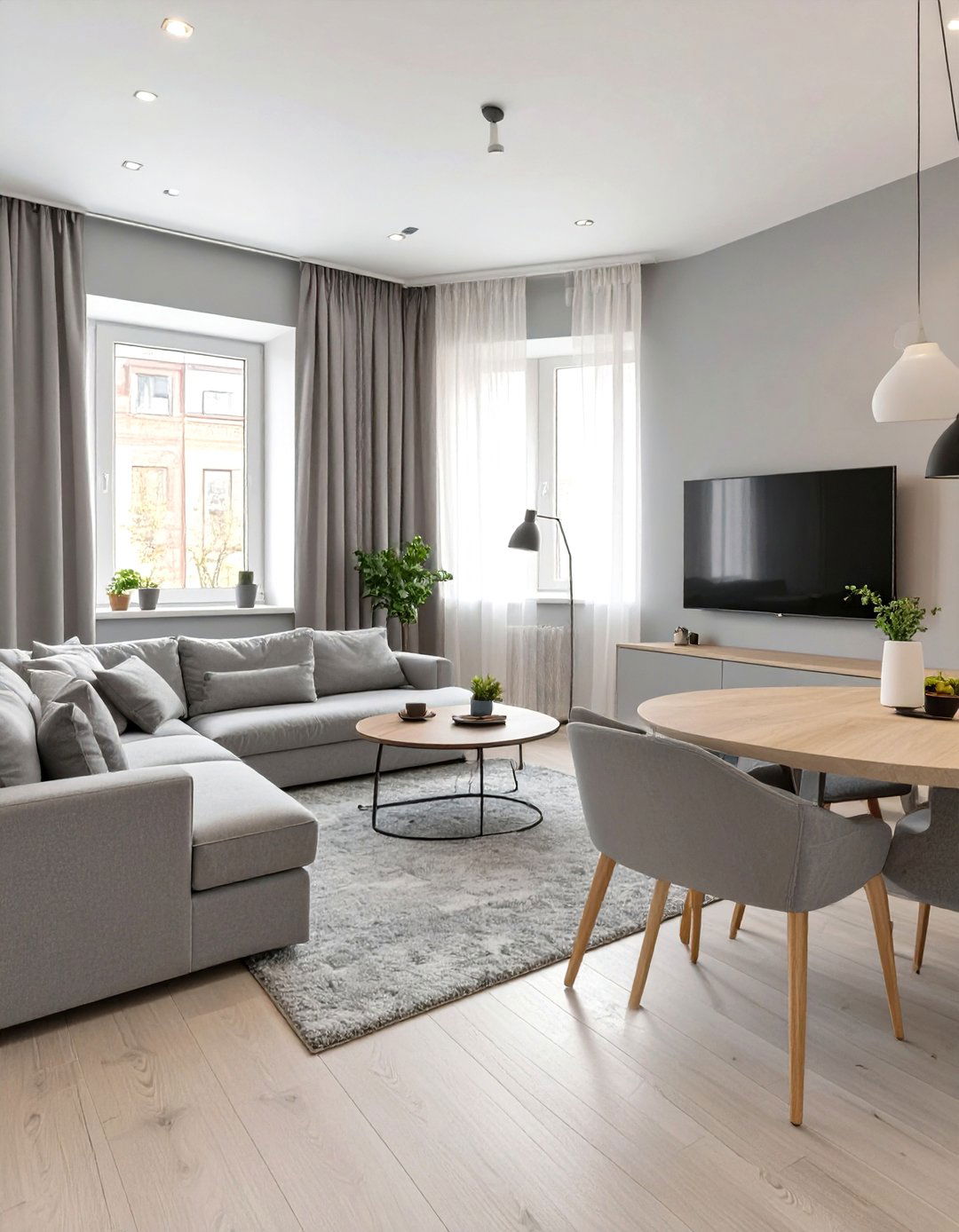
Using a single color or varying shades of one color throughout the room can make a small space feel larger and more cohesive. A monochromatic palette helps to blur the lines between the living and dining zones, making them feel like one unified area rather than two separate, cramped ones. White, light gray, or beige are excellent choices as they reflect light and create an airy feel. Your TV, media unit, and dining set will all blend into the background, resulting in a serene and sophisticated space.
30. Cantilevered or Wall-Mounted Dining Bench
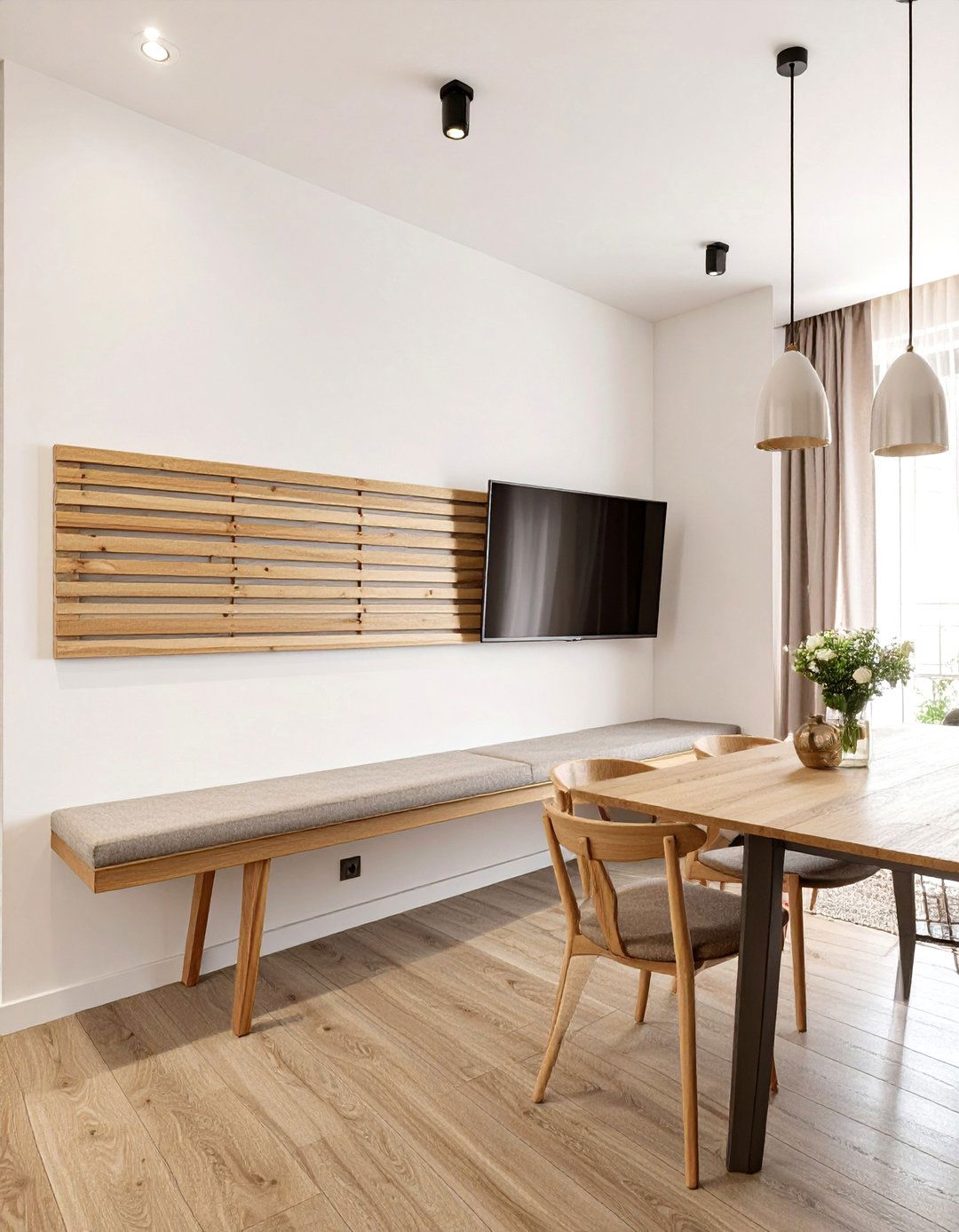
A cantilevered or wall-mounted bench is a sleek, modern seating solution for a dining nook. Because it has no legs, it creates an illusion of more floor space underneath, making the entire room feel lighter and more open. This floating bench can be installed along a wall, paired with a slim table and a couple of chairs. The clean, minimalist design is perfect for a contemporary small living room. It provides ample seating without the visual bulk of traditional chairs, leaving more room for your TV and lounge area.
Conclusion:
Creating a functional and beautiful small living room with a TV and dining table is entirely achievable with smart planning. The key lies in selecting multi-purpose furniture, optimizing the layout, and using visual strategies to create a sense of space. By integrating solutions like convertible tables, wall-mounted elements, and clear zoning techniques, you can design a room that effortlessly accommodates both relaxation and dining. Ultimately, a well-designed small space proves that you don’t need a large area to live comfortably and stylishly, blending everyday functions into a single, harmonious environment.

Related posts:


Leave a Reply