
Maximizing a small closet can feel like an impossible puzzle, but the right organization ideas can transform a cramped space into a functional and orderly wardrobe. By using clever tools and strategic placements, you can create a designated spot for every item, from shoes and accessories to seasonal clothing. These solutions focus on using overlooked spaces, like vertical areas and the back of the door, to their fullest potential. With a thoughtful approach, even the most compact closet can become remarkably spacious and easy to navigate, making your daily routine smoother and less stressful.
1. Use Slim Velvet Hangers
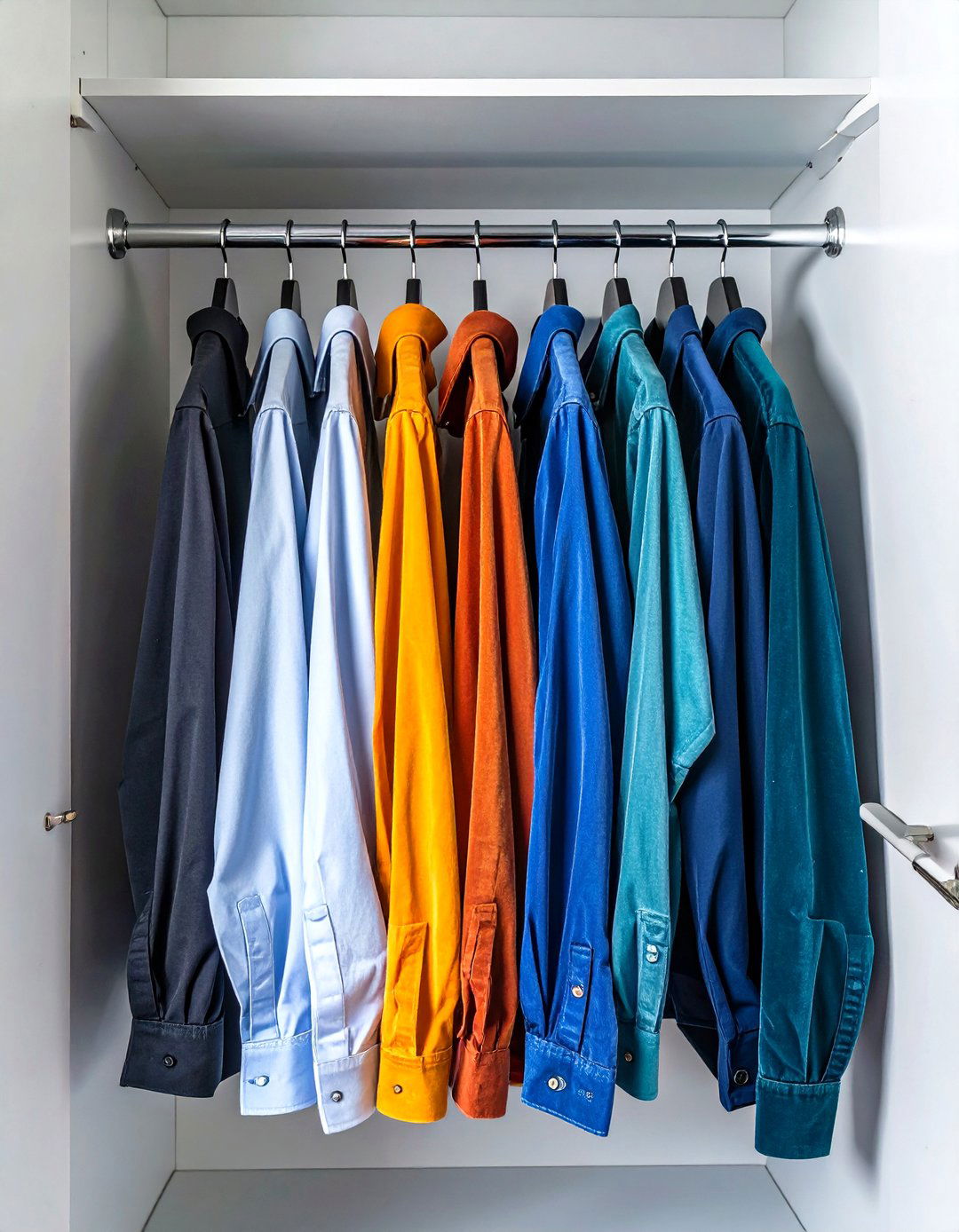
To instantly create more space on your clothing rod, switching to slim velvet hangers is a game-changer. Unlike bulky plastic or wooden hangers, their slender profile allows you to fit more garments in the same amount of space. The non-slip velvet texture also ensures that clothes, especially delicate or wide-necked tops, stay securely in place without sliding off and creating a mess on the closet floor. This simple swap not only maximizes hanging space but also gives your closet a uniform, streamlined look, making it easier to see and access every piece of clothing you own.
2. Install a Double-Hang Closet Rod
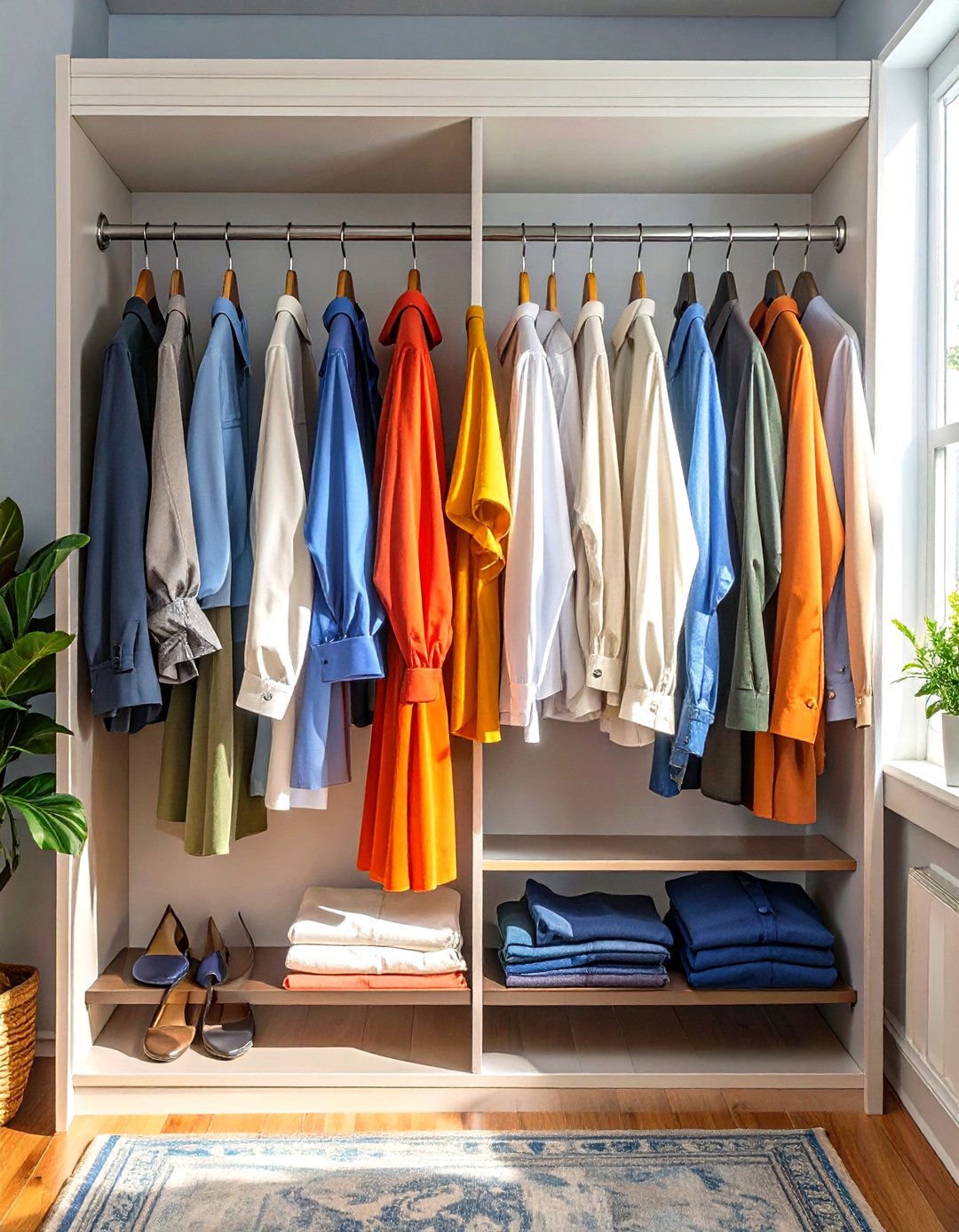
A double-hang closet rod effectively doubles your available hanging space without any major renovations. This system involves adding a second rod below your existing one, creating two tiers for shorter items like shirts, skirts, and folded trousers. For the best results, place the top rod high enough for shirts and blouses, and install the lower rod with enough clearance to prevent garments from dragging on the floor. This method is perfect for closets with ample vertical height that is often underutilized, allowing you to separate and organize clothing types more efficiently while freeing up valuable shelf space.
3. Utilize an Over-the-Door Shoe Organizer
An over-the-door shoe organizer is one of the most versatile tools for a small closet. While it's excellent for storing shoes, its clear pockets are also perfect for organizing a multitude of other items. Use it to hold rolled-up scarves, belts, clutches, cleaning supplies, or even small electronics and cords. By moving these items from shelves or drawers to the back of the door, you reclaim prime storage real estate inside the closet itself. This approach keeps smaller accessories visible, tidy, and easily accessible, preventing them from getting lost in the clutter of a cramped space.
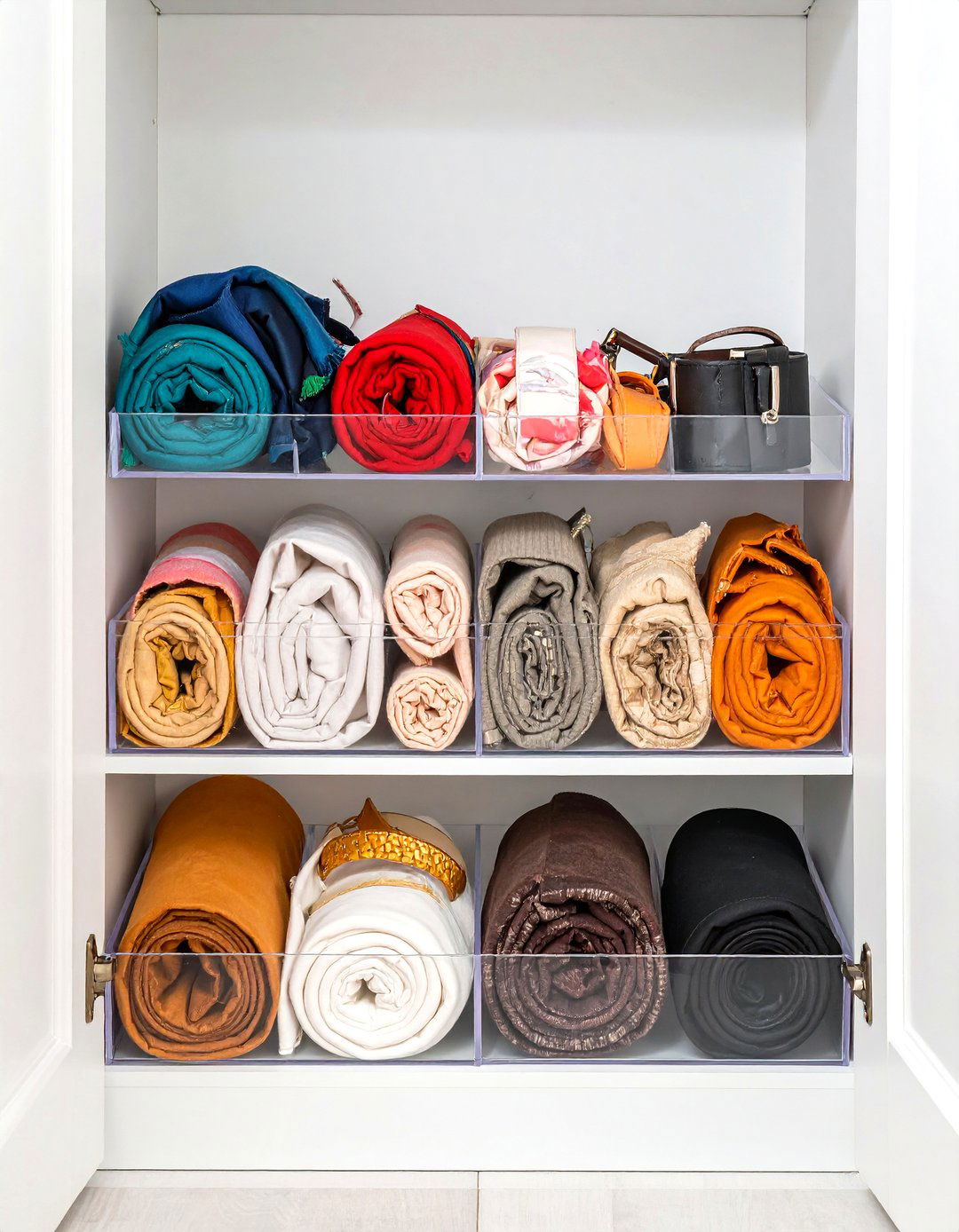
4. Add Shelf Dividers to Keep Stacks Neat
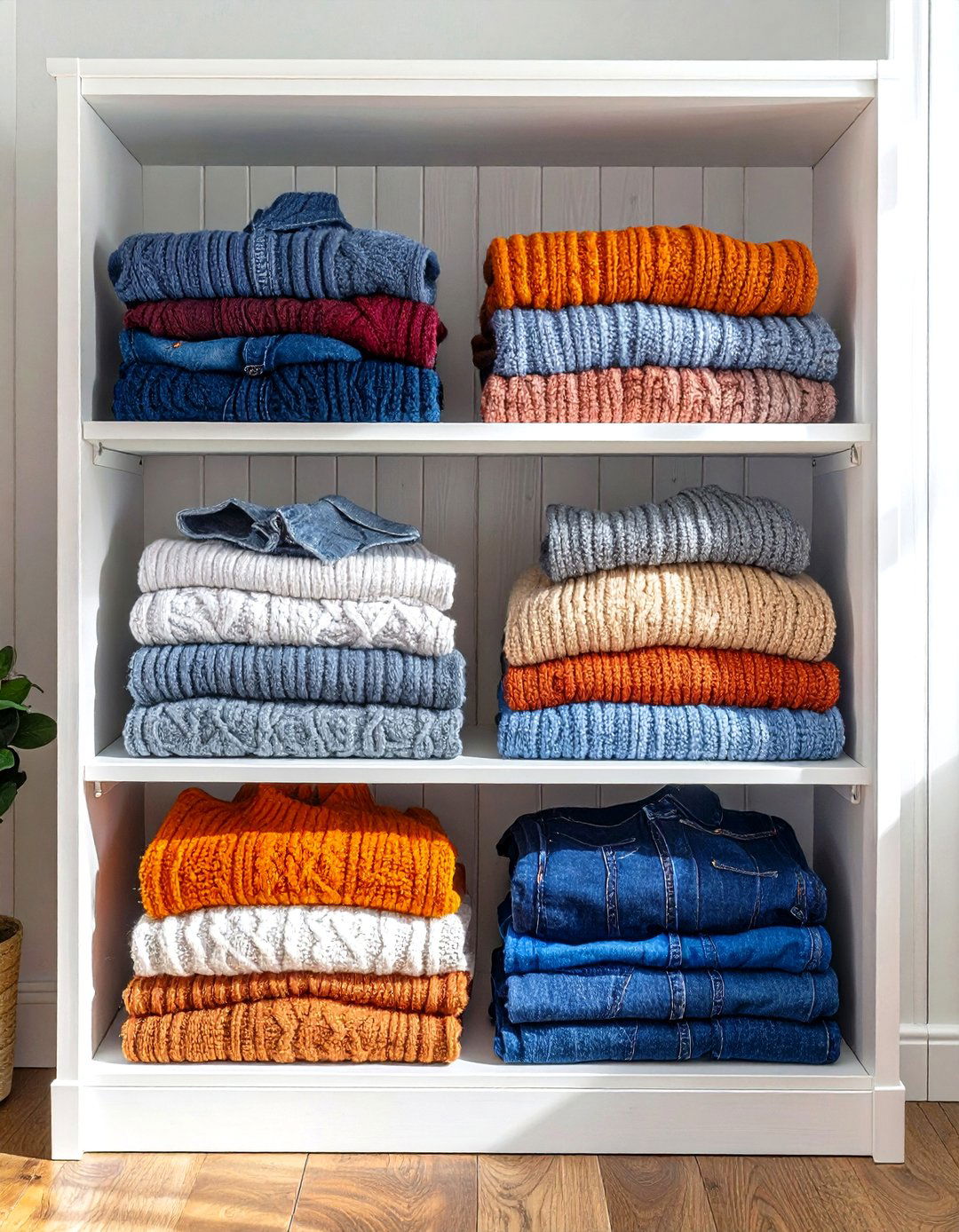
Shelf dividers are essential for maintaining order on open shelves. These simple yet effective tools slide onto your existing shelves to create distinct compartments, preventing stacks of sweaters, jeans, or handbags from toppling over and merging into one another. By sectioning off your shelves, you can categorize items more effectively and ensure that each stack remains neat and contained. Acrylic or wire dividers are popular choices as they are sturdy and provide a clear visual separation without adding bulk, making it easy to grab exactly what you need without disturbing the entire pile.
5. Incorporate Hanging Sweater Organizers
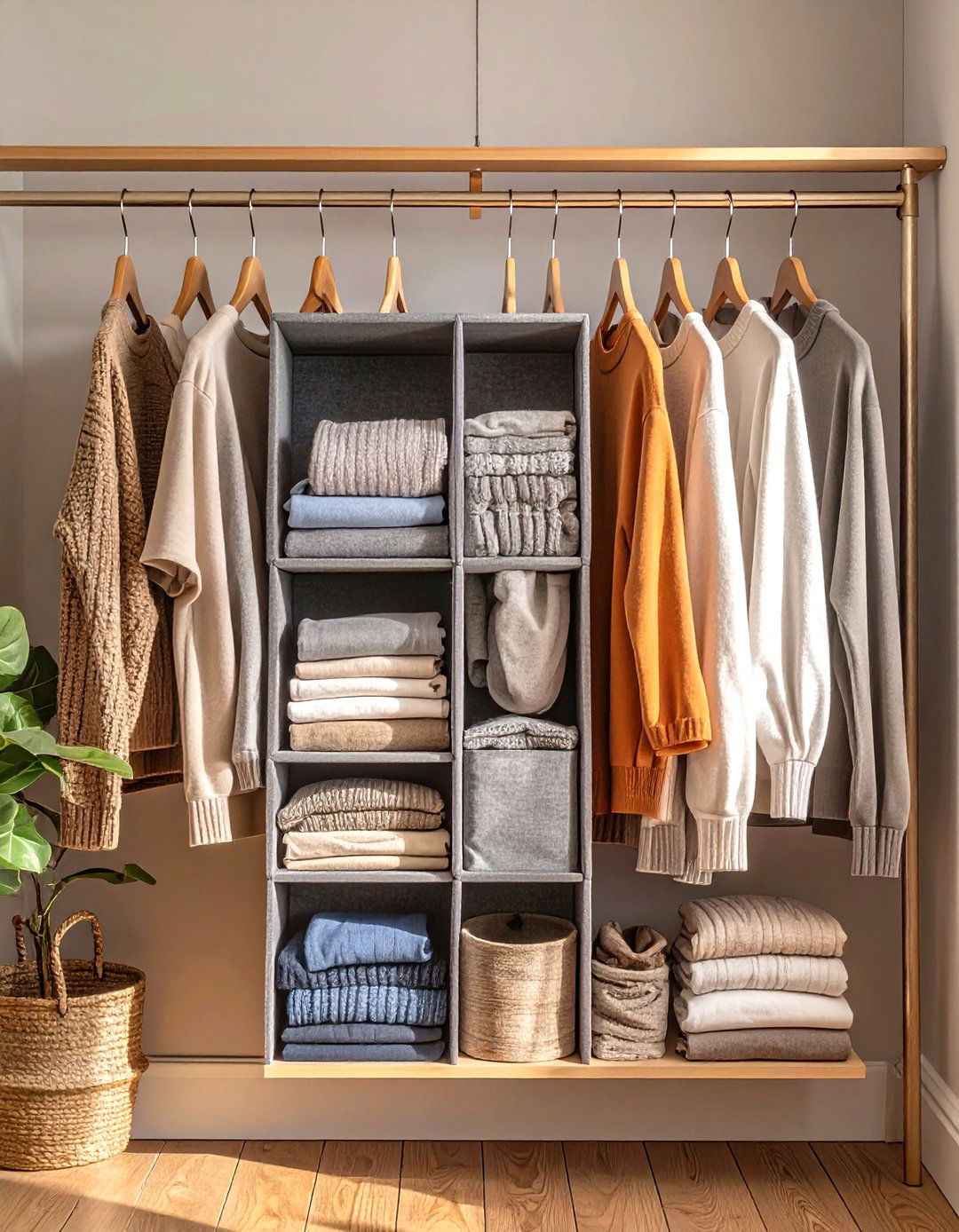
For those with limited shelf space, a hanging sweater organizer offers a fantastic vertical solution. These fabric organizers feature multiple cubbies and hang directly from your closet rod, providing an instant set of shelves for folded items like sweaters, t-shirts, and even gym clothes. They take up the same amount of rod space as a few bulky coats but offer far more storage capacity. Look for models with reinforced tops and sturdy construction to prevent sagging. Some even come with side pockets for storing smaller accessories like socks or belts, further maximizing their utility in a tight closet.
6. Use Clear Storage Bins for Visibility
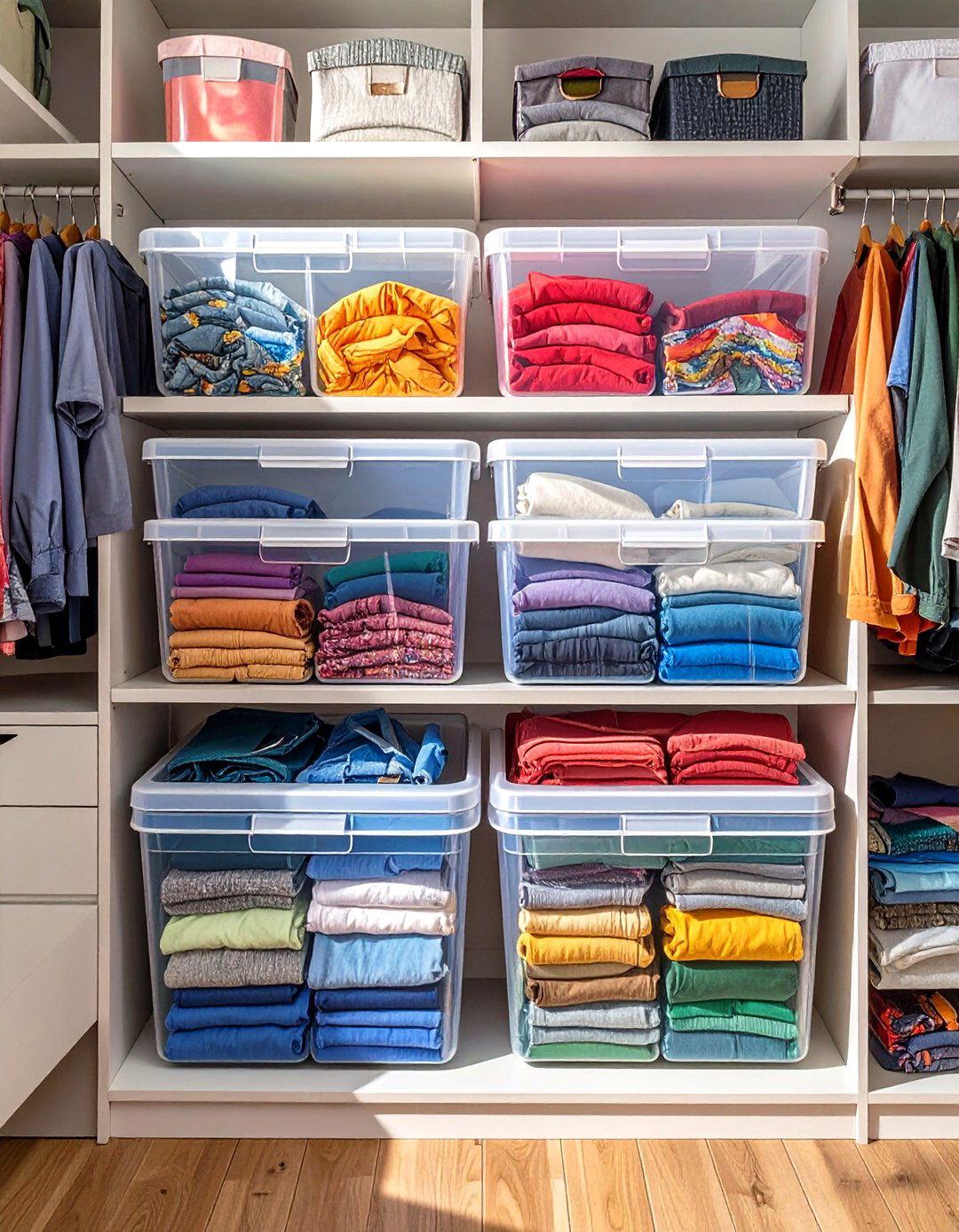
Clear storage bins are a must-have for organizing items on high shelves or the closet floor. Their transparent design allows you to see the contents at a glance, eliminating the need to pull down and open multiple boxes just to find what you're looking for. This is especially useful for storing seasonal items, occasional-use accessories, or sentimental keepsakes. Choose stackable bins with secure lids to protect your belongings from dust while making the most of vertical space. Labeling them is still a good practice, but the clear view makes retrieval quick and effortless.
7. Install a Pull-Out Pants Rack
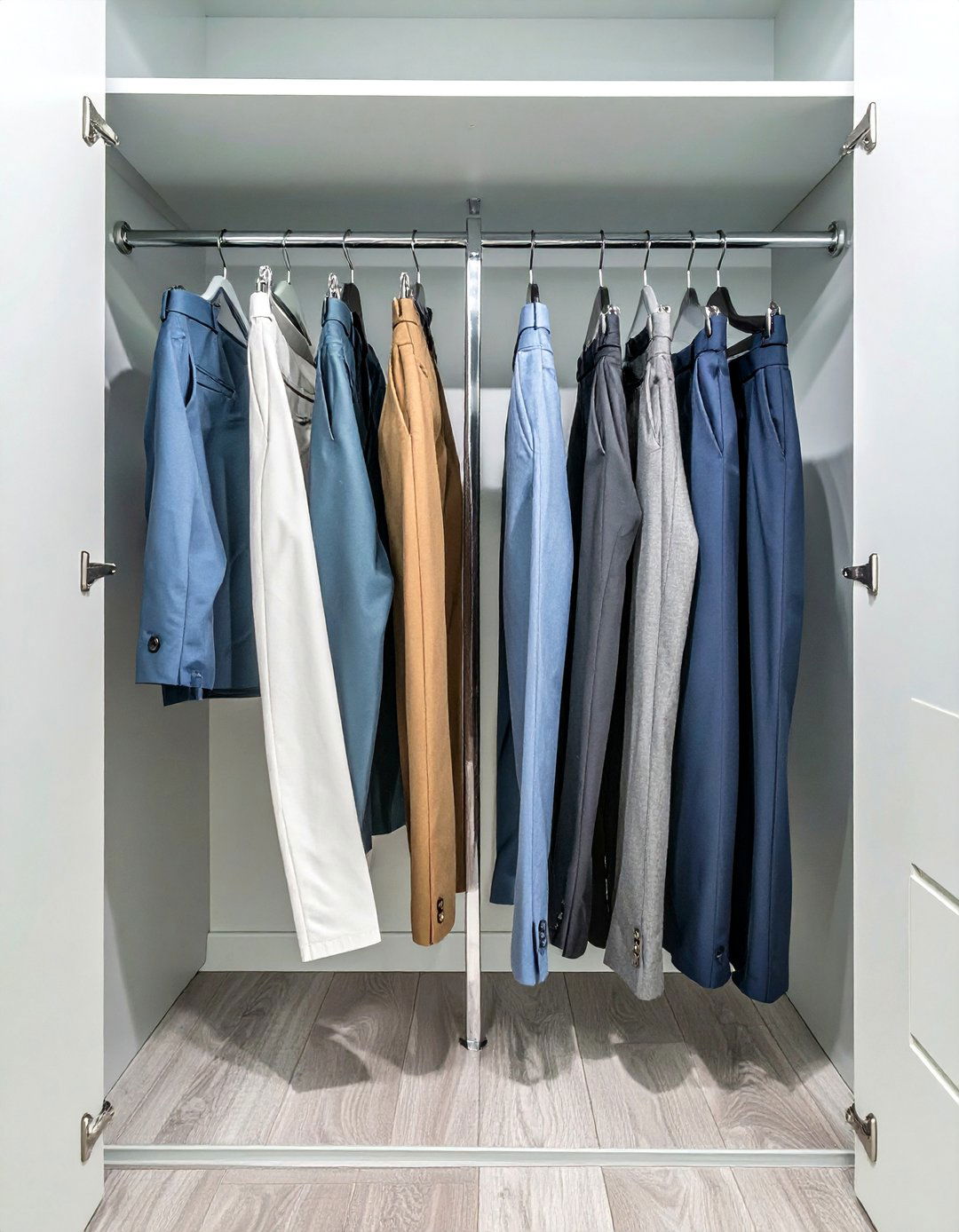
A pull-out pants rack is a sophisticated solution for keeping trousers and jeans wrinkle-free and easy to access. Instead of stacking them on a shelf or folding them over hangers, this system allows you to hang pants vertically on individual, non-slip arms. The rack mounts to a shelf or the side of your closet and slides out smoothly, giving you a full view of your options. This not only saves a significant amount of space compared to traditional hangers but also prevents creases and makes selecting your outfit for the day a much simpler and more organized process.
8. Mount a Wall Pegboard Organizer
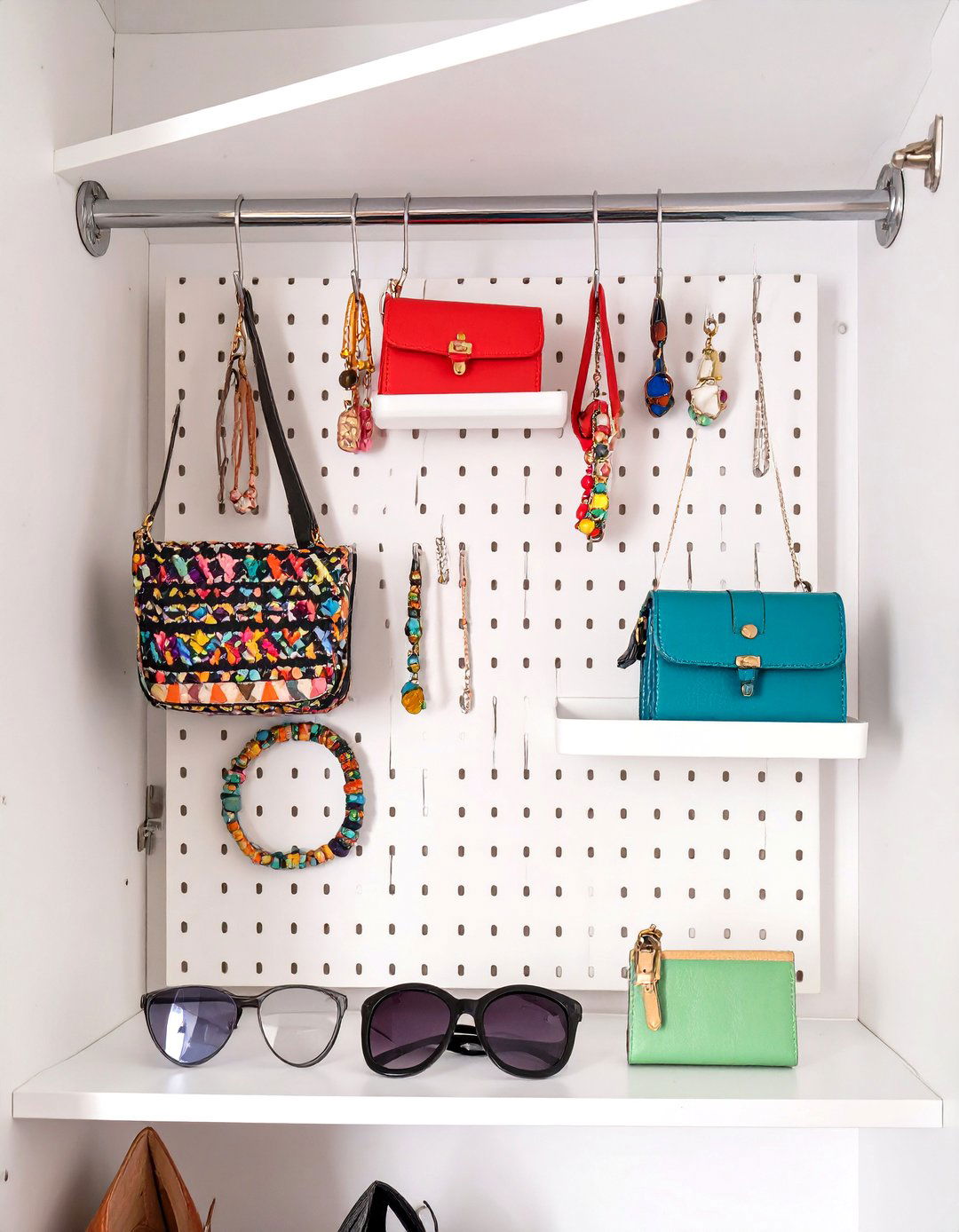
A pegboard organizer is an incredibly versatile and customizable storage solution for a small closet wall. Its grid of holes allows you to arrange hooks, baskets, and small shelves in any configuration that suits your needs. This makes it perfect for organizing jewelry, belts, scarves, sunglasses, and even small handbags. By utilizing unused wall space, a pegboard keeps your accessories untangled, visible, and off of valuable shelf or drawer surfaces. You can easily rearrange the components as your collection changes, making it a flexible system that adapts to your evolving storage requirements.
9. Add Tension Rods for Extra Storage
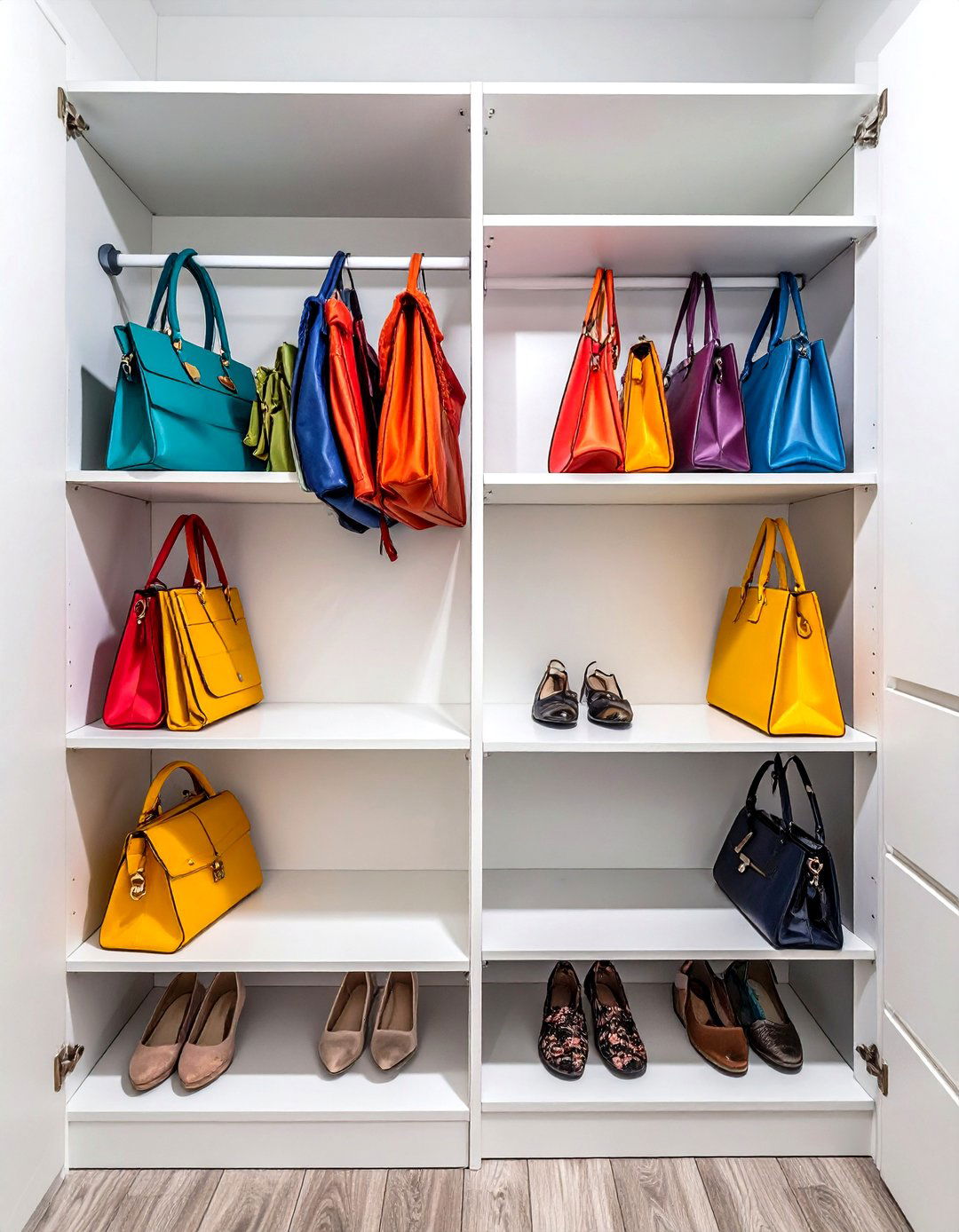
Tension rods are a brilliantly simple and non-permanent way to add storage to a small closet. You can install one vertically to create dividers for shoes or handbags on a deep shelf. Alternatively, place a short tension rod between two shelf brackets or walls to create an extra mini-rod for hanging scarves, ties, or baby clothes. They are also perfect for hanging spray bottles or shoe organizers without drilling holes. Because they are adjustable and require no tools for installation, tension rods offer a flexible and damage-free method for creating customized storage in underutilized nooks.

10. Use S-Hooks for Hanging Jeans and Purses
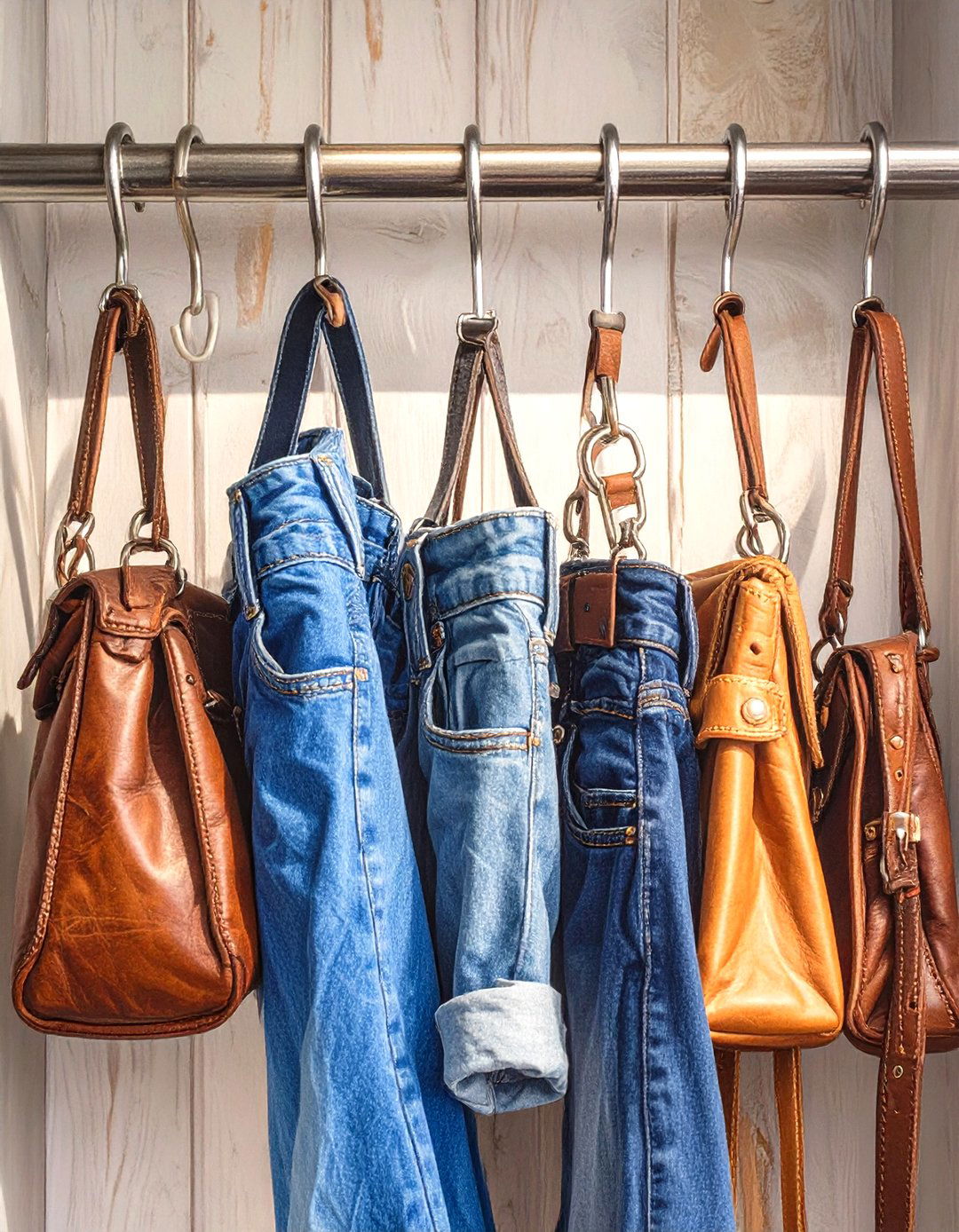
S-hooks are a simple, inexpensive, and highly effective tool for maximizing your closet rod space. Instead of using traditional hangers for bulky items, you can use S-hooks to hang jeans by their belt loops. This method keeps them flat and allows you to stack several pairs closely together. They are also perfect for hanging purses and handbags by their straps, preventing them from losing their shape in a pile on the floor or a shelf. This frees up your regular hangers for shirts and jackets and utilizes the hanging rod in a more efficient, space-saving manner.
11. Implement Drawer Inserts and Dividers
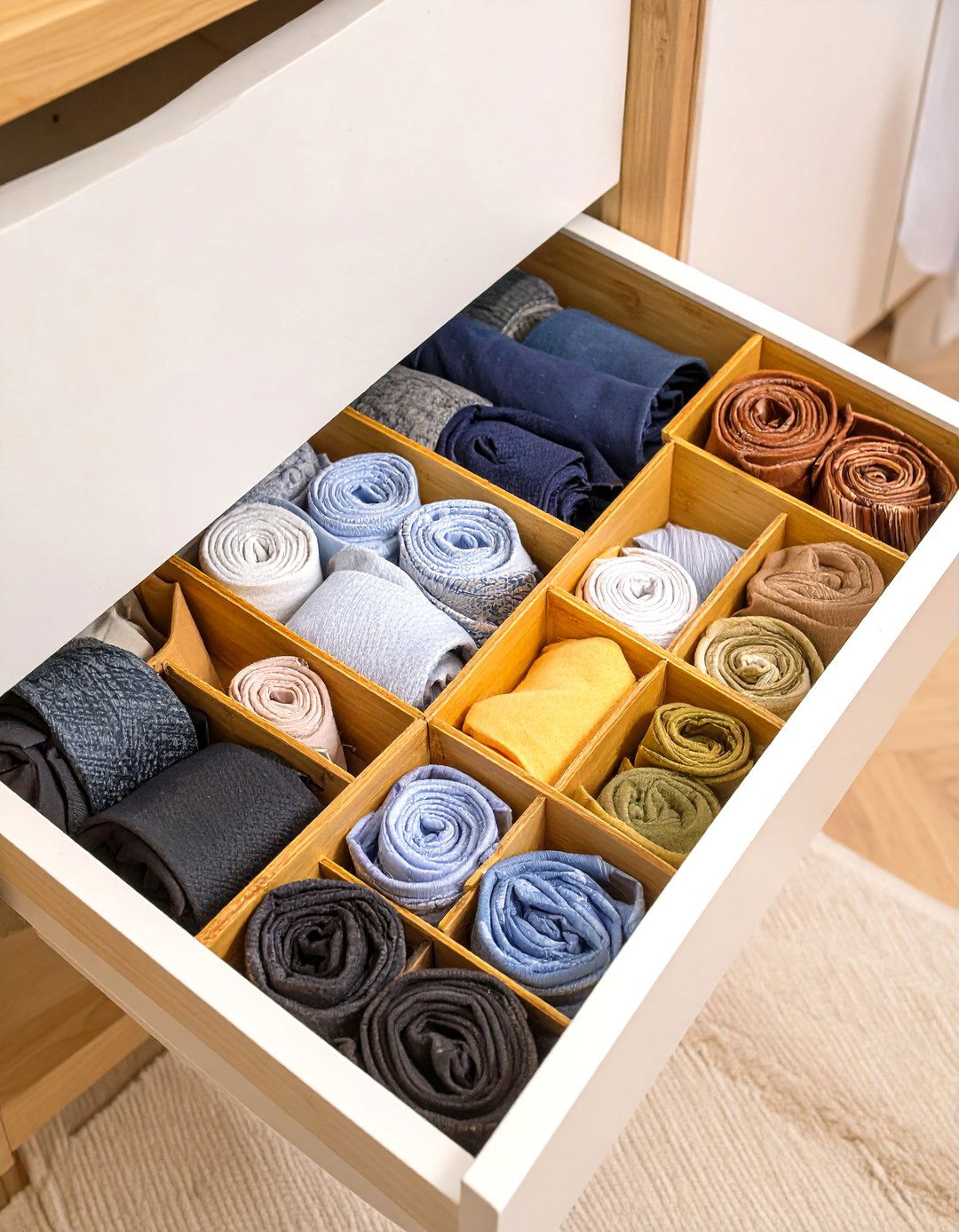
If your closet includes drawers, inserts and dividers are crucial for preventing them from becoming a chaotic mess. Use compartmentalized trays for small items like socks, underwear, and accessories, ensuring everything has its designated spot. Adjustable dividers are great for creating custom-sized sections for rolled t-shirts, leggings, or scarves. By separating items within the drawer, you can see everything you own at a glance, making it easier to find what you need quickly. This structured approach not only keeps drawers tidy but also helps you realize what you have, preventing overbuying.
12. Utilize Under-Shelf Baskets
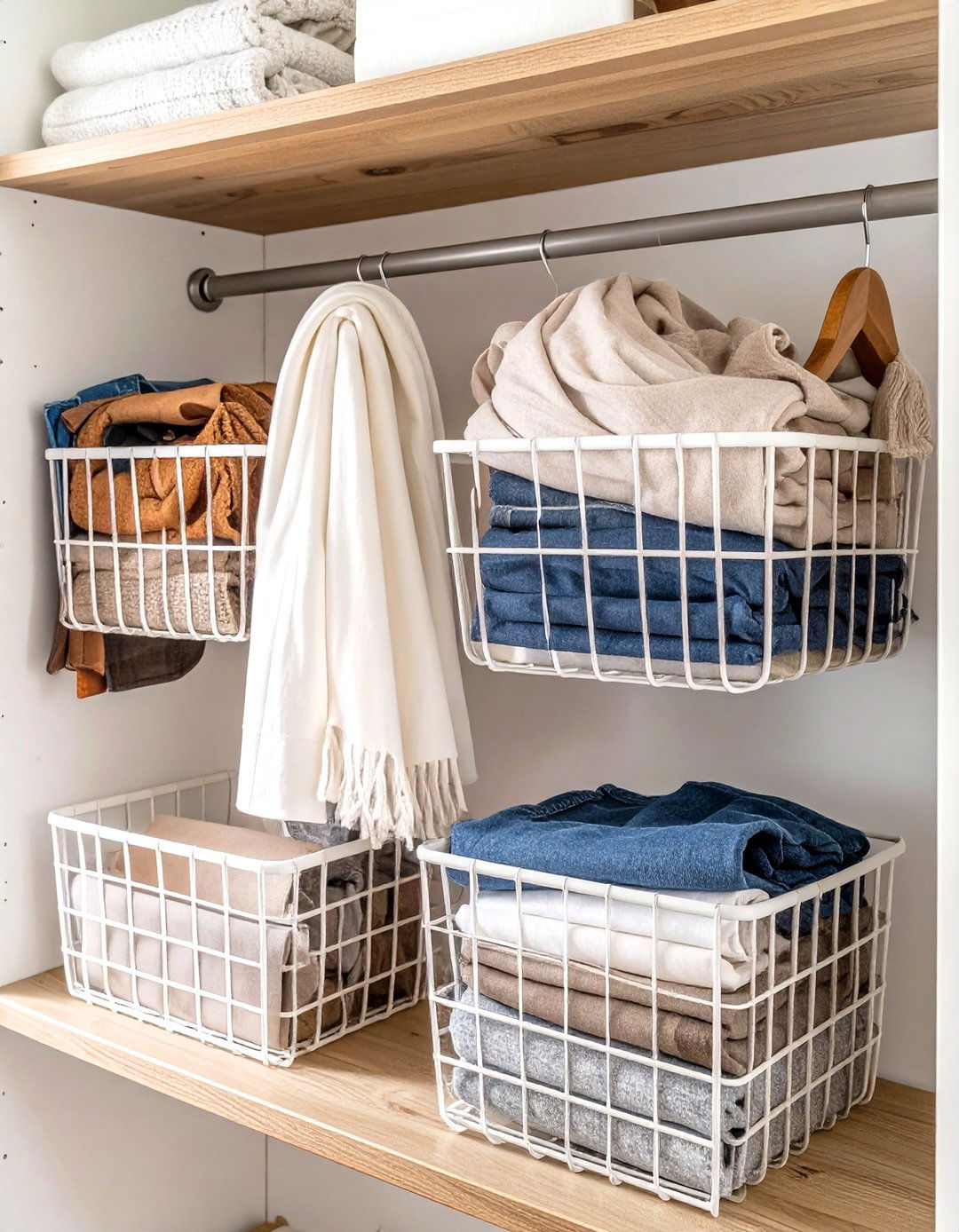
To capitalize on the often-wasted space beneath existing shelves, slide-on under-shelf baskets are an ingenious solution. These wire baskets hook directly onto the shelf above, instantly creating a new storage cubby without any drilling or permanent installation. They are perfect for holding small, lightweight items like wallets, clutches, socks, or folded t-shirts that might otherwise get lost in a larger pile. By using this dead space, you can effectively double the utility of a single shelf, keeping frequently accessed items visible and within easy reach while maintaining an uncluttered look.
13. Invest in a Rolling Storage Cart
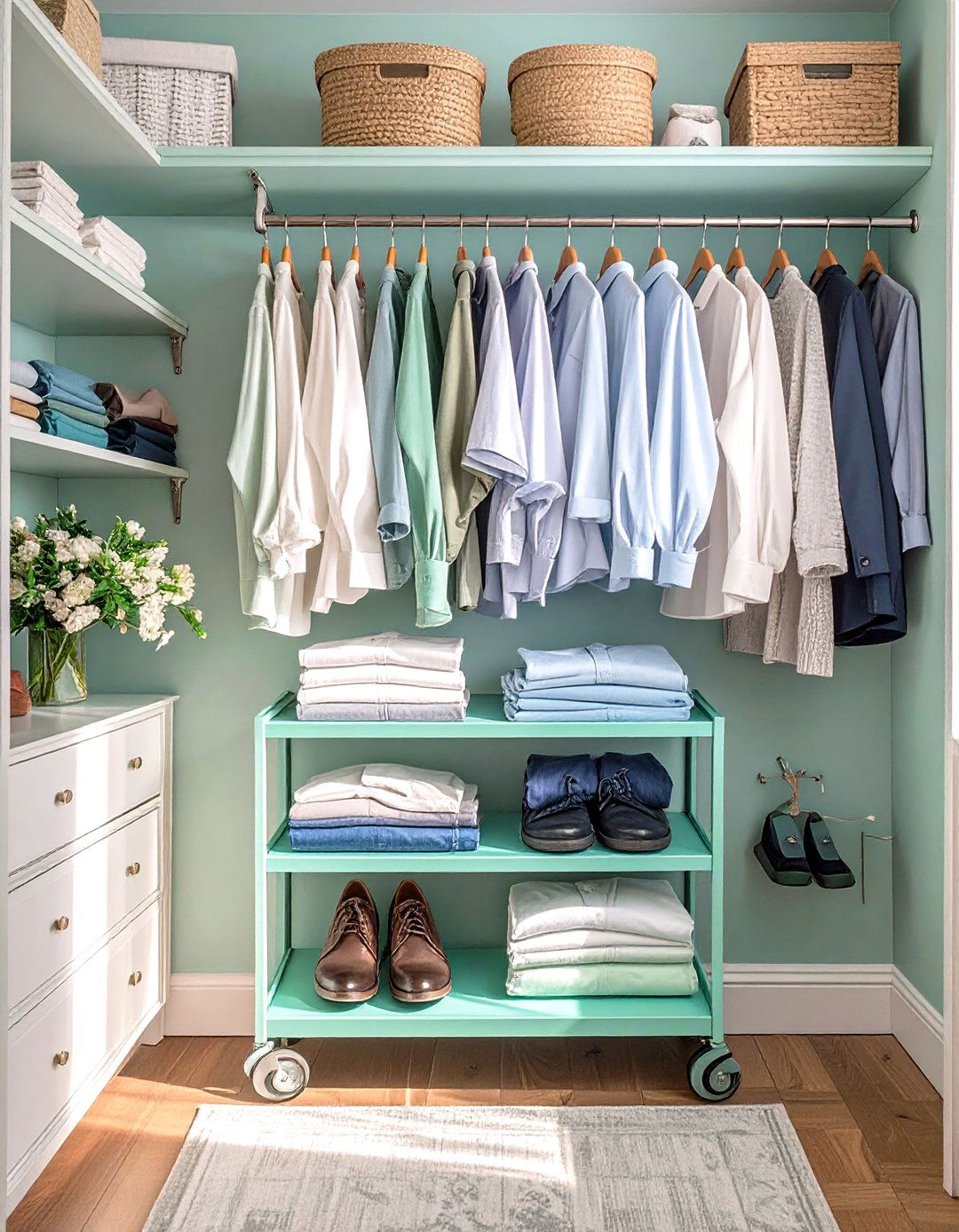
A slim rolling storage cart can be a fantastic addition to a small closet, especially for those without built-in drawers. You can use its tiered shelves to organize folded clothes, shoes, or beauty products. Because it's on wheels, you can easily roll it out when you need to access its contents and tuck it away under hanging clothes when not in use. This flexibility is perfect for renters or anyone who wants an adaptable storage solution. Look for a cart with a narrow profile to ensure it fits comfortably within the closet's footprint without obstructing access.
14. Add LED Lighting Inside the Closet
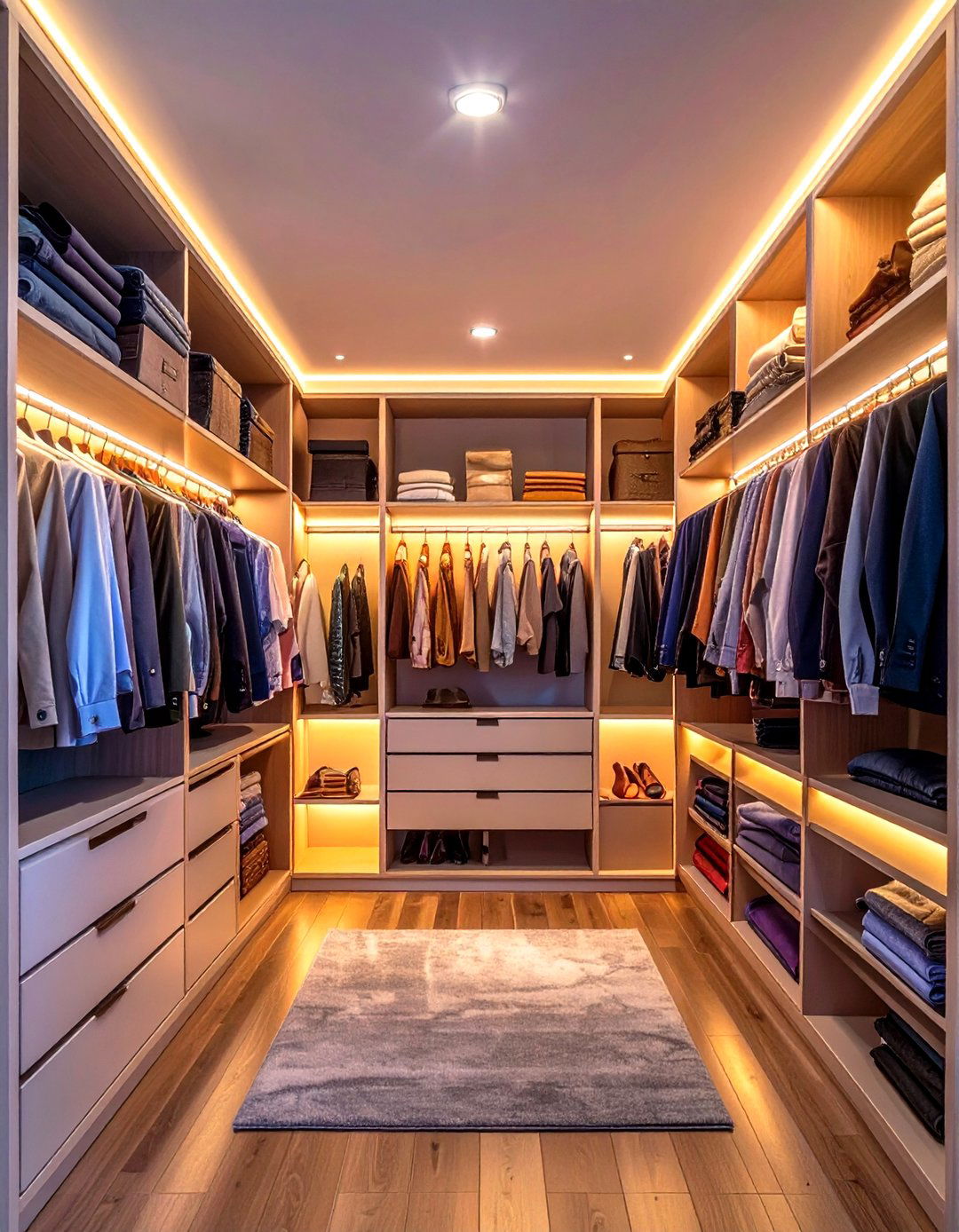
A dark closet is an unorganized closet. Installing battery-operated LED puck lights or strip lighting can dramatically improve visibility, making it easier to see what you have and find items quickly. Many of these lights are motion-activated, so they turn on the moment you open the door and switch off automatically, conserving battery life. Proper lighting helps you distinguish between similar-colored clothing and locate accessories tucked away in corners. It’s a small, affordable upgrade that enhances the functionality of your space and makes your morning routine much more efficient and pleasant.



15. Create a Designated Accessory Station
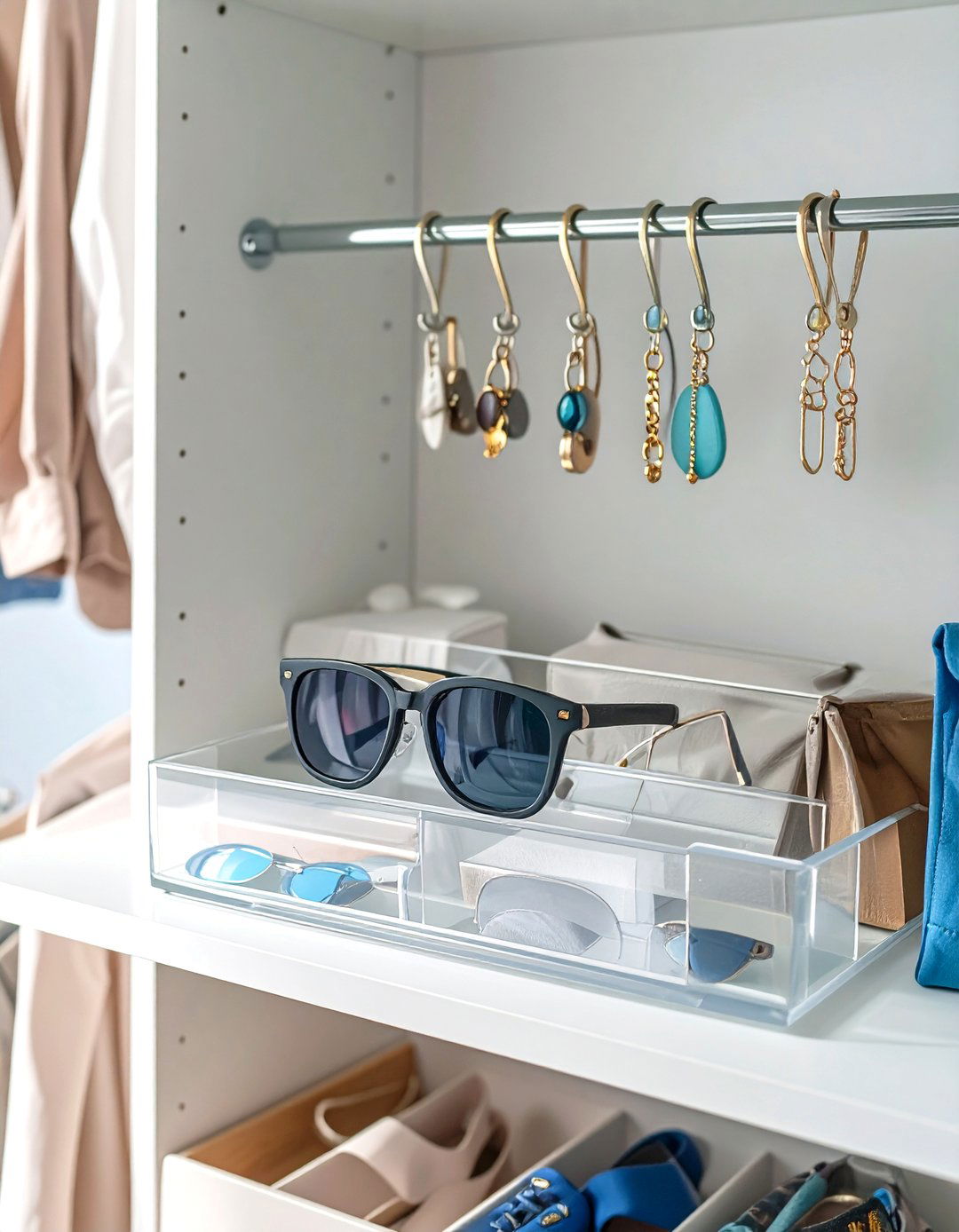
Dedicate a specific zone in your closet for all your accessories to prevent them from scattering. You can use a combination of tools to create this station. Install small wall-mounted hooks for necklaces and bracelets to keep them from tangling. Use a clear, multi-compartment acrylic tray on a shelf for sunglasses, watches, and earrings. A small, tiered rack can hold clutches and wallets neatly. By corralling all these smaller items into one organized area, you not only save space but also make it simple to accessorize your outfit without having to search through multiple drawers and bins.
16. Use Vacuum Storage Bags for Seasonal Items
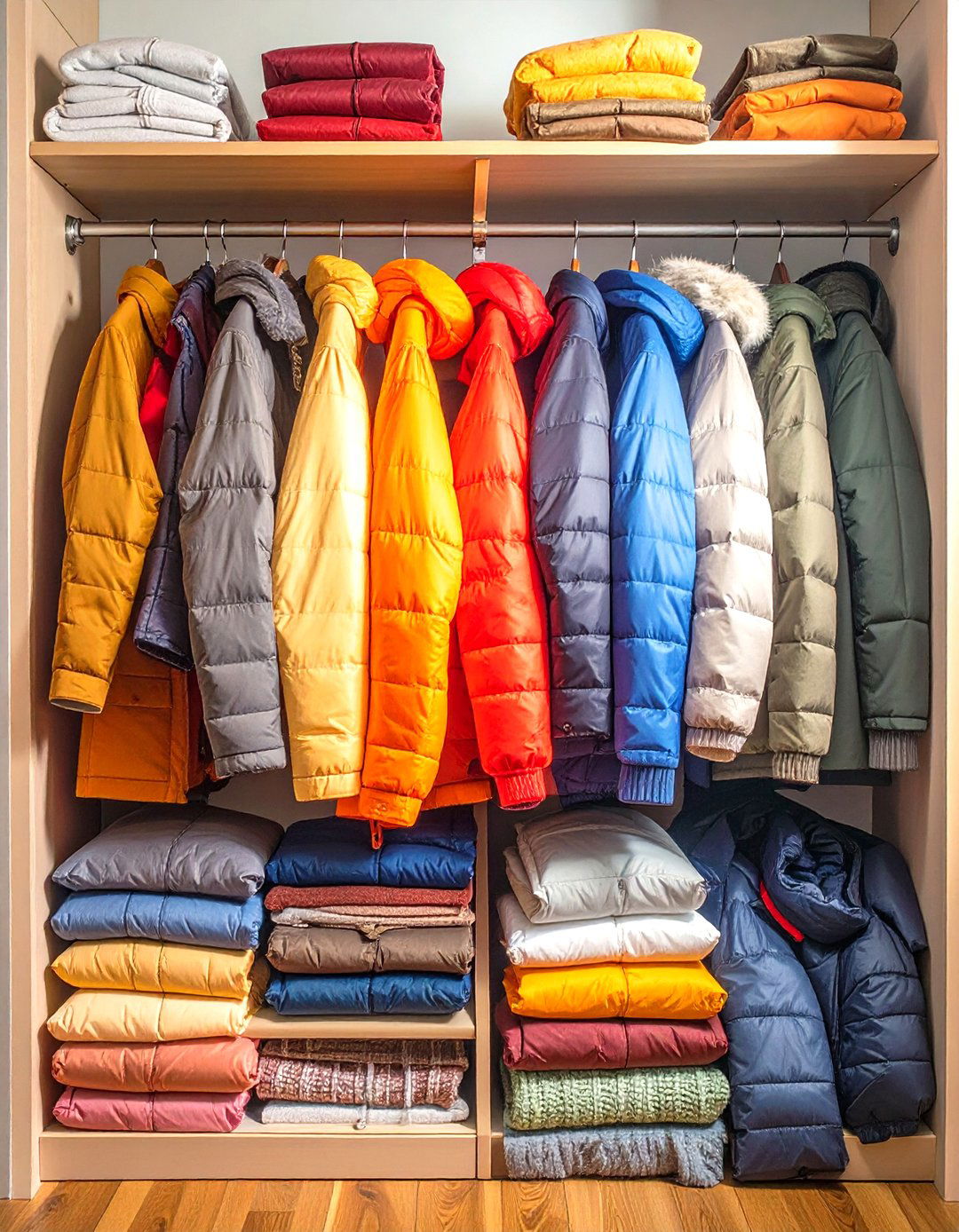
For bulky seasonal items like winter coats, heavy blankets, and ski gear, vacuum storage bags are an unbeatable space-saving solution. These bags allow you to remove all the air from around the items, compressing them to a fraction of their original size. Once sealed, they can be stored neatly on a high shelf or under the bed, freeing up a significant amount of prime closet real estate for in-season clothing. This method also protects your off-season garments from dust, moisture, and pests, ensuring they are fresh and ready to wear when the weather changes again.
17. Install a Corner Shelving Unit
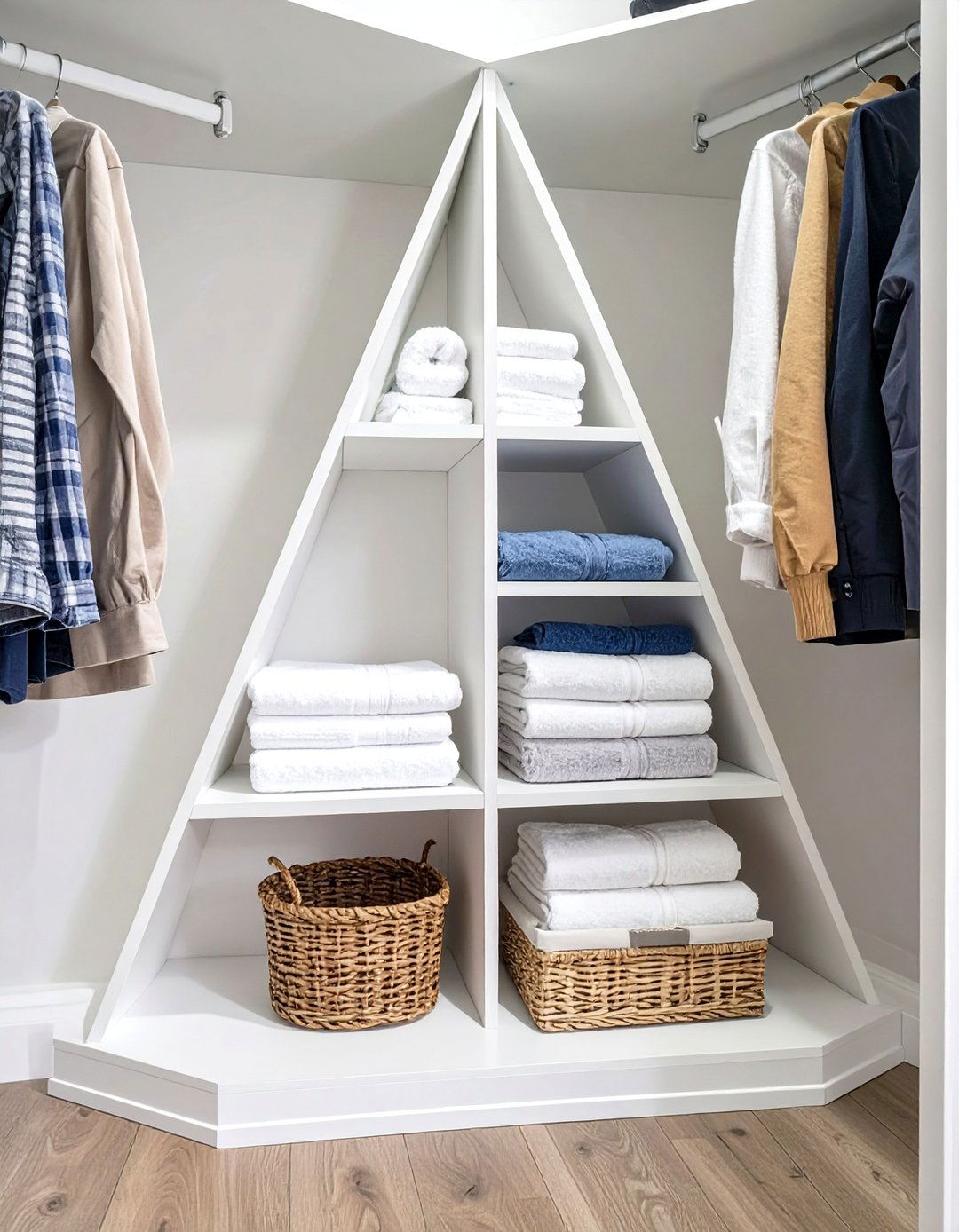
The corners of a small closet are often awkward, underutilized spaces. Installing a dedicated corner shelving unit can turn this dead zone into valuable storage. Tiered shelves that fit snugly into the corner are perfect for storing folded clothes, shoes, or handbags. A rotating, lazy-Susan-style organizer can also work wonders, providing easy access to all your items with a simple spin. By making use of this vertical space, you can move items off the floor and out of crowded central areas, creating a more open and accessible closet layout overall.
18. Use Tiered or Cascading Hangers
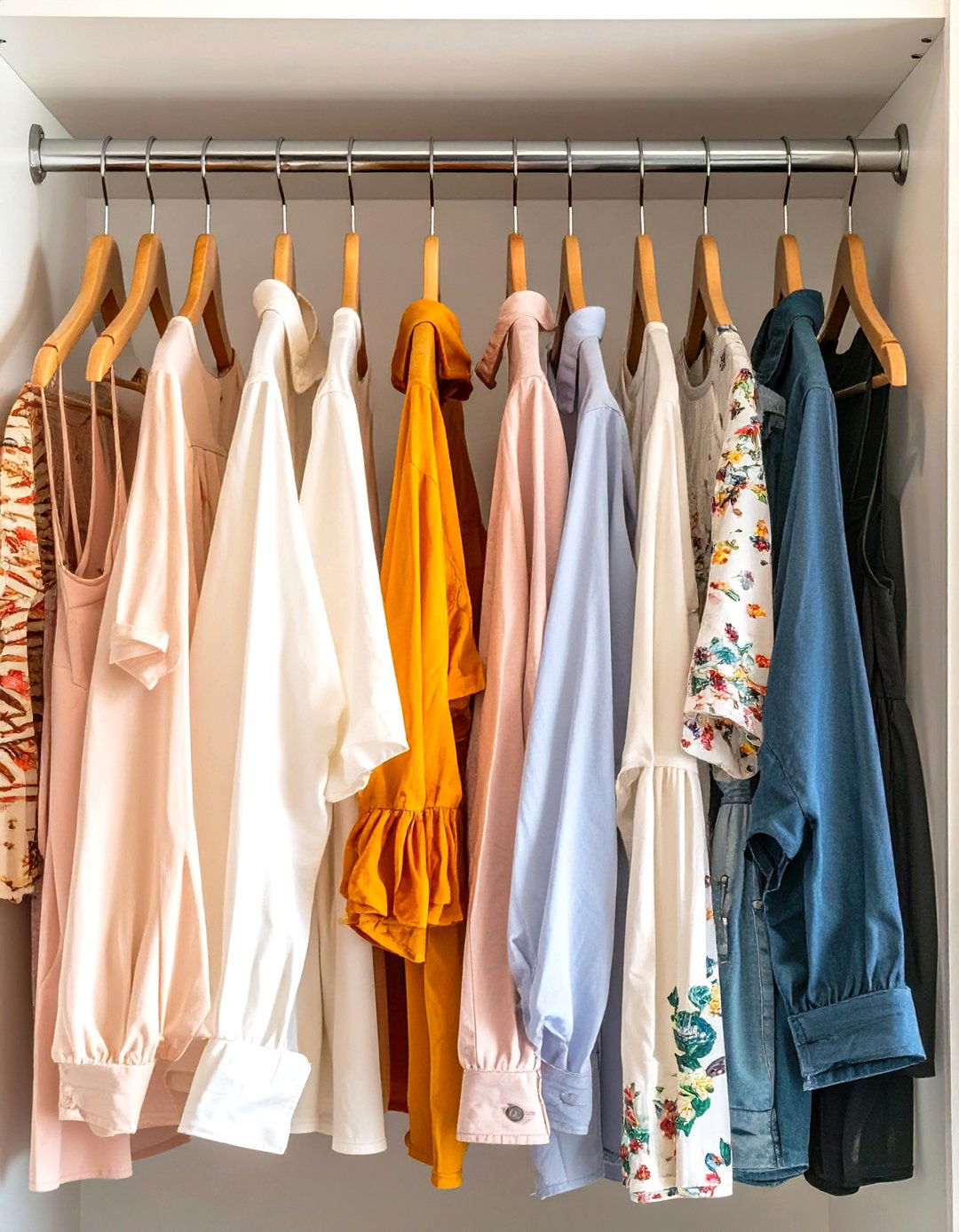
Tiered and cascading hangers are designed to maximize vertical hanging space. A tiered hanger features multiple bars or clips on a single hanger, allowing you to hang several pairs of pants, skirts, or shorts in the space of one. Cascading or "magic" hangers have a hook that lets you hang multiple hangers in a vertical chain, dropping them down to create more horizontal space on the rod. Both options are perfect for compacting your wardrobe and grouping similar items together, making it easier to view your collection without overcrowding the closet rod.
19. Incorporate Fabric Storage Boxes
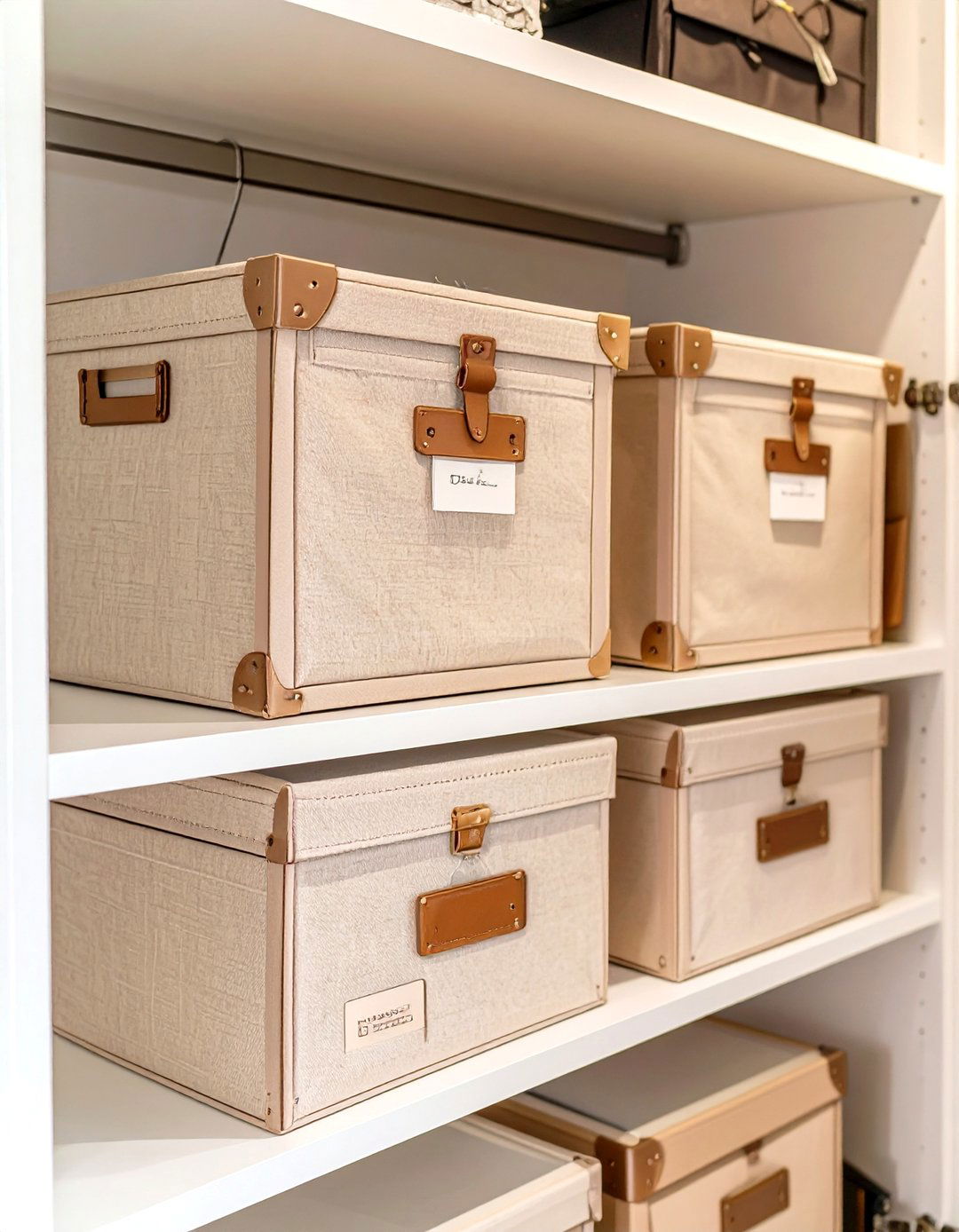
Fabric storage boxes offer a soft and stylish way to conceal clutter on shelves. Unlike clear bins, they provide a uniform, clean aesthetic, which can make a small, open closet feel more serene and organized. Use them to store items you don't need to see daily, such as extra bedding, workout gear, or sentimental items. Be sure to attach a label to the front of each box so you can easily identify its contents without having to pull it down. Choose boxes with lids to keep dust out and handles for easy retrieval from high shelves.

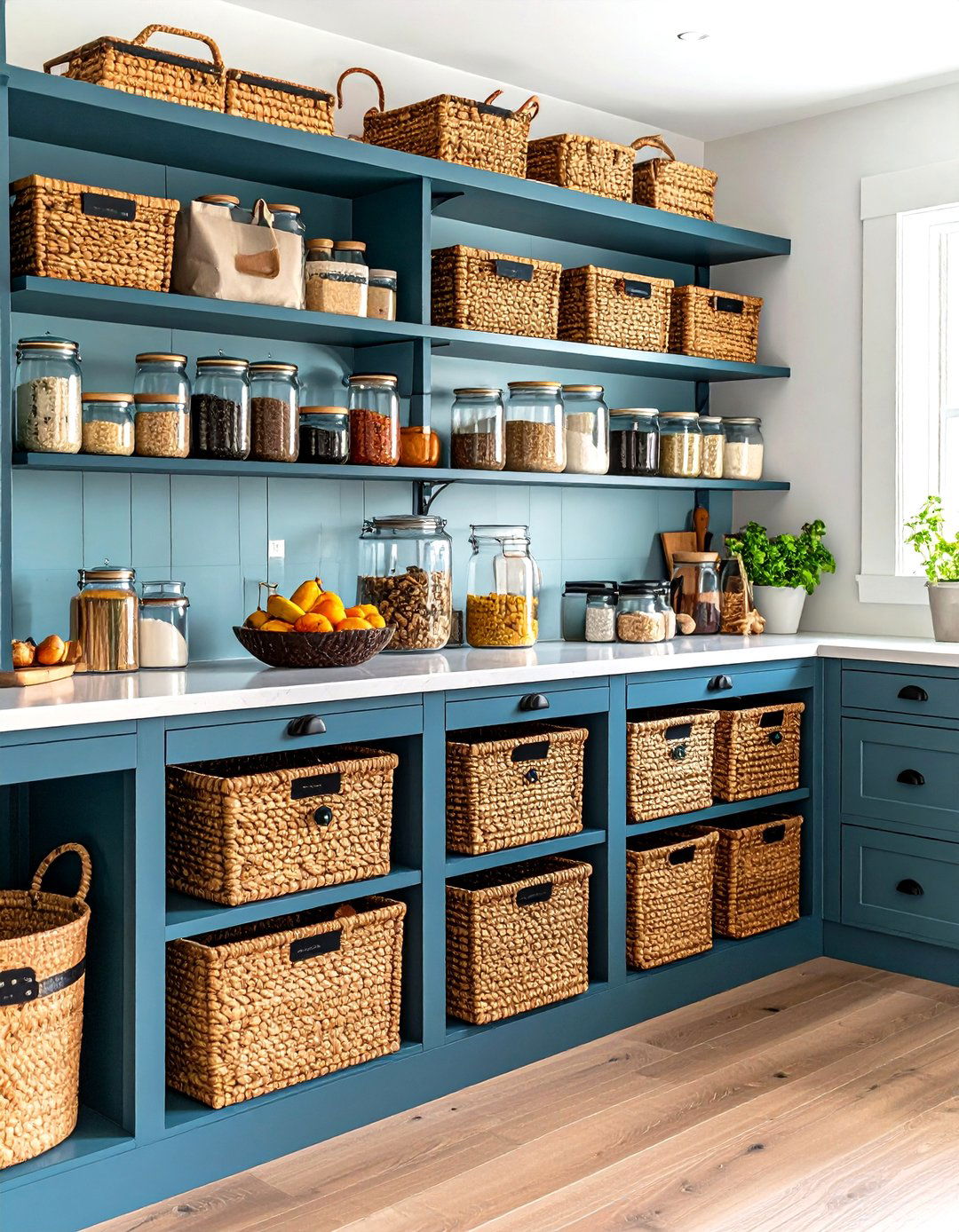

20. Add a Pull-Out Valet Rod
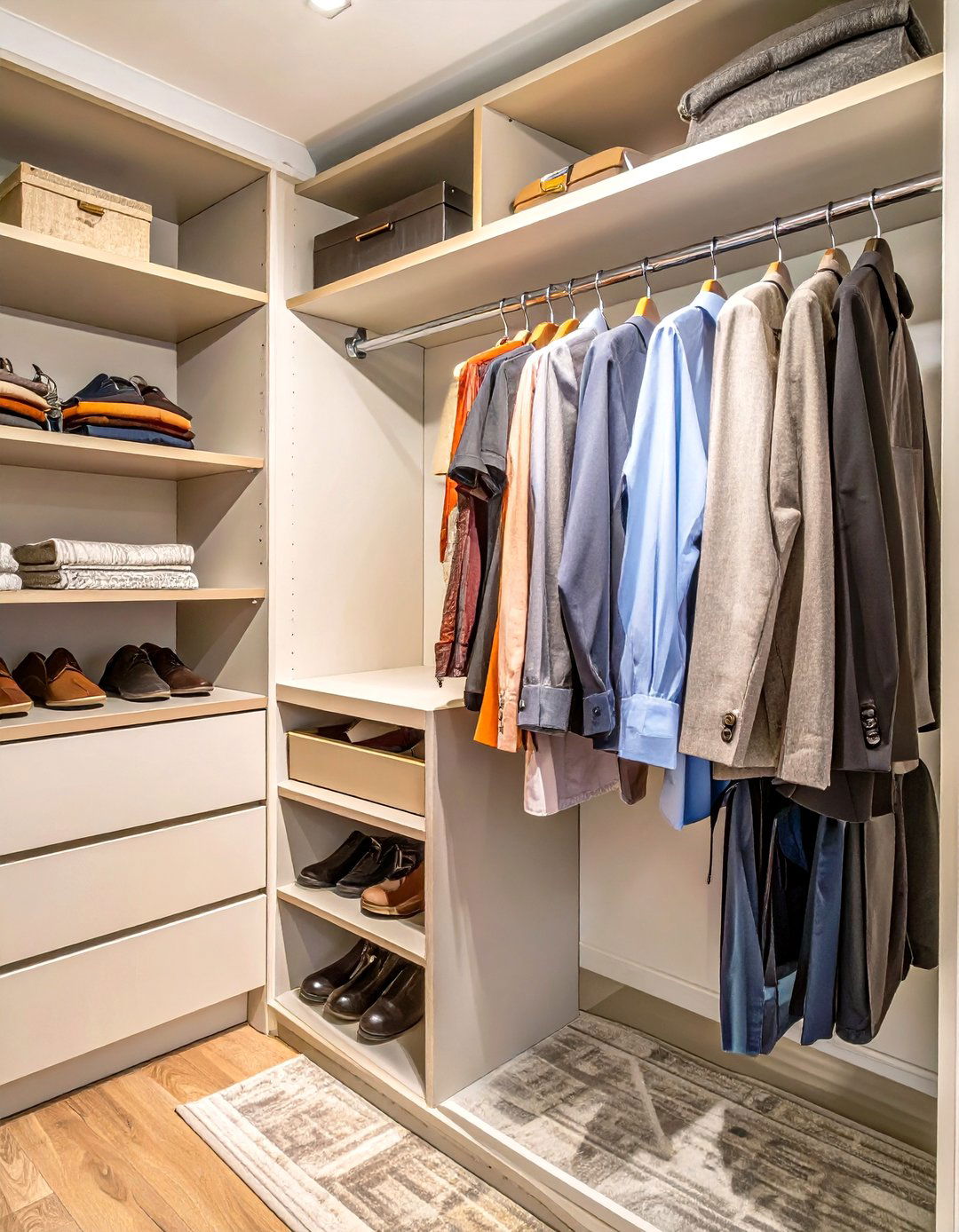
A pull-out valet rod is a small but mighty tool for closet organization. This retractable rod mounts to a shelf or closet wall and slides out to provide a temporary spot to hang clothes. It's incredibly useful for planning your outfit for the next day, allowing you to set it aside without it getting lost among other garments. It’s also handy for hanging dry cleaning as you bring it home or for airing out a piece of clothing before putting it away. When not in use, it tucks away discreetly, taking up virtually no space.
21. Use Stackable Shoe Boxes
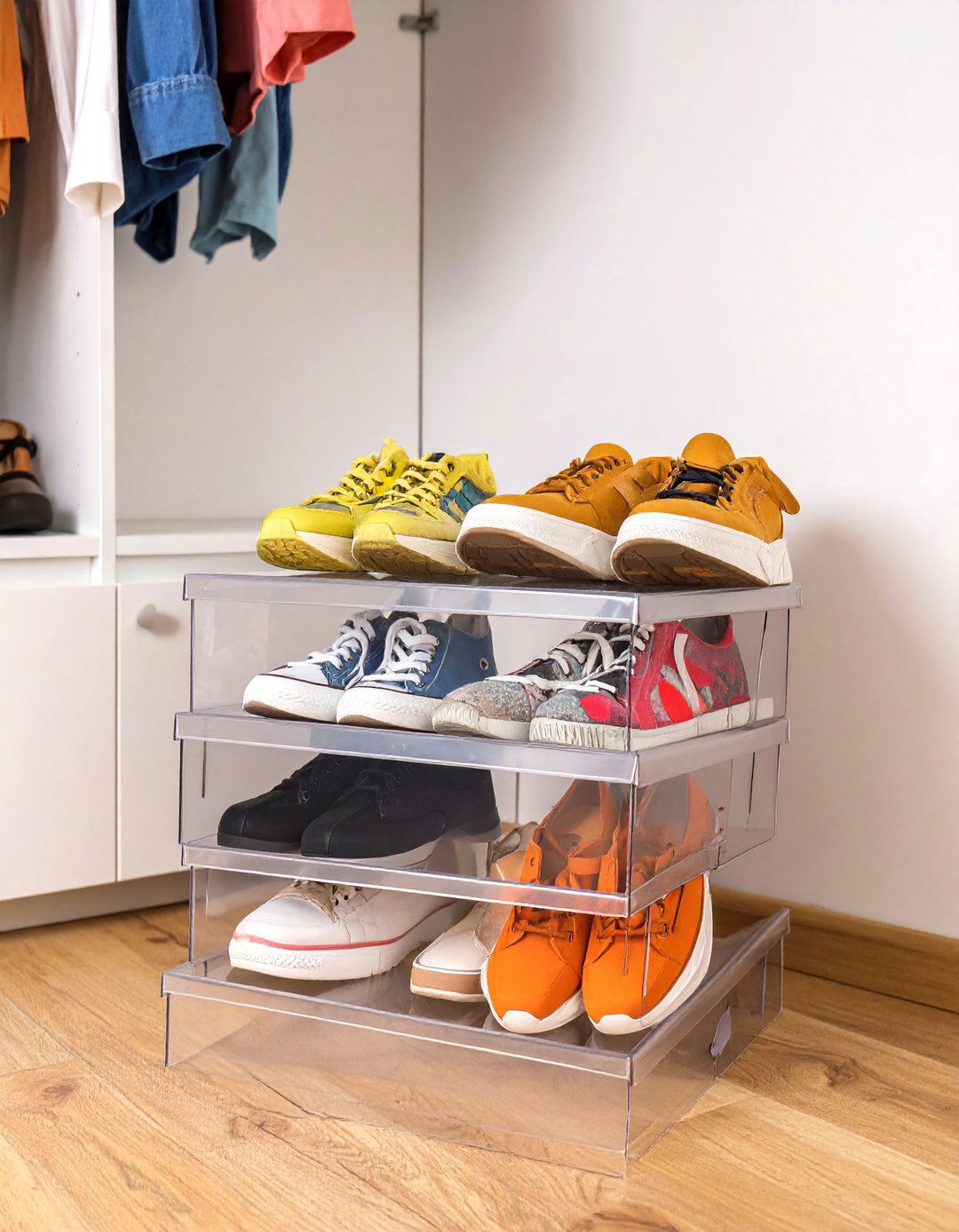
For shoe lovers with limited space, stackable shoe boxes are a perfect solution. Clear, drop-front boxes are ideal as they allow you to see your collection at a glance and access any pair without disturbing the entire stack. This system protects your shoes from dust and crushing, keeping them in better condition for longer. By stacking them vertically along the floor or on a deep shelf, you can fit many pairs into a compact footprint. This method brings order to a jumble of shoes and transforms the closet floor into a neat, functional storage area.
22. Mount a Tie and Belt Rack
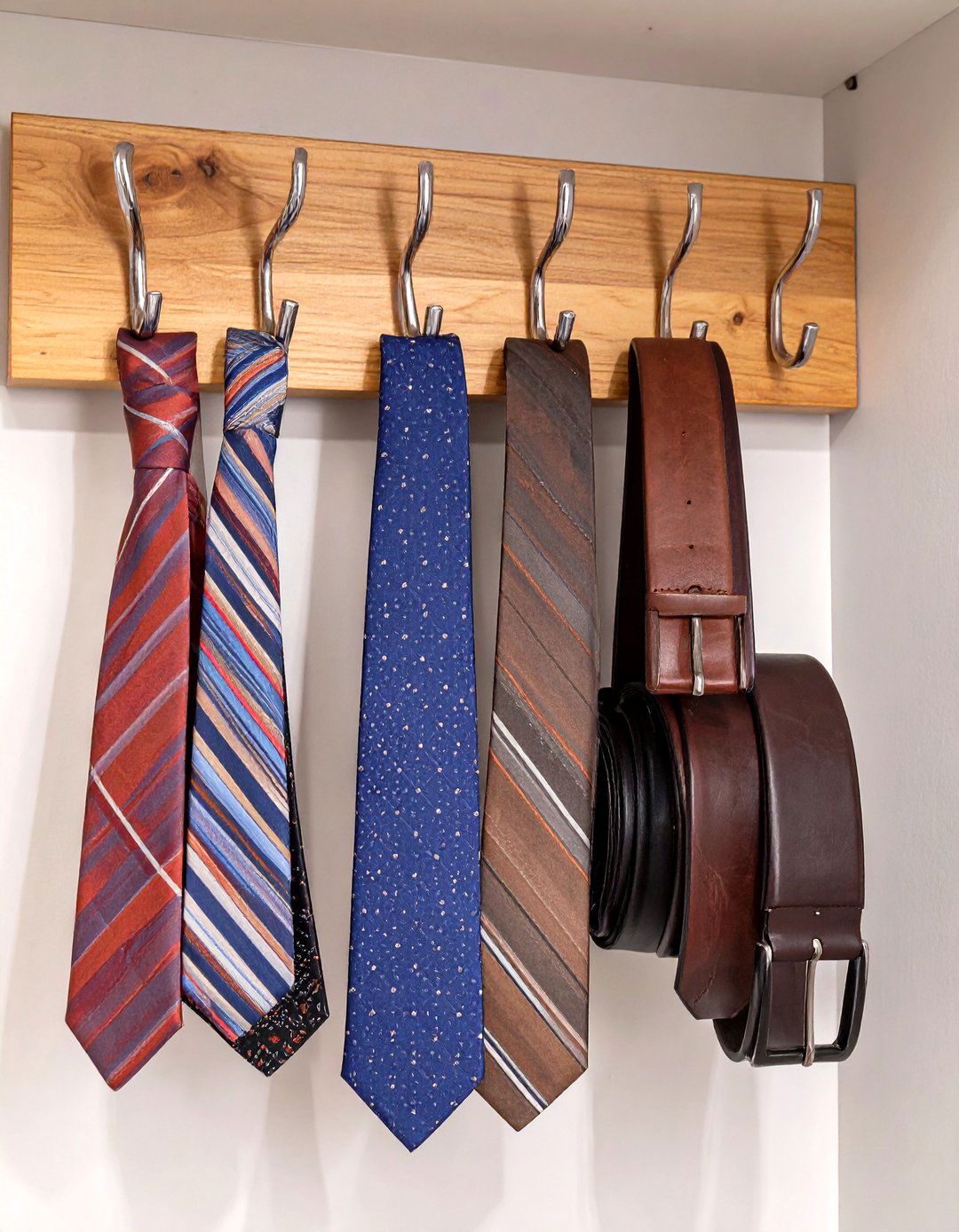
A dedicated tie and belt rack is essential for keeping these accessories organized and in good condition. Instead of stuffing them in a drawer where they can get tangled and creased, a wall-mounted or hanging rack provides a specific spot for each item. Many models are compact and can be installed on an empty patch of wall or the back of the closet door. Some even slide out for easy access. This ensures your ties remain smooth and your belt buckles are unscratched, while also making it simple to find the perfect one to complete your outfit.
23. Implement a File Folder System for Clutches
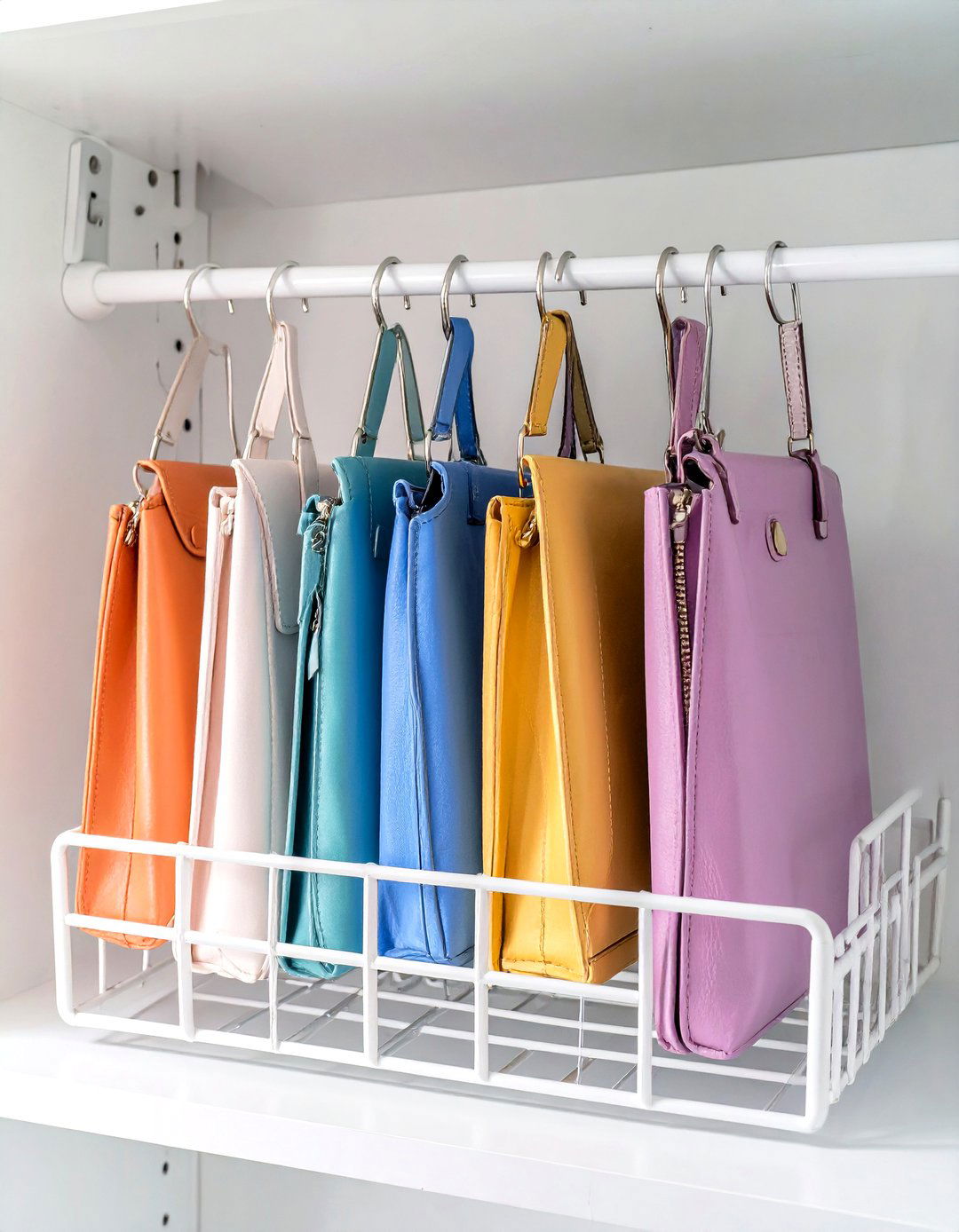
For slim clutches and small purses, a simple office file sorter or magazine holder can be repurposed into a brilliant organizer. Place the file sorter on a shelf and slide a clutch into each slot. This keeps them standing upright, visible, and easy to grab. It prevents them from becoming a disorganized pile and protects them from being crushed under heavier bags. This clever hack uses a common office supply to create a perfect, custom-sized storage solution for your accessories, keeping your shelves tidy and your favorite clutches within easy reach.
24. Build DIY Closet Shelf Risers
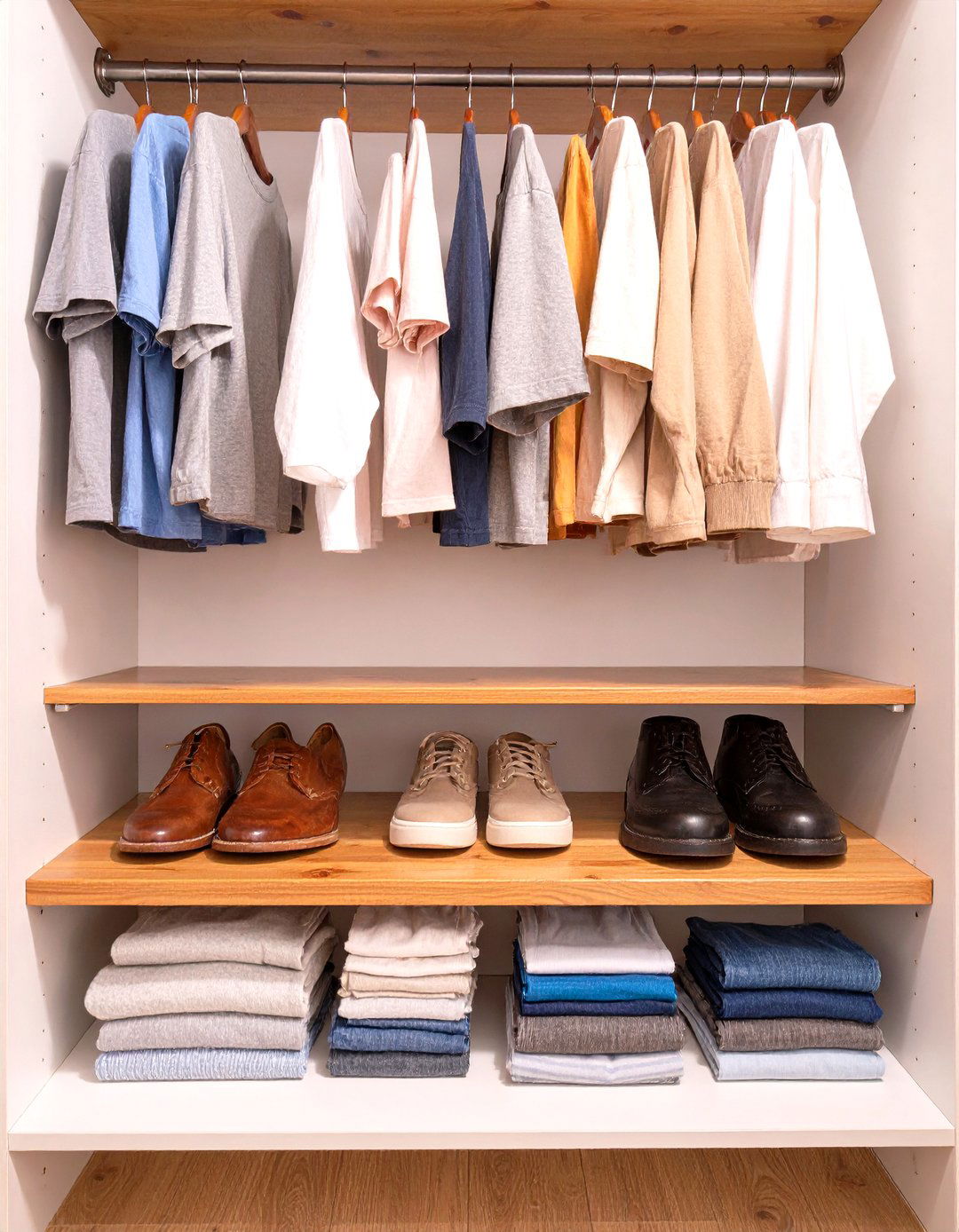
You can easily create more usable surface area on deep shelves by adding simple DIY shelf risers. Use small planks of wood or sturdy, flat-topped boxes to create a second level at the back of the shelf. This allows you to store items in two tiers, ensuring nothing gets lost in the back. Place less-frequently used items on the riser and more common items in the front for easy access. This simple project instantly doubles your shelf capacity and improves visibility, preventing you from forgetting about the clothes or accessories hidden in the depths of your closet.
25. Utilize Luggage for Off-Season Storage
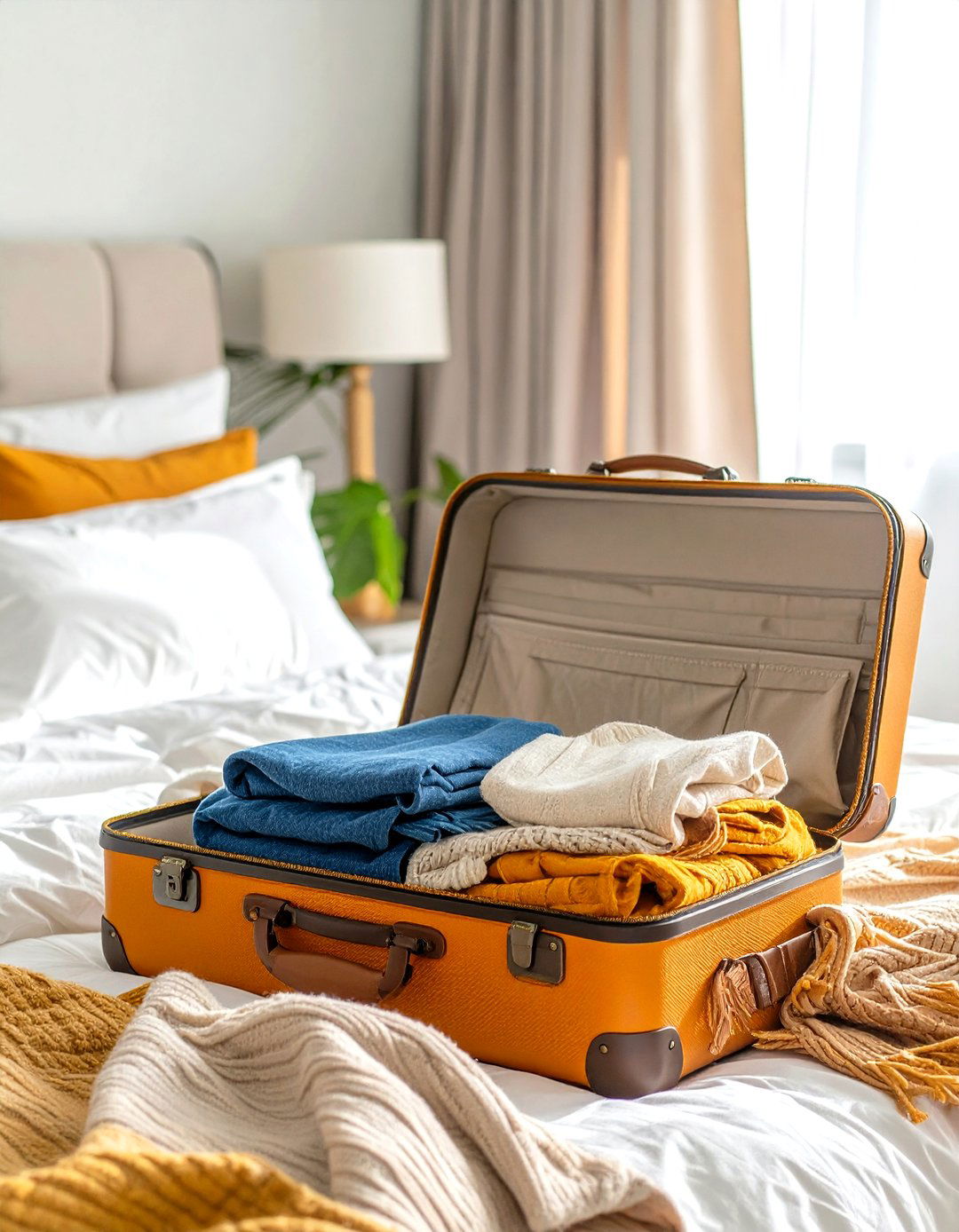
Instead of letting empty suitcases take up valuable space, put them to work. Use your luggage to store bulky off-season clothing, extra linens, or guest bedding. This is a brilliant two-for-one solution: you're storing your seasonal items while also finding a place for your empty bags. Place heavier items at the bottom and fill any gaps with smaller articles of clothing. To stay organized, slip a note inside or tie a tag to the handle listing the contents. Then, tuck the suitcase away on a high shelf or under your bed.
26. Hang Scarves on a Single Hanger with Rings
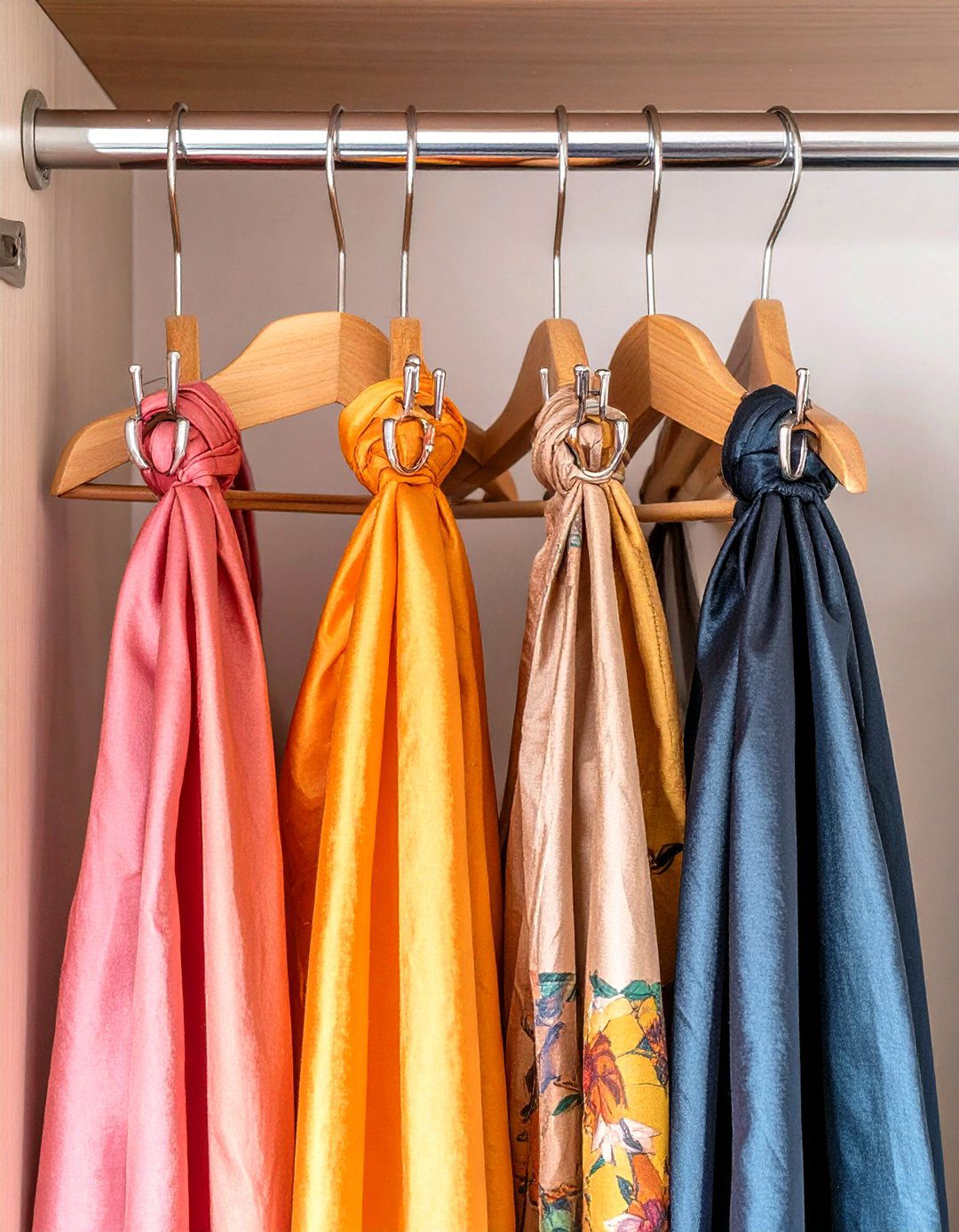
A cluttered collection of scarves can quickly become a tangled mess. To solve this, loop your scarves through shower curtain rings and slide the rings onto a single sturdy hanger. This simple DIY solution keeps them all neat, visible, and easily accessible. You can see all your color and pattern options at once without having to dig through a drawer or bin. It takes up minimal space on the closet rod and prevents your delicate scarves from getting snagged or wrinkled, preserving their quality while keeping your closet perfectly organized and tidy.
27. Create a Back-of-Door Hat Display
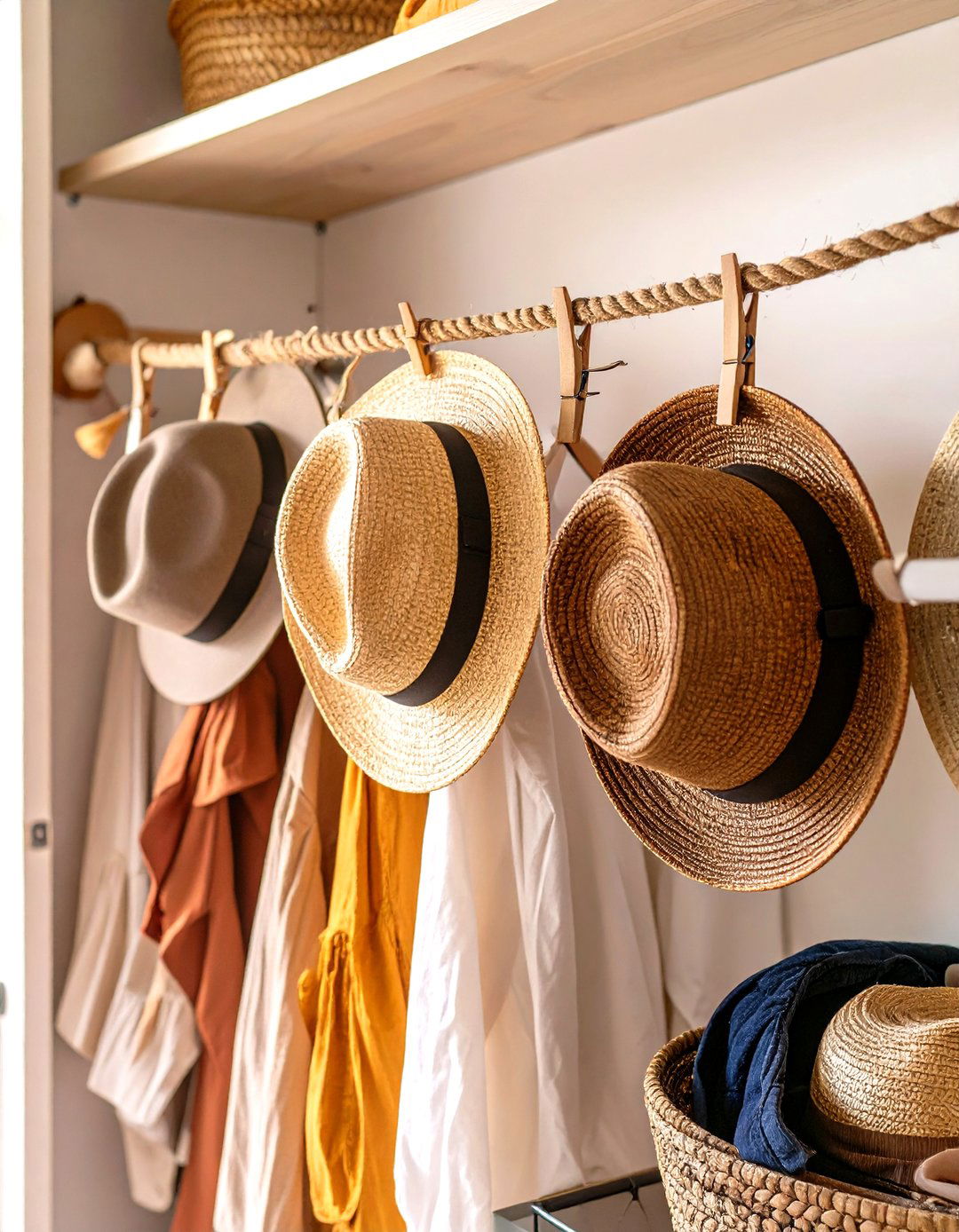
If you have a collection of hats, don't let them get crushed on a shelf. Instead, create a functional display on the back of your closet door. You can use a series of self-adhesive hooks or a simple rope-and-clothespin system to hang them. This keeps their shape intact and turns them into a decorative feature. By utilizing this often-ignored vertical space, you free up valuable shelf real estate for other items. It makes selecting a hat for the day quick and easy, ensuring your collection stays organized and in pristine condition.
28. Use Boot Shapers and Clips
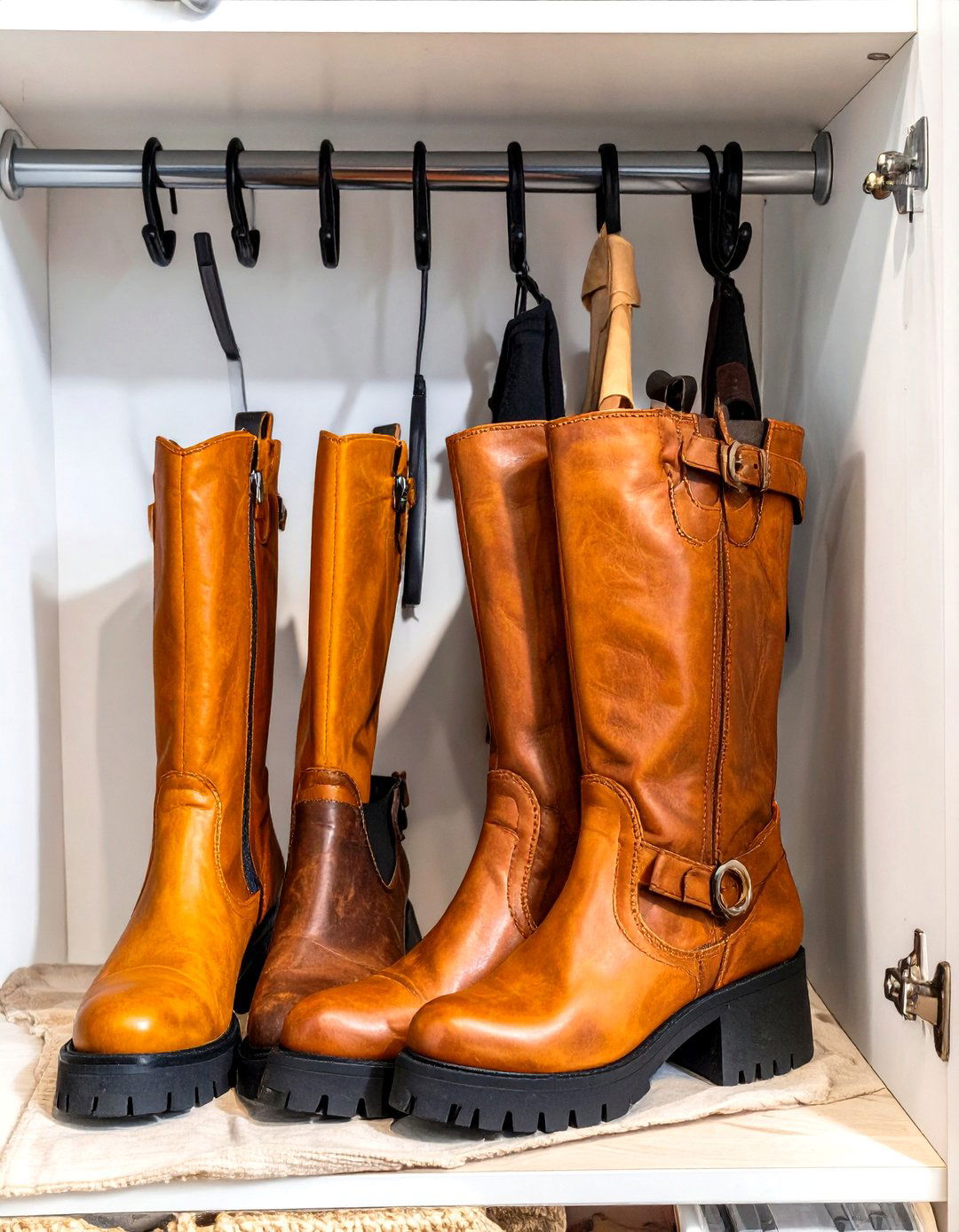
Tall boots can be awkward to store, often flopping over and creating a mess on the closet floor. Use boot shapers to help them stand upright, which preserves their shape and prevents creasing. For an even more space-saving solution, use boot hangers. These are sturdy hangers with clips that grip the top of your boots, allowing you to hang them from your closet rod. This gets them off the floor entirely, freeing up that space for shoes or storage bins and keeping your expensive footwear in top condition.
29. Label Everything for Easy Identification
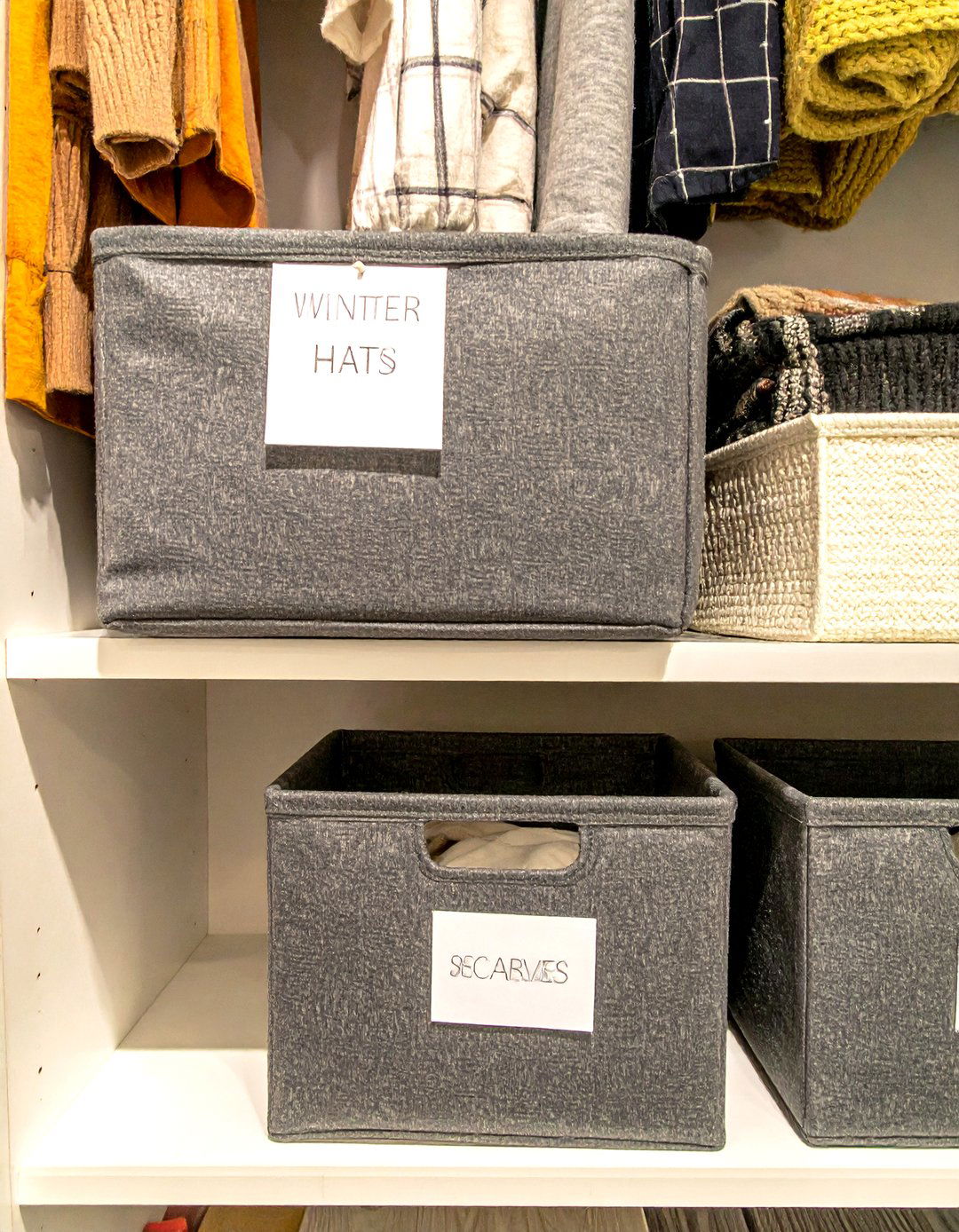
No matter how organized your bins and boxes are, they are useless if you don't know what's inside. Labeling is a quick but crucial final step in any organization project. Use a label maker, chalkboard tags, or simple adhesive labels to clearly mark the contents of every storage container, especially opaque ones. This saves you time and effort, as you won't have to pull down and open multiple boxes to find a single item. It creates a clean, cohesive look and transforms your closet into a highly efficient system where everything has a place and is easy to find.
30. Conduct Regular Closet Clean-Outs
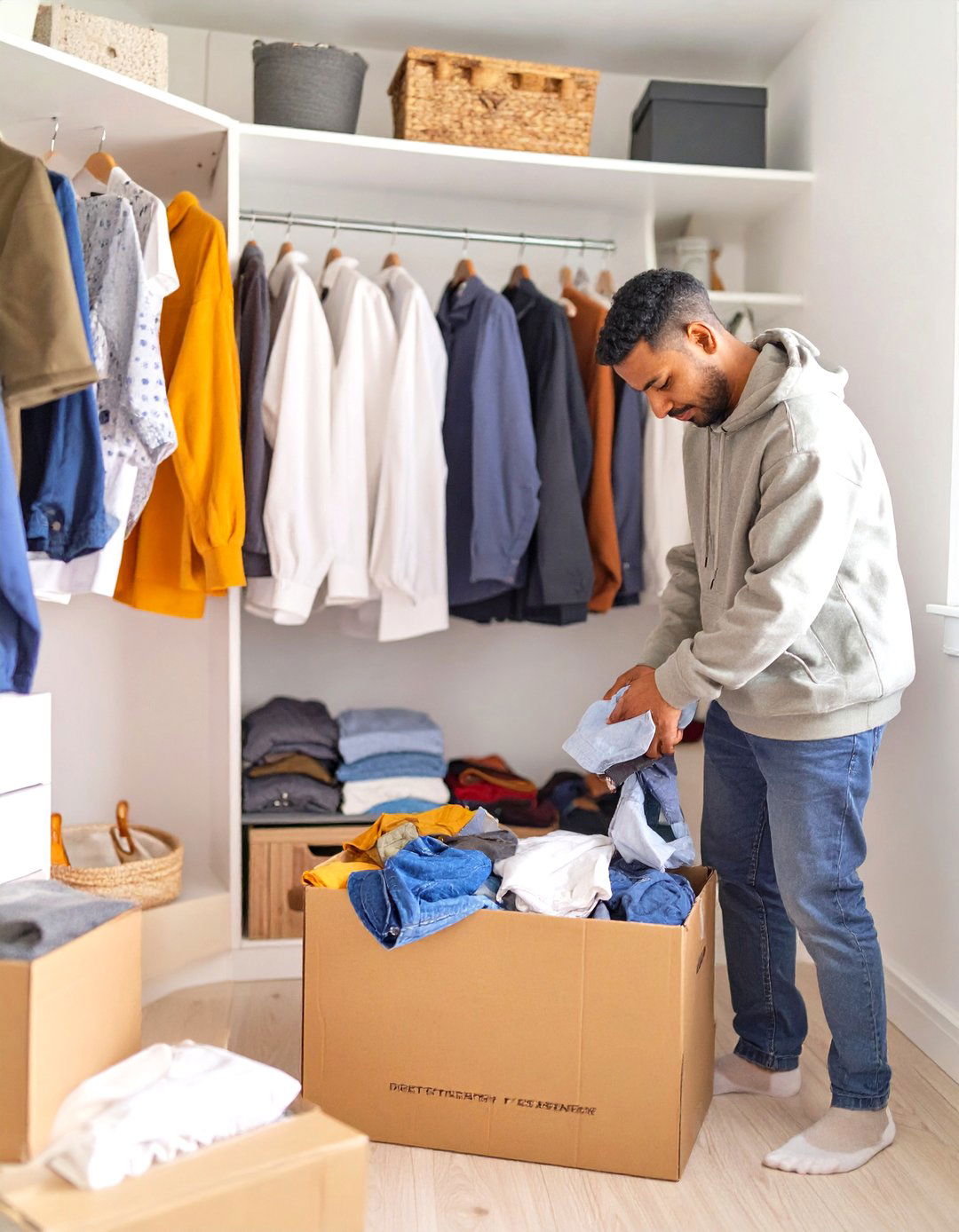
The most effective small closet organizer idea is to have less stuff. Schedule a closet clean-out at least twice a year to declutter and reassess your wardrobe. Follow the one-year rule: if you haven't worn an item in the past year, it's time to consider donating or selling it. Regularly purging items you no longer need, love, or fit into is the best way to maintain an organized space. This practice prevents clutter from building up, ensures your closet only holds items you truly value, and makes daily organization much easier to manage.
Conclusion:
Transforming a small closet from chaotic to controlled is achievable with the right strategies. By incorporating vertical storage, utilizing door space, and choosing smart tools like slim hangers and shelf dividers, you can maximize every inch. The key is to create a designated home for each item, from shoes to seasonal wear. Regular decluttering ensures the space remains functional and tidy. These ideas prove that you don't need a larger closet, just a smarter one, to create a peaceful and organized wardrobe that simplifies your daily routine.

Related posts:


Leave a Reply