
Transforming an underutilized basement into a cozy, inviting retreat is a rewarding project, and a rustic bar is the perfect centerpiece. This style embraces natural materials, warm textures, and a sense of history, creating a space ideal for relaxing and entertaining. From reclaimed wood and stone accents to industrial hardware and vintage-inspired lighting, there are countless ways to interpret the rustic aesthetic. Whether you envision a space that feels like a mountain lodge, a modern farmhouse, or an old-world tavern, these ideas provide the inspiration to design a rustic basement bar that is both functional and full of character.
1. Rustic Basement Bar with a Reclaimed Barnwood Facade
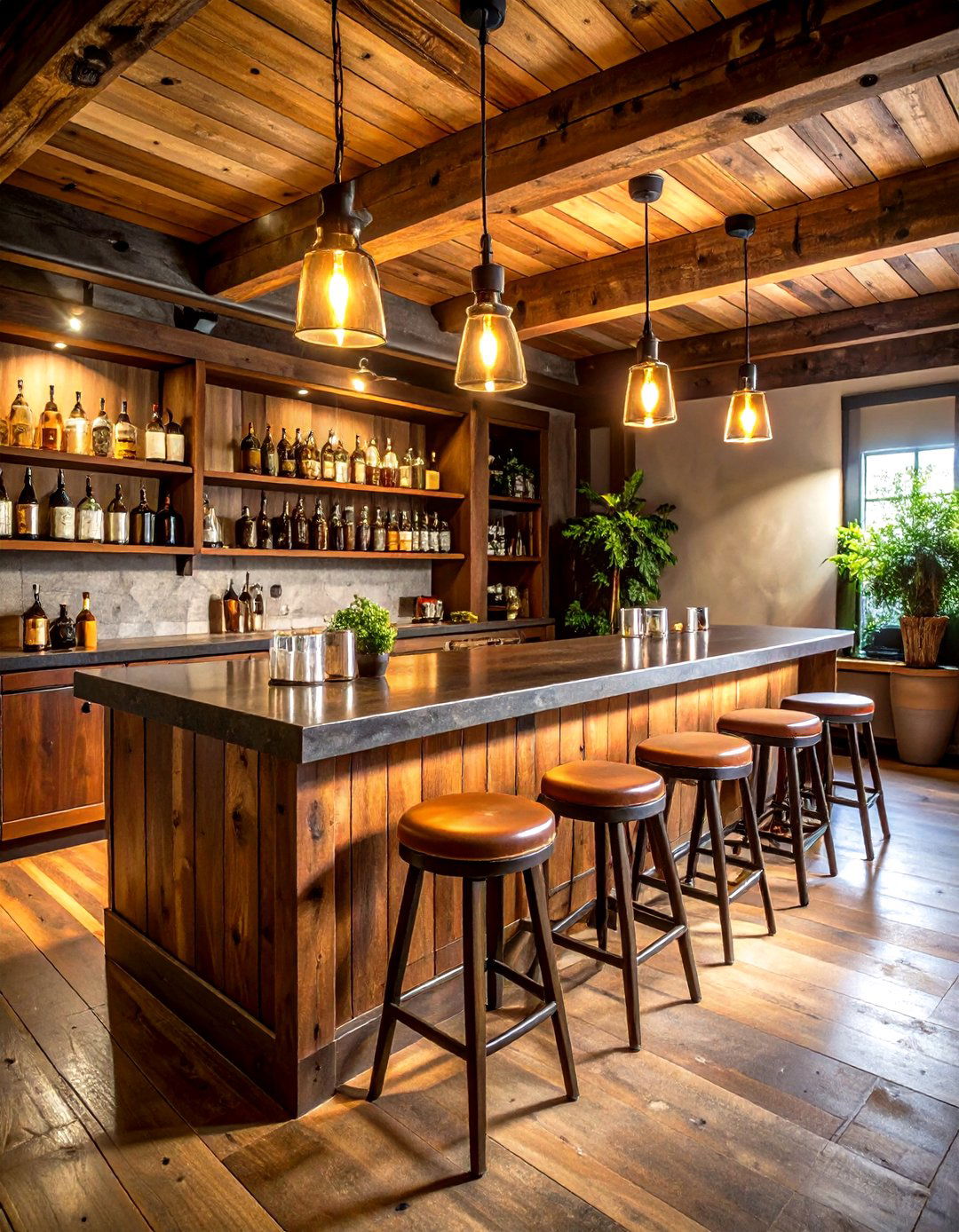
For an authentic touch of countryside charm, constructing your rustic basement bar with a reclaimed barnwood facade is a superb choice. The weathered textures and varying tones of the old wood planks bring instant history and character to the space. Each knot, nail hole, and saw mark tells a story, making the bar a unique focal point. To complete the look, pair the barnwood with a simple, solid wood or dark stone countertop. This approach not only looks fantastic but also champions sustainability by giving old materials a new life. The warmth of the wood creates an inherently inviting atmosphere for guests.
2. Rustic Basement Bar with a Corrugated Metal Front
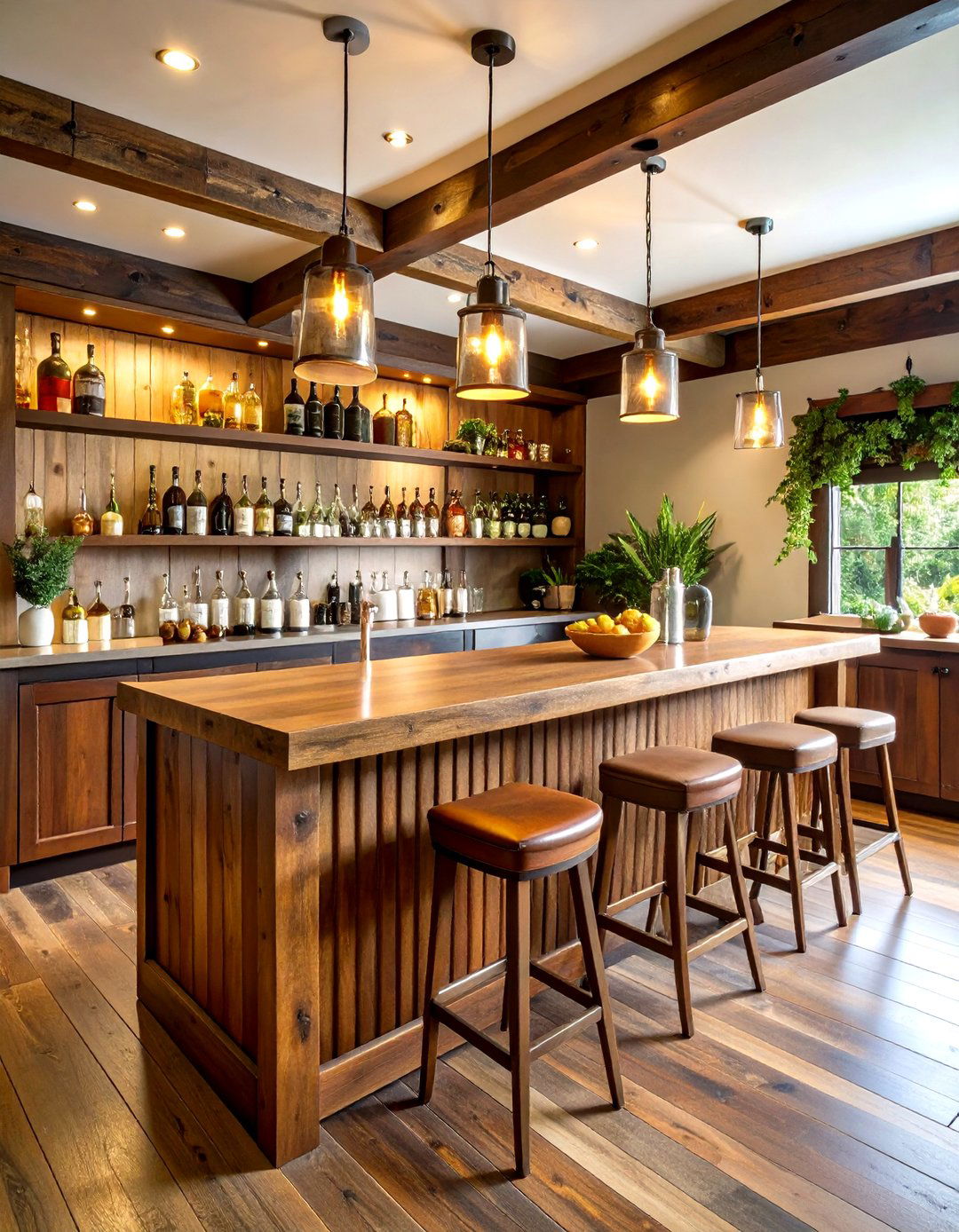
Introducing corrugated metal to your rustic basement bar design adds a compelling industrial-farmhouse edge. Using galvanized corrugated steel panels for the front or back of the bar creates a striking textural contrast against warmer wood elements. This material is not only durable and easy to clean but also reflects light, which can help brighten a typically dark basement space. You can frame the metal with dark-stained wood or pair it with a thick, poured concrete countertop to enhance the industrial vibe. This look is rugged yet refined, offering a modern twist on traditional rustic decor while remaining grounded and unpretentious.
3. Rustic Basement Bar with a Live-Edge Wood Countertop
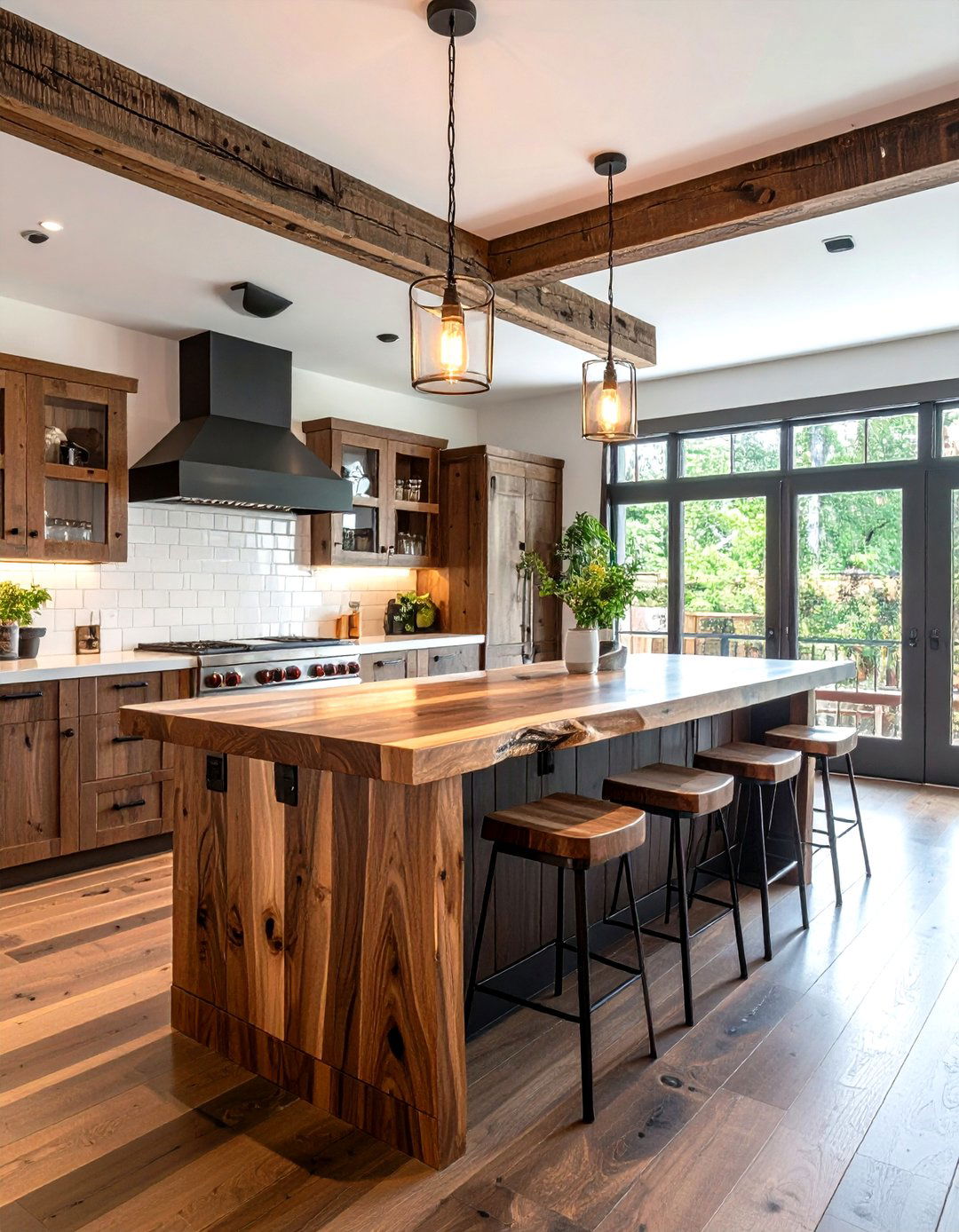
A live-edge wood countertop is the defining feature of a truly nature-inspired rustic basement bar. This style preserves the natural, uncut edge of the wood slab, showcasing its organic shape and unique grain patterns. Each piece is one-of-a-kind, serving as both a functional surface and a work of art. Popular wood choices like walnut, maple, or redwood offer rich colors and durability. To let the countertop shine, keep the bar base simple, perhaps constructed from dark-stained wood or stacked stone. The raw beauty of the live edge connects the indoor space to the outdoors, creating a grounded and serene environment.
4. Rustic Basement Bar with Stacked Stone Accents
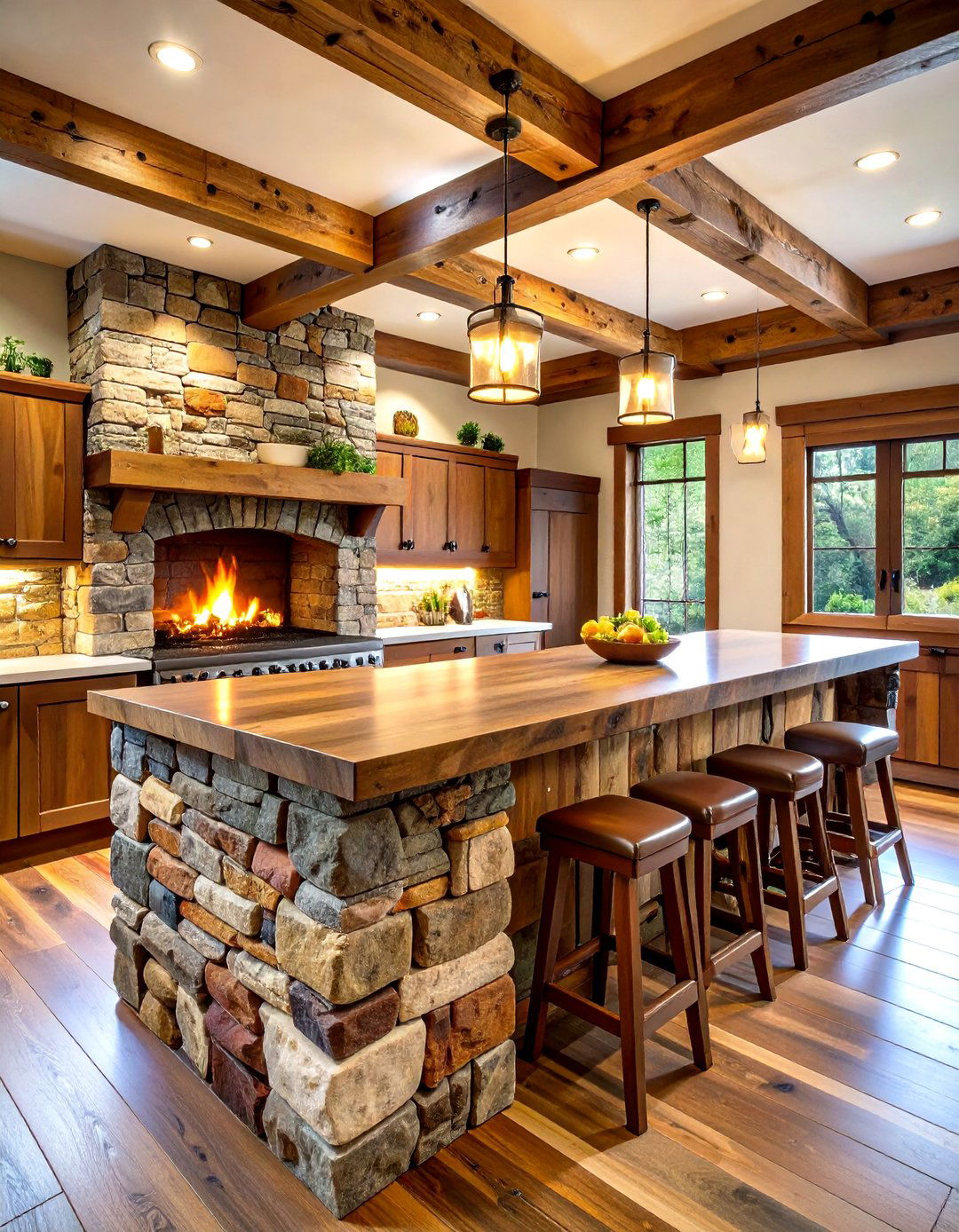
Incorporating stacked stone is a classic way to achieve a robust and earthy rustic basement bar. Whether you use it to build the entire bar base or as an accent wall behind the bar, the texture and tones of natural stone add immense visual weight and a sense of permanence. Faux stone panels offer a lighter, more budget-friendly alternative that is easier to install but provides a similarly dramatic effect. Pair the stone with thick, rough-hewn wooden shelves and a solid wood bar top to balance its coolness with warmth. This combination evokes the feeling of a cozy mountain lodge or a classic cellar.
5. Rustic Basement Bar with an Integrated Kegerator
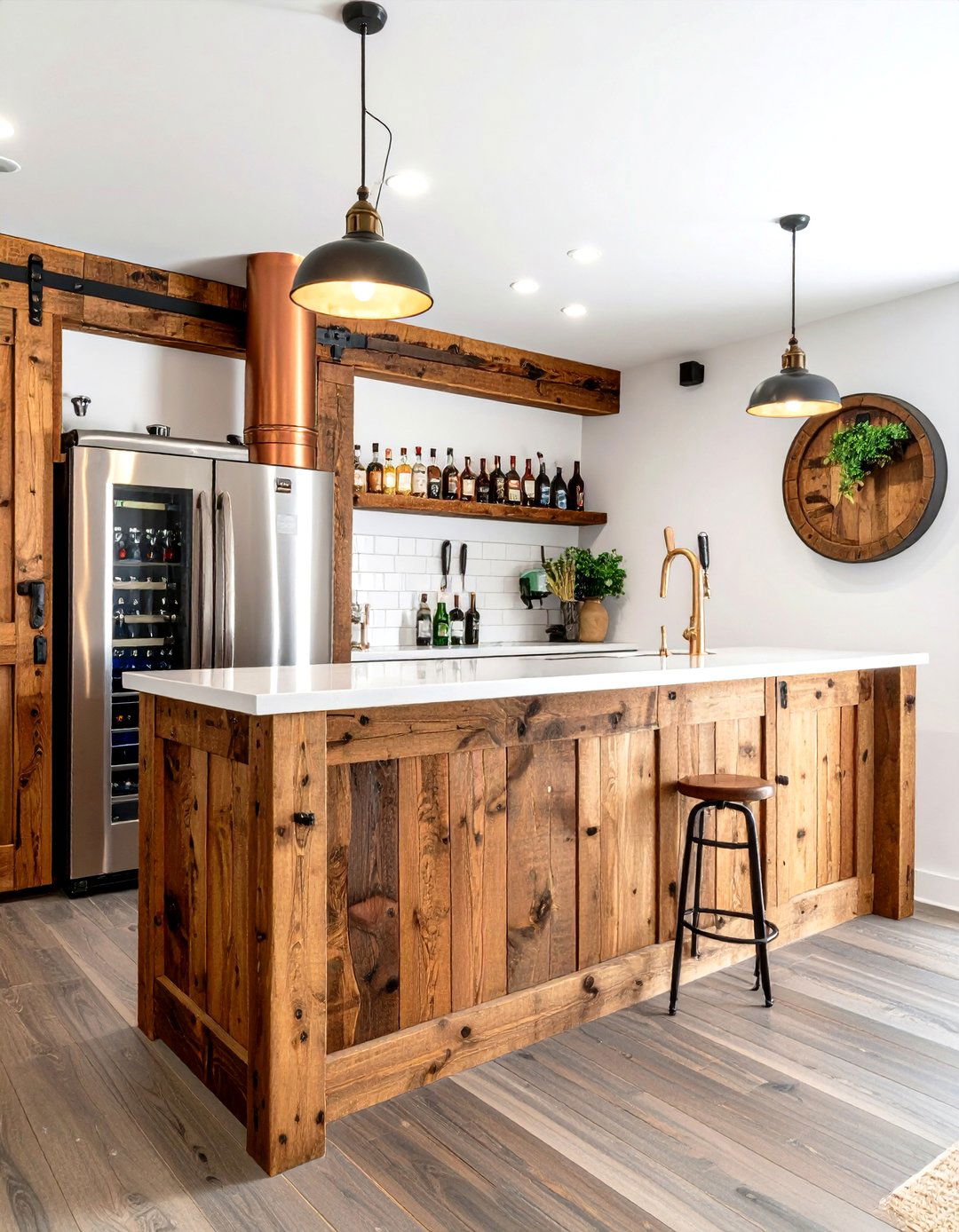
What elevates a home bar from good to great is the convenience of draft beer, making an integrated kegerator a must-have for any rustic basement bar. Conceal the stainless steel appliance behind a custom wooden cabinet door that matches the rest of the bar's facade, such as reclaimed barnwood or dark-stained pine. This maintains the seamless rustic aesthetic while providing modern functionality. The tap handles themselves can be a design element—choose ones made from wood, antlers, or industrial pipe to complement the overall theme. This feature ensures fresh, cold beer is always on tap, perfect for entertaining friends and family.
6. Rustic Basement Bar with Open Pipe Shelving
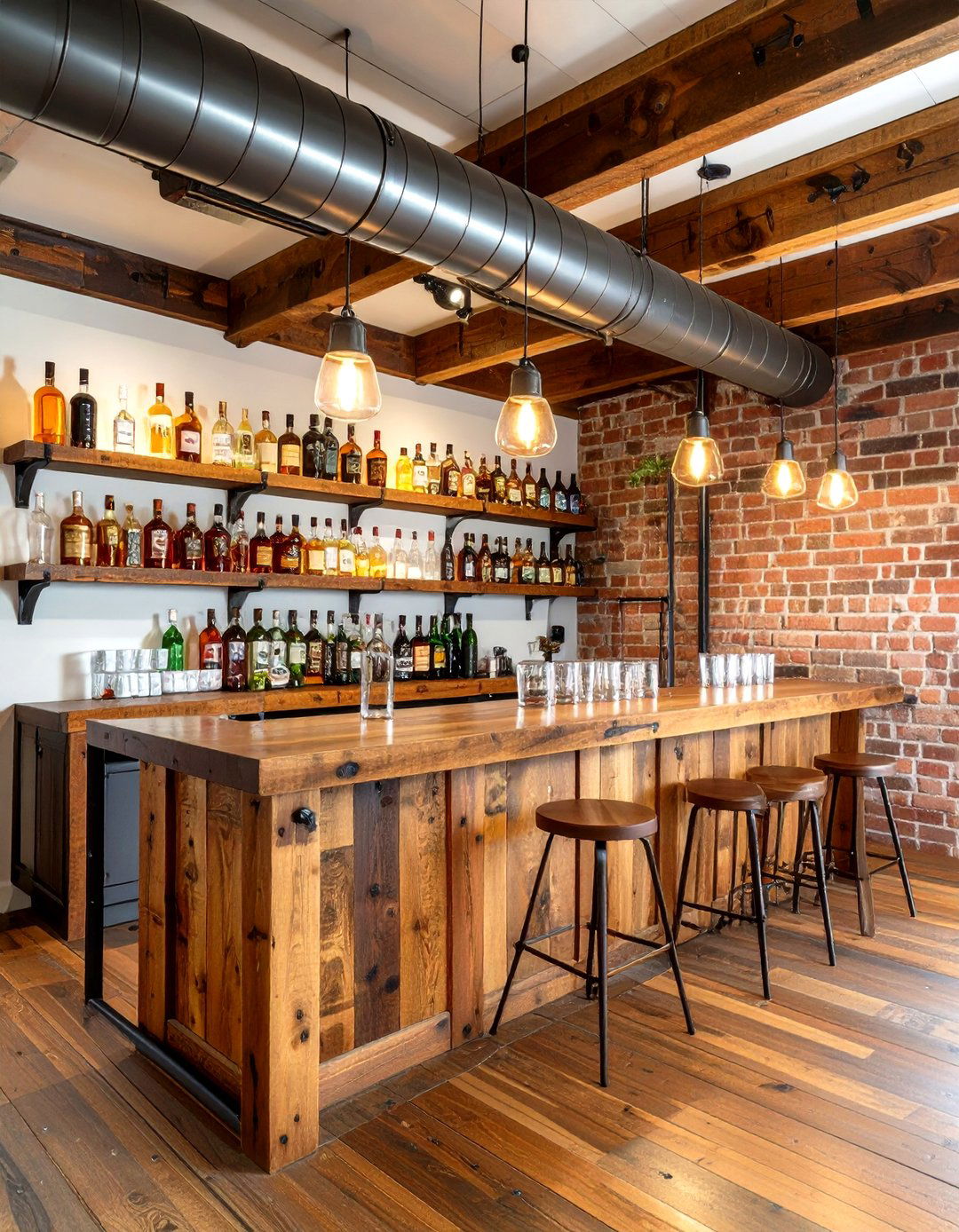
For a look that blends rustic warmth with industrial grit, open pipe shelving is an excellent addition to your rustic basement bar. Constructed from black or galvanized iron pipes and fittings, these shelves offer a sturdy and stylish solution for storing bottles, glassware, and decor. The raw, mechanical look of the pipes contrasts beautifully with thick wooden planks, which can be made from reclaimed timber or stained to match the bar. This shelving style is highly customizable, allowing you to design a layout that perfectly fits your space and storage needs while reinforcing the rugged, utilitarian charm of the rustic aesthetic.
7. Rustic Basement Bar with Whiskey Barrel Base
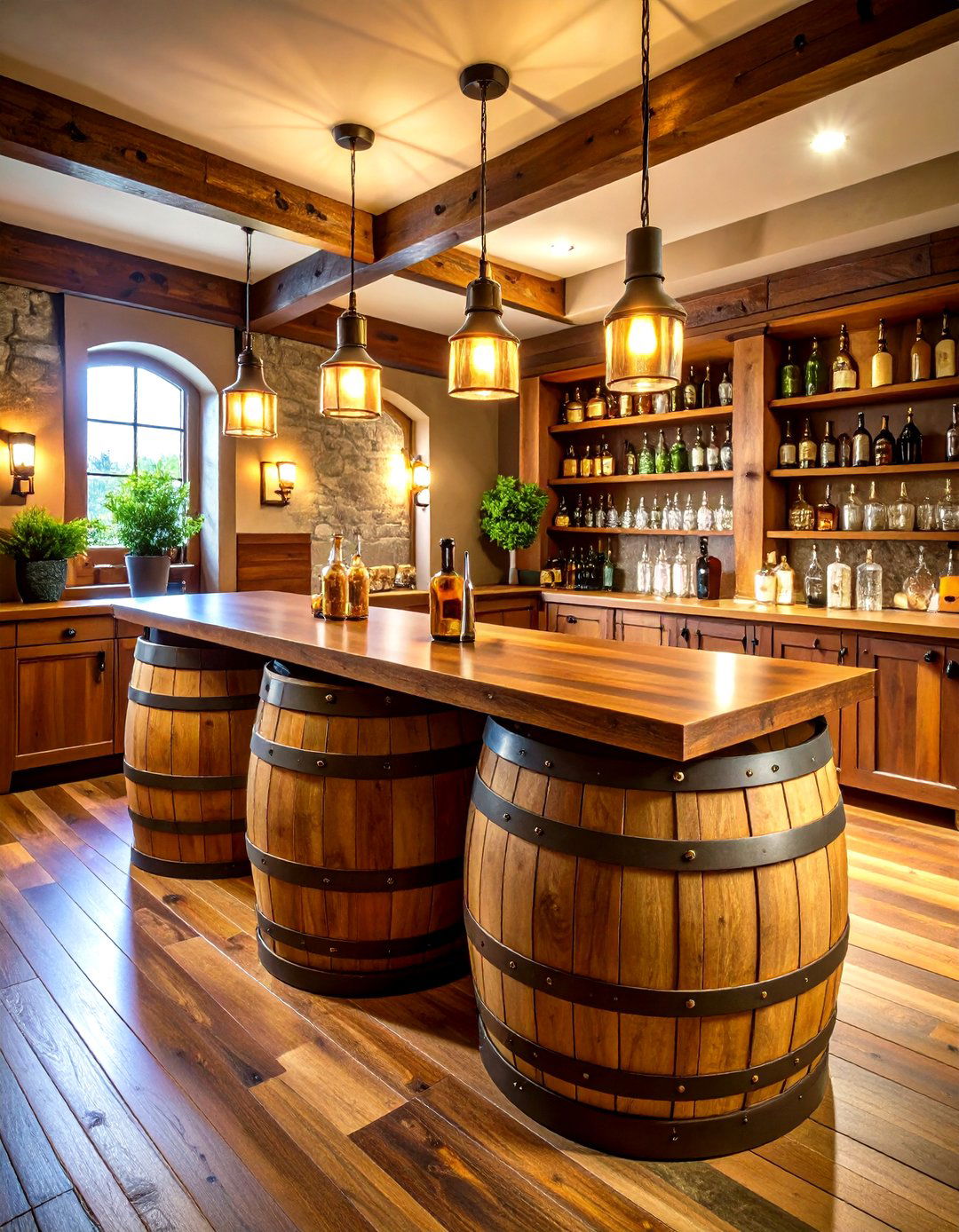
Using authentic whiskey or wine barrels as the base for your rustic basement bar creates an immediate and unforgettable focal point. You can use a single barrel for a compact bar or place a countertop across two barrels for a more expansive setup. The aged oak, stamped markings, and metal hoops of the barrels provide a genuine tavern-like feel that is rich with history and character. This idea is not only visually striking but also cleverly repurposes items, adding to the sustainable appeal of rustic design. It's a perfect choice for connoisseurs who want their bar's design to reflect their passion.
8. Rustic Basement Bar with a Poured Concrete Countertop
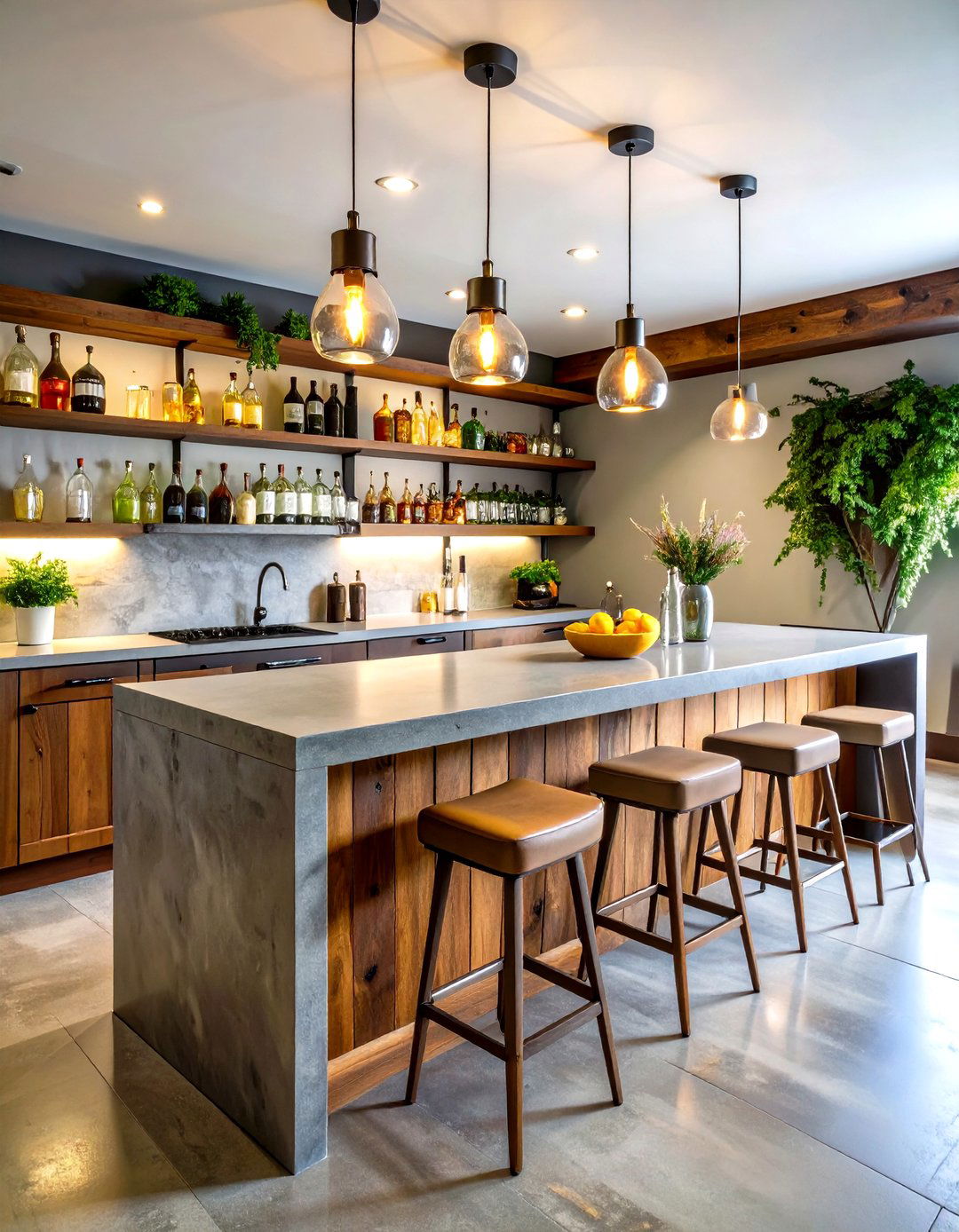
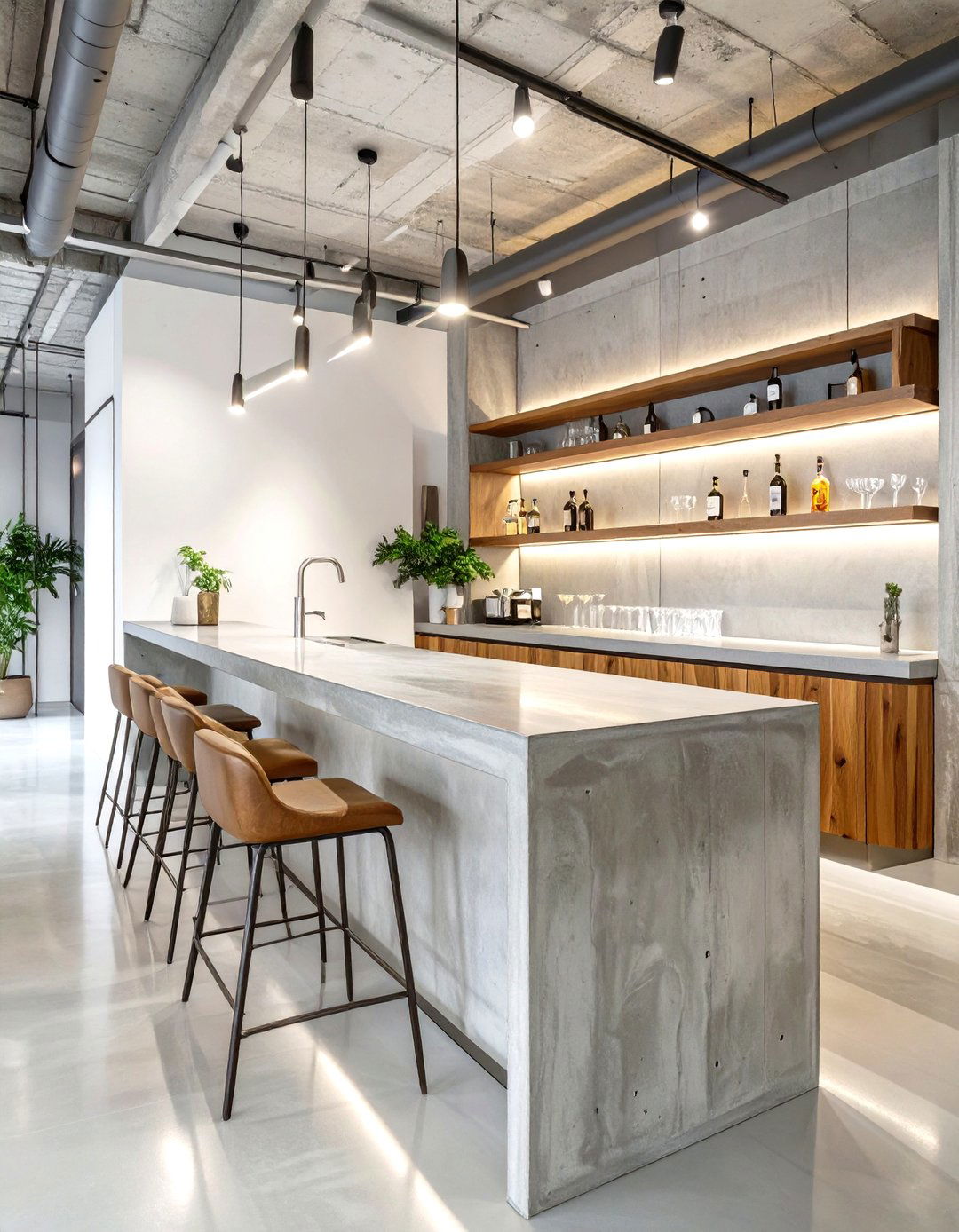
A poured concrete countertop offers a sleek, modern counterpoint to the traditional elements of a rustic basement bar. Its smooth, cool surface contrasts beautifully with the warm textures of a reclaimed wood or stacked stone bar base. Concrete is incredibly durable and can be customized with different colors and finishes, from a raw, industrial gray to a polished, earthy tone. The clean lines of the concrete help to ground the space and prevent the rustic decor from feeling cluttered. This blend of materials creates a sophisticated yet approachable bar that feels both contemporary and timelessly rugged, fitting perfectly into a modern farmhouse or industrial-rustic scheme.
9. Rustic Basement Bar with Edison Bulb Lighting
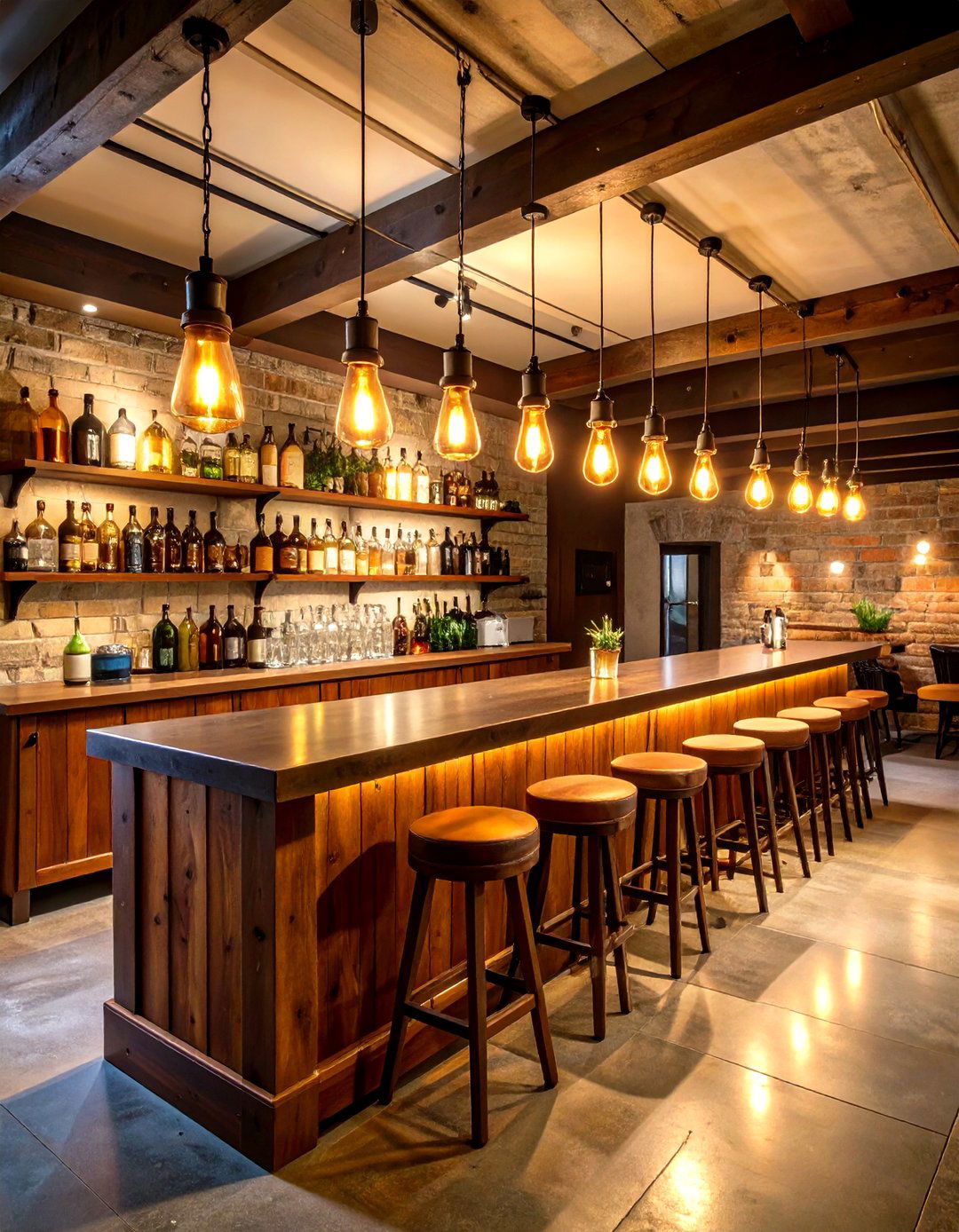
Lighting is crucial in setting the mood, and Edison bulb fixtures are the perfect choice for a rustic basement bar. These vintage-style bulbs, with their visible, glowing filaments, cast a warm, ambient light that enhances the cozy atmosphere. Hang a series of pendant lights with Edison bulbs over the bar, or use sconces with metal cages for an industrial touch. You can also create a custom fixture using a wooden beam or an iron pipe. This type of lighting not only illuminates the space but also serves as a key decorative element, reinforcing the old-world, slightly industrial charm of your rustic retreat.

10. Rustic Basement Bar with a Galvanized Steel Top
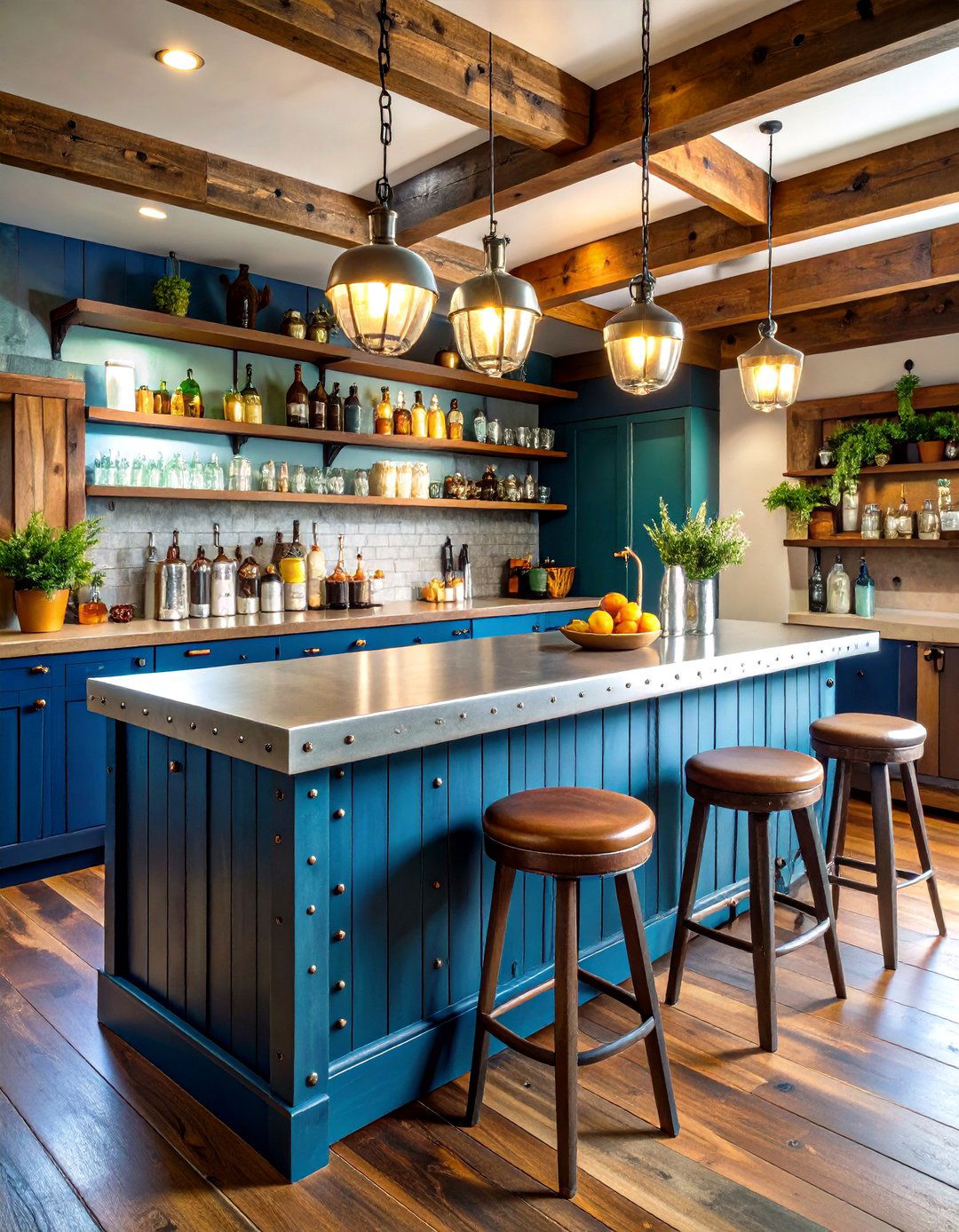
For a rustic basement bar with a distinct farmhouse or industrial flair, consider a galvanized steel countertop. This material is durable, easy to clean, and develops a unique patina over time, adding to its rustic character. The cool, metallic sheen of the steel provides a handsome contrast to a warm wood base, whether it’s made from reclaimed pallets or stained pine. To enhance the look, you can add decorative nail heads or rivets along the edge of the countertop. A galvanized steel top is a practical and stylish choice that feels both hardworking and effortlessly cool, perfect for a high-use entertainment space.
11. Rustic Basement Bar with Sliding Barn Doors
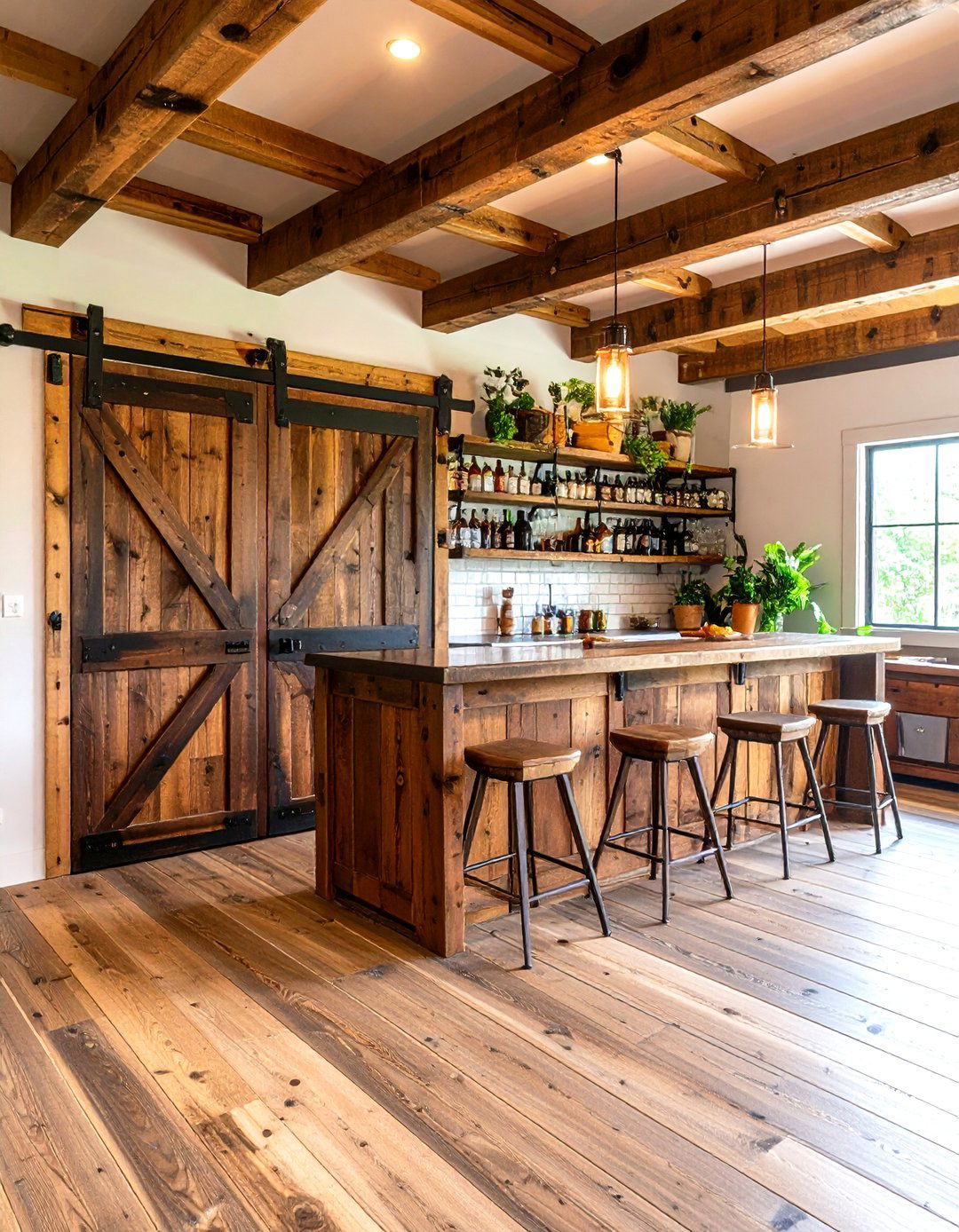
Incorporate sliding barn doors into your rustic basement bar design to cleverly conceal storage or a small kitchenette area. A miniature barn door on a metal track can slide across the back bar shelving, allowing you to hide clutter or reveal a curated display of spirits. This feature adds a dynamic and functional element that is deeply rooted in the farmhouse aesthetic. You can choose a door made from weathered wood or painted in a bold color to act as an accent piece. It’s a space-saving solution that reinforces the rustic theme while adding a touch of interactive, country-inspired charm to your basement setup.
12. Rustic Basement Bar with a Chalkboard Backsplash
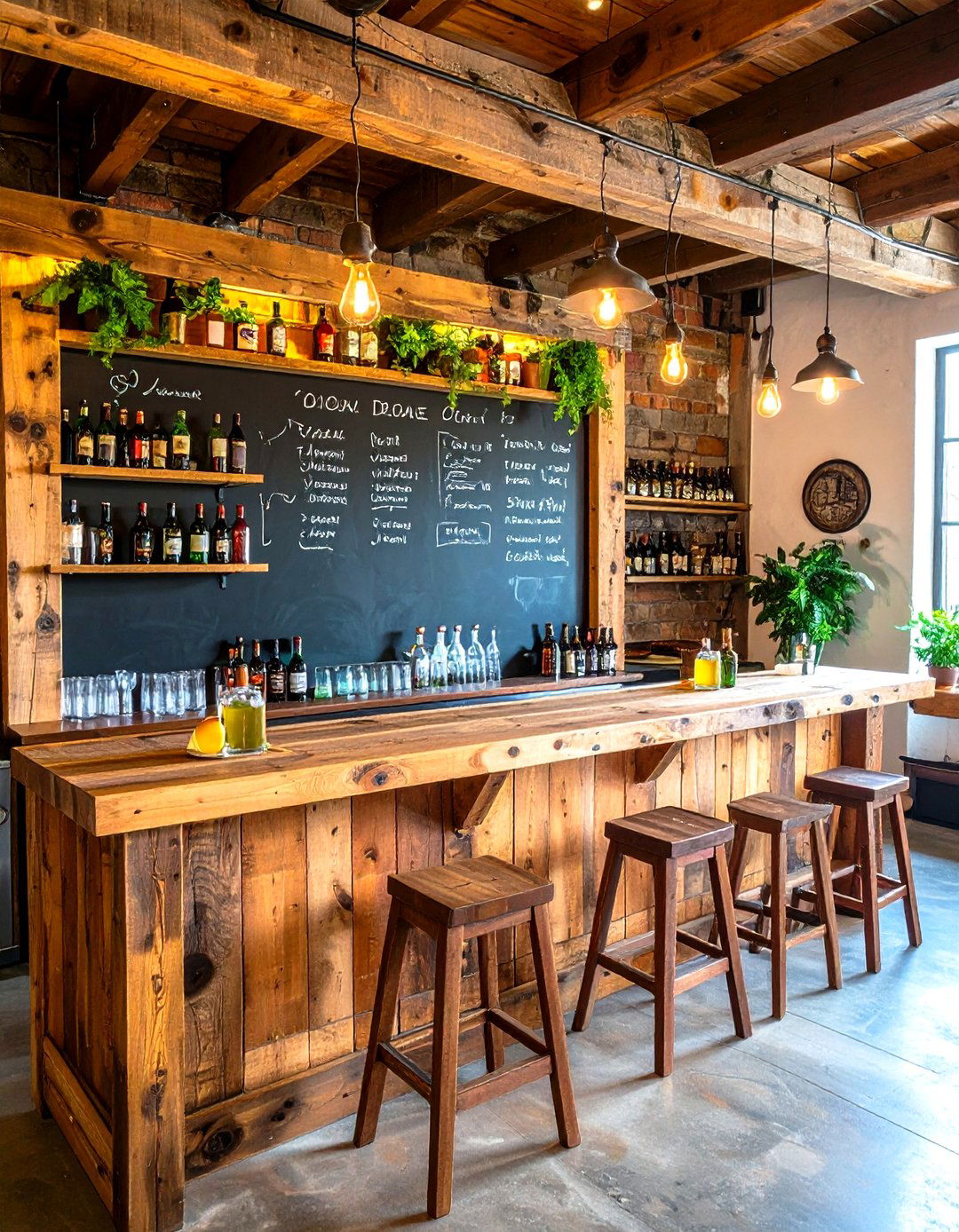
A chalkboard backsplash offers a fun and versatile element for your rustic basement bar. Painting the wall behind the bar with chalkboard paint creates a dynamic canvas where you can write menus, welcome guests, or showcase artistic doodles. It’s an inexpensive yet high-impact feature that adds a personal, bistro-like touch. Frame the chalkboard area with rough-hewn wood to enhance the rustic feel. This interactive backdrop is perfect for parties and gatherings, allowing you to easily update the look and feel of your bar for any occasion while blending seamlessly with other rustic materials like wood and metal.
13. Rustic Basement Bar with Built-In Wine Racks
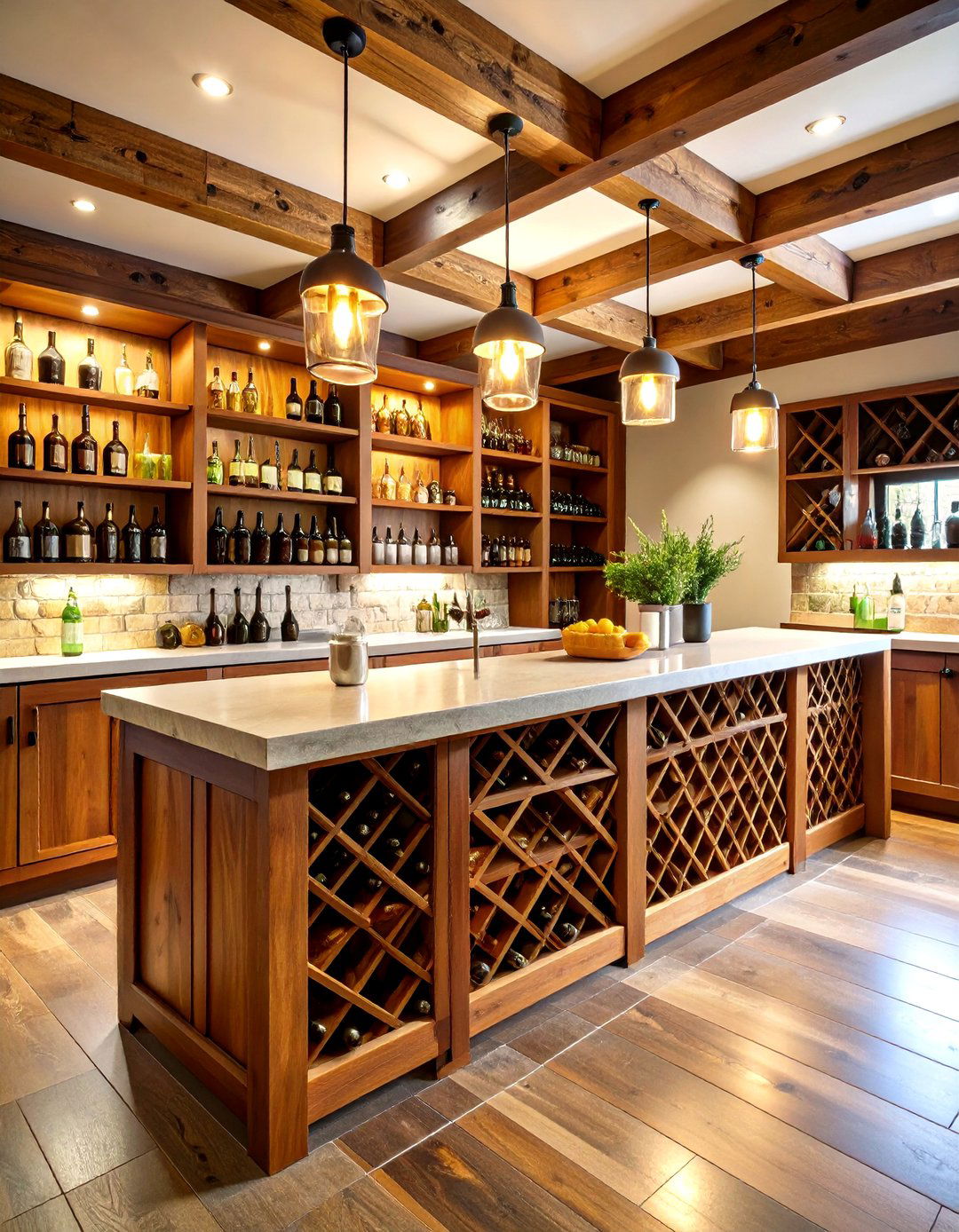
For the wine enthusiast, integrating a built-in wine rack is an essential feature for a rustic basement bar. Custom-built wooden racks can be seamlessly incorporated into the under-bar cabinetry or the back bar shelving. A popular rustic design is the diamond-shaped or lattice-style rack, crafted from the same wood as the bar to create a cohesive look. This not only provides practical and proper storage for your wine collection but also turns the bottles into a decorative display. It adds a touch of sophistication and intentionality to your bar, signaling a space designed for true appreciation of fine beverages.
14. Rustic Basement Bar Made from Wooden Pallets
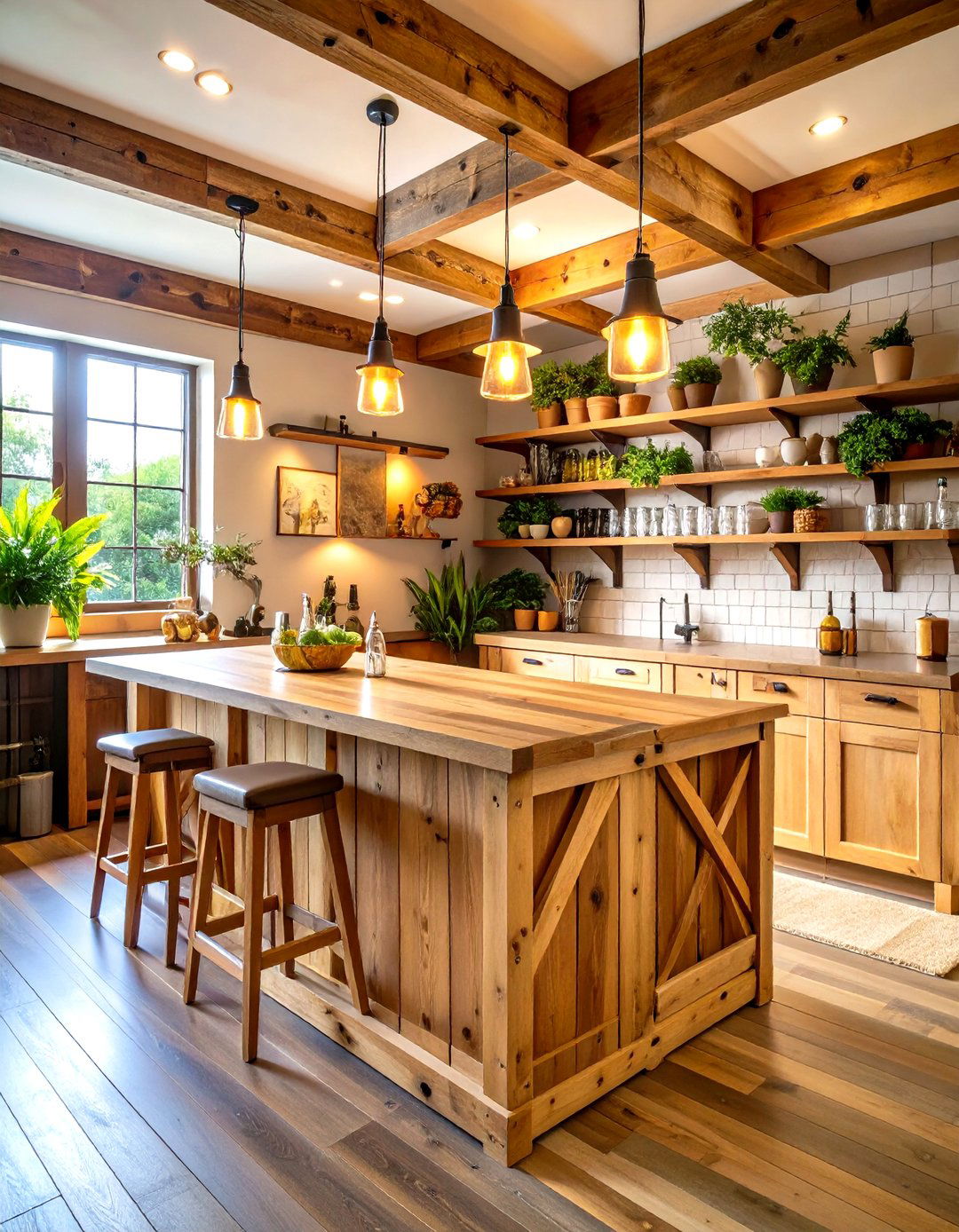
Creating a rustic basement bar from reclaimed wooden pallets is a budget-friendly and highly effective DIY project. Deconstructing pallets provides you with rough, weathered wood planks that are perfect for building the bar's facade and even the shelving. The inherent imperfections, stamps, and raw texture of pallet wood deliver an instant rustic and industrial look. You can leave the wood in its natural state, apply a light stain to even out the tones, or whitewash it for a coastal farmhouse vibe. This sustainable approach results in a bar that is full of character without breaking the bank.
15. Rustic Basement Bar with an Exposed Brick Wall
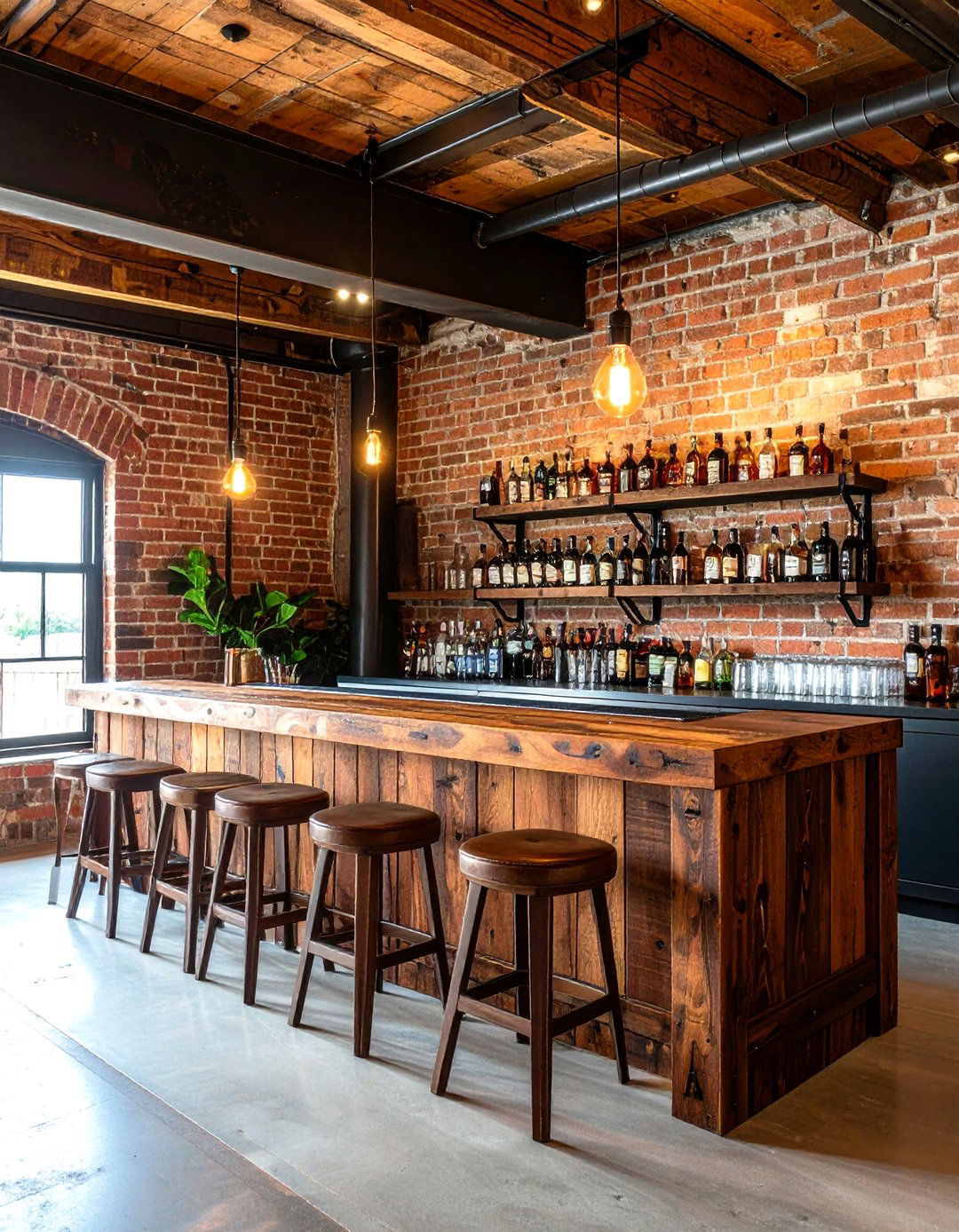
An exposed brick wall serves as a timeless and classic backdrop for a rustic basement bar. The rich color and rugged texture of the brick add warmth and an urban-loft-meets-old-world-cellar vibe. If your basement doesn't have existing brick, you can easily install thin brick veneers to achieve the same authentic look. The brick pairs exceptionally well with dark wood shelves, black iron pipe fixtures, and a solid wood bar top. This textural background creates depth and character, making the entire bar area feel established and cozy, as if it has been there for generations.
16. Rustic Basement Bar with a Log Cabin Theme
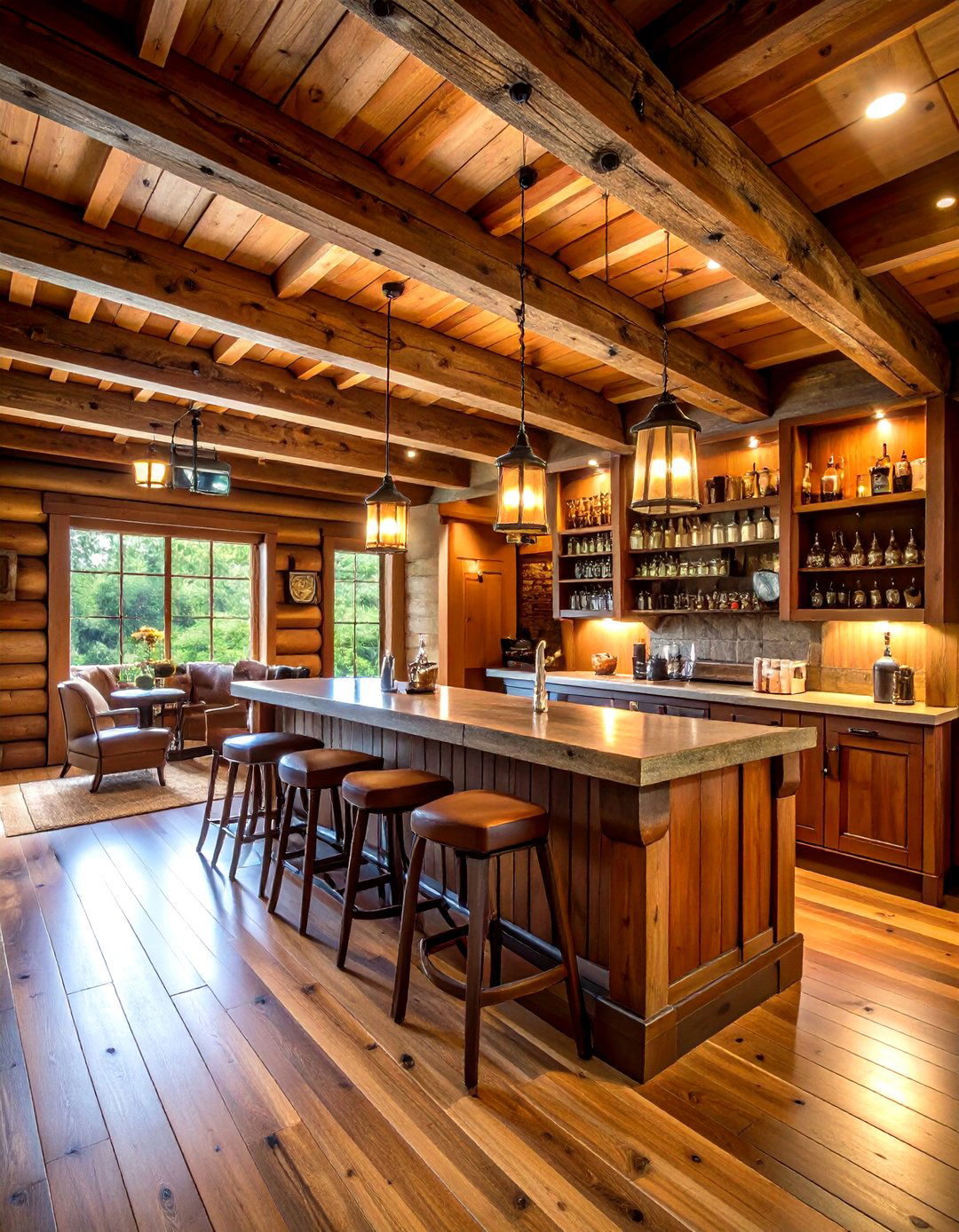
Embrace the ultimate cozy retreat by designing your rustic basement bar with a log cabin theme. Use half-log siding on the walls and the bar front to create the authentic feel of a secluded woodland lodge. Complement this with heavy timber beams on the ceiling and a massive, chunky wood slab for the countertop. Furniture like log stools and decor such as antler chandeliers, plaid textiles, and vintage snowshoes will complete the immersive experience. This theme is all about creating a warm, enveloping space that feels like a getaway, perfect for escaping the stresses of the day in your own home.
17. Rustic Basement Bar with a Tin Tile Ceiling
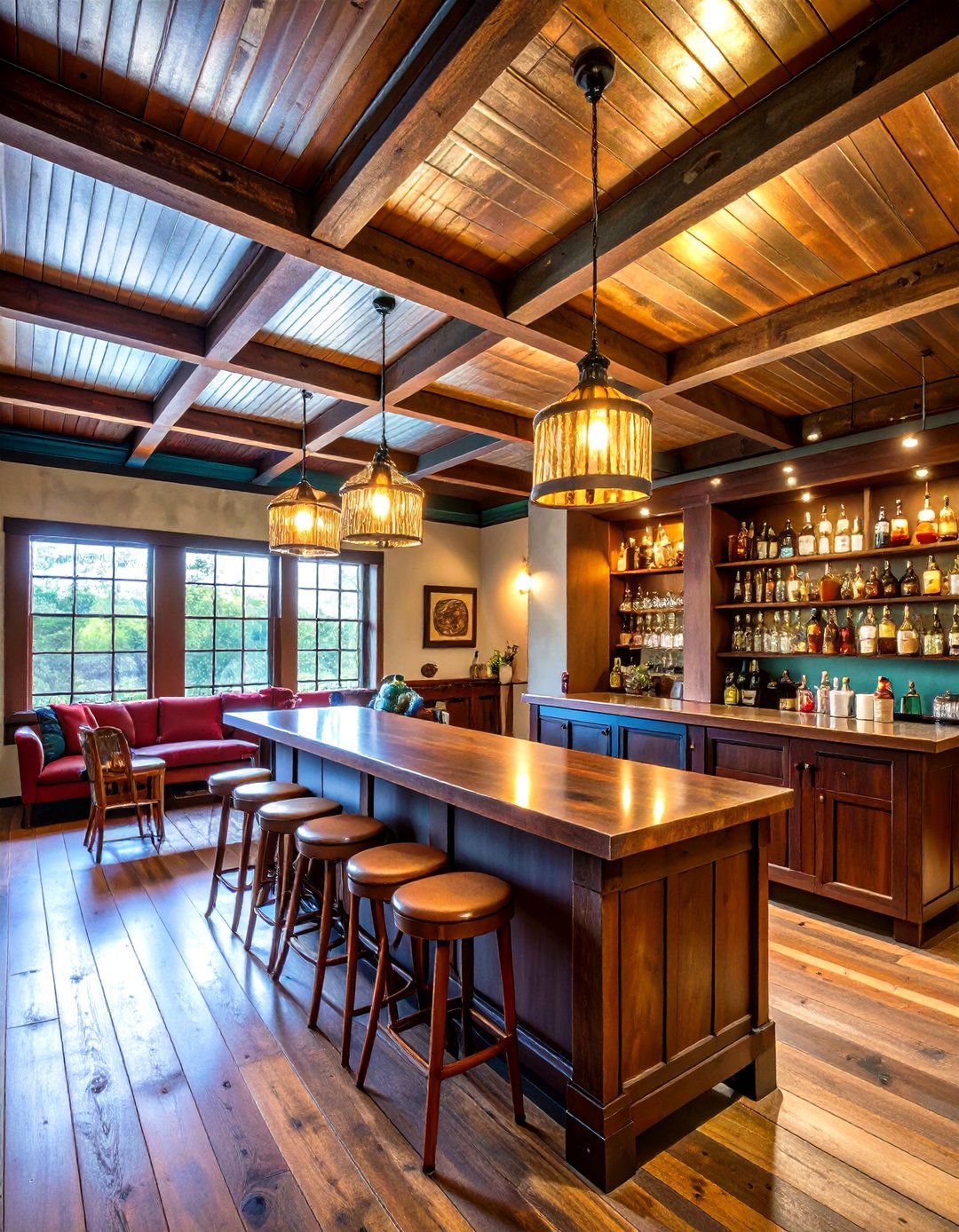
Look up to find another surface for adding rustic charm: the ceiling. Installing pressed tin ceiling tiles above your rustic basement bar can elevate the entire space. These tiles, available in finishes like aged copper, bronze, or antique silver, add intricate texture and a touch of vintage elegance. They reflect light beautifully, which can help make the basement feel brighter and more spacious. The detailed patterns of the tin tiles create a stunning contrast with the rougher textures of wood and stone below, adding a layer of sophistication that recalls old-fashioned saloons and general stores, completing the historical aesthetic.
18. Rustic Basement Bar with Leather Upholstered Stools
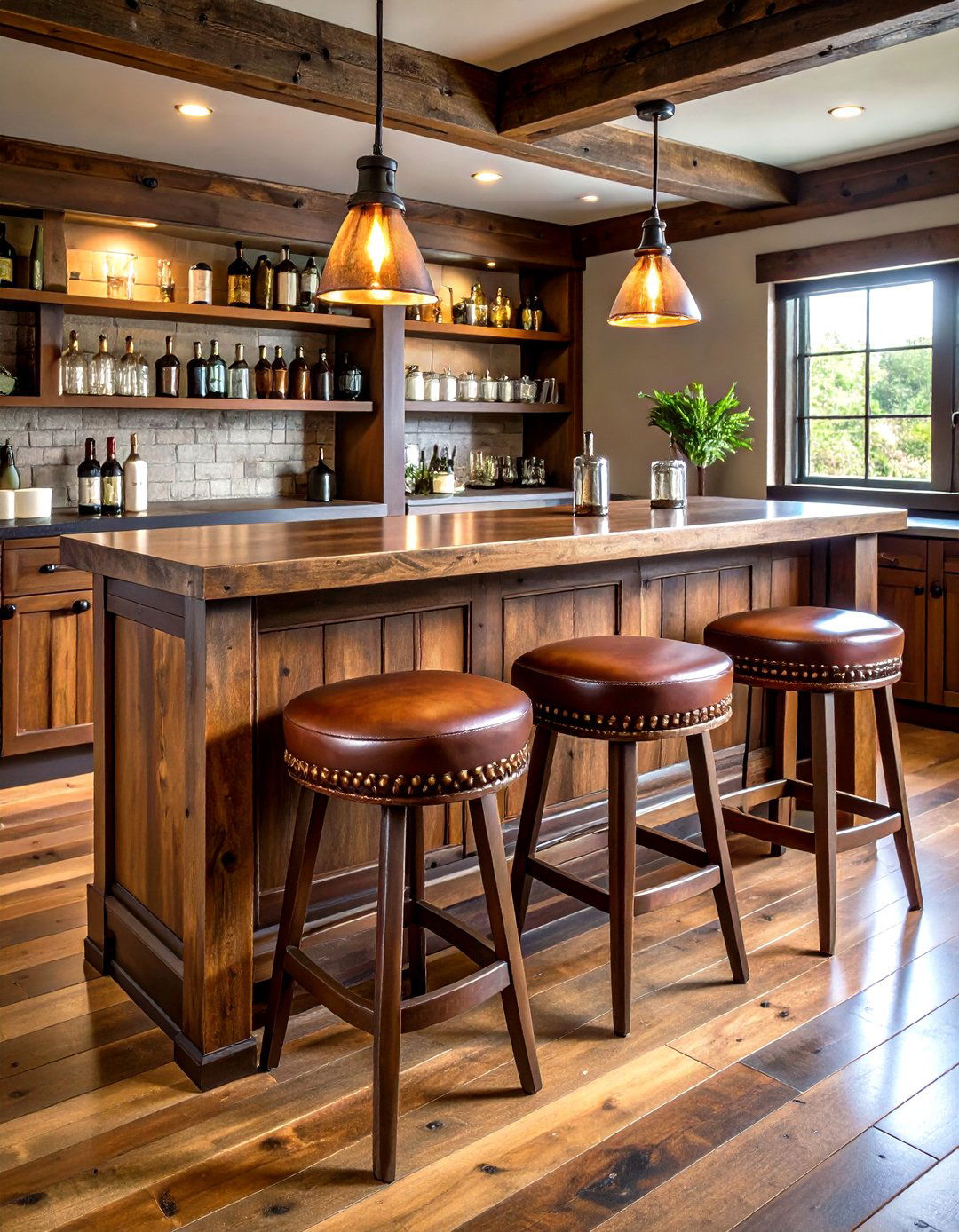
The right seating is crucial, and leather-upholstered bar stools are the perfect match for a rustic basement bar. Choose stools with distressed brown or black leather to add a layer of comfortable sophistication. Look for designs that feature wooden legs, sturdy metal frames, or details like nailhead trim to complement the rustic aesthetic. The rich texture of the leather not only looks inviting but also ages beautifully, developing more character over time. These stools provide a comfortable place for guests to sit and linger, enhancing the welcoming, lived-in feel of your basement retreat. It's a classic choice that exudes quality.
19. Rustic Basement Bar with a Tree Trunk Base
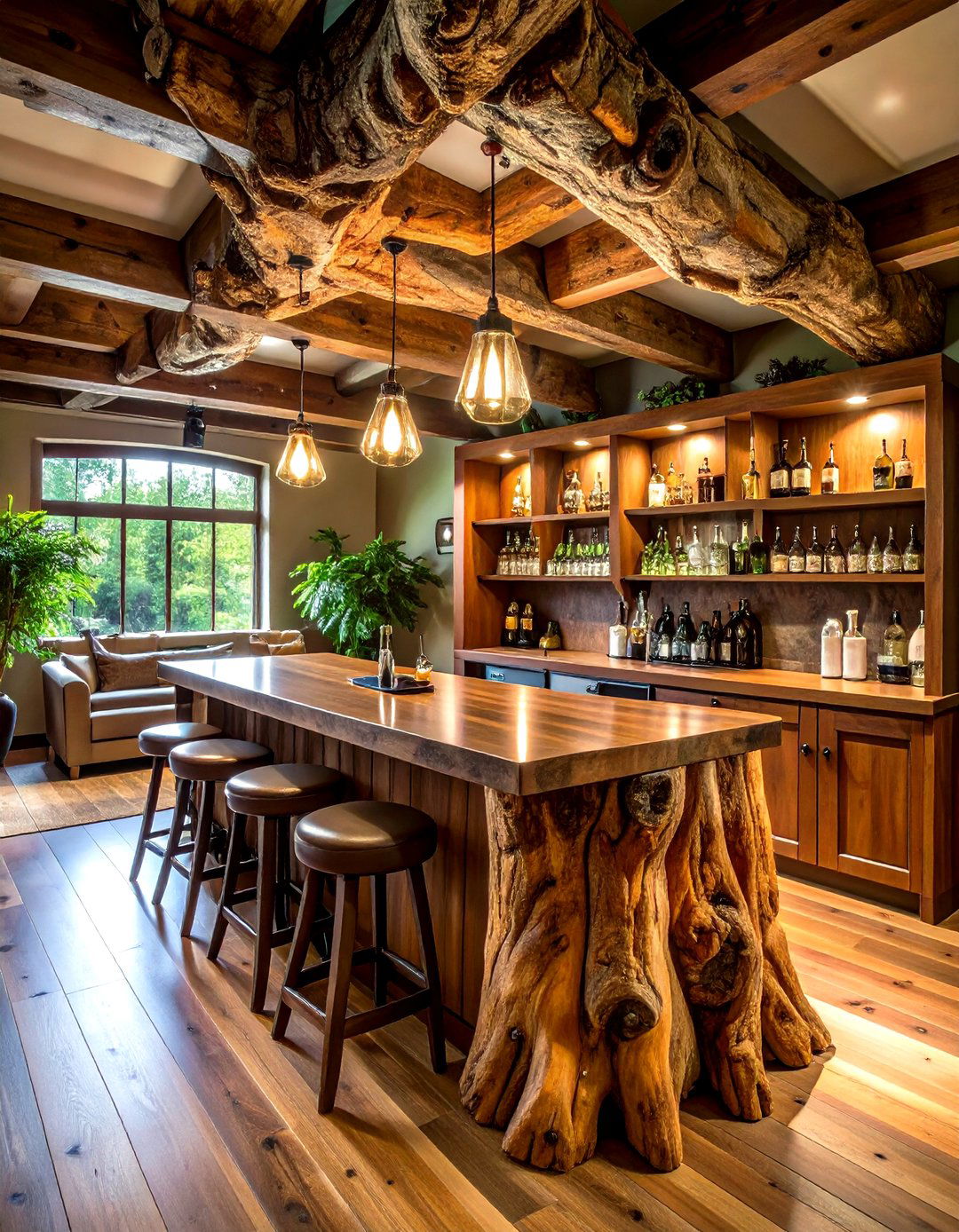
For a truly unique and organic statement, construct your rustic basement bar with a tree trunk base. A large, solid tree trunk or a collection of smaller logs can serve as the structural support for your countertop, bringing the raw beauty of the forest indoors. The natural, irregular shapes and textures of the wood create a powerful focal point that is both rugged and sculptural. This approach works especially well with a live-edge slab top, reinforcing the connection to nature. It’s a bold design choice that guarantees your bar will be a one-of-a-kind conversation starter.


20. Rustic Basement Bar with a Dark and Moody Color Palette
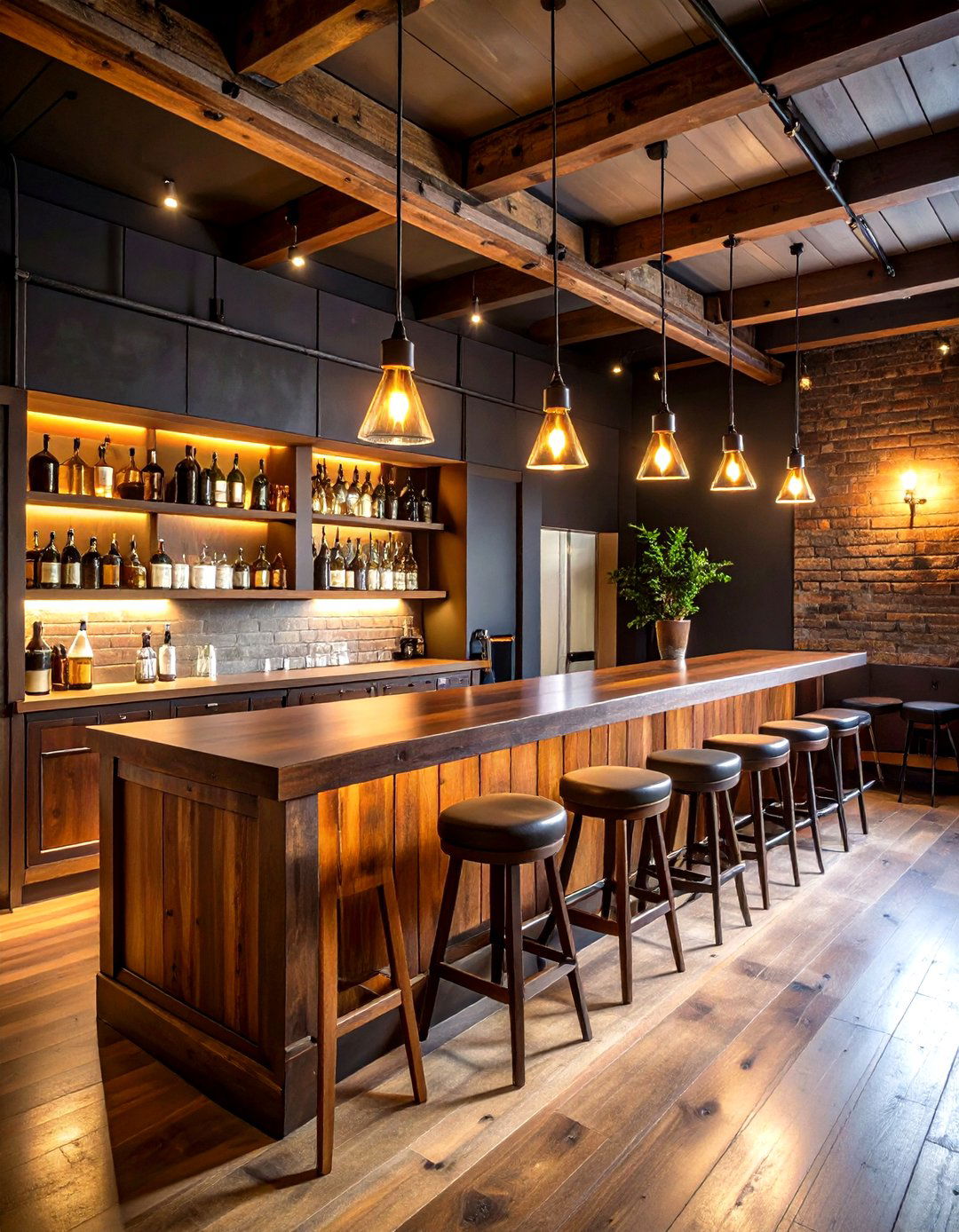
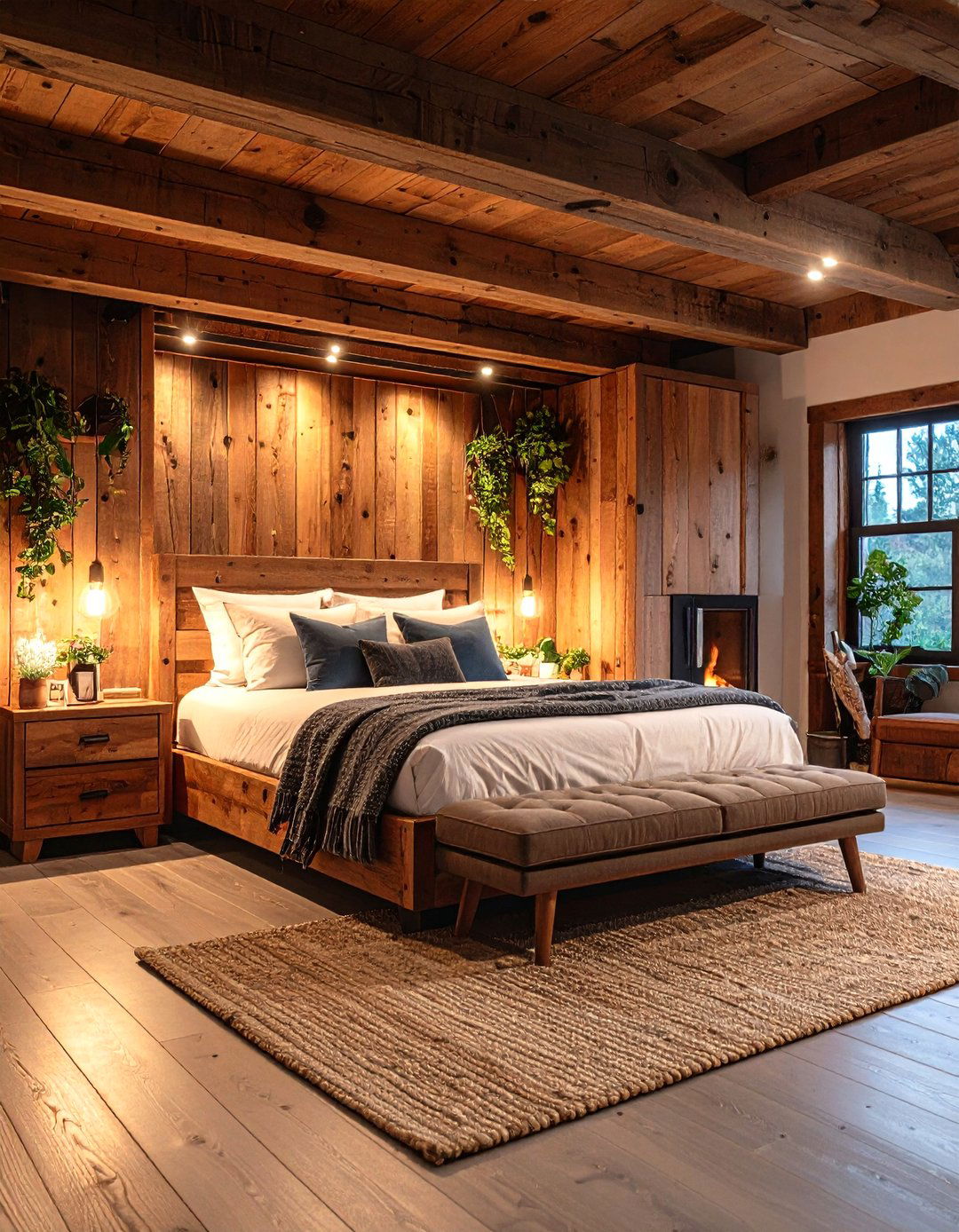
While many rustic designs are light and airy, a dark and moody color palette can create a sophisticated and intimate atmosphere for your basement bar. Paint the walls in a deep charcoal gray, navy blue, or forest green. Use dark-stained woods like ebony or walnut for the bar and shelving. This creates a cozy, den-like feel that is perfect for a speakeasy or tavern-inspired space. Accent this with warm, low lighting from Edison bulbs and touches of metallic copper or brass to add a bit of shine. This dramatic approach makes the bar feel like a special, secluded destination within your home.
21. Rustic Basement Bar with a Whitewashed Finish
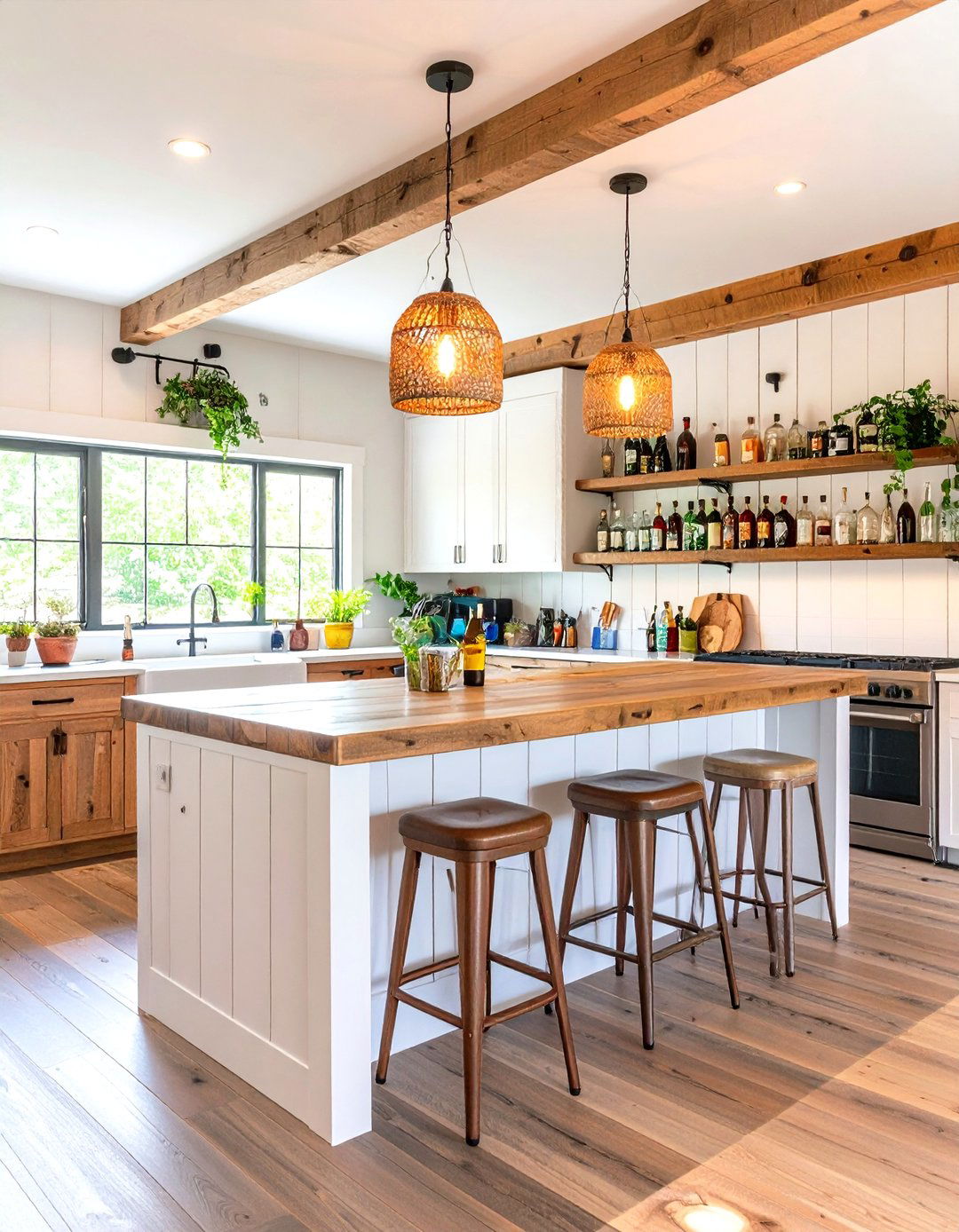
A whitewashed finish can give your rustic basement bar a lighter, more relaxed feel, reminiscent of a coastal cottage or a modern farmhouse. Applying a thin layer of white paint or stain to wood surfaces—like the bar front, back shelving, or shiplap walls—allows the natural grain and texture to show through. This technique brightens the space significantly, which is often a welcome feature in a basement. Pair the whitewashed wood with a natural wood countertop and simple, clean-lined stools to maintain a fresh and airy aesthetic. It's a softer take on rustic design that feels both charming and contemporary.
22. Rustic Basement Bar with Industrial Cage Lighting
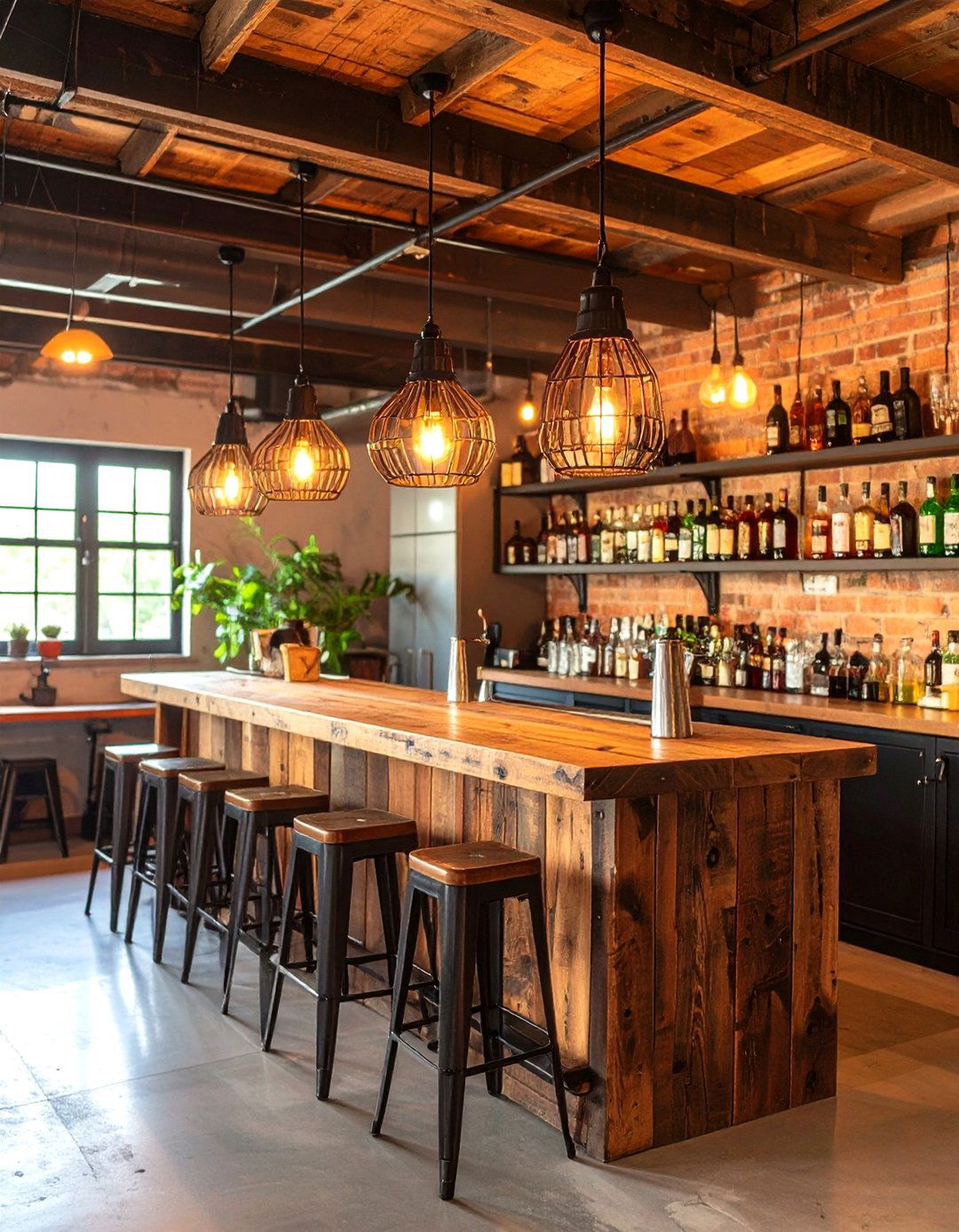
Combine rustic and industrial styles by illuminating your bar with cage lighting fixtures. These lights, featuring a metal wire cage around the bulb, were originally designed for safety in industrial settings but now serve as a stylish decorative element. Hang several cage pendant lights in a row over the bar or use cage sconces on a brick or wood-paneled wall. They pair perfectly with Edison bulbs to cast a warm, patterned glow. The black or bronze metal of the cages complements other industrial elements like pipe shelving and metal stools, adding a layer of rugged, functional character to the space.
23. Rustic Basement Bar with a Built-in Fireplace
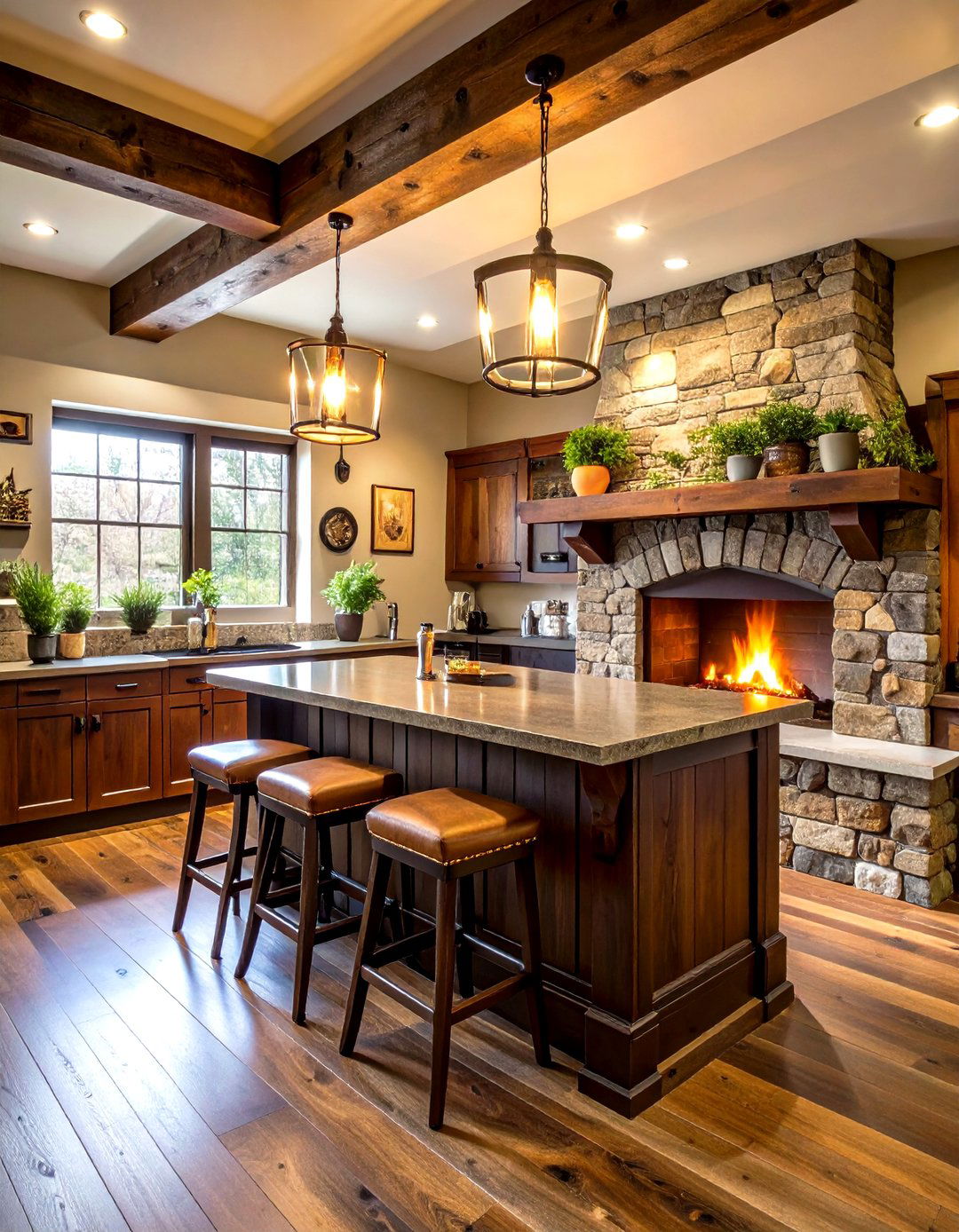
To create the ultimate cozy and inviting rustic basement bar, consider incorporating a built-in fireplace. Placing an electric or gas fireplace into the wall behind the bar or adjacent to the seating area adds both literal and visual warmth. Frame the fireplace with the same stacked stone or reclaimed wood used in the bar construction for a cohesive and integrated look. The flickering flames provide a mesmerizing focal point and create an incredibly relaxing ambiance, making your basement bar the go-to spot for unwinding on a cold evening. It transforms the space from a simple bar into a true lodge-like retreat.
24. Rustic Basement Bar with a Western Saloon Theme
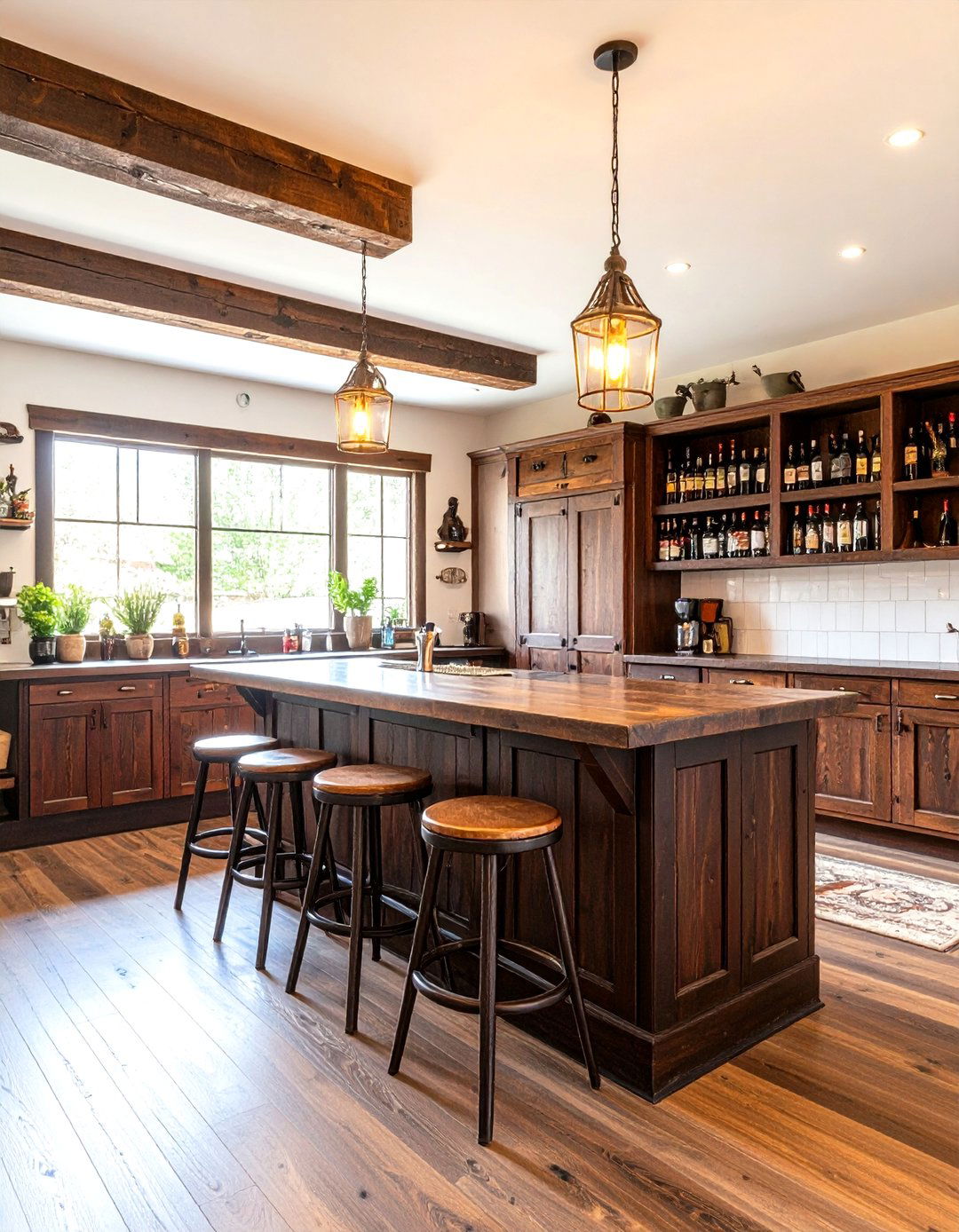
Channel the spirit of the Old West by designing your rustic basement bar with a western saloon theme. Use dark, heavily grained wood for the bar, complete with a brass foot rail. A large, ornate mirror on the back bar is a classic saloon feature. Incorporate decor like cowboy hats, vintage signs, longhorn skulls, and leather-accented furniture. Swinging saloon-style doors at the entrance to the bar area can add a fun, theatrical touch. This theme is all about creating a space with a strong narrative and a sense of rugged adventure, perfect for hosting lively gatherings.
25. Rustic Basement Bar with a Galvanized Bucket Sink
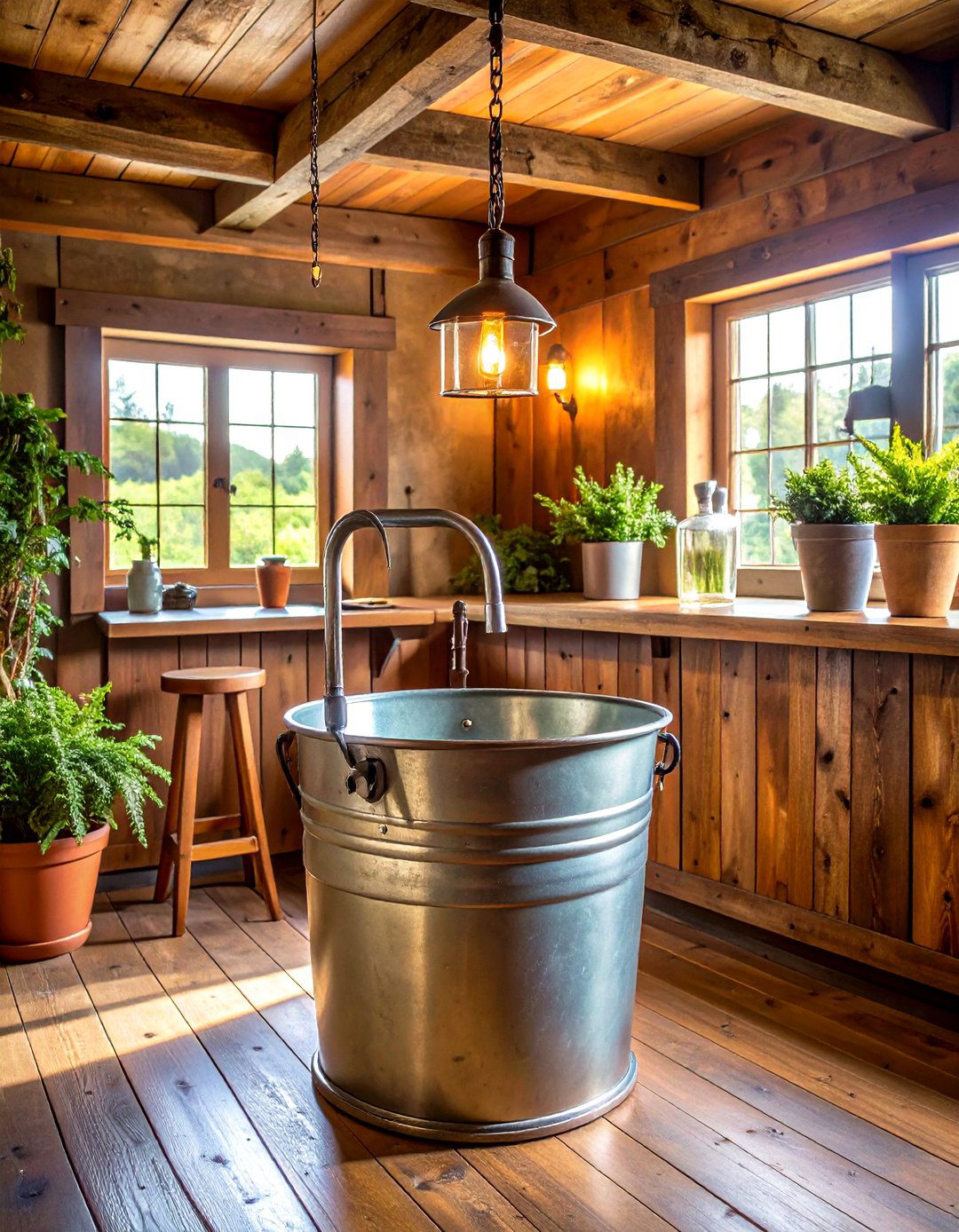
For a functional and charmingly rustic detail, install a galvanized bucket or trough as the sink for your basement bar. This unexpected element perfectly captures the farmhouse aesthetic, turning a practical utility into a design feature. Mount a vintage-style wall-mounted faucet with cross handles above the bucket to complete the look. The metal bucket sink pairs wonderfully with a wooden countertop and a corrugated metal backsplash. It's a simple, affordable idea that adds a significant amount of character and reinforces the theme of repurposing everyday, utilitarian objects into something beautiful and functional for your home bar.
26. Rustic Basement Bar with Natural Slate Floor Tiles
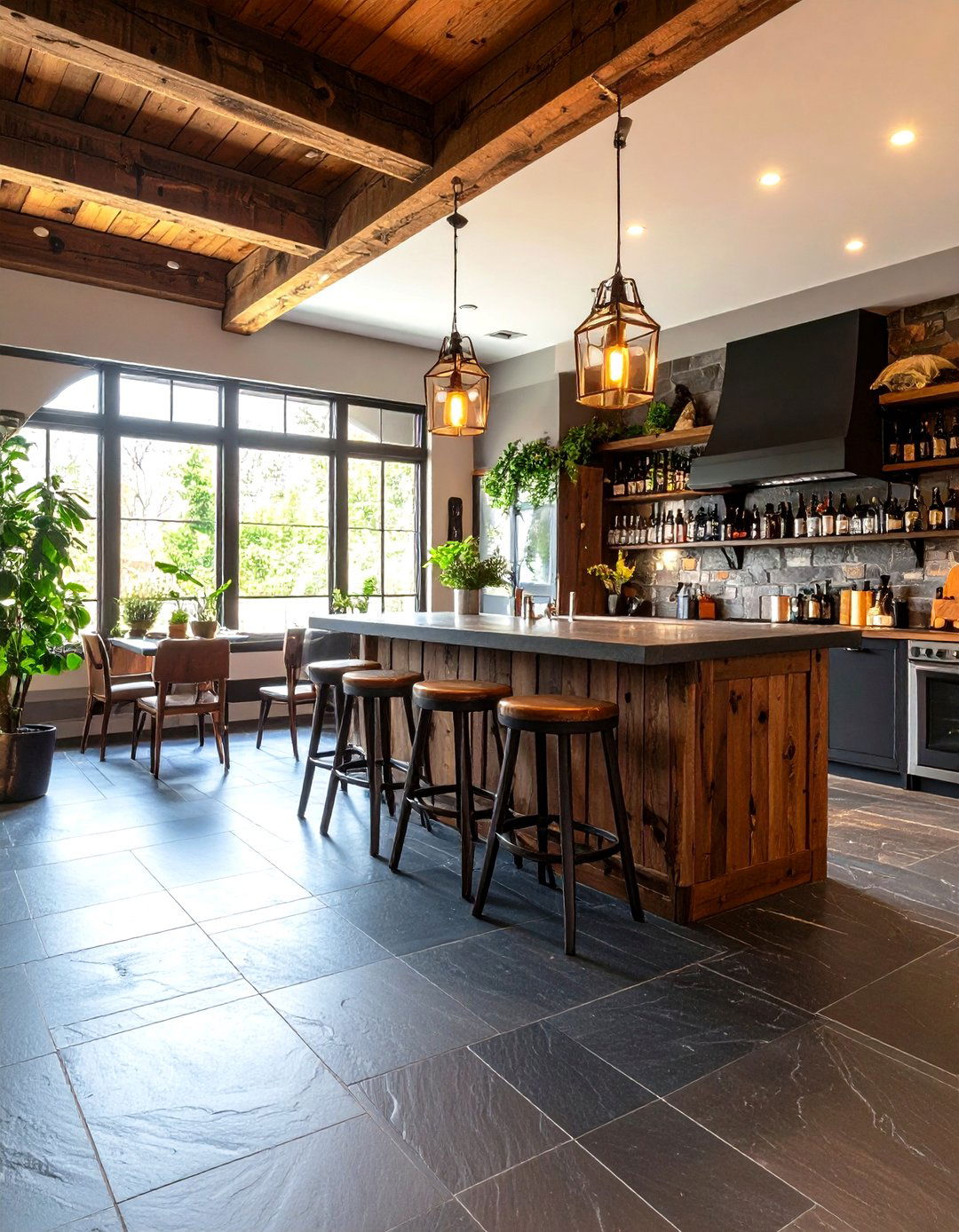
The flooring around your bar sets the foundation for the entire rustic look, and natural slate tiles are an excellent choice. The dark, earthy tones and varied texture of slate provide a durable and slip-resistant surface that is perfect for a bar area. Slate's natural variations in color, from charcoal gray to deep green and rust, complement wood and stone elements beautifully. It creates a solid, grounded feeling underfoot, reminiscent of an old cellar or mountain cabin. This flooring choice is both practical and aesthetically pleasing, tying the whole rustic design together from the ground up.
27. Rustic Basement Bar with a Concrete Block Base
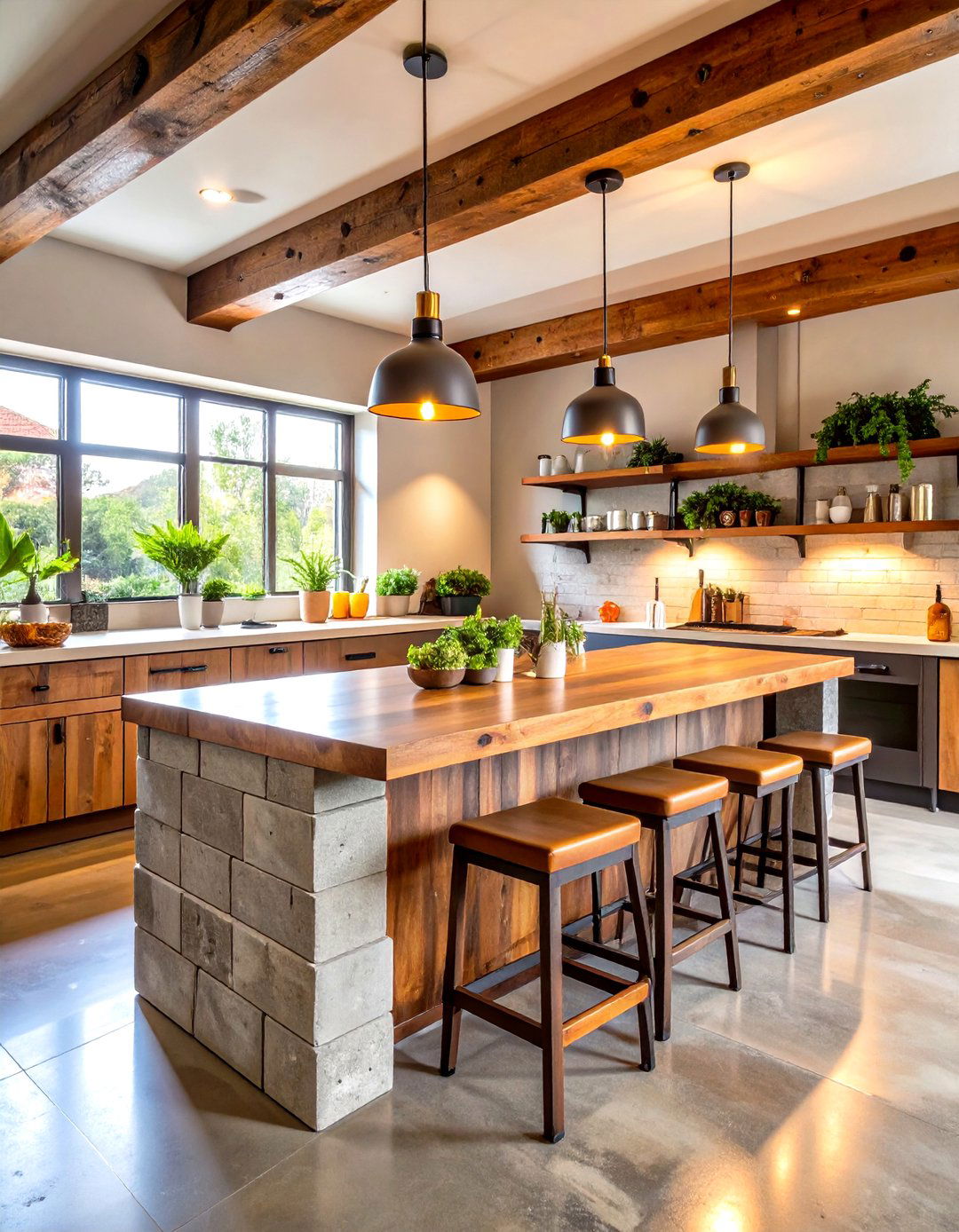
For a rustic-industrial look that is both affordable and incredibly sturdy, build the base of your basement bar using concrete cinder blocks. The blocks can be stacked and mortared in place to create a solid foundation with a raw, utilitarian appeal. You can leave the blocks in their natural gray state or paint them a dark color for a more dramatic effect. Top the block base with a thick, reclaimed wood slab to add warmth and contrast to the cool concrete. This DIY-friendly approach results in a bar with a strong, architectural presence and an edgy, modern-rustic vibe.
28. Rustic Basement Bar with Butcher Block Surfaces
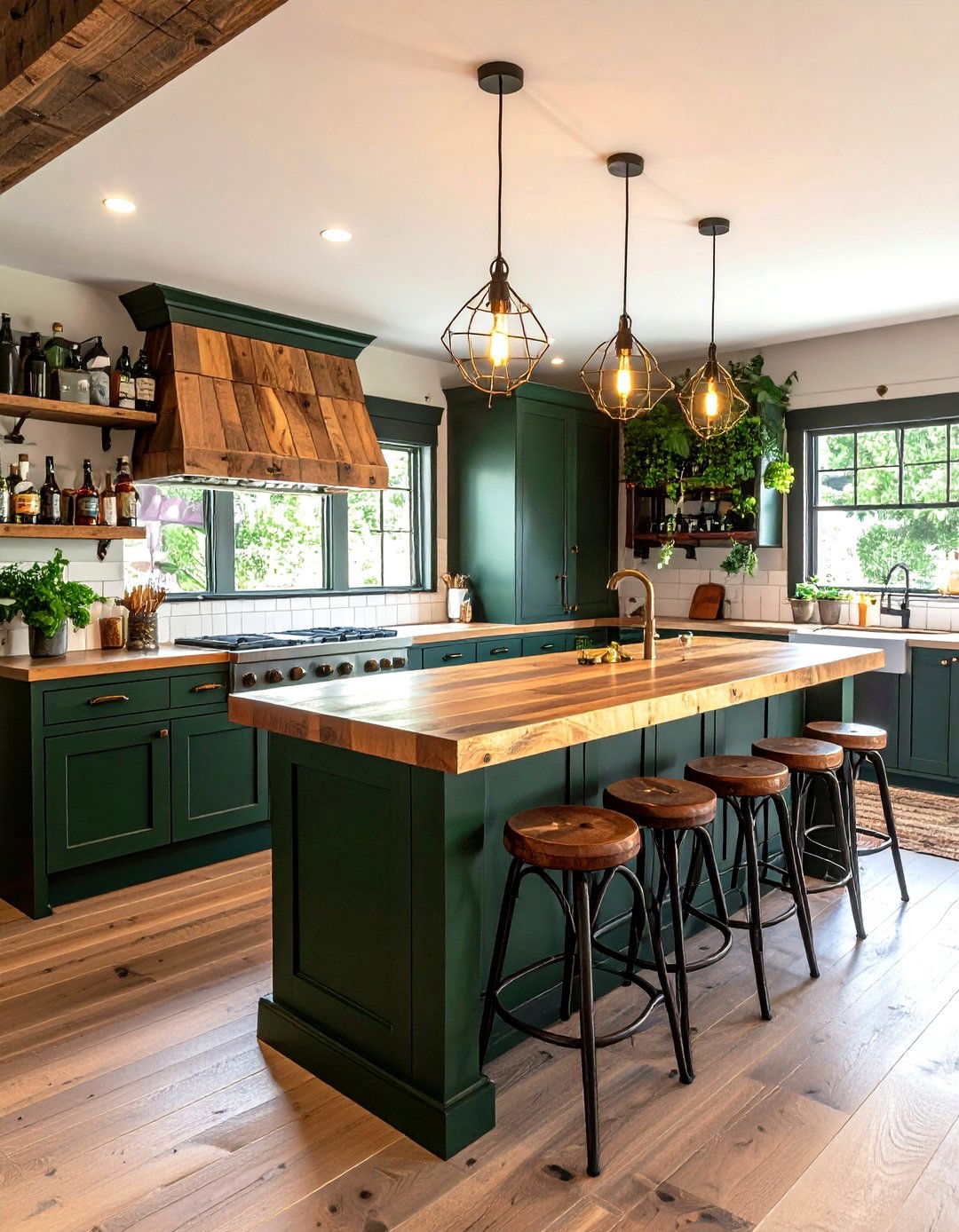
Butcher block is a classic and versatile material that works exceptionally well in a rustic basement bar. Use it for the main countertop or as a surface for a back bar prep area. The warm, inviting look of the joined wood strips adds texture and a sense of craftsmanship. Butcher block is durable, relatively affordable, and can be stained to match any wood tone in your design, from light pine to dark walnut. It pairs well with almost any bar base, including stacked stone, reclaimed wood, or painted cabinetry, making it a flexible choice that enhances the cozy, functional feel of a farmhouse-style kitchen.
29. Rustic Basement Bar with Antler Accents
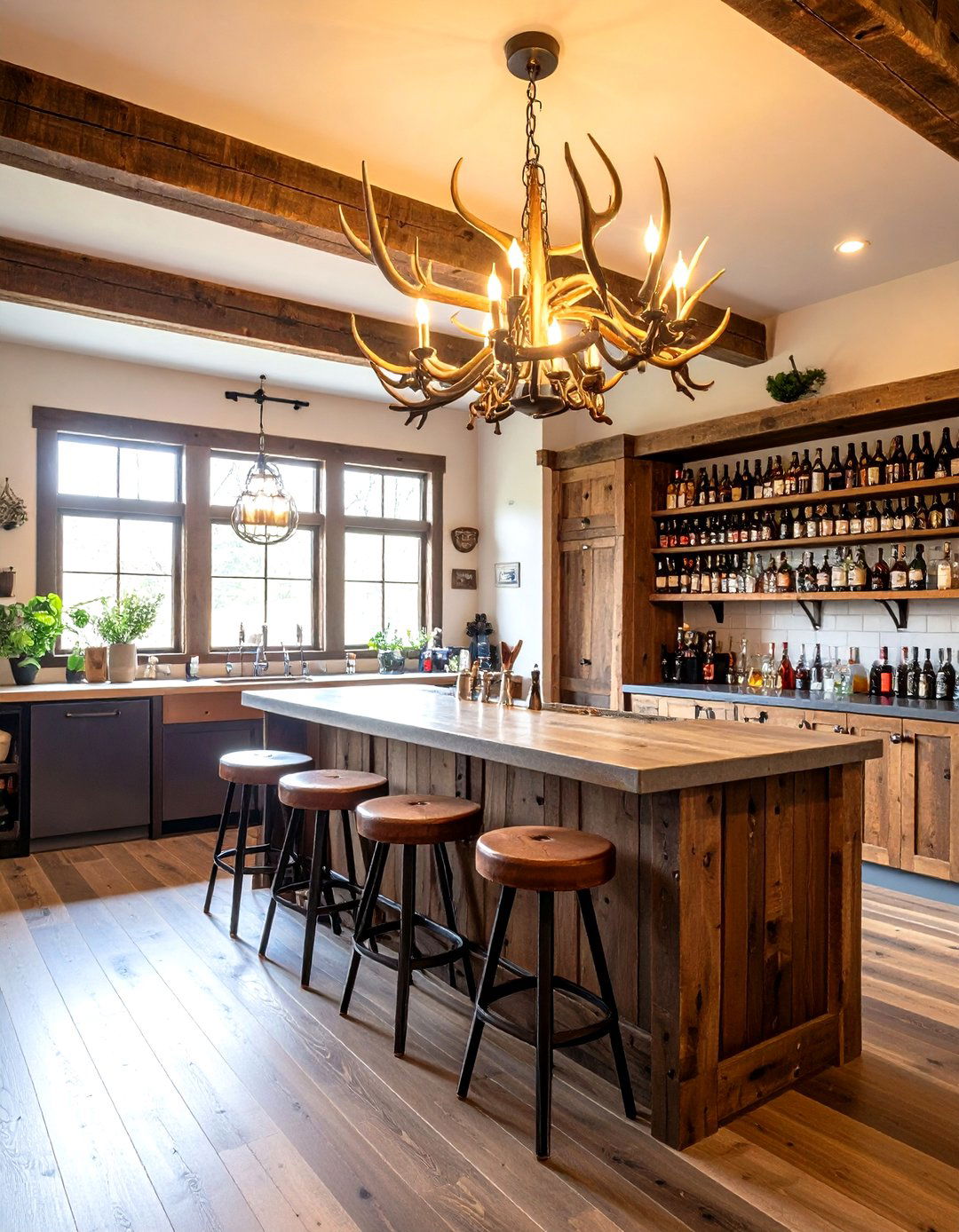
Incorporate elements from nature by using antlers as decorative accents in your rustic basement bar. A chandelier made from antlers can serve as a stunning centerpiece hanging above the bar, immediately establishing a lodge or cabin feel. You can also use smaller antlers for more subtle details, such as custom beer tap handles, coat hooks on the wall, or even as drawer pulls on the bar cabinetry. These organic, sculptural pieces add a touch of the wild and reinforce the connection to the outdoors that is central to rustic design, creating a space that feels both adventurous and authentic.
30. Rustic Basement Bar with a Pass-Through Window
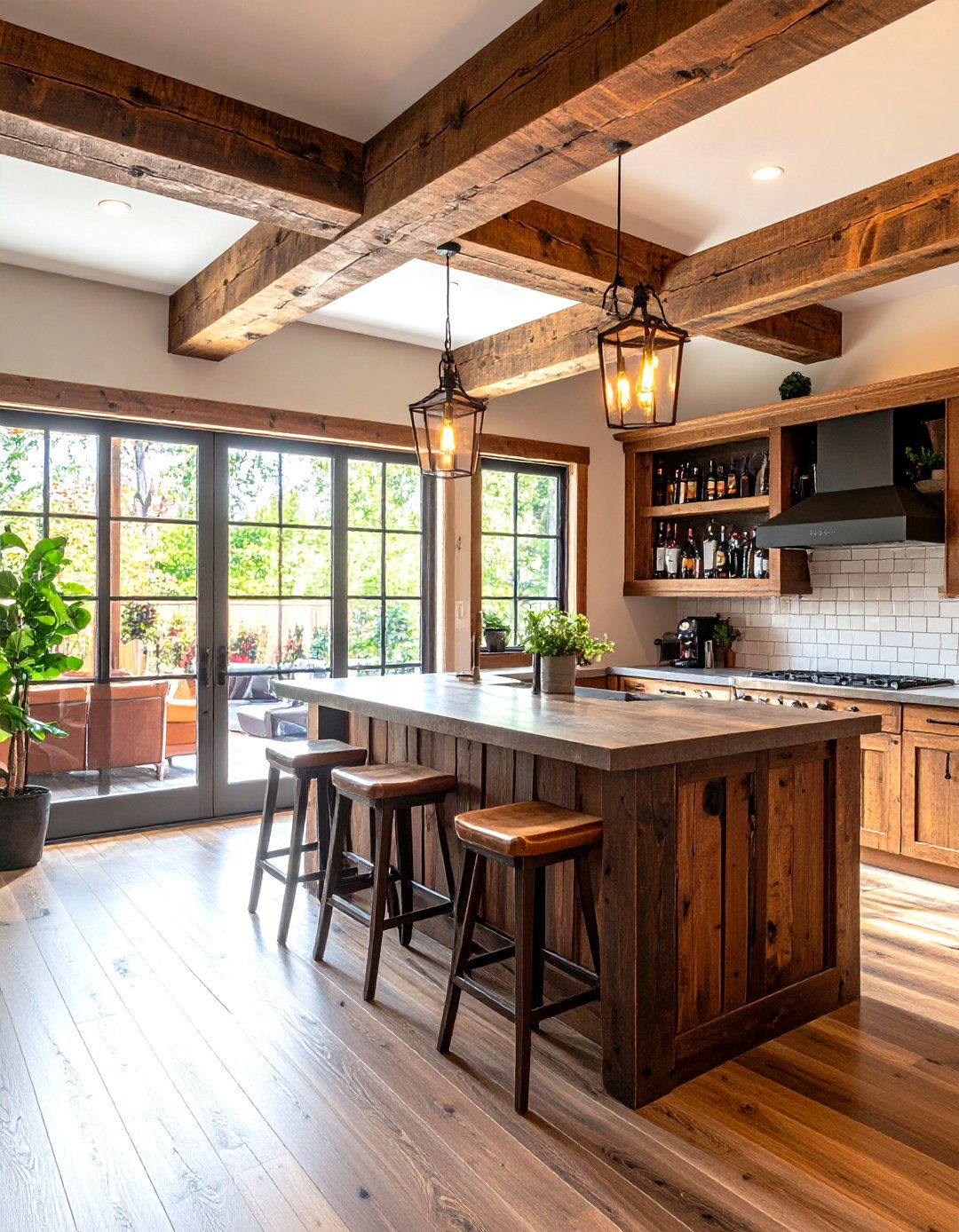
If your basement layout allows, creating a pass-through window from the bar to an adjacent seating or game area can enhance the social atmosphere. This feature connects the spaces, allowing the host to serve drinks and chat with guests without being isolated. Frame the pass-through opening with thick, rustic wood beams to match the bar. You can add a small countertop on the other side with a couple of extra stools, effectively extending the bar's functional space. This architectural element makes the entire basement feel more open and is perfect for entertaining larger groups.
Conclusion:
Ultimately, designing the perfect rustic basement bar is about blending natural materials, warm textures, and personal style. From the rugged appeal of stacked stone and reclaimed wood to the industrial edge of corrugated metal and pipe shelving, the possibilities are vast. By focusing on core elements like a statement countertop, appropriate lighting, and comfortable seating, you can create an inviting and functional retreat. These ideas serve as a starting point to craft a unique space that not only enhances your home but also becomes the favorite spot for making memories with friends and family.

Related posts:



Leave a Reply