
A small mudroom can transform a cluttered entryway into an organized and welcoming transition space, even when square footage is at a premium. The key is to maximize every inch with smart storage, multi-functional furniture, and a well-thought-out layout. Whether you're working with a narrow hallway, a small closet, or just a sliver of a wall, there are countless ways to create a practical drop zone for coats, shoes, and daily essentials. These ideas prove that you don't need a large, dedicated room to achieve the function and style of a classic mudroom, making daily comings and goings smoother for everyone.
1. Closet Conversion Small Mudroom
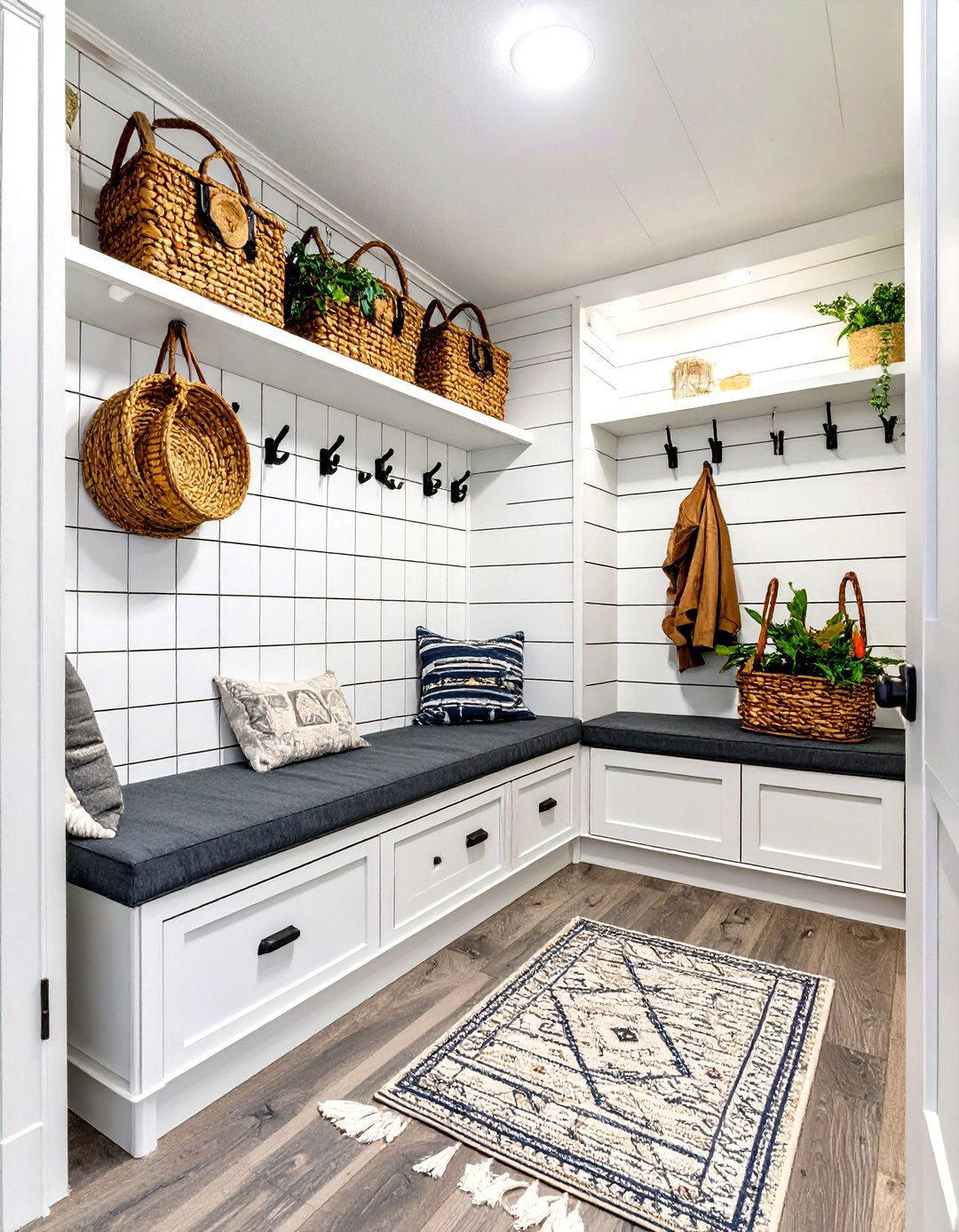
Transforming a spare entryway closet into a functional small mudroom is a brilliant use of existing space. By removing the door and interior rod, you can open up the area completely. Install a sturdy bench for seating, which can also serve as a spot to store baskets or shoes underneath. Above the bench, add a row of hooks for coats, bags, and scarves. A high shelf installed near the top of the closet provides excellent storage for off-season items or decorative bins. Painting the interior a bright, welcoming color makes the nook feel intentional and larger than it is.
2. Wall-Mounted Drop-Zone Mudroom
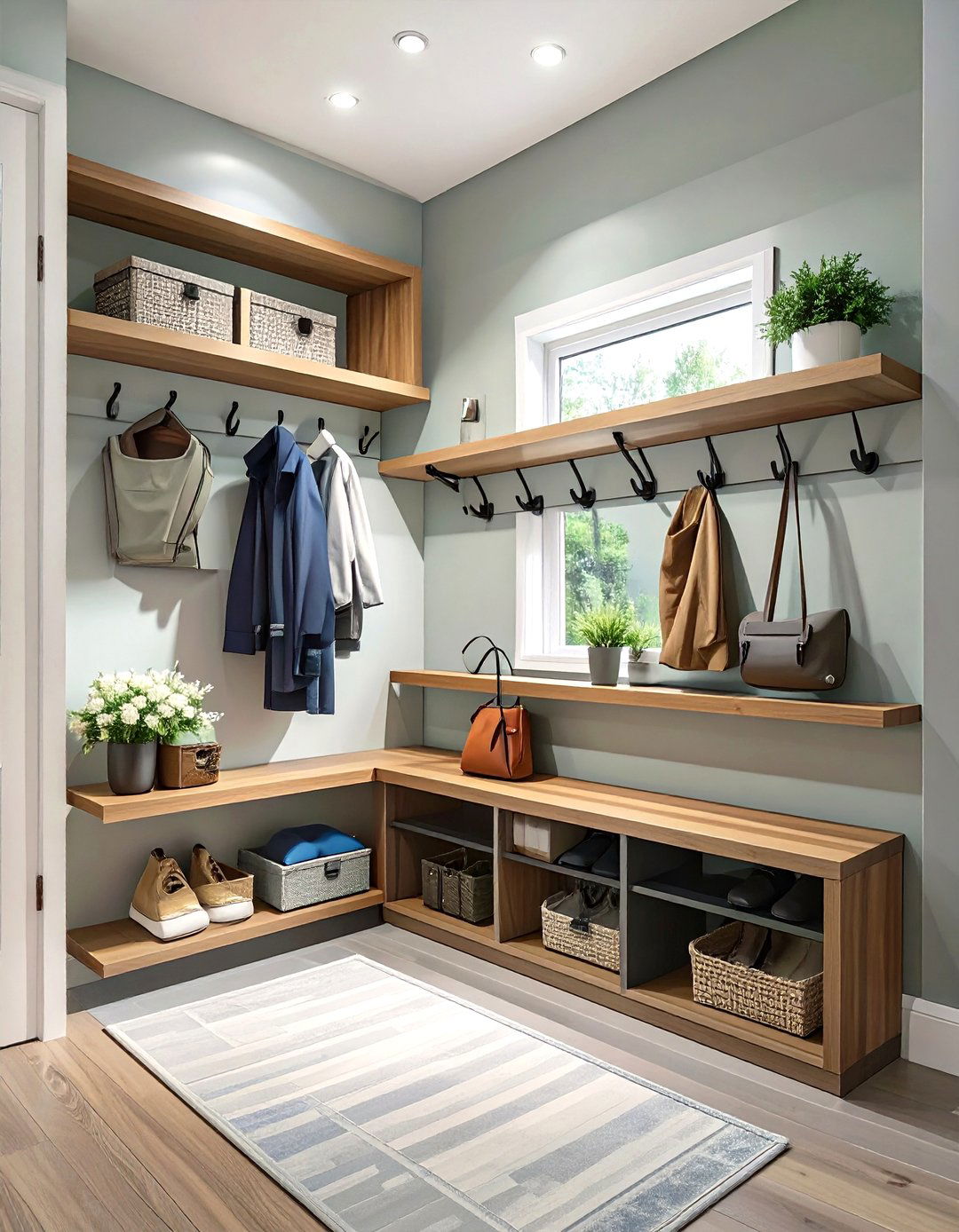
For homes without a dedicated entryway, a wall-mounted drop-zone mudroom offers maximum function with a minimal footprint. This design typically features a floating shelf with hooks underneath, creating a space for keys, mail, and hanging outerwear. Below this, you can place a slim shoe rack or a series of wall-mounted shoe holders to keep floors clear. This minimalist approach prevents the area from feeling crowded while still providing the essential storage needed for daily items. It's an ideal solution for narrow hallways or the wall space directly behind an entry door, proving that even the smallest wall can be highly functional.
3. Corner Nook Small Mudroom
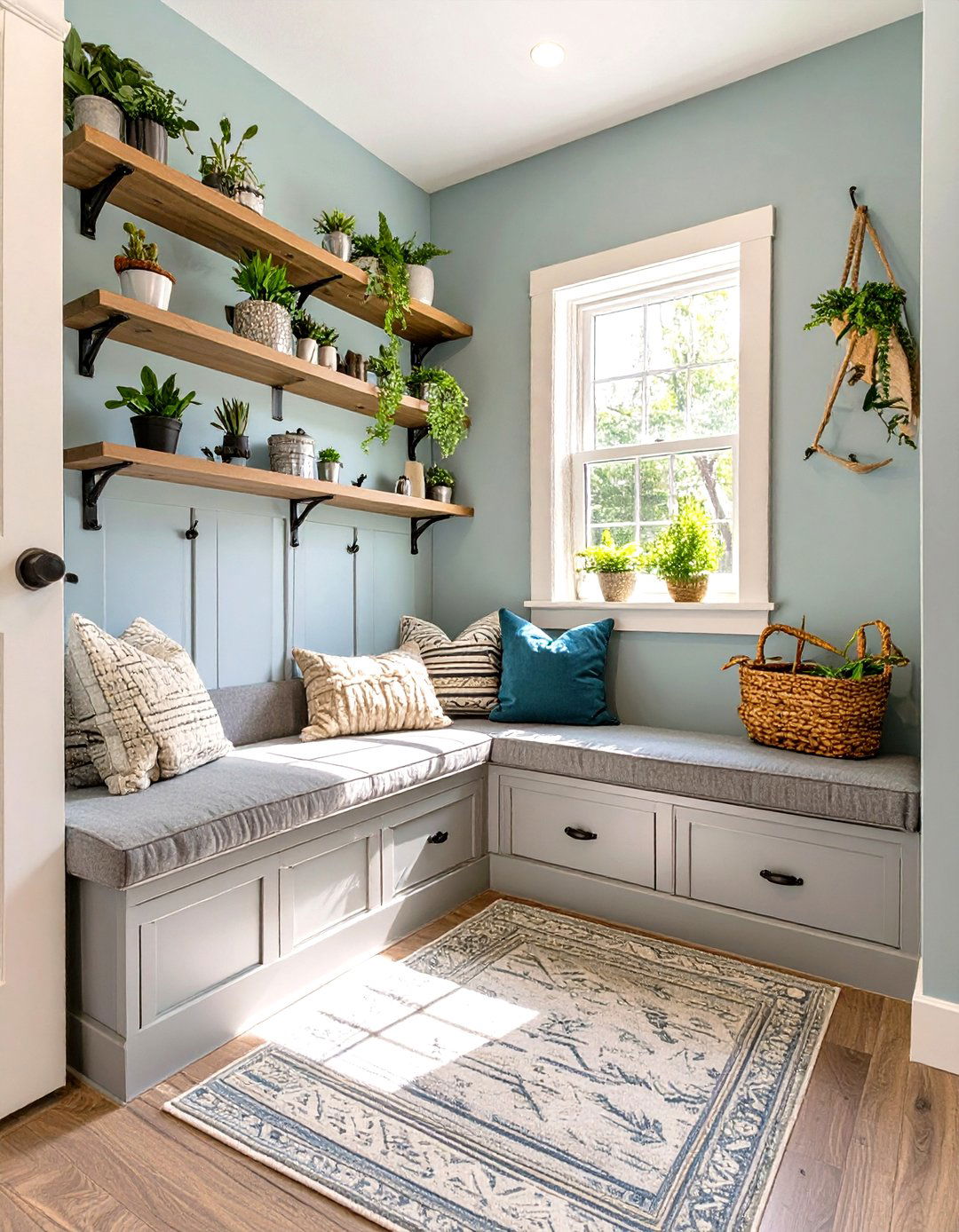
Utilizing an unused corner can create a surprisingly spacious small mudroom. A custom-built or store-bought corner bench is the anchor of this design, providing seating and hidden storage. Above the bench, install corner shelves that follow the wall's angle to maximize vertical space for baskets, hats, or decorative items. Add hooks on the adjacent walls for coats and backpacks. This setup centralizes clutter into one compact area, leaving the main walkway clear. A small, durable rug can define the space and trap dirt, making it a practical and efficient use of an often-overlooked part of the home.
4. Behind-the-Door Small Mudroom
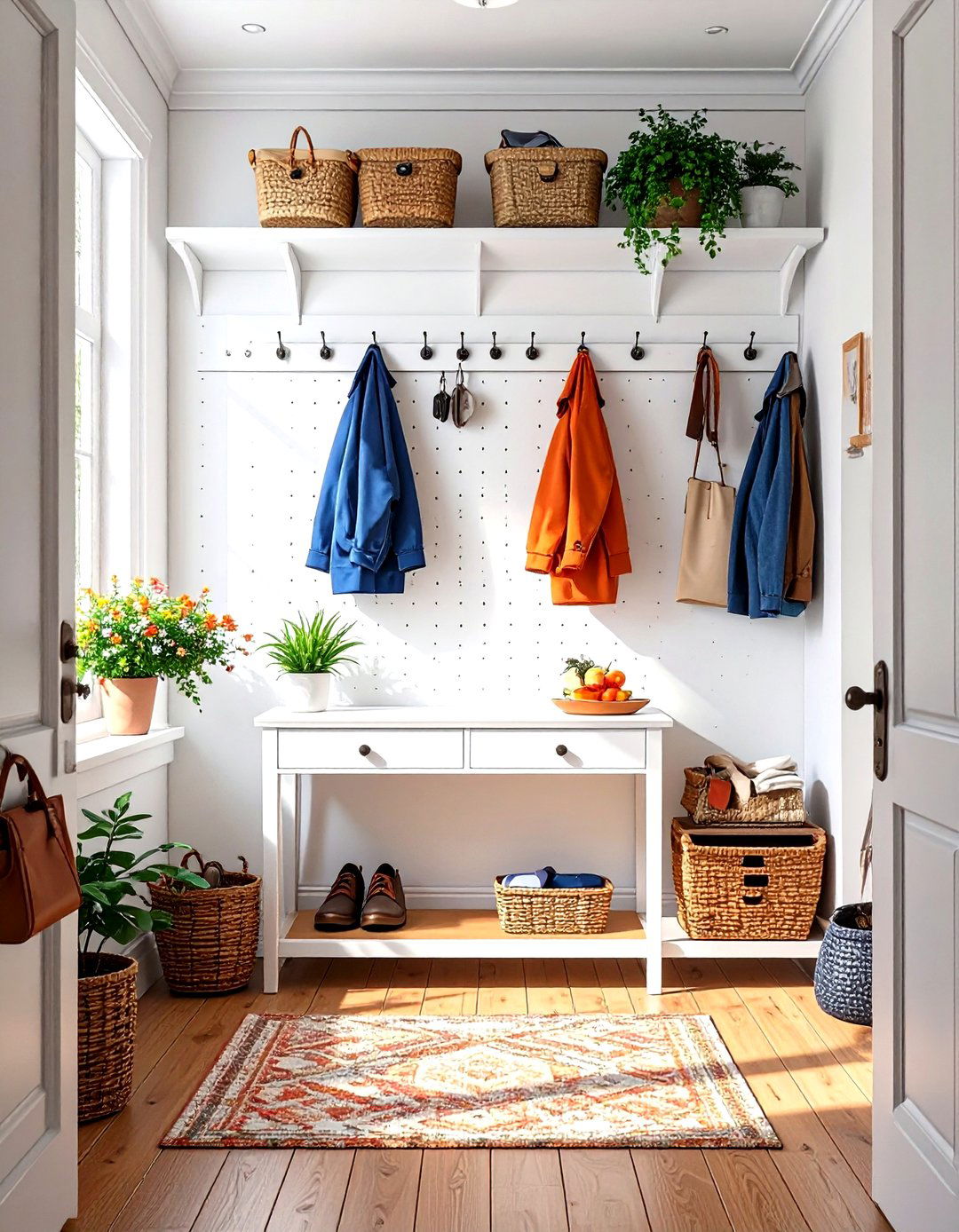
The space directly behind an entry door is often wasted, but it’s the perfect spot for a super slim small mudroom. Use a narrow console table or a floating ledge to create a surface for keys and small items. Above it, mount a low-profile pegboard or a series of individual hooks for hanging jackets and bags. For shoes, consider a very narrow shoe cabinet that tilts out or a wall-mounted rack. This approach keeps everything tucked away when the door is open, maintaining a clean and uncluttered look in your entryway while ensuring all your essentials are within easy reach as you leave.
5. Built-In Bench Small Mudroom
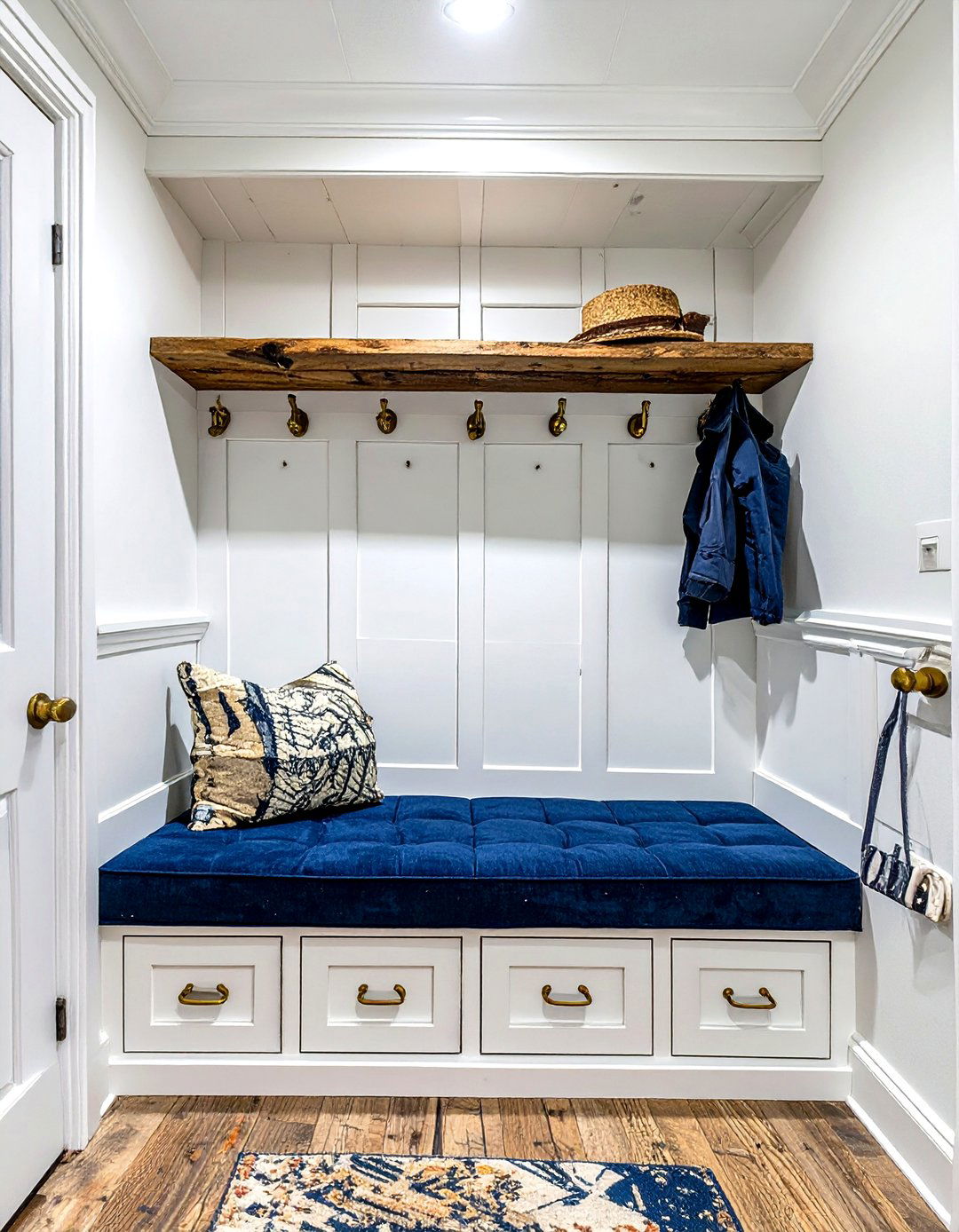
A built-in bench creates a polished, high-end look for a small mudroom, even in a compact area. Integrating a bench between two walls or within a small alcove makes it feel like a permanent and intentional feature. Design the bench with a lift-top lid or open cubbies underneath for shoe storage. Above the bench, installing vertical shiplap or beadboard paneling with a row of sturdy hooks adds texture and charm. A shelf mounted above the hooks completes the traditional mudroom look, offering a place for bins and baskets, making the entire unit a cohesive and incredibly practical storage hub.
6. Floating Bench Small Mudroom
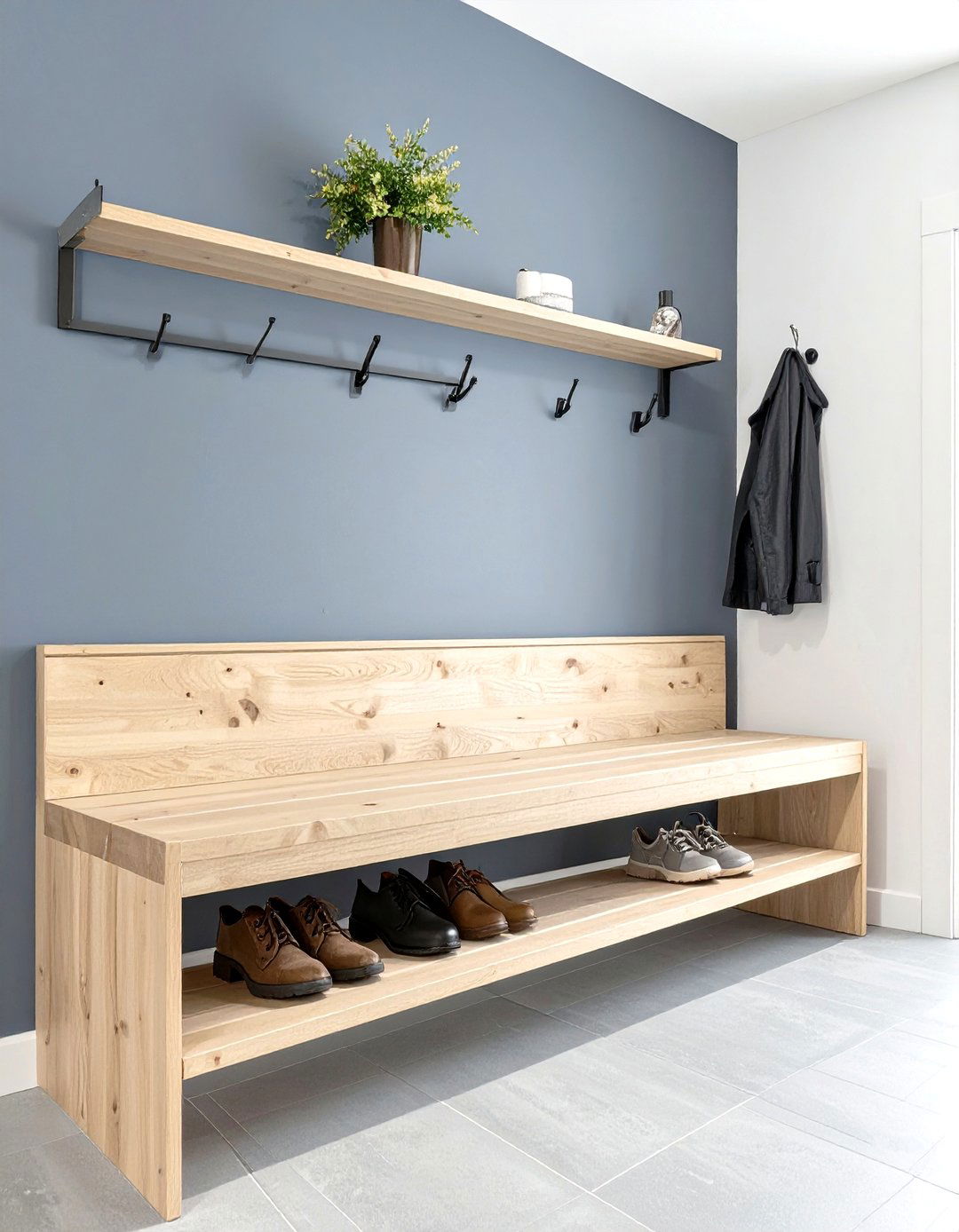
A floating bench is a stylish and space-saving solution for a narrow or small mudroom. By mounting the bench directly to the wall, you free up the floor space underneath, which makes the area feel more open and easier to clean. This open space is perfect for tucking away shoes, boots, or low-profile storage bins. Combine the floating bench with a wall-mounted coat rack or a decorative hook system above it to handle bags and outerwear. This modern, minimalist design provides essential seating and storage without the bulk of traditional furniture, making it perfect for contemporary homes and tight entryways.
7. Hall Tree Small Mudroom
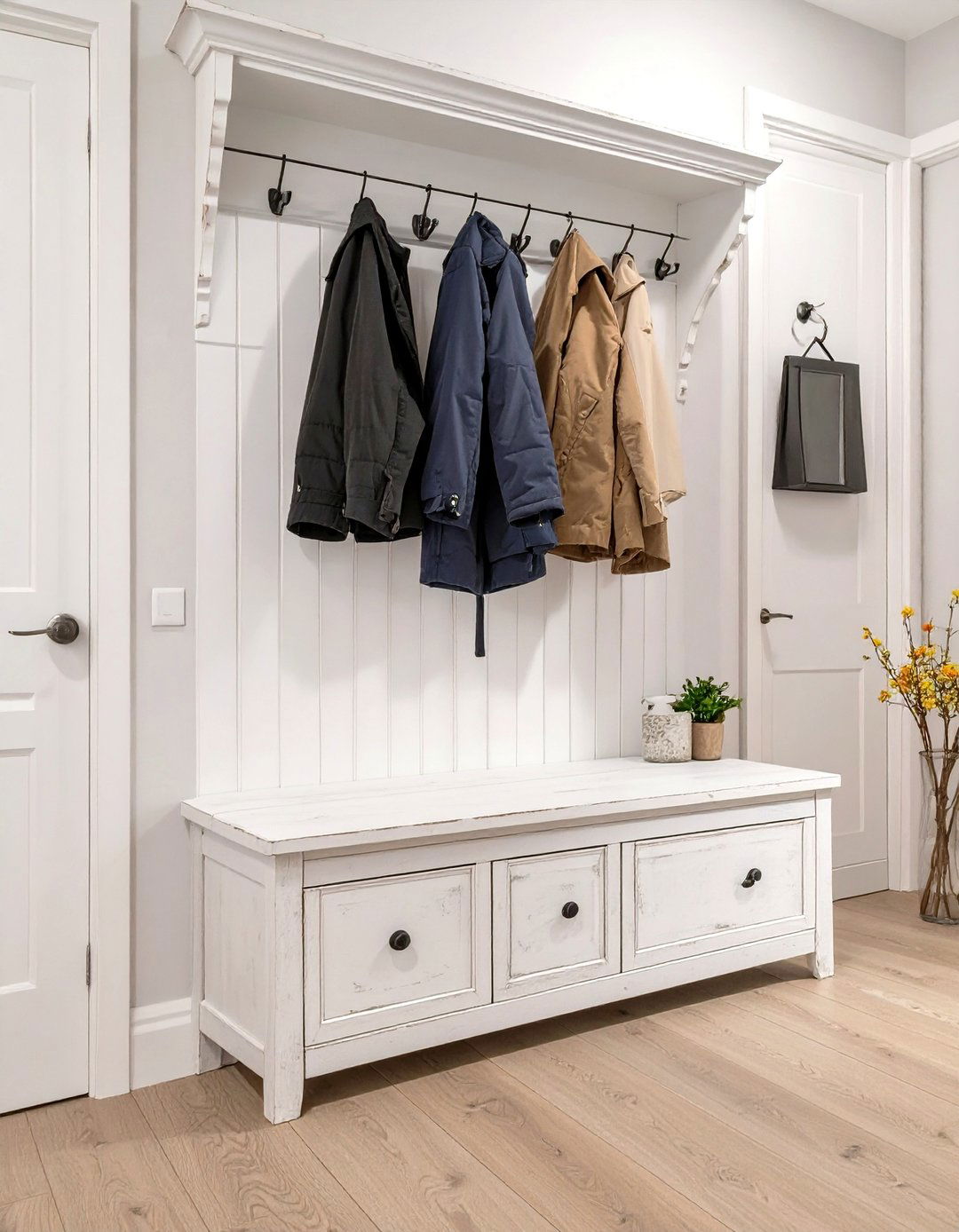
A classic hall tree is an all-in-one solution that acts as an instant small mudroom. These standalone pieces of furniture typically combine a bench, hooks, and sometimes a small mirror or overhead shelf into one compact unit. They are perfect for renters or those who want to avoid wall installations. Simply place one against a free wall near your entrance. Look for a hall tree with a storage bench to hide away shoes and clutter. This single piece provides everything you need to organize your entryway essentials, making it a simple yet highly effective way to create order.
8. Pegboard Organizer Small Mudroom
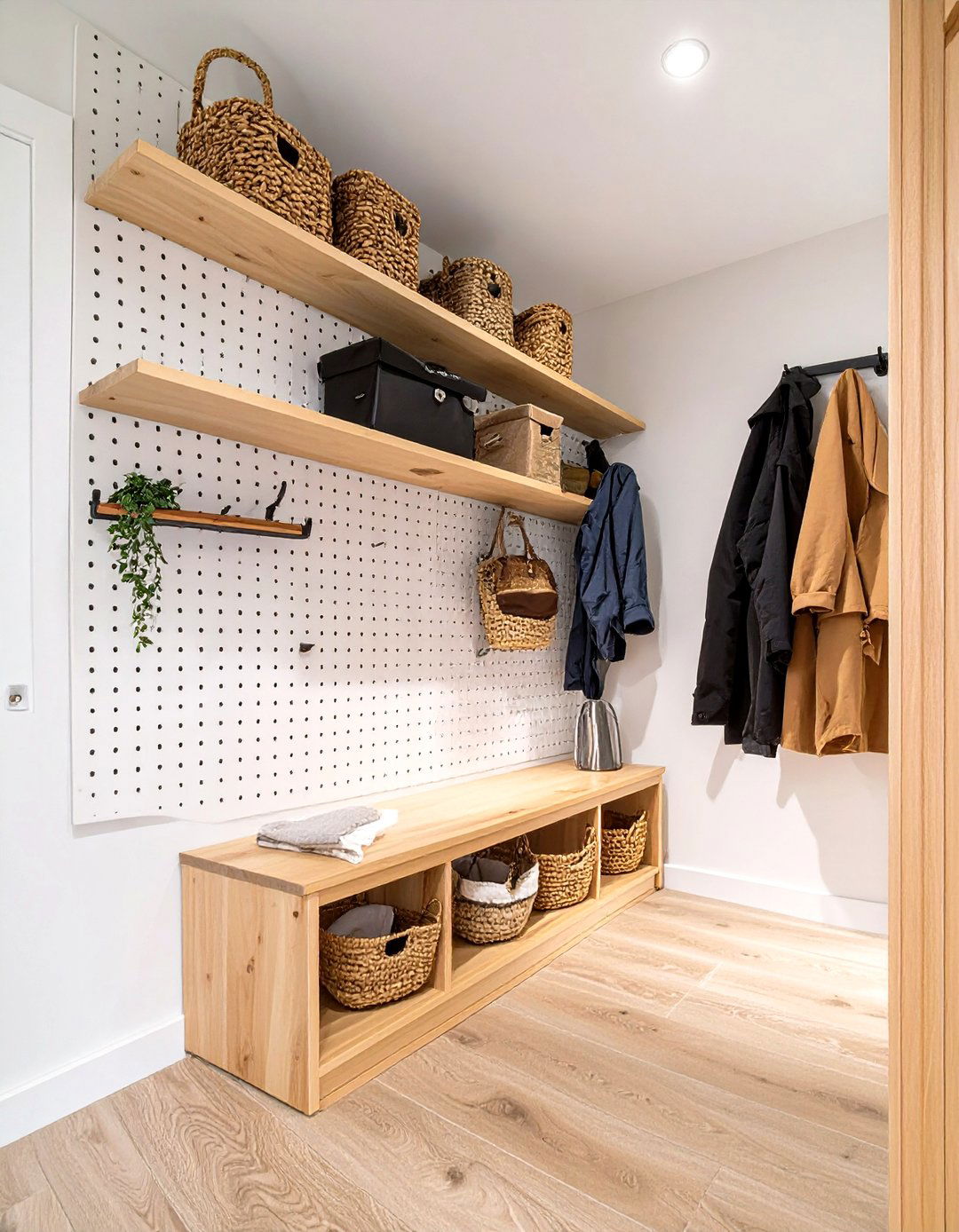
A large pegboard panel creates a uniquely flexible and customizable small mudroom on any wall. The beauty of a pegboard system is its versatility; you can easily move hooks, shelves, and small baskets around to fit your changing needs. Use it to hang coats, hats, keys, and even dog leashes. Add small wire baskets for mail, sunglasses, and gloves. This system keeps everything visible and accessible while adding a touch of industrial or workshop-inspired style. It’s an excellent way to use vertical space efficiently, especially in a narrow hallway where traditional furniture wouldn't fit.
9. Vertical Shiplap Small Mudroom
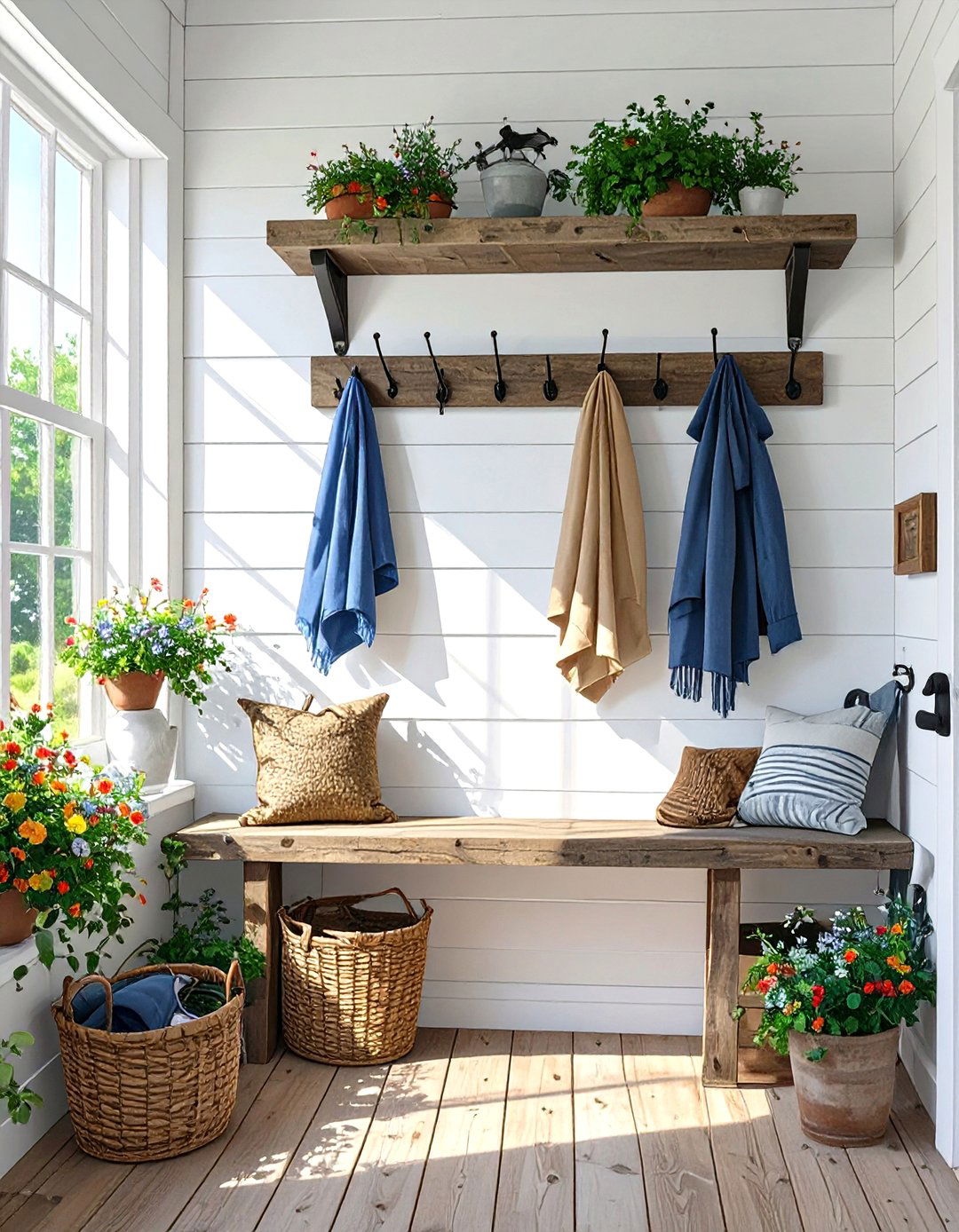
Installing vertical shiplap on an accent wall can visually define and elevate a small mudroom area. The clean lines of the shiplap draw the eye upward, making the space feel taller and more distinct from the rest of the entryway. Mount a sturdy shelf across the top of the shiplap and add a row of decorative hooks below it for a classic, farmhouse-inspired look. Below the hooks, you can place a simple bench or a row of storage crates for shoes. This design adds significant architectural character and organization without taking up valuable floor space, creating a beautiful and functional focal point.
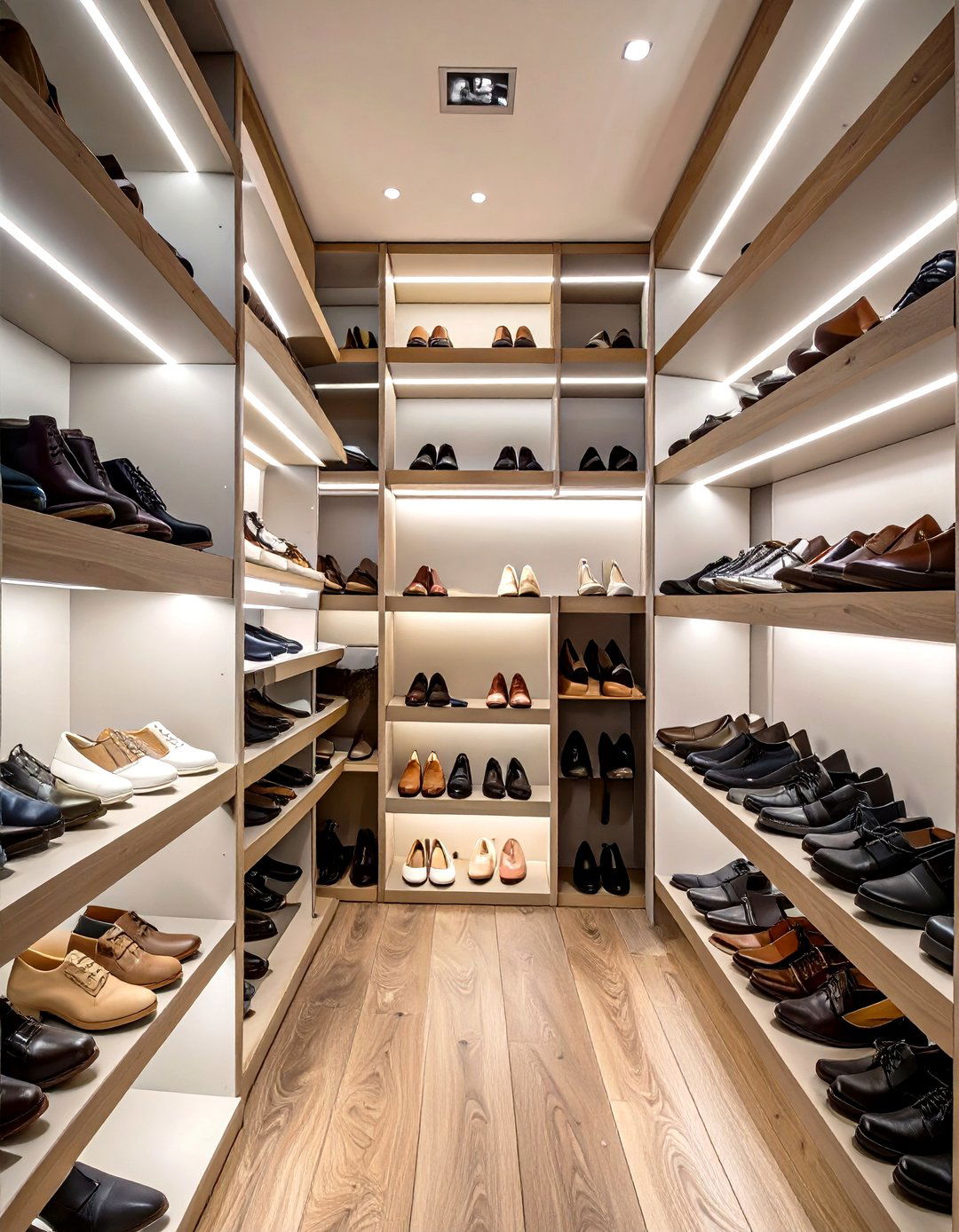
10. Beadboard Panel Small Mudroom
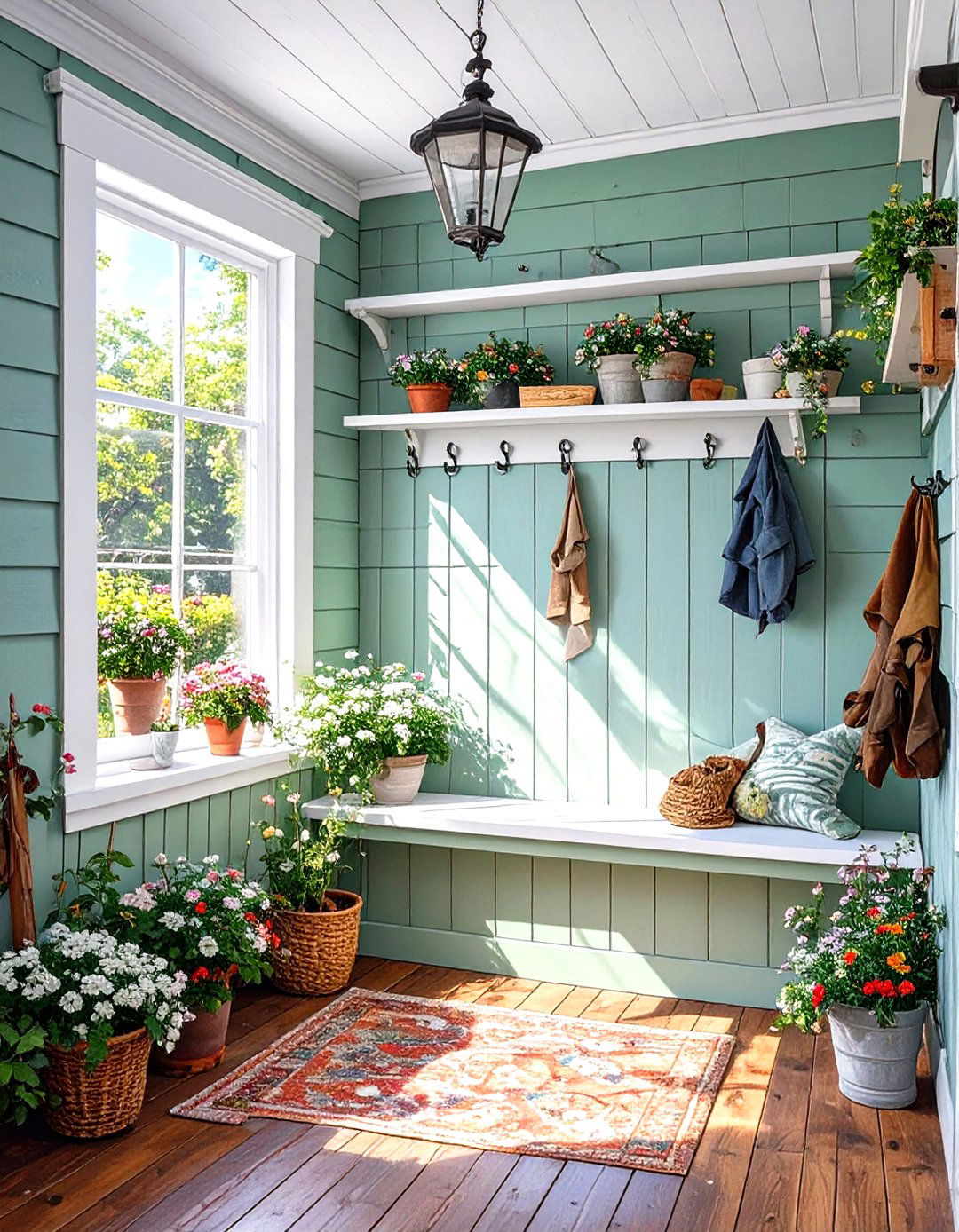
For a touch of timeless, cottage-style charm, use beadboard paneling to create your small mudroom. Install the paneling on the lower half of a wall in your entryway and top it with a ledge shelf and a row of classic hooks. The beadboard not only adds durability and protects the wall from scuffs but also provides a beautiful backdrop for your drop zone. The ledge is perfect for leaning small art, placing keys, or holding a vase of flowers. Place a simple bench or a few boot trays in front of the paneling to complete this cozy and highly functional setup.
11. Individual Locker Small Mudroom
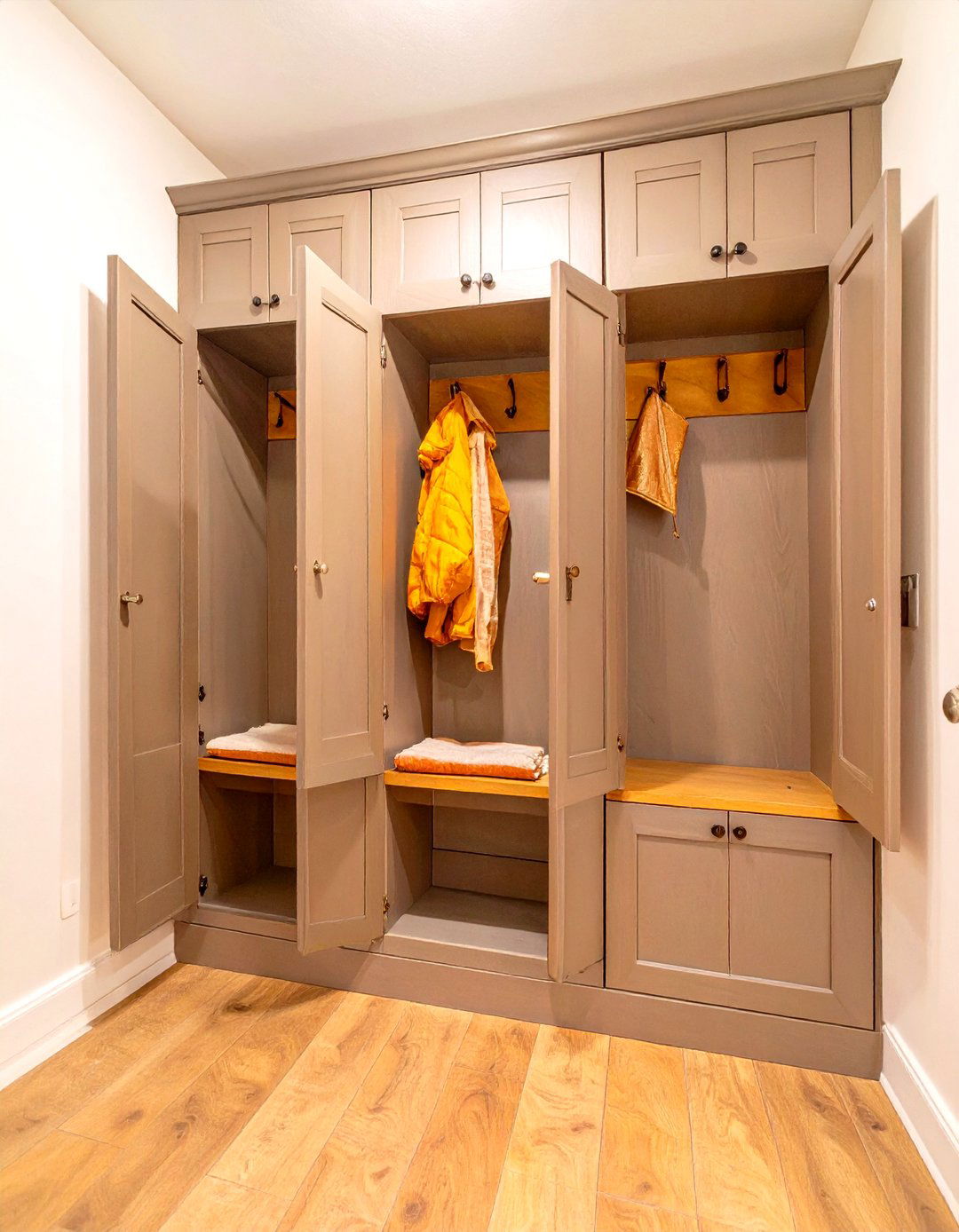
Bring the classic organization of school lockers into your home with a slim, individual locker system for your small mudroom. You can find narrow metal or wood locker units designed for home use, or you can build your own simple open lockers. Assigning one locker to each family member gives everyone a personal spot for their coat, backpack, and shoes. This system contains clutter and teaches kids responsibility for their belongings. Even a single, tall locker unit can provide ample vertical storage in a very small footprint, making it a great solution for busy families in tight spaces.
12. Cubby Storage Small Mudroom
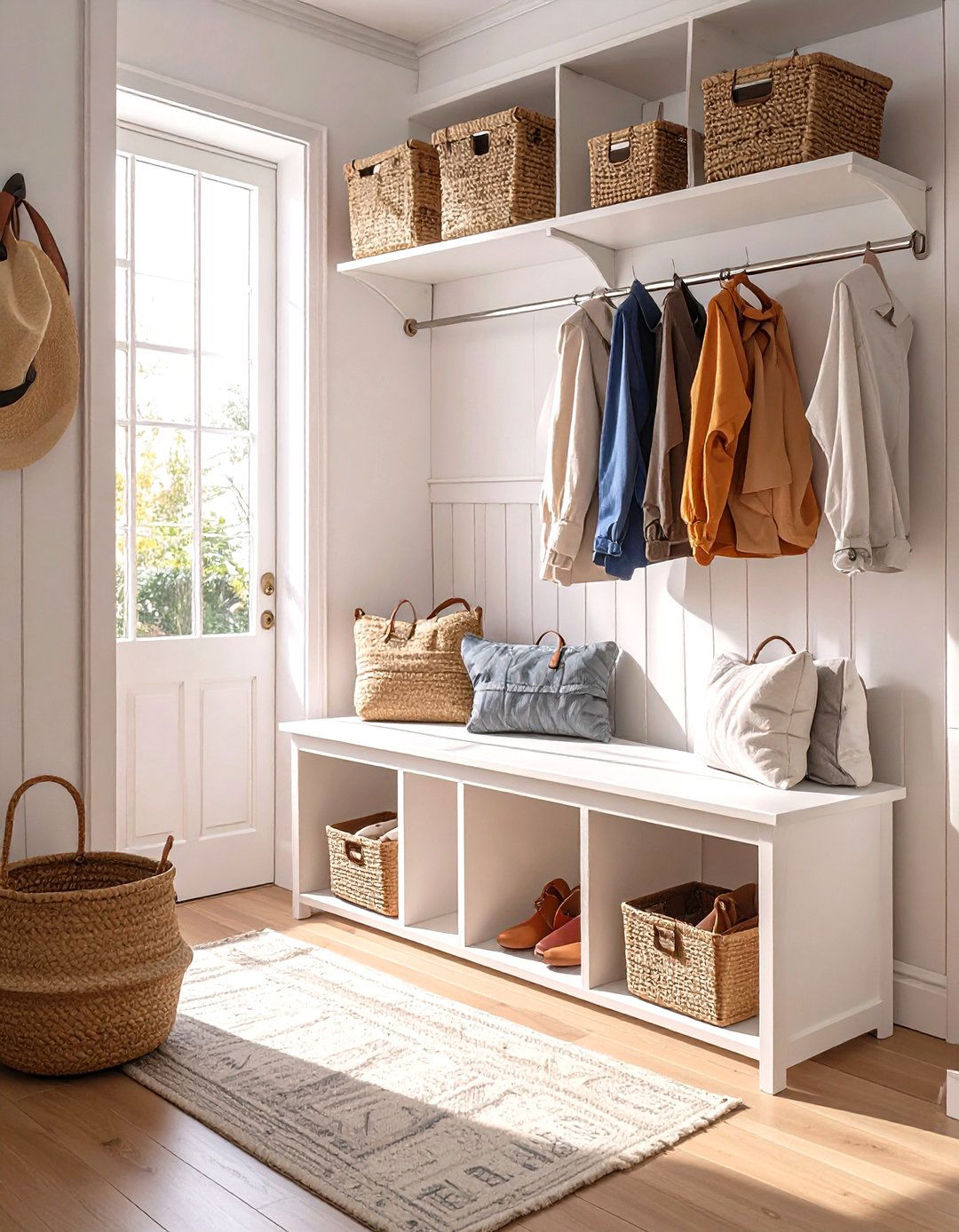
Cubby storage is a versatile and orderly solution for a small mudroom. A low bench with built-in cubbies underneath provides designated spots for each family member's shoes, preventing a messy pile-up by the door. You can also install a wall-mounted cubby unit above a bench for storing hats, gloves, and scarves. Labeling each cubby or assigning one to each person adds another layer of organization. Wicker or fabric bins can be inserted into the cubbies to conceal smaller items, maintaining a clean and streamlined appearance while keeping all your daily essentials neatly sorted and easy to find.
13. Sliding Barn Door Mudroom Closet
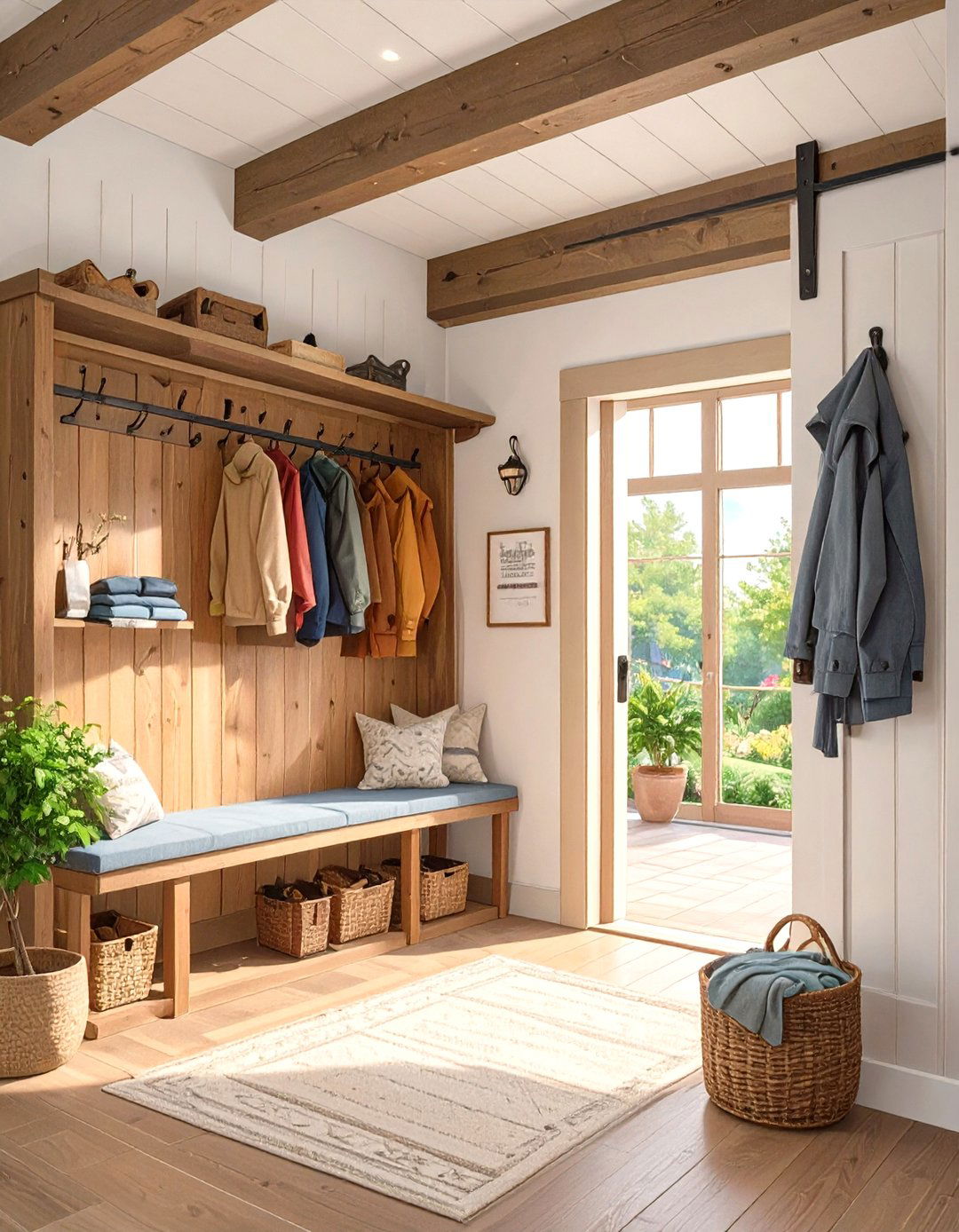
If you have a shallow closet near your entryway, replacing the traditional swing door with a sliding barn door can maximize accessibility and add rustic style. A standard door can block traffic in a narrow hall, but a barn door slides parallel to the wall, saving precious space. Inside the closet, outfit it with a bench, hooks, and shelves to create a fully functional mudroom that can be hidden from view when guests arrive. This solution offers the best of both worlds: complete mudroom functionality that disappears behind a stylish architectural element when not in use.
14. Under-Stairs Small Mudroom
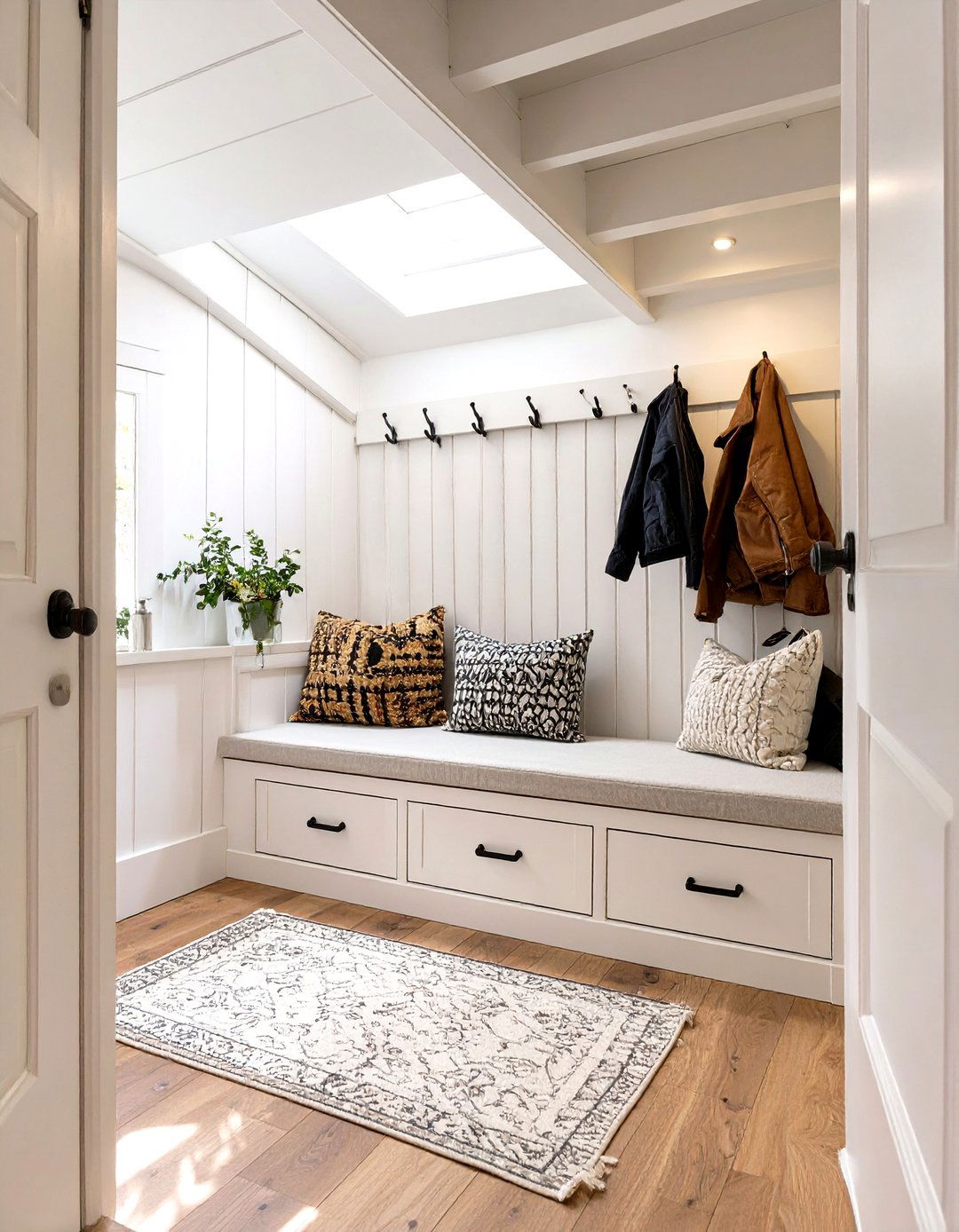
The awkward, often-unused space under a staircase is prime real estate for a clever small mudroom. This area can be transformed with custom-built solutions like a pull-out drawer for shoes, a recessed bench, and wall-mounted hooks. The angled ceiling creates a cozy nook that’s perfect for a drop zone. You can add lighting to make it more functional and paint the interior a bright color to make it feel welcoming. By capitalizing on this architectural quirk, you can create a fully integrated mudroom that adds immense value without encroaching on your main living areas.

15. Narrow Hallway Small Mudroom
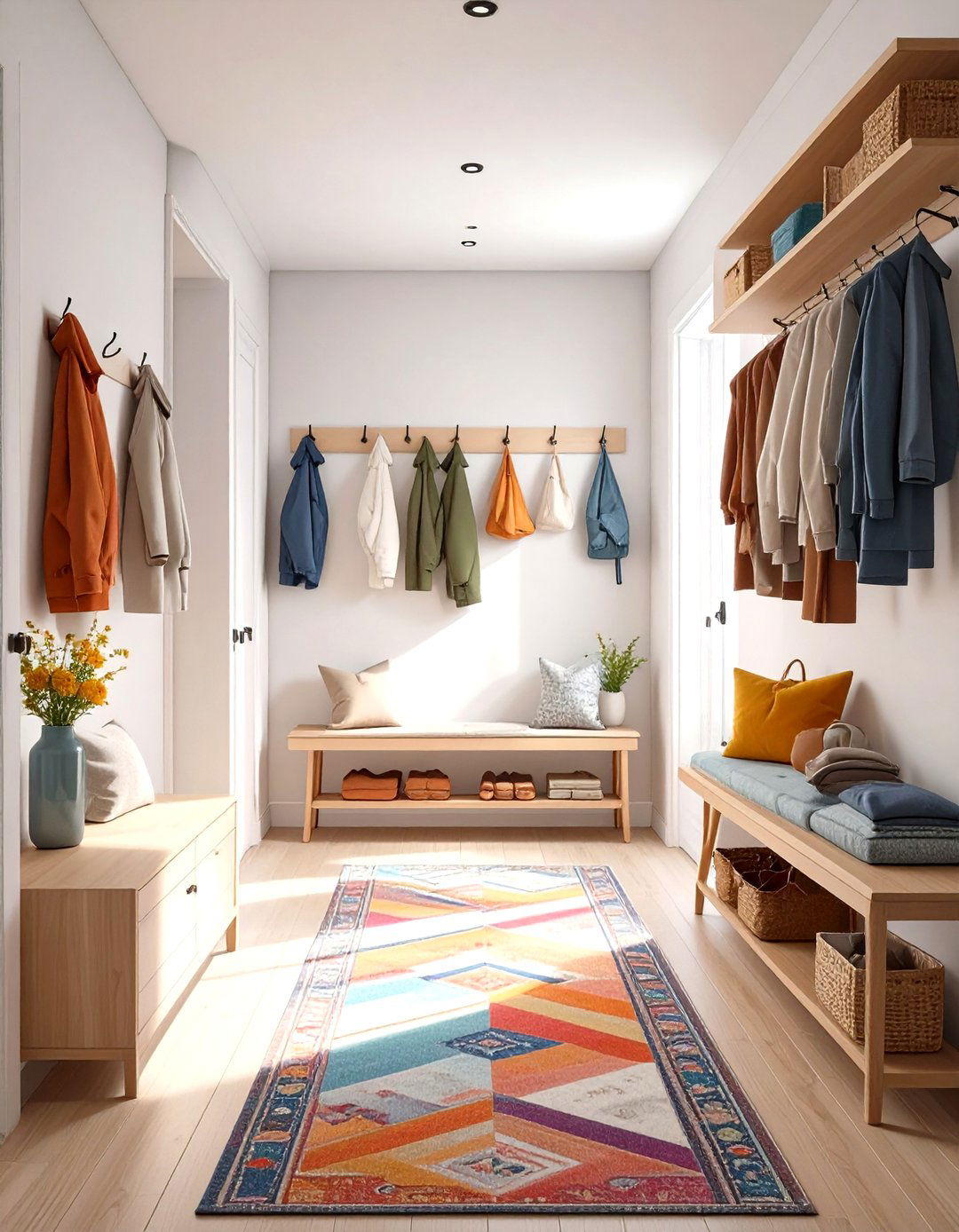
Creating a mudroom in a narrow hallway requires a focus on low-profile and wall-mounted solutions. Opt for a slim console table or a floating shelf that doesn’t jut out too far into the walkway. Above it, use a series of sleek, modern hooks or a minimalist coat rack. For shoes, consider a very narrow, vertical shoe cabinet that takes up minimal floor space. A long runner rug can help define the mudroom zone and protect the floors. Keeping the decor simple and the color palette light will prevent the hallway from feeling cluttered or even narrower.
16. Integrated Lighting Small Mudroom
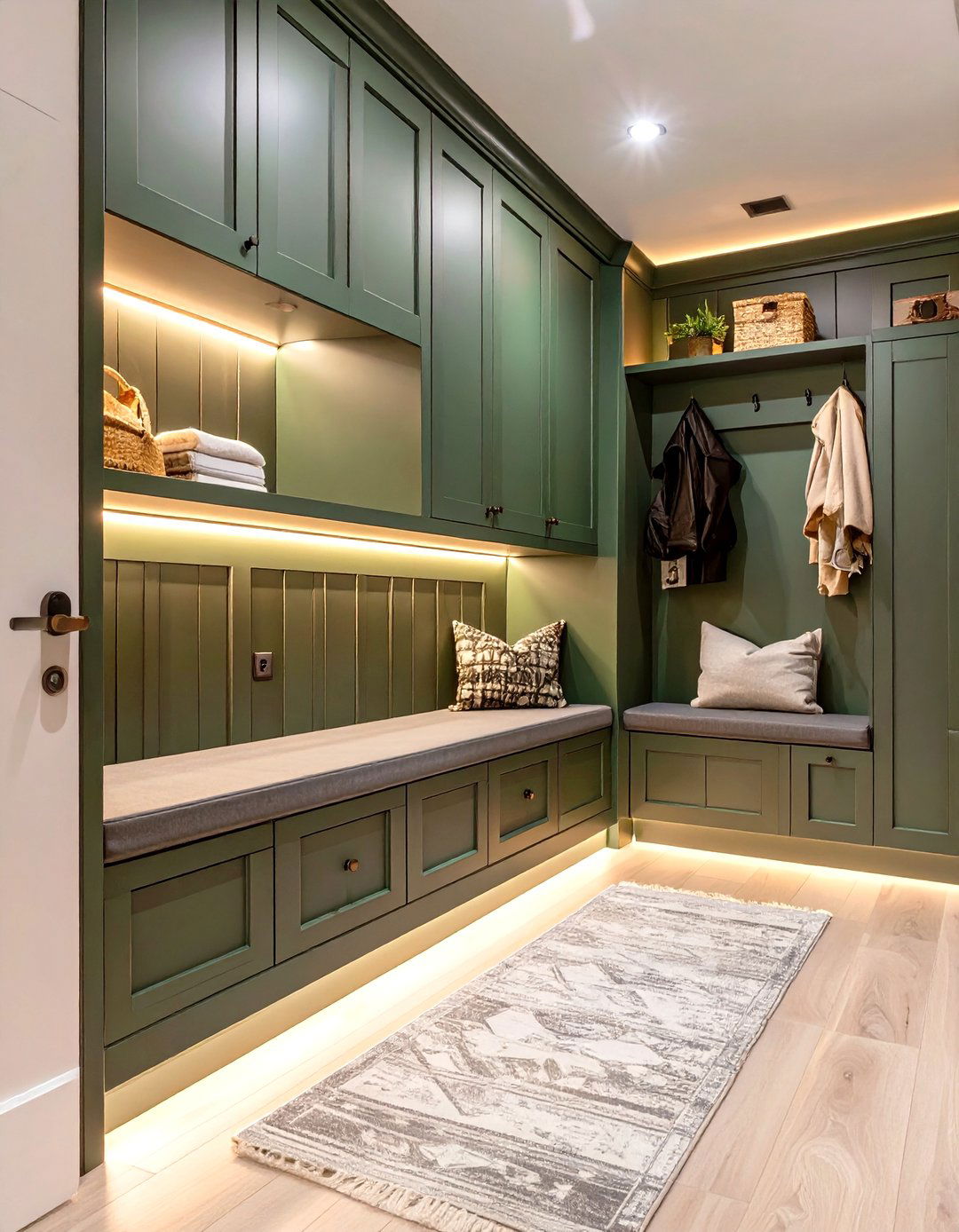
Good lighting is essential in a small mudroom, as these spaces are often tucked into dark corners or closets. Integrating lighting directly into your mudroom design can make it more functional and feel more intentional. Consider installing a stylish sconce above the hooks or placing a small lamp on a shelf. For built-in units, under-shelf LED strip lighting is a fantastic option to illuminate the bench area or inside cubbies. This not only helps you find what you need but also adds a warm, welcoming glow to your entryway, making the small space feel more like a feature.
17. Mirror and Hook Combo Mudroom
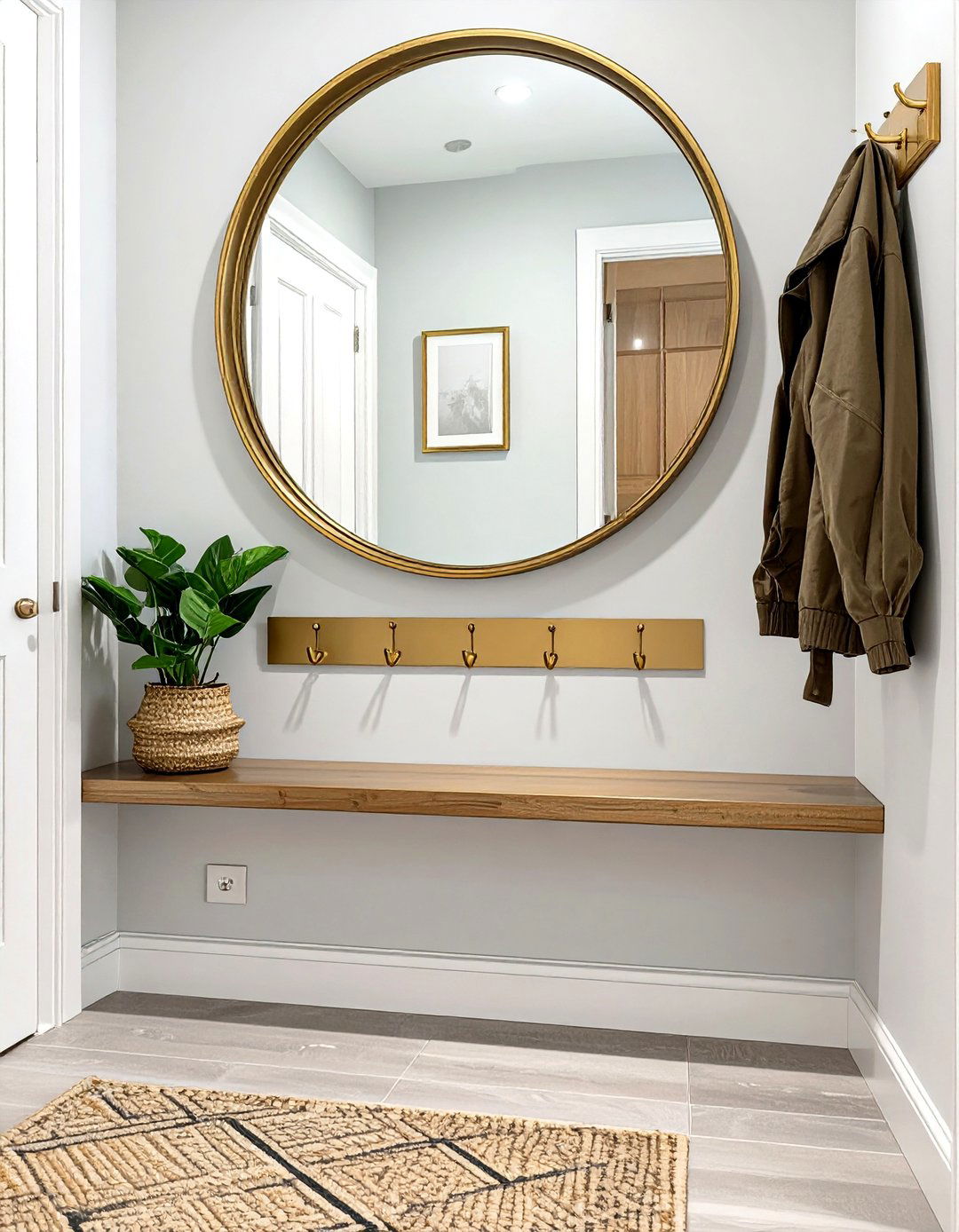
A large mirror is a game-changer in a small mudroom. It not only provides a place for a last-minute check before you head out the door but also reflects light and makes the entire area feel larger and more open. Pair a stylish framed mirror with a row of hooks mounted directly underneath it or to the side. This simple combination is highly effective, providing both function and a touch of elegance. Place a small bench or a boot tray below to complete the setup. This idea is perfect for very small entryways where every element needs to serve multiple purposes.
18. Patterned Tile Floor Mudroom
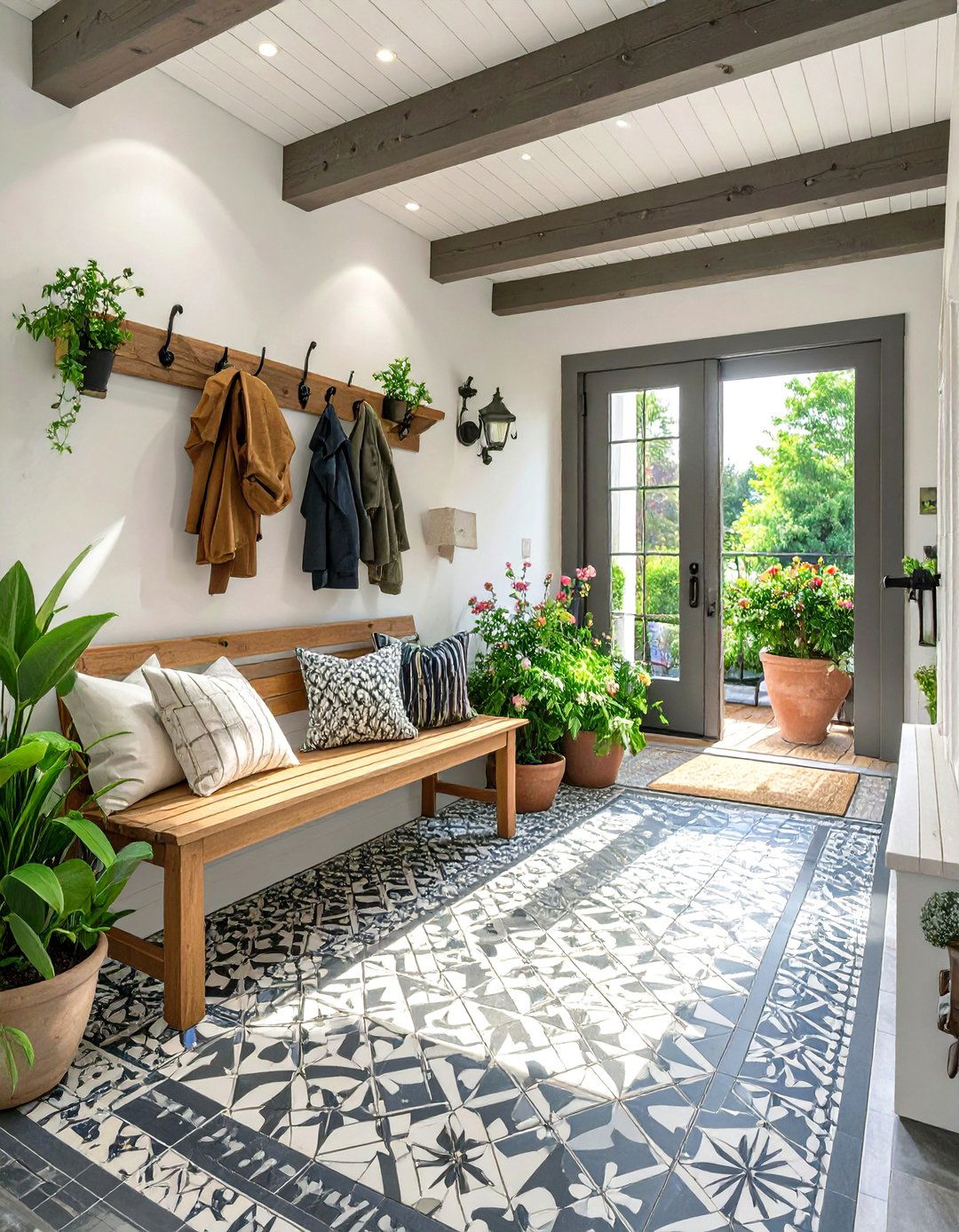
Define your small mudroom area and add a major dose of style with a patch of patterned floor tile. Even in an open-concept entryway, laying a few square feet of bold, durable porcelain or cement tile can create a visual boundary for your mudroom zone. This not only looks fantastic but also provides a waterproof and easy-to-clean surface for wet or muddy boots. Choose a pattern that complements your home's decor, from classic black and white checks to colorful encaustic-style designs. The tile becomes a focal point and a practical landing strip for all incoming foot traffic.
19. Wallpaper Accent Wall Mudroom
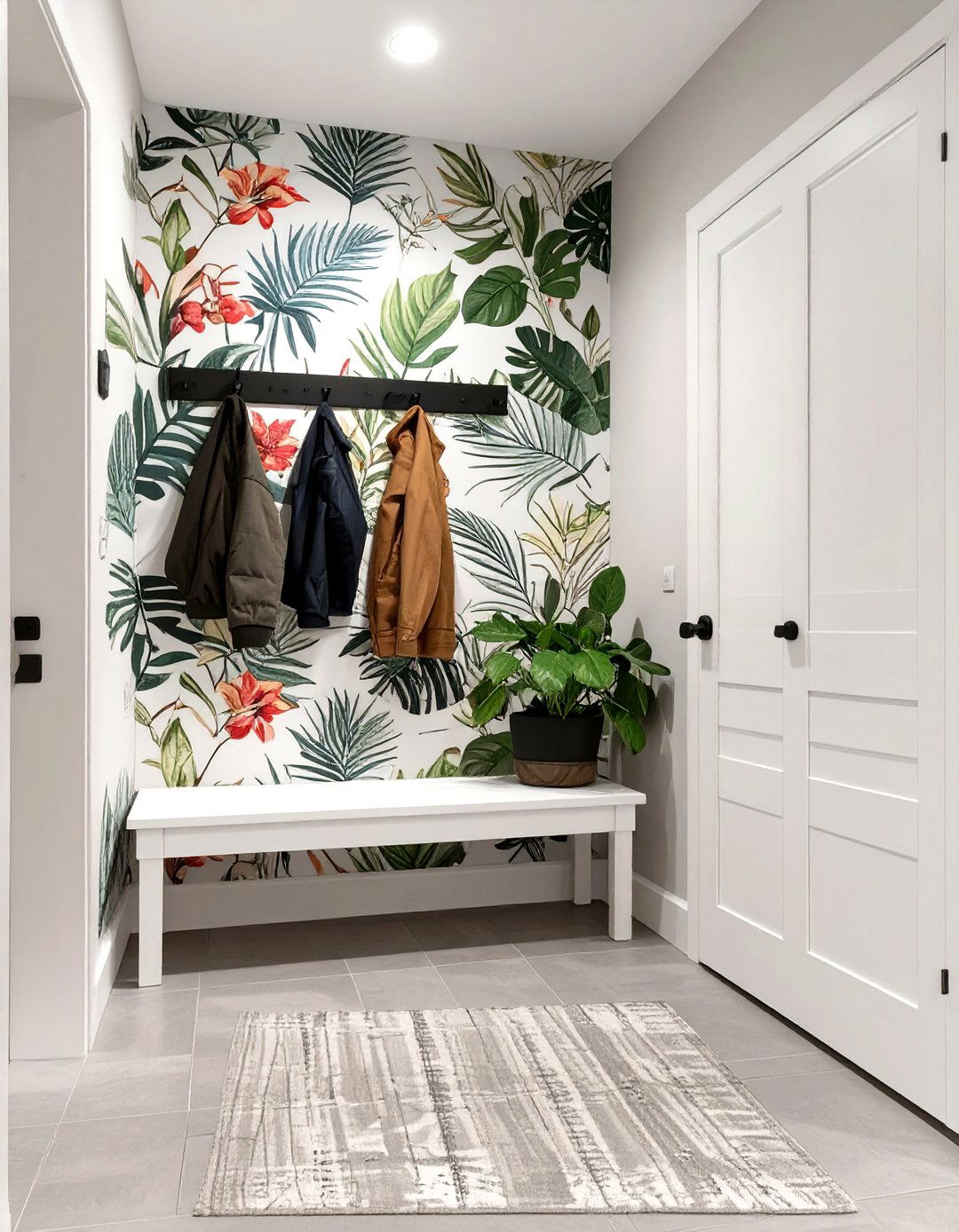
Create a stunning focal point in your small mudroom by adding wallpaper to the back wall. A bold pattern or a subtle texture can instantly elevate the space from purely functional to a designer-inspired feature. Choose a durable, wipeable wallpaper to withstand the wear and tear of an entryway. Mount your hooks and shelves directly onto the wallpapered wall to create a cohesive and layered look. This is an easy and relatively inexpensive way to inject personality and color into a small nook, making it a space you'll love to look at every day.

20. Small Mudroom with Pet Station
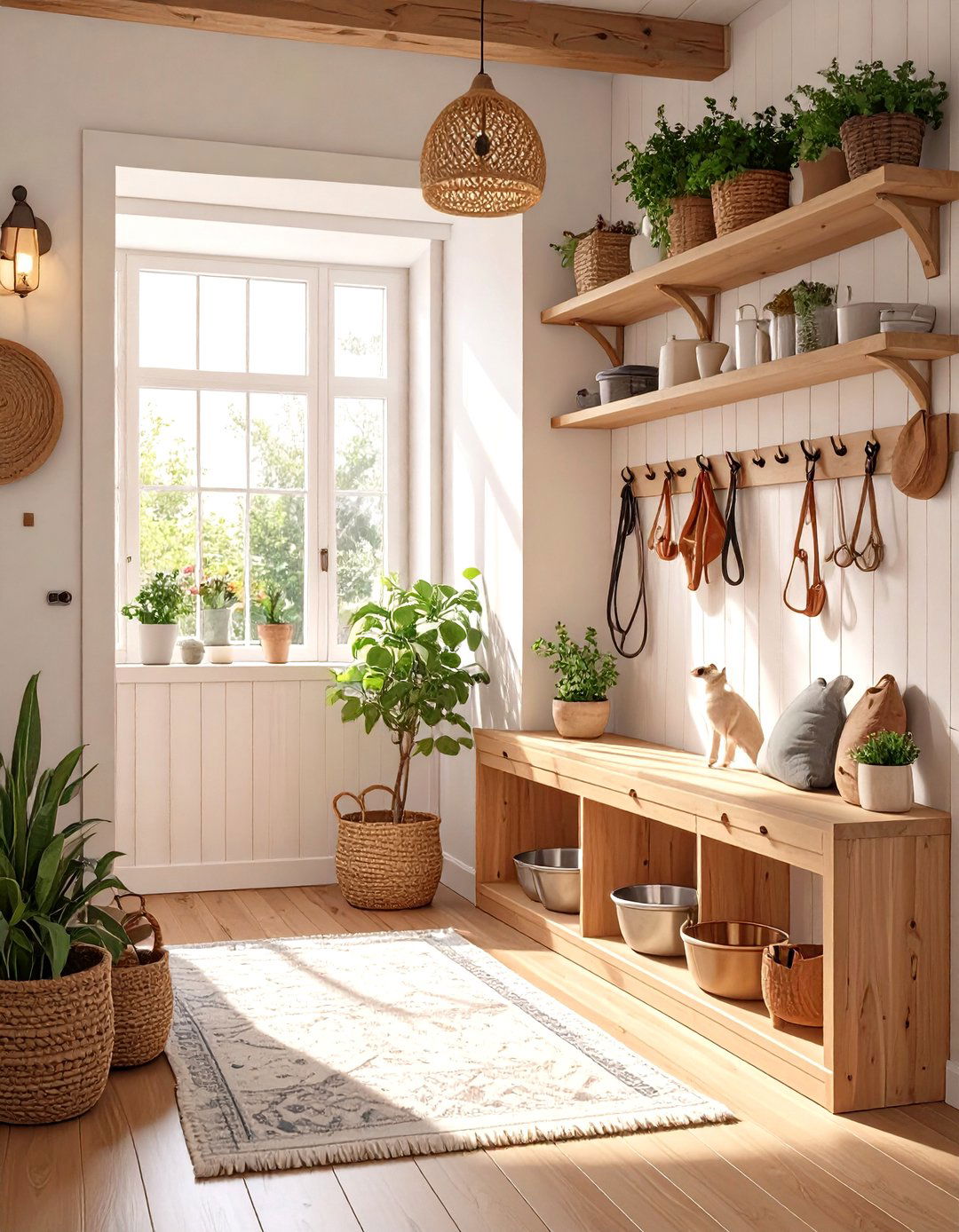
Integrate a dedicated spot for your furry friend into your small mudroom design. This can be as simple as adding a few extra hooks at a lower level for leashes and harnesses. You can also incorporate a built-in food and water bowl station at the base of your mudroom unit or place a durable mat for them to rest on. Some designs even include a small, open cubby where a pet bed can be tucked away. Combining your pet’s essentials with the family’s drop zone keeps everything organized and contained in one convenient, easy-to-clean location.
21. Repurposed Furniture Small Mudroom
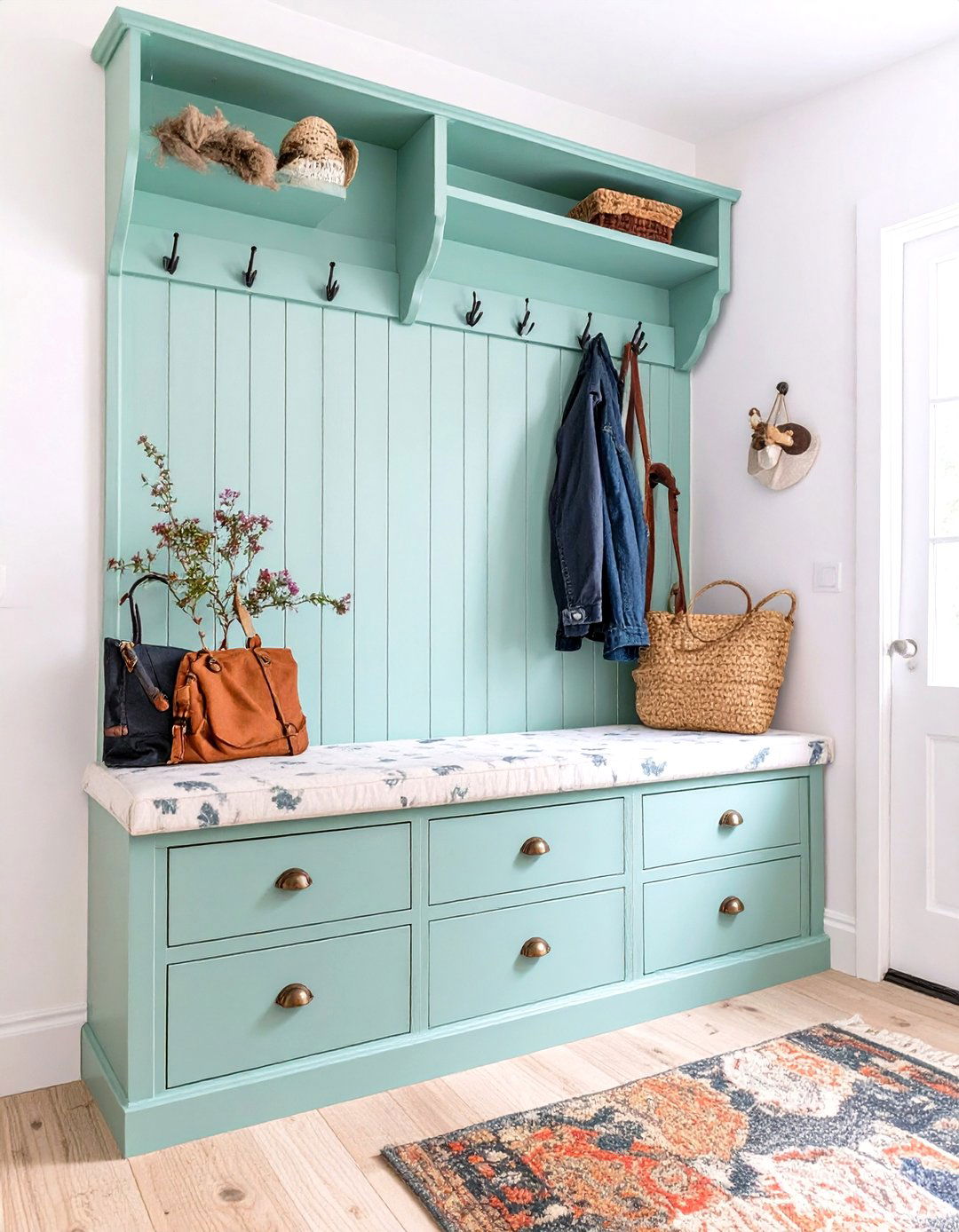
Create a unique and budget-friendly small mudroom by repurposing a piece of old furniture. An old dresser can be transformed by removing the top drawers to create an open shelf, leaving the bottom drawers for hidden storage. A vintage bookshelf can be laid on its side to serve as a bench with built-in cubbies. Simply add a cushion on top and hooks on the wall above it. This approach not only saves money but also adds character and a personal touch to your entryway, giving a new life to a piece you might have otherwise discarded.
22. Industrial Pipe Small Mudroom
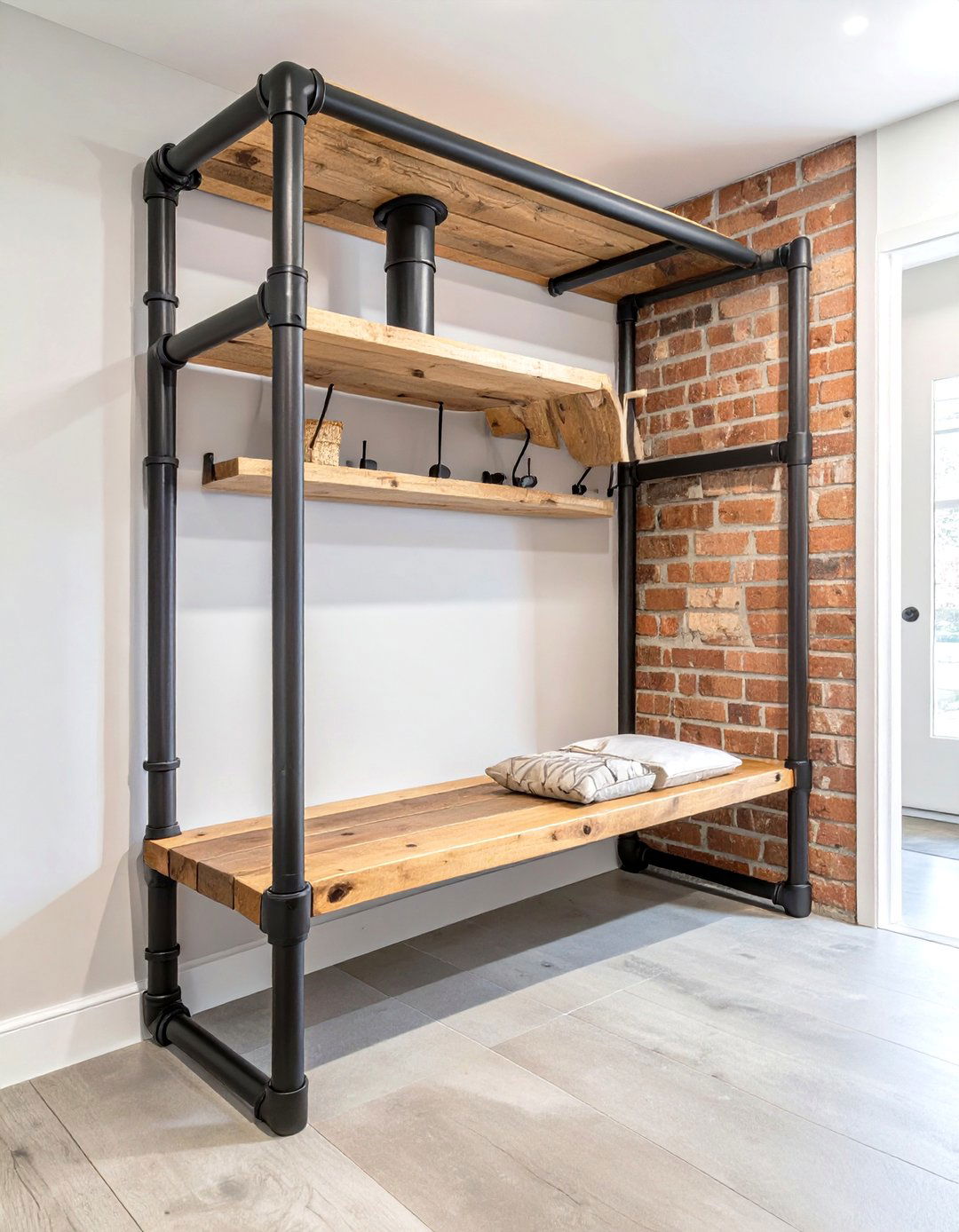
For a modern, industrial, or urban look, build a small mudroom using metal pipes and wood planks. This DIY-friendly project allows you to create a custom-sized unit perfectly suited to your space. Use pipes to construct the frame for a bench and an overhead coat rack. Add a solid wood plank for the bench seat and another for an upper shelf. The raw, utilitarian aesthetic is both stylish and incredibly durable. This open-concept design keeps the space from feeling heavy and is a great way to add a masculine or edgy touch to your home's entrance.
23. Minimalist Frame Small Mudroom
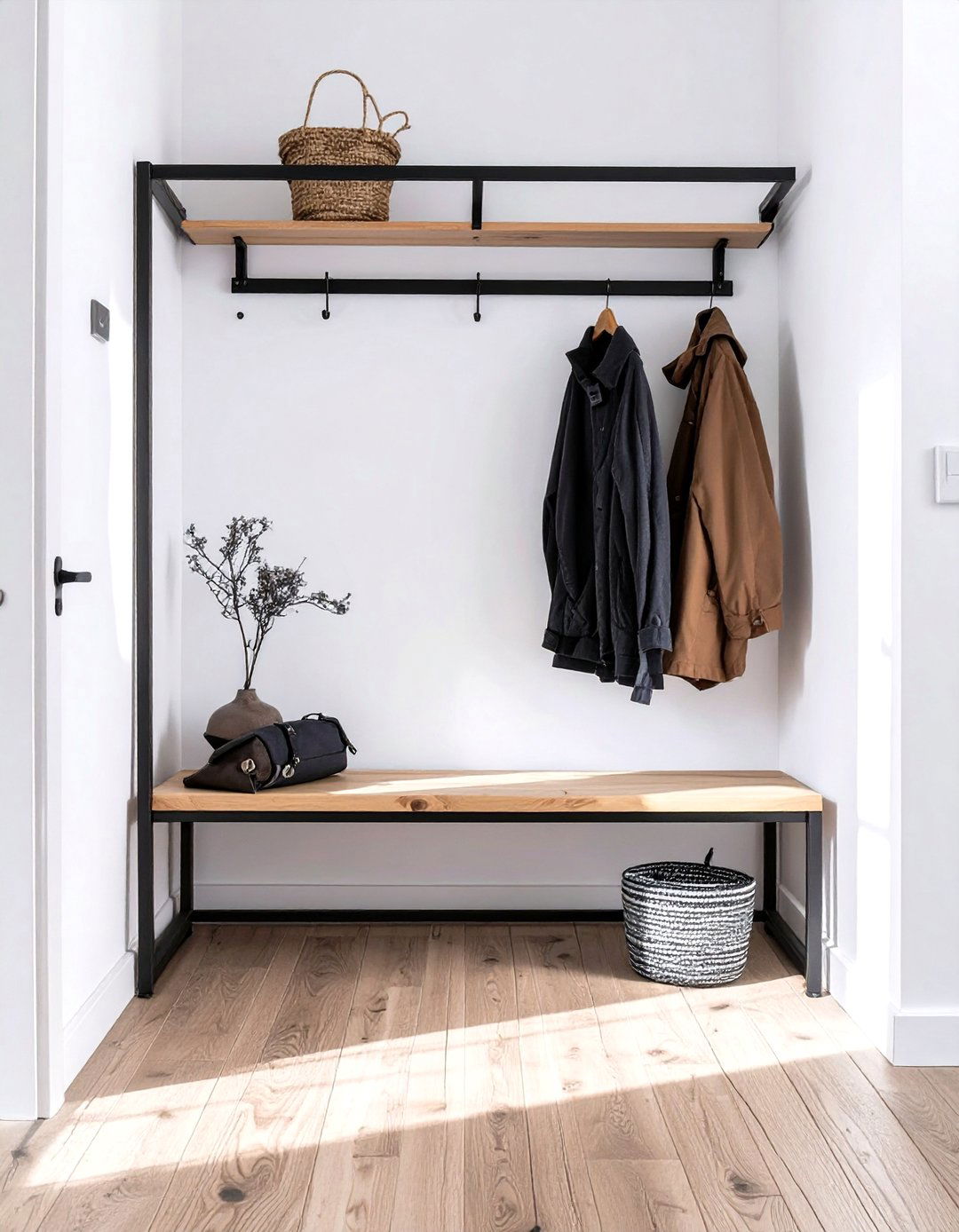
Embrace simplicity with a minimalist frame mudroom. This design often features a sleek, open-frame metal or wood structure that includes a bench, a few hooks, and perhaps a single shelf. It offers the bare essentials of a mudroom without any visual bulk. The "less is more" approach ensures your entryway remains uncluttered and airy. This style works exceptionally well in contemporary or Scandinavian-inspired homes. Its clean lines and simple functionality provide just enough organization to be effective while maintaining a sense of calm and order at the front door.
24. Garage Entry Small Mudroom
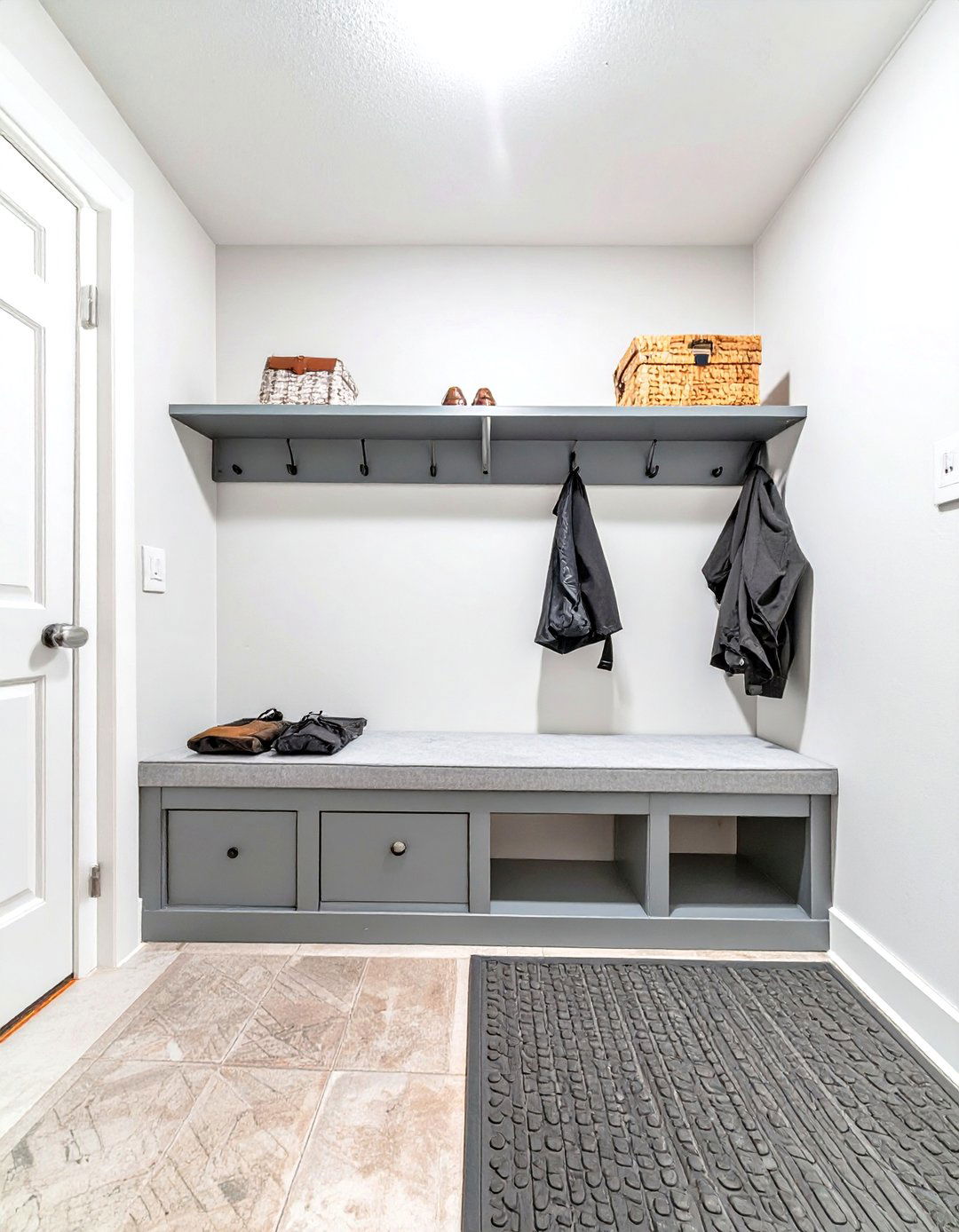
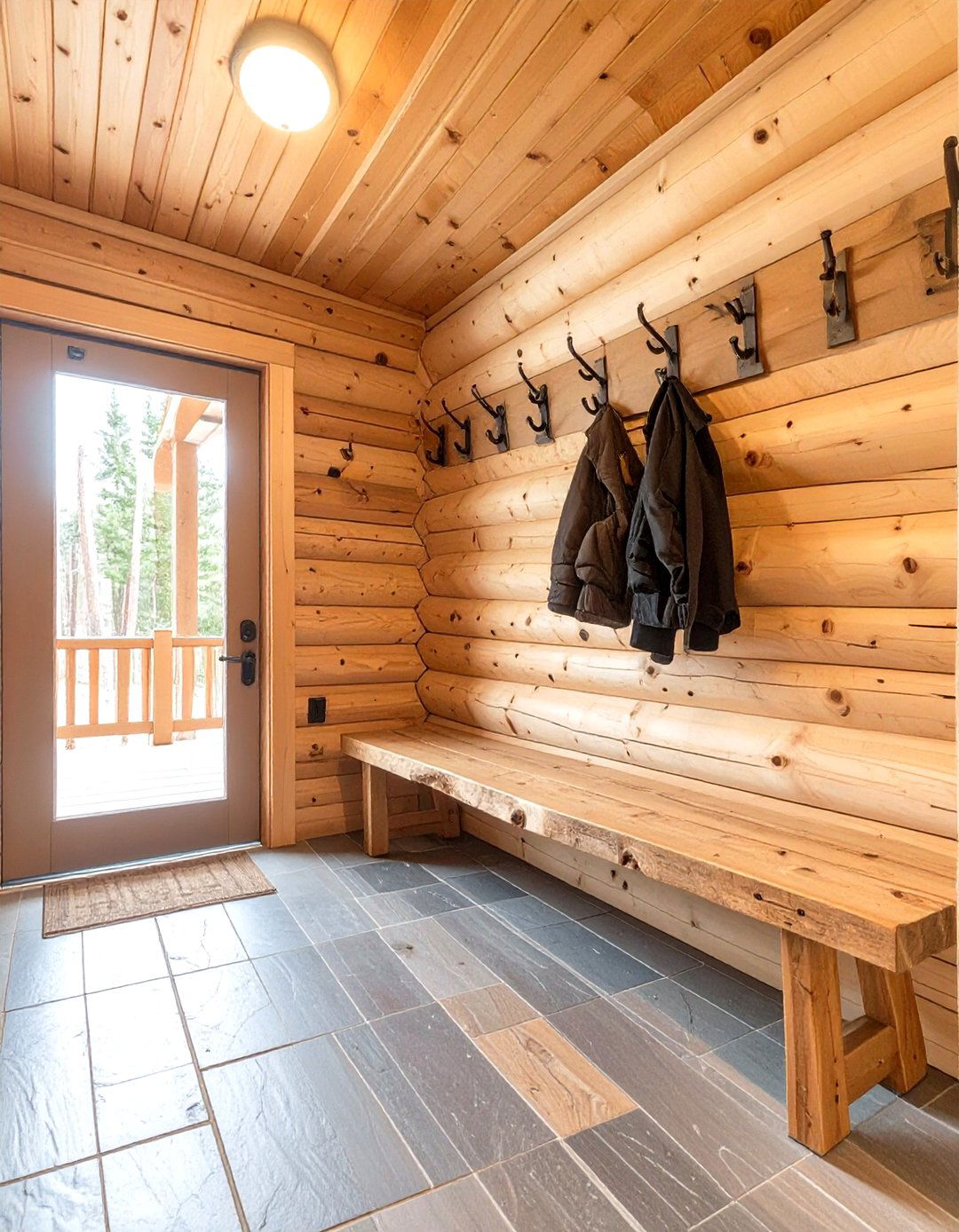
The entry from the garage is often the most-used door in the house, making it an ideal spot for a hardworking small mudroom. Even a narrow strip of wall can be converted into a functional drop zone. Install durable hooks for jackets, a sturdy bench for removing dirty shoes, and shelves for storing items you need to grab on your way out, like reusable shopping bags. Use heavy-duty materials that can withstand a bit of rough use. A durable, easy-to-clean floor mat is a must in this high-traffic area to trap dirt before it enters the main house.
25. Laundry Room Combo Small Mudroom
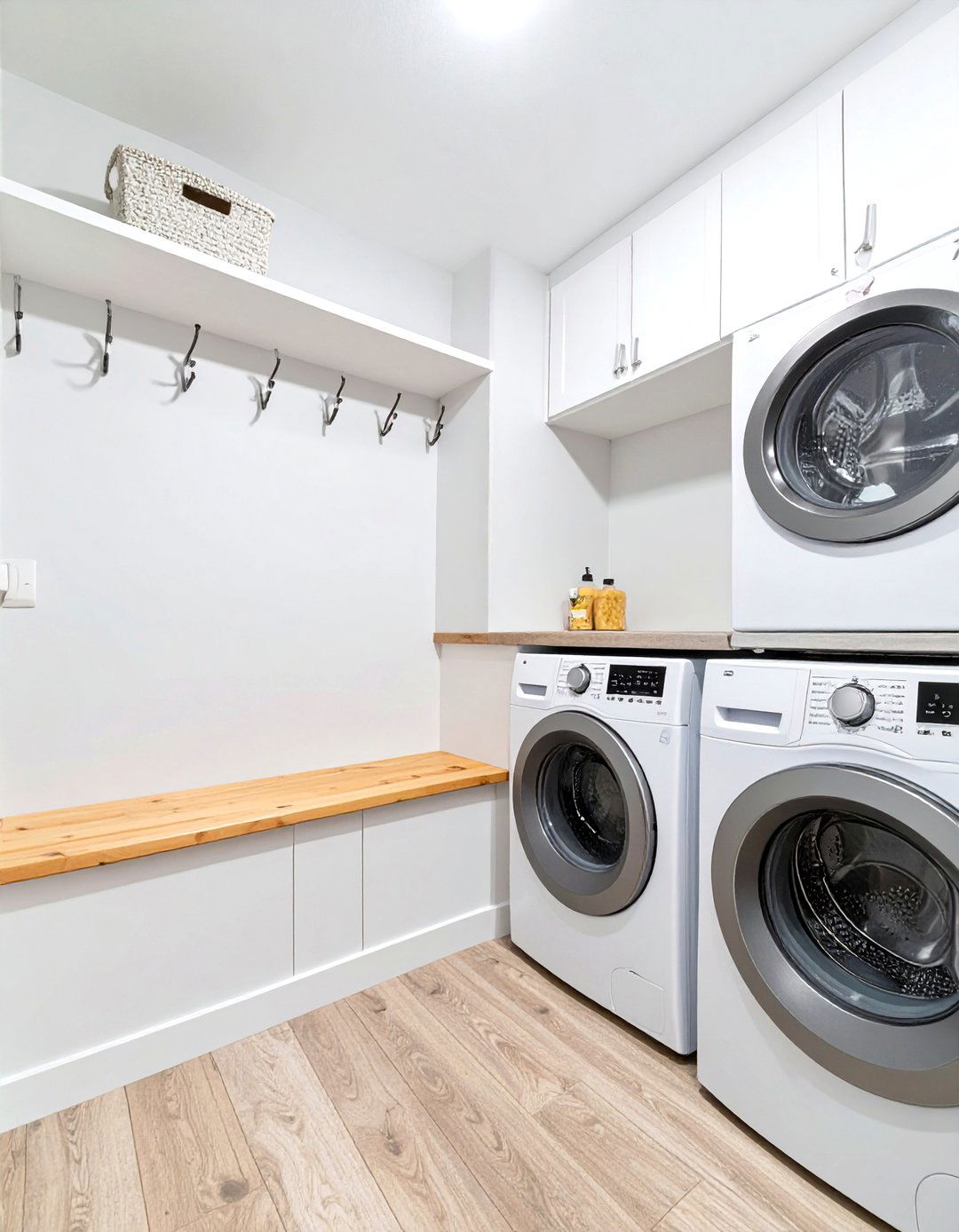
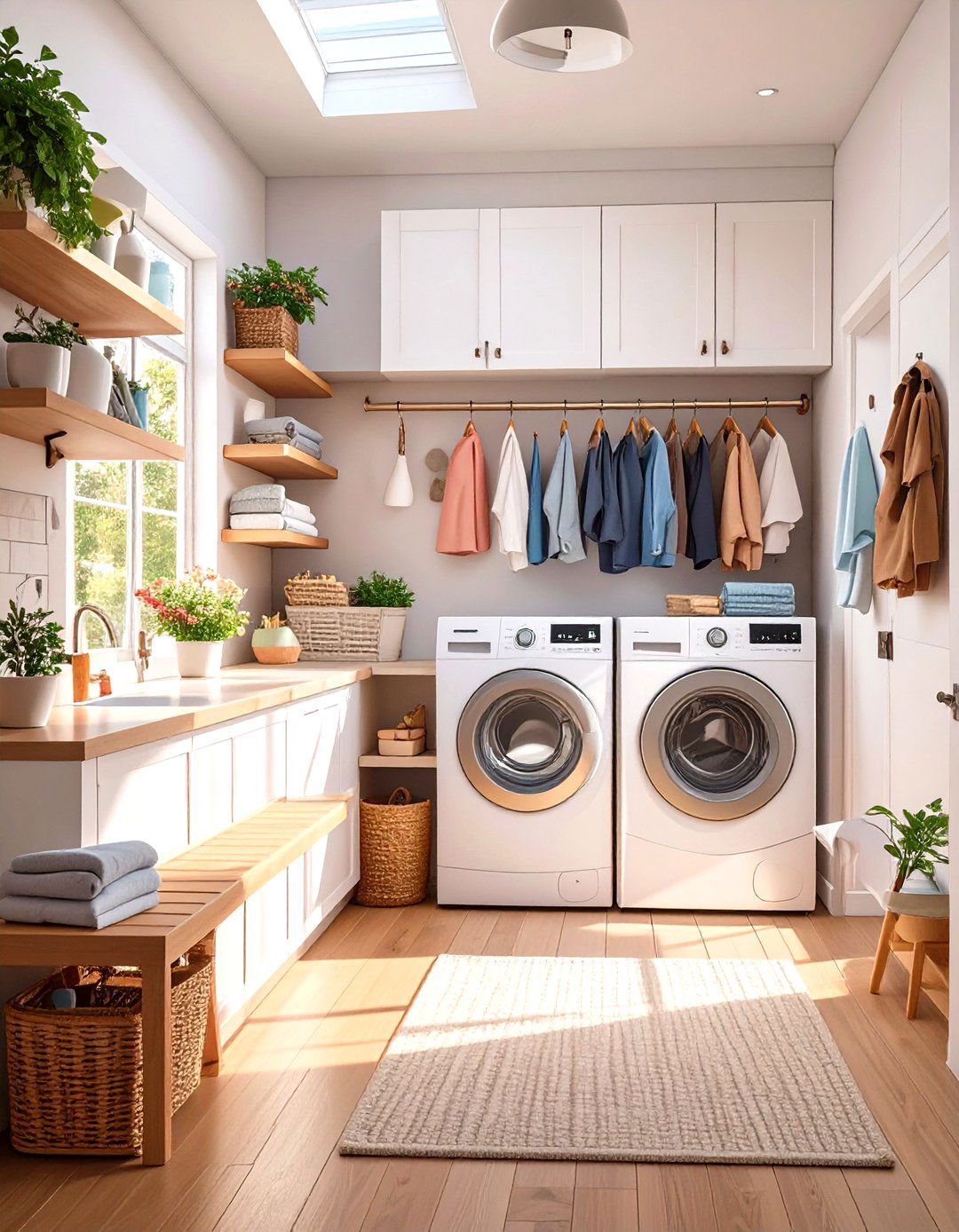
If your laundry room is near an entrance, combining it with a small mudroom is a natural fit. This creates a highly functional "workhorse" space. Use the wall space above or next to your washer and dryer to install hooks and shelves. A small bench can be placed against an opposite wall. The best part of this combination is having a place to immediately drop dirty sports uniforms or wet clothes directly into the wash. It consolidates chores and clutter into one room, helping to keep the rest of your home cleaner and more organized.
26. Mudroom with Charging Station
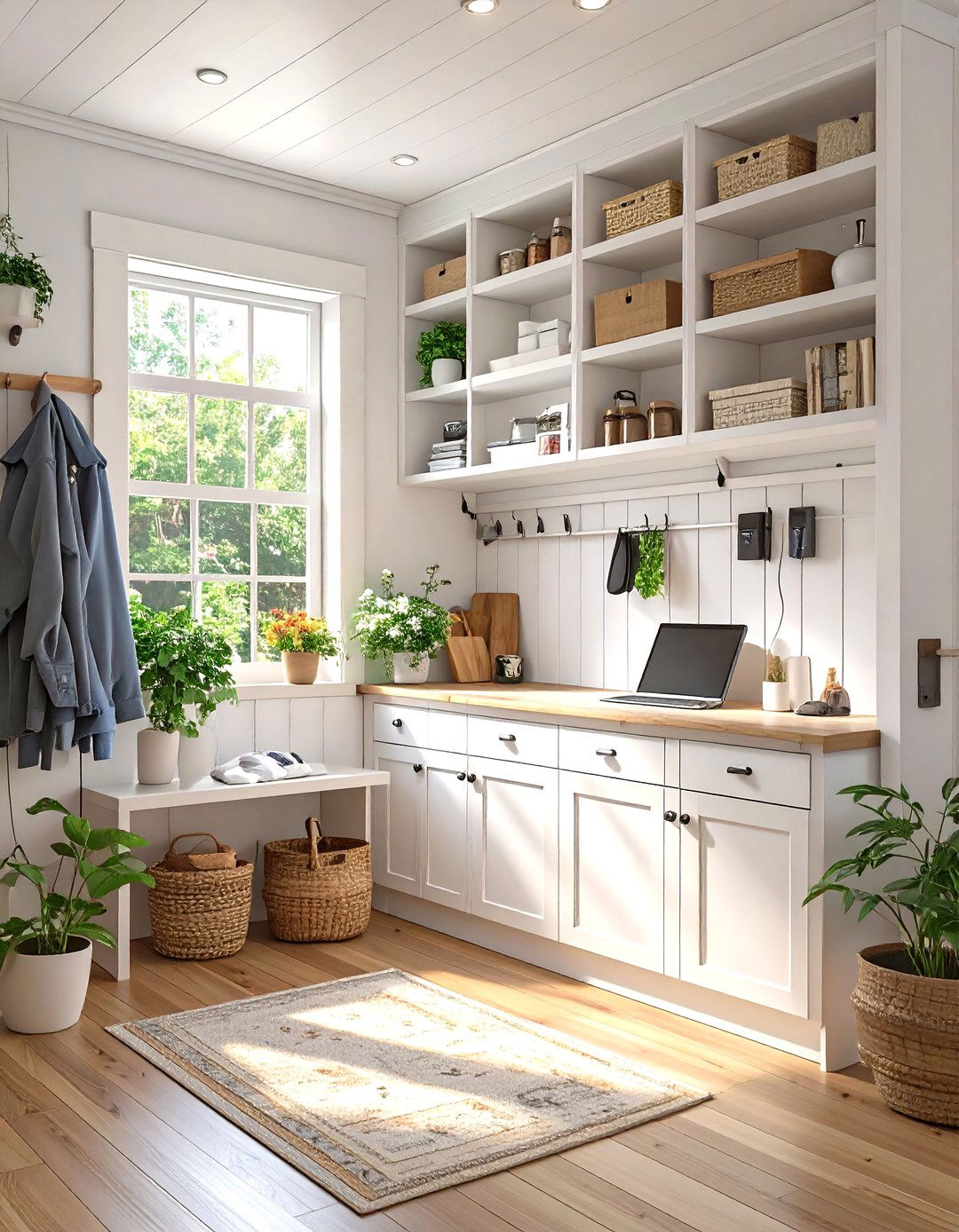
In today's tech-driven world, a small mudroom can also serve as a central charging hub for the family. Incorporate a small shelf or a built-in nook with integrated power outlets and USB ports. This gives everyone a designated spot to drop their keys, wallet, and phone as they walk in the door. It keeps electronic devices off kitchen counters and ensures they are fully charged and ready to go when you leave. Some mudroom benches and tables even come with charging stations already built-in, offering a seamless and clutter-free way to manage your gadgets.
27. Wicker Basket Storage Mudroom
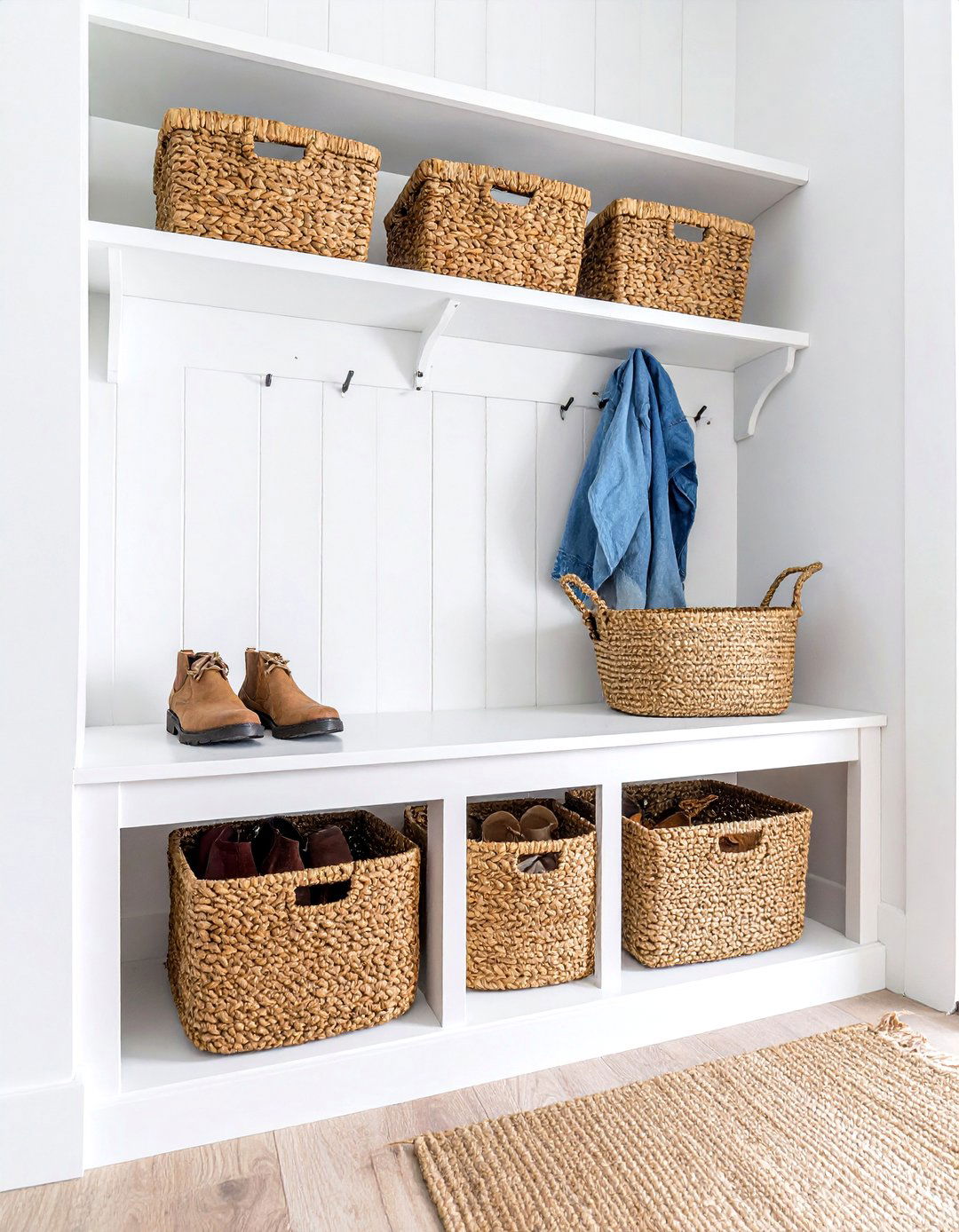
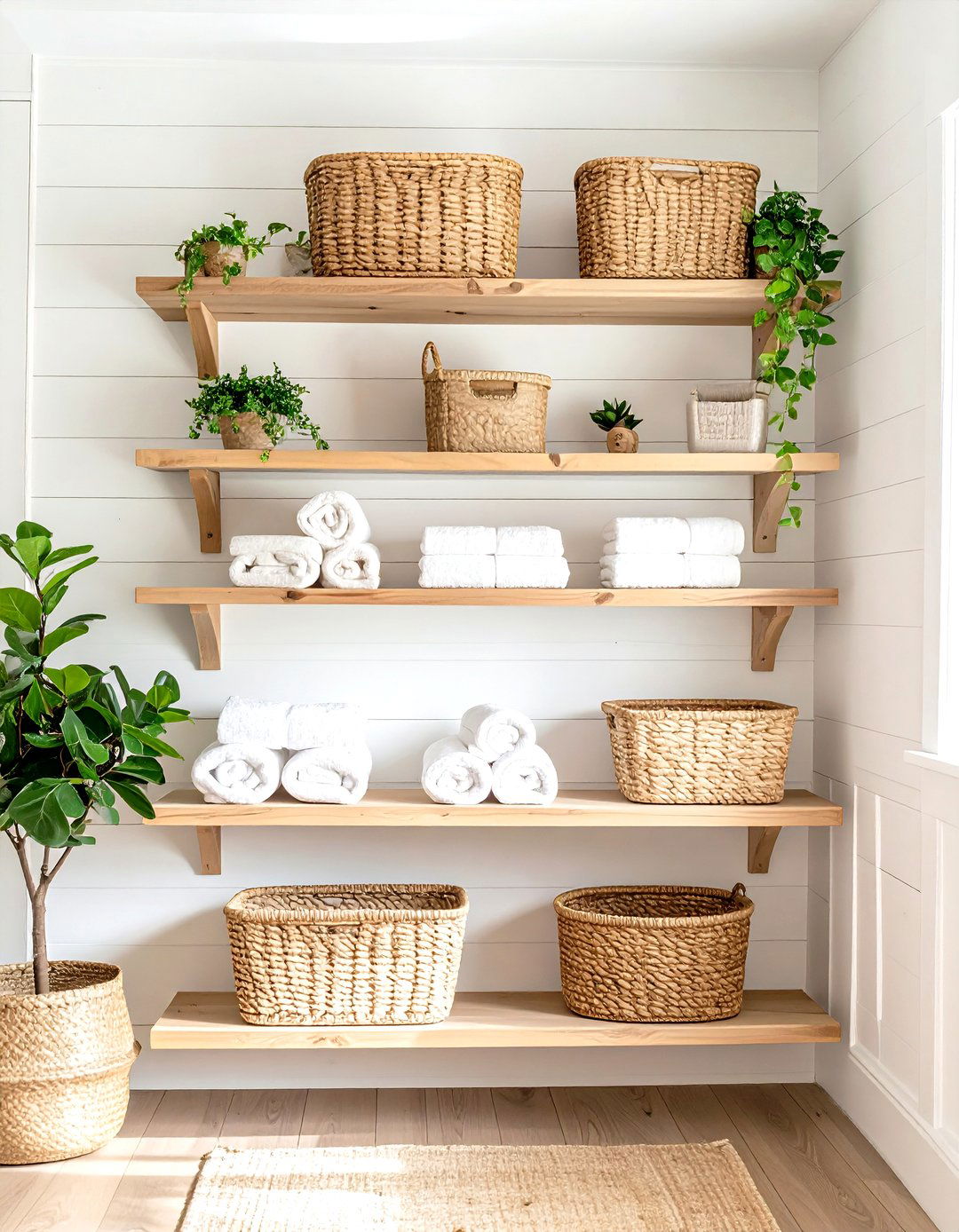
Wicker baskets are a perfect addition to a small mudroom, adding texture, warmth, and concealed storage. Use large baskets on the floor or under a bench to corral shoes, sports equipment, or umbrellas. Smaller baskets placed on an overhead shelf are ideal for holding hats, gloves, and scarves. They are lightweight, easy to handle, and their natural look complements a variety of decor styles, from coastal to farmhouse. By using baskets, you can quickly tidy up the space, hiding visual clutter while keeping all your essential items neatly organized and accessible.
28. DIY Crate Bench Mudroom
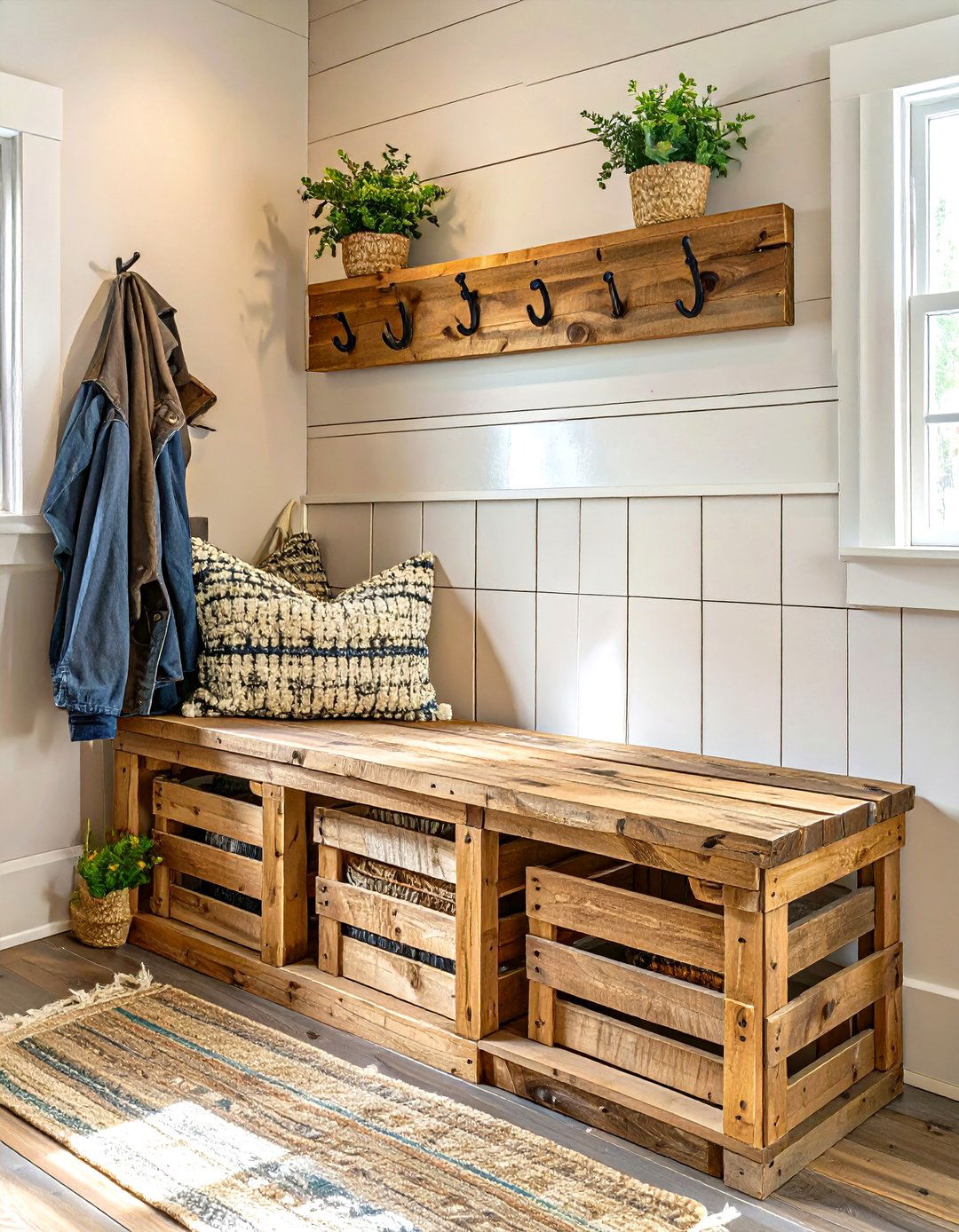
For a rustic and incredibly affordable small mudroom, create a bench using simple wooden crates. Stand three or four sturdy crates on their sides and arrange them in a row. Screw them together for stability and top them with a stained or painted wooden plank to create a bench seat. The open fronts of the crates become instant cubbies for shoe storage. Mount a simple board with hooks on the wall above the crate bench to complete your DIY mudroom. This project is easy to customize to your specific space and provides a charming, functional feature on a minimal budget.
29. High-Gloss Paint Small Mudroom
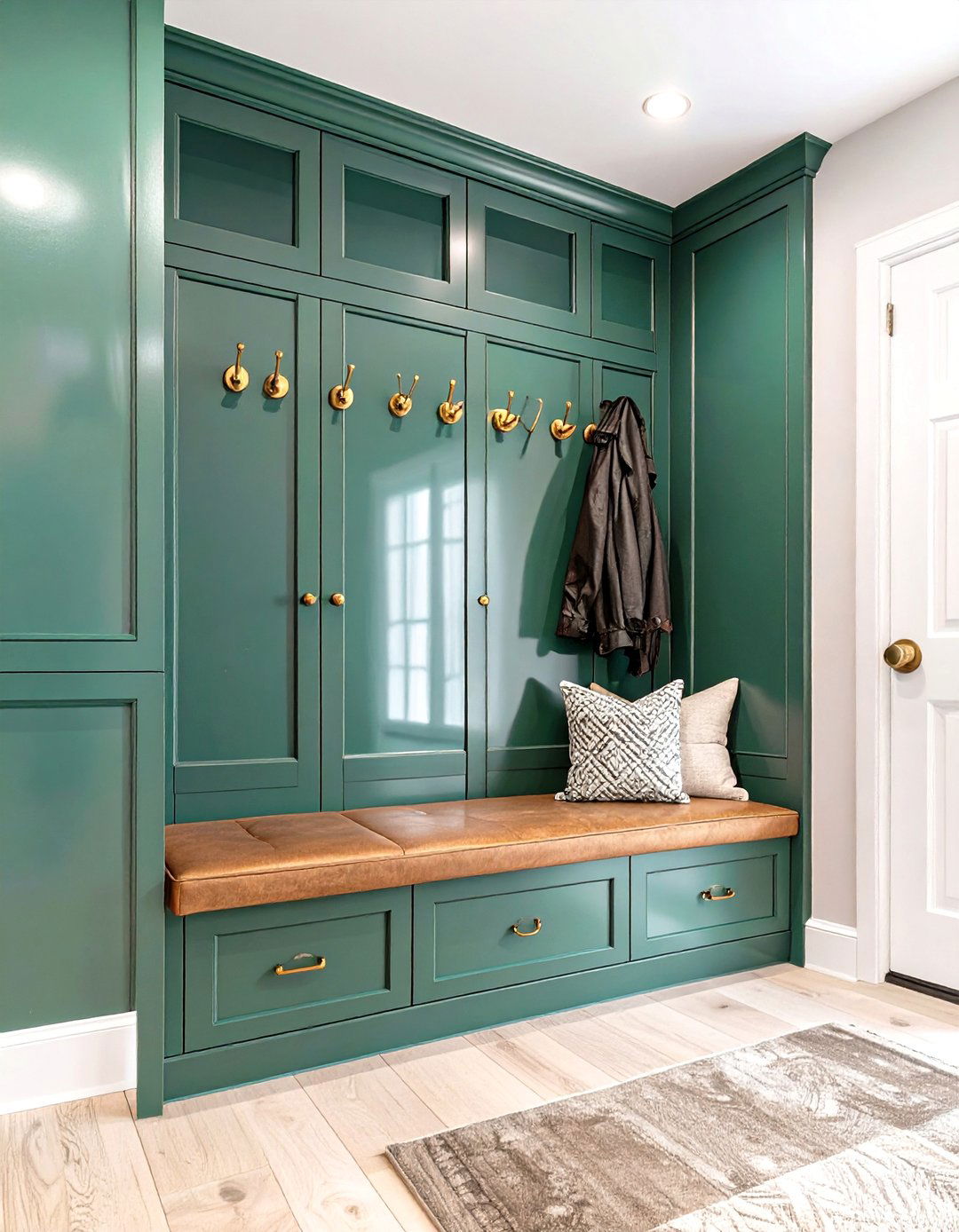
Make a bold statement in your small mudroom nook by using high-gloss paint. A durable, glossy finish is not only easy to wipe clean—a huge plus in a high-traffic area—but it also reflects light beautifully. This can make a small, dark space feel brighter and more vibrant. Choose a daring color like navy blue, deep green, or even a cheerful yellow for the walls or the built-in unit itself. The sleek, lacquered finish adds a touch of glamour and sophistication, turning a purely practical area into a deliberate and stylish design moment in your home.
30. Fabric Cushion Topped Bench Mudroom
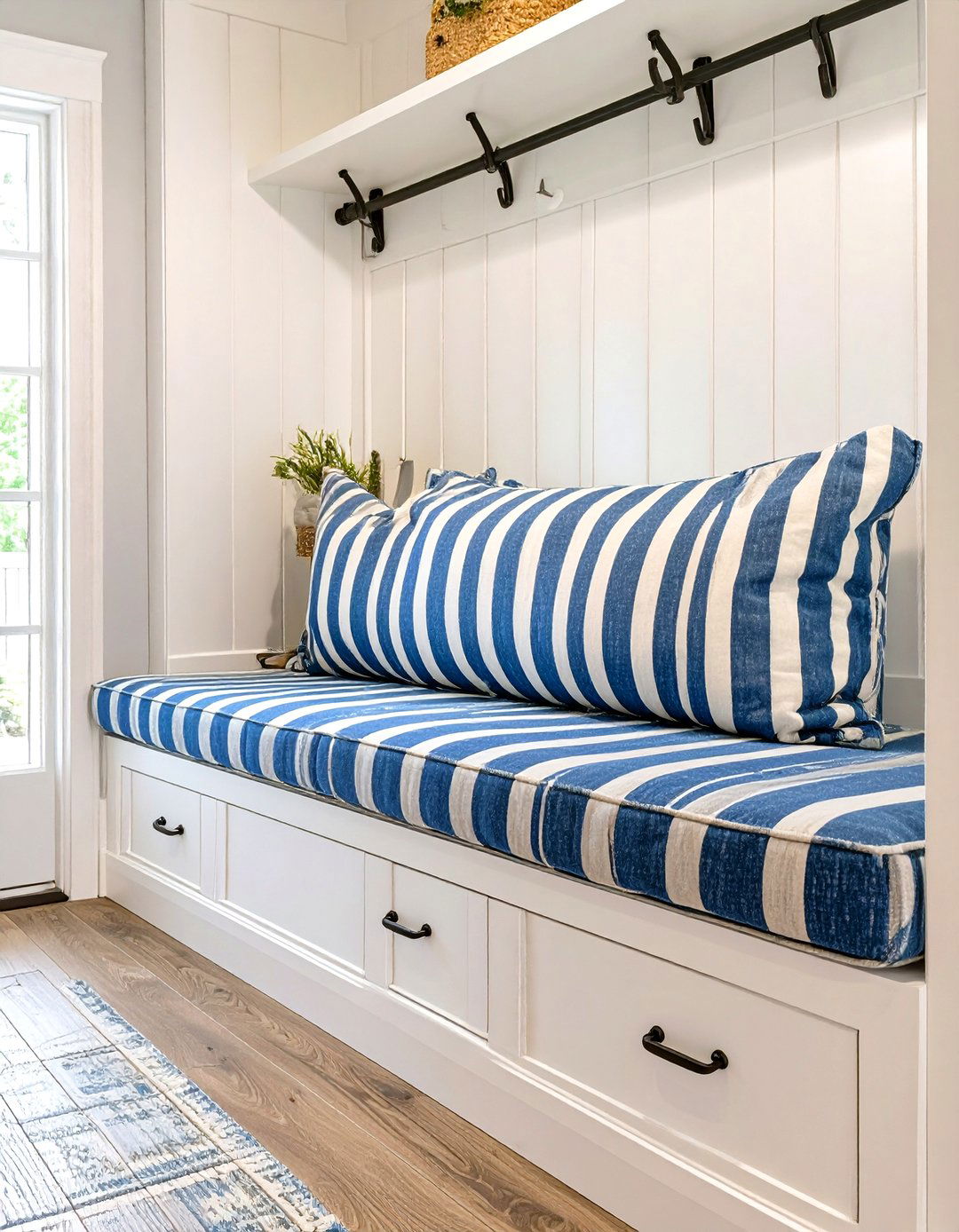
Add comfort and a pop of color to your small mudroom with a custom fabric cushion for your bench. A soft place to sit while putting on or taking off shoes makes the space much more inviting and comfortable. Choose a durable, outdoor-grade, or performance fabric that can resist stains and is easy to clean. This is a great opportunity to introduce a fun pattern or a bold color that ties into your home's overall decor scheme. The cushion not only enhances comfort but also softens the look of a built-in or wooden bench, making the mudroom feel cozier.
Conclusion:
Ultimately, creating a functional small mudroom is about smart customization. By focusing on vertical storage, multi-functional pieces, and clever use of overlooked spaces like corners or closets, you can design a highly effective drop zone. Whether you opt for a sleek built-in, a simple wall-mounted system, or a repurposed piece of furniture, the goal is to establish order and ease the daily routine. These ideas demonstrate that any home, regardless of size, can benefit from a well-organized entryway, turning chaos into a welcoming and practical transition space for the whole family.

Related posts:



Leave a Reply