
A seaside coastal kitchen design brings the relaxing and refreshing spirit of the beach right into your home. This style is all about creating a light, airy, and welcoming space that feels connected to the natural beauty of the coastline. It often incorporates a palette of soft neutrals, ocean-inspired blues, and sandy beiges, complemented by natural materials like wood, rattan, and jute. The key is to evoke the feeling of a breezy day by the sea through thoughtful choices in color, texture, and decor, crafting a room that is both beautiful and functional for everyday living.

1. Light Blue Shaker Cabinets

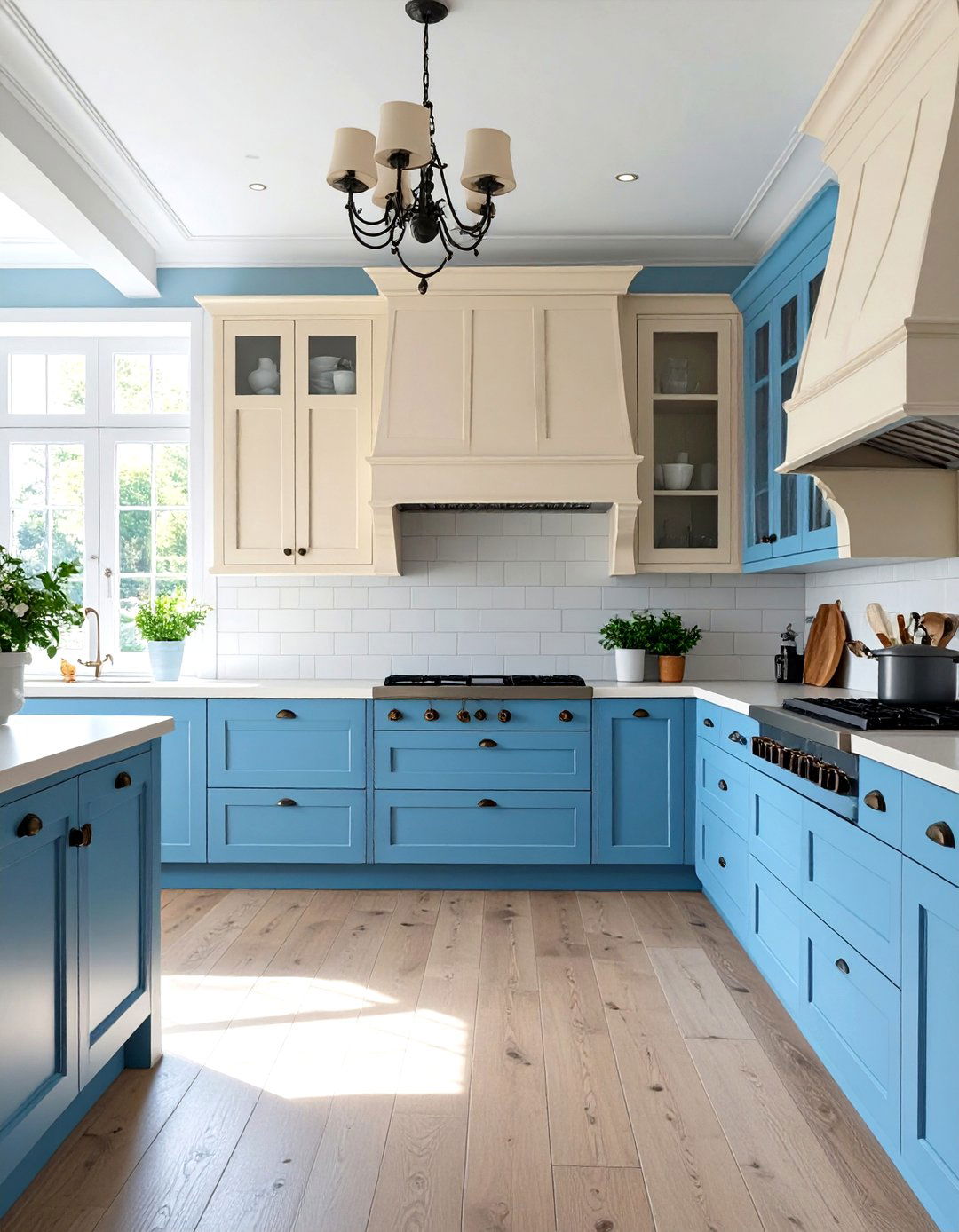
For a classic seaside feel, light blue Shaker cabinets offer a serene and timeless foundation. This soft, airy color mimics the pale sky over the ocean, instantly making the kitchen feel brighter and more spacious. Paired with simple hardware like brushed nickel or matte black pulls, these cabinets maintain a clean, uncluttered look that is central to coastal design. This choice works beautifully with white marble or light wood countertops, enhancing the breezy aesthetic. The simplicity of the Shaker style prevents the color from feeling overwhelming, creating a calm and inviting atmosphere perfect for a coastal-inspired home.
2. White Beadboard Paneling
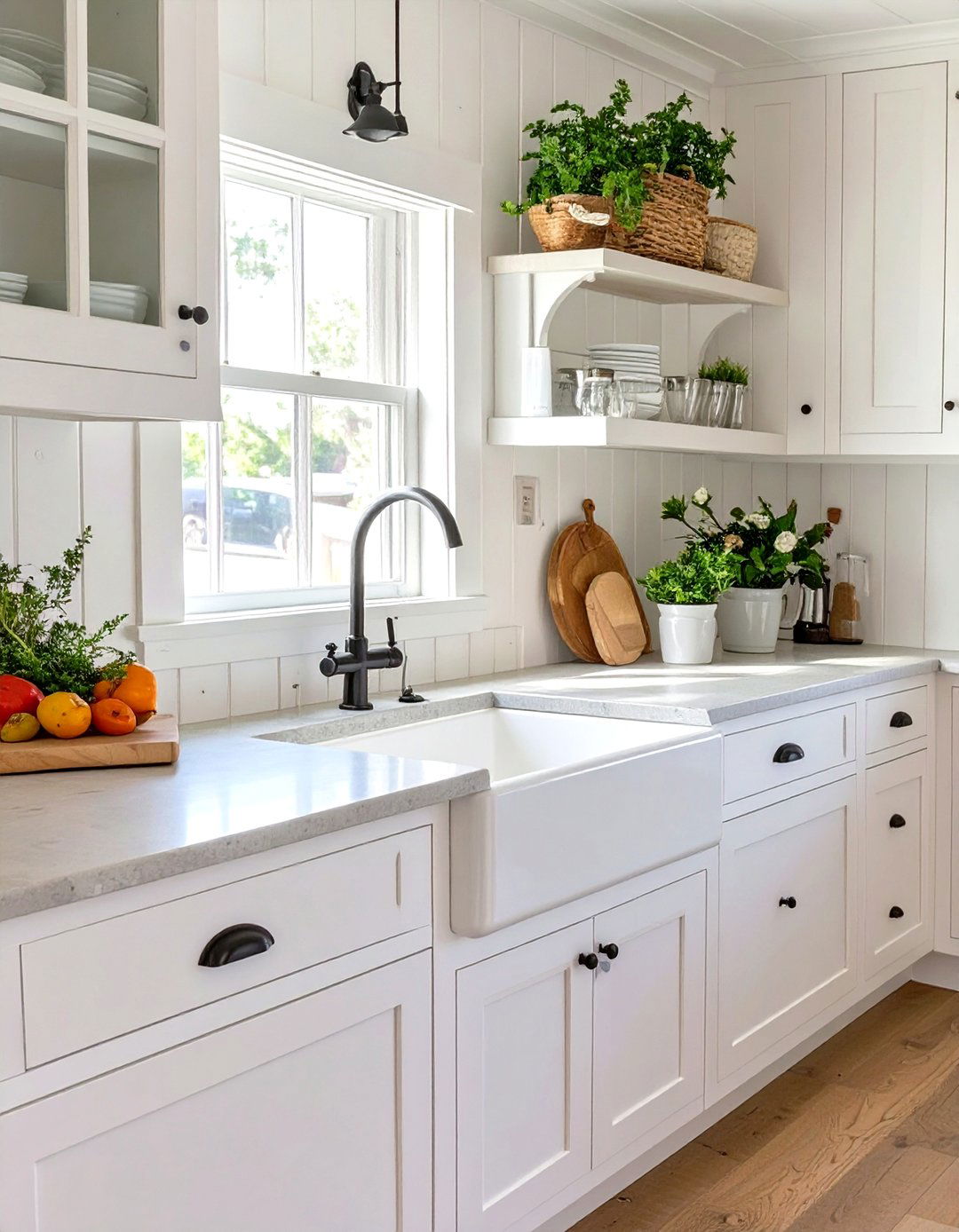
To introduce texture and classic coastal charm, white beadboard paneling is an excellent choice. This feature can be used on walls, as a backsplash, or even on the sides of a kitchen island to add subtle architectural detail. The vertical lines of the beadboard draw the eye upward, creating a sense of height and openness. Its crisp white finish reflects light beautifully, contributing to the airy feel essential in a seaside kitchen. Beadboard evokes the look of traditional beach cottages, providing a nostalgic and comforting backdrop that pairs well with nearly any coastal color palette or decor element.
3. Weathered Wood Open Shelving
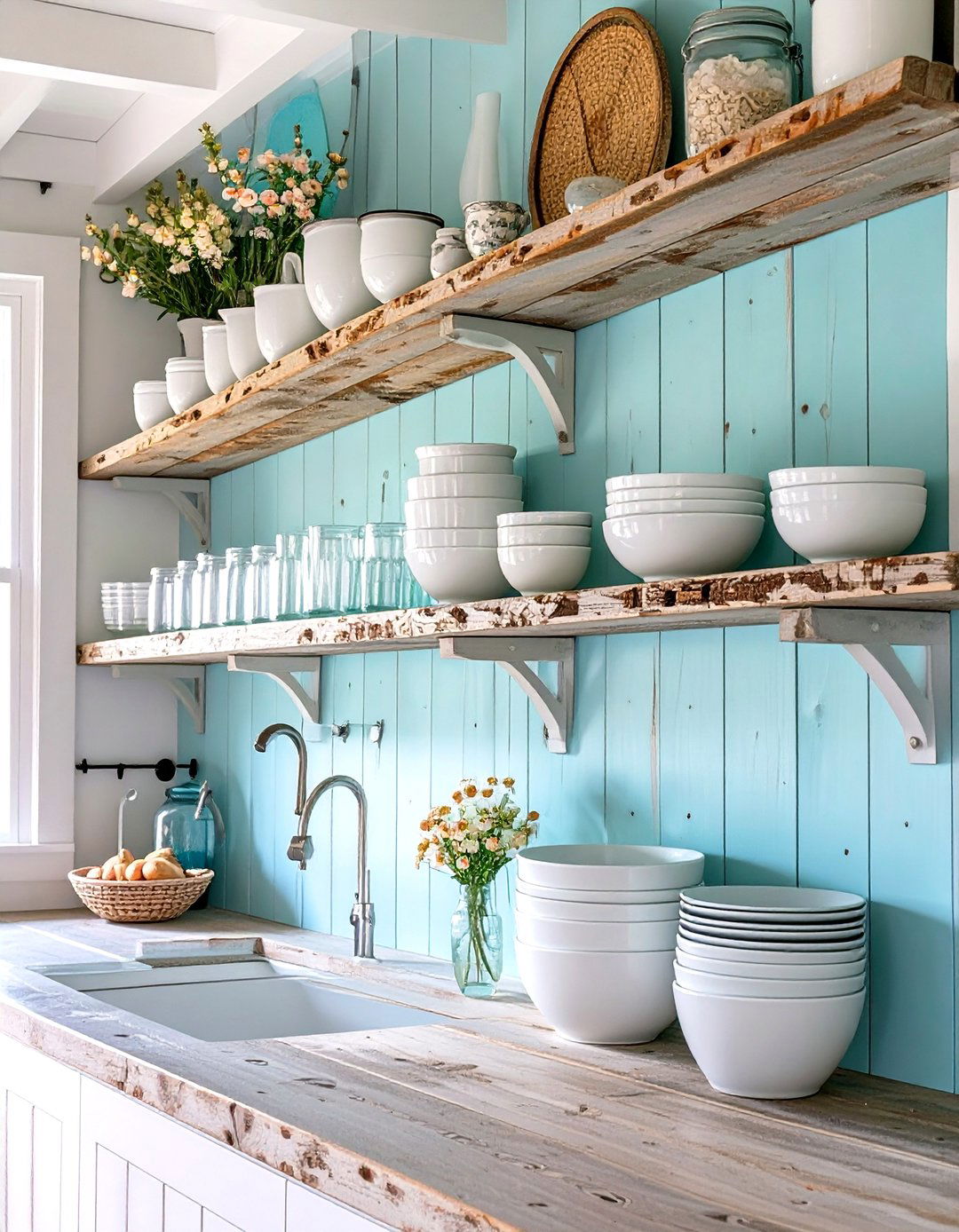
Bringing in weathered wood open shelving adds a rustic, found-object feel to a seaside coastal kitchen. These shelves look as if they could have been crafted from driftwood washed ashore, introducing a touch of natural, organic texture. They are perfect for displaying beach-toned dishware, glass jars filled with sand or shells, and a few pieces of curated coastal decor. This approach not only provides practical storage but also breaks up the visual weight of solid cabinetry, contributing to the open and airy atmosphere. The imperfect finish of the wood adds character and warmth, grounding the space with a connection to nature.
4. Navy Blue Kitchen Island
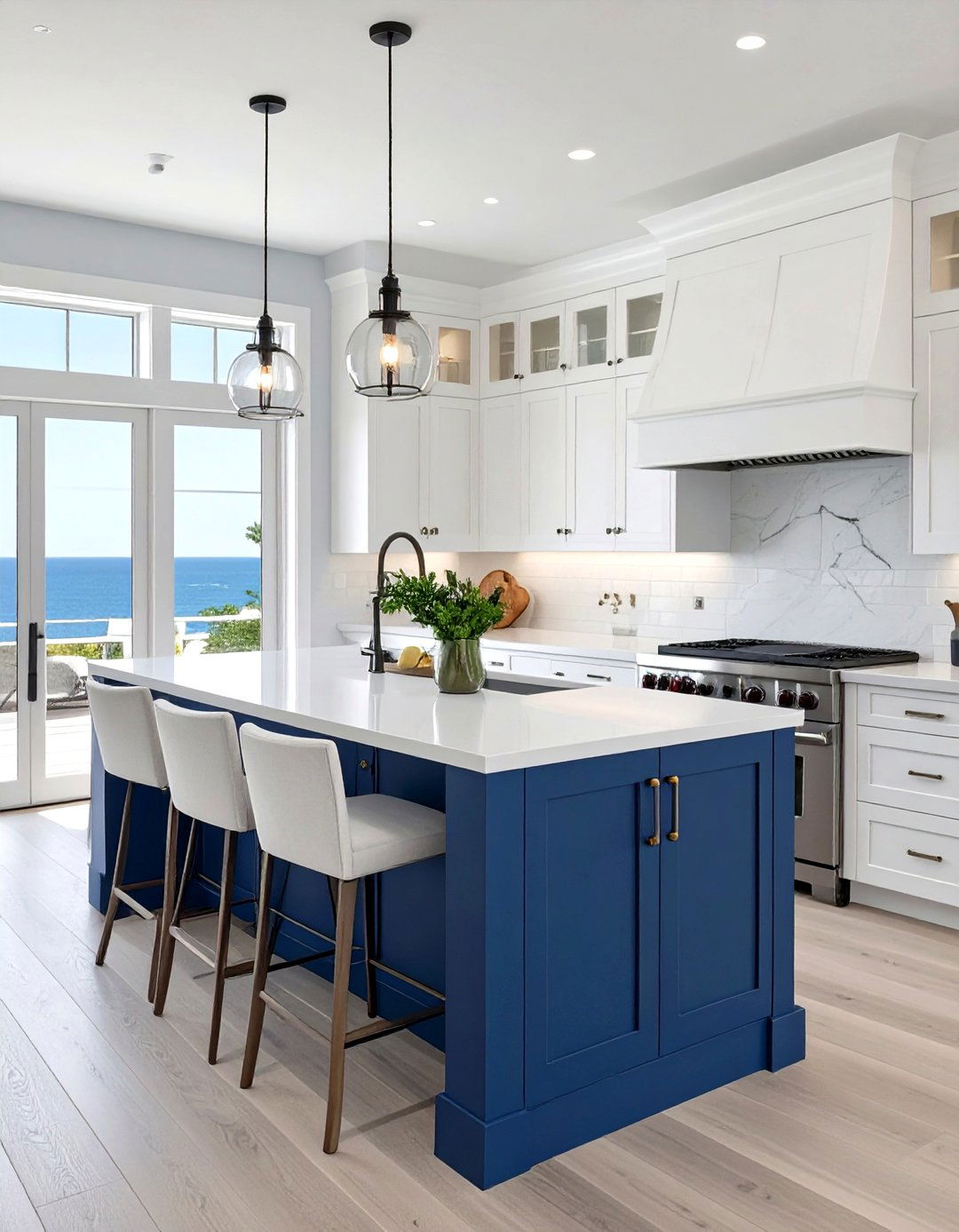
A navy blue kitchen island serves as a stunning focal point in a seaside coastal kitchen. This deep, rich hue provides a bold contrast to a lighter surrounding palette of whites and sandy beiges, much like the deep ocean against a pale shoreline. It grounds the space with a touch of sophistication and nautical elegance. Topped with a crisp white quartz or light butcher block countertop, the island becomes a functional and dramatic centerpiece. This powerful statement piece allows you to incorporate a strong color without overwhelming the entire room, maintaining the bright and breezy coastal feeling while adding significant visual interest.
5. Sea Glass Tile Backsplash
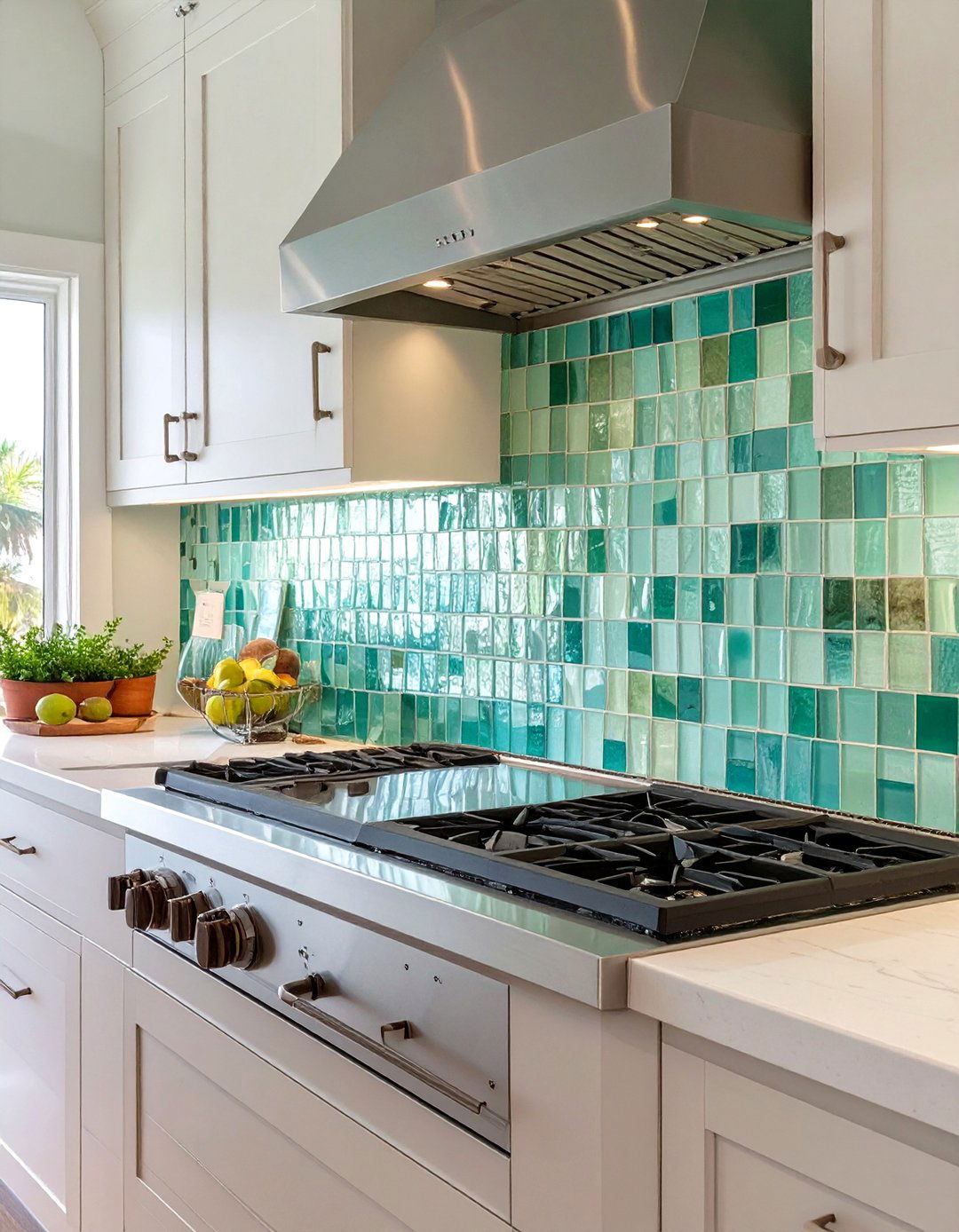
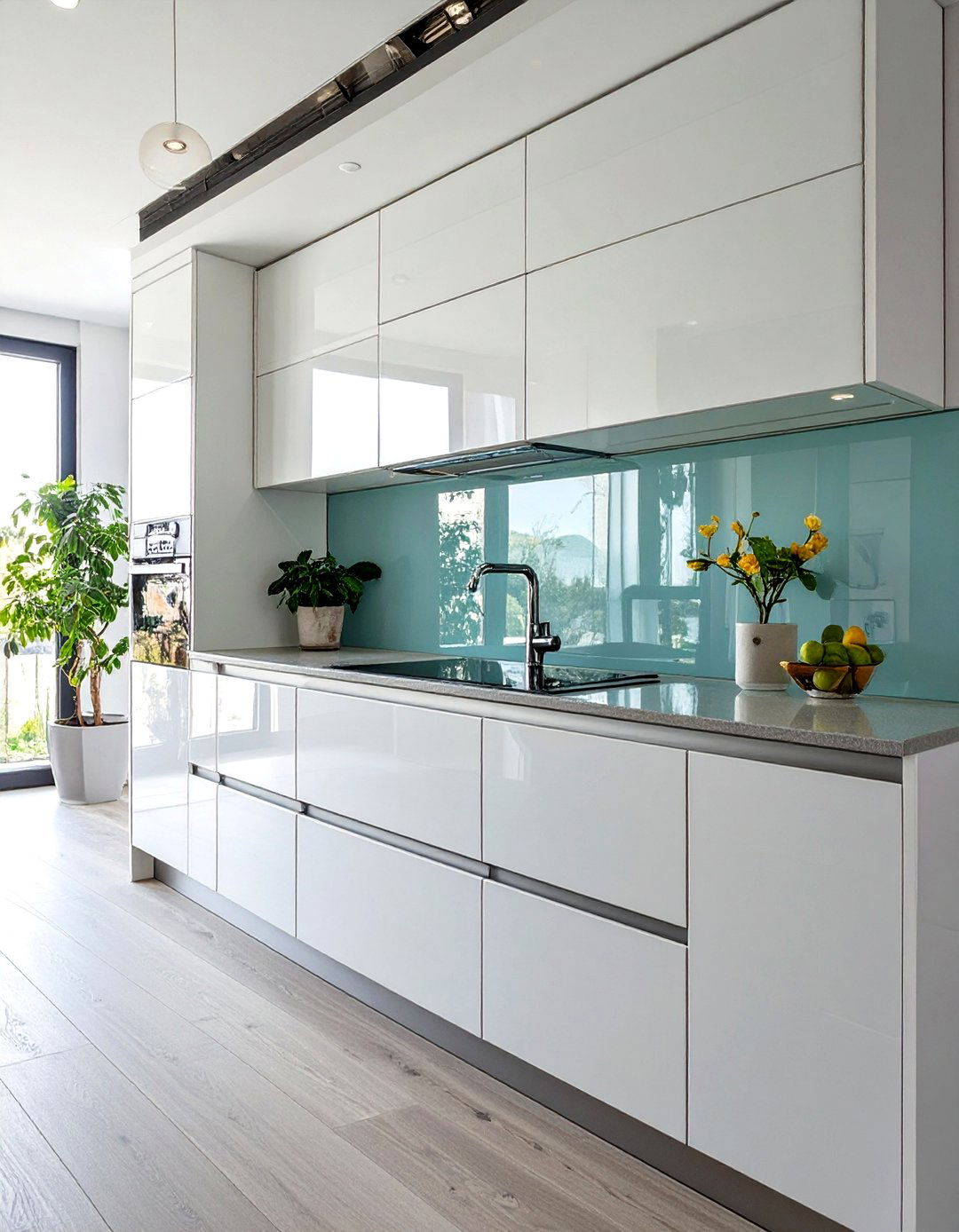
Consider a sea glass tile backsplash to infuse your kitchen with the soft, muted colors of the shore. These tiles, available in shades of pale blue, soft green, and milky white, mimic the look of glass smoothed by ocean waves. The subtle iridescence and varied tones of the tiles catch the light beautifully, adding a layer of shimmer and texture to the space. This choice serves as a gentle yet captivating feature that ties the entire coastal theme together. It’s a more artistic and unique alternative to standard subway tile, creating a serene and visually interesting backdrop for your countertops and cabinetry.
6. Rattan Pendant Lights
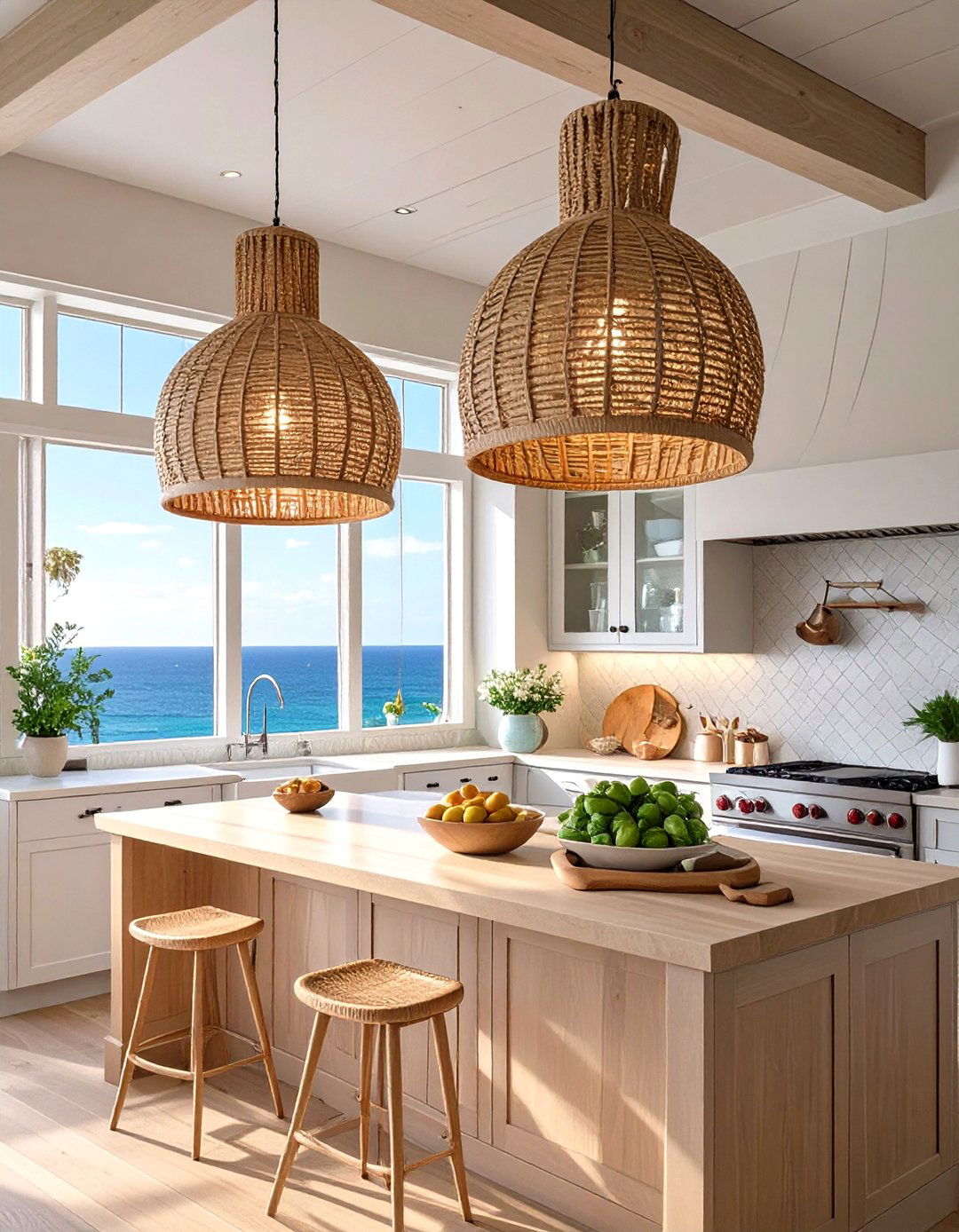
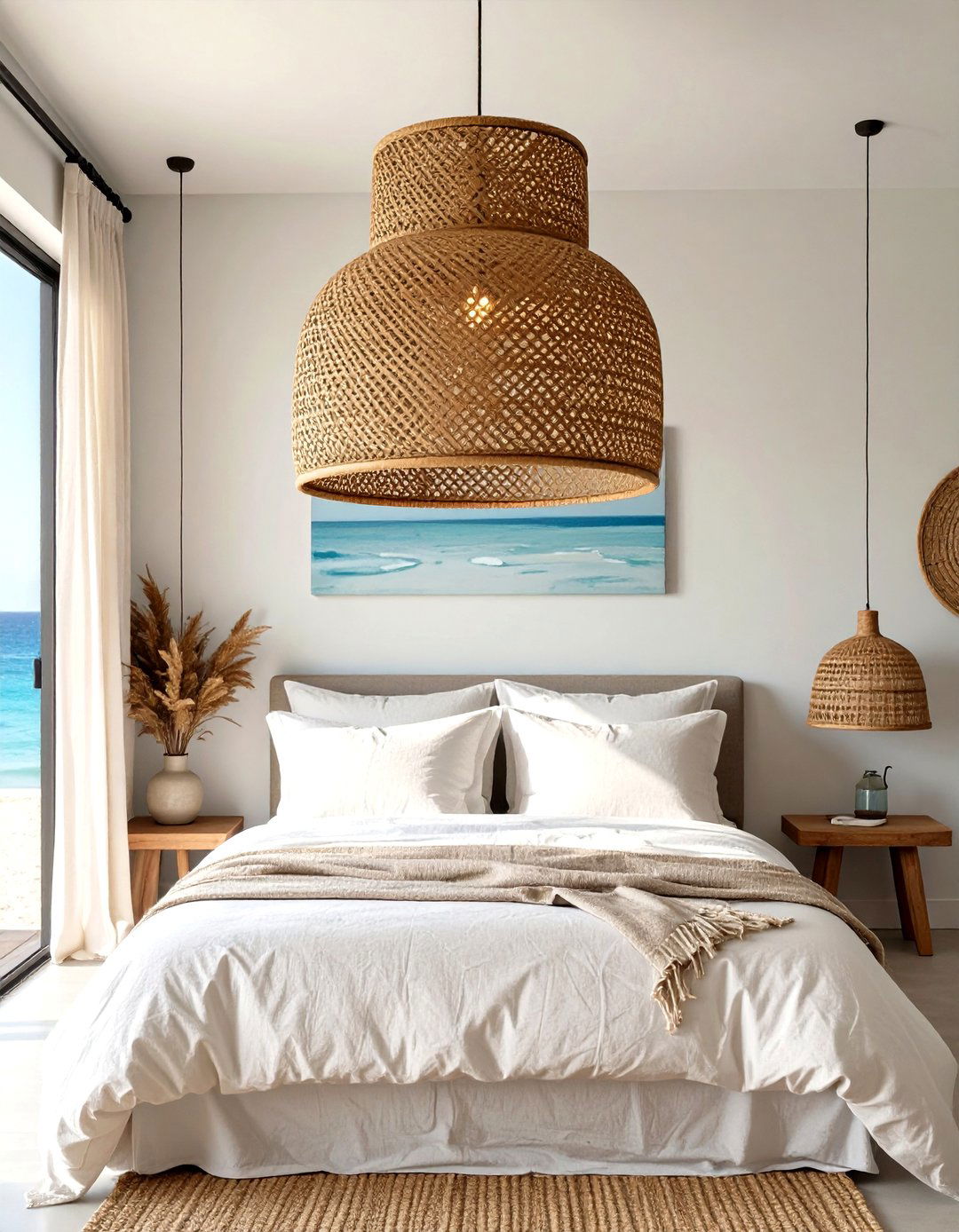
To enhance the natural, textural element of a seaside coastal kitchen, rattan pendant lights are an ideal lighting solution. Hung over a kitchen island or dining nook, these woven fixtures introduce an organic, handcrafted feel. The open weave of the rattan allows light to filter through, casting beautiful patterns and creating a warm, ambient glow. This choice reinforces the relaxed, bohemian side of coastal style, bringing in a material that feels both casual and chic. Rattan pairs exceptionally well with wood tones, crisp whites, and ocean blues, completing the layered, textural look that defines a well-designed coastal space.
7. Tongue and Groove Ceiling
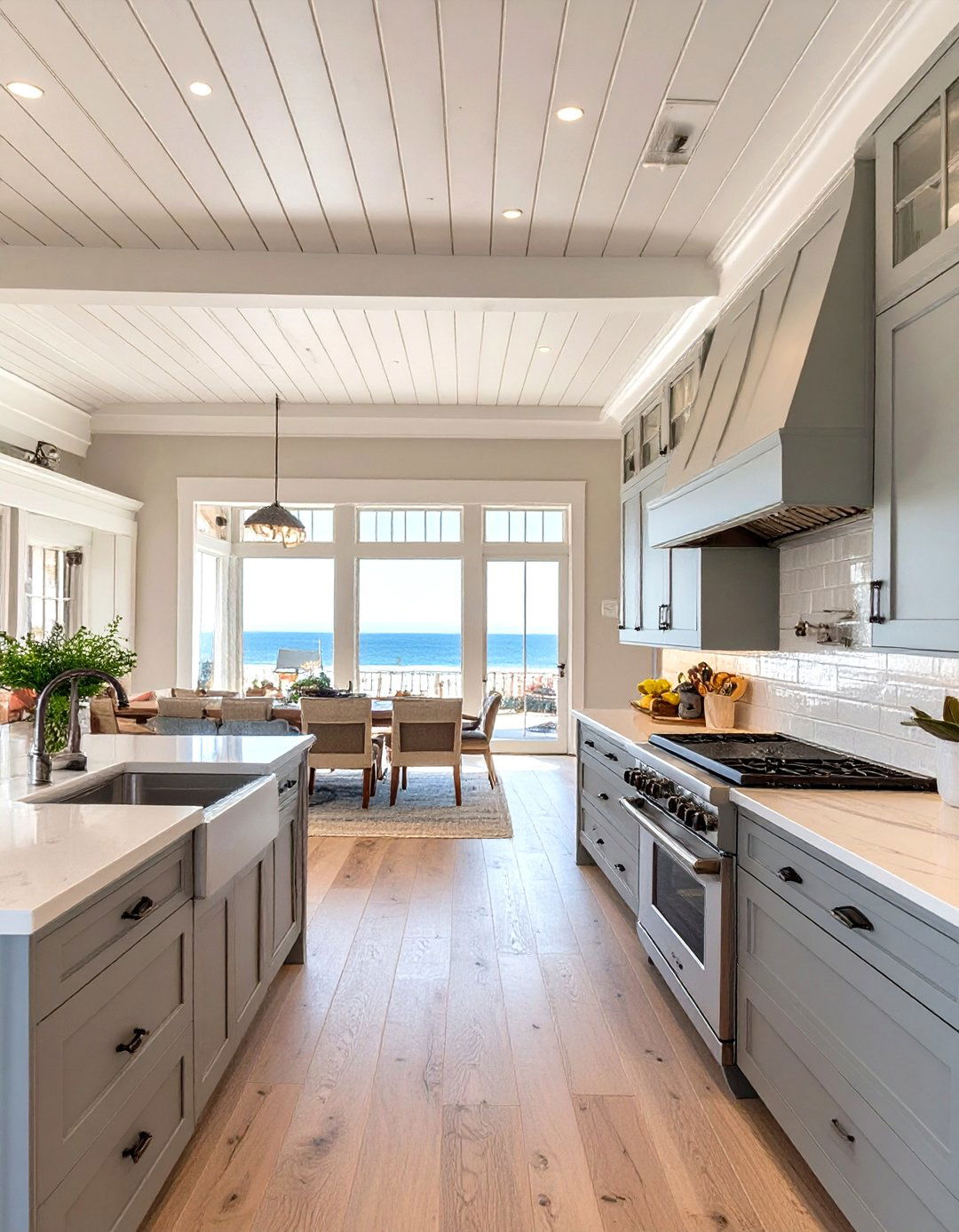
A tongue and groove ceiling painted in a crisp white or a very pale blue can elevate a seaside coastal kitchen design. This architectural feature adds texture and character overhead, drawing inspiration from the ceilings of classic beach houses and boat interiors. It creates subtle linear detail that adds visual interest without cluttering the space. A white tongue and groove ceiling enhances the feeling of height and airiness by reflecting light, while a pale blue option offers a gentle nod to a clear sky. This finishing touch contributes to a cohesive and thoughtfully designed room, making the space feel custom and complete.
8. Polished Nickel Hardware
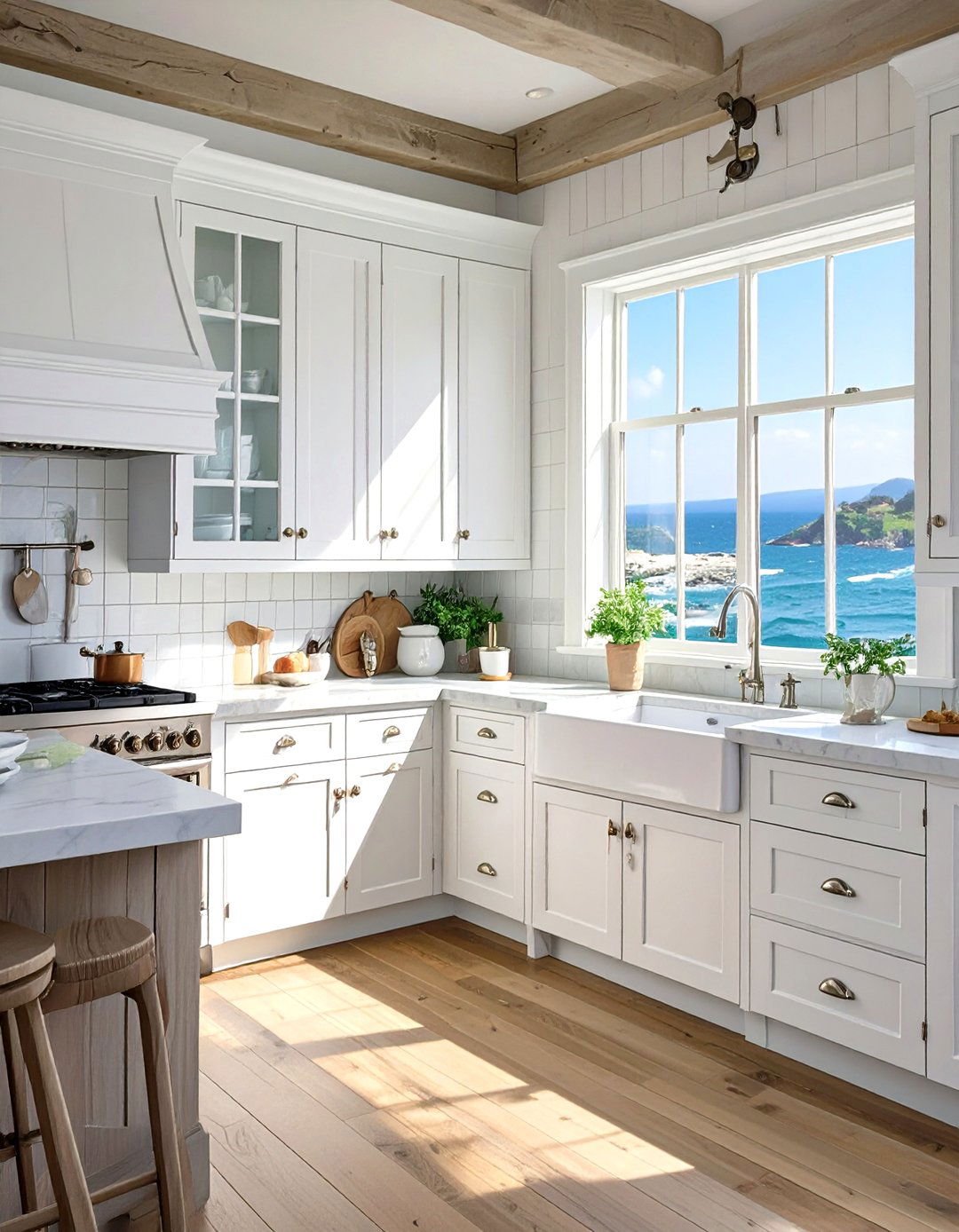
For a touch of subtle shine that complements the coastal aesthetic, polished nickel hardware is a perfect choice. Unlike chrome, which can feel too modern, or brass, which can lean traditional, polished nickel offers a warm, silvery tone that mimics the soft reflection of light on water. It pairs beautifully with both white and colored cabinetry, such as soft blues or greys, adding a hint of classic elegance without being overly ornate. This hardware choice is timeless and versatile, providing a clean, finishing touch that enhances the light and bright feel of a seaside kitchen design.
9. Butcher Block Countertops
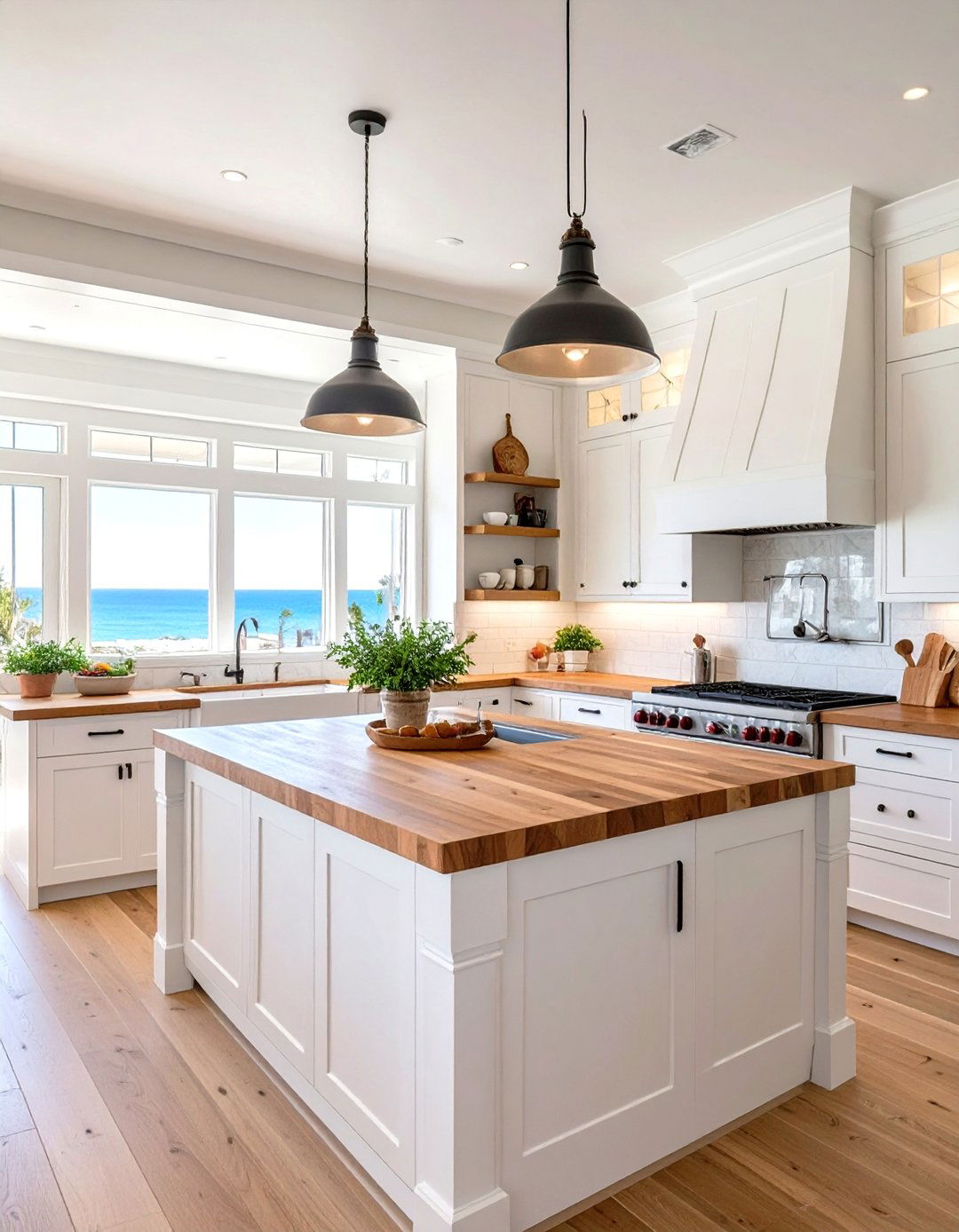
Butcher block countertops introduce a warm, natural, and slightly rustic element to a seaside coastal kitchen. The rich tones of the wood, whether maple, oak, or walnut, provide a beautiful contrast to crisp white or blue cabinetry. This choice evokes the feeling of a well-loved beach cottage and adds a functional, durable surface for meal preparation. Over time, wood countertops develop a unique patina that adds character and tells a story. They help ground the airy elements of a coastal design, preventing the space from feeling too sterile and infusing it with a sense of warmth and lived-in comfort.

10. Woven Bar Stools
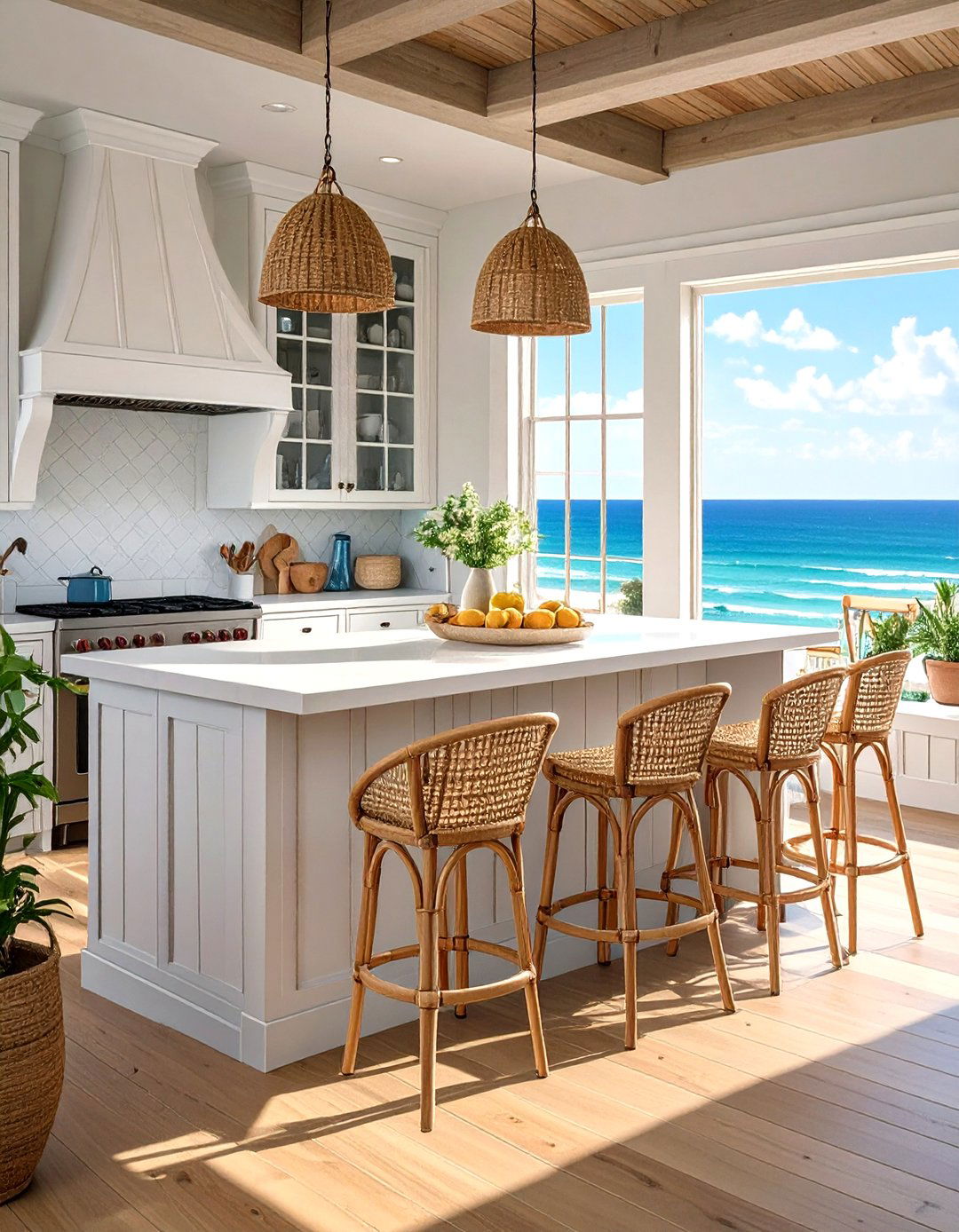
Woven bar stools made from materials like rattan, seagrass, or water hyacinth are a hallmark of seaside coastal design. These stools bring an essential layer of natural texture and casual elegance to a kitchen island or breakfast bar. Their organic look and feel connect the indoor space with the outdoors, reinforcing the relaxed, beach-inspired atmosphere. Available in various styles, from backless to high-backed, they provide comfortable seating while acting as a key decorative element. Pairing woven stools with a sleek countertop creates a beautiful balance between refined and rustic elements, perfecting the coastal aesthetic.
11. Glass-Front Cabinet Doors
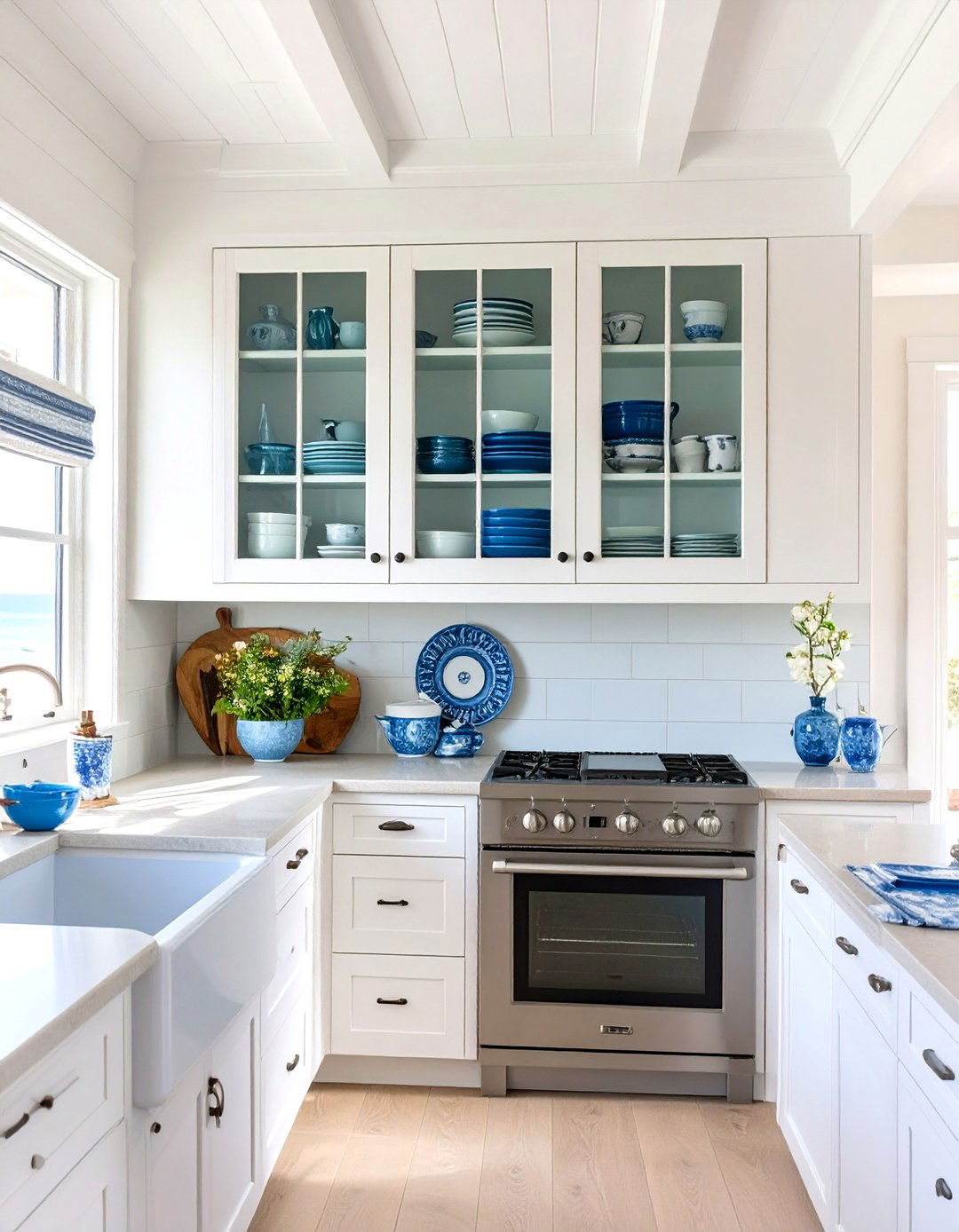
To maintain an open and airy feeling, incorporate glass-front cabinet doors into your seaside coastal kitchen. These cabinets allow you to display curated collections of white dishware, sea-glass-colored bowls, or decorative items, adding personality and a touch of color. The glass breaks up the monotony of solid wood cabinetry, making the space feel larger and lighter. For a more subtle look, you can choose frosted or reeded glass, which provides a hint of what's inside without requiring perfect organization. This feature is particularly effective for upper cabinets, as it draws the eye upward and enhances the room's brightness.
12. Wide Plank Wood Flooring
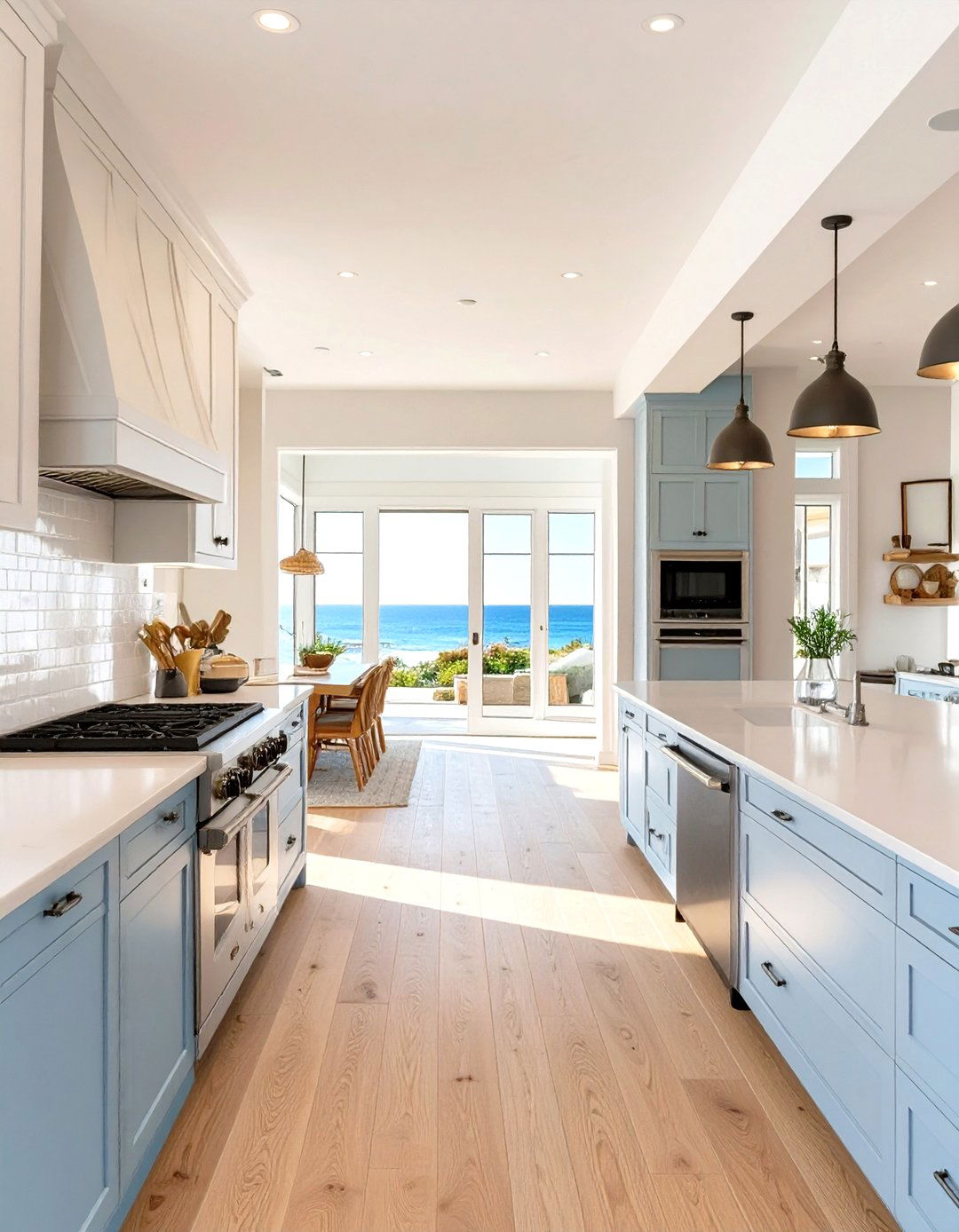
Wide plank wood flooring in a light, natural, or whitewashed finish establishes the perfect foundation for a seaside coastal kitchen. These floors evoke the feeling of a sun-bleached boardwalk or the weathered deck of a beach house. The wider planks create a more open and less busy look, contributing to the spacious feel of the room. A light wood finish, such as white oak or maple, reflects natural light and complements the typical coastal color palette of whites, blues, and sandy tones. This choice adds warmth and organic texture underfoot, grounding the design in natural materials.
13. Nautical-Inspired Sconces
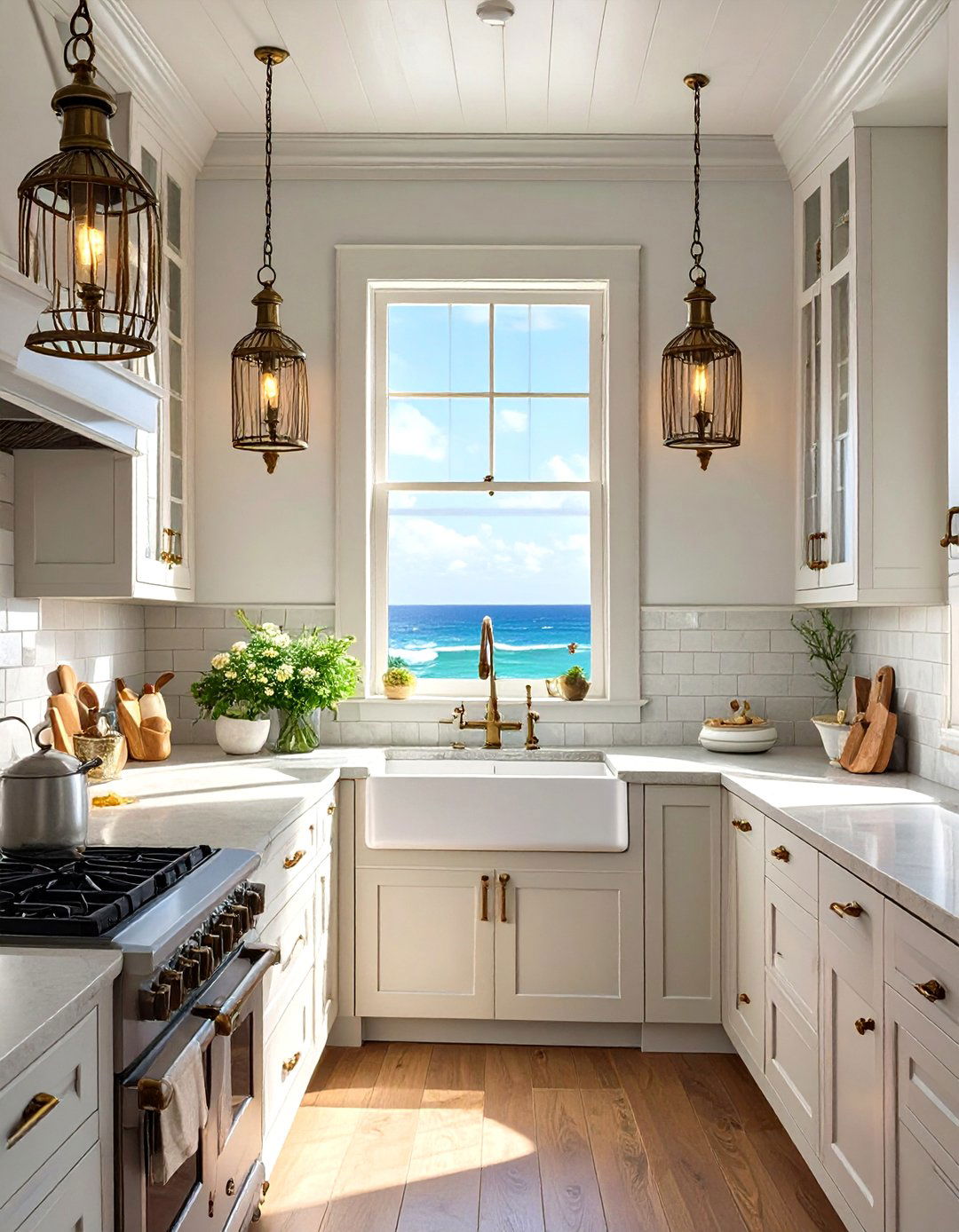
Nautical-inspired sconces add a thematic yet sophisticated touch to a seaside coastal kitchen. Look for fixtures that feature details like caged designs, barnacle-like textures, or finishes in weathered brass or polished nickel. Placed on either side of a window over the sink or along a feature wall, these sconces provide layered, ambient lighting while reinforcing the coastal theme. They serve as functional jewelry for the room, drawing on maritime history without being overly kitschy. This subtle nod to nautical design adds character and a sense of place, making the kitchen feel thoughtfully curated and connected to the sea.
14. Whitewashed Brick Backsplash
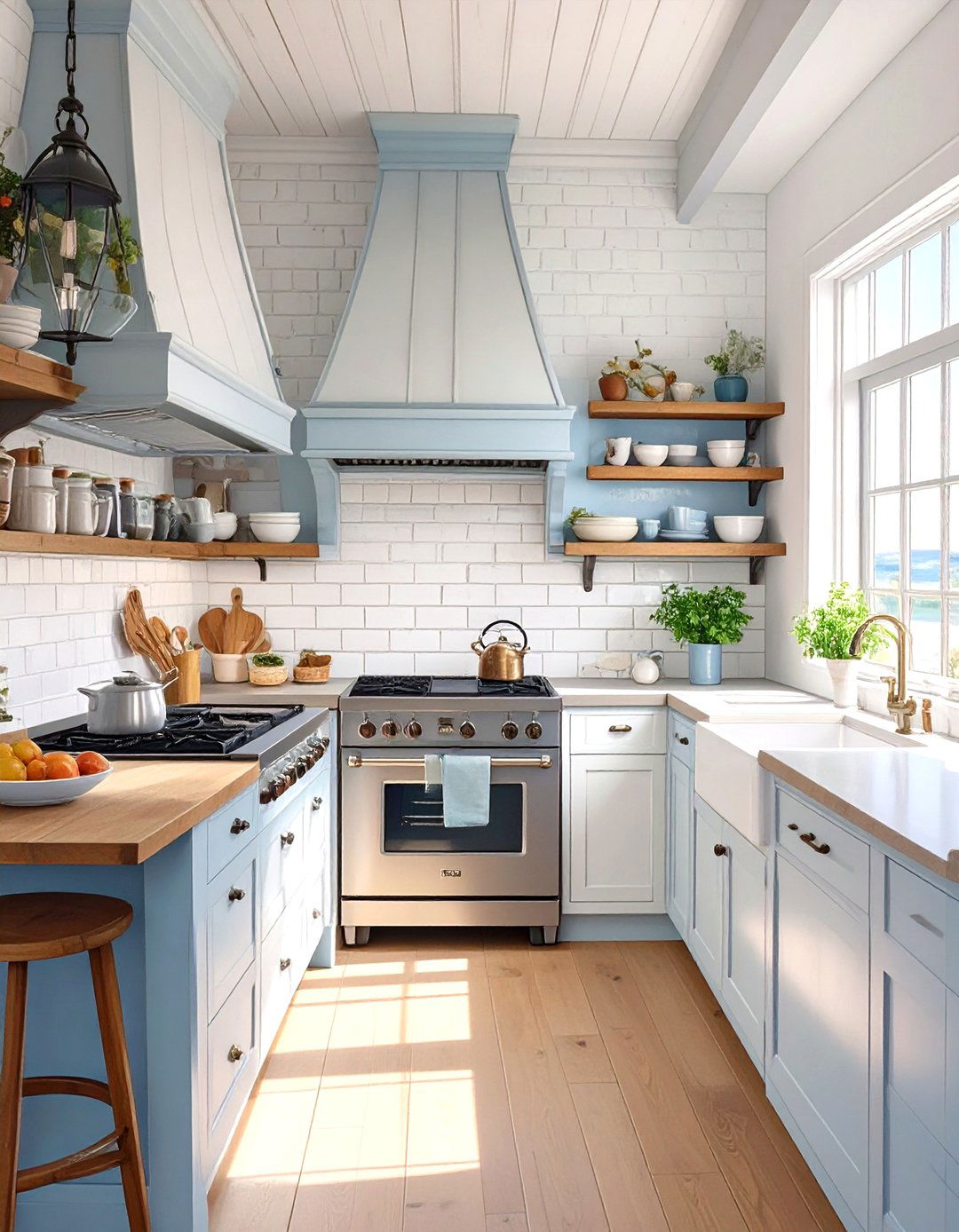
A whitewashed brick backsplash offers a unique blend of rustic texture and coastal brightness. The whitewash softens the industrial feel of traditional brick, creating a surface that feels weathered and sun-faded, much like materials exposed to the sea air. This textural element provides a stunning backdrop for open shelving or simple cabinetry, adding depth and character to the walls. It pairs beautifully with both natural wood tones and painted cabinets in shades of white or blue. A whitewashed brick backsplash is a great way to introduce a touch of rustic charm while still maintaining the light and airy aesthetic of a seaside kitchen.
15. Built-In Window Seat
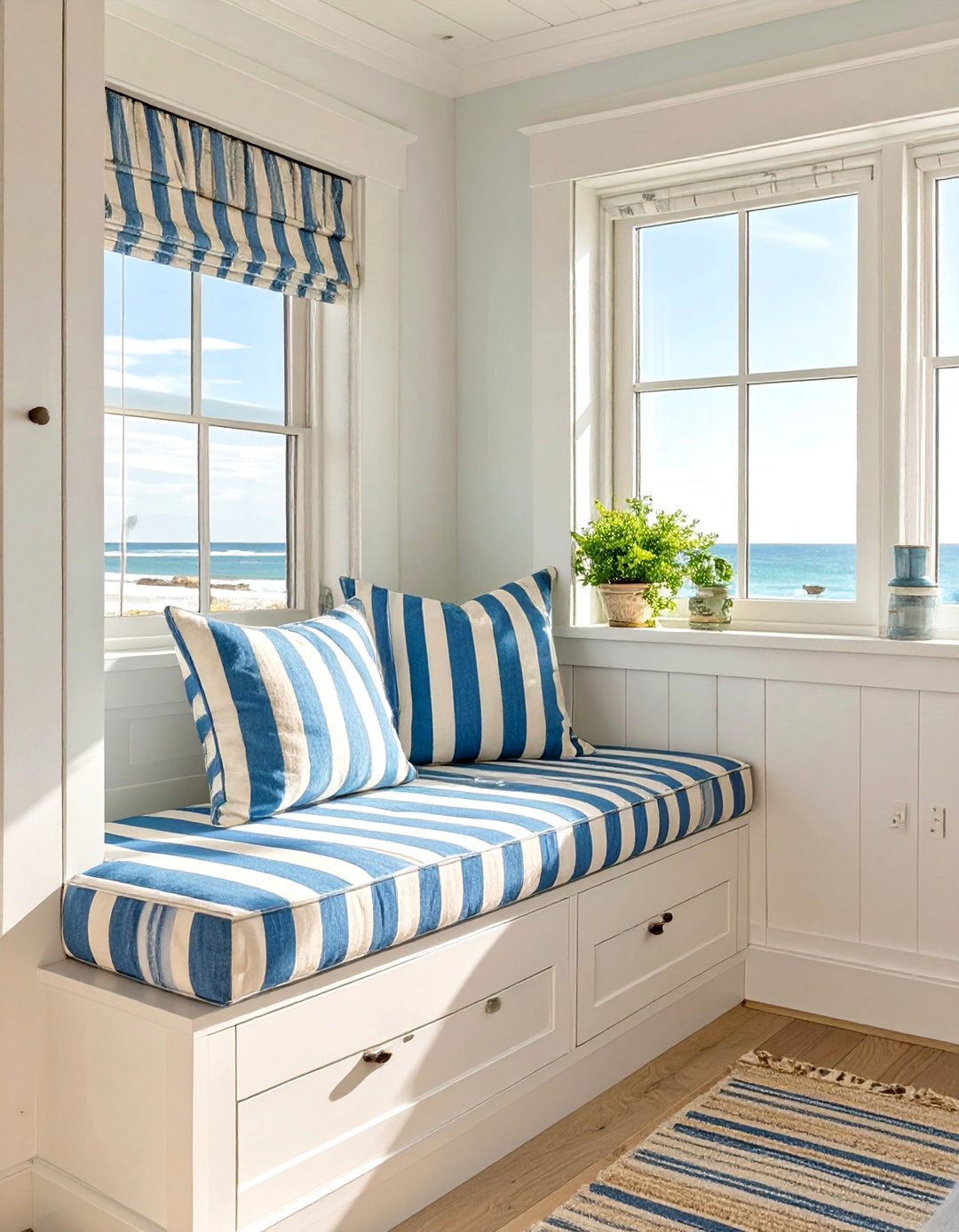
A built-in window seat is a charming and practical addition to any seaside coastal kitchen. It creates a cozy nook for enjoying a morning coffee while looking out at the view, maximizing both seating and natural light. Upholster the cushion in a durable, light-colored fabric or a classic blue and white stripe to enhance the coastal theme. The base of the window seat can also be designed with drawers or lift-top storage, providing a clever solution for stowing away kitchen linens or other essentials. This feature transforms an unused corner into a favorite spot, infusing the room with comfort and cottage-style appeal.
16. Jute or Sisal Area Rug
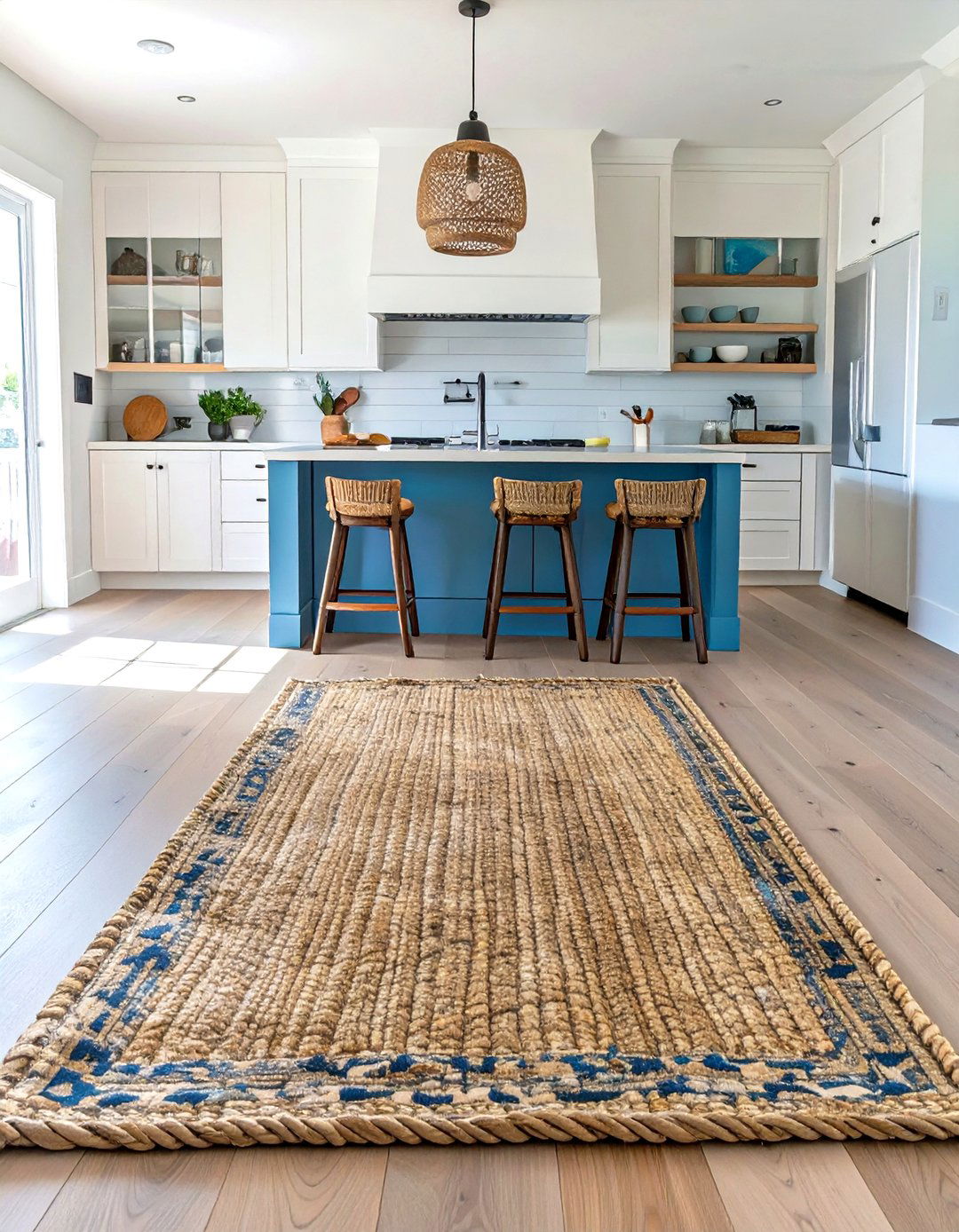
To add warmth and another layer of natural texture, place a jute or sisal area rug in your seaside coastal kitchen. These durable, natural fiber rugs are perfect for high-traffic areas and bring an earthy, organic feel to the space. The sandy, neutral tones of jute and sisal complement a coastal color palette beautifully, grounding the design and adding softness underfoot. A woven rug can help define the kitchen area in an open-concept space or add comfort in front of the sink. This simple addition reinforces the connection to nature that is so integral to seaside style.
17. Shiplap Walls or Accents
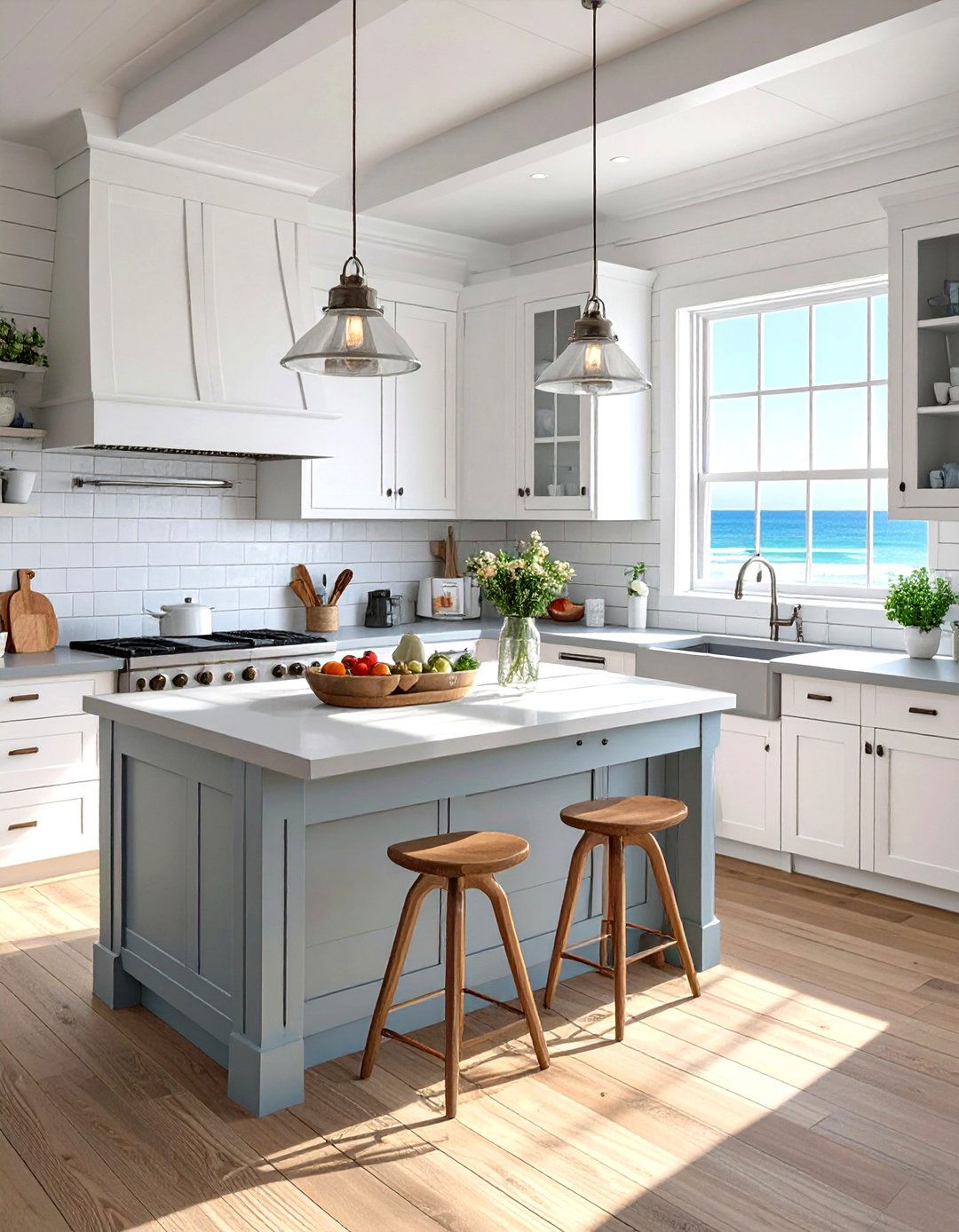
Shiplap is a quintessential element of modern coastal and farmhouse design, and it works perfectly in a seaside kitchen. Installing shiplap horizontally on the walls can make the room feel wider and more open, while a vertical application can create the illusion of height. Painted in a crisp white or a soft, misty gray, shiplap provides clean lines and subtle texture that evokes the construction of ships and classic beach cottages. Use it on a single accent wall, as a backsplash, or to wrap a kitchen island for a dose of timeless coastal character that feels both fresh and authentic.
18. Open Frame Lantern Pendants
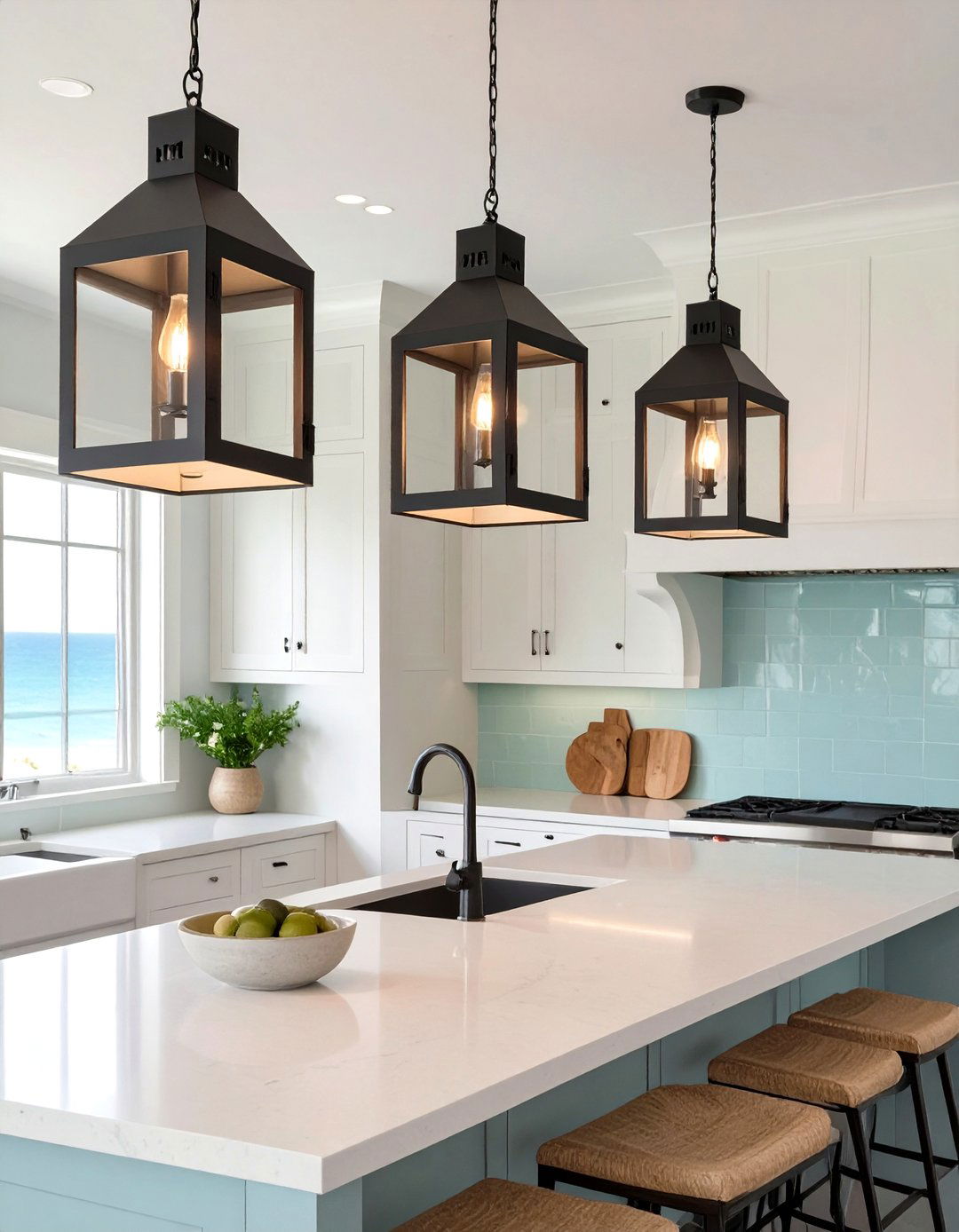
Open frame lantern pendants offer a light and airy lighting solution that is ideal for a seaside coastal kitchen. Unlike solid fixtures, their open design doesn't obstruct views or weigh down the space, contributing to the breezy atmosphere. Available in finishes like weathered wood, matte black, or brushed nickel, these lanterns can complement a range of coastal styles, from rustic to more contemporary. Hung in a pair or trio over a kitchen island, they provide ample task lighting while making a simple yet elegant design statement that feels both classic and current.
19. Two-Tone Cabinetry Design
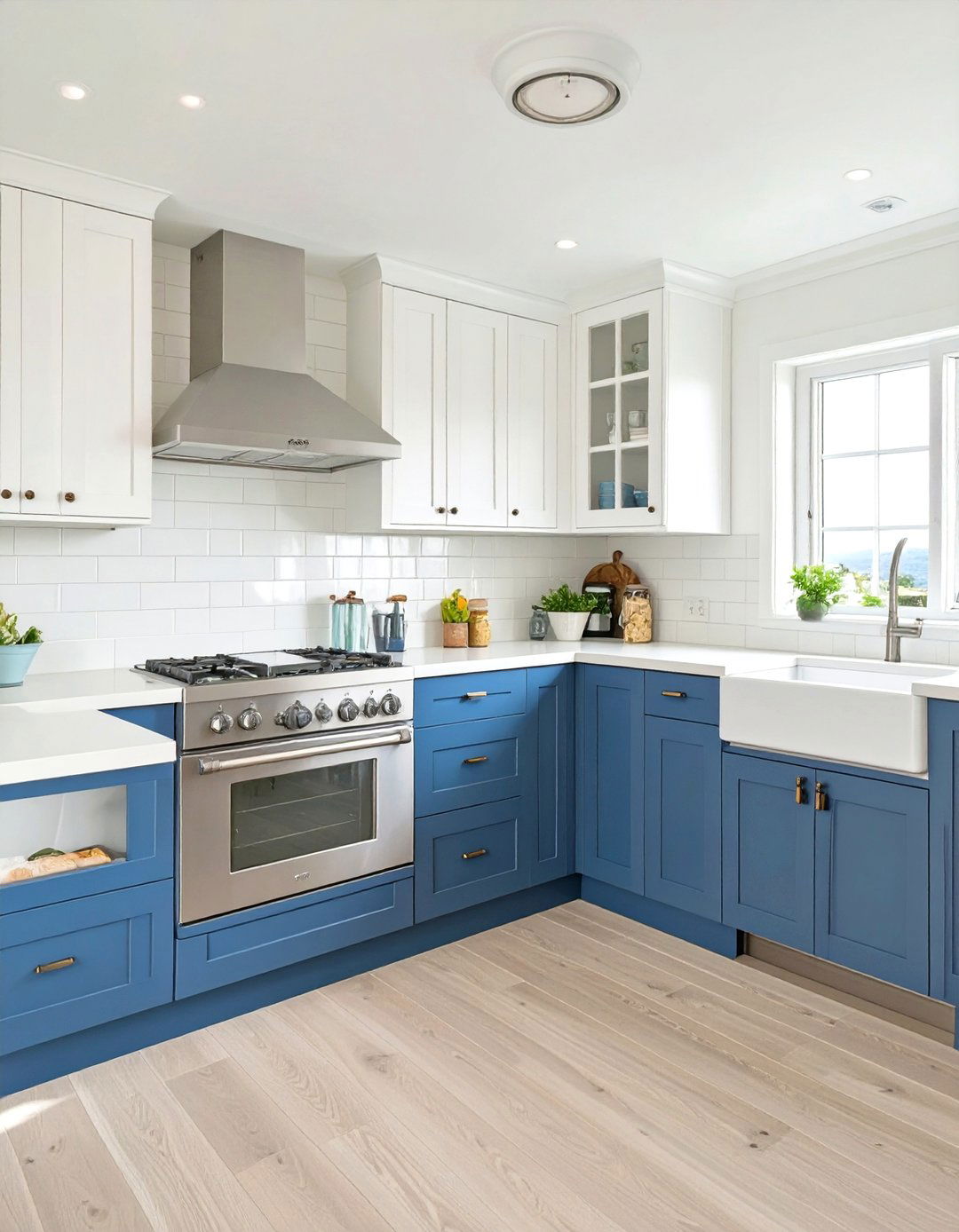
A two-tone cabinetry design can add depth and visual interest to a seaside coastal kitchen. A popular approach is to use a darker color, like navy or deep gray, for the lower cabinets or island, and a lighter color, such as white or pale gray, for the upper cabinets. This technique grounds the space while keeping the upper portion of the room feeling light and open. It’s a great way to incorporate a bold, ocean-inspired hue without it dominating the entire kitchen. The contrast creates a custom, sophisticated look that is perfectly aligned with a modern coastal aesthetic.

20. Marble or Quartzite Countertops
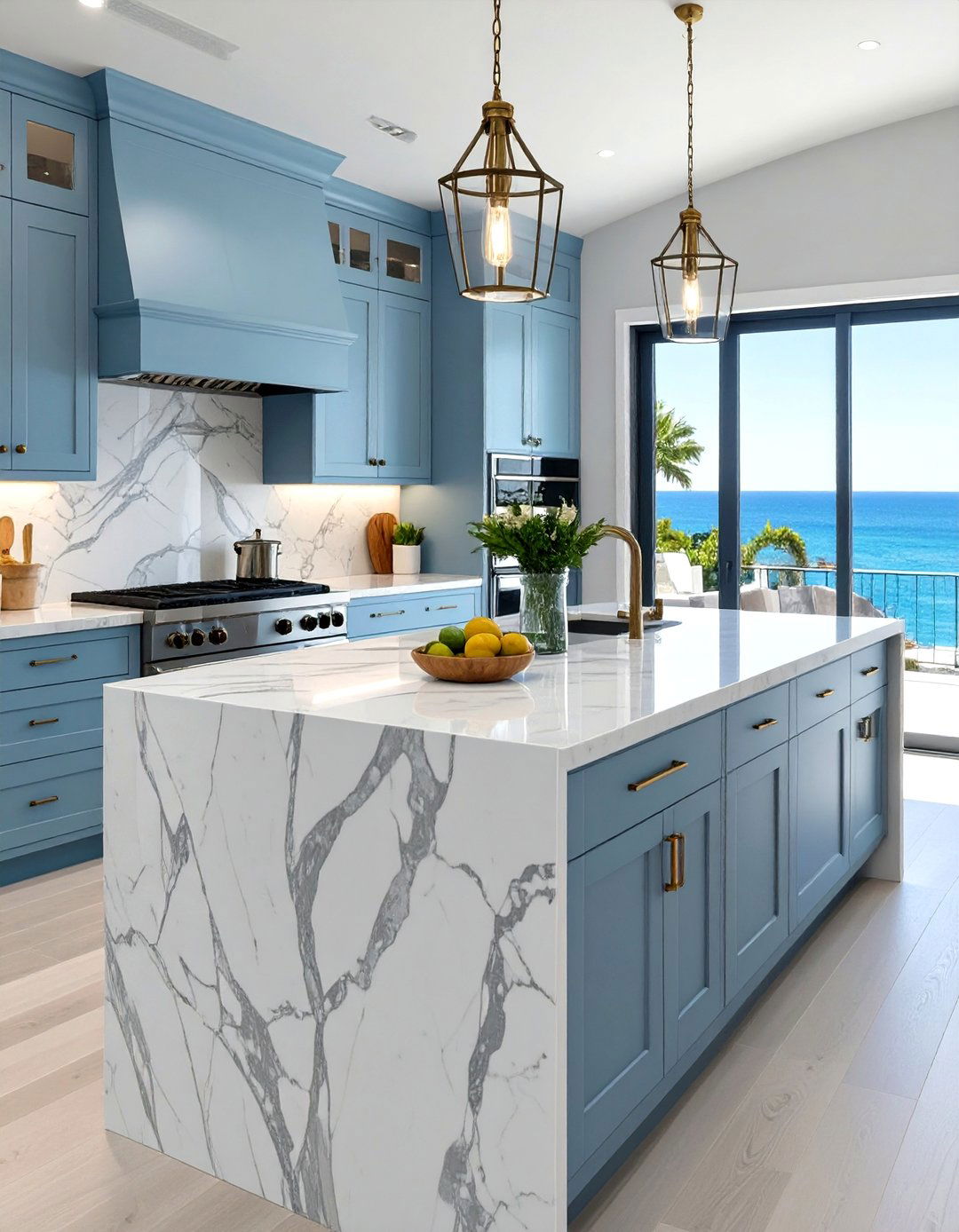
For a touch of elegance in a seaside coastal kitchen, consider countertops made of marble or quartzite. The soft, subtle veining in materials like Carrara marble or Macaubas quartzite can mimic the look of rolling waves or the patterns in wet sand, adding a natural, organic movement to the design. These light-colored stones enhance the bright and airy feel of the space and provide a durable, luxurious surface for cooking and entertaining. Pairing a beautifully veined countertop with simple Shaker cabinets creates a balanced look that is both sophisticated and relaxed, perfectly capturing the essence of upscale coastal living.
21. Subtle Striped Roman Shades
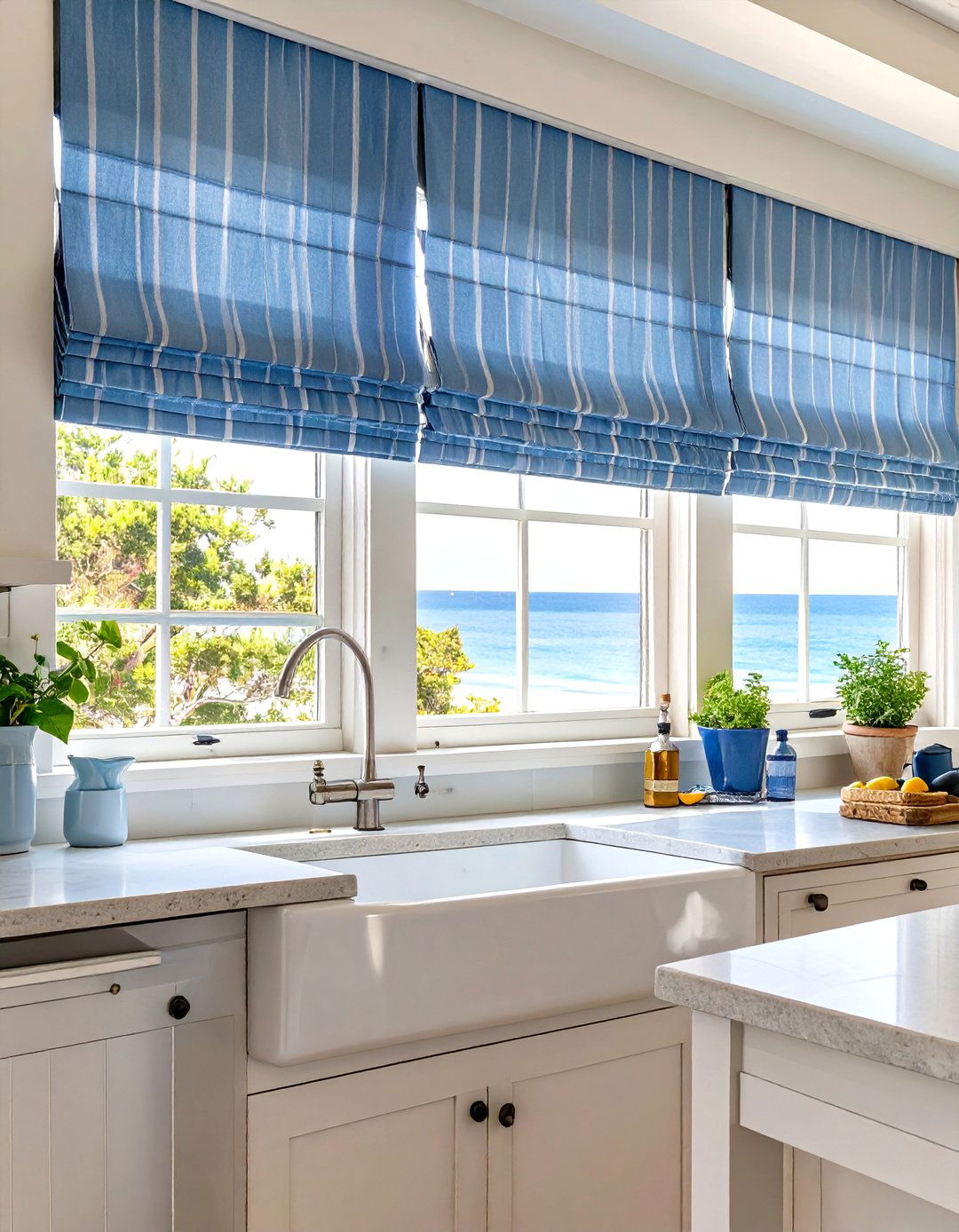
Subtle striped Roman shades are a perfect window treatment for a seaside coastal kitchen. Choose a fabric with a classic ticking stripe or a wider cabana stripe in soft, muted colors like blue and white, or sand and cream. Roman shades offer a clean, tailored look that doesn't feel as heavy as drapes, allowing for maximum natural light when raised. The gentle pattern adds a touch of nautical flair without being overpowering, contributing to the relaxed yet polished feel of the room. This practical and stylish choice provides privacy while reinforcing the timeless charm of coastal design.
22. Freestanding Pantry Cabinet
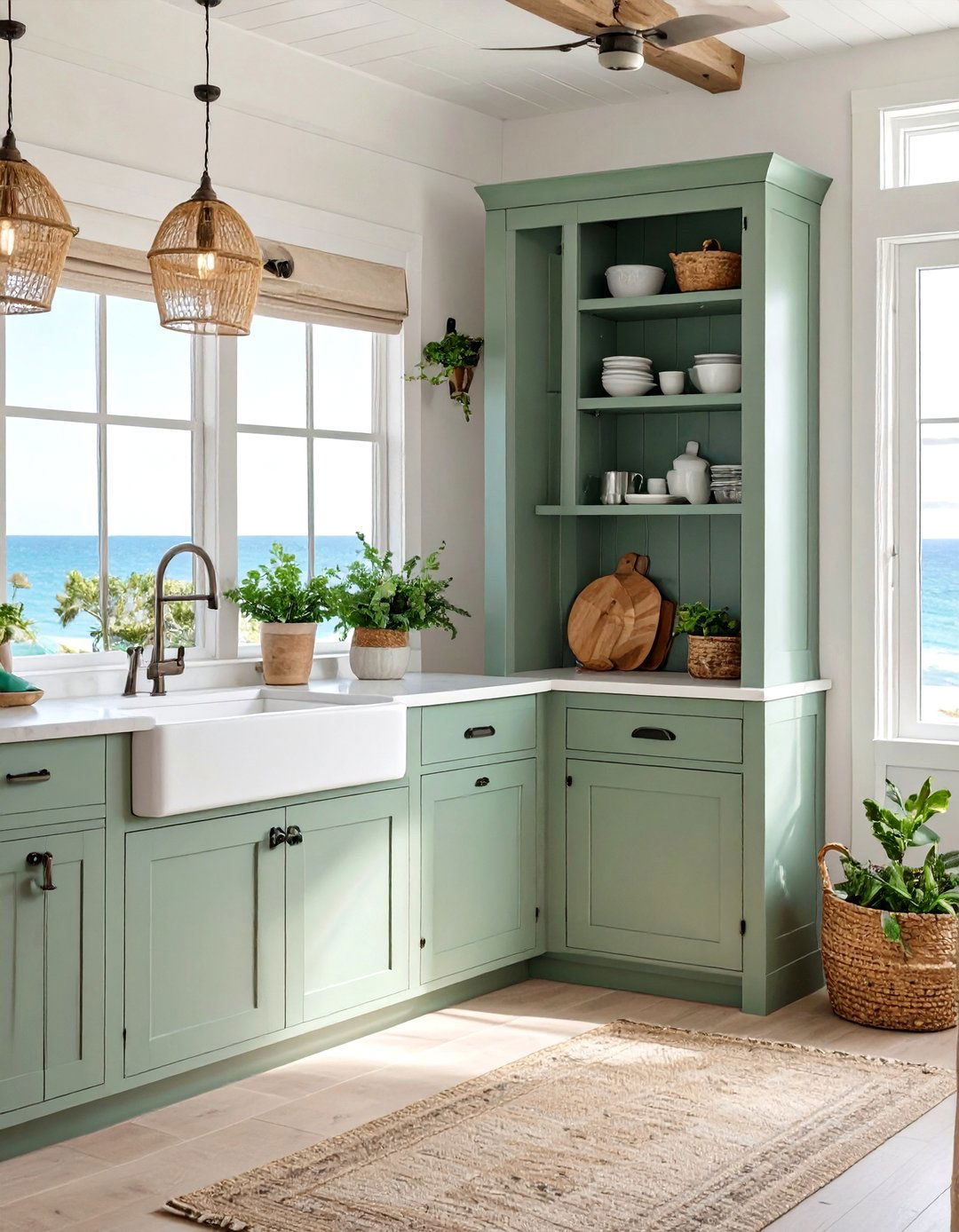
A freestanding pantry cabinet, sometimes called a larder, can add a charming, furniture-like quality to a seaside coastal kitchen. Painted in a contrasting color like a soft sage green or a stormy gray, it can serve as a beautiful accent piece while providing valuable storage. Look for a cabinet with classic details like beadboard paneling, simple crown molding, or glass-front doors to enhance the coastal cottage aesthetic. This standalone piece breaks up the uniformity of built-in cabinetry and adds a sense of history and character, making the kitchen feel more collected and personal.
23. Apron-Front or Farmhouse Sink
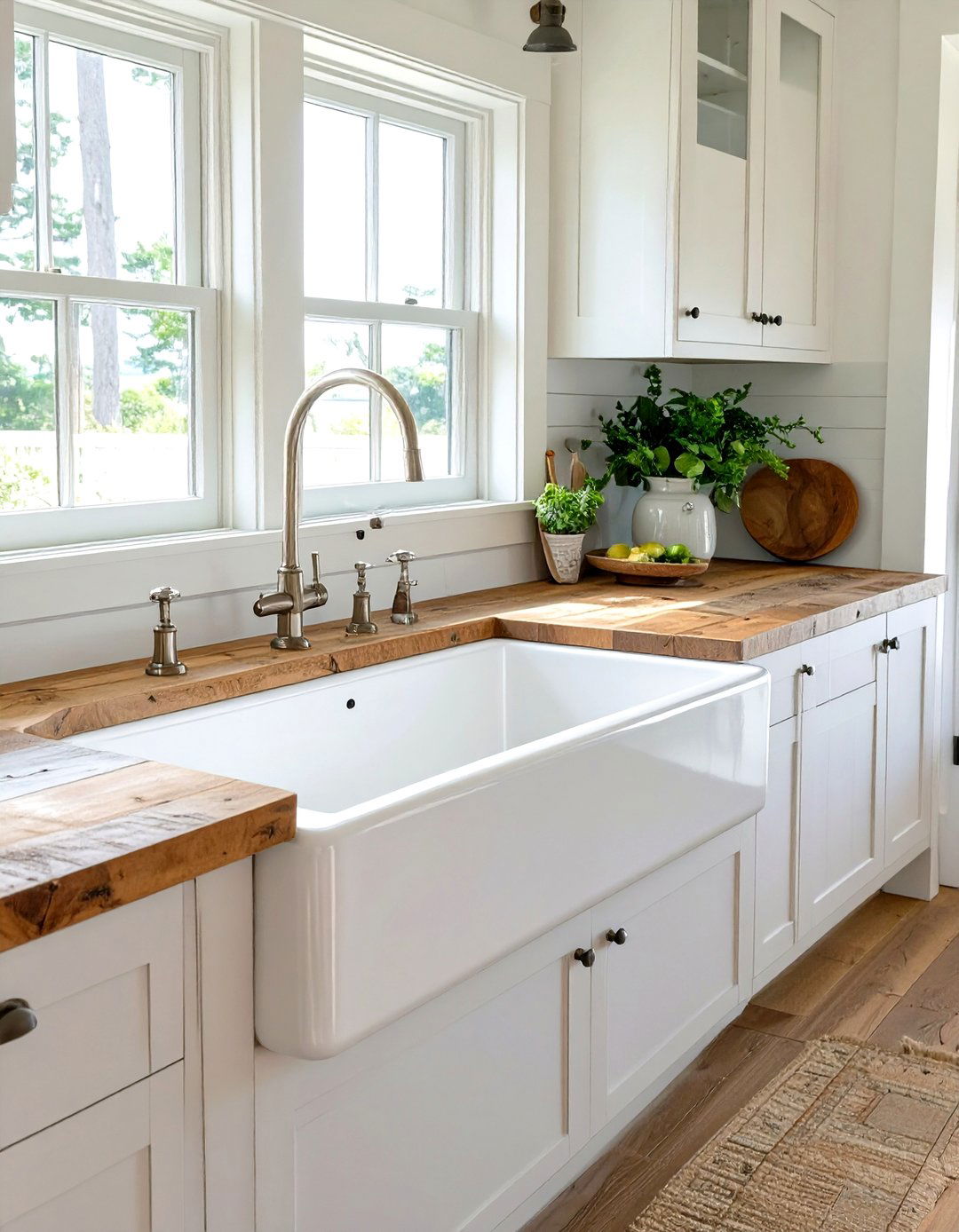
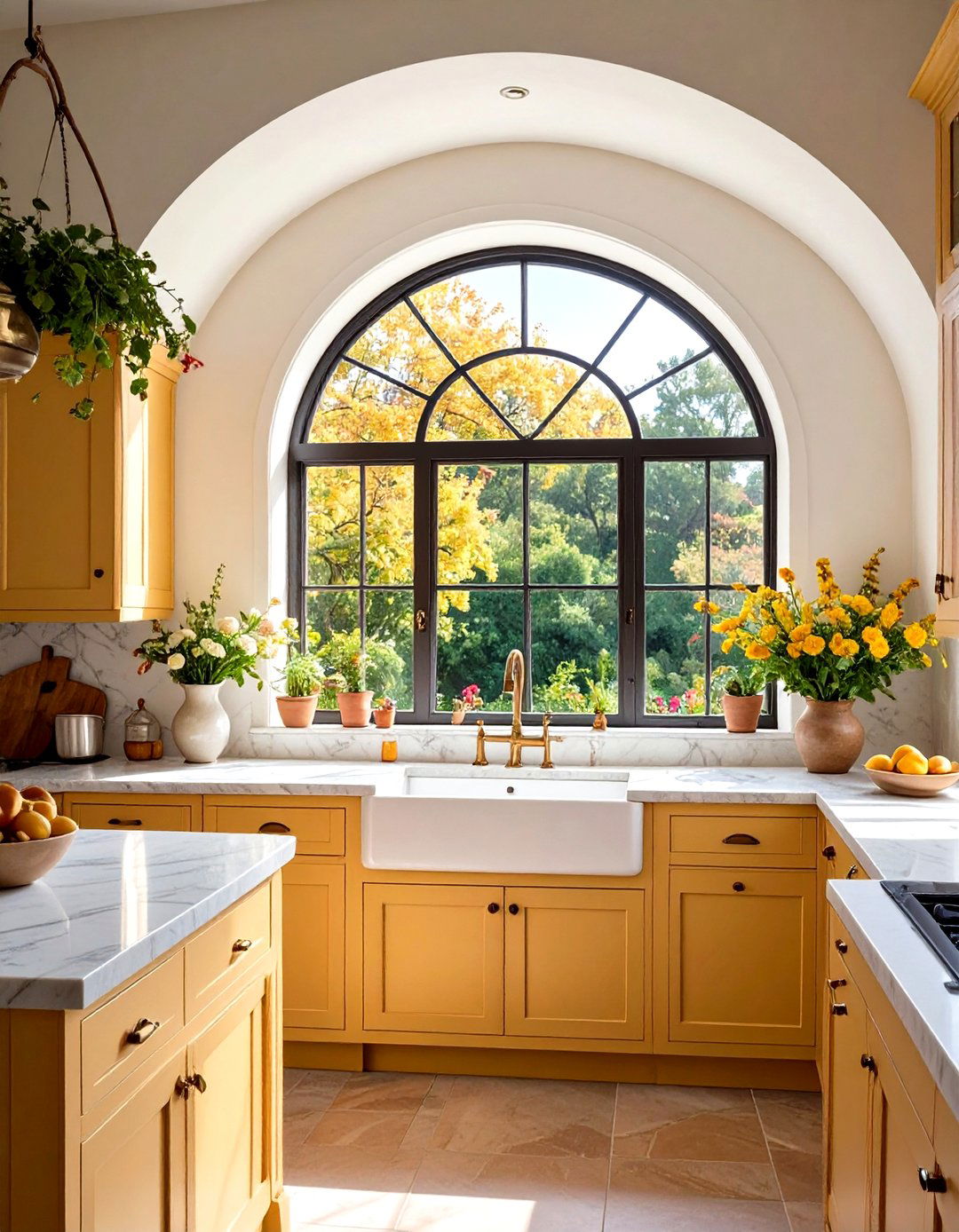
An apron-front sink, also known as a farmhouse sink, is a classic feature that fits seamlessly into a seaside coastal kitchen. Its deep basin is highly practical, while its exposed front adds a touch of rustic, vintage charm. Typically made from white fireclay or cast iron, these sinks provide a bright, clean focal point that stands out against both wood and painted cabinetry. The simple, sturdy design evokes a sense of tradition and comfort, aligning perfectly with the relaxed and welcoming atmosphere of a coastal home. It’s a timeless choice that is both beautiful and functional.
24. A Collection of White Ceramics
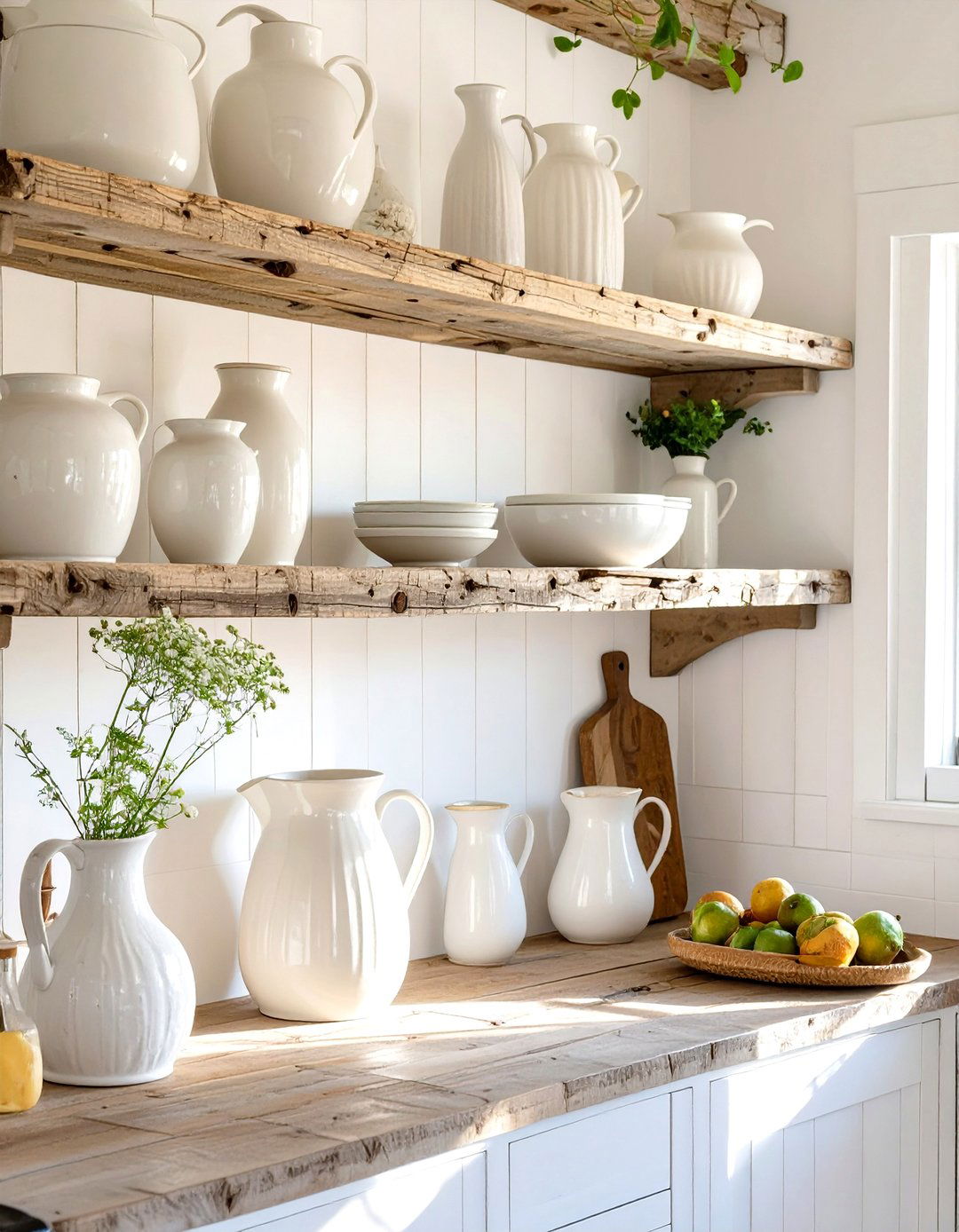
Displaying a collection of white ceramics is a simple yet effective way to accessorize a seaside coastal kitchen. Group various white pitchers, vases, bowls, and platters on open shelves or in a glass-front cabinet. The uniform color creates a clean, cohesive look, while the different shapes and sizes add texture and visual interest. This minimalist approach to decor feels fresh and uncluttered, aligning with the airy coastal aesthetic. The collection brightens up the space and adds a touch of handcrafted elegance, reflecting the simplicity and beauty found in natural coastal elements like shells and sand dollars.
25. High-Arch Gooseneck Faucet
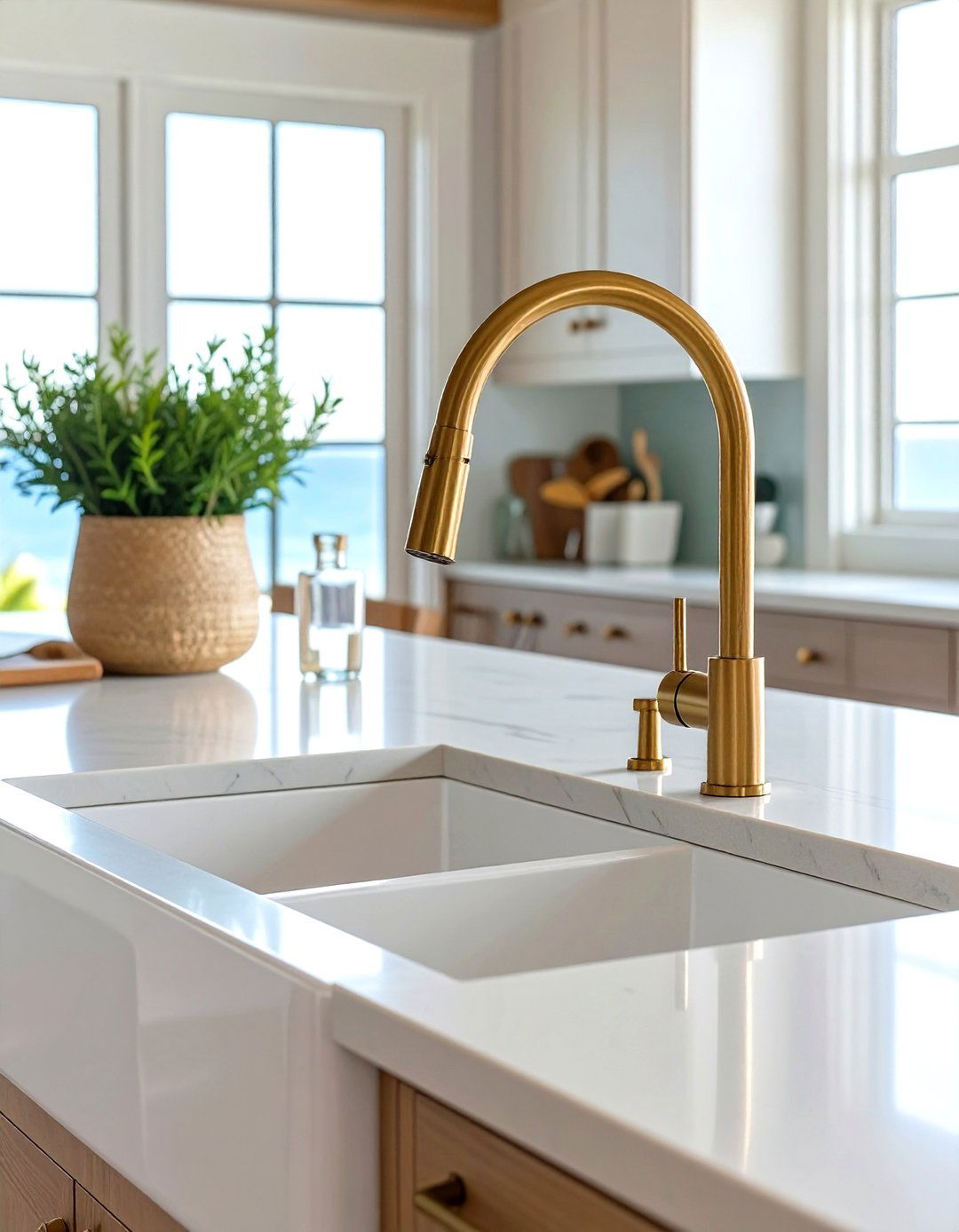
A high-arch gooseneck faucet makes a graceful and functional statement in a seaside coastal kitchen. Its elegant, curving silhouette adds a touch of sculptural beauty to the sink area, drawing the eye upward. This style of faucet is not only visually appealing but also practical, providing ample clearance for filling large pots and vases. Available in finishes like polished nickel, matte black, or unlacquered brass, it can be chosen to either blend in or contrast with the other hardware in the room. This small detail can have a big impact, adding a sophisticated finishing touch to the kitchen design.
26. Painted Wood Floors
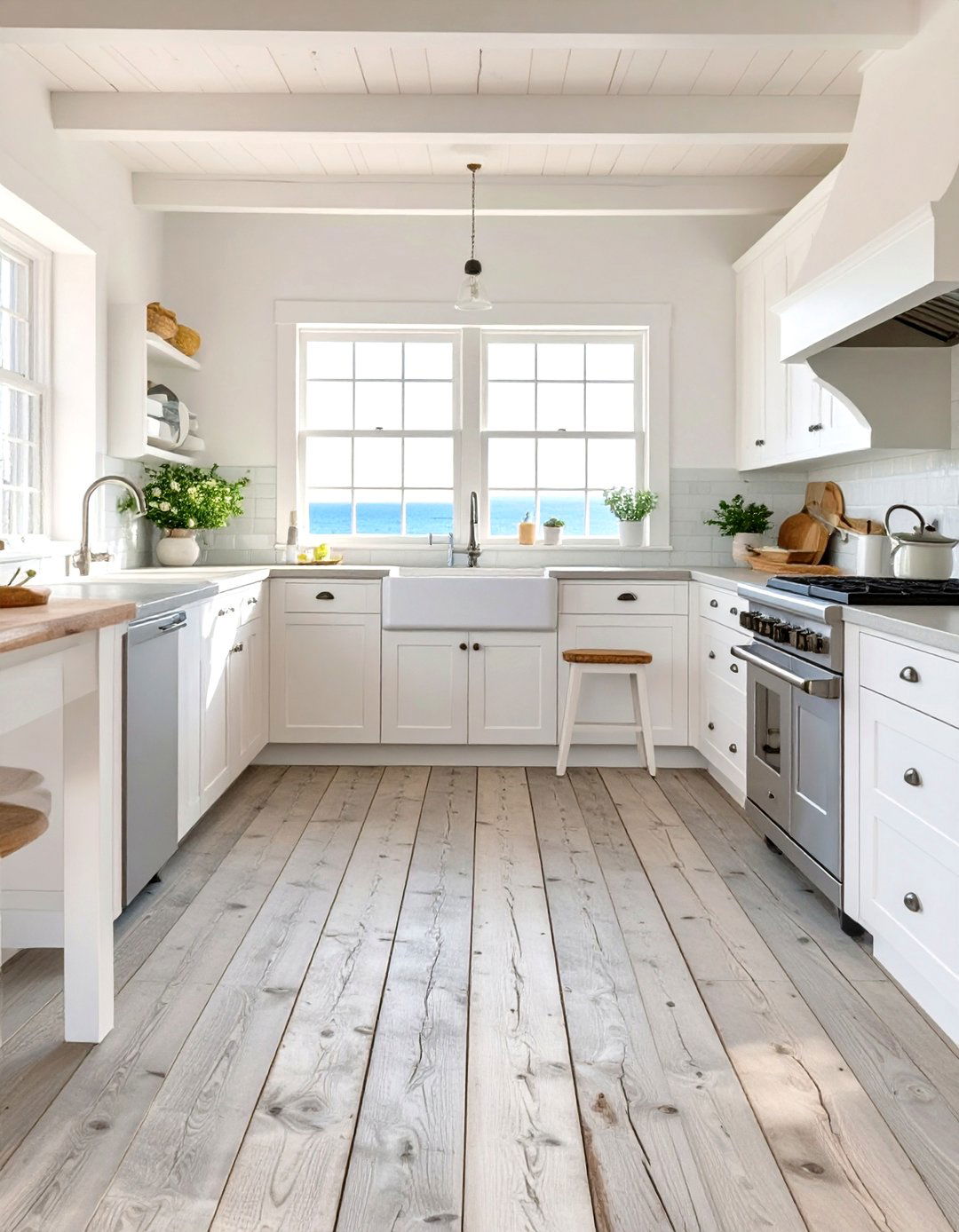
Painted wood floors are a bold and authentic choice for a seaside coastal kitchen, evoking the charming, time-worn floors of historic beach cottages. A coat of durable floor paint in a light color like white, pale gray, or a soft, watery blue can instantly brighten the entire room and create a seamless, cohesive look. Painted floors are a great way to refresh old or mismatched wood, and their slightly imperfect, evolving finish adds character over time. This design choice contributes to a casual, lived-in feel that is central to the coastal aesthetic, creating a unique and memorable foundation for the space.
27. Wainscoting on Walls
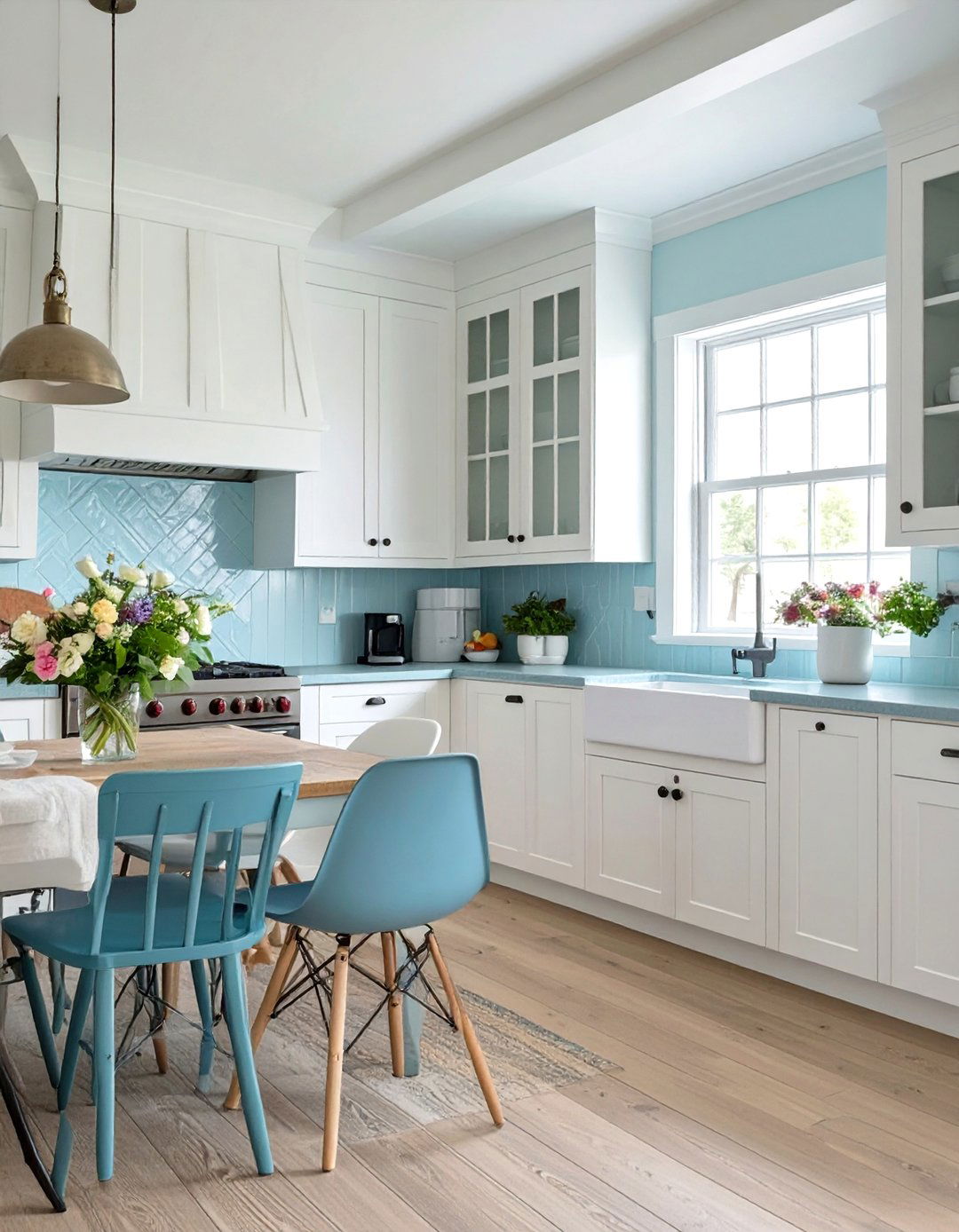
Adding wainscoting to the lower portion of the walls is a classic architectural detail that enhances a seaside coastal kitchen. Traditionally, wainscoting consists of wood paneling, and styles like beadboard or a simple frame-and-panel design work particularly well for a coastal look. Painted in a crisp white or a contrasting neutral, it adds a layer of texture and traditional charm, protecting the walls while creating a visually pleasing horizontal line. This feature breaks up flat, plain walls and adds a sense of substance and craftsmanship, contributing to the timeless, well-put-together feel of a coastal home.
28. Upholstered Banquette Seating
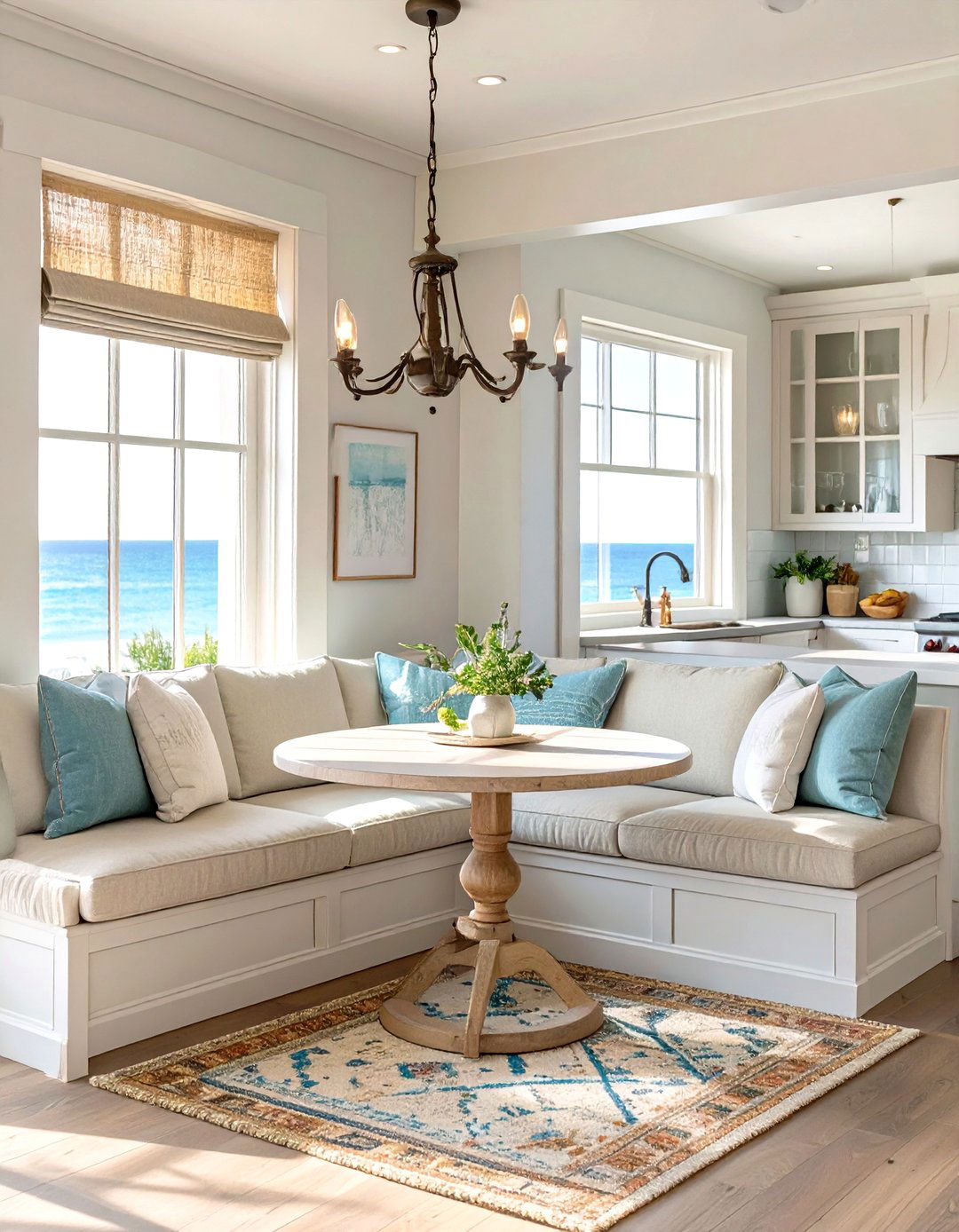
An upholstered banquette in a breakfast nook is a comfortable and space-saving seating solution for a seaside coastal kitchen. This built-in seating creates a cozy, restaurant-style booth that is perfect for casual family meals. Choose a durable, easy-to-clean fabric in a coastal-inspired color or pattern, such as a simple blue and white stripe, a soft linen, or a subtle botanical print. A banquette maximizes seating capacity and can often incorporate hidden storage in its base. It adds a soft, welcoming element to the kitchen, inviting people to gather and linger in the heart of the home.
29. Ceiling Beams in a Light Finish
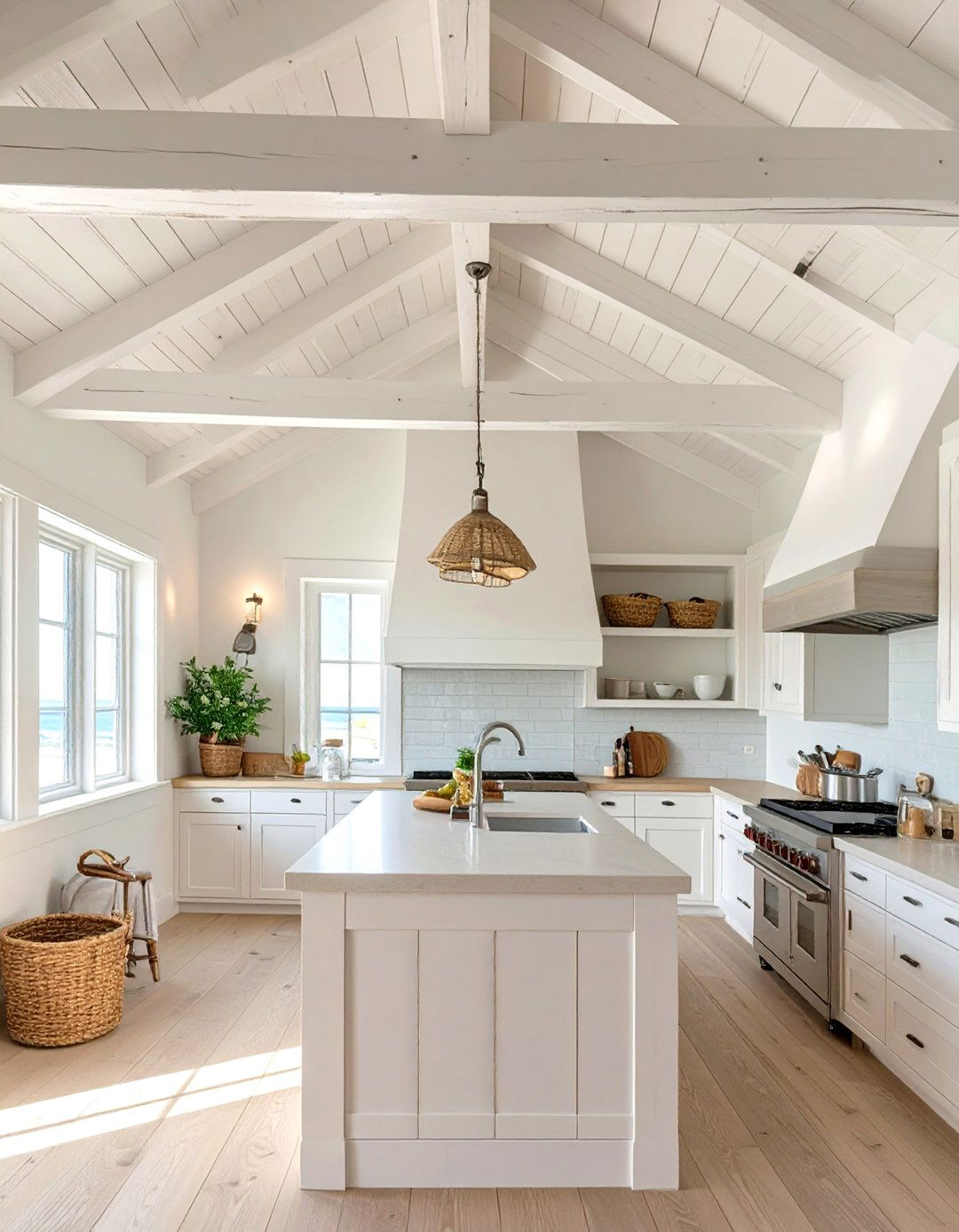
Exposed ceiling beams, either structural or decorative, add architectural interest and rustic charm to a seaside coastal kitchen. To maintain the light and airy feel of the style, opt for beams in a light wood finish, a whitewashed treatment, or paint them the same color as the ceiling. This approach adds texture and a sense of history without making the room feel heavy or dark. The linear element of the beams draws the eye up, enhancing the perception of height and space. They evoke the feeling of a rustic beach house or a converted barn, adding character and warmth.
30. Coral or Shell Decor Accents
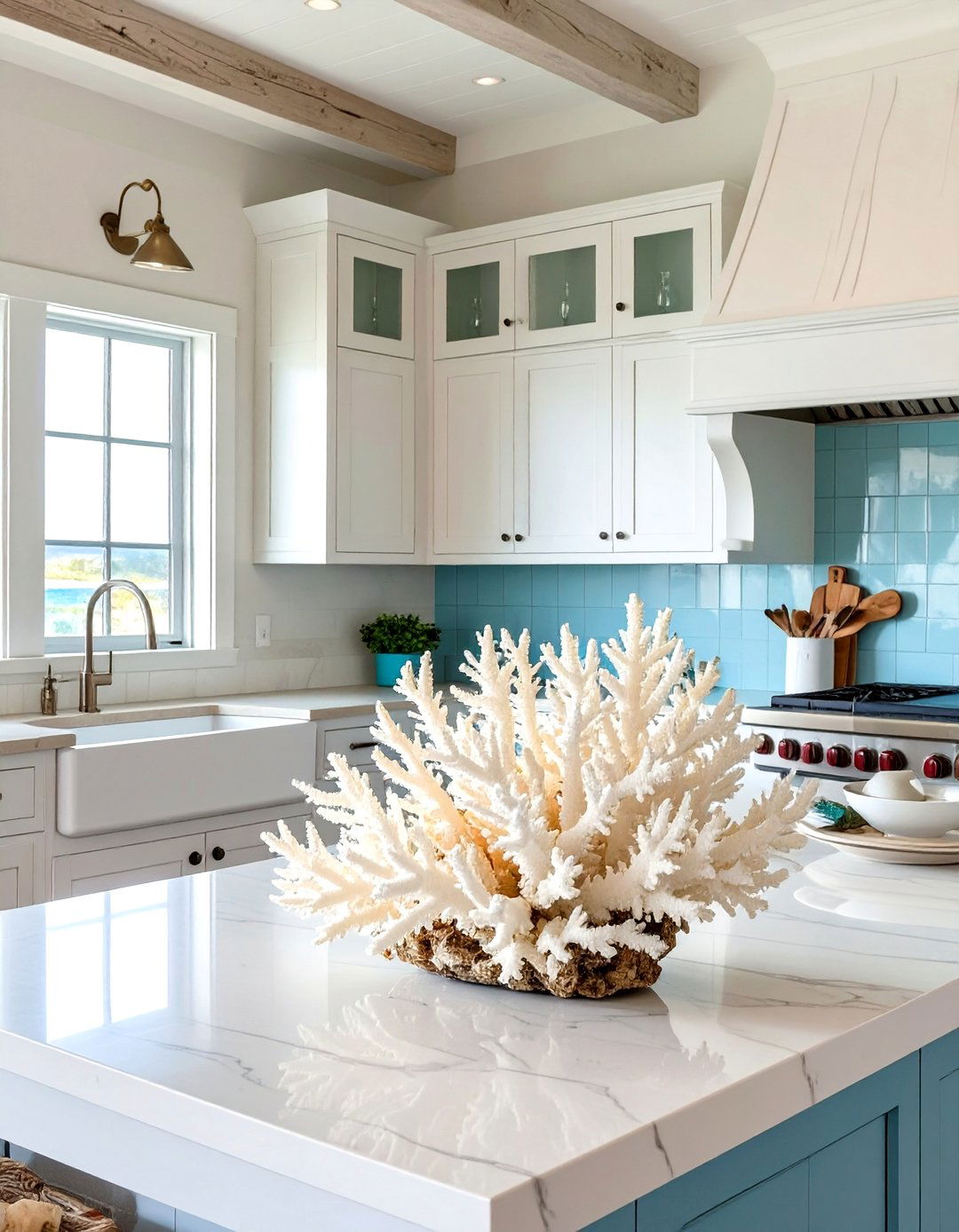
To complete the seaside theme, incorporate subtle decor accents inspired by the ocean, such as coral sculptures or a collection of beautiful shells. A large piece of white coral can serve as a stunning, sculptural centerpiece on a kitchen island, while a clear glass vase filled with found seashells can add a personal touch to an open shelf. The key is to use these elements sparingly and tastefully to avoid a cluttered or overly thematic look. These natural treasures serve as a gentle reminder of the shoreline, bringing an authentic piece of the coast into your kitchen design.
Conclusion:
Ultimately, designing a seaside coastal kitchen is about capturing a feeling of relaxed, airy tranquility. By combining a light color palette with natural textures like wood, rattan, and jute, you can create a space that feels both refreshing and inviting. Key elements such as Shaker cabinets, weathered finishes, and nautical-inspired lighting work together to evoke the essence of a beach house. Whether you prefer a classic cottage look or a more modern interpretation, the goal is to craft a bright, uncluttered, and functional kitchen that serves as a peaceful retreat from the everyday.

Related posts:

Leave a Reply