
Sage green offers a serene and versatile backdrop for any living room, creating a sense of calm and connection to nature. This earthy, muted green can adapt to a wide range of design styles, from modern minimalist to rustic farmhouse. Its gentle tone serves as a sophisticated neutral, pairing beautifully with creamy whites, natural woods, and bold accent colors alike. Whether used on walls, furniture, or through decorative accessories, sage green introduces a timeless elegance that feels both refreshing and comforting. It provides the perfect foundation for a space designed for relaxation and gathering with loved ones.

1. Sage Green Accent Wall
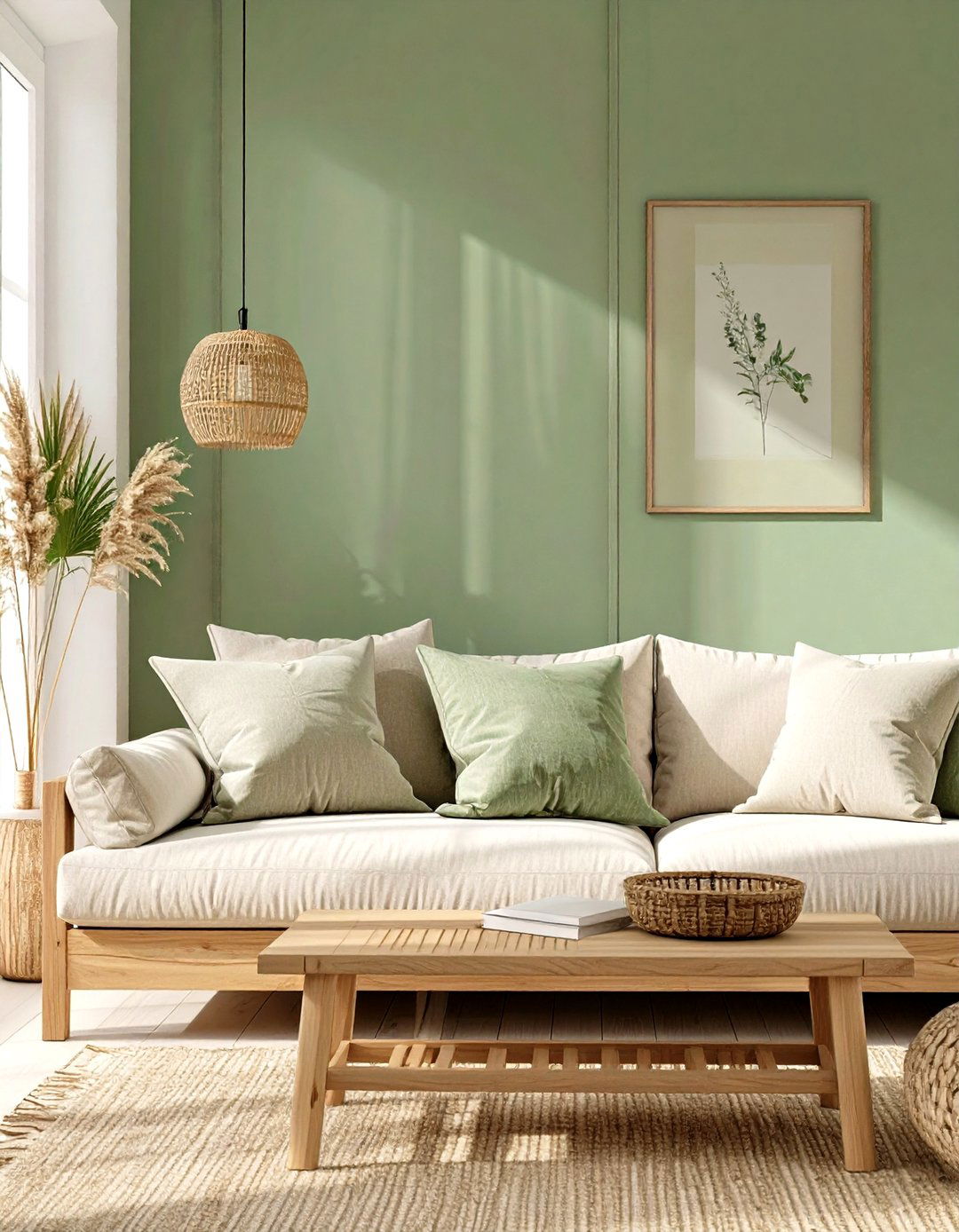
For a subtle yet impactful statement, a sage green accent wall provides a beautiful focal point without overwhelming the space. This approach allows you to introduce the color's calming properties while keeping the other walls a neutral shade like white, cream, or light grey. This contrast makes the sage green hue pop, drawing the eye to a specific area, such as behind the sofa or a fireplace. It works exceptionally well with light wood furniture and soft, textured fabrics like linen or cotton. The result is a balanced and sophisticated room that feels both modern and inviting, offering a touch of nature-inspired tranquility.
2. All-Over Sage Green Walls
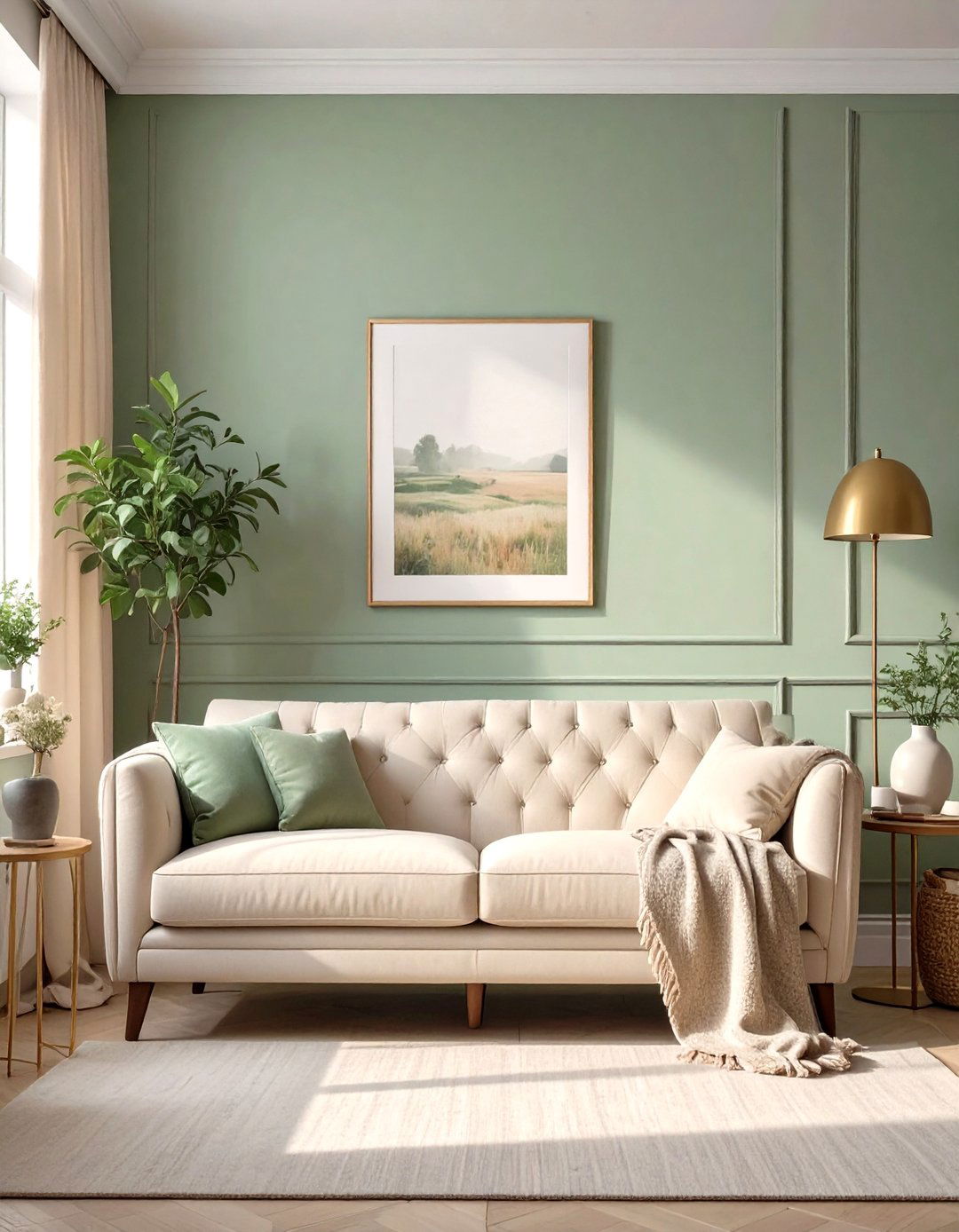
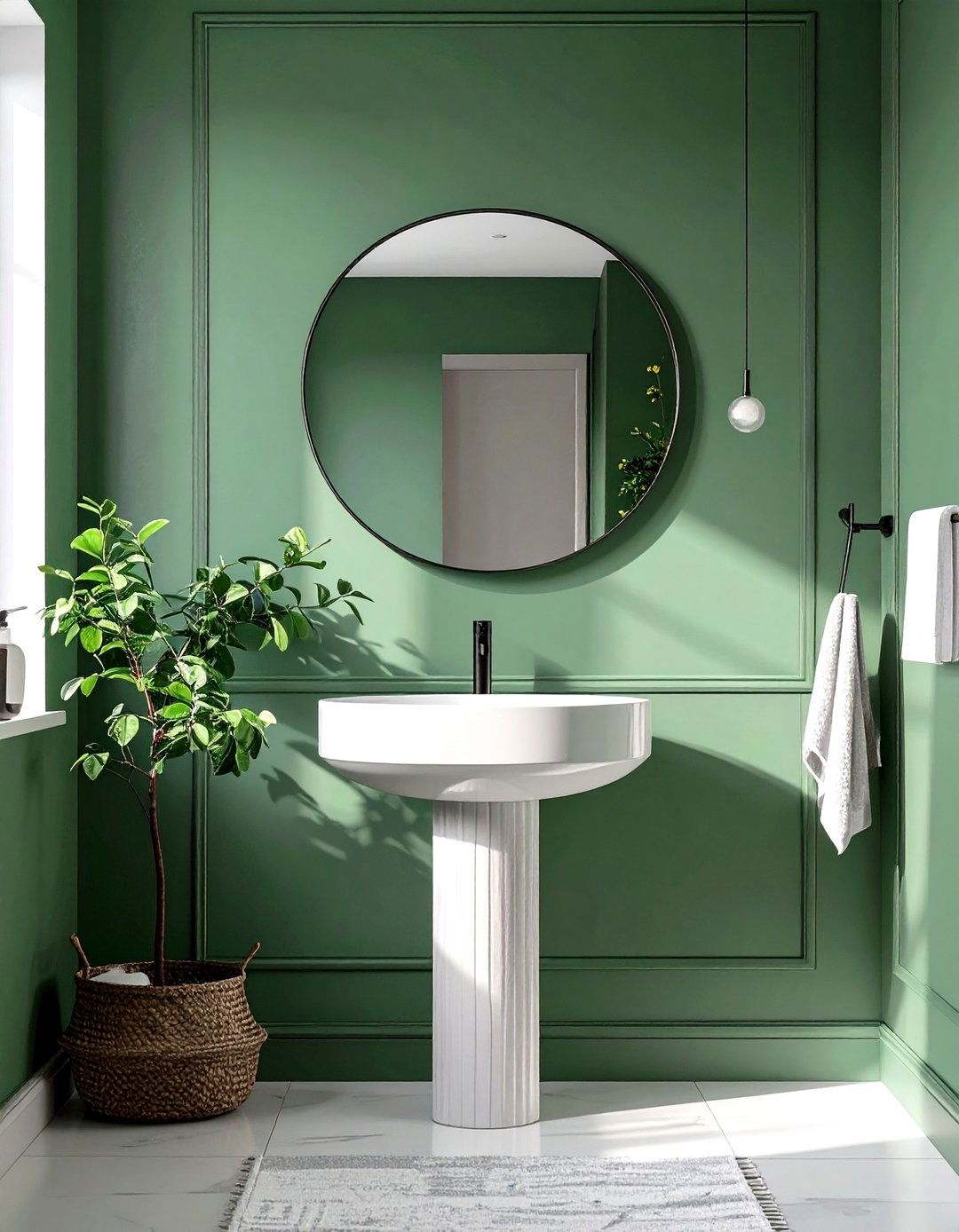
To create an immersive and cozy sanctuary, consider painting all the walls in your living room a soft sage green. This technique envelops the space in a tranquil, earthy hue, promoting a deep sense of relaxation and calm. Unlike bolder colors, sage green is gentle on the eyes and makes the room feel like a serene retreat from the outside world. This look is particularly effective in rooms with ample natural light, which enhances the color's natural softness. Pair it with creamy white trim, plush neutral-toned furniture, and warm metallic accents like brass or gold to complete the sophisticated and cohesive design.
3. Sage Green and Cream Color Scheme
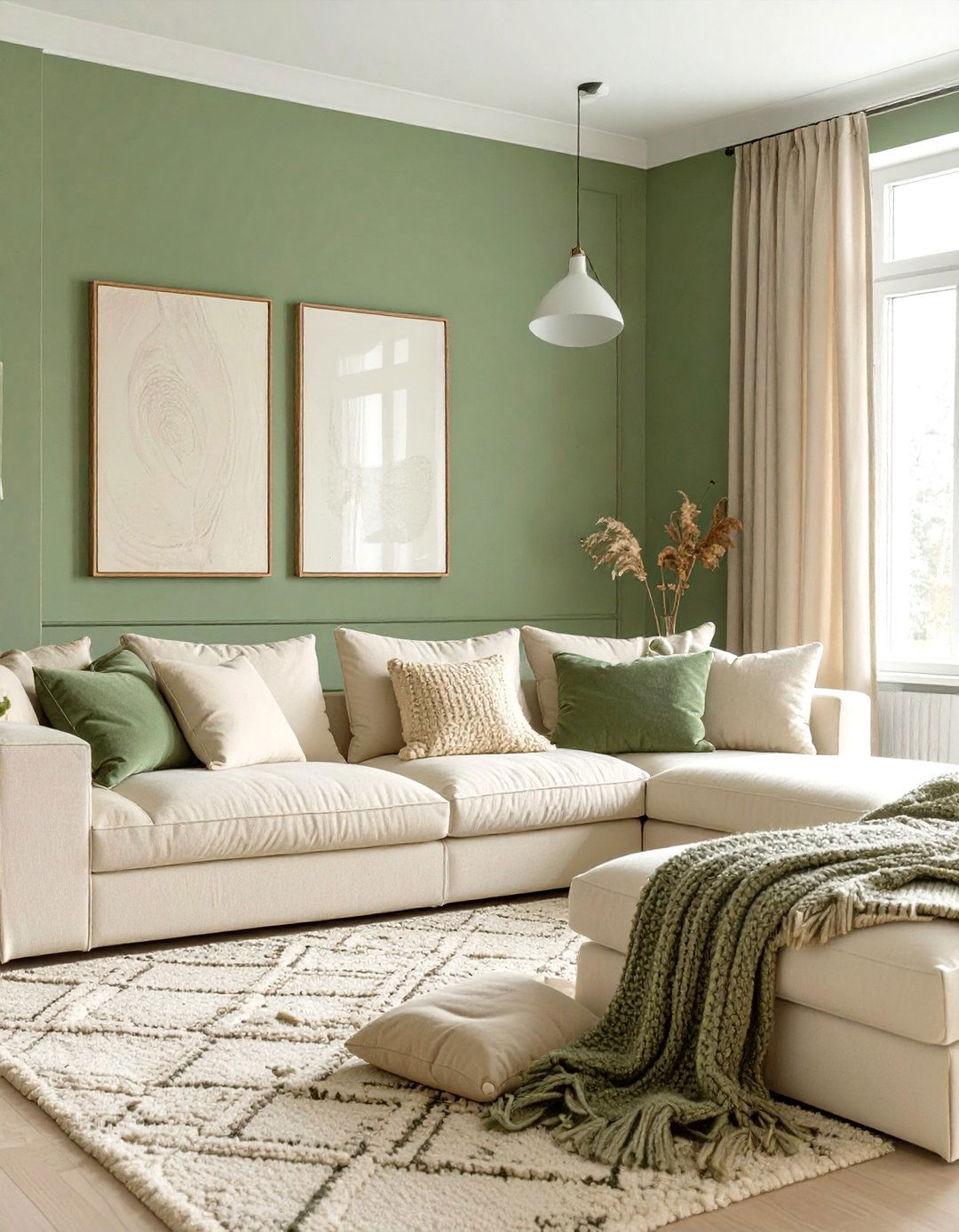
Pairing sage green with cream creates a classic, soft, and timeless living room aesthetic. The warmth of cream beautifully balances the cool, earthy tones of sage green, resulting in a space that feels bright, airy, and incredibly inviting. Consider using sage green on the walls and incorporating cream through major furniture pieces like a sofa, armchairs, or cabinetry. This combination provides a gentle contrast that is easy on the eyes and enhances the room's sense of comfort. Add texture with cream-colored knit throws, linen curtains, and a plush wool rug to add depth and warmth to the overall design.
4. Sage Green with Natural Wood Tones
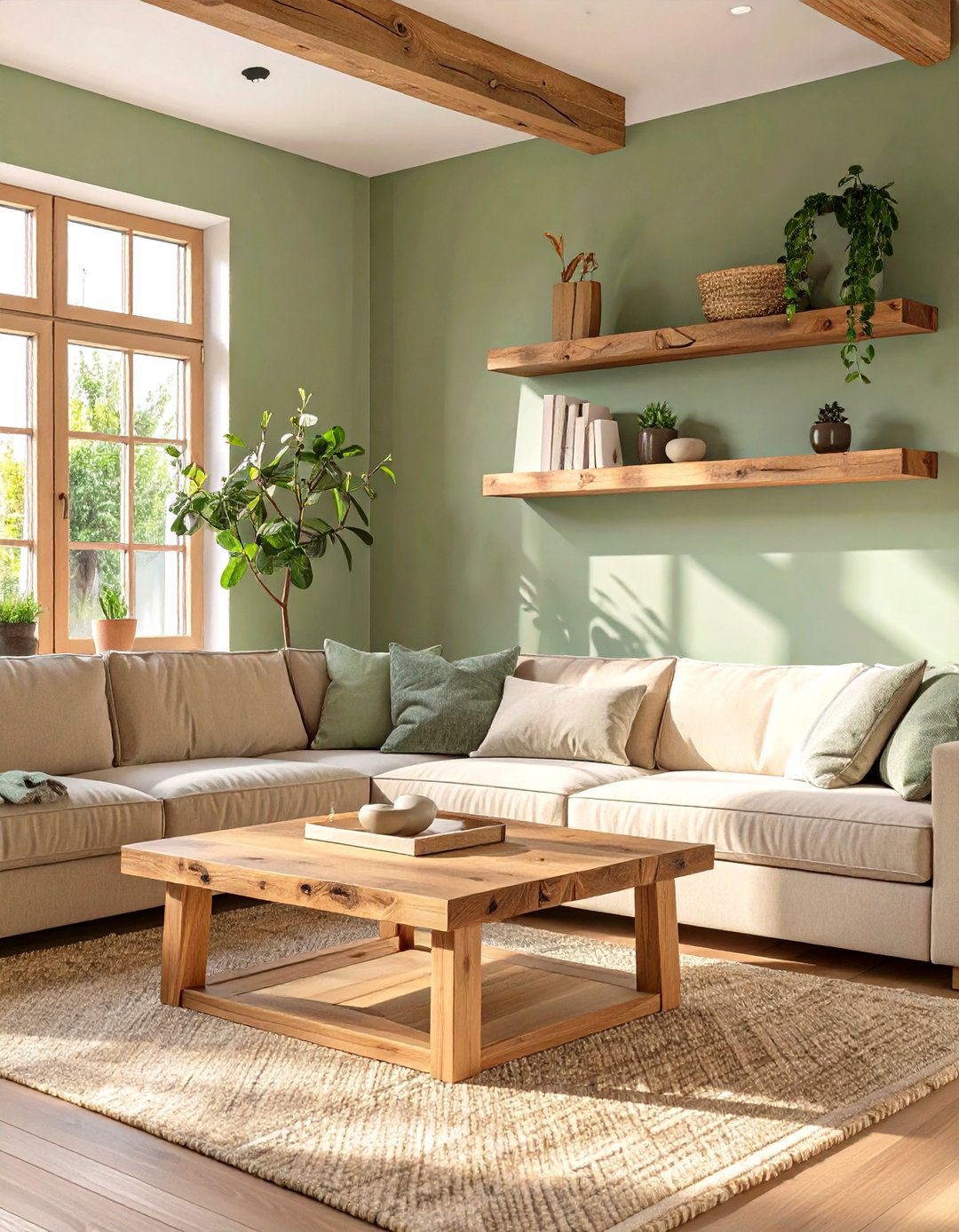
Combining sage green with natural wood tones is a perfect way to enhance the room's connection to nature. The earthy quality of sage green walls or furniture is beautifully complemented by the warmth and texture of wood. Think of oak flooring, a walnut coffee table, or pine shelving against a sage green backdrop. This pairing feels organic and grounding, creating a rustic yet refined atmosphere. The richness of the wood grain provides a lovely contrast to the soft, muted green, adding visual interest and a sense of timeless craftsmanship to your living space. This combination works well in various styles, from farmhouse to mid-century modern.
5. Sage Green Sofa as a Focal Point
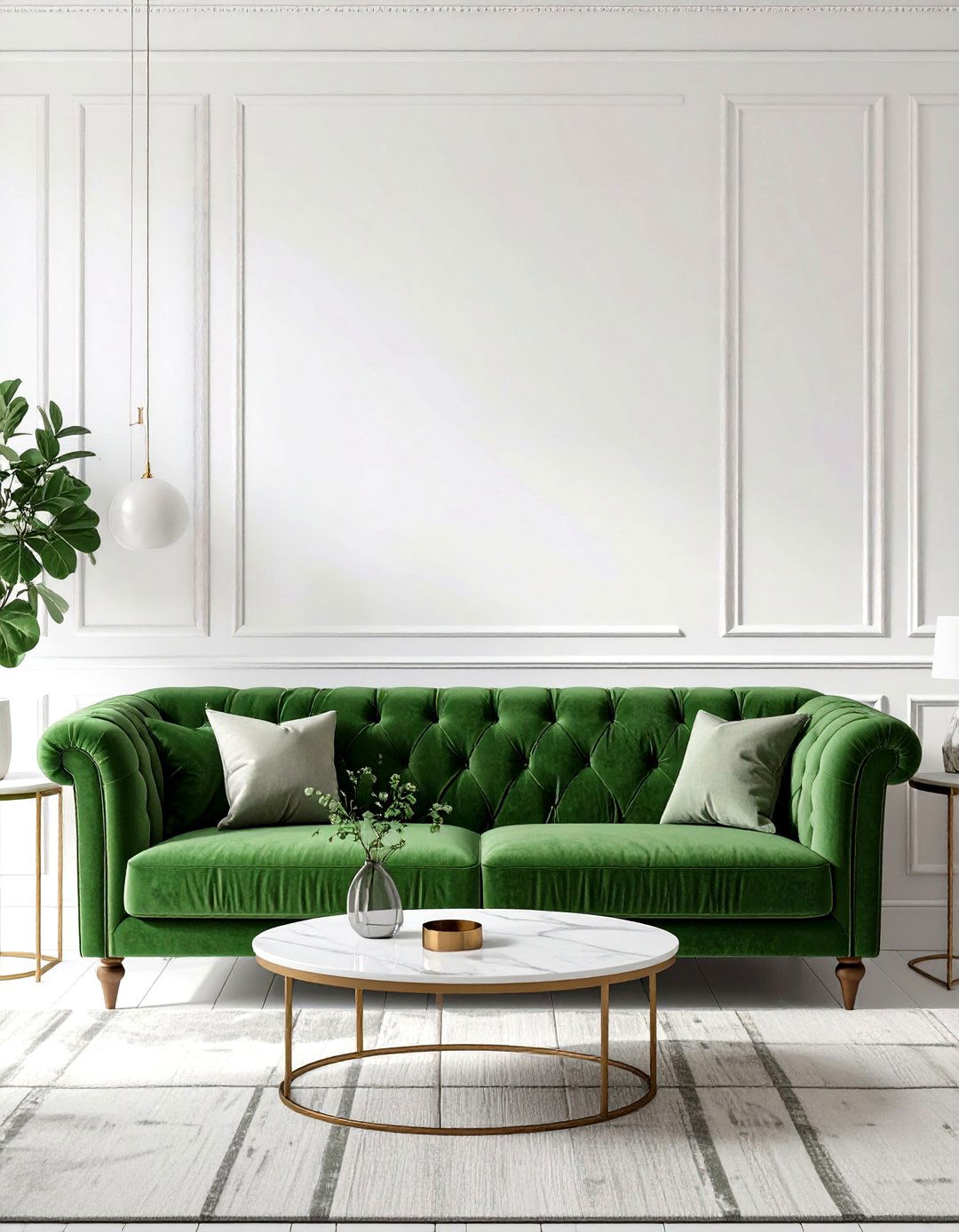
A sage green sofa can serve as a stunning and sophisticated centerpiece in your living room. Instead of committing to colored walls, a statement sofa introduces the hue in a significant yet manageable way. This piece of furniture instantly sets a serene and stylish tone for the entire space. Surround it with neutral elements like white walls, a light-colored rug, and simple wooden tables to let the sofa truly shine. A velvet or soft linen sage green sofa adds both color and luxurious texture, making it a comfortable and visually appealing anchor for your living room's design scheme.
6. Sage Green Curtains for a Soft Touch
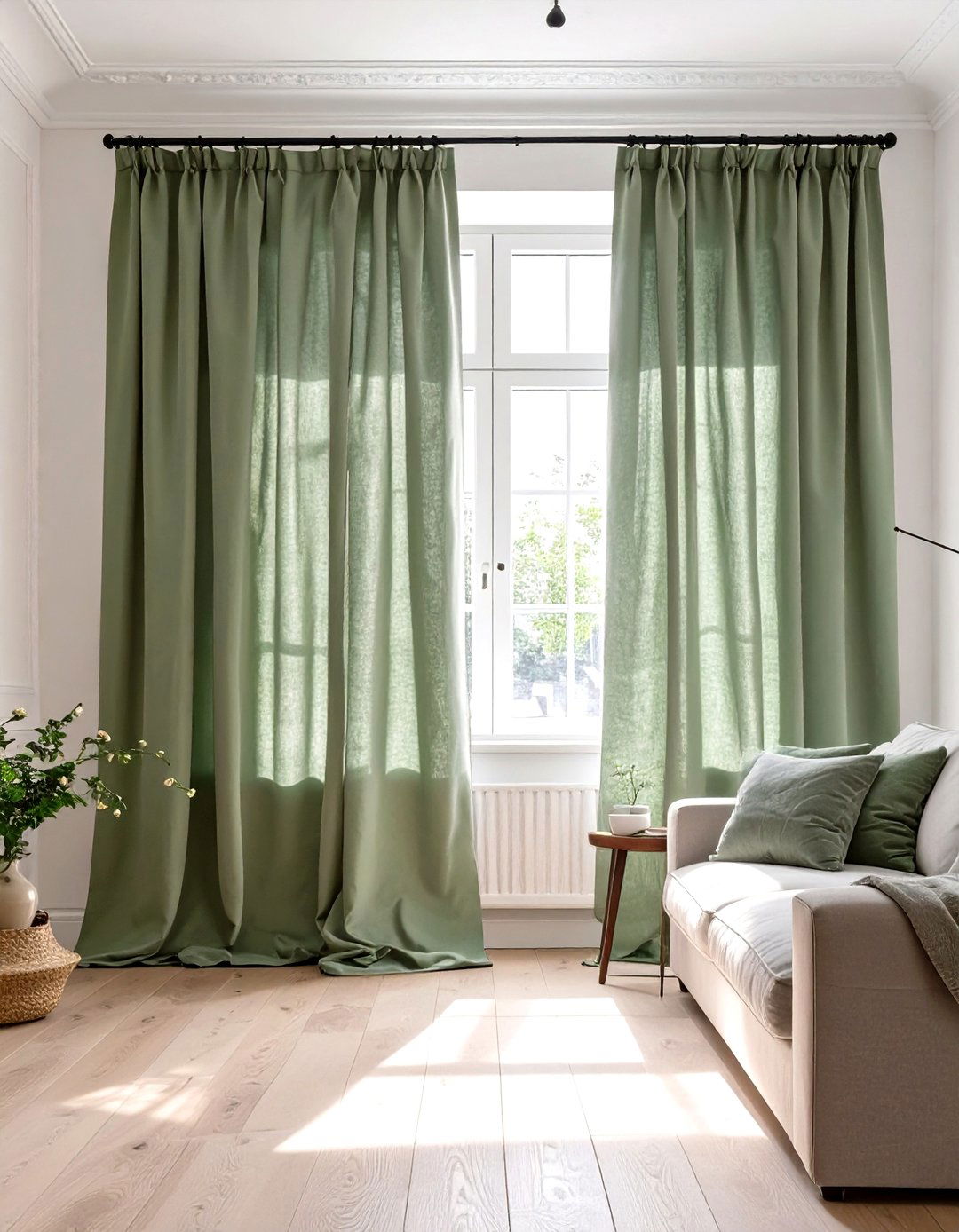
For a subtle and elegant way to introduce the color, consider adding sage green curtains to your living room. This allows you to bring in the calming hue without making a permanent change like painting the walls. Sage green curtains, especially in materials like linen or sheer cotton, can soften the light filtering into the room, casting a gentle, serene glow. They pair beautifully with neutral walls, such as off-white or beige, and can tie together other green accents in the room, like cushions or plants. This simple addition adds a layer of sophistication and completes the look with a soft, decorative touch.
7. Sage Green with Gold or Brass Accents
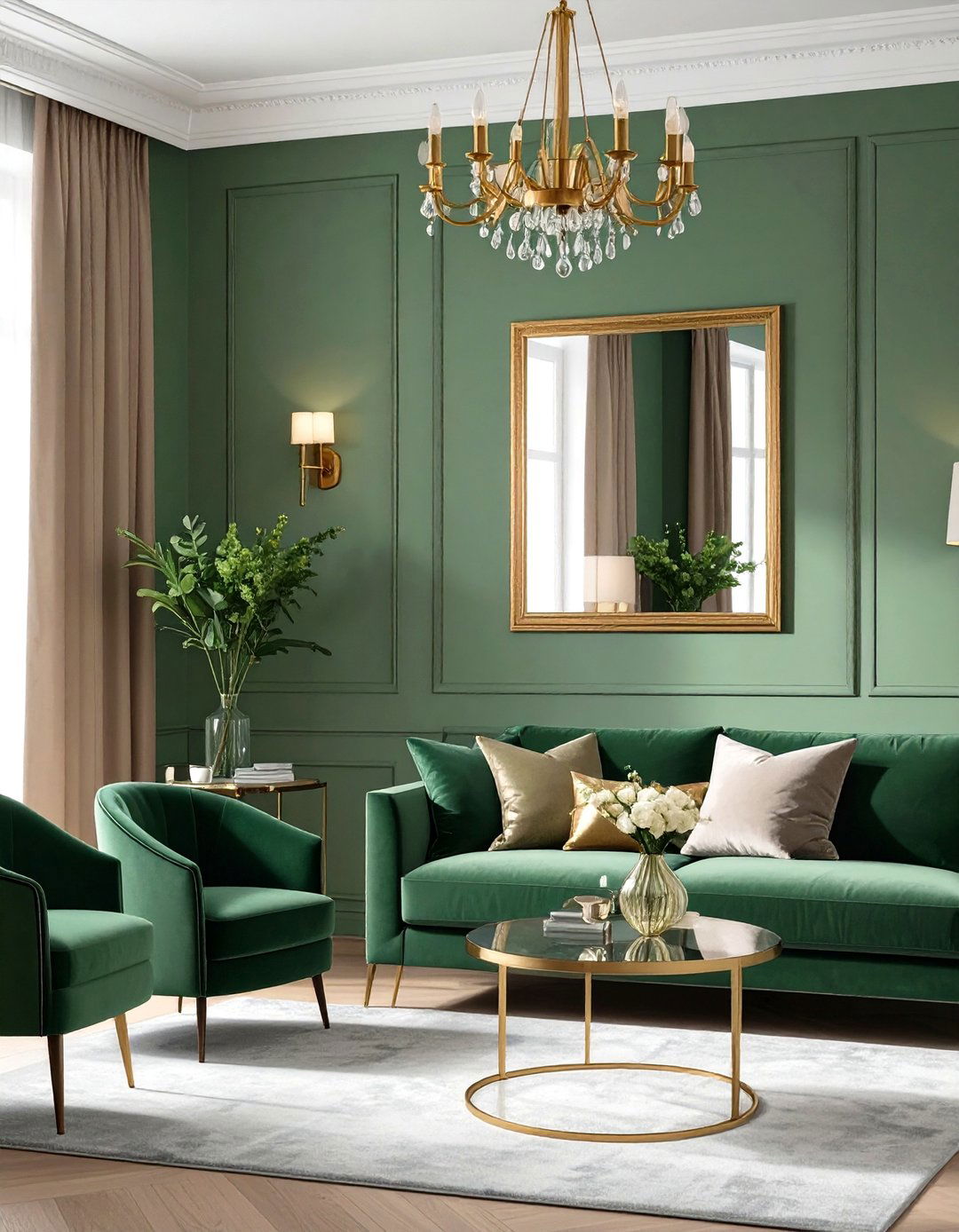
To infuse a touch of glamour into a sage green living room, incorporate gold or brass accents. The warm, reflective quality of these metals provides a striking contrast to the cool, muted tones of sage green, creating a look that is both sophisticated and luxurious. Introduce these metallic finishes through light fixtures, picture frames, mirror surrounds, or the legs of a coffee table or side chair. Even small decorative objects like a brass vase or gold tray can elevate the space. This combination works exceptionally well to create a refined atmosphere that feels both modern and timelessly elegant.
8. Sage Green and Blush Pink Combination
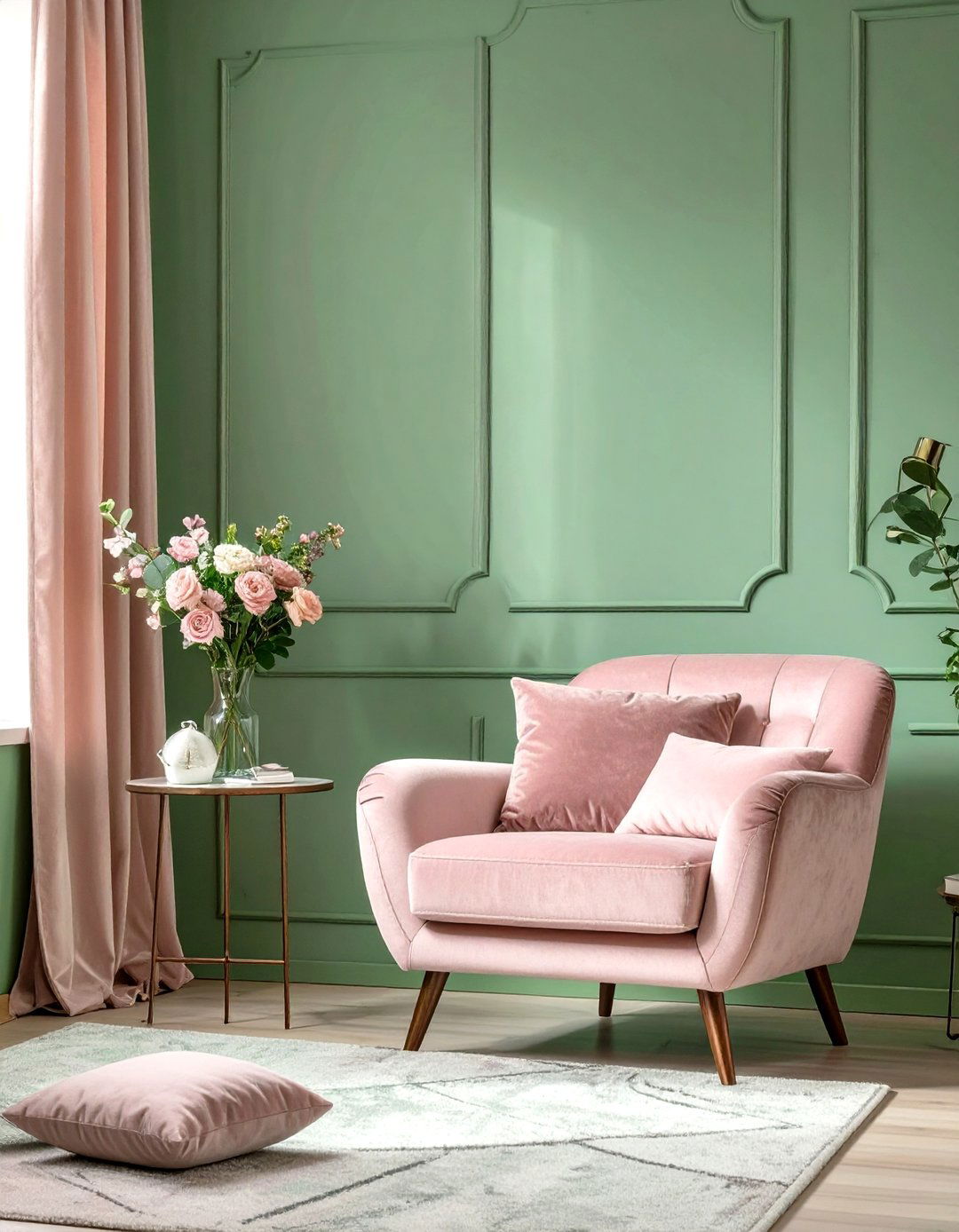
Combining sage green with blush pink creates a living room that is soft, romantic, and refreshingly modern. The earthy, calming nature of sage green provides a perfect base, while blush pink adds a touch of warmth and playful charm without being overly sweet. Use sage green on the walls or a large piece of furniture, and introduce blush pink through accent pillows, throws, artwork, or a statement armchair. The two colors complement each other beautifully, creating a balanced and harmonious palette that feels both chic and inviting. This pairing is ideal for a space that aims for gentle sophistication.
9. Bohemian Sage Green Living Room
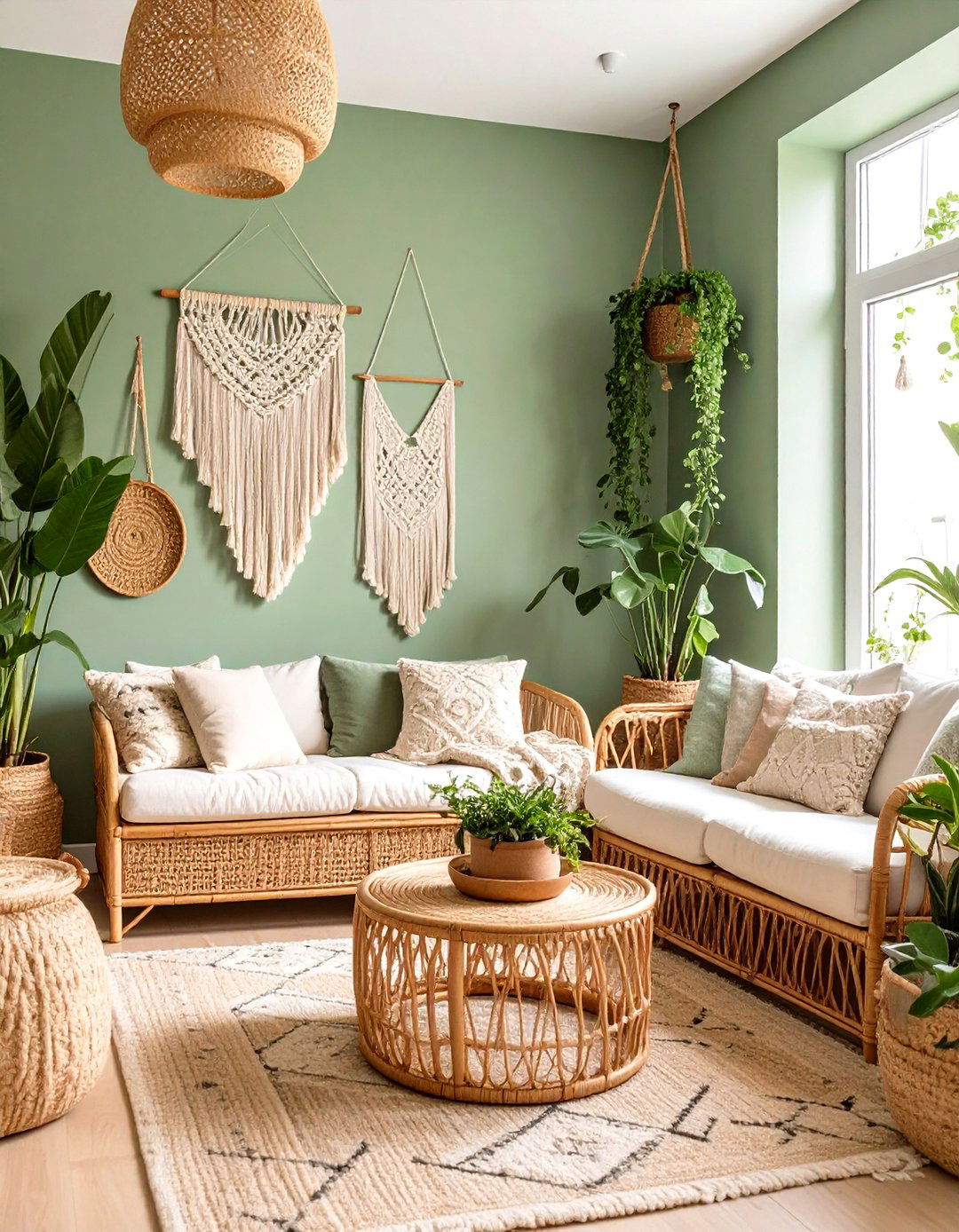
Sage green is a natural fit for a bohemian-style living room, where earthy tones and natural textures reign. Use sage green as the primary wall color to establish a calming, grounded foundation. Then, layer in classic boho elements like rattan furniture, macrame wall hangings, and a variety of potted plants. Textiles are key in this style, so add patterned rugs, floor cushions, and throw blankets in a mix of textures and complementary colors like terracotta, mustard, and cream. The result is a relaxed, free-spirited space that feels personal, cozy, and deeply connected to nature's gentle palette.

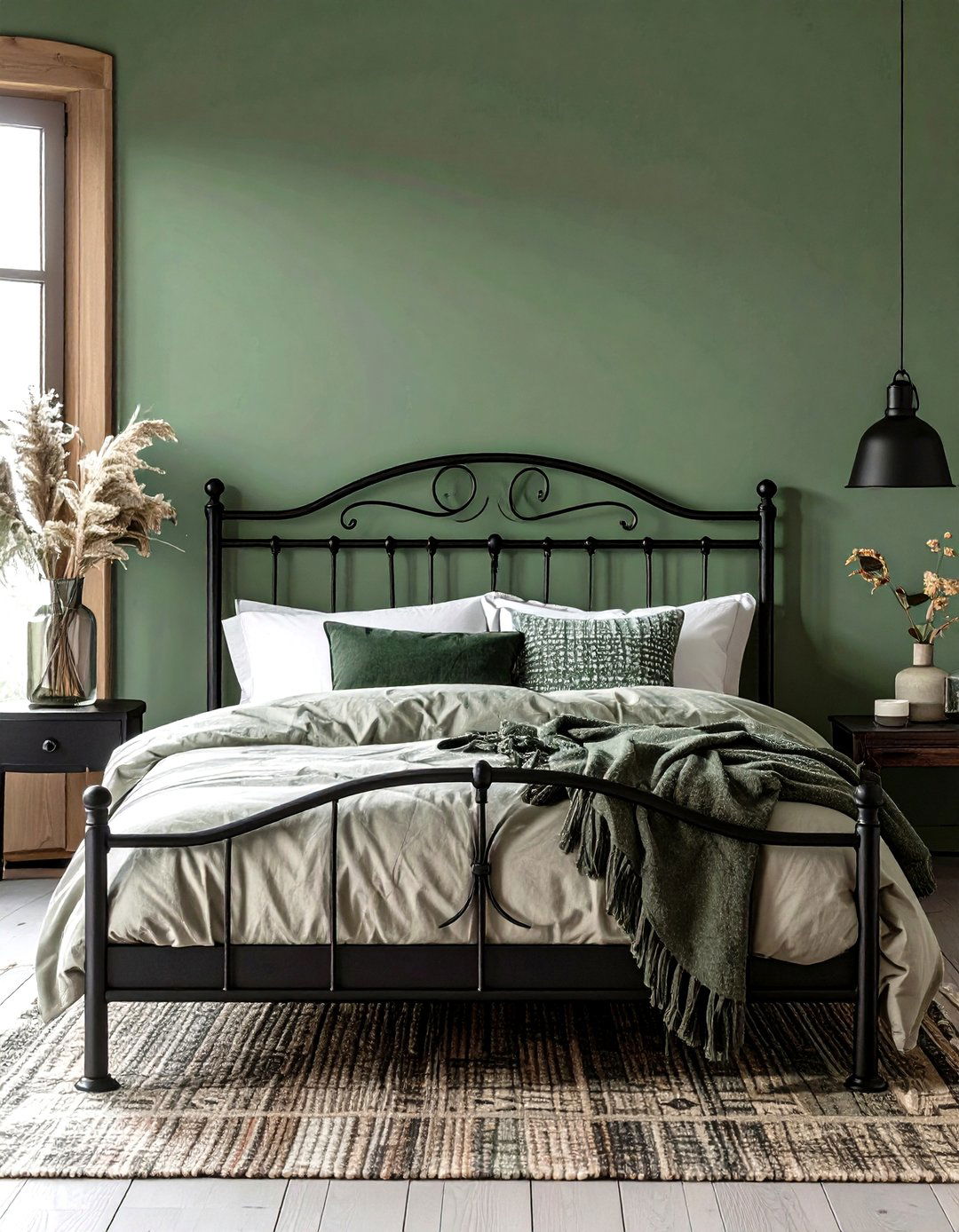
10. Minimalist Sage Green Living Room
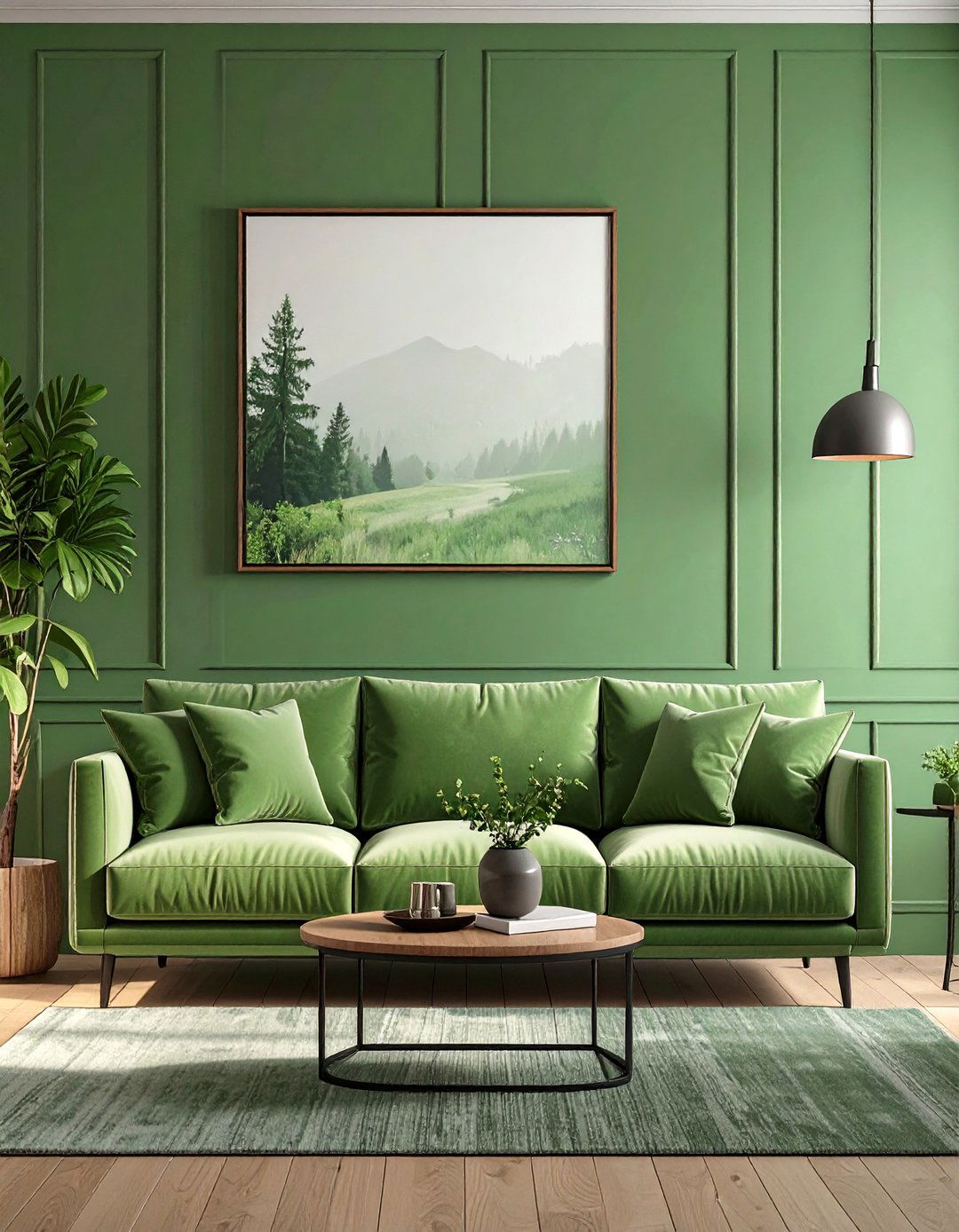
In a minimalist living room, sage green adds a touch of color and warmth without disrupting the clean, uncluttered aesthetic. Use it on an accent wall or through a single, key piece of furniture, like a streamlined sofa or a simple area rug. The key is to keep the rest of the space spare and intentional. Pair the sage green element with crisp white walls, simple black or metallic accents, and furniture with clean lines. This approach allows the color to provide a soft, organic feel, preventing the minimalist design from feeling too stark or cold while maintaining its essential simplicity.
11. Sage Green Shelving and Built-ins
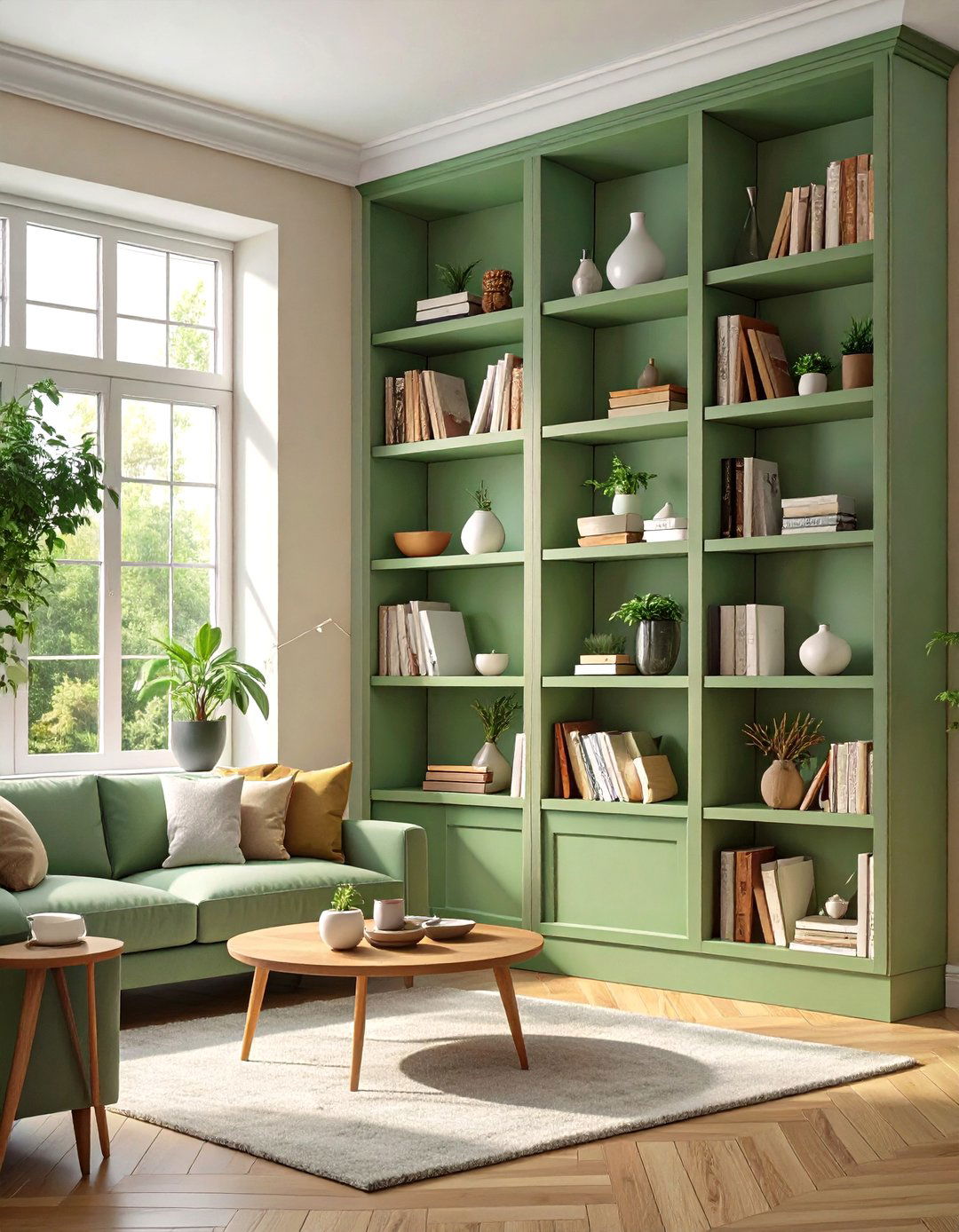
Painting your built-in shelving or bookcases sage green is a creative way to add a pop of color and character to your living room. This design choice turns a functional storage area into a beautiful focal point. The sage green provides a stunning backdrop for displaying books, decorative objects, and cherished photos, making them stand out. It adds depth and dimension to the room, especially when the surrounding walls are a contrasting neutral shade like white or beige. This approach is a fantastic way to integrate the color in a structured and sophisticated manner, enhancing the room's architectural details.
12. Coastal Sage Green Living Room
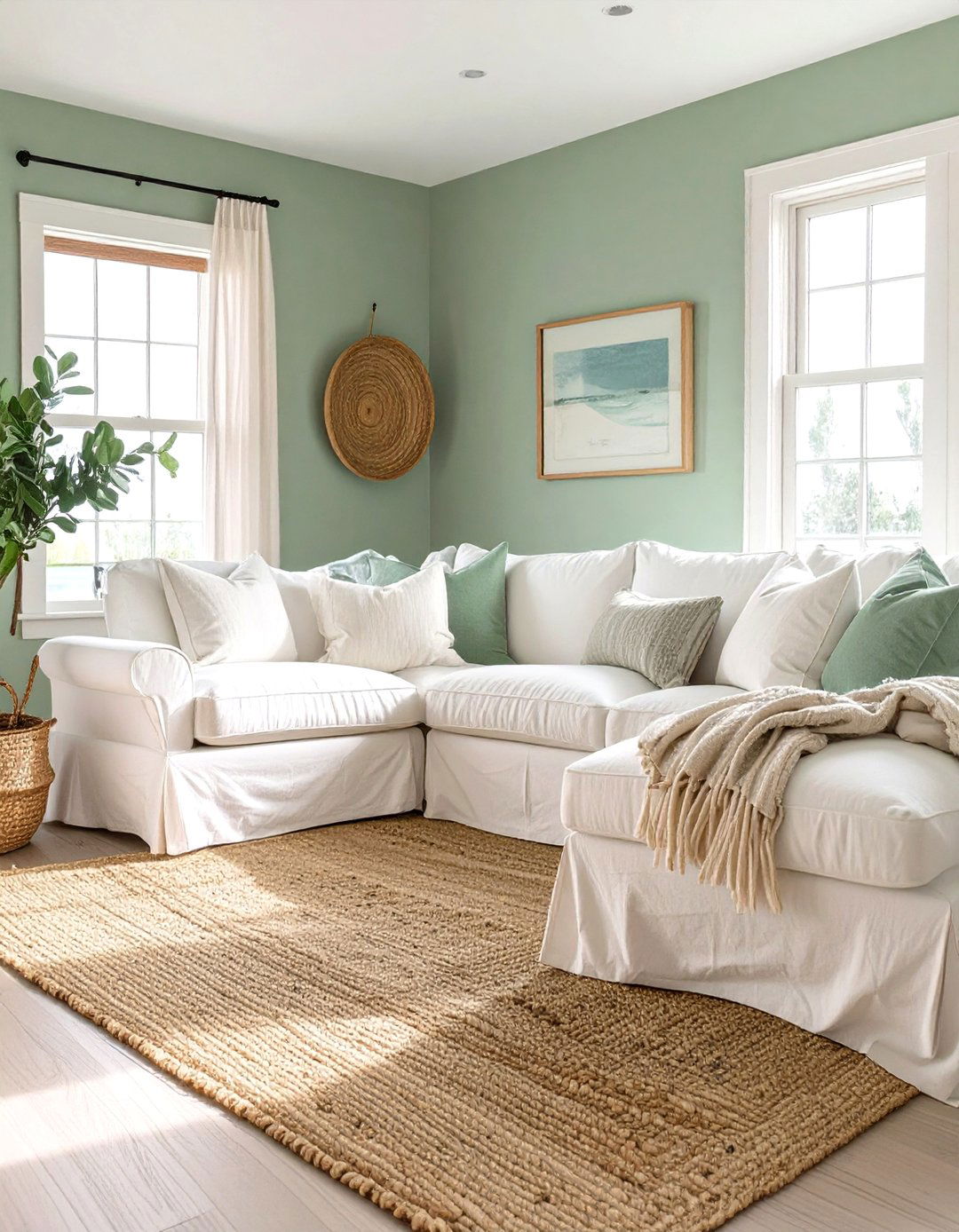
A coastal-inspired living room benefits immensely from the calming, airy quality of sage green. Paired with crisp white, sandy beige, and light blues, sage green evokes the soft colors of sea glass and coastal grasses. Use it on the walls to create a light and breezy backdrop. Furnish the space with light-colored slipcovered sofas, weathered wood tables, and natural fiber rugs like jute or sisal. Decorate with nautical-themed accessories, such as seashells, driftwood, and art depicting seascapes, to complete the relaxed, beachy vibe. This palette creates a serene escape that feels fresh, open, and connected to the shore.
13. Sage Green in Rugs and Textiles
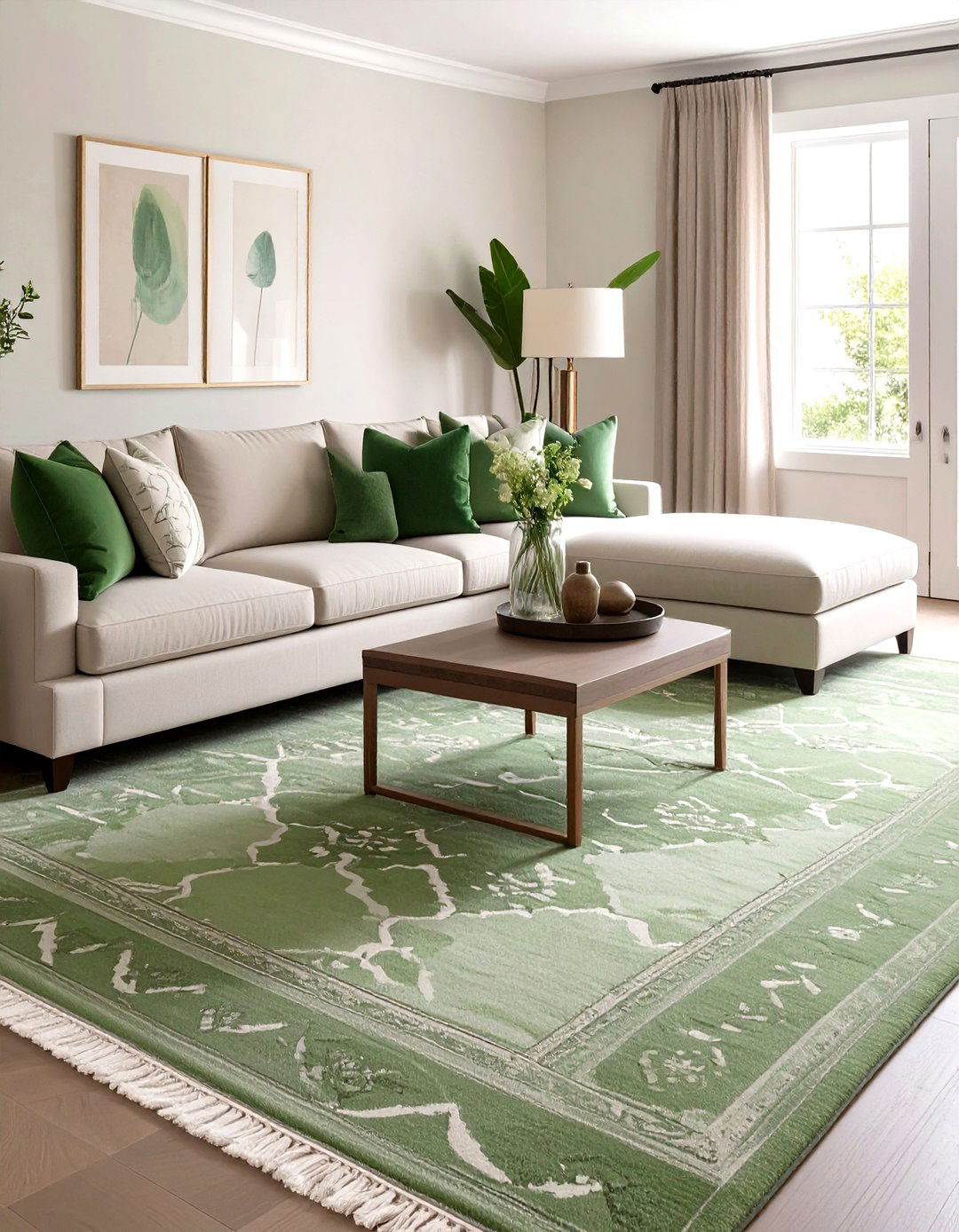
If you prefer to keep your walls and furniture neutral, introducing sage green through rugs and textiles is an excellent strategy. A large area rug with a sage green pattern can anchor the room and define the seating area, adding color and softness underfoot. Complement it with sage green throw pillows on the sofa, a cozy blanket draped over an armchair, or even in the pattern of your upholstery. This method allows for flexibility, as you can easily swap out these items to refresh the look. It's a low-commitment way to bring the calming energy of sage green into your living space.
14. Sage Green and Dark Charcoal Contrast
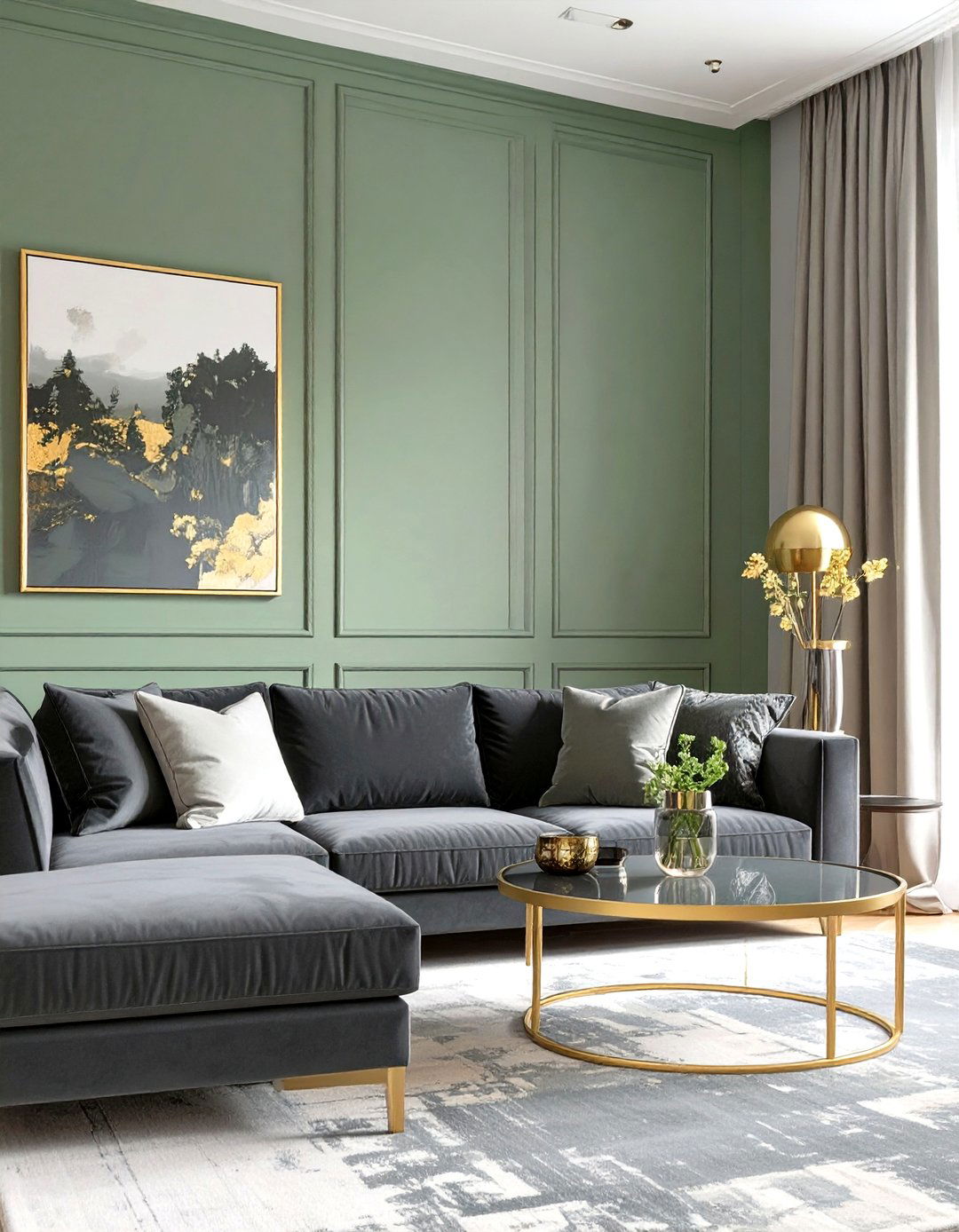
For a bold and dramatic living room, pair sage green with dark charcoal or black. The deep, moody tone of charcoal creates a powerful contrast against the soft, earthy sage, resulting in a look that is both sophisticated and contemporary. Consider a sage green accent wall behind a charcoal gray sofa, or use charcoal for trim, doors, or a fireplace surround in a sage green room. This high-contrast combination adds depth and a sense of modern luxury. Balance the dark tones with warm wood furniture and metallic accents like brass to prevent the space from feeling too heavy.

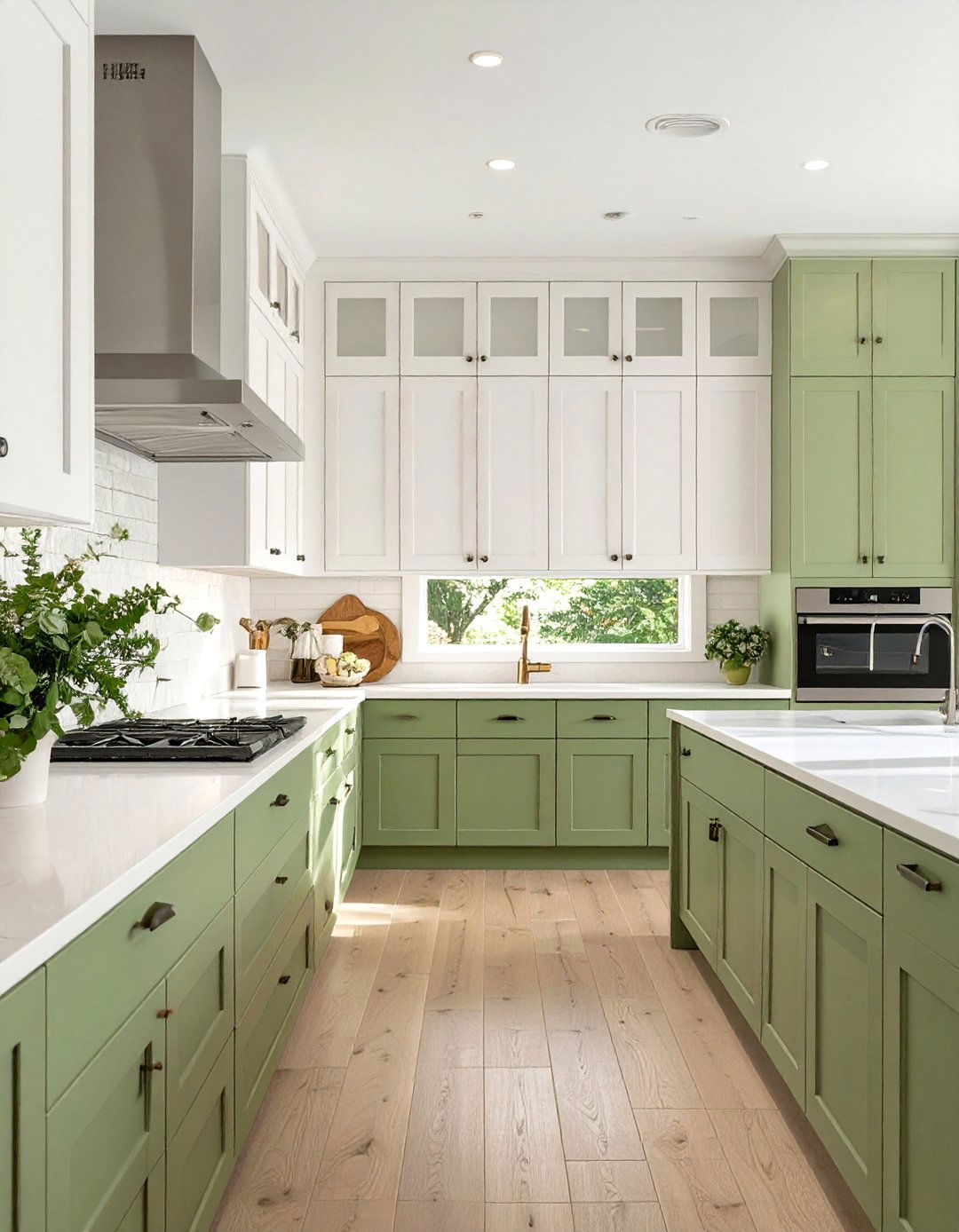

15. Mid-Century Modern Sage Green Living Room
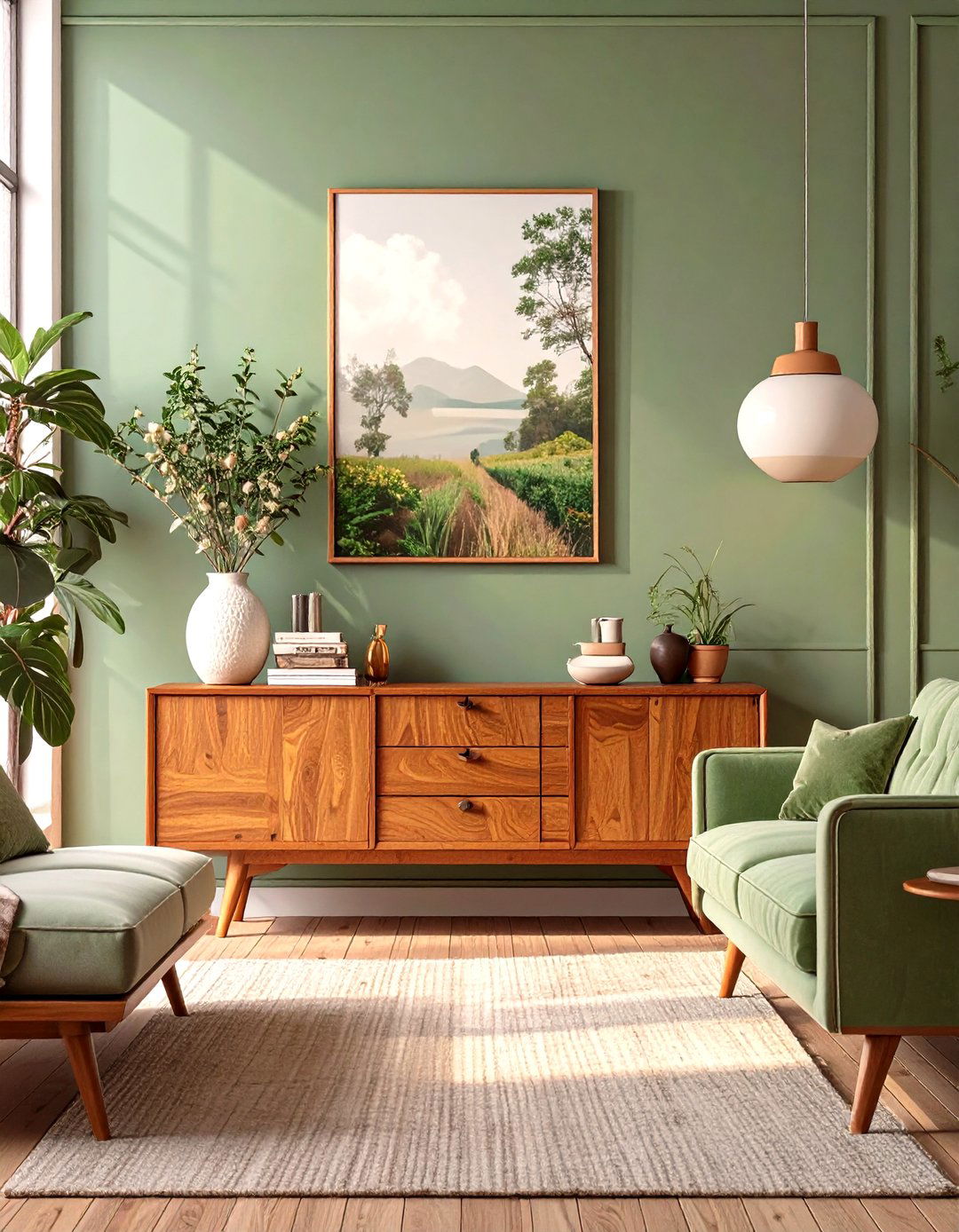
Sage green beautifully complements the clean lines and organic shapes of mid-century modern design. Use sage green as a wall color to provide a soft, earthy backdrop for iconic furniture pieces with tapered legs and warm wood finishes like teak or walnut. The color enhances the style's connection to nature and provides a sophisticated alternative to more common neutral palettes. Accessorize with geometric-patterned textiles, a sunburst mirror, and sleek, sculptural lighting to complete the retro-inspired yet timeless look. This combination feels both authentic to the era and perfectly suited for contemporary living.
16. Farmhouse Style with Sage Green Accents
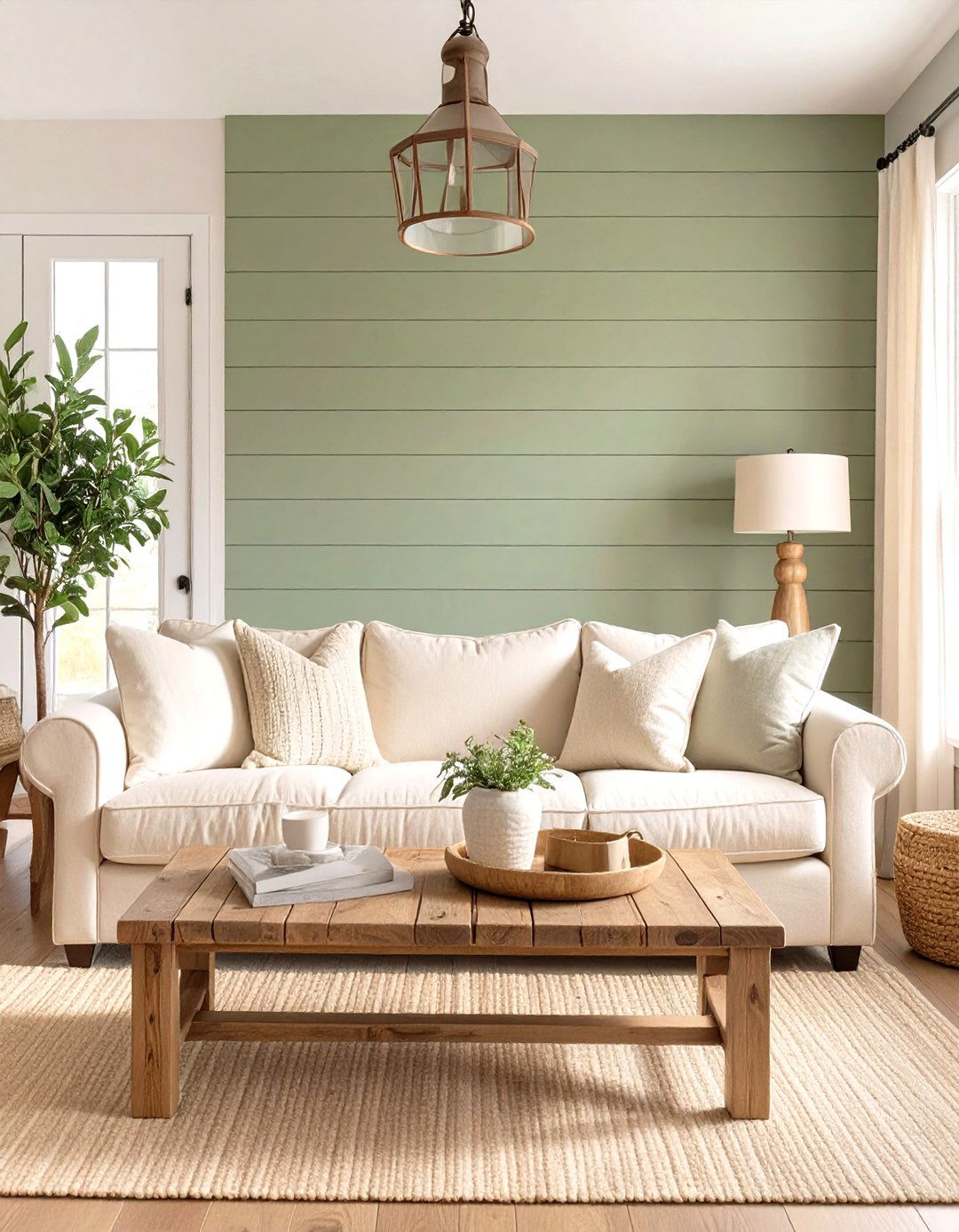
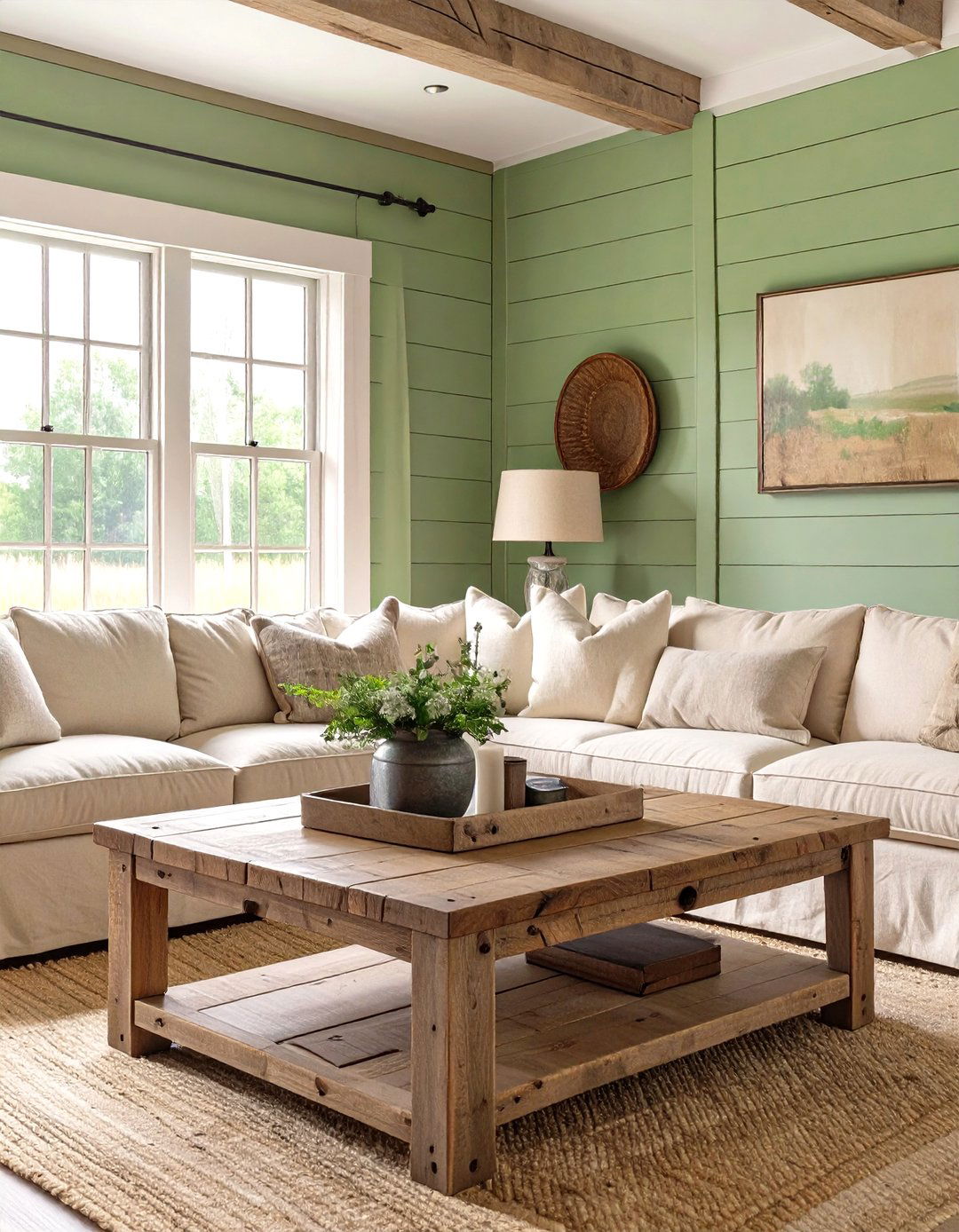
In a farmhouse living room, sage green adds a touch of soft, rustic color that perfectly complements the style's cozy and welcoming feel. Use it for an accent wall, on kitchen-style cabinetry, or for painted furniture like a distressed coffee table or sideboard. Sage green pairs beautifully with classic farmhouse elements such as shiplap walls, reclaimed wood beams, and comfortable, neutral-toned sofas. Introduce the color through textiles like plaid or floral pillows and cozy throws. This gentle hue enhances the natural, lived-in charm of the farmhouse aesthetic, making the space feel even more inviting.
17. Sage Green and Leather Furniture
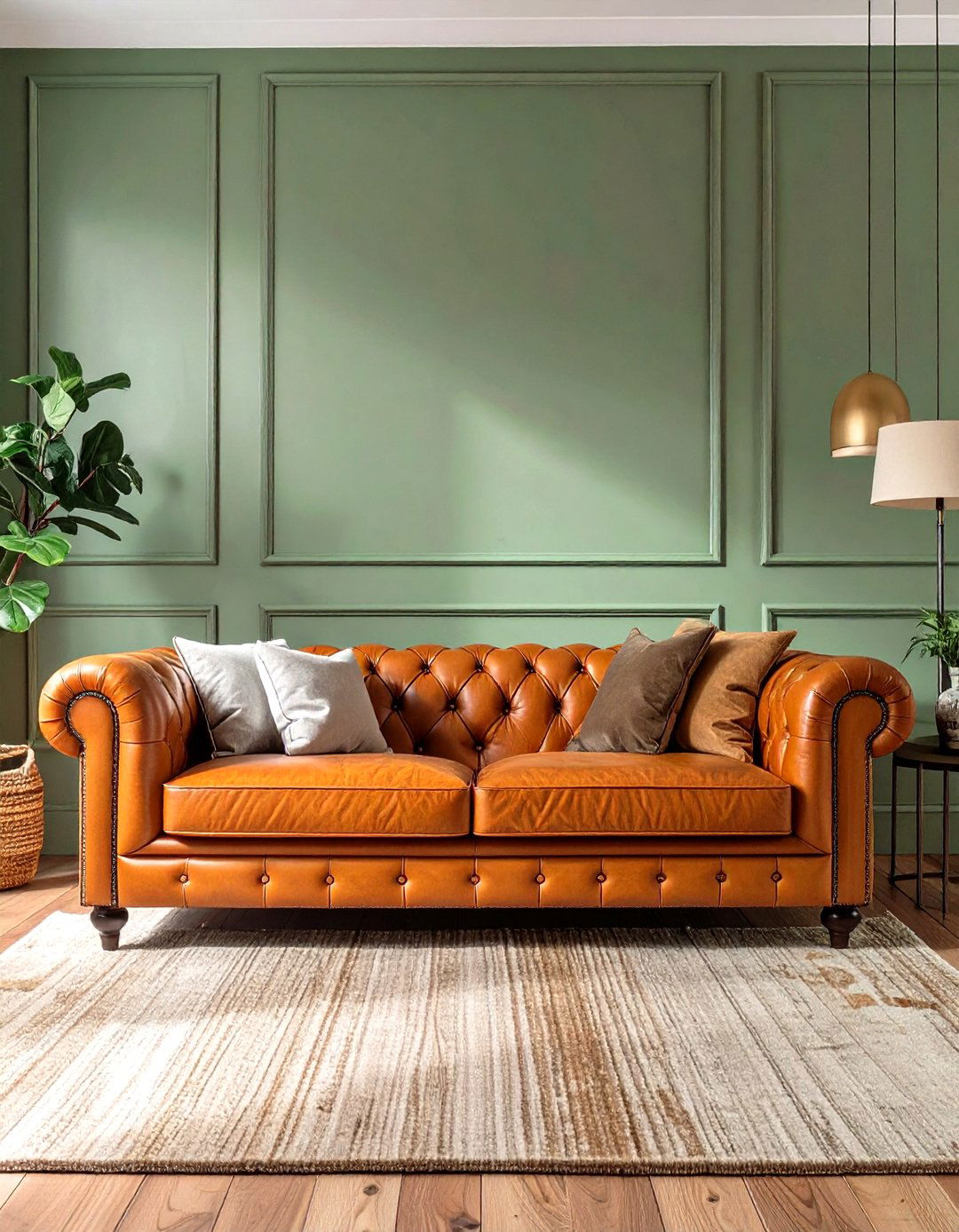
Pairing sage green with rich leather furniture creates a sophisticated and timeless living room. The earthy, natural tone of sage green walls or textiles provides a perfect backdrop for the warm, textured look of a brown or caramel leather sofa or armchair. This combination strikes a beautiful balance between soft color and rugged, classic material. The look is grounded and masculine yet feels comfortable and inviting. Add a soft, neutral rug to soften the space and incorporate metallic or dark wood accents to enhance the refined, study-like atmosphere of this handsome pairing.
18. Sage Green Wallpaper with Botanical Prints
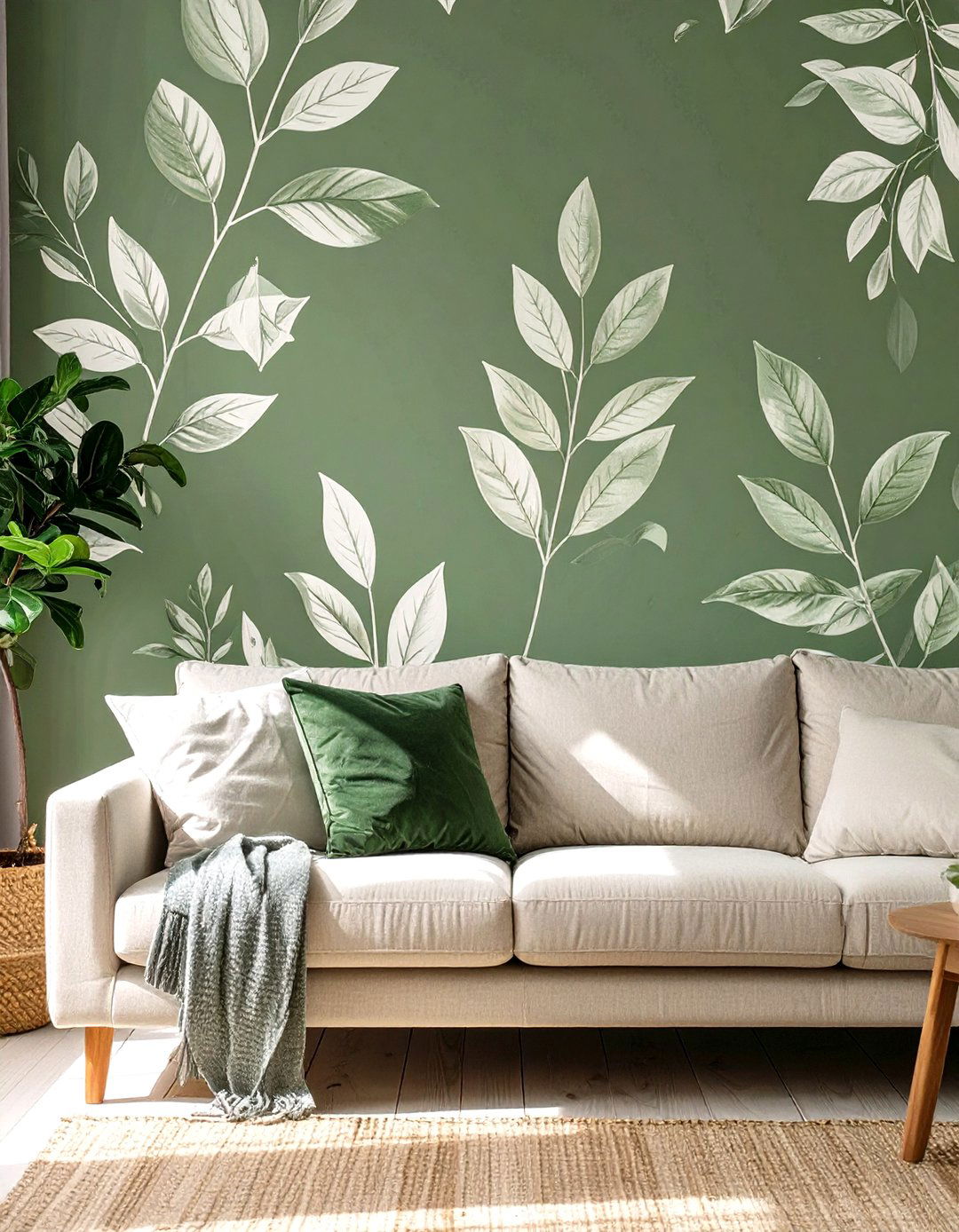
To create a stunning feature wall and amplify the connection to nature, choose a sage green wallpaper with a botanical print. Designs featuring leaves, ferns, or delicate floral patterns in shades of green and white can transform a living room into a lush, serene oasis. Use it on a single wall behind the sofa to act as a focal point without overwhelming the room. Keep the rest of the decor relatively simple, with neutral-colored furniture and natural textures like wood and linen. This approach brings artistic flair and a strong sense of the outdoors inside, creating a truly unique and beautiful space.
19. Sage Green Painted Ceiling
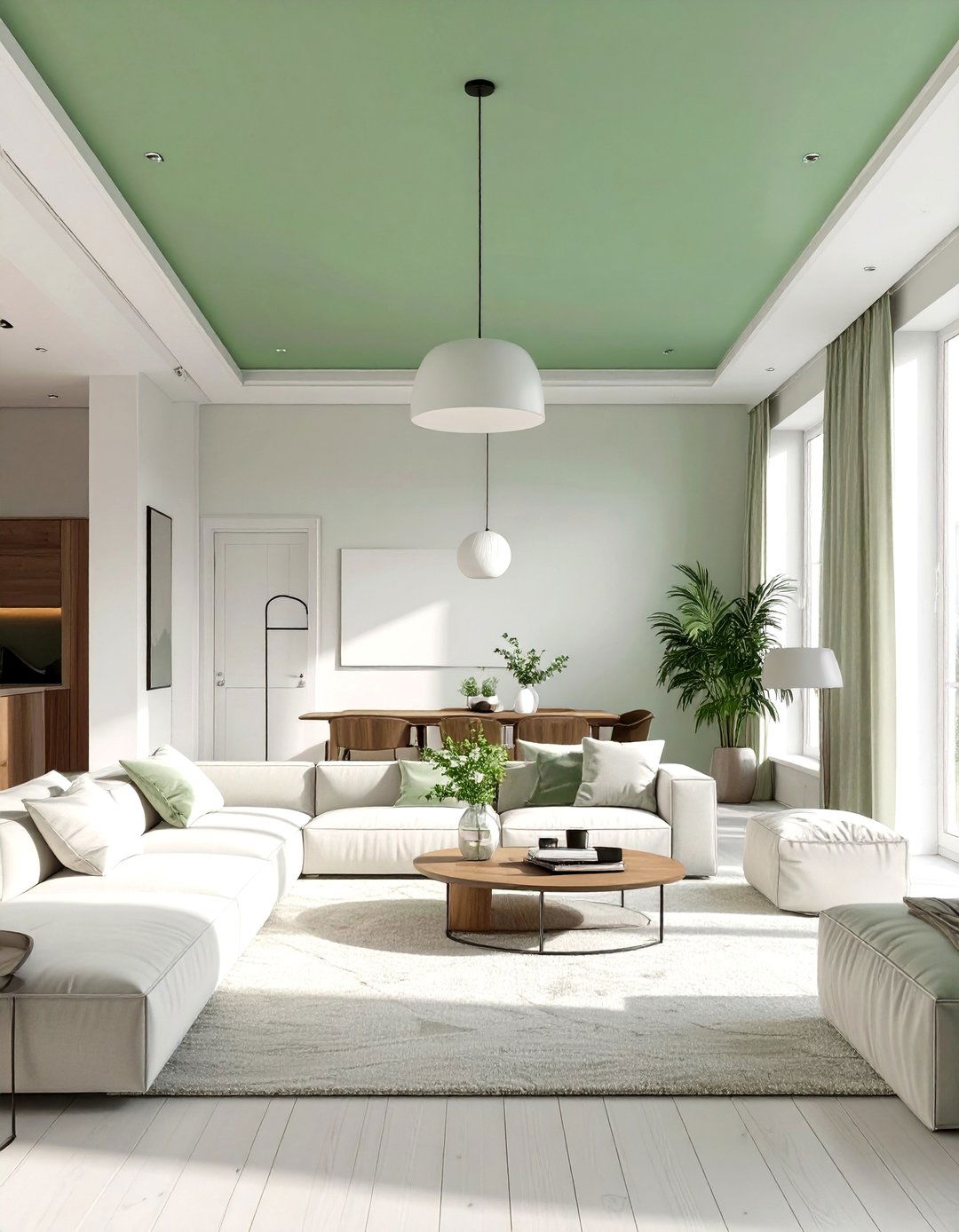
For a unique and unexpected design choice, consider painting the living room ceiling sage green. This draws the eye upward and can make a room with high ceilings feel cozier and more intimate, while adding a subtle touch of color in a creative way. In a room with lower ceilings, it can create an illusion of height, especially when paired with crisp white walls. This "fifth wall" treatment is a sophisticated way to incorporate color without committing to it on all four walls. It adds an element of surprise and architectural interest, making the living room feel custom-designed and thoughtfully curated.
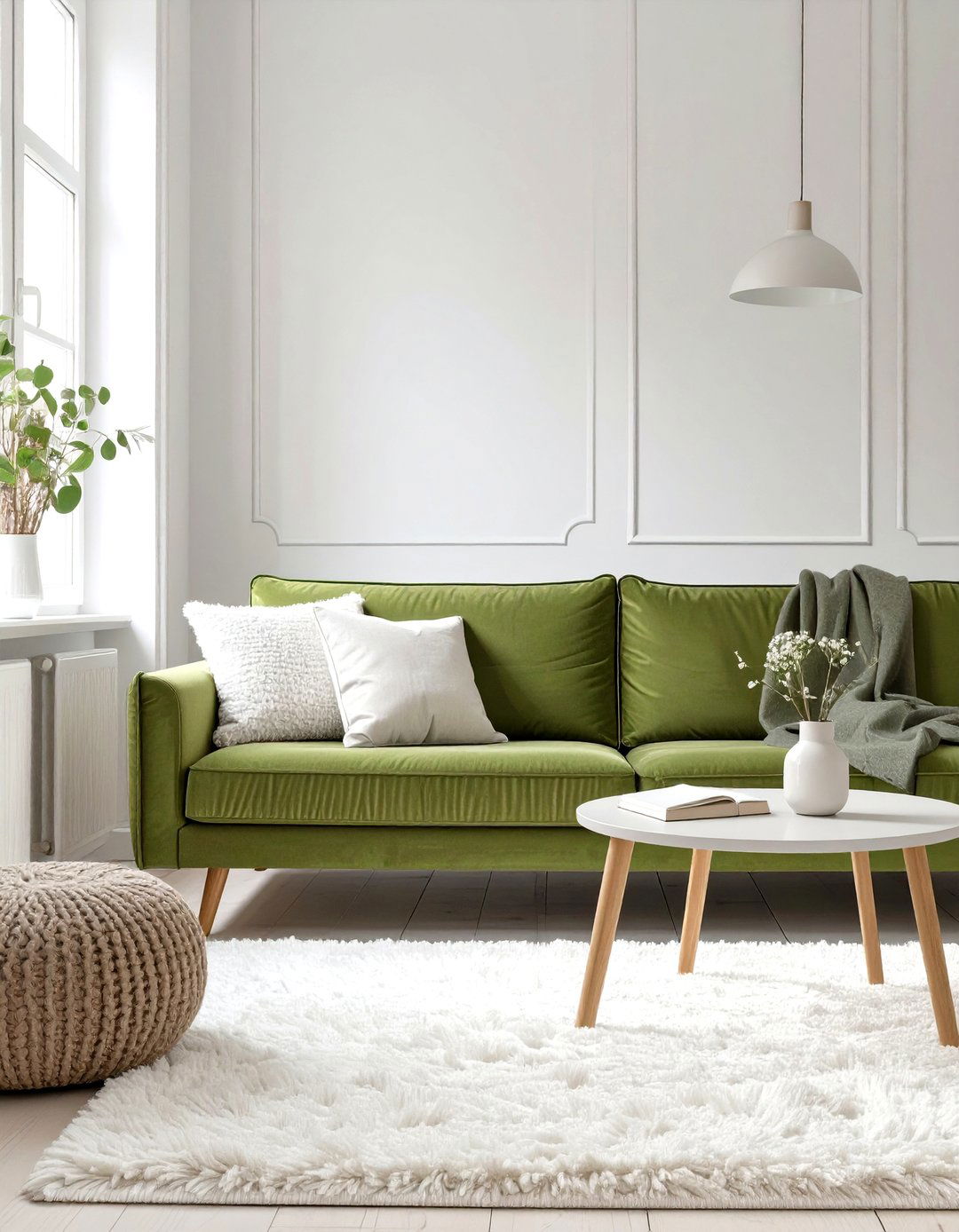

20. Incorporating Sage Green Through Plants
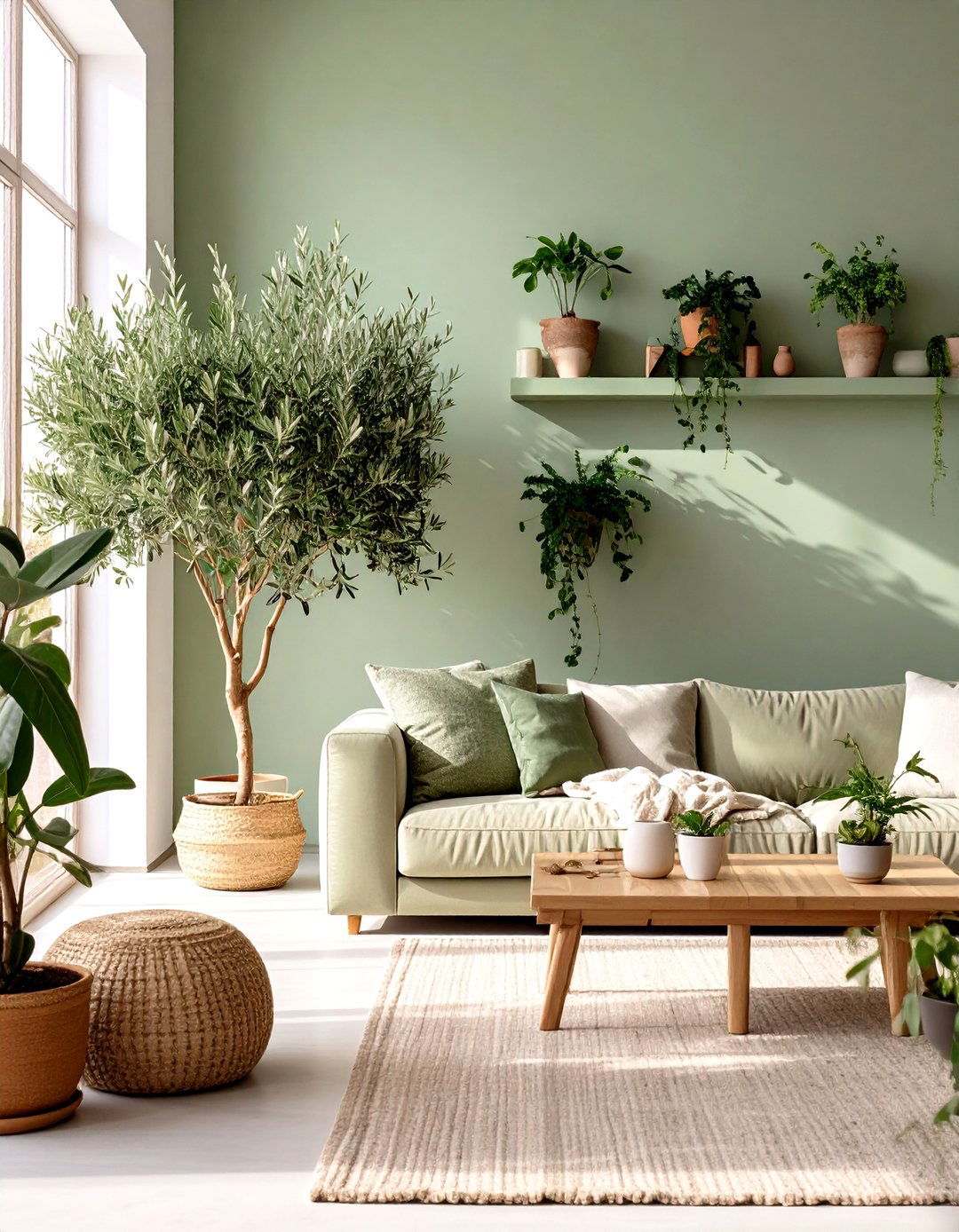
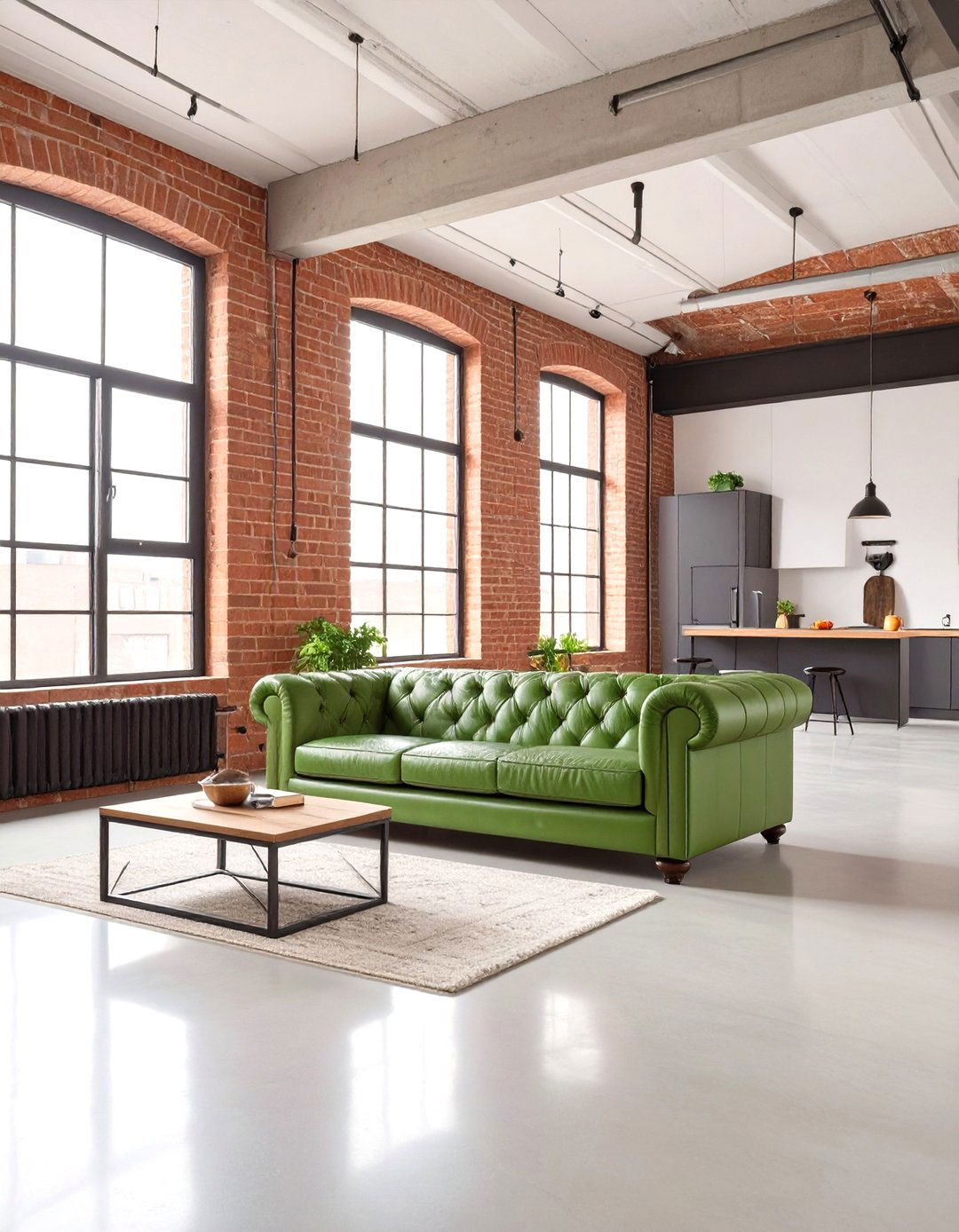
One of the most natural ways to bring sage green into your living room is through an abundance of houseplants. The various shades of green found in foliage, from the silvery-green of an olive tree to the dusty leaves of a eucalyptus plant, echo the sage hue perfectly. Grouping several plants of different sizes and leaf textures together creates a lush, living accent. Place them in terracotta, ceramic, or woven pots to enhance the natural aesthetic. This approach not only adds color and life to the room but also purifies the air and boosts the overall sense of well-being.
21. Sage Green and Terracotta Tones
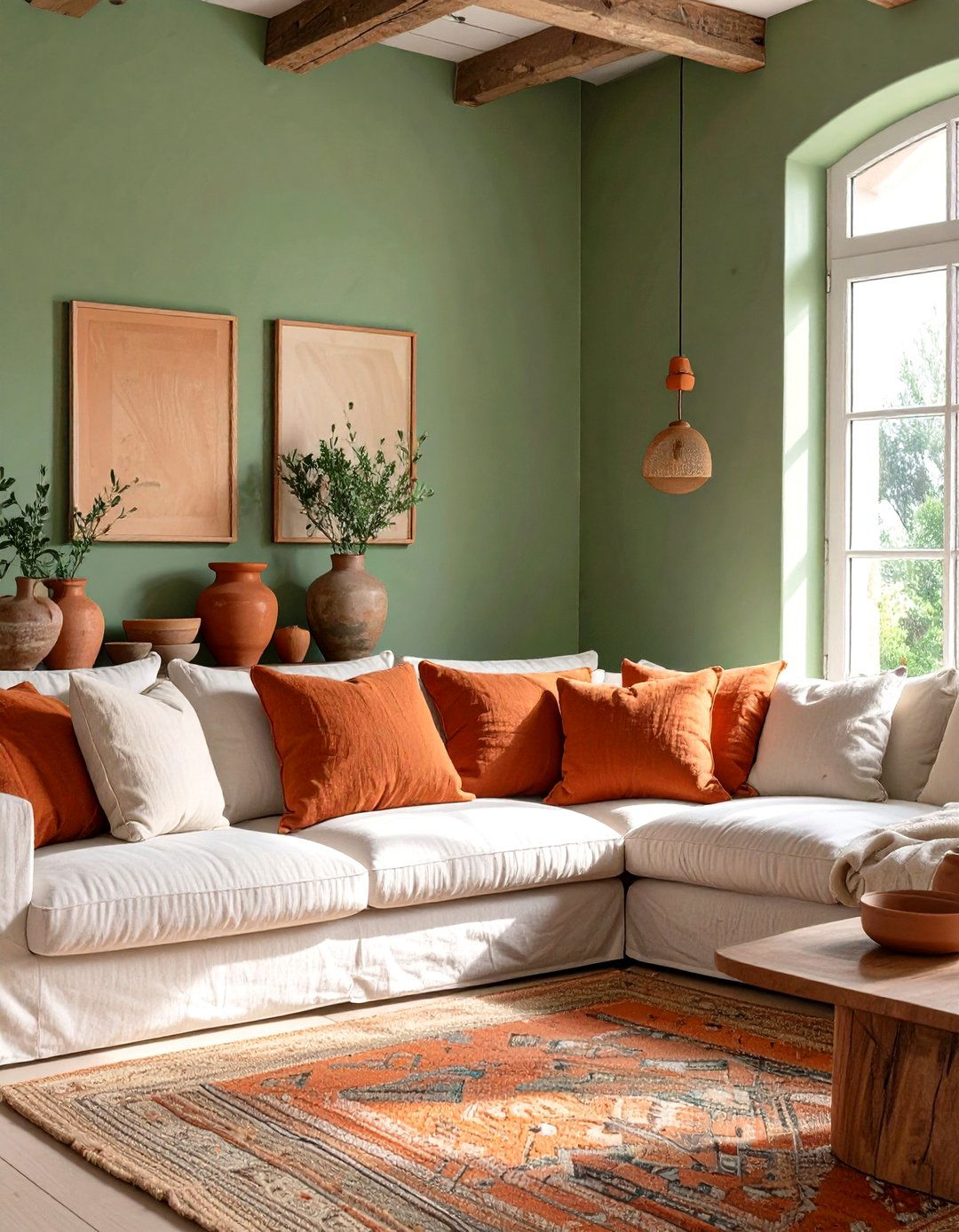
Combine sage green with warm terracotta for an earthy and grounded living room palette inspired by desert landscapes. The cool, calming nature of sage green is beautifully balanced by the sun-baked warmth of terracotta. Use sage green for the walls and introduce terracotta through accent pieces like throw pillows, vases, plant pots, or even a leather armchair. This color scheme creates a space that feels both cozy and connected to the natural world. It’s a sophisticated take on an earthy palette, perfect for creating a warm, inviting atmosphere with a hint of bohemian or Southwestern flair.
22. Scandinavian Living Room with Sage Green
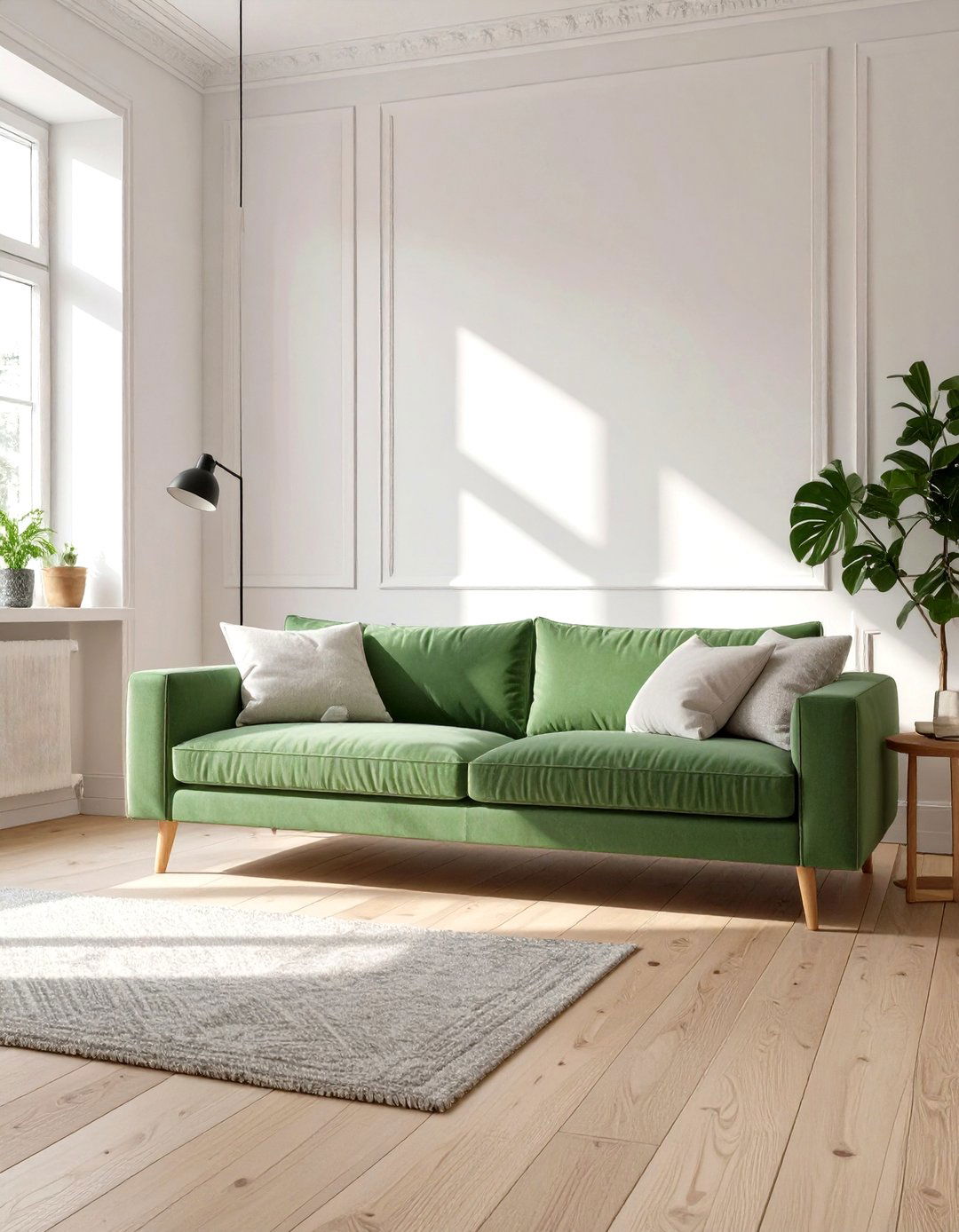
In a Scandinavian-style living room, which emphasizes simplicity, functionality, and light, sage green serves as the perfect subtle accent color. While the base of the room should remain bright and airy with white walls and light wood floors, a sage green accent wall or a key furniture piece like a sofa can add warmth and personality. The color aligns perfectly with the Scandinavian principle of bringing nature indoors. Keep the rest of the decor minimal with clean-lined furniture, cozy textiles in neutral tones, and plenty of natural light to maintain the serene and uncluttered feel of the design.
23. Sage Green Media Console
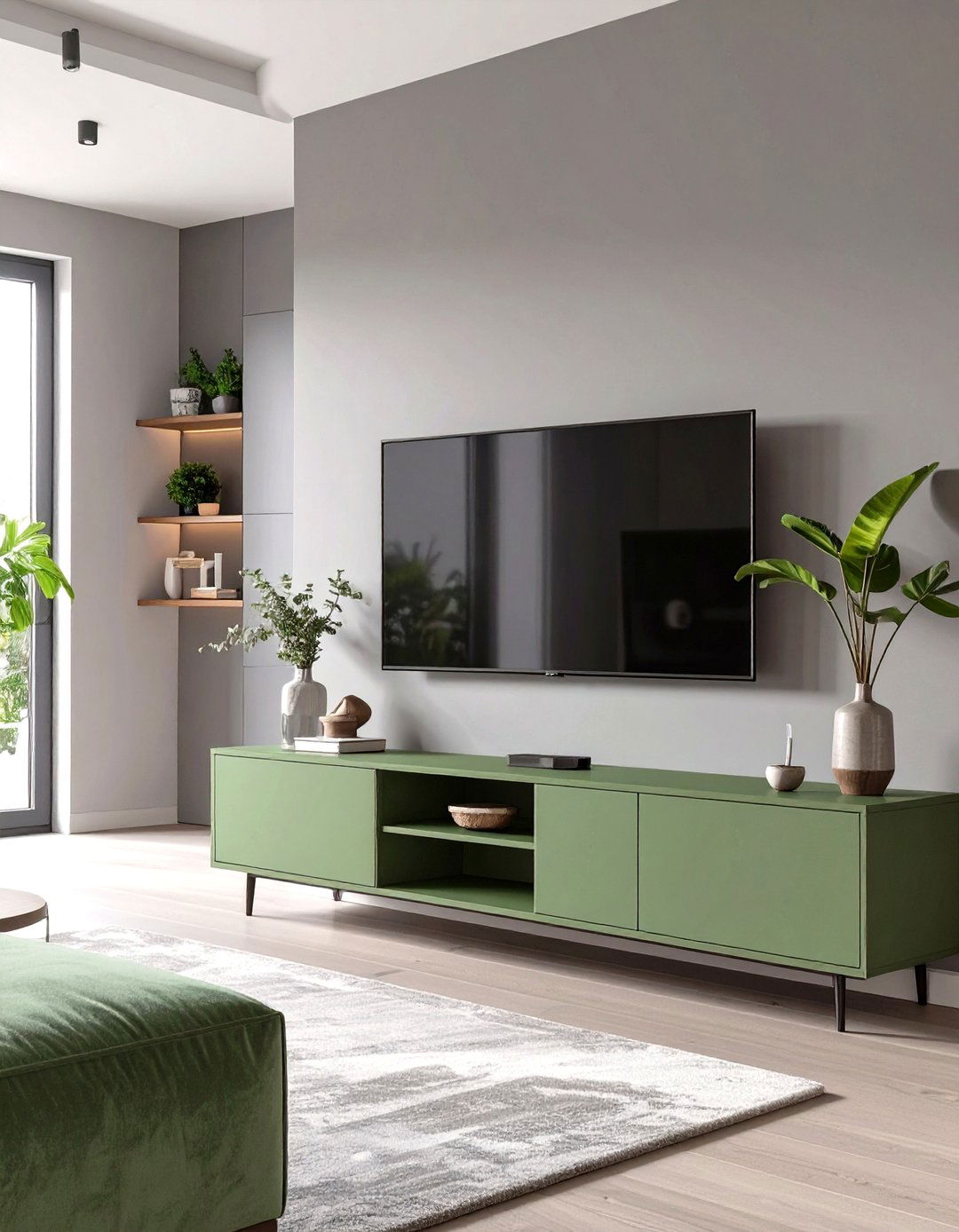
A sage green media console or TV stand is a stylish way to introduce color into the living room in a functional and modern way. This piece can serve as a subtle focal point along one wall, adding character without overwhelming the space. It’s a great alternative to a standard wood or black unit, bringing a softer, more custom look to your entertainment area. Pair it with a wall-mounted TV and keep the surrounding decor minimal to let the piece stand out. The soft green hue helps to visually soften the hard lines of electronic equipment.
24. Sage Green with Rattan and Wicker
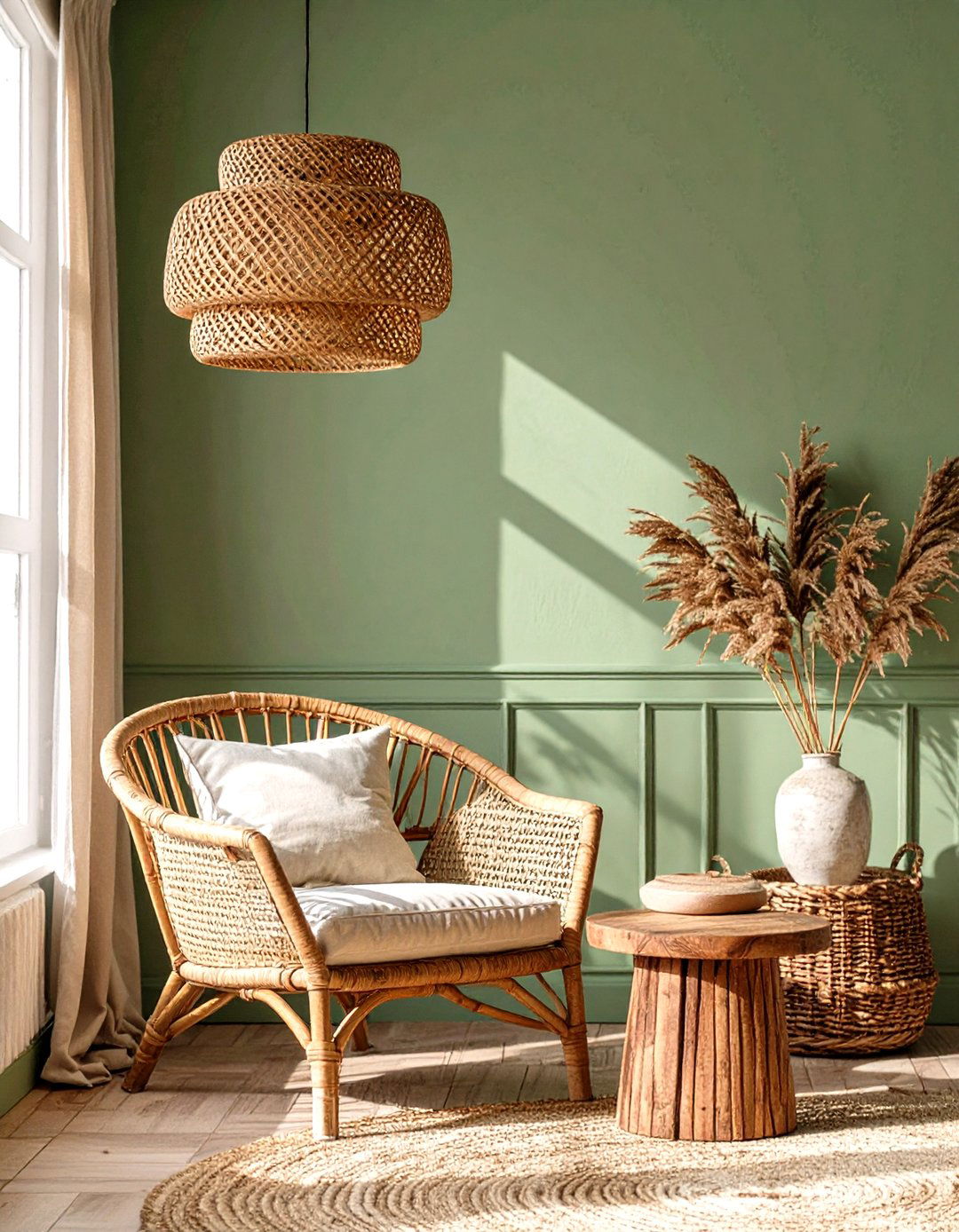
Enhance the natural, organic feel of a sage green living room by incorporating rattan and wicker furniture and decor. The light, airy texture of these woven materials complements the soft, earthy tone of sage green beautifully. Consider a rattan armchair, a wicker coffee table, or woven pendant lights. This combination evokes a relaxed, slightly bohemian or coastal vibe, creating a space that feels both stylish and comfortable. The natural fibers add warmth and textural interest, preventing the room from feeling flat and enhancing its connection to the outdoors.
25. Sage Green with Abstract Wall Art
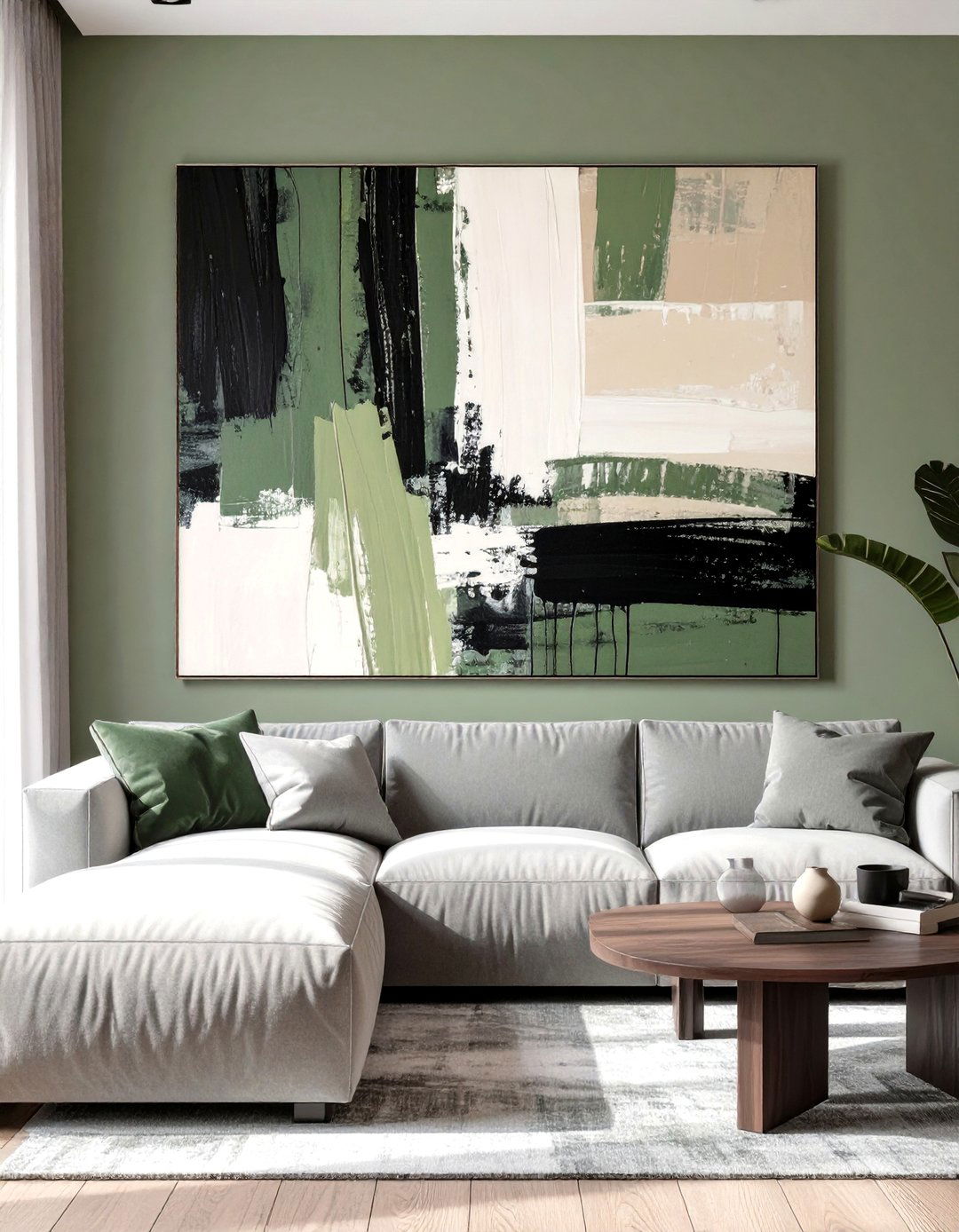
Use large-scale abstract wall art to bring a modern and dynamic element to a sage green living room. Select a piece that features sage green as one of its prominent colors, alongside complementary shades like cream, charcoal, or blush pink. Hanging a significant piece of art above the sofa or fireplace creates an instant focal point and injects personality into the space. The abstract forms can provide a contemporary contrast to the soft, traditional feel of the sage green walls, resulting in a balanced and visually interesting design that feels curated and unique.
26. Layering Different Shades of Sage Green
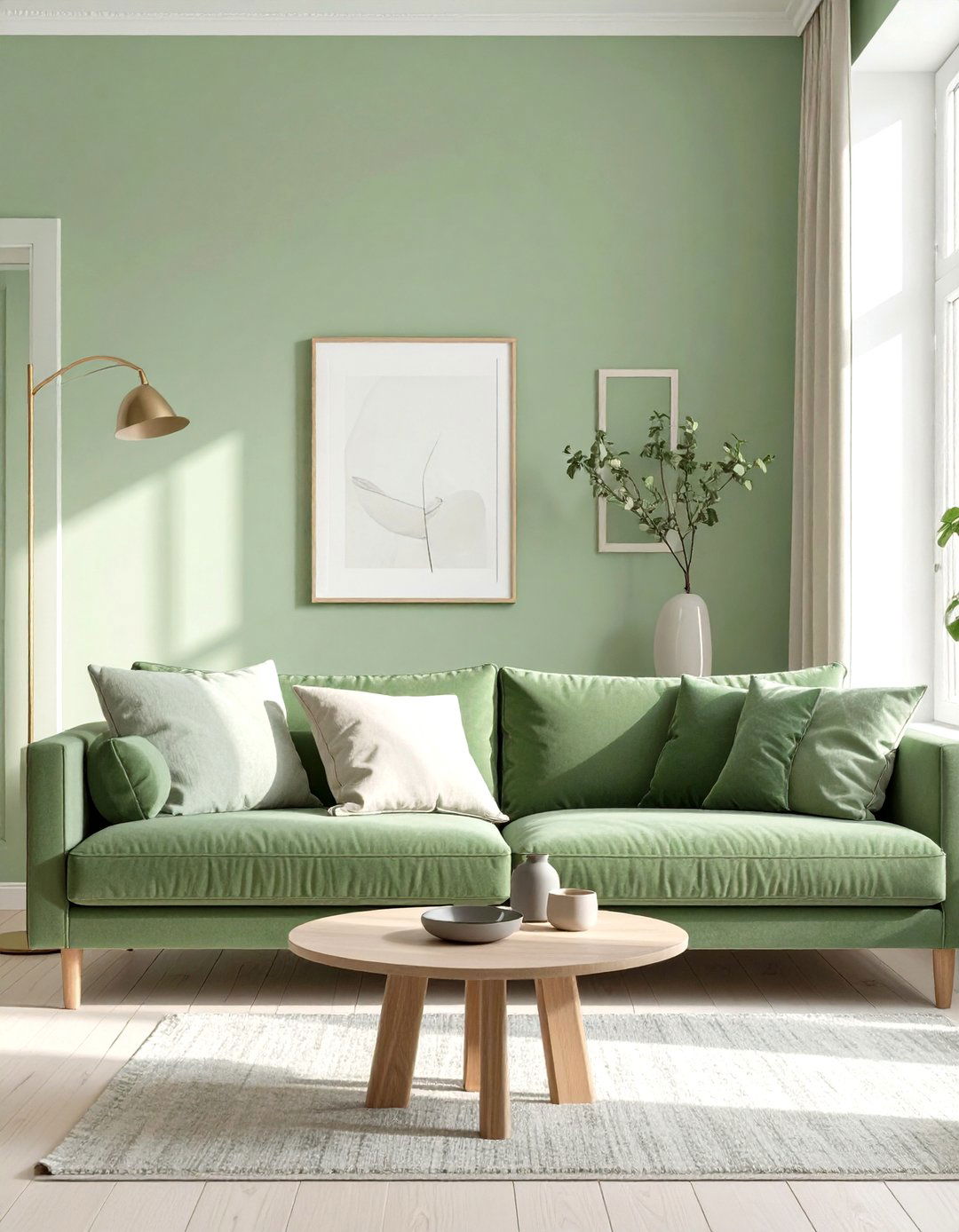
Create a sophisticated and cohesive look by layering different shades and tones of sage green. This monochromatic approach adds depth and dimension to the living room. Start with a medium sage on the walls, then bring in a deeper sage green for the sofa or curtains, and lighter sage accents in pillows and decor. The subtle variations in the green hue create a rich, textured look that is both calming and visually interesting. This technique works well in any design style and results in a space that feels thoughtfully designed and deeply serene.
27. Sage Green and Navy Blue for a Bold Look
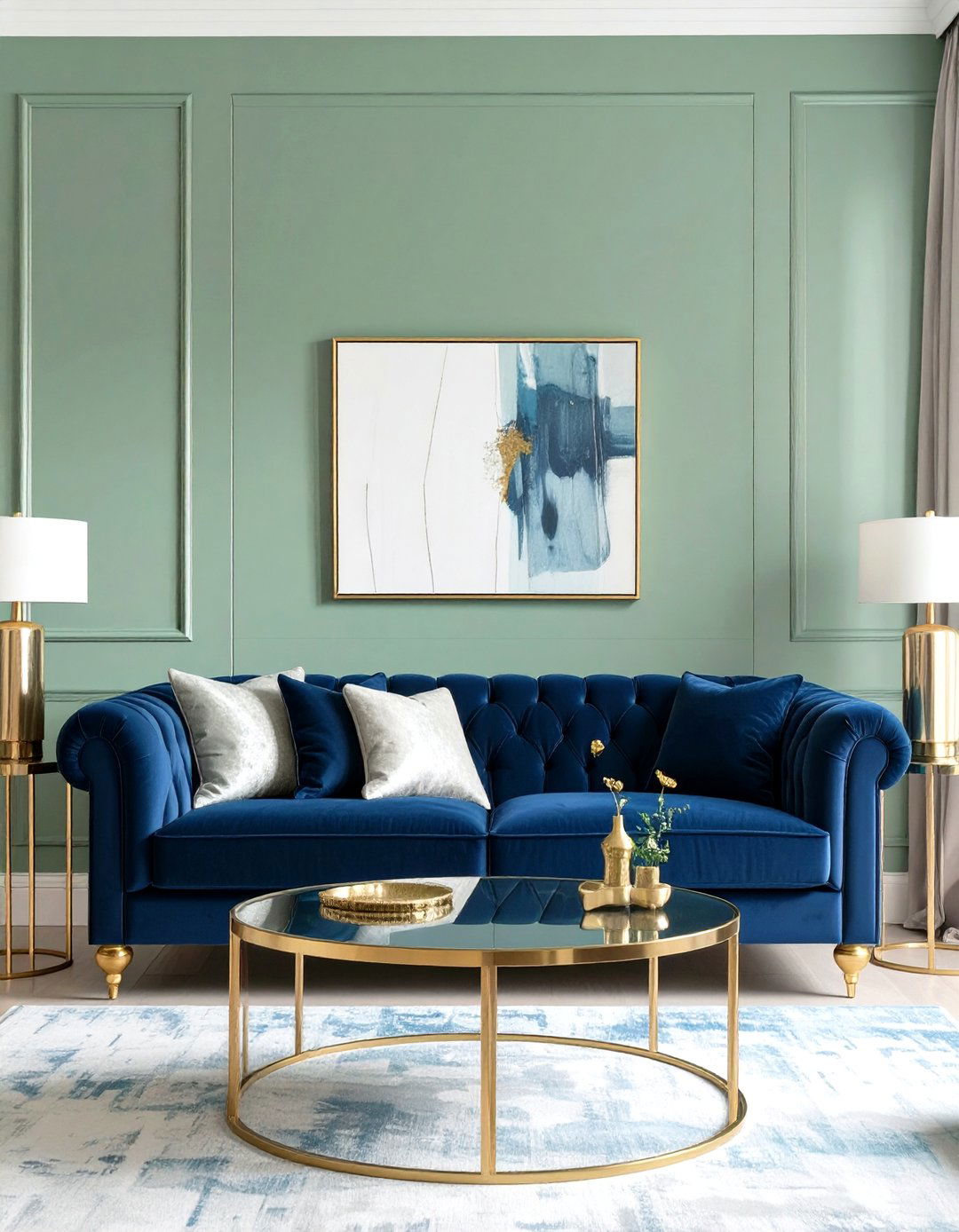
For a bold and sophisticated color palette, pair sage green with deep navy blue. The cool, earthy tones of sage green are beautifully anchored by the rich, commanding presence of navy. Use sage green on the walls and introduce navy through a statement sofa, an accent chair, or a large area rug. This combination creates a striking contrast that feels both timeless and contemporary. Add warmth with brass or gold accents and natural wood tones to balance the cool colors, resulting in a living room that is dramatic, elegant, and full of character.
28. Traditional Living Room with Sage Green Walls
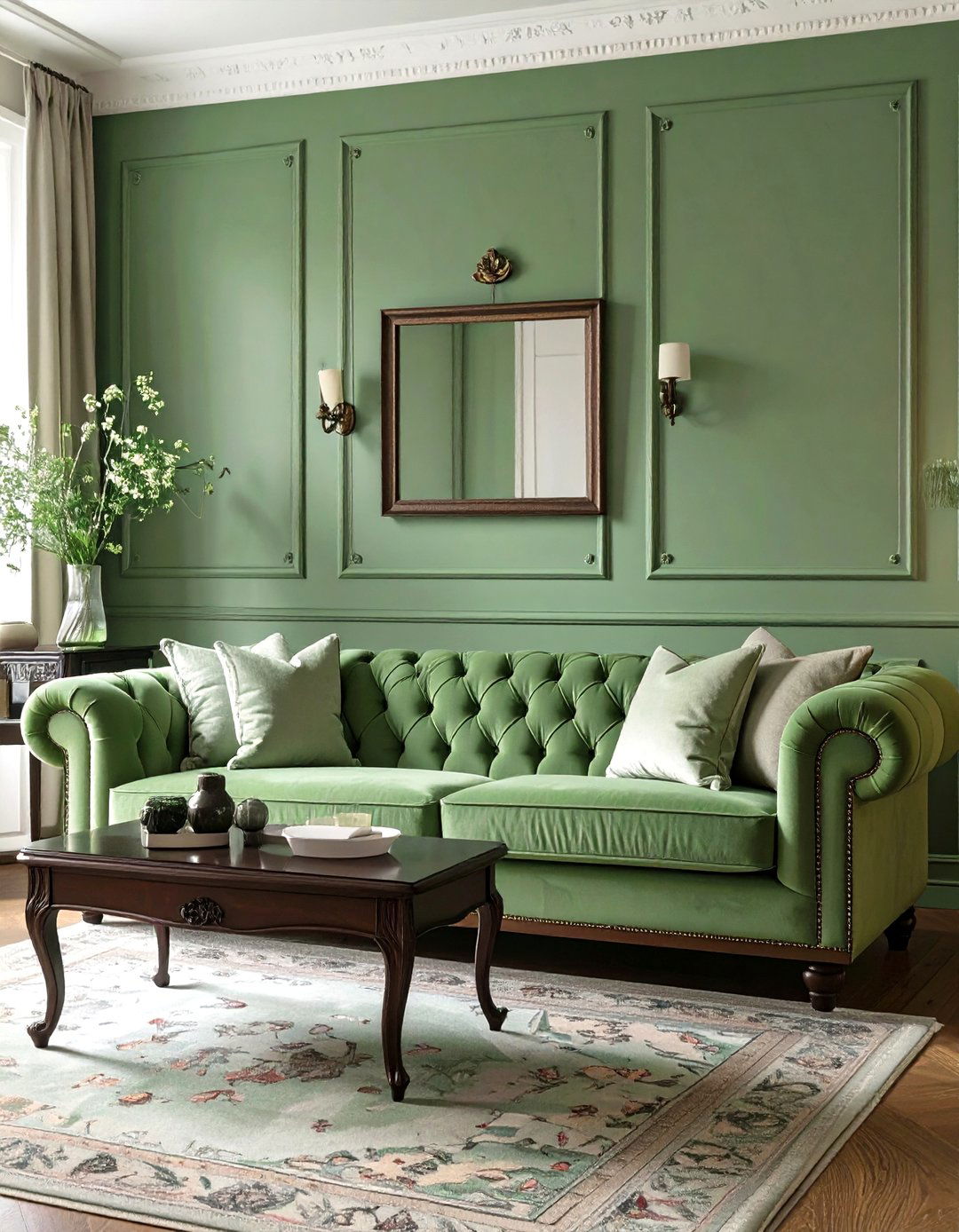
Sage green is a perfect choice for a traditional living room, offering a soft and elegant backdrop that complements classic design elements. Paint the walls in a gentle sage hue and pair it with timeless furniture pieces like a rolled-arm sofa, wingback chairs, and dark wood tables. Ornate details like carved wood, detailed trim, and classic patterned fabrics in florals or damasks work beautifully against the muted green. This color choice lends a sense of history and grace to the space, creating a comfortable and refined atmosphere that feels both welcoming and stately.
29. Sage Green and Marble Accents
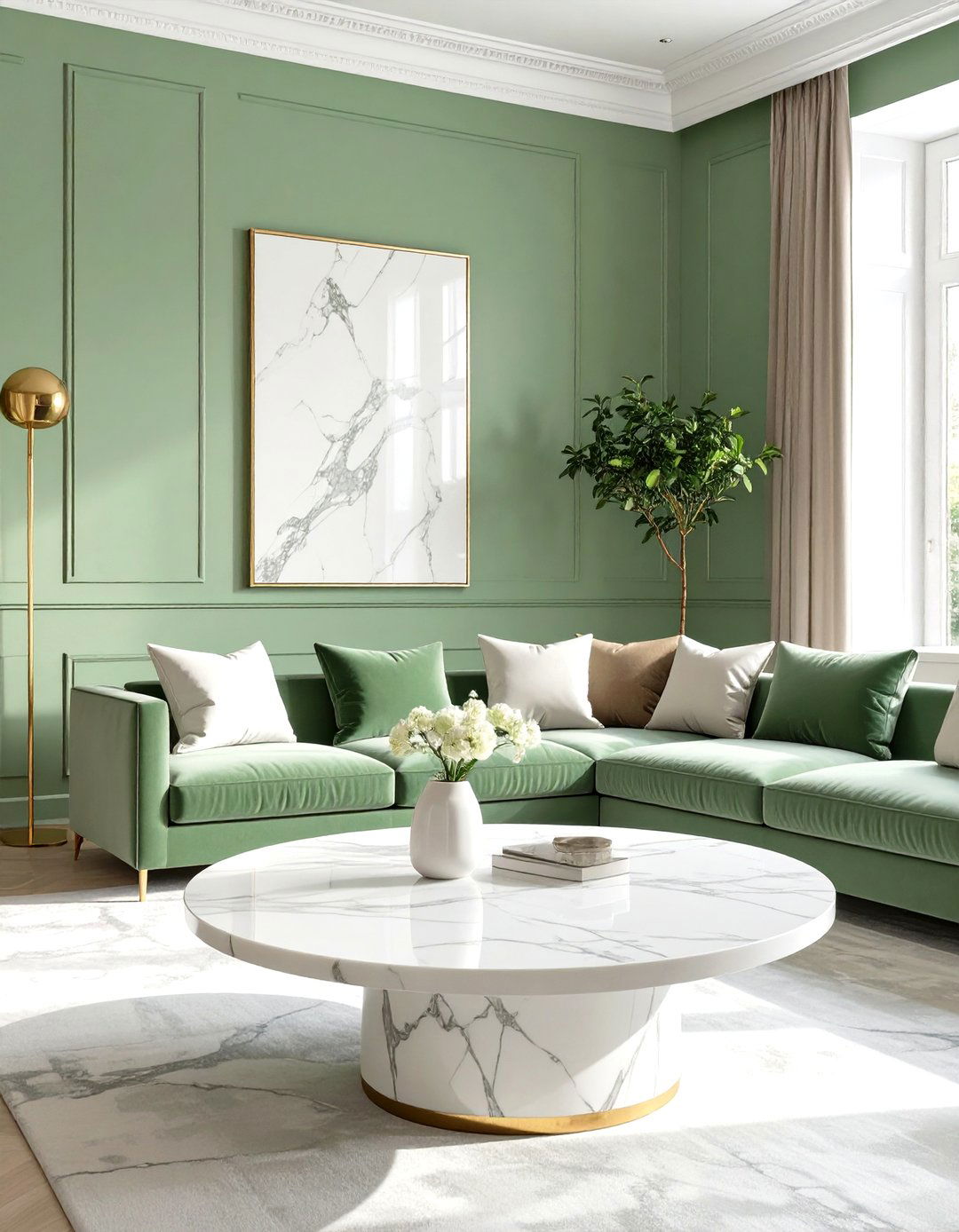
For a touch of modern luxury, combine sage green with elegant marble accents. The cool, veined pattern of white or grey marble provides a sophisticated contrast to the soft, earthy tone of sage green. Incorporate marble through a coffee table top, a fireplace surround, or small decorative accessories like coasters and trays. This pairing feels clean, refined, and effortlessly chic. The natural beauty of both materials works in harmony to create a living room that is both serene and opulent, perfect for a contemporary space that values high-end finishes and understated elegance.
30. Sage Green Painted Fireplace Surround
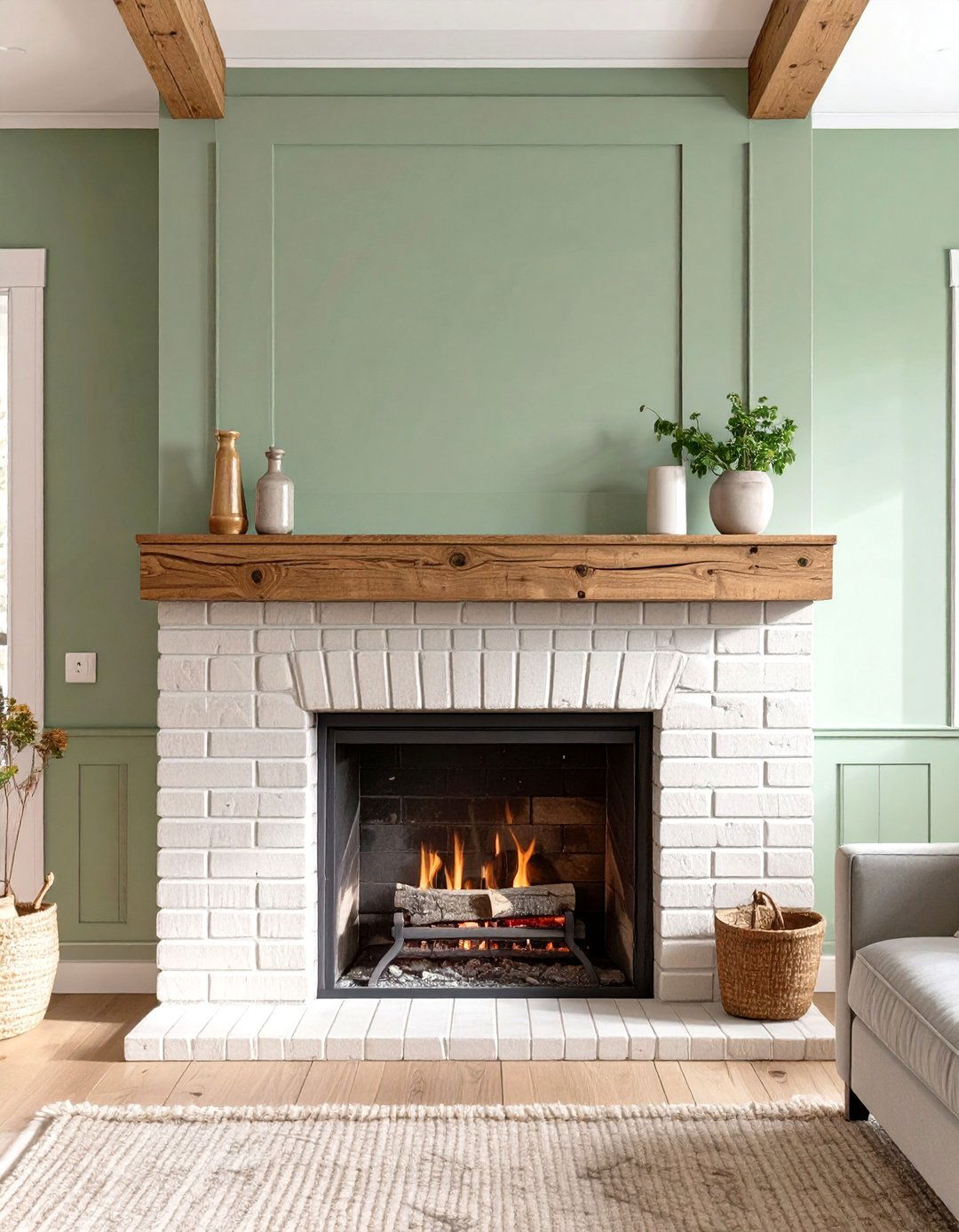
Transform your fireplace into a subtle yet stunning focal point by painting the surround or mantel in sage green. This simple update can completely change the feel of your living room, adding a touch of color and personality to its architectural heart. It's an especially effective technique in a room with neutral walls, as the green will draw the eye and highlight the fireplace's details. The soft, earthy hue helps to soften the hard lines of the structure, making it feel more integrated and cozy within the space. This is a brilliant way to add custom charm.
Conclusion:
Ultimately, sage green proves to be an exceptionally adaptable and stylish choice for any living room. Its inherent tranquility and connection to nature allow it to serve as a calming backdrop or a sophisticated accent. Whether you opt for a full wall color, a statement furniture piece, or subtle decorative touches, sage green integrates seamlessly into diverse styles from minimalist to traditional. This versatile hue offers endless possibilities to create a space that is not only beautiful and on-trend but also feels personally restorative and endlessly inviting.

Related posts:



Leave a Reply