
A rustic dining room brings a sense of warmth, history, and connection to the natural world into your home. This design style celebrates the beauty of raw materials, handcrafted elements, and time-worn textures. It’s about creating a space that feels both grounded and inviting, where meals are shared in a comfortable and unpretentious setting. From substantial wooden furniture to soft, earthy textiles, a rustic aesthetic transforms the dining area into a cozy retreat. By focusing on natural elements and simple, sturdy forms, you can craft a timeless space that feels welcoming and authentic for family and guests alike.
1. Reclaimed Wood Dining Table Centerpiece
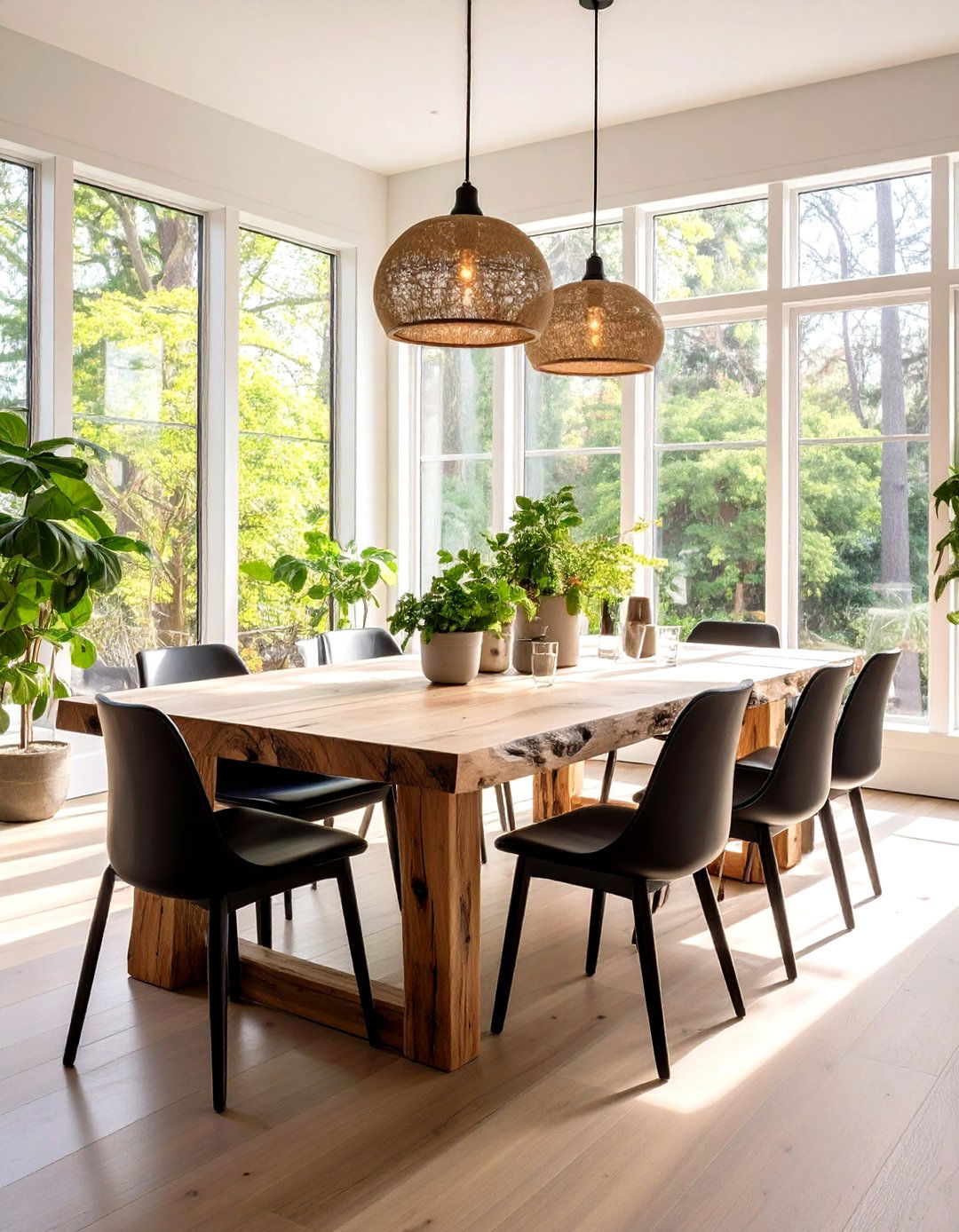
A substantial reclaimed wood dining table serves as the undeniable heart of a rustic dining room. Sourced from old barns, factories, or salvaged beams, each table tells a story through its knots, grain patterns, and weathered imperfections. This single piece of furniture introduces immense character and a tangible connection to the past. Pairing it with simpler chairs allows the table's rich texture and history to stand out. Its solid presence grounds the entire space, creating a natural gathering spot that feels both durable and deeply inviting, perfectly embodying the essence of rustic design with its celebration of aged, natural materials.
2. Exposed Wooden Ceiling Beams
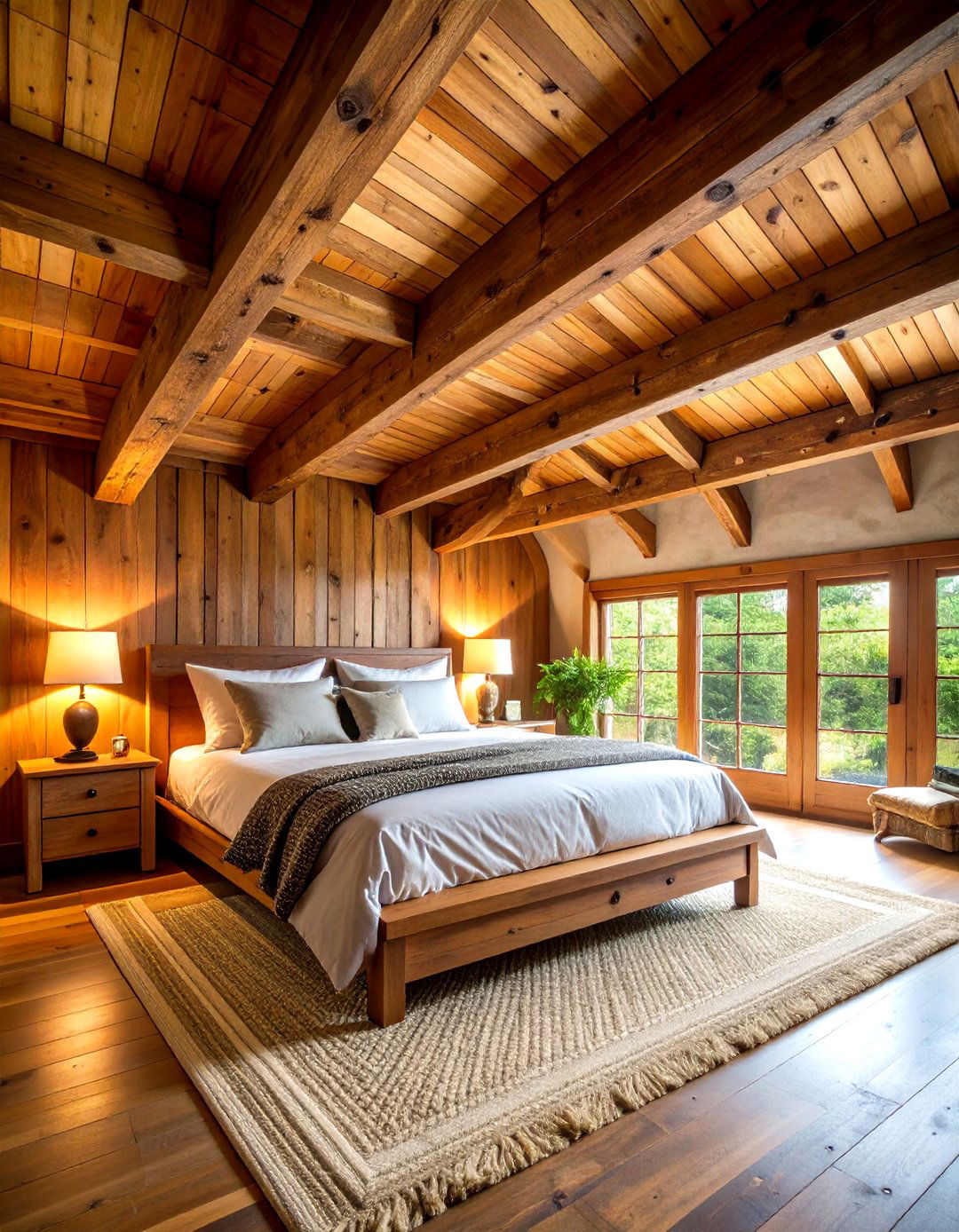
For a truly impactful rustic dining room, exposing the ceiling beams adds architectural character and a sense of history. These structural elements draw the eye upward, making the room feel more spacious while adding layers of texture. Whether left in their natural, rough-hewn state, stained a deep espresso, or whitewashed for a lighter feel, wooden beams introduce a powerful, organic element. They frame the dining area from above, enhancing the cozy, cabin-like atmosphere. This feature works especially well with high ceilings, transforming a simple room into a space with depth, warmth, and an authentic, structural charm.
3. Stone Accent Wall Feature
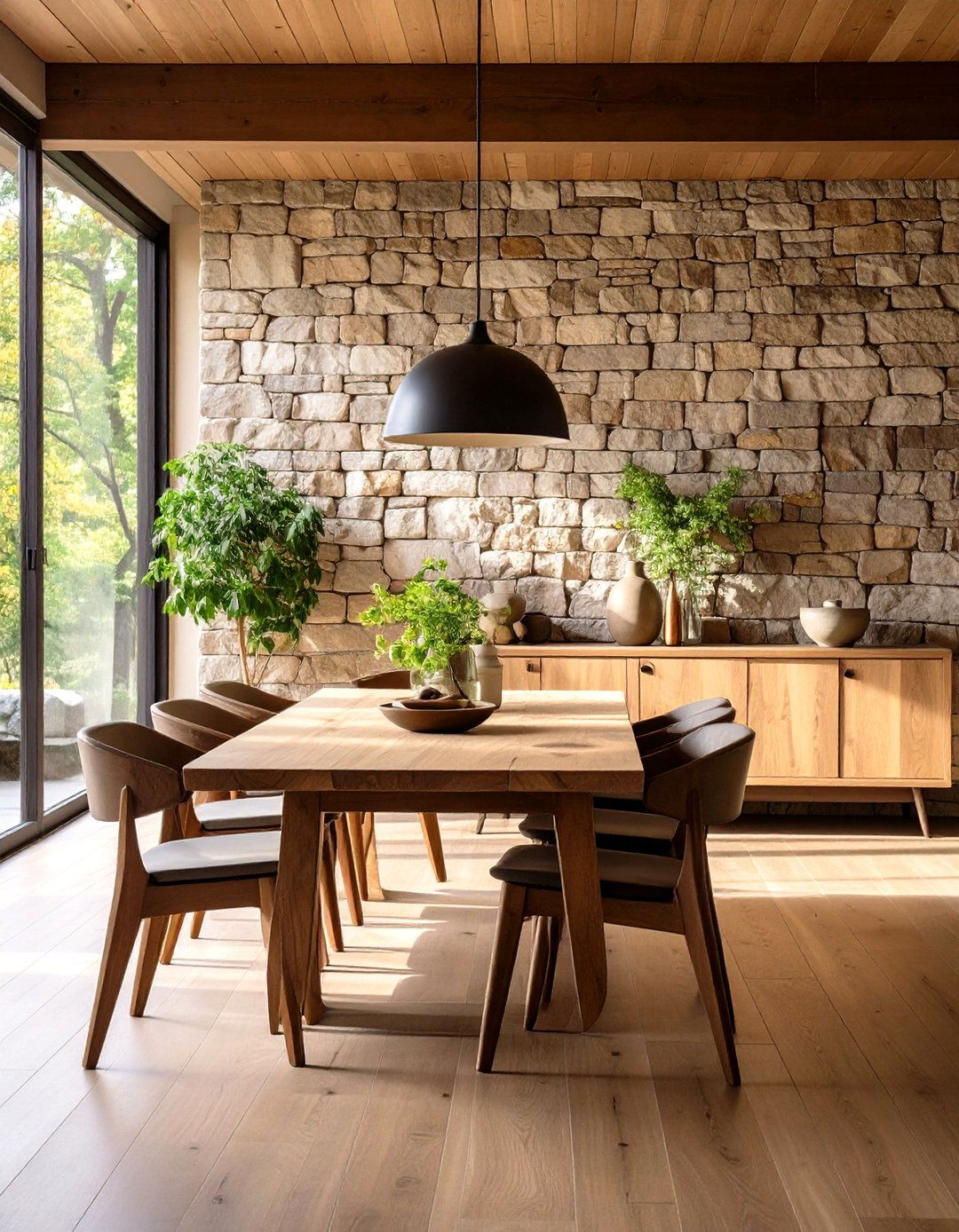
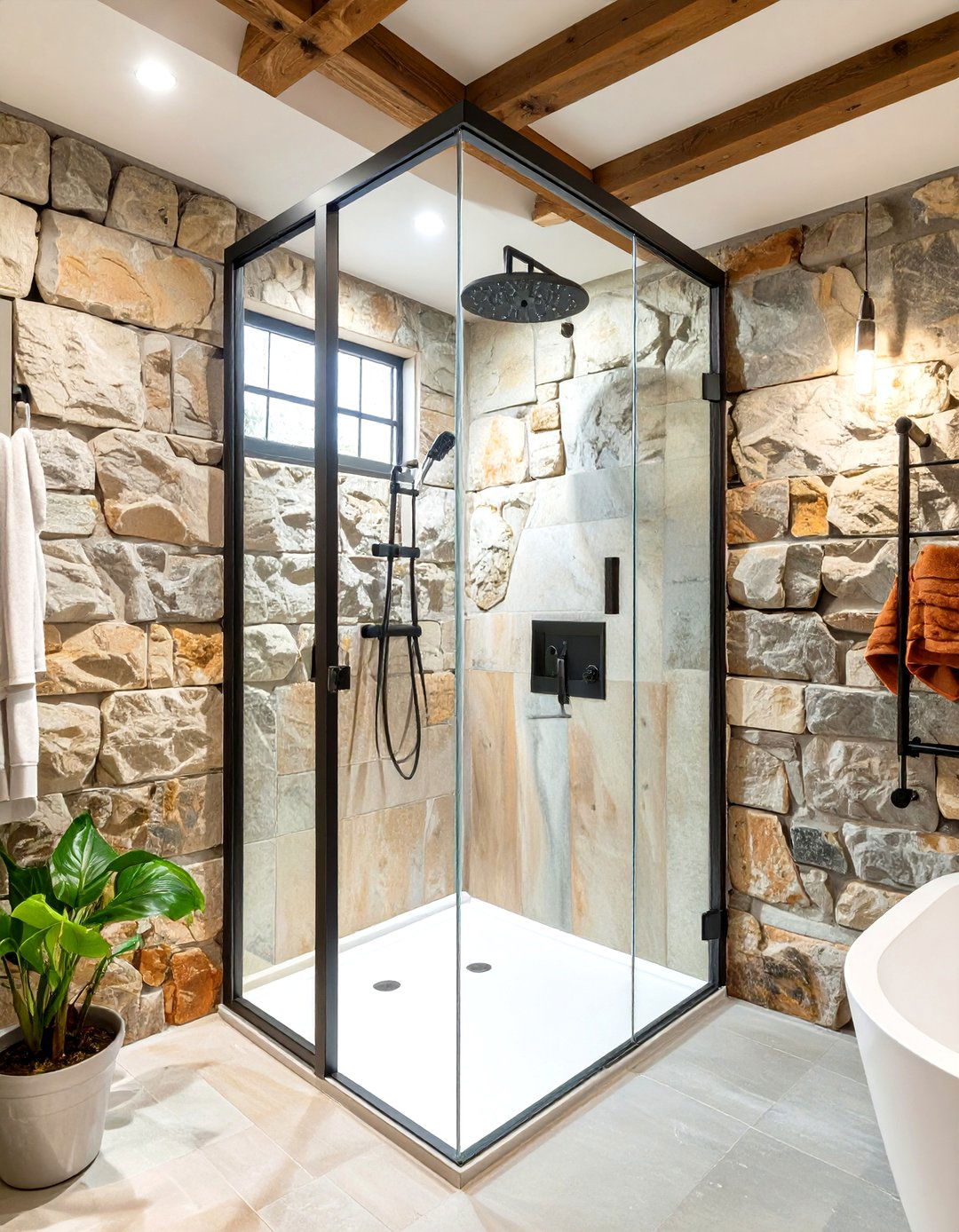
Incorporating a stone accent wall brings an elemental, rugged texture into your rustic dining room. Using materials like fieldstone, slate, or river rock creates a dramatic focal point that feels both ancient and enduring. This feature pairs beautifully with wood furniture, providing a cool-toned, textural contrast to the warmth of timber. A stone wall behind the dining table or as the backdrop for a sideboard can ground the space and evoke the feeling of a mountain lodge or a country farmhouse. It’s a bold design choice that connects the interior to the natural landscape, adding significant visual weight and timeless appeal.
4. Wrought Iron Chandelier Lighting
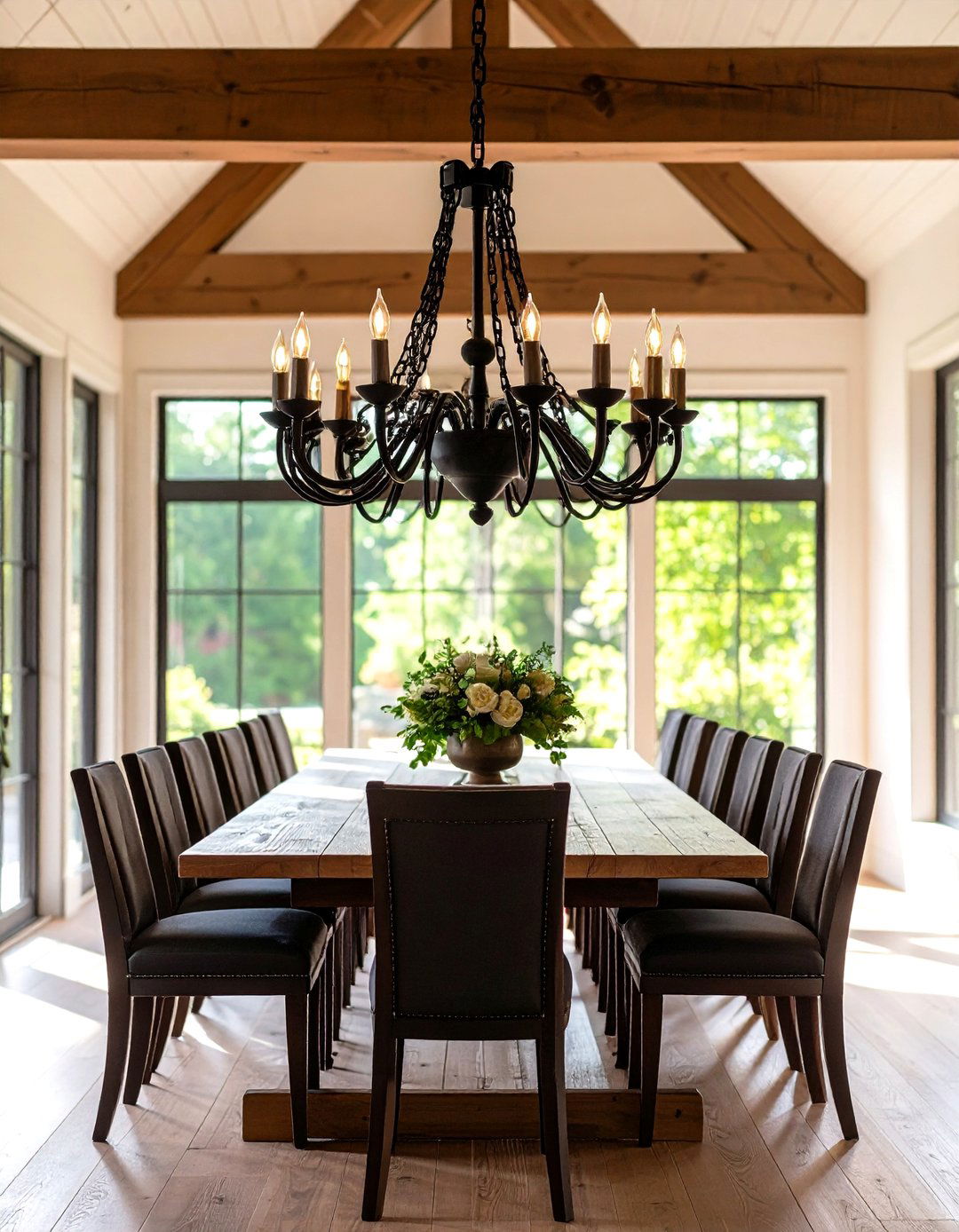
A wrought iron chandelier provides the perfect blend of rustic charm and functional elegance for the dining room. Its dark, hand-forged metal construction offers a striking contrast to the lighter tones of wood and stone, adding a touch of industrial or old-world craftsmanship. Look for designs with simple, scrolling arms and candelabra-style bulbs to enhance the vintage feel. This type of lighting fixture acts as a sculptural focal point hanging above the dining table. It illuminates the space with a warm, inviting glow while reinforcing the room’s commitment to sturdy, artisanal materials and timeless, unpretentious design.
5. Mismatched Wooden Dining Chairs

To create a relaxed and collected-over-time feel in your rustic dining room, consider using mismatched wooden chairs. This approach breaks the formality of a matching set, adding personality and visual interest. Combine chairs of different styles, heights, and finishes, from ladder-backs to spindle-backs, united by their shared material. This eclectic mix suggests a space that has evolved organically, filled with pieces gathered over years. The result is a dining area that feels approachable, charming, and uniquely personal, perfectly capturing the informal and welcoming spirit of rustic living while showcasing individual character and craftsmanship.
6. Wide Plank Wood Flooring
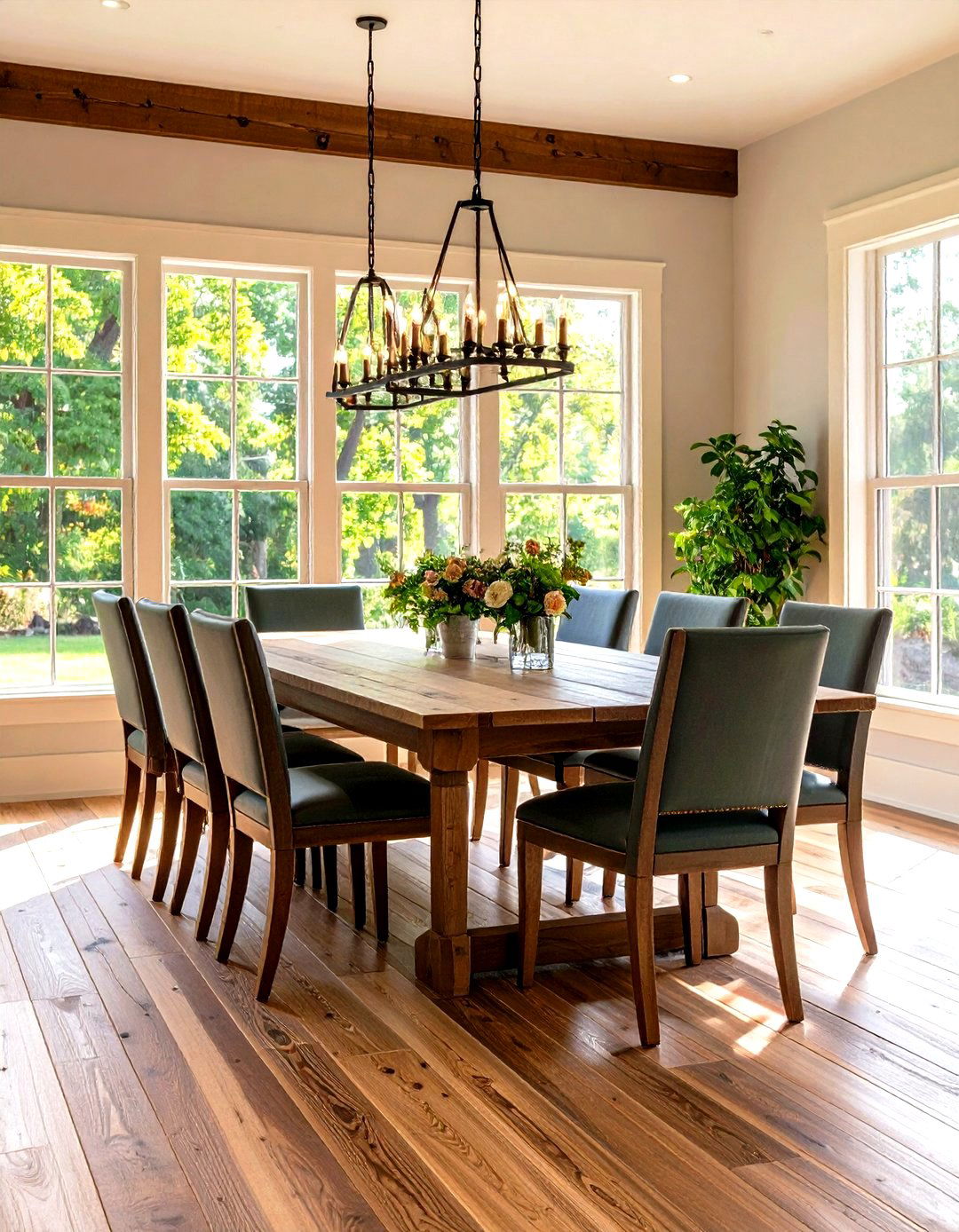
Wide plank wood flooring establishes a solid and authentic foundation for a rustic dining room. These broader boards, often made from pine, oak, or hickory, showcase more of the wood's natural grain and character, including knots and mineral streaks. The effect is less busy than standard narrow strips, creating a sense of spaciousness and historical authenticity reminiscent of old farmhouses or cabins. A distressed or hand-scraped finish further enhances the rustic appeal, giving the floor a lived-in, time-worn appearance that is both beautiful and forgiving of daily wear and tear, anchoring the room in natural warmth.
7. Natural Fiber Area Rug
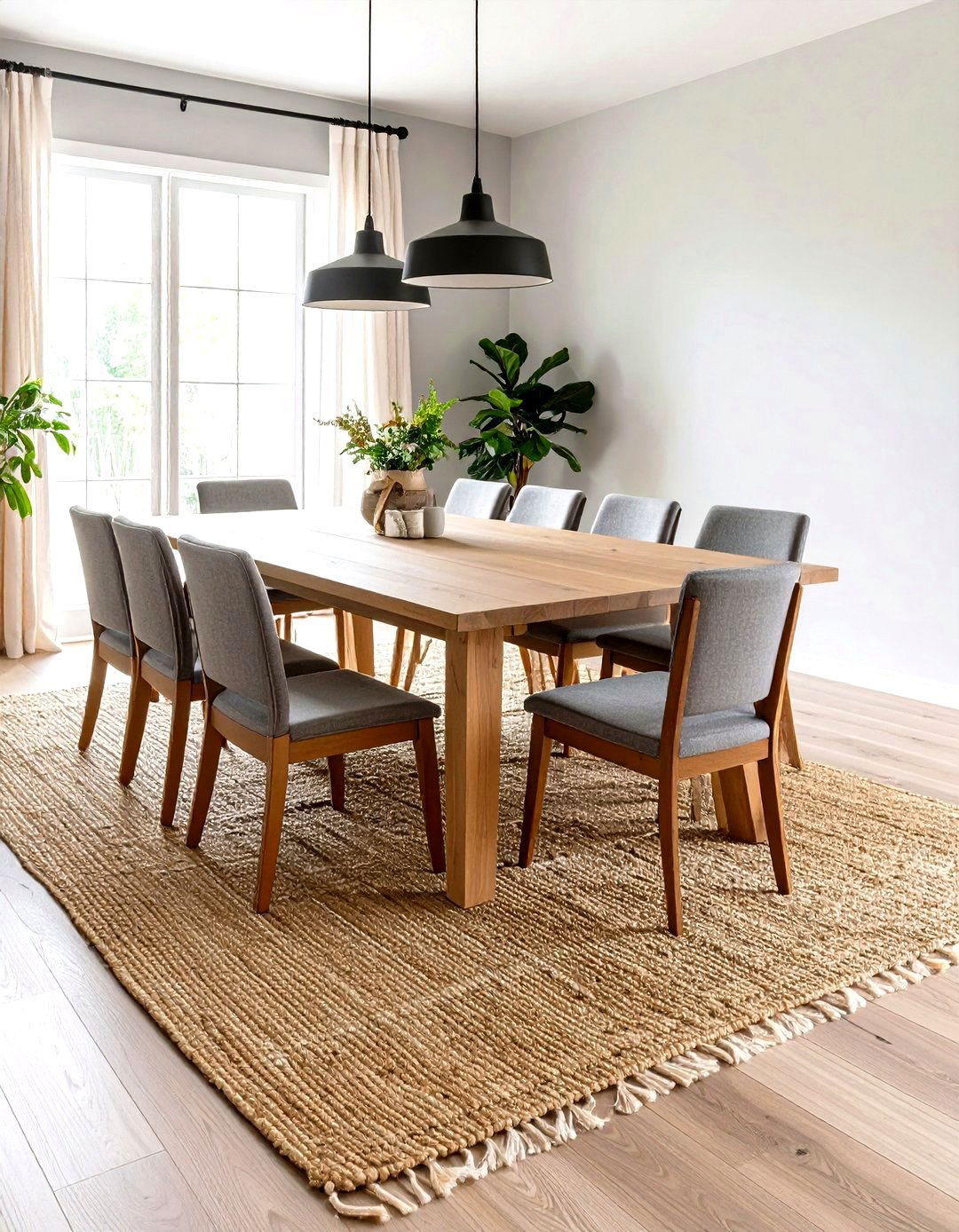
Placing a natural fiber area rug under the dining set introduces texture and softness to a rustic dining room. Materials like jute, sisal, or seagrass are ideal choices, as their earthy tones and woven textures complement wood and stone elements perfectly. These rugs define the dining zone within an open-plan space while protecting the floor. Their durable, organic nature reinforces the connection to the outdoors that is central to rustic design. A generously sized rug that allows all chair legs to remain on it when pulled out ensures functionality and creates a cohesive, grounded look that adds warmth and comfort underfoot.
8. Dining Bench Seating
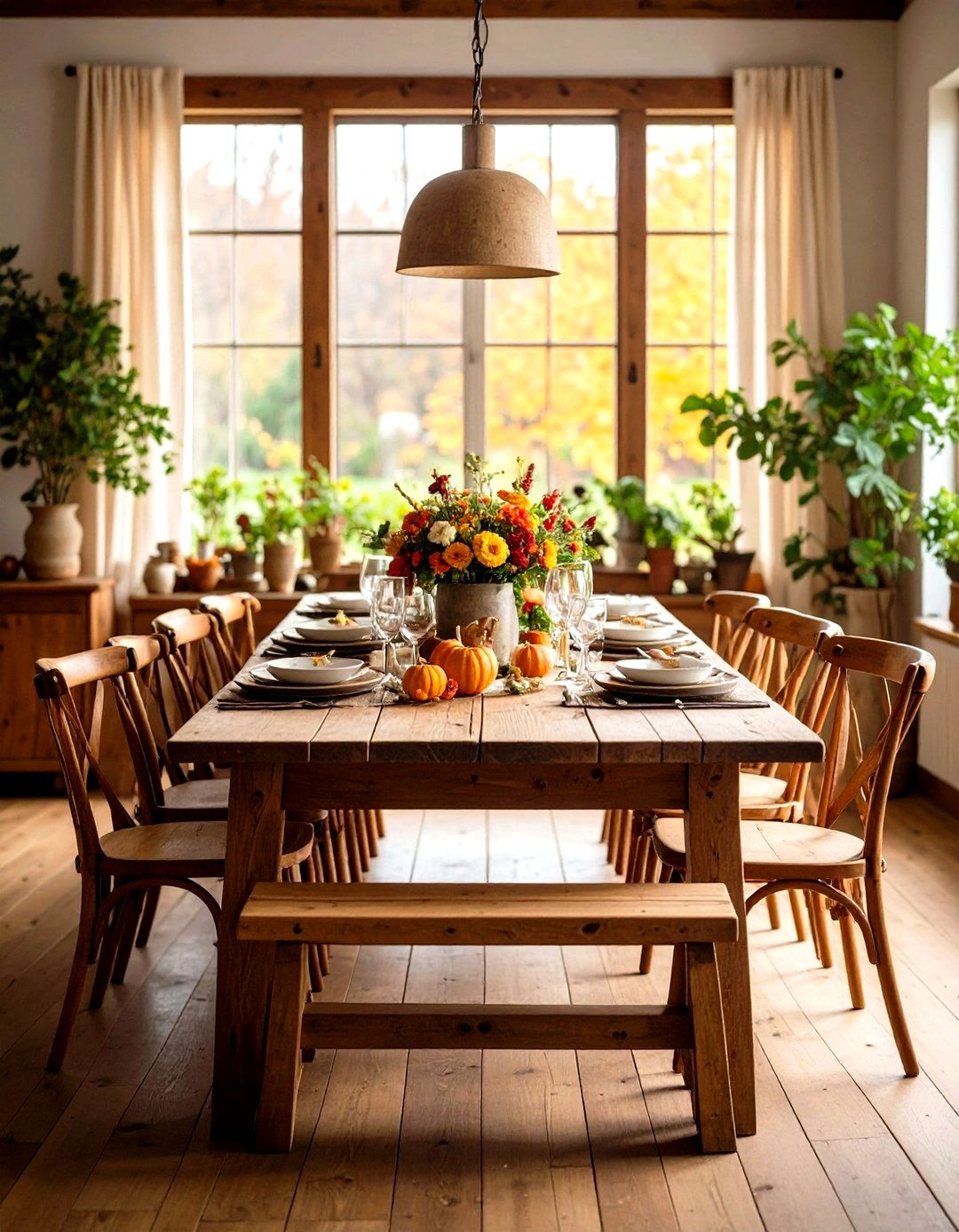
Substituting a few chairs with a long wooden dining bench offers a casual and communal seating solution for a rustic dining room. A sturdy bench, especially one crafted from the same wood as the table, enhances the farmhouse aesthetic and creates a more relaxed, family-style atmosphere. This option is not only practical for seating more people, especially children, but it also visually simplifies one side of the table, making the space feel less cluttered. A simple, backless bench can be tucked completely under the table when not in use, maximizing floor space while contributing to the room’s informal, welcoming charm.
9. Sliding Barn Door Entrance
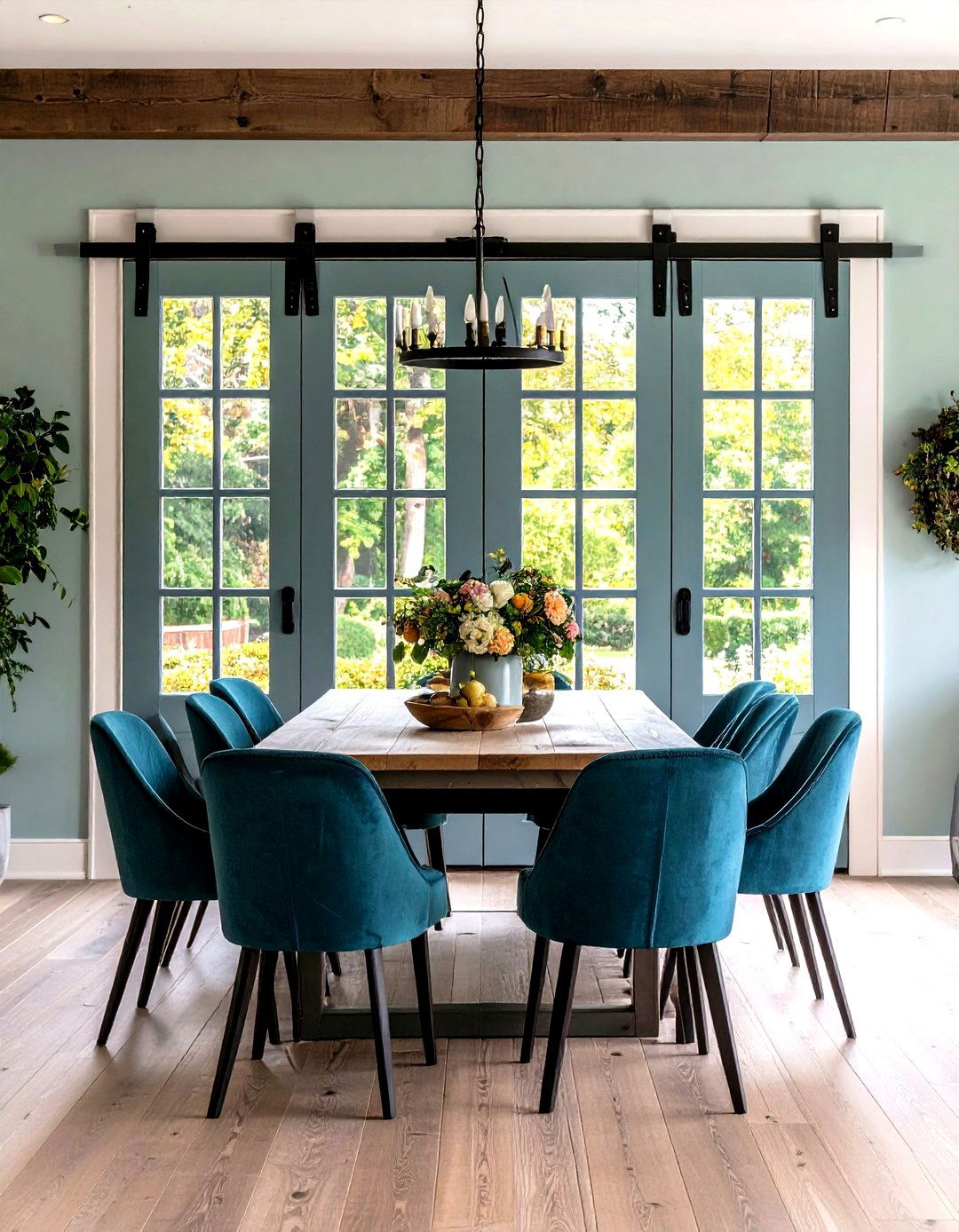
A sliding barn door makes a functional and stylish statement for a rustic dining room entrance or as a partition for an adjoining space. Mounted on a dark metal track, the wooden door becomes a piece of moving art, saving space where a traditional swinging door would be impractical. Whether painted a classic barn red or finished with a natural stain to highlight the wood grain, it introduces a significant element of farmhouse architecture. This feature is not just a doorway but a dynamic focal point that blends practicality with rugged charm, reinforcing the rustic theme in a memorable and impactful way.

10. Farmhouse-Style Buffet or Sideboard
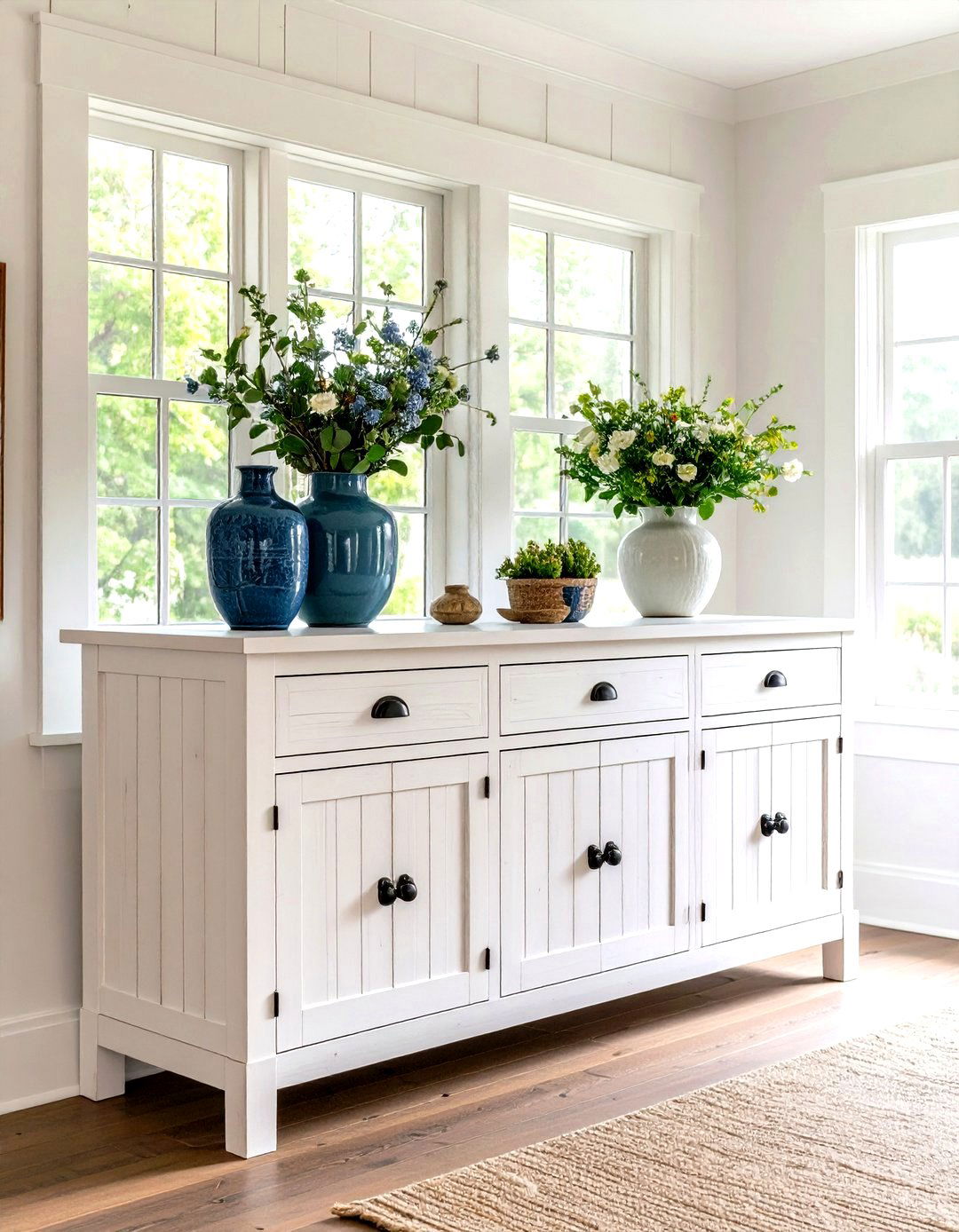
A farmhouse-style buffet or sideboard provides essential storage and a perfect display surface in a rustic dining room. Choose a piece made from solid wood, perhaps with a distressed or painted finish, to add character and functionality. Features like planked doors, simple hardware, and sturdy construction enhance the rustic feel. This versatile furniture can store linens, dinnerware, and serving pieces, keeping the dining table clear. Its top surface is ideal for creating a vignette with vintage pottery, a table lamp, or seasonal decor, adding another layer of charm and practicality to your dining space.
11. Antique Dough Bowl Centerpiece
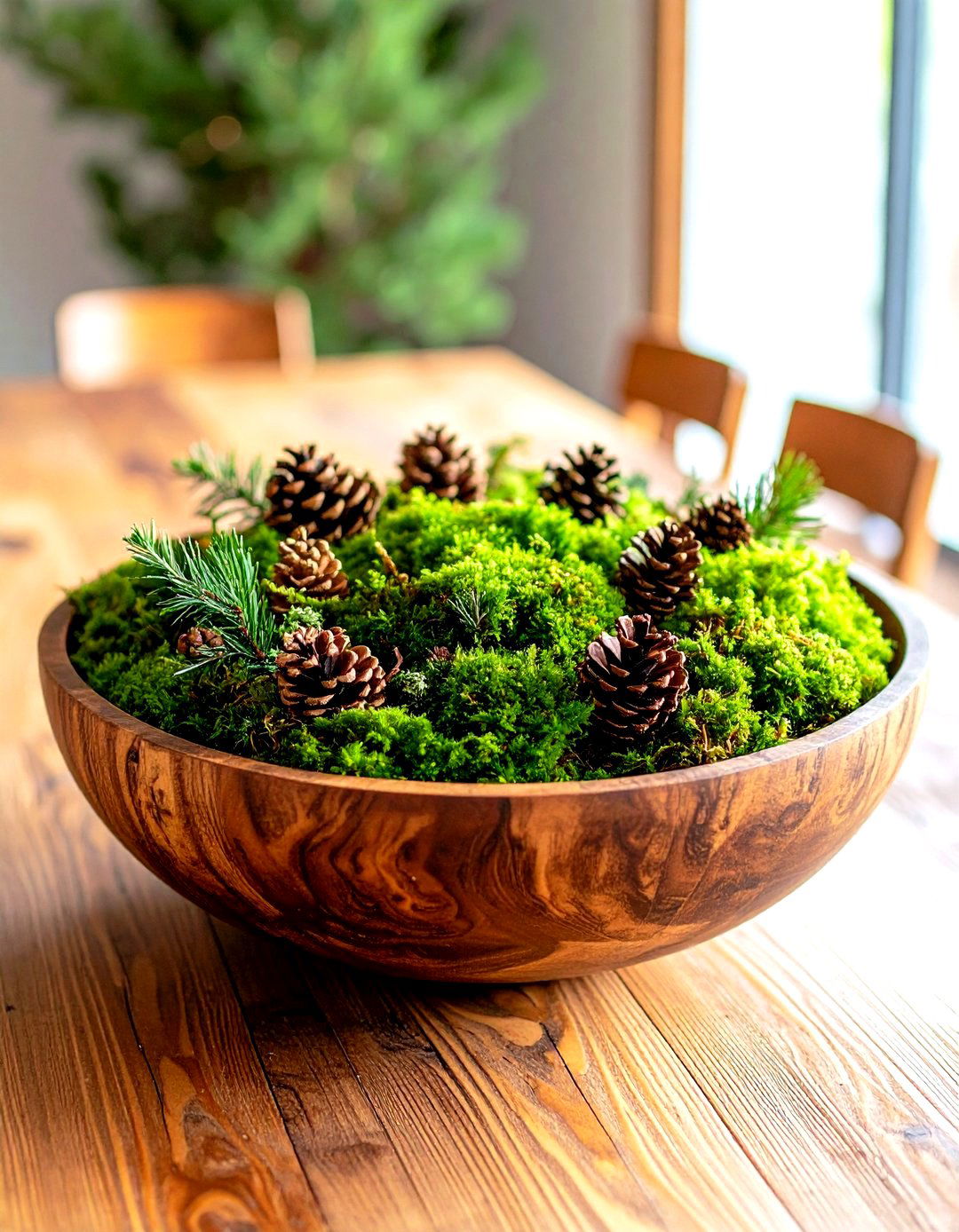
An antique dough bowl makes a simple yet profound centerpiece for a rustic dining table. These large, hand-carved wooden bowls were once a staple in kitchens for kneading bread, and their history infuses the space with authenticity. The worn texture, smooth patina, and unique shape of each bowl create an organic and sculptural focal point. You can leave it empty to appreciate its form or fill it with seasonal items like pinecones, gourds, or fresh greenery. This single object connects the room to a simpler, agrarian past, adding a layer of storytelling and understated, natural beauty without overwhelming the table.
12. Linen or Burlap Table Runner
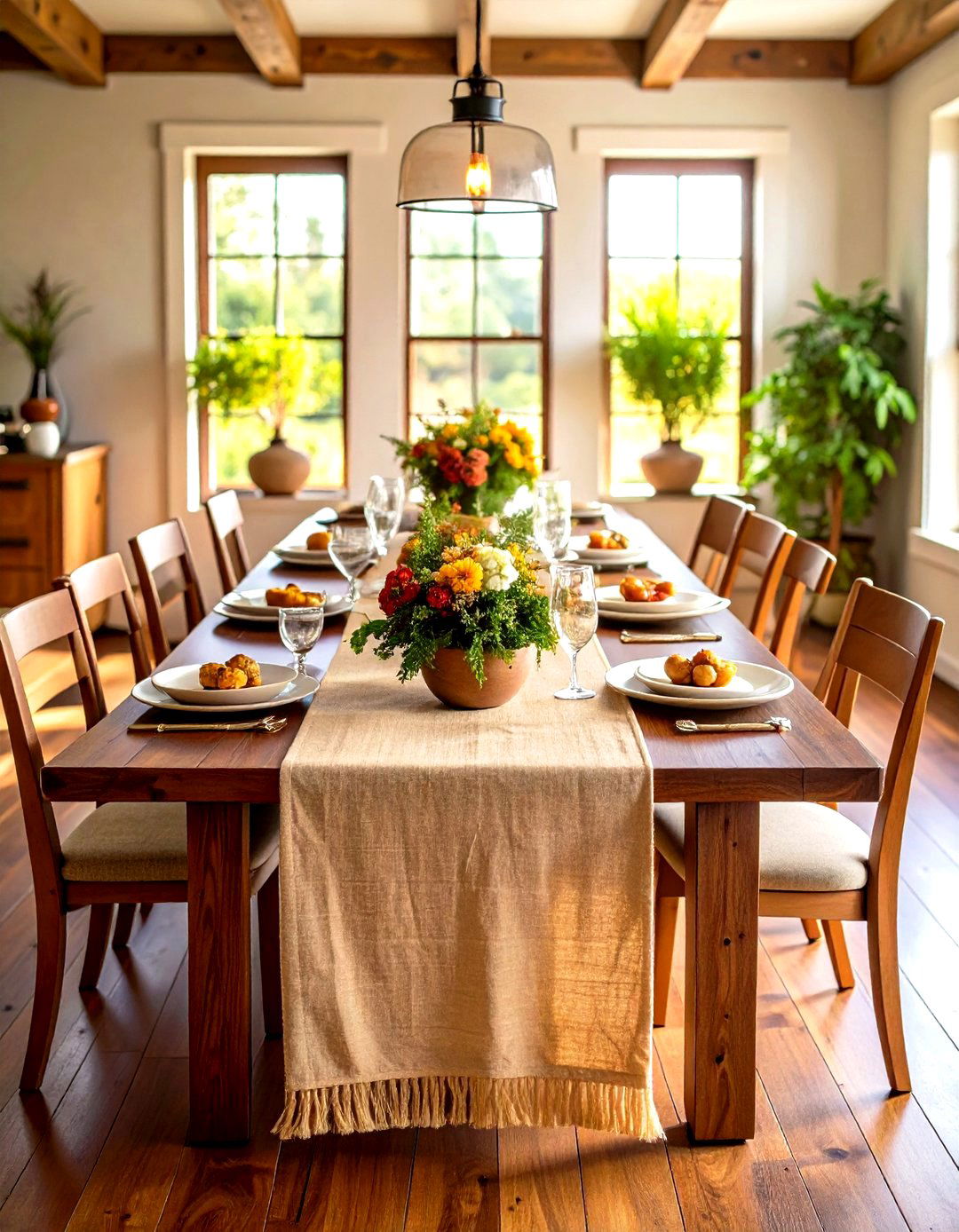
For a touch of soft texture in your rustic dining room, use a simple table runner made from linen or burlap. These natural fabrics add a layer of warmth and visual interest to a wooden table without completely concealing its beautiful surface. The slightly rumpled, imperfect look of linen or the coarse, earthy weave of burlap aligns perfectly with the relaxed, unpretentious nature of rustic decor. A neutral-colored runner in cream, beige, or grey can soften the hard lines of the furniture and create a more inviting tablescape, offering a subtle yet effective way to enhance the room's cozy feel.
13. Window Frames Without Curtains
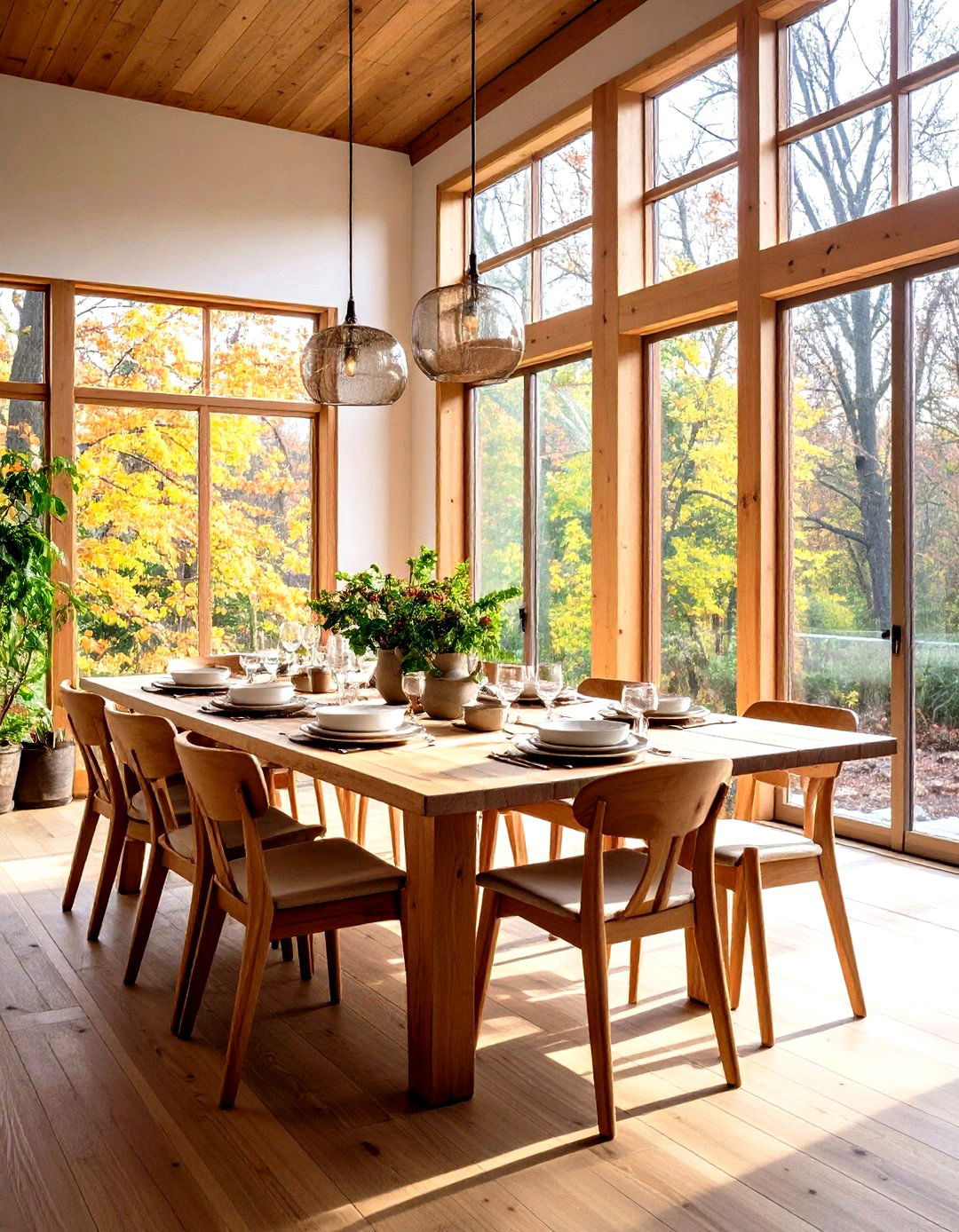
To maximize natural light and maintain a connection to the outdoors, consider leaving the windows in your rustic dining room bare. Forgoing heavy curtains or drapes allows an unobstructed view of the landscape, making it a part of the room's decor. This approach emphasizes simplicity and honesty in design, letting the architectural lines of the window frames—especially if they are made of wood—stand out. If privacy is a concern, simple linen roller shades can be installed to be pulled down only when needed. This minimalist window treatment keeps the room feeling bright, airy, and grounded in its natural surroundings.
14. Earthenware and Pottery Displays
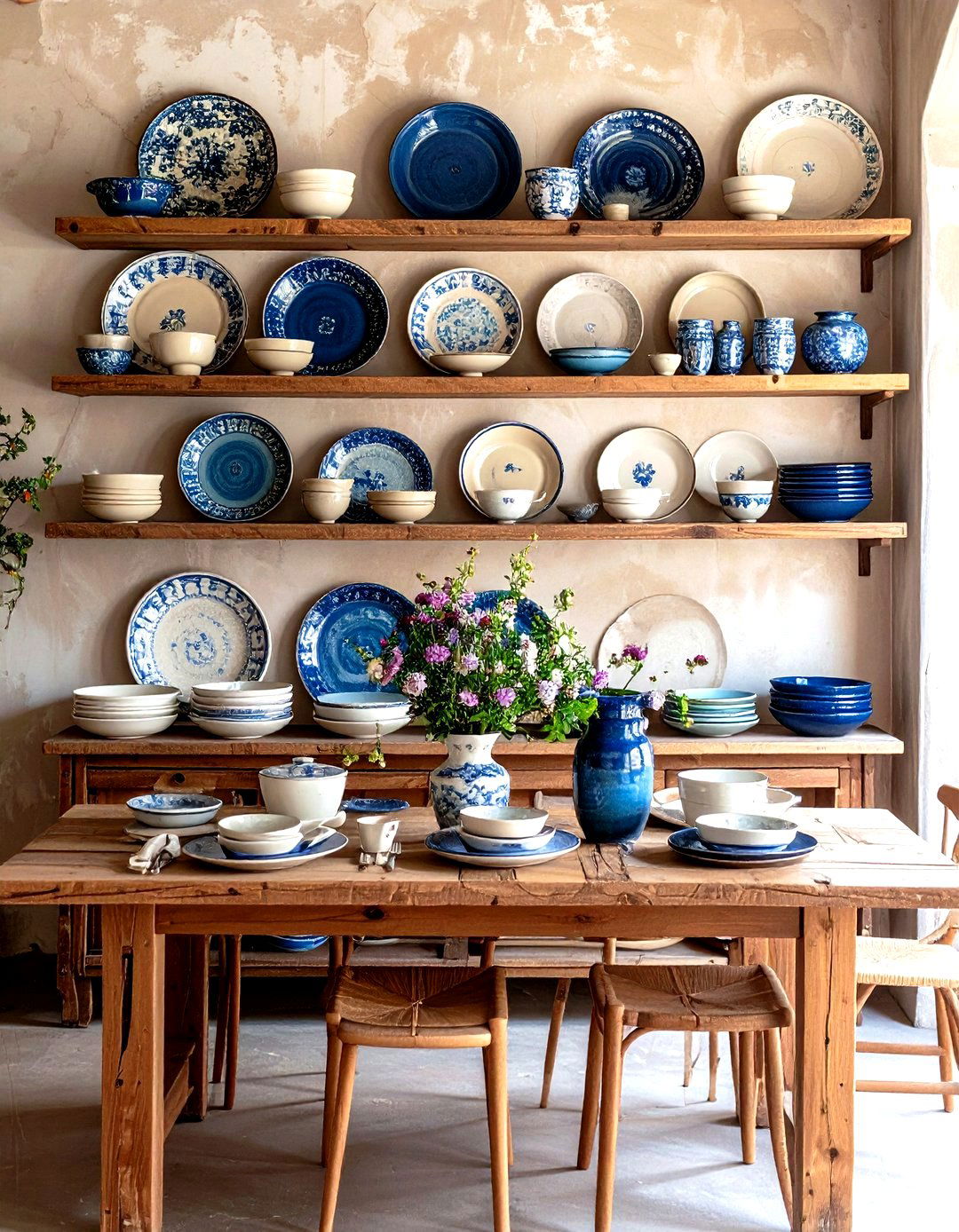
Displaying earthenware and simple pottery adds an artisanal touch to a rustic dining room. Arrange a collection of handmade ceramic plates, bowls, and pitchers on open shelves or inside a glass-front hutch. The subtle variations in glaze, shape, and texture of these pieces celebrate craftsmanship and imperfection. Stick to earthy tones like terracotta, cream, moss green, and slate blue to maintain a cohesive, natural palette. This display not only serves as practical storage for dinnerware but also acts as a decorative element, infusing the space with a sense of handcrafted warmth and the beauty of everyday objects.


15. Antler or Horn Decorations
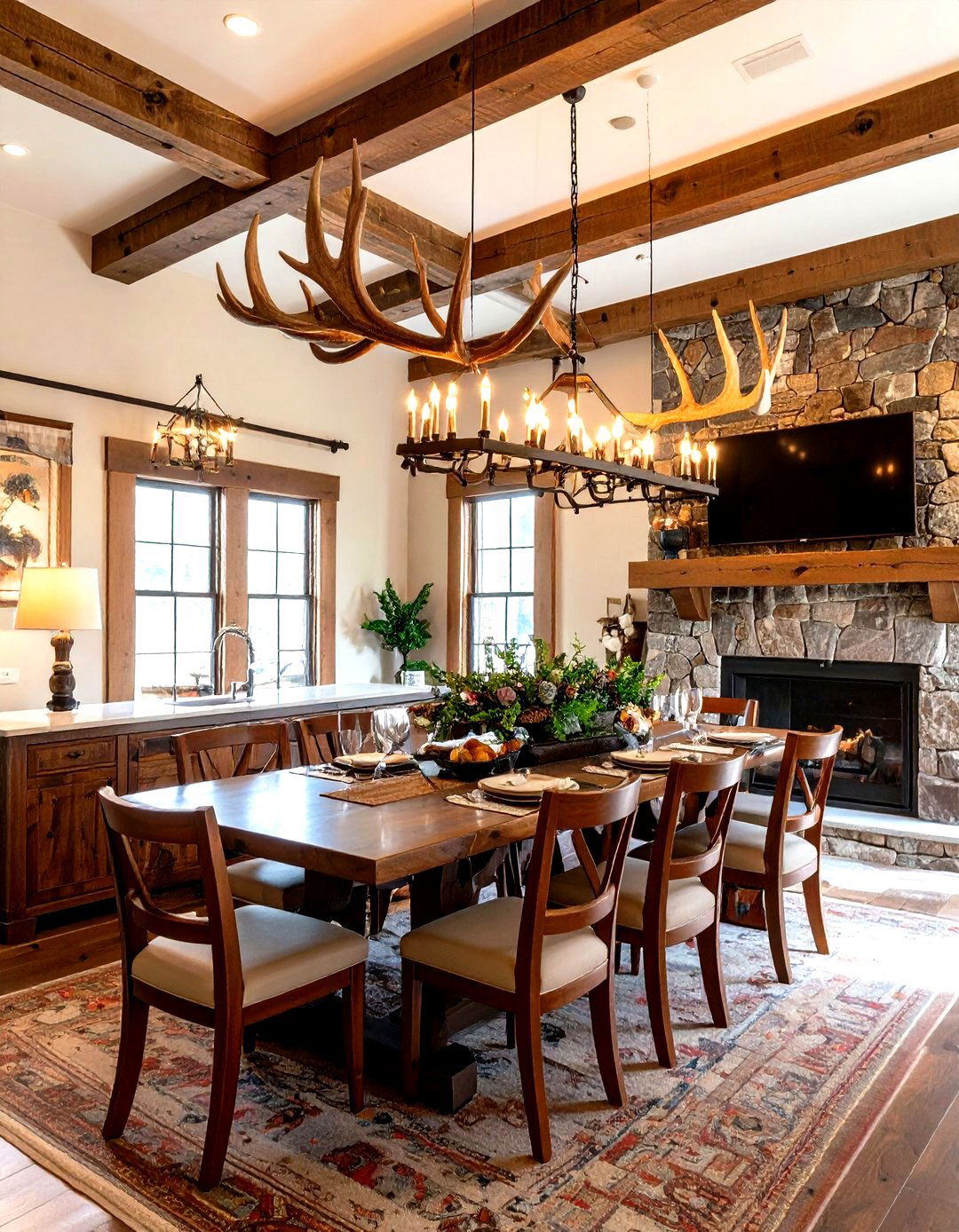
Incorporating antler or horn decorations adds a distinct, nature-inspired element to a rustic dining room. A set of antlers mounted on the wall above a sideboard or a chandelier crafted from them can serve as a striking focal point, evoking the feel of a classic hunting lodge or mountain cabin. These organic objects bring a sculptural quality and a direct link to the wild into your home. Used thoughtfully, they enhance the room's connection to nature without overwhelming the space. They work best when balanced with softer textures and warm wood tones to create a cohesive and grounded rustic aesthetic.
16. A Large, Simple Wall Clock
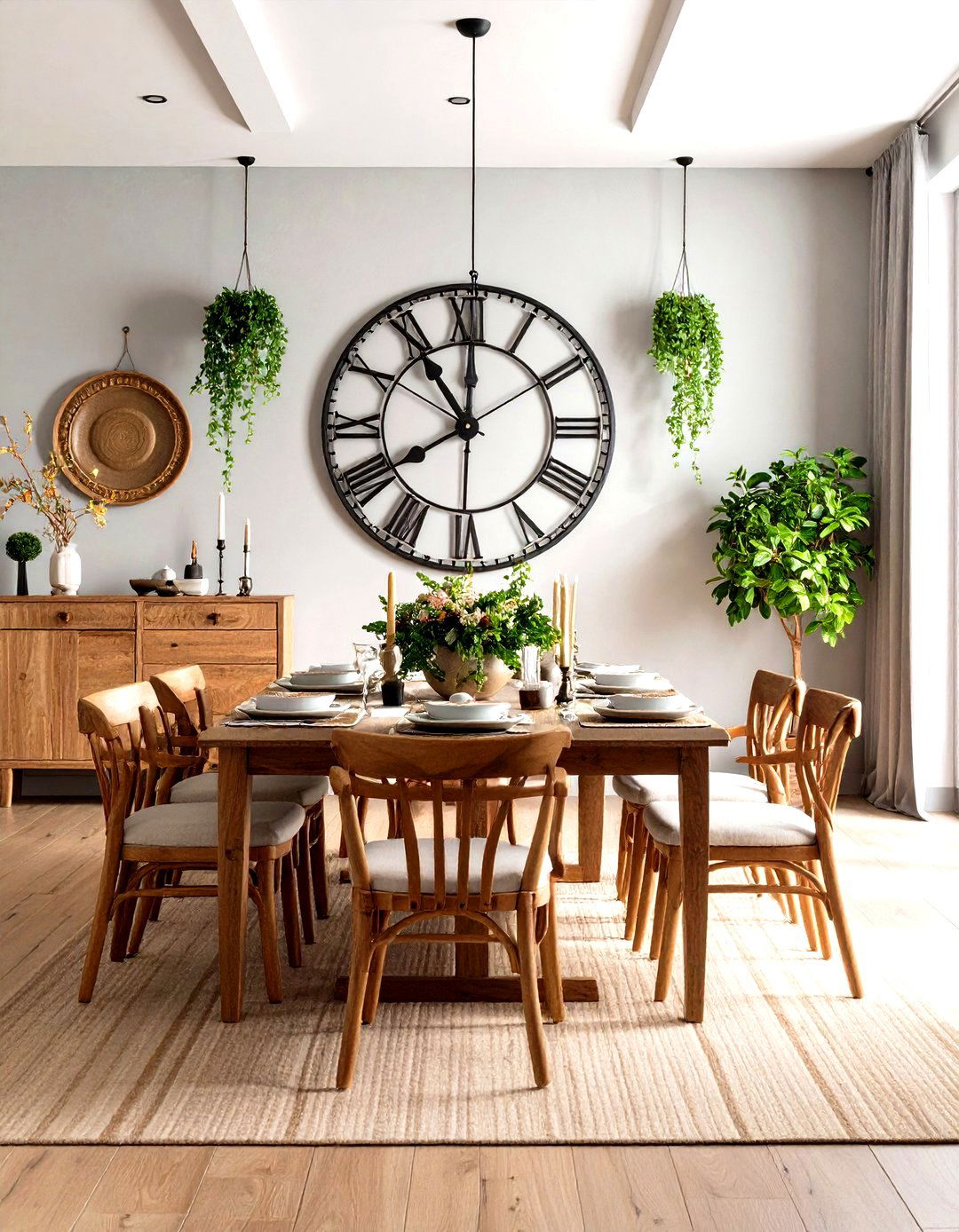
A large, oversized wall clock with a simple face can be a powerful decorative element in a rustic dining room. Opt for a design with a wooden frame or a distressed metal finish to complement the room's aesthetic. Placed on a prominent wall, it acts as both a functional timepiece and a piece of art. Its grand scale can help to balance a large dining table or a high ceiling, creating a clear focal point. The clock adds a touch of vintage, industrial, or farmhouse charm, filling wall space with something that is both practical and visually striking without adding unnecessary clutter.
17. Open Shelving with Iron Brackets
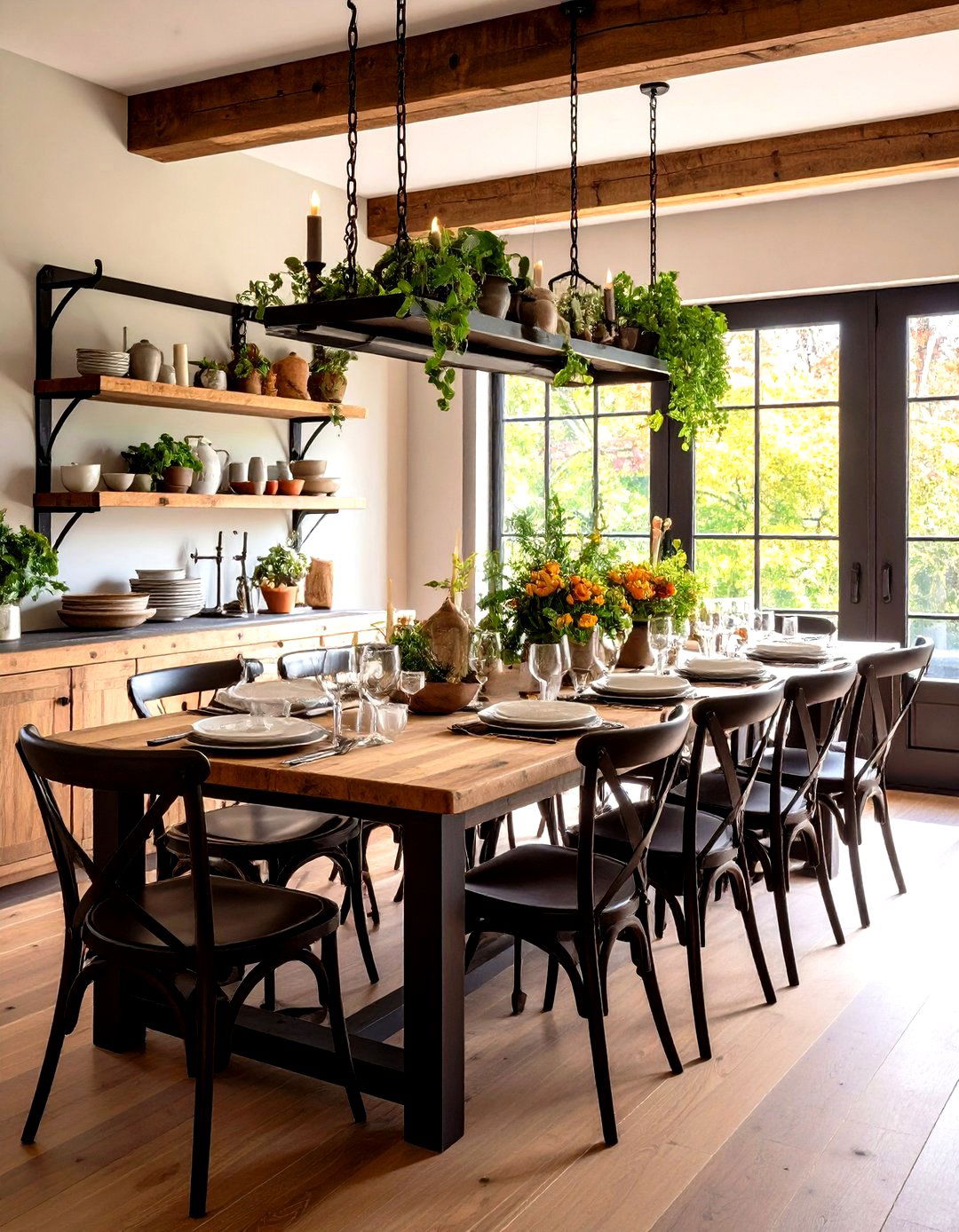
Install open shelving with heavy-duty iron brackets to add both storage and style to a rustic dining room. Use thick planks of reclaimed wood for the shelves to continue the theme of raw, natural materials. These shelves are perfect for displaying everyday dinnerware, glassware, or decorative items like vintage tins and potted herbs. The combination of dark, forged iron and warm wood creates a look that is both industrial and rustic. This storage solution keeps the room feeling open and airy while putting your favorite functional pieces on display, adding personality and a lived-in feel to the space.
18. Plaid or Gingham Textiles
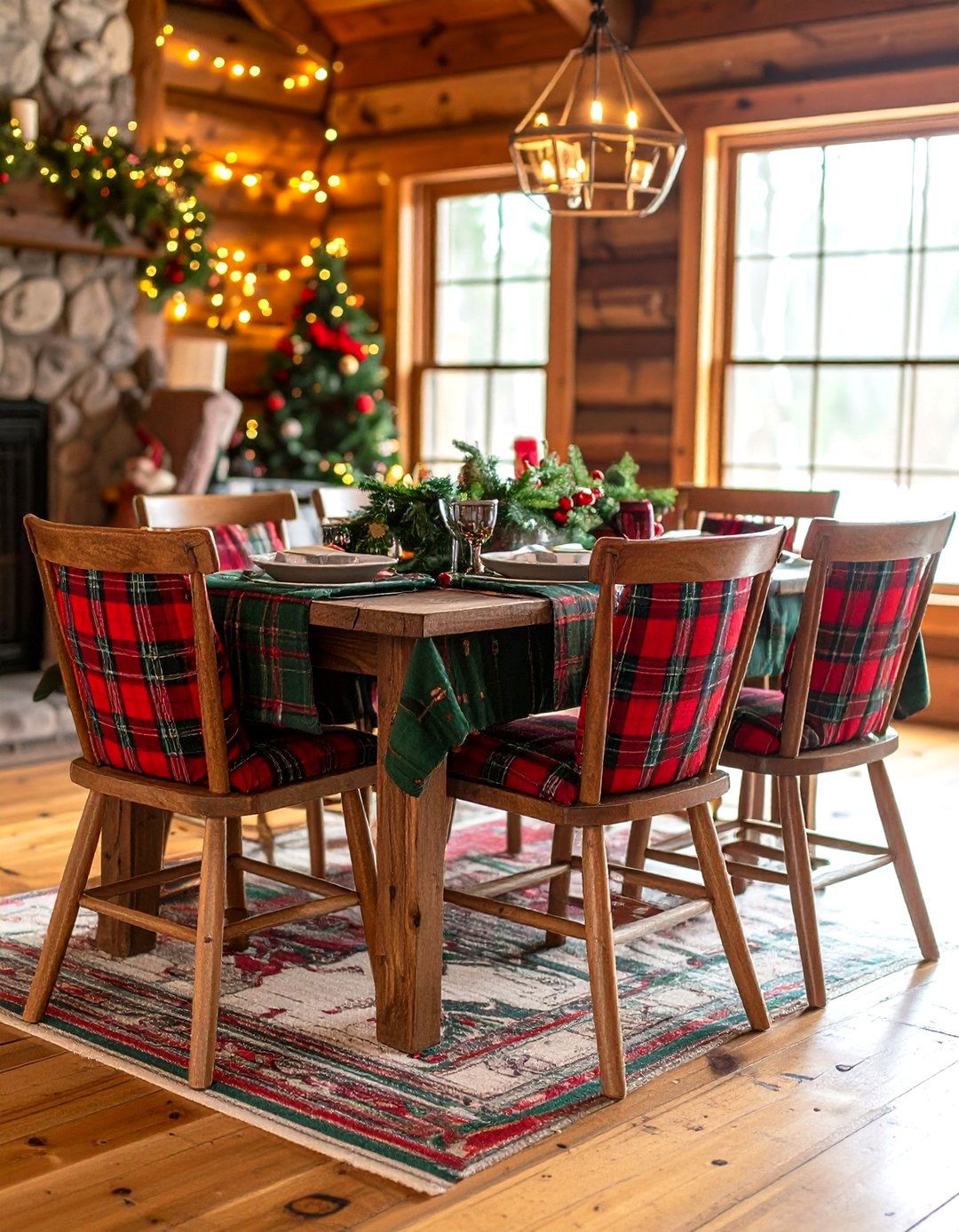
Introducing plaid or gingham textiles can infuse a rustic dining room with classic country charm and a sense of coziness. Use these patterns for chair cushions, a tablecloth, or cloth napkins to add a pop of color and softness. A timeless tartan plaid in deep greens and reds can create a warm, lodge-like feel, while a simple blue or black gingham check offers a lighter, farmhouse touch. These traditional patterns are comforting and familiar, breaking up the solid surfaces of wood and stone with a touch of pattern and homeliness, making the dining space feel even more welcoming.
19. Distressed Paint Finish on Furniture
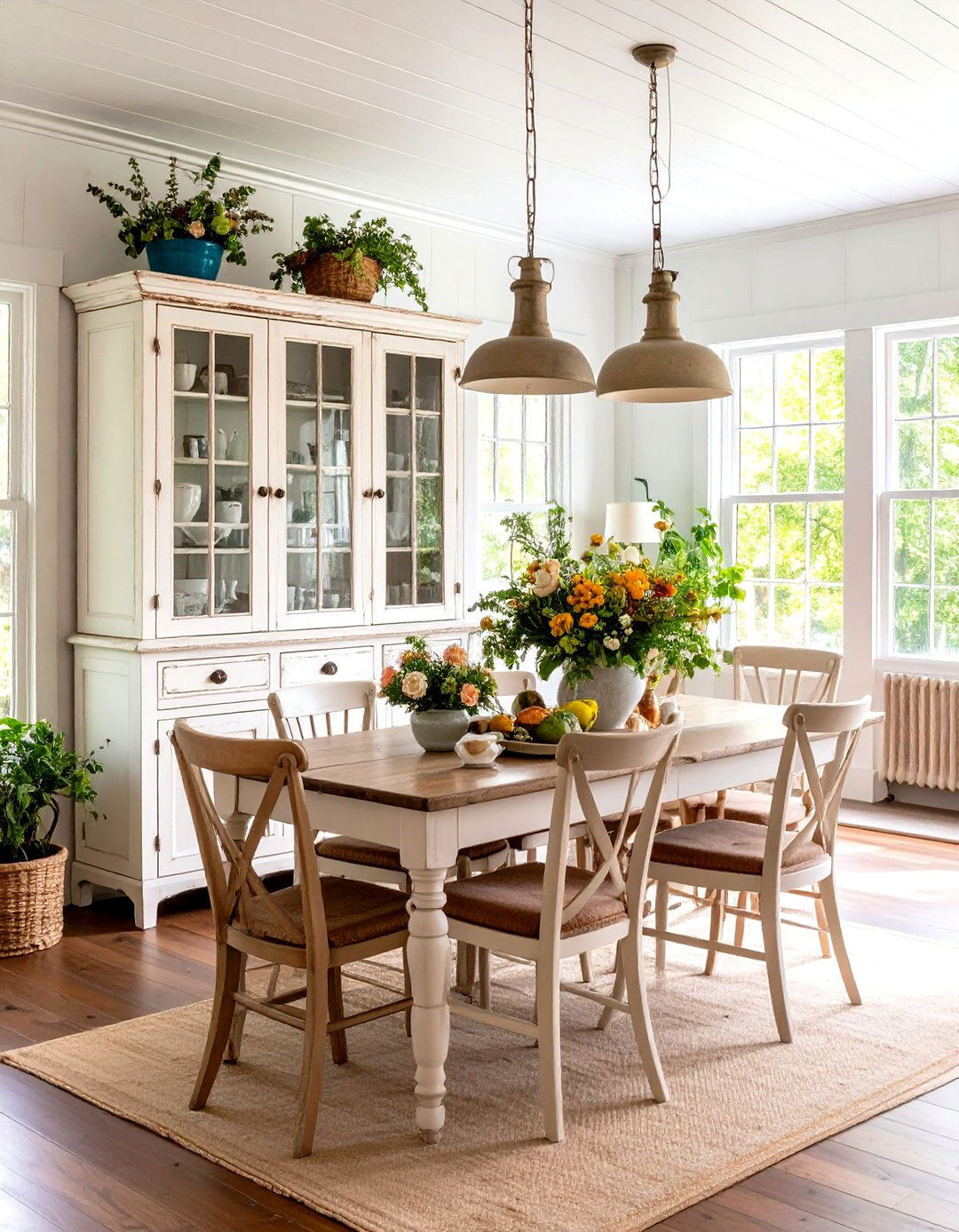
A distressed paint finish on a piece of furniture, like a hutch or a sideboard, can instantly add rustic character to your dining room. This technique involves painting a piece and then strategically sanding or scraping away some of the paint to mimic natural wear and tear over time. A creamy white or pale blue distressed finish can brighten the space and provide a lovely contrast to dark wood tones. This aged look adds a sense of history and lived-in comfort, suggesting the piece has been a beloved part of the home for generations, perfectly aligning with the rustic appreciation for imperfection.

20. Layered Lighting Scheme
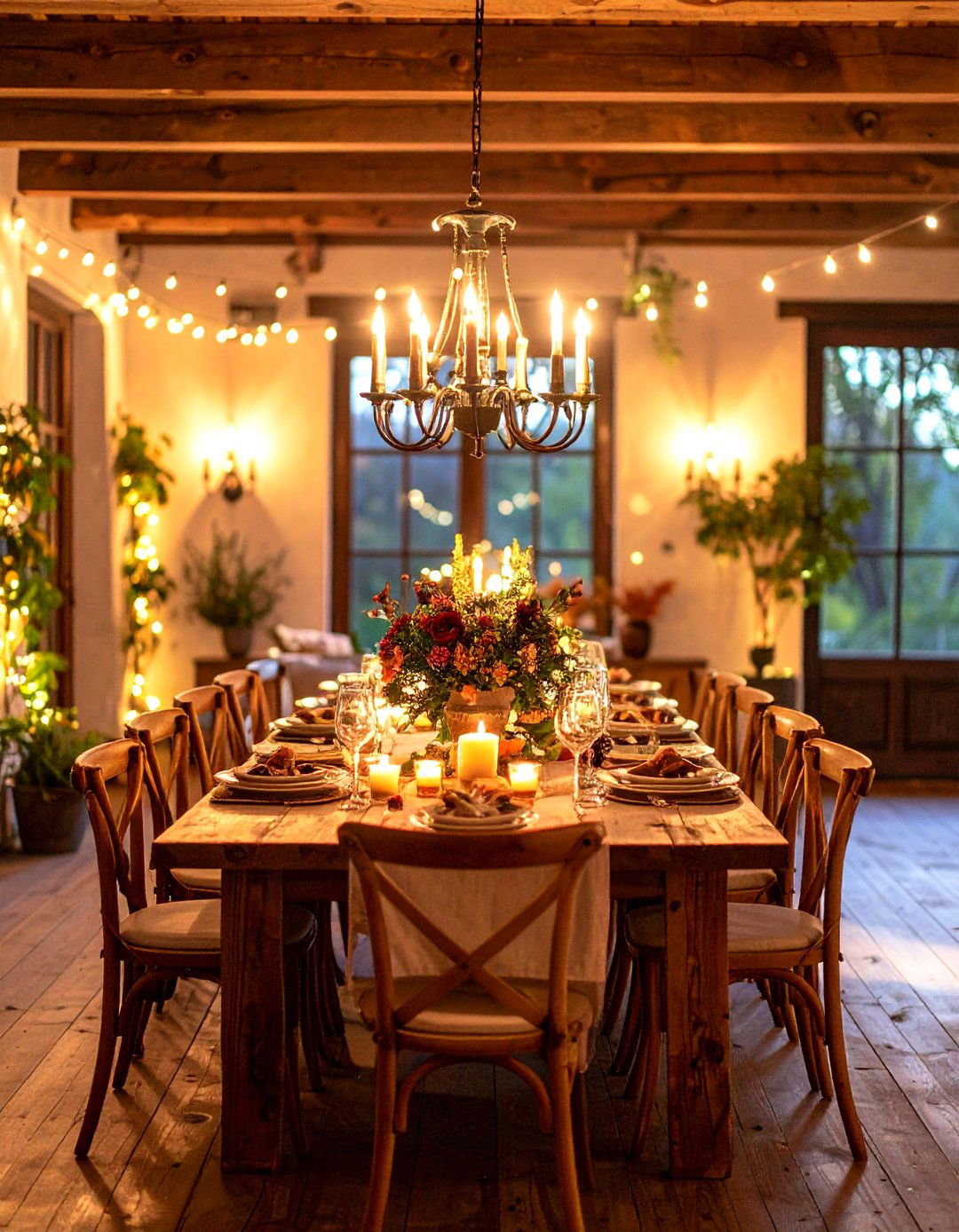
Create a warm and inviting atmosphere in your rustic dining room with a layered lighting scheme. Start with an overhead fixture, like a wrought iron chandelier, for general ambient light. Then, add task lighting with wall sconces on either side of a buffet or a stone accent wall. These can feature materials like aged bronze or dark metal. Finally, incorporate accent lighting with a small table lamp on a sideboard or candles on the dining table to create a soft, intimate glow. This multi-layered approach ensures the room is well-lit for dining while allowing you to adjust the mood for a cozy, welcoming ambiance.
21. Galvanized Metal Accents
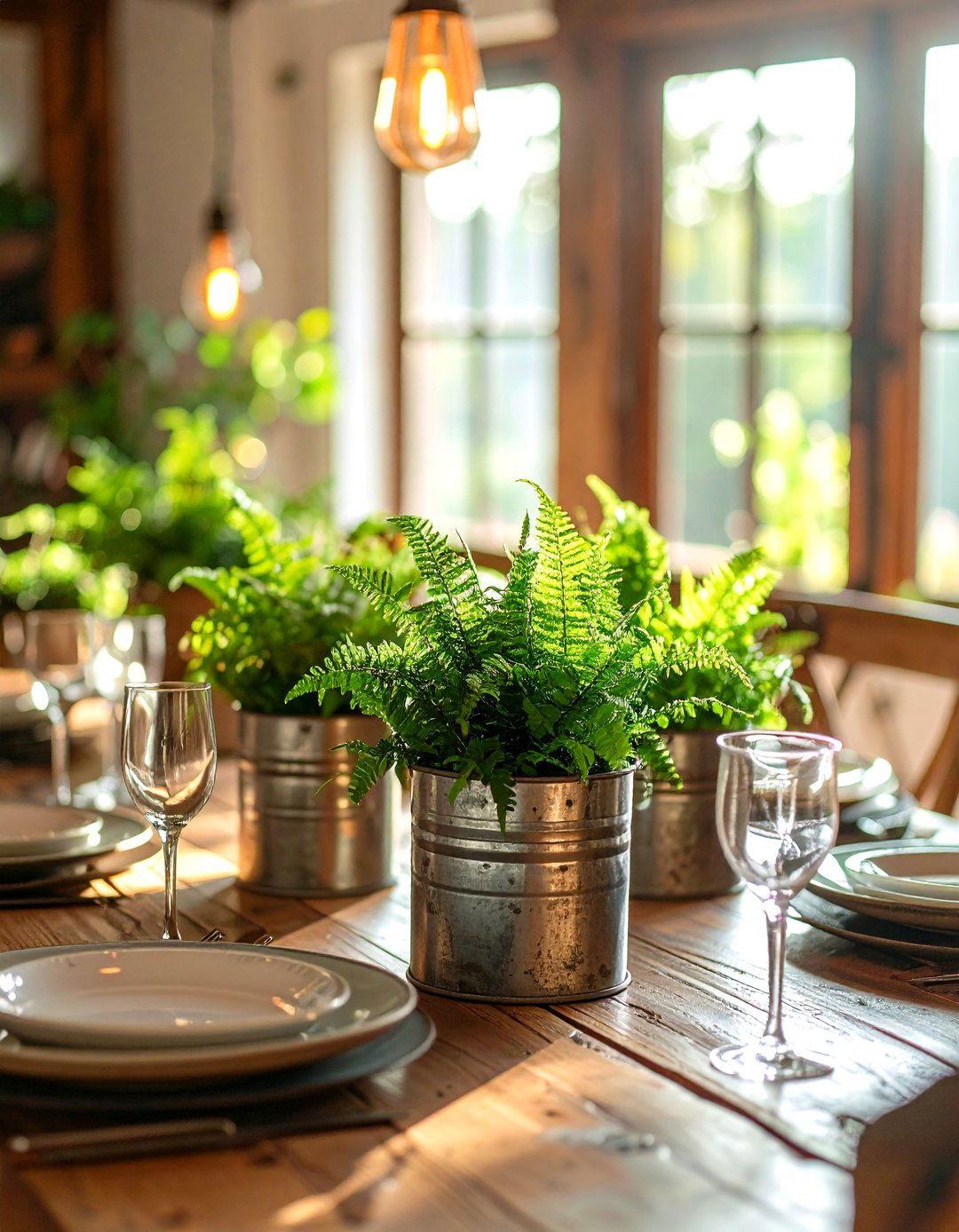
Incorporating galvanized metal accents brings a touch of industrial farmhouse style to a rustic dining room. Use this durable, humble material in subtle ways, such as in a planter holding a centerpiece, the base of a lamp, or as a set of serving trays on a sideboard. The cool, matte finish of galvanized steel provides a textural contrast to the warmth of wood and the roughness of stone. It’s an unpretentious material that speaks to utility and simplicity, adding a layer of practical, no-fuss charm that complements the overall rustic aesthetic without feeling out of place or overly modern.
22. Upholstered End Chairs
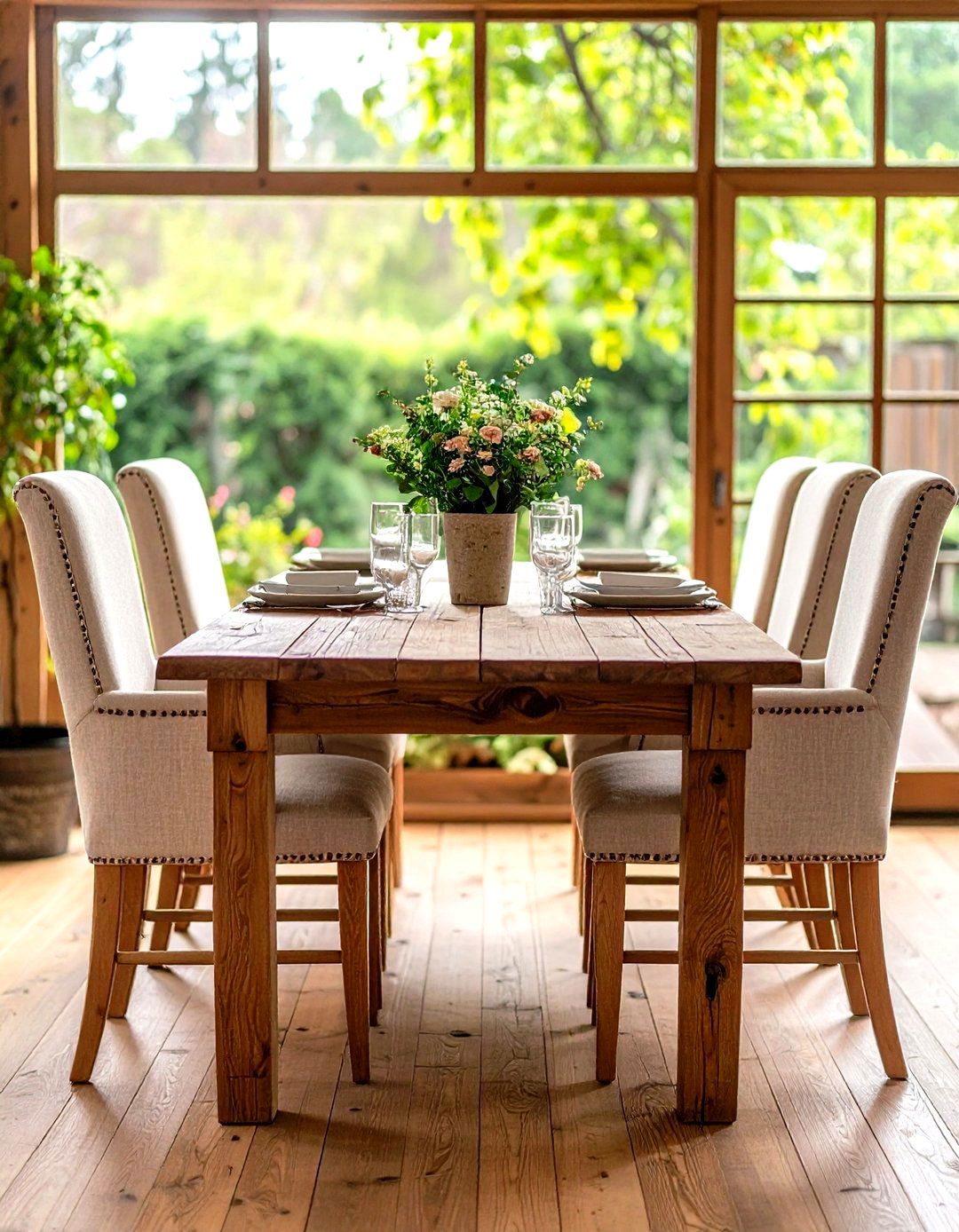
While mismatched wooden side chairs contribute to a casual feel, adding upholstered chairs at the head and foot of the table can introduce comfort and a touch of refinement to a rustic dining room. Choose chairs with a simple, sturdy frame and cover them in a durable, textured fabric like linen, canvas, or even a subtle wool plaid. These host and hostess chairs break up the visual repetition of all-wood seating and provide a more comfortable option for lingering after a meal. This blend of hard and soft materials creates a balanced, sophisticated take on rustic design.
23. A Freestanding Wood-Burning Stove
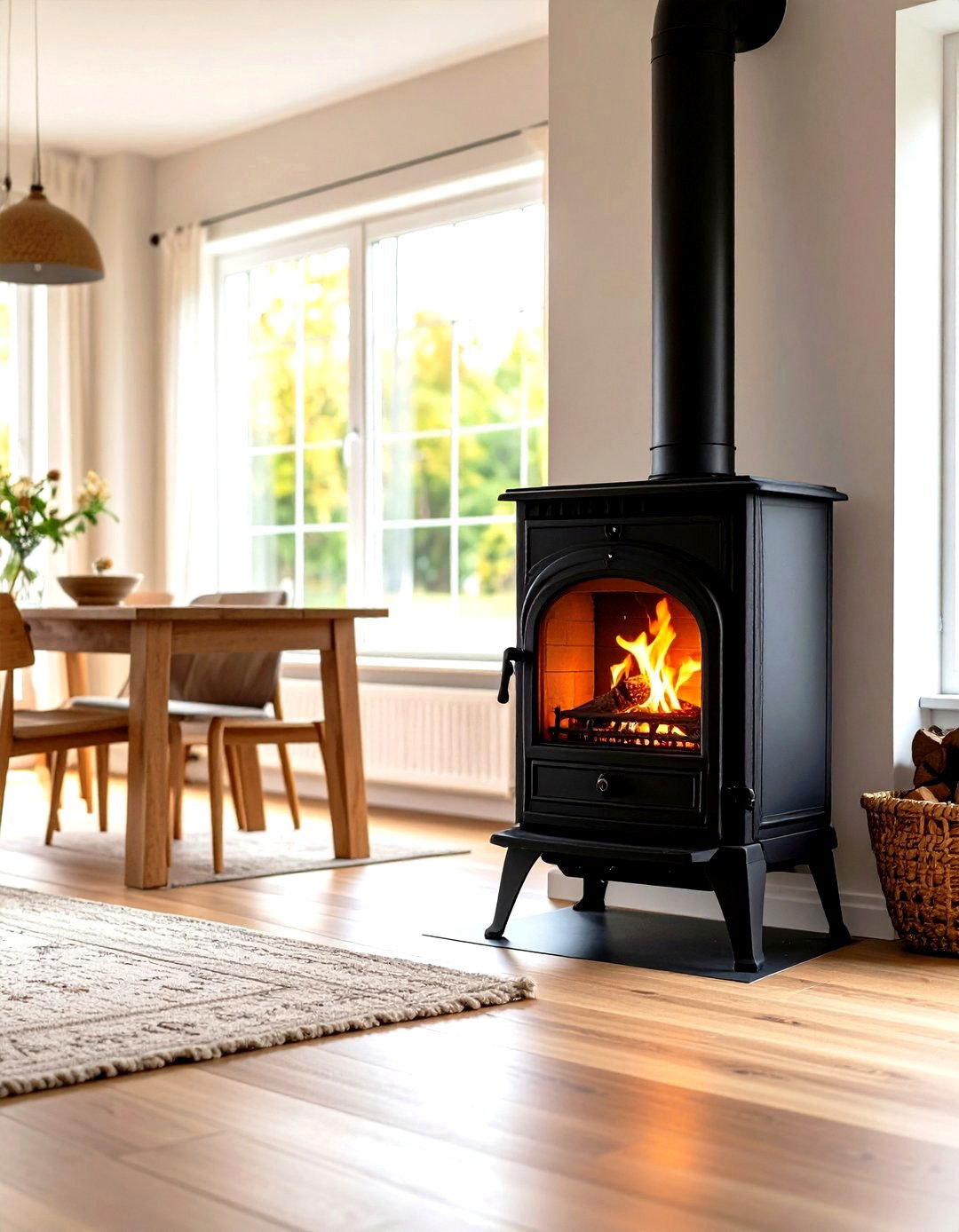
For the ultimate in rustic coziness, consider adding a freestanding wood-burning stove to a corner of your dining room. This feature provides not only a reliable source of warmth but also a captivating focal point with its dancing flames and crackling sounds. A classic cast-iron stove becomes a functional and sculptural element, reinforcing the room's connection to simple, traditional living. It creates an irresistibly inviting atmosphere on cold evenings, making the dining room the coziest gathering spot in the house. The stove's presence embodies the hearth and home spirit that is central to the rustic aesthetic.
24. Foraged and Natural Greenery
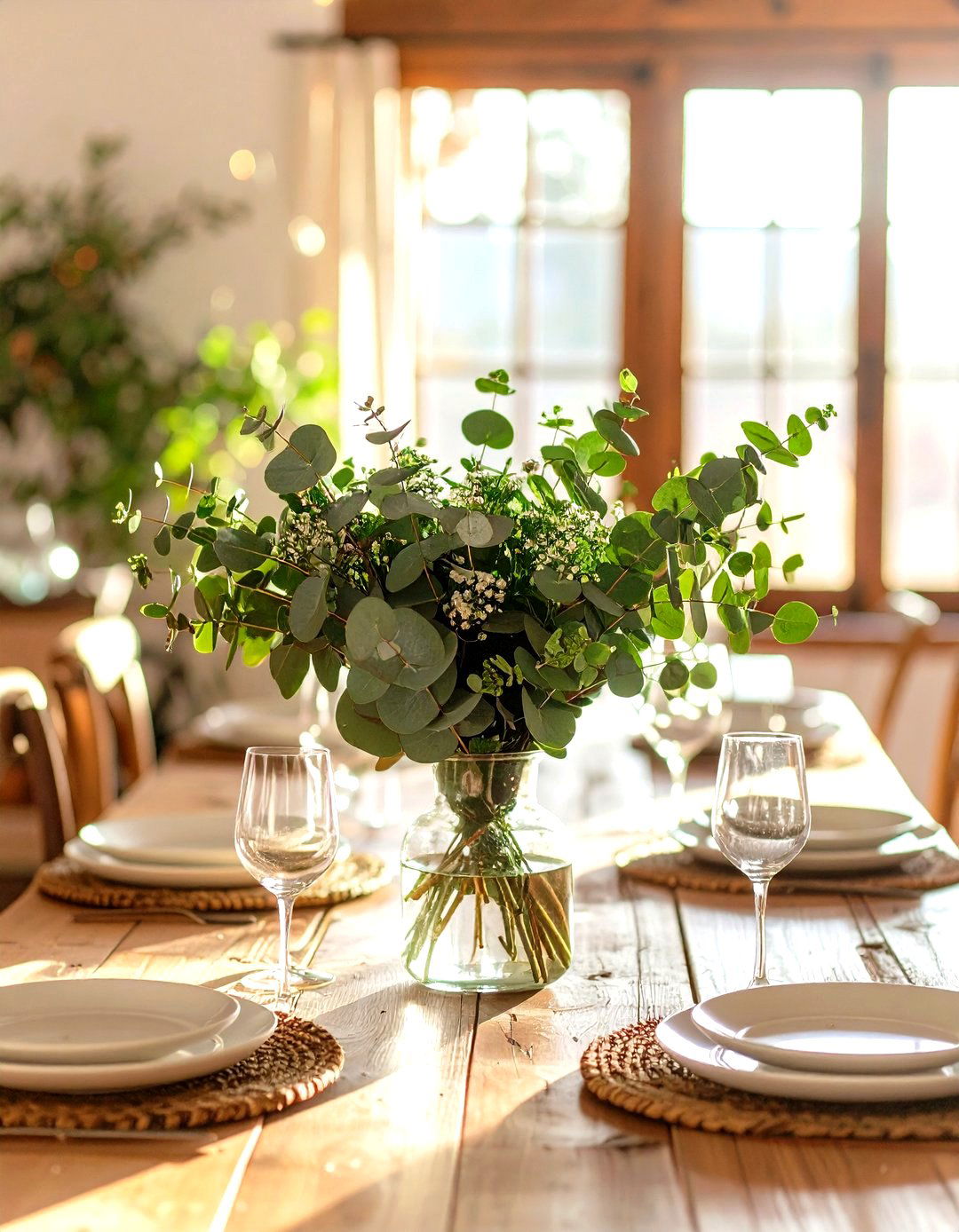
Decorate your rustic dining room with foraged and natural greenery to bring the outdoors in. Instead of formal floral arrangements, create simple displays with branches, wildflowers, ferns, or cuttings from your own garden. Place a large vase of eucalyptus or pussy willow branches on the sideboard, or run a garland of seasonal greens down the center of the table. This approach is sustainable, budget-friendly, and perfectly aligns with the rustic ethos of celebrating nature in its unrefined state. The organic shapes and fresh scents of real greenery add life, color, and a sense of tranquility to the space.
25. Leather and Hide Details
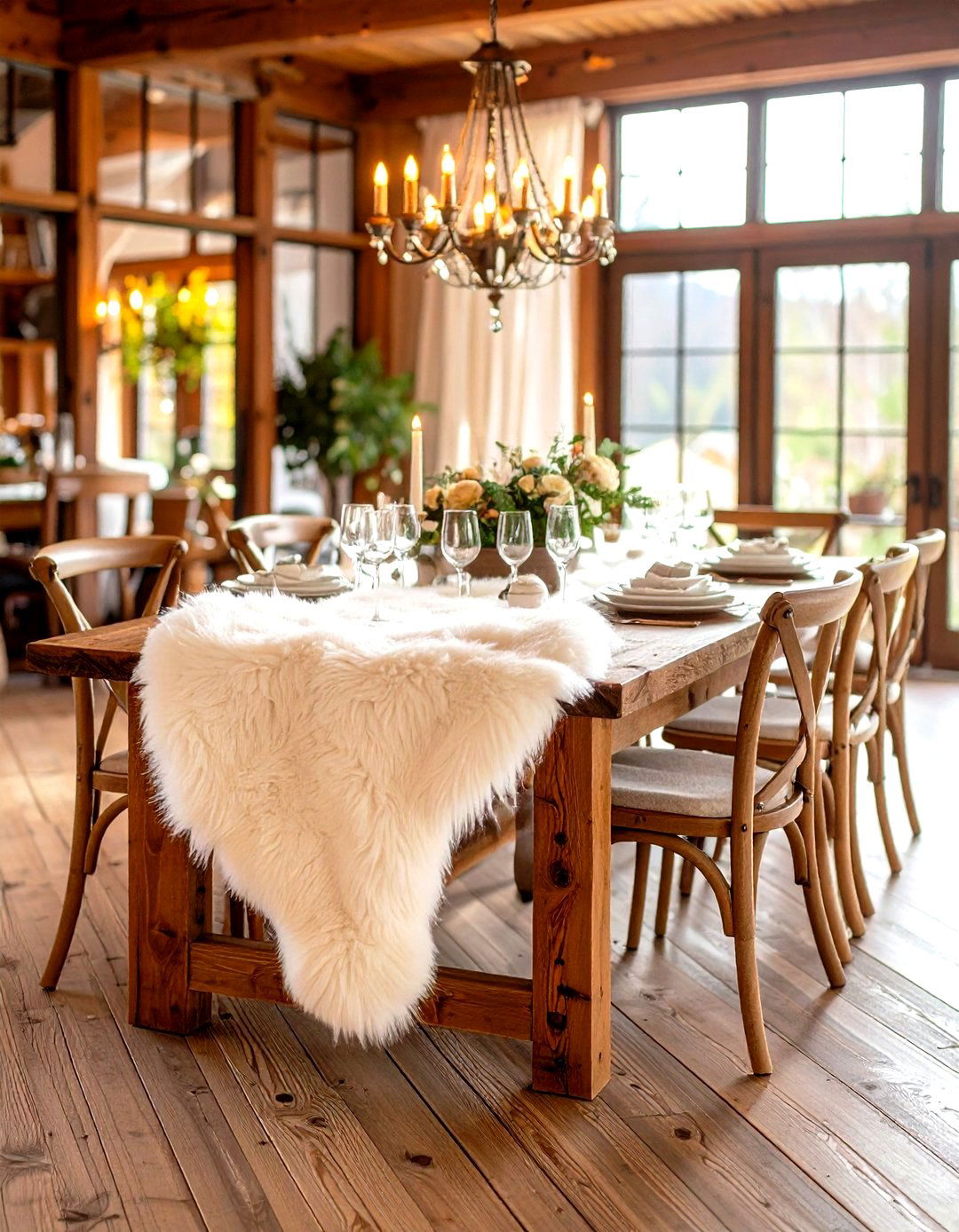
Incorporating leather or hide details can add a layer of luxurious texture and rugged sophistication to a rustic dining room. This can be as simple as adding a sheepskin throw over a dining bench for warmth and comfort, or using cowhide-upholstered accent chairs. Leather placemats or a leather-wrapped vase can also introduce the material on a smaller scale. These natural textures are durable and age beautifully, developing a rich patina over time. They provide a tactile contrast to wood and stone, enhancing the room's connection to natural, high-quality materials and adding a touch of lodge-inspired elegance.
26. A Large, Framed Mirror
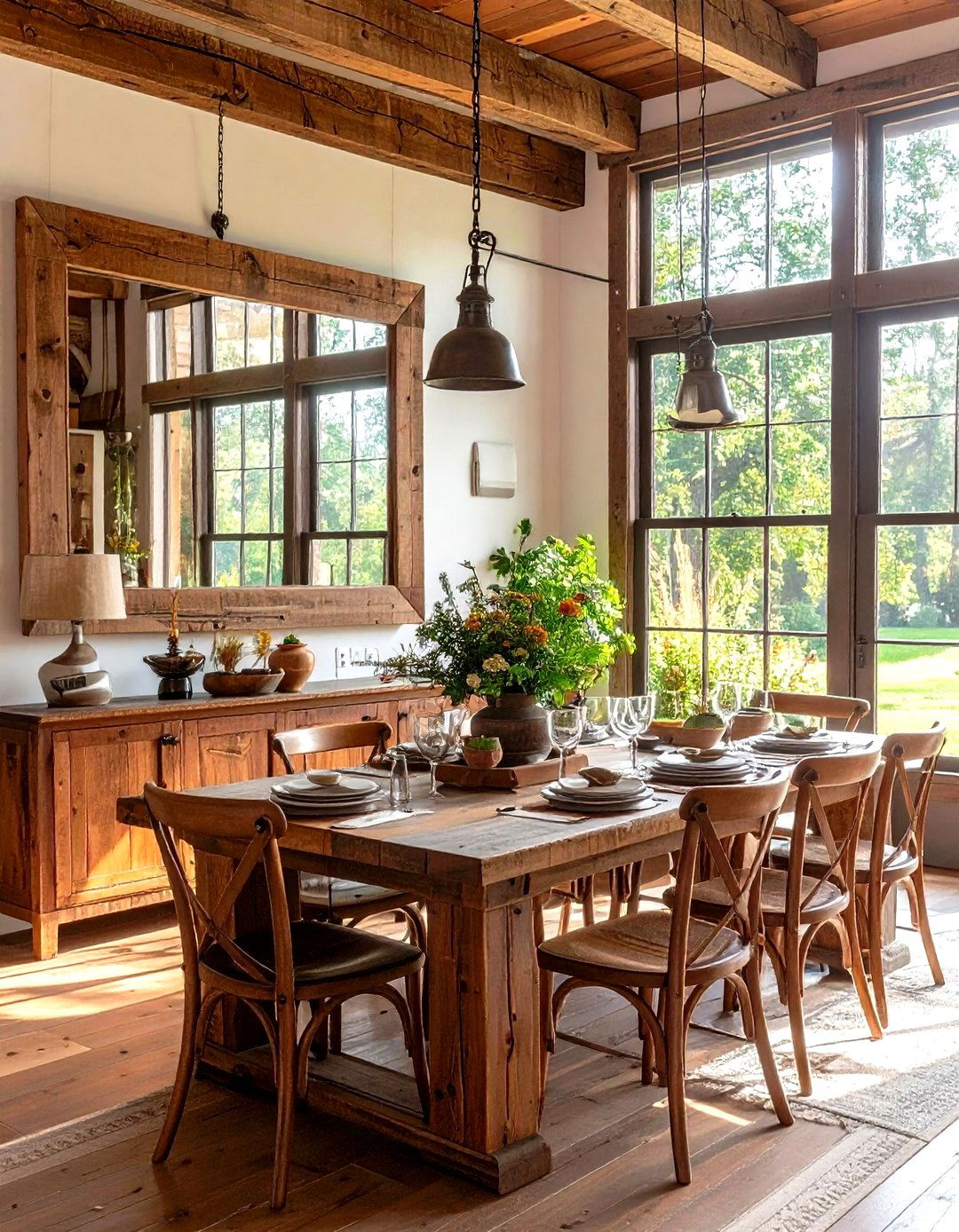
Hanging a large mirror with a simple, rustic frame can enhance the light and sense of space in your dining room. Choose a frame made from reclaimed wood, distressed metal, or something with a simple, unadorned profile. Placed on a wall opposite a window, a mirror will reflect natural light, making the room feel brighter and more open. It can also reflect the glow of a chandelier or candlelight in the evening, adding to the warm, ambient atmosphere. A mirror serves as a beautiful and practical alternative to wall art, creating depth while complementing the room's natural materials.
27. Wainscoting with Reclaimed Wood
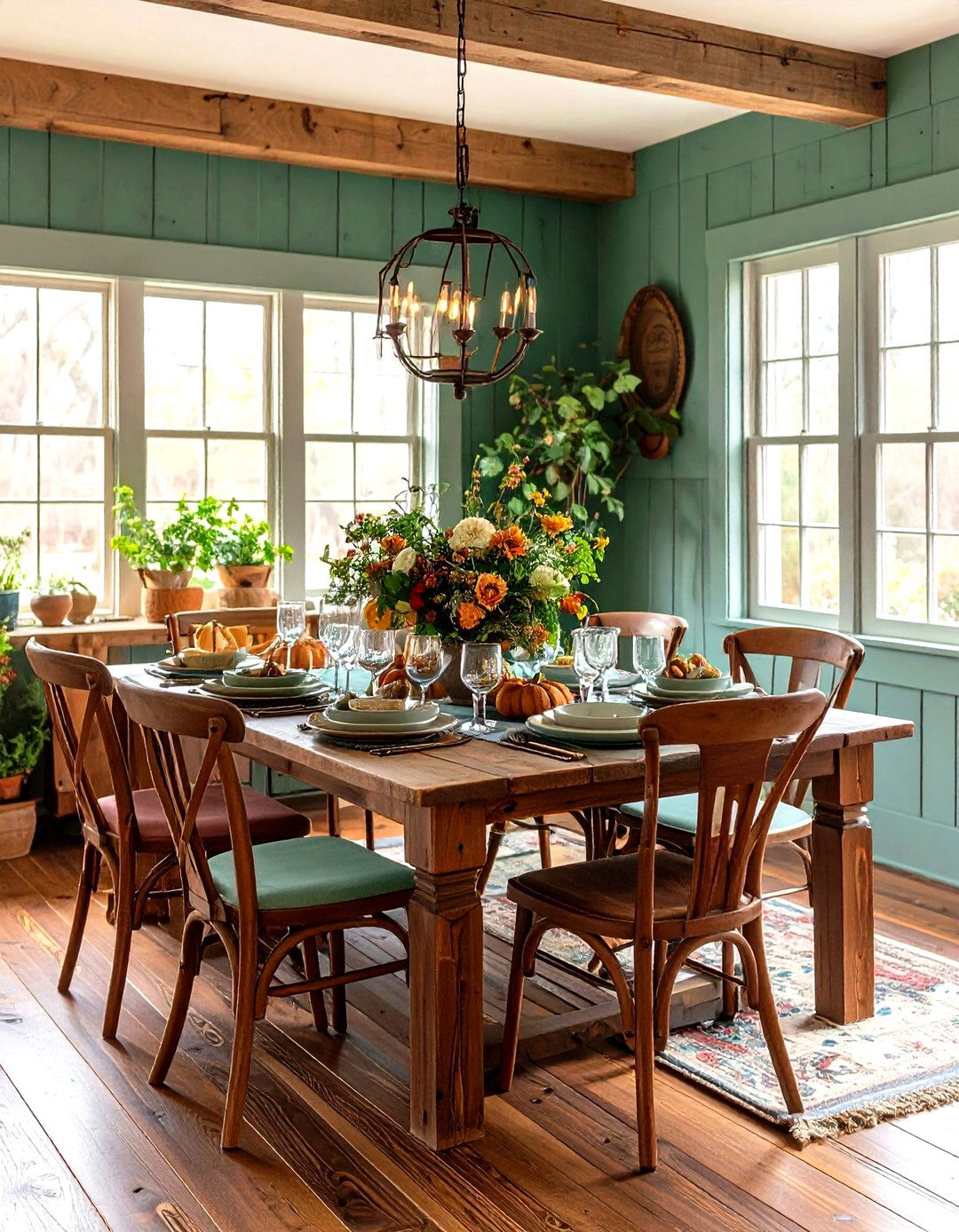
Installing wainscoting using reclaimed wood planks adds texture, warmth, and architectural interest to the lower portion of your dining room walls. Running salvaged barn wood or pallet wood horizontally or vertically creates a custom, high-impact feature. This treatment protects the walls from chair scuffs while infusing the space with immense rustic character. You can leave the wood in its natural, weathered state or apply a light whitewash to brighten the room. It’s a fantastic way to introduce a significant textural element that grounds the space and reinforces the commitment to recycled, historical materials.
28. Neutral and Earthy Color Palette
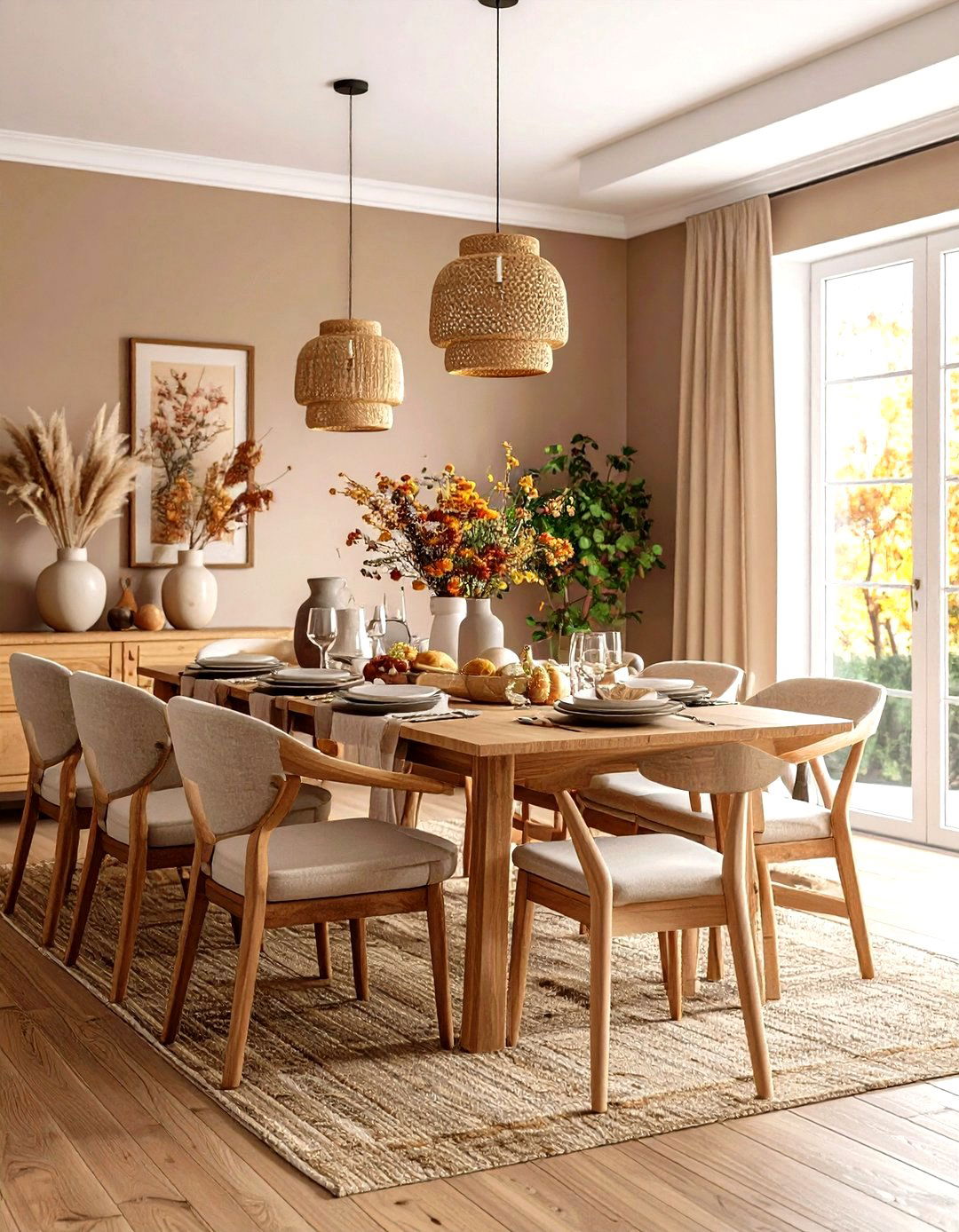
A neutral and earthy color palette forms the ideal backdrop for a rustic dining room. Start with warm whites, creamy beiges, or soft grays for the walls to create a bright and airy base that allows the natural materials to shine. Layer in deeper tones found in nature, such as moss green, slate blue, terracotta, and rich soil brown, through textiles, pottery, and decor. This color scheme is calming and timeless, promoting a sense of tranquility. It ensures that the focus remains on the textures of wood, stone, and metal, creating a cohesive and harmonious space that feels connected to the earth.
29. A Collection of Vintage Prints
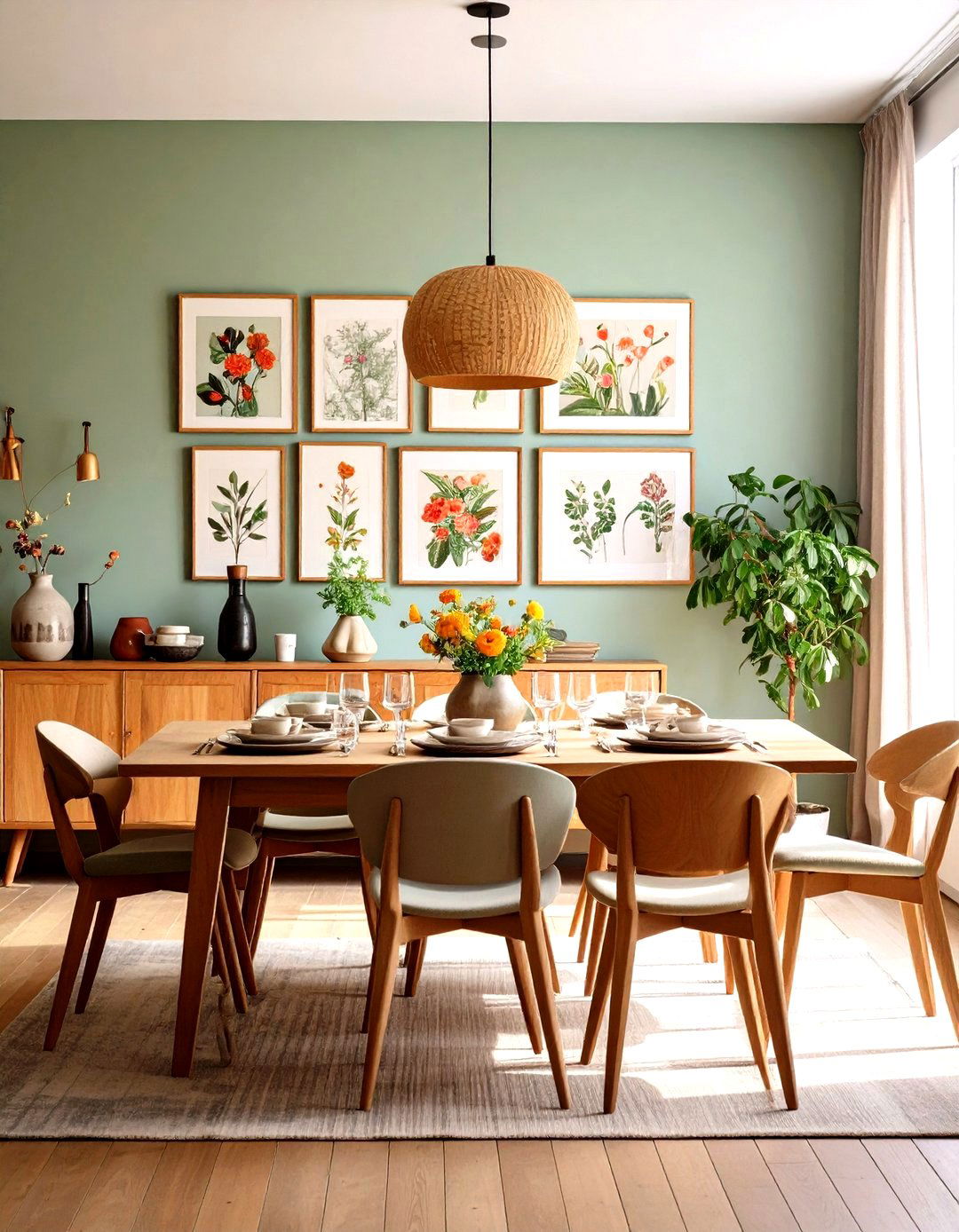
Create a gallery wall of vintage prints to add a layer of personality and history to your rustic dining room. Search for botanical illustrations, old landscape paintings, or architectural drawings at flea markets or online. Frame them in simple, mismatched wooden frames to enhance the collected-over-time aesthetic. Arranging a group of these prints on a main wall adds visual interest and a sense of storytelling to the space. This curated collection serves as a quiet conversation starter and infuses the room with a sense of nostalgia and artistry that complements the aged, rustic elements elsewhere in the decor.
30. Mason Jar Pendant Lights
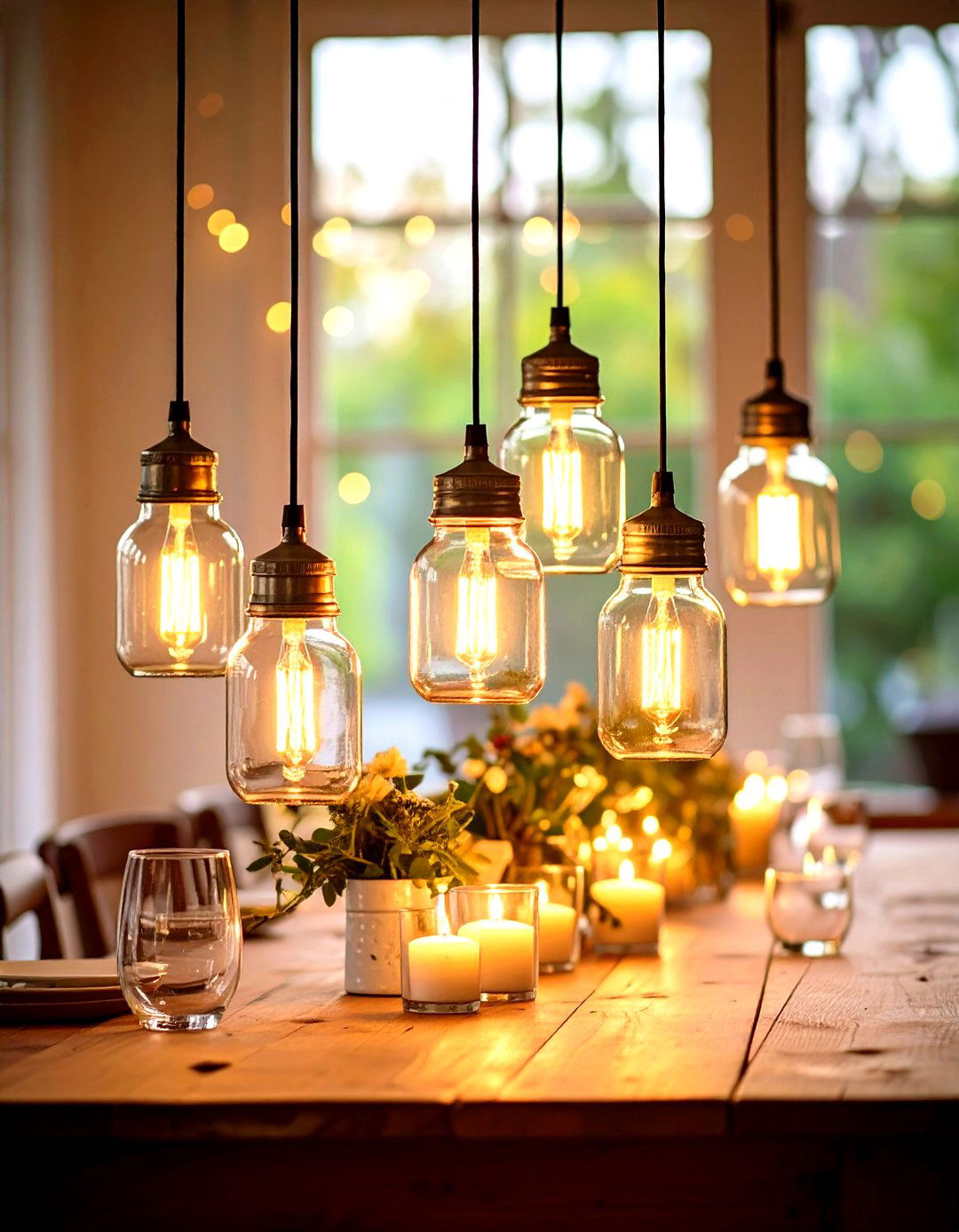
For a touch of charming, DIY-inspired flair, hang a cluster of Mason jar pendant lights over your dining table. This simple lighting solution perfectly captures the humble, resourceful spirit of farmhouse and rustic style. You can create them yourself or find pre-made fixtures online. Suspend several jars at varying heights to create a dynamic and visually interesting chandelier alternative. The clear glass allows for bright, unfiltered light, while the iconic shape of the jars adds a dose of nostalgic charm. It's a creative and budget-friendly lighting idea that adds personality and a homespun feel to the room.
Conclusion:
Ultimately, designing a rustic dining room is about celebrating authenticity and natural beauty. By focusing on materials like reclaimed wood, stone, and wrought iron, you can create a space that feels both grounded and incredibly welcoming. The key is to embrace imperfections, mix textures, and prioritize comfort over formality. Whether through large architectural features like exposed beams or small details like an earthenware display, these ideas help craft a timeless and personal dining area. The result is a warm, inviting retreat for sharing meals and making memories with family and friends.

Related posts:



Leave a Reply